Indian Pottery – Spinning a Tale of Utility and Art

1
Indian-Pottery
Source

Pottery is one of the oldest forms of handicrafts in the Indian sub-continent. In fact, it is not so much of an art, as it is, a way of life. Evidence of pottery has been found in the Indus Valley and Harappa Civilizations. However, Indian pottery continues to be a part of our households in the form of pots, pans, jugs, water mugs and so on. The great thing about Indian pottery is that it has been able to balance the artistry with mundane usage. Where on one hand, the skill and style of the pottery handicrafts are a symbol of Indian culture, on the other, the practical use of pottery in our everyday existence is common.

Types of Pottery

Unglazed and glazed are essentially the two distinct types of pottery. Each holds within its fold a variety of handicrafts and pottery making skills, most of which are akin to specific areas and regions of the country. There is also a historical reference and influence on the different types of pottery.

Indian Pottery
Image – Pixabay

Unglazed pottery is what has been in practice for centuries. Clay and terracotta is the most commonly used material for unglazed pottery in India. The hand or the potter’s wheel is used to mold the clay into different shapes. However, the terracotta creations can also be glazed depending on the kind of usage. For example, glazed terracotta pots are easier to clean and cook food in. On the other hand, the flavor of the food is best sensed in unglazed vessels. The exquisitely made Kagzi or paper-thin pottery from the Kutch region, as well as, pottery of the regions of Kangra in Himachal Pradesh, Pokhran in Rajasthan, Birbhum in Bengal, Jahjjar in Haryana, Meerut in UP are all known for their variety of unglazed pottery.

Glazed pottery is believed to be kick started with much fervor during the Mughal era. The white and blue patterns are a trademark of glazed pottery that does not use clay or terracotta as its raw material.

Regional variations

Pottery symbolizes an important tenant of both art and the Indian way of being. The ‘unity in diversity’ tagline holds true for this form of handicraft that has grown both laterally and vertically in its development and spread. Each region or state has a specific set of pottery making that is mastered by its inhabitants. Here is taking a look at the different kinds of pottery handicrafts across the country:

West Bengal Pottery –

Indian Pottery, West bengal
Image – Wikimedia

The ‘surai’ is one of the well-known makes from Bengal. The jug or surai is not made on the wheel, but four pieces are joined together to form the base. The neck is made on the wheel and then attached. Red polished potteries are mostly found in Bengal. The clay bhars are used for beverages and still used by street stall vendors.

Delhi and Jaipur Pottery –

Blue-Pottery-Jaipur
Source

The popular Blue Pottery is found in Delhi and Jaipur. The base is made from powdered quartz and gum and the final product is semi-transparent and looks in appearance like glass. The Persian influence is visible in its design. The Blue Pottery of Jaipur uses no clay and looks elegant in its blue discernable patterns. The Jaipur pottery is fired once before being used and its impervious nature makes it the most hygienic.

Uttar Pradesh Pottery –

Indian-Pottery-Uttar-Pradesh
Khurja Pottery, Uttar Pradesh – Wikimedia

Khurja and Rampur in UP are recognized destinations for pottery. The base of the pot is prepared from red clay and both the places create different versions of blue pottery. The Rampur surais are well-known with their green and blue gazes, whereas, Chunar produces the brown hues of pottery. The other areas within UP that are known for their pottery wares and art are Meerut, Hapur, , whereas, the dark earthen look or black pottery is found in Nizamabad and Azamgarh districts of UP.

Rajasthan Pottery –

The mouths of the pots of Rajasthan are smaller indicating water saving in a state that has scarcity of water. Alwar is where the Kagzi pottery is famous, the paper like thinness of the pots making them special. Bikaner is known for its lac and golden colored pottery wares and Pokhran creates decorative patterns on its creations. The red polished potteries are popular in Rajasthan.

Gujarat Pottery –

Gujarat-Pottery
Source

The Kutch and Saurashtra region produces splendid handicrafts, one of which also includes pottery. Banaskantha for its decorative pots, Vidi for its white clay pottery and the Saurashtra region known for its Gopichandan, a type of clay that resembles sandalwood are some of the varied pottery styles and types of Gujarat.

Himachal Pradesh Pottery –

Kangra is the leading area in HP that is known for its wonderful pottery. The dark red and black wares are used in homes, as well as, for artistic presence and decorations.

Karnataka Pottery –

Belgaum is where large containers are made for storage.

Tamil Nadu Pottery –

Tamil Nadu Pottery –
Image – T. A Joseph via Flickr

Noted for glazed pottery, Vellore has red and black pottery wares and the Madurai district is known for black pottery with a mix of yellow substances. Tamil Nadu is also famous for its Tanjore Dolls that are figures made from terracotta of the southern deity.

Pottery classes and an enhanced understanding of the art is finding a wide spread audience in its wake. The techniques, method and making differ from region to region and so do the types of the pottery created. But nonetheless pottery remains an important part of the Indian handicrafts, crafted by people who are strewn across various social and cultural dimensions.

Ungalzed pottery
https://www.christies.com/lotfinder/Lot/an-unglazed-pottery-water-bottle-iran-11th12th-4894020-details.aspx
https://www.youtube.com/watch?v=AUS3GSvA3xY
https://spinningpots.com/pottery-tips-beginners/

Blue pottery
https://www.savista.com/room/jaipur-blue-pottery-workshop/
https://www.travelogyindia.com/blog/what-and-where-to-shop-in-jaipur
https://gokhalemethod.com/tags/pottery_market
https://pixels.com/featured/indian-women-selling-pottery-michele-burgess.html

Traditional Costumes of Indian Classical Dances – A Feast for the Eyes

0

Indian dance forms are as much about grace and skill as about presentation. The costumes, make-up and accessories are a vital part of each of the traditional classical dance styles. The moves and expressions are enhanced and complimented by the outfits that shimmer and give a distinct identity to the dance form. It is hence hard to imagine Kathakali without the elaborate yet distinguishing face make-up or Bharatanatyam without the perfectly pleated unmistakable drape. Interestingly, each of the dances also in many ways represents the region from which they hail. The costumes and get up are thus further identifications of not only the dance style but also the specific region that hones them. 

Here is taking look at the most prominent classical dances of India and their distinct attires and physical appearances. 

1. Bharatanatyam

Traditional-Costumes-of-Indian-Classical--Dances-Bharatanatyam
Bharatanatyam – Asian Art Museum via Flickr

Practiced in southern India, Bharatanatyam is one of the leading dance forms of the country. The costume of a Bharatanatyam dancer is created on the lines of a Tamil Hindu bride. A vibrantly colorful sari with a pleated stitched cloth in the front that fans out during leg and knee movements is the most eye catching aspect of the attire. In fact, the sari is not a single piece but a combination of many cloth pieces of different varieties. The sari is draped in a special way, where it tightly covers the back and crosses over one shoulder with the pallav or the end of the sari held at the waist by a belt. The belt a jeweled accessory is complimented with jewelry on the nose, ears, neck and sometimes the head. The hair is tied usually in a tight bun or knot adored with flowers or the gajra. The ghungroos beat away to the moves as the eyes are lined for highlight. The hands and feet may also be painted in kumkum red powder for better viewing of the gestures and movements by the audiences. 

The male costume consists of a dhoti which is usually stitched with rich silks and embroidery. The upper body is bare.

2. Kathak

Traditional-Costumes-of-Indian-Classical--Dances-kathak
kathak – Vanita Mundhra via Flickr

Kathak hails from three distinct regions, Jaipur, Lucknow and Banaras. It is also a dance form that cuts across religions and is practiced by both Hindus and Muslims, with the dress varying for each. The Hindu Kathak dancer wears either a sari or a long full skirt that reaches the ankles. The sari is wrapped around the waist and its end hangs down from the left side. A blouse covers the upper body and a tika usually adores the forehead along with the customary jewelry in the ears, nose and neck. The dancer may also wear an orhni or scarf in some cases. 

The full long skirt on the other hand is embroidered on the base and is a light weight skirt that twirls with grace during dance movements. The upper body is covered in a blouse or choli that is in contrast colors to the skirt and a transparent scarf usually covers the head. 

The Muslim costume also includes a long skirt but a close fitting churidar is worn on the legs. Sometimes an overcoat is also worn to cover the hands along with the head orhni or scarf. 

For male dancers a silk dhoti around the waist is covered with a silk scarf tied on the top. The upper torso is either bare to show the Hindu thread or can be covered in a loose jacket. 

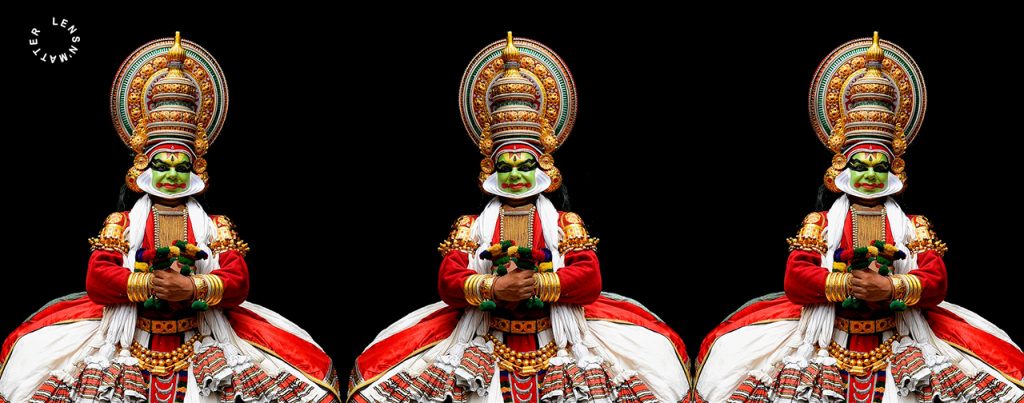
3. Kathakali

Traditional-Costumes-of-Indian-Classical--Dances-Kathakali
Kathakali – lensnmatter via Flickr

Finding its roots in art forms of Kerala, Kathakali has one the most elaborate costumes. It takes more than a few hours for the dancing troupes to get ready before a performance. The colorful costumes, highlighted make-up and facial paintings make Kathakali popular amongst kids as well. The make-up is coded as colors represent the type of the character that the dancers are portraying. Green (Pachcha) facial paints along with red lips are depiction of Gods, nobles and sages, such as Krishna, Shiva, Rama and more. Red (Tati) is used for those depicting evil, such as Ravana. Black (kari) is the color for hunters and forest dwellers. Sometimes demons are also painted black but with streaks of red. Yellow is for monks and noble men and women, such as Sita or Panchali. White beard represents the one with a virtuous conscious such as Hanuman. 

The make-up and colors represent the virtues of the characters and the dance form combines the colors to give deeper meaning and understanding of the characters. 

4. Odissi

Traditional-Costumes-of-Indian-Classical--Dances-Odissi
Odissi – Brendan Lally via Flickr

Odissi from Odisha is a wonderful dance form with costumes similar to that of Bharatanatyam. The sari is colorful and made from the local silk called Pattasari. There are pleats in fronts that are stitched to the garment for greater flexibility but the saris have prints and designs that are traditional to the local handicrafts and culture, such as the Sambalpuri and Bomkai sari. Silver ornaments are worn more since it is a more localized metal covering the ears in what is called kappa that decorate the side of the head too. Necklaces and armlets called bajuband are worn on the upper arm. At the waist the jeweled belt is worn to hold the sari and the hands and toes may be colored in red dye called alta. The dancer’s head is also well decorated with allaka a head piece and the hairstyle usually is adorned with a moon shaped flower bun or sometimes a mukoot with peacock feathers. 

Male dancers wear a dhoti that is pleated and the upper body maybe bare. Sometimes a translucent wrapping over one shoulder is also worn. 

5. Kuchipudi

Traditional-Costumes-of-Indian-Classical--Dances-Kuchipudi
Kuchipudi – Navaneeth Kishor via Flickr

From Andhra Pradesh, Kuchipudi traditionally was performed by male dancers. A dhoti pleated in front was the main costume of the male dancer whereas; the female dancers wore a sari with light make-up. However, in modern times the female costume has been drafted along the lines of the Bharatanatyam attire with a pleated sari that is held on the waist with the jeweled belt. The hair style varies, though in both dance forms flowers are worn as ornaments over the head. Yet, some Kuchipudi dance performances may include different costumes, such as pots over the head, gymnastic dancing or head sheets depending on the characters that are depicted. 

6. Sattriya

Traditional-Costumes-of-Indian-Classical--Dances-Sattriya
Sattriya – via Wikimedia

Originating in Assam this dance form has seen a gradual change in costume over the years. Traditionally the attires were made from raw silk and velvet was used. Over the years with more performances over the stage, the material of the costume has changed, yet continue to include pat a silk produced in Assam, as well as, hand woven materials with localized motifs. The costumes also vary on characters, such as the Sutradhar Nritya is characterized by his white costume and turban or Krishna with yellow and blue attires. 

Traditional jewelry is also used in this dance form, such as gold made from the Kesa Sun technique. The Kopali on the forehead, different necklaces, bracelets and differently shaped pendants are characteristic of this dance. In case of Ankiya Naats or dramas masks or mukha are worn by the dancers. The mask and turbans are beautifully made by local artisans. 

The male costume comprises of a dhoti and chadar and the female attire consists of the ghuri, chadar and waist cloth called kanchi. 

7. Manipuri

Traditional-Costumes-of-Indian-Classical--Dances-Manipuri
Manipuri – Arian Zwegers via Flickr

Originated from Manipur, this dance form has a distinct costume. In Manipuri dance form the dancer is dressed as Manipuri brides in the Kumil costume the dancers wear a cylinder shaped long stiff skirt. The decorations on the barrel shaped skirt are exquisite using gold and silver embroidery. On the upper body a velvet blouse is worn and the head is covered in a translucent veil. Though jewelry is worn around the neck, arms and ears, the Manipuri dancers do not wear anklets. 

The male dancers are dressed in dhoti that is pleated and tied around the waist. 

8. Mohiniyattam

Traditional-Costumes-of-Indian-Classical--Dances-Mohiniyattam
Mohiniyattam – Prasad Pillai via Flic

Mohiniyattam dance form is recognized by its white or off-white saris that are embroidered with gold brocade. Originating from Kerala, the dancer also wears a similar color coordinated blouse with the pleated sheet in front and the waist adorned with a jeweled band. The jewelry is simple and there are no masks as seen in Kathakali. The hair style is that of a bun on one side circled by the gajra. 

The different classical dance forms are thus identified by the layman through their costumes and outward appearances. There are of course, varies differences in style, grace, storytelling, music and moves. Yet, the attires are the most striking way to identify each dance form and also get a strong sense of the region and cultures that they belong to. 

Also Read – Top 10 Traditional Indian Fashion Accessories

All You Need to know About the Reforestation Drive in Shimla this Year

1
Reforestation-Drive-in-Shimla
MeenaBagh Resorts

There is a reforestation drive in Ratnari, around 90km from Shimla is organized by environmentalist Sanjay Austa. Sanjay is the proud owner of Meena Bagh Ratnari, an apple orchard with unending green spaces and a breathtaking view of the Himachal hills. The red house looks even more magnificent in the hills when it is surrounded by snow. After hosting a successful “clean the forest” drive in April, Sanjay is now organizing a “Reforestation drive” with forest officials. 

The first session was held between the 10-12th of July. The best part of the drive was that Sanjay had made the stay and meals for all people taking part in the drive completely free. Their stay and food was hosted at the Meena Bagh Ratnari itself. This encouraged many people from all over India to join the drive. Moreover, on the second day of the reforestation drive itself, Sanjay, the volunteers and a lot of local villagers planted 1,000 trees in the forests. These numbers are very encouraging. 

What’s in it for you?

MeenaBagh Resorts-3
MeenaBagh Resorts Inside View

Imagine going to a place where the stay is sponsored in a beautiful house nestled in Himlayan hills. You can not only get more inspiration for art and creativity there, but you can also explore more about yourself. Reading a book by the window while you sip some fantastic coffee can be the best feeling in the world. You are away from all the worries of the world and there is no place in the world where you’d rather be. All this coupled with your experience of planting trees in the forest by the day fills your day with satisfaction. 

How do you go there?

Since the reforestation drive is super popular and many people want to visit, Sanjay has a process of selection by which he only accepts serious applicants who are passionate about nature. You can text Sanjay or message him on instagram. His page is called @sanjayausta. If you get the opportunity to go, the easiest way is to take a plane to Delhi and take a car/ bus to Narkanda. You can find his property on google maps as well and get directions till there. 

What if I am not available on the dates of the drive?

If you are not available on those dates, you can go to Meena Bagh Ratnari any other day throughout the year. In winter, it is not easily accessible because the area is covered with knee deep snow. However, on other days, you can book a room and go there. The property is available on AirBNB as well. You can also simply call Sanjay and he will give you more details about the property. This is the link to book the property on AirBNB:

https://www.airbnb.co.in/rooms/15791197

What is the best part about the property?

MeenaBagh Resorts-Food

The best part of the property is:

  1. The food- the food here is scrumptious. I love their pancakes which are served with fresh honey. Their cheese grilled sandwich is literally the best grilled sandwich which I have ever tried in my life. Everything tastes better and more fresh on the mountains. 
  2. The view is fantastic – The view from Meena Bagh is fantastic since you can see beautiful Himlayan hills right from your window.
  3. The interiors – This surely tops the list of the best things at Meena Bagh. The interiors are fantastic and are worth dying for. They are super quirky and colorful. They also have many pets on the property which you can chill with. 

Some facts about reforestation: 

Fact 1: We need more plants in this world. Climate change is real. 

Fact 2: The highest number of trees planted in a day is around 50 million. 8,00,000 people from Uttarakhand volunteered in 2016 to plant trees inside forests and by the roads. 

Fact 3: Planting saplings isn’t enough. The saplings which are grown need water and care to grow since they have a high mortality rate of around 40%. It is essential to take care of them after planting them

6 Exquisite Places To Visit in Srinagar & Cherish Forever

0
Srinagar Dal Lake – Sudhakar Bichali via Wikimedia

The mystical beauty of India never fades! Being a land of profound history, diverse cultures and rich ancient roots; it is even a place of beautiful attractions, mesmerizing charm and luxurious destinations. 

India is an amalgamation of different regions, which is the essential spice of this country. The tremendous geographical spots make India the most visited country all around the world. When you search for a perfect destination for your vacations, India serves as an oyster for you. 

Unarguably, it gets confusing to nestle deep under the sea to choose the shining pearls. But, our endeavour to find bucket list options for you to end your quest. Get through this alluring experience and fulfil your travel spree. 

Just like the sky, the fantastic, worth-watching place in India is a splendid natural beauty, Srinagar. There are some drop-dead gorgeous places which magnify your experience and make the impossible world possible. 

 One can book United or any of your favourite airlines you wish to travel with from Faremart.com, a user-friendly ticket booking platform that has access to a total of 450 airlines, and thus provide satisfactory Air Travel services to all the travellers and seekers.

The sights which you have never seen before, the blowing scenes of Lakes, a land cultivated by Mughal emperors is a place known Srinagar in Kashmir magnetizes everyone from all walks of life. Your one visit can change your life entirely.

You might have heard about the places to visit in Srinagar which, but the mystique whereabouts you are not aware of are here bucket listed.

A Welcoming Dal Lake

Exquisite Places To Visit in Srinagar
Image – Pixabay

Dal Lake is a charm of Srinagar, Kashmir and regarded as “jewel in the crown of Kashmir”. Tourists are unaware of the fact that being far away from the other beauty spots, it is in the centre of city Srinagar and considered to be an “urban lake”.

To your surprise, this lake comes into sight being diverse pools as well as lakes perpetually connected and with the division of floating gardens, causeways and houseboats. This lake is a blend of five lake basins named Nagin, Nehru Park, Hazratbal, Nishat and Brari. On top of that, it serves the purpose of weed harvesting and fishing for viable use. 

Living in a lake has even become possible! You may get astounded, but another offbeat fact is that tourists can live in the best houseboats in Srinagar on the lake. The floating houses offer accommodation to people which make it distinctive from other places on this earth. 

The lake shows its different colours where every season, you may get manoeuvred by something new. Also, for every time of the year, it has an ancient temple named Shankaracharya offering blessings to visitors.

Fun seems endless when it comes to water. Dal Lake allows having a dip for swimming, and interestingly, it renders a chance to enjoy boating and canoeing also. For the lovers of skiing, they can come back to this place in the winter season.  

Away from the bustling city, the greenery of Srinagar gardens remained alike; fascinating and picturesque. This place is known for Mughal Gardens, rich deep in beauty which leaves no doubt in visitors’ mind. The enchanting atmosphere allures everyone here making it touristy in peak season.

Enjoy Lush Greenery at Mughal Gardens

Image – McKay Savage via Flickr

These gardens are full of blooms and bestow a chance to feel the unseen part of life. The tranquillity found here is nowhere. The bliss of life, a dazzling array of colours awaits you here!

Mughal gardens in Srinagar pertains Nishat Bagh believed to be a garden of joy. It was built in 1633 by Asaf Khan. This garden is a prominent part of India, made by the Mughals which divides it into 12 terraces, depicts 12 zodiac signs. 

Shalimar Bagh is yet another charm of Mughal Gardens having a remarkable history. It is a place where the angels of heaven themselves prefer to abode. Intrinsically, the offbeat part is that this garden is set up with beautiful fountains, pavilions, and pools on terrace edges. 

Mughal garden in Srinagar holds a jewel named Chasma Shahi where tourists flock. You can see a glimpse of historical architecture and can even capture yourself in natural surroundings. This place also holds a deep background of history. 

As life without colours is nothing, nature lacking flowers is not anything! Adding charm to the feathers of Srinagar, Tulip Garden is Asia’s most extensive garden with dozens of tulip flowers. Tulip flower garden opened in 2007 and attracted a large number of visitors every year. Exploring the type of flowers would take away a day, but making it a memorable one. It offers a chance to relish its glory in months of summer. 

A Sip of Natural Flavours in Chai Jaai

Chai Jaai
Image courtesy – Chai Jaai

With the super cuteness of name, this tea room is no way different. Undoubtedly, you can get a tea house or cafes around every corner of the city street, but this place is uncommon. 

To get indulged in the aromas, lost in the quaintness, savour the amazing flavour accompanying the nature, then this is the apt location. It opened in 2016, got inspired by Kashmiri and English tea rooms offering classic kahwa with variety of teas. 

If being from Darjeeling, you would have tasted the tea of your plants. But, for once, come over this place and enjoy conversations with a cup of Kashmiri tea. The adornment of this place will win your heart.

Serenity is Another Name of Jama Mosque

Jama Masjid
Jama Masjid via Wikimedia

A visit to Srinagar remains unfinished without worshipping. Srinagar is home of mosques where divine energies release. The panoramic view of Srinagar’s beauty persists curtailed without Muslim shrines. 

Revealing the facts, Jama Masjid, the largest mosque in Kashmir, was initially built in 1394 which was later restored in 1672. The interiors include Kashmiri art, chandeliers, and beautiful colours. Every day, the prayers are offered here wholeheartedly by the Kashmiris. 

Never Miss Shopping at Srinagar Market

Shopping is not a necessity, but it is right of everyone whenever we go out on vacations. We cannot forget to bring back the memories of that place in any form. In a way to bring something, what can be better than shopping?

Srinagar Market – Saurabh Chatterjee via Flickr

Among numerous cities, this is even a place where shopaholics can gratify themselves by buying different things. To purchase something in clothing, authentic apparels such as Pashmina shawls, jackets, stoles are available in an assorted variety. 

To add zing in food, exotic spices are famous with a soothing aroma. The offbeat fact is that Srinagar is known for purity and authenticity. So, anything you buy is a treat. Along with this, in dry fruits, you can buy a unique item named walnut. 

A free tip is that to purchase anything; you need to learn to bargain. Entering the markets mainly Lal Chowk, Badshah Chowk, Polo View, Floating market and anywhere around, you need to show negotiation skills. Srinagar market sometimes remains bustling due to visitors; however, it can be an excellent chance to buy at lower prices! 

To bring an end

No matter where you visit all around the world, however, it is indeed said that visiting Srinagar is a real heaven. Nature, mosques, gardens, coffee house, library, lakes, old houses, adventure and top of all, the calm and peace here is hard to locate. 

If this season you are planning out for a tour with family, then you can surely get something unique here. The lovers of nature and beauty can never stop themselves from coming to Srinagar. 

Tips and Tricks to Pass The Open Group TOGAF 9 (OG0-091 and OG0-092) Tests with Exam Dumps

0

Tips and Tricks to Pass The Open Group TOGAF 9

Introduction

Are you planning to deal with improving your company’s effectiveness by dealing with enterprise architecture? This is the perfect time then to pursue a certification through the TOGAF accreditation program which isspelled as the Open Group Architecture Framework. It represents thus a holistic approach to the business organization promoting cohesion of all the internal processes. 

So, the Open Group is an internationally accepted technology consortium that has designed the highest-quality TOGAF certification helping companies to design and analyze their business architecture to meet the upcoming needs. TOGAF skilled professionals are essential employees as they interact with heads of different departments and assist in designing and implementing the strategy here.

In this article, you’ll know how you can become an experienced TOGAF certified specialist. 

What Should You Know About OG0-091 and OG0-092 Exams

By passing the indicated tests, you’ll receive a valid certification enabling you to become a qualified expert in combining the business structure with IT goals and making them function as a whole.

Here, once candidates pass TOGAF 9 OG0-091 and OG0-092 qualifying assessments they are awarded the advanced TOGAF 9 Certified certification. Keep in mind, though, that completing just Part 1 OG0-091 exam qualifies you as a basic-level TOGAF 9 Foundation certified specialist.

OG0-091 is a 60-minute level-one test where applicants are required to tackle 40 multiple-choice questions with each answer representing one point. The exam has a pass mark of 55%, and the price of the assessment stands for $320. 

At that time, OG0-092 exam comprises 8 scenario-based as well as difficult multiple-choice questions. It is an open-book assessment and includes the level two learning results. You will be given 90 minutes to finish. Each best answer gives you 5 points, and the second best gives you 3 items. The third one will grant you one point, and a distracter will bring zero. The passing score makes up 60%, while the price makes up $320. 

Note there’s one more option as to pass the merged Part 1 and Part 2 exam designed for individuals willing to strike two balls in one shot. It implies winning the TOGAF OGO-093 Certified badge (Level 2) right away with one test.

Why Should You Pass OG0-091 and OG0-092 Exams?

Generally, the tests lead to a certification known as the highest level of addressing a company’s goals by planning, designing, implementing, and managing the whole entity’s integral functioning. It is called enterprise architecture which is divided into four specific domains: application, information, business, and data. All these spheres rely on existing technology and standardized products. 

So, with the TOGAF 9 Certified credential applicants validate the acquired skills that earn them employment as well as attractive pay by helping companies implement the merged operation of business infrastructure, data, and technology application. 

Tips for Passing TOGAF OG0-091 and OG0-092 Tests

Naturally, every exam taker wants to sit for a test in their first attempt. Well, that’s quite possible taking into account the advice to prepare and get high marks in the outlined assessments: 


  • Use PrepAway Exam Dumps in Preparation


Plan your studying time thoroughly by creating a plan and setting the goals to motivate you. More, begin the preparation weeks before the main exam. Reputable sites such as PrepAway.biz offer useful training materials such as a Premium Bundle for each exam containing a study guide, a premium file of top quality, and a training course. If you are on a tight budget, you can simply use free files shared by the recent exam takers. In such case, you’ll need to check the answers, as they are not verified by IT experts as it’s done in premium files.

These outstanding materials help you extensively prepare for the tests by being structured and verified by the best exams’ developers. Above all, the exam dumps give you comprehensive guidance towards the exams’ syllabus. Contestersare also welcome to get the sustainable ETE Software enhancing their practical feeling and comprehension of OG0-091 and OG0-092 exams’ content. 

Hence, using authentic and updated exam dumps is a superb way to ensure solid preparation for the TOGAF 9 tests. Here are the top reasons why studying with these resources is helpful:


  • Easy to Use: These questions and answers are user-friendly to allow you carrying on with the studies with comfort. Besides, they are easily available so that you can access them any time to study at your own speed, both for free and purchasable for a timid cost of $24.99.
  • Help to Enhance Confidence: Practicing is essential when it comes to preparing for any test. Practice tests thus allow you to understand the concepts of the assessment and help to enhance your determination at your final test. 
  • All-Inclusive: Valid exam dumps must completely embrace all the exam objectives to assist test takers in polishing their knowledge of hard items. With a range of the latest questions and answers, the TOGAF 9 Part 1 and Part 2 exams are passed with flying colors! 
  • Enroll in Official Training Course


There are numerous online learning courses that can help you revise the exam content. A good example is the training offered by TOGAF Authorized Trainers. It’s important to get the training to improve your understanding of the exam structure and the topics covered. 


  • Appreciate TOGAF Official Site


The official Open Group website offers guidance on different technicalities of the exam. So, go through these tips and regulations to ensure you are well prepared. The FAQ part is also useful as it will help you get a clear understanding of the assessment. Moreover, you can join, as well, online platforms such as the Open Group forum to get valuable info and details about the certification. 


  • Revise Topics with Study Guides by Vendor and Amazon


Appreciate study guides as great materials for your exam revision with Amazon and the vendor. These Part 1 and Part 2 editions will give you a detailed overview of the test objectives while covering the syllabus in depth. Besides, they will offer you an exhaustive understanding of TOGAF 9 in preparing to take up your roles in various business projects. Benefit also from TOGAF 9 Individual Study Package, 4th Edition, in pdf.version.

Conclusion

Getting either the TOGAF 9 Foundation or the TOGAF 9 Certified credential, let alone the both, requires total commitment and valid preparation with exam dumps, to name a few. 

So, if are concerned about your enterprise architecture role, hence, be advised of all the tips provided in the article to master the requirements and pass OG0-091 and OG0-092exams in triumph!

Visit this Distillery in Goa and Try their Metaphorical Treasures

0
Adinco distillery

I was beaming in the car as I looked out of the window to changing landscapes. Goa was more than the shacks, beaches, palm trees, sullen clouds and the nightlife. There were mountainscapes opening up right before us and the car was surrounded by lush plantations and buffaloes on the outside. There is a part of Goa which most people talk about, which includes the nightlife, shacks, beaches and parties. And there is another side of Goa which includes buffaloes on the streets simply lounging in the sun, this side of Goa is most underrated. I was crossing the sunny, lazen side and was trying to balance my experience of exploring both the underrated and overrated parts of Goa. The car was headed towards Adinco distillery in South Goa. 

I had spoken to them over call and had organized a visit. Goan culture involves being really friendly towards strangers. Goans socialize on beach shacks and in parties, they are used to meeting strangers and being really friendly towards them. Mr. Solomon Diniz, the owner of the Adinco distillery was really friendly to us as he gave us an interesting tour of his factory.

Cabo

Cabo is a beautiful metaphor for Goa wrapped within a bottle. The bottle is beautifully and intelligently crafted as it has birds, a palm tree and the sun in its logo. It feels like the word “Cabo” is resting on a beach and lounging in the sun with a glass of wine in its hand. The bottle lounging on the sandy beach near the sea-shore changes to the imagery of me lounging near the sea shore with Cabo in my hands itself. Cabo represents the touristy Goan dream with the promise of a fulfilling life spent just watching the waves crash and watching birds fly free with their wings opening up right over you. Cabo tastes like a wonderful soulmate with the scent of childhood. For all the coconut lovers who drool over bounty, Cabo smells like fresh coconuts plucked right out of a palm tree. 

Voodoo, this bottle goes with the tagline “Spell it”, and it isn’t imaginary, it is a real representation of the bottle since it does cast a spell on you. The bottle is a classic and it is one of the only three bottles of alcohol in the world which are made of black glass. Voodoo tastes like ice cream, milkshake and alcohol mixed in Charlie’s Chocolate Factory but for adults. Voodoo is a great accompaniment with ice cream after dinner as well. The bottle was designed to represent the figure of a woman with large buttocks, this is evident in the curves of the bottle design. It represents a dark trip down memory lane, a childhood memory which has been changed because of adulthood or a broken relationship which you swallow in the gulp of a shot and still remember with fond memories. 

Voodoo
Voodoo

The owner, Mr. Solomon, was an interesting character in himself. He took us around the factory and told us more about himself. He was extremely humble, and he also invited us to party with him. In Goa, friendships built with strangers can last a lifetime. I am still in touch with Mr. Solomon and have saved his name as “Feni” on my phone. Feni is a local alcohol from Goa which is made of cashews. It is something which goes well along with every kind of meal. I was intrigued by how friendly Mr. Solomon was since he was able to gel with me and my friend so well. I felt like he could be friendly with a diverse crowd and thought that his nature was just like “Feni”. 

The Adinco Distillery Tour ended with an alcohol tasting session. One thing which we are all advised to do while drinking is to not mix two different alcohols together. However, we did exactly the opposite. We had different things back to back ranging from wine, whiskey, Cabo and Voodoo to vodka. It was a tough choice between sobriety and craziness, we surely crossed a border and made it back alive. 

This entire trip made me realize one simple thing: people everywhere are just the same. You need to bar to judgement and hold no cultural differences, and you can make friends everywhere across the globe. You just need to find a way to reach across different hearts, continents away and empathize with them. Alcohol surely is a fun addition to bond over. 

Disclaimer: Please be of legal drinking age based on the laws of the region where you are going to drink. Don’t drink and drive.

5 Vegetables That Can Grow at Home for Beginners

0
Image – Pixabay

Kitchen Gardening is more than just a hobby. When it comes to veggies freshness is the key and what’s fresher than growing your own vegetables? Raising your own garden has ample of benefits, at least you know what has gone in the product and what you are eating. Having your own garden also saves a lot of money. Fortunately, you don’t need a green thumb or a degree authentication to grow a treasure of fresh vegetables right in your backyard or balcony. There’s no need to be intimidated to take on the task of gardening; it doesn’t matter if you are a gardening novice or have an expertise in this field anyone can do it. Other than this, there are numerous benefits of gardening. For instance, it is a great stress reliever; research shows that the people who take up gardening as a hobby have likely fewer chances to suffer a heart stroke and come down with an Alzheimer. 

There are some plants which any newbie can grow or plant easily without any difficulty.

1. Lettuce 

Image – Pixabay

Lettuce is a really easy plant to grow; it grows very quickly and takes up a very small area of land for its growth. It can even be grown in a small container or underneath the shade of tall plants. Lettuce is a cool weather plant, so it has to be grown in early spring or fall. The seeds of this lettuce are available at any general store or a nursery and are very cheap. The seedlings of lettuce can actually handle a little bit of frost as it is a cool weather plant. This plant will remain intact until the temperature doesn’t drop below 45 degrees Fahrenheit.  And by some chance, if the temperature does drop below 45 degrees Fahrenheit, and you experience snow,  you’ll just have to cover the plants with a plastic sheet, and they should be fine to go. The trick with lettuce is to grow chives and garlic in between the plants to keep the pests off. Make sure to grow lettuce in a well-drained compost soil. The best companions of lettuce are a carrot, radish and beetroot. 

2. Tomatoes 

Image – Pixabay

Tomato is the most popular vegetable for any size garden. Tomato can be grown possibly at any place where there is a lot of sunlight. Tomatoes are one of the most sought after plant during summers, and on the top of that, they are super easy to grow. It is highly recommended that their growth be started indoors for 6 – 8 weeks before transplanting them outside. You’ll have to plant them in full sunlight and in well-drained soil, also make sure all the frost is gone before planting them. Tomatoes love the heat and hate the cold! Be sure not to plant tomatoes and peppers together side by side; bees can cross-pollinate pepper and tomato and completely ruin the taste of your tomatoes. They can be present in the same garden but need to be a few rows apart. One thing you need to know is, if you plant basil next to tomatoes it will naturally repel the pests and even improve the taste of tomatoes. 

3. Spinach

Image – Pixabay

Now how can we forget Popeye’s favourite food?! It is one of the best cold-weather crops a gardener could ask for. The planting of this plant should be done in spring, fall. Spinach can survive in temperature as low as 15 degrees Fahrenheit.  You will need well-drained soil with compost for the veggie garden where you are going to plant spinach.  It could even grow in sunlight and light shade; it can be planted year-round in most of the climates as it is very weather friendly. When you plant spinach, you will need to go through and thin where you planted it a few weeks earlier and be sure to remove any area where you see clusters appear.

4. Green bean 

Image – Pixabay

Green bean is another one of the plants that can be easily grown, and it has an abundant harvest. There are hundreds of varieties of green beans to choose from so you’ll need to decide what you really want to grow. One of the easiest types is Bush bean. In order to grow green bean, you’ll have to grow it in well-drained soil. Add a layer of compost in it and sow the seed directly. This plant will require adequate water and sunlight. Green beans are also favourite for bugs to munch on so you’ll have to be extra careful. 

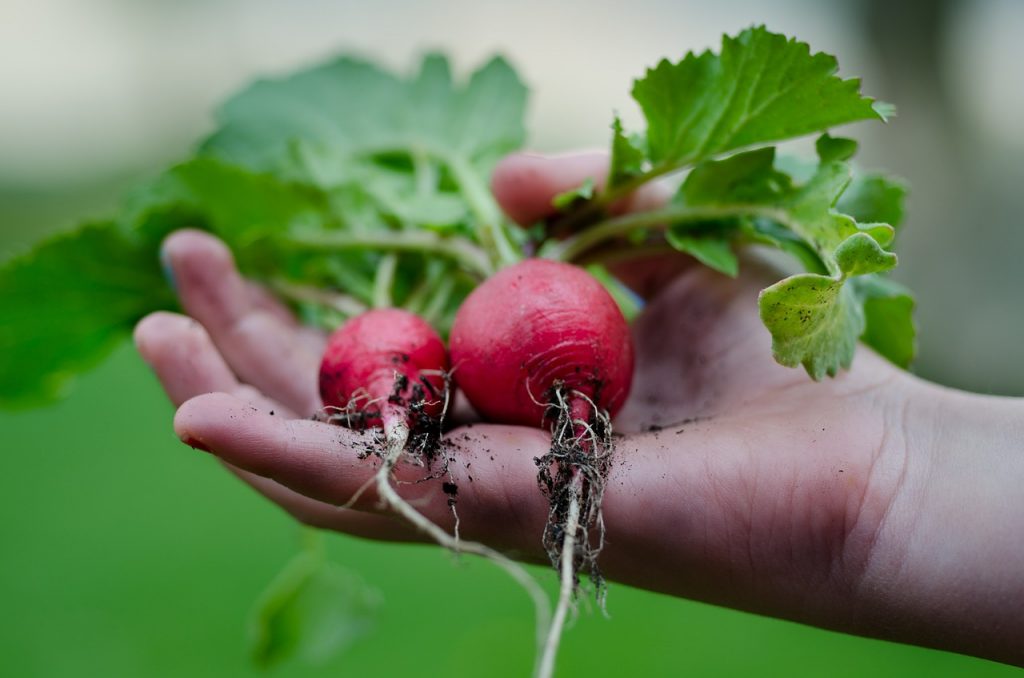
5. Root vegetables: carrots and radishes 

Image – Pixabay

This root vegetables are pretty easy to grow. Moreover, they can be directly sown in the ground or grown in a container as per your convenience. The most important thing you’ll have to remember while planting root vegetables is that no matter what they should not be overcrowded and the soil should be well-drained with compost and must have enough loose dirt in it. Once the seedling starts growing search for clusters and if any make sure you remove it. The ideal time for harvesting these root vegetables in summer, spring and fall. It will most probably be fully grown in 2 – 3 months. 

Planting your own garden can be so fulfilling.  Though growing a kitchen garden may seem complicated, but these plants will give any beginners success.

The Panchatatantra Tales – Stories that Spell Morals

4
The Panchatatantra Tales
Image – Youtube

Stories are the elixir of life. Imagine if we had no stories, no wonderful tales that were woven around subjects to teach, entertain or form opinions. Children, of course, are delighted when stories are told, but we adults don’t mind a good story either. The Panchatantra Tales are one of the oldest tales of India, written in Sanskrit with the aim of imparting lessons on ‘niti’, which means, ‘the wise conduct of life’. 

Why were the Panchatantra Tales written?

The story behind the Panchatantra Tales is quite interesting. It is believed that a king entrusted his three sons to a learned Brahmin to teach them values, morals and governing skills within six months. This learned Brahmin was none other than Pandit Vishnu Sharma, who is attributed to be the main author of the Panchatatantra Tales and who used these very tales as educational tools and life lessons for his students. Many experts do believe that Vishnu Sharma may as well be a pseudo name and hence the world really is not too sure of who the real writer or writers of the Panchatanatra Tales are. 

About the PanchatantraTales

The Panchatantra Tales, as the name suggests, are divided into five parts. The series are interwoven tales based on animals and trees, who humanize characters and dialogues. Each part has a main or ‘frame’ story which consists of several stories as one character narrates the story to another. Again, some of these stories also consist of another sub-story. The entire work looks much like the Russian dolls with one narration leading to one story, enfolding another one within its fold. 

The five parts of the Panchatantra Tales are extremely well formulated and each series has a main message or lesson. 

About The Panchatatantra Tales
Source

The Mitra-bheda is the first of the five parts and is based on how close friends can be lost. Here enemies try and create situations that lead to the estrangement and misunderstanding between good friends. Some of the popular stories in this part include the Loss of Friends, The Jackal and the War-Drum, The Weaver’s Wife, The Ungrateful Man, The Lion and the Carpenter, The Shrewd Old Gander and many more. 

The second part is called the Mitra-samprapti. This section is the opposite of the first one. Here stories elucidate how friends can be gained back and how friendships can be strengthened. This section is also a collection of four principal characters, the crow, mouse, turtle and deer that are featured in various scenarios to tell the stories. Some popular stories in this section are the Winning of Friends, The Mice that set the elephant free, Hang-Ball and Greedy, Gold’s Gloom and more.

The third section is Kakolukiyam. This section is all about war, battle or conflict strategies and how with wit and intelligence the enemy’s army can be neutralized. Its emphasis is on the battle of wits rather than the battle of swords. The animals used here are characterized by their inherent virtues, such as the crows are good and weak, whereas, the owls are evil. The stories included in this section are the The Brahmin’s Goat, Crows and Owls, The Cat’s Judgment, The Self-sacrificing Dove, The Cave that Talked and more. 

Info on Panchatatantra
Source

The fourth part is known as Labdhapranasam. This is a collection of various morals, such as ‘a bird in hand is worth two in the bush’ or ‘how gains can be lost if not protected or sustained’. The series is a compilation of stories that enforce positive behavior that should be pursued or followed. The stories in this series include the The Jackal who killed no Elephants, The Ass in the Tiger skin, Flop-Ear and Dusty, The Monkey and the Crocodile, The Dog who went abroad and more. 

The last section is called Apariksitakarakam. This series is the opposite of the fourth section. Here stories teach of negative behavior and traits that should not be pursued. The stories also show the consequences of bad or negative characteristics and emphasis on morals, such as, ‘don’t build castles in the air’ or ‘don’t act in haste and regret later’. Stories from section include The Loyal Mongoose, The Musical Donkey, The Credulous Fiend, The Friend who washed his feet and more. 

Translations and adaptations

The Panchatantra Tales remains the iconic story teller with its simple yet important themes and ideas. There has been a lot of work done over the centuries to translate and make these stories understandable and relatable to the layman. Believed to have been written in 200 BCE these Tales have withstood the test of time and transcended boundaries, languages and generations. The Tales have been translated into Hindi, English and almost all regional languages of India. Besides, its earliest translation was in Middle Persian in the 550 CE by Bruzoe. The text has also been translated and read in the countries of Persia, Arabia, Greece and Europe. Today of course, the Tales are accessible across the globe. 

The Panchatantra Tales are the legendary stories that have imparted values, morals and insight to generations of kids and adults alike. Stories have been much around before the media took over and their power over the minds of especially little ones makes them an important tool of imparting and building good behavior and character. Undoubtedly, the Panchatantra Tales are probably the best kind of stories that you can tell your children and in turn learn something yourself too. 

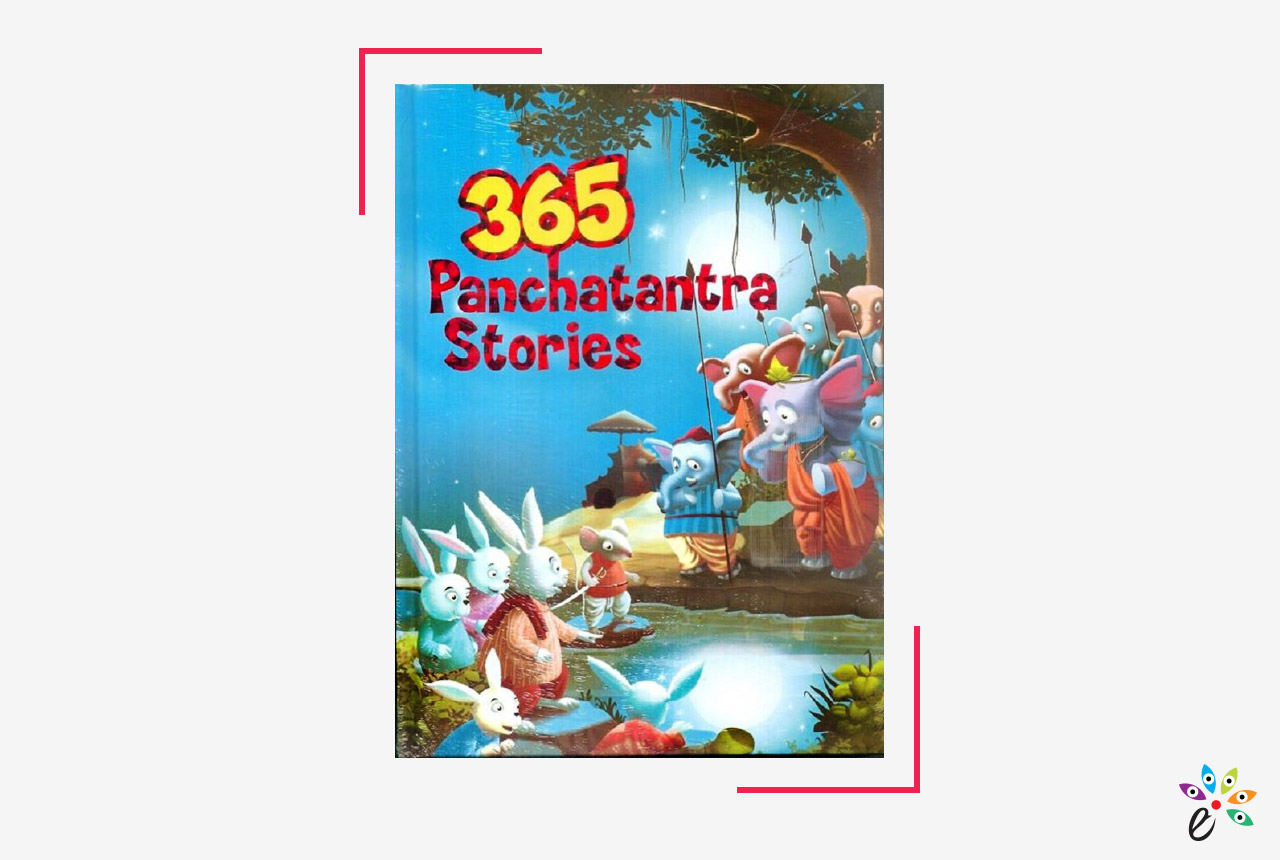
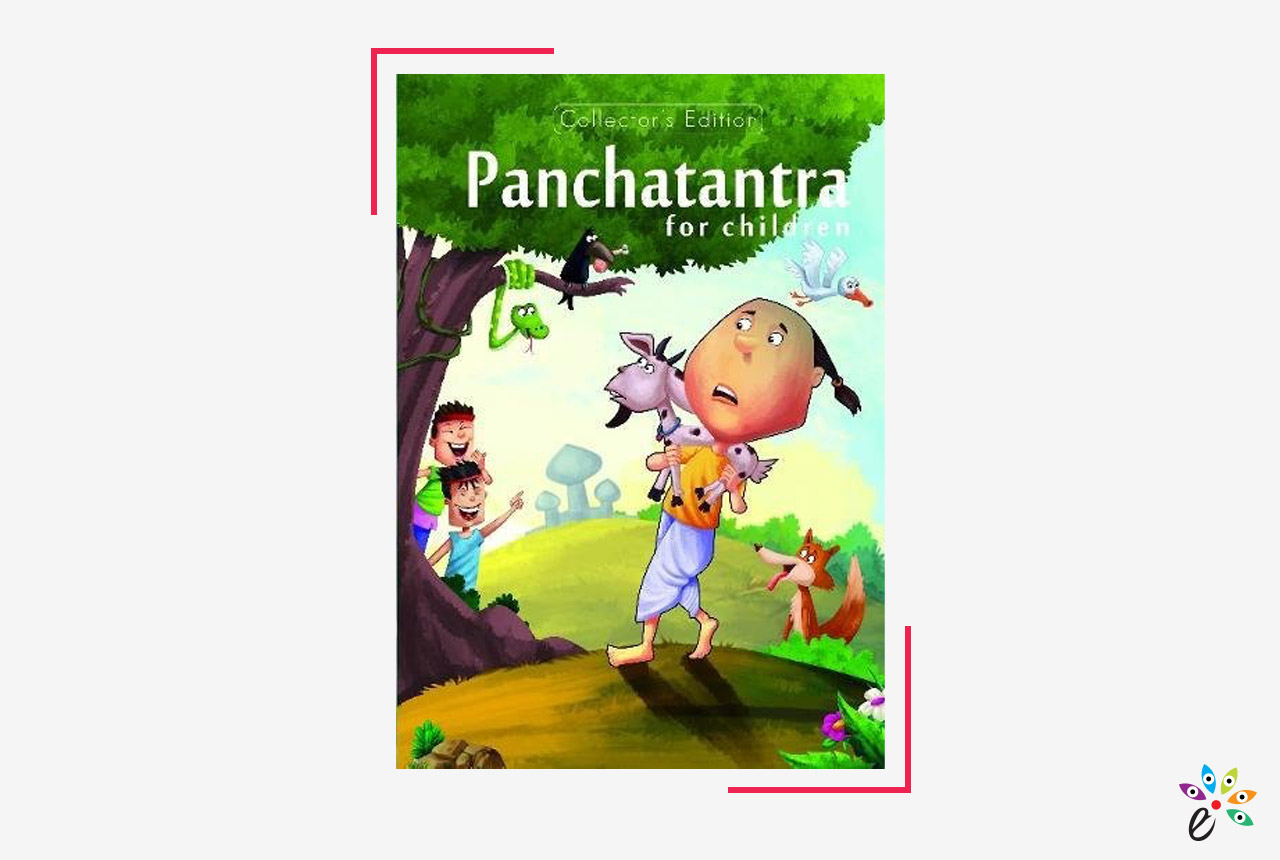
Some Great Books for Your Kids

The-Panchatatantra-Tales-Book
Get the Book
The-Panchatatantra-Book
Get the Book
Grat-books-for-Kids
Get the Book

Bandhani Arts – A Dazzling Array of Colors and Patterns

0
Bandhani Print
Image – Wikimedia

There are various skilled arts and handicrafts that are manifested on textiles. These enhance the look and feel of the clothes, at the same time, exemplifying the artistry and talent of the designers. The fashion industry is an important creative field in our times, yet a lot of the fashion sense has pervaded for centuries in the form of various coloring, dyeing and designing techniques that have beautified garments for generations. One such is Bandhani, the art of tie and dye method that is most prevalent in Rajasthan, Gujarat and some parts of Punjab and UP.

What is Bandhani?

Bandhani-Art-process

Bandhani comes from the Sanskrit word, ‘bandh’ which means to tie. The fabric is tightly tied in various places to form a design and then dyed with bright colors. After drying, the knots are opened which retain the original color of the fabric and what results is a beautiful form of color and designs. 

Technique and style

Bandhani Technique and style
Source

This art form requires skill and precision. The fabric is tied with fingernails into very tight knots. However, the knots are not just randomly made but cater to specific designs or patterns, such as Chandrakala, Shikari, Bavan Baug and more. The uniformity of the dots, their size, shapes and spacing, as well as the contours of the dots are indication of the mastery of the artist. 

The cloth is often dyed with vivid colors, such as yellow, red, green, blue and black. After dyeing the fabric is left for drying before opening the knots. It might take 4-5 hours to dry the cloth on a hot summer day, whereas around 2 days during the monsoons. 

Source

Depending on the pattern of the knots, the final product can be classified as a Patori, Khombi, Gharchola, Chandrokhani etc. Besides, the designs are also understood according to the number and type of knots. For example, a single knot is called ekdali, trikunti for three knots, chaubandi for four knots. Or dungar shahi for a mountain pattern, boond when there is a small knot and a dark center or kodi which is a tear shaped knot. Hence, the different knot types and patterns give rise to various designs that are specific and each have distinct characteristics. It is therefore, just not a random tying of the material but a calculated, yet creatively skilled production of designs and patterns.

Social Association

Image – Wikimedia

Bandhani arts are practiced in limited geographic locations. They are said to have been started by the Khatri community in Gujarat and this art form has found representation in the Ajanta caves, thus dating back to many centuries. In many rural areas of Gujarat and Rajasthan Bandhani is a way of life. It is associated with the culture of the land and the social practices of its people and craftsmen. For example, a Gharchola saree with zari or golden borders is given by the man to his bride. The brides of the Khatri community wear the Chandrokhani which is believed to be a parallel between the beauty of the bride and the moon. The Bhavan Baug and Rasamandali is a celebration of natural gardens and dance forms, formed on bright red backgrounds with designs about peacocks, elephants and women dancing. Women adore the bandhani prints in sarees, salvar kameez, designer lehengas and dupattas, whereas, men wear the designed turbans on important social and family occasions.

Bandhani is usually a family affair with the women of the household and village busy at work. The Kutch belt is known for its Bandhani handicrafts and some of the areas where Bandhani is created include Bhuj, Mandavi, Pethapur, Jetpur, Anjar, Rajkot, Jamnagar and more.

Bandhani_Social Association
Image – Wikimedia

The Bandhani patterns and colors are marked with a distinct traditional and local feel that is hard to find or replicate in other products or designer wears. The essence of ethnicity mingled with what one would call a ‘desi’ touch, bandhani wears are stylish, bold and make a strong statement of skill and creativity. At the same time, it does not lose its originality in spite of use of synthetic colors and modern designs. The fact that it is still practiced in its place of origin speaks volumes about its sustainability and that skill and beauty always find connoisseurs and ways to survive.

On a personal note, I remember wearing a bandhani print to work one day and my colleagues who were not from India, found the design and color so fascinating that they had incessant questions about it even in the middle of a meeting. That perhaps is the most signifying moment for traditional Indian techniques. They are appreciated across the globe and yet are so grounded that it is hard to imagine where the art would go if their wings fluttered just a little bit more and if their artists recognized their worth a lot much more.

Also Read – Mesmerizing Fabric Arts of India 

Remembering the Soviet Books for Children in the Cold War Years

1

Extracted from Biswin Sadi Memoirs, growing up in Delhi during the 1960’s and 70’s CinnamonTeal Publishing, Goa, 2018.

Soviet-books-for-children

In the bygone 20th century or the Beeswin Sadi, the 1950s onwards,  right till the fall of the Berlin wall in Oct 1990, were the so called Cold War years. A relic of World War II, the world was said to be bi-polar i.e.divided into two power blocks with the USA, Western European countries on one side and Soviet Russia and its allies on the other. The cold war impacted the world and India was no exception. Growing up in those years, the lasting impression which I have of that period is remembrances of the Indian communists and their Soviet connection, which manifested itself in myriad ways. 

One encountered communists of the old order quite often in those days. I remember one gentleman, among the circle of  my family friends and acquaintances,  who was called Lal Siddiq—the prefix ‘Lal’ (which means red and is symbolic of revolution) in his name had been added because he was a committed communist. A contemporary and friend of the great Urdu poet Majaz, Lal Siddiq had led several protests and struggles during his younger days. However, during the years when I met him, after a few heart attacks and poor health in general, his revolutionary fervour was much reduced, though at heart he remained questioning, argumentative and combative. 

One of the striking things in those days was that the houses of all the communists seemed similar, with a distinct feel of the bygone ‘Stalinist’ era.  Lal Siddiq’s house, which I visited quite often, was no different. In the drawing room, the furniture was basic, just a few varnished chairs, a simple centre table. Like the houses of other comrades of that period there used to be old black and white portrait prints of Lenin, Stalin, (sometimes even Trotsky) Karl Marx, and Engels adorning the walls; a framed picture of a boy by a Russian artist ripped from a magazine. I would like to imagine that these then must be the typical ‘Stalinist era drawing rooms’, about which Tariq Ali, the well known left intellectual, in his autobiography Street Fighting Years, mentions, ‘were replicated throughout the world’ i.e. wherever Communism spread. Typically, such drawing rooms had bookshelves which were packed with books, mostly the literary works of Russian giants such as Lev Tolstoy, Turgenev, Maxim Gorky, etc. alongside books on economics, agriculture, music and poetry. 

Soviet-books-for-children in India

Apart from such personal associations, the main way in which we experienced the Soviet connection was through the propaganda literature, marketed in India by Russian agencies such as FLPH, Progress Publishers, Raduga (Rainbow), Novosti Press Agency Publishing House, Mir Publishers, etc. (The Indian communist party had its own ‘Peoples Publishing House’). I remember in my hometown Aligarh there used to be a bookshop called ‘Naya Kitab Ghar’, owned by a certain Mr. Kishen Singh, an enthusiastic party worker who stocked Soviet books. On our visits to such bookshops or exhibition of Russian books, which used to be regularly organized in all towns, we would buy several of the Russian classics in the hope that one day we would read them. This rarely happened, but over the years we discovered that we had stocked multiple copies of Gorky’s The Mother, Tolstoy’s Anna Karanena, Dostoyevsky’s Brothers Karamazov, etc. Not surprisingly, books by dissident writers or critics of communism such as Solzhenitsyn (The Gulag Archipelago), Boris Pasternak (Doctor Zhivago), Arthur Koestler (The God that Failed), George Orwell (Animal Farm), etc. were usually absent from such book stalls. 

Soviet-books-for-children-during Cold War

An avid reader of books I had in my collection the usual series by Enid Blyton, Alfred Hitchcock, Carolene Keene etc. Recently, going through an old chest containing some books harking back to childhood days I discovered there was yet another favourite of mine about which I had nearly forgotten—children’s books produced in Soviet Russia which I had bought over the years from various book stores and exhibitions.

 Most of these books had superb illustrations and endearing storylines. For instance, one particular story book in my old Soviet books collection, which I was overjoyed to see had survived intact after all those years was entitled ‘The boat’—a story about five friends, a ladybird, a fly, a mouse, a chicken and a frog.

Soviet-books-for-children 02

The five friends went for a walk when they came to the bank of a stream at which point the frog said, ‘Let’s have a swim’ and jumped into the water. When his friends said they couldn’t swim the frog made fun of them. Feeling deeply offended it was then that they decided to build a boat by using very simple and commonplace material—a stick, a walnut shell, a leaf and a piece of thread. 

Soviet-books-for-children 03

 With their labour the boat was ready in no time and the four friends sailed away much to the chargin of the frog.

As a child I remember being drawn to the simplicity of the story as much as the beautiful drawings accompanying it.  And there was something droll about the whole idea of playing in cool surroundings with a waterbody and aquatic vegetation closeby, attempting to cross the waters in a tiny little boat made out of a walnut shell with just a leaf as a sail. 

Soviet-books-for-children 04

There was no shortage of other Russian books which had beautiful drawings and interesting stories and these were a part and parcel of our growing up years. Surfing the internet I discovered that some people of my generation felt equally nostalgic about those beautifully illustrated Soviet books for children. Old but familiar names of Russian characters, Boris, Sasha, Nadya, Tatyana, Olga, and Vera, etc. cropped up and brought about a smile. 

All through I used to wonder why these childrens book from Soviet Russia which I enjoyed so much,  were different from the other books, say by Enid Blyton, Alfred Hitchcock, etc. At that time I couldn’t figure exactly how, but reading the material floating on the internet helped me to understand why these books took hold of a child’s fantasy so quickly. In one of the articles, entitled, ‘Why a generation of Indian writers, publishers and booklovers grew up reading Russian books’ by Nilanjana Roy, the author suggested, ‘The big distinction between Soviet children’s books and Enid Blyton was simple: the former were more real, while Blyton fell into the realm of fantasy . . . The world of the Five Find-Outers (and dog) or places like Sunnymead Farm were as exotic as Tolkien’s orcs and elves, and as remote to our experience. The muffins, scones and ginger beer could have been fairy food in that decade – dwarf bread was as foreign to our experience as the concept of a “scone” in a country where cakes were either Britannia’s sliced monstrosities or were flat, homely objects baked in a tin over a coal oven’. 

Another writer (Annie Zaidi) quoted in the same piece above wrote, ‘I had never seen a book where the illness and pain of a small child was at the heart of it, its raison d’etre. Silly stories about daddy’s childhood being an escape, and the father’s helplessness in the face of pain—this was very rare. It still is. Too many kids’ stories are about super heroic qualities or adventures, which is a sort of fantasy too. And now, even the fairytales are sanitized to remove all traces of real pain’.

So,  more real, closer to our Indian sensibilities (and less foreign than English ones) or Asian sensibilities. So perhaps that was the real reason why those books appealed to us so much and we could relate to them in a much more stronger way than the other books in English.  Another surprise while surfing the internet was that the Soviet books were loved all across India and still have their fan clubs even today. For instance, in Kerala and Bengal, both of which were communist states for a long time, fan clubs exist to the day and several books have been translated into Bengali.

Without the distractions of today, like internet, mobile telephoney etc such books were a part of the growing up experience. Perhaps growing up in those years,  the 60’s and 70’s, was a different type of childhood altogether of which books were an important part. As a facebook post (reproduced in full in my book Biswin Sadi memoirs, along with other similar posts) puts it, almost as an attempt to create an invisible school of nostalgic,  50 plus generation of oldies living today,  Anyone who was BORN in the ’50s, ’60s, ’70s….We are the last generation who played in the street. We are the 1st who played video games, the last to record songs off the radio on a cassette tape. We walked over a mile w/no worries on being taken…We learned how to program the VCR before anyone else, we played from Atari to Nintendo…We are the generation of Tom and Jerry, Looney Toons, Captain Kangaroo. We travelled in cars w/out seat belts or air bags, lived without cell phones. We did not have flat screens, surround sound, ipods, Facebook, Twitter, computers or the internet…But nevertheless we had a GREAT time…..’.

Links:

Biswin Sadi Memoirs, growing up in Delhi during the 1960’s and 70’s

Links:
Biswin Sadi Memoirs, growing up in Delhi during the 1960’s and 70’s
https://www.amazon.in/Biswin-Sadi-Memoirs-Growing-During/dp/9386301733
Why a generation of Indian writers, publishers and booklovers grew up reading Russian books http://scroll.in/article/777690/why-a-generation-of-indian-writers-publishers-and-booklovers-grew-up-reading-russian-books. Dec 24, 2015.
Kerala https://scroll.in/magazine/858876/a-facebook-group-is-preserving-old-soviet-books-that-generations-of-keralas-children-grew-up-on
Kerala https://lithub.com/growing-up-with-classic-russian-literature-in-rural-south-india/
Russian books
  https://www.rbth.com/blogs/2014/10/03/looking_at_russia_with_nostalgia_38777
Mir Publishers
  https://mirtitles.org/2010/09/05/hello-world/ (Books from the soviet era)