Mardaani 3 Review, Cast, Box Office Collection and OTT Release – Everything You Need to Know

0

Mardaani-3-Review,-Cast,-OTT-Release,-and-Box-Office-Collection-01

Rani Mukerji is back as the no-nonsense cop Shivani Shivaji Roy. Mardaani 3, the third installment in Yash Raj Films’ acclaimed female-led franchise, released in cinemas on January 30, 2026, and has since made its way to Netflix for audiences who missed the theatrical run. Directed by Abhiraj Minawala and produced by Aditya Chopra, the Hindi-language action thriller picks up the legacy of one of Bollywood’s most celebrated crime drama series and brings a darker, more unsettling chapter to the screen.

About Mardaani 3

About-Mardaani-3-Rani-Performance

Yash Raj Films officially announced the project on 13 December 2024, with Rani Mukerji confirmed to reprise her role as Shivani Shivaji Roy. Abhiraj Minawala was roped in to direct the film, replacing Gopi Puthran, the writer and director of Mardaani 2.

The story revolves around the mysterious disappearance of 93 young girls, aged between eight and ten, over a span of three months. As Shivani begins her investigation, she uncovers a horrifying nexus involving a beggar mafia and an illegal medical operation.

Mallika Prasad was cast as the antagonist, becoming the first female villain in the franchise. Janki Bodiwala was cast in a pivotal role. Principal photography began in March 2025 and concluded in November 2025. Filming took place primarily in Delhi and Mumbai, with additional scenes shot in Haryana, Noida, Pondicherry, and Colombo.

The script was written by Aayush Gupta, fresh off the international success of Netflix’s “The Railway Men.” The music was composed by Sarthak Kalyani, with cinematography by Artur Żurawski.

“Mardaani” stands as Hindi cinema’s most successful solo female-led franchise, earning both commercial success and critical acclaim over its decade-long run.

Artists Role / Character
Rani Mukerji SSP Shivani Shivaji Roy – Lead Actress
Mallika Prasad Amma (Antagonist) – Lead Actress / Villain
Janki Bodiwala Pivotal Role – Supporting Actress
Mikhail Yawalkar Supporting Role – Supporting Actor
Jisshu Sengupta Supporting Role – Supporting Actor
Jimpa Sangpo Bhutia Supporting Role – Supporting Actor

Mardaani 3 Review & Rating

Mardaani-3-Review-01

Mardaani 3 drew a range of responses from critics, with most acknowledging the strength of its lead performance even when divided on the film’s script and second-half execution.

Bollywood Hungama – 3.5/5: A critic from Bollywood Hungama described the film as a powerful, intense, and hard-hitting thriller that stays true to the soul of the franchise, highlighting Mukerji’s performance, the direction, screenplay, and background score — while criticising the twists in the second half. (Source: bollywoodhungama.com)

NDTV – 3.5/5: Saibal Chatterjee of NDTV praised Rani Mukerji’s performance as a power-packed, unblemished star turn that should rank among the finest of her 30-year acting career. (Source: ndtv.com)

The Indian Express – 2/5: Shubhra Gupta of The Indian Express felt that Rani Mukerji could not do much with the degree of over-writing and predictable plot-points in the film. (Source: indianexpress.com)

Times of India – 3.5/5: Dhaval Roy of The Times of India wrote that while Mardaani 3 isn’t without flaws, it still holds as a solid franchise outing anchored by Rani Mukerji’s performance. (Source: timesofindia.com)

Firstpost – 4/5: Lachmi Deb Roy of Firstpost praised the performances of both Rani Mukerji and Mallika Prasad. (Source: firstpost.com)

On the review aggregator Rotten Tomatoes, 60% of 10 critics’ reviews are positive, with an average rating of 6.4/10. On IMDB, the film holds a user rating of 7.5/10.

Mardaani 3 Box Office Collection

Mardaani-3-Box-Office-Collection

According to reports, Mardaani 3 was made with a budget of ₹60 crore. Overall, Mardaani 3 collected ₹78.73 crore at the worldwide box office. In India, it collected ₹52.99 crore net (₹64.7 crore gross), and in overseas markets it grossed ₹14.03 crore.

Despite almost a 50-day-long run in India and competition from Border 2, O’Romeo, and other releases, the film could only recover 88% of its total investment, concluding its domestic journey with a deficit of around ₹7 crore.

That said, Mardaani 3 has successfully surpassed the collections of the original film in the franchise. While the first Mardaani (2014) concluded with an India Net of ₹35.65 crore and a worldwide gross of ₹59.30 crore, Mardaani 3 outperformed it by earning ₹50.78 crore Net in India and reaching a worldwide gross of ₹75.10 crore making it the highest-grossing entry in the franchise.

Mardaani 3 OTT Release

Mardaani-3-OTT-Release

After its theatrical run, Mardaani 3 arrived on OTT platform Netflix on March 27, 2026. Following the widely adopted eight-week theatrical-to-digital window, the film transitioned to OTT after its release in cinemas on January 30, 2026.

Aspects Details
Theatrical Release Date January 30, 2026
OTT Release Date March 27, 2026
OTT Platform Netflix
Watch Link netflix.com/in/title/mardaani-3
Production House Yash Raj Films
Language Hindi
Genre Action Thriller / Crime Drama
Runtime Approx. 140 minutes
Budget ₹60 crore
India Net Collection (Lifetime) ₹52.99 crore
Worldwide Gross (Lifetime) ₹77–78 crore (approx.)
IMDB Rating 7.5/10
Rotten Tomatoes 60% (6.4/10 avg.)

Key Highlights

Mardaani-3-Key Highlights

  • Franchise record: Mardaani 3 became the highest-grossing film in the entire Mardaani franchise, surpassing both its predecessors.
  • First female villain: Mallika Prasad was cast as the antagonist, becoming the first female villain in the franchise.
  • Rani Mukerji’s performance: Multiple critics singled out her portrayal of SSP Shivani Shivaji Roy as among the best of her career.
  • Grittier direction: Abhiraj Minawala brings a grittier, more procedural tone to the franchise, with storytelling that leans heavily into realism.
  • Socially relevant theme: The film tackles child trafficking and illegal medical operations, making it one of the most socially pointed entries in the series.

Now on Netflix: Available globally from March 27, 2026, making it accessible to a much wider audience beyond its theatrical reach.

Takeaway

Mardaani 3 arrives as a competent, if uneven, addition to one of Hindi cinema’s most consistent franchises. Rani Mukerji’s commanding screen presence remains the film’s greatest asset, and Mallika Prasad’s turn as the first female villain in the series adds a fresh dynamic to the franchise formula. While critics were divided on the script’s execution particularly in the second half most agreed that the film delivers on its core promise: a gripping crime thriller rooted in real social concerns.

With a worldwide box office gross of approximately ₹77 crore, the Mardaani 3 box office collection makes it the highest-earning film in the franchise, though it narrowly fell short of recovering its ₹60 crore production budget theatrically. Now streaming on Netflix, the film is poised to find a significantly larger audience beyond its cinematic run. For fans of the Mardaani series, female-led Indian crime dramas, and socially conscious thrillers, it remains a worthwhile watch.

Top Jewellery Trends Featuring Charms for Bracelets

0

Top-Jewellery-Trends-Featuring-Charms-for-Bracelets-01

The trends in jewellery keep on changing with the incorporation of personal expression in the styling. Accessories have become not just selected to appear attractive but also to have a meaning. Charms for bracelet designs have attracted interest in this regard as they are said to be both stylish and also unique.

These minor, but significant, components give the wearers an opportunity to create jewellery based on personal experiences, likes and accomplishments. Due to the changing trends of more personalised jewellery, charm-based jewellery is gaining prominence in the current jewellery collections.

1. Personalised Storytelling Through Jewellery

Personalised-Storytelling-Through-Jewellery

Among the most apparent trends is the use of jewellery to narrate stories about various individuals. The charms for bracelet mark a memory, symbol or even emotional mark. This will make an out-of-nothing accessory something meaningful and distinctive. The bracelet becomes more of a large bundle of experience over time as opposed to merely a piece of jewellery.

2. Discovering New Ways to Curate Charm Combinations

charms-for-bracelet-01

When individuals are seeking various jewellery alternatives, they start to observe how charms for bracelet can be mixed in innovative patterns in order to create an integrated design. Attentive spacing of shapes, textures and subjects are used to assist in producing harmony. The fashion allows experimentation and at the same time keeps the style elegant. It also enables people to make jewellery that can be described as belonging to them.

3. Mixing Materials for a Contemporary Look

Contemporary-designs-in-bracelet-01

Contemporary designs tend to entail the use of contrasting materials to allow the visual contrast. The innovative use of metal finishes, enamel elements, and minor decorations is also being combined. Charms for bracelet that are painted on bracelet and have mixed material make it interesting when worn with care. Such a stratification renders the bracelet to be more dynamic and interesting to the eye.

4. Minimal Charm Arrangements

Minimal-bracelet-designs-01

Even though most people insist on advanced designs, minimal charm arrangements are gaining popularity. Rather than numerous pieces, there are only covering items well selected to make it clean and refined. This method has charms for bracelet and gives every charm a unique appearance. It also makes sure that the bracelet is not too fancy but convenient to use.

5. Theme-Based Jewellery Styling

Theme-Based-bracelet-01

The other emanating trend is the theme jewellery, which revolves around certain things like traveling, nature, or individual milestones. The choice of charms  for bracelet corresponding to a theme makes the design more unified and striking. This means that the bracelet can depict an evident conception or narrative. It is also a feature of the total styling.

6. The changing Jewellery Which Grows With Time

charm-Based-bracelet-01

Jewellery which is charm-based is special since it allows no design fixation. New additions are capable of being added as the experiences and preferences evolve. The charm for bracelet will over time help change the bracelet into an item that is changed as well as the wearer. Such a continuous procedure contributes to the fact that the jewellery will seem more personal and permanent.

A Trend That Celebrates Individual Expression

The jewellery tends to be more of a fashion towards designs that embrace individuality and literally have a personal meaning in the design. Naturally, accessories that provide customisation opportunities will be identified as more distinctive since they resonate with the wearer.

The jewellery made with charm pieces reflects this change with a creative and emotional value. It enables every individual to make something special and the jewellery becomes not only fashionable but meaningful to an individual.

Dhurandhar 2 OTT Release Date, Streaming Platform, Box Office Records and Review Roundup

0

Dhurandhar-2-OTT-Release-01A

Aditya Dhar’s Dhurandhar: The Revenge opened in cinemas across India and worldwide on March 19, 2026, arriving on the triple festive occasion of Gudi Padwa, Ugadi, and Eid al-Fitr. The Hindi spy action-thriller serves as the concluding chapter of the Dhurandhar duology, a two-part espionage saga that Dhar shot back-to-back with Ranveer Singh in the lead role. As the film continues its strong theatrical run, a growing number of viewers are looking ahead to its digital release.

Here is a complete breakdown of everything known so far from the OTT platform and expected streaming date to box office figures, cast details, and critical reviews.

About the Film

Dhurandhar-2

Dhurandhar: The Revenge picks up directly from the events of the first film, released in December 2025. The story follows Jaskirat Singh Rangi, who operates under the alias Hamza Ali Mazari, as he goes deeper into Karachi’s criminal underworld. Embedded within a terror network targeting India, he assumes the identity of a powerful crime figure while simultaneously working to dismantle the operation from within. As his double life grows increasingly dangerous, he must navigate betrayal, psychological strain, and a final reckoning with the forces behind the 26/11 attacks.

The film’s narrative draws loosely from several real geopolitical events in South Asia, including Operation Lyari, the 2014 Indian general election, and the 2016 demonetisation. Both parts of the duology were shot together between July 2024 and October 2025, primarily across Punjab, Chandigarh, Maharashtra, Ladakh, Himachal Pradesh, and Bangkok, Thailand. Additional photography for the second part extended into early 2026.

The film was certified A (Adults Only) by the Central Board of Film Certification due to its intense violence, with a final runtime of 229 minutes for Indian screenings. International prints ran slightly longer, at approximately 235 minutes. Music was composed by Shashwat Sachdev, with lyrics by Irshad Kamil and Kumaar. The soundtrack was distributed by T-Series.

OTT Release: Platform and Expected Date

Dhurandhar-2-OTT-Release-Date

After its theatrical run, Dhurandhar: The Revenge will stream exclusively on JioHotstar, a shift from the first film, which was available on Netflix. JioHotstar acquired the digital rights for a reported ₹150 crore, nearly double the ₹85 crore paid for the original film’s streaming rights.

No official OTT premiere date has been announced as of March 25, 2026. However, given the standard 45-to-60-day theatrical window followed by major Bollywood productions, the digital release is broadly anticipated sometime between late May and the second week of June 2026. Some industry sources have pointed to May 22 as a possible date, though this remains unconfirmed.

Given the film’s exceptional box office performance in its opening week, the makers may extend the theatrical run before committing to an OTT launch. Fans who want to watch both films digitally will now need subscriptions to two different platforms Netflix for the first part and JioHotstar for the sequel.

Release and OTT Details Information
Theatrical Release Date March 19, 2026
Languages Available Hindi, Telugu, Tamil, Malayalam, Kannada
Certification A (Adults Only) — CBFC
Runtime (India) 229 minutes (~3 hrs 49 min)
Production Houses Jio Studios, B62 Studios
OTT Platform JioHotstar
OTT Deal Value ₹150 crore (reported)
Expected OTT Release Late May–June 2026 (unconfirmed)
Satellite Premiere Star Gold (post-OTT window)
First Part Streaming Netflix
Official Streaming Link jiohotstar.com

Note: The television premiere, once the OTT window concludes, is expected on Star Gold.

Box Office Performance

Dhurandhar-2-Box-Office-Performance

Dhurandhar: The Revenge has set several records since its release:

  • Day 0 (Paid Previews, March 18): ₹43 crore
  • Day 1 (Opening Day, March 19): ₹102.55 crore, the highest ever for a Hindi-language film
  • Day 2 (March 20): ₹80.72 crore
  • Day 3 (March 21): ₹113 crore
  • Day 4 (March 22): ₹114.85 crore
  • Day 5 (March 23): ₹65 crore, setting the record for the largest non-holiday Monday collection in Hindi cinema history at ₹60 crore (Hindi only)

The film’s five-day cumulative domestic net collection stood at approximately ₹519 crore, with a worldwide gross of around ₹844 crore including overseas earnings of ₹225 crore.

Globally, the film grossed approximately $82 million (₹761 crore) in its opening weekend across all territories, the highest-ever opening for a Hindi-language film worldwide. In North America, it collected $14 million over five days, surpassing the previous Bollywood record held by Pathaan. In the United Kingdom and Ireland, the film debuted at number two in the overall chart with approximately $2.8 million in its opening weekend.

The sequel benefited from a clear solo release after its potential competition, Toxic: A Fairytale for Grown-Ups starring Yash, was pushed to June 2026.

Critical Reception

Dhurandhar-2-Critical-Reception

Reviews have been broadly positive, with near-unanimous praise for Ranveer Singh’s central performance. Some critics raised reservations about the film’s political framing and its extended runtime.

Hindustan Times: 4/5 – The review described the film as a thriller that might not possess the same precision as its predecessor, but credited Ranveer Singh’s commanding screen presence and a gripping second half for carrying the experience.

123telugu.com: 3.75/5 – The publication praised director Aditya Dhar for elevating the franchise to a new standard, calling Ranveer Singh’s work one of the most memorable performances in recent Indian cinema and noting strong contributions from Arjun Rampal.

Bollywood Hungama: 4.5/5 – The review concluded that the film justifies the enormous expectations built up by its predecessor, describing it as a lengthy but consistently engaging watch, and hailing Ranveer Singh’s portrayal as possibly the finest of his career.

GreatAndhra: 3.5/5 – The review acknowledged a slow opening stretch and the challenge of sustaining audience attention across a nearly four-hour runtime, but noted that the film finds its rhythm from the second chapter onward and delivers considerable patriotic fervour.

The Telegraph (India) – A more critical appraisal, noting that the sequel amplifies the first film’s tendencies toward graphic content and political messaging, while lacking some of the storytelling finesse of the original.

The Independent (UK) – The review reflected a divided critical response, observing that the film functions effectively as an immersive patriotic thriller for many audiences while raising questions for others about the line between dramatised history and nationalist narrative.

IMDb User Rating: 8.6/10 – (based on approximately 13,000 early user votes, subject to change)

The film was also notably banned in several Gulf Cooperation Council countries, following a similar restriction imposed on the first instalment.

Key Highlights

Dhurandhar-2-Key-Highlights

  • Record-breaking opening weekend: ₹761 crore worldwide in five days, the highest-ever for a Hindi-language film globally
  • Ranveer Singh’s acclaimed performance: widely considered among the best of his career by multiple reviewers
  • Major OTT platform shift: from Netflix (Part 1) to JioHotstar (Part 2), with a ₹150 crore streaming deal
  • Nearly four-hour runtime: one of the longest mainstream Hindi films ever released theatrically
  • Strong North American debut: $14 million in five days, breaking Bollywood’s previous North American record set by Pathaan
  • Banned in GCC countries: following a similar restriction on the first instalment
  • Dual language requirement for digital viewers: Netflix for Part 1, JioHotstar for Part 2
  • Inspired by real events: storyline draws from Operation Lyari, the 2016 demonetisation, and other documented geopolitical episodes
  • Music highlight: features a remix of the 2003 Bombay Rockers track “Aari Aari” and an original track by Jasmine Sandlas

Takeaway

Dhurandhar-2-Takeaway

Dhurandhar: The Revenge has delivered one of the strongest theatrical performances in Indian cinema history, completing Aditya Dhar’s two-part spy narrative on a large and commercially formidable scale. Critical reception has been positive overall, with Ranveer Singh’s performance receiving particular recognition, though the film’s ambitious runtime and political content have drawn varying responses from reviewers and audiences alike.

For viewers who caught the first film on Netflix, the shift to JioHotstar for the sequel marks a notable change in how to follow the franchise digitally. The OTT release expected sometime between late May and June 2026, pending official confirmation, will make both parts of the duology accessible to home audiences across India and internationally. Until then, the film continues its theatrical run across multiple languages and geographies.

Article written as of March 25, 2026. OTT release date and box office figures are subject to change. Readers are advised to check the official JioHotstar platform for confirmed streaming announcements.

Wild Grass at Eikowa Contemporary Explores the Evolution of the Indian Village

0

Wild-Grass-at-Eikowa-Contemporary-01

Eikowa Contemporary presents WILD GRASS, a group exhibition curated by Yash Vikram, opening on Friday, 20 March 2026, from 5–8 PM in Gurgaon. Bringing together five artists, the exhibition reflects on the evolving realities of rural India amid migration, climate change, and infrastructural development.

Rethinking the Rural Landscape

The exhibition positions the village not as a nostalgic or deficient space, but as a site of negotiation shaped by rapid change. It addresses how rural India is being reshaped under pressures of digitalisation, migration, and speculative growth, offering a more layered understanding of contemporary village life.

Curatorial Framework

Hiren-Patel-0-1-01-Village-of-Nature

Curated by Yash Vikram, WILD GRASS unfolds as both reflection and reckoning. The curatorial approach focuses on artistic practices rooted in lived rural experiences, highlighting how artists respond to shifting socio-economic and ecological realities.
Participating Artists and Practices

The exhibition features works by Bhuri Bai, Hiren Patel, Mukesh Sah, Vaishali Oak, and Xewali Deka, each engaging with rural narratives through distinct mediums and perspectives.

Key artistic approaches include:

  • Tribal and indigenous visual languages
  • Agricultural and ecological narratives
  • Textile-based contemporary practices
  • Interdisciplinary work linking art and farming
  • Memory, labour, and landscape-based explorations

Artist Backgrounds

Mukesh-Shah

Bhuri Bai, a pioneering Bhil artist and Padma Shri awardee, is known for translating traditional Pithora painting onto canvas. Hiren Patel’s practice reflects on farming in South Gujarat, while Mukesh Sah draws from Himalayan landscapes and his background in media.

Vaishali Oak works with textiles, blending painterly techniques with fabric, and Xewali Deka combines her experience as an artist and farmer to explore rural ecologies and labour. Together, their works present diverse yet interconnected perspectives on rural India.

Venue and Exhibition Details

Hiren-Patel-0-1-01-Village-of-Nature

The exhibition will preview at Eikowa Contemporary, Gurgaon on 20 March 2026 and will remain on view until 18 April 2026. The gallery, known for supporting both emerging and established artists, continues its focus on shaping discourse around contemporary Indian art through curated exhibitions and public engagement.

Aspects Details
Event WILD GRASS
Artists Bhuri Bai, Hiren Patel, Mukesh Sah, Vaishali Oak, Xewali Deka
Venue Eikowa Contemporary
City Gurgaon
Opening Date Friday, 20 March 2026, 5–8 PM
Exhibition Dates 20 March – 18 April 2026
Organiser Eikowa Contemporary
Entry / Tickets Not specified
Website / Registration https://www.eikowa.com

About the Organiser

Eikowa Contemporary operates from Gurgaon and Hyderabad, promoting artists who contribute to evolving narratives in Indian contemporary art. Its programming emphasises the intersection of traditional influences and experimental practices within a growing art ecosystem.

Exhibition Highlights

vaishali-oak,-visible-and-invisible-01,-fabric-assemblage,-year-2023,-size-24x18-inches

  • Exploration of rural transformation in contemporary India
  • Works rooted in lived village experiences
  • Diverse media including painting, printmaking, and textile
  • Dialogue between tradition and modernity

Takeaway

WILD GRASS offers a timely reflection on the changing realities of rural India, moving beyond simplified narratives to reveal complexity and resilience. By bringing together diverse artistic voices, the exhibition contributes to broader conversations on identity, ecology, and socio-economic transformation. It invites viewers to reconsider the village as a dynamic and evolving space within contemporary culture.

Feminists of Awadh Par Salaam Explores Lucknow Through Women’s Histories and Voices

0

Feminists-of-Awadh-Par-Salaam-01

A New Lens on the City

The sixth exhibition titled Feminists of Awadh Par Salaam: Tracing the City Through Its Women presents a re-examination of Lucknow through the lives and experiences of its women. Opening on 28 March 2026, the exhibition invites audiences to reconsider how urban histories are shaped when viewed through gendered perspectives.

Suggested Story: Culture of Lucknow – Exploring the City of Nawabs

Reframing Feminism in Lucknow

Rather than presenting feminism as a formal movement, the exhibition highlights how feminist ideas in Lucknow have been embedded in everyday life. Across generations, women have contributed to the city’s cultural and social fabric through lived experiences rather than slogans or organised campaigns.


View this post on Instagram


A post shared by Lucknow Bioscope (@lucknowbioscope)

Stories Across Spaces

The exhibition traces narratives across multiple spaces—homes, classrooms, streets, and public institutions—revealing how women have influenced both private and public spheres. These stories collectively offer an alternative reading of the city, one that foregrounds voices often overlooked in conventional histories.

Key Themes of the Exhibition

  • Everyday feminism in domestic and public life
  • Women’s contributions to cultural and intellectual traditions
  • Intergenerational narratives shaping the city
  • Reimagining urban memory through women’s perspectives

An Immersive Cultural Experience

Visitors are encouraged to engage with the exhibition as a reflective journey. By presenting layered narratives, the show aims to create a space where audiences can pause and reconsider familiar urban landscapes through a new lens.

Organiser and Access Information

Aspects Details
Event Feminists of Awadh Par Salaam: Tracing the City Through Its Women
Venue Lucknow Bioscope, 130, J.C. Bose Road, Qaiser Bagh, Lucknow-226001
Opening Date 28 March 2026
Exhibition Dates From 28 March 2026 onwards
Organiser Lucknow Bioscope
Entry / Tickets Not specified
Website https://lucknowbioscope.in

The exhibition is organised as part of an ongoing initiative to document and reinterpret local histories. It will be accessible from 28 March 2026 onwards. Visitors can find more details on the official website at Lucknow Bioscope or contact +91 70680 98351 for enquiries.

Reimagining the City Through Women

By centering women’s lived experiences, Feminists of Awadh Par Salaam contributes to a broader cultural discourse on representation and memory. The exhibition not only revisits the past but also encourages contemporary audiences to rethink how cities are understood and narrated.

Factors That Influence The Accuracy of AI Detector Free Tools

0

Accuracy-of-AI-Detector-Free-Tools-01

Have you ever asked yourself how these AI detection tools actually know if something is written by a human or not? 

It feels a bit surprising at first, right? You paste your text, click a button, and within seconds, you get a result. But behind that simple process, many small things work together to give you that answer.

AI detector tools are becoming more common in writing, education, and content checking. People use them to understand writing patterns, improve content, and maintain clarity. 

The accuracy of these tools depends on several practical factors, and when we understand them, it becomes easier to use these tools in a better way.

Understanding How AI Detection Works

Before we talk about accuracy, it helps to know how these tools actually function in simple terms. AI detection tools study writing patterns. They check things like sentence structure, word choice, flow, and consistency.

They are trained using large sets of text. Some of that text is written by humans, and some by AI. Over time, the tool learns to identify patterns that look more natural and patterns that look more structured or predictable.

Pattern Recognition In Writing

One of the main strengths of these tools is pattern recognition. Human writing usually has a mix of short and long sentences, casual tone shifts, and sometimes small imperfections. AI writing often follows a smoother and more balanced style.

The tool compares your text with what it has learned and gives a result based on similarity. The better the pattern recognition, the better the accuracy.

Language Model Training Quality

The training data used to build the tool plays a big role. If the tool is trained on diverse and high-quality data, it can understand different writing styles better. This includes formal writing, casual tone, storytelling, and even regional styles.

When the training is broad and balanced, the tool becomes more reliable in identifying content correctly.

Role Of Text Complexity And Style

Not all writing is the same. Some people write in a very simple way, while others use complex words and longer sentences. This difference directly affects how detection tools perform.

Simple Vs Complex Writing

Simple writing can sometimes look structured, especially if it follows a consistent pattern. This may look similar to AI writing, even when it is written by a person.

On the other hand, complex writing with varied sentence lengths and expressions gives more signals for the tool to analyze. This often helps improve accuracy.

Natural Human Variation

Humans do not always write in the same way. Mood, topic, and context can change the tone. Sometimes writing becomes very clean and organized, and sometimes it becomes relaxed and conversational.

These natural variations give useful clues to detection tools. The more variation present, the easier it is for the tool to understand the writing style.

Importance Of Context And Topic

The topic of the content also matters a lot. Some topics naturally lead to structured writing, while others allow more freedom.

Technical Content Vs Casual Content

Technical topics often use specific terms and follow a clear format. This can look similar to AI-generated text because both aim for clarity and precision.

Casual topics, like personal stories or daily conversations, usually include more emotion and personal touch. These differences help the tool make better decisions.

Cultural And Regional Writing Style

People from different regions write differently. For example, Indian English often includes conversational phrases and a friendly tone. This adds a human touch that detection tools can pick up.

When tools are trained with global data, they can understand these variations more clearly, which improves accuracy.

Impact Of Tool Updates And Improvements

Technology does not stay the same. AI detection tools are updated regularly to improve performance and adapt to new writing styles.

Continuous Learning And Updates

Developers keep improving these tools by adding new data and refining algorithms. This helps the tool stay current and understand modern writing trends.

As AI writing tools also improve, detection tools learn to recognize newer patterns. This ongoing process keeps accuracy strong.

Better Algorithm Design

Improved algorithms allow the tool to analyze text more deeply. Instead of just checking surface patterns, modern tools look at structure, tone, and flow together.

This makes the results more balanced and dependable.

Role Of Input Text Quality

The quality of the text you provide also plays a big role in accuracy. Clean and well-written content gives better results.

Clear And Complete Sentences

When sentences are clear and properly formed, the tool can analyze them easily. This leads to more accurate detection.

If the text is incomplete or messy, the tool may not get enough information to make a proper judgment.

Editing And Refinement

When a piece of writing is edited and refined, it often becomes more natural. Human editing adds small variations and improves flow.

This helps the tool understand that the content has a human touch.

Influence of the Length Of Content

The length of the content also affects how well the tool performs.

Short Text Vs Long Text

Short text gives limited information. It may not have enough patterns for the tool to analyze deeply.

Longer content provides more data. The tool can study sentence variation, tone shifts, and structure more clearly. This usually leads to better accuracy.

Balanced Use Of AI Detector Tools

Using these tools wisely can help improve writing and understanding. They are not just for checking but also for learning.

In many cases, writers use tools like AI detector free options to quickly review their content and understand how it looks from a pattern perspective. This helps in improving writing style and clarity in a natural way.

Supporting Writing Improvement

These tools can highlight areas where writing feels too uniform. Writers can then adjust tone, add variation, and make the content feel more personal.

This process supports better writing habits over time.

Helping Maintain Consistency

For teams and professionals, these tools help maintain a consistent writing style. This is useful for blogs, articles, and content platforms.

Consistency combined with natural variation creates a balanced writing approach.

Human Touch And Real Logic In Writing

At the end of the day, writing is about connection. When a person writes, there is always a bit of personality, emotion, and logic involved.

Everyday Thinking In Writing

Real human writing often includes simple thoughts, relatable examples, and natural flow. Like how we talk in daily life, we write similarly.

For example, when explaining something, we may repeat a point differently just to make it clear. This is very human behavior.

Adding Personal Feel

Even in formal writing, adding a small personal touch makes a big difference. It could be a simple phrase, a friendly tone, or a relatable example.

These small elements help detection tools recognize the writing as human.

Final Thoughts

AI detection tools work based on patterns, training, and analysis, but their accuracy improves when factors like writing style, content length, context, and natural variation come together. By understanding these factors, anyone can use these tools more effectively and also improve their own writing simply and naturally.

Father-Son Duo Aravind Krishna and Badmaphushan Exhibit at DakshinaChitra Art Gallery

0

Aravind-Krishna-and-Badmaphushan-Open-Joint-Art-Exhibition-at-DakshinaChitra-01

A new exhibition featuring paintings and sculptures by artist Aravind Krishna and his son Badmaphushan will open at DakshinaChitra Heritage Museum on 28 March 2026. Hosted at the Kadambari Art Gallery, the show brings together two generations of artistic practice rooted in shared sensibilities and evolving expression.

A Dialogue Between Generations

The exhibition presents a collaborative showcase by Aravind Krishna and Badmaphushan, highlighting both continuity and individual exploration. While the father’s works reflect a mature and layered visual language, the son’s practice builds upon similar stylistic approaches, offering a contemporary extension of this artistic lineage.

Exploring Abstraction and Reality

Aravind Krishna’s work is described as “brushless art” that resists rigid categorisation. His paintings navigate between abstraction and realism, where elements of impressionism and expressionism converge. The resulting compositions explore emotional depth and layered narratives through texture and form.

Themes of Nature, Memory and Resilience

The exhibition is rooted in themes of nature, memory, and endurance. Both artists draw from lived experiences and observations, creating works that reflect stories shaped by time and hardship. These themes are expressed through both paintings and sculptural forms.

Continuity in Artistic Practice

Badmaphushan’s works reflect an engagement with similar visual ideas while developing an independent voice. His practice demonstrates how artistic traditions can be inherited and reinterpreted, contributing to an ongoing dialogue between generations.

Exhibition Highlights

  • Paintings exploring abstract and figurative intersections
  • Sculptural works reflecting natural and emotional themes
  • A combined presentation of two artistic perspectives
  • Works inspired by memory, environment, and lived experience

Venue and Visitor Information

The exhibition will be held at the Kadambari Art Gallery within DakshinaChitra Heritage Museum. Known for its focus on South Indian art, culture, and heritage, DakshinaChitra regularly hosts exhibitions, workshops, and cultural programmes.

Aspects Details
Event Whisper of the Earth by Aravind Krishna, Badmaphushan
Artist Aravind Krishna, Badmaphushan
Venue Kadambari Art Gallery, DakshinaChitra Heritage Museum
City Chennai
Opening Date 28 March 2026
Exhibition Dates 28 March – 8 April 2026
Organiser DakshinaChitra Heritage Museum
Entry / Tickets Included with museum entry

About DakshinaChitra

DakshinaChitra Heritage Museum is a well-known cultural institution dedicated to preserving and presenting the art, architecture, and lifestyles of South India. The museum’s galleries provide a platform for both established and emerging artists to present their work to a wider audience.

Takeaway

This exhibition brings together two generations of artists in a shared exploration of form, memory, and emotion. By presenting both continuity and change within artistic practice, the show offers visitors an opportunity to engage with evolving interpretations of contemporary art rooted in personal and cultural narratives.

Chiraiya Series: Divya Dutta Leads a Raw, Unflinching Story About Marriage and Silence

0

Chiraiya-Series

Chiraiya Series

JioHotstar’s latest original series Chiraiya arrived on March 20, 2026, with all six episodes dropping simultaneously. Directed by Shashant Shah and created by Divy Nidhi Sharma, the Hindi-language drama stars Divya Dutta and Sanjay Mishra in a story set in Lucknow, built around one of India’s most avoided conversations on whether marriage constitutes consent.

Produced by SVF Entertainment under Shrikant Mohta, Mahendra Soni, and Aditya Jalan, the series carries a promotional slogan that lays its position bare: #ShaadiLicenseNahiHai  “marriage is not a licence.” It is rated A (Adults Only) due to its mature and sensitive subject matter.

The series has drawn considerable attention since its release not unanimously positive, but almost always engaged for its willingness to address marital rape in a mainstream streaming format.

About the Series

Chiraiya-Series-Sanjay-Mishra

Chiraiya centres on Kamlesh (Divya Dutta), the ideal daughter-in-law of a traditional joint family in Lucknow, presided over by the scholarly Papaji (Sanjay Mishra). Kamlesh has built her identity around her household, its values, its harmony, and its unspoken rules. She is dutiful, respected, and deeply invested in the idea that her family’s way of life is right.

That conviction begins to fracture when a new bride, Pooja (Prasanna Bisht), joins the family after marrying Arun (Siddharth Shaw), Kamlesh’s younger brother-in-law. What Pooja reveals about her first night as a wife sets off a chain of events that forces Kamlesh to question everything she has accepted without examination.

The series is based on an original idea by Soumyabrata Rakshit and does not draw from a specific true story, but reflects documented social realities. A data slate at the end of the series cites statistics from the 2019 to 2021 National Family Health Survey on domestic and sexual violence a reminder of the ground the series is standing on.

The show is available in Hindi, with dubbed versions in Tamil, Telugu, Marathi, and Malayalam. In the United States, it streams on Hulu, which carries JioHotstar content internationally.

Top Reviews and Ratings

Chiraiya-Series-on-Concent

Critical reception for Chiraiya has been varied, with reviewers broadly agreeing on the importance of its subject while diverging sharply on the quality of its execution.

Scroll.in: Mixed – The publication described the series as a show that “takes on the uncomfortable, often avoided subject of marital rape in India,” but noted that what begins as a character-driven drama eventually becomes “more heavy-handed and less satisfying.” It acknowledged that Divya Dutta is “solid throughout, doing the heavy lifting even when the writing and direction is wanting,” and praised the ensemble, including Sanjay Mishra’s “quiet authority” as Papaji. (Source: Scroll.in)

Hollywood Reporter India: Critical – Reviewer Suchin Mehrotra found the opening episode promising its deliberately familiar family drama aesthetic seemed set to subvert itself but felt the series never delivered on that ambition. The review called the narrative “preachy” and “PSA-style,” arguing that the show spoon-feeds its messaging rather than weaving it into the story organically. It did single out Siddharth Shaw’s portrayal of Arun as the most fully realised character in the series “not a calculating villain but an entitled man-child whose warped understanding of love makes him all the more haunting.” (Source: The Hollywood Reporter India)

BollySpice / Subhash K Jha: Positive – In contrast, critic Subhash K Jha called Chiraiya “strong and powerful, filled with an old-worldly wisdom, and by and large, free of screechy preachiness.” He described Divya Dutta’s performance as an act of heroism and said the series “has the power to change lives.” He acknowledged flaws but framed them as secondary to the show’s emotional and social impact. (Source: BollySpice)

Key Highlights

Chiraiya-Series-Divya-Dutta

  • Divya Dutta in a rare lead role: The veteran actress plays Kamlesh with considerable emotional range, navigating a character defined by internalised tradition and slow, painful unlearning, a performance widely noted even by critics who found fault with the writing.
  • Sanjay Mishra as Papaji: His portrayal of the family patriarch  educated, outwardly progressive, but ultimately unable to confront his own complicity adds significant texture to the show’s central argument.
  • Important subject matter handled directly: Marital rape remains unrecognised as a crime under Indian law, making the series’ decision to address it in a mainstream streaming context notable. The show does not shy away from the discomfort this creates.
  • Restrained direction: Shashant Shah keeps the visual style intimate and domestic, prioritising emotional authenticity over cinematic spectacle. The approach suits the subject matter, even if reviewers differed on whether the writing matched it.
  • Mixed but engaged critical response: The divergence in reviews from enthusiastic praise to sharp criticism reflects the challenge of addressing such material within mainstream drama conventions. Both camps acknowledge the series is attempting something meaningful.
  • Full-season drop: All six episodes were released simultaneously, allowing viewers to engage with the story without a week-to-week wait, a format suited to the serious and continuous nature of the narrative.
  • International availability: Outside India, the series is accessible via Hulu in the United States, and via VPN on JioHotstar for viewers in other regions.

Cast and Crew Table

Name Role / Character & Designation
Shashant Shah Director
Divy Nidhi Sharma Creator / Writer
Soumyabrata Rakshit Story (Original Idea)
Divya Dutta Kamlesh — Lead Actress
Sanjay Mishra Papaji (Family Patriarch) — Lead Actor
Prasanna Bisht Pooja (New Bride) — Supporting Actress
Siddharth Shaw Arun (Younger Brother-in-Law) — Supporting Actor
Faisal Rashid Vinay (Kamlesh’s Husband) — Supporting Actor
Tinnu Anand Supporting Character — Supporting Actor
Sarita Joshi Supporting Character — Supporting Actress
Anjum Saxena Supporting Character — Supporting Actress

OTT Release Date

Aspects Details
Theatrical Release None (OTT Original)
OTT Release Date March 20, 2026
OTT Platform (India) JioHotstar (Hotstar Specials)
OTT Platform (USA) Hulu
Languages Available Hindi, Tamil, Telugu, Marathi, Malayalam
Number of Episodes 6 (Full Season Drop)
Age Rating A (Adults Only)
Watch on JioHotstar jiohotstar.com

Takeaway

Chiraiya-Series-Takeaway

Chiraiya is a social drama that does not arrive quietly. By building its story around marital consent, a subject that Indian law has yet to fully address, the JioHotstar original positions itself as more than entertainment. Whether it succeeds as storytelling is a question critics have answered differently, but few have disputed that the conversation it is trying to start matters.

Divya Dutta’s performance is the series’ most consistent strength, carrying its emotional weight across episodes even when the writing leans toward the prescriptive. The ensemble, particularly Sanjay Mishra and Prasanna Bisht supports her effectively.

Viewers drawn to socially engaged drama, family narratives rooted in middle-class Indian life, or the work of Divya Dutta and Sanjay Mishra will find Chiraiya a serious and often challenging watch. It is designed for adult audiences and approaches its subject without softening.

Chiraiya is streaming now on JioHotstar in India and on Hulu in the United States.

Paani Ki Kahaani Brings Rajasthan’s Water Heritage to Delhi for International Water Day

0

Paani-Ki-Kahaani-Brings-Rajasthan’s-Water-Heritage-to-Delhi-for-International-Water-Day-01

An exhibition and workshop titled Paani Ki Kahaani will open at Galerie Romain Rolland, Alliance Française de Delhi, marking International Water Day with a focus on traditional water systems and cultural knowledge from Rajasthan. The initiative brings together artists, architects, and researchers from India and France, presenting a multi-format exploration of water conservation practices.

A Collaborative Cultural Initiative

Paani Ki Kahaani is led by Creadhle, an initiative of Prof. Ritu Deshmukh of the B.V. College of Architecture (BVCOA), Navi Mumbai, in collaboration with French practitioners Celia Lebarbey and Marylène Negro of D’un Autre Oeil. The project also involves comic artists and architects Shreya Khandekar and Anuj Kale of the Leewardists.

The collaboration reflects an interdisciplinary approach combining architecture, visual storytelling, and research, with contributions from both Indian and French cultural practitioners.

Tracing Water Wisdom in Rajasthan

Developed over three years between 2021 and 2024, the initiative travelled across Jaipur, Udaipur, and Jaisalmer. It documents traditional water systems such as stepwells and rainwater harvesting structures, highlighting long-standing ecological practices in arid landscapes.

Through films, comics, workshops, and conversations, the project examines how communities historically adapted to water scarcity, offering insights into sustainable resource management.

Recognition and International Context

The project received the Trophée de l’Écoresponsabilité 2025 from the Fondation des Alliances Françaises. Its presentation in Delhi forms part of the France India Year of Innovation 2026, a programme celebrating collaboration between the two countries in areas of innovation, sustainability, and technology.

Exhibition Highlights and Programmes

The Delhi presentation expands the project with additional artistic and research components:

  • Photographs by artist Pierre Remonté, supported by Agence Française de Développement
  • Satellite imagery presentations by Trishna, supported by the French National Research Institute for Sustainable Development
  • Round table discussions with organisations including Veolia, Suez, and the Council on Energy, Environment and Water (CEEW)
  • A food research workshop led by The Kindness Meal

These elements create a dialogue between heritage practices and contemporary environmental research.

Public Engagement and Performances

The programme includes workshops, screenings, guided walkthroughs, and panel discussions from March 22 to March 25. A musical performance by the ensemble Nila Pahad will take place on March 22 at 6:30 PM, featuring narratives on water from regions including Assam, Himachal Pradesh, Rajasthan, and Karnataka.

Venue and Visitor Information

Aspects Details
Event Name Paani Ki Kahaani: Workshops
Artist / Contributors Creadhle (Prof. Ritu Deshmukh), Celia Lebarbey, Marylène Negro, Shreya Khandekar, Anuj Kale, Pierre Remonté
Venue Galerie Romain Rolland, Alliance Française de Delhi – Google Map
City New Delhi
Opening Date March 22 (By Invitation Only)
Exhibition Dates March 23 – March 25
Organiser Creadhle in collaboration with Alliance Française de Delhi
Entry / Tickets Open to public (March 23–25)
Programme Context France India Year of Innovation 2026

The exhibition will be held at Galerie Romain Rolland, Alliance Française de Delhi. The opening on March 22 is by invitation only, while the exhibition will be open to the public from March 23 to March 25.

Visitors can access the exhibition without prior registration unless specified for individual events within the programme.

A Dialogue on Water and Sustainability

By bringing together artistic practices, research, and community narratives, Paani Ki Kahaani situates traditional knowledge within contemporary discussions on sustainability. The exhibition offers a platform to reflect on water as both a cultural resource and an ecological concern, encouraging dialogue on collective approaches to future water management.

Delhi Art Society’s Samanvaya Show Explores Contemporary Indian Art Dialogues

0

Delhi-Art-Society’s-Samanvaya-exhibition-01A

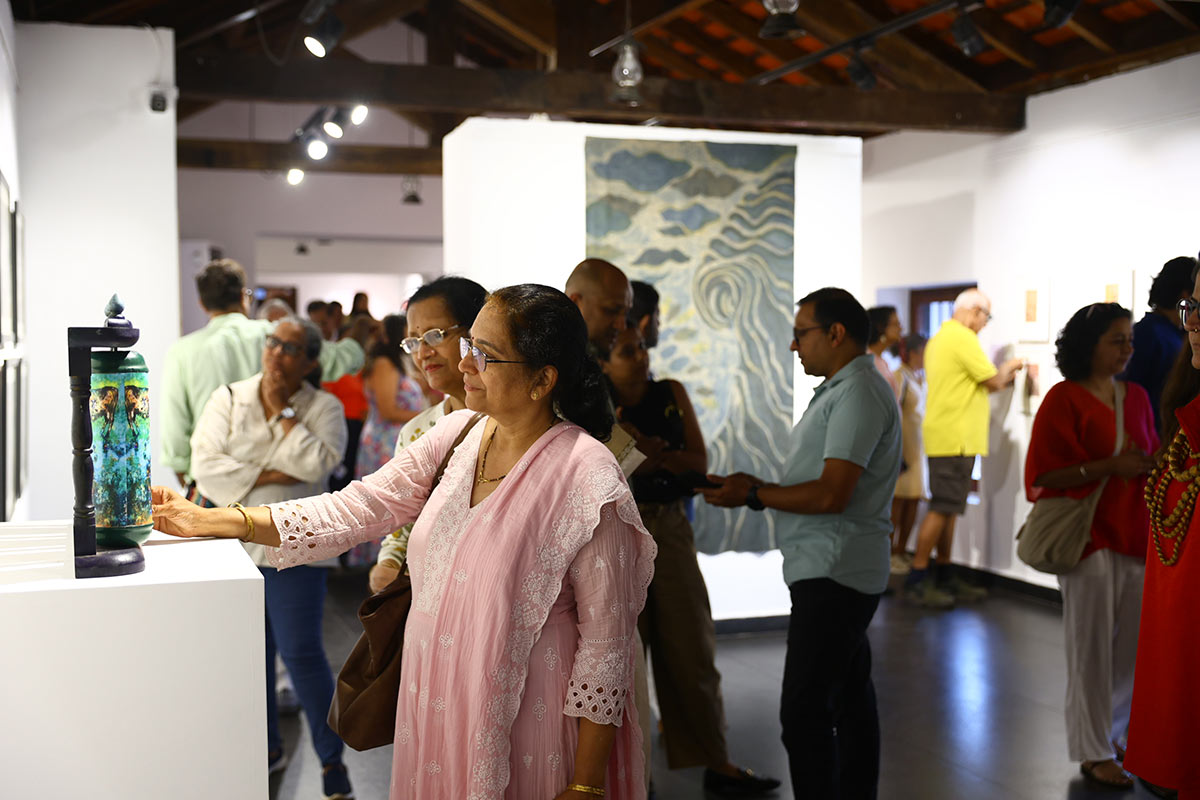
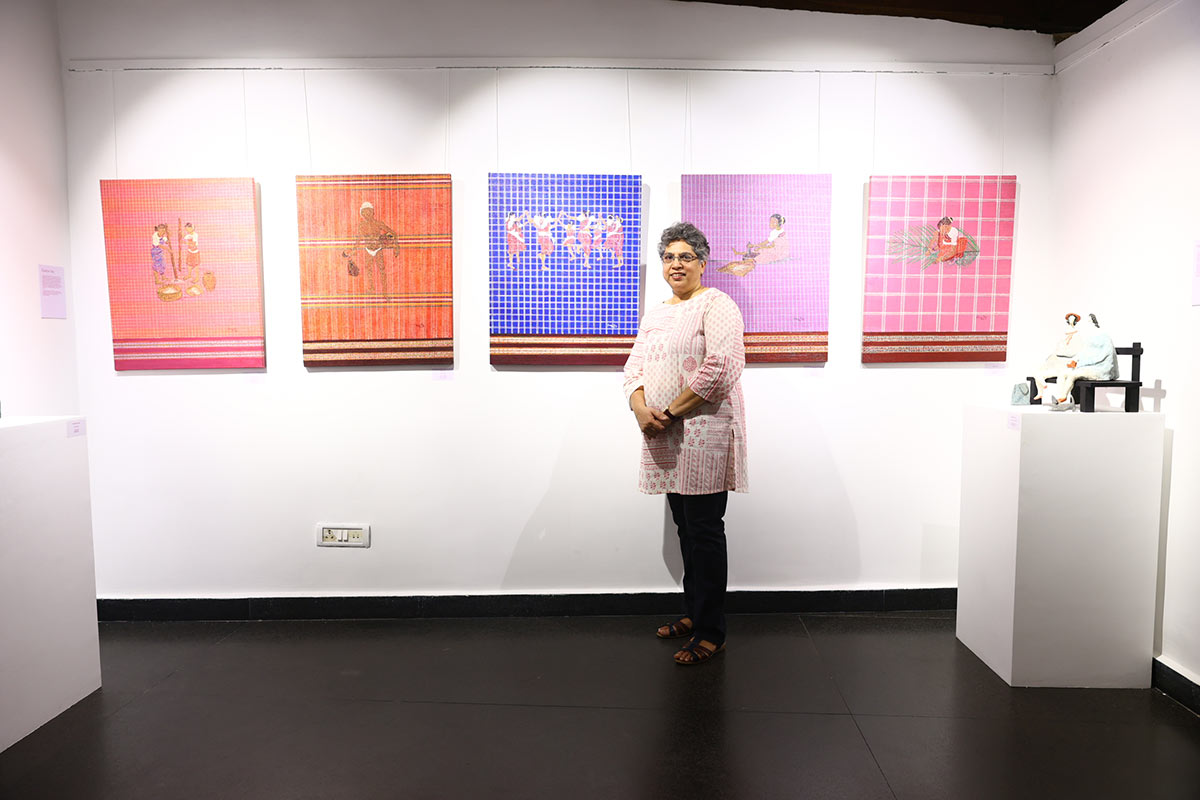
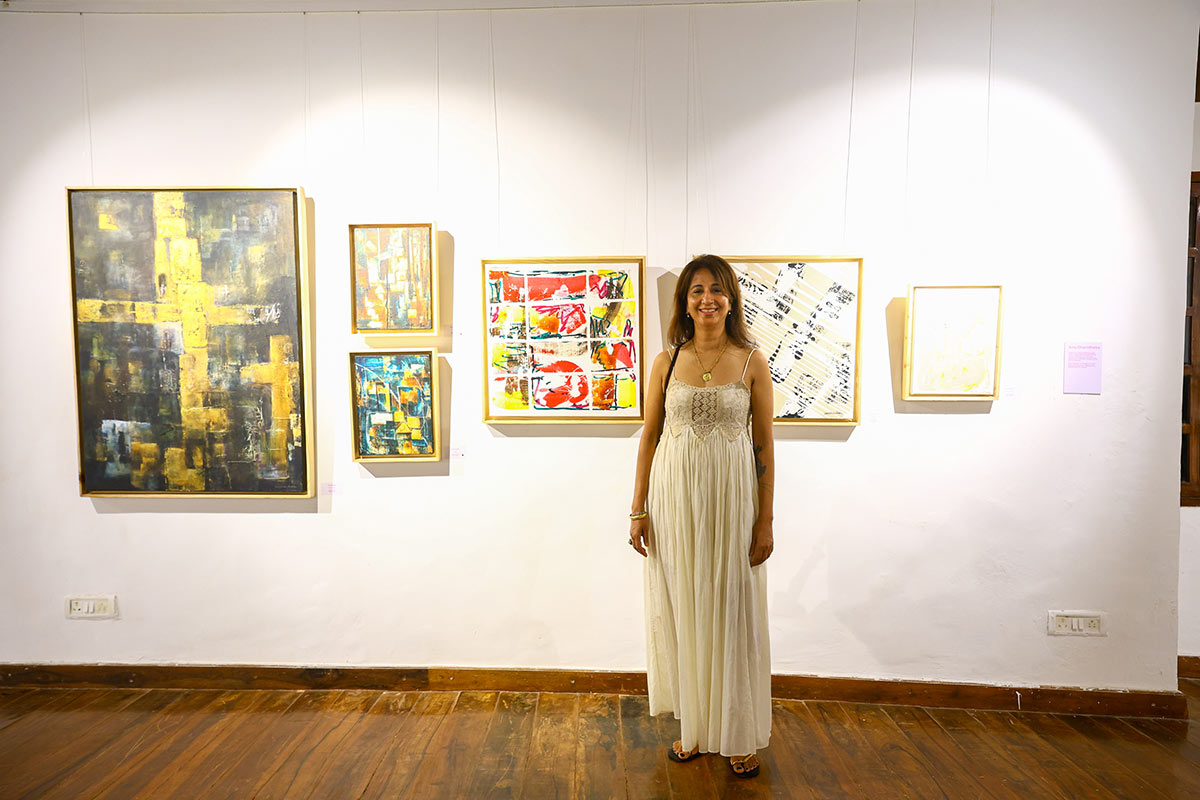
Delhi Art Society presents Samanvaya: Line · Colour · Form – Dialogues in Contemporary Indian Art, a group exhibition curated by Jyoti A Kathpalia. The exhibition is being held at the Main Art Gallery, Kamaladevi Complex, Gate No. India International Centre, New Delhi, from 20th to 30th March 2026. Featuring 25 senior artists, the show brings together a wide range of contemporary practices including painting, printmaking, and sculpture.

Curatorial Approach

The exhibition explores the interplay of line, colour, and form as central elements in contemporary artistic expression. Curator Jyoti A Kathpalia emphasises that the exhibition creates a dialogue between individual artistic visions and shared thematic concerns. The works, while deeply personal, collectively reflect broader emotional and spatial narratives within contemporary Indian art.

Artists and Participation

Delhi-Art-Society’s-Samanvaya-Show-02

The exhibition includes a diverse group of established artists such as Aashima Mehrotra, Anand Moy Banerji, Anju Kaushik, Neeraj Gupta, Jagdish Chander, Kalicharan Gupta, Shruti Binay, and Vandana Rakesh, among others. Their practices span decades and contribute to a wide spectrum of artistic approaches and techniques.

Participating Artists Include:

  • Aashima Mehrotra, Alka Jhamb, Anand Moy Banerji
  • Aniruddh Sagar, Anju Kaushik, Apoorva Garg
  • Avneet Chawla, Girish Urkude, Jagdish Chander
  • Kalicharan Gupta, Meena Deora, Mohan Shingane
  • Neeraj Gupta, Nivedita Pande, Prasanta Kalita
  • Prem Singh, Rachit Jain, Rakesh Kumar Gupta
  • Sanjoy Roy, Satish Sharma, Shashikala Singh
  • Shruti Binay, Shruti Chandra Gupta, Surinder K. Mishra
  • Vandana Rakesh

Key Artistic Highlights

Delhi-Art-Society’s-Samanvaya-Show-03

Several artists present distinct thematic explorations through their works:

  • Aashima Mehrotra explores abstraction through layered textures
  • Shruti Chandra Gupta presents narrative-driven compositions
  • Anju Kaushik uses colour to convey emotional depth
  • Kalicharan Gupta’s Metropolis series reflects urban expansion
  • Jagdish Chander’s work draws from abstract expressionism
  • Anand Moy Banerji explores human psyche through printmaking
  • Neeraj Gupta creates sculptural works using natural wood forms

Themes and Artistic Practices

Delhi-Art-Society’s-Samanvaya-Show-04

The exhibition brings together varied artistic languages that address memory, identity, urbanisation, and inner experience. Works such as Rakesh Kumar Gupta’s Heads series engage with abstract portraiture, while Shruti Binay’s compositions reflect absence and memory. Vandana Rakesh’s watercolours draw from tribal and primitivist traditions, merging them with contemporary sensibilities.

Organiser’s Perspective

Neeraj Gupta, President of Delhi Art Society, highlights the organisation’s ongoing commitment to promoting contemporary Indian art. He notes the importance of giving visibility to serious artistic practices, particularly in sculpture and contemporary visual language, to strengthen India’s position in the global art landscape.

Visitor Information

Aspects Details
Event Name Samanvaya: Line · Colour · Form – Dialogues in Contemporary Indian Art
Artist 25 Participating Artists (Group Exhibition)
Venue Main Art Gallery, Kamaladevi Complex, India International Centre
City New Delhi
Opening Date 20th March 2026
Exhibition Dates 20th to 30th March 2026
Organiser Delhi Art Society
Timings 11:00 A.M. to 7:00 P.M.

The exhibition is open daily from 11:00 A.M. to 7:00 P.M. at the India International Centre, a prominent cultural venue in New Delhi known for hosting art exhibitions, discussions, and cultural programmes. Entry details have not specified ticket requirements, and visitors are encouraged to check directly with the venue for access information.

Conclusion

Samanvaya: Line · Colour · Form offers a comprehensive view of contemporary Indian art through the works of experienced practitioners. By bringing together diverse artistic voices, the exhibition creates a shared space for reflection and dialogue. It contributes to ongoing conversations around artistic expression, cultural memory, and the evolving language of visual art in India.