Munnar – A Lush Green Art of Nature

0

Author – Cindu Chandrasekharan

Munnar is a truly lush green art of nature. This hillstation in Kerala is a tea town with breathtaking views, unpolluted air and a freshness that makes you want to never leave this place. The food, the water, the air… just about everything has a crispy freshness to it. If you intend to drive up (highly recommended) to this place, you can drive from either Kochi in Kerala or Coimbatore in Tamil Nadu, whichever is convenient. It’s a slow, long but easy drive up the hills. Whether you are an offbeat traveller or a package tourist, Munnar is a definitely a pleasant after taste that you can carry back with you : )

Munnar gets its name from ‘Moonu’ (3 in Tamil and Malayalam) ‘aaru’ (meaning river in Tamil) to indicate the location of this town, which is at the confluence of the three rivers Muthirapuzha, Nallathani and Kundali. And much like its name which has a Tamil influence.. this town has a huge Tamil influence even though it is located in Kerala’s Idukki district. People generally tend to speak both the languages.

The evergreen silver oak trees provide shade to tea shrubs

Munnar

Breathtaking waterfalls intersperse the lush green landscape

Munnar photo

Beautiful backwaters of Mattupetty Dam

Munnar photo

The renowned Kannan Devan Hills tea plantations in Munnar

Munnar photo

Hard to find any traffic on these winding roads

Munnar photo

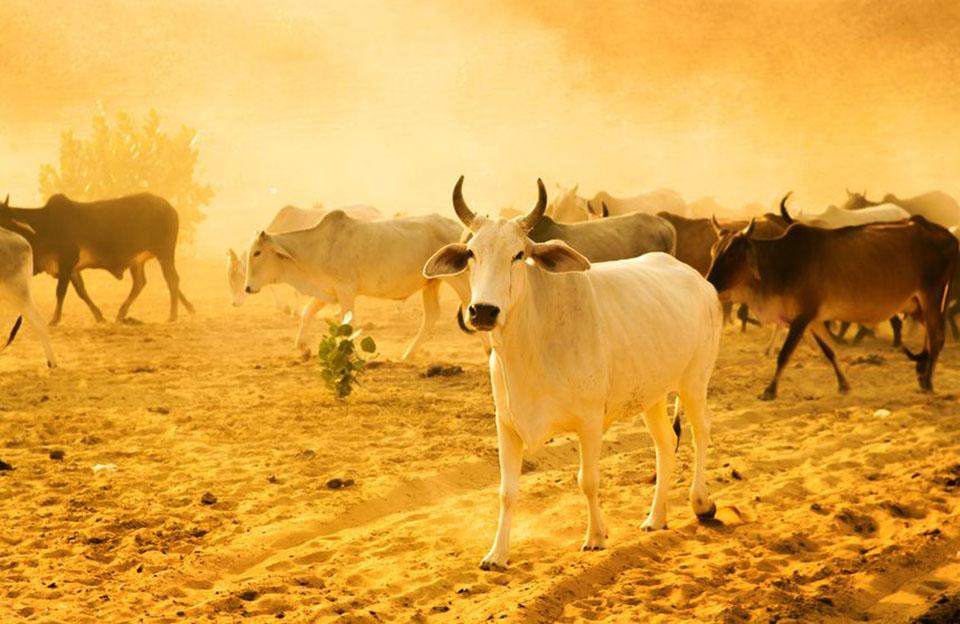
Beef Ban in India Implementation Possible?

0

Author – Sagar Godbole

Beef-ban-india
Source

Just when we thought the beef ban controversy in Maharashtra now settled, the issue has raised its ugly head in Kashmir. Earlier this year, the state government of Maharashtra triumphantly declared that the 1995 Amendment to the Maharashtra Animal Preservation Act has received the President’s assent. Most media outlets soon reported that the amendment has banned the slaughter of cows, bulls and bullocks, which was permitted earlier under the existing legislation after obtaining a fit for slaughter certificate. It was also widely reported that the punishment for possession of beef has been enhanced to five years imprisonment and a fine extending to 10,000 rupees. However, even today there is no further clarity regarding the act’s amendment.

Uncertainty Reigns

The Maharashtra government has not publicly released the full text of the amended act on cow slaughter, causing much confusion since no one has been able to study the bare text of the law. The Maharashtra Law & Justice Department website has a section where all the state’s acts and ordinances are supposed to be available but it conveniently reads “(Website) Under construction. Please check back soon.”

Most of the laws in India come with a provision that a newly passed act shall come into force after its notification in the gazette. This means that even after the Governor’s or President’s approval, the law still does not comes into force until the government takes the proactive step of publishing a gazette notification.

Due to the uncertainty regarding the beef ban implementation, the judiciary has had to step in. Hearing a petition that filed by Bhartiya Gauvansh Rakshan Sanvardhan Parishad, a Division Bench of the Bombay High Court passed orders, directing Mumbai’s Commissioner of Police to implement the ban. Despite the order specifying that only the slaughter of cows, bulls and bullocks is prohibited and the slaughter of water buffalos is permitted under the amended legislation, the Deonar Abattoir has reportedly stopped the slaughter of buffaloes and bulls as well, because of the uncertainty surrounding the issue. Meanwhile, restaurants in Pune that served beef dishes earlier, nonchalantly continued serving their dishes just by changing their menu to indicate buffalo meat!

Furthermore, it is also unclear how the government plans to implement the ban on mere possession of beef, since after cooking, it would probably be impossible to distinguish whether the meat is obtained from a cow, a bull, or a buffalo. Jokes are abound questioning whether the beef already consumed also amounts to possession since it remains inside the body! Opponents of the beef ban in India are quick to point out that the police machinery could be better utilised for other important law & order matters such as ensuring women safety rather than checking the possession and consumption of beef.

In addition, the ambit of a cow slaughter act is equally ambiguous across various states. For instance, the Karnataka Prevention of Cow Slaughter & Cattle Preservation Act, enacted in 1964, forbid the slaughter of cows, calf and she-buffaloes but allowed the slaughter of bulls, bullocks and buffaloes if they were aged above 12 or if they were no longer fit for breeding or draught or did not give milk. In 2008, the previous Karnataka government led by BJP had widened the definition of cattle, made punishment harsher and increased the age of animal to be slaughtered. Later in 2013, the Congress reversed this decision and reinstated the old act!

Undue Harshness

While it is true that most states in India have a ban on cow slaughter, what sets the Maharashtra Act apart is its reportedly wider purview and harshness. It has been reported that the Act shall make possession of beef punishable by up to five years of imprisonment, which is a rather harsh.

A report of the National Commission on Cattle published in 2002 indicates that the violation of the cow slaughter legislation is punishable by a maximum of 2-3 years of imprisonment in most states. In several states such as Gujarat, Assam, Bihar, Karnataka and West Bengal, the maximum punishment is just six months imprisonment. In Maharashtra too, six months imprisonment was the norm before this Amendment. Delhi and Haryana are the only other states to have prescribed five years imprisonment for such offences.

In order to put this matter in context, the punishment for possession of up to one kilogram of a banned drug such as ganja (cannabis) under the Narcotic Drugs and Psychotropic Substances Act (NDPS Act) is just six months of imprisonment, and even that is waived off if a first-time offender agrees to undergo de-addiction treatment. The offense of ‘sexual harassment’ recently added to the Indian Penal Code as Section 354A after the Delhi gang rape incident also carries a maximum punishment of just two years imprisonment.

Is possession of beef really a crime more heinous than sexual harassment or the possession of prohibited drugs? There is a dire need for the state government to clarify just how the ban is being implemented and justify to its people on the rationale behind its harshness.

Factfile –
http://www.dnaindia.com
http://bombayhighcourt.nic.in
http://www.livemint.com
http://www.dahd.nic.in

Religion and Ethics – Are They Connected?

0

Author – Karan Sampat

secular India - Religion and Ethics
Source

Ethics, or the ethos is about what is morally right and wrong for a person, or for society as a whole. On the other hand, religion talks about the god, or a supreme being, providing insights of right and wrong in life. When these two issues are intermingled and the question of the necessity of religion for ethics arises, we get varied answers. Some say that there is no need of religion for ethics, as our life must be based on the universal truth, and not on the guidance of a spiritual deity that we believe, but we cannot feel, touch or meet. However, as we discuss about this topic, we realize that the presence of religion in a person’s life does give rise to ethics.

There are a few people like Global Secular Humanists or the International Humanist & Ethical Union who state that there is no need for religion in order to inculcate morals in society. Well, they are right in their own way. We reside in an age which is plagued by the vermin of crime, corruption and senseless violence. These men who practice these criminal activities do perform services for their lord as well. These men religiously belong to a part of society, yet they go on to do the gory acts of violence.

There are the organizations like the Boy Scouts, and other NGOs which work to help people. The Boy Scouts have their main aim to be polite, honest, and helpful, and yet their guide book does not include any statement regarding religion. There is also an argument that religion makes you a bit biased in your moral and ethical decisions and could work against the main aim of following ethics.

Various parts of the religious texts say that man has never ceased to be evil. It is just the presence of a higher identity and a force which prevents him from proceeding to perform the cruel and vindictive acts. Well, yes. That is true. Let us take the example of a teenager. Being disallowed by religion to smoke or drink, the teenager in a bar with his friends will not move towards the drinks, even if he is forced to do it.
This is the effect which religion has on man. It creates a self-imposed boundary on the acts and at some point; it does have its effects. These limits may seem a bit farfetched at times, like in the case of a young girl who is pregnant because of being raped. This poor girl should be allowed an abortion at least in order to avoid the stares. That would be the best option when considered ethically and with a basic common sense. But a certain religion does prevent this. So, is religion guiding us in the right way here?

The restrictions posed by religion on drinking do hold us back from alcoholism, but are we being deprived of a good thing? A small quantity of alcoholic drinks are said to act as stimulants, and have been scientifically proved to be helpful as well. Brandy and wine are prescribed by doctors as well to help. But some religions reject this allowance, and thus there can be a moment when an ill person may be faced with a dilemma regarding this.

The Bhagavath Gita states that anger is a worthless virtue in life. We know that it is not ethically right to fight with someone for no reason whatsoever. Religion, as a whole, has gone a step forward, and has preached it to the whole world. It has said openly that anger is something not to be practiced at any moment in life, and that it would only work to harm a being.

To see, there are two sides to the same coin of the connection between religion and ethics. There are some decisions which can be made by just the use of common sense, and without the help of religion, like that of punishing a person for rape. Religion, on the other hand, is a bit stiff and orthodox, and has forever preached on the lines of complete disallowance of certain activities. These do feel to be too strict, and following the word of a God who we have just heard about and felt in our hearts does seem too stringent. But, religion does help to ensure the creation of ethics in a person and we cannot say that religion is not needed at all. It is just the matter of striking the right balance between common sense to decide the right and the wrong, and the laws about right and wrong which are decided by religion.


Top 5 Travel Apps You Must Have When You Travel

0

Top 5 Travel Apps
Source

Travelling is always a complicated affair: booking plane tickets, filling up forms, packing clothes, cameras, and guidebooks. The list of essential travel items is endless. Luckily, as technology has progressed, our suitcases have become lighter, and all of these complications have been compacted into one simple, easy-to-manage, hand-held device. However, with so much amazing potential within our mobile phones and tablets, it’s easy to miss some of the handy apps that could turn our travelling nightmares into a dream come true. Here are 5 of the best mobile travel apps that will make your travelling experience a breeze from start to finish.

1. Get organised with TripIt

TripItThe first hurdle of travelling comes before you’ve even left your house! In an ideal world, you could just walk out of the door and everything would go perfectly, but unfortunately, that is very rarely the case. Luckily, with TripIt, all the hard work is done for you. This incredibly handy app works alongside all major travel websites and will automatically store important details of your trip for you, including confirmation emails, check-in times for hotels, and flight numbers. All the things that would have left you scrabbling and searching inside your bag before are now all handled by TripIt!

Free Download TripIt on Google Play
Free Download TripIt on iTunes

2. Go with Skyscanner

Skyscanner appSkyscanner is a highly useful app that allows you the freedom to travel without being tied to the strict routine of pre-booking flights. It instantaneously compares different airlines, prices and flight lengths, and lets you book tickets within seconds once registered.

You will most likely be using public Wi-Fi in your hotel or a café when booking a flight abroad. Unfortunately, public Wi-Fi networks are not always safe. The last thing you want to deal with abroad is identity theft. Before leaving for you trip, find a good VPN to use to ensure your information stays safe and secure while traveling.

Free Download Skyscanner on Google Play
Free Download Skyscanner on iTunes

3. Stay with Hostelworld

Hostelworld AppLike Skyscanner, the Hostelworld app allows you to stay in control while on the move. A traveller’s worst nightmare is arriving somewhere and finding you have nowhere to sleep for the night! No matter how organised you are, things can—and usually do—change while travelling. With the Hostelworld app, you can easily find any type of accommodation, from luxury private rooms to lively and social dorms, no matter where you are or when you need it.

Other apps, such as Couchsurfing (available on both iOS and Android) and Airbnb, provide something similar for ones looking for a more intimate experience with a local host.

Free Download Hostelworld on Google Play
Free Download Hostelworld on iTunes

4. Stay Safe with a VPN

Express_VPN-app

Having so much potential at your fingertips is an unquestionable advantage when travelling. No matter where you are, you can stay connected and stay organised simply through the apps on your phone. However, when heavily relying on public Wi-Fi, it’s important to consider your online security and ensure you take the right steps to protect yourself. By finding the best VPN for you, you can quickly and easily secure your phones and eliminate the risk. The VPN will encrypt your information and protect you and your data from any prying eyes that may be abusing the security holes that mobile hot spots are so notorious for.

Free Download ExpressVPN on Google Play

Free Download ExpressVPN on iTunes

5. Reminisce with Trip Journal

trip journal appFinally, and perhaps most importantly, no travelling experience is complete without the memories you bring back from it. With Trip Journal, all of these memories can be easily catalogued in one place and shared with friends back home! The app allows you to document photos, videos, comments and blog posts, as well as track your journey and pinpoint all of the places you’ve visited. It’s also easily integrated with many social networks and sharing platforms, including Facebook, Flickr, YouTube, and Twitter, to allow you to stay connected.

Free Download Trip Journal on Google Play
Free Download Trip Journalon iTunes

Using these apps can transform a travelling experience! Gone are the days when we were limited to the information from our guidebooks or stuck trying to navigate desperate, broken conversations in foreign languages with bemused locals. We now have a breadth of information at our fingertips, giving us the freedom and spontaneity to focus on and enjoy what really matters: the experience! And so, with a little bit of inside knowledge and the right apps, the whole world can be your oyster!

About the Author-
Cassie Phillips is a blogger for Secure Thoughts, an excellent source for information on VPNs. She enjoys writing about internet security, data privacy and travel.


Tempering Idealism Against Realism

0

Author – Neeraja Sundar

Idealism-and-Realism-1

As a child, I misunderstood the word Utopia. My little brain confused it with Ethiopia. The poverty-stricken African country always raised the image of a malnourished child who is treasuring a drop of water. I was flabbergasted to hear that people dreamed of such living conditions. Two almost-similar words and such contrasting meanings!!! I thought of it as a close enough example for realism and idealism.

Idealism or Utopian concepts are dreams or thoughts of a nearly perfect world. It is often associated with youth who think big and hope to revolutionise the world. Very often idealism is nothing more than just thoughts or words. Young dreamers turn cynical or society discourages them. More importantly, their drive to achieve is short lived and not strong enough. They think big and do very little.

Our Indian movies show the protagonist as a do-gooder who cannot stand injustice. The villains or his friends advise him to not take on the world. But our hero, against all odds, changes every single person in the society to a just and morally upstanding citizen. This is a Utopian idea which is laughable and typically ‘us’.

Society is a heterogeneous group and idealism is a relative concept. The idea of idealism itself is Utopian. Our country’s favourite issue is corruption. I remember one particularly intense discussion involving the Hand, the Rising Sun and a significant sum of money. Young, enthusiastic minds pitched in opinions on how to eradicate corruption and lamented over the thieving politicians. That evening, as my friend and I were travelling on a two-wheeler, we were hailed by a policeman. It was the end of the month and my friend’s helmetless head looked like a giant 100 rupee note. Did we refuse to bribe him? Did we seek to deal with it in the court? Of course not! That is realism.

The concept of utopianism sparks in the youth and dies right there. This is because an ideal world is the highest peak of Everest and we haven’t even reached the Himalayas yet. Reality bogs us down at every turn. Reality can seem pessimistic and we look for an opposite outlook.

In the literary world, realism focused on the mundane and workaday activities of people- no exciting lives, no stimulating adventure or earth-shattering romance. It showed the functioning of human mind which can actually never stay aboard on a single train of thought for a long time. Our minds are fickle and our temperaments, weak. We want something that massive that the small victories or contributions are overlooked.

The reality of realism frightens us and causes us to fantasise about a perfect world where each of us are exemplary.
We have a long way to go. A perfect world is an excellent goal to work towards. But it has a million intermediate steps. We need to tackle our problems one at a time- starting with ourselves. ‘Be the change you want to see’ was a famous quote by Gandhi. As narcissistic as it might sound, everything starts with us. We have made it so and we should live by it.

Realism is the realisation that dawns on us that changing ourselves is not that easy. And we think of changing the world.

Idealism and realism are rather two mutually exclusive concepts. To express it mathematically, we can conjure a Venn diagram with two tangent circles. I am not propagating nihilism but stating the harsh reality. It is easier to live as a realist and dream like an idealist. It involves ‘accepting’ situations as it is and wishing for a glorified life. Both seem like escapism.

Someday the two circles ought to merge or at least intersect. Someday idealism can be realism. I do not wish to state philosophy about how all our efforts and determination can be channelized into creating a better future.

Idealistically, that is what ought to be done but realism prevents it. Utmost what can be done is stop confusing the future with the present, stop hoping for idealism while ignoring the reality.

Understanding idealism and realism is important. There is more than just a fine line dividing them. As a matter of fact, a wide chasm separates them. If realism is a vast ocean, idealism is zenith. We need to swim in the waters and rise onto the land before we can hope to fly.

Image – Pixabay

Smartphone – Bridging Generational Gaps

0

Author – Shubhi Dixit

Smartphone-Bridging-Generational-Gaps
Source

Remember the time when there was just one transistor for the whole village and people gathered around it during cricket matches and news hours for infotainment… The time when people rushed to send a telegram to urgently give good or bad news… And the time when friends and relatives living abroad seemed so distant because contacting them was a herculean task… Things have changed so much since then. Communication has taken vast strides and has spread its wings to surmount all the hurdles that tied it down in the past.

However, the prevalent trend shows that only Generation Y and Generation Z have connected well with the technological advancements. A large mass of people is still nonchalant towards the new trending discoveries. Hence we often find gaps in the generational perspectives. I witnessed a similar situation when my father’s archaic cell phone finally became non-functional.

“All I need is a phone that allows me receive and make calls.”- is what my father stated as his requirement. I thought the generation behind us seemed quite reluctant to embrace the new technology of smartphones. They also despise the fact that the youngsters are always so involved in their phones. And no amount of explanation convinces them that it’s not just games and messaging that keep people glued to their phones!

Recently, I got my parents a Smartphone to make the situation a little smooth and to introduce my parents to modern amenities. There were vociferous protests accompanied by ideas on how that money could have been put to better use. But this time I was determined, the phone was there and so were my efforts to teach them how to make their lives more comfortable.

My efforts started with my dad. Being a physician practicing in a small village in central India found a plethora of potential in his new phone. I introduced him to the WebMD mobile app, which helped him to sit in his dispensary and watch the new companies launch the advanced version of a medical drug he had been referring to his patients. When he had to go receive my uncle at the station, he would just sit at home and enquire the current train status through an app, thus saving his time and efforts in waiting at the railway station. He clicked pictures of the places he viewed and meals he ate and sent them on the family group through Whatsapp instant messaging application and thus none of us felt left out.

However, for my mother, it was like teaching a child to ride a bike. Every time she held the new expensive, shiny device in her hand, she felt that the touch-screen would get scratched or too much tapping would spoil the phone. But she too soon got the hang of it. She was listening to an old song and couldn’t remember its exact name. Through Shazam, the song recognition app, she was able to not only see the name of the film, artist and the recording studio but also the lyrics of the song. That’s when my mom seriously became a fan. She started searching for cookery videos, motivational speeches and short stories and the social media gave her a glimpse of her children everyday, which was such a pleasant feeling for her living so far away from her children.

The epic performance of this magical device happened when my pregnant sister went for her USG (sonogram) in Canada and my parents, who were sitting in their cozy drawing room without electricity in a small village in India, could see the live streaming of the foetus on their phone. It brought them tears of joy as they heard the doctor point out the head, hands and feet of their healthy grandchild. They soon took pride in showing off how they are so well versed with the latest trends and utilized the phone in ways better than I had ever expected them to.

Even though there are endless debates on how technology is replacing our old ways and people do not have time for each other, I saw the contrary happening in my rural home. The question now is, how difficult is it for the yesteryear generation to get accustomed to the ways of the present ones? Technology, sometimes brings gaps between families and family members, but there are many cases like my family’s where it has served as a unifying factor for bridging generational gaps and if anything, has made lives simpler.

Do We Worship Saraswati the Way We do Lakshmi?

2

Lakshmi vs Saraswati

“Yaa Devi Sarva Bhuteshu, Vidya Rupena Samsthitha
Yaa Devi Sarva Bhuteshu, Gyaana Rupena Samsthitha”

“To that divine power, who abides in the form of Education and Knowledge.” Those are the words written on a framed picture of Goddess Saraswati, which was awarded to me for my sloka recitation sessions in my sixth grade. Although my religious beliefs have evolved over the years, the picture still remains hanging on the wall of my room. Maybe it is the love and respect for education that my parents and teachers instilled in me at a tender age, or some sort of emotional attachment that I have for this peculiar yet special prize.

So, Saraswati (Saraswathi or Sarasvati), the goddess of knowledge and education has always held a special place in my heart. Unfortunately, it might just not be the same with many other people. Her importance seems to depreciate when compared to that of another divine power, Lakshmi – the goddess of wealth. Although Saraswati and Lakshmi are two among the several manifestations of Adi Shakti (The Supreme Being/Divine Mother), the latter has been stealing a lot of limelight lately.

My grandmother always said, “Pursue Saraswati, and Lakshmi will naturally come your life.” So I did, all my life. I inculcated an undying appetite for learning new things and seeking knowledge in everyplace I went and everything I did. However, sadly the scenario has changed today; in the hungry chase of the materialistic wealth, the goddess of knowledge has been left behind in this hypocritical society.

gurukul
Gurukulam | Source

In ancient days, acquiring good education was extremely hard and considered fortunate. A man had to be lucky to get a Guru to impart wisdom and knowledge in their lives. Women were often deprived of any education. Remember the story of Mahabharatha about Karna hiding his low caste from his Brahmin guru in order to convince him to impart knowledge…

Such was the importance given to the art of learning. However, with the changing times, there was a radical shift in the priorities and all it matters now is the green notes that we need to take forward the vehicle of life. Survival of the fittest, as they say, now needs money more than anything.

So, in this age of speed and greed, Lakshmi has overpowered her co-manifestation in an unlikely race. A visit to Goddess Saraswati is now just confined to initiation of ‘Aksharabhyasam’ for little kids or perhaps, during the time of competitive exams. What’s worse is that these days, Saraswati can be bought with the help of Lakshmi! I mean, look at all the mad rush for admissions in corporate schools and the management quota seats in colleges that can be acquired with stacks of money. Education now, can be achieved through money power. However, one can never fathom the true essence of knowledge, if there’s no interest and deference towards learning.

Maybe what I was imparted with during my childhood was a piece of wisdom passed on to me by my grandma. I need to say this because, there are many thoughts countering this statement about the association of Saraswati and Lakshmi. Many say Lakshmi and Saraswati are rivals, who do not wish to be in the same place at a time. Yes, many successful personalities and business tycoons are not highly educated. But people fail to observe that those achievers had immense skill and talent in their chosen field, which again turns out to be Saraswati.

kids-studing

Whenever someone acquires wealth through luck, say for example, a lottery or inheritance, Goddess Lakshmi is praised. This may be probably the only situation where Lakshmi comes without Saraswati. They take this one piece of argument and form a conclusion that both these divine powers cannot dwell together. What people don’t understand is that a fool and his money are soon parted!

There’s an ancient Indian aphorism that says “when we are at our worst, Saraswati stays with us while Lakshmi disappears”. It could be our pride of having wealth, or may be our negligence that we do not give importance to wise decisions in life; and they lead to our destruction.

No matter how many points we raise in an argument, it is an undeniable truth that we do not worship Saraswati the way we do Lakshmi in our lives. Look around for the numerous shrines in our houses, temples with golden gopuras and thousands of prayers during different festivals and one day devoted to her every single week.

If our country has to become a knowledge oriented society, we respect as much as we do Lakshmi. It need not be worshipping in the form of a deity, but acknowledging her manifestation in our lives in the form of knowledge, wisdom, intelligence, skills and consciousness. I believe, it is when Saraswati is truly admired, Lakshmi shines in our lives!

Factfile –

http://www.speakingtree.in

Top 10 Indian Children Movies You Must Watch

18

Indian-Children-Movies

Nowadays the theme considered in the movie has widened its outlook. The film maker just don’t want entertainment to give to the viewers, but much beyond that. They want a theme in the movie that would make the viewer say in excitement that ‘Yes, this is it!’. This is worth watching with family, that will generally widens the child perspective. The child will not just entertained him in those 3 hours of movie, but also be inspired by the movie and he would hence try to have new move in his life. Cinema has a huge impact on people and children. We try to imitate what is portrayed in the reel life in our real life.

Here, is the list of 10 Indian Children Movies that led to a bigger social impact on every child ‘s mind.

1. Taare Zameen Par

children movies - taare zameen par
Source

Taare Zameen Par is a great movie, seriously an inspiring slot. This is the kind of movie that can be view by everyone, regardless of the age.

The movie beautifully captures the life of a young boy ‘Ishaan’, a dyslexia child. He was great strugglers in his life. The movie has portrayed a beautiful lesson to everyone that every child  is different and have different needs in this world.

2. Udaan

children movies - udaan
Source

The movie portrays a story of thousands of youth from Indian middle class families, who desire to break free and follow their dreams passionately. The film was selected in the Film festival in the year 2010 to compete in the UN Regard. It was the first Indian film to be selected in Cannes.

3. The Blue Umbrella

children movies - the_blue_umbrella
Source

The Blue Umbrella is based on an Indian novel by Ruskin Bond. This is the great movie to watch, directed by Vishal Bhardwaj. This movie will surely teach a kid that even a villain doesn’t deserve cruelty or judgement in life.

4. Anjali

children movies - Anjali(1990)
Source

A beautiful story of a two year old mentally disabled ill girl, who has been kept away from her mother. The film was directed by Mani Ratnam, in the movie a couple is portrayed who has a third child who is mentally ill. She is on a verge of dying, and how her family cope up in this unwanted trauma is depicted hard in this movie.

5. I Am Kalam

children movies - I am-kalam

I Am Kalam is a must watch movie!

This is a peculiar, but an inspiring film indeed. The film depicts a story of a Rajasthani boy who looks up to President Kalam and finds the courage to follow his dreams passionately. Seriously, a heartwarming story.

6. Bum Bum Bole

children movies - Bumm Bumm Bole
Source

Bum bum bole is an official adaptation of the famous award winning Iranian film ‘ Children Of Heavens’.  This is the story of a 12 year old  who was forced to grow up before his time because of the severe bad time of his family.

7. Chillar Party

children movies - Chillar_Party
Source

The most entertaining movie till date for every children all over India. This is the kind of movie that can be watched with the full family. The movie is all about the young children who fought for their own rights in their own justified ways.

8. Stanley Ka Dabba

children-movies---Stanley-Ka-Dabba-2
Source

Stanley Ka Dabba is an entertaining piece of slot, a 4th grade student is forced to bring tiffin by his Hindi teacher and how he spend his time in school with all the difficulties is depicted very well in this movie. The school time can be  remembered very well through this amazing piece of work.

9. Koi Mil Gyaa

children movies
Source

Koi Mil Gyaa is the first Sci-Fi thriller movie, that displayed a boy and his friends who helped an alien and sent him back to his world. Quite, an interesting movie to watch.

10. Makdee

children movies - Makdee-2002
Source

The story is about two sisters, Chunni and Munni who is trapped by an evil witch of the village. The witch make them do difficult tasks in order to release them. This is an adventurous as well as an entertaining movie to watch by everyone.

Does Violence in Films Influence Society?

0

Author – Pravleen Chugh

Violence in Films

Being a filmmaker, I love movies. I end up watching three to four films a week. Analysing them has always been fun for me. This includes understanding the characters, breaking down the plot and studying the camera. This sort of analysis often raises questions in me, and an important one that I always ponder has been regarding violence in cinema, which is- “does violence in films influence society?”

Violence has been an integral part of cinema right from its inception, and Bollywood has not shied away from it. It has been proud to have action films like Sholay, Don, Ghajini, Satya, and Vaastav.  In fact, not only has violence been a key ingredient for hundreds of Indian films, but it has also been romanticized.  Violence acted out by the protagonist is often a sign of strength and courage, something to feel proud about. Whereas a character unwilling to partake in violence is looked at as effeminate and cowardly.

Heroes are often required to kill to win their lovers and many a times their violent behaviour is cheered on by their otherwise docile counterparts.

Such acceptance of violence in films is largely left unquestioned. Why do Indian audiences accept murder and physical brutality in cinema over the depiction of loving homosexual relationships? Why is there a warning sign every time someone lights a cigarette and not when someone picks up a gun? Is it better to blow up cars and cities than to kiss someone you want to spend the rest of your life with?

Violence in Films

With violence being one of the biggest forms of entertainment, can it in anyway influence people in real life? A lot of people would say no. Millions of people watch aggressive films, but not everyone goes out committing crimes and causing disruption after.
However, if films can influence other aspects of our lives like what we wear, what kind of hairstyle we get, what brands of gadgets we use, where we holiday and even how we approach potentials love interests; then why not violence?

We don’t see cars exploding on the streets like they do in Rohit Shetty films. So it is obvious that violence in films is exaggerated, just like everything else. People don’t break into song and dance after seeing a film, the same way no sane person will go out and kill someone after watching a murder on screen. But does the answer to the question end just here?

Although there may not be much evidence to prove that violence in films influences people’s behaviour, there are studies that suggest that it does have some short-term effects. Researchers suggest they might enhance aggression but only among people prone to it. Movies may also offer ideas on ways to kill or be violent for such people.

Dhoom, released in 2004, a film about a group of bikers that burgle banks and other public places inspired a group of bikers in Kerala to rob a bank in 2007. The group stole gold and cash worth lakhs of rupees. However, this isn’t new. The 1972 film starring Amitabh Bachchan, Bombay to Goa, inspired three working professionals to break into a safe in a warehouse. They admitted that they saw the film for reference.

Violence in Films

There are also findings that suggest watching sexually aggressive films negatively influence the viewer’s attitude towards women.

All this is concerning especially when it comes to children. Children often like to imitate what they see on television and in films. They cannot differentiate between fact and fiction until the age of four. This might lead them to view violence as an ordinary occurrence, affecting their sense of compassion.

The justification of violence and its representation as something “cool” may also influence adolescents to act out in order to impress their peers. Violence in Bollywood has risen so much in the last few decades, that Crores of Rupees are pumped in every year to stylise and carelessly display destruction, cruelty and gore.

Film lover Bharat Mordani says, “Bollywood is backward in several ways. When it comes to violence its consequences are hardly ever shown. Actors just want to flex their muscles and be ultra macho”. It is true that violence has existed long before movies, but its glorification can be a risk factor. For someone who is innately aggressive or vulnerable promoting violence can be a big problem.

Image Sources

fake-chetan-bhagat.blogspot.in
movies.ndtv.com

Ban La Tomatina, Ban Jallikattu?

0

Author – Levine Lawrence

La Tomatina

In an effort to liven up our boring lives, Google has doodled on the 70th anniversary of ‘La Tomatina’, the infamous annual tomato-throwing festival in Spain. Remember the protagonists of the Bollywood movie Zindagi Na Milegi Dobara having fun in Spain… yes, that strange yet quaint ritual of a tiny town named Bunol in Spain, where people gather in the town square and start throwing ripe tomatoes at each other. And then they get messy and romantic, and they kiss each other and clean up!

farmers trampling down tomatoes

I remember after the movie’s success in 2011, there were copycat event managers in India who wanted to organise a similar La Tomatina event in Bangalore and Mysore. Immediately our ever-active NGOs complained about it and over-zealous government swung into action to ban any such gross wastage of tomatoes. It was interesting that a right-wing BJP government in Karnataka took immediate action not only to prevent wastage of tomatoes, but also to shun such ugly imitation of the foreign culture.

While there is no disputing the fact that such an event would have been a sheer wastage of valuable food, which must be utilised for better purposes, there are so many other gross displays of wastage in India such as food wasted in marriage halls, water wastage due to overflowing tanks, rotting foodgrains in FCI godowns, etc. Our government and our beloved intellectuals are oblivious of the fact that tomato farmers in Karnataka were once prone to throw away their produce on streets as a mark of protest. In fact, I remember covering such a tomato throwing protest in front of Vidhana Soudha in Bengaluru!

Jallikattu

I really don’t understand why our society demands for banning everything. Our government sole purpose of existence seems to be abolishing all evils from our society. Remember Jallikattu… that strange and innocent bull-taming festival in Tamilnadu… Well-bred bulls are made angry and let loose onto the village roads, which are lined crazed up people, who are eager to latch onto the animal and hold it down. The daredevils who hold down the bull win prizes offered by the community. The dumb daredevils who couldn’t hold on, get trampled by the fierce bull and may even get killed!

Last year, the Supreme Court ruled that this strange yet traditional sport be banned. Animal lovers across the nation rejoiced. But I am actually at a loss to know how this sport is cruel to the animal! The bull actually tramples down humans and injures them right? Further how can our hyper-smart government enforce this ban on Jallikattu, which is traditionally practiced across many villages in Tamil Nadu?

When will we ever understand that banning a particular act creates a bigger thrill for the person who violates it… Now comes the latest… the central government is considering steps to amend laws to allow Jallikattu!

Image Courtesy: vox.com, Churmuri, bbc.com