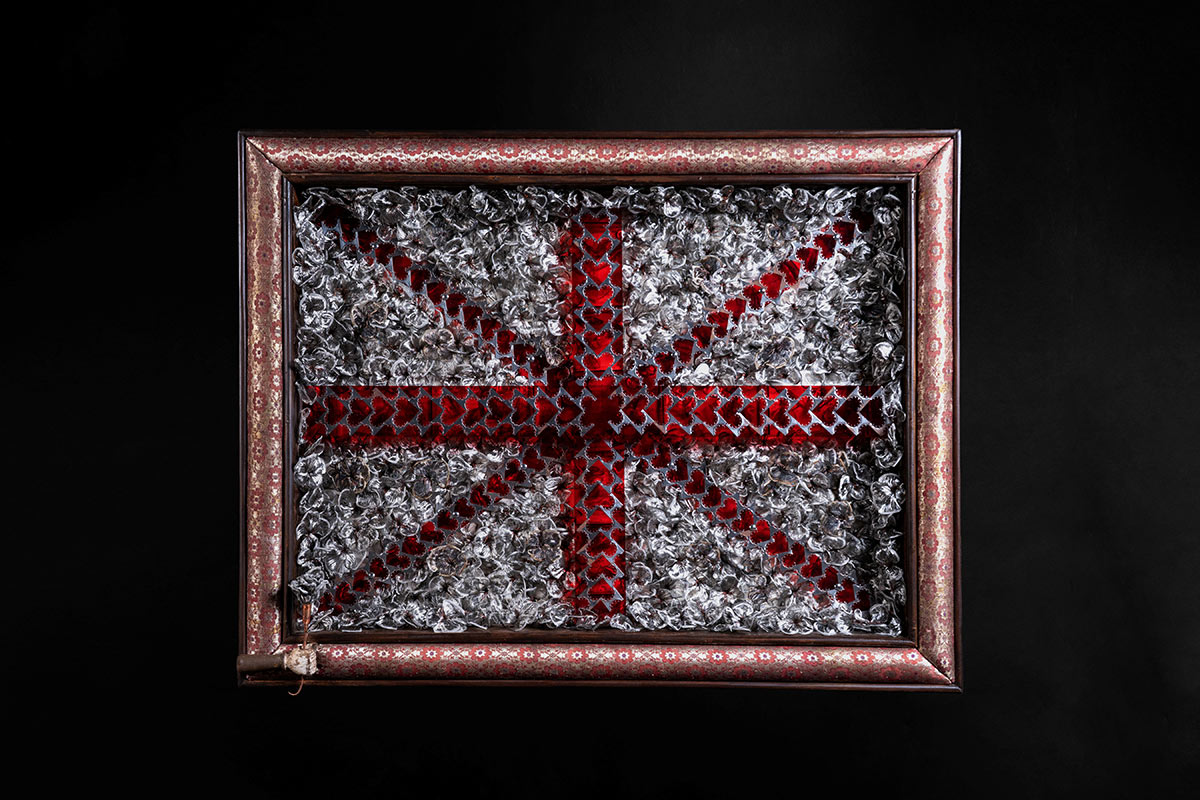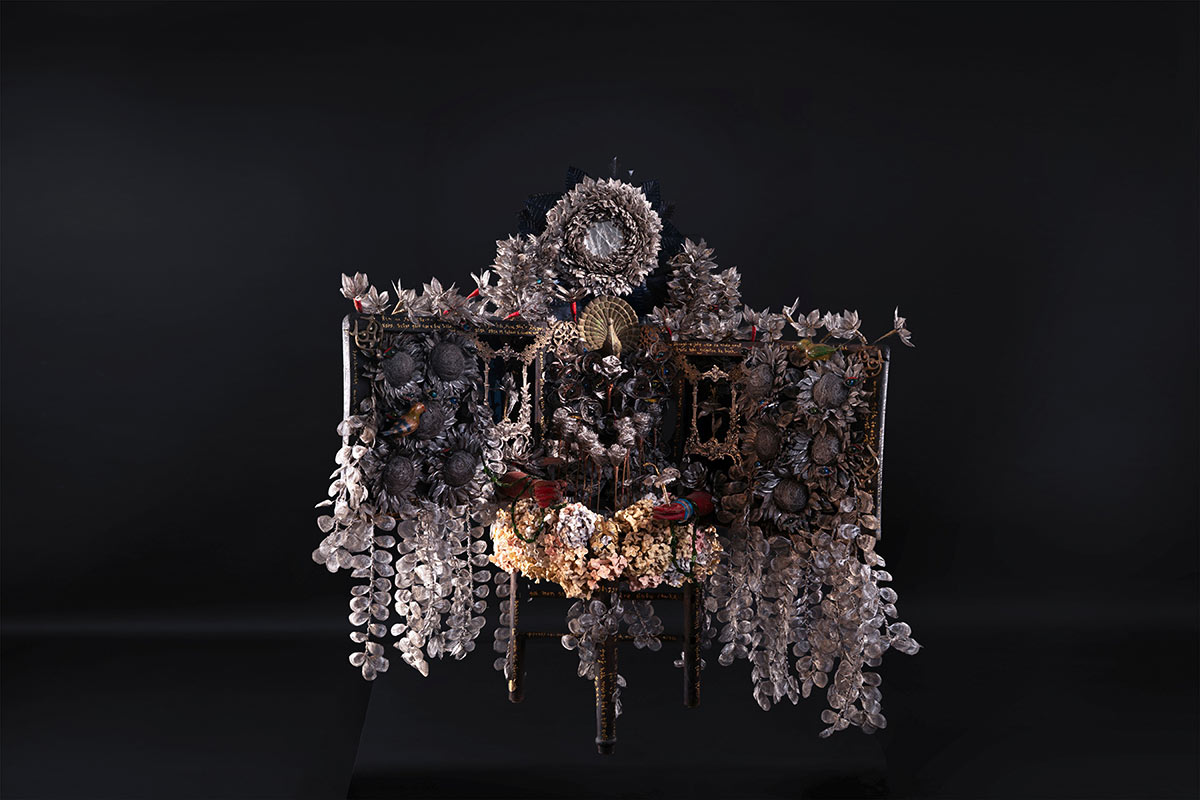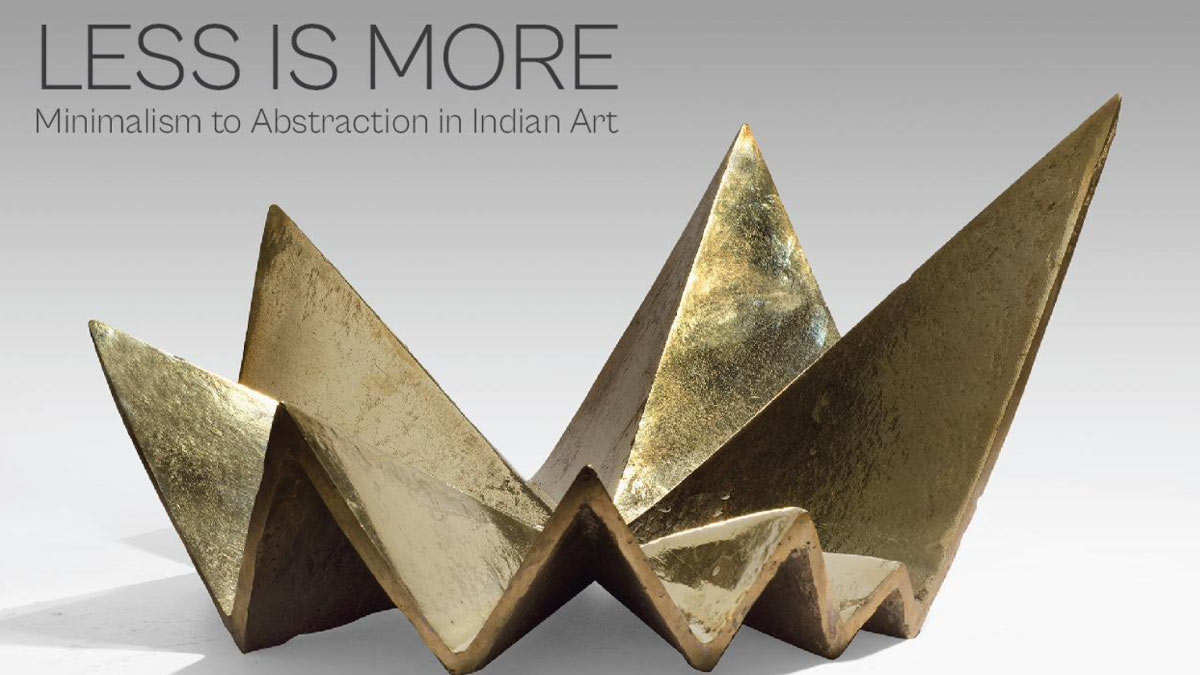
CIMA Exhibition – Less Is More: Minimalism to Abstraction in Indian Art

0

CIMA-Exhibition-Less-Is-More-on-Display

Beyond Form: Overview of the Exhibition

City of Joy, Kolkata, is currently hosting a thought-provoking exhibition at the Centre of International Modern Art (CIMA), titled Less Is More: Minimalism to Abstraction in Indian Art. It is a pivotal exhibition that explores the evolution and endurance of minimalism and abstract idioms in the Indian artistic landscape. This exhibition opened on December 19, 2025, and will continue to be on view till February 2026 at CIMA Gallery. Entry is free for all visitors, so that it can be accessible to all. In the realm of Indian art, minimalism and abstraction are frequently perceived as peripheral expressions. 

The Narrative

The “Less is More” functions as an interrogation of how people perceive space, silence, and the “inner life” of objects. The exhibition is curated and prolegomenoned by a mindful essay from Rakhi Sarkar. Her essay opposes and judiciously dismantles the long-standing Eurocentric narratives regarding abstract art. It does not accept it only as a product of the 20th-century Western invention. It also places Indian minimalism as the historico-spiritual base stemming from the precise geometric assimilations of Jainism and the “shunya” of the Vedic philosophy. By gathering over 100 works, the exhibition provides a sanctuary of “visual detox” in an era of digital overstimulation.


View this post on Instagram


A post shared by CIMA (@cimaartindia)

This metamorphosis is not just a stylistic element, but a conscious evolution of conscientiousness. For instance, the work of Ganesh Haloi features how the landscape transforms into a “landscape of memory” after being stripped of its natural elements. Sculptor Bimal Kundu utilizes industrial materials like aluminum to evoke the weightless essence of a bird in flight, proving that minimalism can be as emotive as any figurative work. The exhibition staunchly states the fact that although realism deals with externalism, abstraction dives into the metaphysical.

A substantial segment of the exhibition attests to historical roots that highlight the functioning of the Theosophical Society, founded in 1875, which acted as a conduit for Indian philosophical concepts of the “invisible” to reach Western pioneers of abstraction. This theosophical contextualization of the exhibition transforms the viewing experience of the observer.  When one realizes this root, the viewer is no longer just perceiving the “smudges of color” or “geometric lines,” but witnessing a dialogue between the ancient and the contemporary. The “Wounds” series by Somanth Hore, pale whites of Seema Ghurayya, etc., overturns the whole experience of viewing and highlights the “heightened attentiveness,” where the absence of recognizable figures forces an encounter with scale, rhythm, and weight.

Glimpses of the Exhibition

Important Points Details
Exhibition Title Less Is More: Minimalism to Abstraction in Indian Art
Venue CIMA Gallery, Kolkata
Curatorial Vision Tracing abstraction to indigenous roots rather than Western imports.
Featured Artists Ganesh Haloi, Prabhakar Kolte, Bimal Kundu, Shakila, and others.
Philosophical Base Connection to Vedic Hindu, Buddhist, and Jain geometric traditions.
Historical Thesis Abstract ideas traveled from India to the West via the Theosophical Society.
Structure A two-phase exhibition running until February 28, 2026.

Key Highlights

  • Less Is More presents over 100 works spanning different generations and media, rigorously exploring minimal and abstract visual vocabularies. 
  • The exhibition situates Indian abstract practice not as an offshoot of Western modernism but as a continuum with indigenous visual and spiritual traditions, such as yantras, mandalas, Warli, and Gond art.
  • It includes works by eminent figures such as S.H. Raza, V.S. Gaitonde, Ganesh Haloi, and M.F. Husain, alongside artists whose practices reflect more recent idioms navigating shape, space, and emotion.
  • Sculptural works by artists like Bimal Kundu demonstrate how minimal principles extend beyond painting into three-dimensional form. 
  • The exhibition is accompanied by an insightful catalogue featuring scholarly essays that deepen the conceptual engagement with the artworks on view.
  • Less Is More is presented in two phases; the current first phase runs through February, with a subsequent phase introducing additional works.
  •  It highlights that Indian abstraction is not a modern “experiment” but a continuum from ancient mandalas and yantras.
  • Features a wide range of media, including bronze sculptures, paper collages, hand-stitched textiles, and oil on canvas.
  • A focus on “reductive forms” that strip away excess to reveal the essence of emotion and rhythm.

Why is it Important

In a world that equates “more” with “better,” CIMA’s curation reminds us that the most profound truths are often found in what is left out. This exhibition succeeds because it doesn’t ask the viewer to “decode” a secret message; it simply asks them to stand still and feel the resonance of a single line or a field of color. It is a hauntingly beautiful testament to the power of silence in an increasingly noisy world.

The central premise frames minimal and abstract tendencies as inherent traditional practices featuring mandalas and yantras — and in tribal idioms such as Warli and Gond, where symbolic reduction is not merely stylistic but deeply tied to cosmological concerns and spiritual schema. Among the pieces that stand out are the works of S.H. Raza, Jag­dish Swaminathan, V.S. Gaitonde, and M.F. Hussain. Together, the works assemble a visual lexicon where less truly becomes more. 

Takeaway

This exhibition is a corrective to entrenched narratives about Indian modernism and abstraction. It recalibrates indigenous aesthetics and lived visual histories. It depicts how these artistic forms are beyond the stringent narratives of Western dominance and are liberated by the indigenous narratives. 

This exhibition is a rare opportunity for the public and students alike to witness how Indian artists have negotiated form, space, and presence in ways that are both phenomenologically rigorous and culturally resonant. In doing so, Less Is More stakes a compelling claim: that abstraction in India is not an imported aesthetic but an enduring visual language deeply embedded in the subcontinent’s artistic psyche.
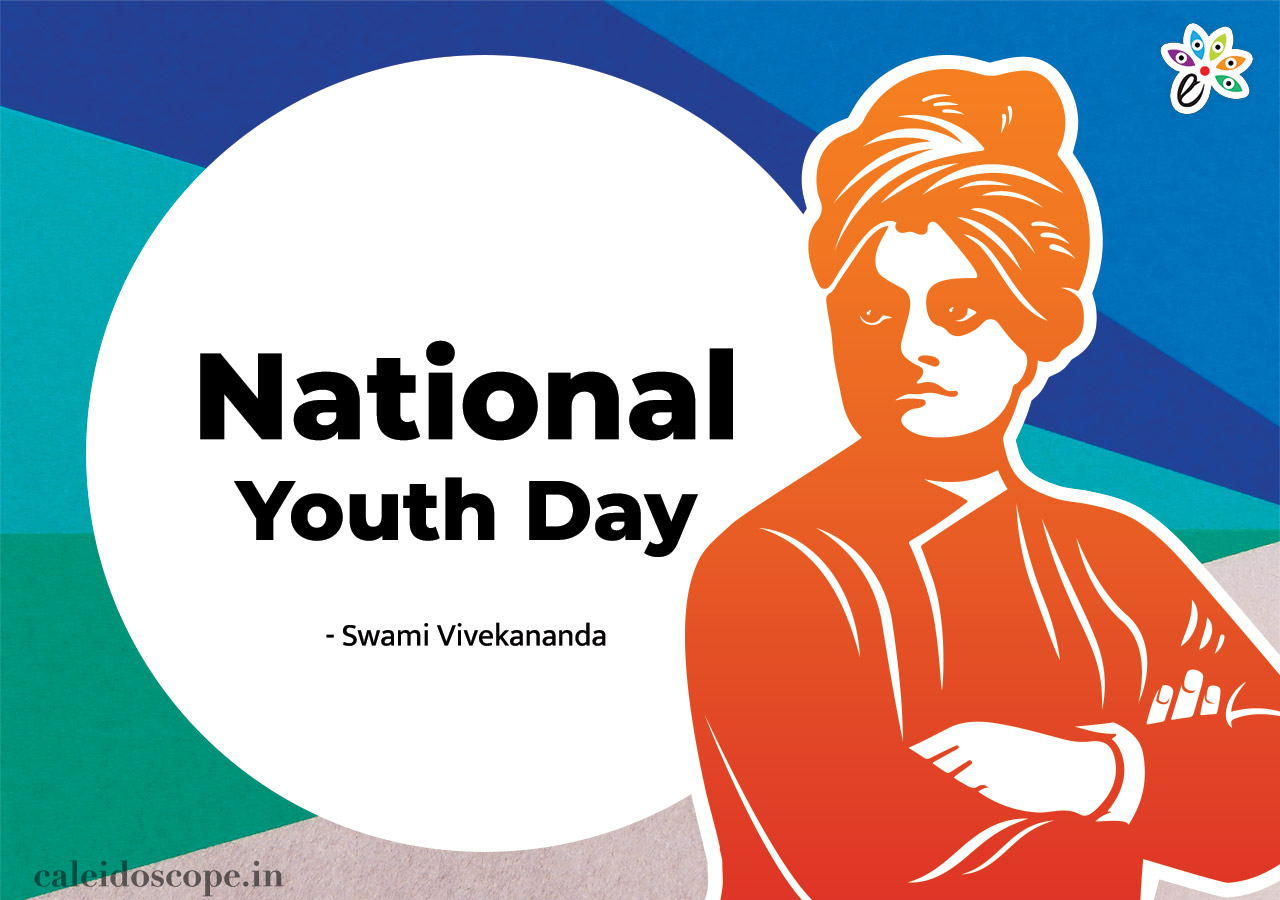
National Youth Day – Celebrating the life and ideas of Swami Vivekananda

4

National-Youth-Day

Swami Vivekananda is one of the most renowned figures in the world of Indian saints and reformers. His motivational words are widely circulated across social media to stir and inspire. He is presented as an inspiration to young people struggling with the responsibilities of their lives. However, in discussions on a deeper level, we realise that not many know much about him. What was his life’s work? How did he become the magnetic personality we all know him to be? What was his message to the youth of India and the world? Why is his birthday celebrated as national youth day?

Narendranath Dutta

Born as Narendranath Dutta into an aristocratic Bengali household on January 12, 1863, Swami Vivekananda displayed signs of greatness from an early age. In his childhood, he was mischievous and playful, but also had a serious side to him. He delved into the powers of meditation and restraint from an early age and was deeply fascinated by wandering monks. 

As he grew up, he developed a profound interest in philosophy, evolutionism, Sanskrit and Bengali literature. He displayed extraordinary academic prowess, with a masterful memory and a sharp, analytical mind. 

A young, angst-filled Narendranath was influenced by the firebrand, revolutionary ideas of the Brahmo Samaj, rejecting the caste system, idol worship, and even the philosophy of Advaita Vedanta, which he regarded as ‘madness and blasphemy’ at the time. He embraced the monotheistic thought of the Brahmo Samaj. 

The life of the young Naren saw two major turning points- his relationship with Sri Ramakrishna Paramahamsa and the death of his father.

Naren began visiting Sri Ramakrishna while still a teenager in around 1881, though he did not agree with his philosophy. Attracted to Sri Ramakrishna’s magnetic personality, he attempted to challenge his ideas and debate with him. 

After about two years in 1884, his father passed away, shaking the world and ideas of the young Naren, who had not been exposed to poverty and hardships at all. This led him to question the existence of God, but he kept visiting Ramakrishna. After his father’s death, he grew closer to him, and gradually accepted his ideas and became ready to renounce the world. In 1886, as Ramakrishna lay on his deathbed due to throat cancer, he passed on the ochre robes of Brahmacharya to a few of his disciples, including Naren. Later the same year, Narendranath officially donned the robes and became a Brahmachari taking a new name- Swami Vivekananda.

Swami Vivekananda

Swami-Vivekananda-Vision

After a brief stint in a monastery,  set off to live as a wandering monk in 1888. He aimed to explore the entirety of the length and breadth of India, witnessing everything in the country from the darkest to its brightest moments and ideas. He became grounded as he witnessed and stayed with people from all religions, financial statuses and walks of life. He developed a strong resolve to uplift the nation. 

To the West

In 1893, he started off to the West to spread the word about the great ideas of India’s ancient civilisation. He travelled through several countries including China, Japan and Canada en route to America. He wished to speak at the Parliament of Religions at Chicago, and struggled to secure a slot to speak as well as to physically travel there. However, as he made his brief speech on the eleventh of September, 1893, in the parliament of Religions, he became astoundingly famous in America for his oratorical skills and wisdom. 

Thereafter, he became a sensation in the West. Many Newspapers covered the mysterious ‘Orange Swami’ from India, and he was visited by aristocrats, public figures and ordinary people alike. He spent the next few years touring the US and the UK, giving free lectures on Vedanta. He attracted several prominent followers during his time in the West, from Nikola Tesla to the Countess of Sandwich, and became wildly popular. During this time, he established several Vedanta societies in the US as well as a peace retreat or Shanti Ashram amidst the mountains in San Jose, California. He had successfully introduced Hinduism to the West. 

Return to India

In 1897, he returned to the East after four years as his ship docked in Colombo. He gave his first public speech in the East here and his welcome to India, thereafter, was triumphant. He gave multiple public addresses en route to Calcutta in Rameshwaram, Kumbakonam, Chennai, Madurai and many other cities. He attracted such great audiences that trains were stopped by people sitting on the tracks just so they could listen to him speak. Rajas and Aristocrats from across the country visited him. He spoke of eliminating poverty and caste discrimination, national unity and strength of character while he was in India, because he believed these were important for the Indian audience. 

When he reached Calcutta, he founded the Ramakrishna mission and started journals to inspire the youth of the country- Prabuddha Bharata in English and Udbodhan in Bengali. He continued to travel up to the Himalayas in Almora, where he set up the Advaita Ashrama, a monastery. Thereafter, he mobilised social workers, trained disciples and even mediated disputes between communities while travelling the country. He was even asked to head the Research Institute of India(Now, the prestigious Indian Institute of Science), but he declined.

Last days

In 1899, he set off for another visit to the west and visited Europe and the middle east. After returning, he settled in Calcutta, administering the Ramakrishna Math’s activities across the world. His health was seeing a severe decline at this point, with severe chronic Asthma, diabetes and insomnia. On 4 July 1902, while he was meditating at night, he finally attained Samadhi. He was cremated on the banks of the Ganga. 

Philosophy and teachings

Swami Vivekananda believed in Advaita Vedanta, and believed that Adi Shankara’s interpretation of Hinduism was the best representation of the religion. However, he believed in a slightly different version of Vedanta, which reconciled both the Dvaita and Advaita schools- simultaneously accommodating for the transcendental and immanent nature of God according to the two schools. This came to be known in a few circles as Neo-Vedanta. He was also influenced by western universalism and interested in esotericism. He summed up his understanding of Vedanta as the following- 

Each soul is potentially divine. The goal is to manifest this Divinity within by controlling nature, external and internal. Do this either by work, or worship, or mental discipline, or philosophy—by one, or more, or all of these—and be free. This is the whole of religion. Doctrines, or dogmas, or rituals, or books, or temples, or forms, are but secondary details.

Throughout his life, he inspired young people to be dynamic and work for the welfare of the country, getting many of them involved in social welfare activities and the study of Vedanta. He believed in the revolutionary spirit of young people to resolve problems that were, and still are, plaguing our country and made an effort to reach out to them in monthly magazines, journals and speeches.

Takeaways

Swami Vivekananda was one of India’s greatest thinkers in the recent past. He popularised Vedanta in the West as well as amongst the youth of India and inspired them to think nobly for the good of the country. He also encouraged the people of our country to think progressively- persuading everyone to reject the caste system, develop scientific rigour, adopt industrialisation and dynamically fight colonial rule. The organisations he founded continue to spread his ideas, changing the lives of many even today.

FAQs on National Youth Day

Question: What is National Youth Day?

Answer: National Youth Day is observed every year on 12 January to mark the birth anniversary of Swami Vivekananda and to celebrate the spirit of India’s youth.

Question: Why is Swami Vivekananda associated with National Youth Day?

Answer: Swami Vivekananda is remembered as one of India’s greatest youth icons who inspired young people to build strong character, self-confidence, and service to society.

Question: What is the main aim of National Youth Day?

Answer: The main aim is to motivate young Indians to follow values such as discipline, courage, unity, and responsibility in building the nation.

Question: How is National Youth Day celebrated in India?

Answer: The day is celebrated through youth conventions, cultural programs, educational talks, debates, yoga sessions, and community service activities.

Question: Why is National Youth Day important for students?

Answer: It encourages students to develop confidence, leadership, and a sense of purpose while learning from the life and teachings of Swami Vivekananda.

Craft Collective: Inaugural Kolkata Edition to Showcase India’s Living Craft Traditions

0

Craft-Collective-Inaugural-Kolkata-Edition-00

Crafting the Future: The Dawn of the Craft Collective in Kolkata

For centuries, India’s craft sector has been the backbone of its cultural identity. In a world dominated by digital trends and fast fashion, the beauty and aesthetic appeal of a hand-woven textile is rare and is underpinned by threads of history. In order to dive deeper into India’s handloom, natural dye, and artisanal traditions, Craft Collective Kolkata Chapter steps ahead to reframe the craft traditions as a living, evolving cultural economy. The craft collective, organized by the Foundation for MSME Cluster (FMC) in partnership with KARU, Red Strategy Partners, and The Red Bari, with support from Cisco under the India Cash Grant Program, has announced its four-day edition in Kolkata starting from January 29- February 1, 2026, with free entry to all. 

This community-led initiative is designed to chisel the loop of “distance” that has turned craft into an obscure form. This platform not only opens up an exhibition but resurrects a movement to re-examine Indian craft through the lens of contemporary culture, design, and global relevance. Kolkata is a city that is historically oriented to textiles and thus becomes the perfect spot for its launch. From the indigo and silk routes of the Hooghly basin to the emergence of Bengal as a hub of muslin, jamdani, and kantha traditions, the city of joy has seen it all. Kolkata is a crucial mediator that accentuates local craft to global media.

A Confluence of Heritage and Innovation

Craft-Collective-Inaugural-Kolkata-Edition-01

This initiative is working in favour of inducting a qualitative change in how modern people spectate the artisanal sector. The event will be hosted at the Red Bari, a century-old heritage building situated at Kalighat. This event aims to metamorphose the way buyers, designers, and institutions interact with the makers. This initiative ensures an incubation of the artisan’s voice, so that it is not lost in the wave of commerce. Unlike traditional craft exhibitions and fairs, this community-led forum is specifically designed centering around 4 elements.

Craft-Collective-Inaugural-Kolkata-Edition-02

 It includes curated exhibitions and marketplaces, dialog sessions, master classes, and cultural performances. Altogether, the organizers aimed at creating an immersive ethos where artisans and consumers engage in qualitative exchange, rather than just monetary transactions. Hitherto, such clusters did surface in Assam, Odisha, Madhya Pradesh, etc. It signifies the paradigm shift in the approach to translating the craft and the craftsmen. 

Important Points at a Glance

Aspects Details
Event Craft Collective: Kolkata Chapter
Event Dates January 29 – February 1, 2026
Timings 11:00 AM – 8:00 PM
Venue The Red Bari, 18 Sadananda Road, Kalighat, Kolkata
Entry Policy Free Entry for all visitors
Core Organizers Foundation for MSME Clusters (FMC) & KARU
Key Support Cisco (India Cash Grant Program)
Featured Clusters Boko (Assam), Kotpad (Odisha), Maheshwar (MP)

Key Highlights

  • Curated exhibitions featuring master artisans from Assam, Odisha, and Madhya Pradesh
  • Dialog sessions with leading textile entrepreneurs, historians, and international cultural representatives
  • Master classes on traditional craft techniques and materials
  • Classical music performances creating a multisensory heritage experience
  • Free entry, making the platform accessible to students, researchers, and general audiences
  • Intellectual deep-dives featuring textile entrepreneur Shri Vikram Joshi, Bengal textile icon Nandita Raja, and expert Amrita Mukherjee
  • These sessions will also host the Consul Generals of France and Italy, fostering a truly international exchange on craft and collaboration.
  •  Interactive sessions that go beyond the finished product, allowing visitors to engage with the technical nuances of weaving, dyeing, and material processing.
  • To mirror the rhythm of the looms, the evenings will feature classical recitals, including Tathagata Mishra on the Esraj and Subhrojoti Sen on the Sarod, creating a soundscape that honors the depth of Indian heritage.

Why “Collective” Matters More Than Ever

Odisha-Cluster

A deep-dive into the Foundation for MSME clusters (FMC) unveils their commitment to empowering unorganized micro-enterprises. Through partnership with Cisco, they have already established E-learning Centres in rural areas to mitigate the digital divide. The Craft Collective is the physical manifestation of this digital thread of empowerment. The organization brings artisans from the Northeast and Central India to cities like Kolkata and provides them the platform and market to showcase and incentivize their crafts. 

The organizers aim to modernize the artisans without stripping off their traditional souls. The involvement of KARU is also vital. KARU is a design atelier focused on artistic mastery and sacred art. Under Vikram Joshi, KARU has championed the idea that “hand-made” does not refer to the finished product, but the “sustainable philosophy” and “human connection” embedded with it. Therefore, they are not orchestrating just another “mela,” but an inclusive space where commerce does not overpower tradition. 

A Sneak Peek into The Event

Craft-Collective-Inaugural-Kolkata-Edition-03

Apart from the buying and selling of craft items, there will be sessions that will comment on the growing international discourse that recognises craft as part of the cultural economy rather than peripheral artisanal labour. Further, there will be masterclasses to engage directly with the techniques, materials, and processes of production. There will be cultural performances, featuring classical recitals such as Tathagata Mishra’s Esraj and Subhrojoti Sen’s Sarod, to establish a consonance with the strings of the loom. The Craft Collective is a thrilling movement that aims to restore visibility, value, and dignity to the Indian artisans and give them a voice, and accentuate their bargaining power. They frame artisans as cultural agents and ambassadors who carry forward their unique tradition. 

A Way Forward

By inviting international cultural representatives and contemporary designers into the same room as the weavers of Boko and Kotpad, the organizers are acknowledging that craft must evolve to survive. It isn’t just about selling a product; it’s about acknowledging the artisan as a design partner. Craft Collective isn’t just a four-day event in Kolkata; it is a global statement that the future of design is, quite literally, handmade. This initiative does not merely preserve tradition; it activates it, making Kolkata once again a vital node in the global routes of textile history and contemporary craft futures.

Kiran Nadar Acquires Six Works by WOLF — On View at 47-A, Mumbai

0


A Garden of Fragments

Mumbai’s 200-year-old heritage spot, Khotachiwadi, is hosting an exhibition housing the artworks of Ritu and Surya Singh (the artist duo called WOLF), which has been selected to be included in the permanent collection of the Kiran Nagar Museum of Art (KNMA). A total of 6 artworks crafted by the duo have been personally selected by Kiran Nadar herself. These allusive artworks are currently exhibited at 47-A, curated by Srila Chatterjee, as part of this year’s Mumbai Gallery Weekend

Ritu-and-Surya
Artist Ritu and Surya Singh (WOLF)

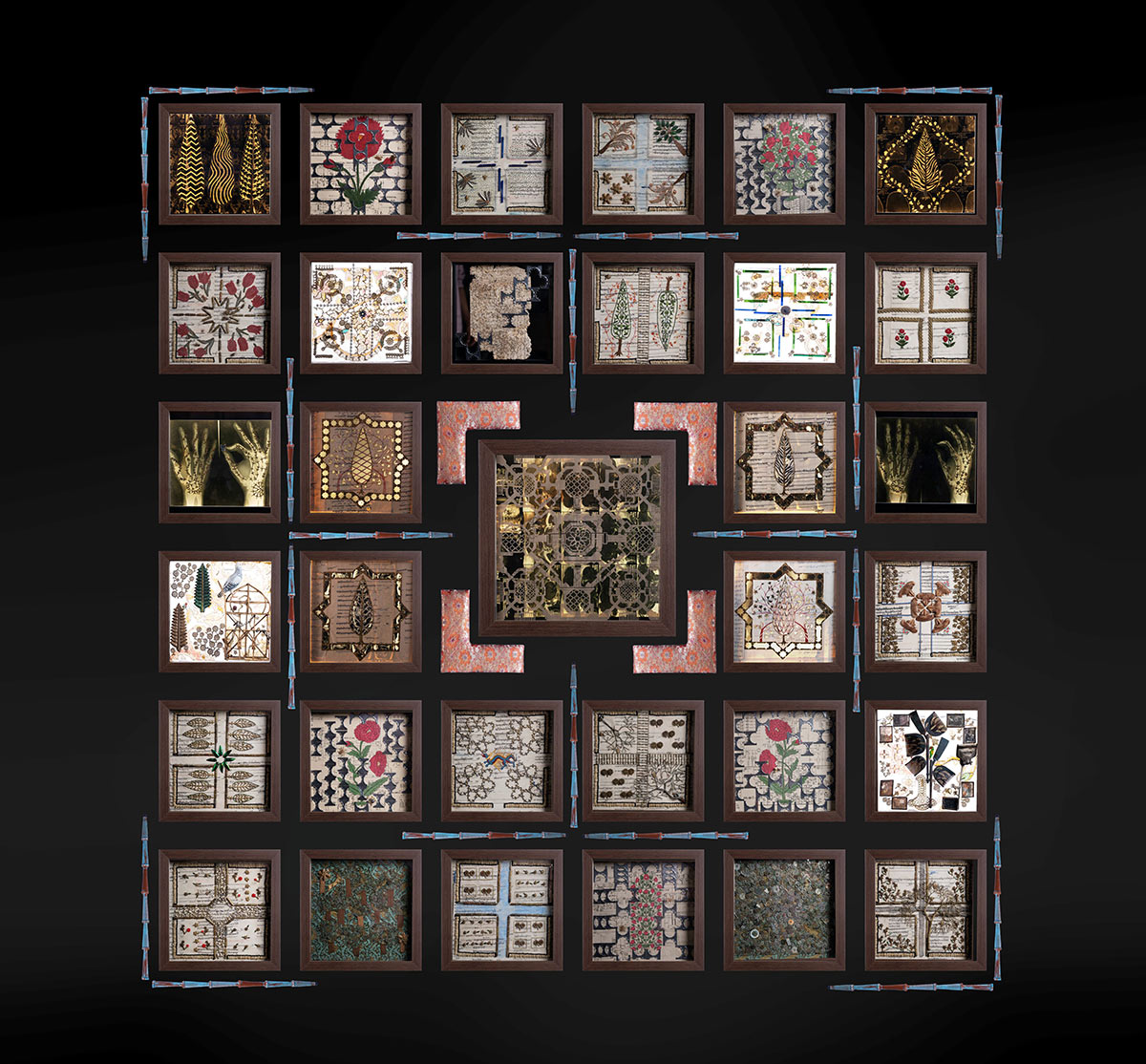
The artworks demonstrate a visual consonance of a “gul,” a rhaspodic intervention on love, loss, longing, healing, and a subtle recalcitrance. The gul represents a muted rebellion against the industrial world and replants the seeds of survival. The WOLF drew inspiration from the Persian Charbagh (four-part garden) that symbolizes paradise. The artist duo transformed broken, abandoned, and discarded materials into an ornamental garden, one that is both wounded and resilient. 

The Landscapes of Hope

Srila-Chatterjee,-Curator
Srila-Chatterjee, Curator

The Gul waves an introspective shadow of human experiences, of longing and grief, yet persistent in treading the path to find the ray of light. The WOLF’s artistic endeavour emanates from “material storytelling.” They use this method to “resurrect” the discarded objects, in addition to recycling them. 

The selected artworks are currently on view at an exhibition that unfurled in the last remaining heritage villages of Mumbai. This setup represents a bigger irony in itself, as the Khotachiwadi itself grapples against the fast encroachment of the “city.” The selected works feature the six major works by the duo, namely, Tear Fed, Eternal Garden, Breath, Lovers in the Garden, Gul Baghi, and Eye for an Eye. Each of these works offers a different gradient of emotional depth and purview of grief and rejuvenation. 

The Architectonics of the Exhibition

Important Points Details
Artists Ritu and Surya Singh (WOLF)
Collector Kiran Nadar (for the KNMA Collection)
Curator/Gallery Srila Chatterjee / 47-A, Khotachiwadi
Themes Love, Loss, Memory, Resistance, and Rebirth
Key Symbolism The Charbagh (The Persian-style quadrilateral garden)
Admission Free Entry for the Public

A Glimpse of the Artworks: The 6 Acquired Masterpieces

Eternalgarden
Eternalgarden

In Tear Fed, the artists have utilized a shattered shawl to construct the “map of paradise.” The reconstruction of the shawl is dedicated to the cartography of a paradise that is “wept into being.” Its rudimentary focus lies on the beauty that stems from sorrow. The fragile surface of the shawl is stitched and layered to synchronize the visuals with their perspective of how sorrow can also become fertile ground for rebirth.

EyeforanEye
EyeforanEye

The Eternal Garden takes reference from the Mughal era Charbagh in Delhi and harmonizes it with the Ganga-Jamuni tehzeeb. These two elements are synchronized to display a syncretic cultural view of the central plains. This artwork is a meditation on continuity amidst rupture. It coalesces the fragments of history and identifies a thread of continuity, referring to the fact that no culture or tradition goes in vain; people continue to uphold some aspects of the declining traditions. This artwork positions itself at the intersection of continuity channeled through loss. 

GulBaghi
GulBaghi

Breath features lungs made of brass that are nestled within “flowering ruin.” This piece dissipates a sense of healing and celebrates physical and spiritual revitalization.  It depicts breath as a political and emotional act of survival. The Lovers in the Garden directly poses a challenge to the colonial grid. It shows flowers blooming defiantly within rigid structures. 

LoversintheGarden

The Gul Baghi is perhaps the most literal representation of “safe-keeping.” This segment transforms discarded vaults and safes into vessels of poetic beauty. This overturns the capitalistic riffraff into effulgent refuges. And the Eye for an Eye seamlessly blends shattered mirrors and ceramic eyes to reconstruct a “haunting recollection” of humans into the niche of longing, surveillance, vulnerability, and grace.

Key Highlights

  • Six major WOLF works enter the KNMA collection, personally selected by Kiran Nadar
  • On view at the Heritage Gallery 47-A, Khotachiwadi
  • Free public entry during Mumbai Gallery Weekend
  • Reinterpretation of the charbagh as a metaphor of resilience
  • Use of discarded materials such as scrap metal, textiles, safes, and mirrors
  • Curated by Srila Chatterjee, known for championing experimental material practices
  •  WOLF proves that “found objects” can hold the same emotional and market weight as traditional media when handled with poetic intent.
  • The acquisition by KNMA places these works in the most prestigious private collection in India, ensuring their long-term preservation and study.

Material as Memory

Kiran-Nadar-Acquires-Six-Works-by-WOLF-Breath_Altar-(1)
Breath Altar

The WOLF has emerged as artists who directly delve into the critical discourses that vehemently expand the creative vocabulary of contemporary art and the modern indian materiality. Their gardens do not romanticise ruin; they dignify it. The WOLF opined that “These works are built from fragments, poetic, historical, intimate. We’ve always imagined the garden as both refuge and rebellion. To find our pieces resonate with Kiran Nadar’s vision is a profound honour.”

The acquisition of the Gul collection by the Kiran Nadar Museum of Art is a watershed moment as it validates the “aesthetic of the discarded.” In an era where climate consciousness and cultural preservation are at the forefront of global discourse, WOLF’s ability to find “insurgent beauty” in scrap metal is deeply radical. It suggests that our memories and our history are not lost just because they are broken. By including these masterpieces in the permanent collection of the KNMA, the art patron Kiran Nadar has preserved a blueprint for how we might navigate a fractured world. The world today requires more tenderness and understanding to keep blooming. 

Takeaway

GUL” is more of a manifesto that enables people view art from a different perspective, which emphasizes intimacy, care, and resilience. KNMA continues its legacy, engaging with artworks that emphasize storytelling and let people walk off with a part of it imprinted in their hearts. Furthermore, the free, accessible, and profoundly moving Gul stands as one of the most emotionally resonant contemporary art presentations in Mumbai this season, reminding us that even from fragments, gardens can still grow. Gul reminds us, with quiet conviction, that even the most broken fragments can still learn how to bloom.

BCC Carnival 2026: Celebrating Conscious Living, Wellness, and Sustainability

0

BCC-Carnival-2026-Bangalore-01

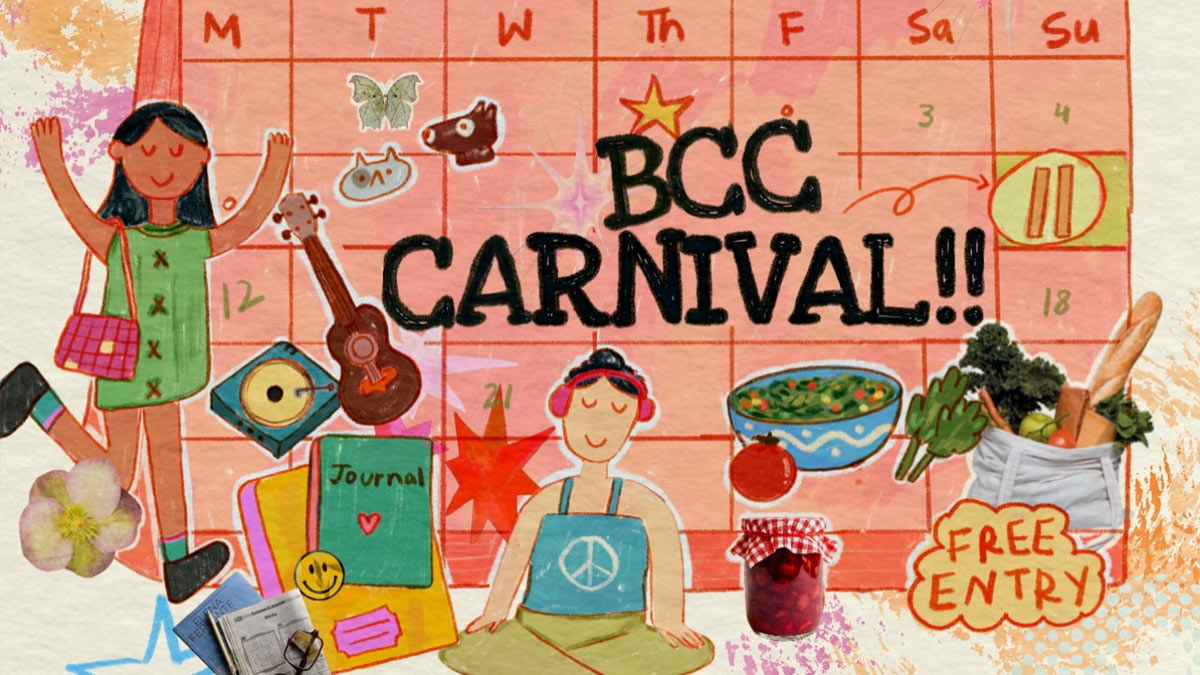
With the onset of 2026, Bengaluru is emphasizing a renewal of focus on sustainability, mindful consumption, and community spirit. With this New Year resolution in mind, the Bangalore Creative Circus (BCC) is inaugurating the much-awaited BCC Carnival 2026. This year’s theme is “New Year, New Beginnings.” It is scheduled to take place on January 11, from 12 PM to 7 PM at Bangalore Creative Circus, Yeshwanthpur (near Orion Mall / ISKCON). The carnival is presented as a judiciously curated circuit of conscious consumption. It also entails wellness engagement, artisanal entrepreneurship, and community-driven cultural life.

New Beginnings

The BCC Carnival is a flagship event that is designed to inspire “new beginnings” through the lens of making better choices that ought to benefit the planet and humans alike. The BCC is noted for converting a former warehouse into a vivacious societal crucible. This carnival will mark the first-ever public gathering for this new year. The organization looks forward to mitigating the splits between the traditional artisanal communities and urban consumers by orchestrating an organic setup where urbanites could move away from mass-produced goods and procure something more natural. The entry to this carnival is free, ensuring that anyone and everyone can reap its benefits alike. 

Reimagining the Urban Carnival

The BCC Carnival is aligned with a rising vogue among modern Indians, i.e., to re-envision leisure, lifestyle, and local economies with sustainability and holistic well-being. This also becomes a major attraction for the young adults who are keen on exploring and experimenting with alternative lifestyles. Initiatives like this point out the fact that audiences today are increasingly geared towards experiences that blend ethical consumption with creative engagement. To cater to this growing need, the carnival has arranged segments on wellness, farm-to-table food, and mindful living. 

Unlike traditional market-oriented spaces dedicated to rote consumerism, BCC has built its reputation on the pillars of “regenerative” culture. The organization operates a space that has reformulated itself as a “living laboratory.” The Carnival is the manifestation of the ideological outlook of the organization. By hosting this carnival, the BCC is offering a vital platform for micro-entrepreneurs to act as their collaborators to uphold their agenda to prioritize the planet over profit. 

A Space Beyond Market

The “conscious market” is the quintessence of the event. The market features a wide range of local brands offering healthy snacks, fresh produce, fermented foods, pickles, desserts, artisanal coffee, personal care products, accessories, and home-care essentials. Here, the people not only purchase the product, but also subscribe to the story in making, and interact directly with the makers. These products categorically represent the various circuits of a micro-economy that is rooted in local ecology and offers an alternative to mass-consumerism. 

For the 2026 edition, there will be “interactive workshops,” which intend to expand the focus beyond passive consumption. These workshops are supposed to facilitate active learning and promote the local elements. This allows the attendees to learn skills such as composting or basic urban gardening, rather than simply strolling past the objects for sale. Therefore, the carnival not only seeks to support Bangalore’s independent entrepreneurs but also encourages a tangible relationship between urbanites and local procedures.  

The carnival is also pet-friendly, thus showing sensitivity towards animals and facilitating an inclusive space for all. Thus, the BCC Carnival subtly reattests a sense of what a community festival could look like. 

Sneak Peek Into The Carnival

Aspect Details
Event Name BCC Carnival 2026
Date & Time Sunday, 11th January, 12 PM – 7 PM
Location Bangalore Creative Circus, Yeshwantpur
Entry Fee Free Entry (Open to all)
Theme New Year, New Beginnings / Conscious Living
Pet Policy Pet Friendly
Core Focus Conscious market, wellness, live music
Special Features Farm-to-table food, pet-friendly, workshops

Key Highlights

  • Free-entry community carnival in North Bengaluru
  • Conscious marketplace supporting local and ethical brands
  • Farm-to-table food and fermented health products
  • Interactive wellness workshops and activities
  • Live music performances throughout the day
  • Pet-friendly environment encouraging inclusive public participation
  • Family-oriented cultural and leisure space
  • Focus on sustainability, mindfulness, and holistic living
  • The Circus Canteen will offer fresh, seasonal, and healthy food, alongside stalls selling ferments, pickles, salads, and artisanal coffee.
  • A lineup of local indie artists provides a rhythmic backdrop to the shopping and dining experience.
  • Visitors are encouraged to bring their own bags and containers, aligning with the venue’s core mission of reducing landfill impact.

The Future of Urban Gatherings

The BCC Carnival is setting golden standards for how urban events should evolve. The BCC Carniva breaks through the festive fatigue and offers something different. By prioritizing “conscious market” labels and wellness activities, they are creating a new vogue to help the planet become a better place to be. They aim to create a “neo-conscious consumer” band who are willing to adopt an alternative and healthier lifestyle. 

Thus, the BCC Carnival 2026 emerges as a refreshing counter model, one that restores cultural events to their foundational role as sites of community bonding, ethical engagement, and mindful recreation. The organizers refuse to compromise on their core values for the sake of mass appeal. It remains pet-friendly, community-focused, and environmentally aware. As the whole world faces the climate crisis, little steps like these could be the start of a new journey. 

Takeaway

The BCC proves that living sustainably doesn’t mean living a life of deprivation; instead, it can be a colorful, musical, and delicious celebration of community. Ultimately, BCC Carnival does not just mark the beginning of a calendar year; it gestures toward the beginning of a more thoughtful urban culture, where celebration becomes a form of healing, shopping becomes an act of responsibility, and leisure transforms into shared social renewal.

In an era where cities are struggling to work for the betterment of the climate and ecological responsibility, the BCC Carnival quietly steps ahead and states that culture can still be humane, markets can still be mindful, and celebration can still carry meaning. It leaves its visitors not just with bags of artisanal produce, but with a renewed sense of connection to their bodies, their communities, and the everyday choices through which a more sustainable future can be gently, joyfully built.

Convergences: Shared Lineages, Practices, and Futures in Eastern Indian Art

0

Convergences-Shared-Lineages,-Practices,-and-Futures-in-Eastern-Indian-Art-A

The Ethics of Making in Eastern and North-Eastern India

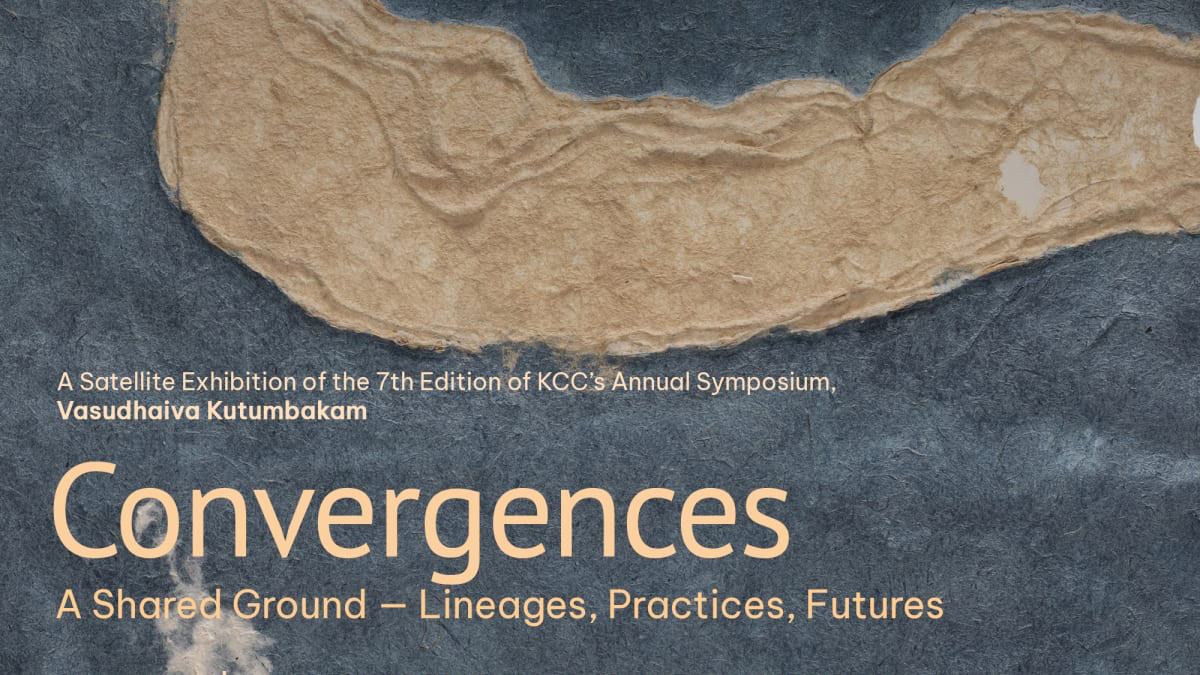
The city of Joy is known for its excellence in art and its relentless pursuit of the “new.” In search of the new, the Kolkata Centre for Creativity (KCC) has inaugurated a new satellite exhibition titled Convergences: A Shared Ground — Lineages, Practices, Futures as a part of their 7th Annual Symposium, Vasudhaiva Kutumbakam (The World is One Family). This exhibition is scheduled to be on view from January 9 to February 14, 2026. This exhibition presents a dedicated view into contemporary debates on sustainability, community knowledge, and decolonial practices of making. Most importantly, the entry is free for everyone, making art accessible to all. 

This exhibition probes into how artistic, craft, and architectural practices from Eastern and North-Eastern India serve as a continuum of embodied knowledge and ecological conscience. Today, as many indigenous and vernacular practices face erosion, KCC steps ahead in extending a helping hand to preserve and represent those in a proper, curated way. Convergences moves beyond the traditional displaying of exhibits and proposes a different approach that allows heterogeneous lineages to be represented under one roof. 

The Method of Convergence

The curatorial psyche emphasizes the “framework of production” itself. It detaches the act of making art from being a solitary event and frames it amidst its relationship with the land and communities of people who are producing it. The basic notion propounded by this exhibition is that “convergence” does not appear only in the sense of a stylistic arrangement but as a systematized approach too. 

The organizers are bringing numerous artists and collectives to the same plane. Anshu Kumari; ARTISANS’ Sustainable Development Foundation X Leshemi Origins; Dulair Devi, Malo Devi, Putli Ganju, Rudhan Devi, Sajhwa Devi (supported by Sanskriti Museum & Art Gallery, Hazaribagh); Ruma Choudhury; Silpinwita Das; Simi Deka; Ujjal Dey; and Ujjal Sinha, collectively articulate a material language shaped by bamboo, earth, fibre, thread, natural pigments, and organic waste. Thus, the exhibition forges a shared ground where distinct lineages seamlessly overlap. 

About The Vasudeva Kutumbakam Series

KCC’s Vasudeva Kutumbakam symposium series synchronizes with a broader movement in Indian art that challenges Eurocentric notions of progress and innovation. Instead, subscribe to the approaches of repair, reuse, and remembrance as radical acts. Repair stems from ethics, reuse aims to extend the lifecycles of materials, and remembrance ensures the continuity of intangible heritage. Together, they craft a counter-statement that propounds resilience over lavishness. 

One of the most significant developments in this exhibition is the inclusion of the eastern and the north-eastern regions of India. These regions have been historically marginalized and treated as “separate” elements, away from the mainstream cultural narratives. This exhibition wishes to bring their everyday practices of weaving, building, dyeing, and foraging, etc., into light and aims to reveal the system of knowledge framework that eventually arises from these communities. 

Therefore, convergences also probe into institutional hierarchies that make distinctions between “fine art,” “folk,” and “craft.” Thus, it fuels scholarly discourses that fit the lens of artisanal and community-based practices. The exhibition does not aestheticise tradition; rather, it situates tradition as an active, evolving force capable of shaping contemporary life-worlds.

Important Points of the Exhibition 

Aspects Details
Exhibition Title Convergences: A Shared Ground — Lineages, Practices, Futures
Associated Event Satellite Exhibition of the 7th Edition of KCC’s Annual Symposium Vasudhaiva Kutumbakam
Dates 9 January – 14 February 2026
Entry Free
Regional Focus Eastern and North-Eastern India
Key Themes Convergence, sustainability, embodied knowledge, repair, reuse, remembrance
Materials Used Bamboo, earth, fibre, thread, natural dyes
Participating Artists Anshu Kumari; ARTISANS’ SDF X Leshemi Origins; Dulair Devi et al.; Ruma Choudhury; Silpinwita Das; Simi Deka; Ujjal Dey; Ujjal Sinha
Core Philosophy Practice as a “Shared Ground” where continuity is valued over novelty.
Materiality Use of bamboo, earth, and natural fibers as ethical and cosmological choices.
Participant Mix A blend of individual contemporary artists and traditional craft collectives.

Key Highlights

  • Brings together indigenous, artisanal, and contemporary practices on a shared ethical platform.
  • Reframes convergence as a methodology rather than a visual style.
  • Focuses on sustainability, ecological consciousness, and community knowledge systems.
  • Challenges rigid distinctions between art, craft, and architecture.
  • Advocates repair, reuse, and remembrance as cultural and environmental imperatives.
  • Provides free public access to critical artistic discourse.
  • The works challenge the “flattened” progress of modernity by foregrounding transmission and care.
  •  Knowledge is presented as something absorbed through seasonal rhythms and lived experience.
  • The exhibition asks viewers to find value in the mended and the persistent rather than just the “whole” or the “new.”

Tracing the Event and Its Philosophical Roots


View this post on Instagram


A post shared by Emami Art (@emami_art)

The curatorial purview rejects the “throwaway culture” of the 21st century and builds something meaningful to shape a better tomorrow. While the symposium features global scholars discussing interconnectedness, Convergences provides the tangible, material evidence of this philosophy. It moves the abstract idea of “one family” into the physical realm of shared craft and architecture. This exhibition also looks forward to framing ethnographic tales by showcasing how innovation in these regions emerges from accumulated experience rather than sudden rupture. 

This interdisciplinary approach mirrors a global trend in “slow art” movements that aim to recalibrate the nature of viewing human labour in symphony with ecological awareness. 

“Convergences” emphasizes “sustainability.” It does not perceive the concept as a hollow buzzword. The most striking feature of the exhibition is that it embraces fragility like a concrete form.  It reminds us that our “shared ground” is not a solid, immovable slab, but a living, breathing, and occasionally wounded landscape that requires constant tending.

Takeaway

“Convergences” doesn’t just show us art; it teaches us a way of staying with the world. By privileging continuity over consumption and care over novelty, it offers a model for future art practices that are ethically rooted, socially accountable, and ecologically sensitive. It showcases the brilliance of an institutionally backed initiative in showcasing sustainable forms in an impactful way. It reminds us that the most radical futures may not lie in technological acceleration, but in the slow, patient wisdom of communities that have long known how to live with, rather than against, the world.

Terra & the Divine: A Collaborative Exhibition Opens at Milaaya Art Gallery

0

Terra & the Divine A Collaborative Exhibition Opens at Milaaya Art Gallery-A

The Alchemy of Thread: Confluence of Art, Craft, and the Mystical

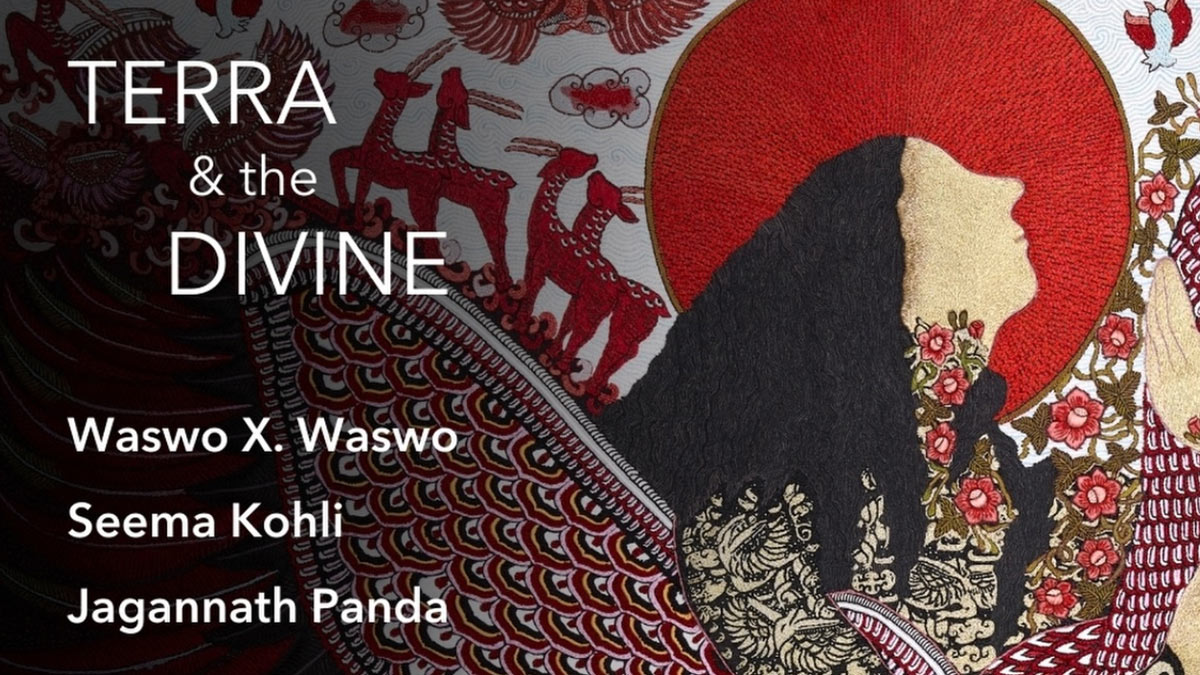
With the advent of 2026, Mumbai is glazing with a brand new exhibition titled Terra & the Divine — an ambitious contemporary art exhibition presented as part of the Mumbai Gallery Weekend (MGW) 2026. This exhibition was inaugurated on January 8, 2026, at the Milaaya Art Gallery in Kemps Corner, Mumbai. This four-day extravaganza proffers itself as a ‘city-wide’ celebration of contemporary arts. It has emerged as a major cultural marker on the cultural datesheet of Mumbai. This has emerged as one of India’s leading art shows, connecting galleries, collectors, academics, and most importantly, art enthusiasts.  

MGW orchestrates dozens of shows in the heart of the city. This exhibition stands out because it is a pure collaborative showcase featuring works by three internationally recognised artists: Waswo X. Waswo, Seema Kohli, and Jagannath Panda. The preview took place on January 8 from 11:00 AM to 7:00 PM. With the initiation of this exhibition, MGW has substantially enhanced its core vision and its commitment to continue engaging with a diverse audience. 

Exploring the Thresholds

This exhibition showcases the rawness of “hand embroidery” as a rudimentary medium that weaves the works of the three brilliant artists together. The exhibits on view are the results of a nearly two-month residency for these works and will continue to be on view till February 28, 2026. “Terra & the Divine” percolated into the Indian artscape with a dedication to refresh the vogue and to create a counterpoint against the rapid-fire nature of digital consumption. 

The philosophical core of the exhibition is well depicted through the transformation of fibre from a decorative element to a “medium of expression.” It bestows meaning on the threads and makes them lively.  By using embroidery, the artists challenge the traditional hierarchy between “craft” and “fine art,” elevating the stitch to the level of the brushstroke. The organizers believe that contemporary art can dissolve boundaries between traditional craft and conceptual depth. Traditional artistic media, such as photography, painting, and textiles, are recalibrated to rephrase and form a new set of dialogues between symbol, form, and cultural narrative.

Glimpses of The Exhibition

Aspects Details
Exhibition Title Terra & the Divine
Venue Milaaya Art Gallery, Kemp’s Corner, Mumbai
Key Artists Seema Kohli, Waswo X. Waswo, Jagannath Panda
Primary Medium Hand Embroidery / Fibre Art
Exhibition Dates Jan 8, 2026 – Feb 28, 2026
Event Context Part of Mumbai Gallery Weekend (MGW) 2026
Opening Hours 11:00 AM – 7:00 PM
Featured Artists Waswo X. Waswo, Seema Kohli, Jagannath Panda
Artistic Focus Intersection of myth, memory, urban life, and spirituality
Notable Medium Hand-embroidery integrated with contemporary visual art

Featured Artists

Seema Kohli contributes to the corpus of artworks with her multidisciplinary practice. She introduces the themes of Cosmic femininity, creation myths, and spiritual paradigms. Her artistic signatures span painting, sculpture, poetry, and installation. Her art sits at the juncture of mythopoesis and real-world experience. Her segments include the fascinating Hiranyagarbha (the golden womb) and the cyclical nature of life. A gaze at her artworks dissipates a vibe of transcending the earthly realm and stepping into a world that is neither mythical nor real. Her aesthetic core is inspired by the philosophical themes, ranging from Sanskrit cosmological ideas to ongoing global dialogues around gender and existence. The nicety of her needlework makes the divine tangible” and represents it through the “Terra” or Earth. 

Waswo X. Waswo is an American photographer and visual artist who found his ‘home’ in India. He brings a completely alternative aspect through his craft. His work establishes historical linkages with the inquiries about cultural encounter, representation, and visual memory. His photography entails elements of Indian miniature traditions that evoke an agency to personal as well as collective narrative building. His photographic intricacies delve into perspectives, and he expresses how the act of seeing mediates experience. His photographs include collaboration with local craftsmen, and in this exhibition, his “portraits unfold as tender acts of storytelling.” Waswo has an inherent tendency to depict “irony.” He uses irony as the accentuating lens to explore themes that add to the vintage effect of the traditional embroidery and weaves a complex narrative. 

Jagannath Panda’s artistic sensitivities also acquire a different corner of the carpet. He emphasizes urban sensibilities and cross-cultural aesthetics. Jgannath Panda is acknowledged for his attention to detail and his intricate and exquisite crafting of city life and modern mobility. His art synchronizes traditional elements with a modern touch. He skillfully maps how metropolitan intensities shape subjective consciousness. He is highly concerned about the ‘Ecological Pulse.’ He takes up the Terra and makes it the medium to express his opinion on the friction between urban sprawl and the natural world. By depicting industrial or urban motifs through the softness of fibre, Panda creates a poignant juxtaposition that highlights the fragility of our environment.

Key Highlights

  • Terra & the Divine is part of Mumbai Gallery Weekend 2026, connecting this exhibition to a larger city-wide art ecosystem.
  • The show features three distinctive artistic voices: Waswo X. Waswo (an American artist based in India), Seema Kohli (a renowned Indian contemporary artist), and Jagannath Panda (an Indian painter with a focus on urban experience). 
  • The exhibition places unusual emphasis on hand-embroidery not just as ornamentation but as a narrative and meditative art form, continuing a curatorial vision that Milaaya Art Gallery has been fostering in recent years.
  • Works on display explore cosmic symbolism, personal memory, cityscapes, and spiritual ambience, inviting visitors toward reflective engagement.
  • The show’s extended run, nearly eight weeks, underscores the gallery’s long-form engagement strategy, beyond the typical short-term fair schedule. 
  •  The show bridges the gap between the celestial (the Divine) and the terrestrial (Terra), exploring how humans navigate both realms.
  • While many MGW events are short-lived, “Terra & the Divine” offers an extended viewing window through late February, allowing for deeper public engagement.

The Significance of Terra & the Divine 

The Terra and the Divine successfully protracts its trajectory towards reclaiming the “feminine” and “domesticated” history of embroidery and rebrands it as a tool for high-concept contemporary commentary. The artists, by choosing their respective media,  are making a political statement against the sterility of modern life. The artists have worked hard to humanize the ultra-modern aspects of today’s world and ask the viewers to feel the texture of existence. 

The artist intricately engages with history, identity, and the sacred; the exhibition constructs a layered narrative where art becomes a site of reflection and resonance. Importantly, the platform offered by the Mumbai Gallery Weekend amplifies this dialogue across broader audiences, enhancing both accessibility and critical visibility. As Mumbai continues its rapid modernization, this collection serves as a necessary, tactile reminder of the patience and precision required to create something truly eternal.

Takeaway

Today, everything is dominated by fast fair cycles and market metrics. Amidst this, Terra & the Divine marks a significant shift that affirms that contemporary art can be intellectually invigorating and transcendental. Through this exhibition, Milaaya Art Gallery secures its position not only as a commercial space but as a cultural crucible where heritage, innovation, and contemplative creativity coalesce.

Footsteps Across Time: Dholavira Festival 2026 and India’s Oldest Urban Memory

0

Dholavira-Festival-2026

Echoes of Antiquity: The Harappan City

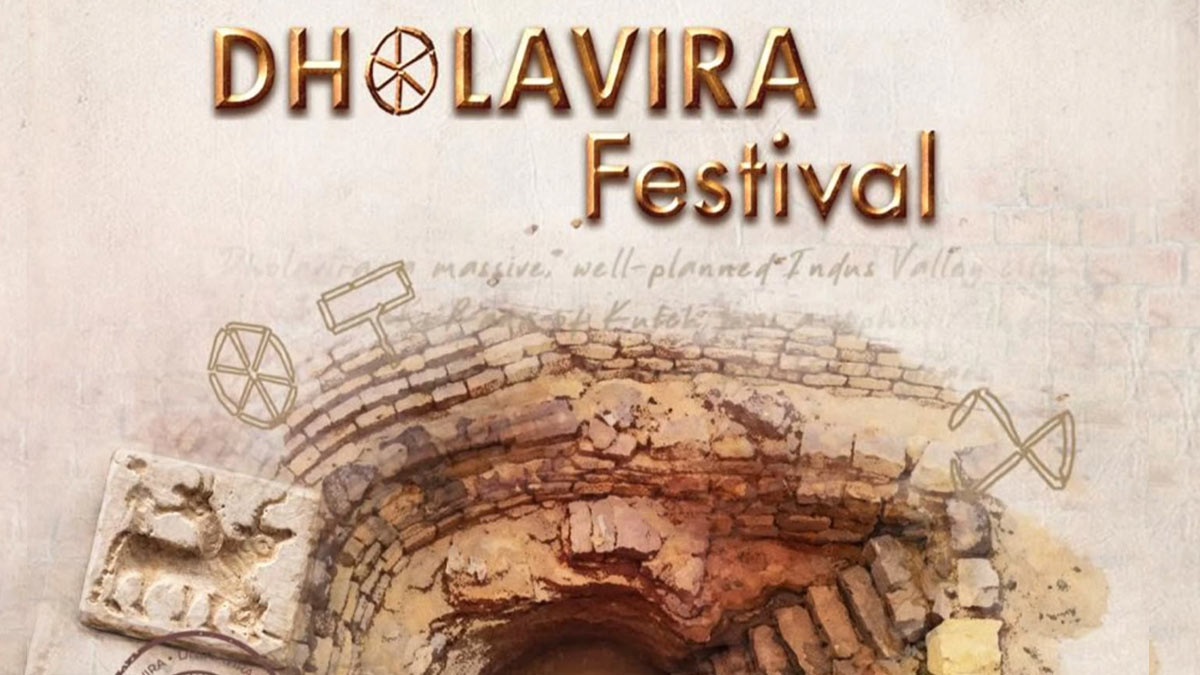
The arid plains of Dholavira in Kutch, Gujarat is on the precipice of hosting the much-awaited Dholavira Festival. It is slated to take place on January 10, 2026. The city of Dholavira is 4,500-year-old, and has been a UNESCO World Heritage Site since 2021. It is one of India’s most crucial remnants of the Indus Valley Civilization. This festival was conceived to bridge India’s glorious past to contemporary artistic heritage. 

The festival, organized by Craft of Art, aims to “reintroduce monuments to the people.” This initiative has successfully coalesced craftsmanship wth world-class performances for over 16 years. The 2026 edition includes heritage tours, classical and folk music, artisanal performances, and ceremonial celebrations. Known for one of the world’s earliest sophisticated rainwater harvesting systems with stone-built reservoirs and channels, the site of Dholavira offers the most suitable backdrop for the celebration of this festival. 

The Melodic Lineup and Cultural Significance

The 2026 edition enlists numerous musical cognoscenti, including Ustad Fazal Qureshi on the Tabla, Ganesh Rajagopalan, and Selva Ganesh. Alongside the Sufi singer Mooralala Marwada, who is also illuminating the stage, carrying the raw essence of the desert. The festival unfolds its prime from the late afternoon into evening hours. There are guided tours called Footsteps Across Time that will take visitors throughout the ancient cityscape. 

Similarly, art installations and craft demonstrations are also present. There will be a wide range of presentations, ranging from Ajrakh Block Print and Stone Bead Making to Tangaliya Weave. The festival has a brilliant lineup of classical musicians and folk singers, such as the Kutch Group – Kalavsa. There will be photographic exhibits like Unearthing the Indus that will let people travel through the archaeological narratives and heritage conservation. 

Glimpses of the Festival 

Aspects Details
Primary Venue Dholavira UNESCO World Heritage Site, Kutch, Gujarat
Date & Time January 10, 2026; 6:30 PM onwards
Organizing Body Craft of Art (supported by Gujarat Tourism)
Entry Policy Free (Prior registration via platforms like BookMyShow is required)
Musical Genres Indian Classical, Fusion, and Kutchi Folk
Historical Context 4,500-year-old Indus Valley Civilization city
Nearby Attractions Road Through Heaven, Wood Fossil Park, Great Rann of Kutch

Contextualising the Festival within Heritage Tourism

The Dholavira Fest does not cater as a source of entertainment alone, it is a deliberate cultural intervention to boost heritage-based tourism and archaeological education. The setting of the festival at a UNESCO world heritage site draws more people towards it and make them aware of the rich past that India had. This is indeed a heaven for history enthusiasts who wish to explore one of the largest and best-preserved urban settlements of the Indus Valley Civilization. 

The site of Dholavira holds immense historial importance in itself. Dholavira surfaced into the mainstream after it was discovered in 1967-68. It is the fifth-largest Harappan site and is acknowledgdeg for its well designed and sophisticated water management system. The site has a series of about 16 reservoirs which facilitated a substantial population belonging to a thriving civilization and allowed them to survive in an arid landscape. The organizers have a clear cut vision for situating the festival in here; they wish to bridge the chasm between the “minds of the Harappans” and the modern Indians. 

Key Highlights

  • Interactive Heritage Walks that guided participants through the urban layout of the ancient Harappan city.
  • Traditional Crafts in Action, including block printing and bead making, bringing centuries-old techniques to life.
  • Performances by folk and classical musicians juxtaposing the ancient site with living traditions.
  • Photographic Exhibitions that documented the excavation and preservation of the heritage site.
  • Cultural storytelling that positioned Dholavira not merely as an archaeological zone, but as a living narrative of human ingenuity.
  • The event utilizes “monument lighting” to highlight the intricate stone masonry and urban planning of the Harappans, creating a surreal visual backdrop for the music.
  • Travelers reaching the festival will traverse the iconic 30 km causeway that cuts through the white salt desert, often cited as one of the most beautiful drives in India.
  • Beyond music, the festival includes audio-visual shows that narrate the history of Dholavira and its trade links with Mesopotamia.
  • The festival coincides with the peak of the Rann Utsav (November–February), making it a centerpiece for tourists staying at the Dholavira Tent City.
  • A portion of the festival’s objective is to foster “monumental pride,” encouraging the younger generation to value and protect India’s archaeological treasures.

A Deeper Reflection Into The Festival

The Dholavira Festival 2026, represents a very judicious and indispensable evolution in how India presents its heritage. Ancient sites are frequently considered as “static” indicators of a long gone past; however, festivals like these alters this regressive perception and makes it clear that these sites still have ample of importance in shaping the modern Indian identity.

This festival elevates Dholavira beyond “ruins” and “relics” of the past and display the actual relevance of the site. It is a heritage revival drive that brings everyone to have a personal encounter with the pieces of the glorious days that once was a reality. For the “digital-first” generation, initiatives like this makes art and history “cool” again. As the world moves forward and is getting equipped with AI, peeping back at sites like Dholavira, inspires one to adopt sustainable measures related to water and systemic human progress. 

Takeaway

The Dholavira Festival 2026 brings the pulse of life back to Dholavira. By  situating music, craft, performance, and guided interaction within the precincts of one of the earliest urban settlements known to humanity, this festival challenges visitors to reimagine history as something lived rather than merely observed. Moreover, Entry is free for all. 

As heritage tourism continues to expand in India, such initiatives can serve as models for sustainable engagement, where education, artistry, and archaeological stewardship converge to produce not just footfall, but genuine cultural discourse. It is a mandatory experience for anyone who wishes to feel the heartbeat of India.

Indian Craft Collective Showcases Women-Led Art and Craft Ventures in Bangalore

0

Indian-Craft-Collective-Showcases-Women-Led-Art-A

A Celebration of Women-Led Creativity

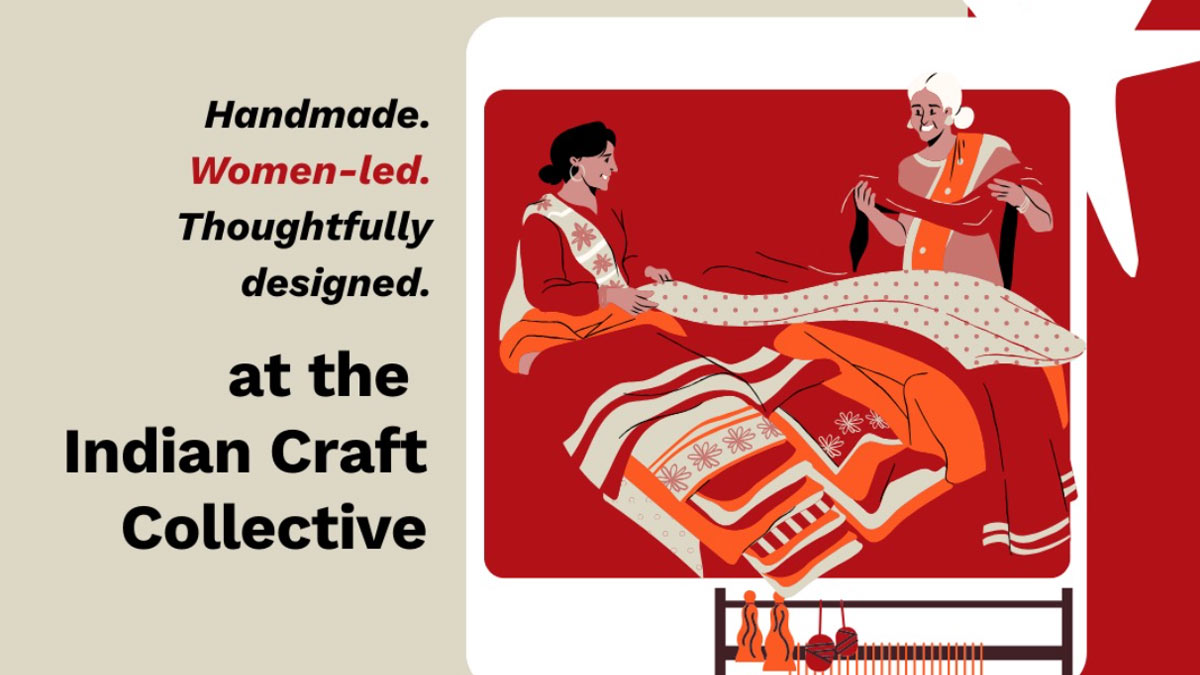
Today’s world is well acquainted with mass production and fast fashion; amidst this, the  “Indian Craft Collective” emerges as a noteworthy confluence of innovation, tradition, and entrepreneurship, highlighting women’s contribution to the craft, art, and handloom ecosystem in India. Scheduled on January 10th and 11th, 2026, the Indian Craft Collective is organized under the Women Startup Program by NSRCEL (the entrepreneurship cell of the Indian Institute of Management Bangalore) and supported as a CSR initiative by Kotak Mahindra Bank. This craft conclave will be taking place at Safina Plaza in Bangalore. This two-day public exposition aims to recalibrate the perspectives oriented around craft traditions, and it will align the event in close ties with modern design and enterprise. 

While the world stands at a critical juncture, a lot of emphasis is placed upon sustainable practices. The craft collective understands the undercurrent of this requirement and employs sustainable measures to mould consumer preferences. It facilitates women-led ventures by offering more visibility and also supports them in scaling up by making their businesses more creative. This craft exhibition encompasses a plethora of items ranging from textile innovations to handcrafted jewelry. 

Important Event Details

Aspects Details
Event Name The Indian Craft Collective – Women in Art & Craft Showcase
Primary Organizers NSRCEL (IIM Bangalore)
Sponsorship Kotak Mahindra Bank (CSR Initiative)
Dates January 10 & 11, 2026
Time 10:00 AM – 8:00 PM
Location Safina Plaza, Bangalore
Entry Policy Open to all (RSVP recommended)
Focus Women-led handmade art, craft, handloom, and design ventures
Offerings Handloom textiles, artisan design, DIY craft products, jewellery, and home décor

Key Highlights

  • The showcase brings forward women creators and entrepreneurs making strides in craft and design. 
  • The exhibition features a handpicked selection of women-led ventures, focusing on “Handmade, Women-led, and Thoughtfully designed” products.
  • From handloom textiles to DIY weaving kits, zero-waste fashion, hand-smocked children’s wear, and artisan jewelry, the spectrum of offerings reflects an eclectic craftsmanship repertoire. 
  • The exhibition is open to all visitors and encourages interaction between makers and attendees.
  • The event highlights how heritage crafts are being reimagined for contemporary audiences and markets. 
  • Situated within NSRCEL’s broader Women Startup Program, the Collective serves as both a marketplace and a visibility booster for early-stage creative enterprises. 
  •  Unlike traditional retail, this event allows visitors to meet the “makers” behind the products, offering a deeper understanding of the labor-intensive techniques and cultural stories embedded in each piece.
  • The event is designed to be immersive, encouraging conversation between the creators and the community to foster an appreciation for the “slow craft” movement.

The Socio-Economic Impact


View this post on Instagram


A post shared by NSRCEL (@nsrcel_iimb)

The Craft Collective represents a paradigm shift in boosting financial inclusion. NSRCEL has a reputation for edifying social startups and micro-entrepreneurs. They have a pioneering “Women Startup Program” through which they provide mentorship and networking opportunities to women artisans. A deep dive into NSRCEL’s previous initiatives reveals its focus on “scalability with soul.” 

Also, the judicious partnership with the Kotak Mahindra Bank ensures that the artisans receive necessary business-oriented inputs and are not limited to being one-time exhibitors. This partnership also encourages digital literacy and market exposure. This event serves as a launchpad for many artisans and entrepreneurs who have been working behind the scenes to uplift their brands. For India’s Silicon Valley, this craft expo is a reflection of the country’s artistic roots, proving that technology and tradition can coexist and thrive together.

Why the Indian Craft Collective Matters

Indian-Craft-Collective-a-Women-in-Art-&-Craft-Exhibition-A

Their emphasis on sustainable and low-impact production makes this initiative distinct. The organizers are not just taking in the elements in vogue, but also setting new trends in terms of consumerism. They set up a space where buyers increasingly value products with ethical provenance and environmental consideration. Exhibitors such as “ Slow Made India” and “Raatai Handloom” signify these facts. This blend showcases the possibilities that can be tapped by mixing craft enterprises with sustainable practices. 

The collaborators chose to build a high-impact socio-economic ecosystem to support women who are frequently sidelined in the formally organized economy, despite being half the productive force. In fact, Safina Plaza is one of Bangalore’s key heritage shopping spots. By organizing the expo in this venue, the organizers have elevated the exhibits from being mere “handmade” objects to a premium, desirable lifestyle choice. 

Takeaway: Crafting Futures with Purpose

The Indian Craft Collective 2026 entails an evolving movement in acknowledging the cultural heritage as a key economic and creative force. Today, consumer preferences revolve around authenticity, sustainability, and cultural resonance. Platforms like the Indian Craft Collective will increasingly shape how craft economies thrive in the 21st century. This event is a clarion call for consumers to move away from the “buy-and-discard” culture and invest in pieces that carry a legacy. Supporting these women is not just about sustaining a business; it is about preserving the very fabric of Indian identity. If you are in Bangalore this weekend, visiting the Collective is more than a shopping trip; it is an act of cultural preservation.

The Hindu Lit for Life 2026 Returns to Reignite Literary Conversations in Chennai

0

The-Hindu-Lit-for-Life-2026

The Hindu Lit for Life (LFL) has garnered widespread acceptance as “the sharpest literature festival in India.” It is not only a convocation of letters; it is a carnival of ideas. Organized annually, this lit fest is orchestrated by India’s one of the most reputed English newspapers, The Hindu. As the 2026 edition approaches, the aim is to transform the fest into an omnidirectional cultural exposure. 

Literature and Ideas Beyond Boundaries

Since its inception in 2010, the lit fest has evolved into a fête that unifies eminent authors, thinkers, artists, and audiences for an immersive experience in ideas, storytelling, and cultural discourse. The 2026 edition is scheduled to be on air on January 17–18, 2026, in Chennai. While the core of the fest entails literature, the programme cradles a diverse array of creative expression, including music, theatre, performance, and intellectual dialogues.

The Lit Fest will be held at the Sir Mutha Venkatasubba Rao Concert Hall and Lady Andal School premises. The festival stages discussions that connect literary exploration with global currents. There are a plethora of segments lined up, encompassing everything from constitutional law and economic history to Japanese fiction and a lot more. In a nutshell, LFL 2026 avows to be a watershed event for bibliophiles, thinkers, and other enthusiasts alike. 

The Festival Architecture: Beyond the Pages


View this post on Instagram


A post shared by The Hindu (@the_hindu)

LFL 2026 outsets with an ingenious precursor titled “Between the Lines: A Literary Treasure Hunt,” scheduled for January 11th. This event marks the physical manifestation of the theme of the fest, i.e., connecting Chennai’s geographical landmarks with literary history. The organizers have devised a phenomenal approach to take literature “Beyond the Book.” They have declared the requirements of a “team of two” to solve the clues and navigate Chennai. This exercise allows people to relive history through personal exploration. This exercise is very interactive and will target the youth and the residents alike. 

On January 17th, the prime proceedings would reflect the formation of contemporary Indian identity through sessions like “How to Reclaim India, aka Bharat” with Ashutosh and Sobhana K. Nair, and T.M. Krishna’s exploration of national symbols, indicating a festival that is unafraid to tackle the evolving political terrain. The fest also includes international figures, such as Satoshi Yagisawa’s session on the healing power of books, showcasing the festival’s ability to oscillate between the local and the universal.

A Sneak Peek AT The LFL 2026

Aspects Details
Event The Hindu Lit for Life (LFL) 2026
Primary Dates January 11 (Literary Treasure Hunt) & January 17, 2026 (Main Sessions)
Organizer The Hindu newspaper
Key Venues Sir Mutha Concert Hall & The Hindu Pavilion (Lady Andal Premises)
Major Themes Indian Identity, Legal Rights, Diaspora, Economic History, and Translation
Festival Type Multi-day literature and cultural festival
Registration Mandatory via official link; limited slots for the Literary Treasure Hunt
Featured Speakers T.M. Krishna, Arvind Subramanian, Ghazala Wahab, and Satoshi Yagisawa
Programming Talks, performances, author conversations, and theatre
Expected Audience Readers, writers, thinkers, students, and cultural enthusiasts

Literature as a Lens on the Contemporary World

The Hindu LFL stands out because it insists on placing literature beyond the realm of an aesthetic pursuit and puts forth a critical lens to examine it. The fest is persistent in curating conversations, highlighting today’s socio-political issues, and demonstrating how literature and literary narratives can mould lived experiences. By bringing in authors, economists, journalists, musicians, and cultural theorists on the same platform, the festival creates a rare interdisciplinary space where literature becomes a medium of civic engagement and social reflection.

Another offbeat fact about it is that the LFL seamlessly blends theatrical readings, music, and conversive sessions, cultural performances, and more. It coalesces all these segments to create a heterogeneous foundation of intellect that also embraces culture alike. The festival shifts the sedentary outlook of literature and swaps it with a more lively one. It recalibrates literary pursuits within a more community-oriented space that is inclusive.  In doing so, Lit for Life not only preserves literary heritage but actively reinvents it for contemporary audiences, particularly younger participants encountering literature through embodied and immersive forms.

Key Highlights of the 2026 Edition

  • The festival covers a massive spectrum of topics, including “Women, Know Your Rights” with Manasi Chaudhuri, providing practical legal knowledge, and “Supercop!” with Madhukar Zende, exploring Mumbai’s criminal history.
  • Moving beyond traditional panels, the festival features “The Tamils, a theatrical reading of Nirmala Lakshman’s work, directed by Prasanna Ramaswamy and featuring a star-studded cast including Anita Ratnam and Revathy Kumar.
  • A dedicated session on “Diasporic Narratives of Relocation and Belonging” brings together voices like Amrita Shah and Saras Manickam to discuss the search for home in a globalized world.
  • Academic depth is provided by Arvind Subramanian and Devesh Kapur, who will dissect India’s economic journey since independence.
  • The session on “The Joys and Challenges of Translating Imayam” highlights the festival’s commitment to regional Indian languages and the vital role of translation in national unity.
  • The platform bridges global perspectives with regional and national voices, providing a rich ecosystem for literary exchange that is both cosmopolitan and deeply rooted in Indian thought.
  • Participants and audiences are encouraged to engage directly with thought leaders and creatives, fostering dialogue that goes beyond passive listening to active participation.

The Other Segments

One of the most striking features of the 2026 edition is that the LFL commits to “Actionable Literature.” It makes Lit for Life a truly holistic “State of the Nation” event. This purposeful extension of the ambit of the lit fest to include social issues, politics, artistic interpretations, and live performance makes it distinct. This has evolved into a rostrum that offers a democratic space to nurture the exchange of ideas, build and discuss experiences, and perceive the vibrant side of our culture. 

The LFL 2026 carves out a “safe space” for introspection, commitment to literature, and celebrating literary endeavours. As such, it should not only be attended for its intellectual dividends but appreciated as a cultural landmark that deepens our collective understanding of who we are and what stories we choose to tell. With a nucleated focus on “contemporary India,” LFL 2026 looks forward to building on its legacy and evolving into a bigger event with each edition. 

Takeaway

LFL 2026’s inclusion of the “Literary Treasure Hunt” deserves applause. It is not only planted as a prelude to the event but also as an activity that weaves a sense of cohesion among the residents and youth of Chennai. People will learn about the city’s past by personally digging into the facts and clues; it is indeed a “masterstroke.” Apart from that, with important segments lined up and vibrant cultural performances on the queue, LFL 2026 is not just a festival about books; it is a vital check-in on the soul of the nation, providing the “sharpest” tools for citizens to navigate an increasingly complex world.

Suggested Story: 10 Best Literary Festivals of India that Every Book Lover Must Attend