Science and Religion in Indian context

12

Author – Likhitha Krishnan

Science and Religion in India

I read religious scriptures for spiritual guidance in life, while I admire science for its innovativeness in providing comfort to mankind. The recent upheavals caused by the BJP government due to its claims to science being a part of Hindu Mythology provoked me to write this article intertwined with subjects that excite me.

Religion has left an indelible mark in India’s yore; yet its diversity demanded secularism. In the 20th Century, wings of science spread through the country, creating new history. But which was born first, science or religion? A disputable question isn’t it? The assertion of religion that god created man contradicts with the affirmation of science that man descended from monkey. This query illustrates the notion that science and religion are incompatible.

Consider this; when the primitive man from his cave, saw the heavy downpour, he must have wondered how this massive amount of water could go up first in air and come down in this way, sometimes accompanied with deafening thunders and dazzling lightning. Unable to comprehend the mystery and assign a reasonable cause, he invented a god, hailing him/her to be responsible for all the unfathomable wonders around him.

As professed in public, the heart of religion is tolerance and mutual understanding. Unfortunately, it is this tolerance that religious devotees seem to lack. Do various religious communities in India live in harmony? Regular outbreaks of violence in the name of God as Krishna or Allah or Jesus clearly shows intolerance. What should have brought solace and consolation for troubled people has become the major cause for despair and disaster?

Hinduism as commonly perceived is not a religion in its true sense, but a way of life. This faith declares a man is free to act, but once he acts, he cannot escape the consequences, good or bad. Therefore, his ‘karma’ is the root cause for all his pleasure or pain. If that is the case, where does the concept of god fit in? God manifests to relieve humanity from this vicious cycle of birth and death. The aim of a human life is to reach the lotus feet of Lord Krishna as revealed by the Lord himself in the 11th chapter of Srimad Bhagavad Gita.

On the contrary, scientific reasoning succeeds in explaining “what happens” for some phenomenon but not ‘why’. For instance, Newton figured out that planets attract each other to revolve in orbits, but didn’t clarify on ‘why?’

Hence, science and religion are not inimical with each other, but rather are intertwined and are essential for society’s welfare. There’s a long path ahead for us, both in the fields of science and religion. Science submits the theory it postulates to experimental verification, while religion rests on implicit faith. In India, attaching equal importance while respecting the other with tolerance and moving on with motto ‘Science with a religious vision and religion with scientific temper’ could bring both science and religion at some point in future!

Ralegan Siddhi – An Utopian Model Village

0

Ralegan Siddhi

Does anyone remember the Lokpal Bill agitation? Anna Hazare’s fast until death, the spontaneous eruption of public anger against corruption, massive protests across the country, candle light marches in all major cities, intense debate on primetime media, mud-slinging matches between opposing parties, oh! Those were the days of action!

After two years of massive campaign and public debate, the Lokpal Bill was passed on 18 December 2013. Today, nobody seems to be bothered about what happened after that and whether the Lokpal was ever appointed or not. However, I remember how enthusiastic we campaigners were to ensure that the bill is realized. Since we were living in Pune, a few of us friends decided to visit Ralegan Siddhi, the ‘Karmabhoomi of the anti-corruption warrior, Anna Hazare.

We took out our bikes and left Pune early in the morning towards Ahmednagar. After travelling for 68km, we came past Shirur, a small town. The turn towards Ralegan Siddhi was just a few kilometres from there and we had ride another 10-12km. My friend Dinesh Thakur suggested that we stop over for a cup of tea and cigarettes, since we will not be able to buy any tobacco product in Ralegan Siddhi!

Ralegan Siddhi

As we entered the village, we realised that the valley around the village was much greener than the rest of the countryside we passed through. We arrived at the office of Bhrashtachar Virodhi Jan Andolan (BVJA), which is the nerve centre for all developmental activities in the village. We met a few workers there who managed the rural self-sufficiency museum, media centre and the bookstall.

We spoke to them about a chance to meet the great Gandhian leader, but they ruled out any possibility since doctors had asked Anna Hazare to complete rest after days of strenuous hunger strike. There were a few media reporters who were struggling to get a sound bite! Looking at their struggle, we dropped the idea of meeting him in person and went around the village. As we reached the media centre, two busloads of children on an educational trip alighted from their buses. They were taken around by BVJA volunteers who proudly narrated the story behind the self-sufficiency of Ralegan Siddhi.

Ralegan Siddhi

Way back in 1970s, Ralegan Siddhi was tiny village in the drought-stricken Marathawada region of Maharashtra. There was little rain and whatever rained, went down the streams and summers were unbearable. Further, alcohol addiction had ruined many families in the village and many had migrated to cities. To rebuild his village, Anna Hazare undertook watershed development by constructing nulla bunds and check dams to store rain water in the rivulets and streams.

Open grazing was completely banned with an emphasis on stall-feeding of cattle. Instead of cultivating water-intensive crops like sugarcane, rice, etc., crops such as pulses, oilseeds and certain cash crops with low water requirements were grown. Apart from watershed development, Anna convinced villagers to adhere to alcohol prohibition, family planning, voluntary labour, a ban on open grazing and on felling trees. Voluntary labour was necessary to ensure minimum dependence on government subsidies and grants.

Particularly, the villagers were disgusted with government schemes for integrated rural development, which had a lot to offer on paper, but no money was sanctioned without bribery. Today, the village is self-sufficient in food grains, fodder and dairy products.

Ralegan Siddhi

Walking around the village we could clearly see how Ralegan Siddhi was different from other villages of its size. The roads and gutters were clean and garbage was not to be found anywhere. Despite our visit in winter, we could see water flowing in the tiny rivulet. Solar power panels were seen on top of many houses and biogas was seen in built near most of the dairy farms.

The BVJA volunteer reminded visitors that their school building worth Rs 22 lakh was constructed by pooling in their own resources. The highschool was pretty large for a village of just 2,500 people. The volunteer pointed out with pride that the school has its own computer lab funded by the village panchayat!

It was obvious to us that the villagers and the panchayat are so enamoured by the Gandhian leader that they follow his diktats as hero worshippers. None of the village panchayat societies, be it the cooperative dairy or the educational society, have an elected body. Most of the local bodies have leaders selected by consensus under the able guidance of their lifetime Sarpanch, Anna Hazare. I could see implementation of the Gandhian philosophy of Swarajya, where each person in a village works towards its self-sufficiency.

Ralegan Siddhi

Obviously, we urbanites who beg to differ on every point, who believe in a chaotic democracy where no one agrees on anything, we cannot digest this kind of benevolent dictatorship and an utopian village cooperative society. However, if this model of governance has created a model village that has become a tourist attraction, then there is something in it for us to understand.
Factfile –

http://www.annahazare.org/ralegan-siddhi.html
http://www.rainwaterharvesting.org/Rural/Ralegan.htm
http://indiatoday.intoday.in/
http://greencleanguide.com
http://www.firstpost.com

Kashmir – Paradise Lost or Regained!

4

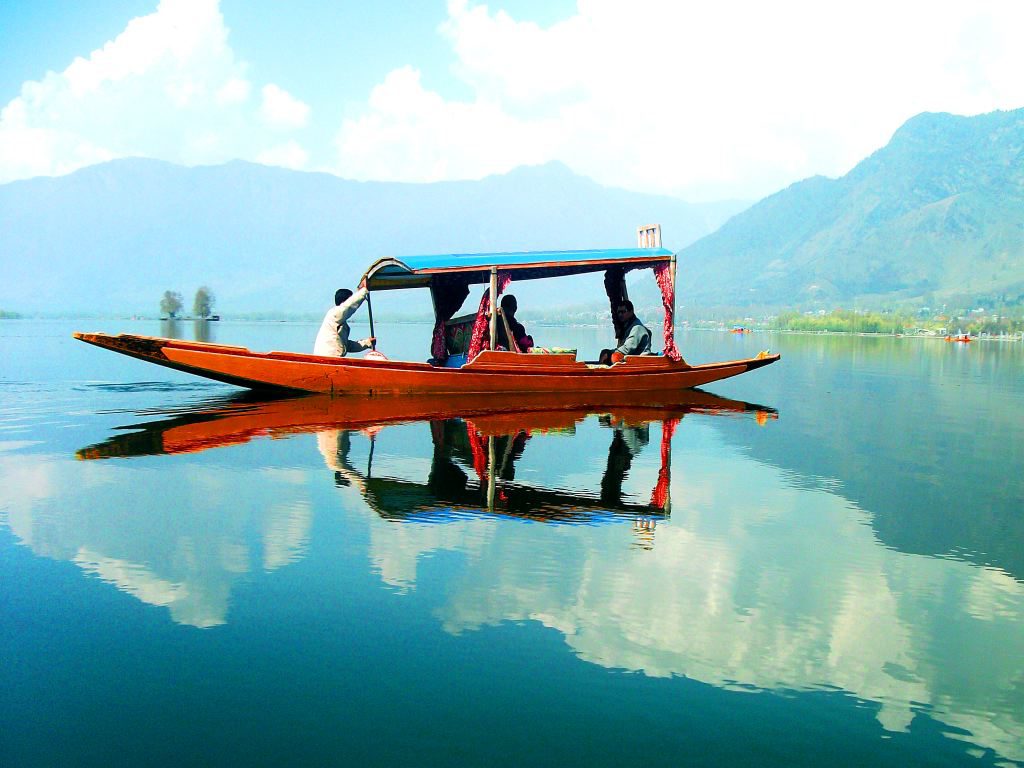
“Gar firdaus baro e zamin ast, hamin asto hamin asto hamin asto!” meaning, “If there is paradise on earth, it is this, it is this, it is this!” These were the words of Mughal Emperor Jahangir complementing Kashmir during his visit.

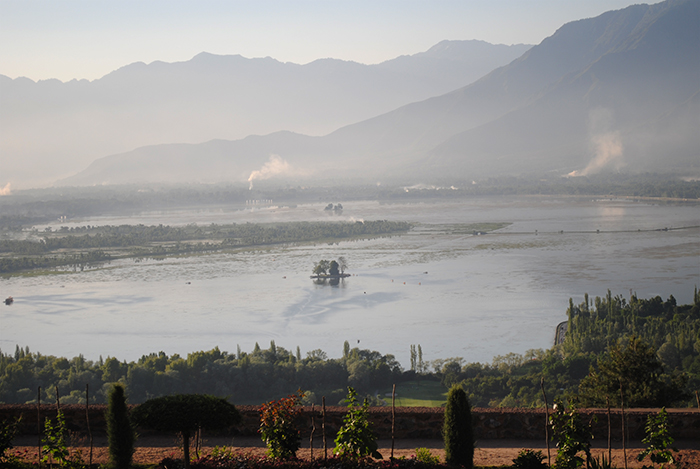
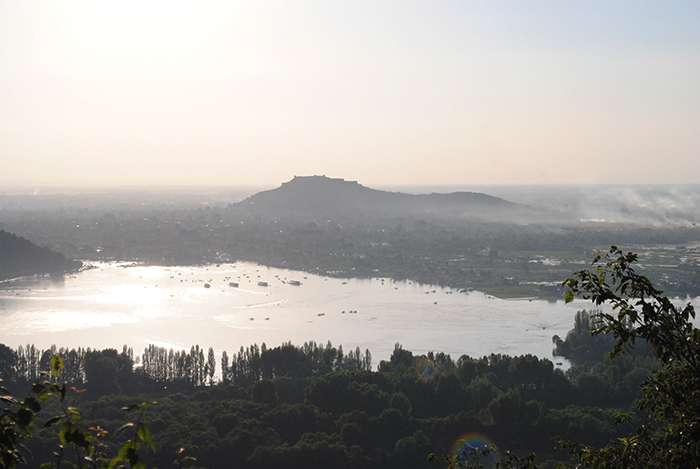
Kashmir valley
Image Source

The state of Jammu & Kashmir has been in the news of late. You might exclaim when did it ever leave the media spotlight?! Beyond the trouble-torn recent past, Kashmir has a whole lot of history, right from its name been taken from the sage Kashyapa or the belief in Moi-e-Muqqadas relic of Prophet Muhammad (pbuh) in Hazratbal shrine. Be it Alexander the Great or the Mughal Emperors, Kashmir has been the favoured place for the royals.

Kashmiri culture has a mixture of influences from Islam, Hinduism, Buddhism and Sikhism. So there is nothing wrong in naming it “the paradise”, a blend of all cultures. The rapid development in Srinagar city has added more charm I would say, but if you ask the old folks, they prefer the old Kashmir, as it was more magical. A calm place situated around a huge lake, where Shikaras (boats) were the mode of transport instead of the noisy automobiles. Imagine! Kashmir would have been no less romantic than the city of Venice!

kashmir-places-to-visit

Srinagar – a place nestled amidst the Himalayas. One would assume that it is a city to be enjoyed only during winters, but No! Have a visit to Patni top, located on the way from Jammu to Srinagar. For me, it will always be ‘Pitni top’! A night stay was a compulsion while we travelled during our childhood. The pine trees act as guardians of the roads and the small food shops make us believe in living in the world of dreams.

Today’s rapid way of travelling has no fun at all. The travelling through our own cars was much like an adventure, going through those mountains was scary as well as exciting. I still remember the Vaishno Dhaba, famous for its Rajma chawal, which was always our stop for lunch.

The famous landmark, the four Chinar trees ‘Char Chinar’ standing in the middle of the Dal Lake. The Chenar (Chinar) has the same name across the world, but it is only Kashmir that has been given the privilege of naming the tree ‘Boonyi’ in its own native language. The beautiful Mughal Gardens also introduce us to the beautiful ‘Foreshore Road’.

kashmir-places-to-visit-2

The Foreshore Road is definitely one of my favourites. The long drive and the encounter with small kebab shops is the most interesting part. The later, the more exciting and beautiful the scenery gets. A drive with all my cousins and having the yummy kebabs at famous Khayyam Centre is a must-do. The stories I’ve grown up listening to, the late night stay on these roads are little scary as Kashmir is also known for welcoming ghosts. However, our confidence comes from the aroma of kebabs, which will make the ghost forget its target and will end up in joining us for the dinner!

Pahalgam, Tangmarg, Sonmarg and Gulmarg; all have breathtakingly beautiful scenery as a gift. If you haven’t seen snow in your whole life and are free only during summers (April-May), Kashmir does gives you an option! Sonmarg is a place where snow can be found during summers as well. Situated at a higher altitude, Sonmarg is a snow land for everyone to enjoy regardless of its weather.

Pahalgam will make you fall in love with it, each time you visit. The Betaab Valley gets its name from Betaab, the debut Bollywood movie of Sunny Deol-Amrita Singh. If you have been dreaming of living a small house by the river in a lush green valley, then book a hut for a week in the Betaab Valley of Pahalgam.

The snow covered mountains of Gulmarg; a place that made me feel like a princess when I attempted my first horse ride through those lush green meadows. I still vividly remember my stay in the beautiful hut and roaming around on the private horse. Isn’t that truly romantic?

kashmir-places-to-visit-3

Talking about romance and royal treatment, how can I not mention the “Houseboats of Dal Lake”… The floating market of Dal Lake also grabs your attention. Kashmiris have a belief in treating their guests in true royalty, so this idea was introduced during the British Raj. You can have a ringside view of nearly the entire the Kashmir valley from these houseboats, including the Pari Mahal, Chashma Shahi (the royal fountains) and Shankara Charya. My mother had made me believe that Pari Mahal was really the ‘palace of the fairies’! A stay at this place after 6pm can be given a second thought, as it would be the fairies that will be your guide later!

Kashmir has been a favourite place for Bollywood movies, which have also played a vital role in promoting tourism. From Shammi Kapoor’s colourful “Junglee” to Shahid Kapoor’s dark “Haider”, Kashmir has an adaptive nature. The soothing music of Santoor or the calmness of Buddhist chanting in the monasteries of Ladakh, will surely remain as haunting memories, making you to come back again. The warmth you will receive from the Kashmiri people will definitely make you fall in love with the place. The ready acceptance by locals will make you realize the real beauty – as all Kashmiris call it, “Mouj Kashir” (Mother Kashmir), is surely a re-birth of heaven on earth!

Factfile –
http://en.wikipedia.org/wiki/Kashmir_Valley

The Ugly Indian Keeps it Clean!

1

Author – Lakshmi Venkataraman

The Ugly Indian Community

The Ugly Indian – The very name of this four-year old organisation gives a rude shock to everyone when they hear it first time. With wide eyes, you would have probably opened Google and searched for it. Fortunately, they have a delightful cause that makes you think. So what do they do? They call themselves “The Ugly Indian”, since they feel strongly about the filth strewn around our cities. Now it makes sense, doesn’t it?

The Bengaluru-based group works on the Gandhian thought, “Be the change you want to see” and firmly believe in “Stop talking, Start doing.” It is easy to start the blame game going, ‘Oh! The government did not fix it!’ or ‘Oh! The people, you know, you can’t change them!’ Thankfully, this group of anonymous people set out to change it by doing.

The Ugly Indian Community

The Ugly Indian started their campaign from Church Street, one of the busiest streets in Bengaluru. The road was like any other road, strewn with litter, paan-stained walls, and broken gutter slabs that gobbled humans. So The Ugly Indian along with a few volunteers, shopkeepers from shops nearby and civic authorities, began changing the scenario by fixing things one by one.

What did they do? Well, they simply cleaned up the garbage, fixed the footpath, painted the paths and put potted plants to add charm and deter people from spitting or urinating. By now, there would be a little cynic in you screaming ‘How long did it last?’ It is probably time for the realist in all of us to come to terms with the truth. Their work received so much appreciation from everyone that it led to a full-fledged voluntary organisation, The Ugly Indian.

The Ugly Indian Community

They started as a small citizen movement on November 15, 2010 and soon began to grow. They had to do a lot of trial and error, but surprisingly the major issue was not on how to clean public spaces, but how to keep people from dirtying them again. They came up with innovative, cost-effective ideas such as painting the walls with cream and terracotta. The paint cost less than Rs.500 for a 50-feet wall.

They also placed potted plants that make the place look neat and dissuade nuisance makers. They specifically chose cheap pots so that it would not get stolen and planted palm, a pretty common plant. They also roped in residents and shopkeepers nearby to maintain the plants to ensure cleaner footpaths. They installed tube-like structures near cigarette shops and outside pubs so that litter would go into them and not clog the drains. It was an effective, simple and cost-effective way to manage the litter, which also looked elegant.

The Ugly Indian Community

While these were more tangible forms of transformation, they persuaded shopkeepers, residents, business entities, chaiwallas, paanwallas and other small shops to follow a proper disposal method. This made it easy for civic workers to collect the garbage. Over time, with lot of persuasion people began to change, despite sceptics offering their “this would not last long” sermons. Slowly, not only the clean walls endured for months together, but also made the surroundings pleasant to walk by.

Apart from their main agenda of keeping the surroundings clean, making the footpath usable by changing misplaced slabs also caught their attention. The open slabs of gutter drains were hazardous, since people could fall into and get hurt or in some cases die. The Ugly Indian thought about how to sort out the cable mess beneath the open slabs, which worsens the situation during monsoon rains. After a few calls, the respective government agencies admitted that it was their task to close the slabs but just did not. So The Ugly Indian took it upon themselves to fix them. By simply owning up and doing something The Ugly Indian could save a few lives.

The Ugly Indian

A lot of civic issues in Bengaluru have been addressed by The Ugly Indian; their Facebook page shows where they are active and have put up photos of spot-fixes done by them. It is pleasant to watch the change they are bringing in. The Ugly Indian have been doing for a long time now what Narendra Modi’s Clean India campaign has been propagating now. It is high time that we individuals take up responsibility of our own area and stop doing lip-service. The Ugly Indian is a wonderful initiative that can be replicated by people like you and me to make a difference.

the-ugly-indian-2

Image sources –
https://www.facebook.com/theuglyindian

Factfile –
http://www.theuglyindian.com/
http://timesofindia.indiatimes.com
http://www.rediff.com

Films that Stir Our Hearts at Pune International Film Festival

0

PIFF - Pune International Film Festival 2
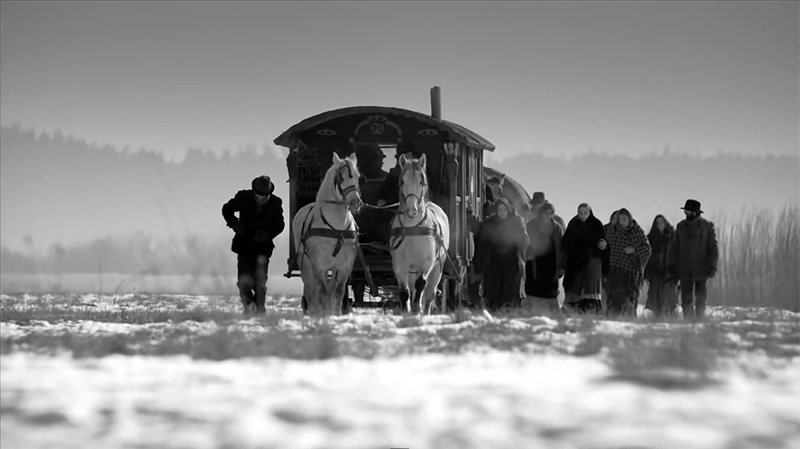
A scene from the movie Papusza

As the cold sighs of winter winds sweep the city of Pune, Punekars look forward to a plethora of art, cultural, music and film festivals, which form an integral part of their social calendar. Be it the soulful evenings of the Sawai Gandharva Music Festival, Vasantotsav, or the boisterous rocking music of NH7 Weekender, Punekars tend to plunge wholeheartedly into this celebration of life. Obviously, it is no surprise that one of the most celebrated festivals in city is the Pune International Film Festival (PIFF).

Despite of its comparatively recent origin, PIFF has captured the heart and soul of Punekars. With films from over 48 countries, the festival celebrates the global spirit of cinema, while keeping in touch with its local roots by dedicating an entire section of awards to Marathi movies. Unfortunately, I couldn’t be among the masses that thronged the theatres this year, but for the past few years, I have haunted the various venues of PIFF, catching as many as 3 movies in a day!

This year, the 13th edition of the Pune International Film Festival kicked off recently, with the screening of ‘Timbuktu’, a French-Mauritanian film that has been making waves across the world. Directed by Abderrahmane Sissako, it is a brilliant exploration of vulnerability and strength, which deals with the harsh reality of extremism. When Kidane, a cattle herder goes to confront his neighbour, a fisherman who has accidentally killed Kidane’s prize cow, the consequences are disastrous. The film deals with the tragic situation in the country, the loss of individualism and rationalism as it slowly falls prey to the fundamentalism.

Other gems, like ‘Dr. Prakash Baba Amte – The Real Hero’, a Marathi movie that released this year to acclaim, were also screened. The film is a biopic on Dr. Prakash Amte, the son of the renowned social worker, Baba Amte. Dr. Prakash Amte, and his wife, Dr. Mandakini Amte moved to Hemalkasa in Gadchiroli district in Maharashtra State, way back in 1973, for helping in the development of the adivasi tribes that lived in this remote district. The movie showcases the exemplary struggle of the two doctors in their selfless bid to help the underprivileged who wre without any access to health care, which can stir even the coldest of hearts.

During last year’s PIFF, one of my most memorable experiences was undoubtedly watching the movie, ‘Fandry’. As a part of the Arbhaat Short Film Club, I had seen Nagraj Manjule’s first short film, ‘Pistulya’. ‘Pistulya’ is a heart-wrenching tale of a young boy, who struggles with his fate, and whose ardent desire to go to school remains unrealised despite all that he has experienced. Hence, I was understandably excited by the prospect of viewing Manjule’s first foray as a feature film director.

Fandry

Nagraj Manjule’s ‘Fandry’ is not just a film; it is a statement, an experience and above all, it is a cry. Fandry, which in the Kaikadi language means ‘pig’, is the story of Jabya, an adolescent from the Kaikadi community and his love for Shalu, a girl from a higher caste. His family subsists by making wicker baskets, but the worst tasks in the village, which are considered undignified by upper caste people, are regularly relegated to Jabya’s father. Jabya’s continuous search for the mythical black sparrow, and his desire to impress his classmate, when juxtaposed against his harsh reality serves to stress the indignity and class discrimination that still exists within our society.

Papusza

Papusza was another amazing movie that was screened during PIFF 2014. It is a biopic of a relatively unknown Polish-Roma poet, Bronislawa Wajs, who was known as ‘Papusza’, meaning ‘doll’ in the Romani language. With a non-linear timeline that criss-crosses across the life of the poet, the film gets confusing at times, but still manages to provide a visual treat. Papusza defies her family as she learns to read and write. She eventually meets a non-Roma poet, who travels with her caravan and encourages her to write down her songs. She is eventually excommunicated by her people when her poems are translated and published by the poet, Jerzy.

Many people have this notion that film festivals are about award winning offbeat, documentary and alternative movies. However, PIFF is not just about the offbeat. Mainstream Hollywood films like ‘Captain Phillips’ and ‘The Secret life of Walter Mitty’ were also a part of the line-up.

As PIFF slowly draws towards a close, one cannot help but wonder about the significance of watching movies from other countries. Watching a foreign film is truly a novel experience. Although the actors playing out the lives of characters are unfamiliar, they can strike a deep chord within. The background score may be unknown and the language illegible, but it will surely stir our hearts. Even if a film is about a local issue with relevance to us, it can transcend its limitations to connect with people around the globe. The barriers of society and language can dissipate when the audience immerses itself into the film and experiences its true essence. PIFF provides an opportunity to do just that!

Image sources, Factfile –
http://www.piffindia.com/

Heading Out for a Road Trip? 7 Ways to Maximize Fun

0

Whether it’s with extended family, your closest friends or your significant other, few things are more exciting to undertake than a fun-filled road trip. 

Fortunately, when it comes to vacationing on the road, it doesn’t even have to be the most exotic or interesting destination because exploration is exciting enough when you do it with those you love!

But, there are still a few ways that you can maximize the fun and really have a road trip worth remembering. 

Heading Out for a Road Trip
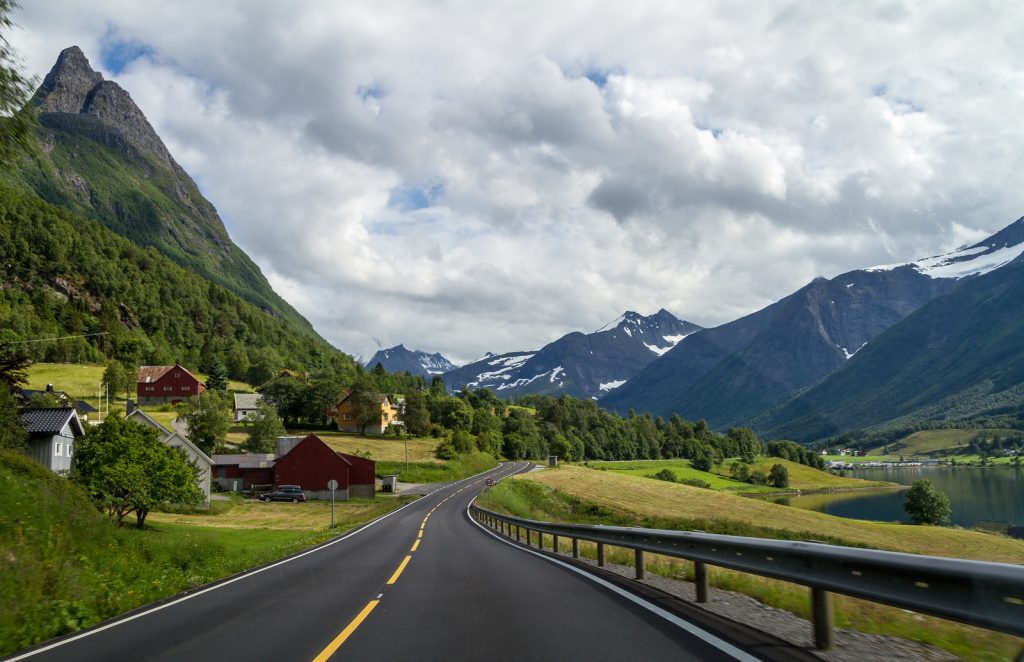
Road trip near Sykkylven by TimOve

1. Get Everyone Involved

Especially when you are traveling with your friends, make sure it’s lively and animated in the cabin. 

You can ask them to recite their most memorable moment on their last trip but one by one. That would ensure even the most introvert of the lot speaking out. 

Games like 20 Questions, Name That Tune, Continue with Story-telling, are indeed for kids but how about being a kid for the next 2-3 days? Trust me, nothing’s more fun.

Everyone’s not going to want to do the exact same thing all the time, so asking around to see what tourist sights or food spots can’t be missed is a great way to keep everyone engaged. 

And, it also means that you’ll see or find something you might not have come across otherwise!

2. Get Off the Road

The boon of a road trip might be to see all the amazing sights along the way and really get a feel for the place you’re travelling around. 

But, being in the car for too long can get to anyone, no matter how excited they are about the trip. 

Instead of planning long, drawn-out day travel so that everyone is worn out and tired, make sure there are plenty of pit stops for rest, relaxation and touring local sights. Make your traveling simple. The more easy you are on the way, the better the experience. 

It’s an effective time management tip too. Take frequent breaks to be at your productive best 🙂 

This can make all the difference between a road trip that feels like a job done, and one that feels like a true getaway.

Image – Pixabay

3. Bring In-transit Entertainment

Seeing new places from the window of a moving vehicle can be pretty exciting, but simply because a place is interesting doesn’t mean the scenery always is. 

So, instead of sleeping through the road journey, ensure there is plenty of entertainment for the whole family to be amused by. 

While some vintage upbeat numbers would keep your grandpa going, kids mostly like musical and loud stuff.

You can bring along items like cards, crossword puzzles or travel-sized board games too. 

Try and avoid carrying tablets and smartphones. Kids occupied with Youtube and video games is the last thing you want to see when out on a leisure trip. 

4. Feeling Good Is Important –  

Needless to say, you can only enjoy if you are feeling good from inside. No point gulping cola cans and chips in a jiffy and have a nauseated feeling later.

Any kind of vacation or getaway is often rife with eating choices that are not necessarily good for the body. While burritos and margaritas might feel good in the moment, they rarely have that impact after and can leave you sluggish. 

Instead of binging on only indulgent foods, try bringing some healthy foods along for the ride. 

Whether it’s nuts, dry fruits or granola bars, these will stave off frequent hunger pangs too.

Photographing-your-road-trip
Photo by Vidar Nordli-Mathisen on Unsplash

5. Don’t Aim to Shoot a Million Picture Roll – 

In the era of the selfie, it can be easy to get carried away with picture taking. 

But, when it comes to a trip with your friends or family, photographs are the kind of thing that are really going to make memories…and may even help to create some new ones.

The trick is to capture only special places and moments and not take out camera every single minute. 

Be a little selective with your shots. The light, the pose, background – all matters if you wish to take some great photos. 

Think of it as if you only have 36 photos in your camera and equal number of chances to get it right. Seriously, digital cameras and camera phones have killed it all.

You may even want to create a little competition for best vacation photograph. Try it out. 

6. Collect Souvenirs Along the Way

Whether it’s in the form of a snow globe or a sweater that’s bedecked with the name of a place you’ve never been, souvenirs tend to have a pretty bad reputation. 

Making stops to collect a few unique souvenirs can be a great way to really experience the flavor of the place and make the moment last. 

It can be very much like taking a picture in that you’ll remember the time and the place distinctly. And, when you share souvenirs with your family or friends at home, it will be like living the story twice.

souvenirs from road trip
Image – Pixabay

7. Do Something that Surprises You

Unexpected pit stops are part of the fun when it comes to embarking on a road trip. 

However, there are those places that pop up along the way on any road journey that are often passed by because they don’t fit with the schedule. 

But, it’s these very things that can make for some of the best road trip stories out there. 

Instead of forgetting about what’s passing by, be aware of interesting parks, cottages, or even roller coasters that come up along the way. 

They just might end up being the most memorable part of the journey.

Mumbai Marathon – Chala Jaata Hun!!

0

Author – Shristi Rai

Mumbai Marathon

Many people wonder why so many normal people sign up to run serious distance races? Why do we run a gruelling, energy sapping, mind numbing race of 42 km? Why do so many people run marathon, making it the most participated sport on earth?

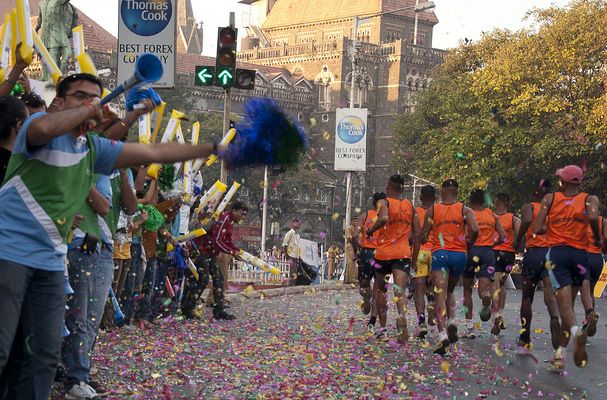
Running a marathon has been one of the most memorable experiences of my life. Last year, the Standard Chartered Mumbai Marathon 2014 was held on 19 January 2014. Having participated twice earlier in other marathons, this was my first attempt in the 21 km category. To be honest, I had not trained at all and thus after the first 7 km, I was extremely tired. The race started at Bandra and the route went over the Bandra Sea Link, followed by Worli Sea Face and then on to Marine Drive.

Mumbai Marathon-1While the sea breeze helped us in our running, it was nothing compared to the motivation received from fellow participants who would continuously crack jokes and call out funny phrases making it much easier for us along the path. Right from the beginning till the end of 21 km, massive crowds of people gathered on the road side, many of whom offered oranges, dates, biscuits, water and juices for us. They made us feel like a winner, like you were running for them and if you stopped you would be letting them down.

In fact as I slowed down at Pedder Road to climb the slope, a lady came running from behind to say that she’d been following me throughout the run, that I was her pace-setter, and if I stopped, what would happen to her! And I was doing the same thing to a man running in the front!

Around 40,000 people ran the Mumbai Marathon race in various categories and in its 11 editions. The sponsors claimed that they collected crores of rupees for charity. That is the official reason – the consequence – Mumbai sees a new dimension to the word “train”. Yes, the lifeline of Mumbaikars, quite literally in their hands.

So every Sunday morning, you will see Marine Drive flooded with corporate employees with their high-tech gadgets informing them about their pace, calorie burnout count and what not, their bottles, their iPods, their florescent shoes running for kilometres together, in sync with the Aam Aadmi in their modest shorts and t-shirt sharing the same experience of pushing their mind and body through unbound limits and to surprise themselves with the result!

Mumbai Marathon

At the 2014 Mumbai Marathon, the girl who won the women’s race for 21 km ran barefoot. Coming from humble beginnings, she ran to win the prize money for her father, a farmer in the interiors of Maharashtra. The African athletes who win the marathon each year, run in herds; their aim is to take the prize money to their country. The senior citizens run to feel young. The Dream Run participants who run for 6 km run for their Facebook pictures. My boss runs to better his timing, to challenge himself.

When I look back, I do not really know why I registered. However, during the last 500 m of the race when my feet refused to go any further and all I wanted to do is go home and sleep, I saw a man with one foot, reaching for the finish-line and on his face was the happiest, most content smile I had ever seen. Then I knew that I had to run just to feel this beautiful spirit.

Image sources –
Mumbai Marathon via Flickr
marathon-photos.com

Factfile –
http://scmm.procamrunning.in

Jobsora – The Best Site for Job Search in India

0

Are you going to make your fresh start in India? It might be the greatest experience in your life. For sure, you’ll fall in love with this country! Marvelous nature, welcoming people, rich history and culture, interesting traditions and customs… The list of worthwhile things in India may be endless.

Why online searching is the best?

India’s economy is developing and growing but it hasn’t reached its highest point yet. Hence, there are a lot of difficulties to overcome. Good news, they do need qualified employees in India! So, there is a chance to gain important experience working abroad and make a great career.

But first, let’s find the right position for you. If you don’t have a contract with a company in India, then you need some help. And there is a perfect assistant for you! Visit a job site https://in.jobsora.com.

Why Jobsora?

Because the purpose of their work is to find a perfect position for you! Jobsora claims this aim as principal one and maintains its quality. This site guarantees that you’ll find a job quickly if using it. And that’s true! You no longer need to spend hours and days surfing the Internet and seeking vacancies. Because Jobsora provides links to all positions posted on job boards. Everything you need is registering on the site and applying for jobs.

Jobsora

Use special filters and Advanced Search if you know what exactly you need. If you assign for job alerts you’ll get offers to your email.

Have you decided what region of India you prefer to work in? Then you can search for a job by location.

There is a list of popular positions available. Look through it and perhaps you’ll find something suitable for you.

Jobsora is trying to make the process of job hunting easy and rapid. Surely, you’ll appreciate this site and definitely find the best role for you with the help of Jobsora.

Of course, there are a lot of means of searching a position. Maybe you’ve already tried them. The most popular ways are: consulting recruitment firm, addressing directly to the desired company for the desired position, looking for a job in local newspapers, contacting acquaintances, etc. All these methods of the search might be helpful if you combine them. But, to tell the truth, they are time-consuming and sometimes require investments.

Besides, all employers have gone digital, they post their adds and openings online. So, we must keep up to date and take into account all those factors. Nowadays few employers are advertising something offline, let alone vacancies. That’s why if you don’t perform job hunting, online you won’t be a successful applicant.

To perform online effectively follow the next steps:

  1. Update your resume, make it digital friendly. You can upload your resume to job sites and receive alerts with job offers to your e-mail.
  2. Make sure your social profiles are filled with the necessary information and show your best sides. Don’t forget to eliminate unwanted or weird posts. If an employer decides you are the right candidate, he or she will check all your social networks.
  3. Create an online portfolio. This way your future employer will see your experience and achievements not only in a resume and cover letter.
  4. Create your personal brand. This is the most up-to-date option that makes you stand out and represent yourself to the target audience.

As you can see job hunting online is really beneficial. And if you use efficient job sites like Jobsora, you’ll find an appropriate role very quickly!

We know your search will be successful!

Abundance Syndrome – The Problem of Plenty

8

Abundance Syndrome
Image – Jeni Rodger

Consider this – You have fifteen pens and you don’t find even one when you really need. Does that happen to you too? What is the first thing we all do? Since it is “just” a pen, we run to the shop and get another one and forget about the fifteen pens. Don’t you think this example somehow reflects how we have changed over a period of time…

Pen and change? Yes, when things are available in abundance we forget its value. Globalization and the ensuing consumerist culture has resulted in a fascination for excess consumption. Multiple options for people at reasonable prices have resulted in people not attaching any sentimental value to what they have.

Gone are the days when we cherished that beautiful ink pen like a diamond. Why? Because today, we can always buy one and more importantly, we can afford to buy any number. The combination of these is making us, as humankind, lose the important quality of appreciating, cherishing and most importantly treasuring anything. This problem is mainly faced by urban Indians (particularly, upper middle class) who have higher buying power.

When we are unable to cherish or understand the value of anything, how will we ever understand the meaning of failure or of success? How will we understand what is losing and what is gaining? Today when we look at the education scenario of India, we feel shocked. The number of engineering or MBA colleges that have mushroomed in every street of India has pushed down the value of an engineering degree. You don’t need merit to get one; all you need is money. The abundance of colleges plus the ability to pay huge amounts of fees by parents has resulted in hundreds of thousands of engineers graduating every year. How many of them are true “engineers”?

Evidently, the value of engineering has vanished. If only the students had got into the college with merit, they would cherish and value their seat and study hard. Instead, their lax attitude towards studies is the result of the fact that they haven’t gone through any difficulties in getting the seat. They have got it on a platter and unfortunately, they are completely ignorant of the fact. Cut down the number of colleges and automatically the value of the degree will increase. Commercialization of education is the sad reality of India.

We see this abundance syndrome affecting our children as well. When my child loses his umpteenth pencil/eraser, he coolly asks to buy a new one and he loses it again the next day. He simply cannot understand the fact that we need money to buy pencils and erasers. All he knows is that his papa has the money and he can buy it. Basically, the “value” lesson is lost right from the beginning. When we were young , we cherished our first pencil/eraser, because we knew that once we lose it, we are not going to get another one.

We load our children with so many toys from the day he/she is born, that they simply don’t get the point of buying toys for an occasion. We go out and we buy a toy/chocolate/drink whatever they ask for. The number of toy shops/malls have increased manifold, along with our ability to buy goodies. Particularly, the post-millennium kids are facing this issue. This vicious combination is creating havoc for parents. Who is to blame for this? Why do our children not understand the value of things?

We can quote numerous other examples of abundance. Massive wastage of resources like water, power, food are evident all around us. The whole point is that we are lost in a sea of abundance and are eternally living in a confused state of mind. We are spending half the time in choosing and acquiring things and not actually doing anything productive with them. We are buying things left, right and centre and most of the time, we don’t even need them! Our cupboards are full of clothes we hardly wear and we possess electronic gadgets that we use, maybe once a year. We switch on TV to watch TV and not a particular programme. The reason is there are too many TV channels to choose. Yes, we realise what is the problem we face, but what about the solution?

There is a change in our value system and the way we view “things”, it is not always a bad thing to have many choices before us. But what really matters is that we need to choose the most essential one among these umpteen choices. Moreover, our choice can promote a change that is a natural process and the harbinger for new things. We can try and preserve our core value systems, our Indian culture and at the same time absorb anything new that enhances our lives.

Factfile –
http://en.wikipedia.org/wiki/The_Paradox_of_Choice

Indian Youth – A Generation of Culture-Wreckers?

3

Author – Harika Bantupalli

Kiss of Love protests | Courtesy: HT-PTI

In recent times, voices have been raised against the younger generation’s ideology and obsession for taking things in control or trying to bring about a change. Bragging – as they would call it, is supposedly what we always do. And social networking is adding to us like what a fuel would do to the fire that sets things ablaze. Are we really a generation of selfie-obsessed windbags and culture-wreckers?

To begin with, there’s more to the youth of this age than just a status message on social media or a 144-character tweet. There’s an undying passion for a better world and an unshakable faith that pushes us to give the best in what we do. As far is Indian culture is concerned, it shall be preserved as long as one is proud enough to live with it.

Life as we know it, is very complicated. It changes every second and so does our culture and lifestyle. If it weren’t so, we would still be in the age of Harappa and Mohenjodaro rather than being a part of this global village!

We have adopted numerous traditions from different civilisations and religions over the last many centuries. Hadn’t there been rebels with a vision for change back then, India wouldn’t have been what it is today. If the consequences of a past rebellion is accepted today and preached as culture, then why not now?

Culture is not meant to be preserved, but shared, learned and developed. With the advancement of technology and breakdown of the barriers that stood between countries of late, this culture-sharing practice has gone international and radical. But it doesn’t mean that our very own culture is sabotaged.

youth-power-india
Photo courtesy: Wikimedia Commons

This young generation is not really oblivious to our culture, but it is paving way for certain changes by breaking down the taboos. Public Displays of Affection (PDA) and protest campaigns like Kiss of Love, Gay Pride Marchs and Slutwalks may have created outrage among the culture-lovers, considering them to against Indian culture. But are the reasons behind why they started seem good enough to be considered culture?

Sensual depictions and figurines can be publicly displayed without any objection, but PDA is strongly opposed. A woman who is considered as the ultimate power can be disrespected in the name of culture, but campaigns taken to prevent it is considered an unforgivable sin. Where are we going with this attitude?

Our country is a magnificent piece of land with incredible culture. However, like every other thing, it is subject to numerous changes with the passage of time and generations. The youth culture of every generation is meant to be rebellious and bring in much needed change. So do we, like any other generation, bringing in what we can while trying to preserve what already exists.

We the Indian youth might have been off path many a time, but to err is human. And we do learn from our mistakes. We are the upgraded version of what our previous generations, a little more upbeat and much more impatient. We have been called names and had our voices crumpled, but all we do is to eliminate the taboos, while still maintaining the essence of a good life. Today, as we celebrate the National Youth Day, I would like to reiterate that we are not wreckers, but amateur builders trying to repair what needs to be mended.