Pravasi Bharatiya Divas Attempts to Bring Back NRIs

1

Pravasi Bharatiya Divas

Today, 100 years ago, a non-resident Indian lawyer named Mohandas Gandhi arrived from South Africa along with his family to permanently settle down in India. We could emphatically say this incident changed India’s political history forever. 9th January 1915 marks the day when Gandhi returned to India after years of work in South Africa. This event is commemorated as ‘Pravasi Bharatiya Divas’ to mark the contribution of the overseas Indian community and the people of Indian origin.

Khadi and Gandhian philosophy will be the theme for this year’s Pravasi Bharatiya Divas. For the world, Khadi may be just an interesting handloom fabric, but it is a political ideology for India. Similarly, Gandhian philosophy has remained in the spotlight ever since independence, but of late, it has received much wider coverage due to the recent Godse vs. Gandhi controversy. Amidst all this hoopla, the state of non-resident Indians remains in deplorable conditions.

Captain Sunil James | Change.org

Our prime minister’s recent flamboyant visit to the US and the awe-inspiring reception offered to him by the Indian Diaspora in New York is fresh in our memory. However, we must also remember the struggle for rescuing the 40 Indians abducted in Iraq by the dreaded terror organisation, ISIS. While the Indian government’s prompt actions to rescue them is surely appreciable, it is sad that it did not take action for other NRIs trapped in similar situations. The sordid tales of Indian sailor Captain Sunil James and Indian diplomat Devyani Khobragade seem to have faded away from public memory.

After years of misery and apathy, the government has at last acknowledged the problems faced by NRIs, by extending the visa-on-arrival facility for several countries. Further, the Indian Citizenship Act will be amended to merge the status of People of Indian Origin (PIO) and Overseas Citizenship of India (OCI), so that they can get lifetime visas and own property in India. Click here to know who are PIOs and NRIs!

Hope this will turn the tide for the sentiments of our expatriate brethren and also for the flow of their investment! The most noteworthy aspect about NRIs is their remittances to India. It would be surprising to note that NRI remittances in 2012 matched the total export revenue of the entire Indian IT industry!

Meanwhile, there is a hilarious turn of events at the Pravasi Bharatiya Divas event held in Gujarat. Several kiosks set up by the Uttar Pradesh state government have been removed! Uttar Pradesh has eagerly set a website to attract investments by NRIs and PIOs in a state otherwise devoid of any infrastructure development. I think a few assurances would go a long way in promoting India’s largest state’s image among NRIs:

  • No NRI or PIO woman would be raped or molested in the state
  • No communal riot will affect the investments made by NRIs and PIOs
  • No bribes will be asked for setting up a business!

In fact, these assurances would help promote India’s image as well!

Caleidoscope’s infographic on the Indian Diaspora:

India Infographics - NRIs and IPOs

To Share the Infographic just copy the code below

<p><strong>The Great Indian Diaspora [Infographic] by caleidoscope.in</strong></p><p><img src='https://caleidoscope.in/wp-content/uploads/2014/01/NRI-infographics-caleidoscope.jpg' alt='The Great Indian Diaspora' width='100%' border='0' /></p>

India’s Streetside Coffee and Tea Culture

5

Author – Neeraja Sundar

Streetside Tea Shop

Who says men don’t gossip? Come to the little streetside coffee and tea shops scattered across India. As the dawn breaks, they lie in wait on the benches outside. They read newspapers, drink tea, eat vada or bhajji, complain about everything under the sun, drink tea again, smoke for a bit, munch on biscuits, gossip about various topics, occasionally engage in a squabble, drink tea again and then leave as the sun sets.

Be it a metro city or a small town, the quintessential tea shop is found on nearly every street and a couple of regulars for each shop. It is not just the bored jobless men who frequent them, but also the men who work in corporate firms who like enjoy their cigarette break.

The tea shop in my housing colony is a busy hub. The venerable owner, Mr. Ramaswamy, is the most well informed person. He is the hearty ‘grandpa’ whom all children like. He always has a tin of biscuits ready for them. He is great with advice. He can converse with everyone – children, housewives, daily wagers, office goers, everyone. He discusses cricket matches with boys, analyses the characters in the TV serials with middle-aged women, politics with the older men and what not. His non-earning customers maintain a tab and drink tea without immediately worrying about the money, though it is not much.

Tea Shop India

There is just something about that tea which is indescribably delicious. The steaming milk in the boilers, the wafting smell of cardamom, the ground ginger and pepper and the flavour of tea just invites one to indulge in a cup. We operate under the theory that he uses a secret ingredient to make his tea special. He is mum on that subject but an involuntary twinkle lights up his eye. My curious eye tried to find out the secret, but his magician hands created an illusion so fast that I just couldn’t spot the mysterious element. Maybe there is one, maybe there isn’t. This could give Schrodinger’s cat a run for its money!

The hill stations are popular for their tea. In the misty climate, tourists stop often to refresh themselves with a hot beverage. Tea in its multiple avatars is worshipped here. Lemon tea, ginger tea, cardamom tea, mint tea, chamomile tea, chocolate tea, cinnamon tea and fusion of these are available.

Streetside Tea ShopThe tea drinkers of India aren’t as fancy as the coffee sippers. While the tea shops operate within tight space and open air, the coffee shops put out a nice spread. There are Espressos and Lattes, Cappuccinos and Mocha, along with South India’s proud possession – Kaapi. This filter coffee decoction is sold at all fast food joints and dining halls in southern states of India.

Although not a great fan of coffee, I never miss the Kumbhakonam degree coffee – a high quality coffee served in Tamil Nadu. The rich flavour of coffee is unadulterated by chicory or any artificial ingredients. Further, pure cow’s milk is used in the preparation.

In contrast, the Café Coffee Days, Starbucks and Baristas are all about pretention and class. The Indian Coffee House and Kaapi Cheenu are ideal places for delicious and inexpensive coffee and tasty snacks. There is a little shop called Idli Vilas in Chennai, which opens at dawn and caters to early risers like joggers, workers and people who forgot to purchase vegetables the previous night!

I guess other cities in India have equivalent shops. For the students with minimum pocket money in their wallets, these eateries are life savers. It is a place to hang out for hours and eat sumptuously without creating a dent in our meagre savings.

People often raise questions about the hygiene element in these streetside shops. To that I would say, “Get accustomed to India and develop a stronger immune system!” Even the fine dining restaurants that are posh on the outside often maintain their kitchens poorly. You might get sick once, twice and then your stomach strengthens. Enjoy the street life of India!!

Image sources –
http://en.wikipedia.org/wiki/Tea_culture

The Power of Poetry helps us LIVE

0

Author – Amit Singh Negi

Gone are the days when we used to queue in front of our English teacher for our recitation exam, memorising the poem in our minds, recollecting the difficult lines time and again, and poking our classmates to prompt the name of the poet. And as our turn arrived, we used to nervously interlock our hands close to our chests and throw up all the lines we’ve mugged. Some were lucky to get away with full recital of their poem, but most used to forget few lines and some rather unfortunate ones used to forget the poem completely! 

Poetry by Rabindranath Tagore

This indicates that we were never taught how to enjoy poetry. For us, poems were just some tricky lines to be learnt by-heart. However, there were few occasions where we actually enjoyed poems without even knowing its meaning. We must all be remembering those early days when an elder used to recite poem to us with all those hand movements and gestures and we watched them with wonder, even trying to copy those movements and expressions. We used to love performing those poems and even practicing them.

In the good old days, we used to find ourselves surrounded by a crowd of relatives prompting us to recite a poem, happily we sang those lines dancing with movements, while everybody clapped and appreciated us. Apart from these childhood performances, we hardly lived poetry. Especially in India, the importance of subjects like Science and Mathematics are so overhyped that a subject like English Poetry never appeared to be charming to us, since both our parents and teachers (except the odd English teacher!) never encourage us to take poetry seriously.

We just passed through school rote learning a few lines of poems without actually knowing the message or understanding the wisdom they contained. We never come across the magnanimous power that poetry contains.

Power of Poetry - The_Road_Not_Taken_-_Robert_Frost

I can recollect a few memorable poems such as –

  • Stopping By Woods on a Snowy Evening by Robert Frost
  • All the World’s a Stage by William Shakespeare
  • Where The Mind Is Without Fear by Rabindranath Tagore
  • Jhansi ki Rani by Subhadra Kumari Chauhan
  • The Casuarina Tree by Toru Dutt
  • Daffodils by William Wordsworth
  • If…. by Rudyard Kipling
    All of these verses contain tons of wisdom and spirit that will not only enlighten our intellect but also stir and touch our heart.

However, today in our mad race to achieve big success and fast, we have turned so busy, so materialistic that we have forgotten that we are members of human race. Being a human, we have more needs than just having a fat bank balance, an expensive house, flashy car, branded clothes, etc.

What we basically need is a few genuine moments of peace,
We want to be consumed by love,
Bribed by few phrases of romance,
Cry out heart out in silence of words,
And be motivated every time we fall down.
We want true freedom beyond all the bondages,
We desire to live a different life, in a different world altogether.
A place where money and appearance is not our goal,
Where things are simple and clean is our soul.

dead-poets-society

The power of poetry helps us in achieving it. It can be a great escape from the atrocities of our chaotic world. It’s more of a necessity than a choice which sustains the human element in us. We talk about a standard of living. There are various economic parameters which defines the standard of living in a country. However, data indicates that a person having high per capita income, good health and scoring high in all those parameters may not be happy at all!

For example, take the case of Robert Williams, the recently deceased great artist. He pulled off an awesome character of Mr. Keatings, in the classic “Dead Poets Society”. There he portrays an English teacher who spurs the hearts of young students with the power of poetry and its need in life. His performance was so natural even inspiring me to enter the world of poetry. He taught me “Carpe Diem”. However, it seems like he never meant those dialogues; had he inculcated even some of those lines in real life, he would not have ended into rehabilitation and finally ending his life in a suicide.

We have to remember that no matter how much high we reach, the amount of money we make or fame and power we get, we’ll still remain humans. Poetry is a basic human need just like air, water, clothing, family and education. Poetry is not just about rhyming lines, but it is an Understated Necessity!

Image sources –
Child enacting Rabindranath Tagore | Nagarjun – https://www.flickr.com/photos/nagarjun/
The Road Not Taken – Robert_Frost – http://en.wikipedia.org/wiki/Robert_Frost
Dead Poets Society – http://en.wikipedia.org/wiki/Dead_Poets_Society
Factfile –
http://famouspoetsandpoems.com/top_poems.html

Chitra Santhe Showcases Affordable Visual Art

0

Chitra-santhe

Art binds the eternity into one soul, so without the art present among us, the evolution would be like the lubricating agent that causes friction, making no sense at all. However, fine art is often patronized by the rich and it out of reach for most of us commoners. We could only dream of buying a painting done by an artist, forget eminent one!
Fortunately, there have been attempts made by various organizations to bring art closer to the public in order to make art a part of everyday life. The Indian Art Festival, Indian Art Fair and Kala Ghoda Arts Festival are a few such attempts to introduce affordable visual art to common man. Chitrasanthe is the most prominent event in showcasing both masterpieces of reputed artists and artworks by amateurs.
“Chitra santhe Art For All” is an annual art fair organised by Karnataka Chitrakala Parishath. CKP has been organising this vividly colourful event for the last 12 years. The expo typically spreads out from CKP’s premises onto the Kumara Krupa Road in central Bengaluru. This one-day event not only features prominent artists from across India, but also provides a unique opportunity for amateurs to showcase their art to a larger audience.
The gentle mingling of artists and art enthusiasts in this street side art exhibition is a tribute to the mesmerizing display of talent. Chitra santhe offers a platform for displaying affordable art like paintings, graphic prints, miniature formats, sculptures, photographs, etc. The institute does not charge any commission from artists for selling their artworks. Since too many artists participate every year, the stalls are allotted based on a lottery system.

Chitra santhe

Chitra Santhe

Chitra Santhe 05

Chitra Santhe 03

Top 10 Traditional Indian Fashion Accessories

23

Author – Kriti Samidi

Traditional-Indian-Fashion-Accessories

Being a confluence of diverse cultures, India has absorbed different styles of clothing and fashion from across the world. Indians have a unique advantage with regard to fashion accessories. We do not have to worry about whether our accessories go with our dress or keep up with the current trends in the fashion world. All we have to do is adapt our traditional accessories to go with our attire! And ta da! You will be standing out of the crowd.

Here are some traditional Indian fashion accessories that will make you look unique:

1. Bindis

Indian Fashion Accessories - Bindi

A striking red dot on the forehead applied with kumkum, a bindi is an epitome of Indian beauty and tradition. Bindis are a quintessential part of Indian women’s wardrobe. They add beauty to a woman’s face. Traditionally worn by married women, bindis are believed to usher in prosperity and welfare. The bindi comes in all varieties, right from the smallest black dot, to the finest intricate gathering of Swarovski crystals, sparkles, matted shades in various hues. Today, a bindi is a fashion statement more than anything else, and it is amazing how the bindi has been adopted by many women in the West!

2. Jhumkas

Indian Fashion Accessories - Jhumkas

Jhumkas or balis are earrings that make Indian women stand out of the crowd. They enhance the beauty of women in a way no other earrings can. Any woman can carry them with elegance and style. And the best part is, they can be a regular part of your attire. Pair them with a variety of outfits, like skirts, kurtas and palazzos, draw-string pants and tunic, tee and jeans! They absolutely go with anything!

3. Maang tikka

Indian Fashion Accessories - maang tikka

Maang tikka is worn on the central parting of the hair. Mostly made out of gold, semi-precious stones, pearls and diamonds, it is a long-standing Indian bridal tradition. It completes the traditional Indian look in a second. These days, maang tikkas also show up on runways and at other formal occasions.

4. Dupattas

Indian Fashion Accessories - Dupattas

Dupattas complete the traditional look of an Indian girl. Usually, it is worn around both the shoulders. But in modern days, dupattas are multi-purpose. They are used as scarves, draped around the head or even used to cover the face. They have become a fashion statement, worn like stoles with jeans and kurtis.

5. Bangles

Indian Fashion Accessories - Bangles

Bangles are the ultimate Indian signature style. They add tradition to any modern look. They are also an essential part of any wedding costume. Made from a huge range of materials like glass, gold, silver, ivory, shell, wood, etc., they are the symbol of feminity. The sound of the bangles is unique and cannot be replaced by any other sound. You don’t have to wear traditional clothes to wear bangles; they can be worn with any attire!

6. Jholas

Indian Fashion Accessories - Jholas

Traditional Rajasthani jholas are cloth bags that you can carry around with ease. While the whole world is now trying to reduce the usage of plastic bags by using cloth bags, Indians have used these jholas for ages. They come in different colours and will give you a perfect look accompanied by any traditional attire. They can also be worn with skirts and jeans which is an added advantage. These jholas add colour to your personality and they will make you stand out of the crowd!

7. Anklets

Indian Fashion Accessories - Anklets

Worn by Indians for centuries, anklets are light-weight accessories which adorn your ankle. The sound they make when you walk will make you want to dance! They can be worn with sarees and kurtas. In recent times, they have become a style statement. They can be worn on one ankle for a modern look. Anklets go with any look and you can walk around gracefully knowing that these anklets will make your legs look beautiful.

8. Waist chains/ Kamar patta

Indian Fashion Accessories - Waist chains

Traditionally worn with sarees in India, kamar pattas add beauty to your waist. It is worn during festive occasions. It is also a quintessential part of an Indian bride’s wardrobe. No bride’s look is complete without a waist chain. In modern world, it can also be also worn with jeans and skirts.

9. Toe rings / Bichiya

Indian Fashion Accessories - Toe rings

Toe rings are the best accessories for your toes. In India, they are usually worn by married women as it is a symbol of marriage. But toe rings have become a fashion statement and can be worn by any women with perfect grace. They add style to your personality and adorn your toes like no other ornament!

10. Jootis

Indian Fashion Accessories - Jootis

Ethnic hand-made shoes/chappals and hand-embroidered ballet flats are called jootis. They add colour to any attire. Worn with traditional clothes, these jootis have now become very common and worn by almost everyone. They are very comfortable and easy to walk around. If you are a shoe-lover, jootis need to go into your wardrobe to adorn your feet.

11. Nose-rings

Indian Fashion Accessories - Nose rings

Another jewellery worn by an Indian woman is a nose-ring. Apart from creating a traditional look, nose-rings add beauty and charm to a woman’s face. Nose- rings have become pretty common too. They can now go with any attire — jeans and kurtis, skirts and tops, jeans and tees!

Image sources –
Bindhi Jhumkas Maang Tikka Duppatta Bangles Jholas Anklets Waist chains Toe rings Jootis Nose Rings

Enabling the Differently Abled – Amar Jyoti Charitable Trust

0

Author – Samarth Goel

Dr. Uma Tuli - Amar Jyoti Charitable Trust

A few weeks back, my college semester ended and vacations began. Most of my classmates took internship at various private companies and organisations. However, I thought why I shouldn’t i work with an NGO this time. So i enlisted myself as an intern at the Amar Jyoti School for Inclusive Education located at Karkardooma in Delhi. Managed by Amar Jyoti Charitable Trust, the institute consists of a hospital, a school and an artificial limb manufacturing unit for the differently-abled people. Among these, the school is the most interesting part of the whole set-up.

Till now, I had only seen segregated schools for the differently-abled and regular children. Seldom would we see a differently-abled child studying in a regular school, since this concept is relatively new to our country. Fortunately, times are changing and new institutions like Amar Jyoti are springing up in different parts of the country to empower differently-abled people.

The Trust is completely focused on the differently-abled and the problems they might face in their day-to-day lives. The institution has ramps all over the campus. Handrails, steady slopes and guide tiles are placed and maintained so that no differently-abled person faces a problem in navigating the area. An interesting fact to be shared here: Amar Jyoti brought a new concept to India named ‘Abilympics’, a vocational skills competition organized for the differently-abled.

We usually call differently-abled people as “physically disabled”, but how is a person supposed to be disabled if they haven’t experienced something? Let us take an example of blind people. They can’t see, but we can. On the other hand, they have sharp hearing skills, and a heightened sense of touch and smell – senses which we have too but are not that sharp. So how exactly can we call them disabled? We are also equally disabled then, aren’t we?

Amar Jyoti Charitable Trust was established  in 1981 and since the last 30 years, the trust started serving the differently-abled people. The Amar Jyoti School for Inclusive Education is a huge milestone in integrating the differently-abled people in our society. While interning there, I noticed that students with all kinds of disabilities were studying together in a co-educational atmosphere. The teaching quality there seemed way better than government run institutions for the differently-abled or even government schools for regular kids.

Amar Jyoti Charitable Trust - writing-with-feet

I noticed that this kind of co-education sensitizes these children; I mean the ’normal’ ones! They do not hesitate in helping out a fellow in need. Some really young children were having a hard time rolling up the ramps. Two perfectly abled students went all the way to the top floor to drop them safely.

The founder and the current team of trustees are also praiseworthy. After doing a lot of hardwork in the initial year, they could now rest on their laurels. However, they never relax and do whatever they can for these children. For example, I have seldom seen the founder Dr. Uma Tuli in her cabin. She is always busy on rounds to check that everything is going well in the two buildings: the public service building and the school building. I also saw her spending a lot of time with the school students, irrespective of whether they have a disability or not.

In my opinion, each one of us should work with a NGO at least once in our lifetime. It’s a totally different experience from what we face while interning at offices and companies. The best part is, when you go and spend some time with someone, they feel good and most importantly, we also feel at peace. I know because I felt peaceful. After two months of a busy schedule, I could not believe what a heartwarming and soothing experience it was for me to work in a new field.

When you work in an NGO, you realize that we are not the only ones in the world facing problems. I saw a child playing table tennis with only one foot. He had no arms. He had a leg missing. Yet he decided to forget those problems and gave one awesome performance. The level of inspiration is indescribable. If given the chance I would go and work with them again and again. In today’s busy world, visiting a school for inclusive education seems like a small cost to pay for mental peace.

Factfile, Images –
www.amarjyotirehab.org

It’s Never Too Late to Start Learning Music

2

Author – Poulomi Dave

learning-music

“I felt that this is the only thing which helps me to have hope…a sort of religion; actually, Music is God!” stated Alice Herz-Sommer. Alice is the world’s oldest survivor of the holocaust said that music kept her alive and gave her hope during the brutal treatment by the Nazis. Alice was a pianist and her excellence at it was what kept her alive all these years. So when I read about her and how her love for music helped her stay so positive, I was not surprised but rather inspired. I decided I needed to learn a musical instrument too and I started to learn piano.

I was quite optimistic about picking up the lessons fast in spite of not having any prior knowledge in music. But it turned out that it was not easy as it looked like, I was and I am still struggling with it, but I know that I won’t give up. So, in a way, it taught me to be more patient at trying out new things, to accept my failures and take lessons from them. Learning music even helped me deal with a lot of subconscious stress.

“Music has all the answers,” is a saying we hear quite often, and yes it does. While playing the instrument, a million thoughts would run through my head, most of them would be solutions to my current problems. Music also helps you heighten your emotions; it subconsciously helps you connect to your soul.

Learning Music - The PianistResearch suggests that learning a musical instrument as a child is easier than learning it as an adult, since our brains are almost fully developed as adults, whereas a kid’s brain develops while learning music. A lot of famous musicians have started at an early age. However, that should not dissuade us from learning an instrument, just as C. S. Lewis has rightly stated, “You are never too old to set another goal or to dream a new dream”.

Learning an instrument as an adult may be difficult at first, but it helps us find time for ourselves in this fast moving world, where we are too busy coping with our ever growing responsibilities. Music teaches us to slow down and somehow helps us introspect on life much better. Further, as adults, we already have a good understanding of music from a lifetime of listening. Sometimes, kids are either compelled by their parents or by peer pressure to learn a musical instrument, whereas as an adult you are the master of your own destiny.

Particularly, music helps adults deal with stress, which is something that they need more than when they were a kid. However, to learn a musical instrument, we need to be dedicated and manage our time in such a way that we can find time for practicing an instrument while fulfilling other responsibilities at work and home. In a way, it helps us enhance our time and organizational skills.

Music Therapy Trust
Music Therapy Trust

Learning music has various other benefits including health benefits whereby it helps us deal with anxiety, depression and insomnia. It even helps in improving self-confidence, increases the capacity of our memory, enhances our mind-body coordination, improve our mathematical ability and our performance on cognitive tasks. Research indicates that music therapy has proved invaluable in treating many physical and mental disorders as well.

Jennifer Bugos, an assistant professor of music education at the University of South Florida, US, studied the impact of individual piano instruction on adults aged between 60 and 85 years. After six months, those who had received piano lessons showed more robust gains in memory, verbal fluency, ability to process information, and other cognitive functions, as compared to those who had not received lessons.

“People often shy away from learning to play a musical instrument at a later age, but it’s definitely possible to learn and play well into late adulthood,” Bugos says. Hence, learning a musical instrument as an adult is no big deal, also if you turn out to be too good at it, then maybe it can serve as an alternative career for you. Music is necessary and as Beethoven said, “Music is a higher revelation than all wisdom and philosophy”.

Image sources –
Michele Ursino on Flickr
Music Therapy Trust
Thumb pick

Margazhi – The Season of Melodies

10

Author – Sreesvarna B

A steaming cup of coffee, the Open Page of ‘The Hindu’, the ragas Kapi and Malaya Marutham sung on the radios and televisions early in the morning is all that is needed to pull music fans out of their warm cozy blankets in the cold month of December in South India. The recitals of Slokas, Harikatha, dance, and music bring together the world for music maestros, budding artists, gurus, students and aficionados to Chennai, the Carnatic classical music capital of India, making the month so lovable and treasured.

Marghazhi Mylapore Kolam

Margazhi (Margashira in Sanskrit) is the most auspicious month in the Tamil calendar, which begins mid-December. Hindu mythology states that Lord Krishna described himself to be the month of Margazhi in Bhagavad Gita. It is this month when Andal (one among the 12 Alvar saints) wrote Tiruppavai, containing 30 verses (one verse for each day) in which she describes herself as a Gopika and her devotion to Krishna. This is an auspicious month when you find Kolams (Rangoli) in every household much before the sunrise, along with the chanting of Tirupavvai and Tiruvanbavvai (the holy verses).

Way back in the 1920s, the Madras Music Academy started conducting small Kutcheris (concerts) in the Tamil month of Panguni (March/April), which was later shifted to the Margazhi month (December/January), since the pleasant weather conditions attracted local crowds as well as tourists. This small set of Kutcheris grew to become a massive music carnival and the shift only made the month more special for the people of Tamil Nadu and the rest of South India. Today, the Margazhi music season brings together prominent performers in small Kutcheris throughout the month to encourage music appreciation among people for this traditional art form of our country.
Margazhi Music Season - Marghazhi Sriram Jagannathan

Gone are the days when people used to run to the nearest temples or shops with radios to listen to legends sing. Today, people throng the Sabhas (music organisations) to get a free concert ticket. We can find little girls in the traditional attire Pavadai with two plaits and little boys in Veshti running behind their parents, and eagerly waiting for their turn to sing in the tiny time slot their gurus would have grabbed to showcase disciples’ talent. You will also find senior students trying to listen carefully and find out as many ragas as they can while an artist is singing or playing.

This music season does not end there, but is just a start to the upcoming Tyagaraja Aradhana and the Carnatic music competitions for vocalists and instrumentalists. Many budding artists come up with such heart throbbing raga alapanas that make even the professional singers exclaim shabhash! These competitions have now travelled as far as Sydney and London to provide the same exposure for the music students there.

Today, when we see all kinds of western music influences like pop, jazz, hip-hop, rock in India, a question arises… Will the traditional art forms like Hindustani and Carnatic classical music become contemporary?

Marghazhi Mylapore cultural festival

It does take enormous time and practice to learn Carnatic music. Years of learning, listening and practice later, a teacher can present his/her student to the world. Today, when we see teenagers performing outstandingly on stage, it is a sight of pride. This gives us the confidence that whatever be the new trend of music, these art-forms would never die but only makes themselves more adaptable.

Fusion music, Jugalbandis and symphony are now peeping into concert halls. It is also a common sight to see many science loving students take up research on Carnatic music – the Talam formation (time beat), Katapayadi Sutram (that systemizes 72 Melakartha ragas), Shurthi, and every possible aspect of this form. Theme-based concerts, lectures, paper presentations on research done on the various aspects of Carnatic music are all the new trends, which are expected to be part of this festival this year.

Marghazhi-Mylapore cultural fest

Even as I begin to learn music, I see myself being a better listener. I am mesmerised when an artist performs on stage! I see myself trying to understand and enjoy the raga bhava, the minute sangathis – though I may not get it now; I continue listening, hoping to get it someday. I see myself discussing music with friends whom I met during these concert sessions.

So here is Margazhi, a carnival of Carnatic music coming again in a bigger form – with the help of media and music institutes. Here is the time to enjoy the snack break with old friend with coffee and vada and furiously debate on which song is more apt to be titled ‘song of the day’! Here is a time to look at the performers with awe and celebrate the growth of this classical form and see it become contemporary!

Image sources –
Sriram Jagannathan on Flickr

Factfile –
http://en.wikipedia.org/wiki/Madras_Music_Season
http://www.indian-heritage.org/musicseason/sabhas.htm
http://www.kutcheribuzz.com/december-season-buzz-2014/dance-buzz-2014

Architectural Set Design in Indian Cinema

1

Author – Sneha Sridhar

Continued from The Reel Storeys – Architecture in Indian Movies

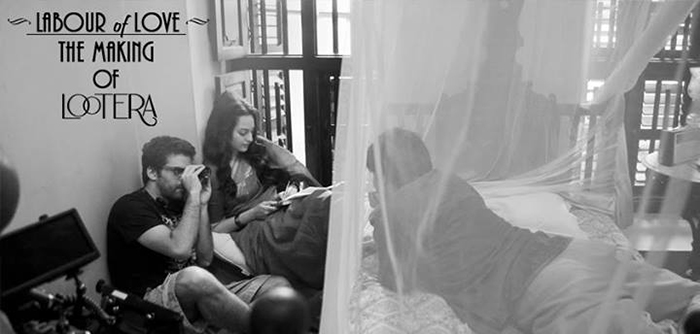
Set design in Indian cinema - Lootera

Indian movies are known for their lavishly sprawling sets, extravagant set designs, mind boggling special effects, elongated narration and song sequences. These musicals depict a wide range of emotions right from slapstick comedy to uncontrolled fury, ensuring a wholesome entertainment for the entire Indian household. A typical Bollywood movie is shot in three types of locations in general: breathtaking landscapes for outdoor scenes, elaborate indoor sets and heritage monuments. Particularly, period films are shot in heritage monuments that provide an authentic background for establishing the historic aspect of the story. Here are some of the well known movies that were worth mentioning for their architectural set design in Indian cinema.
Lootera

Set design in Indian cinema - Lootera

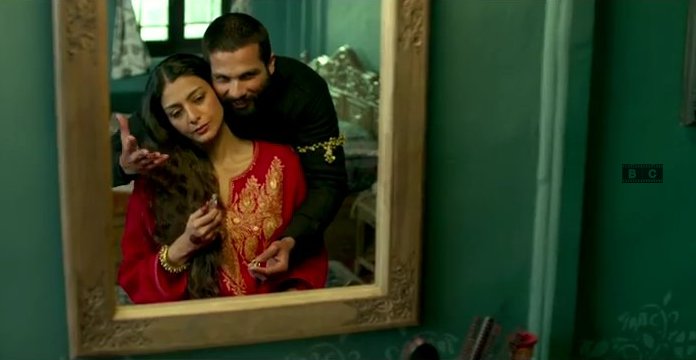
Lootera was a great period film. The costumes, songs, and locations transported the viewer back in time. The Jain temples of Deulghata of Purulia district in West Bengal form the backdrop of an excavation scene featured in the film. Deulghata in Bengali means “the land of temples”. Succumbing to deterioration, these Jain heritage sites are masterpieces in brickwork. . Owing to natural calamities and human neglect, only two out of the three temples are still standing. These temples have been extensively repaired, with only a few original portions left. The temples were constructed using curved brickwork with stucco application. Several motifs and sculptures adorn the facades of the temples.
The film provides a glimpse into the world of the Zamindars in Bengal. The Royal Palace of Khanyan also known as Itachuna Rajbari, also made a cameo in the film. Now a heritage resort, the Rajbari is divided into five mahallas – a village courthouse, a ballet dancing hall, kitchen house, a guest house and an Andar Mahal for ladies. A peek into the old world of Bengal, the oil lamps, jharbatis, and antique furniture take the visitor back to the 1950s.

Asoka

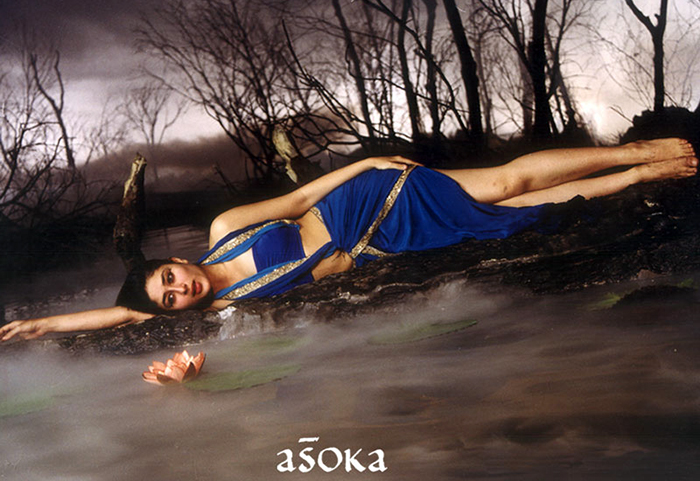
Set design in Indian cinema - Asoka

The scene is set with Kareena Kapoor practicing her sword wielding skills in front of a majestic temple dating back to the 10th century. Known as the “Gem of Odisha architecture”, the Mukteshwar Temple in Bhubaneshwar temple conforms to the classic architectural style of temples in Orissa. The Garba Griha (sanctum sanctorum) is a small windowless room with the idol of the deity. A stepped pyramidal roof over the Jagamohana (assembly hall) and the curvilinear spire of the Vimana (tower) are other features characteristic of Odisha architecture.
The film was shot on various other locations: the romance between Asoka and the princess at Panchmarhi, the palace intrigues of Pataliputra at Maheshwar, Madhya Pradesh, battle scenes outside Jaipur, the Kalinga scenes at Igatpuri and Bhubaneswar. The song “Raat Ka Nasha” was picturised at Bhedaghat and Panchmarhi in Madhya Pradesh on the banks of the Narmada River. The film is also known for using minimal special effects.

Magadheera

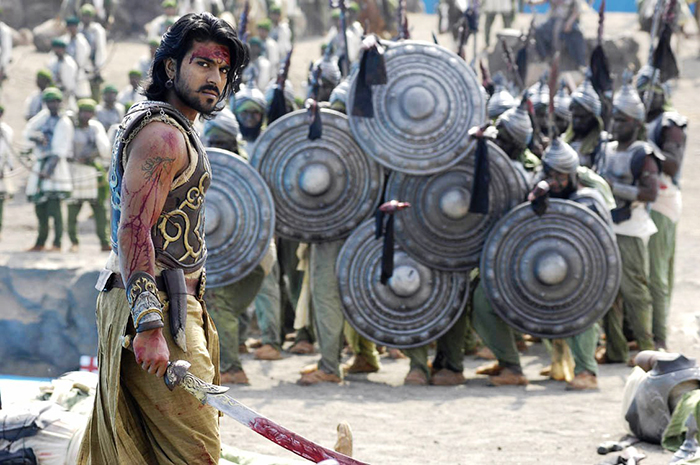
Set design in Indian cinema - Magadhera

‘Magadheera’ is considered the biggest blockbuster Telugu movie of all time. The film was noted for its extravagant sets and dazzling special effects. The beats of “Panchadara bomma” have us tapping our feet and bobbing our heads. The actors playfully frolic among the ruins of what was once a massive rampart of the Golconda Fort in Hyderabad. Golconda Fort is the biggest fortress in the Deccan plateau. Located on a 400 ft high hill, this fort has a reputation for being impregnable. With three lines of fortification, it took Aurangzeb nine months to capture the resilient fortress. Inside the fort lies the well-planned township of Golconda.
The shooting for the chariot race sequence took place in the Rann of Kutch, Gujarat. The salty, dry, open land with white sands in Dholavira was ideal for the vast battle scenery. While the chariot race sequence was shot in Dholavira, the quicksand sequence in which the chariot sinks was shot at a set in Ramoji Film City. After filming key parts of the film in Rajasthan, suburbs of Hyderabad and at Badami in Karnataka, filming continued in Ramoji Film City in a specially erected set.

2 States

Set design in Indian cinema - 2 States

It is safe to assume that the wedding scene in the movie “2 States” caught everyone’s attention, who wonders about inter-caste or inter-state marriage. A traditional wedding against the backdrop of an ancient temple on a sprawling beach – what’s not to love? This temple is none other than the Shore Temple of Mahabalipuram. One of the oldest structural stone temples in India, the Shore Temple was constructed using blocks of granite. The main temple structure consists of a 60 ft high pyramidal structure sitting on a 50 ft high platform and is built such that the rising sun’s rays fall upon the Shiva Lingam inside the shrine.
Arjun Kapoor and Alia Bhatt’s song, Locha-E-Ulfat has been shot at the Indian Institute of Management, Ahmedabad, which is the first time a Bollywood film has been shot in this premier institute. The reason being that the Chetan Bhagat book on which the movie is based on, is also set in the institute. The film was also shot in other prominent locations of Ahmedabad such as Gol Limda Bhajiya House near Astodia Darwaza, Ahmedabad Railway Station, Police Commissioner’s office, etc.

Mehbooba

Set design in Indian cinema - Mehabuba-Hemamalini

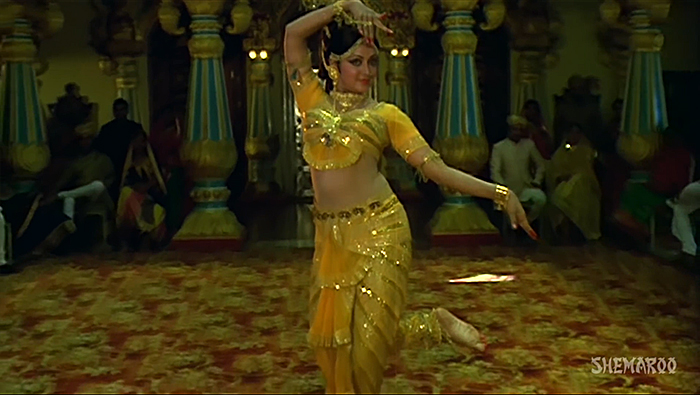
The song “Mere Naina Saawan” plays in the background as Hema Malini wanders in between gilded pillars and the hallowed halls of the Mysore Palace. The opulence and grandeur of this palace threaten to overwhelm the song’s haunting melody. Designed by Lord Henry Irwin, the Mysore Palace was constructed in the Indo-Saracenic style. Displaying varied influences from Hindu, Muslim, Rajput and Gothic architecture, it is a three-storey building of gray granite with pink marble domes, surrounded by lavish gardens. The central arch, above which a sculpture of Gajalakshmi rests, stands out from the series of expansive arches on the facade of the palace. With stained glass ceilings, chandeliers and semi-precious stones adorning the mosaic floor, no expense was spared for the opulent Ambavilasa. A rosewood doorway inlaid with ivory leads into this hall where the king would meet with private audience. The palace is not without an air of intrigue. The secret tunnels from the palace cellar lead to many places, one of them Srirangapatnam. The palace also plays host to the Mysore Dusshera festival, known for performances by artists and the parade with caparisoned elephants and floats.

Image Sources
moifightclub.wordpress.com
thebrokenscooter.com
clubdefanaticos.foroactivo.com
thebrokenscooter.com
galleryhip.com
bhmpics.com

Factfile –
http://asi.nic.in
www.filmapia.com
http://dooleyonline.typepad.com
http://www.todaraisingh.com
http://www.dailykashmirimages.com
in.geoview.info
http://www.chitrolekha.com
http://www.indiamike.com
http://en.wikipedia.org/wiki

The Reel Storeys – Architecture in Indian Movies

1

Author – Sneha Sridhar

Movies tell us stories. They capture our imagination and transport us to different times and places in history. Sometimes these places are real and the settings take the storyline to a whole new level. The architecture forms the envelope for the story. A lot of Indian buildings and monuments have had noteworthy appearances on celluloid.

Indian culture being so diverse, architecture isn’t an exception to the rule. North India is home to several forts and religious monuments, which showcase ancient Indian, Mughal and European architectural heritage. As we progress east, heritage houses exude a strong British influence. As one travels further into the south, the Dravidian temples become larger and the palaces lavish in ornamentation. No wonder Indian movies have only been too willing to set their stories in beautiful locations that are a feast to the eyes. Let’s take a look at some Bollywood films that projected some of the finest examples of Indian architecture in all their glory.

Jodhaa Akbar

Architecture in Indian Movies

The backdrop of romantic scenes in the movie, the Agra Fort is steeped in historical and architectural layers. Apart from the traditional structures like the Diwan-i-Aam (hall of public audience), the Diwan-i- Khas (hall of private audience), and the various mahals, the Fort boasts of unusual features as well. The Fort has structures adorned with inlay work in white marble and has also incorporated influences from Hindu architecture, such as the depiction of living beings in decorative art. Decorative mirror work seen in the Sheesh Mahal, a characteristic shared with the Amber Fort, is also seen in the film.

Paheli

Architecture in Indian Movies

Rani Mukherjee gazes into the distance while a bird hovers above along the steps of a baori (stepwell). Rani ki Baori in Rajasthan was featured in the movie. Named after a queen who bravely sacrificed herself to uphold her husband’s honour, the stepwell is unique in the fact that it is asymmetrical and in that its characteristic design of the steps imitated waves of water. Widely prevalent in Western India where temperatures can go up to 45 degrees, stepwells solved the problem of seasonal fluctuations in water availability. Apart from storing potable water, the stepwells also provided respite from the hot and arid weather conditions for travellers. Built with blocks of stone without using mortar, the stepwell is divided in to two parts – one allowing water to be drawn out vertically and the other allowing access to the water through the stairways. The stepwells were designed such that the water could be accessed through a series of steps, providing the flexibility of accessing the water at whichever level it was. During the rainy seasons, the stepwell would fill to its capacity and function like a cistern.

Fanaa

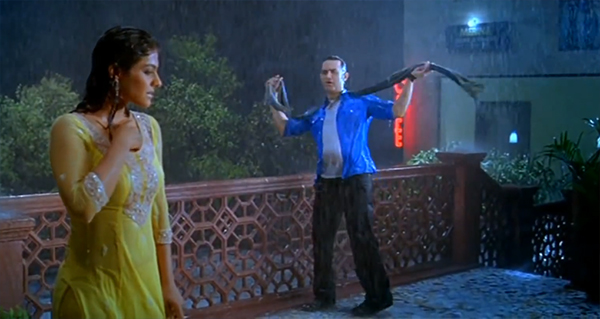
Architecture in Indian Movies

The upbeat “Desh Rangeela” plays and Kajol is twirling around in front of a structure that is more than well known- the Rashtrapathi Bhavan. Everybody recognizes this iconic building in New Delhi. The Rashtrapathi Bhavan was designed by Edwin Lutyens for the existing Viceroy at the time. Although Lutyens preferred European designs over Indian architectural designs, a few traditional elements have been used . Features like the chattris on the roof, the design of the column capitals, and several water features have been borrowed from Hindu architecture. The central dome, inspired by the dome of the Pantheon in Rome, was one of the many European influences in the building’s design. In addition to the Mughal gardens, other Indian elements included Indo-Saracenic motifs and red sandstone jaalis.
The Amar Jawan Jyothi at the India Gate and the Qutb complex were also showcased in this movie.

Haider

Architecture in Indian Movies

During the scenic shots of Dal Lake and Haider’s village, the regional architecture of Kashmir may be noticed in the background. Primarily made of timber, houses in Kashmir also have distinct, pointed roofs to shed the snow. Wooden columns, courtyards and jaalis constructed over openings were features quite common in the local architecture. Many villagers use unburnt bricks set in wooden frames or earthen walls set on stone plinths to form the structure of a house.
The song “Bismil” was shot at the Martand Sun temple in the Anantnag district of Jammu and Kashmir. The complex consists of the primary shrine located in the middle of a colonnaded courtyard. There are 84 smaller shrines surrounding the main shrine. The temple is now in ruins but the primary shrine is thought to have had a pyramidal top which is characteristic of Kashmiri temples.

3 Idiots

Architecture in Indian Movies

Indian architecture has evolved with globalization. Traditional elements have been used in modern buildings resulting in contemporary designs. One such example is IIM, Bangalore. This institution is largely featured in the film “3 Idiots”. Designed by B.V. Doshi, the campus comprises of a network of corridors, courts, and external spaces inspired by the courtyards of Fatehpur Sikhri and the gardens of Bangalore. Through pergolas, skylights, and the blurring between the exterior and interior, the campus provides an interesting spatial experience.

Another architectural highlight in the movie is the Druk White Lotus school in Ladakh. Built upon a Buddhist mandala plan, the school is an example of sustainable architecture. Open spaces and courtyards have also popularized outdoor learning.

Continue reading – Architectural Set Design in Indian Cinema

Image Source
iwatchiread.com
dearcinema.com
shaanig.com

Factfile –
http://asi.nic.in
http://dooleyonline.typepad.com/bollywood/2013/09/stepwell-hadi-rani-ki-baori-in-toda-rai-singh-rajasthan-paheli.html
http://www.todaraisingh.com/hadi-rani-ki-baori
http://www.dailykashmirimages.com/news-the-architectural-delicacy-of-rural-kashmir-42163.aspx
http://www.chitrolekha.com/V2/n1/13_Temples_Purulia_Deulghata_Pakbira_Banda.pdf
http://www.indiamike.com/india/bus-and-train-photologues-f167/historical-gems-of-hooghly-t210826/