Freedom to speak freely, is it?

1

Freedom of Speech : Shaheen Dhada Facebook commentWhile browsing through the internet a few days back, I came across a news link from a leading English newspaper in India. The news headline shook me and for a moment I was dumbstruck. It said that a shipbuilding professional in Goa was arrested for making comments about the Prime Minister, Mr Narendra Modi. Really!

I thought we are living in a democratic nation where every citizen has certain rights. We feel pride about our lengthy constitution. However, few of our fundamental rights, like ‘Right to the Freedom of Speech ’ can’t be practiced with that freedom.

The other day I was watching an American show, Boston Legal. Those who are not aware about this show, it is about attorneys and the cases they deal on a regular basis. In one of its episodes, two of the lead characters, Alan and Denny, discuss about political parties and whom will they vote. Surprisingly, they were openly discussing about each party’s positive and negative sides. This is what we call ‘Freedom of Speech’.

On the contrary, we in India can’t even express our views in social media sites like Facebook. The recent Goa incident isn’t the only case. Few years back, two girls were arrested for commenting about the cremation ceremony of Shiv Sena Supremo, Balasaheb Thackeray on Facebook. As per our constitution, every citizen of India has right to express their thoughts and views on topics as long as their views don not hurt religious sentiments and provoke any riots.

Unfortunately, we live in a nation where such rights exist only on paper. When a person tries to be expressive, they are bound to go through a lot of trouble. These rights are all governed by various political and religious parties. After recent incidences, people now restrict from expressing themselves over websites and social media. Who knows, what may offend these political parties or celebrities!

CSA Awareness – Speaking up! Before it’s too late

1

Author – Ruth Dsouza

An acquaintance once posted on her Facebook timeline – “How many women out there have been victims of child sexual abuse (CSA)? The number of responses she got left her astounded! What’s more, women began to share this timeline status and many more, unknown to her, responded in the affirmative.

This simple exercise indicated that there are a much larger number of CSA victims than we actually perceive. Silence – often the refuge of a victim – is the reason many people today still believe that CSA is not something that can happen to us. What we lack as a society is better awareness about the problem, its consequences and most importantly how to deal with the victim – which in this case is a vulnerable little soul – a child.

CSA Awareness Month – the brainchild of Kiran Manral, author and Monika Manchanda, blogger and baker at Sin-A-Mon, is an online awareness campaign aimed at educating the masses in general about this menace. Career-women in their own right, these two ladies got together to spearhead what they believe is the first step to dealing with the problem – making people aware.

The birth of CSA Awareness Month

Kiran Manral
Kiran Manral

CSA Awareness Month is in its fourth year this year. “The idea came about from a conversation between Monika and me when we were returning from the Lavasa Women’s Rally in 2011,” says Kiran. “We realised that CSA was all around us but no one spoke about it. As parents, we thought we needed to do something to raise awareness, to break the taboo, to help survivors realise it was not their fault. We decided to do this through the media we were comfortable with, namely blogs, Twitter, Facebook and other social media.”

Monika Manchanda
Monika Manchanda

Reminiscing about the beginning, Monika says, “Once Kiran and I decided to do something, details were quickly hashed out, and April was announced as the month wherein interested bloggers and parents would post their thoughts on ‘Child Sexual Abuse Awareness Month’. The plan was to post these thoughts on a blog dedicated to this cause. Survivor stories were invited. NGOs who have built credibility in this field were approached and asked for inputs. The rush was incredible, though the revelation that almost everyone had a story to tell was scary.”

The Motivation – Nay, The Need to Speak Out

“CSA is a subject with huge stigma attached to it. We like to believe that it won’t happen to US”, feels Monika. She explains, “…and the very fact that people don’t talk about it, is responsible for children being victimized and abusers walking free. More than 50% of children have confessed of some degree of abuse at some point and in most cases the abuser has been someone they trusted”.

Yet, to take time out from a busy schedule, to set aside time to join hands with several other volunteers is not easy and the motivation needs to be there. Kiran says, “For me, the motivation has been the fact that I am a parent and I owe it to my child to do whatever I can to protect him. For others, the motivation comes from various things, being survivors, being parents, being concerned citizens. Each one brings something different to the table.”

The Work Done and Lives Touched!

CSA Awareness Month’s work initially began with a blogathon and over the years has grown to include more activities. Mobile apps, Twitter chats with experts and survivors are a few such additions. They have created some strong videos with professional help. They have also created a workshop kit, which will help one set-up and execute a quick good touch/bad touch workshop for a group of parents.

This year saw the first offline event being organized, where parents interacted with experts in the field of CSA. Child-related organisations like Yowoto, Podar, Arpan, RAHI, Enfold and Tulir were part of the initiative, who over the years have brought their professional approach and know-how to disseminate information to a larger audience.

CSA - Offline event by Yowoto Podar and Arpan

Offline event by Yowoto Podar and Arpan

Monika told herself that if she could change one life with her work in this sphere, then her hardwork would have paid off. She says, “There was one person who shared her survivor story in the first CSA Awareness Month. She got in touch a couple of weeks later, asking us if we knew of counsellor she could approach. We put her in touch with an NGO in her region. Over the past 4 years, I continue to receive mails from her regularly. From being someone who was afraid of a man’s touch to getting married in a couple of months, her transition has been heart-warming. That is what we are working towards”.

For those volunteers who work behind the scenes, the journey has not been easy. Kiran says, “The stories one hears, the anguish one is privy to, the folks one doesn’t know personally who reach out to you with their stories. With initiatives like this, People are now more open to talking about it. People are more wary about their children and don’t trust anyone blindly. And parents now know or are informing themselves about how to talk to their children about good touch/bad touch and equipping their children with strategies on how to protect themselves from sexual predators.”

Understanding the Culture of Indian States [Infographic]

7

Punjabi Bhangra, Dilli chaat, Kashi yatra, Dargah qawwali, Kashmiri carpet, Rabindra sangeet, Darjeeling tea, Coorg coffee, Assam bihu, Kerala coconut, Carnatic classical music, Hyderabadi Biriyani, Lucknavi lehengas, Goan feni, Gujju dhoklas, Bikaneri Bhujia…

Is there a unifying thread in the diversity of Indian culture? Or is it just an amalgamation of various regional cultures stitched together…

Enough has been said about the “unity in diversity” of Indian culture, but often we see divisive issues cropping up that tear apart the delicate fabric of our society. While diversity is the essence of our Indian culture, many of us are unaware of the differences that actually unite various regions of the country. Here are some of the major dividing yet uniting socio-economic and cultural differences of Indian states, as depicted in our colourful infographic:

Climatic regions

climate of india

Being a large country, India is bound to have wide variations in climatic conditions. The most noticeable variation can be seen on either sides of the Tropic of Cancer, which runs from Gujarat in the west to Mizoram in the east. This latitudinal line forms the boundary between the Tropics and Subtropics. The tropical region below it is characterised by moderate variation in temperature throughout the year, and heavy rainfall. The onset of seasons is one month earlier than the northern Subtropics, which means summer arrives in March.

The northern Subtropics are characterised by drastic variation in temperature and lesser rainfall. Average temperatures can range from 00 C in winter to 400 C in summer. Winters are cold and are characterised by heavy fog. The Vindhya mountain range forms a natural barrier between the two regions. Further, the crops grown in these regions also differ.

Food crop regions

indian food Map

The staple food of Indians is wheat… no, it’s rice… no, it is maize! Can’t say for sure? Yes, our country’s diversity is clearly is visible in the myriad range of food delicacies we eat. So it’s tough to zero in one staple food for entire India. Some of the major food crops are: rice, wheat, millets, roots and tubers. Despite the diversity, the country can be divided mainly into rice eating and wheat eating regions.

Rice is mainly grown and eaten in South and East India, while wheat is predominantly grown and eaten in North and West India. Millets are the preferred staple in tribal areas of Chhattisgarh, Jharkhand, Andhra Pradesh, etc. Meanwhile a recent study by a researcher from University of Virginia has found significant cultural differences between wheat- and rice-growing cultures in India and across the world! Read more about that in this Live Mint report.

Language segmentation

indian-language

Now we come the more controversial topic, which is highly divisive in India. Languages have played a major role in building the cultural identity of different states. In fact, Indian states were reorganised on a linguistic basis just after the independence, forming many new states and cutting down many existing ones. While many people prefer this federal set up with each state carving its own identity, people who prefer a centralised set-up feel this is the reason why India does not present a unified front.

We have segregated the country into Hindi heartland and all states with regional languages. So there are 9 Hindi speaking states and 19 states with different regional scheduled languages such as Marathi, Punjabi, Tamil, etc. This map indicates that it would take a long time before Hindi can officially become a pan-Indian language. Till then, our beloved British imposition will have to serve as the subsidiary official language!

Political parties

india political map

The political map of India has undergone a drastic change in the 2014 general elections. For the first time in 30 years, a single party has emerged with a clear majority, brushing aside the rising power of regional political parties. Over the last two decades, regional political parties have been building enough strength to ensure that national parties dance to their tune in coalition governments. In fact, the rising power of regional parties indicated that India is heading more towards a federal decentralised set up.

There are states that have well established presence of national parties such as INC and BJP; then there are states such as Uttar Pradesh, Tamil Nadu, etc., where regional parties hold sway. Some of these regional parties are built on ideological platform such as CPI, CPI-M, BSP, etc., while most of them are established to cater to regional aspirations – Telangana Rashtra Samithi, Peoples Democratic Party, etc.

Religion

religions in india

Here comes the most contentious issue that is more divisive than anything else. Religion has always played a major role in the Indian society since times immemorial. While many of us blame our erstwhile rulers for their “divide and rule” policy, we don’t realise that we as a society were never united or were waiting to be divided!

Our religion map shows some of the states as non-Hindu, when they are in fact Hindu majority regions. That differentiation is actually to show that a significant non-Hindu minority live in these states. For example, West Bengal has 25% Muslim population, while Kerala has 24%. Similarly, Goa has 26% Christians, while Mizoram has 87% Christians. Gujarat and Rajasthan have significant minority of Jains 2% and Parsis (Zoroastrianism) comprising just 0.006%. Punjab and Kashmir are the two states with non-Hindu majority population. Buddhism is practised in Himachal Pradesh, Arunachal Pradesh and Sikkim.

Culture of Indian States Infographics

india infographics - Culture of Indian States

Factfile –
http://www.mapsofindia.com
http://www.livemint.com
http://en.wikipedia.org

Vadodara – An Ideal Wedding Destination in Gujarat

0
Vadodara – An Ideal Wedding Destination
Image Source

Weddings are a celebration of love. And no celebration of love should ever be ordinary. And Vadodara, with a combination of cultural essence and modern charm, is a perfect destination to make your wedding event truly extraordinary and memorable. Read on to know why.  

Economical – Vadodara is one of the most economical cities in not just Gujarat, but also in India. Its cost-friendliness is the reason it becomes an easy choice amongst the other cities in Gujarat. Well, this is as great for the visitors as it’s for the locals. You can invite all your guests and have a lavish and modern wedding without hurting your pocket. And this is practically the one thing everyone planning an event wants. 

Connectivity – A great guest experience plays a major role in the success of your wedding event. Which is why excellent connectivity also makes Vadodara a top choice. It has an airport and a railway station that are not more than a 30-min ride from any location in the city. Moreover, the city is centrally located and is just a 2-hour drive from Ahmedabad and a 3-hour drive from Surat. 

Rich in Culture – Also referred to as the ‘sanskarnagri’, Vadodara city is steeped in culture which makes it a perfect destination for couples looking to have a modern yet traditional wedding. Barodians have been upholding the tradition of the city for ages and this reflects in their celebrations which are a perfect combination of modern arrangements and an old-world charm. Needless to say, the city is an ideal destination where you can have a wedding affair that will be remembered for decades.  

Beautiful Locations for Pre-Wedding Shoots – Vadodara boasts some stunning locations straight out of fairy tales perfect for a one-of-a-kind wedding album. Whether you pick a historical fort or serene waterfront as the backdrop for your pre-wedding pictures, the city has it all. Moreover, exploring the hidden charms of the city with your partner will be a cherry on the top. Here a few locations you will absolutely fall in love with: 

  • Lukshmi Vilas Palace
  • Sur Sagar Lake
  • Pavagadh
  • Poicha
  • Sayajibaug

Grand Mercure Vadodara Surya Palace – A Perfect Wedding Venue

The challenging part while making wedding arrangements is choosing a venue. And Grand Mercure Vadodara Surya Palace, which is one of the best hotels in Vadodara, is an indisputable choice. Here are some reasons why:

Dining and Catering – We all know that good food is the essence of a successful event. And this is why we offer delicacies from 11 national and international cuisines so that your guests are all praises when they leave. From outdoor catering to live food counters, we take care of everything; all you need to do is decide the menu and relax.

Lavish Banquet Halls – Grand Mercure Vadodara Surya Palace boasts some of the finest banquet halls in Vadodara. From private wedding celebrations to a grand soiree, our state-of-the-art banquet halls are great for celebrations of different sizes. 

Whether you’re hosting a sangeet, mehendi, or an engagement ceremony, you can choose from our chic marriage halls in Vadodara according to the size of your guests’ list. 

  • The Grand Ballroom – It is the largest pillar-less banqueting venue in Vadodara with mood lighting facility available and can host up to 1000 guests. 
  • The Royal Room – It is the most sought-after wedding venue in town with majestic décor and can host up to 400 guests.

Luxury Accommodation Grand Mercure Vadodara Surya Palace offers 144 contemporary rooms, that include 4 premier suites, 1 DA room, 44 executive rooms and 96 deluxe rooms for a warm and memorable stay for your guests. 

The Grand Vivah – We have introduced the concept of ‘Grand Vivah’, the next big thing in the wedding world for upbeat couples. Customized décor, jazzy music, professional photographers and videographers; we take care of every detail, big or small, to ensure that you sit back and enjoy the wedding.

Gone are the days when weddings were more work than a celebration for the family members. We can now help you craft a designer marriage where we will work hand-in-hand with you at every step to make your big day truly special and memorable. From the wedding theme to dining and décor, simply specify your budget and preferences and we’ll make sure you get exactly what you asked for!

Call +91-9974119900 or visit https://www.suryapalace.com/wedding/ for bookings and other details.

Rishi Kamra works with Grand Mercure Vadodara Surya Palace. He has over a decade of experience in the hospitality and event management industry which allows him to create value-driven content for his readers. Travelling and photography are his two passions and in his free time, he enjoys working with the youth of his city by volunteering his time and mentoring young adults.

How to coexist with snakes

3

…Continued from from Snakes in India – Angels in disguise

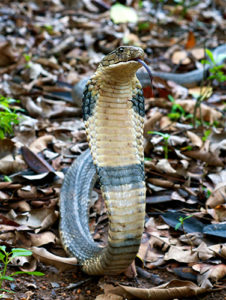
Snakes in India - King Cobra Venomous
King Cobra Venomous

Relocating snakes will not solve the problem, as there is no guarantee that you will not see another snake in its place. Besides, chances of the relocated snake’s survival are bleak. And even if it manages to survive, we are introducing a new predator to another place that could cause damage to the ecosystem. Snakebites do take place just like road accidents. If you are not cautious while crossing the road or riding/driving chances are you will meet with an accident.

So prevention is always better than cure!

If you live in an area with thick vegetation in the surroundings, there will be a possibility of snakes’ presence, so exercise caution.

  • Never walk outside in the dark without a flashlight
  • Don’t walk through tall grass without checking in front of you
  • Don’t stick your hand in the fuse box without checking first or blindly jump into a hedge to retrieve a ball

It’s generally a good practice. It doesn’t have be a snake always; there could be a scorpion for all you know.

Symptoms of snakebite

Snakebite leaves a characteristic mark of a single or double fang, especially if it is a venomous one.

  • Pain and swelling at site or the entire limb
  • Frothing or drooling
  • Nausea, vomiting
  • Abdominal pain
  • Muscle rigidity (stiffness) and fever
  • Difficulty in breathing
  • Rapid pulse
  • Person may become drowsy, dizzy and may lose consciousness

How to handle snakebite?

Here is what wildlife expert and conservationist Gerry Martin had to say:

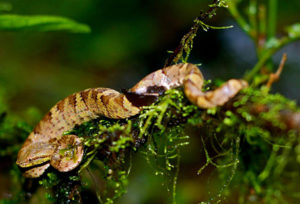
Snakes in India - Malabar Pitviper Venomous
Malabar Pitviper Venomous

As always, it is really important to do the things right if you are in a situation where someone has been bitten by a snake.

  • Firstly, stay calm! As trivial as it may sound, it makes everything from the victim’s ability to deal with the situation to your ability to make decisions much better. Panicking aggravates the situation by circulating the venom-mixed blood throughout the victim’s body.
  • Try your best to immobilize the victim. Don’t spend too much time on this. Simply put the limb in a sling or even just get the patient to lie down if you can.
  • Go straight to a hospital. Along the way, keep an eye for any symptoms such as blurry speech, droopy eyes, swelling and back pain. Knowing what symptoms appeared when will help a good doctor deal with the treatment.
  • The only known cure for a venomous snakebite is the anti-venom serum that needs to be administered intravenously under medical supervision. Do not go to anyone who claims any other form of remedy. Do not tamper with the wound. You cannot suck out the venom. Doing anything to the bite could cause a lot of damage. Do not tie a tourniquet!

Finally, if you leave your prejudices behind and look at snakes, you’ll see snakes are pretty creatures too. You’ll find them in interesting sizes, shapes, colors and patterns. After all, beauty lies in the eyes of the beholder.

Snakes in India – Angels in disguise

9

The thought of a snake, so much as the remote sound of it gives most people the creeps. Reactions will range from eww, oh my god, creepy, slimy, dangerous, to kill it!

Ever since I was able to spell cobra in school, I have been an ardent snake lover, much to my mother’s chagrin. Even as a kid, I thought snakes were mysterious and alluring. And my mother, who dragged me to the anthills every Nag Panchami – often mistaken for snake burrows – to seek the Snake God’s blessings, only heightened my fascination for these beautiful creatures.

Having said that, I understand it is not easy to dispel the fear and myths surrounding these innocent creatures completely. Further, the portrayal of snakes as the representation of evil in several mythologies, fairytales, Hollywood and holy books has only added to the misunderstanding. Understanding the importance of the role that snakes play in balancing the ecosystem is the first step towards resolving the conflict between human and snakes.

Malabar Pit Viper Venomous

Snakes in India do form a vital part of our ecosystem and their presence or absence from an area affects the ecosystem directly and in a big way. Snakes are indeed angels in disguise! You may picket in front of my house for uttering this statement. But take heart!

Snakes are our friendly neighbours for they are the greatest pest controllers. They feed on rodents and help us by keeping some of the dreadful diseases at bay. They also help farmers by protecting the crops from rodents. They feed on amphibians, insects, mammals and other reptiles, which keeps their population growth in check. And some predatory birds feed on snakes for their survival as well. Needless to say, the importance of birds in maintaining the ecological balance is paramount.

Some snakes always live closer to human habitats. As human population continues to rise, we are expanding our cities, towns and villages, resulting in our encroachment of the territories belonging to other wild species. When these animal species are accommodating and tolerating us in their space, we at the least should learn to coexist with them. We don’t go about killing people we think are harmful or dangerous to the society, so why snakes?

You will be happy to know that snakes are shy animals, who avoid contact with humans as a principle. The good news is approximately 80% of the snakes found in India are non-venomous, and the remaining 20% have no intensions of wasting their venom on humans even if they come in contact with them. Snake venom is modified saliva; it is also a digestive juice that is essential for their survival. As opposed to the popular belief, snakes are not vindictive and they strike in defence only when they feel threatened.

Recently, the Snake God did bless me with an opportunity to learn more about snakes from renowned herpetologists like Romulus Whitaker, Gerry Martin and Nirmal Kulkarni. I had an opportunity to be a part of rescue and release of the longest venomous snake in the world, King Cobra in Agumbe, Karnataka. It was the smoothest operation I have ever witnessed.

When you look into the eyes of a King Cobra you will realize why he deserves the respect he gets. He just gapped at me for a long time in a calm and composed manner and slithered away softly when he realized that the gapping activity didn’t yield any interesting results! Although King Cobras are the most feared snakes and have the reputation of being aggressive, they are reluctant to display any aggression unless provoked or harmed.

Also Read How to Coexist with Snakes…

Factfile –
http://www.iaszoology.com
http://www.ehow.com
http://www.thehindu.com
http://www.mamtanaidu.com

Eco Fashion Becomes Trendy!

0

eco friendly fashion
Image via ecoideaz.com

I remember watching a documentary on Anna Wintour, Editor-in-Chief of Vogue America, who is considered as one of the most powerful personalities in the global fashion industry. She is often criticized for using fur, which is a vital element in fashion. Criticism for using animal-based apparel is quite common in the fashion world. However, things have changed a lot over the last decade.

There are many fashion houses that have started using eco-friendly materials to produce their garments. Surprisingly, these products have gained popularity among the masses due to its sheer quality of being eco-friendly. Personally, I am fond of eco-friendly products. They not only look good but also are easy to handle. There is no special instruction for using them and can be easily managed; unlike products from other synthetic raw materials that need special attention.

Eco fashion Fabindia women
Image via ecoideaz.com

Green products have gained momentum. With technology, a lot of eco fashion materials have been introduced to the fashion industry. Recently, I got introduced to a new jeans made from recycled plastic made by Levis. These jeans are far better than the other material, plus they give you the similar comfort when compared to its counterparts.

Apart from the well-established brands, small garment manufacturers have also entered in the market with their eco-friendly products. Recently, when I attended a trade expo in Pune, I got to see products some of the small manufacturers from different states of India. Consumer awareness about the eco-friendly products and their charm is proving fruitful to such small manufacturers when they showcase their products.

Further, Ecoideaz.com has found that eco fashion and dress material are becoming trendy among many fashion designers and brands. Firstly, these raw materials are easily available and are in abundance. Secondly, with the growing concern over the synthetic material, eco-friendly products seem a bit legitimate to use. Thirdly, these products are getting popular among masses because of rough handling. Considering all these factors, one can certainly expect eco-friendly fashion products to become trendy over the coming years.

Reviving a Dead River – Vrishabhavathi

9

Author – Shwetha Kamath

Vrishabhavathi
Vrishabhavathi | AP Photo

It has been almost four years since I moved to a hostel in Pattanagere, a tiny town on the outskirts of Bangalore city. I pursued BE Biotechnology in R. V. College of Engineering (RVCE) and our hostel was located on the banks of a river. The very thought of living on the banks of a river might make you feel how awesome this place is. A beautiful serene place nestled adjacent to a river away from the city’s chaos would be everyone’s dream location. However, the reality was too disturbing!

Toxic chemicals, pollution, health hazards and other aspects of human impact on environment were not just a part of my syllabus book, but they had got materialized in my surroundings. Vrishabhavathi, the river next to my hostel is the tributary of Akravathy river that originates from a spring at a temple on the Bull Temple Road, Basavangudi and runs parallel to the Mysore Road. Vrishabhavathi is nicknamed “Kengeri Mori” (Mori being drain in Kannada), while Google Maps identifies the river as Vrishabhavathi Nala!

Vrishabhavathi river

rivers of india Vrishabhavathi
Vrishabhavathi | Desiree Alemao – IIJNM

As these names suggest, the river has been the carrier of all sorts of industrial toxic waste and domestic waste water for the past few decades now. Sometimes, the Pattanagere bridge crossing is blocked with solid waste during rains, causing the river to overflow and scatter all the plastic waste and dirt on the roads. The entire area gets dirtier and the smell is intolerable.

Shockingly, the river water is said to be treated at the Vrishabhavati sewage treatment plant in Rajarajeshwari Nagar, but the treated water gets equally polluted as it reaches Pattanagere, at a mere distance of about 1.5 km. Due to the detergents and untreated industrial effluents dissolved in the water, a lot of foam is generated. Most of it being alkaline in nature, the river flow causes it to froth and this can be seen across the Mysore Road. Especially, the Kengeri Falls at Jayaramdas stop after RVCE is a sight to behold!

Surprisingly, those residents who complain about this problem are the same ones who wake up early morning to empty their garbage cans into the water. Despite RVCE students making an effort to raise awareness among the residents, Vrishabhavathi is still considered as their very own dump yard. Our brief interaction with the people living on the banks of this river was disappointing too. This was not just a dump yard but a paradise for rag pickers. What a shame!

BWSSB sewage treatment plants

In 2006, major plans were initiated to clean up this water body as it began infecting people by causing water-borne diseases and other health hazards. High levels of toxic pollutants such as arsenic and zinc were found in the groundwater near the Bhyramangala tank, where Vrishabhavathi. Polluted water has impacted agriculture too, with farmers using sewage water for the cultivation of vegetables, cereals, fodder, and coconuts, which are contaminated.

Although the BWSSB sewage treatment plants cleanse the continuously polluted river, there has been no visible change. These plants might have reduced the amount of toxicity in the water, but the source of this waste needs to be prevented from polluting it. Sustainable ways need to be found to address this major environmental issue of Bangalore city.

Many well known companies and institutions that are located on the banks of Vrishabhavathi river must take an initiative on their own to help themselves and not wait for the government to impose stricter rules. The attitude of “rules are meant to be broken” is what has cast this huge ecological shadow on our city. We can undertake some easy steps and some difficult yet innovative solutions to prevent water pollution:

  •  Build eco-friendly Root zone waste water treatment plants in industries and large buildings adjacent the river
  • Provide incentives like tax benefits and CSR mandates to industries that allow only filtered and treated water into the river
  • Utilise the Nullah Park concept from Pune to filter and cleanse small drains that flow into the river
  • Cultivate water hyacinths to filter out toxic chemicals such as lead, mercury, cadmium, etc.
  • Use Diatoms such as Nualgi to purify the water that flows into the lake

One of my lecturers recalled that there was a time when people took bath, washed clothes and frolicked in the Vrishabhavathi river. However, the grim situation we face today spells doom for our future. Ignoring a serious issue like this is like living in an illusion; I feel ending this illusion is the first step towards making a difference.

Factfile –
timesofindia.indiatimes.com
http://www.thehindu.com
http://en.wikipedia.org
http://www.ijser.org
https://www.flickr.com
http://www.indiawaterportal.org

The Culture of Sheepleocracy in India

3

Author – Jaimine Vaishnav

Sheeple - Sheepleocracy

India has completed 65 years as the world’s largest democracy. Right now, we are undergoing the 16th General Elections that are the largest and most elaborate in the world. And yet, our democracy is quite immature where the masses are unwilling to take a larger role in decision making, leading to a sheepleocratic Indian society. Indian voters can be considered ‘Sheeple’ (‘sheep’ and ‘people’), a term created to highlight the herd mentality of people and “Sheepleocracy” is a known socio-political culture where the hallucinated Indian mass society behaves in a sheepish manner. The democratic culture of sheepleocracy is more perilous than the law of the jungles, and I assert so because this society is pro-WE. This WE-ism legitimises the infringement of ME-ism, and therefore I believe I am morally right to notify this vileness to your notice.

Moreover, this empiricistic culture has also systematically undermined the potency of rationalism and praxeology. The socio-psychological behaviour of many informative Indians are driven by the animal spirit of the empiricism philosophy. Despite of the drowning of information, ignorance is a rational choice that many people are still vociferously making.

The result: Imposed order transcends over Spontaneous order. Overall speaking, thorough generalized perspective, the tabula rasa is no where to attain the podium because the sheeples are not able to think beyond mainstream models to uplift the consciousness of all. To talk of alternate socioeconomic models, in India, is like administering medicine to a dead person. I am not defaming any unit, but essaying out openly because I have realized the real lies with my real eyes. This real lie is ‘collectivism’, but unfortunately many are ever-ready to condemn my hypotheses without giving any second thought to their own premises because they are inured to believe that “who will build roads without the government?”

Sheeple - MemeThese levels of sheepleocracy is lynching as well as discouraging many rational egoists to come forward and take the helm to liberate India. Everyone, as far as I know, sweetly talk about justice, equality, welfare but not many understand the philosophy behind it. Now, let me pose a simple question to all the sheeples out there: “Is it natural justice when 80% of the people take away the natural rights of 20% people through tyrannical modes?”

Anyways, to quote Frédéric Bastiat –

“If the natural tendencies of mankind are so bad that it is not safe to permit people to be free, how is it that the tendencies of these organizers are always good? Do not the legislators and their appointed agents also belong to the human race? Or do they believe that they themselves are made of a finer clay than the rest of mankind?” 

To believe that Indian government/society can splendidly administer the culture of democracy is like seeing fire creating the furniture. As long as the so-called culturalists drift away from the praxeology of individualism, the more it will condemn those who valiantly stand for critical consciousness. I am stringently essaying out all these new fancy terms because I am attempting to set man free from men. I have no such special deontology to do so but there is nothing wrong to revive epistemology against the ontologists who have no idea of what they are doing to many methodologies.

Sheeple - Charlie ChaplinAs long as the mass society condemns the critical consciousness of any Indian, the more it will abhor the culture of those who valiantly transform the complex lies into simple truth. It is better to slap the Indian society with truth than kiss it with lies. Truth is a maxim and through the methodology of rational thinking one can develop itself without any masquerading collective assistance. Collectivism is actually responsible for the sheeplocratic culture in India. It starts at home, processes through school, facilitates via society and demises at home. Here, you are a mean and not an end. One cannot expect a man to be an end in itself, in the ambiance of sheepleocracy.

Now, just look at this common culture around you from your sceptical eyes, I bet you that you will experience a different thought and that is because my essay is attempting you to think against conformity. Remember that only dead fishes flow with the river stream, whereas awakened ones create their own new culture. To generate a fresh new culture requires development of original thoughts. One cannot solve the problem with the same consciousness that created it. I am not a Marxist to tell you that “let us blame the structural consciousness… blah blah blah”. I am just a spiritual being with human experience.

Start reading Ayn Rand’s Anthem, George Orwell’s 1984, Ludwig von Mises’s Human Action and Murray Rothbard’s The Ethics of Liberty to comprehend of what all complex ideas I have proposed here.

About the Author –
I am an Assistant Professor based in Mumbai. I teach politics, economics, journalism and business management. I am also a Senior Fellow at Indian Libertarians.org. I am just 24yr old and I love to make people think. I like to overthink and discourse with intelligent individuals (not educated people).

3 Famous Historical Places in Mumbai To Explore

0
Famous-Historical-Places-in-Mumbai
Image – Pixabay

While Mumbai may be known for its Bollywood industry and advancements in lifestyle, today we are going to look back at the times when the city was just in its infancy. During the days before independence, Mumbai was known as only a colonial port city. However, post-independence, the city has improved its economic situation through its advanced industrial capabilities and has gradually secured its foothold as the capital city of India.

The city possesses the richness of its history and culture through the majestic historical monuments which it has been preserving from so long. The opulent structures, prehistoric caves, ancient forts, British architected monuments and royal palaces speak of an era gone by. These archaeological pieces of history serve as the testimonies of Mumbai’s greatness. Every monument you see in the city has a story behind it.

Below are the three famous historical places in Mumbai which one must visit to know about the history of the city in depth.

Gateway of India

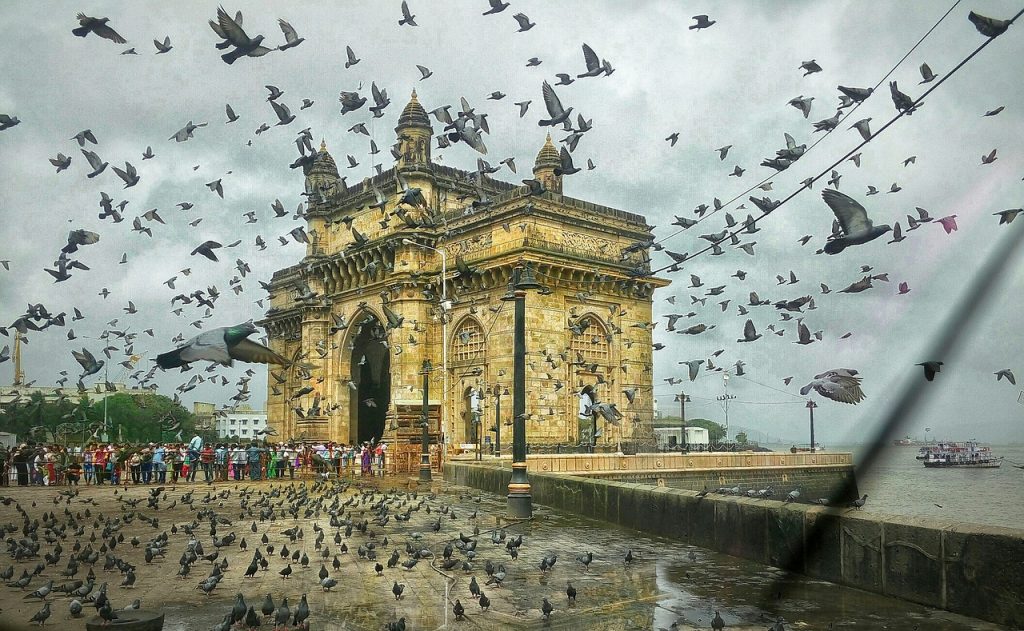
Famous-Historical-Places-in-Mumbai-Gateway-of-India
Image – Pixabay

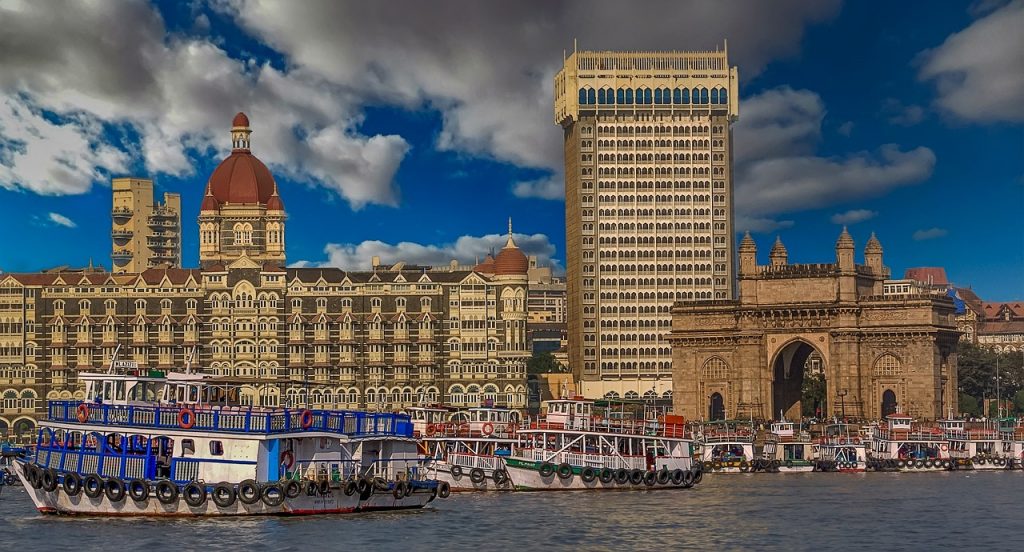
One of the important architectural and historical stops, Gateway of India secures its place among the most visited monuments in Mumbai. Constructed since 1924, this approximately 83 feet tall building stands high on Apollo Bunder overlooking the Arabian Sea. The entire monument is built with yellow basalt and solid concrete. The monument symbolizes the commemoration of the visit of King George V and Queen Mary to India in 1911. Not only this, the monument is also the centre of attraction because this was the way which last British Force adopted to depart from India forever.

Near to this place, you can find Taj Hotel which is another biggest tourist attraction in Mumbai. Because the monument is situated near the Taj Mahal Hotel, it is also called as Taj Mahal of Mumbai. To visit this monument, there is no specific timing; it is open 24*7 for everyone. However, if you want to enjoy the cool breeze and pleasant weather, you are suggested to visit there post monsoon. Boating and ferry rides are also available which add to the excitement of the place.

Prince of Wales Museum

Famous-Historical-Places-in-Mumbai-Prince-of-Wales-Museum
Image – Adam Jones via Flickr

Built in the early 20th century, this splendid Indo-Saracen structure is regarded as one of the most significant and Grade I heritage buildings of the city. It was named after Prince Wales who visited India in 1905. On November 11, 1905, the foundation of this museum was laid by the Prince Wales and was inaugurated on January 10, 1922 by Lady Lloyd, the wife of Governor of Bombay. This museum is also known as Chhatarpati Shivaji Maharaj Vastu Sangrahalaya.

Spread over 3 acres land and surrounded by a garden of palm trees and formal flower beds, the museum is located in the centre of the South Mumbai and reveals more than 50,000 ancient artworks, sculptures and artefacts dating back from the Harappan sites, Indian and European paintings, porcelain and ivories from China and Japan, etc. and is divided into three sections- National History, Art and Archaeology. It is located at MG Road in South Mumbai. You can visit here at any time of the year. However, it remains closed on Public Holidays. Every day, a 20 minutes show is conducted here in English and Marathi language which depicts the content history and other details related to the museum.

Elephanta Caves

Famous-Historical-Places-in-Mumbai-Elephanata-Caves
Image – Ashwin Kumar via Flickr

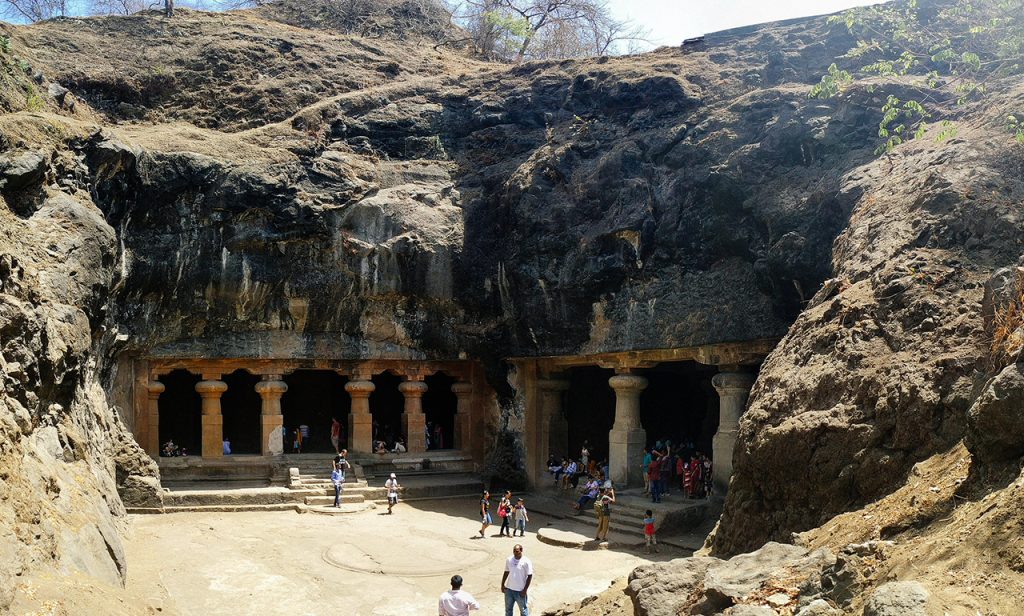
Among the most enigmatic heritage sites in India and about 10 kilometers east of Gateway Of India stands Elephanta Caves. It is also one of the UNESCO heritage sites and represents the diorama of the Hindu and Buddhist culture. There are carved out stone sculptures inside the caves which showcase the syncretism of Hindu and Buddhist ideas and iconography. The caves are believed to be dated between 5th and 9th century.

To reach there, you have to go hire a ferry from Gateway of India. Since Mumbai welcomes end number of tourists every day, there are chances of not getting the ferry to sail across the sea to reach the destination. Another way to reach the caves is going through the suburban local rail network. You can board on a local train from wherever you are in Mumbai and board off at CST Station. At the caves, you can enjoy boating also. The place is closed on all Mondays and visiting hours are between 9 AM and 5 PM on all the other days.

Wrapping it up

Mumbai has come a long way from being just a city to a city with immense history immersed in it. Therefore, it is not possible to appreciate the beauty of a city if you soak yourself in opulence and grandeur by just visiting the famous historical places in Mumbai.  You should know the history, culture and historical significance of its renowned places to fathom the greatness of the city.

In the modern times, Mumbai has become India’s one of the well-established city which is packed with lots of historical sites and tourist destinations in hidden corners or even ordinary locations of the city. Here are a few more historical attractions that have a long history attached to them: Mahim Fort, Kanheri Caves, Mount Mary Church, Asiatic Library, Siddhivinayak Temple etc.

Visit these exquisite places with your friends and family!