The Culture of Sheepleocracy in India

3

Author – Jaimine Vaishnav

Sheeple - Sheepleocracy

India has completed 65 years as the world’s largest democracy. Right now, we are undergoing the 16th General Elections that are the largest and most elaborate in the world. And yet, our democracy is quite immature where the masses are unwilling to take a larger role in decision making, leading to a sheepleocratic Indian society. Indian voters can be considered ‘Sheeple’ (‘sheep’ and ‘people’), a term created to highlight the herd mentality of people and “Sheepleocracy” is a known socio-political culture where the hallucinated Indian mass society behaves in a sheepish manner. The democratic culture of sheepleocracy is more perilous than the law of the jungles, and I assert so because this society is pro-WE. This WE-ism legitimises the infringement of ME-ism, and therefore I believe I am morally right to notify this vileness to your notice.

Moreover, this empiricistic culture has also systematically undermined the potency of rationalism and praxeology. The socio-psychological behaviour of many informative Indians are driven by the animal spirit of the empiricism philosophy. Despite of the drowning of information, ignorance is a rational choice that many people are still vociferously making.

The result: Imposed order transcends over Spontaneous order. Overall speaking, thorough generalized perspective, the tabula rasa is no where to attain the podium because the sheeples are not able to think beyond mainstream models to uplift the consciousness of all. To talk of alternate socioeconomic models, in India, is like administering medicine to a dead person. I am not defaming any unit, but essaying out openly because I have realized the real lies with my real eyes. This real lie is ‘collectivism’, but unfortunately many are ever-ready to condemn my hypotheses without giving any second thought to their own premises because they are inured to believe that “who will build roads without the government?”

Sheeple - MemeThese levels of sheepleocracy is lynching as well as discouraging many rational egoists to come forward and take the helm to liberate India. Everyone, as far as I know, sweetly talk about justice, equality, welfare but not many understand the philosophy behind it. Now, let me pose a simple question to all the sheeples out there: “Is it natural justice when 80% of the people take away the natural rights of 20% people through tyrannical modes?”

Anyways, to quote Frédéric Bastiat –

“If the natural tendencies of mankind are so bad that it is not safe to permit people to be free, how is it that the tendencies of these organizers are always good? Do not the legislators and their appointed agents also belong to the human race? Or do they believe that they themselves are made of a finer clay than the rest of mankind?” 

To believe that Indian government/society can splendidly administer the culture of democracy is like seeing fire creating the furniture. As long as the so-called culturalists drift away from the praxeology of individualism, the more it will condemn those who valiantly stand for critical consciousness. I am stringently essaying out all these new fancy terms because I am attempting to set man free from men. I have no such special deontology to do so but there is nothing wrong to revive epistemology against the ontologists who have no idea of what they are doing to many methodologies.

Sheeple - Charlie ChaplinAs long as the mass society condemns the critical consciousness of any Indian, the more it will abhor the culture of those who valiantly transform the complex lies into simple truth. It is better to slap the Indian society with truth than kiss it with lies. Truth is a maxim and through the methodology of rational thinking one can develop itself without any masquerading collective assistance. Collectivism is actually responsible for the sheeplocratic culture in India. It starts at home, processes through school, facilitates via society and demises at home. Here, you are a mean and not an end. One cannot expect a man to be an end in itself, in the ambiance of sheepleocracy.

Now, just look at this common culture around you from your sceptical eyes, I bet you that you will experience a different thought and that is because my essay is attempting you to think against conformity. Remember that only dead fishes flow with the river stream, whereas awakened ones create their own new culture. To generate a fresh new culture requires development of original thoughts. One cannot solve the problem with the same consciousness that created it. I am not a Marxist to tell you that “let us blame the structural consciousness… blah blah blah”. I am just a spiritual being with human experience.

Start reading Ayn Rand’s Anthem, George Orwell’s 1984, Ludwig von Mises’s Human Action and Murray Rothbard’s The Ethics of Liberty to comprehend of what all complex ideas I have proposed here.

About the Author –
I am an Assistant Professor based in Mumbai. I teach politics, economics, journalism and business management. I am also a Senior Fellow at Indian Libertarians.org. I am just 24yr old and I love to make people think. I like to overthink and discourse with intelligent individuals (not educated people).
3 Famous Historical Places in Mumbai To Explore

0
Famous-Historical-Places-in-Mumbai
Image – Pixabay

While Mumbai may be known for its Bollywood industry and advancements in lifestyle, today we are going to look back at the times when the city was just in its infancy. During the days before independence, Mumbai was known as only a colonial port city. However, post-independence, the city has improved its economic situation through its advanced industrial capabilities and has gradually secured its foothold as the capital city of India.

The city possesses the richness of its history and culture through the majestic historical monuments which it has been preserving from so long. The opulent structures, prehistoric caves, ancient forts, British architected monuments and royal palaces speak of an era gone by. These archaeological pieces of history serve as the testimonies of Mumbai’s greatness. Every monument you see in the city has a story behind it.

Below are the three famous historical places in Mumbai which one must visit to know about the history of the city in depth.

Gateway of India

Famous-Historical-Places-in-Mumbai-Gateway-of-India
Image – Pixabay

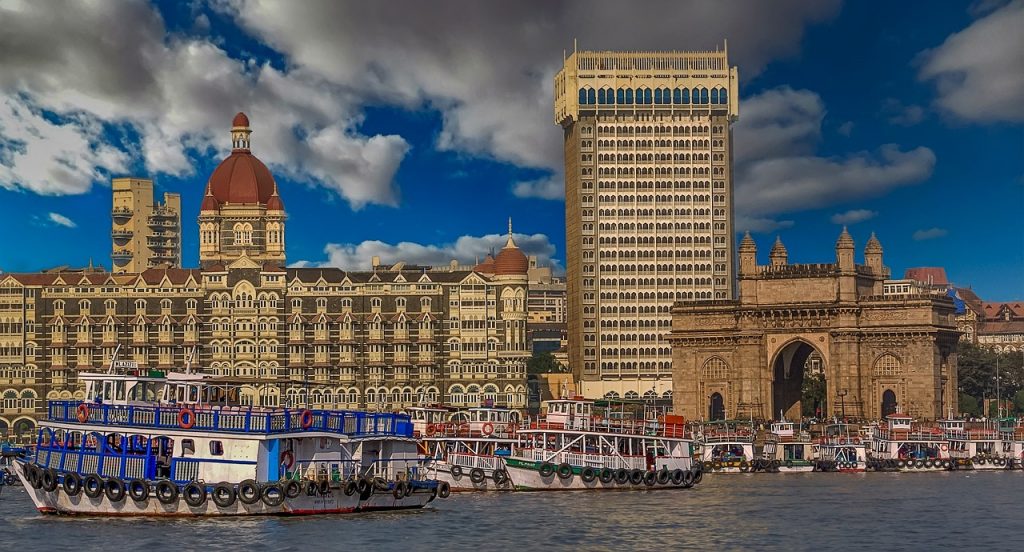
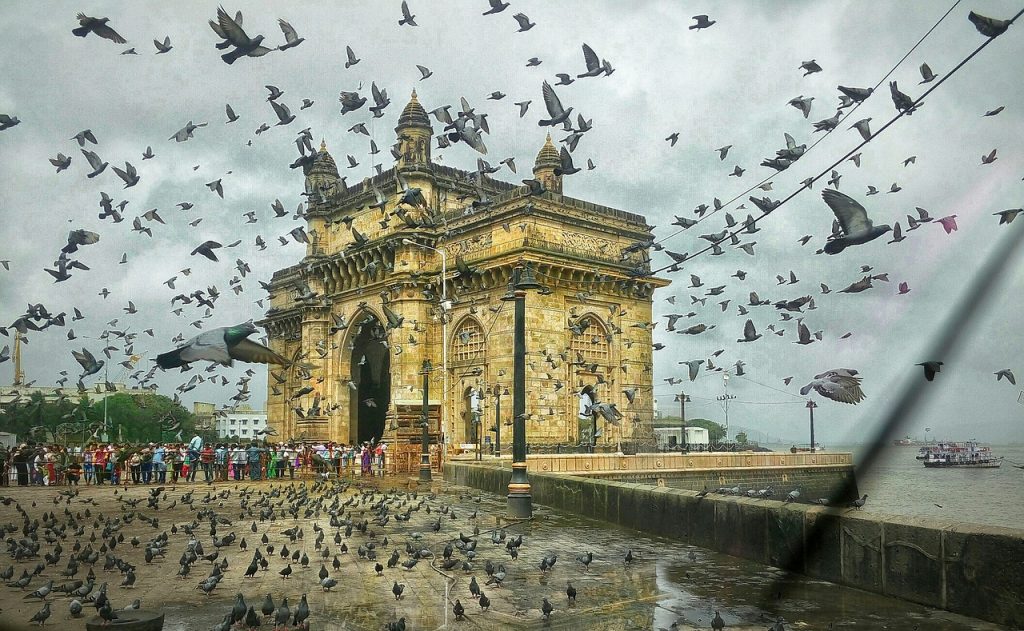
One of the important architectural and historical stops, Gateway of India secures its place among the most visited monuments in Mumbai. Constructed since 1924, this approximately 83 feet tall building stands high on Apollo Bunder overlooking the Arabian Sea. The entire monument is built with yellow basalt and solid concrete. The monument symbolizes the commemoration of the visit of King George V and Queen Mary to India in 1911. Not only this, the monument is also the centre of attraction because this was the way which last British Force adopted to depart from India forever.

Near to this place, you can find Taj Hotel which is another biggest tourist attraction in Mumbai. Because the monument is situated near the Taj Mahal Hotel, it is also called as Taj Mahal of Mumbai. To visit this monument, there is no specific timing; it is open 24*7 for everyone. However, if you want to enjoy the cool breeze and pleasant weather, you are suggested to visit there post monsoon. Boating and ferry rides are also available which add to the excitement of the place.

Prince of Wales Museum

Famous-Historical-Places-in-Mumbai-Prince-of-Wales-Museum
Image – Adam Jones via Flickr

Built in the early 20th century, this splendid Indo-Saracen structure is regarded as one of the most significant and Grade I heritage buildings of the city. It was named after Prince Wales who visited India in 1905. On November 11, 1905, the foundation of this museum was laid by the Prince Wales and was inaugurated on January 10, 1922 by Lady Lloyd, the wife of Governor of Bombay. This museum is also known as Chhatarpati Shivaji Maharaj Vastu Sangrahalaya.

Spread over 3 acres land and surrounded by a garden of palm trees and formal flower beds, the museum is located in the centre of the South Mumbai and reveals more than 50,000 ancient artworks, sculptures and artefacts dating back from the Harappan sites, Indian and European paintings, porcelain and ivories from China and Japan, etc. and is divided into three sections- National History, Art and Archaeology. It is located at MG Road in South Mumbai. You can visit here at any time of the year. However, it remains closed on Public Holidays. Every day, a 20 minutes show is conducted here in English and Marathi language which depicts the content history and other details related to the museum.

Elephanta Caves

Famous-Historical-Places-in-Mumbai-Elephanata-Caves
Image – Ashwin Kumar via Flickr

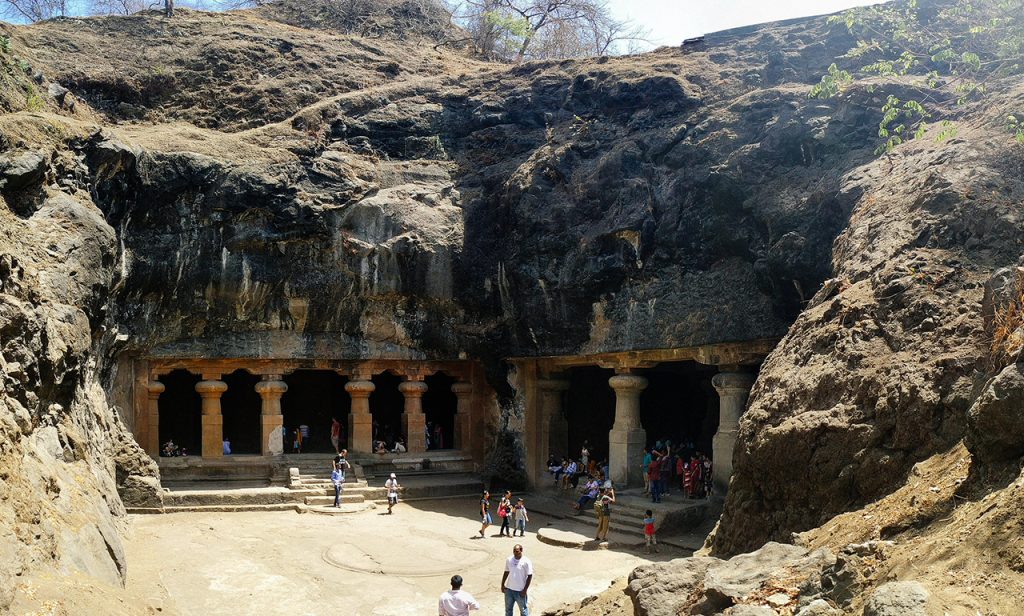
Among the most enigmatic heritage sites in India and about 10 kilometers east of Gateway Of India stands Elephanta Caves. It is also one of the UNESCO heritage sites and represents the diorama of the Hindu and Buddhist culture. There are carved out stone sculptures inside the caves which showcase the syncretism of Hindu and Buddhist ideas and iconography. The caves are believed to be dated between 5th and 9th century.

To reach there, you have to go hire a ferry from Gateway of India. Since Mumbai welcomes end number of tourists every day, there are chances of not getting the ferry to sail across the sea to reach the destination. Another way to reach the caves is going through the suburban local rail network. You can board on a local train from wherever you are in Mumbai and board off at CST Station. At the caves, you can enjoy boating also. The place is closed on all Mondays and visiting hours are between 9 AM and 5 PM on all the other days.

Wrapping it up

Mumbai has come a long way from being just a city to a city with immense history immersed in it. Therefore, it is not possible to appreciate the beauty of a city if you soak yourself in opulence and grandeur by just visiting the famous historical places in Mumbai.  You should know the history, culture and historical significance of its renowned places to fathom the greatness of the city.

In the modern times, Mumbai has become India’s one of the well-established city which is packed with lots of historical sites and tourist destinations in hidden corners or even ordinary locations of the city. Here are a few more historical attractions that have a long history attached to them: Mahim Fort, Kanheri Caves, Mount Mary Church, Asiatic Library, Siddhivinayak Temple etc.

Visit these exquisite places with your friends and family!

Know Your Urban Wildlife

2

When we think of wildlife, an image comes to our mind – trekking miles deep into the jungle, camping in the forest overnight, watching predators in their natural habitat, capturing their hunt through a telephoto lens camera, etc. However, most of us who are stuck in our mundane urban life are not blessed enough to undertake such adventures. What if we could get the same thrill here in our concrete jungle…

Whenever you need a quick dose of wonder that observing wildlife could bring, just step outside your house and investigate the trees and plants around you. Cities with greenery do teem with wildlife, Urban Wildlife – birds, insects, mammals, amphibians and reptiles.

Urban nature is full of drama and mysteries, just like spiders which have evolved to look like ants and moths to trick birds into thinking they would make a lousy meal by mimicking the appearance of moths that really are distasteful- and thus avoid being made a meal of. Some detective skills, a curious mind and a watchful eye are all you need. Wildlife watching also makes for interesting conversations with people who are curious to know what you are up to!

Snake Skink

Next time you see something small and snake-like slithering in the sand or the undergrowth by your feet, swallow that yelp of fear. It is most probably a skink – a long lizard with reduced limbs that moves very much like a snake. There are about 50 kinds of skinks in India, but I’ve only seen the snake skink (Lygosoma punctata) or supple skink around residential areas in Bangalore.

Urban Wildlife Snake skink

Juvenile snake skinks have a bright red tail, leading some to mistakenly think these skinks are poisonous. I am fascinated looking at their red tails wriggle as they move – seems as though they leave a trail of flame as they move! The juvenile skinks also have streaks on their body, unlike the adults that have spots and no red tail. These snake skinks are semi-fossorial (living underground) and have developed a particularly neat adaptation to prevent their eyes getting scratched- a transparent visor they can slide over their eyes. Skinks press their feet against their body to flee from a predator all the more faster. Interestingly, some skinks in Australia were found to have lost their limbs completely due to lack of use.

Purple Sunbird

My garden is always abuzz with these tiny birds who visit flowering plants for their nectar. Seeming as though they are unable to make their minds about which flower to drink nectar from, they dart from one flower to the next – sometimes hovering in air – while calling shrilly others around them. They usually hang out in groups of two or more individuals.

Urban Wildlife Purple Sunbirds

Purple sunbirds (Cinnyris asiaticus) are mostly nectarivorous, but they also feed on fruits and insects. They are huge fans of pumpkin and Indian ivy gourd. My neighbour had planted these two creepers and the sunbirds visit the creepers every day. The Singapore cherry tree is another favourite.

Sunbirds are a little smaller than sparrows and about the size of your palm. Like most birds, male and female sunbirds have a contrasting appearance. An explanation for this might be the difference in amount of care given to offspring between the sexes. The male sunbirds are a pretty indigo blue while females are a pale yellow with brownish olive-green wings. Next time you see them, try to look for signs of their breeding season (males develop a maroon collar in the front of their necks and a bright blue patch of feathers on their shoulder during breeding season) and notice males displaying their colours to prospective mates.

Greater Short-Nosed Fruit Bat

The coffee-hued Greater Short-Nosed Fruit Bat (Cynopterus sphinx) is one of the two kinds of short-nosed fruit bats, the other being the lesser short-nosed fruit bat (Cynopterus brachyotis). Both these bats have the most endearing eyes which look like pools of molten chocolate.

Urban Wildlife Short nosed fruit batCynopterus sphinx is found all over India. Their ears are lined with pale white fur. The male sports orange fur on its chin and body while the females have grey fur on their bellies. They are small and fly with rapid wing beats. As its name suggests the greater short-nosed fruit bat is frugivorous (fruit-eating). It likes guavas and bananas and is a useful pollinator (Read about the bats that took over as gardeners). It uses a keen sense of smell to hone in on fruits. Most other bats are insectivorous, while vampire bats feed on blood.

The bats reside in small colonies of ten to twenty individuals under leaves of trees or roofs of buildings and houses. When breeding season dawns, the male constructs tents made of stems for the female and the newborn pups. Bats are hard to identify while in flight, but if you have banana or palm trees, keep an eye out for these coffee-and-chocolate-hued bats.

How to identify animals?

There are plenty of resources online to help you identify the names of insects, birds and reptiles like groups on Facebook (Indian Birds, InsectIndia, Reptiles & Amphibians of India). Many states in India have a birdwatching club (BngBirds in Bangalore, Kerala Birder, Northern India Bird Network) which regularly meets on weekends. While primarily meant for birdwatching, you usually learn a whole lot more from the naturalists who come for the birding trails.

Factfile –
http://www.livescience.com
en.wikipedia.org/wiki/Muntingia

Can our civilisation lead an eco-friendly lifestyle…

2

Author – Sangeetha Muralidharan

“After one look at this planet, any visitor from outer space would say, ‘I want to see the manager.” A striking quote by William S. Burroughs makes us ponder over we have really done to our Mother Earth. This planet has served us selflessly for centuries and we in return have tried to destroy it in as many innovative ways as possible in the name of development, or term it “economic development” to be precise.

Water-pollution

We stand as a solid proof for Darwin’s theory of survival of the fittest, destroying everything that comes in our way, just to ensure us a comfortable survival. No other living being has contributed to the environment as much as we have. We must be feeling proud of ourselves.

Look at our achievements that cannot be matched by any other animal species that has ever existed!

  • Our comfortable lifestyle comes at the cost of destroying the homes of thousands of rare creatures
  • We have dirtied our surroundings, polluted the air and water and dumped unimaginable volumes of garbage in the ocean.
  • We have caused massive destruction of forests across all the continents where we live. The Amazon basin, the Congo river, the Western Ghats have borne the brunt of our greed.
  • We have disrupted the natural functioning of the eco-system. We don’t care for fellow living creatures.
  • Burning a hole in the ozone layer that protects us from the harmful ultraviolet rays several kilometres away from the earth’s surface is no easy task. And how do we do it? By continually enjoying the luxuries of air-conditioners and fridges that release harmful chloro-flouro-carbons.
  • What’s even funnier is that we don’t really care for our children either! The water they would consume, the air they would inhale, are becoming poisonous and all the natural resources are being excessively used.

Living in harmony with the environment comes at a price of sacrificing our comforts. Now, assume that we are living a lifestyle similar to that of a forest tribal community. They are the people who respect their environment who do not disrupt its natural balance. Ironically, tribals are the ones termed “uncivilized”. We of course are much more above all that. Aren’t we? We deserve a better lifestyle!

“We do not inherit from our ancestors; we borrow it from our children.” Somewhere between all the development and modern ways of living, we are destroying our environment and destabilising our earth. This is the only place habitable planet available for us to live. Planets that sustain life are hard to find. What we are doing to nature is a reflection of what we are doing to ourselves. A lot of irreversible damage has already been done. If we do not wake up and take steps at least now, it would be too late to make amends.

Let’s start with small acts such as switching to energy-saving bulbs and carrying durable bags when we shop. Here is a list of things we can do to save the environment and in turn save ourselves:

  1. Wear eco-friendly fashion accessories and apparel which don’t use toxic dyes and synthetic fabric
  2. Ensure that household waste is segregated so that durable material can be recycled
  3. Build a kitchen garden on your terrace or balcony to grow vegetables
  4. Use Alternatives such as jute or cloth bags instead of plastic bags for shopping
  5. Ensure that your office building is energy efficient and reduces waste
  6. Choose green gadgets that are recyclable and utilise toxic-free chemicals and less energy
  7. Instead of using chemical pesticides to kill insects, choose Biopesticides 
  8. Choose eco-friendly gifts for your friends and relatives
  9. Use better interior design to ensure your home is energy efficient
  10. Wear eco-friendly footwear this summer

The key to a greener planet is in our hands. If we want to go on living on the earth, we have to take responsibility for sustainable development. Live gently upon this earth. Go green. Heal the damage that we are guilty of. For when we heal the earth, we heal ourselves.

ecoideaz-logoThis summer we at Caleidoscope are doing our bit to build awareness about living an eco-friendly lifestyle by compiling all the best green innovations made in India. Our sister site, Ecoideaz.com will serve as a repository for innovative green ideas both from the investor and consumer perspective. The site focuses on building a comprehensive portfolio of all eco-friendly ideas developed in India, along with a database of all Indian companies working on renewable energy and clean technologies.
Do check it out and give your valuable feedback.

Indian culture – State vs National

2

Indian culture | state Vs national culture

We’re basically from…

Whenever I introduce myself to someone new, the first thing they ask is ‘Where are you basically from?’ I always take a moment to think since it is not an easy question for me to answer. Where am I basically from? My ancestors are from the Marwar region in Rajasthan; my grandfather was born and brought in Haryana; my father was brought up in Odisha and is settled there, while I was born and brought up in Odisha, but now settled in Pune since 9 years! So, where do I really belong?

This question is quite an important one for every Indian, since it defines other people’s behaviour towards you. I have always failed to understand, why does my state of origin, or a region matter? I always felt I am an Indian, since my ancestors and I have travelled across so many states. I remember when I first came to Pune, I was quite nervous and scared.

Indian culture is so diverse that adjusting to the whole new cultural setup was certainly difficult. The toughest task was to make friends. People in Maharashtra looked at me as if I am from a different nation altogether. During conversations, when I say I am from the east, they would hesitate in having any further communication.

Culture plays a major role in these kinds of regional bifurcations. Every state has its own language, food, dressing sense, interpretation of religious ceremonies, and a different lifestyle. These differences become a barrier when a person tries to adjust him/herself in a new environment. Lohit Chandra, a PR professional, who is basically from Kerala but has been living in Mumbai since a few years, recalls, “When I shifted to Mumbai, I did face some initial cultural adjustments. Language was a big problem as I was not fluent in speaking Hindi, which is the national language. Here I saw strangers chatting up on a particular subject as if they know each other well and I was an alien to this world.”

Sometimes, these differences can badly affect a person. Rajesh Rao, a software engineer from Karnataka, who worked in an IT company in Delhi, recollects, “No matter how I tried to mingle up with locals, I was never accepted in any groups. As most of my colleagues were Hindi speaking, I was left alone and soon found myself lonely. I had no choice to get myself transferred back to South India.”

Many choose to mingle with people from their own state, since language becomes the initial barrier in approaching people and making a space among the locals. College scene is a good example where you can see people moving around grouped with people from their own region. There are rare cases where you would find a person from a different state mingling with locals. Otherwise, a clear state-wise division is quite common and this trend is seen among working professionals as well.

However, things are certainly changing at some levels. In metro cities, where people migrate from different states in the hunt for jobs, their state culture is taking a backseat. People are eager to know about the new culture and are least bothered about the state you belong. Chhayaa Sharma, a student from Odisha who graduated from Pune and now is in Delhi for further education, says, “When I came to Pune, I was certainly scared as to how would I be able to manage with the local crowd. However, things turn otherwise and my classmates welcomed me with opened arms. They weren’t concerned about my state and treated me like an equal.”

Similar things happened with Lohit in Mumbai, who defines himself as an introvert. Lohit says “Being an introvert, I hardly take an initiative to begin the conversation. However, as Mumbai is full of people from different castes, background and states, I was lucky to make some good friends.”

Something similar was faced by Priyanka Shukla from Ranchi, who works in a newspaper in Pune. She shares her feeling when she initially came to the city, and says, “Initially, I was scared. But soon, I realized that people are warm and they accepted me. The new culture and people had so much positivity that it changed my entire perception towards life. We certainly can’t rule out the cultural difference, but a respect for others should always be there.”

Indian culture - two states
2 States – Chetan Bhagat

For cosmopolitan people, their state or national culture doesn’t matter much. In recent times, the trend of love marriage has increased. Generally, people fall in love either in college or while working in the same office. As we all know that love is blind! However, when inter-cast love marriage happens, families oppose. Renowned author Chetan Bhagat has beautifully depicted the tussle between two states and religion in his novel, “2 States”, which is now released as a Bollywood movie.

Furthermore, when asked about what it means to a cosmopolitan Indian, Lohit says, “I don’t try to see myself belonging to a state or impose my state culture on others, except when it comes to clearing certain misconceptions. Otherwise, I see myself as an Indian being with other fellow Indians. Unless they behave differently because they are from a particular region and consider themselves superior to others, I don’t have problem mingling with them.”

Despite this broader sense, we sometimes keep on hearing problems by many people. Giving a solution to such differences, Priyanka says, “I think people need to be a little more frank and patience when they move out. They need to give time to understand the place and culture. This will certainly eliminate any difficulties.”

There is no doubt that the love and affection for the place you are born will remain. But we should never neglect the fact that we are Indians. With migration happening at a fast pace, the difference between a particular state culture and national culture is diminishing. We can hope that one day we can address ourselves as just Indian, rather than from a particular region or state.

Factfile-

Image source – Kaustav Bhattacharya

Another Name for Courage – Vinita Deshmukh

3

Vinita Deshmukh‘Freedom lies in being bold.’ Aren’t these words by Robert Frost enlightening! However, many of us have forgotten this message, barring a few. Those few among us are truly bold and have the courage to question the injustice. In my memory, one name stands tall – Vinita Deshmukh – a name that everyone is familiar in Pune. She has won several awards for her work as a journalist, who has gone beyond the call of duty and has taken innumerable social causes.

Vinita’s courageous acts and investigative reporting have brought her many accolades like the Statesman Rural Reporting Award in 1998 and 2005, the Top Management Consortium’s Award for Excellence in Journalism in 2010 and many others. She also wrote a series of articles against the land provided to Dow Chemicals due to which the multinational company had to return back 100 acres of land. The fight went on for 10 months, but she didn’t give up. For this, she was awarded the prestigious Chameli Devi Jain award for `Outstanding Mediaperson Of The Year’ in 2008.

Starting her career as a journalist 26 years ago, Vinita’s journey was never smooth. Sharing memories from her early years, Vinita says, “During our time, newspapers used to hold some value in the eyes of the readers. Journalists had to work hard to bring out the fact. Editors used to have a hold on the editorial content and never compromised with news. However today, things have changed. Marketing has taken over the newspaper and the editor’s hold on the content has eroded.”

Vinita

Vinita has been a well-known RTI activist and a social worker as well. Through the power of the Right To Information Act (RTI), she has unearthed many facts and brought them to media spotlight. RTI was the primary reason for her to enter into social work. “I remember, when the RTI law was passed in 2005, and people of India were given new power to check the official files, things changed drastically. I got the power to see an official file just as a minister would see it. Then I realized that this law has given immense power in the hands of citizens and if utilized properly, I can help the society at large. Hence, I ventured into the social work,” she recollects.

VinitaVinita soon realised that just writing provoking articles and bring out the truth to the society is not going to work. There was a need for someone to stand up and question the injustice. Corruption is rising and citizens of India are facing more trouble than ever. To have a check on such activities, she decided to stand against it. She has filed numerous RTIs and has published the stories in MoneyLife Magazine, where she is a consulting editor, and run a weekly RTI column. “Before RTI, I used to rely on other people for the stories, whereas now I was able to get them on my own. Officials were bound to give me information, and I properly utilized them,” adds she.

Her fight for the injustice didn’t end here. She joined Nav Bharat Democratic Party and even decided to stand for the Lok Sabha Election of 2014. “This was another interesting phase of my life. While fighting for the Metro plan in Pune, I realized that it is politicians who have the ultimate power. It is they who pass a law and sanction a project. No matter how much we do, without their nod, nothing can change. This motivated me to stand for the election,” says Vinita.

Vinita believes that political participation will not only motivate youngsters to be a part of the changing world, but also show them a way to bring about changes. Change is slow, but somebody has to make a move. However, she had to withdraw her nomination back from the elections. She explained, “Nav Bharat Democratic Party is based on the similar ideologies as AAP. When AAP formed, I saw that people with same motto and ideologies are joining them. I decided to take my name back to avoid any sort of confusion among our voters. Two people with same ideologies from two different parties will divert the vote, which I didn’t want.”

Vinita Deshmukh

Vinita Deshmukh firmly believes that every Indian citizen should vote and it doesn’t matter whom they are voting. She states, “If we have somewhere between 75-80% of voter turnout, then we can expect that people will bring about good governance; which is the need-of-the-hour. It is the citizens who can keep a check on governance. RTI has given as a weapon to citizens who can now question any government official about their work. As per the RTI Section No.4, the authorities must provide a detailed report of the work done by them. However, at present, minimal activities are being documented, but RTI still gives power to the citizens to see the official files.”

Despite being in her 50s, Vinita is quite active. Her day starts at 4am in the morning when she begins with replying the several emails she gets. Then, after her breakfast, she is out in the field, meeting people, or filing RTI applications or speaking at meetings. When asked about her abundant energy, she gave an unusual answer, “It’s injustice that gives me power to fight. I can’t stand injustice. Whenever I see it happening around me, my blood starts to boil and I start my investigation.”

Is there Ideology in Indian politics?

0

India elections

The great Indian election tamasha has been rolled out in all its glory. This time, voters are expected to be extremely polarised in their party preferences. Typically, we voters are supposed to select candidates based on their work in our constituency and the political party based on their ideology. This I assume is the clearest demarcation we can draw in theory. However, reality isn’t that simple, is it?! The party with the right ideology has a corrupt candidate or vice versa. Wait a moment, where does ideology come into the picture? We have always been voting based on the caste or religion of the candidate, right?

Surprisingly, Ideology in politics is as old as Indian politics itself. Nallasivan V states politicians have always used ideology to represent a collective identity of a group, utilising this identity as a sort of solidarity among party followers. When the allegiance of such ‘vote banks’ is threatened, they create a sense of social or economic insecurity among their followers. Such disruptive strategies have caused communal, lingual or ethnic riots in the past. One such example is Shiv Sena’s ideology of “Maharashtra for Maharashtrians” or Telangana Rashtra Samithi fighting for the formation of Telangana state in Andhra Pradesh.

There are many intellectuals who believe ideology has been dead long ago in Indian politics. S. Prasannarajan says that the recent fierce debate on allowing FDI in retail sector set off the most regressive ideological configurations in Indian politics. Both the left wing politicians from the CPI, CPM, etc and the right wingers from the BJP were up in arms to protest against foreign imperialism! Both type of parties campaign on various social issues affecting the common man. So are they both ideologically compatible now?

Standard classification of ideology

When we classify various prevailing ideologies, we realise that ideology is not dead, but thriving in our country. The terms ‘left’ and ‘right’ were created during the French Revolution of 1789 when members of the National Assembly were divided into supporters of the king to the president’s right and supporters of the revolution to his left. The left wingers are typically opposed to free market capitalism, imperialism, secularism, and adopt a socially liberal stance.

The right wingers are typically opposed to communism, state intervention in markets, and adopt a conservative in social and religious issues. In the 20th century, there emerged a new political ideology known as ‘centre’ or ‘liberal’. The centrists adopt a liberal ideology where neither the market nor the government is considered as supreme.

The following table depicts the ideological difference of the left, centre and right wing politics:

Left Centre-liberal Right
Strict adherence to secularism; keep politics and religion apart Adheres to secularism but allows religion to play a role Religion takes centre-stage in society
Supports affirmative action to uplift oppressed classes; pro-reservation Supports selective action to uplift oppressed classes Does not support caste-based reservation
Opposes globalisation and free-market capitalism Supports state-monitored capitalism and selectively allow foreign players Allows free-market capitalism but  selective globalisation
Supports women empowerment, freedom of speech, rights for homosexuals, minority communities Supports women empowerment, tolerates homosexuals & minority communities Conservative about women rights, sensitive to freedom of speech, opposes support for homosexuals, minority communities
Looks from larger society’s point of view Looks from smaller society’s point of view Looks from individual’s point of view
Believes government has to take care of society’s well-being Believes both individuals and governments can work together Believes each individual have safeguard their own interests
Believes only a blood revolution changes the society Believes a societal changes can only happen in a gradual manner through negotiations Believes the status-quo needs to be maintained
Gets support from public sector labour unions, feminists, minority communities Gets support from middle class, corporate employees Gets support from traders, upper class, majority communities
Major parties – CPI, CPM, Aam Aadmi Party, RPI, BSP, etc Major parties – Indian National Congress Major parties – BJP, Shiv Sena, Akali Dal, Telugu Desam

So looking at the table, do you feel there is no Ideology in Indian politics? Which Indian political party’s ideology appeals to you? Are you voting based on ideology this time? Whichever party you choose to vote, do remember that there is always a possibility of compromise in ideology. Your favoured party may change sides based on opportunity to grab power!

Here is an interesting Political Poll that you can take to check whom do you side with in terms of policies –

 Factfile –
http://www.politicalcompass.org
http://theviewspaper.net
http://indiatoday.intoday.in
http://www.business-standard.com

Will corporate sector take up onus on Indian CSR mandate?

0

New Author – Truptha Shankar

The 15th Lok Sabha may have had the ignominy of being the worst in terms of parliamentary productivity of passing the least number of bills. However, the enactment of a new legislation in 2013 could prove to be the turning point for Corporate Social Responsibility (CSR) activities in India. The new Companies Bill 2012, which changes the rules of governing, functioning as well as social responsibilities of corporate groups, was passed in the Parliament and has become the law from 1 April 2014.

CSR | education

Clause No.135 in the Companies Bill 2012 states that every company with a net worth of Rs 500 crore or an annual turnover of Rs 1,000 crore or a net profit of Rs 5 crore has to create a CSR committee, of which at least one board director must be independent. The company’s board shall ensure that at least 2% of its annual average net profit made during the three preceding financial years is spent on CSR every financial year. If the company fails to spend such amount, the board shall specify the reasons for not spending the amount. However, the bill does not specify any penalty or legal implications for not adhering to the 2% CSR mandate (Businessworld, 2012).

Although many Indian companies have been voluntarily taking up CSR activities, this landmark regulation could force to rethink their social activities since an analysis of CSR spend of the top 500 listed companies in India shows most do not spend even 1% of their profits on CSR (CSRidentity, 2012 | Check the table below). Increasing this spending to the government recommended level, will in most cases, mean more than doubling of CSR budgets. Some Indian companies are well positioned to move into the new paradigm due to their consistent focus on CSR activities over the years. According to Business Standard, the likely obligation arising out of the CSR Bill will be $2 billion (or Rs 12,400 crore) in FY2014. This is if the cumulative profit of India Inc reaches $100 billion (or Rs 6.2 lakh crore) by then.

corporate social responsibility

While Indian private companies have been involved in different CSR activities, almost all their activities have been focused mainly on short-term philanthropy barring a few concentrated efforts. Focusing on a particular social theme for the long-term is now emerging as an important aspect of their CSR strategy. The Companies Bill stipulates that specific tasks covered under the UN Millennium Development Goals such as poverty alleviation, healthcare, education and social business ventures will be considered as CSR activities. However, detractors warn that the bill could commit a big blunder by enforcing corporate entities to take up only certain activities for their CSR spend and ignoring the sustainability of a CSR activity (Kapoor, 2013).

According to the national survey on CSR practices in India carried out by TNS India in 2008, education was the prominent social theme with 82% companies choosing it. This is in continuation with the historic preference made by Indian corporate houses right from pre-independence days. The Tatas setting up the Indian Institute of Science and Annamalai Chettiar founding the Annamalai University in Tamil Nadu in 1929 were the earliest examples of educational endowment. Health (77%), environment (66%), livelihood promotion (57%) and women empowerment (55%) were the other major thrust areas currently covered under corporate CSR initiatives (TNS India, 2008).

Table 1: Leading CSR spenders among top 100 Indian companies

Company
(Figures in Rs. Cr)

Revenue

Avg. PAT

Actual Spend

2% of PAT

Difference

Tata Steel

135,976

3,895

146

78

187%

Jaiprakash Associates

15,651

1,396

47

28

168%

Hindustan Petroleum Corp

195,891

1,118

27

22

123%

Jindal Steel & Power

22,473

3,184

88

76

116%

JSW Steel

36,964

1,569

32

31

103%

MMTC

67,023

129

3

3

100%

Oil India

17,215

2,988

50

60

83%

Hero Motocorp

25,235

2,179

33

44

75%

Larsen & Toubro

64,960

4,818

70

96

73%

Gail (India)

44,861

3,891

54

78

69%

Reliance Industries

368,571

21,138

288

423

68%

Steel Authority of India Ltd

51,428

5,153

61

103

59%

Indian Oil Corporation

442,459

7,783

83

156

53%

Coal India

78,410

11,759

119

235

51%

Source: Forbes India – CSR Identity Report Card, 2012

A 2012 study conducted by CSRidentity, which studied the CSR spending, annual revenues and PAT figures of the top 100 companies during the Financial Year 2012-13, revealed some interesting facts. Despite the hype about consistent CSR spending by Indian companies, actual figures show that they fall way behind the 2% profits after tax (PAT) mandate. Based on that, the actual spend indicated by various companies stood at an average of Rs. 32.09 crore per company, while the 2% PAT mandate turns out to be Rs. 61.84 crore! So, despite the decent CSR spend indicated, companies have to double their spending in order to catch with the mandated figure.

Tata Steel stands as a stalwart among top 100 companies with a Rs. 146 crore spent on CSR in FY2012 as compared to the mandated Rs. 78 crore. Similarly, Jindal Steel & Power has spent Rs. 88 crore on CSR in FY2012 as compared to the mandated Rs. 76 crore. Apart from these two companies, there are a few other companies who spend cross 100% of the mandated figure. They are: Jaiprakash Associates, Hindustan Petroleum Corp, Jindal Steel & Power, JSW Steel and MMTC, which have spent anywhere between Rs.3 crore to Rs. 88 crore in FY2012 (CSRidentity, 2012).

We may spend time debating whether the government has ulterior motives of creating a CSR inspector to scrutinise each company, but renowned corporate law expert Ranjeev C. Dubey says the corporate sector can utilise this opportunity to rise to the occasion and bring its managerial skill to the task of uplifting the people of India. The private sector has always been accused of being obsessively focused on profit making and serving the purpose of a few shareholders. So it’s high time the profits trickle down to the larger stakeholders, which will help companies achieve the triple bottomline: profits, people and planet!

Truptha Shankar is a guest columnist for Caleidoscope on CSR and Voluntary sector issues. He is a corporate professional who is studying CSR issues as part of his doctoral thesis.
This post was first published on India Opines

Factfile –

Wharton, 2011. India Knowledge@Wharton

TNS India, 2008. National survey on CSR practices in India. Chapter IV. Times Foundation

Gautam, Richa & Singh, Anju, 2010. Corporate Social Responsibility Practices in India: A Study of Top 500 Companies.

Ranjeev C. Dubey, 2012. FinePrint: Corporate Czars And CSR. Businessworld

Karmayog CSR Ratings study. 2010

Forbes India – CSR Identity Report Card, 2012

Can Cartoons be Weapons of Political Activism?

1

The months of Emergency were the darkest times in Indian history, in more ways than one. Human rights were suspended and public liberty was at the mercy of an autocratic government. Censor officers were positioned in the editorial offices of magazines and newspapers to prevent any material, which could be deemed as critical of the government from being published. On June 28 1975, the Delhi edition of the Indian Express carried a blank editorial in protest. The Financial Express printed the poem of Rabindranath Tagore, ‘Where the mind is without fear and the head is held high’.

AbuAbraham-cartoon
AbuAbraham-cartoon

The Emergency threw India into a state of chaos and paranoia. It was in this eerie hush that Abu Abraham, one of the most celebrated cartoonists of India, asked with his trademark acerbic wit, “Don’t you think we’ve got a lovely censor of humour?”

While political cartoons have always been indices of public opinion, they also have served as weapons of political activism. From 1975 to 1977, when the Emergency was in force, the political cartoons especially flourished. Indira Gandhi (her long nose being a happy perquisite) inspired a range of political cartoons, which poked fun at her policies, her behaviour, her factotum and her son, Sanjay, along with the political and moral disability of the rest of the Congress leaders.

In a press conference during the Emergency, the Information & Broadcasting Minister, V. C. Shukla stated that censorship was needed ‘to stop the spread of rumour’. Abu Abraham’s irreverent and sharp retort, which became a legend in itself, was “But why do you want to stop the spread of humour?” And in just a few days, the Prime Minister’s Office announced that cartoons need not be submitted to the censors anymore.

It was not only during the emergency period, however that the political cartoons played a vital role. During the formative years of the nation, cartoonists had played a major part, poking fun at the national leaders and their policies, stars and starlets, corporate magnates, godmen, the underworld’s seedy characters and even the common man – nobody escaped the stinging strokes of their wit.

Cartoon-RKLaxman
Cartoon-RKLaxman

“Don’t spare me Shankar”, Jawaharlal Nehru had once remarked when Shankar Pillai, the father of Indian cartooning, had depicted Nehru, tired and gaunt, competing in the last leg of a race while holding aloft a burning torch. Similarly, stark was an Abu Abraham cartoon, drawn during the era of caste vote-bank politics. Playing on the slogan ‘Cast your vote here’, it said ‘Vote your caste here’ – a truth so stark, that it has remained true even decades later.

Which icon has embodied the sentiments of the people as effectively as R.K. Narayan’s ‘Common man’? With his coat and dhoti, his slightly weary but hopeful expression, this emblematic character has come to represent an entire nation. The common man is a silent spectator of the antics of the rich and the famous, with a ringside view of the political tussles, but helpless to effect any change. He mirrors the feelings of most Indians, and hence strikes a chord with commoners.

Cartoon-Bal-ThackerayIt is not only the caustic tones that cartoons take. Bal Thackeray, a mild-mannered cartoonist with few claims to ambition went on to establish a political party that became one of the cornerstones in the rise of regionalism. His cartoons, which were earlier critical of the government and deeply incisive, took on the form of war propaganda, when he resigned from his job began publishing his own magazine ‘Marmik’. His magazine gained firm footing among the middle class and lower class Maharashtrians, which fuelled the rise of distrust against immigrants from other regions of the country. What started out as a magazine, morphed into a movement – Shiv Sena – an aggressive political party that doesn’t take no for an answer!

One of the recent controversies involved Aseem Trivedi, a cartoonist with average talent, but deep rooted rage against injustice. Although his cartoons don’t have the evocative grace of Laxman or the subtlety of Mario Miranda, Trivedi was arrested a year ago on the charges of sedition and disrespecting the national emblem. Trivedi’s arrest came on the heels of the Lokpal Bill movement, and inspired a rash of protests across the country.

Cartoon-AseemTrivedi
Cartoon Aseem Trivedi

Cartoons speak aloud what the editorials can’t say, despite their verbosity. Pithy, precise but laconic, they put their finger on the crux of the problem. I feel cartoons are concise political commentaries in themselves, instead of being peripheral embellishments of editorial pages. Cartoonists, I believe, can bring the most powerful men and women of the country to their heels. With just a few strokes of their favourite 2B pencils, cartoonists reduce them to their caricatures. If the pen is mightier than the sword, then the pencil is mightier still!

This post was first published on www.theindianrepublic.com on content partnership basis.

Factfile –
http://expressindia.indianexpress.com
http://indiatoday.intoday.in
http://www.mid-day.com
http://www.mumbairock.com
http://lighthouseinsights.in

Survival of the Whitest??

0

New Author – Niranjana R

Survival of the whitest

During my childhood, I and my sister look quite different. So whenever people met us for the first time, they always had the same thing to say – “Yeh dono behne lagti hi nahin hain!!” My sister had a beautiful shade of brown complexion, while I was just very fair. White as cotton – “Panj” as I was called in my mother tongue. We sisters, deeply bonded by love, were completely unperturbed by this mindless differentiation. However, I have never been able to understand this epidemic of dichromatism.

This great Indian obsession of Fairness-Zindabad dates back to the days of our beloved East India Company when there used to be Gora Tanashahi. Or so they say. Leaders around the world like Martin Luther King, Nelson Mandela and Mahatma Gandhi have strived for the elimination of colour apartheid. Due to their efforts, today the world has been able to see Obama where he is. However, when the planet seems to have accepted this Gadbad of Melanin, how forward or backward is our nation? The answer to this, stares at us every day; rather, we stare at it incessantly. The Idiot Box – the ultimate goal of existence for all common men and women! But who does finally make it into the Box?

If we consider the television industry, the initial impression is that there is absolutely no dearth of work for anyone. The TV serial market celebrates huge families. Saans, sasur, bahu, beta, chacha, mama, devar, come one come all. With a new serial coming up as frequently as the birth of a baby in our populous country, the audience and the channel, both require “fresh faces”. Unfortunately, both parties seem to associate “fairness” with freshness! For the aunties glued to the other side of TV, a fair face reflects a pure character. Result? Bandwagon of Gopis, Khushis and Archanas.

If you do happen to come across a protagonist who isn’t too fair, probe a little deeper. Take the pain to ask someone who’s been following the show religiously. A skin-colour issue would have surely been the storyline at some point of time. My question is, “why do these people have to wait until a show requires them or their skin tone, really?” Even if the motive of the TV serial is to make people aware of how silly a prejudice this is, does it not actually worsen matters by making it conspicuous? Why can’t we have a normal balanced distribution of faces on screen just as we have it on the streets? Create normal a scenario that people gradually just accept it without realising that they have…

The advertising industry has left no stones unturned in extolling the concept of White-Zindabad. For every moisturizer, talc, face cream, face wash, deodorant and endless number of beauty and personal care products in the market, there is an equally unending list of brand ambassadors: foreign models and Indian actors who help to spread this idea.

“Twacha ke andar samaye aur badhaye nikhar” seems to be the underlying and in a few cases, even the blunt slogan. Apart from the Fair & Lovelys and Fairevers, there are fairness creams for men as well. As the day ends, the “White in Black out” ideology is grilled into the minds of viewers. Want to get married? Need to attend an interview? Want to make a good first-impression? Fair and not Black is your solution.

While my skin has journeyed from flour to dough, I keep asking myself this. Where are we heading with this mindset? How shamelessly do we gather courage to talk about racism? Yes, while we admit it is very much wrong and should be condemned, we continue to glorify this dichotomy in the first place. And as I ended this article I stole a glance at the TV screen. And you can guess what advertisement was on! *facepalm*