New Delhi World Book Fair 2026: Celebrating Books, Culture, and Exchange

1

New-Delhi-World-Book-Fair-2026

A Literary Renaissance at Bharat Mandapam

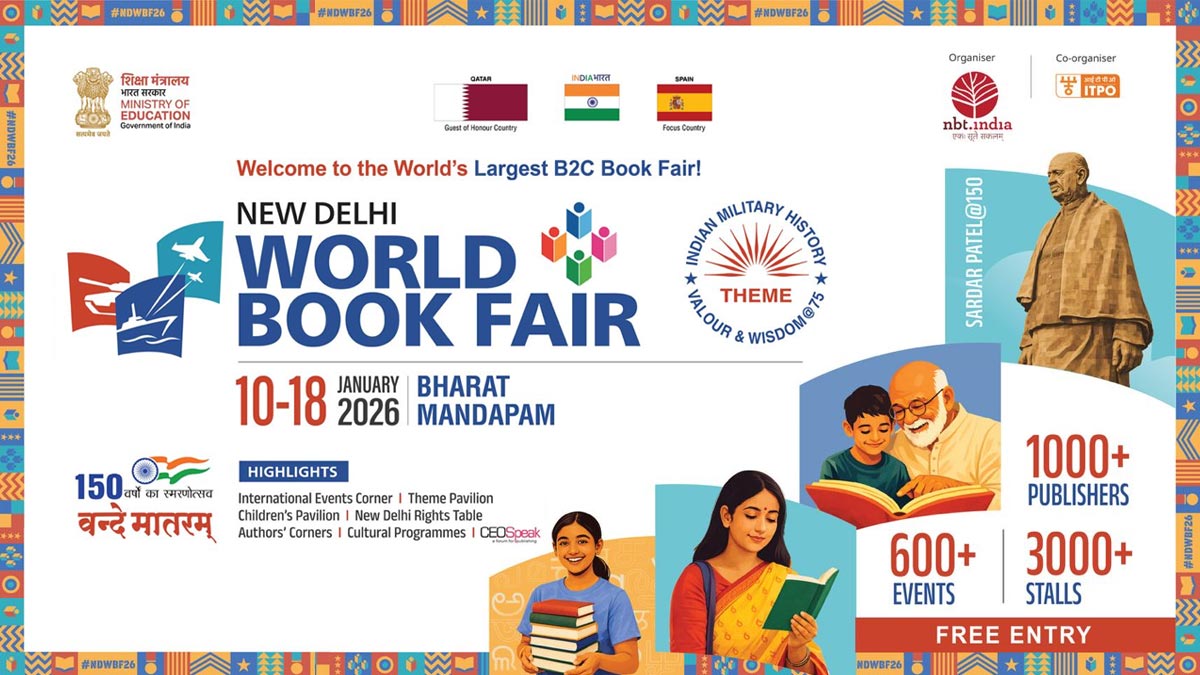
India’s literary world is zipping with the most-awaited literary event, the New Delhi World Book Fair (NDWBF) 2026. This book fair, organized by the National Book Trust (NBT), India, is globally acknowledged as the World’s largest Business-to-Consumer (B2C) book fair. Scheduled to take place from January 10 to 18, 2026, at the iconic Bharat Mandapam at Pragati Maidan, New Delhi, this upcoming book fair promises to be a major convergence of heritage, modern literature, and international diplomacy.

The NDWBF 2026

The event will bring together a massive number of bibliophiles, publishers, authors, educators, and cultural enthusiasts under a shared space, where everyone will celebrate the formation of a collective ecclesiastical culture. This massive initiative takes place under the Ministry of Education, Government of India. The India Trade Promotion Organisation (ITPO) is the co-organiser that partners with NBT in making this grand happening a tangible reality. 

NBDWBF is a well-established flagship event for the Indian publishing industry and also acts as the giant gateway to the South Asian Market. The upcoming 2026 edition appears to be even more welcoming than before, and people can expect a pleasant admixture of the joy of reading with a profound sense of national pride and international collaboration.

The Book Fair At a Glance

Aspect Details
Event Name New Delhi World Book Fair 2026
Dates 10–18 January 2026
Venue Bharat Mandapam, Pragati Maidan, New Delhi
Organiser National Book Trust, India
Co-organiser India Trade Promotion Organisation
Guest of Honour Country Qatar
Focus Country Spain
Main Theme Indian Military History – Valour and Wisdom@75
Scale 1000+ publishers, 3000+ stalls
Engagement 600+ literary and cultural events
Key Sections Children’s Pavilion, Theme Pavilion, International Events, Authors’ Corners

The Theme and International Ties

The upcoming edition emphasises the theme “Indian Military History – Valour and Wisdom@75.” This book fair is celebrated to be more than just another literary event; it has become a cultural landmark for a huge spectrum of Indians. This fair taps into the sensitive nooks and corners of global literature and has been continuing this legacy for five decades. 

The theme for the forthcoming edition commemorates India’s historic milestones and also amalgamates specific narratives entailed with India’s military legacy.  It seeks to contextualize the narratives of courage, strategization, valour, and philosophical reflection. By putting a much required focus on this theme, the book fair also aims to bridge the gap between civilian life and military history. It also offers a very detailed and well-researched perspective into the strategic and humanistic dimensions of India’s defense history over the last 75 years.

From a diplomatic lens, the book fair establishes good bilateral ties through literature. For the 2026 edition, Qatar drapes the spotlight by being the Guest of Honour country. This is a very crucial step, as its presence will infuse the rich traditions of Arabic literature and the Middle Eastern vogue of storytelling into the heart of India. Similarly, Spain also gets the designation of being the focus country. This promises a sprightly exhibition of European literary trends and the Spanish language’s global influence.

Key Highlights 

  • With over 1,000 publishers and 3,000+ stalls, the fair caters to every possible niche, from academic journals to indie comics and regional literature.
  • A curated space dedicated to Indian Military History, featuring rare books, interactive displays, and seminars led by defense experts and historians.
  • A dedicated zone designed to foster a love for reading among the youth, featuring storytelling sessions, workshops, and meet-and-greets with children’s authors.
  • A hub for cross-border dialogues, where international delegates discuss global publishing trends and translation rights.
  • Beyond books, the fair will host daily music, dance, and theatrical performances that reflect the diversity of Indian and guest-country cultures.
  • A high-level forum for CEOs and publishing executives to discuss the impact of AI, digital publishing, and sustainability in the book trade.
  • Promoting Qatari literature and cultural dialogues with Indian and international authors.
  • A special showcase of Spanish literature, cultural heritage, and contemporary literary productions.
  • Panels and seminars with global publishing professionals and authors.
  • Live sessions, book signings, and meet-the-author interactions.
  • Thought leadership sessions featuring industry veterans offering insights into the future of publishing.

Deep Dive into the NDWBF Experience

The unique state-of-the-art infrastructure of the Bharat Mandapam makes the venue a perfect melting pot of a mega cultural mosaic. The 2026 edition of NDWBF is expecting a footfall in millions. This book fair reaffirms the importance of physical spaces where ideas can be shared in real time. From book launches to panel discussions and cross-cultural collaborations, the Fair strives to build bridges between countries, genres, and generations.

Furthermore, there will be dedicated interactive spaces in which people will be engaged in conversations with their favourite authors. Alongside these festivities, NBT consistently ensures that Bhasha literature, books in Marathi, Tamil, Bengali, Odia, and other Indian languages, receive equal prominence alongside English and Hindi publications. This inclusivity is what truly makes it the “World” book fair.

Takeaway: 

The NDWBF does not present itself only as a large scale market place for books; it is the heart of the intellectual pulse of India. It is not merely a marketplace, but an intellectual commons where ideas are exchanged, narratives are shaped, and readers are inspired. For anyone passionate about books and learning, NDWBF 2026 will offer an unforgettable journey into the heart of global and Indian literary culture.

The choice of military history as a theme is a masterstroke. By inviting Qatar and Spain, the organizers are not just trading books; they are facilitating a “soft power” exchange that builds empathy and understanding between nations. It is a celebration of the fact that, despite the digital noise, the written word continues to be our most profound way of making sense of the world. Visiting such an event is not just about browsing; it is about engaging with the world’s narratives, understanding our shared histories, and discovering new ideas to carry forward into the future.
Emami Legacy Centre: The Entrepreneurial Journey from Startup to Legacy

0

Emami-Legacy-Centre-01

A Journey Rooted in Vision

The Kolkata Centre for Creativity (KCC) envisions constructing a cultural mosaic that is highly focused on the people-public-partnership model. Its aspirations percolate through the nexus of Art and Creativity, and aim to enable and invigorate eclectic learning through participatory and experiential art and other creative exercises. Founded by R.S. Agarwal and R.S. Goenka, the Emami group is a sprawling umbrella of brands and ideas. 

This prodigious legacy of the duo, manifested through a remarkable journey of the Emami group, is presented publicly to everyone through a first-of-its-kind corporate museum dedicated to narrating the incredible saga of its inception to glory. This setup is an attestation to the visionary entrepreneurship, strategic foresight, and enduring values exhibited by the founders of the Emami Group. This showcase seeks to honour the founders’ intrepid ambitions and the company’s evolution from scratch to a globally recognized conglomerate. This corporate museum will exhibit one of the most defining legacies of one of the most iconic homegrown businesses in India.

The corporate space is dedicated to enticing experiences and judiciously curated zones. Visitors are not just exposed to the exponential growth of the company, but also the values it puts forth in its entire journey. These values include Innovision, Resilience, and Persistence. This presentation stands out as both a learning centre and an inspirational tenet for entrepreneurs, students, and even families. This dedicated space is situated on the fifth floor of Kolkata Centre for Creativity (KCC), and is christened The Emami Legacy Centre

A Path Inspired by Vision and Values

The Emami Legacy Centre commemorates the success of a small-scale start-up in the 1970s. The founders of Emami, R.S. Agarwal and R.S. Goenka, were childhood companions. This corporate museum aptly depicts the Emami group’s leap of faith and evolving pneuma in an empirical space. Initially, the company embarked on its humble beginnings as a small cosmetic manufacturing unit called Kemco Chemicals in Kolkata. At that time, they introduced products such as Emami Talcum Powder, Emami Vanishing Cream, and Emami Cold Cream. These products gradually gained a loyal customer base and also dominated a substantial part of the market. 

In the beginning, the company was steered by traditional principles aided by modern manufacturing. Over the years, through innovation and strategic adaptations, the group transitioned into a multifaceted company with a huge peripheral ambit across personal care, healthcare, edible oils, paper, real estate, and retail sectors, with products available in more than 70 countries. From their early days, they have acquired legendary brands like Zandu and BoroPlus. This emerging centre documents every step of this growth.

An Experience that Inspires

The Emami Legacy Centre invites people to explore the thoughtful niches of the corporate museum, which is designed to visually present the trajectory of the brand’s growth with a near-magical ambience that ensures the “Emami Way” is made aptly accessible to the youth and upcoming businesses.  

Aspects Details
Location 5th Floor, Kolkata Centre for Creativity, Anandapur, Kolkata
Founders Shri R.S. Agarwal & Shri R.S. Goenka
Visiting Hours 11:00 am – 5:30 pm (Closed on Sundays)
Contact +91 96741 40905
Core Theme Entrepreneurial excellence & business ethics
Focus Corporate legacy through immersive storytelling
Exhibits Interactive zones, narrative installations, milestone showcases

Unlike traditional displays at traditional museums, this Legacy centre opens up its floor for all visitors to have a delightful rendezvous with history, an intellectual and value-based system that made the company a popular choice among Indians. 

Integration with KCC

The housing of the Legacy Centre at KCC engages it with an interdisciplinary discourse across art, design, performance, and education. This centre contributes to the larger ethos of KCC, i.e., nurturing creativity through diverse means, connecting a masterful corporate legacy with cultural expression. This initiative appears to be the opening of the Group’s diary to the larger public. 

Key Highlights 

  • Zones that activate your senses while educating about business heritage.
  • Tours that reveal deeper contextual insights behind Emami’s evolution.
  • Themes of resilience, innovation, and strategic foresight for aspiring entrepreneurs.
  •  A blend of corporate legacy with creative engagement unique to KCC.
  • A compelling timeline of Emami’s accolades, core values, and the evolution of its iconic packaging.
  • High-tech interactive displays that bring the history of innovation to life through touch, sound, and visuals.
  • Narrative-driven exhibits that capture the senses, detailing the chemical and creative processes behind famous products.
  • Curated tours are available for students and corporate groups, providing deeper insight into the Emami business philosophy.
  • Located within KCC, a 70,000 sq. ft. sustainable “Green Building” dedicated to multidisciplinary arts.

Takeaway

The Emami Legacy Centre appears to be more than a museum; it is a thoughtful corpus of values, strategies, and a successful trajectory of the growth of the Emami Group. It is an immersive environment that resonates with both the heart and the mind. 

In an era where “start-up culture” is often associated with quick exits and digital-only platforms, seeing the physical evolution of a brand that started in the narrow lanes of Burrabazar is incredibly grounding. It serves as a reminder that true legacy is built over decades, not days.

In an era where storytelling is central to cultural and entrepreneurial development, the Emami Legacy Centre articulates a powerful message: that business success is not only measured in numbers, but in the values, vision, and resilience that shape generations of creators, thinkers, and changemakers. Whether you are an art student, a budding entrepreneur, or a curious traveler, this space offers a profound look at the “Soul of Kolkata,” a city that values its history just as much as its future.

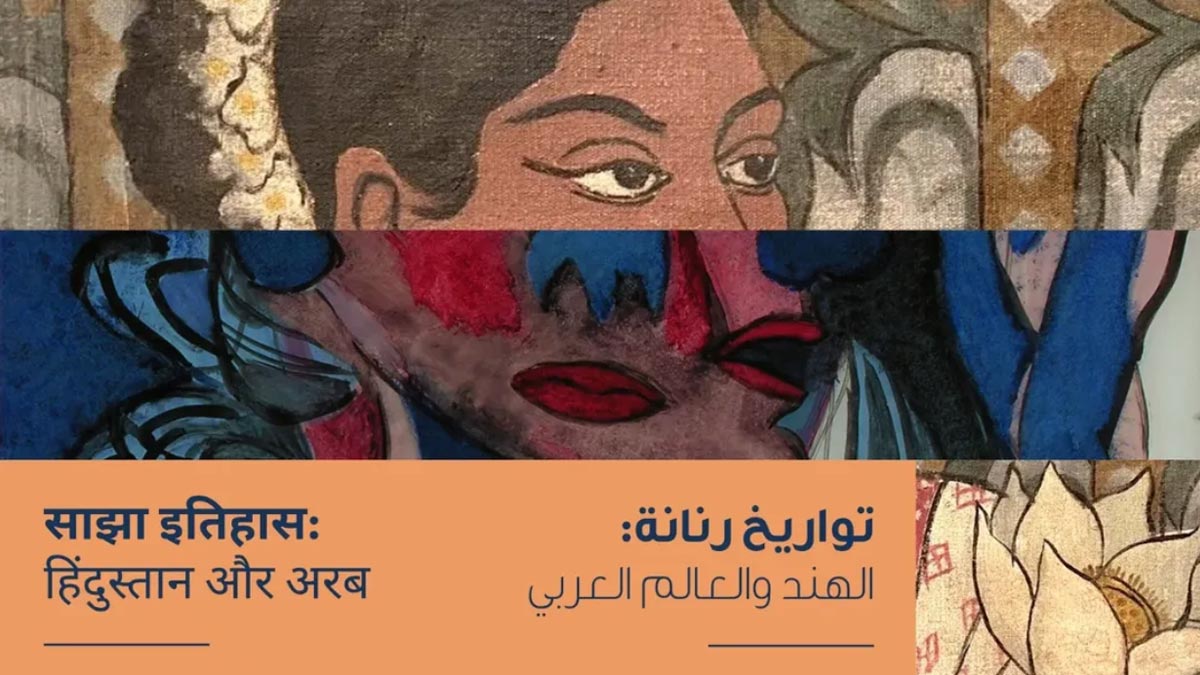
Resonant Histories: India and the Arab World in Post-Colonial Modern Art

0

Resonant-Histories-India-and-the-Arab-World-in-Post-Colonial-Modern-Art-01

A Convergence of Spirits: Decolonizing the Canvas

The Relationship between India and the Arab world has historically been encased through the monocle of ancient maritime trade, migration, and cultural exchanges. However, a watershed exhibition titled ‘Resonant Histories: India and the Arab World,’ at the Chhatrapati Shivaji Maharaj Vastu Sangrahalaya (CSMVS), Mumbai, is presenting a different trail of intellectual and aesthetic exchange between the two worlds. The wondrous exhibition, curated by Puja Vaish and Suheyla Takesh, has brought together the works of over 67 artists spanning Bahrain, Egypt, Kuwait, Iraq, Lebanon, Palestine, Syria, Tunisia, the United Arab Emirates, and India itself. 

These artworks delineate and depict the T-junction of the 20th-century modernisms across the two lands. Although both lands are geographically distant, both have grappled with the same anti-colonial struggle and post-independence aspirations. The showcase borrows from both the Jehangir Nicholson Art Foundation and the Barjeel Art Foundation in Sharjah. The curatorial approach not only traces the disparities between the art of the two worlds but also emphasizes their plangencies. Reverberance can be traced between the two on the grounds of political, intellectual, aesthetic, and other spheres that emerged in their distinct modernist practices. Both worlds’ art has shifted significantly from a Eurocentric structuring and stepped into a more transregional exchange, and parallel developments. 

The Event at A Glance

Aspect Details
Title Resonant Histories: India and the Arab World
Duration November 14, 2025 – February 15, 2026
Venue JNAF Gallery, CSMVS Museum, Mumbai
Collaborators Barjeel Art Foundation (Sharjah) & JNAF
Number of Artists 67+ artists from India and the Arab world
Participating Nations India, Bahrain, Egypt, Kuwait, Iraq, Lebanon, Palestine, Syria, Tunisia, UAE
Curators Puja Vaish (JNAF) & Suheyla Takesh (Barjeel)
Primary Themes Decolonization, Non-Aligned Movement (NAM), migration, shared symbols

A Deep Dive Into Its Thematic Core

The exhibition unfurls itself as a crosswalk of a plethora of conceptual trails, tracing how Indian and Arab artists navigated the overlapping currents of modernism within specific socio-political contexts. One of the strong themes of the showcase is mobility and cross-cultural learning. An Indian artist, Nasreen Mohamedi, uses innovative grids and abstract compositions that were moulded by her experience in Bahrain and Kuwait. Her compositions stand as a strong statement of transregional artistic encounter. Her artworks reveal a distinctive form of aesthetics that is shaped by the shifting paradigms of modernising movements. 

The opening section is titled Visions of Freedom, by Chittaprosad Bhattacharya, which includes art pieces that encompass themes of liberation, conflict, hope, and disillusionment in the post-decolonisation period. His art critiques the hunger left in the wake of the British Empire. His work is juxtaposed with the Syrian artist Naim Ismail’s Al Fiddaiyoun. His artwork presents the geometry of Palestinian keffiyehs that symbolize resistance. 

Beyond these, the exhibition opens doors to viewers to perceive how formal languages were shaped by both shared and divergent historical conditions. Both Indian and Arab modernists faced the same kinds of pressures while dealing with colonial legacies, redefining cultural identity, and engaging with international modernist waves in their times. These ideas are presented in their true heterogeneous forms and are showcased as a complex web of affinities and disjunctions that challenge linear art historical accounts. 

Syrian portraiture and Emirati abstractions also find expression in the works of Indian artists like Francis Newton Souza and Gulammohammed Sheikh. Sheikh’s The Incomprehensible Animal (2000) depicts mythic traditions that connect Persian and Indian worlds. It reminds the viewers that the “Western Indian Ocean Grid” was once a unified cultural space.

Artpieces also depict a lotus held by an Egyptian woman and the “industrial waste” of a war-torn landscape. Finally, the concluding space of the exhibition displays themes of labour and migration. This is the space where Mohamed Kazem’s depictions of migrant workers in Dubai are placed in contrast with Sudhir Patwardhan’s laborers in Mumbai. 

Key Highlights

  • First comprehensive examination of artistic intersections between India and the Arab world’s modern art movements.
  • Collaborative curation by institutions in India and the UAE, making extensive use of Barjeel Art Foundation’s holdings.
  • Thematic threads that foreground anti-colonial struggles, migration, and post-independence aspirations.
  • Artworks traverse genres, including abstraction, figuration, political commentary, and formal experimentation.
  • Highlights of individual journeys, such as Nasreen Mohamedi’s work, influenced by time spent in Bahrain and Kuwait, illustrate how geography shaped artistic vocabularies. 
  • Unlike traditional art history that centers on European modernism, this show explores “horizontal” exchanges between the Global South, emphasizing how artists looked to one another rather than just the West.
  • The exhibition vividly showcases the influence of the Non-Aligned Movement (NAM). Works depicting leaders like Mahatma Gandhi and Gamal Abdel Nasser serve as symbols of shared resistance against colonial hegemony.
  • Nasreen Mohamedi’s time in Bahrain and Kuwait is reflected in her minimalist grids, while Vivan Sundaram’s Eclipse (1991), made with engine oil and charcoal, responds to the environmental and human devastation of the Gulf War.
  • The show revives the history of the Triennale-India (launched by Mulk Raj Anand in 1968), which acted as a vital platform for Arab artists to exhibit in New Delhi during the 20th century.
  • The show revives the history of the Triennale-India (launched by Mulk Raj Anand in 1968), which acted as a vital platform for Arab artists to exhibit in New Delhi during the 20th century.

Takeaway

This exhibition is a crucial step in moving towards a space of global modernism, which compels viewers to rethink the boundaries of art and its conceptual peripheries. Rather than emphasizing Western narratives, Resonant Histories highlights how non-Western artists also weave tales that are equally compelling and fascinating. 

For too long, the story of Modernism has been told as a series of footnotes to Paris or New York. This exhibition effectively “de-centers” the West by showing that Cairo, Baghdad, Mumbai, and Shantiniketan were active nodes in a vibrant, independent network. It is a powerful statement that our histories were deeply intertwined in a shared “aesthetic of resistance.” This collaboration sets a high standard for how institutions in the Global South can work together to rewrite their own stories.

Rakhigarhi Mahotsav and the Revival of India’s Oldest Urban Memory

0

Rakhigarhi-Mahotsav

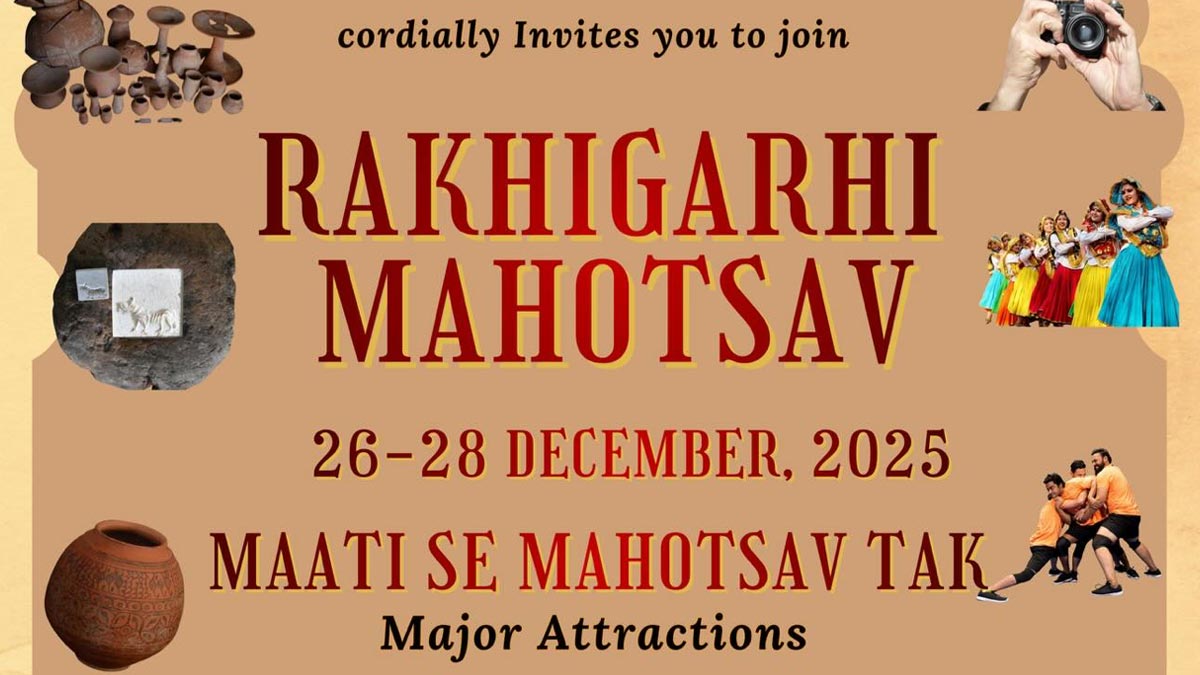
The Indus Valley Civilization was one of the earliest urban civilizations in the world, which was contemporaneous with the Nile Valley of Egypt, Mesopotamia in Iraq, and the Yellow River in China. It was the largest of the first urban cultures. The immensity of the IVC can be equated with that of Mesopotamia and Egypt combined. The civilization was not only a geographical brobdingnagian, but was technically sophisticated with a well-delineated way of life. Among this expansive nexus of sites stood Rakhigarhi, now considered the largest Harappan site, surpassing Mohenjo-daro

This nucleus of human civilization, dating back to a 5,000-year-old civilization, is breathing once again in the contemporary era from December 26th to 28th, 2025, as the Department of Archaeology and Museums, Haryana, is hosting the “Rakhigarhi Mahotsav.” This festival is a resonance of the theme Maati Se Mahotsav Tak (From the Soil to the Festival). Located in the Hisar district of Haryana, the archaeological site of Rakhigarhi is an area of heightened focus. The motto of this mahotsav is to reinvigorate the site into an experiential learning hub. 

The Rakhigarhi Mahotsav is a celebratory event that aims to raise public awareness about the historic significance of its location. It belongs to the early & matured phase of the Chalcolithic civilization that features urban planning, ritual structures, rich crafts, burials, and even DNA traces that challenge the “Aryan Invasion” theory. This mahotsava is designed to reconnect the contemporary society with its ancient urban roots. 

An Experiential “Museum” Under Open Skies

The Mahotsav is ideated as an experiential heritage trail, where archaeologists will conduct guided heritage walks across the excavation mounds. This will facilitate a tangible contact between the visitors and the structural legacy oddments of the ancient granaries, residential spaces, and ritual zones. These walks are supplemented by scholarly sessions where the Harappan settlements are decoded and interpreted through dialogues diving into themes like town planning, burial customs, etc. 

Parallel to these will be pottery workshops where Harappan styles will be recreated. Meanwhile, there will be bead-making and painting sessions complementing it. Exhibitions curated by the Haryana Museums Department display excavated artefacts, digital reconstructions, and comparative Indus Valley panels connecting Rakhigarhi with Harappa, Mohenjo-daro, Dholavira, and Lothal.

The Mahotsav At a Glance

Aspects Details
Event Name Rakhigarhi Mahotsav (Maati Se Mahotsav Tak)
Dates 26th – 28th December 2025
Location Rakhigarhi Village, Hissar District, Haryana
Organizers Department of Archaeology & Museums, Haryana
Entry Fee Free (Registration needed: https://surl.li/bpklcg)
Primary Focus Heritage education, rural tourism, and archaeological awareness
Major Activities Heritage walks, workshops, rural sports, folk performances, exhibitions
Educational Outreach Student quizzes, painting competitions, and photography contests
Community Integration Self-help group stalls, craft mela, rural artisans

Cultural Continuity and Rural Heritage

The virtue of the festival lies in the fact that it does not typify its proceedings and curation; it beautifully integrates Haryana’s rural living traditions. The mahotsav will feature folk dance troupes performing Saang, Khoria, and Dhamal, while rural sports such as kabaddi, wrestling (kushti), and traditional games reflect continuity between agrarian Harappan life and modern village culture. A striking highlight of the Festival is the display of handmade textiles, organic produce, terracotta artefacts, and herbal products by the Self-Help Groups. This initiative will continue heritage preservation while continuously boosting economic and women’s empowerment. 

Key Highlights

  • Heritage walks led by professional archaeologists
  • Live pottery and terracotta workshops inspired by Harappan forms
  • Archaeological exhibitions and digital reconstructions
  • Direct interaction with experts regarding the latest DNA findings and excavation reports that have redefined the timeline of the IVC
  • Evening folk performances that celebrate the living traditions of Haryana, showing the continuity of culture from ancient times to the present
  • Rural sports demonstrations
  • Student quizzes and Rangoli competitions
  • A photography contest and painting workshops aimed at capturing the aesthetic beauty of the mounds and the rural landscape
  • Craft Mela with Self Help Group participation
  • Entry is free for all visitors
  • The use of QR codes for free registration and digital mapping of the site to enhance the visitor experience
  •  Specific focus on student participation through inter-school competitions centered on Indian history and archaeology

Significance Beyond The Known Lines

The Rakhigarhi Mahotsav is strategically protracted towards the Government of India’s mission to boost heritage tourism. It also strengthens Haryana’s archaeological tourism framework. This Harappan site has been proposed for inclusion on the UNESCO World Heritage List. This mahotsav not only brings life to the site, but also emerges as a crucial instrument of exerting “cultural” soft power

By arranging guided tours and creating a direct contact between crucial archaeological spots and citizens, this mahotsav deconcretizes the rigidity of historical knowledge and makes it accessible to all. It extracts the historical facts from school textbooks and presents them in an experiential format.

Reshaping The Civilizational Narratives with The Discovery of Rakhigarhi

In scholastic opinion, Rakhigarhi is one of the important sites that takes exception to the early presumptions of the existence of the Harappan core only in Pakistan. This assumption was moulded by the discovery of “Harappa,” the first major urban center discovered, which was located there. As the emblems of the civilization, Harappa and Mohenjo-Daro, lay in what came to be known as Pakistan, Indian archaeologists, post-partition, fanatically began to search for Harappan sites within the new Indian borders. Finding “lost” Indus sites in India became a top research priority to ensure the new Republic remained a stakeholder in one of the world’s oldest urban civilizations.

The Site of Rakhigarhi was discovered by ASI in 1963. The major large scale exacvations began later under archaeologist Amarendra Nath. Other streaks of excavation were carried out by Prof. Vasant Shinde and Dr. Sanjay Manjul. Interestingly, the findings from Rakhigarhi sparked a debate around the origin of the civilization, as the site unearthed pre-Harappan culture dating back to almost 6,000 BCE. The early and mature phases of the site suggest that the civilization may have originated and gradually evolved in the Ghaggar-Hakra basin (present-day Haryana, India) and then spread to the Indus Valley, rather than the other way around. 

Moreover, the DNA findings from the skeletons excavated from Rakhigarhi significantly challenged the Aryan Invasion theory. The DNA analysis of a 4,600-year-old female skeleton from the site revealed a descent from ancient Iranian farmers and South Asian hunter-gatherers. There were no traces of genetic linkages with the stated steppe pastoralists or “Aryans.” This advocated the foundation of an alternative, “independent” and “indigenous” origin of the people of this civilization. 

Furthermore, the discovery of a gold foundry, a large number of beads of semi-precious stones, and seals indicates that Rakhigarhi was a major manufacturing and trade center with connections to other regions like Rajasthan, Gujarat, and even Mesopotamia.

Takeaway: A Confluence of Past and Present

The Rakhigarhi Mahotsav 2025 commemorates a phenomenal shift in the paradigms of archaeology and human history. It stands as a blueprint model for a democratic heritage demonstration. Unlike enclosed urban museums, this mahotsav extracts the essence of the archaeological landscape itself into an open-site museum. 

With this initiative, Rakhigarhi is no longer a site of “Silent” ruins, but it has effectively transitioned into a site of living experience. By celebrating this mahotsav, the government is rebranding the archaeological site with a “heritage-first” mindset among the youth.

Rakhigarhi incorporates the piece of history that transcends empires, kingdoms, and scriptures, and brings a very crucial chunk of the past to the people of this age. The attendees will not just look at the heap of old bricks lined up, but into the remnants of the largest urban civilization of the ancient world. If we can learn to celebrate our “Maati” (soil) with such fervor, the legacy of the Indus Valley will never truly be lost. This festival is a step toward making history a living, breathing experience for every Indian.

Design Culture | City Collabs 2026: Redefining Craft and Design in Kolkata

0

Aakar-x-Raw-Collaborative

A New Dawn for Design

The city of joy is one of India’s most intellectually coruscating cities. It is a pluralistic space for literature, theatre, political confab, and visual arts. Over the years, it has emerged as a strong cultural hub that offers a fertile ground for contemporary art and design that aims to redefine the spectrum of tradition, craft, and the sense of “modernity.” In this evolving sphere, Aakar is collaborating with Raw Collaborative to bring “Design Cultures | City Collabs 2026 – Kolkata Edition.” This unique showcase of art and design is scheduled to be on air from February 27th to March 1st, 2026, at the Kolkata Centre for Creativity (KCC). This marks a profound moment for the artistic community of the city. 

This show will convene some of India’s finest designers, craft practitioners, and creative entrepreneurs under a common ceiling. This showcase is promised to be a masterful display of sustainability, heritage, craftsmanship, and urban cultural identity.

The Core of The Collab

Aakar, founded by Bhawna Agarwal and Ritu Bansal, is acknowledged for its nuanced curation for creative spaces. Its recent partnership with Raw Collaborative is a great head start in its vision to redefine traditional craftsmanship and modern aesthetics. Raw Collaborative is a platform that is renowned for displaying the finest  “collectible design” in India. By unleashing this meaningful collab in Kolkata, they aim to build a freshly structured narrative over the rich history of the place. 

Their City Collabs series has previously activated multiple Indian cities, encouraging designers and audiences to engage in conversations about place, people, and process. “Design Cultures” in Kolkata is anticipated to broaden the existing prism of Bengal’s legacy of terracotta, handloom, Dokra, woodcraft, clay modelling, and book arts, while juxtaposing them with modern product design, interior design, architecture, and visual storytelling. Also, choosing KCC to execute this initiative is a matter to be highlighted. KCC is a multidisciplinary interactive art center that provides the perfect backdrop for an event that seeks to blur the lines between “craft” and “fine art.”

The Exhibition At a Glance

Aspect Details
Event Name Design Culture | City Collabs 2026 — Kolkata Edition!
Organizers Aakar (Bhawna Agarwal & Ritu Bansal) × Raw Collaborative
Dates February 27, February 28 & March 1, 2026
Venue Kolkata Centre for Creativity (KCC), Kolkata
Focus Area Art, craft, and design connoisseurs
Vision Showcasing India’s finest design and creative community

Why Kolkata?

The momentum of design showcases has spurred in Kolkata through phenomenal art shows curated by India Story, Experimenter, etc. Moreover, Kolkata offers an eccentric venue where craft is integrated into everyday life. This makes the city a natural host for platforms like Design Cultures. Also, the Aakar x Raw Collaborative proffers to introduce the concept of “Design Culture” as a lifestyle.

Key Highlights

  • Curated presentation of Indian handcrafted and contemporary design works
  • Participation of designers, craft entrepreneurs, and creative studios from across India
  • Emphasis on Made-in-India, sustainable, and community-driven practices
  • Focus on the intersection of architecture, interiors, furniture, art, and lifestyle products
  • Platform for cross-city cultural and creative exchange under the City Collabs format
  • This marks the first time Raw Collaborative’s “City Collabs” is entering the East Indian market, specifically targeting the refined tastes of Kolkata’s design enthusiasts
  • The event promises a rigorous selection of designers who specialize in “Made in India” handcrafted furniture and architectural products
  • Beyond mere display, the event focuses on “Design Ecosystems,” encouraging networking between architects, interior designers, and master craftsmen
  • The schedule includes three days of immersive showcases, likely to include talks, workshops, and exclusive walkthroughs

Takeaway


View this post on Instagram


A post shared by Aakar (@aakar_br)

The city of Joy, by hosting this unique partnership will deliver a masterstroke to the public because it is a combo of local logistical prowess with a nationally recognized brand for design excellence. For emerging designers, especially from Bengal and the Northeast, this platform could become a gateway to national visibility. For “Design Culture 2026” to be a true success, it must engage with the local student community and young designers in Bengal, ensuring that the “ecosystem” is acknowledged. If executed correctly, this could be the catalyst that turns Kolkata from a city of “historic art” into a hub for “contemporary design.”

Emerging Voice of India: A New Platform for Contemporary Indian Artists

0

Emerging-Voice-of-India

Unveiling “Emerging Voice of India”

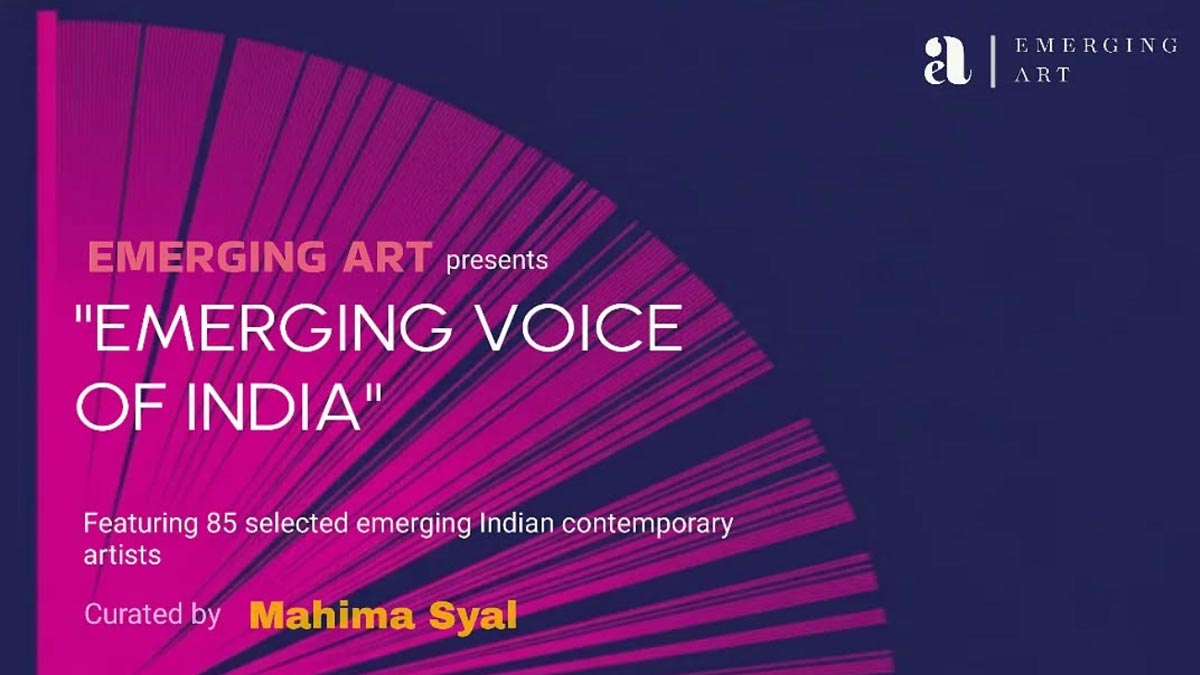
The artscape of India is undergoing a conscious paradigm shift, where many showcases are reflecting a recalcitrance towards getting featured in galleries or traditional spaces. The recent trend is shifting physically to a more “experiential” site, where a bigger and freer dialogue can be woven. New Delhi is also orchestrating an exhibition on similar lines on January 10, 2026, at 89 Central Avenue, Sainik Farms, titled “Emerging Voice of India.” This upcoming exhibition is presented by the collective “Emerging Art” (EA). This showcase is a pronunciamento of India’s next generation of creative practitioners. 

This exhibition, curated by Mahima Syal, will exhibit a collection of 85 artworks of selected contemporary artists from India. Most parallel exhibitions focus on a small group of 5 to 10 artists; this exhibition has effectively decentralized its approach and looks forward to showcasing 85 voices. This resonates with the “state-of-the-nation” approach. This exhibition not only provides a much-needed platform to India’s emerging talents but also echoes the zeitgeist of the present through art. This artistic overhaul encompasses everything, ranging from traditional oil on canvas to humongous installations and digital media. 

The venue, Sainik Farms, is known for its greenery, quietude, and warm ambience, which provides the perfect backdrop for a six-day art event. By nestling the exhibition in this locale, the organizers are recalibrating their focus towards a “destination art” episode. The organizers are inspired by the global trends seen in major art hubs like London and Basel, where the venue’s architecture and atmosphere are as much a part of the experience as the artwork itself. This is crucial in this case, as the organizers aim to highlight the shift from renowned mainstream art to the contemporary discourse of Indian art beyond established arenas.

Contextualising the Emerging Voice of India

There are big artistic labels in India that organize such experiential art shows, but they mostly cooperate with established institutions and renowned artists from India and beyond. However, Emerging Voice of India situates itself differently: it prioritizes emergence over establishment and participation over market metrics. In India, the artscape finds itself oscillating between supporting grand experiments and responding to the commercial interests of people. However, this exhibition is part of a movement in India that emphasizes providing independent platforms for artists who are yet to be acknowledged as big names. 

Recent market trends revealed a surge of 15-20% growth in interest from young, first-time investors in the Indian art market. Emerging Art is one of the platforms that has recognized the potential catalytic ability of this surge and is dashing into the sphere as a key player. They have branded their exhibition as “Future Unfolding,” which marks their intent to create something fresh, relevant, and socially-conscious. The artists they look forward to are mostly the practitioners of interdisciplinary forms that exist at the intersection of traditional art and contemporary notions. This suggests a clear delineation of diversity.

The Exhibition at a Glance

Category Details
Event Name Emerging Voice of India
Organizer Emerging Art (EA)
Curator Mahima Syal
Artists Featured 85 selected emerging contemporary artists
Opening Date Saturday, January 10, 2026
Focus Contemporary works by new voices in Indian art
Duration January 10 – January 16, 2026
Venue 89 Central Avenue, Sainik Farms, New Delhi
Daily Hours 3:00 PM – 6:00 PM

Key Highlights

  • The exhibition is curated by Mahima Syal, who has deliberately emphasized emergence, selecting artists whose practices are evolving and experimental.
  • With 85 artists, the show is expected to feature a range of media, from painting to sculpture, mixed media, and installation.
  • Mahima Syal has established a reputation for identifying “raw” talent before they hit the mainstream market, making this a prime event for collectors looking for the next big name in Indian art.
  • Hosting the show in Sainik Farms allows the curators to break from institutional confines and situate contemporary art in a community context.
  • The choice of Sainik Farms suggests an exclusive, sophisticated viewing experience designed to foster high-level networking among art patrons, critics, and enthusiasts.
  • The week-long duration creates space for a sustained public engagement with the works.
  • With only six days for public viewing, the exhibition creates a sense of exclusivity within the Delhi social and cultural calendar.
  • Emerging Art (EA) positions itself as a champion for grassroots artistic voices, aligning with broader efforts within India to decentralize art visibility.
  • The inclusion of contact details for previews and inquiries (+91 8906158629) indicates a focus on commercial viability and supporting the artists’ professional growth.

Takeaway

The institutional will of the Emerging Voice of India is what makes it stand out in its niche. They have successfully projected the exhibition’s trajectory as raw, discoverable, and most importantly, reflective. It’s an enhanced emphasis on upcoming talents rather than the straightforward commodification of mainstream art. It is a filtered-out opportunity that escapes the ambit of big labels in the art world and vests a moral responsibility on it to continue its pedagogical philanthropy. 

Initiatives like this will make sure that art in India never faces saturation and continues along the path of creative exploration. It also promotes the notion of “art for a cause.” People might presume that “85 artists” is too much, and the exhibition might be just another “clutter.” But in reality, it entails a plethora of “creative chaos” and offers them a spotlight to be visible in the public sphere. This is like a launchpad for these creative souls and amateur practitioners. 

Mahima Syal’s curation is likely to be the catalyst that transitions several of these artists from “emerging” to “established.” If Emerging Art sustains this commitment beyond a single exhibition cycle, it could become one of the few platforms in India that meaningfully nurtures artistic emergence rather than merely branding it. This exhibition isn’t just showing art; it’s defining an era.

Goa Open Arts Festival 2026: Community-Driven Contemporary Art in Panjim

2

Goa-Open-Arts-Festival-2026

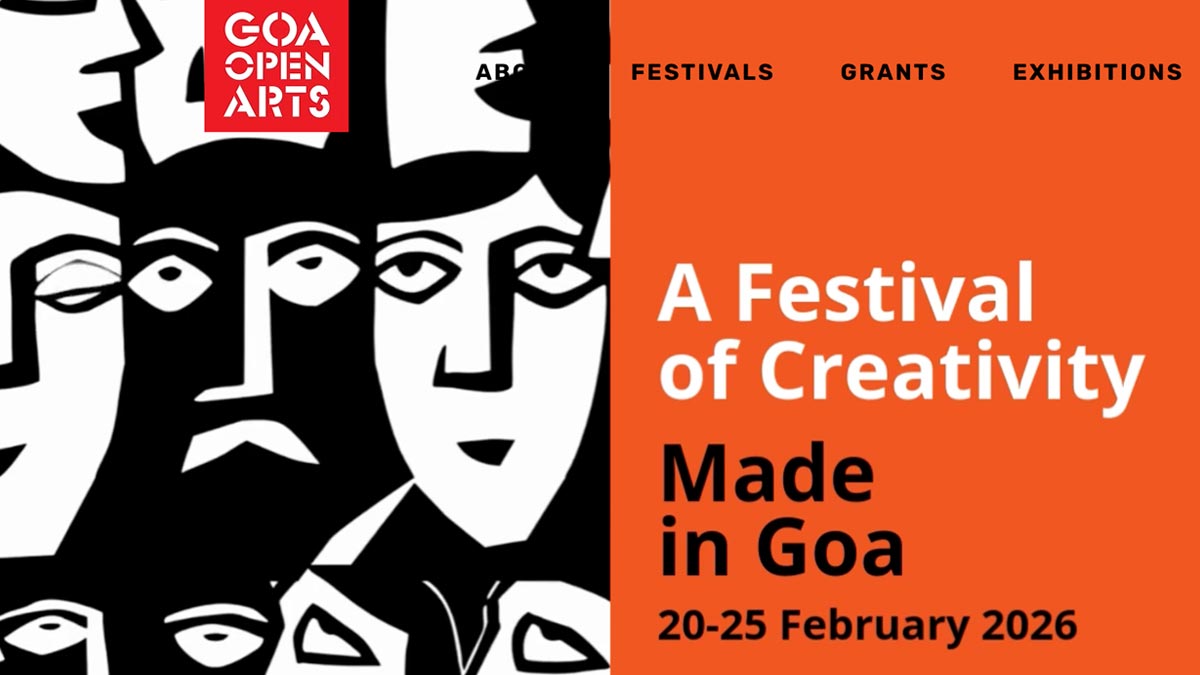
Finally, 2025 is winding down, and a new year is knocking at the door. This is the celebration corridor bustling with cultural celebrations and joyous cheers. It is that time of the year when people tend to turn off their notifications, slow down, reflect on the past year, and hold celebrations with their loved ones. As everyone attempts to recalibrate their thought processes and begin planning for the coming year, they often look for a refuge to settle into. Among all the digital clutter and busy schedule, the Goa Open Arts Festival emerges as one such refuge. It is a thoughtful step taken towards giving people the essence of returning to their roots. Nestled in the beautiful Konkan coast, this festival is slated to take place from February 20-25, 2026, at the Old GMC Complex, Panjim, Goa. This Festival aims to make art more accessible, dialogue-oriented, and reflective rather than glamorous to the eyes. 

Suggested Story: Culture of Goa – Exploring the Traditions, Art, Music, Festivals of the Miami of India

A Space for the Unseen and Unheard

The Goa Open Art Festival is an artist-led initiative conceived to carve out a democratic space for creative voices that exist outside the traditional confines of institutional nexuses. This space is dedicated to artists who’re cornered at the peripheries of galleries, those whose films were unreleased, for musicians devoid of a stage, and so forth. These voices are equally contributing to the artscape and need to be heard. They situate themselves outside the mainstream Fest circuits and open a stage for those deserving artists who still have not had a chance to frame their creative spirit. They seek experimental crafts and interdisciplinary artists whose creativity is often overlooked. 

They do not refer to this Fest as an event; it is an aggregation of months of grants, mentorship, and grassroots work with local creators. Unlike other commercial arts festivals, the Goa Open Arts Festival is punctuated with a high community spirit, with a focus on international curation and a commitment to accessibility. The brightest aspect of the event is that it is evolving and growing every year and is becoming a little more audacious with its experimentation than the preceding year. They are staunch subscribers to the notion that “art must belong to people before it belongs to institutions.”

This Fest is born out of the cooperative shrewdness of people, such as photographer Prashant Panjiar, artist Diptej Vernekar, and designer Gopika Chowfla. This Fest has an orientation of a “homegrown movement.” It is dedicated to those who call “Goa” home. It is not borrowed or imported from the grand metropolises of India, but got its shape in the indigenous red soil of the smallest state. 

The Fest at a Glance

Aspect Details
Festival Name Goa Open Arts Festival 2026
Dates February 20–25, 2026
Venue Old GMC (Maquinez Palace), Panjim, Goa
Organizers Open Arts Initiative (Artist-led collective)
Core Focus Visual arts, music, spoken word, film
Entry Open to the public, inclusive and accessible
Ethos Intentional, inclusive, locally grounded
Audience Artists, students, families, general public

What Makes Goa Open Arts Distinct

  • Artist-first programming that privileges creative autonomy over market appeal
  • Platform for unreleased films and independent music outside mainstream circuits
  • Interdisciplinary engagements, combining visual arts, cinema, performance, and discourse
  • The 2026 edition will feature the culmination of months of work by local grantees, mentored by industry experts
  • Heritage site-based exhibitions that activate Panjim’s architectural memory
  • Workshops and conversations that encourage participation, not passive viewing
  • Expect a vibrant mix of visual art installations, durational performances, and original music that spans from traditional Fado to contemporary electronic beats
  • Open-access spirit, making contemporary art approachable to non-specialist audiences
  • The venue, the Old Goa Medical College complex, provides a rustic, atmospheric backdrop that contrasts beautifully with cutting-edge contemporary art
  • True to its community roots, the festival usually includes sessions for both adults and children, ranging from printmaking to photography and ecological arts

A Festival as an Act of Mindfulness

The Fest has a major role in acting as a cultural retreat for many. Visitors can expect to hold an impromptu conversation with the performing artists and will be engaged in different forms of contemporary creativity. Art Historian Claire Bishop opined that participation-based artistic orchestrations yield “relational aesthetics.” The festival has a unique tendency to transform spectators into collaborators. 

Takeaway

Today, the world is obsessed with the precision of content rather than the craft itself. However, the Goa Open Arts Festival 2026 stands as a counterweight that emphasizes community spirit, open-ended performances, and believes in giving an opportunity to newcomers and amateurs as well. They have efficiently transitioned the spotlight from a commercial lens to an artistic inquiry. 


View this post on Instagram


A post shared by Goa Open Arts (@goaopenarts)

Through this initiative, Goa can restore art to its rightful place: as a tool for connection, introspection, and community memory. Whether you are a student, cultural enthusiast, or just a tourist enjoying your vacation, this festival has something for everyone. It is a rare chance to see Goa not as a playground for tourists, but as a living, breathing laboratory for creativity.

India International Dance & Music Festival 2026: A Global Cultural Confluence in Delhi

0

India-International-Dance-&-Music-Festival-2026

A Global Cultural Confluence in New Delhi

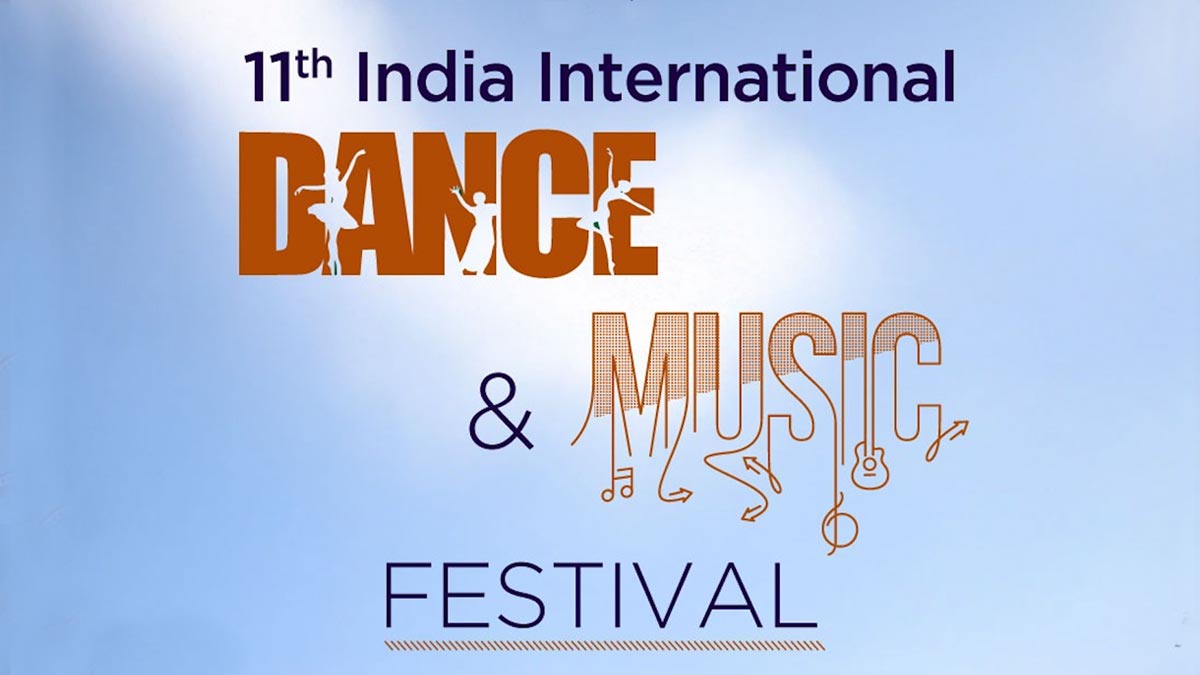
With the onset of 2026, the Indian Council for Cultural Relations (ICCR), New Delhi, is presenting the 11th edition of the India International Dance & Music Festival. It is scheduled from January 16th to 18th, at Baansera Park, New Delhi. Thus three-day raree-show is a bold pronouncement about the soft power of India’s cultural diplomacy and the philosophy of Vasudhaiva Kutumbakam—the world is one family.

This gracious event was initiated as a flagship cultural diplomacy vision. Over the years, it has blossomed into an international platform that facilitated a plethora of artistic exchanges between India and the world. Each edition of this cultural rejuvenation lauds the very philosophical core of these crafts that surpasses linguistic, political, and geographical boundaries. This edition is also the continuation of the jubilant legacy and will feature renowned artists from across continents. The whole event will metamorphose Baansera Park into a global amphitheatre of unity and expression.

The Essence of the Festival

The festival serves as a prodigious rostrum where music, dance, and art transcend sovereign borders and become a universal lingua franca. Hitherto, this initiative was employed by ICCR to mitigate the interstices between nations like Russia, Brazil, and South Africa to share the stage with India’s own maestros. The event has beautifully showcased Indian classical forms such as Bharatanatyam, Kathak, Odissi, and Manipuri alongside international genres including Flamenco, contemporary ballet, Sufi whirling, African percussion ensembles, East Asian folk traditions, and Latin American rhythms. Many scholars and critics have acknowledged the event as a paradigm of India’s soft power. 

This event is not intended for entertainment alone; it also teaches, educates, and connects people beyond borders. The upcoming 2026 edition is based on the same trajectory of collaborating with Indian masters and a diverse audience. The previous editions have received puissant representations from countries such as Russia, Spain, Japan, Egypt, Indonesia, Iran, France, and several African nations, and the forthcoming edition promises an equally expansive cultural footprint.

Beyond cultural endeavours, the festival also turns into a mediating spot for global forces to converse. It facilitates a judicious flow of dialogue and diplomacy between artists, diplomats, students, scholars, and cultural practitioners. It re-establishes “art” as a medium of peaceful exchange and cooperative heritage promotion. The upcoming festival is expected to be the largest iteration yet, featuring a curated selection of artists who represent the soul of their respective lands.

The Event At a Glance

Aspects Details
Event India International Dance & Music Festival
Organizer Indian Council for Cultural Relations (ICCR)
Edition 11th Annual Celebration
Nature International cultural and performing arts festival
Dates January 16 – 18, 2026
Venue Baansera Park, Sarai Kale Khan, New Delhi
Entry Open to the public (via ICCR portal)
Theme Global Unity through Dance and Music
Core Focus Cultural diplomacy, global art exchange, heritage celebration

Key Highlights

  • Three-day immersive global cultural showcase
  • Performances by internationally acclaimed dance and music ensembles
  • Fusion of Indian classical traditions with world dance forms
  • Cultural diplomacy platform fostering global artistic exchange
  • Free public access encouraging inclusive participation
  • Ideal for students, scholars, families, and art enthusiasts
  • Anticipate performances from over 10 international troupes, following the tradition of previous years, which hosted nations like Mongolia, Rwanda, and Kyrgyzstan.
  • Unlike the enclosed auditoriums of the past, Baansera Park offers an open-air, eco-friendly setting. The park’s musical fountains and bamboo groves provide a serene backdrop for soul-stirring melodies.
  • The event is a key part of the ICCR’s mission to foster international understanding, often attended by foreign diplomats, scholars, and art enthusiasts.
  • This year, a special focus will be placed on young talent, showcasing winners from the Pratibha Sangam competition alongside veteran performers.

Bridging the World through Art: A Broader Context


View this post on Instagram


A post shared by ICCR Delhi (@iccr_delhi)

Today, the world is highly divided by political agendas, conflicting geographies, and many other matters of contention. In a time like this, ICCR’s approach of uniting countries through the fabric of culture is a thoughtful and necessary step. It also establishes India as a mature mediator of world affairs through soft power. The 10th edition in 2025 saw a massive turnout at Central Park, and moving to the broader expanses of Baansera Park suggests an intent to make the 11th edition a more communal, “green” festival. It stresses India’s adoption of the “people-to-people” diplomacy. 

As we have collectively stepped into the post-pandemic era, cultural spaces have become more crucial than closed, strong rooms. For the audience, it is a rare opportunity to witness a Latvian folk group followed by an Indian Sufi ensemble, creating a dialogue that requires no translation.

Takeaway

The forthcoming 11th edition of the India International Dance & Music Festival is an invigorating attempt to amalgamate diversity and make the world a more inclusive place to inhabit. Today’s world is highly characterized by globalization, homogenization, and acculturation. Amidst this, judiciously curated cultural experiences like this are a pleasant way to maintain a balance by cherishing other cultures with our own. 

The ICCR’s choice to host this in the New Year signifies a fresh start fueled by harmony. Every performer or backend contributor will act as a “silent ambassador” of peace. It will reaffirm the continuity of art as humanity’s greatest uniting force, promoting multicultural solidarity. Attending this festival is not simply about witnessing performances; it is about participating in a living, breathing global dialogue through art.

Satish Gujral @ 100: A Legacy of Resilience and Form at NGMA Delhi

0

Satish-Gujral-At-100

The Architect of Silence and the Painter of Pain

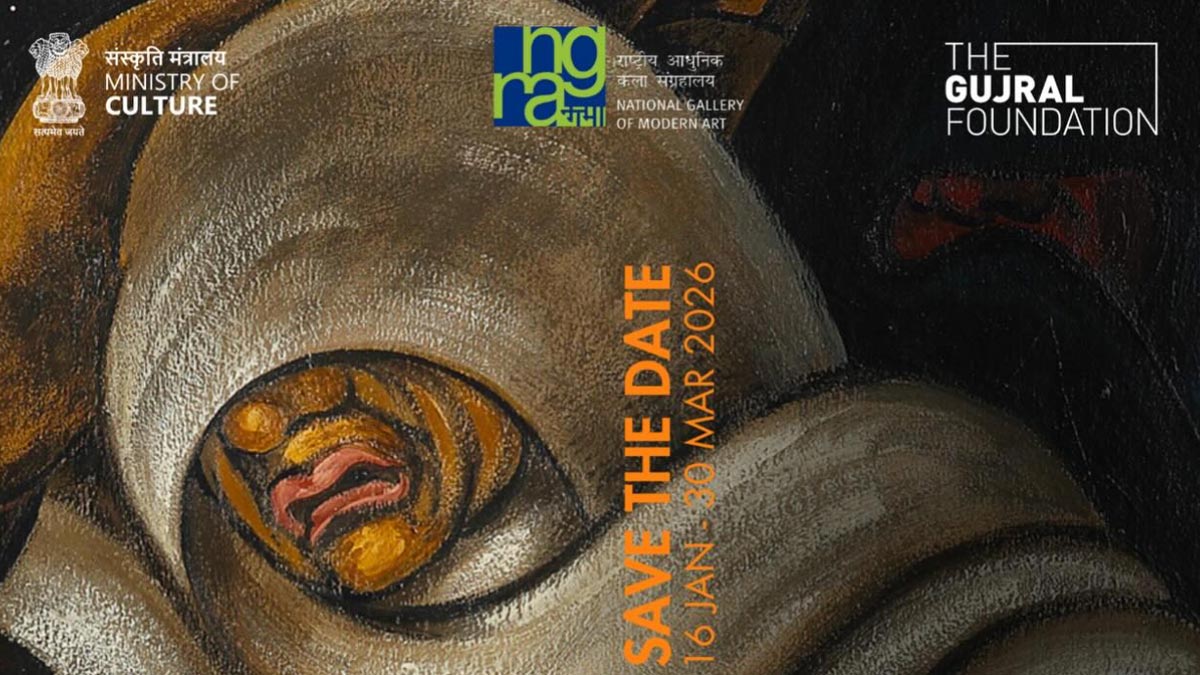
The National Gallery of Modern Art, New Delhi, recently announced an upcoming centenary exhibition dedicated to Satish Gujral (1925–2020), titled “Satish Gujral Centennial Exhibition.” Satish Gujral was a Padma Vibhushan recipient who moulded a significant trajectory of Modern Indian Art. This centenary commemoration is slated to run from January 16, 2026, to March 30, 2026. This exhibition is set to exhibit a corpus of artworks, including paintings, sculptures, drawings, archival material, and personal narratives that will trace Gujral’s extravagant career. He mastered the psychological laceration of partition and turned out to be the virtuoso of multidisciplinary artistic creations. 

Born in Jhelum, the artist lost his ability to hear at a verytender age; and since then, life has been quite challenging for him. This emotional backdrop is well-reflected in his craft as it greatly symbolizes resilience, inward reflection, and a continuous lookout for alternative modes of expression. Gujral studied at the Mayo School of Arts in Lahore, followed by the Sir J.J. School of Art in Bombay. But this was interrupted by the partition of India in 1947. He himself is an eyewitness to the partition and assisted his father in transporting refugees. 

Thus, he developed a raw and distinctive style that is deeply political, and most importantly, original to him. 

He skilfully engages with the themes of pain, displacement, and varying human conditions. His canvases execute a typical defiance towards being decorative pieces; instead, they appear to be confrontational artworks embedded with a hue of existential unease. These are shaped by partition, war, and cultural fragmentation. This commemorative exhibition will contextualize these nuanced works under a broader label and place them in a more composed manner. His personal trauma, dating back to the partition, gave birth to his “Partition Series.” This series is one of the most raw documents of human suffering in Indian history.

The Bigger Picture: From Jhelum to the World

Satish Gujral’s craft does not lie within the periphery of paintings alone. His contribution to architecture is equally noteworthy. His architectural notions are traceable at places such as the Belgian Embassy in New Delhi, where he amalgamated sculptural form with functional modernism. His architectural mastery is also reflected at the India Islamic Cultural Centre. In the opinions of critics, Gujral was an architect who “painted with buildings.” The forthcoming retrospective aims to put his architecture in a dialogue with his paintings and other crafts. This exhibition is supported by the Gujral Foundation in collaboration with NGMA and the Ministry of Culture. 

Gujral, unlike his contemporaries of the Progressive Artists’ Group (PAG), considered his own experiences as the plausible source of his artistic creation. He refused to rely on European modernism and remained rooted in his own experiences. Gujral received a scholarship to Mexico in 1952 that turned out to be a watershed moment in his life. There, he was accepted under the mentorship of muralists Diego Rivera and Siqueiros. With their guidance, he learnt to use art as a mode of “public service.” Gradually, he created murals in ceramic, steel, and wood, which today adorn the facades of major institutional buildings across India and abroad.

The Exhibition At a Glance

Aspects Details
Occasion Centenary celebration of Satish Gujral
Venue National Gallery of Modern Art (NGMA), New Delhi
Dates January 16, 2026 – March 30, 2026
Scope Paintings, sculptures, drawings, archival material, and architectural works
Collaborators Gujral Foundation, NGMA, Ministry of Culture
Focus Art, architecture, resilience, and post-Independence Indian identity
Physical Resilience Overcame near-total deafness from age eight; regained hearing after surgery in 1998
Mexican Influence Apprenticed under Diego Rivera and David Alfaro Siqueiros; absorbed muralism and social realism
Architectural Prowess Designer of the Belgian Embassy in New Delhi, regarded as a landmark of 20th-century architecture
Political Lineage Younger brother of Inder Kumar Gujral, the 12th Prime Minister of India

Key Highlights 

  • A rare, consolidated retrospective spanning Satish Gujral’s entire career
  • Inclusion of architectural drawings and models alongside artworks
  • Archival material offering personal and historical context
  • Focus on Partition, trauma, and human endurance as recurring themes
  • Institutional collaboration underscores national cultural importance
  • A centenary framing that invites reassessment rather than nostalgia
  • The recent discovery of “The Condemned” (1957), a previously undocumented conte drawing from the Jhabvala family collection, adds a new layer to his post-Partition oeuvre
  • Led by Mohit and Feroze Gujral, the foundation is launching academic programs and digital archives to preserve the artist’s legacy for future generations.
  •  Renewed interest in his autobiography, A Brush with Life, which details his transition from an isolated child to a Padma Vibhushan recipient.

Gujral as a Versatile Modernist

Gujral is a distinguished individual, and this retrospective exhibition positions him within the greater context of the turbulent political past of South Asia. His artwork was long veiled from a full-fledged public engagement. Thus, with the unveiling of this centenary celebration, his artworks are placed amidst an active historical hotspot. This exhibition aims to reinterpret how Gujral is taught, studied, and remembered. 

The man brilliantly experimented with burnt wood, granite, and bronze, creating sculptures that felt both démodé and futuristic. His talent in architecture was also unmatched. He possessed a stunning sense of visuals, spaces, and form, without any formal training. 

Takeaway

Satish Gujral’s life is perhaps the greatest masterpiece he ever produced. This exhibition is more than a tribute to the great man; it is a commemoration and reassessment of the moral and cultural responsibilities of artistic practice in modern India. His works demand engagement, discomfort, and reflection. While other artists of his era were chasing the abstract trends of Paris or New York, Gujral stayed true to the “agony of the immigrant.” He gave a face to the faceless victims of Partition, ensuring that their pain was etched into the permanent memory of the nation. As we celebrate his 100th year, we are reminded that true art does not just decorate—it witnesses, it builds, and above all, it endures.

Jaipur Literary Fest 2026: The World’s Grandest Celebration of Books and Ideas

0

Jaipur-Literary-Fest-2026

A Global Celebration of Ideas and Culture

The Jaipur Literary Festival (JLF) is an annual literary meet organized in Jaipur, Rajasthan. It is widely acknowledged as one of the most prodigious and prestigious literary gatherings. It is often expounded as the “greatest literary show on Earth.” JLF began in 2006 as an unostentatious gathering of 18 writers and a few dozen curious tourists at the Diggi Palace. 

Over the years, it has transmogrified into a large-scale event of global significance. Today, JLF has evolved into a platform that brings together Nobel laureates, Booker Prize winners, homegrown artisans, and thousands of students, curious people, and literature enthusiasts. This Lit Fest is managed by Teamwork Arts and is directed by its founders, William Dalrymple and Namita Gokhale. The JLF has redefined the terms of a “Literary Festival” and transitioned it into a bustling hub of music, art, and intellect. 

Historical & Cultural Significance

JLF was conceived in 2006 with a hankering to create a democratic space for literary engagement in India. The Fest has gained considerable momentum and has grown into a highly inclusive and expansive event.  Over the years, the collaborative efforts of Teamwork Arts and the Jaipur Virasat Foundation have resulted in elevating JLF as a platform for a crucible for dialogue on literature and pressing global issues. 

The Fest not only skirts literary aspects but also endorses cultural exchange through intellectual engagement. JLF stations literature under a bigger umbrella. It equally highlights facets that connect words and ideas with life experiences, social change, and artistic expressionism. Other vital steps, such as publishing industry forums and mentorship workshops, to shape the path of the emerging writers. 

Interestingly, JLF’s rise has a lot to do with India’s postcolonial explosion in English Literature. But surprisingly, its legitimacy lies in its relevance among localities. As the scale of the event grew, it was shifted to Hotel Clarks Amer to accommodate the growing number of attendees attending the Fest. Now the Lit Fest has also launched a more avant-garde experiential prospect through the “Friends of the Festival” hospitality experience. This played a huge role in catering to the global travelers.

JLF From Other Perspectives

This Fest played a mammoth role in transitioning the city into a hub of exploring ideas. Following the scheduled events, eateries become spaces of discussion, and the corridors of the venue turn out to be an unpremediated space for networking. Each bookstore becomes a bustling place of discoveries, with readers picking their next reads. 

One of JLF’s most standout features is its plurilingualism. One can find dedicated sessions ranging from Urdu and Bangla to Tamil and Malayalam. This attracts a lot of people from almost all parts of the country, making the celebration a linguistically inclusive one. These translation panels often turn out to be sites of political reflection, pointing out power hierarchies between English and the regional languages.

Many publishing houses set up their stalls alongside intellectual programming. For emerging authors, this Lit Fest often serves as the entry point into global publishing networks. Thus, it serves a dual purpose; it is both a site of literary and cultural engagement as well as a marketplace of ideas. 

One of the key highlights of the JLF is the engagement of youth. It signals towards an evolving future of literary culture in India. To keep this spirit ongoing, JLF orchestrates youth-centric programmes, school outreach, and interactive sessions to inculcate a sense of physical engagement with the literary world. JLF does not frame literature and technology in two distinct poles, but rather explores and exposes its intersections and forms a syncretic learning from both. 

JLF At a Glance

Aspects Description
Event Jaipur Literary Fest 2026 (JLF)
Dates January 15–19, 2026
Venue Hotel Clarks Amer, Jaipur
Inception Founded in 2006 by Namita Gokhale and William Dalrymple
Organizers Teamwork Arts and Jaipur Virasat Foundation
Annual Footfall Approximately 300,000+ attendees
Participants Authors, Nobel laureates, thinkers, critics, readers
Focus Areas Literature, culture, art, politics, science, history, environment
Impact Has hosted nearly 2,000 speakers since inception
The JLF Ethos Known for its “Free to All” spirit (now with registration), ensuring student and public accessibility
Global Expansion International editions in London, Boulder, New York, Adelaide, and Doha
Economic Contribution Significantly boosts Rajasthan’s tourism, creating a peak of “Literary Tourism” each January

Key Highlights 

  • Over the years, JLF has hosted nearly 2,000 speakers and welcomed more than a million book lovers from around the world, making it one of the most widely attended literary festivals in the Asia-Pacific region.
  • The festival typically showcases a stellar lineup of authors, including Nobel laureates, Pulitzer and Booker Prize winners, celebrated journalists, historians, poets, and cultural icons. 
  • Past participants include Margaret Atwood, Salman Rushdie, Oprah Winfrey, Stephen Fry, and prominent Indian writers and thinkers.
  • Unlike many Western festivals, JLF places regional Indian languages (Hindi, Rajasthani, Tamil, Bengali, etc.) on the same pedestal as English, fostering a truly “vernacular” cosmopolitanism.
  • Beyond traditional literary discussions, JLF’s programming features debates, panel discussions, poetry readings, book launches, writing workshops, and multidisciplinary sessions that address contemporary global challenges such as climate change, democracy, and the digital transformation of storytelling. 
  • Every evening, the festival transitions from words to melodies, featuring a mix of folk, Sufi, rock, and fusion performances that celebrate South Asian heritage.
  • A dedicated B2B segment for the publishing industry, where literary agents, translators, and publishers converge to trade rights and discover new talent.
  • Attendees experience Jaipur’s rich cultural heritage through musical performances, art installations, live performances, and festival bazaar.
  • Spaces like the Young Readers’ Zone and Jaipur Music Stage further broaden the festival’s appeal to all age groups.
  • The festival is famous, and sometimes infamous, for its “Front Lawn” debates on topics ranging from climate change and artificial intelligence to the nuances of historical partitions.
  • Beyond sessions, the venue is a kaleidoscope of Rajasthani craft stalls, local food courts, and art installations, making it a “Kumbh Mela of Literature.”
  • Recent editions have emphasized a “Carbon Neutral” approach, implementing waste management audits and eco-friendly infrastructure.
  • JLF has extended its footprint beyond India with international editions in cities like London, New York, and various U.S. states, spreading the ethos of literary debate and cultural exchange globally.

Between Popularity and Purpose

Like any large public cultural platform, the Jaipur Literary Festival has occasionally found itself at the centre of public debate. The widely discussed 2012 Salman Rushdie episode, for instance, opened up a national conversation on freedom of expression, underscoring the complex intersections of literature, politics, and public sentiment.

In recent editions, conversations have also surfaced around the festival’s expanding scale, evolving formats, and registration structures. While these shifts have enabled broader programming and international participation, they have also prompted reflections on accessibility and affordability, particularly among students and regular attendees. Such discussions are less critiques than signals of the expectations placed on a festival that continues to grow while striving to retain its original spirit of open dialogue and intellectual intimacy.

The Jaipur Music stage runs in parallel to JLF and will feature a variety of artists from India and beyond. Renowned singers like Kailash Kher, Susheela Raman, Kamakshi Khanna, and Hrishi will perform live. The registration for this event starts at INR 499. There are free registration opportunities available exclusively for the media personnel. There is also a provision for free registration for the virtual sessions.

Takeaway

The Jaipur Literary Festival may be dynamic and expansive, but its role in nurturing a truly global literary community remains undeniable. It goes beyond a mere Literary Festival and caters to the people as a common space for a syncretic convergence of ideas, dialogues, cultures, and much more. It is indeed one of those rarest spots where a noble laureate and a naive beginner reader can share the same patch of grass. It is a vital and evolving public institution that seeks constant reinvention beyond literary engagement. 

The festival has turned out to be one of the prime gateways to reading and thinking. For many first times, it is indeed an ideal spot to explore the dimensions of literature and start delving into it. The Fest, when spectated from this perspective, turns out to be a finished cultural product with a sparkling outlook. It mirrors complexities and contradictions, yet does not cease to remain an open-ended platform that also receives criticism and new voices alike. It is committed to the notion that words, when shared, still have the power to shape collective futures.

Suggested Story: 10 Best Literary Festivals of India that Every Book Lover Must Attend