Time for some Individual Social Responsibility

1

India is a country of shocking contrasts – incredibly rich in culture, heritage and wealth on the one end, painfully poor in resources, nutrition and healthcare on the other end. While the country moves ahead at a rapid pace powered by its people’s intellect and natural resources, there is another India or Bharat where people suffer from abject poverty and social injustice.

We can debate endlessly about what the government should have done in the past 66 years since our independence. Animated discussions about the role played by politicians, state bureaucracy and large corporations lead us nowhere.

Individual Social Responsibility - Lokpal YFS

Whenever the issue of charity and voluntary service comes up, we prefer to discuss what large companies, the super rich and the government have done to change the situation on the ground. We prefer not discuss what we have done to change the world around us. It’s time we question ourselves about what our contribution have been as individuals.

Recent news reports indicate India stands at a lowly 133rd rank among 146 countries in the 2012 World Giving Index, which is based on surveys of charitable behaviour around the globe. It is high time we individuals work towards changing this sad image.

Forums on cyberspace and media reports indicate that educated Indians are hyperactive on every possible issue under the sun. We sign petitions, we protest on every possible forum, we gherao our netas, we blog, we tweet, and we hog the media spotlight whenever a new controversy erupts – all classic signs of Armchair Activism!

Some of the working professionals among us do contribute a paltry sum to our company’s corporate social responsibility (CSR) activities and feel contented with it. However, have we done enough as part of our individual social responsibility (ISR)?

I agree that as working professionals we have to struggle to make to ends meet and there is literally no time left for real activism. I remember how much I had to struggle to get a few hours permission to join Youth For Seva’s candle light march against corruption during the heydays of Anna Hazare’s satyagraha.
So what could be done when we are constrained by limited time, money and resources? Pose yourself a simple question – Tigers are dying in the forest, children are starving on the street – can I could something about it beyond signing petitions?

Individual Social Responsibility - CSR-GHG-02

There are hundreds of causes out waiting to be taken up. Instead of being an armchair activist who constantly talks about issues, let’s become Weekend Warriors who do what is possible during our free time. Here is a list of activities we could do along with some leading NGOs in the field –

  1. Educate underprivileged children by sponsoring their school education – CRY, World Vision
  2. Lend money to NGOs that offer micro-credit facilities to farmers and micro entrepreneurs – Rang De, MicroGraam
  3. Provide healthcare insurance to our housemaids, security guards, etc – Maid in India, Babajob
  4. Adopt a govt. school to teach as well as provide educational kits ¬– Teach For India, Youth For Seva
  5. Nurture poor but promising sportspersons to excel in their sports – Lakshya, Magic Bus
  6. Join a resident association in planting trees and cleaning garbage – Green Hills Group, Trees For Free
  7. Adopt an abandoned street dog or help NGOs working for animals – People for Animals, CUPA
  8. Persuade your company’s management to hire physically disabled persons – Association of People with DisabilityJobability.org
  9. Help a cultural institution in preserving India’s heritage – INTACH, Nrityagram
  10. File a Right To Information case to eradicate corruption – RTI India, Centre for Good Governance

– Factfile –
articles.economictimes.indiatimes.com
http://youthforseva.org
http://www.clutchmagonline.com

Move Away from Hazardous Holi

1

Holi

Holi is the most exuberant and colourful festival of India. It is truly a festival of joy, fun and frolic where people of all ages lose their inhibitions to play with colour. In fact, Holi festivals are organised in places as far as Utah in North America! According to North Indian tradition, Holi marks the harvest festival and the arrival of spring. In the Hindu lunar calendar, Phalguna Purnima is the last day of the year and this full moon heralds the ‘Vasanta-ritu’, the spring season. In south India, it is celebrated as ‘Kamana Habba’, the festival of Lord Kama, the deity of desire. Naturally, showering colour was the best way to express the arrival of spring!

Move away from Hazardous Holi - Children Holi colour

However, the modern day Holi festival has become a hazardous play of chemicals with the increasing use of synthetic dyes. These synthetic dyes contain harmful chemicals such as Lead Oxide (found in black colour), Copper Sulphate (green colour), Aluminium Bromide (silver colour), Prussian Blue (blue colour) and Mercury Sulphite (red colour). These can cause renal failure, eye allergy, puffiness, temporary blindness, cancer etc.

Before the arrival of modern industrial chemicals, used to prepare their own colours from the dried flowers in the form of powders ‘gulal’ and boiled them to get concentrated, deep wet colours. Red, green and pink were made from flowers like palash (Flame of the forest), marigold, hibiscus, rose and other organic derivatives. These colours were good for the skin and did not harm the human body and had therapeutic value as well.

Move away from Hazardous Holi - harmful holi colors

Today, there are three categories of colours available in the market – pastes, dry powder and water colours – all of which are hazardous. The hazard increases when these are mixed with oil and applied to the skin and these “rogue” chemicals sneak easily through the skin into the body system

Colour

Chemical

Health  Effects

Green Copper Sulphate Eye allergy, puffiness and temporary blindness
Silver Aluminium Bromide Carcinogenic
Blue Prussian Blue Skin Dermatitis
Red Mercury Sulphite Skin cancer

Source: Vatavaran

Fortunately, some voluntary organisations have endeavoured to build awareness about toxic Holi colours. However, when there are no alternatives, people did not have any choice but to use synthetic colours. Thankfully, in the last few years, various institutions have made serious efforts to provide eco-friendly natural Holi colours that can be easily used as powder and paste.

Move away from Hazardous Holi - home made holi colours

Youth for Seva (YFS) has been the leading the movement inculcate the usage of natural Holi colours among the youth in South India. In the last few years, Hyderabad Goes Green has organised a sale of natural Holi colours made from leaves, fruits, roots, barks and flowers of plants. In fact, you can make your own Holi colour kit made of natural pigment dyes.

Colour

Method of Preparing Pigment Colours

Yellow 1) Mix turmeric (Haldi) powder with chick pea flour (Besan)
2) Boil Marigold or Tesu flowers in water
Yellow liquid colour Soak peels of pomegranate (Anar) overnight
Deep Pink Slice a beetroot and soak in water
Orange – red paste Henna leaves (Mehendi) can be dried, powdered and mixed with water.

Firsrt Image – commons.wikimedia.org

– Factfile –
Source: Holifestival.org
http://www.holifestival.org
February 2000 Factsheet no 8 The Ugly Truth Behind The Colourful World
http://www.utahkrishnas.org

Prevention Steps and Remedies for Contaminated Water

0
Remedies for Contaminated Water
Image – Pixabay

We all are enlightened about the importance of water in our life. It is rightly said that ‘Water is Life’. We need water in almost everything. We cannot imagine life without water. It is required for everyday activities be it domestic use or industrial purposes. But if the water gets contaminated by any chance then our life and the full ecosystem comes in danger. So, we need to save water from getting contaminated.

What are the Effects of Water Contamination?

Effects of water contamination are endless and detrimental. Here we have mentioned few effects which top the list.

Diseases in Human Beings

It is said ‘Water is your best friend for life’ but with contaminated water humans as well as animals can get diseased and effected from destructive diseases that can even take life away. Consumption of contaminated water can cause several diseases which happen due to bacteria, germs, viruses, arsenic and parasites. Most noxious diseases that can happen if contaminated water is consumed are –

  • Diarrhoea
  • Cholera
  • Hepatitis
  • Abdominal cramps
  • Vomiting
  • Nausea
  • High fever
  • Muscle stiffness
  • Poliomyelitis
  • Dengue
  • Malaria
  • Cryptosporidiosis

Effect on Ecosystem and Food Chains

Contaminated Water
Image – Pixabay

Contaminated water creates a remarkable effect on the ecosystem and food chains as water is one of the major components on both the natural procedures. As all the factors of the food chain and ecosystem either depends on water or is water itself so water contamination leads to the destruction of the whole cycle of mother earth.

Here are a few facts based on Survey

There are innumerable death cases that have occurred due to the consumption of contaminated water. Here we have mentioned a few facts:

Research and survey show innumerous deaths occurred due to the consumption of contaminated water. Death has been reported in every State in India by diseases like Cholera, Viral Hepatitis, Enteric Fever (Typhoid) as well as Diarrhoea.

In 2018, from January to September 1412 diseases occurred due to contaminated water. If calculated, it comes to the result which shows 1 death happens every 1hour which definitely have to be stopped. 

From January 2014 to September 2017, 8324 deaths occurred due to water contamination usage.

What are the Prevention Steps and Remedies for Contaminated Water?

Usage and Usefulness of Water Purifier

Water Purifier should be installed in homes, offices and schools to purify water that is used mainly for drinking and cooking. Good quality Water purifiers are extremely useful in decontaminating and filtering water and making it ideal for drinking. It filters water from prominent and lethal pollutants like arsenic which can cause malignant diseases like cancer. Water Purifiers treats water in several layers and sterilizes it.

Water Purifiers not only filtrates water but also makes it taste and smell better. You can use the purified water for drinking, cooking or even bathing without any worry. Consuming purified water makes you detoxified and your skin hydrated. Also when you intake purified water, you become much more able to absorb nutrients which you input with food items.

Pure Water
Image – Pixabay

Awareness among common people

The major reasons for water contamination occur due to unawareness among people about the possible malevolent drawbacks of polluted water intake or consumption. Creating awareness programs and making strict laws for the disposal of wastes in their assigned places should be arranged so that people from do not discharge agricultural, domestic or industrial wastes in water bodies.

Water Contamination has become a very major, damaging and inescapable problem for society. This problem should be nurtured with extreme care and awareness or else the rhythm and flow of ecosystems and the food chains will be vandalized leading to massive destruction of Mother Nature.

How does water get contaminated?

Water contamination is caused on various grounds that has become unavoidable nowadays and due to innumerous loopholes in the process of waste disposal, water contamination has become a very general thing.

Outlawed release of waste 

There are several factories and small-scale industries who dispose off the waste in an illegal process to avoid the charges properly levied for waste disposal. They often dispose off the waste in the nearby water body which lets the water in the water body get contaminated as well as the connecting water body also gets infected. The sewerage pipes that carry the waste out from the factories are often connected to a water body and therefore hazardous wastes get excreted in the water body.

Not only, industrial waste, several households also dispense their trash in water bodies, hence adding some more pollutants in water.

Mining activities

When mining is done, it usually deals with the squashing of coal which further leads to the release of harmful sulphides and trace metals. These substances lead to the formation of sulphuric acid in the company of precipitated water.

Overspill of agricultural waste

Agricultural wastes that get spilt in water bodies contain chemical fertilizers, pesticides, insecticides, herbicides and other chemicals that are added in the field for healthy crop growth or plantation. Hence, contaminating water to a high extent.

Sewerage leaking

There are several loopholes from where wastes get leaked from malfunctioned sewerage pipes. Such wastes contribute trihalomethane and other pollutants in the water. As water is a universal solvent, therefore, it dissolves any sort of chemicals in it making itself contaminated.

Stormwater spill

While there is a natural calamity like acid rain or storm, dust along with roadside wastes containing highly hazardous substances get spilt in water bodies and forms a top layer which further forms a top layer on it.

Plastic waste

Plastic waste is considered to be the most effective and harmful to the contamination of water. Plastic, which gets degraded slowly, if by mistake gets disposed of in water can affect it in the worst possible way.  

Stagnant water and mosquitoes

Mosquitoes lay eggs on fresh and stagnant water. This not only makes the water contaminated but also allows breeding of germ-carrying mosquitoes.

Desert Festival in Jaisalmer – A feast for the senses

0

If you would like to see a local fair in an Indian town, transformed into a global phenomenon that has been widely publicised, I would strongly suggest that you book your seats for next year’s Desert Festival in Jaisalmer. Being in Rajasthan, I didn’t want to miss the famed Desert Fest. Held annually in Jaisalmer, this fest is known for a strong local flavour, rejoicing in an explosion of colour and candour.

The annual Desert Festival in Jaisalmer is an endeavour of the Rajasthan Tourism Department. It attracts large number of participants and revellers from various parts of Rajasthan including Bikaner, Jaipur, Jodhpur and even beyond; along with foreign travellers who plan their trip to coincide with this great event. To begin with, this fair, or mela, started out as a typical fair in most parts of the country, held every year where traders and buyers converge so that people may stock up on goodies. In Jaisalmer, this humble town fair has transformed into a colourful festival that is conducted on a huge scale.

Desert-Festival-in-Jaisalmer-2
The imposing fort of Jaisalmer – Source

This year,  the festival in Jaisalmer began on 23rd February  and ended on the 25th. The venues were changed on all the three days. On the first two days, the two stadiums within the town of Jaisalmer were utilized, with Ferris wheels and local competitions organized amidst ribbon cutting ceremonies and the welcoming of dignitaries.

The best part about the festival was the competitions held on the first two days. The handouts specially mentioned that these competitions were meant for foreigners to participate. Much furore and laughter ensued during competitions like turban tying. The turbans were all over the place and the tying party were in splits as the foreigners tried to balance them on their heads. The Rajasthani turbans, one must remember, are known for the intricacy of layers and knots, some of them weighing a few kilos. So it is no wonder that the foreigners were a little more than just overwhelmed.

Jaisalmer pond
Exquisitely carved watch tower in Jaisalmer pond

Other competitions included camel racing, dune bashing, tattoo drawing (another one of my favourites), and many more. Local delicacies rubbed shoulders with now “glocal” Indian fare, without which any event is incomplete: chats, paani puris and more.

On the third and final day of the festival, camel rides and Rajasthani folk music concert were organised on the sand dunes of the Sam (pronounced as some). The dunes were dotted as we arrived and within no time at all, the sun set in one quick dip even before people could finish clicking those precious few moments. Slated to carry on until midnight to celebrate the beautiful full moon, this one was a spectacle indeed. ‘Mr Moustache’ and ‘Mr Desert’, newly crowned as well the recent winners, jostled for crowd support as camels sat next to jeeps and jongas.

We went on a camel ride covering five dunes in all but not before some serious haggling to reduce the price to Rs.200. The camel owner painted us a beautiful picture with words before he stated the figure of Rs.1000 for the ride! After being assured that we were mere domestic tourists, and not NRIs, he decided to succumb and agreed on the paltry sum that we reluctantly offered him. My husband laughingly told that a litre of petrol would have come cheaper!

Jaisalmer sand dunes
The never ending sand dunes of Sam

After the sun had set, we settled down to watch the proceedings on stage. The wonderful folk songs and coy dance movements were well appreciated and the audience gentle clapped as the cold breeze got stronger and stronger. Thankfully, we had bundled ourselves with warm clothes. The songs covered themes such as the 13 household chores that women lovingly perform, all depicted through a dance that the ladies performed as they sat – a wonderful departure from modern day gyrations in the name of item songs, along with folk tales on how lovers would exchange white hankies with a mirror and sugar, to show their love in the days of yore.

Jaisalmer singers
Folk singers at the Jaisalmer Desert Festival

As I watched these events, I realised the sheer evolution in the Indian cultural landscape. Local spectators sat comfortably on the dunes along with foreign tourists to watch the show. These festivals have become the cultural melting pots of sorts even as the theme of Rajasthani culture is kept alive. While it is all quintessentially Rajasthan, there is also a strong focus on India. For the unassuming foreigner travelling in India, this festival may seem like everything that India is all about. For these people, it is very difficult to comprehend that so many cultures can so happily change style, pace and even colour, to dramatic proportions, just across a few hundred kilometres.

Jaisalmer sunset
Golden glow of sun setting amidst the sand dunes

The festival itself is a major highlight of many tour itineraries. The train journey from New Delhi to Jaisalmer felt surreal for me; jam packed with travellers from America, Europe, Japan, and other countries, the train felt like it was moving against time. All these travellers could talk about was the impending festival even as they used their iPads and phones in the almost Victorian looking quarters of our humble Indian Railways!

– Factfile –
http://www.jaisalmer.org.uk/desert-festival.html

Results of Caleidoscope Offbeat Travelogue Contest

2

CaleidoscopeTravelogue winners

Our Caleidoscope Offbeat Travelogue Contest has finally reached its culminating point. We began two months ago by listing a range of offbeat travel destinations across India and invited our readers to vote the best. However, there was lukewarm response from our audience to choose the best among offbeat tourist spots, since most Indian travellers are not accustomed to travelling to unknown destinations. So we created a special post to exactly define an offbeat travel destination. Despite that we barely got 9 responses for our Caleidoscope Offbeat Travelogue Contest!

Since we have not received the minimum 10 entries for the contest, we have to cancel the main prizes and offer consolation prizes instead. However, we are immensely satisfied with the quality of entries we received for both travelogue and photo contests. Particularly, the winners have submitted works of exemplary quality! They are:

Aditi Das Patnaik, for “Sundarbans: In The Flow”– consolation prize for Caleidoscope Offbeat Travelogue Contest.

Deepak Agarwal, for “The lost city of Hampi” – consolation prize for Caleidoscope Offbeat Photo Contest.

Please join us in congratulating the winners! We shall soon send across their prizes. Apart from these winners, there were 7 other participants who were noteworthy –

Article topic Writers
Arnala – A Beauty lost in Mumbai’s suburban concrete jungles Siddhi Aras
Unravelling the mystery of Udvada Monica Levine
Photo feature on various tourist spots Nikita Gupta
Dhanaulti – Sheer bliss off the beaten track Ambika Nagaraj
Chance Encounters In Hampi Aditi Das Patnaik
5 Days in Punjab Karpagam D
Desert Festival in Jaisalmer Devangini M
Athithi homestays in Coorg Apoorva S

We will publish the remaining articles over the next days. We hope both our writers and readers will find the exercise quite an enjoyable one!

Photo Feature – The lost city of Hampi

2

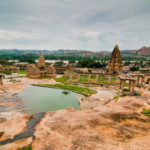
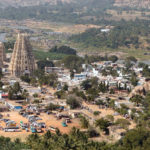
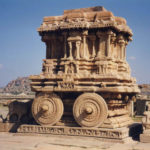
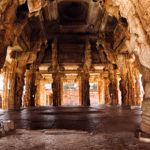
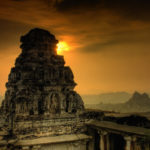
The lost city of Hampi, in Karnataka is famous as a UNESCO world heritage site. The place is a photographers delight, the landscapes, the ruins, the weird arrangement are the main attractions. One can spend time leisurely looking at randomly balanced stone boulders or the beautifully carved temples. Deepak Agarwal went to Hampi recently and came back inspired by the memorable sights. He recommends us to check out the Hampi Festival which is held in November every year.

Based in Bangalore, Deepak Agarwal is an analytics professional with about seven years of experience. His hobbies include traveling to different parts of the world. Living in Bangalore allows him to travel to lot of places which offer him diverse experience. Deepak feels each location around Bangalore is a photographer’s delight! His recent travel escapades include trips to Chikmagalur, Hampi and Coorg. Deepak is passionate about traveling and experiencing different cultures. In future, he plans to travel around eastern Europe and diversify his portfolio of experience. His association with Caleidoscope is slightly new but has been on the right track!

Photos – Deepak Agarwal

Travel Photo Feature by Nikita Gupta

0

Nikita Gupta is an avid travel photographer who has traveled around not only India, but across Europe covering Spain, Italy, Holland and Czech Republic. Her Tumblr id – Camerasonshoes aptly describes her! She works as Young Creative Strategy Partner for Creativeland Asia Pvt. Ltd., in Mumbai. She also takes up photography assignments on a project basis.

Personal profile –
http://camerasonshoes.tumblr.com/
http://instagram.com/niqitagupta

How to create customized Google map

0

While collating opinion about offbeat travel destinations, we found that our readers have suggested tourist spots across India. The chosen locations are as diverse as the nation itself! It was difficult to locate all these different tourist spots on a map accurately. First, we thought we will take a regular India map and mark the selected spots, but we soon realised that we would be not only inaccurate, but also not interactive. Then we found an interesting way of creating a map.

custom google map

Google Maps allows viewers to create our own interactive map, pinpointing the specific locations. To begin with you need to have a Gmail id to login. Once you are logged in, click on the ‘My Places’ in the side panel. It shows a ‘Create Map’ icon on top along with your recent searches. Begin with providing a ‘Title’ and ‘Description’ for your map. Then search for a particular location in the search bar, and right click on the ‘Placemarker’ to choose the option, ‘Save the place on map’.

Now click on the ‘Get Directions’ button to add a new destination. Don’t worry about the connecting line drawn between the locations. As you add more destinations, the connecting line will vanish, displaying only the placemarkers. After you add all the destinations, save the map and click on ‘Collaborate’ button. Mail this map to all your friends who would love to know about such locations.

Based on our reader suggestions, we have compiled a list of offbeat tourist spots across India. See whether they match to your choice –

Popular Destination Article Page
Hampi, Karnataka Read Article
Leh, Jammu and Kashmir Read Article
Valley of Flowers National Park, Uttarakhand Read Article
Andaman & Nicobar Islands Read Article
Shillong, Meghalaya Read Article
Brahmaputra River Cruise, Assam Read Article
Sundarbans National Park, West Bengal Read Article
Gahirmatha Turtle Sanctuary, Odisha Read Article
Udvada Fire Temple, Gujarat Read Article
Mahabaleshwar, Maharashtra Read Article
Araku Valley, Eastern Ghats, Andhra Pradesh Read Article
Mangalore-Sakleshpur train, Karnataka Read Article
Wellington, Tamil Nadu Read Article
Ruins of Nalanda, Bihar Read Article
Bastar, Chhattisgarh Read Article
Auroville, Puducherry, Pondicherry Read Article
Katarmal Sun Temple. Almora, Uttarakhand Read Article

Arnala Beach – A Beauty Lost in the Suburbs of Mumbai

4

Mumbai, the business capital and financial hub of India, is a bustling metropolis teeming with people. Business activities happen round the clock and people here have no time to built relationships or emotional attachments. The sprawling concrete jungle, ever increasing traffic and the massive crowds tend to overwhelm a person by the end of the day.

People like me who reside in Mumbai, eagerly look forward to weekends for a quick weekend getaway. Since packing my backpack and setting out on a long trip was obviously not a feasible option, a short, but memorable night out was what I desired. I got my search shoes on and started looking out for places that would make my stay worth it. I stumbled upon a nearby place called ‘Arnala’ and immediately I made up my mind that this would be my next destination to explore.

arnala-beach
Arnala Beach – Image Source: Somnath/Trekearth

In the extreme northern suburbs of Mumbai, is a place called Virar, which is the last stop for the suburban railways. The tiny town of Arnala lies just seven kilometres west from Virar. For Mumbaikars, reaching Arnala would take not more than one and a half hours time. You can either take a bus or a private vehicle to reach Arnala directly. Another alternative is to simply hop onto the lifeline of Mumbai – the local trains and get down at Virar and reach Arnala by taking a rickshaw. One heart warming feature associated with Arnala is that it is completely managed by localites, which ensures that you experience a homely feeling once you get there!

The major attraction associated with Arnala is of course the Arnala Beach. The Arnala Beach happens to be centrally located and thus you can reach there by just walking down a few quick steps. From the beach, the Arnala fort island is visible at a distance, which was built originally by the Portuguese and then rebuilt by the Marathas. However, you need to get a ferry to reach the fort.

Arnala beach - suburbs of Mumbai
Black Sand Arnala Beach – Image Source: Atanu.maity/Flickr

As soon as you enter the Arnala Beach, you will be greeted by a number of hawker women, who sell tender coconut water. As you walk further, you will be delighted to see camels who are sitting ready to give you a desert experience by taking you on a ride. Similarly, you can also enjoy horse rides. Furthermore, photographers can capture your every moment at the beach through their instant photographs!

Arnala houses a number of resorts that have established their base near the famous Arnala Beach. These resorts provide a complete package that includes stay as well as food. You can have a comfortable stay and at the same time, munch on a number of traditional delicacies at a reasonable price. In addition, each of these resorts have well-maintained waterparks that come complete with swimming pools, slides as well as rain showers.

Arnala beach - Arnala-Sopara-Buddha-Stupa-A-National-Monument
Sopara Buddha Stupa – A National Monument – Image: Siddhi Aras

Once you are done viewing the serene magnificence at the Arnala Beach you can check out the other interesting spots in and around Arnala. Arnala is known to house an extremely old, historical temple that possesses idols of an entire pantheon of gods including Lord Ganesha and Lord Shiva. This temple accommodates a large number of pandits, who have dedicated their lives to the almighty.

The Suru Garden, which is known to contain a diverse variety of trees, should be your next destination. For urbanites who have always lived in big cities, it is obvious that they have forgotten the actual meaning of the word, nature. For such people, the garden offers an opportunity to experience the beauty and peace that comes with the nature. If possible, make it a point to visit this place late in the evening. You will definitely have a twinkle in your eye once you see the view.

Last, but not the least, the Buddha Stupa at Nalasopara should be in your list of must-do destinations. The Buddha Stupa is known to be built by Emperor Ashoka, which was eventually discovered during the archaeological surveys in the late 1980s. This destination is known to be of national significance. The serenity of the place filled my mind with peace and calm. I would definitely recommend Arnala for Mumbaikars, who are seek an exciting weekend getaway.

Text – Siddhi Aras
Factfile –
http://en.wikipedia.org/wiki/Arnala_fort
http://vasai.wordpress.com
http://discoverindiabyroad.blogspot.in
http://maharashtrakille.blogspot.in

Caleidoscope on Top 100 Green Blogs to Follow!

0

Here is an interesting update for all C-scope readers… We are thrilled to note that our site is featured among the Top 100 Green blogs to follow in 2013. CouponAudit has surveyed all the green and eco-friendly websites across the world and ranked them accordingly. We have been ranked 66th in their infographic on “Top 100 Green blogs to follow in 2013’. Hope our dedication towards highlighting an eco-friendly lifestyle is finally bearing fruit!
An infographic by the team at CouponAudit