Restoring the Ecology of Uttarakhand

0

Author – Kavya Devarapalli

Kedarnath after the floods | Bharat Baswani

Mountains… those mist clad peaks were my first crush. Totally blown away by their beauty and magnanimity, over the years my passion has just increased. Every time I got a few days off, I packed off to Uttarakhand to fall in love with them all over again. I was born in Uttarakhand, spent my greater part of childhood there, but later had to shift to Lucknow for higher education. However, I always missed those mountains, trees, rivers, cold winds like hell and the love of Pahadi people. But over the years, I noticed a steady decline in the tree cover, vegetation and river flow in the places familiar to me. I could sense that we are fiddling around with nature in the name of development.

The last time when I visited Uttarakhand after a gap of three years, I was flabbergasted to notice the drastic change. Phenomenal amount of deforestation had taken place and the green luscious cover was replaced by barren lands labelled with ‘UNDER CONSTRUCTION’ signboards. The big stretch of river flow was reduced to trickling streams, courtesy, the vast number of dams built upstream. It was painful to see such a dire state of my region, which I had always remembered as green and prosperous since my childhood. It appeared as if someone had stolen the life out of this region. After I came back from my depressing visit to Uttarakhand, numerous questions were hovering in my mind. Why is my birth place in such a sorry state? What brought about such a radical change? What was the government up to? They forced me to search for answers, which led to this bitter reality.

Uttarakhand floods |CSE Pictures
Uttarakhand floods | CSE Pictures

Uttarakhand’s ecology has been seriously harmed in the name of development. There has been extensive deforestation of mountain tracts, clearing forests for human activities like agriculture, settlements and urbanization. Massive infrastructure development such as hydro power projects and roads was happening at an alarming rate. The contribution of hydroelectric dams to the destabilization of Uttarakhand’s ecosystem far exceeds than any other factor. Huge tunnels were drilled in the hills by blasting rocks , forests were cut to build water channels, road, townships etc. Building material was extracted from river beds, and huge quantities of debris were dumped in rivers.

Around 70 dams were already in operation, including 23 mega projects generating 100 MW or more, and according to the Dehradun-based NGO People’s Science Institute, another 680 dams are under construction. Just imagine the immense burden built on these sacred rivers. The completed 70 dams had interfered with 640 km of river water flow, equivalent to half the length of the state’s major rivers. This was bound to have serious repercussions on the geology of this region, since Uttarakhand is nestled in the Himalayas, the youngest mountains of the world, which have a fragile ecosystem. The repercussions were going to amplify manifold. Much of this hilly state lies in the seismically most active Zones IV & V, with high tectonic activities that can change the topography of the land as well as the course of the rivers, which can increase the disaster’s potential.

Uttarakhand | Oxfam
Uttarakhand | Oxfam

Another major cause of this environmental degradation was the cancer of tourism that had spread across Uttarakhand. The tourism industry was promoted to such an extent that tourist arrival reached 25 millions, which is almost two and a half times of entire population of the state. The ecological imbalance had reached its peak and it was quite evident that either we had to take some drastic measures to restore nature’s balance or nature will find its own way. I often heard Uttarakhand Pahadi people predicting a catastrophe in near future, not because they are psychic but because they know their mountains and rivers. They used to say…

“Aaj nadi pahad rouna chanh, Bhawaa huaman roune” [Today rivers and mountains are crying, Tomorrow it will be our turn to cry!]

That is exactly what happened during 2013 Uttarakhand Floods. The balance was finally restored but at the cost of thousands of lives and massive property destruction. This manmade catastrophe finally brought the much needed attention to the growing imbalance in ecology of Uttarakhand. No doubt, infrastructure development is our prime need today, but when it turns into greed, the result is going to be devastating.

Uttarakhand-Pahadi | Christian Aid

An expert committee of the Environment Ministry was sought for a complete overhaul of the environmental clearance mechanism for proposed projects. The committee submitted its report to the Supreme Court, strongly suggesting the enactment of legislation for protecting small rivers and designating “eco-sensitive zones” for all rivers in the state. It also sought the immediate notification of a “river regulation zone” by the ministry. The panel concluded that the 24 proposed power projects would have significant biodiversity impact and sought the cancellation of projects inside protected areas like national parks, sanctuaries and the Gangotri eco-sensitive zone.

The major recommendations given by the expert committee are:

  • Mandatory environmental clearance for all projects of above 2 Megawatts that entail tunnelling, barrages and reservoir construction
  • Ensure that the mountain terrain above 2,200 metres be free from hydropower activity to prevent harm to Uttarakhand’s glacial sensitivity
  • Maintain minimum flow of water required in a river to sustain aquatic health and livelihood of local communities of around 50% flow in the lean season and 30% during the non-monsoon period
  • Bring back forest cover to the original level through reforestation schemes

I can only hope that these positive changes will restore the Ecology of Uttarakhand soon.
If rivers are there, trees will be there;
If trees are there, mountains will be intact;
If mountains (Pahad) are there, hill people (Pahadi) will have their existence”

So God give me (a Pahadi) existence; give me my mountains, my rivers, my trees, my love…

Factfile –

http://livingpoets.wordpress.com
http://www.rediff.com
http://zeenews.india.com
http://www.thehindubusinessline.com
http://indiatoday.intoday.in
https://www.flickr.com

Inviting Entries for Ecoideaz Innovation Contest

0
green ideas contest
Hey Folks,
  • Have you heard of an innovative green idea that’s a great product and saves the environment as well?
  • Have you created an innovation that is eco-friendly and is made in India?
  • Have you heard of a poor farmer who has created a Jugaad innovation that needs recognition?
If yes, then here is a contest that provides the right platform for such eco-friendly innovations. Ecoideaz presents the  Ecoideaz Innovation Contest that showcases India’s best innovations that can help save the environment.
So go ahead, nominate a green idea that you feel is India’s best innovation. Each nomination will be judged by our panel of experts and both the winning idea and its nominator will be given exciting prizes!
You could check out our last year’s entries here
– Click here to nominate –

Recycling Ideas for Home Decor

0

Recycling Ideas for Home décorReuse and recycle is a mantra that most people are now becoming aware of and integrating into their lifestyles. Home décor is perhaps the perfect place to reuse and recycle. Look around your home. There are plenty of things which are going to end up in your trash and consequently in the landfill. The shame does not lie in the fact that there are so many things which are going to wind up waste. The shame lies in the fact that not many of use consider recycling and reusing them in order to make our own home décor.

With an enterprising attitude and a bit of creativity, you could use anything from cereal boxes, corks, milk cartons and even plastic bottles to create pieces of home décor which will rival even your best dinner sets in terms of allure. Below are a few different  recycling ideas on how you can use common objects of waste in order to create truly remarkable pieces of home décor.

The Pringles Planter

All of us love our Pringles chips. They’re delicious and they’re taste never gets old. However, the shape of the Pringles box or can is more recognizable than the taste of the chips itself. It is a cylindrical container about a foot in length and it is perfect for use as a planter. In order to make the planter aesthetically viable, take some twine or some rope and wrap it around the cylinder. You can then use sequins or other decorative items to spruce up its looks. When you’re done, you will have interesting looking planter which is compact enough to be placed anywhere and deep enough to hold a plant properly.

Paint Planters

Taking a cue from the Pringles idea, we can also use unused paint cans and reuse them as planters. They are a lot bigger than Pringles cans hence their use is in the outdoor garden. Get a bunch of tape, colors and stencils and make quirky designs on the cans in order to make them look attractive.

Cereal Box Decorations

Cereal Boxes get thrown out in the trash or get torn apart by restless children. However, if you can keep your son from tearing it apart and avoid throwing it in the garbage, you can make a few interesting shapes using a cereal box. Perhaps the most attractive of them is the three dimensional star. Visit Guidecentral in order to view the instructions to creating a star out of your cereal box. After you’ve made the star, you can color it any color you want and you are left with a very adorable looking home décor piece.

Plastic Bottle Stands

recycling ideas

Plastic bottles are looked at as menaces to the environment. They do not decompose and they’re consumption in the modern world is quite unbelievable. However, if you’re smart, you can use them to make some great looking stands. Collect a few plastic bottles, you must have a few of them at home, and cut out their bases. Next, you need to fashion a stand. You can do this using a piece of metal or wood and a base. Glue the piece of metal or wood to the base and make sure that the base and the metal are perpendicular to each other. Next, make a hole in the center of the plastic bottle bases that you had cut out and place them on the metal one after the other. You can use chewing gum or sealant to keep the bases stable. With some peppy coloring, you can have a jewelry stand for you to keep your accessories in or even use it as a kitchen stand, storing small packets of spices and other things. In fact, you could co-ordinate the color of the stand with your favorite dinner set in order to create an even better and smoother décor.

Author Bio – Jim Deacon is an interior designer who also works as a freelance writer. Jim is famous for his creative and innovative ideas regarding recycling common commodity items into fashionable home décor. Contact Jim for advice regarding anything ranging from dinner sets to using toilet paper rolls to create wall art. www.makemyhome.com

An Oasis of Learning – Swaraj University

0

Swaraj University - 03Author – Arpita Gaidhane

‘How long do you have to listen?’
This is a question that most Khojis at Swaraj University will ask you when asked what we do at Swaraj University.
What’s Khoji?
Khoji means ‘a seeker’… someone out on a quest.
What quest?
An individual mission for every person to follow. Enough riddles, you may say! So here it goes – How long do you have to listen?

My tryst with Swaraj University began a year ago, when I finally found what I was seeking through miles and miles of travel and exploration. I had long been unsettled, having given up a completely funded doctoral programme, because I felt that my questions wouldn’t be answered in academia. My masters thesis supervisor had clearly told me,
“Even if you experience Nirvana, unless you can objectively explain it to other people with empirical data, it is a useless question to engage with academically”.

Swaraj University - 07

Existential Questions

If education was not going to answer my questions, particularly existential questions as important as “Who am I?” and “What is the world really like beyond individual perspectives?”, why do I need such knowledge?

Disillusioned, I had returned home from London and spent a year travelling around the country looking up alternative education spaces. My travels pushed my perspectives far beyond their original understanding. Soon I realised that my boundaries were extremely limited and the world was hardly as it had seemed to be once. My notions of class, caste and gender all broke down once I actually met people different from me, but who had the same human core. More and more, I started wondering what kind of world I was living in and where I really belonged once my allegiance to categories had been broken.

Swaraj University - 05

It was around this time of great confusion and rethinking that I landed up at an oasis in a Rajasthani desert. At the foothills of the Aravallis, the oldest mountain range in the world, lies a place quite unlike any other that I had been to. The people at this place had a quiet reassurance among themselves and pursue what seems right to them. Body, mind and heart were not fragmented into shallow realms; there is a real drive towards listening to oneself and knowing who one really is. In this place, nature is the container of all activity, and people work towards building a community of ardent, driven and compassionate humans. This is a place called Swaraj University.

Swaraj University - 01

Conversations informed me that three like-minded people started this space five years ago, and it was inspired by the thoughts of great beings such as Mahatma Gandhi and Rabindranath Tagore. The name ‘Swaraj’ emerged from Gandhi’s ‘Hind Swaraj’ concept which meant to signify self-ownership. In a world where people are constantly dependent on the economy and media messages, Swaraj University was meant to be a space for its seekers to know themselves and take their own responsibility.

Swaraj University - 06

As I walked across the beautiful Tapovan Ashram, campus of Swaraj University on the outskirts of Udaipur, and took in the sights of a lake at the base on mountains stretching out to infinity, my mind felt completely at peace with the silence that was only broken by chirping and barking.

A year later, I find myself as a Khoji at Swaraj. Here, I have found a community to explore multiple perspectives and learned that I am not alone in seeing the world beyond black & white categories. From sustainability, to understanding what health means to questioning social justice, we have conversations and activities to explore the world in the changing context that we are living in right now. Rather than the remote and unrelated education that I had experienced so far, my learnings at Swaraj have been from working in the real world, meeting real people from all walks of life, and giving as much importance to my emotional needs and personal growth as to my career choices and work.

Swaraj University - 04

Sure, just like everywhere we have our fights and conflicts; but here it is celebrated. Failure is celebrated as a stepping stone to success, and we enjoy growing from our experiences. This is a space that holds us when we make mistakes and forges our relationships into stronger bonds through the scars that mark our experiences.

From vaguely finding out about one academic course at a time, I now have the opportunity to explore art, writing, healing, history, communication, facilitation, spirituality, simple living and much more. I explore all of these as a holistic organic way of living, not as ‘fragmented subjects’ to study, and I seek through all of them ways in which to grow and love and become a kinder human being.

So what is Swaraj University? It’s what you make of it. A space for the youth to follow their dreams and coexist with others who have similar crazy ideas of worlds without borders and making magic really come true. It’s an oasis to heal and to cherish relationships and work and the world as part of an organic whole. It’s a space for you to ‘Be’.

Factfile –
www.swarajuniversity.org

India’s Most Socially Concerned Celebrities

0

Continued from Celebrities supporting social causes

These celebrities are showing that there are better reasons to follow them, apart from their on-screen work. Due to their work, it has become trendy for other Indian movie celebrities to lend their time for various pressing social issues. Lets meet some of the India’s most socially concerned celebrities.

Salman Khan

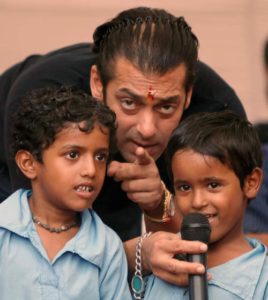
socially concerned celebrities : Salman Khan-ChildrenIn his early days of film career, Salman Khan had a notorious reputation of being a playboy with utter disregard to society. However, with his NGO for the underprivileged children, “Being Human”, he seems to have won many hearts. Salman Khan’s love for children helped him to initiate this project. Being Human works in the areas like education and healthcare for the underprivileged children.

Salman Khan has managed to raise funds with events, which happens quite often, and through the sales of his Being Human brand of apparel. Chillar Party, the first film made under his banner went onto win the national film award for best children’s film. Apart from child causes, Being Human also supports bone marrow transplant, which helps people suffering from leukaemia and thalassemia through the Marrow Donor Registry India at the Tata Memorial Centre.

Aishwarya Rai Bachchan

socially concerned celebrities : Aishwarya Rai BachchanShe is looked upon as the ultimate beauty in India. Today, Aishwarya Rai Bachchan is a global name for Indian Cinema. After winning the Miss World pageant in 1994, she joined the eye donation campaign run by the Eye Bank Association, when she pledged to donate her eyes. Later, she became the ambassador for the Indian Government’s Pulse Polio campaign to eradicate polio. In 2004, she established an NGO, the Aishwarya Rai Foundation, which works towards helping needy people.

In 2009, she was appointed as the first Goodwill Ambassador of Smile Train that helps kids with the cleft lip and palate surgery. Other major charity activities by Aishwarya are being the spokesperson for the United Nations’ International Year of Microcredit, the International Day of Peace in New York, and the International Goodwill Ambassador for UNAIDS. She supports PETA as well.

Nafisa Ali

socially concerned celebrities : Nafisa AliNafisa Ali is a lesser known actress from the 1970-80s who is today more known for her social activism. Till date, she has been a part of various NGOs and projects. In 1999, Nafisa Ali started the Orissa Cyclone Relief fund when Odisha was struck by a massive cyclone. Later in 2001, she actively participated to rehabilitate the earthquake victims in 48 villages of Gujarat, where she helped construct 340 huts. During the Gujarat riots, she worked towards creating peace and harmony in the riot affected areas. She made a documentary on the same named ‘Where Did We Go Wrong’. Nafisa Ali is associated with Action India that works towards spreading awareness about HIV/AIDS, for which she made a documentary, named ‘United against AIDS’. She started a care home named Ashraya to provide support and holistic care for AIDS victims and HIV+ people.

John Abraham

socially concerned celebrities : John Abraham-FootballThere is a saying “When you give to the needy, do not let your left hand know what your right hand is doing”. John Abraham seems to have taken this quote seriously. He says, “For me, doing social work and supporting NGOs is more important than endorsing a brand.” Being an animal lover, John Abraham supports various projects of PETA. He is also associated with the People for Animals, who work towards freeing the horses pulling Victoria Carriage on the beaches of Mumbai. His love for animals extends to the ‘Save Our Tiger’ campaign.

Further, John Abraham is also associated with Habitat for Humanity since 2006. Till date, he has helped build over 50,000 homes in India. Being a fitness freak and serious sports addict, John Abraham has been active in promoting sports by supporting the Delhi Waveriders in the Hockey India League and Guwahati football team for the Indian Super League.

Amitabh Bachchan

socially concerned celebrities : Amitabh Bachchan-Pulse_PolioThe megastar of Indian Cinema is probably the most influential celebrity in India today. ‘Big B’, who has been ruling Bollywood for decades, has made sure that people know him not only for his creative work, but for his social activities as well. Being the first brand ambassador for the Pulse Polio campaign by Indian Government, Amitabh Bachchan has influenced the masses with his ‘Do Boond Zindagi Ki’ TV ad. In 2005, he officially became the Goodwill Ambassador for UNICEF. He also supports organisations to create awareness about HIV/AIDS.

Bachchan supported in fundraising for the tsunami victims along with his other colleagues through a concert. He donated Rs.2.5 million to Plan India to ensure a better future for girls in India. Recently, he launched a trust in the name of his father, Dr Harivansh Rai Bachchan Memorial Trust, which work towards various issues like rehabilitation of handicapped, blood banks, feeding the poor, sponsoring a child’s education, taking care of poor farmer loans, etc.

Factfile –
http://www.dailymail.co.uk
http://blogs.halabol.com
http://entertainment.oneindia.in
http://www.bain.com
http://forbesindia.com

Indian Celebrities Supporting Social Causes

3

Indian movie celebrities are considered a part of a glamorous world that is far removed from harsh realities of daily life. Often, we get an illusion that these celebrities are way beyond the problems faced by common man and pay no heed in social issues. However, there are a few celebrities who have tried to break this stereotype and are playing a vital role in shaping our society to make it a better place to live in. These celebrities are showing that there are better reasons to follow them, apart from their on-screen work. Due to their work, it has become trendy for other Indian movie celebrities to lend their time for various pressing social issues. Let’s have a look at some major Indian celebrities supporting social causes.

Aamir Khan

Indian celebrities supporting social causes : Aamir Khan-Satyamev Jayate

Considered the ‘Mr Perfectionist’ of Indian Cinema, Aamir Khan is one of very few actors who remain far away from the rat race of producing run-of-the-mill movies. He is probably the only actor who has taken up his responsibility towards society so seriously that he created India’s first talk show on social issues, ‘Satyamev Jayate’. When the TV show was launched two years back, he gained immense popularity and his research on various social issues was appreciated.

Apart from that, he has raised voice in support of numerous campaigns and protests such as Narmada Bachao Andolan, Jan Lok Pal Bill and the Supreme Court judgement against homosexuality. His support generated severe criticism from political groups, but he did not back out. Apart from his individual activities and talk shows, Aamir Khan tries to build awareness about social issues through his movies as well. His movies, Rang De Basanti, Taare Zameen Par and 3 Idiots have tried to educate people various social issues like corruption, child care and education system. Further, he is the brand ambassador of Incredible India tourism campaign as well.

Dia Mirza

Indian celebrities supporting social causes : Dia Mirza PETA

When she entered Bollywood in 2000, Dia Mirza was often compared with Aishwarya Rai Bachchan. Although she created a niche for herself, she vanished from the industry after working in a good number of movies. Later this pretty actress was found busy with her social activities. Dia Mirza is actively involved with the Andhra Pradesh Government to help raise the awareness about HIV/AIDS and female foeticide.

Apart from that, she also supports PETA, Cancer Patients Aid Association, NDTV Greenathon, Greenpeace India, Coca Cola Foundation, and CRY. Dia Mirza expressed her support for the Narmada Bachao Andolan along with Aamir Khan. She has been acknowledged for her work in creating awareness about environment-related issues and was felicitated her with the IIFA Green Award in 2011. She is also the Eco Brand Ambassador for Panasonic.

Shabana Azmi

Indian celebrities supporting social causes : Shabana Azmi

Apart from being a well known actor of her time, Shabana Azmi has always been an active social activist. Shabana is known to raise her voice against various social issues, but her attention goes to women and child-related issues. Shabana has advocated for the cause of slum dwellers, victims of Latur earthquake, and displaced Kashmiri Pandits.

Way back in 1989, she took a four-day march against communalism from Delhi to Meerut. In 1998, Shabana Azmi was appointed as the Goodwill Ambassador of the United Nations Population Fund as well for the HIV/AIDS programme for the SAARC region. Today, Shabana Azmi runs an NGO named Mijwan Welfare Society in Azamgarh district, UP, which works for the underprivileged children. Under Mijwan, she has set up a school, a college, a computer centre, and a sewing centre in a small remote village. She also organizes various fund-raising activities.

Rahul Bose

Indian celebrities supporting social causes : Rahul Bose

Rahul Bose is one of the few socially concerned celebrities who are equally known for social activism. Way back in 2004, he was a part of the relief campaign in the Andaman & Nicobar Islands after the 2004 Tsunami, which led him to create the Andaman & Nicobar Scholarship Initiative via his NGO, The Foundation. This scholarship provides education to underprivileged kids from the islands. That apart, Rahul Bose is associated with several charitable organizations such as Oxfam, Worlds Youth Peace Movement, the American India Foundation, and Planet Alert, which have chosen him as their ambassador.

Particularly, he is closely connected with Teach for India for bridge educational gaps among the underprivileged. Further, he is the founder of The Group of Groups, an organisation which acts as an umbrella for the 51 charitable NGOs in Mumbai. In 2009, Rahul Bose travelled across Canada lecturing about global warming and climate change under the Climate Action Network and he participated in the protest at the Copenhagen Climate Change Summit.

Vidya Balan

Indian celebrities supporting social causes : Vidya Balan

The latest one to join the list of social activist celebrity is the bold actress of Indian cinema, Vidya Balan. The actress, who is also known as the ‘female’ hero of Bollywood, has added one more feather to her long list of appreciated work. Vidya Balan has begun to work for the cause of drinking and sanitation campaign after the Rural Development ministry approached her to be the brand ambassador for a cause, which is still a persistent problem in rural India where women’s basic need is neglected. In March 2011, she endorsed World Wildlife Fund’s Earth Hour campaign in India. In 2012, she has campaigned for the cause of nutrition in India for Child in Need Institute, an NGO based in Kolkata. For her attempts to empower women, Vidya Balan was awarded the Prabha Khaitan Puraskar 2012 by the Calcutta Chamber of Commerce.

Freedom to speak freely, is it?

1

Freedom of Speech : Shaheen Dhada Facebook commentWhile browsing through the internet a few days back, I came across a news link from a leading English newspaper in India. The news headline shook me and for a moment I was dumbstruck. It said that a shipbuilding professional in Goa was arrested for making comments about the Prime Minister, Mr Narendra Modi. Really!

I thought we are living in a democratic nation where every citizen has certain rights. We feel pride about our lengthy constitution. However, few of our fundamental rights, like ‘Right to the Freedom of Speech ’ can’t be practiced with that freedom.

The other day I was watching an American show, Boston Legal. Those who are not aware about this show, it is about attorneys and the cases they deal on a regular basis. In one of its episodes, two of the lead characters, Alan and Denny, discuss about political parties and whom will they vote. Surprisingly, they were openly discussing about each party’s positive and negative sides. This is what we call ‘Freedom of Speech’.

On the contrary, we in India can’t even express our views in social media sites like Facebook. The recent Goa incident isn’t the only case. Few years back, two girls were arrested for commenting about the cremation ceremony of Shiv Sena Supremo, Balasaheb Thackeray on Facebook. As per our constitution, every citizen of India has right to express their thoughts and views on topics as long as their views don not hurt religious sentiments and provoke any riots.

Unfortunately, we live in a nation where such rights exist only on paper. When a person tries to be expressive, they are bound to go through a lot of trouble. These rights are all governed by various political and religious parties. After recent incidences, people now restrict from expressing themselves over websites and social media. Who knows, what may offend these political parties or celebrities!

CSA Awareness – Speaking up! Before it’s too late

1

Author – Ruth Dsouza

An acquaintance once posted on her Facebook timeline – “How many women out there have been victims of child sexual abuse (CSA)? The number of responses she got left her astounded! What’s more, women began to share this timeline status and many more, unknown to her, responded in the affirmative.

This simple exercise indicated that there are a much larger number of CSA victims than we actually perceive. Silence – often the refuge of a victim – is the reason many people today still believe that CSA is not something that can happen to us. What we lack as a society is better awareness about the problem, its consequences and most importantly how to deal with the victim – which in this case is a vulnerable little soul – a child.

CSA Awareness Month – the brainchild of Kiran Manral, author and Monika Manchanda, blogger and baker at Sin-A-Mon, is an online awareness campaign aimed at educating the masses in general about this menace. Career-women in their own right, these two ladies got together to spearhead what they believe is the first step to dealing with the problem – making people aware.

The birth of CSA Awareness Month

Kiran Manral
Kiran Manral

CSA Awareness Month is in its fourth year this year. “The idea came about from a conversation between Monika and me when we were returning from the Lavasa Women’s Rally in 2011,” says Kiran. “We realised that CSA was all around us but no one spoke about it. As parents, we thought we needed to do something to raise awareness, to break the taboo, to help survivors realise it was not their fault. We decided to do this through the media we were comfortable with, namely blogs, Twitter, Facebook and other social media.”

Monika Manchanda
Monika Manchanda

Reminiscing about the beginning, Monika says, “Once Kiran and I decided to do something, details were quickly hashed out, and April was announced as the month wherein interested bloggers and parents would post their thoughts on ‘Child Sexual Abuse Awareness Month’. The plan was to post these thoughts on a blog dedicated to this cause. Survivor stories were invited. NGOs who have built credibility in this field were approached and asked for inputs. The rush was incredible, though the revelation that almost everyone had a story to tell was scary.”

The Motivation – Nay, The Need to Speak Out

“CSA is a subject with huge stigma attached to it. We like to believe that it won’t happen to US”, feels Monika. She explains, “…and the very fact that people don’t talk about it, is responsible for children being victimized and abusers walking free. More than 50% of children have confessed of some degree of abuse at some point and in most cases the abuser has been someone they trusted”.

Yet, to take time out from a busy schedule, to set aside time to join hands with several other volunteers is not easy and the motivation needs to be there. Kiran says, “For me, the motivation has been the fact that I am a parent and I owe it to my child to do whatever I can to protect him. For others, the motivation comes from various things, being survivors, being parents, being concerned citizens. Each one brings something different to the table.”

The Work Done and Lives Touched!

CSA Awareness Month’s work initially began with a blogathon and over the years has grown to include more activities. Mobile apps, Twitter chats with experts and survivors are a few such additions. They have created some strong videos with professional help. They have also created a workshop kit, which will help one set-up and execute a quick good touch/bad touch workshop for a group of parents.

This year saw the first offline event being organized, where parents interacted with experts in the field of CSA. Child-related organisations like Yowoto, Podar, Arpan, RAHI, Enfold and Tulir were part of the initiative, who over the years have brought their professional approach and know-how to disseminate information to a larger audience.

CSA - Offline event by Yowoto Podar and Arpan

Offline event by Yowoto Podar and Arpan

Monika told herself that if she could change one life with her work in this sphere, then her hardwork would have paid off. She says, “There was one person who shared her survivor story in the first CSA Awareness Month. She got in touch a couple of weeks later, asking us if we knew of counsellor she could approach. We put her in touch with an NGO in her region. Over the past 4 years, I continue to receive mails from her regularly. From being someone who was afraid of a man’s touch to getting married in a couple of months, her transition has been heart-warming. That is what we are working towards”.

For those volunteers who work behind the scenes, the journey has not been easy. Kiran says, “The stories one hears, the anguish one is privy to, the folks one doesn’t know personally who reach out to you with their stories. With initiatives like this, People are now more open to talking about it. People are more wary about their children and don’t trust anyone blindly. And parents now know or are informing themselves about how to talk to their children about good touch/bad touch and equipping their children with strategies on how to protect themselves from sexual predators.”

Understanding the Culture of Indian States [Infographic]

7

Punjabi Bhangra, Dilli chaat, Kashi yatra, Dargah qawwali, Kashmiri carpet, Rabindra sangeet, Darjeeling tea, Coorg coffee, Assam bihu, Kerala coconut, Carnatic classical music, Hyderabadi Biriyani, Lucknavi lehengas, Goan feni, Gujju dhoklas, Bikaneri Bhujia…

Is there a unifying thread in the diversity of Indian culture? Or is it just an amalgamation of various regional cultures stitched together…

Enough has been said about the “unity in diversity” of Indian culture, but often we see divisive issues cropping up that tear apart the delicate fabric of our society. While diversity is the essence of our Indian culture, many of us are unaware of the differences that actually unite various regions of the country. Here are some of the major dividing yet uniting socio-economic and cultural differences of Indian states, as depicted in our colourful infographic:

Climatic regions

climate of india

Being a large country, India is bound to have wide variations in climatic conditions. The most noticeable variation can be seen on either sides of the Tropic of Cancer, which runs from Gujarat in the west to Mizoram in the east. This latitudinal line forms the boundary between the Tropics and Subtropics. The tropical region below it is characterised by moderate variation in temperature throughout the year, and heavy rainfall. The onset of seasons is one month earlier than the northern Subtropics, which means summer arrives in March.

The northern Subtropics are characterised by drastic variation in temperature and lesser rainfall. Average temperatures can range from 00 C in winter to 400 C in summer. Winters are cold and are characterised by heavy fog. The Vindhya mountain range forms a natural barrier between the two regions. Further, the crops grown in these regions also differ.

Food crop regions

indian food Map

The staple food of Indians is wheat… no, it’s rice… no, it is maize! Can’t say for sure? Yes, our country’s diversity is clearly is visible in the myriad range of food delicacies we eat. So it’s tough to zero in one staple food for entire India. Some of the major food crops are: rice, wheat, millets, roots and tubers. Despite the diversity, the country can be divided mainly into rice eating and wheat eating regions.

Rice is mainly grown and eaten in South and East India, while wheat is predominantly grown and eaten in North and West India. Millets are the preferred staple in tribal areas of Chhattisgarh, Jharkhand, Andhra Pradesh, etc. Meanwhile a recent study by a researcher from University of Virginia has found significant cultural differences between wheat- and rice-growing cultures in India and across the world! Read more about that in this Live Mint report.

Language segmentation

indian-language

Now we come the more controversial topic, which is highly divisive in India. Languages have played a major role in building the cultural identity of different states. In fact, Indian states were reorganised on a linguistic basis just after the independence, forming many new states and cutting down many existing ones. While many people prefer this federal set up with each state carving its own identity, people who prefer a centralised set-up feel this is the reason why India does not present a unified front.

We have segregated the country into Hindi heartland and all states with regional languages. So there are 9 Hindi speaking states and 19 states with different regional scheduled languages such as Marathi, Punjabi, Tamil, etc. This map indicates that it would take a long time before Hindi can officially become a pan-Indian language. Till then, our beloved British imposition will have to serve as the subsidiary official language!

Political parties

india political map

The political map of India has undergone a drastic change in the 2014 general elections. For the first time in 30 years, a single party has emerged with a clear majority, brushing aside the rising power of regional political parties. Over the last two decades, regional political parties have been building enough strength to ensure that national parties dance to their tune in coalition governments. In fact, the rising power of regional parties indicated that India is heading more towards a federal decentralised set up.

There are states that have well established presence of national parties such as INC and BJP; then there are states such as Uttar Pradesh, Tamil Nadu, etc., where regional parties hold sway. Some of these regional parties are built on ideological platform such as CPI, CPI-M, BSP, etc., while most of them are established to cater to regional aspirations – Telangana Rashtra Samithi, Peoples Democratic Party, etc.

Religion

religions in india

Here comes the most contentious issue that is more divisive than anything else. Religion has always played a major role in the Indian society since times immemorial. While many of us blame our erstwhile rulers for their “divide and rule” policy, we don’t realise that we as a society were never united or were waiting to be divided!

Our religion map shows some of the states as non-Hindu, when they are in fact Hindu majority regions. That differentiation is actually to show that a significant non-Hindu minority live in these states. For example, West Bengal has 25% Muslim population, while Kerala has 24%. Similarly, Goa has 26% Christians, while Mizoram has 87% Christians. Gujarat and Rajasthan have significant minority of Jains 2% and Parsis (Zoroastrianism) comprising just 0.006%. Punjab and Kashmir are the two states with non-Hindu majority population. Buddhism is practised in Himachal Pradesh, Arunachal Pradesh and Sikkim.

Culture of Indian States Infographics

india infographics - Culture of Indian States

Factfile –
http://www.mapsofindia.com
http://www.livemint.com
http://en.wikipedia.org

Vadodara – An Ideal Wedding Destination in Gujarat

0
Vadodara – An Ideal Wedding Destination
Image Source

Weddings are a celebration of love. And no celebration of love should ever be ordinary. And Vadodara, with a combination of cultural essence and modern charm, is a perfect destination to make your wedding event truly extraordinary and memorable. Read on to know why.  

Economical – Vadodara is one of the most economical cities in not just Gujarat, but also in India. Its cost-friendliness is the reason it becomes an easy choice amongst the other cities in Gujarat. Well, this is as great for the visitors as it’s for the locals. You can invite all your guests and have a lavish and modern wedding without hurting your pocket. And this is practically the one thing everyone planning an event wants. 

Connectivity – A great guest experience plays a major role in the success of your wedding event. Which is why excellent connectivity also makes Vadodara a top choice. It has an airport and a railway station that are not more than a 30-min ride from any location in the city. Moreover, the city is centrally located and is just a 2-hour drive from Ahmedabad and a 3-hour drive from Surat. 

Rich in Culture – Also referred to as the ‘sanskarnagri’, Vadodara city is steeped in culture which makes it a perfect destination for couples looking to have a modern yet traditional wedding. Barodians have been upholding the tradition of the city for ages and this reflects in their celebrations which are a perfect combination of modern arrangements and an old-world charm. Needless to say, the city is an ideal destination where you can have a wedding affair that will be remembered for decades.  

Beautiful Locations for Pre-Wedding Shoots – Vadodara boasts some stunning locations straight out of fairy tales perfect for a one-of-a-kind wedding album. Whether you pick a historical fort or serene waterfront as the backdrop for your pre-wedding pictures, the city has it all. Moreover, exploring the hidden charms of the city with your partner will be a cherry on the top. Here a few locations you will absolutely fall in love with: 

  • Lukshmi Vilas Palace
  • Sur Sagar Lake
  • Pavagadh
  • Poicha
  • Sayajibaug

Grand Mercure Vadodara Surya Palace – A Perfect Wedding Venue

The challenging part while making wedding arrangements is choosing a venue. And Grand Mercure Vadodara Surya Palace, which is one of the best hotels in Vadodara, is an indisputable choice. Here are some reasons why:

Dining and Catering – We all know that good food is the essence of a successful event. And this is why we offer delicacies from 11 national and international cuisines so that your guests are all praises when they leave. From outdoor catering to live food counters, we take care of everything; all you need to do is decide the menu and relax.

Lavish Banquet Halls – Grand Mercure Vadodara Surya Palace boasts some of the finest banquet halls in Vadodara. From private wedding celebrations to a grand soiree, our state-of-the-art banquet halls are great for celebrations of different sizes. 

Whether you’re hosting a sangeet, mehendi, or an engagement ceremony, you can choose from our chic marriage halls in Vadodara according to the size of your guests’ list. 

  • The Grand Ballroom – It is the largest pillar-less banqueting venue in Vadodara with mood lighting facility available and can host up to 1000 guests. 
  • The Royal Room – It is the most sought-after wedding venue in town with majestic décor and can host up to 400 guests.

Luxury Accommodation Grand Mercure Vadodara Surya Palace offers 144 contemporary rooms, that include 4 premier suites, 1 DA room, 44 executive rooms and 96 deluxe rooms for a warm and memorable stay for your guests. 

The Grand Vivah – We have introduced the concept of ‘Grand Vivah’, the next big thing in the wedding world for upbeat couples. Customized décor, jazzy music, professional photographers and videographers; we take care of every detail, big or small, to ensure that you sit back and enjoy the wedding.

Gone are the days when weddings were more work than a celebration for the family members. We can now help you craft a designer marriage where we will work hand-in-hand with you at every step to make your big day truly special and memorable. From the wedding theme to dining and décor, simply specify your budget and preferences and we’ll make sure you get exactly what you asked for!

Call +91-9974119900 or visit https://www.suryapalace.com/wedding/ for bookings and other details.

Rishi Kamra works with Grand Mercure Vadodara Surya Palace. He has over a decade of experience in the hospitality and event management industry which allows him to create value-driven content for his readers. Travelling and photography are his two passions and in his free time, he enjoys working with the youth of his city by volunteering his time and mentoring young adults.