Mulberry Magic from Mysore

1

Mysore silk saree

Silk … The very name of the luxurious fabric renowned for its elegance reminds us of an elegant look and the wondrous feel that one gets to experience when felt against the skin. All renowned for the exquisite quality and the graceful look that it promises to provide, apparels made out of this lovely fabric are something every woman on earth desires to own.  And In India, which happens to be the world’s second largest consumer of the fabric after China, Silk sarees (saris) (affiliate link) are attires that richly adorn every woman’s wardrobe.

Kancheevaram, Banarasi, Bandhni, Tanchoi, Assami, Paithani – the Indian subcontinent offers an immense variety of sarees, each one of them known for a distinctive style of weave and design. Among the variety of Indian silk sarees, ‘Mysore Silk’ from the cultural capital of Karnataka holds a pride of place. Mysore Silk sarees are made of a specific variety of silk that happens to be one of world’s finest silk fabrics. The drapes are woven out of power-looms which ensure the enchanting Mysore silk sarees always lustrous, teeming with a wondrous sheen and feel that is extremely comfortable against the skin.

Available in myriad beautiful and vibrant hues, unlike most other Indian sarees that are mostly hand woven, Mysore Silk is  actually twinned in machines out of pure silk yarns that that happen to be one of the best silks produced in the world today .

Mysore-silk story

Owning a Mysore Silk Saree is a tradition!

Such is the beauty and exquisiteness of Mysore Silk that in Karnataka and neighbouring states, owning a it is customary for every south Indian woman. She tends to feel her wardrobe is incomplete without one of this vibrant six yards of magic! I remember growing up watching my mother, grandmother and aunts gracefully wrap themselves up in the lovely Mysore silk on almost every special occasion.

In Mysore, we can say, it is a kind of tradition for every woman to own a Mysore silk saree. Although quite expensive in comparison to other silk saree varieties, every girl will ensure she’ll purchase one, at least during the time of her wedding. Reason: All for the softness, elegance and comfort it offers. Though simple and seldom available with extensive prints, they gracefully standout when kept aside all other silk varieties with just a simple ‘pure gold’ zari, thus becoming extremely exclusive. Guess it’s probably because of all these special qualities, most women both young and the elderly in Karnataka and especially Mysore can be found encapsulated in these vibrant Mysore Silk sarees during all the wedding and festivities.

mysore silk saree

Modern women are shunning silk sarees since their heavy drapery restricts flexibility in their daily professional lives. Today, most women find silk sarees to be extremely thick, heavy, and difficult to carry off. They would rather prefer wearing costumes such as ghaghras and salwars over sarees even at special occasions such as weddings. However, once a girl sees a Mysore Silk saree, she is surely be pleasantly surprised, thanks to the lightness, minimalistic design, comfort and also the elegance it promises to offer!

Evidently, Mysore Silk retains its popularity among younger women too! And our elders indeed knew it best! So next time, in case you find someone in a Kannadiga wedding wearing a sober looking plain saree, do go and ask if it’s Mysore Silk. Ask if you can feel it. And if it is the same bewitching drape, you’ll surely say, “Yes, it indeed is a few yards of magic”, the minute you feel it.

Also Read: Fable of A Fabulous Fabric: Mysore Silk

Factfile –
http://www.fibre2fashion.com
indianweddingsaree.jimdo.com

A Hitchhiker’s Guide to New Delhi Culture

1

Nai Dilli culture - Delhi winter children
Children cope with Delhi winter – Courtesy: Live India news

Our wanderlust woman, Cindu Chandrasekharan ended up in Nai Dilli during one of her numerous stints as an FM radio RJ. Being a hardcore Sillycon city citizen, she had to be treated for a severe bout of culture shock! Please read her travails to fit into the capital’s culture and comment on the best point about being in New Delhi:

I’m a Banglorean in Delhi. So what does a true Bangalorean do in Delhi?
1. Wonder why she is so far away from home. Leaving the Deccan plateau or the cities of the south for the north is not a recommended practice or a convenient set up. Chennai, Hyderabad or even Kochi is fine..but Delhi?

2. Think about the uncles, aunties, “bosses” -usually riding the ricks- she chose to trade for the unclejis, antyjis and bhaiyajies. (A cycle rickshaw is an entirely new experience!)

3. Keep wondering how many Bangalores can fit between East and West Delhi.

4. Be constantly amused at how women wear jeans and a hand full of red bangles without feeling self conscious or even slightly apologetic.

5. Be constantly laughed at for saying “Chumma” instead of “Just like that”.

India-Gate-Delhi
India Gate Delhi – Koshy Koshy

6. Be amazed at how food is not just comfort or business but is the most common religion.

7. Marvel at the bargaining ability of the general public. From 1000 to 500, from 400 to 100, from 50 to 20, from 10 to 6… It’s amazing. World’s best negotiators probably grew up in Delhi.

8. Go wow wow wow at the amount and variety of food available on the streets.

9. Realize with a song on her lips that t-shirts for 30 bucks in no longer a joke.

10. Wonder why ka-kha, ba-bha, ga-gha, is such a serious thing.

11. Keep shaking her head in disbelief at the spellings and an average delhite’s general ability
to construct a sentence.

12. Be ever so grateful that she went to a school where they used the Wren and Martin and cared to teach how ‘contact’ is pronounced.

13. Be convinced that 15 years of Hindi education was probably not enough for her to speak in Hindi without attracting looks of amusement and disgust.

14. Find it strange that there is chaat masala added to everything including orange juice.

Aloo-Chaat-New-Delhi
Aloo Chaat – Image Source

15. Have her eyes pop out of her face, touch the ground briefly when a chief guest at an event says “thanks for the mammaries” instead of memories.

16. In winter -for the uninitiated a bangalorean wears a sweater when the temperature dips any lower than 23 degrees- wonders why she is there, in the first place. Assuming she has her reasons…then freeze…sorry sneeze to death. Get laughed at for wearing three layers of woolens over her clothes and never be courageous enough to mention the thermals that lay beneath.

17. Realises that Delhi is not particularly warm –
– When it is more revealing than relieving to use the loo
– When showers are no longer looked forward to
– When you don’t even catch people’s attention when you declare loudly that you haven’t showered in 2 days
– When every woman you are talking to has taken up knitting to complement breathing
– When you truly understand how the comforter got its name
– When you Wake up at 2 pm and wonder whether you should have breakfast or lunch

18. Understand that festivals herald the change in weather. It gets cold, damn cold after Guru Nanak Jayanti. It gets warm, ditch the euphemism, bloody hot after Holi. People make sure that you don’t forget them by repeatedly doing a countdown to these significant days. What she realizes is that when they say something about the weather which is not comforting, they are damn accurate.

19. Stand surprised when the South Indian Rasam receives a standing ovation and slurpy praises at anytime of the day.

20. Be amazed at how anything can be home delivered from vegetables to medicines to bills to massages to ice creams… even long after the pubs in Bangalore have shut.

21. Find it odd that milk is sold by the kilo (kilo? what happened to the good old measure of a litre?)

22. As an after thought, realize that pretty young boys (who should ideally not open their mouths for the sake of their glam quotient) can’t be slotted because a boy in Delhi has to either be a beta or a bhaiyya.

Nai Dilli culture - rickshaw pullers
Rickshaw pullers at dawn – Courtesy: Focus Photoblog

23. Be called a Madrasi even though she has never been to Chennai, even though she tries using an India political map to show where Madras was and where Bangalore is. But then again who cares because it’s convenient to call anyone from the south of India a madrasi. It’s almost like having India’s own America, refusal to understand geography, generalization, politics, assuming the big brother position, bad accents, even worse spellings to name a few common traits.

24. Wonder why people would go driving 5 kms to drink a milk shake that’s not really a milk shake but flavoured milk. It takes all kinds I guess. (btw, it tastes awful)

25. Also feel kicked about going to Nirula’s to have a hot chocolate fudge, even though she may not really like it. It comes with a formidable reputation. A delhiite who does not approve of it is yet to be made.

26. Realize that she will never get used to the amount of filth on the roads. The world transforms into an open-air washroom, the roads turn in to a giant bin and street corners turn into XL sized urinals.

27. Get friends and family coming from Bangalore to get her biryani from Nagarjuna. Yeah. True story!

– Fact file –
http://muffledmusing.blogspot.in
http://www.thedelhiwalla.com

Animal Inspirations – Part I

1

We human beings tend to praise ourselves for our ingenuity and adaptability by which we have become the most dominating species in the world. Whenever a question is asked about who is the most intelligent animal in the universe, we pat ourselves on our backs. However, it would be appropriate to check if other animals on this planet are innovative as well. Just when I was wondering if animals are indeed smarter than us, I happened to hear a lecture given by Tata Sons Director, R Gopalakrishnan at a management institute in Bangalore way back in 2004. That was when I first heard someone talk about animals inspiring humans. I was really touched that someone in the world of business management, who does not deal with animals in his daily job, spoke of animal ingenuity. Here is a collection of inspiring stories of animal ingenuity which is just a tip of the iceberg for us humans to discover.

Blue tit and the Robin

Animal Inspirations - Blue Tit (Parus caeruleus)
Blue Tits pecking milk bottles – National Geographic

In England, in the early 20th Century, milk was regularly delivered to the doorstep of each house in milk bottles. However, these bottles had no cap and birds had an easy access to the cream which settled on the top. Two different species of British garden birds, the blue tits and red robins, learned to siphon up cream from the bottles and tap this new, rich food source. After the First World War, the UK dairy distributors introduced aluminium foil caps on their milk bottles. However, occasionally a blue tit would find its way to the cream by pecking repeatedly at the bottle cap. By the early 1950s, the entire blue tit population of the country had learned how to pierce the aluminium foil. This extraordinary institutional learning process happened because of one major factor – blue tits are communal birds that move from garden to garden in flocks, particularly during harsh winter when their food is scarce. However, the robins are territorial birds who do not allow another bird to enter their territory. So even though an individual robin learns how to pierce the cap of a milk bottle, its knowledge never gets passed to the rest of its species. Moral of the story – this is why birds of the same feather need to flock together!

Paper inventors

Paper Wasp
Wasp Paper

Who first invented paper on Earth? The Chinese or the Egyptians… What about water resistant paper… who invented that? Don’t bother, before both of these human civilizations invent paper, humble insects such as paper wasps invented paper, that water resistant one! Whoever has been bitten by wasps would not dare to call them humble! However, their aggressive defense mechanism seems to have outshone their nest building capabilities. Paper wasps are the members of the vespid subfamily, Polistinae, which gather fiber from dead wood and plant stems, mix it with saliva and use it to construct water-resistant hexagonal shaped nests made of gray or brown papery material. Their chitin-like saliva is primarily protein with high proline content. When mixed with the cellulose, it dries quickly and irreversibly to a water insoluble, water repellant surface. So human beings wake up and invent a water resistant paper which is biodegradable as well!

Master camouflager

Animal Inspirations - camouflaging sea spider
Camouflaging sea spider – Courtesy: Shutterstock

In nature, many animals create camouflages to escape from their predators or stalk their prey. Most of these camouflages are body modifications and colour mimicry of their surroundings. In fact a large number of species have survived in the nature due to their camouflaging ability. The sea spider is the most fascinating among them since it tries to mimic nature by actually wearing camouflage dress! Just like those army commandos who paint their faces and decorate their helmets during jungle warfare. Check the images captured from a video to see the sea spider emerge from its camouflage!

Heat up your enemy

Animal Inspirations - Honey Bee heat ball

Hornet stuck inside a bee heat ball – Courtesy: Smithsonian Mag

Honey bees are one of the most chronicled insects in history due to their industriousness. Human societies have tried to mimic the social hierarchy of honey bees, but we all know the results! There is another interesting defence mechanism evolved by honeybees which shows that a well coordinated action by a group of individuals can produce amazing results. A handful of Asian giant hornets can easily defeat the uncoordinated defences of a honey bee colony, but the Japanese honey bee (Apis cerana japonica) has evolved an effective strategy.

When a hornet approaches a Japanese honey beehive, she emits specific pheromonal hunting signals. When the bee guards posted at the beehive’s entrance detect these pheromones, they fiercely shake their abdomens known as ‘shimmering behaviour’ to warn others. Some of the worker bees exit the nest and wait outside. When the hornet moves in to attack, these bees surround it, forming a ‘hot defensive bee ball’. As many as 500 bees gang up to form a tight ball around the attacker. The heat from their vibrating wings and the carbon dioxide they respire proves a deadly combination. While the bees can tolerate heat up to 50 °C, the hornet cannot survive above the critical temperature of 46 °C. Some bees do die along with the intruder, but by killing the hornet scout they prevent it from summoning reinforcements that would wipe out the entire colony! Ah! Those Japanese!

Read Animal Inspirations – part II

– Factfile –
http://www.nationalgeographicstock.com
http://www.abc.net.au
http://footage.shutterstock.com
http://en.wikipedia.org

7 Must Have Things in A Traveler’s Backpack

0
Must Have Things in A Traveler’s Backpack

Every year new gears and gadgets are arrived for travel freaks in the market. A quick surf on Amazon about “travel” will make you purchase at least 12 to 15 items. But believe us, not all of them are actually required on your trip. At the start, some items may even look cool but you’ll never be going to use them. To make things simple for you we have brought 7 of the most important things that a traveler should have in his backpack. So keep reading the article below and get accustomed to them.  

1. Handpresso

Handpresso is a compact, hand pump espresso machine. Traveling is really very much incomplete without brewed coffee and that is the place where this machine is useful. You just need to pump it 25 to 30 times, include boiling water and a unit of your preferred espresso and voilà, you have the ideal mug of coffee. Travelers who are at a tight budget can save a lot of their money using this rather than buying coffee from shops every day. Just think about it in this way. The cost of a large latte at Starbucks is around $3.65. Now, you can easily get a bag full of ground coffee at just $4.50 which can be used to make 30 to 40 cups of coffee very easily. You can also try adding milk to it. Thus you are saving a lot of your money. If you are ordering a large latte from Starbucks daily then by using it you can save like $105 each month. The only disadvantage of this instrument is that it’s a bit heavy, around 800 grams. But still, it’s a worthy item to take while traveling. 

2. Zipper Cubes

Zipper cubes are moderately little containers made from fabric, generally in a rectangular shape. These cubes are used especially in packing clothes. You can also pack other items like an electric toothbrush, ointments, medicines, etc. They are small, compact and durable. You can keep several of them into your backpack, suitcase or a carry-on bag. They keep your backpack sorted out and guarantee that everything is compacted down with the goal that you can pack more in it. These cubes are available in different shapes and sizes, some are rectangles, squares or even square tubes. Some provide additional zippers for extra compression, and some come with two-sided zips, which can be used to keep dirty and clean clothes separately. Thus, choose the zipper cubes according to your needs.

3. Tablet, pen, and paper

It’s a very true thing that while traveling we enjoy getting connected with our families and friends. We like to talk to them about our travel, we like to show them our traveling pics and a lot more. The best thing that one can go with is a Tablet. Not only you can stay connected with your loved ones but you can also surf for any kind of information if needed on the Internet. You can also get updated with all the fresh news as well as can get a good option for entertainment whenever needed. One of the most important advantages of having a laptop is that it occupies significantly less room in your pack and won’t burden you. Today we have options like Microsoft Surface and iPad Pro which allows us to get connectivity of a full laptop. In addition to a tablet, one should also have a notebook and some pens in the bag. While traveling you may need to write down important info regarding your journey and these will be very much useful.

4. Toiletry bag

Make it simple for yourself after arriving at your planned destination by packing a friendly toiletry bag with conditioner, aspirin, shampoo, toothpaste, deodorant, facial wipes, and required hand creams. You’ll have the option to remain crisp without any issues all through your movements. A supportive tip for first-time travelers – put resources into some refillable jugs to ensure you don’t surpass the approved portable size for fluids. The best option available in the market is silicon bottles. These are adaptable for your carry-on and let you press every piece out of the bottle, which is constantly valuable when you’re out and about.

5. Universal Power strip

Now, this is one of the most important items that need to get included in your backpack. As a traveler, you have many devices like Tablet, smartphones, or even laptops with you. But what will happen if they are dead? This is the worst nightmare that one can dream about. If you want to stay connected then you need to keep all your gadgets recharged or they are of no use to you. These days it is also very hard to find a power outlet in the airport (those who are working and are free). Thus it is good to have a universal power strip that will take out this issue.

6. Travel Mug

A handy and helpful item that every travel freak should have is a watertight travel mug. This can be used not only for hot beverages but it can serve a container for storing water. If it’s empty then you can also use it for keeping fragile items like jewelry and sunglasses. One thing that should always be ensured is that the water which you are storing in it is drinkable. This is critical if you plan on wandering out into the wild.

7. Tote or Sac for shopping

This item will prove to be very much helpful for grocery shopping while traveling. You can also abstain from paying for sacks at the sales register. You can utilize it to isolate your filthy garments from the tidy ones, fleet market purchases or even a day at the seashore. It’s really an amazing investment.

You may have some other items in your head to include in your backpack but these are 7 of the most important things to have while traveling. These items don’t even weigh much which is another significant point to think about when pressing for an excursion. Hope you will have a happy journey ahead.

Off the Beaten Places Around Bangalore To Make a Short Trip

5

Near-Bangalore-places-to-visit

Download Free eBook

Stuck in our daily drudgery of a 9-6 job in an urban concrete jungle, many of us need to take a big break. Particularly for those who work in the large metro cities in India, the cramped spaces, peak hour traffic, the growing air pollution and filth can become really suffocating. Obviously, we urbanites yearn for a respite from the hustle and bustle of our concrete jungles.

This World Tourism Day, let’s pledge to venture out in the countryside… breathe in the fresh air…bring more greenery into the picture…  meet strange people and experience a whole new world out there!

India’s IT capital, Bangalore holds the title of being the most modern and cosmopolitan city in the country. There are few historical or cultural spots worth visiting inside this modern city. However, there are numerous picturesque sightseeing spots around the city. With the help of Google Maps we have created a short day tour circuit of tourist sites within the range of 100 kms around Bangalore.

If you are planning a longer trip, here is a comprehensive list of regular and offbeat tourist spots which you can visit over the weekend. We have made our best efforts to include as much details as possible and update them. However, if you find some errors have crept into this sight-seeing guide, please comment so that we can update it soon.

Offbeat_travel_Bangalore-Map

Image Source

Heritage Home Atop a Hill – La Maison

1

La maisonAway from the noise and pollution, the dust and grime, from the ‘city city bang bang’ and all its urban trappings, lies a land of happily ever after. Up in the hills, shrouded in the mist, resides a heritage home on the hills of Kotagiri, nestled between Wellington and Coonoor. La Maison is the home of Anne and Benoit from France. Well, not anymore!

Anne and Benoit first laid their feet on this ground three decades ago and they instantly knew they were at home. La Maison is their labour of love, which is a heritage home dating back to 1857. It is a homestay destination with French influence that doubles up as a boutique hotel. This homely place is open to visitors throughout the year. The couple cook, feed, entertain and most importantly show us how eco-living can be a part of our daily lives.

The view from the verandahs and lounges at La Maison is absolutely spectacular. The pristine white house on top of the Hadathorai hill overlooks the lush tea gardens of Kotagiri, spilling all the way to Wellington, Cunnoor in the Nilgiri Hills (Ooty district in Tamilnadu).

La Maison Heritage Hotel

With just four bedrooms, the couple opted to run their show as a private affair with minimum fuss and fanfare. The bedrooms are well appointed and simple. What stands out is the combination of laid back South of France décor – flowy drapes and paintings with pastel colours tapestry and eye catching pieces of furniture taking centre stage – along with the Indian touch of brass pots and Urulis.

La Maison’s heart warming decor is a result of the art restoration work undertaken by Anne and Benoit. They have preserved old crockery, hats, paintings and even put up exhibitions for local artists. Their boutique includes hand-woven shawls procured from various parts of France and India, as well as beautiful drift wood pieces. Anne has even used a stand of umbrellas as showpieces by her treasured piano! But my favourite piece was the hat stand. An elaborate driftwood affair, it starts from the floor and skims the ceiling overhead. With pretty ornaments and hats to decorate it, this hat stand is the welcoming piece in the lobby.

La Maison Heritage Hotel

A homestay is defined by its food quality and the homely food prepared for us was absolutely delicious. While Anne sat at her piano and played for us, we sat around the verandah to eat the beans and baked vegetables – grown right there in the garden.

Energy saving is another major focus for the La Maison couple. They have placed as many sky lights as the place could afford to catch sunlight throughout the day. Further, the open wooden jacuzzi at the edge of the hills, overlooking the tea gardens, is powered by water that flows from a slow heater atop a mud stove and firewood.

La Maison kotagiri

The surrounding nursery is shaded by Jacaranda trees with purple flowers that the couple have ‘rescued’ from rotting away on a highway where they had fallen after a harsh storm. The trees were replanted around the lawns for shade. Shade is also a major concern that made Anne and Benoit plan the plantation of trees all around the nursery. This prevents excess use of water since the plants in shade naturally retain water for a longer period. They have also maintained green house filled with used bottles from the pantry, to grow otherwise difficult to find spices and herbs such as rosemary and lavender.

La Maison Heritage Hotel - coonoor

The couple has an innovative way of fertilising plants with egg shells! Yes, they use egg shells as fertilisers. Vermiculture is also an important feature of their elaborate nursery and kitchen garden. Wooden floors have been used throughout the house so as to avoid heating.

A visit to La Maison is a day well spent. Not only do you get to sit in the Jacuzzi and sip wine, your children get hands on lessons in playing with ducks, rabbits and even pigeons. Anne and Benoit engage you throughout your stay and you actually feel like visiting your long lost friends.

La Maison Heritage Hotel - tamilnadu

To reach this place, you have to make prior booking and take a bus or a car ride from Ooty. The view as you drive along will take your breath away and your days will surely be well spent!

Eco-friendly Mahakaaya, Suryakoti Samaprabha!

2

eco friendly ganpati
Source

The end of southwest monsoon heralds the arrival of the most lovable god in the Hindu pantheon. Ganesh or Ganapati or Vinayaka arrives into town in all glory with pandals erected on every street corner with loud mikes and vivid flower decoration. Vinayaka Chaturthi (Ganapati’s birthday) is celebrated with full religious fervour in the Indian states of Maharashtra, Karnataka, Andhra Pradesh and Goa.

After reigning over earth for a week’s time, Ganesha is bid adieu with much fanfare and his idols are taken around the city in grand processions to be immersed in nearby lakes and rivers. However, crass commercial activity has crept into this pious occasion with Ganesha idols made of plaster of paris and painted with toxic chemicals. When such idols are immersed into lakes and rivers, these chemicals pollute the water and create irreversible damage to the environment.

Eco friendly ganapati - Clay Station
Eco friendly ganapati – Clay Station

Thankfully, rising environmental awareness has brought in some sense among Ganapati devotees in the past few years. Eco-friendly handmade clay idols – ‘Parisara Ganapati’ – have begun to replace the moulded chemical idols. Since 2009, I was fortunate enough to participate in voluntary movements to build awareness about Parisara Ganapati. In Bangalore, I was part of the LIFE Group, which campaigned among school children to promote handmade clay idols of Ganesha.

Hyderabad is where I saw the fullest extent of the environment damage done by chemical idols which are immersed in the Hussain Sagar lake. Thankfully, a youth organisation ­– ‘Youth For Seva’ took up the task of educating youngsters about the dangers of moulded chemical idols and vigorously promoted handmade clay idols. Every year, Youth For Seva volunteers assemble children in schools to conduct workshops to make clay Ganesha idols. It was heart-warming to see privileged children from elite schools joining hands with underprivileged children studying in government schools to make these idols.

Eco friendly ganapati decoration
Parisara ganapati

Today, I am thrilled to see that workshops of this kind are happening across cities such as Bangalore, Hyderabad, Pune and Mumbai. There are creative people like Ganesan Manickavasagam of ClayStation in Bangalore and K Muralidhar in Hyderabad who conduct regular workshops to teach clay Ganesha idol making to both children and adults alike. Experimenting with recycled material, Muralidhar has innovated on a special type of eco-friendly clay, which is a mixture Multani mitti, cotton and wood powder.

Organisations such as EcoExist in Pune and Parisara Ganapati in Bangalore now undertake commercial orders for clay Ganesha idols. People like us who are concerned about environmental destruction can offer no excuses now – you can either learn how to make eco-friendly handmade clay idols or you can buy readymade Ganesha idols. Let’s pledge to ensure that this year’s Ganesha Chaturthi will be an eco-friendly festival!

Where to buy Eco-friendly Ganesha

We have received many enquiries about people eager to know where to buy an eco-friendly Ganesha idol and learn how to make clay idols at home. The rising awareness about preventing harm to the environment seems to be the reason behind this heightened interest. We are extremely happy that we Indians are at last showing concern about celebrating our festivals in a harmless way.

Here is a list of places you can buy eco-friendly Ganapati idols –

  • Located in Pune, eCoexist is a social enterprise that has done some pioneering work in building awareness preserving the environment. This enterprise has brought buyers and sellers on a single platform, empowering voluntary organisations to find a market place for environmentally-friendly products. eCoexist organises idol making workshops to teach Ganesha idol sculpting techniques to both children and adults  alike. The most unique feature is their Ganesha idol made of papier mâché, which is not only light to carry, but also environmentally-friendly!
  • Youth For Seva is a youth organisation that has taken up the task of educating youngsters about the dangers of moulded chemical idols and vigorously promoted handmade clay idols. Every year, Youth For Seva volunteers assemble children in schools located in Bangalore and Hyderabad to conduct workshops to make clay Ganesha idols.
  • Mumbai is the global capital of Sarvajanik Ganesh Festival, where the celebrations reach a culminating point. However, the ganesha idols immersed in the Arabian Sea causes massive pollution every year. Over the years, Mumbaikars are adopting to eco-friendly ways of celebrating the festival thanks to the efforts of Ecoganesha.org, managed by the NirmalJyot Trust. The trust has been coordinating with numerous local Ganesha communities.

Factfile –
www.parisaraganapati.net

Dispel Indoor Pollution With These Awesome Looking Plants

1

Best indoor plants in India

Our urban surrounding is filled with man-made objects which creates a dull and dreary environment. A hint of greenery can surely enliven our homes as well as offices. Obviously, we are delighted to see some greenery in the countryside which welcomes us when we step out. Most of us cannot afford to have spacious landscaped garden around our house. At most we can have a few pots of flowering and vegetable plants in our kitchen garden. However, these plants require adequate amount of sunlight, water and fresh air. For those who feel a hint of greenery can be added to our interiors, there are some sensible options. Indoor plants or house plants can be kept in confined interiors with little sunlight and minimal maintenance. Here is a list of indoor plants which not only beautify our interiors, but also purify the air by sucking out CO2 and other indoor pollutants.

Common Name: Devil’s Ivy / Money plant / Golden Pothos

Scientific name: Epipremnum aureum, Native: South Africa, Plant Care: Minimal Care Speciality: Attractively leafy hardy plant 

Dispel indoor pollution - Devils-Ivy

Description: This is a popular houseplant with evergreen leaves which are alternate and heart-shaped. This leafy climber grows to 2-20 m height, with stems up to 4 cm diameter, which climbs by hooking its aerial roots onto tree branches. Numerous cultivars of this plant have been selected with white, yellow, or light green variegation. It is also efficient in removing indoor pollutants such as CO2, formaldehyde, xylene and benzene. Since it requires medium indirect light, it can be kept indoors for long. Although it tolerates bright sunlight, lengthy spells of direct sun will scorch

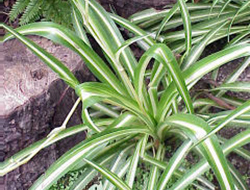
Common Name: Spider Plant

Scientific Name: Chlorophytum comosum, Native: South Africa, Plant Care: Regular care, Speciality: Indoor air pollution reducer

Dispel indoor pollution - Spider Plant

Description: Spider plant is well known for its ability to reduce indoor air pollution. The plant has long narrow leaves that are 20–40 cm long and 1-2 cm broad, growing from a central rosette. They produce branched stolons with small white flowers and baby plantlets. At the leaf node, these plants will produce adventitious roots down into the soil. It is an especially popular houseplant with beginners, as it is easy to propagate and is tolerant of neglect. The most widely grown variety is the ‘Variegatum’, with one or two broad yellowish-white bands running along the length of each leaf.

Common Name: Jade Plant / Friendship Tree

Scientific Name: Crassula ovata, Native: South Africa, Plant Care: Zero maintenance, Speciality: Indoor bonsai

Dispel indoor pollution - Jade plant

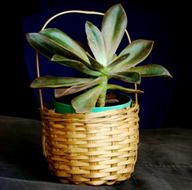
Description: Jade plant is popular known as ‘indoor bonsai’ due to its minimal growth and low maintenance. It is a succulent plant with thick branches and smooth, rounded, fleshy leaves that grow in opposing pairs along the branches. Leaves are a jade green in colour; some varieties may develop a red tinge on the edges of leaves when exposed to direct sunlight. Under the right conditions, they may produce small white or pink star like flowers in early spring. They require a normal watering when the soil is dry in the summer, and very little watering in winter and rainy season.

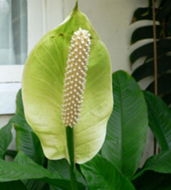
Common Name: Peace Lily / White Anthurium

Scientific Name: Spathiphyllum, Native: South-eastern Asia, Plant Care: Minimal care, Speciality: Bright white flowers

Dispel indoor pollution - Peace Lilies

Description: Peace Lilies are evergreen flowering perennial plants with large leaves 12-65 cm long and 3-25 cm broad. The flowers are produced in a spadix, surrounded by a 10-30 cm long, white, yellowish, or greenish spathe. The plant does not need excessive light or water to survive. It lives best in shade and needs little sunlight to thrive. Often it is placed in an angled window where sun will slightly be guided towards it and at night it will live off the daily intake. It can be watered once in a week.

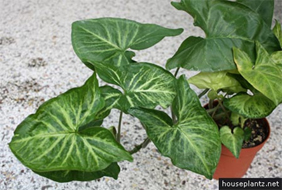
Common Name: Syngonium / Arrowhead Vine

Scientific Name: Syngonium podophyllum, Native: South America, Plant Care: Zero maintenance, Speciality: Bright white flowers

Dispel indoor pollution - Arrowhead Vine

Description: Syngonium is a rapid-growing tropical climber. Interestingly, the plant’s leaf structure changes as it grows, going from a simple arrow shape to a deeply lobed or divided mature leaf. Many varieties have variegated leaves to one degree or another and there are nearly 30 species of Syngonium vines. Breeders have created different plants with striking variegation along leaf veins. They are the easiest to grow, requiring minimal water and sunlight.

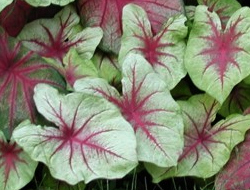
Common Name: Caladium / Elephant’s ear / Angel wings

Scientific Name: Caladium bicolor, Native: South America, Plant Care: Proper care, Speciality: Colorful leaves

Dispel indoor pollution - Ange wings

Description: With large, brilliantly-colored, heart-shaped leaves, Caladiums add form and texture to bright-shade gardens. Many named varieties come in bold color combinations of red, rose, pink, green, silver and white, often with dark veins in the leaves. A tropical native, it likes plenty of water, heat and high humidity. Excellent in pots and well grown as house plants year-round. Need to protect from strong winds.

Common Name: Pinwheel, Lotus Cactus

Scientific Name: Aeonium arboreum, Native: North Africa, Plant Care: Minimal care, Speciality: Zero maintenance

Dispel indoor pollution - Lotus-Cactus

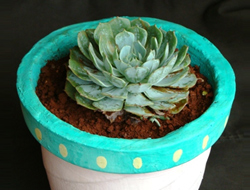
Description: These plants may be stem-less or shrub-like, but are rapid growing, small to medium-sized succulents that form rosettes of waxy leaves. They tend to form rosettes of leaves at the end of the leafless stem which takes on the appearance of a branch. From the center of the rosettes arise a stem with clusters of flowers that may be golden yellow, pale yellow. After flowering, the rosette, and in some varieties the whole plant dies. They are good for window gardens, though some prefer shade.

Common name: Powdery Dudleya

Scientific name: Dudleya farinosa, Native: California, Plant Care: Minimal care, Speciality: Zero maintenance

Dispel indoor pollution - Powdery Dudleya

Description: Dudleya is commonly found on rocky cliffs and coastal hillsides. This succulent plant is variable in appearance from drab to spectacular. It grows from a branching caudex and forms a basal rosette of wide, pointed, spade-shaped leaves, each up to about 6 centimeters across. The leaves are generally pale green but they often have edges or tips of bright colors, particularly bright reds. The plant erects a tall stem which is pale green with pink or red tinting, atop which it bears a branching inflorescence with many pale to bright yellow flowers.

Factfile –
http://en.wikipedia.org/wiki/Houseplant
http://greenandhealthy.info
http://www.care2.com
http://pune.metromela.com
http://houseplantz.net
http://houseplants.about.com

Gutsy Indian Sports Women, We are Proud of You

2

India is really strange! At one end, our nation is troubled with problematic social issues such as gender discrimination and female foeticide; on the other end, some gutsy women are proving that the country offers the right platform to excel. These tough women are excelling in tough sports which were once considered completely a male bastion! This article is a tribute to some of those gutsy Indian sports women who have conquered new peaks and proven it in a male dominated world.

Geeta Phogat

Indian sports women Geeta Phogat

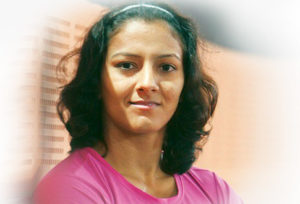
Coming from a family of wrestlers, it would have been natural for Geeta Phogat to take up wrestling. However, when you realise she grew up in Haryana and without a single female wrestling champion to emulate, it is a stupendous feat that she really did! In fact, her inspiration comes from another sport: Karnam Malleswari! Encouraged by her father, Mahavir Singh, Geeta Phogat began wrestling in 2000. She rapidly rose in this male sports bastion to become a national champion and win gold in the 2003 Asian Cadet Championship. After winning the gold in the 2007 Junior Asian Championship, she moved to the senior level. Geeta became a national celebrity when she won the gold in the 2010 Commonwealth Games held in New Delhi. Geeta feels confident about her chances in the 2012 London Olympics since she has defeated both the World and Asian champions in her 55kg weight category. While she is the first Indian woman wrestler to qualify for the Olympics, sadly, her equally talented younger sister, Babita Phogat could not qualify! Pic courtesy – India Today

Mary Kom

Indian sports women - Mary Kom

Another tough woman breaking the male bastion is M C Mary Kom. Unlike Geeta, she has nothing to prove. She has been the world champion, for an astonishing five times in the last decade. It is hard to believe that her first gold in the world level came way back in 2002, Women’s World Amateur Boxing Championships. Another astonishing feat was her comeback after a two year sabbatical for her pregnancy, which earned her the title, ‘Magnificent Mary’ from the International Boxing Association! However, in her early days, Mary Kom had to hide her pugilist interests from her family in Manipur. After she participated and won the silver medal in the 2001 World Amateur Boxing Championships at the age of 18, her family realised her seriousness. An Olympic medal is missing from her kitty since boxing for women has just been introduced in the London Olympics in 2012.Pic courtesy – MSN India Sports

Anjali Bhagwat

Indian sports women - Anjali Bhagwat

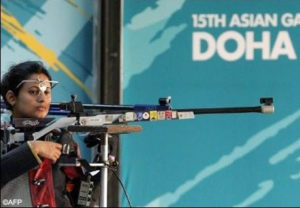
Heena Sidhu, Shagun Chowdhary, Annu Raj Singh and Rahi Sarnobat – if all of a sudden, four Indian women are competing in the shooting event in the London Olympics, the credit should go to Anjali Bhagwat for pioneering this game. Yes, the immense popularity attained by Abhinav Bindra in 2008 did contribute significantly, but Anjali Bhagwat was already a well known icon for women’s shooting by that time. She was the first Indian female shooter to feature in an Olympic final in 2000, first one to win ISSF Champion’s Trophy in 2002 and the first one to win the gold in the World Cup in 2003. Although she has won 31 gold and 23 silver medals in international competitions including four golds in 2002 Commonwealth Games, an Olympic medal eluded her! Pic courtesy – MSN India Sports

Deepika Kumari

Indian sports women - Deepika Kumari RanchiThis autorikshaw driver’s daughter from Ranchi is bound to make waves at the 2012 London Olympics. Deepika Kumari, the 18 year old daughter of Shivnarayan Mahato, already has the world at her feet: World Youth Archery Championships in 2009, gold medals at the 2010 Commonwealth Games, and World Cup gold at the individual Recurve event in 2012. Despite being ranked world no.1, success has not got into this humble village girl’s head. She still recounts the struggle her parents had to undergo to buy her equipment to practice. Apart from aiming for mangoes with stones in her village in Jharkhand, the Tata Archery Academy in Ranchi played a major role in honing her skills to become a world champion! Pic courtesy – MSN India Sports
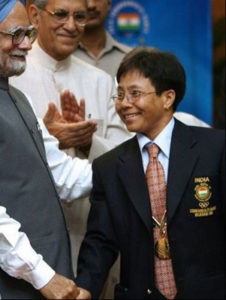
Kunjarani Devi

Kunjarani-DeviKunjarani Devi is another Manipuri strong woman to gain limelight in the international sports arena. This diminutive weightlifter began her career with a silver medal in World Women’s Weightlifting Championship in 1989 and she followed it up with successive medals in seven world championships. She won bronze medals in both the 1990 Beijing Asian Games as well as 1994 Hiroshima Asian Games. Controversy arose when the Indian Weightlifting Federation preferred to choose Karnam Malleshwari for the 2000 Sydney Olympics citing that she has better chance in her 69kg weight category than Kunjarani in her 48kg weight category. While her compatriot basked in the glory of winning the first ever medal in the Olympics, Kunjarani faded away from public eye after she was slapped with a six month suspension due to drug use in 2001. However, she made a spectacular comeback in 2006 when she won the gold medal at the Melbourne Commonwealth Games by lifting a Games record weight of 166kg. Pic courtesy – MSN India Sports

Aparna Das Battula

Indian sports women - Aparna Das BattulaYet another male dominated sports conquered! Aparna Das Battula becomes the latest one to take over another men’s sports. She is not only the first Indian woman jockey but also the first Indian woman jockey to get a jockey licence in the US. During her college years, she began training for horse riding at the Bangalore Turf Club. However, after her training she tried her to get a licence as a jockey on the Indian Horse Racing circuit. After a few years of unsuccessful attempts, she applied for a scholarship at the North American Racing Academy (NARA), Kentucky, US. At a young age of 23, she is not a licenced jockey, she has also won her first race with her horse, ‘River North’. Pic courtesy – The Hindu

Alisha Abdullah

Alisha Abdullah BikerKhatronKe Khiladi, MTV Stuntmania, MTV Roadies – umpteen number of reality shows on TV depict happening women doing some daredevilry to achieve instant fame. However, none of these dare devils are actual bikers. Rarely would you find a biker woman displaying her skills in a motocross or bike racing event. Fortunately, Alisha Abdullah arrived on the Indian racing scene as a breath of fresh air. This super bike racer began her career in go-karting and won the 2004 MRF National Go-Karting Championship and the Best Novice Award in the National Formula Car Racing when she was just 13! Being the daughter of famous racing star R A Abdullah does help! Pic courtesy – Alisha abdullah.in

Rachel Thomas

Rachel_Thomas,_Sweden_1988

This woman is really unbelievable! Rachel Thomas is India’s first civilian woman skydiver who began skydiving way back in 1979. Since then she has put in 24 years in the sport, represented India in style & accuracy competitions, later as a international judge and also as a delegate for India in parachuting commissions. She hosted the First International Parachuting Commission in 1994 at Agra which was attended by 35 Countries by 150 Delegates. Rachel Thomas has 650 freefalls to her credit which was done mostly abroad. She has even skydived on the North Pole in 2002 which is yet another first for an Indian! Pic courtesy – Women Skydivers of India

– Factfile –

http://articles.timesofindia.indiatimes.com
http://sports.in.msn.com
http://www.thesportscampus.com
http://www.bbc.co.uk
http://www.indianshooting.com
http://www.bharatiyahockey.org
http://www.tribuneindia.com
https://en.wikipedia.org/wiki/Rachel_Thomas_(skydiver)

Picturing It With Passion

7

Picturing It With Passion

To be able to capture everyday drama for what it really is – just everyday drama… To be able to render a rare creativity to the chaos of everyday living… That’s what photographs have the capacity to do. Clicking pictures and capturing images… do they sound the same to you?

From my experience as a patron of several photographers, there’s vast difference. You can simply switch on a camera, focus and click a desired object – that’s clicking a picture. To use the object, setting and colours around you in tandem to portray a mood, a sentiment – that’s what I call capturing an image!

Go through this series of mini bio-pics of some budding photographers, the various themes rendered through their lens and their sensibilities, and see if I make sense.

Varun Bhasin: An army officer by profession and a photographer by passion. Here’s a guy who doesn’t mind wearing his heart on his sleeve and his modesty in his smile! Seeing his work exhibited in New Delhi and Dubai has not gone to his head. Proceeds from his sales go directly to a child welfare trust in New Delhi. That’s what I call heart with an art! Through his lens, the ship building process at Mandvi has come alive, so have Dargahs and Gurudwaras in the old and crumbling parts of Delhi. He spares no one in his study of what makes it human! Bearded Babas, children, sunsets…and even a thug!

Picturing It With Passion - portrait

Varun’s portfolio

Rupak Jena: this IT geek extraordinaire will take you by surprise. If there was ever the greatest example of what lies beneath, it would have to be him. His diminutive figure and an unassuming nature does not give a whiff of the talent that he is. With his web-name Dezinetalk, he lets his photos do all the talking. His favourite theme – children. They come alive under his lens and refuse to even look at their toys while he’s around. That’s a favourite uncle right there!

Picturing It With Passion - children

– Rupak’s portfolio –

Vivek Krishnan: Is it the moon, is it a crust of cheese hanging from the sky – no, it’s Krishnan’s perception. The guy with the magic touch. At a young age of 18, he started clicking and refuses to slow down. From capturing rolling drops of water in pictures of clarity, to playing the best of tricks with his highly evolved Photoshop skills, this one never ceases to amaze! Pencil sketches. That’s another one. He loves doing impressions with his trusty pencil.

Vivek’s portfolio

Aditya Panda: ‘The Panda with the hidden agenda’ is what we call him. This wild life enthusiast is an avid photographer and is credited with capturing a variety of species in his lens. From passionately looking out for those wild elephants in the deep recesses of jungles in Orissa (Odisha), to writing blogs on the steadily declining tiger population, this photographer has the grit and style that can truly take him places. With a nonchalant air and an easy smile, he posts the shutterbug at you, at the most candid moments.

Picturing It With Passion - Landscape

Aditya’s portfolio

Dev Panda: What can be better than an eye trained to weed out the most personal moments, the sunbathed mornings and dew kissed sunshine? The dusk of Souks in Istanbul, the slowly falling snow in a fast emerging storm or the dove quenching summer thirst? Dev Panda sleeps with his tripod on the nightstand. He travels, he clicks – and then he clicks some more. Known for his good natured antics when he’s with friends, he makes the most of his time with people by clicking and rehashing moments through his lens.

Picturing It With Passion - Birds

Dev’s portfolio

Shreeradha Mishra: This enigmatic young lady has a long list of passions. She started clicking pictures with amateur cameras at a tender age of 16. After her brother gifted her a better camera, Shreeradha has taken to serious blogging. Yet, after that initial rush of pictures and a rare maturity, we are still waiting for more. Apart from photography, she was an active volunteer for ‘The Joy of Giving Week’ and organises activities in Cuttack. With a strong social voice, she aims to be the next Barkha Dutt! By the way, her brownies are worth dying for!

Picturing It With Passion - Action

Shreeradha’s activities

Text – Devangini M