Dreaming of Demographic Dividend?

1

Population-cartoon

The World Population Day is observed on July 11th and our Indian media has a field day. There is no need for them to search for any breaking news or create some controversy! They just have to poke their mikes on the face of some eminent economists, noted NGO activists, top government officials to comment about the rising population of India and of the world.

On July 11th, the day will be filled with comments such as “the population time bomb is ticking”; “India will face a severe resource crunch”; “How will we feed a billion size population with food and water scarcity looming over us”; “our cities are bursting at their seams and their basic infrastructure is severely stretched to limits!”

This World Population Day is significant to us for two reasons –

  • World’s population has just crossed seven billion mark and it took just 12 years to move from six billion to seven (1999-2011).
  • Second, the Indian Government conducted its much awaited decadal census in 2011 and our population of 1.2 billion is set to cross that of China by 2030 A.D.

However, all the negative talk about the threat of population growth has subsided in the recent years. After India became the darling of global investors, economists have been highlighting the so called ‘demographic dividend’ where the country will be benefit from its vast young population of 15-25 years in the working age group, who are prime movers of the economy. That is provided these youngsters are in good employment and not ill educated, unemployed and frustrated!

India populaion control campign

A recent IMF report stated “India’s continuing demographic dividend can add about 2% to the annual rate of economic growth, if harnessed properly”. While our decision makers love to reiterate such positive points, they forget to mention the disclaimer – “if harnessed properly!”. IMF clearly states “the growth in the working-age ratio is likely to be concentrated in some of India’s poorest states and the demographic dividend will be fully realised only if India is able to create gainful employment opportunities for this working-age population.”

Every year, 6,50,000 engineering graduates and 20,00,000 graduates pass out of colleges across the country. However, more than two-thirds of these graduates need to be re-skilled, so that they can get jobs in the industry. One government website specifically claims that Andhra Pradesh offers a large pool of skilled manpower, with 98,000 engineering graduates, 12,000 management graduates, and 3,50,000 English-speaking graduates pass out every year. I suppose they mean English understanding graduates, not speaking!

These figures represent a miniscule fraction of the large young population. The 969 employment exchanges across India have 61,80,000 candidates registered in 2010, but only 505,000 of them got placed in jobs. That means a mere 8% get employed. When was the last time you went to an employment exchange to register?

India_China_Population_Forecast

Never heard of an employment exchange? Don’t bother, that’s not an issue since most private sector professionals would deal directly through Naukri and Monster rather than search for some governmental agency to get them a job! Fortunately there is hope at sight for our rural youngsters now.

The great Indian employment exchange has begun the process of going online! As a pilot project, Karnataka government has set up a public-private partnership with a recruitment partner, TeamLease to get private companies to use the candidates registered at these exchanges. Anyway, jobs-for-all is a distant dream yet. Until then, we urbanites have to watch more rural unemployed youth enter our cities and compete with them for jobs as well as basic amenities. I wonder how many more millions can enter saturated cities like Mumbai and Delhi before their basic infrastructure collapses. I remember an old 1983 India Today magazine which covered our beloved Bengaluru with a title – “Bangalore: The Boom City”. As usual they interviewed many big industrialists, govt officials, small entrepreneurs and commoners. A retired employee of a public sector said “this city is not a pensioner’s paradise anymore. Gone are the days of leisurely life. The traffic is maddening; the pollution is suffocating; the water supply stinks; and the parks are filthy!” if he could complain in 1983, what would he say today?

So it’s a long way to before our cities get saturated or we urban Indians notice that we can’t live here anymore. For those who have already realised it, there are two ways out:

  • Migrate to a less populous country which will accept as citizens with full rights. Hard to find!
  • Move back to the town or village where came from. Back to our roots where there is still fresh air, fresher vegetables and clean water to drink!

– Factfile –
http://www.outlookindia.com
http://www.deccanherald.com
http://www.washingtonpost.com
timesofindia.indiatimes.com
http://www.funzug.com
http://www.riazhaq.com
http://www.dailymail.co.uk
http://www.pppinindia.com

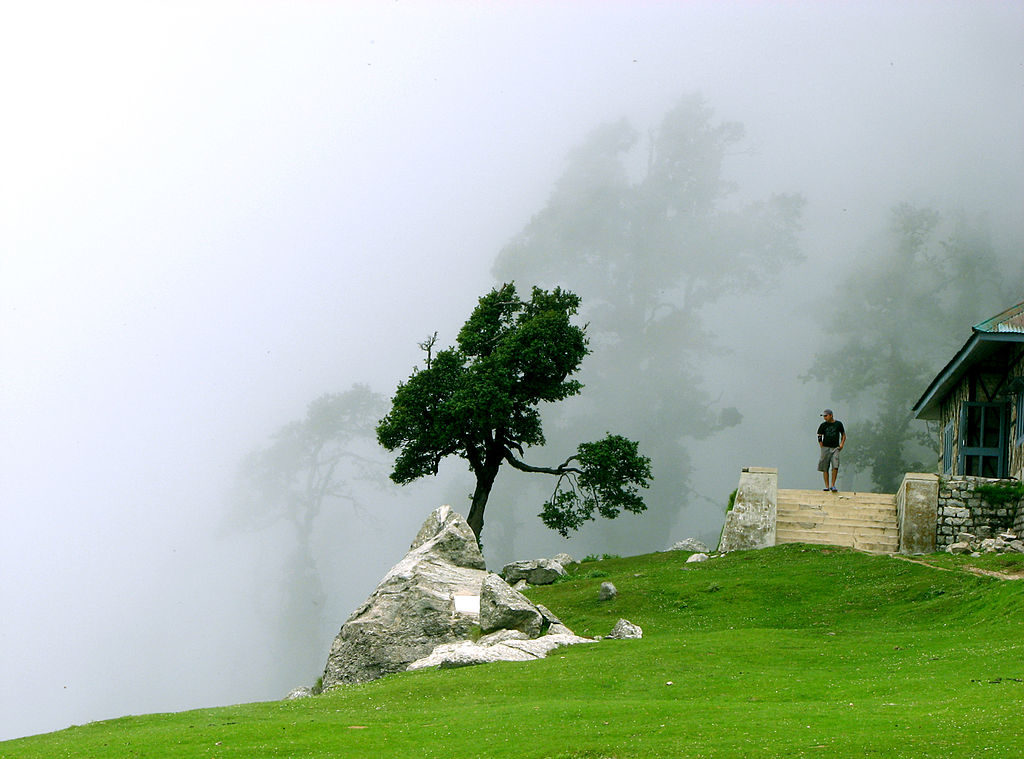
Palampur – Sleepy Village on the River Bend

8

Palampur
Image – Raman Sharma

Our inhouse army wife, Devangini follows her husband to border posts and quaint town across the country. This time, she is in Lahon in Himachal Pradesh, which straddles the picturesque plateau on the confluence of Beas and Chenab rivers.

Once in a year, I need to get my annual fix of living in an idyllic village where time passes by at snail pace. Fortunately, my relatives live in such an idyllic place in a tiny hamlet called Lahon, near Palampur in Himachal Pradesh. Nestled on a tabletop plateau with the lofty Dhauladhar hills forming a valley around it, this village is typical of those villages found in the Himalayan countryside. Yet, what sets it apart is the meeting of the Beas and Chenab rivers at a small triangle down the plateau.

Dhauladhar Range -Mcleod_Ganj_Himachal_Pradesh
Image – Source

My favourite pastime in the village includes walking up and down what the villagers refer to as “roadie”. It is a narrow road that circles the Lahon village going to the very edge of the plateau. Once there, you can sit on the edge swinging your legs and enjoying the panoramic view of the entire river confluence and the foothills of the Dhauladhar range faraway. I cherish the view of tiny thatched houses at a distance with the wisps of smoke seeping out their kitchens, surrounded by the fields of lush green bounty. Remote and comfortable – that’s how I would describe the spot. It feels like the edge of the world with everything right under your feet!

Palampur Himachal Pradesh

This is what sets Lahon apart – unlike most villages in this part of the country, it is set amidst a clearing with a view to die for. The pebble coloured beach along the luxurious confluence of the rivers is truly picturesque. The river bed is filled with rocks and pebbles of all shapes, sizes and hues! Purple, pink, white, green, grey and so many more rocks dot the line and walking along the river bank is an exhilarating experience. The river flows into deep crevasses and passes by a little hillock with a small temple on top. To reach this temple you could adventurously cross the river by jumping over the rocks, or you could safely walk across the newly constructed foot bridge.

Walking down the hillside towards the river, you will be greeted by village women carrying firewood and grass on their heads. Their humble homes are made of two floors with thatched roofs and a quaint balcony; cement and concrete having reached this hamlet in the past decade. The two floors have sitting areas and an open verandah in the front. The top floor is spilt with what they refer to as the ‘bodh’ or the kitchen. Atop this is a loft – ‘taladi’ filled with treasures from the days of yore – hookahs, family pictures, brass utensils, wooden water bearers and tubs!

Palampur Himachal Pradesh - Lahon

The kitchen is usually a simple room. It has a mud stove and a fireplace built-in one. The kitchen is not just about cooking – it’s about getting together with friends and family to spend time over endless cups of tea and warm hands in the cold Himachali winter. Here, the dusk arrives sooner due to the hill range covering the village on the western side, making it colder by a few degrees in the evening, only to dip further by night time.

The flora and fauna here are varied. With tiny reptiles and hares in the summer, one can also find that occasional mole or wild boar. Occasional visits by a leopard or a wolf pack scares the locals and they talk about for years. Hunting as a practice of security has been prevalent in the village. Fishing is also a much preferred hobby due to the river’s proximity. This summer, the locals caught a large fish weighing 4 Kg! The delicacies here range from a sweet and sour fish preparation to nine different kinds of dhals for feast nights!

Palampur Himachal Pradesh - Lahon

Despite the fun, reaching to Lahon is not an easy affair – although it can turn into a fun excursion depending on your temperament. You need to reach to Pathankot from Delhi before making a slow train journey or the faster bus journey to Palampur. From Palampur, it is another bus journey or a taxi ride down to the village of Lahon. The people here are helpful, warm and usually a fun lot to have around. Make sure you click lots of pictures with the perfunctory Himachali Topi in vivid hues of green and maroon. The hills are definitely alive here, and the soft breeze throughout the day, turning into a more ferocious wind by night, will grip you for a long, long time even after you have bid adieu to your hillside holiday!

This article is part of the ‘Married to the Olive Green!’ series. Devangini vividly narrates her experiences as an army wife in different cantonments across India.

Some Great Books About Indian Armed Forces

We Recommend…
Soldier & Spice: An Army Wife’s Life: 1

– Factfile –
http://handfulofthrottle.blogspot.in

What J.K. Rowling did for readers

3

JK-Rowling

The fact is they did do that though. For all of the flaws and holes you could pick in Rowling’s writing and success, you cannot deny that fact. Whether they were in education, working mum’s, partypoker and gaming enthusiasts or sports lovers, all seven books got a generation reading.

Many young adults who are in their 20s now grew up reading the Harry Potter books, and were able to find a passion for other books too because of them. That’s not an achievement to sneeze on, and could be She made people passionate about something that wasn’t inappropriate. In an age where the internet, movies and television have become more and more so for young eyes part of the reason why best sellers are so publicized nowadays. And when you consider that experts were concerned the book was going to lose favour and die out, this is astounding.

She made people passionate about something that wasn’t inappropriate. In an age where the internet, movies and television have become more and more so for young eyes, parents can rest assured that the Harry Potter books, are not inappropriate for them to read. And that the grown up themes are teaching them lessons about humanity and being a better person, rather than about sex.

Imagination is so easily lost as you get older, and your real life begins to take over. When you read JK Rowling’s books though, you’re transported to a world that inspires you to use your imagination and believe in magical experiences. She even inspired a generation to write, becoming an icon for what can be achieved with talent and a lot of determination.

We shouldn’t dismiss her success because it’s a lot of money made, which we’ll never get our hands on. We should celebrate it and remember the number one theme of the Harry Potter series. Love.

Guide to Urban Kitchen Gardening

8

Guide to Organic-Kitchen-Garden

Gone are those days when you could afford to have a nice independent house with enough space around for a lush green kitchen garden. In the good old days, some of our parents were blessed with fresh vegetables plucked right from own their kitchen gardens!

Today, if we have a pot of Tulsi or money plant (devil’s ivy) at our cranked apartments, that’s considered a luxury! In our hectic daily lives today, can we afford to have a tiny little kitchen garden in our balcony and grow some vegetables?

Does gardening mean to you toiling in the hot sun to till the soil, manuring and watering it, planting the seeds, then weeding the soil and then regular watering and then finally cutting the harvest? No, relax, sometimes life does provide an easy way out!

Surprisingly, kitchen gardening in an urban setting is quite easy. There are people who not only have grown vegetables, but also successfully maintained a lush green terrace garden or even grown Ragi! The images below tell better tales than words do!

Organic Kitchen GardenAnusuya Sharma and her husband are pioneers in roof top kitchen garden in Bangalore. Due to their regular activities and articles published in the media, their tiny kitchen garden on top of their 30×40 feet sized house is now a demonstration site for agriculture students!

Abhinav Gangumalla, the founder of Hyderabad Goes Green is another pioneer in our own city. He has innovated a water-proof garden known as ‘Square Foot Garden”. In his small plot around his shop in Banjara Hills, he has cultivated many ornamental plants and vegetables.

Siddartha Sikdar, an IT consultant has created a terrace garden haven in Pune! He has been self-learning Permaculture and practicing it in his suburban building, which is a row house in a gated community.

What are the different plants that can be grown at home? Mostly they would be flowering plants and ornamental shrubs, right?

Wrong! A lot many plants including many types of vegetables can be grown at home in pots and in limited space. There are people who not only have grown and harvested vegetables, but also successfully maintained a lush green terrace garden!

Plants can be categorized based on climatic type, seasonal and their commercial value. For our purpose of urban farming, we can broadly divide them into two types –

  • Perennial plants – these plants have long span of life usually lasting more than a one year and are not affected by seasons. Typically, most ornamental plants are perennial.
  • Seasonal plants – these plants have a short span of life typically lasting only one season. Typically, most food bearing plants are seasonal.

Terrace Garden, Kitchen Garden

Eligibility criteria for kitchen gardeners

A housewife, an IT consultant and a retail entrepreneur – these examples prove that there is no typical kitchen gardener. Although any tom, dick and harish can aspire to become a good kitchen gardener, only a few can really attain the professional status due to some eligibility criteria –

  • Patience – a must have criteria since potting, planting, watering, and then ripening all are slow processes. A green gram seed germinates in a day, while coriander takes 28 days! |
  • Muddy hands – as they say you can enjoy the fruits without muddying your hands, kitchen gardeners should not mind a little mess of handling wet soil and compost once in a while!
  • Sunlit space – you should have a balcony or a washing space where direct sunlight comes in at least in the morning.
  • Spare time – you should be able to spare 20 minutes every day in the morning to check your plant’s growth and one hour’s time every weekend to tend the plants.
  • Stomach for failures – no task in this world can be failure free, but gardening can be disheartening sometimes due to nature’s vagaries.
  • Chemical resistance – you must resist the temptation to buy any kind of pesticides, chemical fertilizers, growth hormones which are promoted as stimulators for your plant’s growth.

How to Kitchen Garden Guide

Step 1 – Ground preparation

Since there is no real ground to prepare in an apartment or a terrace, this task implies the work to be done to create a layout for your plants. You can begin with a just a single pot of plant and slowly add more later, or you could buy a bunch of pots and begin simultaneously. If you are worried about earthen pots breaking up, you can prefer cement or plastic pots. The ideal ones are large flat cement panes and plastic containers.

Terrace Garden

Step 2 – Soil mixture and potting process

Ideally you should have a 1:1:1 mixture of red sand, soil and compost. Place the 1 portion sand at the bottom of the pot, the next level is 1 portion soil and final portion is the compost or manure. It can be decayed cow dung, vermicompost from earthworms or plain compost. In the beginning you can buy compost to fill your pots, but the next time, you should be preparing it yourself!

Step 3 – Planting and gardening

You should be selecting the right plants that are suitable to your kitchen garden. Ideally, regular vegetables such as tomato, chillies, potato, mint, coriander, brinjal, lady’s finger, methi can all be grown in pots. However, it is better to experiment with just two in the beginning. Seeds of these plants can be bought in any agricultural shop or horticultural nursery where they sell flowering plants.

Planting Kitchen Garden

Step 4 – Pest care and harvesting

Pests and diseases such as leaf rot, aphid infection are rare for hardy vegetable plants. However, if they occur, they can be controlled by bio-pesticide spray made of neem, turmeric ash, etc. The last step is to pluck and enjoy the harvest!

Finally, if you have already begun your journey of urban farming, please await our expert guidance to move on to the advanced level.

Meanwhile did you know that World Kitchen Garden Day is celebrated on the last Sunday of every August by the Kitchen Gardeners International! So it’s high time for our Aloo Pyaaz from our humble kitchen to go international!

This article is a synopsis of a lecture presented at the ‘LearnSocial’ training workshop in Hyderabad.

– Factfile –
Pinterest.com/kitchengarden
http://geekgardener.in
Wiki Perennial Plant
flickr.com/sikdar

Happy Hour at the Gymkhana

3

Gymkhana_Wellington03_849684270

Being happy might be a state of mind, but in the Indian Armed Forces, it’s different. Here new friends are made every new posting and old friends kept close to the heart.

Families are complete only every alternate posting and fellow cadets from the National Defence Academy or the Indian Military Academy may meet only once in about ten years. Obviously, happiness is indeed a cause for celebration! Some might argue here that celebration is a way of life in the armed forces; well, I am proud to say: guilty as charged. We celebrate with more aplomb than most people can boast of.

The ‘Happy Hour’ at the Wellington Gymkhana is one such occasion. Like most stations, the Wellington cantonment near Ooty has its share of institutions patronised by the men in olive green. Among them, the Wellington Gymkhana is a hot favourite, thanks to its highly subsidised rates and its historic tradition dating back to early 1900s when it was patronised by Scottish and British army units. Therefore, we do not find it necessary to stop dead in our tracks when we spot an array of bison heads mounted on plaques and displayed casually along the walls in this wooden Gymkhana. nor do we bother when we see descendants of those bison walking across the scenic golf course in pairs during the day with golfers enjoying their game. More on that later!

The Happy Hour is that time of the day or week created to ensue fun filled chaos when it starts, and “when do we do this again” when it ends. In keeping with this thought, the Wellington Gymkhana has fashioned its Happy Hours for officers and their families to partake in an hour of bingeing and bonding.

Gymkhana Wellington Enterance

The Happy Hour at this particular institution is legendary for its short and sweet dose of fun. It adds a dash of hope to the impending weekend, and gives everyone something to talk about. While the crèche cum TV room caters to the little ones, there’s plenty of food outside to keep everyone happy. And not to mention: everything liquid. The ‘liquid state’ is crucial to the enjoyment and overall joie de voir quotient. The ladies come dressed in their cocktail best, following the current trend of classy yet understated style, while the officers ache to loosen their neckties ‘just a bit more’. The flow of good times does not stop just with the Happy Hour though. There is invariably a dance party that follows closely for couples who decide to stay back for an extra dose of fun.

Another essential aspect of the Happy Hour is the Tambola! Tambola enthusiasts grab chairs closest to the podium, while the newbies make as if they’re trying it for size this first time. Any which way, you finally have pairs of ears straining to catch the numbers, all the while wondering at their own addiction for the game.

The networking quotient at the Happy Hour is generally at an all-time high, with everyone trying to catch up on the latest with everyone! High volumes are in order, so to be heard above the din and orders are quickly shouted across counters. It presents a completely different and vibrant side of the otherwise sedate and more sophisticated Gymkhana that everyone is used to when visiting for their rounds of golf, tennis or the leisurely bridge.

Gymkhana Wellington Interior

On the menu is old pals catching up with each other, putting up a fitting display of what must have been classic camaraderie in the academy days, while the wives of these very officers stand to a side giving each other awkward smiles – are we supposed to be as pally considering we met a few minutes ago, while our husbands have known each other for 12 years! Well, this is where bonhomie enters the army – we all meet spontaneously and decide to take the best of every opportunity for new found friendship. While some may call this calculative, we call it a mind frame. The Happy Hours reflect this very mind frame and attitude.

Some Great Books About Indian Armed Forces

We Recommend…
Soldier & Spice: An Army Wife’s Life: 1

– Factfile –
http://www.indianexpress.com/news/its-armed-forces-vs-civil-services-at-gymkhana-club-polls/517545/

7 Tips for Summer Travel on a Budget

0
Summer Travel on a Budget 01
Image – Pixabay

Disclaimer: This post is sponsored by PSECU, a Pennsylvania-based credit union.

Summertime is here, and many people are packing up to hit the road on Fourth of July weekend or simply to take a summer vacation. But if you’re on a budget, you may be thinking of staying home this year. 

Before you give up your summer holiday plans that quickly, look into options which can make travel less expensive. Everyone needs time to rest and recharge, especially if their credit cards are maxed out and money matters stress them daily. Here are seven tips to make it possible for you to get some needed R&R this warm season without condemning yourself to an autumn spent in the poorhouse. 

1. Be Flexible With Dates 

If you don’t necessarily have to fly out on a Friday and return on a Monday, you can save a bundle on flights and lodging. Those in the hospitality industry know most people travel on the weekends and they up prices accordingly. if you get paid time off, take it during the workweek when prices tend to drop. 

Do your hotel search over the weekend, however. Most people book rooms a few days before departure, meaning advertised prices are highest on Tuesday. The cheapest day to check in? Sunday. 

2. Use Your Miles

If you have a rewards travel card, use it wisely! Use your card to buy everyday items, then immediately pay the card down upon returning home from the grocery or department store. This way, you rack up miles quickly without paying a ton of interest. 

Be advised many airlines and hotels also offer loyalty programs. You can double the discount by using miles, or you can still save money if your credit prohibits you from getting a rewards credit card. 

3. Consider a Travel App 

There’s an app for everything nowadays and finding budget travel is no exception. Apps like Airfarewatchdog and Skyscanner help you find the best flight deals even last minute. The AirBNB and HotelTonight apps can help you find last minute lodging on the cheap. 

4. Book Plane Tickets on Tuesday 

The best time to book plane tickets is three months to three weeks prior to your trip. Each time you search for airfare, do so at approximately 3 p.m. on a Tuesday, the day of the week experts advise fares drop lowest. Some experts suggest searching in incognito mode out of fear travel sites will use cookies to remember which flights you searched previously and increase the advertised prices of those flights accordingly. 

5. Look into Volunteering

Dreaming of backpacking through Europe but lacking the cash for an extended trip? Look into volunteer work exchanges abroad. Such itineraries allow you to explore the destination of your choosing inexpensively or even free. Some programs simply exchange work for lodging; other opportunities also provide a stipend for costs of living such as food, etc. 

6. Investigate Alternative Lodging

Sure, posh hotels are nice, but they’re not the best option for budget traveling. Look into alternative lodging. While hostels are not big in the U.S., they proliferate in many European nations. 

Staying stateside? Look into housing swaps where you stay at someone else’s home to house sit in exchange for free lodging. Love animals? You can score a sweet pet-sitting gig and indulge your love of four-legged friends while lodging overnight for free. 

7. Take Several Short Trips

If you work on an hourly basis and time away from the office means not getting paid, consider taking several shorter weekend trips instead of taking a full week off at once and coming up short on rent at the end of your vacation month. Many workers take off Friday or Monday to make a 3-day weekend trek. 

You need not spend the entire time on the road, either. Oftentimes, we fail to visit nearby attractions due to our proximity to them. But traveling to local tourist spots can save you money while allowing you still to enjoy a taste of adventure. 

Vacationing on a Shoestring

You don’t need to spend a ton of money to get away this summer. By following the tips above, you, too, can enjoy time away from the office while the weather remains nice. Happy travels! 

For more thrifty travel tips, check out PSECU’s helpful graphic!

Tips for Summer Travel on a Budget

Wellington – What’s In A Hill Name?

3

Wellington Ooty
Image – neelesharti

What’s in a name? Plenty, apparently, if you are in Wellington cantonment. Set in the cool climes of the Nilgiri Hills (near Ooty), Wellington is primarily home to the Defence Services Staff College, and also, has the quaintest of names. For my civilian readers, I would like to make a few introductory notes about the different postings in the armed forces. There are tough postings on the border posts and then there are postings in places like Wellington. This particular posting at the DSSC is much sought after by most army officers – not only due to its cool climes, but also due to its role in furthering their career prospects.

In the armed forces, where career progression becomes steeper with each graduating rank, entry into such colleges means sitting through the toughest competitive exams, and greater patience on the part of the officer’s family. Having just returned from such a course undertaken by my husband, which I enjoyed in full rigour, my life is now overcast with the ‘Wellington hangover’. I am afflicted with all the typical symptoms here – recurring dreams of the never ending walks that would start right after breakfast, the pot lucks, looking forward to the husband’s tours, late night dumb charade sessions – oh, those painful memories!

Take a walk through scenic Wellington and you will be greeted by interesting names: Rose Bank, Cyclesmere, Craven Lodge, Crinken, amongst many others. One small detail: we’re talking about names of homes, not people!

Wellington hill landscapeImage – neelesharti

While Wellington is all about leisurely walks that never end, there is another luxury on offer: indulging your imagination about these names. Student officers and their families have little scope to take a peek inside most of these homes. Tiled sloping roofs sitting atop aging walls, windows that wink back as you try to peek past them; and lush landscaped lawns that make any home impregnable – the names on the modest wooden plaques outside the gate are almost like an icing on these hill homes.

Take for example the name, Race View. It instantly makes you think of a winding driveway that comes to a screeching halt at a wooded porch and solid looking brass lamps hanging overhead. Or try Crinken – the image is of puffs of smoke escaping into the freedom of the blue sky even as the home seemingly lets loose a sneeze with a crease of its nose. How about Craven Lodge? Robust yet homely dogs sitting around the family room fireplace, while the owners read their books and sip chocolate – that’s what I get!

If you’re a fan of the whimsical, Cyclesmere just might get you going with an image of the home bouncing with the energy of a large family of hapless parents watching over their four playful children! For the diehard romantic, there is always Rose Bank, with illusions of a heartbroken lover planting roses after years of roses for his beloved.

Wellington military school

Hill Top could be a cosy retreat with a sweeping view, and a tea party in the veranda to enjoy the same! Cremonie instantly gives the feel of fanfare all the way, with etiquette and Olive Green rituals all in the right places; while Glencoe seems filled with whispering trees, with secrets going back and forth between them and the home they surround. Then there is Wood Bine. Set in the midst of tall trees and lush gardens, it helps the onlooker conjure an image of birds making more music than any radio station would in a day.

Another interesting name I found was Vrindavan. In a station filled with English names, this one came like a breath of fresh air, inviting wisps of incense and light music in the background. And of course, towering over all these, is the Pines – tall, statuesque and silent, with an omnipresent quality befitting its occupancy: the officer at the very helm of the Defence Services Staff College.

The Harry Potterish walks through Wellington can go on and on, yet the names will never cease to leave a mark on one’s mind. I need to get my fresh air and fresh dose of names every now and then – don’t you? Do leave me examples of interesting names for homes – would love to swap notes!

This article is part of the ‘Married to the Olive Green!’ series. Devangini vividly narrates her experiences as an army wife in different cantonments across India.

– Factfile –
http://www.flickr.com/
http://en.wikipedia.org

Happiness Unraveled!

0

the-pursuit-of-happyness
Image Source

Ever wondered about what is the point of ultimate happiness? If you think this esoteric idea is not worth your time, think again… the University of Pennsylvania in the US is now offering a master’s degree in positive psychology, i.e. happiness!

The land of happy, past or present is bunkum! Is it really true? In today’s modern world, have we got so engrossed in the thrall to lucre that the whole concept of happiness is distorted? It is a well known belief that modern capitalism has crawled so deep into every individual’s life that we don’t see happiness as a virtue, but rate it according to our bank balance.

We have always come across think-tanks claiming that life was happier and easier in the ancient times without social networking sites or the internet. In fact, our present struggle towards globalization, through modern technology, drives us to a happier and a less lonely place than the pre-technology world. Today, happiness is more of a choice, we can stand to recognize it only once our pockets are full and our bellies are not hungry anymore!

What do people think about the pursuit of happiness? Let’s check out…

Sanjiv Kaura, the CEO of the CSR division of Bennett, Coleman & Co. states, “Most of us are forever in search of happiness. You may find happiness in fine food, i might find it in books, the next person might find it in music. But we search for the Holy Grail of happiness all our lives. Now, it seems happiness can be taught in schools and colleges. An intriguing prospect as we look for a little emotional sunshine within ourselves in these hot, sultry days.

Which brings us to the question do students, at such a young age, need to be distracted by this esoteric idea of being taught happiness? Typically, a student, at the end of her education journey, wants a qualification that she hopes will make her more prosperous than before she started her journey. And top schools, in true customer service style, give her exactly that. Thus, when a student is primarily being taught how to be successful, happiness gyan can be distracting at best and conflicting at worst.

We cannot reach the elusive goal of happiness by the direct route of consciously searching for it. The secret lies in taking an elliptical path.”

Dipsicdude writes… “Happiness is an Unproductive Imagination”

This has been a quote which has fascinated me for a long time. Ever since i saw it during those good ol’ schooldays (funny how everyone seems to think they’r so ‘good ol” once u move on, though they may actually hav never been so ‘good ol” in reality!).. The Chicane video..with Bryan Adams gruff vocals..’Dont give up’…

Something worth pondering over, i felt…i have repeated it a number of times to various pals, old and new, however, in never more than a light hearted vein.

Happiness, to me, has always seemed the state that everyone searches for, from time immemorial… Like they say in that dream of a book, ‘Shantaram’, ‘the search for a truth greater than our own’..(although i gez he was actually talking bout love there).. but then again, arent love and happiness interdependant? Love does that to you. It can build up your emotions to a crescendo…then bring you crashin down all over again. Which is the main reason i try to figure it ut…is Happiness an Unproductive imagination???’ After all, its just a state of mind, which is as transient as the next.

Compiled by: Manasi Ganu

– Factfile –

http://articles.timesofindia.indiatimes.com
http://dipsicdude.blogspot.in
http://underthebutton.com
http://www.tumblr.com
http://www.imdb.com

Married to the Olive Green!

5

Army-wife-Kashmir

Mr. ‘I’ll-do-anything-for-that-last-one-minute-with-my-family-before-boarding-the-plane-to-God-knows-where.” Never mind what he turned out to be, but life – well, that turned out to be a whole different story.

First, I was given the title of ‘the brave one’ by family when he was posted in far away Kashmir two mere months before we got married. This posting implied that we were separated for almost three years. However, there was a silver lining – we met once in five months and it was like a honeymoon. I got an extended courtship thanks to the Reliance connectivity! I was soon relegated to “oh, it happened to me too” when upon joining him in his army unit, I found I was in a long line of similarly crafted beginnings.

After a hearty welcome atop a trailer being towed by my beloved and a basket of vegetables along with a butcher knife, I took my place in the unit. I do get mixed reactions from those in the ‘civvy street’, as we refer to them (those civilians!). Some wonder how I can bear the anxiety of sending him off on unknown and potentially fatal postings, while others scoff at the fact that we have way too many luxuries at our disposal! There is a balance of both and to be a good army wife, I realised that I must take both with a pinch of salt.

More about the regimentation that I went through in the unit. Baking became a regular affair as did midnight calls from bachelors who were hungry for that home cooked meal. Welfare and bonding happened over tea and pakodas with the soldiers’ kin. Ladies’ meets came and went – decor, MC, competitions; I did it all. Raising days and reunions came like a welcome change in an otherwise quiet cantonment, with all the fun, frolic and frenzy of a wedding happening at home!

I must mention about the families of Jawans. We catered to every aspect of their welfare, carrying our children and rushing to their homes at any time of the day or night; even conducting classes in cooking, embroidery, sewing and painting to ensure they were self-sufficient in life, which include, teaching them how to use their precious ATM cards from the newly created joint accounts they now hold with their husbands. We taught them to be able to hold their heads high; we taught them to stand next to us and say, “we all belong to the services”.

Soon, we had created a bond that would last a lifetime. Before I knew it, I was handed the responsibility of my first charge – a newly married girl! Naive and ready to learn, she reminded me of the flight of time and the experience I had gained in just three years being by my husband’s side in the army unit. I handed down to her, all the tiny little things that go into making the “perfect army wife”, all the while nervously assuring her that I was by no means one as yet myself.

In between all of this, I had a daughter and my husband cleared the prestigious Defence Services Staff College entrance. While I learnt how to multi-task, at the same time, I was pampered silly by other officer’s wives, senior and junior, who having seen similar times without family, became more than family to me. And now here we are, in a sea of strangers at the Staff College, with six months into the course and double the number of friends who I know I am going to keep for life. Shopping, weekends away and constant entertaining at home – that’s what life is all about now.

There’s thick, there’s thin – and then there’s the armed forces. You take away so much – and you get so much more here. So far…so good!

Concluding, I would like to mention that this article is only the beginning of a story that will relate through a series of articles on how my life is in the Armed Forces. I would like to invite you all to stay with me and enjoy the journey. See you soon!

Some Great Books About Indian Armed Forces

We Recommend…
Soldier & Spice: An Army Wife’s Life: 1

Time to Save the Ganga River

0

Varanasi_Ganga_puja_ceremony
Varanasi Puja Ceremony – commons.wikimedia.org

Like many devout believers, I too felt a strange mix of emotions as I caught the glimpse of the mighty river for the first time in my life. However, as I ventured closer to the many ghats and river banks, my joy and enthusiasm was replaced by a lingering sadness, on seeing the unclean state of the holy river of India.

Tradition says that if one stores the waters of Ganga for any period of time, it will never go spoilt or go foul. But unfortunately, it is not true anymore. The bottle of Ganga water that I carefully carried back home became so foul within a few days that I had to throw it away. Not only it was foul-smelling, but small floating objects could be spotted in the water.

Ganga is a river of high religious and cultural significance. That could be one reason for it getting polluted too. Numerous religious rituals, funeral pyres and other human activities take place on the river banks along with the many factories that discharge waste water into it. The state of the river also shows the scant regard of the people for a river considered as holy as the Ganga. Dumping plastic bottles, decayed flowers, earthen pots, aluminum foils, eatables and other wastes by the millions of people who visit the Ganga everyday is in itself a big cause for degradation. In addition, the pollution from the factories and tanneries near the river makes it toxic.

clean Ganga campaign
Polluted Ganga River

According to studies by Uttarakhand Environment Conservation and Pollution Control Board, the level of Coliform bacteria in Ganga at Haridwar has reached 5500, which is over 100 times the permissible level. This is caused by the disposal of human feces, urine and sewage directly into the river right from its origin in Gaumukh, till it reaches Haridwar via Rishikesh. Today, there are more than 50 drains carrying raw sewage to the river Ganga and Yamuna at Allahabad. Nearly 89 million litres of sewage is disposed into Ganga from the 12 municipal towns that fall along its route till Haridwar.

The government initiated the ambitious Ganga Action project to cleanse the mighty river. The objective of the plan was to abate pollution and improve water quality, to conserve biodiversity through an integrated river basin management approach. However, the state of Ganga today is worse than when the Ganga Action Plan was initiated in 1986.

Ganges-river-in-Uttar-Pradesh
Varanasi, Manikarnika Ghat – Arian Zwegers

Hence it is high time that we citizens relook into the river cleaning project. Removing loopholes from the project is essential for the success of the project. Corruption is one of the reasons for the lack of proper implementation of the project. Cleaning a river is no easy task. So constituting a panel of experts is essential to speed-up the process and increasing the budget allocated to the project is essential. Creating awareness among the people and implementing stricter control norms are essential to complete the task. Better sewage systems and municipal garbage collection mechanisms need to be implemented. The area utilized for religious ceremonies on the river bank should be cleaned regularly and proper norms on such practices need to be enforced.

The self-purifying power of Ganga is one of the best among all the rivers. With our diligent efforts and future practices combined with the mystical powers of the river, it would once again be possible to have a clean and sparkling river Ganga; if not in our times at least for posterity. Legend says that when Ganga was given with the responsibility to cleanse the world from selfishness, Ganga complained that she would become polluted from cleansing the world. Brahma then proclaimed that Sadhus will perform ‘sadhana’ in order to clean her.

ganga pollution
The serene waters of Ganga hides the horrifying truth of pollution! Pic by Praveen Elayi

It is high time that we joined our hands together for the cause of Ganga.

Ganga clean up project gets Rs2,037 crore in Union Budget

Hope this brings some positive changes to river Ganges and restore its sacred part.

Text: Gitanjali Maria
– Fact file –
http://www.ecofriends.org
http://www.flickr.com/photos