Petrol from Plastic waste?

10
Alka Zadgaonkar - Petrol from Plastic waste
Prof. Alka Zadgaonkar

We human beings are literally beginning to choke on our own plastic consumption. Plastic polymers are used in food wrapping, baby bottles, beverage containers, food containers, shopping bags, children’s toys, house  appliances, computers, cars, and even in clothing. Plastic is a relatively cheap, durable, and versatile material. Resistant to moisture, chemicals, and decay, it has found many uses and has replaced many materials in existing products!
Being a non-biodegradable substance, Plastic is a major toxic pollutant which pollutes the earth, air and water. It should not be allowed to be dumped in landfills. Burning plastic waste will bring disastrous effects to the environment! Recycling plastic is the most practical solution to get rid of plastic waste, but this too is turning out to be more of a myth!

Current status of plastic recycling

According to a nationwide survey conducted in 2003, more than 10,000 metric tons of plastic waste is generated daily in India, and only 40% of it is recycled. Plastic waste contributes to the solid waste streams by about 8-15% by weight and twice that by volume. The annual post-consumer plastic waste volume reached 3.6 million tons in 2005-06. At these alarming levels of waste generation, India needs to prepare for a lot of recycling. Several processes have been attempted till now; however, each process had its drawbacks and economical and financial limitations for practical implementation.

Alka Zadgaonkar Plant - Petrol from Plastic waste
A large proportion of thin sheeting materials and moulded parts, plastic bags are not collected by rag pickers. These small bags /mouldings are soiled and are difficult to clean and they have no value as recycle feed stocks. This unutilized plastic waste remains uncollected and is littered in garbage dumps, often resulting in choking of municipal sewers and storm water drains.
To recycle plastic, for the first time in the country, Prof. Alka Zadgaonkar and her team in Nagpur have done significant work to dispose waste plastic material and thereby convert it into hydrocarbons.

Zadgaonkars’ Process of Petrol from Plastic waste

All plastics are hydrocarbon polymers containing carbon and hydrogen and few other elements such as chlorine, nitrogen etc. When a long chain of hydrocarbon monomers breaks at certain points, it is known as degradation of polymer. This is the reverse of polymerization and when such a process occurs randomly it is called as ‘Random De-Polymerization’.

In Zadgaonkar’s process petrol from plastic waste, random de-polymerization is carried out in a specially designed reactor without oxygen and in the presence of coal and certain catalytic additive. The maximum reaction temperature is 3500C. Thus, there is total conversion of waste plastic into value added fuel products.
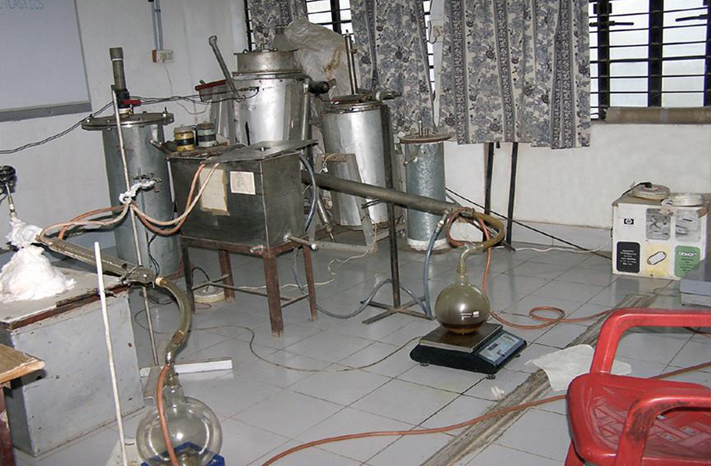
Alka Zadgaonkar Lab - Petrol from Plastic waste
Zadgaonkar-lab

This innovative process involves degradation of waste plastic using proprietory ‘catalytic-additives’ invented by Prof. Alka Zadgaonkar and is different from the generally existing pyrolytic processes. The laboratory scale set-up was developed in batch mode in which specific as well as mixed plastic materials were successfully converted into fuels. The products and by products obtained in the process are liquid hydrocarbons, gas and residual coke.
The products of the process
The fuel oil product is a sulphur free equivalent of industrial crude. It can be readily used in furnaces or put through fractional condensation to obtain finer grades like petrol. The gas obtained is a LPG equivalent, which can run a modified genset to generate electricity. This is now standard practice at a Zadgaonkar plant, which is self sufficient for its power. The final remains are a solid fuel called petroleum coke.
Prof. Alka Zadgaonkar and her husband Umesh Zadgaonkar approached the Indian Oil Corporation for commercial production. But after years of delay, they were frustrated and tried other options. With complete faith in the techno-economical feasibility of her invention, Prof. Alka Zadgaonkar decided to go ahead on her own and approached State Bank of India for financial assistance for creating a commercial plant.
The Zadgaonkar couple are currently running a 5 metric ton plant in Nagpur and their fuel is used for running captive power generators in industrial units in and around Nagpur. This invention surely inspires others to develop simple and economically viable technologies for environment friendly disposal of waste plastic.

Reference:
http://www.indiacar.com/infobank/Plastic_fuel.asp
http://www.goodnewsindia.com/index.php/Magazine/story/alkaz/
The Hindu dated 25/09/03 and Central Pollution Control Board Study, 2003

Know How to Enjoy Hair Growth with the Help of Vitamins

0
long Hari
Image – Pixabay

It would hardly be far from the truth to say that healthy-looking hair is considered by one and all to be a sign of beauty. However, hair growth, just like other parts of your body, need a variety of nutrients. On the other hand, if you have nutritional deficiency, hair loss can be one of the major consequences. While there are other factors responsible for hair loss too, including age, genetics, hormones, etc., optimal nutrient intake can go a long way in boosting hair growth. The following are some of the vitamins that are intrinsically associated with hair growth:

  1. Vitamin A- all cells need vitamin A for growth, and hair is no exception, for it is the fastest growing tissue in the human body. Vitamin A also helps skin glands produce an oily substance called sebum, which moisturizes the scalp and keeps hair healthy. If your diet does not have adequate vitamin A content, it can lead to several problems, including hair loss. The major sources of vitamin A include sweet potatoes, carrots, pumpkins, spinach, kale, milk, eggs, yoghurt, cod liver oil, etc. 
  2. B-vitamins- also called biotin, this is one of the best known vitamins for hair growth. However, its deficiency is quite rare, since it occurs naturally in a wide range of foods. It is also interesting to note that B-vitamins help create red blood cells, which carry oxygen and nutrients to the scalp and hair follicles. These processes are important for hair growth. B-vitamin rich foods include, whole grains, almond, meat, fish, seafood, and dark, leafy greens. 
  3. Vitamin C- This is a powerful antioxidant that provides protection against the oxidative stress caused by free radicals. Additionally, your body needs these vitamins for hair to create a protein known as collagen- an important part of hair structure. The best sources of vitamin C are, strawberries, peppers, guavas, and citrus fruits. 
  4. Vitamin D- Low levels of vitamin D are usually linked to alopecia, a medical condition that is characterized by sudden hair loss. Researches have also indicated that vitamin D may have a role to play in creating new follicles, the tiny pores in the scalp where new hair can grow. Vitamin D is believed to boost hair production, but most research focuses on vitamin D receptors. Your body produces vitamin D through direct contact with the sun-rays. Good dietary sources of vitamin D include, fatty fish, cod liver oil, some mushrooms, and fortified foods. 
  5. Vitamin E- Just like vitamin C, vitamin E is an antioxidant that can prevent oxidative stress. Sunflower seeds, almonds, spinach, and avocados are all good sources of these vitamins for hair growth

Vitamin supplements are also easily available for consumption if you are not getting enough of these in your diet. However, before taking any supplements, it is better to consult with a medical practitioner to determine if you have a deficiency or not, or which vitamins for hair will be most effective for a particular individual. 

Eco-friendly Gifts

0

Author – Levine L

Everyday there is talk about how to save the environment, what we individuals can do at home. I was wondering is it possible to bring some glamour to eco-friendly lifestyle… is it possible to find some attractive eco-friendly gifts that will be not only helping the environment, but also be functional and useful…

Shopping in the market nearby got me nowhere! Except for handicrafts, jute bags and khadi clothes, there is not much on offer. However, when I searched online for eco-friendly gifts, I was surprised by the variety of items presented in charming designs. Do not take my word for it; check for yourself and decide whether being eco-friendly is chic or not!

eco-friendly gifts for HomeHome décorwould you prefer a recycled vinyl record disk which is shaped into a bowl… made by Designer Jeff Davis, these sturdy bowls have the original label intact and protected with a clear mylar seal.
http://www.treehugger.com
eco-friendly gifts - potuspotHome décorWould you like a Potus Pot created by Argentina-based kuku design. It is an eye-catching, handcrafted vase made from a recycled incandescent bulb!
eco-friendly gifts - Scarlet-QuinoaFood freak – are you a person who thinks about eating before eating and after eating… do you wonder what are the types of raw food and eco-friendly menus are on the platter… then check this… the Gliving site is gonna blow your mind and your tummy – http://gliving.com/
eco-friendly gifts - Glass earringsFashion buff – are you eager to impress your intellectual, sophisticated, snooty girlfriend with some fashionable yet ethical gifts… go check out these links-
http://www.guardianecostore.co.uk
http://www.vivaterra.com
eco-friendly gifts - Glow BrickGadget guru do you desire to enchant your boyfriend with some cool, cutting edge technology which is eco-friendly too… how about a solar panel back pack which can power his laptop while he is trekking in the hills…

http://www.suck.uk.com

eco-friendly gifts - Water clockBargain dealer – are you a smart alec who is searching for a cheap deal on the net which not only gives value-for-money but also offers functional designs… then obviously ebay is the place to hunt for LED lamps and water powered digital clock!
http://shop.ebay.com

Sadly, all these gift sites are foreign based, so the goods will carry a huge transport cost!

ಕವಿಶೈಲ, ಕುಪ್ಪಳ್ಳಿ (kavishaila) a panoramic view

3

kavishaila
ಕವಿಶೈಲ, ಕುಪ್ಪಳ್ಳಿ

Kavishaila is a rock monument made of megalithic rocks and dedicated to Kuvempu. It is on the top of a small hill in Kuppali. Arranged in a circular fashion, the rocks have been placed to resemble the Stonehenge in England. At the centre of this rock monument is the place where Kuvempu was laid to rest after his death and a memorial has been constructed at that location. Near this monument, is a small rock where Kuvempu used to sit and discuss about literature and other topics with his other litterateur friends. A rock containing the etched signatures of Kuvempu, B. M. Srikantaiah and T S Venkannaiah is present near the monument. Poornachandra Tejaswi later engraved his signature on the same rock. The scenery around this place is breathtaking. Granite slabs containing engraved poems and quotes of Kuvempu have been placed near the monument.

kavishaila a panoramic view

kavishaila full view
Click on the image to zoom

Kuvempu Samaadi

kavishaila kuppalli

Kavimane Kuppalli

kavimane kuppalli
Kavimane Kuppalli

kavimane kuppalli

– Factfile –
Wiki Kuppalli

One Amazing Author: Chitra Banerjee Divakaruni

2

Chitra Banerjee Divakaruni

One fine day in February, I was enthralled to see Dr. Chitra Banerjee Divakaruni, an award winning Indian American author. She was at the Starmark (South City Mall) in Kolkata, celebrating and sharing her success with her readers during the launch of her latest books: Shadowland and One Amazing Thing.

Chitra Banerjee is best known for her novels such as The Mistress of Spices, The Palace of Illusions, The Vine of Desire, Sister of My Heart, The Unknown Errors of Our Lives, Arranged Marriage, Black Candle and Queen of Dreams. She has also written books for children namely, The Conch Bearer, Shadowland and Neela: Victory song. Her novel ‘The Mistress of Spices’ was made into a movie starring Aishwarya Rai, and ‘The Vine of Desire’ was turned into a televised serial. She has achieved so much success because there is something sublime, real and poetic about her writing. This review on one of her books ‘Sister of my Heart’ will shed light on the brilliance of her writing.

“Divakaruni’s talent and originality lie in her ability to discern [the] basic emotional motifs beneath the flashy ‘exotica’ of Indian, and American, lifestyles. She finds the real points of departure between the two cultures, and in putting her finger exactly there, activates the universal.” — LA Weekly.

Coming back to the book launch, Debnita Chakrabarty,the English department head at the Shri Shikshayatan College, was in conversation with the author. The atmosphere there was both electric and serene. After Chitra Banerjee read out a few passages from some of her popular novels, she interacted with Debnita and the audience, which included some of her ardent fans from all age groups, including little children, and also her family and friends from Kolkata. The audience asked her if there was any book of hers that she would ever redo. The lovely author said that she loved everything she has written so far, and in fact, whenever she goes back to some of her previous work, she falls back in love with it. I did not expect any other answer from Chitra Banerjee, because her optimism and zest for life are unmatchable, and can be felt in her work, and that is what makes her such a loved author, worldwide.

Chitra Banerjee also told us that ‘One Amazing Thing’ has been written in a minimalistic style which is in contrast to her usual elaborate style of writing. And to me and her fans, it is just as effective and beautiful. She also said that she has come a long way since her college days in Calcutta, because moving to the US in 1976 changed a lot of things for her. She spoke about some of her initial experiences in America, and how she had to work her way up to become the successful author that she is today. That is also why she writes so eloquently about the immigrant experience and the Indian Diaspora, which touches our hearts so evocatively.

The lyrical author also told us that her two sons are her inspiration for Shadowland. She said that there is a bit of myth, magic, and folk tales in the books she has written for children. She believes that research for a writer is very important, as well as creativity and hard work. The Palace of Illusions is her most successful book so far. It is based on the epic ‘Mahabharata’. She revealed that she had read several versions of the Mahabharata and researched various facets of this epic before writing the story from the point of view of ‘Panchaali’ (Draupadi). She wanted to portray the beauty of the epic through the eyes of a strong and feisty woman like Draupadi. Here is how Los Angeles Times has reviewed the book.

“The Palace of Illusions by Chitra Banerjee Divakaruni is as sprawling and bright a gem as the Hope Diamond – a mythic tale brimming with warriors, magic and treachery (and its brother, deceit)…. Who better to attempt the feat of transforming a centuries-old cultural icon into a personal, modern story than Divakaruni, a professor of English at the University of Houston and author of numerous award-winning works, including the luscious novel The Mistress of Spices and the bestselling Sister of my Heart. Divakaruni’s sentences dazzle; the images she creates are masterful….”

On being asked about Rabindranath Tagore, the exuberant author said that she was lucky to have read his work in Bangla as well as in English, and that he was a great source of inspiration for her. Towards the end of the interaction, she asked the audience if they would like her to write about Ramayana from the point of view of Sita in the future. As expected, everyone in the audience agreed. She also told us that her next creative project was called “Oleander Girl”, which was about the search of a young girl for her American father.

Factfile:
http://www.chitradivakaruni.com/
http://www.chitradivakaruni.com/blog/
http://en.wikipedia.org/wiki/Chitra_Banerjee_Divakaruni

Giving LIFE to Birds in Kaggaladu

1

Kaggaladu bird sanctuary
Birds at kaggaladu

Kaggaladu (Kaggalaadu) is another remote village which is privileged to have storks and pelicans come every year to settle their nests on trees in the village. Heard of rare birds coming to nestle amidst the noise and chaos of a village… where villagers take care of the hatchlings if they fall down from their nests… where children bring fish to feed them… Conventionally migratory birds such cranes, storks, herons, avoid human habitats and are protected by the forest authorities in bird sanctuaries. Similarly, Kaggaladu (Kaggalaadu) is another remote village which is privileged to have storks and pelicans come every year to settle their nests on trees in the village. Located in Tumkur district in south-eastern part of Karnataka state, Kaggaladu is not a notified bird sanctuary protected by the Karnataka Forest Department. Records show that rare migratory birds such as Painted Storks and Grey Herons have been nesting on the tamarind trees inside the village since 1999.

Kaggaladu village is a tiny gram panchayat located about 9 km to the north-west of Sira town on the Sira-Chengavara Main Road. It has approx 200-300 households and one primary school. The village has two lakes on the eastern and western sides. Rain-based food grain cultivation is the major occupation. Tamarind and Indian Banyan are the dominant tree species in the village. It is interesting to note that the birds only choose Tamarind trees to build nests.

kaggaladu bird sanctuary
LIFE Volunteers at kaggaladu bird sanctuary

Painted Stork, Grey Pelican and White Ibis are major species that arrive in Kaggaladu every winter to nurture their young. Unlike the other village adopted bird sanctuary, Kokrebellur, the Kaggaladu Bird Sanctuary has been a neglected one with limited conservation activities. The earliest efforts were made by Tumkur-based NGO Wildlife Aware Nature Club in early 2000s, who brought it to media spotlight and persuaded the forest dept. to declare it a bird sanctuary and display notice boards. But afterwards there has been no effort to preserve the water bodies and trees for enabling the birds to nest. In fact, the number of migratory birds coming to nest has dwindled every year.

Fortunately, a voluntary organization named LIFE-Bengaluru (Lets Integrate For Environment) has adopted the village and has begun conservation activities. The team happened to do a field visit to Kaggaladu in July 2008 and was surprised to see the lack of awareness among villagers about bird conservation. As the first intervention, LIFE team organized a tree planting activity and planted 50 tamarind trees. However, the lack of interest from villagers about this activity was disappointing.

LIFE NGO Bangalore
Recent conservation efforts at Kaggaladu

Subsequent visits in October 2009 gave a disheartening picture since most of the saplings planted by LIFE were destroyed. Only a few inside the school compound had survived. So the team decided it is better to work in close coordination with the school administration so that awareness levels among children can be built up in turn leading to better conservation of birds. Thankfully the children and teachers of the government primary school in Kaggaladu were enthusiastic about bird conservation, and became eager participants for LIFE-Bengaluru’s activities. The teachers were quite responsive and showed their interest in educational and awareness activities. One issue they highlighted was the lack of sanitation in the village and the need for health education among children and parents.

It was sad to note that only 50-55 birds arrived to nest this year instead of the usual 120-150 birds. Dwindling tree cover, receding water level in nearby lakes and lack of fish are contributing to the birds decline. The villagers’ gradual shift to cultivating paddy is a major concern. Kaggaladu is already a water stressed area so shifting to growing paddy is dangerous. These water intensive fields can run the lakes completely dry in the birds breeding season. Further cause for concern is the extensive use of pesticides and villagers’ attitude of negligence.

Hopefully, the intervention of LIFE-Bengaluru team, the enthusiasm of school children and raising awareness among villagers can be make things better for birds.

– Factfile –
http://en.wikipedia.org/wiki/Kaggaladu
http://letsintegrateforenvironment.blogspot.com/2009/11/kaggaladu-visit-phase-2-visit-2.html
http://tumkurameen.blogspot.com/2007/04/kaggaladu-home-to-colourful-birds.html

Little What We Have Does Matter

1

Mumbai Slum
Mumbai Slum

Everyone have their own share of ups and downs. Most of us are constantly carp that life has bestowed us with the least amount of gains, and I was one such sneering individual. But two years ago, an exceptional day in my life brought about a drastic change in my thought process and from that day onwards, I am a contented person.

It was 19 February 2008, a day which I shall remember for lifetime. I would not be exaggerating if I say that the events of that day clearly spring in my mind even today. I had opportunity to visit some slums in Mumbai. The Wadala and Mahalaxmi slums are inhabited by the poorest of the poor who live in small shacks, deficient of the basic amenities. However, one thing that keeps them going is the happiness that they carry on their faces and total lack of even an iota of snipping.
As I passed through the tapering by-lanes of these slums, there were a group of children who played the perfect guides for my tour. They took me to every house and thrilled me by introducing me as “Pyaari Didi”. May be because I had given them a handful of sweets or possibly they were enjoying my company like I was enjoying theirs. The tale of every house was similar. Space constraints, large number of family members but few earning ones, dearth of primary needs, absence of governmental or NGO help, unhygienic conditions leading to diseases, etc.

I assumed that seeing me they would seek some help or atleast share their tribulations with me. But the men in the family were busy discussing their occupations with me. Some said they sold vegetables and earned their livelihood, while others did carpentry, plumbing and other daily wage activities. The women in the family came across as the shy, soft-spoken and tender individuals of the lot. They told me that they love living in a joint family, eating whatever food they had sitting together, discussing things were the precious moments of their lives.
The most active hosts were the children who had been with me right from the time I had entered the slums. I had almost learnt most of their names. They discussed their school, teachers, picnics and everything else. There was a high comfort level they shared with me and they were almost pouncing on me to grab my attention. Some had even started telling me stories and reciting poems on top of their voices. The phenomenon which astonished me was that I could see the difficulties and hardships they were going through but there was not even the slightest disappointment in their expressions or in their tone of communicating.

I was amidst these people who we consider to be less educated and less civilized than us. But if we give it a thought, it is they who are living their lives to the fullest with whatever little they have. On the other hand, we who have all the luxuries are always frowning with discontent in our faces and distress in our actions. I consider these people to be my true teachers who provided me with their helping hand to comprehend my life. We say this world has become a gloomy place but it is because of you and me who are forever down in the mouth and doleful. The time has come to accept life the way it is and be satisfied with whatever we have.

Text & pic – Siddhi Aras

Odanthurai Powers Ahead with Entrepreneurial Zeal

4

Odanthurai
Need of the hour – local power

Global warming, depleting natural resources, increasing carbon emissions, soil and water pollution; these are some of the issues that have become a major concern for countries across the world. While I was wondering how to change the present world which is filled with pollution & rapid development, I happened to visit a village with a difference rather filled with lush green.

As a part of my renewable energy field trip, I visited a village called Odanthurai Gram Panchayat situated 40 kilometers north of Coimbatore in Tamil Nadu. In a country where villages are still struggling with inadequate power supply and expect the government to fix the problem, Odanthurai has set an example by producing its own green power for its needs. We met the panchayat president Shanmugam who explained the details about his village’s clean energy sources.

The most notable among Odanthurai’s self-help ventures is the 350-kw wind power generator that it set up in 2006 under the direction of a well functioning gram panchayat. Having witnessed the government help many private companies acquire land in Coimbatore district at subsidized prices for setting up wind power projects, the enterprising Shanmugam thought, “Why not have a wind power project under panchayat ownership? After all a village community is the most legitimate owner of land and wind, the two natural resources that are enough for power generation.”

Odanthurai power
The economics of green power

Shanmugam worked out the costs; a small wind farm would cost Rs.2.3 crore. Odanthurai could generate Rs 35 lakh as down-payment for a bank loan. With the government support, the panchayat would need a bank loan of Rs 1.15 crore. The gram panchayat liked the proposal and gave its collective seal of approval. This one-of-its-kind proposal took the district administration by surprise. It was hard to imagine a panchayat could aspire to be as entrepreneurial as a private company. The state government sanctioned the project under the Remunerative Enterprises Scheme. Commissioned in 2006, the project became the first ever power project undertaken by a local body in India.

The wind-farm in the Odanthurai generates 7.5 lakh units of electricity in a year. While the panchayat’s need is only 4.5 lakh units, the remaining power is sold to Tamil Nadu Electricity Board, fetching the panchayat an annual income of Rs. 19 lakh. “After repaying the bank loan of Rs. 1.15 crore over seven years, the cost of generating electricity will be virtually zero,” beams Shanmugam.

Odanthurai Panchayat has made inroads in other renewable sources of energy as well. It has installed a 9kW biomass gasifier power generation system to substitute the grid electricity for pumping drinking water supply. The biomass gasifier system saves about 70% of pumping cost when compared to grid electricity (see table). Other renewable energy projects underway are solar street lighting and biogas using human and cattle excrement. The biogas system is connected to each house for cooking purpose, which helps to reduce firewood usage. The panchayat is purchasing waste wood pieces from a saw-mill in the village at low price of Rs. 0.3/kg ($6.7/ton) for the fuel of the gasifier. Low demand for waste wood for cooking purposes might have contributed for very low price. The village has found that total energy planning rather than just electrification can improve the efficiency.

Comparison of operational cost per unit for the power system of Odanthurai Panchayat:

Economics Grid Power Gasifier System

Electricity Rs. 4.5/ kWh Rs.0.45/ kWh

Labour cost Rs.0.45 Rs.0.66

Maintenance cost Rs.0.07 Rs.0.28

Total Rs.5.02 Rs.1.39

Summary of Odanthurai Panchayat Gasifier System:

* Plant capacity – 9kW
* Cost of installation – Rs. 310,000 ($6,700)
* MNES subsidies – Rs. 135,000
* Panchayat contribution – Rs. 175,000
* No. of consumers – 3497 people
* Operation hours – 12 hours
* Tariff structure – Rs. 30 ($0.67) / HH / month
* Fuel efficiency – 1.5kg of wood / kWh
* Cost of fuel – Rs. 0.30 / kg ($6.7/ton) dry wood

Little Magazines and Big Books at Kolkata Book Fair

4

Kolkata Book Fair
Autobiographies to anthologies

The 35th International Book Fair began with much fanfare in the city of Joy, Kolkata on the 26th of January 2011 and will continue till the 6th of February. The inaugural ceremony was graced by Pulitzer Award winning American novelist, Richard Ford, along with Indian writer Atin Bandyopadhyay. It is a huge fair with 550 stalls among which, 200 are dedicated to little magazines. This year’s theme is ‘America’ and a replica of the White House is displayed up to highlight it.

The ‘Kolkata Boi Mela’ (Kolkata Book Fair) is a ‘book lover’s paradise’ which celebrates a festive time when all the big and small publishers from all across the country and abroad descend on the city, to bring the literary community under one roof. The book fair caters to all ages and is a venue of knowledge and information for the bibliophile community including students, writers, artists, painters, journalists, professionals, hobbyists, homemakers and so many others. There is something for everyone here: books, comics, magazines, paintings, posters, DVDs. This fair is not one to be missed; especially if you love collecting books for your library.

Kolkata Book Fair

Not only will this pustak mela cater to the palate of the English literature enthusiast, but it also brings to you knowledge about literature from all across the globe. Selected book stalls like Uranita Books from Italy, Indo Latin American Association, books from Panama, Columbia, Peru, the Indo-Hispanic Society (Habitat Academy) display the collection of popular books from their respective countries.

Books by established and new authors are available as translations and original texts, in several languages including Hindi, Bengali, Urdu, Sanskrit, Kannada, Telugu, Tamil, Oriya, Maithili, Gujarati and Nepali. These books cover almost all possible themes including health, education, women, literature, art, history, science, philosophy, religion, self-improvement, sports and lots more. Even a cinema enthusiast can find something for themselves at the stall of Cine Central Calcutta.

At these stalls you can find a selective but wonderful collection of story books, posters, magazines (some in English and some translated into Bengali and Hindi). My eyes fell on some books on ancient Peruvian textiles and culture. After looking around for a while, I noticed something that looked like a ‘mini newspaper’. The stall owners corrected me saying it was a ‘little magazine’. I bought this interesting looking piece, and read it at the stall itself. Here was an intriguing article about a Jewish author called Inca Garcilaso, who translated Leone Ebreo’s work called Dialoghi d’amore and others.

An excerpt from the magazine called Chasqui (Peruvian Mail) that I must share:
“Love, in all its forms, is the divine engine of creation and the link which binds all mankind. In 1950, he published a Spanish Translation of the work in Madrid, signing as “Garcilaso de la Vega.” Faithful to its original text and written in an elegant prose, this translation, “the new fruit of Peru” is still considered authoritative.”
Quite a beautiful thought, isn’t it… coming all the way from Peru.

Here are some interesting titles I came across in the fair: Ornamental Gardening, Mushroom Cultivation, English to Bengali Dictionaries, World Football, Minerals of India, Petroleum – an introduction, Bengali Theatre, Rivers of India, Trekking, Women Who Dared, Self Care for Women, Folklore of Bengal, Masterpieces of Indian Literature, Walls Paintings of Rajasthan, Jewels of the Nizam, Indian Classical Dance, Medieval Temples of India, Citrus Fruits, Rock gardening, Diary Chemistry, The Complete Costume History, Atlases of the World, Michelangelo—Complete Works, Encyclopedia of Perennials, Garden Masterclass, Facebook Marketing, Youtube and Video Marketing.

One of the stalls that caught my eye was an orange-black stall called Rabindra Chitravali. It truly represented the uniqueness of Bangla culture. It stocked paintings of Rabindranath Tagore and also other painters like Abanindranath Tagore, and Judhajit Sengupta. Volumes of plays, stories, and others by Rabindranath Tagore were also available at great prices. ‘Spirituality’ had its own special zone at the fair: Ramakrishna, Vivekananda and Vedanta Literature and stalls from other ashrams across the country were promoting the word of the divine via the essence of books.

Apart from the stalls, the three main pavilions at the fair were named: Acharya Prafulla Chandra Bhawan, Mother Teresa Bhawan, and Santidev Ghosh Bhawan. The halls included some of the bigger stalls of well known publishers like the Oxford Bookstores, Penguin, Crossword, Jaico, Pustak Mahal, Isha Foundation, Taylor and Francis Group, Times Group Books and Pearson. The rest of the book stalls were out in the maidan, adjacent to the wondrous pavilions.

It seemed like the entire book publisher and reader community had flocked to this unique meeting point and for a book lover, nothing could be more exciting. Personally, I got more than I expected. A sense of nostalgia envelopes me now, not only because I brought back volumes of Rabindranath Tagore’s books from the Boi Mela but also because I discovered several new and amazing authors I had never read before. I am going back there tomorrow again; hope to see you there too.

– Factfile –
http://www.kolkatabookfaironline.com/
http://en.wikipedia.org
http://www.business-standard.com
http://www.indiamike.com

How to Afford Your Dream Wedding Without Burning a Hole in Your Pocket

0

Indian-Wedding
Image – Unsplash

A wedding is undoubtedly one of the most special events in anyone’s life. While it can be a really memorable occasion, it is also an expensive one. If you are planning your wedding, the following tips will help you save money. If you are still falling a little short on cash after implementing these tips, you can apply for a personal line of credit for marriage.

  1. Budget

Create a well-defined budget. Determine how much you can afford based on your savings and ensure you set the absolute maximum budget. Make a list of all the expenses you can think of — venue, dress, band, etc. Ensure that you have a buffer of 5%-30% of the budget for unforeseen and last-minute expenses such as additional tables or extra decorations. Remember to stick to the planned budget. If the expenses are slightly higher than your budget, consider taking a marriage loan.

  1. Invitations

You can send electronic invitations for free or email the save-the-date reminders to save money on invitations. If you don’t want to invite electronically, you can opt for DIY invitations. Download a template and print them at home. You can save a lot compared to choosing a professionally printed invitation suite.

  1. Dress

A wedding dress can potentially set you back by thousands of dollars. If the idea of spending a lot of money on a dress that you would wear just for a few hours bothers you, you can consider renting a dress or buying a second-hand dress. There are several businesses that rent out beautiful wedding dresses from well-known designers or sell second-hand dresses that are as good as new.

However, if the idea of renting or buying second-hand wedding dresses doesn’t sound appealing, you can cut costs on accessories and pieces like a veil or headpiece.

  1. Dates and Venue Options

Popular wedding dates come with a higher price tag, so pick a date that isn’t too popular. Also, the weekends are highly sought after as compared to the weekdays, so it would be a good idea to have a weekday wedding.

You can consider a non-traditional venue such as a brewery, vineyard, restaurants or a vacation house to cut costs and give your wedding guests a unique experience. Places that don’t cater to weddings are more affordable than traditional choices. Ensure that the chosen venue is capable of handling a large event and accommodate your guests comfortably.

  1. Catering

Consider different meal options and finalize the one that fits your budget. You can choose between a seated and plated dinners, buffets or family-style stations.

Having an open bar that comprises an elaborate spread of liquors can be expensive. Rather, stick to just beer and wine to save money.

Saving money on your wedding doesn’t sound romantic in the least but doing so will benefit you in the long run. Money saved on the wedding can be put towards other financial goals like buying a house or kids’ education. You can consider a marriage loan to fund your dream yet cost-efficient wedding.