The Tale of Seven Sisters and a Motorcyclist – Part I

3

Motorcyclist - Biking Seven Sisters States
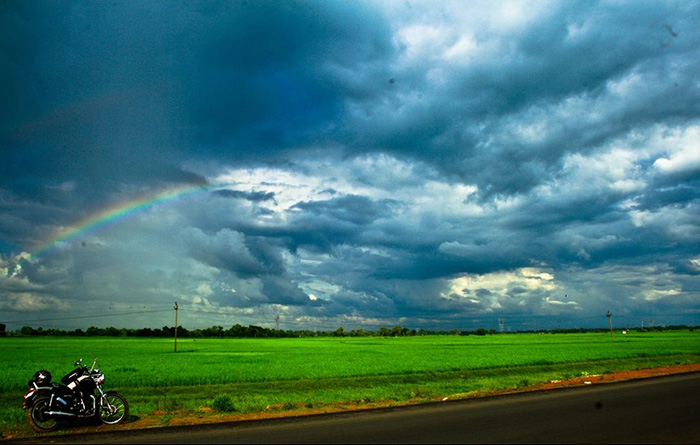
Riding along verdant fields on NH-34 | Click to enlarge

“A Solo thumping Soul” – I had nothing to prove to anybody. No regrets on what might have happened on any of my past rides. No hard feelings for anybody. No emotional slings or any promotional blabber! All I wanted was “THE RIDE”. I was eager to taste the freedom of riding solo, face and overcome challenges on my own grit. See how much I could really endure… curse, blame and bang myself for whatever baloney might happen on the road and whisper to my mom… “Look Maa, I have grown up”!

East to West …North to South, I consider myself fortunate enough to get a glimpse of the mystic and Incredible India and remain hungry to explore many more unknown lands and meet the most colourful people on my trails. It was this zeal to know the unknown that triggered my solo ride to one of the remote and uncharted parts of the country… the enchanting North East! A part that is also known as the ‘Seven Sister States’.

Why North East?

Motorcyclist - Solo Biker- Royal Enfield Thunderbird
Solo Biker- Royal Enfield Thunderbird

“Beautiful” and “Wild”, these are possibly the most apt adjectives for the Seven Sister States. Situated far away from the maddening crowd and at staggering heights where one could get lost. For me this ride meant liberty to become one with nature… to have a rendezvous with the Bohemian within me. This was my opportunity to break free the shackles of the “earthly disordered” life of a corporate slave. Further, I was always curious about the ethnic and cultural diversity among the north eastern states. Thus began an epic tale of over 5,000kms across 5 states for 15 days.

Historically, I don’t remember dad making a fuss about any of my rides in the past; and my mom was always the ‘Nirupa Roy’ of our family. However, this time I was in for a surprise. All hell broke loose the moment I “itched” the topic of my solo ride at the dinner table. After some heated verbal exchange, dad left the dinner table “half-hungry”. Mom stared at my face with zero gravity. My brother concentrated more on the delicious ‘Muri-ghonto’ and gulped dad’s share too. Mr Arnab Goswami ogled at my face from the TV screen pseudo-asking “Let’s debate on this once more and ask for the nation’s opinion”! I realized that everybody becomes ‘Dad’ eventually and called it a day.

Ride preparations and the Route for the Solo Ride

Motorcyclist - My Royal Enfield Thunderbird packed and ready
My Royal Enfield Thunderbird packed and ready

My readers may be aware, most border states in India such as Arunachal Pradesh require ILP (Inner Line Permits) for entry. On any bright sunny day, acquiring an ILP is usually a hassle-free affair. However, if you hail from a state called West Bengal, you might be standing at the wrong door of fate. I had applied for my ILP for 2 zones in Arunachal (Bomdilla-Tawang- Sela-Bumla Pass [West Kameng district]) and (Itanagar-Gohpur-Ziro-Daporijo) 10 days in advance at the Arunachal Bhavan and was advised to check back after a week. When I inquired about the status with less than 2 days left for the ride, a very pensive attendant quite effortlessly informed me that ‘Bada babu’ is on leave and they can’t find my application. I would have to re-apply which would take another 2-3 days. Just guess my natural reaction to that!

Later, I realized acquiring an ILP from Guwahati would be a better option. One can also apply for ILP in other parts of Assam. So finally I was all set to ride in mid-May 2013 (although without an ILP!).

  • Got my Royal Enfield Thunderbird fully serviced (motorcycles for sale)
  • Installed a pair of Hella fog lamps on a makeshift mount
  • Loaded spare tubes, puncture repair kit, a dozen 10-15amp fuses and Royal Enfield tool kit
  • Packed my riding gears, 4, 5 Bungee ropes, waterproof and outdoor gears
  • Took my camera kit (Canon EOS 1000D), Tripod, Gorillapod, backup memory cards

Finally the Route:

Plotting my route across Seven Sister States on Google Maps

Plotting my route across Seven Sister States on Google Maps

Kolkata -> Siliguri (via NH 34) -> Guwahati -> Shillong -> Cherrapunji‎ -> Mawsynram -> Shella, East Khasi Hills, (all in Meghalaya) -> Agartala (Tripura) -> Tezpur (Assam) -> Bomdila -> Dirang -> Sela Pass -> Tawang -> Itanagar -> Ziro (all in Arunachal Pradesh) -> Sivasagar -> Jorhat -> Guwahati (all in Assam) -> Siliguri -> Kolkata

There was nothing eventful during my journey between Kolkata to Guwahati through the notorious and bone breaking National Highway – NH 34. For a moment, I felt national highways in India only existed on maps! Biking in India is like playing football in Iraq, you never know what hits you!

The Tale of Seven Sisters… Part 2

Factfile –
http://tinyurl.com/nupme42
http://en.wikipedia.org/
http://www.indiamike.com

Celebrate Tourism Day in Offbeat Destinations

0
Offbeat destinations - Beyondwild photography expeditions
Beyondwild photography expeditions

The other day, I happened to visit an interesting trade show named Travel & Tourism Fair (TTF), which claims to be India’s leading travel trade show hosting events across all major cities in India. There all kinds of expo stalls hosted by representatives of state tourism development corporations, large hotel chains, spa & resorts, jungle trek organisers, travel websites, foreign tour operators, and others. The variety of travel options they offered were mind boggling. If you had the money and inclination, you could anywhere from Andamans to the Himalayas in India, Bangkok to Switzerland abroad!

There were very few individual customers visiting the expo. It could be that TTF is a B2B travel trade show mainly visited by travel agents and tour operators. I interviewed a few stall owners and checked out which are the tour itineraries popular among Indian tourists. I was surprised to know that despite the plethora of travel options on offer, most tourists asked for only three options – beach & booze locations, honeymoon packages, shopping destinations!

Offbeat destinations - Scuba diving in Andamans
Scuba diving in Andamans

Are we confining our travel only three options… don’t we want to explore our diverse country, learn about new cultures, see enchanting scenery, experience the adventure and unwind in serene surroundings…

It is so sad that most of us don’t want explore new travel spots; rather we would go to the same location and do the same things. If travel is about enjoying the thrill, I am surprised that how this kind of repetitive visits can be thrilling! This is like saying “Hey, I went to Goa again during holidays and it was mind blowing, man!”

Anyway, for those who still have some adventure left in them, I urge you to take the off-the-beaten track on this world tourism day. Here are some interesting and exotic travel packages to check out –

Offbeat destinations - Homestay amidst coffee estates
Homestay amidst coffee estates

Agri-tourism or farm tourism packages offered in Maharashtra and Punjab
Scuba diving in Andaman & Nicobar Islands 
Ayurvedic treatment and spice plantation visit in Kerala
Homestay amidst coffee estates and angling for fish in Coorg
Tea tasting and tea infused menu in Ooty tea gardens
Trekking in the foothills of Himalayas in the Northeast 
Volunteer for organic farming in Uttarakhand

Heartwarming Homestays at Coorg

0
Homestays at Coorg - built in British bungalow style
Homestay cottage built in British bungalow style

People in Coorg carry hospitality in their genes, homestays help promote the unique Kodava culture. Spend time away from maddening crowds, you can choose to stay in a Coorg homestay which is surrounded by a picturesque coffee estate, verdant forest and water streams. What was special about the vacation you spent in your grandpa’s village house in the good old days? You lived a spacious yet charming tiled roof house with wooden furniture. You roamed around the countryside, playing in the water streams, trekking up the hillside, relishing the wild fruits and fooling around with frogs and crabs. Food made by your grandma in the traditional way was delicious and a number of fruits were available for dessert. Now compare that experience to a stay in a commercial hotel in a hill resort today!

Many of us wonder if it is possible to experience such a heartwarming homely stay in a hillstation in a commercial set up. Fortunately, the new concept of ‘Homestays’ try to recreate exactly the same experience that we all desire for. In a typical homestay, guests are either accommodated in the family home or in separate quarters nearby, and are provided with the same comfort as a regular hotel. While this concept is well established in the West in the form of ‘bed & breakfast’, it has taken roots in India over the last decade.

Homestays at Coorg - Birds eye view of Madikeri from Ajantha Homestay
Birds eye view of Madikeri from Ajantha Homestay

Particularly, homestays are more prevalent in hill resorts such as Ooty, Kodaikanal, Coorg, etc. due to the lack of regular hotels as well as tourist demand to stay in homely place in the hills. Nestled deep in the tropical rainforests of Western Ghats, is the tiny district of Coorg in Karnataka. Misty hills, lush green forest, acres of coffee and tea gardens, orange groves, undulating streets and breathtaking views make Coorg or Kodagu an unforgettable holiday destination.
It was their first time in a Coorg homestay for 34 year old Deepak Jayaram and Shubha Deepak, 32, and they loved the personal touch and the way their hosts made them feel special. They stayed in Ajantha Homestay located just outside Madikeri, the district headquarters of Coorg. Their host K. M. Karumbaiah is one of the homestay pioneers in Coorg, establishing Ajantha Homestay way back in 2003, at a time when Coorg was just warming up to the concept of homestays. Karumbaiah explains “Back then, I had a tourist info centre and I saw several tourists go back disappointed due to lack of rooms in hotels”. He says “the idea of a homestay came about when I stayed at a bed ‘n’ breakfast place in 2001, while visiting Edinburgh in Scotland.”

Coffee wood furniture in verandah – Sandbanks

For Micky Kalappa of Sandbanks nestled in a coffee estate in Ammathi, it was always a pleasure to treat guests at his home in Coorg. “My father loved playing host to people from all around the world”, says a proud Kalappa who started his homestay way back in 1991. Talking about homestays, Micky Kalappa says they have become a trend among the urban elite. “People come to homestays to understand the Kodava culture, while people who stay at hotels just want fun and adventure”.
Many like minded Kodava families soon joined the growing tribe of homestay hosts and finally the Coorg Homestay Association was born and registered in 2006. The then Tourism Secretary of Karnataka, I.M. Vittal Murthy took special interest in helping out the families to get their demands fulfilled. A draft copy of homestays from the UK was studied and based on that model a policy was formulated in 2009. An inspecting agency was formed to monitor these homestays for basic necessities and registration. So today, there are 178 registered homestays in Coorg. Homestays are classified as non-commercial units and there are two types: the Premium Type – Silver and the Luxury Type – Gold.

Homestays at Coorg - Exploring a coffee estate
Exploring a coffee estate

The President of the Coorg Homestay Association K.M. Karumbaiah says that there is a constant increase of 10-20% of people checking into homestays every year. Based on the great Indian tradition of “Athithi devo bhava”, the association aims to promote homestay. “People in Coorg carry hospitality in their genes, we are just making a good use of it”, quips Karumbaiah. Further, homestays also help promote the unique Kodava culture. “We make it a point to see that our guests try out local cuisine, take them to Kodava weddings and ceremonies and tell them about the local culture and tradition”, adds Karumbaiah.
So the next time you need to spend time away from maddening crowds, you can choose to stay in a Coorg homestay which is surrounded by a picturesque coffee estate, verdant forest and gentle water stream. In fact, some of these homestays are located just next to a waterfall like Iruppu Falls!

This is a post by our guest author Apoorva S. All the photographs in this post are by the author.


Factfile –

Homepage


http://www.discovercoorg.info

Check our feature on Coffee Flavoured Honey!

Devbagh – The Island I Call Home

4
Devbagh
Image – Abhijeet Rane


My memory of the little island of Devbagh and the inviting little huts that studded it, is still vivid. I remember being taken by complete surprise when I first set my eyes on it.

We had taken a sleeper bus to Karwar from Bangalore. Approaching Karwar, any lingering traces of our sleep were driven away when we were accosted suddenly by breathtaking views of the sea. Once in Karwar city, we found ourselves being motored away from a small jetty that grew smaller and smaller as we sailed farther away into the sea. I stuck my hand into the water and watched as a wall of water rose around it. The sea seemed like an enormous giant, its incongruous breathing forming little crests and troughs on the surface. Soon, Devbagh Beach Resort greeted us.

Devbagh

It was like an emerald pearl in the sea, with its many tall Casuarina and coconut trees and its long, empty beach. Our eyes eagerly spanned the width of the beautiful beach. I remember feeling like I was returning home. The ferry announced our arrival by bumping against the jetty and bobbing up and down.
Walking past the first line of Casuarina trees we found, cosy little tent houses and thatched-roof huts propped up on stilts. They seemed to be right out of a Hansel & Gretel story!

Our feet sank into the beach sand, which covered the island as we walked towards our hut tucked away amidst tall trees. There were very few other people on the island and this added to its charm. From our little thatched-roof abode, we could see the sea twinkling at us through the trees. Our three days there went faster than I desired. I would have liked to have known the island and its ways intimately.

Devbagh
Image – junglelodges

We indulged in some water sports on the first day. Jungle Lodge Resorts, which owns Devbagh, provides a range of adventure and water sports activities. There was a ‘banana boat’ that sped into the sea and toppled sideways at a thumbs-up signal, sending us all splashing into the water. I invariably missed this signal, being too intoxicated in the surroundings; I would always surface spluttering water which I swallowed by the mouthful, eyes stinging with salt, but with an elated smile on my face.

Devbagh Parasailing
Parasailing over emerald islands and the sea

Our excitement mounted when we were lead to another tiny neighbouring island for parasailing. And what an experience that was! Despite having a terrible case of vertigo, I decided to give it an attempt. I soared high up in the air like a kite, while tethered to a sailboat in the sea, the wind tugging me this way and that. Below me lay a vast expanse of blue-green sea dotted by lush green islands and hillocks.

Devbagh
Image – Kunal Mukherjee

The next two days were spent blissfully under the spell of the sea. I loved waking up to the crashes of the waves and would go out to catch a glimpse of the sea before I did anything else. One morning, we were taken for a nature walk around the island by a naturalist. Our trail winded along the coast and through the dense foliage and we were introduced to some of its smaller inhabitants. Come evening, once we had feasted on some freshly caught fish, we sat on an elevated mound of sand and watched the sea for what seemed like an eternity, lulled into a content silence as silver waves climbed towards us and receded. We would go back to our cottages much later, in a trance.

Devbagh
Image – Kunal Mukherjee


I would have much preferred to be the flame-backed woodpecker outside our cottage, hammering away at trees on the island with the sea just a glance away, but the day we had to leave had come and it was with a heavy heart that I watched as the little island went from being right in front of my eyes to a distant green speck in the sea.

Other Places to See

  • Kurumgad Island: another untouched neighbouring island where you can go canoeing, kayaking and snorkelling.
  • Sadashivgad Fort: Local buses go to this fort which is located 5km north of Karwar, near the Kali Bridge. The fort sits atop a hill, which affords soothing views of the Kali river and the hills in the distance.

Factfile –
When to Go: September to March
How to Get There
Fly: The nearest airport is the Dabolim Airport in Goa, 90 km away.
Chug: The Karwar Railway Station is 2 km away from the town. There are many trains on the scenic Konkan Railway route, which stop here.
Ride: Buses are regularly available from Karwar to Bangalore, Mysore and Mumbai
http://www.junglelodges.com
http://www.tripadvisor.in

Junagadh – Walk Into an Abandoned History

5

My wanderings across Gujarat brought me to a small town in Saurashtra region, Junagadh. Entering the town, I got a feeling this is a place that somehow seems to dwell in its past. The name ‘Junagadh’ comes from the words ‘juna’ and ‘gadh’ (meaning old fort) and all that is old about Junagadh greets you, somehow undermining all efforts of modernization. A visitor is tempted to live off the history that every turn in every street offers in this town in south western Gujarat.

The history of Junagadh can be traced back to 250 BC, and when you drive into this sleepy town, it belies the turbulence of being through 16 sieges over 800 years. Before acceding to Indian rule, the last rulers of Junagadh were the Nawabs of Babi Dynasty (1749 – 1949 AD). Ruled by the Nawabs, Junagadh was a princely state during the time the British Raj and acceded to become a part of Pakistan during the early days of independence. However, given that the population of Junagadh province was 96% Hindu and owing to the state not being geographically contiguous to Pakistan, India intervened on the pretext of communal tension and cut off all economic and communication channels.

Mahabat-Maqbara,-Junagadh,-Gujarat
Mahabat Maqbara, Junagadh, Gujarat

In October 1947, the last ruler, Nawab Muhammed Mahabat Khanji III fled to Pakistan just before the Indian troops moved in the take over the state. In November 1947, the Dewan of Junagadh (chief minister), Sir Shah Nawaz Bhutto invited the Indian government to accede. Coincidentally, the Dewan was the father of Zulfikar Ali Bhutto, who became the prime minister of Pakistan.

Today, Junagadh stands testimony to all its history preserved in architecture, which tries to blend in with the hustle of a small city trying to come into the fold of modern India. Most of the architecture you’ll see is from the last two centuries; the most notable are the tombs of the Babi Nawabs. While these aren’t very well maintained and you will often find dilapidated interiors, they still by no means have lost their grandeur. The sunset with the silhouette of the famous Mahabat Maqbara, built on the grave of the Nawab Mahabat Khan II is a splendid sight. Adjacent to the Maqbara is the Jammi Mosjid, which is a beautiful piece of architecture, but has seen much renovation in recent years and seems to have lost its old world charm. Then there is the Junagadh Palace, Durbar Hall Museum as well as other remnants of an illustrious past strewn about the town such as the clock tower.

Junagadh - Adi Kadi Vav (Step-well) in Junagadh
Adi Kadi Vav (Step-well) in Junagadh

However, the oldest part of Junagadh and possibly the chief contributor to its name is the Uperkot fort, or the upper citadel. Over 2300 years old, this is the most significant piece of Junagadh’s history. Chandragupta Maurya of the Mauryan dynasty originally built the fort in 319 BC, which remained in use until the 6th century. After being rediscovered, its subsequent rulers made several additions to the Uperkot Fort. In the 11th Century, the Solankis of the Chalukya dynasty commissioned two large step-wells: Adi Kadi Vav and Navghan Kuwo. Adi-Kadi Vav is a man made canyon carved out of rocks, is around 81 meter long, 4.75 meter wide and around 41 m deep. There were no ornamental designs, but the rock stratum along the side walls gave it stunning looks.

Uperkot is steeped with history, folklore and a confluence of diverse religions that existed in Junagadh. Hindu temples dedicated to Ganesh, Hanuman and Shakti mark the entrance to Uperkot. The most prominent structure is the Jama Masjid, which was originally the queen’s palace of Rani Ranakdevi. The palace was converted to a mosque when Sultan Muhammed Begada conquered Junagadh in 1473 AD.

Junagadh - Buddhist Caves in Junagadh

In the same complex are the Buddhist caves, which date back to 2,000 years. These caves were carved during the reign of Emperor Ashok and are believed to be among the oldest monastic settlements in Gujarat. These caves seem to be monastic quarters mostly bare, with an earthy feel and some carvings in pillars, which still remain. There are interesting Ashokan rock edicts located on the way to Girnar hills dating back to 250 BC. The biggest edict is a huge rock with carvings in Brahmi script describing the rule of Emperor Ashok.

There is so much to explore in Uperkot. Besides the architecture, what really brings the monuments to life is the folklore associated with each of them. The large metal canons (Neelam and Manek) tell tales of battles fought against the Portuguese with Turkish help. The step-wells tell tales of sacrifice by two sisters, Adi and Kadi after whom the well is named, such that water would sprout from the earth. In Junagadh, there is a sense of time slowing down. Here, the folklores live on, well beyond the lips of the tourist guides, and somewhat in its centuries old buildings, the rocks seem to whisper to each travelling ear, if only you would stop and listen!

Junagadh - Children play cricket with the backdrop of the Mahabat Maqbara

 Factfile –
http://en.wikipedia.org
http://discoverindiabyroad.blogspot.in
http://www.flickr.com/photos/aditipatnaik/

Bali – Trip to the Honeymooner’s Paradise..!!!

1

Where would you go for a memorable honeymoon… How will you choose the best location for your honeymoon to ensure that is the most romantic…

It goes without saying that each one of us newlyweds desire to celebrate our marriage in a special place that is both intimate and exotic. My husband tried his best to keep it all a surprise, making it a no-brainer holiday for me. But me being me, I had to know the details and get down with the planning, because that’s what I love doing. That’s where the journey begins.

Bali - The Grand Hyatt at Nusa Dua

Part 1: The Planning

Our travel was supposed to be in December, so we began looking out for possible options. It’s best to trust your instincts while planning your holidays. It was clear that we wanted to go to a beach destination and after a little research, we inclined towards Bali in Indonesia for a number of reasons:
1. There is more to Bali than just beautiful beaches
2. The tropical green ambience
3. The art and handicrafts (me being an art loving person)
4. The Balinese massage

In essence, Bali offered so much more than just a sun and sand retreat. So, the first part was done. Bali it is..!!

Tip no 1: Do not fall prey to standard itineraries that mix Bali with other countries. There is so much to do in Bali that you wouldn’t want to dilute its experience with any other place.

Tip no 2: Block your date and book your flight tickets at the earliest to get the best connectivity, least stopovers and the lowest fares.

How to get there: We took the Malaysian Airlines from India with a stopover in Kuala Lumpur. We asked our hotel, the Grand Hyatt, Nusa Dua to arrange for our pickup from Denpasar airport in the capital of Bali.

Part 2: The Holiday begins

Bali - A view of Kuta beach

There’s so much to do in Bali; you can go from the extremely relaxing to the extremely adventurous. Since it was our honeymoon, we decided to stick with the relaxing itinerary. We stayed at two parts of Bali: Nusa Dua and Sanur. We could not go to Ubud, which is one thing I still regret and I might plan another holiday to Bali just for a visit to Ubud.

The marble walkways and silent beach was our first glimpse into its pampering world. The Grand Hyatt in Nusa Dua has everything that honeymooners seek: standard marble touches, spacious grounds, separate lagoon pool inside the resort, quiet beach with smooth slope, no hawkers and great food. We enjoyed having food at the Italian restaurant facing the pool and the beach.

Bali-beach
Bali Beds at Majestic Elegance Hotel Image Via Flickr

For families with kids, I would suggest other places to stay that are central located with activities enjoyable for kids. Vacationers – do not stay in Nusa Dua, for you will surely miss out on loads of action strolling along the lazy long beach; other places like Ubud and Kuta have a lot more action packed fun for you! We were classic Honeymooners who wouldn’t leave the property, except when we went to Kuta or the little shopping complex across the resort during the day.

After 3-4 days, we moved to Sanur and were welcomed into the grand foyer of Bali Hyatt, Sanur. While the Grand Hyatt had an urban feel to it, the Bali Hyatt in Sanur is more into Bali culture. It’s more traditional than the Grand Hyatt but still offers the same Hyatt luxury to get pampered.

The Indian connection

Bali - Ganeshji Statue in Sanur Area

One thing that you are bound to notice while moving around in Denpasar city is the influence of Hindu culture in Bali. Almost every major road crossing has gigantic stone statues of Hindu gods and some scene depictions from Hindu epics. Whether it is the scene from Mahabharata with Lord Krishna as Arjun’s charioteer or it is the statue depicting Ghatotakach or his father Bheem, each one is exquisitely done.

When I looked at these statues I wondered “How come Bali in Indonesia is a Hindu island in a Muslim nation?” After some research I learnt that Indonesia might have the largest Muslim population in the world, but its constitution acknowledges five different religions and diverse traditions in one nation. Way back in the 5th Century, Hinduism and Buddhism arrived in Indonesia, as trade with India intensified under the south Indian Pallava dynasty. Later immigration from India, China, Portugal, Arabia, and the Netherlands also contributed to the diversity of religion and culture. So it might not be correct to call Indonesia a Muslim nation!

Bali-Hindu-Temple-in-Nugara
Bali – Hindu Temple in Nugara Via Flickr

The Indian influence in this diverse nation is clearly evident in the national motto of Indonesia –“Bhinneka Tunggal Ika” (translated as “Unity in Diversity”), which is written in an old Javanese language with an exclusive Sanskrit influence on it. Some recognisable words that you will come across are: ‘Bahasa’ – a colloquial slang of Bhasha in Sanskrit; ‘Bhoomi’ (earth), ‘Putra’ (son), ‘Guna’ (quality). The word ‘Bali’ itself comes from ‘Vaali’, the feisty brother of Sugriva in Ramayana!

Feeling proud of our culture’s influence on a foreign land, we moved towards our resort in the evening. The Sanur area along the main street at the back of Bali Hyatt is a lovely and peaceful location just to wander around for a dinner at night. The street offers a choice of some really nice and good value restaurants. Shopping is brilliant here, particularly for the Balinese artwork, if you are an art appreciating person. The AAA art gallery in this area has some great paintings.

One evening, we took time off and headed for the famous “The Balinese massage”, which is something best had in Bali itself. All I remember about it is that it started with some pleasant calming music in the background and then I dozed off in relaxation.

We were in Bali for six days and trust me, I was not done yet! It is such beautiful place and there’s so much to enjoy from the experiences that every destination has to offer. This was the first destination that I travelled to, which made me realize that there’s so much to learn from every place you visit.

This is a guest post by Ayesha Mahajan, all the images in this post are by the author.

Factfile –

Bali Airport (Ngurah Rai) Denpasar – Indonesia


http://www.bali.grand.hyatt.com/en/hotel/home.html
https://maps.google.co.in/
http://en.wikipedia.org/wiki/Bali

Auspicious Mehendi and Funky Tattoos

0

Author – Debjani Goswami

Indian-mehndi-designs-2
The world of fashion is in a constant state of evolution. The steady influx of new trends serves as a suitable replacement for older ones; but, some styles never go out of fashion and are termed as ‘classics’. The art of mehendi is one such tradition that has managed to establish itself firmly in the annals of fashion as a classic instead of a mere fad. The trend has garnered a huge fan following not just in the Asian countries but even in the West. Similarly, temporary tattooing has also gained tremendous popularity around the globe, among both men and women. The appeal of tattoos stems from their contemporary designs and characteristic of a free attitude.

History of Mehendi

Mehndi (Henna tattoo)

Mehendi or Mehndi (Henna tattoo) is a traditional custom of temporary decoration for the skin, an art form that has evolved since ancient times. Commonly known in the West as ‘henna tattoo’, the word ‘henna’ refers to the dye extracted from the henna plant and the art of temporary tattooing based on those dyes. The origins of henna can be traced back to the Middle Eastern Asia, mostly Ancient Egypt. In Egypt, tattooing the mummies was common but mainly for the purpose of decoration. A group of historians believe that mehendi was brought to India by the Mughal dynasty, but others believe that the birthplace of this style was India itself. The traditional motifs may have been derived from the regions of Gujarat, Punjab and Rajasthan.

Different Compositions of Mehendi

Mehndi African tribal henna
African tribal style henna | Courtesy: spiritvisionhenna

Mehendi and tattoo styles tend to differ from one region to another depending on the usage, but the most popular designs originate from African, Pakistani, Arabic and Indian, while tattoos are mostly African or American. The subtle nuances of each technique impart a unique identity to them. The patterns of African mehendi with predominantly geometric points and shapes are sparsely used in contemporary design. Painting of Pakistani mehendi happens to be the most detailed art form. The popular Arabic style of mehendi painting boasts of a simple and uncomplicated design with dark colours. The mehendi motifs in India are large and are applied on the centre of the palm, which spreads across the rest of the hand.

Shift from Tradition to Fashion Statement

Mehendi is an integral part of Muslim and Hindu wedding celebrations in South Asia and the Middle East. The tradition holds cultural and religious significance as well. Indian brides must adorn their hands and feet with henna tattoos and the intensity of the colour is said to indicate the strength of the bond between the mother-in-law and the bride. For a married woman, mehendi is considered to be one of the most sacred ornaments. Even festivals such as Diwali warrant the application of mehendi.
Henna tattoos became a part of European pop cultures in the late 1990s. In recent times, these henna tattoos serve as a hip alternative to conventional tattoos, which in turn has gained popularity in the east these days. Various celebrities and actors in Hollywood such as Gwen Stefani and Demi Moore were among the first wave of celebs to show off this innovative and painless body painting art. They paved the way for the mehendi trend among stars such as Madonna, Naomi Campbell, Drew Barrymore, Laura Dem, and Daryl Hannah. International fashion magazines like Harper’s Bazaar, Cosmopolitan and Vanity Fair have helped spread the popularity of mehendi to a worldwide audience.

Temporary tattoos and Mehendi

Mehndi Temporary Tattoo Body Design | Courtesy: Celebof.info
Temporary Tattoo Body Design | Courtesy: Celebof.info

Temporary tattoos have become the current rage among the youth since they help make a style statement without causing a permanent damage to the skin. However, the art of temporary tattoos is not a modern development; tattoos were commonly used as cultural symbols among various tribal populations along with the caste Hindus in India.

The practice of temporary tattooing exists in different civilizations. It was not just used for distinction or ornamentation but in order to ward off evil spirits. They consist of complex patterns resembling woven reeds or some other natural form. Temporary tattoos adorned the bodies of both the men and women. In India, the monkey god Hanuman was a common symbol for strength and adorned the legs and arms. The mythical monk is a popular creation, indigenous to Myanmar and Thailand. In Africa, since the people have dark skin, permanent tattoo marks would not be visible and so temporary tattoos are created using white powder.

Fact file –
http://tribune.com.pk
http://www.dailymail.co.uk/
http://spiritvisionhenna.com
http://en.wikipedia.org

Remembering our Teachers :)

0

Our Teachers | Courtesy: Openarchitecturenetwork
Teacher and students | Courtesy: Openarchitecturenetwork

To be a teacher, is not to merely teach: it is to answer a challenge. The challenge of shaping nature’s little miracles into solutions for the future, into beacons of hope that will guide the way in the prospect of darkness. To be a teacher, is to mould an individual to do all this, on his or her own steam. To be a teacher is to be a friend, philosopher and guide through this journey.

These are my thoughts as I foray down memory lane in reminiscence on this special day: the 5th of September. When we were young, it was all about lengthy lectures on Dr Sarvapalli Radhakrishnan, the teacher who became the President of India, whose birthday is celebrated as Teacher’s Day. It was all about understanding what a teacher really meant and how this day was indeed a great day. And when we reached the senior status at school, it was about dressing up like a teacher and performing the teacher’s duties in junior classes.

Ah, those were the days! Making greeting cards for the teachers, arriving early to be able to wish each one and coyly hand over the card. Feeling all grown up, dressed up in formal wear, ready to glare at the juniors who would dare to cross our paths. Somehow, we only thought to imitate the stern nature that would come out only so rarely. All this would only serve to evoke amusement among our teachers that day. Everyone was busy having fun.

Our Teachers | LM-Shimoga
Courtesy – Little Millennium Shivamogga

Then there was the cultural show: The perfunctory song & dance that the student group would have painstakingly and secretly prepared that the teachers would invariably be aware of, but never acknowledge. This would be followed by the dramatics and mimicry of various teachers. Some rendered haltingly, and others rendered flawlessly to howls of laughter. Yes, school days were definitely the best times of our lives!

Teacher’s Day always reminds me of the fact that I was, like many students, blessed to have some of the best teachers who took pains to educate me; who made it their very business to give me a work ethic. I was lucky that my teachers punished me and gave me the gift of discipline; the gift that has enabled me to face life undeterred; a gift that has taught me that I am made of sterner stuff, especially when the going gets tough.

Our Teachers | LM-Shimoga01
Courtesy – Little Millennium Shivamogga

If it weren’t for our teachers, we would not only fail to evolve as a society, but we would also forget our very roots and our very goal in life: that of learning and evolving; that of trusting and moving forward. Our teachers were the shining examples of what all we need to imbibe in life; and they will always occupy that position.

In a perfect world, it is easy to blame someone or the other for every little thing that goes wrong; but in that perfect world, perfection is seldom credited to the right source: the teachers who taught us well. I might have seen many teachers by the age of 23 or so, but they have each touched me in a way that is unique and hard for me to put down in words. I can easily say “Thank You” to my parents every day of my life, but I have only this one day and I proudly say it out loud: Thank You to all my Teachers for making me who I am today!

Parents dream a dream for each child; but a teacher dreams the same dream for so many children. If that is not selflessness, well, I do not know what is. Today, when I look back and compare our well-paid professions to our teachers, I feel they are certainly doing a voluntary service to the nation.

Here is a list of great teachers who are acknowledged as influential thinkers who nurtured many leading lights:

Well known Teachers in India
Person Description
Anand Kumar A mathematician who is best known for his ‘Super 30’ programme in Patna, Bihar, which coaches economically backward students for IIT-JEE
Chandra Mohan Jain (Osho Rajneesh) As a professor in philosophy at Jabalpur University during 1960s, he was a popular lecturer, he was acknowledged by his peers as an exceptionally-intelligent man who influenced students.
C K Prahalad A brilliant management professor at the University of Michigan, who is considered as the most influential thinker on business strategy
Ishwar Chandra Vidyasagar A famous Sanskrit scholar and social reformer who taught at the Calcutta Sanskrit College and fought for widow remarriage and caste eradication
H Narasimhaiah Famous educationist and the Vice-Chancellor of Bangalore University who worked for popularisation of science and investigated claims of miracles and black magic
Dr Manmohan Singh A soft-spoken economics professor who taught at the Delhi School of Economics, University of Delhi and the Jawaharlal Nehru University
Rabindranath Tagore A towering figure among philosophers and educators in India who established the VisvaBharati University at Santiniketan
Savitribai Phule As the first female teacher of the first girl’s school in India in 1948, she caused outrage in the Brahmin dominated city of Pune

Factfile –
http://www.rediff.com/getahead/slide-show/slide-show-1-teachers-day-special-indias-most-famous-teachers/20110905.htm#1
http://en.wikipedia.org/wiki/Category:Indian_educationists
http://openarchitecturenetwork.org/competitions/challenge/2009

Rare Bollywood Movies on Sports Theme – Part II

1

Rare Bollywood Movies on Sports Theme – Part I

Sportspersons are all about passion; the performer in them shines only when they are on field, but they have little to do with exaggerated drama. Couple this attitude with the fact that sports-themed movies don’t really bring in a lot of cash. Most of the classic sports-themed movies didn’t fare very well commercially. It was only when successful movies like Lagaan and Chak De! India emerged that filmmakers took notice of this unexplored genre of film-making.

Here is a list of sports themed movies that have earned their spot in the classics; these movies inspire and entertain us, while sending out a strong message to the society:

Lagaan

movies on sports - Lagaan
Lagaan

This movie ranks among the all-time classics due to its impeccable execution and storytelling ability, which even got an Oscar nomination! Lagaan, which literally means Tax in Hindi, is about a story of bold villagers who defy officers of the British Raj in a game of cricket. Set in 1893, peasants from a barren village of Champaner in Gujarat are oppressed by high taxes imposed by their rulers. They attempt to persuade the British officers to reduce the taxes because of poor harvest, but they end up challenging the British team in a game of cricket.
After depicting the villagers learning an alien game in the first half, the second half of the three-hour film focuses on the three-day cricket match, where Bhuvan and his ramshackle team of 11 players fight against the well equipped British team and win. Directed by Ashutosh Gowariker, this Aamir Khan starrer was the first Indian block buster inspired by sports. Mostly, it’s cricket that did the magic!

Chak De! India

movies on sports -Chak De! India
Chak De! India

Chak De! India is a timeless classic about a dejected hockey player and a bunch of rebellious young girls who come together to create history. It is based on the real life story about the Indian women’s field hockey team that won the gold medal at the 2002 Commonwealth Games. Kabir Khan, an ex-captain of the Indian men’s hockey team makes a comeback as a coach years after he gets wrongly accused of match fixing and is ostracized from the game. He soon finds himself coaching a team of rebellious women’s hockey players who come from different states of India.
His perseverance and tactful way of handling situations enable him bring the team together. With an ultimate goal to win the woman’s hockey world cup for his country and clear his name, he sets out to wipe out the preconceived notion about women players. Shimit Amin directed this wonderful movie with Shah Rukh Khan in the lead. Released in 2007, the movie was a block buster hit.

Paan Singh Tomar

movies on sports - Paan Singh Tomar
Paan Singh Tomar

It is a surprise why it took such a long time for Bollywood to notice this classic thriller story. The movie narrates the interesting tale of Paan Singh Tomar, a soldier who discovered his talent for athletics while serving in the Indian Army. After series of fortunate events and fierce determination led him to become a national steeplechase champion, this fascinating tale takes an unexpected turn when Tomar returns to his village after his retirement. A family feud leads him to murder and soon he becomes one of the most feared dacoits in the region.
Directed by Tigmanshu Dhuli, this movie has Irrfan Khan in the lead role. Released in 2012, this movie gathered the masses to the theatres in bulk.

Bhaag Milkha Bhaag

movies on sports - Bhaag Milkha Bhaag
Bhaag Milkha Bhaag

A story based on the life of Milkha Singh, India’s most heralded Olympic athlete should not have taken this long to be picturised. But it is hard to create an exact biopic of a sportsman who loses his greatest opportunity of his lifetime despite doing his best to break the world record. However, director Rakeysh Omprakash Mehra chose to do Milkha’s story, who endured the massacre of his family during the India-Pakistan partition and battled life’s cruel ordeals. His fight against his troubles with awe-inspiring determination begins with humble needs to get noticed in the Indian Army, where athletes get far better diet consisting of milk and eggs.
Released in 2013, Milkha Singh’s role is played by Farhan Akhtar. The movie saw tremendous commercial success and was an instant hit with masses.

Mary Kom

mary kom
Source

This yet to be released movie is based on Mary Kom, an Indian boxer who is the five time world champion and is the only woman boxer to win a medal in each of the six world championships. The movie is generating high curiosity as it is probably the first sports themed Bollywood movie where the main protagonist is a lady.
Leading actress Priyanka Chopra has been signed to play Mary Kom’s character. Directed by Sanjay Leela Bhansali, the movie is slated to be released in 2014.

Factfile –
http://theladiesfinger.com
http://spicyboyz.wordpress.com
http://beta.dawn.com
http://www.indiatimes.com
http://www.indianexpress.com

Rare Bollywood Movies on Sports Theme – Part I

3

India is a nation known for its culture, cricket and Bollywood. Despite being a nation that is obsessed with cricket, we have very few movies made on sports themes. While a few feature films have been made on cricket such as Lagaan, Jannat, Ferrari Ki Sawaari, there are hardly any movies on athletics, football, tennis, swimming, hockey, or on traditional sports such as Kabaddi, Kho-kho, Mallakhamb, and others.

When a filmmaker decides to combine the nation’s two most loved topics – films and sports, he knows he is going to get it right. Yet, we do not find many Bollywood movies that are inspired by sports. A major reason could be the notion that filmmakers do not want to portray their central character as a regular chap. Protagonists in Bollywood formula films are larger-than-life characters who want to be showcased as dancers, singers, romantics and fighters all in one movie.

Here is a list of sports themed movies that have earned their spot in the classics; these movies inspire and entertain us, while sending out a strong message to the society:

Hip Hip Hurray

Bollywood movies on sports: Raj Kiran and Deepti Naval in Hip Hip Hurray
Raj Kiran and Deepti Naval in Hip Hip Hurray

Hip Hip Hurray can be considered the pioneer in sports themed movies in India. It is a tale of a computer engineer who takes up a temporary job as a sports instructor in a school in Ranchi. This engaging movie explores his journey as he coaches and motivates his school football team to victory. Released in 1984, this movie starred Raj Kiran and was directed by Prakash Jha, which was the debut film for the renowned socio-political filmmaker. The movie didn’t become much of a commercial success, but is considered one of the finest Indian movies based on sports.
http://en.wikipedia.org

Jo Jeeta Wohi Sikandar

Bollywood movies on sports: Aamir Khan, Mamik Singh in Jo Jeeta Wohi Sikandar
Aamir Khan, Mamik Singh in Jo Jeeta Wohi Sikandar

This Hindi movie needs no introduction. Jo Jeeta Wohi Sikandar has everything a standard Bollywood movie needs – romance, intense relationships, drama, humour, action and a nail-biting climax. Set in Dehradun in north India, the movie is about teenage angst, rich-poor disparity, college romance and a sports contest. The story revolves around an inter-collegiate cycling competition in a small town; undisputed cycling champions of Rajput College face some real tough completion from the often despised Model College boys, who are determined to give their competitors a taste of their own medicine.

Starring Aamir Khan and directed by Mansoor Khan, this movie was released in 1992. Similar to Hip Hip Hurray, this movie did averagely at the box office. However, the popularity of the movie increased by word of mouth; and today, Jo Jeeta Wohi Sikandar is considered as a benchmark for sport-themed movies.
http://www.indiatimes.com

Saaheb

Bollywood movies on sports: Anil Kapoor, Amrita Singh in Saaheb
Anil Kapoor, Amrita Singh in Saaheb

This story of a struggling football player is an adaptation of Bengali movie named “Saheb”. Isn’t that obvious?! Saaheb is the youngest son of Badriprasad´s family. Saaheb doesn´t do well in college academically, yet he excels in soccer. Due to his passion for football, everyone in the family constantly mock him about his bleak career. However when circumstances demand, he gives up his kidney to fund his sister’s marriage, at the cost of his football career.

Released in 1985, this movie starred Anil Kapoor as Saaheb and was directed by Anil Ganguly. While the movie didn’t earn much at the box office, the music score by the inimitable Bappi Lahiri is quite memorable.
http://www.planetbollywood.com

Bend It Like Beckham

Bollywood movies on sports: Bend It Like Beckham
Bend It Like Beckham

Actually this movie is not made in Bollywood! It is a British-Asian film produced and directed by Gurinder Chadda. The theme juxtaposes the clash between traditional values and the modern world along with fantastic feel-good story about passion for sports. This humorous piece of work tells the story of Jesminder Bhamra, who rebels against her orthodox Sikh parents to go on and play for the women’s football team in England. Set in Hounslow, London, the film narrates the story of two 18-year old girls whose hearts are set on a career in professional soccer.

Starring Parminder Nagra and Keira Knightley in the lead roles, this movie was released in 2002. The movie saw considerable success both in India and abroad thanks to its instant connection with the youth.
http://www.bbc.co.uk
http://nemehill.blogspot.in

Rare Bollywood movies on sports theme – Part 2