Eco-friendly living at home

2

Eco-friendly living needs to be practiced at home first. As we know, charity really begins at home! To lead a life that is not harmful to the environment, our homes need to be built in such a way that it causes least damage to the environment.

Eco-friendly living at home - energy infographics

We can find out the eco-friendly quotient of our homes by checking on these elements –

  • Air – proper circulation of fresh air and the power usage to supply fresh air
  • Water – amount of water is used for daily activities and the energy used to pump water
  • Energy – energy used for cooking, heating and other purposes
  • Light – usage of artificial lighting during daytime and the type of lighting
  • Earth – building material used for constructing the house

Seem similar to the Panchabhootas or five basic elements of life, isn’t it…

Air – Circulation of fresh air is crucial. So we need to check if air easily passes through, or how much power is needed to push air in and out. Optimally, a house should have ventilation on all four directions or at least two sides of the house. Individual stand alone houses don’t face much of a problem since they will have space around the house. Since apartments and row houses have blocked walls, it is necessary to have air gap between them. If this is not done, then there is no alternative but to use fans, coolers and air conditioning to cool your home.

Air cooler is the best option to cool since it dampens and cools the air it pumps in. Fans are not a good option since they tend to circulate the same stale air. Exhaust fans are the most efficient way to pump out stale and hot air. Air conditioning is the most inefficient way to cool the interiors, since its power consumption is enormous. If you really need to use air conditioning, keep the temperature at an optimum level of 22-240C.

Eco-friendly living at home

Water – Wastage of water at home happens because of habitual way of doing daily activities like running a tap while brushing teeth or shaving beard. This can be prevented by using a tumbler of water for shaving; using three buckets of water for washing; and washing utensils once in a day. The second type of wastage is due to criminal negligence. You should not wash your car with a hose pipe since enormous water flows out. Similarly bathing in a tab or a Jacuzzi is a serious waste. You should use a shower or a bucket.

Energy – Usage of electricity, LPG gas, firewood is considered as energy usage and the simplest way to it cut down is to plan your daily activities. Cooking should be in a systematic manner where you cut the vegetables, keep the spices ready and the utensils washed and dry. Always prefer to use pressure cooker for hard boiling stuff. Check out how those celebrity cooks do it on TV!

Usage of energy efficient household appliances is crucial. Check for energy star rating for your TV, fridge, computer, fan and other appliances. Switch them off when you leave the room and do not leave them on standby mode if you are going out for a long time. Further, using an inverter or UPS with adequate battery back-up gives you the double advantage of running all your appliances continuously during power cuts and preventing them from any harm from voltage fluctuation.

Lighting – Sunlight should be allowed to brighten all corners of your home. If that not possible, the living room and kitchen should be well lit since that is where light is needed maximum. In artificial lighting, the lighting type matters. Incandescent bulbs should be avoided at all costs and be replaced with CFLs and LEDs. Since the LEDs available right now are too harsh and give feeble spread, they should be used for spotlighting such as table-lamps and showcases. Tubelights with electronic choke are much better than CFLs since they have better luminance.

Earth – This is the most crucial and basic element for an eco-friendly home. If it is built with eco-friendly material, then it is easy to make it energy efficient. Locally available material such as stone, sand and clay make sure that your house does not heat up or cool down drastically. Natural lighting should be maximised and fresh air entrance should be easy.

If you are interested to know more, you can connect with Indian Association of Energy Management Professionals (IAEMP) who regularly organise Home Energy Management Training Programme.

Kaun Banega Conservepati

Eclipses and World Superstitions

3

Eclipses and World Superstitions
Image – Source

A Grahan or an eclipse is a rare event when one planetary body obscures another, for a certain duration of time. A solar eclipse is a result of the moon coming in alignment with the sun and blocking its rays from reaching the earth. A full eclipse occurs when this alignment is perfect, and a partial eclipse occurs when this alignment is not complete.

A lunar eclipse, on the other hand, is a result of the earth’s alignment with the sun, wherein the earth casts its shadow upon the moon, and blocks sun-rays partially if not entirely, from reaching the moon. Such an occurrence happens only on a full moon day — causing the moon to grow dark, yet illuminated in a reddish halo, like the recent lunar eclipse, which was seen by people from Asia and Africa on the 15th of June for a few hours.

A superstition as defined by a lexicon is “an irrational belief arising from ignorance or fear”. Centuries of civilisations have seen and practised many such superstitions linked with a solar or a lunar eclipse. Strange events cause strange reactions, and so eclipses led to the emergence of a plethora of superstitions, myths and legends. When science wasn’t as advanced, when people weren’t sure of what caused these eclipses — different cultures came up with their own unique ideas. The Chinese created tales and myths about dragons or mythical monsters eating up the moon and the sun during an eclipse. According to the Hindus, Rahu and Ketu, two invisible planets eat up the sun and the moon on rare occasions that cause an eclipse. In Japan and India, some people still bang pots and shoot guns during an eclipse to ward of negativity; because they consider its origins abnormal. As per the Bible — when the moon turns red, that is, in case of a lunar eclipse, the apocalypse shall come.

There are some common and not-so-common superstitions about these eclipses. In Hispanic culture, pregnant women must not step out into lunar light, and must wear something red during a lunar eclipse, preferably a red cloth tied lightly around their stomach or possibly a safety pin attached to something red on their clothes. And this must be followed even when an eclipse occurs in some other part of the world. Some cultures even perceive an eclipse as the end of the world. Even in India, one must not eat cooked food during a solar eclipse or a lunar eclipse. Indians also consider it inauspicious to drink water during a solar or lunar eclipse. Some do not even take part in ablutions, and take a bath before and after the eclipse. Covering food, water etc with basil leaves during any of the two eclipses is supposed to ward off negative energies of an eclipse. Pregnant women are especially made to practice caution by following all of the above so that no deformity is caused to the foetus because of the eclipse. Expecting mothers are also not to touch metal, or water during an eclipse or to venture out of the house at all. The best solution given to them is to sleep the eclipse out or to simply pray at home. For others, watching an eclipse with naked eyes is completely forbidden. Rationally speaking, it would be illogical to see a solar eclipse without proper safety eye-gear, because of the ephemeral nature of an eclipse, the power of sunlight, and the sensitivity of human eyes.

One can’t absolutely ignore some of these superstitions — they have been around for years and have survived in the human psyche as traditional beliefs. Modern science, however, does not support such assertions, and guides us not to believe in any irrational fear. Natural disasters and eclipses are not to be linked either. Buoyed by scientific disparagement of superstitions, people even go outdoors to view these rare eclipses nowadays. However, it won’t harm anyone from taking sufficient precautions during an eclipse according to their own common sense, family beliefs, and superstitions. Therefore, choose your current beliefs and superstitions regarding these eclipses with care, but don’t ignore science either.

http://www.deccanherald.com
http://despardes.com
http://outernationalist.net
http://www.helium.com
http://severalsuperstitions.blogspot.com

Puppets in the hands of time

7
Puppetry-Art-of-India
Image –Wikimedia

There is a need to revive the art of Indian puppetry for posterity. True to its image as the world’s cultural melting pot, India has been the cradle of innumerable traditional art forms. The folk art forms across the country portray a vast spectrum of diversity in visual and performing arts. Shadow puppet is one such enchanting art form which was immensely popular before the advent of the electronic media entertainment. Puppets and puppet shows differ in form, style and presentation in each of the different states of India. listed below are the poppet show style from different states –

  • Andhra – Tholu Bommalata (tholu – leather, bommalata – puppet dance)
  • Assam & West Bengal – Putal-nach
  • Karnataka – Gombe aata (means – dance of dolls)
  • Kerala – Pava-kuthu (glove puppetry) and Thol pavakuthu (leather puppetry).
  • Maharashtra – Kalasutri Bahulya, (string puppetry), chamadyache Bahulya (shadow puppetry)
  • Orissa – Kundhei-nach), Shadow (Ravanachaya), Rod (Kathi Kundhei) and string (Gopalila kandhei) forms.
  • Rajasthan – Katputhli
  • Tamil Nadu – Bommalatam (string puppetry) and Thol Bommalattam (shadow puppetry).

Puppets style

Leather puppets are usually made up of goat skin which is cut to give the shape of the puppet characters. Legends like Lord Rama, Seetha, Hanuman, Krishna are popular among mythological characters. Traditionally, vegetable dyes were used to paint the puppets, giving them vivid and attractive colours. Small episodes are extracted from the great Indian epics like Ramayana, Mahabharata and are narrated to the audience with the combination of songs and folk music.

After the emergence of the new age media, this once popular show rapidly lost its popularity. These days, a few NGOs are trying to preserve this amazing form of art. It is important to introduce our younger generation to these art forms. Schools should encourage them to gain knowledge about these art forms by organizing the puppet shows and workshops in schools in order to nurture them for posterity.

– Fact File –

http://www.puppetryindia.org/

Hand Block Print Manufacturers and Exporters


http://articles.timesofindia.com

Reliving Memories of Monsoon

2

memories of Monsoon
Source

“Dekho kaise parbath se baadal gaye, Barsenge yeh ab kaha…
Dekho kaise phoolon se khushboo gayi, Mehekenge yeh ab kaha…” – Dhaani by Strings…

It was a thunderstorm which shook me from my slumber. After lunch, I had snoozed off on my workstation, listening to the Pak group, Strings.

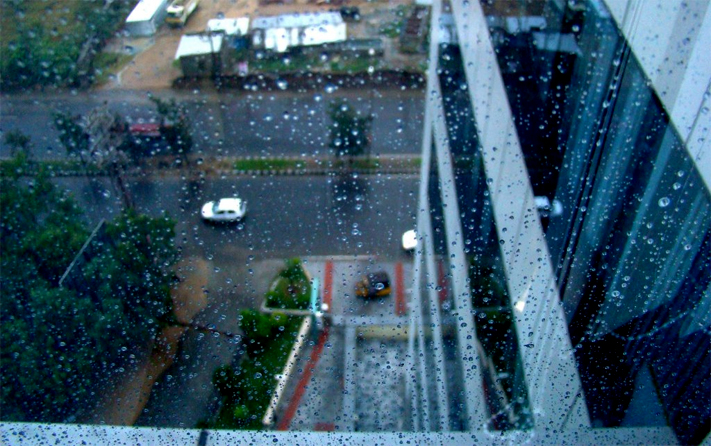
I rushed to the large window behind my boss’ corner to peep through the venetian blinds. Rain lashed heavily on the air tight window panes and the thunder struck. Seems like the monsoon has arrived on time.

Stuck in a cubicle in a huge air conditioned hall with no sunlight or wind, I have become zombie. Day in and day out I day dream of going out in the open, under the blue skies, into the country side, lie flat on the grass, facing the lashing rain. Stuck in an urban corporate world, it really seems like a distant mirage for me. All I can do now is to cling on to the memories of childhood.

monsoon in india - rain dropsThe monsoon rain brings back memories of blissful childhood, of an unfettered life with care a damn attitude. Getting soaked in the rain, running along the edges of the slushy paddy fields, eating hot pakoras sold on the roadside, and making paperboats out of the school notes! Can we bring back the joy that we got from such silly things…

monsoon in india - Rural sceneHaving brought up in the Malnad area in the Western Ghats, I was fortunate to have seen the full glory of monsoon season. Once it starts raining in early June, it will not let go until august. The arrival of Ganesha Chaturthi heralded the long awaited break.

monsoon in india - Rain Drops on rose plantJust outside the town of Shimoga in the late 1980s, there were river streams in the countryside on the road to my village. I and my friends used to pack off on a Saturday to hunt for birds nest and bee hives (we were too studious to bunk classes on a weekday!)

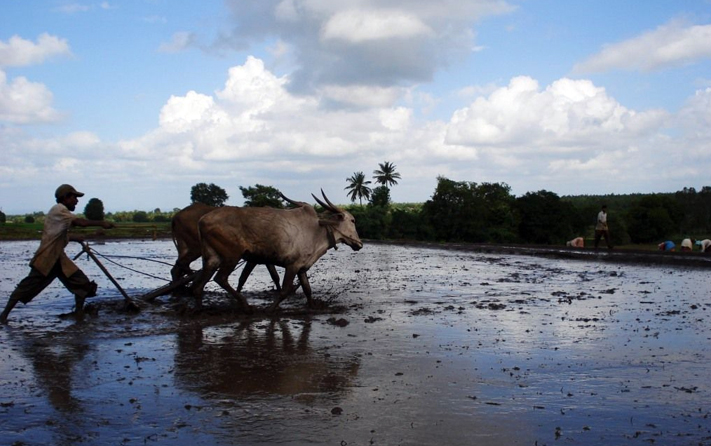
monsoon in india - Rain DropsThe rainy season was a busy one for my village relatives who toiled in the fields. But for us city kids, it was time to jump into the slush in the pretext of helping out in planting the paddy. Our aunts at home would either make Pathrode or Akki kadubu for us to relish on. It would be Eerekai Pakoda (ribbed gourd snack) in the evenings. Some days, our uncles would go out on a hunt to catch a wild boar or a deer!

Gone are those days when we could find wildlife in the forest. My recent visit to Shimoga was quite a revelation. The city has reached the outer limits of the Shettihalli wildlife sanctuary on the west side. Gadikoppa and Malligenahalli have come inside the city now!

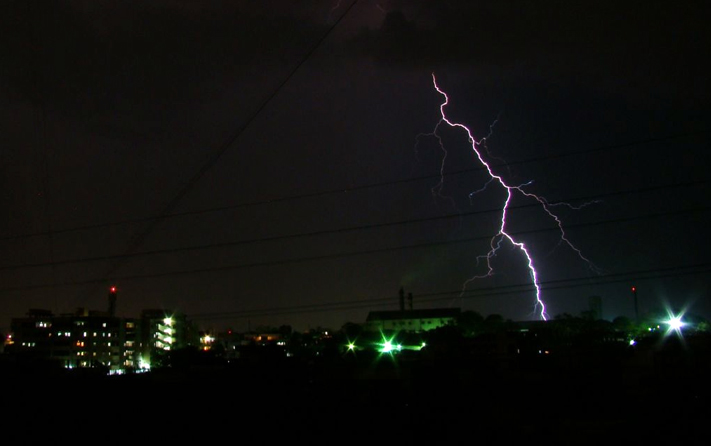
monsoon in india - LigntningNow, all that is left is to sit in the balcony of my city dwelling to wait for a thunder lightning to strike and capture it in my camera. Below children of our housekeeper, Ranga and Lakshman are playing joyfully in the gushing waters. Faraway, some women are on the terrace to enjoy the rain. But for me, rain brings back memories and reminds the joy that is lost forever. The lyrics of Dhaani album remind me that again!

http://www.nytimes.com
http://www.flickr.com

The L.O.V.E. Collection

10

Inspired by a sentence from the Julie Andrews song in The Sound of Music, ‘Raindrops on roses and whiskers on kittens’, we thought of the Monsoons, and that drew us to a woman’s favourite things – Fashionable Clothes! Women and Fashion, can the two be separated?! So, again chasing links, Tom finally found Jerry and they are friends forever. I mean, we found a modern collection of women’s wear for the impending monsoon season and searing Indian summers. Showcased by Monsoon fashion brand at the London Fashion Week, it is called the L.O.V.E. Collection. This range includes party and daily wear, and has a variety of flamboyantly simple dresses, tunics, tops, camisoles, jackets, waistcoats, shorts, and others.

They have used Indian crafts in some pieces and have kept this particular line clean not only in terms of design but also by using recycled fabrics. Some of the fabrics/designs they have used are organic cotton jersey, smocked tunics in cotton, cutwork-embroidered dresses in 100% organic cotton, and layered dresses in 100% silk.

Every piece has a name and all of them had me spinning happily for a bit (almost every famous Indian city and other cities being represented in these names): Delhi Dress, Bangalore Cami, Goa Maxi Dress, Goa Button Tunic Top, Pondicherry top, Chennai Embellished tunic, Jaipur woodblock embellished dress (block printing is very popular in Jaipur), Casablanca Dress, San Juan Dress, or the San Antonio dress, and the Captiva Maxi dress (for the brave ladies I suppose!). I was delighted to find a Calcutta Tunic for myself. There is also a cute L.O.V.E. frill scarf, for a few frilly personalities.

Monsoon has simplified the monsoons by introducing the L.O.V.E. collection and there probably is something for every modern woman here. While you enjoy style and fashion, don’t forget to keep raincoats and canopies handy!

http://ecogoddessfashion.blogspot.com

http://www.monsoon.co.uk

The Goddess of Monsoon

2

Monsoon_Howrah_Bridge

Wisps of hair glued to their foreheads, clutching multihued or black grandpa-umbrellas, rolled up trousers; wading through knee-high waterlogged streets; women in drenched saris frowning, eyebrows arching in slight annoyance; muddied wet shoes and sandals; these and hundred other such vignettes frame the city of Joy, Kolkata when the goddess of monsoon arrives. And she will be here anytime soon. Streets will overflow like Lilliputian-rivulets. Taxis and smaller cars will refuse to ply into inundated streets. Rickshaw pullers will almost swim across streets; buses, trams, larger vehicles will continue to commute as on any other day.

During the monsoon, life parades itself in half-a-smile and half-a-frown, through the busy bylanes of Kolkata, as everyone will now rush to their offices early in the mornings and scurry back home in the evenings. Small town and village dwellers shall peek through rain-smoked bus-windows, while travelling to the city; and any discomfort from crowding seats and bus alleys will evaporate in the first smell of wet mud.

Galleries of iridescent bougainvilleas, piled atop rising bungalows, perfumed jasmines inchoately hedging boundaries, flurrying nectar seeking bees and birds, house crows, will be forgotten in sheets of rain, as they too will hide under man-made windowpanes, abandoned huts, and perhaps will be remembered more so due to their absence, in the marginally annoying but immensely loved monsoon showers.

I can’t forget that Kolkata lives by the Hooghly, its mother. Hooghly flows along, mystically, in rhythm with the abundant dark clouds overhead. The residents of Kolkata coexist in harmony with their mother, who smiles and swells along with the dark clouds for four months between June to September, at a stretch, as though her own. Therefore, life by the Hooghly will continue to survive too. Steamers, wooden boats, will run along the monsoon currents; temples by the river will remain open; deities will bless those who come to visit despite the rain, and even those who don’t! Hooghly will transform from a docile goddess to Maa Kali, albeit, almost, in a loving manner.

Monsoon in india - Boats Howrah Bridge

A boatman may smile, not sulk, when he speaks of the monsoon. His heart shall say, “The Goddess of Monsoon arrives – mounted on horse-like-clouds, dismounting in fury, week after week, in mayhem; but her mayhem we hope is sublime, because she seeks to soothe us too, giving us respite from the scorching months of summer.”

The fisherman must catch fish, the boatman must ferry his people from one side of the river to the other, even though it pours, even though Hooghly wells up in monsoon pride, because that is how it is year after year.

Bridges that seek to play upon Hooghly’s surface in an arch too, shall stand unmindful of any monsoon fury, their colossal size, bearing resemblance to Goliath’s or Samson’s heroic feats of yore. Just like the undiminished spirit of the city-people of Kolkata, in spite of incessant rainfall, chronic traffic jams, water-logged lanes everywhere, the spirit of the townspeople living close to the suburbs of Kolkata, by the Ghats of Hooghly, shall remain unscathed.

The winter months in Kolkata, are perhaps the most liked. The months of humidity and heat, are also something Kolkata-bashi bear with a smile playing across their lips. After being part of the city for several years now, and having witnessed the city’s survival ploys in some extreme weather conditions, I do understand how each season tests the eternal spirit of Kolkata. And the Monsoon Goddess, perhaps, is a not-so-soft invigilator. Yet, every year, the people of Bengal, thrive in any condition.

Every year, the monsoon leaves an imprint; it makes not only me, but every other city-and town-village-inhabitant, anxious. The first showers have almost begun. This evening I saw lines of translucent beads drawing waves in the air, and a film of water on the ground. The Goddess at present waits like a shy girl at the threshold, speaking in low tones, but I do know, the blue skies will soon lift her up, and in the greying clusters of strong mist, she will rain upon Hooghly and on the city that lives by it. And magic will ensue.

– Factfile –
Wiki/Monsoon
http://www.mapsofindia.com

Walking Through the Ruins of Nalanda

9
Nalanda-University
Nalanda University WikimediaCommons

I felt a strange sensation when I visited the Nalanda University, like when you visit a college you couldn’t secure admission to. As the visit to the world heritage site unfolded, that strange feeling turned into a shock brought on by the ruinous sight.

From the entry queue, to the site entrance, was enchanted by the long covers of well-maintained gardens. Then I saw it. What used to be one of the first residential universities of the world, an architectural masterpiece in its time, had been divested by time until just stacks of bricks remained.

Now serving, among other things, as a milestone for the start of decline of Buddhism in India, this building drove me to enquire into history as to what went wrong.

The institution was established during the Gupta Emperors in 450 AD. Built with a capacity to house up to 10,000 students and 2000 teachers, the complex had numerous compounds, dormitories for students, temples, meditation halls, a library and almost every other possible educational infrastructure. Researchers and archaeologists believe that the colossal library had a collection of around 9 million volumes. Conceptually, the institution was clearly ahead of its time.

The University is said to have been at its pinnacle when the complex was put on fire in 1193, reportedly by an army led by Bakhtiyar Khilji.

The guide took us to the dormitories to show the remains of students’ rooms. Stone beds and study tables, with small circular pits at one corner, which were probably used as ink pots. In the basement lay the kitchen. Archaeologists believe that it was the kitchen because of the burnt rice found in the structure. The rice grains are kept at the Nalanda museum with other items salvaged during the excavations.

As I explored further, I stepped into a gateway, from which winding stairs took me to a long corridor. There were rooms on either sides of the corridor which I assume, must have been the classrooms. This is the only place in the whole structure with the roof intact.

I tried imagining how it must have been with all the students, kind of like my school’s corridor used to be. As I was leaving the premises, I looked at the ruins one more time, and completed the imagination with what it could have been like to look at the campus in its glory.

– Factfile –
Wiki/Nalanda
timesofindia.indiatimes.com

Interesting Story Behind Logos

7

Story-Behind-Logos

Apple Logo

story-of-famous-logos

Let me begin with the story behind the logo of the cultest brand of all time, Apple! I feel the term ‘cult brand’ was defined in popular culture by Apple. Much before the bitten apple came into prominence, there was this logo designed in 1976 by one of the founders, Ronald Wayne. It depicted Isaac Newton sitting under the legendary apple tree with the apple about to fall off!

Later it was replaced by the well known rainbow coloured bitten apple designed by Rob Janoff. The Apple logo was designed with a bite so that it wouldn’t be recognized as another fruit. The coloured stripes were conceived to make the logo more accessible, and to represent the fact that its monitor could reproduce images in colour. Read more…

BSA Logo

All of us have ridden a cycle in childhood, which would probably be a BSA cycle! Particularly the BSA Ladybird was quite popular among girls. However, the origin of the company’s logo is anything but girly! Birmingham Small Arms (BSA) was a British guns and ammunition manufacturer who diversified into bicycles in 1880s. One legend says that the company produced cycles out of the same gun barrels produced in excess during the First World War. Although historians dispute that, the company’s logo is an assembly of three guns! Read more…

MRF Logo

Here is an Indian twist to a story behind a well known brand named, ‘MRF Tyres’. The company originated in present day Chennai as ‘Madras Rubber Factory’. When it expanded its operations across India, it wanted a brand image with wider appeal.Given this task, Alyque Padamsee, the doyen of Indian advertising felt he should seek customer’s opinion on a tyre. So he met a few truck-drivers, who said, “Arrey saab, tyre mazboot hona chahiye, taakat rehna chahiye.” Thus the MRF Muscle Man was born in 1964, symbolising the power that the truck-drivers wanted in a tyre. Read more…

Sun Microsystems Logo

Here is an Indian connection to a well known IT hardware and software brand. Sun stands for Stanford University Network which was formed by Vinod Khosla, Andy Bechtolsheim, and Scott McNealy. These Stanford graduate students came together along with Bill Joy of Berkeley to form the company in 1982.Sun’s logo, which features four interleaved copies of the word ‘sun’, was designed by professor Vaughan Pratt, also of Stanford University. The initial version of the logo was orange and had the sides oriented horizontally and vertically. It was subsequently changed to appear to stand on one corner and the colour was changed to purple. Read more…

Amazon Logo

This famous logo has a clear message hidden in itself! Jeff Bezos wanted to name the company, Cadabra .Inc but he refrained after he got to know that people mistook it for ‘cadaver’ (dead body).Later he named his company upon the huge river, Amazon. This suggested that the brand implies huge variety of choices and also it began with the letter A, so that it will be on top of alphabetical web catalogues which were precursors to the search engines. The clever hidden message in the logo is the arrow that indicates ‘a to z’! Read more…

Elettrodomestici Logo

Elettrodomestici is a renowned Italian company catering to the household appliances market. The logo was created by using the electric plug image and the letters ‘E’ and ‘D’ are hidden in the negative space!The stark mathematical perfection of this logo created by designer Gianni Bortolotti forces critics to think that the combination of these two letters forming the shape of a plug is just a grand coincidence! Read more…

Toblerone Logo

Toblerone is the favourite chocolate which everyone wants from Switzerland. The distinctive triangular shaped packaging reminds us of the Swiss Alps. So obviously the mountains were the natural choice for its logo. However, the hidden image of a bear talks about the company’s origin.
The city of Bern is also known as the ‘city of bears’. The bear was the heraldic animal of the seal and coat of arms of Bern since the 13th Century. Originating from the city of Bern, Toblerone founders had to use the bear the symbol! Read more…

Gudang Garam Logo

This logo is literally a dream come true! All smokers know about Gudang Garam. This Indonesian clove cigarette has a strange warehouse image as its logo. It happens that the founder Surya Wonowidjojo was working in Cap 93 cigarette factory in Indonesia. One night, Wonowidjojo had a dream which featured an old salt warehouse which stood near Cap 93 factory. Subsequently, Sarman, one of the 50 employees who had followed him when he left Cap 93, advised him to put a picture of the warehouse on every packet of his cigarettes to secure good fortune. Today, the founder’s son is the richest man in Indonesia! Read more…

Mom & Me Logo

In my opinion, this is one of the pinnacles reached in creativity in Indian advertising! Mahindra Group’s retail division launched ‘Mom and Me’ outlets to cater to mothers and toddlers across the country. The group wanted a logo which symbolised both the target audience and the company.The designers came up with the enlarged ampersand which looks like a toddler! Further, it connects to the old name of the group, Mahindra & Mahindra! Read more…

Red Crystal Logo

This is a strange new logo of a world famous organisation. I am yet to understand, why anyone would dump an existing renowned logo for this strange and unimaginative image! This new logo named ‘Red Crystal’ belongs to the International Red Cross Movement.Due to the need to integrate the Red Crescent used in the Middle East, Red Star in Israel and the Red Cross in the rest of the world, the organisation took this politically correct decision of a new logo. This is exactly why political correctedness and committee decisions should be eradicated from the corporate world. Ironically, it was Apple’s Steve Jobs who said “do not let a committee design a product”. It’s no joke that Apple’s logo is on everyone’ minds and this Red Crystal on nobody’s! Read more…


Affordable Logos

The Enigma of Enid Blyton

2

“Fancy you asking me that!” Now, for any die-hard Enid Blyton fan, this phrase shouldn’t be hard to identify with. It is one she often used in her hugely popular Famous Five series. What was it about this writer that was so unique? Born in East Dulwich, London, England in 1897, Enid Blyton was born in a middle class home and lived a regular life.

The beginning

Blyton was a talented pianist, but she gave it up when she turned to teaching. In her spare time, she wrote. Blyton had a unique way of writing. There have been many great children’s writers, but her way of writing was simple yet never boring.

Blyton’s writings were meant mostly for young children; her stories were those of fantasies. In her stories, children were free to explore and play to their hearts’ content without adult interference. A lot of people, including myself, cultivated the love of reading because of early exposure to Enid Blyton. Tusharika Agrawal, a huge Blyton fan, reiterates, “I used to wait for Mondays, because that’s when we used to have the library period in school. When I finally exhausted the stock in the library, I began to buy my own Blytons. I feel like my childhood would’ve been incomplete without her books”.

Criticism for Blyton

While a lot of children will agree with this, there are, however, some detractors. Critics believe that Blyton’s writing was too simplistic; she did in fact use extremely narrow vocabulary. For this reason, the writer had to face several rejections during her career. For instance, when Blyton’s husband, Hugh Pollock, wrote to the BBC that she be allowed to broadcast over the radio in 1938, he received a reply that her stories don’t have much literary value. However, continued patronage by adolescent readers across the globe even today puts to rest all criticism.

Famous works

While Blyton was a prolific writer with several titles to her name, there are some which have become immortalised in history.

Famous Five

Arguably the most popular series the author wrote, the books are based on the lives of five characters – siblings Julian, Anne and Dick, along with their cousin George (her real name is Georgina but she hates it!) and her trustworthy dog Timothy (or Timmy), embark on adventures before finally solving a mystery, thanks to their sleuthing skills. In these stories, readers not only are taken on an amazing journey of adventure, but are also introduced to the endearing friendship between the five. This series was popular for the delicious descriptions of the characters’ favourite snacks – ginger ale, sandwiches and lemonade. All 21 series sold like hot cakes, and continue to be favourites even today.

Secret Seven

The ‘secret seven’ are Peter (the society’s leader), Janet (Peter’s sister), Jack, Barbara, George, Pam and Colin. This is also a mystery series, but while the Famous Five come upon adventures by chance and set about solving them informally, the Secret Seven have a society, complete with badges and passwords, to help them solve their case.

Malory Towers

This series is about boarding school life and its highs and lows. The protagonist is Darrell Rivers and the series follows her from her first year at the Malory Towers right up to the time she graduates.

The Faraway Tree

In this three book series, the children Jo, Bessie and Fanny discover a tree in a forest. This is the Faraway Tree. At the top of the tree, there is a ladder which leads to an exciting new land every time the children visit, as it ‘moves on’ to make way for a new land.

Fans write

Heather, a Blyton fan from Australia, writes on www.enidblyton.net a fan website, “I read them several times, and over the years compiled more and more… including Secret Seven and Five-Find Outers.” Another such site set up by Blyton fans is www.enidblytonsociety.co.uk. Both these sites are extremely useful for information and discussions about the writer. One can even find the text of several of Enid Blyton’s books which have been painstakingly transcribed by Blyton enthusiasts.

Last words

Blyton was seen by some, including one of her own daughters, as being an arrogant and scheming person in her personal life. However, for millions of fans worldwide, it doesn’t change the fact that she was a writer par excellence. Fatema Parasnis, “I grew up on Blyton’s novels. I now have a son, and I hope that he too will inculcate a love of reading and that Enid Blyton can bring to him the kind of joy and satisfaction that she did me”. Tusharika adds, “I learnt a lot of lessons of life from Blyton; she shaped my foundation to a great extent”.

Text & pic – Rash Writer
– Factfile –
www.enidblytonsociety.co.uk
wiki/Enid_Blyton
wiki/Malory_Towers
http://www.enidblyton.net

Little Green Riding Hood – A Fable Revisited

4

Invigorating our lives with their depth and infiltering our thoughts and feelings with their encoded, allusive messages, some fables become legendary.

“The Little Red Riding Hood” is one such fable. The strong fabric of this story is its interminable moral message of inner strength, which underlies layers of mesh-like innocence and naivety. Sometimes age is no bar to courage, and within the simple are intertwined strands of wisdom. Several versions of this fable have been created and persist in riveting our attention to it. Here is my version:

Little Green Riding Hood

Once upon a time, in a deep forest, lived a girl named “Little Green Riding Hood”. Her mother and her twin sister Red lived in a parallel world, far away.One evening, on the way through the forest to visit her grandmother, a big bad wolf accosted Green. The wolf told her to eat the box of chocolates she was carrying and litter the forest with wrappers, saw-down trees, and then go deer-hunting with him!

The wolf promised to take Green to her mother if she agreed. Flustered but brave, Green Riding Hood told him that she would not destroy the forests she loved, and she would not kill animals either! She believed strongly that she would one day meet her mother and sister without resorting to such tactics.

Green Riding Hood

So, Green Riding Hood turned away from the wolf and sprinted to her grandmother’s house. Fortunately, on the way she met a wolf-hunter. Green told him about the terrible nature-hating wolf. The wolf-hunter was no ordinary man; he was the keeper of the forest and a sorcerer too. He quickly caught the wolf and turned him into a fern. The wolf-hunter was so pleased with Green Riding Hood’s courage that he teleported Green and her grandmother to her mother and Red in the parallel world.

Today, Green and Red are much older and have a forest of their own. Recently, I was thrilled to know that someone has created an iPad app for building awareness on Yoga and organic way of living!

Text: Trisha Bhattacharya
http://www.eastoftheweb.com/
http://www.britishcouncil.org