Remembering the Heroes of 26/11 Attack

4
Remembering-the-Heroes-of-26-11-Attack-01A
Image – Soumik/Flickr

Exactly fifteen years ago, in the heart of Mumbai, the nation’s financial capital, a sombre chapter was etched as a part of the lively city’s history. The blistering sounds of gunfire and the deafening blasts of explosives turned iconic landmarks into scenes of chaos and silenced the vibrant spirit of the city of dreams, as it is popularly known. The 26/11 attacks not only shattered the bustling metropolis but also left an indelible mark on its psyche.

The Mumbai Attacks

On the night of 26 November 2008, ten men travelling on inflatable speed boats came ashore on the coast of Mumbai, the jewel of the Arabian sea. Over the next three days, these men inflicted unspeakable horrors that this historic city would not forgive or forget for years to come. 

The Chhatrapati Shivaji Terminus

The team of ten men split into two groups immediately after coming ashore. The attacks began at the Chhatrapati Shivaji Terminus, where some of the unfortunate passengers were waiting for delayed trains. At 21:30 hours, two men stormed in, showering a spray of bullets upon the confused and terrified passengers at the station. These two men, who would later be identified as the notorious Ajmal Kasab and Ismail Khan, would kill a total of fifty eight people and injure many more at the CST alone. 

The brave actions of one man, Vishnu Dattaram Zende, the on-duty announcer that night, saved the lives of hundreds. Vishnu Zende, with access to the announcement system, was quick to act when he saw the terrorists and heard the sounds of the assault rifles and grenades blasting through an otherwise eerie silence. He quickly directed hundreds of people out the station and ensured that they would not cross paths with the terrorists on their way out. He would also guide rescue personnel in their services to the injured after the attack.

Cama Hospital

After attacking the CST, two terrorists headed to the Bhikaji Cama hospital for women and children as a part of their plan. As the terrorists killed the security guard and jumped over the walls, police engaged the terrorists. However, the terrorists continued to hail bullets and grenades at the hospital. As things were looking bleak, the nurses of the Cama Hospital stood together to save their patients, switching off lights in wards, locking the doors and wheeling away patients, including women in labour, to safety. One nurse, named Anjali Vijay Kulthe, saved twenty lives that day. 

 Leopold Cafe

At the same time, two other terrorists sprayed bullets in Leopold cafe, a cosy hangout spot in Colaba. Ten people were killed in this brief but deadly attack. 

The Taj Mahal Palace Hotel 
Movie-Hotel-Mumbai-Review-04

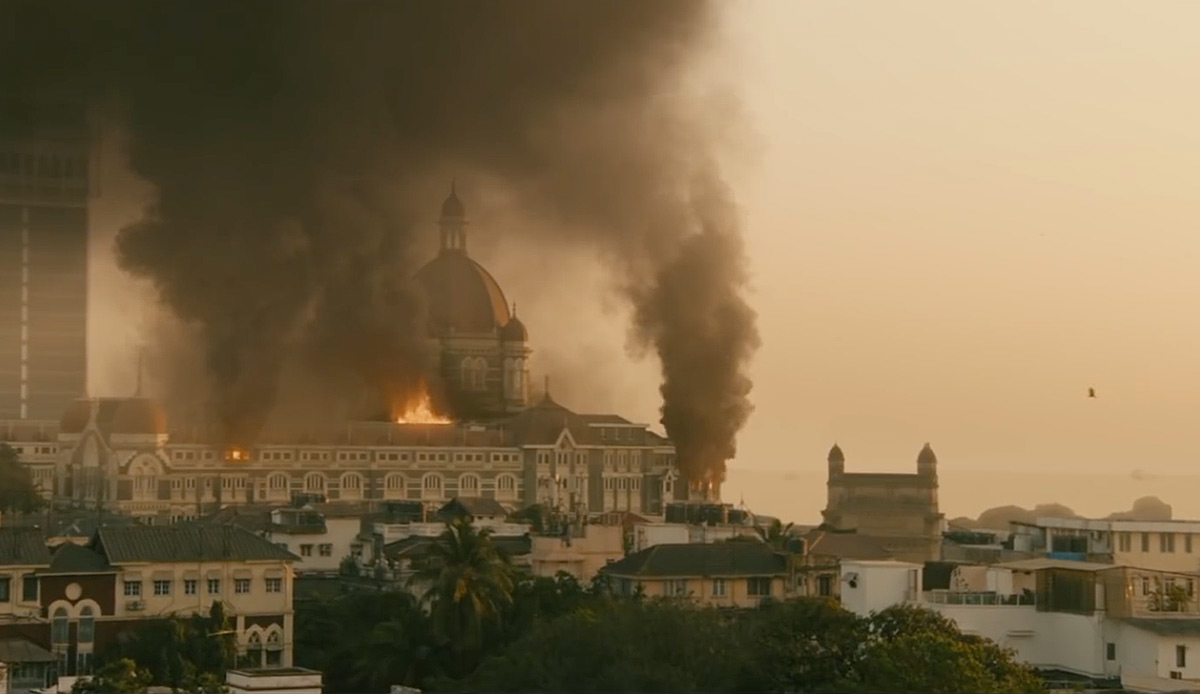
Around 2300 hours, four terrorists descended on the pride of Mumbai, the iconic Taj Mahal Palace hotel. The terrorists strategically cleared the hotels by the floor, but brave members of the staff acted quickly to save the lives of hundreds of guests. After a painstaking siege and bloody operations by the police, naval marine commandos and the elite commando force, the National Security Guard, the hotel would finally come under the control of the security forces on the night of November 29, 2008. By attacking this iconic landmark of the city, the terrorists aimed to destroy the very soul of the city. While much of the hotel was destroyed in the three day siege, it recovered from the attack and continues to honour the heroes that saved the day.

Read here about the heroic actions of the staff of the Taj Mahal Palace hotel.

The Oberoi Trident

The Oberoi Trident is one of Mumbai’s premier five star hotels. It was targeted on the night of 26/11 by two of the ten terrorists, who took several guests hostage and killed more than thirty of them. After three days under siege, it was taken over by the National Security Guard.

Nariman House

Nariman house was a jewish outreach centre in the Colaba area, and was the epicentre of the Jewish community in Mumbai. Nariman house was taken over by two terrorists and six people, including the Rabbi Gavriel and his pregnant wife, Rivka, were killed. The Rabbi’s two year old son, Moshe, was saved by his nanny, named Sandra Samuel, who safeguarded the little boy to her best efforts. He is now a teenager, living and studying in Israel under her care. Nariman house was later secured by the National Security guard.

The Heroes of 26/11
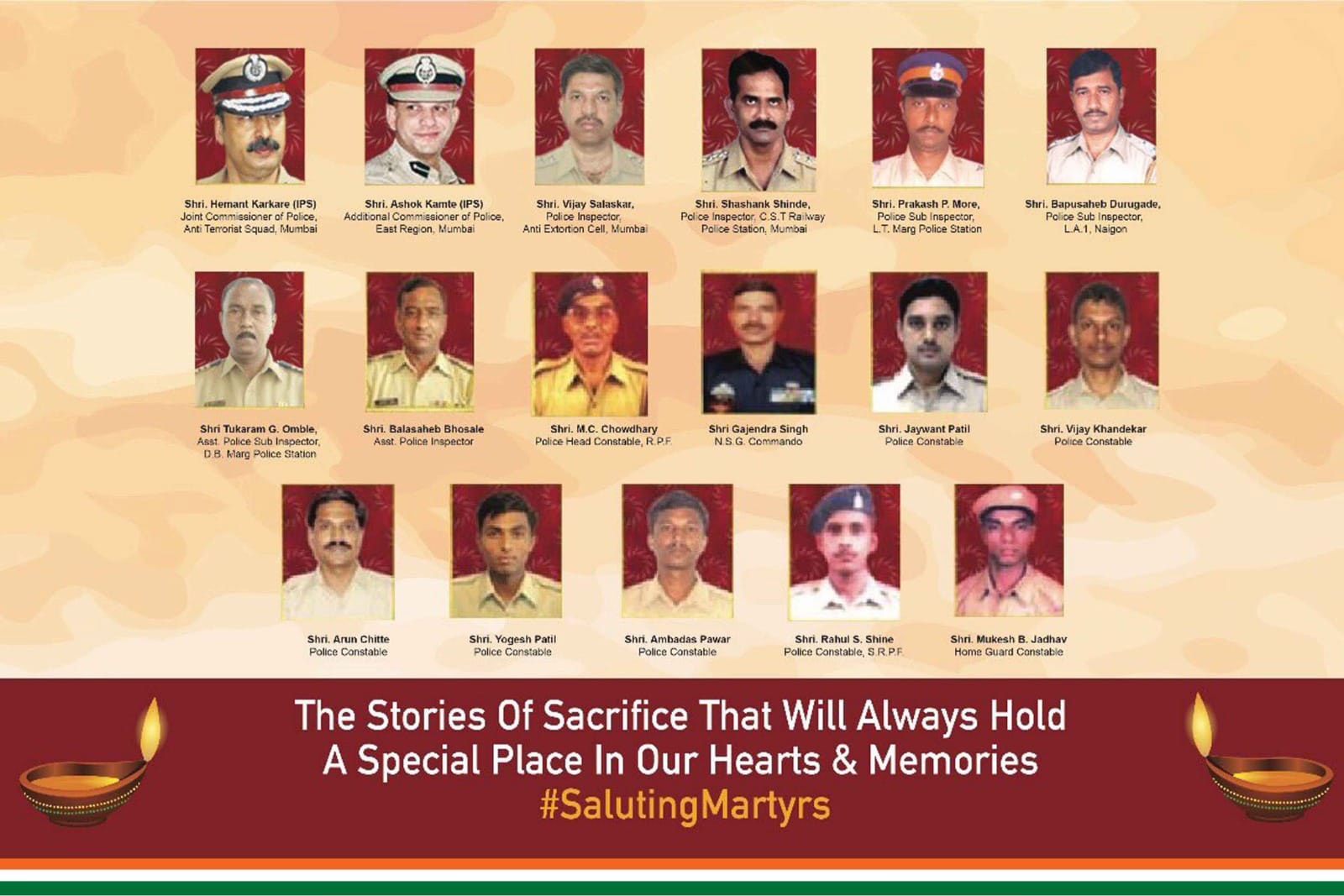
Remembering-the-Heroes-of-26-11-Attack-04
Image Source

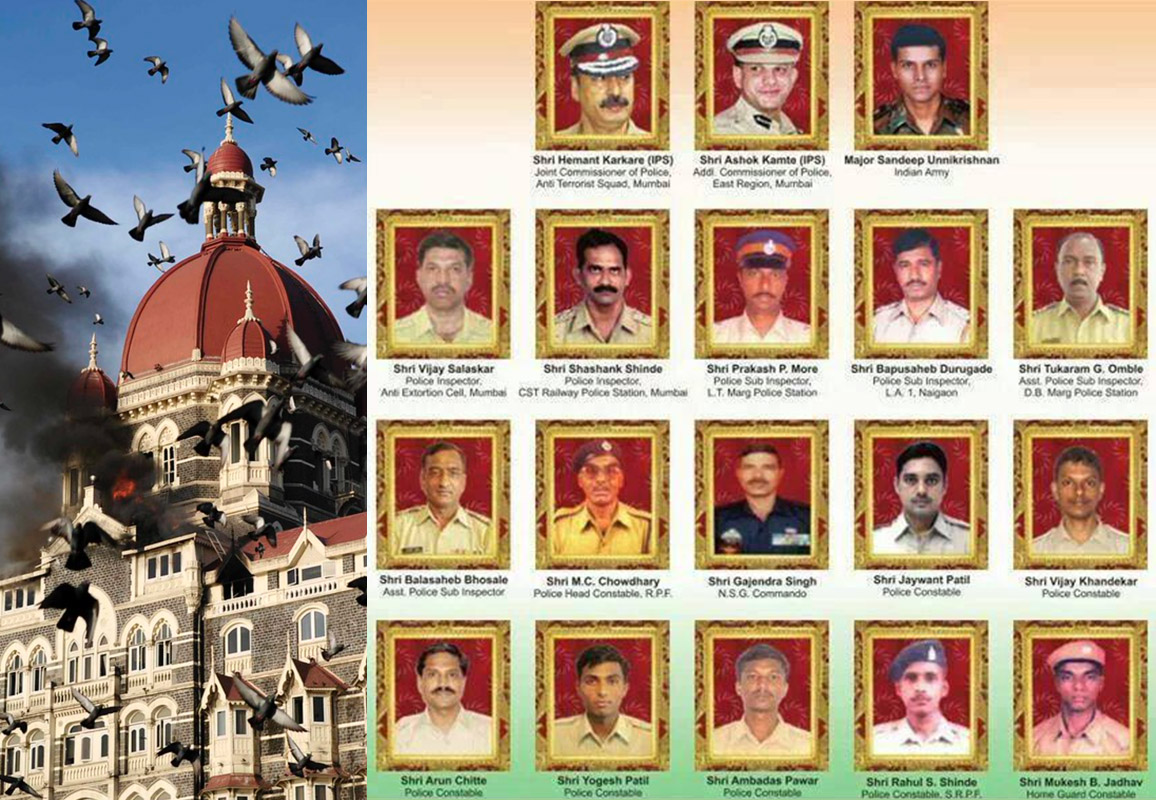
The seventy-two hours starting from the night of 26/11, 2008 were probably the most tumultuous in Mumbai’s recent history. While the incident gave the city its deepest scars, it also produced some of its finest heroes, a few who lived to tell the tale and a few others who were martyred in the line of duty as they helped their fellow man out of danger. These are some of 26/11’s finest heroes from the Indian security services. 

 Operation Black Tornado

Operation Black Tornado was the name given to the sieges and subsequent operations carried out by the elite National Security Guard at Nariman House, The Taj Hotel and the Oberoi Trident Hotel. During Operation Black Tornado, eight of the ten terrorists were eliminated.

Major Sandeep Unnikrishnan

Major Sandeep Unnikrishnan was one of 26/11’s finest heroes. Thirty-one year old Major Unnikrishnan was the commander of the 51 Special Action Group of the National Security Guard, which had been deployed in the Taj hotel. As a part of the operation, he rescued several hostages and even sent a commando who had been grievously injured to safety before he chased terrorists on a floor above all alone, despite being shot in his right arm. It was in an encounter here that he was martyred in the line of duty. Major Unnikrishan lives on in the memories of several Mumbaikars who witnessed his heroic actions and Indians who have sourced inspiration from him. 

ASI Tukaram Omble

On the fateful night of 26/11, ASI Omble was one in a team manning a police checkpoint for vehicles. As terrorists approached his checkpoint in a hijacked vehicle, it resulted in a shootout, killing one terrorist. As the dreaded Ajmal Kasab stepped out of the car feigning surrender, ASI Omble approached him unarmed to apprehend him when Kasab opened fire. ASI Omble bravely held on to the barrel of the gun and the terrorist, even standing in the way of the fire so as to ensure that no one else was shot. He was shot a total of twenty-three times in close range from the powerful AK-47 machine gun. As he collapsed, the rest of his team arrested Kasab. His actions, even in his dying moments, ensured that one of the key perpetrators of the Mumbai

Havildar Gajendra Singh

Havaldar Gajendra Singh was one of the NSG’s 51 Special Action Group and was a part of operations at the Nariman House. He was martyred in his line of duty. The following is his Ashok Chakra citation.

In the night of 27th November 2008, Havildar Gajender Singh was leading his squad in the operation to rescue hostages from the terrorists at Nariman House, Mumbai.

After clearing the top floor of the terrorists, he reached the place where the terrorists had taken position. As he closed in, the terrorists hurled a grenade injuring him. Undeterred, he kept firing and closing in on the terrorists by exposing himself to the hostile fire. In the act, he injured one of the terrorists and forced the others to retreat inside a room. He continued the encounter till he succumbed to his injuries.

Havildar Gajender Singh displayed most conspicuous courage against grave odds and made the supreme sacrifice for the nation in combating the terrorists.

Hemant Karkare, Ashok Kamte and Inspector Vijay Salaskar

Hemant Karkare was the chief of Mumbai’s ATS or Anti Terrorist Squad at the time of 26/11. He was a distinguished IPS officer who had a number of accolades to his name. He was even a part of the Research and Analysis Wing, having served in Austria for six years. 

Additional commissioner of Police, Ashok Kamte, was an excellent police officer who was known for his calm temperament and negotiation tactics. He was the Additional Commissioner of the Eastern zone of the city of Mumbai, which was not under attack. Nevertheless, he had offered his assistance.

Inspector Salaskar was an excellent officer of the Mumbai police and had eliminated a number of dreaded criminals of the city. He fearlessly went behind the Mumbai underworld and its biggest dons, even making public statements about Arun Gawli after he became an MLA. 

These three distinguished police officers and four others were heading to the Bhikaji Cama hospital, where they had heard that ACP Sadanand Date had been injured in his efforts to protect the Bhikaji Cama hospital. On their way to the hospital, terrorists had stepped out from behind a tree and shot everyone in the van dead, except Inspector Arun Jadhav, who lived to tell the tale. These brave men have been awarded the Ashok Chakra for their commitment and supreme sacrifice.

Conclusion

In the aftermath of the 26/11 Mumbai attacks, while scars remained, Mumbai emerged stronger, its heartbeat echoing tales of courage and unity. From extraordinary police officers to ordinary service staff of hotels, many heroes emerged. Through pain and loss, the city discovered its collective strength, turning adversity into a catalyst for change. The heroes of 26/11 embody the true spirit of Mumbai- a city that, despite its wounds, stands tall, rebuilding not just its structures but also its spirit

Arthshila Kochi Becomes New Venue for the Students’ Biennale at KMB 2025–26

0

Arthshila-Kochi-Opens-as-a-Venue-for-the-Students’-Biennale-2025–26-A

A Heritage Space Reimagined for the Students’ Biennale

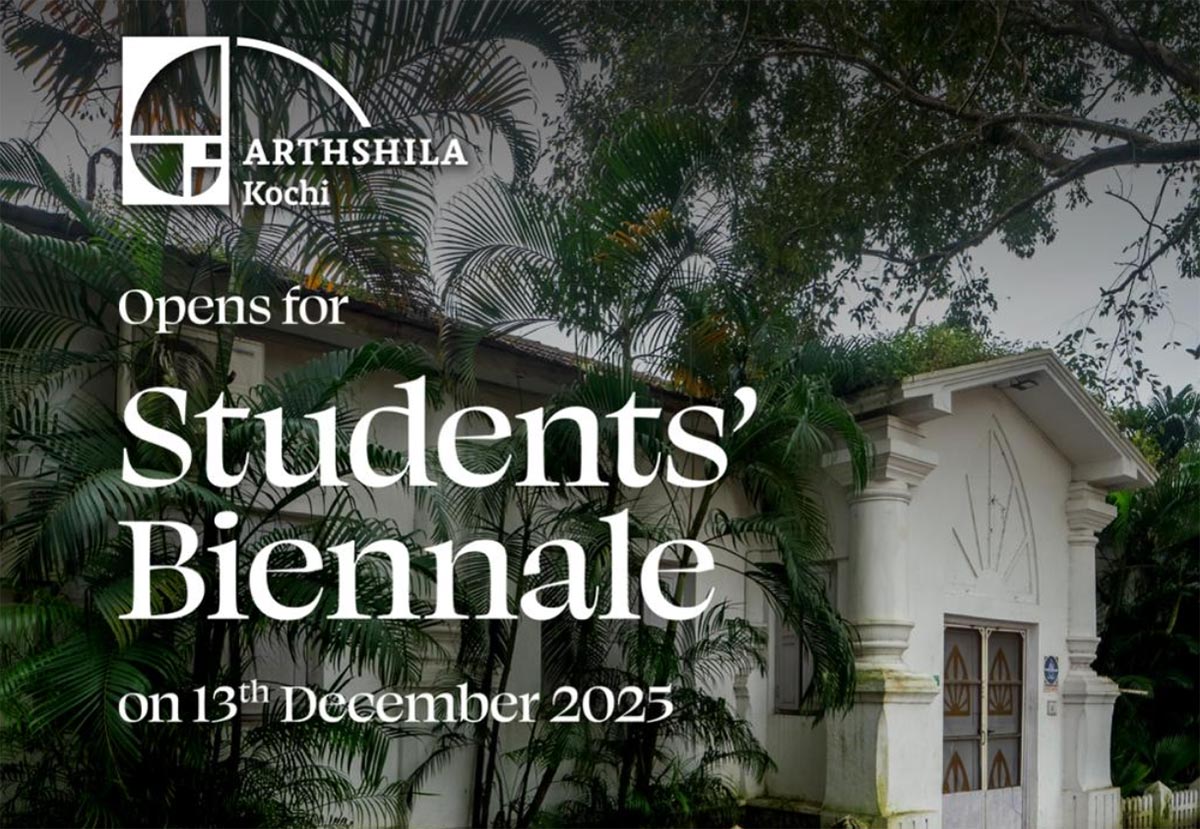
Artshila Kochi has announced the opening of one of the five official venues of the 6th Kochi-Muziris Biennale (KMB) as the hosting site for the upcoming Students’ Biennale. This is a key educational segment that marks a significant moment in the build-up to the 2025–26 edition. Located along Parade Road near Fort Kochi’s historic Parade Ground, Arthshila’s heritage structure will open its doors on 13 December 2025, presenting a dedicated space for student-led contemporary art practices. 

In recent years, the students’ Biennale has emerged as one of the most zestful platforms for young artists across India. As a scholastic extension of the KMB, it fabricates fresh infrastructural and intellectual spaces where student practitioners can get involved with contemporary artistic endeavors. With Arthsila Kochi joining it, the grounds turned more decentralized, and a nexus of a student-based ecosystem is aptly positioned. 

The KMB

The KMB stands tall as a one-of-a-kind contemporary art exhibition in South Asia, transforming the historic port city of Kochi into a composite cultural laboratory, brewing artistic brilliance. It is organized once every two years, hence, a biennale. While the dates of the inauguration are approaching, the art scene in India is buzzing with excitement to witness the next generation of South Asian artistic geniuses. The main exhibition of the 6th KMB, titled “For The Time Being,” is curated by internationally acclaimed performance artist Nikhil Chopra in collaboration with HH Art Spaces, Goa. This edition, which is scheduled to run for 110 days from December 12, 2025, to March 31, 2026, aims to challenge the conventional perceptions of viewing art. Nikhil reimagines the artistic landscape as a “living ecosystem” where all the elements share space, time, and resources. 

The curation of KMB is very methodological, and the exhibition is expected to feature a high number of durational works and performances. The audience will be engrossed in participatory moments that will omit the distinction between creation and presentation.  The Biennale seeks to bridge emerging global perspectives with a strong rootedness in the local context. The philosophy of the event is to continue the legacy of cultural exchange, pointing to Kochi’s history as an ancient port, Muziris, where distant civilizations once confided. Major venues like Aspinwall House, Pepper House, and Durbar Hall will house the primary exhibition. 

Artshila Kochi- The Students’ Biennale

The Students’ Biennale, initiated in 2014, was conceived as a response to gaps in India’s formal art education system. The inclusion of Artshila Kochi as one of the five venues, dedicating it to the Students’ Biennale, is a significant step.  The Students’ Biennale itself is a key educational and outreach vertical of the Kochi Biennale Foundation, dedicated to providing a prestigious platform for students from Indian art schools and universities. Thus, by deliberately placing this spot for the students, they have carved a space to feature more works created by the students that are worthy of displaying. By showcasing works from these young artists, the SB actively participates in shaping the future discourse of contemporary art in South Asia. Artshila Kochi will become a space where this new generation can engage with the KMB’s core themes, such as liveness, temporality, and embodied history, on their own terms. 

Artshila Kochi is also significant because it is a carefully revitalised heritage structure that sits amidst the lush landscape of Parade Road. The white façade of the building, its colonial-era architectural imprint, and the surrounding greenery create a unique atmosphere where the past and present intersect. Historically, Fort Kochi has been shaped by Portuguese, Dutch, and British influences, and Arthshila’s architecture subtly echoes this syncretic past. Moreover, Artshila is already known for its cultural work in Patna, Santiniketan, and Ahmedabad, thus creating a more sensible environment around art. The transition of this historical place into a domain of new artistic practice ensures that the KMB functions not only as an art display but as an incubator of thought. 

The upcoming Students’ Biennale will highlight themes such as material ecologies, migration, digital identities, and climate anxieties, issues that resonate deeply with emerging artists across the subcontinent. Arthshila Kochi’s spatial configuration is expected to support installations, new media artworks, documentary projects, and site-responsive works.

Event Details

Important Points Details
Biennale Title “For The Time Being”
Curator(s) Nikhil Chopra with HH Art Spaces, Goa
Main Exhibition Dates December 12, 2025 – March 31, 2026 (110 Days)
Students’ Biennale Dates December 13, 2025 – March 31, 2026
New SB Venue Artshila Kochi, Parade Road, Fort Kochi
Curatorial Focus The Body, Process as Methodology, Friendship Economies, Liveness, and Presence
Founders Bose Krishnamachari and Riyas Komu (2012)
Key Venues Aspinwall House, Pepper House, David Hall, Durbar Hall, and Artshila Kochi (for SB)

Key Highlights

  • A heritage venue transformed into a contemporary art space.
  • One of the five official venues for the Students’ Biennale 2025–26.
  • The exhibition will run from December 13, 2025, to March 31, 2026.
  • Strengthens Arthshila’s nationwide network of cultural spaces.
  • Enhances the pedagogical ecosystem of the Kochi-Muziris Biennale.
  • Expected to feature diverse works by student artists from across India.

Takeaway

Arthshila’s inclusion as a Biennale venue represents more than a logistical expansion; it is a reflection of the kind of cultural future we want to build. India’s art education often lacks an institutionalized platform for sustained experimentation, and the Students’ Biennale has emerged as a corrective to that lack. It suggests that the future of Indian art will grow not in isolation, but through conversations with place, memory, and lived experience. This alignment signals a future where India’s artscape becomes more democratic, critically engaged, and locally rooted.  It sets a standard that other cultural bodies should follow. It promotes the ideas of investing in young voices, to value their inquiries, and offer a stage to them to showcase their work to a larger crowd. If this is truly fulfilled, only then can contemporary art in India evolve beyond just viewing and metamorphose into something meaningful. Therefore, this edition understands that to secure art’s future, one must empower its creators to confront the contradictions of the present.

Le leasing de jets privés : une alternative à l’achat et à la location

0

Private jet leasing an alternative to buying and renting-1

Le secteur de l’aviation privée connaît une croissance exponentielle, et avec elle, de nouvelles options de financement et d’utilisation des jets privés émergent. 

Parmi ces options, le leasing de jets privés se distingue comme une alternative intéressante à l’achat et à la location traditionnelle. 

Dans cet article, nous allons explorer les avantages du leasing de jets privés, comment cela fonctionne et pourquoi Aeroaffaires est votre partenaire idéal pour cette solution.

Qu’est-ce que le leasing de jets privés ?

Le leasing de jets privés est un contrat financier et opérationnel par lequel un particulier ou une entreprise (le « locataire » ou « preneur ») obtient le droit d’utiliser un aéronef privé pendant une période définie, en contrepartie de paiements réguliers, généralement mensuels. 

Contrairement à l’achat, le locataire ne devient pas propriétaire de l’appareil. Par rapport à la location traditionnelle (aussi appelée « charter »), le leasing s’inscrit dans une durée plus longue, souvent de 12 mois à plusieurs années. De plus, il offre une disponibilité quasi-exclusive du jet, ainsi qu’une personnalisation accrue de l’expérience (équipage dédié, configurations intérieures, etc.).

Il existe deux grandes catégories de leasing dans l’aviation privée : le leasing opérationnel et le leasing financier. Le premier ressemble à une location longue durée avec maintenance incluse, tandis que le second s’apparente davantage à un crédit-bail, où le locataire prend en charge une part importante de la gestion de l’appareil et peut même devenir propriétaire à l’issue du contrat. 

A Aeroaffaires, les solutions sont pensées pour s’adapter à ces différents profils, qu’il s’agisse d’un chef d’entreprise qui souhaite optimiser ses déplacements ou d’un particulier qui cherche un mode de transport luxueux et fiable.

Quels sont les avantages du leasing de jets privés ?

Parmi les raisons qui motivent le leasing, nous avons : 

1. Flexibilité financière et préservation du capital

L’un des principaux freins à l’achat d’un jet privé reste son coût initial : plusieurs millions d’euros, voire dizaines de millions pour les modèles les plus imposants. 

Le leasing contourne cet obstacle en transformant un investissement immobilisé en charge opérationnelle. Au lieu de bloquer un capital important, le client paie un loyer mensuel prévisible, souvent inférieur au coût total de propriété (entretien, assurance, personnel, hangar, etc.). 

Cette approche améliore la liquidité de l’entreprise ou du particulier et permet une meilleure allocation des ressources.

2. Accès à des technologies de pointe et à des flottes renouvelées

Dans un secteur en constante évolution technologique, les nouveaux jets privés offrent des gains significatifs en termes de consommation de carburant, de confort cabine, de connectivité et de performance.

Grâce au leasing, il devient possible de « mettre à jour » facilement son appareil à la fin du contrat, sans les complications liées à la revente. Cela permet de toujours voler à bord d’un aéronef moderne, respectueux de l’environnement et équipé des dernières innovations.

3. Réduction des responsabilités opérationnelles

La possession d’un jet privé implique une série de responsabilités complexes : entretien régulier, conformité réglementaire, gestion du personnel navigant, stockage, assurance, etc. 

Avec le leasing (notamment le leasing opérationnel), une grande partie de ces obligations est transférée au bailleur. Le client se concentre alors uniquement sur l’usage,tout en bénéficiant d’un service clé en main sans les tracas de la gestion quotidienne.

4. Avantages fiscaux potentiels

Dans de nombreuses juridictions, les loyers de leasing peuvent être déductibles en tant que charges d’exploitation, ce qui peut alléger significativement l’impact fiscal global.

Bien sûr, chaque situation est unique, et il est essentiel de consulter un conseiller fiscal ou comptable avant de s’engager. Néanmoins, cette possibilité ajoute une couche supplémentaire d’attractivité au leasing, notamment pour les entreprises soucieuses d’optimiser leur structure financière.

Comment fonctionne le leasing de jets privés avec Aeroaffaires ?

Le processus de leasing chez Aeroaffaires est conçu pour être aussi fluide et transparent que possible, même pour les clients découvrant cette formule pour la première fois.

Étape 1 : Évaluation des besoins

Tout commence par une discussion approfondie avec un conseiller Aeroaffaires. Combien de vols par mois ? Quelles distances typiques ? Combien de passagers ? Besoins spécifiques en termes de cabine ou de services ? 

Ces informations permettent d’identifier le type d’aéronef idéal : jet léger pour des trajets courts, jet moyen pour des vols transcontinentaux ou jet long-courrier pour des destinations internationales.

Étape 2 : Sélection du jet

Grâce à une flotte étendue et à un réseau de partenaires mondiaux, Aeroaffaires propose un large éventail de modèles, de la série Citation aux Gulfstream, en passant par les Falcon, Challenger ou Embraer. Le client peut même visiter virtuellement ou physiquement les cabines disponibles.

Étape 3 : Négociation et signature du contrat

Les termes du leasing sont adaptés à la situation du client : durée, kilométrage autorisé, options de fin de contrat (renouvellement, changement de modèle, restitution), inclusion ou non des coûts d’exploitation. Aeroaffaires accompagne le client dans chaque détail contractuel pour éviter les surprises.

Étape 4 : Mise en service et usage

Une fois le contrat signé, le jet est mis à disposition, souvent avec un équipage dédié et une assistance 24/7. Le client programme ses vols librement, comme s’il était propriétaire, mais sans les contraintes associées.

Étape 5 : Fin du contrat

À l’issue de la période convenue, plusieurs options s’offrent au client : prolonger le leasing, passer à un modèle plus performant ou restituer l’appareil. Cette modularité est au cœur de la philosophie du leasing.

Comparaison : leasing vs achat vs location

L’achat : un investissement lourd mais total

Acheter un jet, c’est bénéficier d’un contrôle absolu et d’un actif tangible. Mais c’est aussi s’engager dans des coûts récurrents parfois imprévisibles (réparations majeures, dépréciation, coûts de stockage, etc.). La revente, quant à elle, dépend fortement du marché et peut entraîner des pertes.

La location (charter) : une solution ponctuelle

La location classique reste idéale pour des besoins occasionnels. Mais elle manque de prévisibilité : disponibilité aléatoire, tarifs variables selon la saison ou la demande, impossibilité de personnaliser l’expérience. Pour des utilisateurs réguliers, cela devient rapidement coûteux et frustrant.

Le leasing : le meilleur des deux mondes

Le leasing combine la disponibilité et la personnalisation de la propriété avec la flexibilité et la légèreté financière de la location. C’est une solution « juste à temps », parfaitement alignée avec les exigences modernes d’efficacité et de durabilité.

Pourquoi choisir Aeroaffaires?

Depuis plus de trois décennies, Aeroaffaires s’est imposé comme un acteur incontournable de l’aviation privée en Europe et au-delà. 

Spécialisé dans la location, le leasing, la vente et la gestion de jets privés, Aeroaffaires allie expertise technique, réseau international et approche client centrée sur l’humain.

  • Expertise reconnue : Des conseillers certifiés, une connaissance fine du marché et une veille constante sur les innovations technologiques.
  • Flotte diversifiée : Plus de 200 appareils accessibles, couvrant tous les segments de l’aviation d’affaires.
  • Service sur mesure : Chaque leasing est conçu en fonction du profil, du budget et des ambitions du client.
  • Accompagnement global : De la première consultation à la fin du contrat, Aeroaffaires gère l’intégralité du processus, y compris les aspects juridiques, logistiques et réglementaires.

Conclusion 

Dans un contexte économique en mutation et une demande croissante de solutions durables, le leasing de jets privés incarne une approche intelligente, responsable et élégante de l’aviation d’affaires.

Il permet de concilier luxe, performance et rationalité financière, tout en libérant le client des contraintes liées à la propriété.

Que vous soyez un dirigeant international, un entrepreneur en pleine expansion ou un particulier exigeant, Aeroaffaires vous offre la clé pour accéder à l’univers de l’aviation privée sans compromis. 

Prêt à redéfinir votre manière de voyager ? Contactez dès maintenant Aeroaffaires pour une consultation personnalisée et découvrez comment le leasing peut transformer vos déplacements aériens en une expérience fluide, flexible et exceptionnelle.

A Treasury of Life – Indian Company Paintings at Aguad Port & Jail Complex, Goa

0

A-Treasury-of-Life-Indian-Company-Paintings-at-Aguad-Port-01

A Restored Canvas

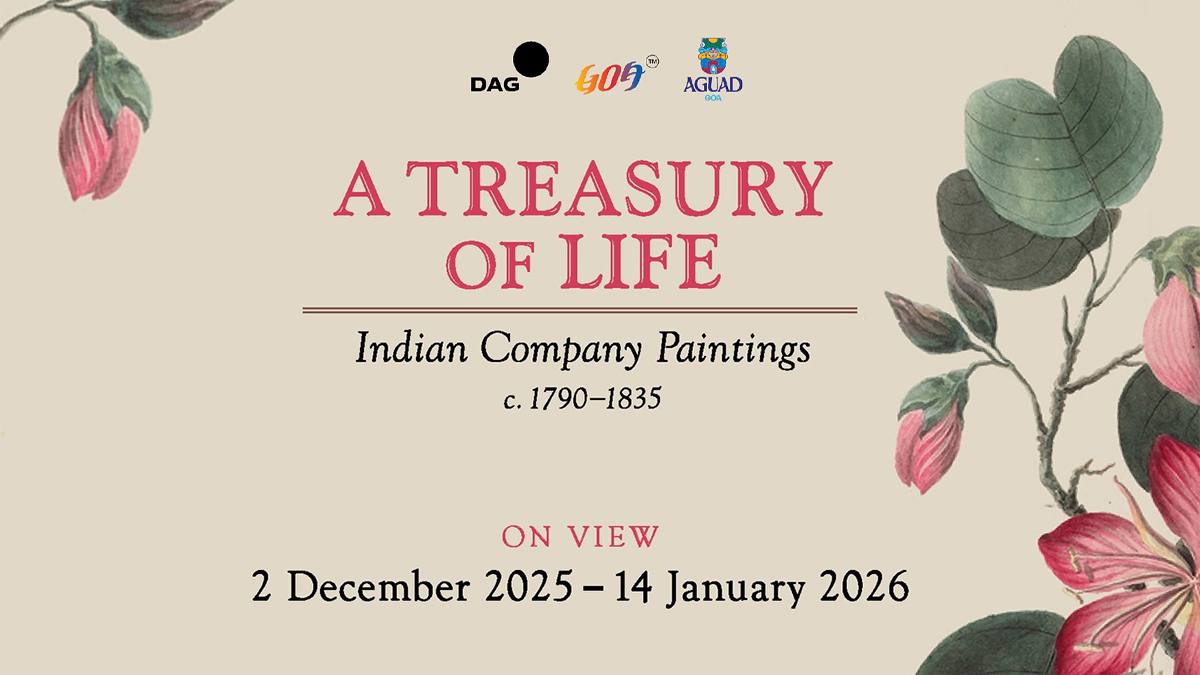
The Aguada Port & Jail Complex in Goa, a meticulously restored 17th-century Portuguese maritime fortress and former prison, is set to transfigure into a major cultural venue with the advent of a significant art exhibition. The majestic Portuguese fortification overlooking the Arabian Sea will host A Treasury of Life: Indian Company Paintings, c.1790–1835,” an extraordinary collection curated by Giles Tillotson, Senior Vice President at DAG. Scheduled to run from December 2, 2025, to January 14, 2026, the exhibition promises to be the largest presentation in India of the Company Paintings. The exhibition is coming to light with a remarkable collaboration with the Department of Tourism, Government of Goa. 

The Aguad Port & Jail Complex was a strategic Portuguese stronghold and a vital port; later, it was converted into a dark prison for Goan freedom fighters. The complex was subject to meticulous restoration under the Government of Goa. In its new form, it has now been turned into a modern centre for arts and culture and continues to narrate its history to everyone. The exhibition by DAG will bring together an impressive range of works produced during a transformative moment in Indian art history.

Understanding The Company Paintings

Formally known as the Company School of Art, its emergence can be traced in the 18th century in India, which erupted as a visual response to shifting socio-political realities. With the arrival of the British East India Company, a new patronage system took root. “Company Painting” is the term coined for artworks produced by Indian artists for European patrons, most notably the British East India Company, in the late 18th and early 19th centuries. The genre of Company Paintings rose at the cost of the declining artistic traditions of Indian courts, such as the Mughal and Rajput painting traditions. And soon, Indian artists trained in traditional Mughal, Rajput, and Deccani idioms began producing artworks tailored to European sensibilities. The timeframe central to this exhibition is that of c. 1790- 1835, when this hybrid style flourished. 

The Europeans demanded the documentation of the new and exotic land they occupied in the form of pictorial memories. Thus, these artworks served the European patrons’ curiosity and needs. Instead of focusing predominantly on courtly narratives, religious themes, or mythologies, the artists were commissioned to document natural history, including botanical studies and zoological drawings; architecture, showcasing grand monuments and local ruins; and Indian manners and customs, depicting local festivals, trades, and diverse peoples.

Echoes of The Bygone Era

The exhibition focuses on the dynamism of adaptation of the Indian artists through which they developed their existing skills to quench the demands of their new European clientele. This phase saw a masterful integration of European techniques such as linear perception, realism, and shading, with their native training in intricate line work and detailed finishing. Artists from Murshidabad, Patna, Madras, Tanjore, and Calcutta pioneered distinct sub-schools. Their works were as much scientific documentation as they were aesthetic marvels.

A brand new aesthetic template was born out of this synthesis that was neither purely European nor completely Indian. The exhibition highlights the artistic brilliance of these often-unnamed Indian artists who laid the groundwork for modern art in India. However, not all the artists were unnamed, as works by celebrated names like Sita Ram and Sewak Ram are also featured. “A treasure of Life” stands apart purely because of its commitment to feature diversity and make the experience inclusive. This exhibition reveals that the Company’s paintings are not mere artefacts from the recent past, but they depict an array of collaborative cultural encounters. 

The Experience: What To Expect?


View this post on Instagram


A post shared by Aguad (@aguadgoa)

The curator Giles Tillotson is a renowned Art Historian himself and is known for his work on Indian painting traditions. The featured artworks express the fact that the paintings are not just static representations of India’s colonial past, but are traces of artistic evolution that once took place in our homeland. Visitors will be able to explore a range of paintings based on the themes of Scientific inquiry, portraits, and figures featuring hierarchies, professions, and everyday life. There exists a hybrid form as well, where Mughal art meets European realism. Also, the beauty of the theme is amplified by the beauty of the restored complex with its stone ramparts and panoramic sea view. 

Important Points Details
Exhibition Title A Treasury of Life: Indian Company Paintings, c. 1790 to 1835
Organiser DAG (Delhi Art Gallery) in collaboration with the Department of Tourism, Government of Goa
Venue Aguad Port & Jail Complex, Goa
Duration Opening on 2 December 2025 and remaining on view until mid-January 2026
Curator Giles Tillotson, SVP, DAG
Artistic Period Late 18th to early 19th century (1790–1835)
Historical Context Art produced by Indian artists for European patrons during the period of the European trading companies, notably the British East India Company

Key Highlights

  • The largest exhibition on Company School paintings ever held in India.
  • Rare works sourced from DAG’s extensive collection, some shown publicly for the first time.
  • A nuanced narrative explaining how Indian artists shaped colonial aesthetics—not merely followed them.
  • A heritage venue (Aguad Fort & Jail) that complements the exhibition’s historical themes.
  • Curatorial focus on artistic agency, emphasising Indian painters’ innovation rather than colonial patronage alone.
  • A deep dive into cross-cultural exchanges that shaped 19th-century Indian visual culture.

Takeaway

“A Treasury of Life” in Goa is a culturally enriching event that consciously extends its discourse on Indian art beyond the metropolitan centres. It aims to reclaim a chapter of India’s visual history. For decades, Company Paintings were dismissed as colonial byproducts, overshadowing the extraordinary skill and adaptability of Indian artists who shaped a unique global aesthetic. Thus, it justly demands dignity and rightfully restores these paintings, produced by Indians, in the broader perspective of Indian art. 

Also, by showcasing the exhibition in a place that once captivated the nationalists, it compels viewers to confront the complex legacy of the colonial encounter, the oppression symbolized by the jail, and the hybrid artistic innovation sparked by the European presence. This is also a very thoughtful gesture, as it was once a site associated with confinement is now a space of cultural release. It demonstrates how historical memory can be transformed through art.

Through this, DAG seeks to re-contextualize not only Goa’s regional past, but the bigger pan-Indian picture.  It repositioned Company Painting from a ‘decadent’ footnote of court art to an essential and modern phase of Indian artistic growth. It is a reassertion of Indian creativity, resilience, and ingenuity.  It is a must-visit for anyone seeking to understand the deep, interwoven threads of history, heritage, and artistic expression in India.

11th Edition of the Indian Photo Festival (IPF) Opens in Hyderabad

0

11th-Edition-of-the-Indian-Photo-Festival-Opens-in-Hyderabad-01

The Indian Photo Festival (IPF) is India’s longest-running international photography festival that will transform Hyderabad’s cultural sphere once again through its month-long hub of visual culture. Inaugurated on November 20, 2025, the 11th edition shall run till January 4, 2026. This festival is taking place at the State Gallery of Art, Madhupur, and at different partner venues across the city. IPF is also a non-profit initiative by the Light Craft Foundation, dedicated to expressing the power of images and disseminating them through meaningful dialogue and subsequently inspiring social change. 

Democratizing the Lens

The IPF was established in 2015 by the photographer and curator Aquin Mathews. This initiative stemmed from a simple yet urgent need, i.e., the lack of accessibility and institutional platforms for photographers in India. The festival has curated a panorama of photographic work that spans documentary, fine-art, experimental practices, and photojournalism.  This edition received 820 entries from 50 countries.  The founder, Mathews, envisioned a space that was entirely free and open to the public. He wanted to make sure that financial constraints should not be a barrier to preventing people from engaging with photography and art. Mathews also prioritizes honest storytelling, and he makes his aim come true through this festival, which brings global creativity to the city. 

The festival opened with a highly anticipated keynote address by Newsha Tavakolian, the renowned Magnum photographer, whose talk “Between Voice and Silence” explored her work on conflict, censorship, and the emotional lives of women in Iran. There are several Indian artists as well who chose to project their craft in expressing their objective in tackling complex issues. Ranita Roy’s work delves into the psychological burden of sleep paralysis, Hridya Sadanand’s ‘Cooking with Taboo’ questions the role of gender, and wildlife conservationist Srikanth Mannepuri used his images to champion the under-recognized biodiversity of Andhra Pradesh and Telangana. 

Beyond exhibitions, IPF also caters as an educational and career development hub. The festival opens the doors towards learning opportunities, including free workshops and portfolio reviews led by international experts such as National Geographic Photo Editor Julie Hau. Moreover, the festival is equally dedicated to the empowerment of emerging artists, as it also facilitates grants totaling over INR 20 million through its partners. Their workshops focus on practices like darkroom printing and 19th-century Gum Bichromate technique, etc., encouraging true craftsmanship. 

Exhibition Details

Event Details
Duration & Scale Runs from November 20, 2025, to January 4, 2026. Features artists from over 50 countries.
Core Mission To celebrate photography as a medium for social change, conversation, and empathy.
Accessibility The entire festival, including exhibitions, is free and open to the public.
Founder Aquin Mathews, who established the festival in 2015 to fill an institutional gap in Indian photography.
Educational Focus Offers free mentorships, workshops (e.g., with Magnum and National Geographic editors), and portfolio reviews to nurture emerging talent.
Financial Support Has facilitated over INR 20 million in grants to support artistic growth and new work production.
Thematic Range Showcases works covering identity, climate change, social taboos, conflict zones, and personal histories.

Key Highlights 

  • The opening ceremony on 20 November at 5:30 PM at the State Gallery of Art, Madhapur, sets the tone with packed international attendance.
  • Major exhibitions featuring photographers such as Alessandro Celante, Sengu Kim, Gloriana Jiménez, and many more across genres.
  • Workshops and talks that engage with deeper themes: in her session, Newsha Tavakolian foregrounded “silence” as a creative process and the necessity of slowing the camera down.
  • The venue itself (Madhapur, Hyderabad) underscores the city’s growing cultural infrastructure and ambition as a centre for photography and art.
  • The festival’s ethos: not just showcasing great images, but enabling new voices, engaging audiences in dialogue about visual culture, society, and change.

Descriptive Narrative

A walk through the corridors of the State Gallery of Art can teleport people into another world. The grandeur of the large prints and installations summons aesthetic admiration and delight. The featured photographs range from war-torn zones sits beside images of everyday life in India. The aura is calm and filled with good vibes. As the guest speaker, Newsha Tavakolian described it: “Silence allows me to think and reflect deeply. When you see things slowly, you pay more attention to details.”

Most importantly, the festival ceases the treatment of the art of photography as a luxury and rather projects it as a tool of communication, empathy, and change. Dedicated space is allotted to the emerging photographers so that they can become more expressive. The festival is highly inclusive as it follows the open‐access model to make sure that photography is for all those who wish to make a better sense of the world around them. 

Takeaway

These days, people overconsume images through social media. However, IPF proves that photography, when treated with integrity and intentionality, remains one of the most powerful tools we possess. Photography is ultimately something that can cut through global chaos and capture the rawest and emotional moments that people often do not get to see. The IPF is indeed a vital institution that continues to mould the way of visual literacy across India. Most importantly, it is the economic and community-engagement-based sustainability that truly stands out and makes this event truly a special one. So, why not step into a beautiful facility where lively, sensitive, and meaningful pictures are displayed by talented practitioners?

Dhoomimal Gallery Presents Ski(e)n: Re-membering through Performance and Thread

0
Dhoomimal-Gallery-Presents-‘The-Art-of-Ski(e)n’-by-Abhijna-Vemuru-Kasa-&-Insha-Manzoor-01
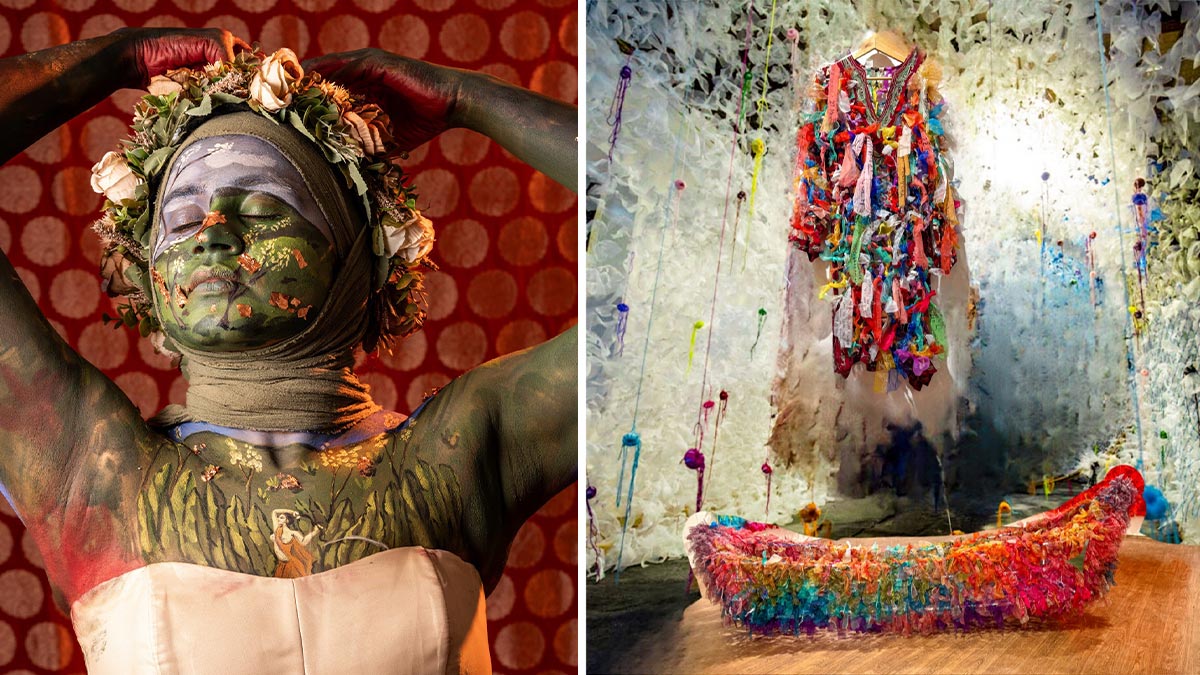
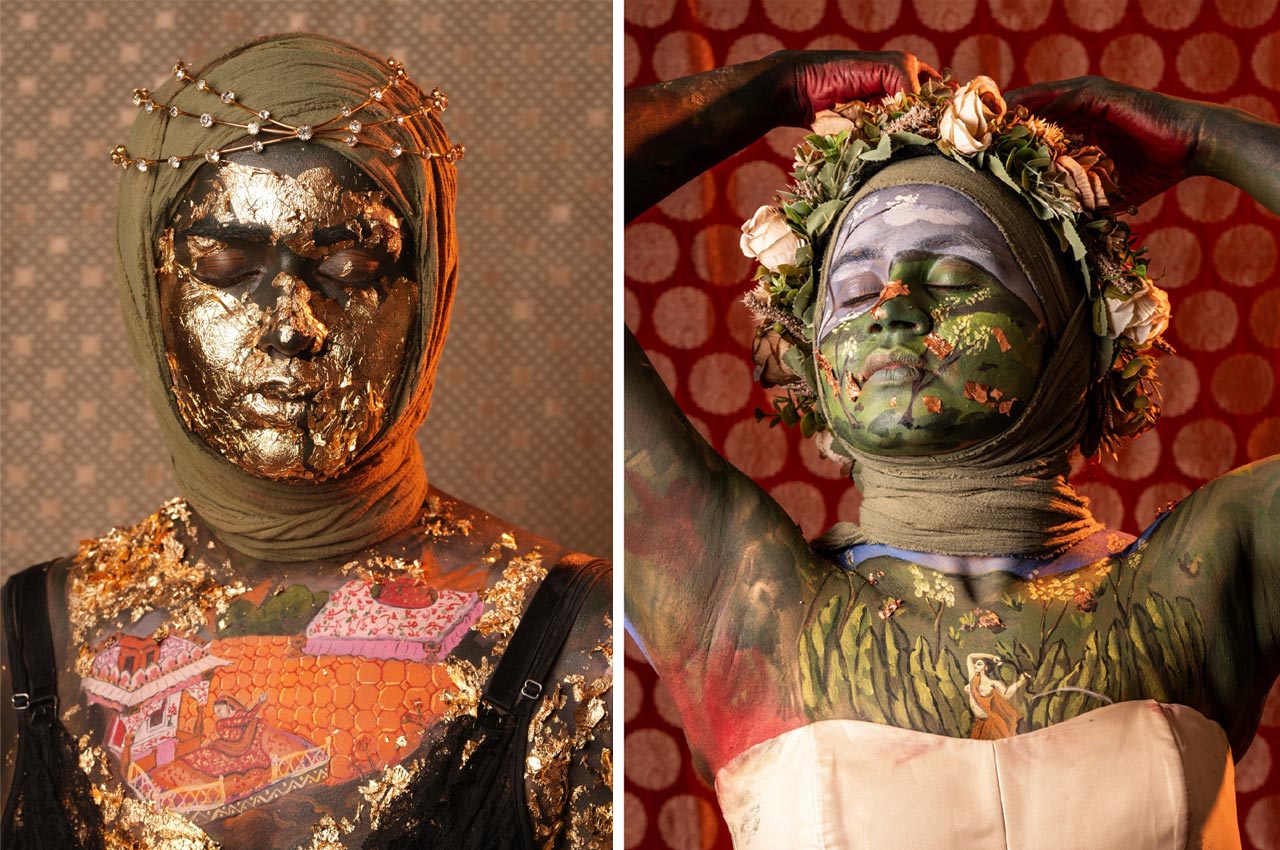
Left: Abhijna Vemuru Kasa-Dancing Aranyani, Right: Insha Manzoor-Voyage within

The Dhoomimal Gallery, India’s oldest modern art gallery, is set to host an intellectually thrilling exhibition, namely The Art of Ski(e)n: Re-membering through Performance and Thread. It will feature the works of two internationally trained artists from the Royal College of Art, London: Abhijna Vemuru Kasa and Insha Manzoor. It aims to dive deeper into the intersection of mind, body, and memory. The exhibition will run from  December 6, 2025, to January 10, 2026, with a preview on December 5 at the gallery’s Connaught Place venue. The exhibition is curated by Jyoti A. Kathpali and offers an interplay between two totally distinctive methods of artistic practice. 

Decoding Ski(e)n

The title, Ski(e)n, represents the skin as both a literal and metaphorical surface symbolizing a site of inscription for culture and history. And the skien is a length of thread or yarn, which is symbolic for a complex vector of memories. The art is displayed on a variety of media, such as photographs, textured textiles, etc., which reflect the emotional and psychological encounters of the artists with their ‘self’. The vivid materiality of the art also explores the threshold of time and space, symbolizing a niche where cultural memory and the unconscious mind actively engage in the act of creativity. 

Abhijna Vemuru Kasa

Abhijna-Vemuru-Kasa-Laperla-Oil-on-canvas,-2021-76”x82”
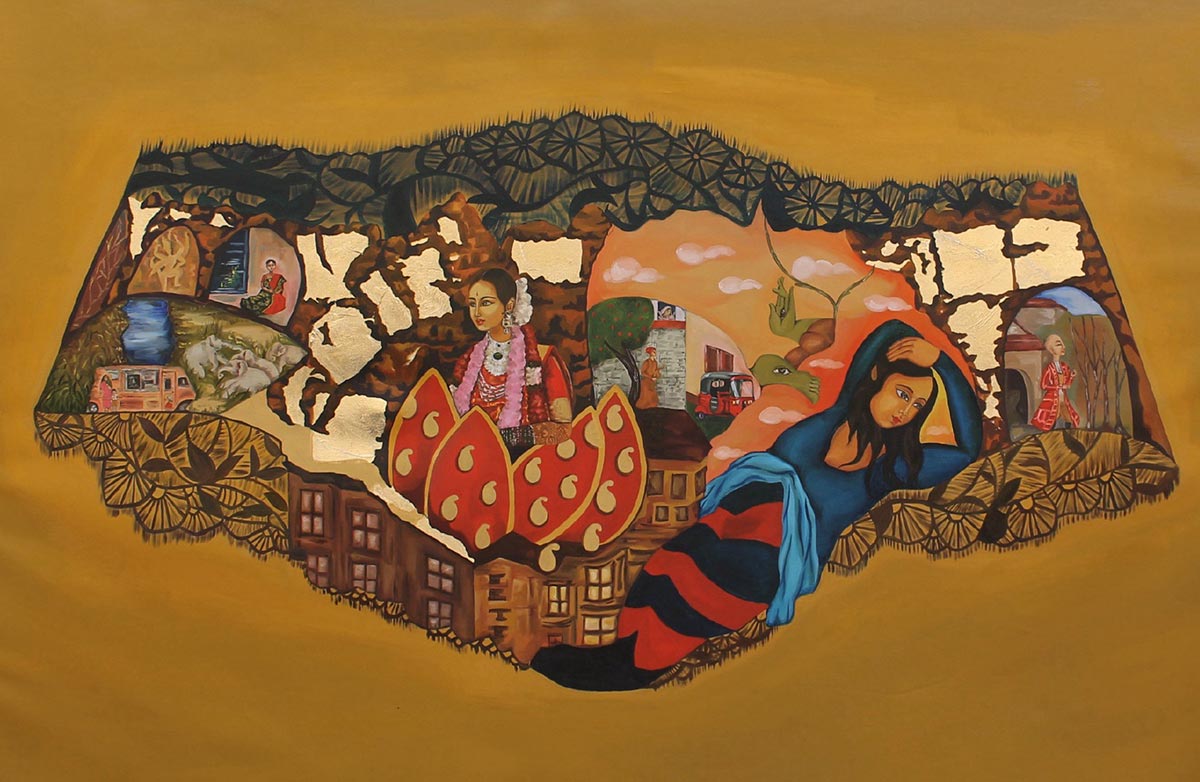
Abhijna Vemuru Kasa -Laperla Oil on canvas, 2021 76”x82”

Artist Abhijna Vemuru Kasa entails a fierce feminist POV in her art. Inspired by Indian and Persian narratives and local myths, her practice juxtaposes the norms that frequently essentialize women. She reinterprets stories through a feminist lens, which appear to be more authentic, real, and reflective of a woman’s actual lived experiences. Her work acknowledged the underacknowledged post-partum experience (the phase right after giving birth); her craft stresses a distinctive feminine subjectivity that is free from stereotypical and prejudiced constraints. Her media include performance, digital documentation, and painting on the skin, transforming surfaces into conduits for alternate imaginaries.

Insha Manzoor

Insha-Manzoor-Pambach-1
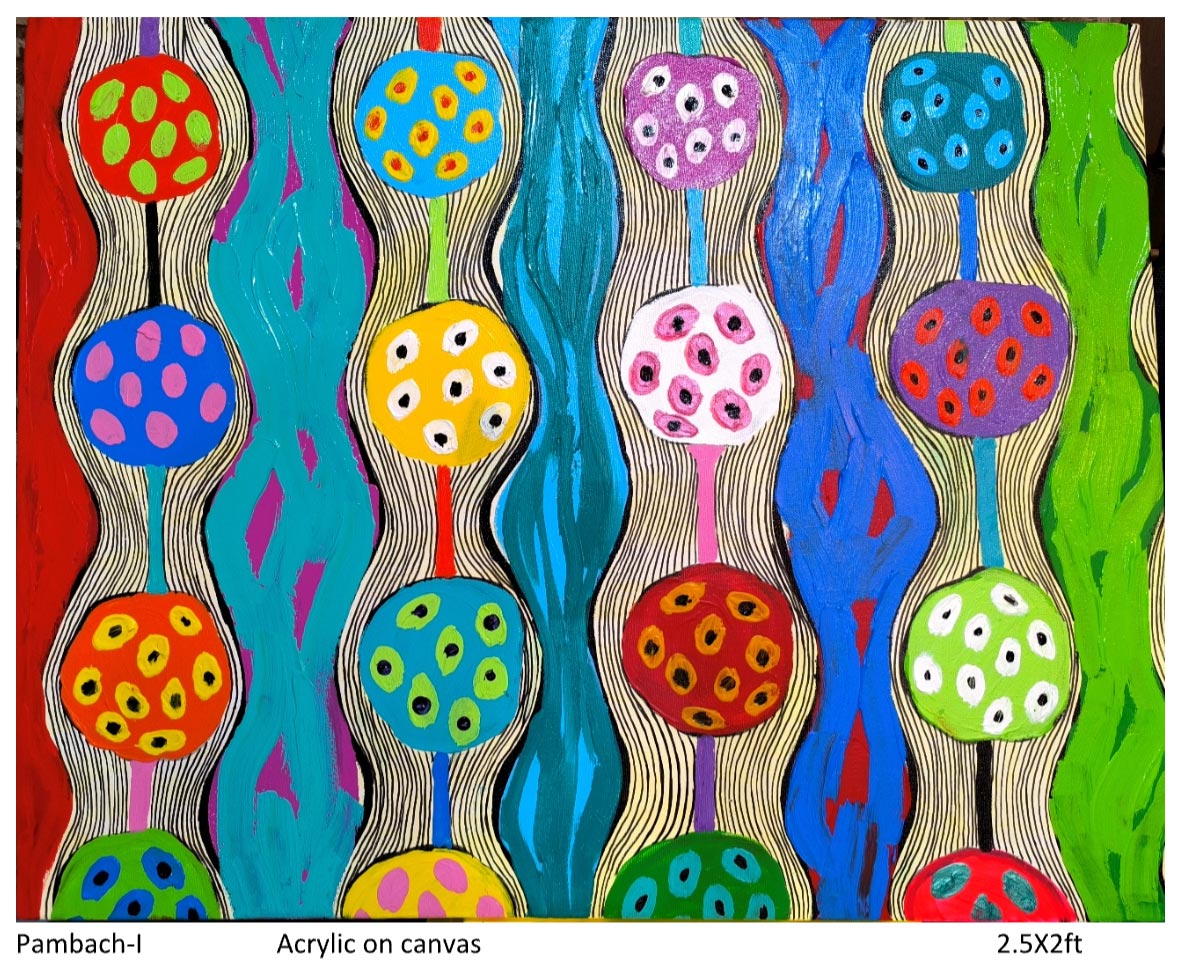
Pambach – Insha Manzoor

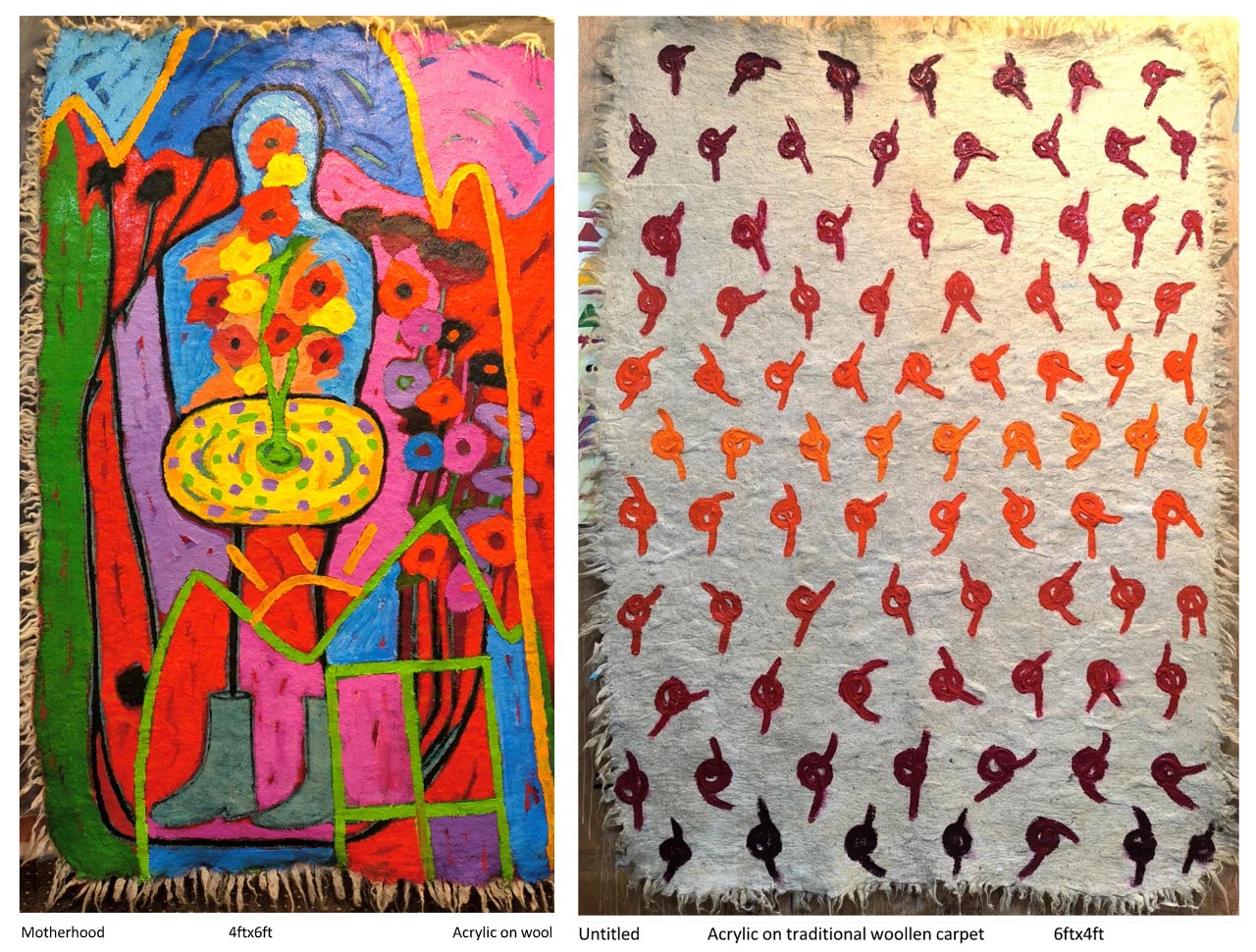
Insha Manzoor is a multidisciplinary artist hailing from Kashmir and primarily engages with their traditional craft. Her artistic exploration emphasizes how crafts such as weaving and embroidery can act as anchors in an unstable world marked by unstable geopolitics, displacement, and immense trauma. She possesses the capability to use thread and fabric in a way that brings people closer to intergenerational memory, knowledge, and care. These craft acts as a bridge for conflict mediation and contribute to peace, one stitch at a time. 

Insha-Manzoor-Motherhood-01

Both artists have varied leanings and different visual languages to display. However, the power they have invested and inculcated through their individual practice is utterly incredible. “This exhibition is a lot to do with the negotiation of the self and the gender-inscribed body, and of the self as a site of reconnaissance into the cultural motifs and craft, to recover connections between the individual and her fraught environment,” mentions Curator Kathpalia. The exhibition’s power lies in how these two distinctive voices “converge in their search for ways of re-inscribing the self in the world by attempting to visualise parity through skin and skein.”

Exhibition details

Event Details
Title The Art of Ski(e)n: Re-membering through Performance and Thread
Artists Abhijna Vemuru Kasa (Hyderabad/San Francisco) & Insha Manzoor (Kashmir)
Affiliation Both are Alumni of the Royal College of Art (RCA), London.
Curator Jyoti A. Kathpalia
Dates 6 December 2025 – 10 January 2026 (Preview: 5 Dec 2025)
Venue Dhoomimal Gallery, G-42 Connaught Place, New Delhi

Key Highlights of the Exhibition

  • A rare collaboration between two RCA alumni rooted in South Asian cultural memory.
  • Exploration of skin and skein as metaphors for inscription, inheritance, and emotional resonance.
  • Use of performance, digital documentation, immersive installations, and textile art.
  • Feminist, decolonial, and trauma-informed artistic expressions.
  • A rich variety of media: oils, acrylics, mixed media, wool, fabric, photography, installation art.
  • Curatorial walks and artist talks are planned during the exhibition period.
  • A focus on re-membering—literally stitching together fragments of identity, memory, and history.

Why Does This Exhibition Matter?

Abhijna-Vemuru-Kasa-Dancing-Aranyani-01
Abhijna Vemuru Kasa

Abhijna’s art is meant for people to explore the unspoken emotions and terrains of womanhood, as she introduces a powerful urgency to her practice. Working between Hyderabad and San Francisco, she interrogates the restrictive cultural norms that essentialise women’s bodies and experiences. Through her mixed media presentations, the  “skin” becomes more than a mere organ of the body. On the other hand, Insha’s skein embodies endurance and resilience. 

Takeaway

The exhibition reasserts the importance of craft, memory, and the body as sites of political and personal meaning. By blending tradition with technology, they challenge the binaries between craft and contemporary art, between personal history and collective trauma, and between myth and lived experience. In a world shaped by displacement, digital fragmentation, and contested identities, this exhibition reminds us that memory, like a thread, can unfurl, and it can be rewoven with intention, tenderness, and resistance.

Exploring the Indigenous Communities of Tripura: Stories of the Hills

0
Communities-of-Tripura-01
Image – Wikimedia

Encompassing an area of 10,491 square kilometres, delineated by the Radcliffe Line, Tripura is the third smallest state in India. Situated in the northeastern reaches of India, this state boasts rolling hills, winding rivers, and picturesque landscapes that captivate the senses. 

At its zenith, the Tripuri kingdom was said to have included the whole eastern region of Bengal from the Brahmaputra River in the north and west, the Bay of Bengal in the south, and Burma to the east during the 14th and 15th centuries AD. According to textual references, the ancient period of the kingdom started around the 7th century when the Tripuri kings ruled from Kailashahar in North Tripura. They used “fa” as their title, a word taken from the Kokborok pha,” which means “father” or “head.” It was in the 15th century that the kings adopted the title of “Manikya” and also shifted the capital to Udaipur (Hitherto Rangamati) on the banks of the river Gomati. The first Manikya was Maha Manikya, who took the title in honour of a historic victory in a war with Bengal.

Christening the Place

Christening-the-Place
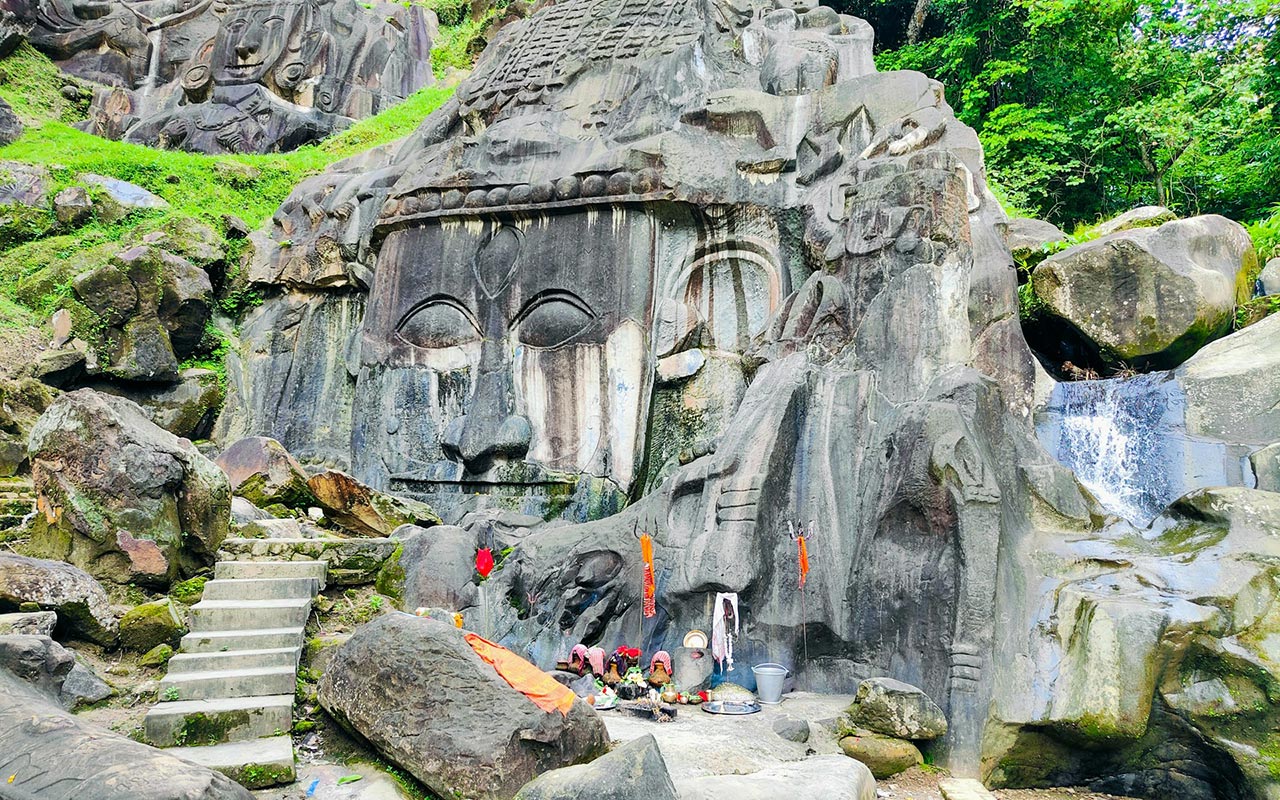
Unakoti, Tripura, India

The etymology of “Tripura” has various roots. Ancient texts suggest the name “Tripura” may derive from the Asur trio (Tarakaksha, Vidyunmali, and Kamalaksha) or the three castles they constructed (Tri = three, Puries = castles). In the opinion of K.C. Singh, the term is derived from the root word “TWIPRA”, combining two words, “TWI” meaning water and “PRA” meaning near. 

The more recent name, Tripura, was not the forever label of the place. The Aryans christened it “Sumba” while the Bishnupuran referred to it as “Kirat desh”. Maharajoang, the ancient historical book from Brahmadesh (Myanmar), referred to the region as “Patikara.” The ancient Arakanese text Rajoang calls it “Khuratan”. The Manipuris named it “Takleng,” and Al-Biruni called it “Jajnagar”. The place was named “Mughlan Tripura” during the Mughal era, and “Hill Tipperah” during the colonial period. 

The Indigenous People

As per the order of the President of India in 1956, the tribals of Tripura are classified into 19 scheduled Tribes. Each of these communities is ethnically homogenous, with variations existing in their languages and dialects. Tripuris, among all, are the most influential ones. Interestingly, the Tripuris, Deshi Tripuris, Jamatias, Noatias, and Riangs are collectively labelled as the “Kshatrias”.

The Tripuris

The-Tripuris-Communities-of-Tripura-01
Image – Tiprasa( Tripura peoples)

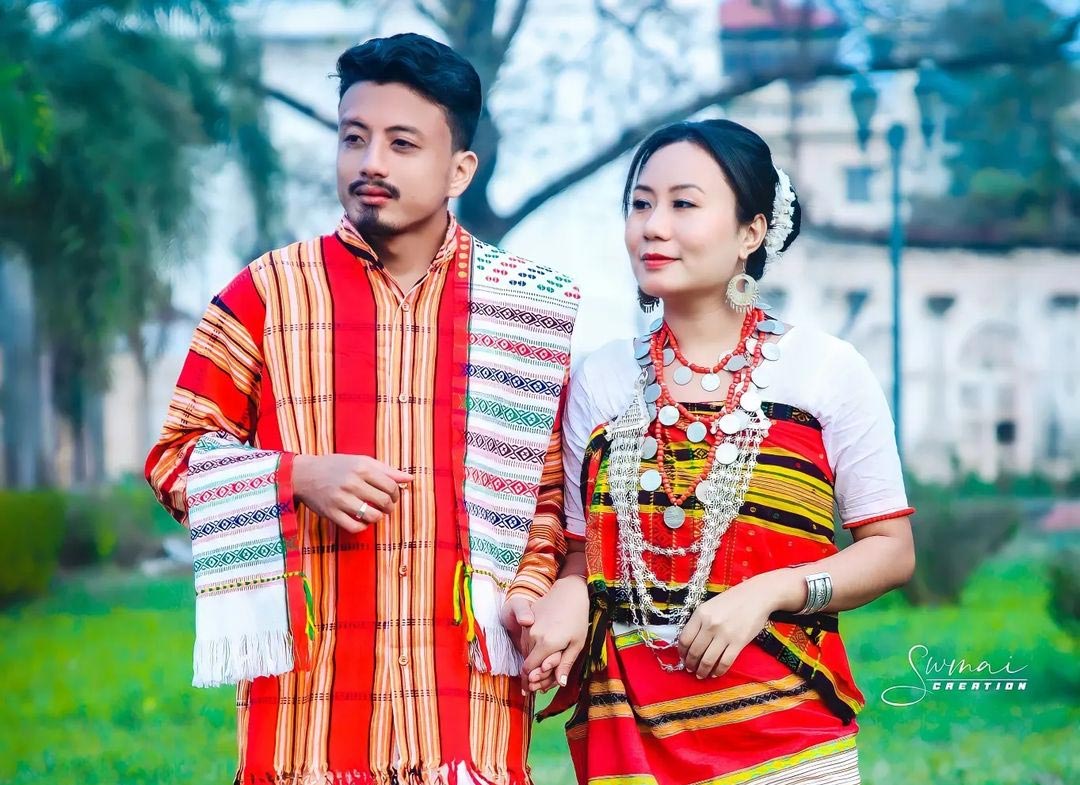
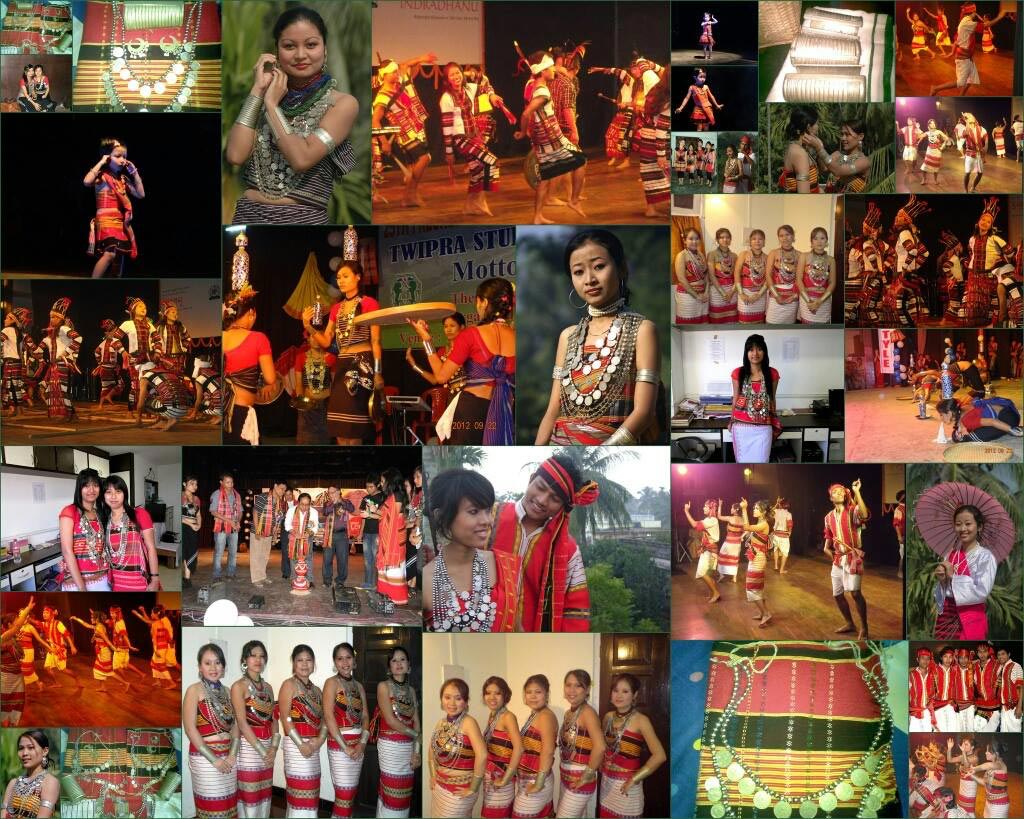
Belonging to the Tibeto-Burman race, they form the largest community in the state, and are also known as Tiprasa. Their surname, “Debbarma,” was bestowed upon them by the king. Traditionally, they reside in ‘Tongs’ on hilltops. Their spoken language is Kokborok. They originally migrated from the upper parts of the Yangtze and Yellow Rivers in present-day western China in 65 AD. They practice Jhum or shifting cultivation on hill slopes. Their staple comprises rice, with pork, chicken, dried fish, and vegetables, and they are also very fond of alcoholic beverages, with most households brewing their own fermented drinks. The institution of marriage in this community has two classifications: Hiknamani (by mutual consent) and Kaijagmani (negotiated marriages where parents play a crucial role). In fact, the practice of offering a bride price is quite prevalent. Widow remarriage is common, divorce is recognized, and instances of child marriage are also traceable. The community, which originated from the admixture of Tripuris and Bengali Hindus, is known as the “Deshi Tripuris”; they are mostly Vaishnavites and also venerate Shakti. 

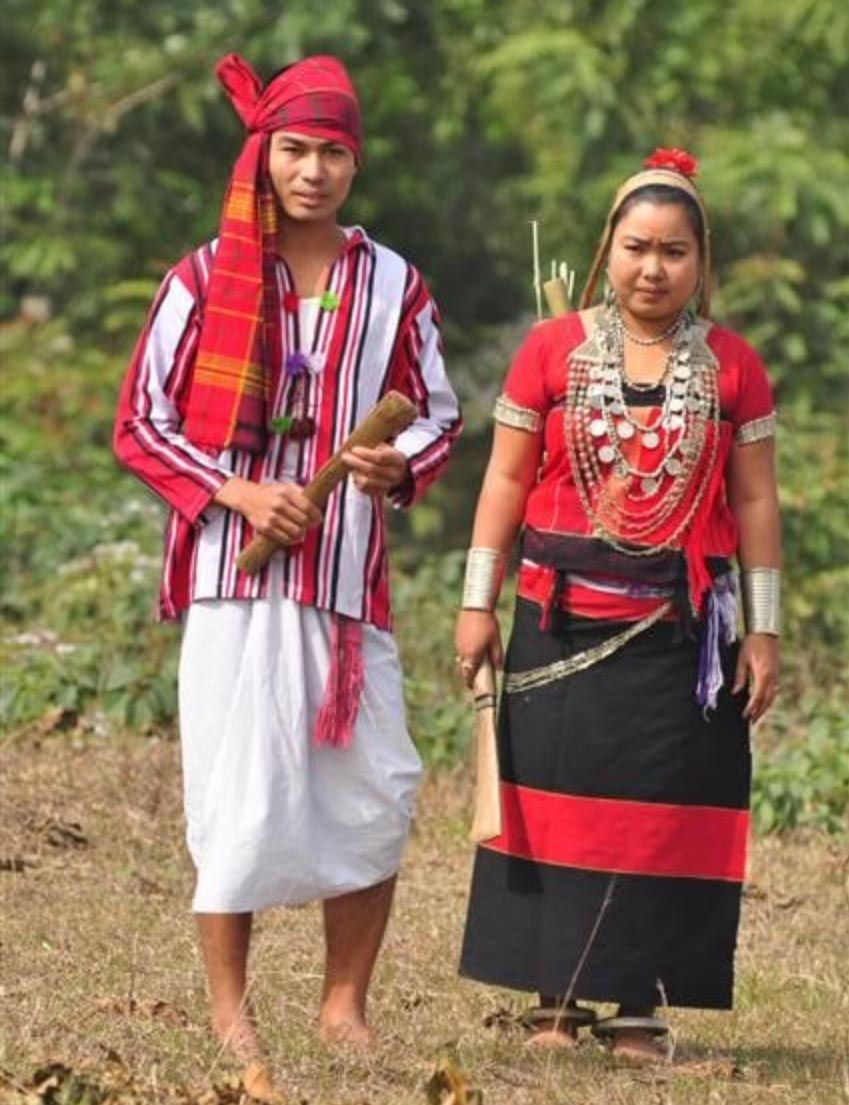
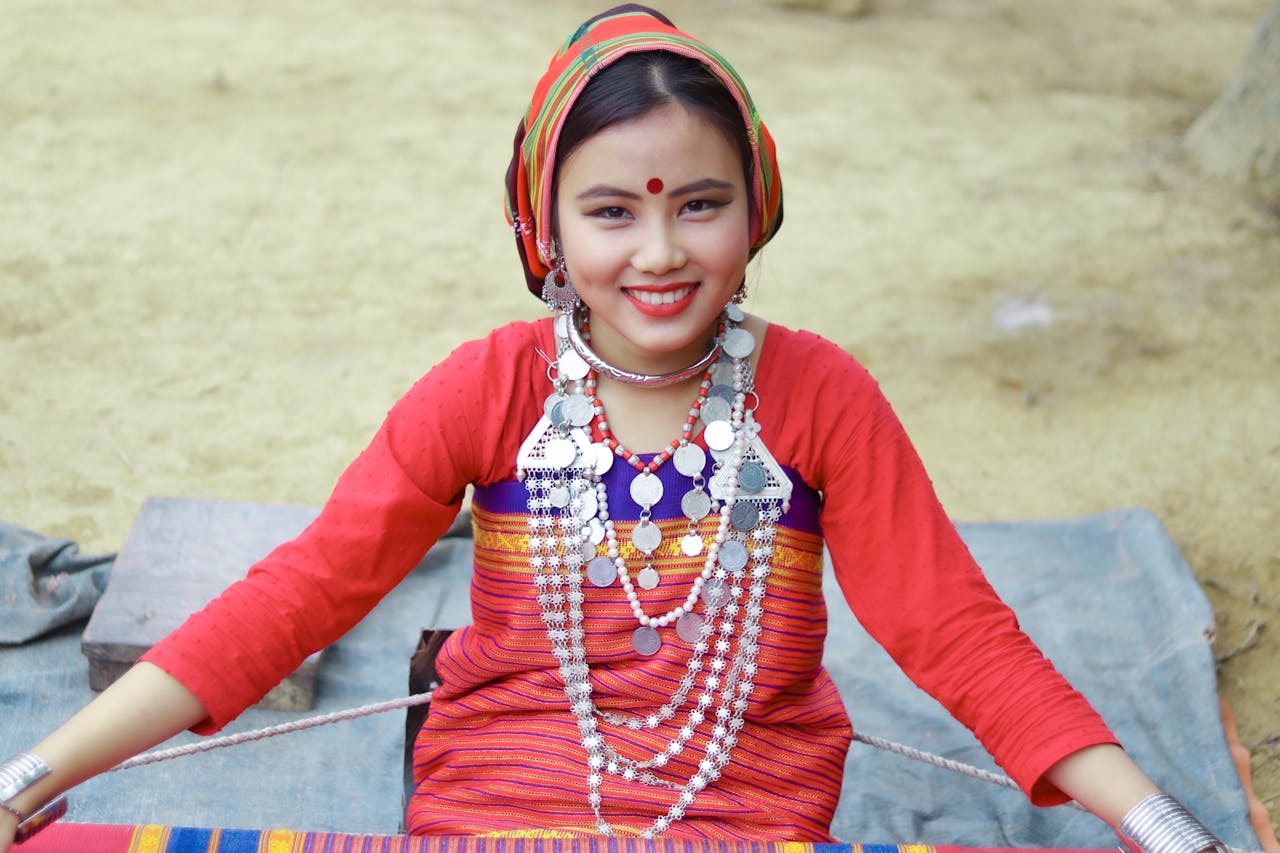
The women of this community weave garments such as Dubra (skirt), Pachhra, and Saris, using a loom. The upper body breast cover is known as Rias or Risha, and is adorned with intricate patterns. The Tripuri people are equally fond of jewellery, typically crafted from silver, silver coins, beads, and seeds of the Ramkala plant. Originally, their faith was animistic. However, with the dissipation of brahmanical influence, the Tripuris syncretized their faith with Hinduism, which is distinctively evident in their worship of the Chaturdash Devata. Major festivals include Kharchi and Ker puja. There exist two types of priests in the community, the Brahmin pandits and the tribal Ojhas or exorcists, also known as ‘Achais’. The Tripuri high priest is called ‘Chantai’. 

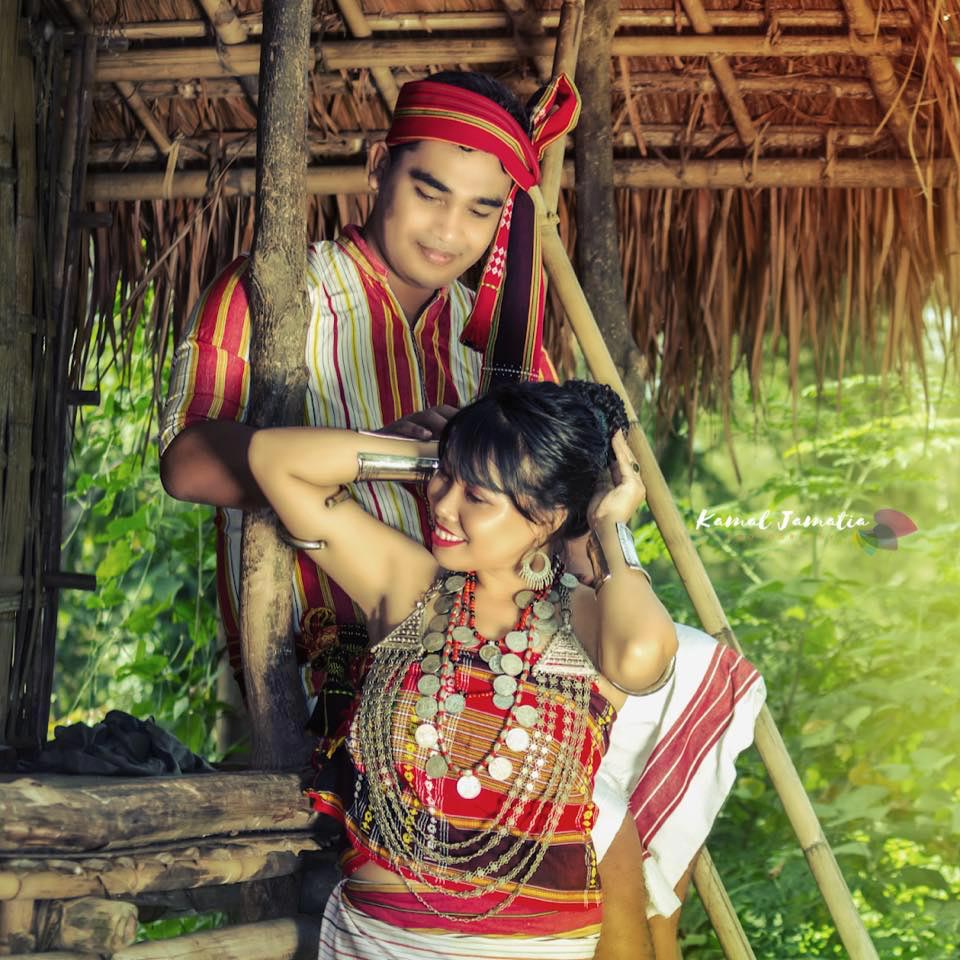
Jamatias

Communities-of-Tripura-Jamatia
Image Source

Etymologically, the term is derived from “Jamat”, meaning an assemblage in Bengali/Urdu. According to K.C. Singha, they are a pure branch of the Tripuris.  They are the third-largest community in the state. They are economically advanced and, depending on their faith, they are primarily divided into Vaishnavas and Saktas. They formed the chief army of Tripura in the ancient period. On the pretext of their military service to the king, they were exempted from Ghar Chukti or House tax and were also given special privileges. Many affluent people from the community practiced polygamy. Divorce is permitted, and widow remarriage is also recognized, and both parties offer “Langi”, a sweet liquor prepared from mami rice. 

An interesting feature of the tribe is that “sati” was practiced, even though widow remarriage was practiced, and, practically, the widows were never subjected to social ostracization. This conflicting and juxtaposing practice is pretty difficult to define. 

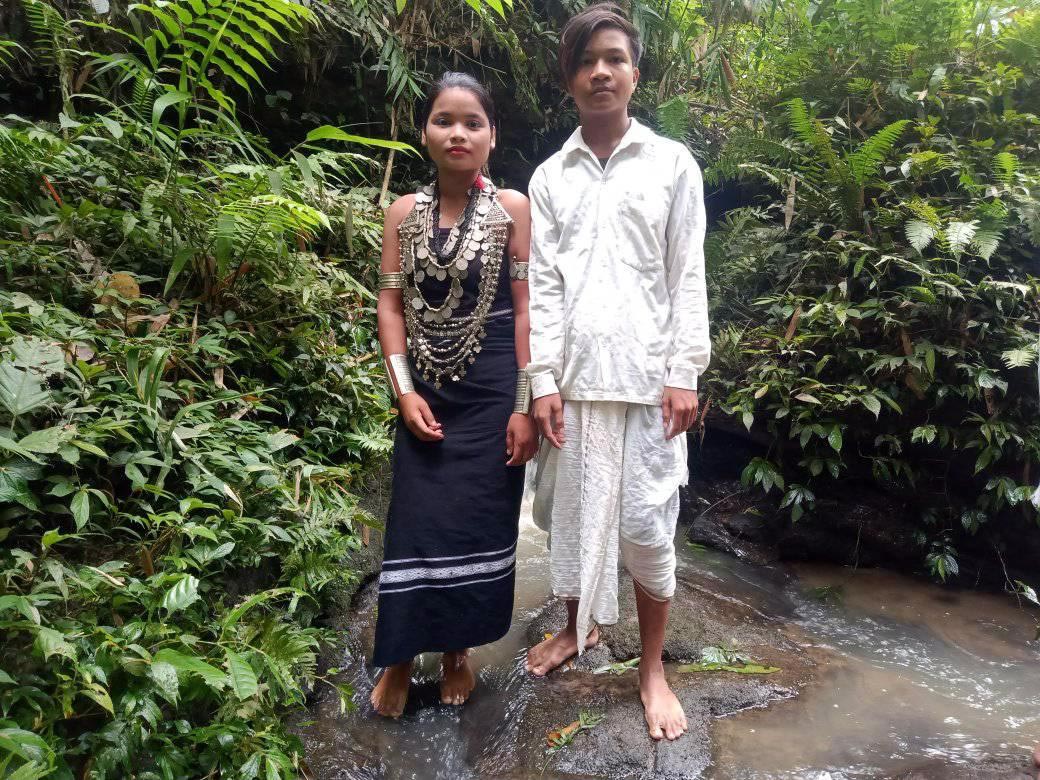
REANGS

Communities-of-Tripura-REANGS
Image Source

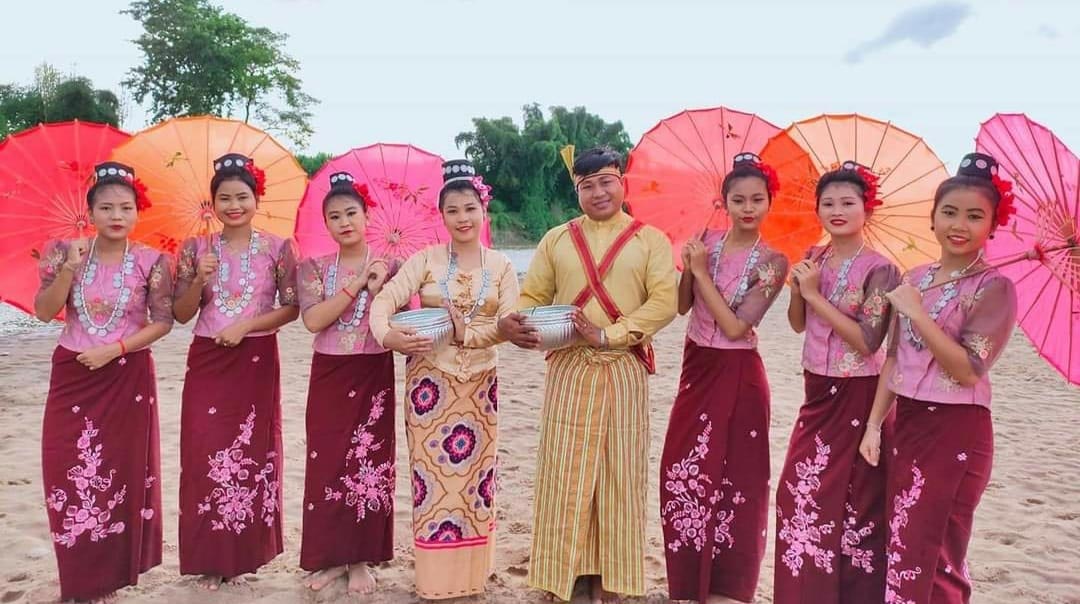
The primitive identity of these people was “Bru”. Reang is one of the 13 sub-communities of Bru. The people of this community are believed to have migrated from the Shan Kingdom of Burma during the reign of Ratna Manikya I in the 14th century, who is also mentioned to be of Bru origin. They are primarily of Mongoloid descent, and their dialect belongs to the Tibeto-Burman family. Music and dance are integral to their culture, and their traditional attire is simple. The men wear a hand-woven loincloth and also wrap their upper body; the women wear a ‘Rignai’ or ‘Pachhra.’ Parallel cousin marriage is prevalent. In their tradition, no man or his wife could be called by their names if they had become parents; they are rather identified by the names of their children. Their religious pantheon is intimately aligned with animism, though many worship Vishnu and Kali. They are known for their “Hojagiri” dance, where young girls balance on earthen pitchers. They also sang “Dawa” while practicing jhum. They use a plethora of musical instruments, ranging from flutes to drums.

The Uichoi tribe of Tripura has a common identity with the Reangs, as both belong to the mongoloid stock. Their language is pretty similar to Kokborok.

Chakmas

Communities-of-Tripura-Chakmas
Image Source

People of the Chakma tribe are of Tibeto-Burmese origin and are believed to be the descendants of Arakanese migrants, with their language belonging to the Aryan group. The Burmese people call them Tsak or Thek, the Kukis call them Chhakhuma, and the Bengalis know them as Chammua. And the people themselves call the community Changma. Their traditional attire exhibits similarities with the Burmese and Shan ethnic groups. The women wear breast covers called “Hadi” and loincloths called “pinon”; men wear ‘kani’ (loincloth) and shirts called ‘shilum’. Their ornaments closely resemble those of the Bengalis, and their faith is Hinayan Buddhism. Their traditional ethnic chronicle is christened as the Bijak. Their manuscripts were originally written in Bamunih (Brahmi) on palm leaves. “Bizhu” is their most popular festival, which is observed for three days. 

The tribe has its own traditional governance structure called “Marma Raj”, which is basically a council of elders responsible for mitigating disputes and maintaining social harmony. Interestingly, during the partition of India in 1947, the Chakmas appealed to senior leaders like Gandhi, Nehru, and Patel for the inclusion of the Chittagong Hill Tracts into the Indian Union, on the pretext of the CHT having a 98% non-Muslim population. 

The Mogs

Communities-of-Tripura-The-Mog
Image Source

They too are of Arakanese descent and are known as Magh or Marma people, and are said to have settled down in Tripura in 957 AD. They have intimate ties with Burmese Buddhism. Their dialect resembles Burmese and Arakanese with slight variations in pronunciation, and their script is Burmese. They find mention in the Rajmala, the royal chronicle of Tripura. Like the Jamatias, they too were admitted into the royal forces. The women wear thabuing (loincloth) and bedeh is the blouse; men wear longi for lower covering, rangi, which is a shirt, and gongbong, a turban on their head. 

The Noatias

Communities-of-Tripura-The-Noatia
Image Source

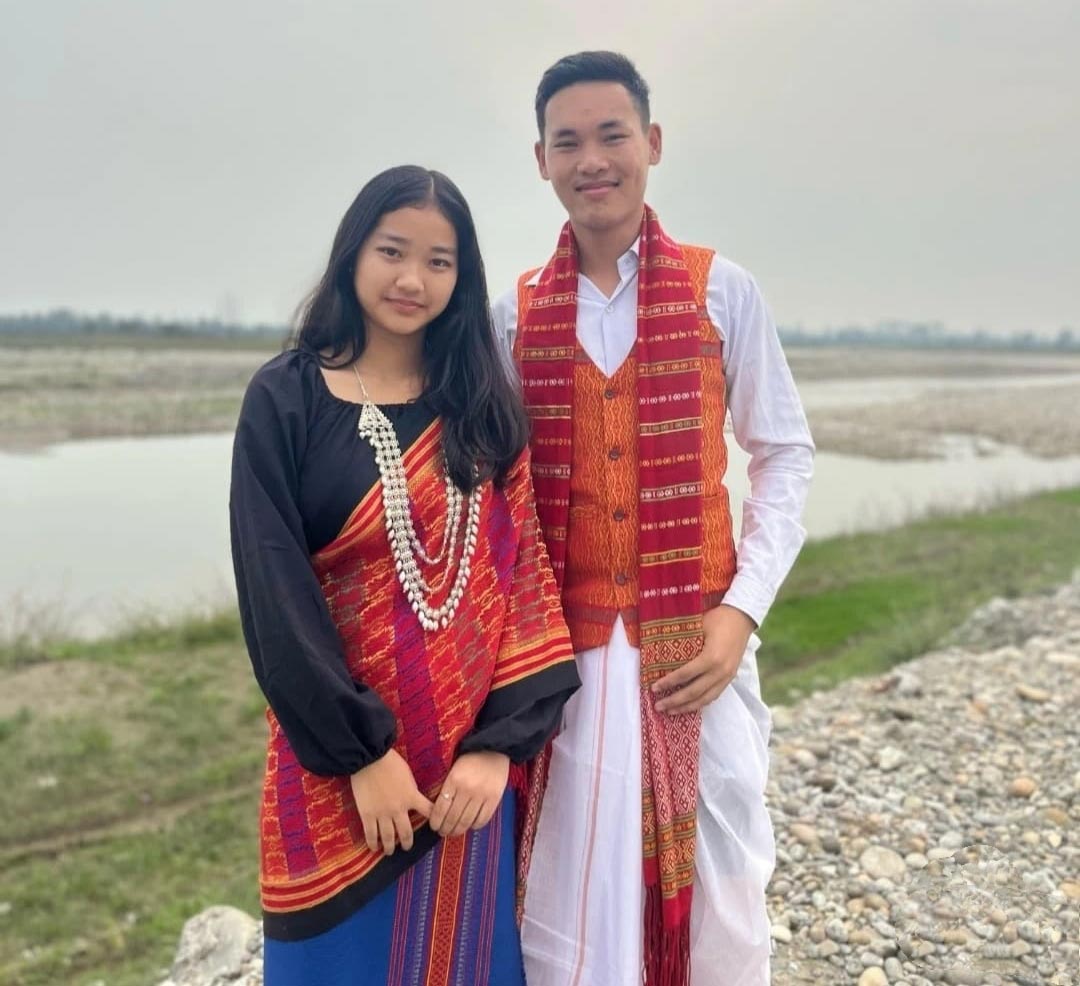
They are a hybrid race and are divided into eleven clans. They are also recognized as Nowa-Tripuri, meaning ‘newcomer’, and Katal, which also means new. Their language is Tipra or Murang, a dialect of Kokborok, and is also influenced by the Mogs and Chakmas. Traditionally, they are quite close to the Jamatias, but in the context of their funeral customs, it is more closely aligned with the Reangs. 

Murasingh is a subtribe under the Noatias. Traditionally, the people of this community did not wear shoes except for special occasions. The Murasingh women are fond of ornaments and flowers, and wear kharu on their legs. 

Halam 

Communities-of-Tripura-Halam
Image Source

In the Halam language, “Ha” means soil, and “Lam” means owner; thus, it translates to owner of the soil of the earth. It is believed that the Maharaja has bestowed the title of Halam upon these people. The people belonging to this community call themselves “Hre-em”  or “Hriam,” which literally translates to “man”. Ethnologically and linguistically, they belong to the old Kuki groups who accepted the suzerainty of the king of Tripura. The Kukis of Tripura are basically divided into Darlong Kukis and Rokhim Kukis. They are said to have migrated from “khurpuitabum”, located somewhere in south-central China. They are segmented into 13 ‘dafas’ (clans). The Halam people also practice the craft of dyeing with colours produced from flowers, leaves, herbs, and even stones. 

Molsom is a subtribe of Halam and is referred to as “Morchhom”. The word “Mol” means hillock, and “som” means ten, i.e., the people of ten hillocks. When girls of this community attain puberty, risabomb is performed, where the girl wears the breast garment risa for the first time, and the girl comes to be known as a ‘nungak’, and her parents are allowed to arrange for her marriage. Kaipeng, Karbong, Bongcher, etc., are other subtribes belonging to Halam. 

The Darlong tribe exhibits close affinities with Halams. In the Darlong community, every young girl gets her ear pierced, where tiny wooden plugs are inserted, which are successively replaced by bigger earrings called “tangka kuarbe”.

Other Tribal Groups

There exist numerous other tribal groups, including Rupini, Ranglong (exhibiting physical similarities to Halam), Lushai (they call themselves MIZO), Bhutia (Himalayan Tribe of Tibetan ancestry, once engaged as the Royal Army), Lepcha (Commonly known as Nepalees), Garo & Khasia (migrant tribes from Bangladesh and Meghalaya), Munda, Santhal, Orang, and Bhil. There is an endangered tribe of Tripura, known as the Chaimal or Saimar tribe, which displays linguistic affinity with Halams.

Tribe/Group Key Aspects & Distinguishing Features
Tripuris (Tiprasa) Largest community; Tibeto-Burman origin. Speak Kokborok. Practice jhum cultivation.
Surname: Debbarma.
Dress: Dubra, Pachhra, Rias/Risha.
Considered “Kshatrias” in collective identity.
Deshi Tripuris Mixed lineage of Tripuris and Bengali Hindus.
Mostly Vaishnavites; also honor Shakti traditions.
Jamatias Third-largest community; a pure Tripuri branch.
Historically served as the royal army (Jamat).
Notable custom: Sati once practiced alongside widow remarriage.
Reangs (Bru) Primitive identity: “Bru.” Migrated from the Shan Kingdom (Burma).
Practice parallel cousin marriage.
Famous for the Hojagiri dance (balancing on pitchers).
Unique kinship: Parents identified by a child’s name.
Chakmas Tibeto-Burmese origin; descended from Arakanese migrants.
Language belongs to the Aryan group.
Followers of Hinayan Buddhism.
Festival: Bizhu.
Mogs (Magh/Marma) Arakanese ancestry with strong Burmese Buddhist influence.
Dialect and script similar to Burmese.
Served historically in royal forces.
Noatias Hybrid group; also called Nowa-Tripuri (“newcomer”).
Speak a Kokborok dialect.
Funeral rituals resemble Reang traditions.
Subtribe: Murasingh.
Halams (Hre-em/Hriam) Name means “owner of the soil/earth.”
Linguistically linked to old Kuki groups.
Divided into 13 dafas (clans).
Perform risabomb ritual at puberty.
Other Groups Include Lushai (Mizo), Bhutia (Tibetan lineage), Garo & Khasia migrants,
Munda, Santhal, Orang, Bhil communities.
Chaimal (Saimar) is an endangered tribe.

Key Highlights 

Indigenous Communities of Tripura-02

  • Tripura is home to 19 Scheduled Tribes, each with distinct identities.
  • Tripuris are the largest, historically powerful, and culturally influential.
  • Reangs are celebrated for the Hojagiri dance and jhum-based lifestyle.
  • Chakmas retain Buddhist heritage and a unique palm-leaf manuscript tradition.
  • Jamatias historically formed the kingdom’s military backbone.
  • Mogs and Chakmas reflect strong cultural ties to Myanmar and Arakan.
  • Halam and its subtribes exhibit elaborate dyeing technologies and clan systems.
  • Women across tribes play key roles in weaving, ornamentation, and ritual customs.
  • Religious life ranges from animism to Hindu syncretism to Buddhism.
  • Tripura’s tribal identity is rooted in migration, syncretism, and historical continuity.

A Unique Perspective

These tribal communities essentially function as custodians of ancient knowledge, traditions, and customs. Their histories deepen our understanding of India’s pluralistic mosaic, reminding us that identity is never static but forged through migration, cultural exchange, and negotiation with power. Furthermore, the history is marked by strategic alliances and geopolitical consciousness. As waves of modernity sweep across the hills, the challenge is not simply to “preserve” these cultures, but to allow them space to evolve on their own terms. In celebrating the voices of Tripura’s hills, we celebrate the enduring spirit of communities that have defined their world with dignity, craft, and memory. The future of Tripura lies in recognizing this complex, resilient, and syncretic identity as its greatest cultural capital.

FAQs on Communities of Tripura

Question: How many Scheduled Tribes are recognized in Tripura?

Answer: Tripura officially recognizes 19 Scheduled Tribes, each with distinct linguistic, cultural, and social traditions.

Question: Which is the largest tribal community in Tripura?

Answer: The Tripuri (Tiprasa) community is the largest and historically the most influential among all tribes.

Question: What is the spoken language of the indigenous tribes of Tripura?

Answer: Kokborok is the most widely spoken indigenous language, though several dialects like Reang, Murang, and Chakma are also used.

Question: Which tribe is known for the Hojagiri dance?

Answer: The Reang (Bru) community is famous for the Hojagiri dance, performed by young girls balancing on earthen pitchers.

Question: What are the main occupations of Tripura’s tribal communities?

Answer: Their traditional occupations include jhum cultivation, weaving, fishing, brewing, and various craft-based livelihoods.

Question: Are the tribes of Tripura primarily animistic or Hindu?

Answer: Most tribes began with animistic traditions but gradually adopted Hindu syncretism or Buddhism, depending on their migration and cultural histories.

Sculptures & Statues in Transition: Naresh Kumar Kumawat on a Craft Evolving

0

Sculptures-&-Statues-in-Transition-Naresh-Kumar-Kumawat-01

Art has always been a rebellion against conventional ideas of established practice, giving a new meaning to self-expression and social commentary on issues like the environment and inequalities. The present body of sculptures and statues embraces experimental qualities that defy principles of harmony and symmetry to fuse symbolism into abstract ideas for added emotional depth, representing the inner state in an archetypal visualisation. 

Today’s style is a paradigm shift from a collective emotional voice that was community-driven, often immersed in religious devotion, especially in India. This is the essence of metamodernism, where the composite nature of personal and collective unconsciousness is evident. Simply put, subjectivity takes the centre stage in modern sculptures and statues, representing the chaos within an artist that connects to the collective unconscious and fuses idealism with scepticism.

The Past at a Glance

In the early 1900s, sculptors were obsessed with anatomy and realistic representation owing to the influence of rationalist values during the Age of Enlightenment. However, as human creativity evolved, such rigid literal representation in artwork was rejected in the 20th century in the West. Qualities of experimentation and symbolism were added, and the cultural discourse gave rise to abstract art wherein one had to distance oneself from the object itself and engage emotionally rather than rationally. 

Sculptures-&-Statues-in-Transition-Naresh-Kumar-Kumawat-02

In India, the departure from religious and mythological narratives and the introduction of nation-building and postcolonialism resulted in more diverse artwork. It blended indigenous styles and symbols with Western influences. Sculptures were patronised by the government and meant to convey postcolonial hopes—making sculptors essential players in nation building. This also marked a significant shift from body aesthetics and storytelling to artistic expression and materiality.

Conflicting Ideas of the Postmodern World

Notably, modernism does not merely represent progressive ideas but the utopia of the post-WWI era, the advent of industrialisation, and the eventual commercialisation of art. Possibly causing ignorance of personal identities, it gave rise to an irony in the West—the attempt to create artistic freedom might have become reductionist, a recurring theme in contemporary sculptures. Sculptures and statues became archetypal symbols with a singular meaning. 

To break the dogma, artists started a change called the postmodernist deconstruction of values. Gaining more control over their artworks, they let go of universal meanings and gave personal interpretations acceptance. This coincided with lost hopes that followed the West’s broken promises of WW1 and the breakout of WW2, and scepticism became a characteristic of artistic expression even in India, as seen in the Bombay School of Art.

Synthesis of Modernism and Postmodernism:

Sculptures-&-Statues-in-Transition-Naresh-Kumar-Kumawat-03

Postmodernism broke philosophies that placed one art above the other, allowing artists more freedom in post-liberalisation. Sculptures depicted that there is no universal truth, and the meaning of artwork changes with the audience and time. It gave rise to another paradox—the alienating realisation that meaning is constructed, and thus, there might be no meaning of an artwork. Interestingly, alienation due to the increasingly transactional nature of society was realised at the beginning of the 21st century.

Additionally, artists reconstructed and borrowed ideas to combine them with their thought process; the idea of creation out of nothing was challenged, and originality was questioned. The artist’s sculpture showed a stylistic hybridity that many call metamodernism, which blended ideas to create the new. 

Whether the metamodern era has arrived or is still in a transitional stage is a debate. However, the current world has blurred the lines between universal meanings and scepticism. The sculptures now focus on creating an experience for the audience, where an interaction between the intentions of artists and the subjectivity of the viewer constructs meanings. 

Globalisation: Shifting Materials, Themes and Styles

Globalisation’s indomitable impact on sculptures and statues is seen in artists exploring new styles and materials as cultural exchanges continue and technology evolves. Experimentation and hybridity of techniques are central to artworks.

Styles like minimalism have found expression in several Indian artworks that combine the expression of spiritual designs and motifs in geometric stylisation. Similarly, post-minimalist ideas react with the Indian traditions to encourage artists to use unconventional materials like fibreglass, ropes, latex, magnets, etc. 

Space has also become a medium of artistic expression and a defining element of sculpture and statue-making. Installation art creates experiential pieces; for instance, the creative use of mirrors is exemplary of shifting paradigms.

Sculptures-&-Statues-in-Transition-Naresh-Kumar-Kumawat-04

Merging classical craftsmanship with contemporary technology, laser 3D printing and CNC milling are all the rage. This makes replication of intricate designs precise and easier. Further, technology and innovation have given birth to kinetic artworks that add a literal movement to pieces through motors and sensors, allowing the pieces to respond to external stimuli.

Lastly, mixed-media techniques show qualities of experimentation, combining different materials in masterpieces. Indian sculptors combine traditional materials like wood with modern innovations like stainless steel to not only create mesmerising and meaningful interpretations of their reality but also add strength to their words. 

Artists are also exploring themes relevant to the contemporary world, such as migration, climate change, and identity struggles. The themes often influence their choice of materials, such as a conscious effort to use eco-friendly materials or recycled materials in sculptures and statues to help in the global awareness of environmental degradation. Moreover, today, sculpture making is explored for its therapeutic qualities; one expects more vivid and raw expressions of self in them.

The Bottom Line

Terms like “modernism” and “postmodernism” are not mere cultural discourses, and every sculptor interprets them differently to blend modern ideas with cultural values that honour the past. But, while the materials and techniques might evolve, the fundamental role of sculpture in representing and projecting power, identity, and values remains a long-standing practice.

With each artwork being an attempt to break a new barrier through a fluidity of ideas, no work is inherently good or bad. And while the modern restrictions of thought will continue to be discovered and broken, sustainable craftsmanship practices will also shape the future, reflecting artistic creativity and environmental responsibility.

Music Beyond Borders: Eigenzeit Festival 2026 Showcases Indian Music & Dance

0

Music-Beyond-Borders-Eigenzeit-Festival-2026-Showcases-Indian-Music-&-Dance-01

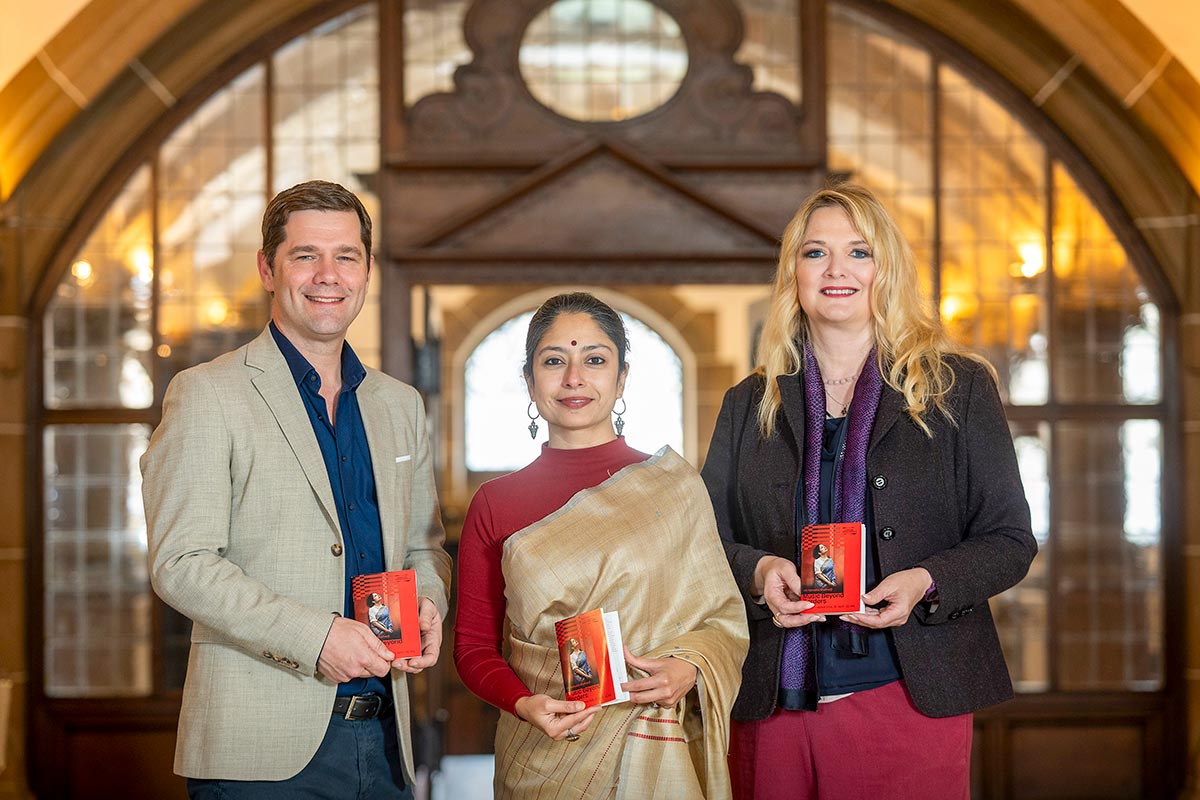
Germany’s Duisburg Philharmonic is setting a bold and expansive stage for its sixth edition of the contemporary chamber music festival, Eigenzeit – Music of Now,” running from 30 April to 22 May 2026. The festival will be operating under its most recent banner, “Music Beyond Borders”, and is dedicated to building meaningful relationships between Europe and India in terms of its rich spiritual and cultural traditions. This three-week festival goes beyond performances; it will showcase Indian artistic expression, inspired by the universalist philosophy of Nobel Laureate Rabindranath Tagore. 

This festival is curated by Kamalini Mukherji, an eminent Rabindra Sangeet exponent. The collaboration between Kamalini Mukherji and Artistic Director Nils Szczepanski ought to create an aura that will intertwine music, dance, cinema, sculpture, culinary traditions, and improvisational arts in order to shed light on the interconnectedness of the global cultures. 

The Tagorean Vision

The ethos of the entire festival is grounded in the shared philosophical roots of Indian and Western art, though the ideas reverberated by Rabindranath Tagore’s belief in the unity of human expression. The two cultures shall identify and recognize one another as a part of their own cultural horizon, expanding their cultural purview. Kamalini views the festival as a vital space for interaction. She states, “My wish is for this festival to become a space where the richness of India’s musical and artistic heritage can engage in a meaningful dialogue with global traditions—fully aligned with Tagore’s belief in the unity of human expression.” Artistic Director Nils Szczepanski reciprocates the same sentiment, emphasizing the festival’s intent to celebrate cultural interconnectedness and open new perspectives for the audience.

The Panorama of The Festival

The festival will be inaugurated on April 30, 2026, at the Lehmbruck Museum with a lecture demonstrating the millennia-old Odissi dance, led by the internationally acclaimed icon, Bijayini Satpathy. This segment will be followed on May 2 by the program “The Fascination of Odissi,” featuring Satpathy and Mukherji, including a world premiere excerpt from Tagore’s dance drama Chitrangada. The festival also seeks to unfold a diverse spectrum of arts. May 3 is the “Indian Film Day” and will feature works by legends of Indian cinema, such as Satyajit Ray and contemporary filmmaker Payel Kapadia. A high-energy concert will follow the cinematic segment, “One Beat, One World,” on May 10. This session is going to be one of a kind, as Grammy Award-winner and tabla virtuoso Bickram Ghosh will join the mridangam maestro Patri Satish Kumar to create a blissful symphony. A live Milonga performance will succeed this. 

May 13 is a special one as it schedules the “Tagore Song Night” that seeks to bring together renowned artists like Kamalini Mukherji, violinist Kala Ramnath, and Bickram Ghosh, to perform Tagore’s timeless songs, a world-first collaboration curated for Duisburg. The essence of transculturality will prevail on May 17 as “East-Western Seasons,” where Kala Ramnath juxtaposes her cycle Indian Seasons with Vivaldi’s Four Seasons, collaborating with members of the Duisburg Philharmonic and the “Orchester des Wandels.” Interestingly, a thoughtful step is initiated as a “Baul” performance is orchestrated and shall feature the solo recital session of Parvathy Baul on May 19. 

Beyond Performances

The dynamism of the festival is not restricted to the performing and visual arts but also encapsulates the culinary arts as well. The “Indian Food Night & Jugalbandi” (16 May) takes insights from the Bengali food writer Chitrita Banerjee and blends culinary dialogues with live improvisations on sitar, sarod, and tabla. Throughout the event, Kolkata-based installation artist Narayan Chandra Sinha creates new sculptures from Duisburg’s industrial scrap. The showdown is scheduled on May 22, with “Day and Night,” which will feature a newly created dialogue between Kamalini Mukherji, “Artist in Residence,” and world-renowned mandolinist Avi Avital, sarod player Swarnendu Mandal, and the Aris Quartet. With this final segment in place, the grand celebration shall conclude. 

Event Details

Aspect Details
Festival Dates 30 April – 22 May 2026
Festival Theme “Eigenzeit – Music of Now” / “Music Beyond Borders”
Focus North, South, and East Indian Music, Dance, and Culture
Curator Kamalini Mukherji (Leading interpreter of Rabindra Sangeet)
Inspiration The universalist philosophy of Rabindranath Tagore
Organiser Duisburg Philharmonic

Key Highlights

  • World premiere collaboration between Odissi dance and Tagore’s Chitrangada
  • Exclusive Tagore Song Night featuring globally renowned musicians
  • Grammy-winning percussionists presenting new works created for Duisburg
  • Indian Film Day spotlighting both classic and contemporary cinema
  • Sculpture installations using local industrial scrap by an Indian artist
  • A curated culinary–musical evening with noted author Chitrita Banerjee
  • East–West dialogue through a unique pairing of Vivaldi and Indian violin traditions
  • Rare Baul recital by Parvathy Baul in a historic church setting
  • Finale featuring Indo-European collaboration across mandolin, sarod, voice, and strings

An Unmissable Cultural Nexus

The Eigenzeit Festival 2026 is one of Europe’s most visionary artistic initiatives. Linda Wagner, Cultural Affairs Director for Duisburg, rightly emphasizes the festival’s significance for the city: “Duisburg is a vibrant and open cultural metropolis… The fact that the Duisburg Philharmonic is continuing the transcultural dialogue with the 2026 Eigenzeit Festival, and placing the fascinating world of Indian, particularly Bengali, music and culture at its center, is a powerful statement.” 

The brilliantly scheduled events interweave the eclectic side of both cultures and weave an inclusive fabric embracing everyone under its sash. By putting Indian classical arts on the same stage as the cultural heart of Duisburg, the Philharmonic redefines what contemporary chamber music can be. It provides a rare opportunity for European audiences to engage with the spiritual and artistic side of India, not as an exotic other, but as a co-equal partner

From Tagore to Baul’s mysticism, the festival covers it all, exemplifying what cultural diplomacy should actually look like. This festival is more like a movement towards a world where music is truly not a subject of political sovereignty, but an asset that belongs to humankind as a whole.

Bharatiya Kala Mahotsav 2025 Showcases Western India at Rashtrapati Nilayam

0

Bharatiya-Kala-Mahotsav-2025-0A

The Indian Mosaic

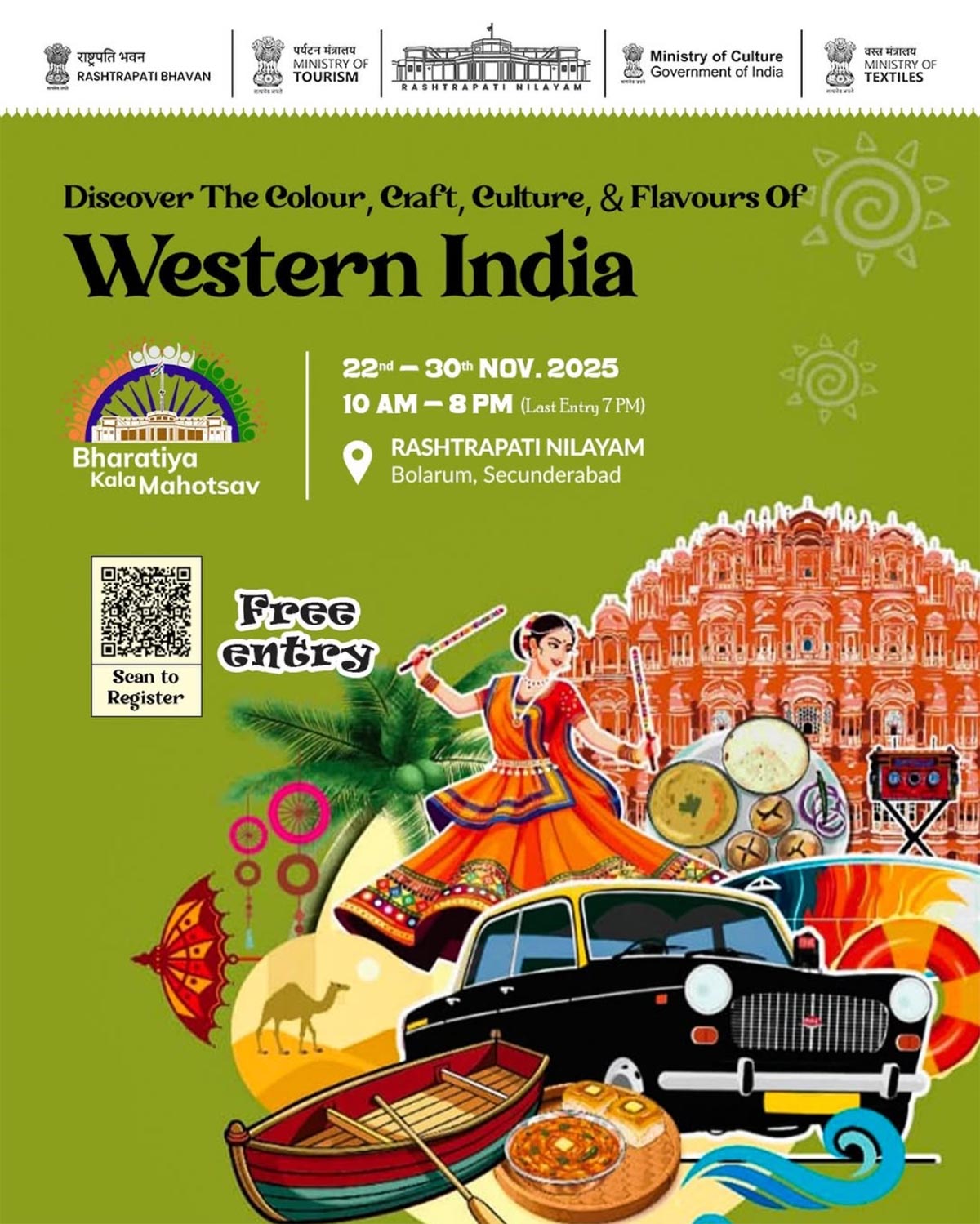
The culturally vibrant city of Hyderabad is hosting one of India’s largest celebrations of its artistic diversity, the Bharatiya Kala Mahotsav 2025. Organized by the Ministry of Culture, Government of India, in collaboration with Rashtrapati Bhavan, and supported by the Ministries of Tourism and Textiles, this nine-day festival aims to provide a pleasantly immersive experience for everyone, showcasing the vibrant culture of western India. The art, crafts, textiles, and traditions of regions such as Gujarat, Rajasthan, Goa, Maharashtra, and the Union Territories of Dadra & Nagar Haveli and Daman & Diu are widely displayed. Scheduled to run from November 22nd to 30th, 2025, the Mahotsav will transform the historic premises of the Rashtrapati Nilayam in Secunderabad into a grand, living museum.

The ceremonial inauguration is graced by the Honorable President of India, Smt. Droupadi Murmu. Her presence elevates the scope of the event to a national-level festival that reflects upon the government’s commitment to promote and preserve India’s rich cultural fabric. Entry in this festival is free, and registrations are encouraged through the QR code provided. The Rashtrapati Nilayam is the presidential winter retreat built in 1860 and located in the heart of Secunderabad cantonment area. The venue now opens its lawns, gardens, and heritage buildings for public engagement and cultural events. This festival is an attempt to make India’s diversity richer by making it more cohesive. 

The Artistic Soul of Western India

The inaugural session of the Mahotsav in 2024 focused on North-Eastern and South Indian art, but this year the focus has shifted to the Western Indian crafts. This approach is worthy of applause as it aims to bring the distinct artistic and cultural traditions of each part of India through its yearly editions. Attendees will get to see a lot more than just regional products. The exhibition and sale section will feature dedicated state pavilions showcasing textiles like the famous Kutch Bandhani from Gujarat, the delicate Kota Doria sarees and Pattu cotton weaves from Rajasthan, the opulent Paithani sarees from Maharashtra, and the traditional Kumbi sarees from Goa. The Mahotsav also features unique crafts such as the handmade Kolhapuri Chappals, etc. Thus, the Mahotsav is running with a dual objective. Firstly, it aims at showcasing the vibrancy of India’s regional cultures and traditions; secondly, it aims to empower artisans and craft communities who are engaged in the production of tangible culture. 

More than 250 artists, including celebrated Padma Shri awardees and other dignitaries, are going to be present at the venue. Beyond textiles and craft, the venue also scheduled a cultural lineup titled Pashchimalap, which literally means “Western Embrace”. This segment broadens the scope of the festival by showcasing the different folk dances and music from the represented regions. One can experience the Dhol-Tasha and the Lezim from Maharashtra, the Kalbelia and the Laal Angi Gair from Rajasthan, the Talvaar Raas and Garba from Gujarat, and the Samai and Ghumat Vadan from Goa. This cultural showcase is not just to serve entertainment, but to make people aware of the diversity we dwell in. 

Bharatiya-Kala-Mahotsav-2025-0B

A regional food court is set up to host dozens of stalls offering authentic regional delicacies. A dedicated ‘literary corner’ hosts a book exhibition and sessions with Sahitya Akademi awardees, making it not only a place of delight, but of intellectual engagement as well. Some new additions include a studio kitchen for live cooking demonstrations, a GI-tagged product section, and a youth activity zone. By chipping all these elements together, the Mahotsav makes sure that it aptly appeals to people of all age groups and is able to be more and more inclusive. This Mahotsav promotes the idea of Ek Bharat Shreshtha Bharat (One India, Great India). 

Exhibition Details

Aspect Details
Event Name Bharatiya Kala Mahotsav 2025 (Second Edition)
Theme Focus Cultural, Artistic, and Culinary Heritage of Western India
Participating Regions Gujarat, Maharashtra, Rajasthan, Goa, Dadra & Nagar Haveli, and Daman & Diu
Dates November 22 – 30, 2025 (10:00 AM to 8:00 PM)
Inauguration Date November 21, 2025 (by President Droupadi Murmu)
Venue Rashtrapati Nilayam, Bolarum, Secunderabad, Hyderabad
Key Attractions Pashchimalap Cultural Show, State Handloom/Handicraft Pavilions, Regional Food Court, Literary Corner
Visitor Entry Free (Registration online or on-spot available)

Key Highlights

  • Craftspeople will showcase their traditional techniques, regional materials, weaving, pottery, and more.
  • Textile pavilions shall highlight the specific weaving and embroidery traditions of Western India, including Kutch embroidery, Bandhani, Paithani, etc.
  • Dedicated food courts are set up to serve local delicacies from the participating states/UTs to connect culture with taste.
  • Youth-engagement & digital zones ensure immersive experiences; selfie-zones, interactive installations are set up to appeal to younger visitors.
  • Dance, music, regional theatre, and cultural forms provide a live expression of heritage.
  • Geographical-Indicator (G.I.) Product Zone is set up to showcase G.I. certified crafts and products, bringing attention to their origin and value.
  • The significance of the Rashtrapati Nilayam as a historical site adds gravitas to the Mahotsav, linking national heritage with regional culture.

A Deep Dive

From a practical point of View, the festival is designed to be highly inclusive. The provisions of free entry and flexible booking boost participation and make the festival more accessible to people from all walks of life. As a national-level event, it ensures that the spontaneity of visitors is maintained. Also, this is an incredible opportunity for Indian craftsmen to reach a broader pan-Indian audience. Thus, the 2025 Mahotsav is an attempt to stitch together multiple layers: regional heritage, national identity, craft economy, youth engagement, and heritage tourism.

Takeaway

The Bharatiya Kala Mahotsav at Rashtrapati Nilayam represents a deeply promising model of cultural diplomacy within India itself. The regional artisans are often marginalised and are subjected to niche markets and elite museum displays. The festival recognizes the gap that exists between them and offers an inclusive platform to present their craft in a meaningful manner. Another important aspect highlighted by the festival is that of “localization”. Western India’s craft traditions must be contextualised not as tourist-friendly objects but as living practices rooted in communities, identities, and socio-economic networks.

This festival offers a blueprint of critical intervention by the state to celebrate and sustain India’s decentralized cultural economy. In a rapidly globalizing world, such festivals provide a necessary platform for traditional artisans and performers whose livelihoods depend on showcasing their ancestral skills. 

This festival reminds us that culture is not simply an adornment of public life, but the very foundation of national unity. It reminds us not only of “unity in diversity” but also of the fact that India’s true strength lies in its stunning cultural diversity. The festival ensures that the unique arts and traditions of Western India receive the deserved recognition, dignity, and economic sustenance in the heart of South India.