Shipra Bhattacharya’s ‘In Bloom’ Marks Five Decades of Artistic Reflection

0

In-Bloom-A-Journey-Through-the-Five-Decades-of-Shipra-Bhattacharya--01

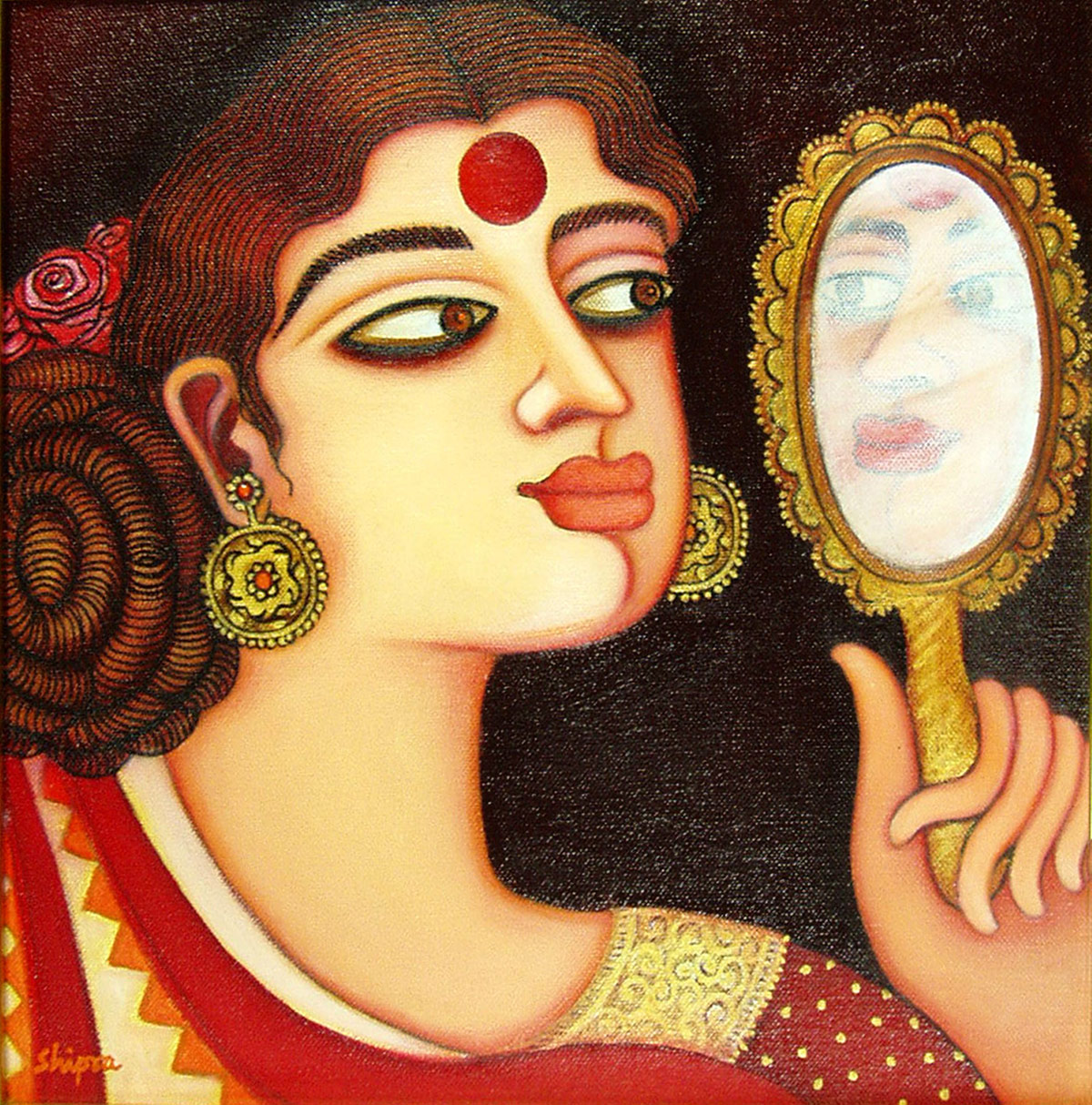
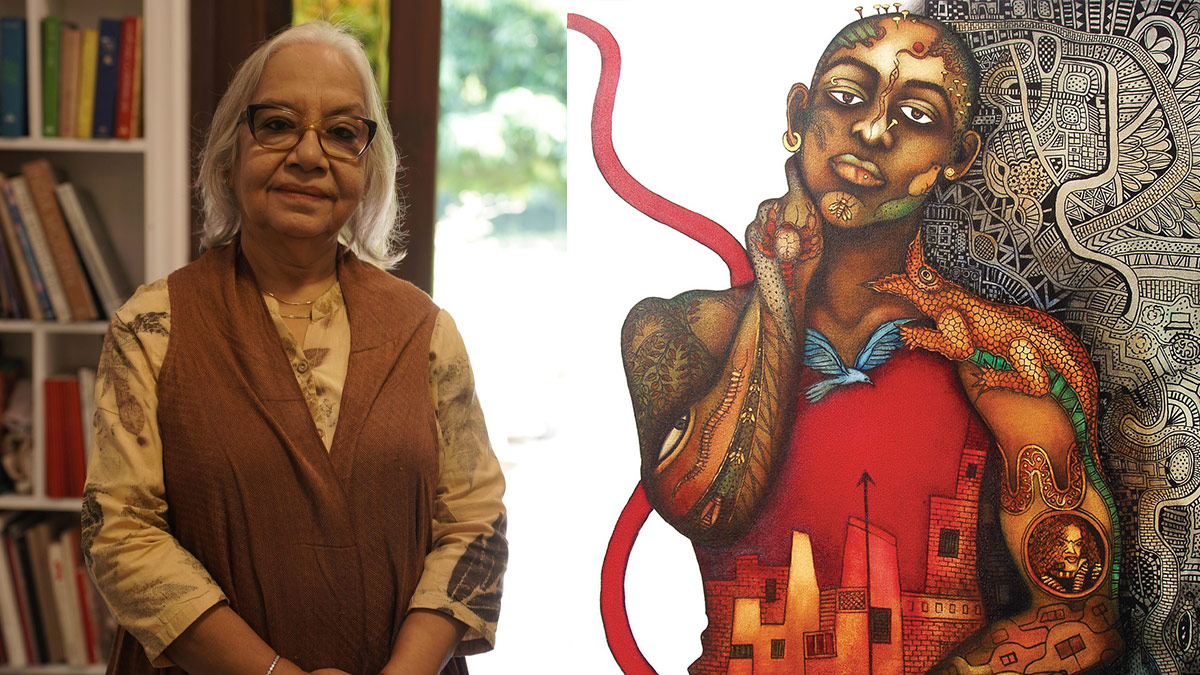
Returning to New Delhi after a decade, the landmark solo exhibition, “In Bloom: A Journey through the Five Decades of Shipra Bhattacharya,” curated by Jonaki Bhattacharya, offers an essential encounter with one of India’s most compelling and influential contemporary artists. In Bloom, on view at CCA, Bikaner House from 15 to 23 November 2025, arrives as both a homecoming and a reckoning. The exhibition meticulously taps Shipra’s commitment to figuration, a radical choice through which she has expressed emotional depth, creative freedom, and moral clarity across 50 years of artistic pursuit. The exhibition features nearly 80 works ranging from portraits, sculptures, drawings, large canvases, collages, and her distinctive tattoo-inspired pieces. 

The Evolution of The Artist
Shipra-Bhattacharya-Painting-01

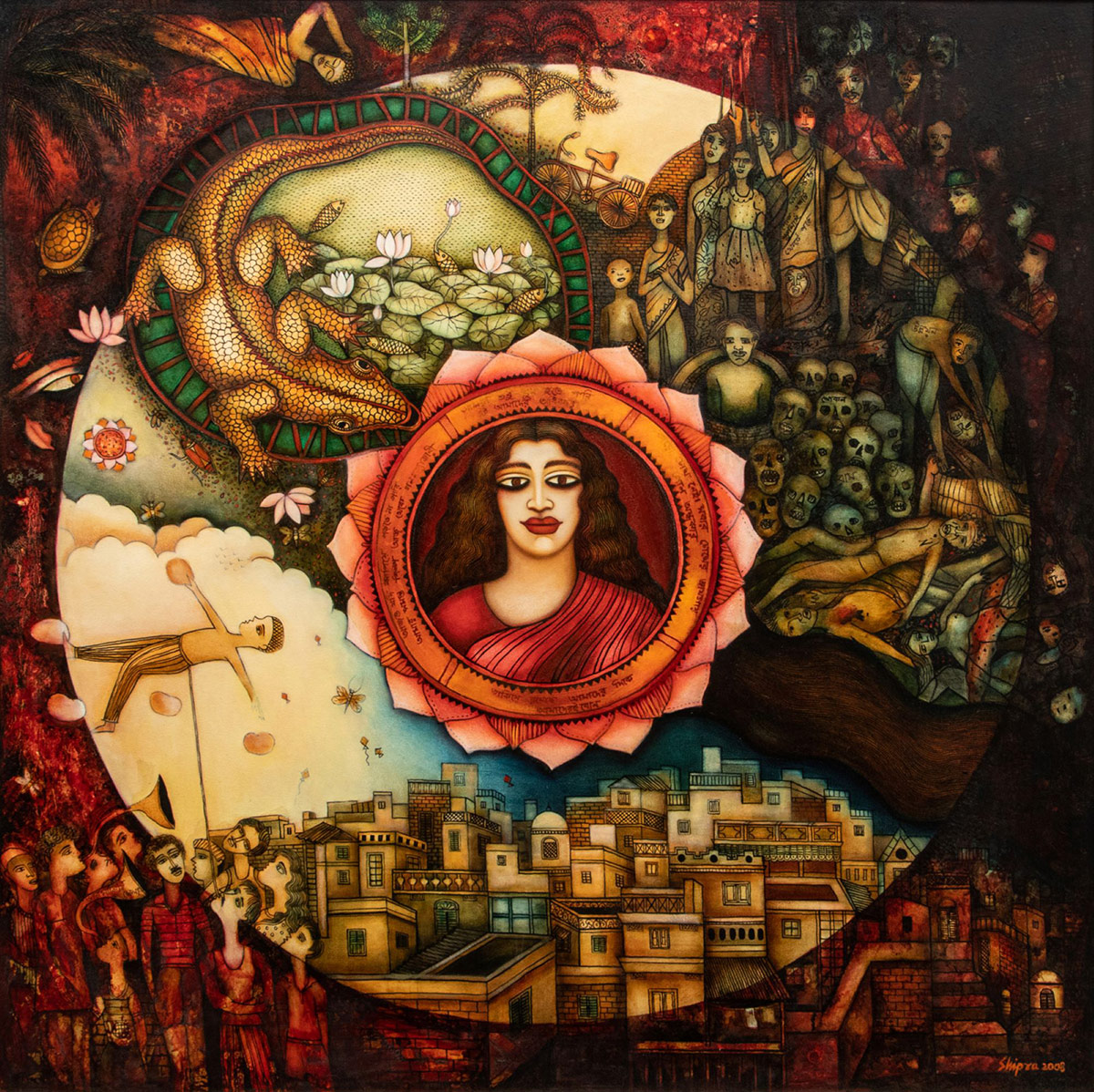
Shipra Bhattacharya’s art began with an urge to express a self-taught foundation that was augmented at Kolkata’s Government College of Art and Craft and the College of Visual Arts. This sense of autonomy paved the path for her to develop her style, which is noted by bold yet soft colours and seamless brushwork. Interestingly, the figure of a solitary woman on a terrace is a frequently occurring element of her paintings throughout her career. The terrace thus becomes an element of psychic ledge rather than a mere architectural element. This recurring motif represents the imaginative freedom within the constraints of everyday life. As the artist herself notes, “Each work carries traces of silence and song, rupture and resilience… I’ve always believed that the quiet spaces within us hold immense power, not as an escape, but as a way of seeing the world more truthfully.”

The Artworks
Shipra-Bhattacharya-Painting-00

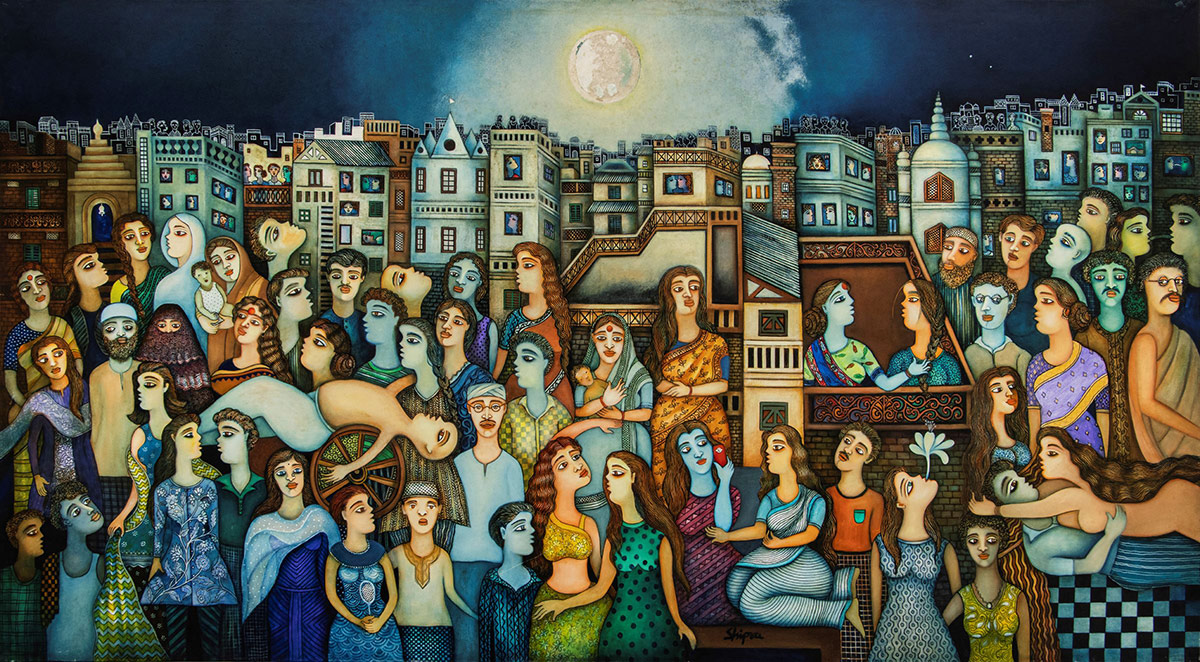
The nature of introspection embedded in her paintings is actually a vital form of witnessing. The exhibition highlights the metamorphosis of her artworks from personal narratives to confronting collective trauma. Works such as Taposhi, an instinctive response to the Singur tragedy, and War, a commentary on global conflict, reveal the artist’s moral stand and resistance. The inclusion of abstracts like War (2014) and Stop War (2014) signifies a bold shift where the collective suffering is dissipated via fragmented representations. 
Shipra-Bhattacharya-Painting-02

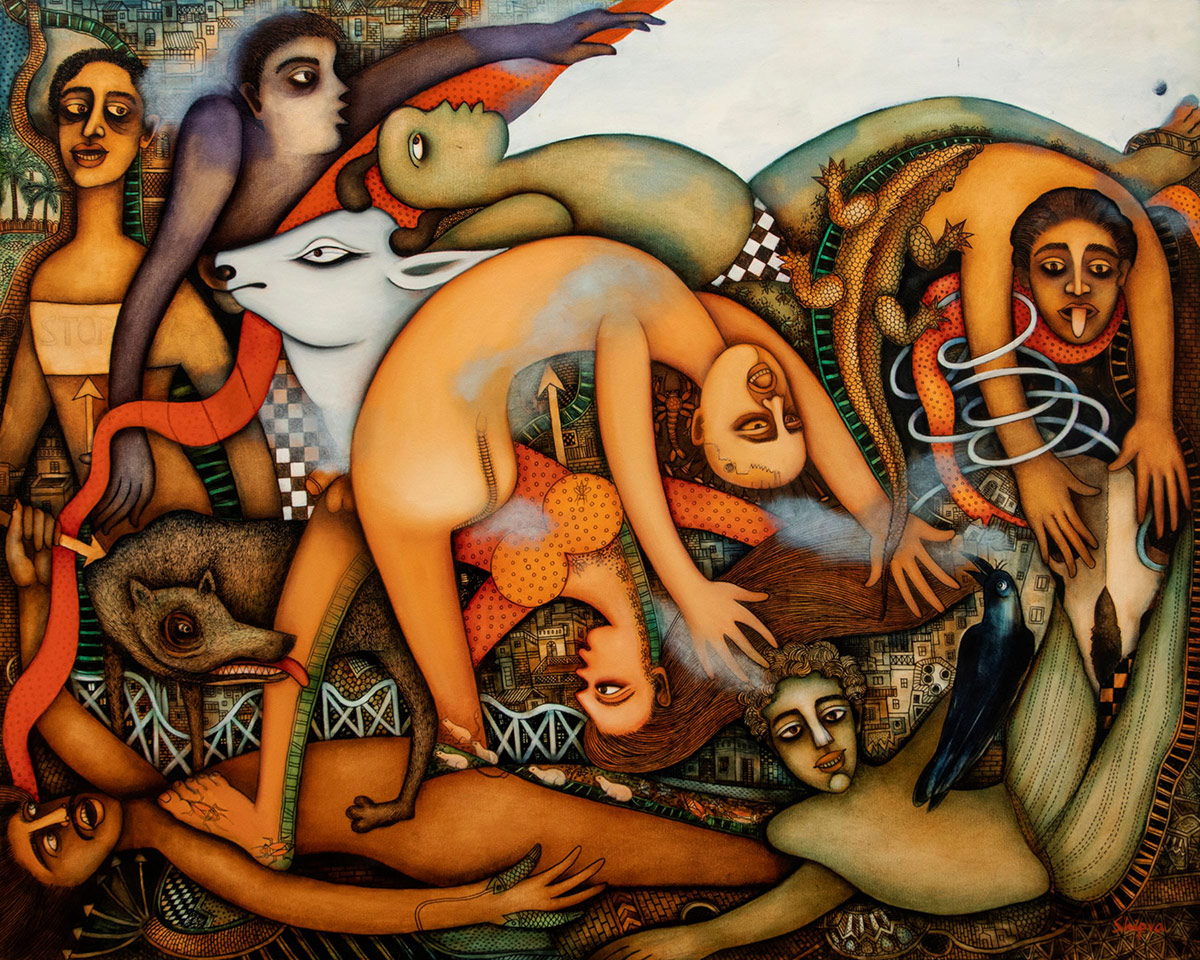
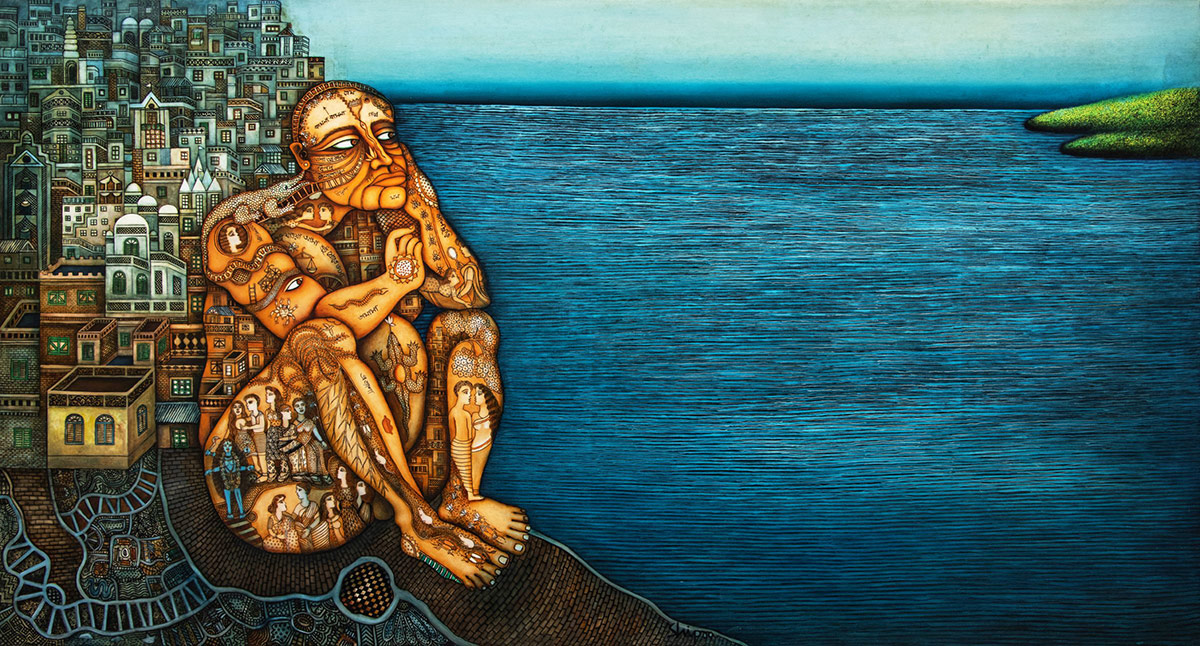
Her more recent paintings, such as Floating (2023), relate to ecological sensitivity, as she depicts a duet between bloom and decay. Her domains of exploration also cover themes such as the gender matrix. One of her notable paintings, ‘He(2021, 2023), is surprising and intimate. She converts the male body into a vessel containing memory and tenderness. She also offers a juxtaposing view through works like She (2023) and the earlier She (2002), where a radiant feminine energy is reflected. 
Shipra-Bhattacharya-Painting-03

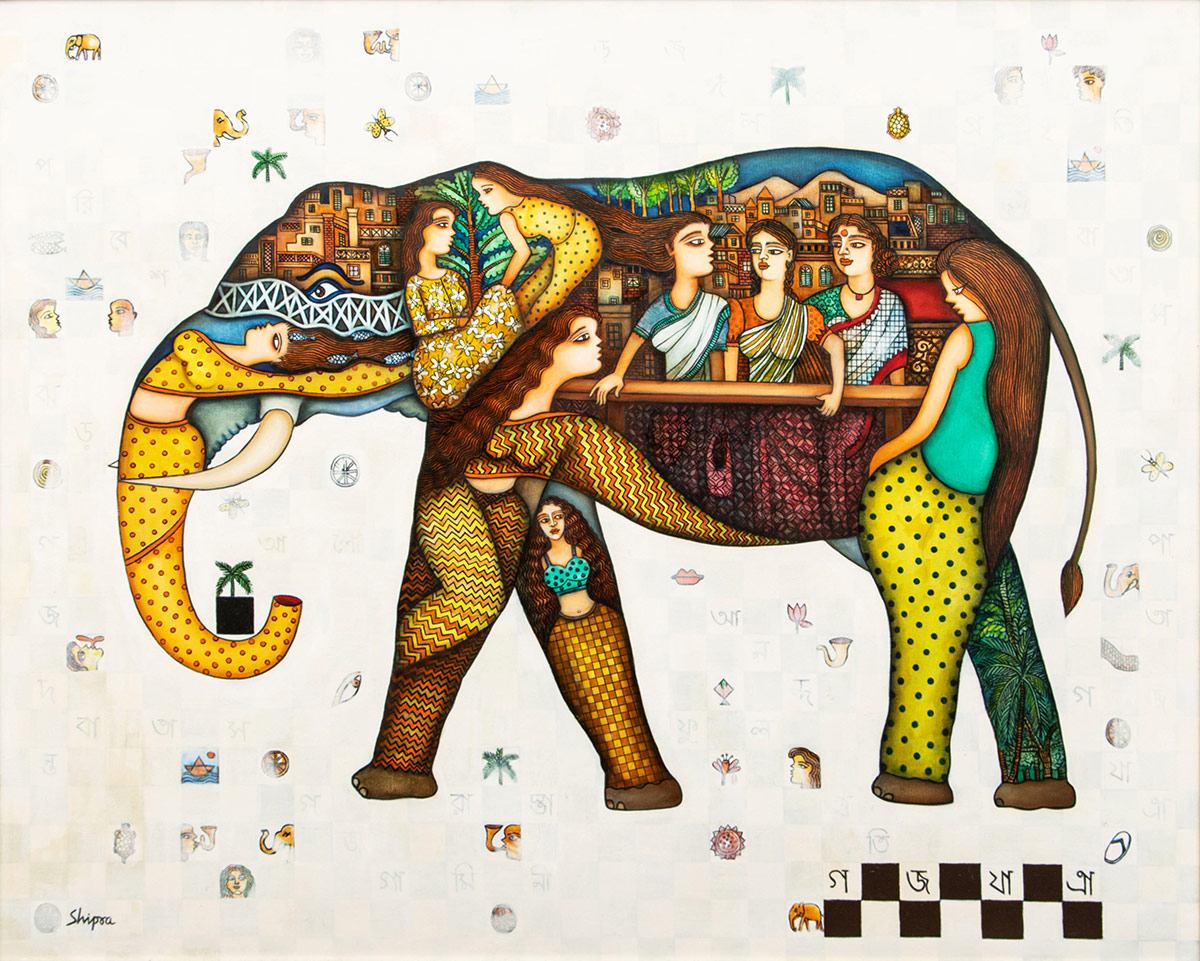
Her exhibitions across Germany, the UAE, the USA, and India signify the unique middle ground that she has embraced to depict the dichotomy between the traditional way of expression and contemporary political presence. She does not chase trends; she cultivates eras within herself. Also, works like Desire (2022) transform longing into a mythic river, flooding the urban subconscious, as it explores feminine identity and desire. 

Exhibition Details

Important Points Description
Exhibition Title In Bloom: A Journey Through the Five Decades of Shipra Bhattacharya
Artist Shipra Bhattacharya
Curator Jonaki Bhattacharya
Venue CCA, Bikaner House, New Delhi
Dates & Timings 15 – 23 November 2025 | 11:00 AM – 7:00 PM
Scope of Work Spanning five decades with nearly 80 works — including portraits, drawings, sculptures, collages, and tattoo-inspired paintings.
Core Theme A sustained commitment to figuration — reflecting emotional depth, imaginative freedom, and moral clarity.
Signature Element The solitary woman on the terrace — a recurring symbol of imagination and quiet resilience.
Notable Series ‘Desire’, ‘He’, ‘She’, ‘War’, and ‘Floating’ — exploring femininity, longing, and introspection through figuration.

Key Highlights

Shipra-Bhattacharya-Painting-04

  • Nearly 80 works spanning portraits, large canvases, sculptures, drawings, tattoo works, and collages.
  • Shipra’s signature terrace motif threads through multiple decades, forming one of the strongest iconographic links in contemporary Indian figuration.
  • Works responding to collective suffering, such as Taposhi (Singur tragedy), War and Stop War (2014), present her as a witness.
  • Monumental canvases like Floating (2023) and He (2021, 2023) expand her thematic spectrum into mythic, urban, and ecological terrains.
  • Early influences of Kolkata’s emotional landscape recur in works like Kolkata (2016).
  • A rare display of her sculptural vision, including Floating (2021–22), which translates her painted sensibility into a tactile, narrative surface.
  • Curatorial framing emphasises introspection as a radical mode of perception and resistance.

Why ‘In Bloom’ Matters Now?
Shipra-Bhattacharya-Painting-05

In Bloom offers a different kind of perspective. Shipra Bhattacharya proves that the interior world is actually a frontline, rather than a concealed space. Her focus on figuration though dignified portrayal of women, labourers, abd everyday laymen, stands against the extreme form of intellectual paintings. To her, retrospection should never be a luxury, but a moral imperative for bearing witness to both personal struggle and collective trauma. This exhibition offers a rare opportunity to appreciate the depth of an artist who has slyly built a monumental and deep corpus of work with a staunch stand and elements reflecting quality rather than quantity.


View this post on Instagram
 

A post shared by Caleidoscope (@caleidoscope.in)

Ayesha Sultana Explores Fragility and Resilience at Jaipur Centre for Art

0
Ayesha-Sultana-Explores-Fragility-and-Resilience-01
Image Courtesy: Experimenter Gallery

The solo exhibition of Ayesha Sultana, christened as Fragility and Resilience, is on view at the Jaipur Centre for Art (JCA) in Jaipur from 9 November 2025 to 4 January 2026. It essentially reflects the inherent duality of existence in the 21st century. The core thesis of this exhibition states that vulnerability is not the opposite of strength, but rather a vital component of resilience itself. This theme sits well in the timeframe of global social, ecological, and personal turbulence that eventually examines the boundaries of sustainability. Ayesha’s artistic practice is multi-disciplinary in nature, spanning drawing, painting, sculpture, and photography. She refers to her work as a ‘verb’, a practice in motion and an artwork in action. This flexible approach situates her amidst the legacy of noted South Asian abstractionists like Nasreen Mohamedi, yet her sensibilities are completely distinct and are specifically rooted in certain geographies she inhabits, ranging from Dhaka’s urban grids to the American South.

The Artworks

Ayesha’s acclaimed graphite relief works challenge perception. She coats paper surfaces with graphite powder and then cuts, folds, and reassembles them to mould them accordingly. This provides the artworks with an astonishing trompe l’oeil effect, resembling industrial sheets of metal or iron. The minimalist geometry present in her works is a testament to the fragile strength of paper and the repetitive human nature of mark-making. She reflects the fragility of well in her “Breath Count” series and the “Threshold” photographs. The former is basically work on clay-coated paper, and the latter is a juxtaposition of her father’s images with her own. The images bear physical scratches and are also solarized by her, which is highly reflective of her fragmented memory of a certain time-space. 

The use of Japanese silk tissue in series like “Miasms” and “Inhabiting Our Bodies” offers another layer in perceiving the boundary of skin, connecting the human body to the vast ecosystem. The exhibition threads together different bodies of work in one plane. The argument posed by this presentation is that fragility is not simply weakness; it can itself be a form of resilience. Situated within JCA’s heritage building, the exhibition invites new audiences in India to engage with Sultana’s exploration of material, memory, and transformation.

Descriptive Narrative

Walking into the galleries of JCA, one shall notice the dualities that are set in motion by Ayesha. The opening section features glass sculptures that appear weightless and are made using unique procedures. Viewers find themselves fascinated to notice how the optical qualities of glass, such as transparency, reflection, and refraction, become metaphors for being seen, being vulnerable, and being open to change. 

The tissue works are faint, shimmering, and fragile. This section invites a closer look, as the layered, translucent material evokes skin, membrane, sea surface. The layering of ink, pigment, and tissue creates subtle colour fields that shift depending on light and the viewer’s position. Finally, the photographic section arrives, representing the threshold of memory where presence and absence coexist. These works shed light on personal narrative regarding material investigation, inviting critical attention to lineage, migration, and change. Sultana’s Bangladeshi origins and her base in Atlanta infuse her practice with movement across geographies. 

Exhibition Details

Important Points Description
Exhibition Title Fragility and Resilience
Artist Ayesha Sultana
Venue Jaipur Centre for Art (JCA), Jaipur
Dates 9 November 2025 – 4 January 2026
Timings 11:00 AM – 7:00 PM (Closed on Mondays)
Exhibition Theme The balance between vulnerability and strength, showing that fragility can be a form of resilience.
Artist Background Born in Jashore, Bangladesh (1984), Ayesha Sultana works across drawing, painting, sculpture, and photography.
Key Works Graphite reliefs on paper, glass sculptures, and “Breath Count” and “Threshold” series exploring time and memory.
Artistic Style Abstract and minimalist, using repetition, layering, and delicate materials like silk tissue and graphite.

Highlights

  • The hand-blown glass sculptures (e.g., Pools 2024) are visually striking: delicate bubbles and forms that evoke water, air, skin, and shell.
  • Works on Japanese silk tissue and clay-coated paper (e.g., Miasms, Inhabiting Our Bodies) offer tactile, transparent, layered surfaces suggestive of skin, sea, atmosphere.
  • The “Breath Count” series translates an internal rhythm (breathing) into external marks, a poetic gesture that collapses the division between body and art-object.
  • The “Threshold” photographic works explore generational memory, familial legacy, and the trace of identity through image manipulation and erasure.
  • The framing of the exhibition within Jaipur’s heritage context gives it a layered resonance: global contemporary art meeting Indian patrimony, which deepens the dialogue around fragility and resilience in a cultural register. 

Takeaway

The placement of this rigorously abstract and contemplative body of work within a city like Jaipur, a center celebrated for its vibrant, traditional, and maximalist aesthetic, is a brilliant curatorial choice. What might be dismissed as “soft” or “delicate” is here recast as tenacious, insistent, alive. For anyone interested in material practice, in the dialogues between body and matter, memory and form, Fragility and Resilience offers a rich, resonant experience. Overall, this exhibition solidifies Sultana’s place as one of the most intellectually compelling voices in contemporary South Asian art.

Aban Raza’s ‘Nothing Human Is Alien To Me’: A Visual Chronicle of Protest and Pain

0

Aban-Raza’s-‘Nothing-Human-Is-Alien-To-Me’-02

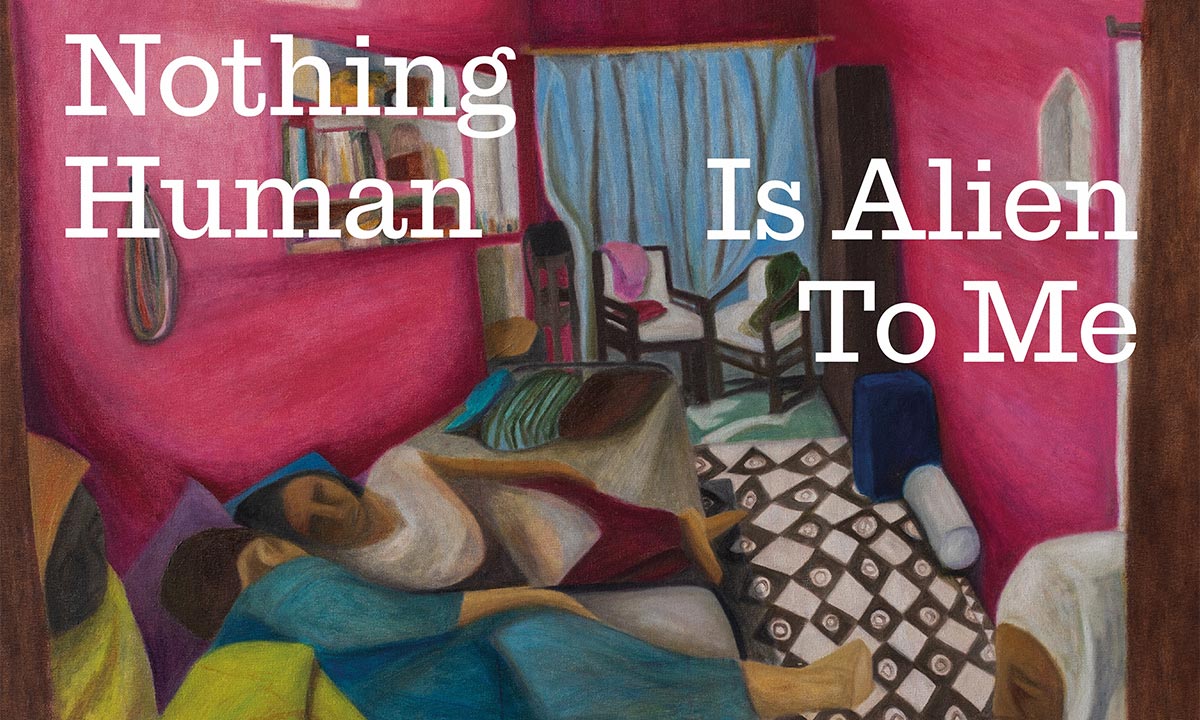
Galerie Mirchandani Steinruecke returns this season with an incisive exhibition: “Nothing Human Is Alien To Me”, artist Aban Raza’s first solo exhibition in New Delhi, running from 31 October to 15 December 2025. It promises an active artistic engagement with the volatile socio-political landscape of the Indian subcontinent. Aban Raza is known for her portrayal of contemporary reality by presenting a corpus of work that comments on human experience. The paintings invite the viewers to step into an arena where death, dissent, and dignity converge into one. The exhibition unfolds through eight major works that are a ‘startling oscillation’. Her paintings occupy a distinctive spot that can be characterized as a porous distinction between lived violence and political imagination, reflecting the subcontinent’s long history of protest movements while channeling its echo through modern imagery. 

A Vocabulary of Resistance and Remembrance

Aban Raza’s practice can be interpreted as part of a lineage of subcontinental artists who document, mourn, and protest through visual imagery. In this exhibition, her works appear to be encapsulating annotations on the psyche of public grief. The figures she paints often appear suspended between existing and erasure. The oscillation reflected in her paintings is not only aesthetic, but highly political. She single-handedly does not ‘glorify’ the protestors; rather, she presents them as individuals possessing vigour, whose bodies are vectors of the imprint of a country negotiating with its own fractures. 

In the artistic sphere, the sensibility of her works resonates with artists like Zainul Abedin, Somnath Hore, and Iqbal Husain, all of whom visualised human suffering without domesticating it. Yet, Raza’s palette is extremely contemporary, as her figures reverberate the pixelated brutality of news feeds, etc. 

Raza’s previous solo shows with the gallery, such as ‘Luggage, People and a little space’ (2020) and ‘There is something tremendous about the blue sky’ (2022) in Mumbai, have established her as a vital voice concerned with the “atmospherics of power within the postcolony,” particularly focusing on the repression of rights and the dehumanisation of marginalized groups. Her subjects are often drawn from the labouring classes and those actively claiming their civic rights.

The Art Choices


View this post on Instagram


A post shared by Meera Menezes (@meeramenezesart)

Her paintings feel like a deeply felt interpretation of space and body. Death appears not as an event but as a witness. Protest is depicted not as spectacle, but as heartbeat. Her use of colour is the signature element of her paintings. Critics call it a “bright unselfconscious chroma” that is applied to the working-class body, lending a passionate engagement to the scenes. Her focus also ranges beyond public spectacles of protest, as one of the paintings hung in the exhibition depicts a scene of quiet internal mourning. This piece features women in an interior space, resting after preparing a community meal. The description highlights the “pink walls, shiny and overwhelming, loom[ing] and appear[ing] to teeter above the figures,” suggesting a domestic space that is simultaneously confining and tender. The sense of “waiting” expressed through the posture is interpreted as “passivity and dependency”. 

Exhimition Details

Event Details
Title “Nothing Human Is Alien To Me” (from Terence, popularized by Karl Marx)
Artist Aban Raza
Venue Galerie Mirchandani Steinruecke, New Delhi
Dates October 31 — December 15, 2025
Core Theme The oscillation between scenes of violent death and vital protest movements in the subcontinent.
Artistic Style Use of palpable, proximate imagery, elongated figures, and passionate colour, often referencing German Expressionism.
Critical Voice Gayatri Sinha, emphasizing the links between past protest history and current social media/news images.

Key Highlights

  • Aban Raza’s debut solo in New Delhi marks a significant moment in contemporary political art.
  • The eight paintings create an energetic tension between death and dissent.
  • Visuals draw from protests, news media, and social memory.
  • The exhibition aligns Raza with a lineage of artists depicting human struggle.
  • Works encourage slow, deliberate viewing rather than passive consumption.
  • The show engages both historical protest movements and current sociopolitical currents.

The Politics of Gaze and the Responsibility of Looking

Raza’s works are constructed for gradual looking. They challenge the viewer to stick to the discomfort between empathy and voyeurism. These days, as images of suffering are consumed with considerable velocity, her canvases slow down the spectator’s comfort to scroll away. The intentional tension between private anguish and public spectacle has long been a subject in South Asian art. What distinguishes her work is her ability to frame the human body as an archive; every figure is an inscription, and every gesture appears to be a footnote to an unauthored political chronicle.

Takeaway

Aban Raza’s exhibition is a necessary confrontation with the current epoch. It nudges, unsettles, and most importantly, confronts the gravity of the human condition with clarity. She upholds some very critical queries, like What do we owe to the images we consume, and what responsibilities do we bear for the truths they contain? Her insightful translation of both the violent end of life and the realities of protests forces the spectators to acknowledge the battles for dignity and existence. This exhibition strengthens Raza’s place as a painter of courage and empathy, whose work promises to resonate long after the final viewing date. It offers a moral encounter. And in that sense, Raza’s debut is not just timely, it is necessary.

Alipore Museum’s Print Studio Comes Alive at Kolkata Art Weekender

0

Alipore-Museum’s-Print-Studio-Comes-Alive-at-Kolkata-Art-Weekender-01

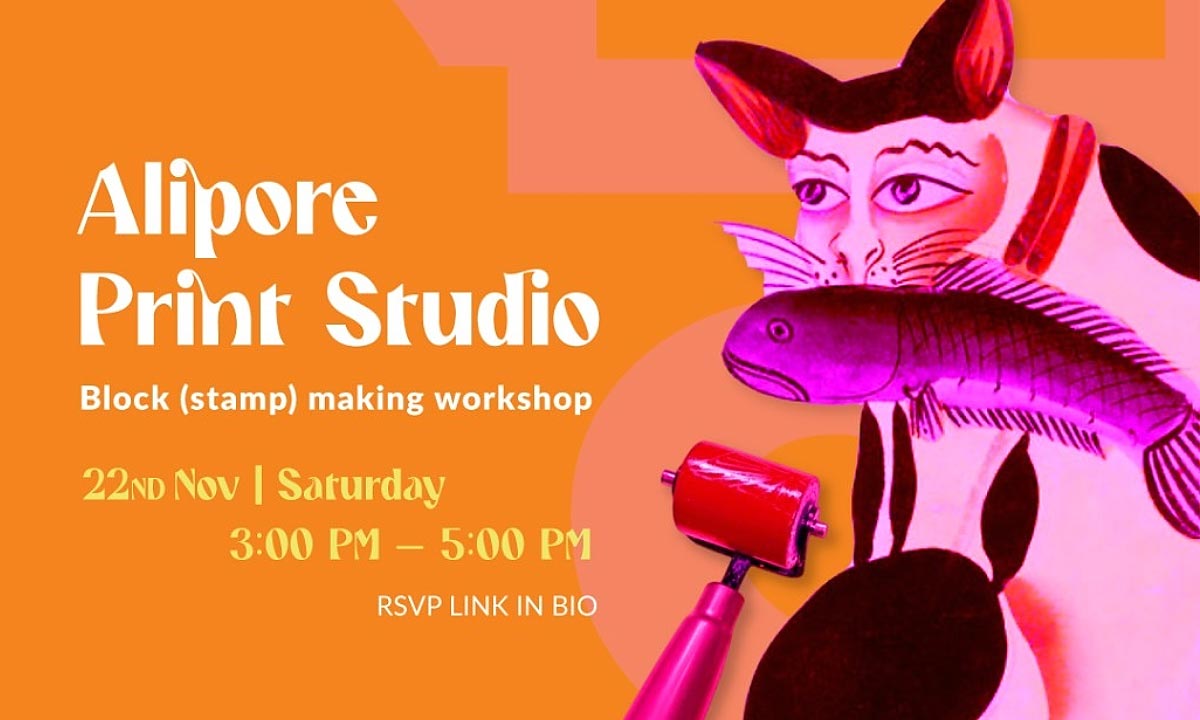
The city of joy, Kolkata, is intrinsically a space that is drenched in history and culture, and the city’s favourite ritual seems to be celebrating life through art. The Kolkata Art Weekender is presenting a unique constellation of events through one workshop: Alipore Print Studio, a block (stamp) making session hosted jointly by DAG Museums and Alipore Museum on 22 November, 3–5 PM. This hands-on workshop aims to offer an unforgettable opportunity to the participants by allowing them to step directly into the world of symbols and traditional printmaking, by seeking inspiration from a landmark exhibition on the 19th and 20th century Bengal art.  This workshop promises an afternoon where myths and motifs return as a fresh source of amusement and tales for the ‘visitors-turned-printmakers’ for a day. 

Re-Rooting this workshop

The initiation of this event is anchored in DAG’s ongoing exhibition, ‘The Babu and The Bazaar: Art from 19th and 20th Century Bengal’. This exhibition made Kolkata’s complex history accessible in a visually appealing yet understated manner. This exhibition is a treasure trove of the art forms that flourished and proliferated in the city during the colonial era. It includes Kalighat pats, commissioned Early Bengal Oil Paintings, and mass-produced prints such as woodcuts, engravings, and lithographs. The reverse-glass paintings are also a very thoughtful inclusion in this sequence. Curated by experts like Aditi Nath Sarkar and Sandeep Maitra, the exhibition articulates the dichotomy between the English-educated elites, i.e., the babus, and the popular bazaar or market prints. The presentation of the two distinctive genres together reveals how the prints circulated among people from different backgrounds and varied walks of life. 

Taking inspiration from this, the forthcoming workshop shall open the doors to a portal where the paper, ink, and carved blocks become the circuits of Bengal’s layered history. Led by Chaiti Nath, a member of DAG’s team, the participants will be guided through a step-by-step experience that shall bind folklore and the 19th-century visual with hands-on craft work.  Chaiti’s sessions are noted for their clarity and curiosity-inducing factor. She often initiates the sessions with a benign beginning, i.e., by putting forward questions like What happens when you translate an old story into a new mark? The main spirit of the session is inducted when tools are picked up, and participants get to know about the vocabulary of Bengal’s urban art through a trail of DAG’s The Babu and The Bazaar

At the workshop, the VP of DAG Museums, Sumona Chakravarti, will guide everyone by introducing the segments. She is acknowledged for her expatriates in archival works and very approachable storytelling capacity. In her opinion, these artworks are not something restricted to the museum as relics, but are living ideas that continue to influence modern-day graphic visuals. 

Inside the Print Studio: A Guild of Beginners 

The Alipore Print Studio session will be conceived as a link between the historical context of the exhibition and contemporary artistic practices. The session’s premise is simple yet high-octane,i.e.,  to allow participants to “Translate myth and motif into print swatches.” The method that will be followed is the block printing technique, in which different patterns are carved into a block that is inked and stamped onto a surface. The atmosphere of the event is supposed to be very immersive in itself, encouraging people to “Work like a guild in a traditional print studio, foraging, carving, and creating individual prints into a collective body of work.” This sentiment of collective work and inclusivity makes it stand out and appealing. By engaging tools and materials of traditional printmaking, the session aims to leave a deeper imprint on everyone’s heart. As many people flock together, a sense of camaraderie is woven even among strangers. And in the final hour, individual prints produced by each participant will be assembled into one space, making it a collective work of many hands. 

Through workshops like these, DAG continues its legacy of making history and art accessible to people irrespective of age, gender, and other factors, and nurtures a natural tendency to get intrigued by heritage and culture. 

Event Details

Event Description
Title Alipore Print Studio: Block (Stamp) Making Workshop
Host DAG Museums & Alipore Museum
Date & Time 22 November 2025, Saturday, 3:00 PM – 5:00 PM
Workshop Focus Translating myth and motif into print swatches via block (stamp) making.
Inspiration Source DAG’s exhibition: ‘The Babu and The Bazaar: Art from 19th and 20th Century Bengal’
Lead Artist Chaiti Nath (@mumtendu, DAG Museums Team)
Contextual Walkthrough Led by Sumona Chakravarti (VP, DAG Museums)
Venue Alipore Museum, Kolkata

Key Highlights

  • Hands-on block carving inspired by motifs from historic Bengal art
  • Curated walkthrough of DAG’s exhibition for conceptual grounding
  • Collective print-making experience in a guild-like setting
  • A blend of history, technique, and personal creativity
  • Part of the larger Kolkata Art Weekender programme featuring city-wide art events

Takeaway

The Alipore Print Studio is a brilliant model for art engagement and contemporary creative practice. It makes one feel engaged and included, even if they do not possess true artistic skills. An interesting factor is that by modulating the workshop based on collective work, it also seeks to revive the tradition of communal, artisan-led traditions that have been replaced by industrial printing. This also recalims art from being ‘distant’ and makes it more tangible to people who also get a refreshing source of amusement through it. Thus, visitors shall not just perceive art, they will create some too, as they physically inhabit the cultural space. Therefore, this workshop is supposedly a warm invitation for people to sit, interact, and carve something meaningful that goes beyond being a trivial souvenir; it is indeed a celebration worth stepping in.

St+art India’s ‘ADDA: The Third Space’ Brings Community Art to TRI Kolkata 2025–26

0

St+art-India’s-‘ADDA-01

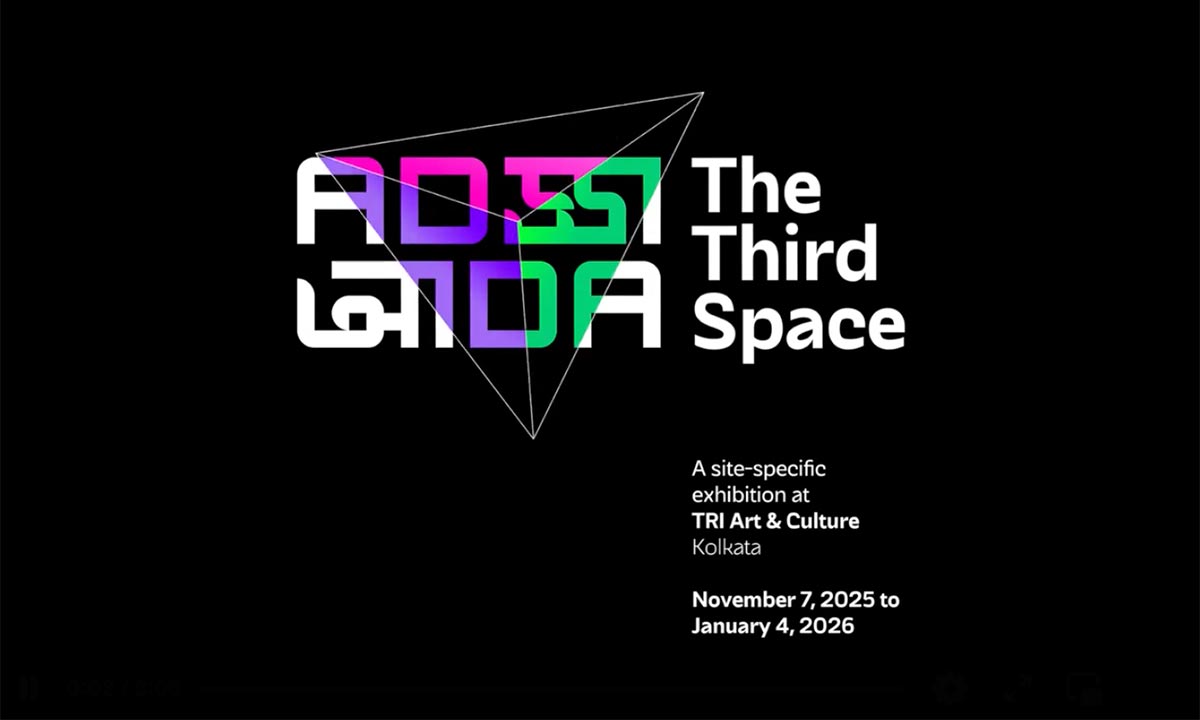
The cultural sphere of Kolkata is adorned with the return of St+art India Foundation’s project that blurs the concrete block between private talk and public life. Kolkata’s current vibe shall play a little more, as the city inaugurated the St+art Kolkata 2025–26 festival. This project transformed the entire space of TRI ART & CULTURE by practically converting it into an interactive “ADDA SPOT”. Opened to all on November 7, 2025, the transition of the multi-disciplinary art centre into a hotspot of adda culture is supported by Asian Paints and has successfully evolved into a platform to deliver powerful statements and immersive experiences that encapsulate the essence of the city.

Experiencing The Adda

The St+art India Foundation, known for bringing large-scale public art and community engagement programmes, has skillfully curated this chapter in partnership with corporate partners like KCT Group CSR. The theme that binds the show is “Adda”, a very innate practice of the Bengalis, a social idiom for leisurely yet intense conversational gatherings. The title “Third space” represents the essence of the theme by placing it beyond home (the first place) and workplace (the second place). In the city of joy, Adda has emerged as a ritual of the Bengalis, as it fuses private memories, nostalgia, critical exchanges, etc., over which like-minded people huddle together. Thus, the third space is more of a curatorial device where one can expect sculptural interventions, ephemeral site-work, and socially activated programs that deliberately foreground conversation as a medium. Interestingly, TRI is situated at a restored 1940s mansion, which is reimagined as a multidisciplinary cultural hub. This offers a blend of history with visuals and the best essence of Kolkata. 

The Dialogue in Motion

As the St+art Foundation is renowned for its city-wide interventions, and the opening at TRI seems like the beginning of the festival’s impact on Kolkata. While the exhibition is the nucleus, the wider program aims to nestle the public art deeper into the urban fabric.

Ongoing Intervention Cultural Significance
“ADDA: The Third Space” Exhibition The central experience at TRI Art & Culture uses contemporary art to initiate a socio-cultural dialogue on community and public engagement.
City-Wide Murals & Street Art Public murals across Kolkata extend the St+art ethos of making art accessible, turning city walls into participatory canvases.
Workshops & Public Programs Interactive sessions, literary readings, and culinary addas transform TRI into a multidisciplinary cultural hub.
Social Discourse The theme ‘Adda’ has sparked vibrant conversation in Kolkata’s cultural circles, redefining the idea of shared space and dialogue.
Opening & Duration Opened November 7, 2025, at TRI Art & Culture, supported by Asian Paints and KCT Group CSR; runs through early January 2026.
Collaborators St+art India Foundation x TRI Art & Culture; Vision Partner: Asian Paints; Support: KCT Group CSR.

key Highlights

  • Opening day launch at TRI with curatorial walkthroughs and artist interactions (7 Nov 2025).
  • Exhibition runs through early January, offering talks, performances, and participatory events alongside installations.
  • Collaboration model: St+art India Foundation x TRI Art & Culture; vision partner Asian Paints; supported by KCT Group CSR.
  • Programmatic emphasis on conversation, public activation, and site-responsive work that references the Bengali adda tradition. 

Context Matters

Hitherto, St+art’s city-scale projects have deployed murals and public programming to re-module how people move through everyday spaces. In Kolkata, a city already saturated with nostalgia, public imagery, and rich traditions, the project’s success will depend on how well it balances spectacle, whether the works can invite genuine participation rather than being a piece of displayable decor. Also, by choosing Adda as the central theme, it connects an intimate mesh with the larger public in Bengal. 

The exhibition is a vital signal of Kolkata’s creative renaissance, positioning Kolkata as a leading centre for intellectual commentary. As the event continues over the coming months, it shall act as a reminder that art is an act of rebellion against isolation and anonymity, reflecting the third space and connected by Adda.

The Camel Art Foundation Comes to Konark: Nurturing Young Artists in Odisha

0

The-Camel-Art-Foundation-Konark-chapter-1

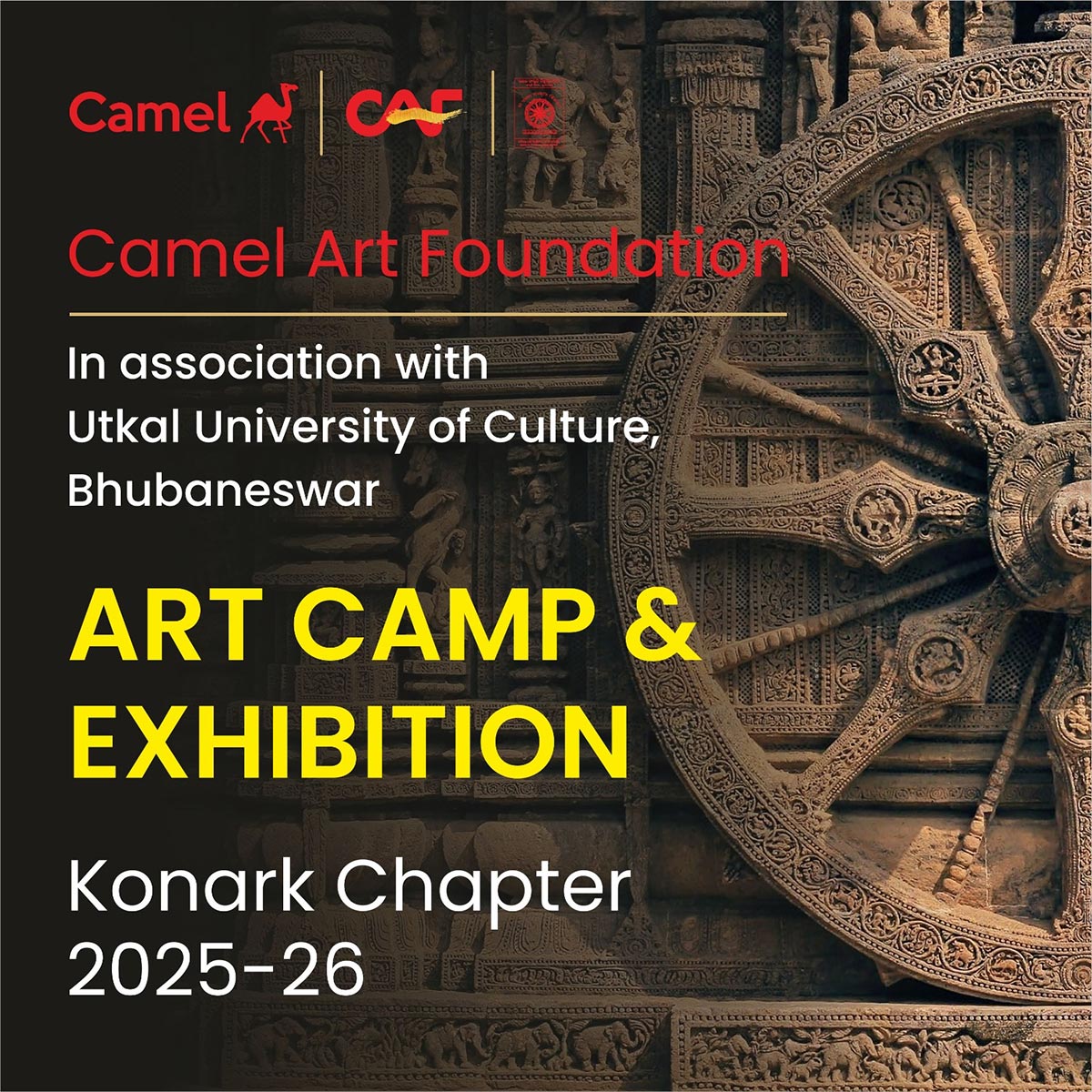
What early memory stirs in your mind when you travel back to your childhood and try to recollect anything about art? For most of us, it ought to take us back to the small, waxy box of Camlin crayons, those vibrant sketch pens, or the first box of water colours, maybe. It is from this nostalgic cradle of beginnings that Camlin’s legacy is linked with us. Continuing its enduring policy to supplement the world of art, Kokuyo-Camlin’s Camel Art Foundation now extends its hands to the next generation of artists gathering at Konark. The much-awaited forthcoming chapter of the National Art Camp & Exhibition series, the Konark Art Camp & Exhibition, is scheduled from 10–14 November 2025

Overall, forty-five shortlisted artists hailing from the leading art colleges across East India shall gather for a five-day event, which incorporates expert lectures, mentor-led studio discussions, and field studies as well. This initiative is to be made successful in association with the Utkal University of Culture (UUC), Bhubaneshwar, and is set to initiate a new cohort of artists in the beautiful and artistic setting of Odisha. More precisely, Konark is a felicitous venue. 

Why Does this Chapter Matter?

The Camel Art Foundation’s camps have traveled a long range of Indian sites, from Hampi to Ajmer, where the place itself becomes an educator. The past chapters have offered thrilling experiences like open-air sketching and curated exhibitions that put the cumulative toil of artists on public display. This year, the Konark chapter aims to reflect upon its past activities and allow students to test ideas in situ and then see their works framed for an audience beyond college walls. 

Moreover, the institutional partnership with UCC Bhubaneshwar, a kind of mandate, is offered, which explicitly positions the importance of preserving, promoting, and protecting the richness of Odisha’s cultural value. The university specializes in fields ranging from Visual Arts and performing arts to cultural studies and Archaeology. By achieving an active collaboration with such a leading cultural institution in the state, Camlin ensures that the event is invested in the local artistic system. 

The exhibition offers a crucial platform for artists to display their newly created works. This is vital for connecting artists with critics, and potential audience, and also acts as a launch pad for their professional careers. It offers a niche for cross-pollination of ideas and techniques that helps to forge a cohesiveness in art.

Exhibition Details

Aspect Description
Event Name Camel Art Foundation Art Camp & Exhibition 2025–26
Organizers Camel Art Foundation, a Kokuyo Camlin initiative
Academic Partner Utkal University of Culture (UUC), Bhubaneswar
Location Konark, Odisha — inspired by the Sun Temple (UNESCO World Heritage Site)
Duration Five-day creative camp, from November 10th to 14th, 2025
Participants 45 shortlisted artists from leading art colleges across East India

Key highlights

  • Forty-five emerging artists were selected from a regional shortlist; regional representation is a strong point. 
  • Mentor-led sessions promise sustained critique rather than one-off demos, valuable for development.
  • Site visits to Konark mean participants will engage directly with vernacular sculpture and landscape.
  • Collaboration with Utkal University of Culture could anchor the program in local pedagogy and resources.

Takeaway

The Camel Art Foundation’s chapter matters because it moves beyond metropolitan nexuses and invests in peripheral centres of practice. By bringing mentors and a market-driven exhibition to Konark, the event expands its networks for students. This five-day experience goes beyond the participants’ outlook, creating artists who are both technically skilled and conceptually rich.

Decoding Patterns: Systems, Silhouettes, Synchronicities at Tao Art Gallery

0

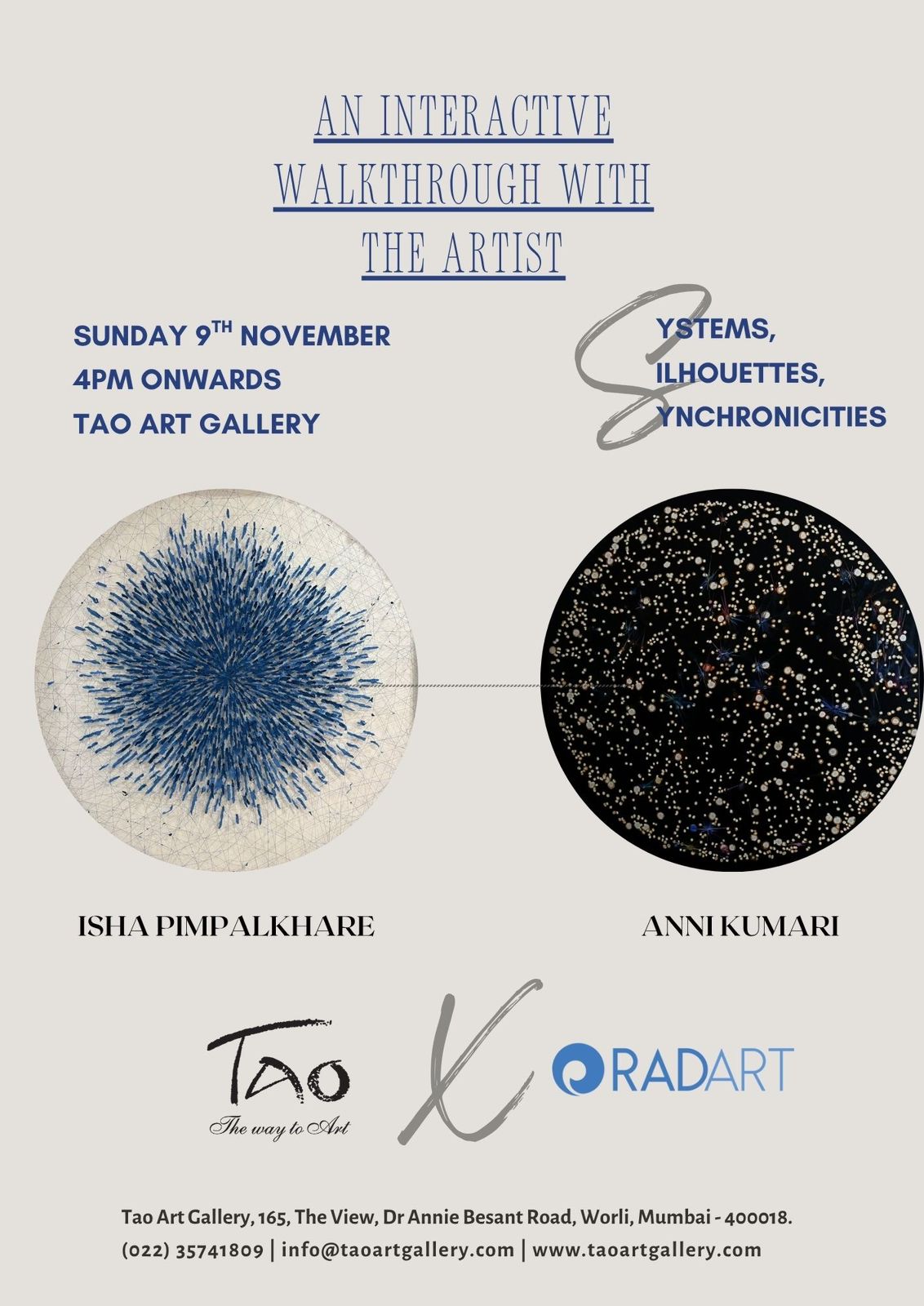
Tao Art Gallery, Mumbai, is set to host an intellectually resonant and visually captivating joint exhibition, ‘Systems, Silhouettes, Synchronicities,’ featuring the works of abstract artists Isha Pimpalkhare and Anni Kumari. Opening on November 8, 2025, and running until December 20, 2025, the exhibition displays the natural, mathematical, psychological, and cosmic elements that shape the world we inhabit. Curated by Sanjana Shah, Creative Director at Tao Art Gallery, the exhibition showcases the convergence of two distinct artistic voices on a single platform. The resulting show is a beautiful presentation of abstract compositions, noting a balanced composition of geometric precision with artistic fluidity, representing harmony amidst chaos. 

The Experience & The Artists

The artworks of both artists are rooted in the notion that the world is constructed through patterns, some visible, others undetectable unless one chooses to look beyond surface appearances. Their mode of expression differs significantly, yet they have exquisitely complemented each other almost flawlessly. 

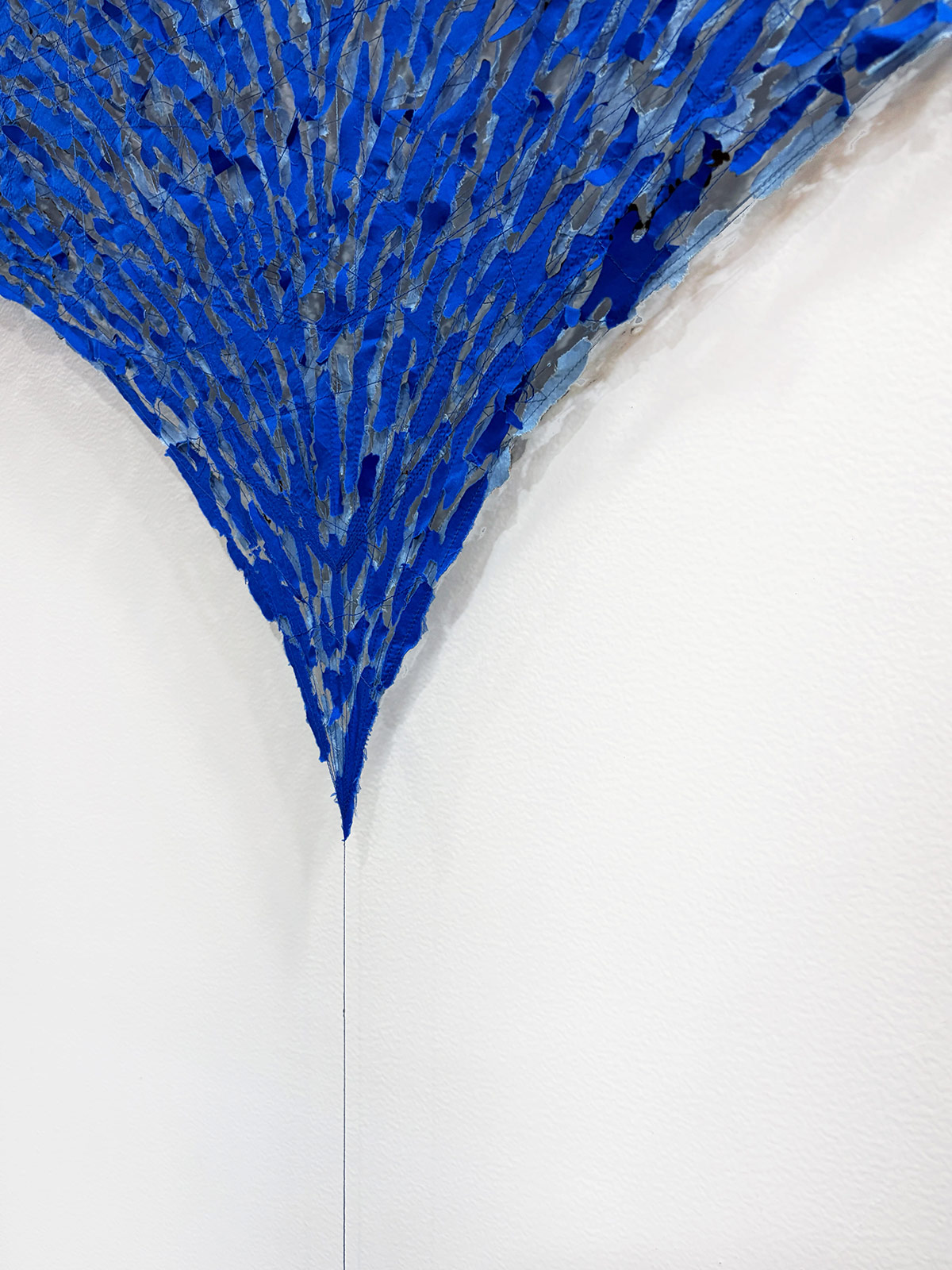
Isha Pimpalkhare_To the Limit (detail), 2025, Textile installation, 63 x 81 inches
To the Limit (detail), 2025, Textile installation, 63 x 81 inches – Isha Pimpalkhare

For Isha, her art emerges from the soft, breathing pulse of the naturalistic world. Her textile-based artistic practice deals with the balance and interdependence of the reciprocative relationship between humans and nature. Her work is mainly based on the concept of Biophilia, i.e., humanity’s innate tendency to connect with nature and other life forms. Her rudimentary textile art technique is inspired by the age-old devoré (chemical burning of cellulosic fibres). She stitches polyester thread onto cotton fabric before treating it with acid. The cotton then gradually dissolves, leaving behind a mesh of polyester threads and fragments of unburnt cotton. This meticulous procedure represents the enduring perpetuity in rhythm. Recently, she incorporated the concept of ‘Kinetic Textile sculptures’ in which she included motors and basic coding to provide a living dimension to her artwork. 

Anni Kumari_At the Threshold of Time-I, 2025, Schmincke pigment on canvas, 12 x 19 inches
At the Threshold of Time-I, 2025, Schmincke pigment on canvas, 12 x 19 inches – Anni Kumari

Meanwhile, Anni Kumari moves through the chambers of numbers, geometry, and algorithm-based logical niches. Her interest lies in structures that exist beneath the threshold of perception. Her knack lies in playing with optical illusions, number patterns, and cosmic sequences. Each work of hers forms a blueprint of existence in itself, displaying a unique representation of life under a coded format. Through repetitive patterns, strict grid lines, and vibrant centripetal and centrifugal etchings, Kumari symbolizes the vastness of the cosmological domain. 

Exhibition Details

Exhibition Details
Title Systems, Silhouettes, Synchronicities
Venue Tao Art Gallery, Mumbai
Dates November 8 to December 20, 2025
Curator Sanjana Shah
Artists Isha Pimpalkhare and Anni Kumari

Key Highlights

  • Joint showcase of abstract artists whose practices merge art, science, and philosophy
  • Exploration of natural ecosystems, mathematical logic, and cosmic structures
  • Curatorial focus on movement, rhythm, and interdependence
  • Textile works created using the devoré technique
  • Dense geometric visual fields based on numeric sequences
  • Dynamic interplay between organic silhouettes and algorithmic precision
  • Works evoke harmony within complexity, and order within abstraction

Takeaway

Systems, Silhouettes, Synchronicities at Tao Art Gallery

Systems, Silhouettes, Synchronicities is redefining its relationship with scientific thought and a more naturalistic fervour. This exhibition eloquently frames abstraction as a language for decoding the world. Both artists demonstrate that systems, whether ecological or mathematical, are not simple mechanisms but living entities. It dissolves the boundaries between what’s absolute and concretized and the emotional agility of humans.

Nelofar Currimbhoy to Unveil Her Latest Novel “Tara – The Dream Chaser” at Bikaner House

0

Book-Launch-Tara–The-Dream-Chaser-Nelofar-Currimbhoy-01

New Delhi is all set to host an evening where literature shall enlighten the chilly dusk of November. A much-anticipated literary event is about to grace Delhi as a passionate author and business leader, Nelofar Currimbhoy, launches her latest novel, Tara – The Dream Chaser. Scheduled on 11 November 2025, at the Bikaner House, this event is being organized in collaboration with Rupa Publications. Nelofar is noted for her eclectic and emotionally rich storytelling, which propounds the journey of a modern-day heroin who entailed a thrilling experience from breaking free from a royal cage and getting exposed to the chaotic freedom of Bombay. Notably, the book has already earned universal critical acclaim. 

A Celebration Marked by Words, Voices, and Artistry

A very thoughtful step is presented by the organizers, as the attendees will be greeted with a special book reading session by the celebrated veteran actor Kabir Bedi. This is not his first interaction with Nelofar’s literary work, as he previously used his voice to narrate the verses of the verse novella Eyes of the Healer, intended for a dance drama by Muzaffar Ali. This reading session shall be followed by an immersive conversation with the author herself, where she will be imparting insights on the creative process undertaken by her to fulfill the journey of creating this book. The event does not end here; it also includes an audio-visual presentation highlighting the author’s distinguished literary journey. The whole event shall sum up with an exclusive book signing session, where people will get to greet the author personally. 

Desire and Defiance

Tara- The Dream Chaser is a novel that dives into the life of Tara, a woman born into Rajput royalty who realizes that the extravagance of her life and lineage is nothing more than a prison put under the banner of royalty. Critics and early readers have extensively praised the novel for its persistent depiction of strong sentiments, such as emotional neglect, rigid tradition, and the complex choices a woman must make to claim her own life. The narrative follows Tara’s desperation to escape from a loveless, controlling marriage, which finally leads her to Mumbai. It is here in the city of dreams that Tara initiates her journey of self-discovery and healing. In the course of this tale, Tara encounters two men representing two juxtaposing paths and leaves a mark on her story. The first man is Kabir, a Bengali-French photographer who offers genuine solace, and the second one is Vivan Mehta, Bollywood’s irresistible ‘golden boy,’ who embodies passion and risk. The novel does not comfort the readers by providing easy answers, and rather exposes one’s mind to dilemmas like duty Vs desire, and freedom Vs self-restraint. 

Event Details

Event Details
Book Tara – The Dream Chaser (Novel)
Author Nelofar Currimbhoy
Date November 11, 2025
Time 6:00 PM onwards
Venue Bikaner House, New Delhi
Key Highlights Reading by Kabir Bedi, Author Talk, AV Presentation, Book Signing
Publisher Rupa Publications

Key Highlights

  • Launch event at Bikaner House, one of Delhi’s major cultural venues
  • Dramatic live reading by Kabir Bedi
  • Behind-the-scenes audio-visual insight into Currimbhoy’s writing journey
  • Tara – The Dream Chaser, selected by multiple literary festivals
  • Praise from Muzaffar Ali, Vinita Dawra Nangia, and early critics
  • Continues Currimbhoy’s tradition of blending emotional depth with narrative elegance

The Author

Nelofar Currimbhoy Author
Image Courtesy – Rupa Publications

Nelofar Currimbhoy is widely recognised as the President of the Shahnaz Husain Group of Companies, but her literary endeavors have risen steadily over the past decade. From her writings, it is quite clear that Nelofar, as a person, is steeply intuitive as she seamlessly combines both intimate and pragmatic themes in a very compelling way. Flame – The Inspiring Life of My Mother was her debut book, which tapped into the extraordinary journey of the beauty icon Shahnaz Husain. This book was both a commercial and cultural hit, with over 50,000 copies sold. It was also translated into Malayalam and Hindi. 

Her second book, the verse novella Eyes of the Healer, offered an exploration of healing and metamorphosis. It was adapted into a dance drama by filmmaker Muzaffar Ali, and narration by Kabir Bedi. And finally, Tara – The Dream Chaser, published by Rupa, is her most recent and ambitious work yet. This book has been selected by major literary forums such as the Bangalore Literature Festival (for the panel “Exceptional Heroines”) and Dehradun’s Valley of Words Festival, with discussions underway for the Kolkata Literary Festival. In the words of the renowned filmmaker Muzaffar Ali, “The story stayed with me long after I finished. It pulls the reader into a range of emotions, love, passion, and mortal weaknesses. It has a cinematic quality I recognise. An unforgettable read, I highly recommend!

Takeaway

Nelofar Currimbhoy’s stories go beyond the quality of being a spectacle to view something; it is more intensely rooted in emotional quotient. The narrative graces themes like courage, defiance, and is a reflective device for stories of women narrated by a woman. The book launch at Bikaner House dictates the arrival of a novel that will likely travel far beyond its first reading.

Re-imagining the Indigo Legacy: The Global Revival of Indigo at Hampi Art Labs

0

Hampi-Art-Labs-Exhibition

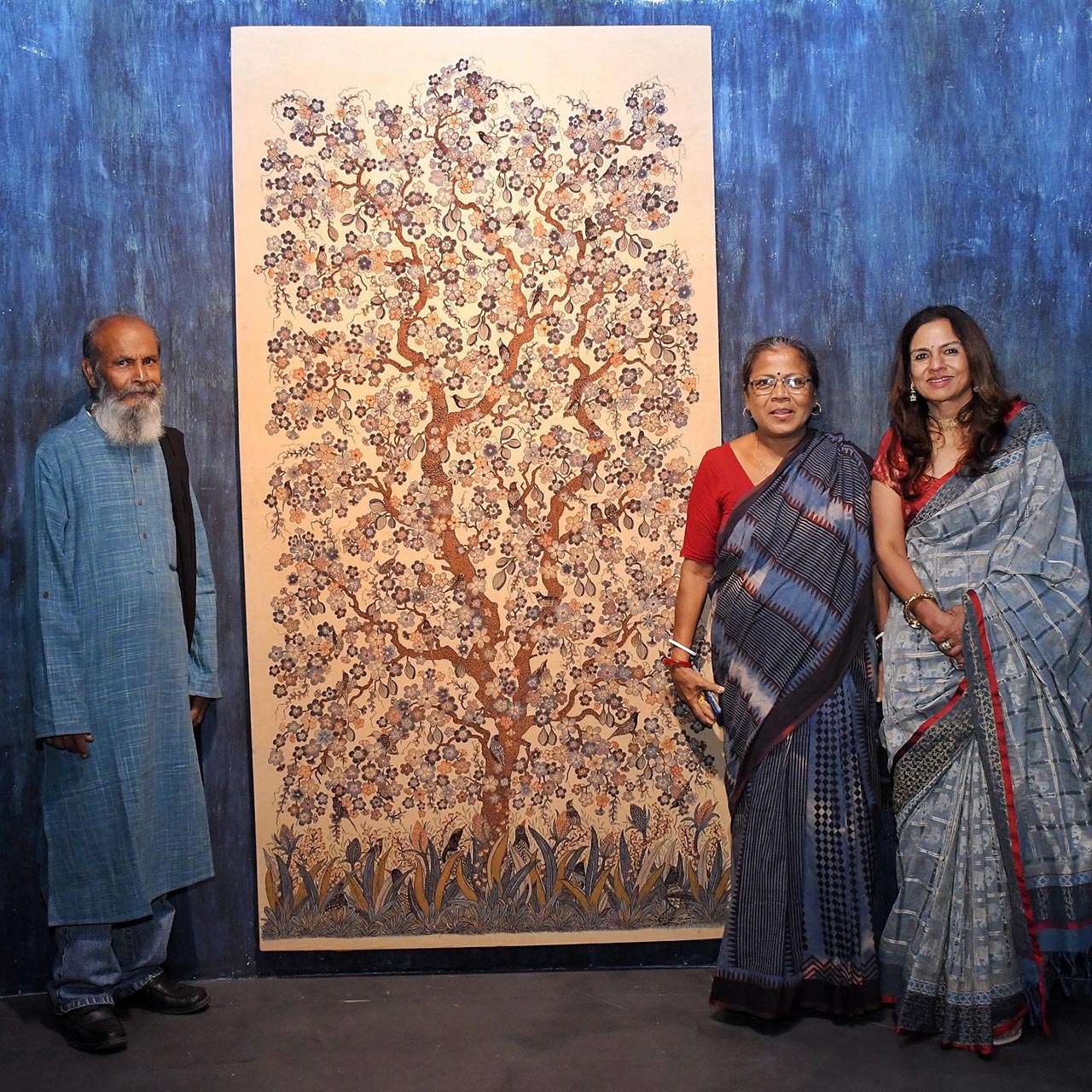
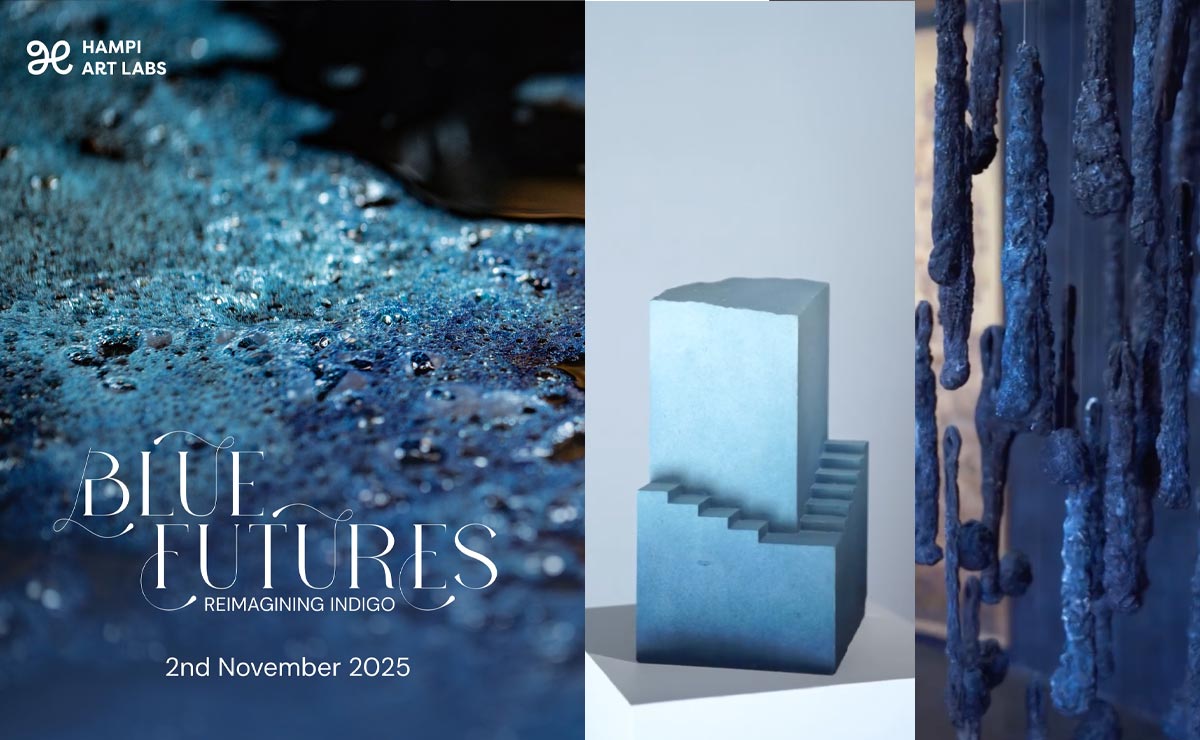
‘Blue Futures: Reimagining Indigo’ is a voyage into the root of a hue that has shaped global culture, trade, and art. Launched at the newly opened Hampi Art Labs (HAL) near the majestic UNESCO World Heritage Site of Hampi in Karnataka, this exhibition reclaims indigo’s ancient Indian heritage while channelizing it through sustainable design. Conceptualised by the JSW Foundation and inaugurated on November 2, 2025, by its Chairperson, Sangita Jindal, the exhibition marks the centre’s first in-house curatorial project. It brings together artists, dye masters, and designers from global scales to one platform. The main aim is to explore indigo as a living and evolving story, to acknowledge it as the pigment born on Indian soil and then went on to become a universal symbol of creativity. The exhibition goes beyond simple display, creating an environment that connects the deep blue pigment to ancient trade routes, ethical labour, and artistic innovation across continents.

Why Indigo?

Hampi-Art-Labs-Exhibition-1

Throughout the course of history, Indigo has always been more than a pigment. In the niche of textile traditions in South Asia (and parts of Africa and Japan) it has cultural, ritual and economic significance. In the colonial period, indigo plantations were always a source of conflict and coercion, Bengal is the most prominent example. Interestingly, one of the most widely consumed ingredients in Bengal i.e., Posto or the poppy seeds were the by-products of cultivating Indigo. Therefore, this exhibition invites the viewers to reconsider indigo as a “living medium” that once wrapped the strings of the colonial empire around it. In the context of Hampi, the “blue” represents the ancient fabric of empire, the textile towns, and de-colonised modes of production. The event also brings craft, industry and art as one subject. Overall, the suggested narrative is a stupendous study of how a natural dye can become one of the most potent catalysts of socio-economic history while continuing its dominance in the domains of art and fashion.

The Immersive Installations and Featured Artists

Hampi-Art-Labs-Exhibition-3

The Indigo Pavilion is intuitively positioned at the heart of the exhibition. It is an immersive installation where indigo-dyed fabrics are carefully arranged and placed in deep blue light, creating an essence reminiscent of the depth of water. This centerpiece truly does not fail to offer a multi-sensory experience to the spectators. Another intriguing factor of this event has to be the Indigo Alchemy Lab. It is basically an interaction section designed to feed in information regarding the lives of Indigo planters, and many more. People will get to witness the fascinating process of oxidation of the pigment. Through digital illustrations, people will also be able to trace the apt map through which the Indian hue metaphorphosized into the “blue gold” that tottered many pockets of the globe. 


View this post on Instagram
 

A post shared by Hampi Art Labs (@hampiartlabs)

The list of artists presenting their works is also very fulfilling. Aboubakar Fofana, one of the presenters, is a celebrated indigo dye master based in Paris and Mali, and contributes work rooted in organic processes, advocating natural dyeing. From India, Mumbai-based sculptor Manish Nai is featured, and he is known for transforming urban waste into compressed forms of art. Alongside, there is Alwar Balasubramaniam, known for his experimental works, which explore perception and material transformation. The Japanese collective Studio Buaisou also made it to the list and shows the revival of traditional indigo farming techniques. The convergence of these divergent practices breeds a fine sense of inclusivity in the field. 

Exhibition Details

Event Details
Venue Hampi Art Labs (HAL), Vijayanagara district, Karnataka (near UNESCO World Heritage Site of Hampi)
Concept & Organiser Reimagining the legacy of indigo as colour and cultural memory; an initiative of the JSW Foundation.
Curator Meera Curam, Residency Director at Hampi Art Labs.
Duration Opened November 2, 2025; scheduled to run until early 2026.
Key Thematic Focus Indigo’s evolution across India, West Africa, and Japan; sustainability, creativity, and global dialogue.

Key Highlights 

  • It offers an immersive space where indigo is experienced as identity and material.
  • “Tracing Blue” residency runs concurrently (Oct–Dec 2025), inviting practitioners working with indigo and material innovation.
  • The show brings together textile traditions, sculpture, installation and conceptual art practices under the theme of indigo.
  • With Hampi’s layered history, from the Vijayanagara empire to colonial era and industrial present, the exhibition foregrounds the idea of “legacy” in a rich terrain.
  • Indigo as material future prompts reflection on extraction, ecology and craft’s future in the Global South.

A Deeper Context

The traditions of indigo are deeply rooted in communities, ecologies and histories.With the arrangement of such a critical exhibition, a natural risk entails; the risk is to aestheticization or exoticization of the pigment without engaging meaningfully with the environment, and the socio-economic nuances. However, it aims to re-trace the cultural linkages across the Global South, creating an inclusive environment where artists can engage with the region’s craft culture while producing world-class art. By hosting an exhibition of this quality, HAL establishes its agenda to be a platform which brings about a change and connects historical legacy with international art.

Museum on the Wheels: Lalit Kala Akademi Celebrates Sukhvir Sanghal’s Legacy

0

Museum-on-the-Wheels-01

The Lalit Kala Akademi, New Delhi is hosting a solo exhibition of Prof. Sukhvir Sanghal. Scheduled to run from  6–12 November 2025 at Gallery 1 & 2, 35 Ferozeshah Road (Mandi House), this exhibition is curated by his own granddaughter Priyam Chandra. The exhibition brings together some 45 paintings spanning Sanghal’s long career. 

The Artist and His Legacy 


View this post on Instagram
 

A post shared by Sukhvir Sanghal (@sukhvirsanghal)

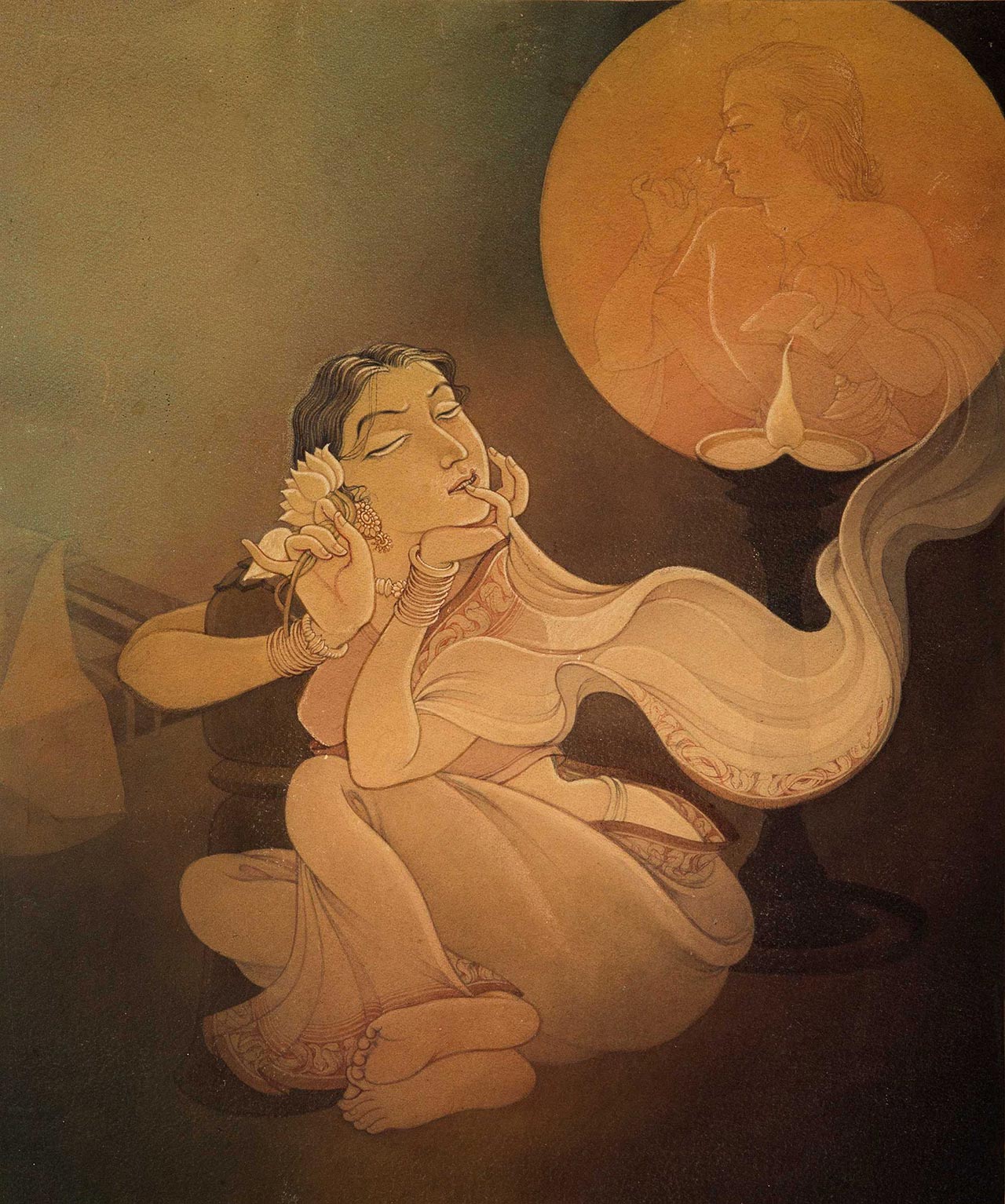
Prof. Sukhvir Sanghal (1914–2006) emerges as a major player in the twentieth-century story of Indian painting. Born in Muzaffarnagar in 1914, he received his formal training at the Government School of Arts and Crafts, Lucknow. His prime contributions lie in the Bengal School revivalists. Sanghal’s signature style is the wash technique. 

Museum on the Wheels shringaar

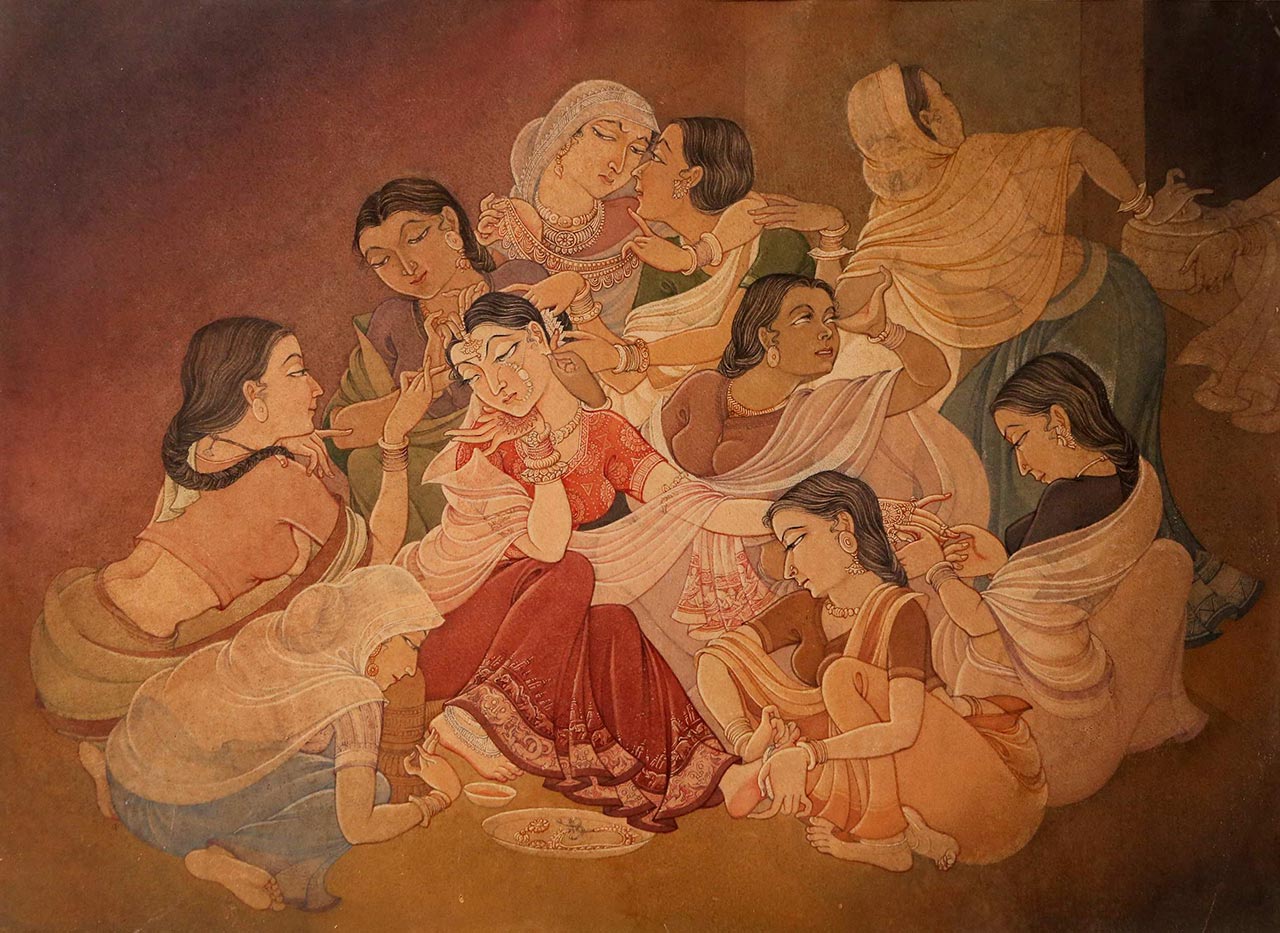
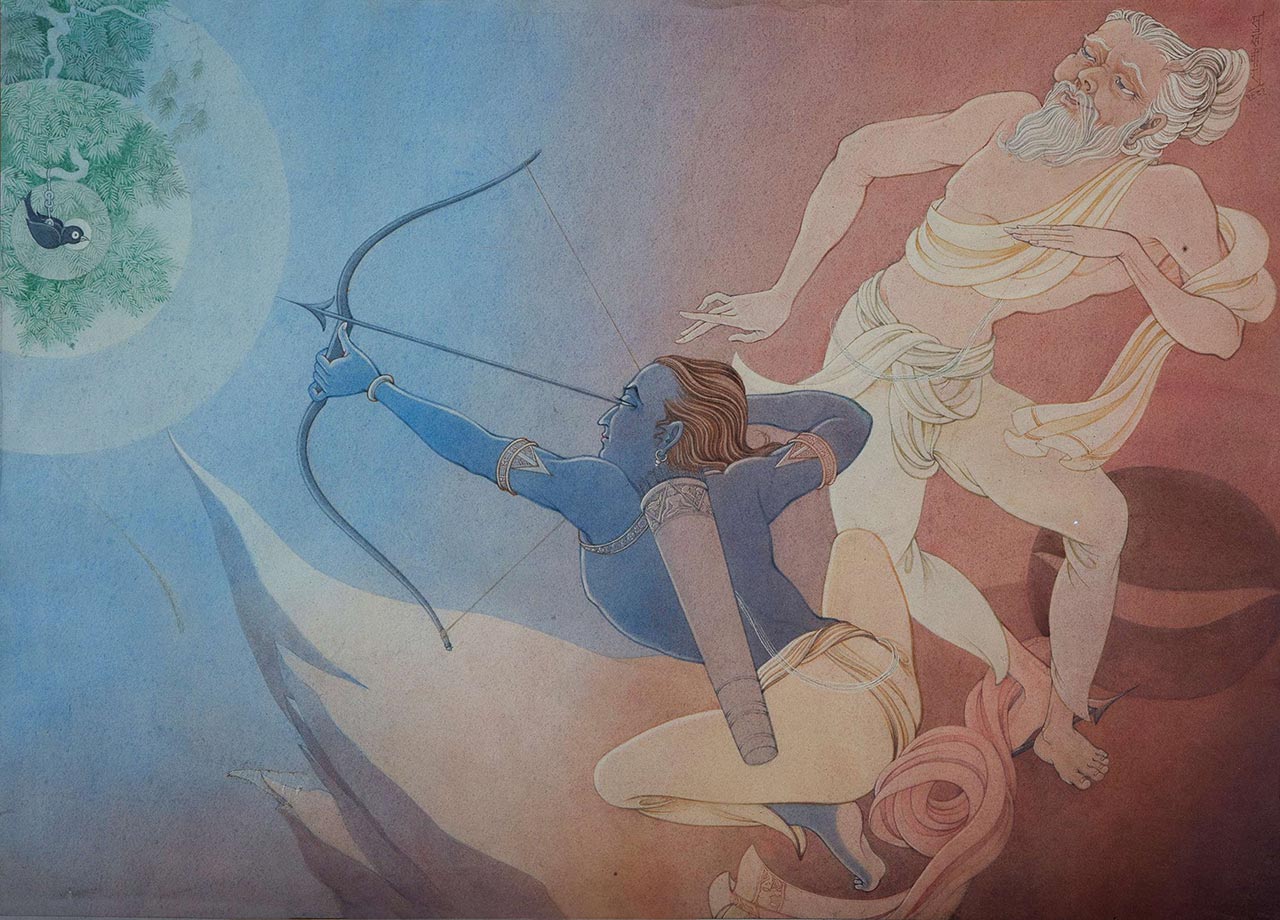
The exhibition displays plethora of series that maps Sanghal’s artistic practice. The series include River of Life, Phases of Life, Marriage, Arjuna as an Ideal Man, Indian Life, Ramcharit, and Kashmir Landscapes. These series minutely traces his frequent use of the wash technique, and the i.e., using thin layers of translucent pigments that create a gentle atmosphere in the canvases referring to Indian narrative content and rasa theory. The collection also includes pictographic tales embroidered on khadi, watercolour on wood and silk, and experimental works in sculpture and leather. 

arjuna_as_a_concentrated_archer

In his illustrious career, and Sanghal earned numerous institutional Honours. His paintings like Thou Art Dust, Dust Returnest, etc., have entered a royal collection. Interestingly, Sanghal was commissioned (at Jawaharlal Nehru’s request) to design Indira Gandhi’s wedding invitation in the early 1940s. All these facts confide with the essence of why curators are still keen to revisit his work and exhibit those to the public specs. 

Exhibition Details
Exhibition title Museum on the Wheels
Artist Prof. Sukhvir Sanghal (1914–2006)
Venue Gallery 1 & 2, Lalit Kala Akademi, 35 Ferozeshah Road, Mandi House, New Delhi.
Curator Priyam Chandra (granddaughter of the artist)
Dates & timings 6–12 November 2025; 11:00 AM – 7:00 PM daily.
Curator & provenance Curated by Priyam Chandra (granddaughter); works sourced from family holdings and institutional collections.
Historical importance Practice connects Bengal School idioms with Japanese-influenced wash technique; teaching legacy at Kala Bharti and Lucknow.
Notable recognitions National awards, regional retrospectives, and references to royal/official acquisitions.

Key Highlights 

Museum-on-the-Wheels-02

  • A rare nucleus of 45 paintings and tapestries tracing Sanghal’s thematic series and formal experiments. 
  • Prominent inclusion of khadi tapestries and wash paintings that demonstrate a sustained commitment to traditional materials and techniques. 
  • Curatorial framing by a family member (Priyam Chandra) that aims to situate the work both biographically and pedagogically. 
  • Inaugural presence of leading cultural figures and museum professionals—an indicator of renewed institutional interest in Sanghal’s oeuvre. 
  • Archival claims (royal acquisition, design commission) that add narrative weight but also invite closer provenance checks by scholars and curators. 

Why this Matters? 

Museum-on-the-Wheels-03

Museum on the Wheels is  an act of  gentle reintroduction of Sanghal’s works at the intersection of  Indian painting and the use of an impeccable wash technique that creates figures almost dissolved into mood rather than hard outline. His paintings brings textiles and gestures to life with nuanced observations and minute detailing executed with precision. Because the works often come in series, they function like short epics. There are small sequences that convey commentaries on social rites, morality and landscape. For viewers, who are used to the contemporary canvases, Sanghal’s works demand patience. His art affected the Bengal School in a profound manner and sought to synthesize the indigenous aesthetics with foreign techniques. 

Takeaway

Museum on the Wheels imparts an important work by foregrounding craft, pedagogy and continuity.  That said, the exhibition is expected to gain further scholarly clout if curators paired the family’s curation with a published catalogue that documents his works meticulously. For now, the exhibition offers an intimate encounter with an artist who turned patience into technique and storytelling into a visual ethic. Thus, this exhibition is definitely worth a visit.