Cultural Tourism: Preserving Heritage While Exploring the World

0

Cultural-Tourism-01

Travel is a process of knowing new lifestyles, exploring tales that were written on time and reaching out to the soul of a destination. This is where cultural tourism comes in. Cultural tourism enables the tourist to take a particular spot and explore the lifestyle, the history, the art and the heritage of the location and make the otherwise ordinary trip into a rich adventure. Cultural tourism has become one of the most essential modes of travel in the ever-globalized world and it promotes understanding, appreciation and preservation of our common human heritage.

What Cultural Tourism is and Why Does it Matter?
What-Cultural-Tourism-is-and-Why-Does-it-Matter

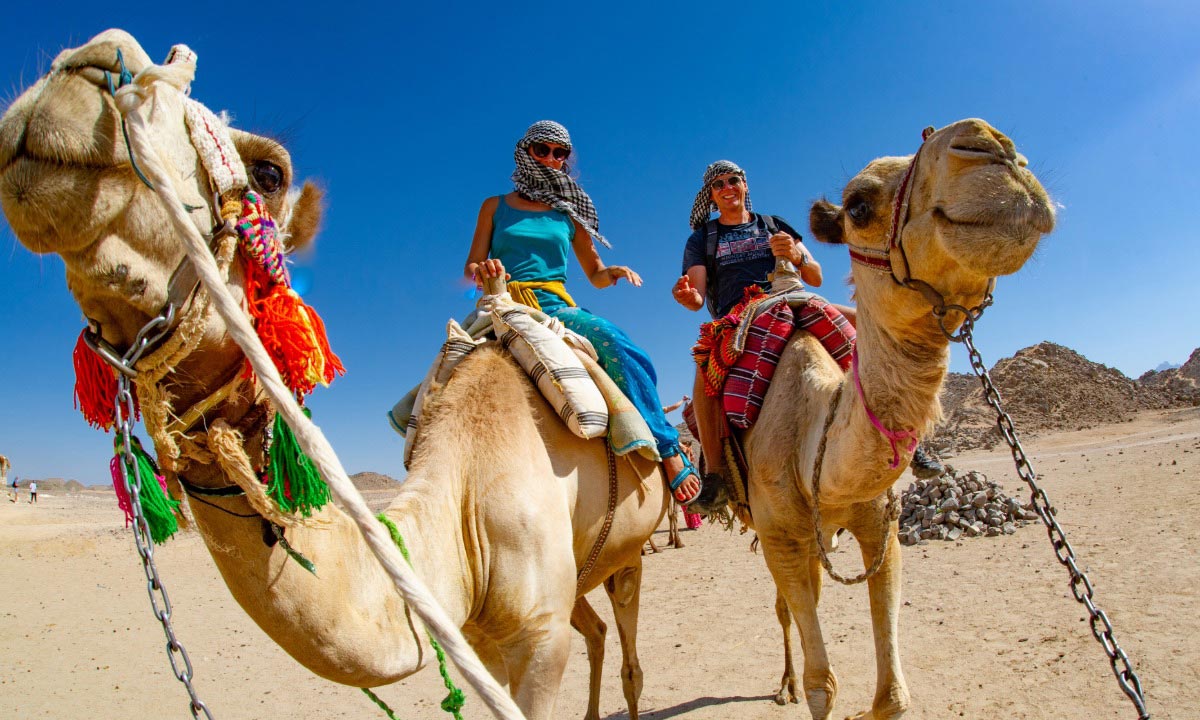
Cultural tourism is a kind of tourism whose main reason is the hope to experience and get to know the culture of a certain place. Tourism includes seeing history, places of interest, arts, buildings, cuisine, rituals and traditions. Cultural tourism in contrast to mass tourism which is usually concerned with relaxation, or entertainment, concerns itself with an important interaction with the host lifestyle.

This type of tourism is very important in the current travel sector because of the following reasons:

  • Fosters Cross-Cultural Understanding: Travelers learn to embrace empathy, tolerance, and respect towards differences by going through different cultures.
  • Promotes Sustainable Economic Development: Cultural sites and events attract tourists and generate employment and boost local economies.
  • Conserves Cultural Heritage: When the tourists appreciate cultural heritage, then more effort will be made to preserve and rebuild monuments, arts and traditions.
  • Adds to Personal Development: Cultural tourism is an educational experience and emotional attachment hence travel becomes more meaningful.

As the world tourism sector recovers fast after the pandemic, cultural tourism is likely to take a key role in defining how we explore the world in a responsible and sustainable manner.

What are some ways Tourism assists in Heritage Preservation?
Tourism-assists-in-Heritage-Preservation

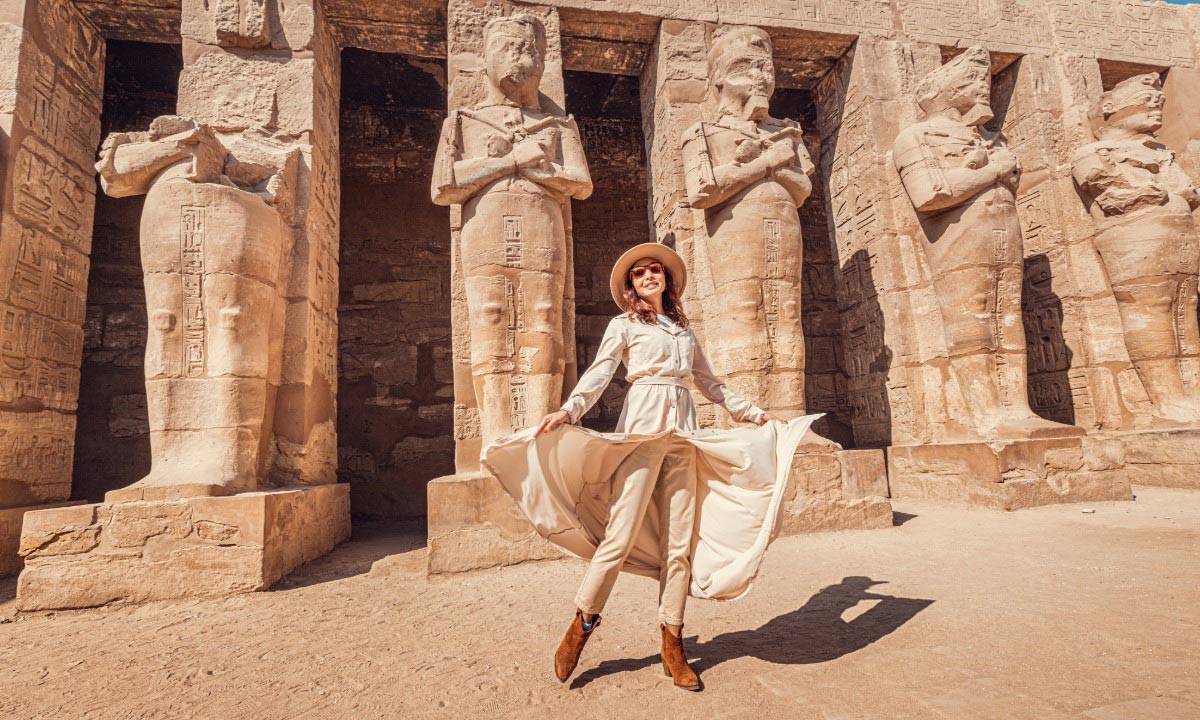
Tourism is regarded as a two sided sword, where on the one hand, it will be economically beneficial, on the other side it may lead to the destruction of delicate heritage. Tourism however can be a potent tool in the conservation of heritage when it is done in a responsible manner. Here’s how:

  • Financial support: Entrance charges, heritage taxes and cultural grants with tourism income are usually directly invested in the upkeep and renovation of historical sites, museums and cultural centers. 
  • Enhancing Cultural Awareness: Travelers that want to experience a genuine depiction of culture will motivate them to respect and admire the communities they visit in terms of their culture, language, and craftsmanship. This will ensure that these cultural aspects are preserved to the new generations.
  • Promoting Traditional Practices: Tourism generates demand for traditional handicrafts, performances and food and earns local artisans and performers sustainable livelihood. This economic gain will aid in maintaining skills which would be lost otherwise.
  • Promoting Government Protection: This is encouraging because popular tourist interest can compel governments to declare sites as protected monuments, or even apply to the UNESCO World Heritage as a way of protecting them much better.

Cultural tourism when done well is a process of appreciation and preservation and this way, there will be a future where whatever people stress on today will be there tomorrow.

Cultural Tourism Examples
Cultural-Tourism-Examples

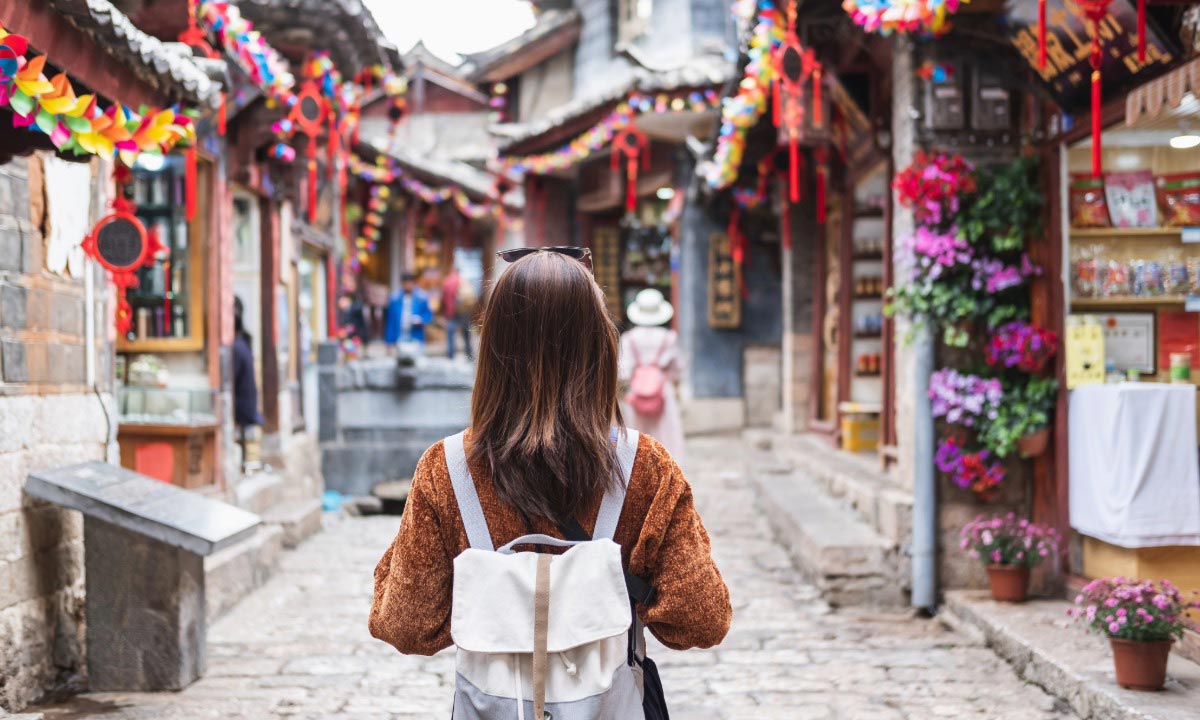
Cultural tourism may look in any form, whether it is exploring ancient ruins, viewing traditional festivals, walking through ancient towns, or even in the family of the locals. The following are some of the classic cultural tourism sites across the world:

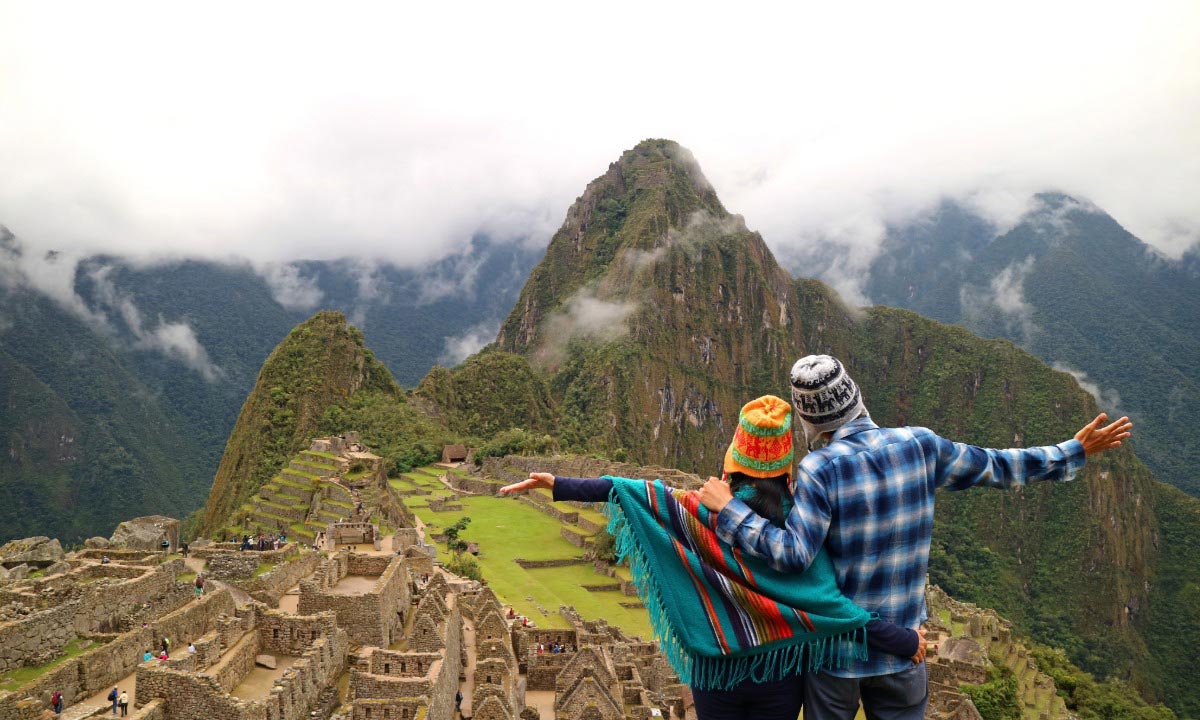
  • Machu Picchu, Peru: The Incan citadel located high in the Andes is an impressive piece of ancient technology and spirituality. The Inca trail is visited by tourists who get to experience centuries old rites, and traditions, which are still in practice in nearby villages.
  • Angkor Wat, Cambodia: This magnificent temple complex is the largest religious monument in the world and it represents the Khmer art and architecture of the 12th century and is closely connected to the identity of Cambodia.
  • Kyoto, Japan: Kyoto is considered the cultural core of Japan with centuries old Buddhist temples, Shinto shrines, tea ceremonies, geisha culture and seasonal festivals such as Gion Matsuri.
  • Jaipur, India: The Pink City boasts of royal palaces, grand forts, colorful bazaars and the rich Rajasthani culture and is known to be the backbone of the Indian cultural tourism circuit.
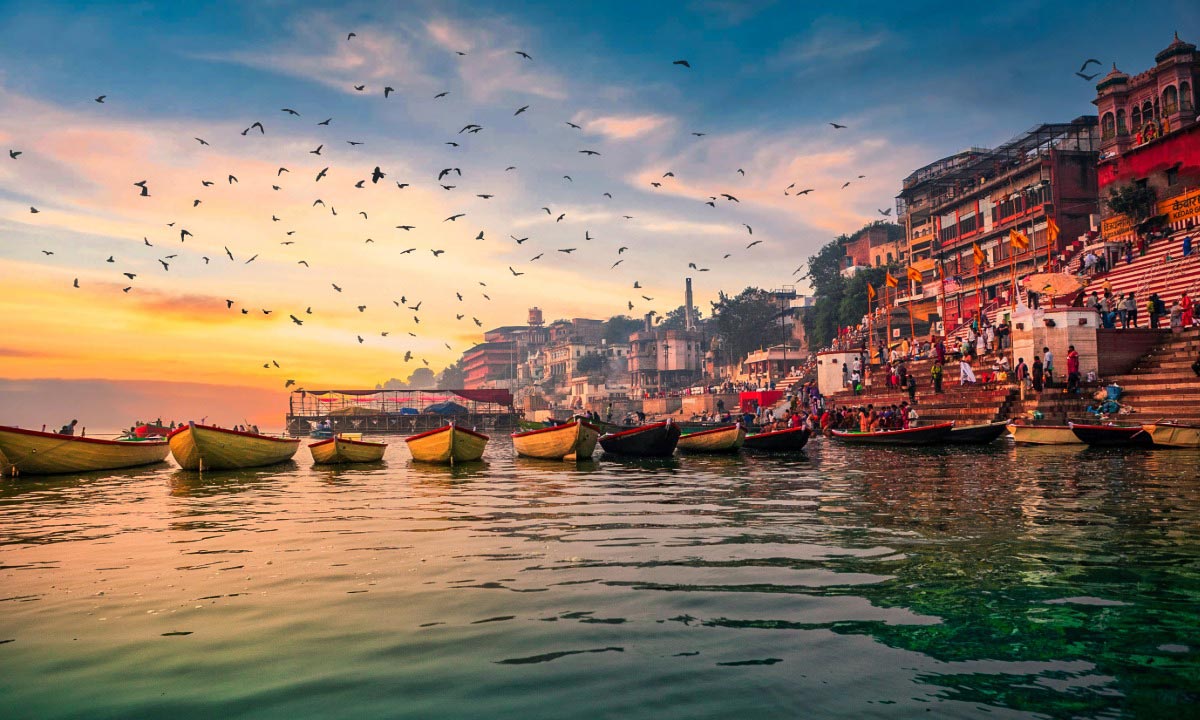
  • Varanasi, India: Developed as one of the oldest inhabited cities in the world, Varanasi is a spiritual center of the Ganges, where every day, rituals, aarti ceremonies, and centuries of culture are in an awe-inspiring harmony.

The destinations are not merely viewpoints as they are living cultural landscapes where the past and heritage are a way of life.

The Cultural Tourism in India
The-Cultural-Tourism-in-India

India is one of the few countries that could be compared with in terms of cultural tourism. India is the heaven of culture travelers with thousands of years of history, dozens of languages, hundreds of festivals, and a fantastic variety of art forms.

These are just but a few ways in which cultural tourism is successful in India:

  • Historic Monuments and Architecture: The Taj Mahal in Agra, the Khajuraho temples, the ruins of Hampi, the forts of Rajasthan, the monuments of India have a tapestry of the history of many different dynasties, religions, styles of art.
  • Spiritual Tourism: India is the birth place of Hinduism, Buddhism, Jainism and Sikhism. The spiritual solace and cultural education of millions of people is attracted to pilgrimage sites such as Varanasi, Bodh Gaya, Amritsar and Rishikesh.
  • Festivals and Fairs: Diwali, Holi, Durga Puja, Pushkar Fair and a million regional festivals provide travelers with a colorful experience of living in India in its traditions, music, dance and cuisine.
  • Folk Arts and Handicrafts: Gujarat- Traditional weaving, Madhubani painting, Kerala Kathakali dance and while there are gharanas of classical music all over the country, they provide a cultural experience.
  • Culinary Tourism: Indian cuisine is a cultural adventure on its own, and each area has its unique taste, traditions and history of culinary.

India is a good example of how cultural tourism may be used to celebrate diversity and yet at the same time promote unity which has provided tourists with a memorable experience of living heritage.

Challenges of Cultural Tourism
Challenges-of-Cultural-Tourism

As much as cultural tourism is of great benefit, it is also associated with major challenges. The identification and resolution of these are important in making sure that cultural heritage is not used, but instead preserved. Major Challenge are:

  • Over-Tourism: There is potential physical damage, pollution and pressure on local infrastructure as a result of too much traffic on the heritage sites.
  • Commercialization: The commercialization of cultural practices can only diminish the authenticity and meaning of the practices when they are turned into performances to be enjoyed by the tourists.
  • Cultural Misappropriation: The disrespect to local communities can be caused by the misinterpretation or inadequately sensitive representation of traditions.
  • Destruction of the Local Control: In a scenario where the tourism industries are overtaken by foreign companies, the local people might not fairly enjoy their own heritage.

Responsible Practices and Solutions
Responsible-Practices-and-Solutions-01


  • Sustainable Tourism Policies: Governments and organizations should reduce the number of visitors, develop conservation strategies, and control business operations at heritage sites.
  • Community Involvement: The traditions can be preserved in a way that makes sure that a community participates in tourism and becomes economically dependent on it.
  • Traveler Education: Tourists should be encouraged to study cultural manners, patronize local industries and not to interfere with sacred places to promote ethical tourism.
  • Certification and Recognition: Programmes such as UNESCO World Heritage designation or sustainable tourism certifications can guarantee that the development of tourism is in line with the conservation of the heritage.

Conclusion 

In conclusion, it is the balance between conservation and commercialization that will see cultural tourism prosper in the future as communities will be given a chance to flourish and conserve what makes them special.

At a time when traveling has become shallow and commoditized, cultural tourism is a way of returning to the spirit of exploration. It makes trips into learning, sympathy, and trade. Through heritage, tourists can be its guardians not merely observers of its existence.

Cultural tourism offers a means of commemorating our past whilst trying to manoeuvre the future since climate change, globalization, and modernization transform our world. It implores us that what is special about each place is its culture and that culture is worth preserving.

When we decide to travel, we visit cultural tourism to be curious and conscious about the things that we love to see and hear today in a manner in which the stories, traditions, and treasures in our lives become a lasting legacy to future generations.

FAQs on Cultural Tourism
 

Question: What are the advantages of cultural tourism to the travelers?
Answer: Cultural tourism enhances travel by offering real-life experiences, deeper historical understanding, personal growth, and meaningful connections with local communities.

Question: What role does cultural tourism play in helping the local communities?

Answer: It generates income through local crafts, performances, homestays, and tours, empowering communities to sustain their culture and livelihood.

Question: What are the countries that are most associated with cultural tourism?

Answer: India, Italy, Japan, Egypt, Greece, Peru, and France are renowned for their heritage, monuments, festivals, and traditions that attract global cultural travelers.

Question: What is UNESCO’s role in cultural tourism?

Answer: UNESCO safeguards World Heritage Sites, promotes cultural diversity, funds conservation projects, and sets global guidelines for sustainable and respectful tourism.

Question: What can responsible cultural tourism do for travelers?
Answer: It encourages travelers to respect host cultures, support local businesses, avoid exploitation, minimize environmental impact, and truly understand the community’s way of life.

Top Art Exhibitions to Visit in India This October 2025

0

Top-Art-Exhibitions-to-Visit-in-India-This-October-2025-0A

October 2025 is set to feature marvellous and fun-filled art exhibitions throughout the entire month. Whether you are an avid art enthusiast, a collector, an art student, or simply a viewer, October brings a whole pack of fun for you with a long list of upcoming art exhibitions and events. 

Beyond just exhibitions, India is hosting conversations. Every fair, booth, or gallery wall will become a space for thousands of individuals to interact with visual culture, ranging from seasoned art enthusiasts to toddlers exploring their first exhibition space together. This article has got you covered! Read till the end to learn everything you need to know about the upcoming art exhibitions in October 2025.

October Art Events at a Glance

Events Details
Mumbai Art Fair 2025 Dates: Oct 10–12, 2025
Venue: Nehru Centre, Worli, Mumbai
The Haat of Art – Art Expo Dates: Oct 10–12, 2025
Venue: World Trade Centre, Cuffe Parade, Mumbai
First Take 2025 by Abir India Dates: Oct 4–10, 2025
Venue: Hutheesing Visual Arts Centre, Ahmedabad
Raag Rang Group Exhibition Dates: Oct 4–9, 2025
Venue: Lalit Kala Akademi, Rabindra Bhavan, New Delhi
In-Between Dreams Dates: Sep 19 – Oct 18, 2025
Venue: New Delhi
Woman Song Dates: Sep 11 – Oct 11, 2025
Venue: New Delhi

1. Mumbai Art Fair 2025

Dates: October 10-12, 2025
Venue: Nehru Centre, Worli, Mumbai


View this post on Instagram


A post shared by Mumbai Art Fair (@mumbaiartfair)

Mumbai Art Fair has steadily established itself as one of the broadest definitions of an art fair from India. This October will be no different. With 15 participating galleries, 300 participating artists and more than 3,000 works of art to experience, the Art Fair will cover the full range of India’s creative practices. What sets this apart from any other event is its emphasis on the work of regional art traditions. This exhibition aims to create awareness about the beauty of the regional traditions of Asia. As the audience will pass through the exhibition hall, they’ll find themselves being embraced by the mosaic of vibrant folk-inspired canvases, alongside sleek works of digital abstraction sculptures reimagining tradition and contemporary contexts. Where else can one experience the beauty of traditional art in a modern setting?

The Haat of Art – Art Expo

Dates: October 10-12, 2025
Venue: World Trade Centre, Cuffe Parade, Mumbai


View this post on Instagram


A post shared by THE HAAT OF ART (@the_haat_of_art)

Like the Mumbai Art Fair, The Haat of Art emphasises something similarly exciting, with over 2000 sold works by 200 artists. The essence of the format, called a “haat” (open-air marketplace), makes the event accessible to both the infrequent art collector and the first-time neighbourhood artist wanderer. There is everything you may think of- from paintings, sculptures, craft-inspired works, to other affordable collectables. The experience of ‘haat’ is not about being cordoned off in hushed galleries, but full conversations – in artists explaining methodology to guests, buyers directly negotiating with makers, and an overall upbeat sense of community around the experience of consuming art.

First Take 2025 by Abir India

Dates: October 4-10, 2025
Venue: Hutheesing Visual Arts Centre, Ahmedabad


View this post on Instagram


A post shared by Abir India (@abir_india)

Another highlight of October is the 9th edition of First Take, a project presented by Abir India, which has had great acclaim for its focus on emerging and contemporary voices in Indian art. To be held at the historic Hutheesing Visual Arts Centre in Ahmedabad, First Take 2025 promises an exciting continuation of the series.

Young artists from around the country anticipate each year’s open call for participation from Abir, and those selected are often the first steps toward national recognition. You can expect to see some bold investigations into themes ranging from personal memory and identity to ecological anxieties and visions for the future. At First Take’s, the adventure of discovery adds an endlessly exciting element for audiences: you may very well be witnessing some of the first public presentations by the most lauded contemporary artists of tomorrow.

Raag Rang Group Art Exhibition

Dates: October 4-9, 2025
Venue: Lalit Kala Akademi, Rabindra Bhavan, New Delhi

For those visiting the capital, October kicks off with Raag Rang, a group exhibition that brings together a skillfully eclectic selection of practitioners. Among the exhibiting artists is Harveen Kaur Vohra, whose works remain compelling to viewers, even after repeated viewings, due to their combination of colour and design.

Group exhibitions like Raag Rang typically act as democratic art venues, or one positive aspect of the act of art itself; a multitude of perspectives under one roof. Viewers can drift from the more devotional and lyrical explorations of Indian classical music on one canvas to a re-imagined urban landscape or abstract (inner) emotional responses on another canvas. The Lalit Kala Akademi’s Rabindra Bhavan, an essential landmark of a specific evolving ecosystem within the descriptive landscape of India’s visual arts milieu, provides the exhibition with an appropriate setting based on its commitment to pluralistic acts of art.

Notable Ongoing Exhibitions Extending Into October

While many new shows are taking place in October, two solo exhibitions opening in September deserve equal space:

In-Between Dreams by Pema ‘’ Tshering

Bhutanese-artist-Pema-'Tintin'-Tshering

  • Dates: September 19 – October 18, 2025
  • Location: New Delhi
  • Highlight: The dream-like works of Tshering create alternative worlds between imagination and storytelling that shift between the whimsy and wonder of each work.

Women Song | Looking Back by Vasundhara Tewari Broota

  • Dates: September 11 – October 11, 2025
  • Location: New Delhi
  • Highlight: A slower-paced, heavily contemplative show, focused on womanhood, memory, and identity, based on the artist’s retrospective body of work.

Both exhibits represent the level of continuity and depth we need in art today, ideas that provoke thinking and need several experiences, not just a moment.

Conclusion

Put aside the usual autumn rituals: October 2025 is your private invitation to partake in an art renaissance across India. Whether you are drawn to the electrified vibe of the Mumbai Art Fair, or you are looking to find tomorrow’s great master at Abir India’s First Take in Ahmedabad, or you want to be alone with the greats in New Delhi for quiet contemplation, the ‘October events’ have got you covered. 

And for the audience, it is an invitation to be present. Whether you are a seasoned collector seeking your next acquisition or a young lover of art just revelling in the imaginative process of it all, all societies have a thread of identity woven through a general output of their culture. This October, like never before, brings both your curiosity and your wonder, because the drum beat of Indian creativity is pounding the loudest right here, right now, and you do not want to miss it.

FAQs on Upcoming Art Exhibitions in India (October 2025)

Question: Which major art fairs are happening in October 2025 in Mumbai?

Answer: October is full of major art exhibitions and fairs. The two major art fairs include the Mumbai Art Fair (October 10–12) and the Haat of Art (October 10–12).

Question: What is special about Abir India’s First Take 2025 exhibition?

Answer: It is notable for being the 9th edition of India’s only platform for emerging artists, showcasing new contemporary voices and innovative practices at the Hutheesing Visual Arts Centre, Ahmedabad.

Question: Where can I see works by emerging and contemporary artists in October 2025?

Answer: Abir India’s First Take 2025 focuses on new talent, while the Raag Rang Group Art Exhibition also features works by a variety of contemporary voices.

Question: Are there any solo exhibitions continuing into October 2025?

Answer: Yes, In-Between Dreams by Pema ‘Tintin’ Tshering (until October 18, New Delhi) and Woman Song by Vasundhara Tewari Broota (until October 11, New Delhi) continue through early October.

Question: Why is October considered a significant month for art events in India?

Answer: October aligns with India’s festive season, drawing large audiences. It’s a preferred month for galleries and organisers, balancing post-summer creativity with the lead-up to the cultural festivities—making it ideal for art events across the country.

LalitArpan Festival 2025 Returns with “ANTAH-SHAKTI” in Its 24th Edition

0

Proformance-Images-of-Lalitarpan-Festival-(1)

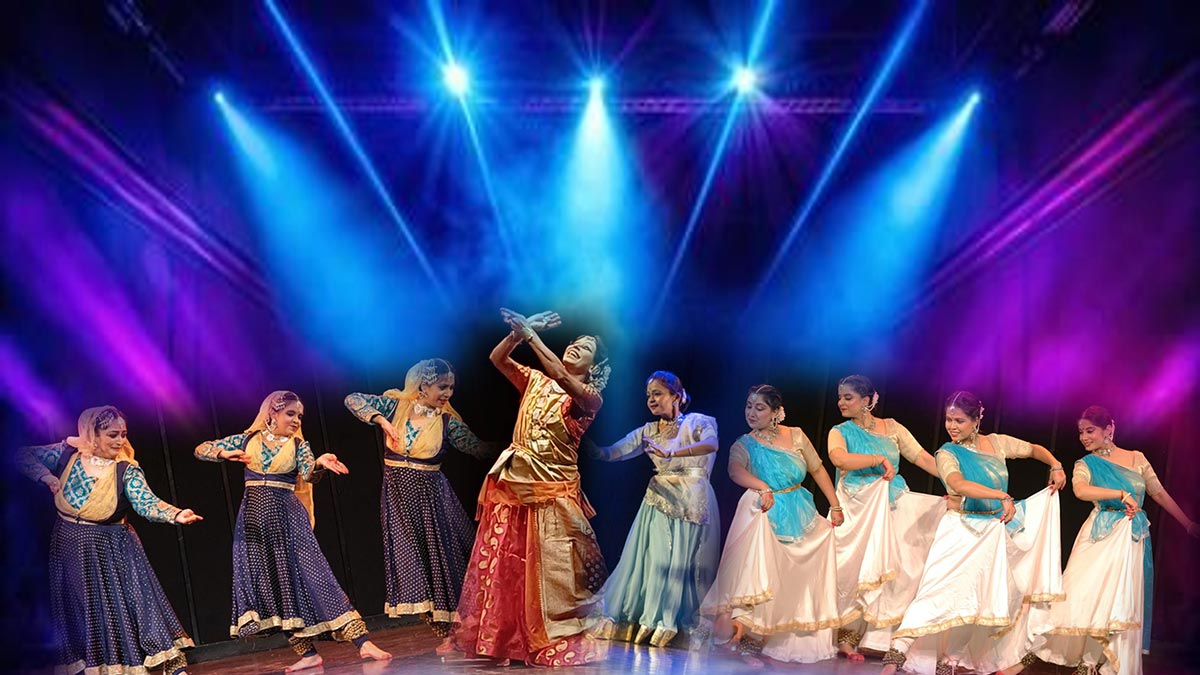
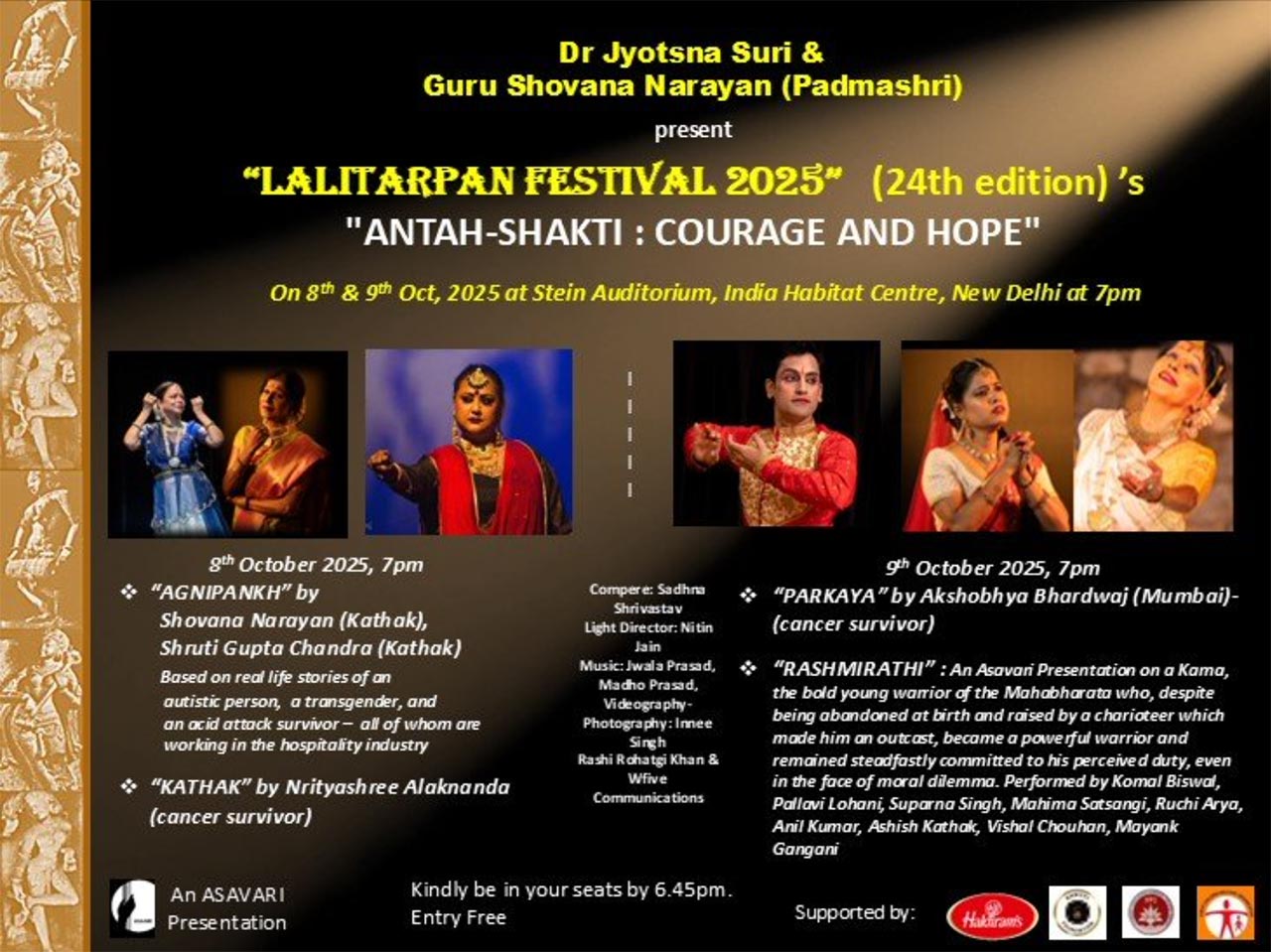
Experience the realm of classical Indian dance, which entails not only performance but also an experiential journey of courage and hope. As the 24th edition of the LalitArpan Festival returns to the Stein Auditorium, India Habitat Centre, New Delhi, this is your opportunity to see the magic unfold. The theme this year is “Antah-Shakti: Courage and Hope”, which will manifest in dance performances on October 8th and 9th, 2025, at 7 PM. It is an attempt to animate stories of resilience, metamorphosis, and the indomitable nature of the human spirit in a series of dance dramas and solo performances.

Over decades, Indian classical dance has always performed storytelling to heal, inspire and connect. This year at the LalitArpan Festival, we will open up for performances based on real-life accounts that stop you in your tracks and make you think. Every mudra will represent the true meaning of celebration for those who have risen above oppression. Even if you are a dancer or you are attending for the first time, the festival will open space for you to feel, learn, and awaken through the arts.

A Legacy of Artistic Excellence: The Journey of LalitArpan

Kathak-Artist-Akshobhya-Bhardwaj-(2)

In the year 2002, design and nurtured by Kathak legend Padmashri Guru Shovana Narayan, Dr Jyotsna Suri, and the late Ustad Shafaat Ahmed Khan, tabla collaborator with the late Legend of Kathak, LalitArpan has positioned itself at the intersection of tradition and innovation. The essence of the festival is simple- to provide a stage where new dancers share a moment with senior artists, making classical performing arts resonate with audiences of new generations.

For many years, LalitArpan has presented over 100 torchbearers of Indian Classical dance, reminding the attendees that every tradition refreshes itself through courage- Courage to tell new stories, courage to speak with new voices, and courage to reinterpret the essence of dance.

Programme Highlights at a Glance

Date Performance Artists Theme
8 October AGNIPANKH Shovana Narayan (Kathak), Shruti Gupta Chandra Based on real-life stories of an autistic pianist, a transgender person, and an acid victim survivor, all of whom are working in the hospitality industry.
8 October KATHAK Nrityashree Alaknanda A cancer survivor’s strength and grace on stage; reflects the power of the human spirit.
9 October PARKAYA Akshobhya Bhardwaj (Mumbai) A cancer survivor’s meditative journey; a deeply personal and artistic Kathak exploration that transcends physical limitations and embraces inner transformation.
9 October RASHMIRATHI Komal Biswal & Ensemble, Shovana Narayan & others An Asavari Presentation on Karna (Mahabharata), who, despite being abandoned at birth and raised by a charioteer, became a powerful warrior and remained steadfastly committed to his duty, even in the face of moral dilemma.

Stories That Inspire: Courage and Hope on Stage

Explore the theme of the festival even further with the dance dramas: Agnipankh, choreographed and performed by Shovana Narayan and Shruti Gupta Chandra, beautifully represent those who refuse to be bound by circumstance: an autistic pianist who finds music from silence, a transgender person’s coming to terms with acceptance, and an acid attack survivor who embraces the world of hospitality.

None of the stories on stage is fiction; they are lived experiences. The solo by Nrityashree Alaknanda is one more such ray of hope, where a cancer survivor engages Kathak to redefine suffering into strength. When Akshobhya Bhardwaj shares “Parkaya,” you can feel the transformation that comes from acknowledging your own demons. Similarly, “Rashmirathi” is a portrayal of Karna’s life, reminding us that history and mythology mirror our own time by expressing struggles, isolation, and redemption of every outcast in society.

Asavari: The Heart of the Festival

LalitArpan-Festival-2025-Shovana-Narayan-

The driving force behind the festival undoubtedly is the dance institution, Asavari, which was founded by Shovana Narayan in 1979. Asavari is no ordinary classical dance teacher training institution; it is a thriving community whose aim is to preserve, promote, and humanise the classical arts. This essentially begins with the Gurukul tradition, where students not only learn the techniques for Kathak but also take in higher lessons about love, trust, and values that inform their performance, creating an act of service, empathy, and even humanity in each performance.

Asavari believes that the work of developing a Kathak community goes beyond the studio. Their vision includes training learners through festivals like LalitArpan, Rhythm and Joy, and gatherings periodically throughout the year. Asavari trains learners, commissions new work, and encourages research in choreography and dance studies, an interconnected relationship between art, economics, social sciences, and philosophy, for example, a broader conversation in society and participation for change.

Beyond Entertainment: Dance as Empathy and Transformation

Proformance-Images-of-Lalitarpan-Festival-(3)

You may come to LalitArpan expecting to enjoy beautiful clothes, intricate footwork, and the magnetic energy of live performance. But it has a lot more to offer- it will be a visceral encounter in which art becomes a healing language. 

In “Rashmirathi”, we see Karna in an internal struggle with destiny, duty, and consequence. To us, the choreography is a reflection of every inner conflict we all experience on our human journey. In “Parkaya” and in “Kathak”, healing is not explained; it is executed. 

Ways you can engage: activities  and opportunities

  • Come to the festival free of charge (you need to be seated by 6:45 PM!) and engage with all of the excitement and joy of being with others in a celebration of creative excellence.
  • Take part in workshops or live Q&A sessions with the artists – a pleasant excuse for collective sharing, learning, and connecting.
  • Witness and be a part of the energy and commitment of a significant event by volunteering or being on the organising committee.
  • As a member of the press or cultural community, schedule interviews, social media coverage, and report on the stories.

Event Details and More

LalitArpan-Festival-2025-Event-Details

Allow the rhythm of resilience and the sound of hope to fill your heart! This October offers a unique opportunity to participate in the 24th edition of the LalitArpan Festival in Delhi.  If you love dance or if you are just inquisitive to see some impactful stories representing what it means to be human unfold physically on a stage, these evenings will provide not only perfect entertainment but also connection, transformation, and general delight. Bring friends, family, or even your inquisitive self – all are invited. Allow yourself to be moved- come, experience the beat of Antah-Shakti, and celebrate hope and bravery among legends and everyday heroes. The festival awaits you!

Goddess Durga in Various Indian Art Forms: A Timeless Depiction of Power

2

Goddess-Durga-in-Various-Indian-Art-Forms-A

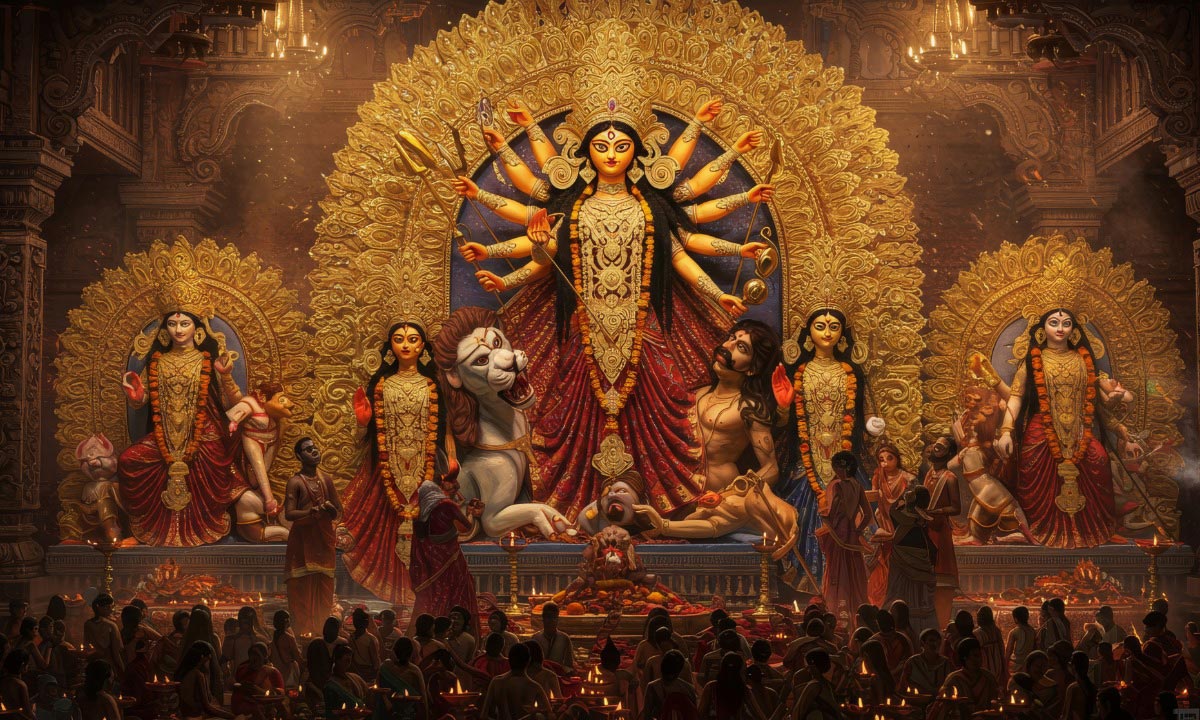
Did you know that the Hindu goddess Durga is a prominent figure in Indian religion as well as Indian art? She has been depicted across various traditional and contemporary mediums, from ancient sculptures to modern prints, paintings, and street art. In all her forms, she represents divine feminine power, Shakti, protection, and the triumph of good over evil. There are verses in praise of her in the Devi Mahatmyam and other texts. The central theme is Goddess Durga’s victory over the demon Mahishasura, symbolizing the ultimate triumph of virtue and justice. Durga is revered as a powerful symbol of strength, motherhood, and protection, celebrating feminine empowerment. The festival marks the period when Goddess Durga, with her children, visits her maternal home on Earth before returning to her husband, Shiva. 

Traditional paintings and prints

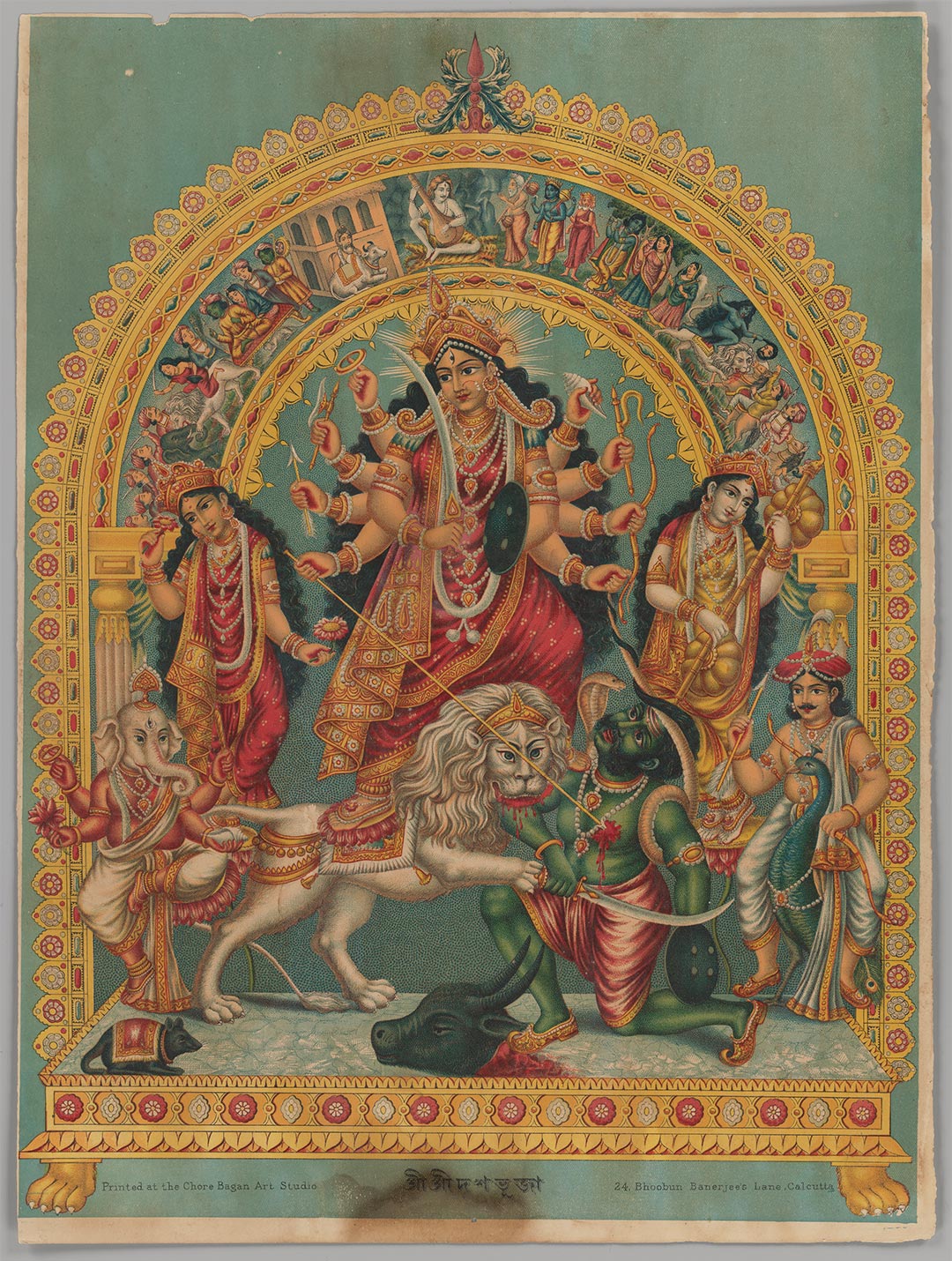
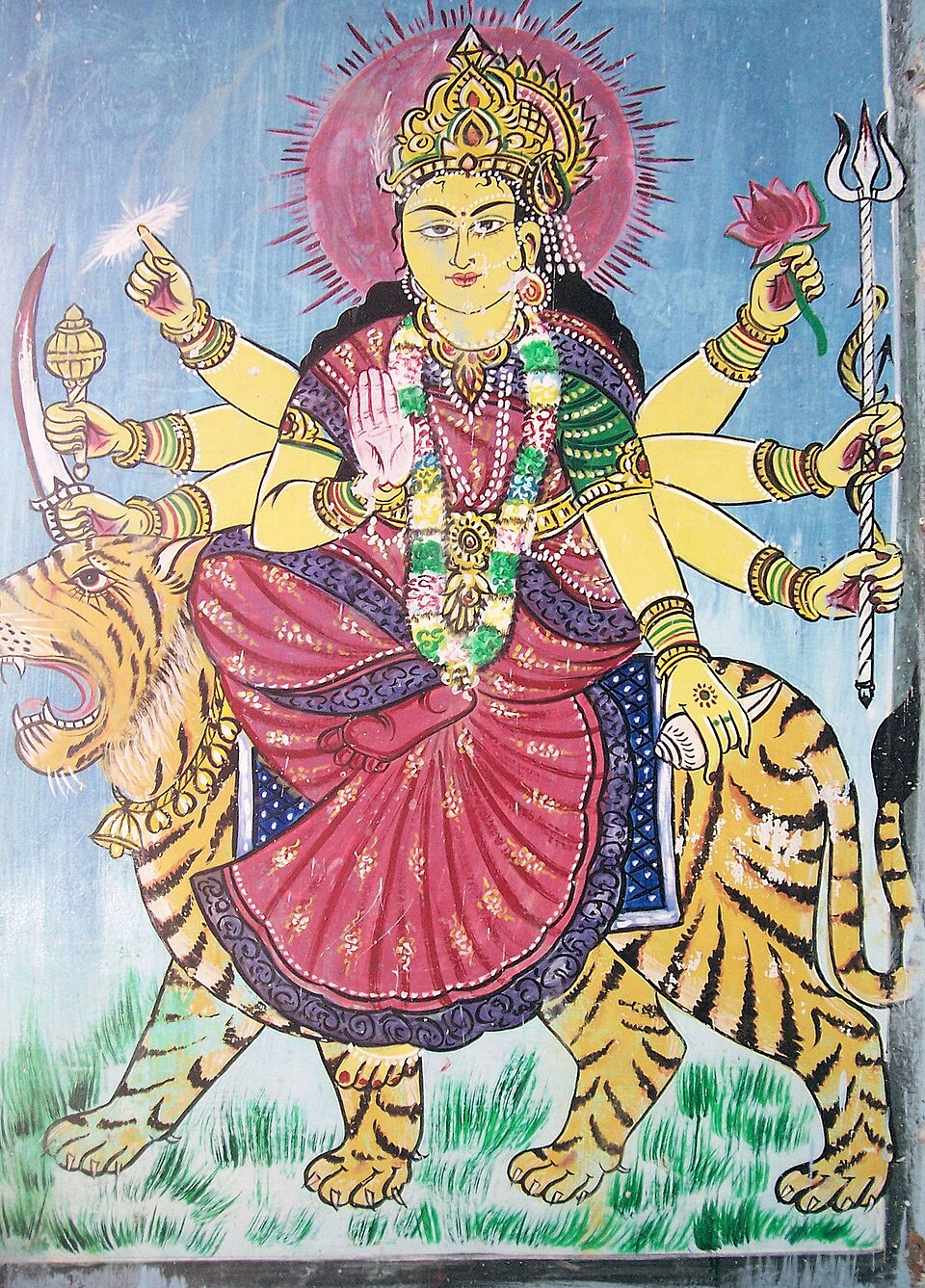
For centuries, artists have depicted Goddess Durga using classic styles, often portraying her mounted on a lion or tiger, slaying the buffalo demon Mahishasura. Prints have made artwork of Durga accessible to a wider audience, moving beyond temples and art galleries into homes and public spaces.  Posters and prints based on traditional folk art or classical paintings are widely available, depicting Durga in her established forms with her attributes like the lotus, conch, and trident. An important shloka about Goddess Durga says thus – 

सर्वमङ्गलमाङ्गल्ये शिवे सर्वार्थसाधिके शरण्ये त्र्यम्बके गौरि नारायणि नमोऽस्तु ते  

She is the most auspicious of all auspicious things, the auspicious one who fulfills all purposes, the refuge, the three-eyed, fair one. We offer obeisance to the Goddess who is Narayani.” 

Goddess-Durga-in-Indian-Art-01
Shri Shri Durga, print, Chore Bagan Art Studio, circa 1885-95, Metropolitan Museum of Art, New York, U S A. – Wikimedia

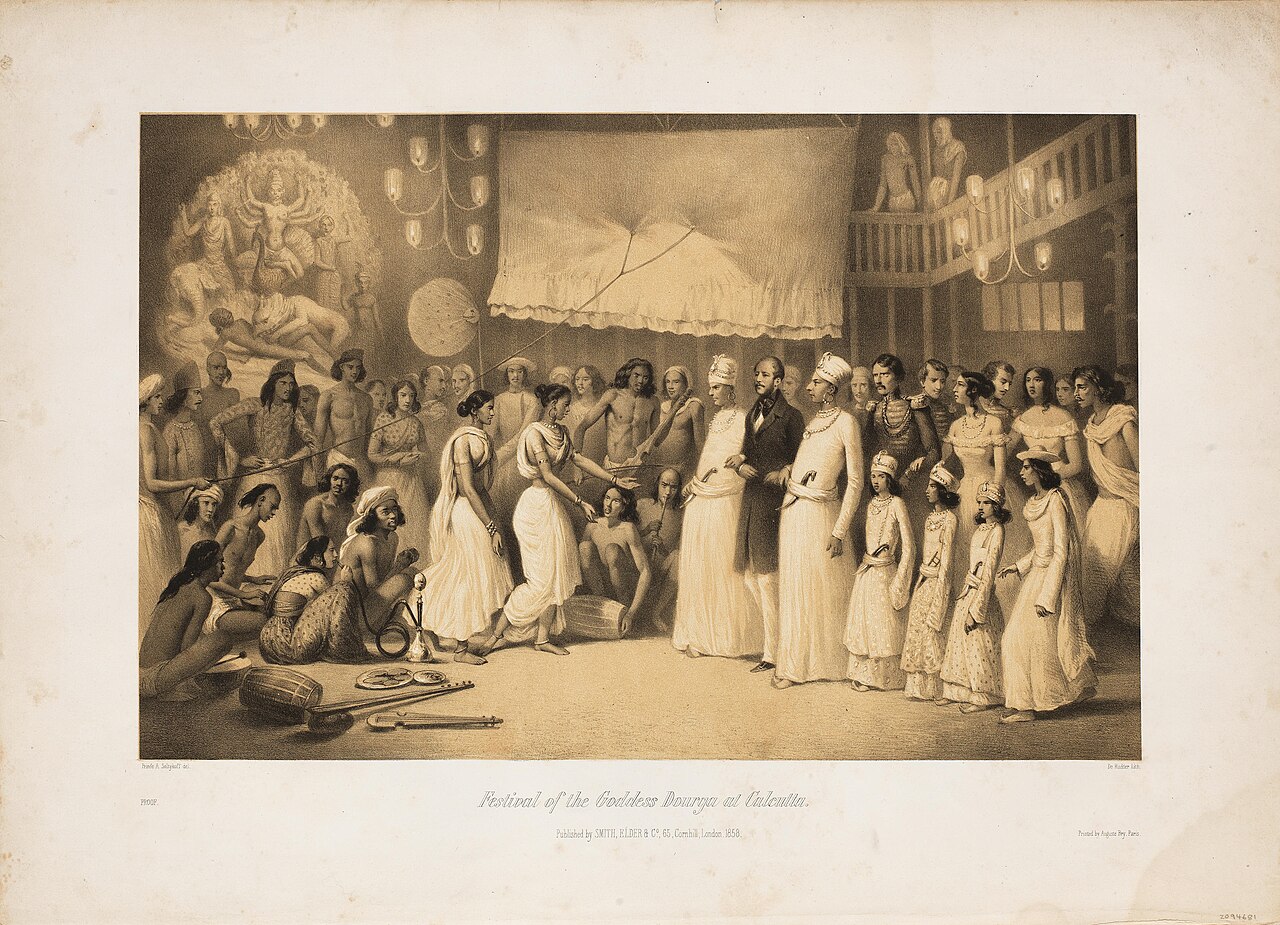
Festival of the Goddess Durga at Calcutta, circa 1858. Lithograph by Artist Louis-Henri de Rudder (1807–1881). published by Smith, Elder & Co., London.

Festival of the Goddess Durga at Calcutta, circa 1858
Festival of the Goddess Durga at Calcutta, circa 1858 – Wikimedia

Another shloka on the goddess with translation says –

दुर्गे स्मृता हरसि भीतिमशेषजन्तोः

स्वस्थैः स्मृता मतिमतीव शुभां ददासि ।

दारिद्रयदुःखभयहारिणि का त्वदन्या

सर्वोपकारकरणाय सदार्द्र चित्ता ॥

“Salutations to You, O Jagadamba O Devi Durga, Whoever Remembers You with Devotion, You Remove the endless Fears of Samsara from the mind of that Person, and whoever Meditates on you in their Heart, You bestow exceeding auspiciousness which is beyond description-

Apart from you, who else can destroy poverty, sorrow and fear from our lives? 

Your Heart is always full of compassion for rendering all sorts of help to Your devotees”.

Goddess Durga after slaying the demon Mahishasura
Goddess Durga after slaying the demon Mahishasura – Wikimedia

Goddess Durga after slaying the demon Mahishasura, by Sri Shilpi Siddanthi Siddalinga Swami (1885 – 1952), Jagmohan Palace, Mysore. Karnataka, India.

Durga in folk art 

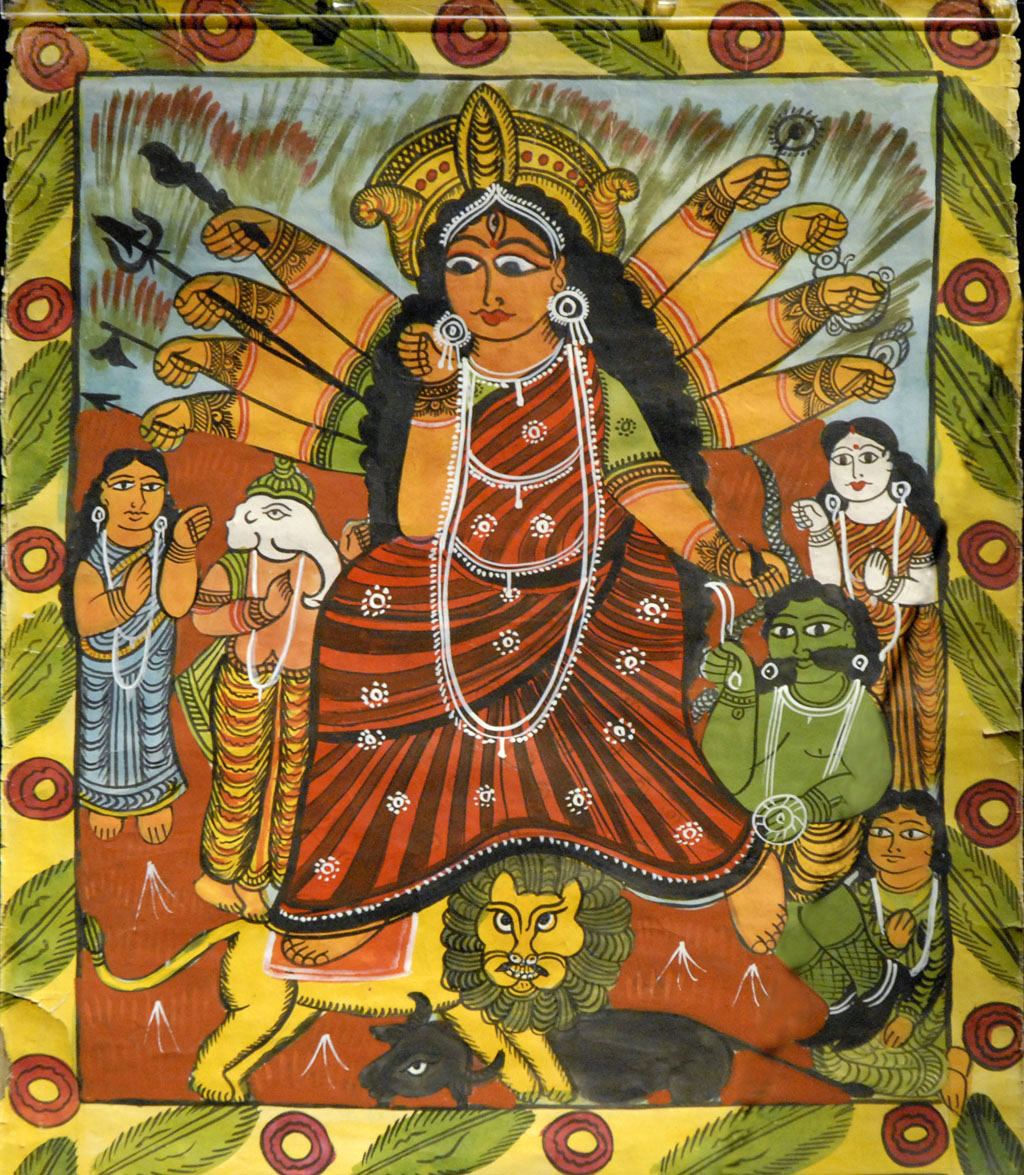
Pattachitra – In the folk-art traditions of Odisha and West Bengal, the goddess Durga is often depicted on scrolls in the Patachitra style—distinguished by bold, graceful lines and the use of vivid natural colours. Renowned for its intricate detailing, this art form weaves together mythological tales and local folklore with remarkable precision. A community of artists has carried forward this visual storytelling practice, narrating Hindu myths such as Durga’s triumph over evil. Her worshippers, drawn from all walks of life and diverse social backgrounds, revere her with profound devotion.

A shloka about Durga, who is also also called Jagadamba and Narayani reads thus –

शरणागतदीनार्तपरित्राणपरायणे ।

सर्वस्यार्तिहरे देवि नारायणि नमोऽस्तु ते ॥

“Obeisance to You, O Jagadamba You are Intent upon rescuing the distressed and the oppressed who take your refuge whole-heartedly, and remove all their sufferings; Obeisance to You O Narayani”.

Durga, Bengal patachitra, 21st century

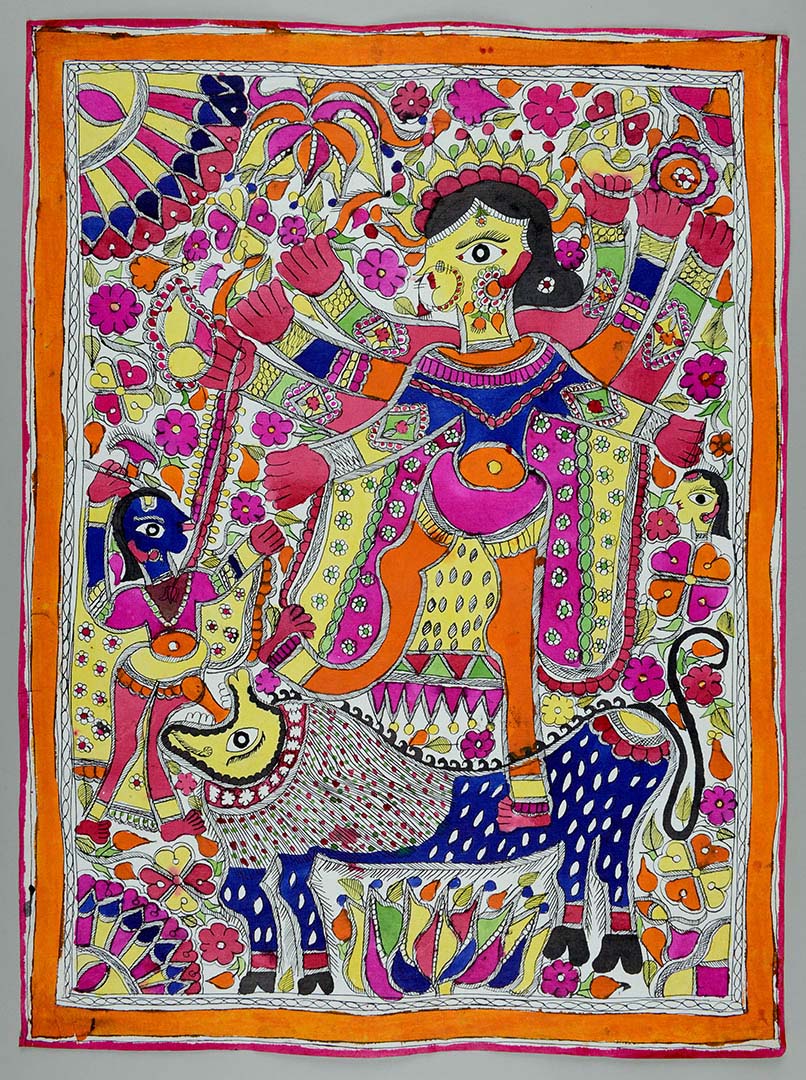
Madhubani painting – Madhubani painting, also known as Mithila painting, traces its origins to Mithila, the legendary birthplace of the Hindu goddess Sita. According to tradition, when Sita was to be wed to Prince Rama, her father King Janak commissioned artists to depict scenes from the wedding, giving rise to this unique art form. Traditionally practiced by the women of the Mithila region in Bihar, Madhubani has grown into a celebrated folk-art style and today the Madhubani district is a major hub for its production and export. Distinguished by its intricate geometric patterns and rich symbolic motifs, this art form often draws upon religious and mythological themes. In depictions of Goddess Durga, Madhubani paintings express her divine energy and cosmic strength through elaborate designs and a vibrant colour palette.

Durga, Madhubani painting
Durga, Madhubani painting – Wikimedia

Durga, Madhubani painting, The Andrzej Wawrzyniak Asia Pacific Museum in Warsaw, Poland.

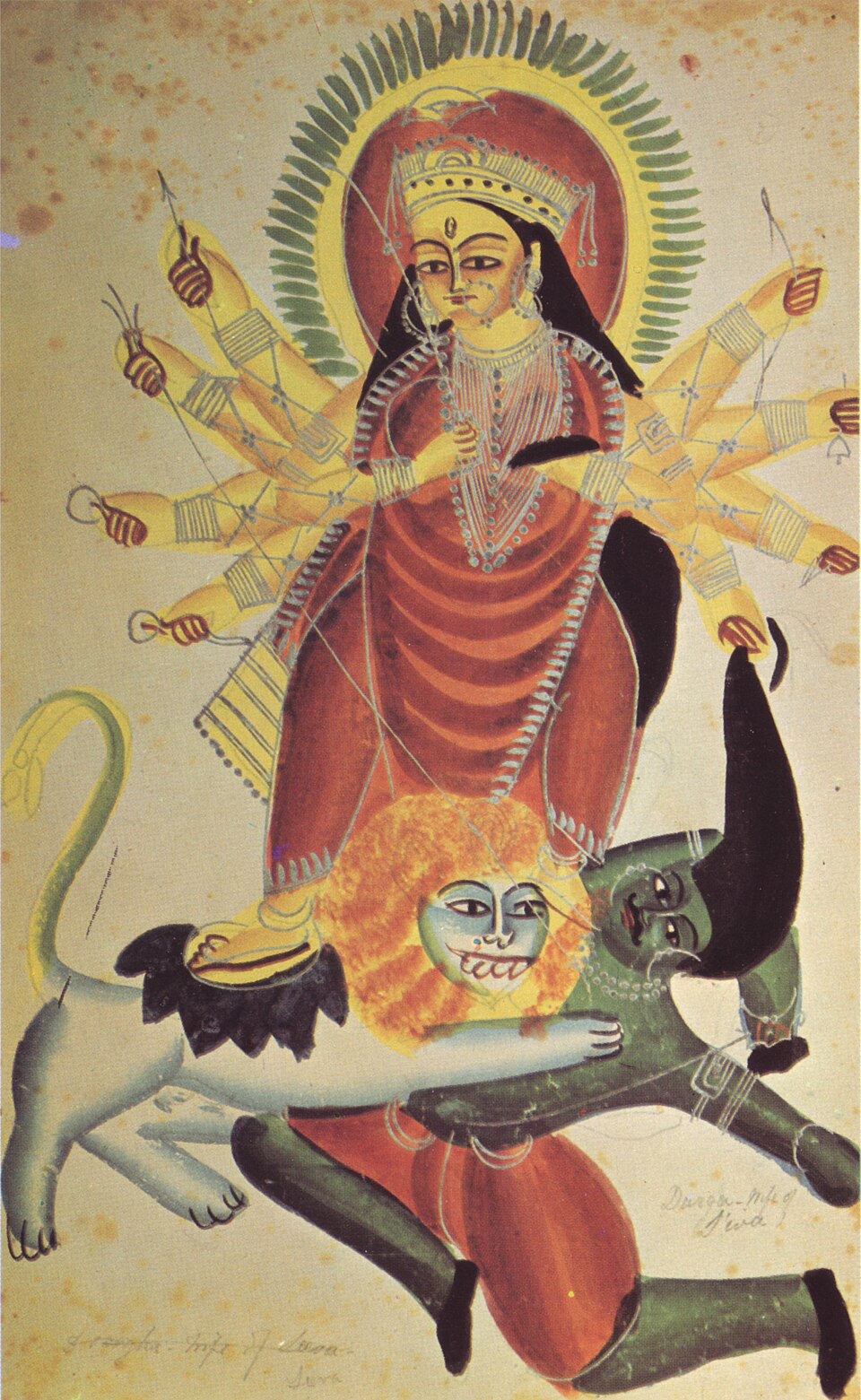
Kalighat painting: – This 19th-century art tradition from Bengal is characterized by bold, sweeping brushstrokes and expressive figures. It was pioneered by the patuas, a community of scroll painters who worked near the Kalighat Kali Temple in Kolkata (then Calcutta), in present-day West Bengal. Kalighat paintings of Goddess Durga typically combine mythological themes with reflections on contemporary social life. Another verse on the goddess describes her thus –

जटा जूट समायुक्तमर्धेंन्दु कृत लक्षणाम I

लोचनत्रय संयुक्तां पद्मेन्दुसद्यशाननाम

“Durga, with matted hair adorned with a crescent moon, three eyes, and an ever-present bright aura…

I bow down to the supreme power and urge you to help me concentrate on my goals and help me to achieve them”.

Durga and Mahishasura, Kalighat painting
Durga and Mahishasura, Kalighat painting circa 1880. Wikimedia

Raja Ravi Varma’s realism
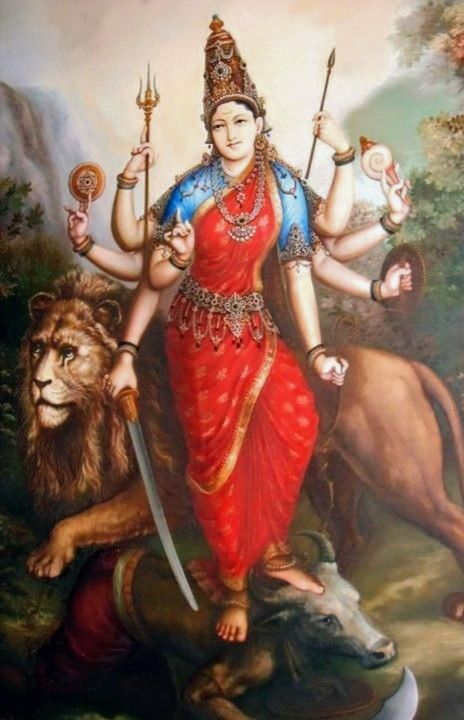
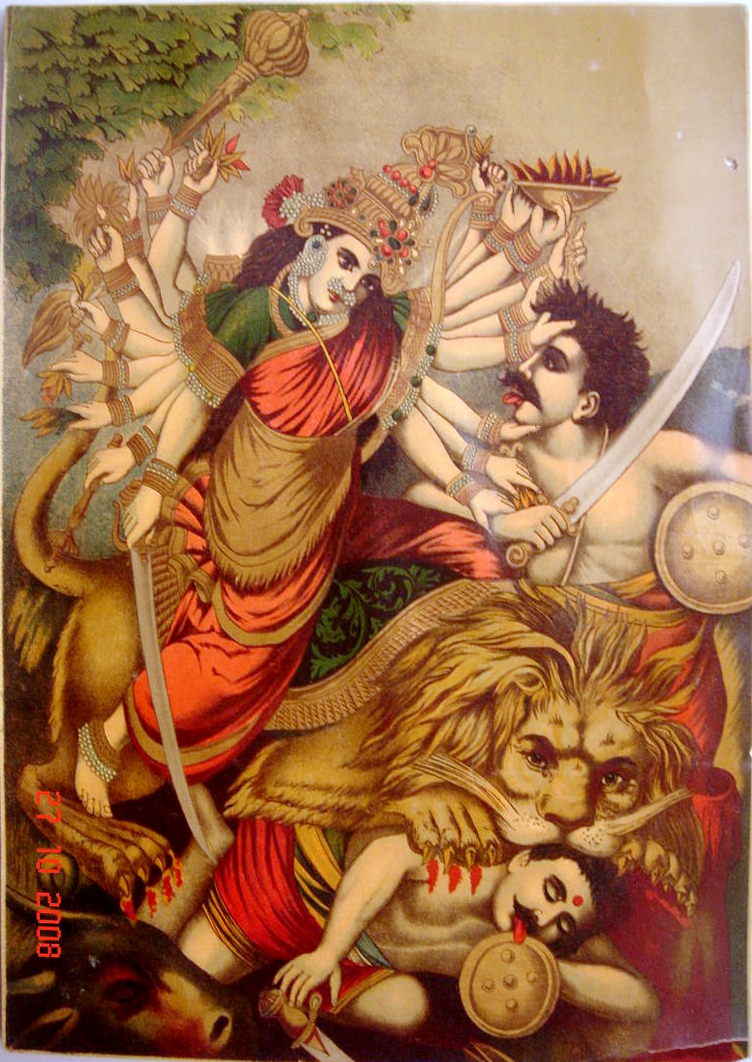
 Raja Ravi Varma (1848–1906) was one of India’s most celebrated painters, often credited with bridging traditional Indian art and European academic realism. Born in Kilimanoor, Kerala, he became famous for his lifelike oil paintings and mastery of perspective, anatomy, and shading, which were uncommon in Indian art of his time. In the late 19th and early 20th centuries, painter Raja Ravi Varma brought a realistic style to his depictions of deities.  His dynamic oil painting ‘Mahishasura Mardini’ became an iconic representation of Durga’s battle, popularizing the imagery through lithographic prints that reached a wide audience.

महिषासुरनिर्नाशि भक्तानां सुखदे नमः ।

रूपं देहि जयं देहि यशो देहि द्विषो जहि ॥

“Obeisance to Devi Durga Who destroyed (to the very root) the Demon Mahishasura; obeisance to her who gives great joy to the devotees.

O Devi, Please Grant me (Spiritual) Beauty, Please Grant me (Spiritual) Victory, Please Grant me (Spiritual) Glory and Please Destroy my (Inner) Enemies”.

Durga as Mahishasura-mardini, lithograph, Raja Ravi Varma
Durga as Mahishasura-mardini, lithograph, Raja Ravi Varma, circa 1880. Wikimedia

Contemporary and modern paintings

Modern artists continue to reimagine goddess Durga, blending traditional iconography with new artistic styles and social themes. Contemporary artists also release their designs as prints and digital downloads, showcasing Durga in a variety of modern styles, from minimalist line art to detailed, digital paintings.  Artists use contemporary techniques like abstract expressionism, digital art, and mixed media to reinterpret Durga’s mythology. These works often explore modern themes of gender, identity, and empowerment. Some artists move beyond strict realism to convey the spiritual energy of the goddess through abstract forms and vivid colours, while retaining key symbolic elements.  Contemporary artworks may feature Durga with a modern aesthetic, using stylized colours and refined facial features to create a unique and visually striking interpretation.
 An important ‘shloka’ in praise of Goddess Durga-

या देवी सर्वभुतेषु शक्तिरूपेण संस्थिता

या देवी सर्वभुतेषु शक्तिरूपेण संस्थिता

या देवी सर्वभुतेषु मातृरूपेण संस्थिता

या देवी सर्वभुतेषु बुद्धिरूपेण संस्थिता

नमस्तस्यै नमस्तस्यै नमस्तस्यै नमो नमः ||

“The goddess who is omnipresent as the personification of the universal mother

The goddess who is omnipresent as the embodiment of the power

The goddess who is omnipresent as the symbol of peace

Oh, Goddess (Devi) who resides everywhere in all living beings as intelligence and beauty,

I bow to her, I bow to her, I bow to her again & again”.

Durga, modern painting
Durga, modern painting, by artist M. Sarkar, 21st century. Wikimedia

Durga puja painting, Kolkata airport, India.

Durga puja painting, Kolkata airport, India
Durga puja painting, Kolkata airport, India – Wikimedia

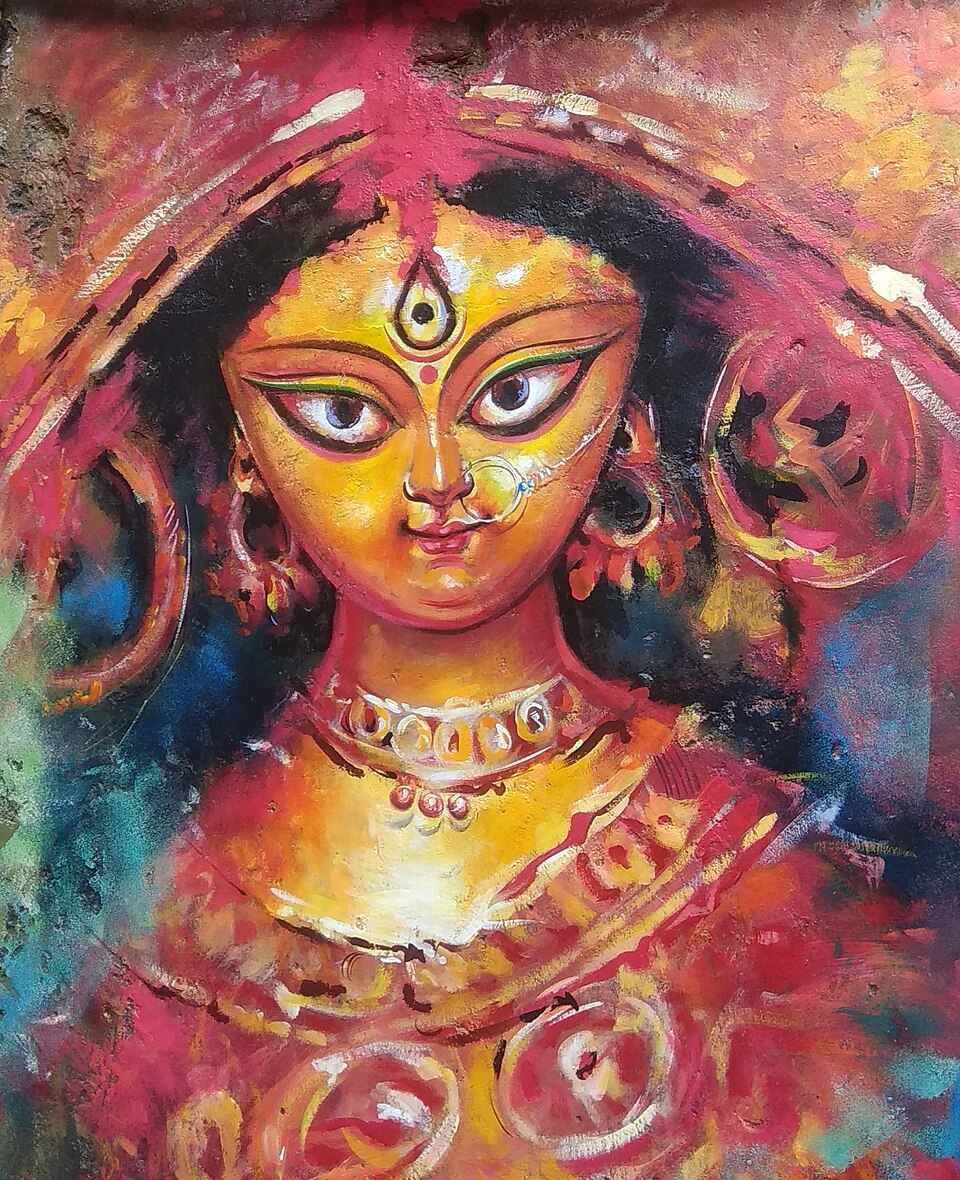
Graffiti and street art

In recent years, Durga’s image has moved to the streets, becoming a subject of vibrant street art, particularly in cities like Kolkata during the annual Durga Puja festival. Durga Puja graffiti/street art featuring Durga and related mythological scenes can be seen on walls across Kolkata during the festival, adding to the cultural vibrancy and festive atmosphere. Street art is often part of a community’s heritage drive to promote the Durga Puja festival, bringing the goddess’s image to everyday public spaces.

Goddess Durga graffiti
Goddess Durga graffiti, by artist Sujit Kumar, 21st century. Wikimedia

Goddess Durga graffiti, by artist Sujit Kumar, 21st century.

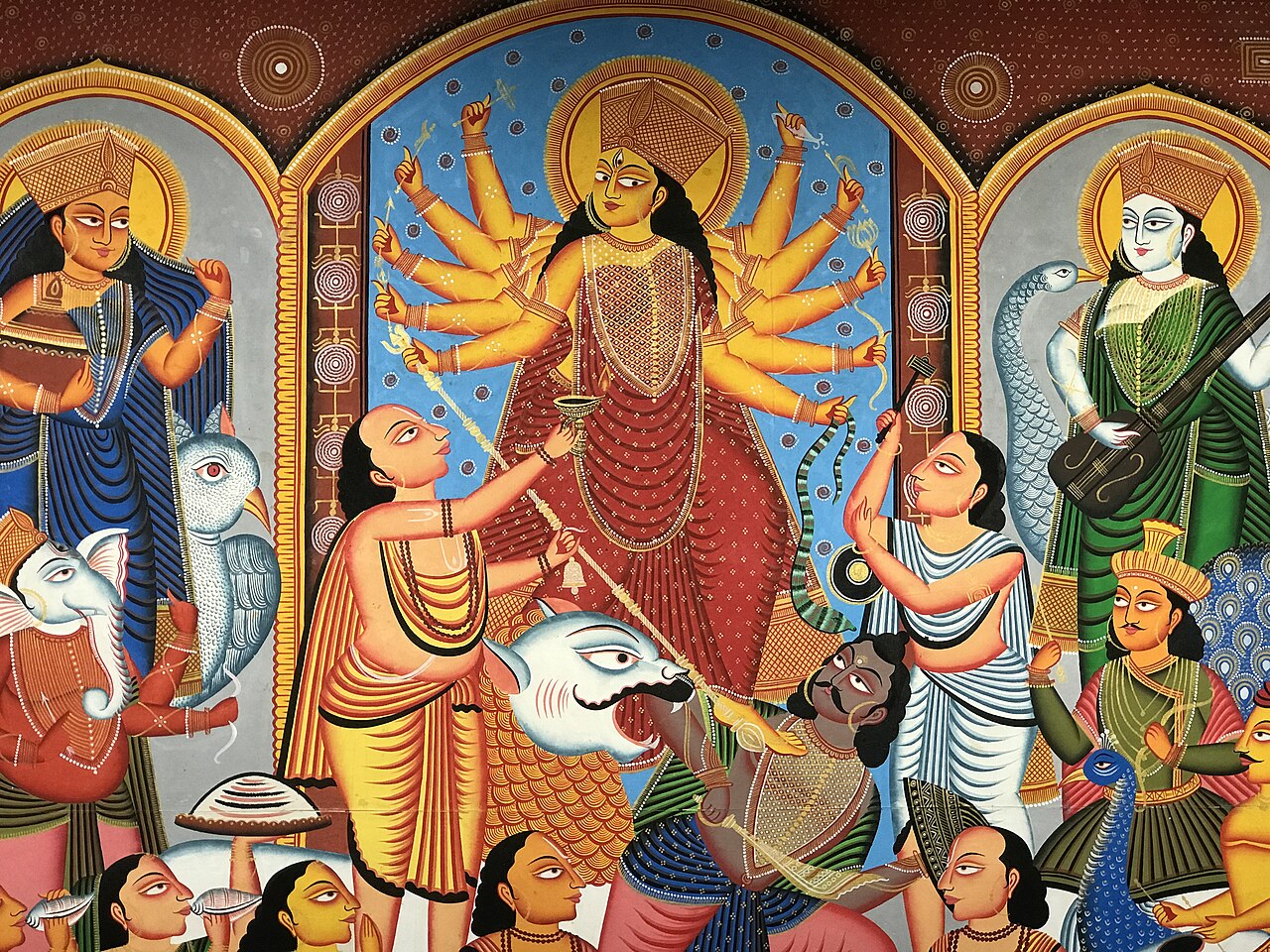
Mural paintings:

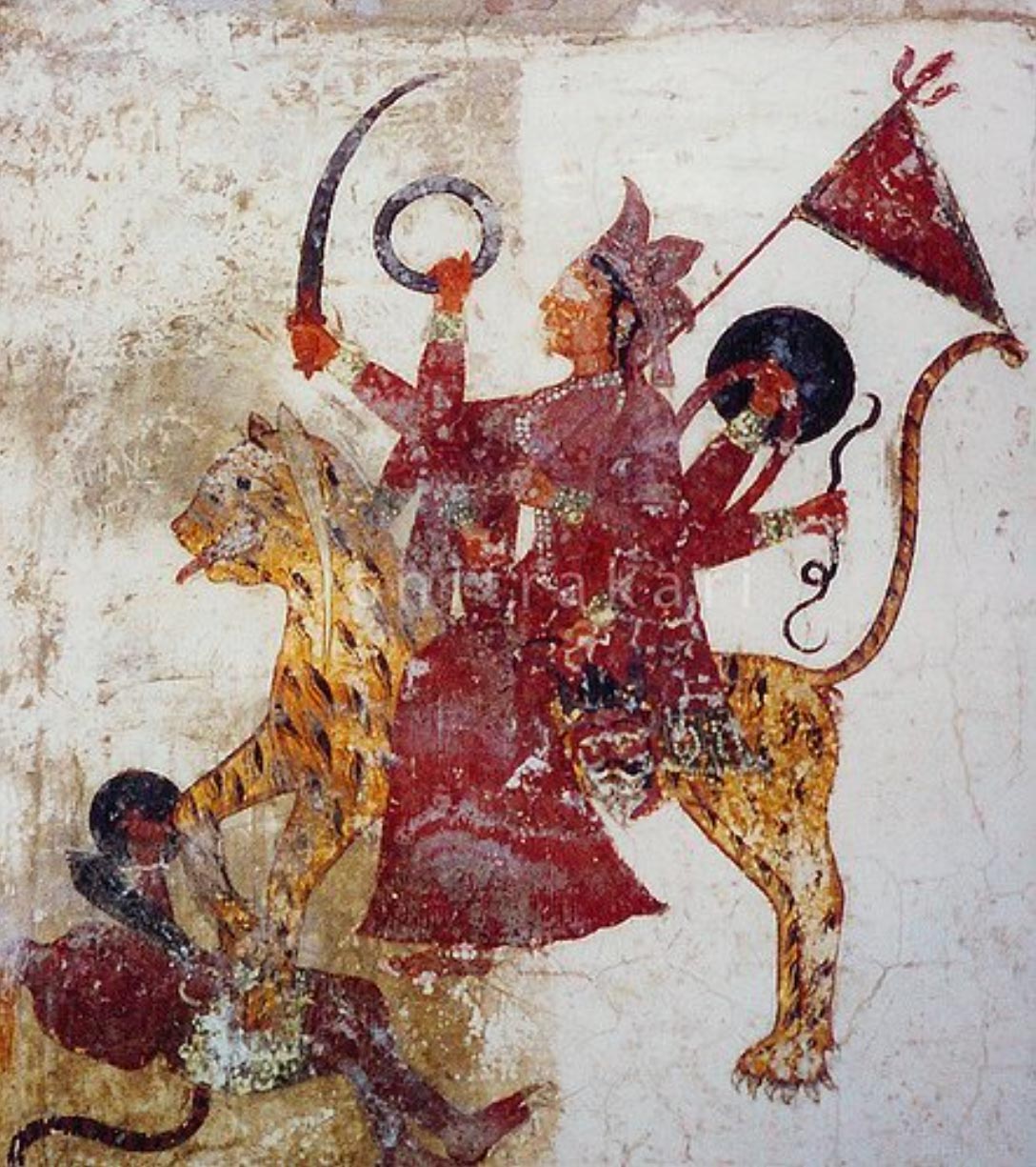
Mural paintings of India are large-scale artworks executed directly on walls, ceilings, or other permanent surfaces. They form an important part of India’s artistic heritage and span from ancient cave paintings to temple and palace murals. These paintings not only served as decoration but also as a means of storytelling, often depicting mythology, religious themes, court life, and nature. Murals of Durga are painted in various folk and modern styles. For example, some draw inspiration from traditional Kerala murals, while others adopt a more contemporary street art aesthetic. Here we see a Durga mural from the 18th/19th century.

Mural-of-Durga-vanquishing-Mahishasura
Mural of Durga vanquishing Mahishasura from the Guru Ram Rai Udasin Akhara located in Dehradun, unknown artist, 18th or 19th century. Wikimedia

Modern interpretations 

Artists use contemporary techniques like abstract expressionism, digital art, and mixed media to reinterpret Durga’s mythos. These works often explore modern themes of gender, identity, and empowerment. Some artists move beyond strict realism to convey the spiritual energy of the goddess through abstract forms and vivid colors, while retaining key symbolic elements. Contemporary artworks may feature Durga with a modern aesthetic, using stylized colors and refined facial features to create a unique and visually striking interpretation.

Modern interpretations of Mother_Durga,_as_a_Goddess_of_Love
Durga as the goddess of love other than Power (shakti) herself, by artist Topu Saha, 21st century. Wikimedia

When Durga leaves 

Goddess Durga visits Earth during Navratri and the act of immersion by her devotees symbolizes her departure from Earth back to her divine realm to again return the following year.

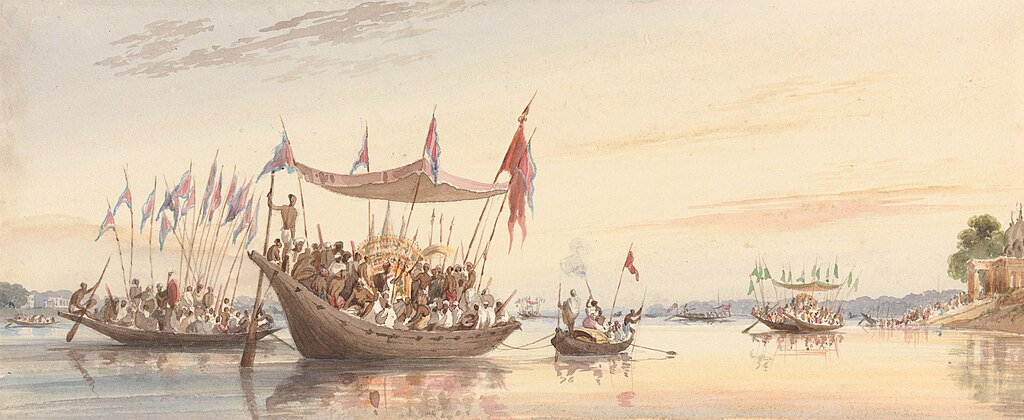
James Prinsep FRS (20 August 1799 – 22 April 1840) was an English scholar, orientalist, and antiquarian. He served as the founding editor of the Journal of the Asiatic Society of Bengal and is renowned for successfully deciphering the ancient Indian scripts of Kharosthi and Brahmi. Alongside his pioneering work in epigraphy, Prinsep made significant contributions to numismatics, metallurgy, and meteorology. During his career in India, he also held the post of assay master at the Benares mint, where he combined his scientific expertise with a deep interest in the cultural and historical heritage of the subcontinent. A painting by him is depicted –

Image-of-Doorga-through-british-artist
Water Procession of the Image of Doorga by William Prinsep. Wikimedia

Isherah – Water Procession of the Image of Doorga Previous to Her Immersion at Sunset,” by William Prinsep (active, 1819-1850 A.D), watercolour and gouache over graphite, Yale Center for British Art, Yale University, New Haven, Connecticut, U S A.

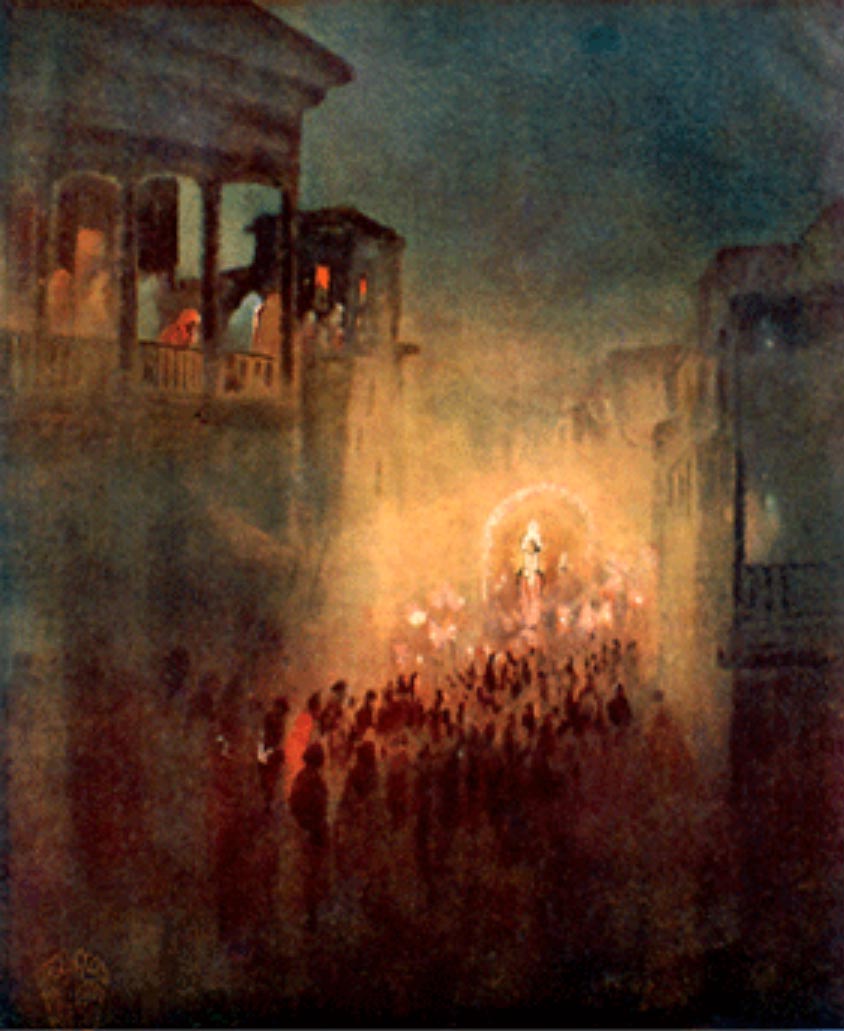
Gaganendranath Tagore (1867–1938) was a pioneering modern Indian artist from the Bengal School and member of the Tagore family of Bengal. Unlike many of his contemporaries, he experimented with different styles, moving from traditional Indian themes to caricature, satire, and later to cubism and other modernist expressions. He is best known for his witty caricatures of colonial society, his illustrations, and his innovative paintings influenced by Japanese brushwork and European modern art. Through his work, he played an important role in shaping the course of modern Indian painting. Here he has depicted the solemn moment of Durga’s immersion in an evening setting when it happens.

Pratima-visarjan
‘Pratima visarjan’ by Gaganendranath Tagore, 1915, Victoria Memorial Hall, Kolkata, India.

The above images help us understand the range of Goddess Durga in art from all over India using different interpretations, formats and techniques. Her devotees have chosen to worship and depict her in all her power and glory.

Suggested Read: Durga – Exploring Images of the Devi in Rajasthani Art

References _

1.https://arshavidyananda.in/193-the-meaning-of-durga-saptashloki-7-verses-in-worship-of-goddess-durga/ (accessed on 30.09.2025)
2.https://www.britannica.com/topic/Durga (accessed on 30.09.2025)
3.https://www.siddhayoga.org/mahadurga/bestower-of-strength (accessed on 30.09.2025)
4.https://www.abirpothi.com/captivating-maa-durga-paintings-on-canvas-a-stunning-collection-of-abstract-and-durga-face-art/ (accessed on 30.09.2025)

Gaitonde Joins Elite Club as Painting Sells for ₹67 Crore, Second Highest in India

0

V-S-Gaitonde-Painting-sells-for-Rs-67-cr

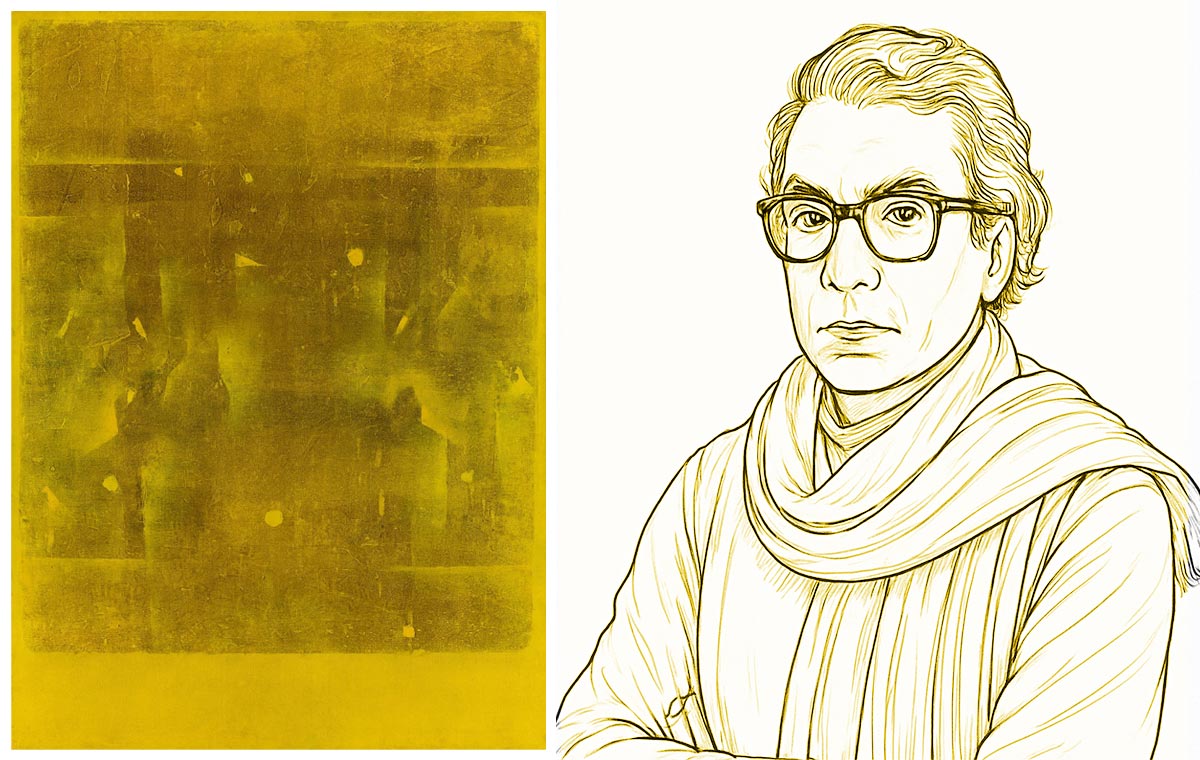
The art world can be loud, but this week, it was the incredible silence of one man’s work that was heard. V.S. Gaitonde, the iconic modernist who worked very hard to live outside of the spotlight, has just become India’s second-most expensive artist after one of his untitled luminous yellow ochre canvases sold for ₹67.08 crore ($7.6 million) at Saffronart’s 25th-anniversary sale

The sale represents more than a price tag; it sets him firmly along this philosophical journey in the smallest sense. During Gaitonde’s life, his magnificent abstractions, often worked on for months and incinerated if he did not feel it was worthy enough, were mostly overshadowed by a groundswell of demand for decorative figurative art. Decades later, the art market has finally arrived at a deeper understanding of his silence.

Suggested Story: Exploring the Most Expensive Paintings in India

A New Record: The Hammer Falls

The sale, amounting to Rs 67.08 crore, reiterates the significance of Indian art. This 1970 oil-on-canvas exceeded its presale estimates to indicate that collectors now value the conceptual over narrative. The only Indian artwork to reach a higher value was M.F. Husain’s narrative work, Gram Yatra, which previously sold for more than Rs 100 crore. 

Gaitonde was not the only focus of the auction. The overall auction, which achieved Rs 355.8 crore ($40.2 million), indicated the enduring strength and maturity of the South Asian art market with Dinesh Vazirani, Saffronart’s CEO, stating that wealthy Indians are now realizing “generational value,” and feeling the “social pressure” to own world-class art.

Who was the man behind the painting? 

The Man Who Embraced Solitude

Beginning in a modest trio of rooms in Nagpur in 1924, V.S. Gaitonde found purpose in life to the far end of his father’s hall, who was not supportive of his choice. Gaitonde enrolled at the J.J. School of Art, and in due course, he first achieved national recognition with a Padma Shri in 1971. He was also a member of the Progressive Artists Group, yet he tended to keep to himself.

Gaitonde rejected the common figurative topics and themes of his contemporaries. In this way, he was different as he embraced minimalism, as well as monochrome philosophy, but strongly held beliefs in the influence of Zen Buddhism and Eastern faith traditions. To his friend, Krishen Khanna, Gaitonde’s withdrawal from much talk and conversation was dictated by a consideration of the merits of conversation, or from his need for discipline. To him, he was simply “careful about who he should make conversation with,” found productivity, music, an avid reader or just enjoyed silence while creating.

Ultimately, no matter how constructed, Gaitonde’s lifelong commitment to his inward focus is what gives potency to his work today. He believed, almost an insanity, that as he created his art was not intentional or thought as he created; his product was resulting from the daily totality of life experience – Duh – as well a “miracle.”

Meaning of the Canvas 

Gaitonde was a genius in that he could find a way to express the inexpressible. For him painting was about an internal, controlled, and disciplined approach, rather than a frenzied action. The product is not a picture of a scene, but a picture of space, an opening into profound silence. This embodied experience is the real magic, and it is what collectors are competing for today.

The Market’s Next Story

The sale of Gaitonde’s work signals that the Indian art market isn’t looking backward anymore. While the modernists captured the headlines by setting records, the auction also underscored the increasing interest in contemporary voices. Nalini Malani’s feminist and political work, Nursery Tales, achieved an incredible Rs 3.6 crore and proved that younger collectors resonate with socially literate narratives and the emotional appeal of their origins. The sale of the ₹67 crore canvas demonstrates that the depth and discipline of a master’s silence can surpass any market level of noise. It is a sign that a new era of recognition is underway, one in which philosophical depth signifies ultimate generational value.

Kolkata’s Best Durga Puja Pandal List 2025: The Ultimate Guide to Iconic Celebrations

0

Kolkata’s Best Durga Puja Pandal List 2025: The Ultimate Guide to Iconic Celebrations

Kolkata’s-Best-Durga-Puja-Pandal-List-01

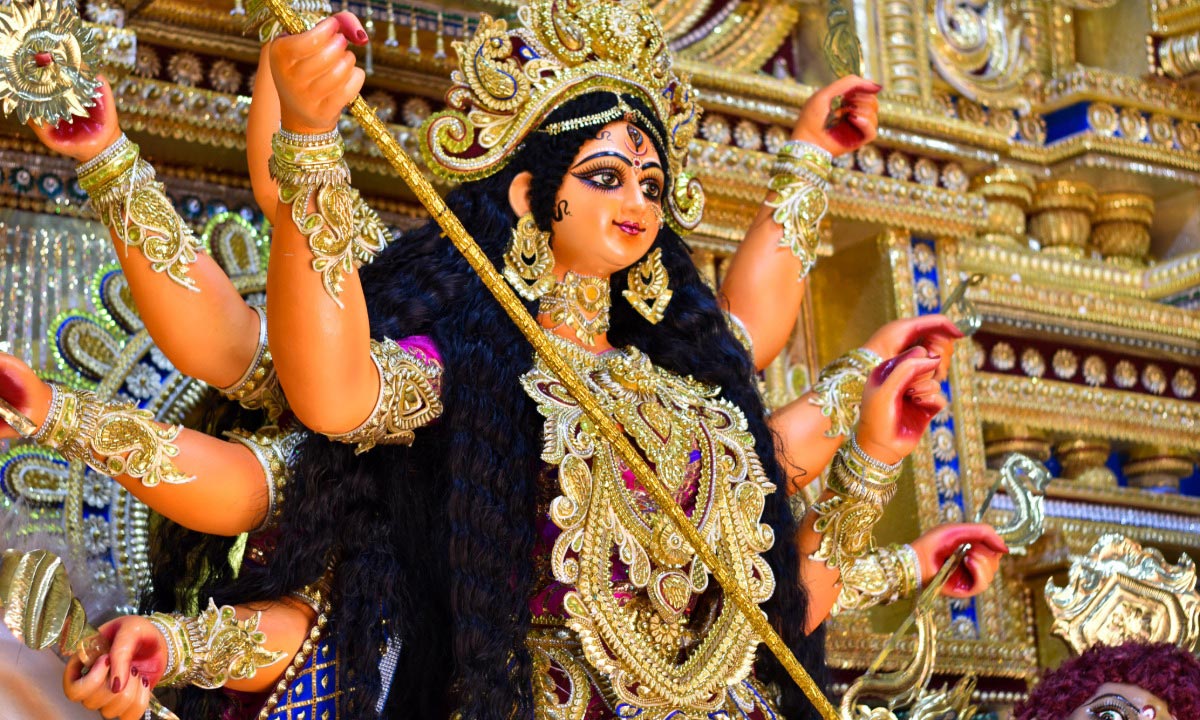
Durga Puja is more than just a festival; it’s an exhilarating and abundant celebration of culture, art, philosophy, faith, and community spirit. Each year, the city streets of Kolkata pulse with outlines of light, sound and extravagant splendour. The Durga Puja pandals are opulent and extraordinary masterpieces that showcase folklore, history, fantasy, and religious faith. From vast architectural splendour to gorgeous hand-made crafts, we have brought together a complete list of the best Durga Puja pandals in Kolkata this year. 

A Long-Standing Tradition of Creativity and Celebration

Kolkata’s-Best-Durga-Puja-Pandal-List-02

At the centre of the Durga Puja celebration in Kolkata are the pandals: temporary structures, built as fast as the festival unfolds, that are uniquely themed and styled with lavish decoration. Each pandal is a summation of local craftsmen and craftsmanship, and even passion, coming together, generally over a few months, to develop a unique theme and theatre for the four-day festival. What makes Durga Puja so distinct in Kolkata is that each pandal action has a story to tell, sometimes even fusing tradition and the modern age, all while handling the crucial spiritual aspect. 

Top Durga Puja Pandals in Kolkata 2025

1. Kumartuli Park


View this post on Instagram


A post shared by Sanjeeban Singh (@sanjeeban)

Where: North Kolkata, beside the river, close to Bagbazar
Nearest Metro: Sovabazar

Kumartuli Park is a centre of traditional Indian handicrafts. Kumartuli Park’s pandal for the Puja is very famous and known for the amazing, hand-crafted, clay idols. Here, you can see the artisans at work and experience the handwork. This is an experience that you wouldn’t want to miss at any cost.

2. Ahiritola Sarbajanin Durgatsab


View this post on Instagram


A post shared by Debjoy Ghosh (@thebangaleebanjara)

Where: Just off Bagbazar Launch Ghat, North Kolkata
Nearest Metro: Shayambazar

Ahiritola accommodates several centuries’ worth of rituals. Ahiritola looks at culture with a commitment to tradition but boasts a simple character of a pandal. Visitors experience classical dances, art exhibitions, and rich traditional settings that take you back to the very soul of Bengal.

3. Mohammad Ali Park Durga Puja

Where: Near Calcutta University, College Square.
Nearest Metro: Mahatma Gandhi Road

For those who enjoy grand displays of art, this pandal goes beyond and recreates world-renowned monuments in accordance with art forms. The craftsmanship and intricacy of the display, and over-the-top decorations, draw artists and Puja lovers alike. 

4. Dum Dum Park Tarun Sangha

Where: South Dum Dum, Tank No. 3
Nearest Metro: Belgachia

A blast of engagement of colour and cultural energy, the Dum Dum Park pandal serves up the delight of folk performances at ease. This is an ideal option for a family’s plan to visit a pandal..

5. Sikdar Bagan Sadharan Durga Puja

Where: Shyam Bazar, North Kolkata
Nearest Metro: Shayambazar

Since 1913, this pandal has been a top location, known for its spirituality and traditional decoration, even if it is simple and minimal. Traditionally organised in a small space, this is also one of the best puja experiences in Kolkata.

6. Sree Bhumi Sporting Club

Sree-Bhumi-Sporting-Club-Durga-Puja-Pandal
Image Source

Where: Near Lake Town, Canal Street
Nearest Metro: Tollygunge

This pandal made a huge impression on the viewer because it draws its inspiration from the palace of the Mahishmati in Bahubali, and offers viewers a sense of grandiosity, style and a vibrant display that is like no other in the city.

7. Suruchi Sangha


View this post on Instagram


A post shared by SURUCHI SANGHA (@suruchisangha)

Where: New Alipore, Station Road
Nearest Metro: Rabindra Sarovar

With the themes of each state in India, every year at this vicinity and pandal, the diversity of the Indian subcontinent is celebrated. Suruchi Sangha is a riot of colour and light, and rich cultural beauty of form and idol design.

8. Lake Town Adhibasi Brinda

Where: Lake Town Link Road
Nearest Metro: Belgachia

This pandal is known for its theme revolving around social events, showing the beauty of India, in particular, rural life, pilgrimage and the dignity of welfare. Along with singing, dancing, and cultural programs, messages of social concern are highlighted in healthy camps.

9. Nalin Sarkar Street Sarbojanin Durgatshab


View this post on Instagram


A post shared by Pratik Ghosh (@undiscoveredyet9.11)

Where: Shyam Bazar, 205-A Shri Aurobindo Sarani
Nearest Metro: Shyam Bazar

Capturing Bengal’s innate beauty of nature and rich heritage, this pandal depicts idols made from clay and is colorfully decorated. This truly represents the spirit of Durga Puja in northern Kolkata. 

10. Manicktala Chaltabagan Lohapatty 


View this post on Instagram


A post shared by Chaltabagan Puja (@chaltabagan)


Where: Raja Ram Mohan Sarani
Nearest Metro: Girish Park

Noted for vibrant celebrations and award-winning decorations, this pandal showcases folk dances and glorious efforts by the community. This is a ‘no-miss’ and should surely be on your list of pandals to visit.

Table of Your Go-to Pandals at a Glance

Here is a list of all you need to know about your go-to pandals this festive season:

Pandal Name Location Nearest Metro Station Unique Highlight
Kumartuli Park North Kolkata (Bagbazar) Sovabazar Live clay idol-making by master artisans
Ahiritola Sarbajanin North Kolkata (Bagbazar Launch Ghat) Shayambazar A century-old tradition with cultural events
Mohammad Ali Park Near Calcutta University Mahatma Gandhi Road Replicas of famous world monuments
Dum Dum Park Tarun Sangha Dum Dum Park, South Dum Dum Belgachia Vibrant colours and live folk performances
Sikdar Bagan Sadharan Shyam Bazar, North Kolkata Shayambazar Oldest Puja with an intimate spiritual vibe
Sree Bhumi Sporting Club Near Lake Town, Canal Street Tollygunge Palatial grandeur inspired by Bahubali
Suruchi Sangha New Alipore, Station Road Rabindra Sarovar Annual theme celebrating Indian states
Lake Town Adhibasi Brinda Lake Town Link Road Belgachia Social awareness & community welfare
Nalin Sarkar Street Shyam Bazar Shyam Bazar Blend of nature, heritage, and pottery
Manicktala Chaltabagan Raja Ram Mohan Sarani Girish Park Award-winning decorations and dances

Guidelines for Visiting Pandals in Kolkata

  • Utilise the metro lines for the convenience of travelling and as an alternative to parking.
  • Arrive slightly early to beat the crowds and get a better view.
  • Wear shoes or sandals that you are comfortable in, because you will be walking A LOT!!
  • Try local street foods just outside of each pandal site to taste a little of Kolkata.
  • Talk to the local people to get a sense of the background story of each pandal.

Conclusion

As the streets of Kolkata come alive with an exuberant spirit during Durga Puja 2025, the magnificence of Kolkata’s culture is symbolised through its elaborate pandals, themed decorations, and a body of heartfelt social messages. Each pandal, with its creativity and festivities, will take you on a journey through tradition and contemporary style. Kolkata welcomes all to come experience the magic and wonder of the city’s renowned Durga Puja pandals this festive season, a glorious celebration like no other.

FAQs About Kolkata’s Best Durga Puja Pandals 2025


Question: What makes Kolkata’s pandals special in 2025?

Answer: In 2025, Kolkata’s pandals blend centuries-old traditions with stunning artistry and themes that range from cultural heritage to social awareness, making each visit memorable.

Question: What is the best way to travel efficiently between all the pandals?

Answer: The Kolkata Metro combined with short walks is the most efficient way to explore multiple pandals and avoid traffic congestion.

Question: What is the best place in Kolkata to see traditional clay idol-making?

Answer: Kumartuli Park is the hub of traditional clay idol-making, where artisans craft beautiful idols by hand using historic techniques.

Question: Are the pandals suitable for family visits and children?

Answer: Yes, most pandals are family-friendly with engaging performances, safe spaces, and cultural shows suitable for children above three years old.

Question: When is the best time to visit the pandals to avoid heavy crowds?

Answer: The best time is early on weekdays, when pandals are less crowded and the atmosphere is more relaxed.

Pradarshak Art Gallery Presents AUM 6.0 – The Online Art Gifting Exhibition

0

Pradarshak-Art-Gallery-Presents-AUM-6.0-01

When was the last time you gifted someone something so special that it’s going to be with them for a lifetime? In a world of quickly shared digital wishes, unwrapped gifts and ready-made hampers, it is easy to become disconnected with the uniquely personal nature of gift giving and receiving. Gallery Pradarshak has rekindled this sense of meaning with AUM 6.0 – Affordable, Unique, Memorable. AUM is an annual art gifting exhibition which transforms original artworks into gifts that can be treasured forever.

The dates for AUM 6.0 online are from 25th September to 11th October 2025. There are 104 original artworks from talented artists across India, viewable online 24/7 on their website. This is a very thoughtfully curated collection, encouraging the act of gifting to exist somewhere beyond the ordinary.

The Meaning of AUM

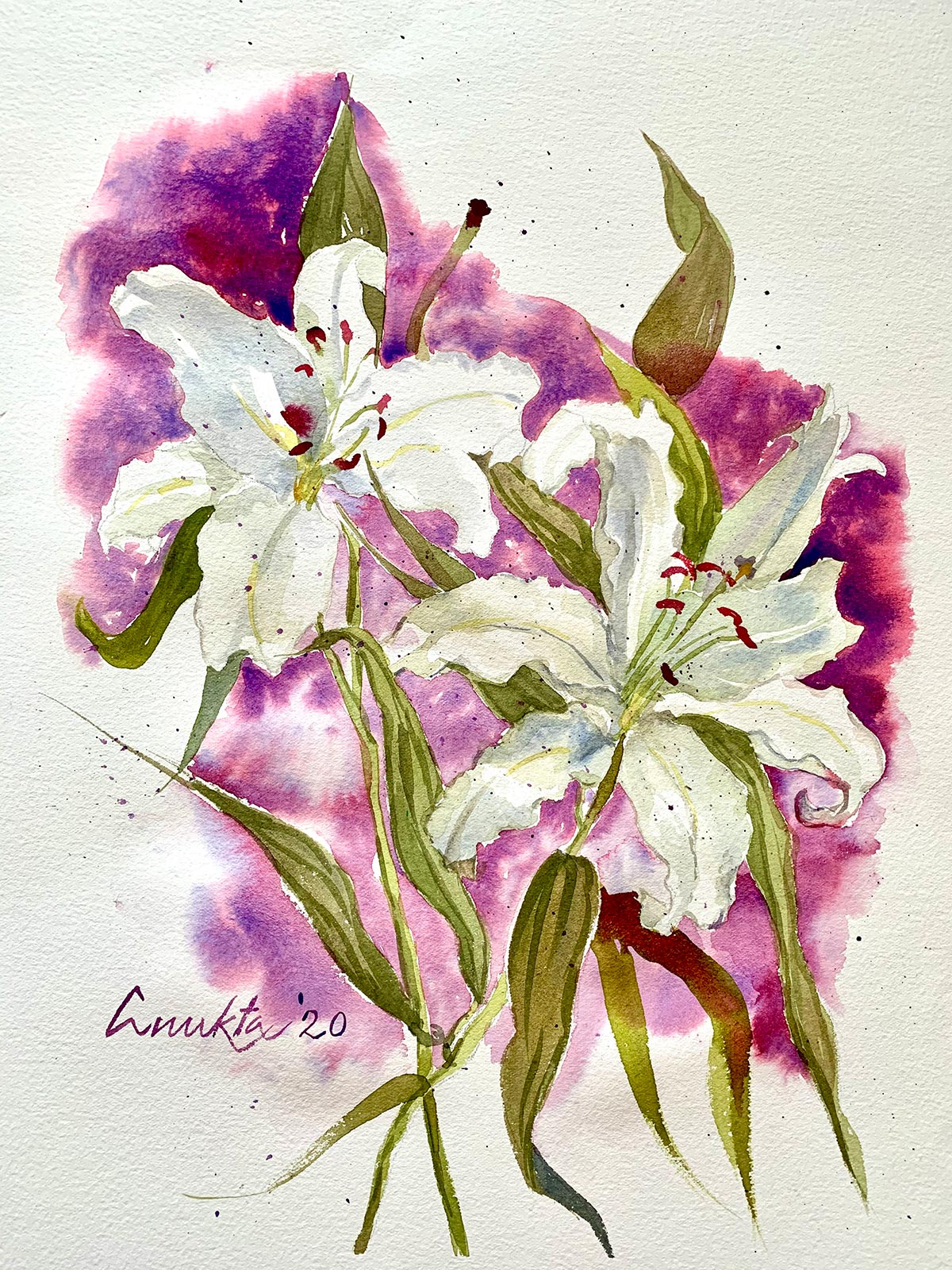
Anukta-Mukherjee-Ghosh_2
Artwork by Anukta Mukherjee Ghosh

AUM was launched in 2020 and has become Gallery Pradarshak’s signature project. Now in its 6th edition, the exhibition captures the gallery’s commitment for decades to create fine art that is both affordable and accessible. Starting at just ₹2,500 to the top end of ₹15,000, everything has beauty, and more, and makes a thoughtful, lasting gift that meets all occasions.

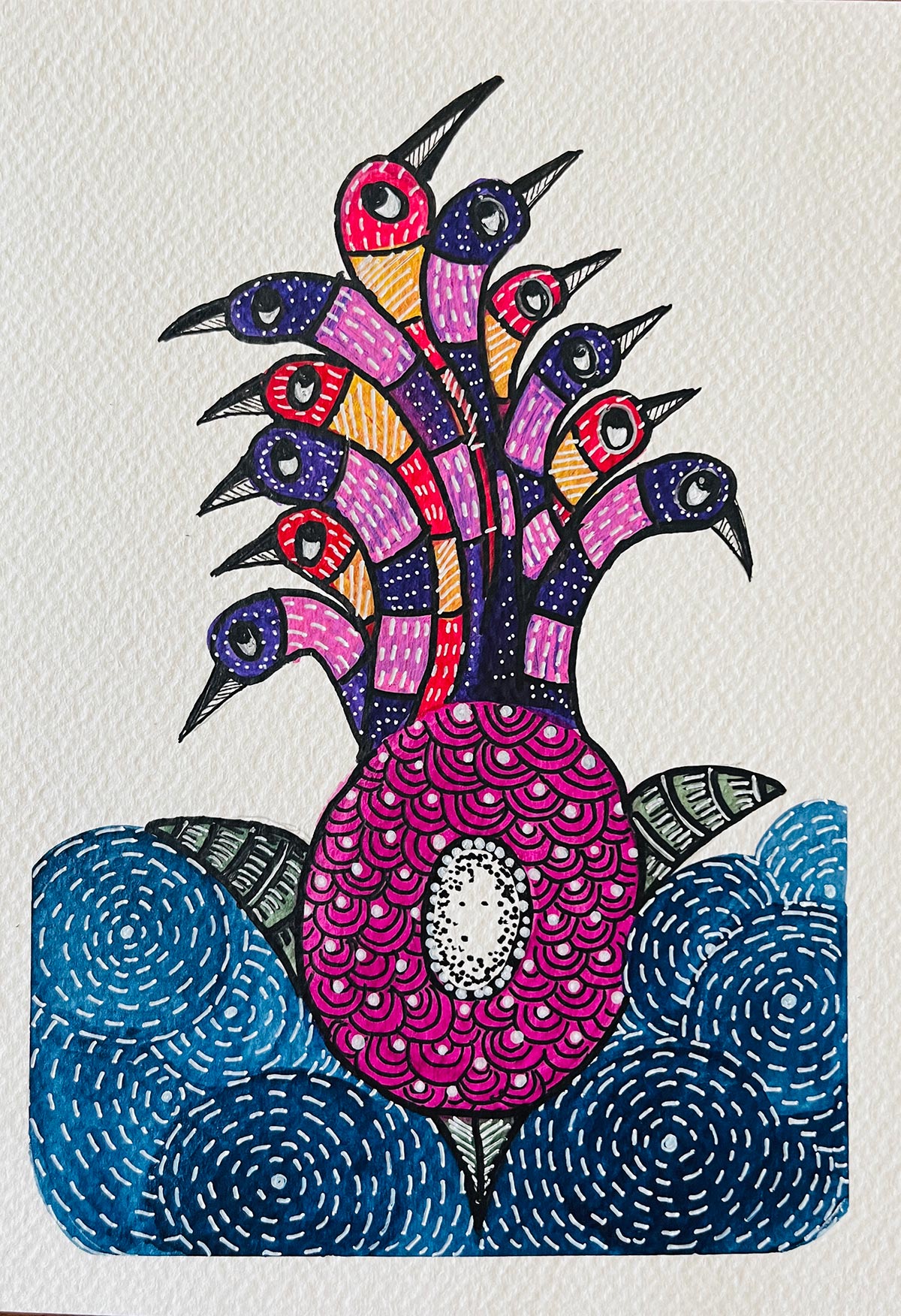
Bhumika-Desai_2
Artwork by Bhumika Desai

The selection of art on display covers a wide breadth of contemporary drawings, abstracts, figurative works, folk art and themed works. Whether you are purchasing for a family member, coworker, or a friend, AUM is sure that art lovers alike, first-time art buyers, or someone looking for a casual gift for their personal collection, would find something they identify with. The selection of art on display covers a wide breadth of contemporary drawings, abstracts, figurative works, folk art and themed works. Whether you are purchasing for a family member, coworker, or a friend, AUM is sure that art lovers alike, first-time art buyers, or someone looking for a casual gift for their personal collection, would find something they identify with.

Besides variety making AUM 6.0 special, it is also a very nice idea: Why give the ordinary when you can give art which becomes a memory?

The Legacy of AUM

Dr. Priyanjalee-Banerjee_2
Artwork by Dr. Priyanjalee Banerjee

AUM has made a lasting impact in the gifting and experiencing of art in India since its first edition in 2020. AUM believes that art is more than an object to admire, but a meaningful and enduring memory that enhances the lives of people and their celebrations. For the past five editions, Gallery Pradarshak has always provided new buyers with original artwork and affordable prices to help art become more accessible and affordable, and facilitate the separation between artists and buyers. 

AUM comes from our commitment to help new talent with a reputable platform to show their work and creativity to a wide-ranging and engaged audience. This will help advance the prolonged sustainability of India’s vast artistic heritage, while also fostering new voices and innovation.  In the meantime, AUM has enhanced the gifting culture by allowing people to gift art, rather than a traditional or regular gift. By gifting art, it transcends the seasons and trends; the gift holds meaning that extends beyond any calendar event. 

Rajendra-Dixit_3
Artwork by Rajendra Dixit

Along with building a tradition of gifting art that can be shared, Gallery Pradarshak has created a broader community of artists, buyers and art lovers that embraces sharing culture and creativity. The legacy of AUM, an affordable and unique experience, will continue to build impact on the art world, as well as everyday life.

What Makes AUM 6.0 Special?

Ganesh-Jadhav_3
Artwork by Ganesh Jadhav
  • The prices are very reasonable, beginning at ₹2,500 and going up to 15,000, making it a practical yet desirable gift of art.
  • Each item is one-of-a-kind and not a reproduction or print, showcasing the artist’s craftsmanship while being cognizant of their vision.
  • The design of contemporary art has been understated, while the works range from intricate craftsmanship to decorative folk practices, all of which speak to India’s vast cultural history.
  • Ultimately, the entire offering is digital, so it can be experienced whenever and wherever in the world.
  • With every art purchase, a portion of proceeds sustains the artistic community, sparks creativity and funds a livelihood.
  • Beautifully packaged with delivery options that enable the gift to arrive with as much beauty and joy as if they were delivered in person, wherever your loved ones may be.

Event Details

Event Detail Information
Event Name AUM 6.0 – The Online Art Gifting Exhibition
Dates 25th September – 11th October 2025
Time Open 24×7
Venue Online on www.gallerypradarshak.com
Number of Artworks 104 original artworks
Price Range ₹2,500 to ₹15,000
Artwork Types Contemporary drawings, abstract, figurative, folk art, and compositions
Shipping Worldwide
Organiser Gallery Pradarshak

About Gallery Pradarshak

With a history of over thirty years, Gallery Pradarshak has earned a reputation for being a dependable conduit between new artists and art lovers. The gallery has consistently exhibited affordable, original fine art. The gallery has helped fledgling artists find their audience and has made art accessible to all. AUM 6.0 further underscores this mission because it connects a global audience with India’s creative culture.

What Makes Art a Good Gift?

Art is a source of memory, much more than just an object of beauty. It’s a sincere gesture, and one that certainly distinguishes itself from all the mundanity of perishable gifts and generic gifts. The bonus with gifting through AUM 6.0 is that the receiver has an absolutely real piece of art to savour and treasure for many years, and the giver is also contributing to a sustainable tradition that pays tribute to artists and Indian culture.

AUM 6.0 is made for those who want their gifts to endure beyond a season, even to be used, to be dug out from a drawer at a future time and utilised. This offering consists of contemporary drawings, abstract works, figurative painting and folk art – all selected with the intention of delighting a broad range of tastes and opportunities over life. This is an exhibition of art, but also an exhibition reflecting India’s art spectrum and the ability for gifting to be meaningful.

Vijayadashami 2025: Date, Significance, Rituals, and Celebrations

0

Vijayadashami-2025

Vijayadashami is right around the corner! The biggest festival in India is here, Vijayadashami (for those who may not know, this marks the triumph of good over evil in mythology). Every part of India commemorates this festival with a different name and tradition. So, let’s explore everything Vijayadashami 2025 – the date, significance, and festivities!

Vijayadashami 2025 Date and Auspicious Timings

  • Vijayadashami 2025- Thursday, October 2
  • Dashami Tithi starts- 7:01 PM on October 1
  • Dashami Tithi finishes- 7:10 PM on October 2
  • Vijay Muhurat- 2:09 PM to 2:56 PM
  • Aparahna Puja- 1:21 PM to 3:44 PM
  • Shastra Puja & Vidyarambham- Sunrise to 7:10 PM, on October 2

Vijayadashami Mythology

There are various religious significance of Vijayadashami in all cultures. In Northern and Central India, this occasion marks Lord Rama’s victory, from Ramayana, over the demon king, Ravana. In other parts of the subcontinent, which are the Eastern parts of the Country, it marks the victory of Mother Durga over the monster Mahishasura. In each tradition, it marks the death of evil and the victory of goodness over evil. This belief is essentially a teaching in believing in our goodness and letting it rise over evil that sometimes permeates into our spirits. 

Traditions and Customs Associated with Vijayadashami 

Shami Puja & Aparajita Puja

Shami puja is a special puja done to the Shami (the tree, also known as Prosopis cineraria), and ‘Aparajita’ (invincible) goddess to receive blessings for victory and harmony. ‘Seema Avalanghan’ is the name for this practice in Maharashtra, and it involves crossing a physical boundary as a symbol of courage and traversing one’s comfort zone.

Ayudha Puja

Ayudha puja is the worship of tools, vehicles, and crafts that is common not only to the year-long self-care traditions of people, but it is also meant to honour one’s tools of livelihood, weapons, and crafts. The practice is best recognised in the southern states of India, where it can include cleaning, decorating, and ritualised worship of the tool, including in temples, or simply offering the puja at home with one’s family.

The Tradition of Burning Effigies of Ravana

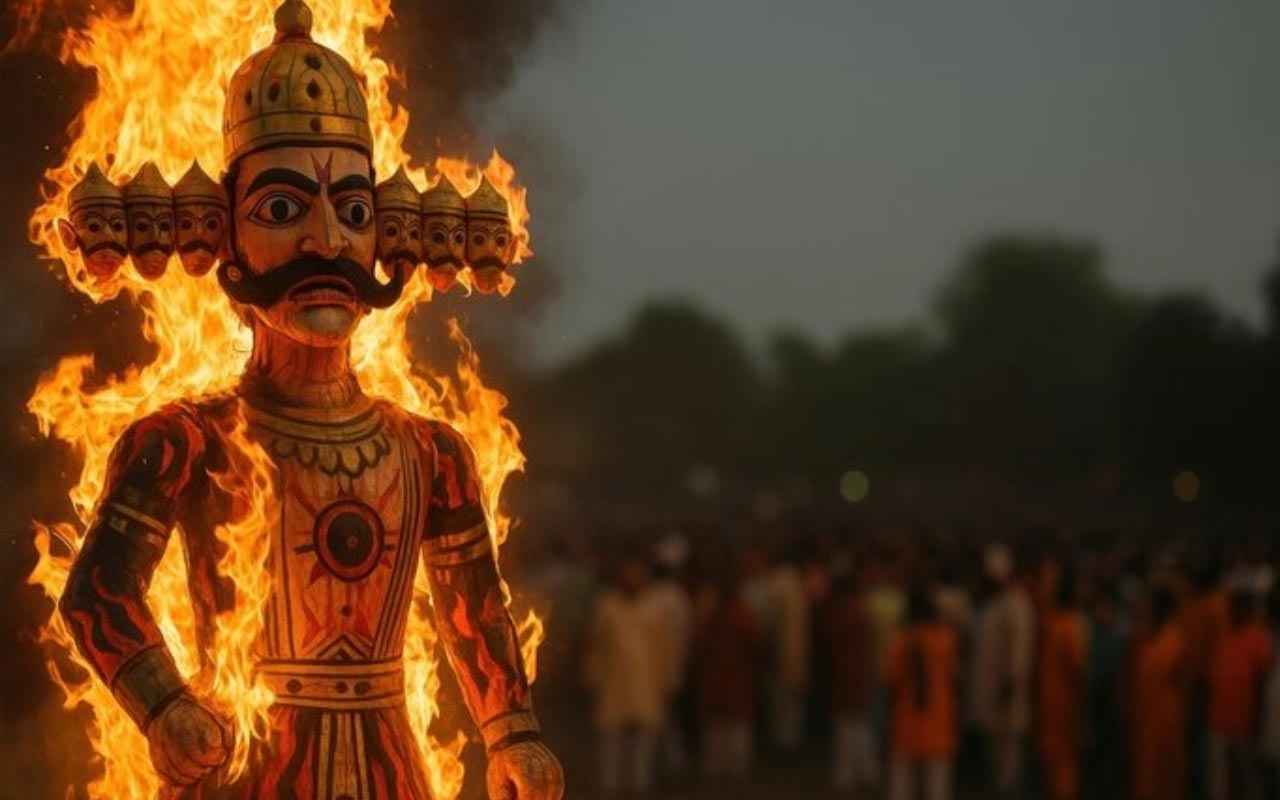
In North India, it means Dussehra is associated with the dramatisations of Ramlila ending in the burning of the effigies of Ravana, Kumbhkaran and Meghnath, an allegorical note on eliminating negative traits. 

Vidyarambham

In Kerala and Tamil Nadu, children are introduced to learning and writing in a ceremonial way by emphasising Vijayadashami as a good day for the purposes of education.

The Exchange of Sona (gold) Leaves

In Maharashtra, families exchange the Apta (Shami) tree leaves with blessings of prosperity, and then follow up with saying “Vijayadashami cha Shubhechha!”.

Regional Celebrations across India

Dussehra-in-North-India

The festival’s diversity is brought to light by local customs: 

Dussehra in North India

A long series of Ramlila performances is held recounting Rama’s story behind the epic, culminating with the exploding of the effigies in elaborate spectacles, bringing excitable crowds together with collective catharsis. 

Mysuru Dasara in Karnataka

A royal celebration that has been observed for centuries and continues to grow in scope, including an elaborate procession of the state and tourism as the chief minister, complete with caparisoned elephants and military and musical bands. Along with the programs that observe cultural forms and influence the state’s historical heritage, the event continues to grow. 

Durga Visarjan in West Bengal

Here, Vijayadashami is called ‘Bijoya Dashami’, and includes emotional “immersions.” Processions and idols of Goddess Durga mark both cultural and ritualistic farewells, combining locally recognised presentations of elaborate idol designs, ensembles and expressions of happiness through dance to further emphasise the symbolic importance of the day. 

Other States

Dussehra, as a festival that includes processions in Odisha, Assam, Maharashtra, Gujarat, as well as Dashain in Nepal, are reflected in similar traditions of puja, community fairs, ritualistic dances, and ceremonies crossing borders to feel a cultural significance to celebrations of festival days.

Cultural and Social Importance of Vijayadashami

  • It is a custom for new academic, professional, or creative activities to begin on this day; it is believed to be an extraordinarily auspicious day to begin new undertakings.
  • The festival also brings individuals together across an array of melas (fairs), food stalls, parades, and folkloric performances, a way to create a community bond and make collective memories.
  • For many artists, musicians, and writers, Vijayadashami is identified as a day to launch new projects, concerts, or performances, improving India’s living cultural heritage.

Vijayadashami Key Details

Vijayadashami 2025 Details
Date 2 October 2025 (Thursday)
Dashami Tithi Begins 1 October, 7:01 PM
Dashami Tithi Ends 2 October, 7:10 PM
Vijay Muhurat 2:09 PM – 2:56 PM
Aparahna Puja Time 1:21 PM – 3:44 PM
Key Rituals Shami Puja, Ayudha Puja, Ramlila, Durga Visarjan
Regional Highlights Ramlila & Ravana Dahan, Mysuru Dasara, Bengal Visarjan
Auspicious for New ventures, study, travel, worship

Conclusion

Vijaydashami 2025 is more than just a festival. Have a great time with your loved ones. Remember the day always begins with a festival puja in the morning along with visiting relatives, big meals, and a lively dance. And the day would be imperfect without seeing the Mela in the evening! So what will you do this Vijayadashami?

FAQs on Vijayadashami 2025


Question: When is Vijayadashami in 2025?

Answer: Vijayadashami (or Dussehra) falls on Thursday, October 2, 2025.

Question: What is the significance of Vijayadashami?

Answer: Vijayadashami marks the victory of Lord Rama over Ravana and Goddess Durga over Mahishasura, symbolising the triumph of good over evil.

Question: How is Vijayadashami celebrated across India?

Answer: The festival is celebrated with Ramlila and effigy burning in North India, Mysuru’s royal processions, Durga Visarjan in Bengal, Ayudha Puja in the South, and other local traditions.

Question: What rituals are performed on Vijayadashami?

Answer: Rituals include Shami puja, Ayudha puja, Ramlila enactments, effigy burning, Vidyarambham, and prayers held at auspicious times throughout the day.

Question: Why is Vijayadashami considered auspicious for new beginnings?

Answer: The day signifies divine victory and is believed to bless new ventures, studies, and good deeds with success, prosperity, and positive energy.

How Europe’s Digital Entry/Exit System (EES) Will Affect Indian Travellers?

0

Europe's-Digital-Entry-Exit-System

On October 12, 2025, the European Union will launch its Entry/Exit System (EES), which will change travel throughout Europe. By substituting advanced biometric tracking technology for conventional passport stamps, this automated digital border control system will radically change how Indian passport users enter and leave the Schengen Area. Millions of Indian tourists who visit Europe each year will be directly impacted by the implementation, which is the EU’s biggest border control change in decades. 

Digital Revolution: Understanding Europe’s Smart Border Initiative

For all non-EU nationals, including Indian citizens, the Entry/Exit System means a full change from human crossing processes to automatic digital tracking. Across all Schengen external borders, this IT-powered system will take biometric information, such as fingerprints and facial scans, in addition to normal visa data and entry-exit times. 

EES will make electronic records that are good for three years, in contrast to the present practice of border officers physically marking IDs. The technology will greatly change how Indian tourists will be affected by Europe’s Digital Entry/Exit technology (EES) at all entry points, including airports, seaports, and land borders throughout the Schengen region. 

Expert visa support websites such as Atlys are already putting up extensive guides to help Indian tourists handle these changes with ease and make sure they are aware of the new requirements ahead to their trips to Europe. 

Immediate Changes for Indian Passport Holders

When EES goes active, Indian tourists will notice a number of crucial routine changes. Travelers must undergo biometric registration at specific border control posts, which includes digital fingerprinting and face imaging, on their initial entry after October 2025. Travelers should arrive at airports with large backup times because this first registration process may take longer than planned. 

Digital records that catch precise entrance and exit timings will totally replace passport stamps under the new system. This suggests that the travel habits of Indians who visit Europe regularly will be carefully tracked and recorded online. For business and pleasure travelers who visit Europe regularly each year, the effect of Europe’s Digital Entry/Exit System (EES) on Indian tourists becomes quite critical. 

Crucially, any past overstays or visa crimes will be digitally recorded, which can impact future admissions decisions. Because of the system’s thorough tracking powers, going over the 90-day restriction in any 180-day period will be quickly noticed and logged. 

Technology Integration and Processing Improvements

To speed up border crossings, EES offers advanced automatic passport check gates that make use of biometric verification technology. Subsequent entrance should be much speedier for Indian tourists after they have finished their first biometric registration since the technology can instantly verify their identify without the need for human involvement. 

Authorities in France or Italy will be able to observe a traveler’s admission in Germany quickly due to the digital infrastructure that permits real-time data transfer between Schengen member states. At internal Schengen borders, this integrated method improves security while likely cutting down on processing times. 

To aid Indian travelers in grasping these technology requirements and providing the requisite papers for successful EES compliance, travel service businesses like as Atlys are creating specialized support systems. 

Distinguishing EES from ETIAS Requirements

The difference between EES and the soon-to-come European Travel Information and Authorization System (ETIAS) must be understood by Indian passport users. Although both methods are meant at non-EU travelers, their functions under Europe’s border control plan vary. 

Regardless of visa rules, EES works as a method for documenting all non-EU visitors’ entry and leave. Indian residents, who usually need Schengen visas, will only deal with EES when they reach the border. On the other hand, ETIAS only applies to visitors who require pre-travel permission and are not required to seek a visa. 

This difference is important for understanding how Indian passengers will be affected by Europe’s Digital Entry/Exit System (EES), since it makes it clear that Indian guests with visas only need to worry about EES compliance and not ETIAS responsibilities. 

Strategic Preparation for the Digital Transition

Indian travelers can start getting ready for the introduction of EES by making sure their passports are good for at least six months after the times they wish to go. Travelers should mentally prepare for a bit longer processing delays for first entries by being aware that biometric data gathering will be required. 

As these platforms offer up-to-date information on EES standards, documentation preparation, and procedural assistance especially suitable for Indian travelers, partnering with seasoned travel support providers like Atlys may greatly simplify the move. 

The October 2025 launch date ensures seamless transitions into Europe’s new digital border control age by giving Indian tourists the time to prepare for these changes and plan their European travels properly.

Ready to Relish? Top 10 Traditional Bengali Dishes of Durga Puja

0

Durga-Puja-2025

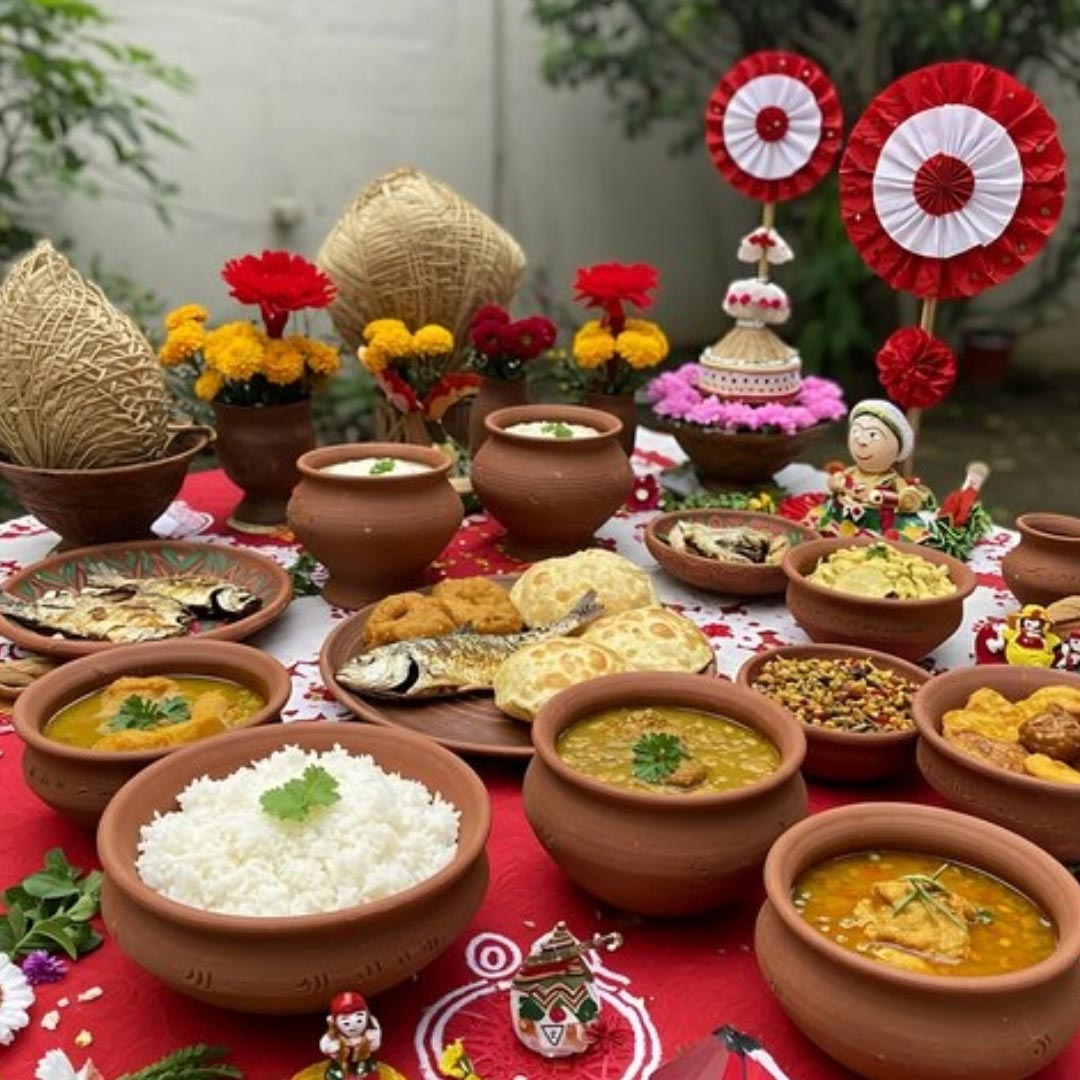
Durga Puja connects divinity and people with emotions that beat in hundreds of hearts. As Maa Durga is welcomed in pandals and homes, there is an enthusiasm, fervour and immense devotion that is palpable and manifested in myriad ways. From prayers, traditions, dance, music, culture and cuisine, the essence and spirit of the festival light up cities and towns like never before. Though there is a lot that can be highlighted, let us focus on the top traditional dishes West Bengal that are prepared during Durga Puja. Ranging from sweets to savouries, these dishes not only delight the palate but are also the flagbearers of heritage, bonhomie and good times. 

Top Ten Tasty Bengali Dishes of Durga Puja

Traditional-Bengali-Dishes-of-Durga-Puja-01

Interestingly, traditional and cultural foods are usually simple, heartwarming and nourishing. Their flavours and aromas are memories that stay long after the dish has been devoured. From using local ingredients and traditional cooking methods to enjoying hearty meals with family and friends, these dishes are an important part of celebrations during not only Durga Puja, but also any other Indian festival. 

So, here are the top ten Bengali dishes that are integral to Durga Puja and are prepared and enjoyed immensely. 

Bengali Dishes Speciality
Bhoger Khichuri A festive rice and lentil dish served as bhog to Maa Durga, cooked with dals, vegetables, spices, and ghee, offering warmth and divinity.
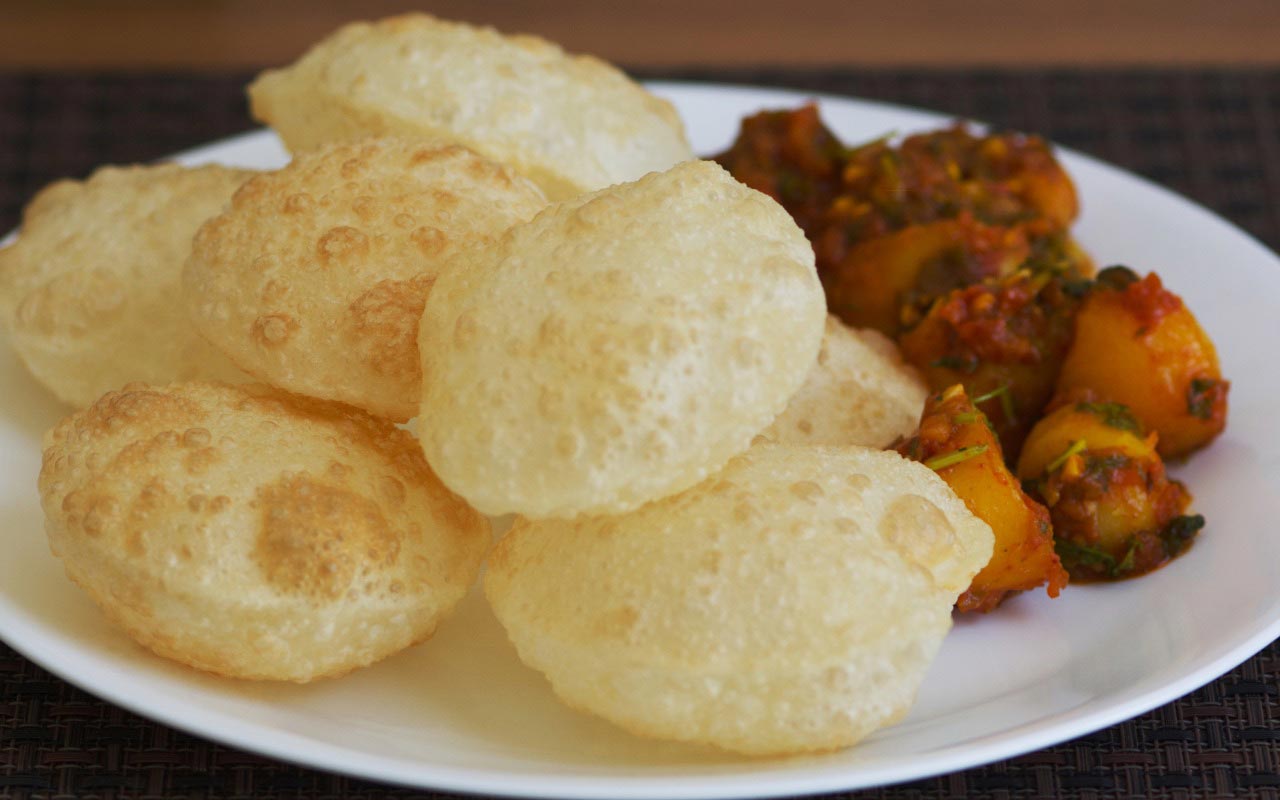
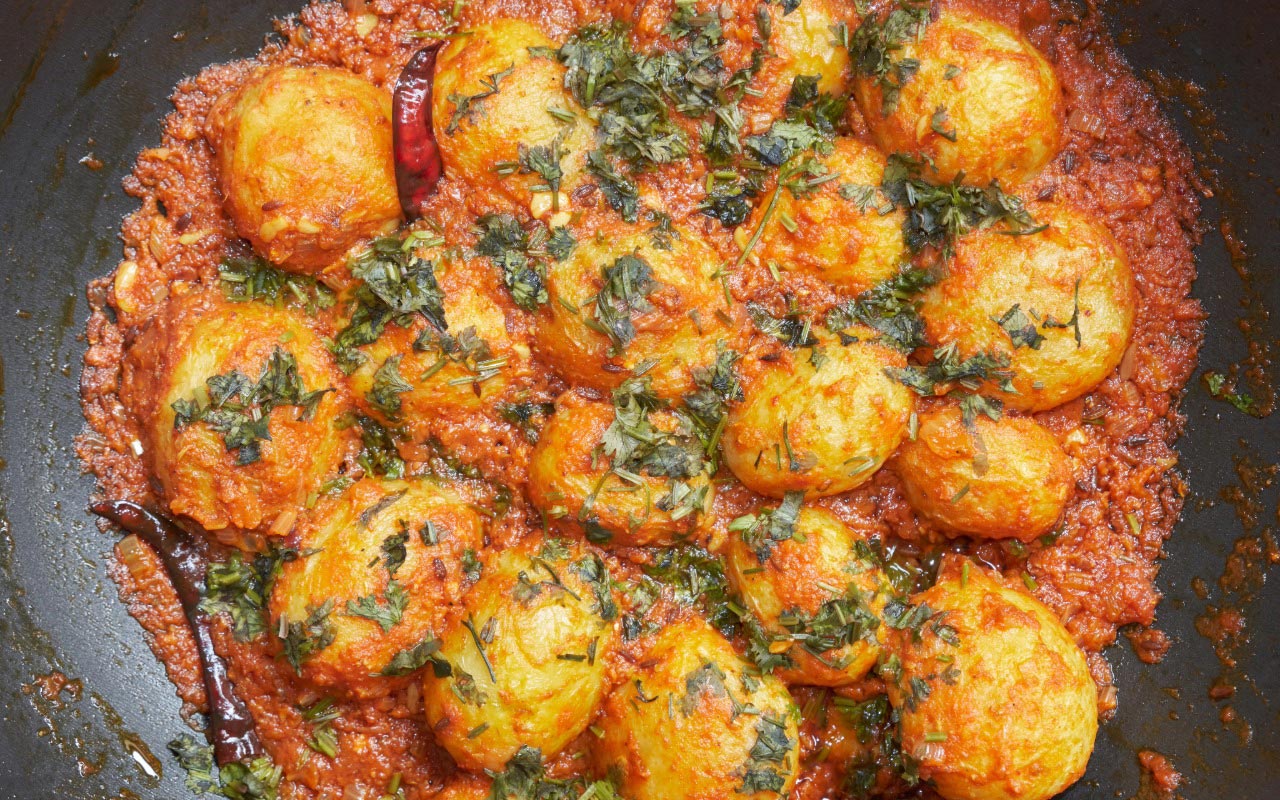
Aloor Dum Spicy and rich potato curry, a comforting favorite during Puja, especially relished with soft luchis.
Luchi Fluffy deep-fried bread, often paired with aloor dum or sweets, an indispensable partner in festive feasts.
Labra Sabji A wholesome mixed vegetable curry, stewed with seasonal veggies and spices, usually paired with khichuri as bhog.
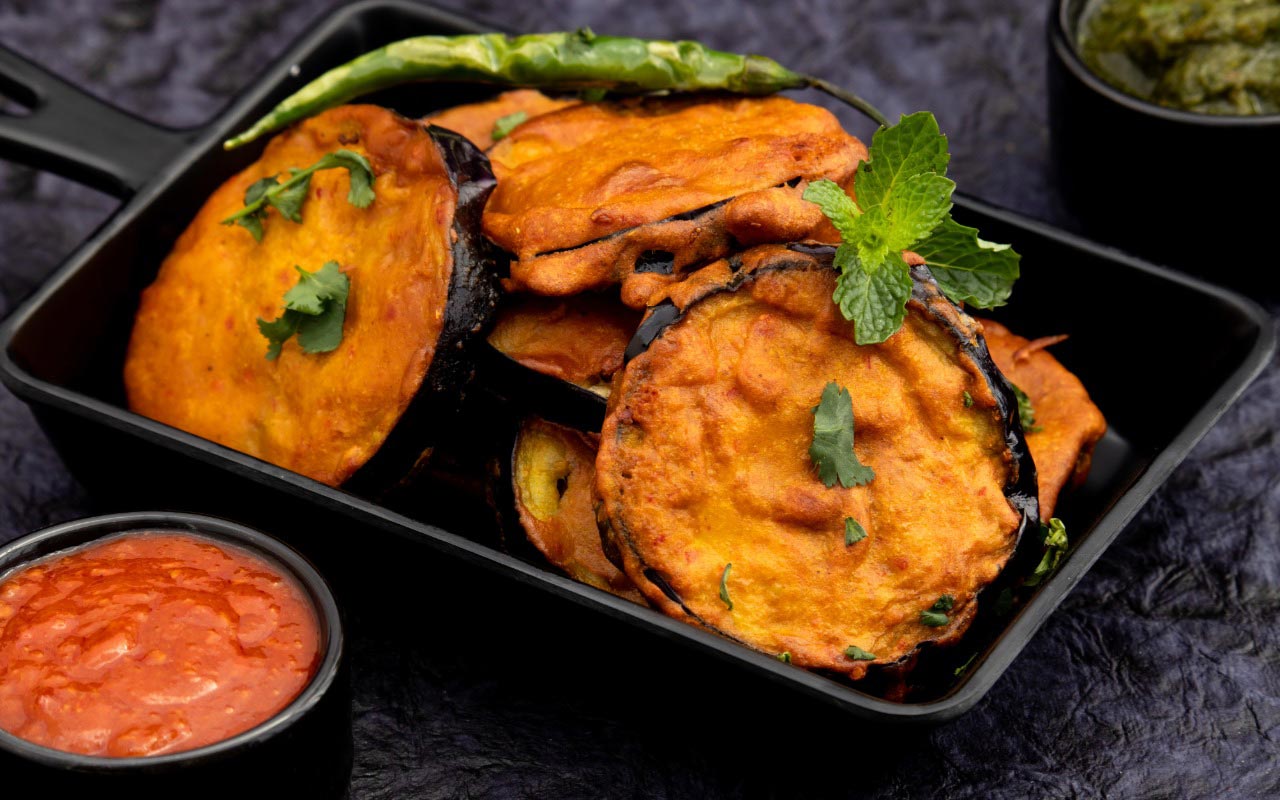
Beguni Crispy fried brinjal slices coated in batter, a light and crunchy side dish loved at pandals and gatherings.
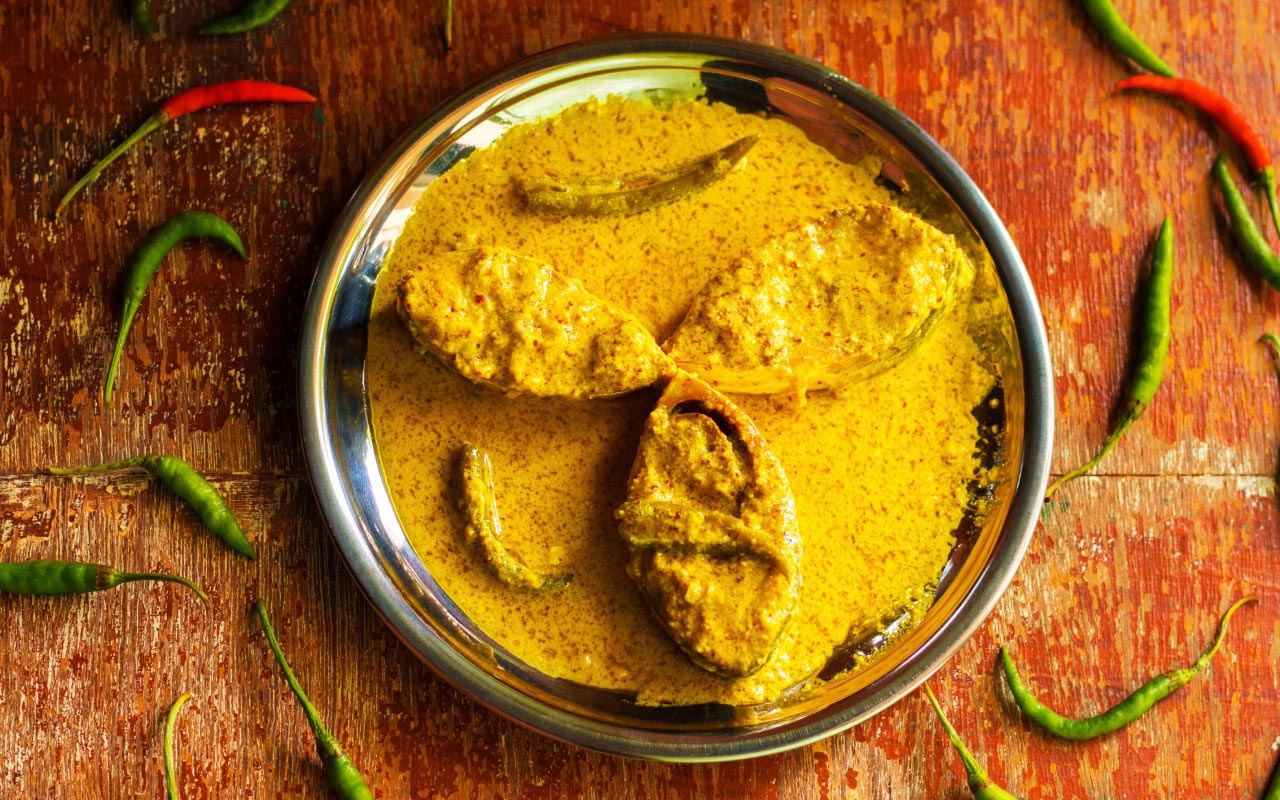
Ilish Shorshe Hilsa fish cooked in mustard gravy, an iconic Bengali delicacy; vegetarians use banana pith with the same mustard-rich recipe.
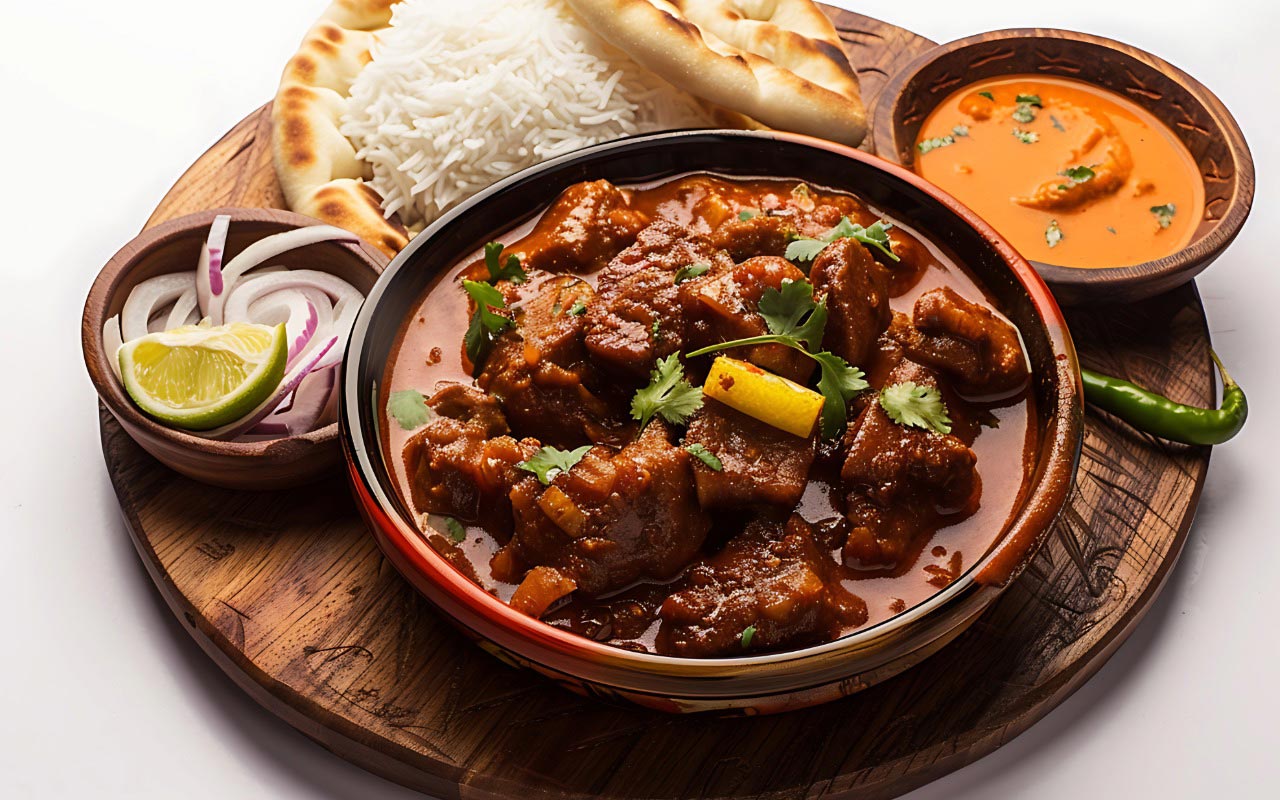
Kosha Mangsho Slow-cooked mutton curry bursting with spices and aroma, a festive non-vegetarian delicacy savored with rice or luchi.
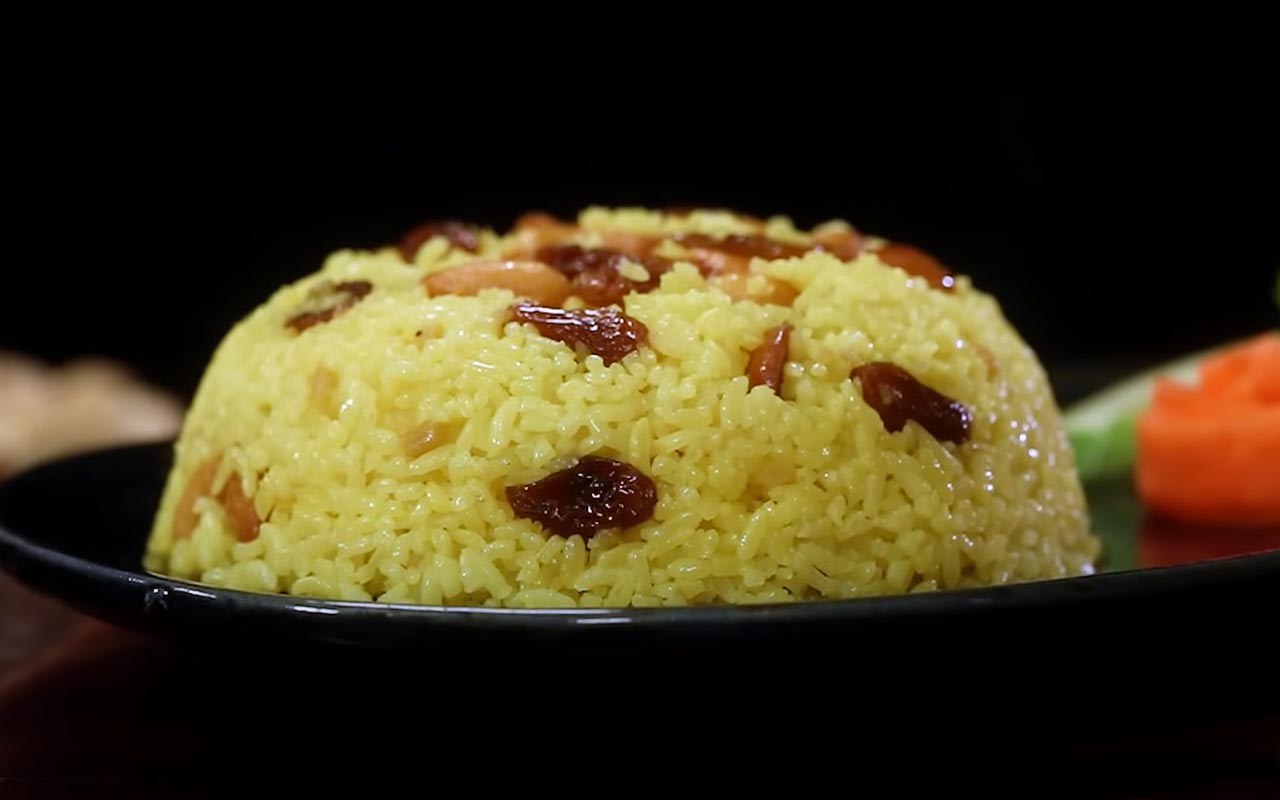
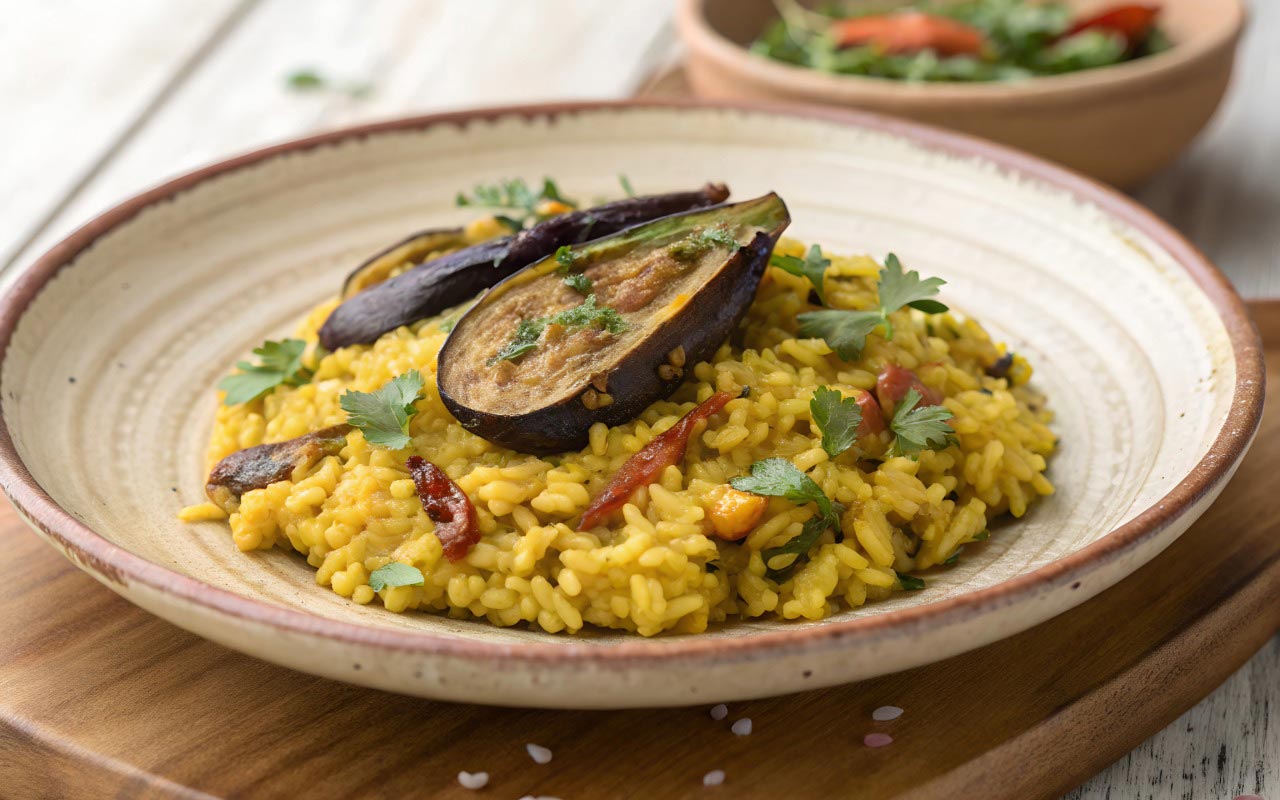
Mishti Pulao Sweet and savory rice dish with dry fruits, sugar, and spices, balancing flavors beautifully in festive meals.
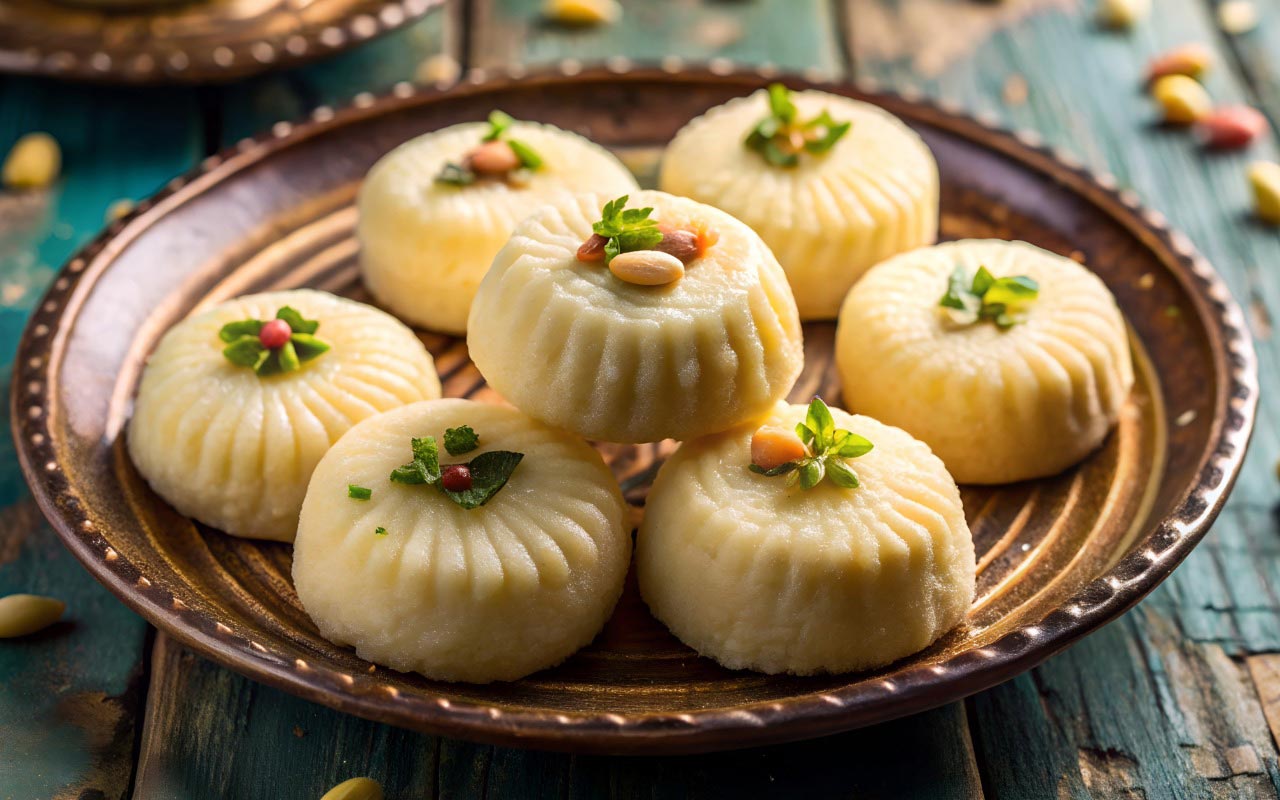
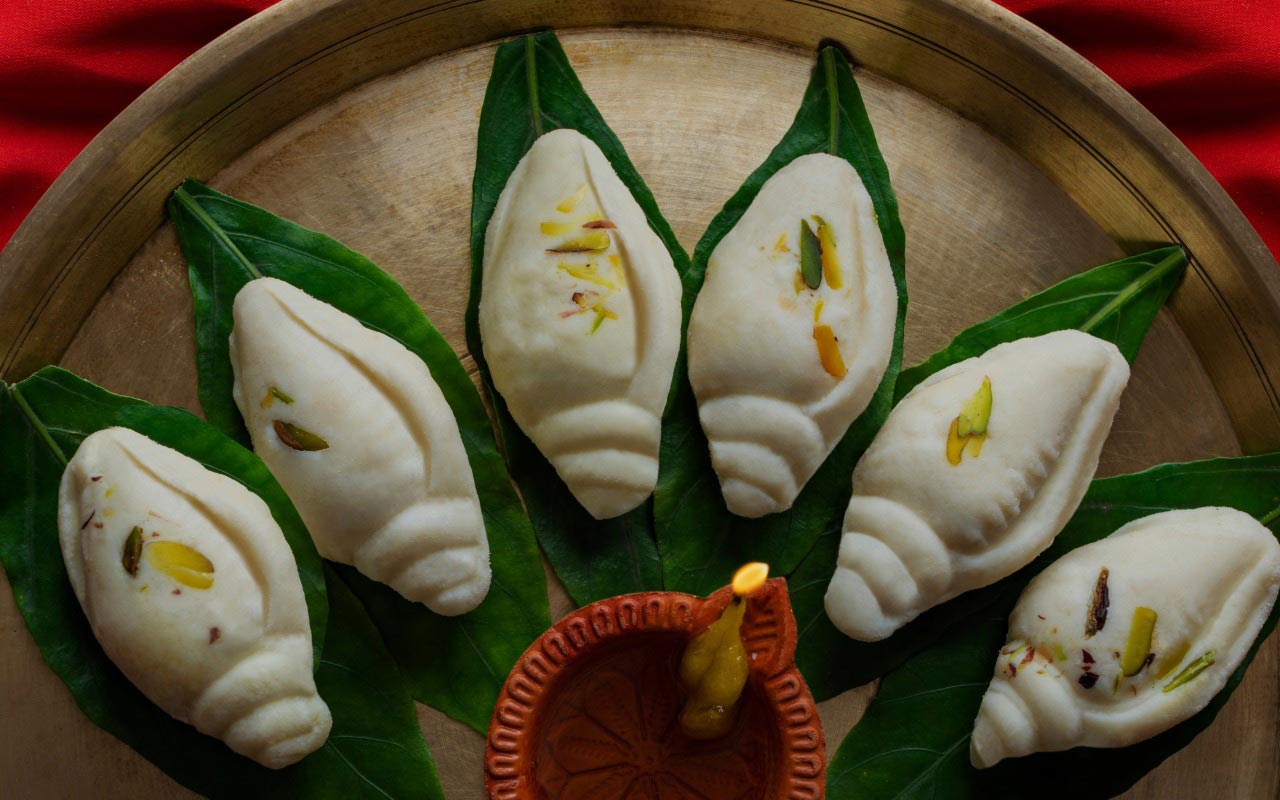
Sandesh Classic Bengali sweet made with chhena, shaped into various forms; elegant, nutritious, and symbolic of Bengali pride.
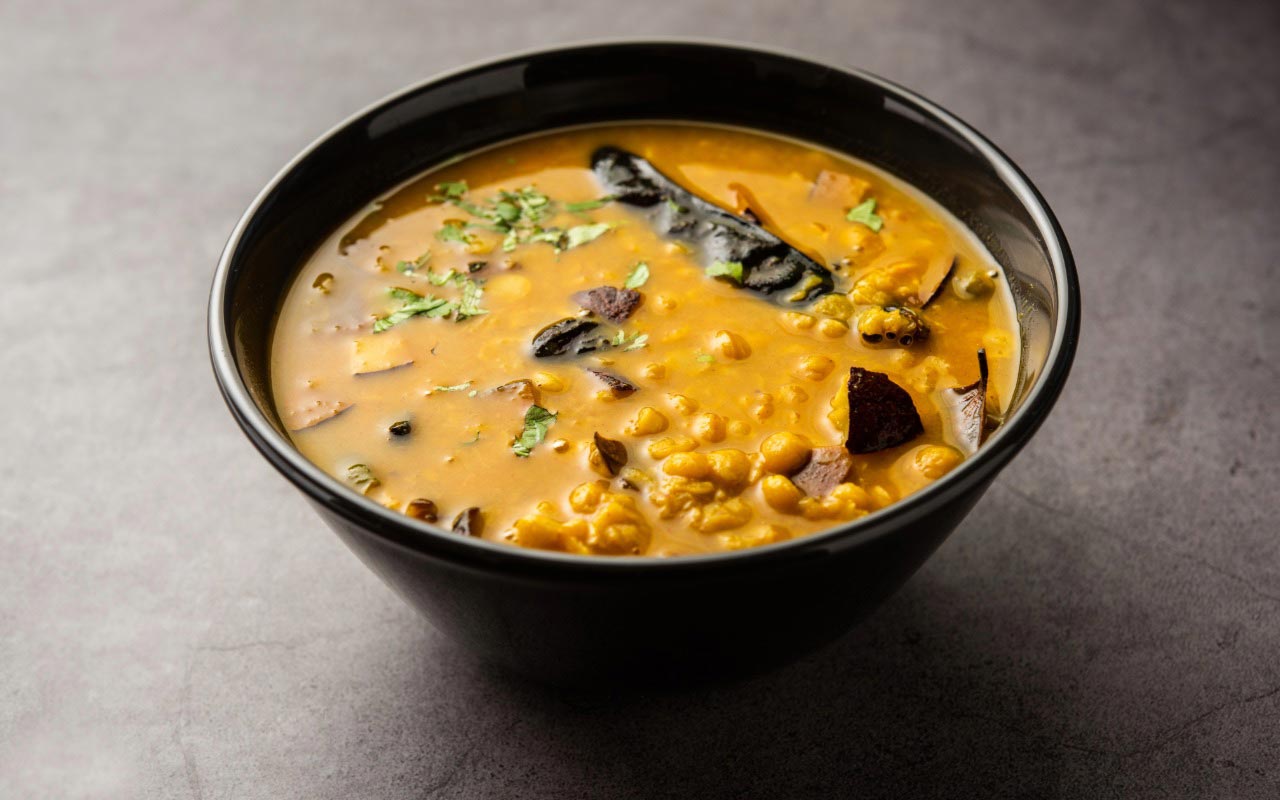
Chholar Dal Chana dal cooked with coconut, raisins, and spices like cinnamon and cardamom; thick, rich, and paired with luchi or kochuri.

1. Bhoger Khichur

Traditional-Bengali-Dishes-of-Durga-Puja-Bhoger-Khichuri-1

Who would have thought that the list of festive cuisine would start off with the most basic of all dishes- Kichdi. Nonetheless, it is one of the most loved and essential dishes that are prepared during Durga Puja. The kichdi or kichuri is served as ‘bhog’ or offering to the Goddess, and hence every home has its own special way of preparing it. Rice mixed with different dals, vegetables, spices and ghee, can any other dish beat this soulful, warm and mouthwatering experience?

2. Aloor Dum

Traditional-Bengali-Dishes-of-Durga-Puja-Aloor-Dum

Aloo Dum is another popular dish that is enjoyed all throughout the year. However, during Durga Puja, this rich and spicy potato curry is a comforting and lip-smacking entity, especially when combined with soft Luchis. Wrapped in simplicity and deliciousness, this dish elevates the potato to new heights. 

3. Luchi

Traditional-Bengali-Dishes-of-Durga-Puja-Luchi

Next up is Luchi, the perfect partner that goes hand in hand with the Aloo Dum. Fluffy and soft, Luchis are what people in other parts of the county call ‘puri.’ These fried round breads can also be eaten alongside any other vegetable or non-vegetarian curry. Or, as many Bengalis like it, the luchi can be munched on with a bit of sugar or just by itself. 

4. Labra Sabji

Labra-Sabji

A wholesome vegetable curry, Labra brings together a pot full of fresh seasonal veggies stewed and cooked in spices. Labra too is often offered to the Goddess with the kichdi. A divine combination, labra and kichudi can work quite a magic. 

5. Beguni

Beguni

Another simple, yet mind-blowingly delicious dish, Beguni is fried slices of eggplant or brinjal. Often cut into round pieces, the brinjal is fried with spices or sometimes coated with besan batter. Either way, it tastes yummy and is a great side dish with main courses, such as rice and dal. Crunchy, crispy and light, this snack is an essential at any pandal, adda or family gathering. 

6. Ilish Shorshe

Ilish-Shorshe

How can any Bengali festival be complete without a fish dish! The Ilish Shorshe, or the famous Hilsa fish, is cooked with mustard gravy, creating one of the most iconic Bengali dishes. For vegetarians, instead of fish, banana pith is used as the main ingredient. The spices, marination and way of preparation remain the same. Delicious, luscious, and dripping in flavour, this dish will leave you asking for more. 

7. Kosha Mangsho

Kosha-Mangsho

For non-vegetarians, the Kosha Mangsho is the go-to dish for a gluttonous and gourmandising experience. The mutton cooked on a low flame with spices oozes insane flavours and aromas. Simple to cook, but elaborate in taste, is a testimony that ‘good things come to those who wait.’ The longer the mutton is cooked, the more delicious and relishing the taste is. 

8. Mishti Pulao

Traditional-Bengali-Dishes-of-Durga-Puja-Mishti-Pulao

Bengalis cannot do without mishti. Frankly, the world needs a little sweetness, even in sour situations. Mishti Pulao may sound like the juxtaposition of opposite mouthfuls; however, it is the blending of differing sensations that makes this dish exceptional and unique. Made from rice, dry fruits and sugar, this sweet rice dish also has a generous quantity of spices. Sweet, yet savoury, there is a lot going on here, but there is no doubt that your palate and senses will thank you for trying it out. 

9. Sandesh

Sandesh

Last but not least, the quintessential Sandesh makes it to the list of traditional dishes for Durga Puja. And why not! Sandesh is the pride of Bengalis and a distinct dish that is almost like a postcard recognition of the culture and its people. Classic and elegant, this sweet dish is the all-time and any-time favourite of not Bengalis, but people across the world. Made from chenna (paneer), it is nutritious and highly delicious. In different shapes, sizes and colours, the Sandesh will win you over for sure. 

10.Cholar Dal

Cholar-Dal

Chholar Dal is a festive Bengali delicacy prepared with chana dal (Bengal gram lentils), simmered until soft and flavored with a tempering of ghee, whole spices, and sometimes a hint of sugar for a mild sweetness. What makes it unique is the addition of grated coconut, raisins, and aromatic spices like cinnamon, cardamom, and bay leaf, which give the dish its rich and celebratory flavor.

During Durga Puja, Chholar Dal is almost always paired with luchi (deep-fried bread) or kochuri, making it a signature item in bhog as well as festive feasts. The dal is thicker and more indulgent compared to everyday lentil dishes, embodying the warmth and abundance of the festival.

Significance of Traditional Foods in Durga Puja

Significance-of-Traditional-Foods-in-Durga-Puja

Traditional dishes are an integral part of the festivities of Durga Puja. The homecoming of Maa Durga is not celebrated with exotic and upscale dishes. But with soul-stirring and gratifying food. Wholesome and healthful, these dishes are made from local and seasonal ingredients, highlighting the spices, fragrance and flavours of the community and place. There is no fanfare or elaborate showcasing of culinary standards. On the other hand, it is the simplistic elegance, grace and connection that these traditional dishes make with each other and with those who consume them, that makes it all so special. 

Either it is the bhog or prasad to the Goddess or the clatter and clamour of a table full of laughter and stories. Whether it is the warmth of a plate amongst friends while pandal preparations, or the quick bite of smacking street foods during pandal hopping. Dishes and traditional foods are hence more than just fuel for the seamless enjoyment of the festival. It is an essential and one of the most loved aspects of a celebration that honours the Goddess, while spreading bliss and happiness.