Through Her Eyes’: AstaGuru’s Special Auction on Women Artists Opens Sept 29

0

AstaGuru-Special-Auction-on-Women-Artists-01

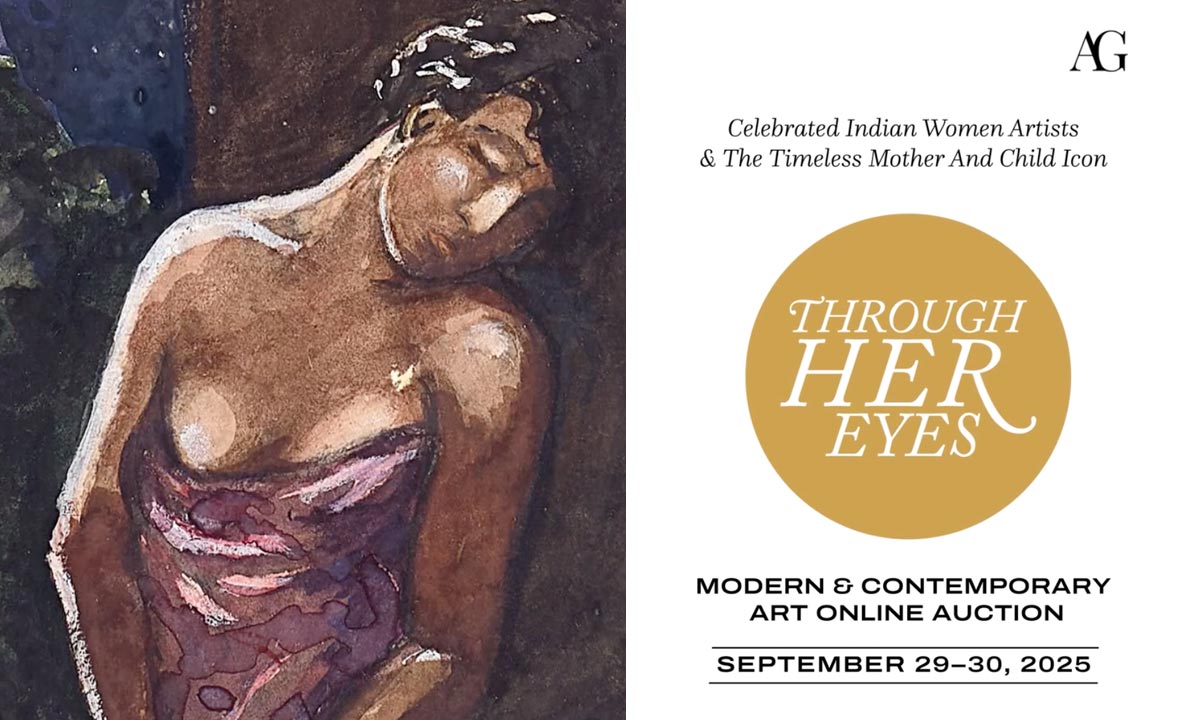
AstaGuru is set to host a special auction, dedicated to celebrating the vision and creativity of women artists titled – Through Her Eyes, on September 29–30, 2025. The catalogue features works by luminaries such as Amrita Sher-Gil, whose practice fused European modernism with the vibrancy of Indian life, Sukumari Devi, the first woman faculty member at Santiniketan, alongside Jayasri Burman, Anju Dodiya, Bhuri Bai, Mrinalini Mukherjee, and others.

A Celebration of Women Artists and the Mother–Child Bond
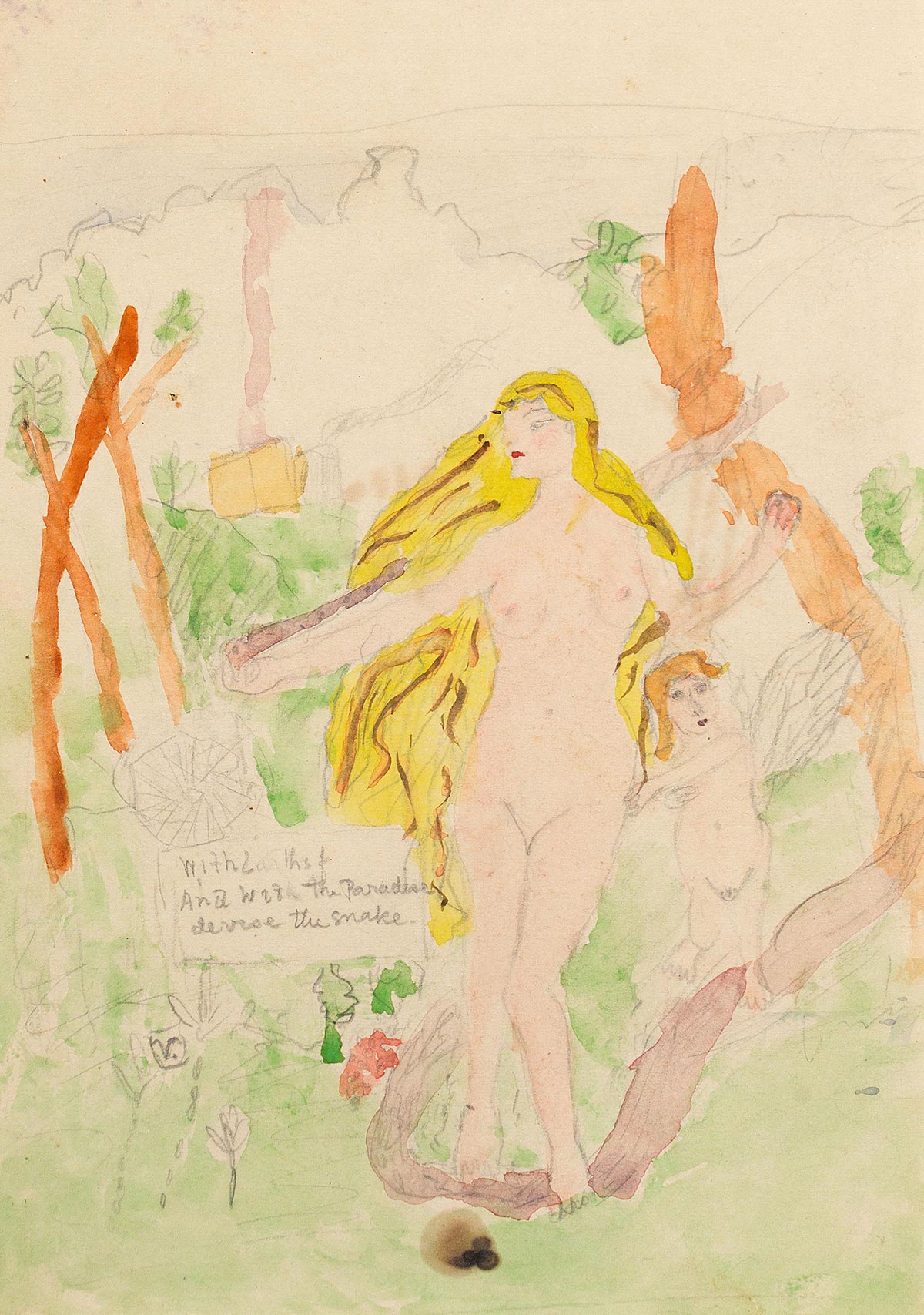
Lot-20-Amrita-Sher-Gil-Untitled-(With-Earth-&-The-Paradise)
Untitled (With Earth & The Paradise) Amrita Sher Gil

The sale brings together a rich spectrum of voices—from pioneering modernists to pathbreaking tribal talents—each offering unique perspectives. At its core, the auction is dedicated to women artists and anchored by the timeless theme of ‘Mother and Child,’ celebrating tenderness, resilience, and the universal bonds of care and intimacy.”

AstaGuru’s Vision Behind the Auction

Sunny Chandiramani, Director, Client Relations, AstaGuru Auction House, “With Through Her Eyes, we aim to honour the immense contributions of women artists whose work has often remained underrepresented in the larger narrative of Indian art. By centering the timeless theme of Mother and Child, this auction not only highlights their creative brilliance but also amplifies voices that bring forth deeply personal, honest, and powerful perspectives. It is both a celebration and a long-overdue recognition of their role in shaping our cultural landscape.”

Top Highlights From the Sale:
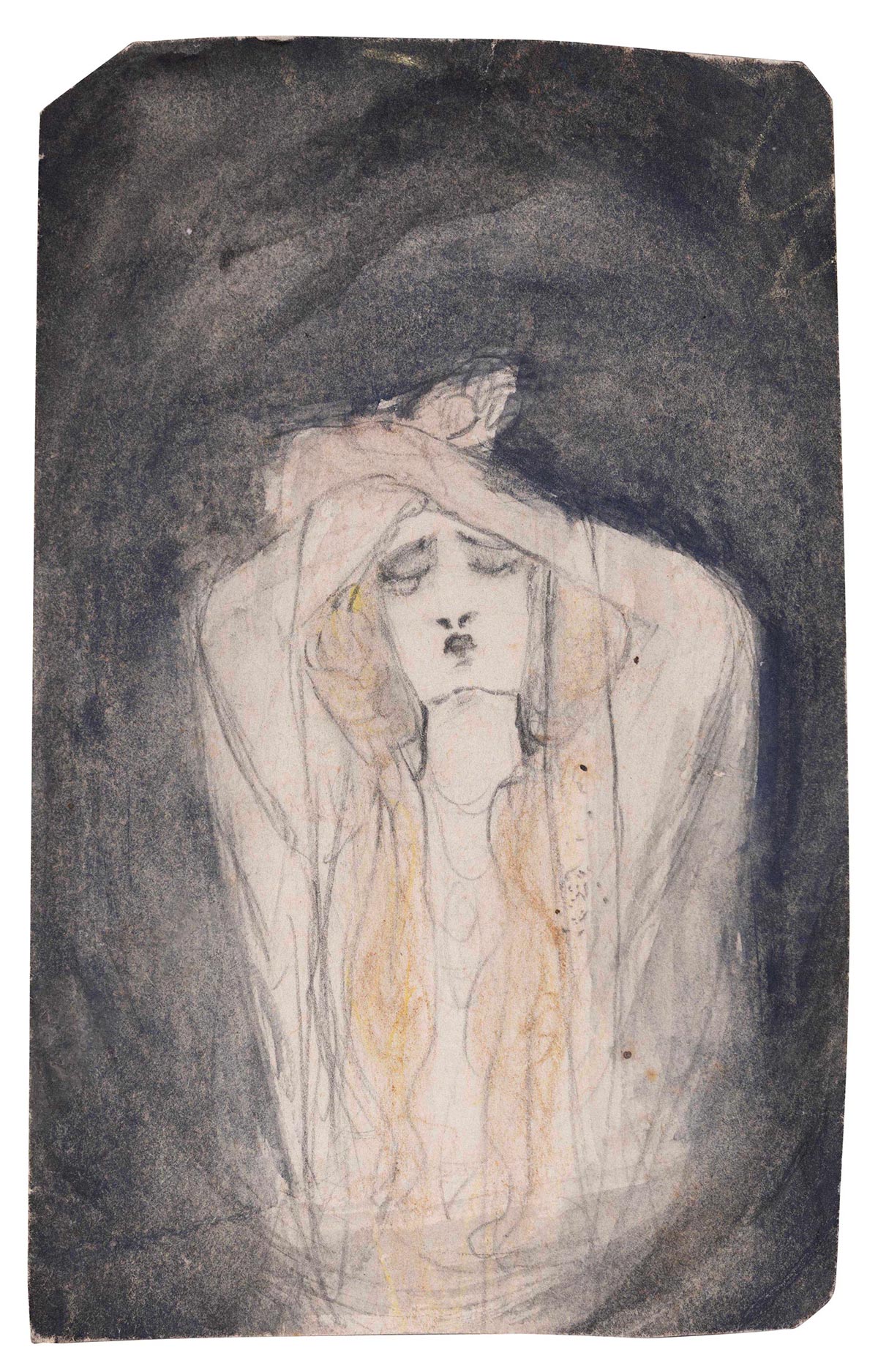
Lot-7-Amrita-Sher-Gil-Untitled-
Untitled – Amrita Sher Gil

Lot no. 20 titled With Earth and the Paradise by Amrita Sher Gil engages with one of the oldest and enduring mythological narratives- a biblical story of Adam, Eve and the serpent. She renders it with watercolour in a naive but expressive approach with themes of temptation and innocence lost, encountered through various mediums during her Hungarian childhood which provided fertile ground for her imagination. This lot is estimated at ₹ 30,00,000- 40,00,000 

The auction will also present a host of other watercolour works from her oeuvre. These works, originally belonging to the collection of her nephew and artist Vivan Sundaram are also her early experimentations and ease with the medium. Among these, lot no.7 is estimated at ₹ 10,00,000- 15,00,000. Lot nos. 26 and 57 are estimated at ₹ 15,00,000- 20,00,000 and lot nos. 2,14,32,42,and 50 are estimated to sell at INR 20,00,000- 30,00,000.
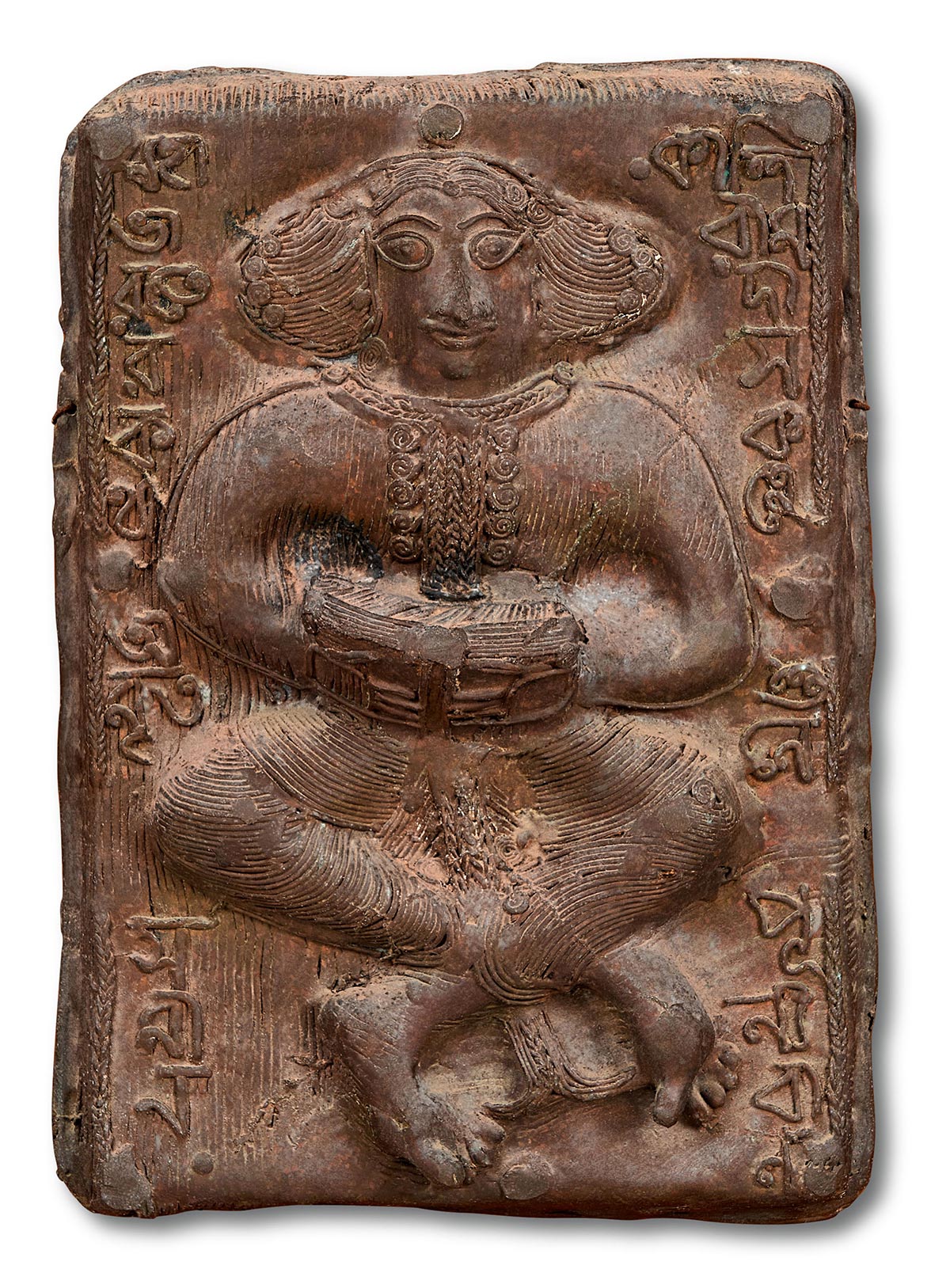
Lot-16-Meera-Mukherjee-Untitled-(Kashiram-Das-Reciting-Mahabharata)
Untitled (Kashiram Das Reciting Mahabharata) – Meera-Mukherjee

Featuring on the auction catalogue cover, lot no. 16, is a brilliant example of Meera Mukherjee’s initial experiments with bronze. The work depicts an indigenous relief sculpture sitting in a crossed legged position and is expected to sell at an estimate of ₹ 30,00,000- 40,00,000.
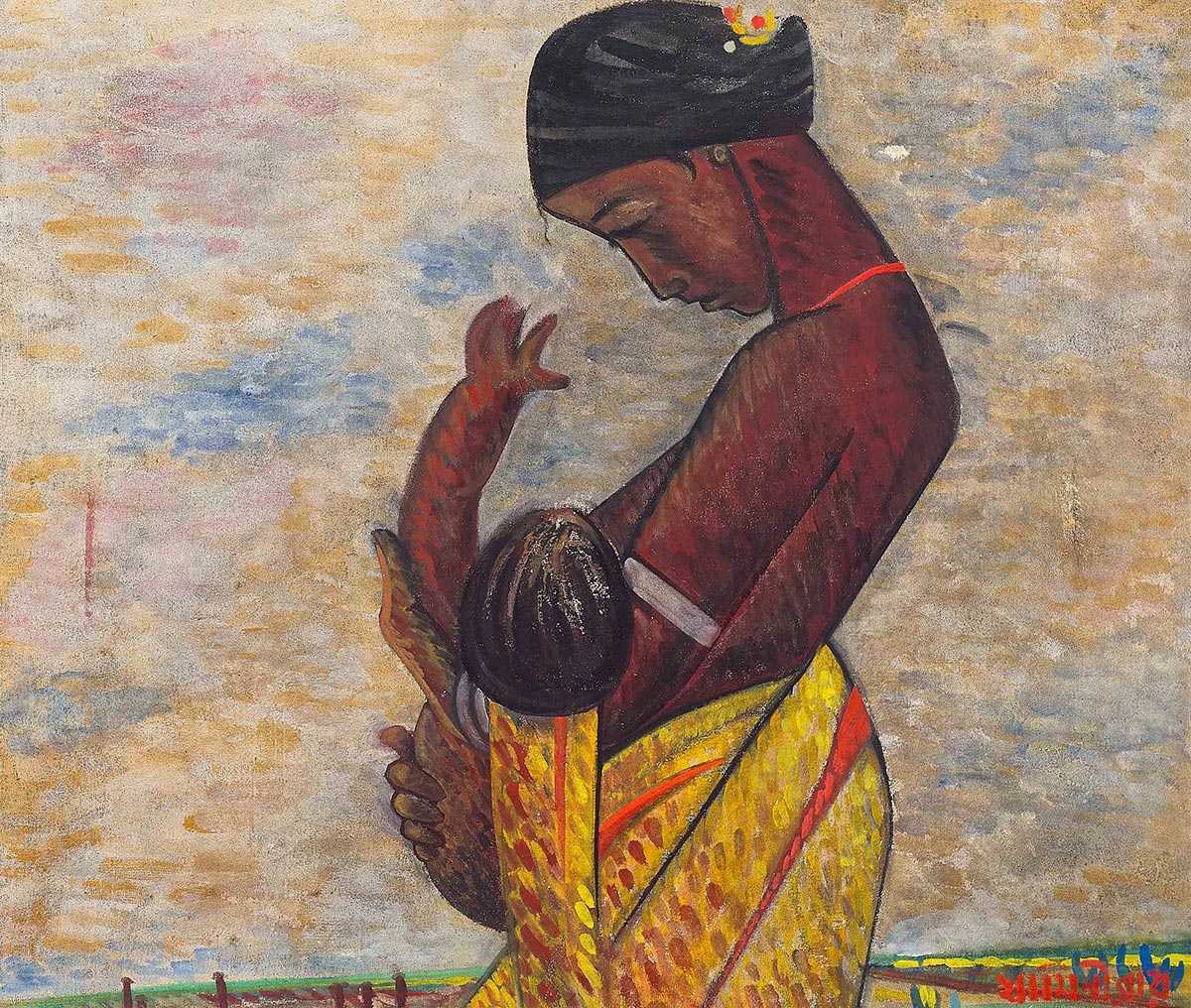
Lot-1-Jamini-Roy-Untitled-(Mother-And-Child)
Untitled (Mother-And-Child) – Jamini Roy

Two distinctive works on the theme of Mother and Child by artist Jamini Roy are also featured in the auction. Lot no. 1 is a rendition in his expressionist style and estimated to sell at ₹ 10,00,000 – 15,00,000. The other work by the artist lot no. 12 showcases the theme through his  indigenous figures inspired by the Kalighat school of painting. This work is expected to be acquired at ₹ 10,00,000 – 15,00,000.
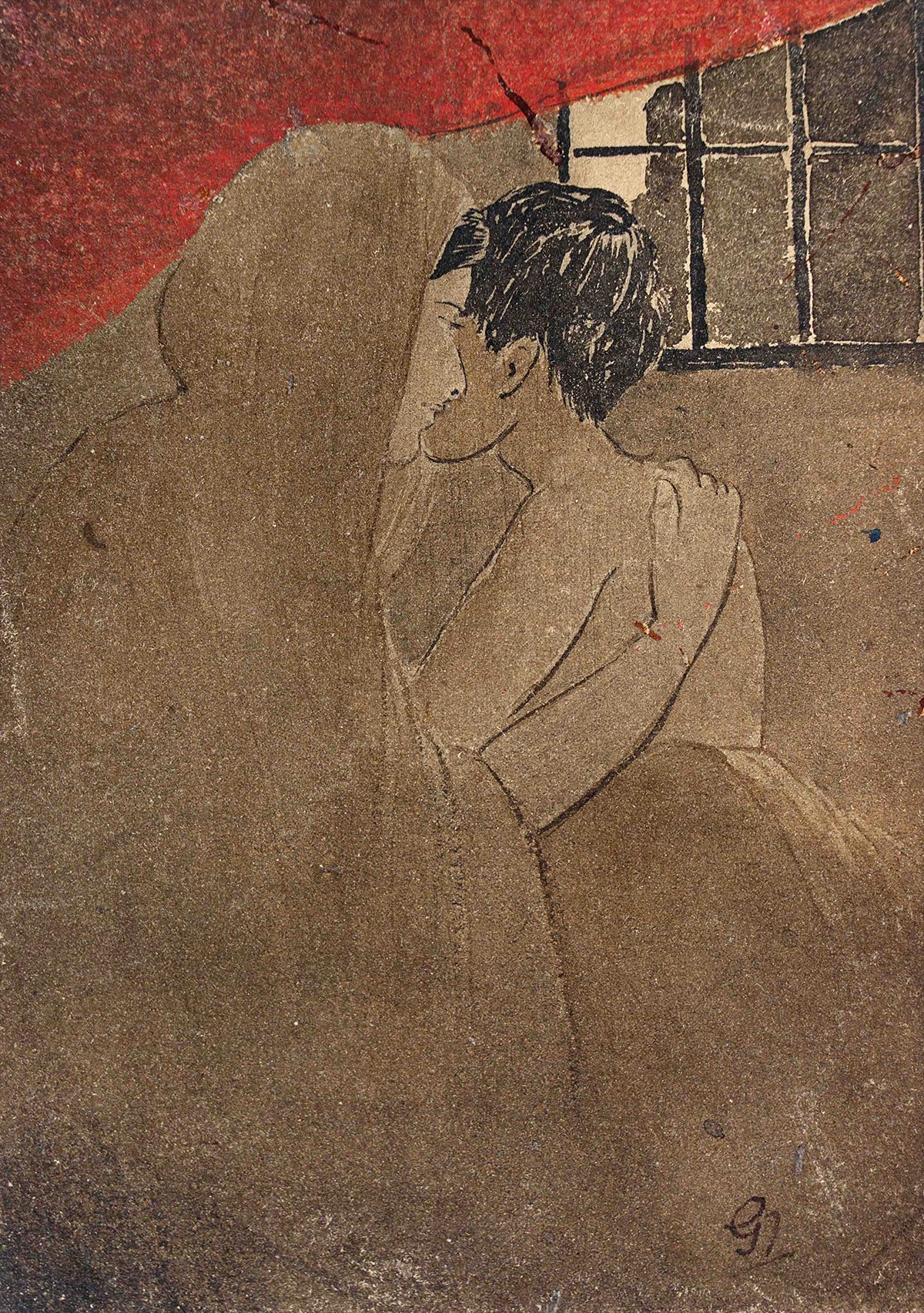
Lot-55-Gaganendranath-Tagore-Mother-&-Son
Mother & Son – Gaganendranath Tagore

In Lot no. 55 titled ‘Mother & Son,’ Bengal school legend Gaganendranath Tagore turns from caricature and satire to intimacy making it a pivotal work in his oeuvre. This lot is estimated to sell at ₹ 10,00,000- 15,00,000.
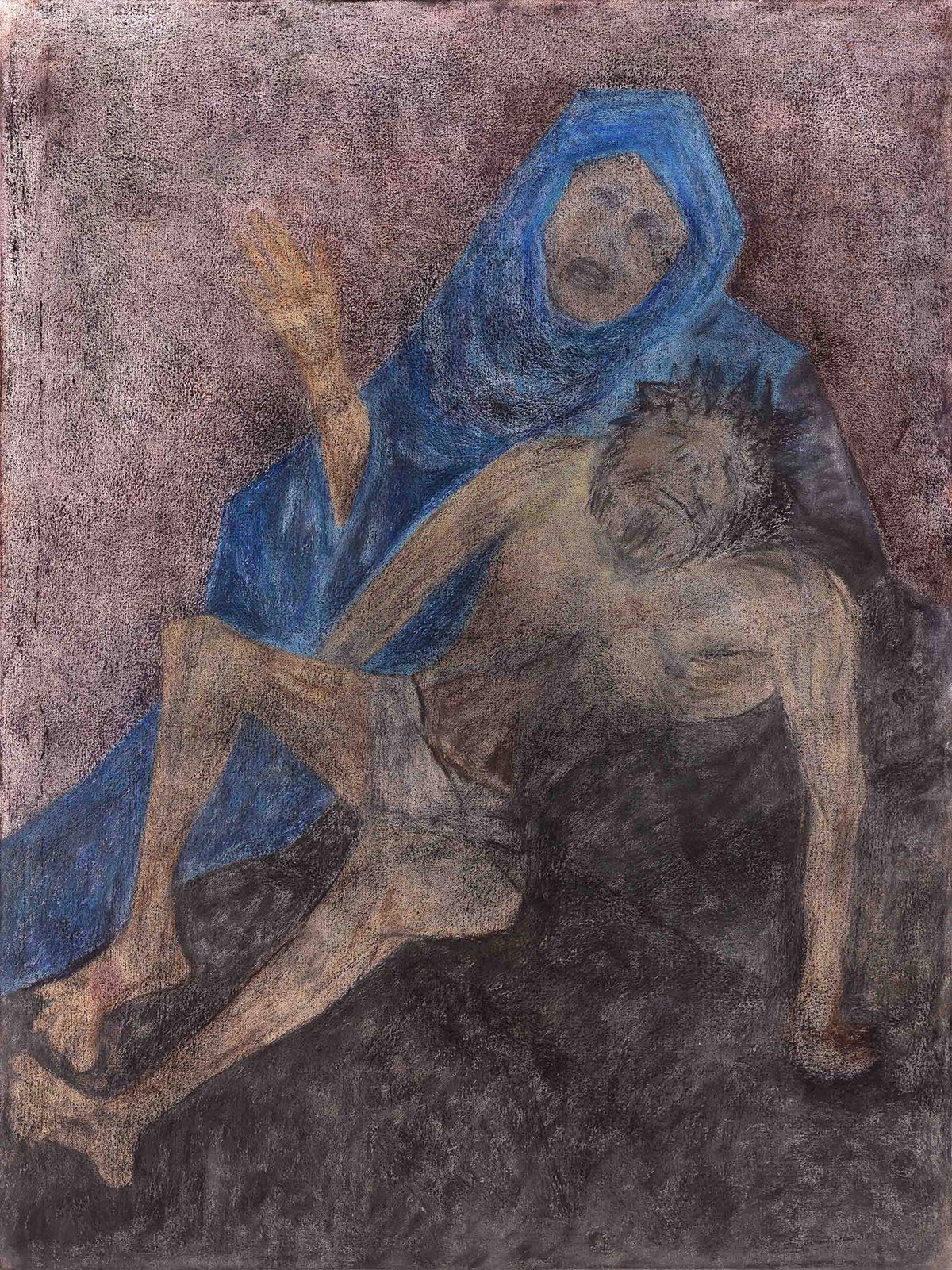
Lot-59-Krishen-Khanna-Untitled-(Pieta)
Untitled-(Pieta) – Krishen Khanna

Lot no. 59 is Krishen Khanna’s rendition of the allegorical image of the Pieta. He is known for his paintings on the theme of ‘Pieta’ as they relate to his concerns with the subject of dead and dying. His interest in  religious symbolism comes from childhood summer memories in England and a print of Da Vinci’s the Last Supper gifted to him by his father. This work is estimated at ₹ 30,00,000- 40,00,000.

Takeaway

Through Her Eyes by AstaGuru is more than an auction—it is a cultural milestone that amplifies the voices of women artists across generations. By bringing together diverse practices under the unifying theme of Mother and Child, the sale underscores tenderness, resilience, and creativity as timeless threads in Indian art. As these works find new homes, the auction also reaffirms the importance of recognizing women’s contributions to shaping India’s artistic heritage.

Botanix Resorts Launches India’s First Pet & Infant-Friendly Diwali Retreat

0

Botanix Resorts Launches India’s First Pet & Infant-Friendly Diwali Retreat-01

Diwali is often called the “festival of lights,” with the customs consisting of gatherings, sweets, and fireworks; however, as sustainability becomes an important part of the discussion, many families are considering how to celebrate the special holiday in a way that promotes joy. With this forward-thinking perspective, Botanix Resorts Pvt Ltd has created India’s first eco-friendly Diwali retreat, suitable for both pets and children. The retreat, running from 17th – 20th October 2025, connects the latest trend of sustainability with traditions, wellness, and inclusivity: families enjoying Diwali together while leaving behind noise, pollution, and anxiety-inducing fireworks. The retreat will be celebrated at all Botanix locations – Botanix Nature Resort in Damdama, Devsha Resort by Botanix in Jim Corbett, and the recently launched Shivalaya Resort by Botanix in Nainital, providing a commitment to responsible festivities.

Transforming the Diwali Experience

For years, the public and government has been talking about the ill-effects of fireworks, not only on the environment but also on health. However, the efforts at minimising the use of fireworks has been in vain because of the cultural and traditional tapestry of bursting firecrackers on Diwali. Diwali celebrations are seen as incomplete without firecrackers. We fail to understand that the firecrackers are harming our loving pets and infants too.

Atul Vashisth, the Managing Director of Botanix Resorts, and a dog owner himself, summed it up perfectly,“I am a Pet owner, therefore I understand how a pet feels during this festival. Each activity is designed to blend tradition with mindfulness, ensuring celebrations remain lively yet gentle on the senses. The greenery and open spaces at our resorts become ideal for them to stay and enjoy, ensuring that every family member, from the youngest child to the most playful pet, can share in the festivities.” These retreats do not simply provide a solution for the noise pollution; it goes way beyond that.

Guests do not take the path of “celebrating  for themselves”, rather, embraces the path of a thoughtful, authentic involvement in activities that capture the much-loved traditions of the festival such as organic candle-making courses, diya painting, arranging flowers into rangolis, regional food tastings, and chill-out areas for dogs to relax with treats and games.

Celebration Locations

Each property owned by Botanix provides something unique adding an ecological and cultural flavor to this retreat, allowing families the option to be immersed in nature and culture. Across these properties, we invite guests to have a mindful celebration while being closely tied to the environment that they are celebrating in. From our serene settings on the water, to the starry skies above the forests of Corbett, the retreats reframe Diwali to be a festival of harmony with themselves, each other, and the planet.

Resort Location Highlights
Botanix Nature Resort Damdama Lake, Gurugram Botanical gardens, lakeside serenity, sprawling family lawns
Devsha Resort by Botanix Jim Corbett, Uttarakhand Wilderness trails, wildlife-inspired design, canopy dining
Shivalaya Resort by Botanix Nainital Himalayan ambience, mountain cottages, lakeside meditations

Why Noise-Free Diwali is Important

  • Firecrackers are a way of life in Indian celebrations and fast becoming a way of life across a large number of cultures, however, the unintended consequences of firecrackers are deeply troubling.
  • Noisy explosions can scare infants, disturb their sleep-time routines and exacerbate symptoms of sensitivity to noise.
  • Pets can sometimes display symptoms of anxiety such as trembling, hiding, or the loss of appetite, all in response to the noise.
  • Pollution that is already rising this time of year can escalate particulate pollution during Diwali and affect respiratory related illnesses in children and elders.
  • Repeated exposure to noise and smog, in fact, mutes the joy of celebration into stress and uncertainty. 

Botanix Resorts initiative tackles all the issues head on and removes cracker pollution entirely to allow families to enjoy a Diwali that celebrates lighting up homes and hearts without darkening the skies or compromising health.

Activities with a Purpose 

The focus of this initiative is about achieving a balance of cultural integrity and sustainable innovation. Traditional lamps and rangolis remain the cornerstones of the décor, although every interaction, from personal to communal, emphasizes sustainability and artistry. Parents can enjoy time spent in mindfulness and yoga, as their children listen to storytelling circles about Diwali-themed folklore. Meanwhile, pets enjoy their own play area supervised by caretaking staff. The gastronomical experiences reflect this ethos too. Organic, farm-to-table festive treats are made available ranging from sweets prepared over the stove in ghee to festive platters made with millets that honor local food differences. Guests acquire not only a taste of heritage, but they also share in education around sustainable food practices demonstrated through cooking lessons.

Inclusivity at the Core

Diversity at the core of the retreat creates a unique inclusivity blending infants, toddlers, pets, and adults into spaces of celebration together. For toddlers, the soft flicker of diyas is their introduction to one of India’s most beloved festival. For pets, a quiet environment transforms distress into play and joy. For adults, sharing in the celebration marks a decision to become conscious participants; instead of indulging unsustainable practices, families engage in practices of togetherness and harmony. 

More than Celebration: A Conscious Decision

The Pet & Infant-Friendly Diwali Retreat is more than a seasonal offering; it ushers in the possibilities of a collective cultural movement. Botanix Resorts is setting an example by inviting families to be a part of celebrations that sets them apart from the rest of the world. This celebration  is not just a family or individual celebration but a celebration for the entire ecosystem and environment. The environment  will celebrate with you. Guests leave not only with memories of this fun-blasting celebration but also with an extensive knowledge and awareness of sustainability. You definitely wouldn’t want to lose a chance of being a part of this sustainable journey.

Botanix invites families to envision Diwali traditions differently. This time, it won’t be your regular Diwali celebrations with crackers; this is not going to be your choice between heritage and tradition, and modern awareness, rather, a way for you to embrace both. The success of this retreat, in turn, will open the doorway to the tradition of mindful and eco-friendly celebrations for generations to come.

About Botanix Resorts

Botanix Resorts Pvt Ltd specializes in creating botanical-themed spaces that promote wellness, culture, and sustainability. Through resorts, retreats, and botanical residences, Botanix aims beyond tourism and infuses its projects with ecological literacy and mindfulness. Botanix Residences, a collective of villa communities centered around biophilic design, carry the resort’s eco-responsible philosophy into everyday life.

By envisioning India’s very first Pet & Infant-Friendly Diwali Retreat, Botanix Resorts does more than rethink a holiday. It reimagines festive itself: silence instead of noise, fresh air instead of smoke, and unity instead of division. When families come together amongst the peace of Damdama, Corbett, and Nainital this October, families will be celebrating Diwali.

Bihar Showcases 40 Folk Art Treasures at PM Mementos e-Auction 2025

0

Bihar-Showcases-40-Folk-Art-Treasures-at-PM-Mementos-e-Auction-2025-0A

Bihar’s colorful folk art traditions are front and center at the 7th edition of the Prime Minister’s Mementos e-Auction, allowing art enthusiasts and collectors to possess symbolic objects of India’s heritage. The state has contributed 40 works of art, including colorful Madhubani paintings and rare pieces of Sikki art, which are now available for bidding. 

The Ministry of Culture, through the National Gallery of Modern Art (NGMA), Delhi, organizes the annual e-auction. Since 2019, it has become a national cultural event. 

Individuals are invited to place bids for select mementos received by Prime Minister Narendra Modi, with proceeds from the auction supporting the Namami Gange Project, which is a flagship program to rejuvenate the holy River Ganga.

Bihar’s Folk Art on Hunt

The auction showcases Bihar’s traditional art style that has been around for centuries. It offers items that are not only beautiful pieces of art, but also represent narratives, practices, and devotion. The headline pieces are:

1. Madhubani Painting of Lord Krishna and Gopi’s: 

This beautiful example of artwork is filled with lines and natural colors intersecting and dancing across the page to encapsulate the delightful bond between Krishna and the Gopis, with a unique portrayal of detail in the tradition of Mithila art. Since it is in the tradition of Mithila art, it represents both a displayed devotion to a spirit and artistic excellence, and bidders will rarely have an opportunity to acquire a piece of this art tradition, which is carried on from generations before.

2. A Mithila Painting of a Woman with a Lotus and a Pedestal: 

This painting represents devotion and reverence to a deity by depicting a woman holding a lotus flower beside the stone idol of a deity (Shiva Lingam). This piece represents the good in Mithila painting traditions of bold outlines and decorative patterns and motifs in relation to holy figures and religious symbols.

3. Sikki Art Frame of Lord Ram and Sita: 

Made of golden grass, the artwork showcases one of Bihar’s less-known art forms called Sikki work. It was presented to the Prime Minister by MLA Sanjay Saraogi of Darbhanga and embodies the beauty of their traditions, law or sorts, and calligraphy once again by depicting Lord Ram with his bow and Sita by his side.

Auction Details at a Glance

The table below offers a quick reference for Bihar’s major highlights in the PM Mementos e-Auction 2025:

Artworks Tradition Key Themes Significance
Madhubani Painting of Krishna and Gopis Madhubani (Mithila) Divine play, harmony, joy Mythological heritage tied to Krishna devotion
Mithila Painting of Woman with Lotus & Shiva Lingam Mithila Female devotion, Lord Shiva symbolism A living practice of faith and ritual
Sikki Art Frame of Lord Ram & Sita Sikki Divine couple, righteousness, beauty Traditional grass art from Bihar, extremely rare
Other Festival and Ritual Paintings Mithila and community folk art Oral narratives, seasonal rituals Preserves village traditions and memories

Connecting Creative Works to a National Identity

The mementos are presented online, as well as physically at NGMA, Delhi, where viewers can see the artworks before they bid. The auction continues until October 2, 2025.Incorporating Bihar’s folk traditions into this national platform, embodies the larger spirit of Azadi Ka Amrit Mahotsav, in which diversity is celebrated, while cultural cohesion is enhanced. Bidders are not only investing in aesthetic objects, but in supporting artisans, and preserving India’s non-material heritage.

More Than an Auction

Over the years, the PM Mementos Auction has been a vehicle for public engagement and cultural diplomacy, and every successful bid goes directly to support conservation of the River Ganga. Bihar’s participation this year only extends that mission as it represents culturally significant regional folk practices in relation to both history and contemporary practice.For both collectors and those interested in culture, the auction represents more than an opportunity to bid on objects, but the opportunity to purchase a piece of India’s heritage that will last forever and that they help preserve.

How to Plan a Kerala Itinerary That Fits Any Budget

0

How-to-Plan-a-Kerala-Itinerary-That-Fits-Any-Budget-01

When Kerala comes to your mind, what scenes unfold? It may be drifting continentally on a houseboat in Alleppey, having a relaxed cup of tea with sights of eternal tea gardens in Munnar, or setting foot on the lush sands of Kovalam. 

The best part? There is no need for a bulky wallet to make these dreams a reality. Reasonable planning can help you create a Kerala itinerary that fits your budget.

If you are counting every rupee while offsetting, it works with some neat comforts. Kerala offers lots of options. Whether you are exploring the opportunities for Kerala Tour Packages, this guide will help you plan more effectively and have a richer experience.

Let’s explore it:

Why Planning by Budget Matters in Kerala

Kerala has a magic in it; yet, it is somewhat puzzling to choose from: backwaters, hill stations, beaches, Ayurveda, and wildlife safaris. In such a plan, selecting the travel package that matches your budget becomes a total game-changer.

Tip: If you are relaxed with dates, think about traveling off-season, such as from June to September, when prices drop by almost half. Think of fewer crowds and lower costs for houseboat rentals.

You can also see the official Kerala Tourism website for seasonal updates, festivals, and government-approved travel information to support you in planning more savvily.

Decide Your Travel Style & Trip Length

The first thing you want to figure out is how much time you have. Kerala works beautifully for both quick breaks and more extended holidays.

  • 3–5 Days: Perfect if you want a taste. You can do Kochi + Munnar or Munnar + Alleppey for a classic mix of hills and backwaters.
  • 6–8 Days: Gives you more breathing room. Try Kochi, Munnar, Thekkady, Alleppey, and Kovalam. You’ll cover hills, wildlife, backwaters, and the beach.
  • 9+ Days: Slow travelers, this is your vibe. You can add Wayanad, Varkala, or even a wellness retreat for that extra touch.

When you browse Kerala tour packages, you will notice they are already designed in these time slots. So once you know your travel length, half the planning is done!

Match Your Budget Tier

Here’s where the real fun begins. Kerala doesn’t believe in one-size-fits-all. Depending on what you are willing to spend, you can still experience the highlights just in different ways.

  1. Budget Value Trips ₹15k–₹25k per person

If you are traveling light in your pocket:

  • Stay in budget hotels or cozy homestays run by locals.
  • Explore Fort Kochi on foot, ride shared jeeps to Munnar’s tea gardens, and try a day cruise in Alleppey instead of an overnight one.
  • Local eateries = authentic food without blowing your budget.

Vibe: Simple, authentic, no-frills but full of memories.

  1. Mid-Range Trips ₹25k–₹55k per person

It is the sweet spot for most travelers. Here’s what you can expect:

  • Private car transfers, in an Innova or similar vehicle with an English speaking driver.
  • Boutique hotels or 3-star/4-star hotels with better facilities.
  • Staying in a houseboat for a night in Alleppey or Kumarakom is, believe me, worth it.
  • Wildlife safari in Thekkady or an Ayurvedic massage session.

Vibe: Comfort and a taste of everything Kerala has to offer.

  1. Luxury Splurge Trips ₹55k+ per person

Ready to go all out? Kerala knows how to spoil you.

  • Private luxury houseboats with gourmet meals.
  • Five-star resorts in Munnar or Kovalam with infinity pools overlooking the hills or sea.
  • Customized experiences like yoga sessions, cooking classes, or private guided tours.
  • Chauffeured rides in premium vehicles with flexible timings.

The vibe: Unforgettable, enjoyable and Insta-worthy.

Book your houseboat nights in advance during peak season, from December to February. The best ones sell out quickly.

Use a Trusted Operator to Balance It All

You can certainly plan your trip yourself, but it’s a lot of work. That is where curated tour packages come in handy. Operators like Kerala tour packages have been around since 1999, allowing you to choose hotel categories, add or remove destinations, and tailor everything to your budget.

For deeper insights, check out this blog on how to plan an affordable yet luxurious Kerala holiday package

Plus, private transportation, noticeable inclusions, no hidden fuel costs, and round-the-clock assistance mean you spend less time stressing and more time chilling in God’s Own Country.

Where to Save and Where to Splurge

How-to-Plan-a-Kerala-Itinerary-That-Fits-Any-Budget-02

It is the golden rule of smart travel. Save on things that won’t significantly impact your experience, and splurge where it counts.

  • Save on: hotels in Kochi, as you will be spending most of your time sightseeing outside, local food joints, and shared transfers when possible.
  • Splurge On: Houseboat nights, Ayurvedic spa treatments, and wildlife safaris. These are experiences that define a trip to Kerala.

Quick Money Checklist Before You Book

Before locking your itinerary, run through this:

  • Does the package include airport pickup and drop-off?
  • Are meals covered in the houseboat?
  • Are there any additional entry fees or safari permits?
  • What’s the cancellation policy?

This little checklist saves you from surprise expenses later.

Conclusion: Kerala Is For Every Traveler

Kerala never asks how heavy one’s budget is. It is magical serving you with an atmosphere where even sipping coconut water at a roadside stall or clinking glasses on luxury houseboats could be special. So the question is: what is your type? Once you figure that out, the rest is comfortable. 

Ready to turn your plan trip into reality? Explore our extensive range of Kerala tour packages, and we can craft perfect itineraries that suit your budget, dates, and preferences, since every trip in Kerala carries stories from the road.

Durga Puja 2025: Dates, Puja Timings, Rituals, and How to Celebrate

0

Durga-Puja-2025

Each year during the Durga Puja the streets are filled with decorative pandals, the air is filled with the sound of dhak drums and hearts are filled with devotion. Durga Puja is not merely a festival, but it is a feeling. It has a combination of spirituality, community, art and bliss in a big cultural experience. And to look into the future, number one, all you need to know about Durga Puja 2025; dates, rituals and significant ways in which you can participate in the festivities.

Durga Puja is a celebration of the powerful, but also nurturing presence of the feminine power (Shakti), Goddess Durga. Hindu mythology states that she was born out of the collective force of the gods to overcome the buffalo demon Mahishasura which no other person could defeat.

The festival is a celebration of her triumph that represents the overcoming of evil, darkness and despair.

Although it is the most popularly observed in West Bengal, the festival is equally observed in Assam, Odisha, Tripura, Bihar, Jharkhand and some parts of northern and southern India. Pujas are also held by Indian communities worldwide making it a worldwide celebration of culture.

Durga Puja 2025 Dates and Calendar

Durga Puja comes in the Sharad Navratri season. Though Navratri is a 9 day festival, Durga Puja revolves around the last five days that are from Shashthi to Dashami. Here are the dates for 2025

Day Date Occasion
Mahalaya 21 September 2025 (Sunday) Marks the symbolic descent of Goddess Durga to earth. Also a day to honour ancestors through tarpan rituals.
Maha Shashthi 28 September 2025 (Sunday) Beginning of the main festivities. The goddess is ceremonially “welcomed” into the pandals.
Maha Saptami 29 September 2025 (Monday) The first full day of rituals. Includes the Nabapatrika snan or bathing of nine sacred plants.
Maha Ashtami 30 September 2025 (Tuesday) The most powerful day. It involves Kumari Puja and Sandhi Puja.
Maha Navami 1 October 2025 (Wednesday) Final day of worship, marked by grand aarti and bhog offerings.
Vijaya Dashami 2 October 2025 (Thursday) The idols are immersed (Visarjan) as devotees bid farewell to the goddess.

Durga Puja Rituals

Durga-Puja-2025

All Durga Puja rituals are richly symbolic so here are the rituals for the five days:

Mahalaya

Mahalaya prepares the tune a week prior to the beginning of a Puja. The believers get up early in the morning to hear the famous radio reading Mahishasura Mardini which tells about the creation of Durga. Individuals pay tribute to their ancestors at the banks of the river hoping they bless them. It is the day, in which it is believed that Durga starts her trip leaving her celestial abode to go to her maternal home on earth.

Maha Shashthi

The pandals have the idols of Durga and her children. Ceremonies associated with invoking the goddess, Bodhan (invoking), Amantran (invoking) and Adhivas (consecrating her presence), are carried out by priests. It is the day when she officially arrives, the festive lamps are turned on, the dhakis (traditional drummers) start playing their rhythms, and the city turns out to be alive.

Maha Saptami

The Nabapatrika snan is the best place to be in Saptami. During the morning nine kinds of plants (representing the nine shapes of Durga) are bound and dipped into a river or water body. They are then dressed like a bride and are put next to the idol of Durga as Kola Bou (banana bride). The significance of this ritual is that the goddess has introduced abundance and fertility of nature in our lives. This day is the day of the first offerings and pushpanjali (flower prayers).

Maha Ashtami

The most sacred day of the festival is Ashtami. Devotees also make pushpanjali in the morning and most of them fast.

This day is characterised by two rituals:

  • Kumari Puja: young girls are also  worshiped as they are considered to be living incarnations of the energy of Durga.
  • Sandhi Puja: This is performed at the very moment of the Ashtami-end and Navami-beginning (i.e. in the last 24 minutes of Ashtami and in the first 24 minutes of Navami). It celebrates the very instant when Durga killed Mahishasura. 108 lamps are lit, and the air is filled with electricity drumming, chanting, and conch shells.

During the evenings, there are well-known Dhunuchi Naach, a passionate dance with a burning incense earthen pot in the hands and huge aarti ceremonies.

Maha Navami

Navami commences with the grandest of all worship ceremonies which is the maha aarti. Another festival observed by devotees is the Ayudha Puja that is the worship of tools, books, and instruments which is an expression of respect to work and knowledge. Once the puja is complete the holy bhog (blessed food) is distributed to all. The performance of various cultural programs and shows goes into late in the night since this is the last full day of celebrations.

Vijaya Dashami

The festival of Dashami is emotional. Sindoor Khela is done by married women, they apply red sindoor to the deity and smear it on each other and hope to have a happy and long marriage.

The idols are soon removed in coloured processions followed by music, dancing and singing Aschho bochor abar hobe (she will come next year). The idols are then sunk in rivers or lakes, which represent the coming back of Durga to her divine home.

How to Celebrate Durga Puja in 2025

Durga-Puja-2025

The magic of Durga Puja does not require one to be in Kolkata. You can make the most of it anywhere, as follows:

At Home

  • Prepare a small avatar on which there is an image or idol of Durga.
  • Also, give the flowers, incense, fruits, and sweets every morning and evening.
  • Chant simple mantras or sing religious songs.
  • Ask friends or neighbours to come to the aarti and bhog.
  • Lighting up lamps during the dusk to bring the festive light.

In the Community

  • Go to the local pandals and observe the art and creativity of the idols and decor.
  • Attend cultural events like music, dancing or even volunteering.
  • Participate in the procession during Dashami in your local committee.

Conclusion 

Durga Puja is not a ritualistic thing, but it is a spiritual rejuvenation. It motivates us to invoke our inner goddess Durga, in order to rise to negativity, and to glorify what is good in life. It is a period when boundaries are erased, individuals of all walks of life come together, eat, dance alike and celebrate the joy of togetherness.

Now that the cries of Jai Maa Durga are resounding in the streets this year, it is time to celebrate in a controlled, inclusive and completely open-hearted manner. Durga Puja 2025 is not a calendar date rather a date of hope, power and unity.

FAQs on Durga Puja 2025

Question: When is Durga Puja 2025?

Answer: The principal festivals will be between 28 September to 2 October 2025, starting with Maha Shashthi and ending with Vijaya Dashami.

Question: On what day is it the most important?

Answer: Maha Ashtami on 30 September is considered the most powerful, especially the Sandhi Puja between Ashtami and Navami.

Question: What does Mahalaya signify?

Answer: Mahalaya on 21 September marks the descent of Goddess Durga to earth. It is also a day to honour ancestors through rituals and blessings.

Question: Are the times to perform puja everywhere the same?

Answer: No. The tithi (lunar dates) and muhurat differ by location. Always check your local panchang for accurate timings.

Question: What is Ayudha Puja?

Answer: Observed on Navami, Ayudha Puja honours tools, books, and instruments of daily life, symbolising the belief that work itself is worship.

Dance, Celebrate, Sparkle: Lights of Joy Dandiya Nights at Bhartiya Mall Bengaluru

0

Final Diwali KV_Standee_26 Aug 25

This is the season of joy, with the air filled with laughter and joyous vibes. The Bhartiya Mall of Bengaluru is also clutching up its belt to celebrate tradition, music, and togetherness on 30th September and 1st October 2025 with their Lights of Joy – Dandiya Night. So get ready to twirl around and groove to the trending Bollywood beats fused with the timeless rhythm of Dandiya.

A Feast for the Senses

Dandiya nights are one of the most exciting festive events around the country. It brings people, families, and even strangers together. Just picture this- hundreds of people dancing in dazzling ethnic attire, music in the air, and the dance floor shimmering with every step. Who would want to miss that? 

Take a break from your daily routines and take this moment to think of this sparkly invitation from the Bhartiya Mall of Bengaluru. Take this moment to flaunt your vibrant, sparkling lehenga sitting in your wardrobe, those beautiful kurtas and dazzling rustic jewellery. 

The organisers of the event have turned every stone in curating this magical experience for you. You don’t need to worry about the dandiya sticks or other things- you can grab your complimentary dandiya sticks on-site. You just need to come with glamorous, groovy vibes and dance the night away with your friends and family. 

More Than Just Dance: It’s Pure Joy

What sets the Lights of Joy Dandiya Nights apart? There are several Dandiya Nights around the city, state, and the country. In fact, you can host one yourself. But will it be as dazzling as this one? I bet it won’t be. Bhartiya Mall of Bengaluru promises an event with infectious energy that draws everyone in, regardless of age or dancing skills. This event is for everyone- kids, their parents, their grandparents, the youth, bachelors, just everyone!

Moments here go beyond the dance. This year, with Lights of Joy, we will take it to the next level and put the sparkle in every participant, allowing them to shine on stage.

You don’t have to be a dancer for this. We are all here just for the vibes. Don’t shy away if you don’t have anyone to go with! Dandiya Nights are never dull. You might come alone, but you will definitely leave with a wholesome group of friends, planning another Dandiya night. Dandiya nights are known to unite people in ways no other event can ever do. This isn’t a wild party- it’s more fun than that! 

Event at a Glance

Event at a Glance Details
Dates 30th September & 1st October 2025
Time 6:00 PM onwards
Venue Bhartiya Mall of Bengaluru, Bhartiya City, Yhanisandra Main Road, Bengaluru – 50064
Entry Fee Rs. 99 onwards
Booking Book My Show (all age groups)

If you want to know more about the event, don’t shy away from contacting the organisers. For more details, contact Megha Sarkar at 7003890894 or megha@kommune.in 

Don’t Miss Out- Celebrate Under the Lights!

Note the dates, gather your group, and prepare yourself for two unforgettable nights filled with music that will ignite the soul, a history that will spark alive through dance, and a city of Bengaluru. Lights of Joy – Dandiya Nights, at Bhartiya Mall, is the kind of electric, unforgettable fun that makes you sway your worries away. So get ready to take a break and step into this memorable experience. Grab those sticks, wear your festive best, and let the music take you away- everybody is invited to dance under the lights this Navratri in Bengaluru!

Dhoomimal Gallery to Spotlight 60 Emerging Artists at Ravi Jain Exhibition

0

Dhoomimal-Gallery-to-Spotlight-60-Emerging-Artists-at-Ravi-Jain-Exhibition-01

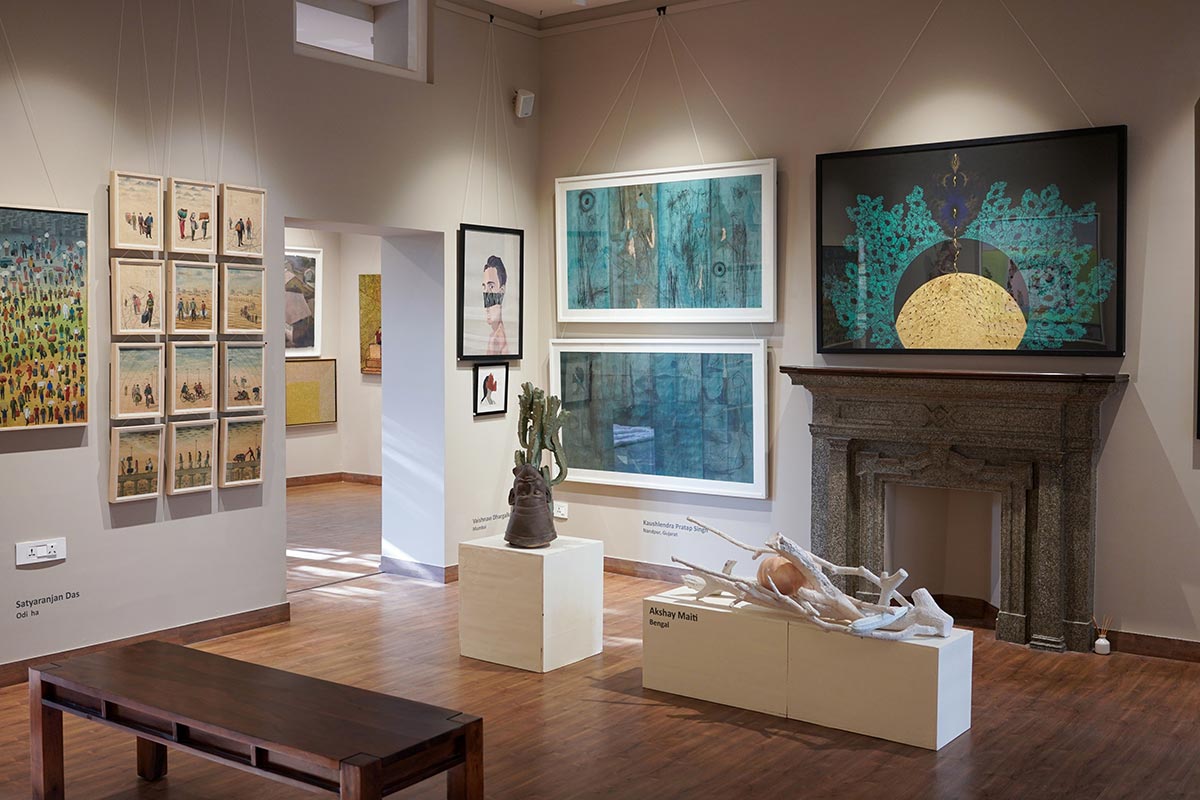
Dhoomimal Gallery, the oldest art gallery in India, is ready to be the center of creativity by announcing the 34th Annual Ravi Jain Memorial Foundation (RJMF) Exhibition and Awards 2025. The award festival, which will be held on September 29 and last until October 15, 2025. It will also be a lively exhibition of modern Indian art, showcasing the projects of 60 up-and-coming artists throughout the country.

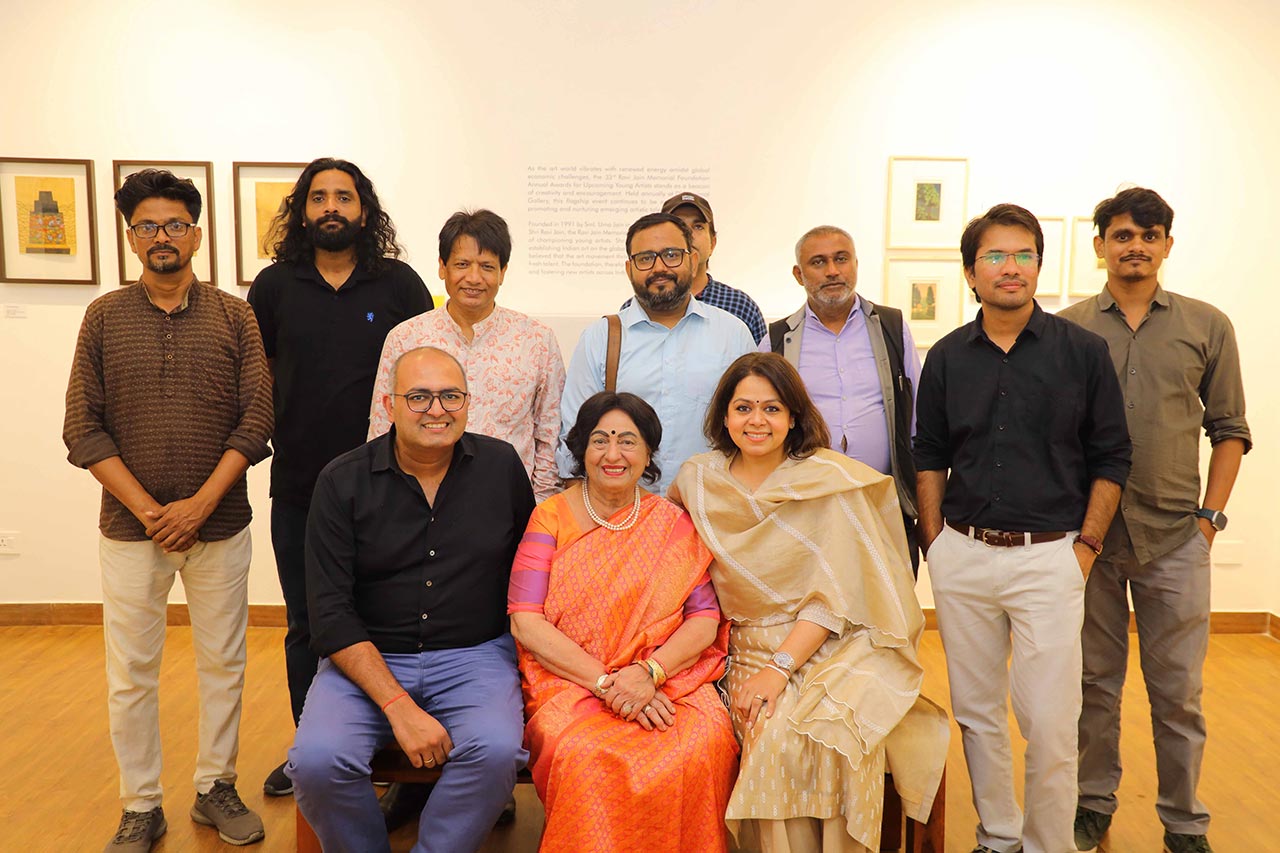
Founded in 1991 by Uma Jain, in the memory of her late husband, Ravi Jain (1936-2000). He was a progressive gallerist whose ideas transformed the art scene in New Delhi. The initiative has continued to maintain his legacy of giving the youth a platform to be heard. Presently the gallery continues to run this mission under the leadership of his son, Uday Jain, and the large vision of the future of Indian art.

Carrying the legacy 

Ravi Jain was not only an artist, he was an idealist who did not think of art as a commodity, but as an essential part of the culture that could create an impact on society. Upon stepping on board as Dhoomimal Gallery which had been established in 1936, he showcased the modern Indian art when there were hardly any at all. 

When Uma Jain started the Ravi Jain Memorial Foundation (RJMF) in 1991, the idea was to carry on this same tradition of not being afraid to experiment and to encourage young artists. The RJMF has been at the center of the stage in discovering and developing hundreds of young talents over the last 30 years most of whom have contributed to the course of Indian contemporary art.

About the 34th RJMF Exhibition

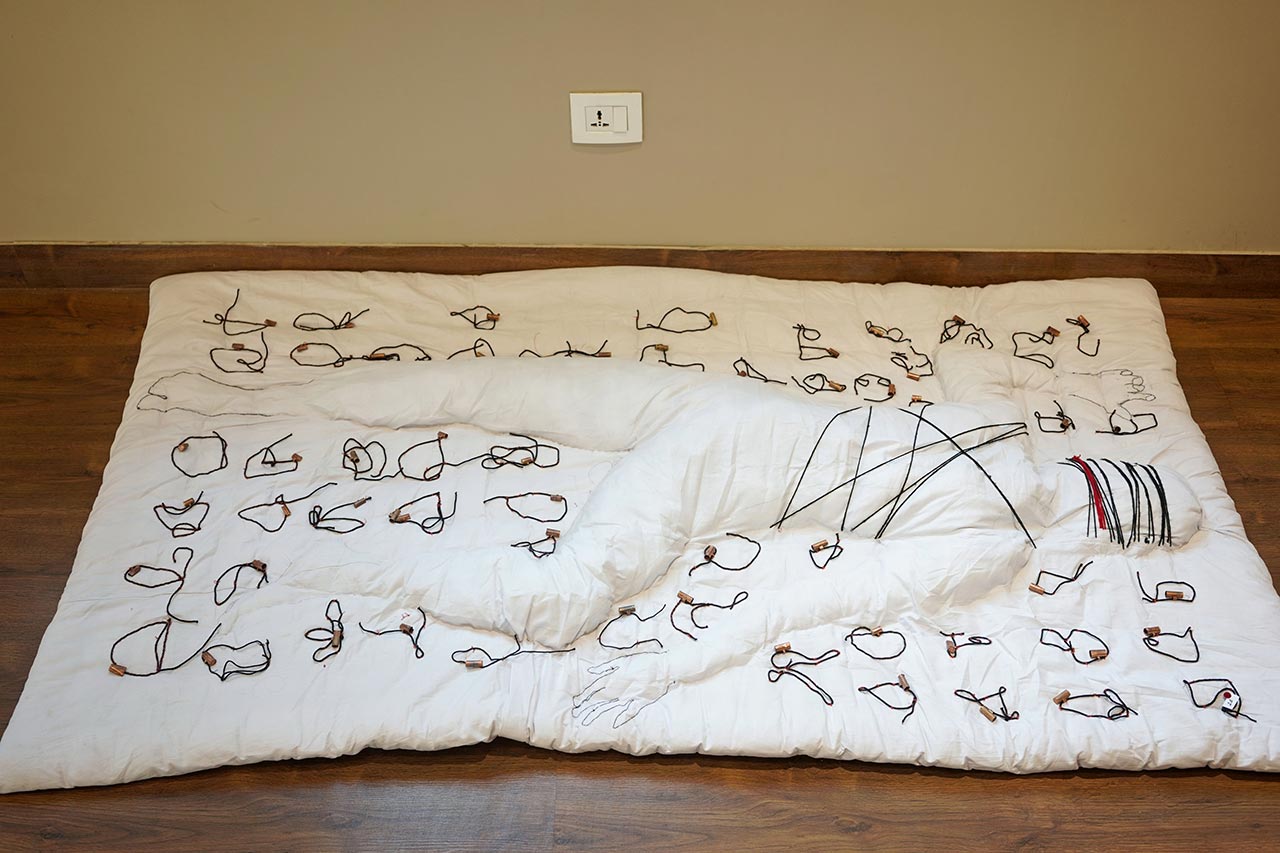
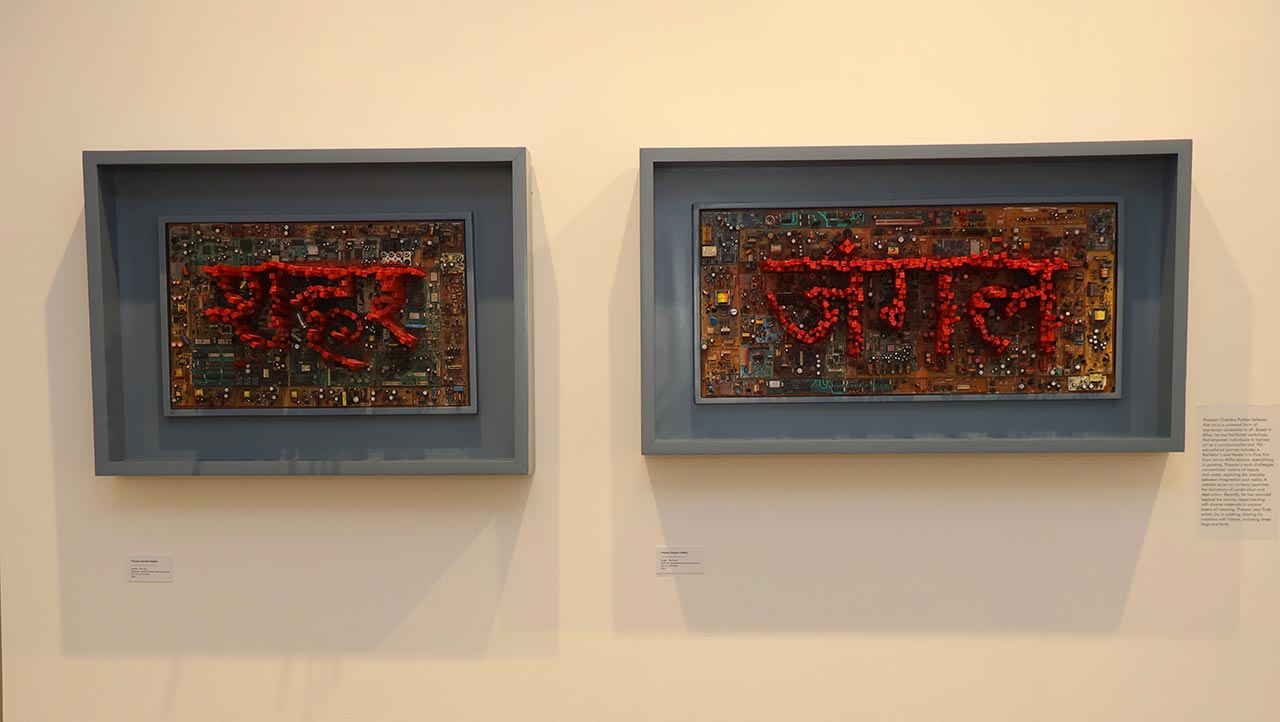
The RJMF 2025 version of the Exhibition represents this heritage with a new stream of innovativeness. Among the 600 submissions that have been received this year, 60 artistic personalities have been shortlisted to showcase more than 120 pieces which include paintings and sculptures, print making, digital art and video.

The Awards Night

RJMF-2024-awardees

One of the most noticeable parts of the event will be the Award Ceremony on October 14, 2025, during which four outstanding artists in the exhibiting group will receive the 34th Annual Ravi Jain Memorial Foundation Awards. Each winner will receive a cash award of ₹1,00,000 and further mentoring and networking with Dhoomimal Gallery.

About the Jury

The awardees of this year will be chosen by a panel of great jurors, including some of the most esteemed persons in the art industry:

  • Vibha Galhotra – Internationally renowned with her multidisciplinary practice based on both ecological and urban issues.
  • Rekha Rodwittiya – Famous artist, teacher and activist of feminist art and social art.
  • Anish Gawande – Author, curator and cultural commentator of his incisive writing in cultural policy and culture.
  • Arunkumar H.G. – One of the most famous artists who is known due to his experimental approach to materials and community-based projects.
  • Ina Puri – Renowned author, art curator, collector and biographer of contemporary Indian art.

Collectively, this jury symbolizes the diversity, energy and intellectuality of Indian contemporary art. Their participation makes sure that the awards are not only a technical masterpiece, but a conceptual, culturally relevant, and artistically brave one.

Experience for Visitors

Experience-for-Visitors

The 34th RJMF Exhibition is not merely a display but is a proposed experience that is expected to be enjoyed by the art enthusiasts, students, curators and the collectors. The exhibition format will stimulate the conversation between the various media and styles, between the classic methods rethought with the help of modern approach as well as the digital and video art works that are going to consider the pressing social issues. The audience will experience the following: 

  • Conceptual works that were thought-provoking in the response to the existing socio-political realities.
  • Bright figurative and abstract works with their technical mastery and emotionalism.
  • Complicated figures that examine the dimension of form, materialism, and cultural stories.
  • New media installations being experimental and pushing the visual narrative.

In the act of uniting such a broad range of practices under a single roof, the exhibition emphasizes pluralism and energy of Indian contemporary art in the modern day.

Exhibition Details 

Event  Details
Event Name 34th Annual Ravi Jain Memorial Foundation (RJMF) Exhibition & Awards 2025
Organised By Dhoomimal Gallery
Dates September 29 to October 15, 2025
Timings 11:00 AM to 7:00 PM (Closed on Sundays)
Venue Dhoomimal Gallery, G-42, Outer Circle, Connaught Place, New Delhi
Total Entries Received 600+ entries from across India
Artists Selected 60 emerging artists
Artworks Displayed 120+ works
Mediums Featured Paintings, printmaking, sculptures, digital art, video installations
Awards Ceremony October 14, 2025
Number of Awards 4 awards
Award Prize ₹1,00,000 each + mentorship and networking support
Jury Members Vibha Galhotra, Rekha Rodwittiya, Anish Gawande, Arunkumar H.G., Ina Puri

About the Dhoomimal Gallery

Dhoomimal Gallery is the oldest modern art gallery in India and was established in 1936, it is a pioneer in influencing the art scene in the country. Today, with the leadership of Uday Jain, the gallery still pursues the vision of promoting modern art and respects its rich history. It conducts regular focused exhibitions, art talks and educational programs which relate audiences to the most crucial voices in Indian art. At the heart of this vision is the annual RJMF Awards, which is one of the ways to pay back to the art community and guarantee the constant influx of new talent.

Why This Exhibition is Important 

Why-This-Exhibition-is-Important

In a more market-oriented and trendy art world, the RJMF Exhibition has continued to shine through its unrelenting focus on talent, experimentation, and mentorship. They are a reminder that art is not a matter of beauty or business, but a matter of culture, bravery and society.

  • To the young artists, this exhibition symbolizes:
  • One of the most renowned galleries in India validated him.
  • Recognitions in front of collectors, curators, critics, and media.
  • Mentoring and institutional support by senior practitioners.
  • Greater career building in arts.

To viewers, it is an opportunity to watch the future of Indian art being made real-time – to encounter new daring ideas, unearth some untarnished treasures, and a multiplicity of voices redefining modern Indian aesthetics.

A Tribute to an Ravi Jain 

As the 34th Annual Ravi Jain Memorial Foundation Exhibition and Awards 2025 is about to open its doors, it is a good tribute to the heritage of Ravi Jain, a man who had a strong belief in the power of art and was keen on developing new voices.

Even 20 years after his death, his ideas and vision keep filling the halls of Dhoomimal Gallery with the power, experimentation and hope of the future of Indian art. When the creations of 60 rising artists fill the gallery walls, new names will be added to the long list of RJMF awardees.

The Ultimate Taste of Nostalgia: Recreating Grandma’s Festival Recipes

0

Festivals are never complete without the aroma of sweets, frying in ghee, wafting through the house. For most of you, festival memories start with Grandma’s recipes—the ones that tasted like heaven whenever she used to cook them. Among her absolute favourites were two party snacks that were a regular at every celebration: shankarpali and Bombay mixture.

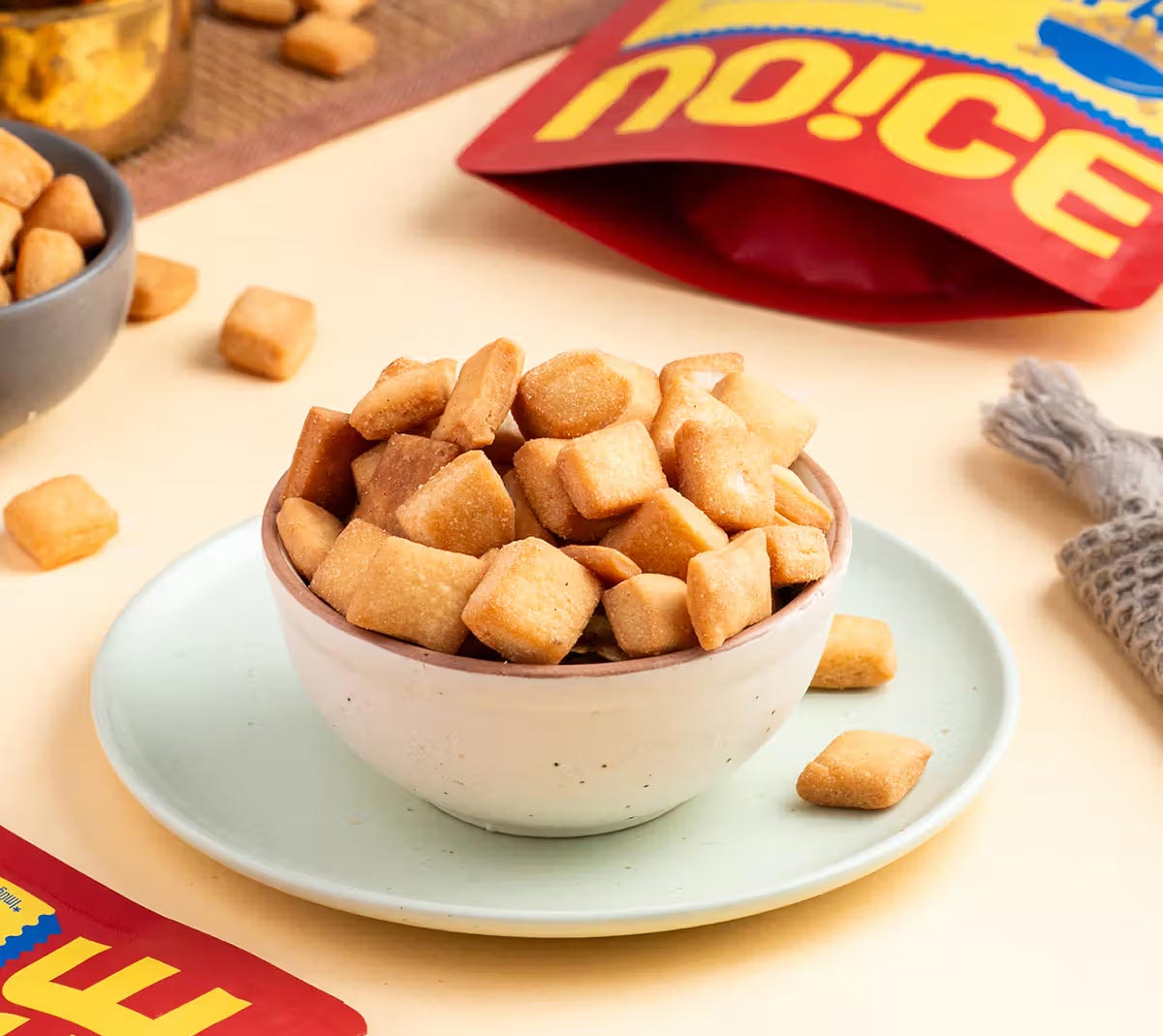
Shankarpali: Sweet, Simple, and Full of Love

Shankarpali--Sweet,-Simple,-and-Full-of-Love

No celebration was ever quite complete without Grandma hiding a jar of shankarpali in the cupboard. Those little golden triangles, crunchy outside and softly sweet within, never lasted more than a day. Someone would snatch a handful, another, and before long, the jar would be empty. Grandma always insisted that the dough had to be the right consistency—too stiff and they’d become hard, too soft and they’d soak up the oil. That was her secret for the perfect crunchiness.

As kids, we would gather around the kitchen, waiting for the first batch to come out of the wok, never able to resist but to “steal” some before they had a chance to cool off. Even today, that initial crunchy bite brings with it the memories of the beaming smiles of those holiday mornings.

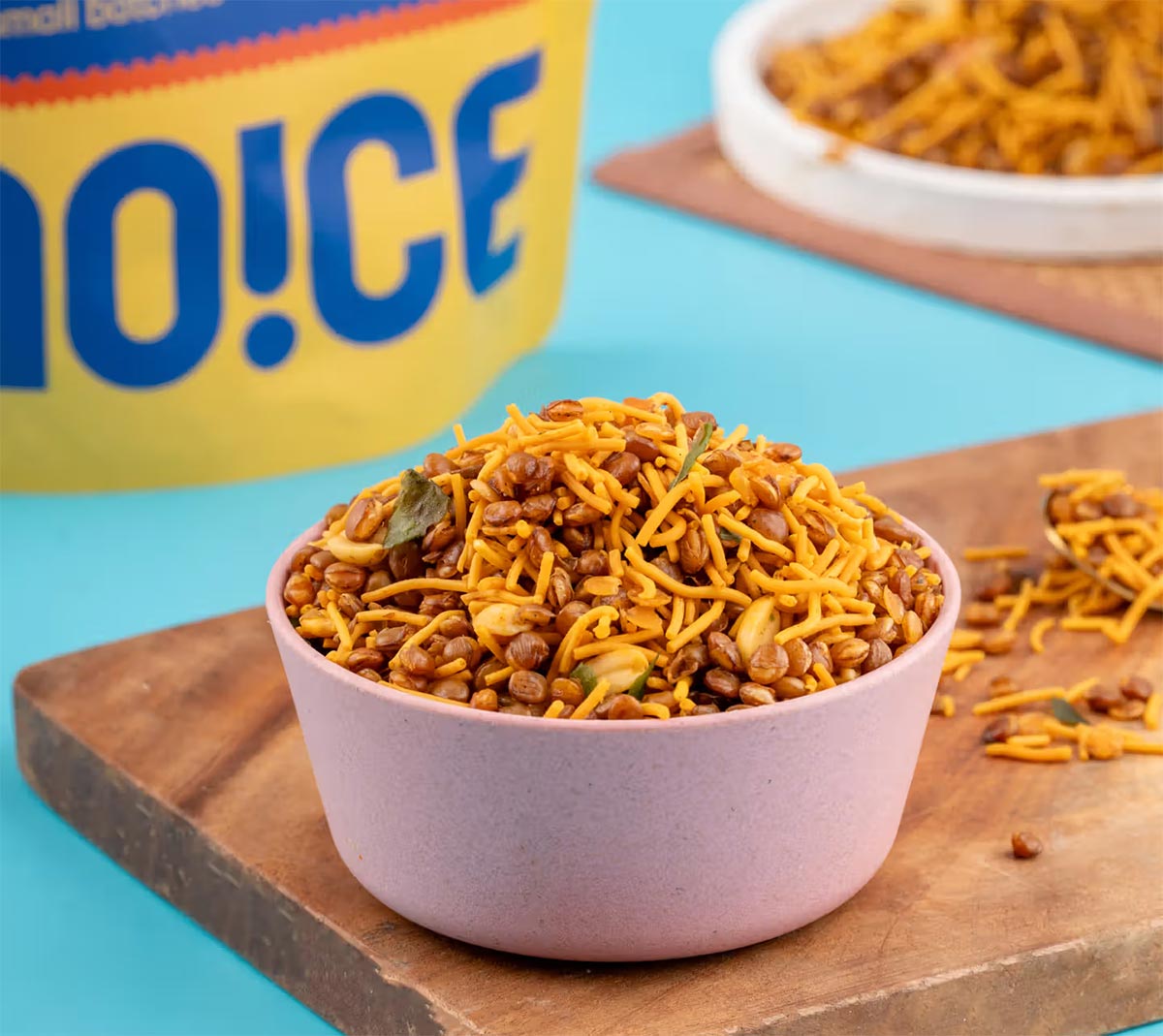
Bombay Mixture: Crunch in Every Handful

Bombay-Mixture-Crunch-in-Every-Handful

If Shankarpali was the delicate sweetness of the season, Bombay mixture was the ideal contrast. Spicy, tart, and textured, it was a snack that felt every bit festive. Fried gram flour noodles, poha, peanuts, and a combination of spices, each handful slightly different yet always familiar.

Grandma never used a measure when seasoning it—she used instinct, a pinch of this, a sprinkle of that. For some reason, it was always perfectly done. Great steel tins of Bombay mixture would be circulated around while everyone sat gossiping, hearing about family business. It was never a snack; it was part of the occasion itself.

More Than Just Food

What distinguished these recipes was not merely their taste but the manner in which they brought people together. Rolling shankarpali dough turned into a family affair, with kids proudly cutting unbalanced shapes while Grandma grinned over their handiwork. Preparing bowls of Bombay mixture was an excuse for everyone to linger at the table longer, swapping gossip among bites. These snacks weren’t accompaniments; they were the pulse of celebratory gatherings.

Bringing the Past into the Present

Of course, not all houses have time to make these recipes from scratch anymore. Life moves quicker, kitchens are more hectic, and yet the yearning for these flavours remains. The beauty is that such festive favourites remain within reach. Thanks to Swiggy Instamart, your favourite shankarpali jars and Bombay mixture packets can be home-delivered in an instant to be portioned out just like they used to be.

Festival food is not just a list of recipes; it’s memory, warmth, and tradition in a bite. Shankarpali and Bombay mixture can be simple, yet combined, they embody decades of tales and celebrations. Prepared lovingly at home or ordered conveniently through Swiggy Instamart, they still keep festive tables set, reminding us that some traditions are too precious to be let go.

In-Between Dreams: Solo Exhibition by Pema ‘Tintin’ Tshering in New Delhi

0

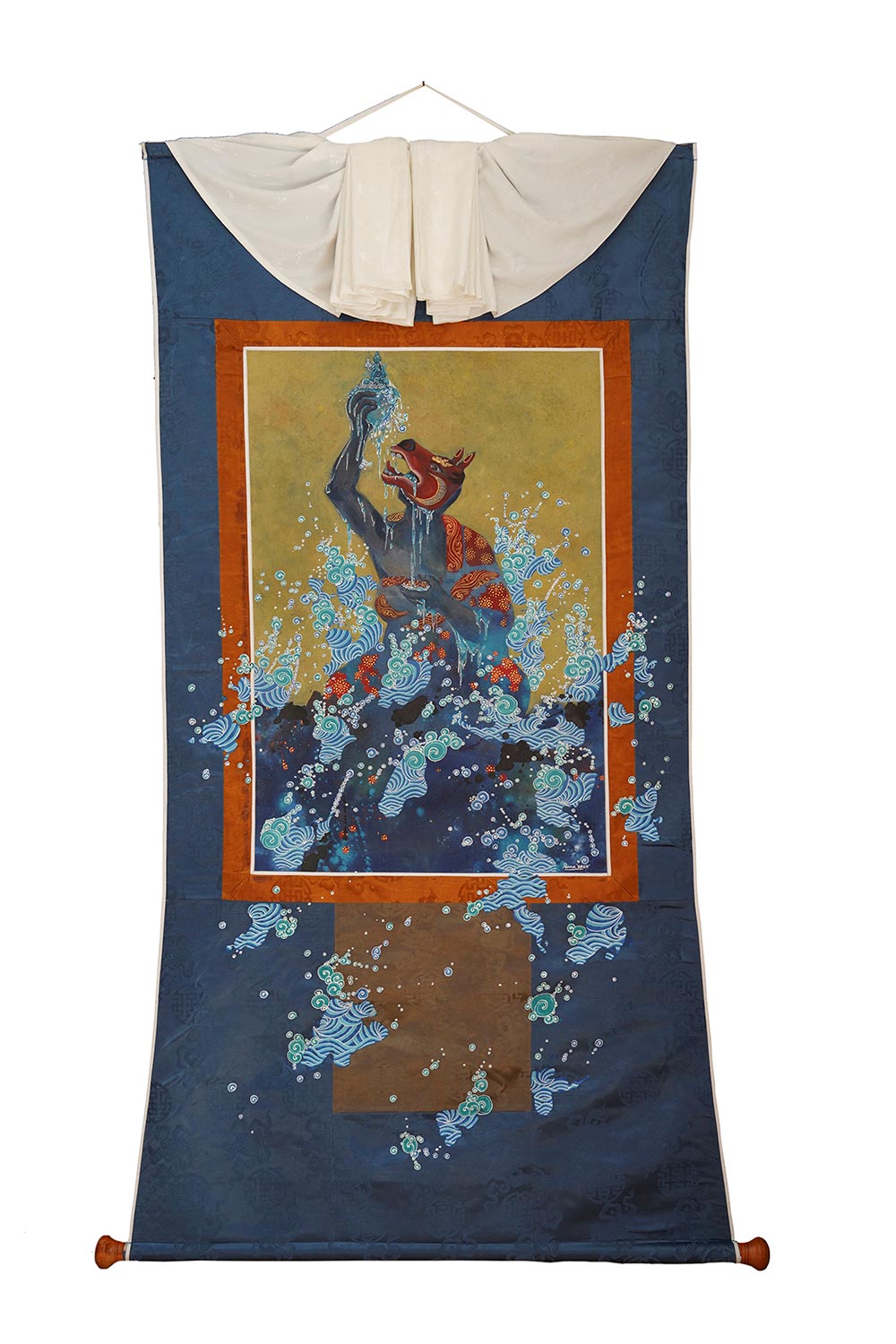
Bardo-Transit,-Acrylic-on-Canvas,4-x-4-ft

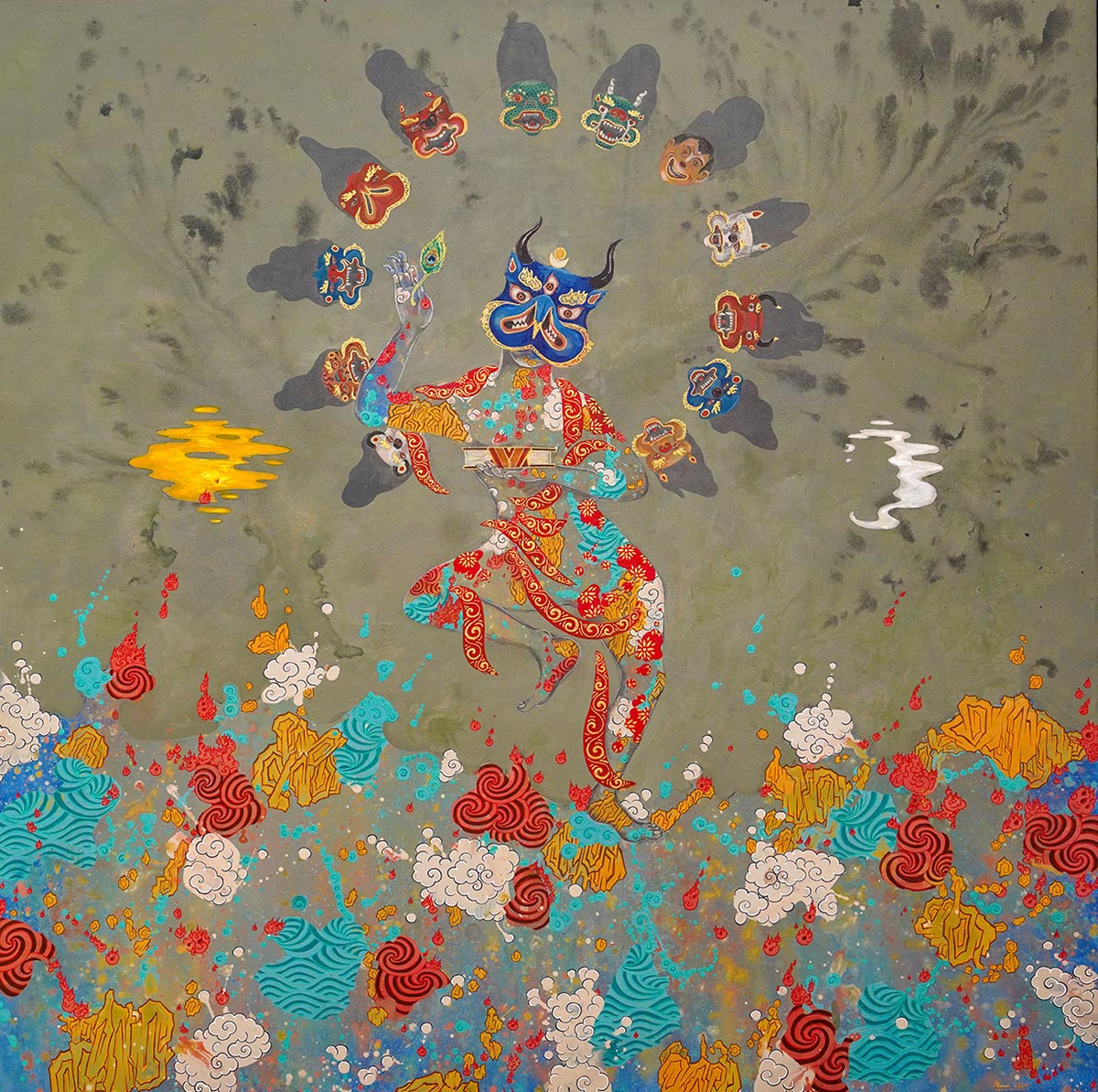
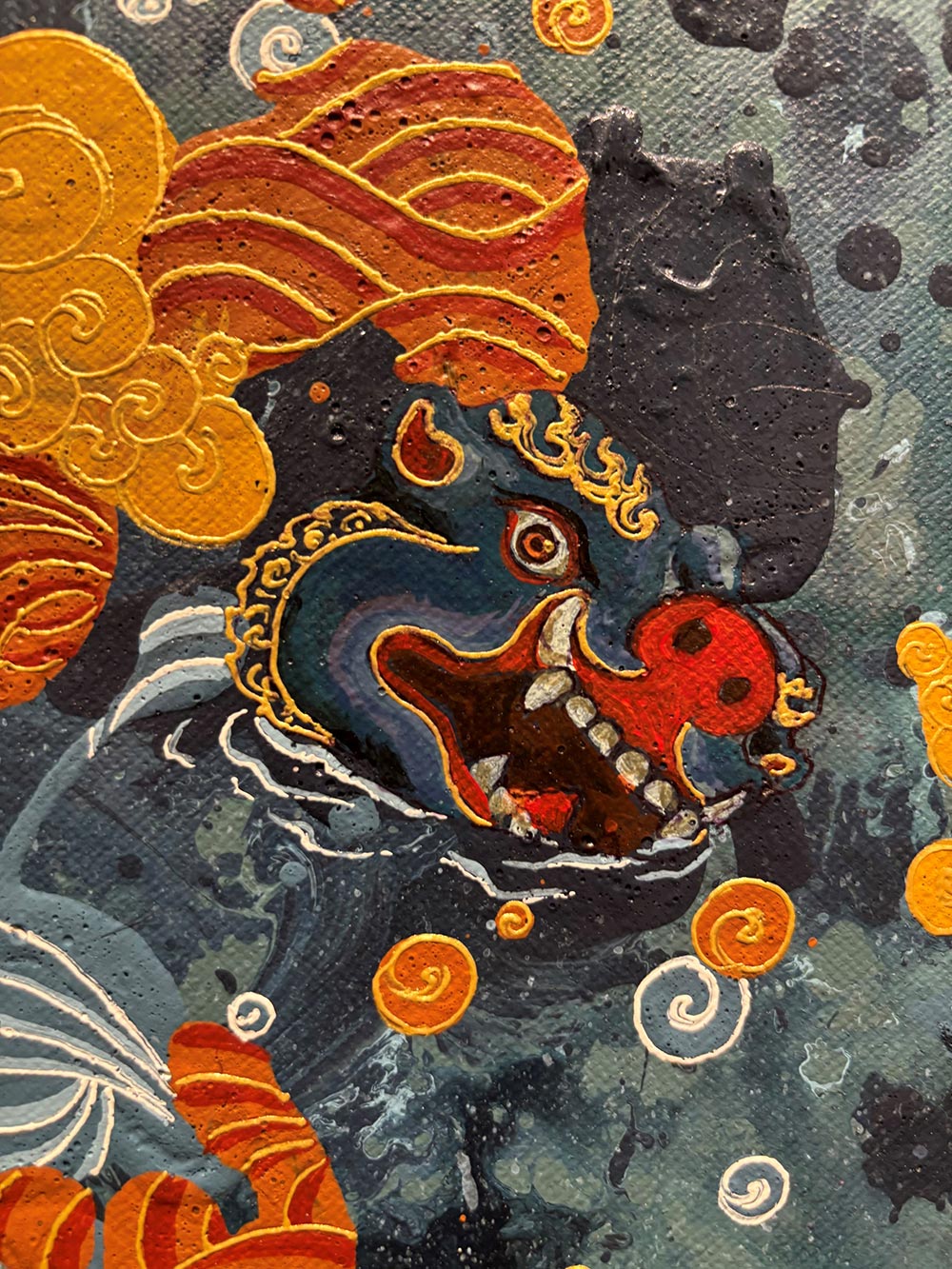
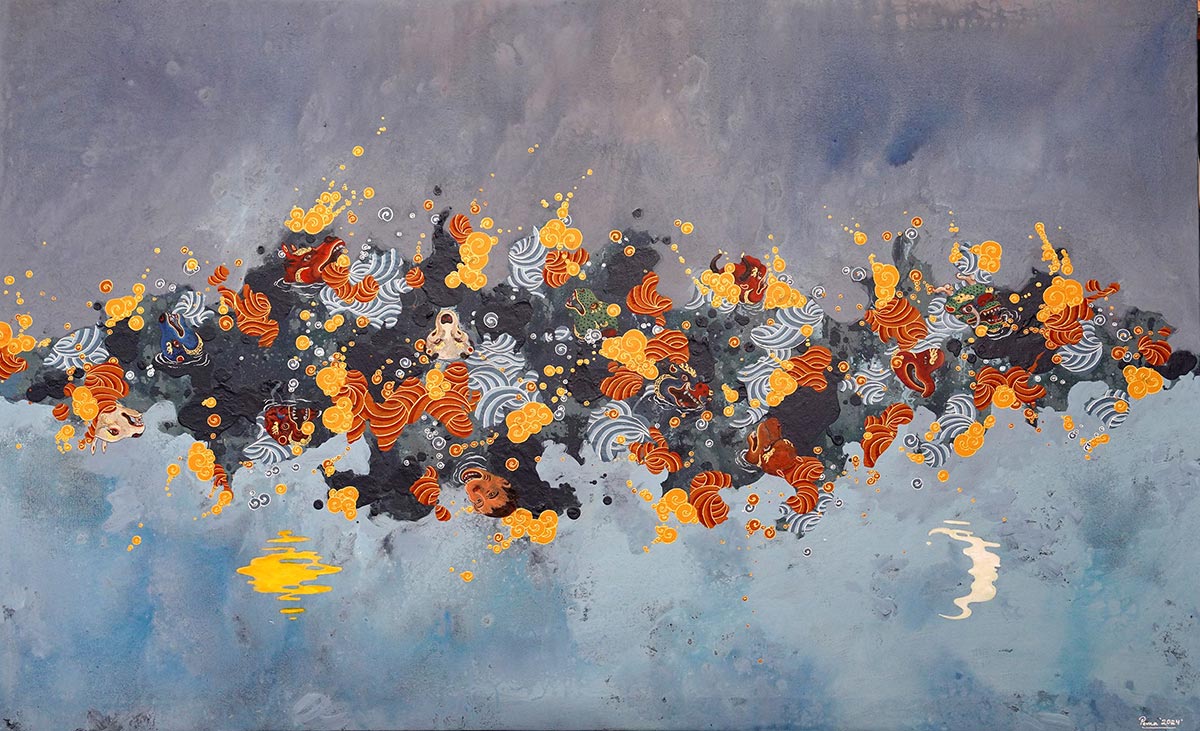
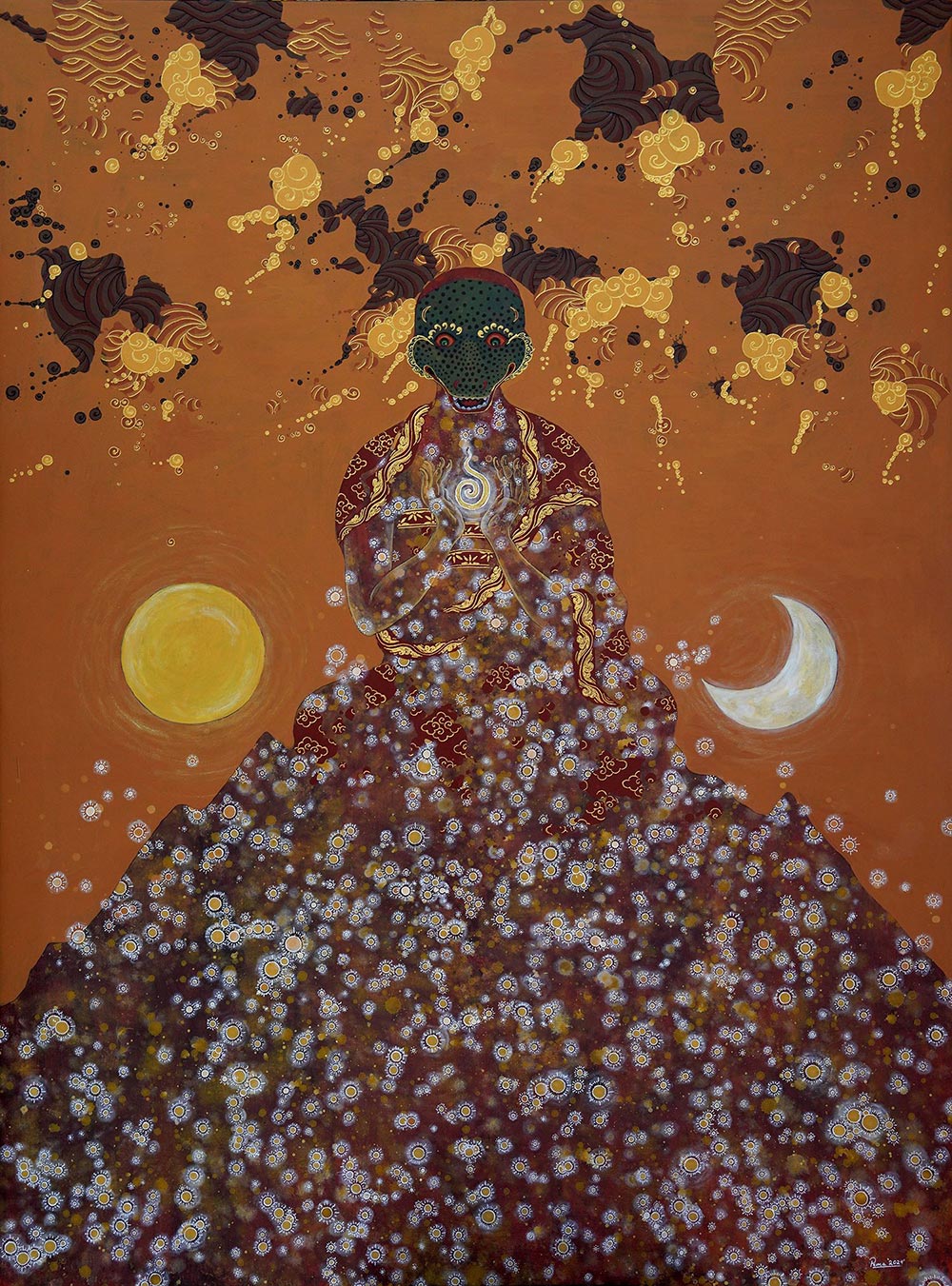
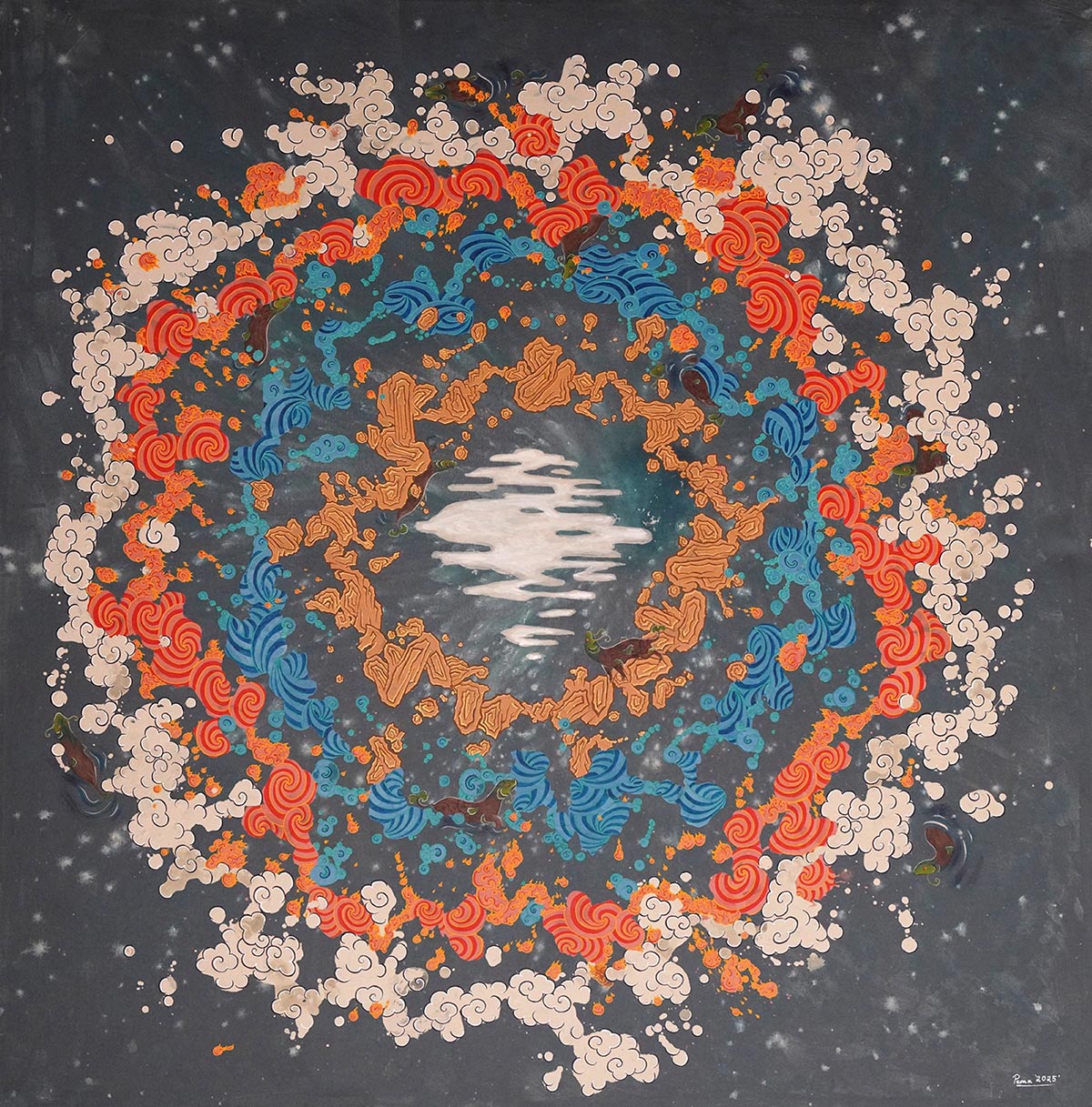
Threshold Art Gallery in New Delhi is ready to open its doors to share a powerful exhibition this fall with In-Between Dreams, the inaugural solo show of Bhutanese artist Pema “Tintin” Tshering. Make sure to be a part of it from September 19 to October 18, 2025. In-Between Dreams isn’t just a visual journey but a spiritual experience based on Buddhism’s bardo, the state between death and rebirth.

Highlights of the Exhibition

Exhibition Details Information
Artist Pema “Tintin” Teshering
Venue Threshold Art Gallery, C-221 Sarvodaya Enclave, New Delhi
Dates 19th September to 18th October 2025
Visiting Hours Monday to Saturday, 11:00 AM to 7:00 PM (Sunday by appointment)
Curatorial Focus Rooted in Bardo, exploring impermanence and transformation
Signature Motifs Masks, Mythical beasts, Elemental Patterns, Garuda

About the Artist

Pema “Tintin” Tshering is a prominent figure in Bhutan, known for his contributions to contemporary art in the country. He is famous for his creative and insightful interpretation and presentation of Buddhist philosophy and Bhutanese spirituality. 

Detail-Life's-Illusion,-Acrylic-on-Canvas,-4-x-4-ft-(2)

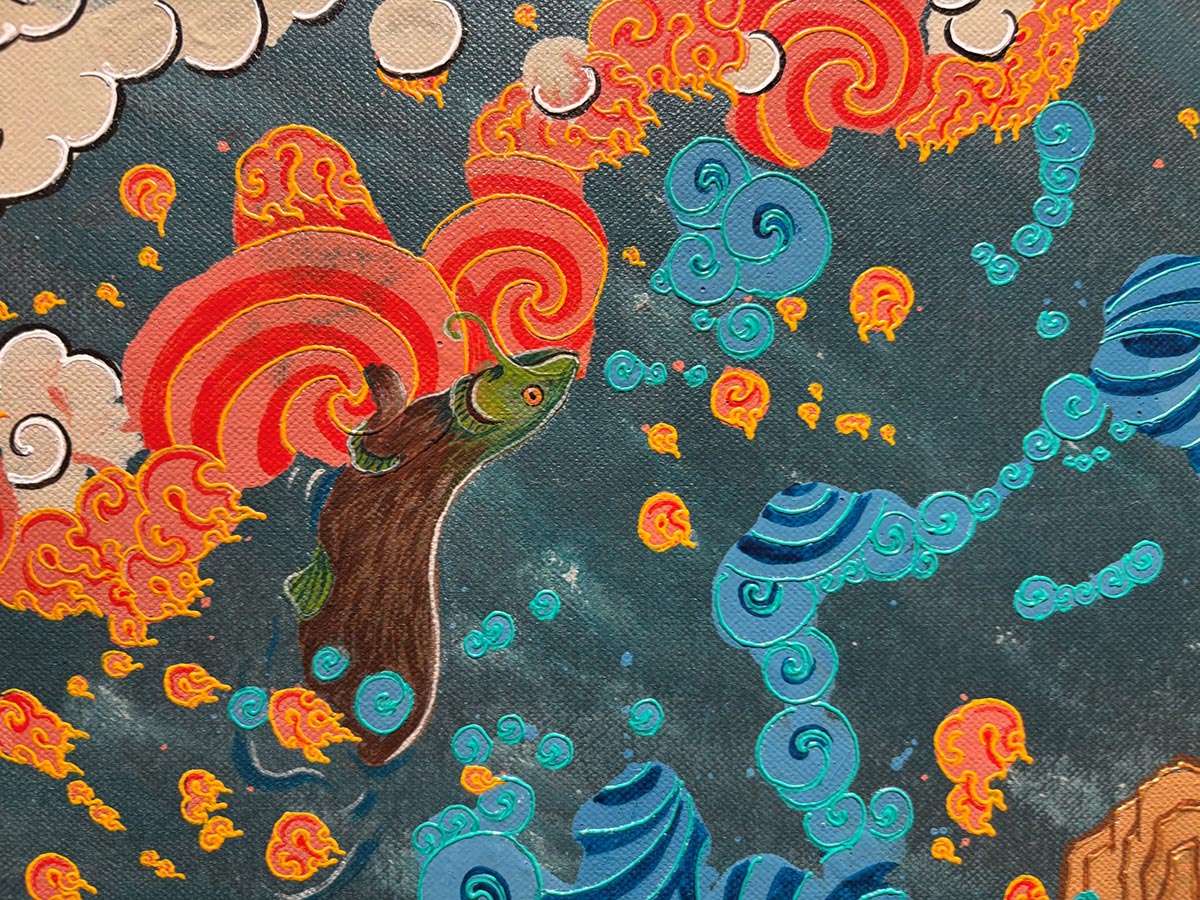
Tintin was born in 1985, and his childhood was spent mostly in Thimpu. His journey as an artist is not limited to painting. He is well known for painting, sculpture, film, and design. The most astonishing aspect of his creativity is his engagement with Buddhist symbols and the amalgamation of traditions with modernity. He uses these ancient symbols to produce affirmative compositions that consider important aspects of selfhood, impermanence, and awakening. 

In his most recent exhibition, In-Between Dreams, Tintin takes us into the unfamiliar and transformative space of bardo, the space in Buddhism between life and rebirth. Through layering of visual textures, colour, masks, and mythic symbols, Tintin expresses rhythms of disintegration and regeneration that are felt within the body. For Tintin, it is all life on canvas; it is not an artefact, but a living and breathing artistic practice defined by tradition and innovation, an invitation to soften your eye and engage with the transformation and resilient nature of life.

Detail-Samsara,-Acrylic-on-Canvas,-2.7-X-4.2-ft-(3)

For Tintin, art is a way of life, and an embodied and harmonising practice of softening perception, and in this softening, the unfolding of becoming can be witnessed with compassion and curiosity. His work reminds us that transformation is as poignant, human, and spiritual as an experience, serpenting towards another pathway to sense-making beyond certainty.             

A Journey Through Bardo                                                   

The holistic approach does not just honour Bhutan’s cultural legacy grounded in Vajrayana Buddhism, but it weaves and sustains it for the audience’s navigation. In-Between Dreams proves to be an intriguing invitation to observe and reimagine being created. Tintin invokes Himalayan cosmology, vernacular crafts, and personal memory; she weaves and paints with a voice that feels at once ancestral and contemporary. 

Samsara,-Acrylic-on-Canvas,-2.7-X-4.2-ft

We find recurring elements in the work:

  • Masks represent the multiple layers of human identity.
  • Mythical beasts signify power, transformation, and our greatest primal fears. 
  • Simple shapes and elemental patterns lead the viewer to meditative states. 

Of particular interest is Tintin’s invocation of the Garuda- a fierce protector and a symbol of freedom. The Garuda’s presence in this body of work parallels the journey of transcending mortal duality and invites the viewer towards personal flight and a resilient spirit. Embodying such profound symbols of cultural identity, Tintin condenses Buddhist metaphysics into highly visual, emotional ways of storytelling.

Artist’s Voice

Primordial-Presence,-Acrylic-on-Canvas,-3-x-4-ft

Tintin describes his purpose with remarkable clarity, stating that “We cannot understand life without understanding death. In painting the stages of dissolution, I am searching for clarity more than confidence. This work is not about answers, but about creating a space where perception might soften something within us—where we might glimpse the truth in  impermanence.” 

These words by Tintin not only frame the exhibition, but also act as sole points for situating morality at the centre of his artistic endeavour. 

Bhutanese Origins and Present-Day Language

Life's-Illusion,-Acrylic-on-Canvas,-4-x-4-ft

As Buddhism and spirituality are entrenched in Bhutan, it is fitting for Tintin to be practising in this context. However, he is not merely reproducing thangka to “preserve” a tradition, but rather he is re-contextualising the tradition in present-day terms. His style intentionally incorporates aspects of classical iconography, ritual precision, symmetry, intense colours, etc., with the openness of modern abstract work

This space between tradition and experimentation allows Tintin’s work to be deeply personal, while simultaneously being widely meaningful and relevant. Despite its ties to local cosmology, the questions he is asking about endings, impermanence, and transformation are universal.

Themes That Resonate

Tintin’s In-Between Dreams touches upon philosophical questions that appeal to people across cultures. Some of the central themes include:

  • Human vulnerability in the face of change
  • The cycles of death, rebirth, and renewal
  • Spiritual resilience and transformation
  • The quiet beauty of impermanence
  • Interplay of fear, light, and perception

Through his artworks, Tintin invites not just spectatorship, but introspection. Each canvas serves as a contemplative threshold, a space where the external world dissolves so that inner truths may surface.

Entering In-Between Dreams is to enter a space of stillness and depth. This is not your regular exhibition about technical virtuosity or literal narrative. Rather, Tintin’s work is more about engaging the audience with transition. That we “see,” or witness, in this case, is a witness to “not seeing.” The exhibition’s sole motive is not only to make the art enthusiasts appreciate the work, but to compel them to think about impermanence and to create a space for the acceptance of this idea. 

Significance of This Exhibit

Thirst,-Acrylic-on-Canvas-(framed-in-traditional--thangka-style),-3-x-6.2-ft-

This exhibition is more than simply a solo exhibition of a Bhutanese artist in New Delhi; it is:

  • A cultural connector from Bhutanese spirituality to an Indian audience.
  • An approach to rethinking the sacred ontologies of art for contemporary life.
  • A reminder that impermanence, often a cause of fear, can be nurtured as a natural cadence of existence.
  • An inquiry into the use of art as a practice of meditation, where imagery becomes a vehicle towards awakening.

Conclusion

At its core, In-Between Dreams is an invitation to participate in the conversation between dying and renewed life. Tintin’s paintings ask us to approach impermanence not with trepidation, but with compassionate awareness. 

The exhibit at the Threshold Gallery speaks far beyond the realms of the art world, in any lives led in transition – in relation to identity, loss or discovery of self.

Through his work, Tintin reminds us that rebirth occurs, not after endings, but within them. Between a breath, between loss and hope, and at the cusp of dying and awakenings – there, with the true metanoia occurs.

VAMA – The Strength Within: Art Tree Exhibition at Bikaner House, Delhi

0
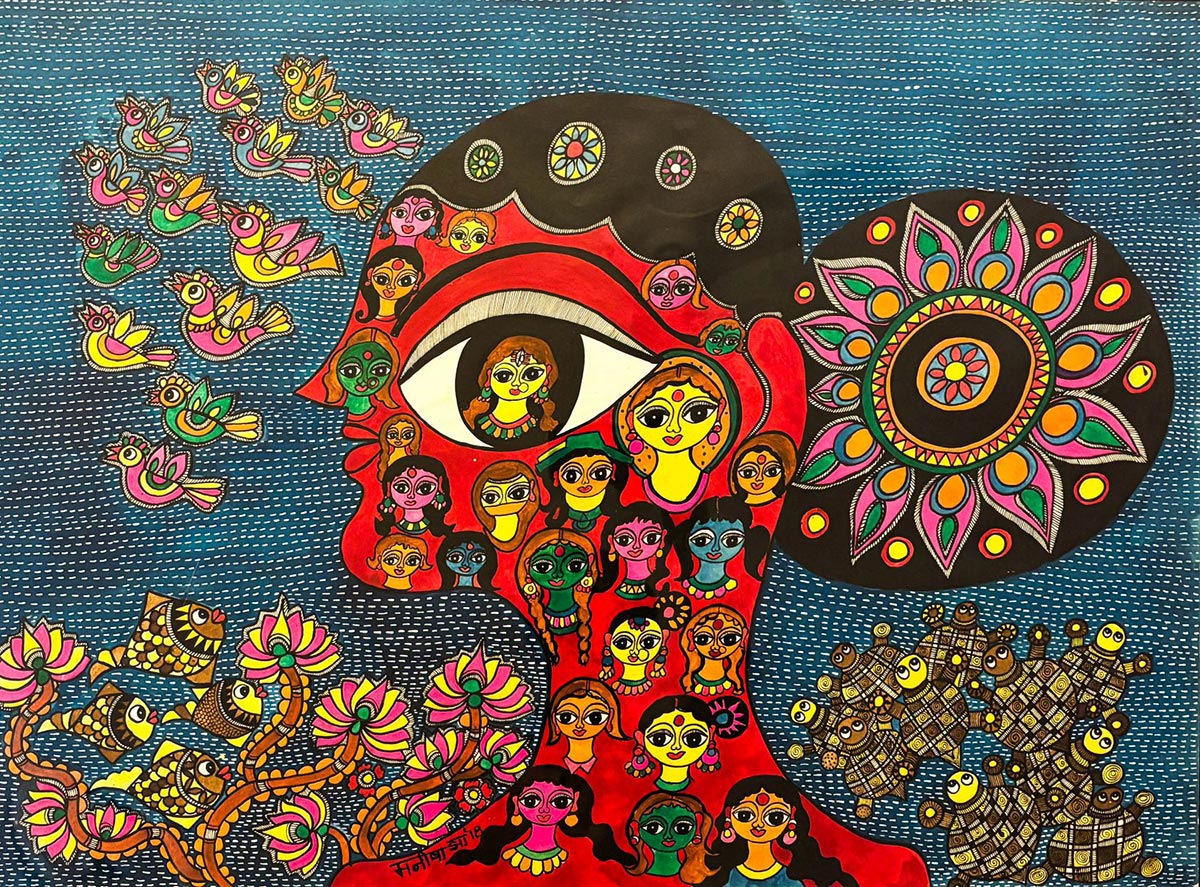
Amodini-1-Manisha-Jha-Madhubani
Amodini – Madhubani, Manisha Jha

Delhi is all set to witness another mindblowing exhibition at the Main Art Gallery, Bikaner House, New Delhi. This time it’s the Art Tree’s groundbreaking exhibition “VAMA – The Strength Within”. From September 27 to October 1, 2025, this exhibition will be available for the public and art enthusiasts alike. It is going to be in line with the auspicious period of Navratri, while providing an ode to Stree Shakti, or the divine feminine power, through some of India’s most beloved folk and tribal art traditions.

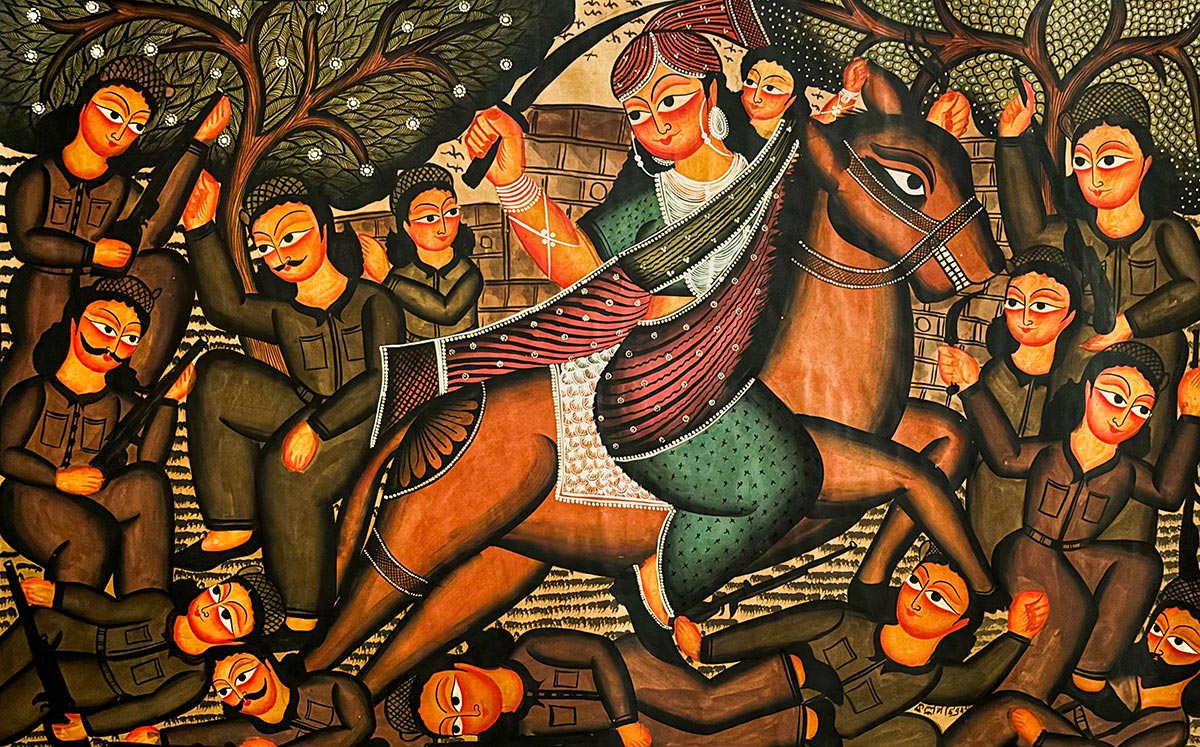
Kalpana-Chitrakar-Bengal-Pathachitra
Bengal Pathachitra – Kalpana Chitrakar

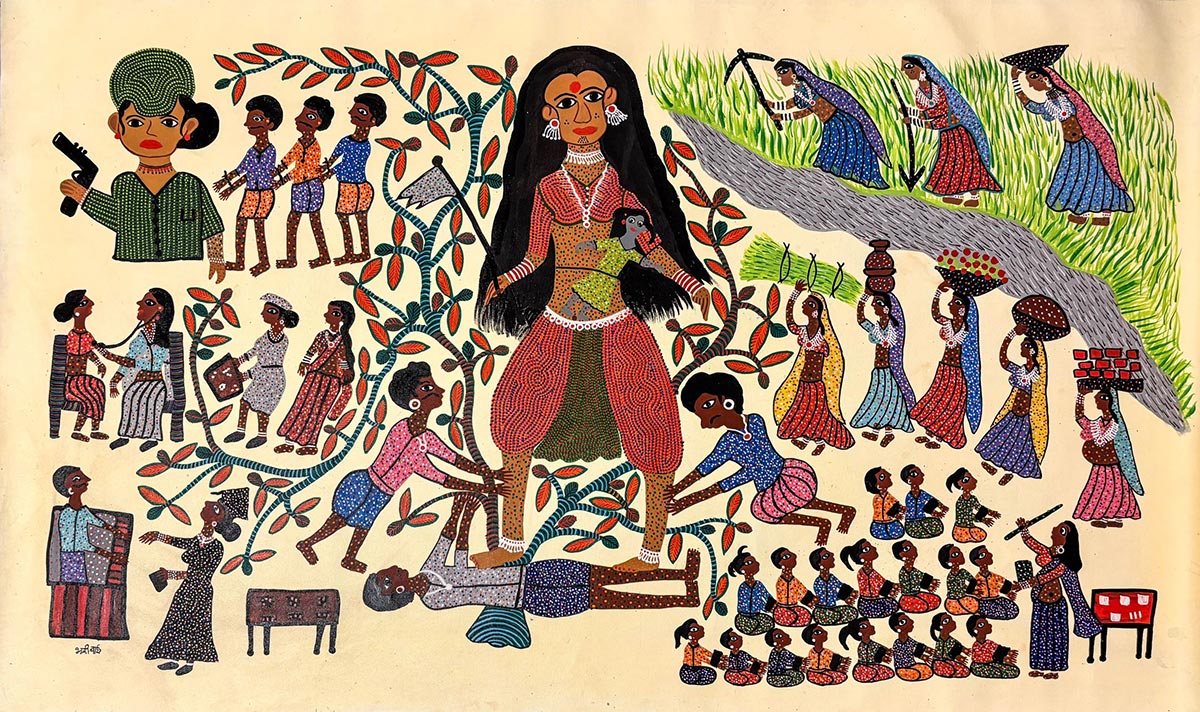
Eighteen women artists will be featured, showcasing more than 10 traditional art forms, including Madhubani, Warli, Gond, Chamba Rumaal, Sohrai, Pattachitra, Cheriyal, Mandana, Bhil and Phulkari. These artists are masters of their craft, the majority having been recognised with Padma Shri and National Awards. They are guardians and innovators of India’s cultural heritage.

Event Highlights Details
Exhibition Title VAMA – The Strength Within
Dates 27 September to 1 October 2025
Timings 11:00 AM to 7:00 PM daily
Venue The Main Art Gallery, Bikaner House, New Delhi
Theme Celebrating Stree Shakti during Navratri
Format All-women exhibition showcasing works of 18 artists
Art Styles Gond, Madhubani, Warli, Cheriyal, Bhil, Chamba Rumaal, Sohrai, Pattachitra, Mandana, Phulkari
Presented by Art Tree

The Significance of Stree Shakti in Indian Culture

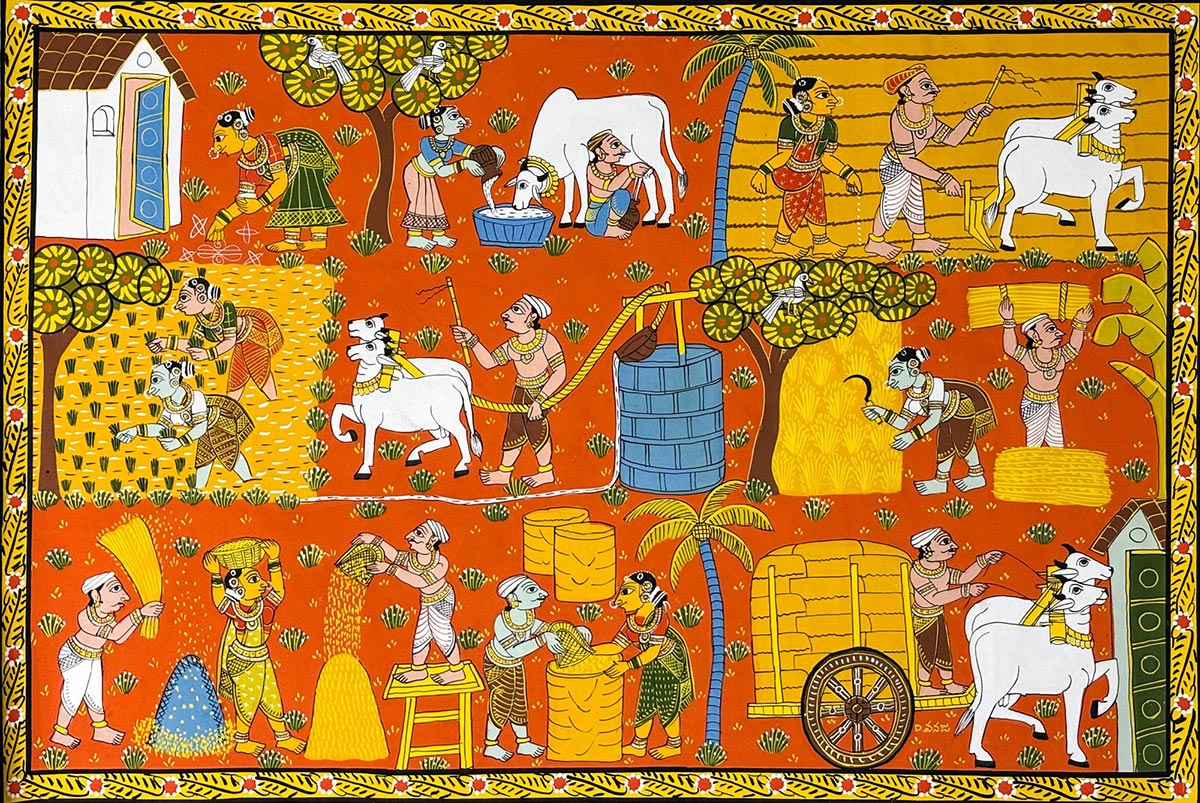
A-Farmer's-Life-D-Vanja-Cherial-Painting
A-Farmer’s Life – Cherial-Painting, D Vanja

The idea of Stree Shakti is beautifully revered in the Indian philosophy and culture. ‘Shakti’ is described as the feminine divine energy that forms the basis of and sustains all existence. The exhibition is centred around this theme.

As Ms Pragati Agarwal, Founding and Managing Director of Art Tree, eloquently expresses this connection by saying, “Women have long been the silent torchbearers of indigenous art in India—transmitting knowledge, techniques, and stories through generations. Their contributions, though foundational, often remain overlooked. Through VAMA, we celebrate their talent, resilience, and artistic integrity. Many of these women have overcome deep socio-cultural barriers to emerge as pioneers in their fields. This exhibition is our tribute to their journeys, their triumphs, and the vibrant spirit of Shakti that they embody.”

Celebrating National Award Winners and Master Artists

Nari-Swarup-Bhuri-Bai-Bhil
Nari – Bhil, Swarup Bhuri Bai

The artists that are a part of this exhibition include several Padma Shri and National Award-winning artists engaging with narratives about resilience, change, and divine feminine energy. Some of these highly regarded artists are featured in the show, including:

Artist Name Art Form Recognition
Durga Bai & Nankusia Bai Gond National Award Winners
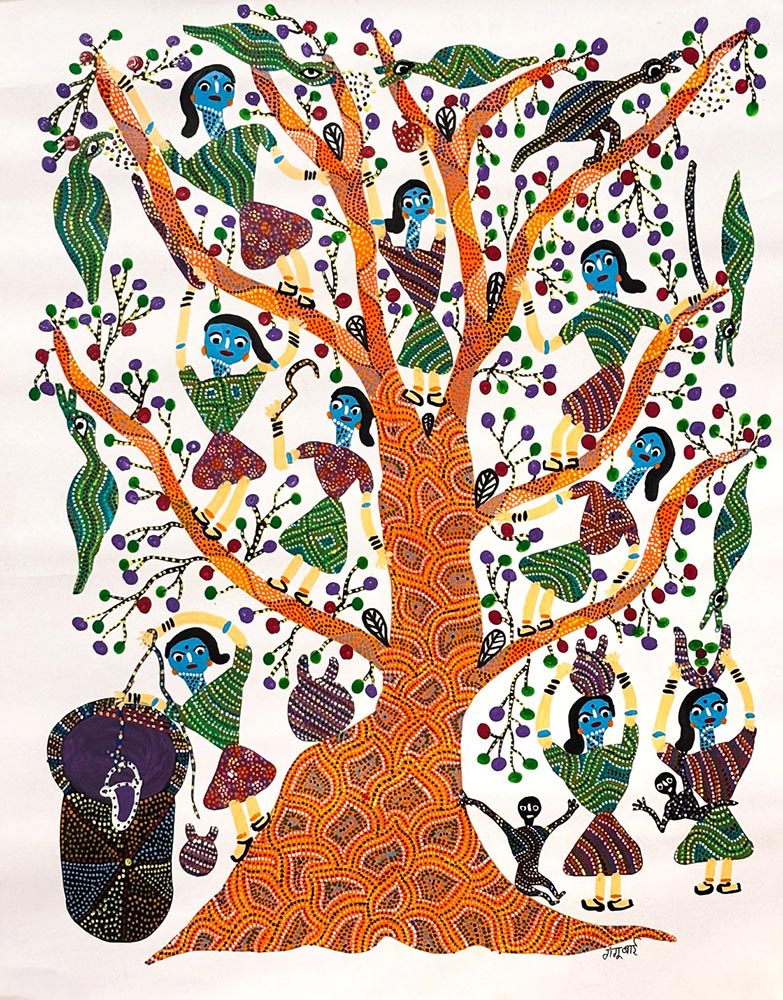
Gangu Bai, Lado Bai & Bhuri Bai Bhil Padma Shri Recipients
Anita Kumari Chamba Rumaal Master Artist
Juliet (Hazari Bagh Trust) Sohrai-Ledra Traditional Specialist
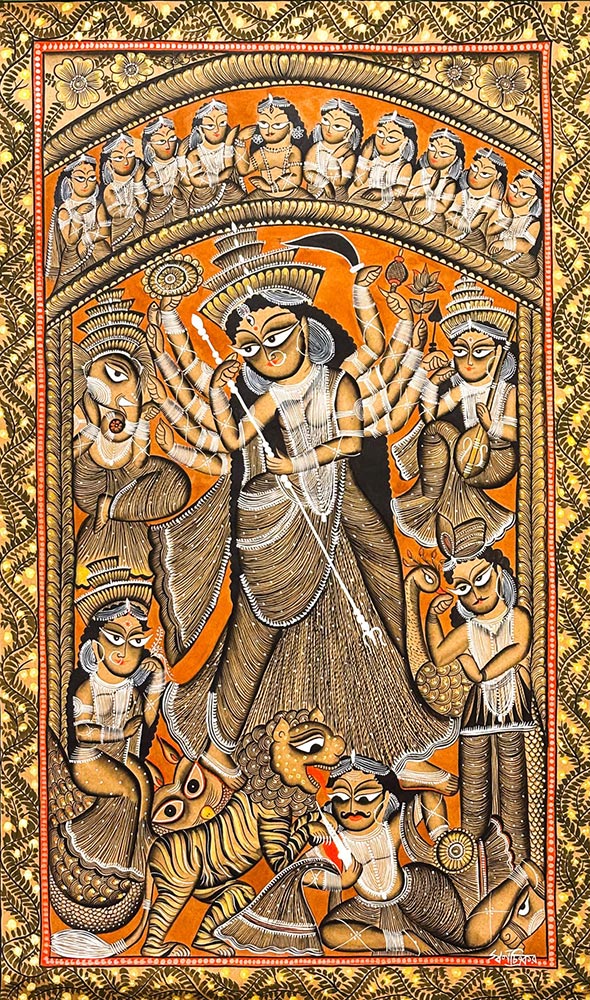
Swarna & Kalpana Chitrakar Pattachitra Heritage Artists
Vidya Devi Mandana Folk Art Expert
Manisha Jha, Urmila Devi & Chandrakala Devi Madhubani National Recognition
Mamta & Shushti Bongya Warli Tribal Art Masters
D. Vanaja & D. Padma Cheriyal Traditional Scrolls
Kiran & Veerpal Phulkari Embroidery Specialists

The Variety of Indian Folk Art Forms

Ghosla-Gangu-Bai-Bhil
Ghosla – Bhil, Gangu Bai

The folk art forms represented in VAMA encompass a very broad range of India’s cultural heritage, each with its own meaning and telling stories:

  • Madhubani painting of Bihar: natural dyes and pigments are used to create complex designs that depict different mythological stories and scenes from everyday life. Madhubani painting has distinctive thick lines and bright colours.
  • Warli art of Maharashtra: simple geometric shapes are employed to represent humans and animals. Warli art of Maharashtra is applied on mud walls using traditional rice paste. 
  • Gond art of Madhya Pradesh: presents tribal cosmology through complex dot presentations, with intricate colours and details derived from folklore and tribal myths. 
  • Pattachittra tradition of Odisha: it is a family tradition of collaborative art with a continuous line of practice for over a 1000 years. In this tradition, women prepare large pieces of reversible canvas and colored paints while master artists do the chaukhandis and drawings.
  • Sohrai art in Jharkhand: it is predominantly created by women. It is produced with natural pigments painted on mud walls to commemorate harvest festivals. The imagery in Sohrai art represents particular animals of the region. 
  • The Cheriyal scroll painting from Telangana: it is known to be storytelling-based, highlighting the distinctive use of bright colours blended with the specific art form to engage in narratives through visuals.
  • The Mandana painting from Rajasthan: it is usually created by women with this natural pigment in twig brushes, and is done for decorating a courtyard for certain seasonal festivals.
  • The Phulkari type of embroidery from Punjab: it shows traditions of needlework where floral designs and patterns are stylised by women.
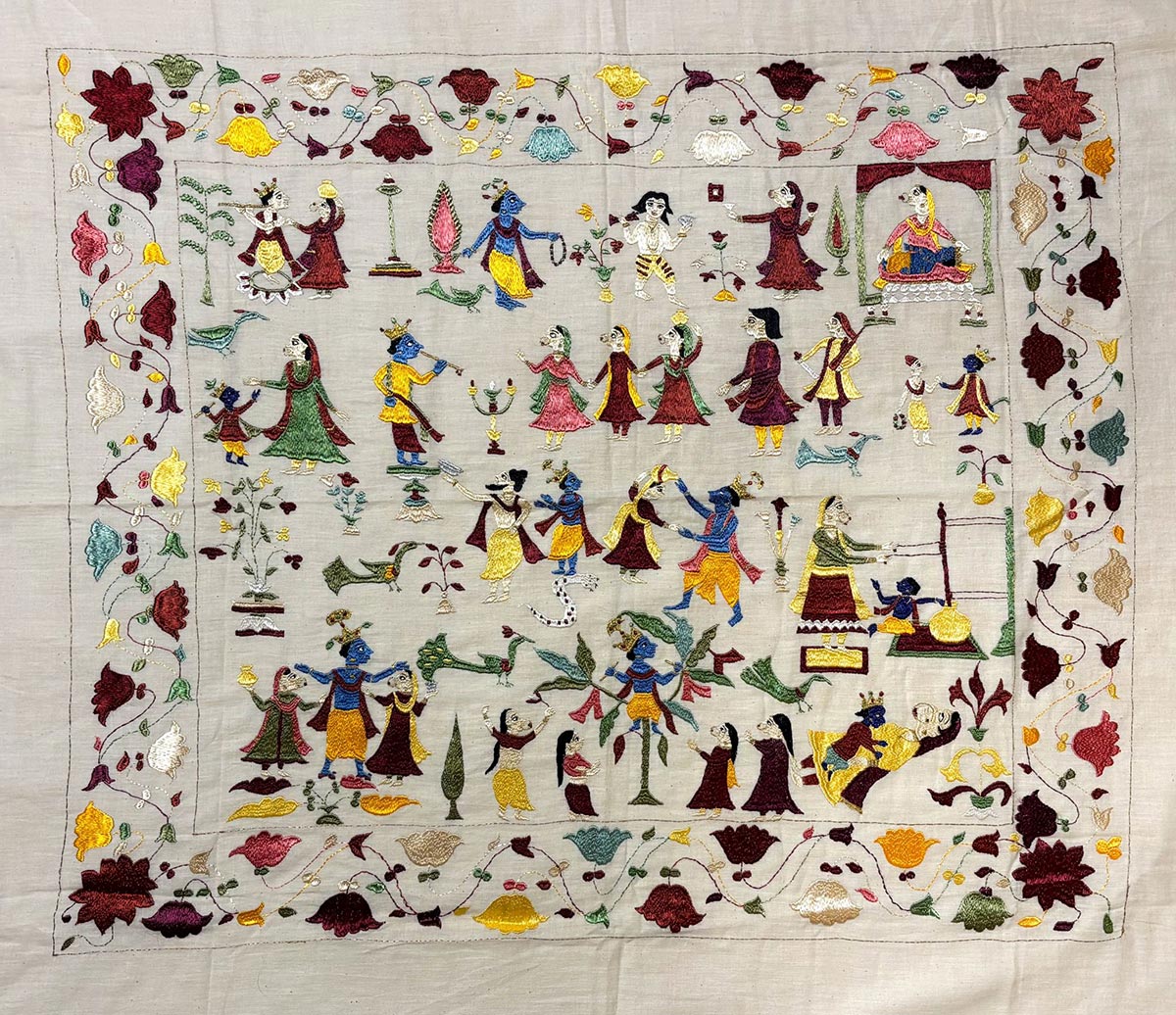
  • Chamba Rumaal: it shows the types of fine embroidery from Himachal Pradesh.
  • Bhil art: it represents unique, tribal painting traditions, steeped in culture.

These art forms demonstrate that women have been the principal custodians of cultural knowledge because, with their creativity and imagination, they can retain and communicate traditional details, spiritual beliefs, and community values for generations.

The Cultural Context of Navratri and Women Artists

Shakti-Swarna-Chitrakar-Pattichitra
Shakti – Pattichitra, Swarna-Chitrakar

The emphasis on Stree Shakti of Navratri is in direct relationship with the mission of this exhibition, which is to elevate woman artists who exhibit that energy and strength in their artwork. Just as Navratri honours the divine feminine as it is described by its different forms of goddess, VAMA is a celebration of the earthly forms of that power through the artwork of these strong women artists. Observers of this holy time will celebrate different characteristics of the goddess:

  • Shailputri (strength and stability)
  • Brahmacharini (devotion and penance)
  • Chandraghanta (courage and serenity)
  • Kushmanda (universal energy)
  • Skandamata (motherhood and protection)
  • Katyayani (fierce power)
  • Kalaratri (protection and fearlessness)
  • Mahagauri (purity and grace)
  • Siddhidatri (wisdom and spiritual fulfilment)

Mission and Vision of Art Tree

Krishna-Leela-Anita-Kumari-Chamba-Rumaal
Krishna Leela – Chamba Rumaal, Anita Kumari

Art Tree has been a committed space for the advancement and celebration of traditional and contemporary art of India for more than a decade. The organisation promotes awareness of India’s artistic traditions through curated exhibitions, educational workshops, symposiums, and other community engagement sources, availing itself as an opportunity for the development of new artists and exhibiting established artists.

The second exciting reason, as noted before, is the venue itself, Bikaner House – Delhi’s historical landmark, which is now one of the leading venues for cultural exhibitions and showcases of the arts. The Main Art Gallery of the space is an ideal setting for viewers to engage with the immersive stories created by each of the women artists in response to ‘engagements’ with the rich heritage of folk traditions in India.

The Contemporary Relevance of Traditional Art

Udd-Chalein-Vidya-Devi-Mandana
Udd Chalein – Mandana, Vidya-Devi

VAMA – The Strength Within goes beyond an art exhibit. It goes beyond to serve as a connection between India’s traditional art history and modern cultural awareness. The exhibition is set to illustrate the women artists from around the country, working for both women’s empowerment as well as the promotion of traditional and folk art. As visitors take a walk through the exhibition, they will find themselves surrounded not only by beautiful artworks but also by cultural stories of creativity, resilience, and preservation of culture. VAMA – The Strength Within pays tribute to the exercise of the enduring power of women’s conceptual thinking with art, and a recognition of women’s role in sustaining India’s rich cultural vibrancy.

The exhibition will be open daily from 11 AM to 7 PM during the exhibition so that art lovers, art scholars, and the general public have ample opportunity to experience these traditions, and to mark our place of strength as part of India’s artistic heritage.