Bengal School of Art: Reviving India’s Cultural Soul Through Art

0

Bengal-School-of-Art-01

The Bengal School of Art was one of the most prominent Indian painting movements in the late 19th and early 20th centuries. It was the ideal shift from European academic realism to project a form that resembled the Indian style. Having emerged as a response to Western influence on Indian art, the Bengal School was founded as a revival of traditional Indian techniques, themes, and philosophies of art. It was essentially related to the search for the cultural identity of India in the colonial era and formed an important component of the general nationalist movement.

Historical Background 

Top-Indian-Artists-Raja-Ravi-Varma
Raja Ravi Varma Style of Painting

In the 19th century, British colonizers introduced Western artistic traditions to India. Raja Ravi Varma introduced European academic realism in Indian art, blending Western techniques with Indian subjects. However, this overwhelming domination of British colonial culture was deemed by most intellectuals and artists alike to destroy the indigenous essence and spiritual depth of Indian art. The Bengal School of Art was a reaction to this, led by such people who wanted Indian art to revert to its cultural roots and classical forms.

Establishment of The Bengal School of Art

Establishment of The Bengal School of Art
Images : Satyasri Ukil via Govt. College of Art & Craft, Calcutta

It was around 1905 that the Bengal School of Art was established through the inspiration that came largely from Ernest Binfield Havell, the principal of the Government College of Art in Calcutta, and Abanindranath Tagore, the Indian artist-intellectual. Interested profoundly in Indian art and culture urged his students to give up on academics based on European standards and look for their ideals in Indian classical art forms like Mughal miniatures, Ajanta frescoes, and Rajasthani paintings.

Abanindranath Tagore is also considered the father of modern Indian art. He was one of the most influential artists in the adoption of Indian themes and techniques in his work, as opposed to the dominant realism of the day. His painting Bharat Mata, done in 1905, became an iconic representation on behalf of Indian nationalism and an epitome representing the essence of the philosophy of the Bengal School. Tagore drew inspiration from Indian literature, mythology, and religious texts, aiming to infuse his paintings with a profound sense of spirituality and depth.

Bengal School of Art Philosophy

Bengal-School-of-Art-Style-and-Philosophy
New Clouds, 1937 by Nandalal Bose

The Bengal School’s artistic style was deeply rooted in India’s traditional art forms. The artists embraced indigenous techniques, such as tempera painting, and often depicted mythological and historical themes. Most works were done with delicate lines, a very muted color palette, and spiritual depth opposite to the realism imbued in Western art. Key players in developing this style included the likes of Nandalal Bose and Asit Kumar Haldar, whose reported work influenced Mughal miniatures, Rajasthani paintings, and Ajanta frescoes.

Suggested Story: Miniature Paintings of India: Evolution of Different Art Schools

Key Figures of the Bengal School of Art

Key-Figures-of-the-Bengal-School-of-Art
Abanindranath Tagore & E. B. Havell

Although the central figure was Abanindranath Tagore, many artists contributed to the development of the Bengal School of Art. These include:

  • E. B. Havell: He was an English art teacher who initiated this movement to foster interest in traditional forms of Indian art. Havell urged students to delve deep into the rich heritage of Indian art to nourish the movement in the academic arena.
  • Nandalal Bose: He is claimed to be the second most important artist of the Bengal School. His works were based on Indian mythology, rural life, and spirituality. He was a key figure in the emergence of modern Indian art after independence.
  • Asit Kumar Haldar: He was one of the students of Abanindranath Tagore. His works carried the elements of Indian epics and classical literature in his style, maintaining contact with the art of ancient India.
  • Kshitindranath Majumdar: Another important figure of the Bengal School, his paintings take up religious and mythological themes with an emphasis on Indian spirituality.

Suggested Story: Top Indian Artists That Every Indian Should Know

Characteristics and Style of the Bengal School

Characteristics-and-Style-of-the-Bengal-School-01
The return of Rama by Abanindranath Tagore Wikimedia

The Bengal School of Art acquired a special style distinguishing it from Western-influenced academic art during British rule. Some key features include:

  • Influence of Traditional Indian Art: Most of the work here came from the traditional ‘classic’ art forms of India, like Mughal miniatures and Ajanta cave paintings. They leaned more toward delicate lines, rhythm, and restrained use of colors.
  • Spiritual and Mythological Themes: The artists of the Bengal School commonly presented religious and mythological themes.
  • Muted Color Palettes: Soft and subdued, the palette was influenced by traditional Indian ink. Artists avoided brightness in colors like that used in European realism; instead, they used earthy tones that facilitated spiritual representation.
  • Flat Perspective and Simplified Forms: While the illusory depth and perspective marked the defining features of the Western tradition, the conventionally symbolic convention of space achieved simplicity in stylization.

Famous Paintings of the Bengal School

The Bengal School contributed a lot to Indian art. Some of these works are considered to be part of India’s artistic heritage. The most representative paintings include :

Bharat Mata by Abanindranath Tagore:

Famous-Paintings-of-the-Bengal-School-Bharat-Mata-by-Abanindranath-Tagore-01
Image – Wikimedia

It was a painting that personified India as the mother goddess way back in 1905. Wearing saffron-colored attire with a holy vase in its hands, it had come to symbolize Indian Nationalism and the Swadeshi movement.

Shiva Drinking the World Poison by Nandalal Bose:

Famous-Paintings-of-the-Bengal-School-Shiva-Drinking-the-World-Poison-by-Nandalal-Bose
Image – picryl.com

This painting shows Lord Shiva drinking poison to save the world from poisoning, an act within Hindu mythology. This is a depiction of sacrifice and protection from the gods themselves.

Passing of Shah Jahan by Abanindranath Tagore:

Famous-Paintings-of-the-Bengal-School-Passing-of-Shah-Jahan-by-Abanindranath-Tagore
Image – Wikimedia

This Mughal miniature-influenced painting depicts the last days of the Mughal Emperor Shah Jahan and is a reflection of loss and reminiscence.

Sati by Nandalal Bose:

Famous-Paintings-of-the-Bengal-School-Sati-by-Nandalal-Bose

It is an expression of the Hindu myth about Sati, who sacrifices herself for her husband. Bose brings spiritual depth and richness to Indian mythology.

Krishna Lila by Asit Kumar Haldar:

Famous-Paintings-of-the-Bengal-School-Krishna-Lila-by-Asit-Kumar-Haldar

A series of paintings done by Haldar graciously illustrates some scenes from Krishna’s life, merging traditional Indian forms with the emphasis on spirituality characteristic of the Bengal School.

Nationalist Influence and Political Context

The Bengal School was not restricted to an art movement alone but is intrinsically linked with the Indian freedom movement. The Swadeshi movement boycotted British goods, revitalized Indian industries, and found its voice in the form of the Bengal School. Artists like Abanindranath Tagore filled their works with cultural nationalism, weaving images in the tapestry of India’s fight for freedom.

For example, the image of Bharat Mata became a rallying symbol of the Swadeshi movement. In one way or another, the tide of political nationalism that was already rising in India at large also resonated in the movement with the role of phenomenology in Indian identity, history, and spirituality. There was a certain resistance to the recreation of Indian culture and its values by some artists.

Decline and Legacy of the Bengal School of Art

Jamini-Roy-Modern-Folk-Art-Santhal-Girl
Santhal Girl in Modern Folk Art By Jamini Roy

While the Bengal School was phenomenally successful at the beginning of the 20th century, with the arrival of modernism in Indian art it started to decline. The artists of the time, including Rabindranath Tagore and Jamini Roy rejected spiritual and nationalist concerns of the Bengal School for more contemporary themes and techniques.

However, the influence of the Bengal School runs deep. It was a forerunner of modern Indian art in the sense of mixed tradition and innovation. For instance, even Nandalal Bose himself continued to teach a whole new generation of Indian artists, like Raja Ravi Varma and Jamini Roy, thus assuring the continuity of the school in one form or another.

Conclusion

The Bengal School of Art was one of the most important periods in Indian painting history, as it defined the revival of the native artistic tradition during the days of the British Empire. It was only with the revival of the themes of Indian spirituality, mythology, and history that artists like Abanindranath Tagore rediscovered the links that Indian art had with its very origins and shook off the tight grip of Western realism. It also became a potent symbol of the Swadeshi movement, an alignment of art to the nationalist cause. The Bengal School lost much of its greater significance when modernist movements came into prominence.

The legacy of cultural pride and artistic independence continues to thrive, serving as a source of inspiration for Indian artists even today. Its spirit of rejuvenation continues, pointing to future generations the deep artistic heritage of the land.

FAQs on Bengal School of Art

Who founded the Bengal School of Art?

The Bengal School of Art was founded by Ernest Binfield Havell and Abanindranath              Tagore around 1905 solely to revive traditional Indian art forms and shun those of the         West.

What was the main objective of the Bengal School of Art?

The Bengal School aimed to revive the indigenous art forms of India and shun the               academic Western style that prevailed throughout Indian art during the British colonial       era.

Which is the most famous painting of the Bengal School of Art?

The most well-known painting is Bharat Mata, made by Abanindranath Tagore. It                signified the cultural and spiritual identity of India during the nationalist movement.

How does the Bengal School influence Indian nationalism?

The Bengal School of Art was of immense importance in the field of cultural Indian              nationalism and promoted Swadeshi values, as well as pride in Indian artistic tradition.

Who are some of the famous artists of the Bengal School of Art?

Some of the popular ones include Abanindranath Tagore, Nandalal Bose, Asit Kumar            Haldar, and Kshitindranath Majumdar amongst many others.

Few Lines on the Bengal School of Art

  1. The Bengal School of Art was the Indian Art art movement similar to West European academic realism.
  2. The Bengal School of Art was initiated by E.B. Havell and Abanindranath Tagore in the early 1900s.
  3. The art movement revived techniques of ancient Indian art forms, including Mughal miniatures.
  4. Abanindranath Tagore’s painting Bharat Mata became an iconic symbol of Indian nationalism.
  5. The spiritual and mythological overtones and subdued color are typical of the Bengal School as evidenced here alone.
  6. Other artists like Nandalal Bose furthered the movement with their depiction of Indian rural life and mythology.
  7. Though its influence waned, the Bengal School laid the foundation for modern Indian art.
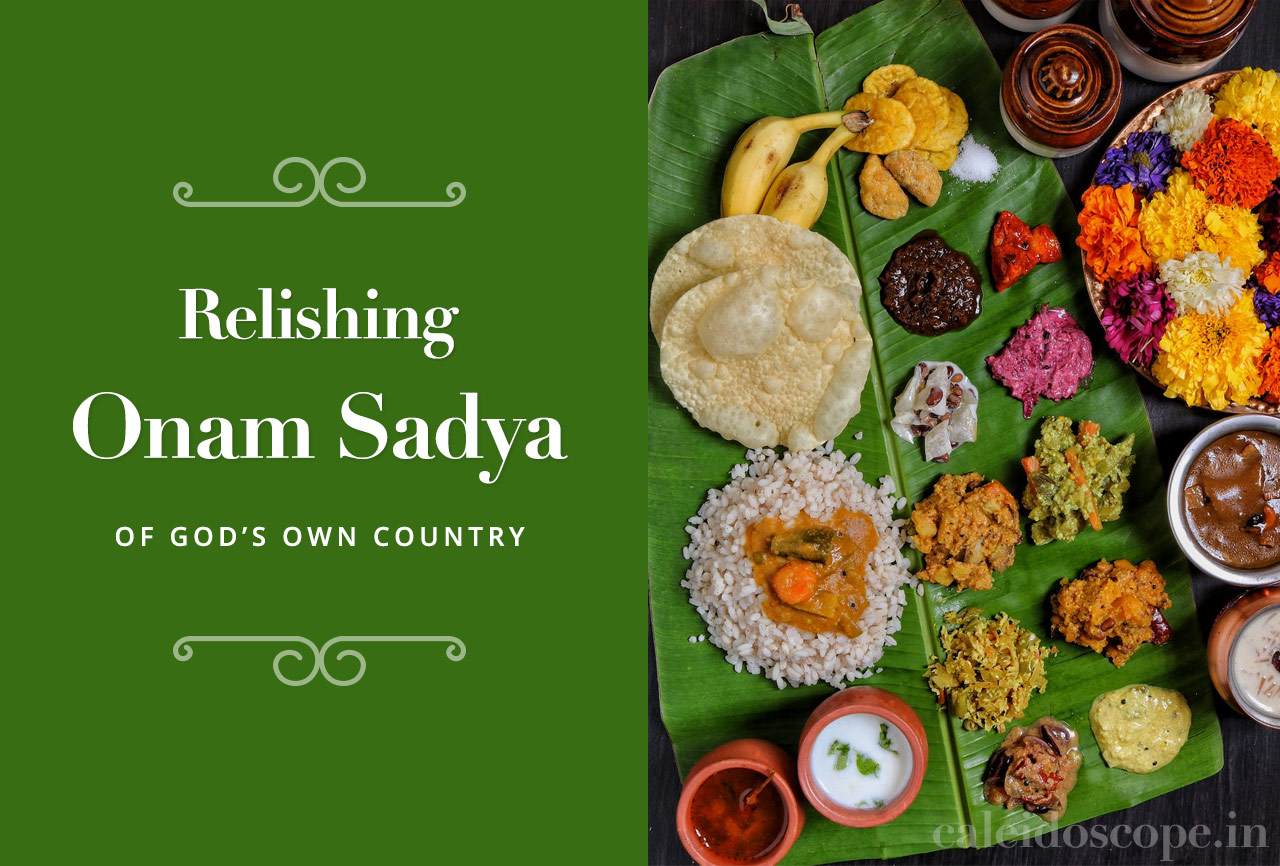
Kerala Sadya: A Must Try Culinary Wonder of Malayali Culture

2

Kerala-Sadya-01

Sadya & Onam Festival

Anyone’s favorite part about festivals has to be, without a doubt, the amazing mouth-watering delicacies prepared and when it comes to the festivals of Kerala, the case is no different. Kerala or God’s Own Country is a state full of vibrant festivals with one of the most prominent being the state’s very own: Onam, a festival celebrated in the anticipation of the return of King Mahabali, a generous and benevolent king, to Kerala to visit his subjects. On this occasion, a special meal called ‘Sadya’ is prepared which consists of some delectable dishes that everyone absolutely must try out. Till you can, why not read about it and wake up your inner chef.

Kerala-Sadya
Image – Premshree Pillai/Flickr

Apart from Onam, sadya is also prepared on other joyous occasions such as weddings. Sadya, being a traditional meal, is eaten in the same regard. Served on banana leaves (of course, after all: it’s Kerala), people eat this meal sitting down on a mat and without the use of cutlery. The state of Kerala has always been one that has achieved the perfect balance between science and ancient culture. Eating with our hands is said to help in the alignment of chakras as well as the banana leaf is rich in polyphenols, an antioxidant beneficial for nutrition.

What are the 26 dishes of Sadya?

This meal consists of 26 dishes, a truly enormous amount but the reason behind this is said to be to make sure that the person consuming the meal of sadya enjoys at least 3-4 of the dishes. Putting in an unbelievable amount of effort to ensure people’s happiness sounds exactly like the warm people of Kerala. The meal is, additionally, a great representation of the Kerala cuisine, one of the various things that stands out about this state. Sadya consists of rice, fried snacks, pickles, curries, and sweets because no meal is complete without a dessert. The meal is purely vegetarian and reflects the flavors of the state. After all, spices are Kerala’s specialty.

How Sadya is Served

The Dishes of Sadya
Image – Ramesh NG/Flickr

Sadya is typically a 9-course meal, with each being truly enriching. It also occasionally has a feature dish that is made using rice, yogurt, or coconut. The dishes start with salt, the features, rice and ending with the ever-delicious payasam. You begin with upperi or as commonly called, banana chips. Everyone’s heard of banana chips but what about sweet banana chips? Shocked? Well this next dish, sharkara varatti is exactly that. Made using jaggery, this is a dish that is a must-try. On the side, you will get a delicious manga curry, to get in some tanginess. Not a fan of mango pickle? Sadya’s got you covered for you will also get a naranga curry for everyone who likes the taste of the sour lemon with your meal.

Now we come on to the dishes. A prominent one has to be ellisheri, made using coconut and pumpkin which will leave you wanting more. Another similar dish is pulissery which is made from vegetables and yogurt. Then comes one of everyone’s favorites, kaalan, a dish made from the nutritious raw banana. You can’t fully enjoy sadhya without trying out the pachadi curry, with its primary ingredient being bitter gourd. Chenna Mezhkkupuratti is unbelievably delicious for it’s the classic fried yam with spices and coconut.

Must Have Dishes in Sadya

Kerala-Sadya-03
Image – Wikimedia

It’s a fairly known fact that no meal in Kerala is complete without rice. However, in Sadya, you are provided chor, a version of rice with thicker grains, and of course, an integral part of South Indian Cuisine is sambar. If you don’t try out the pappadams, then you have no idea what you are missing out on. Other flavor-rich dishes include rasam, avial, and payasam. On top of all these dishes, you need to add just a spoonful of neyy or as more commonly known as ghee.

Then coming on to the desert, my personal favorite, we have the staple of Kerala, the amazing payasam along with poovan pazham, similar to a mini banana which is highly recommended to take with payasam. Other mouth-watering delicacies include Palada Pradhaman is made from rice, dry fruits, and milk as well as Pazham Pradhaman, a dish whose primary ingredient is jaggery and cashew which will leave you wanting more.

Takeaway

Sadya is not a mere meal but a celebration of the auspicious festival and the meal is an extended symbolization of the same. Anyone ever visiting Kerala simply must try it out. It’s a feast in every sense of the word and practically synonymous with Onam. Its flavors are spectacular and you can taste the essence of Kerala’s cuisine. So, let’s celebrate the next Onam with the delicious sadya.

Hindi Diwas – When, Why and How is it Celebrated

0

Hindi-Diwas-01

Out of the several facets of India, one of the most striking elements that throws light on the diversity and rich culture of the country is the usage of hundreds of languages. There are more than 121 languages in India, but 1500 plus ‘other’ languages that are either mother tongues or different dialects. However, Hindi and English are the 2 official languages of the country. On 14th September 1949, Hindi was recognized as the official language of the Republic of India. Each year Hindi Diwas is celebrated on 14th September to commemorate the occasion and to emphasise on the spread and growth of the Hindi language. 

Role of Language in India

As said, ‘Language is not a genetic gift, it is a social gift.’ India is a land of many societies, communities and hence home to a fascinating range and dialects of languages. The cultural heritage is reflected and enhanced by parlance and usage of different languages. Undoubtedly, language in India is another out of the many examples that justify and uphold the ‘unity in diversity’ tagline. Yet, it has also led to differences and divisions. Language historically has been one of the reasons on which states have been segregated. In fact, the States Reorganisation Act, 1956 reformed state boundaries based on languages spoken in the region. 

Hindi as the official language

During British India rule, the official languages included Urdu, English and Hindi. English was the main language used in administrative functions, education etc. Hindi, on the other hand, became the official language much later in the 1900 when an order was passed to allow the usage of Hindi in Devanagari script in the northwestern provinces. 

However, post Independence, both English and Hindi were vying for official language status. The tussle was such that finally a compromise was reached, that is also known as the Munshi-Ayyangar formula. 

The advocates of pushing for Hindi as the official language of the country included KM Munshi, Beohar Rajendra Simha, Kaka Kalelkar, Hazari Prasad Dwivedi, Seth Govind Das and Maithili Sharan Gupt. On the other hand, several leaders, especially from southern India, such as N Gopalaswami Ayyangar, T A Ramalingam Chettiar and Frank Anthony wanted English as the official language. Three years after Independence, finally on September 14th 1949 the Munshi-Ayyangar formula was declared. Hindi would be the official language of India and English was designated as an associate official language for a time period of 15 years. Also, Hindu-Arabic numerals were established as the official numerals. 

This resolution became the foundation of Article 343-351 of the Indian Constitution. Also, in the Eighth Schedule of the Constitution of India, 22 scheduled  languages were listed, which are considered the next most spoken and written languages of the country. Some of these include Tamil, Urdu, Telugu, Assamese, Bengali, Gujarati, Kannada, Kashmiri, Malayalam, Sindhi and more. 

However, after 15 years, the Indian Government declared that English would remain the ‘de facto formal’ language of India. Hence, today both Hindi and English are considered as the official languages of the country. 

Hindi Diwas Significance

Though Hindi became the official language of India in 1949, Hindi Diwas celebrations started only in 1953. Pandit Jawaharlal Nehru was the first Prime Minister to adopt and celebrate Hindi Diwas. 

One of the main reasons to commemorate Hindi Diwas was to ensure the spread and promotion of the Hindi language. Additionally, 14 September is also the birth anniversary of Rajendra Simha who was one of the most prominent champions of advocating the status of official language to Hindi. 

Several events are conducted, especially in schools and colleges on this day. Besides, accolades and awards are given to distinguished literary artists and linguists on Hindi Diwas. 

Around 600 million people speak Hindi across the world. However, the influence of English was and continues to spread, dangering the growth and preservation of Hindi. Keeping this in mind, governments of the past deemed it necessary to observe and celebrate Hindi Diwas. With various events and programs, this day marks the significance of the language that Mahatma Gandhi called the ‘language of masses.’ The day is a reminder of integration and preservation of the language. It celebrates the cultural richness and literary heritage of Hindi and honors its status in the country. 

Moreover, Hindi Diwas also highlights the linguistic diversity of India. 

Awards and Celebrations

Various local level events are organised on Hindi Diwas all over the country. Cultural programs, literary events and competitions are held in schools and educational institutions. Also, each year a theme is assigned around which the celebrations and events revolve. 

On a larger level, the President of India awards excellence in the different fields of Hindi at the Vigyan Bhavan in New Delhi. The Rajbhasha Kirti Puruskar and Rajbhasha Gaurav Puruskar are conferred upon ministers, government departments, PSUs, nationalised banks etc. 

Facts about Hindi

  • Hindi is derived from the Persian word Hind which means the ‘Land of Indus River.’ Persian Turks invaded the northern regions of the subcontinent and in the 11th century named Hindi as the language of the land.
  • Hindi has several dialects. However, all dialects use the Devanagari script. South Indian languages use the Dravidian script. 
  • Hindi is the official language of Fiji. It is also a regional language of Suriname, Mauritius, Guyana, Trinidad & Tobago, Nepal. 
  • Hindi is considered the most spoken language in the world after English, Mandarin Chinese and Spanish. 
  • Bihar was the first Indian state to adopt Hindi as the official language by replacing it with Urdu. 
  • The first published Hindi book is Prem Sagar written by Lallu Lal in 1805. 
  • World Hindi Day is celebrated on 10th January all over the world. 

Hindi is an important language of India and is spoken by more than 40% of its population. Several important literary works are also written in Hindi, making it an integral part of the culture and social structure of the country. Hindi Diwas is thus an attempt to value the language and ensure that it does not lose its significance over western influences. 

FAQs on Hindi Diwas

When and why is Hindi Diwas celebrated?

Hindi Diwas is celebrated on 14th September to commemorate the status of Hindi as           an official language of India. 

Where is the status of Hindi mentioned in the constitution?

Article 343 of the Indian Constitution states that Hindi in Devanagari script is the official      language of the Union and will be used for all official purposes. 

In which states of India is Hindi predominantly spoken?

Hindi is spoken in Uttar Pradesh, Haryana, Delhi, Bihar, Madhya Pradesh, Jharkhand,          Chhattisgarh, Rajasthan.

What are the initiatives taken by the government to promote Hindi?

There are several initiatives and developments undertaken by the government for the        growth of Hindi. Some of these include:

  • Establishment of Central Hindi Directorate in 1960
  • Hindi Chairs were established by ICCR (Indian Council of Cultural Relations) in foreign institutions and universities. 
  • LILA or Learn Indian Languages through AI initiated Prabodh, Praveen and Pragya levels of learning Hindi. 
  • The Rajbhasha Awards for excellence in Hindi
  • Establishment of the Hindi Sahitya Sammelan Act in 1956

What is the theme of Hindi Diwas 2024?

The theme for Hindi Diwas 2024 is ‘Hindi- the bridge between traditional knowledge and      artificial intelligence.

Few Lines on Hindi Diwas

  1. Hindi is an integral part of Indian Culture.

2. Hindi Diwas is Celebration of the language that connects all.

3. Hindi Diwas is an initiative to promote and preserve the Hindi language.

4. Embrace Hindi, the language that reflects our pride and glory.

5. Hindi Diwas, a reminder of the rich heritage of the past and the path to an enriched cultural future.

6. On Hindi Diwas let’s celebrate Hindi – the vibrant and glorious language of our past, present and future.

7. Hindi Diwas – A celebration of our linguistic heritage. 

Kapdaganda Textile – The Unique Heritage of Dongria Kandhas

0

Dongria-kandha-Textile-0A

The textile of Odisha is a reflection of rich heritage and diverse tradition in the field of textiles. Odisha is renowned for the unique tradition of textiles from the tribal regions of Odisha. Niyamgiri hill range is spread over 250 square km in southwest Odisha, situated in the eastern part of India. Dongria Kandhas are numerically the largest among the 62 tribes of Odisha. For centuries Dongria Kandhas have made “Niyamgiri” their abode. In their houses and community sacred spaces, Dongrias paint stories of their association with “Niyamgiri” in the form of mural art. Dongria kandhas are known for their colourful attire. Weaving is an age-old tradition of this tribal community of Niyamgiri hills and they preserved the age-old weaving technique. The “kapdaganda” is a woven and embroidered shawl with tribal motifs by the women of dongria kandha residing in the tribal -dominated region covering Bisamcuttack, Muniguda and Ksinghpur area of Niyamgiri hills of Rayagada district of Odisha.
dongria-kandha-tribe
Image – Rita Willaert/Flickr

It has been an age-old practice of women of Niyamgiri hill ranges to present these pieces of art (Kapdaganda) to those they love and respect.  The beautiful kapdaganda shawls have bright colours with the design of their deity- Niyamraja, the “god of mountains”, is an intricate part of Indian handloom. The organic kapdaganda shawl is ethereal and can be considered a rare piece of art. The hand -crafted motifs in the shawl mainly lines and triangular shapes reflect the importance of mountains for the community.
Origin of Kapdaganda 

Origin-of-Dongria-kandha
Image – Wikimedia

There is no historical evidence about the origin of the “kapdaganda”, but it was believed that the community members during their visit to Jeypore king’s court wore kapdaganda. The practice of using the “kapdaganda” shawl by the Dongria Kandhas started during the period of King Vikram Dev of Jeypore in the mid-17th century.

Dongria kandha Textile

Dongria-kandha-Textile
Image – Ramesh Lalwani/Flickr

Dongria Kandha men used to wear white loincloth with richly embroidered ends is termed drill or lenguti. It is 16 feet in length and 1 foot and a half in width and is wrapped around the waist several times in such a way that the two embroidered ends hang in the front and the back as a flap.

Dongria women use two pieces of cloth, and each piece is of four to five feet in length and two feet in width. The first piece is wrapped around the waist with a knot in the front. The second piece covers the upper part of the body and is tied to form a knot at the backside of the neck. Both men and women prefer to use white coarse clothes throughout the year for their comfort while doing the daily activities.

Dongria-kandha-Textile-01

Both men and women of the Dongria Kandha community wear kapdaganda, resembling a shawl, during special occasions. Hand embroidered with colourful motifs on the off-white shawl, the kapdaganda is presented to the Dhangra (boy, partner) by the Dhangri (the Kandha girl) as a symbol of love, respect, and representation of Niyamgiri. So they have an emotional attachment in the pursuit of crafting the shawl.

Significance of Motifs

Dongria-kandha-Textile-Motifs
Image – RubyGoes/Flickr

The Dongria Kandha community nurtures a deep reverence for their God, “Niyamraja”. The forests, the rivers, and the hills are the motifs of the Dongria Kandh shawl that we love and cherish. Every aspect of their life is influenced by their surrounding environment and nature, which is reflected in their weaving pattern, like the temple design seen on the pallu and border, illustrates the hills and mountains of the village. Whereas the buttas of the body represent the flower, fruits and different colour strips represent the rivers. The motifs in the shawl are mainly lines, and temple shapes   reflect the importance of mountains for the community. These motifs of temple and mountain also show the passionate connection with their surrounding environment and represent the simplicity and sustainable livelihood of this ethnic group.

The motifs of the shawl have specific significance; they start the embroidery works with the “watta”, i.e., the four straight lines of four colour starting from brown, red, yellow, and green running at the bottom of the cloth, represent the imaginary boundary wall of their habitation. It symbolises social security and protection from evil forces.  “Keriwatta”, this design is derived from the tamarind leaf. “Kuddilinga,” the triangular design    symbolises Niyamgiri Hills, the abode of “Niyamraja,” their household deity. “Karlikanna” the triangular shape design, represents the axe, which symbolises power, energy, aggressiveness, revenge, and the protector of their dongar (mountain). Being forest dwellers, everything learned by them from the forest is culturally exposed in their design.

Socio-cultural Significance of Colours

Dongria-kandha-Textile-Socio-cultural-Significance-of-Colours
Image – Anutosh Deb/Flickr

The motifs are embroidered on an off-white coarse cloth by using bright colored threads like red, green, yellow and brown. They believe that red, green, brown, and yellow colours are most auspicious and use them in their embroidery. The depiction of each colour has different meanings and purposes, and each colour conveys some implications manifested with some socio-cultural value. Sometimes they are metamorphic. These colours have also specific significance, and are related to nature.

  • Green (aka): Dongrias live on the lap of nature, so green is the most favourite one. The green represents hills, green crop fields, and their fertile mountain ecology. It also represents the germination of seeds; its growth and spread of branches symbolises the growth and development of the community.
  • Red (Kambiti): Red signifies their religious faith (emblem of blood and sacrifices of animals), energy, power, revenge, aggression, etc.
  • Yellow (Hinga): Yellow denotes peace, calm, togetherness, smile, pleasure, happiness, and their cash crop turmeric. It also symbolises their origin and represents prosperity for the family and the community.
  • Brown (Mirga): The brown represents “Dharani Penu” (the Earth), the goddess the most important to the Dongrias.

Materials and Embroidery of Kapdaganda

Materials-and-Embroidery-of-Kapdaganda

The Dongrias prefer to use white coarse organic cotton clothes as base fabric. This white cloth is locally known as Ganda kapda. They use four colours of thread, namely red, green, yellow, and brown, for the embroidery of kapdaganda, and each colour has its own significance. Originally, Dongaria Kandhas did not weave the cloth and got it from the adjacent village or haats (weekly market) from the Domb weavers by barter, in exchange of forest and agricultural produce. Earlier Dongria Kandhas used natural colours like, turmeric, wild flowers, bean leaves, roots, and even soil to dye threads for these traditional shawls.  Then the Dongaria girls, with excellent craftsmanship, embroidered the coarse off-white fabric by needle using red, green, brown, and yellow threads into a unique embroidered shawl known as Kapdaganda. The shawl features handcrafted designs made with satin stitches. These designs primarily consist of geometrical patterns arranged in colour-coded lines, rows, and triangles. The art of this unique embroidery requires a sense of arithmetic and geometry to create intricate geometrical weave patterns. Each geometrical design woven has a close intimacy to nature, as this tribal group lives close to nature and loves to protect it and believes in giving back to the nature.

Dongria Kandh women are very active and dedicated to their culture and tradition. Women embroider in their leisure time and teach the skill to every generation. This magical embroidery technique is passed down through generations. It is a way of life, and young girls learned this skill from Dongria Kandha women at a young age. It is considered the duty of elder women of the family and community to teach the young girls to knit the shawl in a definite design to carry forward the tradition to the next generation.

The embroidery of the Kapdaganda shawl is closely related to the tradition, festivals, and ethnicity of the Dongria kandhas. Dongria Kandhas now weave coarse cotton shawls from khadi yarn, which is produced locally.  Now even they changed the technique from embroidery to weaving and it takes around 4 to 5 days to make a shawl and a minimum of 8 days to produce a sari.

Initiatives to Promote Kapdaganda

Initiatives-to-Promote-Kapdaganda
Image Courtesy – flourish.shop

In recent years, there has been a growing attraction among the urban elites towards the indigenous art motifs and symbols. This attractive piece of art is not only popular in the state or nation but also widely popular in foreign countries. With their permission and involvement, dongria motifs and fabrics are now replicated in other mediums such as mobile covers, masks, handbags, jackets, belts, and many more. Now the traditional shawl replicated into beautiful hand-woven saris in cotton. The exquisite weaving and intrinsic part of Dongria Kandhas’ cultural ethos make this sari an epitome of elegance and grace, which define the women of today. This is a welcome step indeed because of the mutual agreements and involvement of the weavers and designers.

Now even woven clothes are provided by the Dongria Kandha Development Agency (DKDA) to the artisans on which they embroidered the motifs. Now some agencies and SHGs provide training to women of the Dongria Kandha community, and also help them with the marketing of their product. A shawl- selling centre and workshop for the weavers are established at Rayagada. This encourages the tourists to know, how the shawls are woven, and they also buy them directly from the weavers.

Conclusion

These attractive shawls and saris, which use one of the costly cotton materials, are much in demand in the national and international markets. Few weavers and private organisations, realising the popularity of dongria motifs, have tried to create the cheap replicas.  In the e-commerce platforms, one will be surprised to discover a huge quantity of Dongria saris for sale, but a few questions may come to our mind: whether the permission is granted from Dongrias if their designs are re-used? How ethical this practice is? How are Dongrias going to benefit financially from profit sharing? Recently, Kapdaganda Shawl received GI tags and let us hope this step will provide the tribal weavers with legal help in preventing duplication of their traditional designs.

 References

  1. Madhusmita Majhi, “Promotion of Sustainable Livelihood through Skill Development of Dongria Kondh Communities During lockdown” JFMR23069976 Volume 5, Issue 6, November-December 2023.
  2. Hand made for the 21st century, safeguarding traditional textiles(unesco)

3.Sethi .S and Naik .P, Gender Role in Handicraft Promotion: A Case Study among Dongria Kandha Women in Rayagada District,     Odisha” Anthropology and Ethnology Open Access Journal,ISSN: 2639-2119, Volume 3 Issue 1, 2020.

  1. Banita Behera, “Persistence and Reflective of Tribal Narratives on Art and Craft: A Curatorial Study on the Particularly Vulnerable Tribes of Odisha”, (IJSR),2017.
  2. Twinkle Rastogi, “DESIGN INTERVENTION ON THE MOTIF PATTERNS OF “KAPDA GONDA” CRAFT OF DONGRIA KONDH TRIBE OF ORISSA” Journal of Visual and Performing Arts January-June 2023.
  1. A.B.Ota S. C. Mohanty, Scheduled Castes & Scheduled Tribes Research and Training Institute,2007.
  2. TRIBAL TEXTILES OF ODISHA An Empirical Study in Eight Tribal Districts of Odisha,2016.

8. http//okgw.hmlibrary.a.in (chapter IV) dongria kandha: a brief account.

9. Raja parija. “Textile tale from Tribal Odisha .2022

Overview Of Jumeirah Islands – A Fusion Of Luxury Properties

0

Jumeirah Islands-01

Jumeirah Islands is a fusion of contemporary, affluent living, and natural beauty. It is a luxury neighborhood in Dubai that offers a unique lifestyle with incredible homes, lots of greenery, and scenic waterways. Jumeirah Islands is a freehold area in Dubai so it is an attractive destination to buy remarkably crafted villas for locals and foreign investors alike.

It is one of the iconic communities in Dubai that plays a pivotal role in upscaling Dubai’s real estate market and raising urban developments. As the most popular luxury community in Dubai, Jumeirah Islands has everything for everyone. In this comprehensive Jumeirah Islands area guide, you will learn everything about this community.

Jumeirah Islands Area Guide 

Jumeirah-Islands-02

Jumeirah Islands is a luxury housing project in Dubai. It was launched in 2003 and completed in 2006. The real estate developer behind this iconic residential island is Nakheel Property, a leading developer in Dubai. 

About 300 hectares of land are devoted to the community and consists of 50 man-made islands. Out of these 50 islands, 46 are residential properties. Each of these units is made up of 16 Jumeirah Islands Villas. These properties are surrounded by landscape canals and waterfalls. This community is famous for its nature-loving environment and is a perfect place for those who prefer to be close to nature and want to live a life away from the hustle and noise of city life. 

Inside the community, residents can enjoy all the necessary facilities for a comfortable, sophisticated, and luxurious life. Let’s explore the residential properties in the Jumeirah Islands and various medical, educational, and leisure facilities. 

Residential Properties In Jumeirah Islands 

Jumeirah-Islands-03

An extravagant neighborhood, Jumeirah Islands has 851 residential properties. It offers a diverse range of housing options, appealing to various preferences and lifestyles. Out of 851 residential properties 736 are villa properties equally distributed among 46 clusters of Jumeirah Islands. This community is famous for villas and is counted among the best villa communities in Dubai. 

Villas in the Jumeirah Islands are of different sizes and architectural styles. The community features four distinct architectural themes, including  

  1. Oasis 
  2. Islamic 
  3. European 
  4. Mediterranean 

Each theme reflects the architectural heritage and characteristics of the respective region. The villas in the Jumeirah Islands are the epitome of excellence, innovation, and modern design. Each villa features 4 to 5 bedrooms covering an area of around 5,101 sq. ft to 7,200 sq. ft. 

Other than these spacious villas, the community also features 31 luxury mansion villas on a private island. The size of these spacious residential properties ranges from 12,000 sq. ft. to 16,000 sq. ft. The mansion villas on Jumeirah Islands feature 5-bedrooms, servant quarters, chauffeur quarters, and private swimming pools and offer spacious luxury living to its residents. 

A wide range of villas for sale in the Jumeirah Islands are available. This community offers ideal opportunities for investors and homebuyers to choose property as per their needs and preferences. 

Location Of Jumeirah Islands

Jumeirah-Islands-04

Jumeirah Islands is strategically situated at a prime location, between interchanges 5 and 6 of Sheikh Zayed Road (E11). Residents of this community can enjoy unparalleled accessibility to various landmarks across Dubai. The key communities in Dubai such as Dubai Marina, Jumeirah Beach Residence, JBR, Jumeirah Lake Towers, and Palm Jumeirah are located close to the Jumeirah Islands. Via Sheikh Zayed Road, residents of Jumeirah Islands can easily reach Downtown Dubai, Business Bay, and Dubai International Airport. 
The following is an estimated travel time to key destinations:

  • Dubai International Airport: 30 Minutes 
  • Jebel Ali: 20 Minutes 
  • Dubai Studio City: 20 Minutes 
  • Dubai Marina: 10-15 Minutes 
  • Downtown Dubai: 25 Minutes 

Amenities In Jumeirah Islands 

Jumeirah-Islands-05

Jumeirah Islands is exceptional in offering top-of-the-line amenities and services to the residents to enhance living standards and their quality of life. 

  • 24/7 Security System
  • Jogging and cycling paths
  • Tennis courts 
  • Gymnasium 
  • Spa and Wellness Center 
  • Clubhouse 
  • Relaxing Atmosphere 
  • Shopping Centers 

These facilities give peace of mind to residents. Jumeirah Islands also provides easy access to public transportation, including buses and taxis. In addition, the community is close to major shopping malls, restaurants, and other conveniences.

Educational Facilities In Jumeirah Islands

Jumeirah-Islands-06

Parents living in the Jumeirah Islands should not worry about the high-profile education of their kids. Jumeirah Islands is home to several reputable schools. These schools offer high-quality education from kindergarten to high school.

Nurseries In Jumeirah Islands 

The most popular nurseries in Jumeirah Islands are: 

  • Chubby Cheeks Nursery
  • Oakfield Early Learning Center 
  • Kids Kingdom 
  • Raffles Nursery 

Schools In Jumeirah Islands 

Here is the list of top schools in Jumeirah Islands:

  • Dubai British School 
  • Emirates International School
  • Delhi Public School 
  • Regent International School

Universities In the Jumeirah Islands 

Following are the top universities in Dubai that are easily accessible from the Jumeirah Islands:

  • The American University In Dubai 
  • Knowledge Park

Medical Facilities In Jumeirah Islands

Jumeirah-Islands-07 

Jumeirah Islands provides easy access to several nearby hospitals, clinics, and medical facilities, ensuring residents can access top-class healthcare facilities. 

Top Hospitals near Jumeirah Islands are:

  • Al Zahra Hospital 
  • Saudi German Hospital 

The most famous healthcare clinics that ensure secure and healthy living environments for the residents of Jumeirah Islands are:  

  • Life Medical Jumeirah Lake Tower Clinic 
  • The NMC Family Clinic 
  • The Clinic in the Jumeirah Islands Pavilion 
  • The Armada Medical Center and Jumeirah Park Pavilion MediCenter 

Dining Options In Jumeirah Islands 

Whether craving Italian, barbecue, fast food, continental cuisine, or Asian delicacies, Jumeirah Islands offer a wide range of dining options within the community or in the surrounding areas. The residents or even visitors to the Jumeirah Islands can enjoy delicious meals with their friends and families in any of these top restaurants, cafes, or bars. 

Top restaurants in Jumeirah Islands or nearby areas are: 

  • Circle Cafe 
  • Hamptons Cafe 
  • Sal’s Bistro 
  • Isola Ristorante 
  • Joe’s Backyard 
  • Wendy’s 
  • The Monk 
  • Pitfire Pizza 
  • The Cavendish Restaurant 
  • Wokyo Noodle Park
  • The Jumeirah Islands Club 

Final Thoughts 

Jumeirah Island stands as a testament to Dubai’s ability to fuse luxury living with a serene natural environment. The variety of architectural styles, combined with modern amenities and the exclusivity of the community, make it an ideal choice for discerning buyers seeking both comfort and elegance. Whether you are drawn by tranquil lakeside settings or opulent homes, Jumeirah Islands offers a lifestyle that’s truly paralleled.

Timeless Traditional Utensils of India that are Still In Use

0

Traditional-Utensils-of-India-0

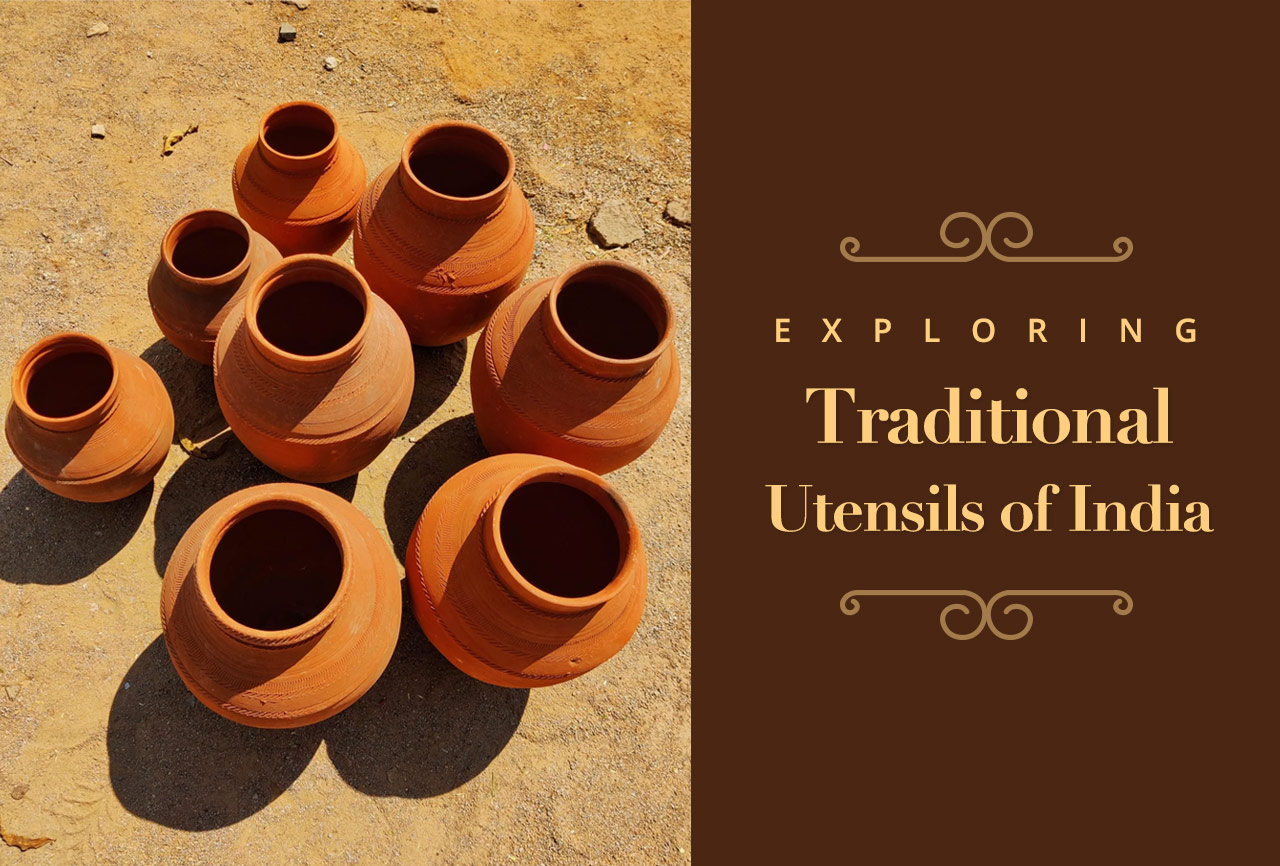
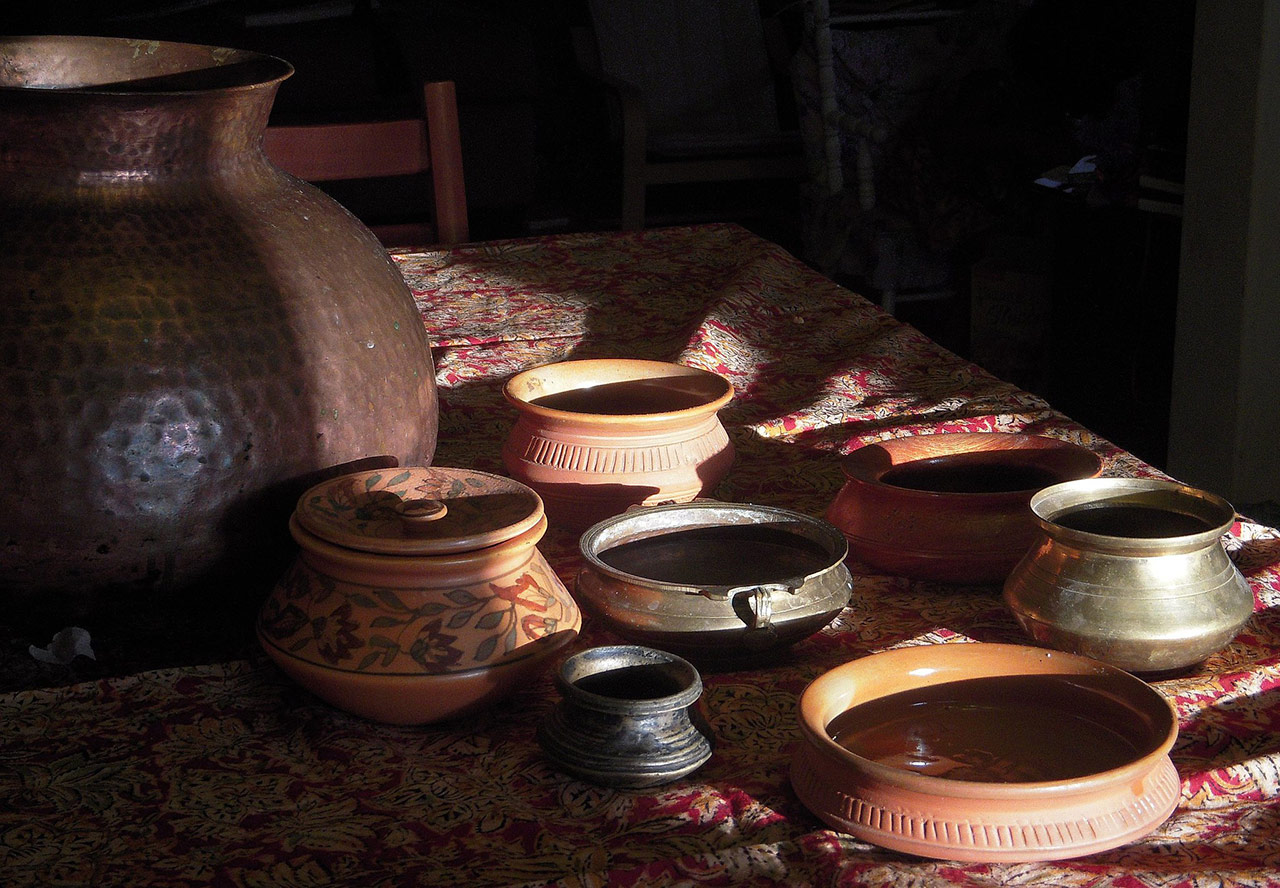
India, being a culturally rich and diverse country, has traditionally produced a wide array of utensils that reflect its deep culinary traditions. These utensils are handcrafted from materials like copper, brass, and clay. From the rural kitchens of Kerala to the royal kitchens of Rajasthan, traditional utensils have been used continuously over many centuries, not only because they provide practicality in cooking but also because of the special flavors and health benefits they offer. In this article, let us take a look at few such traditional utensils of India that, even today, form an intrinsic part of Indian kitchens and stand as hallmarks of India’s rich heritage and wisdom in cooking.

Suggested Story: Types of Indian Cuisine: Celebrating the Diversity of India Food Culture

The Historical Significance of Traditional Indian Utensils

Significance-of-Traditional-Indian-Utensils
Image – Raj Kukreja/Flicker

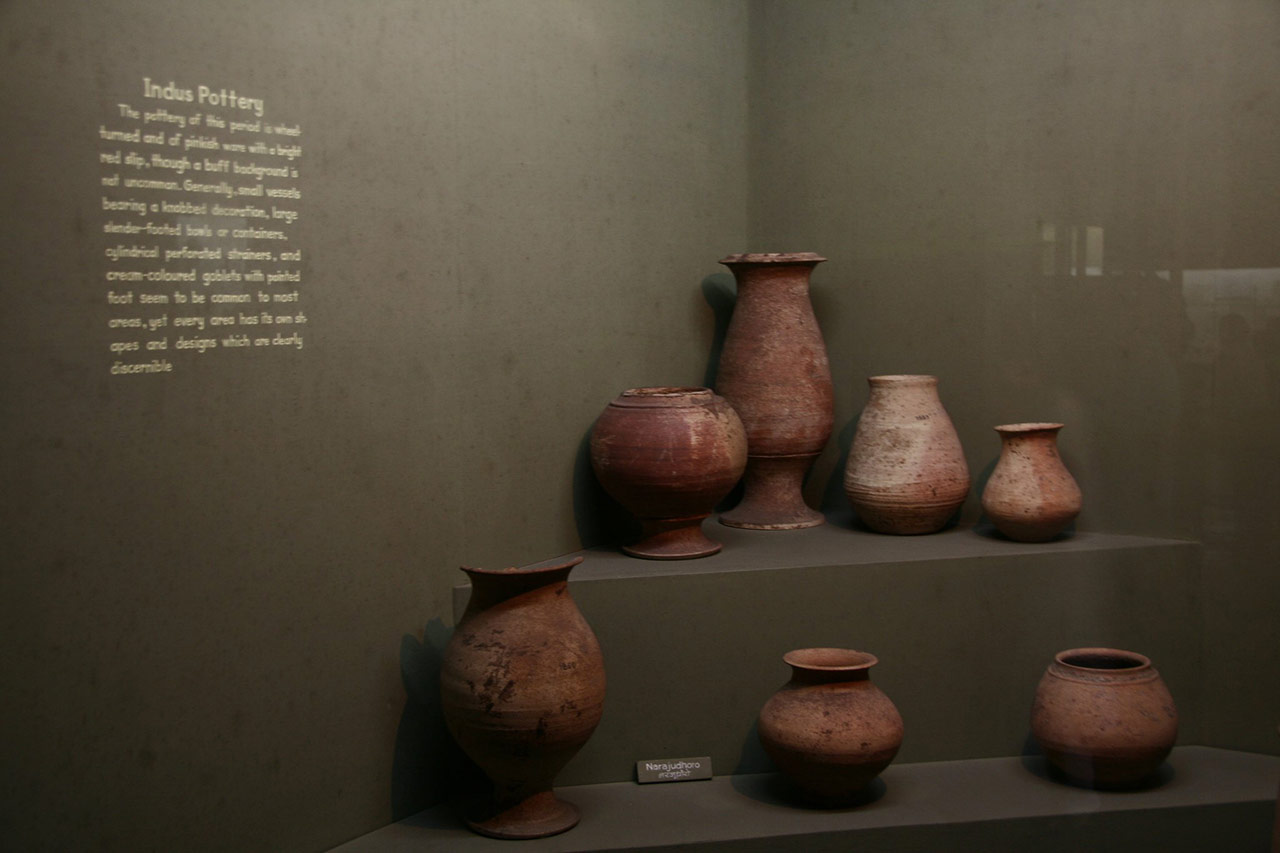
India has a great variety of utensils due to a very ancient history that dates back to times such as the Indus Valley Civilization, which first developed metallurgy.

Traditional utensils of India are made from locally available metals and reflect the culture and resources of the region. Copper and brass items are common throughout North India, while the southern region is more commonly associated with its distinctive clay pots and stone grinders. These metals were not just designed to cook but actually enrich the food with added nourishment, as it was believed that certain metals imparted vital minerals to food.

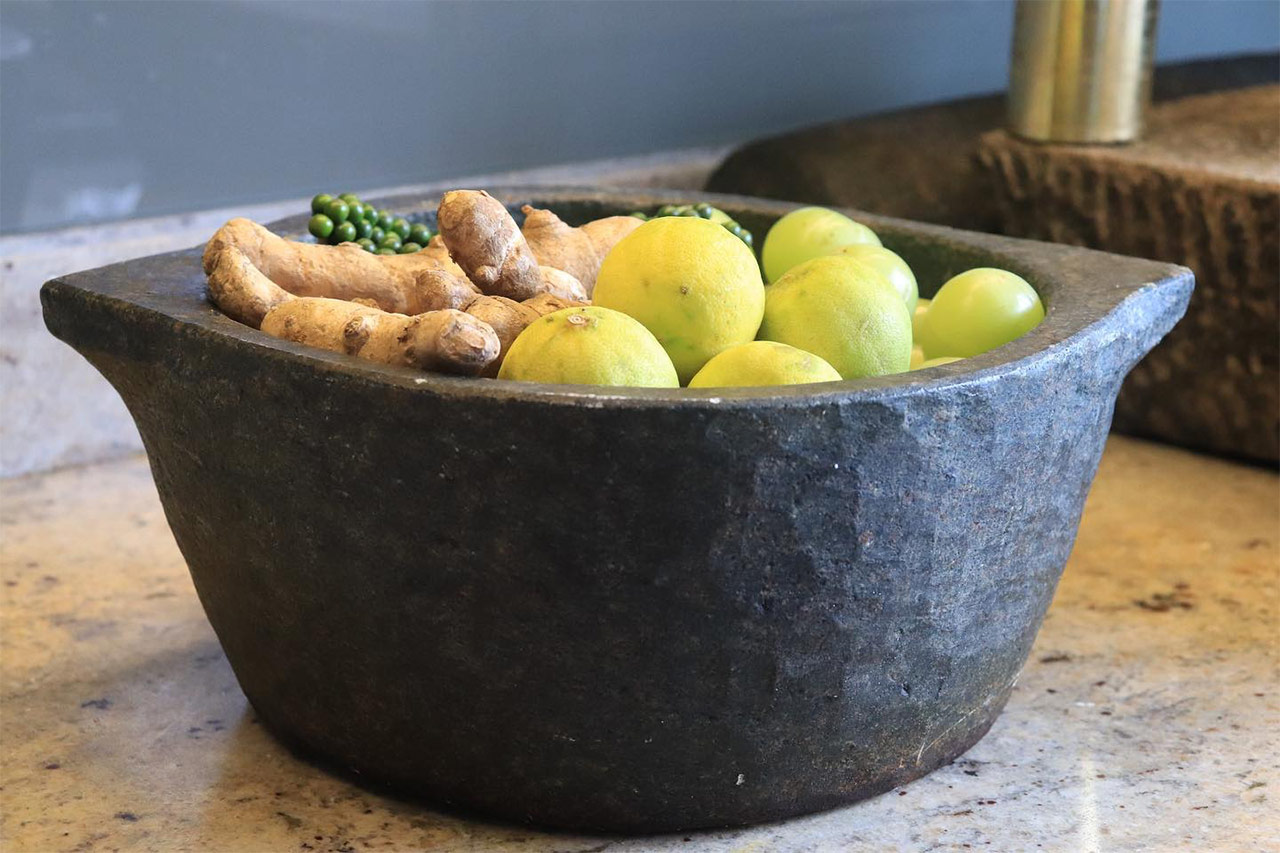
1. Kalchatti (Stone Pot)

Traditional-Utensils-of-India-Kalchatti
Curtesy – Soapstonecookwareofficial

Kalchatti is a stone pot made from soapstone, conventionally used in South Indian kitchens for slow-cooking curries, rasam, and sambhar. Soapstone has heat-resistant and porous natural properties, making it ideal for slow cooking. During the process of cooking, it retains the natural flavor and nutrient value of the food. Kalchattis need seasoning with rice water or oil before their first use to increase their durability and non-stick properties. Besides their functional value, these pots also hold aesthetic appeal and durability and are normally passed down through generations.

2. Parat (Wide Shallow Bowl)

Traditional-Utensils-of-India-Parat

A parat is a wide, shallow brass bowl used in many Indian households, especially in North India, for kneading dough or mixing ingredients for large meals. Its shallow design allows easy handling of large quantities of dough, especially while preparing rotis, puris, or parathas. Brass is known for its anti-microbial properties and toughness, making the parat both hygienic and durable enough to be used as a long-lasting kitchen item. Even today, it is widely used on special occasions, festivals, or family gatherings.

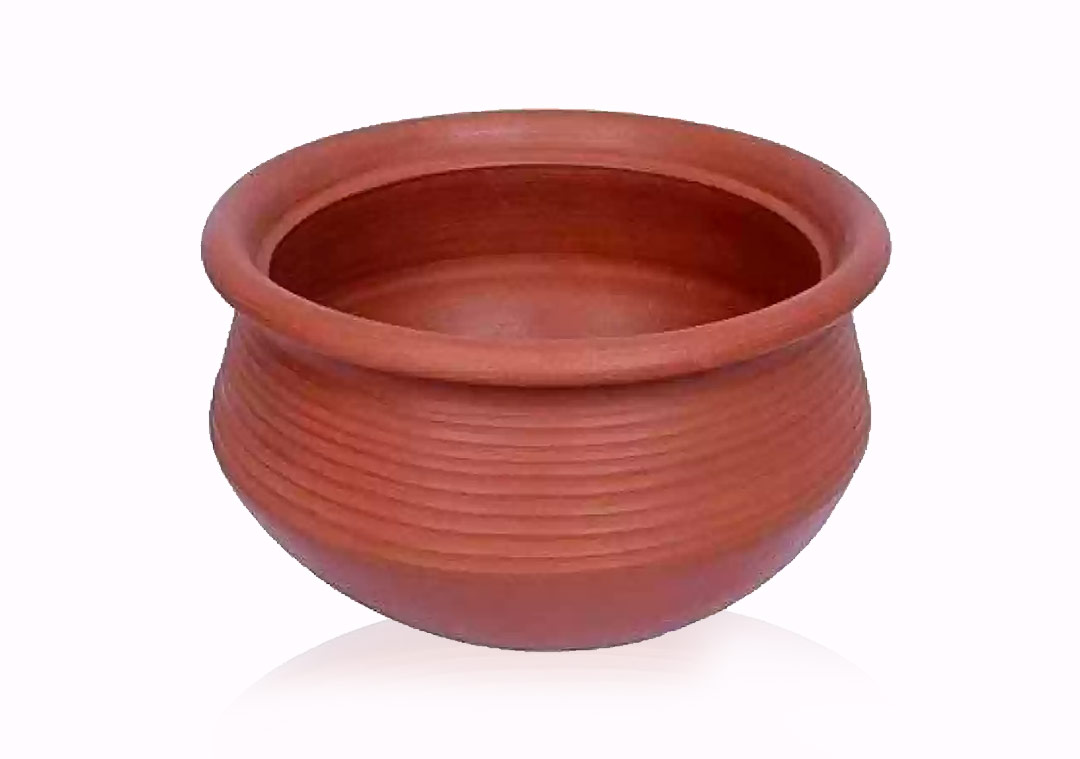
3. Handi (Clay Pot)

Traditional-Utensils-of-India-Handi-Clay-Pot

The handi is a clay pot with a wide base and a narrow neck, used throughout India for slow cooking. It is known for locking in moisture and heat, making it perfect for preparing dishes like biryani, curries, or stews. Since the clay is porous, moisture circulates inside the pot, ensuring even cooking. The earthiness of the handi subtly enhances the flavor of the dishes cooked in it.

4. Sil Batta (Grinding Stone)

Traditional-Utensils-of-India-Sil-Batta

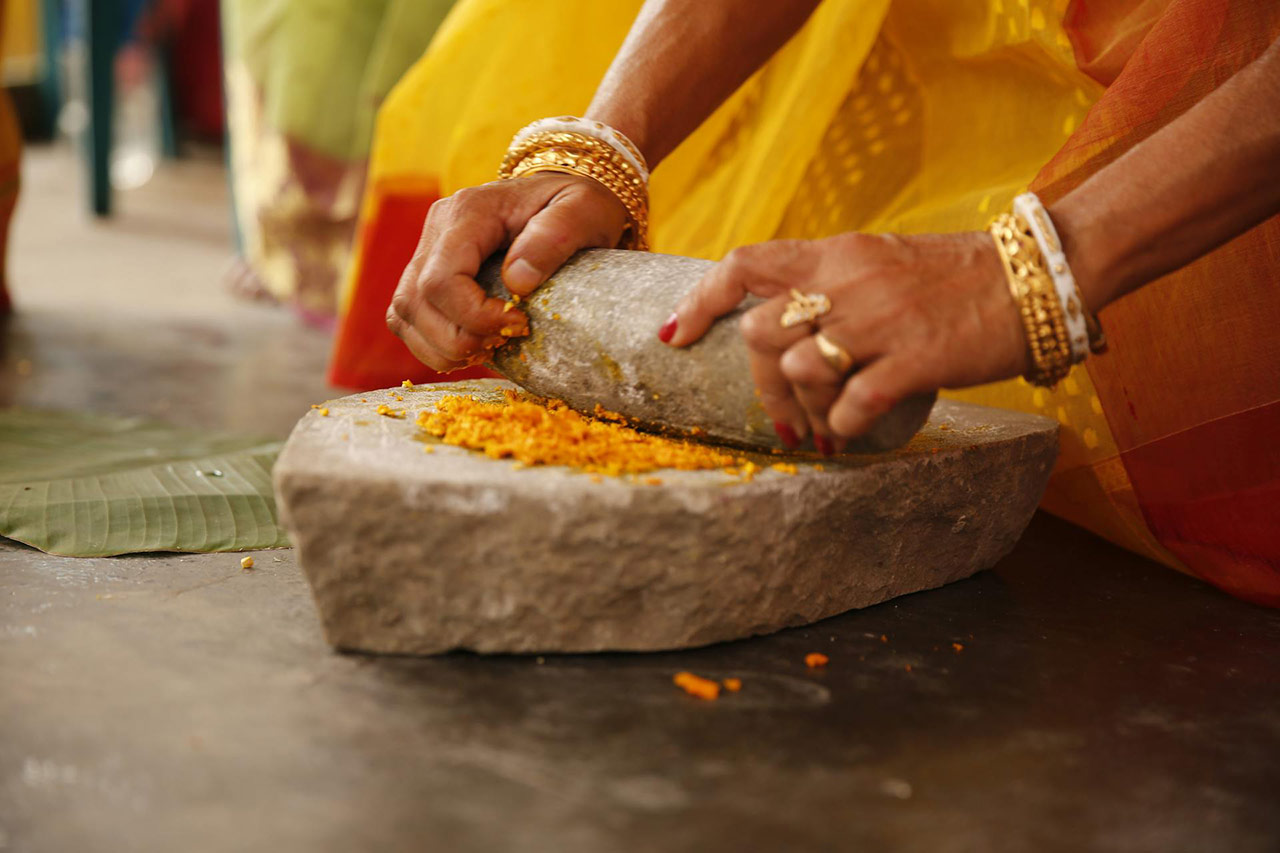
The sil batta is a traditional tool used for manually grinding spices, chutneys, and pastes. The sil refers to the flat grinding surface, and the batta is the grinding stone used to crush ingredients. This traditional tool is still preferred by many households over modern grinders because it extracts flavors more intensely. The grinding action releases oils and aromas that are difficult to achieve with an electric blender.

5. Chakla-Belan (Rolling Board and Pin)

Traditional-Utensils-of-India-Chakla-Belan

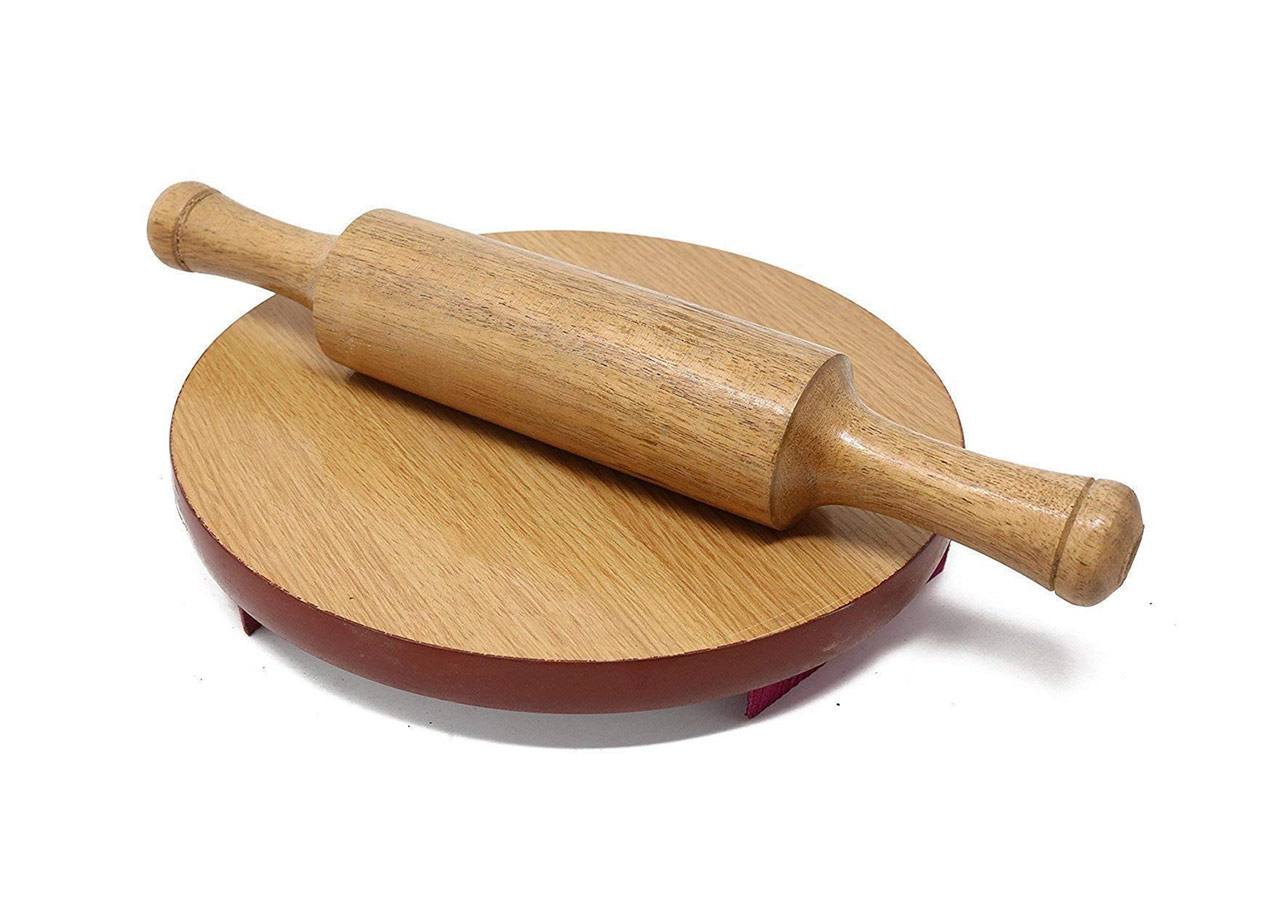
No Indian kitchen is complete without the chakla-belan, used for rolling dough for chapatis, parathas, puris, and more. The chakla is a round, flat rolling board, usually made of wood or marble, and the belan is a long, cylindrical rolling pin made of wood. The smooth surface of the chakla ensures uniform rolling, while the belan allows control over the dough’s thickness.

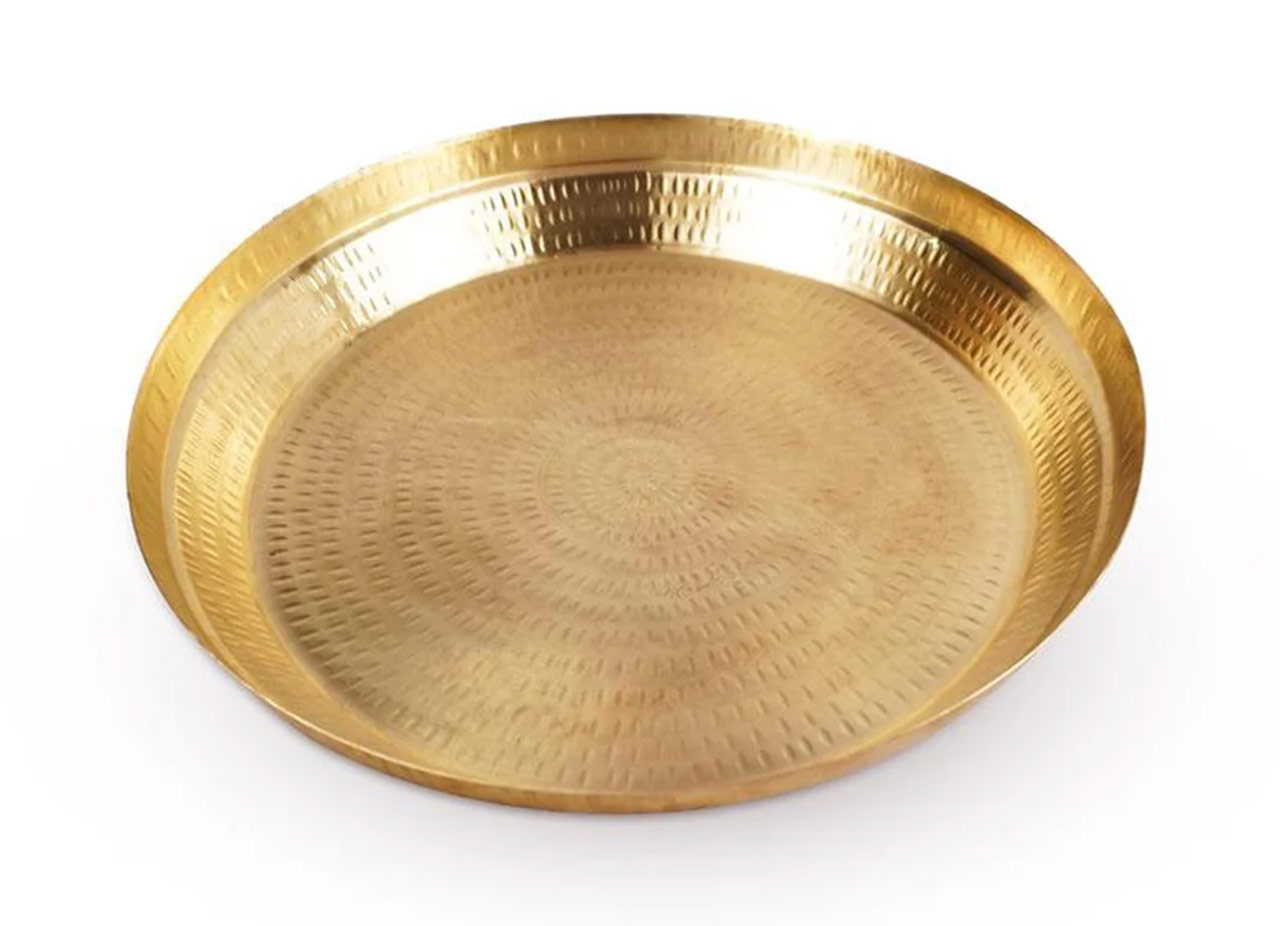
6. Kansa Thali (Bronze Plate)

Traditional-Utensils-of-India-Thali
Image – Wikimedia

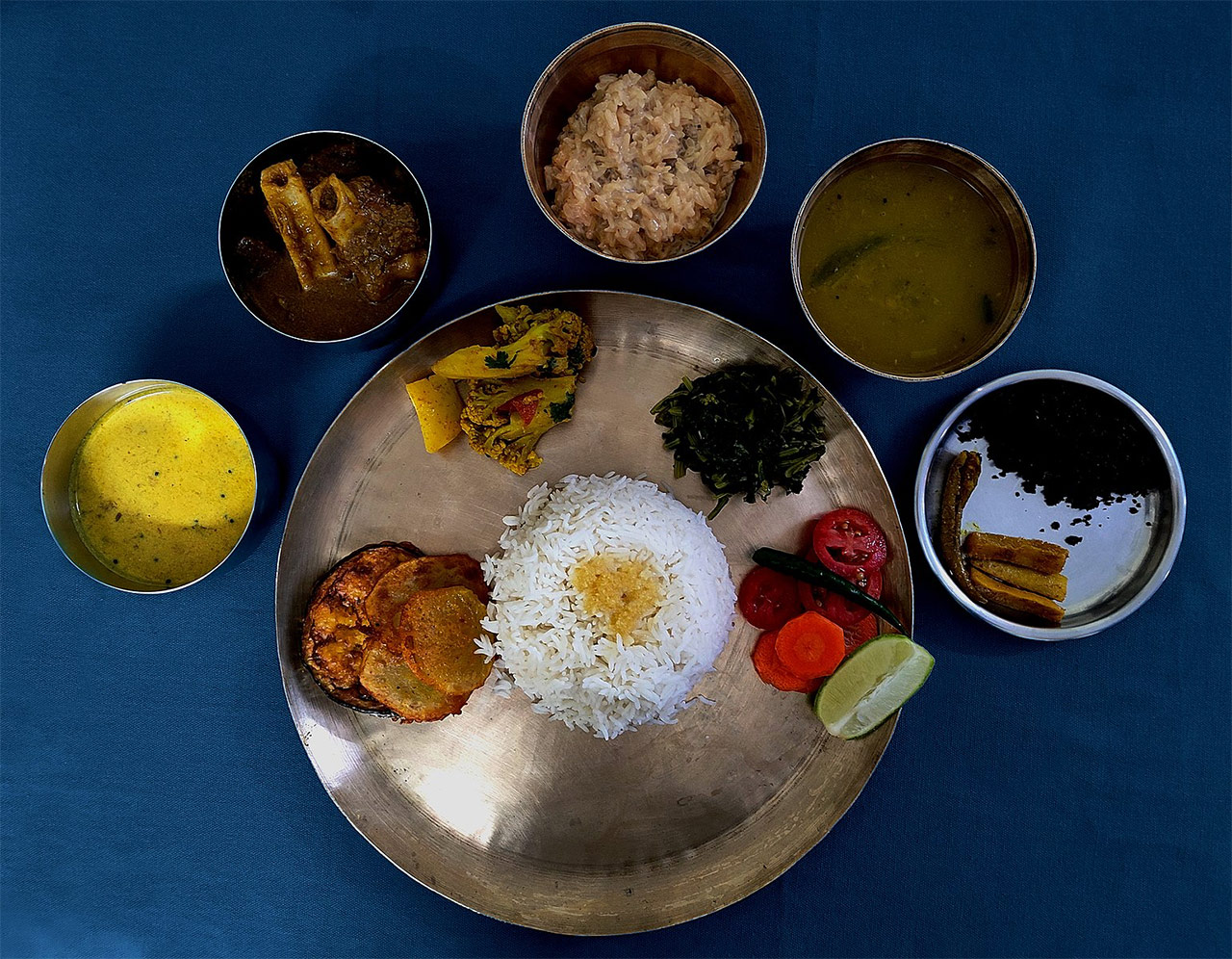
Kansa is an ancient alloy of copper and tin, considered very healthy. A Kansa thali is a plate used to serve meals in many traditional Indian families. Food that comes into contact with this metal is said to be purified, as it aids digestion and boosts immunity. Kansa thalis are commonly used during religious events, festivals, and special occasions, as they add a subtle metallic taste to food, enhancing its flavor.

7. Matka (Earthen Water Pot)

Traditional-Utensils-of-India-Matka
Image – Anant Nath Sharma/Flickr

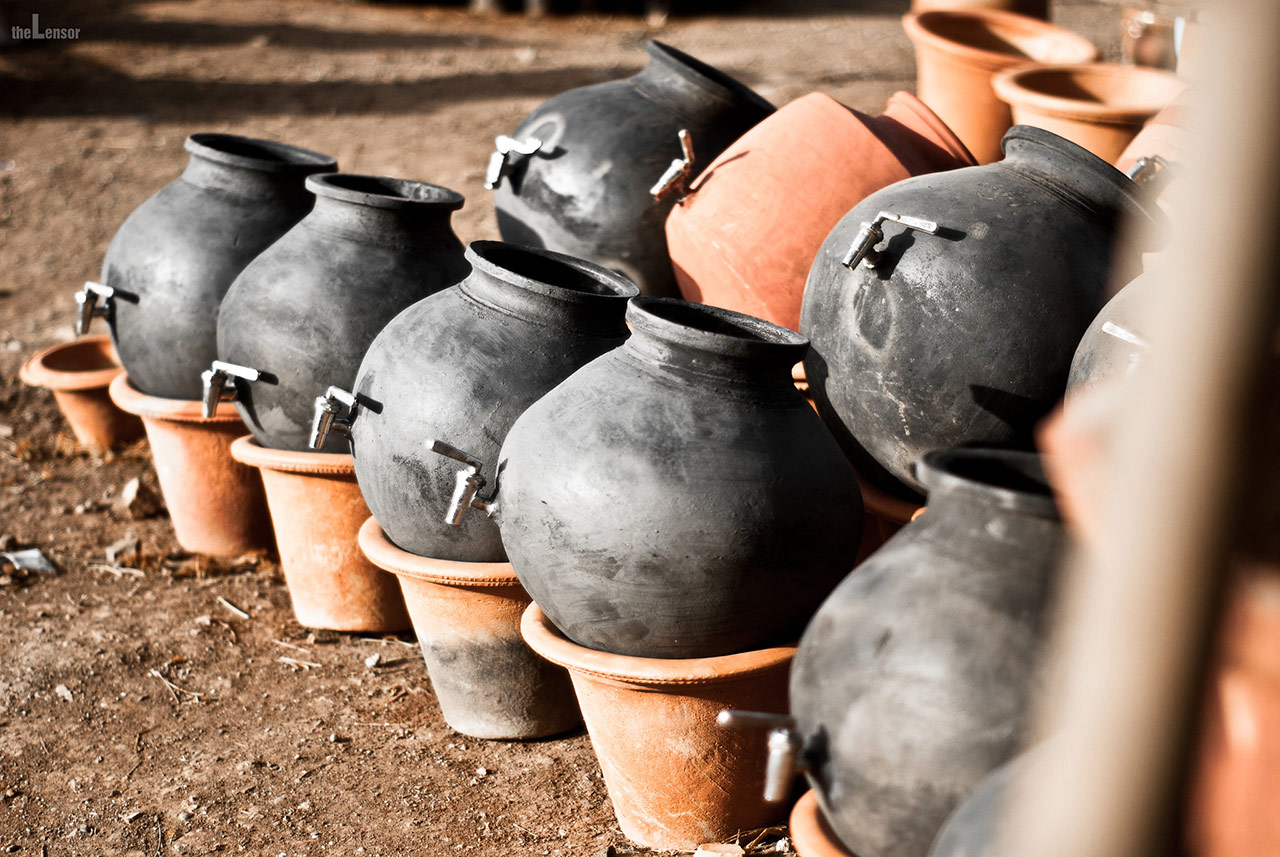
The matka is one of the most well-known traditional utensils in India, used to store drinking water. Its porous structure allows for natural evaporation, keeping the water cool without refrigeration. This eco-friendly and sustainable way of storing water imparts a distinct taste and maintains refreshing temperatures. Matkas are still widely used today, especially in rural areas, and are an integral part of Indian sustainable living.

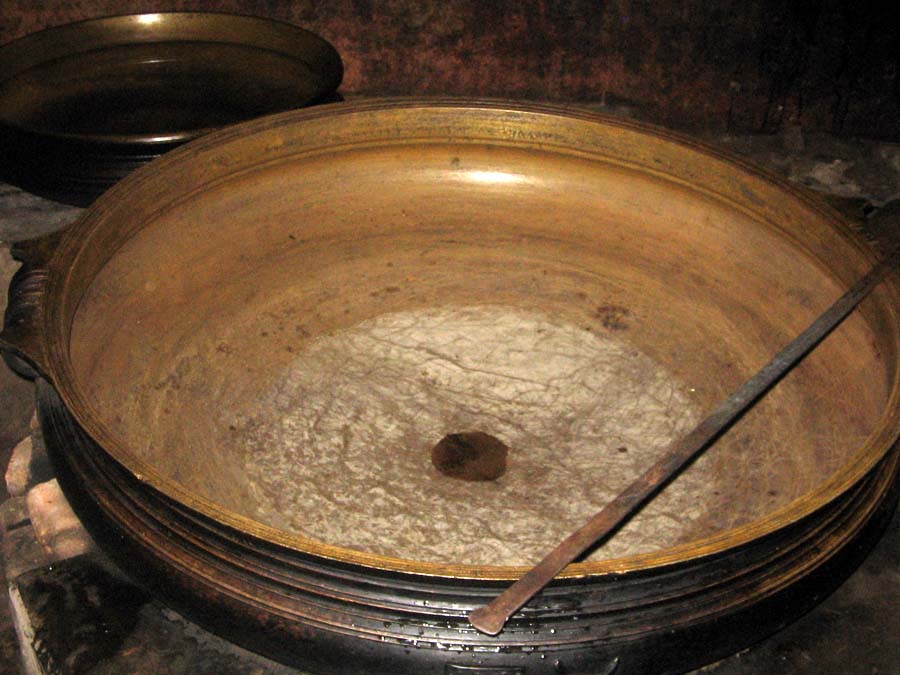
8. Uruli (Large Brass Vessel)

Traditional-Utensils-of-India-Uruli
Image – Wikimedia

The uruli is a shallow, multi-purpose cooking vessel traditionally made from brass or bronze, commonly used in Kerala and Tamil Nadu. With its wide, round base, it allows even heat distribution, making it ideal for frying, roasting, or slow cooking. It is often used for preparing payasam (a sweet dish) or frying ingredients for curries and stews. Due to its size and stability, the uruli is frequently used during festive occasions, weddings, and large gatherings.

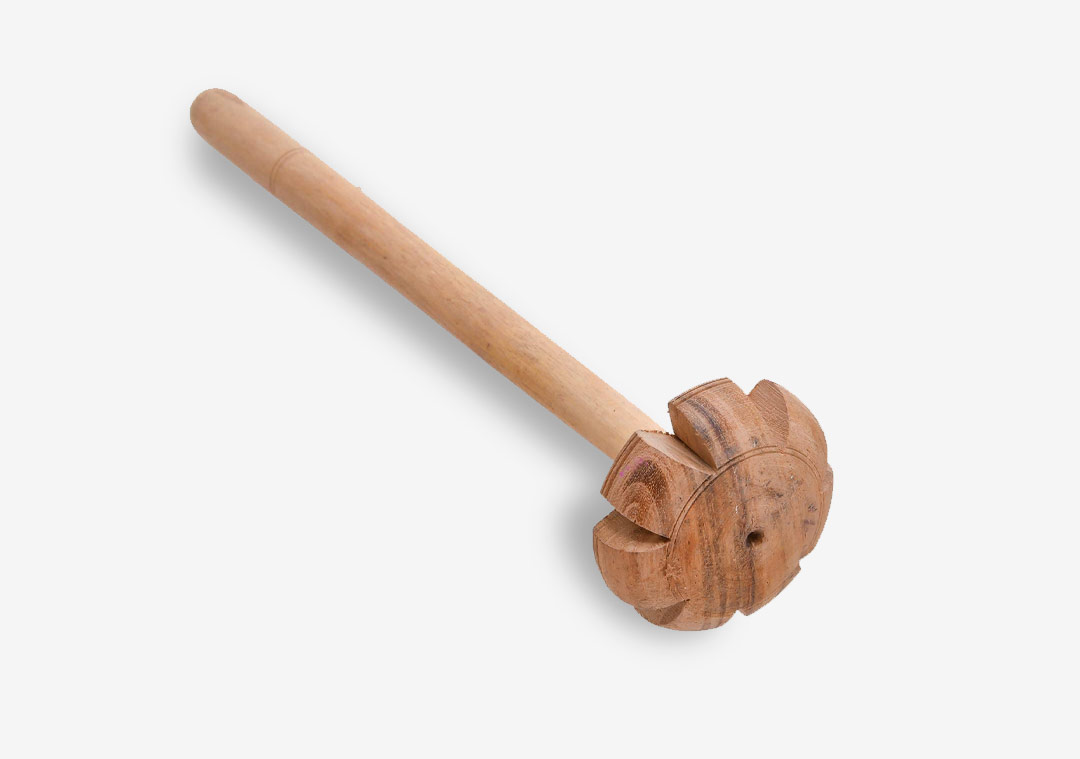
9. Churner (Mathni/Ghotni/Phirni)

Traditional-Utensils-of-India-Mathni

The churner, also known as mathni, ghotni, or phirni, is a small wooden or metal tool used for churning buttermilk, cream, or curd. Operated by hand-twisting the handle between the palms, it creates a turning action that separates butter from curd or froths buttermilk. Popular in rural households, the churner is used to prepare traditional drinks like lassi and chaas, representing a simple form of green food processing.

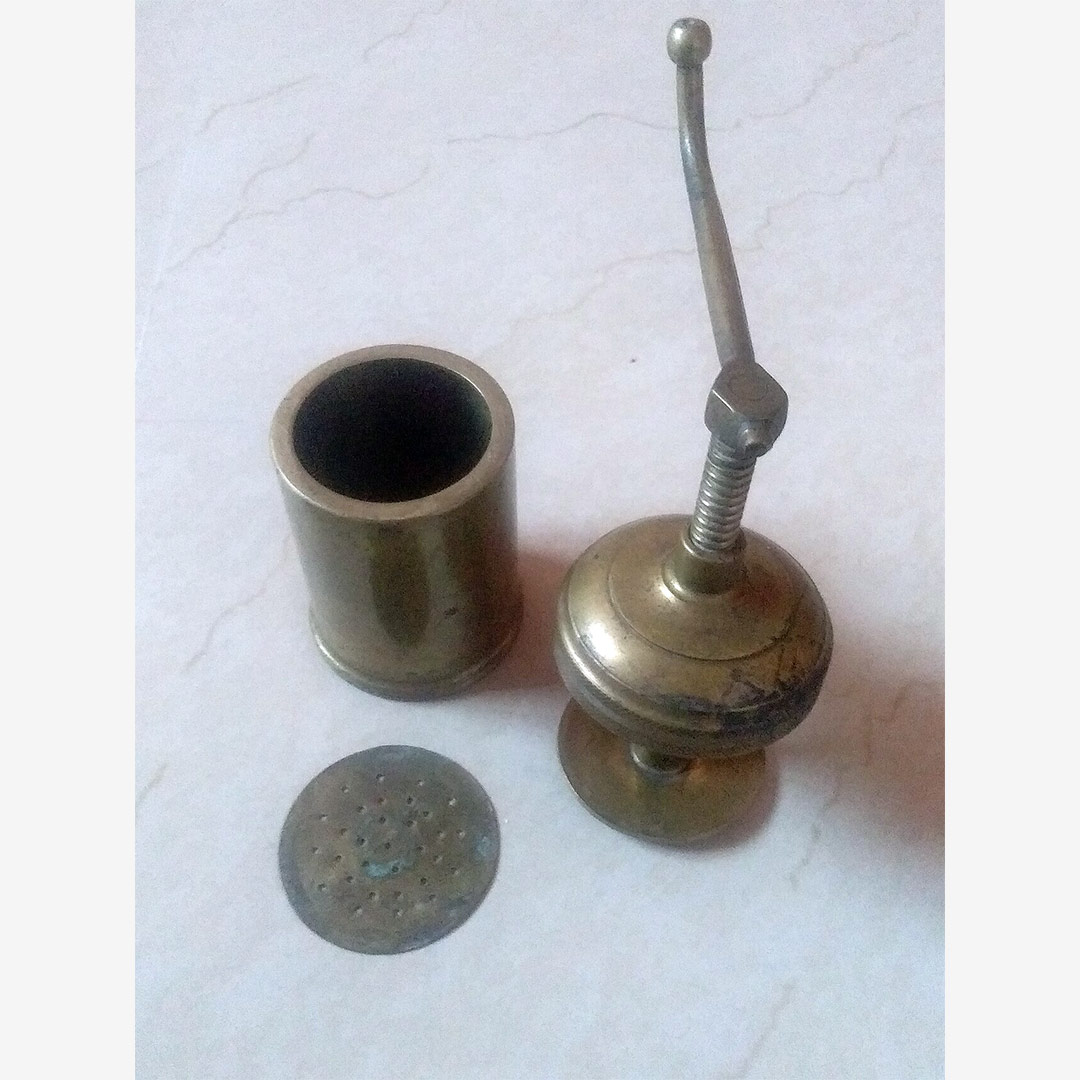
10. Idiyappam Press (String Hopper Maker)

Traditional-Utensils-of-India-Idiyappam-Press
Image – Wikimedia

The idiyappam press is a traditional South Indian tool used to shape rice flour dough into string hoppers, known as idiyappam. It is used to extrude the dough into fine noodles, which are steamed and served with coconut-based curries. Typically made of brass or stainless steel, this press is an essential utensil in many South Indian homes, especially for breakfast preparations.

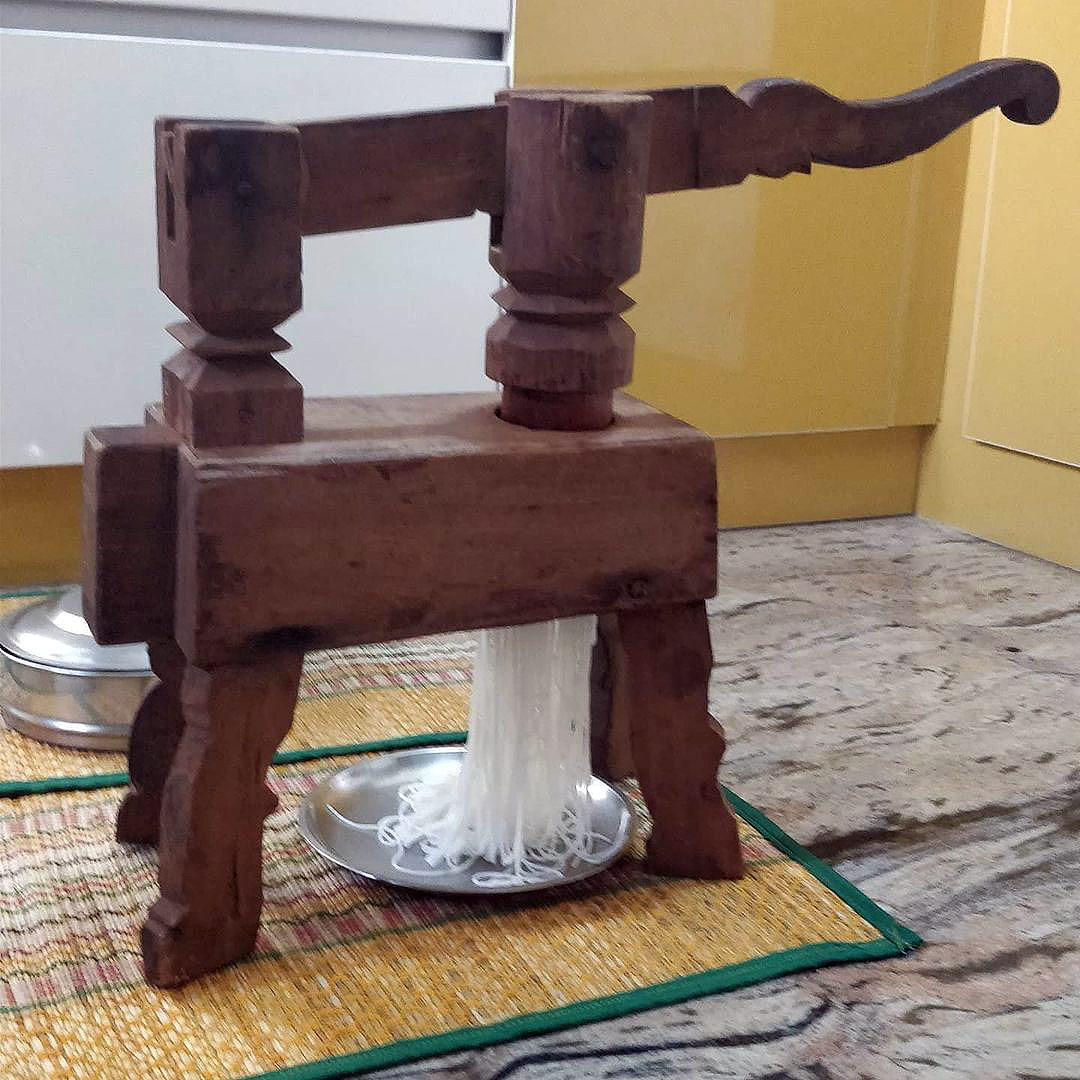
11. Sevai Maker (Rice Noodle Press)

Traditional-Utensils-of-India-Sevai-Maker
Image – Wikimedia

Similar to the idiyappam press, the sevai maker is used for pressing boiled rice dough into thin strands. These strands are further steamed and served with various chutneys and coconut milk. The sevai maker is a commonly used traditional utensil in South Indian kitchens for preparing rice noodles.

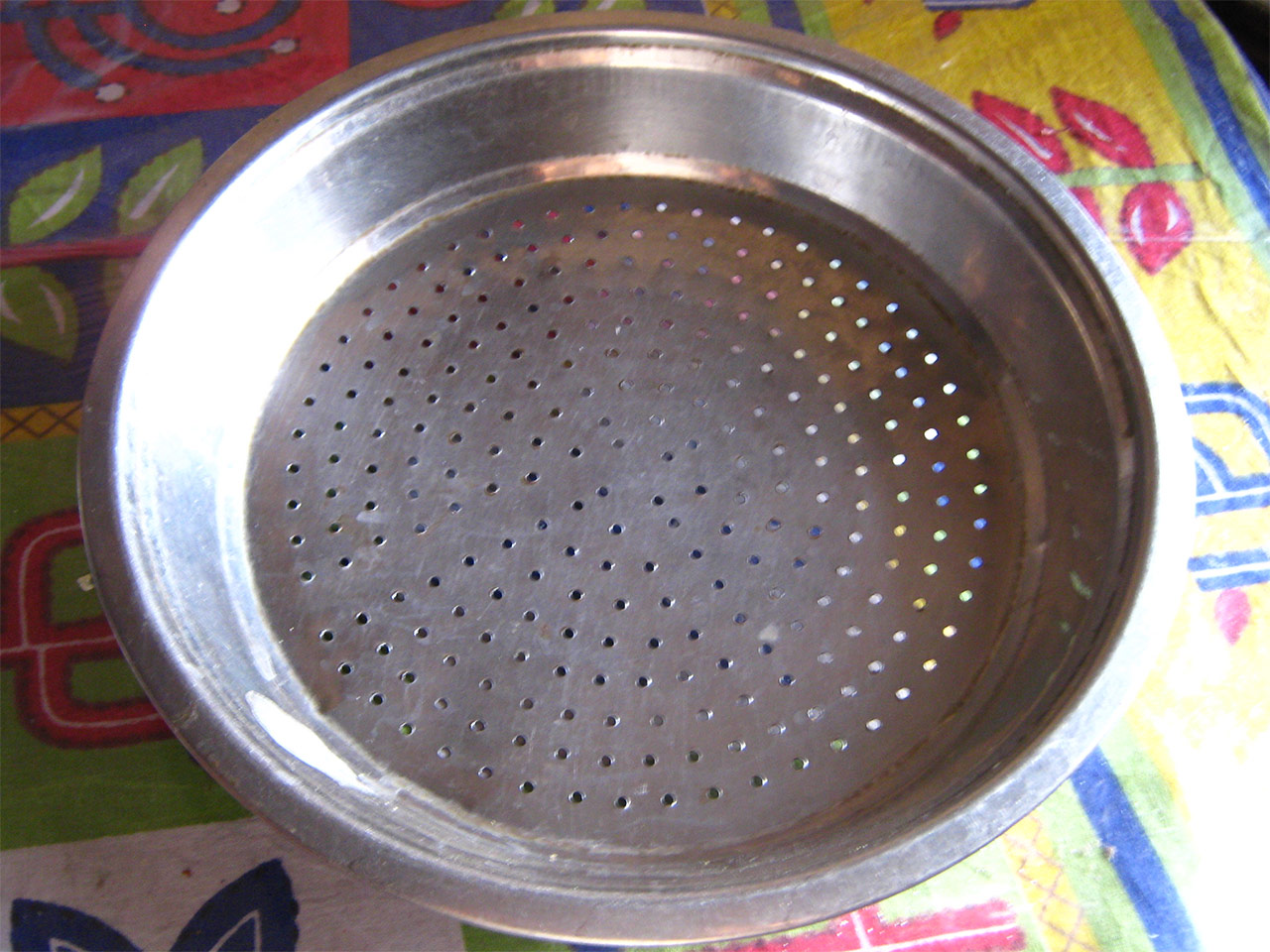
12. Colander (Chalni)

Traditional-Utensils-of-India-Chalni
Image – Wikimedia

The colander, also known as chalni, is a traditional Indian utensil used to drain water from boiled food, rice, vegetables, or similar items. Typically made of stainless steel, modern versions are available in bright-colored ceramic or powder-coated varieties. In Indian households, the colander is frequently used for washing grains, filtering liquids, and removing excess oil from fried items like pakoras.

Conclusion

Traditional-Utensils-of-India-01
Image – lorises/Flickr

The traditional utensils of India are not just tools for cooking but represent the core of the country’s cultural and culinary history. Passed down through generations, these utensils reflect ancient methods of preparing and enjoying food.

These ancient tools are still found in many kitchens today, reminding us of simpler, more sustainable ways of cooking and living. Whether for their practical benefits or cultural significance, traditional utensils continue to be cherished and valued.

Frequently Asked Questions

What are the health benefits of using traditional Indian utensils?

Traditional utensils made from brass, copper, clay, and iron are said to be much healthier. Copper and brass have antimicrobial properties, while clay pots help retain the nutrients in food. Iron cookware imparts some iron into the food, enhancing iron intake and preventing diseases like anemia.

Why do clay pots give food a special flavor?

Since clay pots are porous, they allow equal distribution of heat and moisture during cooking. This slow and natural method of cooking infuses the food with an earthy aroma that is hard to achieve with modern metal utensils.

How do you care for brass and copper utensils?

Brass and copper utensils should be cleaned regularly to prevent tarnishing. Diluted lemon juice with salt or tamarind pulp can be used for cleaning. After washing, they should be dried immediately to prevent corrosion.

Are traditional utensils still used in modern Indian kitchens?

Yes, many traditional utensils are still used in modern Indian kitchens. People often prefer utensils like sil batta, chakla-belan, and handi due to their unique culinary advantages.

What is the significance of Kansa utensils in Indian culture?

Kansa utensils hold significant cultural and health value in Indian tradition. It is believed that eating from Kansa thalis improves digestion and boosts immunity. These metal plates are often used during religious functions and festivals.

Kavad Art: Tales Unfolded in Traditional Art Form of Rajasthan

0
Kavad Art of Rajasthani
Image – Wikimedia

Rajasthan is a state in northwestern India known for its rich cultural heritage and vibrant art forms. From intricate miniature paintings to colourful textiles, Rajasthan has a long and varied artistic tradition that has captivated people around the world. Among the many forms of Rajasthani art, one of the most unique and fascinating is Kavad art. Kavad art is a form of storytelling that has been passed down through generations of artists and storytellers.

Kavad Art History

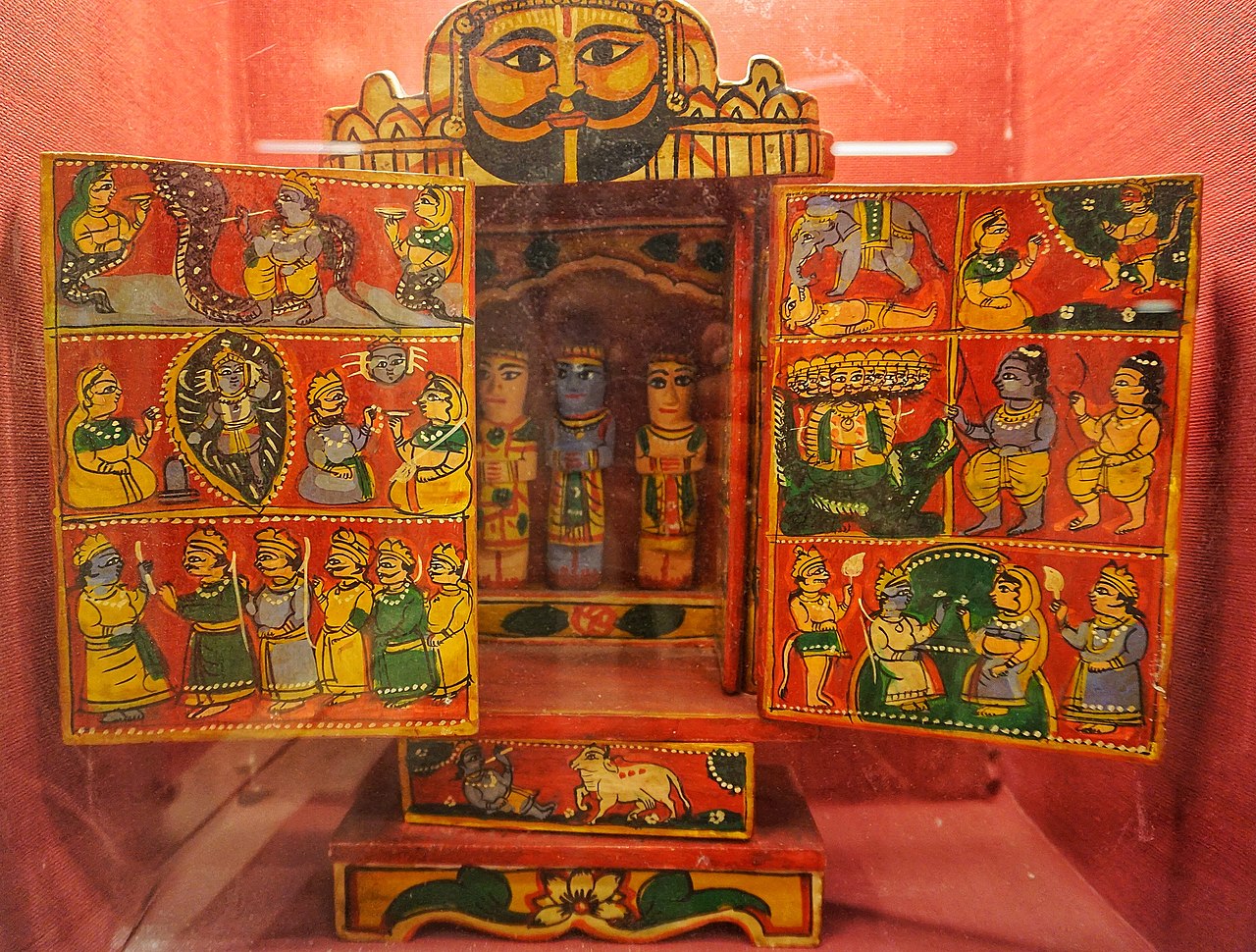
Kavad art is a traditional form of storytelling that originated in Rajasthan. It dates back to the sixteenth century, Kavads are portable shrines made of wood that contain several panels or doors that can be opened and closed. The Kavad tradition is a complex one with carpentry, artistry and storytelling rolled into one art.

It finds indirect mentions in religious texts like Tarikh-i-Firoz-Shahi of Afif, where it is referred to as a ‘Muhrik’ – a wooden table covered with paintings inside and out.

Etymology

Etymology-of-Kavad-Art

The word ‘Kavad’ is derived from the Hindi word ‘kavach’, which means ‘armour’ or ‘protection’. Kavads were originally used as portable shrines by itinerant bards who would travel from village to village to tell stories and sing songs, and for people. Over time, the Kavads evolved into complex works of art that were highly valued by the people of Rajasthan.

Kavad Art Community 

Kavad-Art-Community

The community doing the woodwork are called Suthars, and the artists- chitrakars. Usually, the artist and the carpenter are the same person. The Suthars who make the Kavads are believed to be the descendants of Vishwakarma himself, the celestial architect. However, the narration of the stories is done by a different community, known as the Kavadiya Bhats. The Suthars work closely with the bards to create Kavads that are tailored to their specific needs. The bards would provide the Suthars with a list of stories that they wanted to tell, and the Suthars would paint the appropriate scenes on the Kavad.

Cultural significance of Kavad Art

Cultural-significance-of-Kavad-Art

The Kavad is an important part of Rajasthan’s cultural heritage and is used for a variety of purposes. It is often used in religious ceremonies and festivals. The Kavad is carried in processions and is used as a focal point for prayers and offerings. It is also used in puppet shows and other forms of folk theatre. The Kavad is an important source of livelihood for the Suthars, who sell their creations to collectors and tourists.

The Kavad is not just a work of art, but also a repository of knowledge. The paintings on the Kavad are used to tell stories and convey important messages. The bards who use the Kavad to tell stories, the Bhats,  are highly respected members of their communities. They are often called upon to resolve disputes and provide guidance in matters of faith and morality.

Kavad Art Process

Kavad-Art-Process

The Kavad is usually made of mango or semla wood and consists of several panels that are hinged together. The panels can be opened and closed like the doors of a cupboard, unravelling new facets of the story as the cupboard itself unravels. The number of panels usually ranges from ten to sixteen- based on the complexity of the story being told. The Kavad is painted with scenes from Hindu mythology, local folklore, and historical events. The paintings are usually done in bright colours using natural dyes and pigments, but today, acrylic is the popular medium for its vibrancy. The Kavad is often embellished with mirrors, beads, and other decorative elements.

The first step to making the Kavads is fashioning the basic structure and the multiple panels out of wood, which is done with basic tools by the Suthars. The panels are later attached with hinges. The wood is thoroughly smoothened by sanding. Then, the artist begins painting, traditionally using natural colours. Today, mineral colours mixed with tree resin are the most common, and even acrylic paints are used. Traditionally, Kavads were always made on a red background, but today, they are made to cater to a variety of tastes.

The most impressive component of Kavad making is painting the main theme. The outlines of the people, Gods and objects are all made free hand, with great precision. This requires years of training and skill.

Prominent Artists in Kavad Art

Prominent-Artists-in-Kavad-Art

One of the most famous Suthars today is Dwaraka Prasad Jangid, who is based in the Chittorgarh district of Rajasthan. Dwaraka Prasad Jangid learned the craft and carried it forward from his father and grandfather. He includes a wide range of themes in his work, from Hindu mythological scenes from the Ramayana and the Mahabharata, and also includes social themes and scenes from everyday life. One of his Kavads included the millennium development goals of the United Nations. Another one of his works, a twenty five feet Kavad, was featured in the 2014 Republic Day Parade tableau of Rajasthan.

Another famous Kavad artist is Sathyanarayana Suthar, who has won a national award for his works to preserve the craft. A Kavad made by him, depicting the life of an artist’s journey from the village to the city, has been exhibited in many locations across the world, including Paris, Delhi and Cairo. His Kavads have also been exhibited in Singapore.

Challenges

The Kavad tradition has faced several challenges in recent times. The rise of modern forms of entertainment such as television and the internet has led to a decline in the popularity of Kavads. The younger generation is often not interested in traditional forms of art and storytelling. The Suthars and bhats themselves are facing economic pressures, as the demand for Kavads has declined. Many of them have had to switch to other forms of work to make a living, and most practise farming and similar occupations alongside the art.

A Beginners’ Guide to DIY Ganesh Chaturthi Decoration at Home

0

DIY-Ganesh-Chaturthi-Decoration-at-Home-01

Ganesh Chaturthi is a celebration of the birth of the pot bellied remover of obstacles in Hindu tradition, Lord Ganesha. It is one of the most widely celebrated festivals all over India- crores of households sit together and pray to Ganesha on this auspicious day to bless their lives. There is a lot of preparation behind the pooja and the festival, the most important aspect of it being the decoration. Decoration is a very important element in Ganesh Chaturthi, creating a festive environment in and around the entire household. This article is the absolute beginners’ guide to traditional decoration for Ganesh Chaturthi!

Suggested Story: Eco-friendly Mahakaaya, Suryakoti Samaprabha!

Significance of Decoration in Ganesh Chaturthi

Significance-of-Decoration-in-Ganesh-Chaturthi

Decoration of homes for Ganesh Chaturthi begins not just with superficial decoration. Since it is a festival when Lord Ganesha is invited over, the preparations begin with efforts to clean one’s house thoroughly. Homes are organised, furniture, walls, windows and everythings are dusted and old and useless objects are discarded. All members of the household buy new clothing to ‘decorate’ themselves for the occasion. It is only after all of this that the house is decorated.

Traditional Decoration for Ganesh Chaturthi

DIY-Ganesh-Chaturthi-Decoration-at-Home-Flower-Bowl

For every festival, Indian homes are traditionally decorated with a wide range of minimalistic, affordable and sustainable accessories. Traditional Indian practices are sustainable without even making an effort to be so and are just as affordable. Besides, what better way can there be to celebrate Ganesh Chaturthi than respecting traditional methods of decoration? So, traditional decoration for Ganesh Chaturthi is a very viable option for everyone- from the old to the young and broke.

Ganesha Pandal

DIY-Ganesh-Chaturthi-Decoration-at-Home-Small-Pandal

The Ganesha Pandal is the most important part of Ganesh Chaturthi. At my home, a small panel of criss-crossed wooden canes was decorated and hung above the Lord. From this panel, a number of fruits and leaves said to be the favourites of Lord Ganesha would be hung to please him. A clay idol of the lord that we would make at home would be placed on a wooden peetham or low stool below on a bed of auspicious leaves including darbha grass. This is the traditional way to make your personal pandal, but of course, one can customise it.

You can choose to make a pandal with an antique feel by using brass lamps, idols and decor or you can make it earthy, minimalist and natural by using clay idols and flowers and plants. It is all up to you!

Mango leaves

DIY-Ganesh-Chaturthi-Decoration-at-Home-Using-Mango-Leaves

Mango leaves are a part of every Indian festival. They are generally hung beside doorways or as festoons on doorways. Mango leaves are of supreme importance in Indian culture, and are said to represent Goddess Lakshmi. Hence, they are hung to signify an auspicious and fresh welcome. Besides, the deep, lush green of the mango leaves is bound to uplift your mood and create a festive atmosphere in the house.

Marigold/Flower garlands

DIY-Ganesh-Chaturthi-Decoration-at-Home-Marigold and Flower Garlands

Marigold flower garlands are also an important part of every Indian festival. Every doorway has beautiful, bright orange marigold garlands tied to doorways, with dark green mango leaves complementing the deep orange hue of the marigolds. The Marigolds represent the radiance of the sun themselves and are a symbol of purity and auspiciousness for every Hindu home. If not available, other flowers are also a perfectly viable option – all flowers are sacred and festive in Hindu tradition.

Rangoli/muggu/kolam

DIY-Ganesh-Chaturthi-Decoration-at-Home-Rangoli

A Rangoli or a kolam is an intricate drawing made of coloured or plain rice flour in front of Indian houses. One of the most joyous parts of festivals in India is drawing intricate patterns with family members for hours while squatting at the doorsteps of our homes. Besides being a tradition, this is probably one of the most beautiful parts of Indian households during a festival, and is a must do!

Drawing made with coloured or uncoloured rice flour in the doorsteps of houses. It is so integral to the Hindu mind that a house without a Rangoli is considered bad luck. Rangolis are considered a symbol of luck and togetherness, since traditionally, women of the household came together to draw them amidst laughter and happiness. A Rangoli is a must for not just any festival, but for any day!

Lamps

DIY-Ganesh-Chaturthi-Decoration-at-Home-Using Lights

Lamps are an important symbol in the Hindu religion. They are symbolic of the victory of    the light over darkness, of victory against evil. Hence, what better day is there to light lamps on Ganesh Chaturthi, celebrating the God who removes all obstacles? Besides, lamps are an integral part of Ganesh Chaturthi traditions and Poojas either way, so they deserve to be a part of your Ganesh Chaturthi decorations. To add an extra sparkle to your house, you could also decorate it with clay lamps filled with ghee – cheap, easy and beautiful.

Add ons!

Eco friendly ganapati decoration
Parisara ganapati

Besides the traditional decor for Ganesh Chaturthi, one could always decide to get creative and add a few modern elements to the festival. For example, origami and papercraft decor is a great way to go! Paper lamps, flowers, festoons and handmade paper pandal back runners are some easy decor options. just a few things that can be made at home to add a little crafty bling to the festival!

Conclusion

DIY-Ganesh-Chaturthi-Decoration-at-Home-Using decorative vessels

This Ganesh Chaturthi, bring Lord Ganesha home to pray away all your troubles and worries. Happy Ganesh Chaturthi!

Suggested Story: Ganesha Sculpting: Travelling Traditions and Contemporary Adaptions

Decorating for Ganesh Chaturthi can be a delightful DIY project. Start by crafting eco-friendly clay idols of Lord Ganesha or repurpose existing ones. Create a vibrant ambiance with colorful rangoli designs made from rice flour or flower petals. String up decorative lights and traditional torans to enhance the festive spirit. Incorporate natural elements like fresh flowers and leaves for a fragrant and visually appealing altar. Personalize your decorations to infuse your home with the joy and spirituality of this auspicious Hindu festival.

If You Can Read This – Thank a Teacher!

0

‘A teacher takes a hand, opens a mind and touches a heart’.

Teachers-Day-India
Source

Reverence for teachers is a universal emotion. Everywhere in the world every generation is aware of the importance of a teacher. Teachers play a pivotal role in the development of a child and the influence of the teacher can be far and wide.

Celebrating Our Teachers

Many nations celebrate Teacher’s Day on different days in different ways, however, the first ever Teacher’s Day was celebrated in India in 1967 on the birthday of President Dr. Sarvepalli Radhakrishnan. A renowned and loved teacher himself, when his young students requested to celebrate his birthday, Dr. Radhakrishnan replied saying it would be a ‘proud privilege’ if instead of celebrating his birthday alone the day would be marked and celebrated in honor of all teachers of the nation. And hence, on 5th September was born Teacher’s Day defined by much fervor, frolic and respect on the Indian school calendar.

Ancient History of Learning

Teacher's-Day-India
Source – Scoopwhoop.com

It is no surprise that India started celebrating Teacher’s Day much before many other nations of the world, since historically the subcontinent has always been associated with a beautiful relationship between a teacher and his students. The Guru Shishya relation is described as early as in the Mahabharatha where Eklavya idolizes his Guru Drona’s symbolic statue and self learns the art of archery. In spite of learning the skill himself, he maintains that the Guru Drona is his true teacher and cuts off this right thumb as Guru Dakshina. The idea that the image of a true teacher in one’s heart inspires and guides a student onto the path of learning has long been the crux of education. Because in the Indian culture, acquiring knowledge is given utmost importance and the teacher who imparts that knowledge is no lesser than the divine. The respect regarded to the giver of knowledge and education is hence of the highest accord, sometimes also surpassing that of parents.

The renowned and earliest universities of the world at Taxila and Nalanda also believed in Guru Dakshina. Students who could not afford education were also taught by the teachers yet each of the students had to as a mark of respect offer the Guru some form of ‘dakshina’ or ‘offering’ for the priceless accumulation of an education.

Suggested Story: Benefits of Gurukul Education Above Conventional Education

Modern History of Learning

Ruins-of-Taxila
Source – Wikimedia

Though modern educational centers do not follow any form of Guru Dakshina as such, the reverence for teachers has managed to stay at an exalted position. Even today students rise up from their seats and wish the teacher when he or she enters the classroom. It is considered good manners to greet a teacher if he or she is met outside the classroom environment. In many schools and tuitions, children bend down and touch the feet of the masters as a sign of respect. And interestingly, the scope of teaching is not limited to studies or books alone. A teacher is anyone who imparts knowledge and skill on any aspect of life and hence, a dance teacher, a karate teacher, a language teacher and also a religious teacher are all bracketed together with the same reverence and humbleness.

Suggested Story: Remembering our Teachers

Teachers’ Day Celebration in School

Teacher’s Day is hence celebrated in all schools and by all children as a reminder to nurture these sentiments towards their teachers. Most of the times, the celebrations are the usual, a song or dance or skit performed by the kids, classrooms decorated, teachers offered gifts or flowers and so on. However, the outward manifestation may be limited to a few standard ways of celebration, but the impact and importance of valuing the relation between a teacher and student is reinforced with added enthusiasm on this day. And thus, Dr. Radhakrishnan needs to be heart fully thanked for teaching his students even in the advent of a personal celebration, to incorporate the larger group of the profession of teachers and pay their respect. The day though just a single day in the calendar year, is looked upon with excitement by both students and teachers who may have lost the meaning of true teaching and learning in the daily grind of a competitive fast moving world.

Sarvepalli-Radhakrishnan
Source – Wikimedia

Of course with changing times and the commercialization of education, the art of teaching has relegated considerably and so has the quality of the students. In the race to make money and have a career, education has along the way become more of a tool to learn facts rather than become a way of life as seen in the ancient Indian times. And it is hard to imagine another Eklavya being born in our modern times, who would happily forgo of his greatest asset on the command of his Guru, as much as it is hard to find a guru who would dedicate his entire life selflessly for the genuine growth of his pupils.

Suggested: Poem – To Our Beloved Teachers

One would argue that great teachers make great students and in many ways the dedication of Eklavya probably outshone and overshadowed that of his guru. He became a beacon of the ideal student.

Great of Teachers of India

cycle-guruji
Image Courtesy – Chhoti Si Asha

But modern India has also been lucky to witness some of its finest teachers in public life, such as, Dr. Radhakrishnan, Dr. APJ Abdul Kalam, Chanakya, Rabindranath Tagore, Swami Vivekananda and Savitri bai Phule. More recently, and though less famous, India has seen some of the finest amongst them who have taken upon themselves to educate the lesser fortunate, such as, Aditya Kumar also called ‘cycle guruji’ who rides a bicycle for kilometers every day to teach the children living in the slums of Lucknow, or Babar Ali who has been teaching in his make shift school since the age of 9, or Rajesh Kumar Sharma who runs a school under the Delhi Metro Bridge, the 80 year Vimla Kaul or the young Roshini Mukherjee who runs an online educational platform are only a few teachers who in their most unconventional ways are trying to bring true the right of universal education for all Indians.

But there are those countless teachers that have along our lives inspired us in school and college. Those few teachers that have remained in our memory long after school is over are the ones that we silently thank for in our prayers.

Takeaway

In the words of Dr. Radhakrishnan, ‘Teachers should be the best minds in the country.’ Wishing the best of our minds a Happy Teacher’s Day and hoping that they help fulfill the real definition of education, which is “the end product of education should be a free creative man, who can battle against historical circumstances and adversities of nature.”

Ganesha – Unique Images from the Pahari School of Painting

2

Ganesha-Images-from-the-Pahari-School-of-Painting-00

Ganesha is a much-revered god in Hinduism. He is an ishtadevata (favourite God) of many devotees and is worshipped by millions of Hindus across India. He is known as the remover of obstacles, Ganesha is offered ‘puja’ at the beginning of any new endeavour by Hindus. He is also called Ganapati, Ganaraya, Vinayaka, Vigneshwara among many other names. He is the God of intellect and wisdom. He became prominent as a deity in the 4th and 5th century. The scriptures dedicated to Ganapati are the Ganesha-purana, Mudgala-purana, Ganapati-atharvashirsha upanishad and Brahmandapurana. Ganesha is the son of Lord Shiva and Parvati. His vehicle is the big rat or mooshaka. He is the Lord of the ganas; semi-divine beings who are a part of Lord Shiva’s retinue. Ganesha is the only deity with an elephant’s head.  Worshipped before every new beginning and placed along with Goddess Lakhsmi mostly in shops and other establishments; Ganapati is also prayed to before embarking on a journey for a trouble-free experience and smooth transit.

Vakratunda Mahakaaya
Suryakoti Samaprabha
Nirvighnam Kuru Mey Deva
Sarva Kaaryeshu Sarvada

“The Lord with the curved trunk and a mighty body, who has the lustre of a million suns, I pray to thee Oh Lord, to remove the obstacles from all the actions I intend to perform” …. …. from the ‘Mudgalapurana’

Ganesha’s Unique Birth

Many stories exist regarding the birth of Ganapati. According to the Matsya Purana, Lord Shiva used to arrive during the bathing time of his consort Parvati, which used to annoy her. In order to stop this, she is believed to have taken the oils and other ointments along with the impurities from her body she formed it into a live boy-figure by sprinkling some water from the Ganges. She kept him to be her door keeper while she was bathing. Lord Shiva arrived and wanted entry. However, he was denied the same and a quarrel ensued. He got angry and cut of the boy’s head. Parvati came out and was very upset. Lord Shiva asked his attendants to get the first head that they could find to bring back the boy to life. The first head happened to be an elephant’s which was fixed on the boy’s trunk and he came back to life. This appeased Parvati and her son became Ganesha or Ganapati, the elephant headed God. There is another mythological story regarding the birth of Ganesha. Goddess Parvati is believed to have worshipped Lord Vishnu for a son. Lord Vishnu himself came to her as a boy-child. All the Gods came to congratulate her and fixed their gaze on the child. Only God Shani did not look at the boy as he was cursed that anything he fixed his gaze upon would perish. However, Parvati insisted and the moment Shani gazed upon the child, the child’s head flew off to Vaikunta. Parvati cursed Shani and was inconsolable. Lord Vishnu went in search of a head and came back with an elephant’s head. Parvati fixed it on the trunk of the child and Lord Brahma infused him with life.

Another story as per the Varaha Purana, Lord Shiva himself produced Ganesha, on request of holy sages to produce a being to combat obstacles. From Lord Shiva’s countenance emerged a beautiful young boy. Parvati got jealous of him and cursed him saying he will have an elephant’s head and a protruding belly. Lord Shiva blessed him saying he will be the leader of the ganas and everybody will worship him first on all occasions. Ganesha’s consorts Siddhi and Buddhi came to him by a competition with his brother Kartikeya. Both were asked to circle the entire world in order to win the maidens’ hand. While Kartikeya went off on his peacock, Ganesha simply quoted from sacred literature relating to geography that he had already done the tour. 

Lord Ganesha in the Pahari School

Lord Ganapati’s iconic representations are many. He has 32 forms. He is shown with a red countenance as ‘Rakta Ganesha’ in 15 forms to symbolise the brilliant shining effulgence of the rising sun. He may be shown standing, seated, dancing or with a musical instrument or on his mother’s lap. He is seen with two to sixteen arms in different representations. He has been well depicted in all schools of miniature painting. Let us check out some unique depictions of Ganesha from the Pahari Schools of miniature painting in India which flourished in the 17th to 19th centuries stretching from Jammu to Garhwal, in the sub-Himalayan India, through Himachal Pradesh. Pahari painting, meaning a painting from the hilly regions (pahar means a mountain/hill in Hindi), is used for a form done in miniature formats, from Basohli, Mankot, Nurpur, Chamba, Kangra, Guler, Mandi and Garhwal.

Four-armed Gaṇesha 

Ganesha-Unique-Images-from-the-Pahari-School-of-Painting-01
Four-armed Gaṇesha, Nurpur painting, circa 1810, Chandigarh Museum, India. Ganesha on a lotus pedestal. Image Source

A miniature of Nurpur school described by Martin-Dubost, Paul in Gaņeśa: The Enchanter of the Three Worlds’’ (1997) is as follows: “On a terrace leaning against a thick white bolster, Gaṇeśa is seated on a bed of pink lotus petals arranged on a low seat to the back of which is fixed a parasol. The elephant-faced god, with his body entirely red, is dressed in a yellow dhoti and a yellow scarf fringed with blue. Two white mice decorated with a pretty golden necklace salute Gaṇeśa by joining their tiny feet together. Gaṇeśa counts on his rosary in his lower right hand; his two upper hands brandish an axe and an elephant goad; his fourth hand holds the broken left tusk.” This miniature is at Chandigarh Museum, Chandigarh, India.

Ganesha on a Lotus Pedestal

Ganesha-Images-from-the-Pahari-School-of-Painting-02
Ganesha on a lotus pedestal, Guler painting, circa 1770-1805, Brooklyn Museum, U S A. Image Source

The god Ganesha is seated on a lotus pedestal on a marble terrace with trees on its sides and a grassland behind. Ganesha is painted a reddish-brown in this miniature painting from Guler. He is in ‘padmasana’ the lotus pose, wearing a white ‘dhoti’, a jewelled crown, long necklaces, armlets and bracelets. Ganesha has the crescent moon and a third eye, three of his four hands hold emblems – the elephant-goad, the axe, modak, a favourite sweet; the fourth hand is shown in the varada-mudra, a gesture of gifting. His vehicle mooshaka is not seen. The terrace is of white marble with latticed railing. The painting has a dark blue border surrounded by a flecked pink border which adds to the composition. This could be the work of famous artist Nainsukh of that time. This painting is at the Brooklyn Museum, New York, U S A.

Ganesha Ready to Throw His Lotus 

Ganesha-Images-from-the-Pahari-School-of-Painting-03
Ganesha ready to throw his lotus, Basohli School, circa 1730, National Museum, New Delhi. Image: Wikimedia

A Basohli miniature painting described by Martin-Dubost, Paul in Gaņeśa: The Enchanter of the Three Worlds’’ (1997) is as follows: “Attired in an orange dhoti, his body is entirely red. On the three points of his tiny crown, budding lotuses have been fixed. Gaṇeśa holds in his two right hands the rosary and a cup filled with three modakas (a fourth substituted by the curving trunk is just about to be tasted). In his two left hands, Gaṇeśa holds a large lotus above and an axe below, with its handle leaning against his shoulder. In the Mudgalapurāṇa (VII, 70), in order to kill the demon of egotism (Mamāsura) who had attacked him, Gaṇeśa Vighnarāja throws his lotus at him. Unable to bear the fragrance of the divine flower, the demon surrenders to Gaṇeśa.” This amazing miniature is at the National Museum at New Delhi, India. It shows Mughal influence given the ‘mihrab’-like arch in the backdrop.

Indra Worships Ganesha

Ganesha-Images-from-the-Pahari-School-of-Painting-04
Indra worships Ganesha, from the Tehri-Garhwal series of the Gita- Govinda, circa. 1775–80, The Met, New York, U S A. Image Source

A very unique miniature showing Lord Indra, the king of the devas (god-like deities) and Svarga (heaven) in Hinduism. He is associated with the sky, lightning, weather, thunder, storms, rains, river flows, and war. He is bowing to Ganesha seated on a throne-seat under an ornate canopy.

Tatpurushaaya Vidmahe
Vakratundaaya Dheemahe
Tanno Danthihi Prachodayaat 

“We meditate on that super power, we invoke the single tusked boon giver, Ganesh”…Ganesh Gayatri mantra from the ‘Ganapati Atharvashirsha Upanishad’

 There is a floral and verdant backdrop to the composition. Ganesha wears a crown; all his emblems and his vehicle mooshaka is not seen, he holds a rosary in his front right and a modaka, his favourite sweet-dish in his front left hand and one in his trunk. This rare miniature from Tehri-Garhwal is at The Met, New York, U.S A.

Ganesha’s Bath

Ganesha-Images-from-the-Pahari-School-of-Painting-05
Ganesha’s bath, Kangra miniature painting, 18th century, Allahabad Museum, U.P, india. Image Source

This miniature painting from the Kangra School depicts a scenario happening on Mount Kailash, the abode of Shiva and Parvati. Ganesha, who is depicted red, is being bathed by his parents; Shiva is pouring the water while Parvati is bathing him. There are mountains in the background though they are in a green space with a flowering tree. Goddess Parvati is dressed in finery along with pearl jewellery and mahawar, a red lac dye on her hands. Shiva is shown with a garland of skulls holding a ‘kamandal’ like vessel from which he is pouring the water. This beautiful miniature capturing a domestic scene is from the Allahabad Museum, Prayagraj, India.

Simha Ganesha

Ganesha-Images-from-the-Pahari-School-of-Painting-06
Simha Ganesha, Kashmir (most probably Basohli), 18th century, British Library, London, U K. Image: Wikimedia

This miniature painting is one of 12 miniatures from a manuscript of Hindu rituals and devotional tracts written in the Sanskrit language, in Sarada script with 74 pages and kept in the British Library at London, U.K. In this composition Ganesha is sitting on a lotus throne carried by tigers, which is a very rare depiction in paintings. He is holding his emblems and has a snake around his neck. The composition shows Mughal influence with arches having ewers and flagons in the backdrop; also, an arch and some ‘parchinkari’ or pietra dura kind of inlay work design. The floral scroll adds beauty to the composition of Ganesha who is traversing a grassy floral landscape with his vehicle mooshaka.  Simha Ganesha has many forms. He maybe seated on a tiger and also display another lion, emblems could include a twig from the kalpavriksha, the musical instrument veena, a lotus flower, a floral bouquet and a pot of gems in his hands. He may have a mixed face of a lion and elephant. This form symbolizes courage and strength to the devotees.

Ganesh Panchayatana

Ganesha-Images-from-the-Pahari-School-of-Painting-07
Ganesha centric panchayatana, Kangra, circa 1800, The Walters Art Museum, U S A. Image: Wikimedia

This Kangra composition resembles an Indian ruler’s court with Ganesha as the main judge. But actually, it is a format of Ganesha panchayatana. Panchayatana puja has been attributed to Adi Shankara, the 8th century Hindu saint, but there is evidence that it might have been there before his birth. The form has Ganesha in the centre with Lord Shiva at top left, Durga or Adi Shakti at top right, Lord Vishnu at bottom left, and God Surya at the bottom right. The five gods represent five elements, ether, fire, air, earth and water. Lord Ganesha corresponds to water. 

In this composition there is a portable canopy held above the gods and a rich carpet is below. All are sitting on lotus thrones. The gods are seen with their emblems. This miniature is with Walters Art Museum, Maryland, U S A.

Vishnu with Lakshmi and Ganesha

Ganesha-Images-from-the-Pahari-School-of-Painting-08
Vishnu with Lakshmi and Ganesha, Chamba, Himachal Pradesh, circa 1725, LACMA, U S A. Image: Wikimedia

This drawing from Chamba shows Ganesha and Lord Vishnu and Goddess Lakshmi. It was meant to be filled with colour but is an unfinished composition. However, the drawing is very clear and we can see the emblems of the gods depicted. They are seated on lotus thrones with bolsters. This Pahari drawing is from the L A C M A, Los Angeles, U.S.A.

The Pahari School, an important miniature school of India comprising of artworks from princely states of Kangra, Guler, Nurpur, Basohli, Mankot, Nurpur, Chamba, Mandi and Garhwal on various subjects have also focused on Lord Ganesha, an iconic godhead in India and some other places of the world.

References –

  1. Thomas, P./Epics, myths and legends of India, Bombay: D. B. Taraporewala and Sons.
  2. https://www.lotussculpture.com/blog/32-forms-lord-ganesha-ganapati/ (accessed 14.9.2023) 
  3. https://www.hindujagruti.org/hinduism-for-kids/197.html(accessed 15.9.2023) 
  4. http://shanmatha.blogspot.com/2009/11/panchayatana-puja.html?m=1

(accessed 15.9.2023) 

  1. https://hinduism.stackexchange.com/questions/2953/what-is-the-origin-of-ganapathi-atharvasheersh (accessed 15.9.2023)