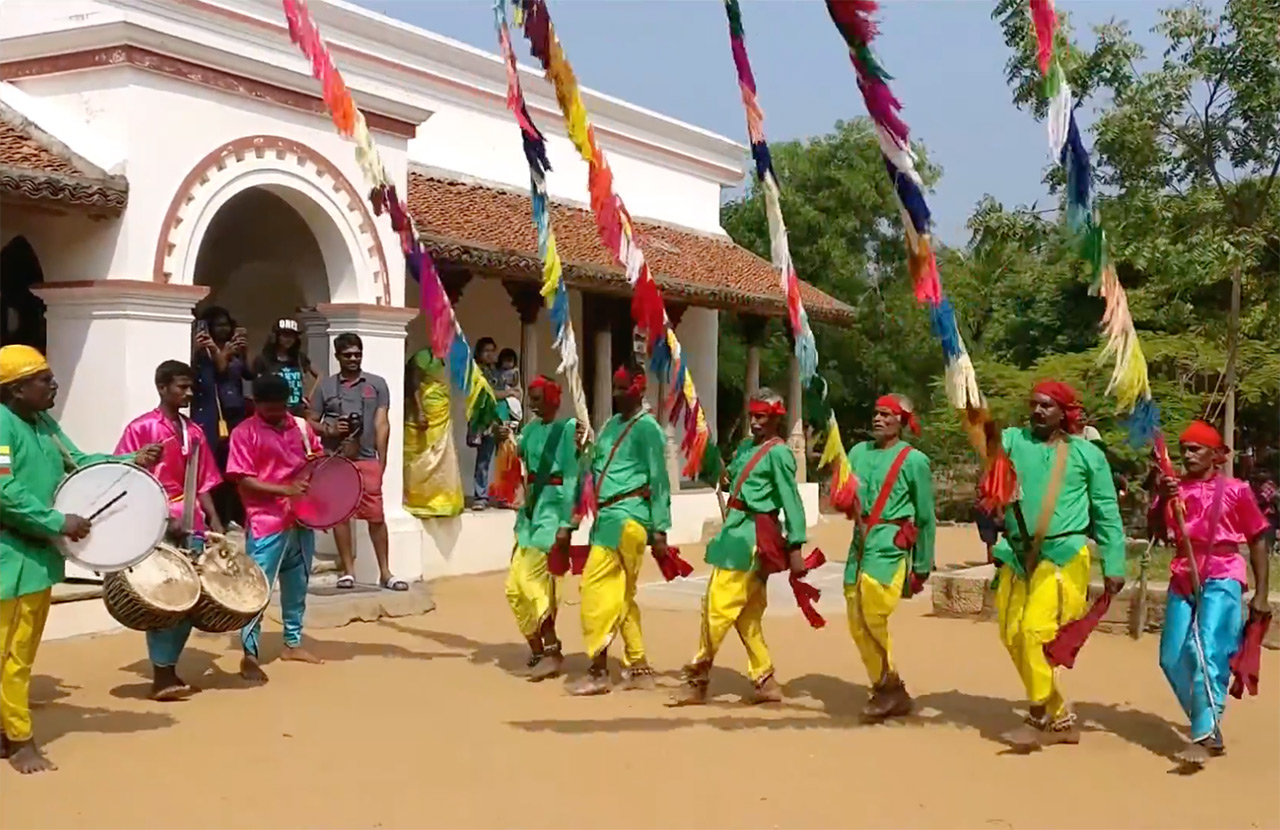
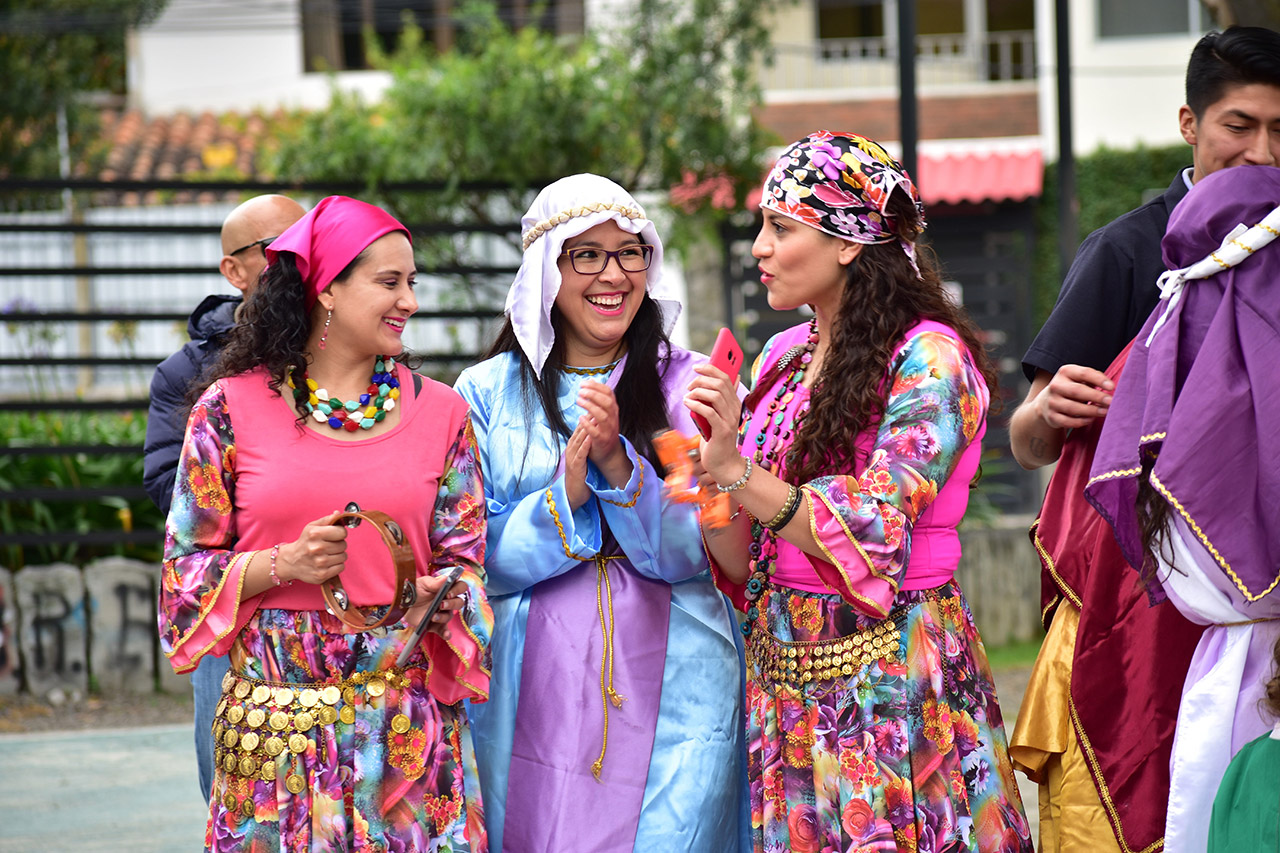
Pata Kunitha is probably one of the most effervescent and visually vibrant folk dances of Karnataka, deeply rooted in its rural tradition and spirituality. In their traditional use of decorated bamboo poles with well-coordinated moves, they portray a very vibrant form of devotion, storytelling, and communal unity. Their traces date back to hundreds of years linked mainly to temple festivals, processions, and all other forms of celebratory events. Pata Kunitha is the epitome of Karnataka’s cultural essence-a synthesis of mythology and music and movement in a coherent spectacle.
Historical Background and Development
Pata Kunitha is closely related to Karnataka’s agriculturist and religious traditions. It was originally performed as a rite to appease local gods and seek good harvests. Over the ages, it evolved from a sacred ritual to an art form that was practiced publically in times of festival, and made it accessible to a more expansive audience. Adding layers of narration to the dance, it allowed the artists to make scenes of all epic stories-the Ramayana and Mahabharata .
Elements of the Performance
Several unique traits contribute to the signature style of Pata Kunitha, including:
Bamboo Poles: These are long bamboo poles which often carry along some brightly colored fabrics, flowers, and small bells at times. Bamboo poles represent more than ornaments; they signify deep symbolic meanings characterized by spiritual connections and identity with culture.
Costumes and Accents: The artists wear traditional dresses. These are mostly brightly coloured and intricately patterned dresses that epitomise cultural motifs of Karnataka. Jewellery and head gears give an aesthetic look to them.
Choreography and Movements: The dance has a lot of lyrical and acrobatic movements, spins, and quickfoot dances where none of them are out of time with the rhythms of the traditional drums. The poles are swung, lifted, and balanced within the performance so that the dexterity of the artist is portrayed.
Rhythmic Accompaniment: The pulse instruments, dhols and chendas accompanying this rhythm, create a melodic layer as the wind instruments join. As the music speed in the dance performance is often increased, enthusiasm boils.
Cultural and Religious Significance
The Pata Kunitha is as much a show as it is an appeasement ritual. It takes place in temple courtyards during annual fairs for gods like Mariamman and Draupadi. The performance served as a community obligation for the people who could go there and watch and participate in the devotional ceremonies. The staves represent unity connecting heaven and earth, symbolizing the sacrosanctity of the occasion.
In addition, the dance promotes bonding towards community. More artists perform in groups since the aspect is expressed within the basic tenets of cooperation and unity engraved in the way of life among the villagers; hence, the choreography will be collaborative.
Relevance to Modern Society and Conservation Efforts
Initiatives towards the preservation of Pata Kunitha have been taken due to the process of urbanization and changes in lifestyle. This folk dance is very much included in the agendas of schools and cultural groups, making sure that the message about preserving Pata Kunitha goes alive in the young minds. The Government of Karnataka and other NGOs sponsor festivals and competitions through which Pata Kunitha performances receive a show.
This dance has been seen outside the state in national and international cultural festivals. Probably, it is this reason that has made it so famous internationally outside the borders of this style of folk art. Documenting and teaching efforts toward the dance and its modification to fit the current audience have prevented the dance from becoming antique.
Pata Kunitha and Its Storytelling Tradition
This dance also allows the performance through gestures of stories from mythologies, making it a fun and educative exercise. These storylines, as told through gestures of hands and symbolic movement, assist in keeping such oral traditions alive as well as infusing olden days into public memory.
Conclusion
Hence, Pata Kunitha is an excellent vibrant thread that continues to run in the fabric of Karnataka culture. It is such performances, deep symbolism, and historical importance that make this such a treasured tradition to relish. Through devotionalism, story-telling, and beauty, Pata Kunitha brings together deep connections to the heritage of Karnataka so it continues to inspire and fascinate different generations and geographies.
FAQs About Pata Kunitha
Question: What is Pata Kunitha and which part of the land does it belong to?
Answer: Pata Kunitha is folk dance that originates from the state of Karnataka. In fact it was born from the ritual performance during the festivals of gods.
Question: What props are used in Pata Kunitha?
Answer: The dance uses the extensive bamboo poles, beautiful pieces enhanced with colorful pieces of fabrics, flowers, and bells choreographed into it, but at the same time, these pole pieces function as symbols in bigger scenarios.
Question: Why is Pata Kunitha performed?
Answer: Formerly, it was a ritual way of presenting offerings to deities and seeking their benediction. Now, it is more of an homage to the heritage of artistry of the state that it is performed during festivals and other cultural functions.
Question: How is Pata Kunitha kept alive in the present world?
Answer: Cultural organizations, schools, and the Government of Karnataka are working their way to keep it alive through workshops, performances, and festivals.
Question: How is Pata Kunitha distinct from other folk dances of India?
Answer: Ornamented posts, Strong choreography and the ability to narrate story through postures were some of the distinguishing features of Pata Kunitha against other folk dances.
Seven Lines on Pata Kunitha
Pata Kunitha, is a traditional folk dance of Karnataka based on decorated bamboo poles.
It encompasses rhythmic movements, bright costumes, and riveting music.
This has been developed as a part of the ritual to please local deities during festivals.
The long bamboo poles used are a symbol to perform with, signifying spiritual connection and cultural pride.
Pata Kunitha exploits Karnataka’s heritage of stories through movement.
Pata Kunitha is a vibrant part of Mysuru Dasara and other festivals.
Restoration of Pata Kunitha ensures their continuity in the socio-cultural heritage of Karnataka.
Situated in the Southern part of India, Karnataka is one of the most popular and highly sought after tourist destinations of the country. It is bordered by the five states of Kerala, Andra Pradesh, Telangana, Tamil Nadu, and Goa, the state is known for its diverse and rich cultural heritage. Blessed with fascinating beauty and majestic grandeur, the state of Karnataka has secured itself a unique place in India. From the mesmerizing and enchanting scenic beauty of Coorg (also known as the “Scotland of India”) to the urban city of Banglore (termed as the “Silicon Valley of India”).
From the grandeur of many majestic historical sites such as Hampi, to the capital of the ancient Vijayanagara Empire. The state has something to offer everyone from any sphere of life. The art, culture, and music of Karnataka have an essential role to play. They precisely portray the diversity and traditions which are prevalent in the state. The people of the state speak several languages, including Tulu, Kannada, Konkani, Kodava, Byari, and Urdu.
Karnataka Culture and Traditions
Image Courtesy – Sohani Kamat from Pexels
As a land that keeps alive its own cultural and traditional heritage across generations, the state is quite popular among tourists. They get to experience a whole new and enchanting world here. The state is known for its soothing classical Carnatic and Hindustani music, which shows the state in all its glory. The state is known for its distinct and culturally relevant art forms. The art forms of the state serve as a means to bring the communities closer. Each aspect of the state is quite significant and contributes to the beauty of the state.
Traditional Dresses of Karnataka Men
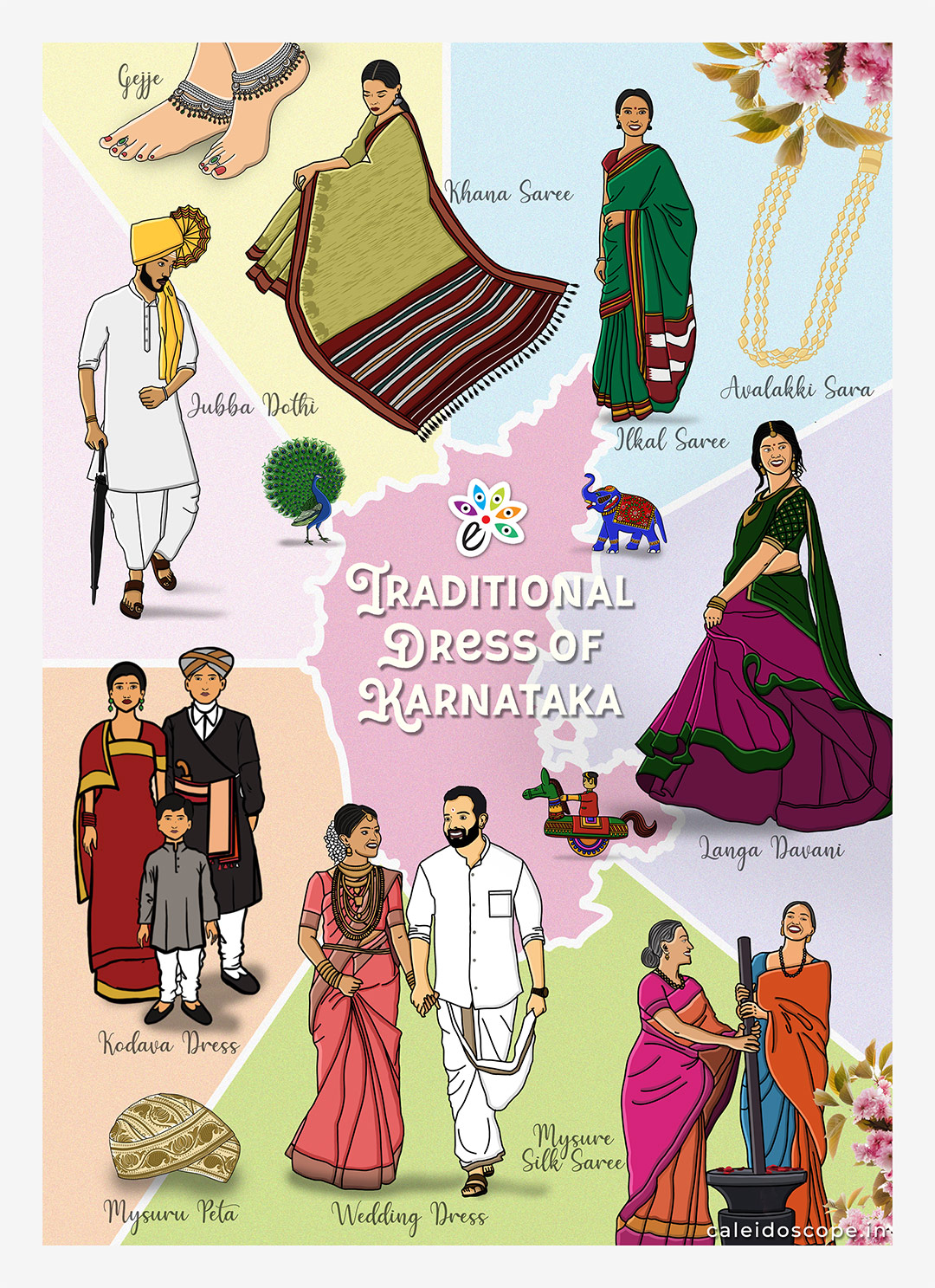
The traditional dresses of the people of Karnataka rightly depict the elegance and simplicity of the costumes worn in south India. The state of Karnataka is home to many diverse communities, who have their style of dressing. The women of Karnataka usually dress in sarees, while men usually prefer to wear the dhoti and Kurta.
The principal Traditional Dress of the men in Karnataka is ‘Panche’ which is worn underneath the waistline accompanied by a shirt on top. It is otherwise called Lungi, Dhoti or Veshti and so forth. An ‘angavastram’ which is a silk or cotton muffler is set on the neck covering the shoulder. Lately, just the rural men of Karnataka stick to Panche, as their regular ensemble. Mysore Peta is the customary hat in Karnataka for men. The majority of the men utilize modern wear for every day reason.
People of the Kodagu have a distinctive way of dressing as well as accessorizing. Women of the locale wear sari in a unique manner. The pleats are tied at the back and the pallu is set over the shoulder. A conventional Kodagu saree is made with both silk and cotton. The themes created on these sarees are lively and address the way of life in Karnataka. The body of the saree is embellished with prints, stripes or floral work.
The men enhance their outfits with decorative sashes, swords, and daggers. The whole look is supplemented with dark robes or tunics, giving it an imperial look. Men likewise wear gold-trimmed turbans with their outfits for celebrations, weddings, and various events.
Traditional Dresses of Karnataka Women
Karnataka women wear sarees as their main attire and teenage girls prefer silk skirts with tops as their traditional attire. Karnataka women wear a verity of silk sarees ranging from Mysore silk to Kanchipuram silk Sarees.
Karnataka is a place where there is rich legacy, culture and customs. The unbelievable silk sarees of Karnataka Silks have become a fundamental piece of Karnataka’s and India’s custom. These silks are one of a kind and exquisite in each aspect. It has a scope of stiff Tangails, flowy silks, rich chiffons and weighty brocades which can be effortlessly incorporated in any style. Bangalore and Mysore are world acclaimed and reputed for their glimmering silks.
Mysore Silk Sarees
The Mysore Silk is inseparable from the wonder and magnificence. Mysore silk has been enlisted as Geographical Indicator under Intellectual Property Rights. Karnataka is the country of Mysore Silk. Karnataka sericulture has a background marked by over 215 years. In 1785, the Tiger of Mysore Tippu Sultan setup sericulture in Mysore realm.
The Mysore crepe silk is worn mostly for office or work environments, more on account of its light-weight, and simpler upkeep. It is a flexible hazy crepe silk supplemented with zari edges. These saris are colored in splendid tones after the finish of the weaving. It is utilized for both everyday and occasional reasons. In current days, Mysore crepe salwars and Karnataka handloom’s cotton additionally frames part of ladies’ clothing of Karnataka.
Arani Silks, Valkalams, Kora Silks, Patola Sarees, Crepe Silk Sarees, Chiffon Sarees and Raw Silk sarees are also different assortments of womens’ attire in Karnataka. The Ilkal and the Molakalmuru sarees remain as the ethnic motifs of Karnataka. Kornadu sarees are a combination of cotton and silk. The saris are woven in a blue cotton yarn along with a silk yarn in other various shades. The themes in every sari is different and the body is either presented with checks or stripes. These sarees are utilized as day by day comfort wear.
Usually worn during festivals and special occasions, Kanchipuram sarees of Karnataka are very popular throughout the country. It comes in several colours with exquisite designs. The saris are woven from pure mulberry silk threads and Zari from South India. The design and hue of the border are normally very unique in contrast to the body. If the pallu (the draping end of the sari) is requested in a different shade, it is first independently woven and then gently joined to the Sari. In an authentic Kanchipuram Silk Sari, body and border are woven independently and afterward interlocked together. The joint is woven firmly to such an extent that even if the saris tears, the border won’t come off. That separates the kanchivaram silk saris from the others.
The saris are recognized by their wide contrasting borders. Temple borders, checks, stripes and florals (buttas) are common designs found on a Kanchipuram sari. The patterns and motifs in kanchipuram saris were influenced by pictures and scriptures in South Indian temples or natural aspects like leaves, birds and animals. These saris with rich woven pallu show the compositions of Raja Ravi Varma and legends of Mahabharata and Ramayana.
Ilkal Sarees
Ilkal Saree
The Ilkal sarees are mostly traditionally worn by the women of rural areas. These sarees are quite popular in the country owing to the unique method employed in weaving it. The Ilkal sarees are named after the town of Ilkal situated in the Bagalkot district of Karnataka. These special sarees are woven uniquely by employing a loop technique called Tope Teni. The fundamental body of the Ilkal saree comprises simple patterns and an exquisite pallu with complimenting motifs, for example, temple towers, palanquins, elephants, and lotuses.
The main charm of an Ilkal saree is the border, which is around 4 to 6 inches broad. Both base and pallu of the saree contain captivating borders that give an unbelievable look to the saree. The tones that are normally utilized in the saree are pomegranate red, peacock green, and parrot green.
The saree is handwoven by the weaver with utmost attention and patience. Hence these sarees are of high demand both locally as well as nationally.
Kasuti is a traditional type of folk embroidery practiced in the state of Karnataka. Kasuti work which is complex at times includes putting up to 5,000 stitches by hand and is generally made on dresswear like Ilkal sarees, Ravike and Angi or Kurta.
Kasuti embroidery work includes embroidering complex motifs like gopura, chariot, palanquins and conch shells. Locally accessible materials are utilized for Kasuti. The example to be weaved is first set apart with charcoal or pencil and then proper needles and threads are chosen. The work is challenging and includes checking of each string on the material. Different assortments of stitches are utilized to get the ideal pattern. Some types used are Gavanthi, Murgi, Negi and Menthi.
Guledgudda Khana
A balance of extravagant and rustic, Guledgudda Khana appears to be obscure, yet is saturated with history.
Hailing from Guledagudda town in the Bagalkot area of North Karnataka, this eponymous weave overwhelmingly finds patronage in select locales of its home state. The fabric is frequently altogether known as Guledgudda Khana, with “khana” being a blouse textile of the state. It was widely esteemed in the earlier times and was worn by almost every woman.
The customary drape of Guledgudda Khana involves a rich blend of hand-spun and handwoven silk and cotton, with intricate vivid motifs celebrating cultural and religious symbols, for example, tulsi pan (the leaf of tulsi plant), theru (a chariot), Suranarayana Mukta (the Sun God) and ane hejje(elephant strides) among numerous others.
Known as the half-sari from Karnataka, the Langa Davani is a traditional two piece sari that was initially worn in South India generally by young ladies. It is frequently given as a blessing in coming of age functions by the families of the girls. The davani sari takes after the usual one in looks but is more like a ghagra choli in plan. It comprises a skirt secured with a drawstring around the abdomen and a fine fabric around 2 to 2.4 meters in length called the “davani”, joined to the skirt and tossed over the shoulder like a pallu.
Davani sarees are a lot simpler to wear than a saree and this is their principle advantage. In spite of the fact that you get the saree look, you just need to slip on the pieces and pin them set up without messing with hanging, creasing, etc.
Traditional Langa Davani patterns are more on the simpler side, with the shading range not wandering past the normal shades of green, yellow or red. The main ornamentation would be the boundaries, which were gold printed or with little motifs of religious and natural themes. For less significant celebrations, cotton and coarser silk textures were utilized instead of the dressier silk
Along with their unique attire, the women of Karnataka also adorn themselves with distinct and beautiful ornaments. The ornaments worn by the women include the Netri Chutti. It is worn on the forehead. The Mavinakayi Addigai, a necklace usually made of gold with green and red stones embedded in it.
The Mavinakayi Addigai is one of the most significant ornaments which is also worn by the bride. The Laxmi Sara worn by women is a beautiful golden chain made up of small golden coins attached to it. The Vyaghra Nakhas, is a golden pendant worn mostly by children. It is said to represent the courage of a tiger and is believed to ward off every evil spirit. The Kadagas are the traditional bangles which are widely worn by the women of Karnataka.
The state of Karnataka has undoubtedly kept its traditions and rituals intact amidst the fast-moving world. The rich cultural heritage and traditions of Karnataka indeed express themselves in the traditional dressing styles. While many people continue to dress traditionally, changes to this can also be observed in urban cities. as. In Bangalore modern dresses are mostly preferred.
FAQs About Traditional Dresses of Karnataka
Question: What are the traditional dresses of Karnataka?
Answer: The traditional dresses of Karnataka include the saree for women, especially the Ilkal and Mysore silk sarees, often worn with traditional jewelry. Men typically wear a dhoti or panche, along with a kurta or shirt, and sometimes a traditional turban called peta during special occasions.
Question: What is the traditional dress of Karnataka for men?
Answer: Some traditional dresses worn by men include the Panche, also known as Lungi, Dhoti, or Veshti, which is worn below the belt with a shirt. An angavastram is draped half over the belly and across the shoulders.
Question: How is the Mysore Peta worn and what is its cultural significance?
Answer: The Mysore Peta is a headgear worn on the head, esteemed as a symbol of pride and honor. It holds significant societal relevance, as it is used during weddings, festivals, and other ceremonial activities.
Question: What are the distinctive features of Kanchipuram sarees?
Answer: Kanchipuram sarees are crafted from luxurious pure mulberry silk and Zari, showcasing broad borders adorned with temple arches, stripes, or intricate floral designs. Notably, the pallu was originally a separate entity, expertly sewn onto the saree to enhance its durability and overall sturdiness.
Question: What is Kasuti embroidery and what type of stitches are used in it?
Answer: Kasuti is a centuries-old craft of embroidery or hand stitching unique to Karnataka. Key stitches used in Kasuti include Gavanthi, Murgi, Negi, and Menthi, which are employed to create intricate shapes and designs on garments.
Question: How does the Ilkal saree reflect Karnataka’s fabric heritage?
Answer: Ilkal sarees come with the handwoven tag and fall under the Tope Teni style, which has plain borders and desirable patterns on the body, whereas the pallu features dense zari work. They are appreciated for their workmanship and the beautiful colors associated with them.
Question: What are Guledgudda Khana’s saris unique characteristics?
Answer: Guledgudda Khana is the typical blouse material of Bagalkot, famous for its bright colors and motifs such as tulsi plants, chariots, and elephants. This material is a blend of silk and cotton and is used to showcase the cultural features of Karnataka.
Question: What is the traditional attire for young girls in Karnataka?
Answer: The traditional attire for young girls is the Langa Davani, which includes a drawstring skirt, blouse and duppatta known as the Davani, draped over the shoulder.
Question: How does Langa Davani and Mysore Silk are associated with cultural identity of Karnataka?
Answer: Karnataka’s cultural representation through Langa Davani and Mysore Silk can be viewed in terms of their style, their historical and cultural preliminaries, and their making. They are used in occasions such as festivals, weddings, birthdays and other events that are deemed culturally significant.
Question: Which kind of ornaments are traditionally used by Karnataka women?
Traditional ornaments include brittle battu (forehead piece), Mavinakayi Addigai (gold necklace), Laxmi Sara (gold chain with coins), Kadagas (bangles) and Vyaghra Nakhas (tiger claw pendant for children). All these ornaments are meant to bring protection and good luck.
Seven Lines on Traditional Dresses of Karnataka
Traditional dress of Karnataka women is unique by its elegance and simplicity that is inherent for South Indian clothing.
Karnataka men have over time been known to wear a ‘Panche’ or ‘Dhoti’ with a shirt or any vestige of clothing and an ‘angavastram’ worn across the shoulder.
Mysore Peta is a traditional form of headgear which is used by men in Karnataka for special occasions.
In Karnataka, most women prefer sarees and dress materials, the specialty sarees include Mysore silk sarees and Kanjivaram silk sarees.
The sarees from Karnataka specially the Ilkal sarees have a special way of weaving and also have beautiful borders. In the year 2007 Ilkal sarees received GI Tag.
Kasuti is an embroidery art form of Karnataka, in which very small detailed patterns are stitched by hand.
The Langa Davani which is in fact a half-sari, is an easier fashion than the work of draping and is mostly worn by young girls in Karnataka.
For most children in the world, the first day of school marks a special occasion. It’s a unique day filled with a whirl of emotions like butterflies in the stomach, a glimmer of anticipation, a hint of timidity, and, at times m, missing parents. In fact, it is these very emotions that make this day special. For most children, the first day at school feels like opening the door to a whole new world filled with adventure. It’s a significant shift from the cozy environment of home to a new place brimming with possibilities.
First Day at School
You might wonder about your new teacher or who you’ll sit next to. The entire school, its sounds, people, corridors, and classrooms all feel new and thrilling. Now, just think how much better this is, knowing that there are gonna be years full of education, developing new friendships, and growth that helps you identify everything about yourself and even the things you don’t think are possible.
Key Points to Remember When Writing An Essay On My First Day At School
Writing an essay about the first day of school is a straightforward way to capture all the special moments that take place in real life and even in dreams. You can use the tips given below to write the best essay:
Begin with an Introduction: Write the introduction with the world around school, explaining what it is and how it feels for a child to begin something new.
Describe How You Prepared: Detail the elements of preparation done at home, such as putting on a fresh set of clothes or packing your bag.
What You Noticed At The School: Detail the school premises, the playground, or whatever else captured your attention upon getting to the school for the very first time.
Stepping Into The Classroom: Discuss the feelings you experienced when you entered your own classroom and what there was to see.
Class Activities: Discuss all the exciting activities you participated in, such as playing, singing, or drawing.
First Impression of The Teacher: Discuss the description given of the teacher and the impact they had on you.
Any Other Special Events: Capture other events that stood out one way or the other to make them special.
When The Day Ends Feelings: State the feelings experienced when the school day came to an end.
Restate why you find School Important: Wrap up by restating the role and importance of school in your life and what you hope to achieve.
Essay on My First Day at School (100 Words)
The first step into my school was on a cloudy day. I was carrying a new backpack loaded with notebooks, which made it a little heavy, but I was highly ecstatic about this new journey. My classroom was down the corridor, and when I entered, my teacher happily smiled and received me. Fun activities such as reading and solving problems in groups were done. Little by little, sharing lunch with new classmates began to make me feel included. While the whole day was a mix of emotions, it certainly was exciting. When the school bell rang, I instantly thought that a new world of opportunities was at my doorstep.
Essay on My First Day at School (200 Words)
With a new and beautiful bag on my back, I entered the school gate, grinning like a Cheshire cat. My first day of school was filled with excitement as well as nervousness. Everything felt enormous- the school building and the playground. My mind was racing as I tried to comprehend different things at once when a new world opened up in front of me. Alongside other students, I could hear indistinct chatter in the hallways and after entering my class. I was greeted by my teacher and classmates with friendly states, which immediately put me at ease. Following the introduction and some fun warm-up exercises, I tried to make sense of the fact that the strangers around me could, quite possibly, be friends.
During lunch, I witnessed an utterly new side of the school. The cafeteria was alive with students having fun, and there was a mouthwatering smell wafting from the kitchen. It took me some time to muster the courage to walk up to the friendly group, but soon, I was telling stories and laughing with people I had thought would remain strangers. After the bell rang, I excitedly left the classroom, brimming with enthusiasm and ready for more explorations in my new academic home for the second day.
Essay on My First Day at School (300 Words)
The first day gave me feelings of eagerness because I was ready to board the school bus. I remember that I was accompanied by heart-pumping levels of adrenaline as I stepped onto the bus. The new chapter in my life was ready to set forth, and I was equipped with a new bag full of books. Driving through the city meant that I was headed towards the school’s Gate. Walking into the classroom made me realize that it comes with a new set of faces, which oddly excited me. With my unacquainted belongings settled at the seat, I sat next to someone who was a complete stranger but ended up being my best friend. The warm look I received from the marking of my class teacher was more than enough to put me at ease.
At lunchtime, I got acquainted with so many new friends and no longer felt like a stranger. Understanding that my shyness would never make me accepted, I accepted that I would talk slowly, resulting in my befriending others. It didn’t take long for me to ditch my “stranger” title, and by the end of lunch, I made plenty of friends. Fun chatting with friends and returning to class meant that courses like mathematics, science, and English became fresh topics. Everything that I have learned till now suddenly felt nothing like that, but life-changing.
By the end of the day, we all went to the playground, where we had a great time on the swings. While there, I encountered other new children at the school, like myself. On my way home, I reflected that my first day was not simply about learning new subjects but rather something deeper: I had developed friendships and colorful classrooms and absorbed my role as a student. The unsure morning transformed into thrilling explorations and limitless opportunities. Armed with these experiences, I anticipate the generous world of education with wonder, knowing there’s so much more to learn and grow.
Conclusion: A Day to Cherish
The first day at school is absolutely unforgettable for most of us. It marks the beginning of a significant journey filled with knowledge, friendships, and life-changing experiences waiting to unfold. It carves out an irreplaceable memory that we wish to linger forever, setting us on a path of continuous learning and deep personal growth. It is a day that teaches us the importance of embracing new experiences while the warmth of newfound friends wraps around us with comfort.
The initial nervousness slowly fades, giving way to a sense of belonging and the excitement of what lies ahead. Every child’s first day is unique, yet the emotion of stepping into a world full of possibilities and beginning our journey of growth is something we all share. It remains a lasting memory—one that reminds us how education and new experiences fuel us for the journey ahead.
Frequently Asked Questions (FAQs)
1. What to write for the first day of school in English?
Write about how you feel on your first day—excited, nervous, or curious. Mention what you look forward to, like new friends, teachers, or learning something fun.
2. How do kids feel on their first day of school?
Most children feel a mix of excitement, nervousness, shyness, and light homesickness.
3. Why do you think the first day of school matters?
The first day is significant for a child as it reveals a new step into different places, formal responsibilities, and the overall system of school education.
4. What are the activities you anticipate on your first day at school?
Most classes take part in icebreaking lessons and get to know their teachers and each other on the first day. They also get tours around the school, learn lessons, and much more.
5. What can a child do to enjoy the first day?
If you smile and are willing to talk to the people around you, then the first day will be more enjoyable for sure.
6. What is the initial reaction parents have upon their child’s first day?
They are generally overwhelmed with feelings of pride and happiness, along with a hint of concern regarding how their child will adjust.
Five Lines About My First Day At School
I can still remember how my first day at school signified a thrilling life journey.
Those were the times when I experienced bubbly excitement alongside nervous jitters.
Most definitely, my new uniform changed my perception of everything.
I recall the smile of my teacher’s glowing smile, making everything warm and welcoming.
My first school friend is someone I met during my first playtime.
It depicted to me a new frontier when I was learning the alphabet.
This was a day that remains unforgettable even today.
There is no Planet B. We all have heard or read this statement over the years and are aware of the environmental concerns that are a reality of our times today. Fortunately, the voices propagating the importance of preserving our resources, reducing pollution and being cognizant of the effects of irrational urbanization are becoming louder and coherent. Environmentalists and activists across the globe, along with research and studies are making it clear that we need to act in the right direction for the conservation of our planet. However, in the 1970s when environmental issues were still shoved away as unnecessary concerns, a movement took up the mantle of putting the environment first. The Chipko Movement in India is a landmark event that brought social and environmental concerns right in the forefront of a nation that was ramping up its developmental and economic strides.
Let us learn a bit more about his historic movement and what it meant for generations to come. Also, the Chipko Movement is a fitting analogy to celebrating World Environment Day. Read on to see how!
World Environment Day
To raise awareness 5th June every year has been celebrated as the World Environment Day since 1973. On this day each year, the United Nations addresses a particular theme to encourage consciousness and understanding of the different reasons and ways to protect the environment. This year 2023, the theme undertaken by the UN under UNEP (United Nations Environment Program) is finding solutions to plastic pollution.
Chipko Movement
It is interesting to see that both the Chipko Movement and the endorsing of World Environment Day began in the 1970s. And hence, when we think of sustainability and environmental protection, we have to begin by acknowledging the impact that the Chipko Movement had on both the Indian and international community.
What is the Chipko Movement?
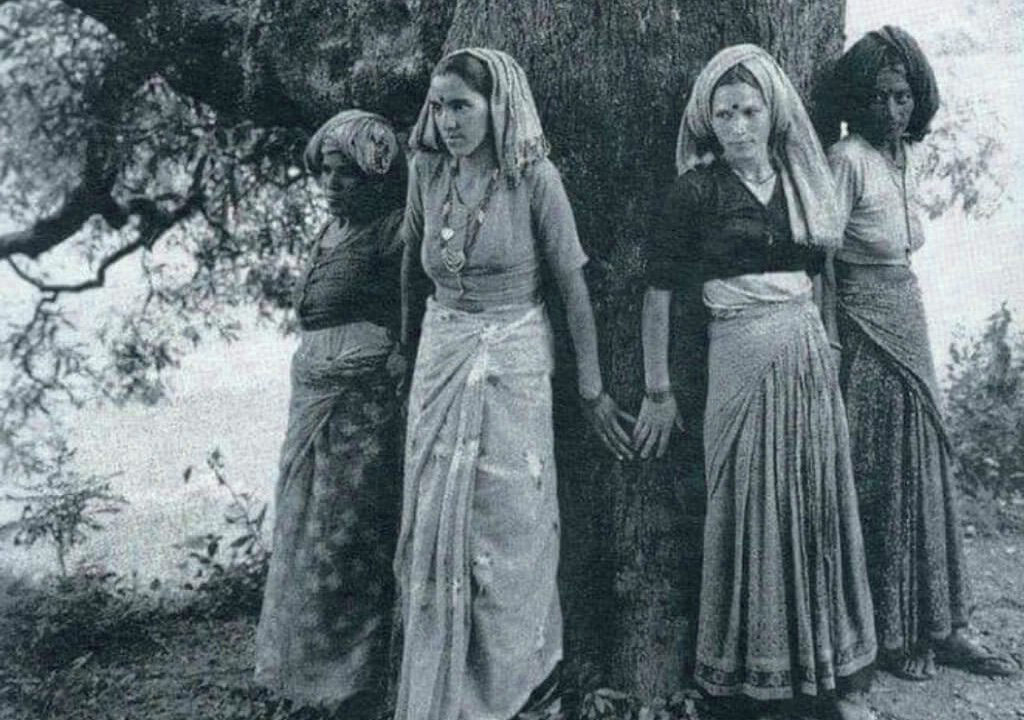
The Chipko Movement was a non-violent forest conservation movement. Today many scholars also call it an ecofeminism movement because women formed the foundational support and executioners of the Chipko Andolan. The name ‘chipko’ means to embrace and was used because the women villagers hugged the trees in order to save them from being cut.
The movement started out in Chamoli district Uttar Pradesh (now in Uttarakhand). Due to the high influx of the national and foreign logging industries massive deforestation was underway in the Garhwal Himalayas. This led to the destructive Alakananda River floods in 1970 which resulted in the washing away of homes, bridges and in fact, several villages. Due to deforestation, landslides and floods became a common occurrence in the region.
Also, the government policy forbade the local villagers to fell trees for fodder, fuel etc. On the other hand, big companies were allowed to cut the trees in the forest for their manufacturing needs. These economic, social and environmental causes laid the grounds for protests and the Chipko Movement.
The TimeLine of Events
The first event took place in 1973 when activist Chandi Prasad Bhatt founder of Dasholi Gram Swarajya Sangh along with the villagers of Mandal tried to prevent the sports goods company Symonds from cutting trees. When their protests were unheard, he led the villagers into the forest who embraced the trees to stop the feeling. After days of agitation the government canceled the company’s permit. This set off the start of the Chipko Movement which spread to other parts of northern India soon. In 1974, the forest department allowed the felling of trees in the Peng Mrenda Forest. The women villagers of the nearby Reni village drove the contractors away and this became another iconic incident, as women for the first time, without men, took up initiative of the cause.
Though the government set up institutions and committees, such as the Van Nigam, the movement continued to spread. Again in 1974 there was a struggle between the contractors and the villagers near Vyali Forest. In Kumaon, the Chipko Movement gained momentum in 1977 after the devastating landslides at Tawaghat. Sunderlal Bahuguna led the villagers in 1977 to stop the felling of the trees in Henwal Valley. It was here that the protestors including women were arrested for opposing the forest auction. And hence the movement now was no longer just a fight for economic survival but for conservation too.
Similarly, Chipko Movement protests were seen in many parts of the Himalayan region in the next few years. In 1977-78 women from Pulna stopped cutting the trees in Bhyundar Valley. In 1980 and until 85 such protests continued in the Doongri-Paintoli region.
The movement reached its climax when activist Sunderlal Bahuguna went on an indefinite fast demanding a ban on deforestation in the Himalayan regions above 1000m. Prime Minister Indira Gandhi set up a committee to look into the matter who then put a 15-year-old moratorium on commercial felling of trees in Uttarakhand Himalaya.
However, the Chipko Movement spread over a few years, making sure that their protests and demands raised a national consciousness on environment and conservation issues.
Impact of the Chipko Movement
There is no doubt that the Chipko Movement immensely contributed in giving importance to ecological issues and movements. Many scholars believe the Forest Conversational Act in 1980, as well as, setting up of a separate environment ministry were due to the awareness spread by the Chipko Movement.
The movement also brought to the fore several social and environmental understandings. It reminded people that there needed to be a scientific and calculated approach to balance the scales of economy and environment. It also generated the concept of ecofeminism, highlighting the role women play in environmental conversation.
Moreover, it aided in understanding that the locals do not wish to destroy their ecological environment. In fact, working alongside villagers is the best way forward to sustainable growth. But what the Chipko Movement perhaps left the maximum impact on was the acceptance of valuing the environment as much as human life. The idea of hugging the tree meant sending out the message of daring to cut it down over another’s body. And hence, when women hugged the trees, their unspoken words said that the life of the ecology matters as much as any other human life.
The Road Ahead
After decades of the movement, has life really changed for the villagers of the Himalayan regions? Is the Forest Conservation Act and government doing enough to ensure that both social and environmental injustice is wiped away? There is much to debate, especially considering the ground situation today. Though reserves have been marked, the economic and social plight of the local villagers is still far from over. Bureaucracy, corruption and poverty continue to hamper real growth and progress that the movement and its activists perhaps envisioned. Also, like any other major movement, the Chipko Movement too had its little fall outs. But overall, it still continues to stand to remain one of the most significant movements in Indian environmental history. And that has also been seen in the environmental protest over the years. As its main activists both Bhatt and Bahuguna say, various other protests in the region have been inspired by the Chipko Movement. These include campaigns against the Tehri Dam and the extension of the Vishnuprayag Hydroelectric Plant in Bhyundar Valley. Or more recently in 2018 the women of Balarampur Village resorted to hugging trees in the Jhinkargadi Forest to keep the timber mafia away.
Deforestation and world environment
Remembering the Chipko Movement in India as the World Environment Day draws closer is a fitting tribute to the movement, its leaders and the people who participated in it. Even when one looks at the statistics of deforestation across the world, it is evident that cutting of trees has been a fundamental concern and a root cause for environmental degradation. According to Global Forest Watch, in 2021 we lost 25.3 million hectares of tree cover. Deforestation leads to a complete breakdown of the surrounding ecology. Cutting trees impacts animals, soil, climate, as well as human beings. Each of them is connected in various ways to the forest.
The key is to maintain a balance that allows for sustainable living. Afforestation is a good way to counter the loss of tree cover. Also, an understanding of socio-economic and cultural facets can help to make important environmental decisions. The Chipko Movement has taught the world how mismanagement of forest resources can lead to natural and social disasters. Governments and policy makers must use the movement’s developmental graph to draft and implement policies that impact the environment and the lives of the people living in it.
Final Thoughts
Finally, the Chipko Movement is an iconic landmark campaign that can be touted as one of the earliest organized movements held post-Independence for environmental concerns. Undoubtedly, the social and economic causes of the movement are undeniable. But the movement definitely led the world into thinking about reckless destruction of natural resources.
No matter how far apart each of us would have spent our childhood days, it can be said with certainty that many of us would have similar memories of our school days. The incidents etched in our memory might differ from one another, but the basic things we did in school, would undoubtedly be the same for each of us.
Need of Unique Schools
The school was that one place where we went half-heartedly, where the nightmares of mathematics teachers and homework reigned supreme. But for most of us, looking back at those times would prompt us to thank our parents and teachers for providing us with the education to succeed in life. Every time we receive the paycheck, we would inadvertently thank all those who helped us reach our goal.
Most of us would have undoubtedly known only of the conventional school, with desks and benches, homework and detention. Having been through this circle, there would not be one among us, who wouldn’t have wished for a change in the conventional mode of education. Here is a list of ten most unique schools in India, which stand apart from the ordinary schools through their extraordinary and exceptional take on a new mode of education.
Manipur is perhaps one of the most enchanting and fascinating states of India. Blessed with majestic hills and mesmerizing scenic beauty, Manipur is undoubtedly the personification of heaven on earth. Loktak, the largest freshwater lake in the country, known as the “Lifeline of Manipur,” is also home to India’s first floating school. The school provides education to high school dropout students and children of fisherfolk who are unable to send their children to school. The school is situated in Langolsabi Leikai of Champu Khangpok village, which is 50 km away from Imphal, the capital of Manipur. Children reach the school by boats. With the establishment of this unique school, many families were able to send their children to school at low cost, and hence this school plays a pivotal role in providing education to the several children in the state. The school has been granted with modern amenities. For many children in the state, the school is nothing short of a dream come true.
Located in the Simayal village of Nainital district in Uttarakhand, Chirag school is a unique educational institution, situated in the lap of the Himalayas. Founded by Kanai Lal, the school was begun with a vision to provide the kids with an all-round education. The school does not merely evaluate the student’s academic capability but also pays attention to their personality development.
Not every child is blessed with the privilege to attend school. There are still countless kids in India and around the world who cannot go to school, though they ardently want to. The platform school in Bihar is an example of such a school where the orphan children who are forced to work for their livelihood come to learn. Apart from academics, the school also teaches life skills, such as medical aid, and provides counselling to the kids. The initiative has been a success and has succeeded in providing education to a number of kids who would have otherwise never been able to afford it.
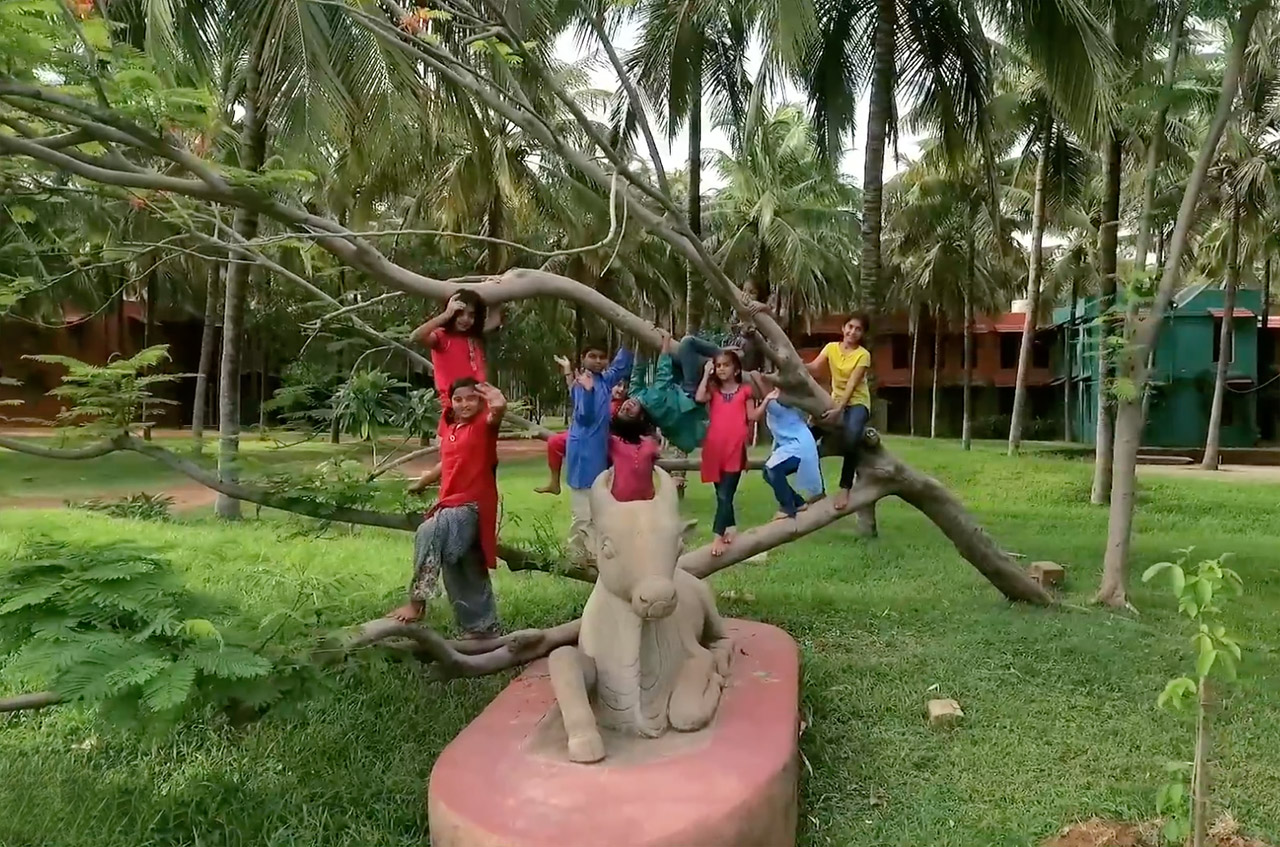
The yellow train school in Tamil Nadu is perhaps every child’s dream school. The students are provided with the opportunity to spend time in the lap of nature as they learn about gardening and farming, and allow you to practice skills such as pottery. Music, nature, and joy are always prevalent on the campus of this school. Protected from the hustle and bustle of everyday life, this school aims to be one with nature and focuses more on the personal development of a child rather than focus entirely on academics.
A school where all textbooks and notebooks have been replaced with tablets and computers, this school is truly one of a kind. The venture to turn this Zilla Parishad school into a smart school that utilizes modern amenities was undertaken by Sandip Gund and has since been a model of inspiration to about five hundred other schools in the state. Everything from submitting assignments to being understanding concepts, the school utilizes the digital medium.
A school without a classroom, where students are encouraged to think out of the box and discuss their ideas and interpretation of classics, the Level field school in West Bengal is a model to every other school. Situated in Bengal, the students of the school gather in open-air land and discuss their lessons with one another rather than just learn them by heart. Ths school would encourage the child to think freely with an open mind and learn to respect different perspectives on the same topic, all the while being comfortably seated in the lap of nature.
Veena Vadini School, Madhya Pradesh
Image Courtesy – Veena Vadini School
A school where every single student is ambidextrous and are taught six different languages; Veena Vadini school is truly one of a kind. The students are trained from a very early age to write with both hands, thus making the school an extraordinary one.
Ladakh is the beautiful and awe-inspiring land covered with snow and magical in appearance. The state is perhaps one of the most beautiful places in the world. The Students’ Educational and Cultural Movement Of Ladakh (SECMOL) is both different and exceptional when compared to other conventional schools. The school focuses more on practical knowledge and life values, all while giving the students ample freedom to make decisions on their own.
Situated in the “Silicon Valley of India”, Bangalore, Aurinko Academy is an unconventional and extraordinary school. Here the students are given education on widely different subjects to enable the student to select and identify his area of interest and to enable them to pursue it.
Founded by Dr. Shashi Rao, Ananya was an initiative to provide education to the underprivileged children. Ananya was born out of the vision that every child was entitled to education and has been instrumental in providing the education to many children, who would otherwise have had no means to learn. Apart from academics, Ananya also focuses on teaching the kids essential life lessons and values to help them through life.
The Northstar School, Rajkot, Gujarat
Image Courtesy – Northstar.edu.in
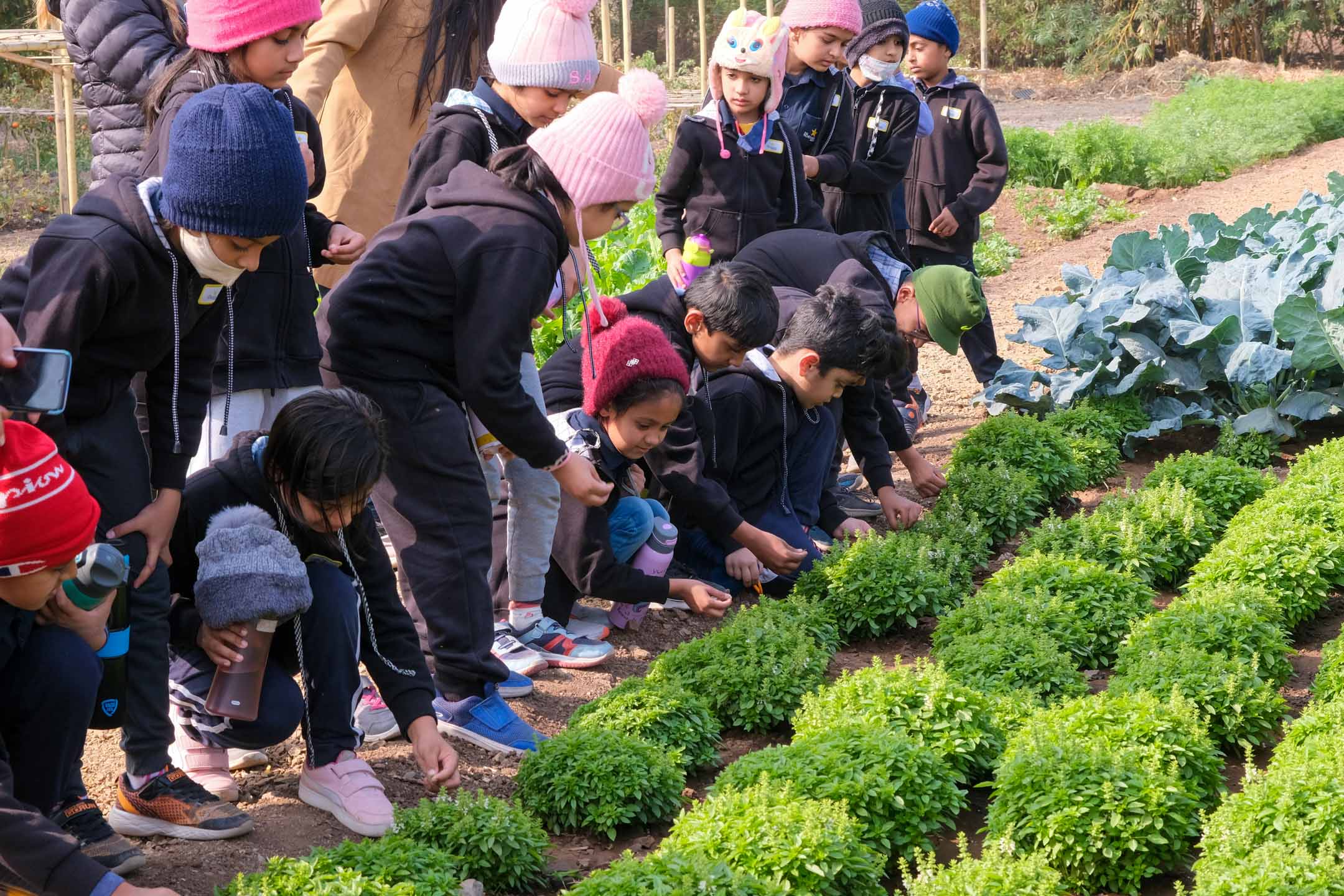
The Northstar School, founded by Harvard alumnus Mohit Patel, redefines the face of education with its emphasis on curiosity-driven and experiential learning, adopting a globally informed approach. Steering clear of cramming, their philosophy views education as an experiential process that fosters independent learning through creative programs such as the Integrated Exploratory Learning Continuum and Horticulture Program. Balancing round-the-year feedback with the year-end examination, the school promotes innovation and self-development. Their only collaboration with Haute École Pedagogique, Switzerland, for trainer training, is to make Northstar’s study programs affordable nationwide, offering a highly individualized learning format with a 1:7 teacher-student ratio.
Located in the peaceful Damodar Gardens of the Theosophical Society in Chennai, The School KFI redefines education with a new holistic viewpoint. Students are encouraged to discover their strengths and mature into their full potential, fostering a healthy rapport between students and teachers that extends beyond the classroom. Active involvement in campus cleanliness instills a sense of community responsibility, while field trips across the nation become learning experiences and opportunities to serve local communities. The curriculum features high levels of interconnection, resulting in subjects that overlap, leading to an integrated and holistic learning process.
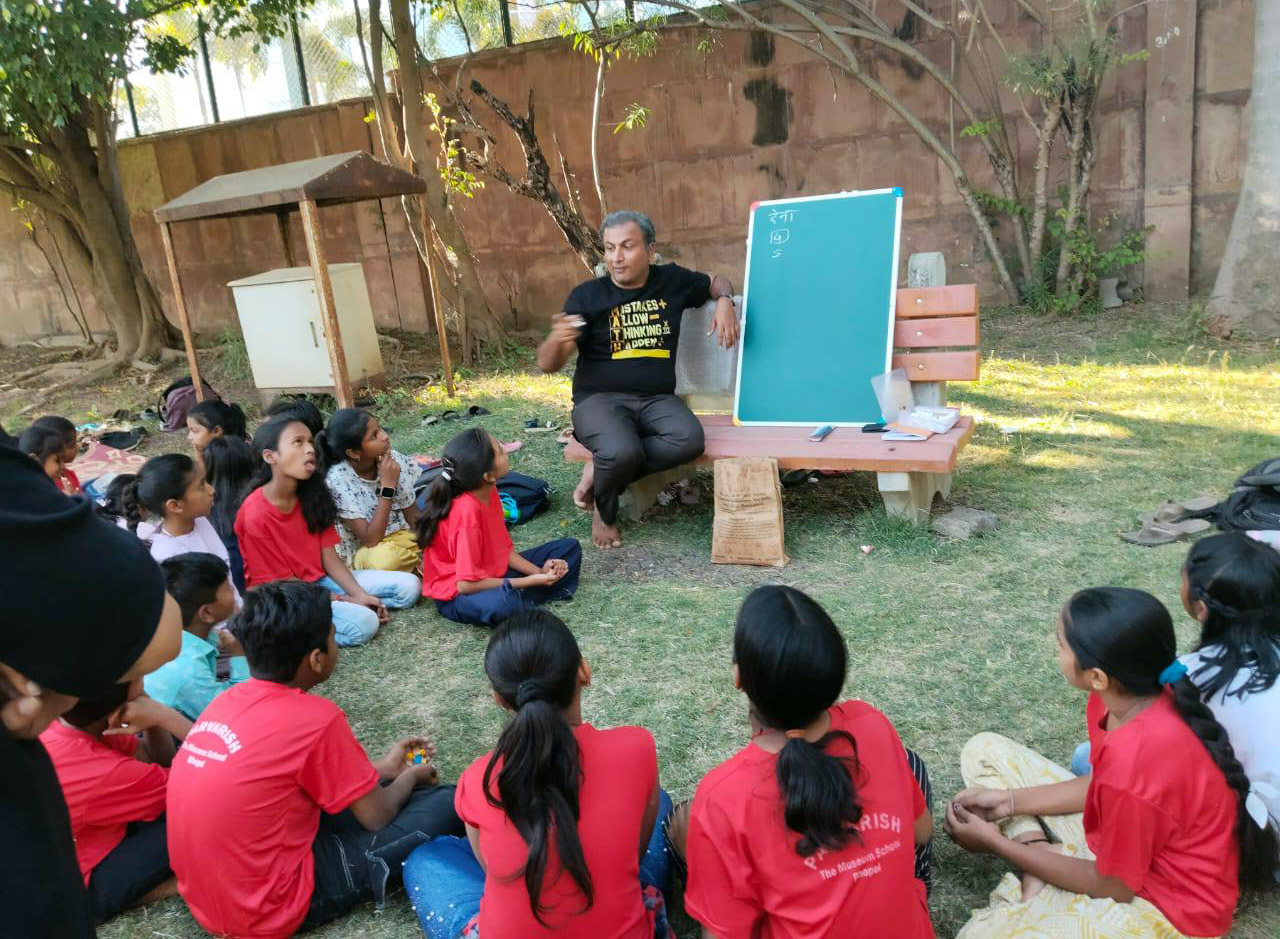
Parvarish: The Museum School, an OASiS project in Madhya Pradesh, has a truly visionary city schooling model. Noticing the disparity in access, OASiS deliberately repositioned existing museums as dynamic learning environments for out-of-school children from slums. By overlapping museum exhibitions with multiple class curricula, the initiative avoided gatekeeping for children who might not be able to read or write, thereby turning cultural centers into dynamic classrooms. In addition to B.Ed colleges, Parvarish fulfills the teaching demand as well by introducing a new platform for practice teaching that presents an innovative and inclusive education model.
Located in a peaceful and beautiful natural setting, Rishi Valley School, a boarding school, is greatly influenced by the intellectual ideas of J. Krishnamurti. The school’s primary emphasis is on developing self-aware human beings through an authentically holistic learning process that is committed not only to intellectual achievement but also to the emotional and spiritual growth of its students. One of the distinguishing features of its innovative curriculum is the priority given to developing an affinity for nature, fostering a profound respect for the natural world and empathy for its role within it.
Located in the foothills of the peaceful Velliangiri Mountains, Isha Home School, founded by Sadhguru Jaggi Vasudev, is a pioneering homeschooling system that seeks to blend the homely instincts of ‘home’ with the disciplined learning of ‘school.’ This boarding model creates a dynamic, multi-age community where children learn naturally from one another, supported by committed house parents and teachers. The school focuses on inner happiness, deep self-awareness, and nature-based holistic development strategies to create a milieu where academic progress, as well as transformation, is fostered.
FAQs About Unique Schools in India
1. Are these unique schools affordable for everyone?
Most unique schools, particularly those serving disadvantaged populations (such as The Platform School or Ananya School), are either free or offer low-cost tuition. In contrast, others, such as private alternative schools (like Yellow Train or Rishi Valley), may be more expensive.
2. Are these schools affiliated to any particular board, such as CBSE or ICSE?
A few of the unique schools may be affiliated with a recognized board. In contrast, others develop their holistic curriculum, sometimes drawing inspiration from other educational ideologies, such as Waldorf or Krishnamurti’s.
3. How do such schools prepare students for university life?
Despite unconventional practices, most of these alternative schools prepare students with problem-solving abilities, critical thinking, and a solid foundation, which enables them to succeed in university and excel in various areas.
4. Are there special schools in every region of India?
While some are region-specific (such as Loktak Floating School in Manipur or SECMOL in Ladakh), the philosophy of special education is spreading to various corners of the country.
5. What is the key difference between a traditional school and a unique school?
Traditional schools tend to emphasize standardized curricula and exams, while unique schools value integrated development, experiential learning, and personalized attention and sometimes incorporate specific philosophies or community involvement.
Few Lines about Unique Schools of India
India’s unique schools redefine education, demonstrating that learning can flourish outside conventional classrooms.
From floating on lakes to running on railway platforms, innovation characterizes these learning havens.
Holistic development, critical thinking, and experiential skills lie at the core of their visions.
They believe in striking a balance between nature and technology and recognize more than one learning style to foster a rich educational experience.
They’re creating world-ready citizens with a clear sense of purpose and a strong sense of community.
Each school is a model of creative solutions to access and quality education.
They demonstrate that the “best” school need not be the biggest but rather the most inspiring and capable.
Conclusion
Indian education is much richer and more varied than conventional schooling makes us believe. The innovative schools highlighted here are a testament to a revolutionary philosophy, one that goes beyond the application of rote learning, encompassing all-around development, environmental awareness, vocational training, and learner-centric learning pathways. From floating schools to schools on the rail tracks or integrating art, nature, and technology, these schools not only develop minds but also well-rounded children who can contribute constructively to society. They are a clear indication of innovation in education, teaching us that learning can indeed thrive in infinite innovative and productive manners.
Some people have magic in their hands. Or shall we say the magic lies in precision, technique and creativity, but finds its execution through the intricate working of the hands. Toda embroidery is a unique and stunning art form that is a perfect example of how hands working in tandem with the mind, heart and social culture can create a beautiful piece of mastery. An art form that has been passed from one generation to another, the women of the Toda tribe have given the country and the world an exquisite artistic embroidery that is distinct and wrapped deeply in its heritage.
The Toda Tribe
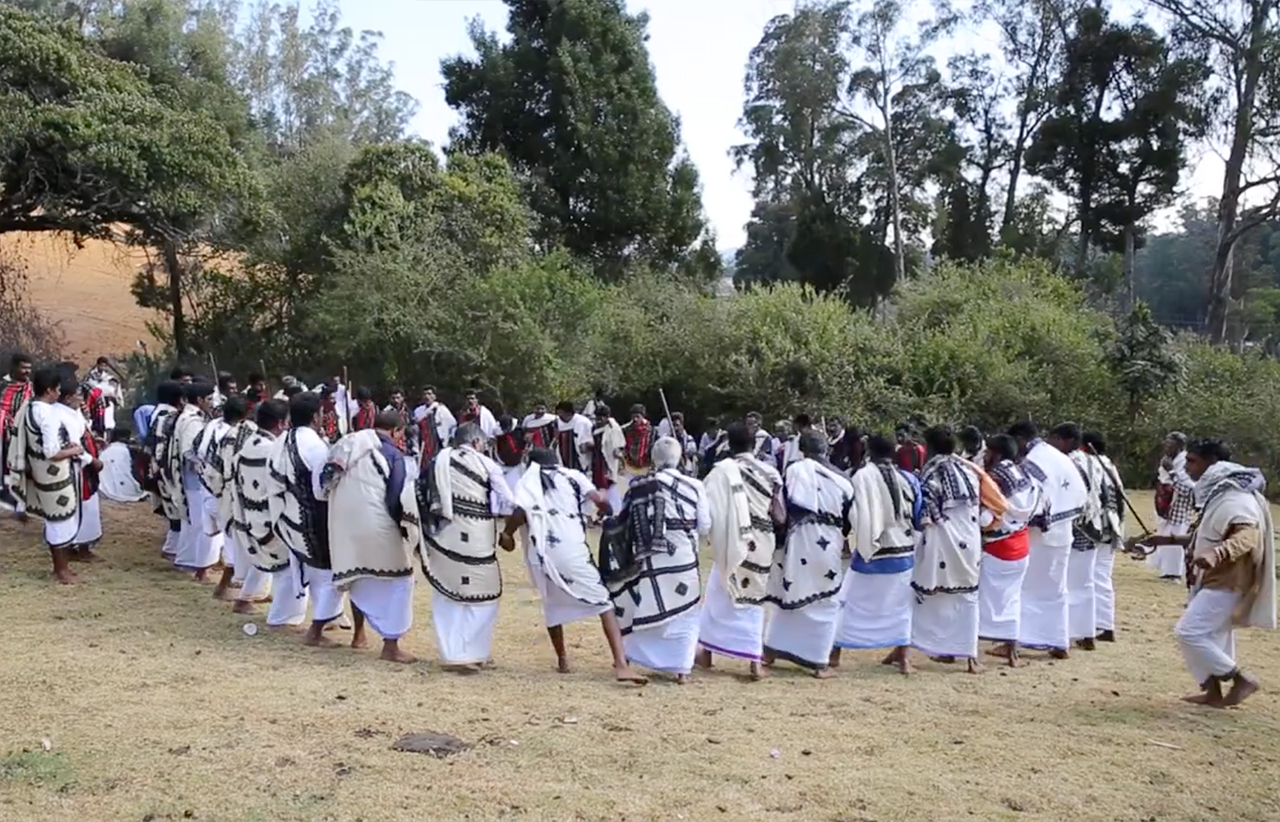
The Toda tribe are pastoral, residing in the Nilgiri Hills in Tamil Nadu. From their homes, language, culture to their embroidery, there is a unique distinctiveness that makes them stand apart. They live in semi-circular homes or huts made from bamboo and grass in a community called munds. Language is a close affiliation of Tamil-Malayalam essence and the Toda’s largely trade in dairy and forest products. The Toda embroidery is but an extension of their uniqueness that is also seen in many other aspects of their culture. In fact, the Toda tribe has gotten considerably more attention than other tribes due to its location. Hill stations, such as Ooty in the Nilgiris are major tourist destinations and hence, the Toda tribe is a recognized ethnic community.
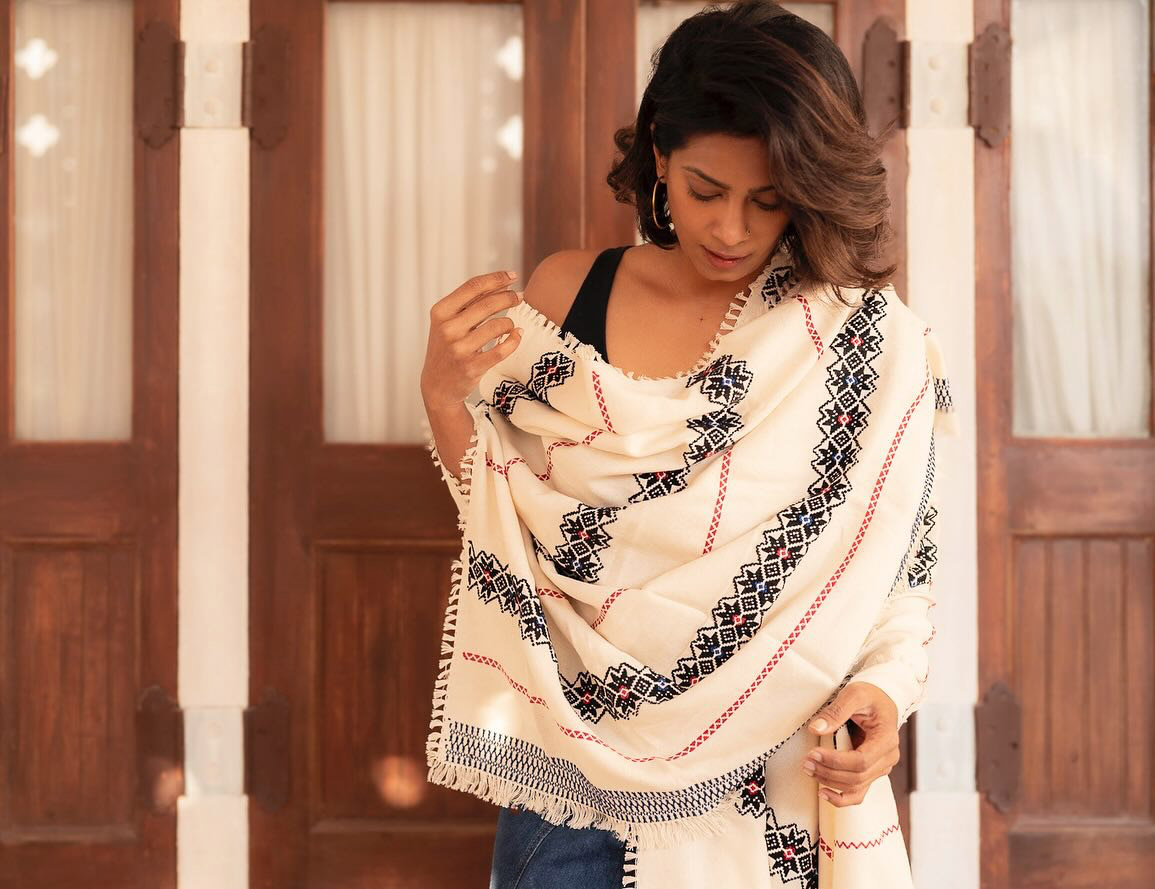
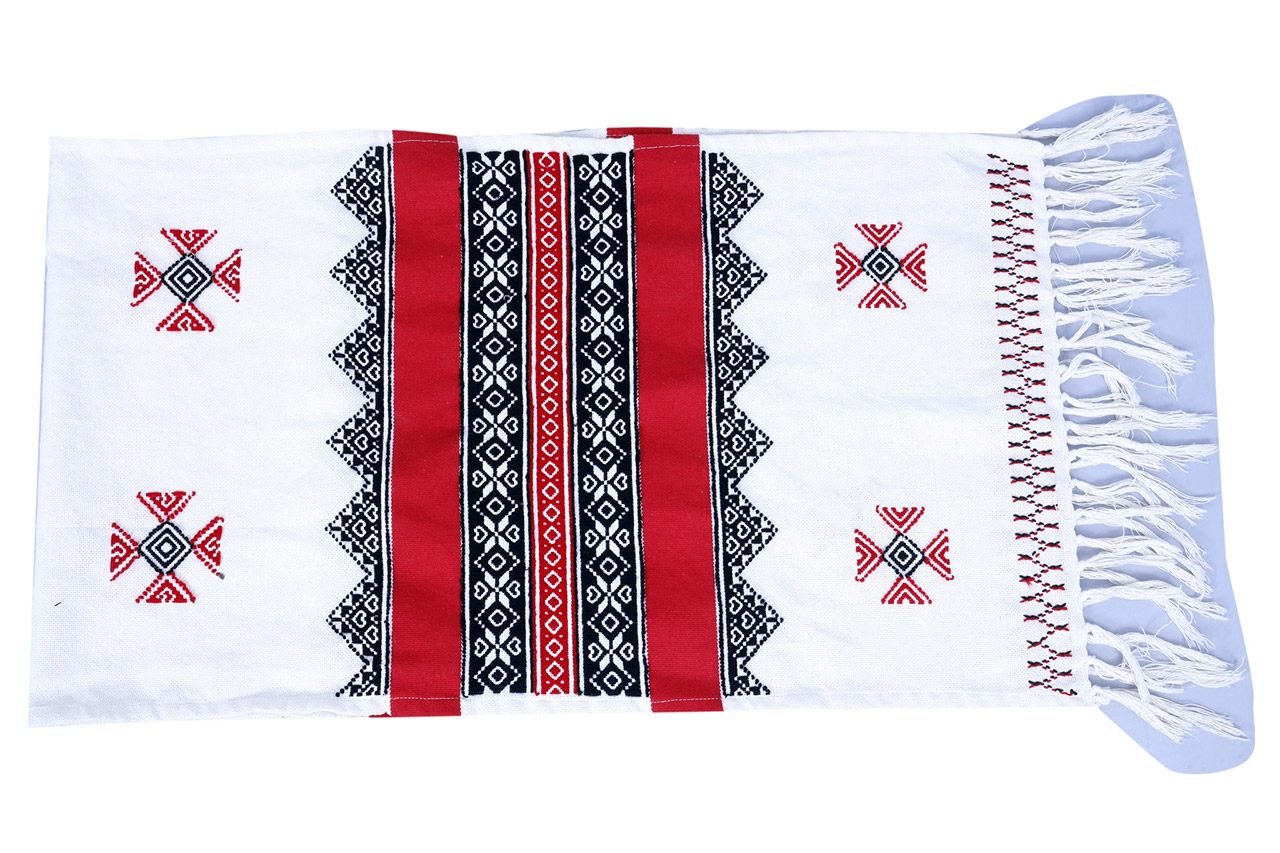
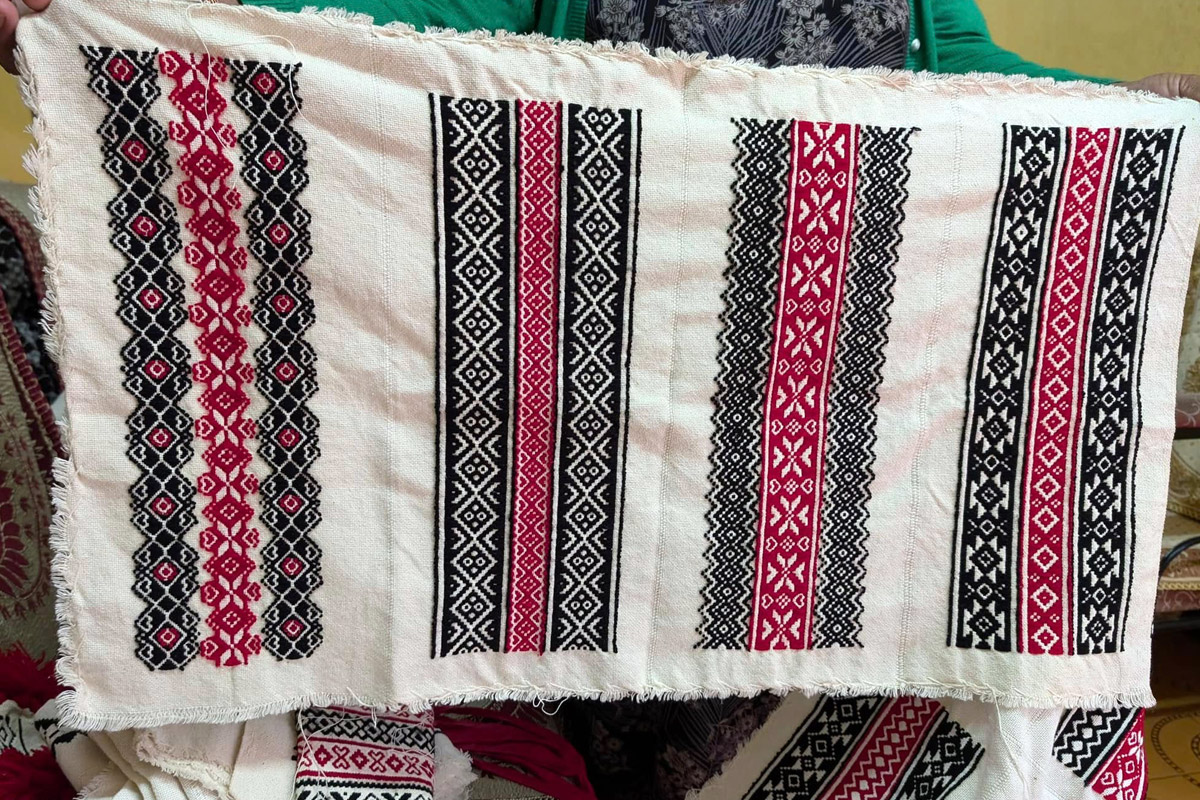
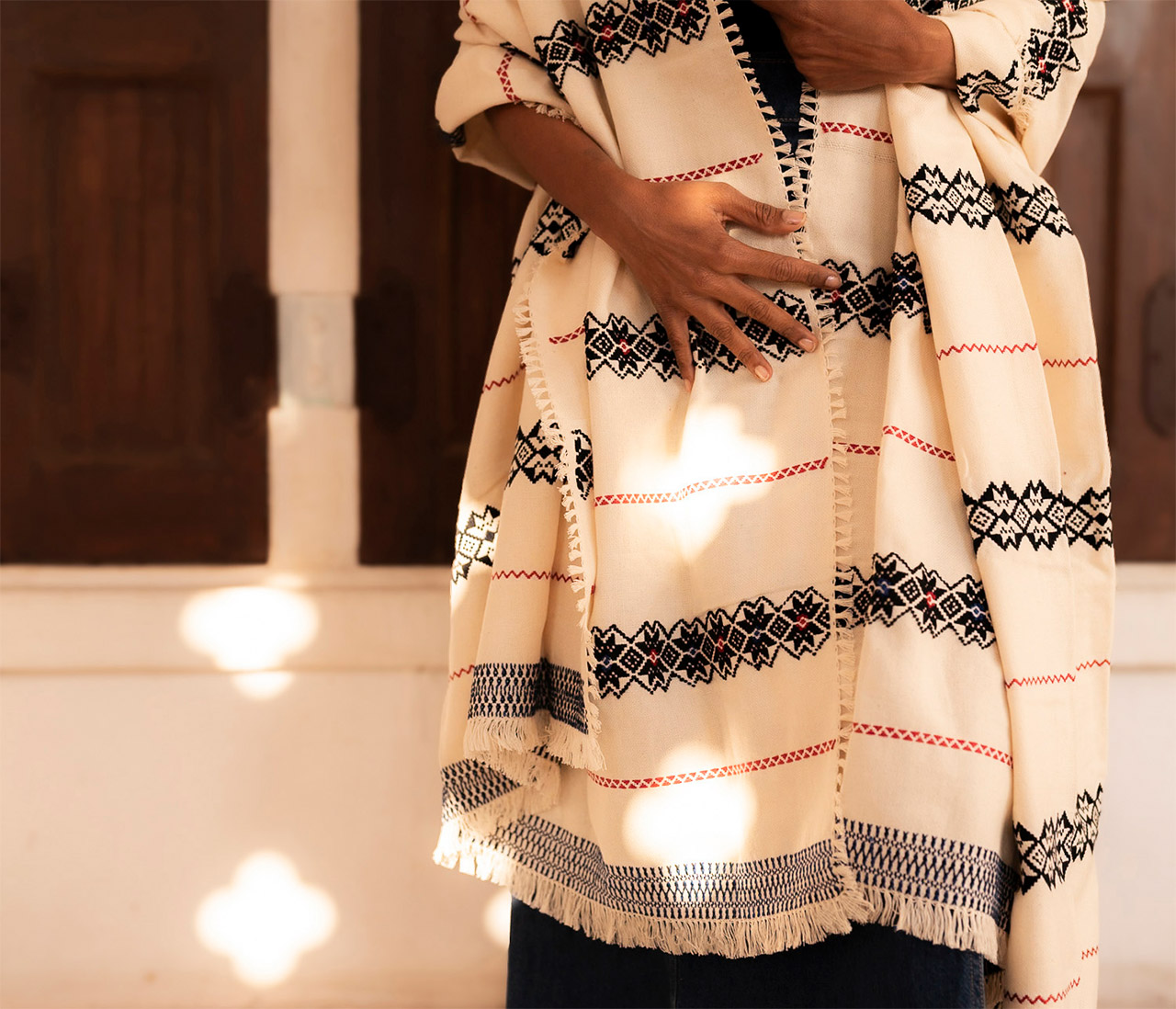
Toda embroidery, in the language of the tribe, is called pohor. It is also known as pukhoor and uses red and black threads on a white cotton background. The Toda embroidery is so neat and fine that it is often mistaken to be hand woven into the cloth. Also, the embroidered cloth can be used both ways, another fascinating accomplishment of this art form. There are no threads or knots visible on either side, thus the design, pattern or utility remains the same of a Toda embroidered cloth on both sides. You can flip it anyway!
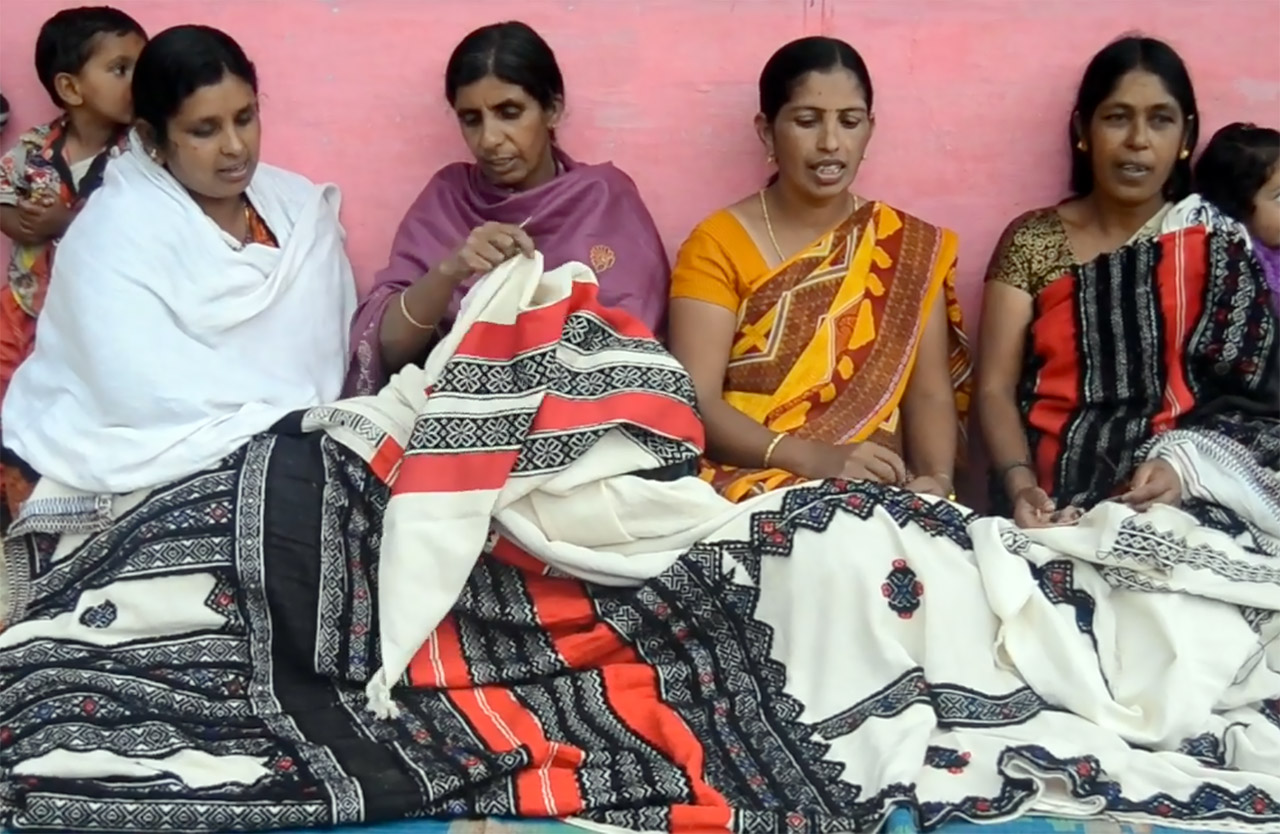
Listed as a GI tagged product, Toda embroidery is done primarily by the women of the community. The women have passed this art from one generation to another with no formal training as such. It is also a matter of wonder that embroidery designs are not taught, nor do women refer to any patterns or drawings. Usually, after the women finish their household chores, they gather and start embroidering, while chatting or catching up with each other. In their conversations and quietude, they seamlessly blend their embroidery, as almost a mechanical act. Yet, it is not as close as to being mechanical, when it comes to the varying range and exactness of designs that are created in their casual approach. As is said, the designs are embroidered on the minds of the Toda women, who with utmost diligence and creativity etch them on the cloth.
Besides, the Toda embroidery uses thread counts to get its designs. Toda women, who have negligent mathematical or counting literacy, manage to create perfectly designed and proportioned geometric or floral designs without using any equipment, such as scales.
The raw material used for embroidery is mostly a white cotton cloth. The cloth is often hand woven, unbleached and the cotton threads are not tightly woven. This facilitates counting of the embroidery threads while creating designs. The fabric is brought from surrounding areas, such as Tirupur in Tamil Nadu. Embroidery is done using woollen thick threads and a needle.
The design begins from the back of the cloth as the women weave their needles to start off interesting patterns. After a while, the cloth is turned around, and the design is continued on the reverse side of the fabric. One of the most basic and fundamental stitches that the Toda women use is the darning stitch. The continuous back and forth and looping of the threads on either side of the fabric give the embroidery a rich and striking definition. It undoubtedly is a tedious process, but their skill is on full display as they embroider stunning and intricate patterns with geometric precision. The symmetry in design and pattern is clearly marked, as the Toda women with some innate and deep subconscious knowledge churn out different designs with no prior prep work, sketches or references.
The Toda tribe are close to nature. Also, their profession and personal lives are embroidered into their natural surroundings. There is no surprise that they draw inspiration from the natural and local environment in their embroidery designs as well. For instance, different motifs are based on physical features and elements. The Nilgiri Mountains, the sun, moon, stars, animals, flowers all find place in the art. But even the tiny references are made into motifs. For example, the wings of butterflies have inspired the kopaan motif, or the squirrel movements have given rise to the peshk motif. From beehives to wildflowers to bull horns or rabbit ears – Toda embroidery draws its designs and motifs from the little and big things of their geographic and social lives. Also, different motifs are given names from the Toda language. Some of these are huts (zigzag), kinask (heart shaped), esh puhur (arrow), poth puhur (diamond shape), mad puhur (triangle shape) etc.
Moreover, the usage of red and black threads (sometimes blue), in Toda embroidery is a characteristic that is influenced by the cultural symbols, motifs and natural elements of tribal life.
Besides motifs, several Toda designs are also apt at storytelling. The sequence in pattern follows tales from social or cultural rituals and events of the tribe. Toda embroidery hence, also documents their lifestyle and culture in stitches.
The most traditional and heritage use of Toda embroidery is on the thick shawls and cloaks that are worn by both men and women. Called poothkuly, these traditional shawls showcase some of the best designs of the tribe.
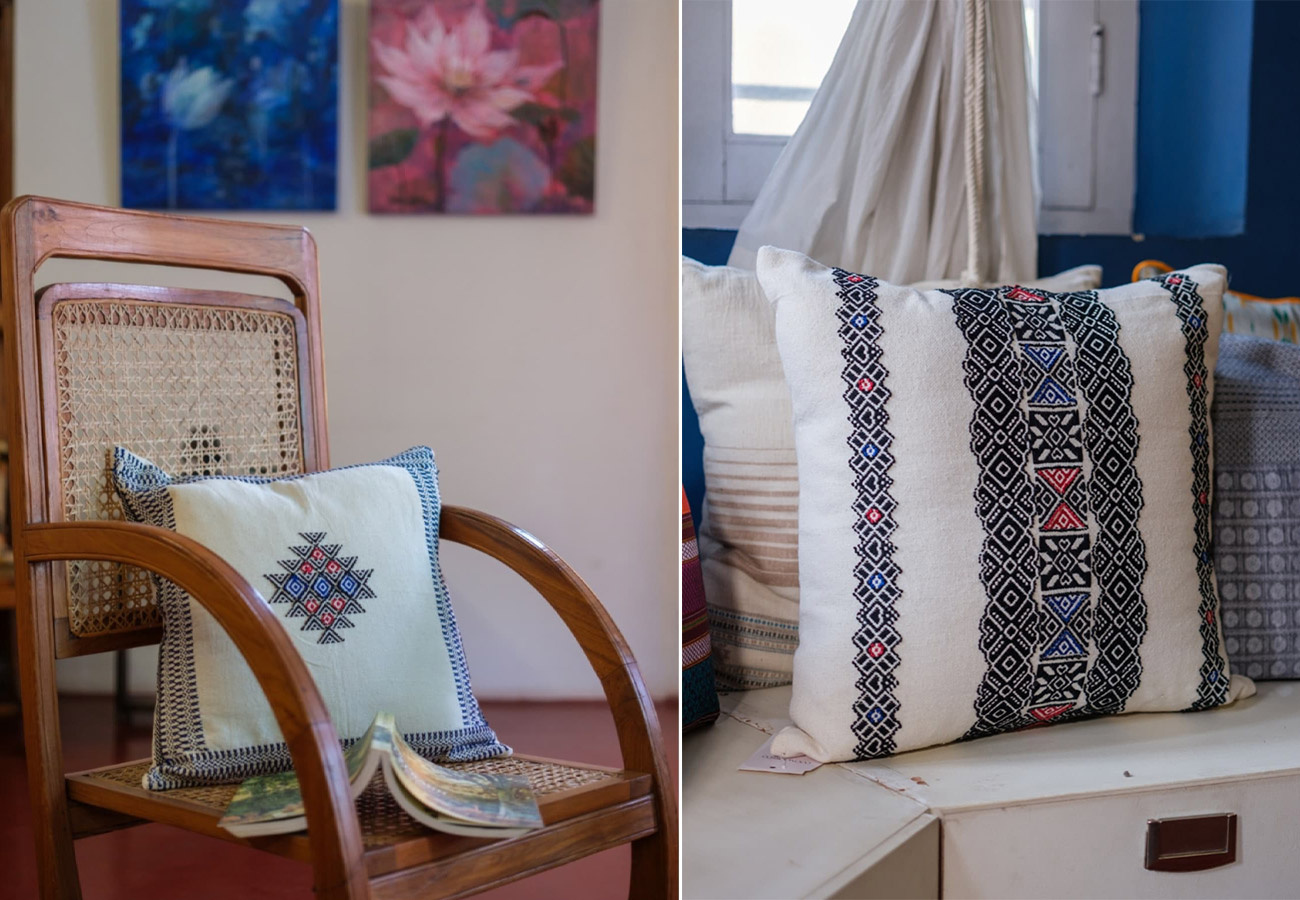
Besides shawls, Toda embroidery is used today on many products, such as bags, jackets, handpurses, keychains, mobile pouches, cushion covers and more.
Toda Embroidery achieved its GI tag in 2013. Constructive efforts through several years have played a role in the preservation and recognition of this art form. Government initiatives, as well as involvement of different NGOs, has led to considerable efforts. Various bodies and institutes, such as Todas Handicraft Sale Emporium, Nilgiri Adivasi Welfare Association, Kotagiri Women’s Co-operative Cottage Industrial Society Ltd. AIACA and others have contributed to the wellbeing and progress of the art form.
Collaborating with designers, market diversification, cultural tourism efforts, exchange programs and women empowerment programs can help to further strengthen the growth and sustainability of Toda Embroidery.
Final Thoughts
Toda Embroidery is a classic example of an art that is so woven into the social and cultural life of its people, that it creates and in turn reflects the heritage and traditions of a community. Its simplicity is emphasised by the precision, creativity and skill of artistry. For those outside the tribe, Toda embroidery is an aweing expression of excellence. But for the Toda women, it is an everyday exercise that is an extension of their routine and character. For the natural meandering of this art form that flows through and hence connects other cultural and social aspects of tribal life – Toda Embroidery is truly special.
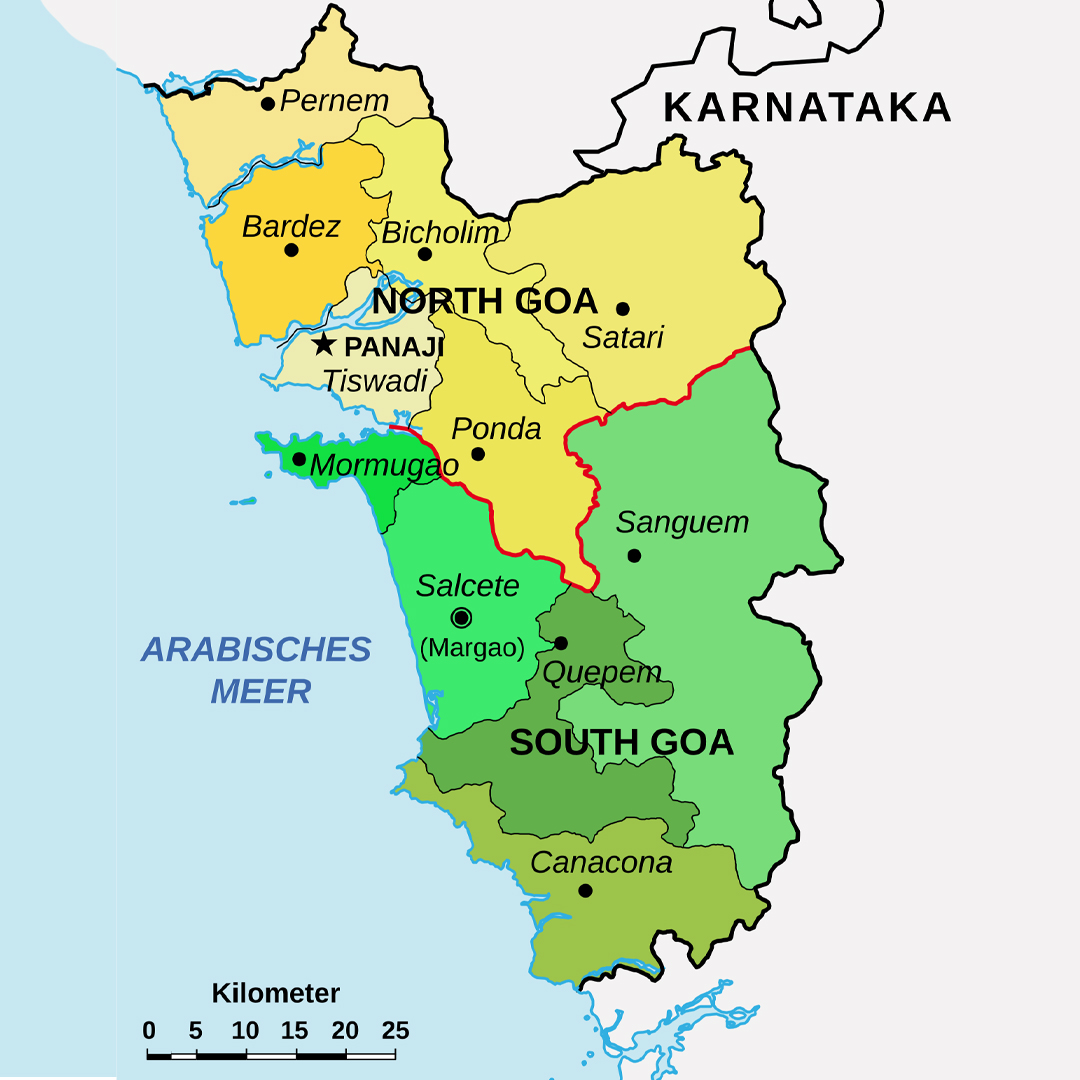
Located along the western coast of India, besides the Arabian Sea, Goa is a tourist destination suitable for all seasons. Panaji is the capital city while Vasco da Gama is the largest city of the state. Goa exhibits a distinct influence on Portuguese culture. The flourishing natural landscape, exciting lifestyle, and culinary specialities all serve the identity of Goa. Its heritage comprises an amalgamation of all the empires that ruled throughout its history.
Exquisite on its own, Goa is rightly called the “Rome of the East” and sometimes, “The Miami of India”. Below, we delve into the culture of Goa and explore the traditions, and lifestyle of the state.
Located on the western coast, Goa is the smallest state of India. Goa was once a rich trading hub that drew tradespeople, missionaries, and scholars from all parts of the globe. Among its earliest residents were Brahmins, mostly the Saraswats, who have been said to have migrated from North Indian River Saraswati banks. Over the centuries, Goa witnessed the rise and fall of several dynasties.It first came under the Mauryan rule in the 3rd century BCE, later falling into the hands of the Satavahanas from Kolhapur, and eventually, the Chalukyas of Badami extended their influence over the region.
Goa’s first wave of Muslim invasion came by 1312 but was temporary in that they departed by 1370. Fate took a different turn in the year 1510 when the Portuguese came by sea, their intention being to secure control over the spice trade. Goa was a suitable location for their base due to its natural harbors and broad rivers. The Portuguese established firmly and left their mark on the culture and buildings of the region by building iconic churches and forts. Their hold lasted for centuries before they were defeated by the Marathas in the late 1700s. Portuguese rule only ended in 1961 when the Indian Army reclaimed Goa and integrated it into the Indian Union.
Goa achieved statehood on May 30, 1987, as India’s 25th state under the leadership of Prime Minister Rajiv Gandhi. Natural language Goan Konkani was subsequently declared one of India’s 22 official languages. The state currently boasts the country’s highest per capita income with its economy being bolstered by fishing, agriculture, tourism, and mineral mining.
Goa Statehood Day, observed on May 30th, commemorates the moment in 1987 when Goa was officially granted statehood and became the 25th state of India. After more than two decades as a Union Territory following its liberation from Portuguese rule in 1961, the demand for statehood grew stronger, fueled by the region’s distinct language, culture, and identity. The transition marked a significant step in giving Goans greater political voice and administrative control. On this day, the state celebrates its unique blend of coastal charm and cultural richness through various programs and local events. Schools, institutions, and communities come together to reflect on Goa’s progress and aspirations. It’s not just a political milestone—it’s a celebration of what makes Goa proudly Goan. The day serves as a reminder of the region’s journey toward self-determination and cultural preservation.
Architecture in Goa
Chapel Of The Cross Of Miracles by Vinay Lohar from Pixabay
The buildings in Goa are reminiscent of the Portuguese who colonised the land in 1510, and the culture and aesthetics of Europe along with the native Goan architectural style is seen in its architecture. The gradually collapsing bungalow mansion, with its wood-iron balconies, shaded balcãos (spruced porches), oyster shell windows and central saquãos (inner courtyards), around which family life was historically revolving, is probably Goa’s most symbolic architectural type. Most of them were established around the beginning of the 18th century for their services to affluent Goan traders and officers. The buildings were built in a European style, but the components- red laterite stone, wood or terracotta and oyster shells in place of glass windows etc. were all locally sourced.
As an aftermath of colonial rule, the culture of Goa is a blend of Portuguese and Indian. The state is brimming with the vivacity of joyful spirits, and such is reflected in the people and their lifestyle. An easy preference for tourists to shed away the moulds of grinding metropolitan life, Goa is imbibed with the atmosphere of holiday and freedom.
Goans, a term beloved by the people of the state, practice ‘siesta’, wherein they shut down their shops and give in the afternoon rest, from 1 to 4 pm. The community is inclusive, and the friendly natives come together despite religious differences. Such is evident during celebration and worship. The colourful traditions of the state are portrayed in their folk performances, including music and dance.
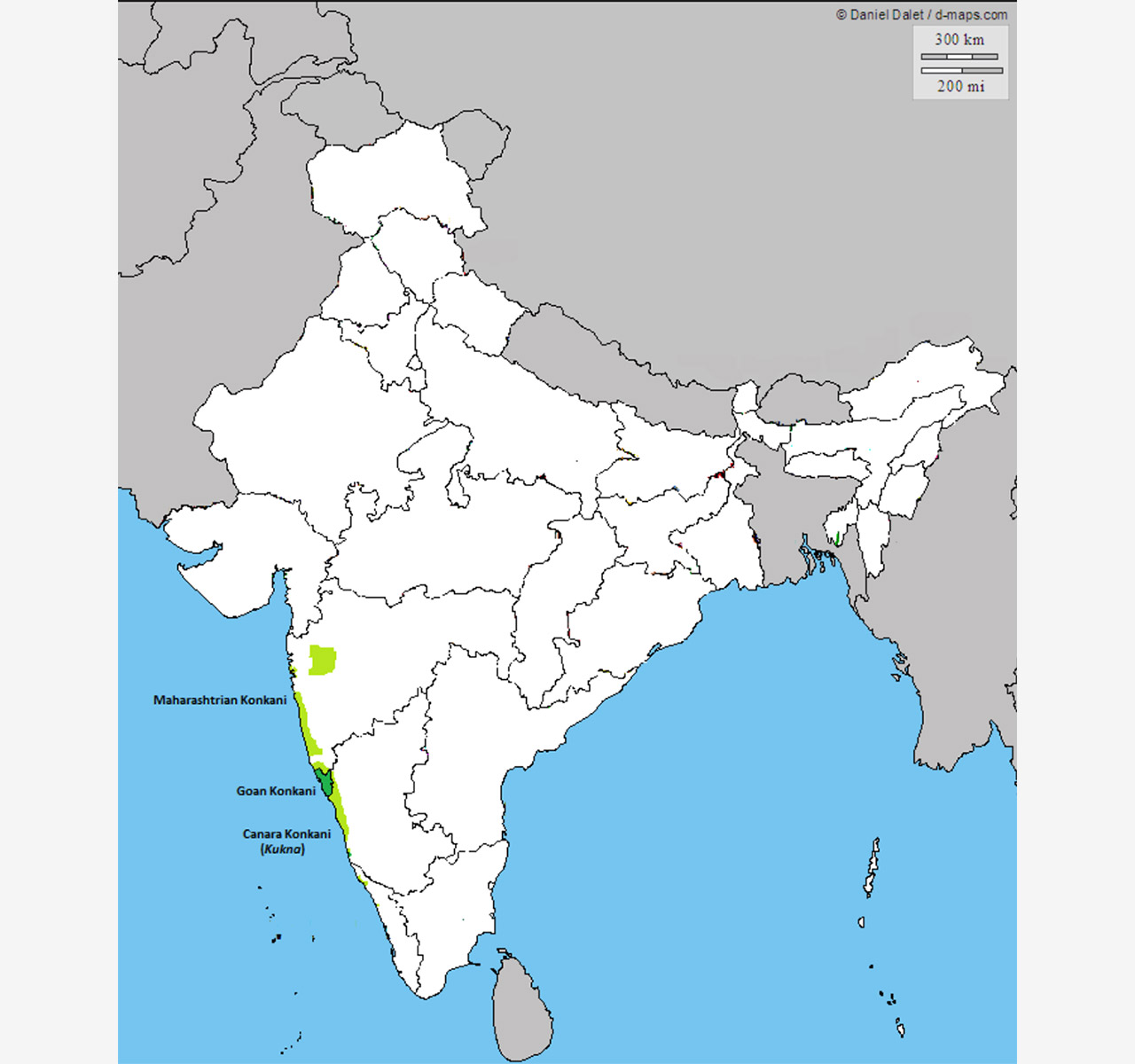
Goa is a melting pot of culture, and this discovery is richly resonant in its multilingual heritage. The state welcomes residents from different ethnic groups, each enriching the language fabric. Although the most widely spoken are the Marathi and Konkani dialects, which have a rich resonance in the local subconscious, the linguistic base goes far beyond this.
In addition to these, there is a large segment of the population that also communicates in Hindi, English, and Portuguese directly as a legacy of having been a colony. This multilingualism creates a special environment where communication does not face cultural barriers, and ideas and traditions can be shared freely between residents and visitors.
Religion in Goa
In Goa, religions play a significant component in everyday lives with three major ones being Hinduism, represented by around 60% of the people, Christianity (30%) as well as Islam (10%).
Prior to Goa being colonised by the Portuguese in the 16th century, Hinduism was the state’s main religion, but following the invasion, the Portuguese imposed Roman Catholicism on the citizens. When Goans again had the freedom to select their religion, Christianity had been extensively established throughout the State.
Goa has become a highly religiously tolerant state. The Hindus, the Christians and the Muslims live contentedly together. In fact, from Renaissance architecture in Goan temples to Christian prayers recited in Konkani, they have taken on many similar characteristics. You will certainly observe both religions dwelling happily next to one other while you traverse the state. Next to elaborate temples of Hindu origin and the mosques, Christian churches also tower tall.
The Goan cuisine comprises Portuguese, Hindu, and Islamic styles of cooking. This amalgamation results in a grand variety of rich, delicious dishes. Seafood is a common delight for the people, with its spread of deftly spiced and seasoned dishes.
Vinegar and coconut milk are used a lot in cooking. European spices are often included in Indian curry dishes. Rice and fish curry is a staple meal of the Goans.
Khatkhate is a vegetable stew that is prepared during festivals. It contains fresh coconut, spices of Goa, and at least five vegetables.
Other special dishes include pork preparations like xacuti, Vindaloo, Chorisa, and Sorpotel. Bebinca is a popular egg-based sweet dish that is famous during Christmas celebrations. Alcoholic beverages like the Cashew Feni and the Coconut Feni are popular among the Goans.
Traditional Dress of Goa
Image-Pxfuel
The tropical climate of the state makes light cotton clothes to be the most suitable. The Catholic women don dresses and gowns while the Hindus prefer sarees called ‘Nav-vari’. Some of the other significant costumes of the Goan culture include Pano Bhaju, Kashti, and Valkal. Men, on the other hand, usually wear shirts and trousers. Bright coloured shirts with half-pants and bamboo hats are representative of Goa among the tourists. The famous Goa Carnival exhibits the plethora of bright colours and costumes that are found in the state.
The cultural heritage of Goa abounds with folk music that blends harmoniously with influences of Western compositions. The Portuguese methods of incorporating violin, piano, and mandolin are utilized by Goan musicians. Dekhni, Mano, Fugdi, and Corridinho are some prestigious folk dances of Goa. Incredible singers as the likes of Emiliano D’cruz, Prince Jacob, Rosario Rodrigues, Souza Boy, M.Boyer, Tony King Alfred Rose, Kid Boxer, and J. B. Rod hail from Goa.
Goa is filled with a performing arts culture and traditional state-specific skills. The skilled craftsmen develop their skills to create beautiful handicrafts from natural products like sea shells, clay, paper, bamboo, and brass. They are extremely sought after by tourists for their beauty and uniqueness. The most symbolic of them are Azulejos tiles—hand-sewn blue Portuguese-style tiles representing Goa’s colonial past.
Brassware and terracotta, usually found at the renowned Anjuna flea market, are the quintessential examples of Goan workmanship. In addition to crafts, Goa’s cultural vibrancy shines through its folk dances like Fugdi and Dekhni, frequently performed during festive occasions. For those seeking meaningful souvenirs, Mapusa and Panjim markets offer a wide variety of Goan handicrafts perfect for gifts or keepsakes.
Fairs and Festivals of Goa
Image courtasy – onsecrethunt.com
Festivals of Goa are as lively as the state itself, one can experience the blend of Portuguese and local culture. Festivals such as the Shigmo festival, Kalas Utsav, Shri Shanta Durga Jatra, Novidade, Bonderam Festival, and Goa Carnival showcase the spirit of Goan culture with effervescence. The Jatra feasts involve a grand procession of ‘palakhi’ or palanquins where innumerable people participate. The occasions of Christmas and New Year celebrations are great attractions for tourists.
Occupation of Goa
Most Goans are engaged in employment and organisations based on agriculture, fisheries and tourism. Paddy is the main crop. The local farmers work in lush green paddy fields in the monsoons throughout the day. Many farmers also cultivate cash crops such as coconut, cashews, mangoes, areca nuts pineapples, jackfruit and many more tropical crops. Many people in the summers brew the famed Feni tipple. Another important business in Goa is fishing. Fish are the lifeline of the state’s diet, having 66 km of shoreline, 11 inland rivers and 42 tributaries traversing the state.
Tourism has become one of the major players in the state’s economy. Many Goans, therefore, work in tourism-related industries such as guides for tourists, taxi drivers, self-owned tourism companies, and so on. Baking is another Goan custom that gives a job to many Goans. In every community there are traditional bakers from Goan, making of Pao, Polis and other Goan bread.
Adventure in Goa
Two of the most popular sports that people of Goa love and participate in are football and bullfighting. Water sports like rafting, scuba diving, snorkeling, banana boat ride, kayaking, jet ski, speed boating, kite surfing, and Ringo ride are popular attractions of Goa. It is the only state in India where gambling is legal, and thus, conveniently boasts of a flourish of fine casinos.
The nights of Goa come to life in the pulsating beats of a land that never sleeps. The parties and celebrations pose as bright and youthful destinations for people all over the country and even the world. Lights, music, and an environment of no-worries-of-the-world are sought after at such hours of the night.
With its sweeping beachside, enriching folk music, and dance, and the heritage architecture of forts and churches. Goa is an extremely popular tourist attraction among Indians and foreigners alike. It’s perfect for relief from the demands of life and relaxing the spirit. Therefore, tourism in Goa is its primary industry that thrives all year long.
Goa has innumerable places of worship. The Basilica of Bom Jesus, St. Cathedral Church, and Our Lady of Immaculate Conception are some of the prominent churches. Mangueshi Temple of Lord Shiva, Shri Kamakshi temple, and the Mahalasa Temple are renowned among Hindu devotees. Safa Masjid at Ponda and the Jama Masjid are significant mosques.
Besides its religious structures, Goa’s architecture is also reflected in forts such as Reis Magos Fort, Mormugao Fort, Rachol Fort, and Naroa Fort.
Among its attractive beaches, one must visit Candolim Beach. Bambolim beach, Baga Beach, Sinquerim Beach, Vagator Beach, Palolem Beach, Agonda Beach, and Arambol beach are equally good.
Other sites of natural wonders include the Mayem Lake, Dudhsagar Falls, Kesarval Springs, Arvalem Falls, and Kuskem Falls.
Goa also is home to various animals and birds, and its most famous wildlife sanctuaries include Bondla Forest, Bhagwan Mahavir Wildlife Sanctuary, Mollem National Park, and Cotigao Wildlife Sanctuary.
The state of Goa is defined by its vibrant colors and happening life. The people live in harmony and enjoy celebrations together. It’s an amazing place to forget all your worries and experience an excellent getaway.
Goan culture is largely a blend of native Indian traditions and some Portuguese influences, the product of its long history as a colony.
Which languages are generally spoken in Goa?
The most spoken language in Goa is Konkani, followed by Marathi as the second most spoken. Hindi, English, and Portuguese are common as well.
What distinguishes Goan cuisine, and can you provide a few of the popular dishes?
Goan cuisine is a spicy blend of Portuguese, Hindu, and Islamic cooking, which is renowned for seafood, coconut milk, and vinegar use. Some well-known dishes include fish curry and rice, Xacuti, Vindaloo, Sorpotel, and dessert Bebinca.
When is Goa Statehood Day celebrated?
Goa Statehood Day, celebrated on May 30th, commemorates the day Goa attained full statehood in 1987, marking its journey from a Union Territory to the 25th state of India, and is a day for celebrating its progress and identity.
What are some traditional dances and festivals traditionally celebrated in Goa?
Some of the most famous Goan folk dances are Dekhni, Mano, Fugdi, and Corridinho. Major festivals that are celebrated with great enthusiasm are the Shigmo Festival, Bonderam Festival, and the colorful Goa Carnival.
Few Lines on the Culture of Goa
Goa: A kaleidoscopic tapestry where East and West tango in a dance of cultures.
Its buildings whisper tales of Portuguese grandeur in laterite stone.
Goan food is a spicy, sour, and sweet melody of varied influences.
From Fugdi to Feni, Goan culture is a lively celebration of life.
Religious harmony flourishes, with temples, churches, and mosques standing tall together.
The smallest state with the largest heart for music, dance, and merriment.
Goa Statehood Day commemorates its path to becoming a fully literate, self-sustaining state.
Conclusion
Goa, truly the “Rome of the East” and “Miami of India,” emerges as a captivating kaleidoscope of cultures, harmoniously blending its indigenous heritage with a profound Portuguese influence. From its distinctive architecture echoing colonial grandeur to its flavorful cuisine that tantalizes with a fusion of global spices, and from its lively folk dances and music infused with Western melodies to its effervescent festivals like the famous Carnival, Goa embodies a unique zest for life. The remarkable religious tolerance and inclusive spirit of its people foster an atmosphere of unparalleled warmth and freedom. More than just a tourist destination, Goa offers an immersive experience, inviting all to partake in its vibrant traditions, artistic expressions, and the joyful, laid-back lifestyle that makes it an unforgettable getaway.
The Indian Monsoon is not just a season; it serves as a monumental epic that touches every single aspect of life within the subcontinent. It augments from July to September, marking the end of the summer season and serves as a magical cooling transformation which rejuvenates the rivers, cools the land, and turns dry fields into meadows.
The Parched Oceans and Indian landmass heavily rely on the monsoon system as a catalyst for daily life the same way it determines food availability, festivals, and agriculture. Although it brings extensive joy and an abundance of resources, it can also act unpredictably through floods and droughts which require extreme forecasting and preparation.
The coming of the monsoon is highly anticipated by the farmers, city dwellers, and lovers of nature. The monsoon’s absolute beauty and wonder along with its unpredictability and force act as an encapsulating concept that serves to fascinate the globe.
Therefore, as the first drops of rain make contact with the dusty surface of the earth, let’s delve into the ten breathtaking facts about how this season serves to awe-inspire India every year.
Top 10 Interesting and Intriguing Facts About Indian Monsoon. Look at the following facts which I personally found most fun about Indian Monsoon.
1. It’s Not Just About the Rain! The Name is All About the Wind
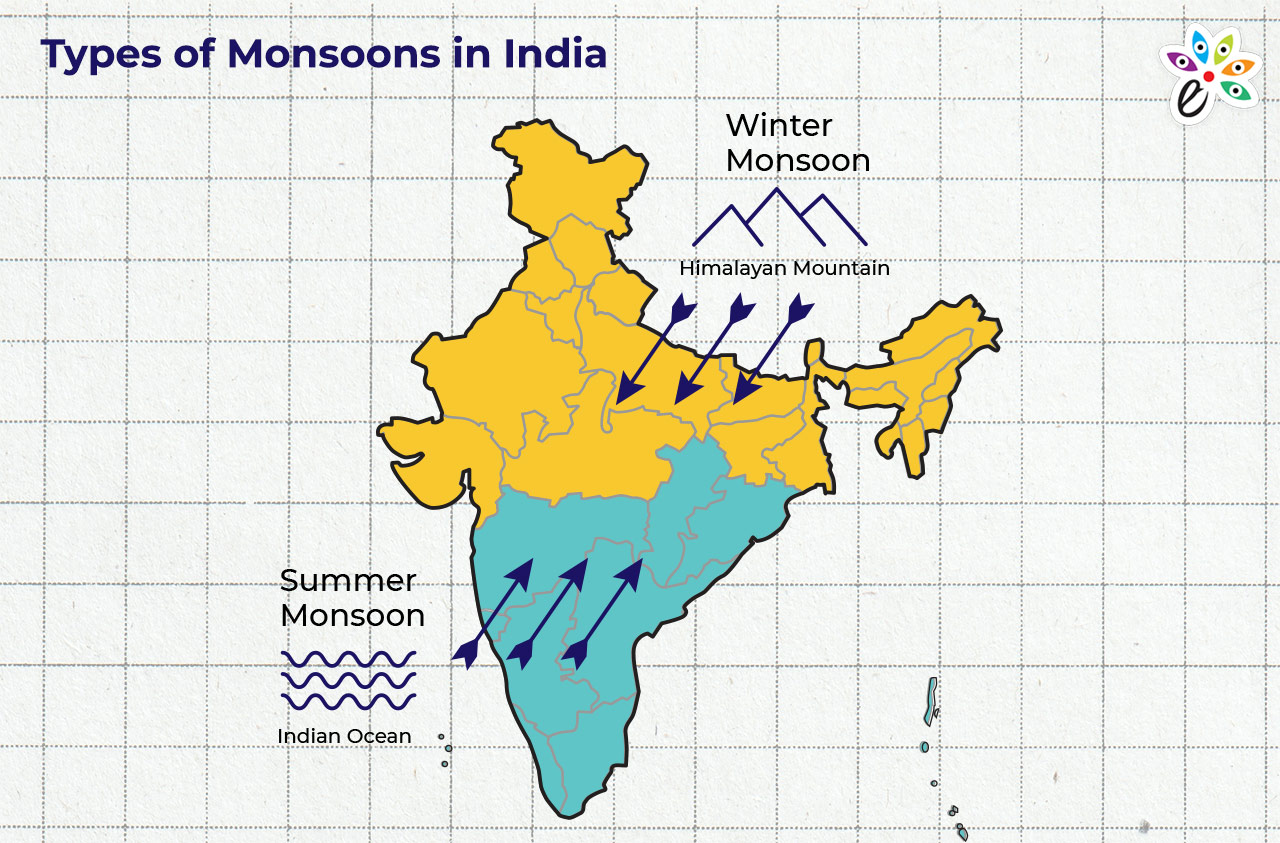
Most people assume the term “monsoon” literally refers to a lot of rain. Here is a surprise fact: actually, the term is related to the powerful, yearly reversal of wind directions! In summer, warm air above India heats up and goes up, creating a region of low atmospheric pressure. This draws in the Indian Ocean humid winds, which we term as the southwest monsoon.
The winter season sees the reversing of the winds, bringing the dry terrestrial winds towards the sea. It is referred to as the northeast monsoon, but it is not as wet. Rain is therefore only one aspect of this wild dance of winds!
2. A Gigantic Reach: Half the World Feels Its Impact
It’s incredible what kind of impact the Indian monsoon has. It’s not only for India but also for the surrounding countries of Pakistan, Bangladesh, Sri Lanka, and Nepal. Hard to believe, but this one weather phenomenon impacts roughly half of the world’s people – roughly 3 billion lives!
It is essential in food cultivation, cooling down hot regions, and sustaining life across a wide area. Entire regions would face dire consequences without the ability to support their population. This truly plays a global role in our weather systems.
3. Earthquakes on the Menu? Heavy Rains Can Trigger Tremors
While we appreciate the rain, the monsoon season can also bring a surprise and lethal encounter: earthquakes. The extremely heavy rain causes additional pressure on already stressed rocks. This added weight can make them crack and lead to an earthquake.
Horrific examples are a large earthquake in Hyderabad in 2005 and one in Gujarat in 2017. Both occurred during the rainy season and injured or killed many, pointing to a hidden risk of the rainy season.
4. Underground Giants: How Monsoons Create Hidden Water Reserves
There exists an invisible superpower beneath the monsoons that sharply influences the Earth’s water balance systems. The monsoons, apart from the rain that is released, also create vast water storage regions deep below Earth’s surface. The rainwater filters underground and fills natural lakes known as aquifers. This water becomes crucial in supporting areas that experience low rainfall.
This waterproof reserve is extremely helpful for irrigation purposes in India, where many fields require monsoon rains to irrigate the crops during the dry season. The monks in the hidden caffeinated lands largely depend on this unexploited asset that provides untold relief to vast populations.
5. Tea’s Secret Ingredient? The Monsoon Shapes Its Flavor
Tea lovers, take note! The Indian monsoon significantly alters the taste of your cup of tea. The rainwater penetrating the ground impacts the taste of the water used for tea. This results in the tea tasting a bit earthy or mineral.
The wet and damp climate also leads to some type of mold on tea leaves. And monsoon temperature fluctuations affect how tea leaves age, thus altering the taste. Thus, the monsoon itself imparts a special taste to your tea, and each season’s tea is different.
6. When the Sky Cries Red: The Phenomenon of “Blood Rain.”
Imagine rain that is not clear, but red. Indian monsoon can result in “blood rain,” with the raindrops being filled with small red particles. These small particles may be wind-blown sand or dust, or even small pieces of rock ground small by the violence of the rain.
When the red rain occurs, it stains everything it falls upon. It’s a very startling and sometimes spooky sight, coloring landscapes reddish after a rainstorm.
7. Nature’s Architects: The Monsoon and “Living Bridges”
Perhaps the most incredible fact is how the monsoon aids in the creation of “living bridges.” In parts of India, particularly in Meghalaya, locals painstakingly guide and interweave the roots of trees into one another.
These roots then slowly develop into sturdy, natural bridges spanning rivers. These remarkable bridges, stretching up to 30 meters in length, can support a crowd. They demonstrate what genius man is capable of when collaborating with nature, learning how to manage the heavy monsoon rains and building much more sustainable architecture.
8. It Has Its Own Soundtrack: The Music of the Monsoon
The coming of the monsoon isn’t just about weather; it’s a reason to celebrate, and it even has its own special kind of music! In a state of Maharashtra, this music is known as Sangeet Barve. Monsoon music often uses old instruments like the shehnai and tabla drums.
The songs often talk about the joys and sadness of love, and the hopes and worries that come with the changing seasons. Famous artists like A.R. Rahman have helped share this unique music with people all over the world, adding a cultural layer to this natural phenomenon.
9. The Monsoon’s Mysterious Side: Leading to Disappearances
The monsoon is a blessing for nature, but it can also prove fatal and treacherous for people. This leads to mysterious cases of disappearances in various ways. Severe rainfall giving rise to flash floods can drown both living creatures and great beasts. Flooded regions, mudslides, and avalanches can bury houses alongside their dwellers.
Monsoons paired with thick fogs can handicap vision, making people who venture far from home conveniently lose their way. During such downpours, these conditions can severely limit rescue operations.
10. A Changing Beat: How Climate Change is Altering the Monsoon
The monsoon system is highly vulnerable to climate change. The onset of monsoons is delayed and their withdrawal is accelerated. In addition, there are significant changes in precipitation patterns during the dry periods, heavy rainfall intervals bring about increased flooding.
Most importantly, the centers of precipitation are changing as well. These factors have critical consequences on agriculture, water availability, and flood management in India. In the future, we have to prepare for severe floods and droughts.
FAQs about Indian Monsoons
What exactly does the word “monsoon” mean?
It is an alternating change of wind direction due to the temperature difference, not merely heavy rain but an alternating change.
When does the Indian Monsoon usually begin and end?
It usually arrives around early June in southern India and moves slowly northwards, usually fading away by October.
Why is the monsoon of India so important?
It delivers more than 75% of India’s rainfall in a year, which is quite simply irreplaceable for farming, filling water bodies, and sustaining livelihoods.
Can the monsoon have effects on lands beyond India?
Indeed, it has a significant influence on weather and life in neighboring countries such as Pakistan, Bangladesh, Sri Lanka, and Nepal, sharing its life-supporting and sometimes challenging consequences.
How is the monsoon being impacted by global warming?
It’s causing late onset, early withdrawal, more intense rain events, and shifted positions of heaviest rainfall, resulting in more extreme weather.
Few Lines on Indian Monsoons
About half the world’s population is affected by the monsoon.
Severe monsoon downpours can trigger some earthquakes.
Monsoons can create “blood rain” which is red due to particles.
Monsoons help in the formation of unique living bridges through the roots of trees.
There is a unique genre of music composed for the monsoon season.
Teas from different regions are shaped by the Monsoon in surprising ways.
India’s first ever monsoon forecast was issued in 1886.
Conclusion
The Indian Monsoon is way more than a season for rain; it is a natural phenomenon, a source of Culture and Inspiration, and a support system for billions of people. The ability the Monsoon has for shaping the land in various ways, impacting people’s day to day activities, and serving as a source of artworks is astonishing. From developing concealed aquifers or hidden reservoirs to even causing some delayed geological activities, the monsoon serves as a reminder for the delicate balance and interplay of our planet’s systems.
Encountering new challenges because of climate change makes understanding its various dimensions more important than ever. Such understanding is critical not only for the region but for the whole world, deepening the complexity of its interplay with nature.
The long-awaited return of Namma Art Bengaluru is all set to illuminate the city’s cultural landscape once again. From May 28 to June 1, 2025, the legendary Karnataka Chitrakala Parishath (CKP) will be hosting this vibrant, open-to-all art fest that will see participation from more than 150 artists across a wide variety of genres.
With the Department of Tourism’s backing, this national art fair has a bias towards showcasing emerging and established artists as well, presenting a complete experience for all age groups.
A Celebration Beyond Canvas
Unlike conventional exhibitions, Namma Art Bengaluru is a community-centric celebration of creativity. It’s designed not just as a viewing experience but as a platform where dialogue, learning, and inspiration are in constant motion. The CKP campus will transform into a living, breathing art hub — bustling with indoor galleries, outdoor installations, and live demonstrations. The goal? To democratize art by eliminating financial and social barriers that often make such spaces feel exclusive.
According to organizers, this year’s festival will include interactive workshops, lectures, art talks, and performance art that welcome participation and promote artistic literacy. Visitors can expect to interact with artists and witness the creative process first-hand.
Spotlight on New Voices and Regional Flavours
A key highlight of the event is its dedication to early-career and mid-career artists from across eight Indian states. With a stall fee of ₹25,000, over 100 such artists are set to exhibit their work, giving them a rare opportunity to showcase on a national platform.
Notably, there will be a specially curated exhibition by veteran Indian artists like S.G. Vasudev, Rekha Rodwittiya, and K.S. Kulkarni, whose contributions to Indian contemporary art are globally recognized. This sensitive curation of established hands and fresh hands will open up a multi-generational conversation in the art fraternity — a special hallmark of the year’s edition.
B.L. Shankar, President of CKP, emphasized the festival’s mission: “We’re not only presenting art; we’re curating an ecosystem for exchange, visibility, and growth for India’s vibrant visual arts community.”
Beyond Galleries: A Festival for the People
Between 10:30 a.m. and 7:30 p.m., the fair welcomes students, art enthusiasts, tourists, and collectors to experience the new face of Indian art. Entry is absolutely free of charge, and it is one of the most accessible and open cultural events in the nation.
Live painting sessions, rapid art demonstrations, and panel discussions will be providing live art interaction. All of them will try to bridge the gap between artists and viewers by giving them a vision of what works in the minds, skills, and intentions behind each work.
Registration on-site starts on May 27 evening and designated parking spaces will be available at Sevadal Grounds, Kumara Krupa, and Crescent Road.
A Cultural Landmark for Bengaluru
Namma Art Bengaluru is not just a festival; it is a movement towards making visual art a civic experience for all. It puts Bengaluru on the national map of culture by showcasing the city as a city in which tradition blends with innovation.
Art collector Harish Padmanabha, part of the organizing committee, said, “This is not a commercial fair. We’re stressing on value over price, experience over transaction. The focus is on connecting the artist’s vision with the audience’s curiosity.”
Event Details
Where: Karnataka Chitrakala Parishath, Bengaluru When: May 28 – June 1, 2025 Time: 10:30 a.m. – 7:30 p.m. Cost: Free for all Inaugural: May 28, 4:30 p.m. by H.K. Patil, Minister for Law and Parliamentary Affairs, Legislation and Tourism
The term Phulkari is a Punjabi term is obtained from two words: ‘Phul’ and ‘Kari’ meaning ‘flower’ and ‘work’ and so the word Phulkari translates into ‘flower work’ or ‘floral work’. The Phulkari embroidery first began in Punjab in the 15th century by the women of Punjab. It is the rural handmade embroidery tradition of Punjab and is also known as the folk embroidery of Punjab. Even though Phulkari means floral work, the designs in this embroidery comprised not only flowers but also included various motifs and geometrical patterns and shapes. The Phulkari embroidery is overall very bright, vibrant and it brings color to people’s lives. The Phulkari embroidery is very popular worldwide. It was made by women and it celebrates womanhood.
There are several theories about the origin of Phulkari. It was believed that the Phulkari embroidery was prevalent in various parts of the country but it only survived in Punjab. Another theory is that the Phulkari embroidery came from Iran. There it was known as Gulkari, which also means floral work. Nevertheless, it was noted that the Phulkari style of embroidery and the Gulkari style of embroidery is different and distinctive from each other. Some even say that the Jat tribes brought this embroidery to India when they migrated to India and settled in Punjab, Gujarat, and Haryana. On the other hand, the word ‘Phulkari’ has its earliest reference in the 18th century in Punjabi literature.
This is in Waris Shah’s version of Heer Ranjha, a legendary Punjabi tragic romance, where the wedding outfit of Heer, the female protagonist, is discussed and they talk about several items of clothing and outfits with Phulkari embroidery. There is also the reference of Phulkari in the Mahabharata, the Vedas, Guru Granth Sahib, and some Punjabi folk songs. Nonetheless, it is believed that no matter what the origin of this embroidery is, it will always be very different and unique to Punjab.
In ancient times in Punjab, the birth of a girl child in the family was considered very auspicious and so, as soon as a girl was born in a family, the mothers and grandmothers would start embroidering Phulkaris. This is because they believed that the girl child would be the creator for the forthcoming generations and also because these Phulkaris were to be given away at the time of her marriage. This was a tradition that the parents of the girl child, according to their status, would give a dowry of 11 to 101 Baghs and Phulkaris.
Traditionally, Phulkaris was done using real flowers, and Silk and Mulmul fabrics were used because of their purity and durability. It was also believed that the Phulkari was made according to and depending on the morality, righteousness, qualities, and character of a woman. Earlier, the Phulkaris were embroidered by the women for their own and other family member’s use. They were not for sale and the women in Punjab used to wear these Phulkaris in weddings, festivals, celebrations, and occasions. The Phulkari embroidery was a domestic art for the women to show their creativity and also to bring color into their daily life. This folk art offered complete freedom of creativity. The Phulkari is still a very integral and vital part of Punjabi weddings. There is even a Punjabi folk song that celebrates this folk art,
“Ih phulkari meri maan ne kadhi, iss noo ghut ghut japhiyan paawan” – “My dear mother has embroidered his phulkari; I embrace it again and again with affection”.
The Phulkari style of embroidery met with a tragedy and faced some very difficult times. Whereat some point in time, around 52 types of Phulkari existed; there was also a time where this form of embroidery almost disappeared. This happened during the partition of India and Pakistan in 1947. However, it soon launched back up and now almost 70 years later, it is an evergreen style statement. The revival of Phulkari resulted because after the partition in 1947, due to the refugee crisis, the organizations encouraged women to make Phulkaris so that they could earn enough money to survive. Traditionally, Phulkari was embroidered by women using their own hands but now, the Phulkaris are embroidered using machines and modern techniques and materials.
The Phulkari not only includes flowers but also consists of various motifs and geometrical designs, shapes, and patterns. The Phulkari embroidery is done with the use of a darn stitch on the wrong side of coarse cotton cloth known as ‘khaddar’ with colored silken thread. This is the main characteristic of this type of embroidery.
In earlier times, the phulkari style of embroidery was restricted to only shawls and Odhani. But in today’s time, this embroidery is done on large canvases like sarees and chudidaar kameez. In this Phulkari embroidery, the stitch used is the darning stitch which is the most important stitch used here. Other stitches like the herringbone stitch, buttonhole stitch, and running stitch are also used. These stitches were used to create an unusual motif or to border the khaddar. These designs and motifs are generally stitched and embroidered from the back of the cloth and the narrowest the stitch was, the finest the piece became.
The motifs were thread by thread created in a geometric grid and the motifs in Phulkaris were evenly distributed with fine borders embroidered. The long and short darn stitches were used to create horizontal, vertical, and diagonal thread work. The coarse khaddar fabric was woven in widths and the fabric was stitched lengthwise to make the wanted width. The khaddar cloth was thick and coarse and so, to get the delicate silk floss through and forth was an important task. They were very prone to knots and tangles and because of this; the embroidery had to be done very carefully with focus and dedication. The thread used in this embroidery is called ‘pat’ In Punjabi and this floss silk yarn is glossy and gives the embroidery and the whole work a polish. The only tools that are used in this Phulkari embroidery are an embroidery frame and needles.
As the Phulkari embroidery consists of symmetrical designs, the person doing the embroidery has to count the number of stitches on each side and then proceed with the design. Hence, this whole traditional process of making a Phulkari is very long and tedious and it requires a great amount of effort and time. With time, people have moved on to different techniques and different fabrics like chiffon, georgette, silk, and regular cotton to make their Phulkaris.
The use of colors was a very important part of the Phulkari. Traditionally, only four colors of khaddar fabrics were used and each color had its significance. The white color was used for old women and widows, the red color was used by young girls and brides-to-be and the blue and black colors were for daily use. Other than this, the red color in phulkari embroidery is very common and it represents youth and excitement. The orange color represents energy and the white color symbolizes purity. The green color epitomizes fertility and the blue color symbolizes tranquillity.
The motifs that the women used in their embroidery were taken from anything. They were anything from their imagination, their surroundings, their environment, nature, gardens, or just a mother and a daughter talking. Using these motifs, women expressed their emotions ad their creativity. Some common motifs used in the Phulkari embroidery are belan (rolling pin), kakri (cucumber), chandrama (moon), and Satranga (7 colors). Other commonly used motifs in this embroidery were taken from immediate surroundings and environment like animals, flowers, trees, birds, etc.
There are many types of Phulkari Embroideries present in India:
Thirma: unique trait of Thirma is its white khaddar. Usually worn by elder women and widows. It is a symbol of purity.
Darshan Dwar: this type of Phulkari is made as an offering to thank god. It is made to give to the Gurudwaras after a wish is fulfilled. Darshan Dwar translates to “the gate to see God”.
Bawan Bagh: Bawan meaning “fifty-two”, this type of Phulkari refers to the 52 different patterns that are made on this phulkari. This phulkari is very rare.
Vari-da-bagh: this is given as a gift to the bride by her in-laws when she enters her new home. A distinctive feature is that it is always made on orange-reddish khaddar fabric and only a single golden or orange-colored pat is used for embroidery. The chief pattern of this phulkari is a group of three or four small concentric diamonds of growing size.
Chope: this Phulkari embroidery is made by the bride’s maternal grandmother (naani) when the bride was born. The Holbein stitch is used in the chope phulkari and so, both the sides of the phulkari contain the same design. Chope is used to wrap the bride after her ritual bath on her wedding day. The chope is embroidered with one color and it is monochrome.
Surajmukhi: the main pattern of this type of Phulkari is a sunflower.
Panchranga Bagh: Panchranga means ‘five colors’ and so, this type of phulkari is decorated with chevrons of five different colors.
Satranga Bagh: Satranga means ‘seven colors’ and so, this bagh is embroidered using seven colors.
Meenakari Bagh: this bagh is usually made with gold and white-colored pat and it is decorated with small multicolored diamonds.
Sainchi: this type of phulkari depicts and narrates the village life of Punjab. This phulkari was done in very few areas like Firozpur and Bhatinda. The motifs were local animals, birds, farmers, wrestlers, weavers, trains, circuses, etc.
Phulkari in Festivals and Rituals
Phulkari occupies a prime position in Punjabi life, religious ceremonies, as well as festivals. Phulkari is encountered in:
Weddings: In-laws present the bride with Vari-da-bagh Phulkari as wedding gift. Phulkari embodies family love, prosperity, and blessings and thus becomes a family treasure.
Lohri and Baisakhi: Phulkari dupattas are used by women while they dance the traditional folk dance, Gidda. The vibrancy of Phulkari provides a sense of happiness and fellowship during these festivals.
Religious Offerings: Darshan Dwar Phulkari is offered in Gurudwaras as an offering of gratitude. It is considered sacred and is used in decorating the holy places.
Harvest Festivals: Phulkari-clad women participate in community functions during Punjab’s harvest period, showcasing their affluent heritage and skills.
These have helped keep the tradition alive, thus incorporating Phulkari as an integral part of Punjabi culture forever.
As with changing fashion trends, Phulkari entered the wardrobe in today’s era in various shapes except the form of a shawl or dupatta. Phulkari work has found place in:
Kurtis, sarees, and lehengas in the spirit of retaining the past but introducing a fusion. Various designers mix pastel hues with modern styles to include Phulkari under any circumstance.
Jumpsuits, jackets, and tote bags lend a fashion ethnic flair. Phulkari-studded accessories lend a pop of color and drama to any article, which become a rage all over the world.
Wall hangings, table mats, and cushion covers for home. The intricate embroidery lends warmth and personality to spaces, giving contemporary homes an ethnic touch.
Footwear and Accessories: Phulkari motifs are being incorporated on juttis, belts, and even ornaments, marrying the old with new trends.
Bridal and Celebratory Wear: Lehengas and dupattas with Phulkari prints are a brides’ delight, thereby becoming an ornate attraction at weddings.
Celebrity designers like Manish Malhotra and Ritu Kumar have adapted Phulkari to their clothing line, so far taking the old technique of embroidery into a global context.
FAQs about Phulkari Embroidery
How does Phulkari differ from Bagh embroidery?
Phulkari has spaced floral and geometrical motifs, while Bagh embroidery covers the entire fabric with no gap at all.
How long is it to finish a piece of Phulkari?
It takes from one to six months for a person to complete a handmade Phulkari dupatta depending on how complex the design is.
What fabrics do Phulkari embroidery use?
Earlier, khaddar (rough cotton) was traditionally done, but today it is also done on silk, georgette, and chiffon.
Can Phulkari be worn for casual occasions?
Yes, modern designs of Phulkari kurtis, dupattas, and jackets make it a great choice for casual and party wear.
Where can I find authentic handmade Phulkari?
You can find authentic handmade Phulkari in local markets of Punjab, heritage stores, and online stores promoting traditional artisans.
Few Lines on Phulkari Embroidery
Phulkari artwork of Guru Nanak with retinue, Image – itoldya420.getarchive.net
Phulkari is “flower work” and reflects the colorful culture of Punjab.
Every stitch in Phulkari is a story of tradition, art, and emotions.
Folk embroidery was initially a home-based craft, not a business.
Phulkari is a symbol of womanhood, love, and festivity.
The red and gold Phulkari is a must-have piece in Punjabi bridal attire.
Modern designers have turned Phulkari into a fashion statement globally.
Phulkari’s revival has empowered rural women by creating employment opportunities.
Conclusion
It is crucial to keep traditional handicrafts alive, but it can be done only if a need exists for them. The solution comes in recreating the embroideries in styles that look current and follow classic processes. Today, this vibrant style has been reborn and used not just on shawls or odhnis, but also by leading designers like Manish Malhotra on Kurtis, jackets, sarees and bandhgalas. From a mere domestic art form, it has earned a place on couture collections of international designers! Interest in the realm of Indian Fashion indicates only that brighter days for phulkari embroidery are around the corner.