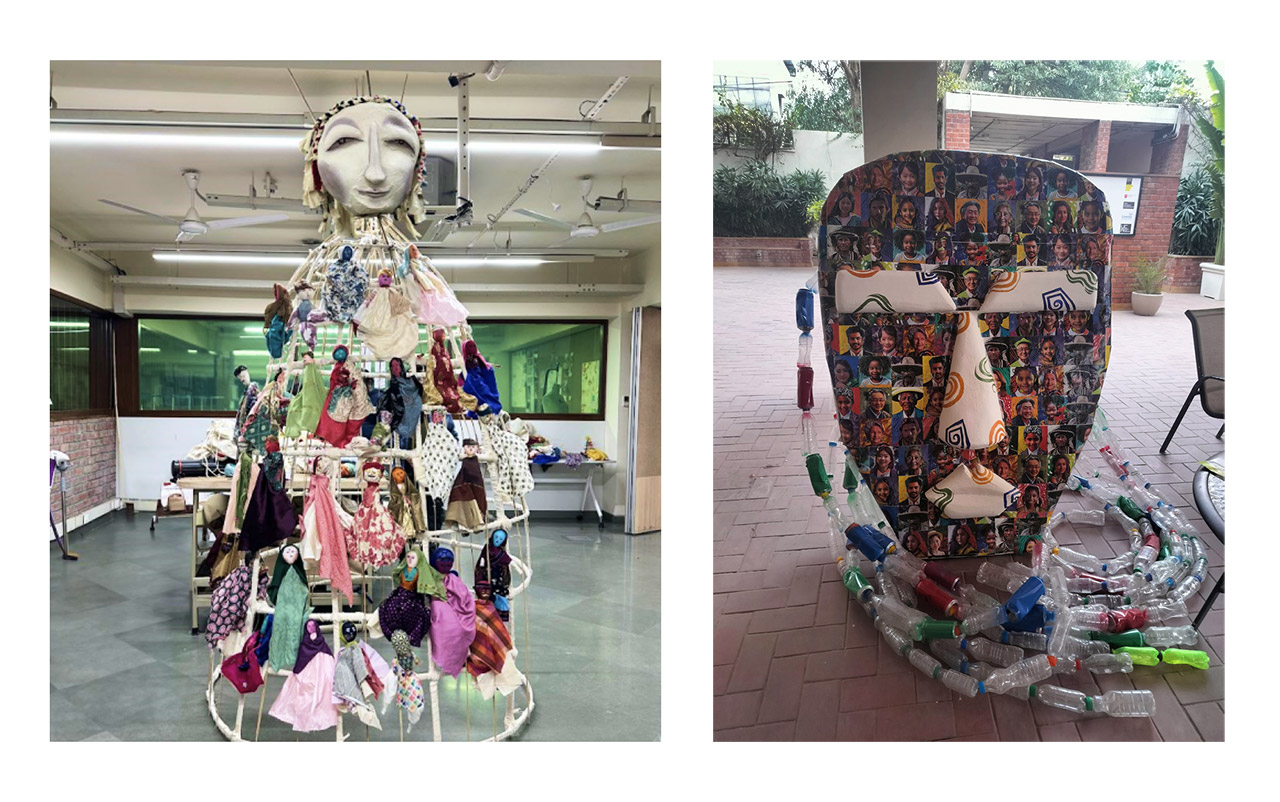
New Delhi, 15th February 2024: The Indian Institute of Art and Design (IIAD), renowned for its immersive project-based learning approach, takes centre stage at the illustrious 20th Anniversary of the Ishara International Puppet Theatre Festival. With a gracious invitation extended by Dadi Pudumjee, the esteemed Founder of The Ishara Puppet Theatre Trust, IIAD students contribute their talents to creating various installations and showcasing their art for the event. The festival, organized by the Ishara Puppet Theatre Trust, serves as a vibrant showcase of diverse puppetry talents hailing from countries including France, Turkey, Sri Lanka, the USA, Taiwan, Brazil, Korea, Russia, and beyond.
Guided by the expertise of Shaaz Ahmed, Associate Professor of Communication Design, alongside Josh P. S. and Pankaj Narain, Associate Professors of Foundation in Design, and supported by 11 additional faculty mentors from IIAD, the students have curated 11 distinct installations to commemorate the festival’s 20th anniversary. A cohort of 45 second-year students representing diverse departments has infused their individual creativity and craftsmanship into this collective celebration.
Taking place at the esteemed India Habitat Centre (IHC) in Delhi from 16th February 2024 to 25th February 2024, the festival aims to foster awareness, exposure, and education surrounding the multifaceted traditions and techniques of puppetry both in India and around the globe. Among the showcased installations, a totem pole invites audiences to explore the perception of performance art through multiple senses, while a whimsical mouth with a long red tongue adds a playful touch. Additionally, a caricaturist-stylized cartoon 3D model in a distorted form cleverly forms the number 20, while another installation features iconic figures such as Marilyn Monroe, Gandhi, and Charlie Chaplin.
The festival not only serves as a platform to spotlight the talent and artistry of IIAD students but also underscores their significant contribution to a global celebration of creativity, unity, and the enduring art of puppetry.
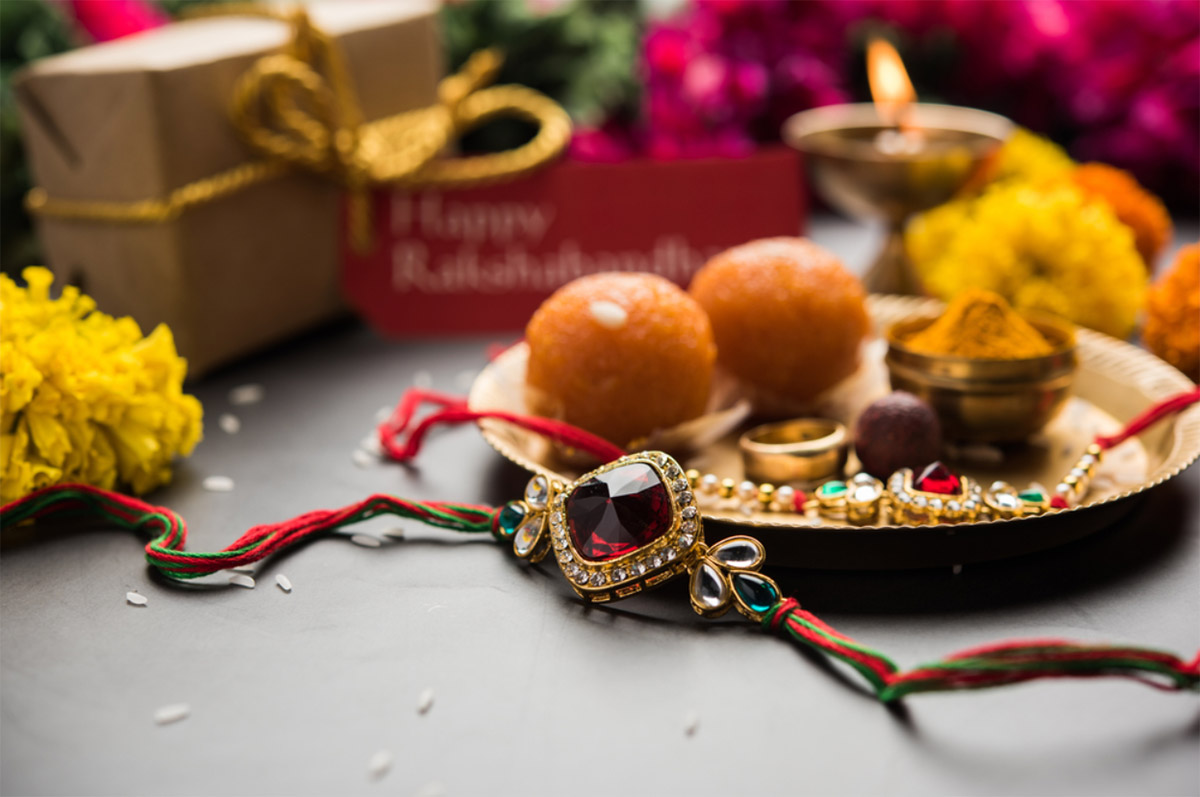
Are you an Indian student living abroad? Or have you sought greener pastures away from the motherland in hopes of a bright career ahead? Either way, in a world where distances separate us from each other, the threads that tie us to our roots seem more precious than ever. For any of us living abroad, celebrating traditional festivals can be a proposition as enchanting as it is challenging. So, how can you still embrace the essence of Raksha Bandhan, that cherished bond between brothers and sisters, even when miles apart?
From virtual Rakhis to Raksha Bandhan poster designs that house a personal and visually appealing element to your long-distance celebration, we’ve got you covered. Read on to find out more!
Enter The Virtual Rakhis
Welcome to the 21st century: In this day and age, with technology ruling almost every aspect of our lives, the simple act of tying a Rakhi has also been given a new, digital twist. Virtual Rakhis are a modern age version of the traditional Rakhi, with a slight difference, in that they’re now the norm for those who are separated by oceans yet want to keep tradition alive, celebrating together. The good news is that the Internet offers dozens of platforms that create customised e-Rakhis. These virtual Rakhi designs are not only pretty, but they can come in any shape you please — from flowers, hearts, stars, and butterflies, to ones you can personalise yourself.
If you’re looking to go one step beyond just the design, some come with the option of adding in a personalised message, the ability to upload a photo inside, and others even let you attach in a short video (isn’t that amazing?). So while nothing can compare to actually being able to put it on them, being able to express just how much your brothers mean to you with more than just traditional mail is the next best thing.
Snail Mail Surprise
Prefer doing things the old-school way? Well, then go back to basics and send a traditional Rakhi through the mail. It might take a little longer to get there, but the surprise and anticipation will just make it all the more sweet. And your note could be extra special with a heartfelt letter, a cute little gift or even a stunning Raksha Bandhan poster that you can create in minutes with apps like Adobe Express. So while technology brings us together instantly, there’s nothing quite like a note in the mail to add a little history and heart to the modern celebration that is Raksha Bandhan.
Video Calls & Virtual Celebrations
In an age where geographical distances can be closed with just a few clicks, video calls have become an amazing gift to connect with loved ones. And when it comes to celebrating Raksha Bandhan while sitting miles away, what’s a better way to enjoy the day than enjoying virtual celebrations through video calls? Thanks to technology, siblings now have the ability to perform a traditional ceremony, in real-time. Who knows, you could even enjoy a celebratory meal together, mukbang style! So download Zoom, Google Meet or Skype or any software that you use and off you go on a new kind of celebration!
Ordering Sweets Online
What’s Raksha Bandhan without an array of sweets? For many, the festivities are incomplete without the presence of an array of sweets, and one can easily find themselves yearning for the unmistakable taste of a favourite, like the irresistible Gulab Jamun. Yum! And guess what? Living abroad doesn’t mean you have to miss out on the culinary delights that make Raksha Bandhan special.
Chances are, no matter where you are on the globe, there’s probably at least one online store that specialises in Indian sweets, so get searching and put your order in. Whether you’re craving Burfi, Rasgulla, or even Jalebi, your local Indian sweets shop is there to save the (Raksha Bandhan) day. Alternatively, you could even try your hand at making some of these sweets at home if you’re brave, but we’ll leave that to the aspiring masterchefs.
Collaborative Cooking Sessions
While we’re on the topic of yummy Raksha Bandhan treats, why not join in on a collaborative cooking session with the fam? Host a video call meeting with your family and let the Rakhi food prepping begin. Each family member can prepare a cooking station in their respective kitchens as everyone comes armed with their recipe, tips and spoons full of joy. Whether you’re perfecting the art of folding your delicious Potato Samosas, learning the finer art of making Besan Ladoo or simply getting your Jalebi batter to the right consistency, cooking together adds a delightful layer of shared experiences to this special day.
Digital Scrapbooking
Last but not the least, unleash your creative best by making a digital scrapbook. Cherished moments, childhood photos, heartfelt messages for siblings and loved ones … your digital scrapbook can serve as the canvas for all of this. We also recommend including some old photos of your Raksha Bandhan celebrations. Pair them with some rather nostalgic captions and pour your heart out with a message that tells them all that you feel for them – your love, your gratitude for all they have done – and you will have something that you can send not just to your brother or sister, but to every member of the clan. A click will be all it takes for them to relive those precious memories.
And there you have it — 6 genius ways in which you can join in on the Raksha Bandhan festivities, even when you’re a thousand miles away. Because at the end of the day, distance is but a mere hurdle you can easily overcome with a blend of technology, creativity, and a touch of nostalgia. So, embrace the opportunities that the modern world provides to connect with your roots and we wish you a Happy Raksha Bandhan!
Date: Thursday, February 15, 2024 Time: Sharp 7pm Venue: Triveni Kala Sangam, Mandi House, New Delhi
NalandaWay Foundation’s Delhi Children’s Choir (DCC), established in 2018, provides exceptional music training to children from marginalized backgrounds in government schools. Selected through rigorous auditions, 25 talented children receive weekly sessions led by professional musicians and opportunities to showcase their skills at various venues across the city and beyond.
Comprised entirely of students from government schools in and around the Ambedkar Nagar area, DCC presents “Shades of Kalyan”, a musical performance deeply rooted in the cultural tapestry of Delhi. Drawing inspiration from the rich traditions of Sufi and Qawwali music, the choir’s repertoire reflects the vibrant flavors of the city, with many songs celebrating its history and heritage.
In addition to musical training, NalandaWay Foundation emphasizes the development of life skills, social-emotional competencies, instrument knowledge, and awareness of career prospects in the music industry.
Don’t miss this enchanting evening as the Delhi Children’s Choir captivates audiences with their soul-stirring melodies and uplifting performances.
With batting eyelids and shivering lips they stared into each other’s eyes. As the camera panned towards the right side of the screen, two flowers were thrust against each other and the soft romantic music in the background set the tone for one to imagine what might have followed next. And that is how old love blossomed and paved the way for modern love. For modern love is all about pace, independence and direct expression of emotions. There are no allegories or understood implications and the meeting of flowers is not required as a cover to wrap the finer details. On a serious note, the manifestation and expression of love, whether in popular media or society in general, has transformed and changed over the years. Old love implies lasting loyalty, sacrifices and lifelong commitment. On the other hand, modern love lays emphasis on personal growth, wants and happiness. So let this Valentine’s Day be the perfect day to contemplate on which school of love you choose to follow, or if you strategically decide to mix in a dash and a bit of both.
Old Love
Rama-Sita, Lakshmana in exile in the Dandaka forest – Infinite Eyes/Flickr
As the name suggests, old love is how generations before us understood and sustained love. From grandparents and parents, to acquaintances, neighbors and in books and movies, we have seen how it was extremely normal for couples to grow old together. To sacrifice for each other, to shy away from public displays of affection. Old love was when partners agreed to commit themselves selflessly to each other, no matter what the circumstances and pressures. Giving up on each other was a rarity.
This kind of love though called ‘old’ doesn’t essentially imply that it only existed in the past. But it does mean that in today’s modern times, it is hard to find such individuals who believe in this conceptualization and manifestation of love.
Quite contrary to old love, modern love is about open and clear expressions. There are no underlying assumptions between partners. What one feels and thinks is openly communicated as the idea of sacrificing for the other or holding back for the sake and success of the other no longer is encouraged. Partners confess their needs, wants and love directly to each other.
Self-love and internal peace are placed much higher than surrendering oneself. Modern love is thus, very akin to the modern generation’s thought process. It doesn’t necessarily make it selfish, but it definitely shies away from the idea that to truly love someone, one has to give up on self. Of course, there is an emotional connection and there are strong feelings involved. However, none of those overpower the importance of personal space. The fairy tale is thus not dependent on finding a Prince Charming or Princess Beautiful and living a never ending happily ever after. It is in fact, acknowledging that finding the right partner is only one of the many aspects of living a fulfilled and meaningful life. There is no compulsion or social stigmatization when after a period of time the couple no longer want to spend the rest of their lives with each other.
Technology and Social Media
One of main reasons for the advent of modern love is often attributed to the increasing influence and use of technology and social media. Relationships today are a combination of real and virtual realities. Dating apps, as well as, a series of social media platforms have made it possible and much easier for love to blossom between total strangers. Also, it has helped in knowing each other better through texting and calls. Unlike earlier times, where couples would rarely have enough chances of communication, in today’s age and time, there are umpteen ways to get and keep in touch with others.
The internet along with other technologies has made it possible for people to meet and communicate with each other across the globe. Freedom and means to express oneself has paved the way for partners to better understand and spend time with each other, in spite of geographical and physical constraints.
Gender Roles
Modern love also owes its existence to the changing gender roles. Women were often relegated to eye candy or arm candy roles in earlier times. Their main role consisted of taking care of the husband and family. Women were considered to not have strong opinions but follow trails and the leadership of the man of the house. More importantly, they had little financial independence. Perhaps, because of this women compromised far more in a relationship.
However, over the years, women have established themselves in various spheres. They have gained financial, emotional, social and cultural independence. And therefore, women no longer find it acceptable or convenient or compulsory to toe the line in a relationship. They have increasingly become aware that their allegiance lies first to their personal and emotional wellbeing.
Also, with better education and more job opportunities, thanks to technology, women have assumed a far more significant role in the social and cultural landscape. And hence, they are the key game changers in modern love too.
Societal Changes
Both with technology and women empowerment, there have also been overall changes and shifts in societal behavior and perception. Society by and large is now more accepting of divorces or single parents. Live-in relations are not scandalous anymore and casual dating is increasingly becoming the accepted norm to finding the true love of one’s life.
Cultural and societal changes too have therefore been instrumental in the understanding of love. There is less judgment or social pressure to continue a relationship if it is less than satisfactory. People are okay with moving on and finding and meeting other people if their love stories do not work out.
Relationship Adjustments
Finally, the core relationship between couples or partners have undergone changes too. In old love, couples understood what was unsaid and there was a strong, silent yet solid affection and belonging that they felt towards each other. They stuck around for each other and believed in repairing and nurturing their relationship. They forgave much easily and let go too often. They probably had bigger hearts for they ignored the glitches and sought to do whatever it took to be together for life.
In modern love, on the other hand, couples are perhaps a little less tolerant. They aim for personal satisfaction and happiness first, because they believe that only when the self is happy can the relationship survive and flourish. They are willing to take more risks and walk out of a relationship, because they know that there are more options and that they can hopefully find someone who is more compatible. However, they love and express their love fiercely, and have no qualms about displaying their affections in front of others.
Old love vs Modern love
Which brings us to the conclusion, is old love better than modern love? A seemingly tough call to make since both the forms of love are but an extension of the times in which they have developed and evolved. However, on Valentine’s Day and for that matter on any other day, it is important to realize that love is after all one of the most beautiful feelings ever. It is also one of the most personalized feelings that is intrinsically connected to the personality and character of the lovers. And thus, the way one person loves and expresses love is most likely to be different from another.
Whether it be old love or modern love, the foundation on which both stand are the foundations of love itself. In old times, modern love stories existed, and in modern times, old love stories exist too. Which kind of a romantic are you? Well, it is up to you to find your niche, swag and corner that you would make in the heart of the person that you love the most in the entire world!
Love is the universal feeling that sees no boundaries, language, caste or age. A priceless emotion that stays for life, love exudes warmth, acceptance and friendship that are hard to replicate in such deep emotional intimacy in any other relation. And when it is Valentine’s Day, love literally flutters in the air. Apart from the many debates on how Valentine’s Day may not necessarily adhere to our culture and how a single day is never enough to express love, it is still worth to reflect on how ‘love’ between two different individuals has seen a gamut of changes in expression and understanding over the years. However, the emotion itself has remained pretty much unaltered, though it has been accused of becoming frivolous, callous and at times ‘westernized’ by many.
India is not devoid of some of the greatest love stories of all time. From fables to folk lore and from history to epics, love stories abound in grandeur, courage and lust as much as they do in societal interferences and heart wrenching endings. Fascinatingly romantic escapades of Anarkali and Salim, Amrapali and Bimbisara, Baji Rao and Mastani, Prithviraaj Chauhan and Samyukta or Heer and Ranjha and Mirza and Sahiba are examples of boundless love that have influenced or have been influenced by society and culture. Some of these emerged victorious against odds while some left behind a legacy of unfulfilled love. Some laid down their lives while some lived on. However, their love stories have for generations become an integral part of how love stands up for itself distancing from societal pressure and traditional rules.
Amrapali and Bimbisara on celluloid – Source
Samyukta’s grit in disdaining all rest and laying the garland around the statue of Prithviraaj, Anarkali’s unconditional love in being entombed, Baji Rao’s unconventional marriage to Mastani against religion and caste or Ranjha committing suicide besides dead Heer’s body are examples of selfless love that grew and remained true despite social differences and aggressive societal intrusions.
Heer-Ranjha – Source
The Great Indian Love Stories of Today
Looking at multiple cases of honor killings and societal pressure one can say that some things have not really changed in our cultural understanding of the concept of love. Inter religion and inter caste marriages are not a taboo in certain sections, however, it still remains a distant dream in many parts and societies of the nation. Love is still believed to be confined to parameters and its expression suppressed, at times, forcibly to adhere to what is perceived as tradition and cultural purity.
Yet, the great Indian love stories continue to grow and prosper across various spectrums of the society.
There are the legend love stories as well as the hundreds of known and not known love stories that have remained true to the real meaning of love. However, the expression of love has also undergone a drastic change and in many ways can be termed as a paradigm cultural shift of sorts. Where earlier there was really no concept of dating and where the spouses saw each other only after marriage today live in relations are quite common. And though love cannot be equated to marriage, yet marriage was always deemed as the solid representative of love some years ago.
Again, ask your grandparents or watch any old Indian movie and you will see how it was the eyes that did all the talking. Communication was very limited yet the sense of duty and responsibility heightened. Today communicating with the person you love is of paramount importance and expression of love has moved much beyond the swish of eyelashes or a blush of the cheeks. Unlike a lot of western countries where the expression of love was not a taboo, in India holding of hands or embracing is still beyond the comfort zone of many individuals when in public.
The Paradox
Yet, it is in India that most public parks and open spaces become a ground for love birds. Hence is the massive paradox of our society that is often mistaken under the garb of culture. There has always been a strong understanding of ‘maryada’ (repute) and ‘sharam’ (shyness) in general when it comes to expressing love and this seems to be changing drastically. PDA is no longer a scandalous once in a blue incident. Whereas some couples openly admit their love in public view, some chose to use the public space to hide away from private prying eyes of family. And this perhaps is one of the biggest drawbacks of how love is understood in our culture and society – a platonic inspiration that finds its obvious openness to expression unnecessary and even uncultured. Unsurprisingly, different ‘holders and bearers of our true culture’ cannot fathom the need for any kind of outward expression, especially if it is confined to a particular day called Valentine’s Day. On the other hand the debate of how much of public display of affection is acceptable and how much can others be comfortable viewing the expression of love of others is ongoing.
Young vs Old
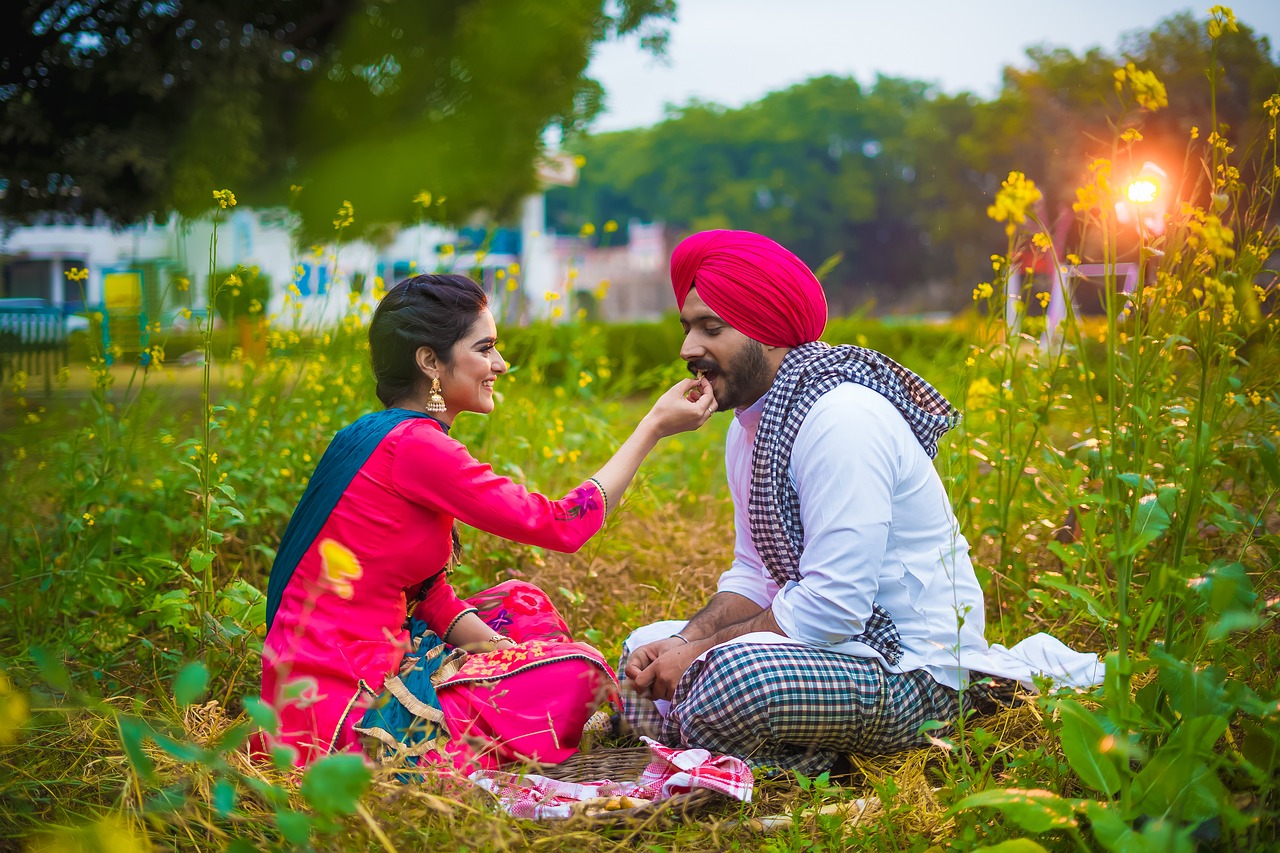
Image – Pixabay
This influx of a completely different way of showering and showing love has baffled the older generation to an extent. In fact, it is not only love, but the younger generation is often accused by those who are decades older of volatile reactions, instant decisions and strong individualistic ideas. Where grandparents may reminisce of how they nurtured their relation and built it up gradually, they also find it at times surprising that the younger generation quite literally wears their heart on their sleeve.
In the age of constant communication, love has become more explicit. But has it become more daring and also in many ways adventurous? Does this mean that the magnitude and depth of love has changed over time? I wouldn’t think so, because love knows how to speak without the use of words and language. Yet, admittedly the different subtle variations of love have found more acceptances and openness to conversation.
Love is not only blind, but also most unpredictable. It blossoms sometimes under the tutelage of culture, whereas in some cases it is curbed under the grind of tradition and honor. Sometimes a single look can do the magic and a thousand roses and cards can fail. It can take a few moments to hear the heart beat like never before or it can take years of togetherness or separation to know true love.
In either case, love is a special emotion that has not only transcended history and culture, but has in fact, shaped and molded it for generations to come.
“Empowering Voices: 10 Delhi Government School Children Shine at Inclusive Art Festival in Delhi’s Ambedkar Nagar, Tigri, and Khanpur region!”
10 Govt. Schools | 2500 children impacted |15 facilitators
Where: Government Girls Senior Secondary School, Dr. Ambedkar Nagar, Sec-IV (Tigri School), New Delhi,110062 When: 12th &13th February 2024 Timings: 10:00 am to 2:00 pm
New Delhi, Monday 12th February 2024
Kalakriti Arts Festival
Entirely conceptualised with children from 10 govt. schools in Ambedkar nagar, Tigri and Khanpur area of New Delhi, the Kalakriti Arts Festival is a 2-day visual delight- with art installations, artful corners, exhibitions, interactive spaces and performances by students.. The festival is unique, and a first-of-its-kind community arts festival – dedicated to making the community experience the power of art firsthand.
NalandaWay Foundation through KAF, brings together artworks, theatre, music and dance performances to the community at large. For the festival, children from different schools came together with 15 artists of NalandaWay to create large art installations, and expressive performances over the last year. While the event is the culmination of artful sessions over a short period, NalandaWay Foundation intends to flag off the idea of celebrating community ‘arts fest’ on a continuum, thereby celebrating arts with, for and within the community. ‘Kalakriti’ which is also the name of the ‘NalandaWay Arts’ and Learning Centre’ situated in that area, has been offering arts, music, wellbeing and other life-skills sessions to children, adolescents and youth in the area over the past few years.*
NalandaWay Foundation will also offer workshops, training and resources which are planned for children, adolescents, mothers, and others in the community. The vision of Kalakriti festival and the centre is to use the power of arts for enhancing coping skills from anxieties, stress and building resilience among children and youth.
During the 2 day festival, audiences and the community can witness children’s artworks, spanning multiple art installations, engage in interactive spaces and art productions and experience arts up close. The festival is accessible to all, open to community members, parents especially- to immerse, appreciate and indulge in arts and relive the creative freedom that art offers.
Sriram Ayer, Founder and CEO of NalandaWay Foundation concedes, “Kalakriti has been envisioned as a gathering place for children and adolescents to learn the arts, express their fears, joys and dreams through the arts, and build hope and resilience. It is also a safe space for them to share their anxieties between their peers and seek help. Kalakriti will of er regular classes in visual and performing arts. The centre will also of er art therapy and counselling to adolescents, parents and other caregivers. These training and resources will be of ered at the centre and in the schools located in the community.”
Dr. Rita Sharma, Additional Director, DoE, and Director SCERT :“Children of Ambedkar Nagar area are verytalented. I saw the artwork around today at the exhibition, showing what these children have been learning fromthe NalandaWay Foundation. It is commendable that NalandaWay Foundation has been taking this initiative inthe 10 schools in this area and training the children on arts. Who knows some of these children can also becomewonderful artists of tomorrow! I hope programs like this benefit children, making their time in school memorable, and giving opportunities to learn more than just academics!”
About NalandaWay Foundation
NalandaWay Foundation uses art, both visual and performing, as the primary lever of change to address learning and well-being gaps that are faced by children and adolescents from the most underserved and vulnerable communities in India.
Our vision is to empower disadvantaged children and adolescents through art and nurture them into hopeful, resilient, fearless individuals. Over 17 years, we have gained robust experience in end-to-end project management and delivery of large-scale programs in several Indian states, impacting more than 6 million (60,00,000) children, so far. Since its inception, Art has been our catalyst to channel and build our projects with the lens of inclusion, gender, well-being and intersectionality. Our programs have evolved from directly reaching out to children in rural areas and urban slums to working with Anganwadis, children’s homes, rural panchayats, and government and corporation schools across the country. NalandaWay envisions using art as a medium to learn and heal for children from challenging socio-economic backgrounds.
NalandaWay Foundation
HeadQuartered at: AH-123, 4th Street, Anna Nagar, Chennai 600040
Delhi office: D-51 A, East of Kailash, New Delhi- 110065
contact@nalandaway.org | www.nalandaway.org
Every art is unique but there are very few art forms that are believed to be divine and in the age of technology there is hardly any region or village left where members from every age group are involved in some sort of art. Of those few places, the village Raghurajpur in Odisha, which is often considered the birthplace of Pattachitra, the divine and traditional form of art. Raghurajpur is a village in the Puri district of Odisha. This village is 14 kilometres from the Jagannath temple. Along with exceptional Patachitra artists, it is also famous for Gotipua, a precursor form of Odissi dance. Almost all of the artists who hail from the village are involved in different forms of art. It is believed that Patachitra art origins date back to 5. B.C from this region.
Raghurajpur Artist Village
Image – Amol Singh Jadon
The villagers are also engaged in other crafts like wooden toys, stone carvings, Tussar art, palm leaf engraving etc but the art Pattachitra has given recognition to this village. Shilpa Guru Dinabandhu Mohapatra who hails from Raghurajpur and has gotten many national and state-level accolades for his painting skills, said “Every family in our village produces an artist.” We have served Shri Jaganath through our Pattchitra skills, due to our paintings ‘Prabhu’ (Jagannath, Balabhadra and Subhadra) could be worshipped during their illness period. “The women prepare cloths and colours for the paintings and the men in the family are predominantly involved in painting and selling, similarly children provide their assistance in these works,” added Mohapatra. “Every member of the family in Raghurajpur village are involved in some sort of activities of art and craft, said Subham Prusty”, a young artist from Raghurajpur. After research the village is also developed as a heritage village.
The art Pattachitra is famous for the natural colours used and its history. Though this kind of painting has a presence in West Bengal and some parts of Bangladesh the art form in Odisha is related to Jaganath culture. The Pattachitra combines two words ‘patta’ which means cloth and ‘Chitra’ means painting. This is a form of art which is painted on a piece of cloth. The rich artfrom is closely related to the cult of Shri Jagannath and the temple traditions in Puri. It is believed that the painting originated as early as the 5th century BC, it is one of the most popular living art forms.
Process and Forms of Pattachitra
Image – Amol Singh Jadon
For Pattachitra painting, the artists follow a traditional canvas preparation process. A gauze-like fine cotton cloth is coated with white stone powder and gum made from tamarind seeds. This makes the canvas ready to accept the paint, made of natural colours. The colours used in the painting are a unique feature of this art. The gum of the Kaitha tree is the chief ingredient, used as a base for making different pigments by adding available raw materials. For instance, to get the shade of white, powdered conch shells are used. The entire painting is handmade. Patachitra paintings are created following a set of rules. There are some basic techniques and styles that are fundamental to all the artists like the beautiful floral borders.
Similarly, the images or face profiles of deities have elongated eyes and prominent facial expressions. Also, Patachitra paintings use natural colours. Within this form of art there are different styles of painting and storytelling techniques. For example, kandrpa hati, Kandarpa danga, Krishna leela, etc. This art is now a days painted in walls and wooden materials.
Significance of Pattachitra Art
Image – Amol Singh Jadon
This art is believed to be sacred as it is part of the worship procedure of Lord Jagannath. An artist named Trilochan Jena believes that this art form has been originated from the rituals of Lord Jagannath and holds a lot of cultural and religious significance. As per the rituals every year during Ratha Yatra, which is one of the biggest religious congregation around the world, the three deities of the temple Lord Jagannath and his siblings Lord Balabhadra and Devi Subhadra suffer from fever after the festival Devasnana Purnima. Their idols are quarantined for 14 days in an isolated room known to be ‘Anasar Gruha’. For that period three cults were painted in Pattachitra form and worshipped. Three different families in Raghurajpur village are rested with the job to paint three idols. This is how the painting is connected to Jagannath rituals and treated as highly pure as it serves three cults Jagannath, Suhadra and Balabhadra who is considered as the most prominent deities for Odias.
Tucked away amidst the Eastern Himalayas, Bhutan, frequently hailed as the “Land of the Thunder Dragon,” unfolds as a reservoir of cultural opulence, scenic splendor, and spiritual tranquility. This captivating realm stands out as an unparalleled destination, seamlessly weaving together tradition and contemporary allure. Embarking on our odyssey through the definitive Bhutan bucket list, we’ll unravel the imperative locales that truly capture the spirit of this otherworldly terrain. Discover the allure of Bhutan through meticulously crafted Bhutan Packages, a gateway to a realm where cultural richness, natural beauty, and spiritual serenity converge harmoniously.
Paro Taktsang (Tiger’s Nest)
Image – Ugyen Tenzin
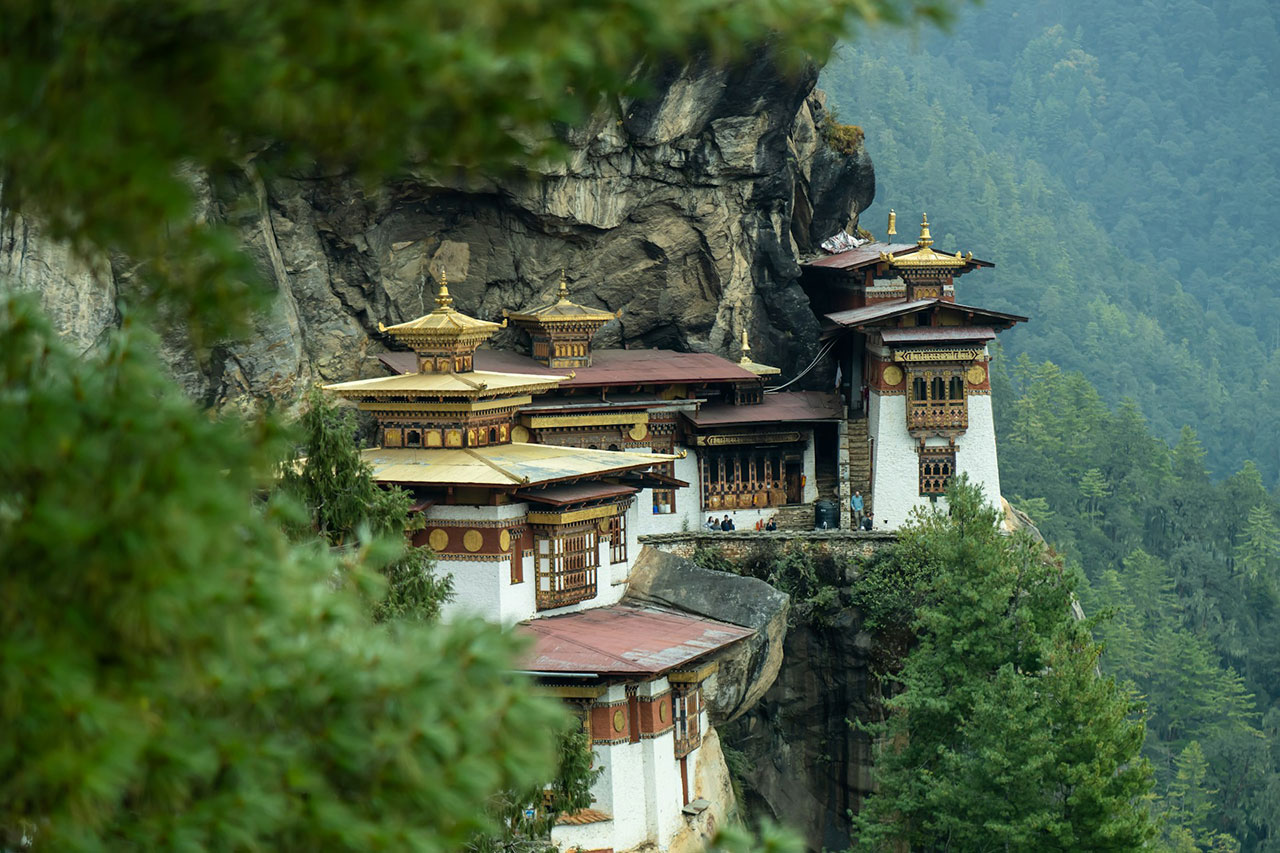
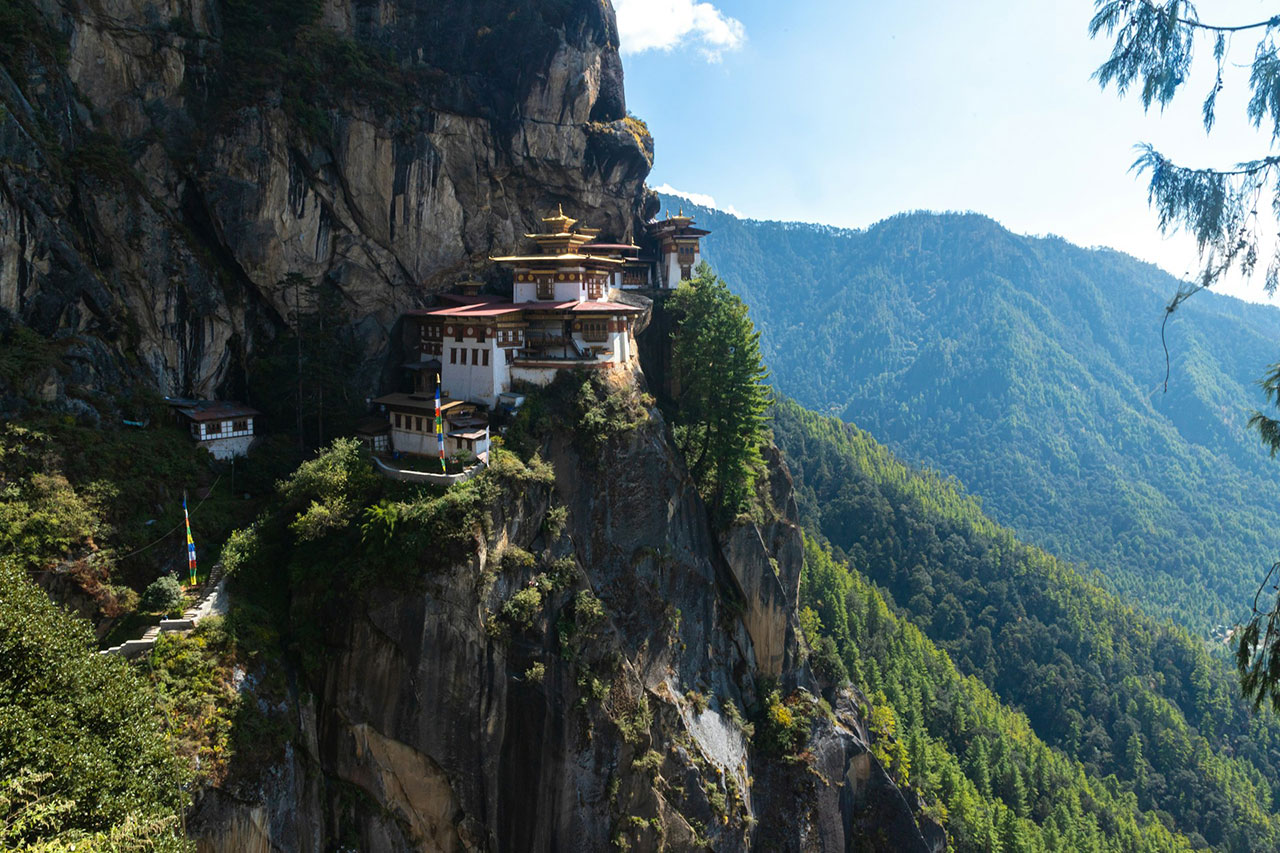
Our Bhutanese adventure begins with one of the most iconic and awe-inspiring landmarks – the Paro Taktsang, also known as Tiger’s Nest. Clinging to the side of a cliff 900 meters above the Paro Valley, this sacred monastery is not only a testament to Bhutanese architecture but also holds profound religious significance. Legend has it that Guru Rinpoche, the Precious Guru, flew to this location on the back of a tigress, meditated in a cave, and introduced Buddhism to Bhutan.
Thimphu
Image – Chandi Saha
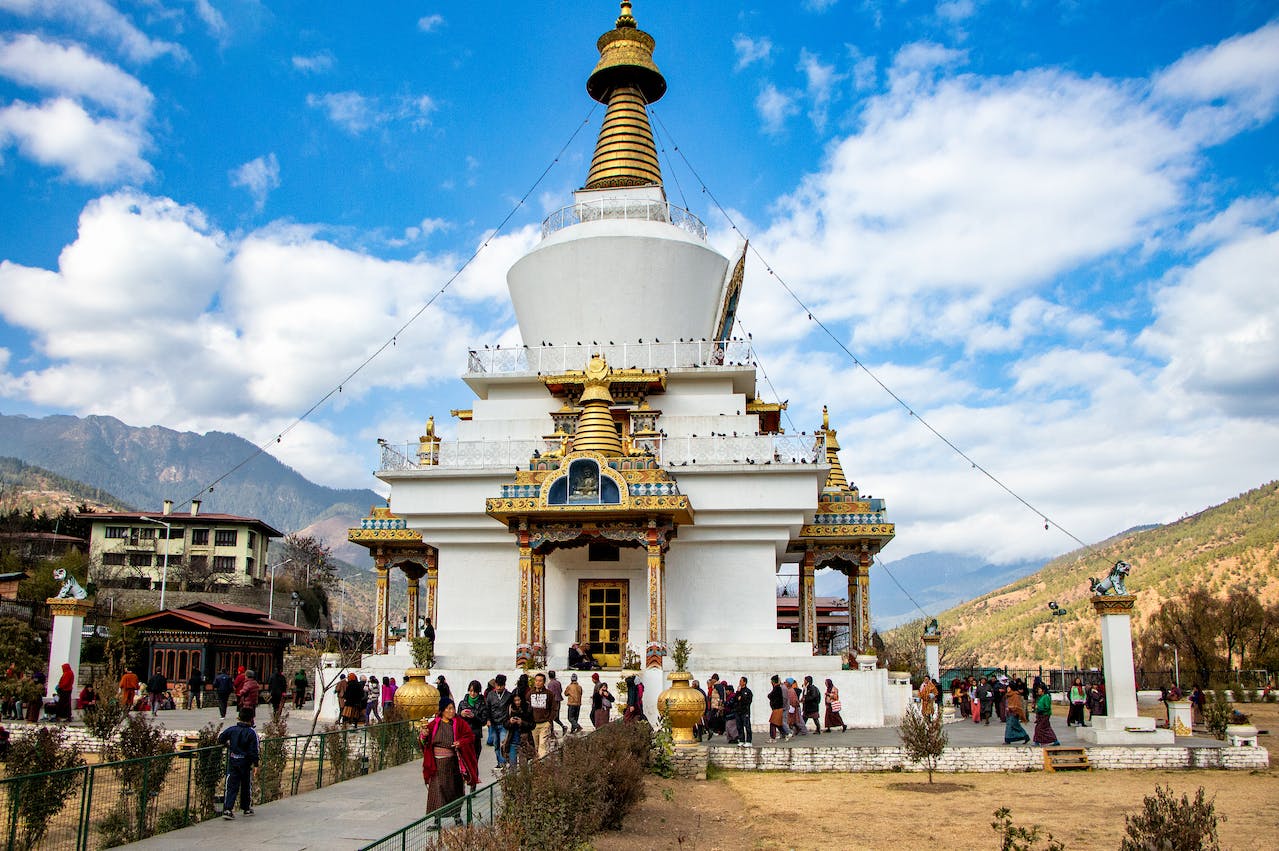
Being the political and economic nucleus of Bhutan, Thimphu emerges as a dynamic city seamlessly blending modernity with Bhutanese traditions. Meandering through its lively streets unveils a harmonious fusion of ancient monasteries and contemporary structures. The Tashichho Dzong, an imposing fortress-monastery, not only serves as the government’s seat but also graciously welcomes visitors during specific hours. An essential stop on a Bhutan trip for Couple is the Memorial Chorten, a stupa erected in memory of the Third King, Jigme Dorji Wangchuck. This monumental structure symbolizes peace, providing a serene ambiance for prayer and reflection.
Punakha Dzong
Image – Nils Leonhardt
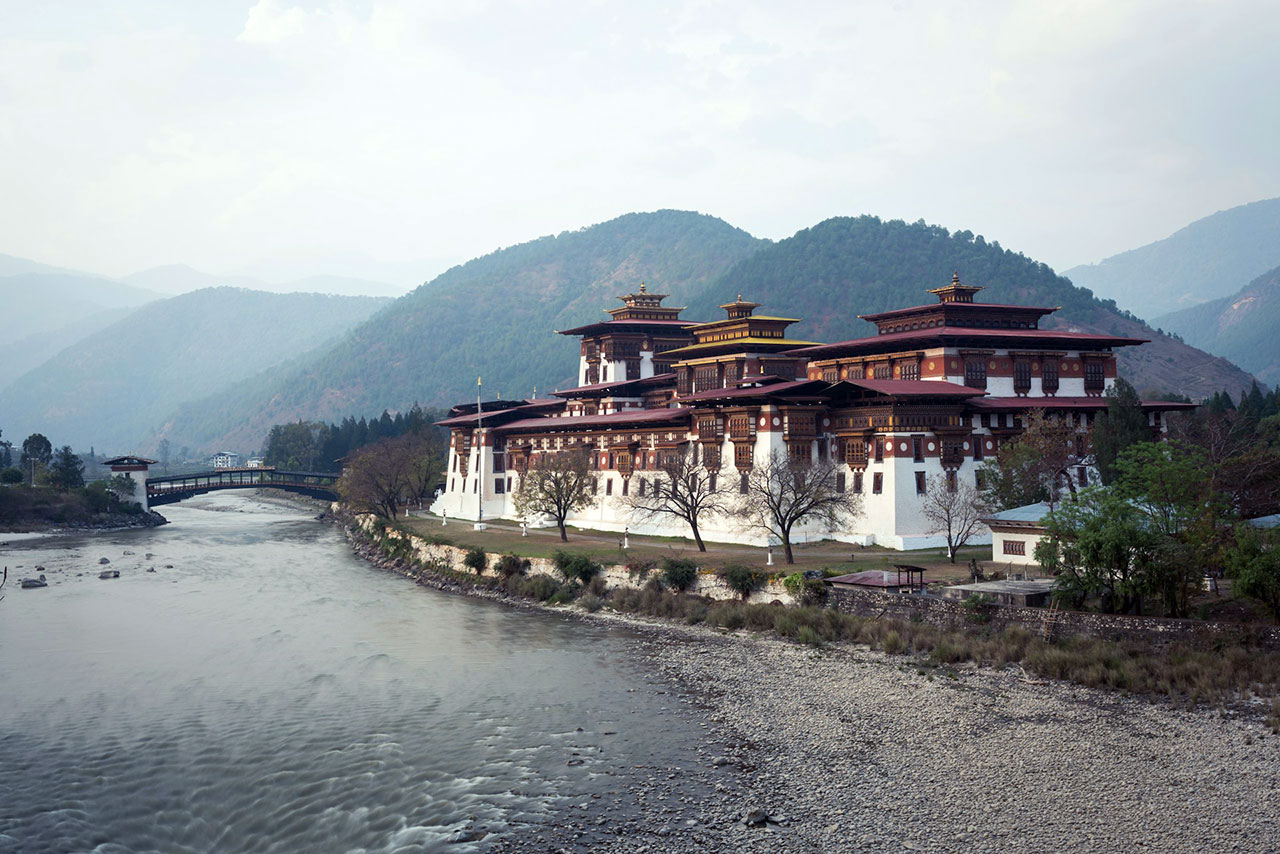
Punakha Dzong, situated at the confluence of the Mo Chhu and Pho Chhu rivers, is a majestic fortress that holds a significant place in Bhutanese history. It served as the capital of the country until 1955 and continues to be one of the most beautiful dzongs in Bhutan. The intricate architecture, adorned with vibrant paintings and ornate woodwork, is a testament to Bhutan’s artistic heritage. The Dzong is particularly enchanting during the annual Punakha Tshechu, a colorful festival celebrating Bhutanese culture and religion.
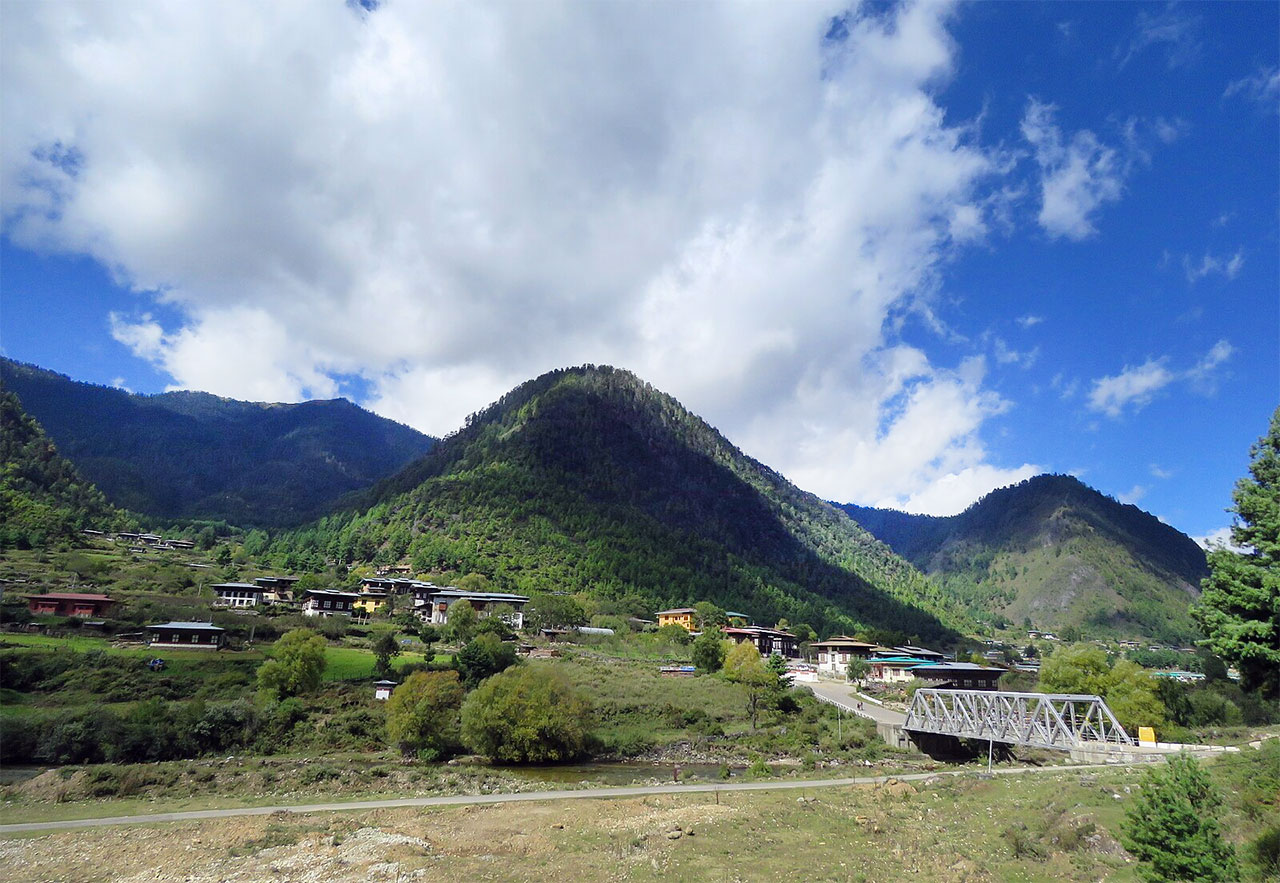
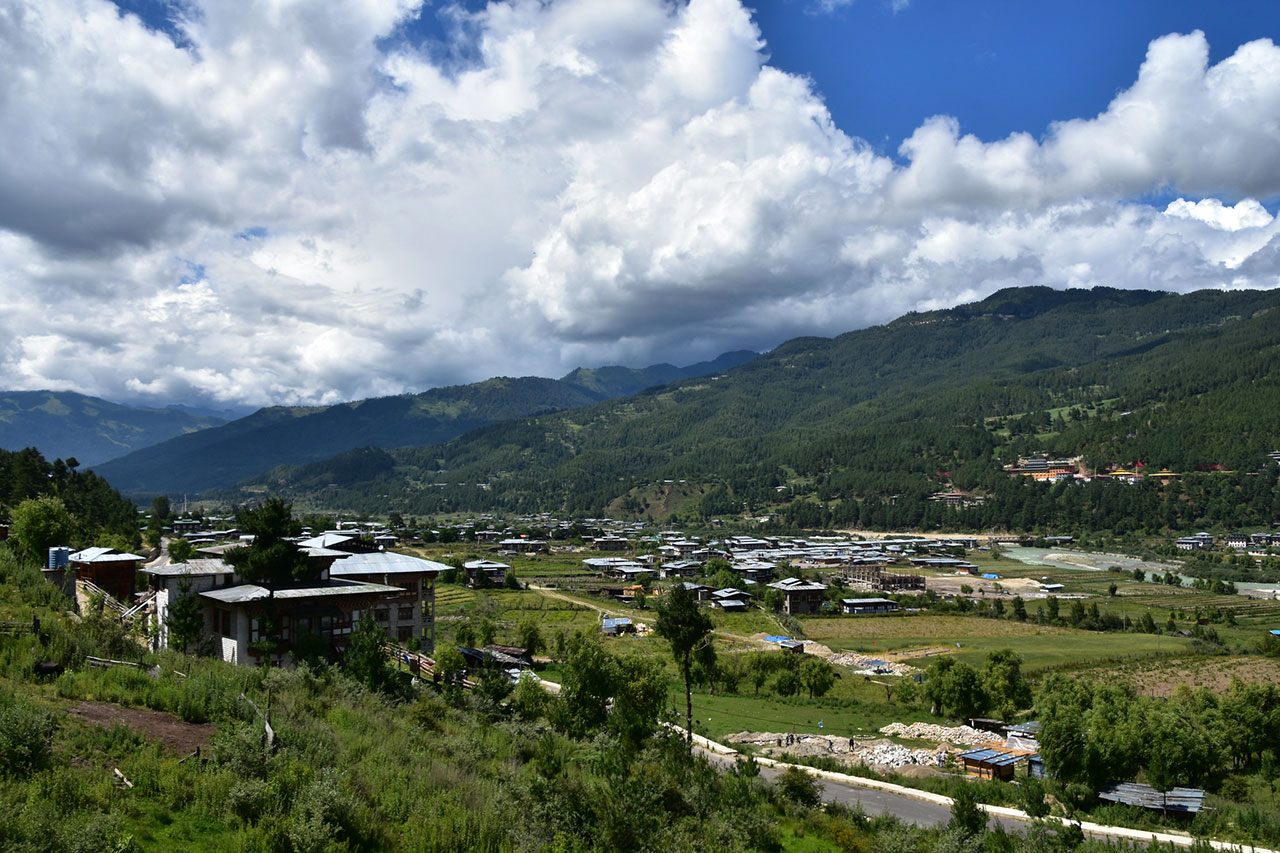
For those seeking tranquility and pristine landscapes, the Haa Valley is a hidden gem nestled in the western part of Bhutan. Surrounded by towering mountains, this picturesque valley is home to traditional villages and ancient monasteries. The annual Haa Summer Festival showcases the region’s unique culture, allowing visitors to engage with local communities and experience traditional Bhutanese activities. The drive to Haa Valley itself is a scenic journey, offering panoramic views of the Himalayas and lush forests.
Bumthang Valley, often referred to as the cultural heartland of Bhutan, is a collection of four valleys – Chokhor, Tang, Ura, and Chhume. This region is dotted with monasteries, temples, and historic sites, making it a haven for those interested in Bhutanese art and history.
The Jakar Dzong, perched on a ridge overlooking the Chokhor Valley, is a key attraction. Visitors can explore the Wangdicholing Palace and the sacred Jambay Lhakhang, believed to be one of the 108 temples built by the Tibetan king Songtsen Gampo.
Dochula Pass
Image – Chandi Saha
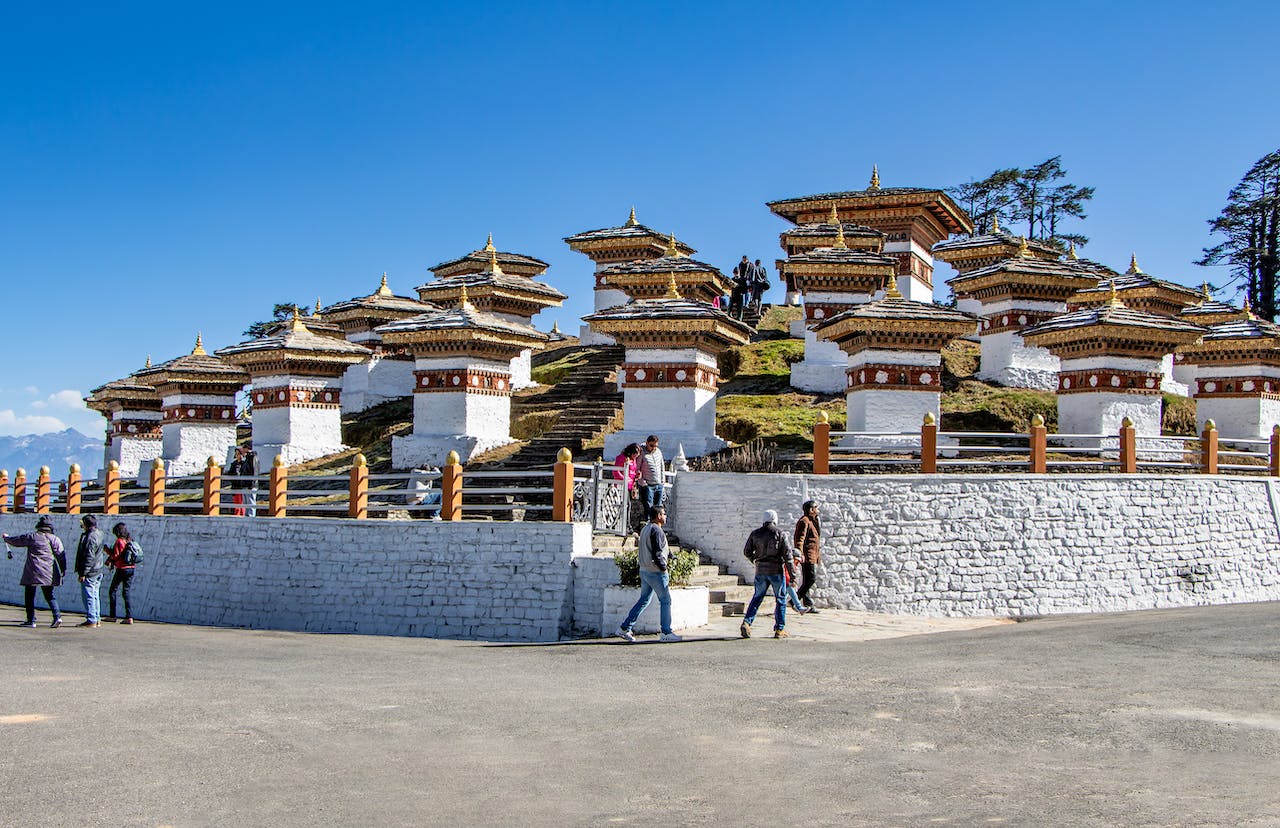
Dochula Pass, at an altitude of 3,100 meters, is a mountain pass adorned with 108 chortens and offers a mesmerizing 360-degree panoramic view of the Himalayas. On clear days, the snow-capped peaks of the Eastern Himalayas, including Gangkhar Puensum, the highest unclimbed mountain in the world, are visible.
The Dochula Pass is not only a scenic stopover but also a place of spiritual significance. The Druk Wangyal Chortens, built to honor the Bhutanese soldiers who sacrificed their lives, add a poignant touch to the breathtaking landscape.
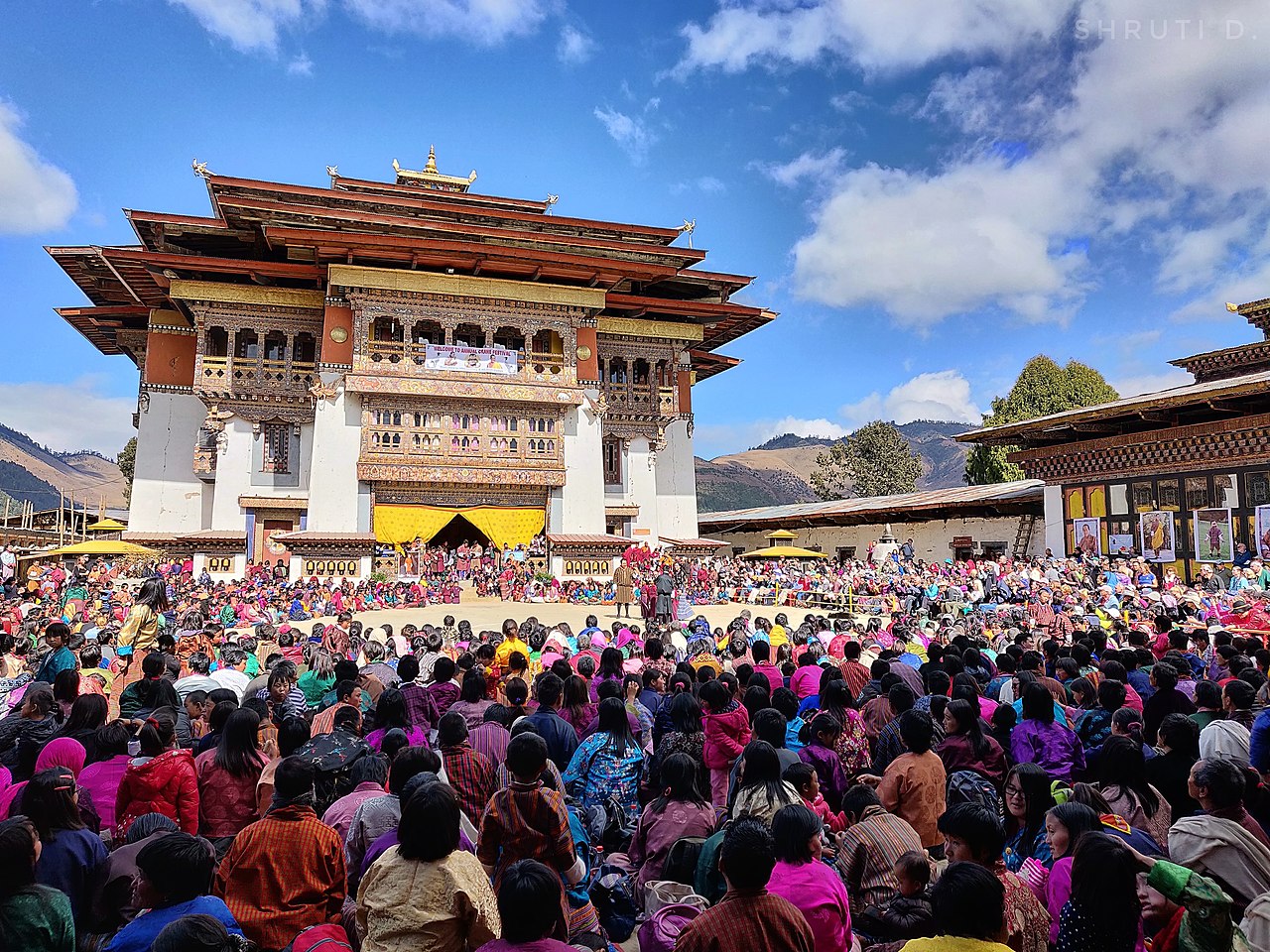
Gangtey Valley, also known as Phobjikha Valley, is a pristine glacial valley cradled between black mountain ranges. This picturesque valley is renowned for being the winter home of the endangered black-necked cranes, which migrate here from Tibet.
The Gangtey Monastery, perched on a hillock, provides panoramic views of the valley. Visitors can explore the Gangtey Nature Trail, a hike through the valley’s serene landscapes, and learn about the conservation efforts to protect the black-necked cranes.
For those seeking high-altitude adventures, Chele La Pass is a must-visit destination. Situated at an altitude of 3,988 meters, it is the highest motorable pass in Bhutan, offering spectacular views of the surrounding mountains and valleys.
The drive to Chele La Pass takes you through dense forests of rhododendron and magnolia, creating a colorful tapestry during the spring season. Hiking enthusiasts can explore the trails around the pass, immersing themselves in the pristine alpine environment.
In the rapidly evolving world of fashion, a significant shift towards sustainability is underway. Consumers worldwide are increasingly seeking alternatives to fast fashion giants like Zara, driven by a growing awareness of the environmental impact of their clothing choices. Among the upcoming brands leading this change in India is Sage by Mala, a brand that has positioned itself at the forefront of the eco-friendly fashion movement, offering stylish solutions that are both sustainable and chic.
The Ethos of Sage by Mala: Sustainability Meets Style
Sage by Mala was founded on the principle that fashion should be sustainable, ethical, and deeply connected to traditional craftsmanship. Unlike fast fashion models that prioritize speed and cost over environmental impact, Sage by Mala focuses on creating timeless pieces using pure cotton and other sustainable materials. This commitment not only sets the brand apart from mainstream options but also aligns with the values of consumers looking for eco-friendly fashion choices.
Sage by Mala’s Fabric Choices
The choice of fabric plays a pivotal role in sustainable fashion. Sage by Mala’s selection of natural fabrics such as pure cotton for its women’s fashion line underscores the brand’s commitment to environmental stewardship and consumer health. Pure cotton, known for its breathability, durability, and minimal environmental footprint, stands as a testament to the brand’s dedication to quality and sustainability. Their cotton dresses and co-ord sets not only offer unparalleled comfort and style but also promote a cleaner, greener planet.
The Unique Appeal of Western Dresses by Sage by Mala
Western fashion has seen a resurgence in popularity in India, with more women embracing western dresses for their versatility and elegance. Sage by Mala has adeptly responded to this trend by offering a collection of western dresses that beautifully incorporate Indian craftsmanship with contemporary designs. These dresses are not just fashion statements but also symbols of cultural fusion, offering Indian women a sustainable way to embrace global fashion trends.
Slow Fashion vs. Fast Fashion: A Comparative Analysis
The contrast between slow fashion brands such as Sage by Mala and fast fashion brands like Zara is stark. While fast fashion relies on mass production and synthetic materials, contributing significantly to environmental degradation, Slow fashion brands like Sage by Mala champion the use of sustainable fabrics and ethical manufacturing processes. This not only ensures a lower carbon footprint but also supports the livelihoods of local artisans, making them brands with a conscience.
How Sage by Mala is Leading the Change in Indian Fashion
Sage by Mala’s impact extends beyond the realm of fashion. The brand is actively involved in community engagement and environmental advocacy, striving to make a positive difference in the fashion industry and beyond. Through customer education and partnerships with eco-friendly initiatives, Sage by Mala is not just selling clothes; it’s promoting a lifestyle that values sustainability, ethics, and cultural heritage.
Conclusion
The journey towards sustainable fashion is both necessary and inspiring. Brands like Sage by Mala are leading the way, offering stylish and eco-friendly alternatives to fast fashion giants. By choosing Sage by Mala, consumers are not just making a fashion statement but are also contributing to a more sustainable and ethical world. Explore Sage by Mala’s collection of pure cotton dresses at Sage by Mala Dresses and discover the unique blend of style and sustainability with their co-ord sets at Sage by Mala Co-ord Sets. Join the sustainable fashion movement today and take a step towards a more conscious and responsible fashion future.
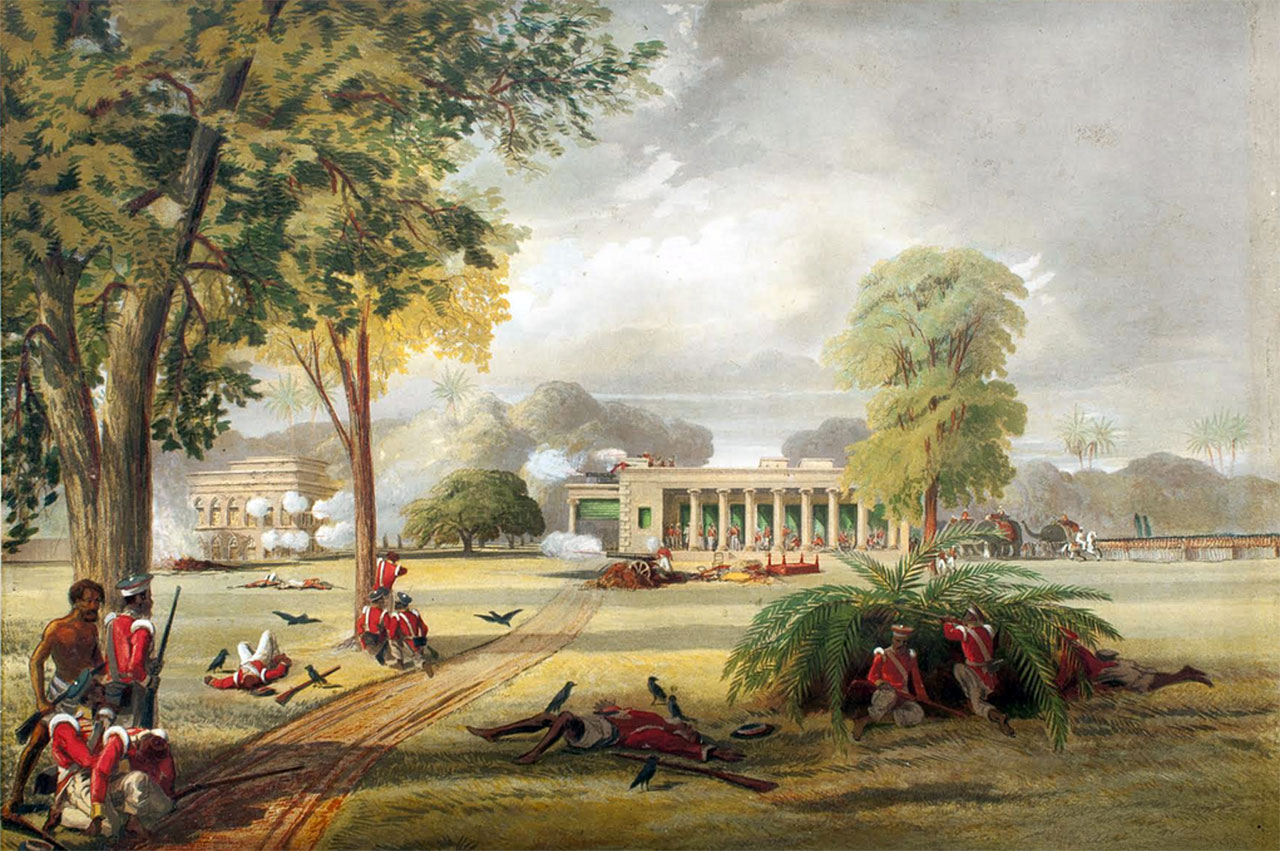
Defence of the Arrah House, 1857″ by William Tayler – picryl.com
The British rule in India is a long and complicated history and ramifications of it are still felt after decades of independence. Colonization, as argued by most experts, is never the best way to govern a country. Claiming authority over the resources of another nation for one’s own growth and prosperity has often been the defining element of British colonization of India. For more than two hundred years the cultural, social, physical, creative, artistic and economical richness and rootedness of India, was adversely affected. A large part of the county was under direct rule and called British India. However, some states that were not under British rule in India were either the princely states or states that were under other colonial powers, such as the French, Portuguese and Dutch.
Princely States and Subsidiary Alliance
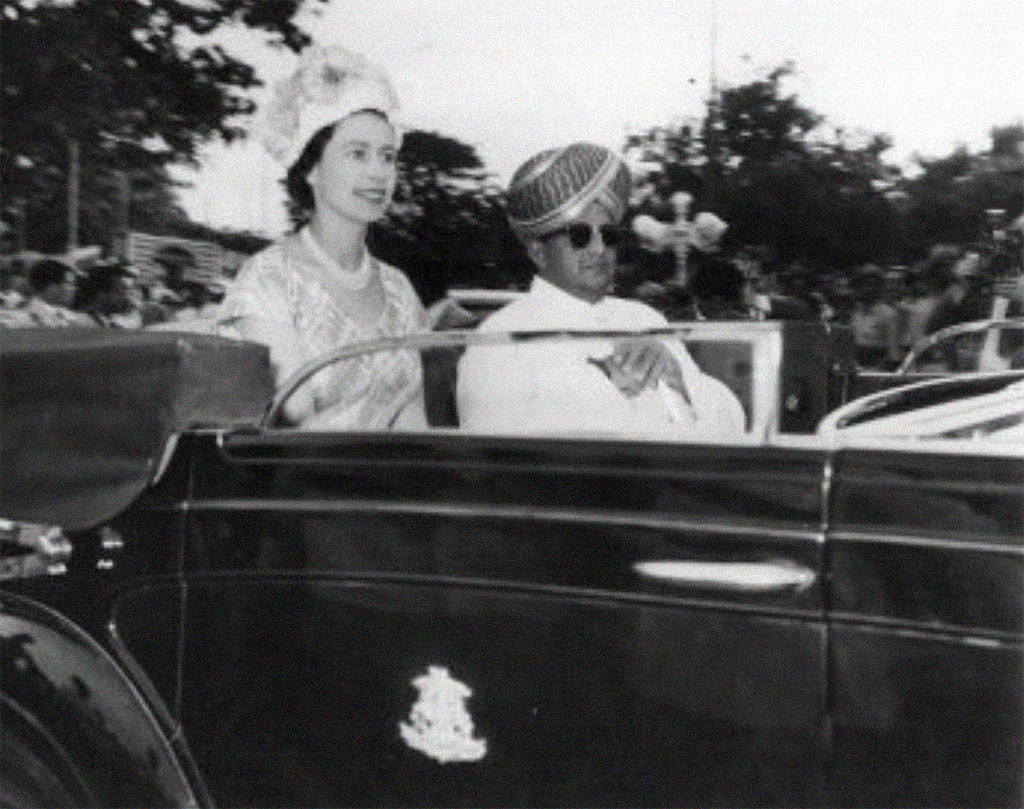
Jayachamrajendra Wadiyar of Mysuru State with Elizabeth II – Wikimedia
The Princely states were also often referred to as the Indian states. The princely states included Jammu & Kashmir, Hyderabad state, Kalat, Jodhpur state, Kingdom of Mysore, Gwalior state, Bikaner state, Jaisalmer state, Jaipur state, Bastar state and more. These states were not under the direct control of the British Raj. On the other hand, they were governed by their respective kings, but were not devoid of British control as they were subjected to the subsidiary alliance.
The subsidiary alliance was essentially an alliance or understanding between the East India Company and the Indian States. According to the subsidiary alliance the East India Company would provide protection against any external attacks or threats to the Indian States. In return the states would allow the presence of the company’s army in their capital city. Would provide territory or money for the upkeep of the army and also have a ‘resident’ or European official who would oversee the communication of one state with another. The British did not impose any taxes on the Indian states, but there was an annual subsidy that the state had to pay depending on its size and population.
As it is evident from the alliance, though the British claimed to have no direct authority on the India states, their role and overarching presence made it clear that the princely states were not completely independent. Though the internal running of the state was left to the kings, they were ripped of their external sovereignty.
India Post 1857
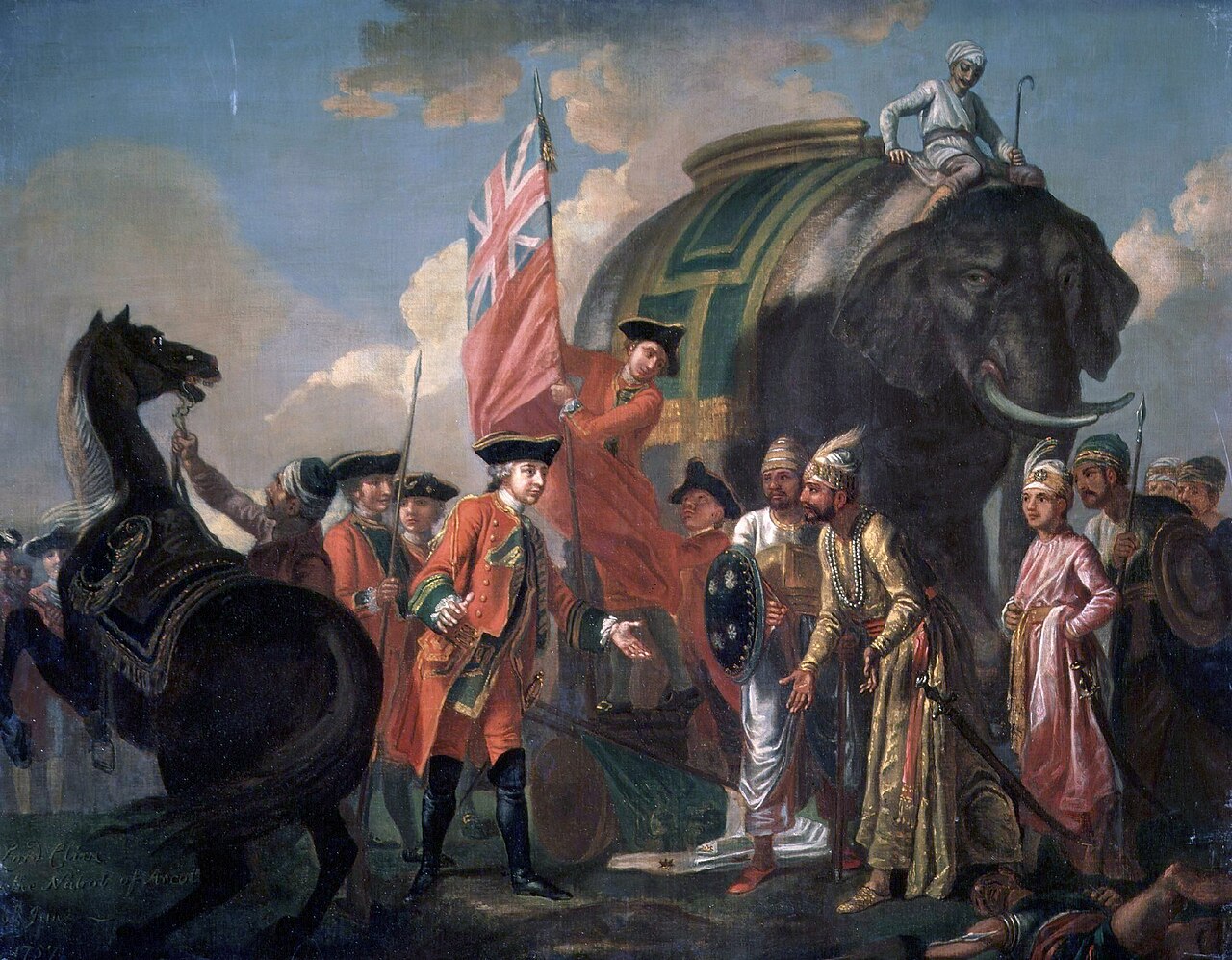
Robert Clive’s victory at the Battle of Plassey established the East India Company as a military as well as a commercial power – Wikimedia
In 1858 the British crown did away with the East India Company and established a direct rule on the country. During this time most of the princely states were perceived as allies with the British. Sadly, the non-uniformity and unity of all the people of India, led to the British getting a far longer and wider playing field in the country. In the 1900 the British were ruling two-thirds of the Indian subcontinent. The remaining one-third were around 650 plus princely states.
Features of Indian States
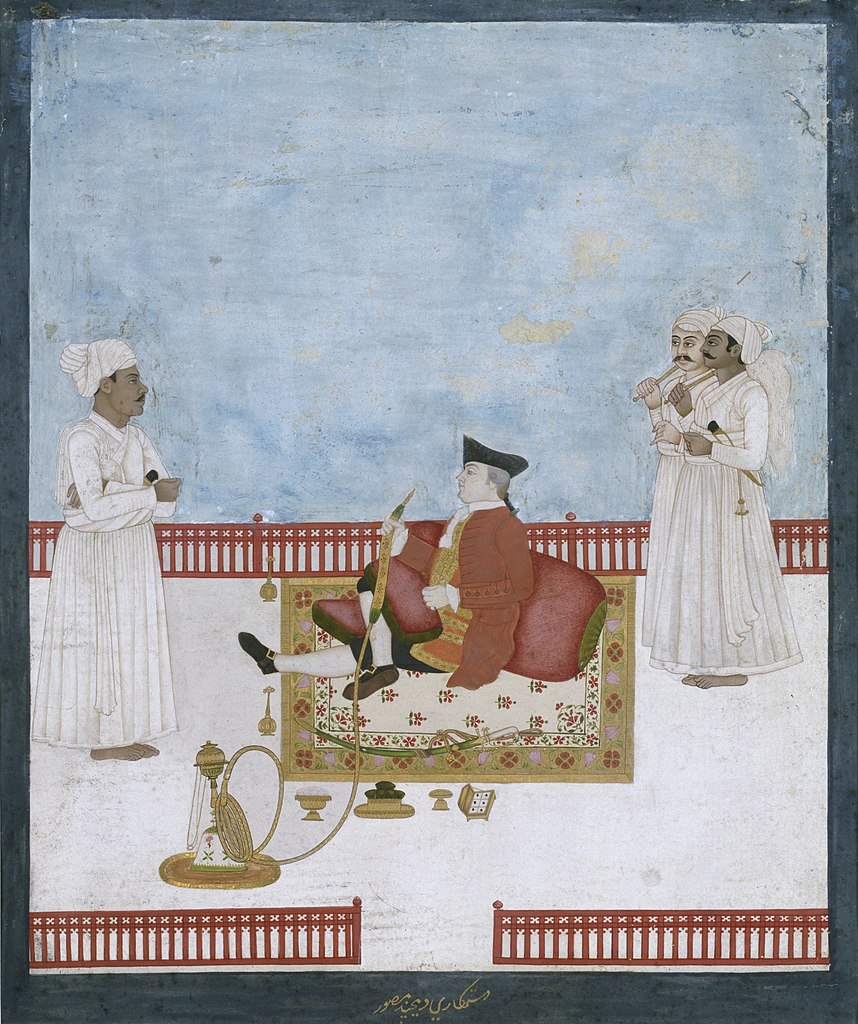
William Fullerton of Rosemount, EIC surgeon in Patna and mayor of Calcutta, receiving a visitor, attended by servants with fly-whisks, 1764. Victoria and Albert Museum, London – Wikimedia
The main distinguishing feature of the princely states was that they had internal autonomy. This implied that any internal matters, including law and order, currency, language, culture etc. were all decided and dictated by the rulers of those states.
The Princely states were ruled by kings who were called by different names. Some of these included Maharaja, Nizam, Raja, Raje, Nawab, Deshmukh, Chhatrapati, Baig, Mirza or Thakur etc. However, the British translated all these names into a singular ‘prince’ and avoided the usage of ‘king’ to avoid there being parallels to the British monarchy.
The British understood early on that keeping the princely states under indirect control was worthwhile as they did not rebel against them. Besides, several princes also served in the army and rose in the ranks. Some were given honorary ranks and titles, such as Major, General or Air Vice-Marshall given to the royalty of Travancore, Bhopal, Baroda, Mysore etc. The members of the princely families were often appointed in diplomatic positions and in colonial offices. During the World War I and II the princely stood in support of the British.
Post-Independence
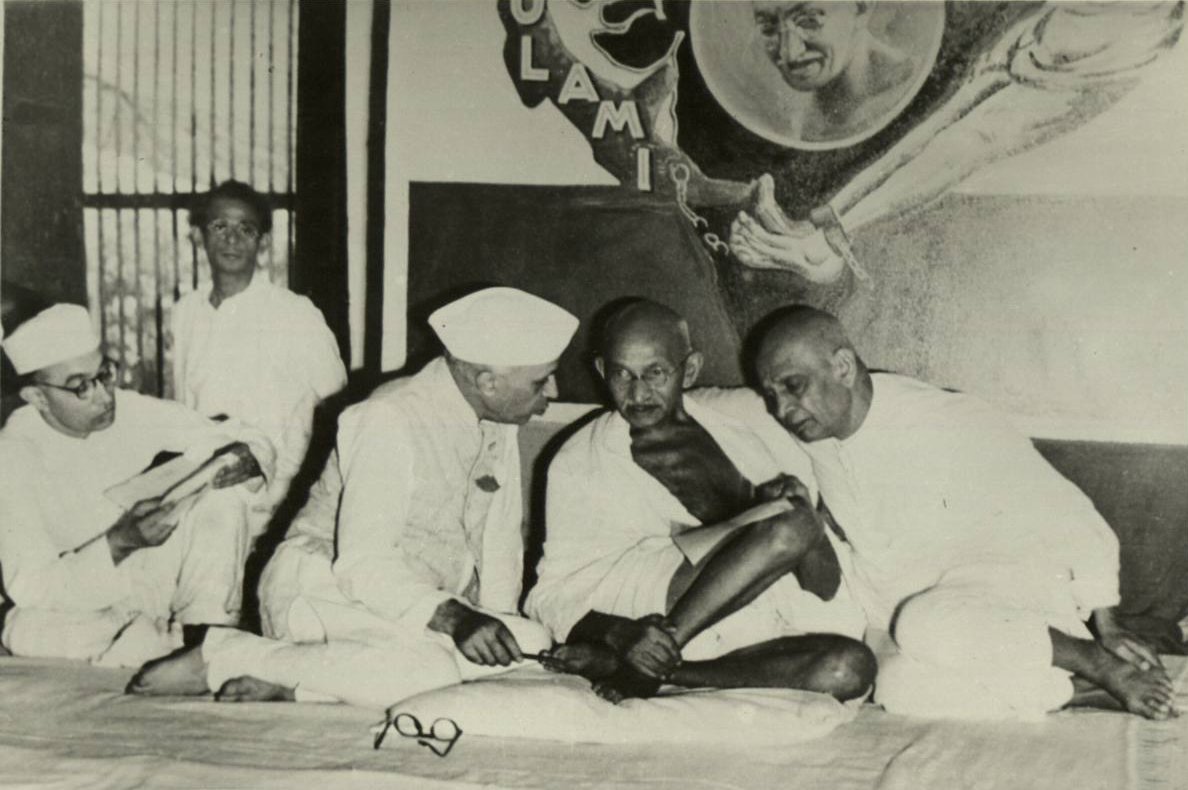
Nehru, Gandhi and Sardar Vallabhbhai Patel – Wikimedia
As the wave of nationalism rose in the early 20th century, the freedom struggle and independence movement gained massive push. Post-independence Jawaharlal Nehru proposed that no princely state could continue to prevail. All of 565 princely states that were there when the British withdrew, acceded to either India or Pakistan between 1947 and 1949. Though this was no mean task it was eventually achieved. The largest princely states at the time of independence were Mysore State, Hyderabad State, Baroda State and Jammu & Kashmir State.
Though the princely states were supposedly friendly with the British, even the last British officials in India, including Lord Mountbatten and Clement Atlee were shifting acquiesces towards the independence movement and the idea of a free country. Also, Sardar Vallabhai Patel played a vital role in the accession of the princely states and to create the modern day structure and layout of India. The political integration of India with its states and princely provinces is a landmark and historical movement in the shaping of today’s India and its political and federal nature.
Other States Not Under the British Rule
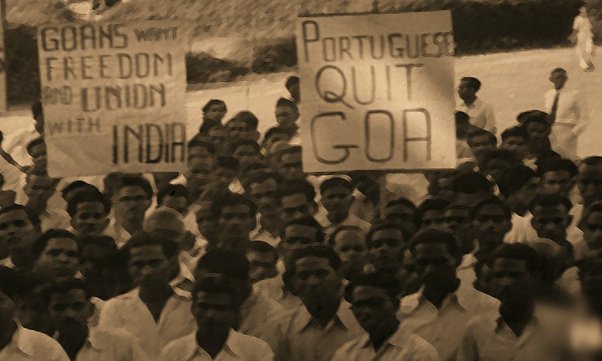
Image Source
Besides the princely states there were some other states and present day union territories that were not under British rule. This was because they were colonized or occupied by other countries. Daman and Diu, Goa and Dadra and Nagarhaveli were under the Portuguese or Portuguese East India Company. Pondicherry, Karaikal and Chandernagore were French colonies. Thus, technically Goa is the only state that was never ruled by the British either directly or indirectly.
Takeaways
The British rule in India is marred by several controversies and policies that were detrimental to the growth and progress of the nation. Though the princely states were known for their grandeur and royalty, they were also viewed as puppets in the hands of the British. Again, this might be an oversimplification for an era that lasted for hundreds of years. Yet, when one thinks of states that were not ruled by the British, the princely states are the first to come to mind. Besides, the only other state is Goa that was under the Portuguese. Thus, sadly when viewed from the concept of complete freedom, no Indian state has been spared from being under either direct or indirect control by a foreign nation. However, it all has changed after independence and today the country is proud to be a sovereign, secular and federal nation.