Unleash Your Inner Fashionista with Travel-Ready Outfits

0
Travel-Ready-Outfits
Image Courtesy – nolabels.in

Have you ever thought of combining your love for fashion with that of travel? If yes, then you’re in for a treat. This guide is all about adding a stylish touch to your voyage.

Understand that your style isn’t just about clothes. Instead, it’s a form of self-expression that speaks volumes about your personality and how you perceive the world. 

So, as you pack for your itinerary, why not let your outfits become an expression for your inner fashionista to shine? Here’s how:

Elevating Your Airport Style

Elevating-Travel-Ready-Outfits
Image – nolabels.in

When getting on a plane, the question of what to wear often takes center stage. That’s where airport dresses come to the rescue! They aren’t just about convenience; they’re a trendy way to travel.

Think about it – you could step into the terminal wearing a chic printed co-ord set that’s visually striking. Or, perhaps, you can opt for the versatile shirt dress that combines style and practicality. 

And then there’s the trendy jumpsuit, a fashion statement in its own right, offering comfort and flair.  With so many choices, you have the power to select the outfit that matches your personal style. 

Embracing Local Influences

Travel-Ready-Outfits by Local fashion Influences
Image – nolabels.in

Traveling to new and exciting places is like stepping into a world of fashion possibilities! 

So, as you plan your outfits, why not add local flair? It’s like a special nod to the place you’re visiting. Sounds amazing, right?

But how can you know what’s trending where? 

Well, it’s simpler than you think! Just check out the top Fashion influencers 2023 on social media. Since these influencers are always traveling, they’re in tune with the latest fashion vibes. And their posts can give you a sneak peek into what’s hot in the area. This brilliant hack helps you pack outfits that seamlessly blend chic styles with the local vibe.

Mixing Fashion with Function

Trending-Travel-Ready-Outfits
Image – nolabels.in

When traveling, looking good shouldn’t mean sacrificing comfort or practicality. You can rock those stylish vibes while feeling ready for whatever adventures come your way. 

Here’s how to strike that perfect balance:

  • Blend Style with Comfort Traveling often involves walking and exploring. So, opt for clothing made from soft, breathable fabrics that move with you. For instance, loose-fitting tops, stretchy jeans, and flowy dresses can offer a stylish look without compromising comfort. 
  • Layering – Weather can be unpredictable, especially during travel. So, layering is the key to adapting to different temperatures. Some popular layering options are a button-up shirt, cardigan, or denim jacket. This adds style and provides extra warmth when needed. 
  • Right Footwear – Choose shoes that match your outfits and are suitable for the activities you have planned. For city strolls, opt for comfortable sneakers that provide support during long walks. If you’re heading to the beach, lightweight sandals are perfect. And for a night out, consider chic yet comfy wedges or ankle boots. 

By blending fashion with function, you’re setting yourself up for a fantastic adventure, no matter where you go!

Final Words

Whether you are taking off to cosmopolitan cities or remote outdoors, let your outfits reflect your excitement, curiosity, and passion for exploring the world. With these travel-ready attires that effortlessly blend fashion and function, you’re equipped to make every adventure stylish.

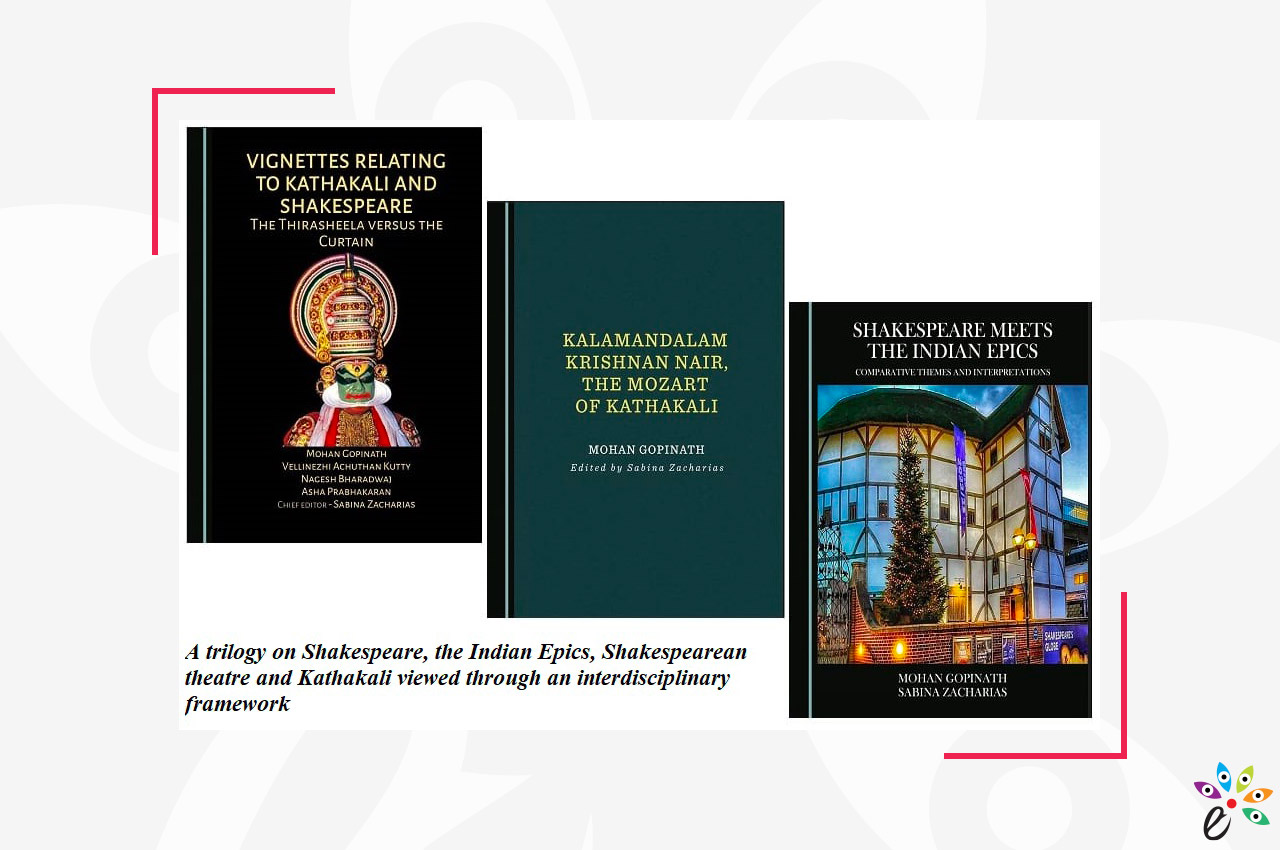
Book Review – Shakespeare Meets the Indian Epics

0

Shakespeare-Meets-the-Indian-Epics--Comparative-Themes-and-Interpretations

The title of the book piqued my curiosity – Shakespeare meets the Indian Epics. What do they have in common and will the twain ever meet? 

Well, this book Shakespeare Meets the Indian Epics: Comparative Themes and Interpretations published by Cambridge Scholars Publishing, Newcastle, UK shows how there is a lot more than is thought is common between people writing and creating characters almost 6,000 miles apart and in different centuries. Shakespeare and the two epics the Maha Bharatham and the Ramayanam occupy different planets. They are written in different languages and the milieu in which the stories were created is also entirely different. It may therefore appear to the reader that comparing them would not be possible as no meaningful conclusion could be drawn. But both Elizabethan drama and the Epics thrived and flourish and will continue to do so. The characters portrayed in them are complex and universal – grappling with ethical choices, questions of justice and self-realization.

The book attempts to look at the fascinating common threads in the Indian Epics and Shakespeare. Using the framework of syncretism, the authors have closely studied, analysed and interpreted two different schools of performing arts – the characters from Shakespearean plays and the mythological characters drawn from the Indian Epics. It examines the day-to-day themes appearing in the two epics, The Ramayanam and The Maha Bharatham and some of Shakespeare’s plays and looks at specific themes and character ‘pairs’ from the two genres. The characters portray the aspects of universal human nature with relevance to all ages and times. For instance, the intricacies of filial devotion between Dakshan and Sathi and Lear and Cordelia, the manipulations and paranoia in Shakuni and Iago, the mental strength of Damayanthi and Portia and the indecisiveness of Nalan and Hamlet. The book reveals that whatever backgrounds people may have, they ultimately tend to tackle life in very similar ways and this claim is substantiated with many pertinent examples drawn from diverse disciplines such as management, psychology, performing arts and military rules of engagement.

This is the third book in a trilogy series related to the Indian Epics, Kathakali and Shakespeare. The other two books in the trilogy are – Vignettes Relating to Kathakali and Shakespeare: the Thirasheela versus the Curtain which looks at the common threads running through the characters in Shakespeare and the Kathakali stories and Kalamandalam Krishnan Nair, the Mozart of Kathakali about a specific great actor, a Kathakali maestro also published by Cambridge Scholars Publishing. This book along with the other books in the trilogy are positioned as academic books and will be of interest to practitioners of the theatre, students of performing arts and aficionados of the Indian Epics and Shakespeare. You may view the description, author profile and an extract from the book at Cambridgescholars.com

The authors are passionate about the genres of literature, theatre and performing arts. The principal author Dr. Mohan Gopinath is an ardent devotee of Kathakali (dance drama) and a lover of Shakespearean plays and the idea of a trilogy series originated from his desire to tie the two threads of these genres into a series of books. The book has been meticulously reviewed by the editor, Prof. Edwin Castelino. The importance of this book to the student of drama and literature is one of the prime reasons why it can be used in the world of academics as an essential textbook for students of the theatre in the West and the East. This book proves beyond doubt that the world of the theatre and stage has no boundaries.

Hardback
Cambridge Scholars Publishing, Newcastle, UK
ISBN: 1-5275-1541-9
ISBN13: 978-1-5275-1541-3
Release Date: 19th June 2023
Pages: 386
Price: £77.99

Dr. Rajashree Pandiyan, the reviewer is an Educational professional with 14 years of experience in higher education. Her passion for Literature and Linguistics prompted her to do her doctoral study on a semiotic analysis of Emily Bronte’s Wuthering Heights. After a long and dedicated tenure of academic life, she has taken a sabbatical and is currently pursuing a Master’s in Education Management at King’s College, London, UK.

About the Authors:

Dr. Mohan Gopinath holds a Master’s degree in English Literature from St. Stephen’s College at Delhi University (India), where he later became a member of the faculty. After a two-year stint in the college, he joined the Hongkong and Shanghai Banking Corporation and worked as a senior-level banker for almost 21 years in India, the UK, and Hong Kong.  He obtained a doctoral degree from Osmania University, India. His areas of interest are leadership, management of change, conflict resolution, banking, and protection of the environment. He has written and published papers and case studies across a range of subjects, including banking, organizational behaviour, human resources, finance, the environment and the performing arts. His publications include Business Drama: How Shakespearean Insights Help Leaders Manage Volatile Contexts and Vignettes Relating to Kathakali and Shakespeare: The Thirasheela versus the Curtain and Kalamandalam Krishnan Nair, the Mozart of Kathakali.

Dr. Sabina Zacharias has been teaching English Language and Literature, Cultural Studies and Business Communication to multicultural/multilingual groups at different levels in India and abroad for the last 20 years. Her doctoral degree from the EFLU (The English and Foreign Languages University, Hyderabad) is on reading the legends of Kerala from a caste and gender perspective. She has presented and published several research papers in the areas of English Literature and Cultural Studies. Currently, she is engaged in online teaching and academic content writing. Her other interests include volunteering for community service and working on Education projects for social change.

Traditional food of Meghalaya that Tickle Your Taste Buds

0

Meghalaya is one of the Northeast’s seven sisters, and it is also one of the most lively of them. This is a wonderful destination to spend time with friends or family because of its natural beauty and tribal culture. After all our strenuous days at work, taking a holiday in this Himalayan state will refresh your body and mind in the best manner imaginable. It is strongly suggested that you eat the local dishes while exploring Shillong or soaking in Cherrapunji. Meghalayan cuisine is so different that you will be in awe of every meal you eat in any section of this stunning state. Because Meghalaya is home to three major tribes, the food consumed in villages and cities varies depending on where you go. People from the Khasi and Jaintia tribes, for example, will use a lot of bamboo stalks in their culinary preparations. Garos, on the other hand, eat a lot of pork-based foods as well as other animal proteins. Yes, there is much more than momos! 

The following are a few notable Meghalayan foods that you should try on your next vacation:

1. Jadoh

Traditional food of Meghalaya-Jadoh
Image Source

In the state of Meghalaya, jadoh is one of the most famous Khasi street food delicacies. There are very few people who dislike eating this meal. It is such a renowned delicacy that Shillong has a restaurant named Jadoh that is quite popular among the locals. Those who are afraid of space may find the meal intimidating, but this red rice and pork concoction is mouth-wateringly delicious! Spice aficionados may load up on green chilies in their Jadoh and bathe it with chutney to make their palate sing and dance.

2. Doh-Khlieh

Traditional food of Meghalaya- Doh-Khlieh 
Image Source

Pork is celebrated in all its grandeur in Meghalaya cuisine. Pork is utilised in practically all of the native cuisines, whether steamed, boiled, fried, or grilled. Doh-Khleih, for example, is simply a salad made with minced pork, green chilies, and onions. The serving of pig brains, curry, and bread alongside this local specialty. This traditional Meghalaya food item’s sheer enchantment is an experience you must try on your next trip. While touring Shillong’s Police Bazar, try this pork salad at Trattoria, which is essentially a hole in the wall food restaurant that produces the best Khasi foods in the city.

3. Nakham Bitchi

Traditional food of Meghalaya-Nakham Bitchi
Image Source

Pescatarians, or persons who eat fish but no other animal flesh, will have a great time in Meghalaya. There are several meals made by curing tiny fish and totally drying them. Nakham is a dried fish that may be fried or boiled to make a soup which is also known as Bitchi. This meal is intended to calm your nerves on a chilly winter night in Shillong. The ideal Meghalayan way of life is to eat this simple soup with a bunch of pals. Don’t go to commercial establishments for this, since the one served in modest shacks tastes much better.

4. Pumaloi

Traditional food of Meghalaya- Pumaloi
Image Source

Pumaloi is a popular holiday and family gathering cuisine in Meghalaya. It would be a pity to miss out on this delicacy if you are visiting this state during the Shad Suk Mynsiem, Shad Sukra, or Wangala festivals. Powdered rice boiled in a special pot called Khiew Ranei is the key component in a traditional Pumaloi. If a kind Khasi aunty lets you into her kitchen, make sure you learn how to cook this delicacy from her.

5. Pudoh

Traditional food of Meghalaya-Pudoh 
Image Source

Pudoh is a pork lover’s upgraded version of Pumaloi. The method of preparation is similar to that of a Khiew Ranei with powdered rice steam, but the addition of pig bits with curry elevates this dish to a whole new level! The chances of getting your mouth crammed with platefuls of Pudoh are so great during a village festival that it’s hardly even funny. Every bite of this delicacy will make you respect Meghalaya’s culture and customs. Isn’t this the most satisfying kind of food?

6. Minil Songa

Traditional food of Meghalaya- Minil Songa
Image Source

Minil Songa, a sticky kind of rice, is one of Meghalaya’s most popular Garo meals. Essentially, the meal consists of sticky rice with a rich nutty flavour and a delicate texture. In terms of how it becomes so sticky, starch is responsible. To make Minil Songa, you’ll need to boil the rice in fresh bamboo and consume it as a snack. Apart from its delicious taste, it also aids in constipation and digestion, making Meghalayan cuisine an intriguing remedy.

7. Sakin Gata

Traditional food of Meghalaya- Sakin Gata
Image Source

The precise blend of tribal and Asian influences in this state’s gastronomy is interesting. Travellers who have visited other areas of Southeast Asia may notice that certain dishes in Meghalaya’s cuisine are quite similar to those seen in other regions of Southeast Asia. Sakin Gata is a rice cake that will make you joyful from the minute you bite into it. This sweet dish will contain numerous layers of rice and toasted sesame seeds, creating such a wonderful nutty flavour combination that a single taste will be insufficient. Sakin Gata, a treasure that should be found at a local sweet store as soon as possible, is celebrated as one of the primary culinary dishes in a Meghalayan thali.

8. Kyat

Traditional-food-of-Meghalaya-Kyat
Image Source

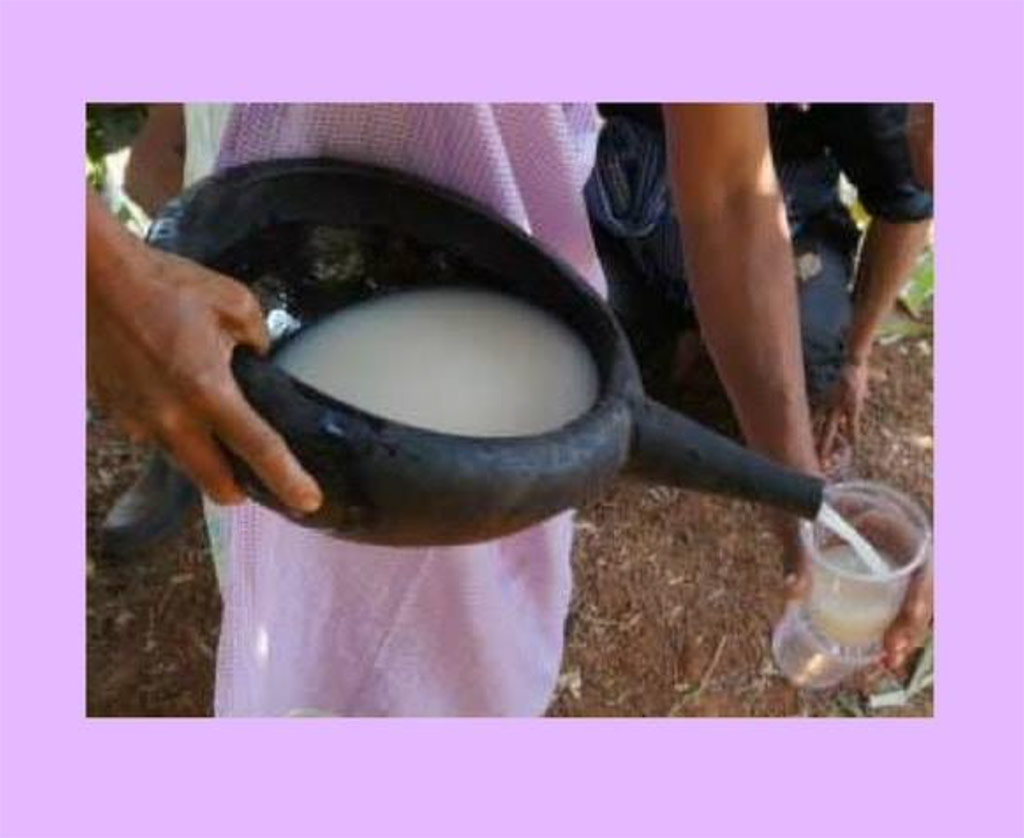
When discussing Meghalaya’s notable cuisine items, a native beverage must be included. Kyat is a fermented rice beer that is known for livening up even the dullest of gatherings! It’s a distinct alcoholic beverage enjoyed by individuals from all walks of life in this state. Chatting with the locals over a large glass of Kyat will undoubtedly help you become one of them in no time.

9. Dohneiiong

Traditional food of Meghalaya- Dohneiiong
Image Source

Dohneiiong is a Khasi delicacy that is an essential component of tribal cuisine. A gentle, flavorful curry that is comforting and nostalgic of home. It has a distinct flavour of black sesame seeds with a peppery kick. When paired with the Meghalaya staple of rice, it may quickly transport you to Shillong’s lovely hills. It is made with fried pork, green chilies, peppers, red onions, and a rich sauce that is best served with a hot plate of rice. You may enjoy a bowl of it just before your sightseeing trips begin because it is a filling meal. Throughout your day excursion, you will be enthusiastic.

10. Tungrymbai

Traditional food of Meghalaya-Tungrymbai
Image Source

Meghalayan food is noted for its nutritious qualities, and Tungrymbai is a prime example of this. A meal that makes you feel warm and cheerful, it is a classic Meghalayan cuisine item that should be tasted at least once. It contains almost everything, including soya beans, onions, carrots, ginger, spices, and boiled or fried pork. Vegetarians can omit the pork and replace it with an additional serving of soybeans. After all of your explorations, you will surely enjoy hogging this local delicacy.

11. Pukhlein

Traditional food of Meghalaya- Pukhlein
Image Source

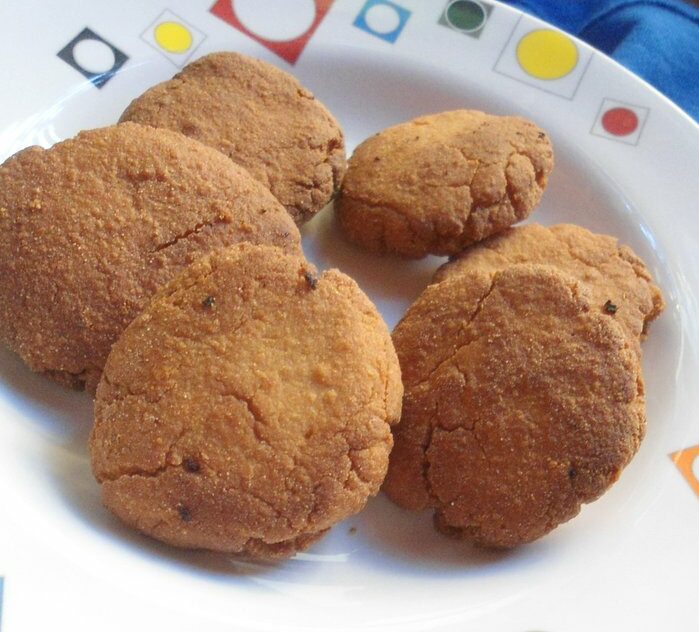
Pukhlein is a flavorful sweet delicacy cooked especially for the Wangala Festival. Pukhlein, one of Meghalaya’s greatest vegetarian dishes, is made with only two ingredients: rice powder and jaggery. These are cooked combined to form the golden brown crispy bread. With a hot cup of tea or coffee, this is the ideal evening or post-meal snack.

If you’re not salivating by now, your palette ought to be shaken! Meghalaya’s exquisite cuisine, as well as its expanding tourism attractions, await your arrival. Plan your visit and indulge in the state’s distinct specialities. Foodies would like Meghalaya tours that feature food outlets and hole-in-the-wall kinds of places to eat local delicacies. So, when you plan a vacation to this state, do your homework on the most popular shacks, restaurants, and even home cooks who will gladly deliver meals to your door.

Exploring the Symbols of Nationalism in India

0

National-Symbols-of-India-01

What is nationalism? The definition of nationalism states, it is the ‘identification with one’s own nation and support for its interests, especially to the exclusion or detriment of the interests of other nations.’ Thus, nationalism is an emotion and concept that stems from patriotism and love for one’s motherland or country. Every citizen feels a sense of belonging to his or her nation. Call it pride or national identity, nationalism is both an individual and collective idea. Since nationalism is a core concept, it is best manifested through symbols. India, too has several symbols of nationalism that act as a basis of identity, value and purpose of the nation. 

The Meaning of Nationalism

Symbols of Nationalism in India-The Meaning of Nationalism
Image Source

Nationalism quite practically implies that every country should govern itself. And it must be free of any outside interference. The idea does have two sides, though. On one hand, nationalism evokes the feeling of pride for the nation. Citizens with strong feelings and connections towards their country, ensure that their nation is protected and progresses. It leads to a positive enforcement driven by the desire to truly work together as citizens of the country for its development and growth. 

However, on the other hand, extreme nationalism can lead to discrimination. Nationalism in essence may also imply a sense of superiority. It may lead to citizens becoming disdainful towards people and value systems of other nations. Hence, though the idea can bind the people of a single nation together, it must be used cautiously and sensibly. 

Indian Nationalism

Symbols of Nationalism in India-Indian Nationalism
Image Source

Indian nationalism is an example of territorial nationalism. It brings together the people of this country together, irrespective of their gender, caste, class, linguistic, religion and more. Indian nationalism can be traced to ancient India; however, it truly came into being during the Indian Independence Movement. For instance, King Bharata or the Mauryan Empire did unite the region that roughly comprises the Indian territory today. But the sentiments of nationalism rose as a result of anti-colonial movements. 

Several movements, such as the Swadeshi Movement and Civil Disobedience Movement, or ideas of Satyagraha, Non-cooperation etc. are shining symbols of Indian nationalism. Similarly, not only movements or ideas, but particular objects can also become national symbols. The Khadi, for instance, became a symbol of nationalism in the Indian freedom struggle. Artistic representations, such as the Bharat Mata painting by Abindranath Tagore or Bapuji (Dandi March) by Nandlal Bose are also not less than national symbols.

Symbols of Nationalism

The best way to tangibly and explicitly express nationalism is through symbols. India has 17 national symbols. Each of these symbols have played an important role at different points in history to unite the people of India. Additionally, national symbols cut across individual or regional divides. They represent common ideologies and values that transcend individual differences and diversity. Here is a list of the 17 national symbols of India. 

  1. National Flag
  2. National Anthem
  3. National Song
  4. National Emblem
  5. National Animal
  6. National Bird
  7. National Tree
  8. National Calendar
  9. National River
  10. National Fruit
  11. National Vegetable
  12. National Flower
  13. National Reptile
  14. National Currency
  15. National Aquatic Animal
  16. National Heritage Animal
  17. Oath of Allegiance

1. National Flag

Symbols of Nationalism in India-National Flag
Image Source

The National Flag was adopted by the Constituent Assembly in July 1947. It was designed by Pingali Venkayya. The saffron color implies courage and strength, green signifies prosperity and growth. White is the color of peace, whereas, the Dharma or Ashoka Chakra in the center means truth. The flag was influenced by the Swaraj Flag designed by Mahatma Gandhi in 1921. 

2. National Anthem and Song

National-Anthem-of-India

Rabindranath Tagore wrote the national anthem, Jana Gana Mana. Originally, the composition was called Bharoto Bhagyo Bidhata, whose first stanza was adopted by the Constituent Assembly as the National Anthem in January 1950. 

The National Song Vande Mataram was written by Bankim Chandra Chatterjee. The song was first sung by Rabindranath Tagore at a session of the Indian National Congress. It was adopted as the National Song by the Constituent Assembly in January 1950. 

3. National Emblem

Symbols of Nationalism in India-National Emblem
Image Source

The National Emblem was adopted on the 26th January 1950. Adapted from the Lion Capital of Ashoka at Sarnath the motto reads – Satyameva Jayate. The Emblem is a symbol of power, confidence and courage, with the Dharma Chakra at the center.

4. National Animal/Bird/Aquatic Animal/Reptile/Heritage Animal 

Symbols of Nationalism in India-National Animal_Bird_Aquatic Animal_Reptile_Heritage Animal 
Image1 Source, Image2 Source, Image3 Source, Image4 Source, Image5 Source

The Tiger is the National Animal and was adopted in 1973 because of the lessening population of the tigers in India. The Lion was India’s national animal before the Tiger. The Peacock was adopted as the National Bird in 1963. The indigenous bird symbolizes the beauty of different colors or people of the country. The Dolphin is the National Aquatic Animal of India and is found in the Ganga, Chambal, Yamuna and Brahmaputra rivers. 

The King Cobra is the National Reptile and in Hindu culture it is known as Naga. It is believed to have divine influence as Lord Shiva often has a cobra wrapped around his neck. 

The National Heritage Animal is the grand Indian Elephant. An original native of Asia, the Indian Elephant is an endangered species.

5. National Flower/Fruit/Tree

Symbols of Nationalism in India-National Flower_Fruit_Tree
Image1 Source, Image2 Source, Image3 Source

The Lotus is the National Flower of India. Viewed as a sacred flower, it symbolizes spirituality, purity, knowledge, illumination and more. 

The Banyan is the National Tree of India and is often referred to as the Kalpa Vriksha or Tree of Wish Fulfillment. The Mango is the National Fruit and symbolizes prosperity and abundance. 

6. National River

Symbols of Nationalism in India-National River
Image Source

The Ganga also known as the Bhagirathi River is the National River of India. It originates at the Gangotri Glacier and is a sacred river according to Hindus. Also, the Ganga is the longest river flowing in the country. 

7. Oath of Allegiance

National-Pledge-of-India

The Oath of Allegiance or the National Pledge is an oath that is memorized and understood by all citizens of the country. The pledge was first written by Pydimarri Venkata Subba Rao. 

Role of National Symbols

National symbols are identity markers. They represent the Indian culture, heritage and belief system of a nation. However, because India is such a vast nation and is a heady mix of different regions and cultures, making and maintaining national symbols are important.

Firstly, they act as a unifying element that brings all the people together on a common denominator. For instance, the National Anthem and Song, though written in Sanskrit, touches a chord, even for citizens who may not understand each word of it. Just singing them swells our chests with pride and instills a deep love for the land we call home and our motherland. 

Role of National Symbols in India
Image – Pexels

Secondly, the national symbols are also a representation of the most ubiquitous and indigenous features. The national fruit for instance, the mango, is one of the most loved fruits in the country. Similarly, the animals or peacock, are an integral part of the country’s ecosystem.  

Thirdly, the national symbols raise awareness about pressing issues. The number of tigers saw a gradual decline over the years. Making it a symbol, brought attention to the issue and became a contributing factor in the current rise in the number of tigers in India. 

Lastly, the national symbols are also interwoven in the cultural fabric of the country. The lotus, banyan tree or River Ganges are also symbols of spirituality. Each design of the National Emblem is fraught with meaning and significance. Thus, the national symbols are also holders of what Indians value and believe in the most. 

Summary

There is no doubt that symbols of nationalism in India invoke pride, unity and patriotism. Not just the listed national symbols, but any manifestation that brings its citizens together and unites them for a common cause that guides the nation towards progress and equality is a national symbol. However, the key is to understand that nationalism shouldn’t encroach upon basic individual rights. A just and fair assessment that is inclusive is vital for national symbols to truly mean what they set out to achieve. And this is most fundamental, for India, because it is a country that is home to people of different regions, languages, religions, castes, creeds, gender and more. Hence, finding common symbols should not be the ultimate aim of building a nation. The symbols are faces of national pride. But they shouldn’t be taken for granted or assume supremacy over the other many intrinsic social and cultural symbols that also are icons of nationalism, in their own right. 

10 Culturally Rich Cities of India to Make You Proud of Your History!

1
Culturally Rich Cities of India
Image – Ajay Goel/Flickr

India remains a country that is famous throughout the globe for its beautifully rich culture and traditions. From its cuisine and heritage to its history and art, India’s culture is, without a doubt, exemplary. What makes the culture of India stand out has to be its diversity. Everyone may speak different languages, eat different food, and dress according to their religion or community but still, the love for our country exceeds all. The cities of India represent the same and out of all, some are especially unique due to their rich culture. So, let’s dive into ten of the most poignant cities in the country.

1. Jaipur

Culturally Rich Cities of India-Jaipur 02
Photo by Ankur Bagai Pexels

We begin this journey with none other than the pink city of India. Jaipur is renowned throughout for its mesmerizing culture. Characterized by its majestic forts, its art, heritage, and history are immaculately portrayed by the architecture of the place, for instance, some worth-visiting monuments are Jal Mahal, Hawa Mahal, Amber Fort, and many more. The culture of Jaipur is nothing if not extravagant and their vibrant costumes in addition to the exquisite jewelry are a testament to the same. Furthermore, the art and craft of the city, as well as the cuisine, is exemplary.

2. Varanasi

Culturally Rich Cities of India-Varanasi
Image/Wikimedia

Varanasi is a city that has truly got it all, for here you get archaeology, architecture, heritage, mythology, art, and culture. One of many features that makes Varanasi stand out is its art and craftsmanship for this city is famous for its handicrafts, metal works, jewellery, and many more. Varanasi is also considered to be a hub for drama and music. It is also an important religious site and is significant for both Hindus and Buddhists. The mouth-watering seafood is a must-try.

3. Kolkata

Culturally Rich Cities of India-Kolkata 01
Gambar oleh PDPics dari Pixabay

Who’s in the mood for some rasgullas because our next city is the capital of West Bengal, Kolkata. The artistic and cultural capital of India, of course, had to be included on this list. The importance of Bengal during the British Colonial Era has visibly influenced Kolkata to be the city that it is today. The Bengali cuisine is unbelievably delicious and always leaves you wanting more. This haven of literature is also the birth-place of Nobel Prize Winner, Rabindranath Tagore. The importance given to fine arts in this incredible city is particularly commendable.

4. Mysore

Culturally-Rich-Cities-of-India-Mysore-01
Image – Marc Dalmulder/Flickr

Coming on to the admirable culture of Mysore or as it is colloquially known, the cultural capital of Karnataka, it possesses its very own style in the fields of paintings and architecture. The reason for this distinct identity of the city is considered to be the patronage it received throughout history. Mysore excels in various fields so much so that it is known as the City of Palaces, the Garden City, the City of Yoga, and the Ivory City for a single name cannot accurately summarize the beauty of Mysore culture.

5. Hampi

Culturally Rich Cities of India-Hampi
Image/Wikimedia

A UNESCO Heritage City, Hampi is firstly blessed with natural beauty and its picturesque views are every photographer’s dream. The ruins of this city are a perfect background for its rich heritage and history. Famous as the capital of the Vijayanagara Empire, it was ruled by some great kings and the one I’m sure we’ve all heard of remains King Krishnadevaraya. The architecturally stunning temples of Hampi additionally serve as an allure of this city such as the Virupaksha Temple, Vithala Temple, Hemakuta Hill Temple Complex, and many more.

6. Rishikesh

Culturally Rich Cities of India Rishikesh
Gambar oleh AYMYogaSchool

The Gateway to the Garhwal Himalayas, Rishikesh is visited by hundreds of thousands of tourists every year. It is infamous around the globe for its teachings of meditation and yoga but most of all, it serves as a revered spiritual spot. Being in Rishikesh is like traveling back in time for this holy town has done a spectacular job in preserving the town’s rich history. The International Yoga Festival is also held here annually.

7. Madurai

Culturally-Rich-Cities-of-India-Madurai
Image – Wikimedia

The city of Madurai has successfully achieved a balance between the old and the new and that is reflected in the city’s people and architecture. One of the city’s major attractions is the Meenakshi Sundareswarar Temple around which the city is actually constructed and is in the shape of a lotus. When talking about the craft of state, Madurai is renowned for its textile industry and the best part is that they still use the ancient method of weaving. The festivals here are celebrated by the people with the utmost enthusiasm and an essential part of the culture there.

8. Delhi

Culturally Rich Cities of India-Delhi
Image/Wikimedia

The next city is the very capital of the country, Delhi. Throughout the city of Delhi, influences from the great rulers of the Mughal Empire as well the Delhi Sultanate can be observed. That is also the reason for Delhi’s stunning miniature paintings for art in the city was truly at their pinnacle during the Mughal period. Delhi is very popular for its jewelry of which the two main varieties are Kundan and Meenakari. Another vital element to Delhi Culture is the festivals of Delhi such as Maha Shivratri, Republic Day, Diwali, Holi, and many more.

9. Chennai

Tamil Nadu culture
Image – McKay Savage via Flickr

Reaching the doorway to the South, Chennai is known throughout the globe for its prominent classical dance of Bharatanatyam which is synonymous with grace and elegance. The famous Carnatic Music is nothing less than a treat for the years. We’ve all tried out the delicious cuisine of Chennai from idli, dosa to rasam, sambar. The rich Tamilian filtered coffee is a must-try. The prime language spoken here is, of course, Tamil.

10. Amritsar

Culturally Rich Cities of India-Amritsar
Image/Sandeepa Chetan/Flickr

An important site for Sikhs, Amritsar is rightly considered to be the cultural hub of Punjab. The city is home to various gurudwaras such as Tarn-Taran Sahib, but the most prominent of all is Sri Harmindar Sahib, or as popularly called the Golden Temple. Upon visiting this sacred gurudwara, it is highly recommended to take a bath in the holy waters and take the langar. The rich history of Amritsar and its amazing cuisine adds to the city’s charm.

Every single one of these places has something about them that’s unique and that’s entire because of their intriguing history and heritage. This is the very thing that has shaped our country into what it is today. What’s more, is the preservation of culture that can be seen in these cities. Even though they have moved ahead with time with the advent of modernization but they have remained true to the essential. It is rightly said, “A nation’s culture resides in the hearts and souls of its people.”

Indian Independence – The Finest Example of Unity in Diversity

0
Indian Independence
kiran Valipa Venkat Via Flickr

On 15th August 1947 India gained its independence. It was an uphill task but was achieved after years of agitations, toiling, sacrifices and hard work by the collective people of India. Perhaps, the fact that in spite of India being home to a diverse population it was the coming together of all different movements that finally led the way towards total Indian Independence.

The Indian freedom struggle is thus unique. Where on one hand most nations that seek independence do so on the basis of a particular unifying factor, be it language, literature, area or culture, the Indian freedom struggle finds contributions and uprising from all quarters of its diversity. Surprisingly, though the cause of rebel has been stipulated to general mistreating and curbing of basic rights, the outbreak of discontent and method of fighting back found expression from almost all quarters of the Indian society. This collective yet dispersed form of rebellion is one of the main highlights of the Indian independence struggle, and in many ways also its biggest strength. Though it may be argued that channeling the different emotions to form one largely enormous uprising may have been more fruitful, it is hard to imagine India as an entity of anything singular or even close to it. Because we are a nation that is home to many languages, cultures, religions, castes, class and professions, essentially means that we have different thought processes, myriad methods of execution, ideologies that differ, yet the freedom struggle acted as the common plank, the final goal that was aimed by all.

We Recommend…
India’s Struggle for Independence: 1857-1947

So how did diversity ultimately contribute in gaining independence? Here is taking a look at some of the distinct varying aspects that in spite of its manifold expressions were rooted in a common cause.

Language, Literature and Arts

At the time of Independence a large part of the population was considered illiterate. Yet, language and literature have played an immensely large role in the freedom struggle. Bande Mataram a weekly newspaper in English by Bipin Chandra Pal, the Jugantor Patrika in Bengali, Rast Goftar in Gujarati, Kesari in Marathi, Al-Bagah in Urdu, Pratap in Hindi and many more publications written by fiercely independent freedom fighters and journalists have been excellent propellants of countering British policies and forming opinions of the masses.

Unity-in-Diversity-in-India
Bande Mataram – Source

Poets and authors from across the country wrote in their individual mother tongues, lashing out at the colonial rule and inspiring millions to fight for their freedom. Urdu, Hindi, Bengali, Marathi poets made the pen a mighty warrior, penning down spectacular lines that cut across language and region barriers and resonated in one single sound. Ram Prasad Bismil, Iqbal, Rabindranath Tagore, Ajit Singh, Nandlal Noorpuri, Bankim Chandra and many more glorified Mother India and the very idea of freedom and their quotes and poems were used by freedom fighters as slogans and motivational songs.

Hindi, Marathi, Punjabi, Bengali theatre and drama was also extremely critical of the colonial rule.

Tribes and Caste

Unity-in-Diversity-in-India-Tilka-Manjhi-1
Tilka Manjhi – Source

Though there is enough argument on how the role of the Dalits and backward classes has been relegated in the background by historians, it is neither surprise nor wonder to note that people from different class and caste fought for the independence struggle in their own way. As early as 1770 during the Bengal famine, sanyasis and fakirs joined in a rebellion to attack against the increase in revenue, Tilka Manjhi is considered by many as the first adivasi to organize an attack against the British, the tribal of Sambhalpur, the Santhal Rebellion, the Tana Bhagats a tribal community of Jharkand’s uprising, the Munda rebellion or the Rampa, a hill tribes rebellion point out how the tribes were carrying out their individual battles. Dalits participated in the 1857 revolt and more recently India saw some of its finest leaders as those who had risen from the lowest strata of society and herald a cause for not only the freedom struggle but an emancipation of the downtrodden caste, such as, Jotirao Phule, Periyar, Mangoo Ram and of course B.R. Ambedkar.

Women Participation

Role-of-Women-in-the-Independence-Movement-of-India-03-Sarojini-Naidu
Mahatma Gandhi and Sarojini Naidu via Wikimedia

Women fought shoulder to shoulder alongside men and their role in the independence movement cannot be ignored. From Rani Lakshmi Bai, Begum Hazrat Mahal, Rani Avantibai to Sarojini Naidu, Kamala Nehru, Vijay Lakshmi Pandit and many more women stalwart leaders took the mantle of making it their choice to defend the freedom of the country. Their participation in the independence struggle was seen through various mediums and they took up each of these with grit and determination.

Suggested Read – Role of Women in the Independence Movement of India

Professional diversification

Unity-in-Diversity-in-India-Champaran-Satyagraha
Champaran Satyagraha. Source: PIB

Though the caste system was intricately aligned to the profession, the independence struggle saw some form of contribution from practically all professions. The fighters were heavily involved in the 1857 revolt; however, farmers too were an important link in the various movements, such as, the Indigo Revolt or Champaran Satyagraha and the Kheda Satyagraha which were carried out due to the British forcing the growth of indigo and levying high taxes. Working class agitations can be traced back to the early 19th century occurring in mills of Kolkata, Mumbai, Ahmedabad, Surat and Coimbatore. The Swadeshi uprising brought a considerable limelight on organized labor strikes who demanded for better wages and thus began the hints of a socialist tenor to the struggles of the unions and labors. The All India Trade Union Congress (AITUC) and leaders like Lala Lajpath Rai urged the working class to participate in organized freedom movements, since political freedom is of no use without economic freedom.

Ideological differences

Unity-in-Diversity-in-India-Ideological-differences
Source

The freedom struggle saw the rise of many leaders. However, all did not conform to the same ideologies while executing the movement. On one hand Mahatma Gandhi advocated non-violence on the other Netaji Subhash Chandra formed the Indian National Army to fight the British. While freedom fighters such as, Bhagat Singh and Chandrashekhar Azad laid down their lives and became the nation’s heroes, Jawarharlal Nehru and Sardar Patel were instrumental in laying down the foundations of an independent India. There were major and subtle differences in the ideologies of different leaders, each with a mass following and each of these movements garnered enough traction to create a dent in the armor of the British and its policies.

Finally, the sheer range of involvement of people across all regions, religions and strata is one of the leading and finest examples of how unity can exist in diversity. That is how India is and that is how we wish it to remain.

Sleep in Comfort: Exploring the Beauty of Cotton Bedsheets

0
Exploring-the-Beauty-of-Cotton-Bedsheets-01
Image via Myntra

Who does not love a good night’s sleep? It leaves us feeling refreshed, recharged, and ready to take on a new day, and cotton bedsheets can help us achieve that! They are affordable, low-maintenance, and offer multiple benefits. Here are six vital reasons why cotton sheets are a must-have for your bedroom:

1. Soft on your skin

Exploring-the-Beauty-of-Cotton-Bedsheets-02

Cotton is soft, gentle, and comfortable. It protects our skin from allergies, rashes, and irritation, ensuring a better quality of sleep every single night! Since cotton bedsheets are soft and hypoallergenic, they are an excellent option for kids’ bedrooms as well as for people with sensitive skin, fabric allergies, or asthma. 

2. Breathable fabric

Exploring-the-Beauty-of-Cotton-Bedsheets-03

Over the course of a night, when we are asleep, we sweat, and our body temperature rises. Often, this results in us waking up feeling warm and uncomfortable. Want to avoid this? Cotton bedsheets are the solution! Cotton is super breathable as it is a natural material. Plus, their moisture-wicking properties help absorb heat and regulate body temperature. 

3. Durable and long-lasting

Exploring-the-Beauty-of-Cotton-Bedsheets-04

Cotton bedsheets, if maintained properly, can last longer! This is because cotton, being pure and natural, is extremely durable and resilient. It can withstand several washes without losing its colour, finish, and structure. 

4. Easy to clean and maintain

Exploring-the-Beauty-of-Cotton-Bedsheets-05

Cotton sheets are really easy to maintain. You can clean the sheets by hand or opt for machine wash using a regular or gentle setting. Additionally, you do not need special detergents or fabric softeners for cotton bedding – just about anything works! Wash your sheets, air dry them (you can also use a tumble dryer if you are short on time), and you are done. Ironing is optional; you can iron the sheets at home without hassle!

5. Natural Fabric

Exploring-the-Beauty-of-Cotton-Bedsheets-06

Cotton is a natural fibre. It is planted and harvested organically with minimal technological intervention. Further, none of the cotton plants goes to waste during the harvesting process. Cotton seeds are used as animal fodder, and the stalks of the plants are tilled back into the soil. Finally, both treated and untreated cotton are 100% biodegradable and compostable, making cotton bedsheets an eco-friendly addition to your room. 

6. 100% hypoallergenic

Exploring-the-Beauty-of-Cotton-Bedsheets-07

Cotton is a natural hypoallergenic material. It does not cause allergic reactions, making cotton bedsheets perfect for people with allergies. This feature of cotton is attributed to its tight weave, which keeps away mould, dust mites, and other allergens. Cotton bedding also creates a protective barrier between us, our mattress, and pillows for further safety.

7. Available in a number of colours and designs

Exploring-the-Beauty-of-Cotton-Bedsheets-08

Cotton bedsheets come in a variety of colours, prints, and patterns. From solid pastel-coloured sheets and floral designs to block prints and playful, quirky patterns for kids’ rooms, there is something for everyone! Plus, cotton sheets are easy on our pockets, so we can purchase multiple designs and keep switching them often. 

In conclusion, cotton bedsheets offer a delightful combination of comfort, breathability, and aesthetics for a restful slumber. Embracing the beauty of cotton bedsheets not only enhances the quality of sleep but also adds a touch of elegance to your bedroom décor. Invest in this timeless bedding choice and experience the joy of waking up refreshed and cosy each morning.

Carmen-Cars.com Review Unveils Easy Car Renting, Selling and Sharing

0

Carmen-Cars-00

When it comes to exploring new destinations or simply commuting within a city, car rental companies play a pivotal role in providing travelers with the convenience of personal mobility. With many options available, finding the right car rental service that aligns with your needs can be daunting. In this Carmen-Cars.com review, we delve into the realm of car rental services and present a comprehensive analysis of the company.

Carmen-Cars.com stands out as a prominent car rental service committed to delivering a seamless and exceptional travel experience to its customers. With a diverse fleet of vehicles and a dedication to customer satisfaction, Carmen-Cars aims to deliver a seamless car rental process.

At Carmen-Cars, the focus is on empowering travelers with the freedom to traverse their desired destinations at their own pace. The company takes pride in providing a wide range of mobility solutions, catering to various travel requirements. Whether embarking on a weekend escapade, going on a business trip, or simply seeking a convenient mode of transportation, Carmen-Cars strives to make every journey seamless and memorable.

Carmen-Cars.com Review – Discover A Seamless Rental Experience

Carmen-Cars-01

When it comes to renting a car, Carmen-Cars ensures a hassle-free and straightforward process that sets it apart from the rest. In this section, we delve into the outstanding offerings that make Carmen-Cars a preferred choice for car rentals. From transparent pricing with no hidden fees to nationwide permits and reliable 24/7 road assistance, let’s explore how this car rental service elevates your travel experience.

No Hidden Fees: Complete Transparency

With Carmen-Cars, what you see is what you get. The company takes pride in offering prices that include all taxes and insurance, leaving no room for surprises or hidden charges. Customers can trust that the quoted price is the final price, ensuring a transparent and stress-free rental experience.

Nationwide Permits: Freedom to Explore Unrestricted

Carmen-Cars holds permits that span across the entire country, granting travelers unrestricted access to their desired destinations. Whether navigating bustling city streets or venturing into remote countryside, Carmen-Cars empowers you to explore the country without limitations.

24/7 Road Assistance: Your Travel Companion

Carmen-Cars-02A


Travel with confidence, knowing that Carmen-Cars’ dedicated team is available round-the-clock to provide swift and professional assistance in case of any roadside emergencies. With 24/7 road assistance, you can focus on enjoying your journey while Carmen-Cars takes care of the rest.

Find Your Ideal Ride with Carmen-Cars.com Review

In this section, we delve into the expansive lineup of vehicles offered by Carmen-Cars, catering to a wide spectrum of preferences and requirements. Whether you desire the latest models or seek excellent value with pre-owned options, Carmen-Cars has the perfect ride waiting for you. From sleek sedans to versatile SUVs and rugged trucks, let’s explore the array of new and pre-owned vehicles available at Carmen-Cars, ensuring you find the ideal car to complement your style and needs.

Embark on a Journey with Carmen-Cars’ New Car Lineup

Carmen-Cars boasts a diverse range of new car models designed to cater to your unique needs. Whether you’re in the market for a sleek sedan, a versatile SUV, or a rugged truck, Carmen-Cars has something to match your preferences. 

Their new car inventory features the latest releases from renowned brands like Ford, Chevrolet, and Dodge. Take your time to peruse through their collection, and you’ll undoubtedly find the perfect car that suits your style and budget.

Unearth Unbeatable Deals on Pre-Owned Cars with Carmen-Cars

Carmen-Cars-03

Carmen-Cars offers an impressive selection of pre-owned vehicles for those seeking exceptional value. Their pre-owned cars undergo rigorous inspections and certifications to ensure unwavering reliability and top-notch performance from different years, makes, and models. With Carmen-Cars, you can buy confidently, knowing that you’re securing a fantastic deal on a high-quality car that matches your specific requirements.

Carmen-Cars.com Review: Book a Car with Simple Steps

Booking your dream car with Carmen-Cars is a breeze, ensuring a seamless and stress-free experience from start to finish. Here’s a step-by-step guide to help you navigate through their user-friendly booking process:

Step 1: Browse and Select

Visit Carmen-Cars’ intuitive website and browse through their extensive collection of vehicles. From new car models to reliable pre-owned options, choose the car that perfectly suits your travel needs and style.

Step 2: Submit Your Information

Once you’ve found your ideal ride, proceed to submit your essential information online. This includes your name, contact details, rental preferences, and any specific requirements you may have.

Step 3: Approval and Confirmation

After submitting your information, the dedicated team at Carmen-Cars will swiftly review your application. Rest assured, the approval process is efficient and typically takes minimal time.

Step 4: Pick Up or Delivery

Carmen-Cars-04

Once your rental is approved, you can opt for a convenient pick-up at a Carmen-Cars location or have the car delivered straight to your doorstep for added ease and convenience.

Unveiling the Company’s Invaluable 24/7 Roadside Assistance with Carmen-Cars.com Review

In the realm of car rentals, Carmen-Cars stands out with its comprehensive 24/7 roadside assistance, a valuable lifeline for navigating any road uncertainties. This round-the-clock service offers an array of benefits, starting with immediate responses to emergencies, ensuring that you receive prompt assistance when facing challenging situations. With highly trained individuals at your service, you can expect expert expertise rather than amateur solutions.

One of the most significant advantages of Carmen-Cars’ roadside assistance is the peace of mind it brings. Whether you’re traveling alone or with loved ones, you can embark on your journey with the confidence that you won’t be left stranded or without aid in the face of unforeseen events.

Moreover, opting for this service proves to be a cost-effective choice, with affordable membership or service fees that save you substantial expenses in the long run. The cost-efficiency combined with the extensive nationwide accessibility further reinforces the appeal of Carmen-Cars’ roadside assistance. 

No matter where your travels take you, bustling cities or remote countryside, help is merely a phone call away, ensuring your peace of mind during your journeys. 

Effortless Car Selling with Carmen-Cars.com Review

At Carmen-Cars, they don’t just help you with car rentals; they also offer a hassle-free solution for selling your car. You can avoid the typical challenges of private sales and traditional dealerships, as Carmen-Cars simplifies the process and puts you in control.

Step 1: Create Your Ad

To get started, all you need to do is create an ad for your car on the Carmen-Cars platform. Include important details such as the make, model, year, mileage, and any standout features that will attract potential buyers.

Step 2: Receive Offers from Buyers

Sit back and let the offers come to you. Carmen-Cars’ platform connects you with interested buyers, making it easy to negotiate and find the best deal for your vehicle.

Step 3: Get Compensated

Once you’ve agreed on a price with a buyer, Carmen-Cars ensures a smooth and secure transaction process. Rest assured that your payment is handled with utmost safety and integrity.

Additionally, Carmen-Cars provides a valuation tool to give you a fair pricing estimate for your car, ensuring you get the best value. Their dedicated support team is ready to assist you throughout the selling journey, making the process stress-free and straightforward. 

Start Your Car-Sharing Business with Carmen-Cars.com

Car sharing has emerged as one of the most rapidly growing businesses worldwide, with a rising interest in shared vehicles. Carmen Cars prepares entrepreneurs to embark on their car-sharing journey, generating income for themselves and their families.

With Carmen Cars, the onboarding process is quick and effortless, enabling aspiring car owners to kickstart their car-sharing venture in just a few days. The company introduces its exclusive innovation, Carmen Cars Connect®, a cutting-edge technology that revolutionizes the car-sharing experience.

This innovative feature empowers visitors to discover, book, and access your vehicle directly from their smartphones when making their reservations. With no physical interaction required, car sharing becomes more convenient and appealing to potential customers, attracting a broader clientele to your business.

Carmen-Cars.com Review: Conclusion

With a diverse fleet of vehicles, transparent pricing, and nationwide accessibility, Carmen-Cars ensures a seamless and stress-free rental experience. Their dedication to customer satisfaction is evident in the 24/7 road assistance and user-friendly booking process. 

Their dedication to providing 24/7 road assistance ensures travelers have peace of mind during their journeys. Whether it’s renting or selling a car, Carmen-Cars delivers user-friendly services and innovative technologies.

Additionally, Carmen-Cars’ innovative car-sharing platform, Carmen Cars Connect®, opens new doors for aspiring car owners to embark on their car-sharing business journey with ease. Through their commitment to transparency and customer-oriented services, Carmen-Cars offers unmatched convenience and freedom in their travels.

Disclaimer: This article is not intended to be a recommendation. The author is not responsible for any resulting actions of the company during your traveling experience. The information provided in this article may need to be more accurate and up-to-date. Any decision you make is your sole responsibility, and you must not rely on any information provided here. We do not provide any warranties regarding the information on this website and are not responsible for any issue.

Festivals of Meghalaya You Must Experience to Celebrate Life

0

Festivals of Meghalaya-01

Meghalaya combines eternal joy and tranquillity wrapped in spectacular beauty. The gorgeous locations, plentiful animals, fresh and peaceful surroundings, and daring sports are what make ‘Abode of Clouds’ so appealing. The spectacle of verdant hills and glens constantly soaked in regular drizzles will rejuvenate one’s spirit. A trip to Meghalaya ensures encounters with unusual flora and fauna, as well as friendly tribal people and their cultural heritage. Meghalaya is known for its friendliness, pleasantness, and kindness.

Suggested Read – Culture of Meghalaya – Into the House of Clouds

The people of Meghalaya celebrate life via their festivals. The events, which cover a wide range of themes, take place all year. The people’s passion and delight in celebrating their festivals are genuinely admirable. The three tribes of Meghalaya happily celebrate their respective celebrations. There are several festivals, however the following are the most important:

Shad Suk Mynsiem    

Festivals of Meghalaya- Shad Suk Mynsiem       
Image Source

The Shad Suk Mynsiem festival is held in April. Individual familial clans or the Khasi state perform the rites or ceremonies (Hima). The dance is done to represent the Khasi society’s matrilineal and patrilineal structures. Unmarried females in traditional attire do the dance, as a guy surrounds the women wielding his sword. The dance symbolises that a man is the guardian of a woman’s honour. The dance is performed at the Weiking Grounds near Shillong’s capital city, as well as in other locations.

Suggested Read – Folk Dances of Meghalaya, Expressions of Free-spirited Souls

Nongkrem Festival

Festivals of Meghalaya-Nongkrem Festival
Image Source

The Nongkrem Festival, one of the most prominent celebrations among the Khasis, is held every year in Smit, about 15 kilometres from Shillong. It is an important Hima Khyriem seat (Chief of Khyriem). The rites are carried out by the Syiem, the Khasi state’s leader, and ka Syiem Sad (head priestess). They are honoured as the guardians of the rites and the people. The celebration is held to commemorate a bountiful harvest, peace, and wealth. People travel from all over the nation and the world to see the festival, which includes young ladies doing the Shad Kynthei and men around them performing the Shad Mystieh as a representation of masculine strength and protection over the women.

Behdienkhlam Festival

Festivals of Meghalaya-Behdienkhlam Festival
Image – Nelive.in

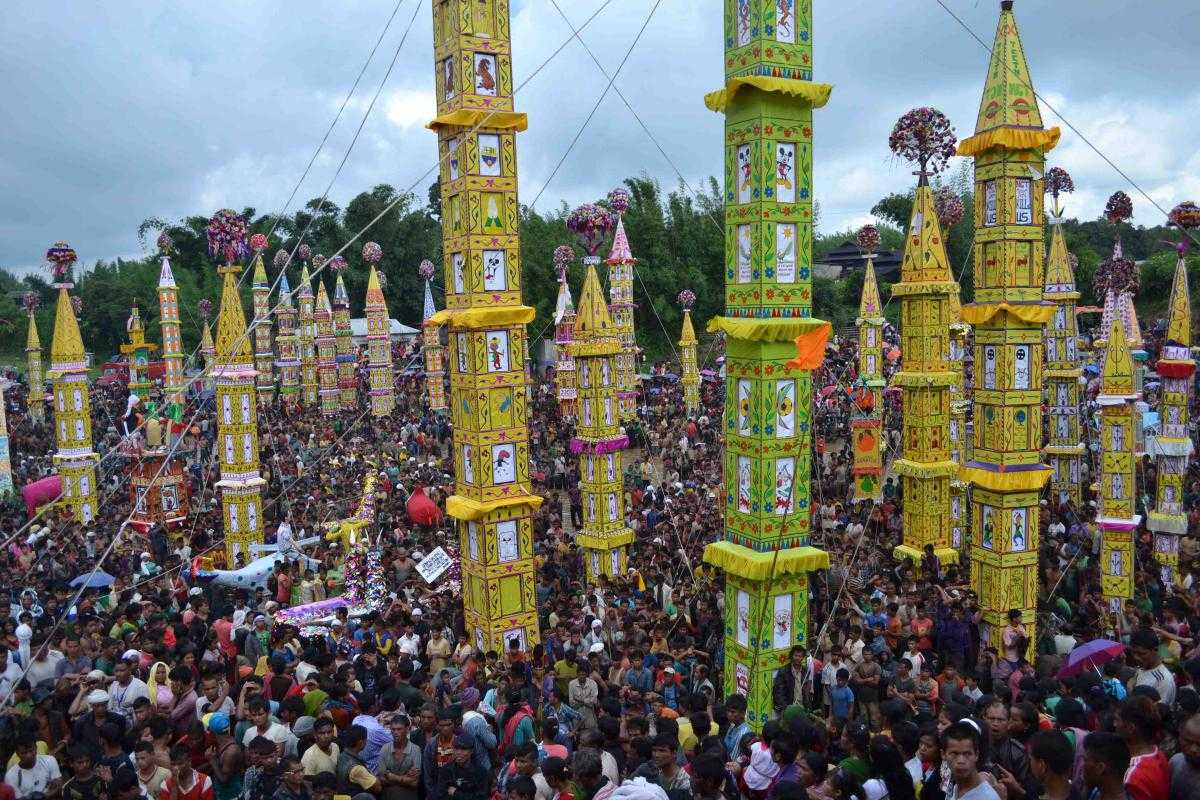
The Behdienkhlam Festival is one of the most prominent Jaintia festivities. It is observed by followers of the Niamtre faith. It is observed in July, prior to the seed-sowing season. The actual meaning of Behdienkhlam is ‘Chasing away the Plague’. The priest performs rituals and sacrifices to the accompaniment of drums and flutes. Tall minarets are paraded to the sacred place before being sunk in a river. Men, whether old and young, dance to the drums and flutes, while the ladies stand guard in their finest traditional garb, highly adorned with gold. Every year, the celebration is held in Jowai Town and adjacent villages in the Jaintia Hills.

Shad Sukra

Festivals of Meghalaya-Shad Sukra
Image Source

The Jaintia people celebrate the Shad Sukra every year in April or May. It is a festival that marks the beginning of the planting season. Every Jaintia farmer awaits this holiday before beginning seed sowing. To pray for a prosperous and productive season, rituals and dancing are accompanied by drums and flute. Men and women attend the events dressed in their traditional finest, highly adorned with gold jewellery. This grandeur of culture may be seen at Jowai Town, West Jaintia Hills. The settlement is 64 kilometres from Shillong, the state capital.

Wangala Festival

Festivals of Meghalaya-Wangala Festival
Image Source

The Wangala festival is one of the most prominent Garo festivities. It is a harvest celebration held to commemorate the conclusion of the agricultural year. It is a celebration of thankfulness to Misi-A-Gilpa-Saljong-Galapa, the fertility deity. It is now commonly known as the Hundred Drums Festival. He guides the boys and girls in coordinated dancing steps with hand and head pointing gestures, accompanied by the yells of the leading warrior. The celebration is held in various locations around the Garo Hills between September and December. If you want to see the really traditional style of celebrating by the Garo people who still practise the old faith, go to ‘Songsarek’ (animistic) villages like Sadolpara in the West Garo Hills.

Ka Rongkhli Festival of Jaintia 

Festivals of Meghalaya-Ka Rongkhli Festival of Jaintia 
Image Source

The most prominent celebration of the War Jaintia is held in Meghalaya’s Nongtalang village. Rons means festival and Khli means tiger, therefore Tiger festival is the result. This ceremony is conducted anytime a tiger is inadvertently killed or by locals on an organised hunting trip. God must be worshipped and the event must be celebrated regardless of how the tiger is killed. It is thought that if God is not worshipped, people would suffer from tragedies such as pandemic illnesses, famine, and blindness. After the harvesting season, the event is generally celebrated in January, February, or March.

Strawberry Festival

Festivals of Meghalaya-Strawberry Festival

This festival is all about strawberries, as the name implies. Meghalaya offers one of the greatest conditions in India for growing fruits, including the delicious strawberry. Fresh strawberries and strawberry wine are provided to families and visitors as part of the event. Several enjoyable events, such as pie-eating contests and karaoke competitions, are organised as part of the festival. If you enjoy strawberries and fun activities, the Meghalaya Strawberry Festival should be on your bucket list!

Cherry Blossom Festival

Festivals of Meghalaya-Cherry Blossom Festival in meghalaya
Image Source

In every corner of India, November is the month when chilly air ruffles your hair, yet Meghalaya basks in the splendour of lovely pink cherry blossoms. These lovely blossoms usher in the Indian version of fall by painting the state capital and the East Khasi hills pink. In November, the cherry blossom festival highlighted the spectacular fall blossoming of Himalayan cherry blossoms. You may enjoy the region’s art and craft as well as a variety of events such as a beauty contest, live music performances, storytelling sessions, bicycle rallies, and so on.

Shillong Autumn Festival

Festivals of Meghalaya-Shillong Autumn Festival
Image Source

The Autumn Festival is a huge cultural festival conducted in the state of Meghalaya from October to November that is hosted by the Meghalaya Tourism Development Forum with the goal of showcasing the rich and colourful culture of the North East and Meshalaya in particular. The inaugural Autumn Festival was conducted in 2005, and due to its overwhelming success, it has been held every year thereafter. Its goal is to mobilise multiple communities into action and participation in a single event, allowing the people of the area to realise the advantages of tourism to their villages.

Suggested Read – Traditional Dresses of Meghalaya, Tribal Attire at its Best

The event lasts a week and takes place in places including Shillong, Jowai, Cherrapunjee, and Ri Bhoi in Meghalaya. Local communities are involved in a variety of capacities wherever the festivals are hosted, so that these communities may understand the benefits of being part of the efforts to bring about sustainable development through tourism. The event also features traditional sports and massage therapies, as well as cultural music and dances from Meghalaya and the North Eastern area. There are food courts selling delectable local and foreign cuisines, arts and crafts booths, modern music and dance entertainment, competitive sports such as kite flying, fishing, boat racing, vintage car pageants, international performances, tattoo huts, family activities, and so on.

Meghalaya is a lovely state with something to enjoy every day. It has more to offer than it appears. It is much more amazing if you visit during Meghalaya’s festivities. Next time you plan your trip, don’t forget to do it around one of these charming festivals and celebrations. 

Darjeeling Tea – First GI Tag in India

1
Darjeeling Tea- History of Tea
Image Source

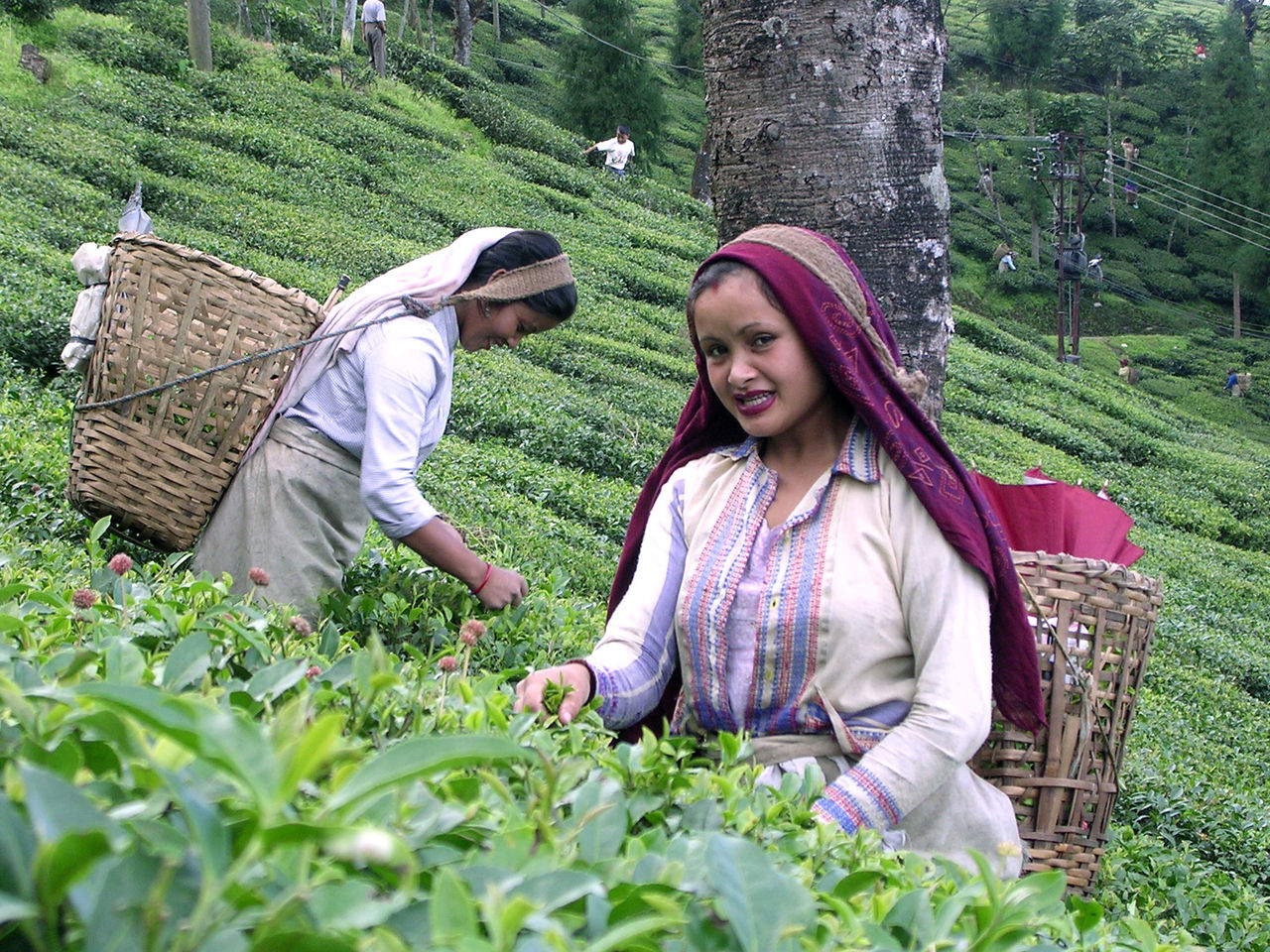
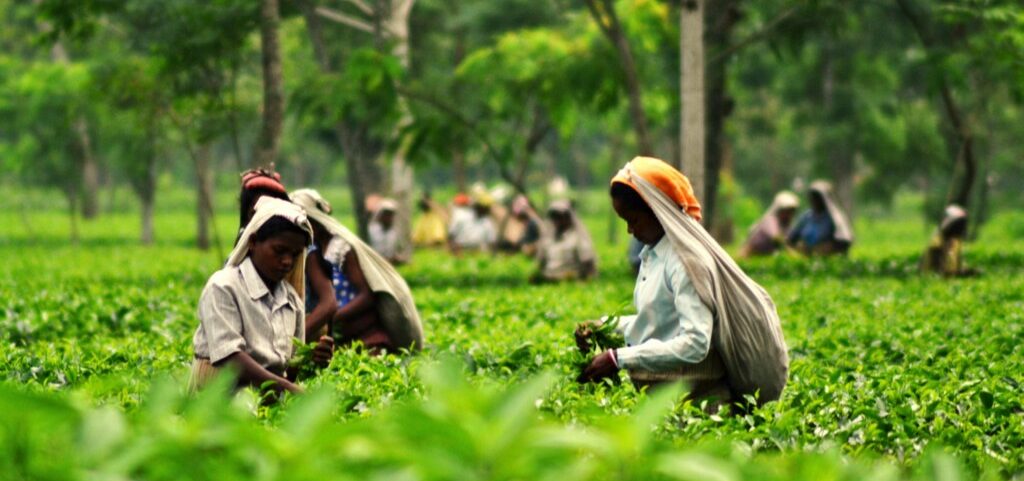
Nestled in the breathtaking foothills of the Eastern Himalayas, Darjeeling is renowned for producing one of the world’s most captivating beverages: Darjeeling tea, often referred as the “Champagne of teas,” is a treasured gem of the Indian subcontinent. Revered for its delicate flavour, exquisite aroma, and rich history, this unique brew has captivated tea connoisseurs around the globe. In this article, we delve into the fascinating world of Darjeeling tea, exploring its rich history, cultivation techniques, and the factors that contribute to its unparalleled quality and widespread recognition. With its GI tag, Darjeeling Tea stands as a symbol of India’s commitment to preserving and celebrating its finest agricultural treasures. Join us on a journey to uncover the story behind the GI tag recognition of this enchanting beverage that continues to charm tea enthusiasts worldwide.

What is the GI tag?

GI-Tagged-Products-01

The GI tag is a certification for a product with a unique geographical origin or unique characteristics owing to the specific geographical location. It is given under the Geographical Indications of Goods (Registration and Protection) Act, 1999 by the Geographical Indication registry in Chennai. It protects traditional artisans and farmers from imitation of their art and products. 

History of Tea

Tea had been discovered first in China nearly five thousand years ago, and since then, became wildly popular throughout the region, for its ‘bitter, but stimulating’ properties. As time progressed, variants of tea and tea production emerged in and around the country. Gradually, as trade and connectivity grew, the tea fever spread to Europe. However, China’s interiors, where the plantations and production chains were located, were restricted regions, where no foreigner was allowed. Foreigners had no access to the plant or the knowledge of the processes to manufacture tea. Tea remained expensive and inaccessible outside China, but the British were determined to consume more and more of it- so much so that there was even a time when tea was smuggled into England! Soon, however, having grown addicted to the calming beverage, the British undertook a risky mission indeed – smuggling a tea plant out of China to make their own tea estates and to break the Chinese monopoly over it, once and for all.

Journey of Darjeeling Tea

Darjeeling Tea- adventure
Image Source

Thus began The Great British Tea Heist, or to put it in simpler terms- the journey of the humble tea branch out of China. On an expedition sponsored by the Royal Horticultural society, an obscure Scottish botanist named Robert Fortune, began his mission from Hong Kong in 1843. He would later publish a book called ‘Three years wandering in the Northern provinces of China’, which was an account of his travels in China. This book attracted the attention of Dr John Forbes Royle, a respected botanist who was asked to recruit someone for an enterprise of the East India company. Royale recruited Fortune, who set off on a fairly straightforward mission- smuggling tea plants and the knowledge of tea making out of China. 

Thereafter in 1848, Fortune embarked on this expedition aimed at corporate espionage with a loyal Chinese servant called Wang. Disguised as a Chinese man, he would thereafter delve deep into the heart of the Chinese tea industry in a journey of three months. He would return with about 13,000 tea samples and 10,000 tea seeds. 

Using these samples, the first tea plantation was set up first in Darjeeling in 1856, owing to its climatic conditions, well-suited to tea cultivation. Within ten years, there were thirty nine tea gardens in the hill station and hundred in 1885.

Uniqueness of Darjeeling Tea

Darjeeling Tea- Uniqueness
Image Source

Darjeeling tea is unique for a lot of reasons. From its fascinating backstory to its unique flavour and aroma, Darjeeling tea is second to none in the world. The high altitude coupled with the geography and climatic conditions makes the best tea in the world. Sanjay Das, the manager of the Makaibari tea estate, the oldest tea production and processing estate in India, says “Darjeeling constitutes only 0.1% of the world’s tea production. Darjeeling tea is known for its distinctive flavour and aroma, which is unique only to the region. This flavour and aroma are attributed to the Chinary variety of planting material and terroir. The 87 tea estates in the Darjeeling hills are unique by themselves. Because of their uniqueness, these plantations get production under the Geographical Indication (GI) trademark”

The Need for Protection

Darjeeling Tea- The need for protection
Image Source

After independence, the tea industry was no longer under the government. It was opened up to private industry owners who began marketing tea from all over India as Darjeeling tea. To prevent this misappropriation, the government of India, under the tea act of 1953, made it compulsory for all producers of Darjeeling tea to enter a license agreement with the Tea Board of India, a body constituted to supervise an increase in the quality, quantity and the consumership of Indian tea. 

However, this was not adequate. Tea producers abroad too, claimed their teas to be Darjeeling tea, over which there could be no legislation. Hence, the need for a geographical indication, both on the global scale and on a national scale, was felt.  The TRIPS(Trade Related Aspects of Intellectual Property Rights) agreement signed in 1994 also identified the need for Darjeeling tea to be a geographical Indcation on the global level.

In 1986, a logo for Darjeeling tea was introduced. This logo, of a tea estate worker holding a tea leaf, was to be used  on products constituting 100 percent darjeeling tea. However, this was not enough. 

With the introduction of the The Geographical Indications of Goods (Registration and Protection) Act, 1999 (GI Act), the Tea Board of India applied for a Geographical Indication status grant in 2002. The Geographical Indication status was given to Darjeeling tea in October 2004 by the Geographical Indications Registry in Chennai. It was the first product in India to have been conferred this status. 

An application for Darjeeling tea to be considered a GI on the Global level was submitted in 2007 in Brussels. After due consideration, it was granted the GI tag in 2010.

Conclusion

Darjeeling tea is one of the most iconic products of India. Its history, combined with its exceptional quality make it a truly remarkable beverage, recognised all over the world. However, Darjeeling tea today is facing severe existential threats, including inability to keep up with the demand owing to politics spilling over, poor conditions of workers and climate change. The industry today must adapt to the modern world instead of staying in the colonial era if it is to prosper. Indian buyers must also encourage the industry and ensure this iconic beverage stands the test of time.