Method Presents “Home?” at ARCOmadrid 2026 Exploring Fragile Sanctuaries

0

Method-Presents-“Home-”-at-ARCOmadrid-2026-B

Method Participates in ARCOmadrid’s Opening Section

For its participation in the Opening section of ARCOmadrid 2026, Method presents Home?, a curated group exhibition featuring works by Sajid Wajid Shaikh, Shamir Iqtidar, Ammama Malik, and Syed Ali Sarvat Jafri. The presentation will be on view from March 4th – 8th, 2026 at IFEMA MADRID, Spain, marking another significant international engagement for the Mumbai and New Delhi-based gallery.


View this post on Instagram


A post shared by Method (@methodindia)

Interrogating the Idea of Home

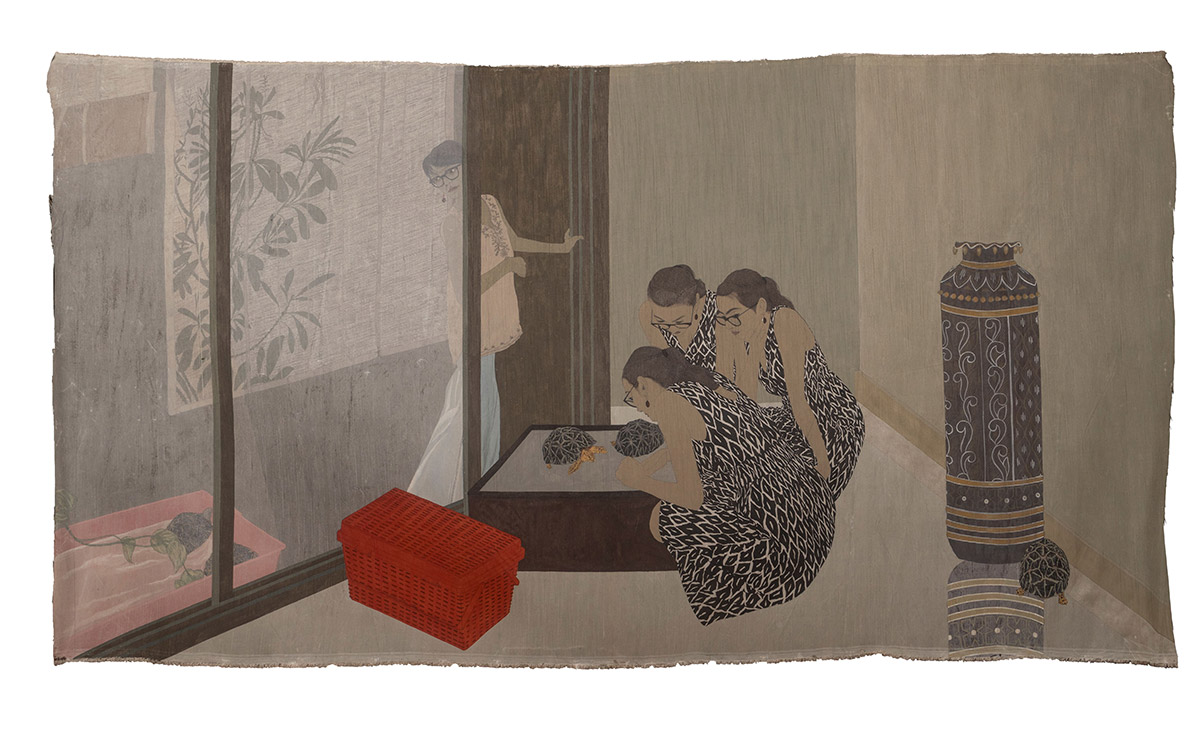
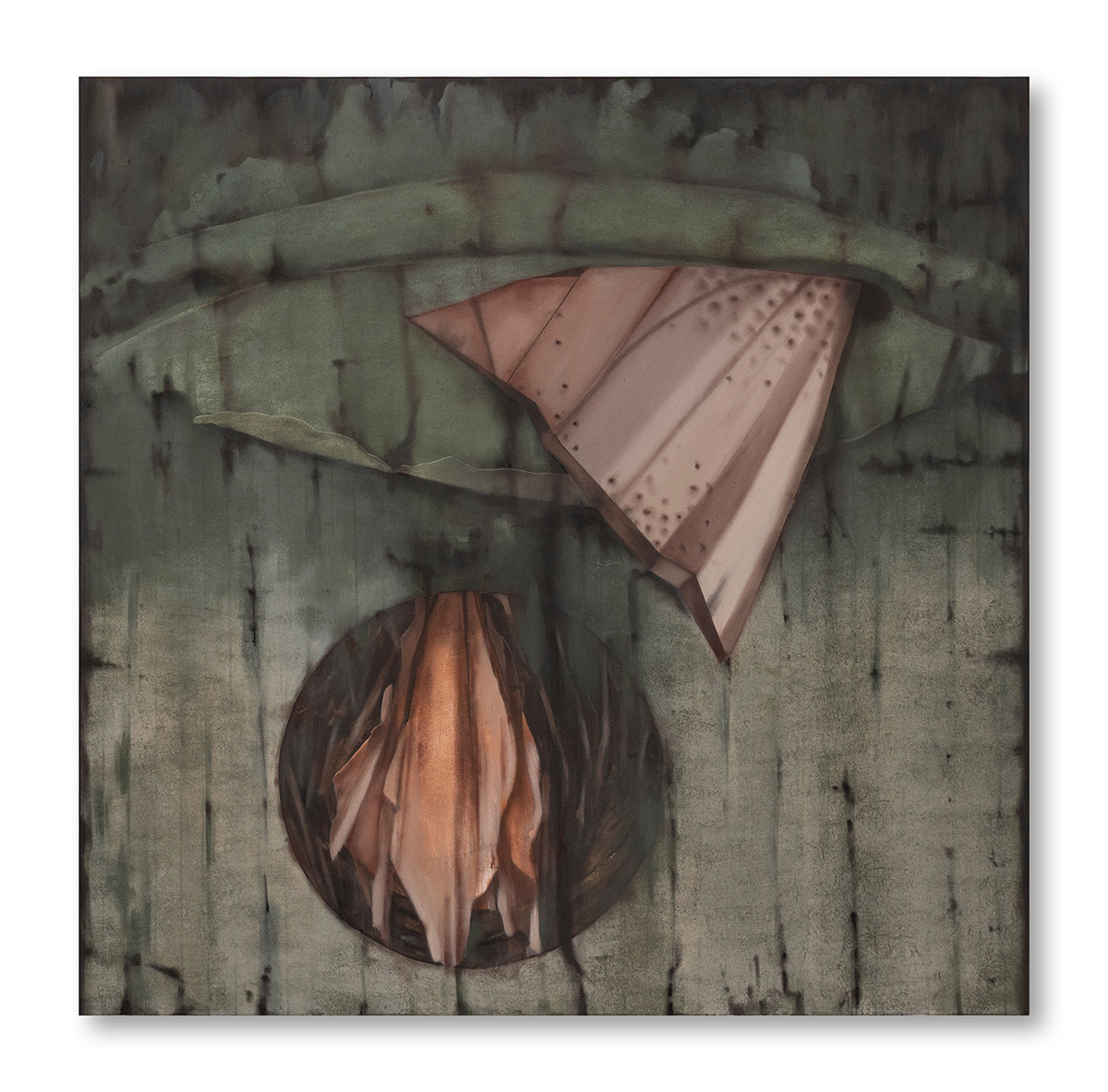
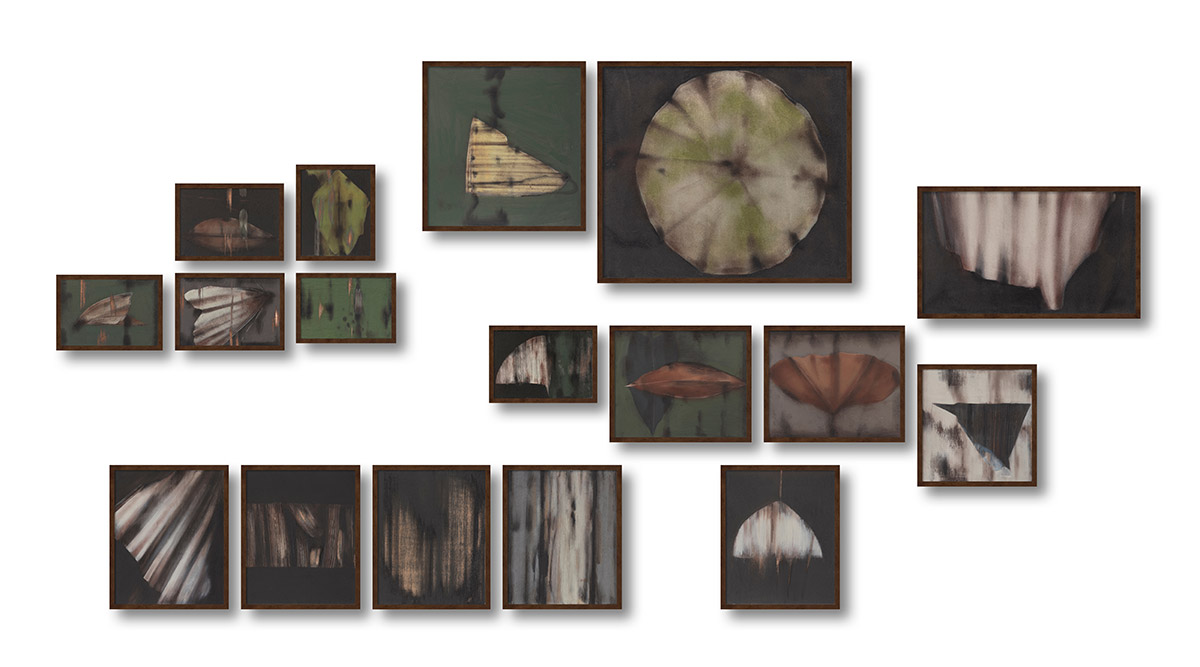
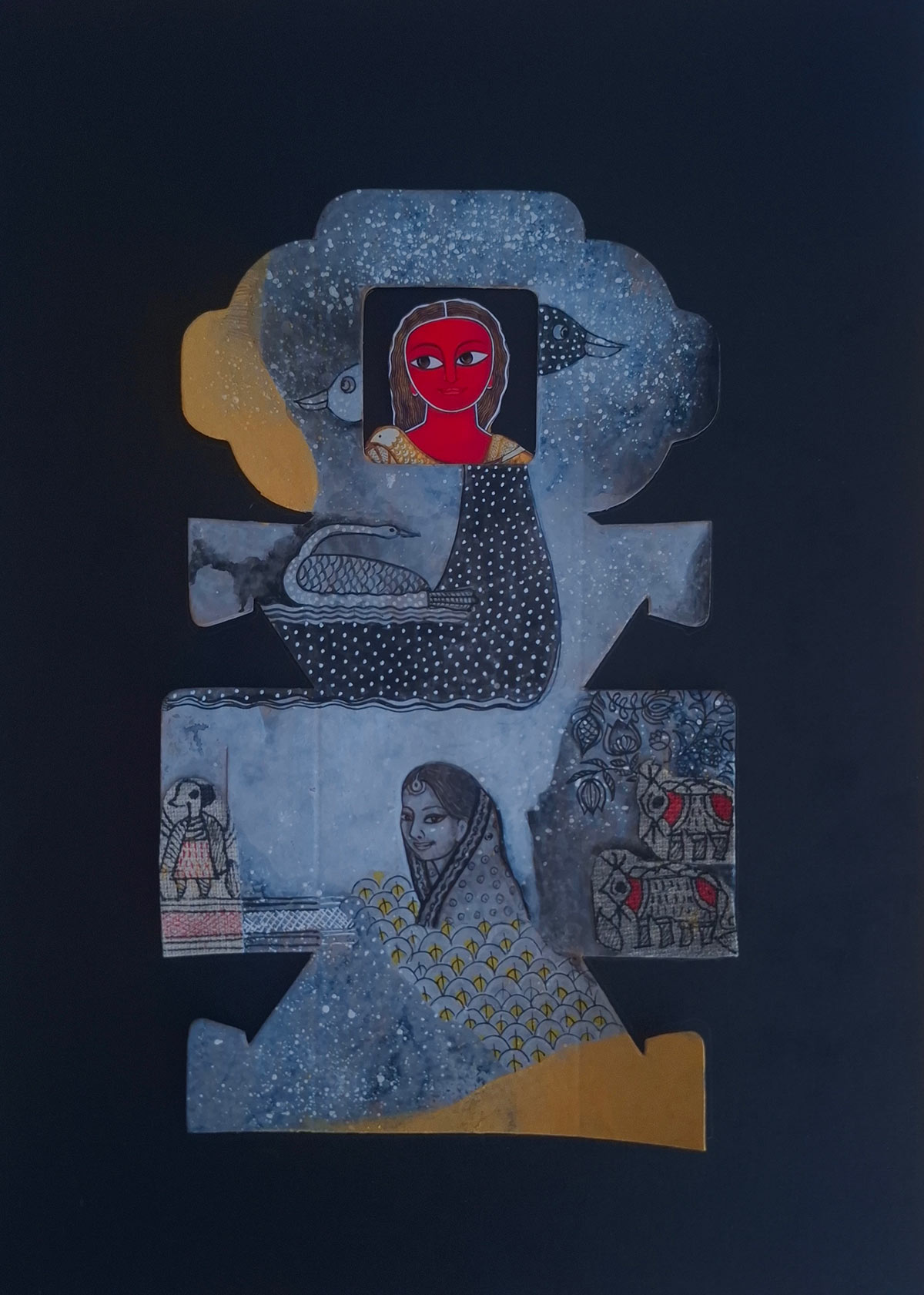
Home? explores the universal yet fragile promise of home—not simply as architecture, but as a site of safety, intimacy, and identity under threat. Through sculpture, painting, and installation, the booth transforms into a porous and contested space. The exhibition questions how private lives endure pressures of public scrutiny, political erasure, and cultural conservatism.
Sajid Wajid Shaikh’s Fractured Concrete Wall

Sajid-Wajid-Shaikh-घर-04-2024

At the centre of the presentation is a new installation by Sajid Wajid Shaikh, who deconstructs the traditional concrete grill—an architectural element designed for privacy and protection. Reduced to fractured geometry and pierced with soft white balloons, the work challenges notions of permanence. Vulnerability emerges not as weakness but as an inevitable force that disrupts structures meant to shield.

Shamir Iqtidar’s Intimate Paintings

Method-Presents-“Home-”-at-ARCOmadrid-2026-0A

Visible through the apertures of Shaikh’s broken wall are Shamir Iqtidar’s paintings, which capture tender and private moments of Pakistani youth. Acts of affection that rarely unfold freely in public are rendered with quiet sensitivity. Viewed through the fractured grill, the act of looking becomes uneasy, echoing themes of surveillance and social concealment.

Ammama Malik’s Veiled Presence

Ammama-2

Positioned behind the lattice is a veiled female figure by Ammama Malik. Her deliberate placement reflects how women are often relegated to the margins in conservative environments. The figure embodies dual meanings—hiddenness as constraint and hiddenness as resistance, revealing how invisibility can also function as a form of self-preservation.

Syed Ali Sarvat Jafri’s Material Archives

Syed-Ali-Sarvat-Jafri-Fighting-For-Existence-

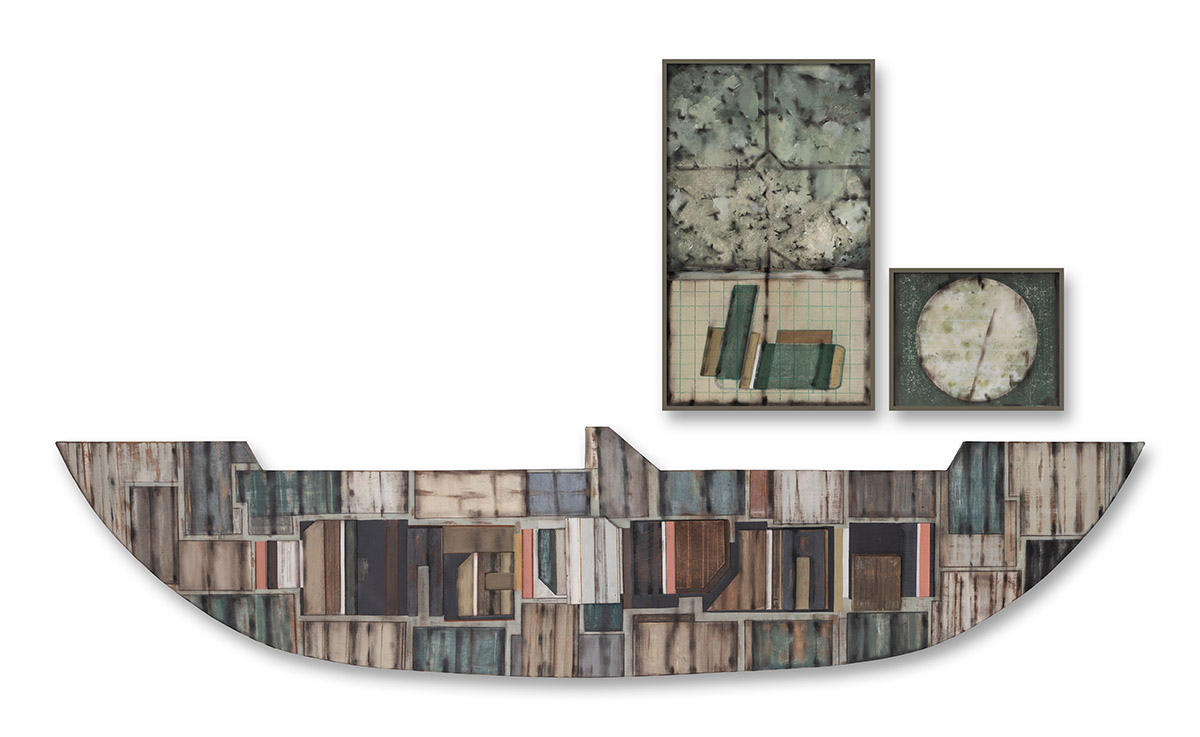
Completing the exhibition are sculptural works by Syed Ali Sarvat Jafri, constructed from 17th-century lakhori bricks salvaged from demolished sites in Faizabad. These fragments serve as material archives, carrying histories of place and memory. In the context of political transformation and erasure, they stand as physical testaments to a past that resists disappearance.

Event at a Glance

Aspects Details
Exhibition Title Method Presents “Home?”
Art Fair ARCOmadrid 2026
Gallery Method (Mumbai & New Delhi, India)
Artists Sajid Wajid Shaikh, Shamir Iqtidar, Ammama Malik, Syed Ali Sarvat Jafri
Dates March 4th – 8th, 2026
Location IFEMA MADRID, Spain
Section Opening Section

Takeaway

Together, the four artists construct a “home” that is unstable, intimate, and deeply contested. Home? becomes a meditation on shelter in a world where safety is fragile and identity remains under negotiation. Through tenderness, material memory, and acts of quiet defiance, the exhibition affirms survival as both emotional and political persistence.

Kiran Dixit Thacker’s ‘Our Ashram…Santiniketan’ Set to Open at IHC

0

Kiran-Dixit-Thacker’s-‘Our-Ashram…Santiniketan-01

Our Ashram…Santiniketan, a solo exhibition by Kiran Dixit Thacker, will be on view from 2nd to 9th March 2026, 11am–7pm, at the Visual Arts Gallery, India Habitat Centre (IHC), Lodi Colony, New Delhi. The presentation brings together more than one hundred works spanning sculpture, drawing and painting, offering an immersive journey through the artist’s decades-long engagement with Santiniketan.

An Oeuvre Rooted in Santiniketan

Kiran-Dixit-Thacker-Couples-Bronze

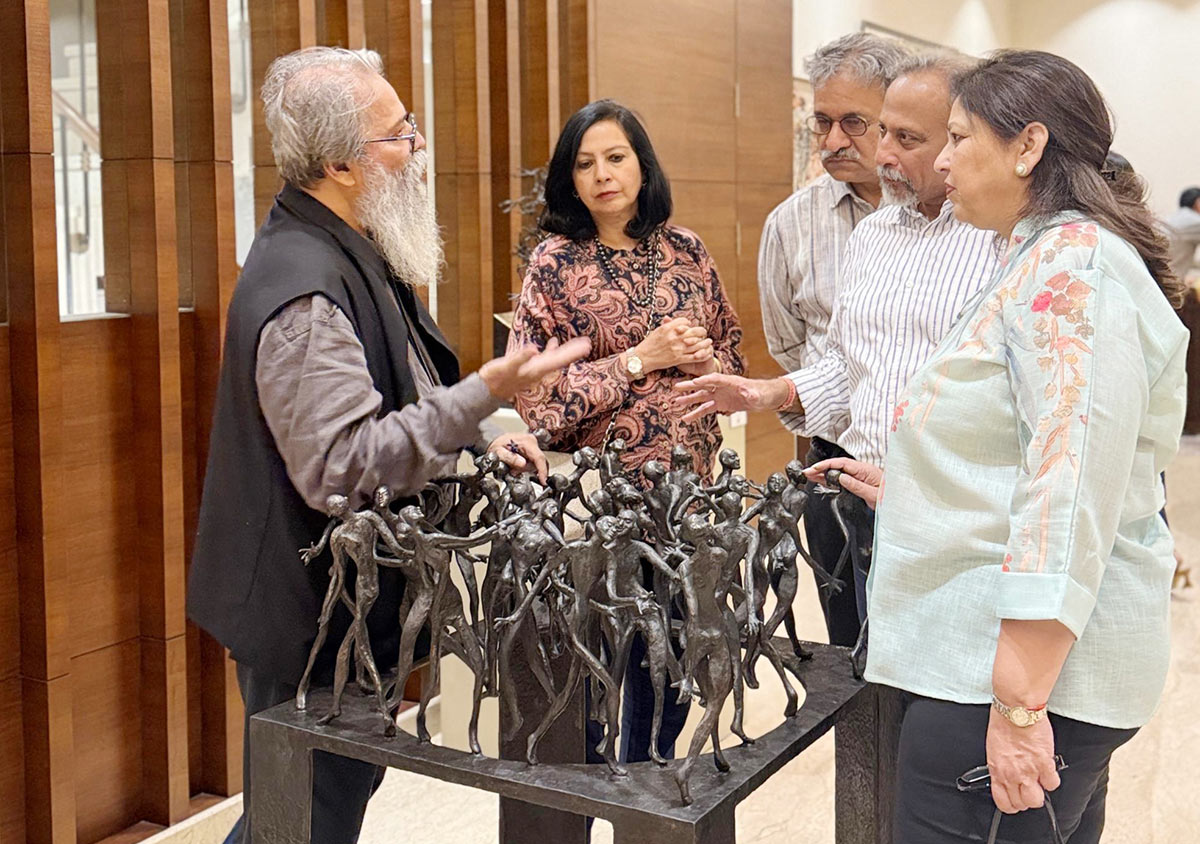
The exhibition traces Thacker’s lifelong relationship with the landscape, people and rhythms of Santiniketan. Moving fluidly between bronze, mild steel, stone, watercolour and drawing, the body of work reflects both monumentality and intimacy. The weeklong show presents a rare opportunity to witness the breadth of her practice in a single comprehensive display.

The Legacy of Ramkinkar Baij

Kiran-Dixit-Thacker-Untitled

Kiran Dixit Thacker holds a significant place in Indian art history as the only living female disciple of Ramkinkar Baij. Deeply influenced by Baij and the printmaker Somnath Hore, her work carries forward a tactile, material-driven approach to sculpture. Her figurative sculptures are grounded in geometric form and strong armature, giving structural integrity to expressive surfaces.

Village Life and Sculptural Narratives

Kiran-Dixit-Thacker-Woman-with-her-Hens-Cocks-Mild-Steel-lifesize

Her themes draw from village and tribal life, reflecting resilient optimism and quiet strength. Among the standout works in the exhibition are The Goat, Three Santhal Men, Woman with her Hens Cocks, towering palm trees with peacocks, and bronze works such as Owls, Lovers and Monkeys. Each piece reveals meticulous attention to detail and a tactile command over metal and stone.

From London to Santiniketan

Kiran-Dixit-Thacker-Cat-Series-Bronze

Many of the watercolours, paintings and drawings were created during Thacker’s years in London, where she also taught design and technology, sharpening her metalworking skills. In contrast, the bronze, stone and mild steel sculptures were produced in her Santiniketan studio, grounding the exhibition in both global exposure and local inspiration.

A Dialogue with Metal

Kiran-Dixit-Thacker-Lovers-Bronze

Thacker’s relationship with metal forms the core of her artistic exploration. While bronze remains close to her heart, its cost and technical challenges encouraged her to experiment with mild steel, allowing her to be bold yet economical. Heat, handcraft and patience become tools through which stubborn sheets of metal are coaxed into expressive forms inspired by ponds, birds and barefoot walks in Santiniketan.

Event at a Glance

Aspects Details
Exhibition Title Our Ashram…Santiniketan
Artist Kiran Dixit Thacker
Dates 2nd – 9th March 2026
Time 11am – 7pm
Venue Visual Arts Gallery, India Habitat Centre, Lodi Colony, New Delhi
Mediums Bronze, mild steel, stone, watercolour, painting, drawing
Works on Display 100+ sculptures, drawings and paintings

Takeaway

Our Ashram…Santiniketan offers audiences an encounter with an artist who bridges memory, landscape and material intelligence. Through over one hundred works, Kiran Dixit Thacker transforms everyday life into sculptural narratives that are both monumental and deeply personal, reaffirming Santiniketan as a living source of artistic inspiration.

“Scribble on the Wall” and “Woke Up a Dinosaur” Open at Method Kala Ghoda

0

Scribble-on-the-Wall-Echoes-Of-Home-by-Mona-Sharma

Two Exhibitions Launch at Method on 28 February 2026

Method, Kala Ghoda will host the opening of two exhibitions — Woke Up a Dinosaur and Scribble on the Wall — on 28 February 2026 from 2 PM onwards at Method, 86, Nagindas Master Road, Kala Ghoda, Fort, Mumbai 400001. Curated by Anica Mann, the shows mark a distinctive moment in Mumbai’s contemporary art calendar.

Launch of LOAM: Art as a Living Creative Space

Together, the exhibitions also mark the launch of LOAM, co-founded by Anica Mann — a new contemporary art store for children and families. LOAM’s founding vision positions childhood as a serious creative space and reimagines art as tactile, imaginative, and open-ended — something to live with rather than merely observe.

Woke Up a Dinosaur: Reclaiming the Wonder of Childhood

Woke-Up-a-Dinosaur-by-Vinayak-Sarwankar---everybody-come-alive-now-36_-x-36_

In his debut solo exhibition, Mumbai-based artist Vinayak Sarwankar presents Woke Up a Dinosaur, a poetic exploration of memory, movement, and imagination. The exhibition reflects on the creatures and worlds that define childhood — dinosaurs not as relics but as companions of early imagination. Through this lens, Sarwankar seeks to awaken dormant creativity and playfulness in adulthood.

Playground as Metaphor for Growing Up

Sarwankar’s works create dreamlike collisions between prehistoric creatures and the familiar architecture of childhood — slides, see-saws, and monkey bars. Once symbols of instinctive freedom, these playground structures become metaphors for nostalgia and limitation in adult life. The exhibition softens the boundary between imagination and reality, offering adults a path back to wonder and children an accessible entry into contemporary art.

Scribble on the Wall: A Collective Celebration of Play

Scribble-on-the-Wall-Frida-Toy-Face-by-Amrit-Pal-Singh

Running alongside the solo show, Scribble on the Wall is a group exhibition curated by Anica Mann and presented by LOAM. Featuring artists including Amrit Pal Singh, Anitha Reddy, Ashna Malik, Cultrebox, Hansika Mangwani, Harshita Sharma, Liactuallee, Mona Sharma, Pavan Kumar, Priyesh T, Raj Chowdhury, Revant Dasgupta, Sanatan Vatsayan, and Vishaka Jindal, the exhibition foregrounds material exploration and imaginative thinking without simplifying artistic complexity for younger audiences.


View this post on Instagram


A post shared by Method (@methodindia)

Material Intelligence Over Mass Production

The participating artists resist the logic of plastic, mass-produced toys by presenting works shaped by texture, humour, craft, and conceptual depth. From textile-based explorations and new media installations to graphic illustration and sculptural assemblage, the exhibition creates encounters where art becomes something to engage with rather than consume.

Event at a Glance

Aspects Details
Exhibitions Woke Up a Dinosaur (Solo) & Scribble on the Wall (Group)
Curated By Anica Mann
Presented By LOAM
Opening 28 February 2026 | 2 PM onwards
Venue Method, 86, Nagindas Master Road, Kala Ghoda, Fort, Mumbai 400001
Solo Artist Vinayak Sarwankar
Group Artists 14 contemporary artists across media and disciplines

Takeaway

With Woke Up a Dinosaur and Scribble on the Wall, Method Kala Ghoda presents an intergenerational dialogue on imagination and artistic freedom. Through LOAM’s launch, the exhibitions reframe childhood as a space of creative seriousness while inviting adults to rediscover the wonder that never truly disappeared.

How to Plan Multi-City Travel Across India Using Rail Networks

0

How-to-Plan-Multi-City-Travel-Across-India-Using-Rail-Networks-01

Planning multi-city travel across India can quickly become overwhelming. Managing routes, train schedules, seat availability, and connections across different regions often creates confusion and delays. A poorly sequenced itinerary can lead to long layovers, missed trains, or unnecessary backtracking, increasing travel time and costs. 

This blog explains how to structure your journey efficiently using India’s rail network so that you can move between cities smoothly without logistical stress.

Understand the Structure of the Indian Rail Network

India’s rail network connects major cities through long-distance routes and links smaller towns through regional lines. Many trips pass through junction stations where different routes meet. At these stations, changing trains may require walking long distances, using crowded footbridges, or exiting and re-entering from another side.

Large cities often have more than one railway station, so always confirm your exact boarding and arrival station for each part of the journey. Some trains stop at many stations and take more time, while others have fewer stops and reach faster. Also, check how frequently the train runs. Daily services give more flexibility than trains that operate only on specific days.

Decide the Cities and Travel Sequence Strategically

A smart sequence reduces backtracking and keeps travel days balanced. It also makes later booking and transfer decisions easier.

  • Group cities that sit on the same corridor, because this can reduce extra changes and simplify station handling.
  • Plan the cities in a clear order, because zig-zag travel can create extra changes and longer gaps.
  • Spread longer journeys across the itinerary, because repeated long days can reduce rest and decision quality.
  • Prefer arrivals and departures that align with local transport, as late hours can limit safer, simpler options.
  • Keep transfer complexity low, because too many changes in one day can increase stress and delay exposure.
  • Book train tickets for high-demand train journeys early, because seats may be harder to find as the travel date gets closer.

Research Routes and Connectivity

Check which routes are direct and which require changing trains. Choose options that are easy to manage and run on days that fit your schedule.

  • Start with direct services, because fewer changes often mean fewer delays and less station-to-station confusion.
  • When a change is needed, choose transfer points with multiple onward departures on that route.
  • Confirm arrival and departure stations, because large cities may use different terminals with different access roads.
  • Record operating days, because limited-day services can create unwanted gaps between cities.
  • Keep two or three acceptable options per route, because train tickets can vary by availability and timings.
  • Check transfer time at the junction, because long platform walks and crowds can reduce connection comfort.

Choose the Right Travel Class for Each City

Travel class affects rest, space, and how you feel on arrival. Selecting a class by journey type can support comfort without overspending.

  • For overnight travel, prioritise berth comfort, because sleep quality can affect the next day’s plans.
  • For daytime travel, choose comfortable seating so you stay fresher during long journeys.
  • Consider luggage needs, because reserved space can make boarding and movement easier in busy coaches.
  • Match class to crowd levels, because peak periods can feel more tiring in tighter seating layouts.
  • Factor in group travel, because staying together can reduce coordination issues at stops and station exits.
  • Consider the season and weather, because ventilation and temperature control can affect comfort on longer journeys.

Plan Booking Strategy in Advance

A booking plan keeps the itinerary stable when several train journeys have fixed dates. It also reduces last-minute decisions that can lead to inconvenient timings.

  • Book the least flexible journeys first, because routes with fewer trains can fill up quickly.
  • Keep passenger details consistent, because errors can create many travel issues.
  • Store confirmations offline, because signal and battery levels can vary during transfers and station waiting.
  • Recheck station names before payment, because a wrong terminal can disrupt the route and add local travel time.
  • Review change and refund rules, because they influence how much flexibility is realistic if plans shift.
  • Keep alternates ready, because changes on one day can affect later train tickets across the itinerary.

Manage Time Gaps and Transit Buffers

Buffers protect the plan from delays, crowds, and local transport uncertainty. They make connections calmer and reduce rushed movement through stations.

  • Allow extra time for same-day transfers, because late arrivals and platform changes can happen on busy routes.
  • Add more buffers at large stations, because long walks, exits, and coach positions can take longer than expected.
  • If changing stations within a city, allow for traffic, because road travel times can vary widely by hour.
  • Plan for basic needs during gaps, because seating, clean facilities, and food access can vary by station.
  • Avoid relying on the last service of the day, because recovery options may be limited if plans slip.
  • Plan arrival times with last-mile travel in mind, because reaching accommodation is part of the travel day.

Conclusion

Multi-city rail travel across India can feel smoother when planning follows real network details such as station choices, junction transfers, operating days, and service patterns. A sensible city order can reduce backtracking, while route research can keep changes clear and workable. 

Travel class decisions can be matched to journey length and rest needs, and bookings can prioritise the least flexible routes. With buffers built in, travel days can stay manageable even when timings shift slightly.

Ganesa Natyalaya’s Shivaarghya 2026 Celebrates Six Classical Dance Traditions

1

Surya Narayana Rao-Kuchipudi

Sixth Edition of Shivaarghya to Be Held on 1 March 2026

Ganesa Natyalaya, a prominent Bharatanatyam institution in Delhi, will present the sixth edition of Shivaarghya, a rare festival dedicated to male dancers in Indian classical traditions, on Sunday, 1st March 2026, from 2pm to 8pm at Ganesa Natyalaya, C-16, Qutub Institutional Area, New Delhi. Open to all, the festival continues its commitment to showcasing male excellence in classical dance.

A Vision Conceived by Guru Saroja Vaidyanathan

Shivaarghya 2026

Shivaarghya was envisioned in 2019 by the late Guru Saroja Vaidyanathan and is now curated by Rama Vaidyanathan, President of Ganesa Natyalaya. The festival was conceptualised to provide a meaningful platform for young male dancers who have embraced dance as a full-time profession, creating space for devotion, discipline, and artistic expression within classical aesthetics.

Honouring Lord Shiva and the Spirit of Nataraja

Shivaarghya-Odissi

Dedicated to Lord Shiva—the cosmic dancer Nataraja—the festival embodies the spiritual and artistic dimensions of classical dance. Through their performances, male dancers pay homage to the timeless heritage of India’s classical traditions while exploring new creative dimensions. Shivaarghya thus becomes both a devotional offering and a celebration of artistic innovation.

Nineteen Dancers Across Six Classical Traditions

Rahul-Varshanay-Odissi

The 2026 edition will feature 19 accomplished dancers from across India, representing six classical dance forms: Bharatanatyam, Kathak, Odissi, Kuchipudi, Sattriya, and Neo-Classical. In a cultural landscape often dominated by female performers, Shivaarghya foregrounds masculine expression within tradition, ensuring inclusivity and balance.

Artists from Across India Take the Stage

Athanu-Bala-and-Shamanthaka

The Bharatanatyam segment includes performers such as Anand Satchidanand (Maharashtra), Athul Balu PP with disciple Shamanthaka (Chennai), Dr. S. Vasudevan, Dr. Himanshu Srivastava, Nilava Sen, Pritam Das, Vinay Tiwari, Manish Kumar (Delhi), and Shreyas Nair (Mumbai). Kathak will be presented by Aditya Garud (Maharashtra), Gaurav Shridhar, Ravi Yadav, and Sushant Gaurav (Delhi). Odissi features Rahul Varshney, Vishwanath Mangaraj (Delhi), and Rudra Prasad Swain (Bhubaneswar). Sattriya will be performed by Partha Pratim Hazarika (Delhi), Kuchipudi by Suryanarayana Rao P. (Bengaluru), and Neo-Classical by Shubhojit Khush Das (Kolkata).

A Space for Dialogue and Renewal

Partha-Pratim-Hazarika-Sattriya

Speaking about the festival, Smt. Rama Vaidyanathan expressed that Shivaarghya continues the tradition initiated by her Guru, late Saroja Vaidyanathan. She emphasised that the festival serves as a space for dialogue, discovery, and renewed appreciation, where performers share both lineage and innovation, and audiences deepen their connection with classical art forms.

Event at a Glance

Aspects Details
Festival Name Shivaarghya – Festival of Male Dancers
Organised By Ganesa Natyalaya
Date Sunday, 1st March 2026
Time 2pm to 8pm
Venue Ganesa Natyalaya, C-16, Qutub Institutional Area, New Delhi
Dance Forms Featured Bharatanatyam, Kathak, Odissi, Kuchipudi, Sattriya, Neo-Classical
Entry Open to all

Takeaway

With participants from Delhi, Mumbai, Chennai, Bengaluru, Bhubaneswar, and Kolkata, Shivaarghya 2026 stands as a tribute to the sacred bond between dance and spirituality. More than a festival, it is a reaffirmation of the enduring rhythm of Indian classical traditions and the divine energy embodied by male performers.

International Film Festival Delhi 2026 to Debut with 125+ Films and Free Screenings

0

Delhi-International-Film-Festival-2026

Delhi Prepares for Its Inaugural Global Film Festival

New Delhi: The capital is set to host the inaugural Delhi International Film Festival (DIFF) from March 25 to March 31, 2026, marking a major addition to the city’s cultural calendar. Designed as a large-scale celebration of cinema, the festival aims to position Delhi as a key destination for global and Indian filmmaking.

Bharat Mandapam to Host Opening and Closing Ceremonies

The opening and closing ceremonies will take place at Bharat Mandapam, one of Delhi’s premier cultural venues. Organisers have announced that all screenings will be free, with entry available through prior registration, making the festival accessible to students, cinephiles, and the wider public.

Showcasing Over 125 Films from India and Abroad

DIFF 2026 will present more than 125 films, offering audiences a diverse selection from across India and international markets. Approximately 30% of the lineup will feature international films from five countries, while 40% will highlight Hindi cinema and 30% will showcase regional Indian films, ensuring broad representation.

Special Sections Celebrating Diverse Themes

The festival will also include curated sections dedicated to patriotic cinema, spiritual storytelling, and children’s films, reflecting cinema’s role in shaping cultural narratives and engaging audiences across age groups and interests.

Beyond Screenings: Workshops, Markets and Public Events

DIFF 2026 extends beyond film screenings, featuring masterclasses and workshops with industry experts, film bazaars, and pitching forums designed to support filmmakers and creative professionals. Technology showcases will highlight innovations in AR, VR, gaming, and OTT platforms, reflecting the evolving landscape of visual storytelling.

Public Screenings and Citywide Cultural Engagement

In addition to venue screenings, the festival will host open-air public screenings across the city, allowing broader community participation. Star-studded opening and closing ceremonies are also expected to bring together filmmakers, actors, and industry leaders.

Event at a Glance

Aspects Details
Festival Name Delhi International Film Festival (DIFF) 2026
Dates March 25 – March 31, 2026
Opening & Closing Venue Bharat Mandapam, New Delhi
Number of Films 125+ films from India and abroad
Film Categories 40% Hindi, 30% regional Indian, 30% international films
Special Sections Patriotic, spiritual and children’s cinema
Entry Free screenings (prior registration required)
Additional Highlights Workshops, film bazaars, tech showcases, public screenings

Takeaway

With its inaugural edition, the Delhi International Film Festival 2026 positions the capital as an emerging global hub for cinema. By offering free access to diverse films and fostering dialogue through workshops and industry forums, the festival aims to connect audiences, creators, and technology in a shared cinematic experience.

AMMA Studios Debuts at Kochi Biennale, Marking NorBlack NorWhite’s New Chapter

0

AMMA-Studios-at-Kochi-Muziris-Biennale-01

A Multidisciplinary Debut at the Kochi-Muziris Biennale

Kochi, Kerala, India | 8 February – 31 March 2026: NorBlack NorWhite’s AMMA Studios makes its Kochi-Muziris Biennale debut with Church of Palm, a multidisciplinary installation presented at Monsoon Culture. The project marks a significant artistic evolution for the New Delhi-based fashion and cultural platform, known for blending traditional Indian textiles with contemporary expression.

From Textile Practice to Spatial Installation

AMMA-Studios-at-Kochi-Muziris-Biennale-03

Founded by Amrit Kumar and Mriga Kapadiya, NorBlack NorWhite grew from longstanding collaborations with artisan communities working in endangered Indian crafts. Through AMMA Studios, the duo expands their textile-led philosophy into installation, tapestry, spatial design, and immersive environments. Their practice interweaves image, movement, and sound, extending beyond fashion into experiential art.

Honouring Kerala’s Everyday Coconut Tree

AMMA-Studios-at-Kochi-Muziris-Biennale-02

For their Biennale presentation, AMMA Studios introduces Church of Palm, a tribute to Kerala’s everyday yet sacred coconut tree. The installation reimagines the ordinary, transforming familiar elements into contemplative forms. By deconstructing elements of worship, the work creates a temporary spiritual space dedicated to gratitude and reverence for the palm and the shared experience of witnessing a sunset.

Repetition, Chairs and the Poetry of the Ordinary

AMMA-Studios-at-Kochi-Muziris-Biennale-05

The installation places emphasis on repetition — rows of chairs become sculptural landscapes of symmetry and pattern. What begins as a utilitarian object designed for rest evolves into a monumental motif and silent witness within a sacred environment. Through this transformation, the work elevates everyday materials into symbols of beauty, gratitude, and possibility.

Textiles, Sound and Cross-Disciplinary Collaboration

AMMA-Studios-at-Kochi-Muziris-Biennale-04

Church of Palm integrates hand-dyed and woven textiles, fishing nets, drapery, and immersive soundscapes. The project features collaborations across disciplines, including sound design by Colombian-Canadian musician Lido Pimienta, a 360-degree reflective sound speaker by Mumbai-based artist Akash Das, and metal and stone sculpture by Jaipur-based artist Kichu Dandiya.

A Long-Evolving Artistic Practice

Reflecting on the debut, Mriga Kapadiya noted that the duo has quietly developed their art practice over many years, and the Biennale provided a timely opportunity to translate over 15 years of learning with NorBlack NorWhite into a dedicated multidisciplinary studio format.

Event at a Glance

Aspects Details
Installation Title Church of Palm
Presented By AMMA Studios (NorBlack NorWhite)
Event Kochi-Muziris Biennale 2026
Dates 8 February – 31 March 2026
Location Monsoon Culture, Kochi, Kerala, India
Collaborators Lido Pimienta; Akash Das; Kichu Dandiya

Takeaway

With Church of Palm, AMMA Studios reframes heritage not as static memory but as lived, sensory experience. As the installation remains on view from 8 February to 31 March 2026, it positions the Kochi-Muziris Biennale as a space where textile, architecture, sound, and spirituality converge — affirming culture as an evolving and participatory force.

Songs of the Stone Brings Grammy Winner Rakesh Chaurasia to Qutub Minar

0
Songs-of-the-Stone-Brings-Grammy-Winner-Rakesh-Chaurasia-to-Qutub-Minar-01
Rakesh Chaurasia

8 March 2026 | 7:00 – 10:00 pm | Qutub Minar, New Delhi: Songs of the Stone, the immersive cultural series by Inkpot India, returns for its second chapter with a rare musical evening set against the timeless silhouette of Qutub Minar. Conceptualised by Simar Malhotra and presented in collaboration with HSBC Live the Legacy, the event promises to bridge heritage, music, and contemporary curation within one of Delhi’s most iconic architectural landmarks.

Rakesh Chaurasia to Transform Qutub Minar into a Living Stage

On the evening of 8 March 2026, two-time Grammy Award-winning flautist Rakesh Chaurasia and his ensemble, Rakesh and Friends, will perform at the UNESCO World Heritage monument. Known for his lyrical depth and refined technique on the bansuri, Chaurasia carries forward the legacy of his guru and uncle, Pandit Hariprasad Chaurasia, while expanding the instrument’s global and contemporary reach. Accompanied by accomplished musicians on tabla, drums, bass, guitar, and keys, the performance will blend Hindustani classical traditions with global musical influences.

Heritage as a Living, Experiential Space

Simar-Malhotra-Inkpot
Simar Malhotra

Conceived by Inkpot India and its founder Simar Malhotra, Songs of the Stone is built on the belief that monuments are not static relics but living repositories of memory and imagination. By placing music in dialogue with architecture, the series invites audiences to encounter heritage sensorially—through sound, light, atmosphere, and storytelling—rather than as passive observers.

Reframing India’s Cultural Inheritance

At its core, the series seeks to reframe India’s cultural inheritance for contemporary audiences. By bringing classical and traditional music into heritage contexts, Songs of the Stone deepens engagement for seasoned listeners while also making these forms aspirational and compelling for younger generations. The multi-sensory curation enhances awareness of both the art form and the monument itself.

Grammy-Winning Rakesh Chaurasia to Perform at Qutub Minar-2

A Vision Beyond Delhi’s Landmarks

While this chapter unfolds at Qutub Minar, the broader vision of Songs of the Stone extends beyond iconic landmarks. The series is designed to travel into lesser-known and overlooked heritage sites across India, restoring relevance to these spaces through thoughtful cultural programming. In doing so, it positions heritage as an evolving part of the present rather than a distant memory.

Produced in Association with Excurators Events

The event is produced in association with Excurators Events, an organisation dedicated to experiential cultural platforms that bring India’s heritage into contemporary public consciousness. Together, the collaborators aim to craft an evening that is intellectually rigorous yet emotionally resonant.

Event at a Glance

Aspects Details
Event Name Songs of the Stone – Chapter II
Date Sunday, 8 March 2026
Time 7:00 pm – 10:00 pm
Venue Qutub Minar, New Delhi
Featuring Rakesh Chaurasia and Ensemble (Rakesh and Friends)
Conceptualised By Simar Malhotra, Inkpot India
Presented In Collaboration With HSBC Live the Legacy
Produced With Excurators Events
Tickets Available via district.in

Takeaway

With its second chapter at Qutub Minar, Songs of the Stone reaffirms its commitment to reimagining how India engages with its artistic and architectural legacy. On 8 March 2026, the historic monument will become a resonant stage where classical soundscapes meet centuries-old stone, offering audiences an immersive encounter with living heritage.

Delhi Kala Utsav 2026 Returns to Mandi House with Art, Culture and Delhi-6 Flavours

0

Delhi-Kala-Utsav-2026-0B

A Two-Day Cultural Celebration at Rabindra Bhawan

New Delhi, 23 Feb 2026: Sanskar Bharati, Delhi Prant in collaboration with the Government of Delhi, is set to organise the two-day cultural festival ‘Delhi Kala Utsav’ on 28 February and 1 March 2026 at Rabindra Bhawan, Mandi House, New Delhi-1. The festival aims to bring together diverse streams of Indian art, culture and tradition on a single platform, offering audiences a vibrant and immersive experience.

Third Edition at Mandi House Strengthens Cultural Legacy

Delhi-Kala-Utsav-2026-01

This will be the third edition of Delhi Kala Utsav at Mandi House, following the success and appreciation received in previous years. The festival has attracted distinguished personalities from the art fraternity and continues to serve as a cultural initiative dedicated to the preservation, promotion and celebration of India’s artistic traditions.

Platform for Renowned and Emerging Artists

Delhi-Kala-Utsav-2026-04

Delhi Kala Utsav provides space not only for established performers but also for young and emerging talents who often lack opportunities to showcase their craft. By creating a balanced platform, the festival encourages intergenerational artistic exchange while expanding access to traditional and contemporary expressions.

A Rich Spectrum of Performances and Exhibitions

Delhi-Kala-Utsav-2026-02

The festival will feature a wide range of artistic expressions including classical and folk dance, music concerts, vocal performances, theatre presentations, poetry sessions, painting and sculpture exhibitions, and various traditional art forms. Visitors can also witness folk traditions through puppetry, bioscope shows, pottery demonstrations, Bahurupiya performances, magic shows, lacquer bangle crafts, traditional artisans and book stalls.

Delhi-6 Culinary Heritage as a Special Highlight

One of the key attractions of this year’s edition will be the traditional cuisine of Delhi-6, offering visitors an opportunity to savour authentic Old Delhi flavours at nominal rates. This culinary experience, widely appreciated in earlier editions, is expected to once again draw significant attention.

An Immersive Cultural Atmosphere Ahead of Holi

Delhi-Kala-Utsav-2026-06

The festival will run daily from 2:00 PM to 9:00 PM, creating a lively cultural atmosphere ahead of the upcoming festival of Holi. Families, students, art lovers and the general public can experience the colours, sounds and traditions of Indian heritage in an accessible and festive setting.

Event in a Glance

Aspects Details
Event Name Delhi Kala Utsav 2026
Dates 28 February & 1 March, 2026
Time 2:00 PM – 9:00 PM
Venue Rabindra Bhawan, Mandi House, New Delhi-1
Organised By Sanskar Bharati, Delhi Prant (in collaboration with Government of Delhi)
Edition Third Edition at Mandi House
Highlights Classical & folk performances, craft showcases, Delhi-6 cuisine

Takeaway

With its expansive programming and inclusive approach, Delhi Kala Utsav 2026 reinforces Mandi House’s identity as Delhi’s cultural hub. By blending performance, craft, and cuisine, the festival promises to celebrate India’s cultural soul while nurturing both legacy and emerging talent.

Stay in Delhi for Every Traveller: Finding the Right Hotels, Safe Areas, and Smart Travel Tips

0

SMART-STAY-IN-DELHI

Delhi, the capital city of India, draws every kind of traveller, including families, couples, and business travellers from across the country. Staying at the top hotels in Delhi ensures a safer and cosier stay.

Best hotels in Delhi for safer and cosier stays

The following is the curated list of the best hotels in Delhi near safer areas. Staying at these hotels ensures you stay safe and peaceful. Stays ranging from premium to budget-friendly options are covered. You can explore them below:

1. Bloom Rooms, Link Road, Jungpura Extension

  • Bloom Rooms in Link Road offers top-rated, luxury stays.
  • Location: 7, Link Rd, near Sabka Chulha, Block M, Jungpura Extension, New Delhi.
  • Dining: The hotel features an in-house restaurant serving hygienic and delicious food.
  • Distance from Indira Gandhi International Airport – 16.1 km
  • Distance from Delhi Junction Railway Station – 14.2 km

2. AP Holidays, Rohini

  • AP Holidays is a well-reviewed budget hotel in Delhi.
  • Location: Pocket 8B, YES Bank Building, Plot No. 8, Sector 15, Rohini, New Delhi.
  • Dining: The hotel offers an elegant in-house restaurant serving hygienic and delicious food.
  • Banquet facilities are available.
  • Distance from Indira Gandhi International Airport – 26.7 km
  • Distance from Delhi Junction Railway Station – 18.4 km

3. Dahabi Era, Mahipalpur Extension

  • Dahabi Era offers affordable accommodations near the Delhi Airport.
  • Location: A-247/1, Road No. 6, near Indira Gandhi International Airport, Aerocity, Mahipalpur Extension, Mahipalpur, New Delhi.
  • Dining: The hotel features a modern restaurant serving a wide range of delicious dishes.
  • Distance from Indira Gandhi International Airport – 4.2 km
  • Distance from Delhi Junction Railway Station – 19.5 km

4. Hotel Arch The Lohias, Mahipalpur Extension

  • Hotel Arch The Lohias is a premium, 3-star hotel in Delhi.
  • Location: A-53 N.H-8, Block RZ, Mahipalpur Extension, Mahipalpur, New Delhi.
  • Dining: Guests can enjoy delicious food at the hotel’s in-house restaurant.
  • Distance from Indira Gandhi International Airport – 4 km
  • Distance from Delhi Junction Railway Station – 20 km [approx.]

5. Hotel Anand Lok Inn, Mahipalpur Extension

  • Hotel Anand Lok Inn is a budget hotel in Delhi, near the airport.
  • Location: A-89, Road Number 4, Block – A, near IGI Rd, Airport, Aerocity, Mahipalpur Extension, Mahipalpur, New Delhi.
  • Dining: The hotel offers delicious dining options.
  • Distance from Indira Gandhi International Airport – 4.1 km
  • Distance from Delhi Junction Railway Station – 19.3 km

6. Udman Hotels & Resorts, Rangpuri

  • Udman hotels offer slightly premium accommodations.
  • Location: National Highway, 8, Mahipalpur – Rangpuri Rd, near Shiv Murti, Avenue Bouganvillea, Rangpuri, New Delhi.
  • Dining: Guests can enjoy a variety of delicious and hygienic food at the hotel’s in-house restaurant.
  • Special amenities: A play area and a swimming pool are available.
  • Distance from Indira Gandhi International Airport – 7.5 km
  • Distance from Delhi Junction Railway Station – 25.2 km

7. Bloom Rooms, Paharganj

  • Bloom Rooms is a top-rated, 3-star hotel in Delhi.
  • Location: 8591, Arakashan Rd, opp. New Delhi Railway Station, Arya Nagar, Paharganj, New Delhi.
  • Dining: The hotel offers delicious dining options.
  • Distance from Indira Gandhi International Airport – 14.4 km
  • Distance from Delhi Junction Railway Station – 3 km

8. Hotel Gaylord International, Paharganj

  • Hotel Gaylord International is a well-equipped, budget hotel in Delhi.
  • Location: 7973, Arakashan Road, Ram Nagar, Pahar Ganj, New Delhi.
  • Dining: Guests can consider dining at nearby restaurants.
  • Distance from Indira Gandhi International Airport – 14.7 km
  • Distance from Delhi Junction Railway Station – 3.6 km

9. Hotel Cabana, Paharganj

  • Hotel Cabana is a budget, 3-star hotel in Delhi.
  • Location: 2313, Hotel Cabana Behind Imperial Cinema, Chuna Mandi, Paharganj, New Delhi.
  • Dining options are available at this hotel.
  • Distance from Indira Gandhi International Airport – 13.8 km
  • Distance from Delhi Junction Railway Station – 1 km

10. Nuo By Justa, Greater Kailash

  • Nuo by Justa offers premium stays.
  • Location: C, 22, S Swaran Singh Bhandari Marg, Greater Kailash-1, C Block, Greater Kailash I, Greater Kailash, New Delhi.
  • Dining: Guests can enjoy delicious dining options at the hotel.
  • Distance from Indira Gandhi International Airport – 15.1 km
  • Distance from Delhi Junction Railway Station – 16.6 km

Conclusion

The above are some of the best 3-star hotels in Delhi, along with a mix of budget and premium stay options across different price ranges. These properties offer well-furnished accommodations equipped with essential amenities such as free Wi-Fi, air conditioning, flat-screen TVs, daily housekeeping, and more for a comfortable stay.