


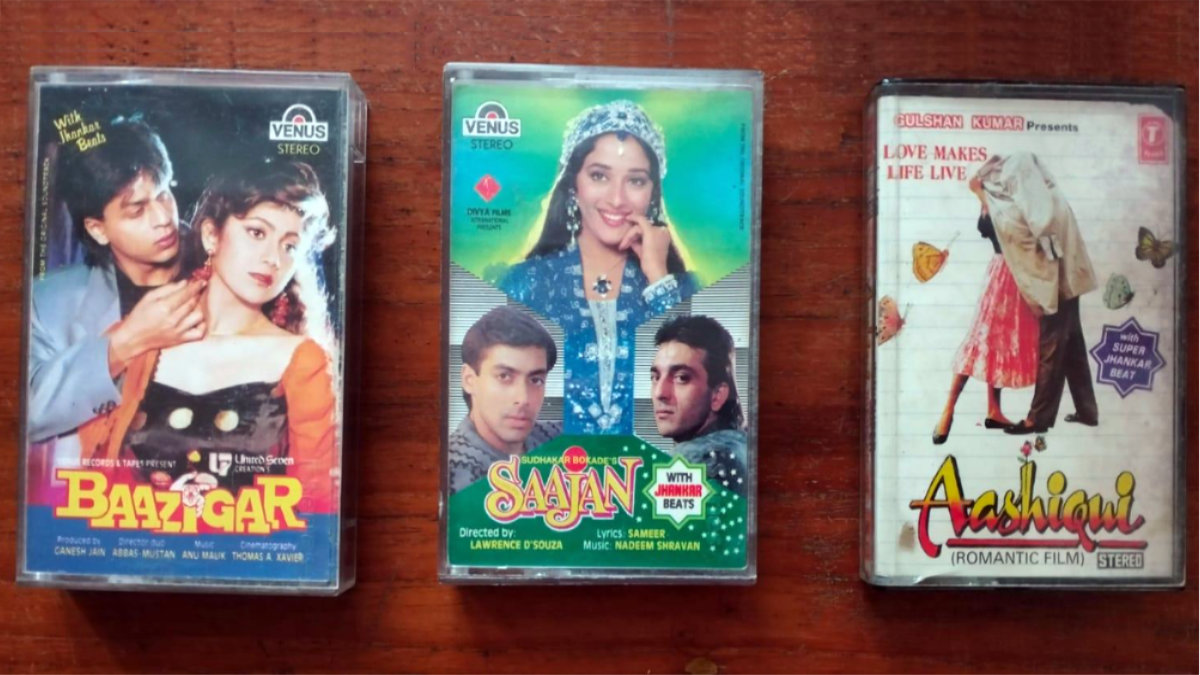
Today, we see Saregama uploading many Jhankar beat versions of the classic Hindi songs on the internet. This includes the songs that were produced before Jhankar beats arrived in the beginning of 1990s. As the name suggests, ‘Jhankar beats’ is the addition of fresh upbeats to the soundtracks of the Hindi movies. The listener feels that there is more bass and can be used in parties. Some experts say that it provides a ‘dhinchak’ or ‘jing-chak’ effect.
Production Of Jhankar Beats
Most of these Jhankar beats were produced by using Octapad Roland electronic drum, especially the model SPD-11. The music labels like T-Series, Tips, Venus Records & Tapes, HMV and Weston Musicassettes released Hindi music with Jhankar beats from 1990 to 1994. The T-Series and HMV marketed their version as ‘Super Jhankar Beats’. This include ‘Aashiqui’, ‘Sadak’ and many other chartbusters. During this period, they also re-released late 1980s songs with added Jhankar beats. The ‘Jhankar’ seemed to be the successor to the cover versions which were widely sold in the 1980s that had different artists singing the same song of the original. Instead, in Jhankar, the singer remained the same and beats are included as just ‘extra’ in the same music.
Popularity Of Jhankar Beats
It proved to be highly popular among the North Indian mass like truck drivers and auto-rickshaw drivers. It was an energy booster for them since this allowed them to listen to beat songs in their own language rather than depending on English which most of them don’t fully understand. Since most of the Hindi songs were melodious back in early 1990s, the people would have no choice but to listen to older Hindi songs such as ‘I am a disco dancer’ for beat. Jhankar beats found a way out by inserting beats in the latest songs of the period. Of course, there were some elite purists who hated Jhankar beats as it was seen as ‘western’ in the sense that it was destroying the originality of the recordings. Due to the popularity of Jhankar beats among the youth belonging to poor and lower middle classes, the cassettes were priced cheaper for them to buy. It also helped the people who could not afford to buy high-quality music systems to still enjoy their favourite music in beats.
Facts From Personal Experience
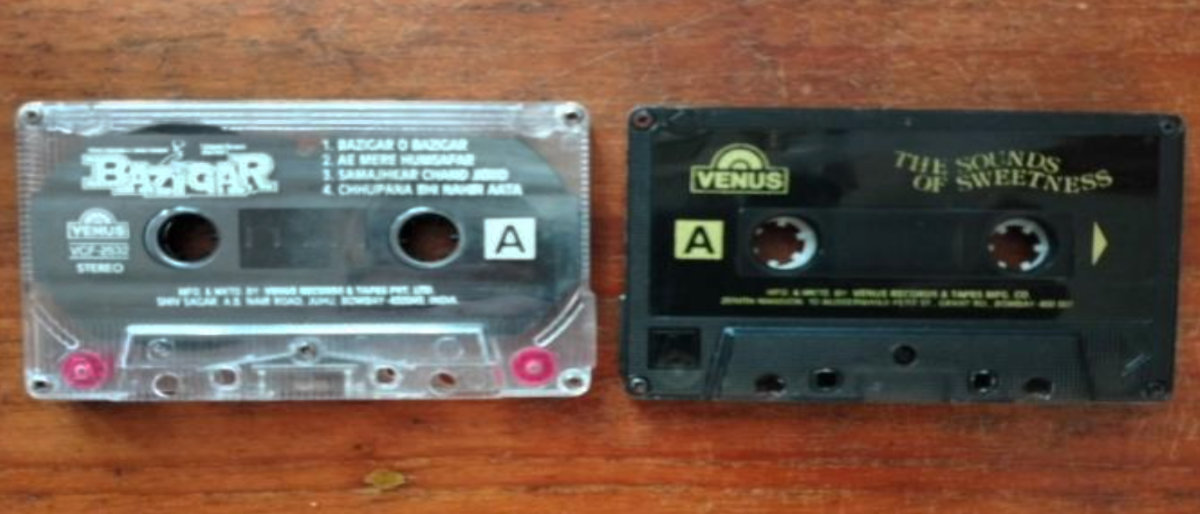
- The tracking list (Side A and Side B numbering) is the same as that of a normal music cassette.
- The wording ‘with Jhankar beats’ is only given in the inlay card and not on the cassette. So, if it is misplaced in the original music cassette box, it is very difficult to identify whether it is a Jhankar beat unless it is played.
- Jhankar beats are more noticeable when played in Walkman (a portable player with headphones) rather than a Hi-Fi component stereo system.
- Since all the songs in the cassette have Jhankar beat, some may feel that there is an unnecessary beat in the sad songs.
Decline And Successors
This era of Jhankar beats did not last long as the production of new Hindi cassettes with Jhankar ceased in the mid-1990s. The introduction of Indi-pop music and the advent of MTV music channel on TV led to decline of Jhankar’s popularity. Around the same time, the pirated releases of Jhankar also stopped due to strict implementation of anti-piracy laws. Music directors were experimenting with different types of remixes like ‘10,000 watts remix’ of the 1997 film ‘Gupt’. In the 2000s, both the original and remixes began to be included in the single audio cassette. It was very different from the release of Jhankar beats when original and Jhankar used to be separate cassettes. The Hindi film songs with Jhankar beats produced during early 1990s continued to be reissued in cassette format in late 1990s and MP3 CDs in early 2010s. In late 2010s, these songs with Jhankar beats became available online for downloads.
Revival & Relevance
In the early 2020s decade, there was a resurgence of Jhankar beats as we witnessed the release of late 1990s and early 2000s music with 2020s Jhankar beats over the streaming platforms like YouTube. The Gen Z have started discussing the Jhankar beats in social media where they mention a scene in Netflix web series ‘Guns and Gulaabs’ as their source of knowledge. It is to be noted that the search results in web regarding ‘Jhankar beats’ would take most users to a 2003 film of the same name rather than opening pages of ‘Legacy of Jhankar Beats’. Interestingly, the original 1990s Jhankar beats audio cassettes are still available to buy at music stores, but it is priced more than normal music cassettes citing the limited stock. Nowadays, the DJ and club remixes of 1990s music became a trend as these are named as ‘2.0’ and released in present Bollywood movies. The main difference between the Jhankar era and present-day beat is that the Jhankar era produced remixes of its own times in contrast to the current remixes that are mostly remixes of old songs.
Jhankar beats continue to live in the music market among the niche audience that include nostalgic people and young persons with retrophilia. Therefore, the ‘Jhankar Beats’ that mark one of the first steps in the historical evolution of remixes in India continues to be relevant for those who require emotional connection with minimal manipulation of the actual music.
Suggested Story: Reminiscing The Journey of Bollywood Music Through The Decades
References
Khan, A. (2024, June 14). How jhankar beats gloriously burst onto the Indian music scene in the ’90s. Vogue India. https://www.vogue.in/content/how-jhankar-beats-gloriously-burst-onto-the-indian-music-scene-in-the-90s
Vasudeva, R. (2023, August 26). The jing-chak era of Jhankar beats. Deccan Herald. https://www.deccanherald.com/entertainment/the-jing-chak-era-of-jhankar-beats-2661577
editorpaperclip. (2023, September 12). Jhankar Beats. Paperclip. https://thepaperclip.in/jhankar-beats/






Very nostalgic story, I still remember the song “Dil tujpe aagaya” from Sadak. Thanks for sharing 🙂