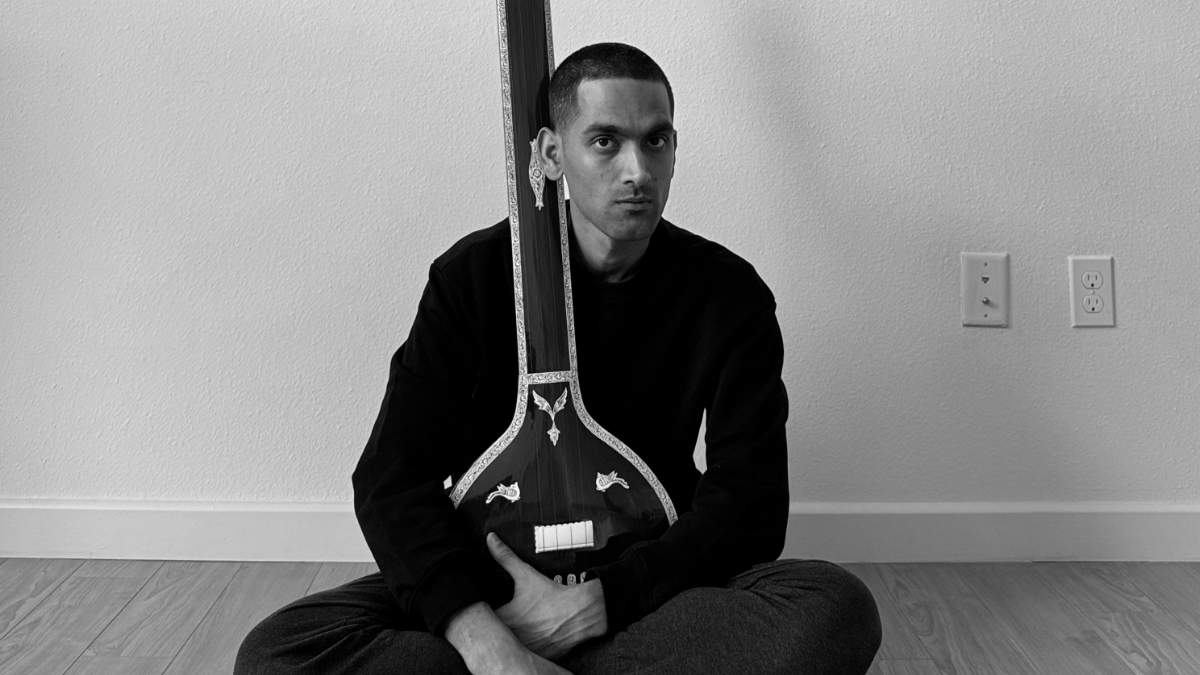
From a childhood discovery in Bengaluru to collaborations with musicians across disciplines, the California-based artist is exploring how the whistle can express the intricacies of the Carnatic tradition.
For most people, whistling is an informal way of reproducing a familiar tune. For Arun Perunkolam, it has become a medium for exploring the intricate world of Carnatic music. Originally from Bengaluru and now based in California, Perunkolam is investigating an unconventional question: can the human whistle convey the musical complexity and emotional depth traditionally associated with the Carnatic voice?
His journey began during his school years, when he was learning Carnatic vocal music. While practising, he discovered that he could reproduce increasingly complex musical phrases through whistling. One moment, in particular, stayed with him: he accidentally whistled a chittaswaram from the varnam Chalamela. What began as an incidental discovery prompted him to consider whether whistling could be more than a way to reproduce familiar melodies.
As his musical training continued, Perunkolam began experimenting with ragas, alapana and compositions through the whistle. The challenge was not simply to reproduce the correct notes, but to retain the characteristics that give Carnatic music its distinctive identity.
Translating the Carnatic Language Through a Whistle
Carnatic music relies on a sophisticated musical vocabulary in which the relationship between notes is as important as the notes themselves. Gamakas, or ornamental oscillations and variations in pitch, along with phrasing, pauses and subtle tonal movements, contribute to the identity of a raga.
Translating these elements into whistling requires a different kind of control. The artist must negotiate changes in pitch, airflow and phrasing while attempting to preserve the musical expression of the original composition.
For Perunkolam, his foundation in Carnatic vocal music remains central to this process. Rather than approaching whistling as a separate musical discipline, he uses it to investigate how the knowledge acquired through vocal training can be expressed through another medium.
This distinction is important to his artistic exploration. His intention is not merely to demonstrate that a tune can be whistled, but to discover how the whistle can communicate the nuances of a classical musical tradition.
From Home Recordings to Musical Collaborations
Perunkolam began sharing his experiments online, particularly during the pandemic, when he recorded raga-based performances from home. The response encouraged him to look beyond the novelty of whistling Carnatic music.
Listeners began engaging with the precision of his musical phrases, while those familiar with the tradition could consider the possibilities of expressing its nuances through an unconventional medium. The response also opened up conversations about the technical and musical demands of his practice.
His work has since extended into collaborations with other musicians and performers. According to his official website, these include a violin and whistling collaboration with Ambi Subramaniam, an electric guitar and whistling collaboration with Kalidas Menon, projects with IndianRaga vocalists, and an exploration of Indian classical dance with Nikita Iyer.
These collaborations allow the whistle to be placed alongside established instruments and other artistic forms, creating opportunities to explore musical dialogue rather than simply reproduce an existing melody. The interactions also broaden the possibilities of how Carnatic musical expression might be presented to different audiences.
Beyond the Novelty of Whistling
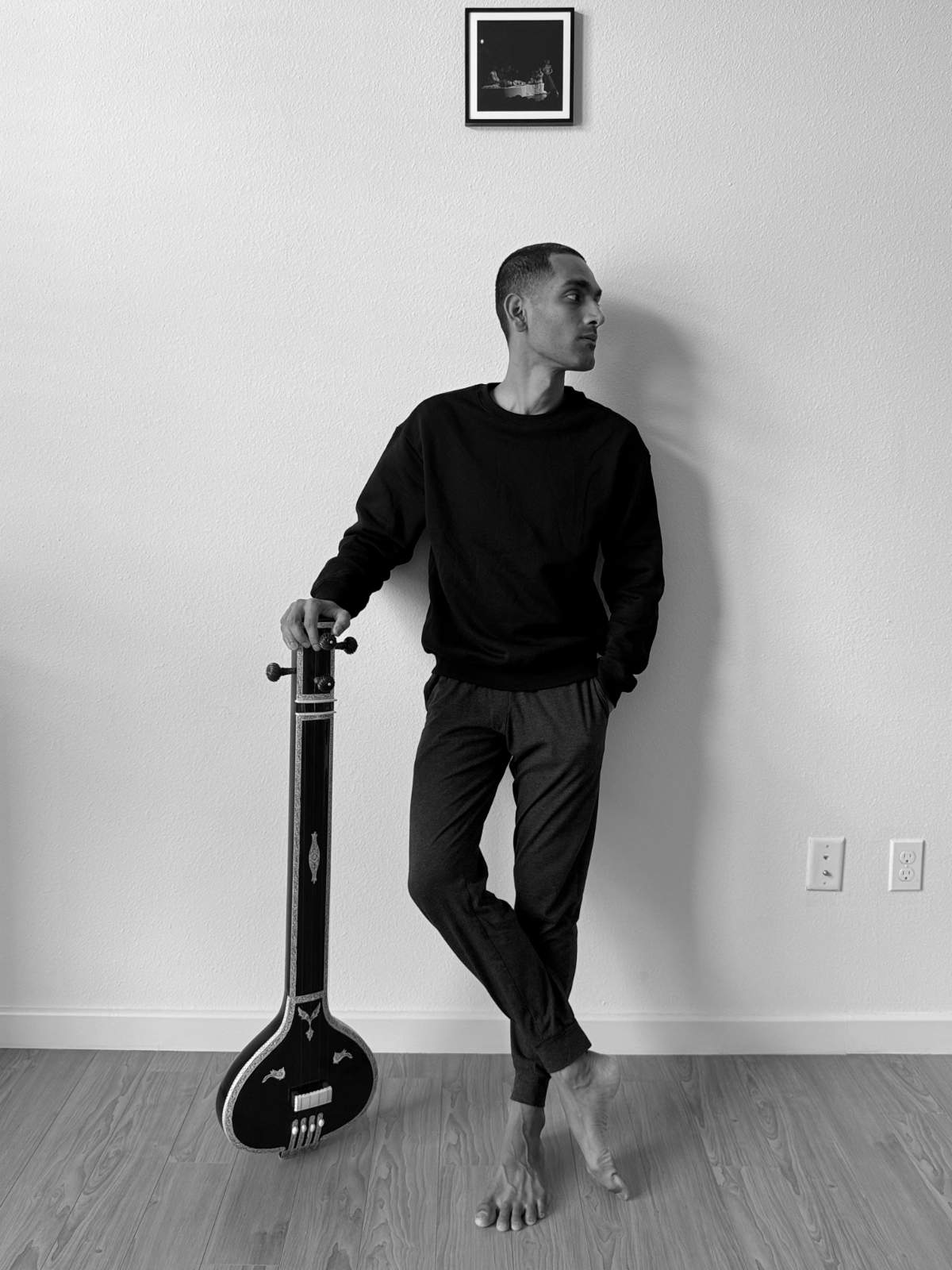
Whistling occupies an unusual position in the musical landscape. It requires no conventional instrument, has no lyrics and relies on the human body’s ability to shape and control air. Yet, in Perunkolam’s work, it becomes a vehicle for engaging with raga, shruti, gamaka and musical emotion.
The distinction between reproducing a melody and interpreting a raga lies at the heart of his exploration. A recognisable tune may be conveyed through a sequence of notes, but Carnatic expression also depends on how those notes are approached, sustained and connected. Attempting to preserve these characteristics through whistling raises questions about technique, musical understanding and the relationship between sound and expression.
Perunkolam’s work has also attracted attention from fellow musicians. His website notes that music composer Shashwat Sachdev reposted his whistled interpretation of a veena interlude from Phir Se, while Sai Vignesh, associated with the film Kantara, reacted to his Carnatic whistling rendition of the film’s music.
Such interactions offer another dimension to his journey, bringing his experiments into conversation with musicians and audiences beyond the immediate circle of classical music enthusiasts.
Exploring a New Medium Without Losing Tradition
At the centre of Perunkolam’s practice is a question that extends beyond whistling itself: what makes Carnatic music remain Carnatic when the medium of expression changes?
It is a question about musical identity as much as technique. Can the grammar of a tradition remain intact when expressed through a different sound-producing medium? How much of its character lies in the notes, and how much in the way those notes are shaped and interpreted?
Perunkolam continues to explore these questions through his recordings, performances and collaborations. His approach places an unconventional form of expression in conversation with a deeply established musical tradition, without treating the two as necessarily incompatible.
For an art form rooted in the subtlety of musical movement and expression, whistling presents both a challenge and an opportunity. Through his ongoing experiments, Perunkolam is examining how a familiar human gesture can become a vehicle for serious musical inquiry, inviting listeners to reconsider not only the possibilities of whistling, but also the many ways in which Carnatic music can find its voice.
To explore his work and collaborations, visit Arun Perunkolam’s official website or follow him on Instagram.