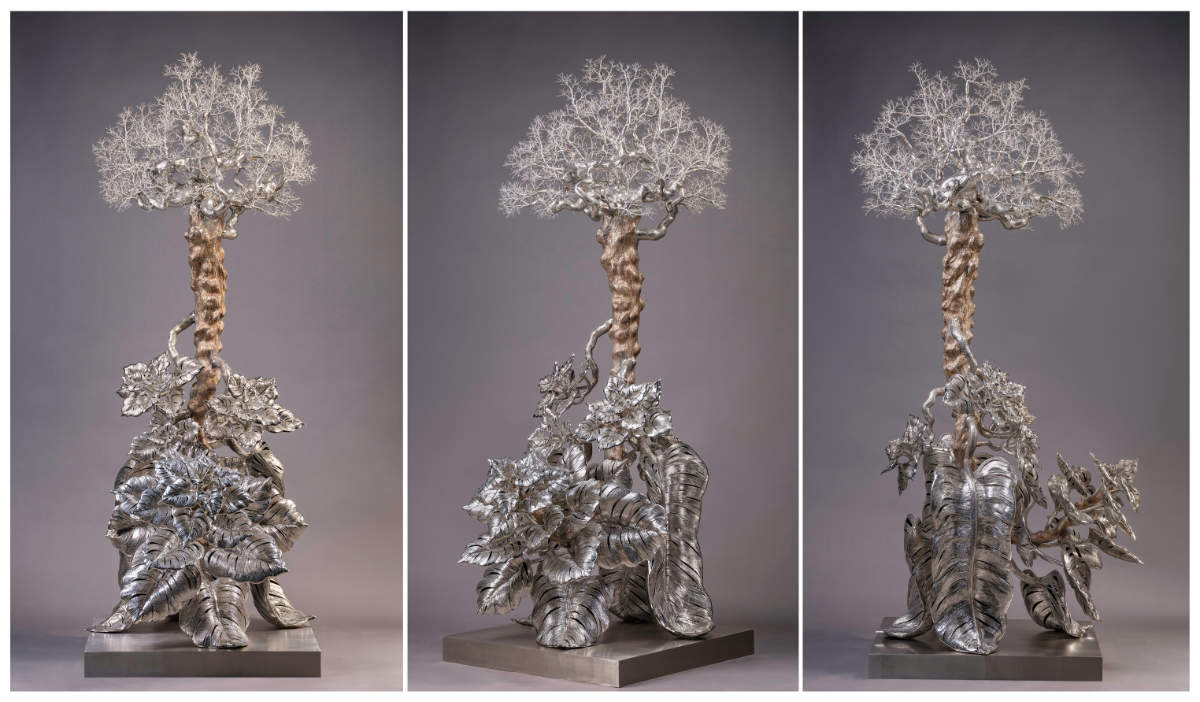
Contemporary sculptor Dhananjay Singh will present Between Presence and Absence, an exhibition of sculptures spanning different phases of his artistic practice, at Travancore Palace Art Gallery in New Delhi from 12 to 15 October. Organised by Black Cube Gallery in association with Sculpted India, the exhibition brings together works that explore the relationship between the human body, nature, transformation and impermanence.
A Survey of an Evolving Practice
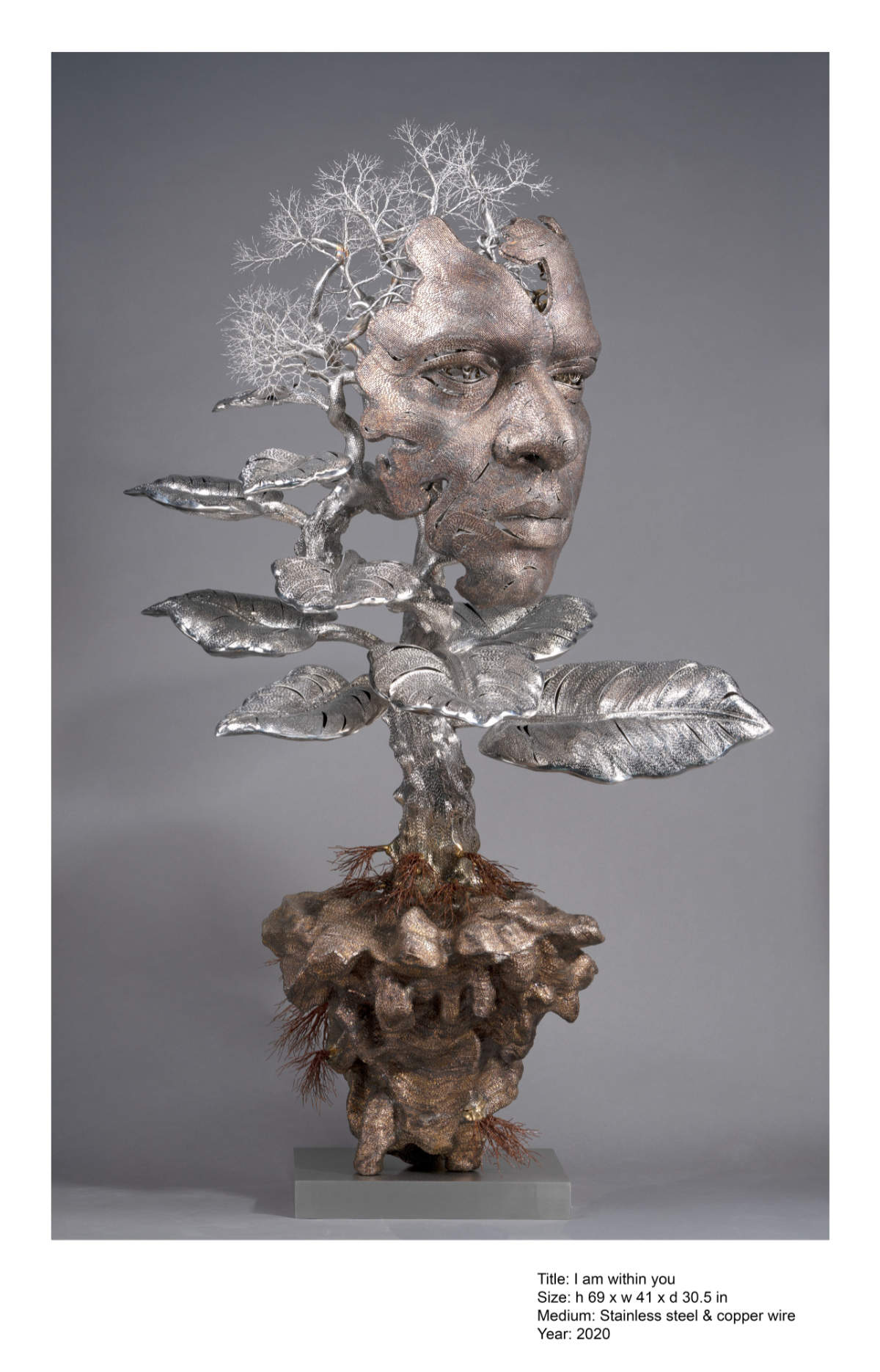
The exhibition offers visitors an opportunity to encounter Singh’s distinctive sculptural language, developed over more than two decades. Known for constructing figures and forms from intricately intertwined bronze and copper wire, the artist has built a body of work that examines states of transition and interconnectedness. The exhibition gathers works from different periods, allowing viewers to observe recurring themes and evolving forms across his career.
According to the organisers, the exhibition reflects Singh’s continuing engagement with ideas of presence and absence, growth and decay, solidity and transparency. Rather than presenting these as opposing forces, the works suggest an ongoing cycle in which each condition depends on the other.
Sculptures Between Human and Natural Worlds
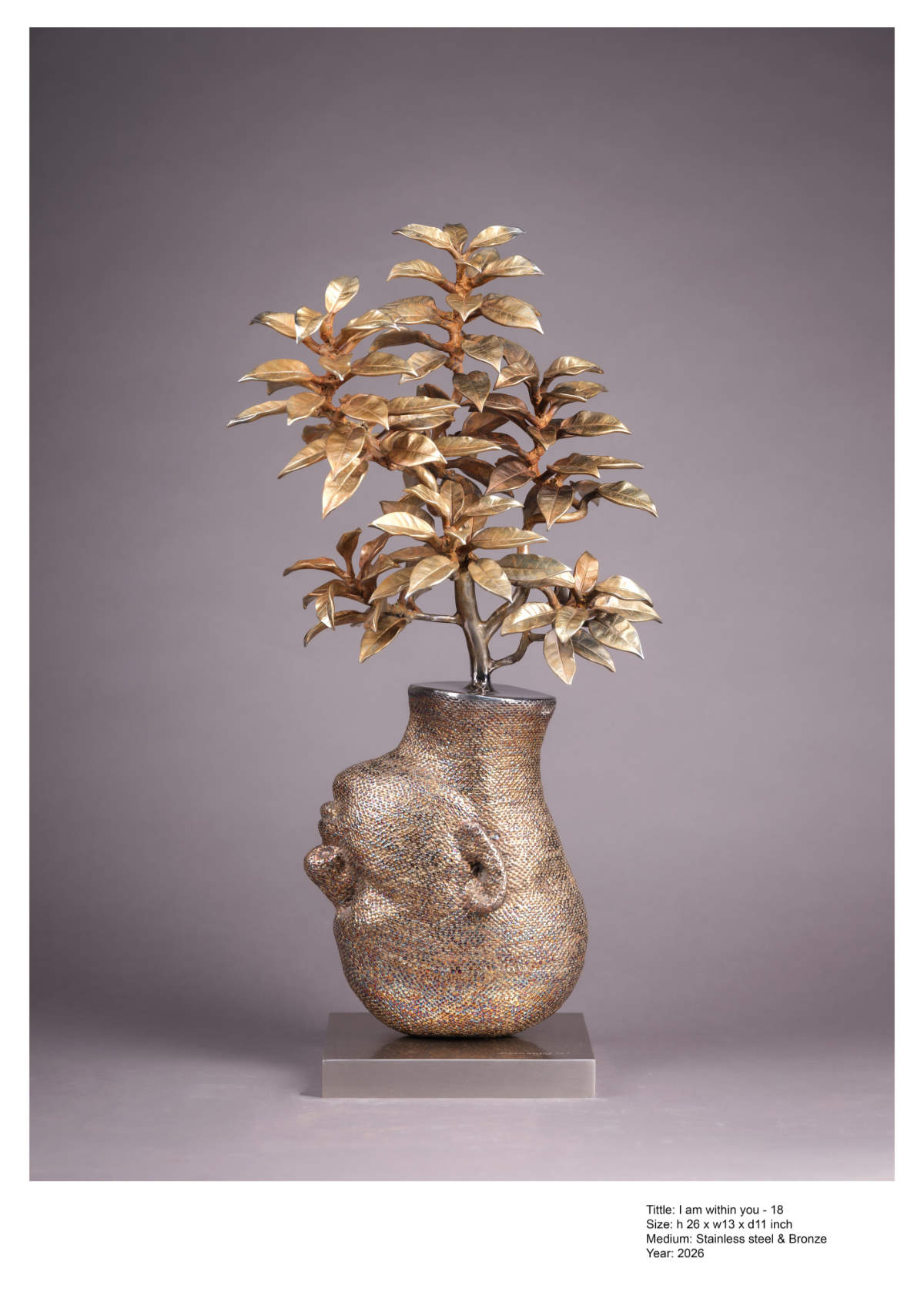
A central aspect of Singh’s work is the dissolution of boundaries between the human and the natural. Trees transform into bodies, faces merge into landscapes, and metal appears organic and living. His sculptures often resemble branching roots, veins, or skeletal structures, creating forms that seem simultaneously fragile and resilient.
Art historians and galleries have frequently noted how Singh transforms industrial materials into fluid, natural forms through painstaking handwork. His sculptures are recognised for balancing transparency with monumentality while exploring themes of growth, transformation and ecological interconnectedness.
Exhibition Highlights
- Sculptures created across different stages of Singh’s career
- Works crafted from intertwined bronze and copper wire
- Explorations of transformation, memory and impermanence
- Human, botanical and landscape-inspired forms
- A rare opportunity to view multiple bodies of work together
The Artist Behind the Exhibition
Born in Hajipur, Bihar, in 1977, Dhananjay Singh studied sculpture at Banaras Hindu University before completing his Master of Fine Arts at Maharaja Sayajirao University, Baroda. A residency at Monash University in Melbourne in 2006 proved influential in shaping his signature approach to working with bronze and copper wire.
Over the years, Singh has received several major recognitions, including the INLAKS Fine Art Award, the Commonwealth Arts and Crafts Award, and the National Lalit Kala Akademi Award. His work has been exhibited in India and internationally, including appearances at the Gulf Art Fair in Dubai and numerous group exhibitions focused on contemporary sculpture. For more information on the artist, visit Dhananjay Singh.
Presented by Black Cube Gallery and Sculpted India
The exhibition is presented by Black Cube Gallery in association with Sculpted India, and is organised by Raj Manohar Thota, Sanya Malik and Abhivardhan Berry. Black Cube Gallery has emerged as an active platform for modern and contemporary Indian art, presenting exhibitions, art fair projects and sculpture showcases across the country.
The organisers describe the exhibition as an opportunity to view years of Singh’s work in a single setting, bringing earlier experiments and recent developments into conversation.
Venue and Visitor Information
| Event Name | Details |
| Artist | Between Presence and Absence |
| Artist | Dhananjay Singh |
| Venue | Travancore Palace Art Gallery, New Delhi |
| Exhibition Dates | 12–15 October |
| Timings | 11:00 AM – 6:00 PM |
| Organiser | Black Cube Gallery in association with Sculpted India |
A Reflection on Transformation
By bringing together sculptures from across different phases of Dhananjay Singh’s career, Between Presence and Absenceoffers insight into an artistic practice shaped by observation, material experimentation and reflections on change. The exhibition invites viewers to consider the interconnected cycles of growth, decay and renewal that shape both human life and the natural world. In doing so, it contributes to ongoing conversations within contemporary Indian sculpture about ecology, memory and the relationship between material and form.