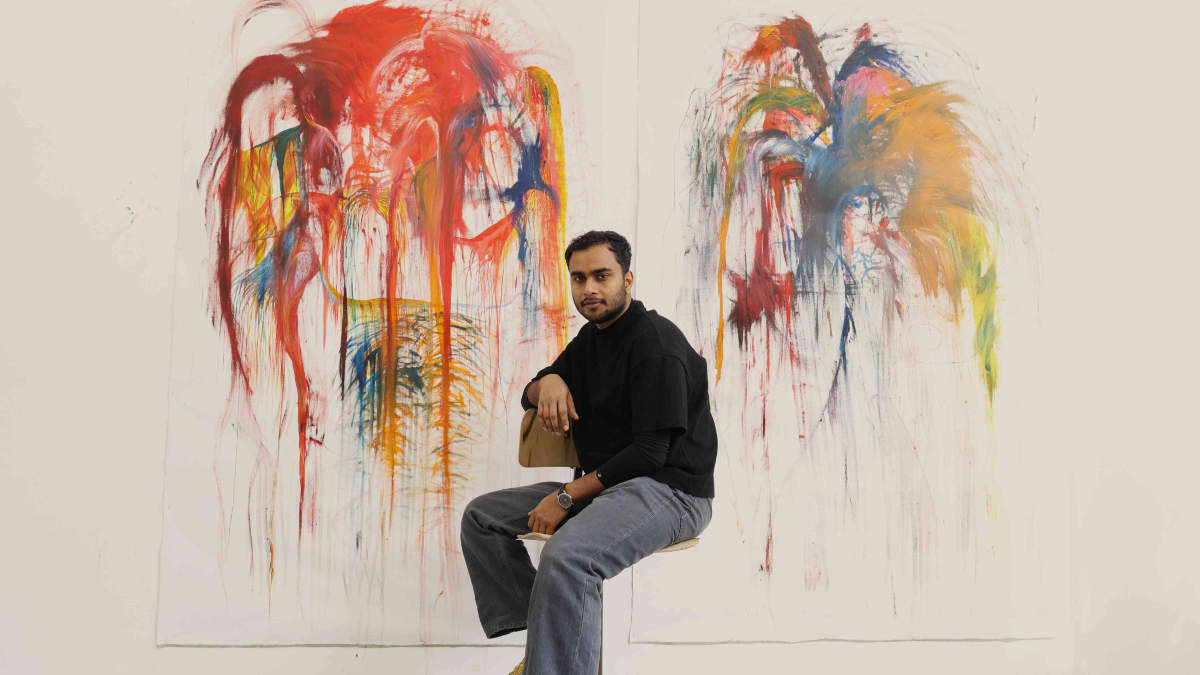
Debashish Paul’s first solo exhibition in London, A Birth of a Boneless Child, opens on 6 November 2026 at Ginny on Frederick. Presented with Emami Art, the exhibition brings together mythology, personal histories and textile-based sculptural practices to examine queer identity, gender, sexuality and belonging. Running until 16 December 2026, the exhibition draws on a fifteenth-century Bengali retelling of the Ramayana to consider alternative understandings of the body, relationships and identity through contemporary art.
Revisiting a Narrative from Bengali Mythology
At the centre of the exhibition is an episode from the Krittivasi Ramayan, the fifteenth-century Bengali retelling of the Ramayana by poet Krittibas Ojha. The narrative describes two widowed queens who conceive a child together. According to the story, their child, Bhagiratha, is born without bones, reflecting the traditional belief that a father is responsible for giving a child its bones.
The name Bhagiratha also carries a linguistic association with the two bhagas, or vulvas, from which he is born. Paul revisits this account in relation to his own experience of growing up queer in rural Bengal, connecting personal memory with a literary history that offers different ways of considering gender, sexuality and kinship.
The narrative is particularly significant because the child is not presented as an aberration within the text but is instead accorded reverence. Through this interpretation, the exhibition draws attention to diverse understandings of gender and sexuality within South Asian cultural histories, including those that existed before colonial attitudes towards sexuality were codified.
The Boneless Body as a Metaphor for Queer Identity
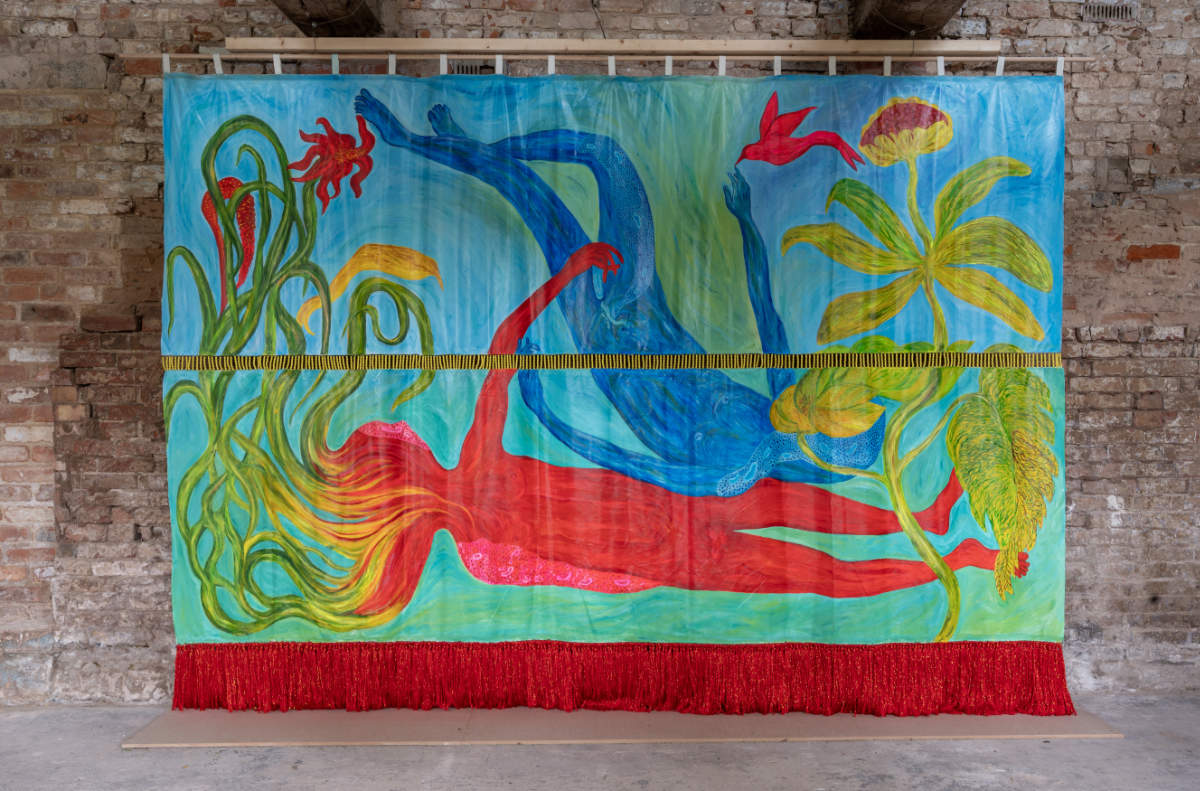
The idea of the boneless child becomes a central metaphor throughout the exhibition. Rather than interpreting the absence of bones as a physical limitation, Paul approaches bonelessness as a condition that allows the body to assume different forms.
This perspective challenges conventional ideas about fixed identities, prescribed gender roles and normative expectations. The body becomes a space through which vulnerability, transformation and alternative forms of belonging can be considered.
By connecting a premodern literary narrative with contemporary experiences of queer identity, Paul examines how inherited cultural stories might be revisited to create new possibilities for understanding embodiment and relationships. The exhibition also considers how love, kinship and freedom can exist beyond established social structures.
Textile Practices and Collaborative Sculptures
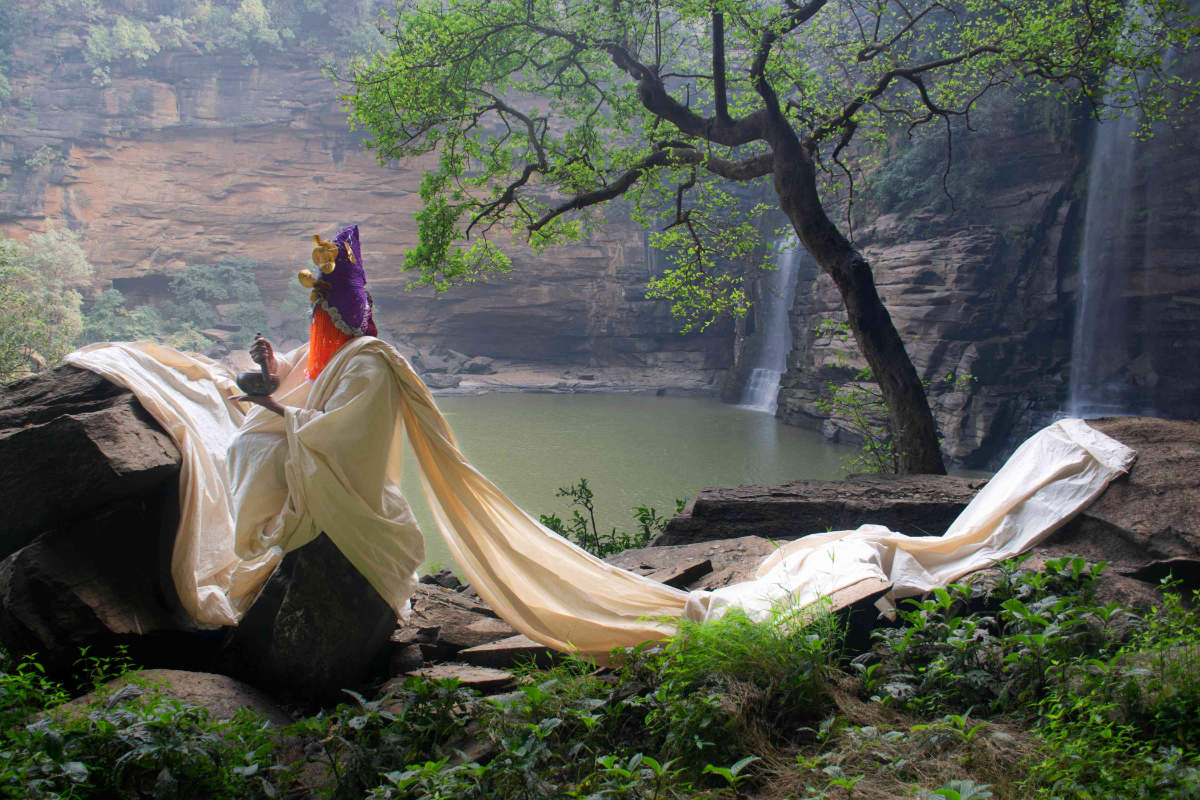
The exhibition features sculptural objects developed in collaboration with local women from the artist’s village in Bengal. The works incorporate traditional and contemporary textile techniques, including kantha embroidery, hand embroidery and beadwork.
Kantha, a running-stitch embroidery practice associated with rural Bengal, plays an important role in the material and conceptual framework of the exhibition. Through stitching, Paul brings together processes of making, memory and collaboration.
The textile techniques also inform the exhibition’s exploration of how gender is constructed and inscribed upon the body. Stitching becomes a way to consider how these structures might be loosened, unpicked or reconfigured.
Key aspects of the exhibition include:
- Kantha embroidery: The use of rural Bengal’s running-stitch textile tradition as a sculptural and conceptual element.
- Collaborative making: Works developed with local women from the artist’s village.
- Hand embroidery and beadwork: Materials and techniques that contribute to the construction of the sculptural forms.
- Body and identity: An exploration of how physical forms relate to gender, sexuality and social expectations.
Debashish Paul’s Artistic Practice
Born in 1994 in Nadia district, West Bengal, Debashish Paul completed his Bachelor of Fine Arts in Sculpture at the Indian College of Art and Draftsmanship, Kolkata, in 2019, followed by a Master of Fine Arts in Sculpture from Banaras Hindu University, Varanasi, in 2021.
His artistic practice includes sculpture, performance, video, drawing and installation, frequently engaging with questions of sexuality, identity and the relationship between the body and society.
His previous solo exhibitions include A Thousand Years of Dreaming at Emami Art, Kolkata, in 2024, and Nastanirh (The Broken Nest) at Kala Hubba as part of BLR Hubba, Bengaluru, in 2026. His exhibition history also includes presentations at Coventry Biennial 2025–26, CREA OPEN 2025 in Venice and the Bowes Museum in the UK.
Paul was selected for a two-year residency at Rijksakademie van beeldende kunsten in Amsterdam, beginning in January 2026. His work has also received recognition through awards including the Inlaks Fine Art Award in 2022 and the BW Art Excellence Award in 2025.
Emami Art and the London Exhibition
The exhibition is presented in association with Emami Art, a contemporary art gallery and cultural production space established in Kolkata in 2017. The organisation supports emerging, mid-career and established artists, with a programme that engages with South Asian history, material culture and contemporary social narratives.
Richa Agarwal, Founder Director of Emami Art and Chairperson of the Kolkata Centre for Creativity, describes the exhibition as an important moment in Paul’s artistic practice, bringing together personal histories, cultural memory and questions of identity.
Ushmita Sahu, Director and Head Curator of Emami Art, also highlights the relationship between mythology, queer identity and material practices in the exhibition. She notes how Paul’s use of textile traditions and collaborative processes brings questions of inheritance, vulnerability and resistance into sculptural form.
The exhibition will be hosted at Ginny on Frederick, located at 99 Charterhouse Street, London EC1M 6HR. The gallery was founded by Freddie Powell and focuses on contemporary artists, including emerging practitioners and first-time solo presentations in London.
Exhibition Dates and Visitor Information
| Event | Details |
| Name | A Birth of a Boneless Child |
| Artist | Debashish Paul |
| Exhibition Type | First Solo Exhibition in London |
| Venue | Ginny on Frederick |
| Address | 99 Charterhouse Street, London EC1M 6HR, UK, London, United Kingdom |
| Opening Date | 6 November 2026 |
| Exhibition Dates | 6 November – 16 December 2026 |
| Organiser / Presenter | Emami Art |
| Gallery Opening Hours | Wednesday–Saturday, 12 pm–6 pm (published regular hours) |
| Website | Ginny on Frederick |
The exhibition offers visitors an opportunity to consider how mythology, personal experience and material culture can contribute to contemporary discussions around identity, gender and belonging.
Ginny on Frederick’s published regular opening hours are Wednesday to Saturday, 12 pm to 6 pm. The press release does not specify admission charges, ticketing arrangements or registration requirements. Visitors are advised to contact the gallery directly for confirmation of access and any special exhibition arrangements.
Through its combination of literary references, collaborative textile practices and sculptural forms, the exhibition connects regional cultural histories with contemporary questions of identity. It also invites audiences to reconsider the relationship between inherited narratives and the possibilities of more inclusive understandings of the body, relationships and society.