
As people age, the body doesn’t always signal problems loudly. Some of the most serious health issues in elderly patients show up as small, easy-to-miss changes, not dramatic symptoms. Recognising these early can make a real difference to how quickly proper care and treatment begin.
This is especially relevant in a city like Mumbai, where high humidity, seasonal heat, and busy household routines can sometimes mask early warning signs as everyday fatigue or mood shifts. Here are five signs that genuinely warrant prompt medical attention.
1. Sudden Confusion or Disorientation
A sudden change in mental clarity, especially in someone who was previously alert and oriented, is one of the clearest signals that something needs immediate medical review. This is different from gradual memory changes associated with ageing.
Watch for:
- Sudden difficulty recognising familiar people or places
- Confusion that appears within hours or a single day
- Difficulty following simple conversations that were previously easy
Sudden confusion can point to infections, dehydration, or metabolic imbalances, several of which are treatable quickly when caught early.
2. Unexplained Weight Loss or Appetite Changes
Gradual, unexplained weight loss, or a sudden drop in appetite, often reflects an underlying metabolic or health issue rather than simple ageing. According to World Health Organisation guidance on healthy ageing, monitoring functional and nutritional status consistently is a core part of proactive elderly care, rather than addressing weight changes only after they become severe.
Signs worth tracking:
- Noticeable weight loss over a few weeks, without a clear cause
- Loss of interest in food or skipped meals becoming frequent
- Changes in taste or difficulty swallowing
3. Sudden Decline in Mobility or Balance
A sudden increase in unsteadiness, frequent stumbling, or difficulty standing up, especially if it appears quickly rather than gradually, needs urgent attention. Falls remain one of the leading causes of serious injury among elderly patients, and a sudden mobility decline often precedes one.
Families searching “caretaker near me” online during this kind of transition often do so because they’ve noticed exactly this pattern, a sudden shift that feels different from the person’s usual pace of ageing.
A Quick Note Before Moving Ahead: This article is meant to help families recognise general warning signs and isn’t a substitute for professional medical evaluation. If any of these signs appear suddenly or severely, please contact a doctor or emergency services promptly rather than waiting to see if symptoms improve.
4. Significant Behavioural or Mood Changes
Sudden withdrawal, unusual agitation, irritability, or a noticeable shift in personality can all indicate an underlying issue, ranging from infections to metabolic imbalances to early neurological changes. These shifts are sometimes dismissed as “just a bad day,” but a sudden and lasting change is worth taking seriously.
Look out for:
- Uncharacteristic aggression or agitation
- Sudden social withdrawal or loss of interest in usual activities
- Noticeable changes in sleep patterns alongside mood shifts
5. Signs of Dehydration or Blood Sugar Irregularities
Elderly patients are particularly vulnerable to dehydration and blood sugar fluctuations, both of which can escalate quickly if not addressed. In Mumbai’s humid climate, dehydration risk increases further, especially for patients who reduce fluid intake due to reduced thirst sensation, a common change with age.
Watch for:
- Dry mouth, reduced urination, or dizziness
- Excessive thirst or unusually frequent urination
- Sudden fatigue, sweating, or shakiness, which can indicate blood sugar swings
Why Early Recognition Matters So Much
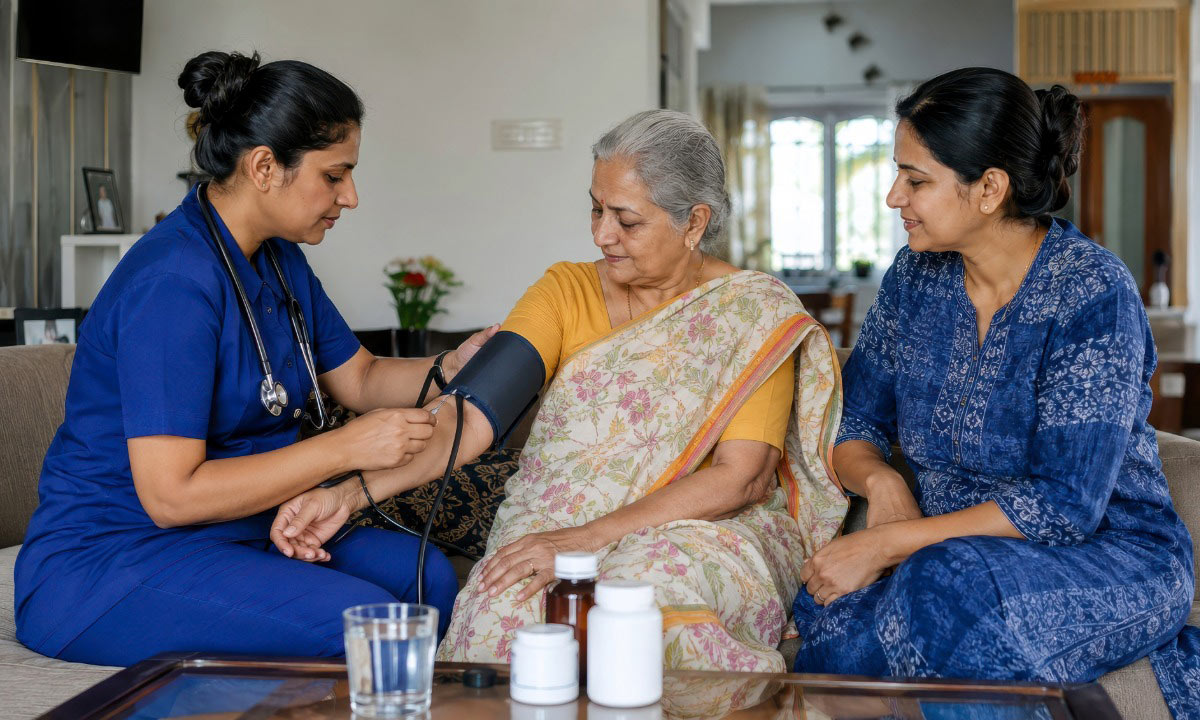
Many of these signs are treatable quickly when caught early, but they can escalate into serious complications if dismissed as normal ageing. This is exactly why consistent, close observation matters so much in daily elderly care, whether provided by family or a trained caregiver.
Why This is Easier to Catch at Home
Subtle changes like these are often noticed faster in a familiar home environment, where a consistent caregiver sees the person’s normal baseline every day. This is one of the main reasons families turn to elder care in Mumbai that’s based at home rather than in a shared facility, since that kind of continuous observation is harder to replicate through occasional visits or staff managing multiple patients at once.
Acting on These Signs Promptly
If any of these signs appear, especially suddenly, the right response is prompt medical evaluation, not a wait-and-watch approach. A quick call to the treating doctor or nearest hospital is always the safer choice. Elderly care isn’t just about daily routines and comfort. It’s also about recognising when something has genuinely changed, and paying close attention to these five signs can make a real difference to health outcomes.