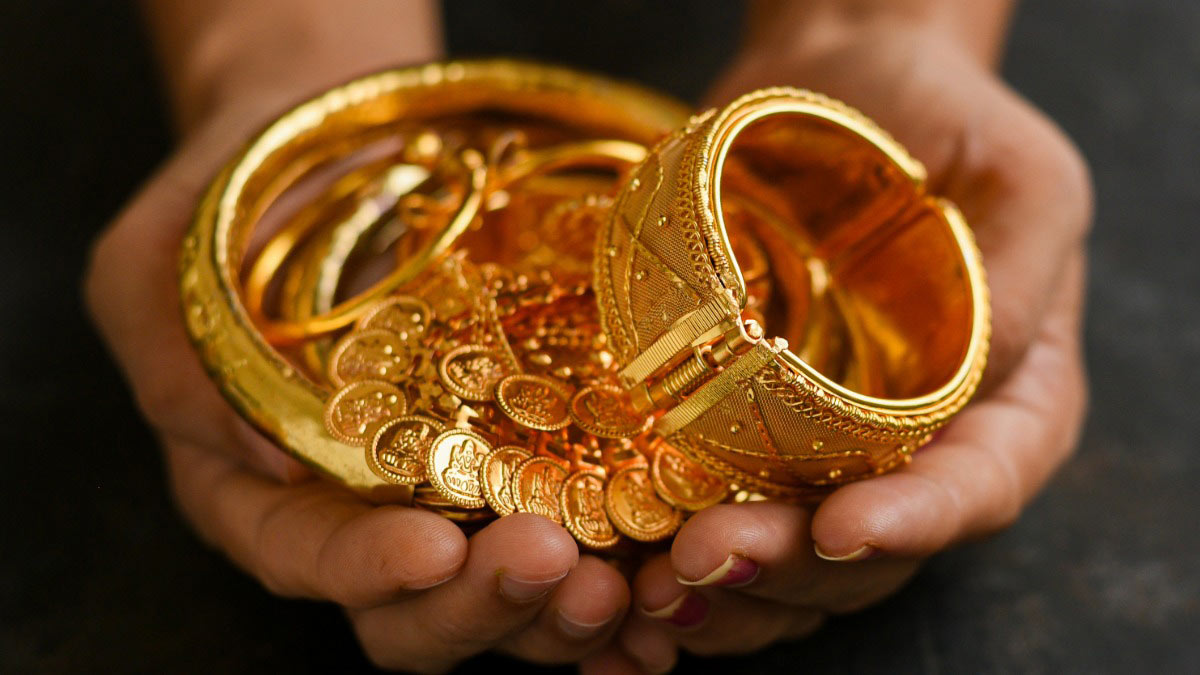
On April 20, 2026, the tail-end of one of Hinduism’s most auspicious days, gold prices across India quietly slipped. For millions of Indian families, that was not a warning. It was an invitation.
The Numbers That Made Jewellers Smile
There is a moment, just before an Indian bride steps into her wedding mandap, when the gold she wears ceases to be jewellery and becomes something else entirely memory, blessing, inheritance, hope. It is in that same spirit that millions of Indians approach Akshaya Tritiya, the single most auspicious day in the Hindu calendar for buying gold. And on April 20, 2026, the markets handed those buyers an unexpected gift.
Gold prices across India declined on Sunday into Monday, with 24-carat gold falling to approximately ₹1,53,440 per 10 grams a drop of nearly 0.77% from the previous session. On the futures market, the picture was sharper still:
- MCX gold (June 2026 expiry) fell by around ₹1,600 per 10 grams, opening at ₹1,53,158 and slipping to as low as ₹1,53,018 during early trade.
- MCX silver crashed by approximately ₹5,110 per kilogram a decline of nearly 2% hitting an intraday low of ₹2,51,671 per kg.
- On international markets, COMEX gold shed 2% to trade at $4,780 per ounce, reversing the previous week’s modest 1.7% gain.
The trigger was renewed geopolitical turbulence in the Strait of Hormuz, US naval forces seized an Iranian-flagged cargo vessel in the Gulf of Oman, reigniting energy supply fears and pushing investors toward crude oil and the dollar, momentarily cooling precious metal appetite.
On any ordinary Monday, this would have been a footnote in the business pages. But April 19–20 was not an ordinary Monday. It was Akshaya Tritiya.
‘Akshaya’ That Which Never Diminishes
The word comes from Sanskrit: Akshaya means that which never decays, never reduces, never ends. Celebrated on the third lunar day (Tritiya) of the bright fortnight of the month of Vaishakha, the festival is considered so inherently auspicious that even the act of purchasing gold on this day regardless of price is believed to multiply into lasting prosperity.
According to Hindu tradition, this is the day when Treta Yuga began, and it marks the birth anniversary of Lord Parashurama, the sixth avatar of Vishnu. The day is also considered the most powerful occasion in the calendar for:
- Buying gold, silver, or property as a long-term investment
- Starting new businesses, signing contracts, or launching ventures
- Performing Griha Pravesh (housewarming) and weddings
- Donating food, clothes, or money acts believed to return multiplied
- Worshipping Goddess Lakshmi and Lord Vishnu together for household prosperity
In 2026, the Tritiya Tithi began at 10:49 AM on April 19 and extended until 7:27 AM on April 20, making a generous window of nearly 21 hours during which buying gold was considered especially blessed. Jewellers across the country had been preparing for weeks stocking new designs, rolling out EMI schemes, and training staff for the rush that would inevitably follow.
That the gold rate in India dipped on the very day of this festival, then, was less a market anomaly than a cultural coincidence and one that played out beautifully for buyers.
From Kolkata to Kochi, a Nation Queues at the Jeweller’s
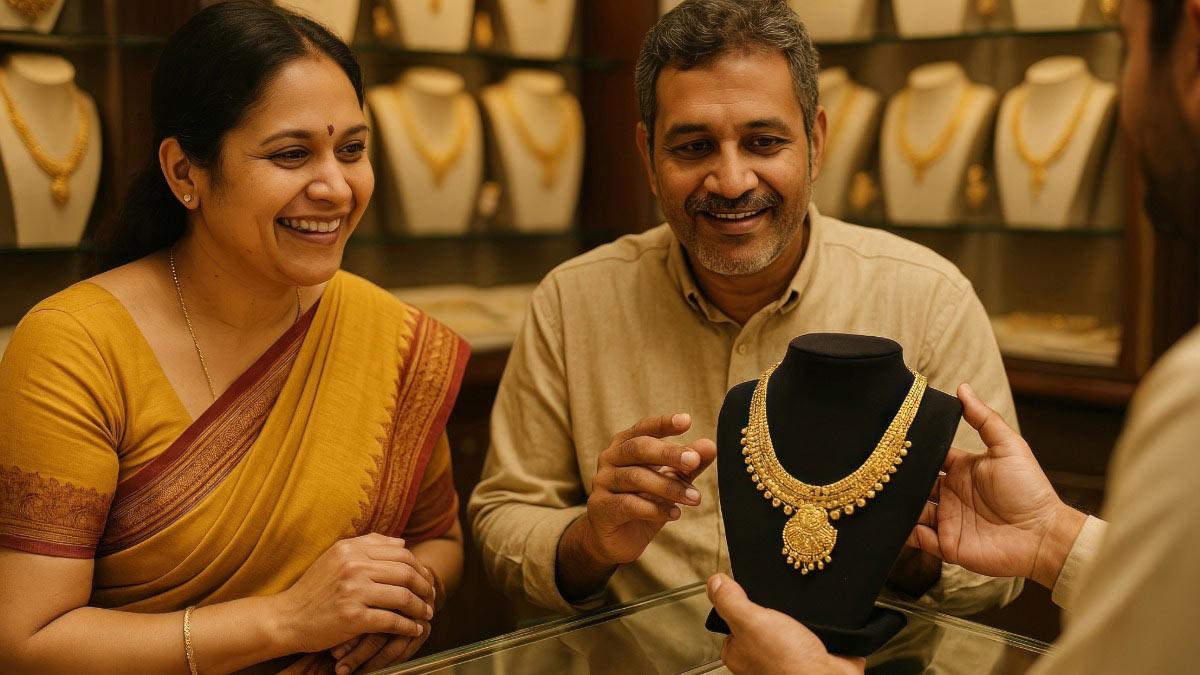
The regional texture of Akshaya Tritiya gold buying is as varied as India itself. Across the country, the festival plays out differently but with the same fervour:
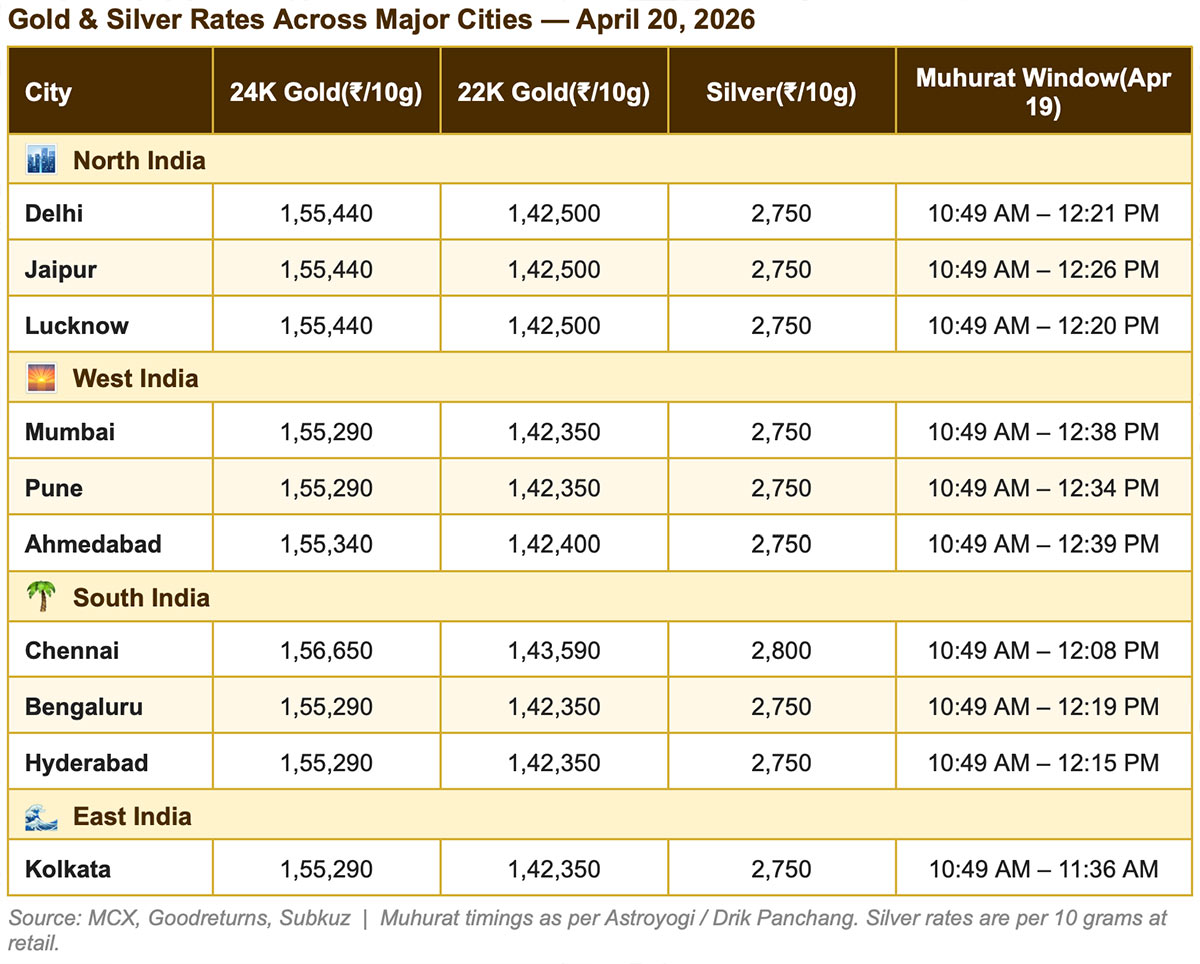
- Tamil Nadu: Chennai and Madurai see queues snaking onto pavements from dawn, families clutching tokens issued the evening before. Chennai also commands a premium rate over most other cities, a reflection of its traditionally high local demand.
- West Bengal: The festival overlaps with the Bengali new year’s sensibility of fresh beginnings, making gold purchases doubly significant for Kolkata’s families.
- Gujarat & Rajasthan: Akshaya Tritiya anchors the wedding season here. Many families buy gold today specifically to fund the ornaments their daughters will wear at the altar months later.
- Kerala: Gold consumption per capita is among the highest in the country. Families visit temples first, then their trusted jewellers often the same shops their grandparents patronised.
- Northern India: Delhi’s Karol Bagh and Chandni Chowk, among the largest gold merchant networks in Asia, record some of the highest single-day volumes. Here, gold is savings, hedge, and heirloom all in one.
The gold rate in India may fluctuate daily, but the ritual of this day does not.
Why Indians Buy Gold: A Story Older Than Any Market
To understand why a price dip on Akshaya Tritiya matters so much emotionally, commercially, and culturally one must first understand why Indians buy gold at all, and in such extraordinary quantities. India’s gold imports hit a record USD 71.98 billion in FY26 alone, a figure that no purely financial explanation can account for.
Gold in India is not primarily an investment vehicle. It is a language one that speaks simultaneously of:
- Love and commitment, woven into weddings as mangalsutras, bangles, necklaces, and rings
- Security and independence, for generations of Indian women, gold was the only asset they truly owned, portable and liquid in times of crisis
- Spiritual devotion, gold is considered a physical manifestation of Goddess Lakshmi; buying it on Akshaya Tritiya is an act of inviting her blessings into the home
- Generational legacy, inherited jewellery carries family memory as much as monetary value
- Practical investment, a reliable hedge against inflation and currency depreciation, trusted across income levels
This history is why the gold rate today in India carries an emotional weight that no stock ticker can replicate. When prices rise, families feel proud of the gold in their lockers. When prices fall, they feel the call to buy more. It is a relationship with metal that functions less like investing and more like devotion.
Weddings, Daughters, and the Long Game of Gold
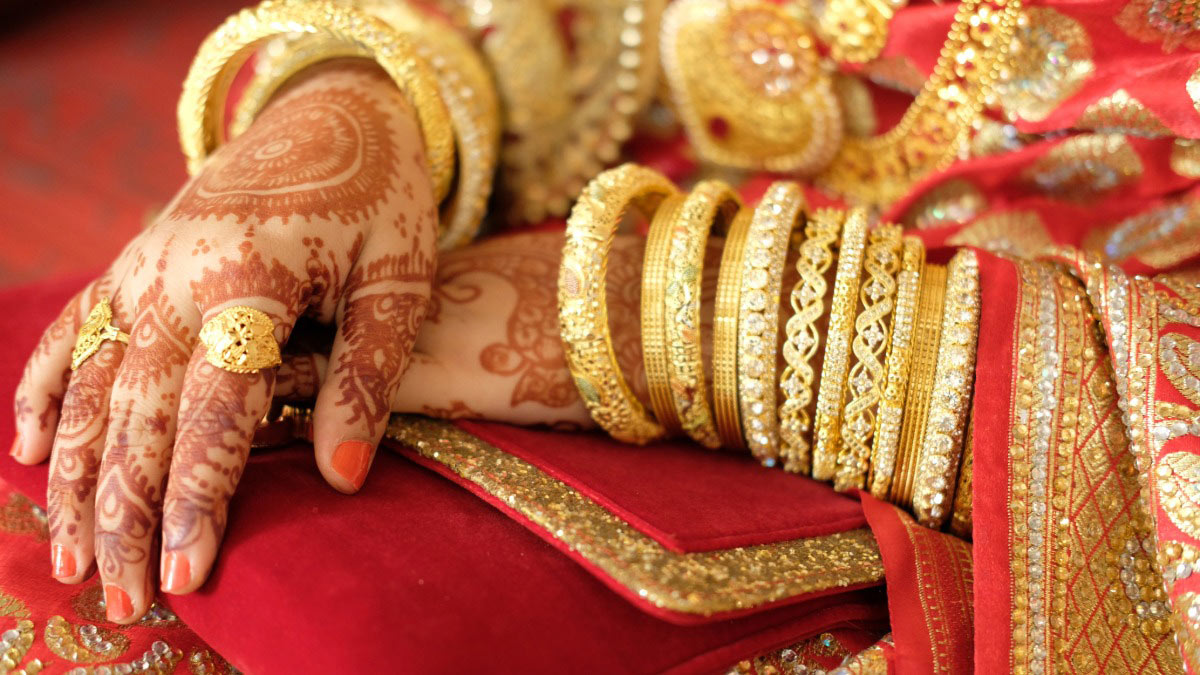
There is a particular category of buyer that drives Akshaya Tritiya volumes more than any other: the Indian parent of a daughter. In many communities across the country, the tradition of Streedhan the gold a family gifts a bride as her own rightful wealth remains very much alive. Grandmothers save for years. Fathers set aside bonuses. Mothers compare designs at family gatherings months before the wedding. And Akshaya Tritiya, given its auspiciousness, is the day many of these families choose to make that purchase.
A price correction, even a modest one, at this moment in the calendar feels almost providential. Jewellers report that even buyers who had mentally committed to the day regardless of price feel a surge of enthusiasm when the gold rate today is lower than the week before. Sentiment, in the gold market, is its own kind of fuel.
The generational habits around gold investment are equally resilient. Buyers on Akshaya Tritiya 2026 broadly fell into three types:
- The traditional buyer, purchasing physical jewellery for a daughter’s trousseau, a family puja, or to mark a milestone, often guided by a family jeweller of decades’ standing.
- The occasion investor, buying gold coins or small bars as a store of value, increasingly through hallmarked government-recognised outlets.
- The digital adopter, using Systematic Gold Investment Plans (SGIPs) or sovereign gold bonds as modern equivalents of physical accumulation, though even many of these buyers visited a physical store today for the ritual of it.
There is something about holding the gold, feeling its weight, that no app quite replicates.
Silver’s Quieter Moment in the Sun
While gold commands the cultural headlines, silver prices in India tell their own story on days like these. Silver fell sharply on MCX futures crashing by over 2% though physical retail prices held relatively steady, with 10 grams trading at around ₹2,750 across Delhi, Mumbai, and Kolkata, with Chennai commanding a slight premium at ₹2,800.
Silver has long been Akshaya Tritiya’s understated companion. Popular silver purchases on this day include:
- Silver coins and small bars, gifted to children or kept as symbolic investments
- Silver diyas and pooja thalis, for religious use, especially in Maharashtra and Karnataka
- Idols of Lakshmi and Ganesh, considered deeply auspicious when bought on this day
- Silver utensils, particularly in Tamil Nadu and Andhra Pradesh where silverware holds ceremonial significance
For budget-conscious buyers young couples setting up homes, first-time investors, students gifting something auspicious to parents silver offers participation in the ritual without the full weight of gold’s price. The act of buying something precious on this day, however modest, is what counts.
Where Markets End and Meaning Begins

There is always a temptation, when writing about gold and silver prices, to reduce the story to supply and demand, to geopolitical triggers and currency movements. And those forces are real the Strait of Hormuz did weigh on gold futures on April 20. The strong US dollar did cool sentiment on MCX. These are facts.
But they are not the whole story. Not in India, and not on Akshaya Tritiya.
The whole story is the grandmother in Coimbatore who has been saving for three years so her granddaughter can wear real gold at her wedding. The young couple in Pune who bought their first gold coin together, small and ceremonial, as a way of beginning. The merchant in Ahmedabad who opened his new account books today because his father did, and his grandfather before that.
Gold prices today may be charted on a graph, but the reasons people buy gold in India belong to a different register entirely one that speaks in the language of seasons, deities, and decades. On Akshaya Tritiya 2026, with gold rates dipping at just the right moment, that language found one more willing audience.