Echoes of Antiquity: The Harappan City
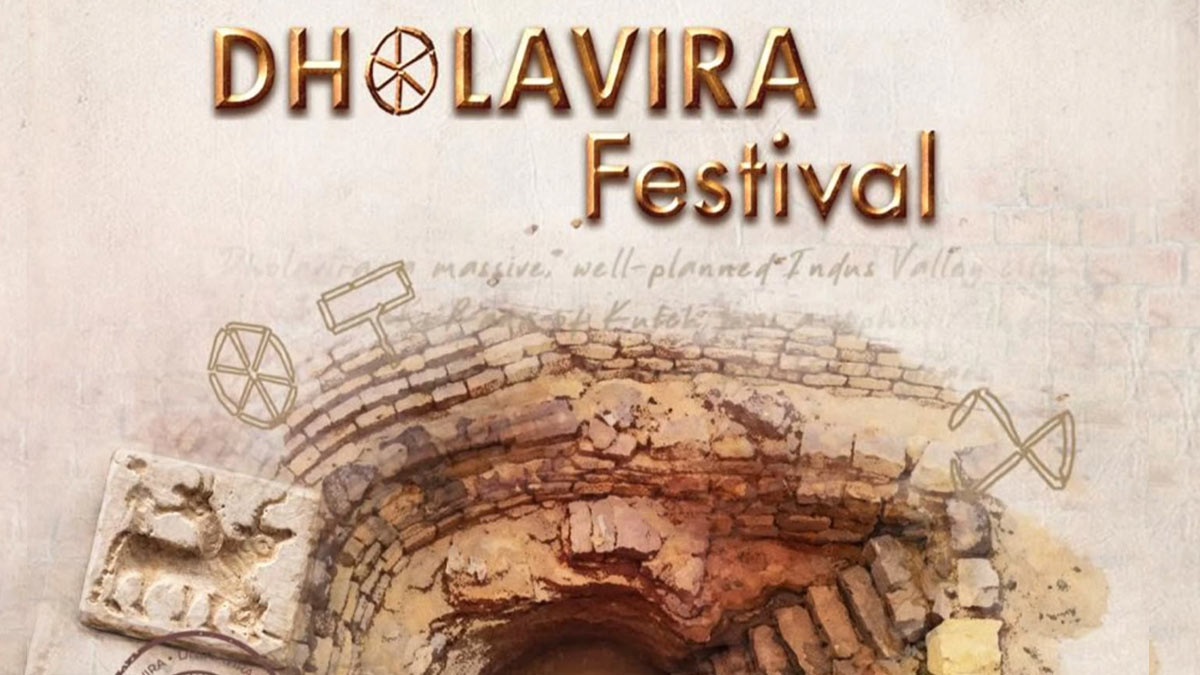
The arid plains of Dholavira in Kutch, Gujarat is on the precipice of hosting the much-awaited Dholavira Festival. It is slated to take place on January 10, 2026. The city of Dholavira is 4,500-year-old, and has been a UNESCO World Heritage Site since 2021. It is one of India’s most crucial remnants of the Indus Valley Civilization. This festival was conceived to bridge India’s glorious past to contemporary artistic heritage.
The festival, organized by Craft of Art, aims to “reintroduce monuments to the people.” This initiative has successfully coalesced craftsmanship wth world-class performances for over 16 years. The 2026 edition includes heritage tours, classical and folk music, artisanal performances, and ceremonial celebrations. Known for one of the world’s earliest sophisticated rainwater harvesting systems with stone-built reservoirs and channels, the site of Dholavira offers the most suitable backdrop for the celebration of this festival.
The Melodic Lineup and Cultural Significance
View this post on Instagram
The 2026 edition enlists numerous musical cognoscenti, including Ustad Fazal Qureshi on the Tabla, Ganesh Rajagopalan, and Selva Ganesh. Alongside the Sufi singer Mooralala Marwada, who is also illuminating the stage, carrying the raw essence of the desert. The festival unfolds its prime from the late afternoon into evening hours. There are guided tours called Footsteps Across Time that will take visitors throughout the ancient cityscape.
Similarly, art installations and craft demonstrations are also present. There will be a wide range of presentations, ranging from Ajrakh Block Print and Stone Bead Making to Tangaliya Weave. The festival has a brilliant lineup of classical musicians and folk singers, such as the Kutch Group – Kalavsa. There will be photographic exhibits like Unearthing the Indus that will let people travel through the archaeological narratives and heritage conservation.
Glimpses of the Festival
| Aspects | Details |
|---|---|
| Primary Venue | Dholavira UNESCO World Heritage Site, Kutch, Gujarat |
| Date & Time | January 10, 2026; 6:30 PM onwards |
| Organizing Body | Craft of Art (supported by Gujarat Tourism) |
| Entry Policy | Free (Prior registration via platforms like BookMyShow is required) |
| Musical Genres | Indian Classical, Fusion, and Kutchi Folk |
| Historical Context | 4,500-year-old Indus Valley Civilization city |
| Nearby Attractions | Road Through Heaven, Wood Fossil Park, Great Rann of Kutch |
Contextualising the Festival within Heritage Tourism
The Dholavira Fest does not cater as a source of entertainment alone, it is a deliberate cultural intervention to boost heritage-based tourism and archaeological education. The setting of the festival at a UNESCO world heritage site draws more people towards it and make them aware of the rich past that India had. This is indeed a heaven for history enthusiasts who wish to explore one of the largest and best-preserved urban settlements of the Indus Valley Civilization.
The site of Dholavira holds immense historial importance in itself. Dholavira surfaced into the mainstream after it was discovered in 1967-68. It is the fifth-largest Harappan site and is acknowledgdeg for its well designed and sophisticated water management system. The site has a series of about 16 reservoirs which facilitated a substantial population belonging to a thriving civilization and allowed them to survive in an arid landscape. The organizers have a clear cut vision for situating the festival in here; they wish to bridge the chasm between the “minds of the Harappans” and the modern Indians.
Key Highlights
- Interactive Heritage Walks that guided participants through the urban layout of the ancient Harappan city.
- Traditional Crafts in Action, including block printing and bead making, bringing centuries-old techniques to life.
- Performances by folk and classical musicians juxtaposing the ancient site with living traditions.
- Photographic Exhibitions that documented the excavation and preservation of the heritage site.
- Cultural storytelling that positioned Dholavira not merely as an archaeological zone, but as a living narrative of human ingenuity.
- The event utilizes “monument lighting” to highlight the intricate stone masonry and urban planning of the Harappans, creating a surreal visual backdrop for the music.
- Travelers reaching the festival will traverse the iconic 30 km causeway that cuts through the white salt desert, often cited as one of the most beautiful drives in India.
- Beyond music, the festival includes audio-visual shows that narrate the history of Dholavira and its trade links with Mesopotamia.
- The festival coincides with the peak of the Rann Utsav (November–February), making it a centerpiece for tourists staying at the Dholavira Tent City.
- A portion of the festival’s objective is to foster “monumental pride,” encouraging the younger generation to value and protect India’s archaeological treasures.
A Deeper Reflection Into The Festival
The Dholavira Festival 2026, represents a very judicious and indispensable evolution in how India presents its heritage. Ancient sites are frequently considered as “static” indicators of a long gone past; however, festivals like these alters this regressive perception and makes it clear that these sites still have ample of importance in shaping the modern Indian identity.
This festival elevates Dholavira beyond “ruins” and “relics” of the past and display the actual relevance of the site. It is a heritage revival drive that brings everyone to have a personal encounter with the pieces of the glorious days that once was a reality. For the “digital-first” generation, initiatives like this makes art and history “cool” again. As the world moves forward and is getting equipped with AI, peeping back at sites like Dholavira, inspires one to adopt sustainable measures related to water and systemic human progress.
Takeaway
The Dholavira Festival 2026 brings the pulse of life back to Dholavira. By situating music, craft, performance, and guided interaction within the precincts of one of the earliest urban settlements known to humanity, this festival challenges visitors to reimagine history as something lived rather than merely observed. Moreover, Entry is free for all.
As heritage tourism continues to expand in India, such initiatives can serve as models for sustainable engagement, where education, artistry, and archaeological stewardship converge to produce not just footfall, but genuine cultural discourse. It is a mandatory experience for anyone who wishes to feel the heartbeat of India.