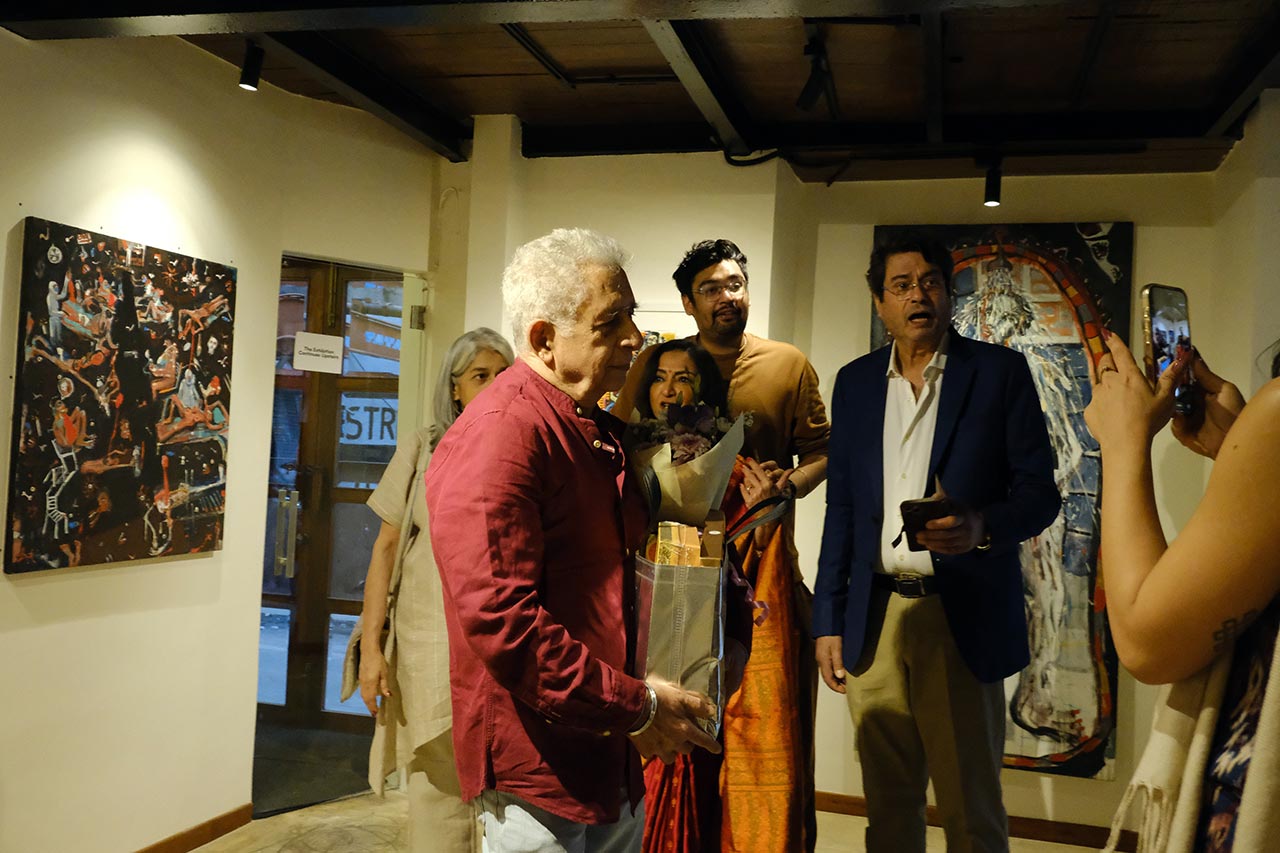
Kala Ghoda, with its impressive artistic extravaganza, has successfully emerged as Mumbai’s art district. It was at this historic lane that a mesmerizing juncture of art and cinema took place as the renowned actor Naseeruddin Shah joined the exclusive walkthrough of “Where is Jennifer?”, the current solo by artist Aditya Singh, at Method Kala Ghoda.
The eve of December 18 was filled with a different warmth as the attendees, along with Naseeruddin Shah, scoured through Aditya’s paintings, delving into an intellectual drive, as the artist is said to have an idée fixe with the “elusive.” Shah’s demeanor and temperament towards the exploration of art were a plus for everyone accompanying them. Shah navigated through the gallery while engrossed in a meaningful conversation with Aditya. Interestingly, the gallery is filled with artworks that wantonly cherish distortion, implausibility of memory, and the liberation found in creative failure.
The Anatomy of an Obsession: Finding Jennifer
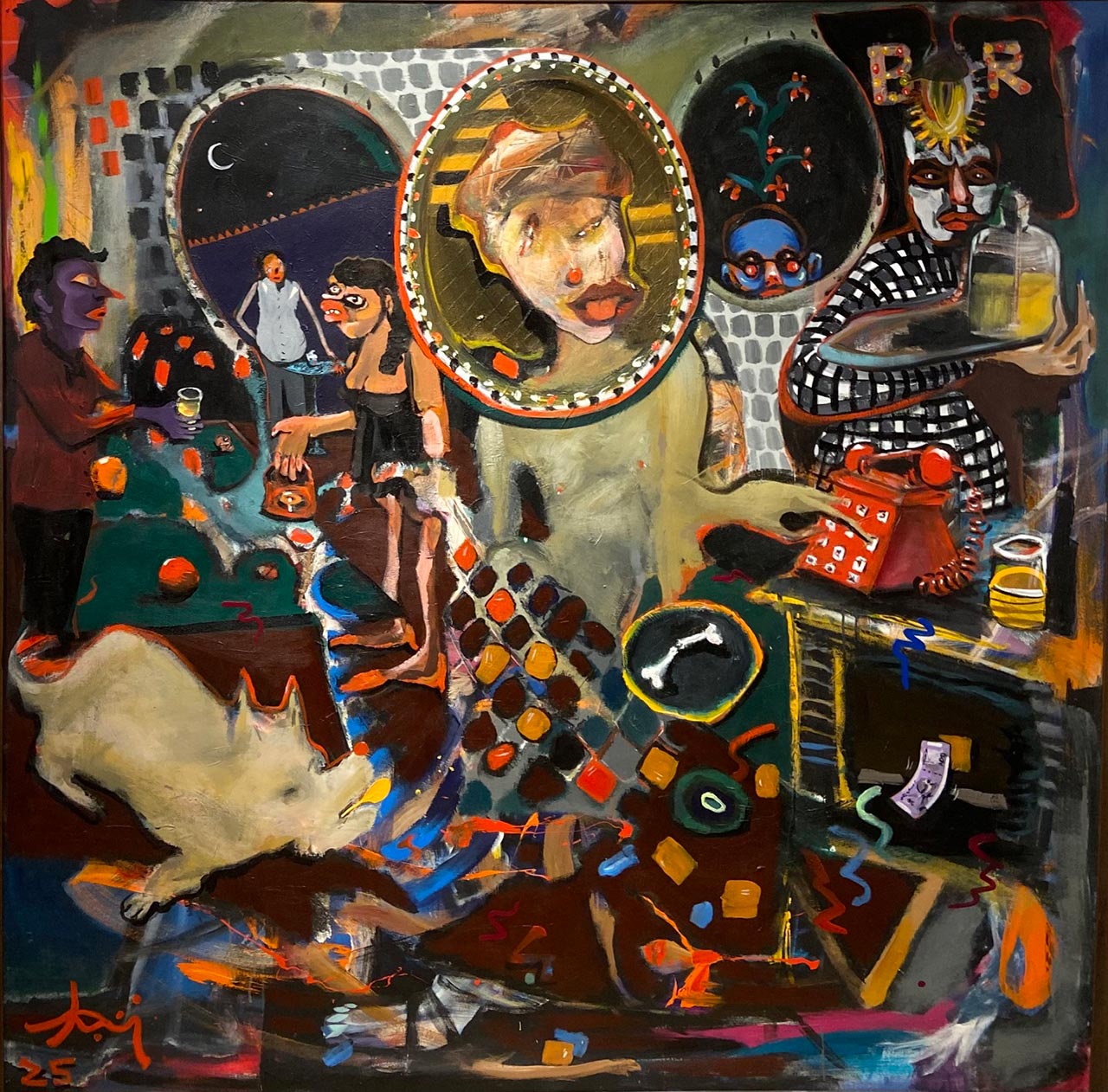
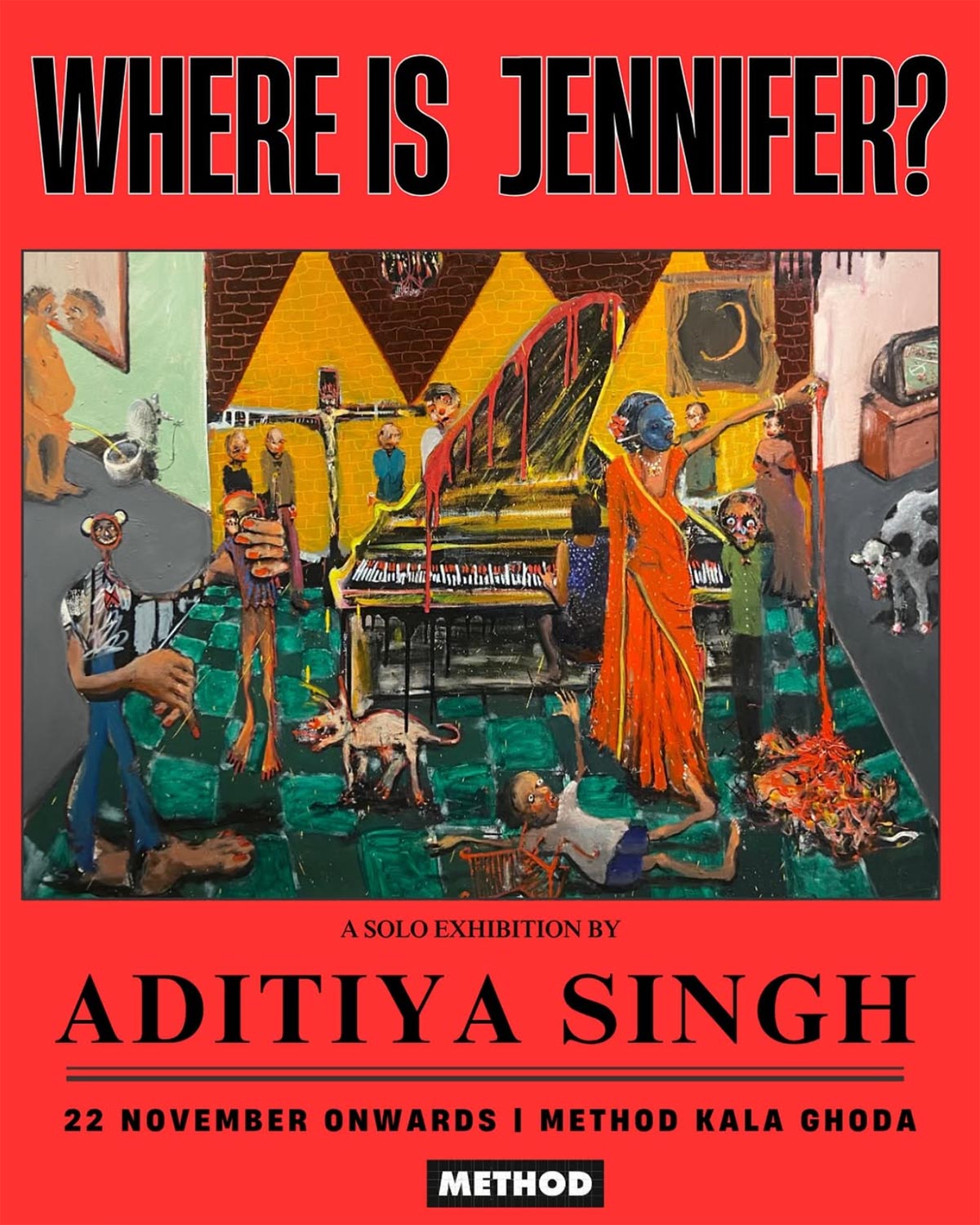
“Where is Jenifer?” is a latest corpus of art that consciously plunges into the cracks and splits of presence, illusion, humour, and absurdity reverberated through artistic repetitions. The exhibition is on display till December 28, 2025. It is en route to an invigorating exploration through one of the world’s most conspicuous faces: Jennifer Aniston. The artworks combine acrylic, ink, and watercolour compositions that probe questions such as whether art matters if it’s not accurate, and whether someone’s obsession is meaningful even if it does not achieve any end.
Aditya’s uniqueness lies in the fact that he is more inclined towards instinct rather than counting on precision. His path of art embraces distortions in the form of blurred faces, dissolved forms, disappearances, and consecutive reappearances. He touches the emotional fields with an intuitive signature and employs techniques such as pareidolia. This technique enables an artist to depict “human features” through random objects placed in a particular alignment. Aditya somehow excavates faces by fluke. In his trial and error, Jenifer occurs and disappears, but she is never presented as a portrait, rather as an encounter.
Naseeruddin Shah himself is a stupendous performer on screen and knows the vastness of emotions. His valuable comments throughout the walkthrough highlighted the essence of this engagement. He beautifully acknowledged the intersections of art (painting) and acting and pointed out their similarities, such as the use of gestures and imagination in both domains that reveal the unseen. His physical presence elevated the atmosphere of interpretative understanding.
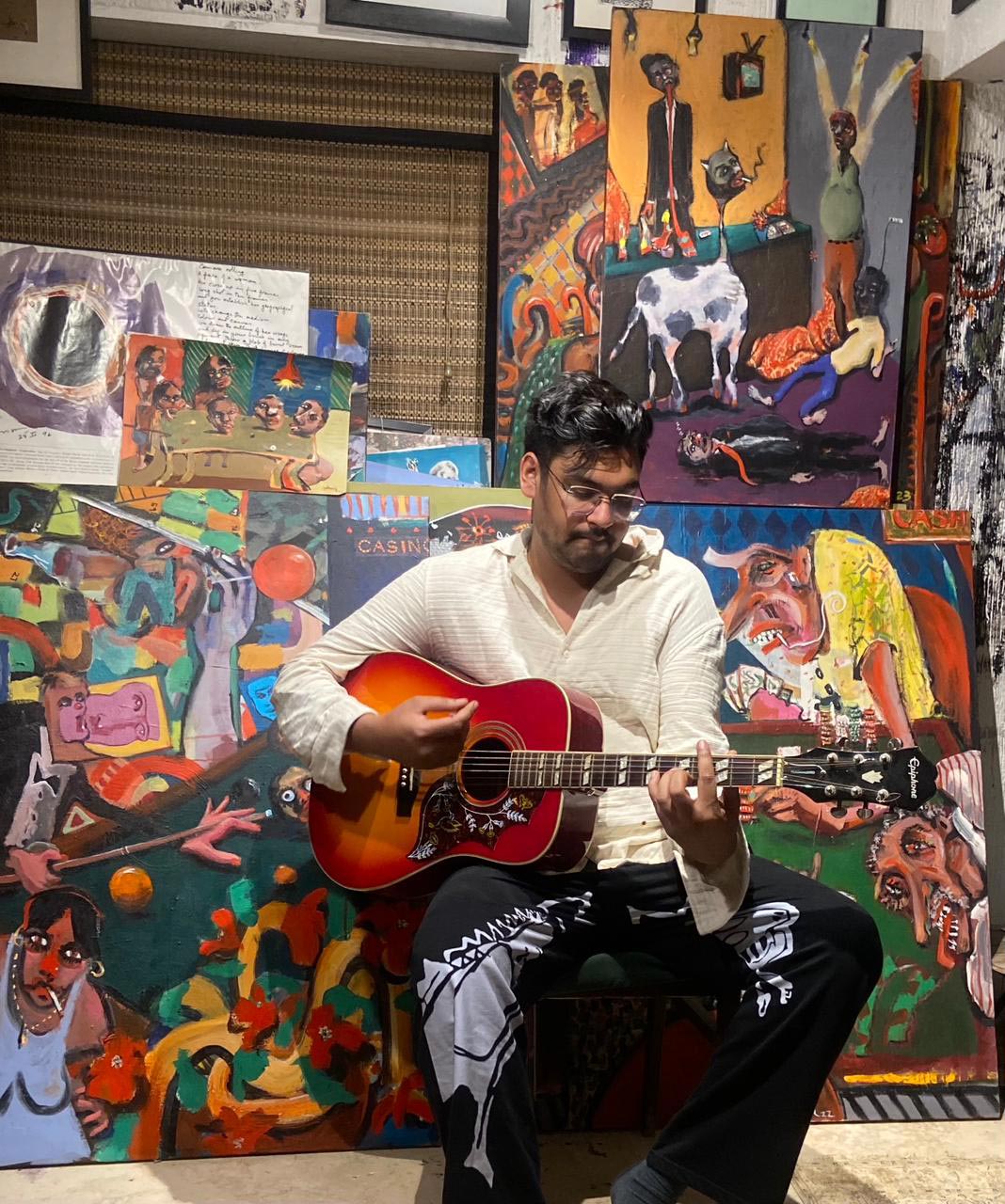
Aditya also displays a strong leaning towards “failure.” He attempts to unveil an unfiltered emotional truth that is raw and naked. In his paintings, human faces occur as a doppleganger bearing imprints of chaos. His depictions defy traditional ways of expressionism in art and invite the viewers to weave their own interpretative narrative. Beyond these, the exhibition also aligns itself with contemporary themes of how celebrity images are circulated, reproduced, proliferated, and, most importantly, “desired.” Aditya wants his audience to not only see through the facade of his art, but also see what’s not present.
The Experience At a Glimpse
| Aspect | Details |
|---|---|
| Exhibition Title | Where Is Jennifer? |
| Artist | Aditiya Singh |
| Venue | Method Kala Ghoda, Mumbai |
| Exhibition Dates | Ongoing until 28 December 2025 |
| Key Themes | Failure, obsession, illusion, pareidolia, presence and absence |
| Medium | Acrylic, ink, and watercolour |
| Special Walkthrough | Naseeruddin Shah (18 December) |
Key Highlights
- Naseeruddin Shah attended as a special guest on 18th December, contributing interpretive reflections during the artist walkthrough.
- The exhibition explores Jennifer Aniston’s image through expressive, shifting appearances rather than realistic representations.
- Works incorporate acrylic, ink, and watercolour, shaped by instinct and emotional fluidity.
- Core themes include failure, obsession, pareidolia, and the tension between presence and absence.
- Aditya’s artistic career spans visual art, cinema, music, and arts education.
- The Artist uses chance textures to “excavate” figures, making the act of viewing an active search rather than passive observation.
- The canvases are described as “containers for the overflow of the mind,” created in the solitude of the artist’s room to capture noise, intensity, and dream logic.
- Aditiya’s background includes creating art for acclaimed films like Autohead and On the Blue Canvas, as well as album art for the indie music giant Lifafa.
- Beyond the gallery walls, his commitment to art education through Teach for India and Saturday Art Class adds a layer of social consciousness to his professional profile.
- The works resist “tidy narratives,” staying open and raw to reflect the shifting pulses of human emotion.
Beyond the Gallery: Context and Dialogue
Aditya is one of those contemporary artists whose art values emotional truth over accuracy and precision of representations. Patterns like this can also be traced in the works of international artists such as Andy Warhol’s Marilyn series to contemporary artists working with media fragmentation and identity replication. Contextualizing this, “Where Is Jennifer?” also becomes a part of this saga, critically examining the human tendency to cling to familiar faces and the way people grapple with tracing a meaning within the periphery of these blurred lines.
Moreover, he willingly embraces the aspect of failure as one of his primary artistic elements. He denotes a “philosophical shift” through this. It is his way to impart the message that the attempt may hold more significance than the outcome. He also emphasizes that frustration, humour, and imperfection together generate artistic sincerity.
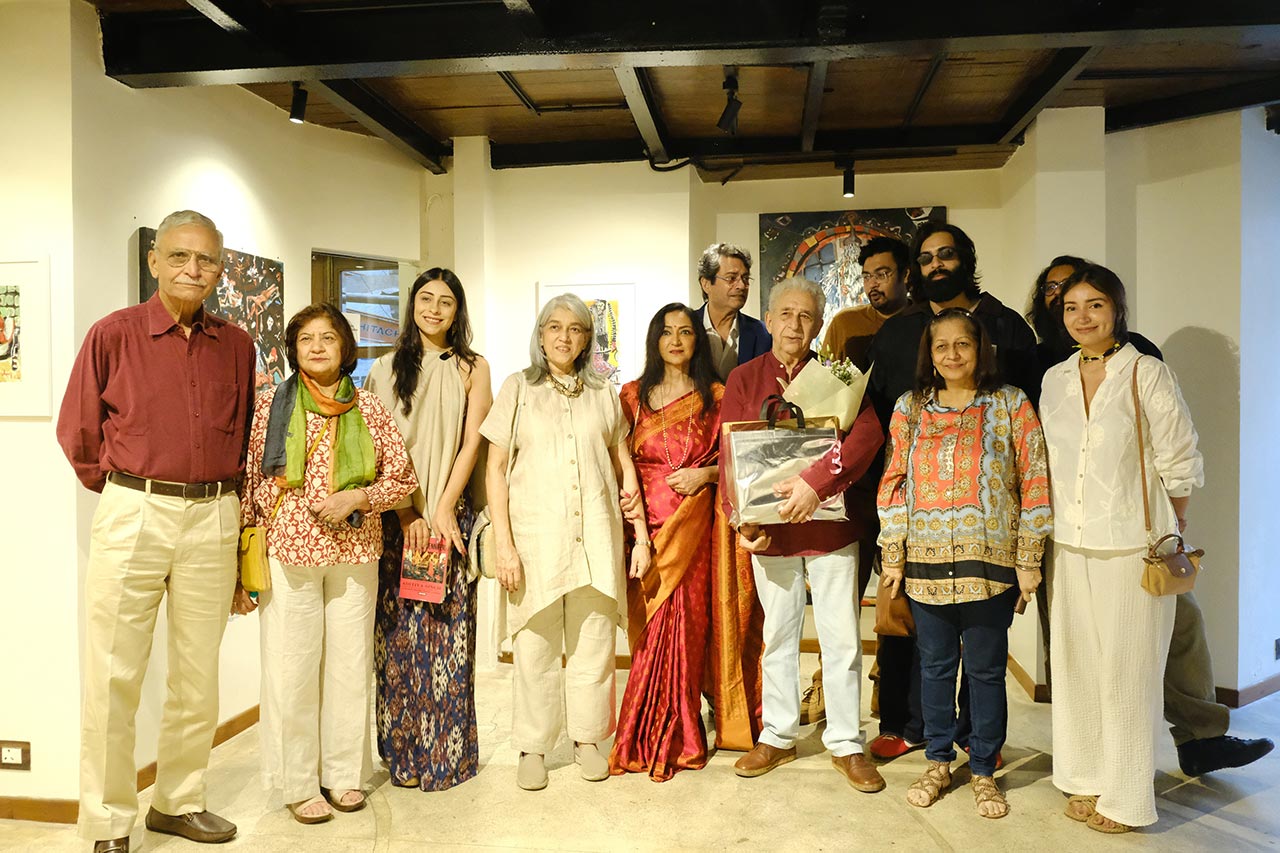
As Naseeruddin Shah joins the walk, he propels a different set of artistic vigour as he attaches the whole cinematic canvas with the paintings. He opens up about the thoughts, fears, and fascinations that shape creative output. His presence was indeed a symbolic endorsement of the exhibition. But beyond that, it was more about dialogues on bridging art and performances to create a space of shared emotions. As they moved past each canvas, the next in line welcomed them with a cinematic mood and vibrant dash of colours. These canvases do not submit to a stringent conclusion; they let viewers discover minute elements, nuanced perspectives, and then form an opinion.
The Beauty in the Breakdown: A Critical Reflection
Where Is Jennifer? is not a show that seeks answers. It asks instead why we look, what we expect to find, and how obsession reveals emotional truth. Today, famous frames are endlessly reproduced, perfected, and polished in a loop that might help it reach a wider audience, but it gets endlessly mediated as well. Aditya’s work challenges the viewer to consider what it means to search for someone who exists everywhere and nowhere.
Also, by inviting Naseeruddin Shah, a man who has spent a lifetime mastering the “truth” of a character, Aditiya Singh cleverly highlights the irony of his own work: the more he “fails” to capture Jennifer Aniston, the more “truthful” the painting becomes as a reflection of human longing. His presence deepend the weightage of this exploration.
There exists a sense of poetic touch about an artist who admits defeat at the hands of his muse and then chooses to hang that defeat on a gallery wall. It dilutes the power dynamics from the subject of portraiture, i.e., the celebrity, to the process of capturing the figure of frame. This exhibition is not about Jenifer Antison, but uses her identity as a reflective tool to mirror the viewer’s personal obsessions and the messy ways people opt for while trying to sustain their admiration towards a renowned person.
The present world is always concerned about the end, ignoring the back story, neglecting the process of the yield. Thus, this showcase consciously attempts to fit people’s perspectives to the “process.” The artist mentions that the “apparition” found in the chaos is often more interesting than the person who inspired it.