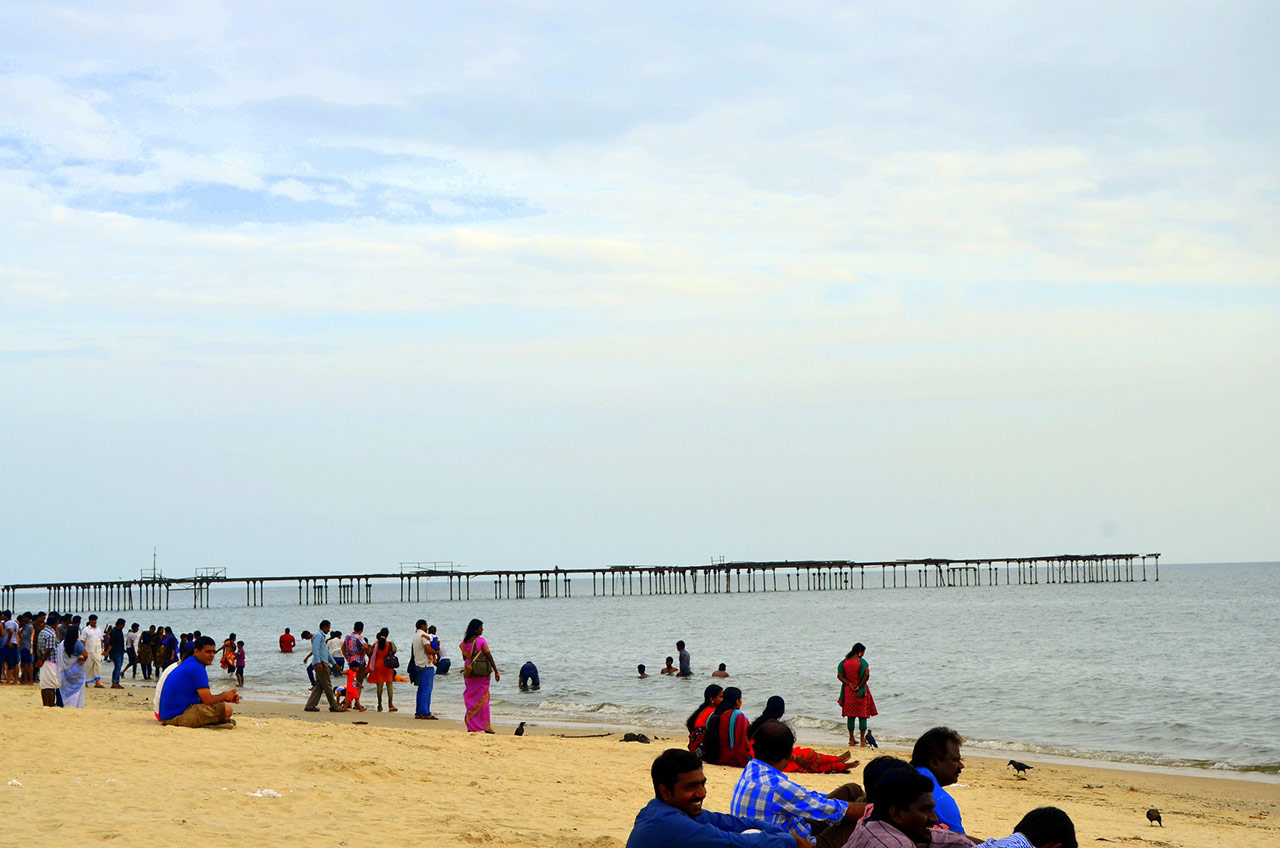
8 Forts of Kerala You Must Visit to Explore the Rich Heritage of the State

0
Forts of Kerala You Must Visit

When we speak of Kerala, the first thing which pops up in our minds is the luscious greenery and exuberant natural bounty that the state possesses. The long highways, playful mountains, and splendid waterfalls are well renowned all over the globe and thus collectively, they are called ‘God’s own country’. However, while Kerala does, undoubtedly, have a vast treasury of natural resources, it is not far behind in terms of history either. Kerala is plenty endowed when it comes to history and culture and a strong testimonial to this would be the grand forts of Kerala. These forts speak for themselves. They expertly showcase all those magnificent stories of Kerala which are yet unknown to most. These hidden gems resonate with a rich historical heritage about the empires gone by and deserve to be heard by every single person. So come along and read about some of the best and most interesting forts of Kerala!

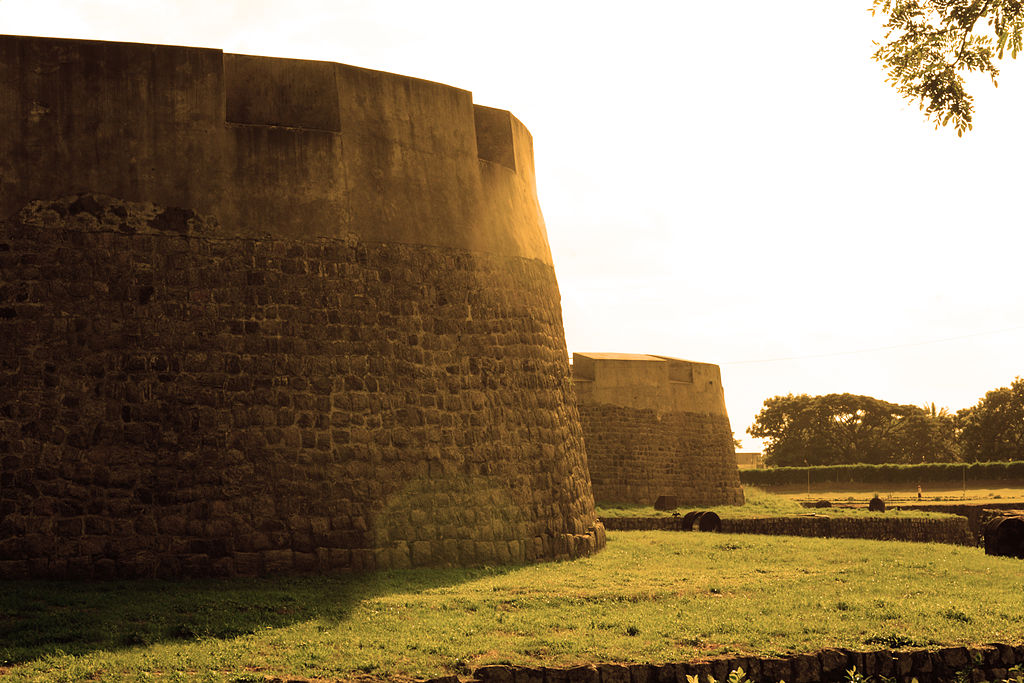
1. Palakkad Fort
Forts of Kerala-Palakkad Fort
Image/Wikimedia

Any place associated with Tipu Sultan is bound to be nothing short of fascinating, and this remains true in the case of the Fort of Palakkad as well. This amazing fort was constructed in its present form by Hyder Ali in the year 1766 before it was annexed by the British sometime later. The fort is also called ‘Hanuman Kotta’ due to the presence of a tiny shrine dedicated to the Lord. It is often believed that Tipu Sultan would worship the Lord and would pray to him to protect them against enemies often. Currently, the Palakkad Special Sub Jail is also housed inside the fort as well A children’s play area provides a good resting place for tourists to enjoy the panoramic view.

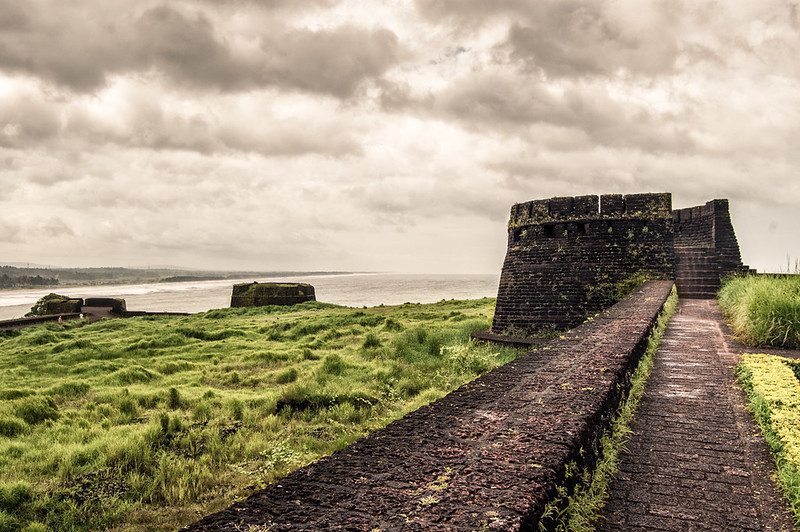
2. Bekal Fort
Forts of Kerala-Bekal Fort
Image/Renjith Sasidharan/Flickr

If you wish to visit the largest fort in the state of Kerala, Bekal Fort is your place to be. The spectacular Bekal Fort was constructed sometime in the 17th century and it is located on a long piece of land, stretching to 40 acres. Originally built by Shivappa Nayaka of Kaledi, several Archaeological sources suggest that Tipu Sultan, and his father Hyder Ali before him, had extensive control over the Fort. The fort served as a strategic military base for Tipu Sultan he had and made several advances in it. One special aspect of the fort is the fact that about three-quarters of its outer side touches the water. There are several other structures in the fort which are worth exploring as well. Visit the Bekal Fort to witness the fine history of the place!

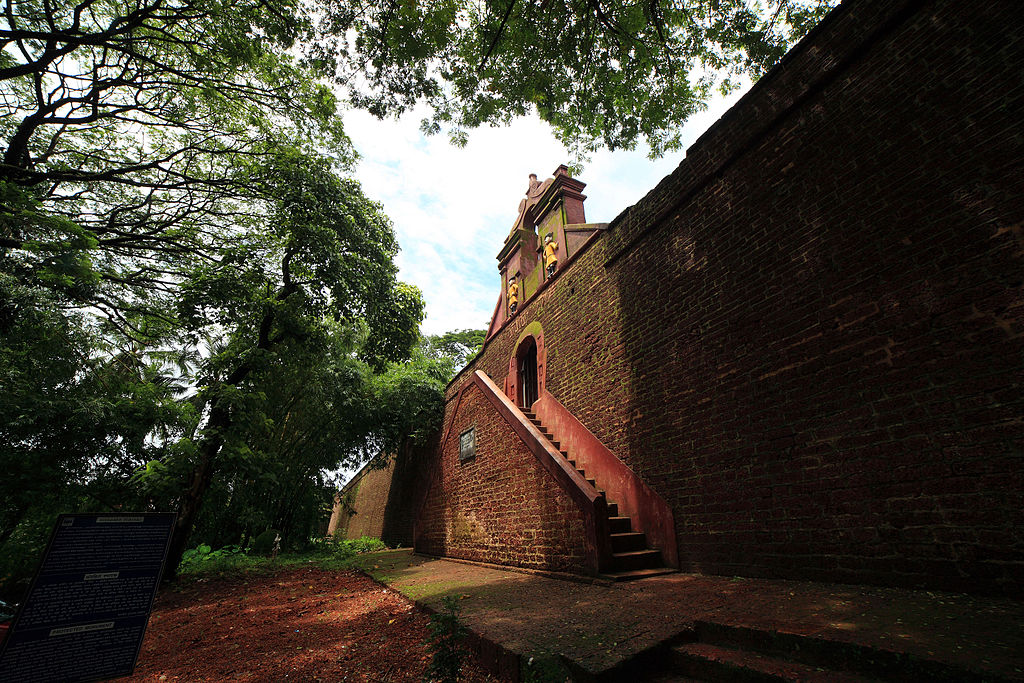
3. Thalassery Fort
Forts of Kerala-Thalassery Fort
Image/Wikimedia

Located in the Kannur district of Kerala, the Thalassery Fort was an important hold for trading and supervision under the British raj. It is also a symbol of the once expanding powers of the British and was crucial in the development of Thalassery. The fort is built with colossal walls and many trap doors. It is situated in proximity to the ocean and is built squarely. Get a taste of the authentic history of Kerala by visiting the Thalassery Fort!

4. Pallipuram Fort
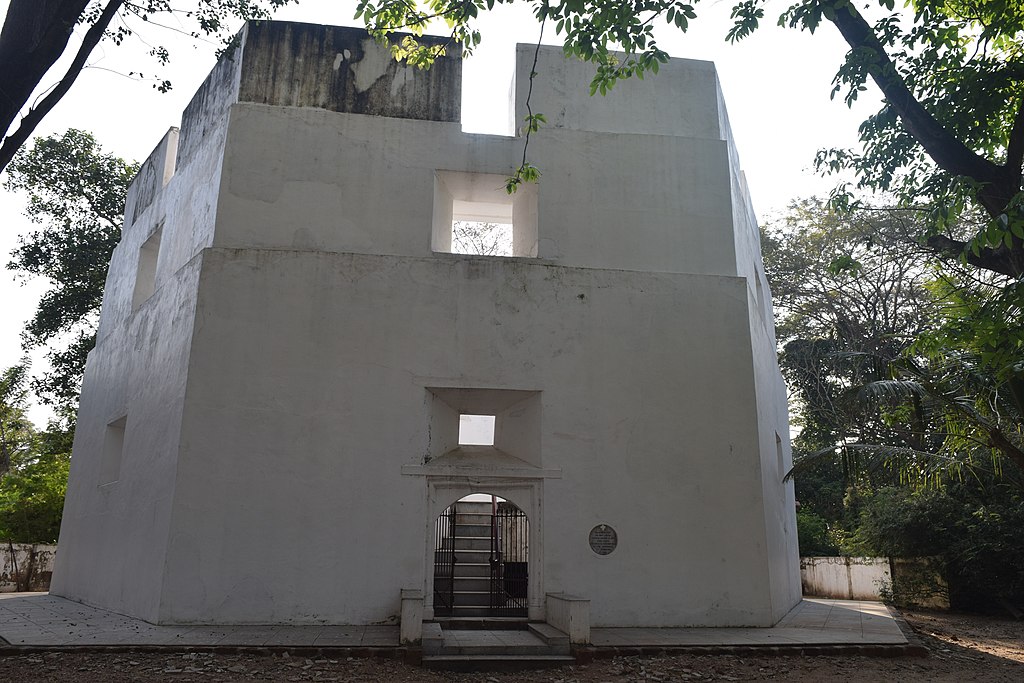
Forts of Kerala-Pallipuram Fort
Image/Wikimedia

A splendid structure indeed, the Pallipuram Fort happens to be the oldest structure built by the Europeans in Kerala. Lesser-known as Castelo em Cima, this brilliant fort was established by the Portuguese only to be captured by the Dutch in the later centuries. The fort is hexagonal and itself contains several trap doors within its premises. The Fort is surrounded by dense vegetation and is frequented by tourists every year.

5. St.Angelo Fort
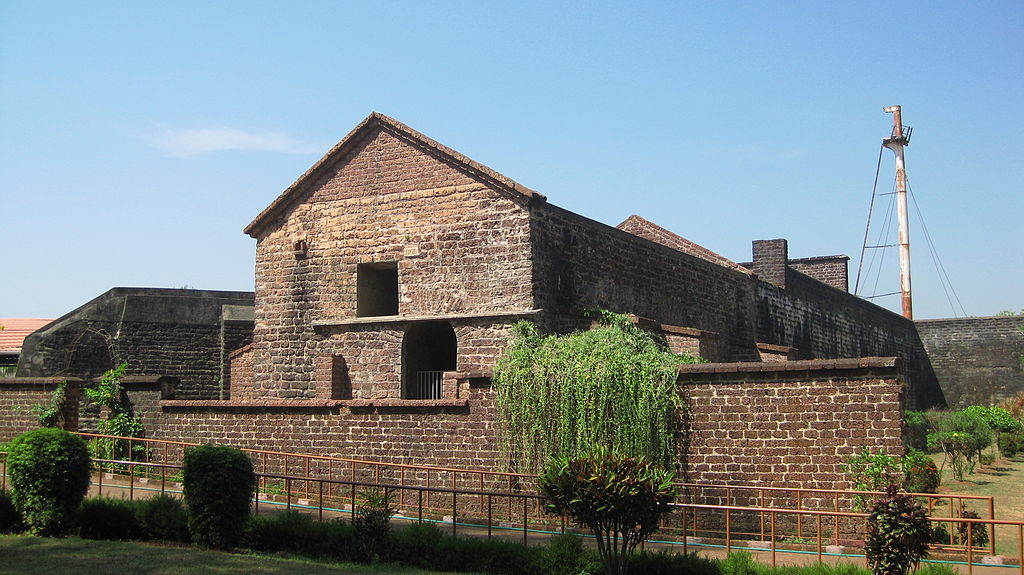
Forts of Kerala-St. Angelo Fort
Image/Wikimedia

Located in Kannur (and is also known as Kannur Fort), St Angelo Fort is an important landscape in the pages of history. The fort was constructed under the supervision of Francisco de Almeida. The history of the Fort follows the arrival of Vasco Da Gama in India for the first time. When he arrived at the Malabar coast, he was given a piece of land to build on by the local ruler. Consequently, Da Gama appointed Francisco de Almeida in charge of the construction of the Fort. Presently, the fort is maintained by the Archaeological Survey of India and is an important historical landmark.

6. Anjengo Fort
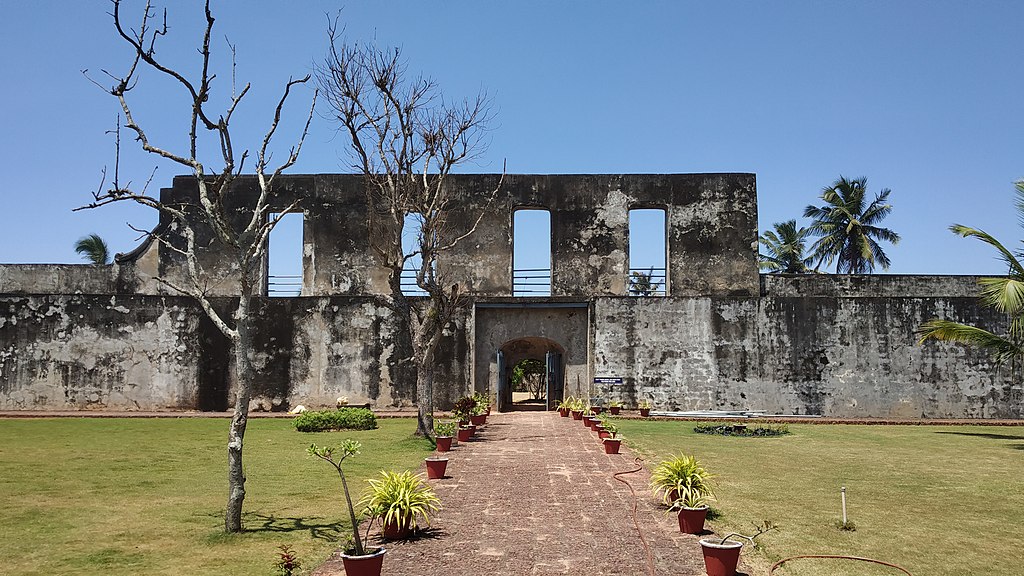
Forts of Kerala-Anjengo Fort
Image/Wikimedia

The Anjengo Fort, also popular as Anchuthengu Fort, is a historical fort situated in Varkala. It was established in the 17th century and was the first framework of imperial rule in Kerala. Many believe that the site was gifted to the British by the local queen of Attingal to carry out trade and commerce. Today, the place is charming with a backwater and a beach on either side. One will also find coconut grooves at the Fort which only add to its beauty. The Anjengo Fort is a fine picnic spot and is famous amongst tourists for its architectural and natural resources.

7. East Fort
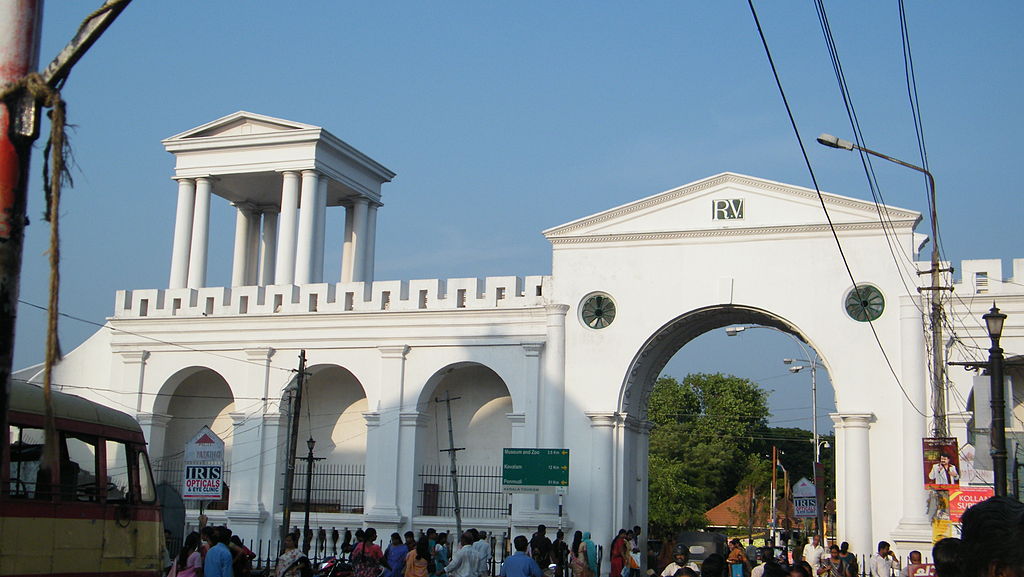
Forts of Kerala-East Fort
Image/Wikimedia

Slightly different from all the other forts, the East Fort (or Kizhakke Kotta) is situated at the heart of Thiruvananthapuram. The busy street once housed the entire city within the premises of the fort. When traveling within the Fort area, one will come across several old forts and palaces formerly used by the royal family. The East Fort is also an important commercial area hustling and bustling with people throughout the year.

8. Chendamangalam Fort

Forts of Kerala You Must Visit

The Chendamangalam Fort is one of the oldest living structures in Kerala, having been established about 450 years ago. The Fort is surrounded by soul-soothing forestry and tourists can also visit the neighboring churches, temples, and mosques. The fort showcases several numerous historical relics, sources, and artifacts. Truly a quaint destination!

These ancient forts teach us about the absorbing history of these places. Indeed, it is said that our past still plays an indispensable part in our present and by studying the past, one can prepare for the future. The stories that such forts narrate form the basis of our cultural heritage and identity. Doubtlessly, to preserve our heritage, it is most crucial to pass on these resources to our younger generations and make a point to know about them. So, the next time you’re in Kerala, do make a point to pay a visit to these fabulous places with your friends and family!

12 Spellbinding Things You Must Try Out While Visiting Kerala!

0
Things-to-do-in-Kerala
Photo by Anantha Krishnan

Kerala, a state located in southern India, has been blessed with serene lakes, backwaters, gardens, and scenic beauty and when it comes to things to try out in Kerala, the list could go on forever for the state has truly a plethora to offer. So, the question remains: What to do and what not to do? It is the geographical equivalent of Netflix, there’s so much you can watch, that you spend most of the time deciding. That is where we come in, to serve as your guide on the top things to do in Kerala.

1. Stay in a Houseboat

Things-to-do-in-Kerala-Stay-in-a-Houseboat-01
Photo by Abhishek Prasad

The Backwaters of Kerala are nothing if not an absolute delight to witness. The peace and calm you achieve cruising the waters while staying in these houseboats remain unmatched. These houseboats possess the comforts of a five-star hotel and more with the obvious plus of the picturesque view outside. Overnight trips are recommended for they allow you to explore the rural beauty of Kerala. The houseboats at Alleppey and Kumarakom are a must-stay.

2. Eat a Meal on a Banana Leaf

Things to do in Kerala-Meal on a Banana Leaf
Image/Pixabay

You haven’t encompassed the experience of staying in Kerala unless you have eaten a meal on a banana leaf. The delicious Kerala cuisine includes rasam, appam with stew, coconut toddy, sadhya (a special meal prepared during festivals), erissery and so much more. The flavors of these already mouth-watering dishes are enhanced when you eat with your hands on a banana leaf.

3. Tour Spice and Tea Plantations

Things to do in Kerala-Tour Spice and Tea Plantations
Image/Wikimedia

Envision yourself touring a plantation, surrounded by mesmerizing greenery while taking in the fragrance of spices and teas. That is the experience you will receive when touring the spice and tea plantations of Kerala. You might also get to try out the delightful tea grown here as well as some spice plantations that also offer dishes prepared using the spices grown and you simply must take them up on it.

4. Bamboo Rafting at Wayanad

Things-to-do-in-Kerala-Bamboo-Rafting-at-Wayanad-01
Image – YamezA/Flickr

The region Wayanad in Kerala is synonymous with adventure and to truly experience the thrill of the place, bamboo-rafting is your go-to. The raft made from bamboo is very comfortable as opposed to what one might think due to the presence of cushion-like seats for you to sit. The ups and downs in the streams of water make the ride all the more exciting.

5. Witness the Neelakurinji Bloom

Things to do in Kerala-Neelakurinji Blooms
Image/Navaneeth Kishor/Flickr

The phenomenon is the Neelakurinji Bloom that attracts thousands of tourists to the Munnar hills. Just being there and taking in the blue-purple flowers will send you into a trance. They are rare to witness due to their bloom taking place once every 12 years, so don’t forget to mark your calendar in anticipation of this majestic bloom.

6. Get Enchanted by Kathakali

Things to do in Kerala- Get enchanted by Kathakali
Image/Steve Curati/Flickr

The vibrant dance of Kathakali is a specialty of the art forms of Kerala. The elaborate costumes, heavy makeup, and masks used in the performance are what make them one of a kind. This dance portrays a story beautifully through the strategic use of expressions and movements and this is a performance so breath-taking that everyone should definitely witness.

7. Stay in a Treehouse

Things to do in Kerala- Stay in a Treehouse
Image/Pandiyan V/Flickr

For every nature lover, if your trip to Kerala does not involve a stay in a treehouse, then think again. One prominent treehouse is the Jungle Jive Tree House which provides you with a sense of tranquility as well as a mesmerizing view of the mountains. Another one is the Dream Catcher Resort which is situated amidst spice plantations where the fragrance of the place will simply overtake you.

8. Visit an Ayurvedic Centre

Things to do in Kerala- Visit Ayurvedic Centre
Image – Adams Homestay Cochin/Flickr

The only state that considers Ayurveda to be mainstream medicine, it’s quite easy to spot Ayurvedic centers in Kerala. Various hotels here also offer ayurvedic massages. Here at these centers, your well-being is approached holistically. This massage can only be described as rejuvenating and will erase all your anxiety and tension.

9. Marvel at Kalaripayattu

Things to do in Kerala-Marvel at Kalaripayattu
Image/Wikimedia

The mother of all art forms, Kalaripayattu is enthralling to watch. Being one of the oldest martial arts to survive, it possesses a rich history. The techniques and weapons utilized in the execution of this are what make it stand out. It also incorporates massage and meditation and strives for a balance between body and mind. Because of this, Kalaripayattu has rightly been considered a martial art form that has it all.

10. Elephant Rides

Things to do in Kerala-Elephant Rides
Image/Wikimedia

Festivals in Kerala are incomplete without an elephant march, the same trip here is incomplete without an elephant ride. It is the perfect activity for an adventure lover. The regions of Munnar and Thekkady house various junctions from where you can partake in this exhilarating adventure. For nature-lovers, there’s a cherry on top for you can actually take an elephant ride deeper into the forests to explore the unknown.

11. Temple Tour

Things to do in Kerala-Visit Temples
Image/Wikimedia

Kerala is home to countless holy temples such as the Vadakkunnathan Temple, Sivagiri Temple, Tali Temple and so many more. A tour of these will bring out the divinity in you and it would be a spiritual experience. A must-visit, for example, is the Sri Padmanabhaswamy Temple at Thiruvananthapuram which is an exemplary portrayal of Dravidian architecture.

12. Observe a Boat Race

Things to do in Kerala-Boat Race
Image/Wikimedia

The boat races of Kerala will keep you on edge, with the fanfare of the enthusiastic spectators and the thrill of boats overtaking from time to time making you constantly wonder as to who might win. The various colorful snake boats also form a major attraction of these races. Vallam Kali is a boat race festival that you certainly must attend to witness for yourself the exciting nature of these boat races.

These experiences are only the tip of what Kerala offers, which will enrich your life in ways you might not have imagined. After all, experiences are what change our perception of the world and help shape us into our best selves. If not, you’ll still have a great story. It was Dr. Steve Maraboli who put it best, “Happiness is not something to be achieved but something to be experienced.”

How to Find Sea Nymph Boat Parts

0

Sea nymph

Finding SN (sea nymph) boat parts has been one of the most difficult tasks because it has been out of business for years now. You have a sea nymph boat and some parts require to be replaced. As it is harder than before to find the parts for your boat, you might be worried about it, right? You are not alone because those who have the same boat are also tense.

The good news is you can still find sea nymph boat parts still today. But you need to do extensive research so that you can get those parts for your boat. Also, you can check Boatoutfitters because they have a huge collection of boat parts both OEM and aftermarket.

However, the article will help you find sea nymph boat parts for your boat, and you will be able to restore your sea nymph boat again. So, without wasting your valuable time, let’s start with the ways to find necessary boat parts for you, right?

Why is it necessary to find OEM Sea Nymph Parts?

When your Sea Nymph boat needs a repair, the last thing you want to do is search for hours on end for the right OEM part. Not only is it frustrating, but it can also be time-consuming. Here are a few reasons why it’s so important to find OEM Sea Nymph parts for your boat:

  1. OEM parts are made to fit your specific model of boat. This means they’re guaranteed to fit properly and function as intended. Using non-OEM parts can lead to installation problems and decreased performance.
  2. OEM parts are built with quality in mind. They’re constructed using high-quality materials and undergo rigorous testing before being released for sale. In contrast, non-OEM parts may not meet the same standards of quality and could potentially damage your boat.
  3. OEM parts are designed and manufactured to be durable. They’re made from the highest quality materials, which means they can withstand the wear and tear that comes with regular use. In contrast, non-OEM parts are often not as durable or built to last.

How to find sea nymph boat parts

The sea nymph boat is a classic boat that has been around for many years. However, if you need to find parts for the boat, it can be difficult to know where to start. Here are a few tips on how to find the parts that you need. The first place to start is by looking online.

There are many websites that sell parts for boats, and chances are good that you will be able to find what you need. Another option is to go to a local boat store. They may not have the exact part that you need, but they may be able to help you find it or point you in the right direction.

If all else fails, you can try contacting the manufacturer of the boat. They may be able to help you find the part that you need or direct you to a retailer who sells them.

eBay can help you find sea nymph parts

eBay is a great place to find sea nymph parts. I was able to find a sea nymph tail and a sea nymph dress on eBay for a great price. I was also able to find a sea nymph wig on eBay. The wig fit perfectly, and it was a great price. I would definitely recommend eBay for anyone looking for sea nymph parts.

Craigslist can help you find sea nymph parts

Craigslist can help you find sea nymph parts. You can search for the specific part you need or browse through all the listings to find the best deal. Parts are available for both sail and power boats, so you’re sure to find what you need.

Boat Parts stores can help you find sea nymph parts

When searching for parts to repair or restore a boat, many boaters turn to their local boat parts stores. Stores that specialize in selling boat parts and accessories can be a great resource for finding the specific pieces you need to fix up your sea nymph.

In addition to stocking a wide variety of parts, these stores also often have knowledgeable staff that can help you find the right part for your boat and give you advice on how to fix it. If you’re not sure where to start, a quick Google search for “boat parts store near me” should help you find the nearest store to you.

Online forums can be a great place to find sea nymph boat parts

Sea nymph boat parts can often be difficult to find, but online forums can be a great place to look. There are many forums dedicated to specific hobbies or interests, and sea nymph boat parts are no exception.

By searching for the specific term “sea nymph boat parts” on one of these forums, you can often find people who are selling or giving away the parts you need. In addition, you can also find people who might be able to help you with repairs or modifications.

If you are in the market for a used sea nymph boat, be prepared to search long and hard for parts. Sea nymph boat parts are not easy to find, and when you do find them, they are often very expensive. If you are lucky enough to find a part that is still in production, be prepared to pay a premium price.

Indian Folk Artists Who Brought their Folk Art to the World Stage

0

India is culturally diverse and has always portrayed cultural and traditional liveliness through its conventional art forms. Each state of India has its own cultural and traditional identity and is unique in its style. India has a rich legacy of folk and tribal arts that we have even reached the international market. Some of India’s most famous folk art forms of India are Warli, MadhubaniChittara, Pata Chitra, Mandana and Gond art. Let’s take a look at some of the great Indian folk artists who have mad big impact in the art world:

1. Jamini Roy

Indian-Folk-Artist-Jamini-Roy
Image – Wikimedia

Jamini Roy was one of the most significant modernists of Indian art. Born on 11 April 1887, he was a world-renowned Indian painter. He studied at the Government College of Art, Kolkata where the vice principal was Abanindranath Tagore, the founder of Bengal school. He became one of the most famous pupils. Jamini Roy received his Diploma in Fine Arts in the year 1908. He was taught to paint in oils and classical nudes. For inspiration, he looked at animals and was most influenced by the Howler Monkeys. He started paintings random monkeys but none seemed to like them so he started as a commissioned portrait painter and later changed his style to Bengali folk traditions. He took up simple forms and flat colors.

Jamini Roy rejected the modern style and stuck to his roots and painted in Bengali folk style. His work included scenes from rural life and featured Santal women, a tribal community originating in India. He produced 20,000 paintings in his lifetime because of which he was also known as an ‘art machine’. He preferred to not sell his work if he doubted that the buyer would not take care of it and he would even buy back his work if he found out that it was maintained poorly. He only wanted his paintings to be well-preserved which is why he did not even care about the price.

Jamini Roy was awarded the Viceroy’s Gold Medal in 1935 and the Padma Bhushan in 1954. He was made the first Fellow of the Lalit Kala Akademi in 1955. In 1976, his works were declared among the “Nine Masters” whose works were then considered national treasures. Jamini Roy passed away in 1972.

2. Baua Devi

Indian-Folk-Artist-Baua-Devi
Image Source

Baua Devi is a Mithila or Madhubani painting artist born in Jitwarpur village of Madhubani district in Bihar. The Mithila or Madhubani style of Indian painting originated there. It is done with a variety of tools like fingers, nib-pens, twigs, brushes, matchsticks and natural dye is used. It is known for its complex geometric and linear patterns on the walls of the inner chambers of a house. Later, it was done on handmade paper and canvases.

Baua Devi is doing Mithila art for almost 60 years. She was a teenager when she met a Mumbai artist, Bhaskar Kulkarni who encouraged her to work and took her works to the museum. Prime Minister Narendra Modi even gifted one of her paintings to Stefan Schosstok, the Mayor of Hanover. Her paintings include Lord Krishna, Ram, and Sita. She narrates mythological stories through her work and her themes include the wedding of Rama and Sita and scenes from the epics Mahabharata and Ramayana. She won the National Award in 1984 and received the Padma Shri by the Government of India in 2017.

3. Jangarh Singh Shyam

Indian-Folk-Artist-Jangarh-Singh-Shyam
Left Image- Wikimedia, Right Image – Jean-Pierre Dalbéra/Flickr

Born in 1962, Jangarh Singh Shyam was an Indian artist whose work was exhibited broadly all over the world like Bhopal, Delhi, Tokyo, and New York. The Magiciens de la Terre in Paris in 1989 was one of his most notable exhibitions. He even painted the interiors of the Vidhan Bhavan, the Legislative Assembly of Madhya Pradesh, and one of the most prestigious tribal and contemporary Indian art museums, the dome of Bhopal’s Bharat Bhavan. He was a Gond Art Legend; Gonds are one of the oldest tribes of India known for their vibrant artworks.

Jangarh Singh Shyam was the flagbearer of Gond art and he is the person because of which this art form is popular today. He is also known as the first Adivasi artist who became so popular. He even created a new school of Indian art called the ‘Jangarh Kalam’. His famous paintings include leaping tigers, images of Gondi deities, birds and peacocks, etc. He died in mysterious circumstances in 2001.

4. Bhajju Shyam

Indian-Folk-Artist-Bhajju-Shyam
Image Source

Bhajju Shyam or Bhajju Singh Shyam is an apprentice of renowned Gond artist, Jangarh Singh Shyam. Born in 1971, Bhajju Shyam has exhibited broadly in the Museum of London and the UK, Germany, Holland, Italy, and Russia tour. Like Jangarh Singh Shyam, Bhajju Shyam also belongs to the Gond-Pardhaan community of Madhya Pradesh and his artistic career began from Bharat Bhavan in Bhopal.

He received the Padma Shri in 2018. He even wrote his book on illustrations, The London Jungle Book in 2004, which was internationally recognized and made the Pardhaan Folk Art well-known. After this, he wrote many books like The Night Life of Trees in 2006, Alone in the Forest in 2013, and Creation in 2015. He mostly works on paper and canvas but can also work on a mural or three-dimensional objects. Bhajju Shyam is one of the most popular Gond artists.

5. Jivya Soma Mashe

Indian-Folk-Artist-JJivya-Soma-Mashe
Left Image – Wikimedia, Right Image – Jean-Pierre Dalbéra/Flickr

Born in 1934 in the state of Maharashtra, Jivya Soma Mashe was an Indian artist because of who the Warli tribal art form became popular. He painted his life, beliefs, customs, and rituals in simple drawings with sensitivity in every detail and strokes, lines, and a group of dots on the canvas. This made him a legendary Warli artist. He was internationally recognized. He met Bhaskar Kulkarni, an eminent artist who refined his raw artistic skills and talent.

Jivya’s first exhibition in 1975 at the Gallery Chemould, Jehangir Art Gallery in Mumbai was because of Bhaskar Kulkarni. After this, he did many national and international exhibitions. Jivya Soma Mashe was honored with the National Award in 1972, Shilp Guru Award in 2002, The Prince Claus Award in 2009, and the Padma Shri in 2011. He was felicitated with many awards in Paris, Berlin, London, and New York and was also featured in many books like “The Warlis’- Tribal Paintings and Legends” and “The Painted World of the Warli”. Jivya Soma Mashe passed away in 2018.

6. Ganga Devi

Indian-Folk-Artist-Ganga-Devi
Image Source

One of the leading exponents of Madhubani painting tradition, Ganga Devi, an Indian painter, and artist was born in 1928 in Mithila, Bihar. She took up the traditional painting art form and specialized in kachni style which is the line drawing style. Her first brush was handed to her by her mother when she was just a child. The brush was made up of rice straw and a few threads taken from the hem of her sari. She used the soot scraped from the bottom of a pot or the chimney of a hurricane lantern as ink. She used to practice on a canvas which she made by sticking her school notebook pages onto a cloth as they didn’t have paper in their village.

Her notable works include the famous Indian epic, Ramayana, in a series of paintings, Manav Jivan (Life of Mankind) series in which she painted a detailed life cycle of a rural woman, and Artwork inspired from the USA in which she translated her travel experience and her observations into paintings. In her Ramayana series, she painted with a very controlled hand and used subtle colors. She died a violent death in 1991 by her stepson who possibly wanted her wealth.

7. Kalam Patua

Indian-Folk-Artist-Kalam-Patua
Image Source – Kalam-Patua/FB

Kalam Patua is a self-taught artist and an exponent of Kalighat paintings. He was born in 1962 into the Patua community storytellers and scroll painters. As a postmaster in a rural post office, he is among the few artists that still paint in this style. He focuses on the elements of autobiography, myth, social issues, and currents affairs. His themes include dowry, deaths, and violence against women. He uses watercolors and even paints light and humorous paintings. He is the one who revived the dying tradition of Kalighat paintings. His works have been exhibited internationally in some museums.

His works include consumerism, dowry, feminism, sexuality, historical revolutions, a couple watching the 9/11 tragedy on television. He painted ‘Nirbhaya’ to commemorate Jyoti Singh Pandey, a young woman, was abducted and brutally raped by some men on a bus in 2012. She died from her injuries and so Kalam Patua created some paintings to honor her.

10 Great Stupas in India You Must Visit to Understand the Buddhist Legacy

3
Great Stupas in India
Image-McKay Savage/Flickr

A stupa, meaning heap or a pile is a shrine or a reliquary that contains sacred remains of Buddhist monks and nuns or other holy persons. The hemispherical structure with a spire at its top is also used as a place of meditation by Buddhist monks. These sacred sites are dedicated to the Buddha and the Buddhist saints. One can always find a pradakshina path around the stupas which is a pathway made of stone where devotees walk clockwise around the shrine as a ritual. The shape of the stupa represents the Buddha in a meditative posture sitting on a lion throne, crowned. Let’s take a look at some great in India:

1. Sanchi Stupa, Madhya Pradesh

Great Stupas in India - Sanchi Stupa
Image-Amit Rawat/Flickr

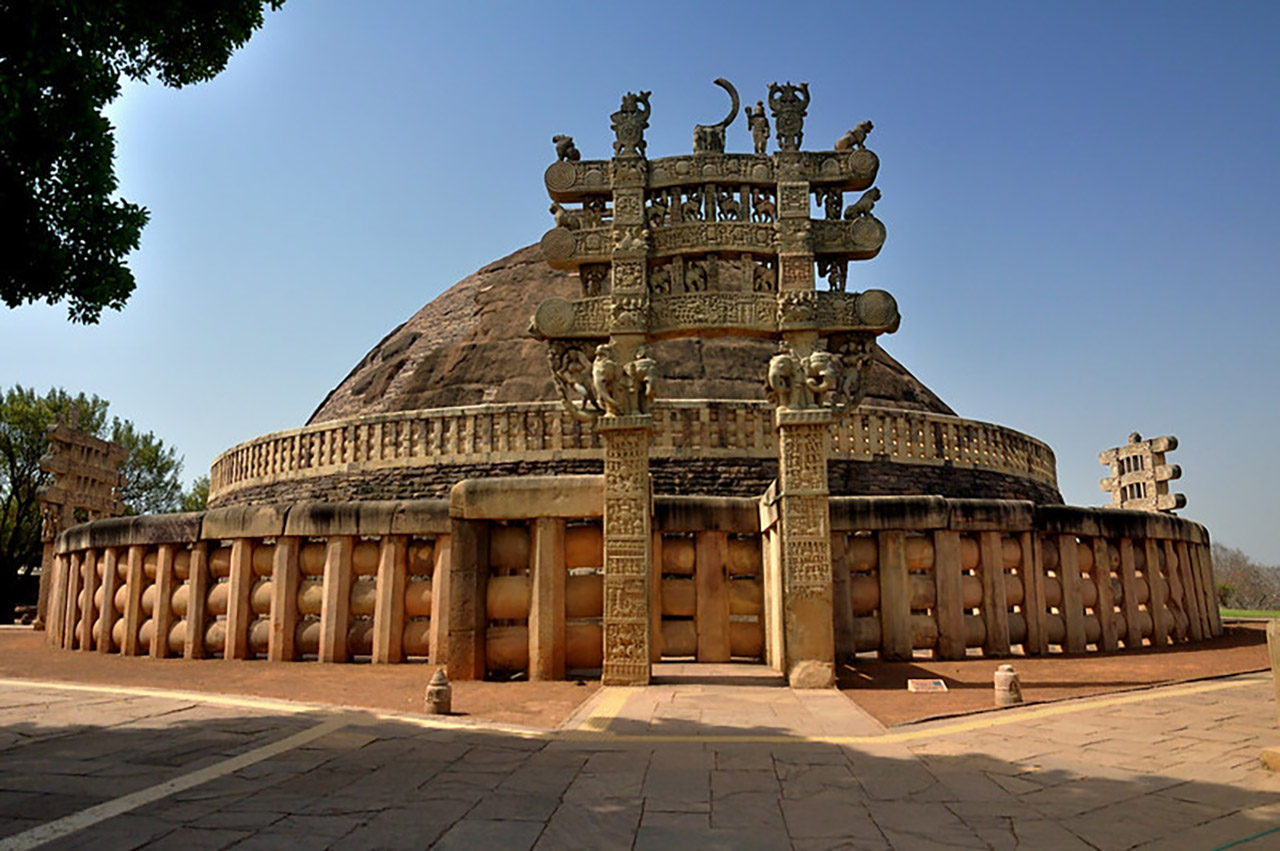
The Buddhist complex, Sanchi is famous for its Great Stupa which is one of the most famous stupas in India. The Great Stupa (Mahastupa) is situated on a hilltop at Sanchi in Madhya Pradesh, India, and is considered one of the oldest stone structures in the country. The monument is very valuable, important, and the best-preserved ancient stupa. Its construction was commissioned by Ashoka the Great and he along with his wife supervised the work. He even constructed one of the pillars which are inscribed with his proclamation. The famous sandstone pillar of Ashoka is still at the complex in Sanchi. Toranas, the free-standing arched gateways are intricately engraved. The hemispherical stone had a ‘chatra’ which intended to honor and shelter Buddha’s relics. The Sanchi Stupa is a UNESCO World Heritage Site and is also featured on the rear side of the 200 rupees note.

2. Dhamekh Stupa, Sarnath

Great Stupas in India - Dhamekh-Stupa
Image-Preeti Prajapati/Wikimedia

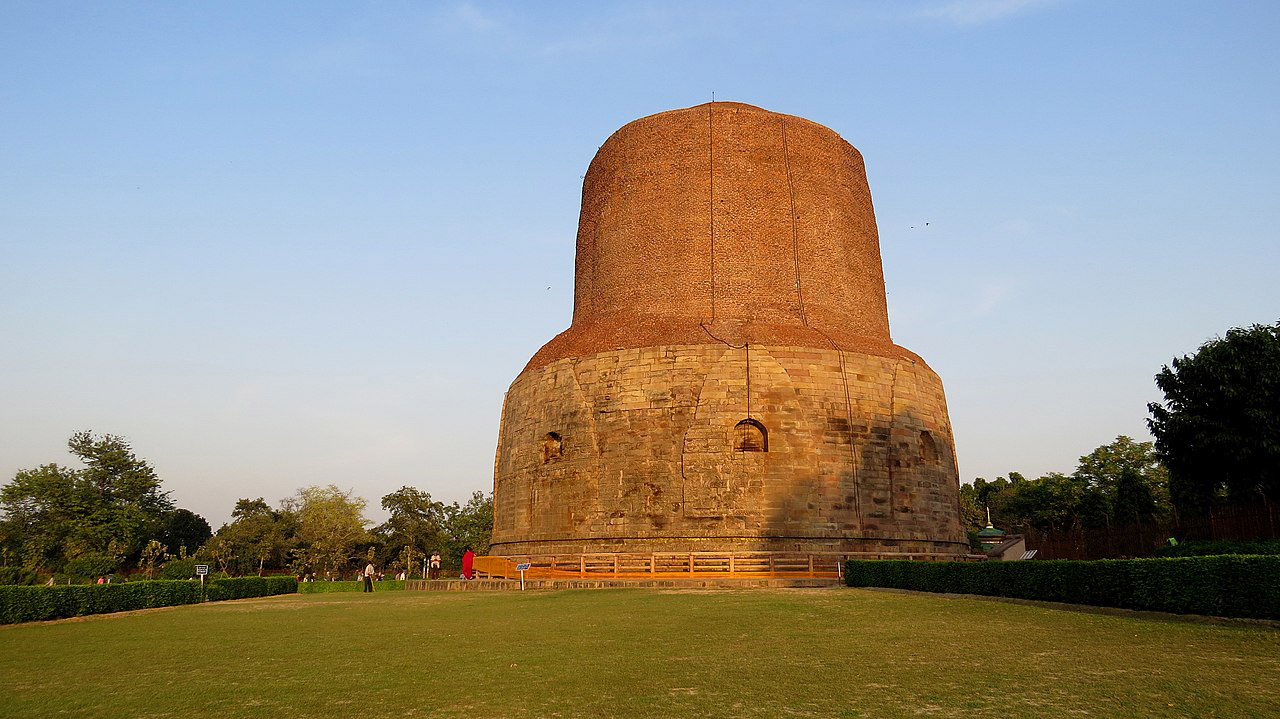
Located at Sarnath, Uttar Pradesh, the Dhamekh Stupa is a massive structure, originally built in 249 BCE and later reconstructed in 500 CE. It was commissioned by Ashoka the Great, who wanted to enshrine the relics of Buddha and his disciples. There is an Ashoka pillar with engraved edicts standing on the site. The Dhamekh stupa is an exquisite piece of Buddhist architecture and is engraved with birds, flowers, humans, and inscriptions in Brahmi script. The shape is a strong cylinder of bricks and stones with a diameter of 28 meters and a peak of 43.6 meters. The Stupa is believed to mark the spot of a deer park where Lord Buddha delivered his first sermon after attaining enlightenment in Bodh Gaya. The panels of the stupa also have ‘Swastikas’ on them.

3. Amaravati Stupa, Andhra Pradesh

Great Stupas in India - Amaravati-Stupa
Image-Bhaskaranaidu/Wikimedia

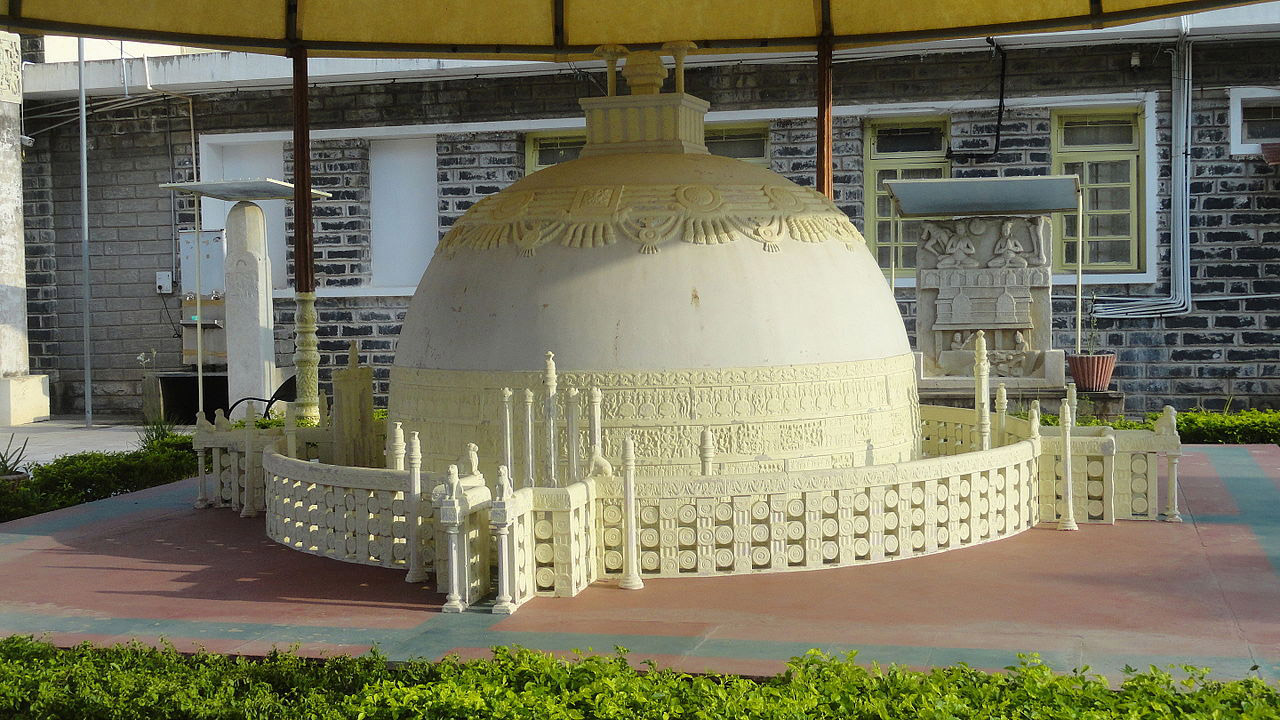
The Amaravati Stupa or Mahastupa at Amaravathi village in Guntur, Andhra Pradesh is one of the finest monuments with stunning architecture and a diameter of about 50 meters and a height of 27 meters. Built during the reign of Ashoka in 200 CE, the Stupa has a circular vedika that portrays Lord Buddha on top of an elephant. The stupa was called a Mahachaitya in ancient inscriptions. It is an important spot for Buddhism as the Vajrayana teachings of Kalachakra are practiced here. The stupa was neglected and was buried under dust and debris but some of its relics, sculptures, and inscriptions that depict the life of Lord Buddha are preserved in several museums. There are a few broken pillars that remain at the site for significance and past glory of the stupa.

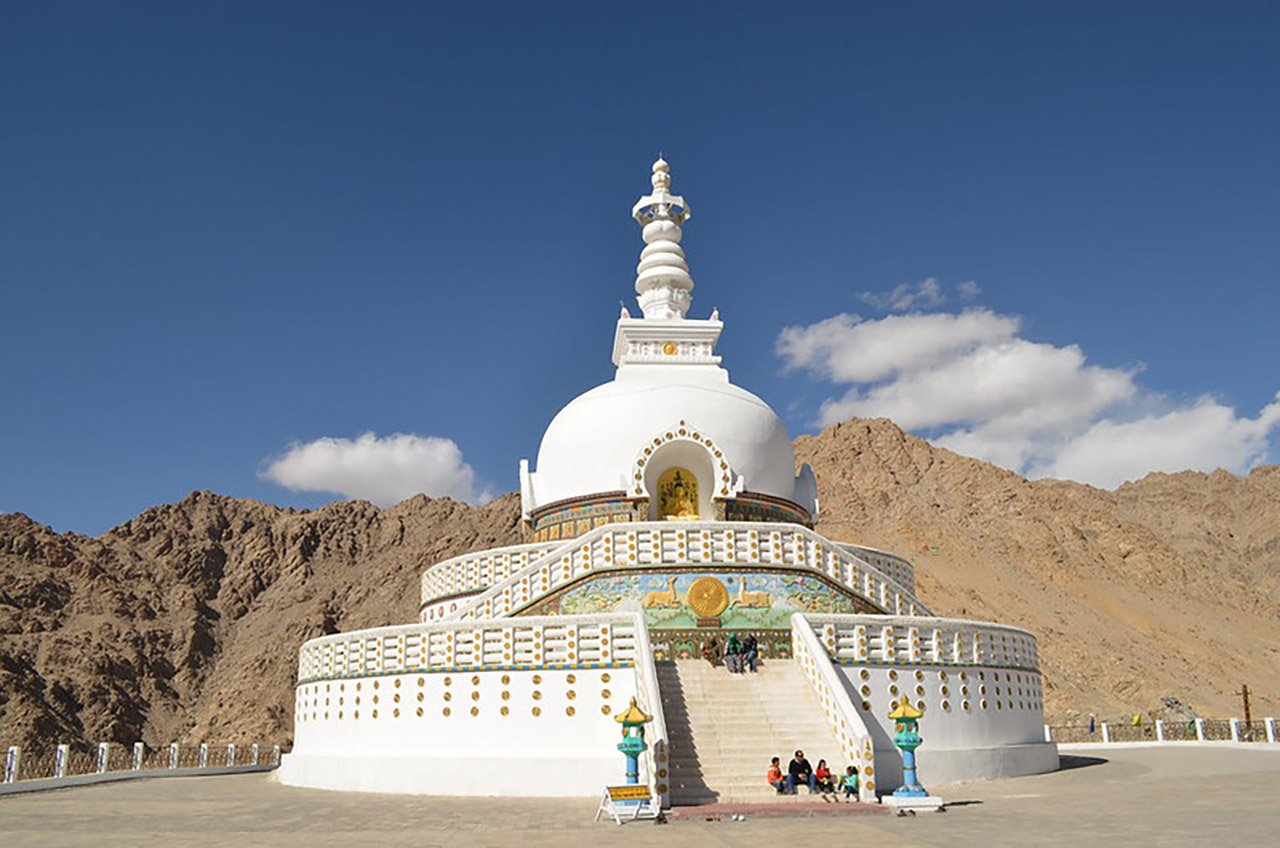
4. Shanti Stupa, Leh

Great Stupas in India - Shanti-Stupa
Image-Matt Werner/Flickr

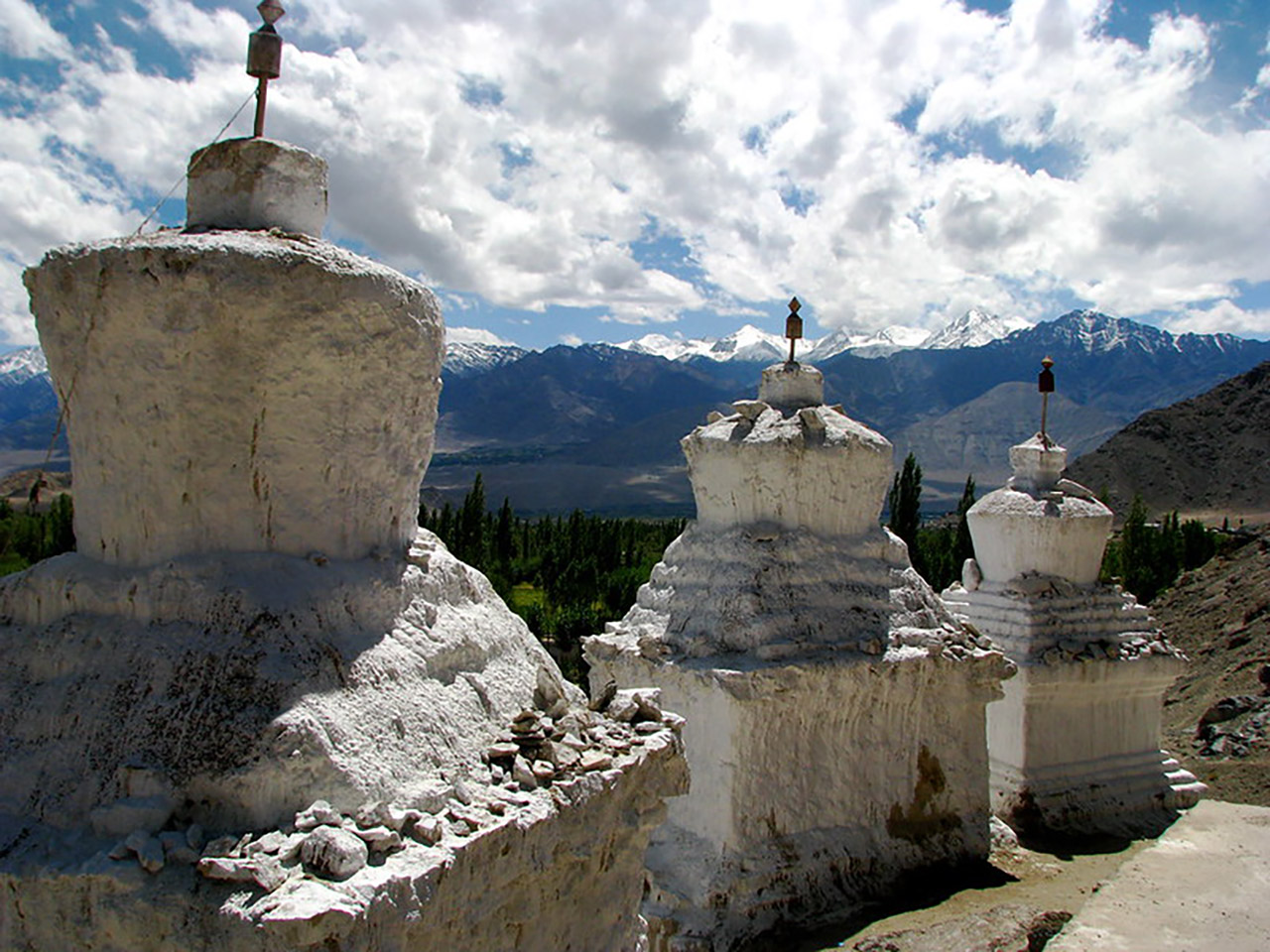
Located on the hilltop of Chanspa in Leh, Ladakh, this white-domed Buddhist Shanti Stupa was built in 1991 by Japanese and Ladakh Buddhists to promote world peace and also commemorate 2500 years of Buddhism. It has Lord Buddha’s relics at its base which were preserved by the 14th Dalai Lama, who also inaugurated the stupa in August 1991. Due to its location, the stupa offers panoramic views of the nearby landscape and surrounding mountain ranges making it a major tourist attraction. The stupa is a two-level structure, where the first level has the central relief of Dharmachakra with deer on each side and a golden Buddha image sitting on a platform. The second level depicts the birth and death of Buddha and Buddha vanquishing devils while meditating. Sunrise and sunset is the best time to visit the stupa and one also has to climb 500 steps to reach the monument.

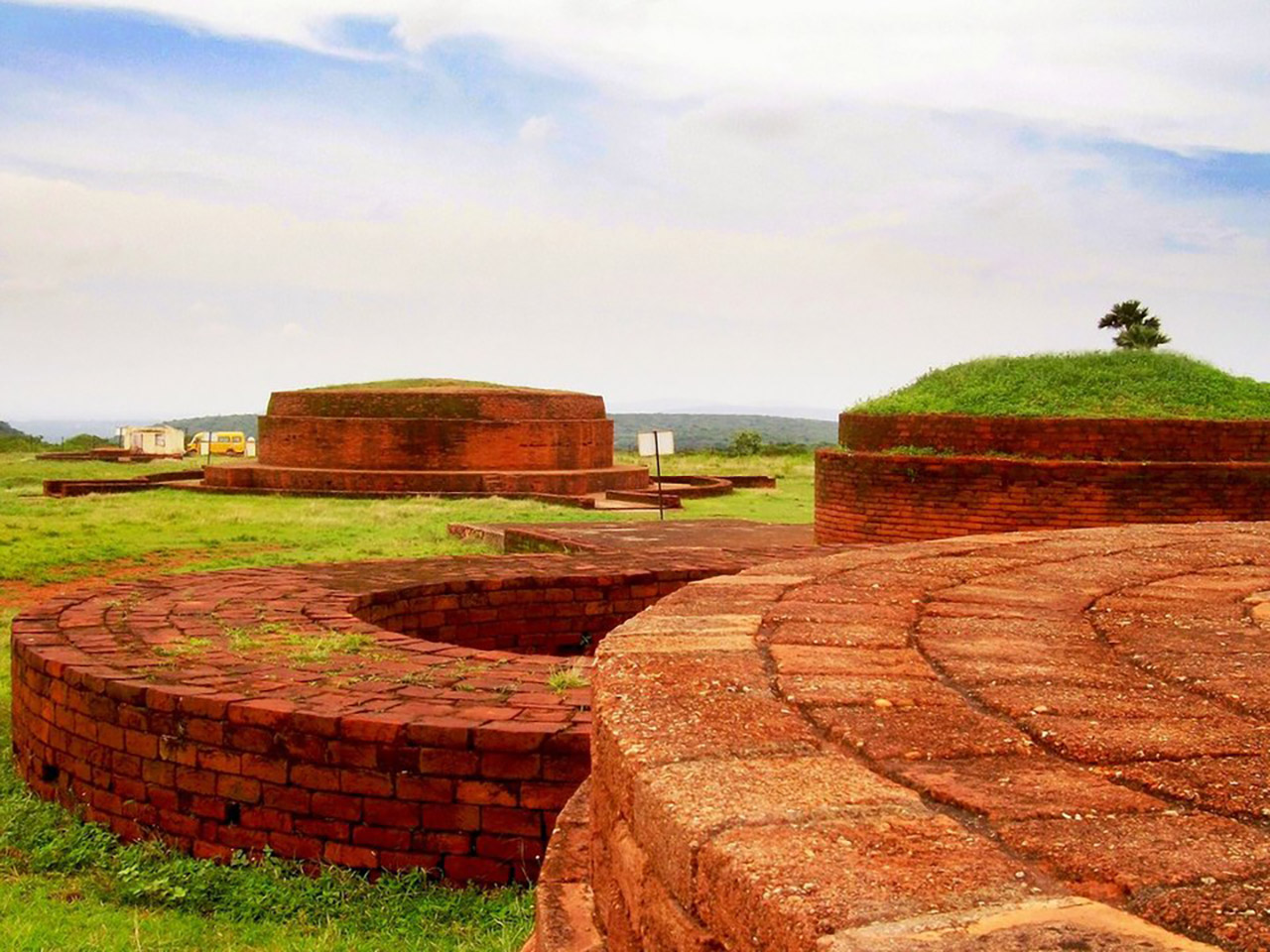
5. Bavikonda Stupa, Andhra Pradesh

Great Stupas in India - Bavikonda-Stupa
Image-Bornav/Wikimedia

Located at a distance of 16 km from Visakhapatnam, Andhra Pradesh, the Bavikonda Buddhist Complex is situated about 130 meters above mean sea level on a hill. Bavikonda is also known as the hill of wells as the place has many wells for rainwater collection. This Buddhist complex is an excavated site and it contains numerous relics which date back to the 3 rd century BCE. The excavated remnants included remains of Buddha, pottery, bricks, coins, caskets, inscriptions, etc. which were recovered by the State Archaeological Department. Bavikonda along with three other places is a heritage site by UNESCO.

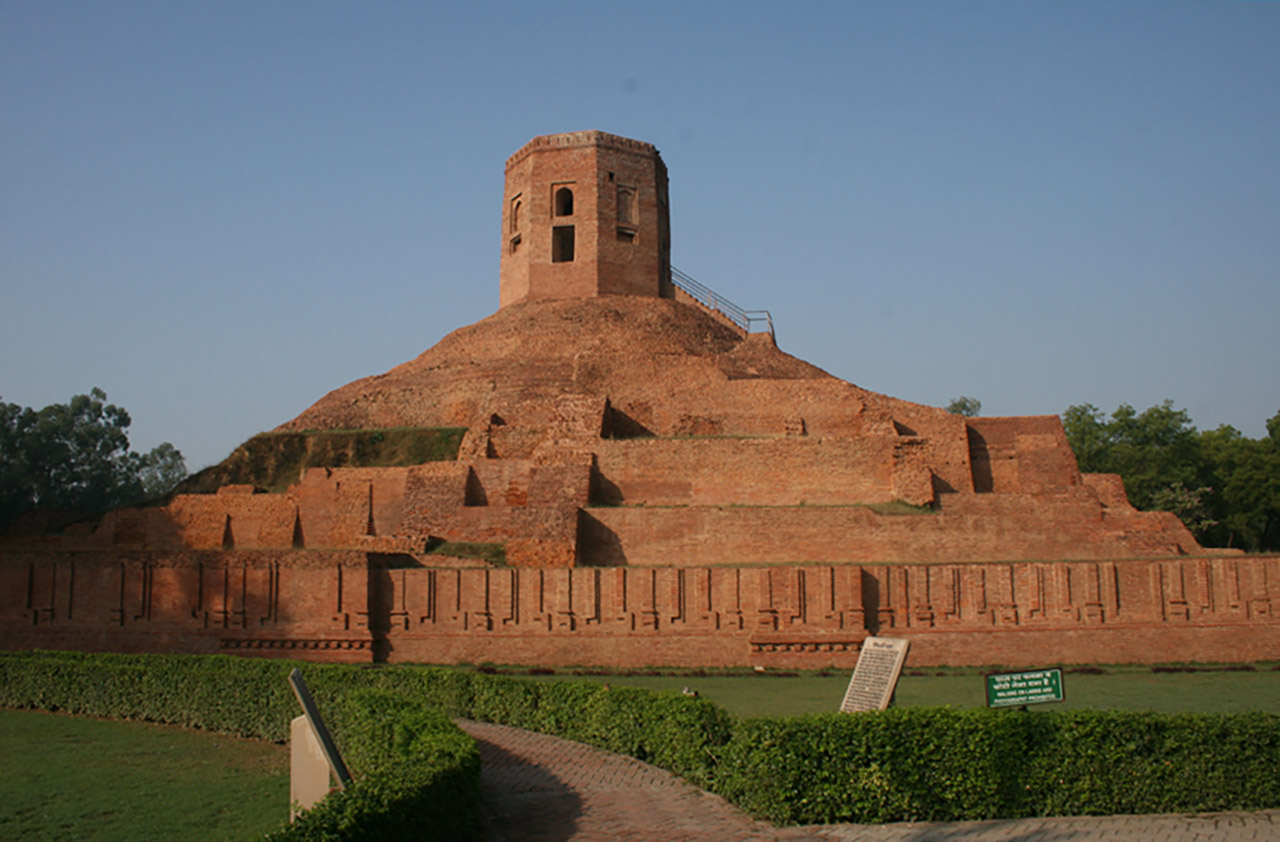
6. Chaukhandi Stupa, Sarnath

Great Stupas in India - Chaukhandi-Stupa
Image-Rmanish1973/Wikimedia

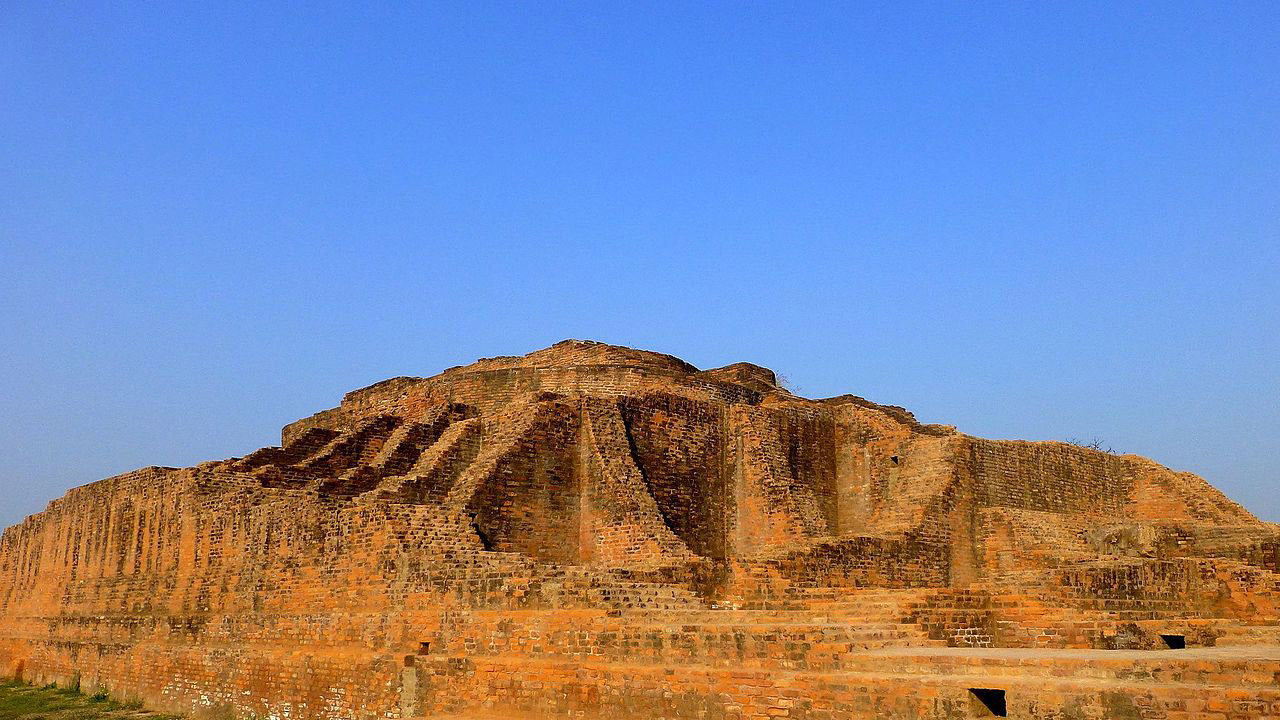
The Chaukhandi Stupa in Sarnath, Varanasi, Uttar Pradesh was initially built as a terraced temple between the 4th and 6th centuries to mark the area where Lord Buddha met his first disciples on their journey from Bodh Gaya to Sarnath. Afterward, Raja Todar Mal’s son redesigned the stupa and built the octagonal tower to celebrate the visit of Mughal ruler, Humayun. However, the stupa became declared a monument of countrywide significance in June 2019. The stupa is a high earthen mound with brickwork all over it and the place is surrounded by lush gardens and museums.

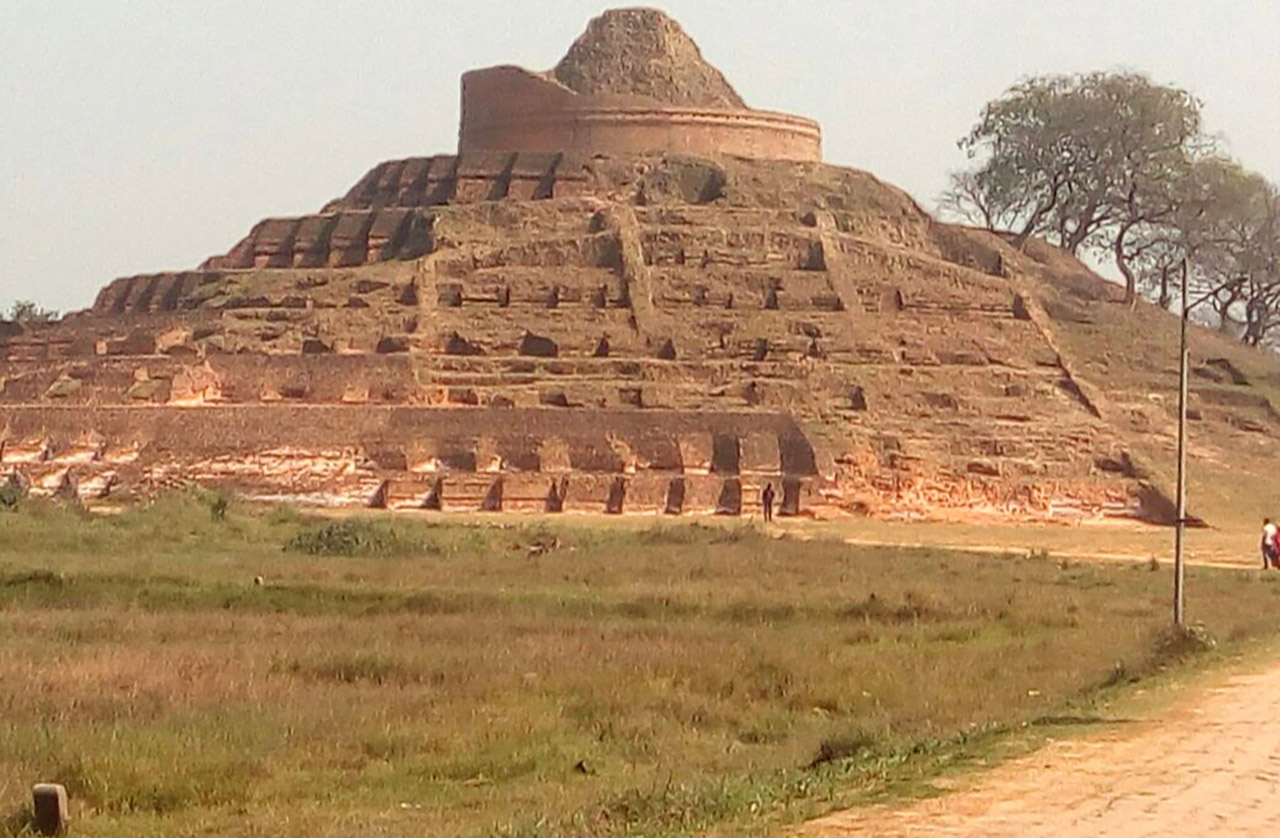
7. Kesaria Stupa, Bihar

Great Stupas in India - Kesaria-Stupa
Image-Monukr01/Wikimedia

Located in Champaran (east), Bihar and at a distance of one hundred ten kilometers from Patna, this Buddhist stupa is one of the tallest and biggest Buddhist stupas in the world. The Kesaria Stupa is a 104 feet tall structure with a circumference of almost 400 feet. The original height of the stupa was 150 feet but after the 1934 Bihar earthquake, the structure was reduced to its present height. It is said that the stupa dates back between 200 AD and 750 AD. The Kesaria Stupa was excavated in 1998. It is also called ‘Devala’ meaning ‘house of god’ by the local people. It is also believed that Lord Buddha visited Kesaria to preach the Kesaputtiya Suttas which included the Kalama Sutta. The stupa is now a protected monument of national significance.

8. Ramabhar Stupa, Kushinagar

Great Stupas in India - Ramabhar-Stupa
Image-Axel Drainville/Flickr

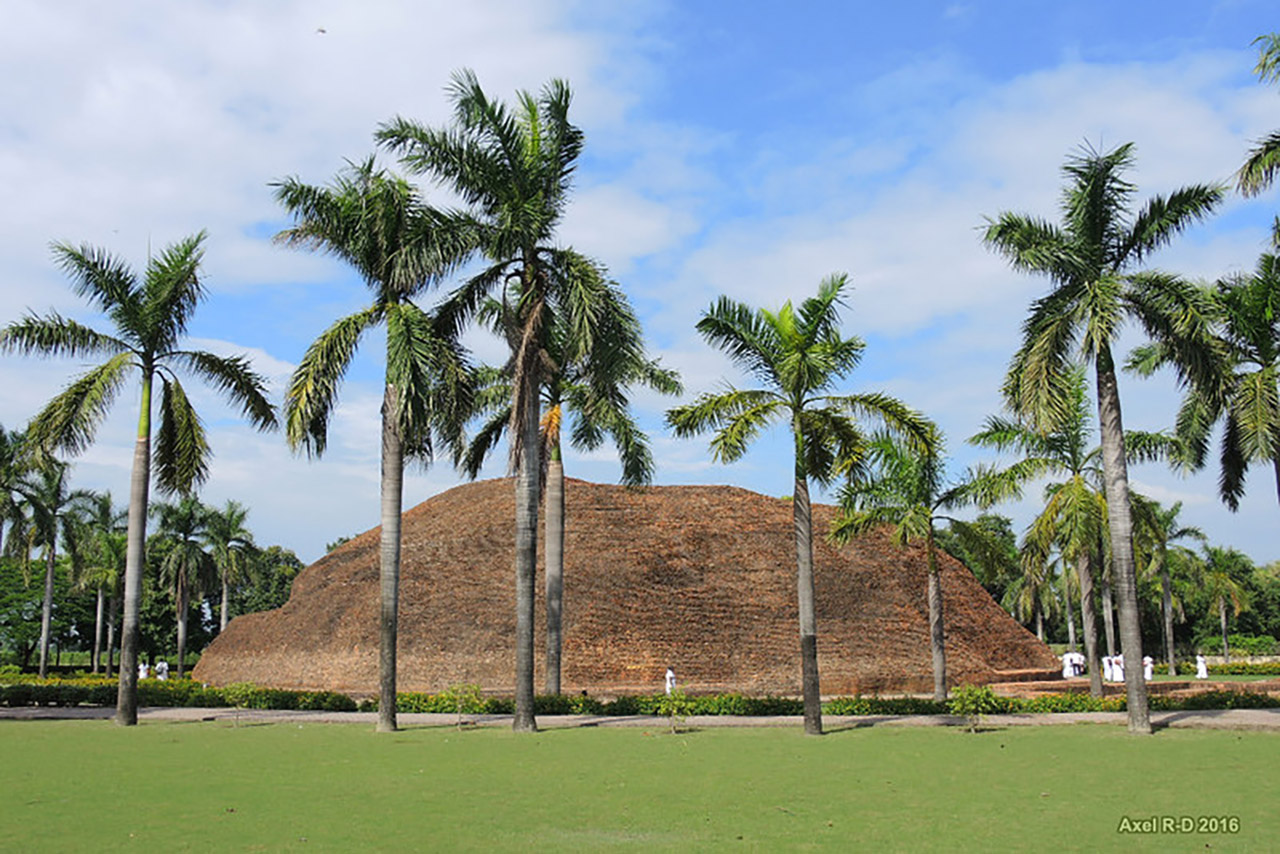
The Ramabhar Stupa in Kushinagar, Uttar Pradesh is one of the most sacred and important Buddhist pilgrimage sites. This is the place where Lord Buddha was cremated in 483 BC. It is believed to have attained Parinirvana after death. The stupa is dome-shaped having brickworks with a height of 49 feet. It is also called the Mukutbandhan-Chaitya. Lord Buddha also gave his last sermon to his disciples at this place. It was, “impermanence is inherent in all things. Work out your salvation with diligence”. There are ruins from the pre-historic era near the stupa. There is also a pond-like water body close to the monument.

9. Angulimala Stupa, Shravasti

Great Stupas in India - Angulimala-Stupa
Image-Photo Dharma/Wikimedia

The Angulimala’s Stupa in Shravasti, Uttar Pradesh is another site that was excavated along with the Shravasti city in 1863. Shravasti was a new city created for Lava, Lord Rama’s son according to the epic Ramayana. The city was also called Savatthi according to the Buddhist tradition as the sage Savattha lived there. Shravasti was a major religious site for Buddha’s disciples. It is said that Lord Buddha spent his monastic years here at the Jetavana Monastery. Angulimala was a ruthless dacoit in Shravasti who chopped other’s fingers and wore them in a necklace around his neck. He was once about to kill his mother.  Lord Buddha turned him into a disciple and showered him with wisdom. The remains of the stupa are known as Pakki Kuti. Only the walls, a plinth, and a raised platform with a flight of stairs are there at the spot.

10. Buddha Stupa, Deur Kothar

Great Stupas in India - Buddha-Stupa
Image-LRBurdak at English Wikipedia/Wikipedia

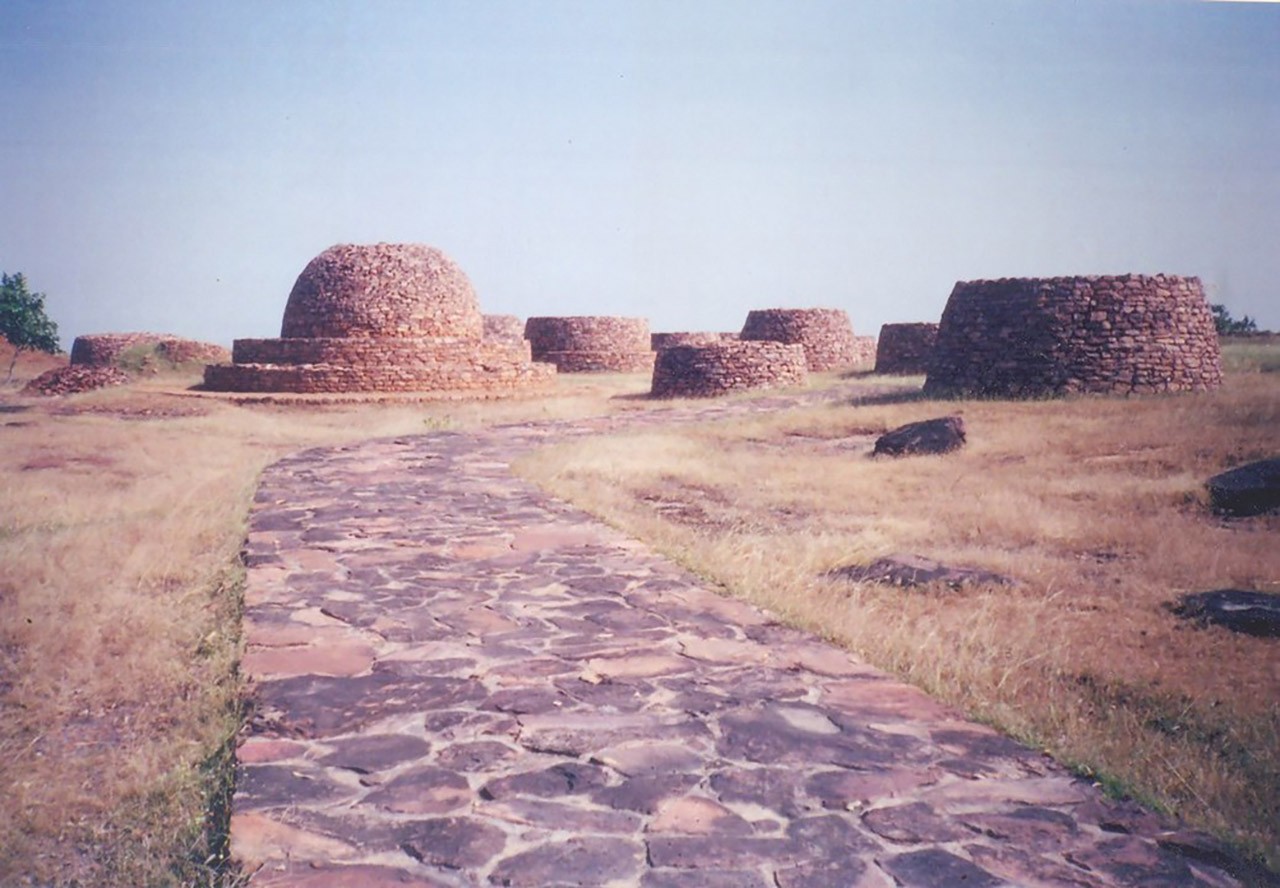
Deur Kothar or Deorkothar in Madhya Pradesh is known for its Buddhist stupas. This place is of archaeological as well as national importance and was discovered in 1982. This excavated site contains remains of various monuments made of stones and bricks. The entire complex was constructed by Ashoka the Great. It contains monasteries, an ancient pathway, elaborately carved pillars with Brahmi inscriptions, a water channel system, and 40 stone stupas. These stupas were established by King Ashoka in the 3rd century BCE. The complex is also known for four brick stupas.

Five Indian Curries You Must Taste to Celebrate the Indian Spices

0
Indian-Curries-You-Must-Taste
Image by ArtificialOG

Anyone who lives in India or has eaten Indian food knows that it contains a lot of Indian spices and the dishes are very colorful. India has a huge variety of food which includes different kinds of curries, cuisines, and various flavors as they like to use a lot of fragrant spices and herbs which add to the flavor and color of the food. There are a lot of reasons why Indians love food so much because they have recipes passed on from generations after generations which they like to improvise and evolve. The spices and the ingredients that we use in our food make it extremely healthy and nutritious. In India, no occasion like weddings or birthdays is complete without food.

Fortunately, Indian food is very delicious and addictive and it comforts us. Here we will take a look at the different types of Indian curry.

1. Pasanda

Indian Curries You Must Taste-Pasanda
Image-Miansari66/Wikimedia

Pasanda is the type of curry which is usually made with almonds, cream, coconut and is very mild in spice. The Shahi Mughalayi dish was initially made with the leg of lamb or goat flattened into strips, but now it is also made with prawns, chicken, paneer, etc. Pasanda is generally white but people also add turmeric to it which gives it a yellow color. It is a sweet dish and is made with a little bit of spice. For seasoning, peppercorns, garlic, cardamom, and cumin are used. After cutting and flattening the meat, it is marinated in rich and creamy almond coconut sauce with yogurt and spices. After which it is cooked and fried with other ingredients such as onions, coriander, and more spices like cinnamon and black pepper.

It is mostly served with flaked almonds on the top and white rice or naan bread on the side. As the word ‘Pasanda’ also means ‘like’ in English, this is the kind of dish which is liked by everyone from children to adults.

2. Korma

Indian Curries You Must Taste-Korma
Image-erik forsberg/Flickr

This traditional Indian dish is very rich and creamy and is made using almonds and coconut and so, it is very similar to Pasanda but the difference is that this curry includes saffron which gives it a nice pale yellow color. This curry is also very mild in spice and it has a sweet flavor to it. Korma can be made using any kind of meat like lamb, beef, chicken, goat and some may even include vegetables like spinach and turnip. The meat and vegetables are smothered in water or stock, yogurt or cream.

The main ingredients and spices of the dish include yogurt, coconut, almonds, cashews, ginger, cardamom, cinnamon, and cumin. The vegetables or meat are marinated in the yogurt or cream mixture and then cooked in the gravy using coconut milk. The vegetarian alternative to this dish is Navratan Korma which includes nine different vegetables.

3. Jalfrezi

Indian Curries You Must Taste-Jalfrezi
Image-lulun & kame/Flickr

Originating from Bengal, Jalfrezi is the most popular Indian curry and not only in the Indian subcontinent but in the UK as well. It has appeared in British India’s cookbooks. Jalfrezi is the first dish in India that has red peppers in its sauce. It involves pieces of meat, fish, or vegetables marinated and fried in the spiced oil. The dish includes sweet peppers, tomatoes, and onions, coconuts, and spices which are cooked together. The sauce is a dry and thick one. Jalfrezi uses leftovers to create a spicy curry filled with fragrant herbs and spices. The word ‘Jalfrezi’ itself means spicy food and stir-fry. This Anglo-Indian fusion dish is typically cooked with chicken but one can replace the meat with paneer too.

4. Vindaloo

Indian Curries You Must Taste-Vindaloo
Image-stu_spivack/Flickr

The infamously – spiciest Indian curry dish, Vindaloo hails from the Goa region of India and is influenced by the Portuguese traders who visited during the 16th century. The Portuguese prepared the curry using wine and garlic but the Indian chefs replaced the wine with palm vinegar. The word ‘vindaloo’ is evolved and derived from a Portuguese term and it means wine and garlic. The dish can be made using several types of meat but Pork Vindaloo is the most popular one. The curry is made from tomato, chili, and cumin. It is a hot, sweet, and sour type of curry. Vindaloo is a heavily spiced dish and those who love to eat very spicy food will find it delicious. 

5. Rogan Josh

Indian Curries You Must Taste-Rogan-Josh
Image-stu_spivack/Flickr

This meat dish of Kashmir origin is an authentic Indian lamb curry. The word ‘Rogan’ means oil and ‘Josh’ means heat and so the dish consists of cooking the meat in oil which is at intense heat. Rogan Josh is known for its thick red sauce and the red color but the spiciness of the dish depends on how one makes it. It is full of flavors as the onions are caramelized and the spices are roasted. The meat is marinated and added to the sauce. This spicy red sauce is made using tomatoes, cardamom, and a lot of Kashmiri Chilli Powder which gives the curry the redness.

Rogan Josh is traditionally made using lamb or mutton but nowadays, people have started making vegetarian versions of it in which they include paneer, tofu, potatoes, mushrooms, cauliflower, vegetables, etc. Another meaning of the word ‘Rogan Josh’ is ‘red meat’ or ‘red juice’. The dish is best served with naan bread or parathas and plain basmati rice with fresh salad.

Indian cuisine comprises a lot of curry-based dishes. The spices used in the curries have antibacterial properties and antioxidants. The spices give the curry delicious flavors and make it very healthy and nutritious. There are a lot of types of Indian curries that cannot even be counted and this is only a very small part of India’s rich culinary heritage. So, which Indian curry do you like the most?

10 Historical Places in Kerala You Must Visit to Understand is Heritage

0

A true paradise on Earth, Kerala has always been a traveler’s destination. It is blessed with a perfect flavorsome cuisine, friendly population, and plenty of natural beauty, moreover, has stunningly beautiful cultural arts. Kerala also has a unique and distinctive history comprising of several rulers and dynasties. Visiting Kerala will surely provide you valuable insight into the historic events that led to the unfolding of the current state, as well as the serene beauty of it. Here is a guide to some of the best attractions and historical places in Kerala to make your visit even more memorable.

1. St. Angelo Fort

Historical Places in Kerala-St.Angelo Fort
Image/Wikimedia

Also known as the Kannur Fort, this spectacular fort was built as early as 1505 under the leadership of Francesco de Almada (Portuguese viceroy). This fort faces the magnificent Arabian Sea and is under the Archaeological Survey of India for its maintenance. The interesting history which led to its construction states that when Vasco De Gama had visited India for the first time, he received a piece of land from the local king. When De Gama decided that he wanted to build a settlement over it, he handed over the construction responsibilities to Francesco De Almada. The Kannur Fort is an important tourist destination in Kannur attracting several visitors each year.

2. Mattancherry Palace

Historical Places in Kerala-Mattancherry Palace
Image/Wikimedia

Famous all over India as the ‘Dutch Palace’ due to being built by the Portuguese in 1555, this Palace is now turned into a museum. The architecture of the Palace is mostly inspired by the Nalukettu architecture (traditional architecture of Kerala) with just a tint of European influence. This Palace, although was originally constructed by the Portuguese, was presented as a gift to the then king of Cochin. Visit the Palace to have a closer peek into the lives of the Cochin Rajas.

3. Edakkal Caves

Historical Places in Kerala-Edakkal Caves
Image/Wikimedia

Located in the Wayanad district of Kerala, these caves are the broken fragments of our ancestors. They consist of wall paintings from the Neolithic Age and the paintings which are deemed to be from the Stone Age are said to be the only ones in all of South India. The structure of the caves suggests that they are more of a cleft; they were formed by a gigantic split in a comparatively larger rock. The Edakkal Caves are a great way to learn about the way the early man lived and behaved. A must-see spot!

4. Bekal Fort

Historical Places in Kerala-Bekal Fort
Image/Yoosaf Abdulla/Pixabay

Fun Fact: Bekal Fort happens to be the largest Fort in Kerala in terms of area. This incredible fort is made up of laterite stones and is situated on the shores of the Arabian Sea. Many people suggest that it was built by Shivappa Nayaka, and has been under the dominance of several rulers from the Sultans to the British Raj. Originally, the Bekal Fort wasn’t meant to house any administrative activities, therefore does not contain any mansions within. However, being a fort primarily built for defense purposes the Fort does exhibit several features for the same. Also visit the Observing Tower and Bekal Beach situated near the Fort, while you’re still there!

5.Sulthan Bathery

Historical Places in Kerala-Sulthan Bathery
Image/Wikimedia

Getting its name when Tipu Sultan took over the region and utilized the Jain Temple there as a ‘battery’, this peaceful town yells historic significance. It is situated in Wayanad and was earlier called Ganapathivattom. Upon its invasion, Tipu Sultan had also built a fort in the region. Sadly, this fort now remains in ruins and unavailable for the public eye. The splendid natural bounty of the town, along with its historical heritage is what drives its tourism. With plenty of accommodation services and transport facilities, you are sure to have a leisurely trip to this quaint town!

6. Peralassery Temple

Historical Places in Kerala-Peralassery Temple
Image/Wikimedia

Kerala is extensively known for its immense faith and pilgrimage centers. It is extremely famous and the main deity in this temple here is Lord Subramanya. According to popular legends, Lord Ram accompanied by Lakshmana and his devotee Hanuman stopped here on their way to rescue Sita. It was Lord Ram who wanted to consecrate the Lord Subramanya idol in his place. Therefore, he sent Hanuman to find an idol for the same. However, when he failed to arrive at the correct time, Lord Ram consecrated his Peruvala, eventually gaining the name Peralassery. The temple pond is impeccably built and is considered a prime devotional site.

7. Pazhassi Raja Archaeological Museum

Image/Wikimedia

Located in the famous city Kozhikode, the Pazhassi Raja Archaeological Museum is a wonderful art gallery showcasing items from the Indus Valley civilization and the megalithic age. These collections include pottery, stones, metal sculptures, stone statues, and many more structures from ancient times. The museum is present in a house that was earlier termed as East Hill Bungalow. Witness the extraordinary historical artifacts found here!

8. Thalassery Fort

Historical Places in Kerala- Thalalssery Fort
Image/Binu K S/Flickr

Erstwhile declared as an important trading center under the Europeans, this ancient fort was constructed by the initiative of the East India Company. It was built as a symbol of colonial power in 1703 and played a significant role in the economical and military activities during the colonial reign. The Thalassery Fort is built squarely with artistic carvings on the doors and walls. The glorious stories, secret pathways, and unique architecture are worth exploring. Spend a good amount of time discovering the Fort to have a great time with your family.

9. Jewish Synagogue

Historical Places in Kerala-Jewish Synagogue
Image/Wikimedia

This amazing Synagogue is situated in Old Cochin and was built by Jews who used to occupy the Jew Town area. The place has phenomenal architecture and a classy interior comprising of the antique chandelier, hand-painted tiles, and imported lamps. In one of the 7 Synagogues, several tourists are attracted to the lavish decor and grand architecture. A truly impressive place to be!

10. St.Francis Church

Historical Places in Kerala-St.Francis Church
Image/Wikimedia

Enter the St Francis Church and you enter the oldest existing European church in India. Constructed in 1503, the Church has a modest and simple style of architecture. The famous explorer Vasco Da Gama is buried in the yards of this ancient Church in 1524 (Remains were sent to Portugal in 1538). Moreover, this Church is maintained by the CSI (Church of South India) and remains an important component of Kochi tourism.

These heritage sites provide an interesting side to the state of Kerala. History forms a significant part of our lives and is ever-present. Indeed, the lessons we learn from these sites form an important part of our cultural identity. Explore these beautiful places and enjoy the various local stories they have to offer.

10 Must Visit Beaches of Kerala You Should Add to Your Wish List

0
Beaches-of-Kerala
Photo by Parthiban V

Beaches are one of the best places to relax and de-stress and are a staple holiday destination. Lined with tall, green palm trees, beautiful golden sand and a heartwarming view, the beaches in Kerala are a must-visit. Having in-store a boatload of fun for every person, these beaches never fail to impress. So attractive are these beaches that you are sure to loathe leaving these seashores. If you visit these beaches with your family or friends to witness the natural bounty of the state of Kerala, make sure to check the below-listed places out. Believe me, you won’t regret it.

1. Kovalam Beach

Beaches-of-Kerala-Kovalam-Beach
Image/AJM/Pixahive

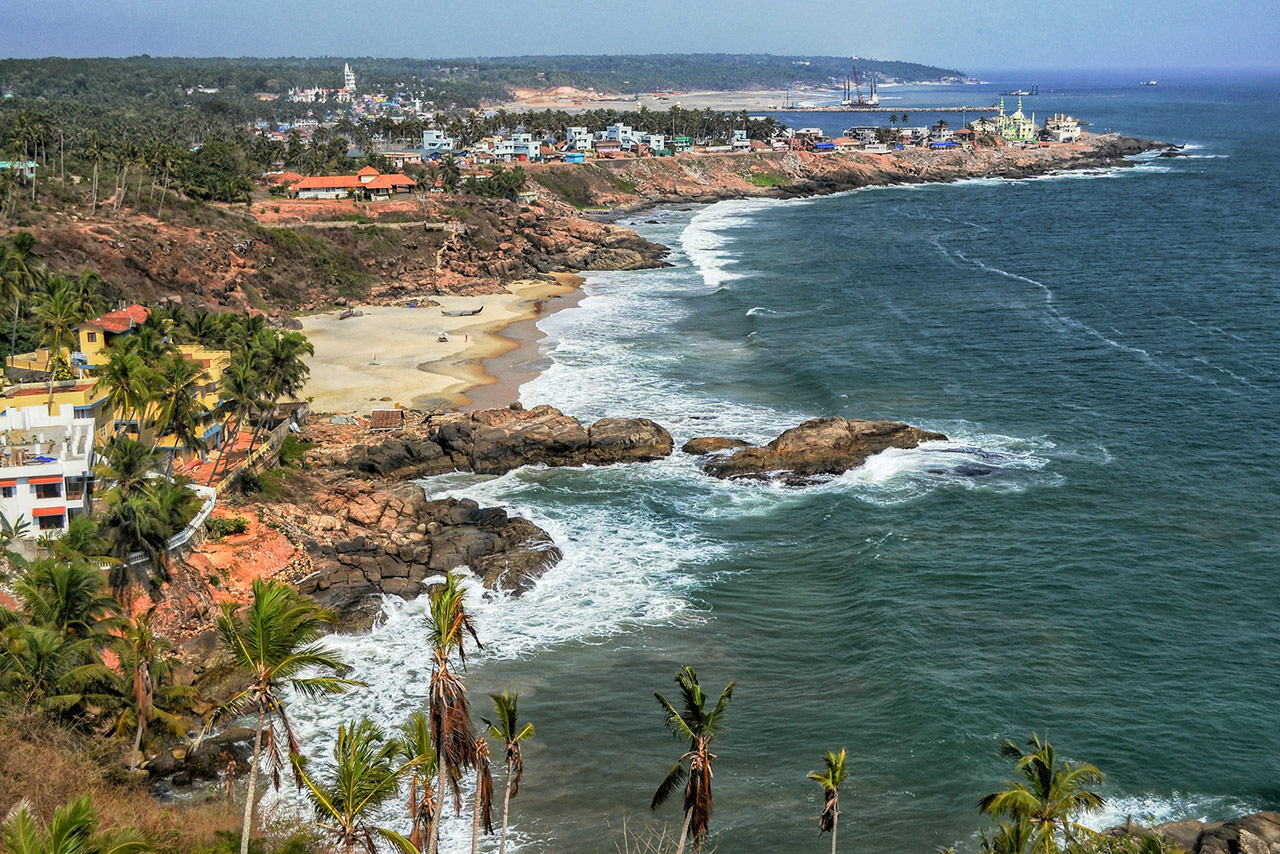
Situated in the grand city of Trivandrum, the Kovalam Beach is world-renowned. When you visit this beach, you are sure to notice its best feature: coconuts. The tall palm trees and wide seashore will leave you awestruck. The Kovalam Beach is large in size and comprises three smaller beaches known as the Hawa beach, Lighthouse beach, and Samudra beach. Especially famous amongst the Europeans, Kovalam beach offers various water sport activities, spa centers and one can also pay a visit to the nearby tourist attractions. A popular beach for the right reasons, indeed!

2. Varkala Beach

Beaches of Kerala-Varkala Beach
Image/Wikimedia

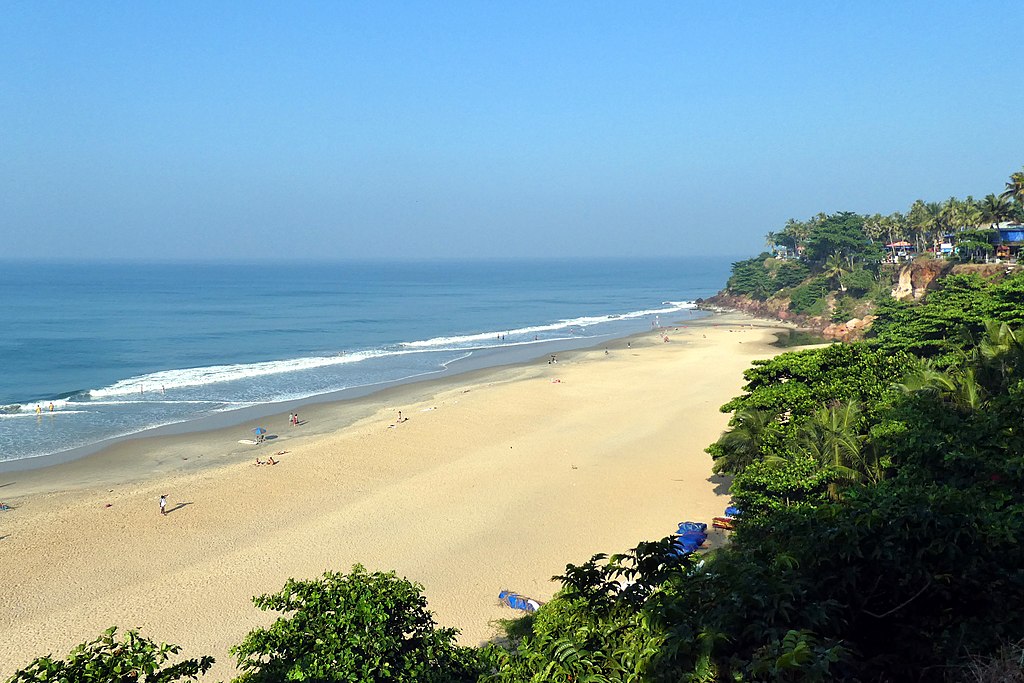
Varkala beach is located on the outskirts of the capital city of Thiruvananthapuram and is highly famous for its clean surroundings and refreshing greenery. It is alternatively known as Papanasam beach due to an interesting belief which states that dipping in the waters of Varkala will wash off the sins that you have committed. This beach is a popular honeymoon site with plenty of adventure activities for thrill-seekers. Unwind in the precious serenity that the Varkala beach has to offer.

3. Chavakkad Beach

Beaches of Kerala-Chavakkad Beach
Image/Wikimedia

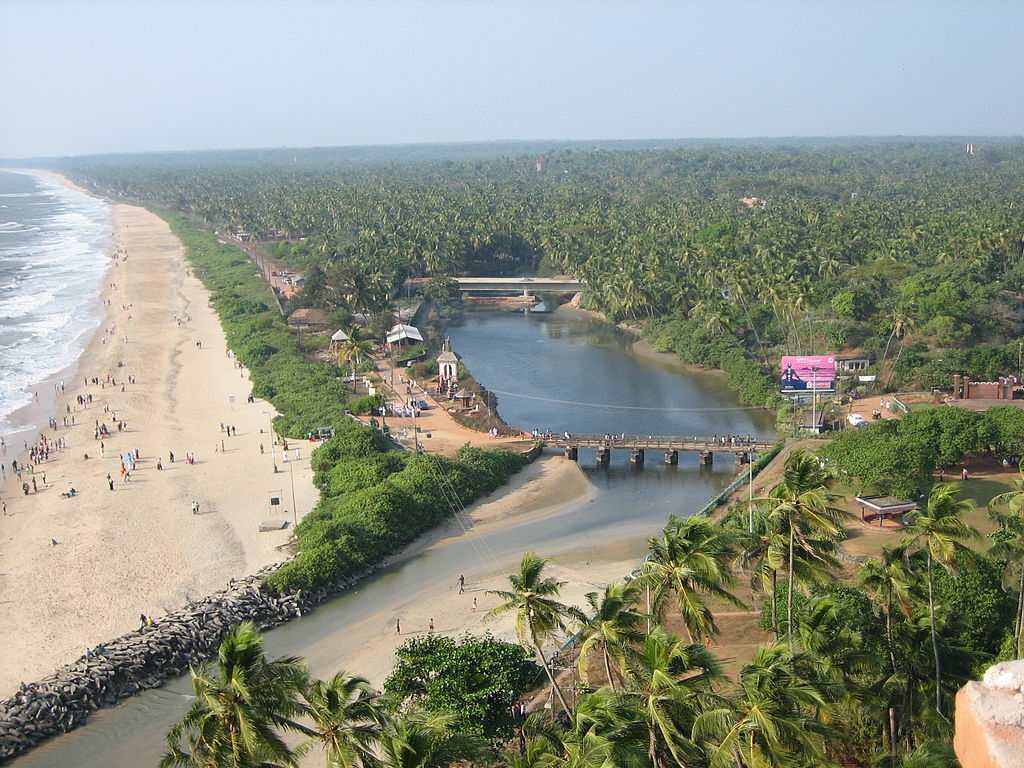
The epitome of picturesque beauty, Chavakkad Beach is a great destination for you and your family. Nestled in Thrissur, this beach has an estuary. This means that here, a river meets a sea; and this unique characteristic is locally called Azhimukam. Enjoy the tranquil waters, take a dip in them and you are guaranteed to be mesmerized!

4. Kappad Beach

Beaches of Kerala-Alappuzha Beach
Image/Harikrish H/Flickr

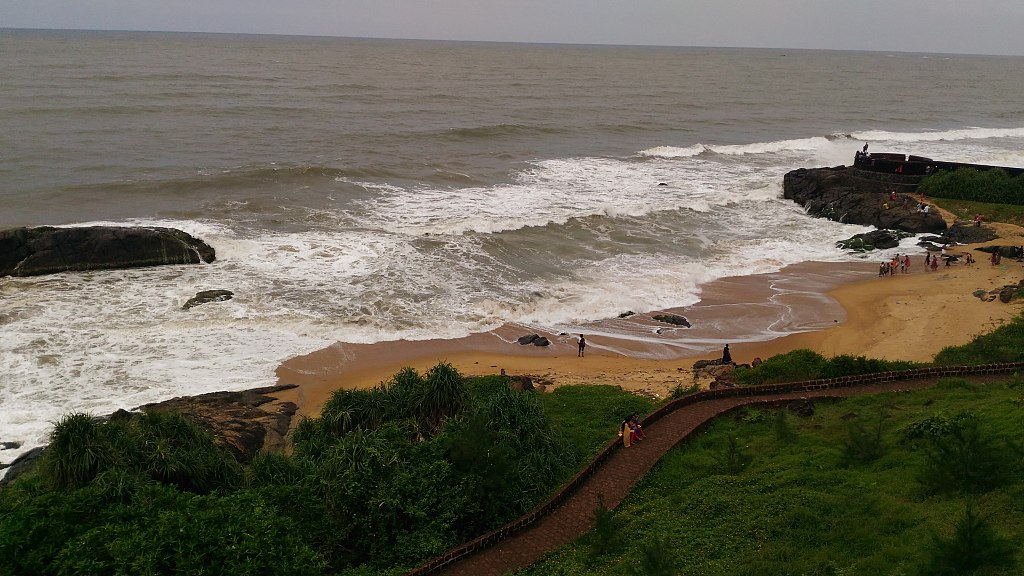
You cannot leave Kerala without paying a visit to this magnificent heaven. Located in Kozhikode, this beach has unique rock formations and has always been a dream for most travelers. Aside from excelling in natural beauty, this beach also has historical significance. The famous explorer Vasco Da Gama walked the shores of this beach for the time while stepping foot in Kerala. A quaint destination for relaxation, you will feel amazed at the beauty of this beach.

5. Payyambalam Beach

Beaches of Kerala-Payyambalam Beach
Image/Wikimedia

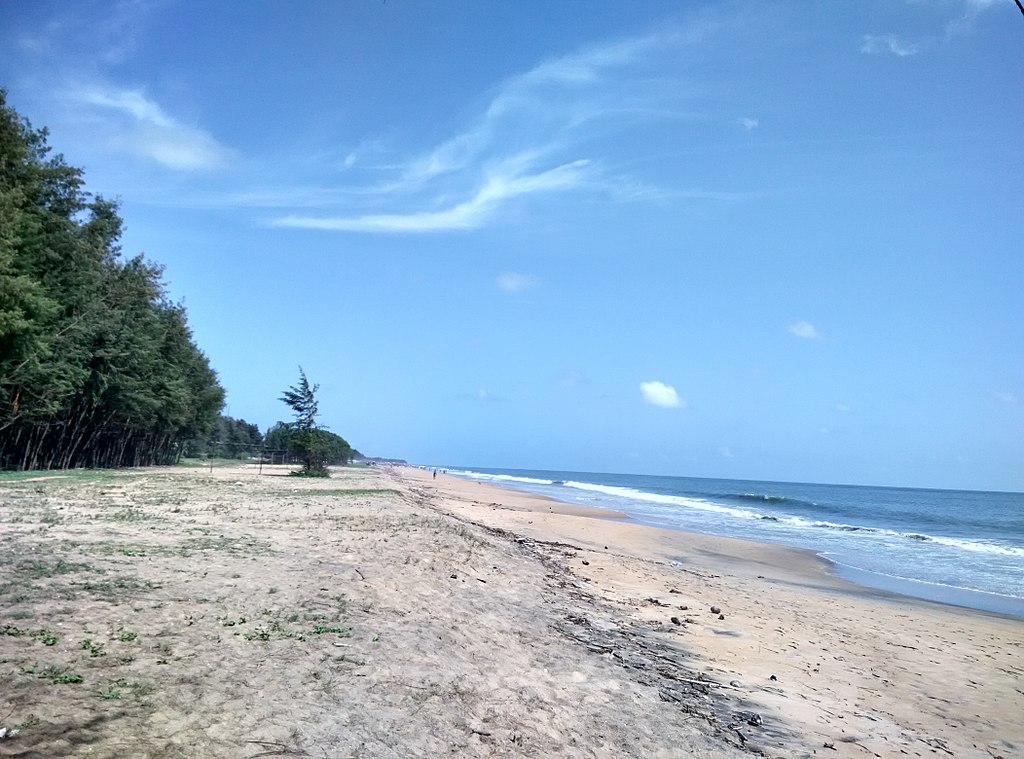
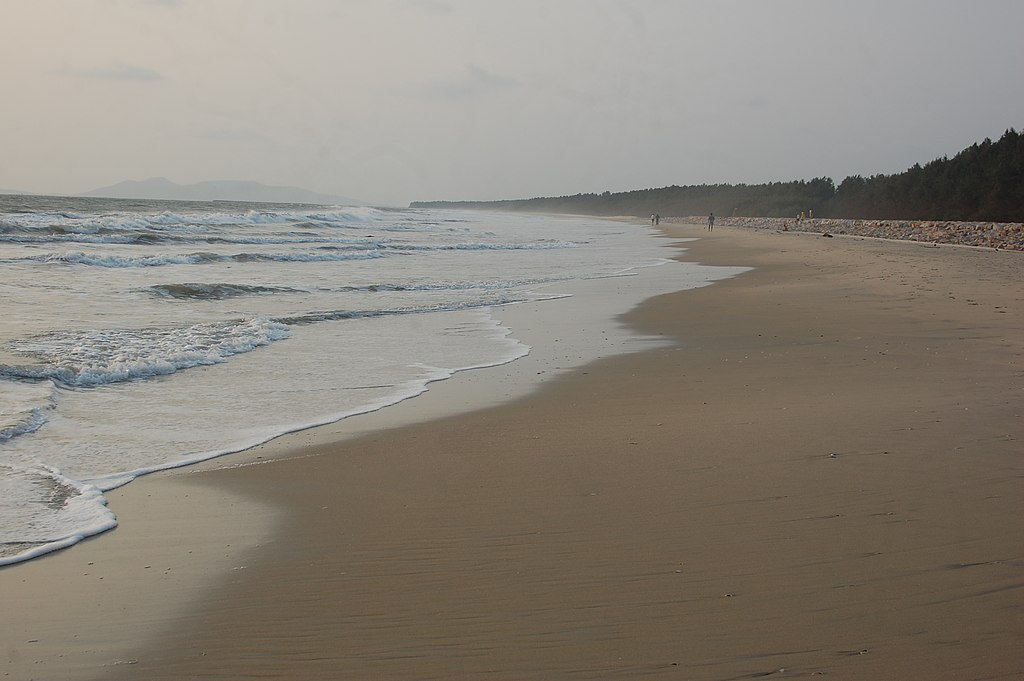
Situated near Kannur, the Payyambalam Beach is an escape route from the usual monotony of city life. Step into this destination and you’re sure to fall in love with it. An extremely long stretch of land, enjoy long walks on the shore and sunbathe under the glaring sun. A favorite amongst the tourists, this beach also offers activities such as surfing and snorkeling. End your day by snacking at one of the many restaurants for a satisfying visit.

6. Meenkunnu Beach

Beaches of Kerala-Meenkunnu Beach
Image/Wikimedia

Known for the fascinating view of sunsets and sunrises that one can see from this beach, the Meenkunnu beach is truly captivating. As soon as you walk into the beach, the vast Arabian ocean and golden sand welcome you. This is a wonderful holiday spot and should be a part of your holiday package. Unravel in the soothing views of the beach as you let go of your worries!

7. Kozhikode Beach

Beaches of Kerala-Kozhikode Beach
Image/Wikimedia

A splendid situated in its namesake city, this beach is a breath of fresh air. It is highly famous in Kerala and is used for the conduction of public gatherings. Interestingly, the road which leads to the beach was named ‘Gandhi Road’ after Mahatma Gandhi’s visit in 1934. There are various tourist attractions at a short distance from the beach, such as Nadappuram, Murad River, Thuraserikkuadu Island, and many more. Also enjoy the activities on the beach namely, the Lion’s Park (park and aquarium), Dolphin Point, the famous Lighthouse, water sports, and fishing. To get to the best part of the trip that is eating, the Kozhikode beach offers several options for dining out and accommodation for its numerous visitors. Bon Appétit!

8. Bekal Beach

Beaches of Kerala-Bekal Beach
Image/Wikimedia

A tiny beach located on the shores of the Arabian Sea is all you need to have a good time. Release your stress and worries into the rejuvenating air of the Bekal beach. The major attractions of the place include several local forts, temples, and a stunning collection of caves known as Nityanandashram Caves. Experience the panoramic views and heartwarming hospitality of the locals when they offer their local drink ‘Payasam’ to you. A well-deserved break is needed now and then, no?

9. Alappuzha Beach

Beaches-of-Kerala-Alappuzha-Beach
Image – Simianwolverine/Flickr

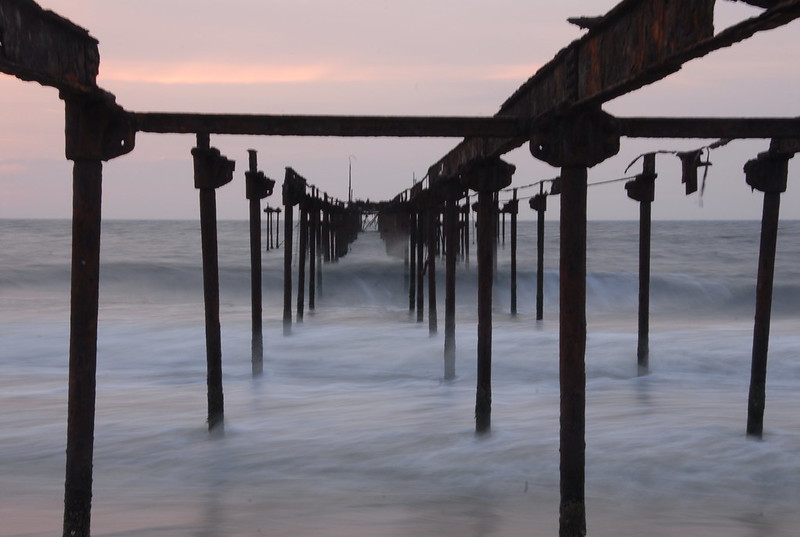
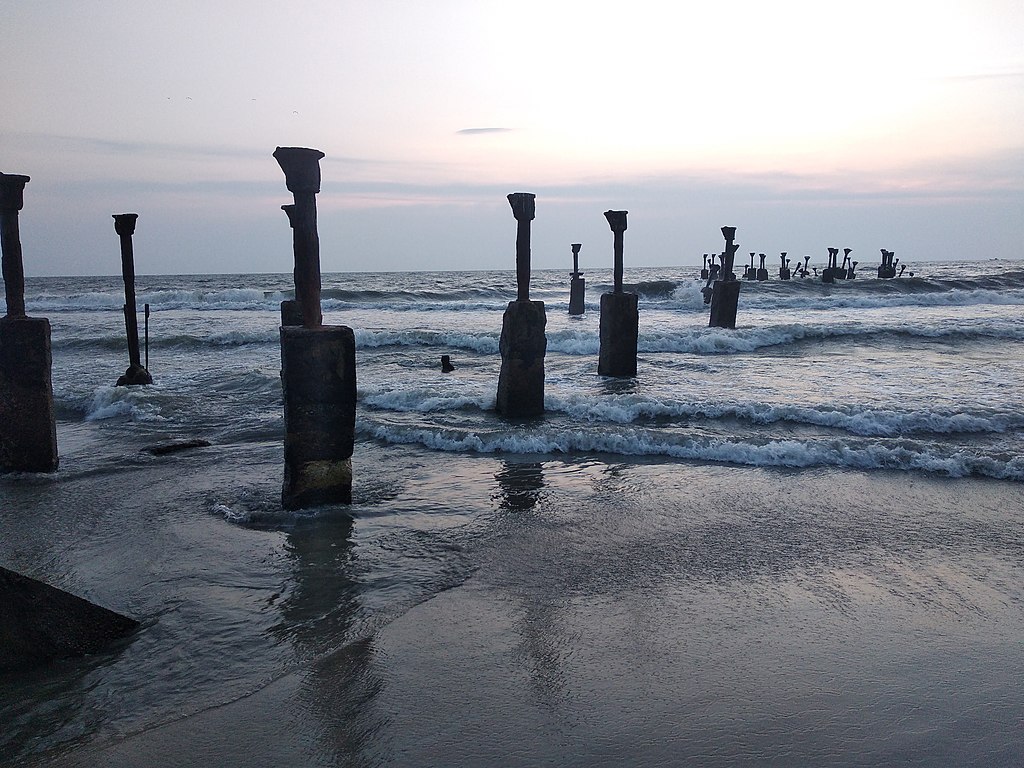
The Alappuzha Beach is one of the most visited and well-famed destinations in the Alappuzha town. The pier extending over the sea has been present for over 150 years! Relish in the exquisite view of the sunset with your family and loved ones and pay a visit to the Alappuzha Lighthouse near the beach. Moreover, youngsters and artists frequently visit the beach to attend the annual Alappuzha beach festival. Also famous is the International Sand Art Festival which was held on the beach in 2015.

10. Neendakara Beach

Beaches of Kerala-Neelankara Beach
Image/Wikimedia

We all know that Kerala is highly famous all over the world for its seafood. The Neendakara beach is a famous fishing dock situated in the Kollam district. The village is connected by the Neendakara bridge to Sakthikulangara (a neighborhood in Kolham) and is a prime spot for the sale of fresh fishes. Hideout in this fabulous place to witness the wonderful natural beauty that the beach is blessed with.

Needless to say, these beaches can never grow old. The alluring beauty of Nature is evergreen and is a great way to keep ourselves healthy and fresh. Pack your suitcases and plan a getaway to your favorite beach as soon as possible. Trust me, it’s all worth it!

The Best Type of Pet Reptiles: A Guide for Both Beginners and Experts

0

Reptiles can be an unusual choice to have as pets, but if you want one, read on to find out everything you need to know to choose one.

Pet-Reptiles
Photo by Amy Humphries on Unsplash

Reptiles can be excellent pets. Sadly, inexperienced owners get overwhelmed when they begin to understand how costly and complicated it can be to take care of them. Even experienced reptile owners can go home with incomplete and sometimes even incorrect information from pet stores when it comes to the proper care for their pets. And that can lead to surprises and very bad consequences. 

If you are thinking about getting a reptile, you need to know about their diet and environmental needs, among other things. You might not be aware of how complicated reptiles’ diets can be. Most reptiles tend to feed on some form of animal life, such as insects, superworms, birds, frogs, fish, even other reptiles. 

Some reptiles are better for beginners than others because these types of animals have lower maintenance requirements. However, you will need to invest a significant amount of money in buying the proper equipment to take care of your reptile buddy.

Before bringing home a reptile, you will need to do thorough research to decide which reptile you should buy. You need to take into consideration whether you can provide a proper diet, if your house has the proper environment, and most importantly, what you need to know to take care of it. If you are confused about which type of reptile you should get, read on to find answers to all your questions.

1. Lizards

Lizards can be found in almost every pet store. One of the most common types of lizards is the iguana, which is certainly not a good choice for beginners. They get quite large and have a tendency to become aggressive at maturity. Most importantly, their diet and environmental needs do not make them ideal pets.

There are other lizards like Chinese water dragons that tend to have very specific requirements when it comes to their diet, humidity, lighting, and heat. However, there are some lizards that are suitable for pets. Those are: 

  • Leopard Geckos: 

When it comes to lizards, leopard geckos are considered to be the ideal choice, especially for beginners, as they are relatively small. An adult leopard gecko can easily fit into a 15-20 gallon tank. They also don’t need specialized (UVA/UVB) lighting, as they are nocturnal. You can feed them a variety of insects for their diet.

  • Bearded Dragons

Bearded dragons are definitely one of the most challenging of the lizard species. These are mainly found in Australia and can reach a size of 18-24 inches, so you would need a good size tank to fit them in. They are quite similar to frill-necked lizards as both of them are desert dwellers and require relatively high temperatures. As for their diet, you can feed them a combination of insects and vegetables of many varieties. 

2. Snakes

Pet-Snakes
Photo by Joshua J. Cotten on Unsplash

Many people consider snakes to be a weird choice for a pet, and many are very scared of them. Still, there are some animal lovers out there who have the courage to keep snakes. The biggest hurdle you will face like a snake owner is maintaining a proper diet for it. You need to be willing to feed them whole prey like mice or rats (pre-killed is advisable) which they would have hunted if they had lived in their natural habitat. However, one of the biggest advantages of keeping snakes is that you only need to feed them once a week or less, so you can leave them without a pet-sitter for days. Also, unlike lizards, they don’t have a preference for UVA/UVB lighting. Here are some snakes you can consider for a pet.

  • Corn Snakes

Corn snakes are beautiful, tamable, and easy to handle. They can reach an adult length of three to five feet and are expected to have a lifespan of 10 years or more. However, keep one thing in mind: They are excellent escape artists, so you will have to keep them in a container with a tight-fitting lid.

  • Ball Pythons

Ball pythons are a type of small constricting snake that is quite docile and can easily be taken care of. Maybe that is one of the reasons they are the most common kind of pet snake. They are expected to have a long life, spanning from 20-30 years. However, they’re known for throwing tantrums when it comes to their diet, so make sure to buy a ball python that is healthy and captive-bred.

3. Turtles

Pet-Turtles
Photo by Fernando Maté on Unsplash


Last on my list of recommendations is turtles.  Many might consider them boring. But they can actually be wonderful pets, especially for children. Then again, it can be tough to fulfill the housing and environmental needs of most turtles, especially aquatic turtles, and tortoises. Keeping a turtle can be a lot of work, so don’t get one if you are not willing to put in the time. Here are some type of turtles you can get:

  • Red-eared Slider

Red-eared sliders are the most common aquatic turtle species because they are active, friendly, sociable, and easily available. Generally, they are housed inside, but as they mature, they can be housed outside too. They tend to have a long lifespan of around 50 years if they’re taken care of properly.

  • Eastern Box Turtles 

Eastern box turtles aren’t very large and look like tortoises. They tend to have long lifespans. Unlike red-eared sliders, they don’t have aquatic requirements, so their maintenance is low. They’re very adaptable creatures so they can live both indoors and outdoors and can survive on both plants and insects.

Pets provide companionship that we all crave. But we need to remember that having a pet is a huge responsibility, so we owe it to them to do the research and acquire the knowledge to provide them the best care possible. Reptiles can be great pets when they bond with their owners, and they can be pretty easy to care for. I hope this article will help you choose your ideal reptile.

10 Amazing Festivals of Kerala that You Must Experience!

2
Festivals-of-Kerala
Image – Varun Nair/Flickr

Kerala during the festival season is at its peak! The state simply lights up due to the beautiful decorations all around, as well as the fanfare of the enthusiastic residents who gather together to celebrate the renowned festivals of the state. Being there to witness the magnificent festivals of God’s Own Country is truly a privilege, for this wholesome experience is one that will be etched onto your hearts and souls forever. However, for now, it seems you might have to live vicariously through words that truly aren’t enough to describe the ineffable splendor of these festivals.

1. Onam

Festivals-of-Kerala-Onam
Image – Hari Menon/Flickr

Let us commence this vibrant journey with Kerala’s very own: Onam. This is a ten-day festival from Atham (the first day) to Thiruvonam (the last and holiest day). Onam is celebrated throughout Kerala with devotees offering their prayers, dressed in traditional clothing, especially women who look elegant in the white and gold saree referred to as Kasavu. At the doorstep of every household, you can observe a beautiful rangoli made entirely from flowers or pookkalam. Additionally, a customary 9-course meal, consisting of 36 dishes called ‘Sadya’ is cooked for this auspicious occasion and is served on banana leaves. This festival also observes the masses participating in boat races, dances, and martial arts. This festival is celebrated to mark the return of Mahabali, a generous and fair ruler of Kerala. Under his reign, Kerala was nothing less than a utopia and his popularity rose which meant a decline for the Devas who were annoyed by the same. To respond to their complaint, Vishnu went on Earth in the form of a dwarf: Vamana, and requested three steps of land from Mahabali who granted his wish. Vishnu then exponentially grew in size and took the steps. The first one over Earth, second over the heavens, and with no space left, Mahabali offered his head as the third step. Vishnu, touched by his act, allowed him to go back and visit his subjects once a year on the day that is now celebrated as Onam.

2. Kerala Boat Race Festivals

Festivals of Kerala-Kerala Boat Festival
Image/Wikimedia

Kerala is a state that is renowned throughout the globe for its backwaters. One of the major attractions to visit them has to be without a doubt, the enthralling boat festivals. Whether you are participating or merely witnessing, you are surely in for quite a ride. These races are simply captivating with the surrounding fanfare and the constant wonder as to who will win with boats overtaking each other from time to time making it a very close call. The snake boats referred to as ‘Chundan Vallams’ also serve as another charm of this festival. Some Kerala boat races that are a must-visit are the Vallam Kali and the Nehru Trophy Boat Race.

3. Maha Shivratri

Festivals-of-Kerala-Maha-Shivratri
Sivarathri Kettukala – Wikimedia

The religious festival of Maha Shivratri is zealously rejoiced throughout the state of Kerala. As per legend, the day marks the night when Lord Shiva performed the infamous Tandava Nritya which is said to have saved the entire world from its doom. Falling between February and March, per the Hindu Lunar Calendar, Maha Shivratri, as denoted by its very name, is a night in the remembrance and commemoration of Shiva. Devotees in large numbers attend the event at the Aluva Mahadeva Temple, in its namesake city, near the banks of River Periyar.

4. Vishu

Festivals of Kerala-Vishu
Image/ Prashant Kv/ Pixabay

Another well-known festival in Kerala is Vishu. Celebrated on the first day of the Malayalam month of Medam, it marks the astronomical new year, and people throughout the state dynamically commemorate the same. It is also considered to be the day when demon Narakasura was defeated by Lord Krishna. An interesting aspect of this festival has to be ‘Vishnukkani’. Kani is a Malayalam word that refers to what is first seen and therefore the object that you first set your eyes upon during the morning of Vishu serves as a determinant of your luck throughout the year. It is because of this the Vishukkani is previously prepared by the women of the family and it consists of lemon, an oil lamp, mirror, Lord Vishnu’s image, and other such items. The family members are blindfolded by traditionally the eldest member and then guided towards the Vishukkani to bring upon good luck. The arguably best part of the festival for any foodie like me is the truly mouth-watering delicacies prepared such as Veppampoorasam (a sour mango soup) as well as Sadya. Apart from this, children also burst firecrackers at night, adding to the joyous day.

5. Attukal Pongala

Festivals of Kerala-Attukal Pongala
Image/Wikimedia

The enthralling festival of Attukal Pongala is one endemic to Kerala and is celebrated every year, generally in the Malayalam month of Kumbham, at the Attukal temple, situated in Thiruvananthapuram, the state’s very own capital devoted to its namesake, the Attukal Devi. The temple is filled with hundreds of thousands of devotees and the majority of them are women who revere Devi Attukal and offer her sweets in clay pots including payasam, one of Kerala’s specialties. A special is also executed on this occasion by a crowd of women which is considered to gratify the Devi. An interesting fact about this festival is that it made the Guinness Book of World Records for the largest female gathering with the number going up to 25 lakhs in the year 2009. This festival is truly mesmerizing due to the way the city of Thiruvananthapuram simply glows as well as the celebration of the power of women brought upon by this festival.

6. Thiruvathira

Art-Forms-of-Kerala-Thiruvathira
Image – Syam Subramanian via Flickr

The celebration for this festival usually takes place in December or January. This festival is devoted to Lord Shiva and is considered to be the ideal day to worship Lord Shiva. All of Lord Shiva’s devotees go to the temple for the blessing of the Lord.

The festival’s myth is that it honours the death of Kamadeva the God of Love. At 4 a.m. on this day, women start getting up and sing hymns about the God of Love and create a rhythm with their hands splashing water. Finally, women stand gather in a circle around a lamp called Nilavilakku and sing songs in the praise of Kamadeva. For unmarried women, this event is very important since they keep a fast this day and pray for good husbands. You can see temples and the ceremonies on Thiruvathira decorated beautifully. It’s without a doubt one of Kerala’s most important celebrations.

7. Theyyam

Theyyam-Folk-Art-Kerala

Theyyam celebrations are observed in Koyilandi Wadakara Taluk, the Kozhikode district of Kannur, Kasargod and Mananthavadi, and is popular in the North Malabar region of Kerala, mainly in Kolatunada. Between December and April, this 800 years old celebration is commemorated. This is a form of worship displayed in the art of dance. Over 400 forms of dances exist. Some of the great performances include Wayanad Kulaven, Raktha Chamundi and Kari Chamundi. The performer of Theyyam is taught in three phases. The first stage consists of adorning oneself with flowers and colours. They wear a mask, too. The performer is then subjected to self-torture on the second stage. The third level consists of dance. 

During the performance, often called the “dance of gods,” mythological stories are dramatised. Performance with breaks could last between 12 and 24 hours. The performer has to observe fast after sunset as the deity and dancer of the temple. Specialists do the make-up of these dancers. The dance ends with the distribution of prasad.

8. Thrissur Pooram

Festivals of Kerala Thrissur Pooram
Image – Malcolm Murdoch/Flickr

This celebration is one of Kerala’s most renowned temple festivals. It is held in Thrissur’s Temple in Vadakkunnathan. Seven days before the major pooram, the celebration begins with ceremonial flag hoisting, called kodiyettam. People sit atop enormous elephants, completely appointed outside the temple for this very event. It takes 3 days, which takes 36 hours, to make the traditional pujas, ornaments, and to enjoy the wonderful event with amazing fireworks. Thrissur Pooram features many colours and music, mostly to honour Lord Shiva

Almost 300 000 people from all over India attend this celebration and Kerala is full of people. Therefore, if you’re planning to attend the festival, book good rooftop rooms to watch the wonderful fireworks and a procession. Thrissur Pooram is a loved Kerala Festival for its gorgeous and lively fireworks which are lit all night.

9. Christmas

Festivals-of-Kerala-Christmas
Image – McKay Savage/Flickr

The most significant and spectacular Christian holiday is held for Christmas in honour of the birth of Jesus on 25 December. There are a variety of shows including the Christmas Star, Christmas tree, Crib and Christmas cake, and the Christmas Father. The glittering of the Christmas stars, the magnificent pointer to the Babe from Bethlehem, sets the mood with the season’s advent. Priests hold a mass in churches three times, beginning at midnight with the first. Just before the midnight service, the priest brings an image of the child, preceded by rows of children holding lights in the crib. In the middle of the fireworks, the song “Gloria in exelcis Deo” is sung. In Kerala, Christmas expresses itself in the cultural traditions of the country.

Without a plum cake, Christmas in Kerala is incomplete. Every Christian household has its unique plum cake variant and it must not be missed. The fruit is steeped in wine for about 41 days to form the cake! Besides the cake, wine is also made in the home. Mutton or Chicken Stews & Appams, Kappa Biryani, Kappa stew, Neyyappam, Unniappam and Acchapam, all types of traditional meals that are made. The people of Kerala have recently begun to make a turkey for Christmas.

10. Ambalapuzha Arattu

Festivals-of-Kerala-Ambalapuzha-Arattu
Image – Kannan S Rajan/FB

The Ambalapuzha Arattu festival is conducted in the Sree Krishnaswamy Temple at Alapuzha and blesses the Ambalapuzha Unnikannan. According to the Malayalam calendar, the festival takes place between March and April in the month of Meenam. It’s a festival of 10 days and begins with the ceremonial hoisting of the flag and finishes in an Arattu, meaning holy bath in the asterism of Thiruvonam. The temple is dedicated to Lord Krishna and was built between the 15th and 17th centuries by king Chembakasserry Pooradam Thirunal-Devanarayanan Thampuran.

The festival is well-known for the processions of several ornamented tuskers. Velakali, originally from Ambalapuzha, is a demonstration of music and martial art. The Ambalapuzha Nadakashala Sadya; a ritualist feast on the Pallivetta Day of the festival is another such noteworthy event.

Apart from these, there are various other religious and temple festivals celebrated in the lively state that is Kerala. Right now, anyone would be enticed to buy a ticket to Kerala and celebrate with the welcoming locals their various breath-taking festivals and eat some delicious South-Indian food too. These festivals bring us closer to our culture and roots which we sometimes forget about owing to the hectic nature of everyday life. So, let’s do our best to remember and take in our marvelous heritage. Also, do let us know in the comments section below about your favorite festival in Kerala.