Fashion industry is an ever-growing industry across continents and cultures. However, it is also one of the major contributors to industrial waste, thereby polluting the environment. A great deal of fabric is discarded and dumped everyday! With the growth of various thrift stores and Indie sustainable brands, we found a brand that celebrates feminism and sustainability. Like the light at the end of the tunnel, we discovered Vuri Studio and it is our special find. We got real candid with the founder aka creative mind behind Vuri Studio, Urvi Soni.
The Beginning
Urvi is a 24 years old fashion designer from Delhi. A student of fashion from the Pearl Academy, New Delhi and FIDM, Los Angeles, she found her niche in upcycling. From draping dresses on herself using her mother’s dupattas when she was 6, to crafting clothes for herself, she found her brand identity. Let us find more about her and her label:
What does your brand name ‘Vuri’ mean?
‘Vuri’ has no meaning of its own. It is an anagram of my name, Urvi. We define this word as having a killer wardrobe that doesn’t kill the planet. It also explains the brand’s philosophy. I defo hope that in the future Vuri finds its way to the wordbook and people associate it with sustainable fashion.
The Eco Touch
‘Here’s to having a killer wardrobe without killing the planet’ – How do your collections promise what they preach?
Our fashion industry is said to be the second biggest contributor to pollution on this planet. The clothes that we wear have a very short life and mostly end up in bins or in landfills. There, they stay dumped for centuries and if burnt, release harmful chemicals into the air. We strongly contradict this practice and believe in giving a second chance to the fabric.
In our collections so far, we have used fabric that was either discarded by us at home or by the export companies. This is one reason why we are conditioned to make one of a kind or limited edition pieces. We try not to follow trends and make statement pieces or use classic silhouettes so that our clothes can still be worn along the years without giving it a second thought and thus, extending it’s life even further.
Additionally, we practice a zero waste policy at the studio where not even a single piece of thread goes into the bin. Whatever little waste remains, we use it to make bags, earrings or hair accessories. We avoid using any plastic trims in our clothes (zippers, plastic buttons, plastic beads) and opt for more sustainable alternatives, such as wooden buttons and drawstring closures and glass/wooden beads. We also try to keep our price points lower than most of the sustainable brands in the market, giving our customers a conscious alternative to fast fashion brands.
We also keep our personal profits low, and our designs fun and spunky. We are making sustainable alternatives for people at an affordable price.
The Inspiration
Just curious, how and when did it occur to you that you want to start your sustainable fashion label?
My mother used to make clothes for me while I was growing up. She stitched these from her old kurtas and left over fabrics from other projects. Each time I wore those garments out in public, I was flooded with compliments. This was significantly because what I was wearing was unique and not seen anywhere else in the market. And upcycling is all I have ever known all my life.
Then later in college, I realised that what I had been doing all my life is actually the need of the hour. Last year, during the lockdown, while I was making clothes for myself, I got the idea of starting my own clothing line of upcycled garments. Unable to walk out or source materials, I started making clothes from the bits and pieces I had at home, be it sarees, dupattas, shirts, bedsheets – everything that was available.
Where do you acquire your fabrics from?
Most of the fabric so far has been acquired from home. These are mostly sarees and dupattas that we no longer used. Many of my relatives also provided me with their unused clothes. Then the fabric goes through a series of washing and sanitizing routines before we start working with them. Other than these, I source my fabric from export surplus markets in Delhi.
For the Women
Does your label cater to every woman? If yes, then how?
With every collection I work on, I try to cater to a different woman. I love to experiment with different genres of capsule upcycled collections. Recently, I dedicated a collection to very tribal/boho vibes. Then, another one had badass street vibes. And my latest collection has very feminine, soft vibes. It’s a great way to reach out to different niches and challenge yourself to do new things. I am looking forward to continuing to experiment along the same base. I also make certain that my clothes flatter every body type and that all women feel comfortable wearing them.
Name one favourite collection of yours so far. I would like to take the risk of asking you for your outfit from the same collection.
My favourite collection by far is the BANJARAN collection. It was a capsule streetwear collection confluencing with the age-old craft of bandhej and thus, giving it a modern look. Also, I loved each and every piece from that collection and so cannot pick one (giggles)
Food connects people and defines a place, culture, custom, and tradition. It acts as a motivation for people, especially for passionate eaters. It is a way to link people of distinct cultures and traditions. When it comes to food, Pune is the perfect junction where a person can find assorted mouth-watering tasty delicacies amplified by its traditional aspect. Pune has been home to many saints, freedom fighters, and poets. Pune mirrors the Maharashtrian Culture. Pune is a west-central Maharashtrian state known by the name of “Queen of the Deccan”. It is a Queen for food lovers as it offers a wide range of variety in Maharashtrian courses. Thus, this stunning city is a famous food destination where one can get spicy tangy delicious food in any nukad and corner of the city. Pune food culture is an amalgam of tradition and food giving more refined flavors to the dishes. Along with this, the Maharashtrian spices add a spark to the simple yet piquant dishes.
Let’s take a look at some of the delicious of Maharashtrian food items that describe the food culture of the resplendent city, Pune:
Vada pav is one of the simplest yet best in taste dishes of Maharashtrian food. Vada Pav was invented by Ashok Vaidya, a local food vendor. Over the years this simple yet delicious dish has gained popularity. The vada, is a deep-fried dumpling made of spicy potato filling sandwiched between the bread roll, is served with a medley of chutneys which adds uniqueness according to the place. The famous one is the classic green chutney, red chutney, quite spicy in taste and the famous red dry garlic chutney. The places to get the best of Vada Pav in Pune are Garden Vada Pav Centre, Parihar Sweets, The Wada Pav Café, and Priyadarshan snacks.
Paav Bhaji is one of the popular street foods of Maharashtra. In Paav Bhaji, the Bhaji, made of mashed vegetables in a thick gravy of tomato puree vegetables and Maharashtrian spices like turmeric, red chili powder, paav bhaji masala, etc and decorated with sliced butter while Paav is the bread roll generously buttered on a hot pan. The dish served with sliced onions and lemon which enhances the taste of the recipe. The places where one can enjoy the best of Paav Bhaji in Pune are Relax Pure Veg, Falhaar, Supreme Snacks, Cream center, Siddharth Paav Bhaji and Durga Famous Paav Bhaji.
Puran Poli is a well-known Maharashtrian savory in which flatbread stuffed with a dense sweet filling made of the powered gram, ghee, and jaggery. , it is a festive dish that makes the occasion more grand. In this dish, the sweet filling part is the ‘Puran’ while the flatbread part is the ‘Poli’. Served with a combo of milk and ghee to enhance the taste. It is also known as Holige, Obbattu, and Bobbattu in the Southern parts of India. It is healthy as it hastens the fat burning process. Mumma’s Kitchen, Hotel Peshwa, Saoji Khamang, and Asha Dining Hall, Ratnaj Kitchen, Shubhangi’s Kitchen are some of the places which are famous for Puran Poli in Pune.
Misal Pav is a delicious breakfast recipe having originated from Nashik and Ahmednagar. It is a spicy and tangy delicacy. In Misal Pav, the Misal portion, made of sprouted pulses, is cooked with spicy Maharashtrian masalas, while paav is a bread roll generously buttered. The dish garnished with sliced onion, wedge lemon, sev, and coriander is irresistible. The places famous for Misal Paav in Pune are Vaidya Upagar Gruha, Khasbag Misal, Shri Kala Snacks, and Hotel Ramnath, Shri Krishna Bhavan, Hotel Malhar.
Sabudana Khichdi is a famous recipe generally eaten during fasting and for breakfast. Sabudana is a carbohydrate rich variant of tapioca. Made of soaked sabudana with roasted peanuts, spices, and potato slices. The dish, served with sliced lemon and curd which complements the whole recipe. It is easy to make and good for digestion. The best places to get enjoy Sabudana Khichdi are Khadadi, Amruteshwar, Shree Upahar Gruha, and K2H Meals, Appa Deccan Gymkhana, Bipin Snacks, Kharadi Kharadi, Pune.
Bhajaniche Thalipeeth is a traditional Maharashtrian dish that is mostly served as breakfast or for snacks. So, in short, it is a multi-grain Maharashtrian flatbread made from roasted grains, cereals, and spices. It is a perfect combo of appetizing and healthy recipe full of nutrition. It is served with delicious butter and chutney, onion slices and chilies. The famous stops to enjoy this dish are Shabari Thalipith Centre, Durvankur, Wadeshwar, and Shabree Restaurant, Mathura, Khadadi, Durvankur.
Bakrwadi is a very famous Maharashtrian snack with a combination of sweet and spicy ingredients. The outer portion of Bakarwadi, made of either gram flour or all-purpose flour while the inner portion consists of stuffing made of poppy seeds, sesame seeds, tamarind, coconut, dry mango powder with some spices. It is the perfect snack for your small breaks. The places to enjoy the best of Bakarwadi in Pune are Chitale Bandhu Mithaiwale, Hotel Shreyas, Kayani Bakery, and Martand Malhar.
It is also known as Pithla Bhakri. It is a traditional vegetarian Maharashtrian dish. Pithla, which is also known as poor man’s food, made of gram flour which is mixed with water to form a paste. This is then cooked in oil and other spices such as turmeric, red chili powder, salt, mustard seeds, cumin seeds, and garnished with coriander. Bhakri is a flatbread made of wheat, jowar, bajra, rice, or nachni flour. It is very healthy and nutritious. This dish is usually served with spicy chili thecha, made of green chilies. The best places to have this dish in Pune are, Singhgad Fort, Hotel Girija,Kailash Garden, Maratha Samrat Restaurant, Mathura Pure Veg, Shantai Zunka Bhakar, Jhunka Bhakar Kendra.
Visiting Pune anytime soon? Well, make sure you try these dishes out to know about the Pune Food Culture!
Well, when it is your birthday and your day probably begins with jingling birthday wishes that light up your phone every once in a while. There is a surprise birthday party or a bash you organize yourself. There is the cake, the snacks, the music and some merry time with your loved ones.
However, this form of celebration though fun is nonetheless essentially a western concept. It is no secret that Indians like to celebrate. The Republic of India has documented everywhere the planet as a rustic of endless cultural and ancient festivals and celebrations. Why ought to birthdays be something less? Birthdays in the Republic of India area unit an extremely huge deal and therefore the chance to pack in the maximum amount of celebration as potential isn’t taken as a right. Birthday rituals take issue slightly across the country and area unit distinctive to completely different regions. though several ancient ritual area units slowly dying out with modernization, above all inside the urban Republic of India, several area units are still discovered nowadays. The traditional Indian way of welcoming one’s birthday is quite different and unique and is still followed in many parts of the country.
Thanking God
Image/Pixabay
A typical traditional birthday morning begins with a visit to the temple. Almost all cultures and religions that exist here believe in seeking blessings from the almighty as a very important ritual of birthday celebrations. This is a notable feature of the collective Indian culture. Where to embark on anything new, important, or joyous by first kneeling to the divine for thankfulness and prayers. This understanding is passed from one generation to another. It is a deep-rooted philosophy that in many ways humbles and revolves around the realm of spirituality.
In many Hindu homes, an aarti is prepared, with lighted diyas arranged on a silver tray, and is encircled over the birthday boy or girl. Rice smeared with turmeric is applied on the forehead. Prayers or pujas are also held especially on birthdays to ask the Gods for longer life, health and success. In many Muslim homes, a visit to the dargah or offering of chadars (netted flowers or material strewn carefully over the holy tomb) is a common practice.
Sometimes, coconut or dry fruits are laid out on a tray. They are encircled over the birthday boy or girl, very much like an aarti, to ensure that all ill-effects are waded away. Similarly, different regions and religions perform specific spiritual rituals and deem it the most important way to begin the birthday.
New Clothes
Image/Pixabay
Like youngsters in most cultures, birthdays square measure the most event of the year and cause abundant excitement. At school, kids in India square measure the center of attention on their birthdays, dodging their college uniforms for a fashionable, brilliantly colored outfit. the full outfit is sometimes fresh and worn for the primary time on their birthday. This is often followed by distributing sweets in the school and having the whole class sing for the birthday boy/girl.
Reaching out to the Needy
Another very interesting way of celebrating is to give and reach out to the less fortunate on birthdays. This may not essentially be only an Indian concept and is followed by many people across the globe. It is common practice in traditional birthday celebrations to give food, clothes, or money to the needy and poor. Usually, this is done to distribute food outside temples or give money to domestic helpers. Visiting an orphanage or shelter and spending time with the inmates is another way.
On deeper thought, it may be assumed that our elders sought to teach us that birthdays are more fulfilling when we try giving. Helping others and elevating ourselves to think beyond our existence alone. Also, the idea of sharing the joy with those who are less fortunate is a wonderful way to keep a check on growing arrogance. Inculcating traits of compassion. It also reminds us in today’s times, that on an occasion when you feel on top of the world, the best way to sustain and enhance that feeling is to make another lesser person’s day better by helping them. In some cultures, such as with the Parsi community planting a tree is deemed to be extremely auspicious on one’s birthday.
The differences between Indian and Western Celebrations
So does this mean that modern western ways of celebrating one’s birthday are not a welcome addition to our already diverse culture? Well no! However, many subtle differences pop up between our traditional methods and modern ways. Simple examples, such as lighting candles and diyas on one’s birthday as opposed to blowing off candles on birthday cakes. It is believed that blowing off the light means cutting short life and diminishing success. On one hand, cakes are cut using knives. However, many traditional religions and cultures are averse to the idea of using any sharp object to celebrate birthdays.
Party time!
Image/Pexels
Surprisingly, though traditional celebrations lay importance on the spiritual, philosophical, and soul-stirring moments. It also encourages spending time with family and friends, have lavish birthday platters prepared, frolic, fun, and laughter. We all know that as we were growing up, though there were no parties on each of our birthdays like our mothers and grandmothers toiled endlessly in the kitchen to make delightful assortments and opulent meals, most of our likings. The whole household would be working since morning for the grand party that was to be held in the evening. The concept of celebrating one’s birthday with pomp though is restricted by some sects of religious groups. Overall, traditional birthday celebrations are no less festive than modern-day parties. There is food, calling over friends and family, an inflow of gifts and merriment.
Well it is your birthday and your phone may be jingling, your party planned and your mood upbeat, but take a while to bite into the sweet ladoos during aarti, say a short prayer, and help someone needy. After which you deserve a great party. Happy Birthday!
There are many reasons to seek out and visit beautiful places. Maybe you are looking for inspiration or inner peace. Maybe you are an avid social media personality looking to enhance your brand with travel photos. Maybe you are looking for significant experiences to share with loved ones. As long as you are respectful of the places and their people, there is no bad reason to seek out beautiful places to explore. If you aren’t sure where to start your excursions, here are some of the most beautiful places in the world you must add to your bucket list.
Glacier Bay National Park, Alaska
Image by kristirubino from Pixabay
If you’re thinking about cruises in 2022, consider an Inside Passage cruise. This allows you to travel by boat or kayak to Glacier Bay National Park. The trip gives you an opportunity to see wildlife such as mountain goats and bears on the shore, as well as marine animals such as sea lions and orcas. You may also get to witness the birth of an iceberg breaking off the Margerie Glacier.
Mount Fuji, Japan
Image by kimura2 from Pixabay
Mount Fuji is the tallest mountain in Japan and one of the most photogenic because of its symmetrical appearance and nearly perpetual cover of snow. Though an active volcano, Mount Fuji has not erupted since the early 1700s. While some people climb Mount Fuji, others prefer to admire it from a distance. In either case, you should try to schedule your visit for spring so that you can also experience the wonder of Japanese cherry blossoms in full bloom.
Many people don’t fully realize how beautiful this unassuming Midwestern state can be until they come for a visit and see it for themselves. Western South Dakota features the Black Hills and the Badlands, two completely different but equally gorgeous landforms. Covered in evergreen forests, the Black Hills are most famous as the home of Mount Rushmore, which is well worth a visit but shouldn’t be the only stop on your trip. Other attractions include an expansive state park, caves, canyons, nature areas, and a steam engine that takes paying passengers through some of the most pristine green countryside you will ever see.
The Badlands featured prominently in the movie “Nomadland,” winner of the Academy Award for Best Picture in 2021. The name comes from the Lakota language indicating how harsh and arid the region is. It is an otherworldly landscape of stone pinnacles and buttes that have been sharply eroded over millennia to reveal different-colored striations.
Banff National Park, Canada
Image by Jörg Vieli from Pixabay
Banff National Park is located in the Rocky Mountains near the southwestern border of the province of Alberta. You’ll find some of the bluest water you’ve ever seen in its glacial lakes that reflect the surrounding mountains. There are plenty of accommodations to suit the preferences of all visitors, ranging from the cozy to the luxurious. Therefore, don’t cheat yourself out of a trip to Banff National Park because you don’t feel that you are particularly “outdoorsy.”
Machu Picchu, Peru
Image by mailanmaik from Pixabay
Machu Picchu is an ancient terraced city located 8,000 feet above sea level. Not only does it offer sweeping views of the surrounding mountains but the remaining architecture is remarkable. There is a good reason why Machu Picchu is the most famous spot in Peru and designated a World Heritage site.
Venice, Italy
Image by Gerhard G. from Pixabay
Venice is one of the most famous cities in the world because a good portion of it is underwater. Venice often has canals in place of streets and boats in place of cars. However, it is not only this curiosity that makes the city unique. Venice was also a medieval center of art, architecture, literature, and other scholarly pursuits. Just strolling along the arched bridges and sidewalks can be a wildly romantic experience. However, if you want to have an authentic gondola ride, that is an option as well.
It is worthwhile to seek out and visit some of the most beautiful places in the world. However, remember that you don’t necessarily have to travel far to find beauty. It is present in every place if you try to look for it.
In vitro fertilization (IVF) is a complex set of procedures used to aid in the conception of a child or to help with fertility or to avoid genetic problems. In IVF, mature eggs are extracted (retrieved) from the ovaries and fertilized in a laboratory with sperm. The fertilized egg (embryo) or eggs (embryos) are then transferred to a uterus for further growth. IVF takes about three weeks to complete. When these steps are broken down into smaller chunks, the process can take longer.
The most successful method of assisted reproductive technology is in vitro fertilization (IVF). Many factors influence your chances of getting a healthy baby through IVF, including your age, the cause of infertility, your doctor’s experience, clinic facilities, and so on. IVF is a time-consuming, costly, and invasive procedure. IVF will result in a pregnancy with multiple fetuses if more than one embryo is transferred to your uterus (multiple pregnancy). As a result, finding the right IVF doctor is critical for better outcomes. Your doctor should explain how IVF works, the risks involved, and whether this form of infertility treatment is right for you.
Dr. Mohit Saraogi
Dr. Mohit Saraogi has earned three gold medals in the FCPS, DGO, and ICOG exams. He is one of the best IVF doctors in Mumbai because of his extensive expertise and experience in the field of fertility care. He is working with IRIS IVF centre in Mumbai. The hospital’s team of doctors, which includes full-time IVF specialists and an endoscopic surgeon, works tirelessly to ensure that patients receive good outcomes.
Apart from that, the IRIS IVF centre in Mumbai has state-of-the-art facilities and the most up-to-date medical equipment. We have state-of-the-art Andrology and IVF laboratories on site, which is the most important requirement for an IVF clinic. The progress rate of IVF/ICSI treatments is the most significant achievement of the IRIS IVF centre in Saraogi hospital. The procedure is performed using the freeze all process, which has a success rate of more than 70%.
Dr. Indira Hinduja
Dr. Indira Hinduja was one of the first doctors in India to introduce in vitro fertilization (IVF). Dr Indira comes from a humble background and was trained as a gynaecologist and infertility specialist at the prestigious King Edward Memorial hospital in Mumbai.
She has come a long way from studying at a municipal school in Belgaum, Karnataka, with limited resources and in a period when girls were discouraged from attending school, to being awarded the Padma Shri in 2011.
As she puts it, as a child of this generation, she understands the value of opportunity. “There were many twists and turns in (my) life, so it was a ‘aha’ moment whenever I could transform adversity into an opportunity.” Dr. Hinduja is now practicing at the Hinduja hospital in Mumbai, where she helps couples struggling with infertility.
Dr. Hrishikesh Pai
Dr. Hrishikesh Pai, MD, FCPS, FICOG, MSc, is a leading gynecologist in the world. He is currently the Secretary General of India’s Federation of Obstetric and Gynaecological Societies (FOGSI). In 2006, Dr Pai served as the Senior Vice President of FOGSI.
Since 1991, Dr. Pai has been a pioneer in the area of infertility and IVF. He is the Director of the Bloom IVF Group, which owns and operates nine IVF clinics across India, including Lilavati Hospital and Bhatia Hospital in Mumbai, as well as Fortis Hospitals in New Delhi, Gurgaon, Faridabad, Noida, Mohali, and Navi Mumbai.
He was the first doctor in India to implement a number of medical breakthroughs, including assisted laser hatching, spindle view, ovarian tissue freezing for cancer patients, oocyte freezing, IMSI, and the embryoscope. In 2013, the international agency Frost & Sullivan awarded him the best IVF community in India award in recognition of his significant contributions. In recognition of his efforts, Dr. Pai has been elected to the International Federation of Fertility Societies (IFFS) as a member of the Board of Directors, a first for an Indian.
Dr. Akash Surana
Dr. Akash Surana, is currently employed by Nova IVF Fertility in Andheri, which is located in the heart of the city and is ISAR-certified (Indian Society for Assisted Reproduction). This centre has a patient-centred care program that has assisted us in addressing the best male and female infertility therapies.
At Nova IVF Fertility in Andheri, a team of skilled medical professionals, including in-house gynecologists, IVF physicians, and infertility specialists, ensure that you receive treatment procedures that make your path to parenthood as easy as possible. To that end, they have the most cost-effective care options, including 0% EMI and other simple payment options.
Dr. Jatin P. Shah
Dr. Jatin P Shah is known for conducting all IVF tasks himself, including Ultrasonography, Oocyte Retrieval Surgery, IVF Embryology, and Embryo Transfer, resulting in extremely high success rates. His ability to troubleshoot and solve problems in various laboratories’ IVF and ICSI systems has won him the nickname “IVF Commando.” Over the last two decades, he has brought joy to infertile couples by assisting them in realizing their hopes of having a child or children.
Mysore, the City of Palaces and great architectural heritage, also abounds with numerous items unique to the city. Be it artifacts and toys, or food items, the keen visitor can get their hands on a variety of products sold in the bountiful markets of Mysore. Most of these are cultural arts and crafts, Mysore food, and textile.
Below is a list of the most famous items that owe their origin in Mysore:
The delicious dish is a haven for those with a sweet tooth. Mysore Pak originated years ago in the kitchen of king Krishnaraja Wadiyar IV. Royal chef Kakasura Madappa was bestowed with the responsibility of cooking a sweet that would enrich the name of the city’s culinary culture. Made of flour, butter, and sugar, the sweet remains popular even today and intrigues every tourist. Mysore Pak is every bit of a sinful indulgence without relishing which, you wouldn’t be doing justice to on your trip to Mysore. With every bite that leaves you wanting for more, make sure you get a little packed to take back home.
Where to Purchase: Guru Sweet Mart, Sayyaji Rao Road. Some other stores like Indra Sweets, Annex Bombay Tiffanys, and Mahalaxmi Sweets have their special variants of Mysore Pak. Timings: 9:00 AM – 10:00 PM
The musky aroma of sandalwood allures hundreds of consumers to Mysore’s wide collection of sandalwood products. The historical roots of the city’s connection with sandalwood are grounded during the reign of the Wodeyar kingdom. In 1916, King Krishnaraja Wodeyar and Diwan Sir M. Visvesvaraya established the Government Sandalwood Oil Factory. Their objective was to make efficient utilization of resources and ensure the production of the finest form of sandalwood oil. The factory is located at a distance of 2 kilometres from the royal palace. It offers guided tours of the production process of sandalwood oil to visitors and tourists. If you are looking for the best quality products with assured authenticity, look out for the sandalwood incense sticks, soaps, powder, and oil that the factory sells.
Where to Purchase: The Government Sandalwood Oil Factory, Kuvempu Nagar. Timings: 9:30 AM – 11:00 AM and 14:00 PM – 16:00 PM. (Closed on Sundays.)
The textile industries of Mysore practice excellent and efficient methods to rear their silkworms and produce quality silk. Though the history of silk sarees in Mysore dates back to the time when Tipu Sultan used to reign, it was only in the 20th century when the royalty of Mysore took conscious efforts to boost saree shops in Mysore. It also helped that the area around Mysore, or parts that belonged to the former Mysore kingdom were ideal for the growth of mulberry, the main feeding ingredient for silk worms which led to the growth of the industry. No wonder it has a thriving silk industry that attracts shopping enthusiasts. The silk sarees of Mysore exhibit a gorgeous outlook with their golden Zari-thread embroideries.
Where to Purchase: KSIC Mysore Silk Showroom. Timings: 10:30 AM
Mysore boasts of an intricate network of wholesale dealers and retailers who bring in fine, quality coffee to the market. The city’s proximity to Coorg, the nation’s best coffee producer, and other places like Sakleshpur and Chikmagalur, ensures fine quality coffee. Opt for varieties with low chicory content as they are bound to be less bitter. Coffee powder has to be stored in air tight containers so as to not lose its flavour and aroma, though refrigeration is not advised.
Where to Purchase: Coffee stores in and around Gandhi Square and Devaraja Market Timings: 8:00 AM – 14:00 PM
4. Wooden Toys (Channapatna Toys)
Image – Pee vee via Flickr
The skill of toy making in the Channapatna districts of Mysore owes to the rule of Tipu Sultan. At this time, Persian artists offered lessons on the craftsmanship of wooden toys, which the local artists committed themselves to. Channapatna toys are colourful, with beautiful designs and vibrant looks. In the modern age, materials such as rubber, sandalwood, sycamore, teak, and pine are used to make toys. Movable figurines and showpieces are the most common in the toy shops of Channapatna. Distinctive as well as affordable, the toys are a cultural pride of the region.
Where to Purchase: Mysore Handicrafts Shop, Sayyaji Road. Timings: 10:00 AM
12.Mysore Ganjifa Cards
Image Courtesy – Prathama Srsti
The Mysore ‘Chada’ Ganjifa is an ancient Indian card game that was popularized during the Mughal period. It was patronized by and played among the royals and the aristocrats. The cards are primarily circular and designed on sandalwood, ivory pieces, and handmade paper. The artists utilize the delicate squirrel hair paintbrushes to design the Ganjifa cards with natural dyes. Although mainstream popularity does not favor this traditional craft, Ganjifa cards are of historical significance to art enthusiasts and tourists alike. In recent years, adequate steps have been taken to revive the game.
Where to Purchase: Udupi district Timings: 11 a.m.
Mysore offers fabric material and readymade clothes made of Khadi cotton. The classic hand-woven Khadi cloth is prevalent among the people and considered a treasured heritage. The cloth is dyed with organic colours and visitors can have customized ones stitched by tailors during their stay in the city.
Where to Purchase: The town of Melukote. Timings: 11:00 AM
Mysore is a hoard house of traditional art and paintings that reflect the cultural history of the people. The practice originated in the 7th century BC cave paintings of Ajanta and Ellora. During the 15th and 16th centuries, the patronage of the Vijayanagar royalty amplified artistic endeavors. What makes it is distinguished is the gesso work, a kind of embossing that uses white lead and glue which is overlaid with gold foil. The artifacts depicting mythological tales and characters showcase immense details and fine craftsmanship.
Where to Purchase: Cauvery Arts and Crafts Emporium. Timings: 10:30 AM
7. Incense sticks
Image-pratsblog/pixabay
Karnataka is the agarbatti capital of the country and much of that hails from Mysore. Tourists love to collect incense sticks of lovely scents, like jasmine, sandalwood, rose, and lily. These fragrant sticks are traditionally used during religious ceremonies and worshipping rituals. They are made of a thin bamboo stick that is immersed in aromatic oils. The stick is then covered with a paste of spices and gum. When burnt, it emits its calming perfume.
Various art and crafts always thrived in Mysore, especially under royal patronage. The artisans of Mysore are skilled in carving out gorgeous artefacts and showpieces from rosewood. Their figures have fine finishes, distinctive designs, and intricate patterns. The craftsman uses various techniques to produce a work of notable skill. It is such a distinct craft concentrated here that it has a GI tag. These termite-resistant souvenirs serve as wonderful memorabilia of your visit to Mysore.
Where to Purchase: Cauvery Arts and Crafts Emporium Timings: 10:30 AM
An artistic pride of extraordinary dedication is the sculptures carved out of soapstone. The finished model is first rubbed with stone and metal paste to obtain a fine and shining finish. In Mysore, the stone is commonly known as Krishna Shila and is available in various colours. Pioneer artist K. Venkatappa was the painter and sculptor who began this practice with his splendid productions. His exemplary talent and patience have inspired many.
Where to Purchase: Mandi Mohalla, Ashoka Road. Timings: 11:00 AM
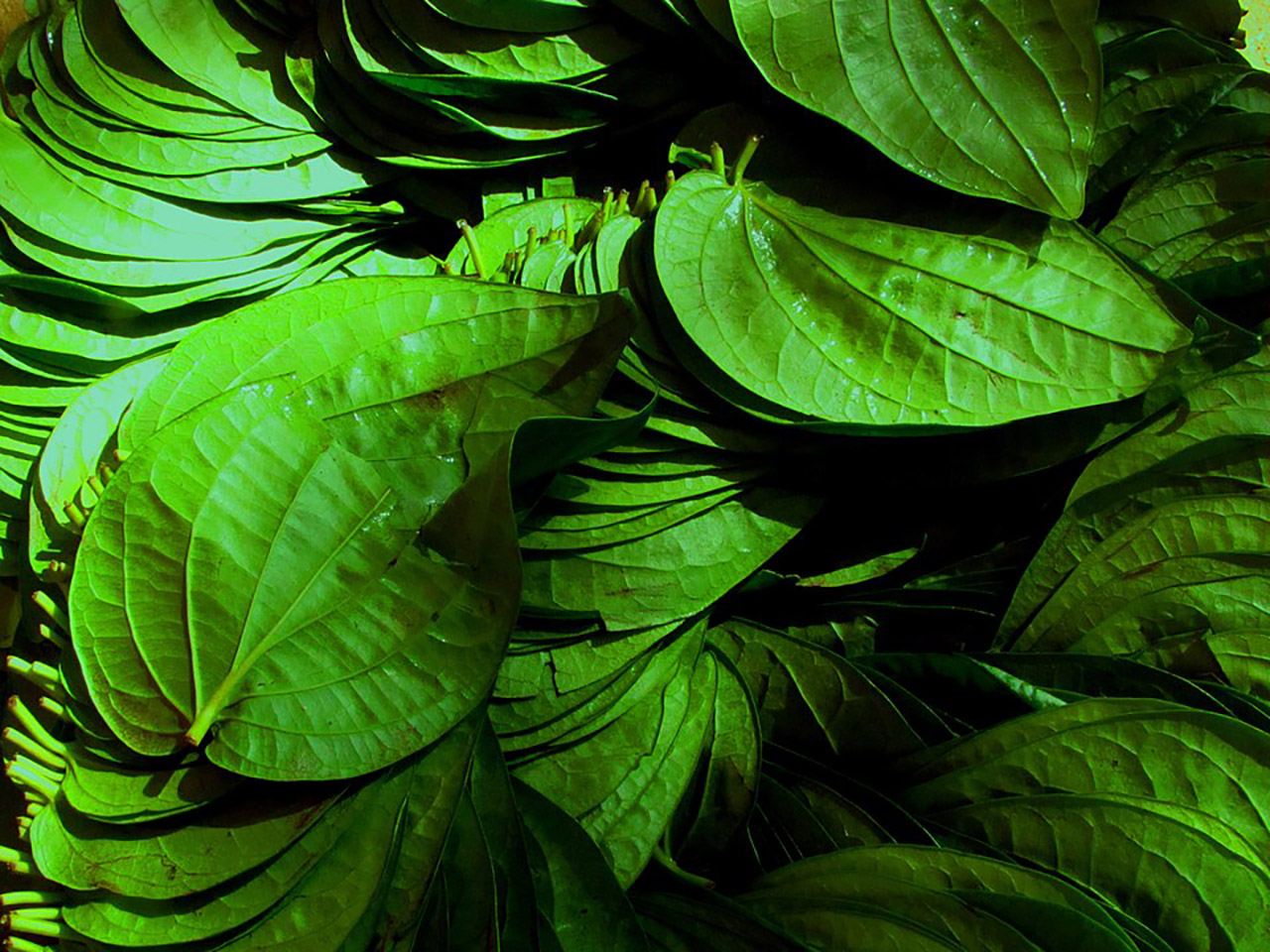
The betel leaves authentic to Mysore are commonly consumed as betel quid or ‘paan’, sometimes with tobacco. Paan is prepared by smearing slaked lime on the inside of the leaf, which is then folded to envelop the chopped betel nuts. The leaves have a unique quality of smooth texture and sharp taste. The cultivation of the leaves is protected by the Government of India and the farmers can brand their products under the name of Mysore.
A walk around Devaraja Market, especially early in the morning or early afternoon, will inevitably reveal heaps of fragrant, dainty and snowy white jasmine. Slender white petals and a tiny light green stem distinguish it from other kinds of jasmine. It gets its name from the fact that it is grown in Mysore and the surrounding regions including Srirangapatna and Mandya. The flowers are favoured for religious purposes and dressing, but more so for their intense fragrance. The flowers are used to extract oil which is used mainly in the agarbatti and soap industry as well as in perfumes. It is believed that jasmine is one of the main ingredients in the famous Chanel No 5 by Coco Chanel.
While on a trip to a city of historical wealth, it is a must to collect some of the artistic and cultural jewels. Thus, shopping in Mysore is both enriching and exciting. It is an experience worth your valuable time
Art is that powerful entity that binds us all together. It is that beautiful emotion that transcends all barriers created by Humanity and endorses the universalization of the human soul. An excellent piece of art has the power to nest in our hearts forever.
A great piece of art is hard to come by and, at the same time, impossible to ever be forgotten. For Art lovers, the art galleries in India are nothing less than the personification of heaven on earth. It is the place where all the masterpieces of art ever created by humankind are put on display.
It’s a place where different perspectives, ideas, and emotions communicate with each other transcending the rules and boundaries set by time.
India has undoubtedly been blessed with many eminent, talented, and skilled artists who shared their thoughts and feelings through the canvas. Similarly, there are several art galleries in India spread across its states. These galleries in India are home to some of the most popular and most admired artworks to be ever created in the history of Humanity. Visiting these art galleries will once again remind you of the varied cultural heritage that India is the proud home to.
The Academy of Fine Arts is one of the most famous art galleries situated in India. Established in 1933, the art gallery has been the home of many famous and mesmerizing paintings from around the world. The Gallery has both the paintings of Indian artists as well as the foreign artists.
The paintings of various eminent poets such as Rabindranath Tagore, Jamini Roy, M F Hussien, and Nandalal Bose, are also displayed here. The most famous paintings in this Gallery include “A Winter’s Evening” and “Girl With A Pitcher”, painted by Rabindranath Tagore. Location on Google Map
Situated in Mumbai, the Jehangir Art Gallery has earned a unique place among India’s art galleries, mainly in close association with the development of Indian contemporary art.
Jehangir Art Gallery was established in 1952 and housed the paintings of many prominent artists such as Jamini Roy and Arpita Singh. Apart from paintings, the Gallery is also home to scriptures, photographs, and various brilliant crafts.
This art gallery is undoubtedly one that should be visited at least once by a true art lover. The blissful ambiance and glorious paintings would assuredly enchant the observer. Location on Google Map
One of the most recently established Art Galleries in India, the National Gallery of Modern Art in Bangalore, had been quick to earn itself a place in India’s most renowned art galleries.
The Gallery consists of close to five hundred paintings by eminent artists. The collection also contains works of both traditional as well as modern art. Here the brilliance of great Indian painters such as Raja Ravi Varma, Jamini Roy, and Amrita Sher-Gil can be felt through their paintings. Location on Google Map
The capital state of India is also the home to a majestic art gallery in the country. The National Gallery of Modern Art was established as part of an initiative by the Government of India. Established as early as 1954, the Gallery has more than a thousand paintings, collected from artists across India as well as from abroad. The most celebrated artists here include Jamini Roy and Raja Ravi Varma. Location on Google Map
The Aakriti Art Gallery mainly functions from two centers, namely Kolkata and New Delhi. The art Gallery is now one of the most loved art galleries in India. The gallery showcases paintings and sculptures. The art gallery also offers visitors the option to buy artworks from them, either directly or online. Location on Google Map
6. The Government Museum and Art Gallery, Chandigarh
The Government Museum and Art Gallery is an art gallery with a difference. The art Gallery has different sections allotted for diverse artworks such as paintings, sculptures, and architecture. Indian miniature paintings, portraits, and Indian contemporary art are all showcased here. The paintings of Nandalal Bose, Rabindranath Tagore, Raja Ravi Varma, among others, can also be found here. Location on Google Map
Also alternatively called Madras museum, the Government Museum situated in Chennai is also known all over the country for being India’s second oldest museum and art gallery. The paintings of The Mugal era, the Tanjore Painting era can be found in the museum, along with the paintings of eminent artists such as Raja Ravi Varma. Location on Google Map
Situated in the historic and culturally rich state of Kolkata, the Indian museum in Kolkata was established in 1814. The Gallery is famous for upholding and displaying the cultural heritage of India. The Gallery has four sections each section has been provided with a particular kind of painting. The four areas include the Mughal Painting Gallery, Decorative Art, Bengal painting Gallery as well as the textile Gallery. Location on Google Map
The National Museum of New Delhi stands unrivaled as the largest collector of miniature paintings in India. Established as early as 1949, the Gallery has both the paintings of modern artists and the artworks of the Mugal, Deccan, Rajasthan artists. Location on Google Map
Established in 1921, the Victoria Memorial art gallery has a collection of both native as well as foreign painters. The Gallery has specific sections allotted to Indian miniature, Royal Gallery, Culcutta gallery, and Indian and foreign paintings. The paintings of Artists such as Charles D’Oyly, William Simpson can also be found in the Gallery. Location on Google Map
Situated in Kerala, the Sri Chitra Art Gallery was opened to the public in 1935 and has been one of the most prominent art galleries in the state and the country.
The art gallery houses several Masterpieces of the legendary artist Raja Ravi Varma. Apart from this, the paintings of K Padmanabhan, V S Valiathan, and Govindan Achari can also be found here. Location on Google Map
The beauty of this decade-old art gallery is its soothing yet highly artistic in nature. Located on the Kalacchaya Campus of Gokhale Nagarhe, the most striking policy about this art gallery is its ideology of promoting young artists in the form of paintings, sketches, sculptures or visual art. The space is simple compared to most other galleries so that it doesn’t shift focus from the art on display. They also sell these artworks here have incredibly peaceful and comfortable places for visitors to lounge at. Location on Google Map
Known as the pioneer of Fort Cochin’s art revival, Kashi displays unique exhibitions of local artists in a creatively restored Dutch heritage house, attached to one of Kerala’s most popular cafes. Anoop Scaria, a connoisseur of art, was the founder of the Kashi Art Gallery. It aims at encouraging budding artists so the display includes work of local artists and is always updated regularly. Over the last twelve years Kashi Art Gallery and Café have become the hub of Kochi’s art scene and the most popular hangout in the area for young locals and tourists.
The gallery has hosted some of the most important contemporary art exhibitions in the city, showcasing the work of artists such as NN Rimzon, Sosa Joseph, Zakkir Hussein, Valsan Koorma Kolleri and Anant Joshi. Location on Google Map
Based in Bangalore, the Mahua Art Gallery was founded in 2002 by Meena Jaipuria, and has since become one of the foremost Indian galleries offering contemporary Indian art by emerging and established artists. It has hosted exhibitions in Bangalore and have held exhibitions in all other Indian metropolitan cities & London, UK; along with an online gallery that caters to international collectors and has enabled them to view, appreciate and acquire art from their handpicked selection.
The gallery is more than just a commercial space for art; it houses the Mahua Arts foundation that aspires to bring together artists, art lovers, collectors, students and scholars through various education and presentation initiatives Location on Google Map
Founded in 1994 by Sangeeta Juneja, Gallery Artchill is located in the west wing of the famous Amber Fort, and has now become one of the biggest modern and contemporary art galleries in India. It has created unique and vast corridors of art inside the fort and has also established the museum “Eternity” which showcases National Art Treasures. The gallery is primarily responsible for introducing the concept of Contemporary Art in Rajasthan.
In last 24 years Artchill has sponsored 132 Art shows, and showcased Indian art in various International Art events. Artchill exhibits a diverse palette of creative & multimedia art by both well established and emerging contemporary artists with brilliant performances. Gallery Artchill has approximately 2,500 works of art in stock at present. Location on Google Map
The daughter product of Galerie 88, Kolkata, Project 88 was started in Mumbai by Sree Goswami. The 4000 square feet gallery is housed in a century-old metal printing press in Colaba with a roster of some of the most thoughtful and exciting artists working in the Indian subcontinent today.
From its inception in 2006, Project 88 has strived to support experimental, avante garde and ambitious artwork in all media by artists whose practice have strong conceptual foundations. It is committed to the discovery and nurturing of emerging talent, even as it works with cutting-edge, intelligent, internationally known mid-career artists from South Asia and elsewhere which can be seen through its participation in various art fairs, museum shows both nationally and internationally. Location on Google Map
The art galleries in India are some of the major destinations for the tourist. Apart from being a source of enjoyment and pleasure, these galleries also educate the observer about the country’s history. It serves as a common invisible thread that holds us all together in the name of Humanity.
Indian Poetry needs no introduction as this form of art has already accomplished much and is ever since pacing towards greater heights. This blog is dedicated towards such skill and such poets who had completely immersed themselves in this art and have come out shining the brightest.
Poets like Kabir, Glaib, Meera Bai and many others great Indian poets have created history and have moved the world with their prolific writings.
Is this poetry to your ears? A look at the great Indian poets who still warm our heart with their epic literary creations.
There is something about poetry. In the age of Twitter and texts, little means more. The power to express more in less is what poetry is probably about. However, that is not entirely true because poetry is less about the number of words than about their quality. It is more about thoughts and emotions that flow with a fluency that is many times unmatched by anything else. The ebb and tide of words are not short of a musical fervor that sways the reader in a trance. A trance that they usually come out of feeling more wiser and more into themselves.
Pick up any lines from the greatest of poets and you will be left with a sense of aloofness, as well as rootedness. Some poetry moves in rhythm, some in jerks of hard-hitting punches. Some breeze to the tune of what lies on the outside. And some dig deep into the trenches of the heart and mind. Poetry in all its forms and kinds has the power to touch not just individuals, but societies at large. It has the power to invoke, evoke and provoke.
The culture of poetry in India
India has not been bereft of the most exceptional poets. There have been and continue to be renowned artists whose way with words has remained as legacies forever. Of course, poetry as a form of art has been blessed to have artists all over the world. Artists whose works have been the pillars on which in many ways, literature found shape and form. Also, irrespective of space and time, poets have risen across ages and periods, across different languages and regions.
India has a rich tradition, glorious history, and the artistic advances have been extraordinary. From ancient times, through the medieval ages to modern times, poetry has been expounded in its purest and deepest forms. Whether in Sanskrit, Urdu, Hindi, or any other languages, such as Tamil, Kannada, Bengali, etc. up until in English, poetry has found honest connoisseurs everywhere through all times.
And so here we take a look at the 10 most influential poets through Indian history. Don’t be mistaken into thinking that there were none others. For there were and will be. But we sieved through to bring some of the best known and renowned poets whose influence through their medium of poetry has been far-reaching.
Regarded as the greatest Sanskrit poet of all time, Kalidasa’s works date back to the 5th century. His works were based on ancient stories and texts from religious content, such as the Vedas, Puranas, and epics. Some of his works include the legendary Shakuntala and other plays, such as Malavika, Urvashi, and more. He also wrote epic poems, such as Kumarasambhavam, Raghuvamsha, etc. Kalidasa is one of the exceptional literary figures because he influenced many subsequent poets to come. He was widely acknowledged and recognized by western poets and writers too. He is often referred to as the Prince of Indian poets.
It was in the 15th century that India found one of its most profound poets of all time. Kabir ke Dohe are perhaps read by all even if it meant reading them in school. The depth of Kabir’s poetry is by far its most defining aspect. The writings on life, faith though simple are steeped in revelation and substance. He is also revered as Saint or Sant Kabir and he was critical of the dominant religions during the time, namely Hinduism and Islam. He believed in a true God and devotion. His writings are in Hindi mixed with certain other dialects, such as Braj, Awadhi, and Bhojpuri.
Ghalib started writing at the young age of 11. He was one of the most prominent poets during the end of the Mughal Empire. Known as Mirza Ghalib he wrote in Urdu and Persian and was well versed in Turkish and Arabic. His writings center on the various mysteries and philosophies of life. Though he wrote in many forms, the ghazals written by him are his most famous works. He spent most of his life writing for the Mughal court, though his fame and influence had far more reaching effect after his death than during his lifetime. Some of his famous ghazals include Hazaron Khwahishen Aisi, Dil E Nadan Tujhe Hua Kya Hai, and more.
Also called the Father of Urdu Literature, Amir Khusrow was born in the 13th century. He is also credited for introducing the qawwali. However, his poetry had many forms, such as ghazals, masnavi, rubai each of which later was incorporated as an important part of Urdu poetry. Some of his works include Wast ul-Hayat, Ijaz e Khusravi and more.
Mirabai is well known for her absolute devotion and romanticism to Lord Krishna. However, it was her poetry that acted as the medium to reach unfathomable connection and affection for Krishna. Her writings were laden with love, mysticism, and celestial spirituality. Yet, her contribution to the literature and style of writing holds its own and remains an integral part of Indian literature.
Born in the 18th century, Mir Taqi Mir in many ways shaped Urdu poetry. His writings were centered on spirituality and love and were heavily influenced by his personal life tragedies. Some of his works include, Dard be Ikhtiar, Chaman main gul ne jo ka and more.
The Noble laureate in Literature, it is unlikely to have a list of the most influential poets and not include Rabindranath Tagore. Though most of his poetry is written in Bengali including the ethereal Gitanjali, many of his works are in English too. The Bard of Bengal has been credited for translating most of his works into English. Some of his best-known works include Birpurush, as well as composing the national anthems for India and Bangladesh.
Known by the pen name Madhavikutty, Kamala Surayya or Kamala Das is a tall figure in Indian poetry. Born in Kerala in 1934 her writings revolve around love, sexuality, politics, etc. The portrayal of women in her poems is perhaps her biggest contribution to the art. She is in fact, also often referred to as the Mother of Modern English Poetry because her writings were direct and often path-breaking. Some of her works are The Looking Glass, In Love, etc.
Known as the Modern Mira, Mahadevi Verma’s poems are rich in emotions and natural surroundings. She has been awarded the Padma Vibhushan and is often regarded as one of the most important stalwarts of Hindi literature. Her works are often a part of the school curriculum and she was involved in academics becoming the Principal of a women’s college in Allahabad. Some of her famous poems include Aa Gaye tum, Murjhaya phool, and more.
The Nightingale of India, Sarojini Naidu began writing at the age of 13. Her poems dwelled upon a large expanse of subjects, such as patriotism, death, love, and nature. Her metrical forms earned her respect from all across the world and the mastery of her art became fundamental in modern Indian literature. She was also a prominent figure in the Independence movement. Some of her works include Nightfall in the City of Hyderabad, Autumn Song, and more.
There are a lot more poets who have influenced and shaped the literary foundations and spires in various ways. Tulsidas or Rahim, Sri Aurobindo Ghosh, or Suryakant Tripathi Nirala. The names continue to roll, be it A.K Ramanujan, Bishnu Dey, Sumitranandan Pant, Michael Madhusudan Dutt, Jayanta Mahapatra, Nissim Ezekiel and many more.
Poetry is perhaps a song, a rhythm, or also just a thought. It is an expression, a demand, a command, and sometimes just a wishful dream. It is all of it rolled into a sense of being that often leaves one wanting more. If you haven’t been a poetic reader, maybe sometimes, it’s worth it to glance through a few couplets or lines. Who knows you might fall in love with them before you even realize it.
As poet R.M. Engelhardt once wrote, “A smoke, a book, a cup of coffee. These are the little things that get us through this sometimes weary world and all the rainy days.” The book café, which is a modern concept, is a combination of two traditional places—a bookstore and a café shop. People may either read any book from the literary collection that is available in the cafes or carry their own, along with some sanguine music and the food and beverages of their choice. Whether you want to immerse yourself in your favourite book, work alone in serenity or need a place to unwind with your friends; a book cafe will cater to all your needs. Here’s a list of must visit book cafes in India.
Set in a picturesque 100-year-old Portuguese-styled bungalow in a quiet corner of Calangute, Literati Bookshop & Cafe is a safe haven for bibliophiles. One may sit back and leaf through the walls stacked with piles of books, as they sip some strong Karnataka coffee and nibble on homemade sandwiches. There are wooden shelves everywhere you look, shelved with books from new arrivals, bestsellers, fiction, non-fiction, so if you are looking to discover new texts, you know where to go. Dine al fresco with delicious Italian fare on the pretty verandah, while indulging in your favourite novelshere.
Where – E/1-282, Gauravaddo, Calangute, Bardez, Goa – 403516 Hours – 10 am to 6 pm
2. The Coffee Cup, Hyderabad
Image – Thecoffeecup.co.in
With beautiful Sheesham (also known as Indian rosewood) interiors and a charming terrace decked with potted greenery, the Coffee Cup is an excellent neighbourhood cafe and creative hub that’s a magnet for east Hyderabad’s arty crew. A rustic yet cozy vibe is achieved in a very unconventional format here. Quirky knick-knacks, board games and retro posters of cartoon characters and movie stars add to the overall snazzy vibe of this appealing book cafe.
Where – E-89, 1st Floor, Sainikpuri; Hyderabad Hours – 9 am to 11:30 pm
Pagdandi the sanctum for book lovers in Pune. It is a tiny book cafe which is undoubtedly one of Baner’s most popular spots. One may cuddle up with a book and a warm cuppa chai, go here on a first date, or just enjoy their menu of super-sized specialty burgers. Besides selling brand-new books, they also have a community library of second-hand books that you can ‘borrow’ or buy from them. There are plenty of events that happen at Pagdandi Cafe throughout the week, from book launches to poetry readings, open mic nights, writing workshops, and even acoustic singer-songwriter gigs here and there. Don’t forget to try out the awesome frozen yoghurt! Visit their website.
Where – Shop No.6, Regent Plaza, Baner Pashan Link Road, Baner, Pune – 411045 Hours – 11:30 am to 8:30 pm
4. Cafe Story, Kolkata
Image credit: Vjmediaworks
Kolkata’s first graphic novel- and comic-themed cafe, Cafe Story has access to over 3000 titles as a light read over coffee and is a destination where people meet to write, read, tell and even paint stories. People can browse through the massive collection of books of all genres and choose from an interesting spread of pastas, salads, falafels and risottos and more along with flavoured sodas, steaming and chilled tea and coffee, as they down for a good read. The Art Street and Pen & Ink sections provide exquisite art material and unique writing instruments like writing pads and pens; sketch pads and pencils are also available and one may find easels with brushes and colours too and they can even buy a canvas to paint on. It is undoubtedly a booklover’s paradise.
Where – 8, Elgin Rd, Sreepally, Bhowanipore, Kolkata, West Bengal 700020 Hours – 10 am to 8:30 pm
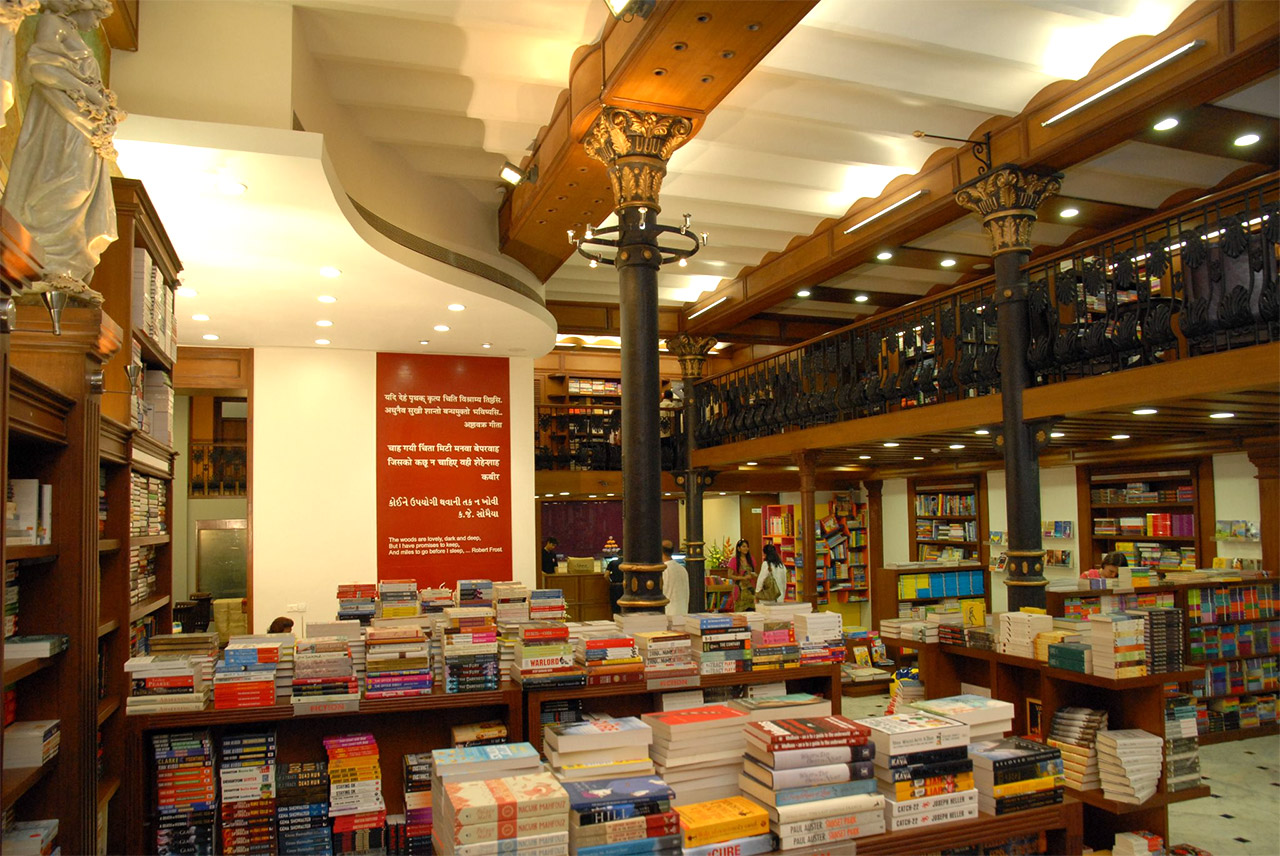
Known as one of the most beautiful bookshops in India, Kitab Khana often draws attention to an “old-world charm” with its colonial-style structure with high ceilings and Corinthian columns. The store is spread over two floors and has an in-house cafe which provides healthy and wholesome meals like fresh salads and sandwiches, piping hot pasta, delightful desserts and of course a warm cup of coffee! Every book one finds on the shelf is hand-picked and well-curated as their team believes in lending a personal touch to the visitors’ book-discovering experience. If you’re a connoisseur of regional literature, Kitab Khana’s vast range of Hindi, Gujarati, and Marathi books is bound to take you by surprise.
Where – Somaiya Bhavan, 45/47 Mahatma Gandhi Road, Fort, Mumbai, Maharashtra – 400001 Hours – 10.30 am to 7.30 pm
Cafe Illiterati is a place of peace and serenity. They have outdoor seating where it’s just you and the Dhauladhar mountain range. Due to the cafe being at the edge of a cliff, you feel like the only person in the world. That kind of peace is worth more than anything money can buy. Their books cover a wide range of hard-to-find topics including homeopathy, contemporary politics, and art. Chicken Schnitzel and Mint Iced Tea are recommended to anyone who walks in this establishment but along with the pancakes, pizzas and hummus plates are also extremely popular and for good reason. Grab a book, order your favourites and lose track of time as you soak in the sublime beauty of Cafe Illiterati!
Where – Jogiwara Rd, Dharamshala, Himachal Pradesh 176219 Hours – 11 am to 9 pm
Aptly named, Cafe Bookworm is a place for bibliophiles to hang out and spend their time in the company of books far from the madding crowd. With the tagline of “Reading with a sip”, it brings together good food, great books and laughter to create a fun recreational place for visitors to hang out in Lucknow. Cafe Bookworm is extremely appealing to the youth and other artists who like to come here and read to their heart’s content as there is never a dearth of great food or words: which is what keeps the city of Lucknow going.
Where – Neelkanth Road, Above Hero Showroom, Vivek Khand-2, Gomti Nagar Lucknow, India 226010 Hours – 12 pm to 9 pm
Café Turtle, Delhi’s most charming café, set up to compliment the Full Circle Book Stores, offers a plethora of books and gastronomical delights guaranteed to make you feel torn between wanting to eat and shop. The whiff of freshly brewed coffee, signature blue and green decor, and the abundance of texts to choose from makes it a lively place for everyone to visit. People of all ages exchange ideas over wholesome global cuisine and ‘just be’ in a friendly and aesthetic environment with friends and family, enjoying nature’s bounty to the fullest. Their date cake with toffee sauce is highly recommended!
Where – 24, Street, Number 1, Khan Market, Rabindra Nagar, New Delhi, Delhi 110003 Hours – 10 am to 8 pm
Atta Galata is a thoughtfully crafted cultural space that encourages all kinds of creative pursuits, from writing to painting to music. Bookshelves line the walls, twisting into columns of brick. The fresh aroma of baked goods wafts through the air, mingling with the scent of the patiently waiting books. A treasure trove of books in regional languages and their English translations, this cafe is buzzling with creativity. A multitude of eclectic workshops, vibrant performances, book launches, group readings, film screenings and so much more are hosted here. The simple menu of burgers, sandwiches, samosas, cutlets, (pure South Indian) coffee, tea and juice, ties the place in a neat bow.
Where – 134, 17th H Main Rd, KHB Colony, 5th Block, Koramangala, Bengaluru, Karnataka 560095 Hours – 11:00 am to 8:30 pm
A concept cafe with a cozy and inviting atmosphere, laid-back decor, free WiFi and a pocket-friendly menu, Books N Brew is the favourite place for young adults to hang out. It is often known as the blend of brew, biryani and books and offers multi-cuisine right from a wide range of sandwiches, garlic bread, freshly baked pizzas, several variants of the popular Maggie, enchiladas and an impressive range of Chinese starters and main course. Their wide array of board games are often a hit among groups and bring much joy. Books N Brew has a huge art wall where they showcase works of budding artists and photographers. You can also bring in your laptops or IPads at Books n Brew to finish your assignments, notes or projects. There is an adequately sized selection of books available to read but visitors are also encouraged to carry their own books along.
Where – SCO 8, 1st Floor, Udyan Path, Sector 16 D, Chandigarh, 160015 Hours – 9 am to 11 pm
11. Cafe Fiction, Gangtok
For a bookworm and a foodie, Cafe Fiction is the place to head. This place lets you get immersed in the world of your favourite fictional characters, as you dig into delicious food at the same time. You are sure to lose the track of time when here. The soothing jazz music playing in the background makes you stay for more than the desired time. The wood-panelled interiors with the many interesting ephemera that are displayed across the store – old black-and-white photos of the hills, posters, postcards, retro pop-colour television set and cameras make for a wonderful ambience.
The menu is not fixed but changes – so you get anything from momos and steaming bowls of noodles to pasta and pies, or sandwiches, freshly-baked cakes, brownies, waffles, and cheesecakes. They also sell some interesting local products. If you have a tea or coffee addict in your family or friends circle, be sure to pick some packets up here. They also make handmade diaries, notepads, coasters, and stickers, perfect gifts for stationery addicts. Also lookout for the quirky tees, mugs and diaries by local design brand, Sikkimis.
Where – Below Rachna Books, Development Area, Gangtok, Sikkim 737101 Hours – 9 am to 6 pm
Cobbled pathways, sprawling verandah and prim gardens are what make Amethyst a sanctum of tranquility in the midst of bustling Chennai. Wild Garden, the cafe inside Amethyst, Royapettah, is the kind of a place that will keep you coming back for more. It also has a boutique called Upstairs, a flower shop called Bloom, and a display hall, The Folly. The café has a great menu serving some of the most delicious continental and Italian cuisines and desserts. For a relaxed evening with your favourite novel and a stroll in the antiquarian bookstore and an amazing meal, Amethyst Cafe is definitely a must-visit!
Where – No 28, Whites Road, Amethyst, Royapettah, Chennai, Tamil Nadu 600014 Hours – 10 am to 10:30 pm
The finest of book cafes, Kunzum Travel Cafe will leave you in awe and wonder as you flip through the tons of travel books, admire the travel photography, exchange travel stories and connect with fellow travellers over a cup of coffee. Every nook and cranny of this coffee shop cum art gallery will incite some serious wanderlust. Relax with a book, chill with friends or simply probe around as you plan your next trip. The unique thing about Kunzum Travel Cafe is that patrons can pay whatever they want for their beverages, which include a variety of teas and coffees and usually come with a fair share of delicious cookies.
Where – T-49, GF, Hauz Khas Village, New Delhi, Delhi 110016 Hours – 11 am to 7:30 pm
14. Moon River Cafe, Delhi
Image – supdelhi
Housed inside a courtyard within India’s premier design concept store, Moon River is a delightful little cafe. The name takes after the mellifluous theme song from Breakfast at Tiffany’s and is known to be for all those bookworms who want a classy yet comfortable space to curl up with a book on a lazy afternoon. They promote themselves as “In an increasingly caffeinated world, come and check out a friendly newcomer off the beaten track” which stands true. Moon River Cafe serves divine coffee, scrumptious cupcakes and delicious double-chocolate chip cookies on their select but tasteful menu.
Where – D-16, Shiniwas Puri, Block D, Defence Colony, New Delhi, Delhi 110024 Hours – 10:30 am to 7 pm
15. Cha Bar, Oxford Bookstore in all major cities
Image – Facebook/ChaBar
Cha Bar is the first of its kind urban contemporary space that created a rage in Kolkata in 2000, in the 90 years old iconic Oxford Bookstore in city centre Park Street. The concept was expanded pan India integrated into Oxford Bookstores as patrons loved the experience of being able to browse at leisure, leafing through the books of their choice, over a cup of tea from the wide selection available at the Cha Bar or simply unwinding with friends sipping the rejuvenating beverage, iced or piping hot! The Moroccan Mint Tea, South African Rooibos, Japanese Macha or the Masala Chai are just some of the inviting choices for customers.
India is a vastly diverse country in terms of culture, ethnicity, language, and geography. Though the nation is divided into states based on the predominant language spoken in that area, there are still zones within a state where there is a strong foothold of people from different ethnic backgrounds, who speak different languages. In Tamil Nadu alone, there are villages and towns occupied by people speaking languages such as Saurashtra, Marathi, Telegu, and many more.
History of Devarattam Folk Dance
According to Historian Thurston. E, many communities migrated from the Vijayanagara empire (parts of Karnataka, Andhra Pradesh, and Telengana) to Madurai and surrounding areas after the fall of the empire in 16th century fearing Muslim invaders. The Nayaks, governors of the mighty Telugu empire Vijayanagara were ruling the Tamil country then.
Photo – Rekha Vijayashankar
One such community was the Kambala Nayakar community. They usually lived in pastoral areas and did hunting, cattle-rearing, and fortune-telling for their livelihood. There are 9 sub-castes in the community and all of them worship Sakkadevi or Goddess Jakkamma. These people have indigenous cultural practices and customs practiced only within their community. Devarattam a beautiful folk art form of Tamil Nadu, also known as the celestial dance of the Devas(demigods) is an indigenous dance form of the Kambala Nayakars. It is performed for their various religious and life-events such as childbirth, puberty, marriage, and death. It used to be an integral part of the community. There were even specific dance movements in Devarattam that loosen the body for hunting or martial arts.
Photo – Rekha Vijayashankar
“My native is Zamin Kodangipatti village in the Tuticorin district of Tamil Nadu. My ancestors had been living there for as long as I remember. Though we haven’t been out of Tamil Nadu, our mother tongue is Telegu. There is a line in our prayer verse that mentions our deity Jakkamma was from Bellary. We have never been to Bellary either”, said Mr. Kannan Kumar, a septuagenarian who teaches Devarattam and other folk dance-forms in Chennai.
Costume in Devarattam Folk Dance
Men, women, and children alike wear stringed brass bells or Salangai on their ankles and dance to the various tunes of the Deva Dundubhi. The men usually wear turbans and shirts during the Devaraattam performance except during the worship of Jakkamma. Sometimes they even wear costumes like a king, warrior, God etc., during the act. With time, Kamabala Nayakars begun worshipping Gods like Mariamman and Vishnu. It has now become a common practice to perform Devaraattam during temple festivals, especially during the festivals of Vaishnava temples.
Music in Devarattam Folk Dance
Dundubhi – Rekha Vijayashankar
What is Deva Dundubhi? It is a percussion instrument that is essential for Devarattam performance. The dance cannot be performed without the beats from deva dundubhi, also known as urumi. It is a two-sided hollow structure, narrow in the centre and wide at ends made from vengai (Indian kino) wood. The ends are tied with goatskin. Two different sticks made from different woods are used on either end. The instrument is tied with a string on both ends and is worn by the player similar to a garland.
The music that arises from the traditional drum deva dundhubi is of high decibel that there is no need for an amplifier. The left stick is wiped on the left side of the drum to produce a deep moaning sound. It is accompanied by rhythmic beats on either side. Together it produces a sound like no other and would make anyone dance to its beats. One can notice a black sheath-like mark on the left side of the drum formed by the constant movement of the left stick. “Devarattam has no lyrics. Its dancers just dance to the beats of the urumi. In the olden days, it was performed as a welcome dance to invite the kings and also as a motivational dance for the army before leaving for the battle-field. Devaraattam was traditionally performed by men, but these days even women are dancing,” shared Kannan Kumar, who began performing Devarattam along with his father from the age of ten.
Photo – Rekha Vijayashankar
The veteran dancer said that his students are no longer from the Kambala Nayakar community. They are performing in various events, including the Republic Day parades, and are not restricting them to religious and community events. He had even conducted Devarattam workshops to students from Germany, Iran, Canada, Spain, and the USA. The dance form, once that was performed within a community has taken wings and is adapting itself to suit the needs of the changing society.
Kannan Kumar Master is keen on taking Devaraattam lessons and workshops. He can be reached at 99411 19358.