Folk Dances of Assam – Mesmerising Expressions of Assamese Culture

2
Folk Dances of Assam
Image/Pxhere

Assam is one of the seven sisters of the north-eastern states and is known for its picturesque scenic beauty, wildlife, silk, and handicraft and how could anyone forget about the tea so delicious, it might leave you delirious. Assam also possesses an exotic culture full of life and the folk dances of the state are no exception. Grab a cup of some lovely Assamese tea and get ready to be enchanted by the magnificence of some of the most popular folk dances of Assam!

1. Bihu Dance

Folk-Dances-of-Assam-Bihu
Image/Wikimedia

Watching most beautiful folk dance form of Northeast “Bihu” being performed, one cannot help but start smiling as they watch the people of Assam dancing and enthusiastically celebrating their regional new year on Ranguli Bihu which is from where the dance derives its name. What makes this dance special is firstly its invigorating movements and formations which involve energized hand movements and steps. Its colorful and bright costumes make the dance even more extraordinary. The girls look truly beautiful wearing a costume called ‘chadormekhela’ which is mainly made from silk, which is also something Assam is renowned for.

The boys’ attire comprises a dhoti and gamocha, a type of turban. They dance to the tunes of various instruments, mainly the ‘Dhol’ and ‘Pepa’, which is a hornpipe. Its origins can be traced to the districts of Tezpur and Darrang as early as the 9th century. A little-known fact about Bihu is that it was originally a courtship dance and therefore is also considered as a symbol of merriment and seduction. Bihu has managed to create an impact at a global level which is something that we can all be proud of.

2. Jhumar Dance

Folk-Dances-of-Assam-Jhumar
Image Courtesy – Indancesteps.blogspot.com

Another eminent dance form of Assam is Jhumar which is popular with the tea community who after a day of hard work commemorate the occasion of their apparent freedom from work by dancing. It helps them to get away from the tedious nature of their work. That is why this dance form is also known as Chah Baganar Jumur Nach. It is specially performed during harvest festivals as well as other joyous festivities. The reason this dance is referred to as Jhumar is because of the bells worn by the dancers around their ankles which make the ‘jhumar’ sound.

The Jhumar dance has various variations depending upon the occasion. It may be portrayed as a ritual of devotion, as a courtship dance, or as a request to the gods to serve the people with rain and to later thank them for the same. It can be typically witnessed in an open area, with the male dressed in long traditional apparel playing the Mandar which is a type of drum, while the women gracefully execute various movements in sync with hands on each other’s waists. It is truly a refreshing symbolization of the epic highs and lows of just everyday life which is something rarely seen.

3. Bagurumba Dance

Folk-Dances-of-Assam-Bagurumba
Image – Shirushree Saikia

Bagurumba dance is a piece that is mostly performed by the Bodo tribe of Assam. When you witness the dance and notice the formations executed by the dancers, they remind you of nature and wildlife with some of them depicting birds, animals, a flowing river, and so on, and the creative usage of the cloth around their neck (which is special to the Bodo community) during the dance immediately causes your mind to resonate it with the image of a butterfly flapping its wings which is why it is also called the ‘butterfly’ dance. It is mainly performed by women at the Bwishagu Festival who dance to the tunes of various instruments such as the Serja, Jota, Gongwa, etc. The women are dressed in their traditional vibrant clothing which poetically represents nature.

4. Sattriya Dance

Folk Dances Of Assam-Sattriya
Image/Ramesh Lalwani/Flickr

When describing this dance form, the first two words that come to mind are elegant and graceful. Sattriya is one of the eight principle Indian Classical Dances (it received said status in the year 2000 by the Sangeet Natak Academy) and its origins are traced back to the monasteries called ‘Sattras’ that were set up Mahapurush Srimanta Sankardev for the spread of Vaishnavism during the 15th and 16th century in Assam. The dancers perform to the tunes of Assamese music called Borgeet. Sattriya depicts the stories of mythologies and the lessons learned from them in mainly three themes: Ramdani, Guru Vandana, and Geet Abhinaya. This dance form also stands out particularly because of the costume’s alluring blend of colors which is a perfect representation of the Assamese culture.

5. Deodhani
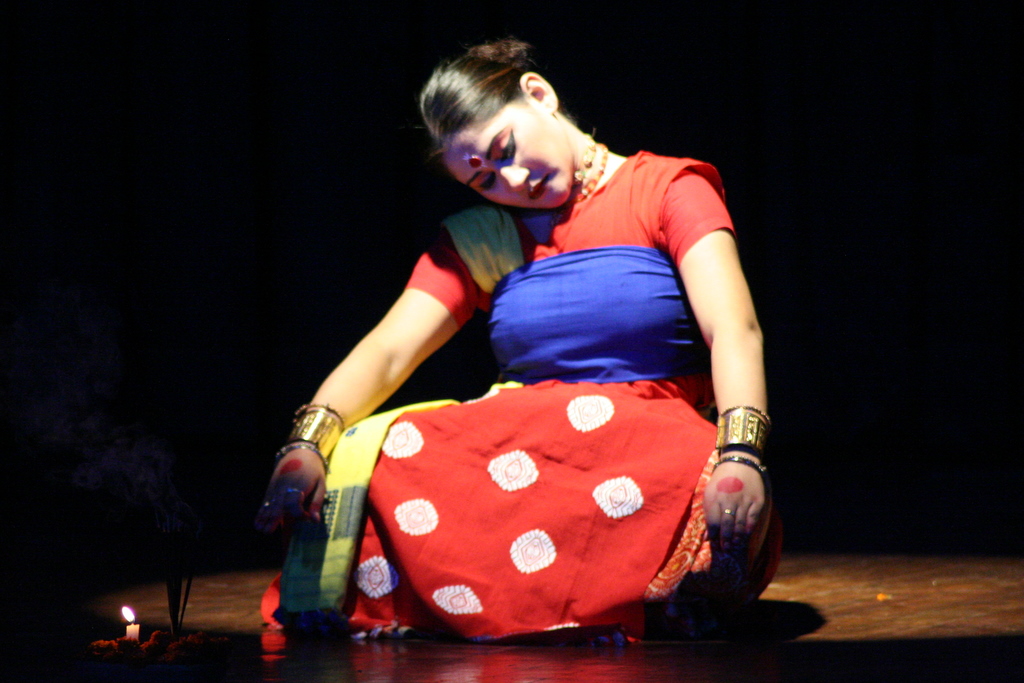
Folk-Dances-of-Assam Deodhani
Image – Ramesh Lalwani/Flickr

Deodhani is another dance form popular in Assam. It is typically performed by one person or a group of three to four women to honor Manasa, the snake goddess. It is a Shaman folk dance. The word ‘Deo’ means god and the word ‘Dhani’ refers to a woman possessed by a shaman. The dancers take swords in their hands as props and they present a war dance with their hair kept open. The dancer depicts a strong woman, a warrior who is unmarried and a believer of Goddess Padma and takes charge of her fate following the legend of Behulaa who had to dance to protect her husband’s life in front of Manasa.

6. Gumrag
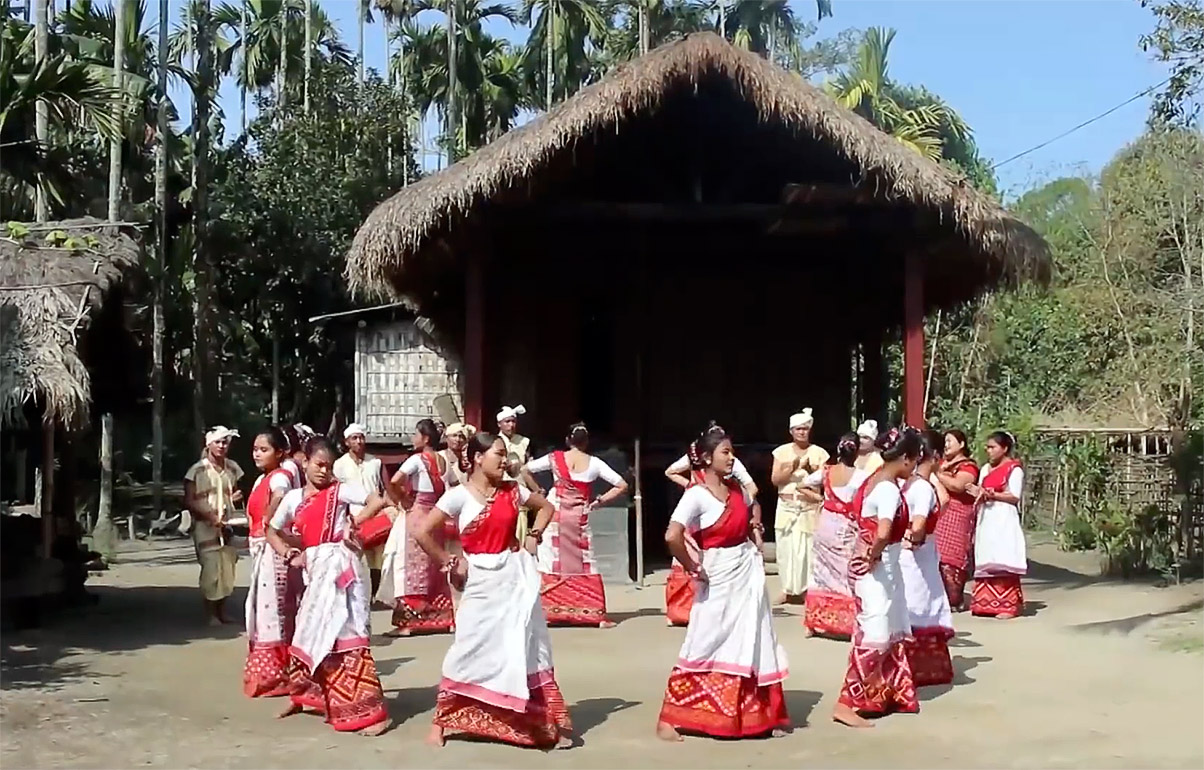
Folk-Dance-of-Assam-Gumrag

Gumrag makes the list of one of the most infamous dances in Assam, particularly famous with the people of the Mishing tribe. Gumrag is performed during Ali Aye Ligang  festival, it is usually associated with agriculture because of the reflection of its meaning. The word ‘Ali’ means roots and seeds, the word ‘Ai’ means fruit and lastly, the word ‘Ligang’ means sowing. The dance’s said connection with agriculture is the reason it is enthusiastically celebrated by both boys and girls, dressed in traditional clothing with brisk movements, during the Ahu Paddy Cultivation to appreciate our Mother Earth.

Apart from the tea and silk, Assam has so much more to offer and its folk dances are one of them. They are a truly immersive experience that I, personally, would recommend you witness. However, the very little knowledge about them is what disappoints me for they are a gem left undiscovered. Let’s leave no stone unturned. Let’s enjoy the beauty of our rich culture and heritage.

Also Read
Vibrant Folk Dance Forms of Northeast India
Northeastern Tribes of India – Little Known Things About Their Culture
Folk Dances of Himachal Pradesh – Reflecting the Culture of Pahari people

Folk Dances of Himachal Pradesh – Reflecting the Culture of Pahari people

8
Folk dance of Himachal Pradesh
Kayang Dance /Wikimedia

The land of hill stations, Himachal Pradesh encompasses a ton additional to be savored, and unfortunately few tourists. If you’re thinking that Himachal Pradesh is all concerning mountains, hills, forests, and valleys, then you continue to haven’t witnessed its actual beauty, that lies in its antique culture and traditions. Yes, you’ll savor the whole Himachal Pradesh provided that you rehearse the paths of its villages and tiny cities that have been alive for hundreds of years. Ancient dance is a very important part of the Himachali culture. To watch someone dance is to watch their heart speak and their spirit let go. As anyone who has watched a folk dance being performed can attest to, it derives its beauty from the grace and elegance of the movements and the look of merriment, joy, and pride on the dancer’s face. It is rightly said, “Heaven may be a myth but Himachal is real.” Let us dive into some of the truly breathtaking folk dances of Himachal Pradesh that symbolize the culture of the place:

1. Nati Dance

Folk dances of Himachal Pradesh-Nati
Image/Wikimedia

Nati is one of the most prominent dances of Himachal Pradesh which is enthusiastically performed in different forms throughout the state such as the Shimla Nati, Kullu Nati, Shiv Badar Nati, Sirmauri Nati, to name a few. Nati is a dance of celebration, whether it be the new harvest season or a marriage in the family. Both men and women take part in this dance dressed in colorful attire. It is a beautiful depiction of a story, for example, the Kullu Nathi customarily tells stories such as the ras-Lila or stories involving Hindu Gods Krishna and Gopis. Nati can be considered an essential part of any function in Himachal Pradesh. This dance also holds the title of the largest folk dance, about the number of people, in the Guinness Book of World Records. This was inevitable because the fanfare and festive nature of the dance in a way forces every spectator to join.

2. Dangi Dance

Folk-Dance-of-Himachal-Pradesh-Dangi-Dance-1
Image Source

Another popular dance form of Himachal Pradesh is Dangi. It is predominantly performed by female dancers, wearing traditional dresses, holding hands to form a semi-circle, and dancing with their lower bodies. This dance takes place at Naina Devi’s Temple as a symbol of their devotion. It is based upon classic folklore of the state and has two themes. The first one depicts the eternal feeling of love. A charming and courageous king who fell in love with someone he wasn’t supposed to – a common girl. Their love was deemed wrong and they were shamed for it but as we all know, love conquers all. The second one is business, which is a necessity for survival and it shows us the simple process of a person giving their products and services to someone and in return, they ask for something of value to them. That is how business works and so does life.

3. Chhanak Chham Dance

Folk-Dance-of-Himachal-Pradesh-Chhanak-Chham-Dance-01
Image Source

This dance is performed in honor and memory of Lord Buddha usually by monks or lamas in front of monasteries during religious festivities. This dance is renowned for its intricate costume made from red and yellow glitters, oversized masks that have bizarre and peculiar designs made from wood, paper-mache, and plastic along with headgear known as Chhanak from which the dance gets its name. Their appearance and the knives and swords they hold make them look similar to soldiers.

Legend states that this holy dance is a form of exorcism and gets rid of evil spirits that may be wandering around by symbolizing the death of the Evil King who represents the demons, monsters, and natural disasters that may befall upon us. For precisely this reason, it is also known as ‘Devil Dance’ and people from all over the village gather to watch it. The instruments enclosed during this dance type are ‘Tangchim’(the long pipe-like instrument), Drums called ‘Ghann’. The dance is legendary for its Headgear that appears completely unique, as well as its costumes, and masks. The dance is additionally well-known in an exceeding exceeding country like Singapore.

4. Kayang Mala Dance

Folk-Dance-of-Himachal-Pradesh-Kayang-Mala-dance-1
Image Source

The Kayang Mala or the Garland Dance is one of the most famous dance forms of Himachal Pradesh. It derives its name from the garland formed by the dancers by weaving their arms in a criss-cross pattern and each dancer becomes a bead or a part of what goes on to be a truly alluring formation. Each one of the ‘beads’ is beautifully dressed and heavily ornamented. It is a common tradition to consume a glass of Chhang before the dance. Today, Kayang is one of the foremost ancient dances in Himachal Pradesh, and therefore you mustn’t miss out on exploring its beauty. So, pack your luggage and witness in person the villages of Himachal Pradesh now!

5. The Rakshasa (Demon) Dance

Rakshasa (Demon) Dance is also known as Chhambha Dance and it is said to bear similarities to the bhangra dance in Punjab. Its origins can be traced to the Kinnaur region in Himachal Pradesh. Kinnaurs are a representation of spirited deer in this mesmerizing piece. This can be seen during joyous festivals such as Chaitol and Bishu with men and women holding hands and dancing. The dancers wear masks to depict demons attacking the fields and crops and them being chased away by the forces of gods. Their leader is referred to as ‘Ghure’ and everyone follows the path laid down by them.

I envy anyone who has the privilege of witnessing these enthralling dance forms in person. I, myself, am enticed to purchase a ticket to Himachal Pradesh to take in their beautiful culture which is elegantly portrayed through these dances. Dance is an expression of man and always has a story to tell. It is rightly said, “The best and most beautiful things in this world cannot be seen or even touched – they must be felt with the heart.”

Also Read
Vibrant Folk Dance Forms of Northeast India
Northeastern Tribes of India – Little Known Things About Their Culture
Folk Dances of Assam – Mesmerising Expressions of Assamese Culture

Top 15 Street Food of Kolkata You Must Try When You Visit the City

0
Kolkata-Street-Food
Image – Nicolas Mirguet/Flickr

Street food is pretty much the heartbeat of a town or city. It finds its presence amid throbbing crowds and the hustle of street life. There is a very rustic and rooted feeling that forms the basis of street food as hawkers sell their tasty dishes in an ambiance that is far from the lush luxury of a restaurant. Usually squatted on a box or standing, the sellers operate with alarming dexterity as they almost single-handedly serve the ongoing crowd that gathers together awaiting their turn patiently. There is a subtle mix of the aroma of the food mixed with the whiff of sweat and the noise of the traffic. 

Several cities and towns of India are famous for their street food, but Kolkata somehow takes away the crowned glory of housing several delectable and delightful street foods that are lip-smacking, innovative, and very light on the pocket as well. 

Street food Kolkata stands out for its variety and discernable distinct taste. Its street food touches upon all kinds of food, whether it is dry, roasted or fried, crunchy, soggy, or spoonful. 

Whether it is Tibetan momos or south Indian dosas, north India’s Dahi vada or eastern India’s Aaloo luchi, Kolkata streets have it all lined up. Here is taking a look at the top 15 street foods of Kolkata and the best places to try them out. Let’s hope we can wander once again and binge at these favorite street food stalls soon.

1. Puchkas 

Kolkata-Street-Food-Puchka
Image-Saurabhdas/wikimedia

Undoubtedly, the most prized street food of Kolkata, the puchkas are what people call Pani puri in Maharashtra and Golgappas in north India. However, there is a twist. The stuffing is made from potatoes and along with the tangy water the puchka just slurps in the mouth as once crunches their way through them. you will find Puchka sellers in almost every locality at a distance of not more than 3-4 streets away. They are the most ubiquitous street food with a loyal customer base of the surrounding neighbourhood. Some popular stalls to try out the puchka are Gariahat Road, Vivekananda Park, Bhawanipore, Vardan Market, etc.

2. Churmur 

Kolkata-Street-Food-Churmur
Image Courtesy – Bong Eats /Youtube

A street food closely related to the puchka, the churmur is made from crushed dry puchka puris. Potatoes, onions, tamarind, etc. are added to it to give a spicy and tangy taste. A unique Kolkata street food the churmur is served at all puchkas stalls. You can try it out especially at Bhawanipore, Southern Avenue, and Park Street. 

3. Kathi Rolls 

Kolkata-Street-Food-Kathi-Roll
Image-Satyajit Dhawale (Satyajit888)/wikimedia

With juicy, roasted kebab fillings delicately enveloped in tender and layered parathas, the Kathi roll is among the heartiest and most satisfying of street foods in the city. A roll should be always be served hot. So the assembly process, once the paratha has been fried, needs to be quick and efficient. The filling should be evenly distributed so you get a little of everything with each bite. Finally, the mark of an excellently wrapped roll is that you can eat it using just one hand. In Kolkata, shops serving rolls are widely called ‘Roll-er-dokaan’ and people use ‘roll’ to refer to a Kathi roll. Chicken roll and egg roll are the two most common variants of Kathi roll. Best places to try out the same are:

  • Nizam’s Restaurant: 21&22 Hogg Street, New Market, Dharmatala, Kolkata
  • Kusum Roll: 21, Karnani Mansion, Park Street Area, Kolkata, Taltala, Kolkata

4. Jhaal Muri 

Kolkata-Street-Food-jhal-muri
Image by M Ameen from Pixabay

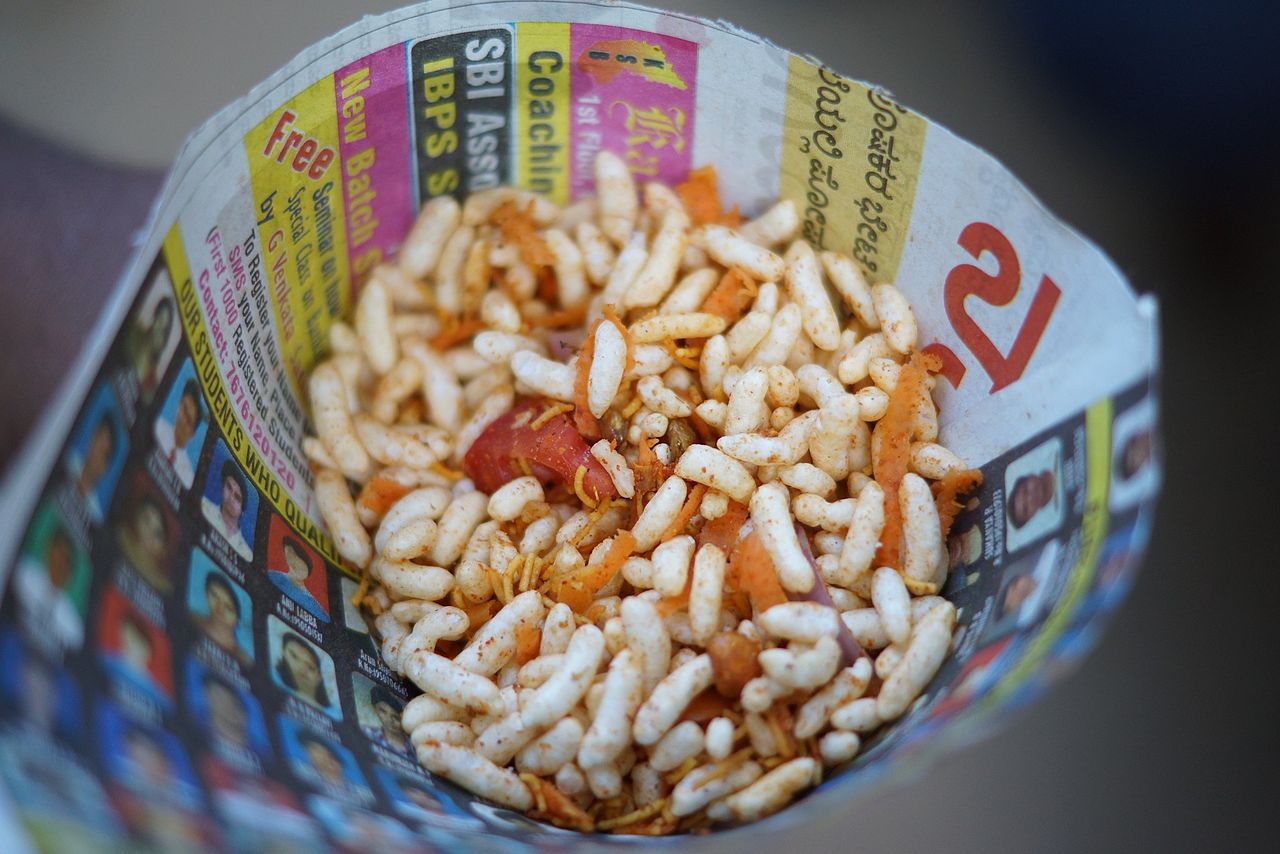
Puffed rice has never been so appetizing as when made into the jhaal muri. Mixed with onion, tomatoes, sev, etc., and a dash of the special masala, the jhaal muri is a light breezy snack that is one of Kolkata’s best street foods. And of course, besides the muri itself, the small paper ‘thongas’ or bags in which it is served also adds to the experience of devouring it. Some great places to try out the jhaal muri are Triangular Park, Jawaharlal Nehru Road, Lord Sinha Road, etc.

5. Mughlai Paratha

Street-Food-of-Kolkata-Mughlai-Paratha
Image – Hmm!/Youtube

The very beloved street food of Kolkata, Mughlai Paratha is basically a deep-fried rectangular paratha that is folded like an envelope with a rich filling of eggs, keema (minced meat) and lots of spices. The name itself generates interest in its origin.  Bored with simple paranthas with kheema, Emperor Jahangir gave his cook Adil Hafiz Usman to make something unique, which came to be known as Mughlai parantha. Later it had been brought to Kolkata by Usman’s offspring and became widely popular in Kolkata at Mughlai restaurants and among the Bengalis. If you want to try this lip-smacking stuffed deep-fried bread, then you must visit the following eateries that serve the best Mughlai paratha in Kolkata.

  • Anadi Cabin – 9A, Jawaharlal Nehru Rd, Esplanade, Dharmatala, Taltala, Kolkata, West Bengal 700013 
  • Basanta Cabin – 53, College Street, near Medical College, Kolkata

6. Shingara or samosa and kachoris

Kolkata-Street-Food-Shingara
Image-Priyam1307/wikimedia

What is known as samosa in most parts of the country are fondly called shingaras in Kolkata? These triangular fried snacks are just perfect with the evening tea. The stuffing which is usually made of potatoes also ranges from chicken, mutton, moong dal, and more. Similarly, kachoris are fried stuffed round snacks that are usually found alongside the samosa. Shingaras are also readily available at most tea stalls across the city. Some places that you can try out this delicacy are Balaram Mullick, Nabakrishna Guin (Bowbazar),Haldar Mohashay (Shovabazar Bazaar) etc.

7. Aloo Kabli 

Kolkata-Street-Food-Aloo-Kabli
Image Courtesy – Subhrajit Chakraborty/Youtube

Aloo kabli is one of the most popular street dishes and is found outside almost all schools in Kolkata.During tiffin breaks, or after school, children gather around the tiny makeshift stand that the aloo kabli seller sets up with rapt attention, mouths watering. Within minutes freshly made aloo kabli is filled in tiny thongas (small pockets) and handed out, to be hungrily devoured and shared with friends. Made with potatoes mixed with spices, tamarind, chickpeas, onions, etc. this is a flavorful dish that will keep you licking your lips for long. Try this at Surya Sen Street, Vardaan Market, C.R Park etc.

8. Ghugni Chaat 

kolkata-street-food-Ghugni-Chaat
Image-lorises/Flickr

Made with yellow peas, Ghugni is a healthy street food option. It is one of the most loved of Bengali snacks. It is a dish made of curried whole-yellow peas or motor (matar) dal. A proper ghugni is one in which the motor dal is well-cooked, but remains a whole. The key is to never overboil the dal. The consistency also needs be just right, slurpy but not watery. Mixed with tomato, onion, and spices it conjures up a delightful plateful. One can try out the ghugni at New Market, Dacres Lane, Gariahat Market, Ramji Ghugniwala (Park Street) etc.

9. Chops and Cutlets 

Street-Food-of-Kolkata-Chops-and-Cutlets 
Image Courtesy – Mitra Cafe

There is nothing warm and fuzzy like munching on a fried soft vegetable cutlet or meat and fish chops. Fish Fry, Alur Chop, Vegetable and Tele bhaja are just some of the fan favourites. Served with various sauces and salad including the iconic Kasundi these are often served as accompaniment with the evening tea or chai. Best places to try them out are Badshah (Jadavpur), Mitra Cafe (Sobhabazar) and Apanjan in Kalighat. 

10. Chow Mein 

Kolkata-Street-Food-Chow-mein
Image-Aaron Gustafson/Flickr

Now what most people would know as noodles, is called chow mein in Kolkata. The long noodles are tossed with vegetables or chicken along with various sauces. Common street food is also packed to carry home. Yes, it’s a different feeling standing on the roadside with friends slurping on the chow mein as the stall owner deftly tosses and turns the ingredients on a large pan or tawa and expertly pours it out on plates. Try the chow mein at Dacre Street, Vardan Market, Park Street, China Town and more.

11. Momos 

Kolkata-Street-Food-Momos
Image – Eatbhaieat.blogspot.com

A Tibetan delicacy the momos are also a wonderful and filling street food of Kolkata. Served usually with pepper soup and the chili garlic sauce, the momos are hot and spicy tantalizing the taste buds to the tee. Both the steamed and fried momos are easily available. China Town, Tiretti Bazaar, Rabindra Sadan, and Camac Street are some places where you can try eating the momos.

12. Kochuri Alur Dom

Street-Food-of-Kolkata-Kochuri-Alur-Dom-
Image – Tanhir Paakshala/Youtube

A meal that can be eaten for any meal of the day, be it breakfast, lunch, or dinner the luchi or puri served with potato curry is a mouthwatering dish. Sometimes the luchi is also stuffed with dal making it even more yum. One can try it at Dacre Street, BBD Bag, Phears Lane, etc.

13. Mishti

Street-Food-of-Kolkata-Mishti
Image – Pexels

When in Kolkata how can you ignore the ‘mishti’? Yes, sweet dishes are the soul of the city and their range is huge. One can avail the roshogollas, mishti doi, chomchoms, sandesh, chhanar jilipi, and all of the other opulent sweet items at the many roadside shops. Some sweet shops are renowned; however, many other small corner shops also serve the purpose. Some of the best-known sweet shops include KC Das, Ganguram, Gupta Brothers, Balaram Mullick & Radharam Mullick, and more.

15. Drinks and Paan 

Kolkata-Street-Food-Paan
Image-Biswarup Ganguly/wikimedia

No street food meal is quite complete without topping it off with a drink and finally chewing on a mitha paan. Several different types of drinks, such as juices, lassi, shikanji, sodas are available in street food hubs including New Market, Vardaan Market, Gariahat, etc. Some of the popular shops to try beverages are Azad Hind Dhabba, Coffee House, Balwant Singh Eating House, Paramount etc.

The biggest USP of Kolkata street food is its easy accessibility and reasonable rates. At very nominal prices, one can fill their stomach, feel nourished, and walk away with the squishy feeling of good tasty food. Add to it the unique taste and distinct flavors that are so Kolkata that it’s hard to replicate them in any other place. 

Kolkata is a city that has an aura around it. With a strong history, the city often enjoys if not a slow, but not a fast-paced lifestyle. The Bengali culture is well-rooted in even the most modern generations and hence, food forms a large part of the city landscape. Street food in Kolkata’s charm and its fun lies in not only the food itself but the relationships that thrive between the seller and consumer, the cramped and crowded yet generous outlook of its people. When in Kolkata try out its street food. You will enjoy the platter as much as the conversations, serving mediums, and mannerisms.

Five Best Tenali Ramakrishna Stories For Your Kids Bed Time

0
Best-Tenali-Ramakrishna-Stories-01
Image Courtesy – MocomiKids

Every Indian child has spent his childhood marveling over the witty and incredible tales of Birbal and Tenali Raman with unwavering attention and fascination. These stories have always helped children in distinguishing right from wrong. 

Tenali Ramakrishna Stories was a prominent scholar, poet, and advisor to King Krishnadevaraya in the Kingdom of Vijayanagara. Today let’s explore five of the best Tenali Ramakrishna stories, which portray his wisdom and knowledge.

1. A Handful of Grain and the Coins

Best-Tenali-Ramakrishna-Stories
Image courtesy – MocomiKids/Youtube

In the kingdom of Vijayanagar, there lived a woman named Vidhyulatha. Vidyulatha prided herself on her achievements and believed that no one could surpass her in knowledge and wisdom. Thus to prove her superior intellect, she put up a board in front of her house, announcing a prize of a thousand gold coins to anyone who could defeat her in knowledge. 

One day, it so happened that a firewood seller arrived in front of her house, and started shouting for someone to buy his firewood.

Disturbed and wanting to send away the firewood seller, Vidhyulatha agreed to buy the man’s firewood. The man immediately demanded that he would exchange his firewood only for a ‘handful of grain.’

He further added that if she couldn’t complete his challenge, she had to give him the thousand gold coins promised to the person who outwits her. This eventually led to an argument among the two and resulted in the matter being taken to court. The judge asked the firewood seller to explain his actions. 

The Firewood seller explained that he had asked for a ‘Handful grain,’ which meant that he wanted a single grain that would fit in his hand. Hearing this, the judge too agreed with the firewood seller, and Vidhyulatha had to concede defeat. Eventually, after a while, she asked the firewood seller who he was, upon which Tenali Rama took off his disguise and revealed himself. The story tells us not to be arrogant in our accomplishments and to be humble in our achievements. 

Watch this Story on Youtube | Buy Tenali Rama Stories Book

We Recommend…
The Illustrated Stories Of Tenali Raman: Classic Tales From India

2. The Cursed Man or King

Best-Tenali-Ramakrishna-Stories-the-cursed-man
Image courtesy – Youtube

There was a rumor in the kingdom that whoever saw Ramayya, first thing in the morning, would undoubtedly lose his appetite for the whole day. When the King came to know about this widespread rumor, he decided to test it out himself. Hence one day, the King intentionally met Ramayya first thing in the morning before attending to his duties. 

That day, the King was unable to have his food because there was a fly in his food.

When food was served for the second time, the King had lost his appetite. This incident made the King believe that Ramaya was indeed cursed, and hence he ordered Ramaya to be hanged. Hearing this, Ramaya’s wife immediately went to Tenali Rama to plead with him to think of a way to save her husband’s life. Thus Tenali Rama met Ramaya and whispered something into his ear. Accordingly, before he was hanged, Ramaya sent a note to the King, requesting him to read the message. In the letter, Ramaya had asked the King, “who was the more cursed, him or the King, for if anyone sees him in the morning, they lose their appetite, but if they saw the King first, they were destined to lose their life”. When the King read this, he understood his mistake and freed the man.

Listen this Story on Youtube | Buy Tenali Rama Stories Book

We Recommend…
10 Fantastically Witty Stories of Tenali Raman

3. The Dream Palace of the King

Best-Tenali-Ramakrishna-Stories-the-dream-palace
Image courtesy – MocomiKids/Youtube

One day the King had a dream about a majestic palace that floated in the air. Upon waking up from his sleep, the King decided that he was going to build such a castle and announced that he would give away a thousand gold coins to anyone who could build him such a palace. Upon hearing this, all the courtiers were surprised as they knew that it was impossible to build such a palace, but in fear of angering the King, they kept silent. When Tenali Rama came to know about this, he decided to help the courtiers. 

One day, an older man came to the palace of the King and accused the King of robbing him. When further questioned, the man revealed that the night before, he had a dream in which the King himself had arrived at his home with several soldiers and robbed him. 

Hearing this, the King got angry and said that dreams are far from reality. Hearing this, the older man removed his disguise, revealing him to be none other than Tenali Rama. Tenali Rama then humbly asked the King, if dreams are not real, then how anyone could build a floating palace that the king had seen in a dream. The King thus realized his mistake and appreciated the intelligence of Tenali Rama. 

Watch this Story on Youtube | Buy Tenali Rama Stories Book

We Recommend…
151 Stories of Tenali Raman

4. Tenali Raman and the Cat

Best-Tenali-Ramakrishna-Stories-the-Cat-Hates-Milk
Image courtesy – Geethanjali Kids/Youtube

Once in court, the topic of the debate was on which animal was the smartest. One minister said with conviction that the cat was the most intelligent and smart animal. Everyone agreed with his opinion. Thus the King decided to organize a competition to find out which cat was the smartest. Hence all the courtiers were asked to bring their cats the next day. The King also announced that he would give a reward for the cat that would do something that the other cats don’t. 

Eventually, the competition was held. The King brought milk in a golden plate, and soon as the milk arrived, all cats except one ran to drink it. It was Tenali Rama’s cat who refused to drink the milk. Tenali Rama asked the King to reward him as his cat had done something that the other cats had not. And hence the King declared the cat of Tenali Raman as the winner. 

Later the King asked Tenali Raman how he had managed to train his cat not to drink milk. Tenali Raman explained that his cat had once unintentionally drunk hot milk and burnt his tongue. Since then, the cat has always been afraid of milk. This incident gave the King a hearty laugh.

Watch this Story on Youtube | Buy Tenali Rama Stories Book

We Recommend…
Tenali Raman : The Best of Tenali Raman (Classics Tales for Children)

5. Tenali Rama and the Weight-Lifter

Best-Tenali-Ramakrishna-Stories-Weight-Lifter
Image courtesy – MocomiKids/Youtube

One day when Tenali Raman and his wife were going on a journey, they witnessed a large crowd. On further investigation, they came to know that the crowd was gathered around a man who was carrying about 500 quintals of rice on his shoulders. Everyone seemed quite amazed and perplexed. Suddenly Tenali Rama said that the man was capable of nothing when compared to him as he could carry an entire hill on his shoulders. 

The villagers seemed quite amazed and urged him to do so. However, Tenali Rama said that he would need at least six months for some necessary preparations, as the man who carried mere 500 quintals of rice on his shoulders needed three months to practice.

Everyone agreed to this, and Tenali Rama was allowed to stay in the village for six months. During this time, he was treated with respect and was given good food and everything that he asked for.

Eventually, six months were over, and the day for Tenali Rama to perform arrived. As he had said, Tenali Rama walked to the foot of the hill and stood still. Seeing this, the villagers asked him why he wasn’t carrying the hill on his shoulders. To this, he replied that he was waiting for them to place the hill on his shoulders so that he could carry it, as he had not said that he could lift it. For a moment, the villagers were surprised, and no one spoke. After the initial silence, everyone laughed heartily and congratulated Tenali Rama for his quick wit.

Watch this Story on Youtube | Buy Tenali Rama Stories Book

We Recommend…
Laugh with Tenali Raman – Books for kids (KathaKids)

All the Tenali Ramakrishna stories are, though interesting and witty, also embody deep meaning. Through the simple incidents depicted in the story, people of any age can draw invaluable lessons on life. Today the stories of Tenali Rama are quite popular and widely read. 

10 Best Indian Contemporary Dancers From Yesteryear Till Present You Should Know

0

Indian-Contemporary-Dancers

The definition of Indian contemporary dance ranges over a variety of styles that are flexible and individualistic. It can mean Bollywood movie choreographies or a fusion of the East and the West. It is imaginative and can form an unprecedented league of its own. Most importantly, Indian contemporary dance is that which veers away from the strictures and codifications of the classical forms. 

Although classical dance forms of India are revered as indispensable in terms of cultural heritage, contemporary dance has achieved its deserved honors and took its place in the spirit of dancers and audiences alike. We explore today some of the significant names who brought fame and development to the field of Indian contemporary dance. 

1. Uday Shankar

Indian-Contemporary-Dancers-Uday-Shankar
Uday Shankar – Commeaucinema.com

Uday Shankar was an idealist who sought expression through various genres of dance. During the 1920s, Shankar was learning ballet in England. Soon, he was chosen by the Russian ballerina Anna Pavlova as her partner in the ballet titled ‘Radha and Krishna’. The series of ballets that he performed with Pavlova was based on Indian stories and exhibited an Oriental feel in costumes and narrative.

On his return to India, Shankar blended modern musical sounds with those of classical instruments. He employed classical and folk elements in the music and put up a ballet stage of such brilliant Western and Indian classical amalgamation, unlike anyone, ever seen before. These performances included ‘Shiva-Parvati’ and ‘Lanka Dahan’. Shankar deftly incorporated socio-political themes in ‘Rhythm of Life’ (1938) and in ‘Labour and Machinery’ (1939). In 1939, he established the Uday Shankar India Culture Centre at Almora, where originated the Pan-Indian dance style. 

It was his wife, Amala, who had suggested keeping the Indian word ‘Kalpana’ for their film, instead of ‘Imagination’. The dancing couple took charge of the lead roles and their Shiva-Parvati dance remains a wonder to date. Shankar choreographed over 80 dances for this film, and thus, it is considered an invaluable archive for dancers today.

2. Shanti Bardhan

Indian-Contemporary-Dancers-Shanti-Bardhan
Image Courtesy – Youtube

Shanti Bardhan was a junior colleague of Uday Shankar. Bardhan’s imaginative excellence is portrayed in the dance that he produced in the 20th century. He founded the Little Ballet Troupe in Andheri, Bombay (Mumbai), in 1952. The dance drama ‘Ramayana’ involved the actors gesticulating and dancing like puppets. Bardhan’s posthumous production ‘Panchatantra’ (The Winning of Friends) was inspired by an ancient fable of four friends: Mouse, Turtle, Deer, and Crow. Here, he used masks and the actors mimed the movements of animals and birds.

3. Amala Shankar

Indian-Contemporary-Dancers-Amala-Shankar
Image Courtesy – Youtube

It was the exemplary dancing skill of young Amala that led Uday Shankar to choreograph ‘Kaliya Daman’ for her to perform in Belgium, 1931. 

In 1938, on their return to India, Amala joined the Culture Centre at Almora. She acquired the dance techniques developed by Shankar and carried the legacy with honor and grace.

The strong-willed Amala was also a tremendous support to her husband other than being an exuberant performer who developed her dance personality. Amala choreographed the shadow play ‘Life of Gautama Buddha’ and took up the leading role. Skilled in stage direction, she also designed the costumes and painted slides for projection. Amala Shankar went on performing well into her old years.

4. Manjushree Chaki Sircar

Indian-Contemporary-Dancers-Manjushree-Chaki-Sircar
Image Courtesy – Youtube

While staying in New York, Manjushree Chaki Sircar came across the new developments in contemporary dance that were brought about by Martha Graham and Merce Cunningham. She founded her school of dance and began developing a new form that she called Navan Nritya. The techniques of Navan Nritya drew inspiration from major Indian classical and folk dance forms, such as Chauu and Thang-Ta.

Manjushree returned to Kolkata in 1979 and, alongside her daughter Ranjabati Sircar, she built the troupe of Dancers’ Guild. She ventured into extensive research and formulated the rules of her new dance style. Among her numerous productions, ‘Tomari Matir Kanya’ was an inspired version of Tagore’s ‘Chandalika’. Another masterpiece ‘Aranya Amrita’ was based on legends of the Bishnois, ‘Krouncho Katha’, ‘Parama Prakriti’, as well as Ranjabati’s unfinished work. 

Manjushree earned awards as the Shiromani Puraskar, the Uday Shankar Puraskar, and the Sangeet Natak Academy award. 

5. Ranjabati Sircar

Indian-Contemporary-Dancers-Ranjabati-Sircar
Image Source

The daughter of the legendary Manjushree Chaki Sarkar, Ranjabati Sircar was a treasure trove of talent, strong persona, and hard work. Ranjabati and her mother established the Dancers’ Guild which focused on feminist themes and was deliberately revolutionary. The choreographies derived elements from folk arts, myths, and legends and created beautiful, unique contexts for the story of the Navan Nrityam performances.  

Ranjabati performed at Karyanubhav Manjari festival (Madras), New Directions Festival (New Delhi), National Centre for the Performing Arts (Mumbai), and Sangeet Natak Akademi Choreography Festival (Calcutta).

Beyond the borders of India, she thrived spellbinding stages during Festival Creadores and Festival Danza por la Vida, both in Caracas. She also participated in the Vivarta Festival, London, while onboard Queen Elizabeth II, in 1994 and 1995. At the Maison des Cultures du Monde, Paris, 1996, she performed a work titled Wounded Earth. Ranjabati was honored with the Dance Umbrella Award. 

6. Astad Deboo

Indian-Contemporary-Dancers-Astad-Deboo
Image – Hemanshu Kumar/Flickr

Astad Deboo learned Martha Graham’s contemporary dance techniques in the London School of Contemporary Dance and thereafter went on to master José Limón’s techniques in New York. Deboo traveled across Europe, America, Japan, and Indonesia to master various forms of contemporary dance. 

In 1977, Deboo returned to India and trained under Guru E. Krishna Panikar in the classical dance form of Kathakali. Deboo’s extensive training in various forms of dance, both Western and Indian classical, helped him build an outstanding amalgamation of techniques derived from worldwide dance styles.

Astad Deboo’s skills and knowledge earned him notable collaborations. In 1986, Pierre Cardin had commissioned Deboo to choreograph for Maya Plisetskaya, the prima ballerina of the ballet company Bolshoi Theater. Deboo went on to work with popular personalities, including Pink Floyd, at the Chelsea Town Hall, London.

With Tim McCarthy, Deboo worked for several years at Gallaudet University, Washington. During the production of “Road Signs” in 1995, he toured India with a troupe composed of dancers from Gallaudet and Deboo’s Indian students.

Astad Deboo performed at the 20th Annual Deaf Olympics, Melbourne, Australia, in January 2005. His troupe consisted of 12 young women from the Clarke School for the Deaf, Chennai, and some of his trainees from Astad Deboo Dance Foundation. He also choreographed painter M.F Hussain’s 2004 Hindi movie, ‘Meenaxi: A Tale of Three Cities

In 2009, Deboo joined hands with 14 children from the Salaam Baalak Trust NGO and performed his production, ‘Breaking Boundaries’. 

7. Padmini Chettur

Indian-Contemporary-Dancers-Padmini-Chettur
Image Courtesy – Youtube

The noteworthy mark in Padmini Chettur’s dancing career began with her training at the dance company under renowned dancer Chandralekha, in 1991. During the years here, Chettur participated in excellent productions including ‘Lilavati’, ‘Sharira’, ‘Prana’, ‘Sri’, ‘Angika’ and ‘Mahakaal’. Her first significant solo performance was titled ‘Wings and Masks’ (1999). Her other exemplary works include ‘Fragility’ (2001), ‘Solo’ (2003), and ‘Paperdoll’ (2005).

Chettur’s production ‘Pushed’ premiered at the Seoul Performing Arts Festival (SPAF) in 2006. Two of her most intricate pieces of work include ‘Beautiful Thing 1’ and ‘Beautiful Thing 2’, where she explores the beauty of the body in its space. 

These were performed in India as well as on international platforms. The group production ‘Wall Dancing’ was her first proscenium work. She created ‘Kolam’ in collaboration with French choreographer David Rolland. In 2016, she produced and performed ‘Varnam’.

Chettur has co-founded Basement 21, an artists’ collective which is based in Chennai, India. 

8. Terence Lewis

Indian-Contemporary-Dancers-Terence-Lewis
Image Courtesy -Pintrest

Apart from innumerable musicals, feature films, international stage shows, music videos, and dance competitions, contemporary dancer Terence Lewis has choreographed significant Bollywood movies like Lagaan (2001), Jhankaar Beats (2003), and Goliyon Ki Raasleela Ram-Leela (2013). He has been a reputable judge in Indian reality television dance series, like ‘Dance India Dance’, ‘Nach Baliye’ and ‘India’s Best Dancer’. 

Lewis holds numerous dance workshops across India and abroad. He established the Terence Lewis Contemporary Dance Company in Mumbai, India, and trains hundreds of keen dancers every year. 

Lewis has received honors like the Staar Parivaar Award for Favourite Judge and the 2002 American Choreography Award for his team choreography work in the movie Lagaan. He is the first Indian who received the danceWEB Europe Scholarship and he represented India in Vienna, Austria. 

9. Preethi Athreya

Indian-Contemporary-Dancers-Preethi-Athreya
Image Courtesy – Youtube

Preethi Athreya trained in Bharatnatyam and then went on to get her postgraduate degree in Dance Studies from Laban Centre, London. Athreya chose to pivot her dancing career in her native city of Chennai and, from 1999 to 2011, worked with Padmini Chettur. She has endeavored to constantly redefine the human body through dance.

Athreya aims to unravel in her dance: the process of discarding the strict codes of her early Bharatanatyam training and redefining her choreography as an agent of change. She is an outstanding performer and choreographer, the essence of whose work is enhanced by the process itself.

‘The Jumping Project’ was her ensemble work in 2015 which emphasized the discovery of the truest nature of the body, free of superficiality, that connects to the context of its experience. Some of her most significant projects are Kamakshi (2003), Porcelain (2007), Pillar to Post (2007), Sweet Sorrow (2010), Light Doesn’t Have Arms To Carry Us (2013), and The Lost Wax Project (2018). 

Preethi is also one of the co-founders of the Chennai-based Basement 21, alongside Padmini Chettur and others.

10. Shakti Mohan

Indian-Contemporary-Dancers-Shakti-Mohan
Image Courtesy – Youtube

Shakti Mohan graduated from Terence Lewis Dance Foundation Scholarship Trust in 2009 with a diploma in contemporary dance. Her first major achievement was her victory in the second season of the dance reality show ‘Dance India Dance’. 

Mohan has mentored 4 seasons of ‘Dance Plus’, the reality television series, and appeared in several other television shows. She participated in choreography for high-profile Bollywood movies like Dhoom 3 and Padmaavat, other than starring in numerous songs. 

In 2012, Shakti Mohan collaborated with composer Mohammed Fairouz on a dance project in New York, sponsored by BBC. With her brand NrityaShakti, she has also produced the Youtube web series titled “Break A Leg”, comprising two seasons.

Many classical dancers have stepped into the arena of Indian contemporary dance and encouraged fusion or creation of one or more dance styles. This is due to the rising interaction among dancers and dancing troupes from all over the world. Bringing together different cultures or styles of dance expands artistic expression. Various modern-day issues have also received greater exposure through the language of contemporary dance. And thus, it has brought together the society towards its goals of change, development, and revolution. 

Kalarippayattu: The Ancient Martial Art of Warfare

0
Kalarippayattu-The Ancient Martial Art of Warfare
Image/Pixabay

Kalarippayattu means “Martial Art of the Battlefield”. The word “Kalari” refers to the battlefield. Several martial arts within the world have created their ineradicable mark on many individuals. Karate, Kung Fu, and Taekwondo square measure, a number of the world’s most well-liked martial arts that exude a way of awe, determination, and dedication. However, many self-protection forms in India are a mixture of old data practices, discipline, and a deep understanding of combat warfare mainly of the body and mind. It is acknowledged and respected all over the world A number of the glorious martial arts of India embody Kalarippayattu, Thang-Ta, Silambam, Gatka, Mardaani Khel, and added.

History of Kalarippayattu

Kalarippayattu-The Ancient Martial Art of Warfare
Image/Wikimedia

Kalaripayattu is believed to be one of the oldest extant martial arts and is over 3000 years previous, and Lord Parashurama is alleged to be its creator. Realizing the recognition of the shape, the Kerala government has currently introduced a Kalaripayattu academy in Thiruvananthapuram. Kalarippayattu originates from Kerala and thus finds several of its disciples hailing from the state. Kalarippayattu is one of the foremost standard martial arts of India and dates back to the third century B.C. For those practicing this rigorously for years, it’s over simply associate degree art, it’s some way of life, a style of meditation, and a religious attempt. Individuals that are square measure drawn towards Kalarippayattu attribute to its positive effects on the wholesome fitness level and its healing benefits.

The Sangam era is that the earliest era to possess, documented in its literature the employment of swords, spears, bows, and shields. However, the current style of self-protection is claimed to have been developed within the sixth century throughout the amount of long warfare between the Chola and Chera dynasties.

Techniques in Kalarippayattu

History-of-Kalarippayattu-01
Image – Smruti Damania/Flickr

Kalarippayattu is about the steps or ‘chuvadu’ and postures or ‘vadivu’. The various postures square measure are named once animals, and square measure sometimes eight in range. It involves kicks, grappling, strikes, and actions like jumping, running, and flip. At the side of the employment of weapons starting from swords, sticks, spears, and more. Learned practitioners of this art square measure believed to grasp the very important points known as ‘marmam’ of the body. Light pressure on these very important points will kill or fully disable the opponent, and so is tutored to solely people who square measure trusty enough to not misuse it. This elaborated data of the body has conjointly led to activity ailments like rheumatism and displaced bones.

Kalarippayattu-Martial Arts of battlefield
Image/Wikimedia

Those learning Kalarippayattu conjointly would like associate degree understanding of the very important points and Ayurveda. Particularly once the art is passed down from one generation to a different one, the transfer of information is far deeper and holistic. With no shortcuts or piecemeal or convenient data. Kalarippayattu is learned and down over years and therefore the fantastic thing about the art lies within the proven fact that it will bring down a wound nevertheless also can heal. The self-protection is for combat, for a fight, however, its data is additionally wont to recover or improve a health condition. This skinny line of differentiation is maybe its biggest highlight. Couple this with the actual fact that self-protection is for warfare, United Nations agency practices it, the training from it’s not aggressive. It’s concerning the initial dominant, the mind, and therefore the physical being or body. Being agile, versatile, and therefore the management of oneself, square measure the most pointers that are square measure tutored in Kalarippayattu.

Kalarippayattu-Martial Art of battlefield
Image/Smruti Damania/Flickr

The weapons square measure simply associate degree extension of the body itself. If one will manage and acquire the body flowing within the desired means then the weapons imitate. Before starting to observe, students sometimes kneel and pray on the ground of the battlefield where they are meant to perform. Reinforcing the religious affiliation that’s felt once active self-protection. Integration Kalarippayattu isn’t intrinsically integrated with, however several of its principles square measure is taken from Yoga, and therefore the finger movements are employed by dancers, thence several self-protection designs closely match and square measure connected to yoga, dance, and different humanistic discipline. A number of the moves of Kalarippayattu are utilized in dance. United Nations agency recognizes Kalarippayattu square measure glorious to raised dancers than others. Some dance colleges use Kalarippayattu as a style of exercise too.

Medication and Massage in Kalarippayattu

Medication-and-Massage-in-Kalarippayattu
Image – Patrik M. Loeff/Flickr

Professional Kalarippayattu trainees apply oil and massage their bodies before venturing into combat. This helps their body to be greased and be additional ready for light soreness, thence the understanding of massaging the vital and relevant body components has led several professional trainers of the self-protection to be able to ease varied body pains and wounds using the victimization oil massages, herbs, and paste. The usage of the oils and herbs at the side of the understanding of wherever to use what proportion pressure and the way to massage for the general betterment of the pain is that the key here. In short, the marma points square measure employed by the Kalari massager to heal.

Kalarippayattu and Faith

Kalarippayattu and Faith
Image – Ashwin Kumar/Fliclkr

Kalarippayattu is practiced and performed sometimes inside an internal gymnasium. Kalari means that the field of honor, however, in today’s time the observe gymnasium is additionally known as a similar. The Kalari is wherever the deities that signify completely different values square measure are unbroken and adored. Hence, kalarippayattu is additionally related to faith. wherever the deities of Hindu deity signifying power, Vigneswa for strength, Kali for expression, Vadugashcha for posture, and Channiga for patience square measure are worshiped.

Today additional individuals have gotten interested in the traditional self-protection style of Kalarippayattu. They’re finding it to be an improved possibility than sweating at the athletic facility. It’s gained recognition these days, due to the multiple movies additionally as its incorporation into Kerala’s business enterprise circuit. Also, Kalarippayattu like several martial arts is interlocking into the cultural, social, and non-secular lifetime of the tiro, creating an important part of his or her life, changing into some way of life itself. Several exponents of the art can recognize, the combat is usually with oneself. Kalarippayattu thence aims for internal peace and focus because that is the best means to fight external challenges.

Indian Classical Music – A Rock Solid Rhythmic Foundation

0
Indian-Classical-Music-Hindustani-Pt.Ravi-Shankar
Image – Invisible Mind/FB

Music is universal. It is not so much about words or language, as it is about rhythm and melody. There is probably no one who has not been touched by the influence of any kind of music. And hence, music is that rare entity that transcends all kinds of boundaries and limitations to reach the spiritual and divine. Those who are stalwarts in the study and practice of music are the legends who dedicate their entire lives to the soulful stirrings of melodies. And in the process, we often find the true meaning of emotions, brotherhood, as well as individuality and the self.

India is the land of rich music. There are multitudes of musical forms that add color and variation to the musical minds of this nation. However, the foundation or cornerstone of almost all musical forms begins or lays in Indian Classical Music. 

The History Indian Classical Music

History-of-Indian-Musci
Image – allaboutmusicin.blogspot.com

When did music or Classical Music first emerge no one knows. But it is believed that the foundations of Indian Classical Music are found in the Vedas. The Vedic literature text of the Natyashastra is the most important classical text that is the root of all classical arts in India. Written by Bharata Muni, the Natyashastra remains the basic repository of ancient classical art forms. The Natyashastra is the bedrock on which Indian Classical Music is shaped.  

With political and societal changes, Indian Classical Music crafted its journey. The Sangita-Ratnakara is a text of study for both Hindustani and Carnatic music. Written by Sarngadeva during the Yadava dynasty the text discusses ‘Ragas’ and ‘Talas’. However, by the 16th century, Indian Classical Music had developed into its two different forms, Hindustani and Carnatic. Though there are differences between the two, they both also have a great number of similarities due to their same source of origin. 

Hindustani Classical Music

Indian-classical Music-Hindustani Tansen
Tansen – Image/Wikimedia

Also called Hindustani Shastriya Sangeet, Hindustani Music is the classical soul of North India. The process of the division of the Indian Classical Music may have started around the time of the Delhi Sultanate. However, it was during the time of Akbar’s rule that Hindustani Music reached a high pinnacle. Often considered the founder, it was Tansen who led the way and inspired many new ‘Gharanas’ in Hindustani Music. 

Besides North India, Hindustani Classical Music is also popular in Pakistan and Bangladesh. The four main forms of Hindustani Music are Dhrupad, Tarana, Khyal, and Thumri. Each of these is also divided into other forms specific to various regions, for example, the Lucknow Gharana and Banaras Gharana in Thumri or the integration of folk to create Tappa. Hindustani music is also influenced by Persian and Arab music. 

Carnatic Music

Indian-classical Music Karnatic-Purandara-Dasa
Purandardasa – Image/Wikimedia

Carnatic Music is more structure orientated as compared to Hindustani Music. Its compositions are similar to Western Classical Music. Purandara Dasa of the Vijayanagara Empire is called the ‘grandfather’ of Carnatic music. His musical theories and exercises are considered one of the best ways for musicians to gain control and perfection of the art.

Raga and Tala

Indian-Classical-Music-Raga-and-Tala
Image – Partha Siddharth/Flickr

Raga and Tala form the main crux of Indian Classical Music. Raga means the melody, whereas, Tala is the rhythm. The musical artist can improvise the scale of Raga. Though there can be thousands of Ragas, and practically, the classical musicians rely on around 500 Ragas or more. Students of music first learn the important Ragas and then become the master of the Raga of their liking and choice. 

One of the principal nine Rasas or sentiments usually dominates each Raga– Shringara (romantic), Hasya (humor), Veera (heroic), Vibhasta (disgustful), Bhayanaka (fear), Adhbhuta (amazed), and Ahanta (peaceful).

Tala or Taal is the rhythm or the beat of the song. The measurement of musical timing is what a Tala means. There are hundreds of Tala, but again, practically only a few are used. Examples of Tala are, Teen-Tala, Jhap-Tala, Keherwa, and more. 

Indian Classical Music Instruments

Indian-Classical-Music-carnatic
M. S. Subbulakshmi Group, Carnatic classical music vocalist- Feminisminindia.com

The most defining object to a layman that identifies a musical rendition as classical is the use of certain specific traditional musical instruments. Hindustani Music usually uses the Sitar, Veena, Sarod, Tanpura, Esraj, Bansuri, Sarangi, Shehnai, Santoor, Tabla, etc. Carnatic music on the other hand uses the Veena, Khanjira, Gottuvadyam, Venu, Harmonium, Ghatam, Mridangam, etc. 

Learning Indian Classical Music requires dedication and seriousness; however, it is also about showing and showering respect for the Guru or teacher. A Guru has been the most important link that has passed the knowledge of classical music from one generation to another. And, despite all technological advances, the role of the Guru or teacher remains an integral part of the Indian classical musical diaspora. 

Smt. Ashwini Bhide – Hindustani classical music vocalist – Tutincommon/Flickr

Music is the finding of the innermost self and its rendition is soulful and almost like a dream to the millions who listen to it. Not all are blessed with musical capabilities, but the few who are deserve special mention and respect. Some of the most renowned Hindustani classical artists are Ravi Shankar, Zakir Hussain, Shivkumar Sharma, Hariprasad Chaurasia, Jasraj, Bismillah Khan, and more. Carnatic artists include the talented MS Subbulakshmi, L Subramaniam, Aruna Sairam, U Srinivas, Lalgudi Jayaraman, and more. 

Kashmiri Singer Shameema Akhter Touches Millions of Hearts Through Her Devotional Songs

37
Kashmiri-Singer-Shameema-Akhter-02
Shameema Akhter

A young Kashmiri singer has become a sensation not only in Maharashtra, where she is staying at present, but has also transcended the national boundaries. Shameema Akhter has sung songs in Punjabi, Bengali, Dogri and in her mother tongue Kashmiri. However, her Marathi devotional songs are being applauded on social media in the subcontinent, including Pakistan, Nepal and Bangladesh. Millions of people have viewed, liked and shared them. She credits her success to the religion she belongs to, saying humanism is the very basis of Islam, and adds that Hinduism and all other religions propagate humanism too. Popular Marathi devotional songs appeal to her fans in Pakistan and Bangladesh because they promote peace and love among people of diverse faiths. She is thankful that Maharashtra, particularly Pune and NGO Sarhad with which she is currently associated, has provided her a platform to showcase her singing talent to the world. Here are some excerpts of her interview with Shirish Shinde.

Q: How did you develop interest in music?

My Nana (maternal grandfather) was a poet. He used to play the Rabab, a Kashmiri string instrument. My Dada (paternal grandfather) was a ‘Pir’ (saint). Both were followers of Kashmiri Sufi saint Lala Aragami. During the Urs (festival held in the Sufi saint’s memory), qawwalis and devotional Sufi songs used to be played continuously twice a year in my home. I grew up listening to these songs. Later, I started developing interest in them. I used to sing during school assemblies. Looking at my interest in singing, my Abbu (father) asked a classical music expert in Srinagar to teach me music. So once or twice a week, I used to travel from Bandipora, my hometown, to Srinagar just to learn Hindustani classical music. I wanted to learn more. So, my father sent me to the Bhatkhande Music University, Lucknow. I completed my ‘Visharad’ masters in Hindustani classical music. I have also taken music exams from the Allahabad University. Mazhar Siddiqui, my friend and music guide, I met during my college days in Lucknow. We are working together. He composes music and I sing for Sarhad Music, a YouTube music channel. Mazhar has taught a lot to me in classical music.

Q: How long did you practise music daily (Riyaz) during your college days?

I used to stay in a hostel. My room-mates and I used to practise singing all the time, around 4-5 hours daily. It was my daily practice to complete at least one Raag (a basic melodic structure for improvising, similar to a melodic mode). I was passionate about learning music. I used to be among top two students in my class. I used to practise just one note such as ‘Sa’ for one hour on the Tanpura daily. This was new to us. I used to practise it on the harmonium, which was not allowed in the Bhatkhande University.

Q: How did you get associated with Pune-based NGO Sarhad?

I used to hear about Sarhad in Kashmir during my childhood. Some of my childhood friends had joined the Sarhad School, which I also wanted to. However, it did not materialize. In 2016, I visited Pune to participate as a singer in a Kashmiri Festival, where I met my childhood friends from Sarhad. I thought that I could realise my dream to become a singer here in Pune. Sanjay Nahar Sir, who is a Farishta (an angel) to us, has been mentoring me and other Kashmiri students. However, I joined Sarhad Music later in 2018 after completing my studies. We started our music band Gaash (meaning ‘light’). My sister Rukaya Maqool is also a singer in this band. We want to spread the message of peace and brotherhood through our band. I am helping Marathi and Bengali singers to sing Kashmiri songs while they give me tips in singing in their respective language.

Q: What is the reaction of non-Maharashtrians when they listen to your Marathi devotional songs?

My family, particularly my father, has been very supportive. My father, though he doesn’t understand Marathi, listens to my each new Marathi song several times. He asks me their meaning. Some relatives show their disapproval, but my father says, ‘If you are honest to your roots, you can sing songs in any language and from any religion because all religions teach humanism’. However, many of my Kashmiri neighbours, friends and others in Kashmir praise me and wonder how I could accomplish this by staying outside Kashmir. They appreciate my efforts. We have been reaching out to people in various States through Gaash. After I sang ‘Pasaydan’ composed by Sant Dnyaneshwar, it became an instant hit. I was interviewed by a popular Marathi TV channel. Pasaydan got over a million hits within the first week of its release. We had a show in Kolkata. Then we performed in the annual Kashmiri Festival in Pune. Recently, we had an online show for the Indian Academy of Science, Bangalore. We had to decline many offers from other States after the pandemic reached its peak.

Q: How do youngsters respond to your songs?

We get many messages on a daily basis. Youths are very positive and supportive in Maharashtra. They call me ‘Tai’ (elder sister). Even Muslim youths from Maharashtra, UP and other places post affirmative comments. A Maharashtrian youth became emotional and posted that he wept after listening to Pasaydan. He asked other youths also had similar experiences to react to his comment. Around a thousand had a similar experience.

Q: How do you select these ‘Abhangs’ (devotional songs) for singing?

We deliberately choose those songs, which are already popular and sung by stalwarts such as Lata ji or Bhimsen ji. People like them because they are sung by a Kashmiri singer and composed with some improvisation. Abhangs such as ‘Runuzunu runuzunu re bhramara’, ‘Maze maher Pandhari’, ‘Pail to ge kau’, ‘Vrukshavalli amha soyare’, etc have got overwhelming response from listeners. My rendition of ‘Ek Omkar Satnam’ was lauded by Punjabi singer-composer Diljit Dosanjh. Celebrities such as Chief Minister Uddhav Thackeray, Raj Thackeray, Anna Hazare and many others have personally conveyed their good wishes. People have been demanding new Abhangs. We are recording them now.

Kashmiri-Singer-Shameema-Akhter-01

Q: How do you prepare before you sing a non-Kashmiri, non-Hindi song?

Initially, I repeat it several times till I master pronunciation of those words. Then I write the entire song in Urdu. I do dummy recording. Then I understand meaning of each word, which gives me a fair idea of emotions attached with each line. This helps in expressing those feelings and emotions in the final recording.

Q: Who helps you with Marathi?

Sushma Nahar Madam and Gopal dada have helped me immensely with ‘Pasaydan’, which is a Dua (prayer) for ‘world peace’ and is sung in Maharashtra and Marathi people across the world. When I understood its meaning from both of them. I was awestruck. It is a beautiful poem. Our Kashmiri friend Zahid Bhat, who speaks fluent Marathi, also helps me with Marathi. Mukhtar Dar has also been very supportive.

Q: What do you find common to all these Indian languages?

Since I have learnt classical music, I started singing ‘Bandish’ (a melodic composition) in Sanskrit, Persian, Hindi, Urdu, Avadhi, etc. in a particular ‘Raag’. A Bandish has a few lines, which I practise. I see the composition from the angle of a Raag, then everything else falls in place. I develop my own ‘Aalaps’ (improvised prologue in a Raag). Hence, learning classical music is imperative for a singer.

Q: How much time do you spend on a composition?

Since we choose cover songs for singing, we don’t have to spend much time. However, two to three weeks are spent on preparing a song.

Q: Can you recall a particular experience after becoming popular on social media?

My parents have always been boosting my morale. Still, I used to have some doubt, I don’t know why. However, when I sang ‘Maze maher Pandhari’, a Pakistani youth YouTube channel, which reviews music, did a rave review and was liked by thousands of Pakistanis, I realized the universal appeal of these renditions. I was happy that non-Maharashtrians, Muslims related to the message of peace and love. When the news of reactions from Pakistan was broken to me, I was scared for a moment. My family is in Kashmir. Initial negative feelings gave way to happiness when I learnt that it was hugely applauded in Pakistan also. Devotion knows no barrier of language or religion.

Q: What is your message to Kashmiri youths?

I always tell my Kashmiri friends that they should have a plan B ready. Those who want to become singers should first learn classical music. This improves quality of your voice and you can sing in other Indian languages also. Sarhad is planning to establish a music university. We will help Kashmiri youngsters, who want to pursue a career in music.

Indian Spices – With Love From India to Global Cuisine!

0
Indian-Spices
Image/Marco Verch/Flickr

Who doesn’t like a little spice in their life! But here we quite literally mean it. Spices have always been such an important part of Indian cuisine. It’s a commonality to find someone enquiring about your health if you chose to eat blandly. A pinch of the fantastic flavors can do wonders to a dish. And it is not only about flavors. Indian spices also add aging aromas and vibrant colors to the platter. They also have some medicinal values. They blend in seamlessly with the delicacy, sometimes dominating the curries with their exquisite presence or sometimes hidden in its fold unsuspectingly.

No doubt that Indian spices are too hot to handle!. Yet, even those who find their taste intimidating cannot help acknowledge their vitality and exuberance. So sought after were the Indian spices, that they can be credited to a large part for attracting the western colonies. The British, French, and Dutch embarked on controlling trade in the subcontinent with spices as almost the central focus. A lot of discussions, in fact, associate globalization with spices. The trade and economics of spices led to the opening and exchange between different parts of the world.

So what are the special Indian spices that are found in almost all homes of the nation? Let’s take a look:

Cumin

Indian Spices - Cumin
Image/Pixabay

India continues to be the major consumer and producer of this spice. It is also commonly known as “Jeera”.It can be fried, roasted, powdered, or used in dry form. It is one of the basic ingredients that is spewed in oil while preparing curries, gravies, rice, or dry savories. It adds depth to any dish.

Cardamom

Indian Spices - Cardamom
Image/Pixabay

It is commonly known as “Elaichi” in India. It takes quite a bit of work to grow cardamom. This petite seeded spice is multi-purpose and can be used in beverages such as tea too. It is also added in sweets, such as kheer. It adds a warm and subtle flavor to food. It also happens to be one of the expensive spices.

Cinnamon

Indian Spices - Cinnamon
Image/formulatehealth.com

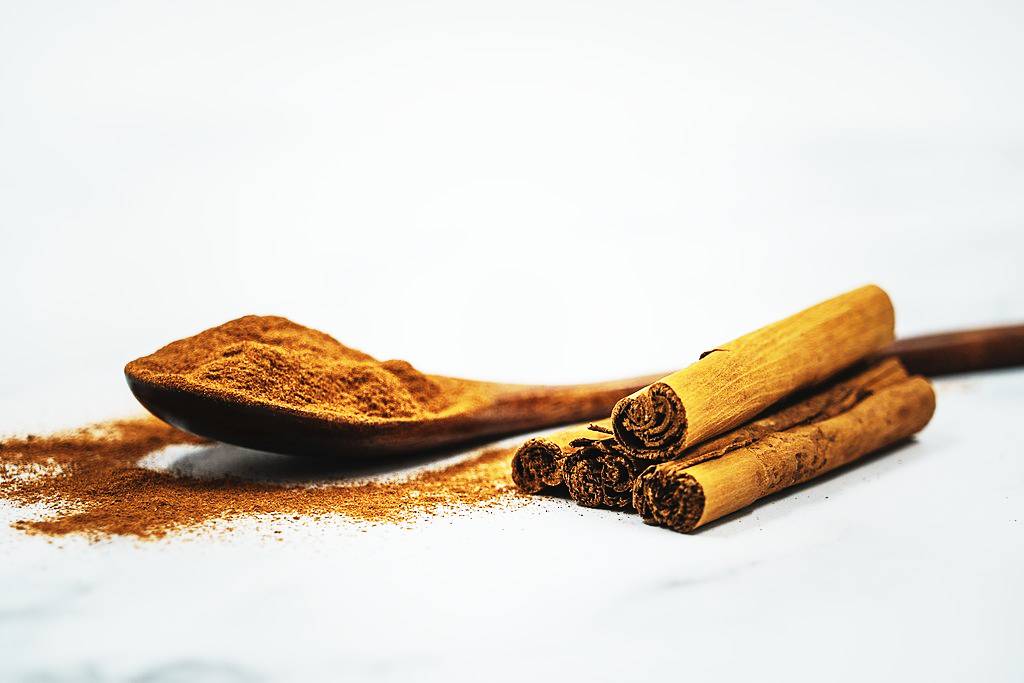
Also known as “Dalchini”.This woody spice has a slightly sweet tinge to it. Used in various desserts it grows mostly along the Malabar coast of India. But it is also added in spice-laden dishes, such as the biryani or mutton, or chicken dishes.

Dried Coriander

Indian Spices - Dried Corriendar
Image/ Pixabay

The oval-shaped coriander seeds have a unique aroma. Again they can be used in a powdered or whole form. It is mostly used to add flavors in dishes that are eaten with chapati or rice.

Turmeric

Indian Spices - Turmeric
Image/Marco Verch/Flickr

“Haldi” is a favorite and used in many dishes for various purposes. It has a warm and slightly bitter taste. It adds color and flavor to the food. Due to its medical properties, it is often a perfect ingredient to add during cold and coughs.

Saffron

Indian Spices - Saffron
Image/Wikimedia

Also known as “Kesar”. This spice is derived from the flower “Saffron Crocus”. One of the most expensive spices, a pinch of saffron can change the look of the dish. Its royal charm makes any dish loaded with opulence and class. Used in a wide range of dishes, the saffron is grown most in Kashmir. It is rich in anti-oxidants and enhances weight loss.

 Clove

Indian Spices - Clove
Image/Fazlul Alam/Pixabay

Also known as ” Laung” in India.  Clove is the flower bud obtained from the Clove tree. Clove looks like a little lollipop.  It is a sweet and aromatic spice. It has a strong flavor and is hence used cautiously. It adds a spicy warmth to dishes.

Black pepper

Indian Spices - Black Pepper
Image/Pixabay

Pepper is such a must that it is hard to even think of it as special. From breakfast to dinner, pepper is sprinkled on a wide range of dishes. It adds a definite flavor that is different from chilies or any other spice.

Mustard seeds and Fenugreek seeds

Indian-Spice-Mustard-seeds-and-Fenugreek-seeds

Both these seeds add a distinct taste to the dish. Used more in south India, they are also lightly fried in oil and spluttered as the final ‘tadka’ on dal or curries. Mustard seeds are good for bones. Fenugreek seeds reduce cholesterol and lower inflammation.

Medicinal uses

Indian-Spice Medicinal Values
Image/Karolina Grabowska/Pexels

Spices are not only about taste or color. They are good for one’s health too. Each of these spices has some medicinal properties that make them stand out. Their traditional medicinal value is much appreciated even in today’s chemical-driven world.

Cinnamon helps lower blood pressure and diabetes. Similarly, fenugreek seeds are used to control blood sugar levels and many people gulp a handful of the seeds along with water as a morning routine or soak the seeds in water overnight and drink the water later.

Those who have ever had a toothache know how effective clove is. It also kills bacteria, is rich in antioxidants, and improves liver health. Cumin helps in a better digestive system and also is a good ingredient to add to the diet during cold and cough. It also helps in weight loss, controlling cholesterol, and improving memory. Black pepper contains iron and helps reduce blood pressure. It also helps boost the absorption of nutrients and has anti-inflammatory properties. Cardamom too provides relief during throat irritations and is known to better digestion. It also helps in improving immunity and reduces swelling. Turmeric has many medicinal uses, including anti-inflammatory properties, and is also used for cleansing of the skin, etc.

Finally, spices in India are much more than just food ingredients. They resonate with historical significance, economic use, as well as medicinal values. The tiny bits of spices are small in size and quantity. But packed in these small sizes is a load and burst of flavors. With myriad advantages, they breathe into Indian cuisine, the foundation of taste and deliciousness.

And yes, the best thing about the ‘gram masala’ is this. Though each has its special place in the kitchen, they work best in a combination. The spices when grounded or added in proper proportion together give the dish an extra edge and special status. Perhaps, pretty much like its people, the spices of the nation too, elevate and enhance flavors when they work in tandem of unity.

Spicy, Saucy, Sweet: Mysore’s Famous Food You Must Try!

0
Mysore-Famous-Food
Image/Vivek vasudevan/Flickr

The vastness of the Mysore city is also reflected in its food. Mysore settles a massive variety of dishes that are delicious to eat and equally enchanting to look at. Ranging from the most famous of all that is idli, masala dosa, uttapam, vada, the list continues and reaches the most luscious Mysore Pak. Leaving you with a watering mouth, this complete list of Mysore’s famous food would make you a fan by, sampling and would also tempt you to try out these exquisite South Indian dishes.

Mysore offers a variety of dishes: some greatly influenced by the Udipi style, and others which originated in the city itself. South Indian cuisine is the most conventional among the people.

Here is a list of Mysore’s famous food, all of which serve as culinary delights:

1. Idli

Image/Pexels

Idlis are steamed rice cakes that are served with a spicy lentil soup and coconut chutney. They are suitable for breakfast meals and are a favorite food among the local people of Mysore. Some restaurants sell fried Idlis, which is not a traditional practice but still serves as a delicious experience. Others make Idlis with semolina or jackfruit. Idlis are served in food stalls, mobile food carts, and restaurants.

2. Vada

Uddina-Vada-Mysore-Famous-Food
Image / Ravi Talwar / Flickr

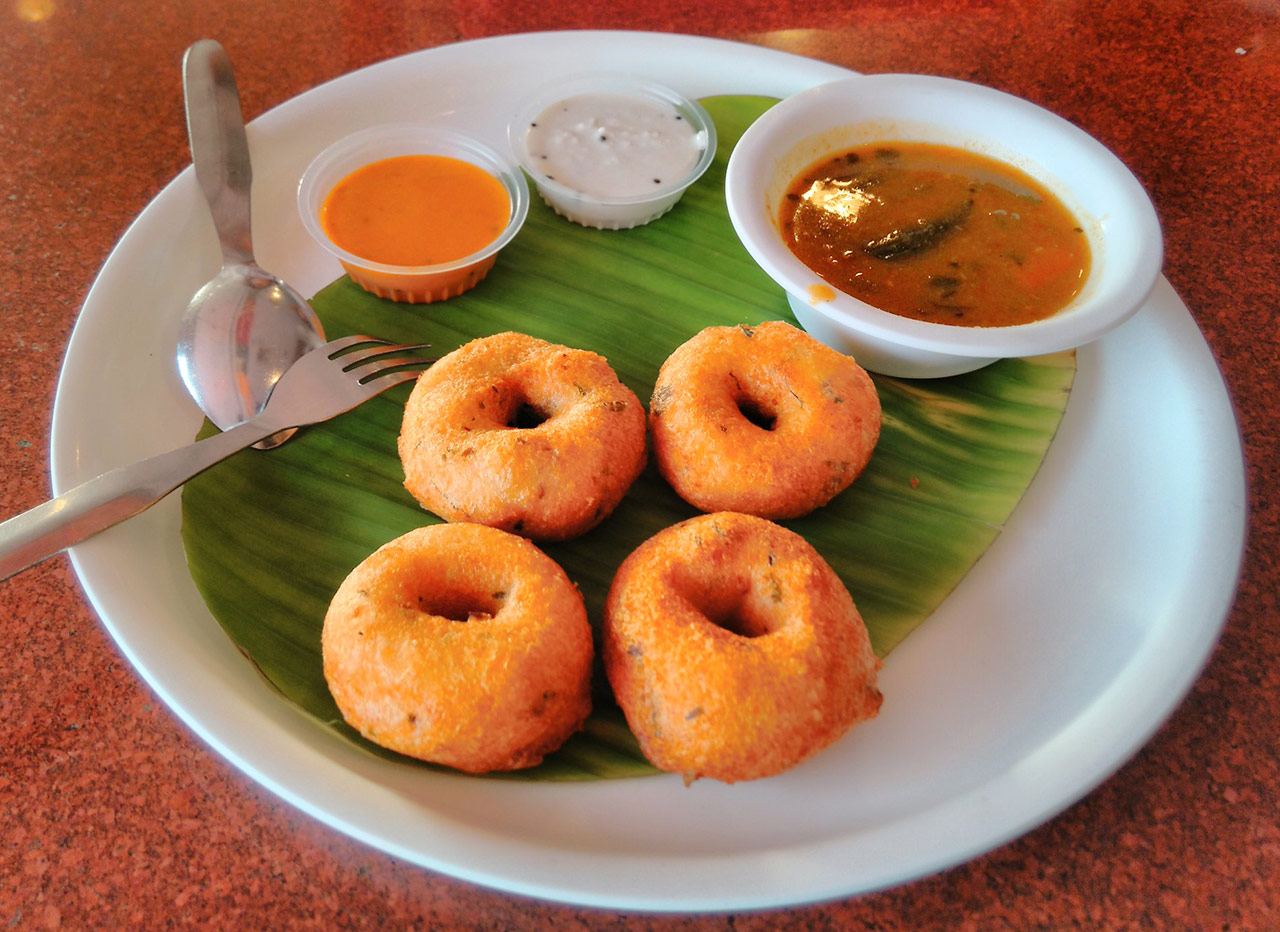
The deep-fried crust of the Vada produces a crispy cover around the mixed stuffing of black gram flour, cumin, curry leaves, onion, and chili. It is served with a spicy lentil soup and coconut chutney. The combination of one Idli and one Vada is a common preference for breakfast or snack-time.

3. Bonda

Image/Gopal Krishna/pixahive

The ball-shaped Bonda is a type of pakoda or dumpling usually eaten during breakfast or lunch. The people of Mysore love a popular variation of Bonda which is the Aloo Bonda, made from mashed potato. Like most local delicacies, Bonda is served hot with lentil soup and coconut chutney. A hot cup of tea is an excellent accompaniment during breakfast.

4. Khara Bath

Image/Megha Upadya/2.bp.blogspot.com

Khara Bath is also known as Upma and Uppittu. It is a conventional South Indian breakfast item that is made up of semolina, roasted with vegetables and spices. For a final delicious touch, one may top it with cashew nuts. Khara Bath offers a light, savory meal comprising only a few spices; yet it is fulfilling for the appetite. It can also be consumed with coconut chutney.

5. Kesari Bath

Image/Charles Haynes/flickr

Kesari Bath is a sweet delicacy conventionally eaten for breakfast. It is known by other names like Sheera or Sooji Halwa in Northern India. In Mysore, it is commonly offered as ‘prasad’ at temples during festivals. Also, it is a customary practice in most restaurants to serve a pineapple-flavored version of Kesari Bath on Sundays.

6. Mysore Masala Dosa

Mysore-Famous-Food-Masala-Dosa
Image/Nadir Hashmi/Flickr

Masala Dosa’s preparation varies from one region to another. The Mysore Masala Dosa specializes in its signature red chutney that is smeared on the inside of the cover. The crispy dosa is then stuffed with a preparation of mashed potatoes and onions, called Aloo Bhaji. Served hot alongside coconut chutney, the dosa is abundant for lunch.

Price: Masala Dosa usually ranges between Rs. 50 to Rs. 55 per plate.

Best Eateries: Gayatri Tiffin Room, Nalpak.

7. Uttapam

Image/Steve R /flickr

Uttapam is a thick and piquant rice pancake generally cooked with vegetables. A must-try variation of dosa, it tastes best when consumed immediately after it is prepared. The most popular versions of it are topped with onions and tomatoes.

8. Poori Saagu

Mysore-Famous-Food Poori Saagu
Image/Catie & Linds/Flickr

Poori varies in different regions as it is served all across India. In Mysore, it is known as Poori Saagu. The dough is deep-fried in oil until it becomes puffy and soft. It is consumed with a delectable preparation of vegetable curry.
  • Price: The price ranges from Rs.35 to 80 per plate.
  • Best Eateries: Vinayaka Mylari.

10.Shavige Bath

Image/Wikimedia

Shavige Bath is made from thin and light vermicelli. Chopped vegetables and nuts are added along with curry leaves, mustard seeds, and turmeric for a delightful flavor. The dish is light on the stomach, like Upma or Kesari Bath, and served with coconut chutney.

11. Bisibelabath

Image/Wikimedia

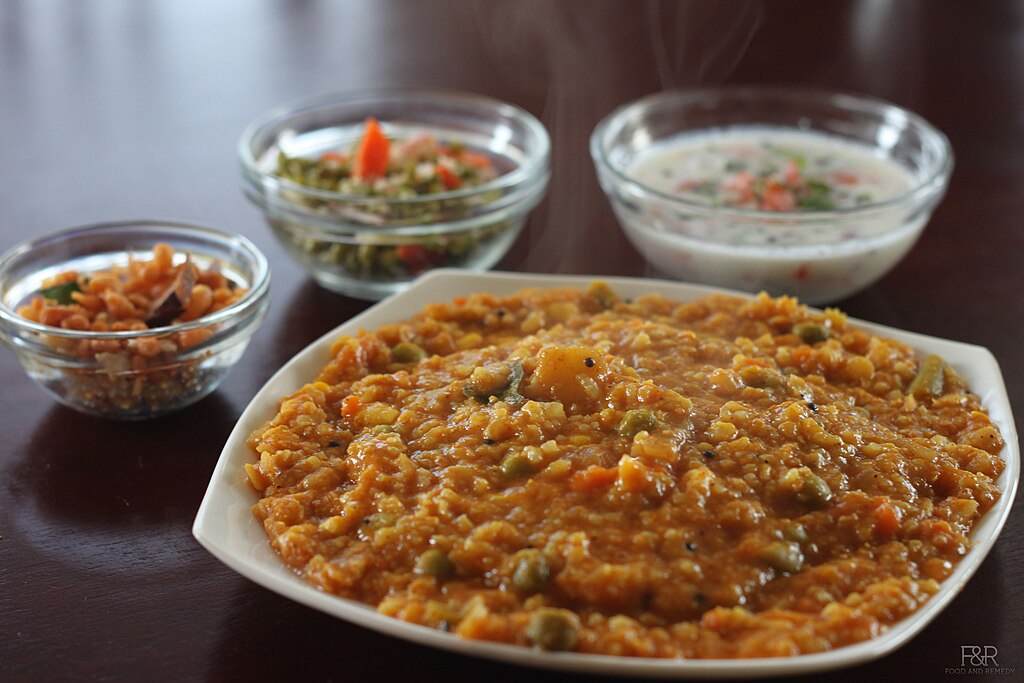
Bisibelabath is a popular lunch item of Karnataka. The name means “hot lentil rice” in the Kannada language. One can savor this dish to the fullest when eaten with chutney, boondi, salad, or even potato chips.

12. Mysore Pak

Image/Vijay Kumar/Flickr

The historical delicacy of Mysore Paaka was invented in the Mysore Palace during the reign of Krishna Raja Wadiyar IV. The brilliant royal chef, Kakasura Madappa, was the first to make this incredible sweet dish. Mysore Paak contains plentiful amounts of gram flour, sugar, ghee, and cardamom. The dessert is a significant cultural cuisine of Mysore. It is offered in most restaurants and sold in sweet shops by the kilo.

13. Payasam

Mysore-Famous-Food-Payasam
Image/Manish Chauhan/Flickr

Payasam is a creamy, sweet dish made with milk and rice or vermicelli. It is topped with nuts and raisins and poses as a lovely dessert for any occasion, be it a delicious diversion after lunch or a wedding ceremony.

14.Kori Gassi

Image/Wikimedia

Kori Gassi is a meat dish that originally belonged to the Bunt community of the Mangalore region. Today, however, this immaculate preparation is a favorite all across Karnataka among the non-vegetarian people. Also known as Mangalorean Chicken Curry, it consists of soft and juicy pieces of chicken cooked with finely ground fresh coconut and spices. It matches best with rice or Neer Dosa.

  • Price: It costs Rs. 150 per plate.
  • Best Eateries: Hotel RRR.

15. Hanumanthu Biryani

Mysore's-Famous-Food-Hanumanthu-Biryani
Image – Hanumanthuoriginal/FB

Hanumanthu Biriyani is one of the oldest and most authentic biryani you can get in Mysore. The place is legendary and getting a taste of the popular Mutton Biriyani is almost a herculean task! The biryani rice is filled with aroma and the perfectly cooked pieces of mutton, with a slight bite with the organ meat and fat of the mutton, intensify the meaty flavours in this biryani.

16. Tandoori Tea Hot Coffee

Mysore's-Famous-Food-Tanduri-Chai

Tandoori Tea is made by taking iron tongs and an earthen cup which is placed in a glowing hot tandoor (or just a large metal drum).

When the cup is fuming, it’s taken out and sweet milky chai is poured in (the same is done with coffee), which sizzles and froths over. Then this chai is poured into a different kulhad and served. The process gives it smoky, earthy tones, with some caramelisation from the sugar. It’s delightful and makes for an entertaining show.

17. Churmuri

Mysore's-Famous-Food-Churmuri-01
Image – Wikimedia

Like every State in India, Karnataka has its very own favourite evening snack, the Churumuri. This appetising mix of puffed rice, grated carrots and other seasonings has since seen many variations but the base remains the same — puri or puffed rice.

While Bhel-puri and Masala Pori have a few wet ingredients like tamarind syrup or boiled peanuts, Churumuri is a completely dry mixture. It’s a refreshing, crunchy salad with finely grated carrots, a little spice mixture, a handful of Congress kadlekai (spiced-shelled peanuts), chopped onions, tomatoes topped with a dash of lime and coriander. All this is cosily stuffed in a conical paper cup.

The places mentioned above are only a few of the numerous ones that serve delicious food in Mysore. There is an abundance of options for a new visitor to try out from.