Tamil Language – The Oldest of the Dravidian Family

0
Tamil Language
Image/Wikimedia

Vanakkam! This is the greeting you will receive when you enter the southernmost state of our country, Tamil Nadu where people converse in their native language of Tamil. Apart from Tamil Nadu, this recognized classical language and one of the twenty-two official languages of our country is spoken in parts of other states of southern India, the union territory of Pondicherry as well as in countries abroad such as Sri Lanka, Singapore, Malaysia to name a few. It is the official language of the aforementioned countries. It belongs to the Dravidian family of languages which refers to those languages that are predominantly spoken in northern Sri Lanka and South Indian states. Tamil is a language that is widely spoken throughout the globe, even if it by small communities with a total number of speakers totaling around 74 million making it the eighteenth most spoken language in the world.

As aforementioned, Tamil is a recognized classical language. That is because of three main reasons; its origins can be traced back a significant period, it contains a substantial amount of ancient text as well as literature, and last but certainly not the least, its unique and independent tradition because of which it holds a prestigious position as a written language. Furthermore, following legend, the grammatical laws of Tamil are said to have been formulated by the gods themselves which only adds to its prominent status. As true for any language, Tamil has its unique writing system. With a total of 12 vowels and 18 consonants, the language consists of 216 compound characters.

Tamil Language-Script
Tamil Script/Wikimedia

One would be justified in saying that Tamil is an ancient language as the earliest clear evidence in the form of inscriptions of the origins of it leads back to the 5th century BCE making it one of the oldest languages in the entire world. It is also the first language of India to ever be published. That’s another record that Tamil takes home. Tamil, being the language that it is, is inspiring and has influenced various words as well as grammar in other languages, approximately 400, which includes Sanskrit, Korean, Greek and even, Latin, throughout the globe.

However, to say that the language remained the same would be incorrect because naturally, over time various noticeable changes occurred in the grammar and dialect of the language which led to it being divided into three main periods: Old Tamil, Middle Tamil, and Old Tamil. The writing of this language visibly has roots in the script of Brahmi but of course, did change drastically. A noteworthy change in the writing style occurred with the assimilation of Grantha Letters, the roots of which lie in the Pallava script. That is the thing about this language. It survived because it is ever-evolving and even now, in different parts of the state of Tamil Nadu, the colloquially spoken language differs. The local dialects or as commonly called koduntamil and the formal language or centamil of Tamil vary and this is referred to as diglossa, for example, Tamil’s form differs with caste, class, and region.

Tamil Literature is a field so vast that it may just require a piece on its own, but the works of this language are truly magnificent. Prominent pieces often include epics or religious poetry such as devotional pieces dedicated to Nayanmar, Alvars with, later on, great focus on the Bhakti Movement as well as Sangam literature. A rise can be seen among the Chola and Palla rulers providing patronage to poets and authors. Tamil Nadu has produced many great writers and one such, we’re all aware of is Subramanian Bharti who is credited with the start of the modern literary Tamil movement.

Tamil Language-Literature
Tamil Manuscript/Wikimedia

A product of this language that is everyone’s favorite and we all immensely enjoy is the Tamil Cinema, which is now the second-largest network in the country. The industry’s action-packed, entertaining movies are popular throughout the world. Various movies now also inspire their Bollywood adaptations. All the South Indian movies which give us such pleasure wouldn’t have been possible without the glorious Tamil language.

An interesting fact about the etymology of the word Tamil itself is that it has various meanings, apart from denoting this rich classical language, it also refers to beauty, naturalness, and sweetness it remains one of the languages in the entire language that is personified. It is indeed a shocking fact but one that is true that Tamil is treated like a ‘mother’ or a ‘goddess’. UNESCO endorses a variety of documentary heritage in its register: Memory of the World and can you see the inscriptions of which language are featured in it? Of course, the beautiful language of Tamil. Talking about what makes Tamil such a unique language, it is time to bust a common myth. The word Tamil is pronounced as Tamizh. In the language, three different characters are denoting ‘la’ which causes a difference in pronunciation. These little quirks are what is even more fascinating.

There are truly myriad classical languages that are unfortunately not prevalent anymore. However, Tamil remains to have stood the test of time and that is primarily because of the people’s will. The existence of a language depends solely upon the way it is utilized in everyday conversion and written text and in that regard, what is something to appreciate is the efforts of the natives of the state because the language plays such an important role in their culture, heritage and mainly, lives that it is taught to younger generations and is spoken in households. It was Theodore Roosevelt who rightly said, “Nothing worth having was ever achieved without effort.”

Best Outstation Taxi Service in Pune

0

Taxi-Service-in-Pune

The sister city of Mumbai, Pune is gradually becoming the most sought after destination amongst millennials owing to its emerging IT infrastructure and incredible weather! There’s a huge influx of professionals and students every year to Pune from across the country. With the rise in its young population, the city has already evolved its local tourism and nightlife, offering a plethora of options to explore during weekends. For those seeking an outstation trip near Pune, the city has a lot to offer in terms of weekend getaways as well.

Whether you are a Punekar or a tourist looking to explore nearby destinations, safe, sanitized and affordable car rentals in Pune are a must. For your outstation cab requirement in Pune, let us introduce you to Savaari Car Rentals. Present in 2000+ cities, Savaari is India’s leading online chauffeur-driven car rental service. Here is why Savaari could be your best travel partner for outstation trips from Pune:

Quality of Service

Founded in 2006, Savaari is one of the most experienced players in the car rental industry. Their customer-first approach will ensure an unmatched service quality, coupled with reliability, convenience and transparency in billing. Moreover, they have vehicles in Pune which are suitable for every requirement – hatchback, sedan, SUV, luxury tempo traveler and more. Savaari’s top notch service quality is validated in its excellent ratings and reviews on Google, Play Store as well as TripAdvisor.

Roadtrip Expertise

Savaari has executed over 10 lakh road trips in the country. In fact, their mission is to make every Indian fall in love with road trips. Savaari drivers assigned for a trip are trained to be local experts on the routes. They can guide you on the best sightseeing spots and eateries on the highways. You also get travel kits and real time SMSes to help you discover the hidden gems and photography points along the route. If you need any assistance planning your outstation trip from Pune, you can reach out to Savaari’s 24×7 customer service. They will help you plan a customized itinerary based on your interests and preferences.

Value for Money

Savaari is known for its affordable intercity services. In fact, the fare for Savaari’s outstation cabs starts from as low as Rs 9/km. They have the lowest fare in the industry based on the quality of service they provide to the customers. Moreover, if you are looking for a one-way drop service from Pune to any other city in India, you may book a Savaari. No matter how small or remote your destination is, you will only pay one side fare. Savaari has recently scaled its one-way services across 15 lakh routes in India.

Safe and Sanitized Cabs

Covid has changed the way people commute. Safety is now the number one priority, no matter whether you are taking a local or an outstation trip. With Savaari, you get the promise of a safe and sanitized ride. Their cabs are regularly sanitized and the drivers undergo a 30-point checklist, ensuring you travel with the best safety standards. 

You can book your cab with Savaari either through the website or by installing their mobile app. The customer app also provides features like location and trip tracking which is the first of its kind for outstation services. The app is rated 4.5/5 – one of the best rated car rental apps!Apart from one-way and round-trip outstation cabs, Savaari also offers local hourly rentals and airport taxi services in Pune. If you are looking for a trusted and affordable cab service from Pune to Mumbai, Mahabaleshwar, Lonavala, Igatpuri, Shirdi or any other cities in Maharashtra or any other state in India, you can consider Savaari Car Rentals.

Mumbai Language – Simple Guide to Commons Words of Aamchi Mumbai

0
Mumbai-Language
Illustration – Shreya Dasgupta/Caleidoscope

“Mumbai is not just a city, but it is a feeling, a feeling of being home. It is “Aamchi Mumbai” for all its people.”
Mumbai city is a meeting point for various cultures and traditions. There are people from different parts of India who have their dialects and they add their tone to the language of Mumbai. Everyone speaks differently in Mumbai even if they are speaking in the same language. 

What Language Speak in Mumbai?

The official language of Mumbai is Marathi and it is far the maximum used language of the State of Maharashtra as well. However, Mumbai being a cosmopolitan city additionally accepts numerous different languages which include Gujarati, Kannada, English, Telugu, Konkani, Dangii, Varhadii, and Hindi. Marathi is a modified version of the Maharashtri language, which is one of the forms of Prakrit, a deviation from the original Sanskrit language. Due to several immigrants from different parts of the country, a new form of language originated withinside the city known as the ‘Mumbaiya’ or ‘Bambaiya’ version of Hindi. It is a local dialect, a slang language, that is a colloquial mix of Hindi, English, and Marathi.

Mumbai Slang Language

You might have come upon this shape of language in diverse Bollywood movies. One may also find some sections of the population using this version of the language. With a literacy rate of 86%, people in this city display a good flair for lifestyle and education.

“Apun” is a common word used for saying “we”. “Mereko” is used to say “for me”. The original Hindi term for “for me” would be “Mujhe”, however, we end up using the Bombay slang. In Hindi, we say “Aap” for elders and for showing respect towards people. We say “Tu” or “Tum” for people our age like our friends. However, in English, it only translates to “You” where elders and the youth are treated equally. “Kaali-Peeli” is a common word used for cabs in Mumbai because they are yellow and black. Cabs are a lot in demand in Mumbai and they are a common mode of transport. This makes the word important around the city. 
“Chai” is a common term for tea and the working class uses this word often. Tea is an important part of everyone’s lives in Bombay and various people are addicted to consuming tea. I know people who have tea twice a day, every day. “Sir dard” is a common phrase for headache. People generally say that they will get a headache due to the frustration of city life or because they haven’t had tea since morning. 

When you are going shopping, the shopkeeper generally asks “Kya chahiye”- what do you want. Then, in the politest tone, they too offer you tea! “Kal” is a complicated word in Mumbai and it depicts both “Yesterday” and “Tomorrow”. This is comically showing us the struggle in India because various residents’ tomorrow will be the same as yesterday because of the monotony of city life. When college students want to hang out together, they say “Chal, milte hai”. The word “Chal” here translates to “let’s” and the remaining just means “meet”. 

“Locha” means problem and people often use this slang. “Lafda” is likewise similar to locha. “Vaat lag gayi” means that the person is in huge trouble. Since various people are unable to spend a lot in the city, the word “Chindi” or “Kanjoos” is used for the people who do not spend a lot. “Nikal” is common slang for “leave” and it depicts annoyance and anger. People generally say “Jaa Be” when they are not as angry and they only want to pretend like they are angry. “Kya, Yaar” means “What?” which is used to show a disagreement with what the second person is saying. “Achcha” is used to depict shock at something, the feeling of surprise, or the feeling of sarcasm. “Chamaat” is slang for a slap and people use it when they are frustrated and angry during arguments.  

Keeping all these negative words aside, there are Hindi slangs to depict excitement as well. These include “Jhakaas” and “Mast”. These words are used for things that people like or they are used if people are feeling great about something. 

The most famous phrase used by people is “Aamchi Mumbai” which means “My Mumbai”. Mumbai is a great city that makes every citizen in the city fall in love with it and the phrase “Aamchi Mumbai” shows that all the Mumbaikars love the city and call it theirs. Mumbai is not just a city but it is a feeling and all the residents’ feel its rush and thrill in their lives. 

Since most of the college crowd is well educated, the sad part is that they have started cowering from speaking in Hindi as they consider it to be an inferior language. Even people belonging to the higher-earning segments look up to people speaking in English and refrain from speaking in Hindi. People need to understand that language is merely a mode of communication and every language has an ingrained culture that cannot be looked down upon. Hindi is deeply present in the everyday lives of people. 

There is a vast diversity even in the accent of Mumbaikars. Some of them can speak in heavy American accents, some speak in an Indian accent, if you are lucky enough, you could also find a South Indian here who speaks in a South Indian accent. 

There are many languages present here and the people are very diverse. However, everyone is very accommodating in terms of the language, and there seem to be very few problems in communication as people are multi-lingual. 

Mumbai Slang Phrases Pocket dictionary

Aamchi – My

Mumbaikar – a resident of Mumbai

Mereko – for me

Mujhe – for me

Aap – you (with respect for elders)

Tu – you (for friends)

Kaali-peeli – cabs in Mumbai

Sir dard – headache

Kya chahiye – what do you want

Kal – tomorrow

Kal – yesterday

Chal milte hai – let’s meet

Vaat – deep trouble

Locha, lafda – problem

Chai – tea

Nikal – leave

Jaa be – leave (impolite way)

Chindi, kanjoos – people who spend less

Achcha – to depict shock

Chamaat – slap 

Jhakaas, mast – excellent

Kidhar – where

Khana – food

Paisa – money

Kitna paisa – How much do I need to pay?

Haal- chaal – How are you?

Rasta – What way?

Exquisite Temples in Kerala that You Must-Visit for Divine Experience

0

Kerala remains known for this rich cultural beauty and is a place that is truly God’s Own Country. The art and architecture of this state when combined with the devoutness of the people naturally lead to magnificent temples that truly provide your soul with spiritual guidance and a calming sense of serenity. With more than a hundred temples in Kerala, this is a great destination for devotees to visit but it also makes it all the more difficult to navigate. But need not worry for we have here a list of some of the most enchanting temples of Kerala.

1. Attukal Bhagavathy Temple

Temples in Kerala-Attukal Bhagavathy Temple
Image/Wikimedia

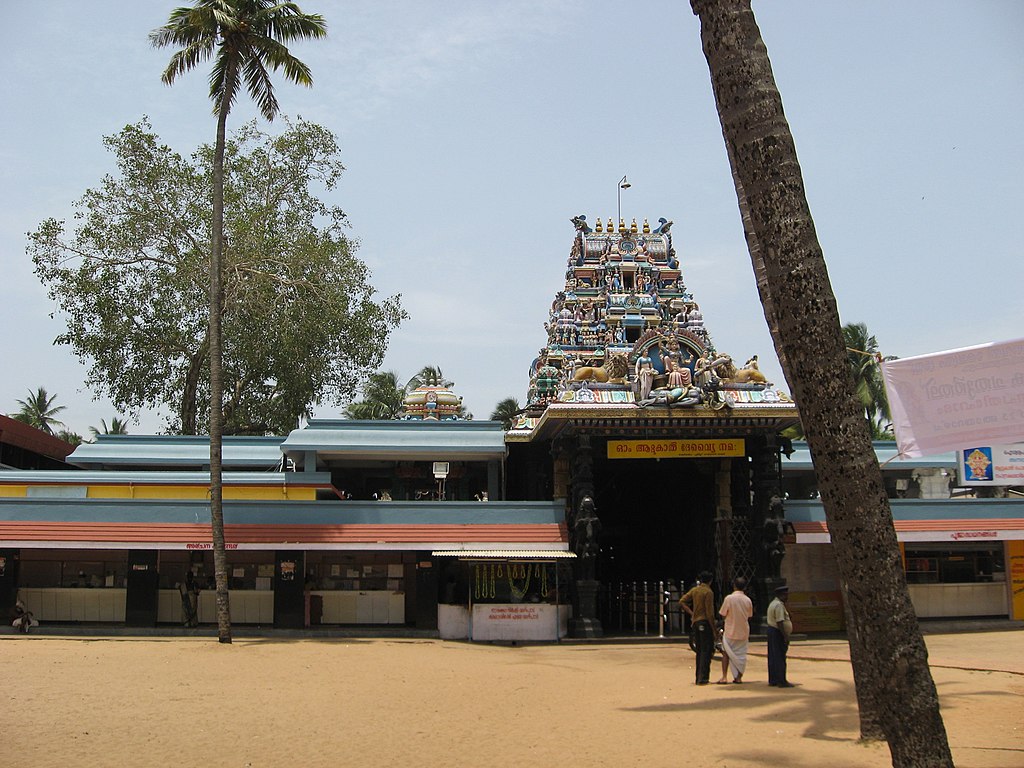
This holy temple can be found at the very capital of Kerala, Thiruvananthapuram, and is dedicated to Goddess Bhadrakali, a symbol of salvation and affluence per Hindu Mythology. The architecture of this temple shows great influences of the traditional style of architecture in Kerala as well as Tamil Nadu and is truly exemplary. Furthermore, the intricate carvings of various gods and goddesses are admirable but the greatest attraction of this temple is without a doubt the Pongala festival held here every year which is a prominent festival of the state.

2. Ettumanoor Mahadeva Temple

Temples in Kerala-Ettumanoor Mahadeva Temple
Image/Wikimedia

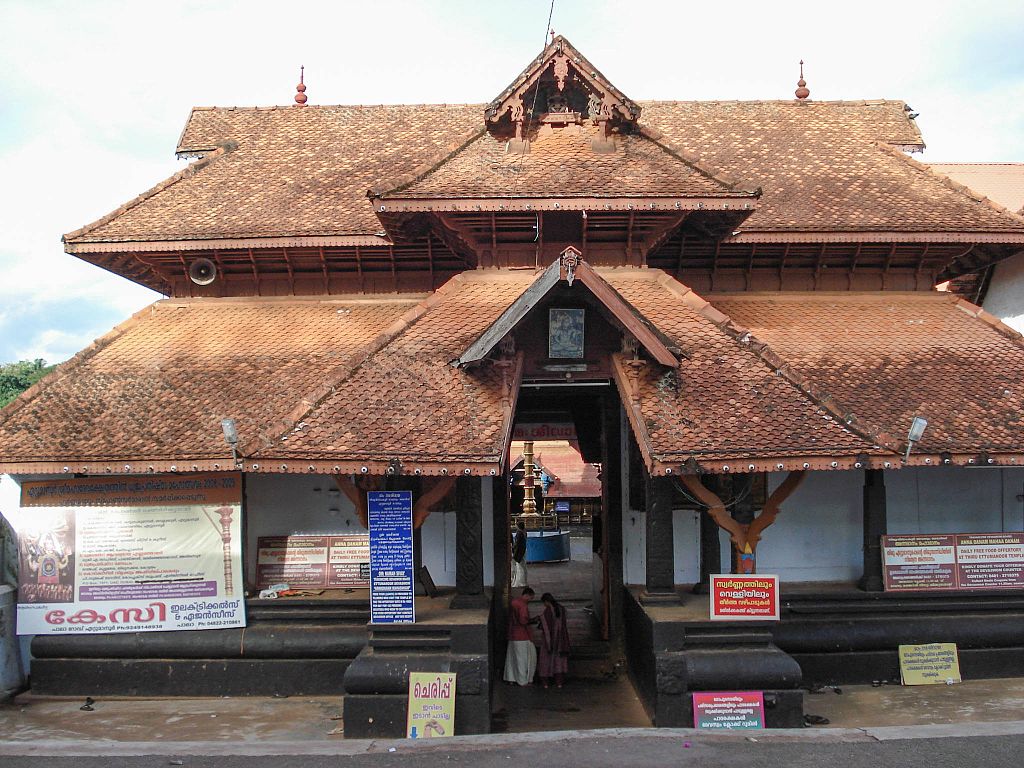
The Ettumanoor Mahadeva Temple, situated in Kottayam, is one of the most popular temples in Kerala. This sacred structure was built in dedication to Lord Shiva. This temple is certainly admirable not only from an architectural point but also from the aura of the temple which provides such solace. This temple is known for the murals on the wall that are actually in the Dravidian style but the main allure of this place is the well-known painting on the temple tower of Nataraja or the God of Dance.

3. Guruvayoor Temple

Temples in Kerala-Guruvayoor Temple
Image/Wikimedia

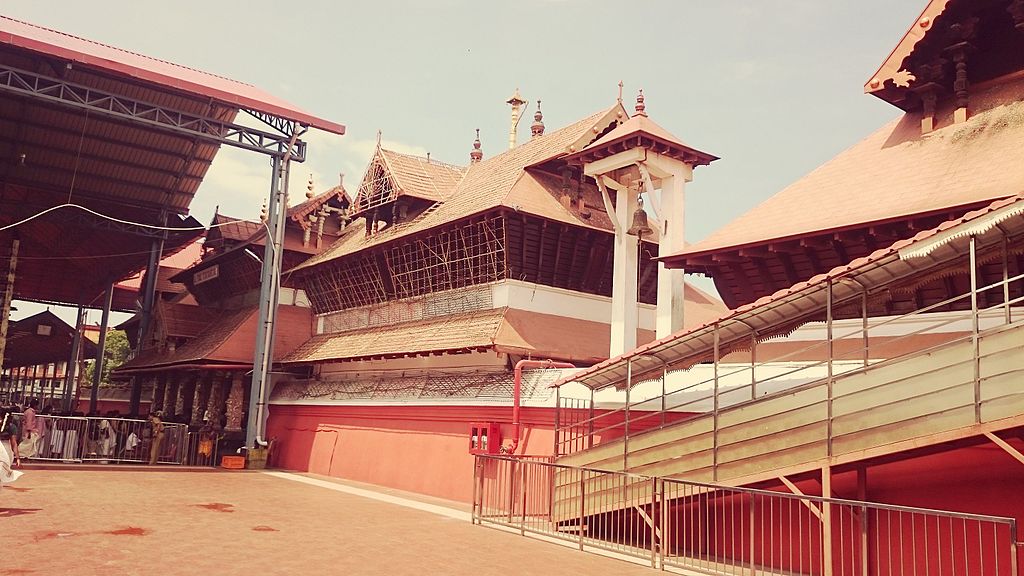
This sacred temple is dedicated to its namesake, Lord Guruvayurappan, an incarnation of Lord Vishnu with four arms at the time he was in the avatar of Krishna. This temple is visited by thousands of Hindus, being an important place of worship. Also popularly referred to as the ‘Dwarka of South India’, this temple, due to its holy nature, is considered to be the holy abode of Vishnu on Earth, only adding to the religious significance of this temple.

4. Sri Padmanabhaswamy Temple

Temples in Kerala-Sri Padmanabhaswamy Temple
Image/Reji/Flickr

An embodiment of the fusion of native architecture of Kerala and Dravidian architecture, this temple is again situated at the capital of the state, Thiruvananthapuram. The chief deity remains the namesake, Lord Padmanbhaswamy who was worshipped by the royal family of Travancore. The temple looks particularly stunning, especially with all its golden glory and allure. This temple’s main fascination is the treasure that was excavated from its hidden and inner sanctums which are estimated to be above one trillion dollars.

5. Sabarimala Sastha Temple

Temples in Kerala-Sabarimala Sastha Temple
Image/Wikimedia

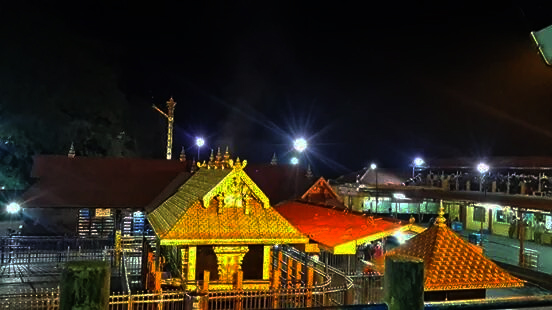
Located in the Sabarimala temple complex that can be found inside the Periyar National Park, this temple attracts millions of pilgrims and devotees from not only India but from all around the globe. This temple is dedicated to Lord Ayyappam, an incarnation of Vishnu, and is also considered to be the god of growth. The scenic beauty and lush greenery of the Western Ghats surrounding this temple add to the charm of the place. Furthermore, the architecture is fascinating and anyone is bound to get mesmerized by its beauty.

6. Vadakkunnathan Temple

Temples in Kerala-Vadakkunnathan Temple
Image/Wikimedia

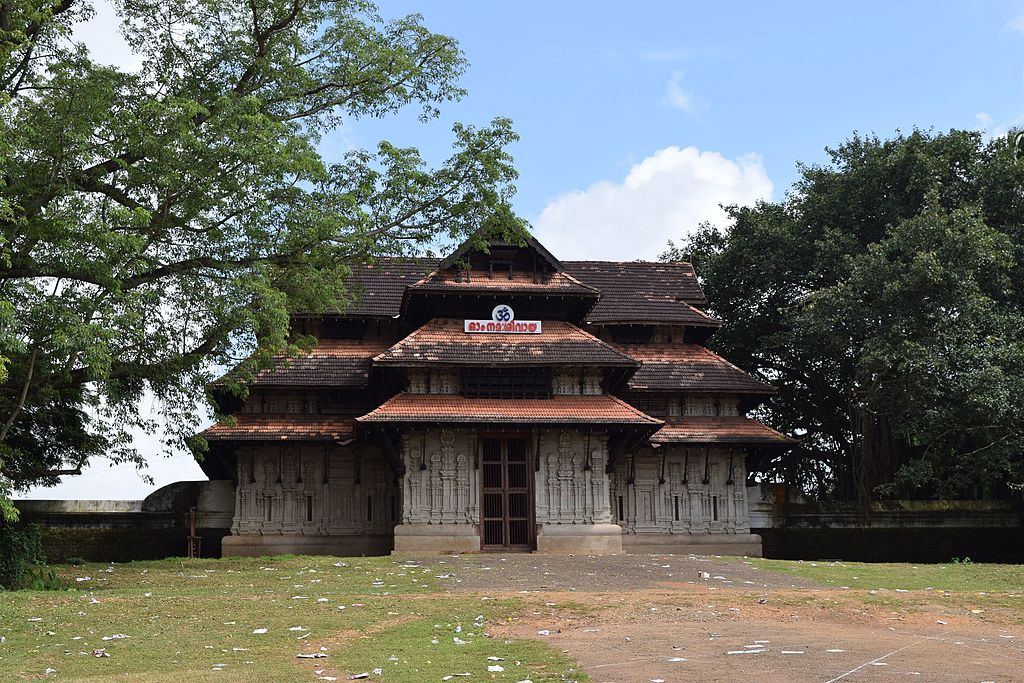
The Vadakkunnathan Temple is situated in Thrissur and is dedicated to Lord Shiva. This temple is of great spiritual as well as historic importance to Hindus and was declared as a National Monument by the Government of India. Furthermore, it was also recommended to be included in the list of UNESCO heritage sites. It is a great example of the classic architectural style of Kerala. The major attractions of this temple are the mural paintings found inside that depict stories from the Mahabharata as well the festivals celebrated there such as Thrissur Pooram and Maha Shivratri.

7. Mannarasala Nagaraja Temple

Temples in Kerala-Mannarasala Nagaraja Temple
Image/Wikimedia

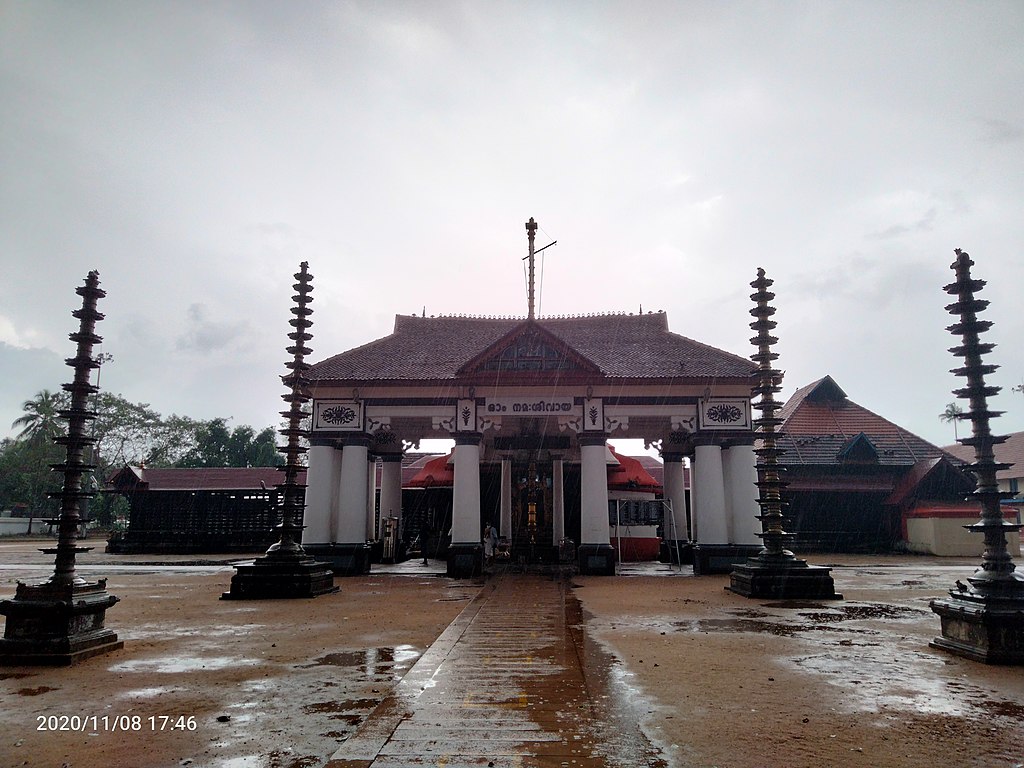
As its name suggests, this temple is dedicated to the serpent king Nagaraja, who is believed to be gifted with the form of Lord Vishu as well as the spirit of Lord Shiva. It is situated in the Alappuzha District of Kerala and as one walks around this fascinating temple, one can observe images of snakes all around in homage to the chief deity. It is also a popular rumor here that coming here to pray and worship can help a child to a family who’s struggling with fertility problems. These families later re-visit the temple with their children to show their gratitude.

8. Vaikom Mahadeva Temple

Temples in Kerala-Vaikom Mahadeva Temple
Image/Wikimedia

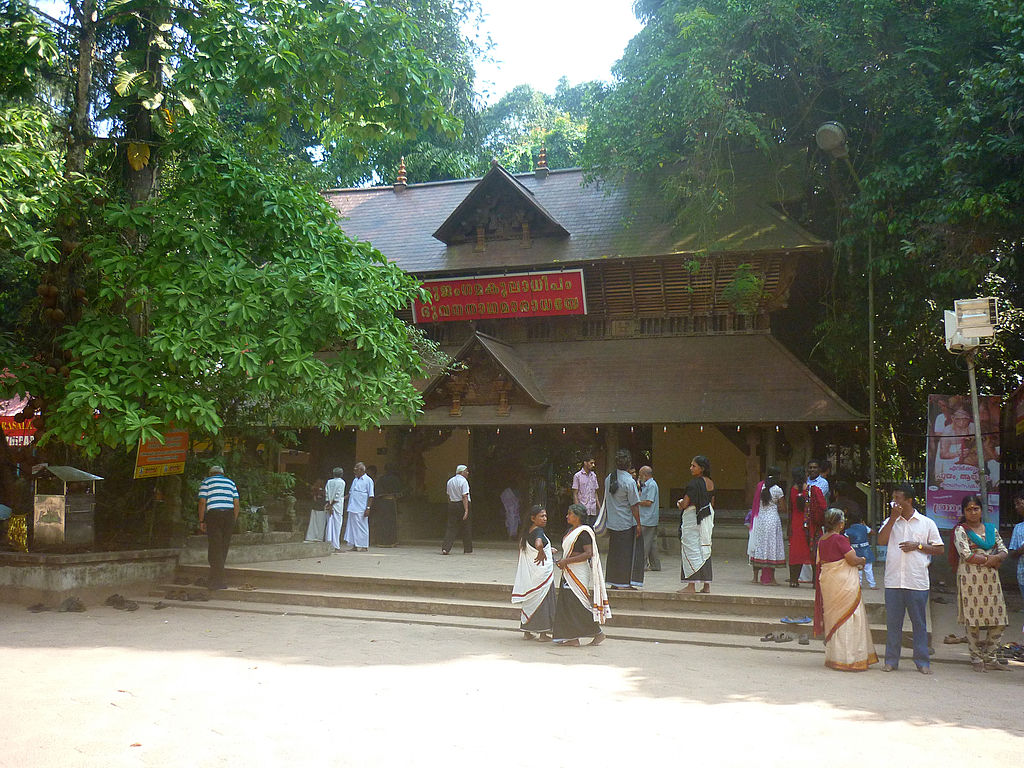
The Vaikom Mahadeva Temple is situated in the Kottayam District of Kerala and is a temple dedicated to Lord Shiva. It is one of the oldest temples in Kerala and the Shiva Linga that can be found there is believed to belong to the Treta Yuga, the second yuga, following legend. The architecture is splendid and one must simply see for themselves. As it is enclosed by the river Vembanad, the scenic beauty and the depiction of the peaceful town life is entrancing.

9.Chottanikkara Devi Temple

Temples in Kerala-Chottanikkara Devi Temple
Image/Wikimedia

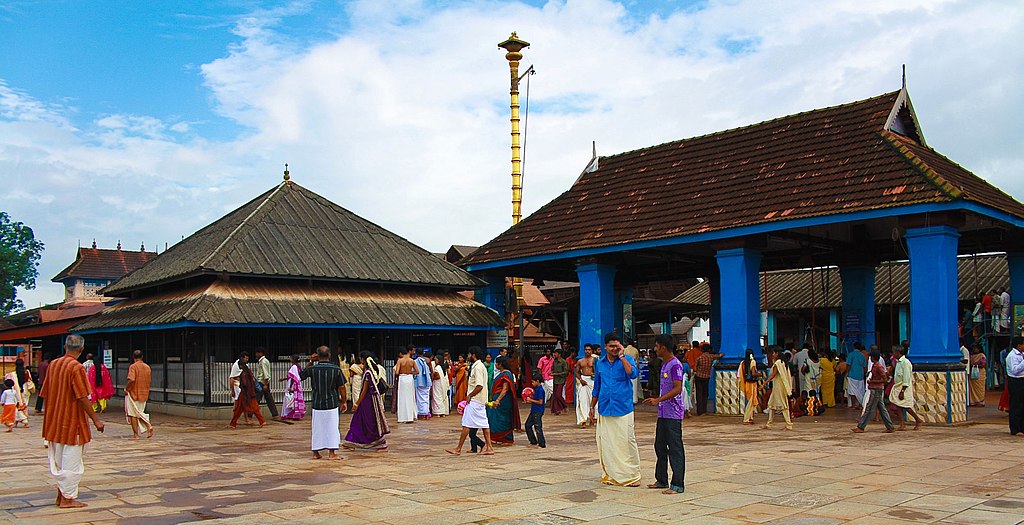
This temple is dedicated to the goddess Bhagavati, an incarnation of Mahalaxmi. It is one of the most well-known temples, especially for Hindus, in Kerala. It is furthermore considered to be a site for ‘exorcism’ due to its ability to remove your inner demons. It is a popular belief that if someone who is struggling with mental health prays at this shrine, they shall be cured due to the healing powers of this temple. An important festival that is celebrated at this temple is Makom Thozhal.

Enticed to buy a ticket to Kerala? It is natural after reading about the entrancing temples of Kerala. If doing so, it is additionally highly recommended to attend one of Kerala’s well-known temple festivals of Kerala which are surrounded by great fanfare and fervor! So, which one of these temples of the Land of Gods caught your inner devotee? Let us know in the comments section below.

The Flavorful Spices of Kerala Spreading the Aromas of Malabar

0
Spices-of-Kerala
Image – Pixabay

Apart from beautiful landscapes and the cultural heritage of the state of Kerala, it is also famous around the globe for its cuisine and a primary reason for that is its spices that enhance the flavor of these already mouth-watering dishes of Kerala. It has been since prehistoric times that the spices of Kerala have been in great demand, especially with foreign powers that arrived at the Malabar coast such as the Arabs, British, Chinese, Portuguese, and French. Furthermore, the climate of Kerala allows the spice cultivation to thrive and when visiting the spice gardens of the state, one is simply overtaken by the fragrance around them. Kerala’s home to myriad spices, so let’s go on a flavorful journey of the spices of Kerala.

1. Cardamom

Spices of Kerala-Cardamom
Image/Mauro Cateb/Flickr

Kerala is one of the largest markets of cardamom in the entire world and the Malabar variety is native to the state. It can be added to both sweet and savory dishes. This spice pairs amazingly well with seafood, red meal, lentils by enhancing their tastes. Furthermore, it makes a great addition to tea and baked goods. In Kerala, cardamom is cultivated throughout the year. Cardamom has various health benefits and has therefore truly earned its status as the queen of all spices.

2. Clove

Spices of Kerala-Clove
Image/Pixabay

A staple of every home in Kerala, clove flourishes in Kerala’s climate which allows for its flowering. People there utilize it for marinating as well as for meat rubs. If you haven’t tried clove cookies, then you don’t know what you are missing out on. Clove, similar to cardamom, can be added to both sweet and savory dishes. Cloves are very healthy for you since they’re high in antioxidants, help in regulating blood sugar as well as good for your liver.

3. Pepper

Spices of Kerala-Pepper
Image/Wikimedia

This versatile spice is widely grown in the state of Kerala. The various varieties found here are black pepper, green pepper as well as white pepper. Pepper is one of the most commonly used spices in all households of not only Kerala but the entire country. Especially when it comes to black pepper, it goes with every savory dish and only makes it all the more delicious. Peppers are additionally even beneficial for your brain and are known to have cancer-fighting properties.

4. Cinnamon

Spices of Kerala-Cinamon
Image/Wikimedia

The special variety of cinnamon found in Kerala is truly delectable and is truly unique. It is grown typically in the Malabar Spice Plantations. Apart from being used in cooking, it is also an essential part of the confectionery industry. Furthermore, cinnamon oil extraction is also a greatly yielding venture. Cinnamon desserts are a must-try. Cinnamon rolls, cookies, snickerdoodles, churros, baklava, puddings, and a variety of pies are just a tip of the delicious goods that this spice has to offer.

5. Nutmeg

Spices of Kerala-Nutmeg
Image/Pixabay

Nutmeg is practically synonymous with delicious and is grown primarily in South India and the variety found in Kerala is a must-try. Nutmeg is utilized by people here as a condiment and is added to dishes to enhance their taste and flavor. Nutmeg is known for its unique aroma and goes well with sauces and soufflés. Furthermore, it also has anti-inflammatory properties and is known to improve your mood. Who wouldn’t feel better after eating a nutmeg delicacy?

6. Vanilla

Spices-of-Kerala-Vanilla
Image – Pixabay

The famous vanilla is another prominent spice that is widely grown in Kerala. The delicious sweets and desserts of Kerala wouldn’t be possible without the delectable taste of vanilla. It is a very popular crop and does great in the market yielding the farmers of Kerala a high income. Vanilla has lower calories as compared to sugar and is recommended to ease toothaches. The best part is the calming effect that it produces. Furthermore, the aroma of vanilla is soothing and its baked goods are a must-try.

7. Turmeric

Spices of Kerala-Turmeric
Image/Marco Verch/Flickr

An essential component of any Indian spice cabinet, turmeric is cultivated in the state of Kerala and is used not only in cooking but also as a coloring agent, for its medicinal purposes and as a dye. The aroma of turmeric is unique and truly takes over you. It is customarily added at the beginning of a dish and is then mixed with onions and garlic. It is scientifically proven that turmeric works to prevent cancer as well as help in treating Alzheimer’s.

8. Star Anise

Spices of Kerala-Star Anise
Image/Wikimedia

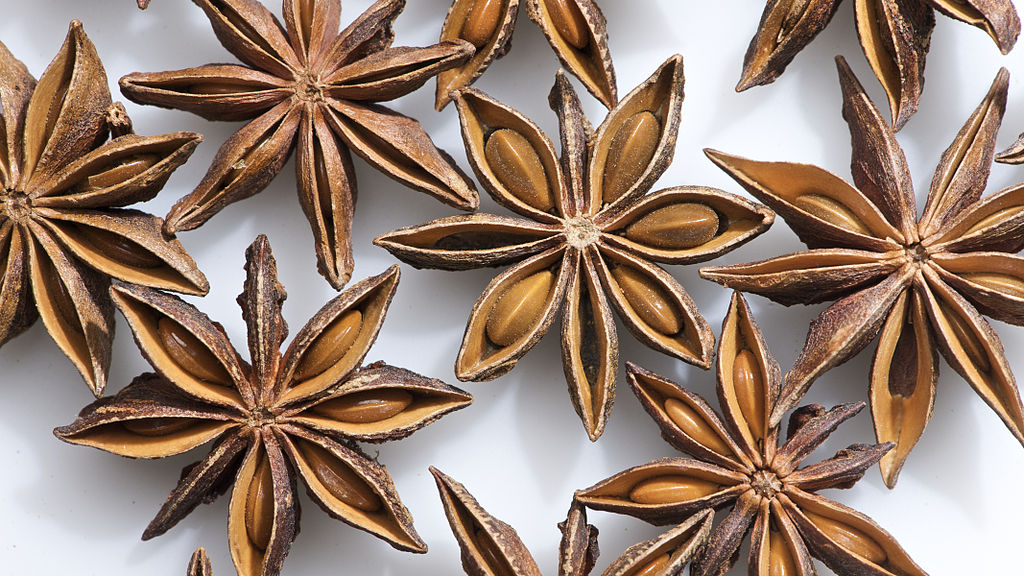
A prevalent spice of Kerala, star anise is a spice that is known to possess a taste similar to that of licorice. While cooking, it is used with soups, broths, and meats for even though it has a sweet essence, it adds that to the aforementioned dishes giving them a certain tang. Additionally, it can also be added to baked goods for anyone with a sweet tooth. Furthermore, star anise is considered to be very beneficial in the treatment of respiratory disorders, nausea, and other related issues as per ancient Chinese medical practices.

9. Ginger

Spices of Kerala-Ginger
Image/Pixabay

Ginger, a prominent spice of Kerala, holds a very special place in its cuisine. Kerala’s infamous meal Sadya serves a ginger pickle as a side dish. The variety of ginger found in this state is considered to be the best in the country. When it comes to its flavor, ginger possesses a unique blend of sweetness and tanginess. This spice is a staple of every Indian household and is commonly used in savory dishes.

10. Tamarind

Spices of Kerala-Tamrind
Image/Rafael Saldana/Flickr

Another popular culinary item of Kerala remains tamarind. The sour taste of tamarind is something everyone longs for. In Kerala, a special native variety of the same can be found that is the Malabar Tamarind. It is an essential part of the cuisine there and stands out in every way. It is popularly used in the traditional delicious fish curry of Kerala. Apart from that, it is commonly used in chutneys as well as curries. The pairing of tamarind with coconut milk is quite popular throughout the region.

After reading about these spices, one is bound to be in the mood for some delicious food prepared using these. The variety of spices in Kerala is truly impeccable and as the saying goes, variety is the spice of life! Spices tie a dish together and complete its favor. These naturally grown spices of Kerala even offer a healthier alternative to adding sauces and other oils. So what are you waiting for? Spice up your life and start cooking!

Delicacies of Tamil Nadu Food that You Must Try!

0

Tamil-Nadu-Food

The state of Tamil Nadu has truly a plethora to offer, prominent amongst which is the cuisine and dishes of Tamil Nadu. A haven for food connoisseurs, the state has defined the South Indian style of preparation. Rice, coconut oil, curry leaves, and a variety of spices are the ingredients that are added to almost every dish here. Worthy to mention is the delectable seafood the coastal state naturally offers. Tamil Nadu food has myriad dishes for both vegetarians and non-vegetarians. It is a delight that you must experience and so here is a list of some of the most heavenly dishes of the place.

1. Idli

Delicacies-of-Tamil-Nadu-Food-Idli
Image – Chintan Buch/Flickr

The simplistic idli is the first meal that comes to mind when one thinks of a South Indian breakfast. For the unknowing, this is a delicious rice cake is made by steaming a fermented blend of rice and legumes. They also widely made of semolina. Some say that there are more than 1,000 distinct versions of idlis made to taste for every other individual. This dish is so famous that every year on March 30th, World Idli Day, is commemorated. Over time, it has transitioned into comfort food for many. Whether you’re sick or simply want to have something light, idlis with sambhar and chutneys are always a great idea. It provides a large amount of protein, fibre and carbs. The iron content is also sufficient for a well-balanced diet.

2. Sambhar

Delicacies-of-Tamil-Nadu-Food-Sambhar
Image – Charles Haynes/Flickr

When talking about the cuisine of South India or Tamil Nadu, if the first thing that makes to your mind if the delicious bowl of sambhar, then you’re not alone for this is a dish that is a staple of every household in the state and can be eaten by any native for breakfast, lunch or dinner. The key differentiator between sambhar and dal is the vibrant spices and myriad vegetables that are used in the preparation of this spicy, sour delight.

3. Medu Vada

Delicacies of Tamil Nadu Food - Medu Vada
Image/Wikimedia

A savory donut that is crispy on the outside and soft on the inside sounds like a dream come true and that’s exactly what a medu vada is. This fritter is typically consumed throughout Tamil Nadu either as a breakfast or evening snack. Sambhar and Tamil Nadu’s coconut chutney pair best with this delectable snack. For all chaat lovers out there, this medu vada with yogurt is something that you simply must try. A trip to Tamil Nadu isn’t complete unless you try the state’s medu vada.

4. Pongal

Delicacies of Tamil Nadu Food-Pongal
Image/Wikimedia

There isn’t a festival or a celebration in Tamil Nadu that isn’t graced with the sweet dish of Pongal, after all, it’s very own namesake holds such prominence in the state. This dish is cooked with rice and sweet milk, whose flavor is just enhanced by adding cardamom and dry fruits such as cashew nuts and raisins. Apart from its usual sweet form, Pongal can also be served savory occasionally. A staple of the state, this dish will instantly brighten your day.

5. Poriyal

Delicacies of Tamil Nadu Food-Poriyal
Image/Flickr

In Tamil, Poriyal refers to a sautéed or fried vegetable dish. It is a very popular side dish in the state that is typically served alongside a three-course meal. This dish, as previously mentioned, is made using vegetables. Additionally, there are two main varieties of this dish that exist: the potato Poriyal and the bean Poriyal. Lentils are also often added to enhance the taste of this already flavorful dish which is fried in a variety of spices.

6. Banana Bonda

Delicacies-of-Tamil-Nadu-Food-Banana-Bonda
Image – Yarl Tamil Kitchen/FB

The creativity of Tamil Nadu is amazingly reflected in its food. An apt example of this is the banana bonda. Now, upon reading the word ‘bonda’, the first thing that comes to your mind is the potato stuffed savory balls that we all know and love. But what if I told you that instead of the usual, the stuffing is made from bananas and the bonda is sweet? On would naturally be shocked but that’s just what you get from Tamil Nadu.

7. Chicken Chettinad

Dishes of Tamil Nadu Food-Chicken Chettinad
Image/Michelle Peters Jones/Flickr

This flavorful recipe of Tamil Nadu is a spin on the Chettinad cuisine and is prepared by marinating the chicken prior in a batter of turmeric, yogurt, and countless spices such as cumin seeds, fennel seeds, coriander seeds, and, coconut, just to name a few. This is a truly delicious dish, a specialty of which has to be its rich gravy. This is the main course dish that is served with either rice or bread and is a must-try if visiting Tamil Nadu.

8. Paruppu Payasam

Dishes of Tamil Nadu Food-Payasam
Image/Wikimedia

The Paruppu Payasam or as commonly referred to as the moong dal payasam is a delicious dessert of the state and is extremely popular among the inhabitants. This payasam is prepared primarily using, of course, moong dal along with jaggery to add a little sweet, coconut milk continuing with the prevalence of utilizing coconut in the cuisine along with ghee and cashew nuts. A noteworthy thing about this dish is the aroma that it produces which is arguably as mesmerizing as the taste of the dish itself.

9. Pollachi Nandu Fry

Delicacies-of-Tamil-Nadu-Food-Nandu-Fry
Image – Southern Indian Cuisine/FB

As aforementioned in the very beginning of this article, Tamil Nadu being a coastal state is renowned for its seafood. That is further proven by this delectable dish, the Pollachi Nandu Crab Fry. When describing this dish, the word that comes to mind is flavorful because of its strong and rich taste and aroma. This is made using coconut milk and of course, masala as well as gingelly oil. It goes well with rice as well as chapati and dosa. Your trip to Tamil Nadu isn’t complete unless you experience the wonders of this dish yourself.

10. Dosa

Delicacies-of-Tamil-Nadu-Food-Dosa
Image – Matthew Stevens/Flickr

We began with one of the most popular dishes of Tamil Nadu, sambhar. Therefore, it feels only appropriate to end with another such dish that is dosa. Popular, not only in the state, not only in the country but throughout the world, this is a dish cherished by the people of this state. It is similar to a crepe but its batter is predominantly made from rice and lentils. They are served alongside sambhar as well as a variety of chutneys. Today, this dish has countless variations, all ever so delicious.

The vibrant cuisine of Tamil Nadu is just mesmerizing. The versatility, the uniqueness, the style of cooking, and the impeccable taste are what makes it one of the finest cuisines on the planet and it is precisely that leads to the belief that everyone should try out these dishes because if you don’t, you have no idea what you are missing out on. Can’t travel to Tamil Nadu, well, you need not worry because all these dishes are fairly simple to make as well and so, what are you waiting for, get your aprons and happy cooking!

The Various Stories of Who Invented Pani Puri?

0
Who Invented Pani Puri
Image/Pixabay

Indian chat is one of the best street foods you’ll find in India. The tiny stalls scattered hither tither on the long, narrow streets provide mankind the exquisite gift of wholesome shev puris, ragda pattice, Dahi puri, and of course, pani puri. There isn’t a single soul in India who hasn’t tried the dish and who isn’t in love with the miracle that is Pani Puri. As a child, I remember my friends and me indulging a luscious plate of Pani Puri right after school got over. What happy days were those! Undoubtedly, Pani puris have played an active role in making every Indian child’s childhood beautiful. Trust me, there isn’t any greater bliss and thrill in life than to thrust puri after puri in our mouth as the vendor keeps on making new ones at lightning speed. Today, even after having this mouth-watering dish for several years, we avidly tag along with our friends to our nearest pani puri stalls. And why not? This dish, my friend, is evergreen.

Pani Puri, also referred to as Golgappa or Puchka is one of the most common foods found in India. Other than India, this dish is extremely popular in our neighboring countries such as Pakistan, Bangladesh, and Nepal as well. Indian street food resonates with Pani Puri. The dish comprises a deep-fried, ball-shaped flatbread known as puri, which is further enhanced by adding imli (tamarind) chutney, chat masala, potato mash, and onion. In some parts of India, Boondi is added to the dish instead of mashed potatoes. According to sources, apart from Samosas, Pani Puri is the West’s most well-known Indian street food. This is further elevated by the fact that the word ‘Pani Puri’ was included in the Oxford English Dictionary in the year 2005. As it deserves to be.

Pani Puri Ingriedients
Image/Pearl Pirie/Flickr

Now, even though pani puri is regarded as the ‘King of Chat’, it is somewhat dismal that there isn’t any solid evidence that suggests how Pani Puri came to be invented. However, fortunately, unlike the many mysteries of this world, a few uncertain theories are revolving around the question, ‘Who invented Pani Puri?’Who invented Pani Puri?’. Wouldn’t you like to know?

The first and foremost theory goes back to the time of one of our all-time classics, Mahabharata. According to popular legends, after having undergone massive losses in the infamous game of dice between Shakuni and Yudhistra, the five Pandavas, Draupadi (their wife), and Kunti had to retire for a 13 year-long exile. One day during the exile, Kunti gave Draupadi some dough and a small amount of aloo sabzi, she then asked Draupadi to prepare a dish from the limited resources which would quench the hunger of all five brothers. This was when Draupadi used her intellect and prepared Pani Puri. Kunti, pleased with her daughter-in-law’s efficiency, declared that the dish would remain immortal and ever-present in the history of India. While the reasons as to why Kunti asked Draupadi to do the said task remain a secret, some speculations suggest that it was a ruse to identify if she qualified as a good homemaker, while others claim that it was to test if Draupadi would favor one brother over the other. Well, you won this one, Panchali!

Pani Puri Stall
Image/Adam Cohn/Flickr

Another possible theory contributing to our subject of discussion states that Pani Puri was originated in the erstwhile kingdom of Magadha. Magadha (present-day Bihar) was one of the most important Mahajanpadas of India. It is reported that a dish almost exactly similar to that of Pani Puri was found to be consumed in Magadha. This dish was termed as ‘Phulki’, and differed from our beloved Pani Puri as it was made with smaller puris and these puris were made from Raj Kachori, moreover, it was filled with some unknown form of aloo sabzi. While we know that Pani Puri may have been invented in Magadha, we do not know who exactly we need to thank for discovering this masterpiece.

The last and probably the strangest theory says that Pani Puri was invented in Lucknow. One day, the Nawab Wajid of Lucknow was suffering from a terribly upset stomach. However, the nawab being a nawab, refused to take any medicine to relieve his distress. Worried by the Nawab’s behavior and declining health, a certain someone came up with a plan – they decided to insert the medicine in small balls of crepe along with some spices. And voila! Le Pani Puri!

Pani Puri
Image/Wikimedia

No matter how ridiculous and hard to digest (no different from our beloved Pani Puri!) these theories may seem to be, they do provide a fun-filled twist to the already tangy dish of Pani Puri. We are waiting impatiently for this pandemic to end. We need to see the face of our regular Pani Puri wala as he dips those puris into the sweet chutney! Needless to say, whether you like your Pani Puri with aloo or bundi, hot or cold, sweet or spicy; it doesn’t matter. Sometimes we resonate oh so clearly with an immobile object than with a real person, and on top of that, the flavorsome dish of Pani Puri already has an irreplaceable part in our hearts. And to the unknown creator of Pani Puri, I think I speak for every Indian out there when I say – good job!

Magnificent Handicrafts of India Reflecting the Craftsmanship of Regional Artists

0
Handicrafts-of-India
Image – Wikimedia

Handicrafts of India are diverse and are rich in history, culture, and religion. They are hand-made crafts without the help of modern types of equipment or machinery. Every state and region has its specific handicrafts that highlight the culture and heritage of the place it hails from. These fascinating and enthralling Handicrafts of India are quite distinct and unique from one another. Even today, many from around the country earn their livelihood through the Handicrafts that they make. Let us take a look at some of the famous handicrafts:

1. Pashmina Shawls from Jammu and Kashmir

Handicrafts-of-India-Pashmina-Shawls
Image – Wikimedia

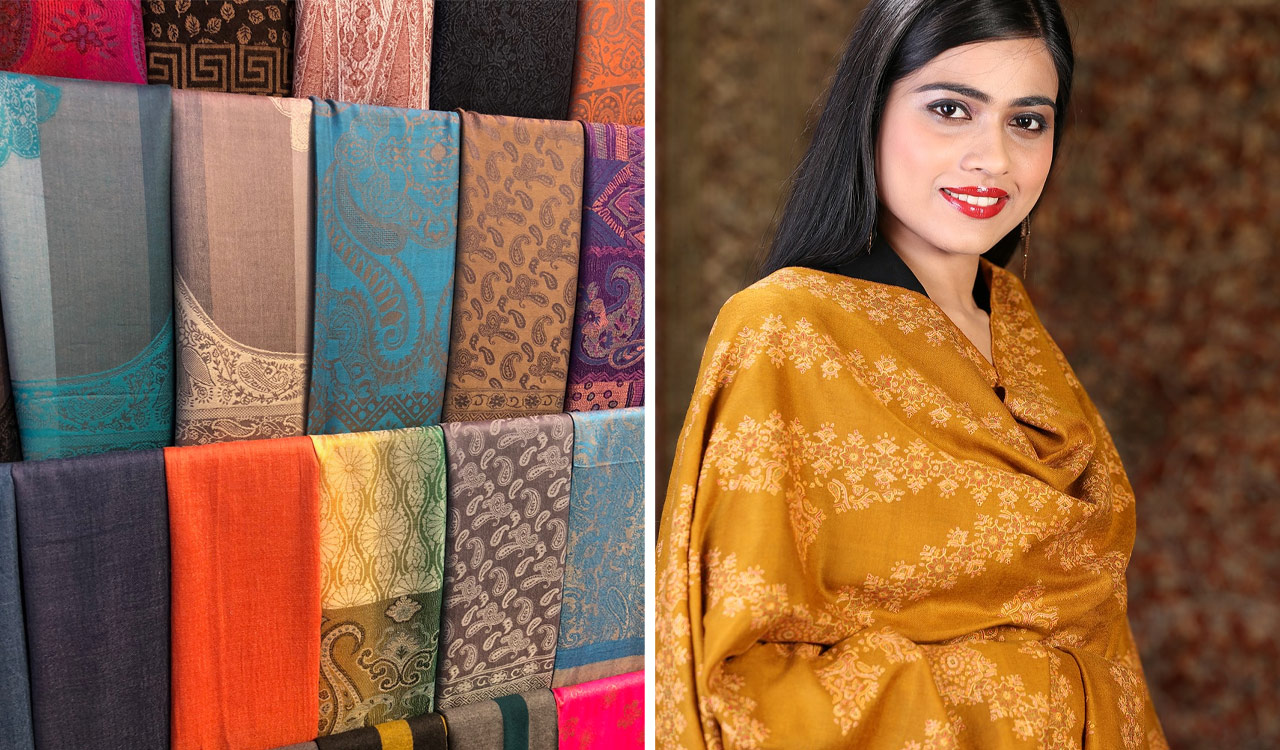
Pashmina refers to a particular type of very fine wool woven into the exquisite and magnificent Pashmina shawls. These shawls also embody a rich and intricately designed embroidery and are aptly known as “The Art of Royal.” The craft of producing these shawls demands undivided attention and patience, and hence it takes several days to complete one shawl.

Suggested ReadIndian Traditional Winter Wears of India

2. Phulkari from Punjab

Phulkari-from-Punjab
Image-Regan Vercruysse/Flickr

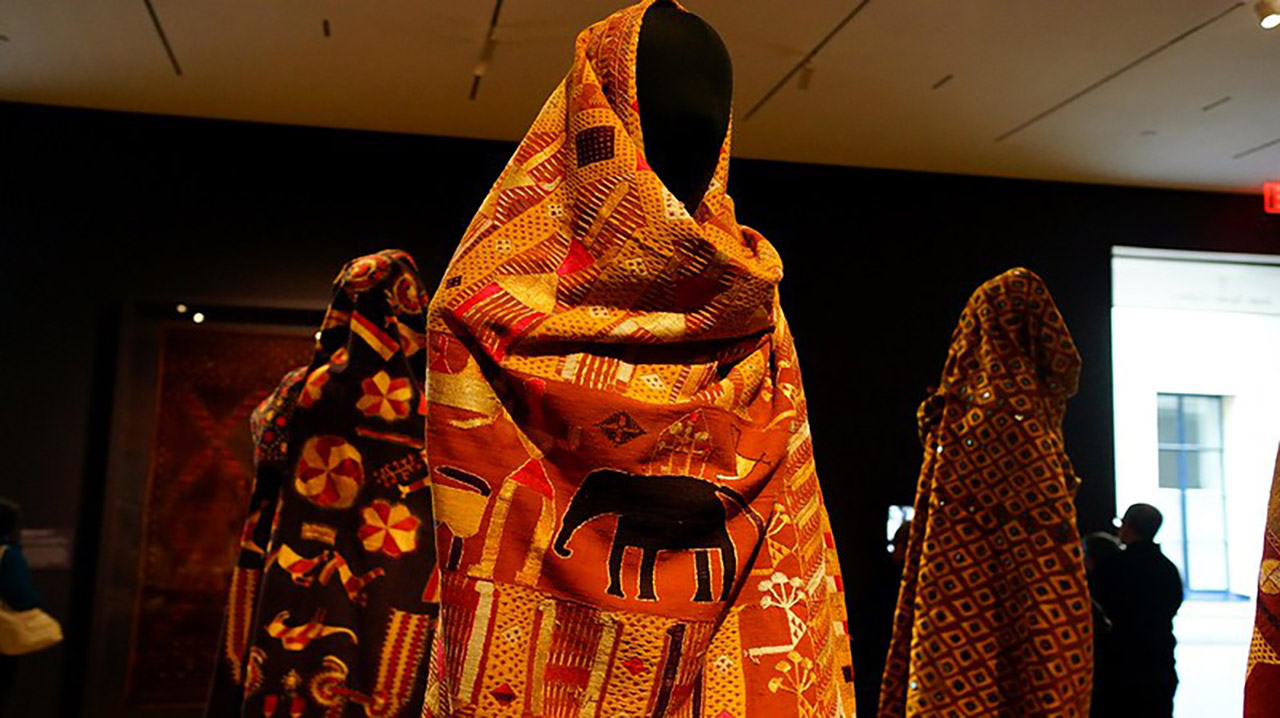
Phulkari means floral work, as the Phulkari embroidery comprises unique and exquisite floral patterns that adorn the fabric. These spectacular and vibrant designs are what make the Phulkari embroidery fabulous and distinct from others. Phulkari embroidery was initially embodied only in garments but today; it is present in bags, jackets, cushion covers, and other items.

Suggested readMesmerizing Fabric Arts of India

3. Bamboo Handicrafts from Northeast

Handicrafts-of-India-Bamboo-Products-01
Image – com4tablydumb/Flickr

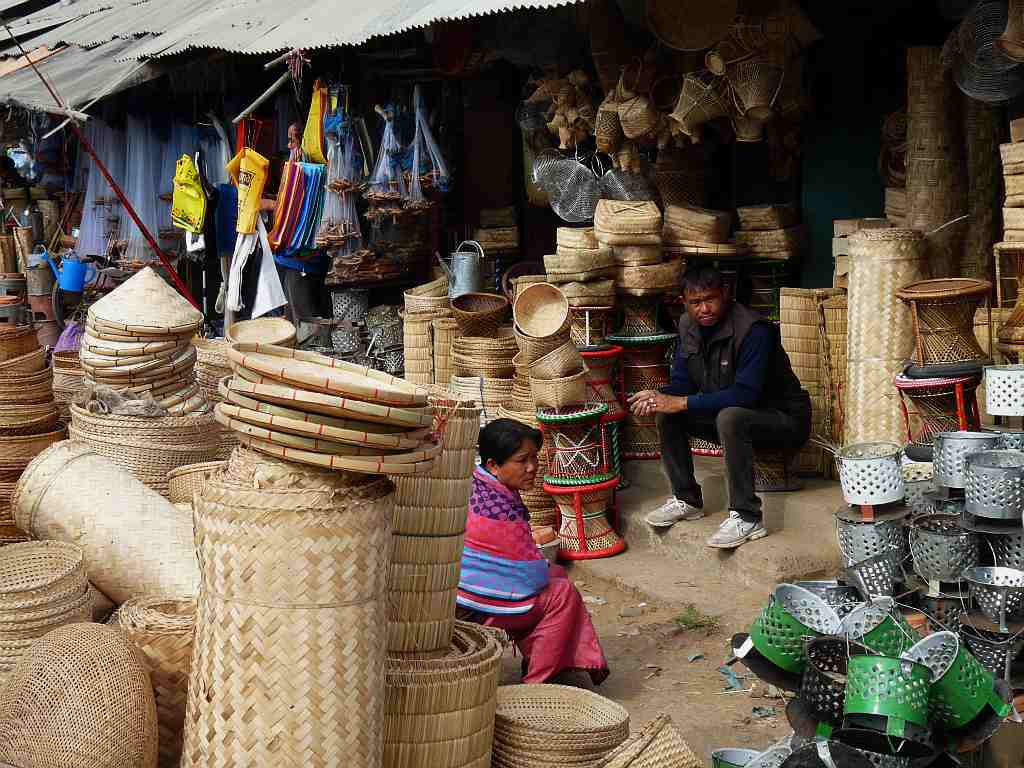
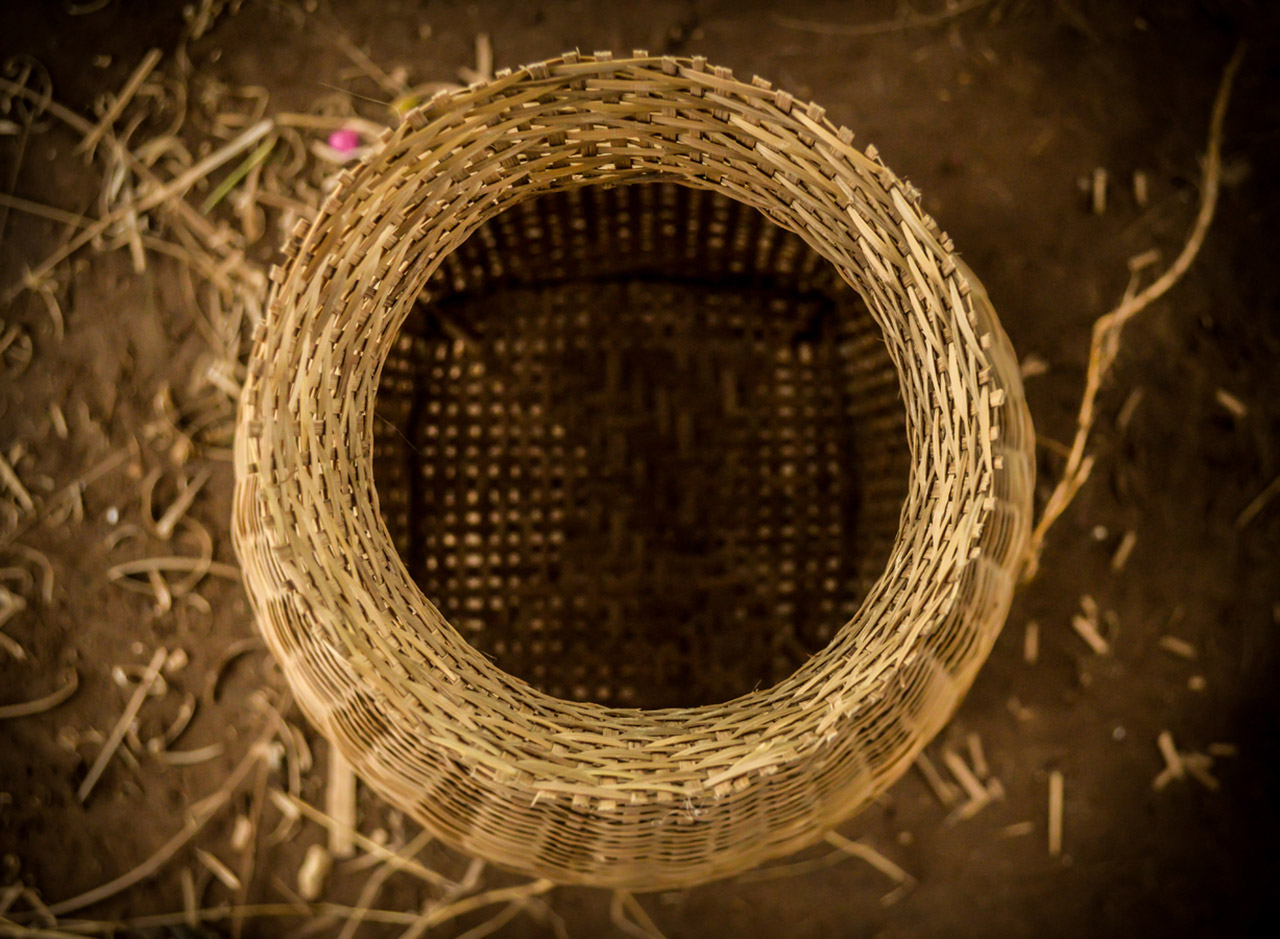
Bamboo handicrafts are prevalent in the states of Tripura, Assam, and West Bengal. These crafts are quite popular as the raw materials used for this Handicraft are eco-friendly. Several items, including baskets, toys, and furniture, can be carved from them.  One of the oldest crafts, Bamboo handicrafts, is known for its elegant design and unique charm.

4. Pottery from Gujarat

Gujarat-Pottery

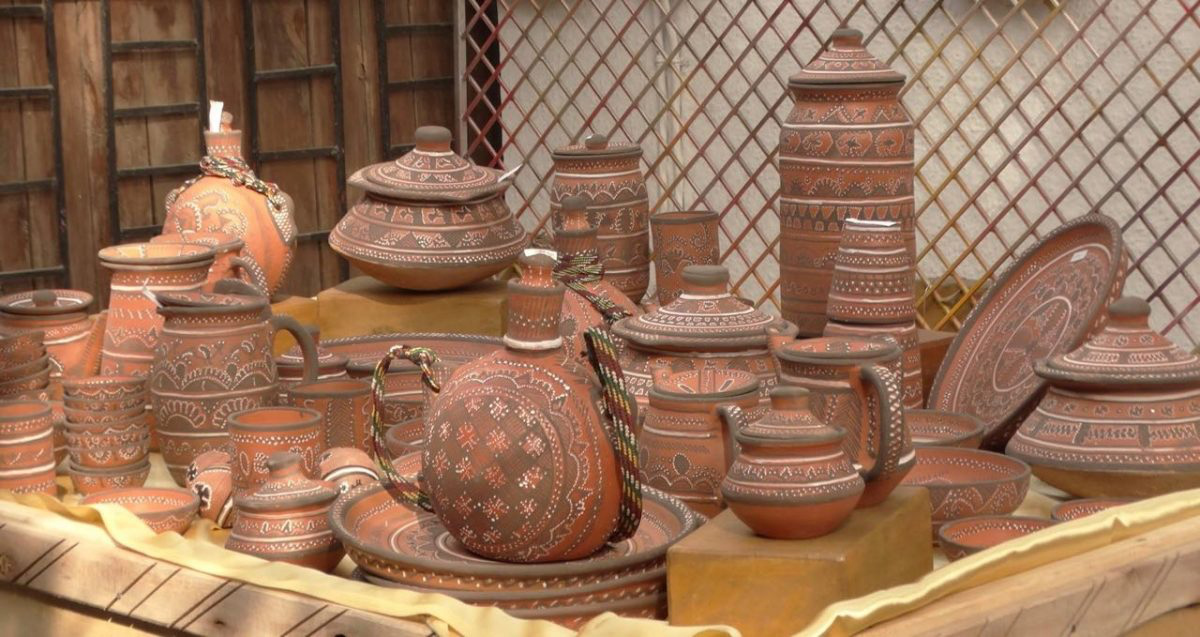
Pottery began with the Indus Valley Civilization. This art of baking and shaping into clay objects continued for years. Pottery is undoubtedly one of the oldest handicrafts prevalent in our country. This traditional art of crafting handmade pottery has been prevalent in India since the Harappan civilization. Pottery is more prevalent in India’s northern states and includes a variety of different sizes and shapes.

Suggested Read – Indian Pottery, Spinning a Tale of Utility and Art

5. Brass Handicrafts from Rajasthan

Metal-Crafts-of-India-Jaipur-Koftagiri

Humans have learned to make use of metals more than 5 million years ago. The discovery of Brass has made lives easier. Brass Handicrafts are mostly preferred due to their durability. An alloy of zinc and copper, Brass is mostly resistant to tarnishing and hence is an appropriate material for crafting handicrafts. Ornamental boxes, vases, lamps are some of the most popular brass handicrafts commonly found in households.

Suggested Read – Mesmerizing Rajasthani Handicrafts

6. Shell Craft from Goa

Handicrafts-of-India-Shellcraft
Image – Frederick Noronha/Flickr

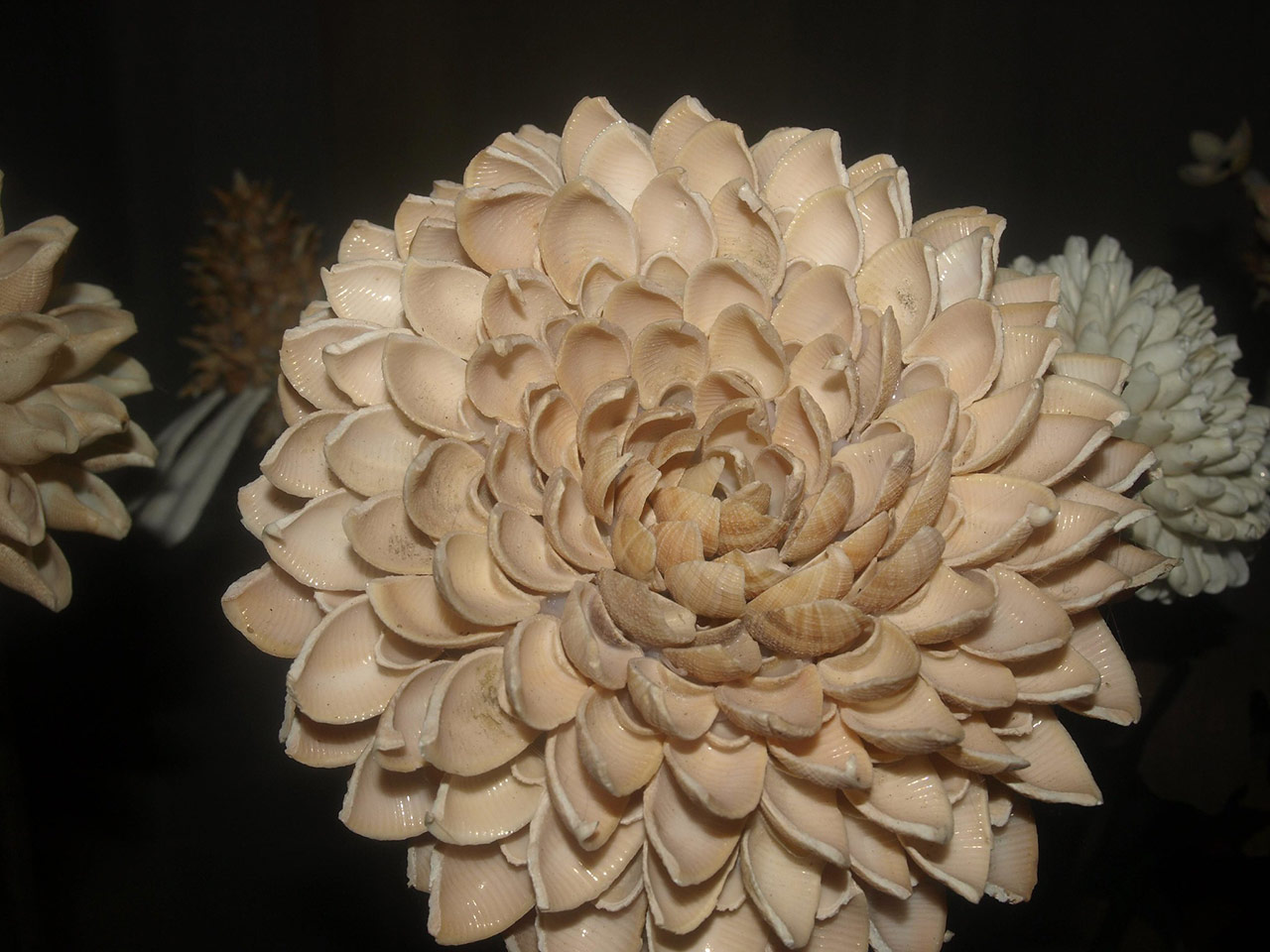
From bangles and lockets to forks and chandeliers, shells are used to craft many things. Conch shells, seashells, and tortoiseshell are used to create these beautiful handicrafts. Odisha, Goa, and the Gulf of Mannar are popularly known for their shell handicrafts.

7. Woodwork from Many States of India

Handicrafts-of-India-Wood Craft
Image – Pixabay

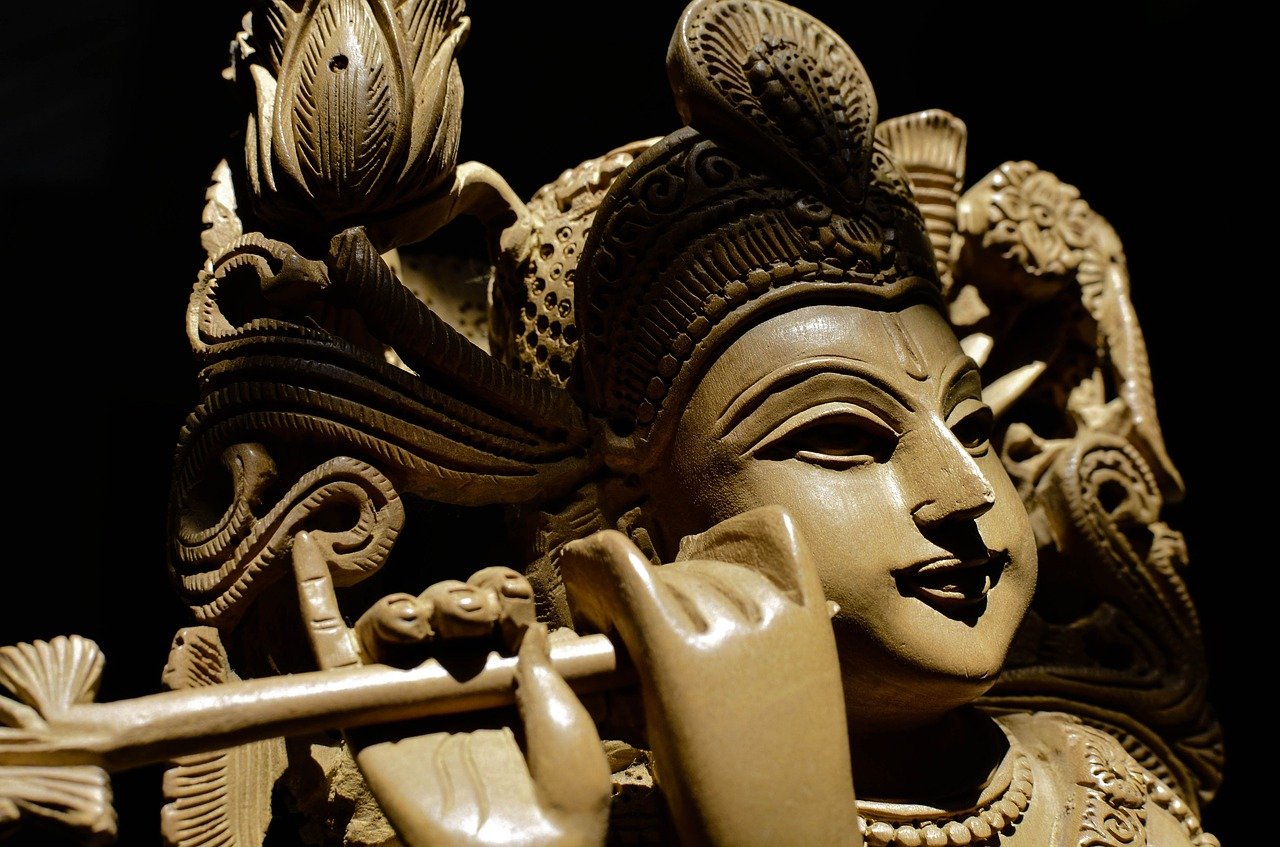
Artifacts made of wood are quite common in the northern states of India. The artisans of Kashmir, Punjab, and Chattisgarh are known for their beautiful woodwork in making toys, masks, windows, and sculptures. In southern India, too, woodwork is prevalent, in the states of Andra Pradesh, Madurai, Karnataka, and Kerala are also known for their beautiful works of art crafted from wood.

8. Lipaan Kaam from Kutch

Handicrafts-of-India-Lippan-Kaam
Image – Discovery Gateway Children’s Museum/FB

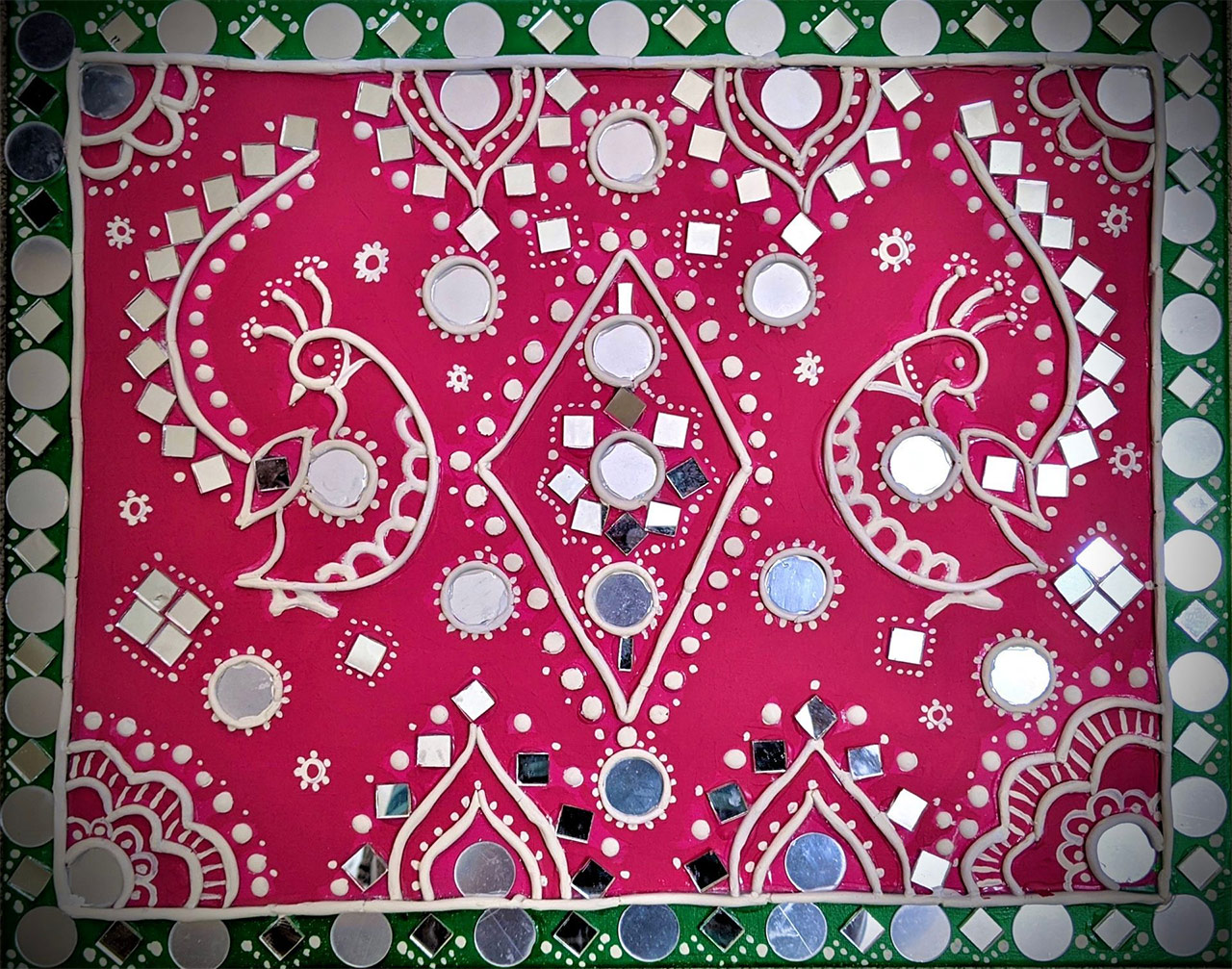
Lipaan Kaam is a mural craft from Kutch. This craft’s beauty lies in its mirror work and the unique designs employed in creating this work of art. Also known as Chittar Kaam, this art is used to decorate the houses’ interior and exterior in Kutch. Lipaan Kaam is made using a mixture of equal proportions of mud and clay.

9. Aranmula Kannadi from Kerala

Handicrafts-of-India Aranmula-Kannadi
Image-Prasanth Prakash/Wikimedia

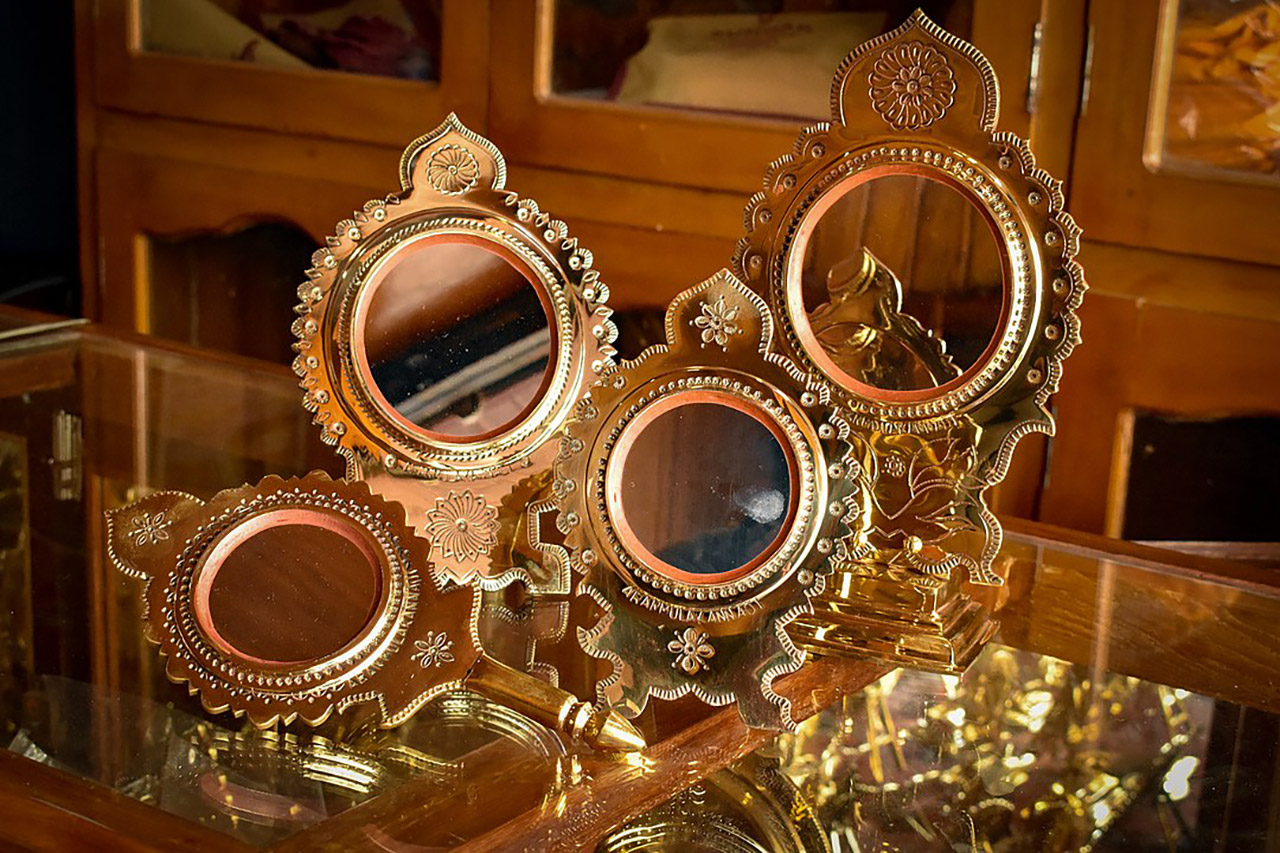
This Handicraft is a pride of Kerala. A handmade mirror, the Aranmula Kannadi, is produced from a town named Aranmula situated in Kerala. Many believe that having an aranmula Kannadi in their home will bring fortune and prosperity. The excellent craftsmanship and the enchanting appearance of the Aranmula Kannadi are what make it exceptional.

Suggested Read – Kerala’s Beautiful Eco-friendly Handicrafts

10. Bidri Handicrafts from Andhra Pradesh

Handicrafts-of-India Bidri Handicrafts
Image-Randhirreddy/Wikimedia

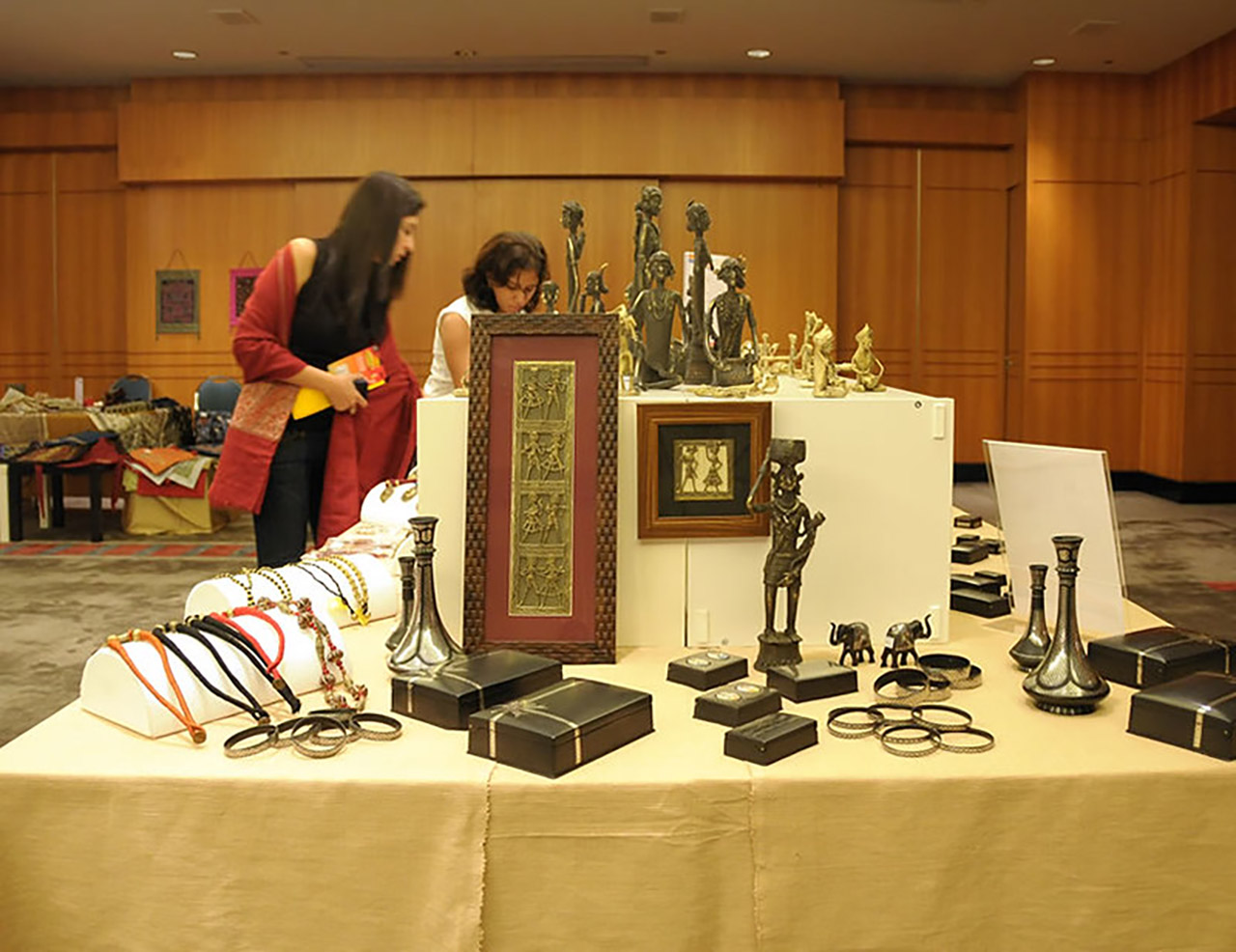
Bidri handicrafts are crafted with a unique metal, comprising an alloy of copper and zinc, and pure silver sheets. Said to be more than two thousand years old, this craft is popular due to its intricate detailing and aesthetic appeal. From bangles and boxes to statues and masks, many amazing items are produced.

Suggested Read – Metal Crafts of India – A Malleable Mélange

11. Leather Crafts from Maharashtra

Handicrafts-of-India Leather Works
Kolhapuri Chappal – Pratik Biyani via Flickr

Leather is used to craft a wide range of items that are used in everyday life. Shoes and sandals made of leather are available in the country and are exceptionally popular. Kolhapuri chappals, made of leather, from the state of Maharashtra are also quite popular.

Suggested Read – Leather Artistry in India

12. Carpet Weaving from North and Central India

Handicrafts-of-India Carpet-Weaving
Image-PxHere

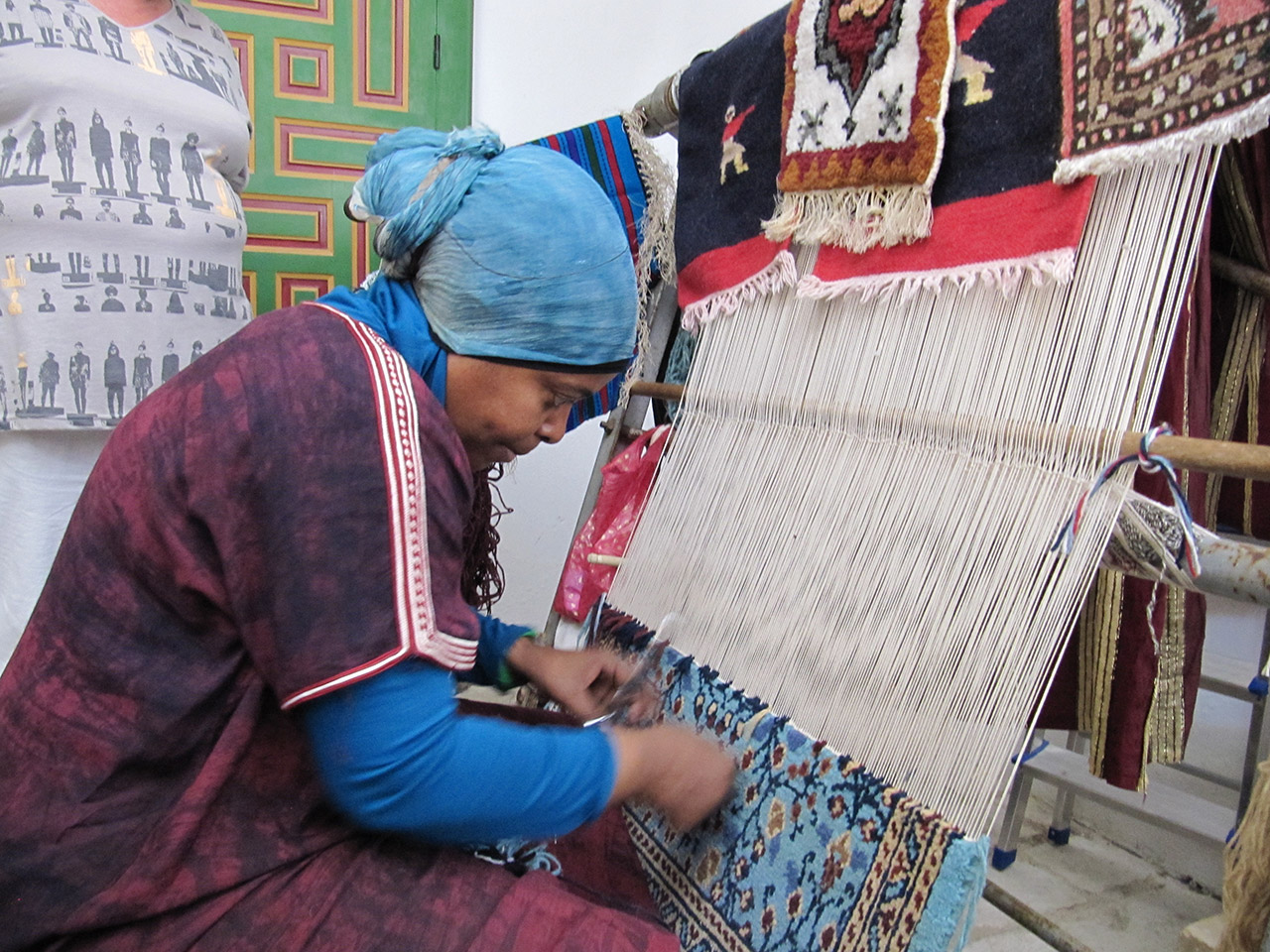
Carpet-weaving is one of the significant crafts that is prevalent in north India. Uttar Pradesh is said to be the central hub of the carpet weaving industry. The beautiful carpets that are weaved here have some incredible designs, such as the Taj Mahal. The silk carpets of Jammu and Kashmir are also quite popular.

13. Terracotta Works from Assam

Handicrafts-of-India Terracotta-work
Image – Gautam Tarafder/Wikimedia

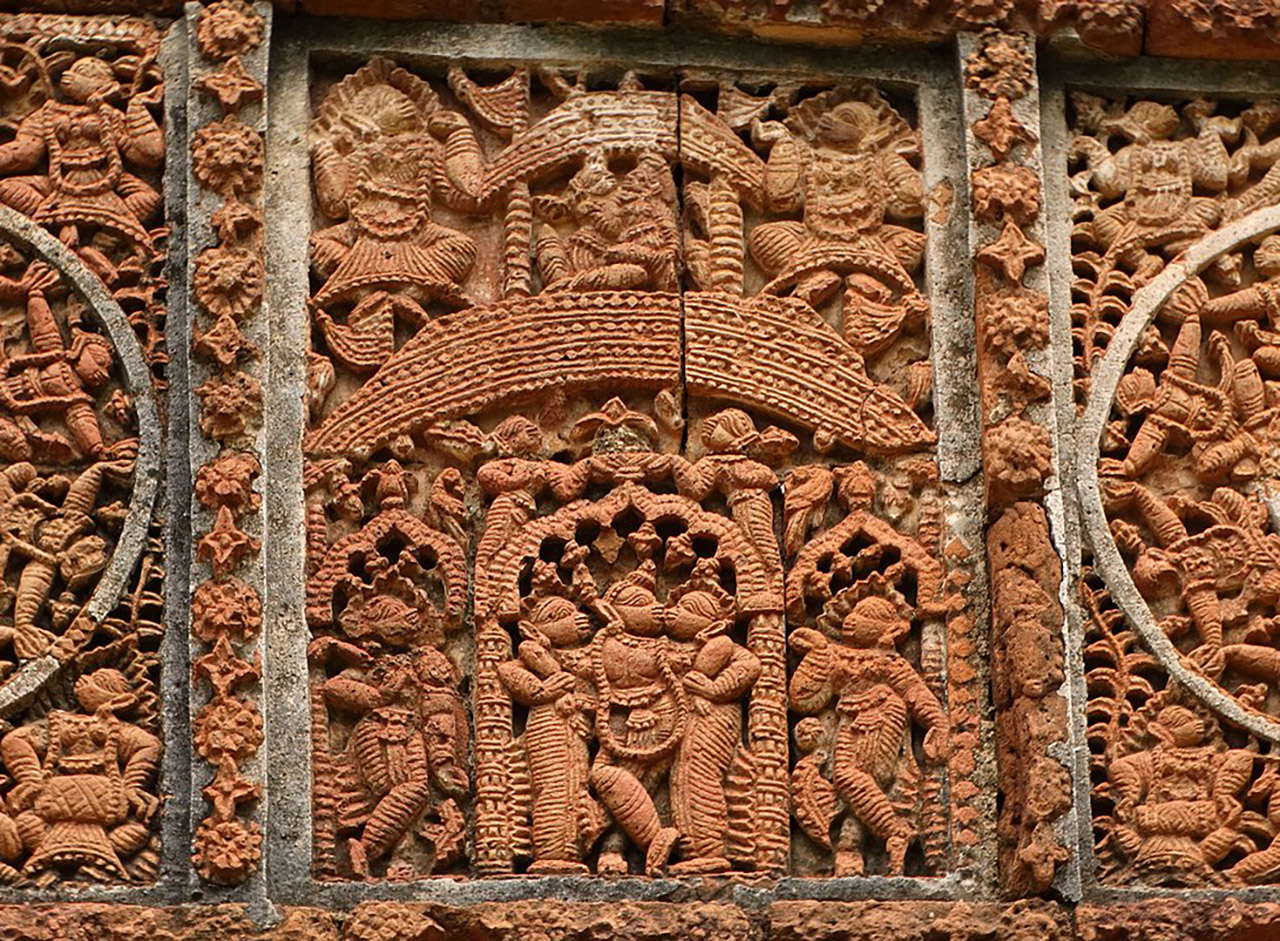
Terracotta crafts are quite popular in the state of Assam. Skilled artisans carefully craft these handicrafts. Terracotta handicrafts include Toys, pots, artifacts, religious symbols, and vases. The village named Dubri in the District of Goalpara in Assam is well known for Its terracotta handicrafts.

 14. Jute Works from West Bengal

Handicrafts-of-India-Jute-Works
Image – Desibags

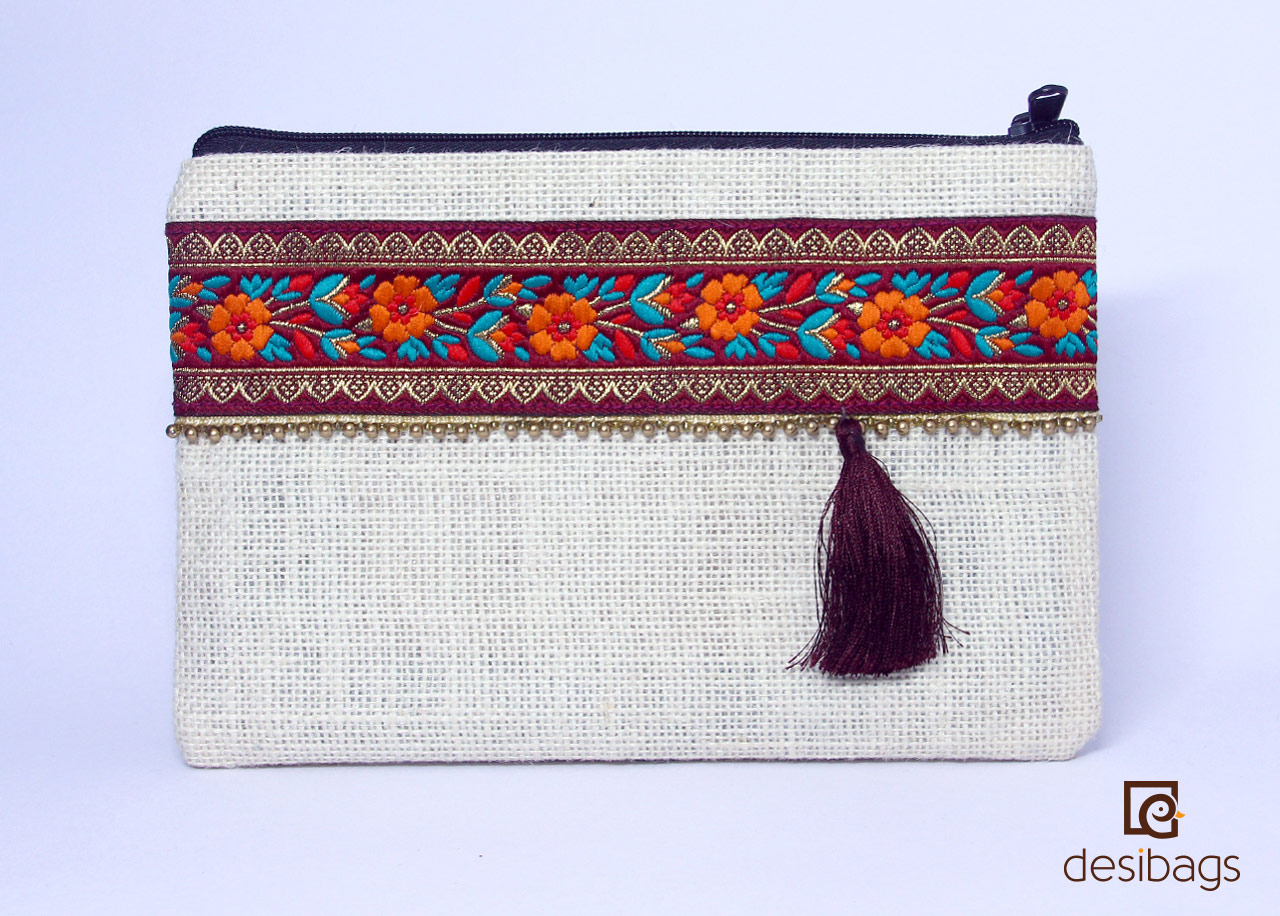
The states of West Bengal, Assam, and Bihar are known for their variety of Jute products. Many Jute handicrafts are prevalent in the country and are famous worldwide. There is a wide range of handicrafts available in the country and includes bags, bangles, footwear, and stationery.

15. Zardosi from Uttar Pradesh

Handicrafts-of-India Zardosi
Image-Zarood/Wikimedia

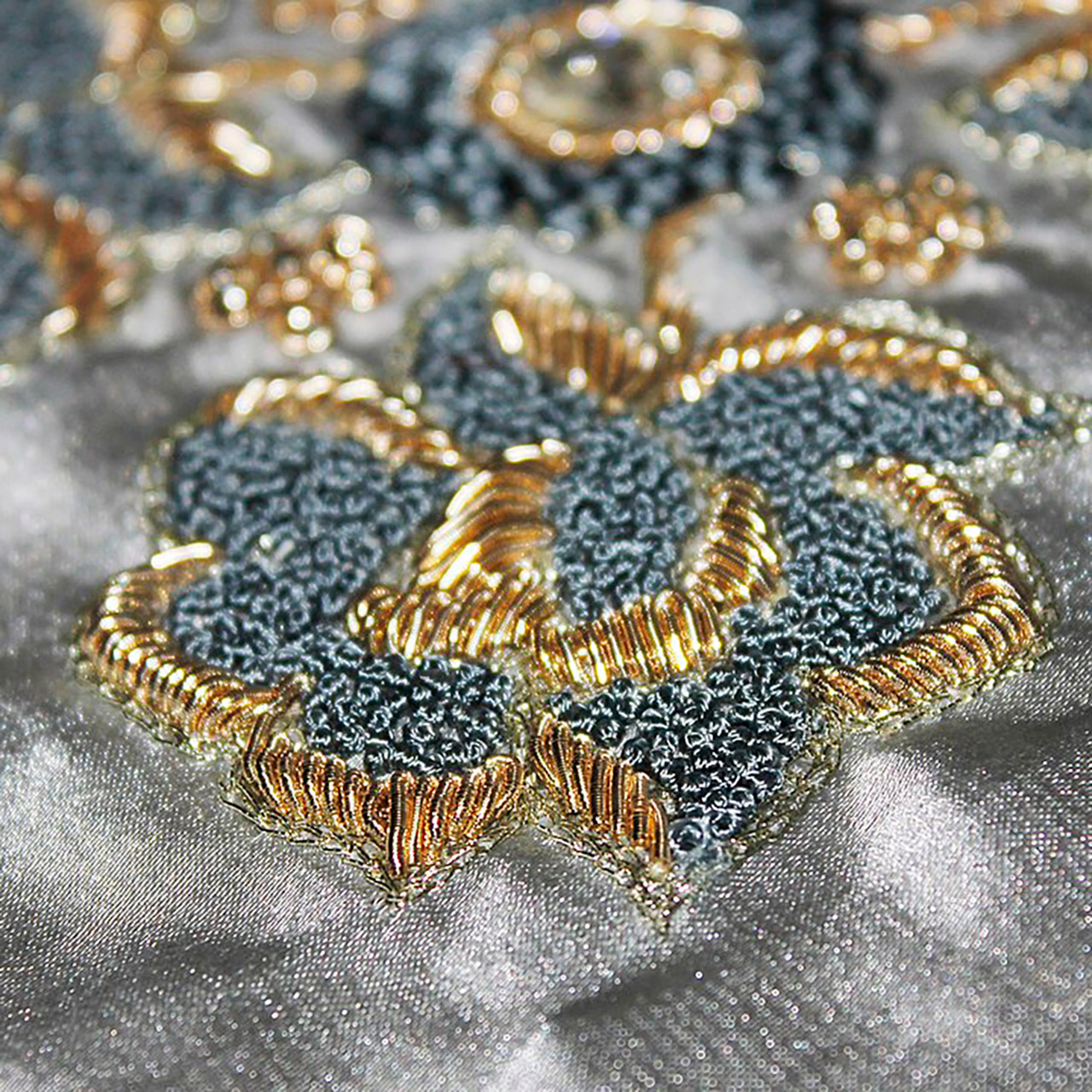
Studded with pearls and other precious stones along with gold and silver threads, the Zardosi embroidery is quite different from any other. This unique embroidery style is popular in Lucknow, Hyderabad, Mumbai, Ajmer, Chennai, and Bhopal. Elaborate designs and unique patterns are a distinguishing factor of this embroidery.

16. Warli Paintings from Maharashtra

Handicrafts-of-India Warli-Paintings
Image-RubyGoes/Flickr

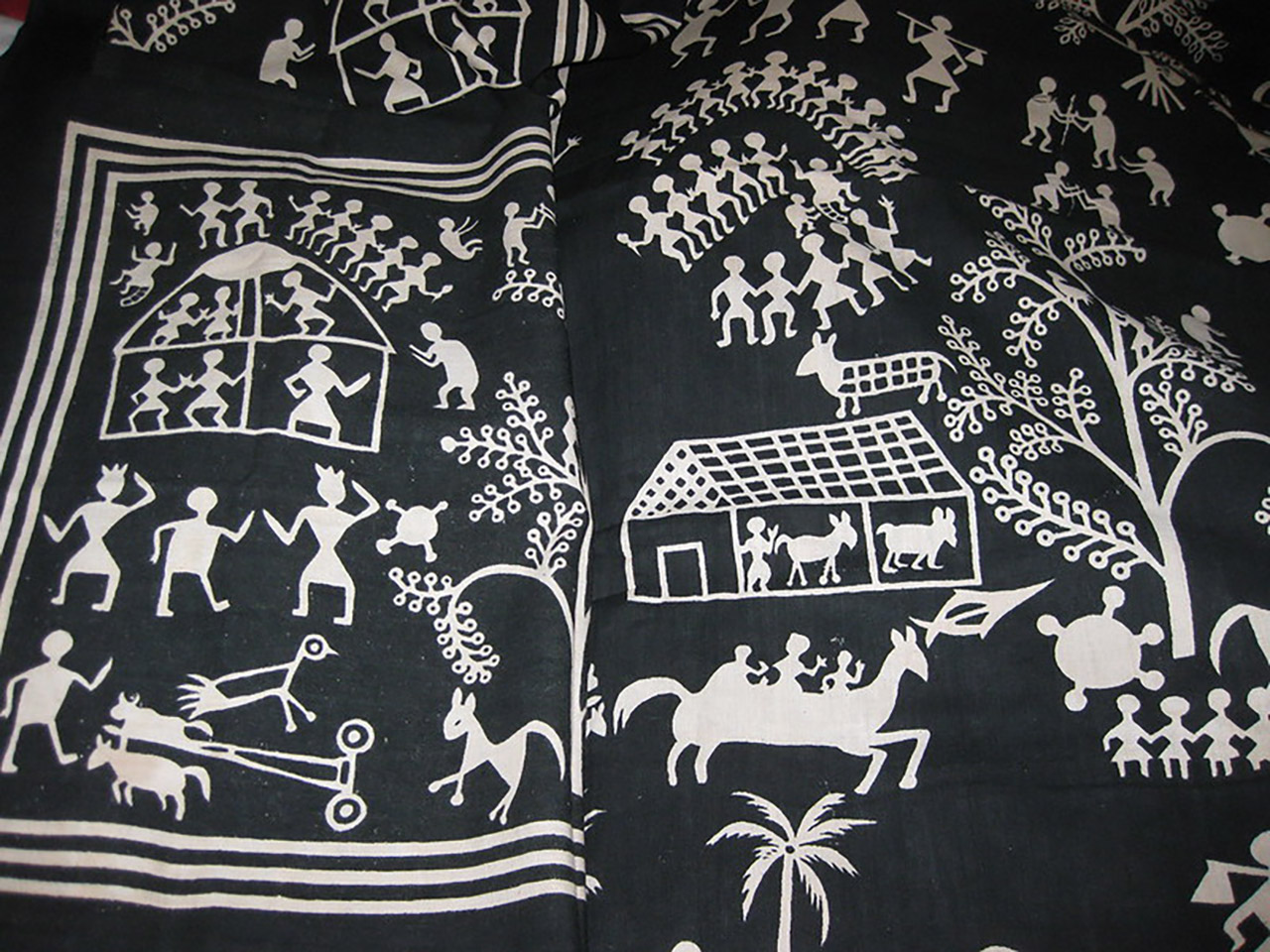
Warli paintings are created by the skilled artists of the Warli tribe. The paintings have a unique design and are quite beautiful and fascinating. The themes used in the painting are usually taken from nature. Sun, moon, trees are some of the common motifs employed in the paintings.

17. Gond Paintings from Madhya Pradesh

Handicrafts-of-India Gond-Paintings
Image-Mike Prince/Wikimedia

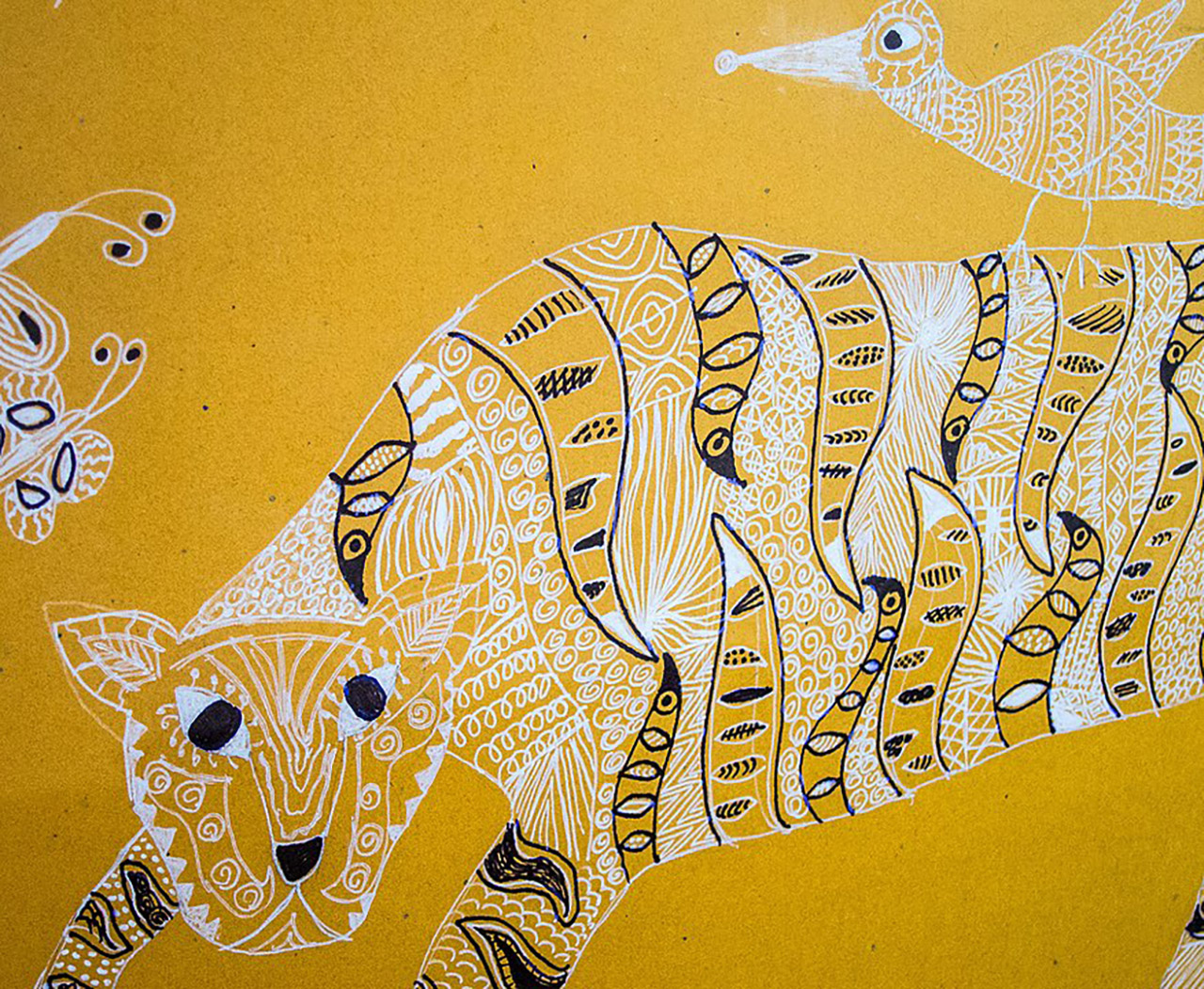
Practiced by the Gond tribe of India, these paintings are unlike any other. These paintings mostly embody a story element in their work of art and are usually rooted in their folk tales. Mostly popular in Madhya Pradesh, Gond paintings are prevalent in Andhra Pradesh, Odisha, and Chattisgarh.

18. Blue Pottery from Jaipur

Handicrafts-of-India Jaipur-blue-pottery
Image – lorises/Flickr

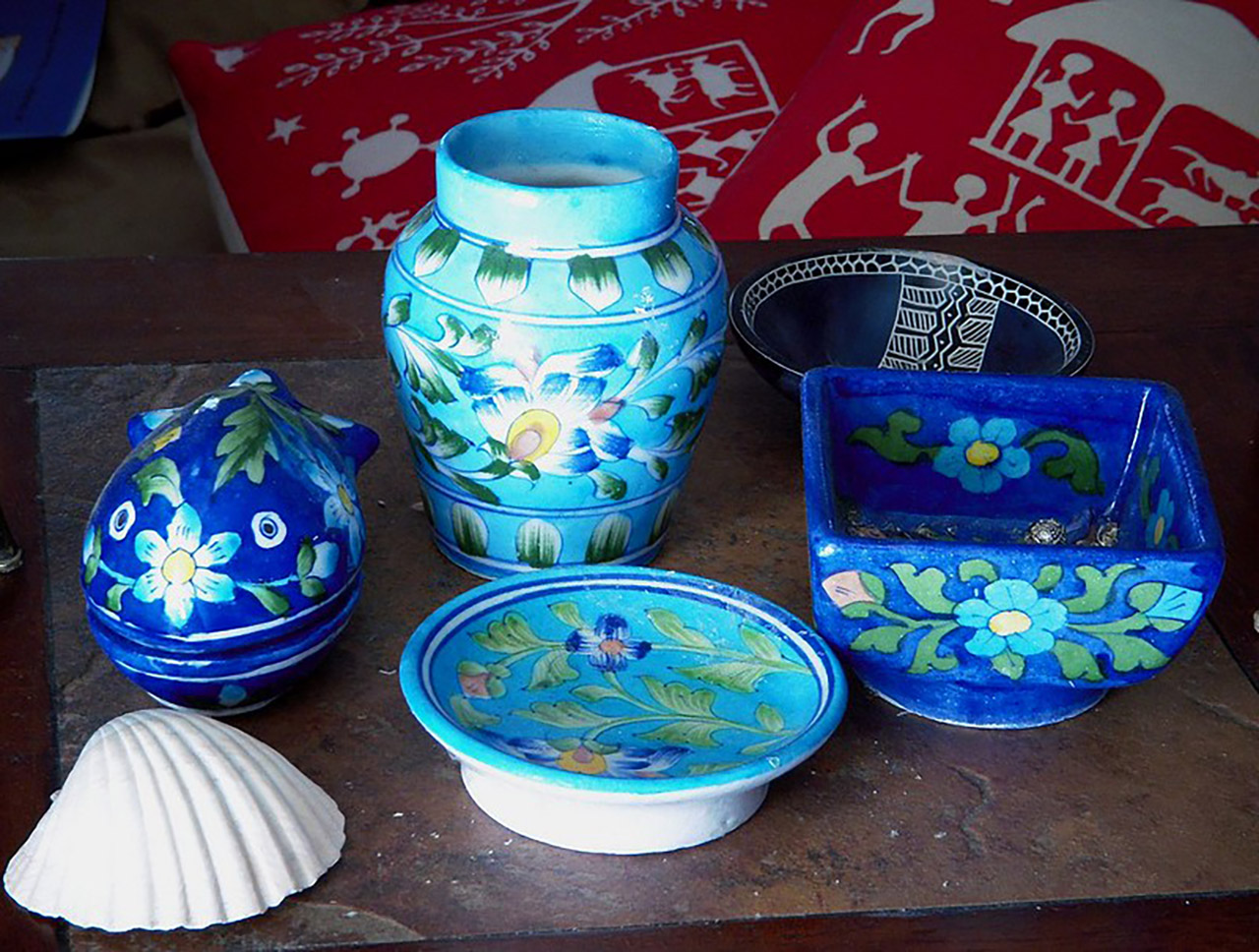
The blue pottery of Jaipur has a unique grandeur and stunning appearance, which sets it apart from others. A prominent craftsman of this world-famous craft is Kripal Singh Shekhawat. Blue Pottery of Jaipur includes a wide variety of products, including cups, saucers, tea sets, jars, glasses, and jugs.

19. Coconut Shell Craft from Kerala

Handicrafts-of-India coconut-shell-handicrafts
Image Source

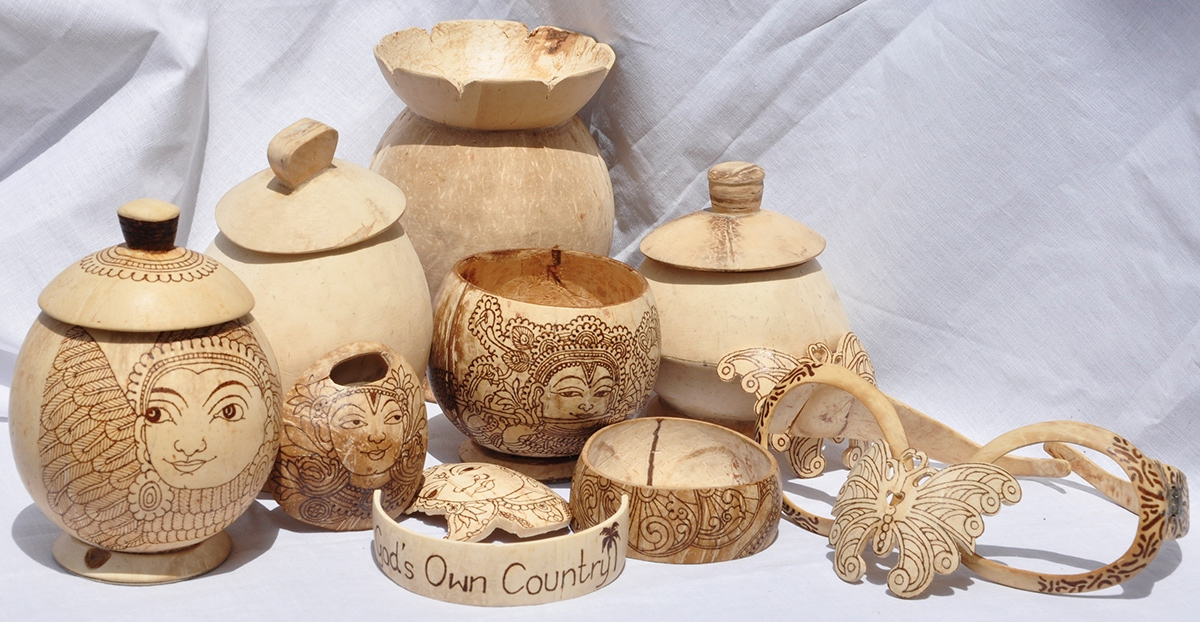
One of the traditional handicrafts from Kerala, the coconut shell craft, has a unique beauty of its own. What makes this craft different from others is its eco-friendly nature and unique designs. Skilled artisans carve a variety of items including cups, boxes, and vases from the coconut shell.

20. Banana Fiber Handicrafts from South India

Handicrafts-of-India Banana-Fiber-Handicrafts
Image-Pijarn Jangsawang/PxHere

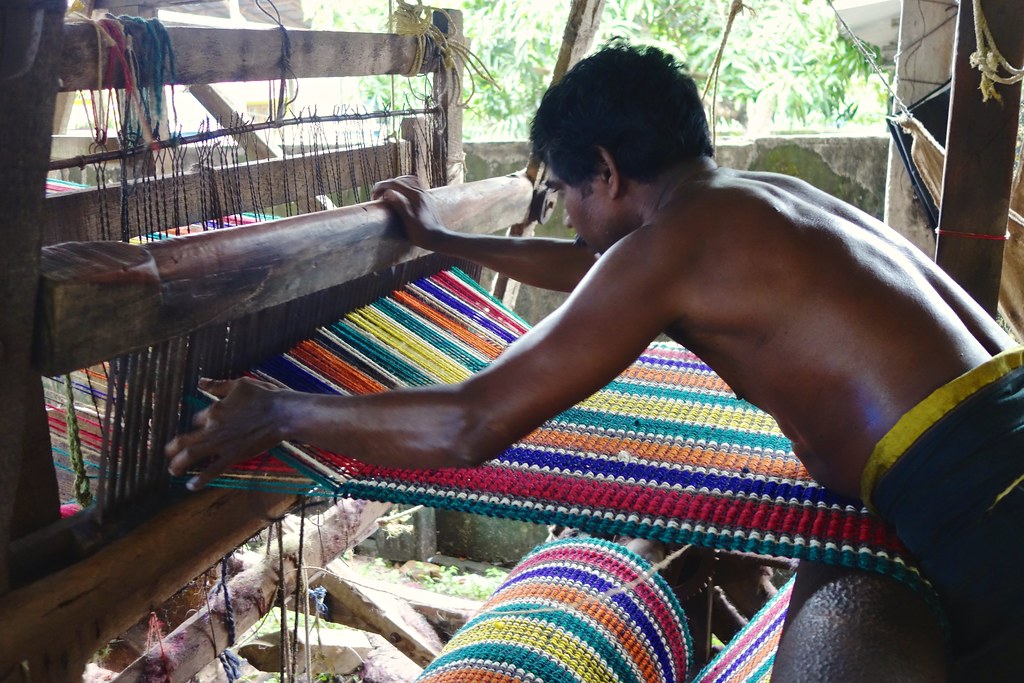
The trunk of the Banana tree is utilized to produce the fiber to create these handicrafts. Wall hanging, mats, bags, and many other items can be made using this unique method. These handicrafts are eco-friendly and can be used to create a wide range of products including, doormats, wall hangings, baskets, bags, among others.

21. Coir and Cone Products from Kerala

Handicrafts-of-India-Coir-Works
Image – Rajesh_India/Flickr

Coir products of Kerala are quite popular throughout the world. These eco-friendly products are extracted from the husk of the coconut. Coir mattresses, mats, and many other items are made through this craft.

22. Lacquerware from Kerala

Handicrafts-of-India-lacquer-ware
Image Source

Lacquerware is a distinct handicraft that is produced with a unique blend of woodcraft and metal. These artistic and aesthetic pieces of art are later embellished with precious metals. This eco-friendly lacquer ware is quite popular in the Ernakulam district of Kerala.

23. Dhokra Metal Works from West Bengal

Handicrafts-of-India Dhokra
Image-Kala Tarang/Flickr

Dhokra artifacts are created using an ancient method that dates back to 5000 years ago. Originating from West Bengal, these handicrafts are also popular in Orissa, Chattisgarh, Rajasthan, and Kerala. The Dhokra artifacts are quite popular for the unique style of human or animal figurines made by skilled artisans with precise and intricate detailing.

24. Ceramics Ware from West Bengal

Handicrafts-of-India-Ceramics-Work
Image – Wikimedia

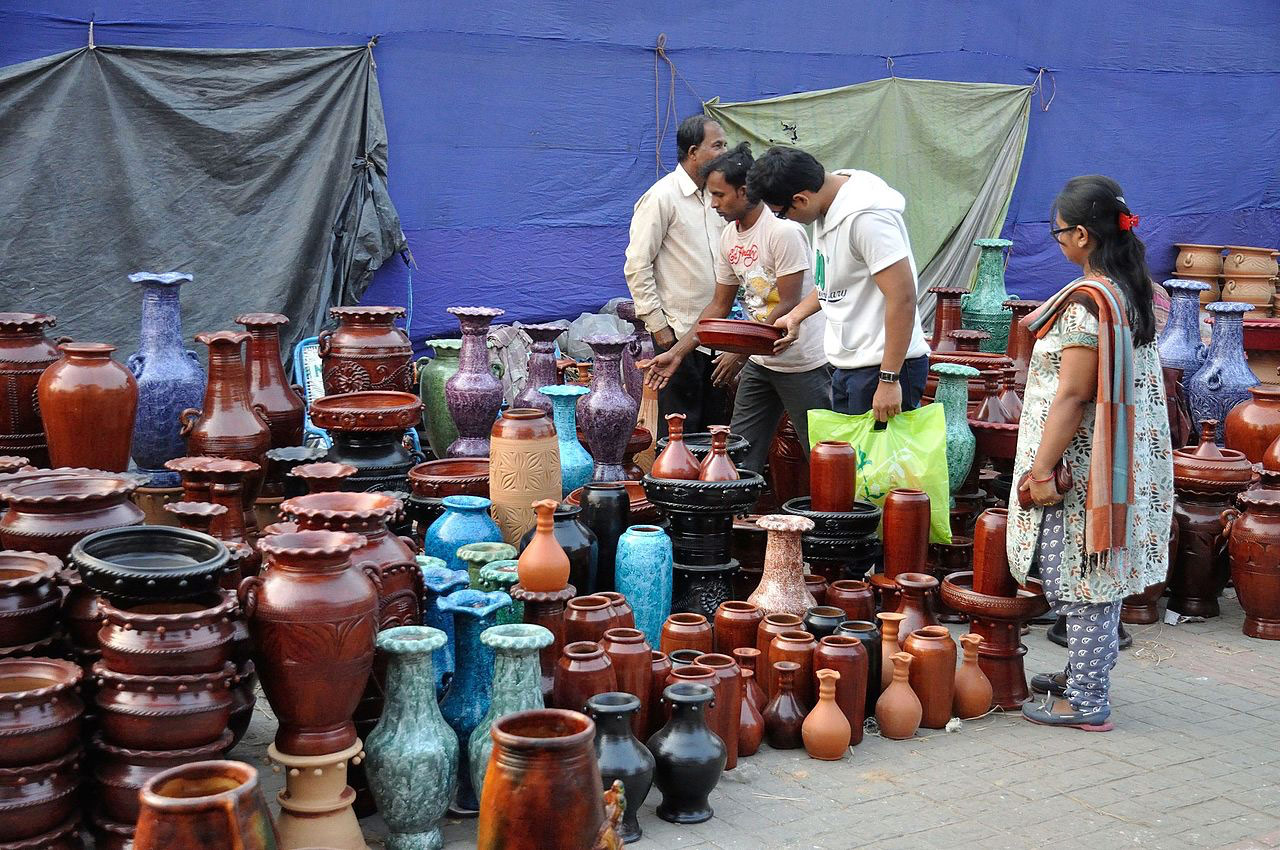
Ceramic crafts are mostly popular in west Bengal, precisely in Kolkata. This Handicraft has been practiced for a long time, though recently, modern technology has also been used for the same.

25. Kauna Grass Craft from Manipur

Handicrafts-of-India-Kauna-Grass
Image – Kauna Mani/FB

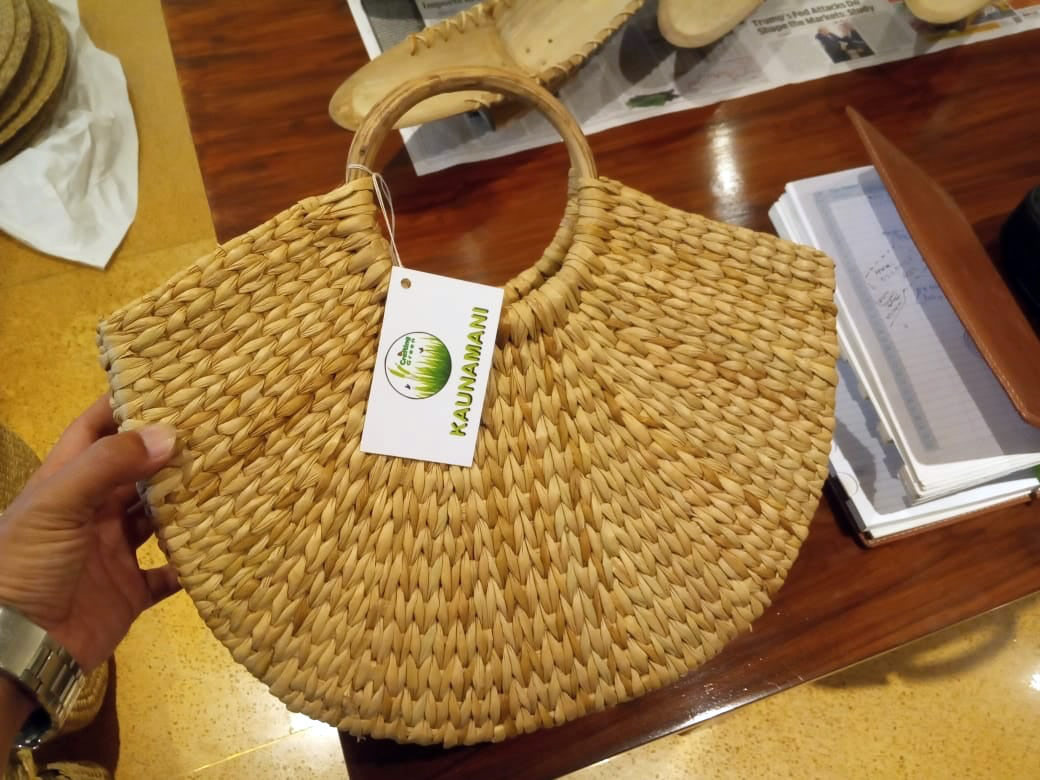
Kauna Grass craft is produced mostly from Manipur using a particular reed called Kauna that grows in water. Handbags and baskets are usually made using this Handicraft. Apart from being a beautiful handicraft, it is also eco-friendly.

Handicrafts have a unique beauty that sets them apart from those produced in bulk with machines. It portrays the creativity and imagination of the skilled artisans who craft it with precision and patience. The Handicrafts of a specific region is an embodiment of the distinct culture and tradition of the place it hails from, and hence it plays a significant role in portraying the heritage of their land.

Best Food Festivals of Kolkata to Cherish the Authentic Bengali Cuisine

1
Best Food Festivals of Kolkata
Image – Wikimedia

India has a diverse culture that can be uniquely experienced by trying the culinary delights of each location. Food gives us an insight into the history and character of a certain area. It helps us to realize how various states employ local products differently. Food Festivals of India are one of the most effective methods to get a crash course in our rich culinary history. The impact of social media has made events like these increasingly popular with the second and more people want a part in it. There is arguably no better way to experience one’s soul than by eating. How better than to go to a food festival of Kolkata where you can take part in hands-on cooking events, meet new chefs, mingle with friends, and sample local Bengali food?

1. Ahare Bangla

Ahare-Bangla
Image-Biswarup Ganguly/Wikimedia

You’re missing out on a spectacular experience if you’ve never visited Ahare Bangla before. Thousands of people come together, five days and tons of shops to celebrate food. The food festival, organized by several departments in the government of West Bengal is led by the Animal Resources Development Department. It is all about the promotion and commemoration of local products. This Festival is held annually with authentic Bengali cuisines such as Ilish bhapa, kosha mangsho, tyangrar jhol, bhetki paturi, and mishti doi with new delicacies every year. You will have an opportunity to interact with farmers — those who literally cultivate the food we consume each day. Apart from food, discussion shows, cooking sessions with well-known chefs, notable writers, poets, and other distinguished personalities are also present to keep one engaged.

2. ABP Ananda Khaibar Pass

Food-Festivals-of-Kolkata-ABP-Ananda-Khaibar-Pass
Image – Sushmita Paul Mum/FB

ABP Ananda Khaibaar Pass is one of Kolkata’s greatest culinary festivals. It has been celebrating the sparkling culture of Bengal’s food with great joy and enthusiasm for the past six years. The particular event brings Bengalis together with local brands and eateries in the state, providing various dishes. Organizations are attempting to embrace West Bengal cultures and ethos through on-the-ground initiatives like these.

There is a vast range of Biryanis, Kebab, simple Bengali meals, seafood, and a lot of desserts and snackable items at this famed food festival. From Mughlai to Chinese and Lebanese, there is an existing variety of cuisines available. Besides the famous local culinary scenes such as Aminia, Arsalan, Nizam, India, Kolkata Restaurant, Saptapadi Restaurant, Chowman Nalini Chandra Sen, etc, it is also a pleasure to see some hidden gems in and outside Kolkata be showcased here. Delicacies from several towns in Bengal, especially Baharampur, Chandannagar, Durgapur, and Rishra are also available in these stalls.

Furthermore, you can not only enjoy the delicious food but also enjoy the cultural performances of different artists and participate in the intriguing carnival games. It has something in store for every visitor. The organizers believe that this culinary festival would rekindle the desire for some of the lost Indian dishes and give visitors a multicultural experience through food and beverages.

3. The River Water Hilsa Festival by Oh! Calcutta

Food-Festivals-of-Kolkata-The-River-Water-Hilsa-Festival-by-Oh!-Calcutta
Image – Sayamindu Dasgupta/Flickr

Hilsa or Illish is a prominent river water fish that runs upstream through the Bay of Bengal from the corners of the Arabian Sea. While the Bengali legacy has been maintained, it is now a delicacy sought after and is gradually cherished across the country. It has a robust and tasty characteristic flavor. Of course, without serving Ilish, no event is complete. One may enjoy a traditional preparation of the Queen Of Fish during Oh! Calcutta’s Hilsa Festival. In addition to their typical buffet lunch and dinner, you can order several of these Hilsa special items from their Hilsa menu. This consists of the chef’s special – Bengal’s famous Hilsa Broth or Ilisher Jhol with Mustard –with the simple yet vital mustard (Shorshe). The Smoked Hilsa, a native version of the dish from the British Raj and served with fries and sauteed vegetables. The Mochar Ilish, spicy banana flower, and a fried Hilsa in a unique mixture are other great favorites. And Aam Tel Ilish which is a steamed boneless Ilish which is mango pickle-flavored, wrapped in a pumpkin leaf and served in a clay jar of steamed rice.

The most pleasing thing about Oh! Calcutta is that all ingredients come straight from Bengal. It’s an excellent experience to enjoy all these delicacies. This promotional festival takes place in the monsoon period in July-August at its branches throughout the country.

Kolkata has always been associated with its distinct cuisine and these are just some of the yearly food festivals. Apart from these, the city of joy is almost a year-long food festival on its own and is always open to other local food-based carnivals(such as food stalls during Durga Pujo), or several regional ones that showcase delicacies from all over the state. This popularity inspires and promotes more festivals of the same kind on a national and international level. Keep an eye out for the various events that are always happening from time to time in this bustling city for an exceptional experience!

Old is Gold – A Look at the Ancient Cities and Old City Enclaves of India

0
Oldest-Cities-of-India
Image – Hardeep Asrani/Flickr

Some cities are planned, whereas, some have just grown over the years. A lot of old cities of India are unplanned, throbbing with busy lanes, packed roundabouts, and cluttered establishments. Most of them have expanded, off shooting into modern and well-structured layouts as they have panned out from the central core. However, the chaos of the old city is very much the heart and stand-out element of the entire metropolitan.

Ancient Cities vs Old Cities of India

There are two ways of looking at this. There are ancient cities that have been in existence for thousands of years. They are holders of immense history and heritage. And luckily they have survived in modern times too. These cities are steeped in rich ancient history, flaunting architecture and culture of erstwhile kingdoms and tales. 

On the other hand, there are the metro and Tier 1 cities. These cities as a whole have their path of growth, but cannot be counted as ancient cities. This is because their role probably came into the limelight, not before the 14th century or so. However, these cities though modern in many ways, have pockets of the old world charm thriving in their heart. In such cities, it is almost like stepping in and out from one era to another, from one culture into another. There is a seamless integration that can often be baffling to an outsider. 

Ancient Cities of India

India has a long and deep history. Its ancient cities are repositories of traditions, culture, and glory. Today, some continue to be busy, while others have shifted into being Tier 2 or Tier 3 cities. Here is taking a look at some of the ancient and oldest cities of India.

1. Varanasi 

 Oldest Cities of India Varanasi
Image-abrinsky/Flickr

Up first on the list is Varanasi or Banaras which is one of the oldest inhabited cities of India. the history of Varanasi is estimated to date back to more than 3000 years. It has seen all, from being a spiritual and learning center, pilgrim destination, as well as an artistic hub famous for its brocade and muslin fabrics and weaving. There is something about Varanasi, its chants, the ghats, the Ganga, and the meeting of cultures that makes it an authentic ancient city holding its own even in the modern world. 

2. Kannauj 

Oldest-Cities-of-India-Kannauj
Image – Shiwani Kumar/FB

Another city from Uttar Pradesh, Kannauj is also called the ‘perfume capital of India. With artifacts dating to the prehistoric ages, Kannauj was made capital by King Harsha and was part of the Gupta Empire. Renowned for its attar and rose water, today Kannauj is a historical town that is surviving on its past glory and the skill of making perfumes passed on from generations. 

3. Ujjain

Oldest-Cities-of-India-Ujjain
Image – Jean-Pierre Dalbéra/Flickr

 The capital of the Malwa region in terms of culture and history, Ujjain is a ‘temple city. But like many other ancient cities, such as Varanasi its religious fervor is not one-dimensional. There are other historical highlights of the city including taking a stroll along the Shipra River that make it worth a visit. 

4. Patna 

Oldest cities of India Patna
Ruins of Nalanda

Pataliputra from the Mauryan and Magadha empires, Patna has a lot of ancient history attached to it. Though it is the capital of Bihar, its identity is influenced by its erstwhile days of prosperity. From the Patna Museum to Golghar or the ruins of Nalanda, Patna shows enough evidence of a culture of learning and intelligence. 

5. Madurai

Madurai
Image-Arian Zwegers/Flickr

Records of Madurai date back almost 4000 years ago. Ruled by many, including the Pandyas and Cholas, Madurai has been the place of temples and scholars for a long. Meenakshi Temple its most popular landmark is said to have been built initially in 600 BC.

6. Hampi 

Apadegal
Image-Apadegal/Flickr

The ruined city of Hampi has been an attraction for tourists all over the world. Declared a World Heritage Site by UNESCO, Hampi was the capital under ruler Krishnadevaraya of the Vijayanagara Empire. Today the architectural ruins of the town are gorgeous and a photographer and historians delight. 

7. Thanjavur

Thanjavur
Image-Arian Zwegers/Flickr

Also known earlier as Tanjore, another southern city of India is one of the oldest cities of the country. Tanjore flourished under the Chola dynasty and its paintings and arts are world-famous to date. 

There are many other old cities including Puri, Ayodhya, Dwaraka, Rajgir, Kollam, Pushkar, and more. All of these cities have a history dating back to thousands of years. However, the main point of attraction here is that they have been lived in for all these numbers of years too. They haven’t become relics or ghost towns. Most of them continue to be inhabited in the same spirit. The culture of these places continues to find a home and takers in its place of origin. 

Old City Enclaves 

Oldest-Indian-City
Image – VINCENT DUGAST/Flickr

Now, we take a look at another aspect of the old city charm. Just as there are old cities that are laden with their specific characteristics, there are also older enclaves within cities. When one thinks of Varanasi and the wisdom of its years, it is about the city surviving its originality over generations. Yes, the modern amenities set in, and over time the relics of the past become the heritage that looms over the city landscape. But the essence and flavor of the city remain pretty much itself. The people who live there are the ones who have lived on from one generation to another. There is not much influx from other states or cities and hence the character of the city is pretty much a retainer of its past. 

However, on the other hand, there are a few huge metro cities that house within them the soul and spirit of their yesteryears. These cities have expanded and become hubs of commercial and modern facilities. They have become centers of commerce or social gatherings and have changed in their outward, as well as, cultural nuances. But within all the expansion and migration, there remain areas of the old city. These are reminders of what the city once was.

Here is taking a look at some of the most popular old city enclaves. 

1. Old Delhi 

Oldest-Cities-of-India-Delhi
Image – Hadi Zaher/Flickr

Old Delhi is an era on its own. With the Jama Masjid dominating the aura of this area, Old Delhi is much more than what meets the eye. With the narrow lanes, the bustling shops filled with delicacies and cuisines that are hard to beat anywhere, Old Delhi is an oasis of old-world charm. Constructed as a walled city during the 17th century by Shah Jahan, Old Delhi remained the seat of power for the Mughal Empire until the British came over. Old Delhi is a complete mix of ethnic, religious, and social strata. Though New Delhi itself is more than a hundred years old, the difference between the two is palpable. 

2. Old City, Hyderabad 

Old-City,-Hyderabad 
Image-McKay Savage/Flickr

Hyderabad today is the IT hub of the country. It has expanded and attracted professionals from across the country and also the world. But tucked away in the swarming madness lies the Old City of Hyderabad. The authenticity and heritage of the city that is often identified with the Charminar and Mecca Masjid come alive in the lanes and bylanes of the Old City. The dialect and feel of place shift when one steps in here. The Hyderabadi Biryani and Haleem are perhaps the best as the markets all around buzz with the urgency of business that is so akin to an old city dazzle and glamour. The Old City was also a walled space built by Muhammad Quli Qutub Shah in the 16th century. Though not much of the wall remains today, its cultural finesse remains intact. 

3. Old Ahmedabad 

Old-Ahmedabad
Image-Corey Seeman/Flickr

Old Ahmedabad is another of the walled cities. Built by Ahmed Shah I in the 15th century it remained an important administrative center for the Gujarat Sultanate. Today it retains the heart of the city in forms of architecture and culture. The Bhadra Fort and Jama Masjid are some of the iconic landmarks here. However, it is the gates and pols that are the main distinguishing characteristics of Old Ahmedabad. Traditional housing communities/clusters or pols are found within gated streets and are a discerning cultural landmark of the city. The pols are named after the community residing within it or also on different animals, deities, etc. The sense of togetherness is strong here and needless to say, the cuisine is authentic Gujarati dishes. 

Suggested Read – What Makes Ahmedabad a World Heritage City?

Many other cities would have an old city enclave cornered somewhere or scattered in different neighborhoods that bear testimony to the earlier days gone by. The city, though moved on in many spaces, still holds its roots deep in many others. 

Whether it is the ancient cities or old city enclaves, the emotions of history, valor, and richness are strongly felt. Yes, there is chaos and clutter. But there is a definite rawness that stands out. Perhaps, that is why such cities and enclaves are attractions for outsiders. They bring them closer to a reality that is defiant to not fade away. Does it necessarily reflect in its disarray a pride of what might have been? That is of course, debatable. As for now, their old worldliness is enough to forgive the rest.