We as humans have evolved from simple organisms to highly developed and advanced beings, but even after going through all these large-scale changes over the centuries, one thing about us remains the same – our relationship with Mother Nature. Humans and Nature have co-existed and maintained peace with each other since the beginning of humanity. Indeed, Mother Nature has bestowed numerous invaluable gifts upon us, whose beauty is a marvel to behold.
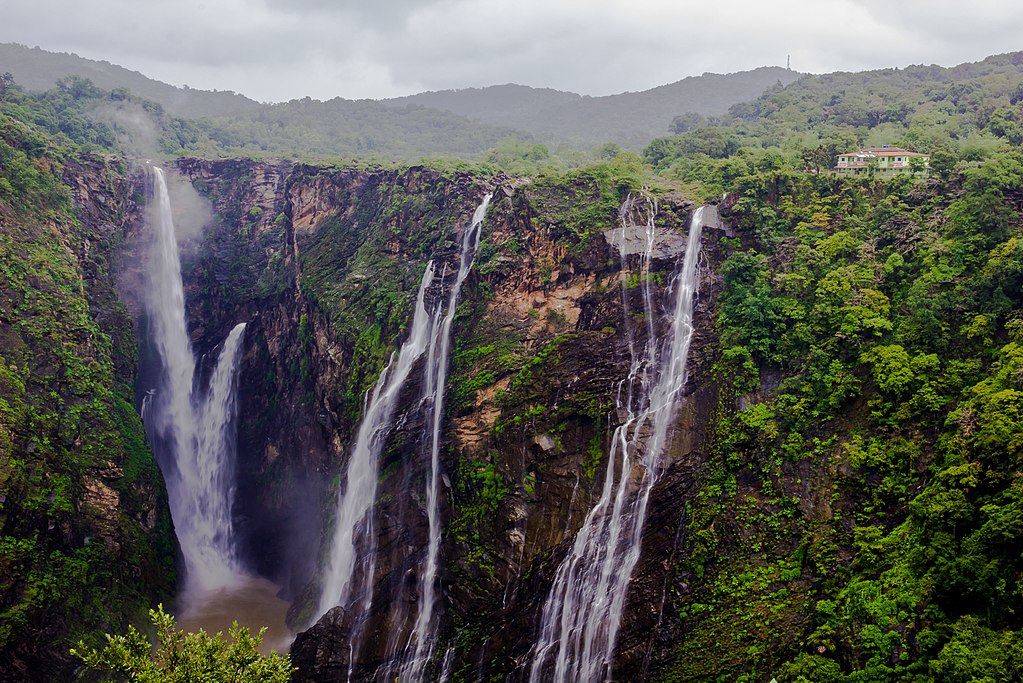
Be it the Great mountain ranges of Tibet, the desert state of Rajasthan, or the immense greenery of Kerala, India has always been first and foremost when it comes to natural beauty. It is well-known that tourists from all over the globe come to India to witness its bounty and what better place to witness it all than the Indian state of Karnataka. Blessed with plenty of greenery, Karnataka showcases the royal and pristine form of Mother Nature. In fact, one of the best Waterfalls of Karnataka has to be the mighty Jog Falls.
River Sharavati – VIZPARK/Pikist.com
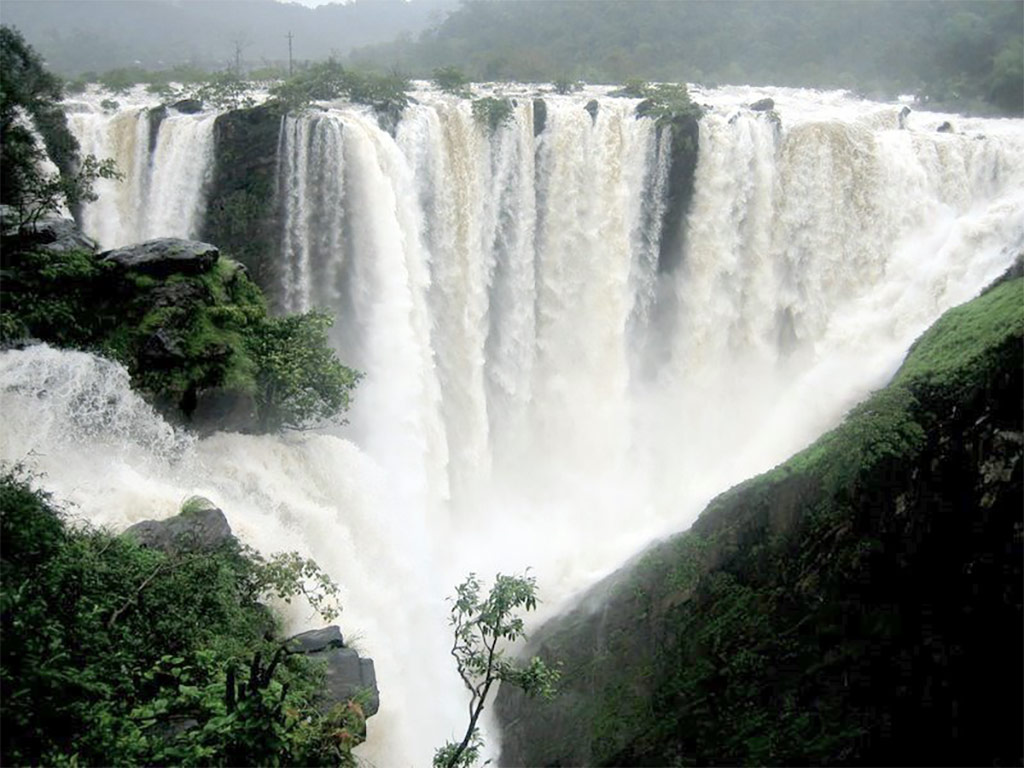
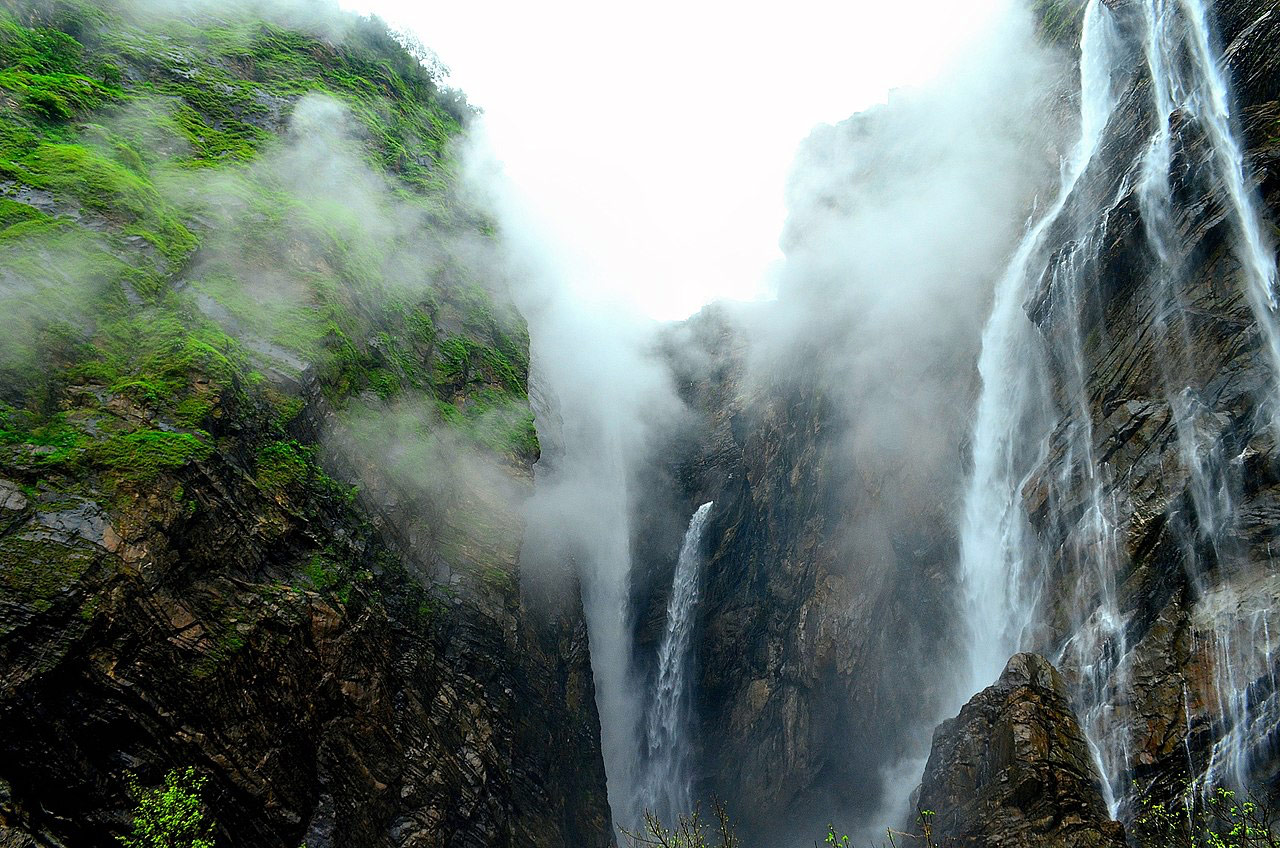
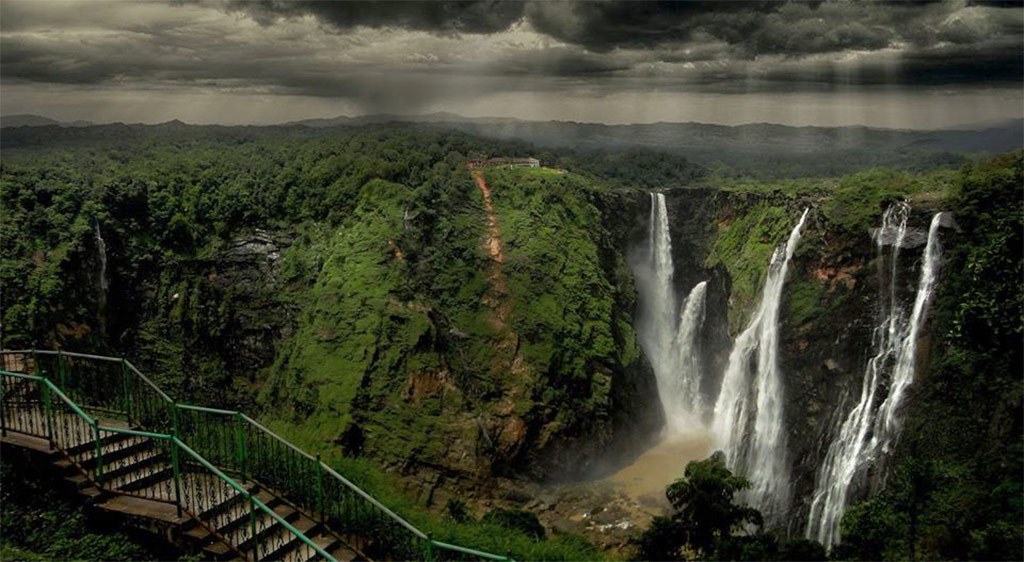
I can say this without a shred of doubt, that Jog Falls is Nature’s work at its best. Situated in the Shimoga district of Karnataka, Jog Falls has bagged the position of the second-highest waterfall in India. The waterfall is created by the waters of the beautiful River Sharavati, descending from a staggering height of 253 meters! The river emerges at Ambuthirtha, covers the journey from northwest to the western Ghats (forming the waterfall here), and eventually merges with the Arabian Sea. The cascading waters of the waterfall are formed by the amalgamation of 4 other streams namely, Raja, Rani, Roarer, and Rocket. While the falls are widely known for their beauty, some special features of Jog Falls include its ability to fall straight down. This means that most waterfalls, when descending tend to fall over or hit the rocks as they drop. However, Jog Falls happens to be extremely unique as it happens to be an ‘untiered’ waterfall with such a colossal height. Furthermore, Jog Falls also makes up for about 30 percent of Karnataka’s power generation. Fascinating, isn’t it?
Jog Falls is also known as ‘Gerusoppe’ or ‘Gerusoppa’ falls among the locals and has been pronounced as one of the top ten ecological spots to visit in the world by UNESCO. Talking more about the physical aspects of the Jog falls, interestingly, the structure of the waterfalls is such that no slope can be found throughout its length. Therefore, the water comes gushing down vertically without any disturbance. The ideal time to visit the falls is usually between August and December every year. It is during this time that the flow of the fall is thunderous, the climate is enjoyable enough (slightly chilly) with some amount of rainfall to make the trip even better; moreover, colorful rainbows can also be seen now and then at the Jog Falls. I mean, who doesn’t like rainbows, right?
Gathering so much data about Jog Falls, it is no wonder that the falls also happens to be a splendid trekking destination, highly famous amongst the youth of India. Several small businesses have introduced adventure packages involving various sports and hiking activities. Being a famous tourist destination, the facility of a big parking space is also available and the majesty of the falls is openly visible from the parking space. If you are an avid thrill-seeker and want to experience the falls from up close, then you can do so by taking the stairway constructed to go down to the base, from where the falls are visible on the opposite side. There are more or less 1400 steps and the waterfall looks especially alluring from this viewpoint. It is, indeed, a magical experience for the eyes of all the visitors.
Some other famous tourist destinations near the Jog Falls include the Linganmakki Dam. It is located about 9 km from Jog Falls in the Kargal village. This dam has been an operational power station since 1960 (at the initiation of Sir M. Visvesvarayya). Apart from this, tourists also enjoy river rafting and various other water sports available at Honnemaradu. Be sure to visit the numerous temples and subsidiary falls such as the Unchalli Falls and Bennehole Falls located not far from the Jog Falls. Furthermore, the temples found at Keladi and Ikkeri provide a fun-filled and historical visit to all its visitors and attract several pilgrims on their way to the falls. Tourists do not have to worry about the accommodation facilities at Jog Falls because to aid in tourism, a few hotels and restaurants are developed near the Falls which are highly affordable and facilitates accommodation for tourists to have a leisurely time.
The grandeur of the falls cannot be restricted to the boundaries of this article. However, after reading this article, I am sure that you too want to pay a visit to the magnificent heaven. Thousands of people plan their visit to the falls every year, and why not? The Jog Falls constitutes a perfect getaway for all the city-dwellers, a bonding trip with their family and friends amidst the nestled greenery. The falls, surrounded by soul-soothing and dense evergreen forests, a clear sky, and rich gushing water are sure to cure your monotony and refresh your seven senses!
History forms a big part of India’s cultural heritage. Needleless to say, India has a rich history of rulers and pilgrims; each state, nay, each region in India is endowed with its historical significance which it preserves through folk tales and legends. However, some of the best stories in India are still kept alive through the medium of architecture and monuments. Karnataka, the south-western state of India is one such example. One of the most historical places in India, Karnataka has the second-highest number of monuments preserved nationally. With several equally exciting and enticing places to visit in Karnataka, it may be a tad difficult to decide what to do first. Therefore, here is a list of the best historical places in Karnataka to stimulate the history buff in you:
1. Badami Cave Temple
Image/Pixabay
Located in the north-central part of Karnataka, Badami served as the capital city of the powerful Vijaynagara Empire. The Badami Caves comprise several Hindu and Jain cave temples and are a significant example of India’s fascinating rock-cut architecture style. Mostly comprising of Hindu deities, one can find carvings of several Gods and Goddesses such as Lord Shiva, Lord Vishnu, and Goddess Parvati. There are 6 caves in total, out of which cave 3 is the largest and is mostly filled with Lord Vishnu carvings. Cave 4 has a lot of Jain carvings and a few additional caves are dedicated to Buddhism carvings. The Badami Cave Temples are extremely diverse and famous, not only for their architectural treasure but also for their religious aspects.
If you could revisit the past, would you? Standing tall and proud, Bidar Fort (also known as Bidar Kote) is a splendid reminder of the glorious past of the Southern dynasties. The fort comprises ruins of a royal town, gates, royal gardens, audience hall, etc. The history of Bidar Fort remains complex and dense. Originally built in the 8th century, several rulers such as the Delhi Sultanate, Tuglaq dynasty, and Shah’s have continually captured and dominated the Fort. It was only after the Independence that the Bidar Fort was respectfully returned to Karnataka again.
Have you ever tasted opulence at its finest? The Majestic Bangalore Palace speaks of royalty dipped in a bowl of history. Built-in the year 1878, the grand palace is made by creating a fusion between Gothic and Tudor architecture. This magnificent palace is known to have been built by Raja Chamarajendra Wadiyer. Since he wanted it to resemble the Windsor Castle of London, the architecture is mostly inspired by it. Witness the exotic ceramics, ballroom, gardens, and rooms to experience the royal life of yesteryear.
Situated in Belur, this 12th-century Hindu temple will make you feel connected to divinity. A prominent Vishnu temple (Chennakeshava was an incarnation of Lord Vishnu), this temple is one of India’s most important pilgrimage sites attracting thousands of tourists and worshippers every year. It took about long 103 years to build this temple and is highly famous for its elaborate artwork. These sculptures and artworks depict the social life of that era and some famous Hindu classics like the Ramayana and Mahabharata.
The somber and ruined Bara Kaman is the incompleted mausoleum of Ali Adil Shah, the leader of the Adil Dynasty. This seemingly grand site has a rather dark history. The mausoleum was meant to be majestic and unique, however, because of unknown reasons, the construction was stopped drastically. Rumors suggest that the construction had to be stopped because if it was seen through, it would’ve overshadowed the Gol Gumbaz. Now, the Bara Kaman contains the bodies of the king, his wife, and daughters.
6. Gol Gumbaz, Bijapur
Image by Bishnu Sarangi
Speaking of Gol Gumbaz, this historical site is where Mohammad Adil Shah lies along with his wife, daughter, and mistresses. Mohammad Adil Shah wanted his mausoleum to be grander than that of his forefathers and took 30 years to complete it. The architecture of Gol Gumbaz, like several others, is a fusion between Dravidian and Islamic architecture. It served justice to its name, meaning circular dome, by having one of the largest domes in the world.
The Royal Enclosure of Hampi is nothing short of an architectural theatre. Although now it is mostly in ruins, hitherto it contained 45 buildings (or more), which included temples, tanks, durbars, etc. This fascinating fortification was the epicenter of the Vijaynagara Empire in its prime.
Located in Halebidu, this temple is solely devoted to the powerful Lord Shiva. Built by King Hoysaleswara, the construction of this temple began in the 12th century. It is said that the Hoysaleswara temple was built with the intent to pose a competition to the Chennakeshava temple, which was built in honor of Lord Vishnu. The artwork seen here is extremely interesting and alluring.
No, not the one with Prabhas. Bahubali was originally the son of Rishabhanatha and is a highly interesting and revered figure in Jainism. In his lifetime, Bahubali meditated in a standing position for a duration of one year! Therefore, to honor his sacrifice, sanctity, and peace, a statue was made in Shravanbelagola. Carved from one single stone, the statue is well known for being the largest monolithic structure in the world.
Found in the Dandeli Wild Life Sanctuary, these caves are highly popular amongst tourists. They are said to be originated from volcanic origins. The picturesque settings and natural beauty are suitable for all ages. You will also find a temple at the entrance of the caves which usually gets numerous visitors traveling for pilgrimage every year.
The city of Mysore is known for nothing if not for its palaces. And the most popular and superior amongst them is the Royal Mysore Palace. The Mysore Palace is the official address of the Wadiyar family (who have ruled over Mysore for years). The palace is enchanting and is one of the top tourist spots in India. One of the main reasons for its magnificence is the palace architecture. The architecture is a skillful blend of Mughal, Rajput, Hindu, and Gothic architecture. The high domes, amazing hallways, and gardens provide a fun-filled visit to the tourists.
One of the best and spiritual places in Coorg, the Namdroling Monastery teaches learnings of Tibetan Buddhism. Thousands of people come to this place either for leisure or for religious purposes. The Monastery welcomes each person into its fine architectural treasure and elegant temple tower cordially. Along with meditation centers, the Monastery also contains hospitals and schools for the needy. Indulge in the serenity and beauty as much as you can!
Situated in one of the best historic cities of India, the Archaeological Museum of Hampi is where a collection of artifacts and pieces of evidence regarding the Vijaynagara empire can be found. One can explore the countless sculptures, miniature paintings, ivory statues, coins, tools, etc. found in the ruins of Hampi. The museum is divided into 4 galleries and is a wonderful place to learn about the late Vijaynagara empire in detail.
Devotion to the Lord is often termed as the supreme form of love. This ‘Monkey Temple’ located in Hampi is a place of worship solely dedicated to Lord Hanuman, the first and foremost friend and devotee of Lord Ram. The temple contains a statue of Lord Hanuman carved from a stone and another smaller temple for Lord Ram and his wife Sita as well. The statue of Lord Hanuman is shown to be the yogic position of Padmasana. The entire vicinity is packed with natural beauty, as far as the eye can see. Oh, also watch out for the monkeys roaming about the temple!
This glorious monument was built by Achyuta Raya. Although the bath was built for the women of the Vijaynagara Empire, it was frequently used by the king and his queens for their private purposes and was also called a ‘royal pleasure center’. The inside of the bath is made of beautiful Ornate and a large hollow bath is situated right in the middle of the property. Beautiful pillars and balconies add to the simple elegance of the structure. The quaint garden constructed for tourists is a bonus!
When valor meets determination the name Tipu Sultan arises. Located in Srirangapatna, this site is a tribute to the daring and fearsome leader, Tip Sultan. After he died in 1799, Tipu Sultan was buried here, next to his father. The place is a must-see for any person visiting Karnataka.
Yes, a stable. This seemingly simple, yet colossal structure was used by the ancient Vijaynagara Empire to keep their elephants in. This is one of the few places in Hampi that did not suffer any major setback after Hampi was attacked by the Mughals. The building is rectangular and large with 11 chambers having a dome each. However, out of the 11 domes, the central dome found is said to be the largest of them all. The Elephant Stables provide a peek into the splendid Vijaynagara architecture.
18. Lotus Mahal, Hampi
Image/Nandhu Kumar/Pixabay
Also known as Kamal Mahal or Chitragani Mahal, this arena was used (similar to Queen’s Bath) by the women of the Vijaynagara Empire. The Mahal or Palace is extensively known for its unique and distinctive architecture. The shape of the building resembles a lotus. Like several other structures, this architecture is inspired by the Indo-Islamic style of architecture.
This temple is specially constructed in honor of Lord Virupaksha, the partner of Goddess Pamadevi and a reincarnation of Shiva. Located at the bank of the great river Tungabhadra, this temple is one of the most sacred and most visited temples in Karnataka.
As the name suggests, this palace was where the greatest ruler of Mysore, Tipu Sultan, resided in the summer. This palace, although mostly in ruins, is preserved splendidly. The tall pillars, gardens, motifs, etc. are truly a sight to see. The rooms are now converted into a museum. All the achievements and important feats of the glorious ruler are showcased in this museum.
With so many historical places of Karnataka to visit, one is sure to have a pleasant time in the state. The many palaces, temples, and monuments will give you a little peek in the curtain of Indian history. Along with Karnataka, which is rich in historical places several other states in India will leave you pleasantly awestruck.
Around two years ago, I experienced terrible mood swings, acne, hair fall and felt anxious on a daily basis. My menstrual cycle was haphazard. Sometimes I would skip my periods completely and on other days I would have heavy bleeding. As a nineteen year old, I couldn’t understand what was happening. My life was unpredictable with hormones controlling my days and moods.
I consulted a doctor who diagnosed me with PCOS – Polycystic Ovarian Syndrome, a medical condition in which women of reproductive age experience prolonged or infrequent periods. Long term complications of PCOS include type 2 diabetes and heart disease.
As someone who grew up in an Indian family, I was not comfortable discussing my periods at first, specifically around men in the family. According to research, I am not the only one. Over 67% of working women think talking about health issues is a taboo in Indian society. Research also shows that Indian working women are either diagnosed with PCOS or know someone who is but they are still uncomfortable to talk about the health issue.
The doctor I consulted prescribed two medicines I was supposed to have on a daily basis. One for PCOS and the other for acne and hair fall. Overall, I felt like I was overconsuming pills everyday and this added to the anxiety I experienced. I even tried natural remedies for acne. Though the acne went away, the underlying issue of PCOS was not being addressed by most natural remedy doctors. I thought I would have to be dependent on hormonal pills forever and I was unsure about how it would affect my long term health. Surely, it was not a healthy way to live on pills everyday at the age of nineteen! Once I started feeling a little better and the mood swings went away, I stopped taking my medication and thought I was doing alright. Little did I imagine the symptoms would come back again with even more force.
I finally met a doctor who said hormonal imbalances and PCOS could be reversed using better lifestyle choices. If my PCOS could be cured by lifestyle, why had I been given medicines by the other doctor? The new doctor recommended me to try movement therapy, breathing exercises and charted out a healthy diet plan for me. I did not believe that curing PCOS with lifestyle was possible, but it was truly the solution I was waiting for. I was willing to try out anything that did not involve me consuming medicines.
I turned vegan, gluten-free and sugar-free for around four months and saw my life transform. Previously, I had thought dietary changes and turning vegan was a fad. Despite having watched documentaries like “What the Health” on Netflix that spoke about the harmful effects of milk products on the adult human body, I always looked at the idea of veganism with cynicism. Surely, things could not be so extreme in the food industry as pro-vegan documentaries made it seem, I thought. But I could not be more wrong. I was surprised to see the impact of a vegan diet on my body. I felt like a new person and my mental-health greatly improved. What started off as a journey to stay away from pills led to me a journey towards better mental health fueled by better lifestyle decisions. After seeing the power daily lifestyle choices had on my life, I felt empowered.
Despite not having consumed a single pill for four months, my symptoms of PCOS had disappeared. It was like magic. I started becoming more conscious about daily lifestyle decisions like eating, exercising and sleeping.
I decided to be more conscious and mindful about daily decision making. This one decision in my life was revolutionary. Research shows that 52% of working women in India find it difficult to manage health and work together. This is because women also face pressure to complete household work. Research shows that unrealistic expectations placed on women to fulfill various roles are also one reason why the number of women suffering from PCOS is increasing in India. There is a strong correlation between gender expectations, stress and prevalence of PCOS.
Around 10% of women globally suffer from PCOS. I have now realized with the right resources and information, combating PCOS is not as challenging as doctors recommending medicinal pills make it seem. Moreover, with conscious lifestyle choices, PCOS symptoms can be reversed completely. More than anything else, I believe as women we need to start talking about our health disorders because it helps us realize we are not alone while battling them. Sharing resources is also empowering. I was vocal about my PCOS and found a close set of friends in school who were battling the same health issue. We were able to act as a strong support group for each other.
I wish I had met the doctor who helped me cure my PCOS with lifestyle changes earlier. But better late than never! It has been almost over a year now and I am completely off the pill. I hope awareness reaches more people about PCOS being curable with tangible and conscious lifestyle changes. More than anything, I finally feel empowered to share my story because I hope more people realize PCOS can be reversed by altering lifestyle.
‘Forever Delhi’ is a fundraising campaign realised under the vigorous patronage of Shalini Passi. It is an endeavour to help India cope with the pandemic one artwork at a time. Shalini Passi has created an online exhibition of a series of Black and White photographs shot by her in 2020.
Every piece is an architecture master that captures the modern-colonial, middle-class-lavish, proactive-lazy binaries and every binary is captured in its uniformity. The Black and White photograph series is divided into two categories namely Delhi’s Heritage Architecture, and Contemporary Architecture.
Shalini Passi took an inadvertent walk in the capital a few days before the pandemic unfurled itself in its truest form.
“Having spent years in Delhi, I was always up for a walk around the city, capturing its current mood of the time. These images were shot in 2020. During the time when the pandemic was about to hit us in its coming days; of which, one could smell the preparation in the air; I decided to take a walk in my city. Spectating the banality of the aftermath-of-apocalypse like situation in Delhi, it was a call to capture such moments. Little did I know then, that these moments were to later decide for our upcoming days!”
The series supplements the non-human, figurative, pillarised, minimalist style photographs to connect to the city in its classic shade. They are truly a picturisation of an aftermath (not eerie) of an apocalypse that shook the entire world.
The net proceeds from the sales of the exhibition will be donated to the Non-Governmental Organizations named Goonj and Meherban India Foundation.
All photographs can be viewed on https://www.mashindia.com
Waterfalls provide a remarkable glimpse into Nature’s creativity- they are invigorating yet comforting. The historic town of Mysore proves to be a focus of several well-known ones, which are a must-visit. The diversified flora and fauna of the regions really get enhanced by these waterfalls. The sight is a stunning one, with water cascading down the valley through the lush woods. The scenery is magical, almost like something out of a fairytale. Below we enumerate a number of the maximum appropriate waterfalls which can be placed close to Mysore.
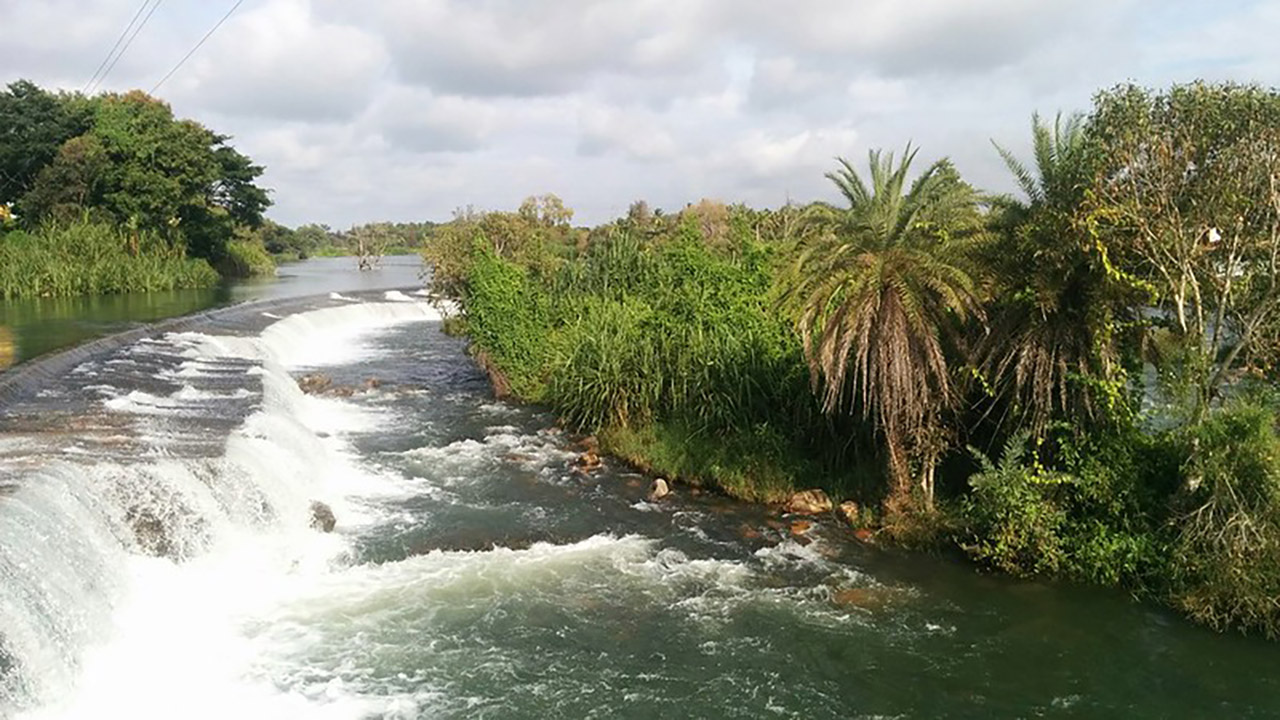
The Balmuri waterfalls are only some kilometers from Mysore, located in nonviolent surroundings of herbal beauty. However, the waterfall is man-made and fashioned due to a test dam built on River Kaveri. In Kannada, ‘Bal’ means ‘Right’, regarding the proper flip the flow takes earlier than diving down, while ‘Muri’ interprets to ‘flip’. The Balmuri Falls isn’t as domineering on top as the maximum others. However, it gives a quiet break out from the bustles of town life, loved in amusement with cherished ones. The Ganesha temple placed in its proximity is likewise frequented with the aid of travelers.
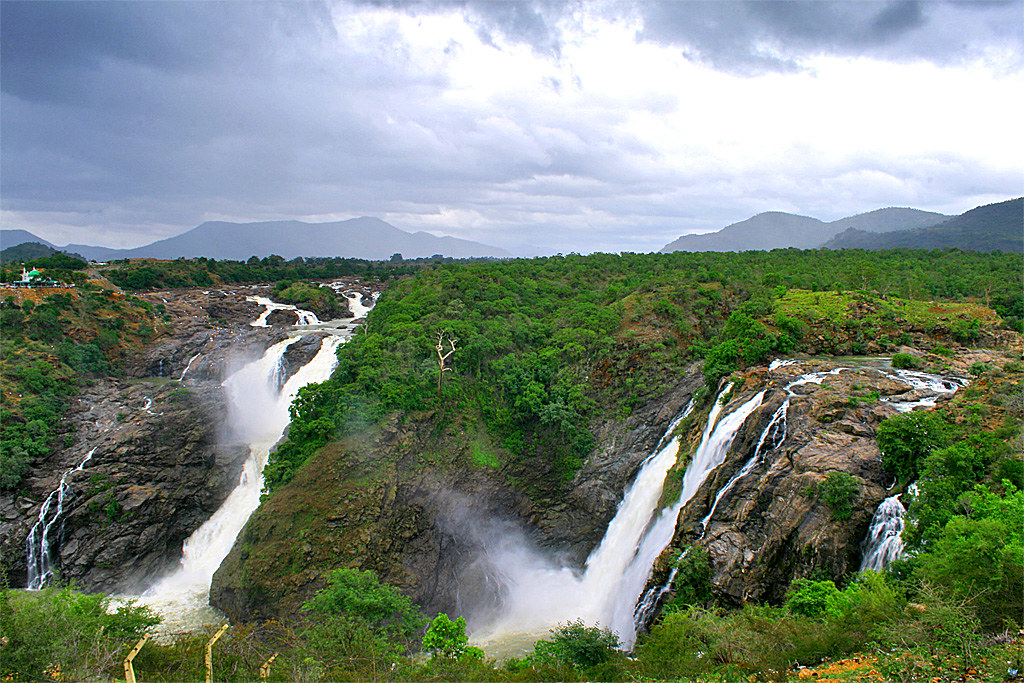
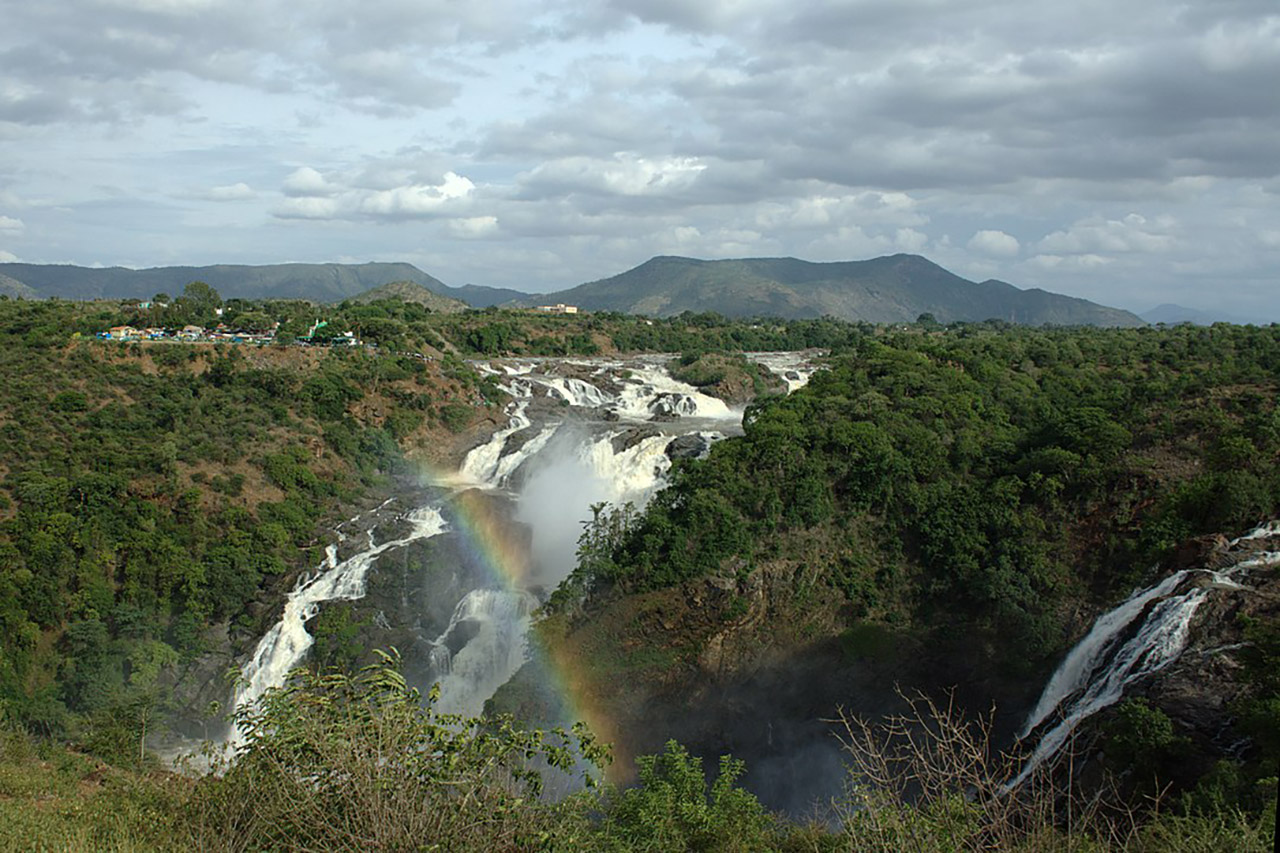
The call of the dual waterfalls of Shivanasamudra (or Sivasamudram) interprets as ‘Shiva’s sea’. The river Kaveri separates into streams referred to as Gaganachukki and Bharachukki. This pair is referred to as Shivanasamudra. The first one cascades down withinside the form of a horse tail over a rocky cliff. The latter makes its manner through rocks, plunging right into a plethora of streams that shape an awe-inspiring image. Best visited for the duration of the time of monsoons, possibly enjoy a wonderful view of the falls from the Shivasamudram Watch Tower.
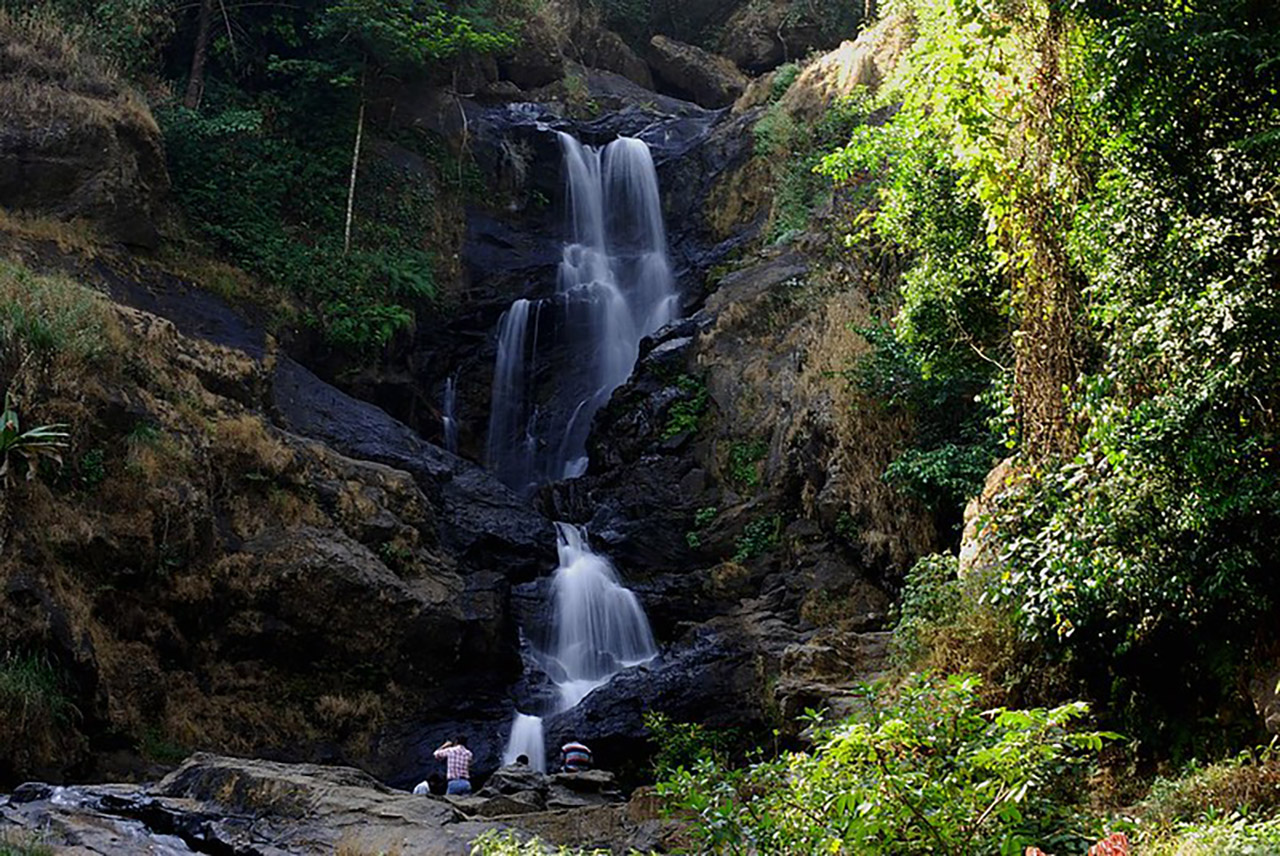
The Iruppu Falls pose a scenic image because it slithers alongside the Brahmagiri Range. Tourists flock to view this infant of Nature for its picturesque setting. However additionally for nonsecular reasons. The fable approximately the place narrates how Lord Lakshman’s arrow through the hill variety fashioned a river that is now referred to as Lakshman Tirtha. Devotees trust that a go-to to this place will wash one off their sins.
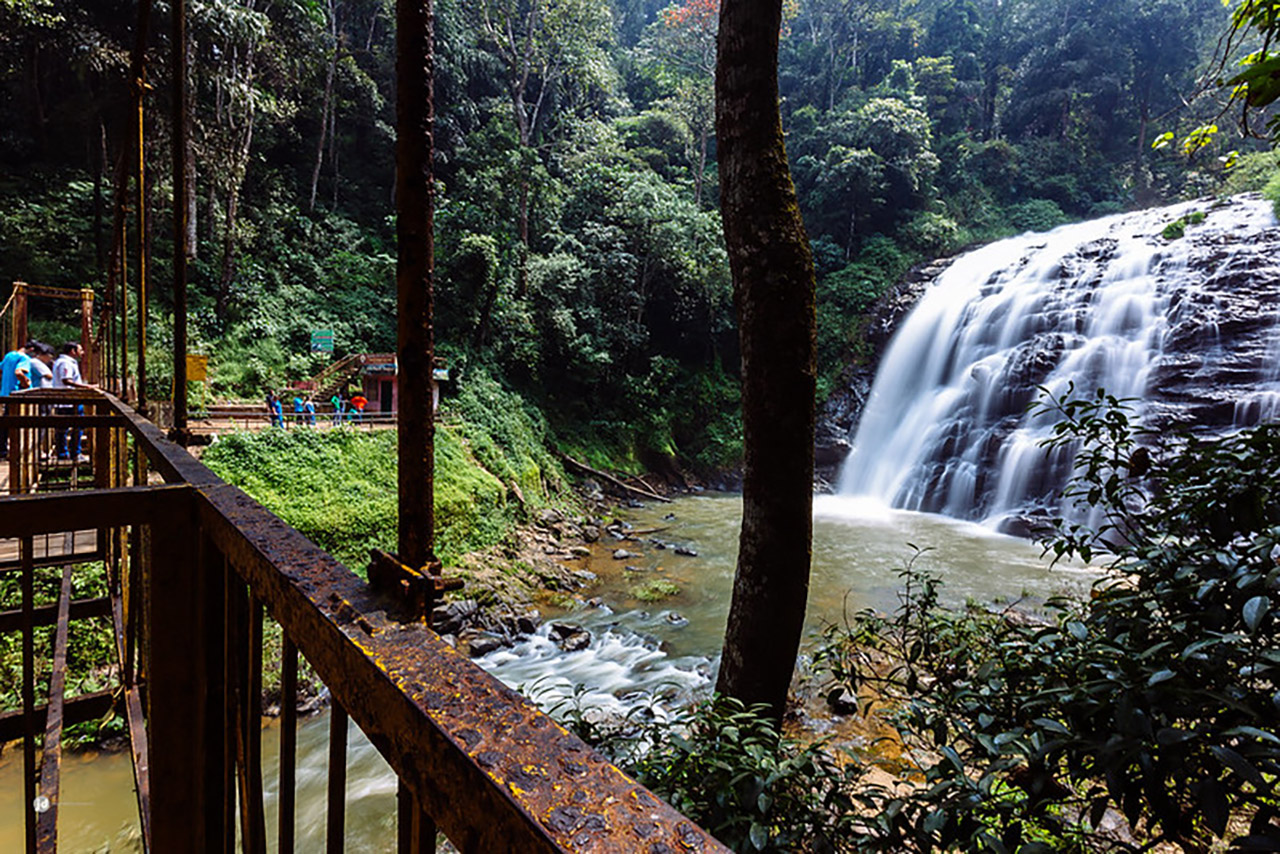
The Abbey Falls is taken into consideration as one of the maximum astounding sites close to Mysore. Its unhindered cascade over the difficult terrain that dives right into a bower of verdurous increase is like poetry come to life. One traverses thru espresso plantations and expanses of spice estates till they attain the falls on feet. The bridge contrary to the appropriate cascade gives a pleasing sight, as one feels the proximity to the water beneath the solar.
Location: Abbey Falls, Madikeri, Hoskeri, Karnataka Distance From Mysore: 129 Kms Height: 70 feet.
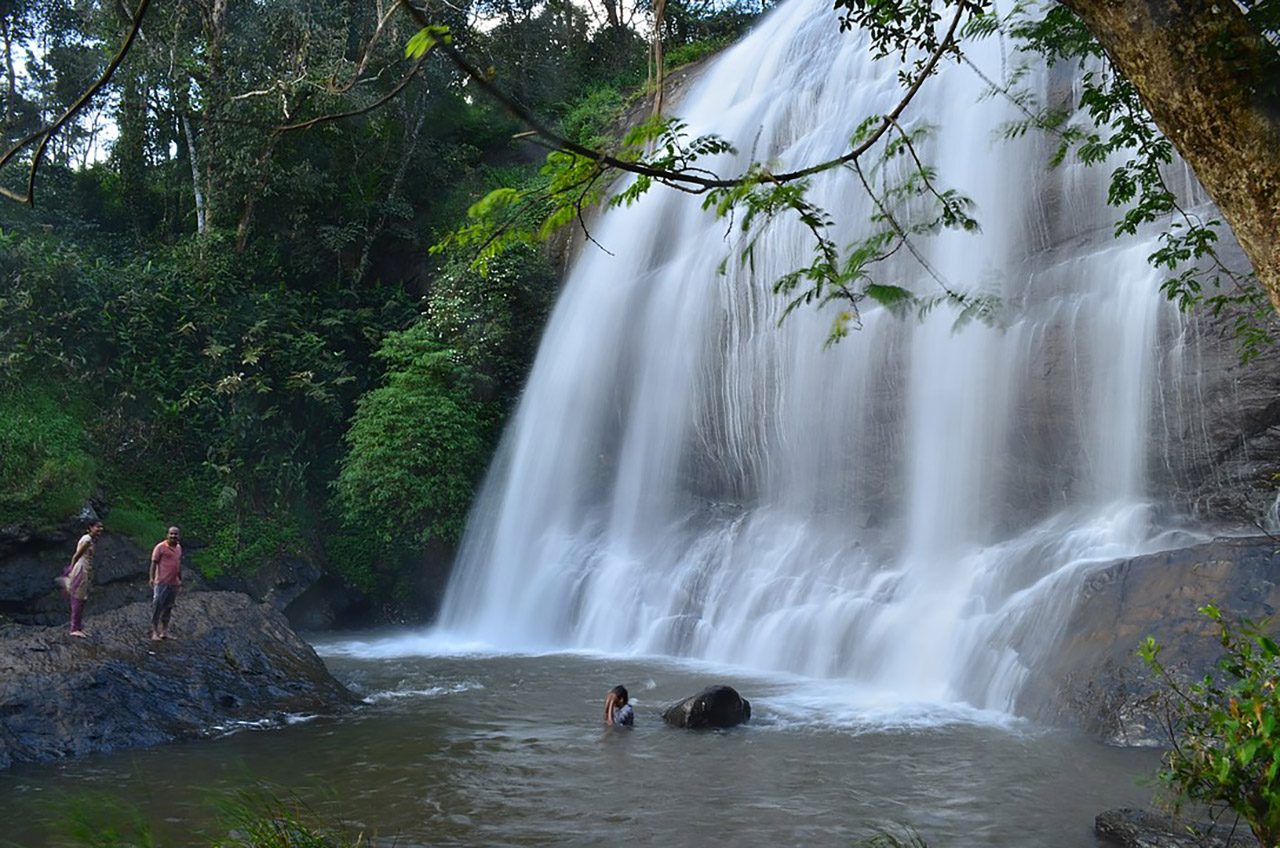
The Chelavara Waterfalls are nestled inside a lush increase of timber and espresso plantations. The water flows down from a fantastic top and plunges onto a tortoise-fashioned rock. Winding roads lead one to this marvel, which is quality to go to for the duration of the monsoons. It is suggested, however, to take warning concerning the fantastic intensity of the falls.
Location: Cheyandane Village, Chelavara, Karnataka Distance From Mysore: 128 Kms Height: 150 feet.
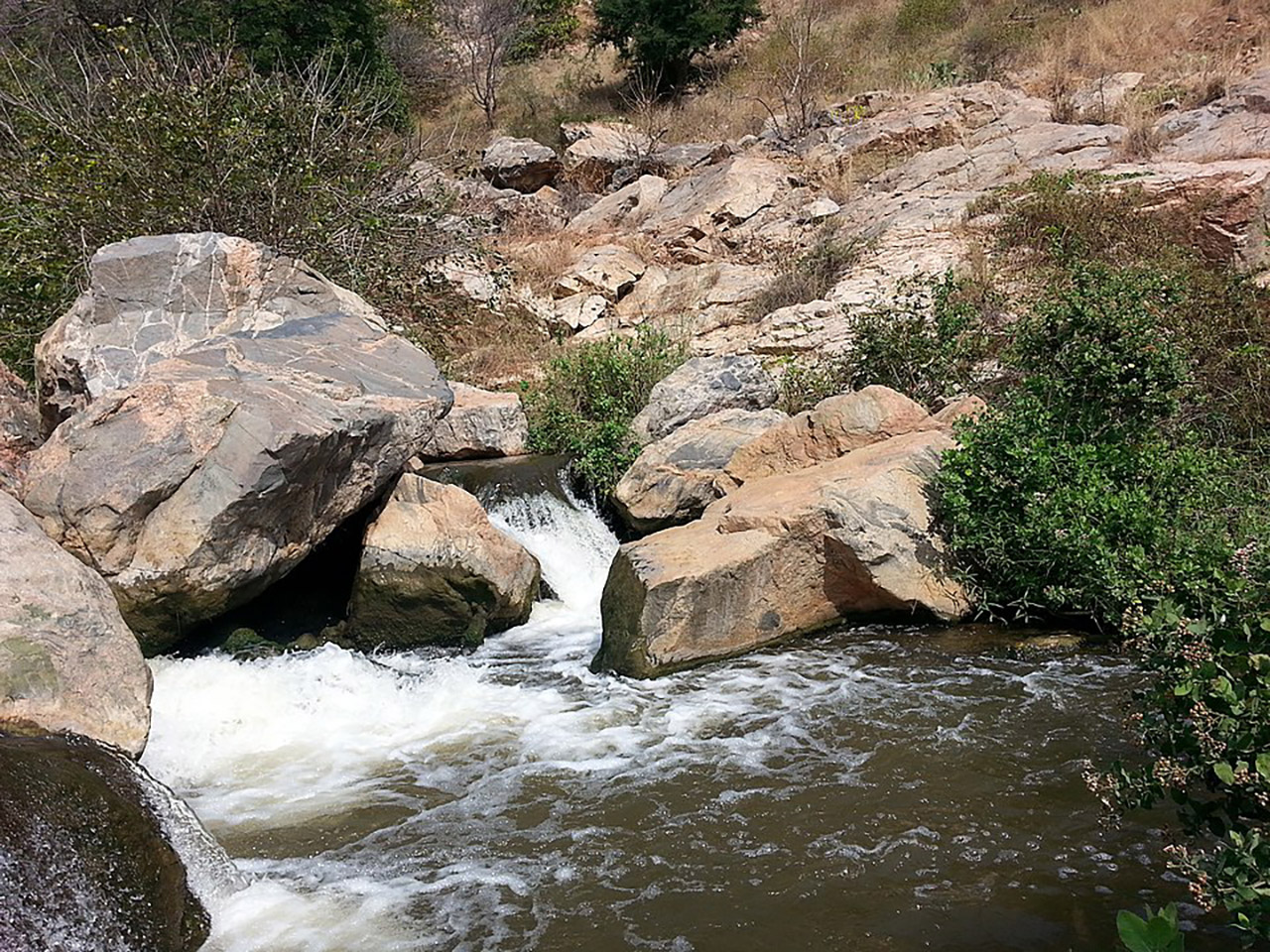
The supply of the Chunchi Falls lies withinside the Arkavathi from in which it flows for over 100 feet. The legend around this place centers on the tribal couple Chuncha and Chunchi. They presented Lord Rama with an area of a haven for the duration of his life in their town.
The area across the falls flourishes with greenery. Tourists discover it pleasant and relaxing as they spend a pleasant time enjoying or having a picnic. The perfect time is the winters as there may be not anything comparable to amusement beneath a comfortable solar withinside the cusp of Nature.
River Kaveri gave beginning to the spellbinding Chunchanakatte Falls this is located close to Mysore. The human beings trust that when Rama, angered with the aid of using Sita for her sharp retort, silenced her with a curse. Kaveri additionally appeared as a woman, became silenced too, and thus, the thunderous roar of the falls can’t be heard within the sanctum close to it. It is surely an area steeped in legendary history.
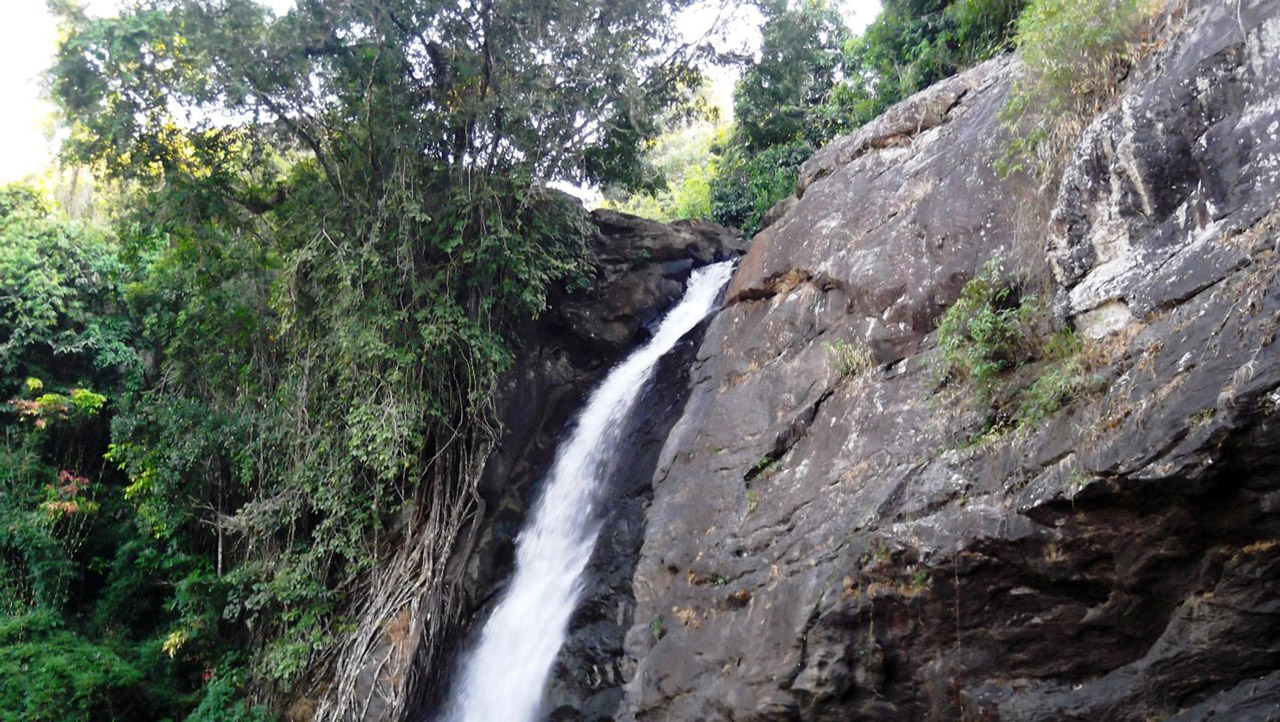
The fantastic waterfall of Soochipara dives down a three-tiered formation withinside the Vellarimala mountains. The call is derived from a needle fashioned rock which is located on the waterfalls. Surrounded with the aid of using lush tea estates and dense woods, travelers frequently spot flora and fauna across the place. From this top, view the staggering expanse of the Chembra Peak. The large rock referred to as Sentinel Rock imbibes an adventurous outlook to the scenic view and is likewise best for rock-climbing.
Location: Vellarimala, Kerala Distance From Mysore: 143 Kms Height: 656 feet.
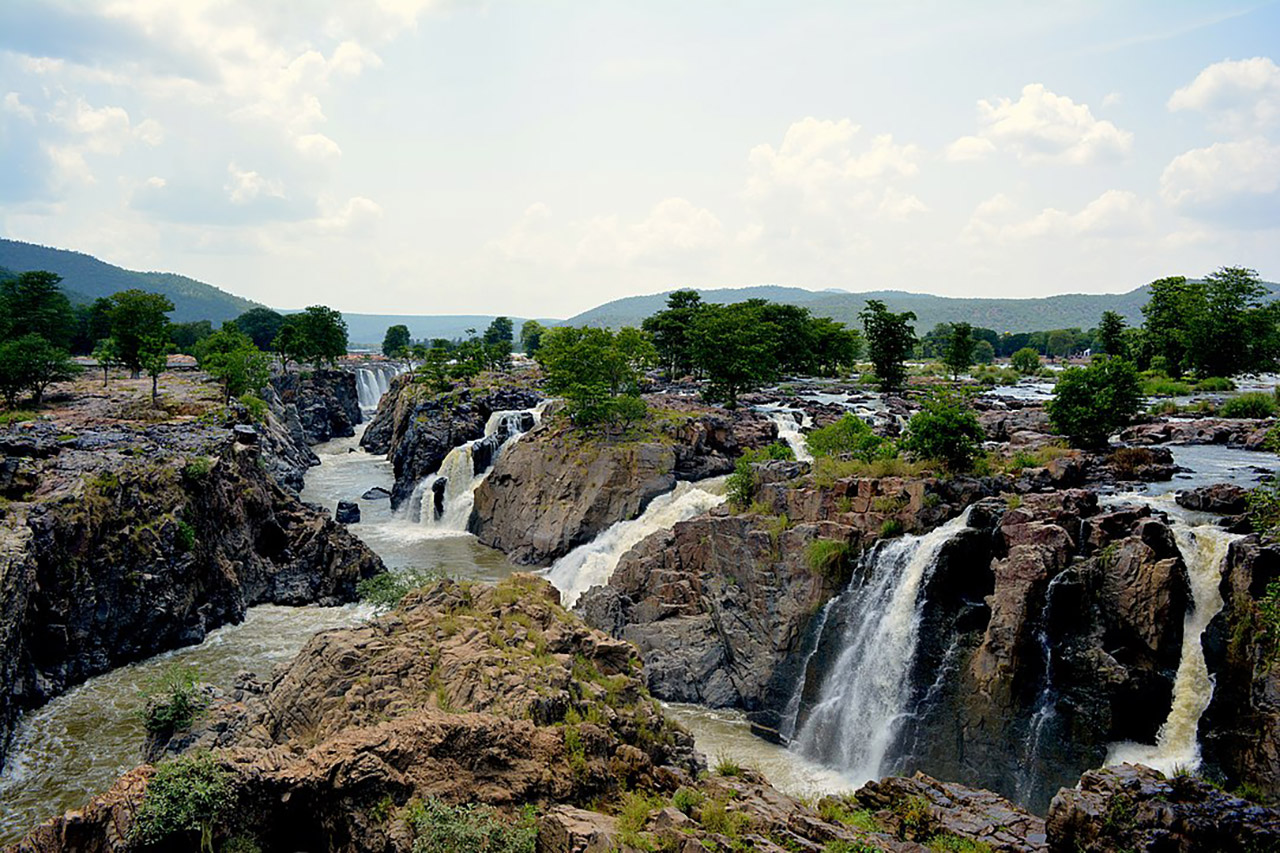
The Hogenakkal Waterfalls frequently appear because of the Niagara of India. The call is derived from Kannadian words ‘Hoge’, meaning ‘smoke’, and ‘Kal’, meaning ‘rocks’. Tourists attain the place through a quick trip on a boat, on the whole for the duration of the desired months of June to October. During heavy monsoons whilst boat rides aren’t available, the adventurous souls choose the exciting Coracle rides and move trekking and trekking.
Location: Dharmapuri-Hogenakkal Road, Dist, Hogenakkal, Tamil Nadu Distance From Mysore: 172 Kms Height: 820 feet.
Nestled in warm temperatures amidst the Siruvani Hills of Tamil Nadu, the Siruvani Falls are embraced with expanses of forest. The water from these falls is harvested withinside the Siruvani Dam which nourishes the town of Coimbatore. Tourists are suggested to bask withinside the serenity of the Falls at its bottom because its steep rocky cliffs will be dangerous. Usually, travelers pay their go to and go back with the aid of using day because of the relatively far off place.
Location: Noyyal River, Booluvampatti, Tamil Nadu Distance From Mysore: 228 Kms Height: 187 feet.
Each one of these cascades has its own unique charm albeit diverse in terms of region, habitat and climate. Enthusiasts of nature and adventure will love to pay a visit to these major attractions with some of those gorgeous waterfalls. They are not done enough justice in the descriptions, therefore we encourage you to plan a vacation and experience them for yourselves! Hope the list helps you with ideas for your weekend trip to these amazing waterfalls near Mysore.
Philosophy shapes art, which in turn shapes philosophy. Interoperating, the two concepts continue their unending traversal beyond temporal boundaries.
When theoretical considerations of a philosophy are complex and demand absolute attention to details, it is art that works as a communication medium. Indeed, along with literary sources, art is another noble source of interpreting and understanding philosophy. And with Buddhism, this becomes peculiarly evident.
The Buddha and the Buddhist philosophy have always been subjects of interest and admiration, and have left an indelible mark on human lives. Over the centuries, not only the life events of the philosopher, but even the Buddhist canons – affluent with moral and philosophical discourses and theories – have given way to several artistic conceptualizations, including narratives, sculptures and inscriptions.
In fact, Buddhism has been one of those philosophical domains, where artists have been leveraging their imaginative instincts prolifically. This has only helped in channelizing the virtues and the moral thoughts enshrined in the Tripitaka, the holy Buddhist corpus.
Episodic elaborations and regional adaptions characterize Buddhist art. However, notionally, the art remains independent of these contextual elements, as in each case the message that it conveys aligns perfectly with the original philosophical constructs.
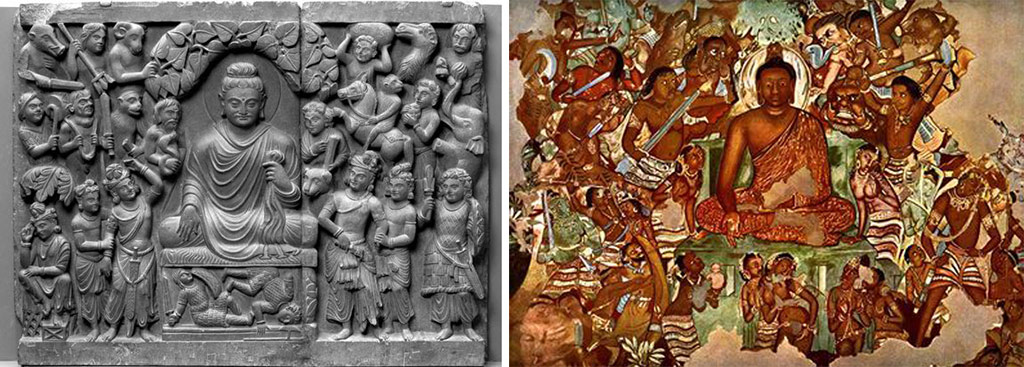
A classic example, amongst myriad depictions, is that of Mara’s assault on young Siddhartha. May it be the Gandhara frieze or the Ajanta mural, philosophically, the art depicts Siddhartha’s mental encounter with his own senses, while crossing the materialistic boundaries before reaching enlightenment. It exhorts the viewer to be unflinchingly determined in not succumbing to recurring passions and desires.
Two different depictions of Mara’s assault: (Left) Gandhara; (Right) Ajanta
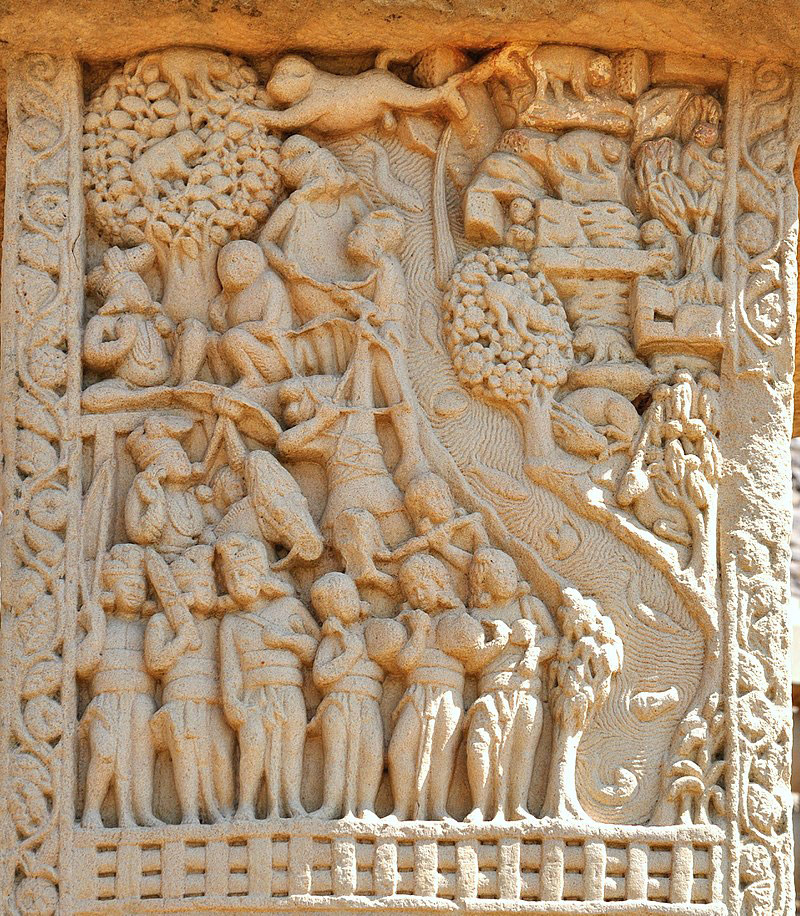
Intriguing Sanchi sculptures that have kept arousing the enthusiasm of archaeologists and art historians are a surviving symbol of not just extraordinary craftsmanship but also of a strong philosophical acumen. At Sanchi, each artistic element is heavily perfused with philosophical essence. The narratives of Mahakapi Jataka and Vessantara Jataka, amongst others, engraved on the toranas (gateways) of the stupa corroborate strong scholarly instinct. While granting accessibility to the pradakshina patha, the toranas prompt us to act with selfless devotion, as the character of Bodhisattvas highlights in these tales.
Mahakapi Jataka depicted through synoptic narravtive at Sanchi: The monkey king sacrifices his life to protect the fellow monkeys.
Not just the art even the Buddhist thoughts are no less reflective in the Mahachaitya of Amravati or the ruins of the great Nalanda. Surviving the ravages of time, these monuments have silently borne the human onslaught, signifying that despite odds we must remain undeterred.
In its prime during the Ashokan era, the art entered a new phase and perfectly amalgamated with philosophy and literature. Profusely disseminating wisdom, the dynamic Ashokan edicts haven’t been deterred by geographical barriers and have continued to keep the Buddhist ethics immortal.
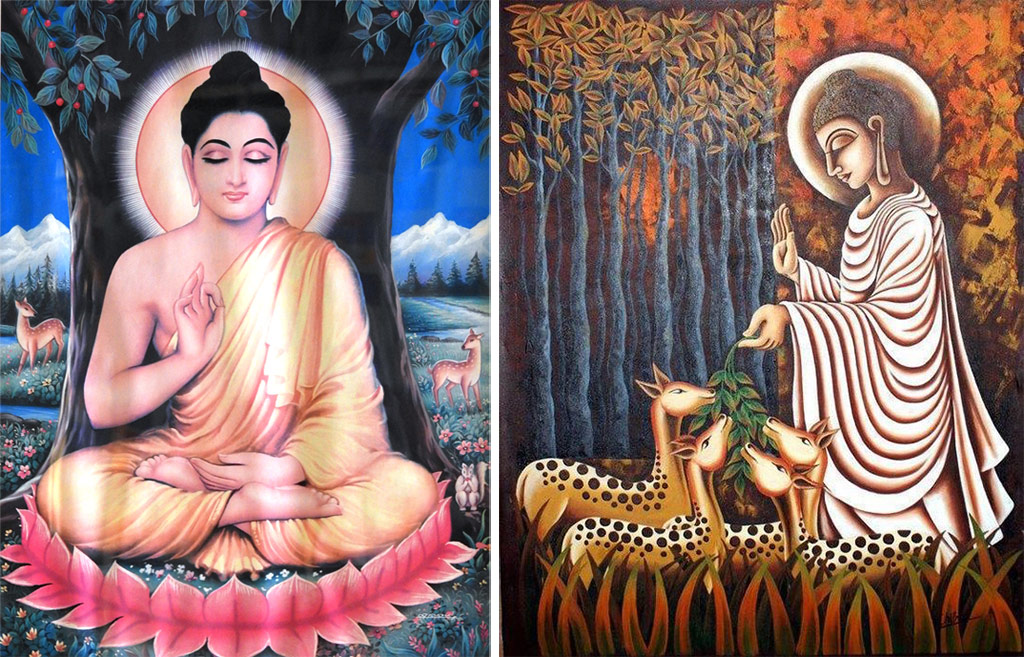
The principles of compassion and oneness that are deep-rooted in Buddhism find themselves translated into acrylic representations like the one that depict the Buddha meditating in the deer park. Showing the peaceful coexistence between two different species – the human and the deer, the scene exemplifies the Buddhist conservation-centric attitude that functions within the broader spectrum of deep ecology. The art does not miss to assimilate ecological aspects and brings to the fore the Buddhist egalitarian worldview that respects biodiversity.
(Left) Traditional depiction of the Buddha meditating in the deer park; (Right) New-age imagination of the Buddha’s stay in the deer park, highlighting his love for wildlife.
In the twentieth century, Dr. Babasaheb Ambedkar’s revival of the religio-philosophical theory sparks artists’ imagination, which coupled with admiration, fosters creativity that gives way to a new art form. Through different themes, the Buddha and Dr. Ambedkar are together depicted as savior of sufferers, pioneers of rationalism, proponents of goodness, preachers of compassion and apostle of good human relations.
Aniconic forms dominated the early Buddhist art, but its wider implications can be interpreted in modern times too. The Buddhas of Bamiyan are standing instances of the fact that they didn’t suffer destruction but only acquired an aniconic form. Ironically, the destructive force itself became a thing of the past, but the aura of the serene Buddhas still permeates the void at the site. So well does this correlate with the Buddhist law of impermanence which stresses that matter keeps flitting between forms and ultimately loses its existence.
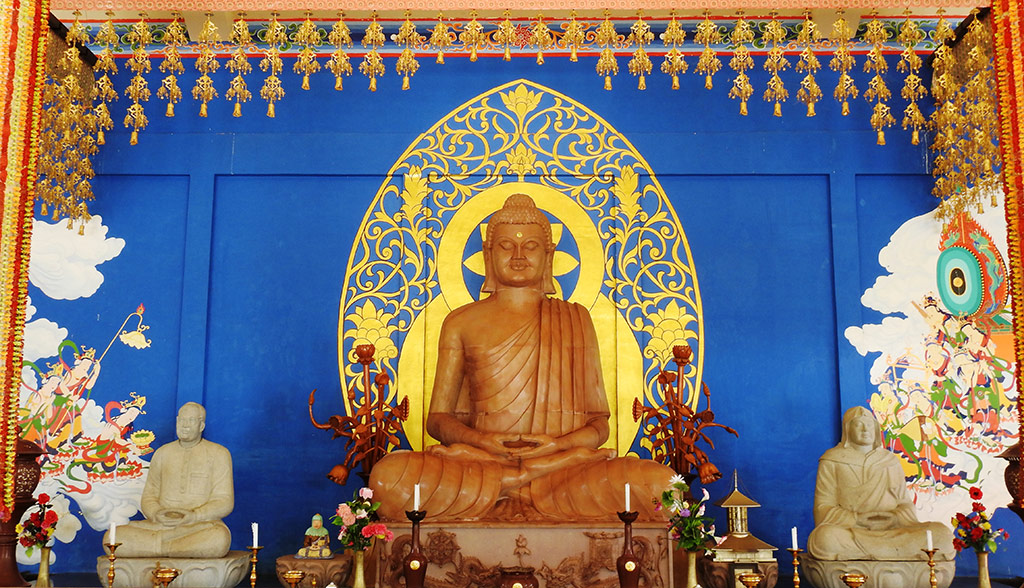
Insatiable artistic quest for innovation in present times is highlighted by the magnificent Mahasamadhi Boomi pagoda at the ancient Buddhist site of Pauni, on the banks of the Wainganga in Central India. The huge meditating Buddha idol accompanies that of Dr. Ambedkar, indicating the contemporary significance of the two personalities, and their followers’ shaping of themes around the idea. The cylindrical core of the pagoda’s top tier bears abstract floral designs that symbolize moral values like purity, generosity and righteousness.
Mahasamadhi Bhoomi, Pauni: The Buddha meditating with Dr. Ambedkar
The dynamism inherent in Buddhist art lets creativity manifest into artistic variations, but it incorporates subtle philosophical elements statically to keep the underlying principles intact.
Demonstrating that endless artistic dimensions present endless ways to portray philosophy, Buddhist art is an epitome of the fact that philosophies, sometimes, are incomplete without art.
Who doesn’t love festivals? They bring everyone together and remain to be a true celebration of the culture and legacy of a place. The delicious food prepared doesn’t bother either. Festivals remain synonymous with excitement and happiness and when it comes to the incredible festivals of Karnataka, it is either go big or go home. Let us dive deep and acquire more knowledge about the culture of Karnataka, beautifully reflected by various holy as well as seasonal festivals:
Let us begin this colorful journey with Karnataka’s very own state celebration: Mysore Dasara, which memorializes the triumph of good over evil. This is a ten-day event that concludes on Vijayadashami, the day when the devil Mahishasura was defeated by Chamundeshwari (Hindu Goddess), per legend. Karnataka simply glows up with decorations resulting in it becoming a must-see during Dasara. The main event is the grand, in truly every sense of the word, the procession from Mysore Palace to Bannimantap. People dressed in vibrant clothing performing, the marching elephants who can only be described as majestic, and the fanfare of people gathered to behold this marvel in person is what attracts tourists from throughout the world to stay in Karnataka during Mysore Dasara.
The Hampi Festival (also known as Vijaya Utsav) rejoices the town’s rich history and typically occurs in October or sometimes even November. It honors the birth anniversary of renowned poet Purandaradasa. With the delightful vestige of Hampi filling in, as the marvelous scenery, the festivities happen yearly at the Virupaksha Temple. ‘Janpada Kala Vahini’ might just be one of the finest functions of this festival which involves various folk performances. Another appeal of this festival is the elephant march or the Jumbo Safari. Furthermore, it is graced by the presence of several renowned instrumentalists as it is, after all, considered a salute to the arts. The Hampi festival draws tourists from all around the world and is even thought to be the cultural center of Karnataka.
This exciting festival falls just a day before Ganesh Chaturthi and commemorates Lord Shiva’s wife and the mother of Lord Ganesha, the Goddess Gowri who is revered throughout the county for her capability to provide vigor and bravery to her devotees. The incarnation of Adi Shakti Mahamaya is thought to be the mightiest of all goddesses. In her remembrance, women dress in traditional clothing paired off with gorgeous jewelry. They perform a puja with suchi or cleanliness and devoutness for the goddess where she is offered a ‘bagina’ which consists of kum-kum, turmeric, bangles, rice, dal, etc. Another special attribute of this festival is that wedded women receive a gift called ‘Gauri Habadda’ from their family.
Now we move on to a festival I am sure we’re all familiar with, Ganesh Chaturthi. This festival typically occurs between August to September. During the ten-day festivities (from Shukla Chaturthi to Anant Chaturdashi), you can see temples throughout Karnataka beautifully ornamented with flowers along with clay models/sculptures of Lord Ganesh to commemorate his resurrection to life. The principal dessert of this festival is Modak which is said to be loved by Ganesh (and everyone else!). Karanji is yet another famous sweet prepared for this celebration. Every shrine and every home worships Lord Ganesh during these auspicious ten days after which he is submerged into the water.
The rural town of Pattadakal was the Chalukyas’ secondary capital and is renowned for its shrines which are a definite must-see because of their magnificent carvings and constructions, of which the majority are devoted to Lord Shiva. The shrines also beautifully reflect the characteristics of the architecture of the Chalukyas. This commemoration rejoices in their beauty and wonder. Various fine art and dance events take place which attracts performers as well as tourists from the entire country. It usually occurs in January and continues for three days. The Craft Mela, which showcases the handicrafts of the region, is the spot-to-be for any art lover.
6. Ugadi
Ugadi or Gudi Padwa is another extremely infamous festival of Karnataka that observes the new year as per the Hindu calendar. It commemorates the ‘beginning of the new age’ of the Telugu and Kannada people. It typically falls in either March or April. People shop in large amounts during this time and it is also regarded as a favorable occasion to commence a new business. The residents of Karnataka clean and decorate their homes. Furthermore, they wake up early on the day and wear traditional apparel along with jewelry. They go to temples to pray and consume a special meal referred to as ‘Bevu Bella’ which consists of Neem flowers, un-ripened mango, salt, green chilies, and jaggery.
7. Karaga Festival
Image/Wikimedia
This incredible festival is predominantly remembered by the Vashnikula Kshatriyas Thigala society (society of gardeners) in the memory of Goddess Shakti and takes place at the famed Dharmarayaswami Temple. The demonstration involving an earthen pot, ornamented with flowers, borne over Goddess Shakti’s head is the main appeal of this festival. According to legend, near the conclusion of the Mahabharata, a sight of hell was unconcealed to the Pandavas and at that point, Tripurasura, a demon, was not dead. Draupadi bore the form of Shakti to overthrow the demon with the support of an army of troopers (The Veerakumaras) who asked Draupadi to stay back with them. The folks of the Thigala society consider themselves to be their descendants and it is deemed that each year at the time of the Karaga Festival, Draupadi comes back to visit them.
The Kambla Festival might be arguably the most exciting of festivals celebrated in Karnataka. This buffalo race is a yearly event that starts in November and ends in March and is praised for its individuality. The spectators truly get a thrill out of watching this race which occurs at Mangalore. In this amazing race, two buffaloes are attached via a plough and they run splashing through the mud while being secured by a farmer. This festival is a symbolization of the commencement of the yielding season.
9. Vairamudi Utsavam
Image Courtesy – Gangadhar Channa
This festival honours Lord Cheluvu Narayana and is held every year in Melukote, Mandya district. The Vairamudi (diamond crown) donned by the goddess is a highlight of the event. The crown has a specific meaning and should not be exposed to direct sunlight. It is carefully preserved, and in the evening, the temple’s top priest lays the crown on the deity’s head, followed by a magnificent procession. This procession continues into the early hours of the morning. It brings the quiet town of Melukote to life with its grandeur and majesty. The celebration lasts 13 days, and preparations begin a month in advance. For Vaishnavites or worshippers of Lord Vishnu, this is a significant event. The big event takes place in the months of March and April, and it is entirely funded by the district government. Every year, nearly 400,000 devotees attend this event.
10. Tula Sankramana
Image – Yathin DA
Tula Sankramana is the first day of the Kodava community’s Toleyar month. The Kannadiga people revere the Cauvery River, which has a notable meaning for them. The festival is held to celebrate the rice harvesting season. On this day, it is said that the goddess Cauvery emerges from the water to bless her worshippers. Thousands of people gather near the Talacauvery river on this day to see the rising water levels. They then bathe in the sacred river, which is thought to be auspicious. Around 100,000 people from all across Karnataka assemble in the Kodagu district on the 17th of October to take part in the celebrations.
Every 12 years, in the town of Shravanabelagola in Karnataka, India, a very important Jain festival is conducted. The 17.3736-meter-tall statue of Siddha Bahubali is sanctified during the event. As the ceremony gets underway, devotees shower blessed holy water on those who have come to participate. The statue is then washed in liquids like milk, sugarcane juice, saffron paste, and sandalwood, turmeric, and vermilion powder. To reach the massive statue, the Jain nuns hike up the Vindhyagiri highlands.
Petals, gold and silver coins, and valuable stones are among the offerings presented to the figure. The event in 2006 concluded with a flower shower from a helicopter onto the monument, which spectators jumped up to capture as a blessing. The last time this festival was held was in 2018.
12. Kannada Rajyotsava
On November 1st, 1956, the state of Karnataka was established. The Karnataka state flag is hoisted by the Chief Minister of the state, and the governor addresses the people of the state on this day (a declared state holiday). The official yellow and red state flag is frequently seen flying over various government and private establishments. A cultural gala is usually held in a huge stadium, and numerous prizes are presented to persons who have excelled in their disciplines. The Chief Minister also bestows the Rajyotsava award, which is the highest state honour. Traditional dances are performed, the state flag is hoisted everywhere, and sweets are handed out. Karnataka residents of all faiths take pride in the holiday and celebrate it joyfully.
Sri Vithappa Fair is one of Karnataka’s most well-known fairs and festivals. Every year on the 14th or 15th day of the month of Aswija, the celebration is held. The fair, which has been held in the town of Vithappa for over 200 years, is a yearly event. It is a three-day festival in honour of Lord Vithappa, which includes a spectacular parade with a palanquin carrying the god’s idol and drummers. The fair attracts people from neighbouring towns, and an animal is sacrificed in front of the god. The fair is of enormous religious and cultural significance, and it attracts people from all across the country. Puja is held throughout the festival, followed by a parade.
14. Makara Sankranti
In Karnataka and other parts of India, this is also one of the most well-known festivities. Makara Sankranti is a three-day event that heralds the start of the harvest season dedicated to the Sun God. The first day of the month is known as Boghi, and it is the last day of the Margashirsha month, during which all of the household’s old goods and clothing are burned. To greet the new month, the residences are decked with rangoli and a new vessel for preparing traditional sweets is introduced to the family. People make offerings to the gods, wear new clothes, and eat foods like Sweet Pongal, Sankranti Yellu, Payasa, Vade, and so on on the day of Sankranti. On the festival’s final day, rituals are performed to thank and pray for the cattle known as Kanu Pongal.
Ask a hundred people why we celebrate festivals and you might receive a hundred different answers. I choose to believe that it is because it gives us a reason to bond with our family, to come together and honour something that plays a vital role in our lives, our culture along with breaking the monotony of our everyday lives and relaxing in the haven of enjoyment created around us.
Karnataka is a state famous for its silk and sandalwood from Mysore, the tourist destinations of Hampi and Coorg, the Mangalorean Cuisine and so much more. And when it comes to awesome beaches, let’s just say that’s another one to add to the pros column. It is rightly said, “Life takes you down many paths but my favourite ones always lead to the beach.” Let’s go on a trip to some of the best beaches of Karnataka-
Situated near Mahabaleshwar temple, this beach is a rather perfect fit for anyone who yearns for solitude among the calming waves due to the secluded nature of the beach. This beach has a long white sand coastline where picnics are held or one can maybe grab a bucket and a shovel and build a sandcastle. Apart from this, Gokarna Beach also offers water sports such as jet skis and banana rides which is something that must be tried to get an immersive experience of the place. The beach itself is quite pristine and has a lot of shacks where you can relax and take in the marvellous view in front of view.
When it comes to this famous beach of Karnataka, I need not describe this one, for the name itself exemplifies it: it’s paradise on Earth. This beach, being the last beach along the Gokarna coastline, is also referred to as the Full Moon Beach. This beach is praised for its cleanliness and possesses a mesmerizing view. Adventure lovers need not worry because this place offers an amazing beach trek as well as water sports. Spent the whole day here and you don’t want to leave? The good news, you don’t have to, for you can set up a tent and camp there overnight.
Kudle Beach may just arguably be one of the best beaches to visit in Gokarna. Its picturesque beauty and charisma are what makes this beach special. Simply laying down and taking in the fresh air there is a cathartic experience. Don’t forget to pack your swimsuit because just one dip in these clear, blue waters will wash away any tiredness you might feel. For those of you who possess the courage for it, try out the exhilarating activity of surfing. Amongst everything else that can be done on this beach, there is to do at this beach, my personal favourite is taking a long walk along the lovely coastline at sunset.
This indeed beautiful beach gets its name from the fact that it resembles the shape of an ‘Om’ because of which it is also considered to be of great spiritual significance to the locals as well as tourists who come to visit this geographical wonder. This beach offers a scintillating view of the Arabian sea during sunrise and sunset. This beach, like any other, allows you to tap into your adventurous side by partaking in activities like speed boat riding, trekking, dolphin spotting, etc. If you’re a foodie, you can explore the local cuisine by eating at the various stalls at the beach that offer mouth-watering delicacies.
Feel the refreshing breeze on your face at Tannirbavi Beach. Located towards the southern end of Mangalore, your experience here will be the very definition of a relaxing day at the beach. It is also considered an amazing place for enhancing your swimming skills. A little-known fact about Tannirbavi Beach is that, visible from the coast are the remains of a ship that sank a few decades ago. Don’t forget to bring your camera because the sunset there is a sight you would want to capture.
This one on the list is the perfect choice for anyone looking to unwind. You can take a long walk or build sandcastles. Sure, it does not offer elaborate water sports but it will help you find comfort in simplicity. After all, there is a reason this beach is referred to as Nirvana Beach. The pleasant serenity and tranquillity of this place encourage one to take joy in one’s own company. It is highly recommended to take the ferry there for it is a little adventure.
Located near the Murudeshwar temple, this beach is an infamous destination for pilgrims as it is considered to be overlooked by Lord Shiva. The greenery (which consists of coconut trees) and gold adds to the impeccable beauty of this beach. It’s a great spot to have a picnic with your family. If you reach there early in the morning, you might just spot a kingfisher or a flying seagull which is why bird-watching is another popular activity there. A day at this beach will be exhilarating and an experience you do not want to miss out on.
St. Mary’s islands or the fabulous four are a set of four interconnected islands. (Coconut Island, North Island, Darya Bahadurgarh Island, and the South Island) Each of these possesses its own unique charm. One of the appeals of this island is the volcanic rock formations that attract a lot of tourists, especially geology enthusiasts. Legend also states that before reaching Calicut, Vasco Da Gama stopped here at St. Mary’s island. These islands are of great significance not only for their breath-taking beauty but also in various other spheres which adds to the attractions of these islands.
Surathkal Beach, on the Arabian Sea’s shoreline, is a tidy beach with immense visual beauty, located 19 kilometres from Mangalore Railway Station. The beach is frequented in the evenings and offers gorgeous sunsets views. Aside from the beach, the historical Sadashiva Temple is a must-see. When Lord Ganesha set Ravana’s Shivalinga on the ground, legend has it that Ravana attempted to pick it up with force, scattering a few pieces. Suratkal is believed to have received one of the linga’s fragments. A lighthouse sits on a tiny hillside near the Sadashiva Temple. Suratkal is also convenient to access by a daily bus service from Mangaluru.
Tilmati Beach is one of Karnataka’s most gorgeous beaches. The gritty black sand of basaltic rock on this small beach gives the shore a dark appearance. Tilmati refers to sesame sand or sand that resembles sesame. Waves crashing onto the basaltic rocks that make up this region are expected to generate this 200-meter expanse of black sand. It’s an ideal spot for a picnic. It is one of the state’s most unique coastal forestlands due to the richness of plant and animals near the ocean. Visitors can also pitch a tent on the rocks or adjacent slopes to spend the night. Kayaking, rowing, pedalling, and nature walks are among the activities available. The high-speed boat ride is a must-see spectacle. Other activities that kept guests occupied during the day include rock climbing, dolphin watching, bird watching, and a cruise ride.
Malpe Beach is located at the foot of the Udyavara River, also known as the Malpe River by the locals. Malpe Beach is still relatively undeveloped and unfrequented by tourists, with its silver-white sands and jagged islands. It’s a great place to visit in Udupi for people who prefer to enjoy being on the beach alone.
The infinite expanse of golden sand, gracefully swinging palm trees, brilliant blue sky, and cold waves of the Arabian Sea combine to create the ideal setting for a memorable vacation. Aside from that, the beach offers a wide range of adventure and water sports. Jetski, banana rides, speed boat trips, water scooter rides, surfing, and other water sports activities are available. Malpe Beach is also home to the well-known Spring Zouk event, which features some incredible DJs, art, cuisines, and culture and serves as a major tourist draw. It takes place in the month of February. The greatest season to visit Malpe is from October to January when the weather is pleasant and clear skies allow you to get the most out of your stay by participating in all of the activities.
Ullal Beach is a magnificent beach located to the south of the Nethravati River on the Arabian Sea coasts, about 10 kilometres from Mangalore Railway Station. This is one of Karnataka’s best and most developed beaches, as well as one of Mangalore’s most popular tourist hotspots. Ullal Beach is also the calmest and most serene beach in Karnataka. The sunsets on this silver-white sand are strikingly lovely when viewed through the casuarina woods. Two of the most popular beach activities are sunbathing and swimming. The sunsets on this silver sand beach are particularly beautiful when viewed through the casuarina woods. Swimming and sunbathing are two of the most popular beach pastimes. At Ullal Beach, you can participate in a variety of water activities. Summer Sands Beach Resort, in Ullal, is a favoured picnic spot. The beach is close to the Ullal Bus Station, which is readily accessible from Thokkottu through Kerala Road.
13. Devbagh beach
Devbagh Beach is one of India’s most fascinating beaches, as well as one of Karwar’s top locations to visit.This unique island beach is bordered on one side by the huge Arabian Sea and on the other by the dense Western Ghats. The Arabian Sea’s bright blue seas and the range of casuarina trees along the beach are characteristic of this endless stretch of golden sand. In 1916, the renowned poet Sri Rabindranath Tagore paid a visit to this location because of the natural beauty.
Devbagh Beach is noted for its water sports and entertainment as well as its cool breeze and golden sands.nd other water activities are popular here. Devbagh Beach Resorts, which are located near the beach, provide several activities. From the point where the river meets the sea, one can take a cruise up the Kali River. Here, visitors can also enjoy the exquisite flavour of fresh fish.
Beaches are truly synonymous with calm, peace, and relaxation (something we could all use a little bit of). To be on any one of these beaches right now, would be the equivalent of being in heaven on Earth. It is during these times that we have to cling to the hope that we will. Hope is believing that there is light at the end of this tunnel of darkness and that very soon you might be frolicking around in the beautiful beaches of Karnataka and making sandcastles, even if they were to get washed away by the waves a mere few minutes later. So, on that note, see you at the beach. Don’t forget to pack your sunscreen!
Do you want to clear your head and lose your anxiety in the wilderness while also getting in some exercise? Do you want to take the road less traveled? Well then, trekking is the activity for you! Feeling adventurous and bold? I certainly hope so, because today we are going to take a trek through some of the best trekking places in Karnataka!
Imagine yourself in a place surrounded by beautiful flora and fauna. You see a peacock spreading its feathers and a deer running in the opposite direction. You look around to observe misty valleys, grasslands, streams, and rolling green hills. That is the experience you will receive trekking in Kudremukh. Located in Chikmagalur, Kudremukh should be any nature lover’s go-to destination for trekking in Karnataka.
If you are up for a challenge, then the Tadiandamol Trek, the trail to the highest peak in Coorg is perfect for you. This breath-taking journey will include grasslands, shola forests, and waterfalls. It is one of the best trekking places in Karnataka, especially for beginners just starting, and is appreciated for its marvellous and well-maintained track.
3. Hampi Trek
Image/Mahesh Pishe/Pixabay
Turn to the back of a fifty rupee note because our next destination is the UNESCO World Heritage Site: Hampi. There are various trekking routes in Hampi of which some of the popular ones are the Hemakuta Hill Trek, Matanga Hill Trek, and the Anjaneya Hill Trek. This trail is particularly an amazing option for anyone who wants to explore the heritage of this town that possesses a charming mystique.
Located in the mountains of Chikmagalur, it is also called the Dattagiri Hill Range, due to the shrine’s believed connection to Guru Dattatreya. This trail gets its charm from the beautiful kurinji flowers that can be found in the hills of the Nilgiris and the overall serenity of this place and can be a brilliant destination for experienced trekkers.
Situated in the Shimoga district of Karnataka, the Kodachari Trek remains one of the most popular trekking spots in Karnataka. The quaint trail of Kodachadri involving paddy fields in villages, forests, and grasslands, is what makes it a unique and memorable experience. If you’re lucky, you might even spot some rare species of animals such as the Malabar Langoor and Indian Rock Python.
6. Dandeli Trek
Image – Karthik Narayana/Flickr
The serenity of Dandeli, combined with the rich flora and fauna of the place truly makes you feel at home in nature. Kavala Caves trek, Kulgi-Nagzari Valley trek, and Potoli-Shiroli trek are some of the various trails there. Apart from trekking, Dandeli offers various other adventures as well.
Mullayanagiri, the highest peak in Karnataka, poses quite a challenge for trekkers due to its steep nature and is also regarded by some as ‘Mini Himalayas’. The journey may be difficult but what makes it worth it is the view at the top where you take in the beauty of the Western Ghats.
Anthargagne (meaning ‘The Ganges of the Deep’) is another incredible place for especially religious trekkers who want to climb this hill, surrounded by volcanic rocks. Considering that there are no options for accommodation, people who want to explore this trail can go for a night trek after pitching a tent.
This trail, known for the stupendous beauty of the mountains, valleys, and pristine gardens that can be witnessed on the way, is particularly suitable for beginners. One of the major attractions of Kemmanagundi is the infamous view from the Z point, which is a photographer’s dream come true. The various waterfalls on the way such as Shanti Falls, Hebbe Falls, etc. are a must-see.
10. Nandi Hills Trek
Image/Pixabay
An introductory course to trekking: Nandi Hills comes to mind. This trail is very popular among kids, mainly teenagers who deeply enjoy the approximately 4 to 5-hour trail offered here. The sense of peace achieved by walking around in the lush green gardens and over the boulders is ineffable. And the view is the cherry on top.
Rare formations of black limestone rocks have resulted in the formation of the enchanting Yana Caves. The walk through the forest is filled with greenery and is quite refreshing. It is considered by many to be the representation of nature at its best. The Apsarakonda Waterfall located nearby is also a sight worth seeing.
The Madhugiri trek is for daring and courage. One of the most famous among treks in Karnataka is the second-largest monolith in Asia and attracts tourists from all over the country. The must-see for this trail is without a doubt the rock dome, at the top of which is a fort.
To describe the experience of trekking at Shivagange, only one word is required: Magnificent. It is approximately 2500 feet high and is a great trail for both beginners and experienced trekkers due to the presence of railings. The place is filled with scenery that is an awe-inspiring and truly rich history.
A beach and village located in Karnataka near Udupi, it also possesses an astonishingly splendid trail. The beach trek from Bhatkal to Maravanthe is around 35 kilometers and is ideal for beginners due to the absence of hilly terrain and will provide you with an adrenaline rush.
15. Charmady Ghat Trek
Image/Manas Palker/Pixels
If you wish to appreciate nature’s pristine glory, then look no further for Charmady Ghat is the place for you. During this incredible journey, you can take in various waterfalls as well as tea and coffee estates. It offers you a variety of hills to conquer, some apt for amateurs and some for professionals, as per the steepness of the same.
If you want to get in a short trek before proceeding further in your exploration, then the Kunti Betta trail which takes about 1 hour and 45 minutes is the one for you. The view of the sunrise is breathtaking and an experience you don’t want to miss. You can also opt for a night trek and camp around the warmth of a bonfire.
17. Kudlu Falls Trek
The Kundlu Falls Trek is a true example of how the end makes the journey worthwhile. The waterfall is amazingly beautiful. What makes it unique is that you are allowed to get comparatively closer to the waterfall and there is a separate shallow pool that is rare for such tall waterfalls.
One of the most famous choices for trekking in Karnataka, it has a truly picturesque peak. Agni Gudda translates to Fiery Mountain due to the hill’s volcanic tendencies. A little-known fact about this hill is that it has been used as a shooting location for various Bollywood and South Indian films.
The hill-top forts built by Tipu Sultan acts as the main attraction of the Jamalabad fort. The trail is moderately difficult but the steps you climb will be awarded by the view at the top from where you can witness the surrounding scenic beauty and ranges.
It is a journey of about 350 steps from Talakaveri and takes around 3 hours. If you feel weary, then you can recharge yourself at the picturesque streams on the way. If you’re fortunate, you just might spot an elephant or a sambar with your pair of binoculars (Something that is recommended you carry to enjoy the full experience of trekking)
I am inclined to pack a bag and buy a ticket to Karnataka myself to get lost in the scenic beauty of these places and take a sabbatical from everyday life by partaking in the exhilarating experience that is trekking.
A young Kashmiri has set an example for youths in these trouble times. Salwat Hamrah, 32, is an entrepreneur, an adventurer, a yoga teacher and practises meditation.
On March 1, Salwat embarked on a 4,500-km cycle expedition from Kashmir to Kanyakumari called ‘Hope Monk – K2K’. This was his first such journey intended “to push my mental and physical limits” as he puts it.
His friend from Pune Saurabh Sharma suggested to Salwat to add a social aspect to his plan and the thrilling cycling expedition began. Salwat wanted to raise funds for the underprivileged children studying in the Wonder School being run by his banker-turned-educationist friend. Sharma and his colleague, football coach Ryan Roy Shah are training these five children, including two girls, to become professional football players. The Potter’s Earth Foundation, an NGO, is bearing the expenses of these children’s coaching and studies.
When Salwat started his adventure, he had not expected the second wave of the pandemic to rage suddenly. As he approached Gujarat in the last week of March, the cyclist realized that it would grow as major cities in Gujarat had started clamping measures. Determined to continue with his mission, Salwat peddled on.
“By the time, I reached Pune, cases were rising exponentially and there was weekend lockdown in Pune. We had planned a media interaction and I also wanted to spend some time with the children. However, I had to cancel that plan and headed towards Kolhapur,” said Salwat.
In Kolhapur, he had symptoms. So, he decided to take a pause in Goa and planned to cycle further. However, he tested positive for Covid-19. Unwillingly, he suspended the expedition mid-way. However, Salwat Hamrah had already covered 2,500 km and got valuable experience.
Even halfway through, he had achieved a lot as it was his first such expedition. Salwat shared a few interesting experiences that he had. “I reached Pushkar in Rajasthan. I was sitting on the bank of the Pushkar Lake when an old destitute old woman came and sat by my side. She had a small packet of biscuits and offered me biscuits. I got startled. She probably had to survive on that little packet that day and had magnanimity to offer a few biscuits, which one cannot imagine if one is hungry and has little food. I felt touched. This kindness of ordinary people, I experienced throughout my journey.”
Another experience he dubbed ‘magical’ and ‘miraculous’ on the very first day of his expedition. He had to travel to Banihal from Srinagar, a 110-km distance. However, cycling was tough due to the mountainous area. “After 25-km of ascending road, my knees were paining. When I reached Banihal, I could not cycle. I was limping and visited a physician. I underwent physiotherapy and got medicines but pain persisted. Then I got a call from my friend who is a Reiki master. She offered to help with Reiki. Any help at that point was welcome. I decided to give it a try. We had a video call in the evening. Next day morning, my knee pain disappeared. I do not know whether people would believe this, but it was a magical remedy,” said Salwat.
He added, “It was a beautiful experience. Some technical glitches in my bike were also fixed. If you decide to continue, things automatically fall in place. Had I decided to give up then, the trip would have ended on the very first day.”
Drawing parallels between a meditative state and the thrill during an adventure, Salwat said, “When you are rafting in a ferocious river current, you forget the past and future. You realise during a thrill that life is so beautiful. You are totally focused in the present moment, on rafting. This state resembles a meditative state. It helps you be in the present moment and face reality as it is. Thus, you are able to tackle challenges skillfully.” Salwat has been running his venture ‘Beyond Limits’ from Bangalore for the past seven years.










.jpg)


.jpg)
