Gumnaami : In the Search for Truth

0

Author – Shubhobroto Ghosh
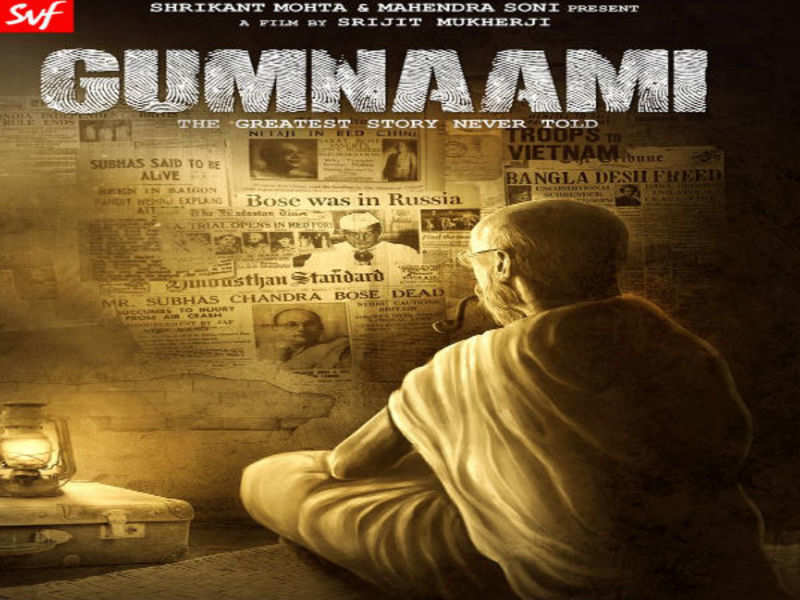
Image Courtesy – Times of India

In Hindu culture, one of the manifestations of Brahman is satya(truth). In Christianity, in the process of crucifixion of Jesus, Pontius Pilate exclaims, “What is truth?” For millennia, human beings of all cultures and faiths, have pondered on the nature of what constitutes the truth. In Indian history, one subject on which we do not know the truth or the truth is most contentious is that of the death of Netaji Subhas Chandra Bose. As former president of the Congress who revolted against the principle of ahimsa(non violence) of Mahatma Gandhi and founder of the Indian National Army that  fought alongside the Axis powers in World War II, Netaji is of abiding interest to all, admirers and detractors alike. Just as his life is subject to scrutiny in terms of merits and demerits of his political ideologies, his death is the center point of a raging debate that is still not resolved.  The official version of the Indian government(at least the Congress government) has remained that Netaji Subhas Chandra Bose died in an air crash in Taihoku in Taiwan on the 18th of August, 1945. However, this version has been contested by many and it is in the wake of this debate that filmmaker Srijit Mukherji has made his latest film, ‘Gumnaami’ as a contribution to the substantive body of research that challenges the official perspective on Netaji’s death.

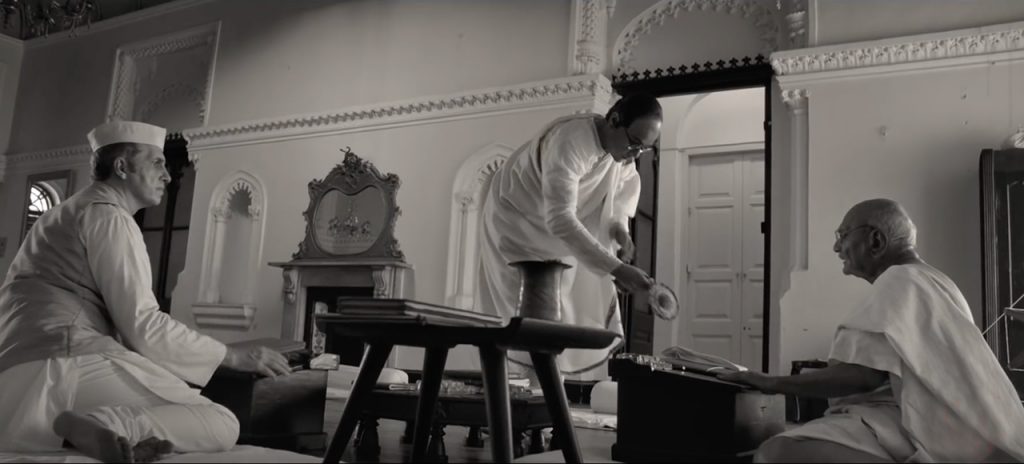
 The film impresses with its meticulous research and despite questioning the plane crash theory, portrays the Taihoku plane crash in very moving light. The sheer determination of a freedom fighter to continue his struggle for independence of his motherland is shown in ebullience. Amidst the devastation of Japan with nuclear bombs and the brutal losses to the Indian National Army that forced them to retreat from North East India, abandoning the onward march to Delhi, Netaji is shown as a steadfast soul who is unwavering in his single minded objective to witness a free India. Prior to Netaji’s departure from India, his meeting with Mahatma Gandhi and Jawaharlal Nehru on the nature of India’s position during World War II is also depicted skilfully. ‘Gumnaami’ makes us marvel at the endeavours of the actors to fit into the shoes of the characters they portray. Prasenjeet Chatterjee, already well known for numerous roles in a variety of circumstances, is brilliant in his portrayal of Netaji and so are Surendra Rajan as Mahatma Gandhi and Sanjay Gurbaxani as Jawaharlal Nehru.
 One unique aspect of Gumnaami as a film is that the director himself, Sriit Mukherji, plays the role of a newspaper editor who is trying to make a special story on the Mukherjee Commission that was set up in 1999 by the government of India to look into the circumstances of Netaji’s disappearance from public view. The editor convinces a journalist named Chandrachur Dhar, initially a sceptic on Subhas Chandra Bose, portrayed mesmerisingly by Anirban Bhattacharya, to undertake a comprehensive investigation on the information surrounding Netaji’s death. Although the first half of the film seems somewhat slow, the director captures the attention of the educated layman at every point of the narration with exact locations and characters provided as subtitles, all based on reality. The character of Chandrachur Dhar is fictional though, and the name is an amalgamation of two ardent Netaji researchers of ‘Mission Netaji’, Anuj Dhar and Chandrachur Ghose, authors of the book, ‘Conundrum’ that deals with Netaji’s death mystery.

 Gumnaami adroitly shows the dissenting voice of Chandrachur Dhar during the course of the hearing of the Mukherjee Commission. In the face of stringent opposition, criticism and mockery by Mr Pal, a lawyer who is in favour of the plane crash theory of Netaji’s death, Chandrachur Dhar peels the onion, bit by bit and as he says in the film by “breaking political palaces” surrounding Netaji’s death and the official version of the Taihoku plane crash. His testimony reveals an astonishing nineteen(19) inconsistencies in the Taihoku plane crash theory, inconsistencies that appear to have been overlooked by the two commissions appointed by the government of India before the Mukherjee Commission, the Shahnawaz Commission constituted in 1956 and the Khosla Commission made in 1970.
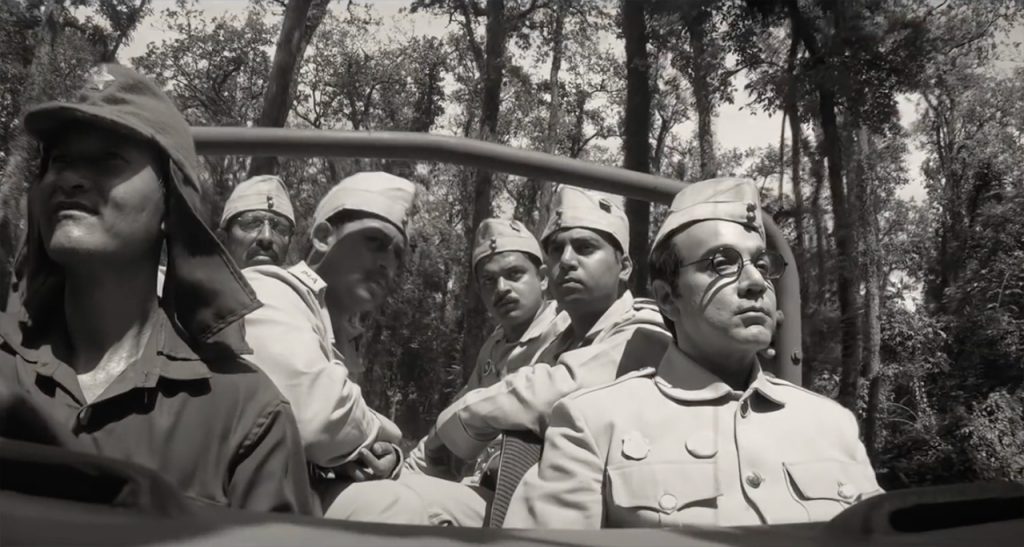
‘Gumnaami’ touches upon the line of research suggested in the research of Anuj Dhar and Chandrachur Ghose that Netaji Subhas Chandra Bose made it to Russia after 1945 and was held as a prisoner of war by Stalin. Indeed a sequence shows an Indian mechanical engineer named Ardhendu Sarkar informing the Indian ambassador in Moscow about Netaji meeting one of his German colleagues in a Siberian gulag in 1948, who meets with chilling indifference from the Indian embassy. The film briefly hints that Netaji could have been tortured in Russia. Additionally, the fact that Netaji Subhas Chandra Bose was in Russia after the purported plane crash in Taihoku in 1945 has been stated by Netaji researcher Dr Purabi Roy, Subramaniam Swamy and been written by Shreyas Bhave in a book named ‘The Prisoner of Yakutsk.’ Besides, Mr P C Sorcar Junior, whose father, Mr P C Sorcar Senior, was encouraged to perform in Japan by none other than Netaji Subhas Chandra Bose, told me personally during a meeting on 16 May, 2019 at his residence in Kolkata, that his father did not believe that Netaji Subhas Chandra Bose had died in the air crash in Taihoku in Taiwan in 1945 and was of the opinion that he was alive in Russia after World War II.

‘Gumnaami’ for many represents and is synonymous with Gumnaami Baba, an ascetic who is said to have lived in various locations, mainly in Uttar Pradesh from 1955 to 1985. The director, Srijit Mukherji, has rightly stated that the name ‘Gumnaami’ means unknown and his film explores the unknown fate of Netaji Subhas Chandra Bose after 18 August, 1945, and is not solely based on the theory of him living in India as Gumnaami Baba. Nonetheless, the transformation of a robust army general who shook hands with Adolf Hitler and Benito Mussolini to an anonymous monk living behind a curtain can most certainly be said to be the pinnacle of the film.
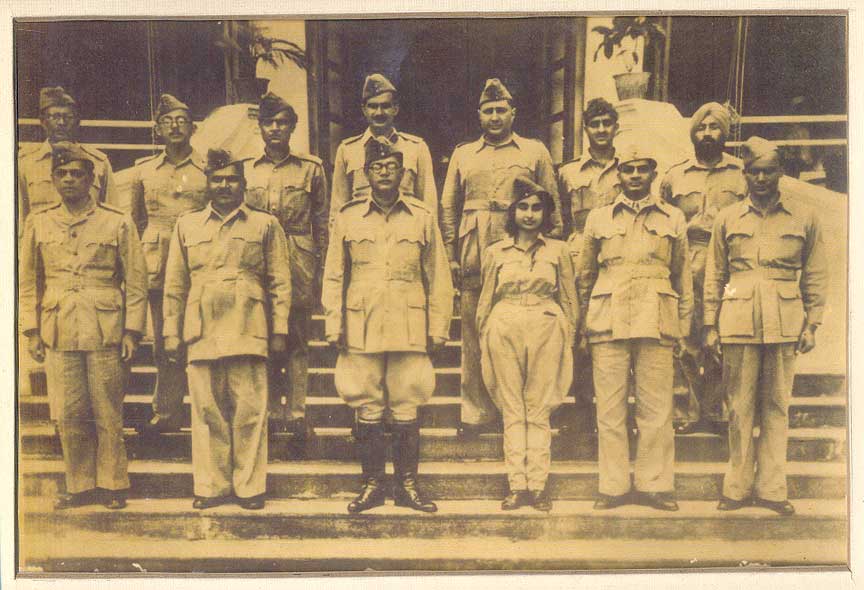
Azad Hind Fauj Members – Wikimedia

 Adding to the mysterious aura of Netaji living as a monk is the fact that Gumnaami Baba apparently had ten names and almost never met people face to face. For the uninitiated, Gumnaami Baba is a silent thunderstorm, ranging from his meetings with selective politicians to his conversations with former Indian National Army personnel and his correspondence with some family members. Among these individuals were Pabitra Mohan Roy, former intelligence officer of the Indian National Army, Leela Roy of Forward Bloc party and Suresh Bose, brother of Subhas Chandra Bose. The viewer also cannot miss the trenchant revelation that Gumnaami Baba, also known as Bhagwanji, was a man who read Bangla books and listened to Bangla music, thus indicating that the mysterious man could indeed have been Netaji Subhas Chandra Bose.

Gumnaami Baba shows his frustration with the way India won her independence and the terrible cost borne by Partition.  The film conveys the family tragedy of the researcher Chandrachur Dhar, whose wife, Roni, depicted by Tansuree Chakraborty, leaves him, because of his obsession with Netaji. The film ends with the conclusions of the Mukherjee Commission that stated that Netaji Subhas Chandra Bose did not die in the purported air crash in Taihoku on 18 August, 1945. The commission was however indecisive about whether Subhas Chandra Bose died in Russia or whether the identity of Gumnaami Baba was the same as Netaji Subhas Chandra Bose. The role of Justice Manoj Mukherjee, played by Shyamal Chakraborty, has been extraordinarily reminiscent of the real man who has privately confessed that he was “100% sure that Gumnaami Baba and Netaji Subhas Chandra Bose” were one and the same individual.

10-Most-Heart-Warming-Speeches-by-Indians-Subhash-Chandra-Bose

Gumnaami also enchants us throughout with beautiful and melodious songs, including ‘Kadam Kadam Baraye Ja’ and the Indian National Army anthem ‘Sab Sukh Chain’ that later became the Indian national anthem, ‘Jana Gana Mana’.

There is one jarring aspect of ‘Gumnaami’ that has to be mentioned here and that is the sequence of book burning by Chandrachur Dhar toward the end of the film due to his frustration at the Mukherjee Commission findings. The viewer would be pardoned for being somewhat at a loss to understand how a person who could have diligently devoted three years of his life to researching Netaji Subhas Chandra Bose could have set alight his own work, thereby precluding any further research on solving the jigsaw puzzle of the death of Netaji Subhas Chandra Bose. This portion of the film seemed unnecessary in an otherwise captivating script.

‘Gumnaami’ as a film has weathered many storms, from opposition coming at the behest of some members of the Bose family to political threats and lawsuits and even physical threats. It is entirely to the credit of the crew of ‘Gumnaami’ led by Srijit Mukherji that the film has been released and is running successfully all over India in both Bengali and Hindi. ‘Gumnaami’ does not give us a conclusive answer to what happened eventually to India’s most controversial national leader. ‘Gumnaami’ raises many questions that still seek answers from the government. Gumnaami Baba died on 16 September, 1985, but the film ‘Gumnaami’ is, and will remain, an important contribution on the life and death of one of India’s most iconic figures, Netaji Subhas Chandra Bose.

Shubhobroto Ghosh is an ex journalist with the Telegraph newspaper whose works have also been published in the Hindu, Statesman, BBC, New York Times and Times of India. He now works in an international NGO and does freelance journalism.

The Spellbinding Beauty of Spiti Valley!

0

Spiti Valley, a sensationally magnificent place is situated at an altitude of 3800m above sea level between the spectacular mountain terrains in the north-eastern region of Himachal Pradesh. The word “Spiti” means ‘the middle land’ and this name was given as it lies between Tibet and India. As the area lies in the cold desert region, during the winter season the temperature of this place is as low as -20°C, while in summer the temperature lies in the range of 16-20°C. As it is near to Tibet, the cultural influence of the region can be seen here in the form of Buddhism. The ancient Buddhist monasteries, trekking trails, beautiful rivers and the breath-taking view of the landscapes are the main reasons to visit and explore this place. Buddhism is the locus of this place, so the main attraction of the region is the Buddhist monasteries which consist of vibrant thangkas, colourful paintings, artifacts and ancient sculptures. The language spoken by locals is Stod Bhoti which is a subgroup of the language spoken in the Tibet region. 

Beauty of Spiti Valley
Langza Village, Spiti Valley – Saurabh Chatterjee via Flickr

The historical background of this place tells us that once the place used to have a reserved culture where the focus lay in and around the Buddhist culture and its monasteries. It was then ruled by self-styled waziers called “NONO” while in between the place became a victim of the attacks by invaders from neighbouring regions. After invaded by different rulers, finally this place came under the rule of the East India Company in 1846 after the First Anglo-Sikh War. But on the ground, this place was still ruled by the hereditary ruler of Spiti “Nono”. Inspite of the harsh climate and dangerous terrain, this place is the best for viewing the rich Buddhist culture, Himalayan lakes and the charm of the solitude and spirituality hidden in the beauty of the Himalayas. The remote places and wildlife sanctuary give an overall completeness to this place. Kibber, the highest inhabited village of this place is home to the dangerous snow leopard which has given a different aspect to this place in terms of wildlife hotspot, offering wildlife lovers a glimpse of the dangerous big cat in the terrain. The places to explore in Spiti valley are as follows –

Lhalung Monastery

Spiti Valley - Lhalung Monastery.jpg
Image – TheTravellersShed

This monastery got its name after the place “LHALUNG” which is situated at an altitude of 3,660m having rich diverse flora particularly Sea Buckthorn trees. It was founded by Rinchen Zangpo who was the King of Guge in the late 10th century. This place is described as the “Land of Gods” and the Lhalung deity is considered to be the head of all deities in the valley. The monastery consists of different coloured statues where each colour has its own significance, that is, red signifies anger, blue signifies hurt and yellow signifies happiness.

Tabo Monastery

Spiti Valley Tabo Monastery
Image – Wikimedia

It is situated at an altitude of 3050m and was founded in 996 AD, it is the oldest monastery having its own significance. It is believed that the Dalai Lama will retire from his duties at this iconic place. The monastery consists of a public library, assembly hall, marvellous art work, meditation caves and enthralling statues. Beside this, there are nine temples in the complex of the monastery.

Rohtang Pass

Spiti Valley - Rohtang Pass
Image – sandeepachetan.com via Flickr

The two main places in Himachal Pradesh i.e. Spiti and Lahaul district is surrounded by mountain ranges. Rohtang Pass mainly separates the Lahaul and Spiti region from the Kullu Valley and is situated at an altitude of 3,979m. Due to heavy snowfall, landslides and thick icing conditions, the road connectivity is cut-off from the region for almost eight months in the winter and spring seasons. While the southern road connectivity to the rest of the country is periodically closed for a brief duration in the month of November due to winter storms the road access is restored a few days after the storm ends via the Shimla route.

Kaza 

Spiti Valley Kaza
Image – Anurag Daware via Flickr

According to the level of altitude, the valley of Spiti is subdivided into three portions namely… lower, middle and upper. Kaza comes under the upper region and is the main administrative centre of the region. It is situated at an altitude of 3,800 m and is a popular base for the nature lovers. This place offers a spectacular view showing the stark beauty of the region surrounded by heavenly mountains and rivers. Kaza is the sub-divisional headquarters of Himachal Pradesh and is located near the spiti river.

Langza Village

Spiti-Valley-Langza-Village
Image – vaidyarupal via Flickr

Langza is a small village nestled in a bowl-shape between the mountains situated at an altitude of 4,420m. It is home to the colourful vibrant statue of Lord Buddha presiding over it. It is one of the remotest villages of the region residing in a remote corner of the state. Also known as the ‘Fossils Hub’ as fossils of plants and marine creatures are found here in plenty under the sedimentary rocks which are believed to be over millions of years old. 

Komic Village

Spiti-Valley-Komic-Village
Image – Saurabh Chatterjee via Flickr

Komic village is home to Spiti Valley’s highest monastery and being the highest village in Asia with an altitude of 4,587m. This place is famous for offering few laid-back guest houses. Komic monastery is a small monastery situated in this region which is situated on a daunted hilltop.

Kunzum Pass

Spiti-Valley-Kunzum-pass.jpg
Image – Ranna Photography via Flickr

Spiti Valley is believed to be the gateway to the northernmost part of the country. This gateway is connected through various passes, among which is the Kunzum Pass. The northern route from Keylong via Kunzum Pass lies in the eastern part of the state and form a part of Spiti and Lahaul district. So, in short, Spiti and Lahaul valley are cut-off from each other by the Kunzum Pass which is situated at an altitude of 4,590m.

Also Read – Splendid Buddhist Monasteries of Leh You Must Visit

Exploring the Wonders of Jagdalpur

0
Jagdalpur Tour

Travelling not only brings new moments which can be cherished later, but also it gives us a chance to explore some new places. Whenever I am in travelling mode, I try to grab that opportunity by exploring those places. This time the main attraction was Jagdalpur in Chhattisgarh. This city has a very rich natural and cultural heritage and henceforth draws a large number of tourists every year. This place lured me and is gradually emerging to be one of the most popular tourist destinations of our country. Amidst the nature’s bounty, one feels enchanted by the lakes, waterfalls and the forests which are considered to be a part of it’s natural heritage. Chitrakut falls gave me a warm reception as soon as I reached the city. I simply fell in love with the awesome ambience of this waterfall located on Indrāvati River. It was gigantic and has a height of about 98 feet. Due to it’s horse-shoe shape , it is often compared with the Niagara falls of Canada.

Several tourists thronged there in order to get the majestic fervour and enjoy to their hearts’ content. Local boats were plying on the stream down below the thudding waterfall. It was mind-boggling in true sense of the term. An amazing scene was created in front of me when I found a rainbow near the water due to the reflecting sun beams. The waterfall is at it’s best during the monsoon as the volume of water increases. The sight was heavenly and I felt one must visit this place before one dies. On the left bank of Chitrakut falls, there was an ancient Hindu shrine dedicated to Lord Shiva which is also worth a visit. The backdrop of this falls (lush green forests) adds to it’s charm and beauty.  

Jagdalpur Travel Guide

One must not forget to visit the Zonal Anthropological museum here as this is the land of tribes. The museum provides a great insight into the life style and culture of Bastar tribes. The Gonds are the most prominent tribes known for their unique Ghotul system of nuptials. Some of the collections in the museum included headgear, ornaments, weapons, attire, musical instruments of various tribes and communities. The Dorla community is also quite popular here. They speak Dorla language which is a Dravidian language and reside in Dantewada and Bijapur districts of Chattisgarh. Some real life huts of these tribal people were constructed in the premises of this museum for the tourists to have a glance at these huts. What I felt after visiting this museum was that they lead a very simple life and feels contented. Perhaps this is the key to their happiness. In cities, we, the urban people often hanker after luxuries, riches which make our life a little bit complicated. However, some other major tribes of this region are Muria, Halbaa, Dhurva and so on. 

Jagdalpur Travel

Jagdalpur is a land of waterfalls and this proved to be so true when I headed towards another waterfall located in a quaint place called the Tamad Ghoomar falls. Unlike other places, this place is quite secluded and the bustling noise of the crowd is hard to find as people have not explored this place much. The stunning vista of this waterfall is a treat to watch. 

The Danteswari temple (Dantewada) is one of the most revered places in Chattisgarh as it is believed that the tooth of Sati fell at this site and hence the name of  the deity has been derived from it. The temple was built in the 14th century and is located about 80kms away from the main city. The ‘Bastar Dusshera’ festival is held every year when the deity of Danteswari is taken out of this ancient temple and a large procession comes out in the streets. Some roads are blocked for others to ensure smooth flow of the deity through the streets. Local people and tribes pay homage to their goddess and celebrate this grand occasion.

Last but not the least the Tirathgarh waterfalls is a paradise on earth. With it’s milky water gushing down the rocky terrains, the sight becomes a heavenly abode. It soothes the mind, body and soul of the visitors and they feel that visiting Jagdalpur is worth every penny. I was rejuvenated and had a similar feeling. This is located on Kanger River and has a height of about 299 feet. One can imagine it’s huge form and this was mind blowing. I was enthralled by it’s beauty, the splendour and the richness of this place to cast a spell upon the tourists. It really did.

Ranging from waterfalls, cataracts to forests this state has surprises galore to offer to it’s visitors and probably this is the reason why tourists yearn to visit this place. The gigantic falls with their roaring sounds gave rise to a question in my mind which is still lingering…how insignificant are we in front of nature? All these are feast for our eyes and wonders of nature. Ultimately we have to surrender in the hands of nature. So let’s take a pledge to protect our Mother Nature so that she can unveil more of it’s hidden gems in the future.


Photo Feature – A Unique Dasara Festival at Kulasekharapatnam

3

Author – Vishal Rajendiran

Kulasai

Vishal Rajendiran is a photography enthusiast who travels regularly across the country. Despite being a busy IT professional, Vishal loves to travel capturing the life of people in their natural environment. During last year’s Dasara festival, Vishal was in Tamil Nadu when he got to know about a different kind of a Dasara in Kulasekharapatnam. Vishal narrates his thrilling travel to this strange place through a photo feature –

Dasara Festival at Kulasekharapatnam

Kulasekharapatnam or Kulasekarapattinam (aka) Kulasai, is a remote coastal town in Tuticorin district in Tamilnadu. Earlier, it used to operate as a minor port for pearl fishing and trading with neighbouring Sri Lanka. A 300 year old Mutharamman Temple resides in the town where a massive Dasara celebrations takes place every year. However, these Dasara celebrations are quite unique and outlandish!

As per the tradition of this temple, devotees are inspired to transform themselves as Goddess Kali, kings, monkeys, beggars, and have to beg in the streets of the town. Their collected money is then submitted as an offering to the presiding deity, Sri Mutharamman Goddess. Here you can see the various moments from start to end of the Dasara celebrations.

A Lifetime Experience

As soon as I heard about this event in mid-October, I decided to visit Kulasekharapatnam. I never had an idea that this trip was going to be unforgettable for the rest of my life. I traveled along with my three of my friends who were also avid photographers. We started our journey from Pondicherry towards Kulasai, which was more than 500kms away. While we were travelling in a bus towards Kulasai, we saw a bunch of people dressing themselves as Goddess Kali and begging on the roadside shops.

Finally after 10 hours of travelling from our starting point, we reached the place where we wanted to be, Muthumariamman temple. We saw young kids, ladies and men of all ages dressed up in diverse range of costumes right from Goddess Kali, Lord Shiva, gypsy, hunters, etc. Attracted by the colourful atmosphere, we started clicking pictures.

Suddenly we saw a group of men dressed as ferocious Goddess Kali dancing terrifyingly and walking towards the temple. We walked along with them holding back our fear and surprise, as we had no idea what was happening. As we approached the inner part of the temple, the devotees began dancing more vigorously and were in a state of trance. Fortunately, we were in the right spot to capture some of their raw emotions and we clicked some amazing pictures of the devotees who were in a ferociously possessed state.

Soon after that, we began to follow the devotees to see their end point towards the seashore, which was about 1 km away from the temple. Once we reached there, we could see hundreds of devotees who were literally in a possessed state do their final prayer and take a dip in the sea to end their journey. It was enthralling to see hundreds of devotees transformed as Kali who were all around us marching towards their climax. We took some shots till the sunset and left the place around 7.00pm. we surely we cannot forget those breathtaking memories in our lifetime!

Benefits of A High-Risk Merchant Account [Infographic]

0

MyPaymentSavvy

Even though at the beginning being rejected by the merchant bank and falling into high-risk category might seem like a disaster, it’s not so bad. You can ask a high risk merchant account provider, and they will tell you that it actually has a lot of benefits. Some of them include: 

  • Possibility of global expansion – In contrary to traditional merchant accounts which are restricted to transactions only in the parent country, high-risk merchant accounts have no limitations and can transact money as they please, no matter the currency which gives them a real possibility of a globalizing their business
  • Absent volume caps – ubiquitous in traditional merchant accounts; high-risk merchants don’t have to worry about a target volume per month, which means that they can easily transact as they want
  • Lower chance of account termination – if a traditional merchant will experience a more significant amount of chargebacks (more than 1%), their account can be terminated; that’s not the case with high-risk merchant accounts as the providers know beforehand that it can happen, so they’re safe, and their account will not be terminated due to high chargeback 

One of the businesses for which it is beneficial to open a high-risk merchant account is collection agencies. If you want to find out how you can open a collection agency merchant account, check out the infographic.

MyPaymentSavvy-infographic-01

22 Days in Canada, Planning a Trip with Kids!

0
22 Days in Canada
When it doesn’t rain in the summer, kids enjoy in the park 

Traveling with kids? I spent 22 days vacationing in Canada and this is what happened. 

Traveling has never been tiring for me, although 2019 has been a challenging year both physically and emotionally; with my kids around us while we got some work done on the home maintenance front along with other nick-nacks. I faced quite a few challenges from the very upstart, from booking tickets to returning home, the 22 days long vacation with the whole family was indeed an unexpected roller coaster ride as we had not pre-planned our stay and activities. The only thought in our mind was that we would be going home, the situation would improve once we start progressing towards our goals. I have two lovely boys aged 4 and 6 respectively and believe me, they have never uttered the word no whenever we planned our travel destinations or made unnecessary stopovers. Besides, who would ever say no to such travel destinations where one has the freedom to be anyone or everyone at any given time, right? Staying in a fairly nice hotel, exploring new places and a variety of new cuisines is everyone’s dream. If you ever get the opportunity to ask a backpacker, they would promptly reply with their love for traveling.

22 Days in Canada

They are aware of the many things they are missing out on…like luxurious stays at five-star hotels and being pampered thoroughly by the services provided by the same. They would be traveling on a budget which would  include hitchhiking, free food and sometimes offering their services in return for purchases. It is the choice of an individual on where to go, what to do and how to do.

We as a family love to experience the essence of life and its surroundings, as a result, my children started to get picky when they found out about the budgeted travel plans, they pre-booked their activities to make sure we stayed on the route. My first challenge was as to what needs to be packed on a long vacation trip as I would be staying at my home away from home? My first preference for booking accommodation is, of course, hotel apartments then Airbnb and then hotel suites or three plus star hotels with very good reviews. When you travel with kids, you must be prepared with things you may not need on a daily basis (for usage inside the house). So, I started making a list of everything I must have or I will need while I take the time to adjust for the first few days. From almost over two hundred items, I omitted quite a few after lengthy discussions with my husband, (men have the least requirements you see). So, finally, I had 55 items in my checklist to pack along with a few electronics and food packets to survive on an emergency mode with two hunger packs.

22 Days in Canada
Cherry(size) Apple trees

It is like a blessing in disguise if your airline allows two pieces of checked baggage plus a carry on plus a personal item and laptop bag. Here’s a tip; use this advantage wisely, as people usually stuff things and the extra space just goes to waste. Once they have landed, they realize that they didn’t need certain items and most of the time people end up carrying them all the way back home completely untouched. Such a waste of space right? Everyone is cautious over extra baggage charges, may it be overweight bags or number of bags per person. It is true that you will need all the food but also you’ll not be opening them once you see freshly cooked hot meals. Brace yourself, Do not take frozen food packets, instant mixes that need to be warm/cooked in utensils and food packets in which you have to add fresh vegetables or onion, garlic, tomato to achieve the authentic taste. It’s all useless if you arrived all tired at the hotel in midnight, looking for a warmer or a microwave to cook and have the courage to clean everything early morning before checking out the hotel room. Mostly, we are on a time constraint on the trip or transiting from one city to another through lunch or dinner time. At this time, all one can do is give food packets to kids and ask them to keep themselves busy with some activity. Long drives are tough when you are with toddlers who do not like to be on the car seat for a long time.

22 Days in Canada
Vancouver bridge

The universal question a parent is asked : “Are we there yet?”

 So, I had two fully charged ipads, a couple of snacks and juice set on the cup holder before fixing them into the car seat hoping they wouldn’t hop. The first few hours from Seattle (our first port of entry was in WA, USA) to Vancouver (British Columbia, CA) was so much fun as they were checking everything out with the iPad in one hand and food in the other. Soon, as it started getting dark, the kids got cranky. We decided to pull over at a rest area and let them walk around with us! It was a lifetime experience walking in the bushes, sitting amidst trees who were almost a hundred years old. After all, BC is known for its green landscape and provincial parks. We took a breather, used fresh rooms and voila, all set to drive for a few more hours to our first nightstand, Kelowna. Driving through British Columbia is always fun. It was our seventh or eighth road trip on the same route I guess, but every time we had new memories and all of them were worth cherishing. The only regret I have is, I hardly encountered any wildlife. Maybe, we were driving at a fair speed or it was late for animals to come to show us some moves or maybe its the weather that gets chilled overnight.

22 Days in Canada
Edmonton whyte avenue

The next day from Kelowna, we had a hot breakfast and hit the road to Alberta, home sweet home. I couldn’t wait to see my home. I left Canada three years ago, nothing has changed though. Looking at the road conditions, people and cars, I felt like I was there just yesterday. All this time I met new people and my interactions of working in three different countries was not new to them. Many Canadians have friends and relatives working in different countries. The only thing, not common was frequent traveling for both work and leisure. People do not travel unless necessary, that I know. I urge myself to explore in order to travel and share my experiences along with exchanging culture and ideas. Canada has a lot to offer; landscapes, scenic driveways, fresh air, mountains, and parks. My favourite would have to be the multicultural food and cultural activities.

22 Days in Canada
One of the oldest cinema (built in 1914)still running single screen @Princess theatre, Edmonton 

Canadians are so diverse, one will never feel left out. People smile, greet and interact everywhere we go. If the kids give any trouble, they help us by distracting them. People I met along the way gave me good vibes. Moneywise, I will not brag, I spent way over my budget on food and car rental (kind of expected) as the inflation did hit this corner of the world. I engaged myself into binge shopping a few branded clothes and treated myself like a queen quite a few times! It is the so-called side effect of having a lovely spouse who never minds money (until we are broke). I overheard people talking about unemployment and recession, though looking at brand new construction sites, flashy cars on the road and celebrations taking place in every banquet halls around the cities like mine, makes me question who is struggling and who is flourishing in Canada. If I had an option to make a change in my community, I would consult with every individual striving to jump into a new career and help them to the best of my abilities, not because of their odd choices and unavoidable circumstances but for their courage of raising their family.

22 Days in Canada
Kids playing zone at westEdmonton Mall

It is okay, Canadians accept, we match flyer deals before going shopping, we love groupons and we are never home on weekends during the summer. We love to sit with our neighbors on a barbeque and talk with our natives until the phone battery dies.

22 Days in Canada
West Edmonton Mall settings (good for taking selfies) it used to be world’s biggest indoor mall before dubai built one

I could have been exhausted, though nature kept me going and today I would happily recommend everyone to visit Canada. And if you are planning to settle in Canada then this country will definitely make you fall in love with it from every aspect.

22 Days in Canada
Seattle Zoo

Am I supposed to give you tips on savings or budget planning for vacation trips? Give me a break, you know everything.

  • Do a  little homework on the new places you are about to visit
  • Pack bags according to needs and not with a “what I want” attitude
  • Keep extras like winsitter, power bank, iPad (kids friendly) & healthy food options
  • Check deals before booking hotels, car rentals, and attractions
  • Always check the weather forecast before hitting the road & indulge in  the surprises happily

So, traveling to Canada soon? Ask me questions and I will be happy to answer them all, no matter how simple or how emotional they are! It may help newcomers or help start a conversation on something for God’s sake. Talk and release your worries; that’s my mojo!

Mitali-JaniAuthor – Mitali Jani – Experienced Creative Head with a demonstrated history of working in the media production industry. Highly skilled in Audio-video productions, Communication, Event management, Presentation skills, Corporate Communications and market research. Strong content development professional with a diploma focused in Cinematography and graduate in computers with multimedia majors from well-known institution in Canada and India. Currently liaisoning with various films and media for productions and distribution.

Mitali;s Blog – Instagram – Facebook

7 Unique Things About Bhutan that Makes it Culturally Rich!

0
Unique Things About Bhutan
Photo by Adli Wahid

I recently attended the Indo- Bhutan Youth Summit and interacted with several youth from Bhutan. I realized that though India and Bhutan are very close geographically, there is very little that we know about the rich culture of Bhutan. Bhutan is one country which I had not imagined doing an exchange program with because the countries in my mind included Paris, Amsterdam, Spain and Costa Rica. However, I was intrigued to have attended the program and I can say that it was the best decision of my life. I want to share these 7 unique things about Bhutanese culture which I learned and which have left me more intrigued than ever. 

Bhutan is a constitutional monarchy –

Unique Things About Bhutan
King & Queen of Bhutan – Curtesy FlashNews

Bhutan may just be the exception in the monarchy vs. democracy debate. The people of Bhutan love their King very dearly and respect him a lot. I was very intrigued to see how much people knew about the Royal Family of Bhutan. The King and the Queen often take part in ceremonies in the city with everyone else. It was interesting to hear about my friends’ interactions with the King during ceremonies in Thimpu. After talking to my friends, it is now one of my dreams to meet the King of Bhutan and interact with him about policy making in the country. I am also especially fascinated with K4 (the fourth King of Bhutan) who is popular among everyone and is loved immensely. 

They have a festival called Rainy day Harvest season –

Unique Things About Bhutan
Image by Pradip Kar

Most people from Bhutan are religious and they celebrate festivals throughout the year. There is a festival called Rainy day Harvest season during which the Bhutaneese citizens keep a bucket of water outside in the rain and bathe with that the next day. This water is considered holy by everyone and the day is very auspicious. 

Ema Datsi is a dish made only out of chillies and cheese –

Unique Things About Bhutan
Ema Datsi Bhutanese Delicacy – Juan Carlos Madrigal via Flickr

This is one dish which you have to try when you visit Bhutan. It is made of cheese and chillies. There is a saying “Indians eat their food with some chillies and Bhutanese eat chillies with some food”. No matter how much spices are consumed by them, they always need more. They beat us at their spice game. This dish is the definition of Bhutaneese culture and your trip there is incomplete without trying this. I cannot wait to go to Bhutan and try this dish the traditional way it is prepared there.

Bhutan has a Gross National Happiness (GNH) index –

Unique Things About Bhutan
Bhutanese Wonan Image by Suket Dedhia

Just like India calculates GDP in economic terms, Bhutan calculates GNH which is calculated based on how happy people are in the country. It is an innovative concept which places value on people’s happiness in the age of social media and technology. Because of GNH, the youth of Bhutan places value on simple things in life. I found them to follow a philosophy similar to the people residing in the mountainous regions in India.  

Mc Donald’s and other multinationals do not operate in Bhutan –

Unique Things About Bhutan
Bhutanese cuisine – Taver via Flickr

Many brands like McDonald’s and Domino’s do not operate in Bhutan because they impact the culture of Bhutan differently. The youth is very attached to their culture. They prefer having Yak Burger which comes from Yak meat instead of having burgers from dominos. Moreover, the government stresses on Gross National Happiness in the country and they believe that multinational food brands will impact Bhutan negatively. I’m sure it is very interesting to live in a place where local food takes precedence over multinational cuisine. It also reduces the stress on farming and increases sustainability. 

Making buildings traditionally is incorporated in the law of Bhutan –

Unique Things About Bhutan
Traditional Buildings in Bhutan – Robert GLOD via Flickr

The buildings in Bhutan are made traditionally. Incorporating traditional architecture in construction is present in the law of Bhutan. I visited the Royal Embassy of Bhutan in Delhi and it couldn’t fascinate me more. The architecture was stunning. 

Many people from Bhutan are very fluent in Hindi –

Unique Things About Bhutan
Colourful Bhutan – Robert GLOD via Flickr

The love which Bhutan’s youth has for the Indian language is unprecedented. Many students from Bhutan grew up watching Bollywood movies because of which they are fluent in Hindi. Moreover, their exposure to Bollywood has also taught them about Indian culture, cinema, actors as well as more about the people in India. If you ever go to Bhutan, you can strike a chord with some friends by bonding over Hindi language and cinema. 

I hope that everyone who reads this article was equally fascinated by the culture of Bhutan as me! I cannot wait to pack my bag and explore the country!

Street Art in India – The Rise of True Expressions

37
Street Art in India
Image Courtesy – St+art India

Modern and contemporary art involves creative thinking and originality of conception, more importantly than fineness of execution. In this era of rapidly evolving mediums of expression, several artists have done the unconventional by choosing the ‘concrete jungle’ that is the city, as their canvas. There has been a very noticeable shift from amateur stickers and stenciling to murals and graffiti that often catch our unsuspecting eyes in certain areas of the city where one might not have considered to be a region conducive to art. In India, in particular, street or public art has gained a serious increase in stature owing to the fine artistry involved and the socially and psychologically relevant issues they depict. There has been a surge of street art all over the country, but its presence is felt most strongly in the country’s capital. 

Street-Art-in-India St+art India
Image Courtesy – St+art India

The rise of this subculture can be attributed to the Street Art Festival held in Delhi for the first time in the year 2013, bringing together the efforts of a grand community of artists to liven up the dilapidated walls and buildings. In particular, the alleyways of Shahpur Jat and Shankar Market areas in Delhi serve as examples of stunning exhibitions of murals depicting human life and the animal world. Prominent among the artists are The U.F.O crew, ostensibly based in Gujarat, TYLER from Mumbai, YANTR from Assam, and Lucangelo CORV from Kolkata – who challenge conventional notions of street art by introducing a near professional standard of craftsmanship in their works.

Street-Art-in-India Graffiti U.F.O
Work by Graffiti U.F.O

The Street Art India Foundation, is in this regard, a one of a kind organization that can also be thought of as an artistic revolution. The organization tries to break free from the limitations of a gallery and bring people closer to the artist’s ideas by using public spaces to demonstrate their art. This not only allows them to express through paint their perspective on issues haunting the backdrop of the societal context, but also gives them an opportunity to bring out the beauty of ordinary life on unimpressive cement walls.  This project has made a name for itself internationally by being involved with several art festivals, and has also created India’s first open-air public art district. The Lodhi art district in the heart of Delhi now serves as a platform for over twenty artists all over India, who have filled up the discoloured walls of the area with engaging murals, innovative graffiti, and thought provoking displays. Conquer the Concrete is yet another venture that has been undertaken in Chennai, aiming to bridge the gap between an older generation of wall painters and the new upcoming street artists in the country. 

Street-Art-in-India
Image Courtesy – Street Art Chennai

Graffiti in India has a connotation that is distinct from the origins of the art form in America. Graffiti originated in black neighbourhoods of the USA, as an expression of angst and retaliation against racism, it was a politically driven rebellion. It was hence considered ‘anti-art’ – an act of vandalism that was primarily anti-establishment. In India it is treated as an aesthetic form of art, and although certain graffitis might deal with social issues it is not of the ostensible purpose. A prominent figure in this regard is Anpu Varkey, known for her feline themed murals and graffiti. She highlights the privileged position of the artists who choose spray paint as a medium in India, deconstructing the myth of political rebellion associated with street art. 

Street-Art-in-India Anpu Varkey
Image Courtesy – Anpu Varkey

In using the urban landscape as inspiration, the underground street artists’ movement has seen a  growth in the new emerging forms of public art that deviates from stickers and stencils – such as mosaics and 3D art. What seems promising is the fact that the government has been openly supportive of street artists on several occasions in the past, which has given the movement the impetus it needed to become a mainstream art form. In fact, instances of this are visible in the form of the magnificent mural of Mahatma Gandhi painted on the walls of the Delhi police headquarters – an initiative of Street Art India. Perhaps the only downside to this form of art is the lack of preservation of the artworks, but since the canvas is a swiftly developing one, it also gives the artist the opportunity to repaint and recreate their works from a new perspective.

My Offbeat and Culturally Rich Trip to Orissa

0

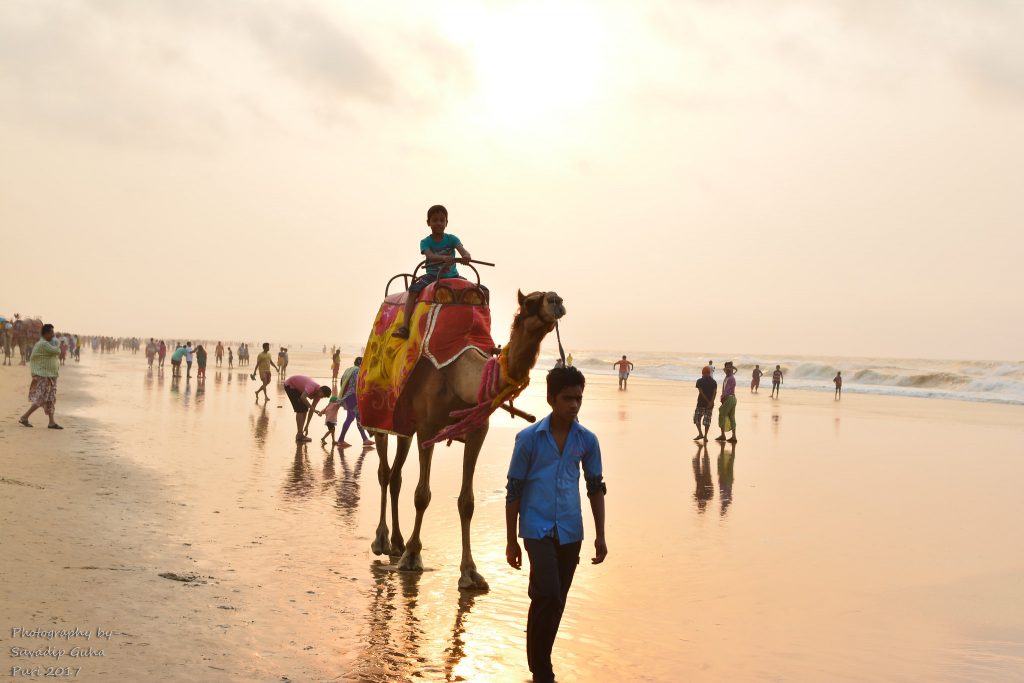
The waves crashed against my feet as I stood on the sand and wondered about the beach. There were a few crabs which were nestling around and entering their hideouts in the sand. Puri beach was by far one of the most magnificent beaches that I have ever been to in my entire life. Watching the sun set into the endless horizon and the deep wrinkled waters, I reflected on my trip to Orissa so far. I was here with my girl gang from college.

Offbeat and Culturally Rich Trip to Orissa
Puri beach – Suvadip Guha via Flickr

This trip was surely a great alternative to just visiting Goa with friends. The beaches in Orissa are not that crowded and they are also more private and secluded. We took boats and went to an island to explore the beach there. This was in Puri itself and it was one of the best Islands I have ever been to. It was a little risky to be there because of the abundance of red crabs which were taking in the waves just like us at the beach. But we had a few local guides with us and the crabs never came close to us. We found a few empty bottles of alcohol on the beach and we picked them up and cleaned the beach a bit. We also found a child’s shoe on the beach. We felt like we were exploring a hidden place where very few people had been before. It felt like playing clue hunt.  

Offbeat Trip to Orissa
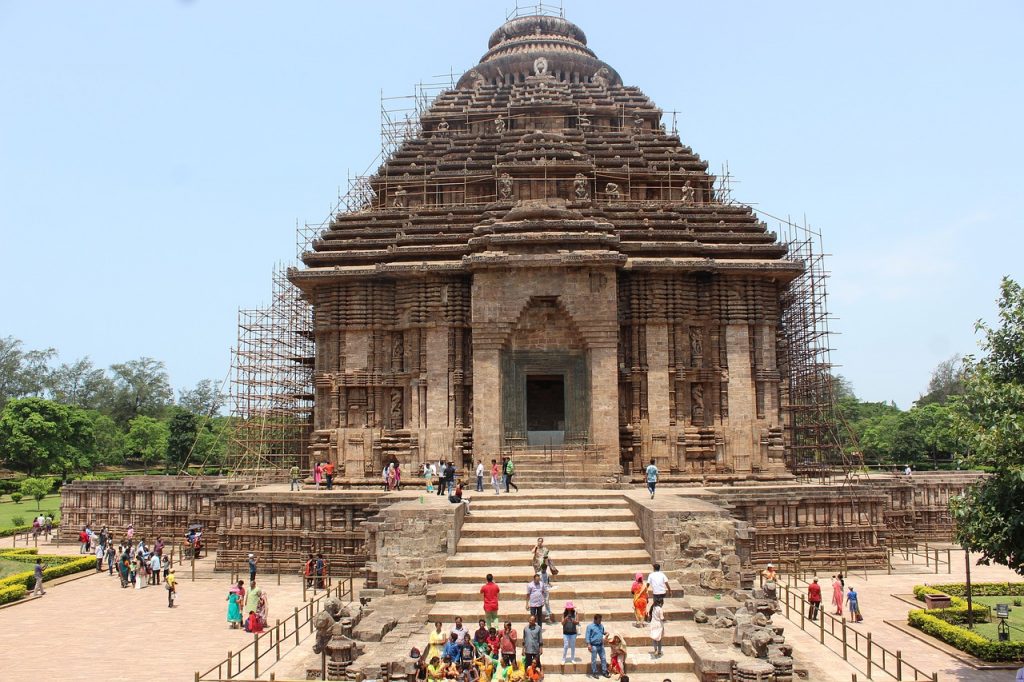
Konark Temple – Pixabay

The same day, we had visited Konark temple which is on the way to Puri. The Konark Temple has erotic carvings on it which surely defy the monogamous way in which a lot of Indians perceive sexuality today. It was an interesting place because it was both historic as well as modern. It was like a portal connecting the past to the future. The beautiful and intricate carvings on the temple walls made the entire scenery look very majestic and grand. 

Offbeat-Trip-to-Orissa-Jagannath-temple
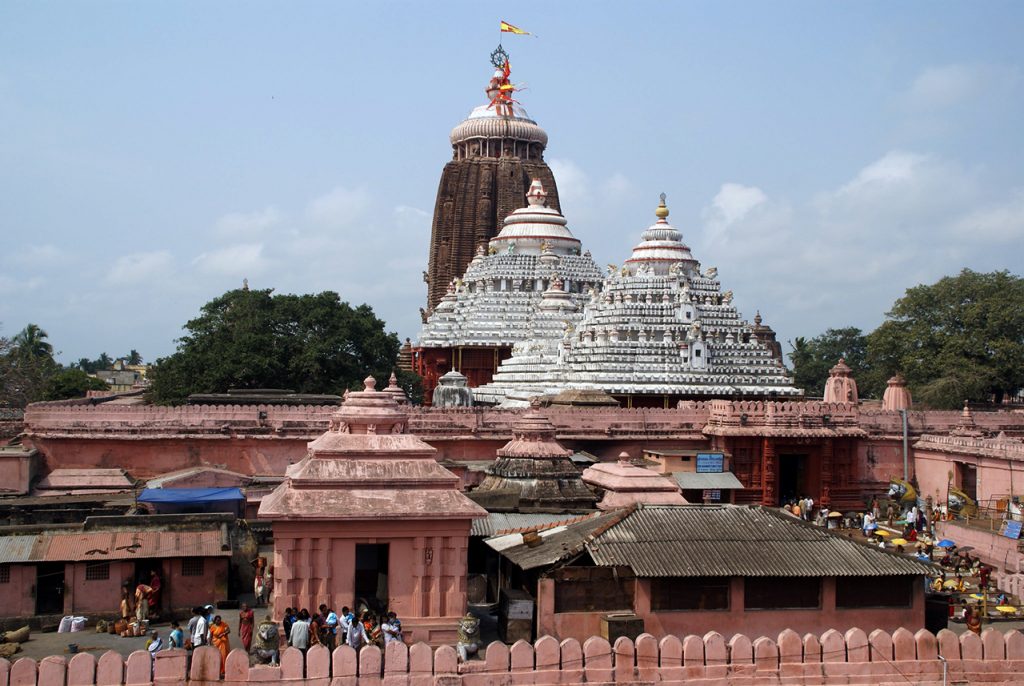
Jagannath Temple, Puri – Patrik M. Loeff via Flickr

Speaking of temples, we had also visited the Jagannath temple. This is one of the char dhams and it is considered to be a place which all Hindus must visit once in their lives. The temple is from the 11th century and covers a vast expanse of area. The carvings here were some of the most wonderful carvings I had seen. The temple was crowded and there was a gold foot in the temple which is said to be Lord Jagannath’s foot. The temple was itself culturally rich because it was the melting point of a lot of cultures and traditions. There were many sages at the temple who were all dressed similarly and were practicing religious rites and traditions. Engaging in this culture and exploring the temple was surely one of the biggest highlights of the trip. 

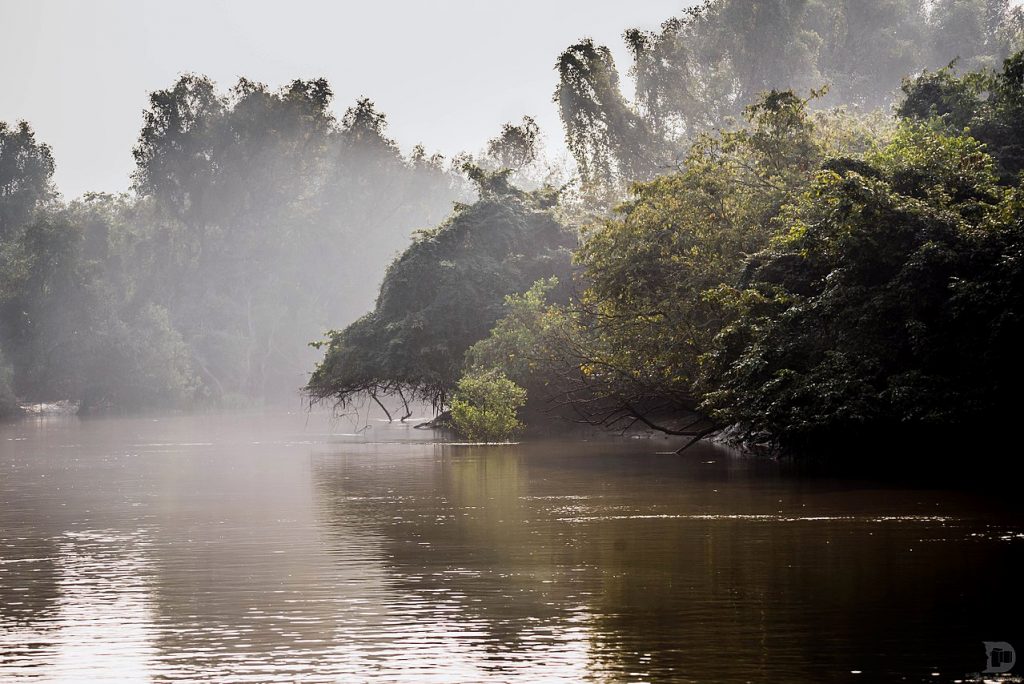
Bhitarakanika National Park – Wikimedia

I also went to explore Bhitarkanika National Park on my trip. The park is famous for its mangroves which are located close to the water body. The park can fully be explored on boats. There are many crocodiles inside the park and can be spotted from the boat. You can get some wonderful pictures of crocodiles from the boat itself. My suggestion to you would be to carry a lens which has a good zoom quality so that you can get some great shots on the camera. The best season to visit the park is surely mid-summer and winter since you will not be able to go on the rooftop of the boat during monsoons. This experience felt like a National Geographic expedition because I had never explored something like this in India before. 

Offbeat-Trip-to-Orissa-Ratnagiri-Caves
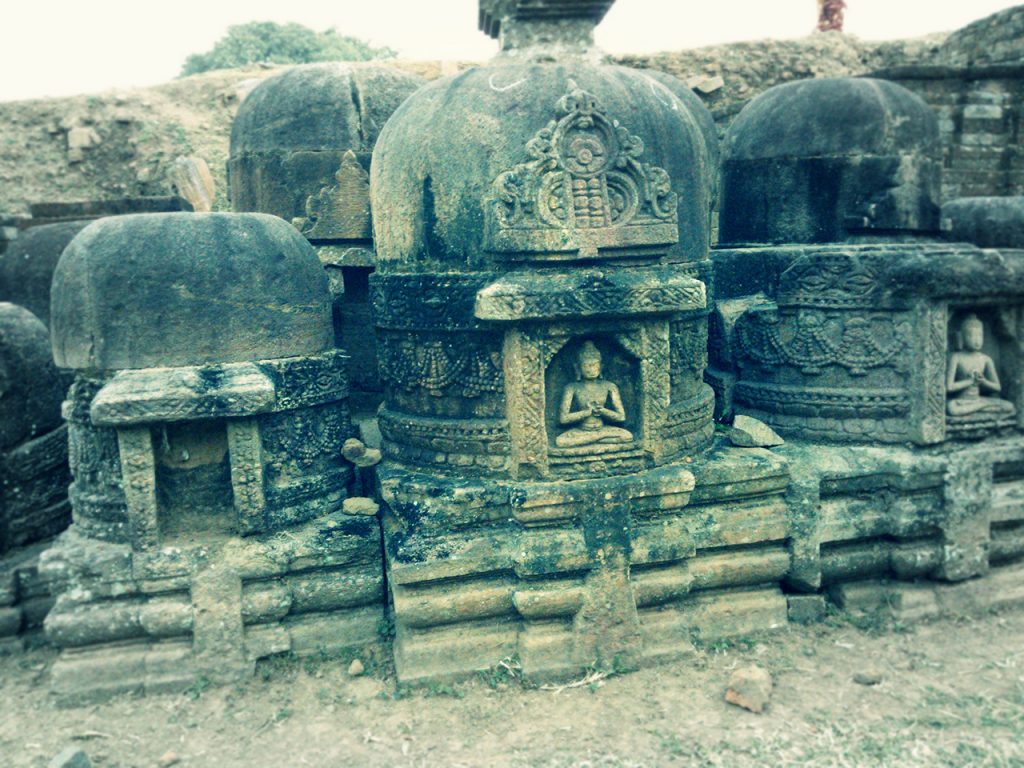
Stupas at Ratnagiri caves via Wikimedia

Orissa is the place where there is an abundance of temples. We spotted multiple temples when we were in the car and we stopped at a few just to explore them. Each temple had its own architecture and was a marvel in itself. We visited the Udaygiri and the Ratnagiri caves as well. These caves are said to be the resting place of monks and meditators. These caves are also filled with ruinous carvings inside which speak volumes about Orissa as a cultural hotspot in India. 

Dhauli Shanti Stupa
Dhauli Shanti Stupa – Dinesh Valke Via Flickr

Dhauli in Orissa used to be Kalinga in the olden times. Kalinga is the battle which the famous emperor of India, Ashoka had fought and won. There is a light and sound show in dhauli which narrates Ashoka’s history. The experience was fantastic and it was great to see how the designers of the show had used art and colors to create eye catching effect. 

For all those who like to explore culture and learn more about India, Orissa is the perfect destination for you. You can not only go here with your family, but you can also visit with your friends. It has everything like beaches, temples, national parks, wildlife, and a lot more that you can explore.

Garba Dance – A Lively Traditional Dance Form of Gujarat

0

The high octane energetic dance form that has fans all over the world is a wonderful mix of tradition and culture. Garba, the dance form that originates from Gujarat comes from the Sanskrit word ‘garbha’ meaning the womb. This dance is performed in circular motions with a lamp or statue/picture of the Goddess Shakti, also called Amba, in the middle. Garba dance is the main highlight during the nine day Navaratri celebrations, though it is also performed on other social occasions. 

Garba Dance History and tradition

Image – Sudhamshu Hebbar via Flickr

Garba is almost the synonym for Gujarat’s cultural heritage. Though the dance is fast paced and extremely vibrant it has a deep symbolic root. It is believed that the lamp, around which the dance is conducted, represents life, particularly a fetus inside the womb. The circular dance motions are in sync with the Hindu belief of a cyclic rotation, namely, birth, life, death and rebirth again. The forms change, however, what remains constant is the lamp or the Goddess in the center signifying that the universe represented in the form a feminine divine remains unchanged at all times. 

Another interpretation is that the lamp is a symbol of divinity. The same holds true for people, where divinity resides in the core of their being and it only needs to be recognized and sustained through time. 

Cultural Significance Garba Dance 

garba dance importance
Image – Restless mind via Flickr

Garbha dance, however, has a huge cultural significance. The costumes, songs and the coming together of people highlight its true merits and popularity. Women wear a chaniya choli accompanied by a dupatta usually worn in the Gujarati style. The colors of the clothes are usually red, orange, yellow or bright vivid colors with mirror work that is one of the main embroideries of the state. The women adorn themselves with heavy jewelry, such as jhumkas, payal, chudas, bajubandh and many other traditional accessories. The men also are dressed in traditional clothes, such as pajama and ghagra and a pagdi, usually from Bandini fabrics and shoes called mojris. The dressings during garba are its main cultural stronghold, finding and maintaining its roots in its state of origin. 

The songs also mostly are in the Gujarati language and in spite of its many modern influences it is difficult not to associate the Garba with its traditional roots. With remixes and Bollywood influences, as well as mass appeal globally the essential idea and execution of the traditional dance form has not drastically changed due to foreign influences. 

Garba Dance in Modern Times

Garba Dance Modern Inputs
Image – Donald Judge via Flickr

The Garba of today is many a time mixed with Dandiya Raas, another folk dance of Gujarat. The main difference between Garba and Dandiya Raas, is that in Dandiya Raas sticks are used in both hands while dancing. Most of the modern Garba dances are influenced with Dandiya Raas as well and hence the line between the two folk dances is usually blurred to create a sort of fusion that incorporates both the dance forms together. The costumes remain same, so do the songs and the vibrancy of the dance. 

Since a lot many people from the Gujarati community have migrated to the US and Canada, the Garba is a popular community event in these nations too. In the US every year, Garba dance competitions are held by more than 20 universities at a grand scale. 

The Fun and Frolic Spirit of Garba Dance

The Fun and Frolic of Garba Dance
Image – amazingarfa via Flickr

The biggest value of Garba lies in its fun factor. The social mingling along with the super energy and extreme enthusiasm make it one of the most loved dance forms of India. No matter from which part of the world you hail from, it is hard to not find yourself soaked in the whirlpool of frenzy and action while a garba performance is unfolding. It is equally hard to not find yourself foot tapping and your body swaying to the beats of a language or music that you may never really understand. It is the coming together of life which is vibrant, happy and in so many ways circular. There are the happy times, sad times, worrying times. There is joy, sorrow, confusion, anger and all of it moves around in cycles. The symbolism of garba is thus about living the moment, letting your inhibitions take a back seat and enjoying the aliveness and absolute spiritedness of life.