Mohiniyattam Dance – Grace and Elegance Personified

0
Mohiniyattam Dance
Image – Ramesh Lalwani via Flickr

Kerala is the land of rich culture and arts. Mohiniyattam is a major proponent of the dance forms in Kerala and distinctly recognized by its off white sari and graceful moves. One of the eight main classical dances of India, Mohiniyattam is important, because it has a strong regional influence and is performed with unparalleled skill and elegance in Kerala. But the dance form has seen its share of ups and downs. From being a flourishing art form to reaching its lowest point during the colonial rule, Mohiniyattam has survived and revived itself to maintain its glory and excellence over the years. 

The Roots of Mohiniyattam Dance

Like all the other classical Indian dances, Mohiniyattam also finds its roots in the Natya Shastra, a Sanskrit text written by Bharata Muni. The Natya Shastra acts as the basic bible that almost all the classical dance forms of India follow. Its depth of knowledge, expression and style are probably unmatched and its strength is highlighted in the variations and stunning display of story and skill by all the classical dances of India. The Nritta is a form of pure dance which is technical and highly skilled, whereas, there is the Nritya which is all about expressions and elegance. Both nritta and nritya form an integral part of the dances. 

The other classification is based on the Tandav style that uses power and vigor as its main central exponent. The Lasya style is all about delicate grace and elegance. Mohiniyattam belongs to the Lasya style and hence its expression is a like a fluid poetry of movements of the face and body. 

History of Mohiniyattam Dance

Natya Shastra

Mohiniyattam finds it origins in Kerala and its references are found in sculptures and carvings in temples. The various dance postures and poses are identifiable in the temples, such as the Vishnu temple at Trikoditthanam. Several books written in the 16th and 17th century also talk about the dance forms of Kerala. Mohiniyattam, however, flourished during the 18th and 19th century under the patronage of the Maharaja of Tranvancore. Swathi Thirunal Rama Varma, the Maharaja, himself was a renowned musician and artist and it was under his guidance that Mohiniyattam found its present formation. 

But the art form saw a massive decline during the British rule. The dance began to be associated with the Devadasis of South India alone and were often seen with contempt and disgrace by the foreign rulers. The temple dancers were looked down upon and in various ways curbed, such as bans on Devadasis and bans on temple dancing. In 1941 the law deemed that there could be voluntary dancers but they would not be compensated. This led to huge protests by artists. These bans or curbs were on all the classical dances of India and hence this sense of oppression became an added catalyst for the Independence struggle. Notable artists who led the protest from the front and whose contributions to the survival of the dance form was imperative are Vallathol Narayana Menon, Krishna Panicker, Mukundraja, Thankamony, Kalamandalam Kalyanikutty Amma and more. 

Today, Mohiniyattam is an important and essential part of not only the culture of Kerala, but also India. It is performed and followed with much enthusiasm and love across the nation. 

About Mohiniyattam – The vocals, dance and more

Music in Mohiniyattam Dance
Image – Brad Coy via Flickr

Mohiniyattam is similar to Bharatanatyam in the sequence it follows. Besides, the nritta and nritya that act as the overall binding feature, the sequence of Mohiniyattam includes the Cholkettu, Jatisvaram, Varnam, Padam, Tillana, Shlokam and Saptam. 

The dance itself is extremely graceful and the footwork is in line with the softness of the music and rhythm. Usually performed solo, the dance is accompanied by Carnatic music and the recitation is by the dancer herself or another vocalist. The songs are written in hybrid of Sanskrit and Malayalam, known as Manipravalam. 

The musical instruments used in a Mohiniyattam performance are the various types of drums, such as the mridangam, idakka, as well as, the flute, veena and the kuzhitalam. 

Costume of Mohiniyattam

Mohiniyattam Dance
Image – Prasad Pillai via Flickr

The most attractive and distinguishing element of Mohiniyattam is its costume. The costume is relatively simple when compared to the other classical dance forms. And yet it is this simplicity that makes a striking impact on the onlooker. The dancer is dressed up in a cream or ivory sari with a golden border. Her matching blouse and the golden waist belt that tucks the pleated sheets in fan like folds make the look ethereal. With simple basic jewelry, such as anklets, bracelets and necklace the hair is usually tied up in a bun adorned with flowers. 

Mohiniyattam dance is a wonderful and mesmerizing performance to watch. The story unfolds, the music beats in rhythm and the vocals arouse a sense of calm and meaning. Mohiniyattam is definitely the pride of a culturally and artistically rich nation. 

Benefits of Selecting the Best Trendy Men’s Training T-shirts

0

Men’s Training T-shirts
Image – Pixabay

Regular exercise is very crucial for your mental wellbeing and health but for this you will need to wear the right kind of apparel. You should wear workout clothing during the workout session because it will have a positive impact on your physical performance. Additionally, you will also get into the best mindset with the right kind of workout apparel and hence, you should stress on the importance of selecting the best kind of clothing. Among the various options, you should select training t-shirts that will help you to tackle your workout session in an efficient manner. The selection of the right kind of workout outfit is very important so that you can derive maximum benefits from your workout session. Therefore, it is important that you look for trendy men’s training t-shirts that are also considered as the most popular workout outfit. It is also a wardrobe essential that you will need so that you will get the most versatile option for your workout needs. Thus, you need to select the right cut, style, design and look of the shirt so that you can enjoy the benefits from this outfit.

Men’s Training T-shirts-01
Image – Pixabay

There are many benefits offered by trendy men’s training t-shirts as it allows you to workout comfortably and conveniently for getting the desired outcome. Additionally, recovering after the workout will also be accomplished with the use of these tshirts so that you will enjoy the best outcome. You can also do intense workouts with these workout outfits that have been designed for making your body relax and enjoy the workout session. This t-shirt is also known to offer benefits of ease of movement so that you can do a wide range of exercise and workout with complete ease and unmatched comfort. You can easily lift heavy weights or perform stretching easily without being restricted by tight fitting or uncomfortable outfits. Along with offering you comfortable movement; you can also prevent all kinds of skin related issues including skin allergies or irritation. Therefore, it is very important to pay attention to the fit, size and fabric of the outfit, for performing all kinds of exercise without any restrictions. If you want to get a fit physique then it is important that you look for the best workout that will make your body better than before. This can be achieved with the right kind of clothing that will help your body to get the best appearance.

Trendy men’s training t-shirts are especially designed for making your training session a more comfortable and convenient option. It is generally made in breathable and lightweight fabric that offers ease of movement so that your workout will become more beneficial. Additionally, you will enjoy wearing the t-shirts for a long period of time without getting skin irritation. The right kind of training outfits can boost your confidence level so that you will perform in a better manner. You will love spending more time while working out when you are physically fit and mentally satisfied with your overall appearance.

Agrima Kaji – An Illustrator Who Sees Women for What They Are!

0
Agrima Kaji Illustrations

When I first looked at Agrima Kaji’s illustrations I was drawn by the innocence and princess-like aura of her women. It is almost like you expect them to blink, wink, smile, reprimand or stare back at you depending on which illustration you cast a look. 

Watching cartoons since she can ever remember, Agrima’s illustrations are in some ways an extension of her own diverse background. And she manages to capture with her series and illustrations not only her own, but also the essence of hundreds of women across the country and the globe. 

In conversation with Agrima Kaji, about her passion for art, her interest in women from different regions and fields and her acumen in creating petite, yet powerful mini-series.

Agrima Kaji Illustrator
Agrima Kaji

Q: Since when have you been interested in art? Where did you learn it?

A: I was interested in art since my childhood. I was fascinated with the world of animation and the fact that such an amusing world existed parallel to our boring world. I used to draw all over my house walls and always strived to someday make a masterpiece out of it.  

Q: Which artists have inspired you?

A: All the animations have inspired me, but Leonardo da Vinci and Walt Disney are my inspiration as an artist. 

Q: Why do you represent women from different fields or regions in your creations? In other words, what made you choose to create art that is concentrated on women, their achievements and their cultural diversity?

A: I love the fact that we live in a world with different cultures and history. Every culture has a special story to celebrate; this is what makes our world so colorful. I choose to represent women in my series since I see the series as a part of my Identity. Just like my series, my identity is also diverse and colorful. 

Agrima Kaji Illustrations

I have lived in different states of India but it amazes me how different we are from each other in spite of staying in the same country. For many, that’s a reason to discriminate against one another and develop biases, but I was always fascinated by how different we are from each other and was eager to learn different stories which everyone grew up with.

However, my origin (like many) is not clearly defined by state boundaries. My grandmother is from Punjab, my grandfather was from Himachal and my mother from Uttarakhand. I am married in a Gujarati family! So when someone asks me where are I am from, I usually reply with a smile and repeat my origin map trails. After hearing this, I see people confused and thinking “so how should we group her in our heads, what conclusions can we draw from this?” or “which language will she understand?” With the modernizing times, our origins have become blurry but we are still stuck with the same old biases, which need to change.

I feel women hold an important part in every culture and this should be celebrated. I often think that women are the leaders in moving our identity forward, but sadly, they are treated like just vessels and instruments for various responsibilities but never given freedom, authority and respect. So, I decided to represent our cultural diversity with women. 

Agrima Kaji Illustrations

Q: Tell us a bit about the different series that you have created, especially the cultural diversity series. Which have been your personal favorites?

A: I started by making a Kashimiri Girl, which is one of my favorites since I was excited for the whole series in my head. With every illustration I thought about how I would look wearing this in my everyday life. My favorite mini-series was the north-east series, where I realized how influenced the designs are from their lifestyle, nature, beliefs and celebrations. I was a bit scared and surprised while making illustrations of women from the states I belonged to because with each new element I learnt something more about myself.

Q: Do you prefer digital illustrations over other forms of visual paintings and creations? What do you think is the scope of digital illustrations in India?

A: I love digital illustrations, since our ecosystem is surrounded by digital products these days and hence, we need to wisely use it as a powerful medium to communicate with people. I love other forms of art as well, like painting, sculpting and photography but I understand the importance of digital medium and want to use it. 

Agrima Kaji Illustrations

The visibility and discoverability of digital illustration for a common Indian is a bit restricted. India still needs to register this as an art form in its mind. I feel the scope is huge, since the digital medium has endless possibilities for a creative brain.   

Q: Are you open to customizing your creations as per customer requirements or do you prefer creating your own thoughts and illustrations and then showcasing them?

A: I usually create my thoughts and Ideas, but I take custom illustration requirements and contracts too. 

Q: As an artist, what motivates you?

A: Seeing my art touch someone’s life and soothe their pain and thoughts.  

Agrima Kaji Illustrations

Q: What are the challenges that you face as an illustrator? Do you think it is a lucrative career option?

A: Being an illustrator is difficult in India but not impossible. It’s a long run and you need to believe in yourself during each point. Sadly, a freelance illustrator is not yet termed as a ‘stable’ job option. You need to create a strong network for illustrators and inspire each other to grow on the way to attain its true power and freedom. Illustrations relieves me from the world outside of me and connects me with the world inside me, hence it comes with a lot of freedom and happiness.  

Q: What advice would you give young artists?

A: Be true to yourself, don’t follow trendy design styles, learn sketching from scratch, practice a lot, never be shy of a new medium and techniques even if you think you will fail, never stop believing in yourself and look for strong reason / topic to create art rather than doubting yourself. Because there will be a lot of people telling you that ‘you can’t draw or do anything in art’ but you need to shut those voices and open their eyes. 

Agrima Kaji Illustrations

Q: What are your future plans or upcoming series?

A: I recently completed a series of inspirational women around the world, a mini-series on Audrey Hepburn and now creating a series on powerful women in India in the field of science. I am also working on a miniseries in emotional wellbeing.

Q: Besides, depicting women which other topics, social issues or objects do you prefer creating?

A: Yes, the topics are endless, but I want to take up one topic at a time. I feel the topic of mental and emotional wellbeing is under-represented and still treated as a stigma in India. I want to do some work on it.

Agrima Kaji Illustrations

Q: Lastly, how much of an impact do you think art has on society?

A: Art can only move the lives it touches. In order to have an impact on society, art needs to reach the common people’s lives and society needs to reach out to art as well. Art is a concept which needs a medium to travel and place to reside. Art is different for each of us and speaks to everyone differently, that is why art is very personal but in order to broadcast its impact, we need to let it influence us.

Here is wishing Agrima the very best for all her upcoming series and looking forward to seeing through her illustrations, a unique interpretation of society and women. 

For latest Updates on Agrima’s Works, check out her social pages.
https://www.instagram.com/madeby_agrima
https://www.facebook.com/madebyagrima

5-day Travel Guide to Dubai

0
5-day Travel Guide to Dubai
Image – Pixabay

Dubai is one of the favourites and most visited holiday destinations for Indians. It takes only 3 hours and 25 minutes to reach there. This city is known for its glamour, luxury shopping, and skyscrapers. The modern architecture and nightlife are another charm of Dubai. Not to miss Burj Khalifa and the artificial islands are amongst the popular tourists’ attractions. 

List of things to carry when you travel to Dubai 

Here are things you should carry for your holiday to Dubai:

  • Documents: Do not forget to carry your passport, air tickets, and visa. 
  • Medicines: Some drugs used in India are prohibited for use in Dubai. Check them and carry your medicines along with the prescription.
  • Gadgets and power banks: Carry your camera, glares, mobiles and of course the power bank for the time when your mobile runs out of battery.
  • Daily Essentials: If you are travelling with a baby or if food is your concern when outside, pack some light ready to eat food.
  • Travel Insurance Policy: The cost of medical treatment is very high in Dubai. Hence, for any urgent medical assistance, you will be spending more than usual. Buying a Travel Insurance policy is wise under conditions of:
  1. Medical Evacuation and Illness.
  2. Loss of belongings like money, passport, luggage, etc.
  3. Delay in flights.
  4. Cancellation costs for flight and hotel bookings. (t&c apply)

Here are your 5-day travel guide tips to Dubai:

Day 1: Work up your excitement at Palm Jumeirah 

5-day-Travel-Guide-to-Dubai-Palm-Jumeirah-1
Palm Jumeirah – ckilger via Flickr

Excited and thrilled to explore Dubai, start your first day at Palm Jumeirah, an artificial island. Start early and grab breakfast at any of the cafes around. You can then take a walk till Jumeirah beach where you should try flyboarding and other sports. Grab some lunch and relax. As the day gets close to sunset, you can go on a Desert Safari to watch stars and enjoy under the open sky.

Day 2: Dubai Frame. Shopping at Gold Souk and Spice Souk Deira

Gold on sale at the Gold Souk – Elroy Serrao via Flickr

Start the second day with Dubai Frame. It is situated at a height of 150m and offers a stunning view of the old Dubai on one side. Most of it has smaller and old buildings, residential and small scale commercial complexes. 

Well, on the other side you can view the futuristic city of Dubai. It is the newly developed city with high-rise buildings, superior infrastructure, and clean roads. Next, visit Souk-a traditional Arab market of Dubai. This market place has shops that sell gold, spices, dry fruits and herbs. 

Day 3: Aquaventure Waterpark and Dubai Marina Dinner Cruise

Dubai Marina Dinner Cruise – Pixabay

How about spending a day at aqua venture waterpark? It has 15 rides and slides, rapids, pools, and private beach. After you are happy and fulfilled, make your way to Dubai Marina-The Dinner Cruise. It will not only offer you dinner but an ambience that you will cherish.

Day 4: Hot-Air Ballooning, Mall of the Emirates, Ski Dubai

Mall of Emirates – Pixabay

Begin your day with hot-air ballooning flying over the Arabian Desert. It will be an incomparable sight to see. After lunch move to Mall of the Emirates. You can shop, watch a movie and dine at any of the famous restaurants there. Do not miss Ski Dubai, another park in the Mall of the Emirates covered with snow everywhere for skiing.

Day 5: Burj Khalifa and Dubai Miracle Garden

Burj Khalifa – Pixabay

Your trip will not complete until you visit Burj Khalifa. This mighty tall building of 828 meters is the highlight of Dubai. Go as high up till 124th floor using the lift that takes you up high in just 60 seconds. At this height of 452 meters, you will get to see the wide-extending view of Dubai city. 

Next visit the Dubai Miracle Garden where millions of colourful flowers arranged in various shapes and forms will catch your attention. 

Where do I buy Travel Insurance Policy?

There are many Travel insurers but here are the reasons for you to choose Digit Insurance.

  • Affordable Product as you get $100,000 plan for 2 people for 7 days in UAE cost around 714 INR. Not even 1% of the total cost of the trip.
  • They cover injuries happening during adventure sports which is not covered by most of the competitors.
  • Easy claim process – You can just give a missed call and their team will get back to you. The procedure is online, and you can just upload the documents for fast processing.
  • Zero Deductible which implies that you don’t have to pay anything. Your insurer will manage the expenses.

The best time to visit Dubai is during the months of November to April. January and February are the busiest months because of the Dubai Shopping Festival. But make sure that you get your visa for Dubai in advance. You would not need one if you have a visa for the US, Schengen countries, the UK, etc.

The Aghori Way of Life – Kumbh Mela and Moksha

0

Kumb Mela The Aghori Way of Life
Source

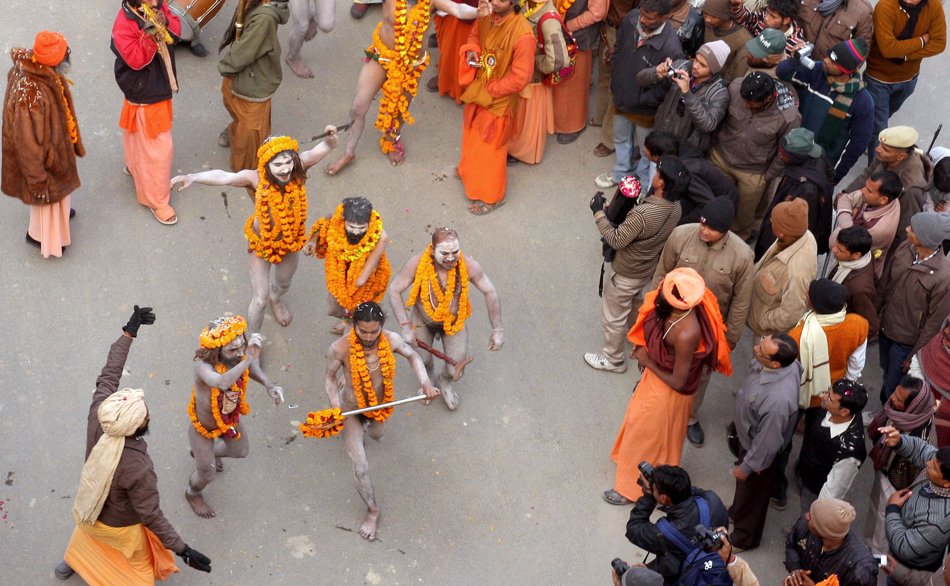
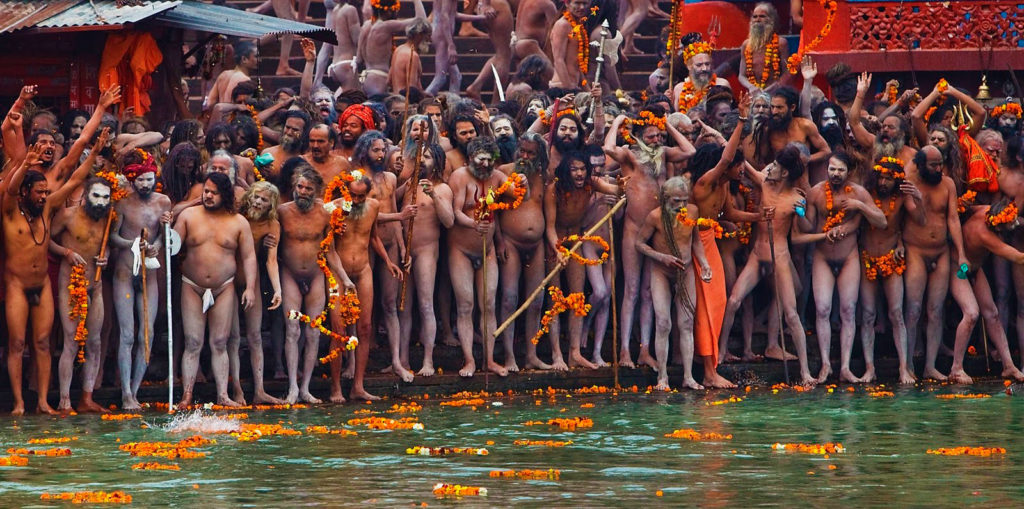
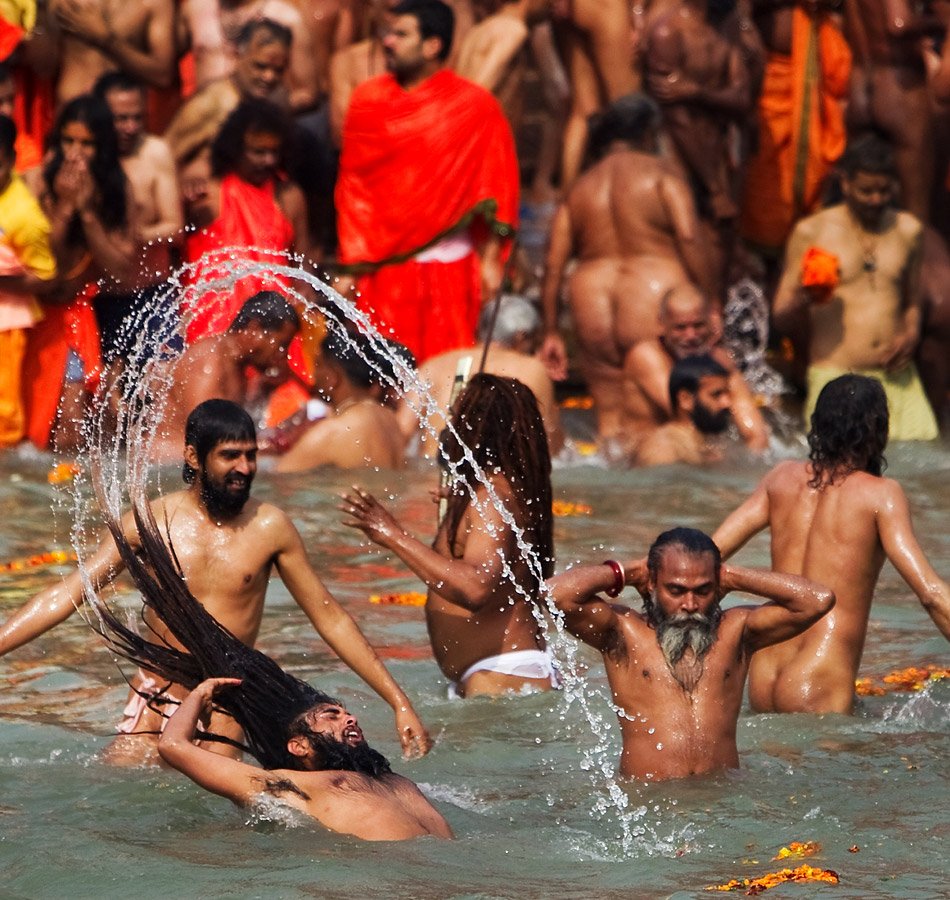
The Kumbh Mela is in full swing with thousands of devotees, inquisitive travellers and most importantly, sadhus and Aghoris gathering at Nashik to take part in the world’s largest religious gathering. The historic tradition of Kumbh Mela brings together the two indelible desires of humankind: immortality and the reign of good over evil. This year Nashik celebrates the drops of immorality that scents and spreads enlightenment through the land. The festival began with the hoisting of flag of Akhara at Sadhugram on 14th August 2015 and will go on until the end of September.

kumb mela sadhu 7
Source

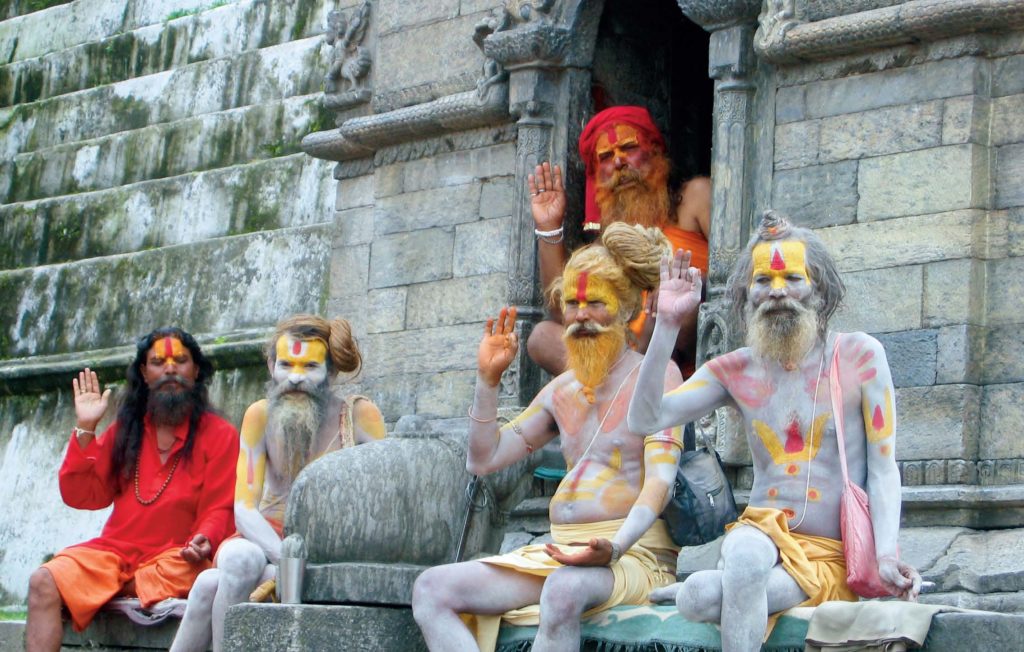
The centre stage of Kumbh Mela is the worship rituals of Aghoris, who have captured the interests of religious thinkers and historians for centuries now. Aghoris are ascetic Hindu monks from the Shaiva sect who worship the Bhairav form of Shiva. An Aghori sadhu is typically seen holding a skull (kapala), which is a cryptic message to devotees for renouncing the eight bondages to the material world ­– five sense-experience, intelligence, ego and identity and is also carried by the Aghoris as a continuing torch of their doctrines. Misconceptions about the Aghori tradition (like the alleged cannibalism) arise because we are often in unawares about the beliefs from which they originate. In the following points, we mention the beliefs of Aghoris and the derivative practices:

1. Give Up the Ego: Be One with All

kumb mela sadhu 59
Source

According to Aghori tradition, moksha (liberation from suffering) is achieved through complete renunciation of one’s personal identity and in this process, one must confront the nature of body including encounters with faeces, urine, phelgm and other bodily fluids.

Practice: A true aghori has to give up his name, even the identification as a male or female or transgender and gradually give up every socially and culturally conditioned label attached to their life. This is the initiation into the cult of Aghori tradition.

2. Everything is One: Animals, Plants and this Body

Naga-sadhus-at-kumb-mela
Source

Brahman is considered the ultimate reality and any form of duality is a form of illusion, due to ignorance. Brahman is the immanent source of everything in the world, following the words of Upanishads (which form last part of Vedas).

Practice: Aghoris are known to have deep love for nature, especially animals. This is in harmony with the image of animal-companion dog who stands with Bhairava.

3. You and I are Made Of Clay: Only Different Shapes

Kumb-mela
Source

Any form of distinction that we make which is supported by our language through concepts and categories is the result of ignorance about the reality of the world. There can be pragmatic function of language: use of words like ‘table’, ‘chair’ to point out objects but to think that there are permanent meanings to words: “self” exhibited through every form of “me”, “my”, “mine” is where ignorance is rooted.

Practice: Eating of human flesh because one gets pleasure from it is cannibalism. However, aghoris eat human flesh, even stool and urine to accept the body and its decomposing state- to accept the reality of disease, old age and death. They are indifferent- experience neither pleasure nor pain- towards such an act. Often mistakingly deemed as those who want to find purity in filth, aghoris do not see a distinction between purity and dirt. For this reason, they are known to use human oils from different parts of the body as medicines, apart from the smoking of marijuana.

5. Sex is Not About the Body: It is About The Spirits

Kumb-mela
Source

The aghori follow the rule of maithuna which is the act of sexual intercourse as taught by the spiritual leader. The ritual of sex generally involves location of a graveyard where consenting women are smeared with ash of the dead and the consummation takes place on the graves of the dead. The background includes chanting of mantras and beating of the drums. The act moves towards its climax spanning over an hour where the man and woman are said to become incarnations of Shiva and Shakti, thus gaining supernatural powers. These powers are not the reward that one seeks but are unexpected gifts. The real purpose remains to transcend the erotic dimension of sex and experience the spirituality in the act.

Do you think it is possible to have intuitive insight into Truth, as the Aghoris claim to have? Have you experienced this ever? Do their beliefs justify the practices they follow: eating of flesh and faeces, sexual intercourse on graveyard, smoking of cannabis? Do these practices conform to tradition Hindu principles?

Remembering the Apollo 11 Moon Landing 50 Years Ago

0
Remembering the Apollo 11 Moon Landing 50 Years Ago
Source

Jamil Urfi’s book ‘Biswin Sadi Memoirs, growing up in Delhi during the 1960’s and 70’s’ (https://cinnamonteal.in/authors/jamil-urfi/)  which is a nostalgic, personal remembrance of the bygone 20th century or the Biswin Sadi was published last year. In this extract from the  book he recalls the mystique surrounding the moon and the moon landing on 20 July 1969.

This year celebrates the moon landing by NASA’s Apollo 11 mission fifty years ago. There has been much excitement about it this year and also on account of India’s own efforts to send the VIKRAM lander (named after the man behind India’s space mission Vikram Sarabhai) to the moon. The Chandrayan-2 of our very own ISRO.

Apollo 11 Moon Landing
OLYMPUS DIGITAL CAMERA

The moon, the most conspicuous and largest celestial object in the sky fascinates all of us. Infact one of our most enduring childhood memories is that of watching the moon. I remember as a little boy, on full moon nights basking in its soft glow, watching it intently, examining its scars and craters. 

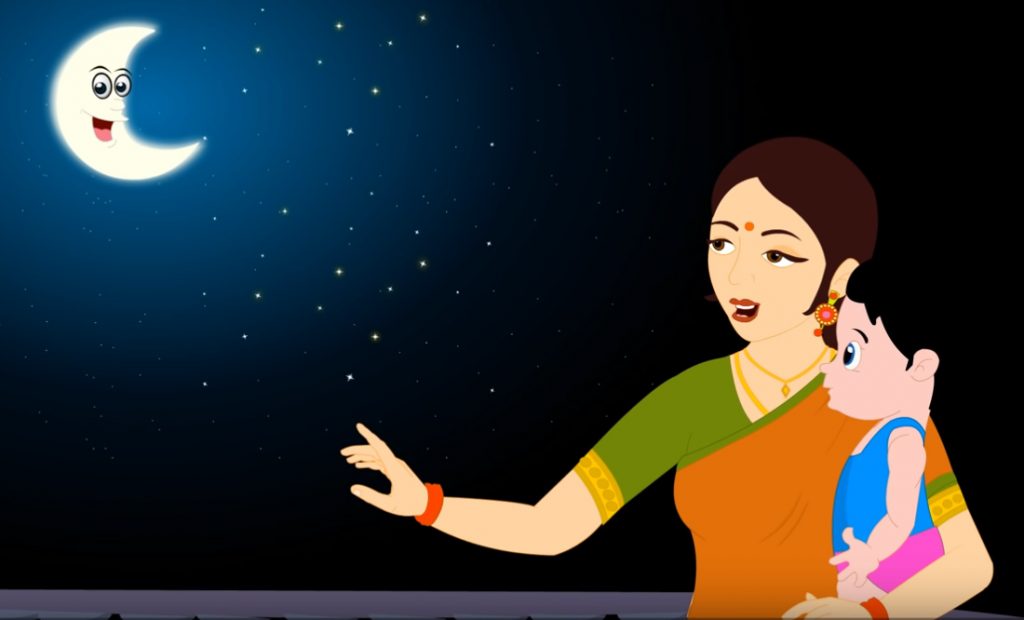
Growing up, one heard plenty of Hindi nursery rhymes and poems about the moon, perhaps the most well known being, ‘Chanda mama duur ke’ in which the moon is likened to a moody, temperamental, maternal uncle. 

There was also another poem which I remember was included in our lesson books, written by the Urdu poet Afsar (https://www.rekhta.org). Simply titled ‘Chand’ it visualized the moon differently—not like the moody, fussy, maternal uncle but as a more playful object. Its opening lines were:

Remembering the Apollo 11 Moon Landing 50 Years Ago

tum naddī par jā kar dekho 

jab naddī meñ nahā.e chāñd 

kaisī lagā.ī Dupkī us ne 

Dar hai Duub na jaa.e chāñd 

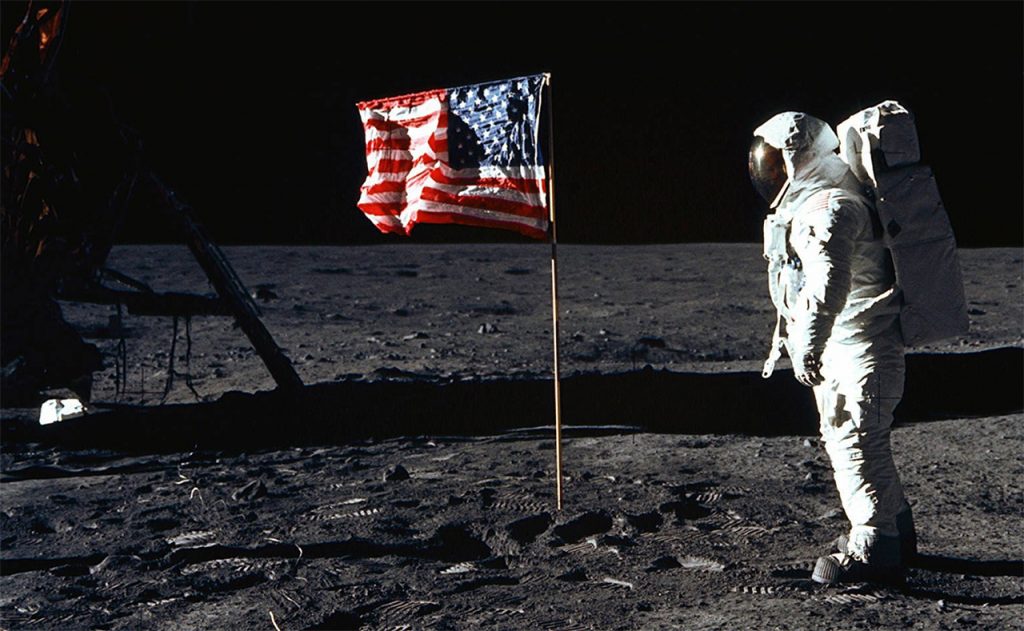
In the bygone 20th century or the Biswin Sadi the first manned mission to land on the moon—the United States’ Apollo 11 moon landing in 1969 was hailed as a defining moment for the entire century, a triumph of science and technology. For most of us who grew up in the 60’s it was something which was immortalized in Hindi film dialogues and songs. In a sense ‘Biswin Sadi’ and the moon landing were mentioned together. For instance, in the hit film of the 1970’s, Johny Mera Naam, the lead actor Dev Anand could be heard mouthing the dialogue:

Janab ye beeswein sadi hai, aaj kal insaan chand pe rehne ki baat kar raha hai…

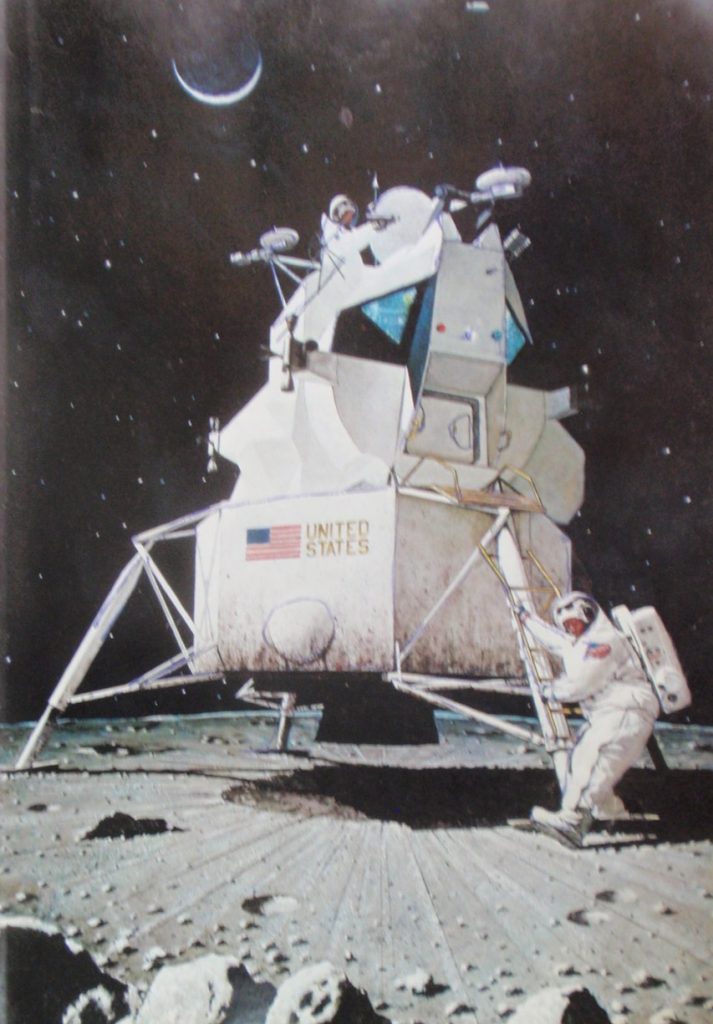
On the day of the actual moon landing  I remember there being a lot of excitement and the adults discussing it. Some weeks later father took us to see an exhibition which had been organized at the American Embassy in New Delhi where samples of moon rock and a life-sized model of the spacecraft Apollo 11 and its different stages were on display. 

I don’t remember much of the moon rocks but the spacecraft models, displayed out in the open,  were really fascinating. 

But back then  it seemed incredible that two men had actually set foot on the moon—the yellow disk which hung in the night sky. I remember that night very well (a Google search tells me the exact date) though I was only eight years old then. I lay on my bed in the open courtyard and looked skywards, trying my best to spot those men who were on the moon, but that was impossible. I gazed and gazed at the millions of stars and the Milky Way. Surely, behind the layers and layers of stars there would be a point where there would be no stars and beyond that . . . perhaps a vast area of darkness beyond which . . . ? Did anybody have an answer? Many years later, when I got interested in reading Hindustani poetry, I came across the famous lines (by a famous poet), ‘Sitaron se aage jahan aur bhi hain.’ (There are other worlds, beyond the stars.) 

But in 1969, aged nine years only, I hadn’t heard of these lines. All that I recall is that on the night of the moon landing, I lay in my bed contemplating the secrets of the cosmos while gazing at the moon. I must have got exhausted and finally gone off to sleep after a long search.

Scroll Paintings of India – A Fine Mix of Story-telling and Art

3
Scroll-Paintings-of-India-01
Image Source

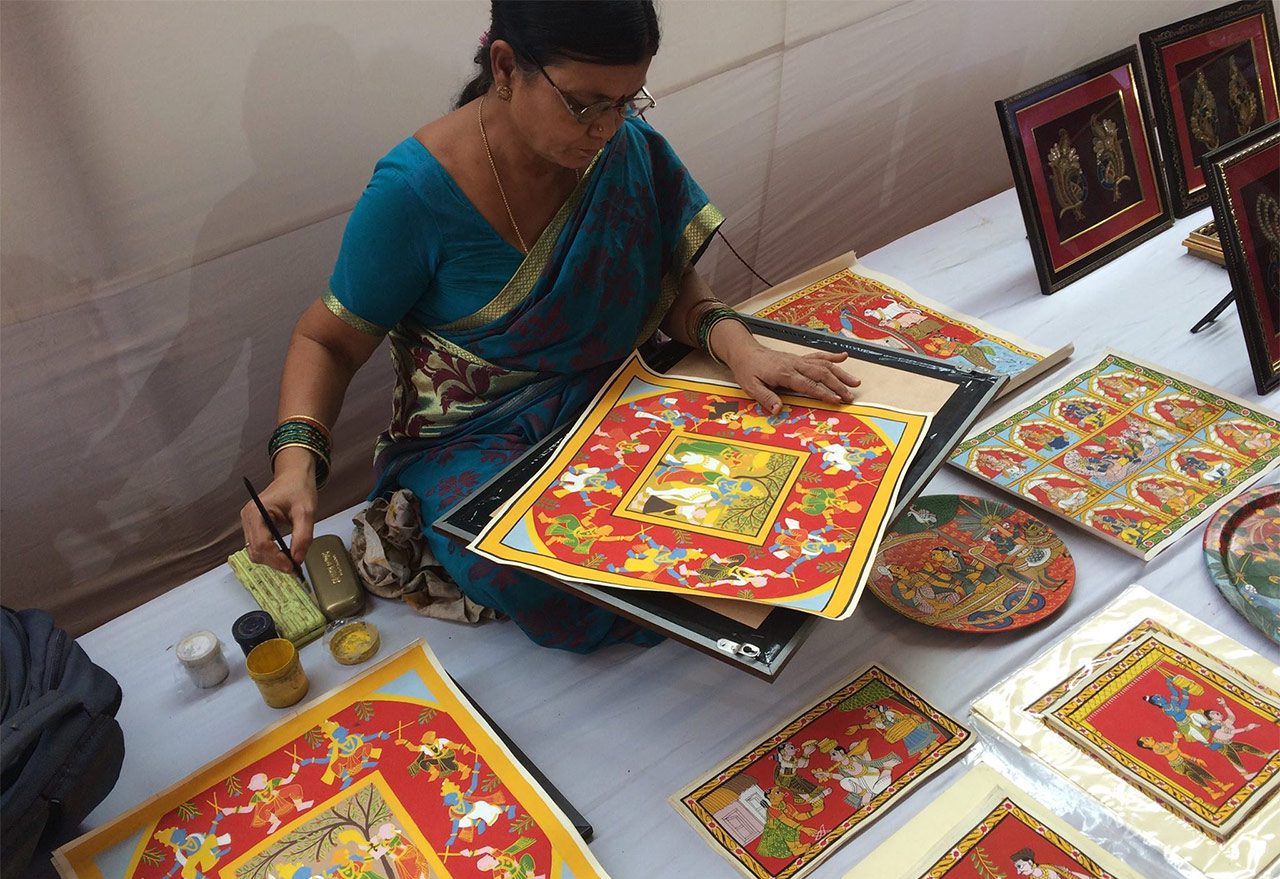
Indian Folk arts are a delightful mix of artistry. The different types of Scroll paintings are an integral part of the visual arts and most of these are as much about tradition and culture as about skill, color and craft. The scroll paintings as the name suggests are paintings done on scrolls. Used as tools for story telling by wanderers in earlier times, scroll paintings in many ways are like movie reels of today’s time. The commentary was done by the balladeer community accompanied by music and dance as they travelled from village to village retelling the stories that were manifested on the scrolls. 

Each area or village developed its own scroll paintings and hence these paintings carry with them rich history, as well as, regional traditions and cultures. Known as Cheriyal in the Telangana region, Patachitra in Bengal and Orissa and Prasasti Patra in Gujarat and Maharashtra the scroll paintings were popular almost all throughout the country. However, the Cheriyal and Patachitra are the predominant types of scroll paintings and are survived till date. 

Cheriyal Paintings

Scroll-Paintings-of-India-Cheriyal-Paintings

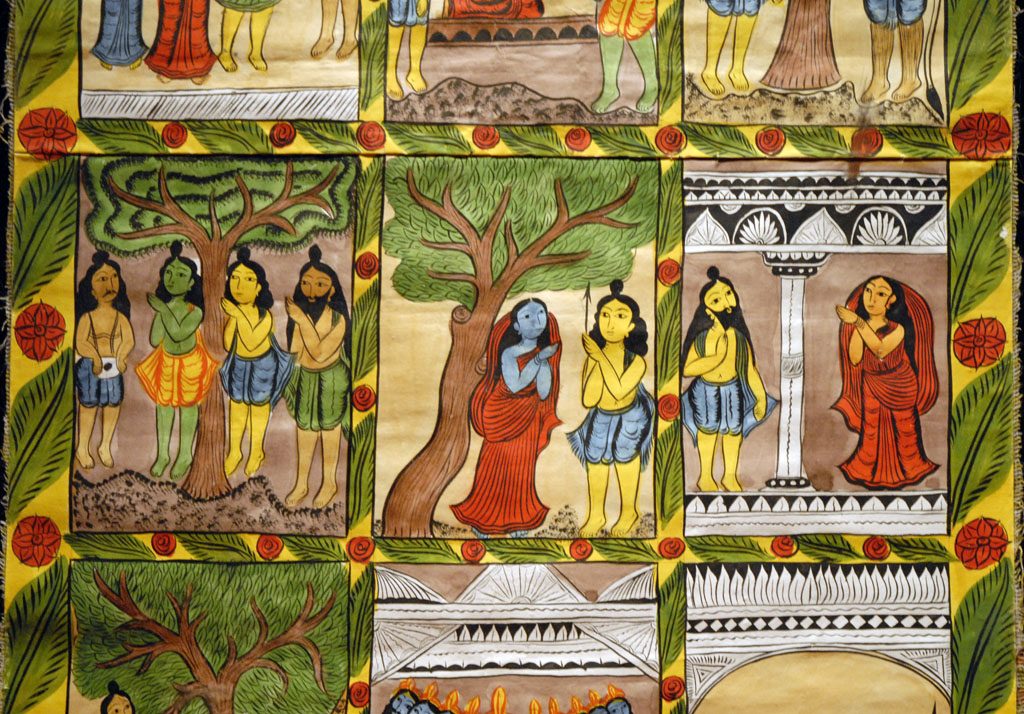
The Cheriyal paintings always were and continue to be distinctly regional and local in style and origin. The local temple art and Kalamkari traditions along with art traditions of Deccan and South India are the most important influences on the Cheriyal paintings. These paintings are a version of the Nakashi art, which is an art form practiced in Telangana. The Nakashi arts are scrolls that are narratives of mythology and folklore. The stories though a part of the Puranas and Indian Epics are also fraught with local traditions, peculiarities and customs that make the Cheriyal paintings a wonderful cultural expression. 

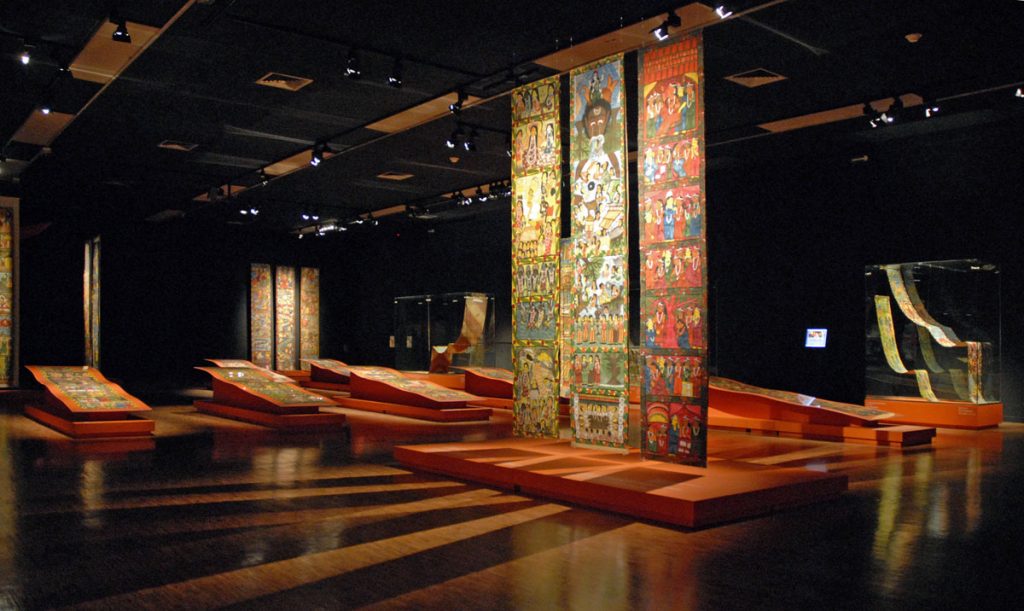
Today, however, the demand for long scrolls has disappeared and artists are forced to constrict the Cheriyal paintings to limited episodes or characters of a particular story. Yet, the story was very different in the earlier times. The scrolls were three feet in width, could be 40-45 feet in length depending on the story and had around 50 panels. The scroll paintings flowed like a film roll as the storyteller would begin narrating along with his team who would provide the musical effects to make the story interesting. The scroll painting was usually tied to a tree or held by hand as narration unfolded.  

Characteristics of the Cheriyal Paintings

Cheriyal Paintings
Source – Cherial Scroll Paintings by Vaikuntam Nakash

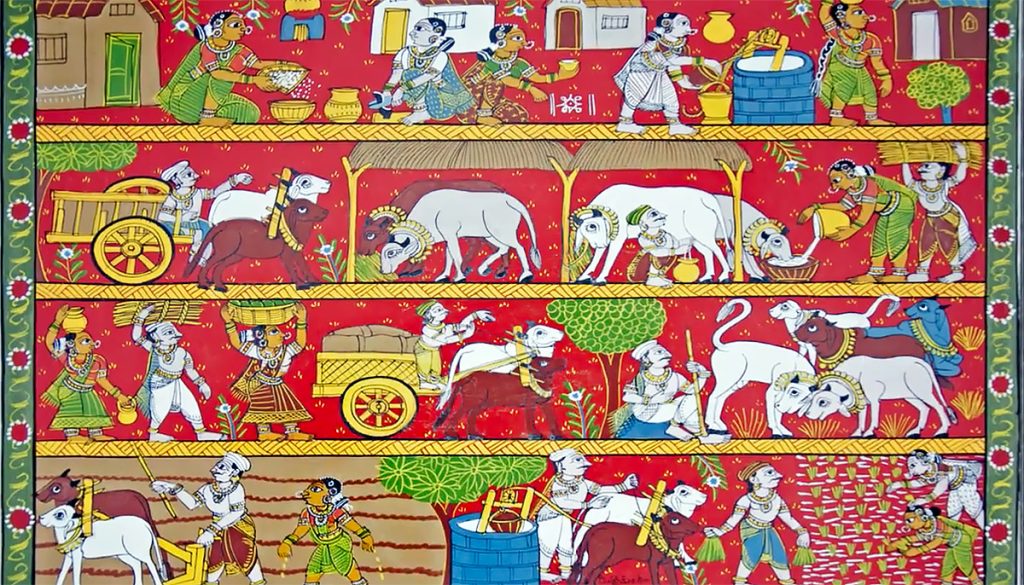
The Cheriyal paintings are characterized by their bright colors and the free imagination of the artists. The themes and characters are very easily identifiable, such as stories from Ramayan, Mahabharata and Krishna Leela. The main story is made relatable by using rural scenery, such as men working in paddy fields, women in the kitchen or celebration of different festivals. The costumes also reflect the traditional dressing style of the Andhra and Telangana region. The prominent characters are usually drawn as the larger than the rest and are more detailed in outline and expression.

https://www.youtube.com/watch?v=SPQeDlKYooE

The process of making the scroll paintings is quite elaborate. The canvas is made from khadi cotton and is mixed with starch, white mud or suddha mati, paste of tamarind seeds and gum water. This procedure is repeated thrice and every coating is dried before the next is applied. The artists make the outlines of the paintings on the canvas once it is ready. 

The Cheriyal paintings were given the GI or Geographical Identification tag in 2007 and today very few artists remain who practiced this art form.

Pattachitra Paintings – Odisha

Pattachitra Paintings
Image – Mike Prince

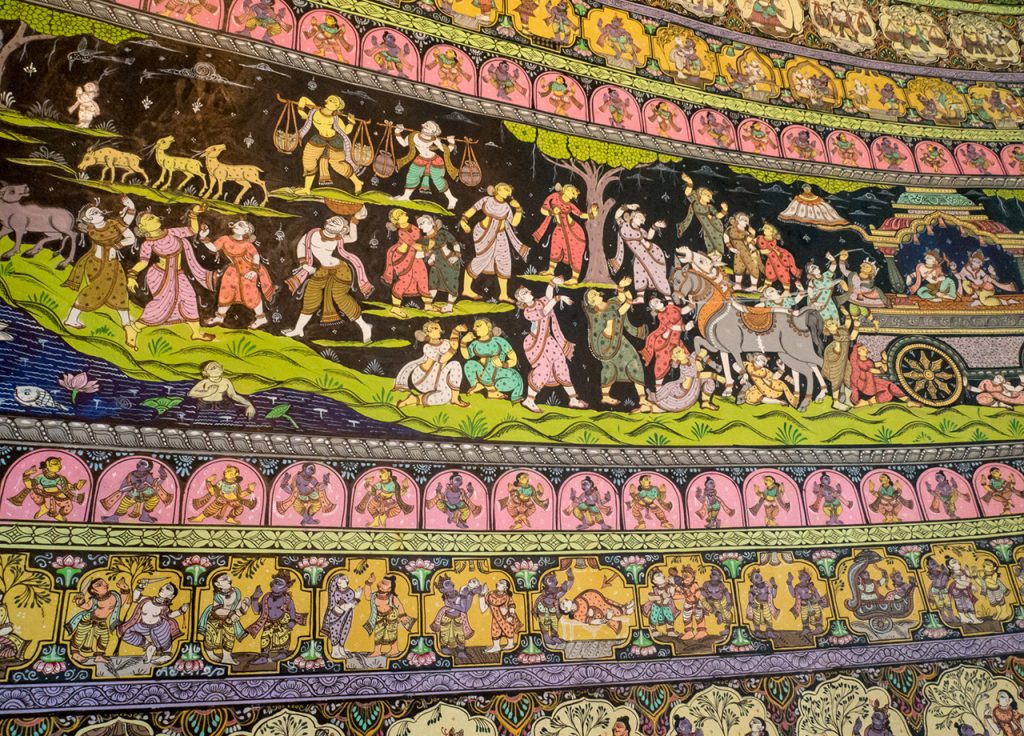
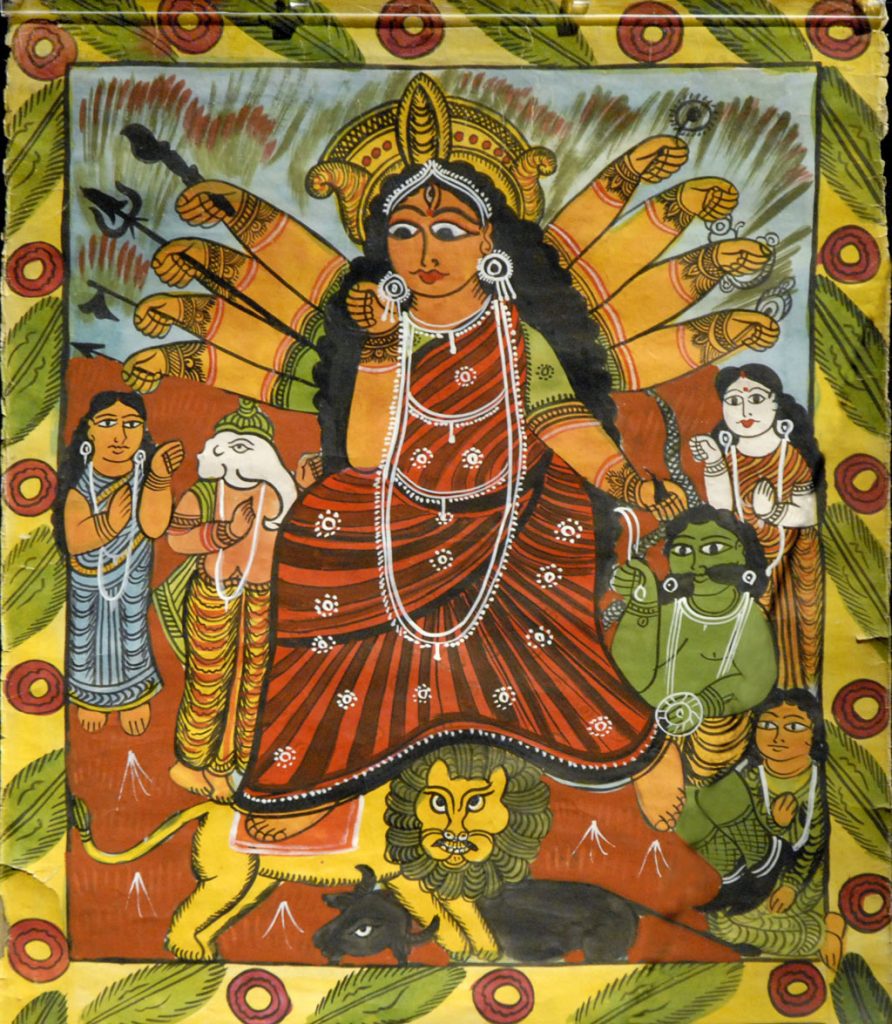
Pattachitra are also cloth based scroll paintings but these are from the eastern regions of West Bengal and Odisha. Pattachitra too is a depiction of Hindu mythology and folklore and is one of the oldest forms of paintings dating back to more than a thousand years. 

Puri Jagannath culture inspired Pattachitra – Wikimedia

In fact, the origin of the Orissa Pattachitra dates around the time of the establishment of the Lord Jagannath shrine in Puri, but this could also be because unlike sculptures, paintings are not able to survive the vagaries of time for too long.

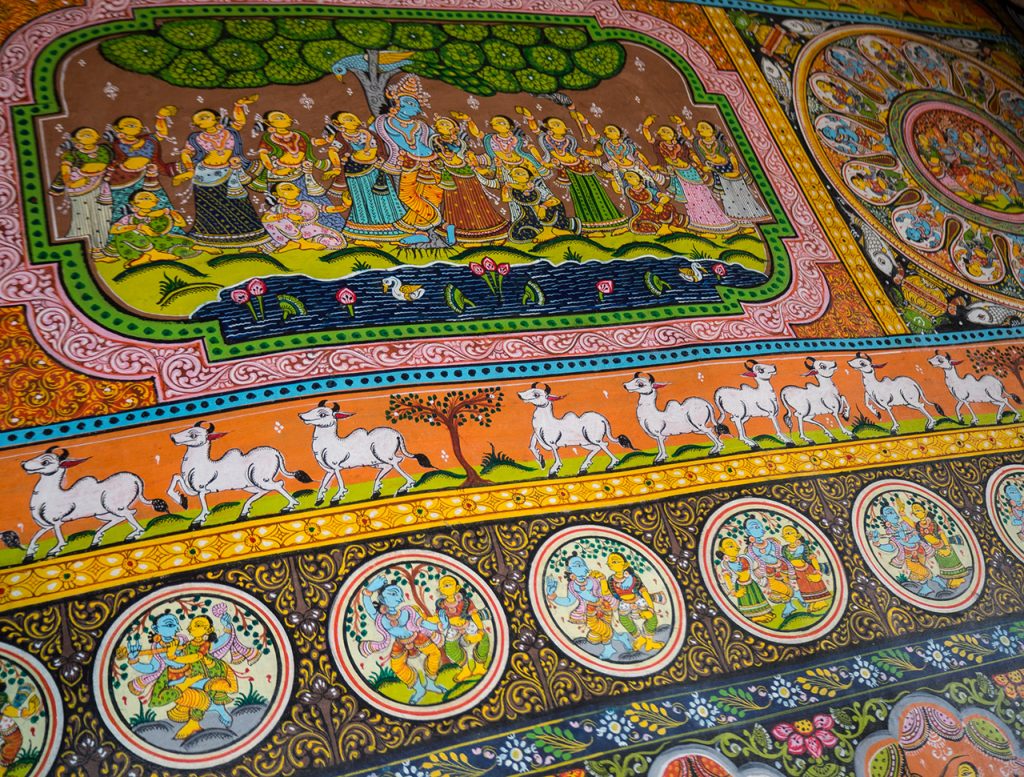
Lord Jagannath, however, has been the most important influence of the Pattachitra paintings. The themes of the paintings revolve around Lord Jagannath, stories of Radha and Krishna, stories from the Mahabharata etc. 

Pattachitra Painting
Image – Mike Prince

The painters of pattachitra are called chitrakars and the entire family is involved the making of the paintings. Women prepare the glue, canvas and applied the fill in colors. The master or main painter draws the outline of the painting. Each of the paintings is done on small cotton cloths and the canvas is prepared using chalk and gum from tamarind seeds. The painters are usually such experts that instead of using a pencil or charcoal for the outline, they directly use the paints before filling in the vivid colors. Each small cloth canvas is then sewn together to form the long final scroll. 

Image – Mike Prince

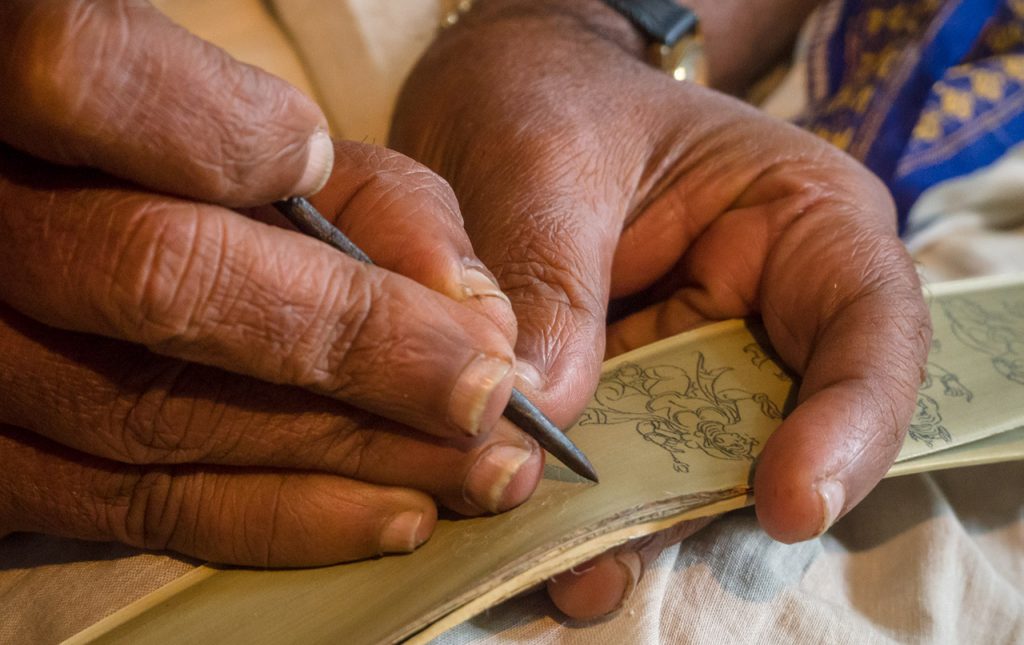
The different types of pattachitras in Odisha include the Tala Pattachitra where the paintings are drawn on palm leaves and are finally stitched together to form the scroll. The Bhitti Chitra refers to paintings made on walls. 

Pattachitra – West Bengal

Pattachitra – West Bengal
Bengal Style PattachitraJean-Pierre Dalbéra

Similarly, West Bengal Pattachitra is divided into Chalchitra, Dugra Pat, Medinipur Pattachitra and Kalilghat Pattachitra. The themes revolve on mythology and stories from epics. However, the West Bengal pattachitras also include secular and regular themes, such as elections, family planning, accidents, evils of dowry system and so on. 

Bengal Style Pattachitra
Bengal Style Pattachitra – Jean-Pierre Dalbéra

Every pattachitra is accompanied with a song which is sung as the artist unfurls the painting. This tradition is known as Patua Sangeet and is performed by the patua or painter.

Though both Odisha and West Bengal practice the pattachitra there are many regional and cultural differences in their styles and art. This is why; the GI of Pattachitra has been registered as Orissa Pattachitra and West Bengal Pattachitra separately.

Pattachitra – West Bengal
Bengal Style Pattachitra DisoplayJean-Pierre Dalbéra

Cheriyal and Pattachitra

The Pattachitra community is slightly better off in comparison to the Cheriyal painters.  The patuas have more opportunities and market and their works are often displayed in exhibitions. Also since the themes of the patuas are more universal they are more acceptable and are also used in textile designs. However, both the Cheriyal and Pattachitras can be considered the first medium of stories and their magnificent depiction, artistry and use of imagination make them undoubtedly an integral part of the cultural and art history and forms of our country.

Cricket as Part of Indian Culture

0
Cricket as Part of Indian Culture
Image – Wikimedia

There are many cultures and religion followed in a secular country like India, but the only thing that unites the heart and soul of every Indian is cricket. Although India’s National game is hockey but cricket in India has got a huge fan base. With a great many vigorous devotees, cricket is one of the supreme cultures in India. ‘Men in Blue’ is one of the best-known adjectives with which the crazy cricket fans of the country like to call their national cricket squad. Be it a school going child or a retired elderly person, the appeal of cricket has charmed pretty much every Indian. People schedule out all their activities, travel arrangements, leaves, etc. keeping in mind about the timetable of some good matches. During some intense matches different cricket news sites as the Stumped.app gets overloaded by a majority of Indian peoples to get an update about the game. Cricket is additionally the quickest method for befriending an Indian. Regardless of which part of India it is, one can discover children playing cricket with full of energy and enthusiasm anywhere.

Though cricket is the national game of England it is not that much popular in the country. It is also observed that with time West Indies cricket is also losing its sheen. But we Indians who got the game from the British rule has kept on being the fantastic supporters. Indeed, after the introduction of the tremendously prevalent Indian Premier League (IPL), the cricket fever has gone into totally new skylines of popularity and magnificence.

Emily Crick has completely described in her paper, “Cricket and Indian National Consciousness”, that India is a nation that has reached to the level of unity that she always dreamt about and the one and only cause for this is the craze and love for cricket among the people of the nation.
As the game is very much popular in India, it attracts a large number of sponsors as well. Additionally, past stats suggest that the Indian team plays a much higher number of games as compared to any other cricket team across the globe and each game is treated like a ritual. It will be really hard to get a vacant seat in the stadium whenever there is a match in the country. Apart from international matches, domestic tournaments like Irani Trophy, Duleep Trophy, and Ranji Trophy has also got a good number of supporters. These are some of the important factors that make The Board of Control for Cricket in India (BCCI) as the wealthiest cricket board around the world. Whenever the International Cricket Council (ICC) conducts any tournament, it earns most of its revenue from the nations whose people are crazy for cricket. 

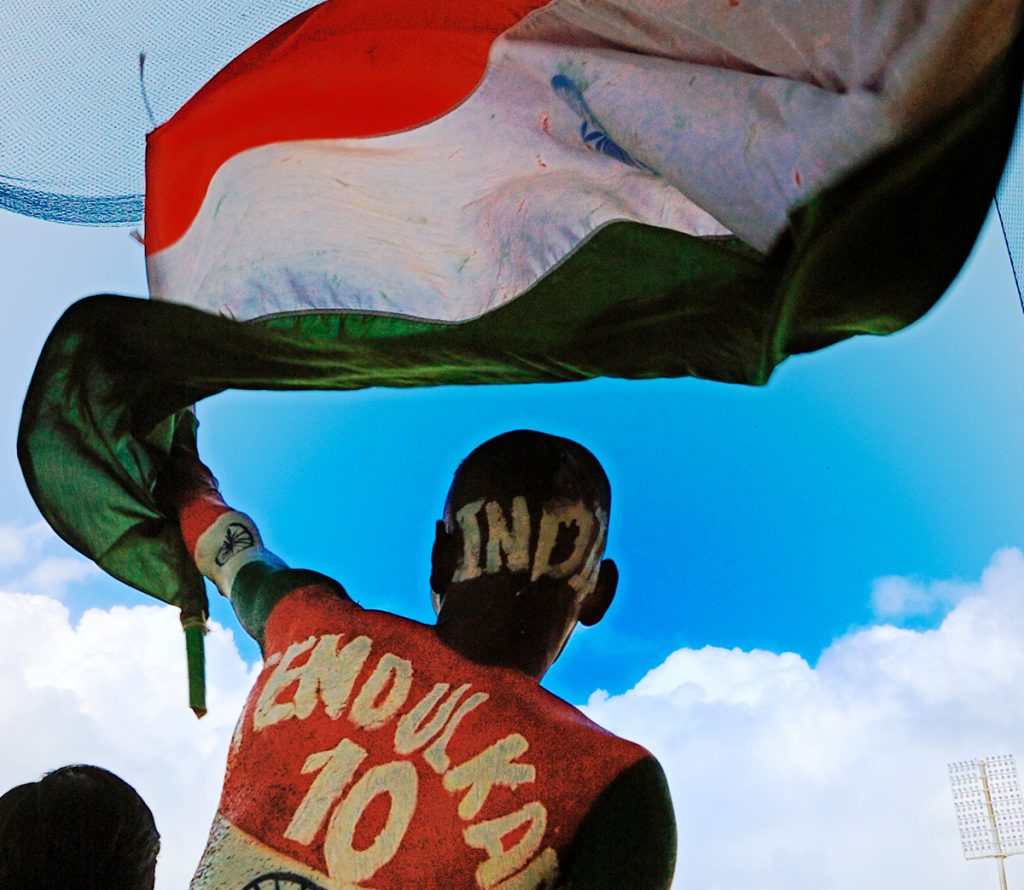
Cricket being a religion does not come up with any holy book but has several of its Gods. India has delivered a few incredible cricketing legends who have contributed hugely by setting individual achievements in cricket history. These cricketers have also been respected by several awards from international association, cricket boards and universities for their unachievable milestones and records. Legends like Kapil Dev, Sunil Gavaskar, etc. have given this game a bright past. Some great talents named as Mahendra Singh Dhoni, Virat Kholi, etc. have made the people of India well accustomed about its sheen present, proving the fact that cricket is going to have a good future in India. It will be totally wrong to forget the greatest of all the legends. You are guessing it right, its’s Sachin Tendulkar. It has become a popular saying that if you believe cricket to be a religion then Sachin is the living God for it. Sachin Tendulkar is regarded as the star cricketer of all time. He is worshipped and admired by not only the Indians but by almost all cricket fans and players on the Earth. 

In addition to the above-mentioned Gods in India, the culture of cricket also consists of its festivals which is celebrated in the form of victories. Every win is celebrated, cheered and admired by all. But whenever the Indian team loses, all the people of the country motivates them, inspires them and congrats them for a good game.

In addition to making individuals nibble their fingernails in stress and tension, cricket plays a noteworthy job in setting up a worldwide diplomatic relationship as well. In the blog of the University of Southern California, Paul Rockowner has written that there was a period of rising tension in 1987 between the two neighboring countries i.e. India and Pakistan on the matter of Kashmir. Armies at the borders from both the sides were at high alert. Rajiv Gandhi, the Indian Prime Minister invited the President of Pakistan, Zia ul-Huq to attend the Test match between India and Pakistan in India. Pakistan’s President accepted the proposal and the incident played an important role to drop this rising tension into ease.

The dedication and love for cricket in India is an incredible indication of progress and harmony. Today we see a dream in the eyes of many teens to be the next Sachin or the next Dhoni of the country. The fantasy is legitimate in an obvious sense. With a “cricket-kit” on their shoulder, these inspiring eyes are dreaming to spread the spirit of sportsmanship and removing away some of the devilish concepts of war, terrorism, and hostility from society. The love and passion of a cricketer can only be known by individuals who have spent the whole day practicing hard on the cricket field, running with the ball, against the ball, and after the ball. We should stand along with them, support them and should keep them always inspired and motivated for their dream.

Mystical Feels of Jageshwar Valley

0
Jageshwar Valley
Image – Alexander via Flickr

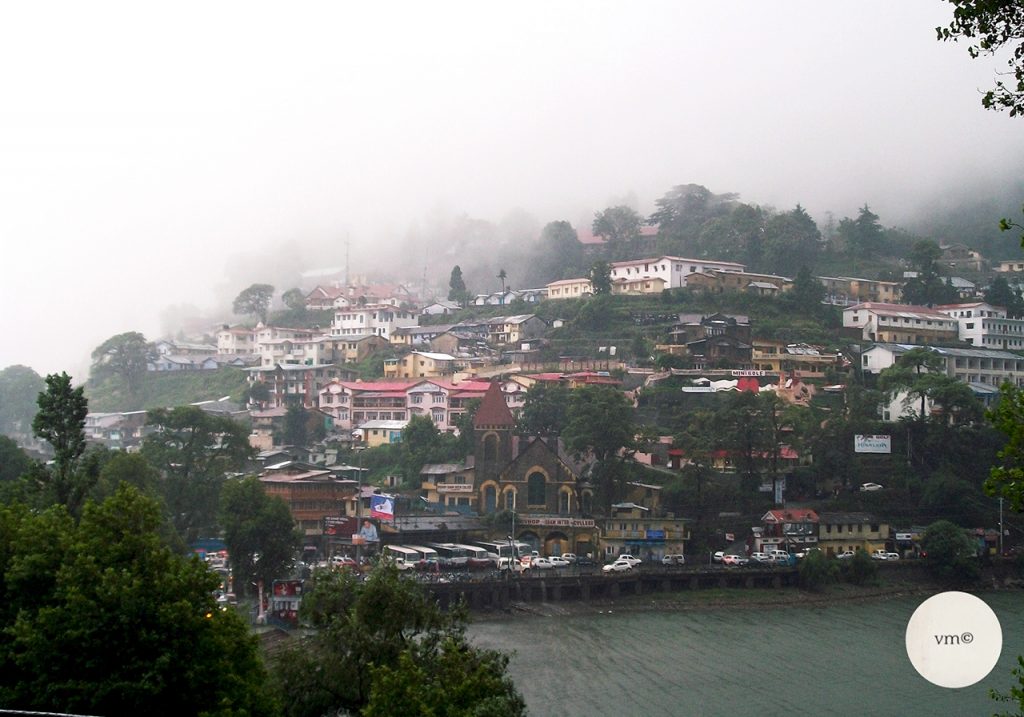
 Staying in Delhi has had its advantage, one being having closer access to the beautiful hill stations in the Northern India. Nainital had always been my family’s favourite gateway to escape the capital’s sweltering summers. Just a glimpse of the breath-taking Naini lake would take away all our fatigue. 

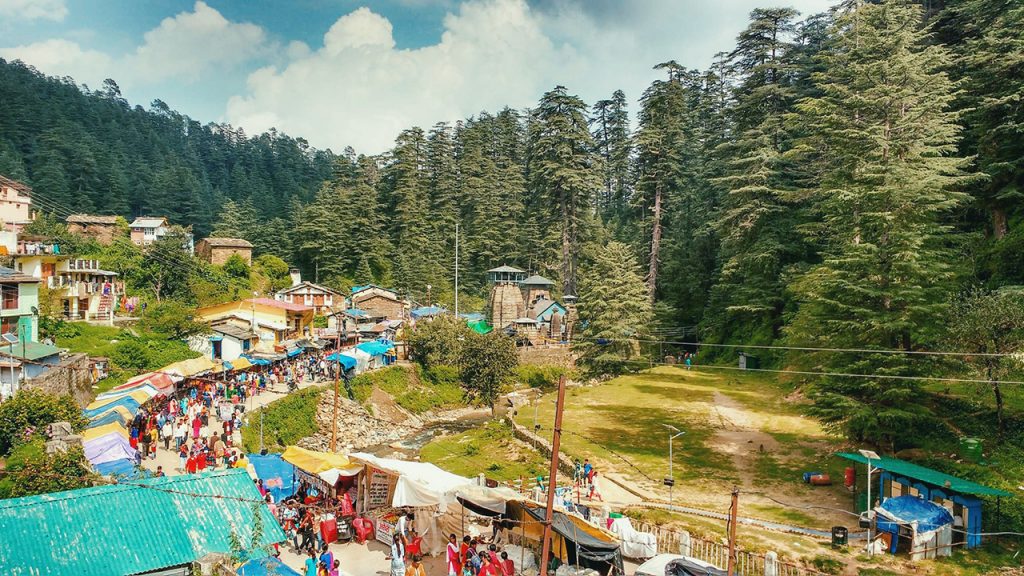
Over the years, this joy became short lived as many travellers started flocking to city with their music thudding and pollution emanating vehicles. There was less of the chill in the air and more of the noise. We started exploring nearby towns of Ranikhet, Almora, Kausani, Mukteshwar and they all greeted us with soul warming beauty but there was one magical place that found a home within our soul – Jageshwar Valley. It was surprising for us to have found an offbeat paradise like Jageshwar just 36 kilometres away from the Almora city. The winding roads leading to the valley are full of verdant slopes, sporadically boasting of a crafty terrace farming. 

Jageshwar Valley

We started exploring nearby towns of Ranikhet, Almora, Kausani, Mukteshwar and they all greeted us with soul warming beauty but there was one magical place that found a home within our soul – Jageshwar Valley. It was surprising for us to have found an offbeat paradise like Jageshwar just 36 kilometres away from the Almora city. The winding roads leading to the valley are full of verdant slopes, sporadically boasting of a crafty terrace farming. 

Jageshwar Valley
Image – Ashish Gupta via Flickr

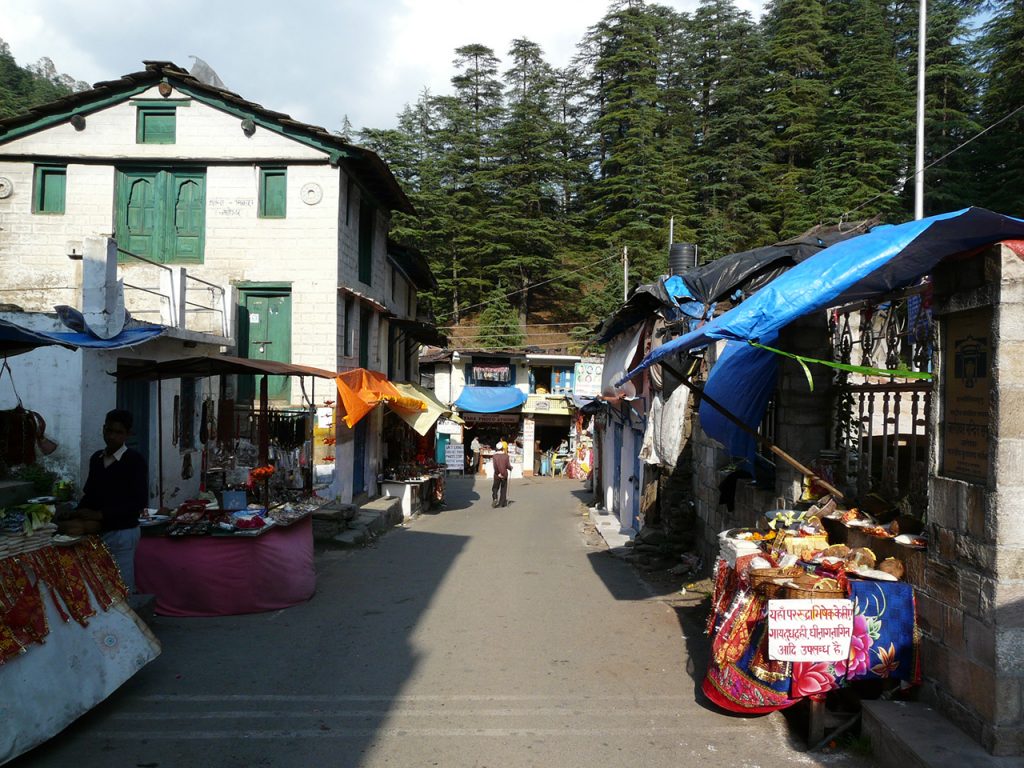
Mysticism struck me the moment my eyes took in mighty deodars surrounding the Jageshwar valley. It almost seemed as though the thick pine forest that stood firm on the hills, concealed the town in a velvety green blanket. Nestled in their presence was a cluster of ancient rock temples which are a part of Jageshwar Dham. As we drove in, my eyes fell upon the pristine waters running through a meandering stream next to the temple. The stream was Jataganga and the valley was earlier an ancient route for Kailash Mansarover, one of the holiest and remotest shrines of the Hindus. In fact, Jageshwar Dham itself is central to the ancient scriptures being one of the Jyotirlinga temples out of the total of twelve spread throughout India. 

Jageshwar temple complex
Jageshwar Temple – Varun Shiv Kapur via Flickr

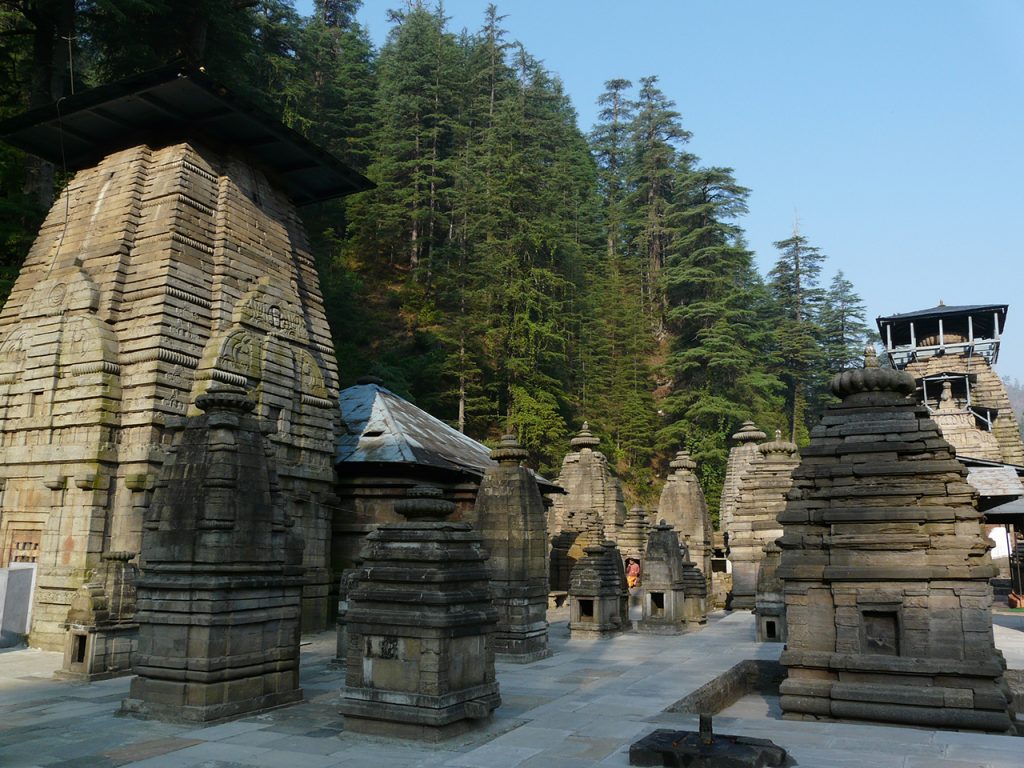
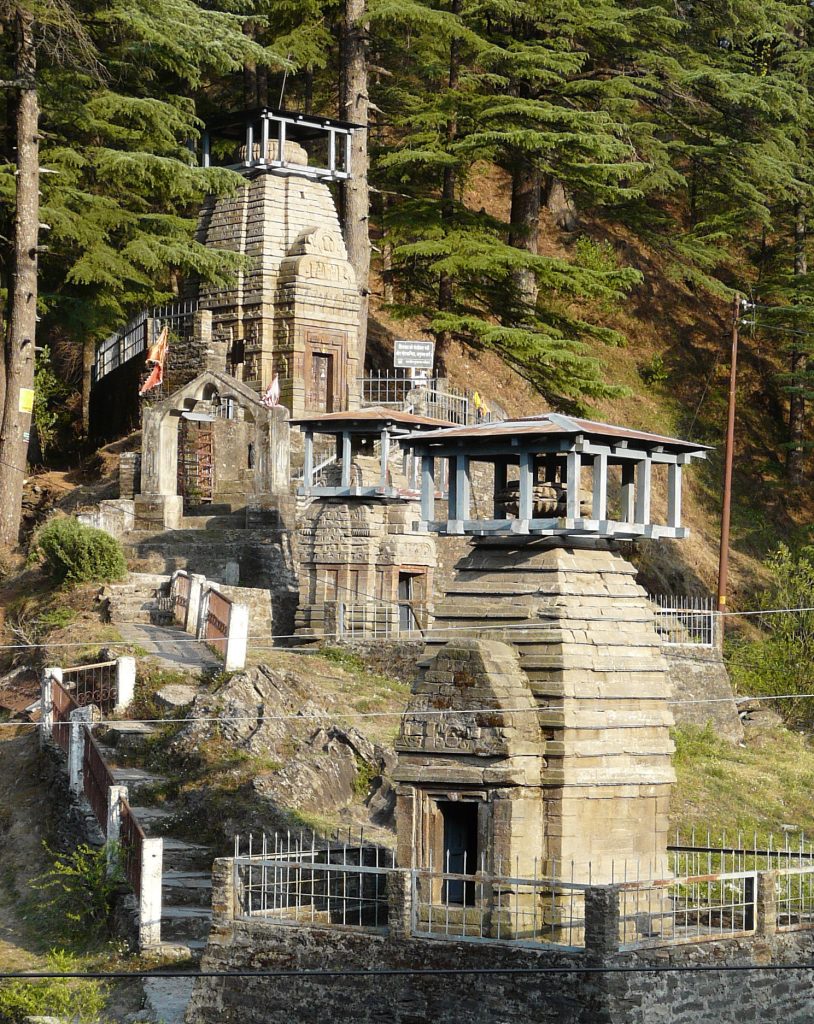
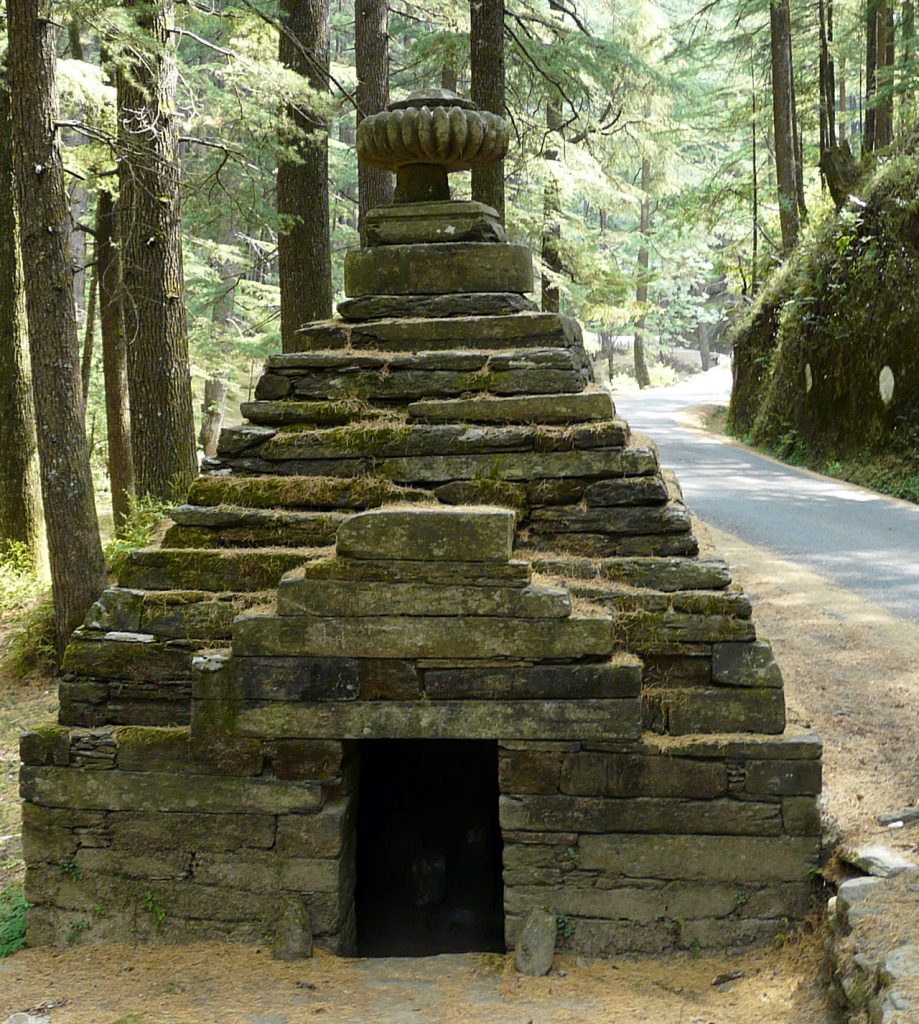
The shrine dating between 7th -12th century AD, is a group of around 100 plus temples dedicated to the 33,000 crore Hindu Gods and Goddesses. Two more cluster of ancient temples are found here but away from the Jageshwar group. One is Dandeshwara temple and on the other side of Jataganga is Kubera temple group. 

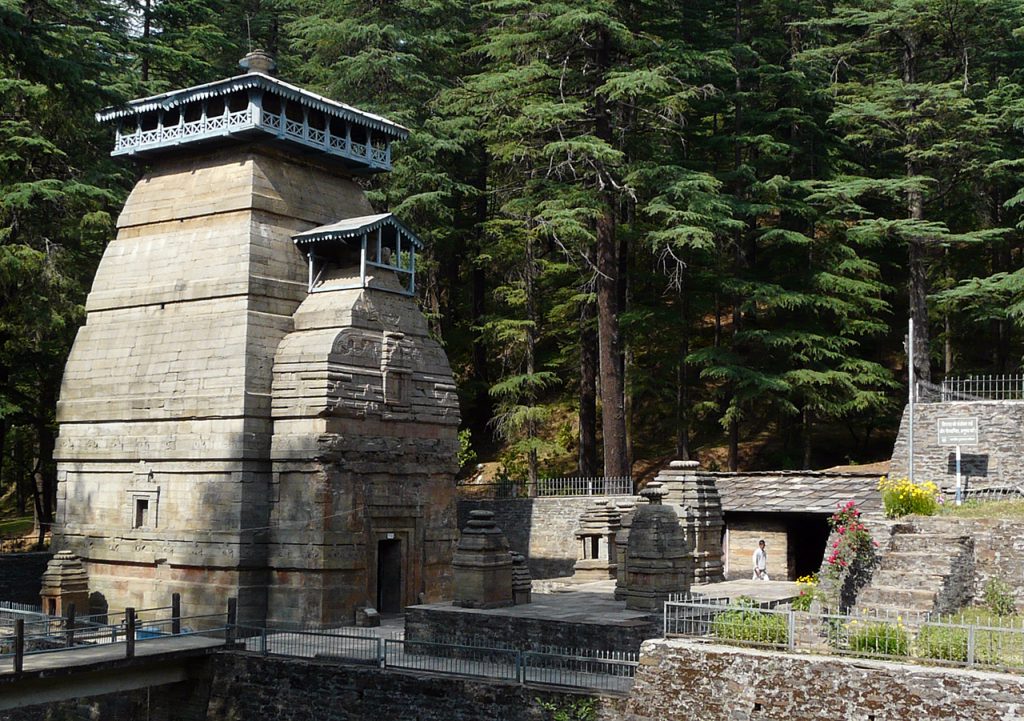
Architecturally, they are similar to Jageshwar temples which are believed to have been restored during the Katyuri reign. Nagara architectural style can be dominantly seen in the temples’ splendid rockwork. Owing to their historical importance, they had to be taken under the Archaeological Survey of India (ASI) and 25 model monuments. 

Dandeshwar temple
Dandeshwar Temple – Varun Shiv Kapur via Flickr

Processing the doses of history our cabby was sharing with us, we checked into a guesthouse and rested briefly. By evening, we headed to the temple. The ancient walls radiated spirituality as the cold breeze tickled our hair. The sky reaching pines looked down, beckoning us to shake off all the baggage from life in this surreal, calmness evoking ancient land. 

Thereafter, we strolled through the sparsely populated town. It was a very small town with only a few arched roof houses and guesthouses ensconced in the pine hills. Along the road, there were shacks, small shops and roadside vendors selling essentials. At places, jagged, withered pathways led way to help climb slopes. My eyes traced an elderly foreigner climbing down from a hut atop a mountain. We rambled some more and in only a few long strides, the town was over. 

Kuber Temple Group – Varun Shiv Kapur via Flickr

Heading back into the town, we ordered some tea, Jalebi and Samosa at one of the tea stalls. By now serenity had completely engulfed me along with an unprecedent familiarity in an unknown land. Far from the outcry of the city, I was in nature, closer to the roots of humanity. 

The shopkeeper told us that in monsoon and Shivaratri, Jageshwar becomes crowded with people especially newlywed Indians coming from as far as Europe to take the Deity’s blessings. 

Jageshwar
Jageshwar – Varun Shiv Kapur via Flickr

By now, the foreigner who looked like a spitting image of Ruskin Bond, had reached a nearby vegetable stall throwing a fluent Hindi after being enquired about his health. We learnt that many foreigners left the urban comfort of their states to settle in the tranquillity of Jageshwar, something that intrigued me. They had sought home in the heart of raw nature on remote foreign grounds that didn’t have the ease of even the nearby towns. Coloured in the native’s culture, their faces were reflecting an inner joy. 

At night, after a home styled simple yet sumptuous meal, I sat quietly reflecting on how enchanted I felt of the place and what it would look like in snow-covered winter. It was past midnight and my reverie got broken when a melodious, cheery voice echoed through the hills crooning a folk track. 

Roadside shrines along the way to Jageshwar Varun Shiv Kapur via Flickr

I rushed to the window to find the source and to add to the mysticism, the young boy, unafraid of the darkness or dangers of the pine forest, disappeared through the woods. Eerie at first and then I realised it was his home. They all knew every nook and corner like the back of their hand. I smiled at his carefree voice as it felt like homecoming to the days of unadulterated and childlike joy in this mystic abode of nature. 

5 Sustainable Eco-friendly Traditional Products Still Used in India

3
Eco-friendly Traditional Productsin India
Image –Wikimedia

Thankfully in the recent years the world is becoming alarmingly conscious of the environment. Efforts for sustainable development have been on for a long time now with a lot of contemplation, policies and debates. However, the work on the ground level is still far from over as we all need to pitch in to do our bit for our surroundings and natural environment. Yet, as plastics are banned in various places and conscious efforts are being made to adopt eco-friendly alternatives in our daily lives, it is interesting to revisit and relook at some of the products that have been in use for decades. Yes, I am talking about the various environmental friendly items that most of us have grown up using. Today of course, there is a need to reinvent our ways but here is taking a look at the 5 most sustainable products that have been around for long and probably have not merited enough limelight but have shone the way to many. 

1. Sal Leaves plates

Eco-friendly Traditional Products in India - Sal Leaves
source

If you are gorging delicious ‘puchkas’ in Kolkata, have you ever wondered what those tiny brownish plates are made of? Made from sal leaves these plates go by various names, including patravali, pattal, vistaraku, vistar or khali. Made from mainly dried sal leaves, the leaves are stitched together with wooden sticks into various shapes. The leaves would any day give the modern paper and plastic plates a run for its environmental sustainability. 

2. Banana Leaves

Eco-friendly Traditional Products in India banana leaf
Photo by Aneesh K

Eating a hot sumptuous meal on a banana leaf is just so perfect. In south India eating on a banana leaf is extremely common and in fact, this tradition is also proudly used during festivities or weddings. Besides the fact that banana leaves are naturally available, they also add a definitive flavor and aroma to the food. In West Bengal also the banana leaves are used to cook or serve the food. Interestingly, the banana leaves are used as a serving medium in many parts of the world, including Singapore, Malaysia, Philippines, Ecuador and more.

Historically, the banana leaves were also used as writing surfaces in many South East Asian countries. 

3. Bhar/kulhar/kulhad/shikora

Eco-friendly Traditional Products in India kulhad
Image – Pixabay

These tiny clay cups or pots are the most environmentally friendly items that have borne the brunt of cheap plastic cups for a while. Hopefully, this is changing now with their true worth being understood at different levels. The bhar is popular in Bengal and there is nothing more refreshing than a cup of tea sipped in the bhar. Made from the clay dug out of the Ganga, the bhars are made from hand and are easily crushed after use. In West Bengal, the clay pots are also used to make and serve the delicious mishit doi or sweet curd and lassi. 

The kulhar or kulhad is the traditional vessel from north India. Estimated to be in use since the last 5000 years, the kulhar is used to serve various desserts, such as kulfi, ice cream, lassi or hot milk, badam milk and tea.

4. Thonga

Eco-friendly Traditional Products in India Thonga
Image – Nu One via Flickr

The newspaper and brown paper bags, fondly called thongas have been in use for very long. Used to serve and fill the ‘jhaal muri’ till the brim in West Bengal or stuffed with khakhars in Gujarat, the humble thongas are till date a far better sustainable substitute to plastic bags. And who can forget papers being rolled into thin cones filled with warm grams and peanuts as one tucks them in one hand chewing the contemplations of life while sitting along the beach in Mumbai or whisking along a breezy road. 

A word of caution – though we have often seen food items being wrapped in newspapers and strung with a chord, recent advisory studies and government researches have shown that these might lead to health hazards. The ink from the newspapers can stick onto the food and hence steel or glass plates are advised to be used as alternatives. 

5. Thela

Eco-friendly Traditional Products in India Thela
Image – Pixabay

Jute bags or sacks are called thelas colloquially. They come in varying sizes and are usually used for carrying groceries or other essential items. In fact, the large sized jute thelas are also used by businesses to transport their products across destinations. Also, remember the staple sack race in school? We would be a game short if not for the sturdy and dependable thelas. Over the years, the jute bags have had various make overs and new fashionable designs that make them as good as any other choice of accessory. 

With climatic changes, water crisis, pollution and rapid urbanization, the world at large is finding itself sink deeper and deeper into the hole it has apparently built. We need to give the next generation the same benefits that we received from our natural surroundings. To do so, we have to stop using products that are non-recyclable and those that have adverse effects on the environment. At the same time, a conscious effort to revive and use these age old eco-friendly practices will also boost the economic conditions of those whose business and skill revolves around creating these well-thought and sustainable products. 

Small steps in the same direction can make big changes. Let’s begin by adopting the ideas that have already been in use and also look forward to find newer ways and ideas to make the world a cleaner, greener and sustained environ.