India has some incredibly ideal holiday destinations for those who seek a tropical get-away. It is a peninsula; therefore, they have numerous beaches on their vast coastline. Every beach offers a unique sunny and sandy experience worth visiting. Some cater mostly for the locals and are not that suitable for tourists; however, they have their appeal for thrill-seekers. The beaches have incredible scenery offering solitude to tourists. Goa beaches are the most popular beach, known for the tourist trade but there are many others with equally beautiful features. Here are some that we think are worth visiting:-
Agonda Beach
Image – Pixabay
The perfect beach to treat the body and soul. The calmness of the place provides for the most surreal sunbathing experiences. Take a long walk along the beach and have a relaxing time on the beach shacks.
The beach in Kerala promises Sunbathing and swimming along with breathtaking views. The place is also known for curative and medicinal properties. Get amazing holiday deals and enjoy pristine waters at Varkala Beach in Kerala. The best time to visit is towards the end of the year and early in the year, that is, November to February.
For those who want an engaging experience such as dolphin spotting tours, then this is the perfect beach for you. It is in South Goa where it is a lot quieter than the northern stretch of beaches. It has a beautiful island surrounding it and offers a lot more than just sun and scenic views. The beach has Monkey Island, which is worth checking out.
The beach is in the incredibly beautiful city of Thiruvanthapuram. It is one of the most picturesque beaches surrounding the Arabian Sea. Within it are three other scenic beaches that include Lighthouse Beach, Samudra Beach and Hawah Beach. You can get a fantastic holiday deals to visit these idyllic beaches of Kovalam.
On the Bay of Bengal, there is the Andaman and Nicobar Islands which we cannot miss mentioning. Radhanagar beach is on Havelock Island in the bay. It was recently named Asia’s best beach by Time Magazine. The beach forbids water sports and swimming past 4 p.m. therefore; it is for people who only want to relax. Get some of the best holiday deals to get away from the hustle of life and enjoy some quiet alone time in Radhanagar.
The main tourist attraction is the Kerala’s backwaters for those who want to combine it with the beach. It is about 100 kilometers from the state capital of Kochi. The area experiences regular rainfall; thus, it is full of lush vegetation. The Kumarakom Bird Sanctuary is located there for those interested in aviaries. For souvenirs, get yourself something made from coir by the locals.
These are, but a few of the many beaches in India that we are worth visiting. The coastline has so much more to offer. Get the best holiday deals to any beach you desire for a get-away to relax and recharge.
I read this poem written by Shelley when I was 15 years old. To be honest, I didn’t read it because I was a fan of Shelley’s poetry, but because I had no choice. I had to study it thoroughly because the poem happened to be a part of my course curriculum. At 15, I was a bit too young to understand the details and the wide range of ‘scattered’ thoughts portrayed in the poem.
The Basic Thought
Shelley, who wrote of loss, pain, and sorrow, beautifully captures the life cycle of a human being. Shelley, in the very first line of the poem, describes the west wind as “wild”.
Popular Bollywood singer Sonu Nigam captured a similar expression in his song “Satrangi Re”. There comes a line in the song wherein he sings “Iss Baar bataa mun’zor Hawa thehregi kahaan” (Tell me, where will this wild wind stop). The poem tries to shed light on the fact that the west wind possesses the power to change seasons. (Seasons symbolize the trials and tribulations a person comes across in his life.
The Broader Perspective
Moving on, Shelley reiterates the fact that the west wind is powerful enough to annihilate anything and everything that comes in its way. The wind, while marching on its way ferociously, ends up blowing away the pale and dead autumn leaves. Furthermore, the unborn seeds are scattered all over the place because of the west wind’s intervention. These seeds bloom during spring.
To top it all, the west wind is being showcased as a formidable force that has the power to change seasons. These seasons symbolize a person’s life cycle(birth, growth, decline, and death). The cycle, untouched by joy and sorrow, keeps repeating itself.
Shelley’s Turmoil
Percy Shelley urges the wind to inspire him. He further states that he’s gone through a lot in life. The same is stated in the lines:
“And thus with thee in prayer in my sore need.
Oh, lift me as a wave, a leaf, a cloud!
I fall upon the thorns of life, I bleed”
This stanza also highlights the emotional turmoil Shelley had to go through during his lifetime. Shelley, often considered the most pessimistic of all English poets, was often seen overthrowing pre-existing rules and societal conventions. His revolutionary ideas were often met coldly by the world. Shelley’s love for eternal beauty and charm can also be seen in many of his poems.
Also, Shelley’s heart sunk in gloom after his first wife (Harriet) passed away. The extent of pain he was going through is evident in the lines mentioned above. After marrying Mary Wollstonecraft, he traveled through Europe. Upon the couple’s return, Mary was pregnant with Shelley’s child. The couple faced debt, and the death of their daughter (born prematurely) intensified Shelley’s pain, grief, and sorrow.
Subtle Optimism
The poem, decorated with countless traces of pessimism, paints a gloomy and murky picture in the reader’s mind. Winter, a season wherein life ceases to move, has been chosen to portray sadness and gloom. Despite being pessimistic, Shelley ends on a largely optimistic note. The lines that bring to light his subtle optimism are:
“If winter comes, can spring be far behind?”
The line mentioned above reiterates the fact that despite all the hardships, atrocities, failures, and death, life gives you ample opportunities to succeed. These lines also shed adequate light on Shelley’s personal belief that bodies are perishable, but thoughts and ideologies live forever. Lastly, he urges the west wind to scatter his thoughts over the universe, just as dead and dry leaves and unborn seeds are scattered over the face of the earth by the west wind.
‘Tiger’- this word is enough to petrify anybody but do know, this giant animal actually belongs to the cat family. Recognized by its reddish-orange skin with dark black stripes, a tiger is the largest feline walking on the earth. Though tigers are categorized as the wildcat, they are specifically known for being powerful, quick and agile.
Origin and habitat of tigers:
Where and when did the tigers evolved, is still an answered question. Penning down its exact origin is extremely hard because with the course of time and according to their habitation, the features of tigers are changed so much that the ancient tigers seem a different species as compared to that of today’s.
Usually, tigers live in forests and woodlands but since it’s an endangered species now, many of them are found in the confines of the zoo and national parks.
Physical appearance and capabilities of tigers:
Tiger is a massive animal blessed with some unique qualities. Let’s have a quick overview of a tiger’s internal and external attractiveness.
Nature-
Do you know? Tigers are believed to be the calm but aggressive animal at the same time. They harm anybody only when either they’re hungry or they have been teased. Otherwise, they spare their target especially the humans. By nature, a tiger is a solitary animal. You can never found the streak of tigers. Unlike lions, they roam, hunt, and eat alone.
Appearance-
A red- orange colored with black strips animal so-called tiger is an attractive and solid animal. Its elegance, power, mighty way of walking, and mysterious beauty have intrigued human beings for many generations. Its sheer aesthetic splendor makes it stand apart from the crowd.
Stamina-
A tiger has over 600 muscles and a strong bone structure that makes it the strongest and the apex predators. A tiger can leap over 30 feet in a single jump to catch its prey. It can eat up to 60 pounds of meat in one sitting but usually, it consumes around 12-pound meats in one meal. The tigers are powerful swimmers too. They can swim the long river like Ken. The lifespan of tigers is maximum 20 years.
Food and feeding-
Tigers are totally carnivorous animals. They usually prey on large animals like pigs, deer, water buffalo, elephant calves, and antelopes. Generally, tigers clamp down on animal’s neck with their sharp jaws and piercing teeth.
Importance of Tigers in Indian history and mythology:
In Indian culture, tigers have always been revered and remained a matter of myths since the Vedic era. In India, tigers are the symbol of power, strength, and ambition. In medieval history, Tiger was the royal symbol of Chola Empire.
Maa Durga is the most worshiped and highest regarded Goddess in Hinduism. In most statues and pictures, she is depicted sitting on the back of tiger. In modern world, Reserve Bank of India has given the place of pride to the tigers by choosing them as its emblem. Their portrait can be seen in some Indian currency.
Types of Tigers:
There are total 9 subspecies of tigers, of which only three are seen nowadays. And they are-
Bengal Tiger – present
Siberian Tiger – present
Sumatran Tiger – endangered
Malayan Tiger –endangered
Indochinese Tiger – endangered
Caspian Tiger- extinct
Bali Tiger – extinct
Javan Tiger – extinct
South China Tiger – endangered
Tiger in danger or tiger conservation in India:
The poaching and the hunting of tigers have always been considered the royal activities though they actually are inhuman. With the time, this royal hobby had brought the world to the stage where tigers were going extinct rapidly.
In 1973, late PM Indira Gandhi Ji took a big step initiating a campaign called ‘Project Tigers’ to preserve the tigers. She established 25 tiger reserves throughout the country and kept allocating the funds regularly so that campaign could meet the expectations. As a result, the numbers of tigers hiked around 58% in last 4-5 decades.
That is truly is a great feat in order to conserve the tigers. Presently, India houses almost 70% of world’s wild tigers.
Tiger as a national animal of India:
The majestic and powerful tiger boasts the honor of being the national animal of India. Now, you can assume the amount of regard and significance that Indian people hold for tigers. Other than utmost power and strength, tiger symbolizes wildlife wealth of India.
Tiger is a lethal combination of grace, royalty, elegance, enormous power, agility, and aspiration that represents the wholesome spirit and soul of India. When in 1972, the tiger population was going through a critical phase it was declared the national animal of India replacing the lion with the purpose to preserve the particular species. Today, lions are found only in one state in the country while tigers are found in 16 states.
Facts about tigers:
Tigers can kill the animals over twice of its size and they are the largest animal from cat family.
The roar of a tiger can be heard miles away.
Tigers have more than 100 strips and they are like fingerprints. Means, no two tigers have exactly the same stripes.
Tigers are completely blind in the first week of their birth and about half of them die as a cub.
Tigers are very good at jumping. They can leap over the distances of 6 km and jump up to 5 km.
The entire tiger species is on the verge of extinction. It is estimated that all the existing tigers can go extinct in maximum 15 years.
Tigers are considered very calm animal. They hardly indulge in fights and consider human as a prey only in very odd conditions.
Tigers are a good runner. They can sprint at 60km/h.
Snacks in India have a unique place of their own. In fact, an entire dedicated denomination of ‘Indian cuisine’ can be made which does not mean readymade packets of chips, biscuits or fries but a lot more. It is fascinating to note that there are so many meal dishes that we Indians are already quite famous for. It is known that we take quite a lot of effort and our ‘ghar ka khaana’, maybe simple, but definitely not quick or instant. Now, think about samosas, kachoris or dhoklas. These take effort and time to make and yet, they are only snacks. However, there are other types of snacks that can be stored for months and devoured from our ‘dabbas’ when we feel hungry in the evenings. These are the various mixtures of sev, chewda and muri.
Made from rice, corn and various cereals, these variations last much longer and are far more durable. One such humble component that we use very often in snacks is puffed rice. Puffed rice has a history of usage in India and is made not only into snacking items, but also in many parts offered in temples and prayers.
How is it made?
There are many ways of making and using puffed rice. For example, what we call as Muri, in Philippines it is used in Ampaw and Twibap in Korea. It is also known as rice krispies in various chocolate bars by different companies. The form and method vary though they all come under the classification of puffed rice.
Indian puffed rice or muri is traditionally made by heating the rice grains in an oven filled with sand. Like popcorn comes from come, the muri comes from rice. The rice within the grain blows up due to the reaction of starch and moisture and the rice grains are heated either with or without oil. There is also another method known as gun puffing to make puffed rice. However, most people give credit to Alexander. P. Anderson who discovered puffing while he was experimenting.
Puffed rice is called muri or mudhi in West Bengal and Odisha, murmura or mumra in Gujarat and Laja in Sanskrit. It is also known as porri or arsi porri.
Religious usage
Image – Pint
In the southern states, such as Tamil Nadu puffed rice is used in various religious and social ceremonies. For example, during marriage the puffed rice is offered to Agni or the fire as Lajahoma. Lajahoma was offered, as per mythology, during Shiv and Parvati’s wedding too.
In Kerala and Tamil Nadu, the puffed rice is offered to God and Goddesses during all pujas or prayers. In fact, pilgrims to the famous Sabrimala pack puffed rice with jaggery as an offering.
Delicious delights
Common Street food in most of the Indian States- mr.donb via Flickr
Muri is used to prepare plenty of snacks and dishes. It also can be eaten on its own and is usually preferred by little children who are still learning how to eat. It is a perfect snack for them, light on the stomach and easy to eat.
However, it is best known to be used in bhel puri. This lip smacking dish is a favorite street snack. Mixed with potatoes, tomatoes, tamarind pulp and peanuts the bhel puri is a well-known snack all over India.
Similarly, street food of Kolkata is quite incomplete without the mention of jhalmuri. In many ways similar to bhel puri, jhalmuri is a distinct Bengal roadside snack that has its own distinguished flavor and style of serving. Filled to the brim in small paper bags, the jhalmuri is an iconic street food of Bengal.
In Telangana, as well as in many other parts of India, the puffed rice is converted into a ball mixed with jaggery. It is a healthy snack, again especially for children. In many areas of Andhra and Karnataka, the steamed puffed rice is eaten with fried fritters or bajjis.
In Odisha, in the northern districts, mudhi is also eaten during breakfast and is part of the popular Mudhi Mansa, a chicken dish prepared with mudhi.
Known as parmal in Madhya Pradesh, muri is used as snacks along with sev and in bhel. In the Mithila region muri or murhi, as they call it, is eaten with fried potatoes, onions or with mutton and fish.
The Orissa University of Agriculture and Technology is working to get mudhi registered under GI or Geographical Indication. Also, the government has decided to keep mudhi amongst the 12 traditional foods that will be launched globally under the Make in India initiative.
The muri, however, remains a simple food item that is healthy when compared to the modern junk foods available in the market. Its simplicity lies in its adaptability, where it can be enjoyed in its spicy, bland or sweet variations.
A state that holds the legacy of the magnificent Mauryan empire, houses historically celebrated Nalanda University, has a world-renowned artistic heritage and a deep influence of its neighbours, Bihar in all its glory, has been the centrepiece of a vibrant cultural diversity.
Among other aesthetically appealing possessions of the state, the richness of Bihari cuisine often gets overlooked by the much documented and discussed, Litti Chokha.
Bihar offers a plethora of sweet savouries with Belgrami, Khaja and Anarsa being just a few names in the mighty list of Bihari desserts. Some of them have a seasonal undertone to them. For instance, Thekua, delicious dry flat balls of wheat, jaggery and coconut flakes deep fried in ghee – is a dish that is central to the native’s annual festivals of Teej and Chhat. Bihar also shares some of its delicacies with its neighbours. Laung Lata, Raskadam, and Kala Jamun, among others are believed to have a pre-dominant Bengali presence.
Indigenous sweet preparations that are available all around the year, range from pocket friendly, gourmet style to easy to gulp down dry bites.
One such favourite is Silao’s Khaja that added another jewel in its crown with a Geographical Indication (GI) tag, granted last year. The move came in response to a Silao resident’s application, seeking to declare Khaja as a delicacy of Nalanda, Bihar. That put an end to all the speculations on the place of its origin. Khaja variants are popular all through Andra Pradesh and Odisha.
Khajas
Khajas are crispy, layered deep-fried puffy pastry of flour with a tinge of cardamom soaked in thick sugary syrup. One cannot just munch on a single piece, they always leave people wanting for more! Khajas are similar to Turkish delicacy of Baklava.
Anarsa
Another scrumptious delight is Anarsa. This crispy-soft combination dish is a fried mouth-watering ball of milk solids (khoya), sugar or jaggery and cardamom on the inside with a crunchy rice flour and sesame seeds coating on the outside. Each bite melts into the mouth bursting out with explosive flavours.
Lai
Close to Anarsa in appearance are Lai which are ball shaped laddus that taste exquisite in any form. They come in three variants of – puffed rice laced with jaggery and cardamom, nutty sweet khoya mashed into amaranth seeds (cholai) and a simple sweet tasting tightly bonded cholai laddu. Lai is a speciality of Gaya, the city closest to Bodh Gaya which is one of the holiest shrines of the Buddhists. Rows and rows of Lai adorn almost all the sweet outlets in the city.
Balushahi would again be a dessert having crispy edges and tender stuffing. Although widely popular all over India, it is an indigenous creation of Bihar. They are a donut-shaped fried flour dish, dunked into a molten sugar mix and garnished with pistachio toppings.
Parwal ki mithai
When stuffing is mentioned, one cannot forget the eye soothing green hued gourd recipe that is often adorned with a silver work aka Parwal ki mithai. It is a brilliant spin to the otherwise not so popular veggie, especially among kids! A Parwal ki mithai is a dry fruit rich khoya dough, stuffed in a deseeded, peeled, boiled and sugar dunked pointed gourd. They are quite filling and leave a yummy aftertaste!
Mal Pua
Most desserts in Bihar are dipped in sugar syrup, Mal Pua is no different. Instead of the dry mashed banana pan cakes of North India, Bihar makes them gooey. The batter here is prepared by blending together all-purpose flour, coconut, dry fruits and milk. Once fried till crunchy, they are thrown into a fragrant sugary mix and served hot. One cannot keep themselves from gorging on these especially during festivals.
Makhane ki kheer
Talking about slurpy and chewy delicacy, Makhane ki kheer has to be a notable mention. A staple food for those fasting, it is an utterly filling dessert very similar to a rice kheer.
Dahi Chuda
Dairy love in Bihar goes a step further with Dahi Chuda. Just pour in a bowlful of yogurt over flattened flaky rice with some sugar thrown in as per taste and that would suffice an ideal Dahi Chuda. The dish is a breakfast favourite in Bihar. While most of India celebrates Makar Sankranti with Khichdi, Bihar does with it Dahi Chuda sprinkled with some Tilkut, a seasonal food. They are sweet crispy sesame bites, a regional variant of Morena’s Gajak.
When putting two separate dishes together, Sev Bundiya would serve as an immensely satiating example. Both the ingredients are made from Bengal gram (Besan) by frying them thoroughly. A sugar soaked bondi is mixed with sev before serving. They exude an incredible sweet and salty taste.
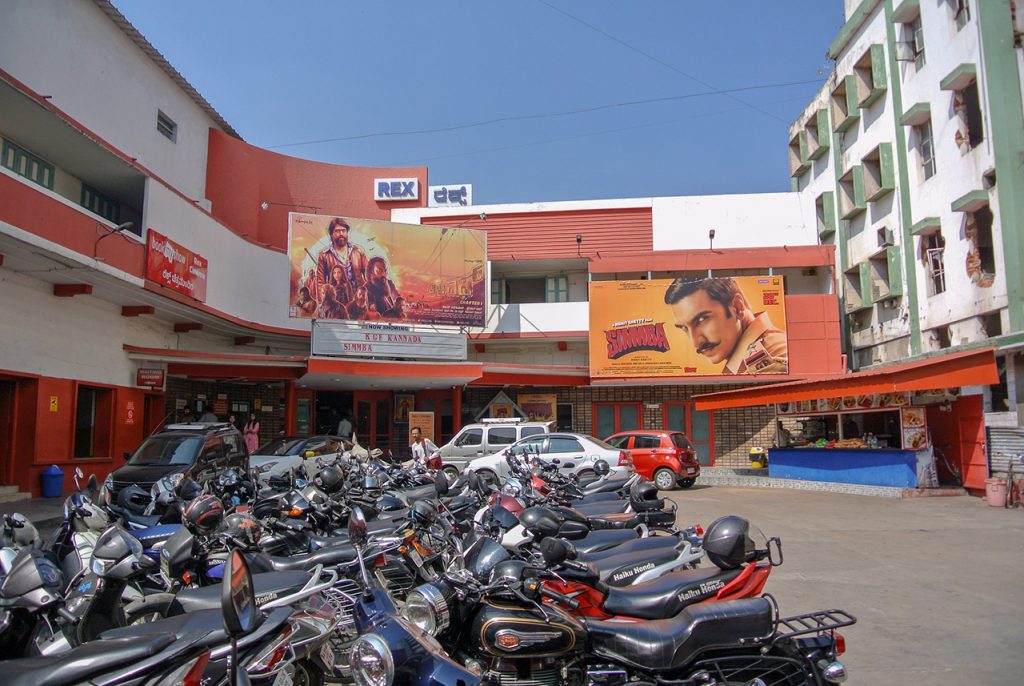
As we know Cinema is a medium which must be catered to the needs of all sections of the society. It is to be noted that single screen theatres are either shutting down or are being converted into multiplexes which are cropping up rapidly throughout the country. Infact there are many cine lovers who actually love to have their cinematic experience in single screen theatres as they claim to get the nostalgic feel which was once offered by Metro, Globe, Lighthouse, Chaplin, Tiger, etc. Those were the days when people used to flock towards these theatres to enjoy the cinematic experience. Even when one roams around these streets, one can still sense the lost glory of these theatres. Considering the affordability factor, watching movie in multiplexes is quite a luxury for a large section of our society where the ticket prices are in hundreds. However, long queues on Fridays in front of single screen movie theatres with typical pink and green low grade paper tickets in hand along with whole ground nuts and few snacks are a rare sight these days.
Rex Cinema, Bangalore – Pee Vee via Flickr
When all these single screen theatres are gradually getting converted into multiplexes, a question lingers in our minds, are multiplexes meant for all? Still a large section of the society is deprived of watching films as their affordability does not permit them to watch films at swanky multiplexes. In this single screen theatre fiasco, many employees have lost their jobs and are looking for other alternatives to eke out their living. Many of them were associated with these single theatres from their young age and therefore it was painful for them to accept the fact that single screen theatres are gradually being destroyed. In this regard, celebrated film maker Kaushik Ganguly’s film ‘Cinemawala’ is a tribute to the few existing single theatres, those are slowly having an untimely death.
Rex Cinema, Bangalore – Pee Vee via Flickr
The film centres around the life of a retired film exhibitor from a small town who is compelled to shut down his movie theatre as its celluloid projection standard becomes outdated with the advent of digital technology. He shows the plight of this film exhibitor, who was absolutely reluctant to shut down his theatre even he was incurring great financial losses. Truly, this film exhibits the sorrow state of single screen theatres in our country. However, in this dismal scenario it has to be kept in mind that along with the multiplexes which certainly offers comfortable movie experience and which are gradually denting the business of single screen theatres, efforts must be made to save the rest of the single screen theatres which still exist in our country as the magic of cinema is to be cherished by all sections of society.
India is a land of historical evolution, cultural heritage, and mythological mysteries, and it is home to so many mysterious sites. The country worships hundreds of Gods and Goddesses and you can find a temple in every few steps. However, there are certain temples that narrate inexplicable stories, follow puzzling rituals, and showcase weird phenomena — happenings that still continue to defy logic. Scattered across the nation, spanning the states of Rajasthan, Kerala, Assam, among others, these mysterious temples of India definitely deserve a visit.
So, if you wish to explore the more mystic side of this country, then plan a trip to these sites and experience a weird aspect of Indian beliefs. And if you are planning a solo trip, your best bet is to make reservations in convenient, affordable youth hostels.
Wondering why youth hostels? Because these accommodations grace almost every state of India and promise you a comfortable, budget-friendly stay.
Let us explore seven of the most mysterious temples of India.
Mahendipur Balaji Temple, Rajasthan
Source
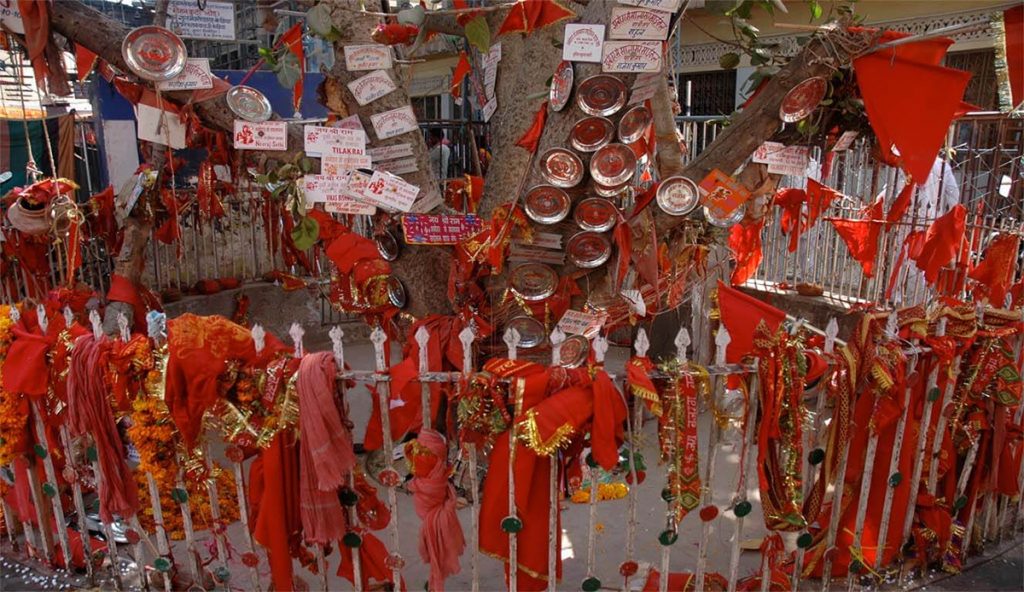
In the small district ofDausa in Rajasthan, you can see the legendary Mahendipur Balaji Temple, dedicated to Lord Hanuman. Every day devotees turn up in hordes at its doorsteps to exorcise ghosts, demons, black magic spells, and evil spirits. The temple follows extreme methods of penance such as banging one’s head against the walls, pouring boiling water over one’s body or chaining themselves. Several researchers have visited this site to examine these bizarre rituals and to validate their authenticity. It is the only site where priests still perform an exorcism.
Pilgrims do not offer prasad to the deity here. Additionally, when you leave the premises of the temple, you should never turn back to give a second glance. According to belief, this can cause evil spirits to invade you.
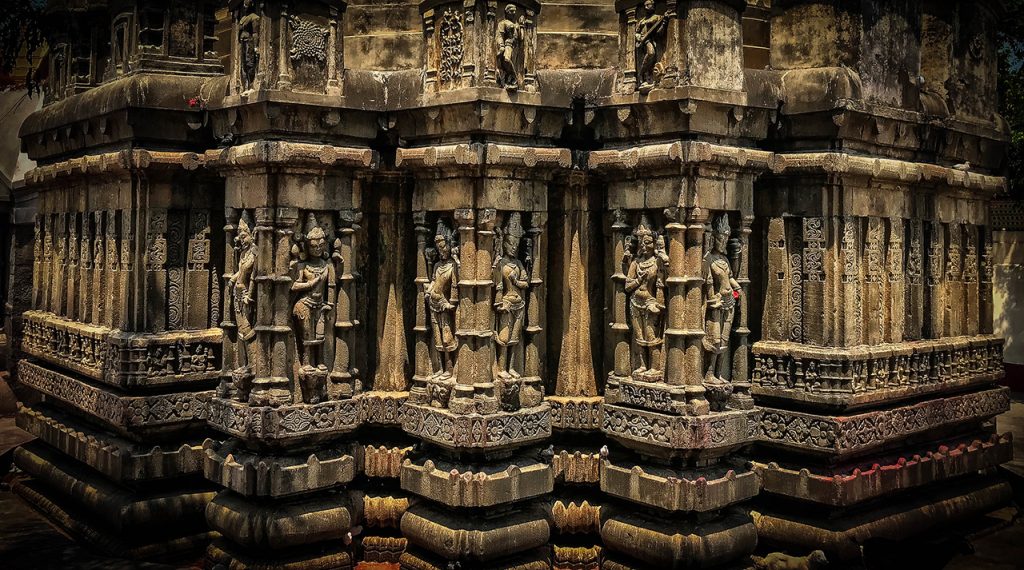
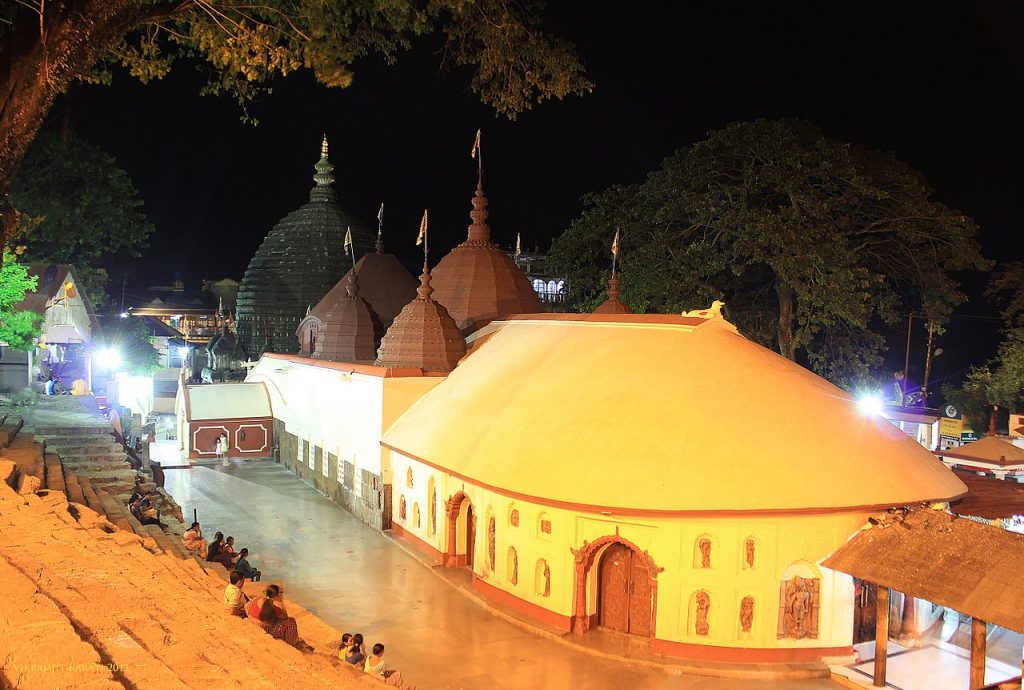
Maa Kamakhya Devi Temple is seated above the Nilachal Hill Station in Guwahati. One of the most mysterious temples of India, it is one of the 51 Shakti Peethas in the country. There is no idol, but instead, devotees pay homage to the yoni of Devi Sati.
The bizarre fact that makes this temple so famous is that each year, during the monsoon season, it is closed down. According to belief, the Devi menstruates and the Tantric fertility festival or Ambubachi Mela starts. Only on the fourth day, the temple opens again. Surprisingly, the underground spring within the premises of the temple turns red during these four days. If you visit the Goddess on any of the above dates, you are given a red cloth, which you can put over the stone as prasad.
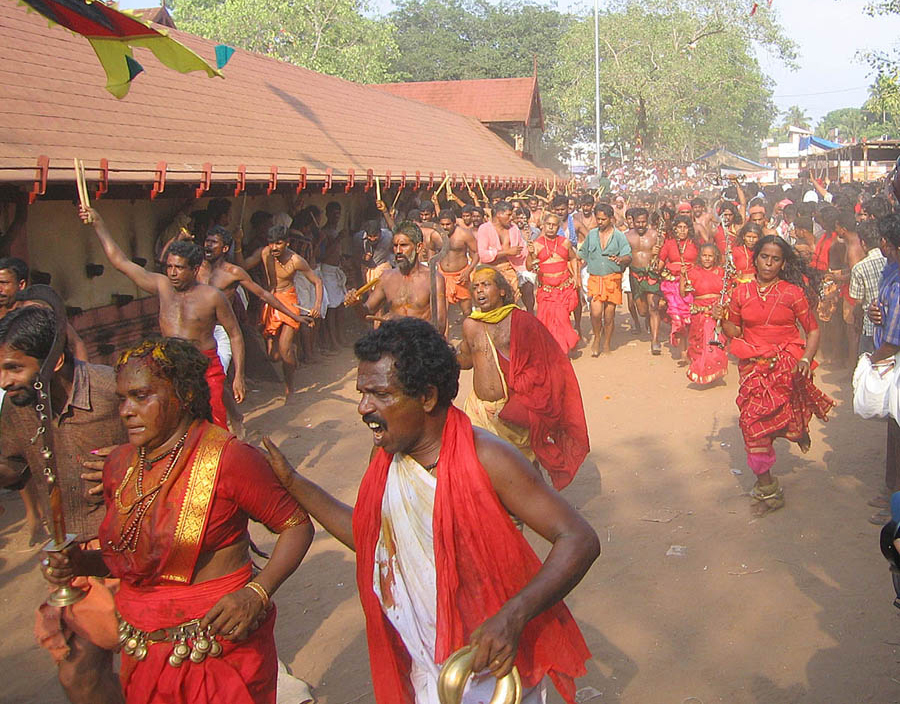
Kodungallur Bhagavathy Temple, Kerala, was built to pay homage to Goddess Bhadrakali. The site holds one of the weirdest 7-day festival, called the Bharani Festival. Pilgrims adorn themselves with red clothes and visit the temple, armed with swords. Not only do they use these swords to harm themselves but also enter the premises and start abusing the Goddess by singing abusive songs. They don’t offer prasad with respect but instead hurl it at the statue. Once the festival ends, the temple closes down, when caretakers spend the time to clean blood stains off the walls, floor, and interiors.
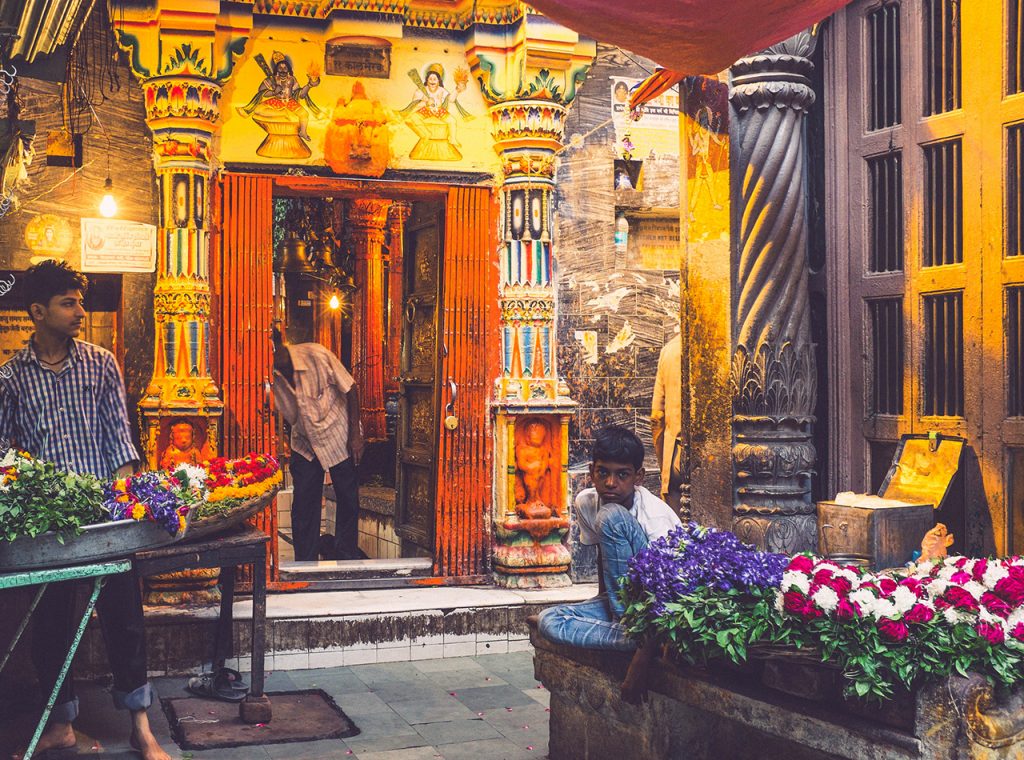
Kal Bhairav NathTemple, Varanasi, is the earthly abode of Lord Kal Bhairav Nath, Lord Shiva’s reincarnation. Devotees here make their offerings in the form of alcohol. You can pour whiskey or wine over the deity or offer it as prasad. In fact, the stalls outside the temple do not sell sweets or flowers. You will get only different types of alcohol on sale.
Stambheshwar Mahadev, Gujarat
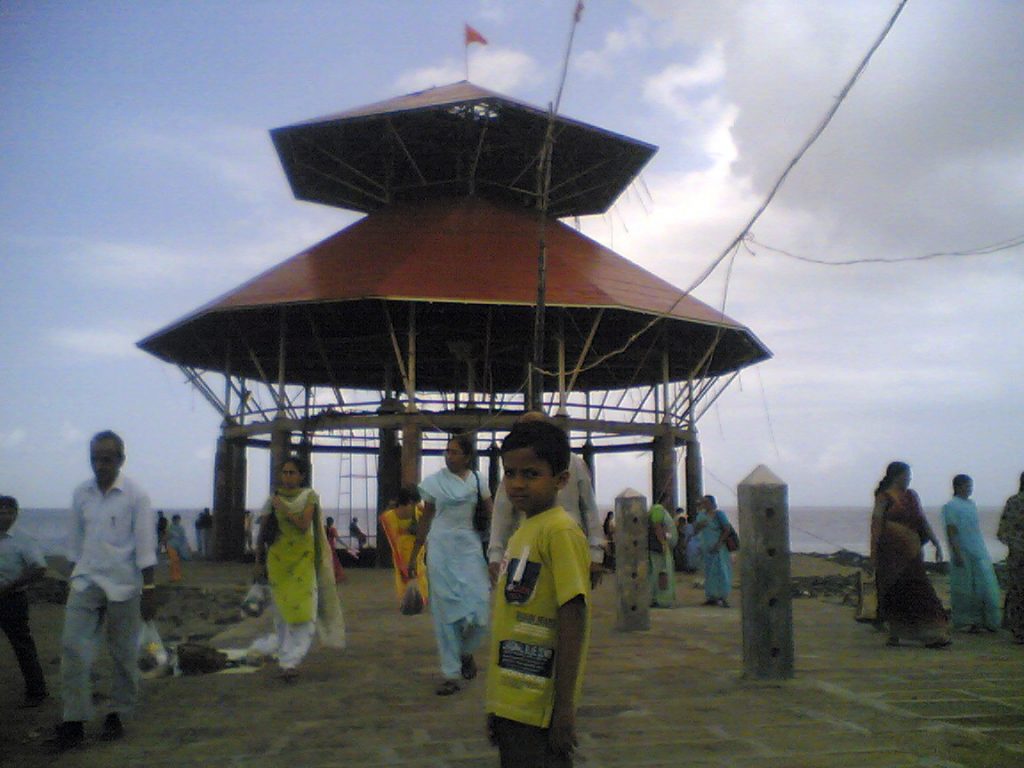
Stambheshwar Mahadev, situated quite close to Vadodara, is another among the mysterious temples of India, gracing the shores of the Arabian Sea. It is the home of Lord Shiva. You can visit the temple only during the day time when the tides are low. When the tides rise, the high water swallows the temple and the sea completely submerges it. You can again see it only once the water recedes.
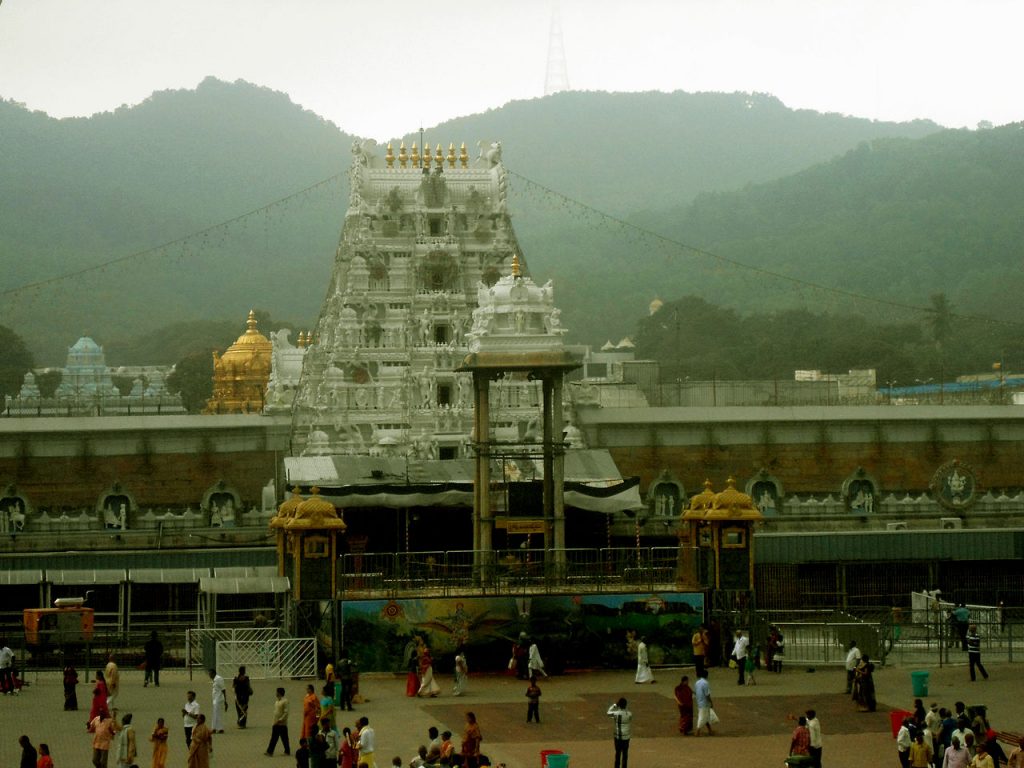
We usually recognize temples as holy sites, which survive on donations and offerings from devotees who visit them to pay their homage. However, there are a few temples which give birth to a lucrative market. Among them, one unusual temple in Andhra Pradesh is the Venkateshwara Temple — the worldly seat of Lord Vishnu. The weird practice here is that pilgrims offer their hair as a token of sacrifice. The temple then sells it to Western markets at a high price.
Every day, more than 12000 pilgrims visit this temple. Multiple barbers, who sit across its two huge halls, shave the hair off visitors. Annually, it gathers around 75 tons of hair, which fetches a huge price of over $6.5 million. Italian wig manufacturers use this hair to make premium wigs and the Chinese food industry utilizes its extracts to preserve food.
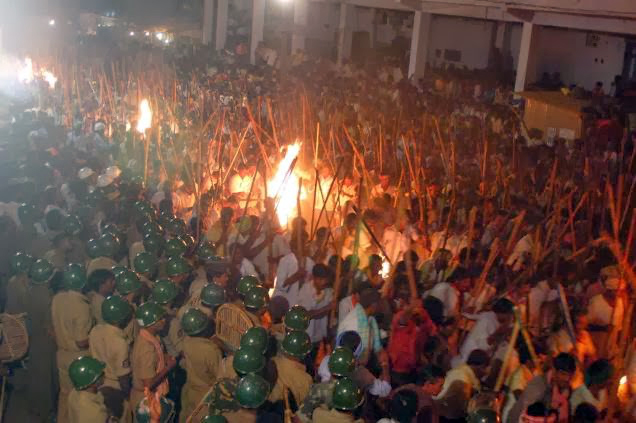
The last entry on our list of mysterious temples of India is Devaragattu Temple, located in Andhra Pradesh’s Kurnool district. You might have heard about the famous Bani Festival. Each year, on the occasion of Dussehra, devotees from Karnataka and Andhra Pradesh gather in the temple, equipped with sticks (lathis) and continue to hit one another until midnight.
The ritual symbolizes the vanquishing of a demon by Mala-Malleswara AKA Shiva. Dripping with blood, pilgrims continue the celebration throughout the whole night. As per scriptures, 100 years back, people used to follow the ritual with axes and spears. However, after 54 casualties in 2014, local rules stopped this practice and currently allow the participants to enter the temple grounds, only with lathis.
Above, we have mentioned only the strangest of mysterious temples of India. In fact, there are so many more. Ancient Hinduism has given birth to thousands of temples, some more than 2000 years old. Each of them is unique in its own ways. After all, India is the land of wonders. And that’s why we say ‘Incredible India’. A true and befitting description indeed!
If that excites you about the mysticism of India, explore all about this country of sages on the various India portals and create your own kind of India story.
Acting and drama are an integral part of any culture. Performed for an audience on a stage, theatre is one of the best known real time expressions of art that are both entertaining and purposeful. Finding a story unfold through characters acting out a part leaves a more lasting effect on the minds of an audience than say, reading the story or hearing it. And hence, the importance of theatre and drama in the cultural landscape is necessary.
Traditional theatre has been prevalent in India since ancient times. Enacted by bards who traveled from one village to another the stories were based on epics of Mahabharat and Ramayan, as well as, the Puranas and Upanishads. Sanskrit dramas have been around since the 15th century where actors were given respect even in the courts of Kings. The folk enactment was also the best way to educate the rural illiterate masses. A lot of dramas or stories are also related to specific events or festivals, such as Ramlila and Raslila.
Traditional theatre is the earliest form of theatre in India. It is closely related to the Natya Shastra, which is the fundamental bible for all classical dances and arts in India. The storytelling was woven with dance and song, for example, Kathak or through paintings and scrolls, such as scroll paintings. The main idea was to pass on the stories of spiritual and religious content, as well as, character and moral building plots to educate the masses. This form of traditional theatre hence as a religious or spiritual base.
Regional Folk Theatre Art in India
From folklore and stories from epics, traditional theatre has its many regional variations. The costumes, entry of characters and form of narrative are vivid and loud. There is a song, dance, music and storytelling that is usually rooted in festivals, events, incidents that derived from epics, folks, texts and traditional customs. Here unlike traditional form of theatre, the content incorporates social events too.
However, folk theatre too underwent a gradual shift of sorts. From the stage of dancing and singing, with the coming of the Muslim rule and conquests, folk theatre also began to change in many ways. Folk Theatre also came to be known as regional theatre because of different regions adopting their languages and themes to elucidate content and stories. Some of the examples of regional theatre are below:
Koodiyattam from Kerala
Swang from Rajasthan, Haryana and UP
Yakshagana in Karnataka
Bhand Paather in Kashmir Folk Theatre
Tamasha from Maharashtra
Ankiya Naat Bhaona from Assam
Therukoothu in Tamil Nadu
Jatra in Orissa and Bihar
Dashavtaar from Maharashtra and Goa
Bhavai in Gujarat
Karyala in Himachal
Ramman in Uttarakhand
Pre – Independence Theatre Art
A Scene from Mrichhakatika – Bengali Theatre – Source
The traditional forms of regional theatre with the coming of British and colonial rule didn’t garner much popularity. They in fact, always flourished in the courts of kings, and continued to in only the princely states to a certain extent. The British introduced and sow the seeds of regional theatre based on state divisions. And thus came the advent of many state theaters, such as Bengali Theatre, Malayalam Theatre, Gujarati Theatre and more.
However, during the Independence movement the regional state theatres became a poignant force in
Modern theatre or the theatre of our times, is one that specializes in acting, production, direction and the various aspects of drama. This form is taught in classes and is a viable professional and creative field. A lot of fine actors find their vocational calling in theatre and are big names in the field of arts and cinema.
Regional state theatre still owns a very important creative space in India. Plays directed and acted in regional languages may not be as popular as regional cinema, but they are not totally washed out either. A lot of youngsters and artists find expressions in regional theatre which often also becomes the platform to foray into digital and cinematic fields. Yet, the traditional regional forms of theatre have today reached the stage of heritage, with some, such as Koodiyattam officially being recognized by UNESCO as a Masterpiece of the Oral and Intangible Heritage of Humanity.
English Theatre has also become popular in modern times. Though it gained momentum during the British rule it remains a popular medium of intelligentsia and elite today. Since English language is also widely spoken in urban centers of India, English Theatre is a solid medium for opinions, stories and social changes.
Speech and drama have always been seamlessly a part of our culture and society. At times it was viewed with awe when patronized by royalty or at scorned at during the early 19th and 20th century when thought of cheap ways of entertainment. Indian theatre has seen its ups and downs, its fans and fallouts and continues to charter its own course.
Reaching the stars has been literally true for ISRO. In a country that is marred with corruption and many government institutions have borne the brunt of slow pace and lethargy in the past, ISRO has managed to hold its own. Recognized as one of the most respectable and capable institutes of the country, ISRO has to its credits a long list of achievements.
Formed as the Indian National Committee for Space Research or INCOSPAR, the organization was established during the time of Jawaharlal Nehru in 1962 under the guidance of India’s most renowned scientist Vikram Sarabhai. In 1969 it was renamed to ISRO or the Indian Space Research Organization. The vision of ISRO is, ‘to harness space technology for national development while pursuing space science research and planetary exploration’.
ISRO has many medals in its illustrious space career so far and looks strong to continue its golden run in understanding and conquering the space. Some of its most astounding and landmark achievements are as follows:
India’s first satellite Aryabhatta was built entirely in the country and launched in space in 1975.
In 1983 ISRO launched INSAT which has become a familiar term in our colloquial language. INSAT are multipurpose geostationary satellites that help with telecommunications, meteorology, broadcasting and more.
In 2015 the heaviest commercial mission that weighed up to 1440kg was successfully launched by ISRO.
ISRO introduced India’s own navigation system called NAVIC, which is a group of seven satellites that help build a navigation system that is more accurate than GPS. The Indian Regional Navigation Satellite System of IRNSS makes India one of only five countries in the world to have their own navigation system.
In 2017 ISRO created a world record by launching 104 satellites from Sriharikota using the PSLV in a single mission. The earlier record was held by Russia who had launched 37 satellites in one go.
One of the most important landmark missions that have etched a place in every Indian’s heart was the Mangalyaan mission or MOM in 2014 where India became the first country to reach Mars in its first attempt. The cost of the mission was a paltry Rs. 450 crore making it the least expensive mission to Mars till date.
Chandrayaan 1 launched in 2008 was an unmanned mission to the moon. It was India’s first space venture to the moon and the national flag was proudly placed on its surface. In July 2019 ISRO launched Chandrayaan 2 that will conduct a soft landing on the moon. India is the fourth country after Russia, USA and China to land a soft land rover on the moon.
The Space capsule recovery experiment or SRE -1, the Reusable Launch Vehicle or RLV, the GSLV-MK3 and many more are also landmarks in ISRO’s career.
Image Courtesy – ISRO
Setting social standards
ISRO has set scientific, research and defense standards and these are well known globally today. Thanks to the fantastic goals ISRO has been recognized for its skill, intelligence, leadership and vision. Yet, the social bearing of the organization is what might stand out clearly.
Science and research are heavy subjects to study and pursue. For a country that has for years struggled with universal education, as well as, has seen many aspiring intellectuals find solace in universities of other countries, this comes as a huge sigh of not only relief, but also grit and determination. With engineers, scientist and supporting staff making up the maximum crux of the organization, ISRO in many ways, stands for showcasing the brains and intelligence that this country possesses. The potential of skill and knowledge is huge, coupled with problem solving and leadership qualities that make ISRO shine brighter in terms of structure and functions than many other government organizations.
Another social impact that ISRO has been able to establish recently is that women are an important part of all missions. With 10% of the total staff as women engineers, ISRO shatters beliefs of the Indian society that women are not scientifically inclined. It also opens up visually and figuratively the honest and true representation of how working women in India are. They are intelligent, smart and not always in the glamorous aura that we believe them to be in. These are simple women, who have worked hard to get where they are and who inspire a whole generations of girls to think beyond conventional boundaries.
ISRO is also poignant because science meets society here. Intelligent discussions and a wider scope of understanding are its underlying premise. Science loves to question and unlike the very fundamental cultural and religious foundation that India finds itself in, ISRO does not necessarily refute them, but has charted its own path. In the land of sadhus and maulwis, black magic and exorcism and where prime time television still caters to feed its audiences about ‘naagin’ stories, it is splendid to find a scientific organization holding its own and gaining immense respect and inspiration too.
Every weekend I find my whole family (like the rest of India!) glued to television set watching the ‘not so real’ reality shows. More than anything, various western and international dance styles like b-boying, popping, hip-hop, salsa, etc are trending in through these shows. Somewhere in all this the pure Indian Classical Dances are being undermined. I accept that curiosity is a human nature and as such we all are curious to learn something new.
Like any other Indian, the announcement of the International Yoga Day on 21st June piqued my interest. So, I researched books on Yoga and came across the ‘Hand Yoga’ aka ‘Yoga Mudras’. And it dawned on me that I have practiced Hand Yoga throughout my childhood. It was a trip down memory lane when I had professionally learned Bharatnatyam. It amazed me to find that the ‘Hastas’/ ‘Mudras’ used in Bharatnatyam are very similar to the ‘Yoga Mudras’’.
Yoga states that the fingers of our hand represent the ‘Pancha Mahabhutas’ or the 5 elements. Touching one finger with others in different combinations creates circuits in our body through which energy flows. Such a flow of energy allows the body to gain better circulation of blood, indirectly formulating long-term health benefits. Different ‘Hastas’ are used to also communicate specific ideas, events, actions, or creatures. The basic Mudras which are common to all Indian Classical Dances were originally used by the Devdasis who performed in temples for entertainment of the Gods and Goddesses.
The book “Mudras: Yoga in Your Hands” by Gertrud Hirschi explicates the relation between hand positions and health. It reveals that the hands bring into use certain regions of the brain and thus, have an effect on them. In Hath Yoga, the thumb is considered symbolic of cosmos while the index finger stands for the individual consciousness. Yoga is directed towards bringing together and uniting individual to the cosmic consciousness. The adjacent mudra stands for this union.
While the birth of mudras is shrouded in mystery, the role of mudras in religious activities of India is recorded prominently with the use of hand poses to represent qualities of deities. In the words of Ingrid Ramm-Bonwitt, “With his or her hands, the Indian dancer expresses the life of the universe”. This gives testimony to the integral role of hath mudras in Indian dance forms. Here is a stream of hand yoga mudras representing the relation between hand movement and bodily health:
Hamsasya hasta
The ‘Hamsasya hasta’ in Classical Dance represents the shape of a ‘Swan’ and is also similar to ‘Gyan mudra’ in Yoga which increases the memory power, enhances concentration and prevents insomnia.
Trishula Hasta
The ‘Trishula Hasta’ depicting ‘Trishula/ Trident’ matches with ‘Varun Mudra’ which is claimed to balance the water content in body and prevent pain due to inflammation or shrinkage of muscles.
Mayura Hasta
The ‘Mayura Hasta’ symbolizing ‘Peacock’ resembles ‘Prithvi Mudra’ that improves the complexion of skin and helps to increase weight.
Simhamukha Hasta
The ‘Simhamukha Hasta’ typifying a ‘lion head’ is similar to the ‘Apana Mudra’ which regulates diabetes and helps to cure constipation and piles.
Kartarimukha Hasta
The ‘Kartarimukha Hasta’ represents ‘Scissors’ and tallys with the ‘Prana Mudra’. It removes vitamin deficiency and fatigue, improves immunity and power of eyes and reduces eye related diseases.
‘Mudras’ or ‘healthy hastas’ are a small aspect of the Indian classical dances. Other than that these dances improve our body posture, increase our flexibility, improve our body balance, give us a grace and importantly teach us discipline. Moreover, it gives you seven different options to choose from – viz. Bharatnatyam, Kuchipudi, Odissi, Kathak, Kathakali, Mohiniattam and Manipuri. So friends, go different and follow our age old culture as a cool ‘Alternative Yoga’!