7 Revolutionary Directors of Indian Cinema

2

Author – Biswadeep Ghosh Hazra

India is a land of cultural and ethnic diversity and this is visible from the wide plethora of movies and films produced throughout the year. There are directors who have produced evergreen and legendary films that will last in our memories until we die. Below are some of the revolutionary directors that had made their mark in the Indian Cinema with their masterpieces.

1. Satyajit Ray 

Revolutionary Directors of Indian Cinema - SatyajitRay
Source

Always on the top of any list of this sort, Ray was a talent house with many feathers in his hat. Born in Kolkata, he was an extremely talented  filmmaker and a gifted author who had written short stories, novels and sci-fi mainly aimed for children and young adolescents. His famous films include- Pather Panchali, The Apu trilogy [Pather Panchali, Apur Sansar and Aparajito], Devi, Charulata, Kanchenjungha (his first color film) all of which are considered as masterpieces. Ray won a plethora of international and national prizes and also the honorary academy award on his death bed.

2. Mrinal Sen 

Revolutionary Directors of Indian Cinema - Mrinal-sen
Source

Mrinal Sen, also a Kolkata-based director, is a representative for Indian cinema to the whole world. Born in the town of Faridpur located in present-day Bangladesh, Sen directed his first film Raat Bhore in the year 1955 with Uttam Kumar in the lead role. Some of his critically acclaimed films include- Chorus, Khandar, Genesis, Akash Kusum, while Ajanbi, Jit, Shawl are some of his short films worth mentioning. He is bestowed with many prestigious prizes including Moscow Film Festival (Silver), Berlin Film Festival (Grand Jury prize), and Chicago Film festival.

3. Anurag Kashyap 

Revolutionary Directors of Indian Cinema - Anurag Kashyap
Source

Anurag Kashyap is a filmmaker, screenwriter, actor and producer who is highly regarded for his realistic movies. He got his first break as a co-writer in Ram Gopal Varma’s Satya. Black Friday, a film about the 1993 Bombay blasts was his directorial debut (because Paanch never saw the light of the day due to censorship issues). Some of his highly appreciated films are No Smoking, Gangs of Wasseypur (Parts I and II), Gulaal, Ugly and Dev-D. He was awarded the Ordre des Arts et des Lettres (Knight of the Order of Arts and Letters) in 2013 by the French Government.

4. Aparna Sen 

Revolutionary Directors of Indian Cinema - Aparna Sen
Source

Born in Kolkata to a Bengali family, Aparna Sen is originally from Jessore, Bangladesh. Before venturing into direction, she has acted in films like “Jay Jayanti”, “Teen Kanya”, and “Paromitar Ekdin”. She made her directorial debut with 36 Chowringhee Lane, and went on to make other films like 15 Park Avenue, The Japanese Wife, Iti Mrinalini and many others. Sen received National Film Award for Best Director for her debut film as a director.

5. Mani Ratnam 

Revolutionary Directors of Indian Cinema - Mani Ratnam
Source

Mani Ratnam, born as Gopala Ratnam Subramaniam Iyer at Madurai, Tamil Nadu is an Indian director, producer, and screenwriter. He is considered as one of the finest directors in the country and has made many hit films. The Tamil movie industry is said to be revolutionized by him. Mani Ratnam has been bestowed with several prestigious prizes including the National Film Award for Wholesome Entertainment (for Geethanjali) and the honourable Padma Shri award. His most famous and critically acclaimed movies include the ‘Terrorism trilogy’ consisting of Roja, Bombay and Dil Se.

6. Raj Kapoor 

Revolutionary Directors of Indian Cinema - Raj Kapoor.jpg
Source

Widely regarded as the founding father of modern cinema, Raj Kapoor was a great director. He was popularly known as ‘The Show Man’ for being an actor and producer of the finest quality. A winner of two National Film Awards and nine Filmfare Awards, Kapoor was also nominated for the prestigious Palme d’Or grand prize at the Cannes Film Festival for two of his films Awaara (1951) and Boot Polish (1954) respectively.

7. Ritwik Ghatak
Revolutionary Directors of Indian Cinema - Ritwik- Gatak
Source

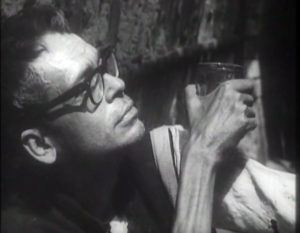
During his short life span, Ritwik achieved what many directors could not in a lifetime. He, along with Satyajit Ray and Mrinal Sen, formed a unique parallel cinema world where each of them drew inspiration and praised each other’s work. Born in Dhaka (Bangladesh), his works strongly reflect the famines of Bengal in 1943 and the Liberation War of Bangladesh. Ghatak’s notable films include Megehe Dhaka Tara, Nagarik and Ajantrik. He is a recipient of Padma Shri, National Film Award and Best Director’s Award from the Bangladesh Cine Journalist’s Association.

Summer Holidays: Being Aimless and Happy!

0

Summer Holidays in India

Of all the joys of childhood, the only thing which has stuck in my mind is our summer holidays. Children of current generation are loaded with innumerable classes to attend during summer holidays (cricket, abacus, summer camps, swimming…phew! The list is endless), mainly because children get “bored” if they are at home. They simply cannot stay without somebody/something engaging them. Parents cannot engage them forever and hence to get them out of their way, they are sent to classes. But for us, summer holidays meant only one thing, going away to grandma’s place!  The best part was to go there and do NOTHING! The joy of nothing was enough to make us happy!

Our typical summer holidays preparation started with getting the concession forms from school so that Dad could buy our train tickets at a lesser price. We studied in Kendriya Vidyalaya and hence the process. Not sure if it still exists now. That single sheet of paper was like a ticket to joy and fun.

A few summer vacations are quite distinct in my mind due to some memories attached to it. One summer, we’d gone to Vizag as usual. My mother and father had stayed back in Chennai. On the first day of our visit, grandma always made a brinjal curry. It was one of our favourites. Nobody could make it like her. The reason being, she used lots of oil to fry them!  Our Vizag home was a typical independent house with lots of open space in the front and a backyard. The house itself was red tiled floored house styled in railway compartment style. Yes, you pictured it right. The hall, bedroom and kitchen were all in one line. The kitchen opened to the backyard and there was space all around the house to run about. My grandma was a passionate gardener. She had all sorts of trees and plants in the garden – a henna tree, a citrus fruit tree, Parijata tree etc… but the most special of them all was the Sampige tree.

Sampige

The tree was small, but it flowered throughout the year. Sometimes we used to have about hundred flowers on a single day! Our house was on the ground floor with a terrace on the top. The parapet wall was low and wide enough for all of us to sit. The Sampige tree was quite close to the terrace. It was around evening that all four of us had gone up as one of our friends had visited. My sister was talking to our friend while I and my other sister started playing. Meanwhile, my brother had silently climbed onto the parapet wall and somehow got himself onto one of the branches of the tree. Anybody who knows about Sampige trees knows that its branches are quite frail and fragile. My brother was on the branch now and he cried “Hey, look where I am” with excitement. We all looked at once. Before we could even register anything, he had fallen off the branch to the ground. We went to the parapet wall and looked down; we couldn’t see him on the sunshade. We quickly ran down the open stairs.  Imagine our surprise when we saw our brother sitting on sand with his feet folded.  He had escaped the fall unhurt with just a few minor cuts, thanks to the sand. All this happened in about thirty seconds.

Now the dreaded moment had come. We had to tell our grandma. We somehow managed to tell her and she totally freaked out. From that day onwards, she told each and every guest, who had come for a visit, about the incident and how careless we sisters were. We did not inform our mom.  She was due to arrive in Vizag soon, so we decided to keep quiet.  She arrived home at midnight by taking the Coromandel express. My grandma then broke the news about my brother’s fall and she got worried too. But in the end, everything was alright.

kulfi wala

There were other incidents like filling the entire Kool Keg (a huge can-like jug to store water) with Rasna and drinking it from the tap. The can was full of ants after a few days, but that didn’t stop us. We strained it and continued to drink.  There was one more about an ice-cream man, who used to come around one O’ clock in the afternoon and ring the bell. Those carts had that little blade hanging by a thread from the top. We used up the entire money that our grand stored under her sari in ice-creams. But she didn’t mind a bit. Another best part was that we didn’t study at all.  Although we did read books after joining a library with a lifetime membership of 25 Rs (this was 1992). We were not forced to read and yet we read.

These wonderful memories never seem to go away. But all this is missing somehow in the summer vacations of our children. Too much planning is done to spend a summer holiday. It takes away the fun.  If only, they could once experience the true joys of summer vacations as we did.

This article is submitted as a part of Nostalgic Article of the Month contest

10 Indian Comics That We Grew Up Reading

9

Remember those days when we really believed that a volcano exploded on Jupiter when Sabu got angry or Chacha Chaudhary really lived somewhere in India with his mind working faster than the computer? Not to forget the other characters like Billoo, Pinki and so on that were made legendary by Pran. Tinkle’s characters such as Shikari Shambhu and Suppandi are still remembered for invoking great memories in the kids of 80s and 90s.

We Recommend…
Pandit Vishnu Sharma’s Panchatantra: Illustrated Tales From Ancient India

While most of us grew up with the likes of Archie and Jughead Jones, Tin Tin, Asterix and Obelix, the Indian comics also had its share of readership as they humorously portrayed the general issues of the middle class in India.

Here’s a list of 10 such Indian comics which became our best buddies, giving us a great joy while reading them.

1. Tinkle

There would be very few people in India, who would not have read Tinkle while growing up. Immensely loved, admired and read by children across all cities and towns, the characters in this comic became household names. Every child had a favourite character from the book, like Suppandi or Shambu. Founder and Editor Anant Pai started it as a fortnightly children’s comics in 1980.

10 Indian Comics - Tinkle
Get the Book Bundle

2. Chacha Chaudhary

We all love this short, red-turbaned Chacha Chaudhary along with Chachi, Rakka (dog) and Sabu, his tall assistant from Jupiter. Pran Kumar Sharma, the creator of this iconic comic has made us laugh and revel in joy. Often implying that Chacha’s mind worked faster than the computer, this comic book taught us that a strong mind is more powerful than a huge body.

10 Indian Comics - Chacha Chaudhary
Get the Book

3. Amar Chitra Katha

One of the largest and most popular comics, Amar Chitra Katha is available in 20 languages in India and enjoys a steady readership with over 90 million copies sold. Developed by Anant Pai, these books were aimed to teach children about Indian culture and social heritage; the format and style of the comics struck a chord with children.

10 Indian Comics - Amar Chitra Katha
Get The Complete Mythology Collection (Set of 73 Titles) (Amar Chitra Katha)

4. Tenali Raman

The very mention of Tenali Raman brings the character to life in our minds. A famous during the regime of Vijayanagara Empire in the 16th century CE, Tenali Raman’s wisdom, cleverness and amazing sense of humour has regaled kids.

10 Indian Comics - Tenali Raman
Get this Book

5. Akbar Birbal

This lovely duo from the royal era has everyone thinking along with them while reading their stories. Birbal’s knack to outsmart the other ministers in the court of Akbar made each kid giggle with joy. What made these stories successful is the way how Birbal offered simple and witty solutions to twisted problems. Further, the addition of folk tales made the stories of Akbar-Birbal a must-read for all.

10 Indian Comics - Akbar Birbal
Get this Book

6. Panchatantra

These ancient fables are believed to have been penned by an Indian Scholar Vishnu Sharma. Each story had a lesson to learn and ways to understand concepts like leadership, friendship, etc. The stories revolving around various animal characters became a hit with children as they taught morals of life with the help of simple stories.

10 Indian Comics - panchatantra
Get the Book

7. Champak

This one was different from the mainstream comics as it had puzzles, jokes, brain teasers and other activites in addition to the usual stories. It rose to fame almost instantly post its first publication in 1968 by founder Dinesh Singh.

10 Indian Comics - Champak
Get the Books

8. Chandamama

With interesting mythological stories presented in colourful illustrations, Chandamama was a magazine that many children looked forward to. Chandamama’s unique story-telling format taught about moral values without being too preachy.

10 Indian Comics - Chandamama

9. Vikram Betal

A ghost resting on the back of a King narrating amusing stories made Vikram Betal a real page-turner. With a refreshing plot and characters, it garnered the praise from hundreds of loyal readers. The book was based on Baital Pacchisi, which was written by Mahakavi Somdev Bhatt nearly 2,500 years ago.

10 Indian Comics - Vikram Betal
Get the Book

10. Bankelal

This one was one of the best comedy series published by Raj comics where the tussles of Bankelal and the King never failed to make people laugh.  With a dose of mischief, funny twist of events and unexpected outcomes of the tales made this series a much loved one.

10 Indian Comics - Bankelal

Ideas to Dedicate Some Thoughtful Gifts to Your Loving Sister

2
Gifts-to-Your-Loving-Sister
Yogendra Joshi via Flickr

Raksha Bandhan is the time to commend the deep connection among siblings. It is one of the famous festivals celebrated by the Hindus all over the world. The celebration style of the Raksha Bandhan is different than other festivals. It is also renowned as the Rakhi festival on which sisters tie pious Rakhi on the wrists of their brothers. Sisters also pray for the well being and long life of their loving brothers. Raksha Bandhan also helps to strengthen the bond of love and care among siblings. Sisters make the celebration unforgettable by sending some meaningful gifts for their brothers. It is the best idea to show care to brothers on the Raksha Bandhan. When sisters send Rakhi online with delicious sweets to brothers, then they also plan some unique return gifts to give them the best feelings of the day. Brothers show their care by dedicating some thoughtful gifts for their sisters on the Raksha Bandhan. They also enjoy some beautiful moments of the Rakhi festival together.

These are some ideas to plan thoughtful gifts for your loving sisters on the Raksha Bandhan.

Stationery items for her:

Brothers always show some deep care for their sisters. They support little sisters in different situations. Elder brothers also pamper their sisters by fulfilling their basic needs. You can plan some stationery items for your school going sister on the Raksha Bandhan. It will help her in the studies, and she will also love to use the gifted items. You can also gift a novel and motivational book for your college-going sister. It will be perfect to give her motivation to work hard in studies.

Gift of her favorite items:

Rakhi festival comes to fulfill all the wishes of the siblings. Elder brothers can show their affection by dedicating some useful things to sisters on the Raksha Bandhan. You can also purchase a bag, shoes, and clothes, etc. to surprise your loving sister on the Raksha Bandhan. Try to gift her favorite color items which she can carry for her outings. She will never forget these beautiful Rakhi gifts from her caring brother.

Help with money:

Sometimes our sisters can hide their personal and financial problems from their brothers. It becomes a brother’s responsibility to know her problems. Brothers can also support their sisters by helping their sisters by offering money. It can be either her college fee or any required amount for your sister. She will feel comfortable to receive some amount from her brother on the Raksha Bandhan. If your sister wants to buy something of her choice, then you can send money to her as a gift of the day.

Gift her some sweet moments:

Most of the celebrations are incomplete without the delicious cake. Everyone knows the importance of the birthday cake for the party. You can also plan a delightful cake to surprise your sister on the Raksha Bandhan. Make a cake of her choices which she can enjoy at home. Your sister will feel fantastic to have a delicious cake on the Raksha Bandhan. You can also capture the sweet memories of the day with your siblings.

Feeding India: Channelizing not just food but Happiness

2

Author – Amit Singh Negi

Feeding India 2

There is no denying that we Indians love food. Our cuisine envelops a wide range of recipes which are influenced by the diverse topographical conditions and different cultures that flourished in our subcontinent over the years.

According to a recent study by GFK, an average Indian spends about 13.2 hours a week on cooking, which is the highest in the world. Scientifically, it has been found that 200 out of 381 ingredients used in Indian food maintain their own unique flavor.

Since we love our food, we spend nearly 25% of our household budget on it. With a great wealth disparity, the elite sections readily spend a big fat amount to maintain their lavish food habits and lifestyle, especially during weddings and other social events. According to the Indian culture, sending off your guest without his stomach full is considered a sin. So the tradition of preparing extra food is followed which often results in the wastage of food in large volumes.

According to a United Nations Development Programme report, up to 40% of the food produced in India is wasted. As the rich dump their gourmet food in the trash cans of a fancy hotel, the impoverished ones lay hungry on the roads nearby. India is home to such 194.6 million undernourished people, which is the highest in the world, according to an annual report of the United Nations Food and Agriculture Organization. Thus, nearly 2o crore Indians sleep with hunger every night.

Ironically, the amount of food wasted in India is equal to the food consumed by the whole of UK. The obvious solution lies in channelizing the huge volumes of the wasted food to the hungry population. But it would require that one simple human endeavor which we seem reluctant to do unless we have some self-vested interests, i.e. AN EFFORT, especially a selfless one.

Feeding India 1

‘Feeding India’ is one such non-profit organization which has made that effort. It is a group of young working professionals volunteering for a cause along with their mainstream jobs. Feeding India aims to connect Hunger and Food wastage, two major social problems of our country, as a solution for each other. They are voluntarily channelizing the excess food from individuals, weddings, restaurants to the people who really need it, with a single belief that we don’t need to create new food to feed the less privileged, but simply direct the extra food which is already made.

The NGO, which started as a team of five in August 2014, has now risen to an army of 200 student volunteers. In less than 8 months, they had served close to 2,00,000 people. Each time a volunteer completes the cycle of picking up excess food and donating it to the hungry ones, he is called a ‘Hunger hero’. The leftover food at weddings, parties, and other events could satisfy the hunger of thousands instead of going into trash cans. All one has to do is “Call Feeding India before they book a party” and then, all the logistics are taken care of by Feeding India.

How it works:

It all starts when the team receives a call from an individual/caterer/restaurant owner or any stakeholder organizing a party or function with a guest list of more than 50 people. Just like they call florists, decorators, caterers and music bands, they call Feeding India to pick-up their extra food at the end of the event. They make Feeding India a vital part of their event preparations.  What Feeding India team asks of them is to cover their transportation costs by donating one plate’s cost to them. The significance of the role played by Feeding India lies in the fact that by just donating the same amount they spend to feed one person at their event, the party organizers can now virtuously feed up to 100 or more hungry people.

Feeding India 3

Apart from channelizing leftover food to the needy, Feeding India tries to serve people in many other ways. The second day after DU admission cutoff list was out, Feeding India set up stalls at few colleges and distributed free water. Under the severe heat of the sun, this simple gesture was highly appreciated by the people, so much so that several people applied for the volunteer position at the very place.

Most of us get a lot of things in our lives without much struggle. So, we fail to realize their true value and take them for granted. Food might be one such thing for us, but there lies huge impoverished population that knows the importance of a full meal. The satisfaction, the happiness, and the tears that are much evident in the eyes of the hungry souls when they are served stomach full of food is really inexplicable.

Further, the fact that the leftovers would satiate the hunger of many people instead of piling up in the dustbins leaves you with a true smile of satisfaction. Lastly, what could be more appealing than carrying food from a cheerful owner to a few unfortunate souls who bloom with joy as you feed them?

Today, Feeding India is not just channelizing excess food, but also real happiness across two distant and divided sections of the society by bringing them closer in a unique way.

It’s time to bring about a change that needs to be sustained with participation from people like you and me. India is hungry; Feeding India strives to satiate that hunger and spread the joy.

Image Sources: Feedingindia, Feeding India Facebook Page

Reasons For a Happy Day – Poem

3

Author – Sreesvarna B

Poem

Reasons for a Happy Day

Every start of my day

there is always someone to wish me a ‘Good Morning’,

even in her hurries,

turning my laziest start into a cheerful one.

This means nothing much trouble to her,

and I didn’t bother to tell her what it holds to me.


When I return home completely tired and lazy,

I get reminded of her who also returns home tired,

but never fails to join me in a game or a chapter,

changing my restless reason into an unmeaningful excuse.

This means no much trouble to her,

and I didn’t bother to tell her what it holds to me.


She never lets me down.

She never forgets to forgive before I ask forgiveness.

She feel’s I’m her treasure.

I shout at her, but she never shouts back.

I get possessive, but she assures me that she will always be there for me.


I never said my sister a Thank you for all this and many more she does for me,

I never will, for I don’t want to break this treasure of mine.

Poem submitted as a part of Nostalgic Article of the Month Contest


Photoessay: Thotlakonda and Bavikonda Buddhist Sites

1

With a number of beaches, tourist attractions, heavy industries and a bustling port, Visakhapatnam is surely the Jewel of The East Coast. But, not many know that it had a considerable Buddhist influence. The city holds the legacy of Buddhism in the region and it is surrounded by a few ancient Buddhist complexes that dated back to the 3rd century BC.

Thotlakonda and Bavikonda are two among the five excavated Buddhist centres located near the city of Visakhapatnam. These complexes have various structures including maha stupas, votive stupas, bhojanasalas (dining halls), pakasalas (Kitchen), congregation halls, chaitya grihas, viharas and well-carved stone pathways. It is said that each of these centres must have accommodated more than 100 monks who practiced Hinayana Buddhism

The Maha Stupa at Thotlakonda

Thotlakonda-and-Bavikond-12

A statue of Buddha located in a small garden on the hill

Thotlakonda-and-Bavikond-12

A view of the remnants at Thotlakonda

Thotlakonda-and-Bavikond-12

 The Partitions in Apsidal Stupa

Thotlakonda-and-Bavikond-12

 The ruined sculptures at Thotlakonda

Thotlakonda-and-Bavikond-12

 The interior look of Apsidal Stupa

Thotlakonda-and-Bavikond-12

 The remains of Yaksha sculptures and shrines

Thotlakonda-and-Bavikond-12

 A seven-headed Naga sculpture

Thotlakonda-and-Bavikond-12

 The Rectangular Viharas where monks used to rest

Thotlakonda-and-Bavikond-12

 Votive Stupas erected to make a dedication of goodwill. 

Thotlakonda-and-Bavikond-12

 A view of Bavikonda Buddhist stupas

Thotlakonda-and-Bavikond-12

 The viharas of Buddhist monks

Thotlakonda-and-Bavikond-12

Critic: To Be or Not to Be?

0

Author – Poulomi Dave

criticism
Source

We all have been criticized in our life for various reasons. Some of us dread criticism, some welcome it and some are indifferent to it. There is a famous saying: “Love your critics”, as they help us become better. Maybe we all need someone who can criticize us time and again in order to help us become better at what we do, but that is if we act upon their criticism.

In order for balance in a parliament, every ruling party must have an opposition party that criticizes them; even though the ruling party is usually indifferent to them, it still does help avoid quite a few fiascos in their governance. However, criticism is not just restricted to judging someone based on their faults but also merits. Usually, we welcome positive criticism but it is the negative criticism that can cause negative as well as positive outcomes depending on the way it is conveyed. Further, the frequency of criticism should be controlled and the one who is criticising should not overdo it as being too harsh and negative on someone would only make their situation worse.

Types of Criticism
buzzle.com

In the famous Bollywood movie ‘Taare Zameen Par’, Amir Khan talks about the story of the natives in the Solomon Islands, that when they need land for cultivation, they don’t chop down the trees but gather around them and curse them. Eventually, the trees die and fall over. I do not know how true this story is, but I think he conveyed his point very well to the audience. If constant cursing could rupture a tree from its roots, then just imagine the kind of impact constant criticism could have on the morale of a person; yet we tend to constantly judge each other and often come across parents who constantly criticize their kids not realizing the consequences. Once I came across this family while traveling in a train, the boy was little overweight, his dad would call him “mota”, the Hindi word for fat, even though I am sure he had a better real name. He was constantly reminding him about his overweight through his comments. The boy seemed to not care much about his father’s constant ranting about his weight, maybe because he had accepted that he would always be like that and his father would constantly criticize him no matter what. As for this father, maybe he thought that these constant reminders would motivate his boy to be more active. However, the way he criticized him was evidently wrong. Sometimes there are situations that cannot be really improved. In such cases, we should refrain from criticizing the victim.

sandwich
brightcarbon.com

In certain situations where there is always scope for improvement, we must see to it that we use constructive criticism and not rant at the person about his shortcomings, thereby making his situation worse. It was at one of the training sessions for an NGO that I came across the sandwich method or the hamburger method, a method used to give a person some constructive feedback. Constructive feedback is when we point out a weakness or a shortcoming in a person, but at the same time we give them a hint as to how they could overcome it. So clearly, we won’t be too harsh on them and rather help them deal with their weaknesses. For example, while criticising someone with bad time management skills, you could tell them that they need to manage time in a better manner and suggest some ways in which they could do it rather than just pointing out their problem and telling them that they have pathetic time management skills. Therefore in the hamburger method we start off by highlighting two strengths of a person followed by a constructive feedback and lastly, by again showing them one more strength of theirs. So basically, it is a way of sugar coating your negative feedback about a person. Even though you are not completely being straightforward here, the person receiving the criticism would feel more comfortable with the comments and would be more motivated to act upon them.

Be an encourager. The world has plenty of critics already” is a famous quote by Dave Willis. However, if criticism is given in the right spirit then even a critic can be perceived as an encourager and not a critic. Therefore, being a good critic is something we could all strive for in our lives.

The other side of Parenthood

0

Author – Anubhav Sharma

parenthood

There is an unseen relationship, or say connection, between parents and their kids. It is usually believed that kids replicate their parents and try to be like them. Whereas in some cases, it has been observed that kids become completely opposite of what their parents are. In either case, it is clear that parents affect their children’s behaviour in some way or the other.

Parenting is a really tough job. As a parent, you need to be conscious of your actions all the time, as there is a chance that your kid will start following you at an early age. Once it becomes a habit, it will be hard to mould them according to the need. In olden days, when there were joint families, kids had many adults to watch and follow. They spent their initial days with their grandparents, who ensured that these kids get all the required lessons to live life as a better person. Further, the joint families supported and protected them from all the negative aspects of life.

Things changed when joint families broke into small nuclear families. This was the time when kids started to face troubles and their upbringing changed drastically. Kids in the nuclear families started to depend on their parents completely. They began to witness all the troubles and rough patches that their parents go through. It is not that all couples are the same or all kids go through these bad times, but those who experienced it definitely saw some of the worst phases of married life.

When two individuals are together, disagreements are inevitable at some point. A few people deal with them in a matured way while others succumb to their egos. With this ego, they ruin everything that they built together over a period of time. But they fail to understand that their kids will be the receiving ends, no matter what.

Parenting needs patience, guidance, and a lot of understanding. A parent’s responsibility is not only to ensure a good upbringing of their children, but also to understand how their actions can have an impact on the innocent minds. There are times when a couple gets angry with their kids, but they need to control their rage and handle the situation calmly. It is difficult for a kid is to see their parents fighting; and times like these can leave a negative mark on minds of kids without parents knowing it.

In nuclear families, parents find it hard to manage things without any help. Fathers are working late hours so that they can provide their loved ones with whatever they need while mothers are working to manage the house on their own. These are the times when couples lose on the communication, which eventually builds up as a frustration. Their frustrations explode at once, and in most cases, kids witness them and get affected badly. Parents might forget what happened between them, but kids always remember them.

The couples who fight on a regular basis or on petty things happen to set a wrong example to their kids. Their kids start to become weak from within and thus, face a lot of troubles. Sometimes, their attitude changes and sometimes they start to disassociate themselves from the family. There are also a few instances where these kids get into unlawful activities, especially during their teenage years. In India, parents don’t realise the graveness of these issues as we refuse to talk about them in open.

The factor that mostly affects the kids’ minds is the way parents express their anger. There are moments when parents say certain things in rage that they don’t actually mean. Since kids fail to understand these things, they tend to capture those words and play them in their minds again and again. Likewise, kids coming from households with a background of domestic abuse start to act beyond normal. They either turn silent, or violent.

One cannot neglect the fact that different kids have different understanding levels and that plays a vital role in shaping their character. But, since children grow up seeing their parents, the behaviour of parents acts as a foundation to their character. Unfortunately, we don’t speak about these issues out in open and thus, don’t realise that this acts as a major cause to many other social issues.

Parents need to understand that they have to maintain their decorum in front their kids. They should restrain themselves from swearing or physically abusing each other under any given condition. If there are disagreements, they can always handle it maturely, instead of getting violent and abusive. Remember, parents are always a role model to their kids. If one fails to understand these things as a parent, then they simply fail in taking up a great responsibility known as parenthood.

Image Source – Flickr Harsha K

Celebrating Friendship: A Bond that Brightens Our Life

0

Happy-Friendship-day

Friends are born, not made.

-Henry Adams

When the first weekend of August approaches, people from around the world gear up to celebrate one of the best bonds known to mankind. After a string of days being dedicated to mothers, fathers, and parents, the 1st Sunday of August is celebrated as the International Friendship Day in honour of a beautiful bond that doesn’t need blood-relation to sustain.

On this day, people reach out to their friends, not bothering about the distance or any other barriers. Further, some people try to get in touch with their long lost buddies and catch up with them. The celebration mostly involves exchanging wishes, sending cards or presents to one another, or having a special dinner with friends. Another important friendship day tradition, especially in India, Nepal, Bangladesh and certain South American regions, is to tie bracelets on each other’s wrists as a token of friendship.

Amidst all the running in our busy lives, this one day enables us to make plans with the people who are, or once were an integral part of our lives. We get together with them and spend a great deal of time talking about different stuff. Sometimes, we also exchange gifts as a symbol of our friendship and the good times that we spent in each other’s company. Days later, when we accidentally come across that particular gift, our mind automatically starts to think about that person, that meeting and the unique bond that we shared. It is quite a wonderful feeling. Isn’t it?

To bring out those wonderful feelings in you, we here at Caleidoscope are trying to celebrate friendship in a different way by interweaving this beautiful bond with a tinge of nostalgia.

When you stumble upon an forgotten old book, greeting card or a gift article, does it remind you of the friend who gifted that to you long ago? Does finding something old in your attic opens up a treasure of memories?

If your answer to these questions is YES, then make an effort to click a picture of you with it and post it as a comment on our facebook timeline along with a few words to explain the story behind it.

The first two best entries will receive a cash prize of Rs.2000 and Rs.1000 respectively.

Check our Facebook page for more details. facebook.com/caleidoscope.in

The contest begins today and ends on 8th August 2015, and the winners will be announced shortly thereafter.

Team Caleidoscope