Revolution 2020 or Desperation 2020?

3
Revolution 2020 | Rupa Publications

Chetan Bhagat has to be one of the most controversial literary figures in India right now. His books have attracted both bouquets and brickbats, and there is nothing more people love than venerating him, and vilifying him in turn. I am also in two minds about Bhagat. His books generally have the emotional maturity of a preteen, but they hold up a mirror, albeit rather inelegantly, to the face of today’s society. The characters in Bhagat’s books are familiar, and hence, relatable, which is what makes Chetan Bhagat popular.

A friend of mine had lent his copy of “Revolution 2020” to me. Although I don’t veer down the CB-inspired path, I picked up this book because, hey, everyone needs some lad lit now and then!

Remember the moment that comes in almost every book – the moment when you go ‘aaaah’ when you get the part where the title starts making sense? Fair warning – it does not come in this book. Alright, you stumble on the reference to the title somewhere in the novel, but for all its worth, it could have been called ‘Desperation 2020’ and it would not have mattered. The message of the book is quite grand – it tries to question the true meaning of success and sacrifice. It also tries to weave politics, corruption, the rat race of education, and love into a grand tapestry of the spiritual, chaotic backdrop of Varanasi, the holiest place in India. However, the book fails miserably.

Revolution 2020 narrates the tale of three friends – Gopal, Aarti, and Raghav, who predictably form a love triangle. The language of the novel is similar to a Bollywood potboiler, with awkward hindi phrases and stilted english sentences. Text messages and online chats make up a major part of the prose, leading to severe disenchantment on my part.

It is neither the language nor the treatment of the subject that ensures the downfall of this novel. The biggest drawback of ‘Revolution 2020’ is the characters. None of them are likeable. They fail to display a certain depth, which is a trademark of an excellent character. Their actions are befuddling, their motives even more puzzling, and they end up more as cardboard caricatures than creatures of flesh and blood.

Meet vertice A – Gopal – the son of an impoverished teacher, who fails to clear the IIT-JEE, wastes a year and drains his father’s meager savings, while idling away for an year in Kota. Later, he becomes immensely wealthy despite his lack of a degree, by building a college on his plot of land with the blessings of the local goon and politician. Aphorisms about girls and men constitute a great deal of Gopal’s thoughts. While some of them are really pithy, others begin to grate on the nerves soon. The story has been narrated from his point of view. Apart from the listlessness that permeates his entire being, Gopal’s thoughts have more to deal with Aarti than anything else.

His polar opposite is Raghav, smart, good-looking and the resident genius, who gets a great score in the JEE and enrolls in Banaras Hindu University. His inclination is more towards the pen. He morphs into a fiery, passionate scribe who cares more about justice than moolah, forsaking a promising future in Infosys by taking up a job in the local newspaper. He later starts printing his own newsletter, “Revolution 2020”, after he is fired from his job, when he kicks up a storm about the legalities of Gopal’s college.

Chetan Bhagat | Goodreads Inc

The beautiful vertice C is Aarti, a girl who dreams of escape. She has both the guys falling for her. She is earlier in a relationship with vertice B, but later becomes entangled with our hero, Gopal. She is the most puzzling of the three. Apart from her incredible beauty, her lure is mystifying, and her behaviour is baffling. She oscillates between Gopal and Raghav, till Gopal casts the final die, and ties up the future of all three characters in a single afternoon.

Despite its inability to put forth the thought across, Revolution 2020 raised some thoughts to ponder. What exactly counts as an achievement? Is education an indispensable part of being successful? Is corruption the right way to garner wealth when faced with dire penury? and will India ever be free of this malaise? But the question that plagued me the most was, “When would Chetan Bhagat finally get over his fascination of the IITs?” Really, I have been burning the midnight oil trying to find an answer to this, but the end is definitely not in sight. I think I will have to pin my hopes on Chetan Bhagat’s next book, and discover if his limerence has finally been extinguished.

To conclude, there is a remarkable similarity between the movies of Salman Khan and Chetan Bhagat’s books. Revolution 2020 topped the best selling list in 2011. It’s obvious – elitists may rage and storm, but the public has spoken!

This is a guest post by Pooja Wanpal | Picture courtesy: Rupa Publications, Goodreads Inc

Factfile –

Book review – Revolution 2020 | Chetan Bhagat | Rupa & Co. | 296 pages
Chetan Bhagat’s Books –
http://www.goodreads.com
Lad lit – http://www.britishcouncil.org
http://www.rupapublications.co.in

Talking To Your Kids – And Listening Too!

1
https://caleidoscope.in/wp-content/uploads/2013/11/Communicating-kids-02.jpg
Communicating with kids | Courtesy: Ajay Kamble & Family

Communicating with kids… Is it an urban phenomenon or the new reality of our times? To begin with, let’s ask a simple question. Why do we communicate? To be able to express… To be able to understand… And to create a platform where ideas are shared and shared ideals are shaped. That is the beauty of communication.

Well, in the present times of rapid fast communication and even ever faster processing speed, it is all the more important to keep the human touch alive. If that is not reason enough, look around you. The world seems so bereft of its very breath – almost as if it is labouring over its very existence, labouring over each footstep that it has to take towards still more advancement. Violence, terrorism and crass politics are all we seem to read about; are these the things that are going to shape our children? Do we need to live in fear?

As the mother of a three year old child, I can give you the answer to that in a heartbeat. The answer is No! The solution is to have a proper communication with our children, through which we can open their minds and give wings to hope. We need to pass on the values that have brought us thus far. It is time to switch off the TV and really listen, because communication is not just about talking; it is as much about listening.
And listen we must…

To the heartbeat of the new born, looking expectantly at the world outside…

  • To the flapping wings of birds in flight, fearless and graceful…
  • To the song of the crickets, chattering away at night blissfully…
  • To the sound of your children growing up…
  • To the sound of the old embracing the new.

For children, the essence of listening lies in being able to imbibe ground realities and the values to tackle the same. For parents and teachers, listening necessarily means being able to alter to the child’s senses, latent energies and wants.

Children's Day
Communicating with kids | Courtesy: Ajay Kamble & Family

The instinct of a parent comes into play during communication. This is also paramount in setting boundaries even as you teach your child to trust you completely. It is not just a matter of speaking and conveying things effectively; it is a matter of creating a basis for moderation in behaviour and giving the child more options. When I say options, I mean options in terms of what a child may perceive as right and wrong. It is important to understand here that this must necessarily come from the child’s instinct and by our prompting. Gone are those times when we were told what is right and what is wrong. The child must decide now, and the best we can do is to lay out a well-thought-out plan for communication, so that they can develop the values as well as the instincts to be able to judge or come to us when they are not able to do so themselves. The role of communication here comes into play in terms of values, career paths, marriage, and even day-to-day decisions.

According to conventional wisdom, a child needs your attention and patience the most when he or she is busy trying your patience. When you listen to a child, you are not encouraging laziness or bad behaviour; you are actually engaging the child and teaching vital communication skills in the process. Today, to be able to express your feeling, and get your ideas down is not just a matter of releasing pent-up stress; it also helps you home onto the talent you may have and the ideas that can generate a future Sachin Tendulkar or Kiran Bedi. With the help of right communication at the right time, we will be able to effectively do the following:

  • Introduce the child to various kinds of activities, hobbies and groups of people
  • Find out which activity the child takes to best
  • Help the child develop this particular aspect (like painting, cycling, etc.)

A hands-on parent will be able to instantly pick up on signals like sensitivity, particular character traits as well as signs of abuse (God forbid!). It is more necessary now than ever to be well tuned into such signals given the reality of a nuclear family structure where we don’t have much support. In such a structure, it is extremely rare to find any support where a sibling, cousin, aunt or grandparent may be able to pick up on something that you might have missed out on.

So this Children’s Day, let’s take up the challenge to keep talking, keep listening and keep emoting. The human touch is most vital element for all us now and we need to take care so that this chain does not break.

Turn Over a New Leaf: Upgrade to e-books

1
Shelf display in e-book readers | WinePress Publishing

Reading is a fascinating pastime. While reading a book you enter a completely different world. I must confess that I was never an avid reader since books did not attract me much. Despite being a writer, I avoided holding onto a book until I completely read it till the end. Maybe I am impatient. However, my mindset completely changed when someone introduced me to a new concept called “e-book”. Since then, I just can’t get over it! Today, there is a raging debate about the utility of traditional printed books and e-books. People are extremely divided about which is the best medium that conveys the message across effectively. I feel the e-book appeals to me due to its simplicity, which has made me an avid reader. The biggest advantage of an e-book is that one doesn’t need to be a tech-savvy person. Anyone can operate it and it can be read just like any other physical book. A variety of e-book readers (affiliate link) and tablets are available in the market with a wide range of features. To begin with, you don’t have to carry a heavy book with you and strain your fingers for holding it. Instead, carry just an e-book reader and read wherever or whenever you want. When I am reading a large novel, I often forgot which page I was on, but with an e-book reader, I don’t have to worry since it remembers the page! Second, more physical books mean more papers used for printing them, which in turn means chopping down more trees. By opting for an e-book, I am not only having a comfortable reading experience, but also helping in tree conservation.

books vs ebooks
Click on image to zoOM

A friend of mine, Pranav Shah has been an avid reader since his childhood. With the arrival of e-books, reading has become so much more convenient that he is now addicted to it. Earlier, while purchasing a book, Pranav had to ensure that the copy is original or not. Even after buying a good copy, sometimes the prints were so small in size or smudgy, that he faced difficulty in reading them. But with e-books, he is relaxed. Pranav says, “Buying books has become so easy on the web. When I used to purchase printed versions, I had to visit a few shops until I found that particular book. This was not only a wasteful exercise, but I also used to end up wasting petrol. In contrast, purchasing an e-book is simple… Just log on to a website, select a book, see the contents and purchase it on spot. I get the book instantly without any problem and that too at a reasonable price. I don’t have to wait for the book to be available in the market or posted directly to me. The easy accessibility to e-books has made it easy for avid readers like us to select them.

Using eReader on commute | The Guardian
Using eReader (affiliate link) on commute | The Guardian

Another friend of mine, Eduardo Ferrera loves e-books for their extended features. Since Eduardo travels in public transport, reading a printed book becomes troublesome sometimes. However, he finds it very easy to hold an e-book reader device in one hand, while managing his bag on another. Further, when he is travelling long distance, he carries his e-book reader. He says, “There are few passengers who sleep early while travelling long distance. When I used to carry a printed book, I used to face difficulty as the lights go off soon. But, e-book devices have a feature wherein I can read book in low light, without disturbing my fellow passengers.” Meanwhile, a rational friend of mine, Levine Lawrence has a different take on it. Levine says “I really can’t understand the logic given by some people in favour of real books. They say…

  • It feels so nice to touch and feel a paperback…
  • That amazing smell of old books is so endearing
  • The anticipation while opening a crisp new book
  • The memories of the person who gifted you the book
  • Real book with an actual signature of the author
E-book vs. printed books
E-book vs. printed books | Courtesy: CBC

Are these logical explanations for using a particular medium or just mushy feelings? he asks. Yes, I agree there is tactile pleasure of holding a real book, but let’s understand the real purpose of printing a book; it is to tell a story in the most appealing manner and convey the message to its reader. Any media can be used to tell a story… Take the classical example of mythological epics such as Ramayana and Mahabharata. They were passed onto the next generation through the oral tradition of storytelling and folk theatre. Then these epics were written on palm-leaf manuscripts and papyrus scrolls. Printed books came much later in the 15th Century. So in the recorded history of human civilisation right from the first clay tablets in 2000 BC till today, stories have been told without printed books!

Printed paperbacks have served their purpose during the last few centuries and now it’s time for them to fade into the pages of history. Was there any hullabaloo about the death of gramophones? Did anyone mourn the phase out of the Morse code and the telegram? The digital technology has taken over every aspect of our lives, so why will the print media be spared? While reading books is important, it is necessary to evolve with time and opt for e-books so that reading will turn into a nice experience. I am definitely an e-book reader, are you?

Factfile –
http://www.digitaltrends.com
http://blog.winepresspublishing.com
http://www.theguardian.com
http://content.time.com
http://en.wikipedia.org

Happiness is a Good Book and a Hot Cup of Coffee!

13
Books & coffee | Courtesy: xRrinei Deviantart

I read recently that book café culture is taking root in India. This is wonderful news for both book lovers and coffee lovers alike. As someone who is fond of that amazing smell of old books, I feel that while it is coffee that makes it possible to get out of bed in the morning, it is books that make it worthwhile. So a book café would be a wonderful place to browse through books and meet up with fellow bookworms over a hot cup of coffee!

What can I say about books that has not been said already? Books are our best friends in the quest for knowledge and our loyal companions in the journey of life. They take us places when we are stuck in the rut and help us expand our imagination. From a sassy beach read to vast academic tomes, books can cater to any mood, any whim and fancy of the reader! Books are a must for developing one’s language and learning skills right from early childhood. Reading is an activity that helps you bond with your child, spend some quiet time by yourself, know more about a given subject, connect with like-minded people and do so much more….

I would choose reading a book over watching TV or a movie any day! When we read, the story unravels in our head – in our imagination. This is probably the reason why most of us find the book is always better than its movie adaptation. Take the case of “The Godfather”. The Hollywood movie was a classic in its own right, but even then we said “not bad, but the book was better!” Or look at the movie adaptation of John Grisham’s “The Firm”. Although Tom Cruise did justice to Mitchell McDeere, we came out thinking that the book won hands down!

Books vs. ebooks | Courtesy: Tokao.com

I can give you an endless list beginning with Pride & Prejudice and going on to The Devil Wears Prada, Water for Elephants, Eat, Pray, Love, The Twilight Saga, The Confessions of a Shopaholic; and of course, the much acclaimed Harry Potter series! The actors do their bit, no doubt, but what I am impressed with is the thought process of the characters and their feelings that is better conveyed by a book.

Today we live in an age where digital technology has taken over every aspect of our lives. Right from daily news to dinner recipes, we are increasingly depending on it so much that even books have not been spared. Today, like everything else is ‘e’, so we have “e-books”. With a variety of e-Readers and numerous software apps available across mobile platforms to download and read ebooks, today’s younger generation doesn’t even read the real thing. Some also argue that ebooks are easier and much lighter to carry with you when you are travelling or shifting homes. Be that as it may, but print books are here to stay!

Way back in 1920s, audio books were first introduced in the UK in the form of gramophone discs to help the blind. Since then they were subsequently available in the form of audio cassettes, CDs, and in MP3 formats. These audio books caught on like fire as it was far easier to listen to a book while driving or performing some mundane activity than actually read a book. So, there was talk that audio books will take over the market, but printed books braved this onslaught and stood tall.

Later with the advent of the internet, they were threatened once again by e-books. Although the Sony Librie was the first ebook reader in 2004 using electronic paper, their popularity soared when Amazon introduced its ebook reader Kindle in 2007. These eReaders validated ebooks and people began to think once again that this was the end of the line for print books. However, printed books stand strong even today and here’s why:

You can never match the tactile pleasure of a real book with an electronic version. You can curl up on a big rocker and cosy up with a book…well even with an e-book, but then, a book will not run out of battery or ask you for an upgrade! It will also not ask you to be downloaded separately for each different platform on which you intend to read it (eReader, phone, laptop, etc); and pay for each download separately.

Books & coffee Cha Bar in Oxford Bookstores
Cha Bar in Oxford Bookstores

The real book will let you take it out on a vacation and it would be okay if you left it behind or spilled your drink on it. A real book will give you the pleasure of seeing it on your shelf once in a while, and reminding about the story, when you read it and who gave it to you. A real book will not have to be switched off during take-off and landing on an airplane! And finally, the one thing that really goes in favour of a physical book is that you can own a real book signed by its author! So, e-books, much like audio books, are more of a compliment than a substitute to real books.

There is something about the smell, the feel of books, and the anticipation when you open a new book, which keeps pulling me to the library, book cafés and book stores again and again. So, let’s bring on more such book cafés. Be it the Oxford Bookstore’s Cha Bar with its branches all over India or be it the local circulating library adorned with book shelves, just give me a good book and a cosy nook and all will be right with the world again!

Factfile –

http://articles.timesofindia.indiatimes.com
http://tokao.com
http://www.silksoundbooks.com
http://www.goodreads.com

5 Genres Bollywood needs to try out more often

1

Bollywood and formulas have had a very long history. Starting with Manmohan Desai’s Amar Akbar Anthony, which brought to Bollywood the superhit theme of lost & found family that gets reunited, we have now evolved to the formula of big stars, minimal story, some gags and huge marketing budgets. It is of course admirable that Bollywood movies continue to entertain us month after month and are great business enterprises supporting people interested in art, but it’s time Bollywood tried something different. This is where we would like to help them! Presenting the 5 genres Bollywood needs to try out:

Genres based on true stories

5 Genres Bollywood needs to try
No One Killed Jessica | Courtesy: TheHindu.com

Yes. Don’t just let the Tigmanshu Dhulia’s of the world make a Paan Singh Tomar, but find those stories with a human touch. We are a nation of a billion people, surely there are some stories worth telling? If Bollywood doesn’t have any ideas, we would be glad to chip in. Take the story of Kiran Mazumdar Shaw, a businesswoman at the helm of one of the biggest biotech companies in India, who gives the nation’s women something to aspire for. Or perhaps bring out the battle to get the RTI bill passed and give us the details of it. There are countless stories of brave kids and people who change the system for the better for Bollywood to still only focus on dreamy remakes of 80s movies.

Sports Genres

It is surprising that for a country that is so crazy about cricket, there is barely any mention for the sport in Bollywood. Leaving aside Lagaan and Iqbal for cricket, Chak De India for hockey and Bhaag Milkha Bhaag for athletics, there is nothing to really show our fervour for sports. How about giving Dhyan Chand, India’s legendary hockey player a tribute on celluloid? Or showing the passion felt by football fans across the country?

5 Genres Bollywood needs to try
Bhaag Milkha Bhaag

If Bollywood is worried that they will not make money, then surely they only have to look at Hollywood’s pantheon of successful and heartwarming sports movies to get encouragement. From Tom Cruise to Brad Pitt, every Hollywood actor wants to do a sports movie because sport is the only arena where humanity can actually identify heroes. It is this retelling of a heroic moment that makes sports movies so special and so timeless.

The North East

The North East, the neglected corner of India. It exists only when we hear of some calamity but this does not mean this region is devoid of stories and talent. Bollywood has a moral responsibility to bring out stories from this region and present them before the rest of the country. We are a nation of so many differences that often the only thing that binds us is Bollywood. If Bollywood embraces the various subcultures that make up the North East and brings to the rest of the country warm stories from these hills, it will go a long way in promoting brotherhood and cultural sensitivity.

Movies with REAL villains

5 Genres Bollywood needs to try
Mogambo | Courtesy Shekharkapur.com

We miss Gabbar Singh and Mogambo. It goes to show how iconic these villains were that decades later, we still remember them. Villains these days are just plain boring. No menace, no punchlines and waiting to fall down with the hero’s first punch. Give us a villain who inspired mothers to tell their kids, “Soja beta, varna Gabbar aa jayega.” The closest we’ve come in a while is Rishi Kapoor’s human trafficking character, Rauf Lala in Agneepath. Everyone else, from the villainous robot in Ra.One to all the villains in the sundry Rs. 100 crore grossers acted by Salman Khan  have been forgettable. It is time Bollywood decides to scare the pants off the audience with a creepy villain’s smile.

Genres Bollywood Should Try
Krrish 3 | Courtesy: Indianexpress.com

Sci-fi themes

Krrish is back, but besides Hrithik Roshan’s turn in an eye mask, is there any other superhero movie on the horizon? Imagine a story where a superhero who can sing, dance, and fly, also saves us from an asteroid headed straight for Mumbai. Keep the story simple, Indianise it a bit and voila, you’ll have packed theaters for weeks! Ra.One, though a flop, was a step in the right direction. If only the focus had been on telling the superhero story rather than trying to offer as much entertainment as possible, this movie would have fared much better.

Animation for kids and adults

5 Genres Bollywood needs to try
Chhota Bheem | Courtesy: Buzzintown.com

India has some of the best animation studios in the world who work for leading Hollywood movies, and yet we rarely see any Bollywood movies that use computer graphics. Animation gives film studios the ability to create stories that mainstream actors may not try for, but which will be loved by people across ages. Through animation, Munshi Premchand’s popular stories could be retold or Panchatantra tales can be brought to life along with a modern, entertaining twists that would give audiences the variety they have been craving for.
Neharika writes for Bollywood Celebden, a leading provider of Bollywood news and gossip. She can be found most weekends in a theater, with a tub of popcorn and eyes glued to Bollywood latest movie.

Prom Makeup Looks that are Perfect for Your Dress

0
Prom Makeup
Photo by Omar Tursić on Unsplash

Prom season is always an exciting time for teenage girls especially, the hunt for the perfect look. Everybody knows that prom is all about the dress, but you will need to complete the look with the right hair and makeup. This can be overwhelming if dressing up for parties is a new thing for you. Fear not though. We have come up with some inspired ideas to help you coordinate your hair, makeup and prom dress for a dashing look.

Gradient Ombre dress – Smokey eyes sparkle makeup

If you are looking for a cross between formal and official, a gradient ombre dress is a right fit for you. Ombre dresses are known for their colors that blend seamlessly to create a unique gradient effect.  

These dresses go well with a combination of Smokey eyes and glitter for a sparkly finish. For your Smokey eyes, blend the colors to suit the shape of your eyes, and you will have everyone at your prom staring, mesmerized.   

Floral dress – Dark berry lips 

Floral dresses are undeniably pretty. If you like long prom dresses, florals will give you versatility. 

Complement the light tone of the floral print of your dress with a darker shade of lipstick. The purplish-red color of the dark berry lipstick is perfect for the job. It creates a sharp, bold and dark look that contrasts perfectly with your dress. Balance your face with a lighter tone of eyeliner and mascara.  

Applying dark lipstick can be somewhat tricky. Line your lips to prevent creating a mess and apply a similar tone of lip liner. Make sure that none gets to your teeth and stands in the way of your gorgeous smile.       

Black dress – Red bold lip + Neutral eye makeup 

Most girls prefer wearing bright and shiny princess dresses to their prom, and this is understandable since it is a night of joy and partying. This does not mean that you have to compromise your look if you are into darker shades. Stand out from the crowd with a figure-flattering black dress. You could choose a knee-length mini or a mermaid long prom dress.     

To complete the look, add some shine to your look with bold red lips. Matte red lipstick creates a classic look that is both alluring and elegant. To keep your red lips in the limelight, go with neutral tones for eye makeup and apply a few coats of mascara.

Soft pastel dress – Pretty Barbie makeup 

Every teenage girl wants to be a princess and prom provides the perfect opportunity to live out your fantasy. If you dream it, you can be it. If this is your vibe, a bubbly and iridescent appearance is the perfect look for you. Start by hunting for a soft pastel prom dress. Soft pastel prom dresses come in a wide selection of designs and colors all designed to bring out a fairytale princess look. 

Complete your look with a Barbie makeup look. This involves contrasting sharp Smokey eyes with glossy blush lipstick. For the Smokey eye look, touch up your lower eyelid with a glimpse of shimmer and top it up with mascara and dark eyelashes.     

Famous Treasure Hunts in Indian History – Part II

1

Continued from “Famous treasure hunts in Indian history – Part 1

1739 AD – Diamonds of Golconda

Famous treasure hunts in Indian history - Darya ye Noor
Darya-ye Noor – a Golconda diamond | 25karats.com

Since times immemorial, India has been known for precious gems such as diamonds, which were prized for their size and beauty. India’s most prized diamonds were known as the “Golconda diamonds”, which were mined in the Hyderabad region ruled by the Qutub Shahi Dynasty.

Actually, Golkonda was the market city for diamond trade, where gems were brought from a number of mines to be sold. These diamond mines were located in Kollur (Guntur district) and Paritala (Krishna district) in the state of Andhra Pradesh.

Some of the most famous Golconda gems are:

  • Koh-i-Noor Diamond (186 carat) – part of the British Crown Jewels, London
  • Darya-ye Noor (182 carat) – part of the Iranian Crown Jewels, Tehran
  • The Hope Diamond (46 carat) – displayed in the Smithsonian Institution, Washington
  • The Great Moghul Diamond (787 carat) – Lost during Nādir Shāh’s invasion of Delhi
  • The Pitt or Regent Diamond (410 carat) – displayed in the Louvre Museum, Paris
  • The Orloff Diamond (300 carat) – displayed in the Diamond Treasury, Kremlin, Moscow
  • Nizām Diamond (340 carat) – part of the Nizām’s Treasury, Hyderabad
  • Jacob Diamond (186 carat) – part of the Indian government treasury

Sadly, out of these diamonds, only two remain in India. The rest were all looted during the Iranian king Nader Shah’s invasion of Delhi in 1739 AD. After the death of Emperor Aurangzeb, the Mughal Empire was crumbling with its nobles asserting their independence and the Marathas attacking from the south. At this opportune moment, Nader Shah attacked the empire and defeated the forces led by Muhammad Shah in the Battle of Karnal in February 1739 AD. Soon, Delhi was plundered and Nadir Shah left with the famous diamonds and the Peacock Throne or Takht-e-Taus.

1967 AD – Nizam’s Jewels

Famous treasure hunts in Indian history - Nizam's sarpench
Nizam’s sarpench

It is ironical that the fate that befell the Mughal Empire due to an invasion happened to its tributary state as well. Incidentally, this time the treasure hunt was carried out by the relatives of the king himself. Hyderabad ruled by the Nizams was the largest princely state during the British Raj before it was merged into the Indian union in 1948. Carving their kingdom in South India from the ruins of the Mughal Empire, the Nizams amassed such wealth in seven generations that the last Nizam was titled as the richest man in the world.

The last and seventh ruler of Asaf Jah dynasty, Mir Osman Ali Khan, was known for his stunning collection of jewellery. Mir Osman Ali Khan’s collection included 25,000 diamonds, turban ornaments, necklaces, earrings, armbands, bracelets, belts, cuff links, anklets, rings, pearls the size of quail eggs and the famed Jacob’s Diamond.

In 1967, Mir Osman Ali Khan died and immediately a feud over his vast property ensued among his 149 descendants. The Government of India stepped in when things went out of control. However, much of the Nizam’s jewellery collection was already looted by the time. It is stated that the aged Nizam never allowed any audit of his jewellery collection and ensured that the dust settled on his collection is not cleaned, so that the glitter never hits anyone’s eyes! The total worth of 173 jewellery pieces (a fraction acquired by Government of India) is worth Rs 5,000 crore today!

15th Century AD – Sunken Portuguese treasures

Famous treasure hunts in Indian history - Sunken treasure | National Geographic
Sunken treasure | National Geographic

The Portuguese came to India in search of spices and precious gems in early 15th Century and settled in Goa. Soon, Goa grew into a large trading centre, and a diamond-trading route was established from Goa to Lisbon, Portugal. Many ships stopped over in Goa on their way to other Portuguese colonies such as Malacca (Malaysia) and East Indies (Indonesia). Between 1497 AD and 1650 AD, there were 1,033 departures of “Portuguese India armadas” from Lisbon for the Carreira da Índia (“India Run”). Organized by the Portuguese crown, these armadas were fleets of ships that were dispatched on an annual basis from Portugal to India.

Around 66 ships of Portuguese India armadas were lost in ship wrecks during between 1497 AD and 1612 AD. One of them was the Sao Jose, which was on a King’s mission to transport royal treasure to Goa. Travelling with the fleet was Francisco da Gama, the great grandson of Portuguese explorer Vasco da Gama, en route to Goa, to reign as the Viceroy. Attacked at sea by English and Dutch ships, the Sao Jose and da Gama’s royal treasure were lost off the Mozambique coast.

Another famous ship was the Flor do Mar, which was, at 400 tons size, the largest carrack built of its time. It was built for the Portuguese India run in 1502. Under the leadership of the great Portuguese general, Afonso de Albuquerque, the Flor do Mar supported the conquest of Goa in 1510 and Malacca in 1511. However, while returning from the conquest of Malacca, laden with a large treasure trove of around 60 tons of gold, the ship was lost off the coast of Sumatra. Although these ships have not been found, the National Institute of Oceanography has found a similar sunken Portuguese ship off the coast of Goa laden with ivory and gold.

Factfile –

http://en.wikipedia.org/

Home


http://photography.nationalgeographic.com
http://www.sunkentreasure.com
http://drs.nio.org
http://forbesindia.com
http://www.25karats.com

Famous Treasure Hunts in Indian History – Part I

33

The great Indian media tamasha has got a welcome relief from mundane topics; it is on a treasure hunt! The media jamboree has landed in an unknown village named Daundia Khera in the Unnao district of Uttar Pradesh to cover the search for lost treasure. Based on the visions of a local seer, a central minister ordered the Archaeological Survey of India to survey the area and search for lost treasures of the 19th-century king, Raja Rao Ram Baksh Singh. While the ASI has gone ahead earnestly with its treasure hunt in Daundia Khera, archaeologists across India are aghast with the wasteful exercise. They wonder when great treasures such as statues, ancient inscriptions lie unattended in unknown ruins, what made the government machinery to rush in to search for gold. Is gold the only worthy treasure to be searched?

From time immemorial, the fascination for gold has persuaded the human civilisation to launch numerous treasure hunts. Right from the days of the Muhammad of Ghoris and Ghaznis invading India, to the Pirates of the Caribbean who searched for Aztec gold, invaders have always searched exotic lands for gold. Many found them and returned, but many died in vain. Here is a list of great treasure hunts in Indian history, which are remembered for their infamy and intrigue.

2011 AD – Sree Padmanabhaswamy Temple

Treasure hunts in Indian - Padmanabhaswamy Temple
Maharaja of Travancore in Padmanabhaswamy temple | The Hindu

Sree Padmanabhaswamy temple in Thiruvananthapuram, Kerala shot into the media spotlight recently when a Supreme Court’s order forced open the secret chambers of the temple for inspection. When the six vaults underneath the temple were opened, the inspection committee were astounded by the immense wealth worth around Rs.100,000 crore discovered there. Around 1,200 golden chains, three golden crowns, numerous golden staffs, golden plates, golden coins of 1732 vintage, and precious stones including diamonds, cat’s eye, rubies and emeralds were found in just two vaults. Apart from them, a gold idol of Mahavishnu studded with rubies and emeralds, and ceremonial attire in the form of 16-part gold anki weighing almost 30 kilograms were found along with golden coconut shells.

As expected, controversy erupted soon after the inventory of four vaults was completed and the value of the treasure trove was revealed. Who is the real owner of the property – Is it the temple trust committee headed by the erstwhile king of Travancore or is it a public property owned by the state of Kerala? The case is now pending with the Supreme Court, which will take the final decision on the ownership. However, the treasure hunt in Padmanabhaswamy temple raises a bigger issue: who is the owner of the properties of all the wealthy temple trusts in India? The local people, the government, or the trust?

1976 AD – Jaigarh Fort Treasure Hunt

Treasure hunts in Indian - Jaigarh Fort near Jaipur
Jaigarh Fort near Jaipur | Wikipedia

Surprisingly, there was a similar treasure hunt conducted in 1976 by the Indira Gandhi government during the heydays of the emergency period. Just outside Jaipur, lies the mountain top citadel of Jaigarh fort, which was built by Jai Singh II in 1726 AD to protect the Amber fort. Legend has it that Raja Man Singh I, who was the Rajput ally of Emperor Akbar, collected a lot of wealth during his war campaigns and some of this treasure was hidden in Amber fort and Jaigarh fort for posterity.

Long after it was forgotten, rumours reached Indira Gandhi who was more than eager to uncover this wealth particularly since the Jaipur royal family fought the elections against the ruling Congress(I) party. Further, Princess Gayatri Devi had objected to the emergency imposed by Indira Gandhi, thus enraging an already upset Congress leadership. Indira Gandhi ordered the Income Tax Department to take stock of the royal family’s income and assets, which was conducted with the help of the Indian army to conduct the raids inside the palace.

Another shocking aspect of this treasure hunt was Pakistan’s claim on it! Zulfikar Ali Bhutto, then prime minister of Pakistan, heard about the treasure hunt and sent a letter to Indira claiming a due share of this wealth, since this asset was not known during the partition of India and Pakistan. While Indira declined to reply, the Army division sent to unearth the treasure returned empty-handed after searching for three months. However, many claim that a treasure was actually found and it was swept away by Indira. They claim a curse that is usually attached with all kinds of hidden wealth befell on her and her son who led this expedition.

Read more – Famous treasure hunts in history – Part II

Factfile –
http://blogs.wsj.com
http://articles.timesofindia.indiatimes.com
http://en.wikipedia.org
http://daily.bhaskar.com
http://articles.timesofindia.indiatimes.com

Walking The Konkan Culture Trail Through Coastlines of Karnataka

2

Konkan Culture
Gokarna KonkanAndrea Kirkby/Flickr

Living all my life in Karnataka, I must admit the Konkan coast has always captivated me with its natural beauty and cultural offerings. Be it a morning walk on the calm Panambur beach or a trek up the Sadashivgad fort in Karwar and Gokarna, the winds of the Konkan continue to fascinate the traveler in me. In Gokarna, I have always felt the culture is a blend of Karavali, tribal and north Karnataka culture. I believe this brings in a diverse variety found nowhere else in Karnataka. In contrast, places like Mangalore and Murudeshwara hold up the values of Kanara or Karavali region, the name given to Karnataka’s coastline. Further, being the closest to Maharashtra’s coastline, Gokarna is also part of the Konkan culture.

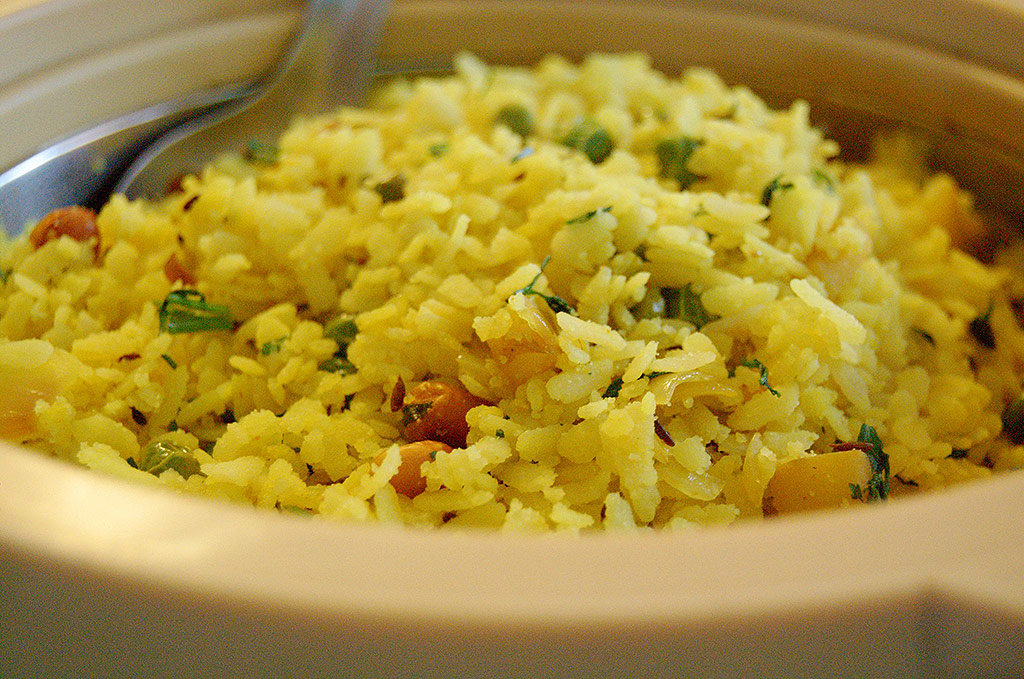
Konkan-Culture-Food Poha
Image – Scott Dexter/Flickr

So do you wake up and smell Aloo Poha or Neer Dosa? No, that is not yet the trick question. You might wake up and smell Poha and Chai in your home, and have Dosa and Khara bhath with filter coffee in the nearby hotel, while across the road would be a Caucasian guesthouse serving Muesli with yogurt and orange juice! On one of my recent visits, I reached Gokarna town early morning and just as I planned breakfast, I gulped down some Chow-chow Bhath. So it is not unusual in Gokarna to find a bit of Bangalore’s Uppittu-Kesari bhath combo as well!

The Kudle Hike

Konkan Culture Trail-Kudle Hike
Image – Praveen Ramavath/Flickr

From the temple town of Gokarna, a marked walking trail leads travelers to Kudle beach, the first beach down south. This is where a change of culture happens. The town beach of Gokarna beckons devotees who bathe to wash their sins and visit the Mahabaleshwara Temple dedicated to Lord Shiva. However, as you walk up the trail, the sighting of Caucasian backpackers increases, and you feel the surprising transition from a sacred Hindu beach to a chilled out hippie beach! Over the years, Gokarna has become a hippie paradise, inviting western travelers who are tired of exploring Goa.

Konkan-Culture-Trail-Gokarna
Konkan – Well-Bred Kannan/Flickr

On my hike to Kudle beach, I stopped to admire a small shrine; one that had always been there but almost always skipped my visit earlier. It is a simple shrine of Shiva enclosed in a hexagonal temple and painted with Hindu gods over a yellow pastel base. The part that intrigues me about these visits to the coast is these local temples and the stories each one has to say. Not far from this temple along the trail to Kudle beach is the ‘Go-karna’, meaning the cow’s ear. It is a rock in the shape of dew-drop with an entrance in the middle. The pleasant surprise is that, there are no guides stalking you to sell you this story; however, you could befriend a local and get the info.

Goli Bajjis and Mangalore Buns

Konkan Culture Food
Mangalore Buns, Image Clourtesy – Bangalore Shor

In the evening, I strolled into the laid back town and sat at a small café for snacks and tea. Cafes along the beach serve pizzas, pasta, falafel, hummus rolls and grilled sandwiches. The cafés that cater only to locals make Goli Bajjis and Mangalore Buns. This is very typical of the Karnataka side of the Konkan coast. Unlike the Alu Bajjis we have in Bangalore, Goli Bajjis (or Golibaje) are mildly sweet and super fluffy fired snacks with no filling, no sambar on the side and only chutney.

And then there are Mangalore Buns. I used to eagerly wait till the evening when these are served freshly fried. Yes, they are fried, just like puris. Mangalore buns are a thick puris with bananas mashed into the dough. The taste of banana flavored – slightly sweet snack is best savored with chai. It comes close to Kajjaya, just not as sweet. Gokarna, being on the northern side of Karnataka, is a big user of chai (tea) and not coffee like us in Bangalore. Well, the variety is what we travel for!

Tell me, my friend, which color do you like?

As my trip stretched on, a young local girl approached me on the beach. She wanted to sell me beads. She was wearing a sari and hung a few hundred beaded necklaces on her arms and around a stick to sell. But the more amusing thing was her English. Not only did she speak in English when we switched languages, but she also spoke clearly using full sentences. She was not stalking me like local hawkers in tourist destinations. She was selling me what her tribe essentially makes and wears. Beads!

Image – Jacques Beaulieu/Flickr

Her sales strategy was customized to the foreign tourist who is mesmerized by Indian culture and would not find a much of a difference in a few hundred rupees. In my view, she was educated enough to speak the language and reach out to potential customers. Did I mention it empowered a tribal woman in her living? I did my part of buying a few beads to gain the satisfaction of helping her.

Notably, older tribal women were also speaking simple English to sell fresh fruits off their handheld basket. These locals were not even dressed in proper clothes like the bead seller; they were still in tribal attire and as I guess, living with their clan outside Gokarna town limits. I felt the best form of support for a local economy is in buying fresh fruit from these hawkers. You eat fresh, leave no carbon footprint, help the local economy and pay much lesser than your stack of packed snacks.

Factfile –
Wiki/Karavali
Wiki/Gokarna
Google Maps location

Indian culture… what’s that?

7

Indian cultureThe word ‘Indian Culture‘ evokes strong emotions among people. Particularly, any attempt to define what is Indian culture and what is imported culture sparks fierce debate. It has been more than 20 years since our country’s economy was liberalised and outside influences were allowed in. The wave of Globalisation has swept across the nation and has brought about profound changes. Or has it…it would be really interesting to know whether we have changed over these years. Being a cultural magazine, we at Caleidoscope have created a visual survey to understand people’s opinion about Indian culture. Please do participate in this visual survey and help us define our culture.

Please click on each icons to indicate your preferences –