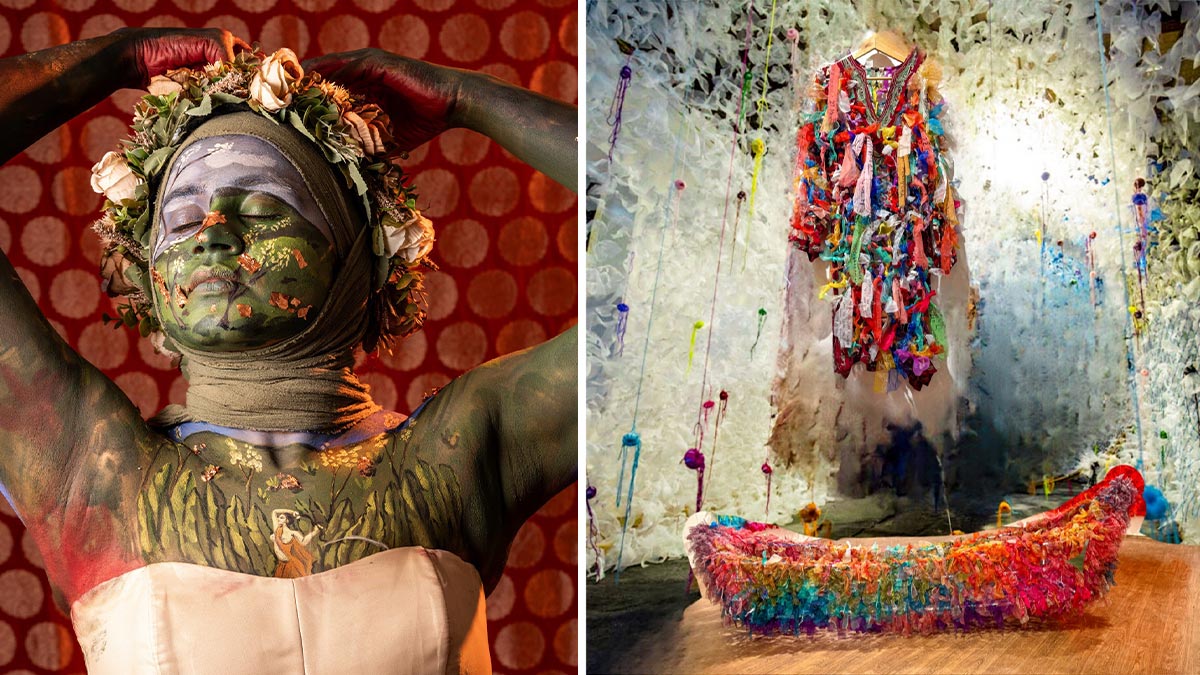
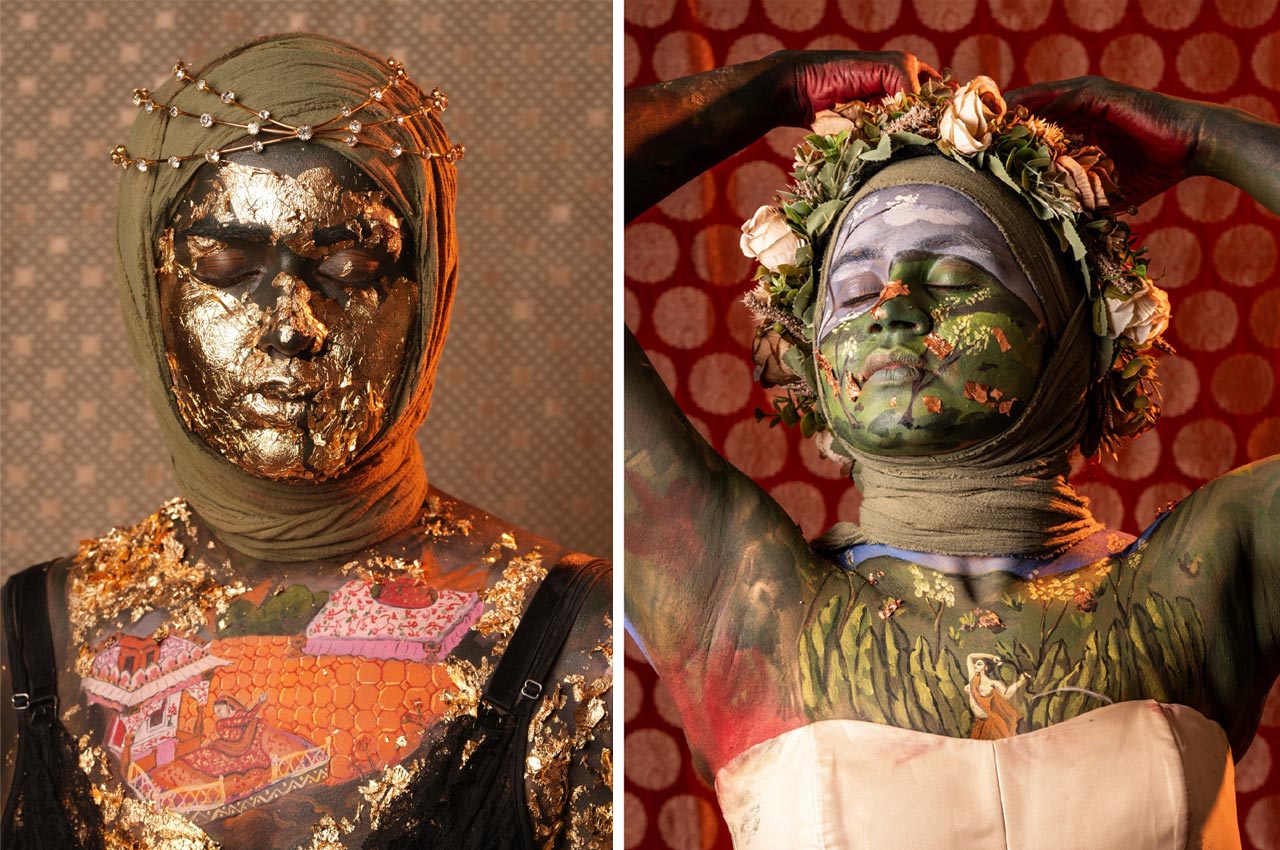
Left: Abhijna Vemuru Kasa-Dancing Aranyani, Right: Insha Manzoor-Voyage within
The Dhoomimal Gallery, India’s oldest modern art gallery, is set to host an intellectually thrilling exhibition, namely The Art of Ski(e)n: Re-membering through Performance and Thread. It will feature the works of two internationally trained artists from the Royal College of Art, London: Abhijna Vemuru Kasa and Insha Manzoor. It aims to dive deeper into the intersection of mind, body, and memory. The exhibition will run from December 6, 2025, to January 10, 2026, with a preview on December 5 at the gallery’s Connaught Place venue. The exhibition is curated by Jyoti A. Kathpali and offers an interplay between two totally distinctive methods of artistic practice.
Decoding Ski(e)n
The title, Ski(e)n, represents the skin as both a literal and metaphorical surface symbolizing a site of inscription for culture and history. And the skien is a length of thread or yarn, which is symbolic for a complex vector of memories. The art is displayed on a variety of media, such as photographs, textured textiles, etc., which reflect the emotional and psychological encounters of the artists with their ‘self’. The vivid materiality of the art also explores the threshold of time and space, symbolizing a niche where cultural memory and the unconscious mind actively engage in the act of creativity.
Abhijna Vemuru Kasa
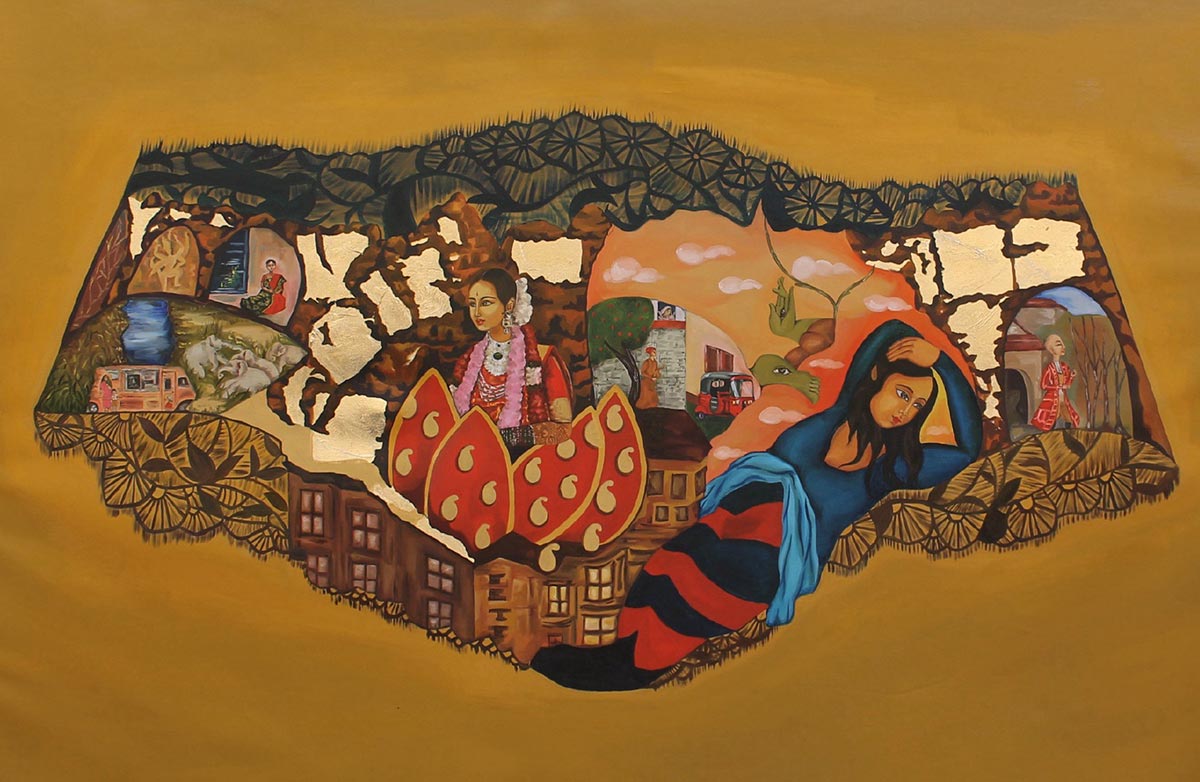
Abhijna Vemuru Kasa -Laperla Oil on canvas, 2021 76”x82”
Artist Abhijna Vemuru Kasa entails a fierce feminist POV in her art. Inspired by Indian and Persian narratives and local myths, her practice juxtaposes the norms that frequently essentialize women. She reinterprets stories through a feminist lens, which appear to be more authentic, real, and reflective of a woman’s actual lived experiences. Her work acknowledged the underacknowledged post-partum experience (the phase right after giving birth); her craft stresses a distinctive feminine subjectivity that is free from stereotypical and prejudiced constraints. Her media include performance, digital documentation, and painting on the skin, transforming surfaces into conduits for alternate imaginaries.
Insha Manzoor
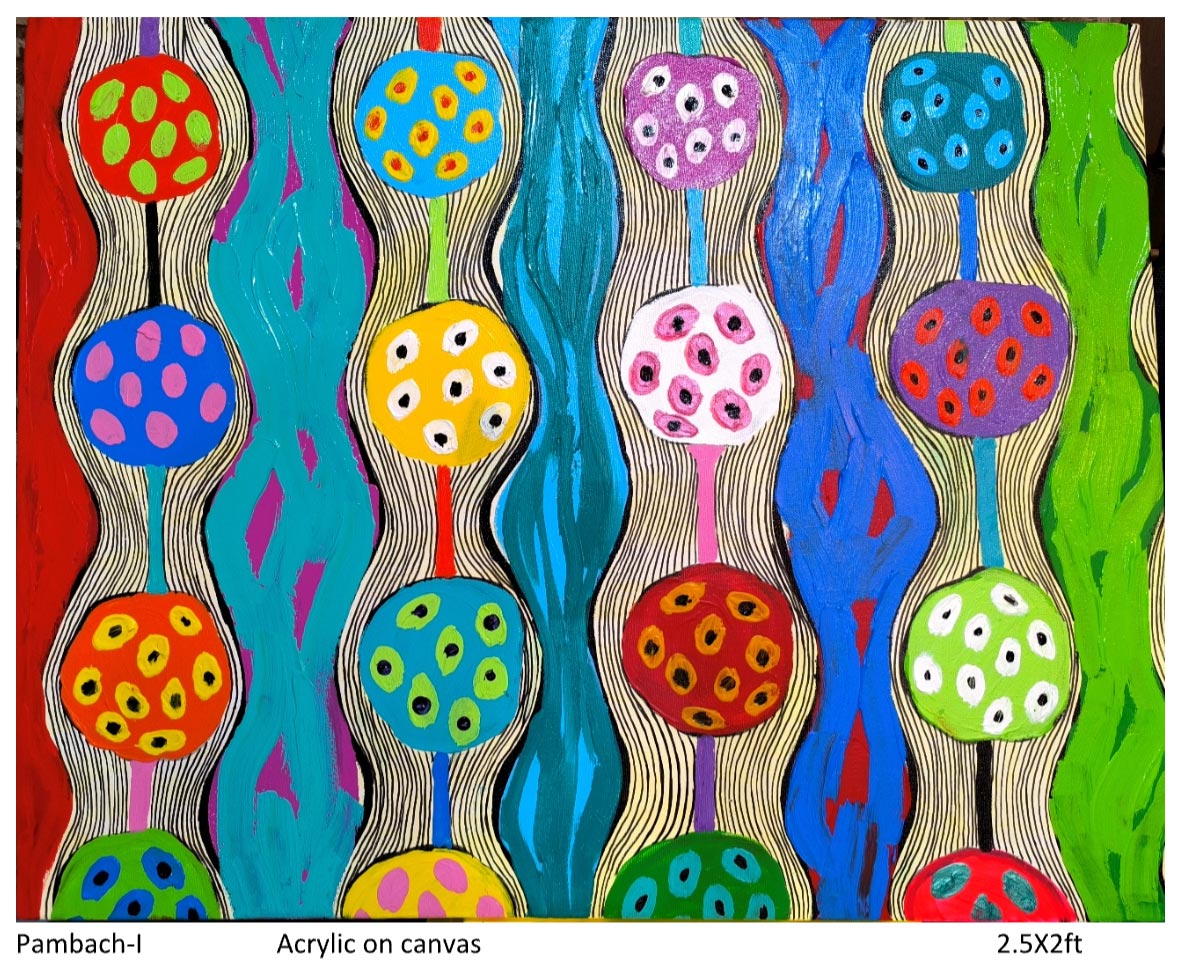
Pambach – Insha Manzoor
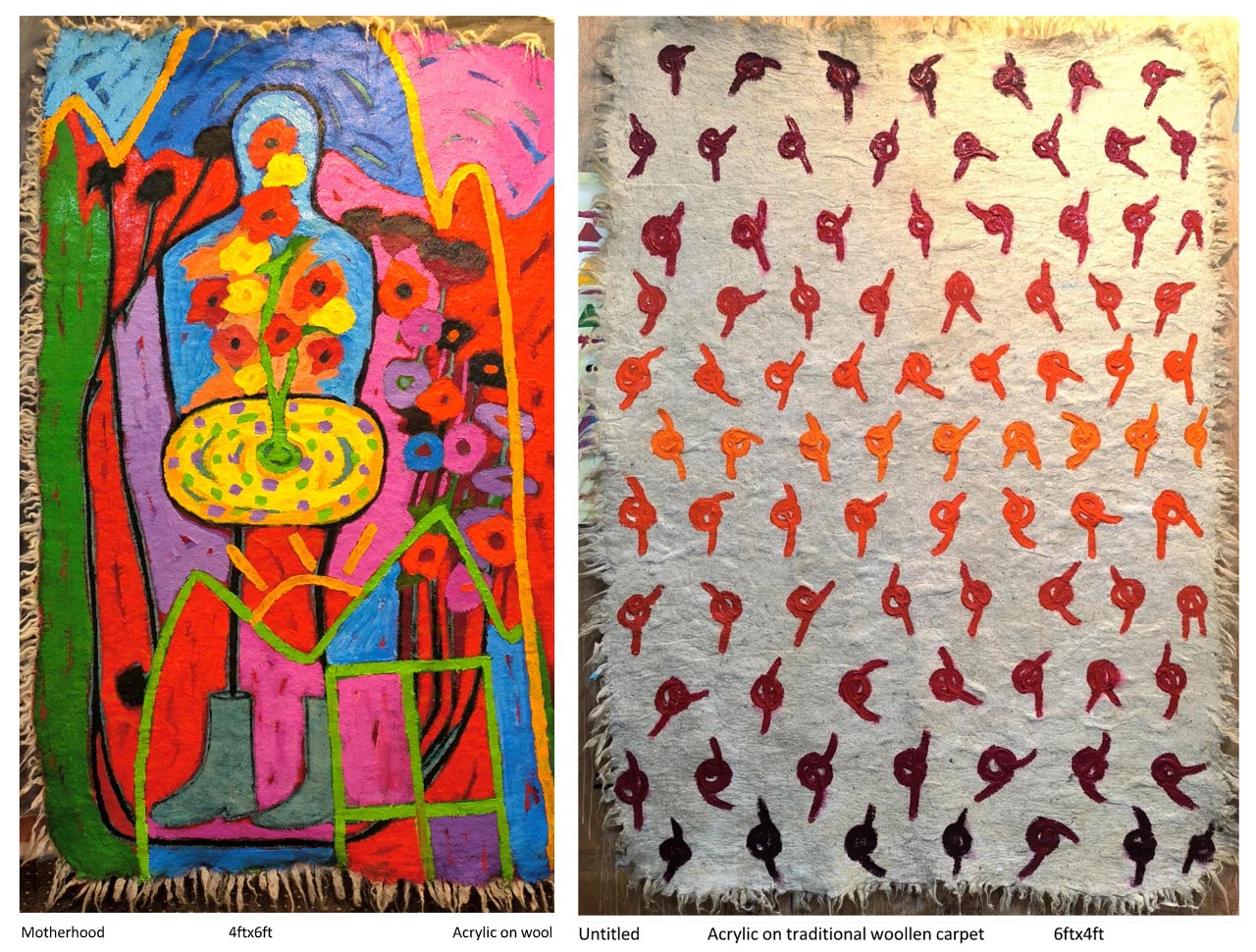
Insha Manzoor is a multidisciplinary artist hailing from Kashmir and primarily engages with their traditional craft. Her artistic exploration emphasizes how crafts such as weaving and embroidery can act as anchors in an unstable world marked by unstable geopolitics, displacement, and immense trauma. She possesses the capability to use thread and fabric in a way that brings people closer to intergenerational memory, knowledge, and care. These craft acts as a bridge for conflict mediation and contribute to peace, one stitch at a time.
Both artists have varied leanings and different visual languages to display. However, the power they have invested and inculcated through their individual practice is utterly incredible. “This exhibition is a lot to do with the negotiation of the self and the gender-inscribed body, and of the self as a site of reconnaissance into the cultural motifs and craft, to recover connections between the individual and her fraught environment,” mentions Curator Kathpalia. The exhibition’s power lies in how these two distinctive voices “converge in their search for ways of re-inscribing the self in the world by attempting to visualise parity through skin and skein.”
Exhibition details
Event
Details
Title
The Art of Ski(e)n: Re-membering through Performance and Thread
A rare collaboration between two RCA alumni rooted in South Asian cultural memory.
Exploration of skin and skein as metaphors for inscription, inheritance, and emotional resonance.
Use of performance, digital documentation, immersive installations, and textile art.
Feminist, decolonial, and trauma-informed artistic expressions.
A rich variety of media: oils, acrylics, mixed media, wool, fabric, photography, installation art.
Curatorial walks and artist talks are planned during the exhibition period.
A focus on re-membering—literally stitching together fragments of identity, memory, and history.
Why Does This Exhibition Matter?
Abhijna Vemuru Kasa
Abhijna’s art is meant for people to explore the unspoken emotions and terrains of womanhood, as she introduces a powerful urgency to her practice. Working between Hyderabad and San Francisco, she interrogates the restrictive cultural norms that essentialise women’s bodies and experiences. Through her mixed media presentations, the “skin” becomes more than a mere organ of the body. On the other hand, Insha’s skein embodies endurance and resilience.
Takeaway
The exhibition reasserts the importance of craft, memory, and the body as sites of political and personal meaning. By blending tradition with technology, they challenge the binaries between craft and contemporary art, between personal history and collective trauma, and between myth and lived experience. In a world shaped by displacement, digital fragmentation, and contested identities, this exhibition reminds us that memory, like a thread, can unfurl, and it can be rewoven with intention, tenderness, and resistance.
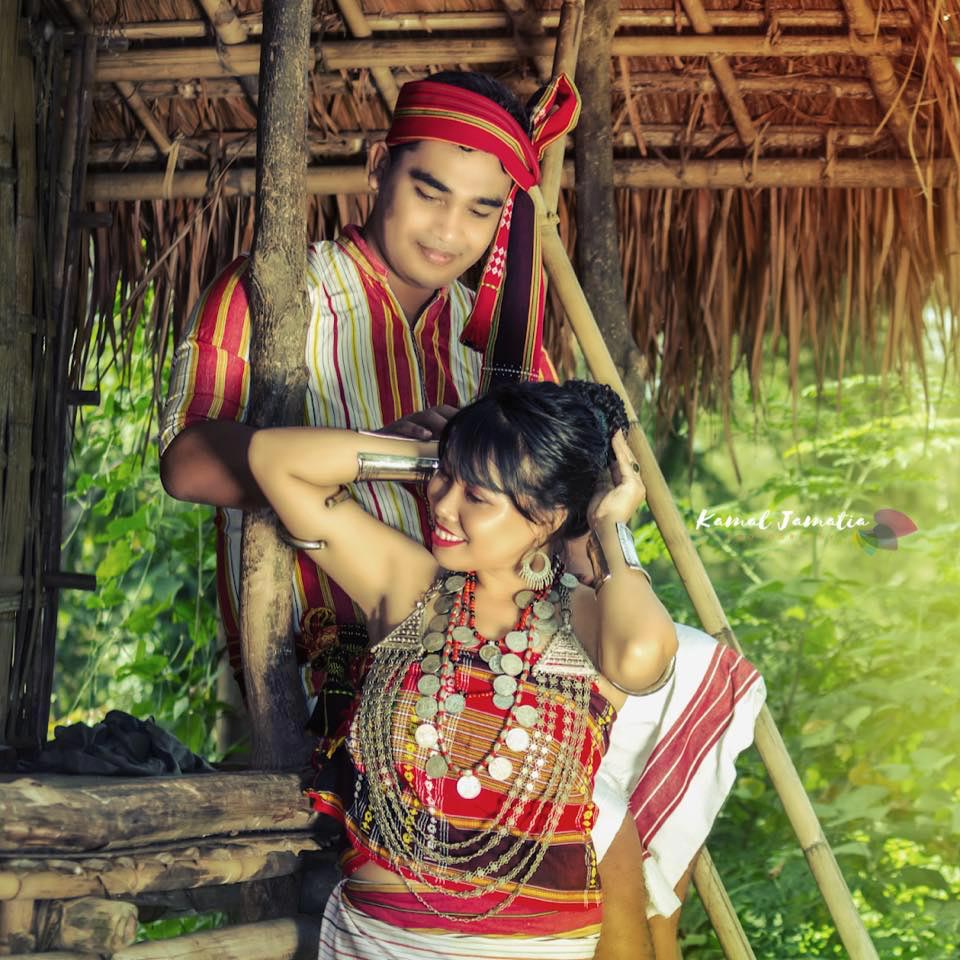
Encompassing an area of 10,491 square kilometres, delineated by the Radcliffe Line, Tripura is the third smallest state in India. Situated in the northeastern reaches of India, this state boasts rolling hills, winding rivers, and picturesque landscapes that captivate the senses.
At its zenith, the Tripuri kingdom was said to have included the whole eastern region of Bengal from the Brahmaputra River in the north and west, the Bay of Bengal in the south, and Burma to the east during the 14th and 15th centuries AD. According to textual references, the ancient period of the kingdom started around the 7th century when the Tripuri kings ruled from Kailashahar in North Tripura. They used “fa” as their title, a word taken from the Kokborok “pha,” which means “father” or “head.” It was in the 15th century that the kings adopted the title of “Manikya” and also shifted the capital to Udaipur (Hitherto Rangamati) on the banks of the river Gomati. The first Manikya was Maha Manikya, who took the title in honour of a historic victory in a war with Bengal.
Christening the Place
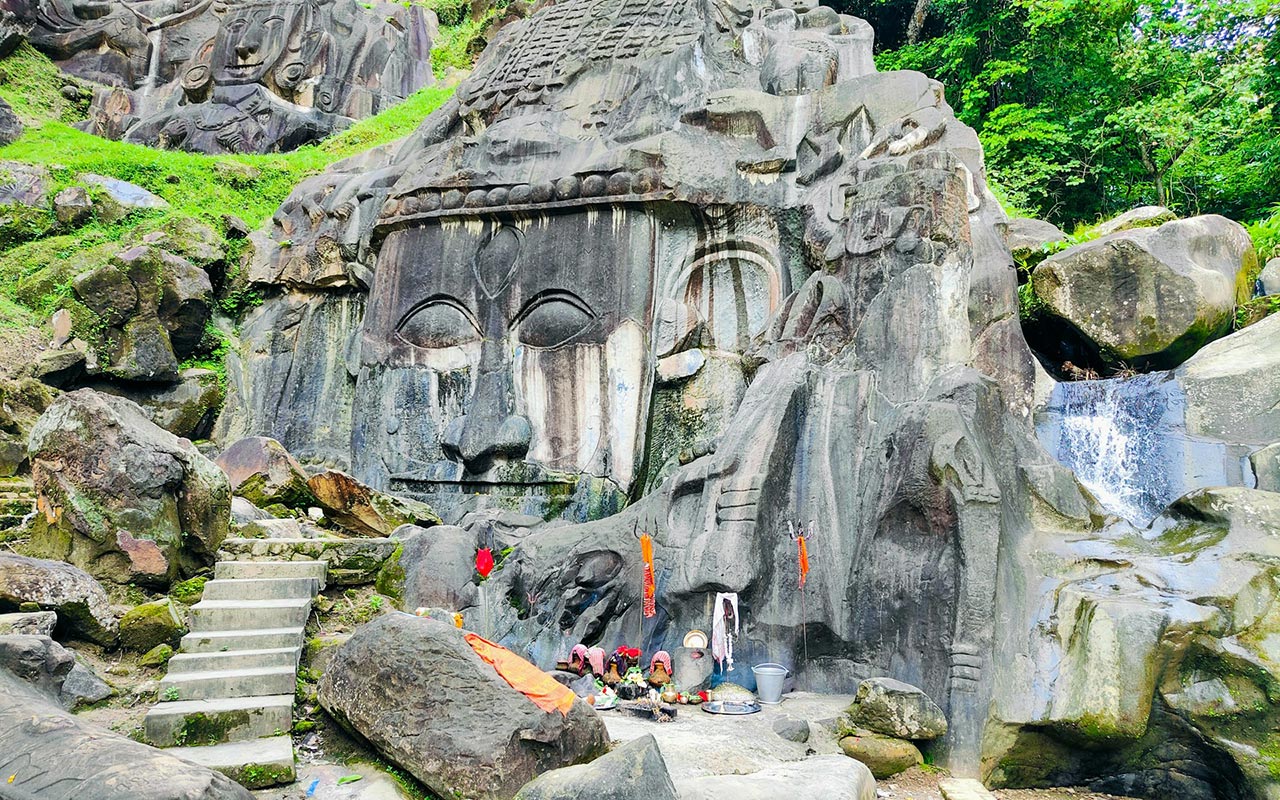
Unakoti, Tripura, India
The etymology of “Tripura” has various roots. Ancient texts suggest the name “Tripura” may derive from the Asur trio (Tarakaksha, Vidyunmali, and Kamalaksha) or the three castles they constructed (Tri = three, Puries = castles). In the opinion of K.C. Singh, the term is derived from the root word “TWIPRA”, combining two words, “TWI” meaning water and “PRA” meaning near.
The more recent name, Tripura, was not the forever label of the place. The Aryans christened it “Sumba” while the Bishnupuran referred to it as “Kirat desh”. Maharajoang, the ancient historical book from Brahmadesh (Myanmar), referred to the region as “Patikara.” The ancient Arakanese text Rajoang calls it “Khuratan”. The Manipuris named it “Takleng,” and Al-Biruni called it “Jajnagar”. The place was named “Mughlan Tripura” during the Mughal era, and “Hill Tipperah” during the colonial period.
The Indigenous People
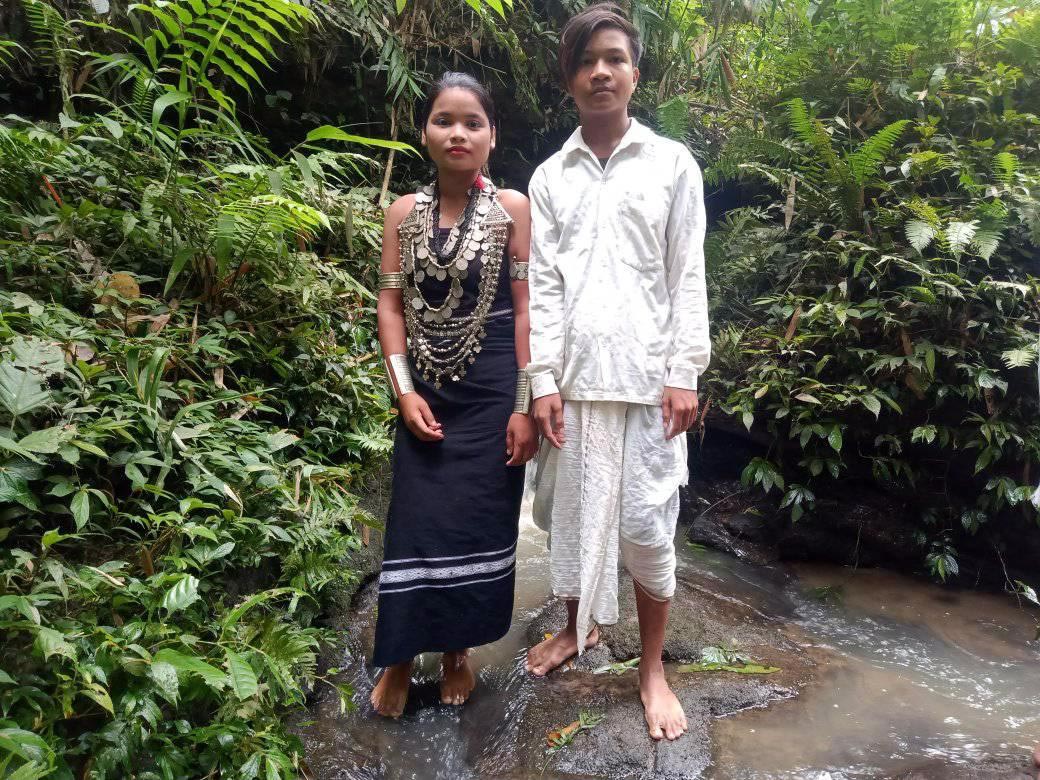
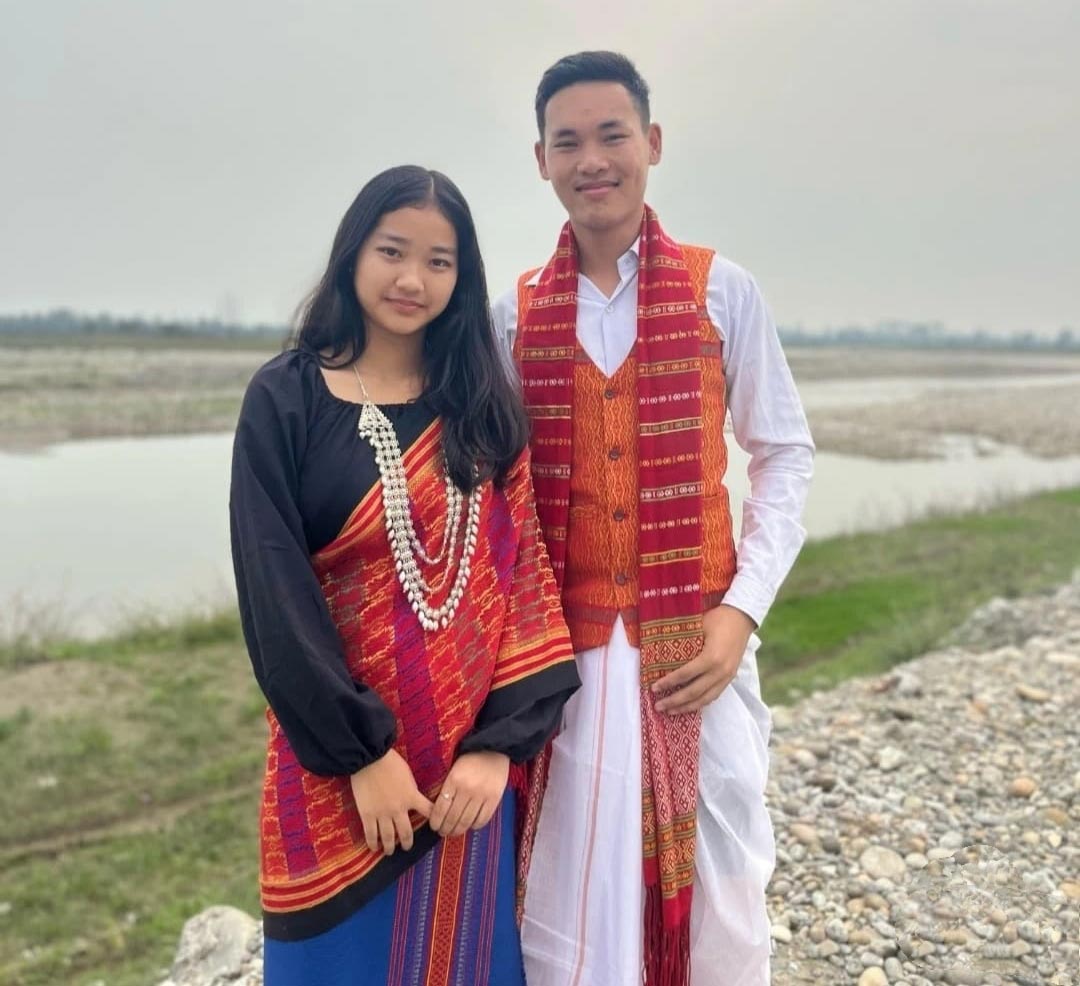
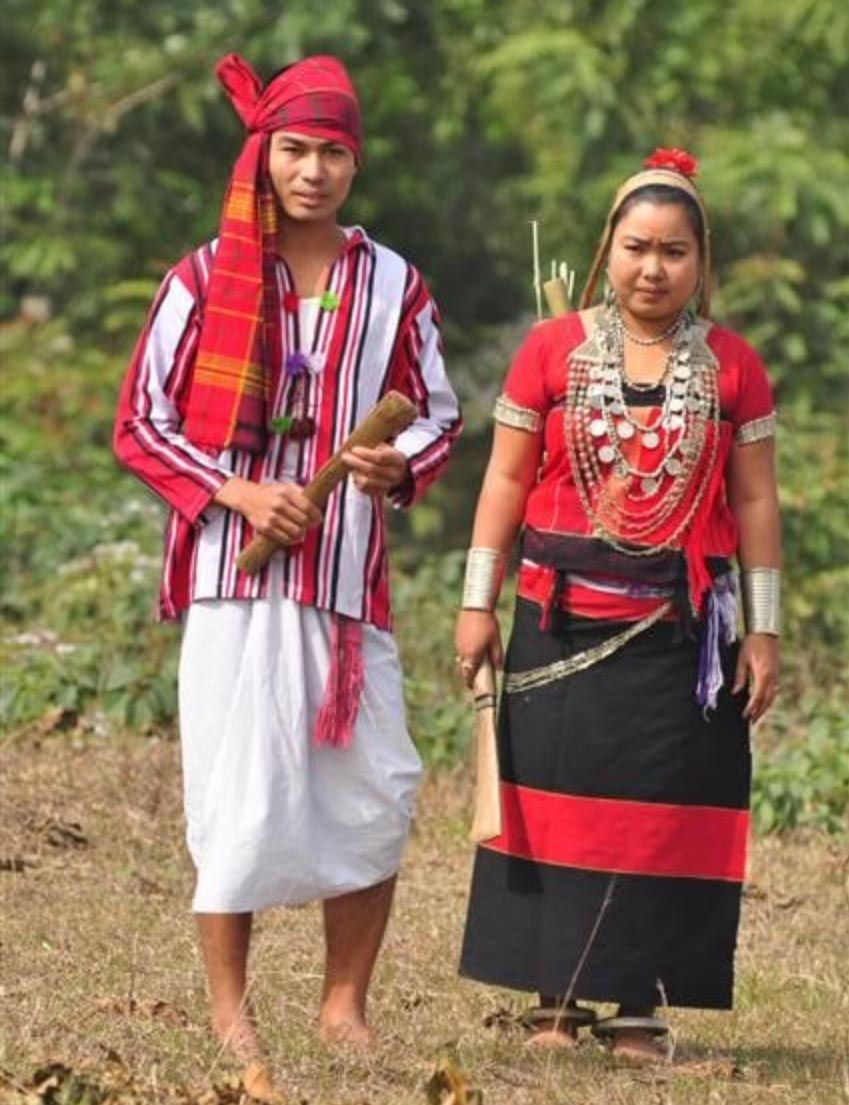
As per the order of the President of India in 1956, the tribals of Tripura are classified into 19 scheduled Tribes. Each of these communities is ethnically homogenous, with variations existing in their languages and dialects. Tripuris, among all, are the most influential ones. Interestingly, the Tripuris, Deshi Tripuris, Jamatias, Noatias, and Riangs are collectively labelled as the “Kshatrias”.
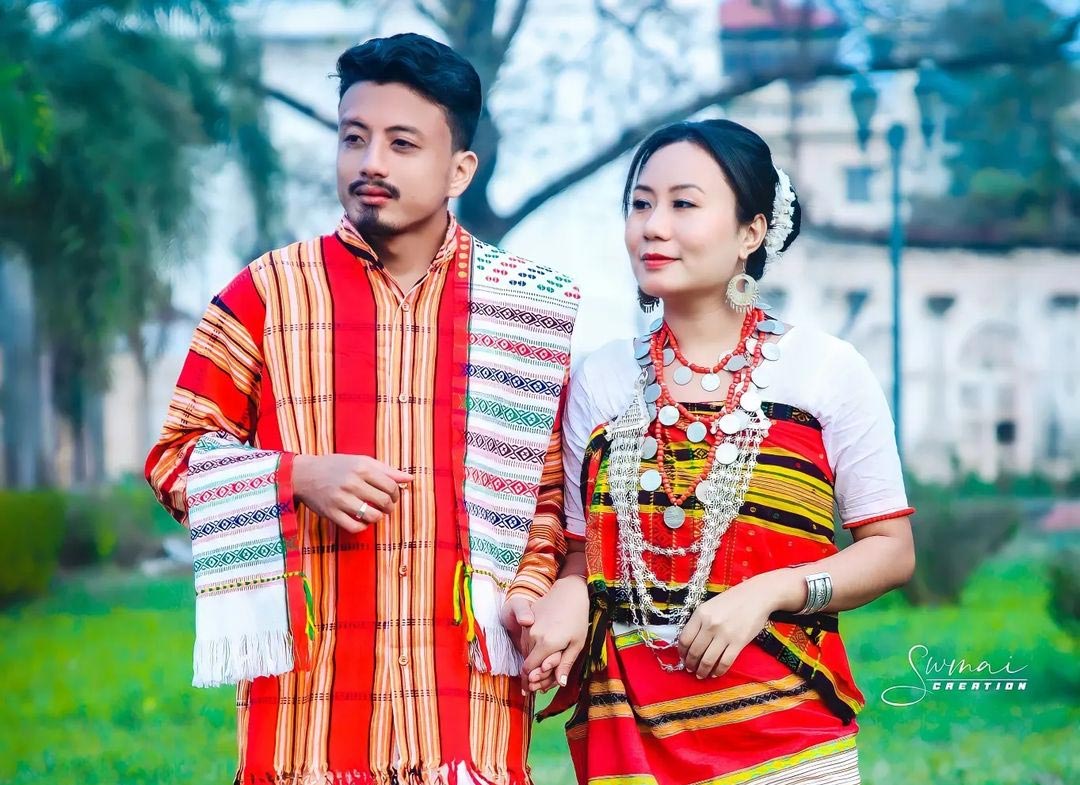
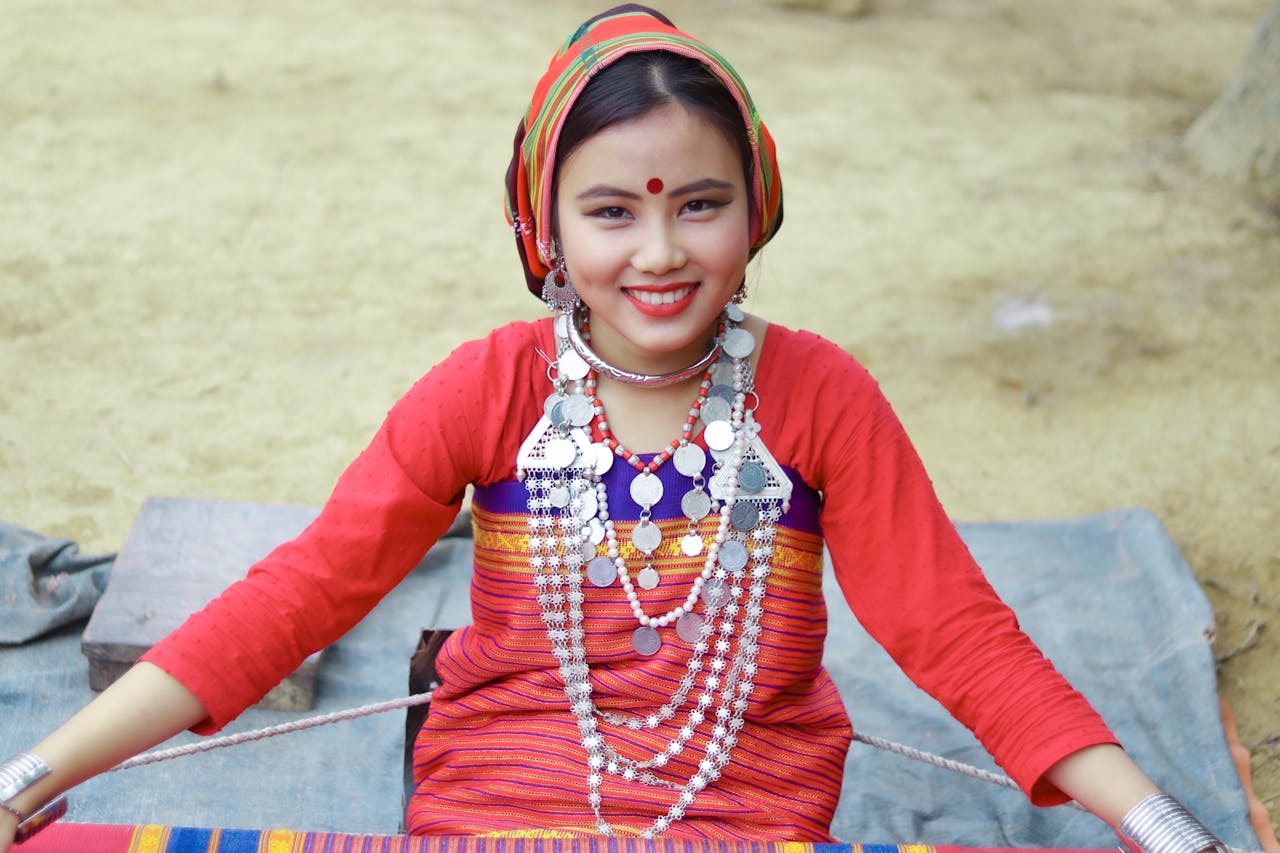
Belonging to the Tibeto-Burman race, they form the largest community in the state, and are also known as Tiprasa. Their surname, “Debbarma,” was bestowed upon them by the king. Traditionally, they reside in ‘Tongs’ on hilltops. Their spoken language is Kokborok. They originally migrated from the upper parts of the Yangtze and Yellow Rivers in present-day western China in 65 AD. They practice Jhum or shifting cultivation on hill slopes. Their staple comprises rice, with pork, chicken, dried fish, and vegetables, and they are also very fond of alcoholic beverages, with most households brewing their own fermented drinks. The institution of marriage in this community has two classifications: Hiknamani (by mutual consent) and Kaijagmani (negotiated marriages where parents play a crucial role). In fact, the practice of offering a bride price is quite prevalent. Widow remarriage is common, divorce is recognized, and instances of child marriage are also traceable. The community, which originated from the admixture of Tripuris and Bengali Hindus, is known as the “Deshi Tripuris”; they are mostly Vaishnavites and also venerate Shakti.
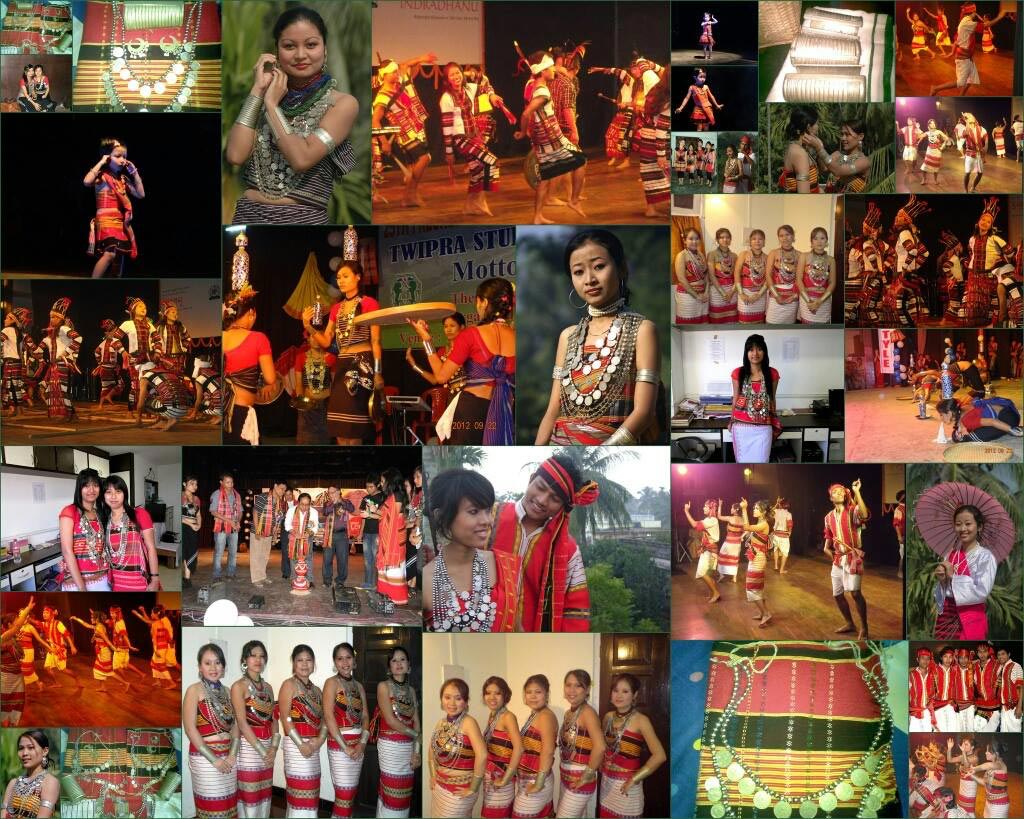
The women of this community weave garments such as Dubra (skirt), Pachhra, and Saris, using a loom. The upper body breast cover is known as Rias or Risha, and is adorned with intricate patterns. The Tripuri people are equally fond of jewellery, typically crafted from silver, silver coins, beads, and seeds of the Ramkala plant. Originally, their faith was animistic. However, with the dissipation of brahmanical influence, the Tripuris syncretized their faith with Hinduism, which is distinctively evident in their worship of the Chaturdash Devata. Major festivals include Kharchi and Ker puja. There exist two types of priests in the community, the Brahmin pandits and the tribal Ojhas or exorcists, also known as ‘Achais’. The Tripuri high priest is called ‘Chantai’.
Etymologically, the term is derived from “Jamat”, meaning an assemblage in Bengali/Urdu. According to K.C. Singha, they are a pure branch of the Tripuris. They are the third-largest community in the state. They are economically advanced and, depending on their faith, they are primarily divided into Vaishnavas and Saktas. They formed the chief army of Tripura in the ancient period. On the pretext of their military service to the king, they were exempted from Ghar Chukti or House tax and were also given special privileges. Many affluent people from the community practiced polygamy. Divorce is permitted, and widow remarriage is also recognized, and both parties offer “Langi”, a sweet liquor prepared from mami rice.
An interesting feature of the tribe is that “sati” was practiced, even though widow remarriage was practiced, and, practically, the widows were never subjected to social ostracization. This conflicting and juxtaposing practice is pretty difficult to define.
The primitive identity of these people was “Bru”. Reang is one of the 13 sub-communities of Bru. The people of this community are believed to have migrated from the Shan Kingdom of Burma during the reign of Ratna Manikya I in the 14th century, who is also mentioned to be of Bru origin. They are primarily of Mongoloid descent, and their dialect belongs to the Tibeto-Burman family. Music and dance are integral to their culture, and their traditional attire is simple. The men wear a hand-woven loincloth and also wrap their upper body; the women wear a ‘Rignai’ or ‘Pachhra.’ Parallel cousin marriage is prevalent. In their tradition, no man or his wife could be called by their names if they had become parents; they are rather identified by the names of their children. Their religious pantheon is intimately aligned with animism, though many worship Vishnu and Kali. They are known for their “Hojagiri” dance, where young girls balance on earthen pitchers. They also sang “Dawa” while practicing jhum. They use a plethora of musical instruments, ranging from flutes to drums.
The Uichoi tribe of Tripura has a common identity with the Reangs, as both belong to the mongoloid stock. Their language is pretty similar to Kokborok.
People of the Chakma tribe are of Tibeto-Burmese origin and are believed to be the descendants of Arakanese migrants, with their language belonging to the Aryan group. The Burmese people call them Tsak or Thek, the Kukis call them Chhakhuma, and the Bengalis know them as Chammua. And the people themselves call the community Changma. Their traditional attire exhibits similarities with the Burmese and Shan ethnic groups. The women wear breast covers called “Hadi” and loincloths called “pinon”; men wear ‘kani’ (loincloth) and shirts called ‘shilum’. Their ornaments closely resemble those of the Bengalis, and their faith is Hinayan Buddhism. Their traditional ethnic chronicle is christened as the Bijak. Their manuscripts were originally written in Bamunih (Brahmi) on palm leaves. “Bizhu” is their most popular festival, which is observed for three days.
The tribe has its own traditional governance structure called “Marma Raj”, which is basically a council of elders responsible for mitigating disputes and maintaining social harmony. Interestingly, during the partition of India in 1947, the Chakmas appealed to senior leaders like Gandhi, Nehru, and Patel for the inclusion of the Chittagong Hill Tracts into the Indian Union, on the pretext of the CHT having a 98% non-Muslim population.
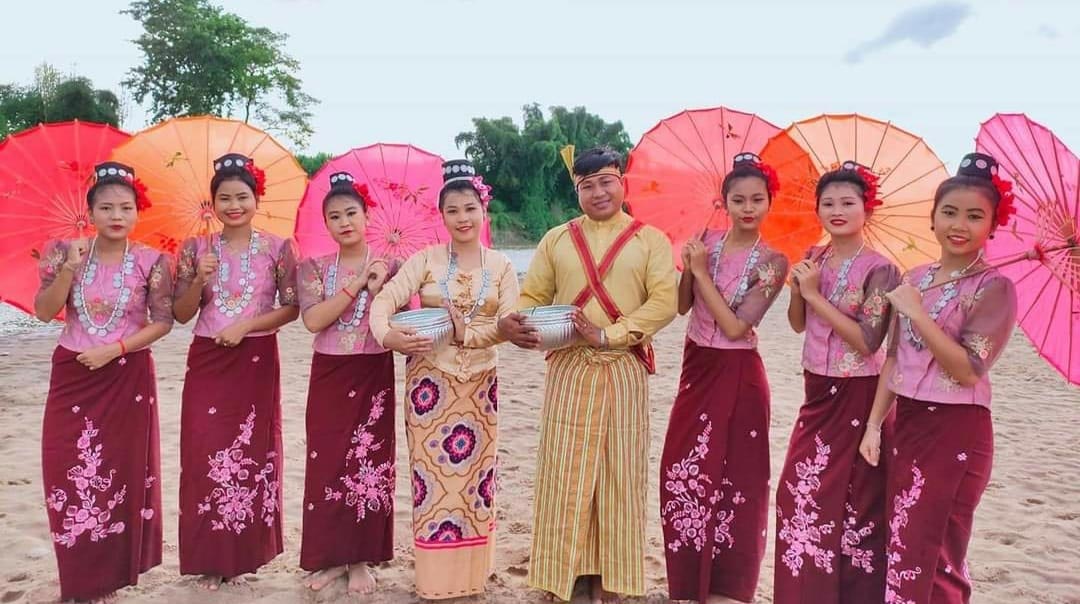
They too are of Arakanese descent and are known as Magh or Marma people, and are said to have settled down in Tripura in 957 AD. They have intimate ties with Burmese Buddhism. Their dialect resembles Burmese and Arakanese with slight variations in pronunciation, and their script is Burmese. They find mention in the Rajmala, the royal chronicle of Tripura. Like the Jamatias, they too were admitted into the royal forces. The women wear thabuing (loincloth) and bedeh is the blouse; men wear longi for lower covering, rangi, which is a shirt, and gongbong, a turban on their head.
They are a hybrid race and are divided into eleven clans. They are also recognized as Nowa-Tripuri, meaning ‘newcomer’, and Katal, which also means new. Their language is Tipra or Murang, a dialect of Kokborok, and is also influenced by the Mogs and Chakmas. Traditionally, they are quite close to the Jamatias, but in the context of their funeral customs, it is more closely aligned with the Reangs.
Murasingh is a subtribe under the Noatias. Traditionally, the people of this community did not wear shoes except for special occasions. The Murasingh women are fond of ornaments and flowers, and wear kharu on their legs.
In the Halam language, “Ha” means soil, and “Lam” means owner; thus, it translates to owner of the soil of the earth. It is believed that the Maharaja has bestowed the title of Halam upon these people. The people belonging to this community call themselves “Hre-em” or “Hriam,” which literally translates to “man”. Ethnologically and linguistically, they belong to the old Kuki groups who accepted the suzerainty of the king of Tripura. The Kukis of Tripura are basically divided into Darlong Kukis and Rokhim Kukis. They are said to have migrated from “khurpuitabum”, located somewhere in south-central China. They are segmented into 13 ‘dafas’ (clans). The Halam people also practice the craft of dyeing with colours produced from flowers, leaves, herbs, and even stones.
Molsom is a subtribe of Halam and is referred to as “Morchhom”. The word “Mol” means hillock, and “som” means ten, i.e., the people of ten hillocks. When girls of this community attain puberty, risabomb is performed, where the girl wears the breast garment risa for the first time, and the girl comes to be known as a ‘nungak’, and her parents are allowed to arrange for her marriage. Kaipeng, Karbong, Bongcher, etc., are other subtribes belonging to Halam.
The Darlong tribe exhibits close affinities with Halams. In the Darlong community, every young girl gets her ear pierced, where tiny wooden plugs are inserted, which are successively replaced by bigger earrings called “tangka kuarbe”.
Other Tribal Groups
There exist numerous other tribal groups, including Rupini, Ranglong (exhibiting physical similarities to Halam), Lushai (they call themselves MIZO), Bhutia (Himalayan Tribe of Tibetan ancestry, once engaged as the Royal Army), Lepcha (Commonly known as Nepalees), Garo & Khasia (migrant tribes from Bangladesh and Meghalaya), Munda, Santhal, Orang, and Bhil. There is an endangered tribe of Tripura, known as the Chaimal or Saimar tribe, which displays linguistic affinity with Halams.
Tribe/Group
Key Aspects & Distinguishing Features
Tripuris (Tiprasa)
Largest community; Tibeto-Burman origin. Speak Kokborok. Practice jhum cultivation.
Surname: Debbarma.
Dress: Dubra, Pachhra, Rias/Risha.
Considered “Kshatrias” in collective identity.
Deshi Tripuris
Mixed lineage of Tripuris and Bengali Hindus.
Mostly Vaishnavites; also honor Shakti traditions.
Jamatias
Third-largest community; a pure Tripuri branch.
Historically served as the royal army (Jamat).
Notable custom: Sati once practiced alongside widow remarriage.
Reangs (Bru)
Primitive identity: “Bru.” Migrated from the Shan Kingdom (Burma).
Practice parallel cousin marriage.
Famous for the Hojagiri dance (balancing on pitchers).
Unique kinship: Parents identified by a child’s name.
Chakmas
Tibeto-Burmese origin; descended from Arakanese migrants.
Language belongs to the Aryan group.
Followers of Hinayan Buddhism.
Festival: Bizhu.
Mogs (Magh/Marma)
Arakanese ancestry with strong Burmese Buddhist influence.
Dialect and script similar to Burmese.
Served historically in royal forces.
Noatias
Hybrid group; also called Nowa-Tripuri (“newcomer”).
Speak a Kokborok dialect.
Funeral rituals resemble Reang traditions.
Subtribe: Murasingh.
Halams (Hre-em/Hriam)
Name means “owner of the soil/earth.”
Linguistically linked to old Kuki groups.
Divided into 13 dafas (clans).
Perform risabomb ritual at puberty.
Other Groups
Include Lushai (Mizo), Bhutia (Tibetan lineage), Garo & Khasia migrants,
Munda, Santhal, Orang, Bhil communities. Chaimal (Saimar) is an endangered tribe.
Key Highlights
Tripura is home to 19 Scheduled Tribes, each with distinct identities.
Tripuris are the largest, historically powerful, and culturally influential.
Reangs are celebrated for the Hojagiri dance and jhum-based lifestyle.
Chakmas retain Buddhist heritage and a unique palm-leaf manuscript tradition.
Jamatias historically formed the kingdom’s military backbone.
Mogs and Chakmas reflect strong cultural ties to Myanmar and Arakan.
Halam and its subtribes exhibit elaborate dyeing technologies and clan systems.
Women across tribes play key roles in weaving, ornamentation, and ritual customs.
Religious life ranges from animism to Hindu syncretism to Buddhism.
Tripura’s tribal identity is rooted in migration, syncretism, and historical continuity.
A Unique Perspective
These tribal communities essentially function as custodians of ancient knowledge, traditions, and customs. Their histories deepen our understanding of India’s pluralistic mosaic, reminding us that identity is never static but forged through migration, cultural exchange, and negotiation with power. Furthermore, the history is marked by strategic alliances and geopolitical consciousness. As waves of modernity sweep across the hills, the challenge is not simply to “preserve” these cultures, but to allow them space to evolve on their own terms. In celebrating the voices of Tripura’s hills, we celebrate the enduring spirit of communities that have defined their world with dignity, craft, and memory. The future of Tripura lies in recognizing this complex, resilient, and syncretic identity as its greatest cultural capital.
FAQs on Communities of Tripura
Question: How many Scheduled Tribes are recognized in Tripura?
Answer: Tripura officially recognizes 19 Scheduled Tribes, each with distinct linguistic, cultural, and social traditions.
Question: Which is the largest tribal community in Tripura?
Answer: The Tripuri (Tiprasa) community is the largest and historically the most influential among all tribes.
Question: What is the spoken language of the indigenous tribes of Tripura?
Answer: Kokborok is the most widely spoken indigenous language, though several dialects like Reang, Murang, and Chakma are also used.
Question: Which tribe is known for the Hojagiri dance?
Answer: The Reang (Bru) community is famous for the Hojagiri dance, performed by young girls balancing on earthen pitchers.
Question: What are the main occupations of Tripura’s tribal communities?
Answer: Their traditional occupations include jhum cultivation, weaving, fishing, brewing, and various craft-based livelihoods.
Question: Are the tribes of Tripura primarily animistic or Hindu?
Answer: Most tribes began with animistic traditions but gradually adopted Hindu syncretism or Buddhism, depending on their migration and cultural histories.
Art has always been a rebellion against conventional ideas of established practice, giving a new meaning to self-expression and social commentary on issues like the environment and inequalities. The present body of sculptures and statues embraces experimental qualities that defy principles of harmony and symmetry to fuse symbolism into abstract ideas for added emotional depth, representing the inner state in an archetypal visualisation.
Today’s style is a paradigm shift from a collective emotional voice that was community-driven, often immersed in religious devotion, especially in India. This is the essence of metamodernism, where the composite nature of personal and collective unconsciousness is evident. Simply put, subjectivity takes the centre stage in modern sculptures and statues, representing the chaos within an artist that connects to the collective unconscious and fuses idealism with scepticism.
The Past at a Glance
In the early 1900s, sculptors were obsessed with anatomy and realistic representation owing to the influence of rationalist values during the Age of Enlightenment. However, as human creativity evolved, such rigid literal representation in artwork was rejected in the 20th centuryin the West. Qualities of experimentation and symbolism were added, and the cultural discourse gave rise to abstract art wherein one had to distance oneself from the object itself and engage emotionally rather than rationally.
In India, the departure from religious and mythological narratives and the introduction of nation-building and postcolonialism resulted inmore diverse artwork. It blended indigenous styles and symbols with Western influences. Sculptures were patronised by the government and meant to convey postcolonial hopes—making sculptors essential players in nation building. This also marked a significant shift from body aesthetics and storytelling to artistic expression and materiality.
Conflicting Ideas of the Postmodern World
Notably, modernism does not merely represent progressive ideas but the utopia of the post-WWI era, the advent of industrialisation, and the eventual commercialisation of art. Possibly causing ignorance of personal identities, it gave rise to an irony in the West—the attempt tocreate artistic freedom might have become reductionist, a recurring theme in contemporary sculptures. Sculptures and statues became archetypal symbols with a singular meaning.
To break the dogma, artists started a change called the postmodernist deconstruction of values. Gaining more control over their artworks, they let go of universal meanings and gave personal interpretations acceptance. This coincided with lost hopes that followed the West’s broken promises of WW1 and the breakout of WW2, and scepticism became a characteristic of artistic expression even in India, as seen in the Bombay School of Art.
Synthesis of Modernism and Postmodernism:
Postmodernism broke philosophies that placed one art above the other, allowing artists more freedom in post-liberalisation. Sculptures depicted that there is no universal truth, and the meaning of artwork changes with the audience and time. It gave rise to another paradox—the alienating realisation that meaning is constructed, and thus, there might be no meaning of an artwork. Interestingly, alienation due to the increasingly transactional nature of society was realised at the beginning of the 21st century.
Additionally, artists reconstructed and borrowed ideas to combine them with their thought process; the idea of creation out of nothing was challenged, and originality was questioned. The artist’s sculpture showed a stylistic hybridity that many call metamodernism, which blended ideas to create the new.
Whether the metamodern era has arrived or is still in a transitional stage is a debate. However, the current world has blurred the lines between universal meanings and scepticism. The sculptures now focus on creating an experience for the audience, where an interaction between the intentions of artists and the subjectivity of the viewer constructs meanings.
Globalisation: Shifting Materials, Themes and Styles
Globalisation’s indomitable impact on sculptures and statues is seen in artists exploring new styles and materials as cultural exchanges continue and technology evolves. Experimentation and hybridity of techniques are central to artworks.
Styles like minimalism have found expression in several Indian artworks that combine the expression of spiritual designs and motifs in geometric stylisation. Similarly, post-minimalist ideas react with the Indian traditions to encourage artists to use unconventional materials like fibreglass, ropes, latex, magnets, etc.
Space has also become a medium of artistic expression and a defining element of sculpture and statue-making. Installation art creates experiential pieces; for instance, the creative use of mirrors is exemplary of shifting paradigms.
Merging classical craftsmanship with contemporary technology, laser 3D printing and CNC milling are all the rage. This makes replication of intricate designs precise and easier. Further, technology and innovation have given birth to kinetic artworks that add a literal movement to pieces through motors and sensors, allowing the pieces to respond to external stimuli.
Lastly, mixed-media techniques show qualities of experimentation, combining different materials in masterpieces. Indian sculptors combine traditional materials like wood with modern innovations like stainless steel to not only create mesmerising and meaningful interpretations of their reality but also add strength to their words.
Artists are also exploring themes relevant to the contemporary world, such as migration, climate change, and identity struggles. The themes often influence their choice of materials, such as a conscious effort to use eco-friendly materials or recycled materials in sculptures and statues to help in the global awareness of environmental degradation. Moreover, today, sculpture making is explored for its therapeutic qualities; one expects more vivid and raw expressions of self in them.
The Bottom Line
Terms like “modernism” and “postmodernism” are not mere cultural discourses, and every sculptor interprets them differently to blend modern ideas with cultural values that honour the past. But, while the materials and techniques might evolve, the fundamental role of sculpture in representing and projecting power, identity, and values remains a long-standing practice.
With each artwork being an attempt to break a new barrier through a fluidity of ideas, no work is inherently good or bad. And while the modern restrictions of thought will continue to be discovered and broken, sustainable craftsmanship practices will also shape the future, reflecting artistic creativity and environmental responsibility.
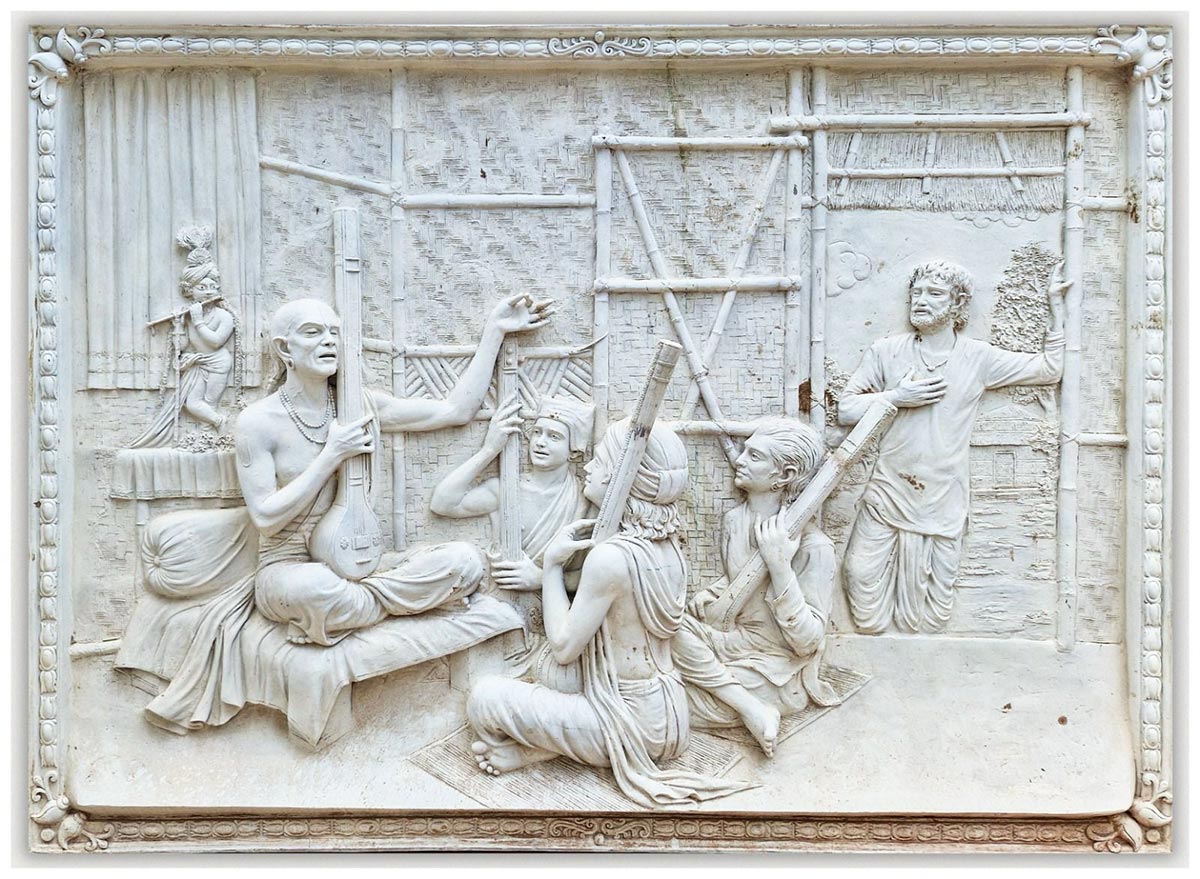
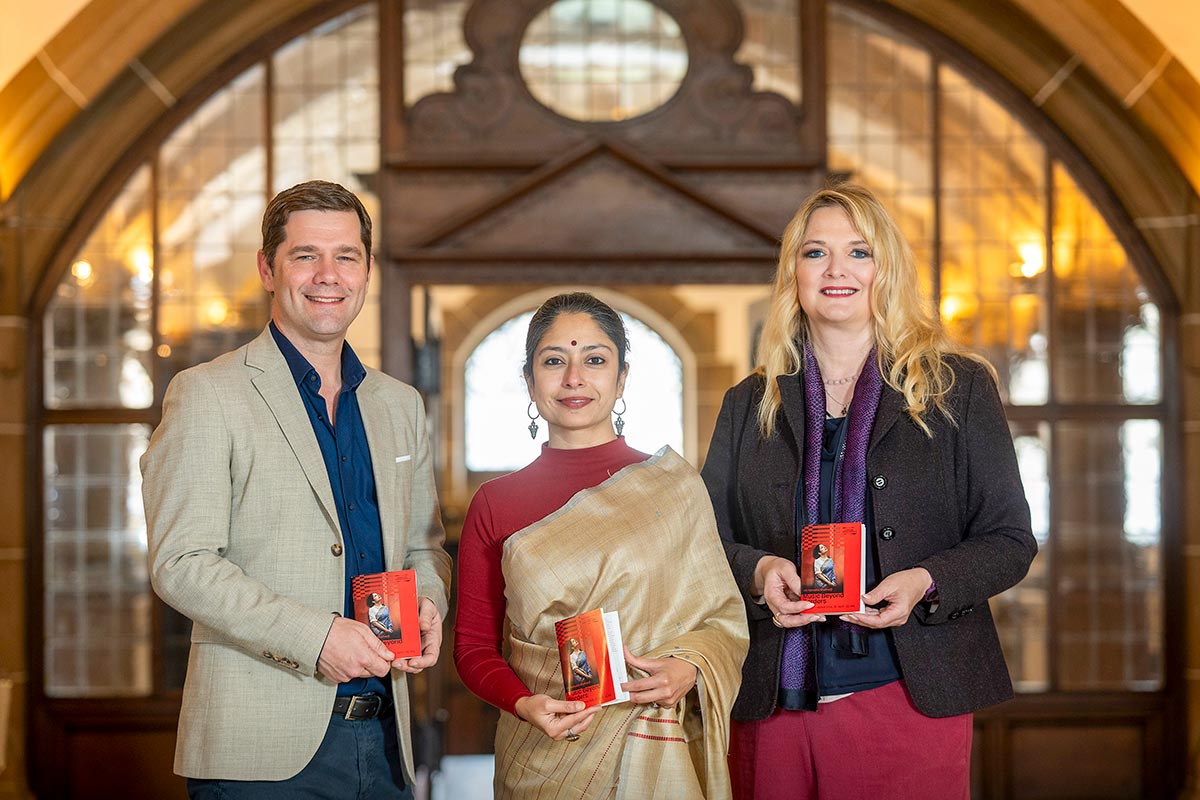
Germany’s Duisburg Philharmonic is setting a bold and expansive stage for its sixth edition of the contemporary chamber music festival, “Eigenzeit – Music of Now,” running from 30 April to 22 May 2026. The festival will be operating under its most recent banner, “Music Beyond Borders”, and is dedicated to building meaningful relationships between Europe and India in terms of its rich spiritual and cultural traditions. This three-week festival goes beyond performances; it will showcase Indian artistic expression, inspired by the universalist philosophy of Nobel Laureate Rabindranath Tagore.
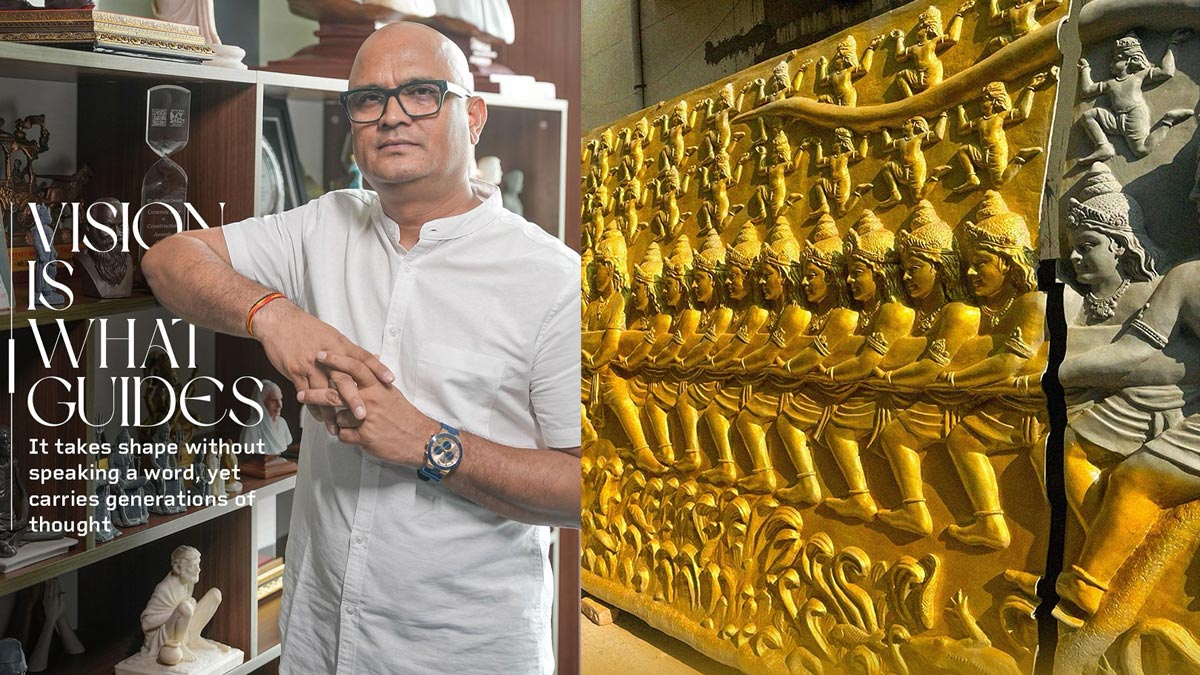
This festival is curated by Kamalini Mukherji, an eminent Rabindra Sangeet exponent. The collaboration between Kamalini Mukherji and Artistic Director Nils Szczepanski ought to create an aura that will intertwine music, dance, cinema, sculpture, culinary traditions, and improvisational arts in order to shed light on the interconnectedness of the global cultures.
The Tagorean Vision
The ethos of the entire festival is grounded in the shared philosophical roots of Indian and Western art, though the ideas reverberated by Rabindranath Tagore’s belief in the unity of human expression. The two cultures shall identify and recognize one another as a part of their own cultural horizon, expanding their cultural purview. Kamalini views the festival as a vital space for interaction. She states, “My wish is for this festival to become a space where the richness of India’s musical and artistic heritage can engage in a meaningful dialogue with global traditions—fully aligned with Tagore’s belief in the unity of human expression.” Artistic Director Nils Szczepanski reciprocates the same sentiment, emphasizing the festival’s intent to celebrate cultural interconnectedness and open new perspectives for the audience.
The Panorama of The Festival
The festival will be inaugurated on April 30, 2026, at the Lehmbruck Museum with a lecture demonstrating the millennia-old Odissi dance, led by the internationally acclaimed icon, Bijayini Satpathy. This segment will be followed on May 2 by the program “The Fascination of Odissi,” featuring Satpathy and Mukherji, including a world premiere excerpt from Tagore’s dance drama Chitrangada. The festival also seeks to unfold a diverse spectrum of arts. May 3 is the “Indian Film Day” and will feature works by legends of Indian cinema, such as Satyajit Ray and contemporary filmmaker Payel Kapadia. A high-energy concert will follow the cinematic segment, “One Beat, One World,” on May 10. This session is going to be one of a kind, as Grammy Award-winner and tabla virtuoso Bickram Ghosh will join the mridangam maestro Patri Satish Kumar to create a blissful symphony. A live Milonga performance will succeed this.
May 13 is a special one as it schedules the “Tagore Song Night” that seeks to bring together renowned artists like Kamalini Mukherji, violinist Kala Ramnath, and Bickram Ghosh, to perform Tagore’s timeless songs, a world-first collaboration curated for Duisburg. The essence of transculturality will prevail on May 17 as “East-Western Seasons,” where Kala Ramnath juxtaposes her cycle Indian Seasons with Vivaldi’s Four Seasons, collaborating with members of the Duisburg Philharmonic and the “Orchester des Wandels.” Interestingly, a thoughtful step is initiated as a “Baul” performance is orchestrated and shall feature the solo recital session of Parvathy Baul on May 19.
Beyond Performances
The dynamism of the festival is not restricted to the performing and visual arts but also encapsulates the culinary arts as well. The “Indian Food Night & Jugalbandi” (16 May) takes insights from the Bengali food writer Chitrita Banerjee and blends culinary dialogues with live improvisations on sitar, sarod, and tabla. Throughout the event, Kolkata-based installation artist Narayan Chandra Sinha creates new sculptures from Duisburg’s industrial scrap. The showdown is scheduled on May 22, with “Day and Night,” which will feature a newly created dialogue between Kamalini Mukherji, “Artist in Residence,” and world-renowned mandolinist Avi Avital, sarod player Swarnendu Mandal, and the Aris Quartet. With this final segment in place, the grand celebration shall conclude.
Event Details
Aspect
Details
Festival Dates
30 April – 22 May 2026
Festival Theme
“Eigenzeit – Music of Now” / “Music Beyond Borders”
Focus
North, South, and East Indian Music, Dance, and Culture
Curator
Kamalini Mukherji (Leading interpreter of Rabindra Sangeet)
Inspiration
The universalist philosophy of Rabindranath Tagore
Organiser
Duisburg Philharmonic
Key Highlights
World premiere collaboration between Odissi dance and Tagore’s Chitrangada
Exclusive Tagore Song Night featuring globally renowned musicians
Grammy-winning percussionists presenting new works created for Duisburg
Indian Film Day spotlighting both classic and contemporary cinema
Sculpture installations using local industrial scrap by an Indian artist
A curated culinary–musical evening with noted author Chitrita Banerjee
East–West dialogue through a unique pairing of Vivaldi and Indian violin traditions
Rare Baul recital by Parvathy Baul in a historic church setting
Finale featuring Indo-European collaboration across mandolin, sarod, voice, and strings
An Unmissable Cultural Nexus
The Eigenzeit Festival 2026 is one of Europe’s most visionary artistic initiatives. Linda Wagner, Cultural Affairs Director for Duisburg, rightly emphasizes the festival’s significance for the city: “Duisburg is a vibrant and open cultural metropolis… The fact that the Duisburg Philharmonic is continuing the transcultural dialogue with the 2026 Eigenzeit Festival, and placing the fascinating world of Indian, particularly Bengali, music and culture at its center, is a powerful statement.”
The brilliantly scheduled events interweave the eclectic side of both cultures and weave an inclusive fabric embracing everyone under its sash. By putting Indian classical arts on the same stage as the cultural heart of Duisburg, the Philharmonic redefines what contemporary chamber music can be. It provides a rare opportunity for European audiences to engage with the spiritual and artistic side of India, not as an exotic other, but as a co-equal partner.
From Tagore to Baul’s mysticism, the festival covers it all, exemplifying what cultural diplomacy should actually look like. This festival is more like a movement towards a world where music is truly not a subject of political sovereignty, but an asset that belongs to humankind as a whole.
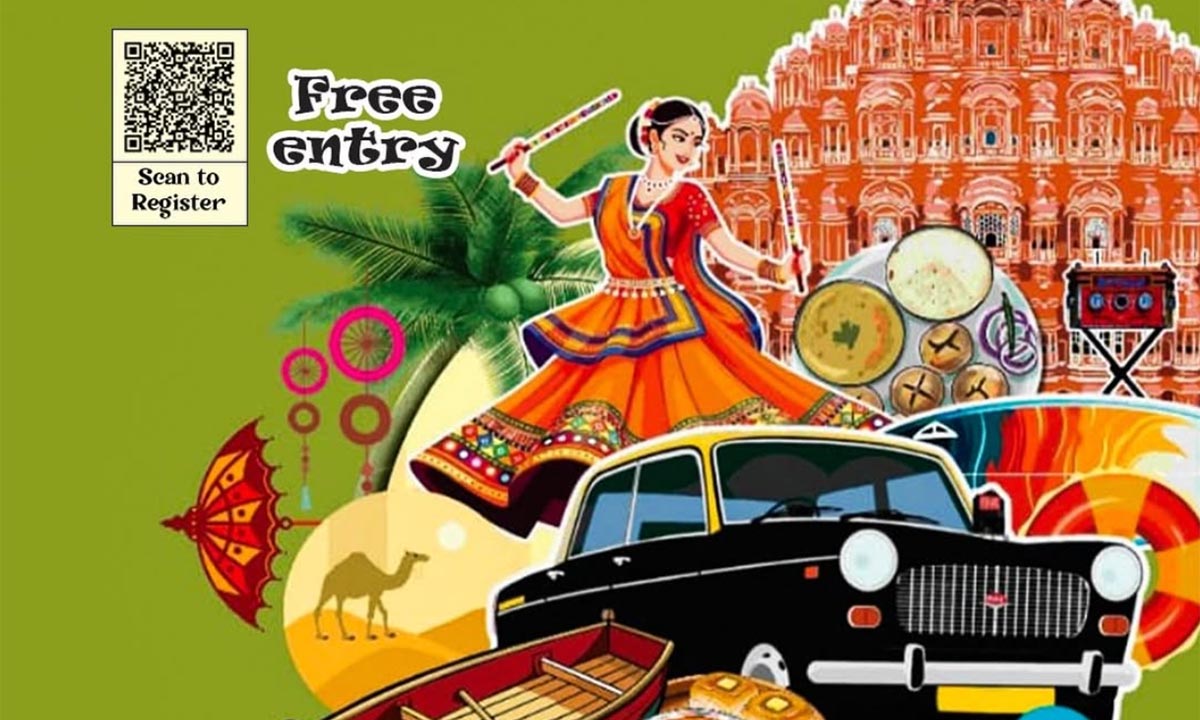
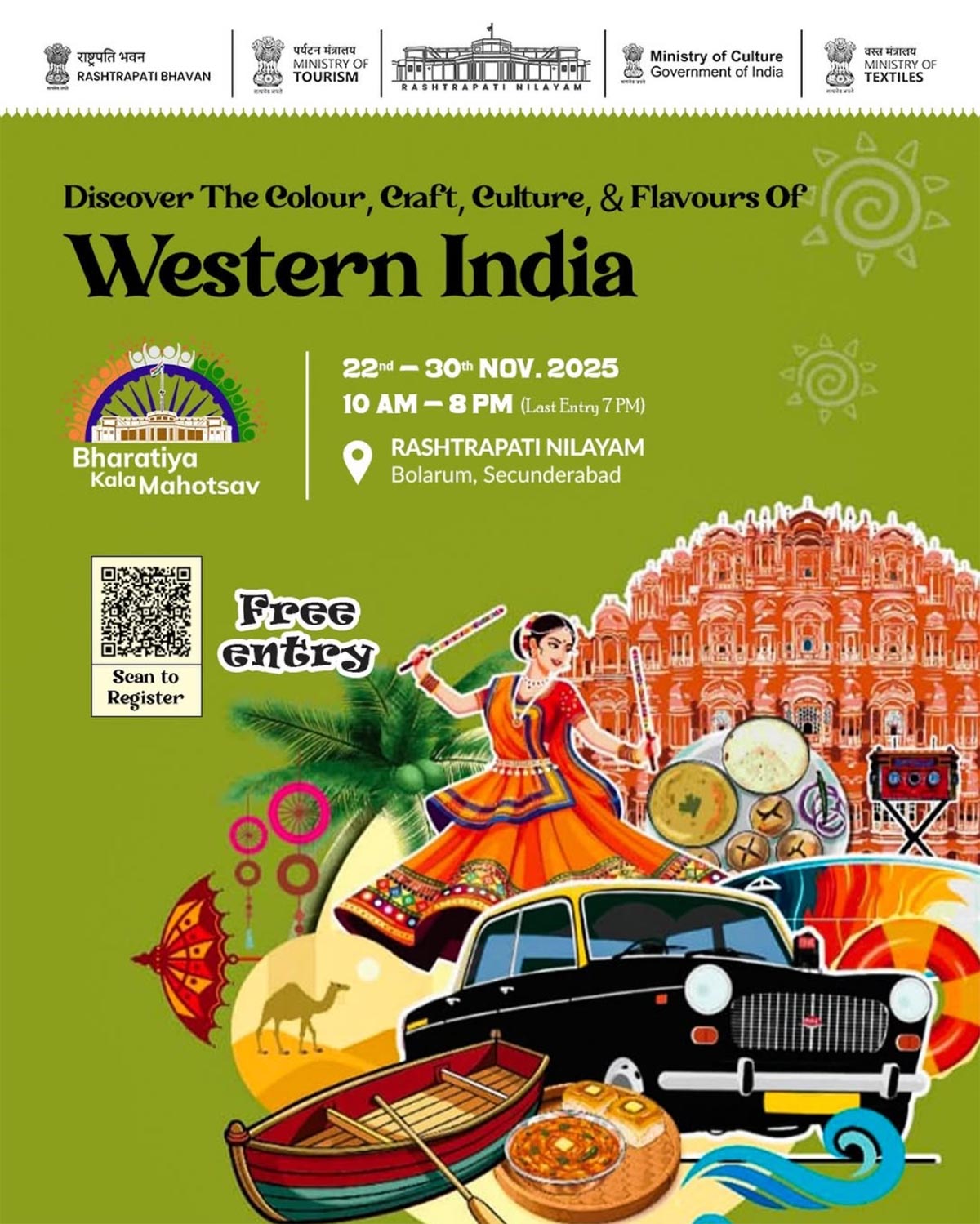
The culturally vibrant city of Hyderabad is hosting one of India’s largest celebrations of its artistic diversity, the Bharatiya Kala Mahotsav 2025. Organized by the Ministry of Culture, Government of India, in collaboration with Rashtrapati Bhavan, and supported by the Ministries of Tourism and Textiles, this nine-day festival aims to provide a pleasantly immersive experience for everyone, showcasing the vibrant culture of western India. The art, crafts, textiles, and traditions of regions such as Gujarat, Rajasthan, Goa, Maharashtra, and the Union Territories of Dadra & Nagar Haveli and Daman & Diu are widely displayed. Scheduled to run from November 22nd to 30th, 2025, the Mahotsav will transform the historic premises of the Rashtrapati Nilayam in Secunderabad into a grand, living museum.
The ceremonial inauguration is graced by the Honorable President of India, Smt. Droupadi Murmu. Her presence elevates the scope of the event to a national-level festival that reflects upon the government’s commitment to promote and preserve India’s rich cultural fabric. Entry in this festival is free, and registrations are encouraged through the QR code provided. The Rashtrapati Nilayam is the presidential winter retreat built in 1860 and located in the heart of Secunderabad cantonment area. The venue now opens its lawns, gardens, and heritage buildings for public engagement and cultural events. This festival is an attempt to make India’s diversity richer by making it more cohesive.
The Artistic Soul of Western India
The inaugural session of the Mahotsav in 2024 focused on North-Eastern and South Indian art, but this year the focus has shifted to the Western Indian crafts. This approach is worthy of applause as it aims to bring the distinct artistic and cultural traditions of each part of India through its yearly editions. Attendees will get to see a lot more than just regional products. The exhibition and sale section will feature dedicated state pavilions showcasing textiles like the famous Kutch Bandhani from Gujarat, the delicate Kota Doria sarees and Pattu cotton weaves from Rajasthan, the opulent Paithani sarees from Maharashtra, and the traditional Kumbi sarees from Goa. The Mahotsav also features unique crafts such as the handmade Kolhapuri Chappals, etc. Thus, the Mahotsav is running with a dual objective. Firstly, it aims at showcasing the vibrancy of India’s regional cultures and traditions; secondly, it aims to empower artisans and craft communities who are engaged in the production of tangible culture.
More than 250 artists, including celebrated Padma Shri awardees and other dignitaries, are going to be present at the venue. Beyond textiles and craft, the venue also scheduled a cultural lineup titled Pashchimalap, which literally means “Western Embrace”. This segment broadens the scope of the festival by showcasing the different folk dances and music from the represented regions. One can experience the Dhol-Tasha and the Lezim from Maharashtra, the Kalbelia and the Laal Angi Gair from Rajasthan, the Talvaar Raas and Garba from Gujarat, and the Samai and Ghumat Vadan from Goa. This cultural showcase is not just to serve entertainment, but to make people aware of the diversity we dwell in.
A regional food court is set up to host dozens of stalls offering authentic regional delicacies. A dedicated ‘literary corner’ hosts a book exhibition and sessions with Sahitya Akademi awardees, making it not only a place of delight, but of intellectual engagement as well. Some new additions include a studio kitchen for live cooking demonstrations, a GI-tagged product section, and a youth activity zone. By chipping all these elements together, the Mahotsav makes sure that it aptly appeals to people of all age groups and is able to be more and more inclusive. This Mahotsav promotes the idea of Ek Bharat Shreshtha Bharat (One India, Great India).
Pashchimalap Cultural Show, State Handloom/Handicraft Pavilions, Regional Food Court, Literary Corner
Visitor Entry
Free (Registration online or on-spot available)
Key Highlights
Craftspeople will showcase their traditional techniques, regional materials, weaving, pottery, and more.
Textile pavilions shall highlight the specific weaving and embroidery traditions of Western India, including Kutch embroidery, Bandhani, Paithani, etc.
Dedicated food courts are set up to serve local delicacies from the participating states/UTs to connect culture with taste.
Youth-engagement & digital zones ensure immersive experiences; selfie-zones, interactive installations are set up to appeal to younger visitors.
Dance, music, regional theatre, and cultural forms provide a live expression of heritage.
Geographical-Indicator (G.I.) Product Zone is set up to showcase G.I. certified crafts and products, bringing attention to their origin and value.
The significance of the Rashtrapati Nilayam as a historical site adds gravitas to the Mahotsav, linking national heritage with regional culture.
A Deep Dive
From a practical point of View, the festival is designed to be highly inclusive. The provisions of free entry and flexible booking boost participation and make the festival more accessible to people from all walks of life. As a national-level event, it ensures that the spontaneity of visitors is maintained. Also, this is an incredible opportunity for Indian craftsmen to reach a broader pan-Indian audience. Thus, the 2025 Mahotsav is an attempt to stitch together multiple layers: regional heritage, national identity, craft economy, youth engagement, and heritage tourism.
Takeaway
The Bharatiya Kala Mahotsav at Rashtrapati Nilayam represents a deeply promising model of cultural diplomacy within India itself. The regional artisans are often marginalised and are subjected to niche markets and elite museum displays. The festival recognizes the gap that exists between them and offers an inclusive platform to present their craft in a meaningful manner. Another important aspect highlighted by the festival is that of “localization”. Western India’s craft traditions must be contextualised not as tourist-friendly objects but as living practices rooted in communities, identities, and socio-economic networks.
This festival offers a blueprint of critical intervention by the state to celebrate and sustain India’s decentralized cultural economy. In a rapidly globalizing world, such festivals provide a necessary platform for traditional artisans and performers whose livelihoods depend on showcasing their ancestral skills.
This festival reminds us that culture is not simply an adornment of public life, but the very foundation of national unity. It reminds us not only of “unity in diversity” but also of the fact that India’s true strength lies in its stunning cultural diversity. The festival ensures that the unique arts and traditions of Western India receive the deserved recognition, dignity, and economic sustenance in the heart of South India.
When we think about Indian Cinema, a few names instantly come to mind, not only reminding us of their work but also evoking a realization that these individuals are almost synonymous with cinema. Among the filmmakers who shaped the grammar of socially conscious storytelling in India, Shyam Benegal is an unforgettable name. The Kolkata Centre for Creativity (KCC), as part of the AMI Arts Festival 2025, presents The Lens of Revolution, a two-month event curated by Atul Tiwari that invites audiences to trace Benegal’s cinematic journey through film screenings, exhibitions, conversations, and panel discussions. This immersive retrospection runs from November 21 to January 31, 2026, and is open to all, daily from 11 am to 7 pm.
On the inaugural day, KCC hosts a special panel titled “Through Benegal’s lens: Acting, Art and the Indian Conscience.” The session features Pia Benegal, Rajit Kapur, Divya Dutta, and Sachin Khedekar in conversation, moderated by Syed Mohd Irfan. The event opens with a reflection of Benegal’s collaboration with actors, designers, etc., demonstrating that ethical commitments in filmmaking turn into performance and production choices.
Why Does This Matter?
This arrangement is not simply an act of displaying reverence or paying tribute to the legendary filmmaker; this is a much-needed revisit to Indian cinema’s one of the most influential voices, which never shouted, but executed a revolution on reel. This initiative is meticulously curated as Atul Tiwari himself is an accomplished screenwriter and director. Shyam Benegal is specifically picked for this exercise because his craft paved a path and voiced the marginalized, questioned existing power structures, and laid the foundation for ‘Parallel Cinema’. In the most layman’s terms, Parallel cinema is of the “other” kind that juxtaposes mainstream Bollywood melodrama. It runs alongside the commercial movies with songs, dances, and big stars under big labels, but focuses on artistic expression, social commentary, and realism. The stories narrate the truth of downtrodden and ordinary people while exposing real-life dilemmas, with no forced song-and-dance routines.
From the clear-cut depiction of feudal oppression in films like Ankur and Nishant to the celebration of collective agency in Manthan, his films formed a continuum of exposing the socio-political realities of post-independent India to people from all walks of life. This programme views Benegal’s films as more than just treasures of the past; his films are perceived as an active interlocutor in ongoing dialectic debates about power nexus, representation, ethics in storytelling, and whatnot. This programme lays the ground for live conversations and dialogues at a critical scale on celebrated movies and filmmakers, reflecting its contemporary relevance in regard to the present generation.
The Heart of Realism and Resistance
Shyam Benegal’s legacy is traced through the themes he explored in his career. His craft is deeply rooted in themes like humanism and socio-political critique. These themes went beyond the ambit of storytelling and transitioned into a “chronicle” of India’s struggle against caste, class, and patriarchy. A genuine feminist point of view was featured through films like Bhumika and Mandi, illustrating the hardships and constraints of women’s lives. Even his later works, like Welcome to Sajjanpur and Well Done Abba, used satire to reflect on the realities of the postcolonial state. The true essence of Benegal’s cinema actually lies in its ability to be relatable and epic at the same time, as it transformed everyday life into a cinematic theme.
The programme schedules diverse segments designed for a complete engagement. Film screening sessions complemented by a dedicated exhibition and panel discussions are definitely going to ignite the same fire that Benegal wished to project in everyone.
Curated retrospective spanning Benegal’s multi-decade oeuvre, from early films to later masterpieces.
Interdisciplinary programming: screenings paired with exhibitions, archival materials, and conversations with collaborators.
Inaugural panel brings together actors and designers who worked closely with Benegal — a rare inside view of his creative process.
Program curated by Atul Tiwari, whose biography and collaborations lend the retrospective both historical depth and contemporary resonance.
The open-access model encourages students, cinephiles, and the general public to engage with parallel-cinema histories.
An Ongoing Revolution
The legend has also received criticisms both from within the film community and from cultural/political commentators. Benegal’s films are often labeled as “arthouse, intellectual,” etc., which typically did not serve the purpose of “entertainment” and hence had limited mass appeal. Sometimes, the narrative density was such that it would feel “intranslatable” to the mainstream whose minds are trained with the consumption of commercial Hindi cinema. Critics opined that his post-1990s films sometimes lacked narrative depth and apt political critique; as cinema became more institutionalized, his films lost their “rawness” and were labelled as “middle cinema” or “Midway cinema”, suggesting a compromise between pure arthouse cinema and commercial Bollywood.
Film critic Chidananda Das Gupta noted that Benegal’s early work often “deliberately took sides,” dividing characters sharply into clear-cut oppressors (landlords, upper-caste males) and oppressed (Dalits, women, peasants). This strong moral stance, while powerful, was argued by some to lack the subtle moral ambiguity found in the works of other parallel filmmakers like Satyajit Ray. Some of his commissioned films, like Manthan on the cooperative movement or Susman on the handloom industry, have been accused of being too aligned with Nehruvian or Gandhian social ideals.
Takeaway
Benegal’s films, much like the man himself, were characterized by restraint and profound honesty. They emerged as a counterweight to Bollywood’s ‘glamour’ and favoured the gritty truth of the common man. The man has produced over 70 documentaries and groundbreaking TV series like Bharat Ek Khoj, an inseparable childhood memory for many. It is through this that actors like Shabana Azmi, Smita Patil, Naseeruddin Shah, etc., became synonymous with artistic brilliance. The Lens of Revolution does more than memorialize; it models how cultural institutions can make critical histories accessible to the upcoming generation in the most innovative way.
Just like any other person working in the creative field, Benegal was also subjected to criticism, but his contribution can never be slapped off the table. He has recently received international recognition with the screening of the 4K restored Manthan at the New York Indian Film Festival, 2025. Thus, for anyone interested in looking back at the history of Indian Cinema, this event is a must-visit. Do not miss the opportunity to register and be a part of this vital cultural moment.
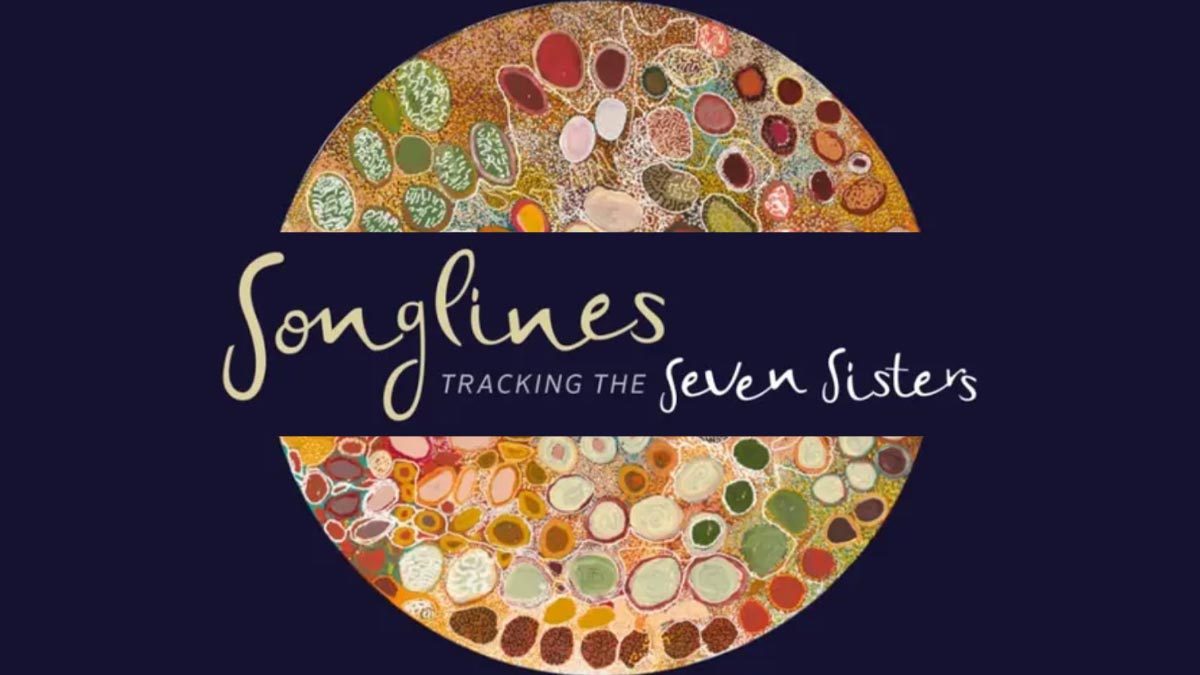
The Seven Sisters songline, an epic tale of flight, pursuit, and the shaped geography of ancestral paths, is one of Australia’s best-known creation stories. This is set to unfold in Delhi with the arrival of the internationally acclaimed exhibition, “Songlines: Tracking the Seven Sisters.” Hosted at the majestic Humayun’s Tomb World Heritage Site Museum. This showcase is crucial as it demarcates a significant moment in Indo-Australian cultural exchange and dialogue. This large-scale exhibition, running from November 22 to March 1, 2026, will feature Aboriginal-led projects that combine paintings, sculpture, music, dance, photography, and immersive multimedia to guide visitors along the ancestral path of the sisters.
Map of Flight and Resilience
The exhibition is developed by the National Museum of Australia (NMA) in partnership with the Kiran Nadar Museum of Art (KNMA) and will occupy the serene spaces of the sunken museum beneath the tomb complex. In Australian Aboriginal Law, or Tjukurrpa, Songlines are much more than tales; they are spiritual pathways and cultural maps laid down by Ancestral Beings during the Creation period. These pathways are linked to vital knowledge, including ecology, economy, and principles. They act as living “libraries” of the land and preserve knowledge of water sources and food locations that are critical for survival in the harsh Central and Western Deserts.
The core narrative of the timeless saga is pursuit and survival. The tale unveils the story of the Seven Sisters (known as Minyipuru in Martu country and Kungkarangkalpa in the APY Lands), female Ancestral Beings associated with the Pleiades star cluster. A male shape-shifting sorcerer, typically called Yurla or Wati Nyiru, representing the Orion constellation, relentlessly pursues them across vast deserts. The seven sisters fight desperately across thousands of miles in the desert in the traditional lands of the APY (Aṉangu Pitjantjatjara Yankunytjatjara), Ngaanyatjarra, and Martu people. The male pursuer disguises himself as a snake, a tree, or tempting fruit, which is indicative of the local geography.
The exhibition will be highly experiential in nature, as it will make the visitors walk through a physical path, staging the three desert regions. The curators define it as a walk along the songliness, which brings together virtually 300 paintings and objects with film, song, and performance. It also features the world’s highest-resolution travelling DomeLab, a seven-metre domed projection of 360 degrees that teleports the viewers to the remote Cave Hill rock-art site and animates the transit of Orion and the Pleiades.
The genesis of the exhibition is not restricted to being academic. It originated from an urgent plea by Aṉangu traditional custodians in 2010 to “help put the songlines back together as they were getting all broken up” due to the threat of generational knowledge loss.”
Exhibetion Details
Aspects
Description
Cultural Significance
The Songline is a creation saga, spiritual map, and law system (Tjukurrpa), fundamental to Indigenous Australian identity and survival.
Mythological Basis
The story follows the journey of seven female Ancestral Beings (Pleiades) fleeing a shape-shifting sorcerer (Orion constellation).
Geographical Mapping
The Ancestors’ journey created the physical landscape (mountains, waterholes, rocks), which are key sites in the Songline.
Features the DomeLab, a seven-metre immersive theatre, allowing visitors to view animated rock art and the celestial chase in high resolution.
Curatorial Lead
Conceived and guided by an Indigenous Community Curatorium of Elders and knowledge holders to ensure cultural authenticity and preservation.
Key highlights
Nearly 300 paintings, objects, and multimedia components track five Western and Central Desert songlines.
The DomeLab (≈7m diameter) projects Cave Hill rock art and astronomical motifs, connecting stories of the land to the sky.
The project was developed over seven years with elders, knowledge holders, and a community curatorium to ensure cultural custodianship and accuracy.
This is the exhibition’s fifth international stop after successful runs in Europe and Australia.
The India presentation is part of KNMA’s programme of international collaborations and public engagement around Indigenous and cross-cultural narratives.
Why Does This Matter?
Songlines is an act of cultural preservation and transmission. The Seven Sisters story functions as a map, a network that names water, food, and law for generations who have navigated deserts for thousands of years. By putting those into painted panels, recorded songs, and a dome, the exhibition enacts a practice of re-stitching stories to land, elders to youth, and audiences across hemispheres to histories they rarely encounter in person.
Also, the positioning of the ancient Australian saga in the courtyards of Humayun’s tomb is a curatorial genius. It creates a stunning juxtaposition of two ancient world histories, inviting reflection on shared human heritage across continents. Indians are mostly familiar with the concept of “seven sisters” in the context of Northeast India, but this unique blend from the Australian part is about to offer a joltingly different perspective involving celestial and mythical elements.
Takeaway
This initiative bridges the Aboriginal saga to the heart of New Delhi, and is both an act of cultural diplomacy and a poetic challenge. It emphasizes the fact that world heritage is not only marble and monuments, but also the oral maps and living practices that bind people to their own land. This forges a connection between Australia’s First Peoples and the Indian subcontinent, weaving a composite tale of resilience.
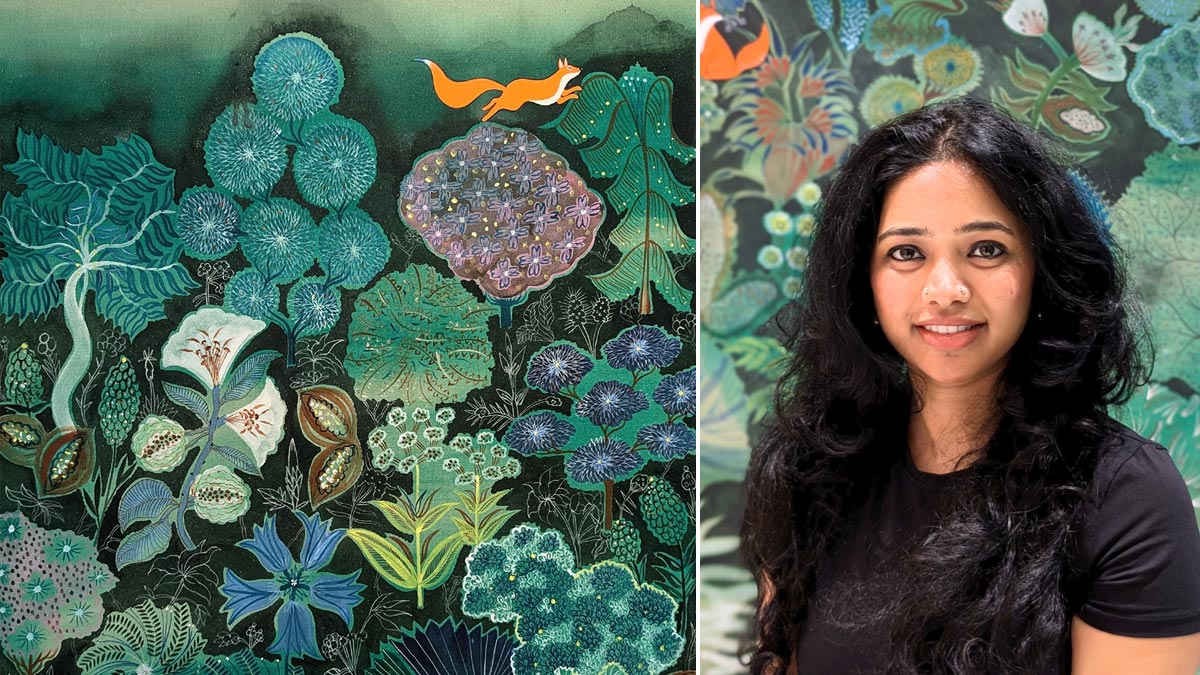
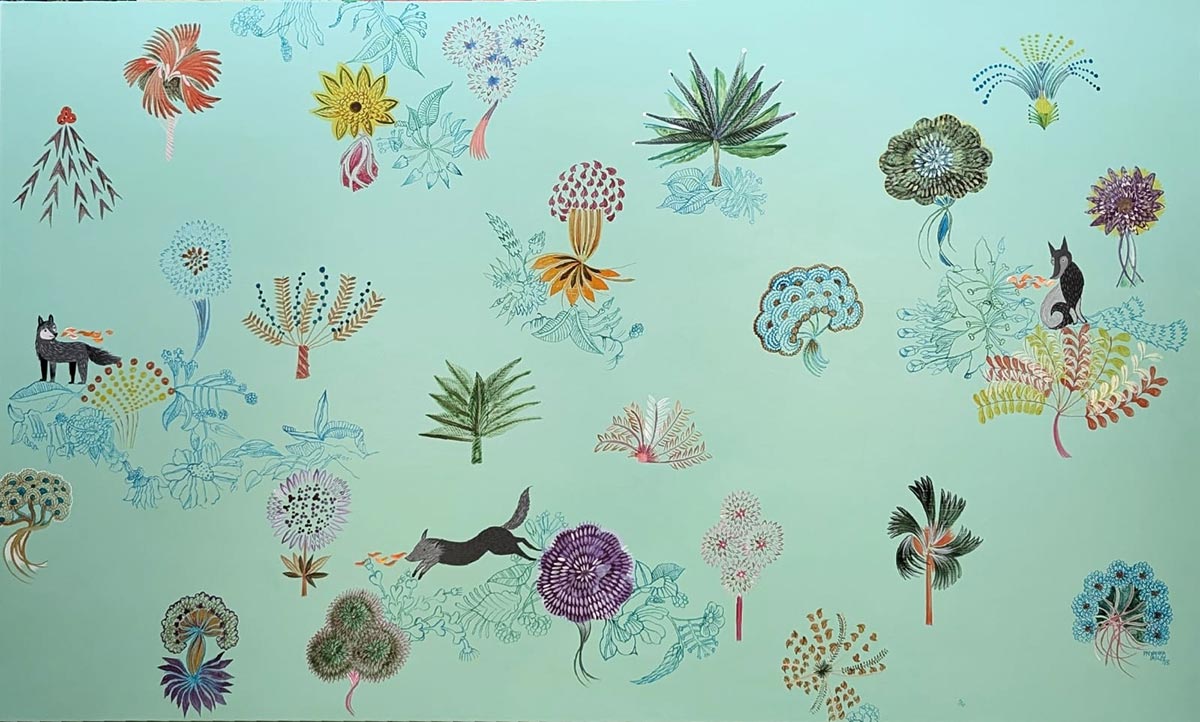
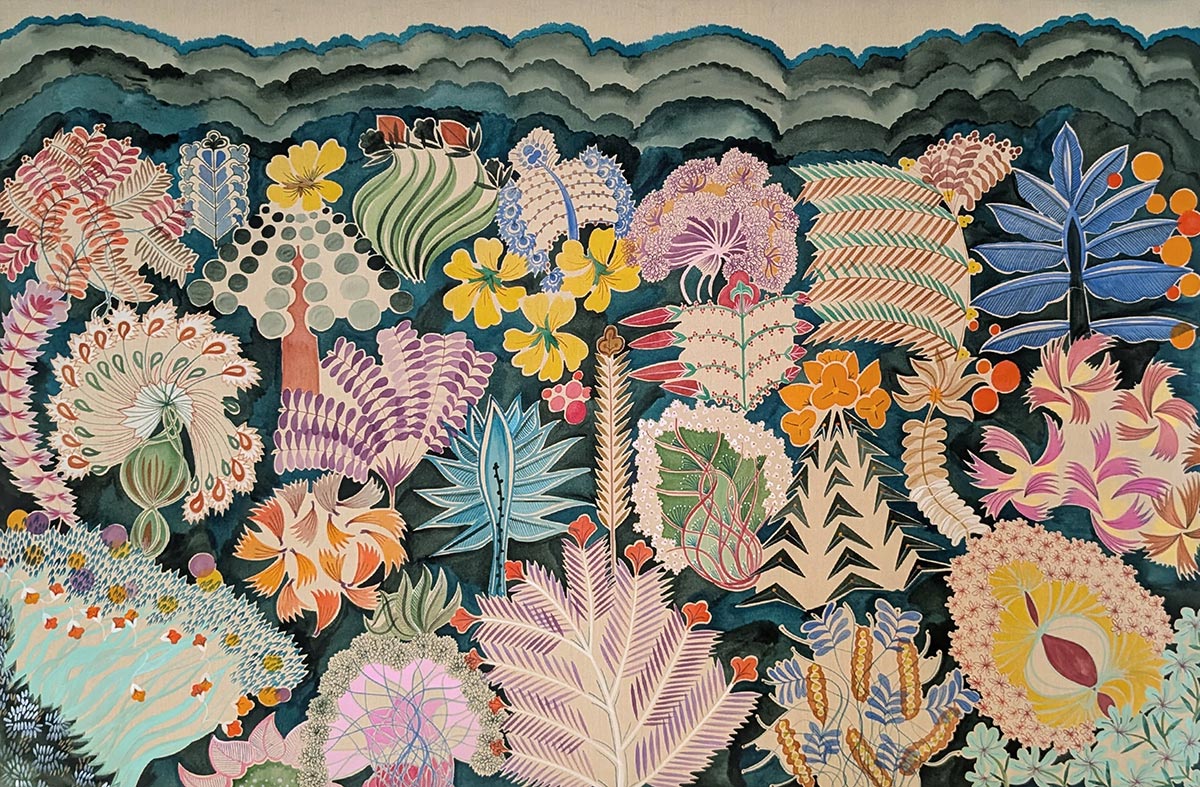
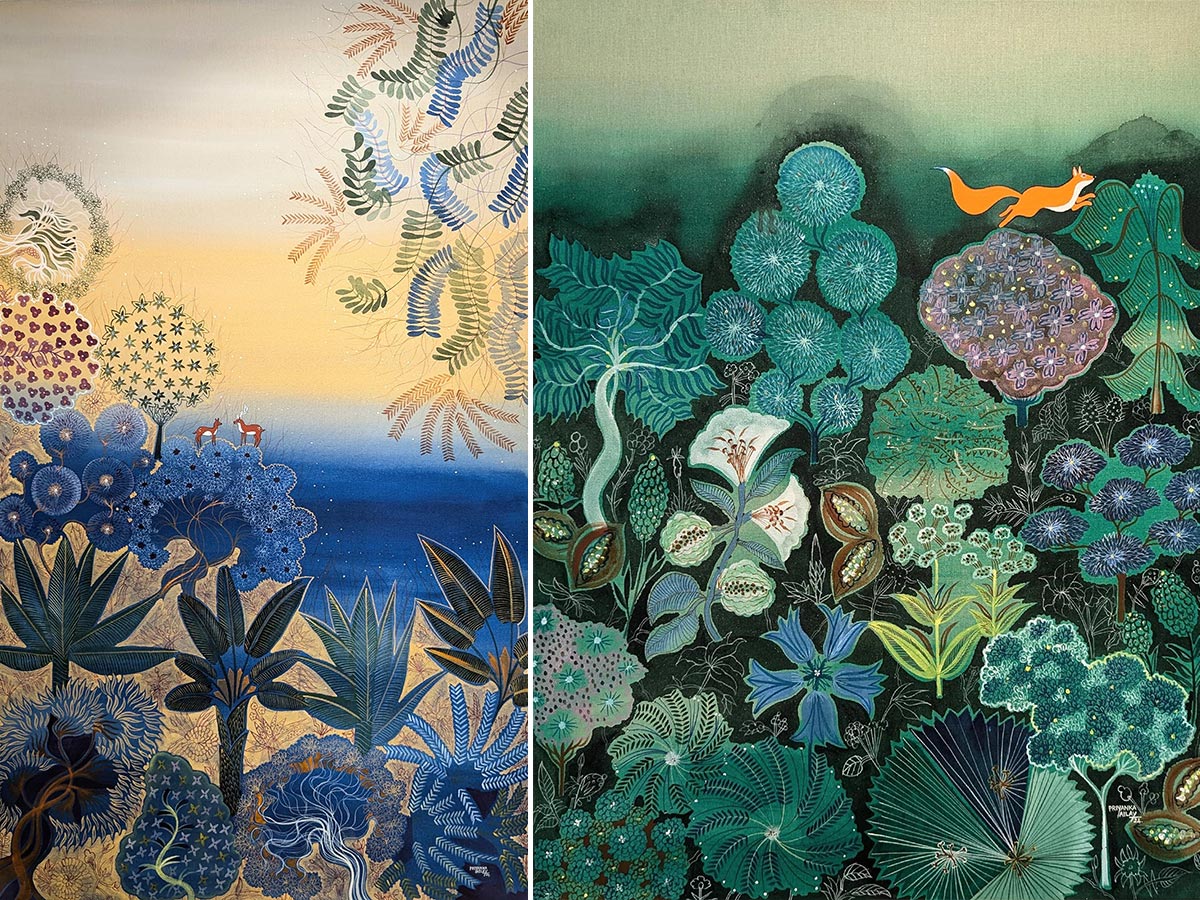
The KYNKYNY Art Gallery in Bangalore announced an incredible solo exhibition christened “Stardust, Moonshine & I” by the contemporary artist Priyanka Aelay. The exhibition will be on view from November 29 to December 26, 2025. This solo visual showcase will teleport viewers into the ultimate realm of the artist’s imaginative world, well sequenced through segments. The collection will feature the fine work of acrylic on linen canvases; the themes draw inspiration from ancient forests, the ebb and flow of folklore, the mooncycles, and also intrigue a speculative quotient that traces the border between the real and the imagined. Her work synchronizes three crucial factors encompassing intellect, storytelling, and visual transcendence.
About KYNKYNY Art Gallery
The gallery was founded in 2004 by Namu Kini and Vivek Radhakrishnan. The KYNKYNY Art Gallery has been instrumental in making contemporary Indian art accessible to diverse audiences. Over two decades, the gallery has showcased more than 300 artists and shipped artworks across the globe, maintaining a strong commitment to authenticity and artistic excellence.
Forests as Living Metaphors
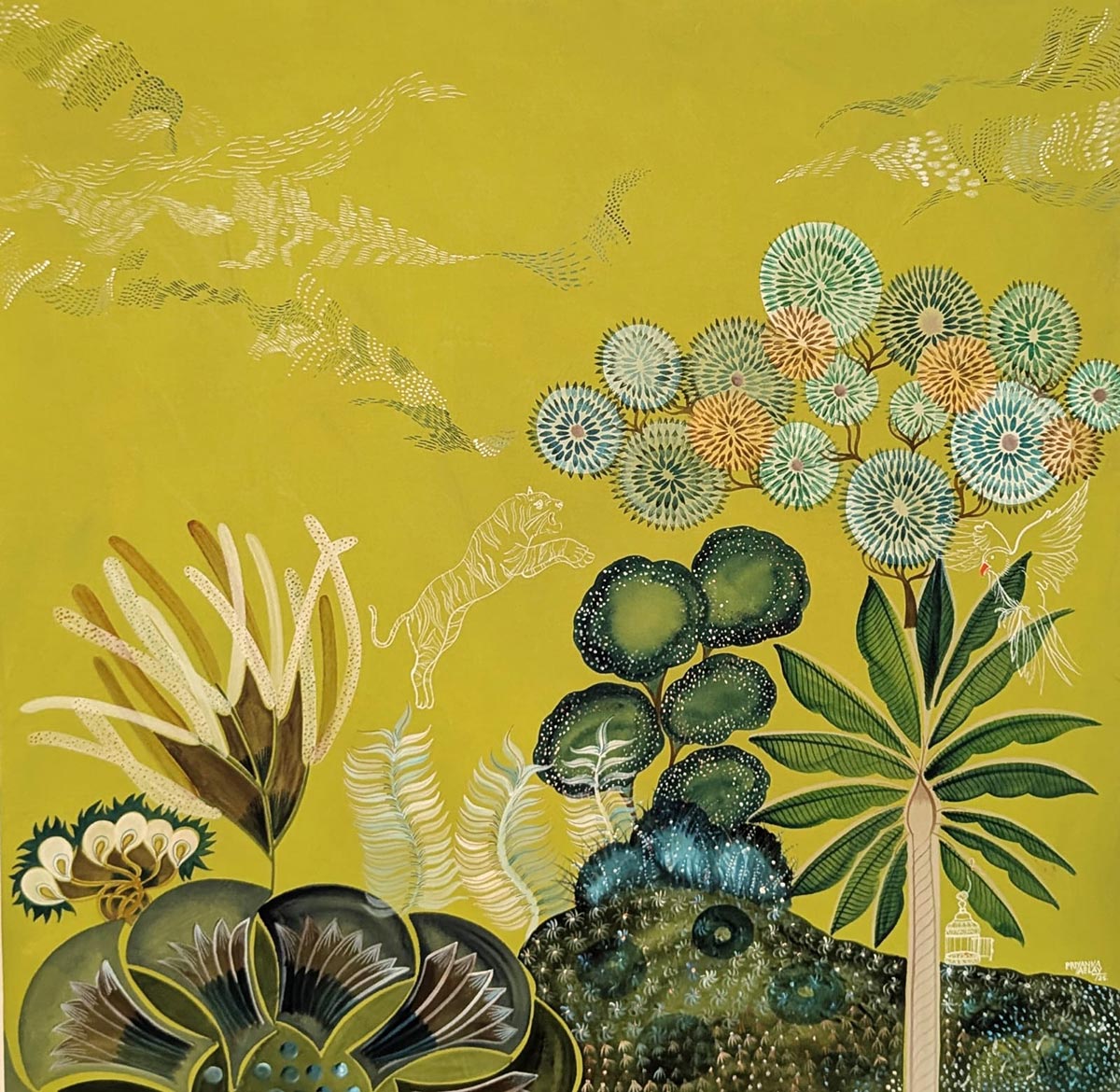
The forest in Priyanka’s paintings represents the subject and stands as a metaphor as well. The forest, as a physical entity, is way more than an abundant breathing ecosystem; the entity holds spirits, secrets, stories, and symbols that connect us to nature. Priyanka’s forest landscapes are her signature. She paints the landscape as a lively arena comprising enticing terrains that are populated by foxes, tigers, birds, and other botanical beings. By deploying a fine layer of acrylic on linen, she successfully highlights the material representation of the imagined spaces. This is the reflection of a co-living in harmony with no frictions involved.
Folklore, Myth, and Artist’s Perception
Her artistic practice basically stems from her academic research in film studies and visual culture. This intellectual exploration has induced a high sense of fascination in her concerning popular folklore and myth, and ultimately drove her into the jungle’s mysterious domain where the folklore and the myth confide. She engages with popular South Indian folklore, such as the widely dramatized “Baalanagamma,” in which the protagonists traverse wild forests guided by nature’s spirit. The fluidity of nature in her paintings is featured by reflecting skies, underwater flora (imitating the terrestrial forest in aquatic media), etc., which hints at the interdependence of lives, offering a transient retreat to the human eye.
Techniques Rooted in Indian Miniature Tradition
Rooted in the techniques of Indian miniature, Priyanka’s paintings often exhibit a manipulation of transparency and opacity that signifies a ‘transitional’ state. This is skillfully depicted through scenes of dawn and dusk, wakefulness and sleep, and the shadow and illumination. It results in a painting that makes the viewer experience movement and stillness at a time. Hitherto, her work mostly involved social themes; however, her current focus seems to have shifted to a deeper inward sentiment, towards nature, mythology, and memory. Each painting ought to leave an imprint on the hearts of the spectators.
Incorporation of lunar symbolism to frame storytelling in cyclical, feminine forms.
Influenced by her academic study of visual culture and South Indian folk narratives.
Harmonious merging of multiple ecosystems to represent the unity of life.
Symbolic fauna serve as metaphors for human emotions and presence.
Echoes of Indian miniature painting through refined colour systems and botanical precision.
Works that invite viewers to interpret, wander, and reflect through detail-rich compositions.
Takeaway
It is truly worth noting that Priyanka’s ability to weave scholarship, memory, and imagination into her canvases is fundamental to her existence as an artist. This connection builds an intimate nexus with the spectators, the moment their eyes fall upon the canvas. Also, with the pleasing depiction of natural elements through a fresh lens, her canvases exhibit a cohesive force that will make people remain glued to them. Her work is refreshing, and the elements forming the core theme are consciously chosen and intricately executed. Her paintings function as a medium that resurrects the human bond with nature and dissipates the message of peaceful coexistence. This is a must-see exhibition, a moment of visual retreat that cements KYNKYNY Art Gallery’s commitment to presenting contemporary Indian art.
AstaGuru, India’s premium auction house is set to hold the ‘Iconic Masters’ auction on November 23-24, 2025, celebrating the pioneers who shaped India’s modern artistic identity. The collection features works of ten visionaries: Raja Ravi Varma, Amrita Sher-Gil, Jamini Roy, K G Subramanyan, F N Souza, K H Ara, M F Husain, Satish Gujral, Krishen Khanna, and Thota Vaikuntam, Each artwork is a representation of India’s artistic evolution, offering collectors an unparalleled opportunity to acquire rare and historically significant pieces.
Sharing his enthusiasm about the event, Mr. Manoj Mansukhani, Director, Marketing – AstaGuru Auction House states,” This auction charts a powerful arc of India’s modern art movement. Bringing together seminal works by the country’s most celebrated masters, the catalogue not only reflects the richness and diversity of their creative vocabularies but also highlights their pivotal role in shaping the trajectory of Indian art. Their presence in this edition lends the auction both historic depth and cultural gravitas,” he said. He further added, “The auction reaffirms AstaGuru’s commitment to preserving and amplifying India’s artistic heritage, while offering a global stage for seasoned collectors and new patrons alike to engage with the country’s enduring modern art legacy.“
Raja Ravi Varma’s Master Collection
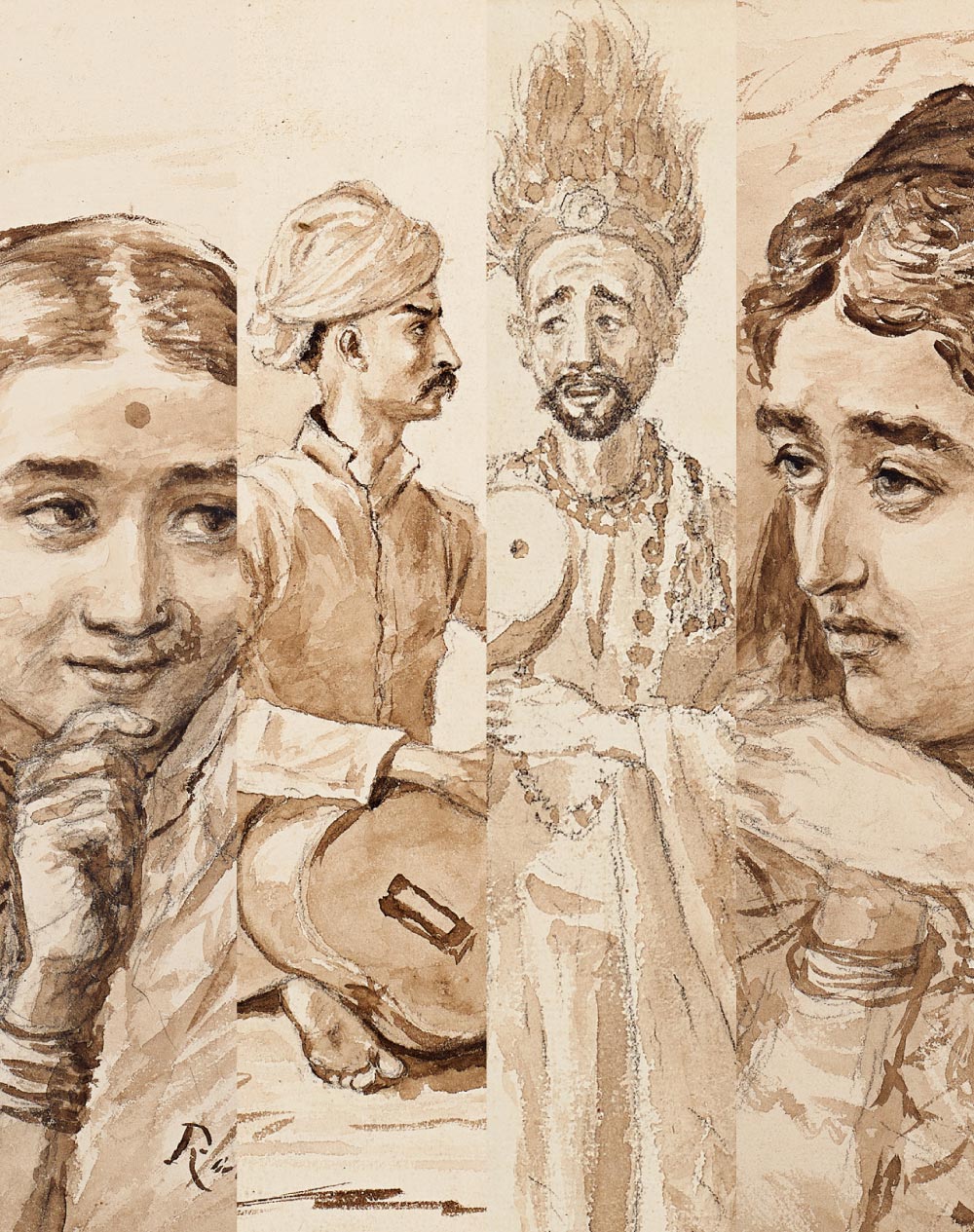
Leading the auction is lot no. 52, estimated to be acquired at INR 15,00,00,000 – 20,00,00,000. An exceptional collection of 45 paper works on 36 sheets by Raja Ravi Varma, each showcasing the artist’s mastery of form, detail, and emotion. Every piece stands out as a unique creation, reflecting his deep understanding of human expression and storytelling. The collection spans a wide range of subjects: from intimate portraits and scenes of everyday village life to still life’s, mythological depictions, and serene representations of nature. Together, these works offer a rare glimpse into Varma’s artistic versatility and his ability to bridge tradition with modern sensibilities. This ensemble not only celebrates his enduring legacy but also highlights the timeless beauty of his vision.
Amrita Sher-Gil’s Tender Portrait of Her Mother
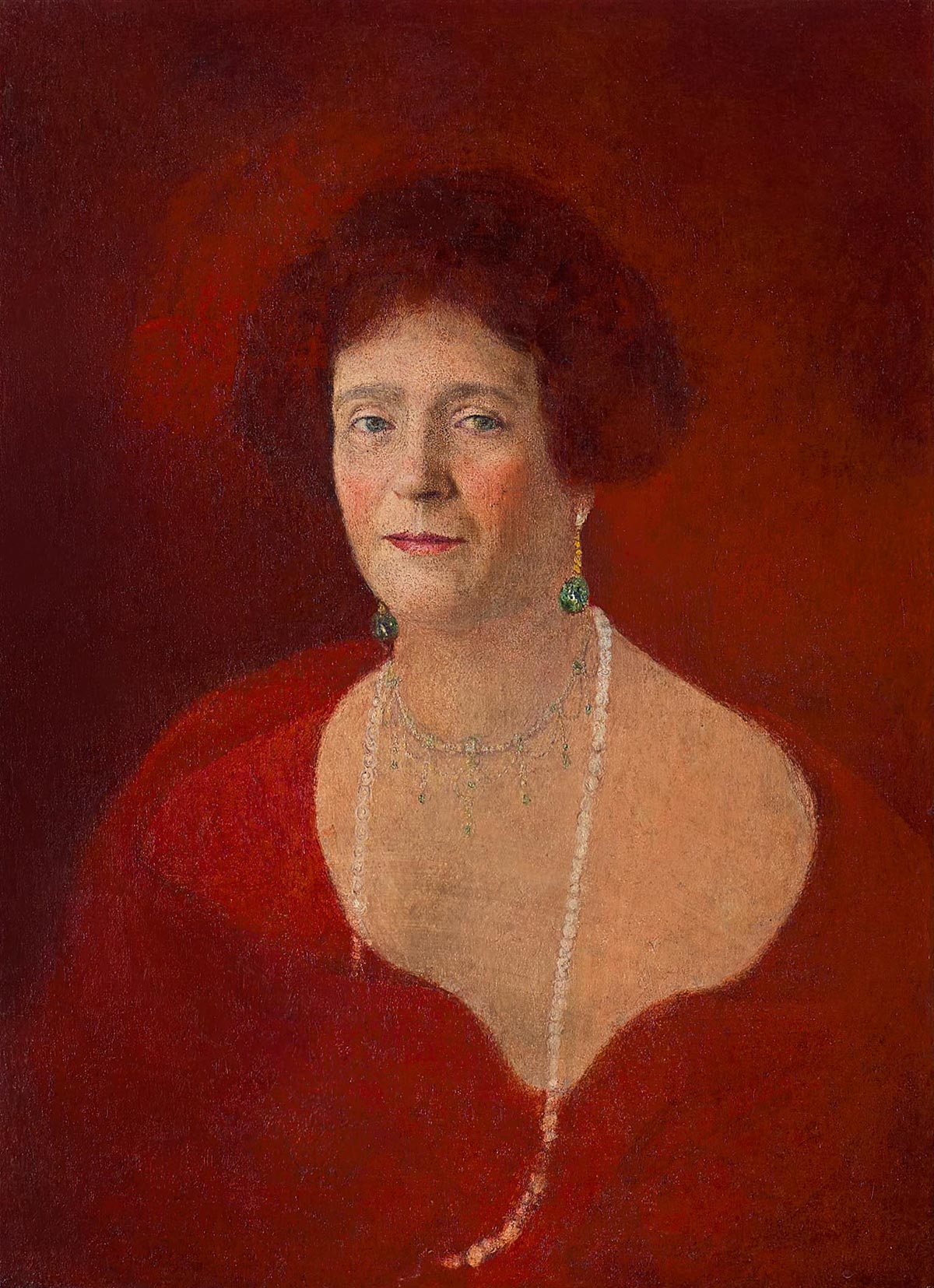
Lot no. 38 titled ‘Portrait of Mother’ by Amrita Sher-Gil is an oil on canvas work, executed in circa 1930. The painting depicts a poised woman figure, her mother, in a deep red dress with a calm expression and complemented by elegant jewellery. Sher-Gil’s use of soft tones and subtle brushwork highlights both intimacy and emotional depth. Amrita was a foundational figure for women artists in the post-independence era. Known for her strong, opinionated, and independent spirit, she inspired many to explore their heritage and identity. This work is estimated to be acquired at INR 10,00,00,000 – 15,00,00,000.
F N Souza’s Confident Muse Inspired by Matisse
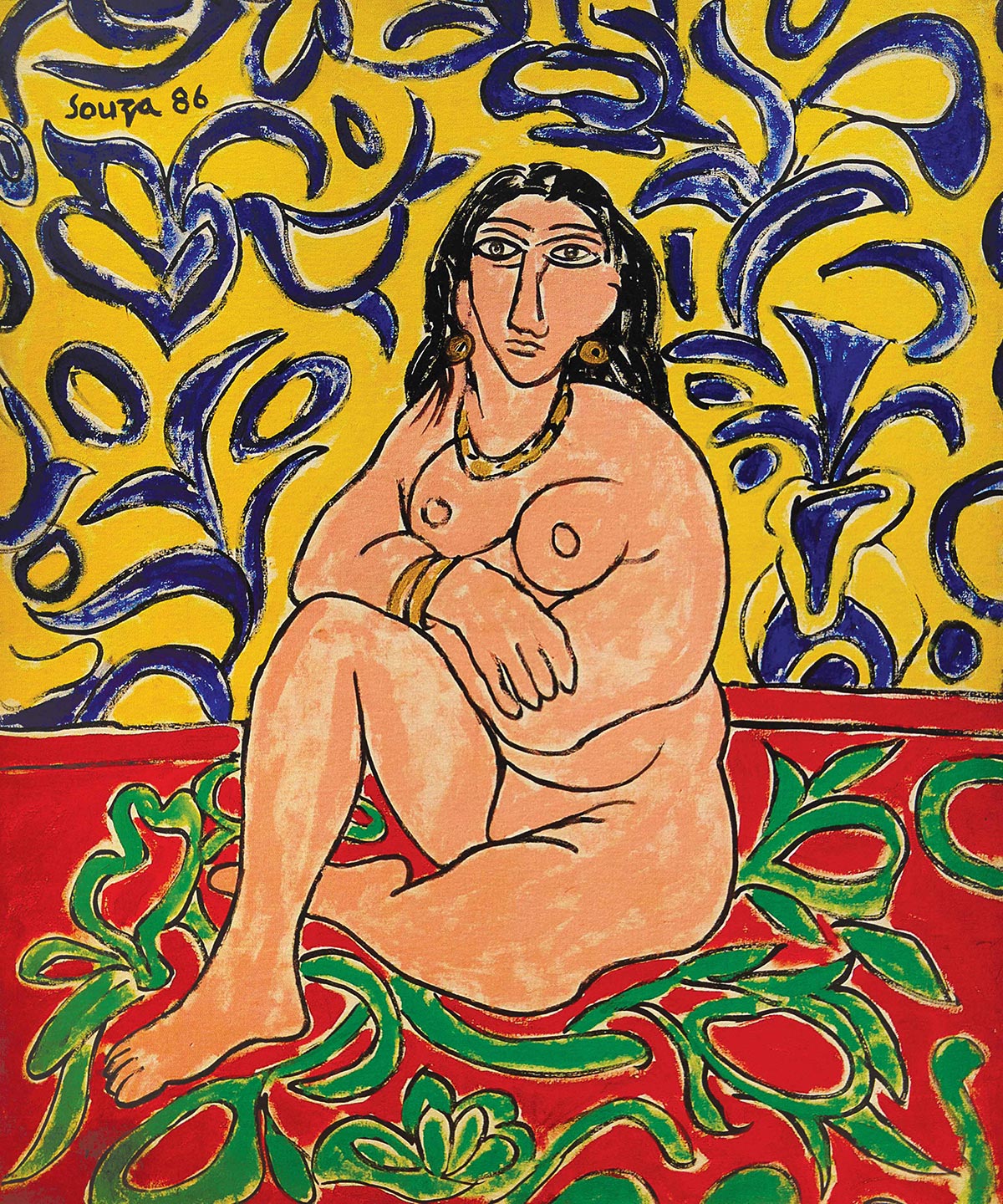
Lot no. 65 by F N Souza, titled ‘Untitled (Nude After Henri Matisse)’, is an oil on canvas work executed in 1986. The work depicts a female figure sitting with quiet confidence against a vibrant, decorative backdrop, her gaze steady and self-possessed. The nude is no longer the tormented or transgressive body of Souza’s earlier expressionism; instead, she exudes a poised sensuality and self-awareness, framed by a space that celebrates colour, pattern, and form. This lot is estimated to be acquired at INR 2,50,00,000 – 3,50,00,000.
M F Husain’s Early ‘Warrior’ and His Evolving Vocabulary
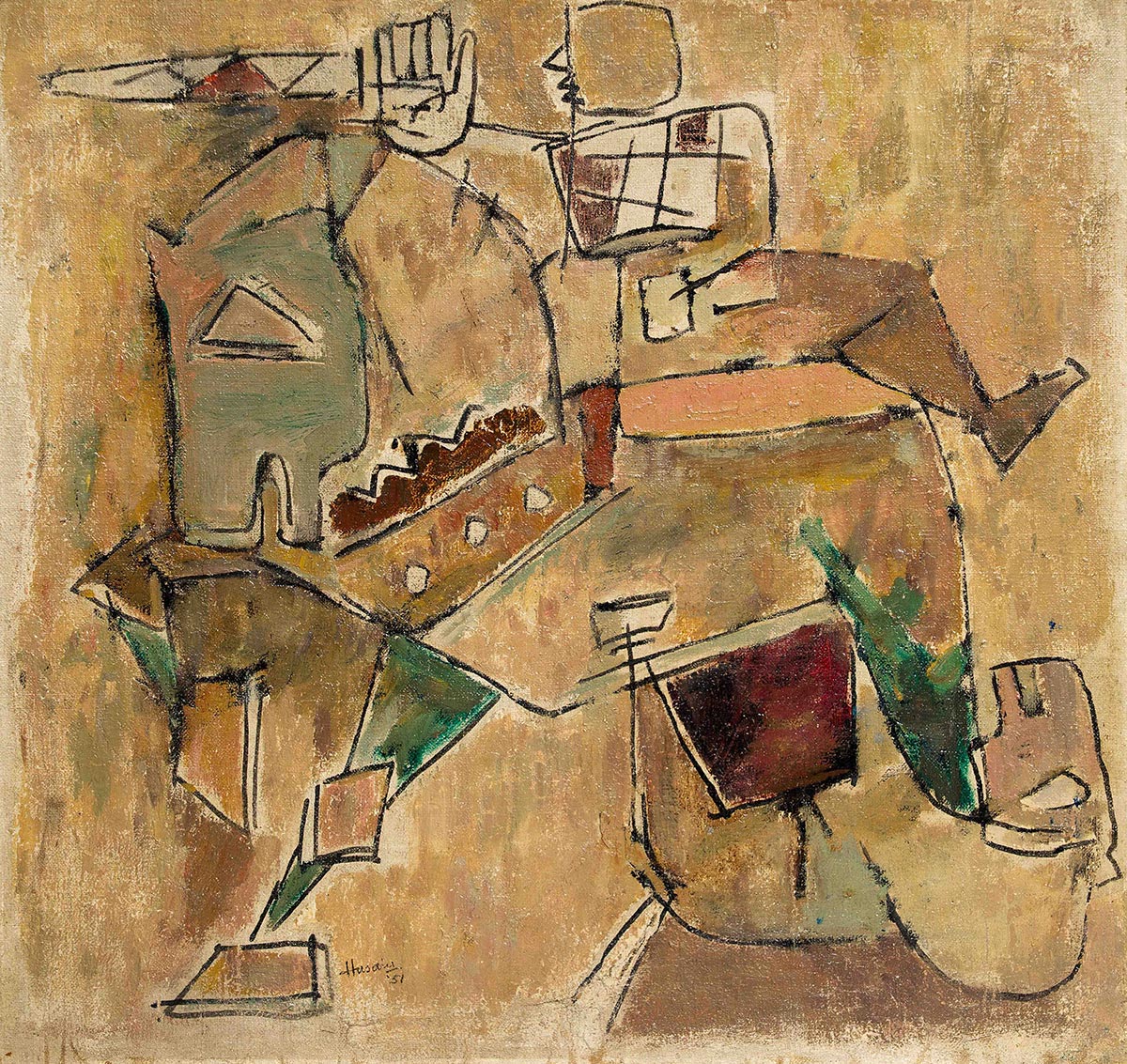
Lot no. 5 titled ‘Warrior’ by M F Husain is an oil on canvas work executed in 1951. It is an outstanding work from Husain’s early exploration of form and symbolism, and it informs us about a pivotal stage in his development as a modernist. With a restrained palette of earthy ochres and muted greens featuring his signature horse motif, the composition is rendered in his signature Cubist-inspired style. This lot is estimated to be sold at INR 1,50,00,000 – 2,50,00,000.
Husain’s Dynamic ‘Untitled Horse’ in Acrylic on Fabric
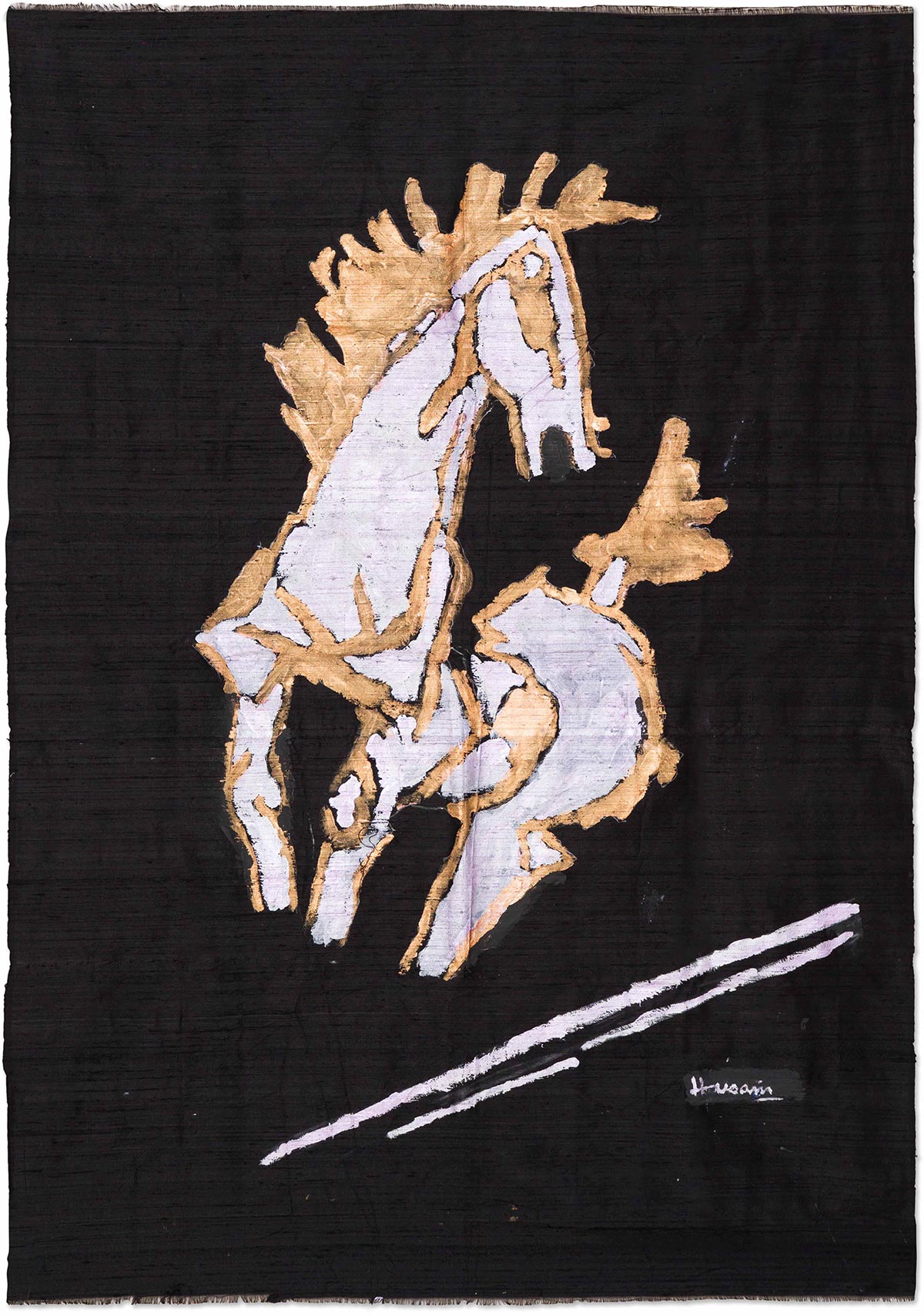
Over the course of his prolific career, M F Husain expanded his creative vocabulary far beyond traditional mediums. It resulted in an oeuvre made of a myriad of materials, including wood, metal, glass, and fabrics. Lot no. 13, ‘Untitled Horse’ is an acrylic on fabric work, set against a deep black background. The composition distils movement into an almost calligraphic gesture with Husain’s trademark bold brushwork. It is estimated to be sold at INR 1,50,00,000 – 2,50,00,000.
Krishen Khanna’s Vibrant ‘Bandwallas (Diptych)’
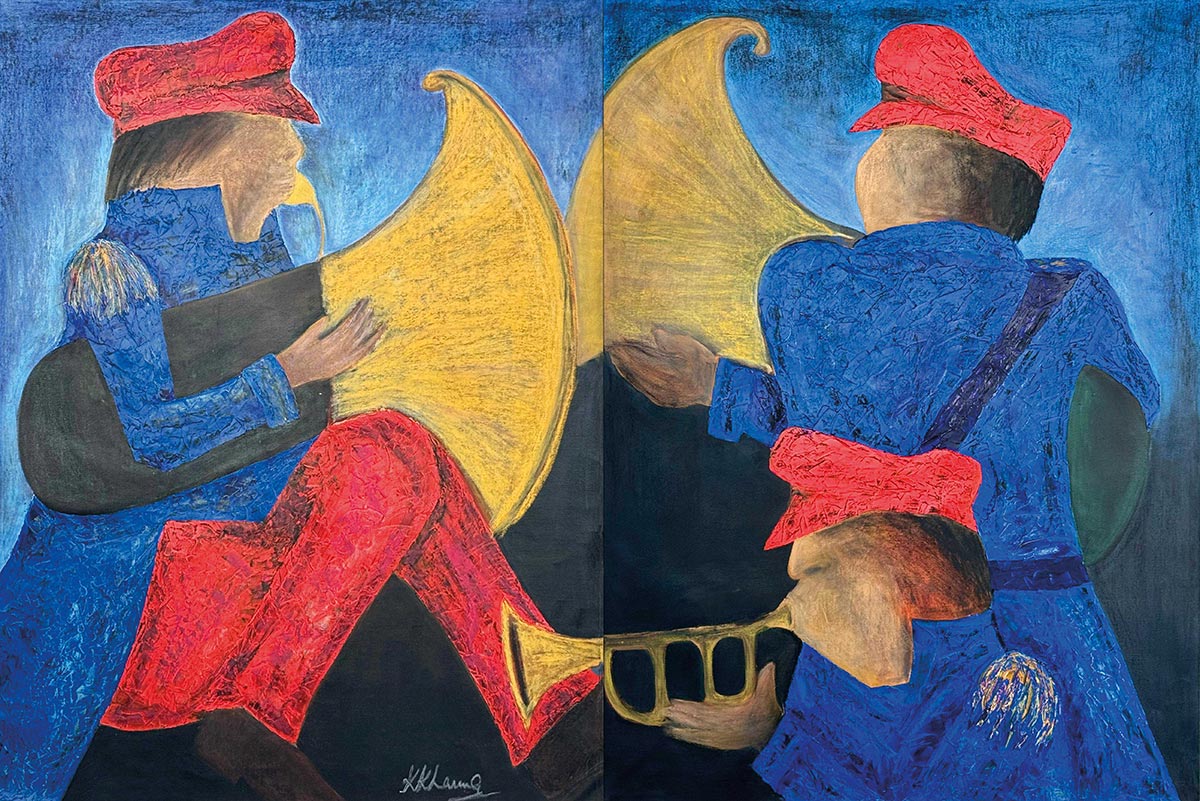
Estimated to be acquired at INR 2,00,00,000 – 3,00,00,000, lot no. 27 titled ‘Bandwallas (Diptych)’ by Krishen Khanna is an oil on canvas work. This composition showcases the energy of a band in motion. The overlapping forms and mirrored figures suggest movement and harmony, reflecting the collective performance of the band itself. Through these vivid figures, Khanna transforms a fleeting street spectacle into a lasting ode to the music and humanity in India’s everyday life.
F N Souza’s Iconic ‘Head’ Series
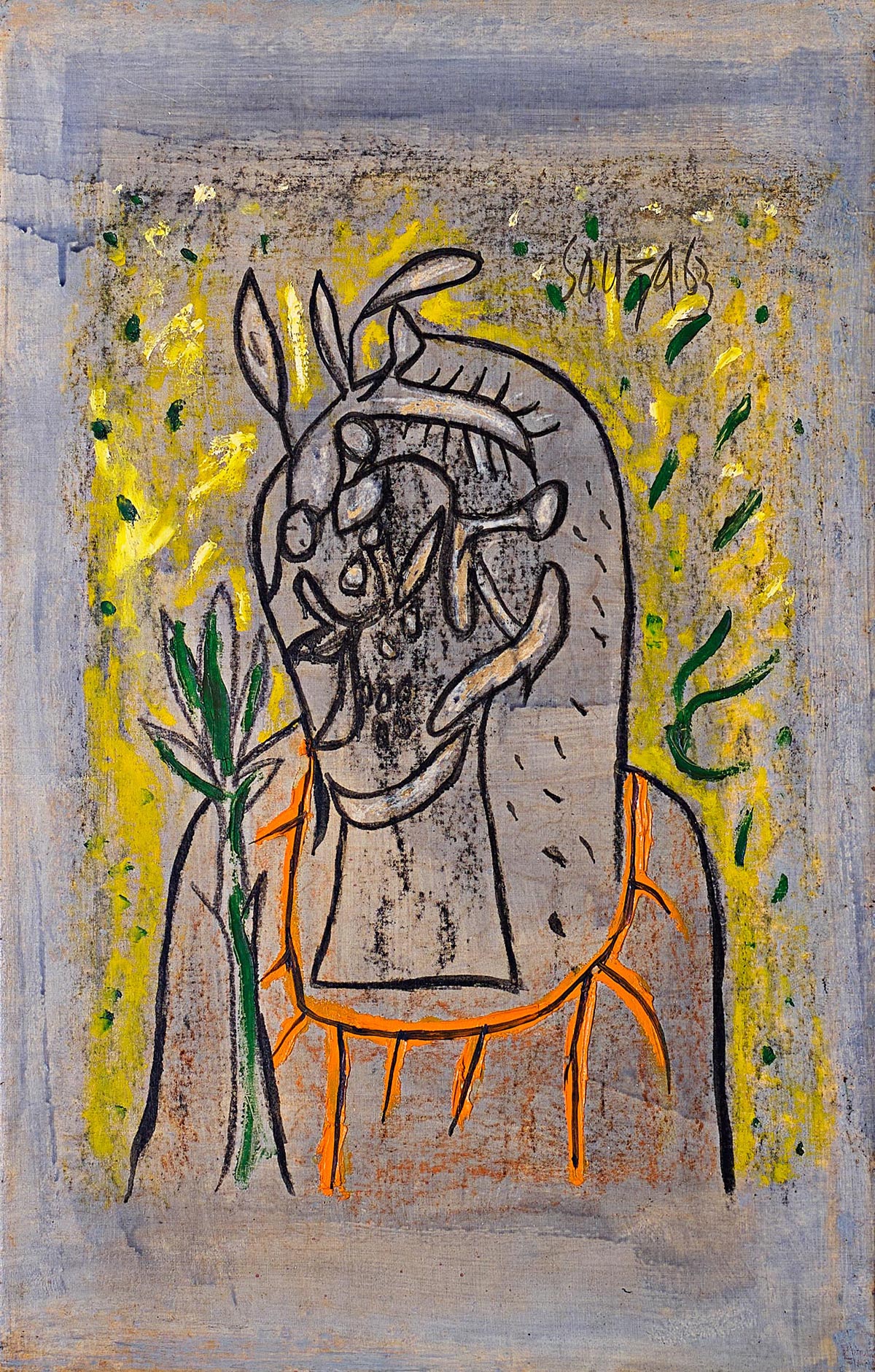
Francis Newton Souza’s Head seriesstands among his most iconic explorations of the human condition. Lot no. 48 titled ‘Head’ is an oil on linen work executed in 1963. The painting is rendered with a profusion of facial features, numerous eye-like apertures, and trunk-like noses scattered across the visage, giving the figure an appearance more extraterrestrial than human. This work is estimated to be acquired at INR 80,00,000 – 1,20,00,000.
Conclusion
The ‘Iconic Masters’ auction by AstaGuru stands as a powerful tribute to the artists who shaped India’s modern art movement. Bringing together rare works by pioneering visionaries, the event offers collectors and admirers a unique chance to engage with the depth, diversity, and legacy of Indian modernism. With masterpieces spanning intimate portraits, bold expressions, and culturally defining narratives, the auction not only celebrates artistic excellence but also reaffirms AstaGuru’s commitment to preserving India’s creative heritage for generations to come.
Ahmedabad, the Manchester of India, is transforming its artistic facade by celebrating Abhivyakti – The City Arts Project for its 7th edition in 2025. This is a city-wide festival that includes theatre, music, dance, and visual art, which transforms campus lawns, auditoria, and gallery spaces into stages for conversation and experimentation. Running from 14-30 November 2025, across multiple venues, including the Gujarat University, ATIRA, and the Shreyas Foundation, it presents an immersive two-week programme that elevates the festive mood of the whole city. This cultural extravaganza is dedicated to making art accessible to anyone and everyone, shining a spotlight on established as well as emerging artists. During this time, the city’s artistic fervour definitely gets an adrenaline rush.
The core mission behind the functioning of this festival is to mitigate the gap between artists and audience by offering a safe space for expression and evolution, that too free of cost. This incredible project is spearheaded by the UNM Foundation, which is also a committed player in the field of healthcare and education. Since its inception in 2018, the Abhivyakti has developed into an event of national appeal. It has supported hundreds of artists and premiered over 400 original productions.
The most striking feature of this year’s edition is the scale of the event itself. The organizers have scheduled 140+ performances by artists hailing from 45 cities across 16 states of India, spanning theatre productions to music nights and visual-art installations. The theme selected for this year’s edition is “Stories waiting to be told,” giving primacy to contemporary artistic expression. The program is set to host over 220 shows covering multiple disciplines, ensuring an immersive experience for all attendees.
The visual-arts segment in particular requires attention, which is now featuring 62 installations. The inaugural performance, the theatrical dance-musical ‘Mumbai Star,’ directed by Nadir Khan and narrated by Rajit Kapur and Srishti Shrivastava, set a high standard for the event. Thus, the UNM Foundation has aptly situated Abhivyakti as an accessible, community-oriented project that emphasizes grassroots creativity.
The festival also incorporates initiatives aimed at inclusivity, such as arranging special visits for children from local slums and senior citizens from care homes under the UNM Foundation’s Ujaas programme, truly embodying the spirit of “Art Without Barriers.”
Gujarat University Campus, ATIRA, Shreyas Foundation Campus
Theme
“Stories waiting to be told”
Participation
Over 140 artists from 45 cities across 16 states
Entry
Free of cost (Accessible Art)
Key highlights
Opening weekend premieres and music-theatre collaborations that set a theatrical tone for the fortnight.
Large-scale, site-specific visual installations that invite walking tours across campuses.
Free or low-cost public programming intended to widen audience access beyond typical gallery-goers.
A line-up combining local Gujarati artists and national practitioners, creating cross-regional conversations.
Workshops, panels, and outreach events engaging young artists and students make the festival pedagogical and performative.
A Truly Inclusive Space
Abhivyakti can be rightly labeled as a cultural movement that is single-handedly redefining Ahmedabad’s art and cultural scene. By incorporating inclusive principles like free access to international-quality art for all social strata, this festival is actively debunking the historical association of being delighted by art trapped within the privileged quarters. The massive scale, the heterogeneity, and the multi-venue model clearly reflect the efforts put behind the grand celebration. It is not just presenting art in front of the public gaze, but also yielding a culture of appreciation and consciousness regarding the Indian craft.
Today, cultural experiences are many, but are highly monetized and subjected to commercial interests; however, Abhivyakti is a counterweight to that. It is a space where a student, a novice, and an art connoisseur can intermingle and weave a composite environment.
Well, there is one point to be noted. With such a dense multi-venue schedule, there could be a risk of high attention-tax demand from the audience, as multiple events run simultaneously. Thus, a digital or physical pocket-friendly event schedule can be given to everyone attending the festival, so that people can navigate better and can enjoy to the fullest. In a nutshell, Abhivyakti is fueling the creative engine of not only Ahmedabad but, the entire nation.