ICIA Unveils Lineages – Tsherin Sherpa’s Landmark Solo Exhibition in India

0

Kathmandu-Express

November 03, 2025, Mumbai, India: The Institute of Contemporary Indian Art (ICIA), powered by AstaGuru, is proud to present Lineages — the first ever solo exhibition in India by internationally acclaimed Tibetan contemporary artist Tsherin Sherpa. The exhibition will be on view at the ICIA Gallery, Kala Ghoda, from 6th to 14th November 2025.

About the Artist


View this post on Instagram


A post shared by Tsherin Sherpa (@tsherinsherpa)

Born in Kathmandu in 1968, Tsherin Sherpa lives and works between Nepal and California. Trained in traditional Tibetan thangka painting under the guidance of his father, Master Urgen Dorje, Sherpa went on to teach the craft in Buddhist centers before evolving a practice that bridges tradition with contemporary expression.

The Exhibition: Lineages
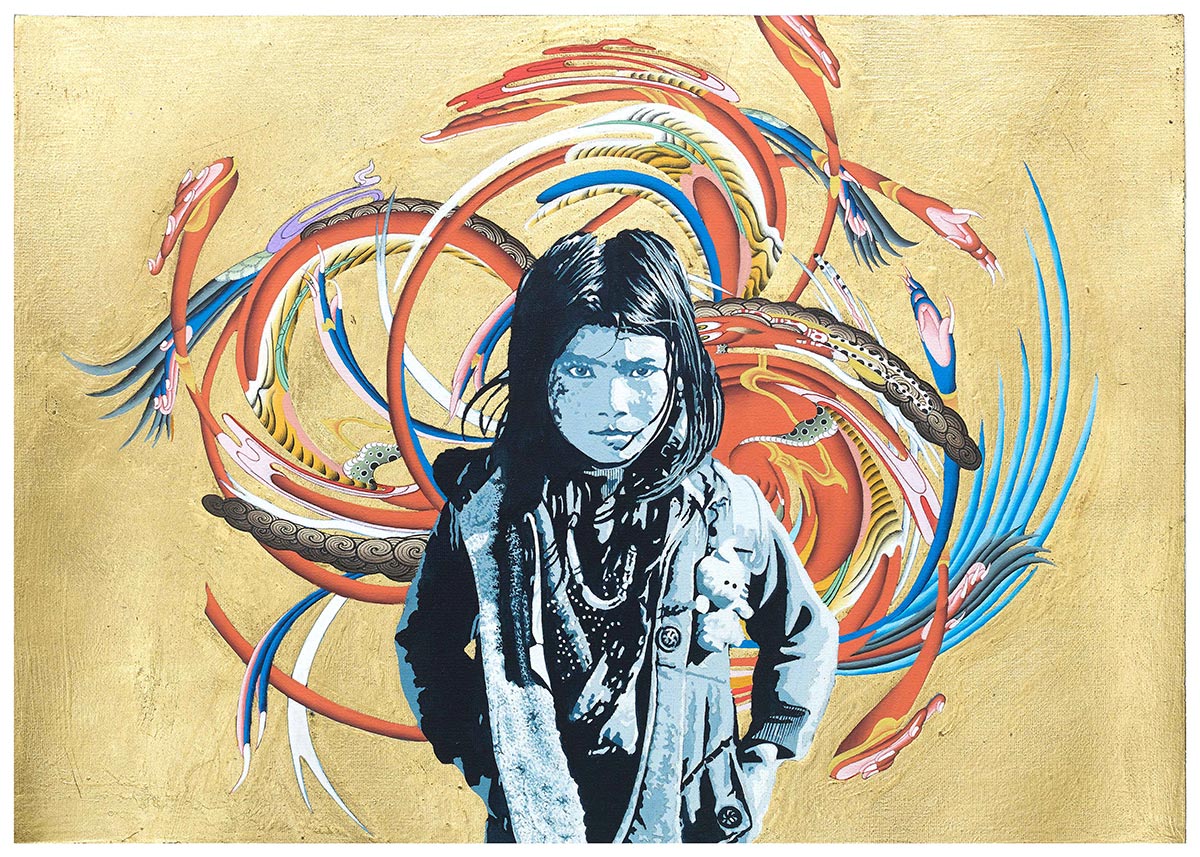
Tsherin-Sherpa-Children-of-Heaven-3

With Lineages, ICIA brings together a selection of Sherpa’s works that navigate between classical Tibetan Buddhist iconography, tantric motifs, global pop culture references, and contemporary visual languages. His art juxtaposes the sacred and the secular, exploring contrasts that question identity, spirituality, and cultural inheritance.
Through this synthesis, Sherpa reflects on themes of diasporic experience, the persistence of ritual practices, and the endurance of artisanal traditions in a modern context.

Global Recognition and Institutional Presence

Over the years, Tsherin Sherpa has earned global recognition, with his works housed in major institutions such as the Victoria & Albert Museum, London; Rubin Museum of Art, New York; Queensland Art Gallery & Gallery of Modern Art, Brisbane; Asian Art Museum, San Francisco; Virginia Museum of Fine Arts, Richmond; and the World Museum, Liverpool.

A Dialogue Between Tradition and Modernity
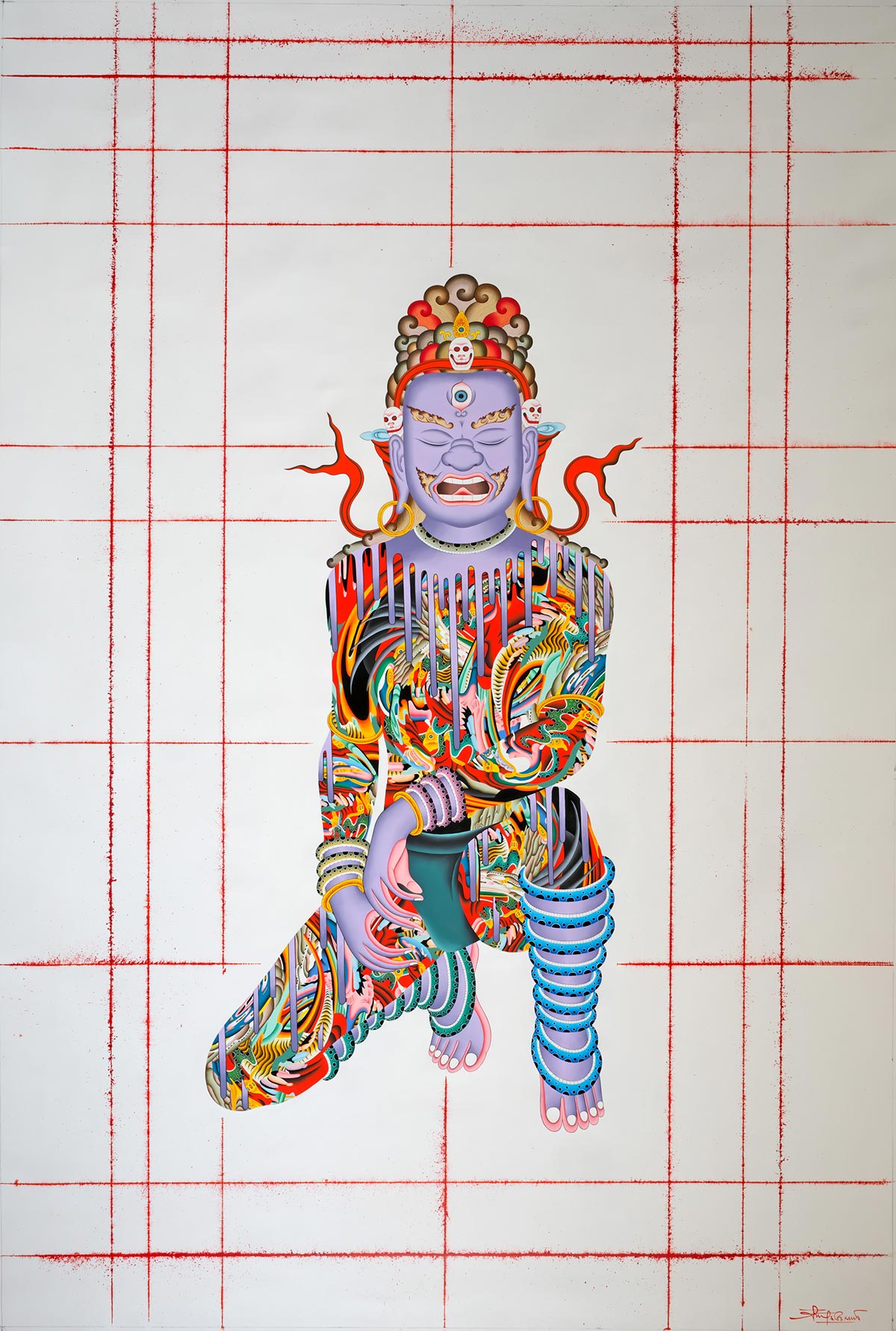
Tsherin-Sherpa-Hawk.

The exhibition aims to offer Indian audiences an opportunity to engage with Sherpa’s thought-provoking body of work, which has redefined the dialogue between tradition and modernity in contemporary art.

Artist’s Insight: Tsherin Sherpa Speaks
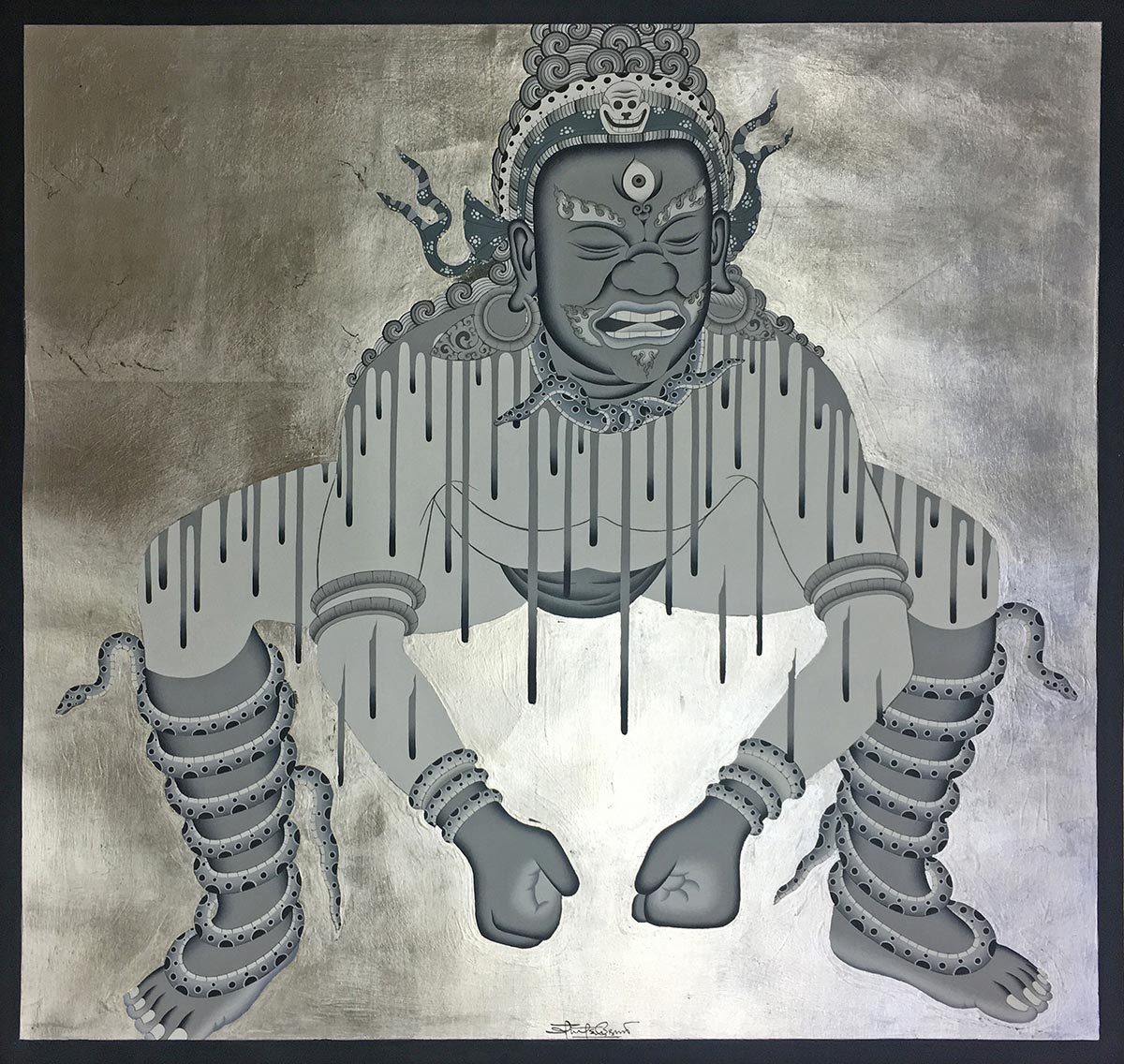
Tsherin-Sherpa-In-the-Heat-of-the-Moment-(Black-and-White)

Commenting on the exhibition, Artist Tsherin Sherpa says:
“This exhibition emerged from conversations about artistic connections across South Asia. It represents a new way of engaging with the Indian art landscape offering an overview of my practice rather than the singular works that have previously entered private collections in the country.
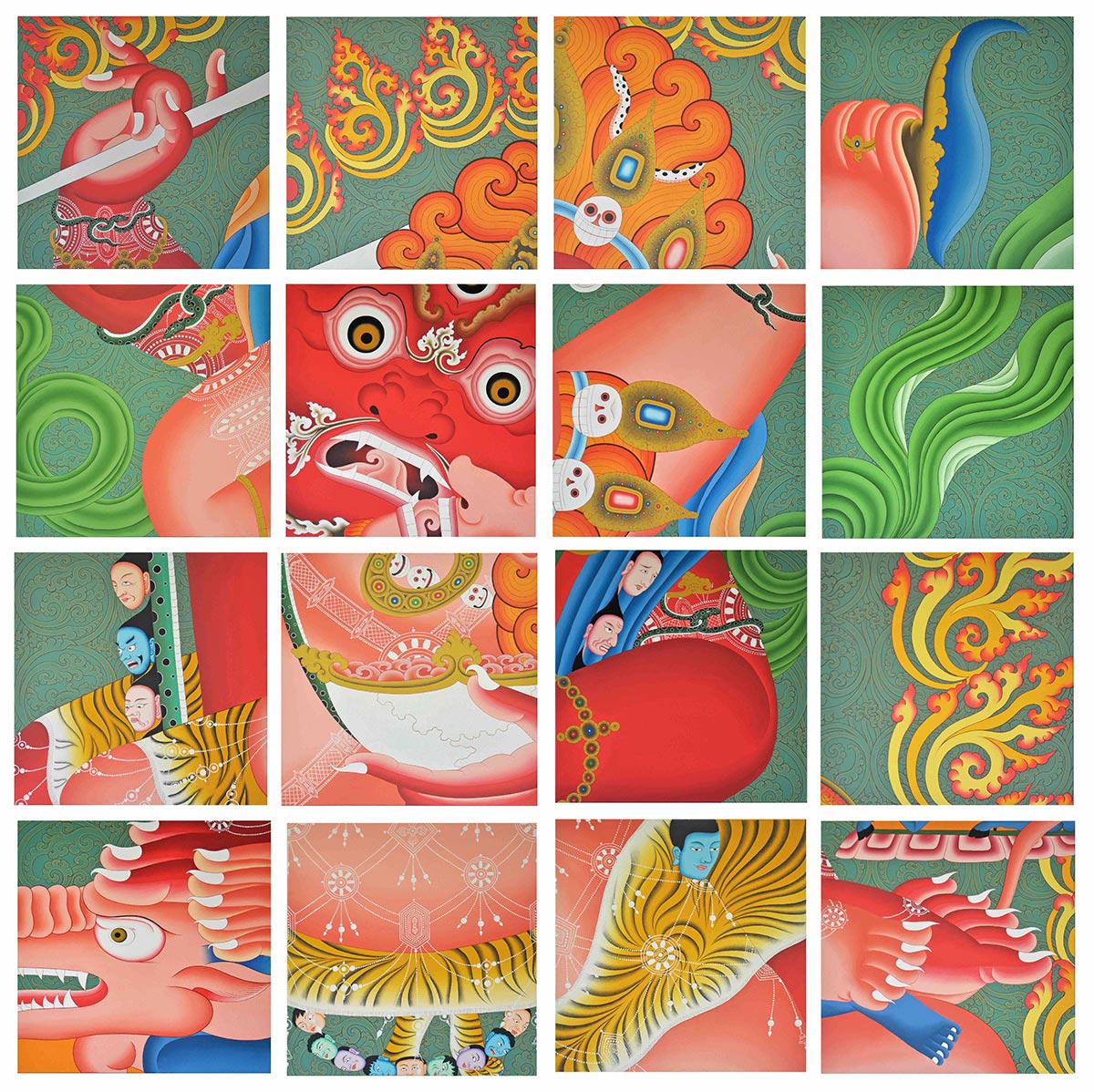
Tsherin-Sherpa-Luxation-2

The exhibition features works across a range of scales, including carpets such as This is not a Rorschach Test (2022), which has been central to my recent practice. It brings together significant lines of inquiry from the past decade, with pieces like Hawk (2019–2020), earlier exhibited in my retrospective Spirits at the Virginia Museum of Fine Arts, as well as works such as Luxation 2 (2016), part of a series first presented at the Nepal Pavilion at the Venice Biennale, and now held in major institutional collections worldwide.”

Curatorial Perspective
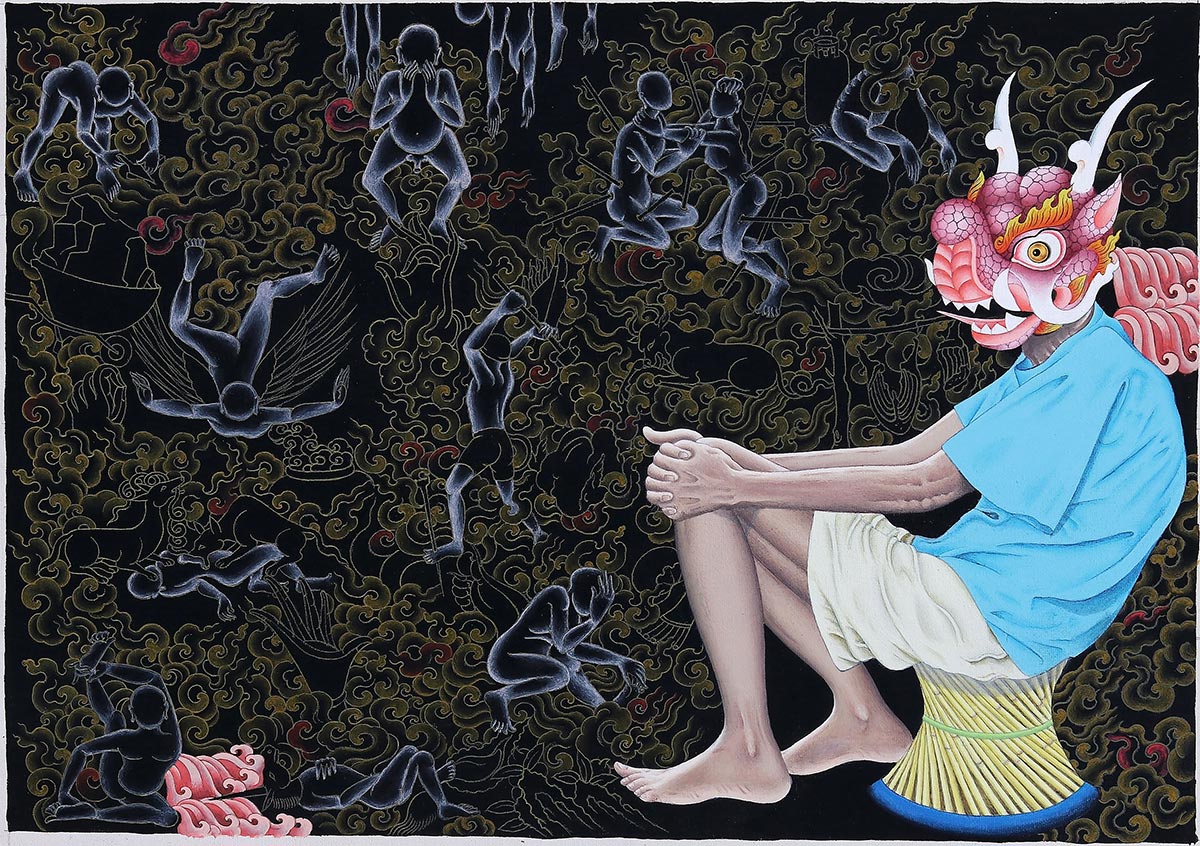
Tsherin-Sherpa-Madmandu-Blues-2

Speaking on the curation, Larissa Guimaraes, Associate Director at AstaGuru, said:
“It is an honor to present this comprehensive, though condensed, overview of the mediums, themes, and collaborations that define Tsherin Sherpa’s practice. My first encounter with his striking Himalayan-inspired works in Hong Kong, within the context of my work in AstaGuru’s International Art category, left a lasting impression.
The resonance of his aesthetics and mediums with the Indian context which shares overlapping geographies, languages, religions, and rituals with the Kathmandu Valley made a compelling case for bringing his art to the country.

Tsherin-Sherpa-Remittence-Economy

Event Details

Event Details Description
Exhibition Title Lineages — Solo Exhibition by Tsherin Sherpa
Organiser The Institute of Contemporary Indian Art (ICIA), powered by AstaGuru
Artist Tsherin Sherpa, internationally acclaimed Tibetan contemporary artist
Venue ICIA Gallery, Kala Ghoda, Mumbai
Dates November 6 – 14, 2025
Official Link https://icia.in/lineages/

This exhibition also reflects an experimental model of collaboration with artists and galleries, one that feels especially relevant in a moment of global shifts within the art market. Audiences can expect an exhibition that speaks to both new and seasoned collectors, bridging ancient techniques and themes with ultra-contemporary visual languages.”

An Invitation to Reflect and Engage
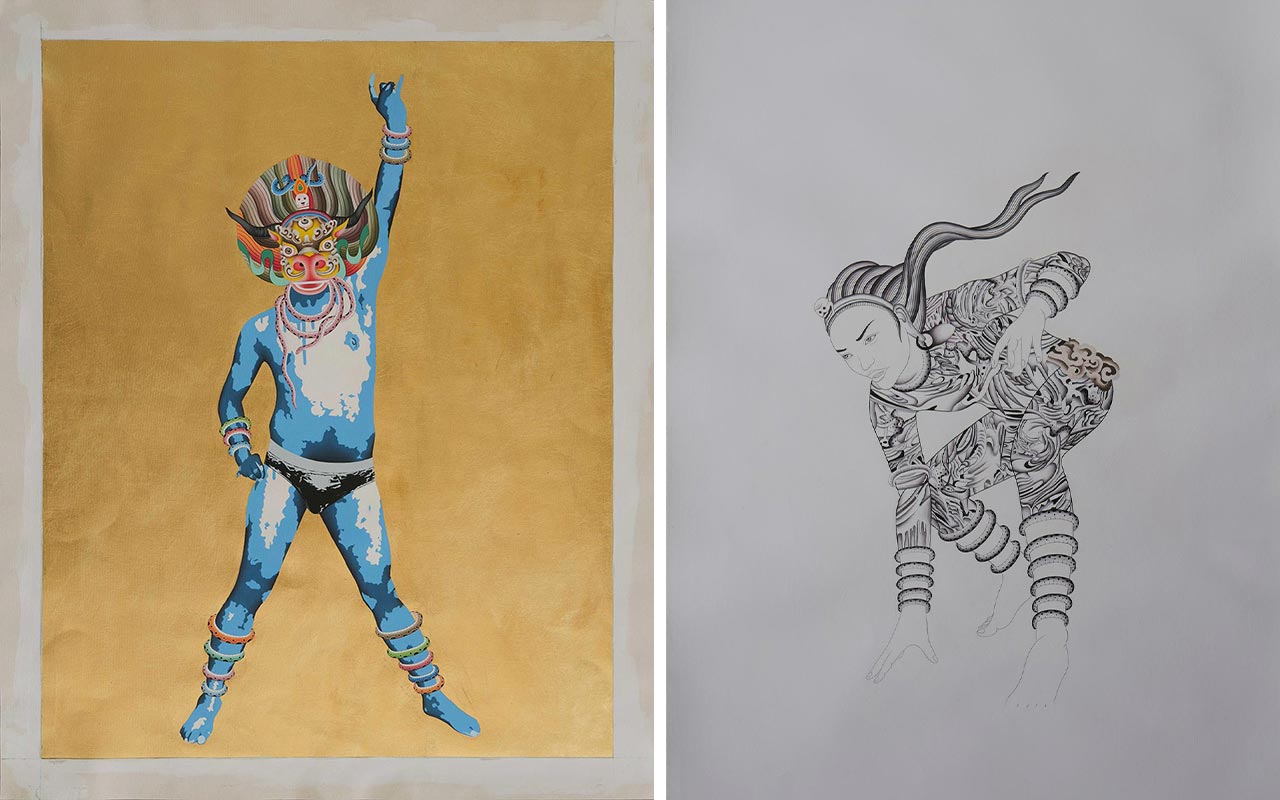
Tsherin-Sherpa-Artworks

The exhibition promises to captivate both seasoned collectors and new audiences, bridging classical techniques with contemporary visual language, and opening a dialogue on cultural continuity, innovation, and the enduring power of art.

For more information, log on to icia.in
Shibu Natesan’s Mirror Man, Mirror Me: A Dialogue Between Self and Space

0

Shibu-Natesan’s-Mirror-Man,-Mirror-Me-01

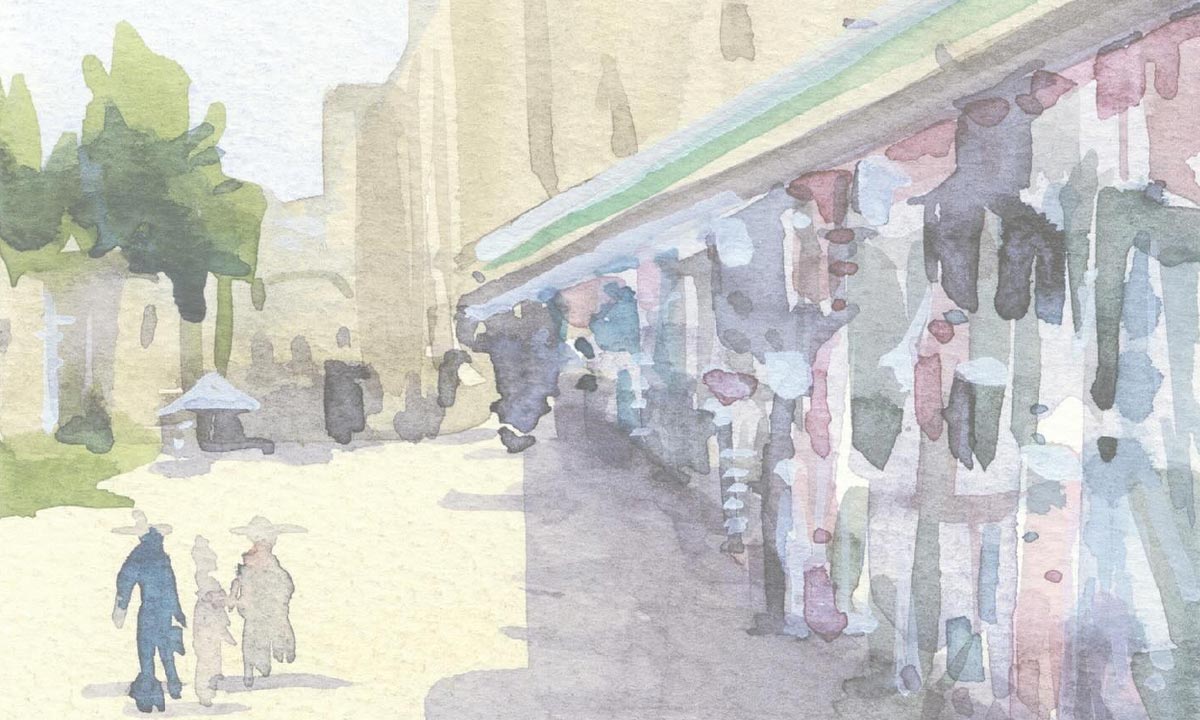
New Delhi is hosting a heart-warming solo exhibition, which is illuminated by a profound and subtle examination of perception. These days, where exhibitions seek more spectacle, Shibu Natesan’s Mirror Man, Mirror Me acts quite the opposite by nudging towards a contemplative retreat while analyzing his work. Presented by Art Alive Gallery and on view until 20 November 2025, the solo show brings together a decade of the artist’s watercolour practice, ranging across landscapes, still lifes, and portraits. All these artworks are carefully displayed in a soft-focus and sensitive environment, making it more appealing to the eyes. 

The Theme

The thematic core of the exhibition is the symbiotic relationship between the observer and the observed through a dynamic interplay between what’s intrinsic to the internal world and the external reality. This combination is best encapsulated through the well-curated sequential display of artworks, which not only engages the viewers but also actively interacts with them. Natesan does not just etch what he perceives on the outside; he paints how the very act of perception affects the consciousness of people. These images might appear stationary, but are more like a space where the viewers subtly confront their own presence. The exhibition commenced with a dialogue between Natesan and art historian Parul Dave Mukherji on October 8, 2025. This stands as a testament to painterly sensitivity in a fast-paced world. 

A calm, rigorous gaze

Natesan’s visual language is highly intimate and looks for a quiet and introspective vision. Across the walls of the gallery, watercolour is used for sustained attention. The technique he uses holds back as much as it reveals; his brushstrokes are more suggestive than insistent. The result is work that enhances the hush of late afternoon and makes the visitors find themselves in the gesture of a tilted head, lost in thought. These paintings reward the patience of the viewer, as looking long enough familiarizes the shifts in the paintings into a self-reflecting phenomenon. 

Self, society, and the act of seeing


View this post on Instagram


A post shared by Art Alive Gallery (@artalivegallery)

The very title of the exhibition, Mirror Man, Mirror Me, displays a trajectory toward mutual reciprocity. The artist’s rudimentary focus lies in settling the relationship between portraits that interpret themselves as a rendezvous, landscapes that act as companions to memory, and still lifes that enhance self-reflection. The elements of his artworks are very porous; rather than simply making things more dramatic, the subject and reflector often meet at a scene where both are externally facing but internally together. This psychological juxtaposition can be traced through the displayed artworks, which makes the mental quotient expand and absorb more inquisitive waves from the creative space. 

Mr. Shibu entraps the banalities of everyday existence like a cluttered corner, a sun-drenched street, a contemplative gaze and presents them through extremely nuanced intensity. The watercolour’s fluidity allows him to achieve a ubiquitous luminosity that imitates memories or moments of self-awareness. By combining technique and introspection, he strips away from noise and focuses the viewer’s attention on the subtle texture of being. The fluidity of his techniques imparts that the dialogue between the inner world and outer reality is constant and all-encompassing. Thus, his work functions as a psychological mirror, a concept that deepens the appreciation for the subtle layers in each painting.

Essential Elements of the Exhibition

Exhibition Details Description
Exhibition Title Mirror Man, Mirror Me
Artist Shibu Natesan
Venue & City Art Alive Gallery, New Delhi
Medium Watercolour
On View Until November 20, 2025
Central Themes Self-reflection, perception, intimacy, the inner and outer worlds, and light as emotion.

Key highlights

  • Preview and opening dialogue with Parul Dave-Mukherji held on 8 October, enriching the exhibition’s interpretive frame.
  • Works span roughly a decade, offering a coherent but non-linear survey of Natesan’s artistic concerns.
  • Dominant motifs include solitary figures, domestic interiors, and subtle landscape fragments.
  • Watercolour is used experimentally; layers, bleeds, and negative space generate atmosphere.
  • The exhibition’s tone contrasts with the contemporary tendency toward immersive or multimedia installations, insisting on quiet, close-looking.

Opinion and Assessment

“Mirror Man, Mirror Me” is, unequivocally, an exhibition that focuses on an indispensable viewing experience. In a contemporary art landscape often dominated by grand statements, it poses a counterweight to the dazzling culture. His watercolours demand a more humane perception to be tamed down to a graspable level of consumption. They reward the viewer not with immediate shock but with deep, simmering resonance. For anyone seeking art that truly holds a mirror to the soul, this exhibition at Art Alive Gallery is an unmissable one.

Shared Lives, Distinct Visions: Intimacy and Influence in Modern Indian Art

0
Shared-Lives,-Distinct-Visions--Artist-Couples-in-India-01
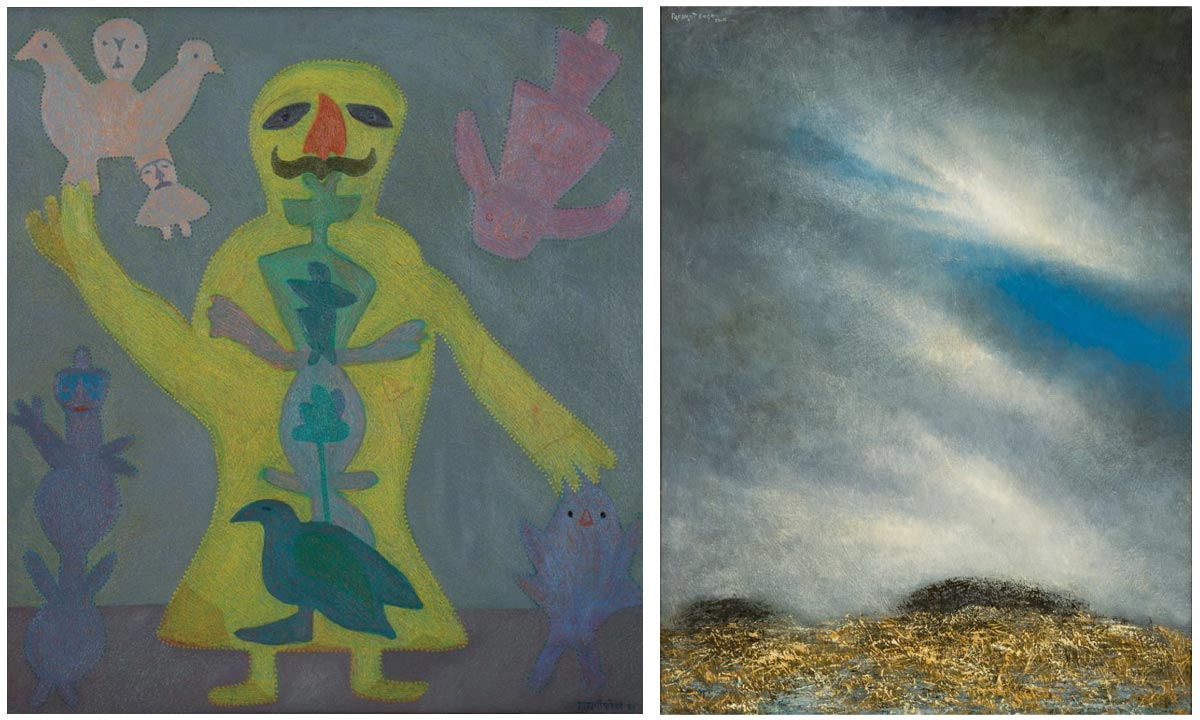
Left Artwork – MADHVI PAREKH, Right Artwork – PARAMJIT SINGH

The Taj Mahal Palace, Mumbai, is all set to host the exhibition titled Shared Lives, Distinct Visions: Artist Couples in India, scheduled to run from 11 November 2025 to 3 January 2026. The inception of this event shall add to DAG’s rich collection as a deeply revealing theme. The main emphasis of this event is on the role of companionship and how it leaves its mark on modern Indian Art. This offers a unique space where life partnerships are nurtured in parallel through artistic expression. 

The Idea Behind the Exhibition

Artistic journeys are often perceived in isolation, but this exhibition definitely flips the script. The core premise of “Shared Lives, Distinct Visions” is an intellectual and emotional dive into how intimacy, mutual regard, and critical exchange become a “quiet catalyst” for artistic development. The exhibition will feature the works of an artistic couple whose paths glided on distinctive planes and then got intertwined. The list of featuring artists includes iconic names such as Madhvi and Manu Parekh, Arpita and Paramjit Singh, Gulammohammed and Nilima Sheikh, and Jyotsna and Jyoti Bhatt, representing styles and regional schools of art across generations, and unified by the common thread called partnership.

The curatorial premise notes: “In these relationships, partnership becomes a quiet catalyst—encouraging experiment, offering critique and deepening understanding—while each artist continues to forge a path uniquely their own.” Now, considering the dynamics between Madhvi and Manu Parekh, Manu is known for his aggressive, often spiritually charged abstractions on canvas, whereas Madhvi draws her themes from vibrant, folk-inspired vernacular bases. Similarly, in the case of Gulammohammed and Nilima Sheikh, Nilima’s explorations often lean towards gender and mythology, while Gulammohammed delves into history and cosmopolitanism. This non-homogeneity among these pairs does make them intellectual equals, but the essence of non-proximity that exists in their work does secure a space for each to explore their radical differences as well. 

As scholar P. N. Mago noted, couples like Kanwal and Devayani Krishna were not only pioneers in watercolours and graphic media but also played significant roles in art education, demonstrating how their shared intellectual and professional lives reinforced their distinguished contribution to the contemporary scene. The presentation of their works side by side allows the viewers to trace the influences of influence and divergence in real-time. This way, DAG is ensuring that Indian Modernism in art should be re-read from the prism of relationships as well.

Why It Matters

The dynamics of intimate artistic companionship, how two artists live, work, and influence each other while maintaining separate identities, remain underrepresented. This exhibition addresses that gap. It underscores how such dynamics influence trajectories, mediums, critiques, and experimentation. It also opens up a sequence of inquiries, such as how do personal relationships shape artistic output? In what ways do gender, geography, medium, and institution come into play in couples working side by side? And a lot more. 

Important Points Description
Exhibition Title Shared Lives, Distinct Visions: Artist Couples in India
Organiser DAG (Delhi Art Gallery)
Theme The exploration of how intimacy and life partnership influenced the distinct, parallel artistic practices of modern Indian art couples.
Featured Couples Madhvi & Manu Parekh, Arpita & Paramjit Singh, Devayani & Kanwal Krishna, Gulammohammed & Nilima Sheikh, Reba & Somnath Hore, Jyotsna & Jyoti Bhatt, among others.
Significance Among the largest exhibitions of its kind, it challenges the myth of the solitary artist by focusing on the power of creative dialogue.
Venue The Taj Mahal Palace, Mumbai
Dates November 11, 2025 – January 3, 2026
Timings 11:00 AM – 7:00 PM (Closed on Mondays)

Key Highlights

  • The idea of parallel practice: the show emphasises that while the artists share lives, each vision remains independent and self-directed.
  • The diversity of mediums and generational spread among couples: from watercolours and graphic media (e.g., Kanwal & Devayani) to modern painting and printmaking.
  • A deeper look at education and mentorship within partnerships — how couples have been teachers, critics, collaborators, and supporters of each other’s practice.
  • Contextualising the partnership in Indian modern art: recognizing the ecosystem of peers, institutions, family and domestic life that shape creation.
  • Spatial and aesthetic curation: the choice of The Taj Mahal Palace (a heritage site) as venue underlines the blending of intimacy (home, partnership) and public exhibition.
  • The exhibition’s capacity to open up dialogues about gender, creativity and recognition: for instance, how women artists in couples define themselves beyond the partnership.

Takeaway

The primary argument central to this exhibition is that the history of art is not merely a record of individual genius, but also a dynamic niche shaped by relationships. By presenting these couples, DAG is not sentimentalizing the domestic sphere; rather, it is offering a creative spotlight in support of a shared daily life as important to a masterpiece.This exhibition humanises the artists we admire, and bring them a step closer to the audience in a shared bond of “better half”. For the aficionados of modern Indian art, this exhibition is a conceptual complex for reimagining creative relationships and their contribution to the artistic landscape.

Decoding the Mute Eloquence of the Taj Mahal: Geometry, Faith, and Craft in Mughal Grandeur

0

Mute-Eloquence-of-the-Taj-Mahal-01

The radiant marvel of white marble rising from the banks of the Yamuna is the Taj Mahal. It is widely recognized as the monument of eternal love built by Emperor Shah Jahan for his wife Mumtaz Mahal. Apart from the tales and stories attested to it,  a close examination of the structure reveals a complex and dynamic structure that is an unparalleled masterpiece. This masterpiece speaks through an architectural silence; this concept is called “mute eloquence,” or ba-zaban-e be-zabani. This forms the core of repositioning the Taj as the vector of history, theology, and imperial ambitions. 

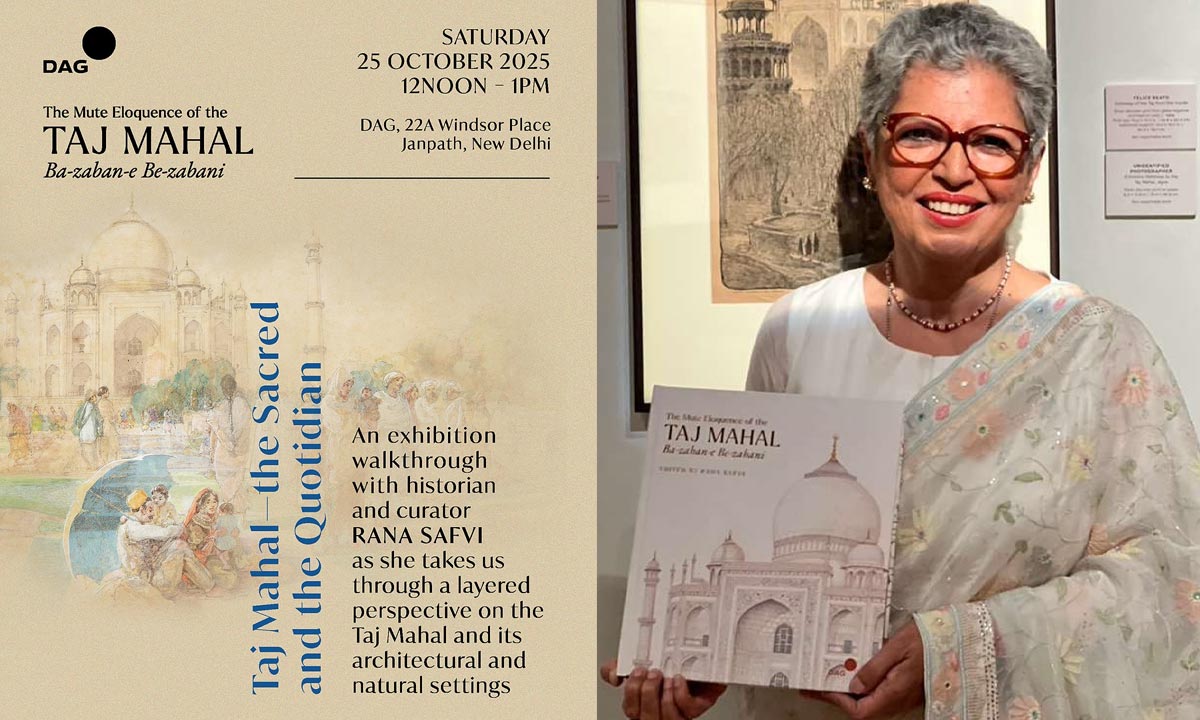
On display from 25 October to 6 December 2025 at DAG, New Delhi, is a presentation of over 200 works, including the Company School paintings, photographs, postcards, and modern interpretations, all focused on India’s most iconic mausoleum. Curated by historian and writer Rana Safvi, the exhibition invites viewers to consider the Taj as a “speaking” agent.

Conceptualization

The very notion of the Taj Mahal speaking is not contemporary; Rana Safvi borrows the words of the Mughal court chronicler Abdul Hamid Lahauri, who described the Taj Mahal, referred to as the Rauza-i Munawwara (The Illumined Tomb),  as possessing the mute eloquence or ba-zabān-e be-zabānī. In Lahauri’s words, “Verily our relics tell of us, speak with mute eloquence of His Majesty’s God-given aspiration and sublime fortune.” The main motive of bringing this context to life is to project the Taj as a hub of layered architecture with nuanced geometry, inscription, gardens, and everything that one can think of when medieval era architecture flashes in our minds. Simultaneously, it paves a path for the visitors to go beyond the visitor’s gaze and gain knowledge about the undercurrents associated with the building. 

Decoding the Architectural Language


View this post on Instagram


A post shared by Rana Safvi (@ranasafvi)

The depth of the Taj’s eloquence lies in its architectural and ornamental choices, which fuse Persian, Islamic, and Indian traditions to create a holistic structure. Structurally, the Taj is deeply rooted in Islamic Cosmology and was conceived as a replica of Mumtaz Mahal’s promised house in paradise. The entire complex of this grand monument is a metaphorical representation of the celestial garden, adorned with a charbagh (four-part garden) setting. This displays a seamless integration of the Quranic inscriptions and the rewards awaiting the faithful in paradise. The Taj is also a physical repository of extremely intricate calligraphy that was executed by Amanat Khan (Abdul Haq Shirazi) in inlaid jasper. The calligraphy is so masterfully carved that the uniformity of size and legibility from the ground is properly ensured throughout the structure. This inlay of the Qur’anic inscriptions embedded in the mausoleum links the building to Islamic ideas of paradise and transcendence. The use of floral motifs in pietra dura inlay work on cenotaphs, screens, and walls symbolises both the garden-paradise motif and a remembrance of death and love. 

The Untold Narratives

Scholarly research has increasingly highlighted the overlooked facets of the Taj Mahal complex, moving beyond the central love story to expatiate its social and economic context. One of the most underexplored niches is the relationship between the monument and the commercial pulse of the city that houses it. The Taj Ganj, a historic settlement and the neighborhood directly south of the Taj Mahal, was once a vibrant market quarter and played a crucial role in the maintenance of the logistical and economic ecosystem supporting the monument. The Taj Ganj functioned as the immediate socio-economic hinterland that once integrated the lives around the Taj. Therefore, the majestic construction not only functioned as a private family monument or a tomb of the royals, but it also served as an imperial statement among the public, demonstrating the Mughal prowess and wealth. Through this exhibition, DAG aims to surpass the barriers veiling this information and wishes to drive the visitors back to a finely layered historical moment. 

Where Does The Taj Stand In Popular Imagination?

Straight from its inception, the Taj Mahal has held a magnetic field around it that constantly attracted fascination across centuries, penetrating multiple cultures and nations. The Bengali Nobel Laureate Rabindranath Tagore famously encapsulated its sentimental power, describing it as “a teardrop on the cheek of time.” The journey of the Taj Mahal in visual culture has been meticulously documented by a plethora of artists. The intricate pietra dura details are well documented through the Company School Paintings by Agra-based artists. Colonial era photographers like Samuel Bourne and other foreign artists, such as Thomas Daniell, contributed to its global fame. 

Important Notes on the Event

Event Detail Description
Exhibition Title The Mute Eloquence of the Taj Mahal (Ba-zaban-e Be-zabani)
Curator Historian and author Rana Safvi
Dates October 25, 2025 – December 6, 2025
Venue DAG (formerly Delhi Art Gallery), New Delhi, India
Scope Over 200 works, including Company School paintings, colonial photographs, modern Indian art, and archival documents.
Key Focus Positioning the Taj as a ‘speaking’ agent, exploring its theological meaning, and highlighting overlooked aspects like Taj Ganj and the role of other women in the court.

Key Highlights

  • The curatorial premise: treating the Taj Mahal as a “speaking” structure, despite its silence.
  • Rare archival photographs and early prints (18th–19th century) showing the monument’s evolving visual reception.
  • A focus on the lesser-seen “Taj Ganj” market zone and its architectural/commercial interplay.
  • Works by modern Indian artists (e.g., Abanindranath Tagore) and foreign artists capturing the monument from diverse perspectives.
  • A linked publication (book) edited by Safvi and contributors that dives deeper into these themes. 

Why This Exhibition Matters?

The exhibition invites the viewers to pause and reconsider what we think we know. The Taj Mahal is often reduced to two things: a monument of romantic love and a must-see tourist cliché. This exhibition insists on the Taj Mahal’s complexity, perspective on devotion, paradise imagery, and commerce, and political ambition attests to it. By doing so, it enriches our understanding of architecture, memory, and cultural symbolism.

Takeaway

The temptation to view the Taj Mahal simply through the lens of a beautiful, tragic love story does not do justice to its historical and artistic genius. To call it merely a monument of love is to reduce a whole composition to a single note. The curatorial choice aims to break these little-known preconceived tales of the Taj and transform the monument into something more than just a ‘popular place to click a picture while pinching the dome’. 

Another side to this story is, a super reliance on “mute eloquence” poses a risk of romanticising silence and neglecting the human labour. Beyond this silence, the Taj Mahal is a loud cultural boom, a heritage site, and a crowded tourist locus. This exhibition welcomes a recalibration as it is a standalone stone-and-marble treatise on power and piety that defined the Mughal Empire. Thus, the silence of the Taj is not a barrier but an invitation to integrate it with the contemporary visual tradition.

Threads of Tradition: Thota Vaikuntam Embroiders Telangana’s Spirit in Zardozi

0

Threads-of-Tradition-Thota-Vaikuntam-01

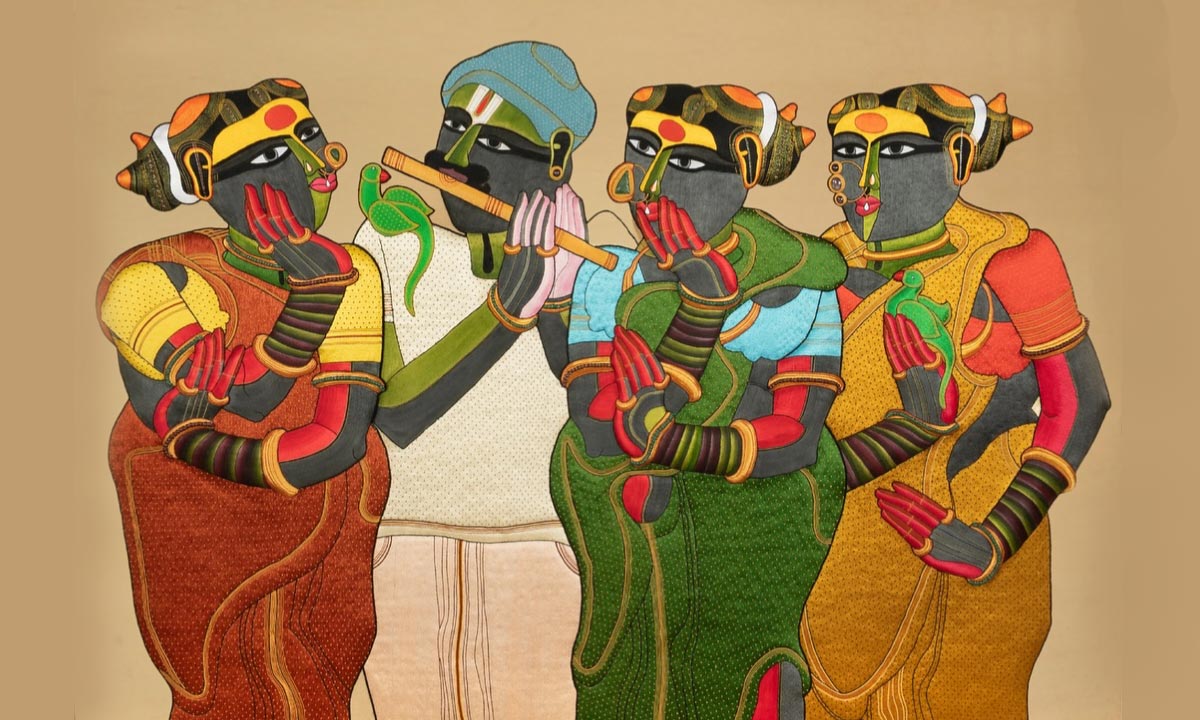
The domain of art is in constant lookout for ways to rupture the conventional and celebrate innovation over it, often through new, unexpected, and resonant media. Well, this sets the premise of “Threads of Tradition”, an off-centre solo exhibition of brand new works by Thota Vaikuntam at Sanya Mallik’s Black Cube Gallery in Hauz Khas, New Delhi. Scheduled to run from November 6 to 30, 2025, this solo exhibition shall celebrate the dignity, sensual gaze, and timeless cadence of rural Telangana. This particular segment stands out as the artworks are not attached to any canvas, but on hand-stitched on velvet, presented in the gallery’s new programme for the season. A critical pivot of the exhibition is Vaikuntam’s iconic visual thesaurus, the Telangana women draped in lustrous hues and ornate jewellery. Through this depiction, the artist seeks to reimagine the majestic 3-D craft of Zardozi embroidery

Embroidery as a Medium of Art &Rural Grace

The centerpiece that will adorn the exhibition is Vaikuntam’s painted imagery on textile sculpture. Vaikuntam’s work of art traces its expression through a close collaboration with the Shams family of Agra, which includes 16th-generation Zardozi masters, who are experts in transforming his radiant portraits into 3-D textile objects. Zardozi, a Persian term meaning “sewing with gold,” is traditionally a courtly craft involving the use of metallic wires and threads. The saturated reds, ochres, and deep blacks are the signatures of Vaikuntam’s paintings, which are vibrantly reverberated through silk threads, Zardozi techniques, and the use of semi-precious stones. It is done to provide the tactile strength and a shimmering facade, which gets self-modified with alterations in light and proximity of viewing. The resulting piece is a representation of modern painterly gestures and a seamless continuation of centuries-old craft. This fusion elevates it from being a simple artwork to a vessel of memory, knowledge, and ancestral artistry. 

For decades, Vaikuntam’s canvas has served as a point of convergence for the everyday life of Telangana. His work can be easily known through the recurring bold lines, fluid forms, often set against monochromatic backgrounds. Most of his subjects germinate from his childhood memories, and are no less than a form of devotion to him. These nostalgic waves, when inked on canvases, become symbols of cultural heritage. 

A Dialogue Between Past and Present- Why It Matters?

The shift exhibited by Vaikuntam, in terms of medium, is more like an extension of his practice. The core subject matters that dominate the centrality of the exhibitions are the rituals, appearances, and essential spirit of the Telangana people. He has long been celebrated for his dignified depictions of Telangana’s rural communities. By stepping into the textile, he rephrased his own visual codes with a lineage of craft that carries its own unique history and social affiliation. The exhibition witnesses an experiment, more essentially an act of cultural conservation and continuity. It creates a dialogue between two styles of visual languages, resulting in a cohesive harmony which is not only pleasing to eyes, but is intellectually stimulating. 

Exhibition Details
Artist Thota Vaikuntam (b. 1942), renowned for figurative painting.
Exhibition Title Threads of Tradition
Location Black Cube Gallery, Hauz Khas, New Delhi.
Dates November 6 – 30, 2025.
New Medium Zardozi (gold-thread embroidery) on velvet.
Collaborators The Shams family of Agra (16th-generation Zardozi masters).

Key Highlights 

  • Vaikuntam’s iconic figurative language translated into hand-embroidery.
  • Collaboration with the Shams family, custodians of the zardozi practice, tracing back generations.
  • Works made on velvet with silk threads and semiprecious stones, creating tactile luminosity.
  • The exhibition positions craft as co-author rather than atelier accessory.
  • A chance to see how contemporary Indian modernism interfaces with living artisanal traditions. 

Takeaway

The Threads of Tradition is undisputedly a cultural statement. In the niche of several hierarchies that are distinctively separate fine arts from craft, this collaborative approach, adopted by Vaikuntam and the Shams family, seeks to dismantle this concrete division. A craft like Zardozi, that has been practiced across generations, requires a great deal of skills and patience. The works glimmer, yes, but more importantly, they remind us that tradition, when engaged thoughtfully, can be generative rather than something backward-looking.

A Ripple in an Ocean: Natasha Singh’s Kolam-Inspired Fusion of Art and AI

0

Natasha-Singh’s-A-Ripple-in-an-Ocean-1

Art Meets Algorithm

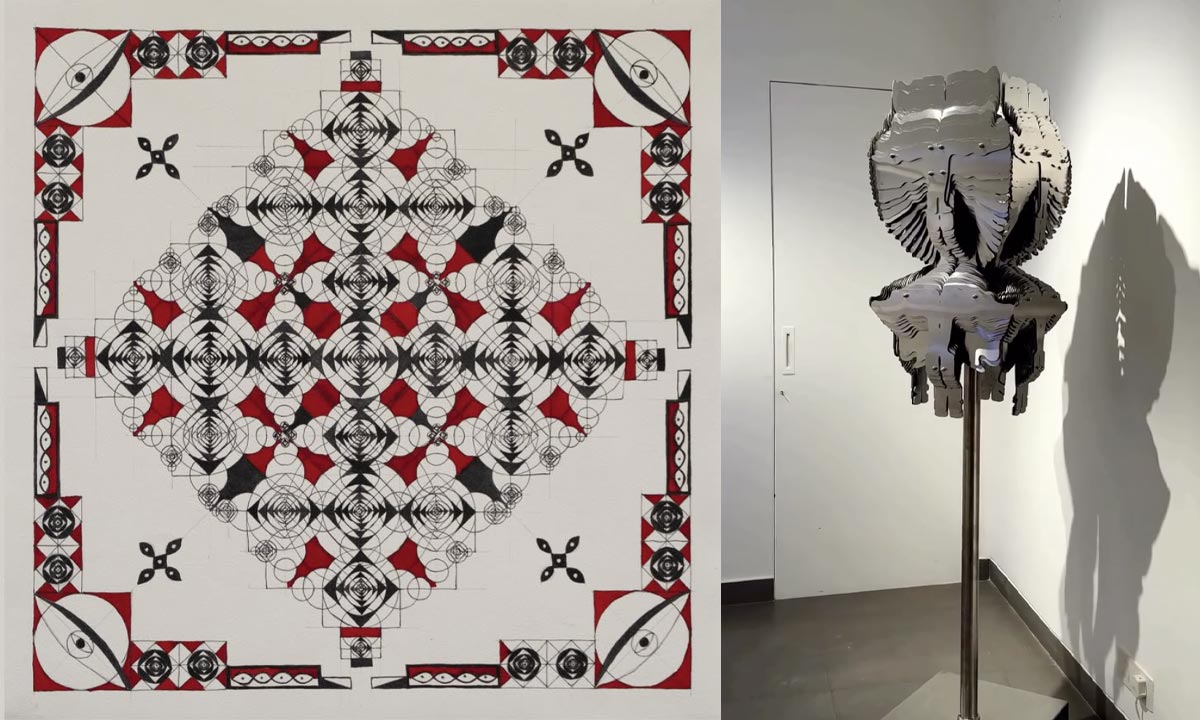
Currently on view at Akar Prakar, New Delhi, Natasha Singh’s solo exhibition “A Ripple in an Ocean” unveils the symbiotic relationship between traditional Indian art forms and contemporary science. The exhibition, on view until 22nd November 2025, ventures into the evolution of age-old traditions through a contemporary lens. Natasha’s work furnishes an intellectual simulation to combine ancient Indian aesthetics and cutting-edge contemporary science. The exhibition is inspired by the geometric precision and spiritual depth of the Kolam patterns of South India. Her works use a wide range of media, ranging from drawing, sculpture, printmaking, to digital systems. Her keenness lies in the interconnectedness of the rhythm, which binds nature, humans, and the entire cosmos. 

Bridging Tradition and Technology

Natasha Singh’s rudimentary inspiration, the Kolam, refers to intricate lines drawn by women using rice flour or chalk powder at the entrances of homes, symbolizing auspiciousness and cosmic order. She extracts the traditional recursive visual patterns and transforms them into a medium of deep inquiry. She reinterprets this ritual art into a contemporary visual system through which she successfully bridges scientific and algorithmic principles. 

She essentially applies fractal geometry, as she situates the Kolam within the context of aesthetics inspired by mathematics. By employing such a way of designing her artworks, she has devised an interdisciplinary approach that also poses a juxtaposing set of inquiries questioning the binaries of traditional and modern art, and also understanding the dichotomy between ritual and reason. Her series includes works like “Gate within a Gate – Fractal Study” and “Arrested with Thoughts”, expressing a dialogue between artistic and scientific structure.


View this post on Instagram


A post shared by Akar Prakar (@akar.prakar)

Also, by utilizing coding, AI, and body mapping cameras, she seeks to re-imagine the old and static designs and translate them into more dynamic streaks. This unique methodology suggests that the interconnectedness perceived in the cosmos can be traced in a Kolam design, a digital code, and in the path of flow of energy within the human body. She reflects on a unique union of the universal forces dwelling in harmony. Therefore, her work definitely surpasses the ambit of the canvas and becomes a universal pulse of creation. 

Her work is like a subtle reverberation of the universal vibrations manifesting themselves through varied media. The exhibition also mirrors current conversations in digital aesthetics and neuroscience, suggesting that pattern recognition, cognition, and creativity share a spiritual core.

Exhibition Information
Title A Ripple in an Ocean
Artist Natasha Singh
Venue Akar Prakar, New Delhi
Dates On view until 22nd November 2025
Mediums Drawing, Sculpture, Printmaking, Digital Systems, Kinetic Installations

Key Highlights

  • Fusion of Tradition and Innovation: Blends ancient Kolam aesthetics with scientific and digital techniques.
  • Multimedia Approach: Incorporates sculpture, printmaking, and new media to express interconnectedness.
  • Philosophical Undertone: Encourages mindfulness and meditation through visual geometry.
  • Technological Engagement: Uses AI and coding as creative tools rather than technical utilities.
  • Cultural Resonance: Revives the feminine and ritualistic aspect of South Indian heritage within a global contemporary discourse.
  • Experiential Viewing: Viewers are invited to engage in introspection and awareness of rhythm, symmetry, and silence.

A Dialogue on Universal Rhythm

Natasha’s work reflects the foundational concepts of Moon, Mandala, and Multiplicity. The Moon symbolizes rhythm and kinetic force; the Mandala represents the self-similar geometric structure drawing attention inwards; and Multiplicity signifies the repetitive forms that emerge from a vast, infinite conscious field.

She professes a powerful statement about the unity of everything existing in different ways of perceiving the same order. She beautifully freezes the movements of a yogi’s breath and posture into digital and sculptural forms, and she bridges the inner self with external, quantifiable data. This oscillation between the abstract and the quantity, between human and digital, the ancient and contemporary, encapsulates the motion of ‘A Ripple in an Ocean’.

Reimagining the Universe Through Art

Natasha’s artworks are more compatible with qualifying as philosophical inquiries, as she consciously redefines the digital and spiritual spheres by creating a dichotomy as well as drawing parallels on the same plane. Each piece echoes the ancient Indian belief that the universe itself is a rhythmic pattern of repetition and renewal. The delicate ink and pen drawings attune themselves with deeper harmonies of nature and the self. Her versatility moves across stainless steel to data, pen to pixel—all with a singular sensitivity to pattern, mutation, and the breath. She actively advocates the restoration of intimacy between art and consciousness. Thus, the exhibition is a reminder that innovation need not abandon tradition, and that the act of creation, whether through rice flour or code, remains an expression of human enigma.

Creased into Creation: Pune’s Wonderfold 2025 Origami Exhibition by Origami Mitra

0

Wonderfold-2025-Origami-Exhibition-by-Origami-Mitra-01

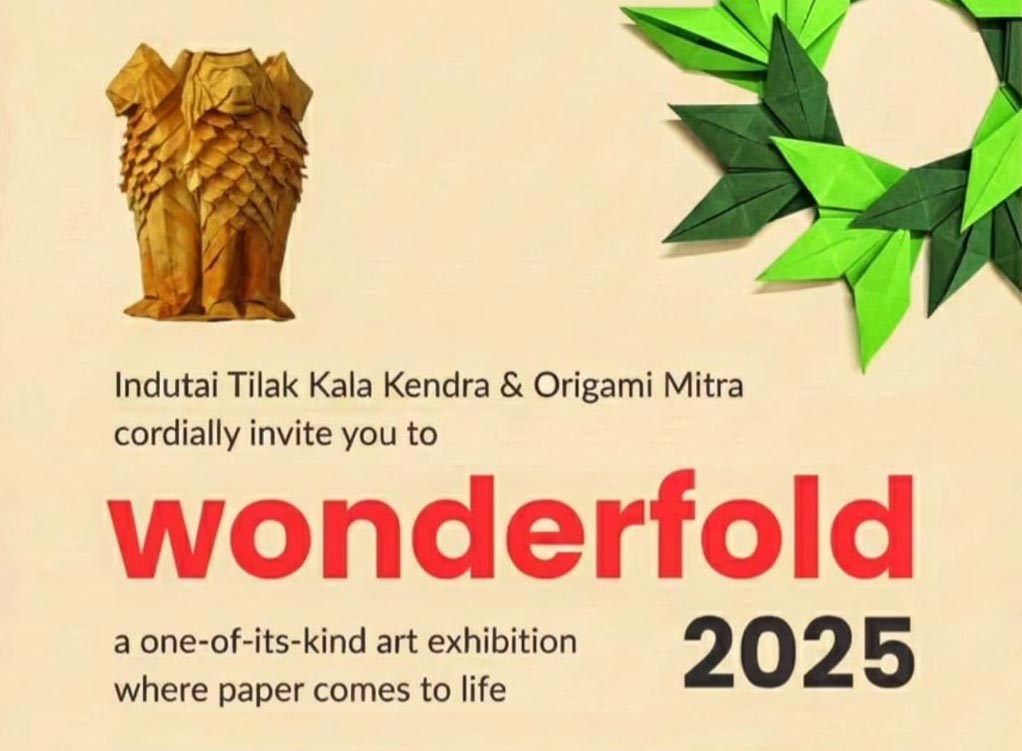
Pune, the cultural heartthrob of Maharashtra, is turning tradition into imaginative moulds through beautiful creases on paper. The ‘Wonderfold 2025’ Origami Art Exhibition, running from October 30th to November 2nd at the Tilak Smarak Mandir, aims to become a dazzling gallery of miracles crafted from paper. The essence of this event lies in the fact that even the simplest of materials, like paper, if it falls into the right creative hands, can be turned into beautiful art pieces, which not only amuses us but also impresses us to look for more of their kind. This year’s edition marks a milestone in a long-running celebration of folds, creases, and sheer imagination. This creative space is like an annual pilgrimage for art lovers who have a phenomenal curiosity about experimenting with various media.

The Legacy of Origami Mitra


View this post on Instagram


A post shared by Origami Mitra, India (@origami.mitra)

The ‘Wonderfold’ exhibition is the continuation of a decades-long mission. This year marks the 18th iteration of the prestigious event, a recurring celebration that has graced Pune once every two years for the last 35 years. It is a powerful joint effort by the Indutai Tilak Kala Kendra and the dedicated enthusiasts of Origami Mitra. This year, the event’s centrepiece attraction is an Ashtavinayak Ganapati crafted entirely from paper.

The roots of the most renowned origami associations are Japanese. However, a homegrown movement in Pune has made a profound impact on the city’s cultural landscape. The story goes back to the 1990s, when a visionary group comprising Indutai Tilak, Vishwas Deval, and Anil Avachat came together with a unified goal to popularize the ancient Japanese art form of origami in India. The members of Origami Mitra perceived Origami as a Universal language, as the art form comprised of immense potential and demanded a lot of precision and meticulous effort to turn a plain folio into an elegant piece of art. For over three decades, this group has served as a space for people who are passionate about transitioning flat paper into three-dimensional entities. These attempts have made Pune a major hub for this mesmerizing art, making ‘Wonderfold’ a highly anticipated event on the city’s cultural calendar.

The Sacred Centerpiece and a Tribute of Paper

The undisputed attraction of the exhibition is an intricate depiction of the Ashtavinayak Ganapati, all meticulously crafted from paper. The Ashtavinayak are the eight sacred temples of Ganesha located around Maharashtra, and creating a cohesive representation of these eight distinct deities using only folded paper is truly a challenge. This masterpiece beautifully associates the Japanese tradition of paper folding with the cultural and spiritual fabric of Maharashtra, making it a powerful symbol of artistic fusion and faith.

Also, this year’s exhibition is being held in honor of Lokmanya Tilak’s great-grandson and former Vice Chancellor of Tilak Maharashtra University, who recently passed away. This intentional placement of offering homage to such a personality elevates the essence of the event and makes its association with the legacy a lot firmer.

An Expedition into Technique

Visitors to the Tilak Smarak Mandir will find origami extending far beyond the familiar paper crane. The exhibition is a masterclass to explore more ways to mould a single square sheet. The displays showcase an astonishing corpus of objects, including models of various birds and animals, flowers, designed containers, and action models that move and interact. As Milind Kelkar of Origami Mitra highlighted, visitors will have the opportunity to delve into the concept of ‘in which fields origami is used.’

The creative space of this event peaks at the moment when people from different interests, like Instagram-hungry culture-seekers, a design student seeking inspiration, or a family looking for a creative day out, all come together at a shared square and look for more thrilling innovations. This moves the art from simply being a hobby to a practical science.

Event Details

Event Information
Title Wonderfold 2025 Origami Art Exhibition
Dates October 30 to November 2, 2025
Venue Tilak Smarak Mandir, Tilak Road, Pune
Timings 10:00 AM to 8:00 PM (All Days)
Organizers Indutai Tilak Kala Kendra & Origami Mitra
Inauguration October 30, 10:30 AM
Entry Open to all visitors

Key Highlights 

  • A life-size (or close) Ashtavinayak Ganapati created from paper — devotional art meets delicate craft.
  • Demonstrations and technique displays showing how complex shapes emerge from a single square.
  • A living history: Origami Mitra’s long stewardship of the exhibition is a testament to grassroots art activism in Pune.
  • Cross-disciplinary notes on origami’s applications — architecture, product design, education, and therapy.

Why does it matter?

Beyond being visually delightful, Wonderfold reminds us that creativity doesn’t need expensive materials or digital wonders to form a beautiful piece of art. It can be easily extracted from the most trivial and commonly available material, such as a single square of paper. All it requires is patience and smart skills to fold the folios through the rules of geometry and applied sculptural thinking. In a world that often prizes speed, an origami exhibition is a meditative counterpoint.

Takeaway

Wonderfold 2025 represents a vital celebration of patience in an increasingly fast-paced, digitized world. There is an almost meditative quality to origami, a silent protest against wastefulness, as a single sheet of paper is transformed into a beautiful piece of art. This exhibition reminds us of the profound joy found in creation, precision, and the simplicity of the hand-crafted. Anyone seeking inspiration, a moment of quiet awe, owes a visit to this metamorphic space. The transformation of a two-dimensional plane into a three-dimensional reality is nothing short of alchemy, and Pune is lucky enough to host this annual unfolding of magic.

Bali Jatra by Vriksh: Celebrating Odisha’s Maritime Legacy Through Art and Craft

0

Bali-Jatra-by-Vriksh

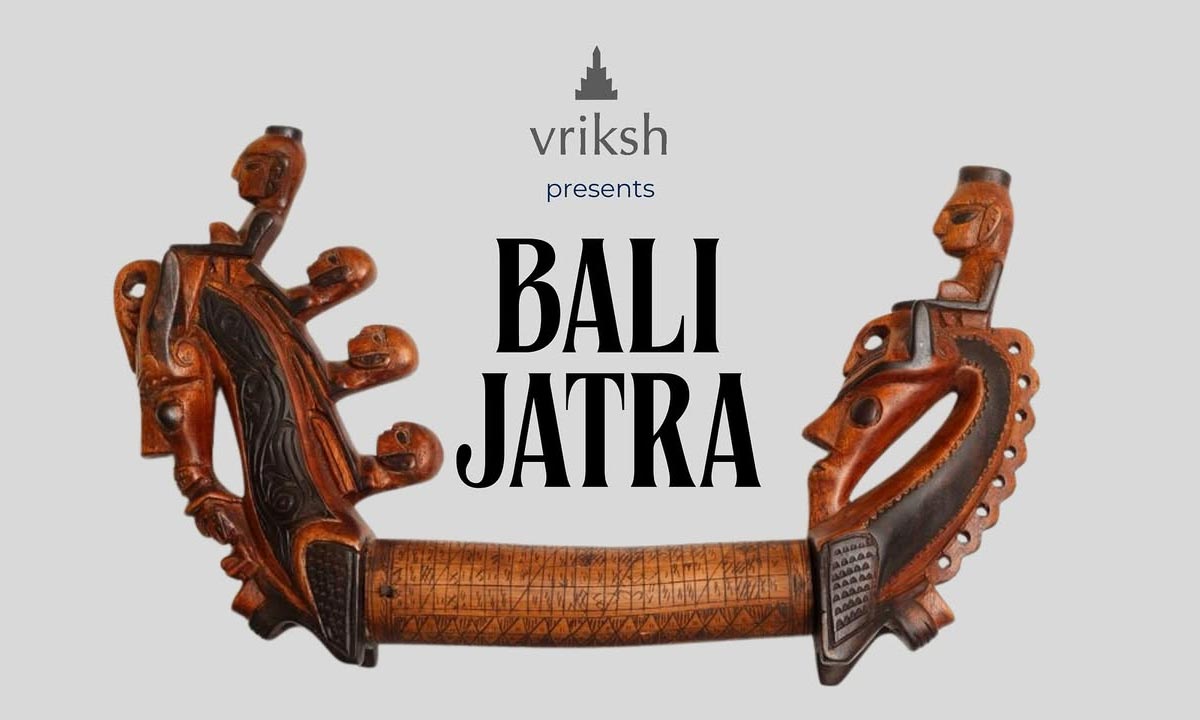
Did you know that in centuries preceding the modern trade routes, global connections were already defined through the seas? One such saga belongs to Odisha’s ancient sailors, who once set sail towards the golden shores of Bali and other Southeast Asian lands. These age-old maritime legacies are now revived through the art and craft show “Bali Jatra”, curated by Vriksh at The Kunj, New Delhi, unfolding from October 31 to November 16, 2025. This event is set to tap the once-living map of maritime routes that pulsed with life, connecting the empire of Kalinga with Southeast Asia. 

Rediscovering the Ancient Sea Routes

‘Bali Jatra’ (a journey to Bali) is a well-celebrated historic annual festival in Odisha, commemorating the epic sea voyages of the Sadhabas, the ancient Odia mariners. This year, the historicity of this journey is commemorated through the well-curated attempts of Vrish Designs, founded by Gunjan Jain. Gunjan’s extensive research into motifs, patterns, and hues that traveled and mingled across the Indian Ocean has resulted in a collection that stands tall as a testament to this portion of our heritage. This essentially showcases how Odisha influenced, and was influenced by, the artistic mastery of other empires like Indonesia, Thailand, Malaysia, and Cambodia.

The Heritage

The Dhristi Gallery is phenomenally transformed into a chronicle of maritime tales expressed through diverse media such as textiles, crafts, and design. The event openly invites the viewers to en route the historic Odia festival commemorating the sailors. Through this event, Vriksh is attempting to revive the forgotten exchange between coastlines. The most notable commitment expressed towards the revival was through projecting the traditional Odia handlooms, like the Ikat technique. The collection features handwoven silk sarees, where the famed Ikat and Jala techniques of Odisha are employed to make reference to a Pan-Asian aesthetic. The amalgamation of all these varied designs into a single collection is definitely worth a glance. 

A key piece of the whole collection is the ‘Jatra’ sari,’ which draws inspiration from the Indonesian ceremonial ‘Palepai’ or ship cloth, meant to ward off evil spirits. This reinterpretation is complemented by Odisha’s Soara art Stick figures. Other saris incorporate the Indonesian tumple (temple) layout, Laotian extra weft patterns, and vibrant Thai color palettes. 

Event Detail

Event Information
Title Bali Jatra – A Voyage of Art, Craft, and Maritime Memory
Curator/Host Vriksh Designs (Gunjan Jain)
Theme Art, Craft, and Memory inspired by the ancient Odisha-Southeast Asia maritime trade.
Location Dhristi Gallery, The Kunj – Nelson Mandela Marg, Vasant Kunj, New Delhi
Opening & Curatorial Walk October 31 // 4 PM onwards
Exhibit Timings November 1–16 // 11 AM–8 PM (Daily)
Focus Handwoven silk sarees featuring a fusion of Odia Ikat, Jala, and Southeast Asian motifs and techniques.

Key Highlights

  • Opening and curatorial walk led by Gunjan Jain on October 31 at 4 PM
  • Showcasing handcrafted textiles inspired by Odisha’s maritime traditions
  • Exploring cross-cultural design influences from Bali, Thailand, and Indonesia
  • Celebration of sustainable and heritage-based craft revival
  • Hosted at The Kunj’s Dhristi Gallery, known for its immersive cultural showcases


View this post on Instagram


A post shared by Vriksh (@vrikshdesigns)

Crafted Connections 

Every object in Bali Jatra narrates a journey of continuity. It depicts how traditions have travelled, adapted, and survived. Odisha’s Pattachitra painters, Sambalpuri weavers, and stone carvers found a scope to highlight their art in Southeast Asian craft traditions, demarcating astonishing parallels in technique and symbolism. What makes the exhibition truly stand out is the conjunction of anthropomorphic niche with artistic aesthetics. 

Through this exhibition, the gap between the historic past and the present is bridged. It does not reflect the regional history of Odisha, but narrates a wave of travelogue which shaped international relations before it was even a phenomenon. It is a constant reminder that art and identities are equally fluid and can find shelter anywhere in the globe and make it their home. The adaptation of one region’s craft into another is a saga that expresses more than a cordial relationship; it denotes an innovative pulse through which something new is born. 

This conscious revival of India’s oceanic imagination is a tribute to the journeys that once shaped the contemporary civilizations and a reminder that craft is a vector of stories worthy of retelling through the millennials to come.

World Thrift Day 2025: Celebrating the Power of Saving and Awareness

0

World-Thrift-Day-2025

World Thrift Day is marked every October 31 around the world and on October 30 in India, paying tribute to former Prime Minister Indira Gandhi’s legacy. For 2025, “Conquer your Tomorrow” sets the tone, framing saving as a way to nurture personal strength and economic resilience. First celebrated after the 1924 International Thrift Congress in Milan, the day encourages building financial skills and steady habits, with India deepening this tradition through postal savings, PPF, and widespread adoption of digital investment options.​

The Meaning Behind World Thrift Day

World Thrift Day isn’t just a calendar date, it’s a cue to rethink habits. Saving isn’t restrictive; it speaks to foresight. This day signals everyone to reflect and reconsider how we handle money, nudging people to replace compulsive purchases with thoughtful planning. Thrift goes beyond borders or generations. It’s not about personal expenses. By thrifting, you are not just saving a few pennies in your pocket, but working for the environment, for resilience, for sustainability, for our earth.

Historical Background: From Milan to the World

The story of the origin of World Thrift Day is like no other. The first World Thrift Day was a child of the International Thrift Congress held in Milan in 1924. In this Conference, Filippo Ravizza, an Italian professor, first introduced the idea of having a celebratory day for financial savings. He called it the “International Savings Day,” aiming to rebuild faith in banking and promote saving for essentials like children’s education and medical needs after World War I. It was on October 31- now this day commemorates this historic moment. Talking about India, the idea was accepted on October 30 in 1984, reflecting a heartfelt respect after Indira Gandhi’s passing. 

Why Thrift Matters Today

Life moves quickly, and spending is easier than ever, especially with digital payments taking centre stage. In such a climate, thrift serves as a corrective, anchoring long-term plans for home, studies, and retirement. It builds financial freedom and helps avoid unnecessary debt. A cushion built on thrift means weathering economic storms, be it inflation, unemployment, or world emergencies, without panic. Saving isn’t old-fashioned; it’s a tool for tackling today’s challenges head-on, opening doors to secure choices and a future shaped by intention, not desperation.​

World Thrift Day 2025: Theme and Observance

For 2025, “Conquer your Tomorrow” invites people to view saving as empowerment. It’s about more than accumulating money; it’s about building personal strength and readiness. Banks, schools, and cooperatives across India are spreading the message with workshops, budgeting lessons, and digital outreach. SIPs, automatic transfers, and user-friendly investment apps make saving more accessible than ever. The government’s campaigns, from National Savings Institute to schemes like PPF and Sukanya Samriddhi Account, work alongside technology, UPI and micro-investment apps, to connect even rural communities to the power of thrift.​

Thrift and India: A Cultural Connection

Saving and resourcefulness run deep in India’s traditions, from mottos about tailoring dreams to one’s means, to customs of gifting gold for security. Postal savings banks, PPF, and rural banking have provided generations with trusted ways to set aside money. Self-Help Groups (SHGs) and cooperatives have enabled women and rural families to turn modest savings into entrepreneurial success, teaching not just financial skills but trust and solidarity. For Indians, saving isn’t just about wealth; it stands for sustainability and conscious living. Thrift links the past, present, and future, shaping a legacy of care and readiness.​

How to Practice Thrift Today

  • Save enough to cover three to six months of life’s essentials, this fund acts as your safety net when unexpected things happen.
  • Set up automatic savings so money goes straight into your savings before you get the chance to spend it.
  • Use budgeting apps to keep track of where your money goes and find easy ways to cut back without feeling pressured.
  • Buy only what you truly need, a little less stuff can mean more money and less waste.
  • Turn saving into a fun family goal so kids learn early and everyone shares the journey.
  • Saving isn’t just about money; it’s about building security and hope between grandparents, parents, and kids.

India’s Savings and Investment Snapshot (2024–2025)

Category Details / Data Points
Household Savings Rate Approx. 18–20% of GDP (2024 estimate)
Top Saving Instruments Bank deposits, PPF, SIPs, Gold, Life Insurance
Popular Savings Schemes Sukanya Samriddhi Yojana, NSC, Senior Citizen Scheme
Digital Savings Apps Groww, Zerodha, INDmoney, Paytm Money
Key Thrift Promoters RBI, NABARD, SEBI, India Post, Cooperative Banks

The Spirit of Thrift in the 21st Century

World Thrift Day shines a spotlight on saving as a powerful mindset, one that values the future while enjoying the present. Collective financial wisdom drives both national progress and personal well-being. In a world saturated with instant solutions, thrift offers genuine self-reliance. Living with purpose, not just less, means making thoughtful choices. Every small act, be it starting a SIP or jotting down expenses, helps create safety and opens possibilities. Thrift is alive, evolving with modern technology as well as lasting traditions, quietly steering us toward a stronger tomorrow.​

Suggested Story: Thriving Thrift Culture in India – Sustainable and Pocket Friendly Fashion

FAQs on World Thrift Day 2025

Question: When is World Thrift Day celebrated in 2025?

Answer: World Thrift Day is celebrated annually on October 31 worldwide. However, India observes Thrift Day on October 30 every year.

Question: What is the purpose of World Thrift Day?

Answer: The purpose of Thrift Day goes beyond saving money — it encourages financial awareness, responsible spending, and the development of lifelong saving habits.

Question: How can students observe World Thrift Day?

Answer: Students can participate by attending financial literacy workshops, setting personal saving goals, or joining school competitions on smart money management.

Question: What is the theme for World Thrift Day 2025?

Answer: The theme for World Thrift Day 2025 is “Conquer your Tomorrow,” emphasizing how savings empower individuals to shape a secure and confident future.

Question: Why is thrift important in today’s world?

Answer: Thrift promotes financial stability and sustainability, helping people avoid impulsive spending, reduce debt, and build resilience for future challenges.

Arindam Chatterjee’s ‘Avamānava’: The Sub-Human Unveiled at Emami Art

0

Arindam-Chatterjee-Avamānava-02

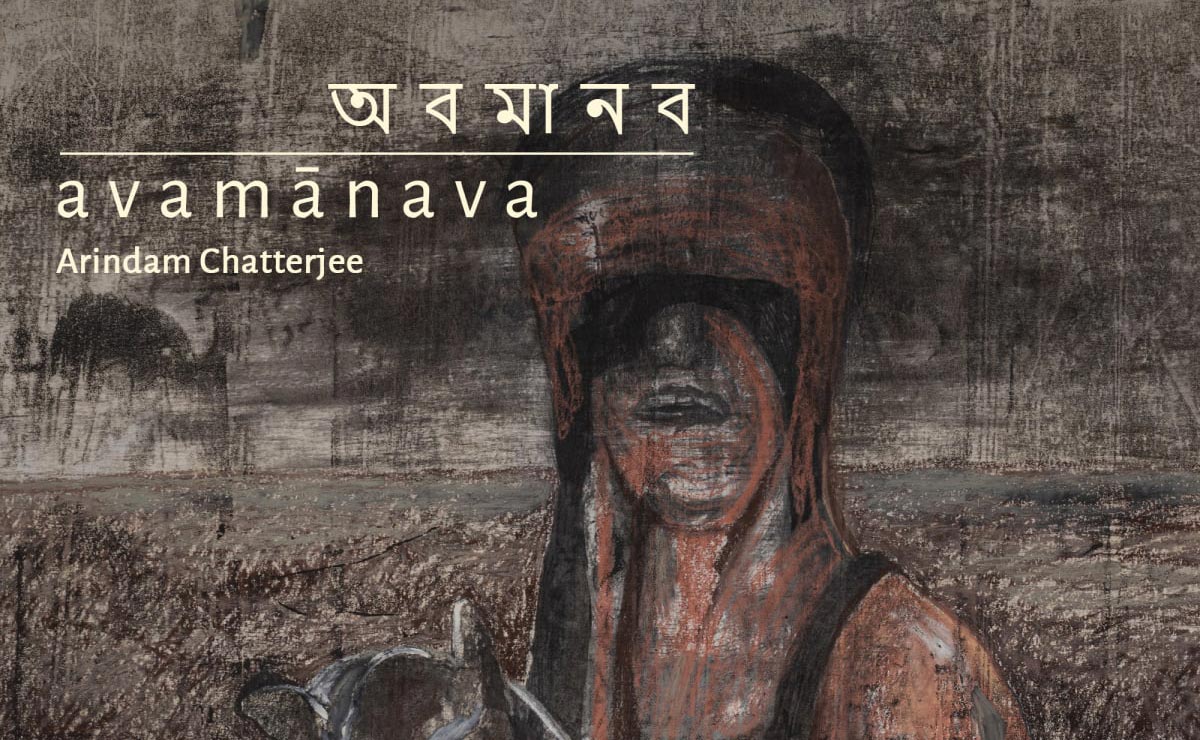
On November 7, 2025, Emami Art in Kolkata is set to unveil a solo exhibition, namely ‘Avamanava’ by the distinguished Kolkata-based artist, Arindam Chatterjee, and will continue to be on display till December 24, 2025. This upcoming exhibition is definitely more than just a display of art; it is a full-fledged discourse on unsettling psychological exploration into the very core of human ethics. 

What is the Avamanava?

The Bengali term Avamanava is quoted with layered meanings. Emami Art specifically notes its usage in the sense coined by Rabindranath Tagore, who translates it as “sub-man” or “sub-human.” This crucially refers to a state of existence which is situated at a critical and uncomfortable juncture between a “base animal” and a “fully enlightened human being.”

Arindam Chatterjee’s works are primarily executed on paper. The exhibition will display virtually thirty pieces of his art that evoke feelings of jijnasa (the desire to know), terror, and a lot more. These evocative waves of feelings offer a confrontational sense of awe and amazement to the viewers by exposing them to the raw, unstable truth of human existence. By presenting somewhat unfinished works, unfamiliar, and confusing, the artist aims to tear down the conventional and stable representation of life and push the viewers towards a more obscure and darker corner of contemporary life. 

The Neo-Expressionist Vision

A key concept that gets reflected in Chatterjee’s way of expression is inspired by Francis Bacon’s concept of the Brutality of Fact. Bacon was acknowledged for his raw, emotionally electrified, and often appalling figurative paintings that captured the dark and grey areas of human existence. Arindam, too, attempts to channelize this philosophy in his work by displaying a sense of refusal towards simplifying the world’s harshness. 

About The Artist


View this post on Instagram


A post shared by Emami Art (@emami_art)

Arindam Chatterjee, born in 1972, is a product of Kolkata’s Government College of Art and Craft and Visva-Bharati’s Kala Bhavana, Santiniketan. He began his career in the 1990s as an abstract painter but made a decisive pivot to figurative work around the mid-2000s. This shift was motivated by an “urgency for a more direct and communicative form of expression to respond to the conflictual world.”

His current style is neo-expressionist-like language, with traces of the abstract past remaining in his work. This is evident in the rich, expressive pigmentation and experimental medium work that characterize his paintings and drawings. His usage of powerful imagery is deeply entangled with the social, political, and cultural realities of our society. 

His previous solo show at Emami Art, ‘Not a Dream, Not Peace, Not Love’ (2024), similarly explored a dystopian world, capturing the death, wounds, and suffering of various creatures in what he perceives as the fragile times of modernity. Inspired by post-Tagorian modernist literature from Bengal, writers like Jibanananda Das, Binoy Majumdar, and Kafka and Dostoevsky, Chatterjee’s ideology seeks to expose the “dark faces of times” that are often absent from the fabricated narratives of neoliberalism.

Event Details

Exhibition Detail
Title অ ব মা ন ব / a v a m ā n a v a
Artist Arindam Chatterjee (b. 1972)
Host Gallery Emami Art, Kolkata (Ground Floor, Gallery 2 & 3)
Dates 7 November – 24 December 2025
Preview 7 November 2025, 5 PM onwards
Core Theme Profound human ethics and the “Brutality of Fact”
Career Highlights Second major solo at Emami Art; awarded Navonmesha Puraskara (2003) and the H K Kejriwal Memorial Award (1997)

What to expect in অ ব মা ন ব / a v a m ā n a v a

  • Small-to-medium works on handmade paper and mixed media that combine drawing, monotype-like textures, and painterly washes; many recent works present fragmentary figures, repeated forms, and blurred physiognomies.
  • An ethical, psychological framing: Emami’s copy signals a conceptual engagement with human “brutality” and moral disorientation that recalls Bacon’s confrontation with fact and violence in figuration. Expect an austere emotional register rather than decorative prettiness.

A Critical Reading

Arindam Chatterjee’s paintings use the human body to show feelings of pain, memory, and the experiences people go through in life. He often paints on rough, stained paper, making the figures look both familiar and unsettling. This gives the sense that each body carries traces of time and emotion, like an old record of human life. Emami Art explains that his work doesn’t try to comfort the viewer; instead, it makes them face the harsh truths about how fragile and morally complex people can be.

Takeaway

In the contemporary timeline, when many galleries prefer people-pleasing or market-friendly motifs, Emami Art’s framing of the avamanava feels refreshingly necessary. Arindam Chatterjee’s insistence on the small scale, the fragile medium of paper, and a vocabulary of physical distress resists the ease of easy consumption of art; these works demand slow looking. It is not exhibited to soothe the so-called artistic thirst of the spectators, but it is to make people think about vulnerability, complicity, and the stubborn, often ugly facts that painting can still make visible. It enriches the value of art as it is supposed to be the mirror of society.