Alipore Museum’s Print Studio Comes Alive at Kolkata Art Weekender

0

Alipore-Museum’s-Print-Studio-Comes-Alive-at-Kolkata-Art-Weekender-01

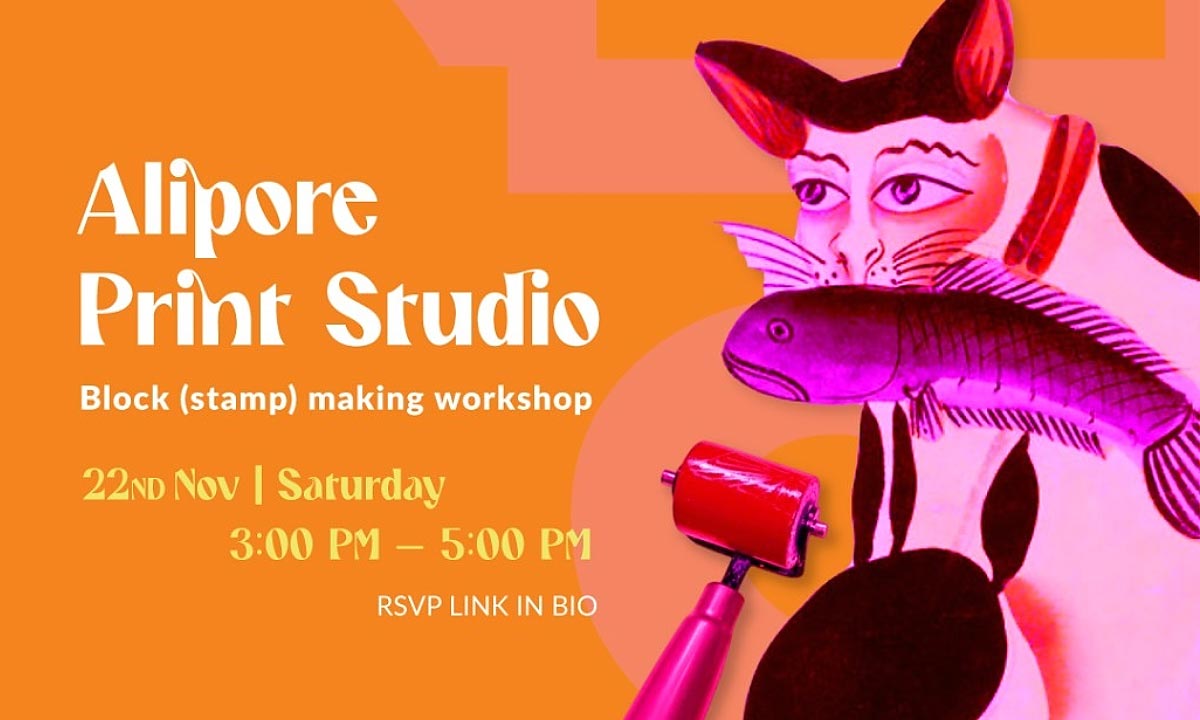
The city of joy, Kolkata, is intrinsically a space that is drenched in history and culture, and the city’s favourite ritual seems to be celebrating life through art. The Kolkata Art Weekender is presenting a unique constellation of events through one workshop: Alipore Print Studio, a block (stamp) making session hosted jointly by DAG Museums and Alipore Museum on 22 November, 3–5 PM. This hands-on workshop aims to offer an unforgettable opportunity to the participants by allowing them to step directly into the world of symbols and traditional printmaking, by seeking inspiration from a landmark exhibition on the 19th and 20th century Bengal art.  This workshop promises an afternoon where myths and motifs return as a fresh source of amusement and tales for the ‘visitors-turned-printmakers’ for a day. 

Re-Rooting this workshop

The initiation of this event is anchored in DAG’s ongoing exhibition, ‘The Babu and The Bazaar: Art from 19th and 20th Century Bengal’. This exhibition made Kolkata’s complex history accessible in a visually appealing yet understated manner. This exhibition is a treasure trove of the art forms that flourished and proliferated in the city during the colonial era. It includes Kalighat pats, commissioned Early Bengal Oil Paintings, and mass-produced prints such as woodcuts, engravings, and lithographs. The reverse-glass paintings are also a very thoughtful inclusion in this sequence. Curated by experts like Aditi Nath Sarkar and Sandeep Maitra, the exhibition articulates the dichotomy between the English-educated elites, i.e., the babus, and the popular bazaar or market prints. The presentation of the two distinctive genres together reveals how the prints circulated among people from different backgrounds and varied walks of life. 

Taking inspiration from this, the forthcoming workshop shall open the doors to a portal where the paper, ink, and carved blocks become the circuits of Bengal’s layered history. Led by Chaiti Nath, a member of DAG’s team, the participants will be guided through a step-by-step experience that shall bind folklore and the 19th-century visual with hands-on craft work.  Chaiti’s sessions are noted for their clarity and curiosity-inducing factor. She often initiates the sessions with a benign beginning, i.e., by putting forward questions like What happens when you translate an old story into a new mark? The main spirit of the session is inducted when tools are picked up, and participants get to know about the vocabulary of Bengal’s urban art through a trail of DAG’s The Babu and The Bazaar

At the workshop, the VP of DAG Museums, Sumona Chakravarti, will guide everyone by introducing the segments. She is acknowledged for her expatriates in archival works and very approachable storytelling capacity. In her opinion, these artworks are not something restricted to the museum as relics, but are living ideas that continue to influence modern-day graphic visuals. 

Inside the Print Studio: A Guild of Beginners 

The Alipore Print Studio session will be conceived as a link between the historical context of the exhibition and contemporary artistic practices. The session’s premise is simple yet high-octane,i.e.,  to allow participants to “Translate myth and motif into print swatches.” The method that will be followed is the block printing technique, in which different patterns are carved into a block that is inked and stamped onto a surface. The atmosphere of the event is supposed to be very immersive in itself, encouraging people to “Work like a guild in a traditional print studio, foraging, carving, and creating individual prints into a collective body of work.” This sentiment of collective work and inclusivity makes it stand out and appealing. By engaging tools and materials of traditional printmaking, the session aims to leave a deeper imprint on everyone’s heart. As many people flock together, a sense of camaraderie is woven even among strangers. And in the final hour, individual prints produced by each participant will be assembled into one space, making it a collective work of many hands. 

Through workshops like these, DAG continues its legacy of making history and art accessible to people irrespective of age, gender, and other factors, and nurtures a natural tendency to get intrigued by heritage and culture. 

Event Details

Event Description
Title Alipore Print Studio: Block (Stamp) Making Workshop
Host DAG Museums & Alipore Museum
Date & Time 22 November 2025, Saturday, 3:00 PM – 5:00 PM
Workshop Focus Translating myth and motif into print swatches via block (stamp) making.
Inspiration Source DAG’s exhibition: ‘The Babu and The Bazaar: Art from 19th and 20th Century Bengal’
Lead Artist Chaiti Nath (@mumtendu, DAG Museums Team)
Contextual Walkthrough Led by Sumona Chakravarti (VP, DAG Museums)
Venue Alipore Museum, Kolkata

Key Highlights

  • Hands-on block carving inspired by motifs from historic Bengal art
  • Curated walkthrough of DAG’s exhibition for conceptual grounding
  • Collective print-making experience in a guild-like setting
  • A blend of history, technique, and personal creativity
  • Part of the larger Kolkata Art Weekender programme featuring city-wide art events

Takeaway

The Alipore Print Studio is a brilliant model for art engagement and contemporary creative practice. It makes one feel engaged and included, even if they do not possess true artistic skills. An interesting factor is that by modulating the workshop based on collective work, it also seeks to revive the tradition of communal, artisan-led traditions that have been replaced by industrial printing. This also recalims art from being ‘distant’ and makes it more tangible to people who also get a refreshing source of amusement through it. Thus, visitors shall not just perceive art, they will create some too, as they physically inhabit the cultural space. Therefore, this workshop is supposedly a warm invitation for people to sit, interact, and carve something meaningful that goes beyond being a trivial souvenir; it is indeed a celebration worth stepping in.
St+art India’s ‘ADDA: The Third Space’ Brings Community Art to TRI Kolkata 2025–26

0

St+art-India’s-‘ADDA-01

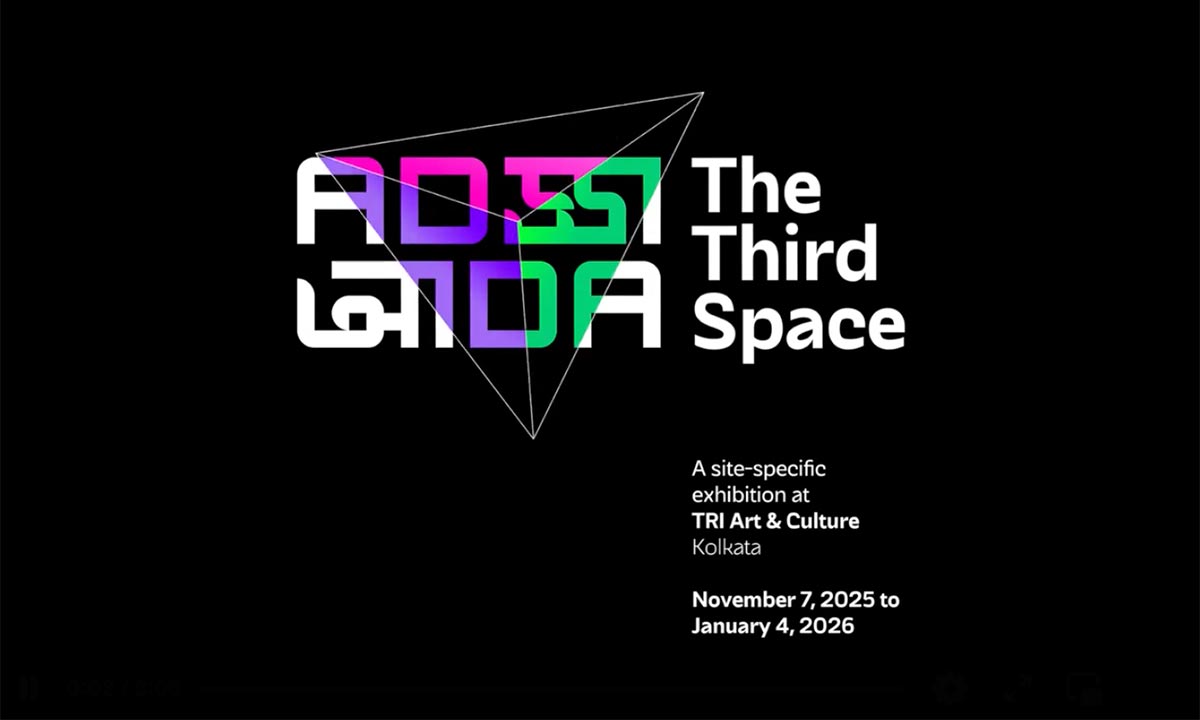
The cultural sphere of Kolkata is adorned with the return of St+art India Foundation’s project that blurs the concrete block between private talk and public life. Kolkata’s current vibe shall play a little more, as the city inaugurated the St+art Kolkata 2025–26 festival. This project transformed the entire space of TRI ART & CULTURE by practically converting it into an interactive “ADDA SPOT”. Opened to all on November 7, 2025, the transition of the multi-disciplinary art centre into a hotspot of adda culture is supported by Asian Paints and has successfully evolved into a platform to deliver powerful statements and immersive experiences that encapsulate the essence of the city.

Experiencing The Adda

The St+art India Foundation, known for bringing large-scale public art and community engagement programmes, has skillfully curated this chapter in partnership with corporate partners like KCT Group CSR. The theme that binds the show is “Adda”, a very innate practice of the Bengalis, a social idiom for leisurely yet intense conversational gatherings. The title “Third space” represents the essence of the theme by placing it beyond home (the first place) and workplace (the second place). In the city of joy, Adda has emerged as a ritual of the Bengalis, as it fuses private memories, nostalgia, critical exchanges, etc., over which like-minded people huddle together. Thus, the third space is more of a curatorial device where one can expect sculptural interventions, ephemeral site-work, and socially activated programs that deliberately foreground conversation as a medium. Interestingly, TRI is situated at a restored 1940s mansion, which is reimagined as a multidisciplinary cultural hub. This offers a blend of history with visuals and the best essence of Kolkata. 

The Dialogue in Motion

As the St+art Foundation is renowned for its city-wide interventions, and the opening at TRI seems like the beginning of the festival’s impact on Kolkata. While the exhibition is the nucleus, the wider program aims to nestle the public art deeper into the urban fabric.

Ongoing Intervention Cultural Significance
“ADDA: The Third Space” Exhibition The central experience at TRI Art & Culture uses contemporary art to initiate a socio-cultural dialogue on community and public engagement.
City-Wide Murals & Street Art Public murals across Kolkata extend the St+art ethos of making art accessible, turning city walls into participatory canvases.
Workshops & Public Programs Interactive sessions, literary readings, and culinary addas transform TRI into a multidisciplinary cultural hub.
Social Discourse The theme ‘Adda’ has sparked vibrant conversation in Kolkata’s cultural circles, redefining the idea of shared space and dialogue.
Opening & Duration Opened November 7, 2025, at TRI Art & Culture, supported by Asian Paints and KCT Group CSR; runs through early January 2026.
Collaborators St+art India Foundation x TRI Art & Culture; Vision Partner: Asian Paints; Support: KCT Group CSR.

key Highlights

  • Opening day launch at TRI with curatorial walkthroughs and artist interactions (7 Nov 2025).
  • Exhibition runs through early January, offering talks, performances, and participatory events alongside installations.
  • Collaboration model: St+art India Foundation x TRI Art & Culture; vision partner Asian Paints; supported by KCT Group CSR.
  • Programmatic emphasis on conversation, public activation, and site-responsive work that references the Bengali adda tradition. 

Context Matters

Hitherto, St+art’s city-scale projects have deployed murals and public programming to re-module how people move through everyday spaces. In Kolkata, a city already saturated with nostalgia, public imagery, and rich traditions, the project’s success will depend on how well it balances spectacle, whether the works can invite genuine participation rather than being a piece of displayable decor. Also, by choosing Adda as the central theme, it connects an intimate mesh with the larger public in Bengal. 

The exhibition is a vital signal of Kolkata’s creative renaissance, positioning Kolkata as a leading centre for intellectual commentary. As the event continues over the coming months, it shall act as a reminder that art is an act of rebellion against isolation and anonymity, reflecting the third space and connected by Adda.

The Camel Art Foundation Comes to Konark: Nurturing Young Artists in Odisha

0

The-Camel-Art-Foundation-Konark-chapter-1

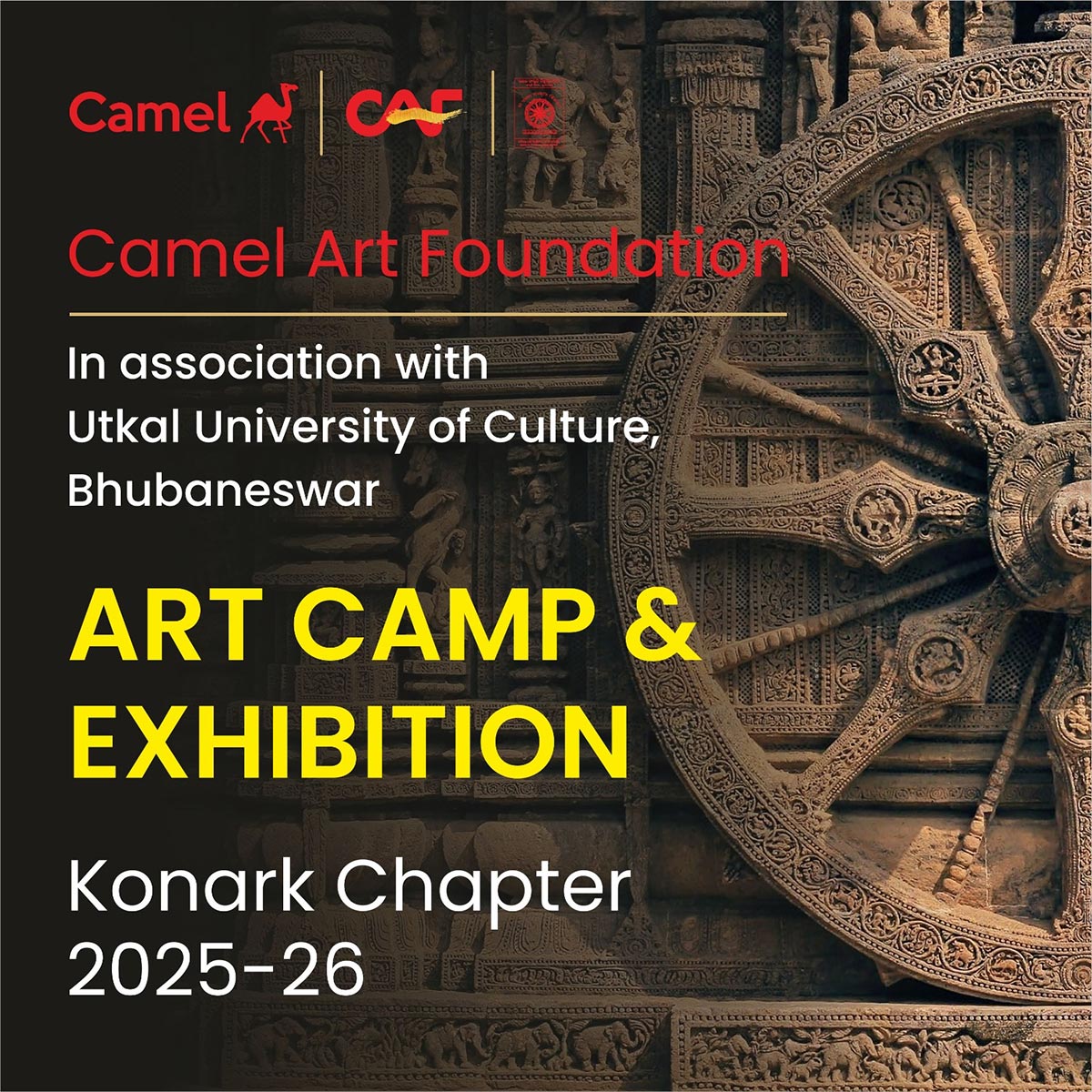
What early memory stirs in your mind when you travel back to your childhood and try to recollect anything about art? For most of us, it ought to take us back to the small, waxy box of Camlin crayons, those vibrant sketch pens, or the first box of water colours, maybe. It is from this nostalgic cradle of beginnings that Camlin’s legacy is linked with us. Continuing its enduring policy to supplement the world of art, Kokuyo-Camlin’s Camel Art Foundation now extends its hands to the next generation of artists gathering at Konark. The much-awaited forthcoming chapter of the National Art Camp & Exhibition series, the Konark Art Camp & Exhibition, is scheduled from 10–14 November 2025

Overall, forty-five shortlisted artists hailing from the leading art colleges across East India shall gather for a five-day event, which incorporates expert lectures, mentor-led studio discussions, and field studies as well. This initiative is to be made successful in association with the Utkal University of Culture (UUC), Bhubaneshwar, and is set to initiate a new cohort of artists in the beautiful and artistic setting of Odisha. More precisely, Konark is a felicitous venue. 

Why Does this Chapter Matter?

The Camel Art Foundation’s camps have traveled a long range of Indian sites, from Hampi to Ajmer, where the place itself becomes an educator. The past chapters have offered thrilling experiences like open-air sketching and curated exhibitions that put the cumulative toil of artists on public display. This year, the Konark chapter aims to reflect upon its past activities and allow students to test ideas in situ and then see their works framed for an audience beyond college walls. 

Moreover, the institutional partnership with UCC Bhubaneshwar, a kind of mandate, is offered, which explicitly positions the importance of preserving, promoting, and protecting the richness of Odisha’s cultural value. The university specializes in fields ranging from Visual Arts and performing arts to cultural studies and Archaeology. By achieving an active collaboration with such a leading cultural institution in the state, Camlin ensures that the event is invested in the local artistic system. 

The exhibition offers a crucial platform for artists to display their newly created works. This is vital for connecting artists with critics, and potential audience, and also acts as a launch pad for their professional careers. It offers a niche for cross-pollination of ideas and techniques that helps to forge a cohesiveness in art.

Exhibition Details

Aspect Description
Event Name Camel Art Foundation Art Camp & Exhibition 2025–26
Organizers Camel Art Foundation, a Kokuyo Camlin initiative
Academic Partner Utkal University of Culture (UUC), Bhubaneswar
Location Konark, Odisha — inspired by the Sun Temple (UNESCO World Heritage Site)
Duration Five-day creative camp, from November 10th to 14th, 2025
Participants 45 shortlisted artists from leading art colleges across East India

Key highlights

  • Forty-five emerging artists were selected from a regional shortlist; regional representation is a strong point. 
  • Mentor-led sessions promise sustained critique rather than one-off demos, valuable for development.
  • Site visits to Konark mean participants will engage directly with vernacular sculpture and landscape.
  • Collaboration with Utkal University of Culture could anchor the program in local pedagogy and resources.

Takeaway

The Camel Art Foundation’s chapter matters because it moves beyond metropolitan nexuses and invests in peripheral centres of practice. By bringing mentors and a market-driven exhibition to Konark, the event expands its networks for students. This five-day experience goes beyond the participants’ outlook, creating artists who are both technically skilled and conceptually rich.

Decoding Patterns: Systems, Silhouettes, Synchronicities at Tao Art Gallery

0

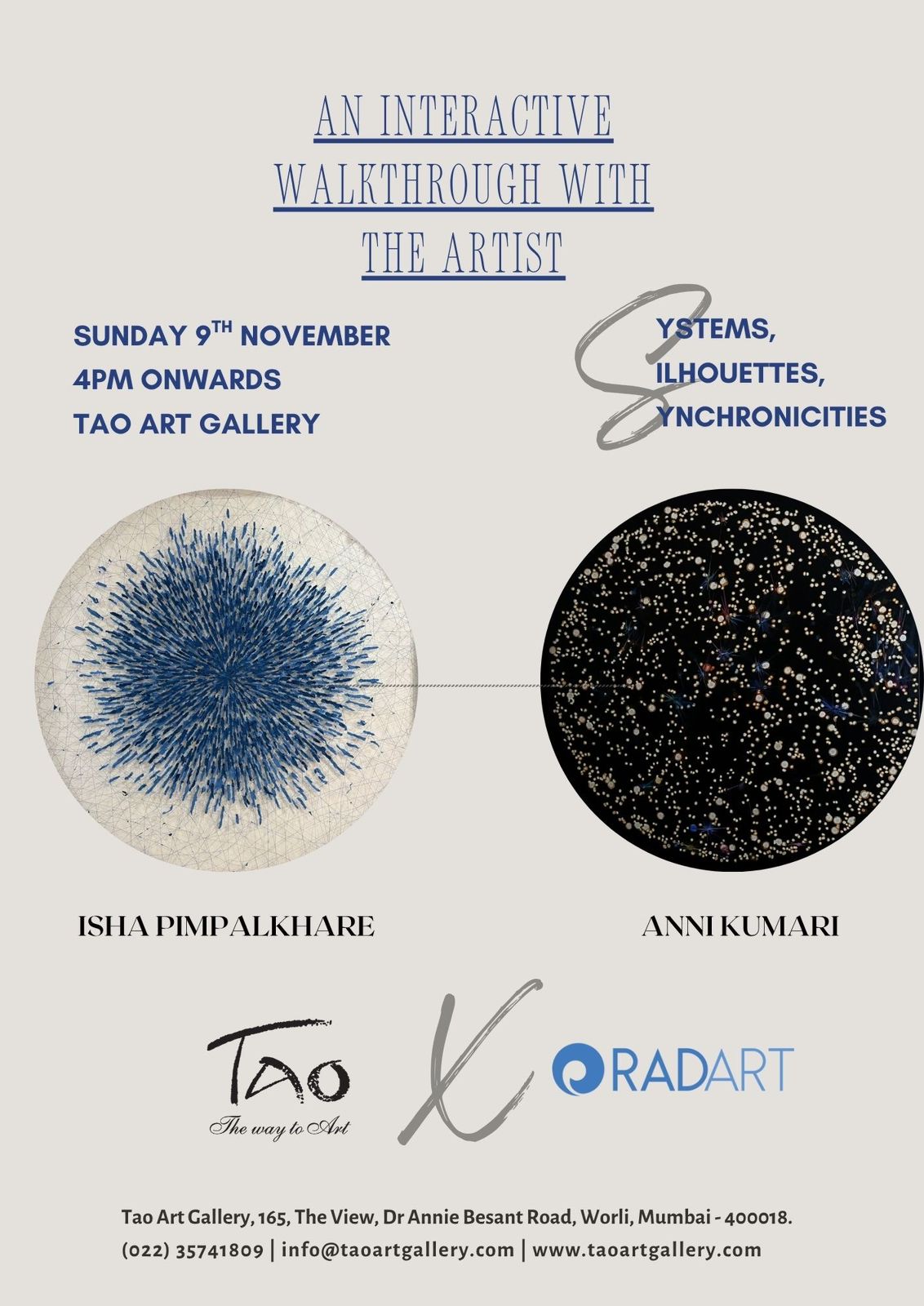
Tao Art Gallery, Mumbai, is set to host an intellectually resonant and visually captivating joint exhibition, ‘Systems, Silhouettes, Synchronicities,’ featuring the works of abstract artists Isha Pimpalkhare and Anni Kumari. Opening on November 8, 2025, and running until December 20, 2025, the exhibition displays the natural, mathematical, psychological, and cosmic elements that shape the world we inhabit. Curated by Sanjana Shah, Creative Director at Tao Art Gallery, the exhibition showcases the convergence of two distinct artistic voices on a single platform. The resulting show is a beautiful presentation of abstract compositions, noting a balanced composition of geometric precision with artistic fluidity, representing harmony amidst chaos. 

The Experience & The Artists

The artworks of both artists are rooted in the notion that the world is constructed through patterns, some visible, others undetectable unless one chooses to look beyond surface appearances. Their mode of expression differs significantly, yet they have exquisitely complemented each other almost flawlessly. 

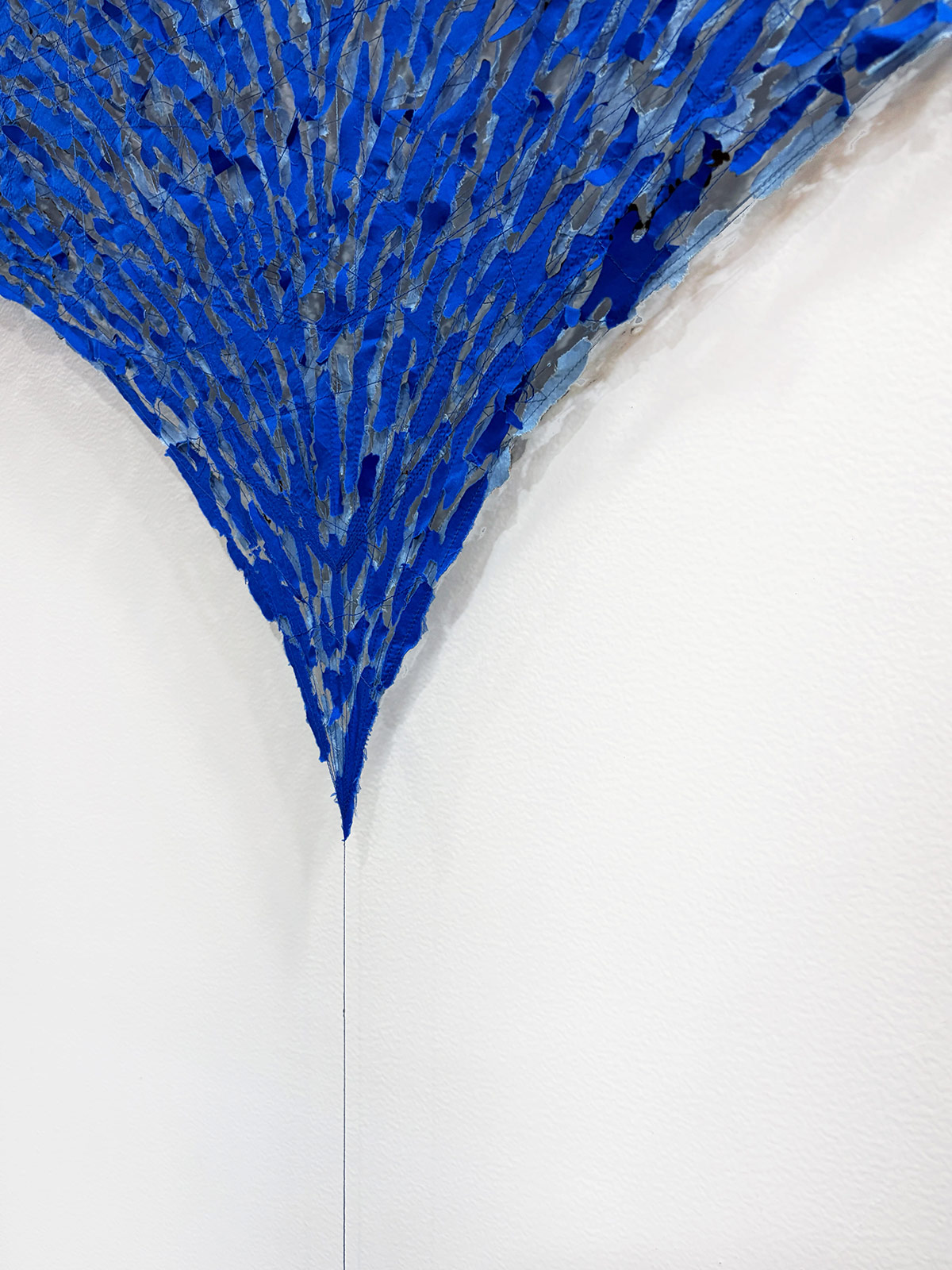
Isha Pimpalkhare_To the Limit (detail), 2025, Textile installation, 63 x 81 inches
To the Limit (detail), 2025, Textile installation, 63 x 81 inches – Isha Pimpalkhare

For Isha, her art emerges from the soft, breathing pulse of the naturalistic world. Her textile-based artistic practice deals with the balance and interdependence of the reciprocative relationship between humans and nature. Her work is mainly based on the concept of Biophilia, i.e., humanity’s innate tendency to connect with nature and other life forms. Her rudimentary textile art technique is inspired by the age-old devoré (chemical burning of cellulosic fibres). She stitches polyester thread onto cotton fabric before treating it with acid. The cotton then gradually dissolves, leaving behind a mesh of polyester threads and fragments of unburnt cotton. This meticulous procedure represents the enduring perpetuity in rhythm. Recently, she incorporated the concept of ‘Kinetic Textile sculptures’ in which she included motors and basic coding to provide a living dimension to her artwork. 

Anni Kumari_At the Threshold of Time-I, 2025, Schmincke pigment on canvas, 12 x 19 inches
At the Threshold of Time-I, 2025, Schmincke pigment on canvas, 12 x 19 inches – Anni Kumari

Meanwhile, Anni Kumari moves through the chambers of numbers, geometry, and algorithm-based logical niches. Her interest lies in structures that exist beneath the threshold of perception. Her knack lies in playing with optical illusions, number patterns, and cosmic sequences. Each work of hers forms a blueprint of existence in itself, displaying a unique representation of life under a coded format. Through repetitive patterns, strict grid lines, and vibrant centripetal and centrifugal etchings, Kumari symbolizes the vastness of the cosmological domain. 

Exhibition Details

Exhibition Details
Title Systems, Silhouettes, Synchronicities
Venue Tao Art Gallery, Mumbai
Dates November 8 to December 20, 2025
Curator Sanjana Shah
Artists Isha Pimpalkhare and Anni Kumari

Key Highlights

  • Joint showcase of abstract artists whose practices merge art, science, and philosophy
  • Exploration of natural ecosystems, mathematical logic, and cosmic structures
  • Curatorial focus on movement, rhythm, and interdependence
  • Textile works created using the devoré technique
  • Dense geometric visual fields based on numeric sequences
  • Dynamic interplay between organic silhouettes and algorithmic precision
  • Works evoke harmony within complexity, and order within abstraction

Takeaway

Systems, Silhouettes, Synchronicities at Tao Art Gallery

Systems, Silhouettes, Synchronicities is redefining its relationship with scientific thought and a more naturalistic fervour. This exhibition eloquently frames abstraction as a language for decoding the world. Both artists demonstrate that systems, whether ecological or mathematical, are not simple mechanisms but living entities. It dissolves the boundaries between what’s absolute and concretized and the emotional agility of humans.

Nelofar Currimbhoy to Unveil Her Latest Novel “Tara – The Dream Chaser” at Bikaner House

0

Book-Launch-Tara–The-Dream-Chaser-Nelofar-Currimbhoy-01

New Delhi is all set to host an evening where literature shall enlighten the chilly dusk of November. A much-anticipated literary event is about to grace Delhi as a passionate author and business leader, Nelofar Currimbhoy, launches her latest novel, Tara – The Dream Chaser. Scheduled on 11 November 2025, at the Bikaner House, this event is being organized in collaboration with Rupa Publications. Nelofar is noted for her eclectic and emotionally rich storytelling, which propounds the journey of a modern-day heroin who entailed a thrilling experience from breaking free from a royal cage and getting exposed to the chaotic freedom of Bombay. Notably, the book has already earned universal critical acclaim. 

A Celebration Marked by Words, Voices, and Artistry

A very thoughtful step is presented by the organizers, as the attendees will be greeted with a special book reading session by the celebrated veteran actor Kabir Bedi. This is not his first interaction with Nelofar’s literary work, as he previously used his voice to narrate the verses of the verse novella Eyes of the Healer, intended for a dance drama by Muzaffar Ali. This reading session shall be followed by an immersive conversation with the author herself, where she will be imparting insights on the creative process undertaken by her to fulfill the journey of creating this book. The event does not end here; it also includes an audio-visual presentation highlighting the author’s distinguished literary journey. The whole event shall sum up with an exclusive book signing session, where people will get to greet the author personally. 

Desire and Defiance

Tara- The Dream Chaser is a novel that dives into the life of Tara, a woman born into Rajput royalty who realizes that the extravagance of her life and lineage is nothing more than a prison put under the banner of royalty. Critics and early readers have extensively praised the novel for its persistent depiction of strong sentiments, such as emotional neglect, rigid tradition, and the complex choices a woman must make to claim her own life. The narrative follows Tara’s desperation to escape from a loveless, controlling marriage, which finally leads her to Mumbai. It is here in the city of dreams that Tara initiates her journey of self-discovery and healing. In the course of this tale, Tara encounters two men representing two juxtaposing paths and leaves a mark on her story. The first man is Kabir, a Bengali-French photographer who offers genuine solace, and the second one is Vivan Mehta, Bollywood’s irresistible ‘golden boy,’ who embodies passion and risk. The novel does not comfort the readers by providing easy answers, and rather exposes one’s mind to dilemmas like duty Vs desire, and freedom Vs self-restraint. 

Event Details

Event Details
Book Tara – The Dream Chaser (Novel)
Author Nelofar Currimbhoy
Date November 11, 2025
Time 6:00 PM onwards
Venue Bikaner House, New Delhi
Key Highlights Reading by Kabir Bedi, Author Talk, AV Presentation, Book Signing
Publisher Rupa Publications

Key Highlights

  • Launch event at Bikaner House, one of Delhi’s major cultural venues
  • Dramatic live reading by Kabir Bedi
  • Behind-the-scenes audio-visual insight into Currimbhoy’s writing journey
  • Tara – The Dream Chaser, selected by multiple literary festivals
  • Praise from Muzaffar Ali, Vinita Dawra Nangia, and early critics
  • Continues Currimbhoy’s tradition of blending emotional depth with narrative elegance

The Author

Nelofar Currimbhoy Author
Image Courtesy – Rupa Publications

Nelofar Currimbhoy is widely recognised as the President of the Shahnaz Husain Group of Companies, but her literary endeavors have risen steadily over the past decade. From her writings, it is quite clear that Nelofar, as a person, is steeply intuitive as she seamlessly combines both intimate and pragmatic themes in a very compelling way. Flame – The Inspiring Life of My Mother was her debut book, which tapped into the extraordinary journey of the beauty icon Shahnaz Husain. This book was both a commercial and cultural hit, with over 50,000 copies sold. It was also translated into Malayalam and Hindi. 

Her second book, the verse novella Eyes of the Healer, offered an exploration of healing and metamorphosis. It was adapted into a dance drama by filmmaker Muzaffar Ali, and narration by Kabir Bedi. And finally, Tara – The Dream Chaser, published by Rupa, is her most recent and ambitious work yet. This book has been selected by major literary forums such as the Bangalore Literature Festival (for the panel “Exceptional Heroines”) and Dehradun’s Valley of Words Festival, with discussions underway for the Kolkata Literary Festival. In the words of the renowned filmmaker Muzaffar Ali, “The story stayed with me long after I finished. It pulls the reader into a range of emotions, love, passion, and mortal weaknesses. It has a cinematic quality I recognise. An unforgettable read, I highly recommend!

Takeaway

Nelofar Currimbhoy’s stories go beyond the quality of being a spectacle to view something; it is more intensely rooted in emotional quotient. The narrative graces themes like courage, defiance, and is a reflective device for stories of women narrated by a woman. The book launch at Bikaner House dictates the arrival of a novel that will likely travel far beyond its first reading.

Re-imagining the Indigo Legacy: The Global Revival of Indigo at Hampi Art Labs

0

Hampi-Art-Labs-Exhibition

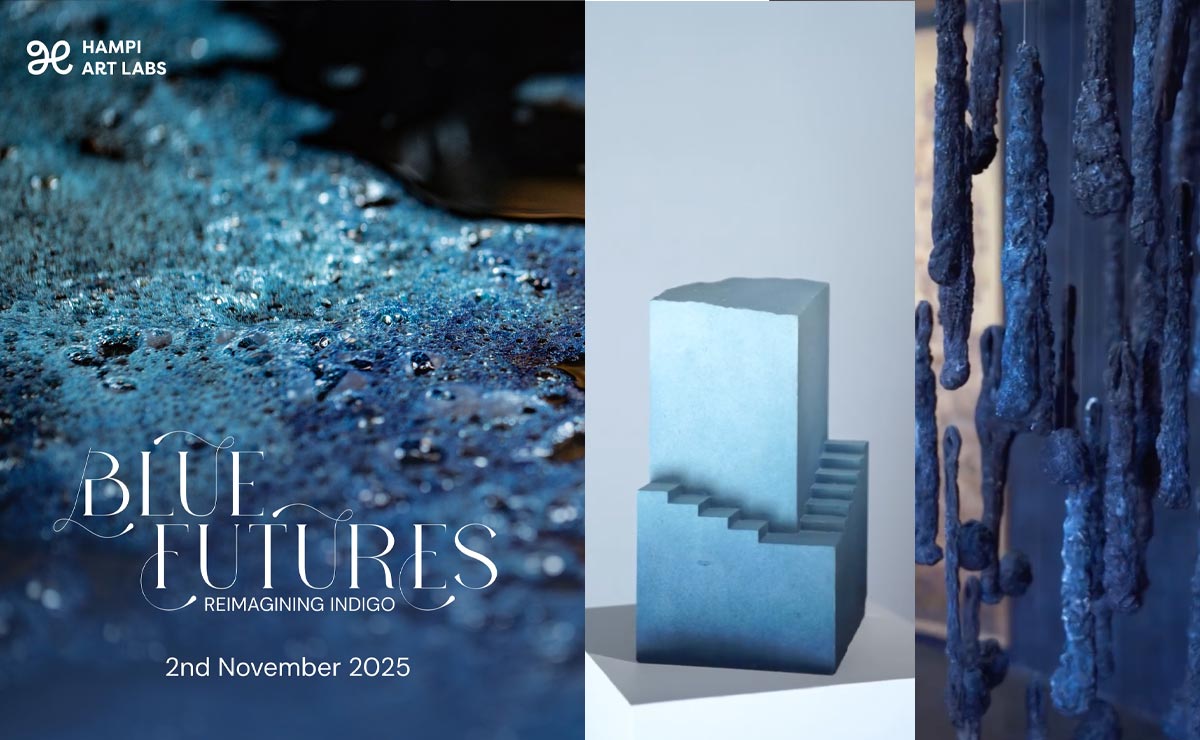
‘Blue Futures: Reimagining Indigo’ is a voyage into the root of a hue that has shaped global culture, trade, and art. Launched at the newly opened Hampi Art Labs (HAL) near the majestic UNESCO World Heritage Site of Hampi in Karnataka, this exhibition reclaims indigo’s ancient Indian heritage while channelizing it through sustainable design. Conceptualised by the JSW Foundation and inaugurated on November 2, 2025, by its Chairperson, Sangita Jindal, the exhibition marks the centre’s first in-house curatorial project. It brings together artists, dye masters, and designers from global scales to one platform. The main aim is to explore indigo as a living and evolving story, to acknowledge it as the pigment born on Indian soil and then went on to become a universal symbol of creativity. The exhibition goes beyond simple display, creating an environment that connects the deep blue pigment to ancient trade routes, ethical labour, and artistic innovation across continents.

Why Indigo?

Hampi-Art-Labs-Exhibition-1

Throughout the course of history, Indigo has always been more than a pigment. In the niche of textile traditions in South Asia (and parts of Africa and Japan) it has cultural, ritual and economic significance. In the colonial period, indigo plantations were always a source of conflict and coercion, Bengal is the most prominent example. Interestingly, one of the most widely consumed ingredients in Bengal i.e., Posto or the poppy seeds were the by-products of cultivating Indigo. Therefore, this exhibition invites the viewers to reconsider indigo as a “living medium” that once wrapped the strings of the colonial empire around it. In the context of Hampi, the “blue” represents the ancient fabric of empire, the textile towns, and de-colonised modes of production. The event also brings craft, industry and art as one subject. Overall, the suggested narrative is a stupendous study of how a natural dye can become one of the most potent catalysts of socio-economic history while continuing its dominance in the domains of art and fashion.

The Immersive Installations and Featured Artists

Hampi-Art-Labs-Exhibition-3

The Indigo Pavilion is intuitively positioned at the heart of the exhibition. It is an immersive installation where indigo-dyed fabrics are carefully arranged and placed in deep blue light, creating an essence reminiscent of the depth of water. This centerpiece truly does not fail to offer a multi-sensory experience to the spectators. Another intriguing factor of this event has to be the Indigo Alchemy Lab. It is basically an interaction section designed to feed in information regarding the lives of Indigo planters, and many more. People will get to witness the fascinating process of oxidation of the pigment. Through digital illustrations, people will also be able to trace the apt map through which the Indian hue metaphorphosized into the “blue gold” that tottered many pockets of the globe. 


View this post on Instagram


A post shared by Hampi Art Labs (@hampiartlabs)

The list of artists presenting their works is also very fulfilling. Aboubakar Fofana, one of the presenters, is a celebrated indigo dye master based in Paris and Mali, and contributes work rooted in organic processes, advocating natural dyeing. From India, Mumbai-based sculptor Manish Nai is featured, and he is known for transforming urban waste into compressed forms of art. Alongside, there is Alwar Balasubramaniam, known for his experimental works, which explore perception and material transformation. The Japanese collective Studio Buaisou also made it to the list and shows the revival of traditional indigo farming techniques. The convergence of these divergent practices breeds a fine sense of inclusivity in the field. 

Exhibition Details

Event Details
Venue Hampi Art Labs (HAL), Vijayanagara district, Karnataka (near UNESCO World Heritage Site of Hampi)
Concept & Organiser Reimagining the legacy of indigo as colour and cultural memory; an initiative of the JSW Foundation.
Curator Meera Curam, Residency Director at Hampi Art Labs.
Duration Opened November 2, 2025; scheduled to run until early 2026.
Key Thematic Focus Indigo’s evolution across India, West Africa, and Japan; sustainability, creativity, and global dialogue.

Key Highlights 

  • It offers an immersive space where indigo is experienced as identity and material.
  • “Tracing Blue” residency runs concurrently (Oct–Dec 2025), inviting practitioners working with indigo and material innovation.
  • The show brings together textile traditions, sculpture, installation and conceptual art practices under the theme of indigo.
  • With Hampi’s layered history, from the Vijayanagara empire to colonial era and industrial present, the exhibition foregrounds the idea of “legacy” in a rich terrain.
  • Indigo as material future prompts reflection on extraction, ecology and craft’s future in the Global South.

A Deeper Context

The traditions of indigo are deeply rooted in communities, ecologies and histories.With the arrangement of such a critical exhibition, a natural risk entails; the risk is to aestheticization or exoticization of the pigment without engaging meaningfully with the environment, and the socio-economic nuances. However, it aims to re-trace the cultural linkages across the Global South, creating an inclusive environment where artists can engage with the region’s craft culture while producing world-class art. By hosting an exhibition of this quality, HAL establishes its agenda to be a platform which brings about a change and connects historical legacy with international art.

Museum on the Wheels: Lalit Kala Akademi Celebrates Sukhvir Sanghal’s Legacy

0

Museum-on-the-Wheels-01

The Lalit Kala Akademi, New Delhi is hosting a solo exhibition of Prof. Sukhvir Sanghal. Scheduled to run from  6–12 November 2025 at Gallery 1 & 2, 35 Ferozeshah Road (Mandi House), this exhibition is curated by his own granddaughter Priyam Chandra. The exhibition brings together some 45 paintings spanning Sanghal’s long career. 

The Artist and His Legacy 


View this post on Instagram


A post shared by Sukhvir Sanghal (@sukhvirsanghal)

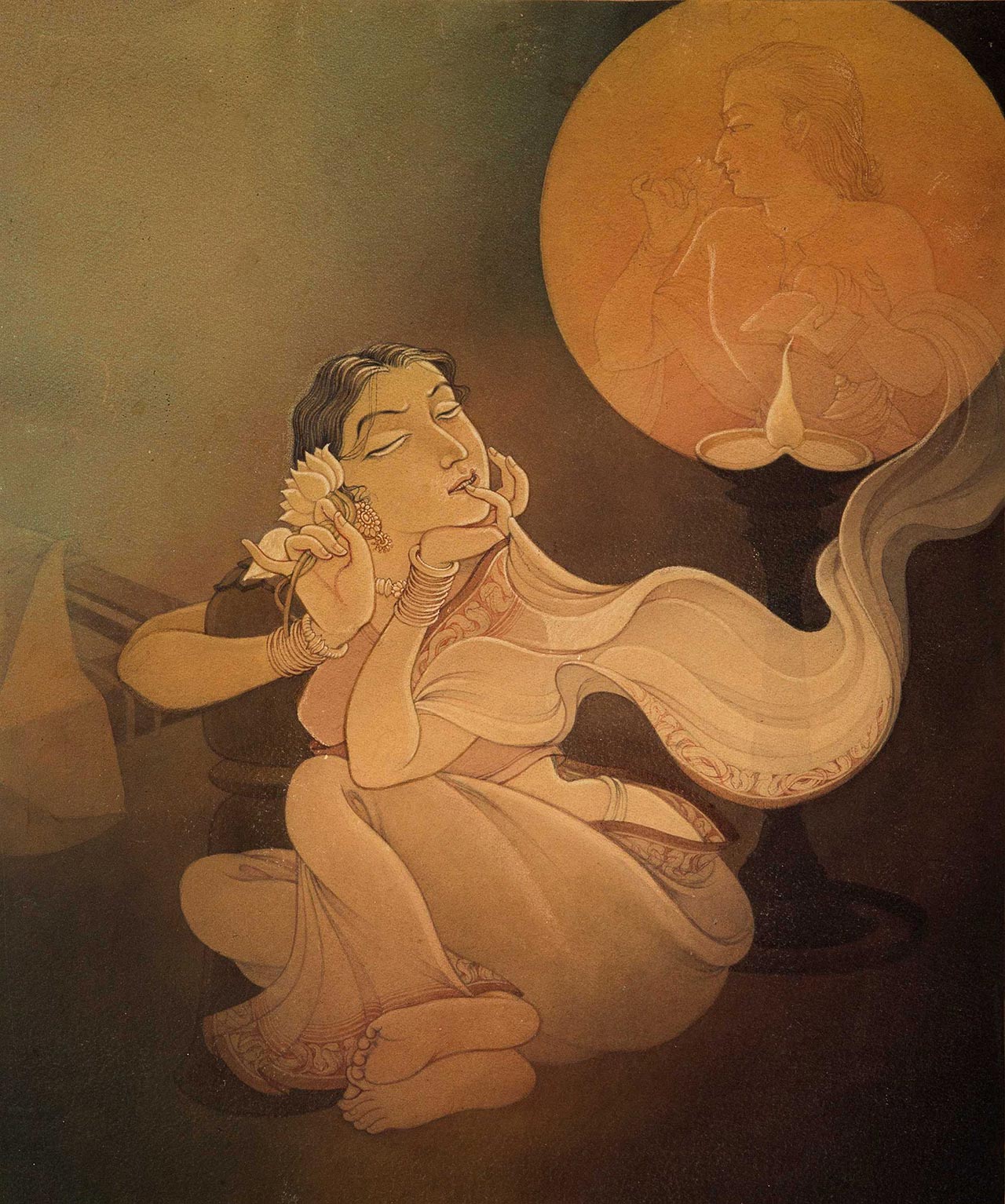
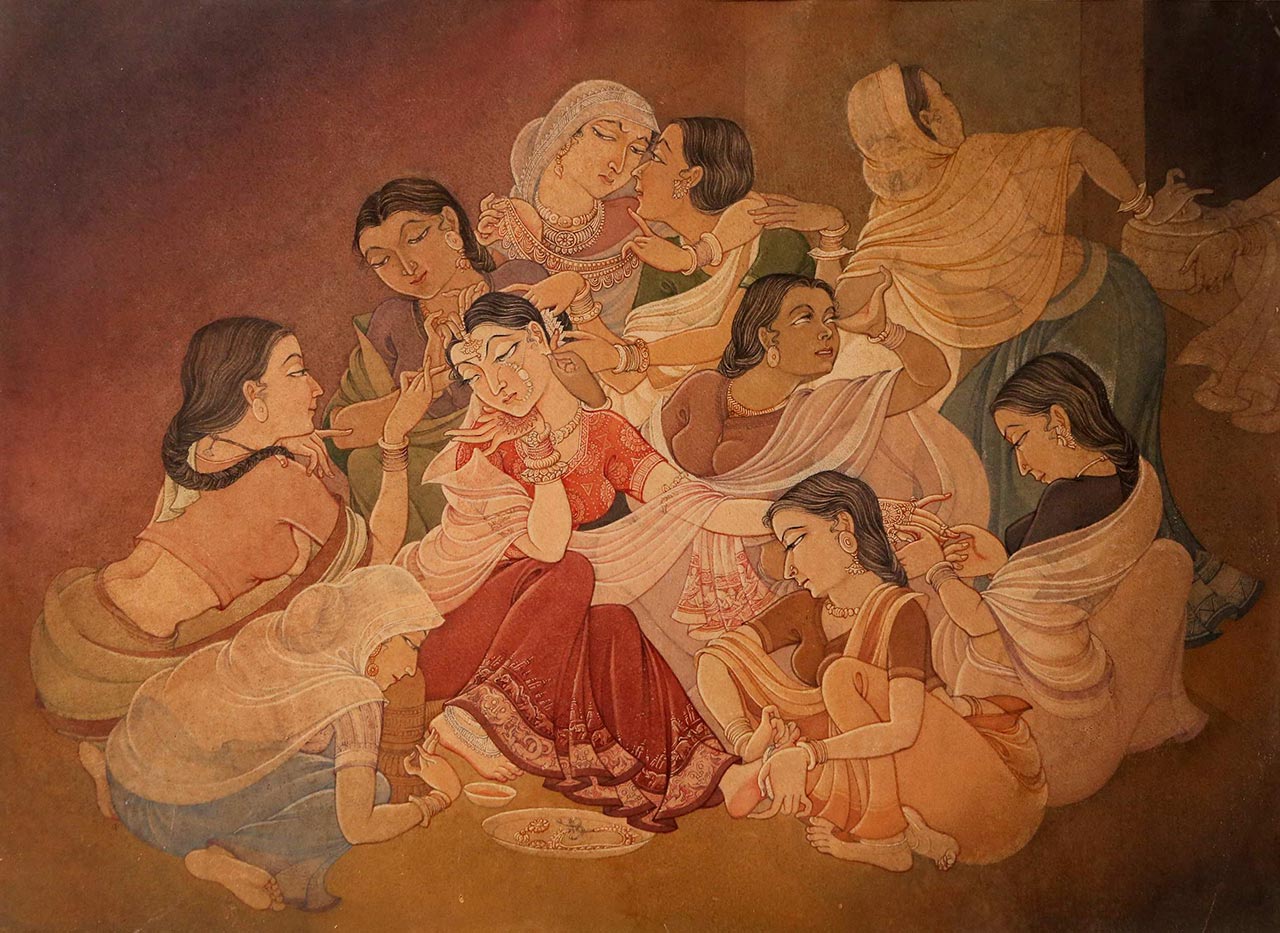
Prof. Sukhvir Sanghal (1914–2006) emerges as a major player in the twentieth-century story of Indian painting. Born in Muzaffarnagar in 1914, he received his formal training at the Government School of Arts and Crafts, Lucknow. His prime contributions lie in the Bengal School revivalists. Sanghal’s signature style is the wash technique. 

Museum on the Wheels shringaar

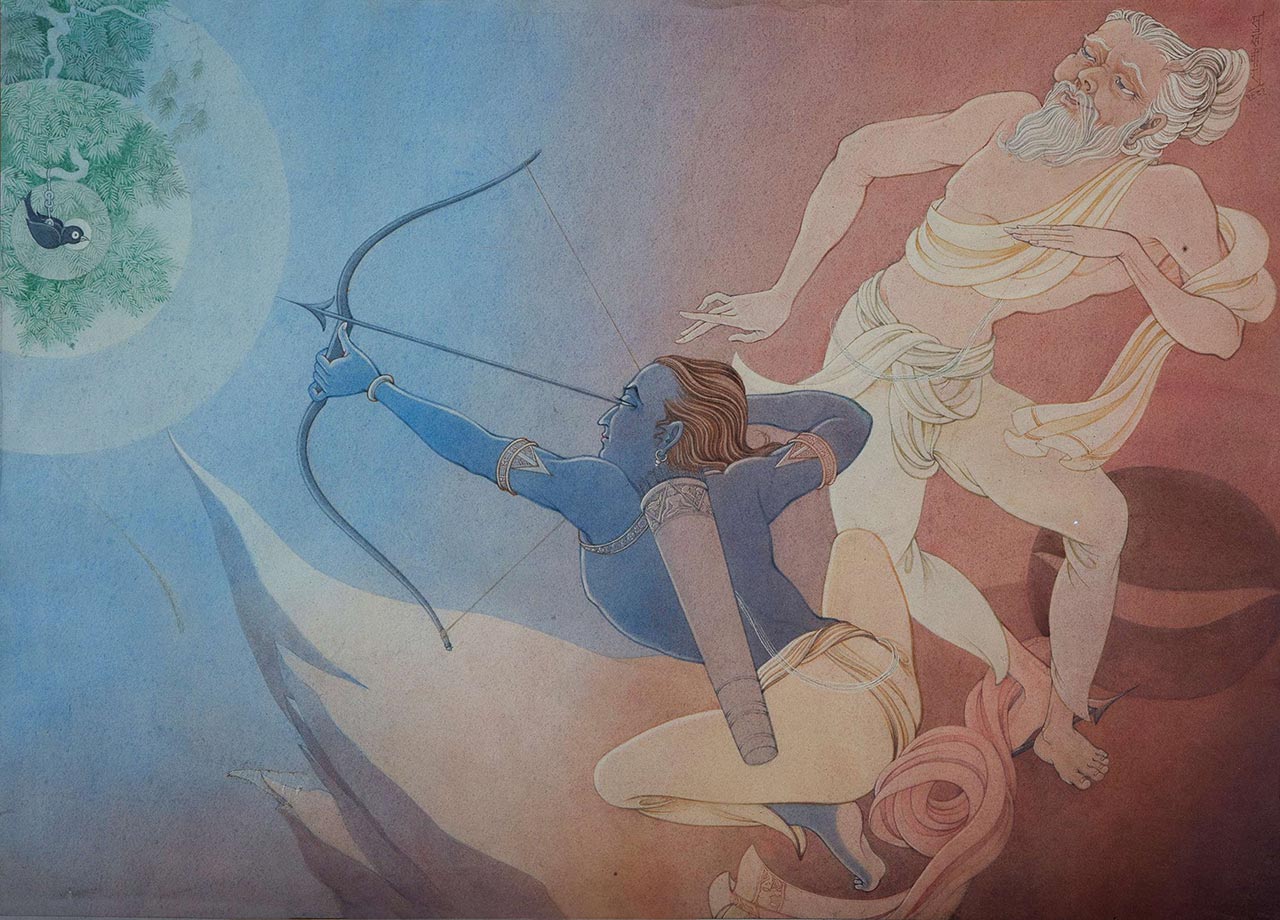
The exhibition displays plethora of series that maps Sanghal’s artistic practice. The series include River of Life, Phases of Life, Marriage, Arjuna as an Ideal Man, Indian Life, Ramcharit, and Kashmir Landscapes. These series minutely traces his frequent use of the wash technique, and the i.e., using thin layers of translucent pigments that create a gentle atmosphere in the canvases referring to Indian narrative content and rasa theory. The collection also includes pictographic tales embroidered on khadi, watercolour on wood and silk, and experimental works in sculpture and leather. 

arjuna_as_a_concentrated_archer

In his illustrious career, and Sanghal earned numerous institutional Honours. His paintings like Thou Art Dust, Dust Returnest, etc., have entered a royal collection. Interestingly, Sanghal was commissioned (at Jawaharlal Nehru’s request) to design Indira Gandhi’s wedding invitation in the early 1940s. All these facts confide with the essence of why curators are still keen to revisit his work and exhibit those to the public specs. 

Exhibition Details
Exhibition title Museum on the Wheels
Artist Prof. Sukhvir Sanghal (1914–2006)
Venue Gallery 1 & 2, Lalit Kala Akademi, 35 Ferozeshah Road, Mandi House, New Delhi.
Curator Priyam Chandra (granddaughter of the artist)
Dates & timings 6–12 November 2025; 11:00 AM – 7:00 PM daily.
Curator & provenance Curated by Priyam Chandra (granddaughter); works sourced from family holdings and institutional collections.
Historical importance Practice connects Bengal School idioms with Japanese-influenced wash technique; teaching legacy at Kala Bharti and Lucknow.
Notable recognitions National awards, regional retrospectives, and references to royal/official acquisitions.

Key Highlights 

Museum-on-the-Wheels-02

  • A rare nucleus of 45 paintings and tapestries tracing Sanghal’s thematic series and formal experiments. 
  • Prominent inclusion of khadi tapestries and wash paintings that demonstrate a sustained commitment to traditional materials and techniques. 
  • Curatorial framing by a family member (Priyam Chandra) that aims to situate the work both biographically and pedagogically. 
  • Inaugural presence of leading cultural figures and museum professionals—an indicator of renewed institutional interest in Sanghal’s oeuvre. 
  • Archival claims (royal acquisition, design commission) that add narrative weight but also invite closer provenance checks by scholars and curators. 

Why this Matters? 

Museum-on-the-Wheels-03

Museum on the Wheels is  an act of  gentle reintroduction of Sanghal’s works at the intersection of  Indian painting and the use of an impeccable wash technique that creates figures almost dissolved into mood rather than hard outline. His paintings brings textiles and gestures to life with nuanced observations and minute detailing executed with precision. Because the works often come in series, they function like short epics. There are small sequences that convey commentaries on social rites, morality and landscape. For viewers, who are used to the contemporary canvases, Sanghal’s works demand patience. His art affected the Bengal School in a profound manner and sought to synthesize the indigenous aesthetics with foreign techniques. 

Takeaway

Museum on the Wheels imparts an important work by foregrounding craft, pedagogy and continuity.  That said, the exhibition is expected to gain further scholarly clout if curators paired the family’s curation with a published catalogue that documents his works meticulously. For now, the exhibition offers an intimate encounter with an artist who turned patience into technique and storytelling into a visual ethic. Thus, this exhibition is definitely worth a visit.

Lucknow Earns UNESCO Creative City of Gastronomy Tag for Awadhi Cuisine – Here’s Why

0

Lucknow Earns UNESCO Creative City of Gastronomy Tag-01

On October 31, 2025, at the 43rd session of UNESCO’s General Conference in Samarkand, Uzbekistan, on World Cities Day, UNESCO formally ascribed Lucknow to its Creative Cities Network as a Creative City of Gastronomy, situating Uttar Pradesh’s capital on the global scroll of international cities with a living culinary tradition. This is a global recognition and acknowledgement of the city’s rich culinary heritage. Following Hyderabad, Lucknow is the second Indian city to join this elite global network in the gastronomical category. The badge that has been conferred upon the city is a celebration of its century-old tradition and a thriving community of food artisans, and a commitment to using food as a driver for sustainable urban growth and international exchange. With Lucknow becoming a recipient of this accreditation, the city now holds more responsibilities to protect and promote its culinary knowledge and empower small-scale producers and vendors to align themselves with the global food nexus. 

Suggested Story: 10 Lucknow Food Delicacies that Will Make You a Foodie for Sure!

The Historical Roots of Awadhi Gastronomy

The Historical Roots of Awadhi Gastronomy

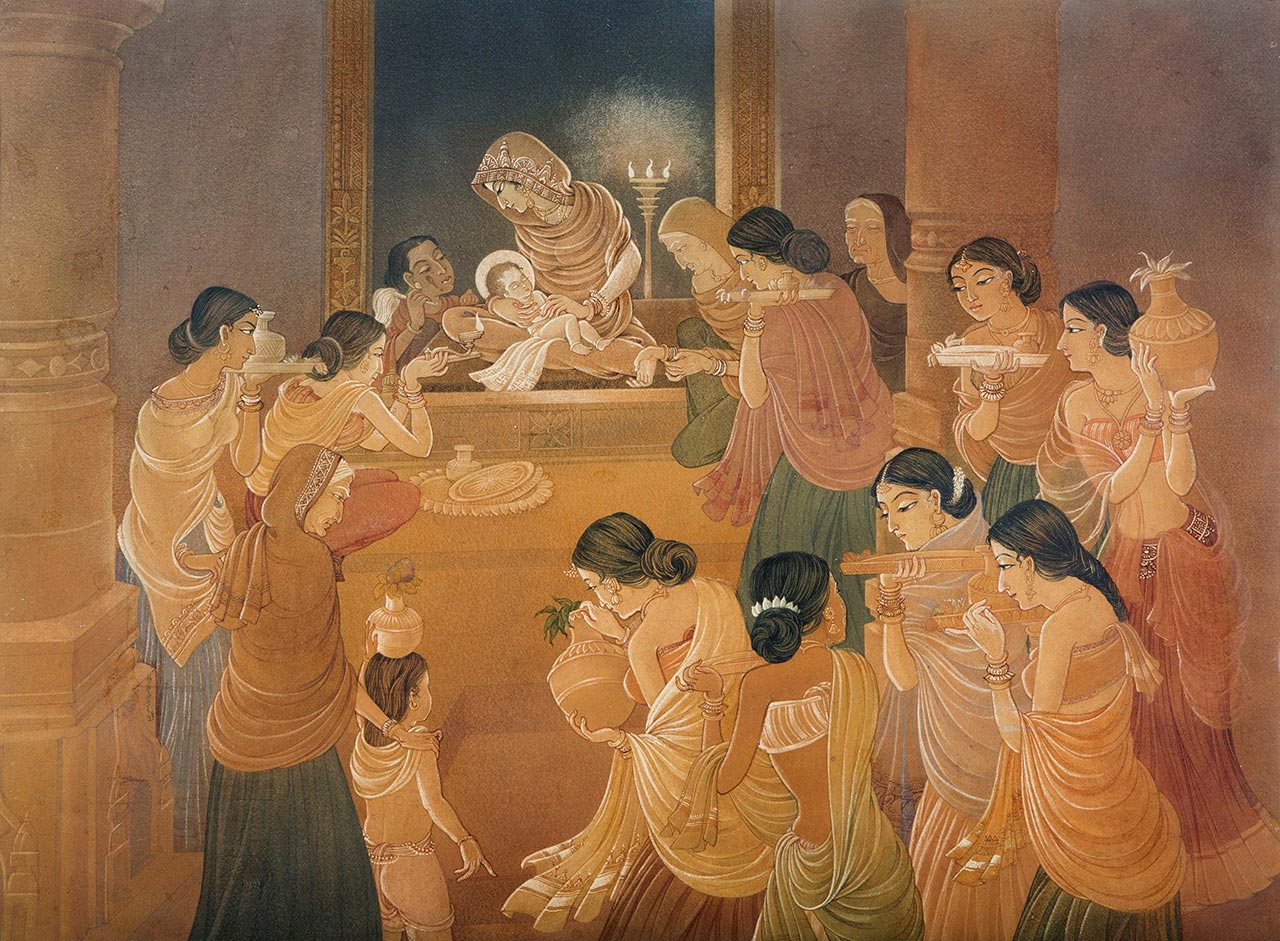
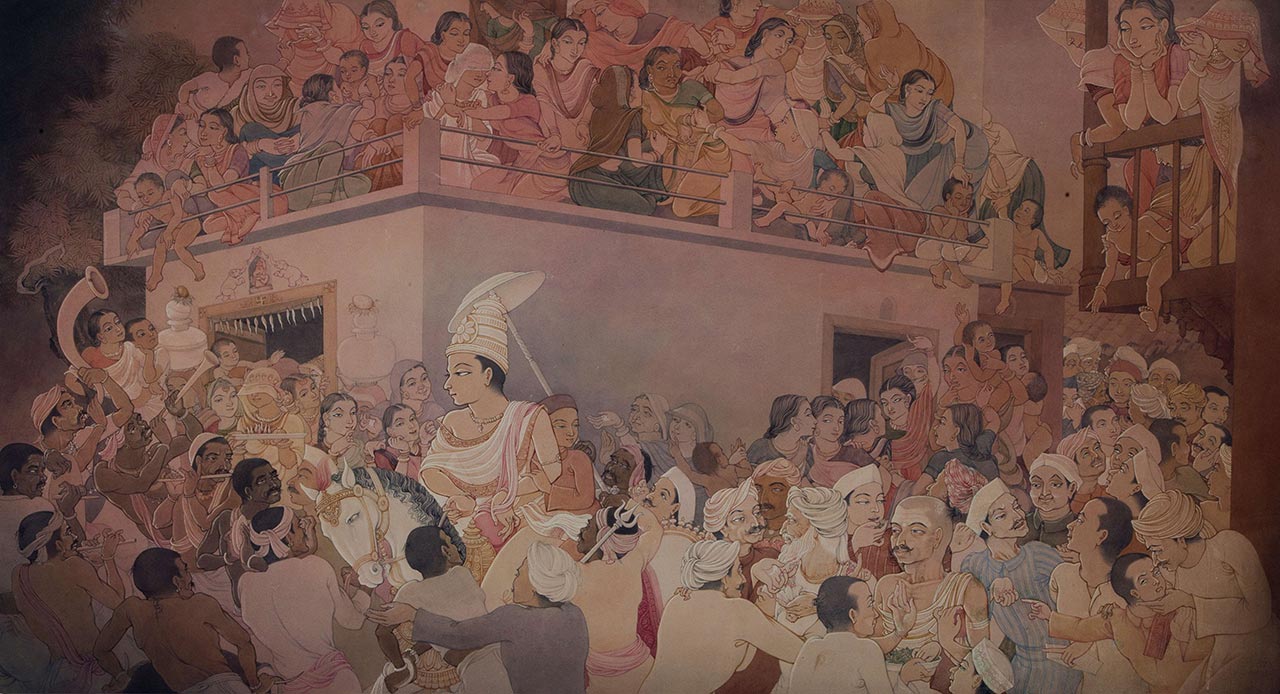
To inquire about the reasons for choosing Lucknow, one must trace its history to Oudh. The distinctive rise of the Awadhi cuisine occurred because of the patronage of the Nawabs of Awadh from the 18th century onwards. The distinctiveness of this cuisine lies in the assimilation of Persianate courtly culinary practices with Indian ingredients, techniques, and preferences. The Nawabs, known for their refined tastes and patronage of arts, paved a path for the metamorphosis of cooking from a necessity to a craft known as rakabdari. The royal kitchen produced slow-cooking techniques, notably the dum pukht, literally, ‘to breathe and to cook’,  layered with spices, resulting in dishes with seamless texture and balance of flavours; this is the hallmark that continues to be Lucknow’s signature repertoire. This technique involves sealing compact ingredients in a heavy base vessel, such as a handi, and cooking for hours on a low flame. While Mughal cuisine involved heavy use of spices and nuts, the Awadhi cuisine is more oriented towards a nuanced use of spices for the purpose of infusing its delicate flavours and texture in the food. 

Lucknow cuisine unesco tag

Well, the legend of the origin of this cuisine is connected to a benevolent king who was concerned about feeding his subjects during a harsh famine. He is said to have ordered the workers to cook the food in sealed vessels to preserve heat and flavour, and the resulting dish was so exquisite that it actually turned out to be a royal staple. Lucknow is rightly often described as a place whose food is fit for the kings. A plethora of Kebabs, Sheermal breads, biryani, and desserts are often associated with “Lucknawi” taste. The exquisite kebabs are the result of the contribution of the royal chefs, the Khansamas. The most famous among the kebabs is undoubtedly the Galouti Kebab. The melt-in-the-mouth experience, and the striking flavour of a blend of over 100 spices, is truly unmatched. This delicacy was created for a Nawab who had lost his teeth, but his love for meat remained. 

Lucknow-Culture-Final
Cilture of Lucknow

Another interesting instance is attested to the Kakori Kebab, which is said to have been invented when a British officer criticized the rough texture of the Seekh Kebab. The royal master chef, known as the rakabdar, of the Nawab of Kakori, created a softer version using of it by using a specific cut of mutton, raan ki machhli, and adding khyoya for smoothness. The Seekh Kebab, on the other hand, is the local adaptation of the traditional Central Asian shish kebab that was refined in the Nawabi kitchens and was given a more smoky and grilled texture with a spicier taste. 

This list can not end without mentioning the Yakhni pulao, also known as the Awadhi Biryani. This version is subtle as compared to its southern counterparts and emphasizes more on a delicate aroma and balance of flavours rather than a zesty use of spices. Other signatures of the region include Nihari, a slow-cooked mutton stew; Sheermal, a saffron-flavoured mild sweet naan; and the Shahi Tukda and Malai Gilori, desserts that incorporate milk, saffron, and dry fruits. 

Decoding the Tag

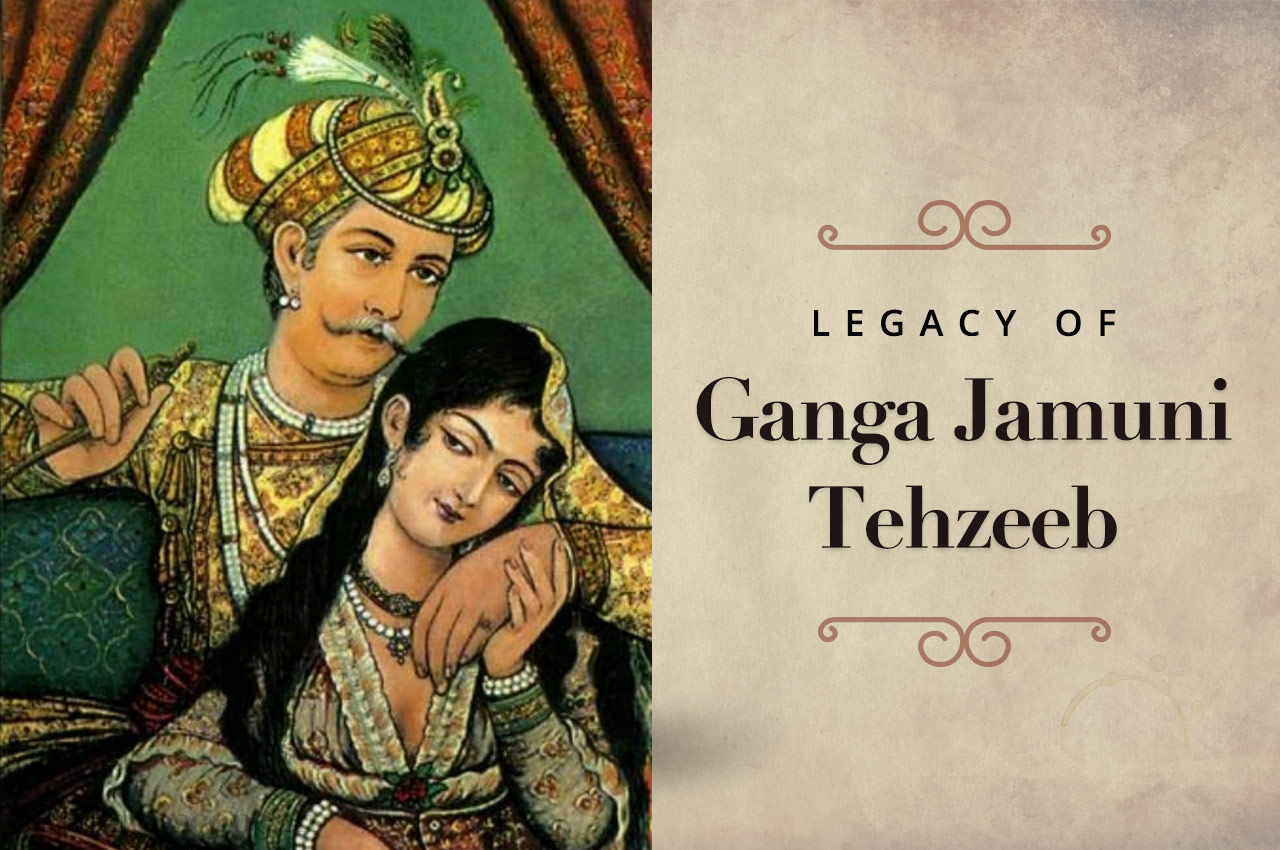
Ganga-Jamuni-Tehzeeb-01
Image – Wikimedia

UNESCO’s Creative Cities Network does three practical things: it recognizes the city’s creative and cultural assets, opens doors to international cooperation and exchange, and provides better scopes for funding & partnerships. Thirdly, it also asks member cities to deliver and report on actionable programmes such as documentation, education, vendor support, food safety, and sustainable sourcing, among them. The nomination dossier prepared by Uttar Pradesh Tourism Directorate and the Ministry of Culture surpasses the royal kitchens. Over 20,000 street food vendors and home-based female chefs’ voices were recorded. This culmination reached 70,000 recordings and was basically intended to showcase the inclusive food culture that runs through the throbbing pulse of the city. It is a beautiful demarcation of the Ganga-jamuni Tehzeeb, or the fusion of Hindu-Muslim cultures that still binds the city in the threat of unity. Famous street food like the Tokri Chaat and desserts such as Ram Asrey were also recognized as vital components of the foodscape of Lucknow. With opportunities also come obligations. The tag amplified Lucknow’s responsibility to protect its food from concrete commercialization, which could completely strip off its essence. 

Government Response and National Significance

The Government of India and Uttar Pradesh authorities welcomed the recognition with open arms and also considered it a major cultural milestone. As the Prime Minister’s Office (PIB) published the Prime Minister’s message welcoming UNESCO’s decision and calling the designation a reflection of Lucknow’s “vibrant culture,” whose core includes its culinary traditions. The UN India mission also highlighted that Lucknow has become the second Indian city to be formally recognised in the gastronomy category, joining Hyderabad, which UNESCO designated in 2019, hence recognizing India’s zealous presence in global gastronomy. 

Challenges to Anticipate

A UNESCO tag definitely raises expectations. Cities are likely to face tensions between booming tourism and daily life. The prudentiality of the real gains will rely heavily on policy choices, such as inclusive programming, heritage documentation, support for entrepreneurs, food safety training, and incentives. UNESCO membership provides the stage of upliftment, but it is the local governance that must transform this recognition into livelihoods. 

Lucknow Cuisine Key Points
Designation UNESCO Creative City of Gastronomy, announced on October 31, 2025 (World Cities Day).
Significance Lucknow becomes the second Indian city after Hyderabad to earn this prestigious global culinary title.
Core Cuisine Awadhi cuisine — celebrated for refinement, balanced flavors, and delicate cooking methods rooted in Nawabi traditions.
Signature Technique Dum Pukht — a slow-cooking method sealing ingredients for rich aroma and texture, symbolic of Awadhi mastery.
Iconic Dishes Galouti Kebab, Kakori Kebab, Awadhi Biryani, Nihari, Sheermal, Tokri Chaat, and Shahi Tukda.
Inclusivity Highlights Lucknow’s Ganga-Jamuni Tehzeeb, uniting royal kitchens, home chefs, and over 20,000 street food vendors.
UCCN Criteria Met UNESCO benchmarks for heritage preservation, creative sustainability, and global cultural exchange.
Impact Elevates Lucknow’s global stature, encourages sustainable gastronomy, and promotes culinary tourism and livelihoods.
Key Highlights • Announced during UNESCO’s 43rd General Conference in Samarkand.
• Recognizes Awadhi cuisine as a living cultural asset of global value.
• Connects Lucknow to international food collaborations and exchange programs.
• Welcomed by the Government of India as a symbol of national cultural pride.
• Promotes sustainable food practices and heritage documentation.
Takeaway Lucknow’s UNESCO Gastronomy title honors its royal kitchens and vibrant street food culture, while urging sustainable preservation of culinary heritage for future generations.

Key highlights 

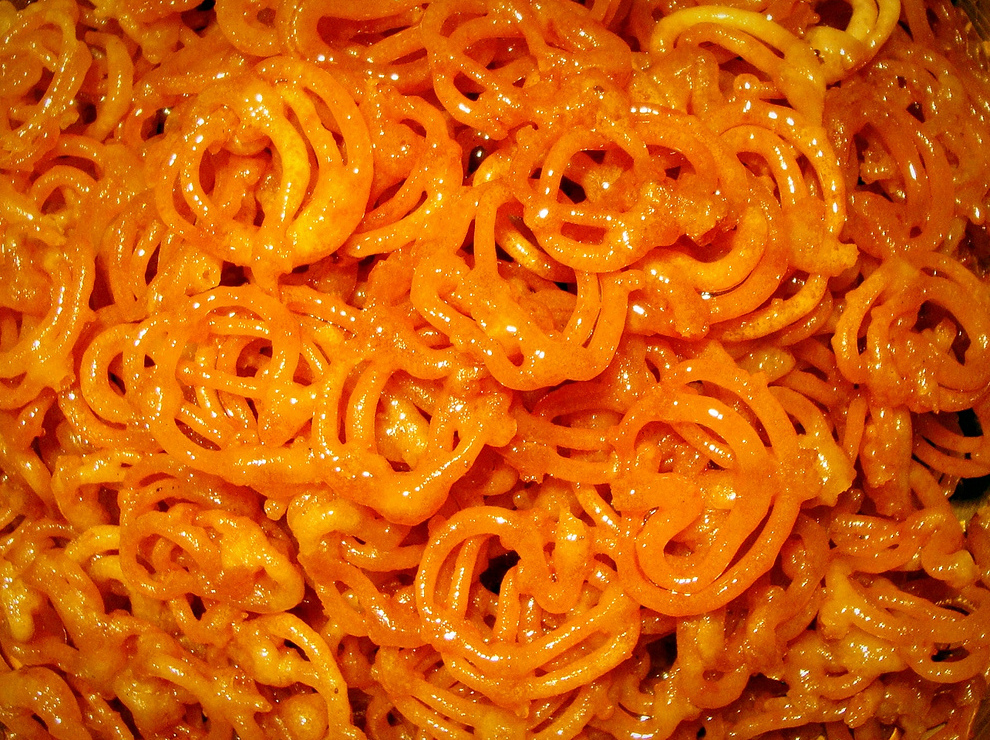
Awadhi_jalebi
Awadhi Jalebi – Wikimedia
  • UNESCO announced Lucknow’s inclusion on World Cities Day 2025, in a 58-city expansion of the Creative Cities Network.
  • The inscription recognises Awadhi cuisine, dum cooking, kebabs, biryani, kormas, breads, and sweets as a living cultural asset documented by national cultural programmes.
  • The designation formally connects Lucknow to global exchange platforms, technical support channels, and collaborative projects oriented to sustainable food culture.
  • The Government of India publicly welcomed the tag and framed it as a matter of national cultural pride.

Takeaway

The UNESCO Creative City of Gastronomy designation is undoubtedly a triumphant moment as it rightly validates the historical depth of Awadhi cuisine. However, the true victory lies in the future. This tag is a call for action for the city’s government, chefs, and citizens alike to reframe food as a domain of cultural knowledge and creativity. The city must ensure that the wave of tourism and commercialization is judiciously managed to empower the people toiling around fire and creating delicacies, protect the indigenous ingredients, and preserve the culinary techniques. Lucknow’s food is a breathing museum; its status as a Creative City must ensure that it continues as unadulterated, for centuries to come.

FAQs on Lucknow’s UNESCO Creative City of Gastronomy Tag


Question: When and where was the designation announced?

Answer: UNESCO announced Lucknow’s designation as a Creative City of Gastronomy on 31st October 2025 (World Cities Day), during the 43rd General Conference in Samarkand, Uzbekistan. The announcement included 58 new cities joining the UNESCO Creative Cities Network.

Question: What part of Lucknow’s food culture did UNESCO recognise?

Answer: The recognition celebrates Lucknow’s living Awadhi culinary traditions — its recipes, techniques, and cultural practices connecting palace kitchens, household cooks, and street vendors. These traditions form a vital part of India’s documented food heritage.

Question: Is Lucknow the first Indian city to get this tag?

Answer: No. Lucknow is the second Indian city to be designated a UNESCO Creative City of Gastronomy, following Hyderabad, which earned the recognition in 2019.

Question: Does the UNESCO tag bring funding or automatic protection?

Answer: The designation itself does not include direct funding or protection. However, it offers access to international cooperation, cultural partnerships, and technical exchanges. Governments can leverage the platform to create support schemes for culinary heritage preservation and sustainable development.

Question: How can local vendors, cooks, and communities benefit?

Answer: The benefits depend on inclusive city policies. Initiatives such as oral history documentation, food safety training, micro-grants, and local branding can empower small producers. The UNESCO network enables Lucknow to collaborate globally and adopt best practices for heritage-based livelihoods.

Ticket Tika Chaap: MAP Bengaluru Explores the Art of Colonial Textile Branding

0

Ticket-Tika-Chaap-Exhibition

The story of global trade is often narrated through economic policies, ledgers, and cargo manifests, but ironically, in the colonial phase in India, it was more rooted in small articles, paper labels, etc. The exhibition “Ticket Tika Chaap: The Art of the Trademark in the Indo-British Textile Trade,” at the Museum of Art & Photography (MAP), Bengaluru, dives deep into such forgotten artifacts as glossy, postcard-sized paper labels, known as tikats, tikas, or chaaps, that were affixed to lengths of British and Indian mill-made cloth sold across the Indian subcontinent from the late 19th to the mid-20th century. These small labels bore the footprint of the economic empire of the colonialists and also became a means to reflect on the nature of political ideologies that existed at that time. Scheduled to run till February 15, 2026, this exhibition is curated by Nathaniel Gaskell and Shrey Maurya. 

The Birth of Branding on the Subcontinent

In the late 19th century, the British products of the textile mills in Manchester flooded the vast Indian market with millions of yards of machine-spun cotton. While this reflected the affluence of British goods in India, it also posed a commercial issue of how a merchant could distinguish their mass-produced bale of cloth from that of a competitor. The Indian market was indeed a booming sphere. Still, the majority of people purchasing the British goods were illiterate, and thus a presentation of visually relatable hallmark was the need of the hour. The solution that they came up with was creating a textile ticket

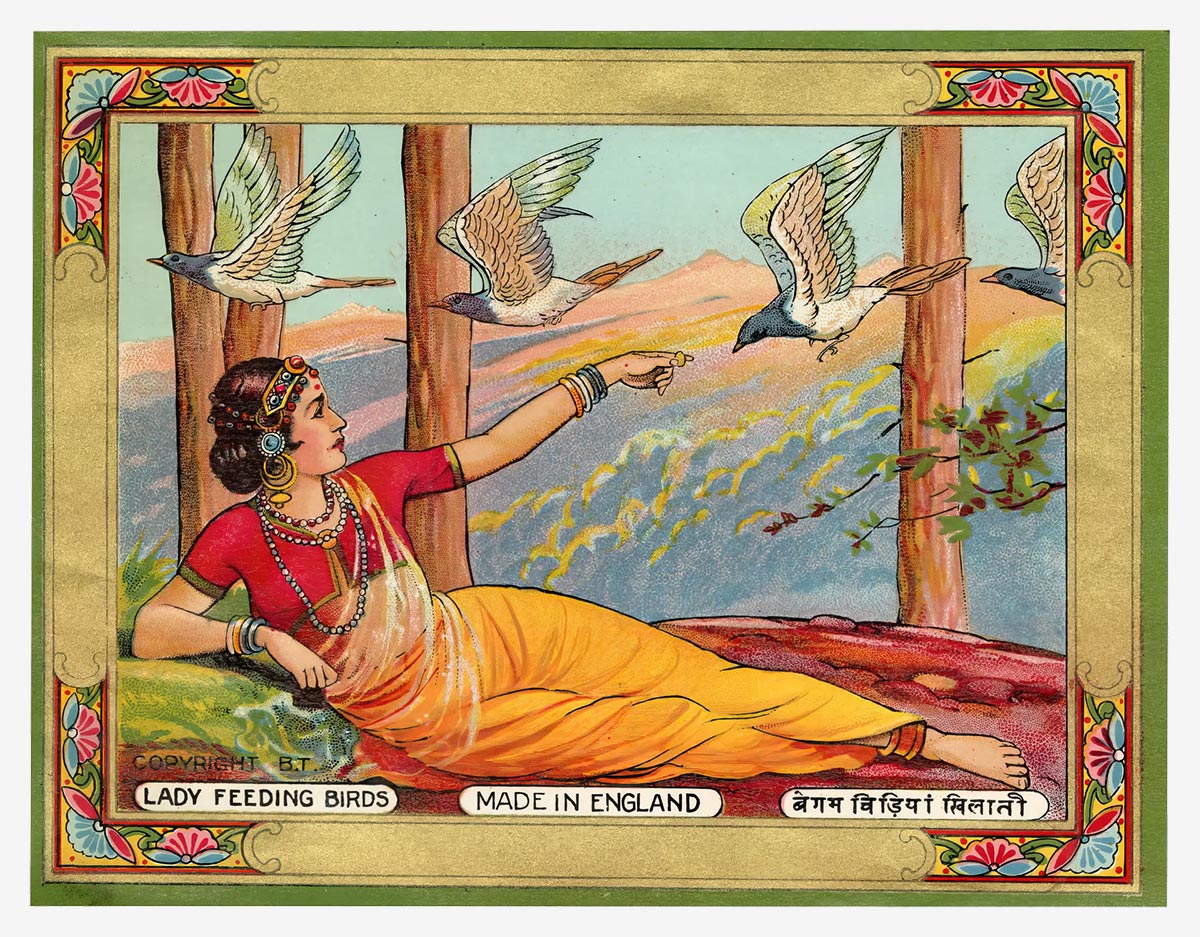
At first glance, the tikat is no larger than a postcard. These were printed in beautiful chromolithography, a brand-new colour printing technology that revolutionized printing in the 19th century. Tags like “Made in England” or the maker’s watermark were also mentioned in these tickets to distinguish the products from others available on the market. Through this exhibition, MAP attempted to situate these little tokens of history in the intersection of economic and socio-political history of colonial India. The labels were stuck on the topmost layer of a cloth, and they displayed information about the quality and origin of the fabric, transforming the act of purchase into an emotional exchange.

The motive of deploying these printed labels was to create a mass appeal across regions, religions, and people who spoke different tongues. By seeking the shelter of devotional imagery, imperial symbols, romantic scenes, and local motifs, the Britishers attempted to sanitize the notion of their products being “foreign” and package them in an Indian way, and let the  Indian masses consume them. Through these ways, they made their products appear more relatable, appealing, legitimate, and desirable to the Indians. Thus, the Chaaps were foundational to India’s consumer culture, post-colonial studies, and global history of trade. 

Desire or Deception?

The labels were a successful drive of visual diplomacy. Motifs of these labels ranged widely, often incorporating Hindu deities like Lakshmi (the goddess of wealth) and Saraswati, mythological scenes, portraits of Maharajas and British monarchs (sometimes seated on top of the world to symbolize colonial power), Indian monuments like the Taj Mahal, and exoticized images of women in lush gardens. In the opinions of scholars and critics, these Tikats and Chaaps were powerful colonial instruments that helped in ‘naturalizing’ the incoming influx of mill cloth into markets that were built on centuries of handloom production. Thus shaping of Indian consumer identity was made through making Indians consume foreign goods, packaged in Indian form. 

These designs often involved explicit cultural appropriation or intellectual copying. Research reveals instances where ticket artists in England drew inspiration from sources including Indian miniature paintings, calendar art, and even contemporary American paintings. A label that replicated a scene by American artist Maxwell Parrish replaced the figures with women draped in a sari for the Indian market. This propounds the fact that the world of advertising operated on the principle of effective, albeit culturally uncontextualized, persuasion.

Threads of Empire and Resistance

As post-colonial scholars have rightly highlighted, the bright images actually conceal the dark economic reality of Britain’s cotton dominance, which was secured through high tariffs and coercive Company practices that dismantled India’s own handloom industry. One famous ticket, for the firm Shaw Wallace & Co., depicted the connection between “England” and “India” as a bridge formed by the company’s name, showing half-naked Indian men weighing massive quantities of textiles, dissipating the message that it was their backbreaking effort, not the white merchants’, that sustained the connection. 

During the growing nationalist and Swadeshi movement, Indian mills began using labels that proudly featured Indian historical figures, sacred sites, and national symbols, appealing to consumers to support domestic production and protest against the consumption of foreign goods. This way, a colonial marketing tool transitioned into an emblem of national resistance. 

Event Details

Event Details
Title Ticket Tika Chaap: The Art of the Trademark in Indo-British Textile Trade
Venue Museum of Art & Photography (MAP), Bengaluru
Dates On view until February 15, 2026
Timings 10:00 AM – 6:00 PM (Closed on Mondays)
Curators Nathaniel Gaskell and Shrey Maurya
Organised By Museum of Art & Photography (MAP), Bengaluru, in partnership with Bank of America
Theme Exploring 19th–20th century textile labels (tikats, tikas, chaaps) as early forms of branding, visual art, and cross-cultural communication in colonial India.
Medium Chromolithographic prints on paper — used as textile labels on British and Indian mill-made cloth.
Official Website https://map-india.org

Key highlights

  • The exhibition reframes tickets as early brand artifacts that shaped consumer perception in colonial India.
  • Designs range from devotional imagery to imperial iconography, revealing how producers negotiated cultural difference.
  • MAP pairs the show with public programming (guided walks, printmaker perspectives) and a substantial catalogue/book.
  • Accessibility and inclusion are foregrounded: audio descriptions, ISL videos, and wheelchair access are part of the museum offering.

Reading the labels today

These labels display a continuity as contemporary brands and garment labelling still perform crucial tasks, as they build emotional associations between product and purchaser. The tickets are linked to the language of trust and offer a brand’s statement on fashion, labour, and transparency. 

Takeaway

By bringing one of the most rudimentary materials from history, and presenting those before the masses does two things. It reimagines the neglected visual archive, and secondly, it reminds the audience of the persuasion that often happens at the scale of the intimate and the ornamental. By blending the sacred with the commercial and the colonial with the local, the textile ticket laid the foundations of mass visual communication in India. In the era of fast fashion and rebranding, the Chaap continues to signify a story that goes beyond the product.

Art Mumbai 2025: Black Cube Gallery Showcases Modern to Contemporary Artworks

0

ART-MUMBAI-2025-01

Sanya Malik, the visionary Founder of Black Cube Gallery, is set to presents a showcase that brings together a remarkable selection of Modern and Contemporary artists in the 2025 edition of Art Mumbai. Scheduled from 13 to 16 November 2025, at the Mahalaxmi Racecourse, Mumbai (Booth C41), the gallery platform lists an exceptional roster of artists bridging Indian modernism and contemporary practice. The exhibition will feature modern masters like Krishen Khanna, Himmat Shah, and Madhvi Parekh, alongside contemporary voices such as Phaneendra Nath Chaturvedi, Paul Kuntze, and Yashika Sugandh. This synchronization of artistic ethos dismantles the ramparts bounding the traditional ‘white cube’ spaces and promotes inclusivity and diverse practice of artistic engagement. 

A Dialogue Across Generations

Thota-Vaikuntam-(Lapel-pin)

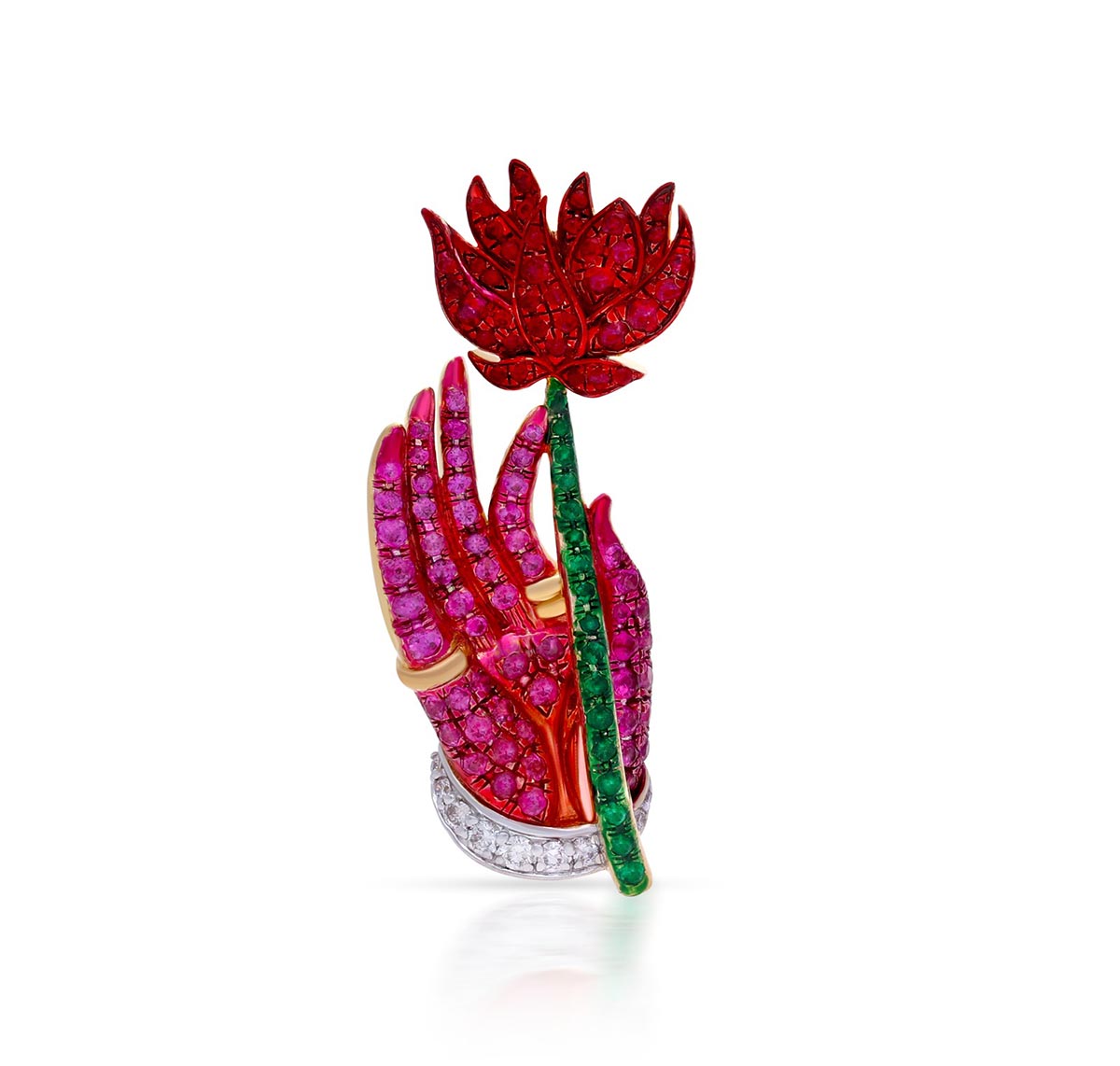
The gravitas of the legacy of the Progressive Artists’ Group is very well anchored in the vibe of this event. The work of Krishen Khanna offers a deep emotional perspective, as his work is noted for its poignant portrayals of humanity and social commentary. Similarly, Himmat Shah’s contributions, often monolithic and resonant bronze sculptures, present timeless explorations. Madhvi Parekh’s works add more intensity to it. Her folk-inspired yet fiercely contemporary visual language is rooted in memory, mythology, and her early rural experiences in Gujarat. Complementing all of them stands Thota Vaikuntam, whose work is noted for the vivid depictions of rural Telangana.

A-Throne-of-a-Thousand-Wings-_-Acrylic-and-Silk-Embroidery-on-Canvas-_-48-x-36-Inches-2025
A Throne of a Thousand Wings

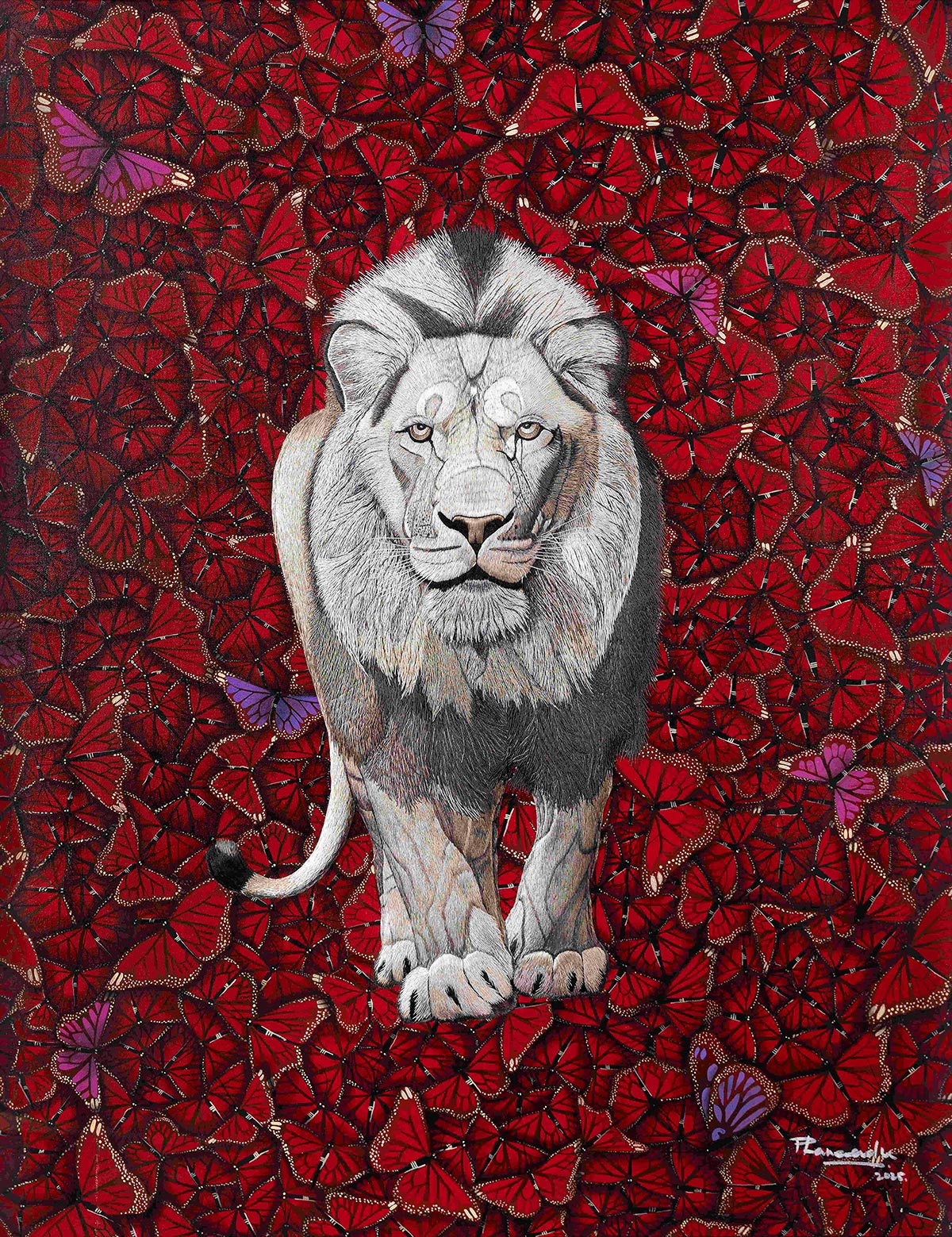
On the contemporary edge, Phaneendra Chaturvedi is building a niche with works that interrogate the human condition through allegories. Yashika Sugandh’s functional art adds yet another layer, as she describes how art infuses life, and life reflects art. As Sanya Malik has said, the goal is to break down barriers of accessibility, to host “spaces that adapt and shift” according to the art, rather than expecting the art to conform to rigid gallery norms.

Event Details

Event Details
Title Art Mumbai 2025
Event Dates 13–16 November 2025
Location Booth C41, Mahalaxmi Racecourse, Mumbai
Curator Sanya Malik, Founder of Black Cube Gallery
Core Theme Dialogue across generations, mediums, and materials; bridging tradition and innovation.
Mediums Featured Painting, Sculpture, Embroidery, Jewellery, Functional Art

Key Highlights

Krishen-Khanna--Santosh-Kumar-Been-Walla-(49-x-23-x-27_)-patinated-bronze
Been Walla by Krishen Khanna, Santosh Kumar
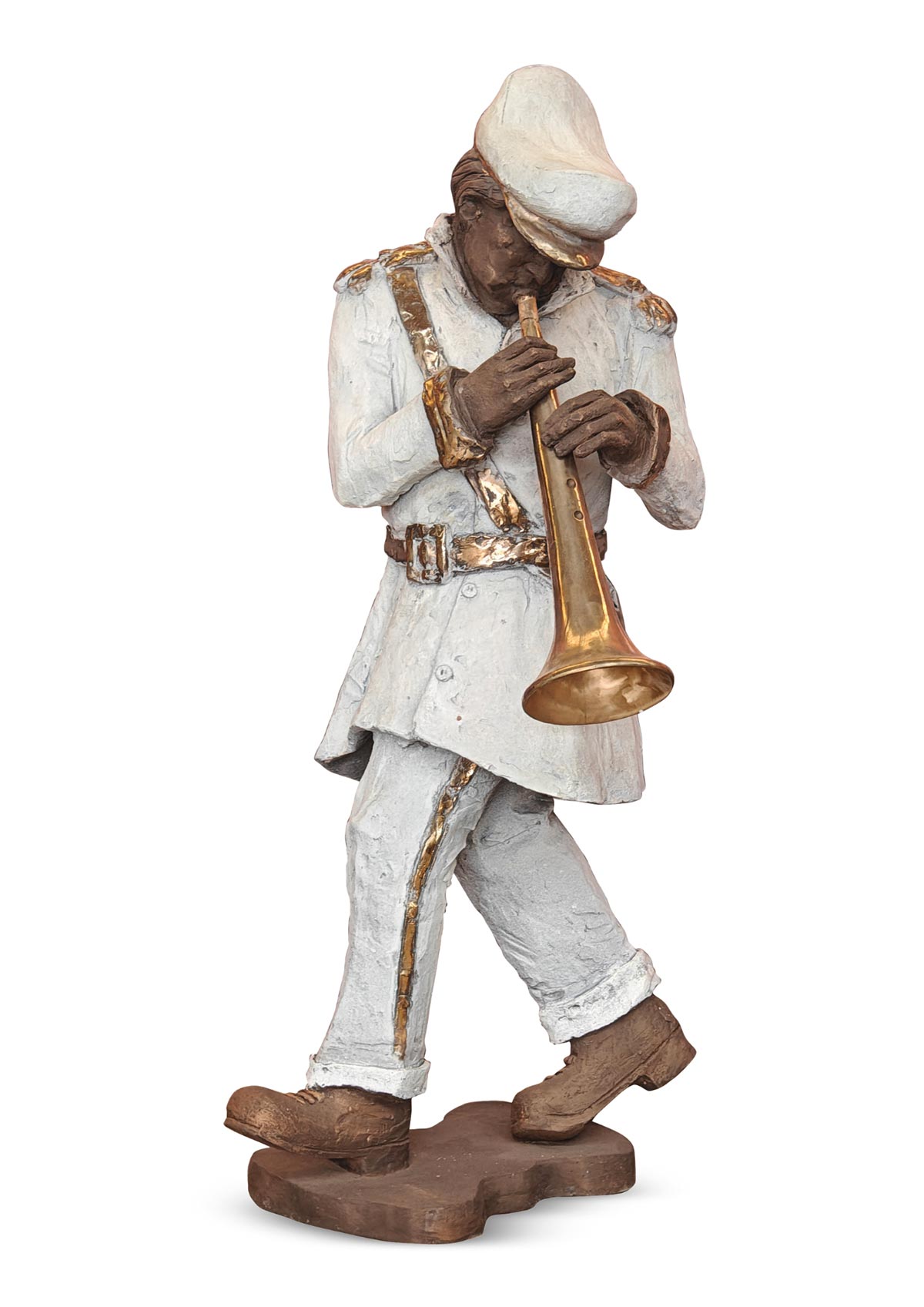
  • The presence of Krishen Khanna, one of India’s most venerable artists, whose deeply human figurative works trace a life in art from the Partition era to contemporary times.
  • Thota Vaikuntam’s vibrant representations of rural Telangana life, now pushed into sculptural or jewellery‐inspired works that reinterpret his signature female figures.
  • Himmat Shah, recent passing aside, offers sculptural investigations that fuse proto‐historic iconography with modern abstraction.
  • Madhvi Parekh’s work—rooted in folk memory, mythology, and daily ritual—provides lyrical depth and continues to speak across generations.
  • On the contemporary front: Phaneendra Nath Chaturvedi’s evocative figuration probing dystopian or transitional landscapes; Paul Kuntze’s reinterpretation of Baroque frescoes in a contemporary idiom; and Yashika Sugandh’s functional artworks (such as jewellery or crafted forms) that blur the boundary between design and art.
  • Black Cube’s curatorial model: Sanya Malik has spoken of the gallery’s mission to make art accessible, create flexible spaces rather than a fixed “white cube”, and enable new engagements between viewer and work. 

Why This Exhibition Matters?

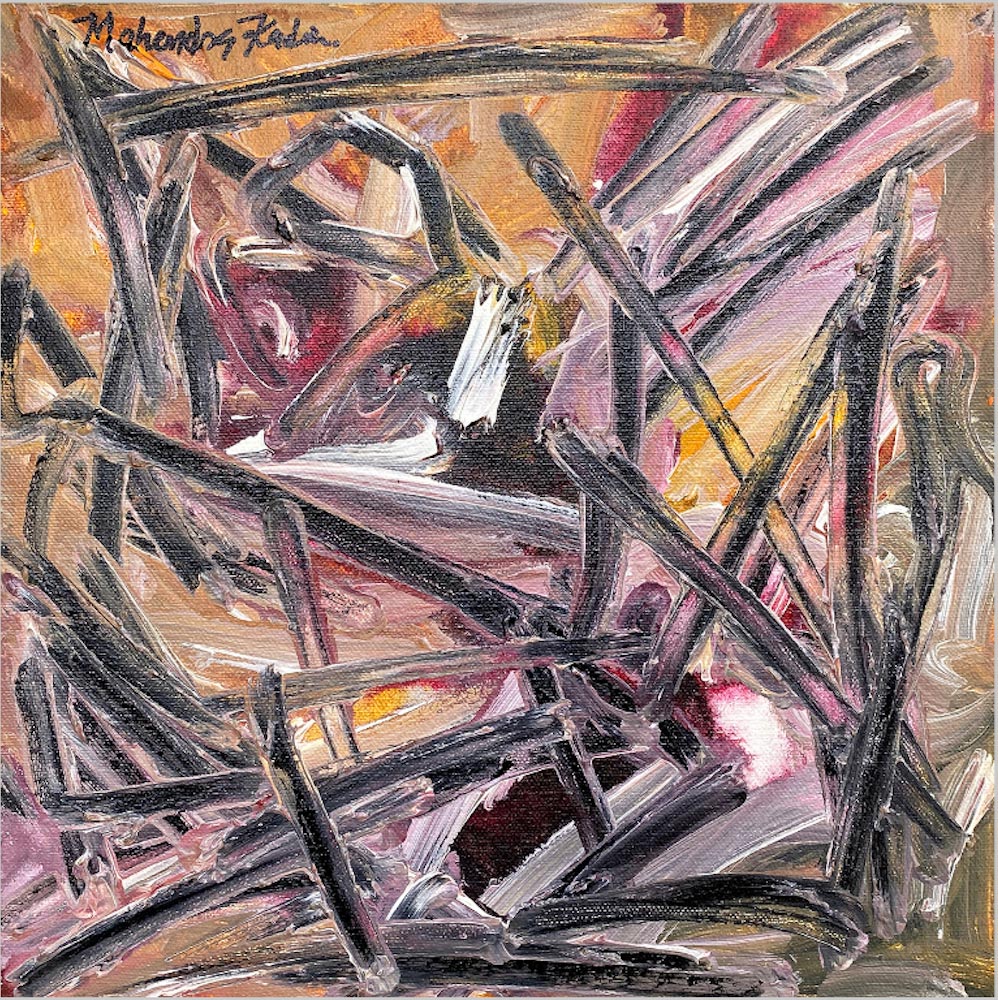
Mahendra-Kadia-(12-x-12_)-Acrylic-on-canvas
Artwork by Mahendra Kadia

Firstly, the inclusivity exhibited through the able curation places the modern practitioners and veterans on the same plane. Secondly, the choice of media ranges from embroidery, jewellery, functional art, alongside painting and sculpture, emphasising the fluidity of art. Thirdly, Black Cube’s virtue of accessibility and flexible space is very compatible with a city like Mumbai, where art is still desired by the masses as a part of their lives. For the general audience, the event makes a promise to enroute a rare journey of artistic mastery across generations. 

Takeaway

Paul_Kuntze-_Mini_Fresko_Series__(20_x_16_)_Acrylic_spray_on_canvas_
Mini Fresko Series by Paul Kuntze

The exhibition by ART Mumbai is a curated microcosm of Indian art. This is not simply a collection of renowned faces but a construction of a continuity of Indian art. By placing an embroidered piece next to a bronze sculpture and functional art, viewers are put into a well-paved lane that absorbs the eye-pleasing fine art and craft equally. By bringing juxtaposing concepts together, the exhibition definitely values depth over hype.