The Great Indian Epic Reimagined Through South Indian Art Forms at NGMA Bengaluru

0

The-Great-Indian-Epic-reimagined-through-South-Indian-art-at-NGMA-Bengaluru-01

A Confluence of Epics and Aesthetics

The National Gallery of Modern Art (NGMA), Bengaluru, in collaboration with the South Zone Cultural Centre (SZCC), is orchestrating a spectacular cultural initiative titled “The Great Indian Epic MAHĀBHARATA – A THREE-DAY MAKEOVER WORKSHOP & PERFORMANCE SERIES.” This is scheduled to run from October 30th to November 1st, 2025, at the NGMA Auditorium. This event promises to be a potent convergence of visual and performing arts. The whole event is designed from the perspective of experiencing a whole journey, offering a rare opportunity for the public to get engaged with the vibrant storytelling traditions of South India. This cultural initiative serves a dual purpose; firstly, it demonstrates the artistic majesty of classical forms, and secondly, it also educates the audience via hands-on workshops that elucidate the rigorous processes involved in the evolution of mere artists into the characters of the epic Mahabharata. 

This institutionalized attempt is a way to unite the Pan-Indian epic to three distinct South Indian theatre-dance traditions presented across three days. This is also a very catalytic way to promote the local craft of South India. The event is both pedagogic as well as highly performative, and will contribute to offering a fresh frame of reference to the public, encompassing the highlights of the epic. 

The Pan-Indian Narrative of the Mahabharata

To Indians, the Mahabharata is not simply an ancient text; it is the philosophical bedrock of Indian culture. The Mahabharata has long functioned as a sourcebook for regional theatre traditions across South Asia. The themes embedded in the Mahabharata, both didactic and narrative, refer to timeless themes like dharma, conflict, morality, and human frailty. This epic has influenced innumerable art forms across the subcontinent for millennia. The Mahabharata’s inexhaustible inspiration is visible in almost every sphere of Indian culture, ranging from sculptural traditions on temple walls to the colourful lithographs popularised by Raja Ravi Varma. People of the subcontinent, through the ages, have attempted to keep the epic’s tradition alive through constant engagement and reinterpretation of its context, and fortunately, that tradition is still passed down as the government organizations are keen on partnering with artists in keeping it alive. 

Characters and Art Form

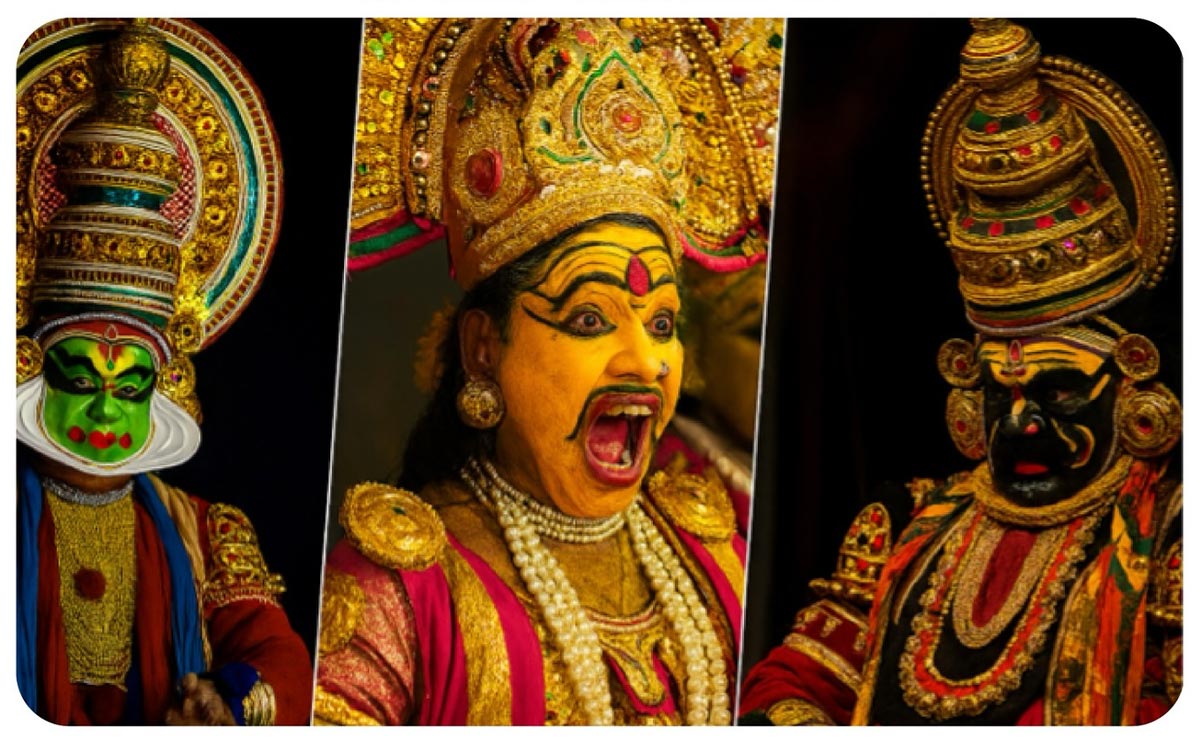
Specific episodes of the Mahabharata have been handpicked, which encompass the rich characters like Karna, the tragic hero, and tales like Rukmangada Charitam and Nalacharitham. The performances will involve highly stylized facial make-up and elaborate costumes of Kathakali (Kerala) that beautifully reflect the regional charm of the dance-drama traditions like Yakshagana (Karnataka) or Therukoothu (Tamil Nadu). These visual displays enhance the emotive intensity of the artists, which channels the epic into a lively event. Also, the abhinaya (expressive acting) and the mask-like makeup stand as the central communicative devices in pre-modern Indian theatre traditions.

The Spectrum of the Event

The three-day series meticulously brings together classical arts from the Southern states and attaches them to the timeless epic. The event is supposed to kick off on the 30th, with a dedicated focus on the narrative of Karna, presented through the traditional Malayalam and Kannada traditions. The Next day, the theatrical orchestration shall feature the Rukmangada Charitam in Kannada, a tale which is very deeply embedded in the Kannada tradition, likely to be performed in styles such as Yakshagana. 

The finale on 1st November is dedicated to Nalacharitham, the classic love story of Nala and Damyanti. This is universally celebrated as a noted work within the Kathakali repertoire. This performance showcases the sophisticated abhinaya (expression) and intricate mudras (hand gestures) that define the art form of Kerala. Furthermore, the schedule highlights an extensive Therukoothu workshop, an ancient street theatre tradition known for its strong vocals, vivid make-up, and socio-religious commentary.

Event Details
Title The Great Indian Epic MAHĀBHARATA – A Three-Day Makeover Workshop & Performance Series
Organisers National Gallery of Modern Art (NGMA), Bengaluru, in collaboration with South Zone Cultural Centre (SZCC)
Dates October 30th to November 1st, 2025
Venue Auditorium, National Gallery of Modern Art, Bengaluru
Art Forms Showcased Kathakali (Kerala), Therukoothu (Tamil Nadu), and Kannada traditional performance styles (Yakshagana elements)
Format Daily Makeover/Art Form Workshop (Afternoon) followed by a Performance Series (Evening)

Key highlights 

  • Three consecutive days dedicated to three South Indian performance traditions that draw on the Mahabharata.
  • Each day pairs a practical workshop (afternoon) with a curated performance (evening) to combine learning and appreciation.
  • Institutional collaboration between NGMA and South Zone Cultural Centre brings regional practitioners into a national museum space.
  • The poster’s visual strategy places performers’ faces front and center, emphasizing expressive technique and theatrical costume as the primary audience draw.

Takeaway: A Necessary Investment in Living Heritage

The collaboration between the NGMA and the SZCC on a program dedicated to living performance arts, rather than static art pieces, represents a significant and commendable shift in the approach of modern art institutions. In an era dominated by OTTs, events like this are more than acts of cultural preservation. The true masterpiece of Indian art often lies not behind a glass case in the fortified museums, but it’s equally present in the vibrant traditions passed down through generations of performers. By hosting makeover workshops and performances side-by-side, the organisers maneuver the gap between audience and artist. This series is an inspiring move that secures a future for classical arts by transforming a historical epic into a contemporary living heritage.
Melange of Memories: A Group Art Show Reflecting Memory, Myth, and Modern India

0
Melange-of-Memories-A-Group-Art-Show-03
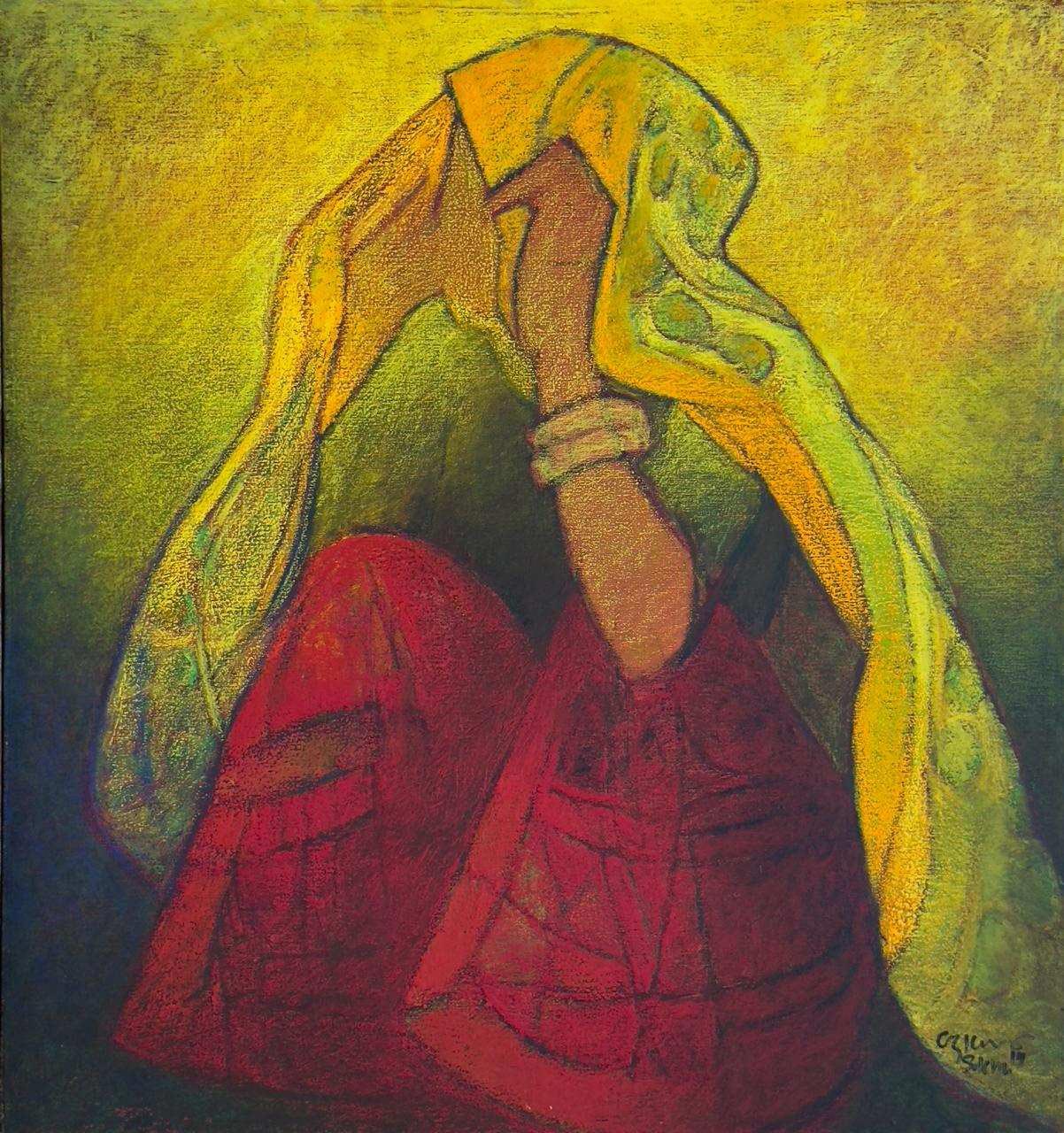
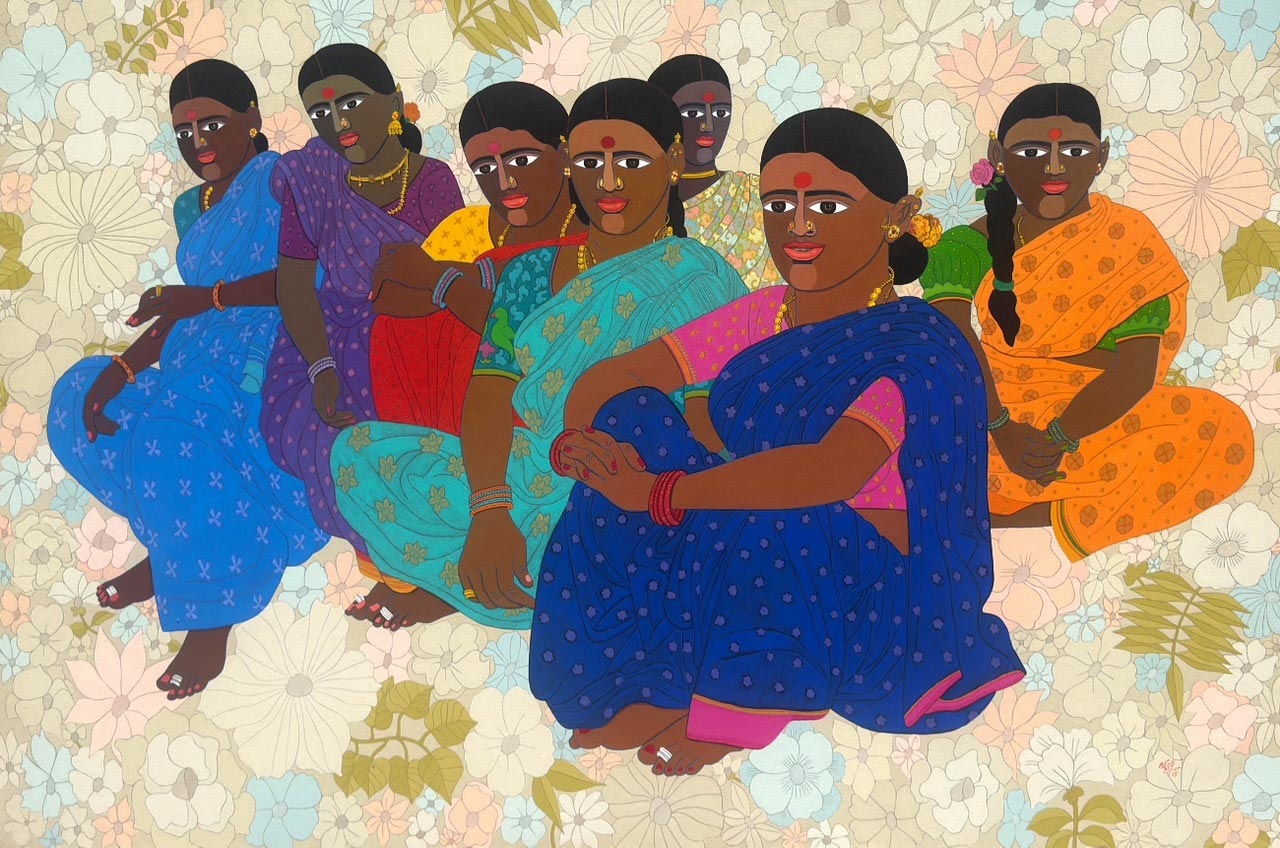
Artist – Laxma Aelay

New Delhi is all set to host a significant cultural event with the opening of Melange of Memories, a group exhibition that brings together the diverse artistic voices of thirty leading artists from across India. Curated by the renowned art historian JohnnyML and presented by Kali Charan Padhi‘s CanonFire Creatives, the exhibition promises a vibrant exploration of identity, culture, and artistic expression. The exhibition will feature 90 original works and will be on display from 31st October to 4th November, 2025, at the LTC Gallery, Bikaner House, New Delhi.

Melange-of-Memories-A-Group-Art-Show-02
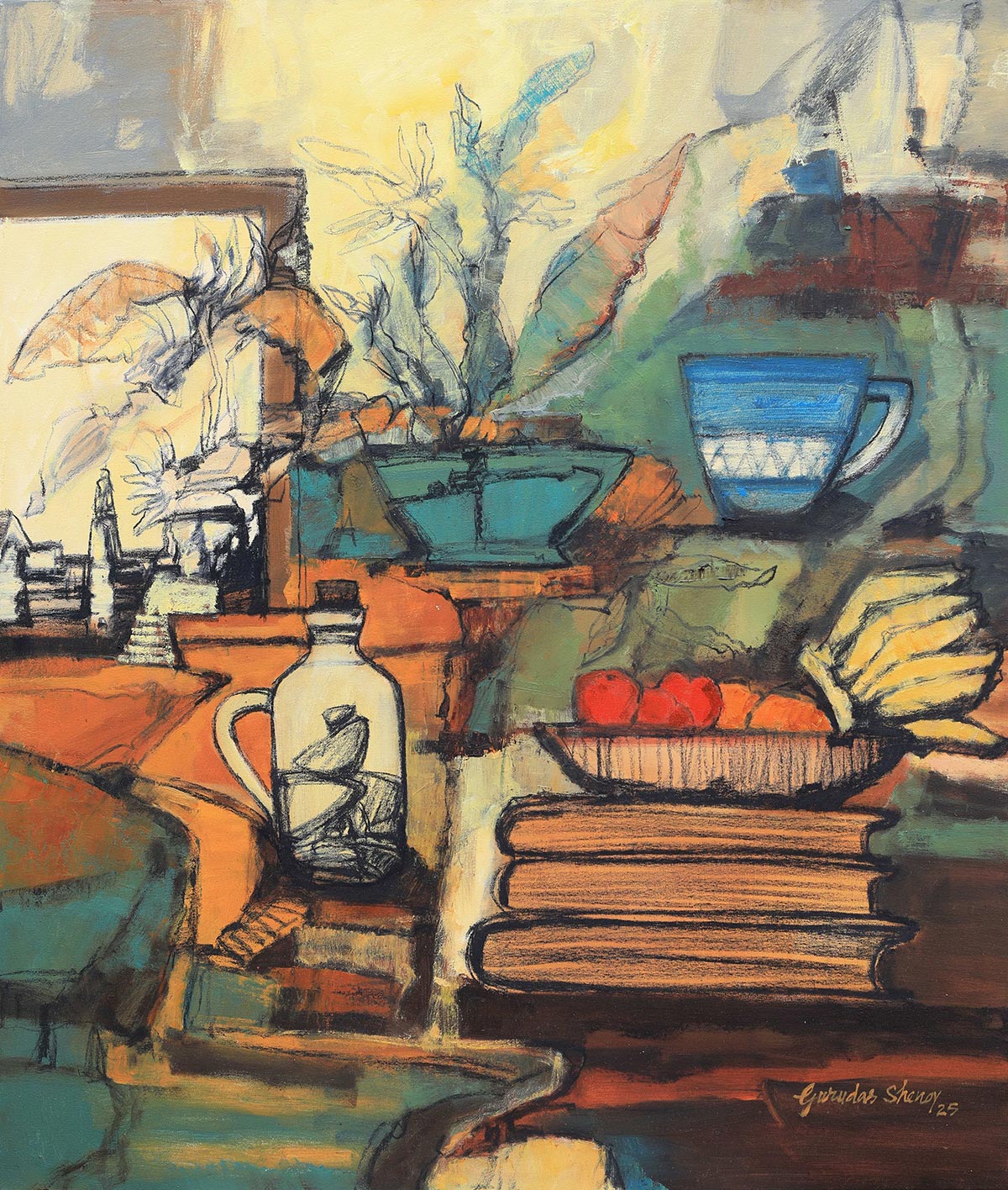
Artist – Gurudas Shenoy

Melange of Memories orchestrates a conversation between artists who deliberate on distinctive visual vocabularies shaped by region, experience, and material practice. The curator labels the exhibition as a field for multiplicity, where corpora of memories appear in varying forms like myth, ritual, personal history, and social testament. The scope of the exhibition ranges from photorealism to folk-associated imagery, allowing viewers to witness a medium to retrieve, reconfigure, and re-live their lived experiences. Presenter Kali Charan Padhi adds that the show is “a celebration of our shared aesthetic and emotional landscape, where memory becomes a bridge between the past and the present.”

Artists & Artistic Modes

Melange-of-Memories-A-Group-Art-Show-01
Artist – Vrindavan Solanki

Non-representational works by artists like Shabana Quadri and Jyoti Khushwaha use colour, movement, and texture to directly evoke lived experience and emotional resonance. Artists Rajesh Singh and Promud Boruah represent two distinct generations of abstraction. While Yusuf contributes to the same field of abstraction through bolder lines and colour fields, with an adherence to the Indian sense of vibrant colours and the grace of high modernism. Sachin Jaltare stands out with his fluid harmony, fusing abstraction and figuration to create works that resonate with spiritual energy.

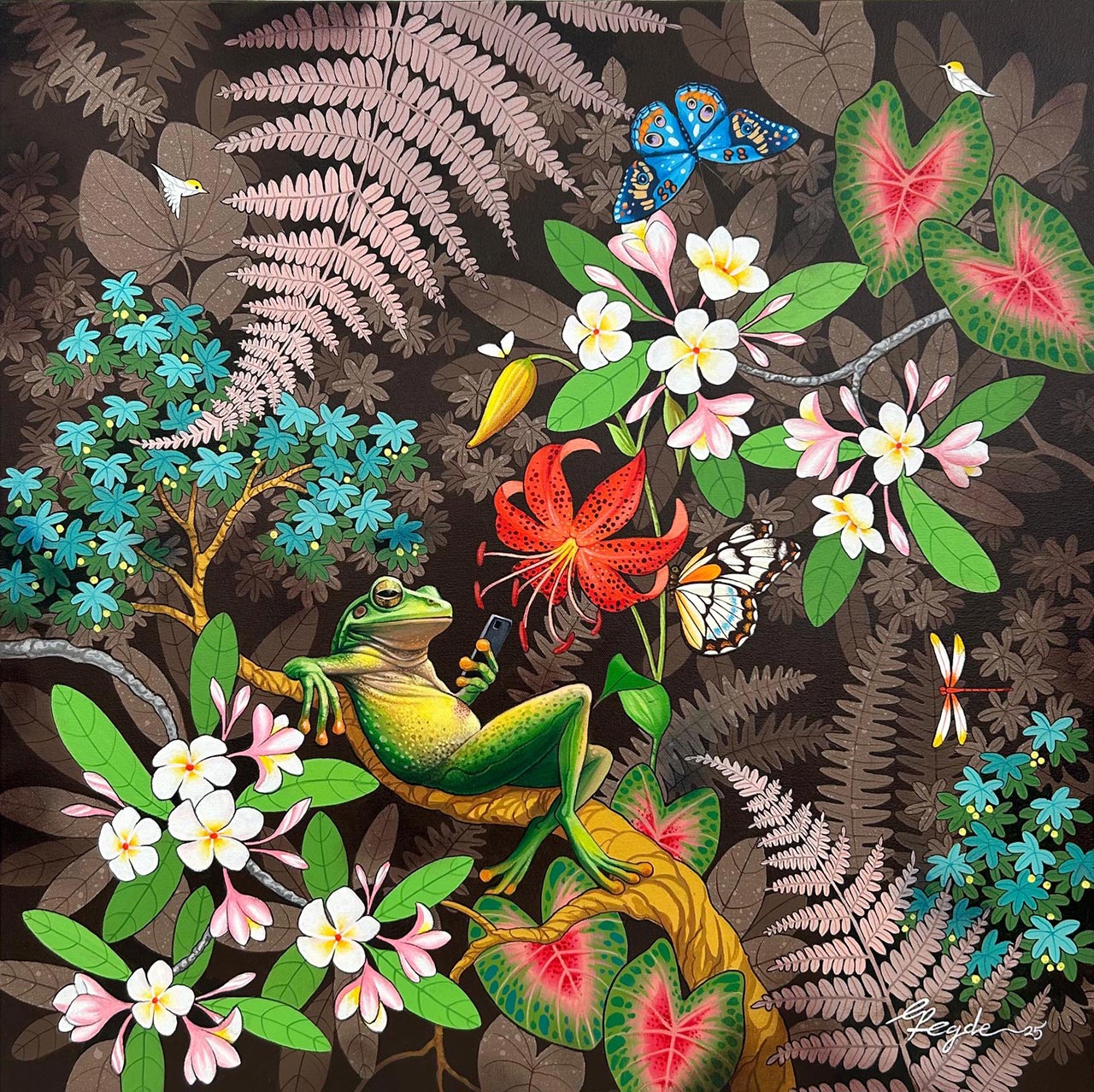
Melange-of-Memories-A-Group-Art-Show-Ganapati-Hegde-04
Artiest – Ganapati Hegde

Vrinda Solanki, the senior-most artist, brings a different charm to the table by adorning the venue with early Indian Modernism with a figurative style; this definitely attests a timeless poise. Supriya Amber celebrates the essence of womanhood through depictions of tribal women, transforming their strength into universal icons of freedom. Rohit Supakar depicts socio-economic realities, making everyone critically judge the themes of power and inequality. Rahul Mitra transforms Dante’s Inferno into a modern purgatory, exposing the irony of human greed. Artists like Laxman Aelay paint rural women with profound empathy. Anand Panchal captures the stoic optimism of Latur’s villagers, celebrating human endurance. Dileep Sharma reflects the changing faces of identity through hybrid figures oscillating between divine and demonic.

Myth, Memory, & Modern Reinterpretation

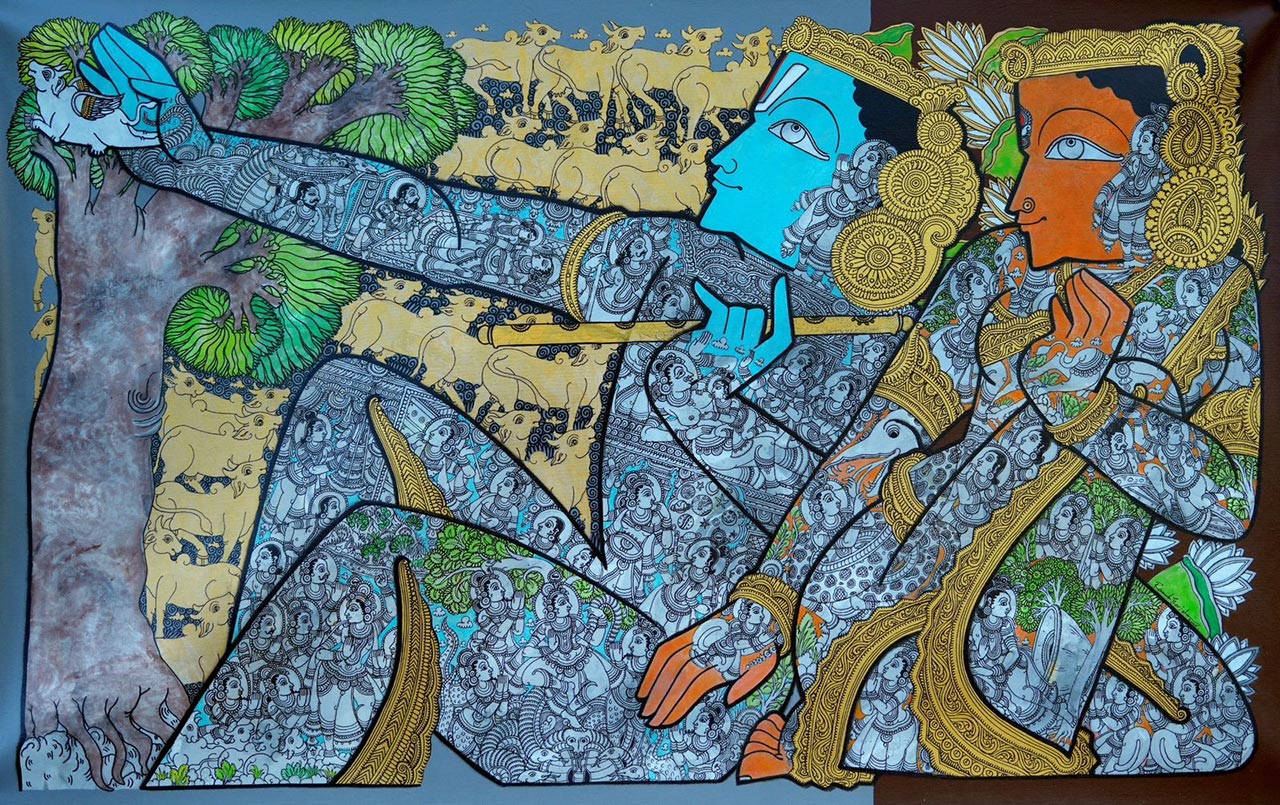
Melange-of-Memories-A-Group-Art-Show-05
Artist – Ramesh Gorjala

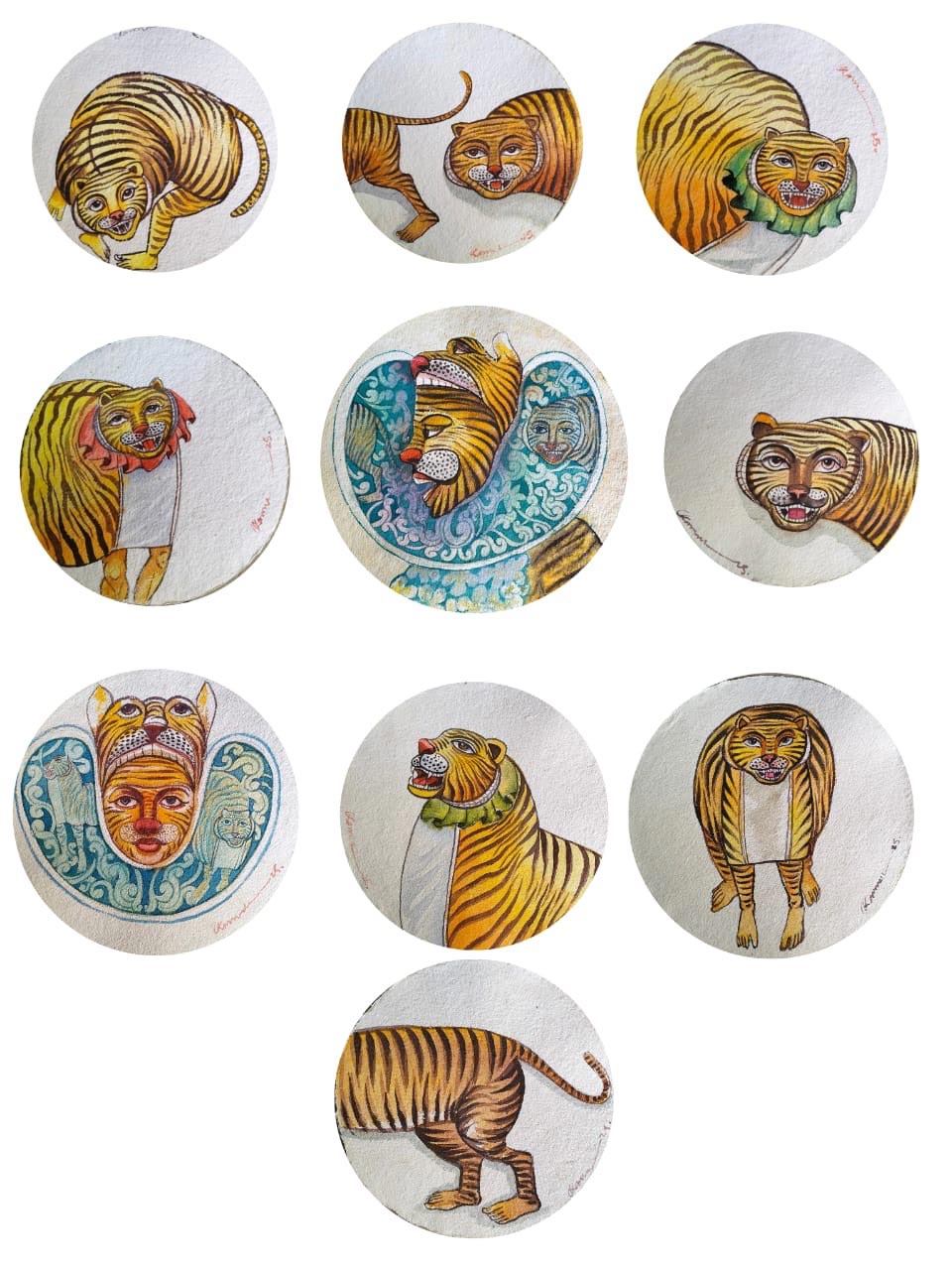
Several artworks explicitly blend mythic content with contemporary contexts. Kanha Behera revives folk traditions and nostalgic childhood memories via vivid depictions of tiger dancers and hunting rituals. Gurmeet Marwah reinterprets childhood stories into bold graphic compositions that stir a strong wave of imagination. Nagesh Goud Bolgum reinterprets the life of Krishna, combining mythology and present contextualization, while Ramesh Gorjala aligns classical mural traditions with modern designs. Bipin Martha takes a syncretic view of religion, blending images of Krishna, Buddha, and Mahavira into meditative compositions of compassion.

Melange-of-Memories-A-Group-Art-Show-04
Artist – kanhu Behera

Exhibition Details

Exhibition Details
Title Melange of Memories
Artists Thirty leading artists from across India
Number of Works 90 original works
Curator JohnnyML, renowned art historian and critic
Presenter Kali Charan Padhi (CanonFire Creatives)
Inauguration & Dates 31st October to 4th November 2025
Venue LTC Gallery, Bikaner House, New Delhi

Key highlights

  • Senior figures (e.g., Vrindavan Solanki) alongside mid- and younger-generation practitioners create a layered historical perspective.
  • From abstract colour-fields to photoreal critique, folk narratives to sculptural painting.
  • Contemporary reinterpretations of Krishna, folk ritual, and classical narratives.
  • Works addressing inequality, material abundance vs. deprivation (Rohit Supakar, Rahul Mitra).
  • Painting that crosses into objecthood and installation (Santhana Krishnan, Gurudas Shenoy).
  • JohnyML’s refusal of rigid thematic confinement allows artworks to define the exhibition’s argumentative rhythms.
Melange-of-Memories-A-Group-Art-Show-Asit-kumar-patnaik-A
Artist – Asit Kumar Patnaik

Takeaway

Melange of Memories is a kind of exhibition that values originality and unconventionality. By having memory as the base, curator JohnnyML and CanonFire Creatives assemble a show that rewards slow looking. Ultimately, it is more like a vibrant meditation on memory, identity, and imagination. Through a nostalgic lens, each artist constructs a world that is personal and universal at the same time. For art lovers, collectors, and audiences alike, Melange of Memories offers a rich field of exploration that asks us to remember and to rethink the terms of remembrance.

Chasing Infinity – A solo Exhibition by Arvind Sundar to Open at Mumbai

0

Chasing-Infinity-A-solo-Exhibition-by-Arvind-Sundar-01

If you think art is just pretty pictures on a wall, you haven’t seen the work of Arvind Sundar. This Coimbatore artist is about to make your brain work overtime. His new show, “Cosmos II – Chasing Infinity,” is not just an exhibition. It is a massive, philosophical dare. Arvind took the simplest, most familiar surface, a chessboard, and said, “This is actually the entire universe.”

We recently got the chance to talk with Arvind about this mind-bending concept and his work. Before the full interview comes out, we are giving you a sneak peek into the show that will make you look at a simple game of chess differently forever.

The show runs from October 31st to November 27th, with the opening happening on October 31st at 6 PM. Get ready to have your view of logic, mythology, and art completely turned upside down.

The World in 64 Squares

Chasing-Infinity-A-solo-Exhibition-by-Arvind-Sundar-02

Why does a talented artist with a top-notch background choose something as simple as a chessboard? Because it is not simple at all, according to Arvind.

The chessboard is a grid. It stands for order, rules, and calculation. It is a perfect symbol for the cosmic order, the rules that hold the stars and galaxies in place. But within those 64 squares, the possibilities for moves are near-infinite. That tension, the small, defined space holding an endless world, is the central idea of the show.

Arvind sees the board as a microcosm, a tiny model of the ever-expanding universe. His art encourages us to stop and think about the great mysteries of existence, but he uses a language that feels comfortable and easy to grasp. As the writer Sandesh Awdan notes, Arvind wants to start a conversation about cosmology because its laws shape our daily lives just as much as politics and money do. 

This show is a daring attempt to prove that logic and imagination are not two different things. They are the twin forces that define both great art and existence itself.

Mixing Math and Myth

Chasing-Infinity-A-solo-Exhibition-by-Arvind-Sundar-03A

Arvind’s work is unique because he takes two things that seem like enemies and makes them work together: mathematics and mythology.

  • Mathematics is the science part. It is our way of trying to measure the unmeasurable, to understand the huge numbers of the universe through logic and geometry. In the art, geometry is the skeleton, the exact lines and patterns that provide structure.
  • The Mythology is the story part. It is how humans give emotional meaning to the universe, using gods, symbols, and old tales.

In Cosmos II, these two languages merge. The artist shows us that whether we are using an equation or telling a story about the gods, we are all chasing the same thing: to understand what lies beyond what we can see. Both math and myth are products of the same human quest.

Duality and Near-Infinity Made Real

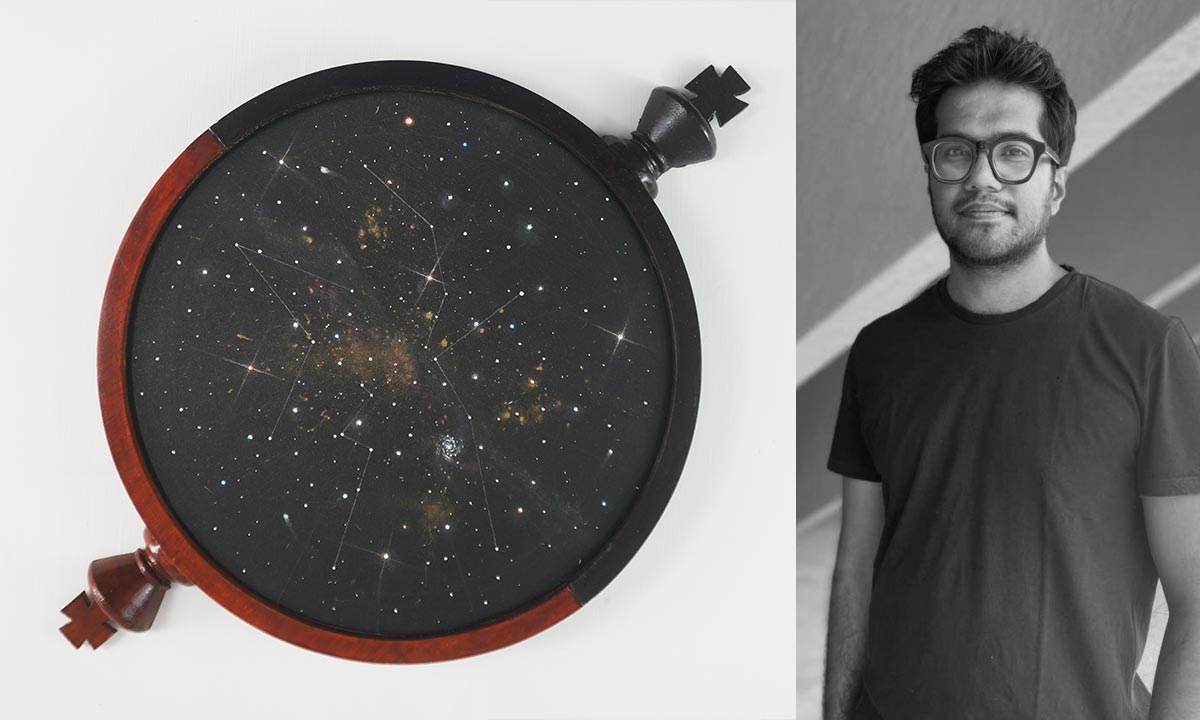
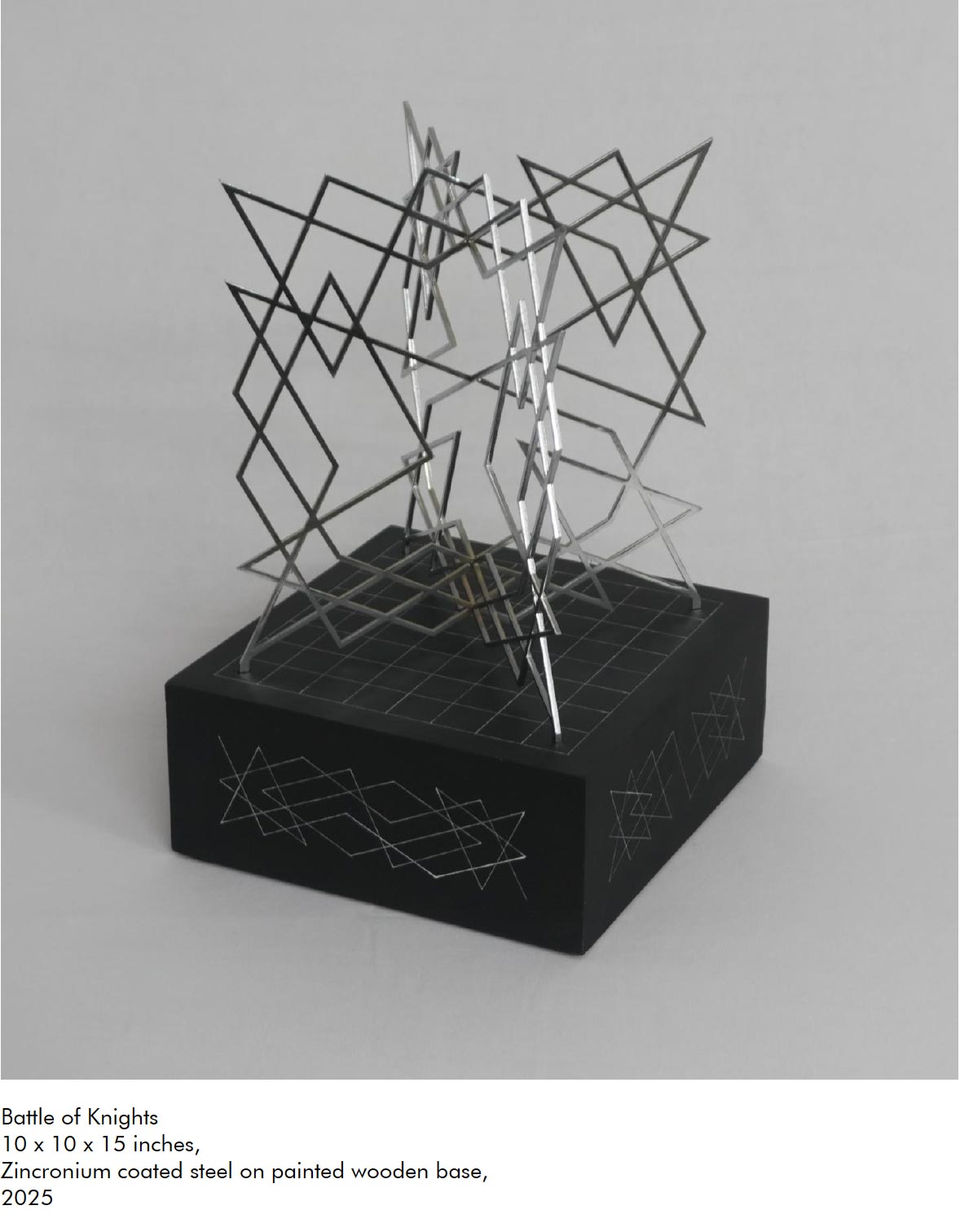
Arvind’s pieces are not just paintings; they are sculptural thoughts. He uses materials like gold dust, marble, neem timber, and steel to make these huge, abstract ideas feel real and tangible.

Duality of the Kings and the Pawns

Chasing-Infinity-A-solo-Exhibition-by-Arvind-Sundar-04

The concept of duality, the push and pull of two opposite forces, is everywhere in this exhibition.

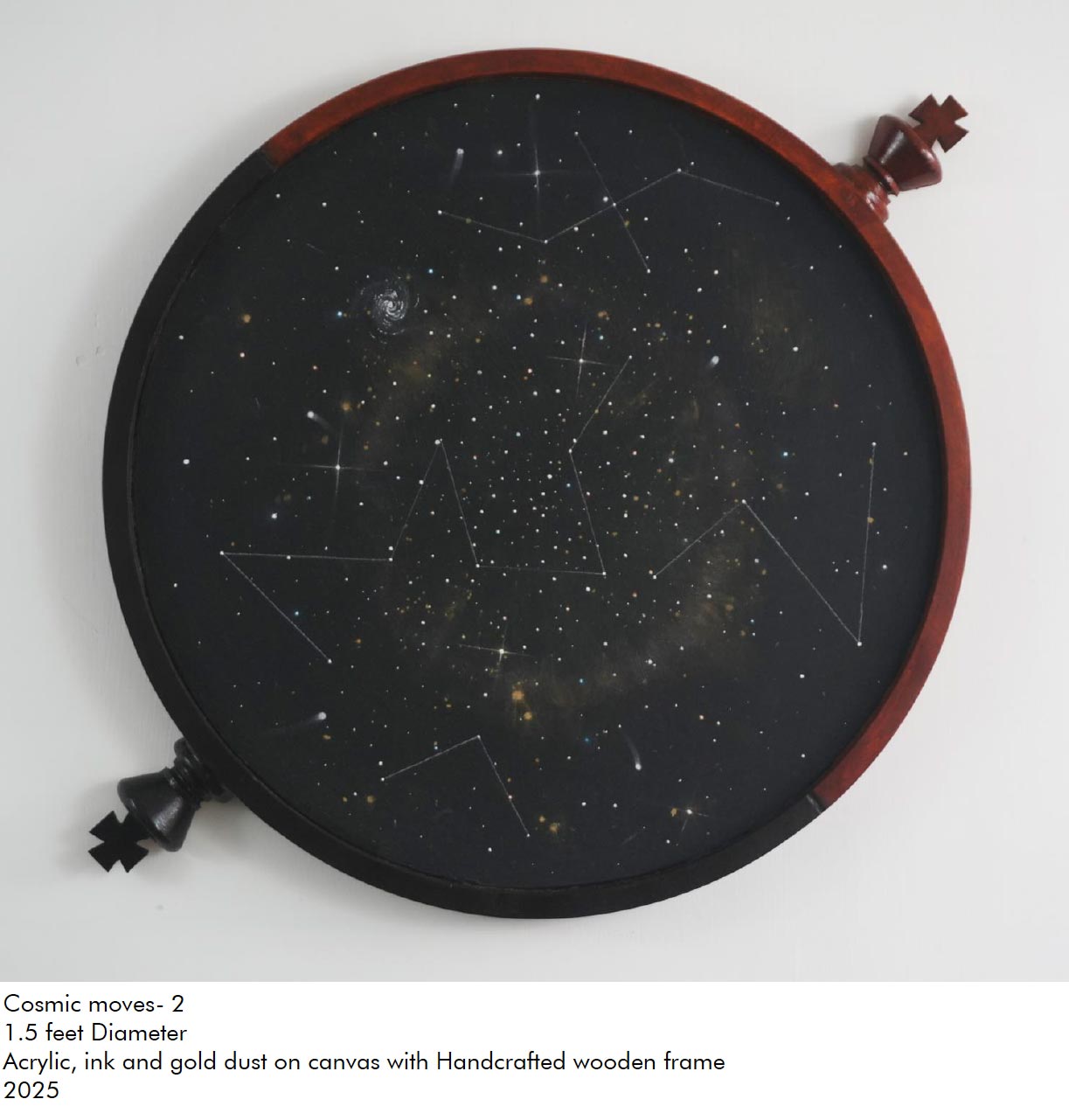
  • Cosmic Moves (1, 2, 3): In these striking circular pieces (ranging from 1 foot to 3 feet in diameter, the two Kings become the perfect metaphor for the forces of duality that animate the universe. Without the dynamic interplay of the two principal opponents, the cosmos, just like the game, would stop.
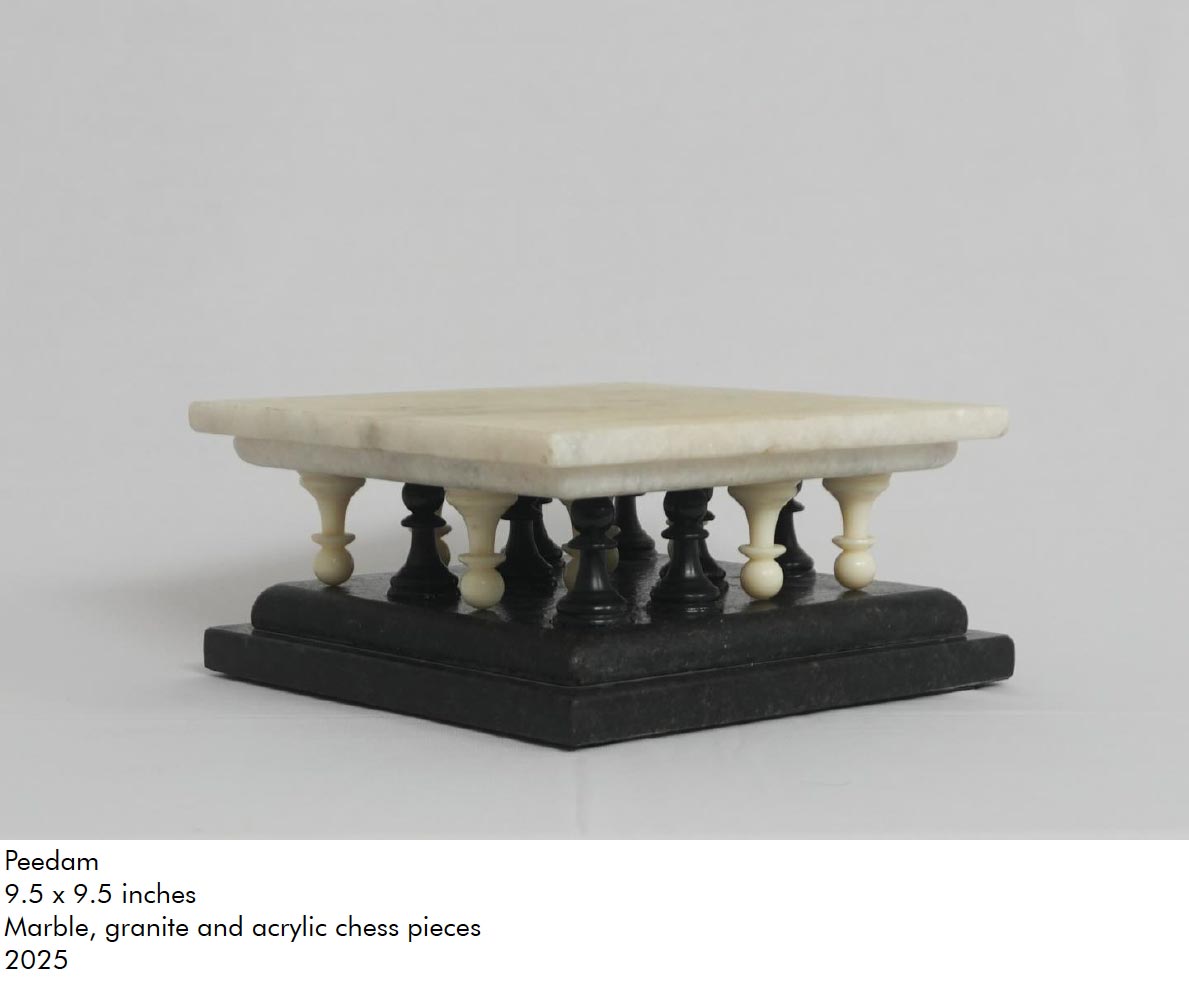
  • Peedam: This artwork turns the chessboard into an altar. Here, the focus is on the Pawn. The Pawn embodies the tension of the cosmos better than any other piece. It is the weakest piece, but in the right circumstances, it is also the strongest, capable of becoming a Queen. This shows how life and death, position and movement are constantly at play.

The Near-Infinite in a Grain of Rice

Chasing-Infinity-A-solo-Exhibition-by-Arvind-Sundar-05

Perhaps the most famous story connected to chess, often cited in Indian mythology, is the rice story. This is the idea that if you put one grain of rice on the first square of a chessboard, then double it for every square after that, you end up with a number of grains so massive it exceeds all the rice on Earth.

Arvind translated this amazing tale into the sculpture “Arthanareeshwara’s Game” (made from Neem Timber and brass. The sculpture visually shows this exponential growth. At the very peak of this rising geometric rhythm, he placed Ardhanārīśvara, the union of Shiva (the nominal cause) and Shakti (the primal force). This unity of King and Queen is what creates all the possibilities in the entire near-infinite world.

The Knight’s Poetry

Chasing-Infinity-A-solo-Exhibition-by-Arvind-Sundar-06

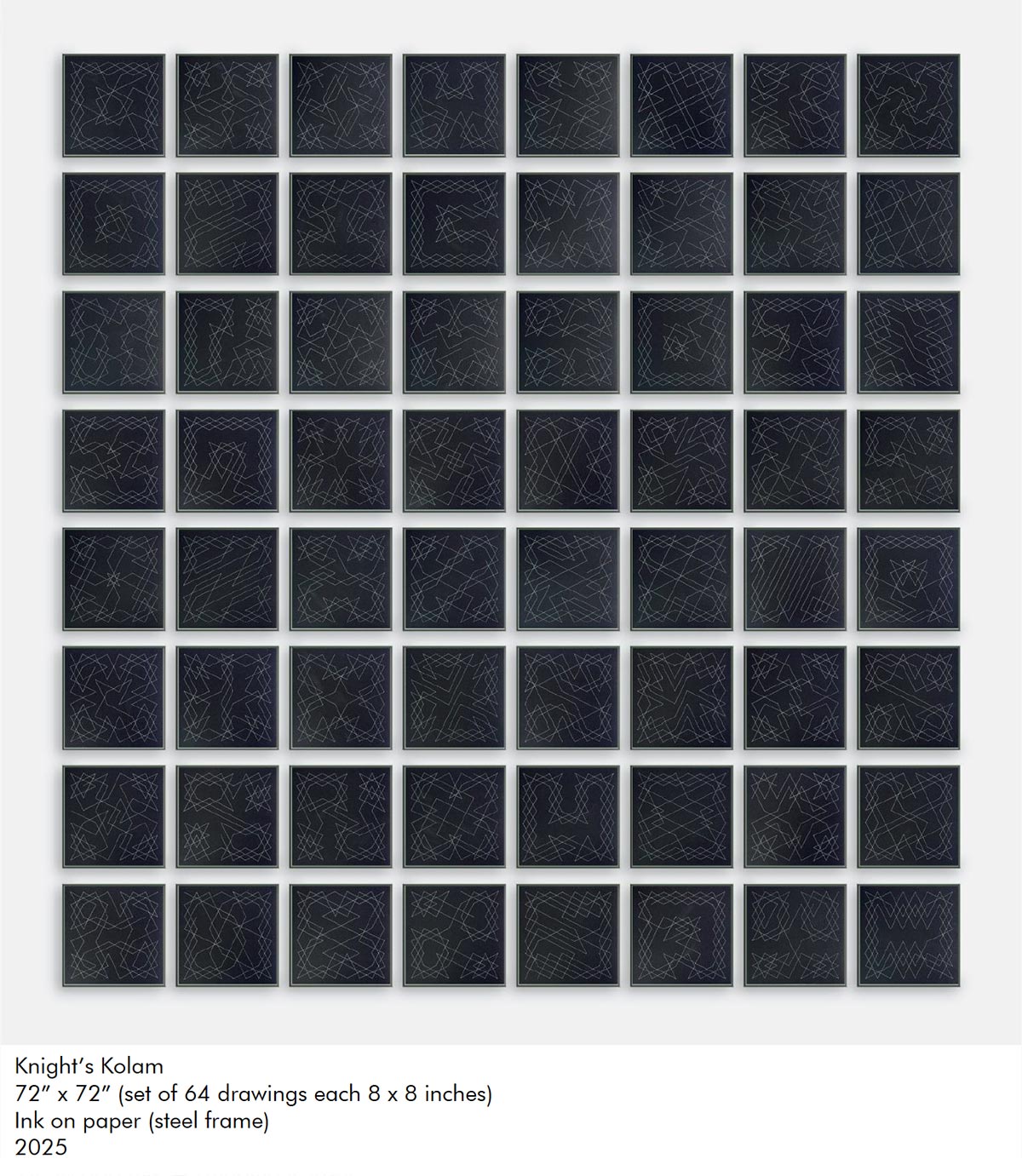
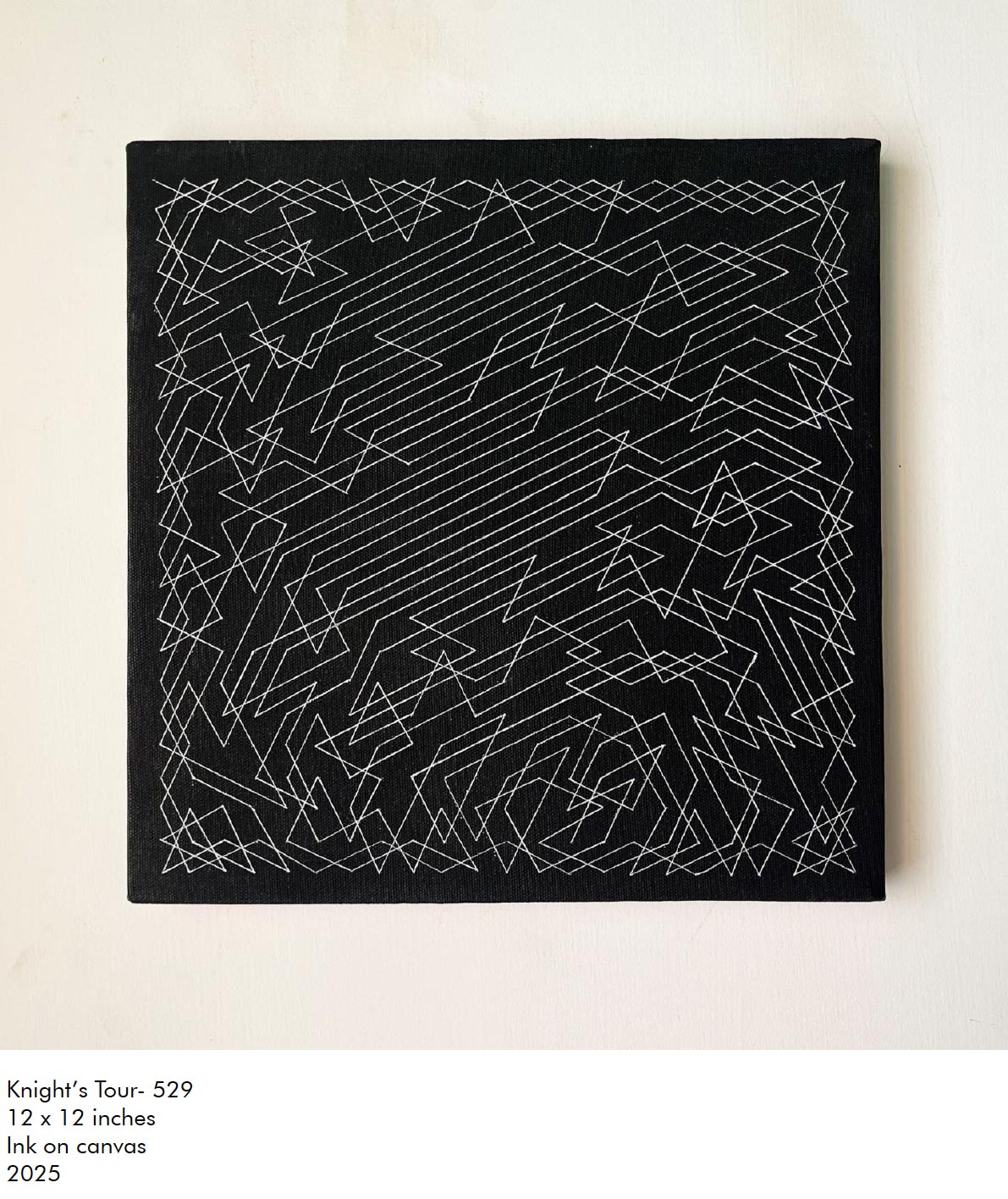
The Knight is the rogue piece. It does not follow the straight lines of the King or Queen. It dances in an ‘L’ shape, moving where reason does not expect it to go. This makes it a perfect symbol for creativity and intuition.

The enormous piece, “Knight’s Kolam” (a set of 64 drawings), celebrates this movement. The artwork is a single path drawn by a Knight, but it represents the trillions of unique paths a Knight can take across the board. The artist shows us how, even inside a strict boundary, individuality and near-infinite possibilities thrive.

The Man Behind the Grid: Arvind Sundar’s Journey

Artist-Arvind-Sundar

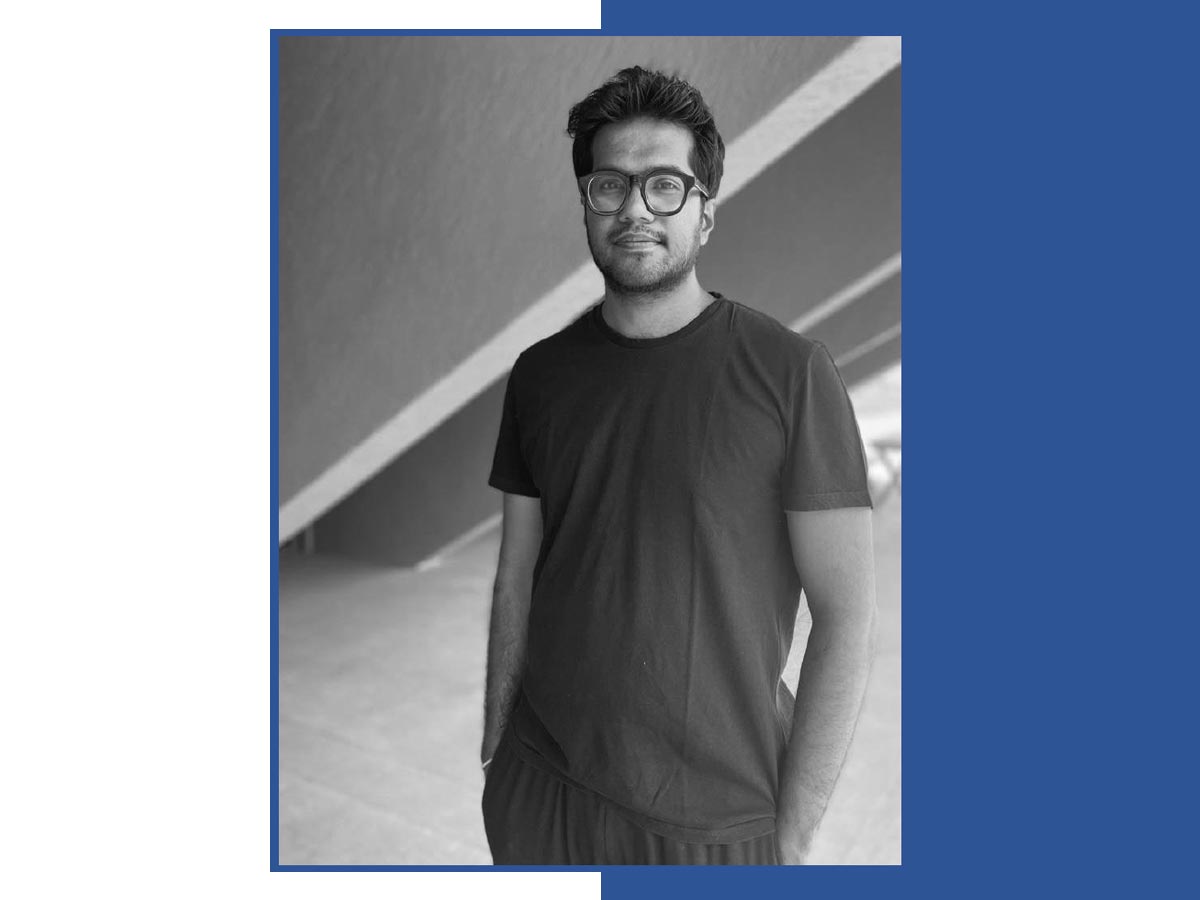
Arvind Sundar (born 1993) is rooted in the language of geometry and mathematical systems. He has a serious pedigree that backs up the intellectual ambition of his art.

He received his MFA degree (Master of Fine Arts) in painting and drawing from the University of Cincinnati’s School of Art, USA, in 2018, where he was awarded the Best graduating student of the year. He also trained at the School of the Art Institute of Chicago and received the prestigious Wolstein travel fellowship, allowing him to study Renaissance art in Italy.

Arvind has been very busy. He has participated in over fifty exhibitions, showing his work globally, from the Contemporary Art Centre (CAC) in Cincinnati to Art Dubai and the Busan Art Fair. He was recently an artist-in-residence at Hampi Art Labs and has had two major solo shows in Mumbai: Blueprints for Impossible Structures (2023) and Cosmos (2024).

He is now taking his strong practice in geometry and adding a new layer: mythology. This combination allows him to look at the minimal space of the chessboard and see the entire vast cosmos.

Exhibition Details

Exhibition Details
Title Cosmos II – Chasing Infinity
Artist Arvind Sundar (Coimbatore)
Venue Anupa Mehta Contemporary Art, Mumbai
Opening Event 6:00 PM, Thursday, 31st October 2025
Exhibition Duration October 31 – November 27, 2025

Chasing the Mystery

Arvind Sundar’s Cosmos II – Chasing Infinity is not art you just look at; it is art that forces you to think and engage in a dialogue about the mysteries of the cosmos. He is not interested in who wins the game. He wants us to play a different game, one where we unravel the mystery of existence. He is showing us that structure and creativity are not separate. The tension between the finite (the board) and the near-infinite (the possibilities) is what keeps us human, drives us to chase, and keeps us wondering.

Go see the show at Anupa Mehta Contemporary Art, Mumbai, from October 31st to November 27th. The full interview with Arvind Sundar, where he talks more about his work and the huge ideas behind it, will be coming soon!

Aurelia – Between Breath and Bloom – A Solo Show of Paintings by Aarti Uppal Singla

0

Between-Breath-and-Bloom-Aarti-Uppal-Singla--1

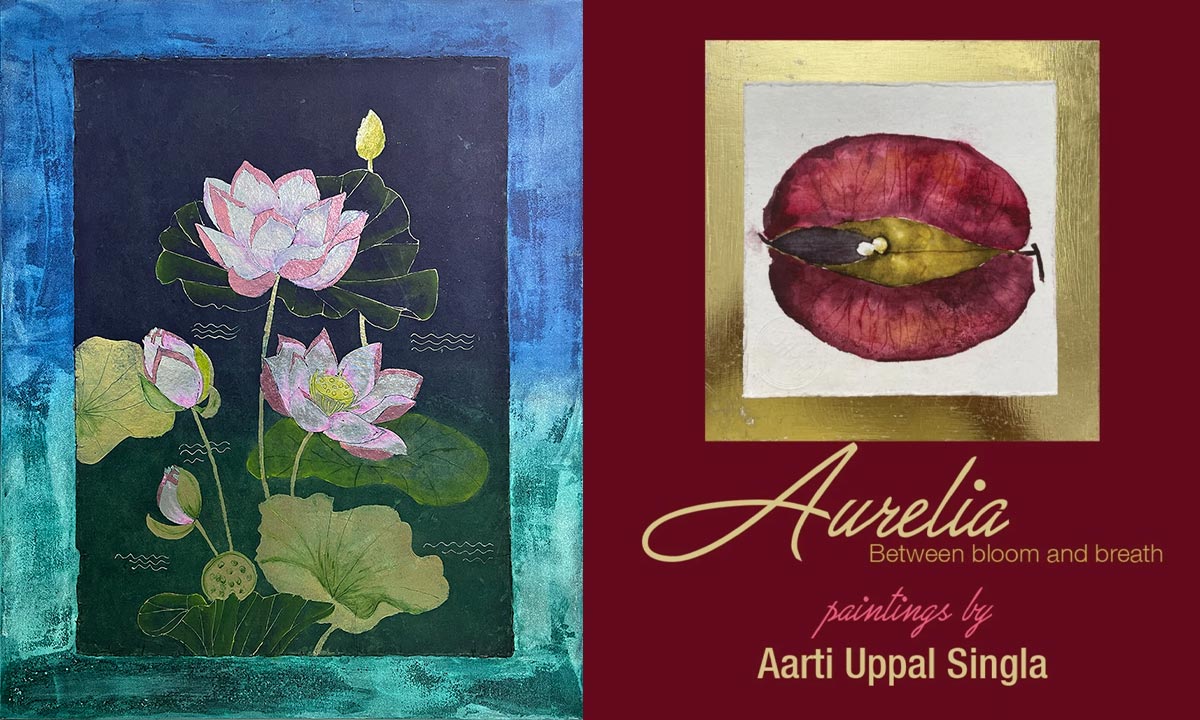
Arati Uppal Singla’s upcoming solo exhibition, “ Aurelia-between bloom and breath,” is set to run at the Visual Arts Gallery, India Habitat Centre, New Delhi, from November 2nd to 6th, 2025. This exhibition captures the clamour of fear and debate surrounding climate change while bridging it with a greater picture centred around observation and enduring resilience. The exhibition will feature over 70 new works across varied media. These new works are a gentle yet firm pull to pause, look, and marvel at the quiet grace and regenerative cycles of the natural world. This event seeks to celebrate the “delicate beauty and hopeful promise of nature.”

The Meaning Behind ‘Aurelia’

Between-Breath-and-Bloom-Aarti-Uppal-Singla-2

The title, “Aurelia,” is a metaphor. Etymologically, it is a Latin word meaning “golden”; it is also the scientific term for a butterfly’s chrysalis, an unnoticed stage of metamorphosis. This concept forms the philosophical core of Singla’s exhibition. It defines the extraordinary beauty and strength that are often found in the most delicate, overlooked processes. It essentially frames the exhibition as an exploration of the silent and overlooked corners of nature, which also plays a very crucial role in the whole system of existence. Aarti asks viewers to slow down and notice, not howl at the climate crisis, but to bear witness to nature’s potentiality, its capacity for repair, which often goes unnoticed. 

Between-Breath-and-Bloom-Aarti-Uppal-Singla-3

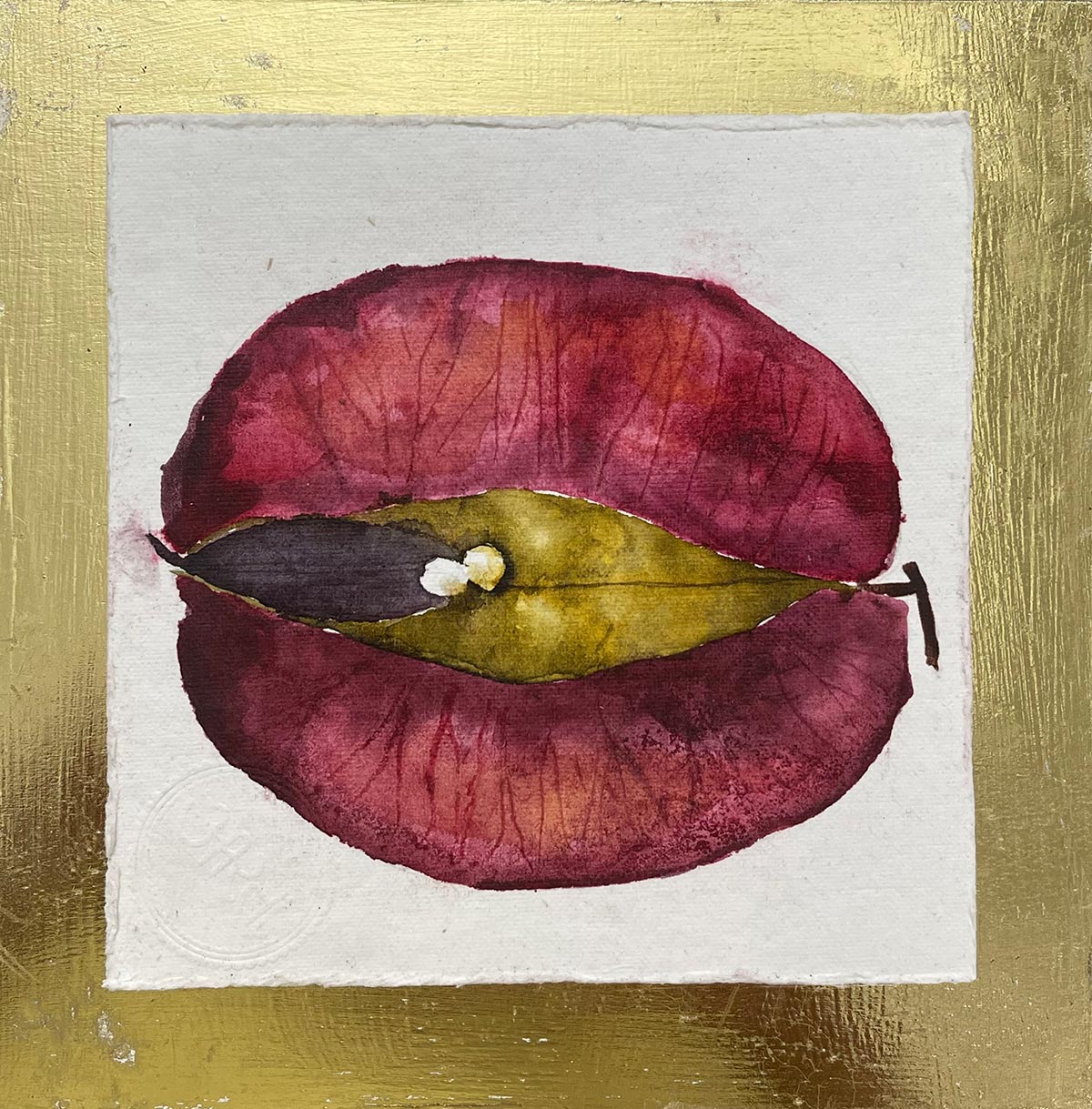
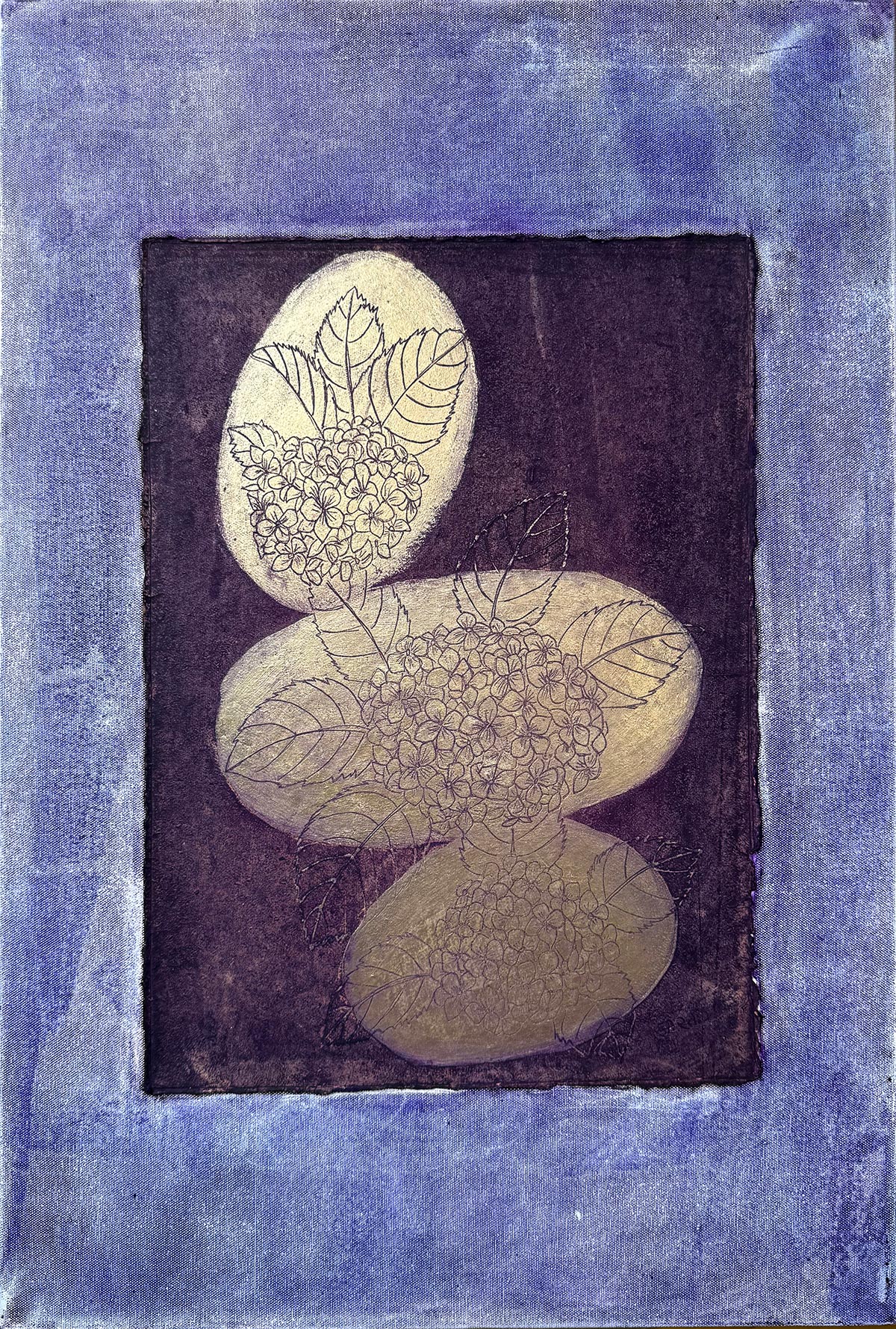
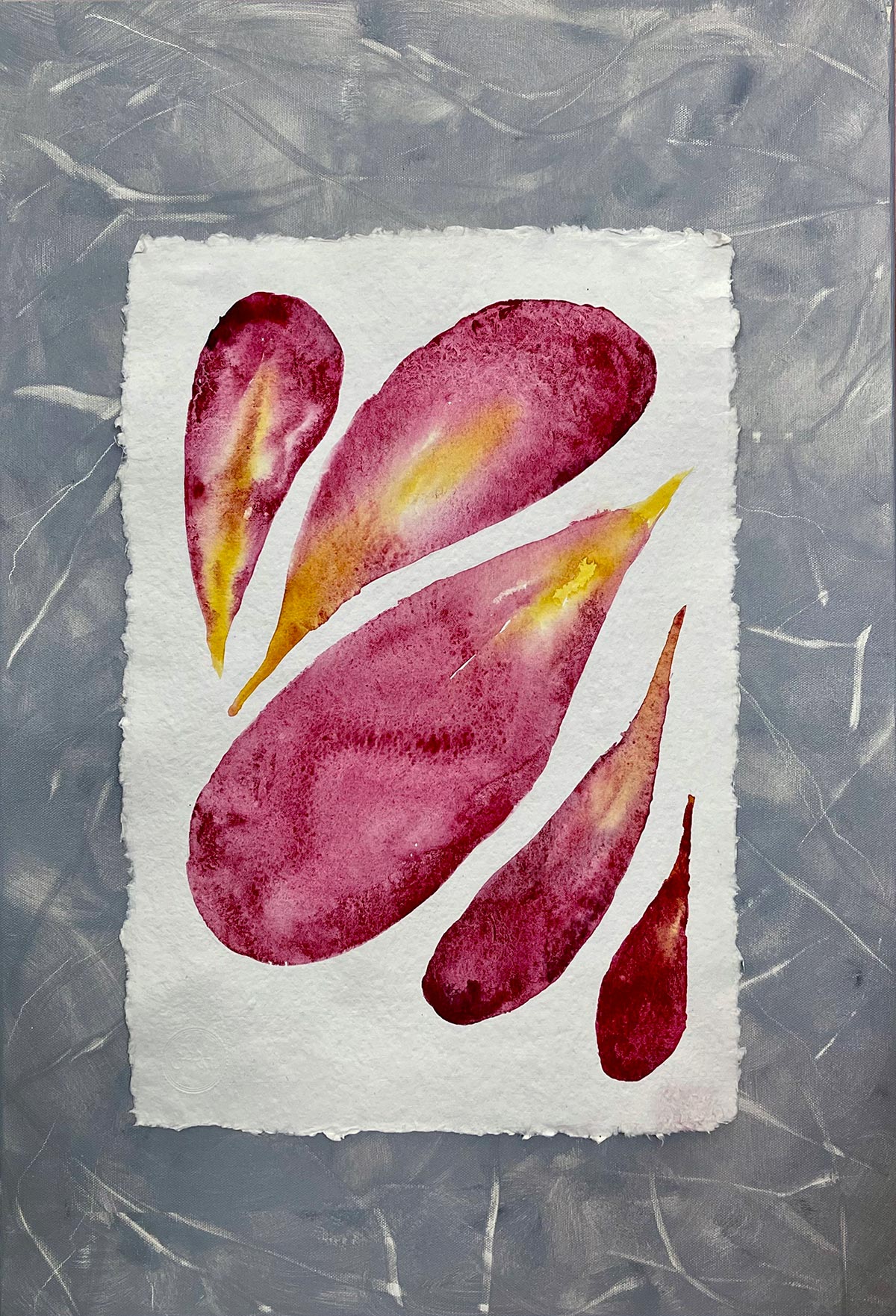
The basic idea that Arati urges to propagate is that humanity’s true role may not be as ‘saviours’ of the planet, but as companions, a call to step back and listen to the healing spirit of nature. It is a meditation on the gifts we possess as humans, the infinite palette of colours in nature, the precision in mathematical geography present in the leaves and petals, the nuanced structures of flowers, and the other unseen forces of wind and water. The exhibition aims to display the ordinary as miraculous, guiding the viewer to find the golden thread that runs quietly through the fabric of life.

Memory And Material

Between-Breath-and-Bloom-Aarti-Uppal-Singla-4

Aarti describes herself as a “polyglot in artistic language,” which is vividly evident in the orchestration of the show. Her personal recollections and nostalgia of simple memories with nature, such as gathering seeds, noticing flower patterns, are all encapsulated as her childhood memories create the emotional base on which her art breeds. This emotional base permits her to explore and acknowledge the sense of both presence and loss, expressing the beauty of life while also accepting its passing. 

Arati’s versatility lies in her swift shifts between finely defined realism and abstraction. Her work spans across varied media such as watercolours, ink, Natural pigment, and Egg Tempera. These media are reflective of balance in her practice. Her art emerges as a dialogue between precision and experimentation, while continuing a grounded attachment with minimalism. 

The Artist

Between-Breath-and-Bloom-Aarti-Uppal-Singla-5

Aarti Uppal Singla possesses a multi-disciplinary background for the exhibition. She holds a graduate degree in Graphics and a Master’s in English from Panjab University, alongside roles as educator, curator, and community-builder. She founded The Art Exchange Project, a forum for workshops and artist talks, and runs a graphic studio, Easel Ideas, and stationery brand Kagazi Ghoda. Aarti was named Artist of the Year by the Bharat Nirman Foundation in 2020, and the exhibition continues a steady trajectory of solo and group shows over the last decade.

Exhibition Details
Title Aurelia – Between Bloom and Breath
Artist Aarti Uppal Singla
Venue Visual Arts Gallery, India Habitat Centre, Lodhi Road, New Delhi
Preview & Opening 5:00 PM, Saturday, 1st November 2025
Show Dates 2nd – 6th November 2025
Show Timings 11:00 AM – 7:00 PM daily
Number of Works Over 70 new paintings
Mediums Watercolours, Ink, Natural Pigment, Egg Tempera, and more
Theme Resilience, transformation, and the quiet grace of nature

Key Highlights

  • Over 70 new works spanning realist studies and expressive abstractions.
  • Title: Aurelia, a metaphor referring to chrysalis or golden transformation.
  • Rich material palette: natural pigment, egg tempera, ink, watercolour.
  • Artist’s dual role as maker and community-builder (The Art Exchange Project).
  • An exhibition that chooses observation and humility as responses to environmental anxiety.

Takeaway

Aurelia — Between Bloom and Breath is an invitation for contemplation. Rather than adding to the noise of alarm, Aarti Uppal Singla offers a practiced, measured alternative: attention. The mediums she works with demand patience and precision. Aurelia acts as a gentle reminder that transformation often arrives through small acts of attentive looking and listening. By framing nature not as a subject for debate but as a guide and companion, Aarti Uppal Singla reminds us that the power to heal, endure, and transform is an innate quality of the world around us.

Book Review: Bali Finally – A Heartfelt Journey of Patience, Growth & Self-Discovery

0

Book-Review-Bali-Finally

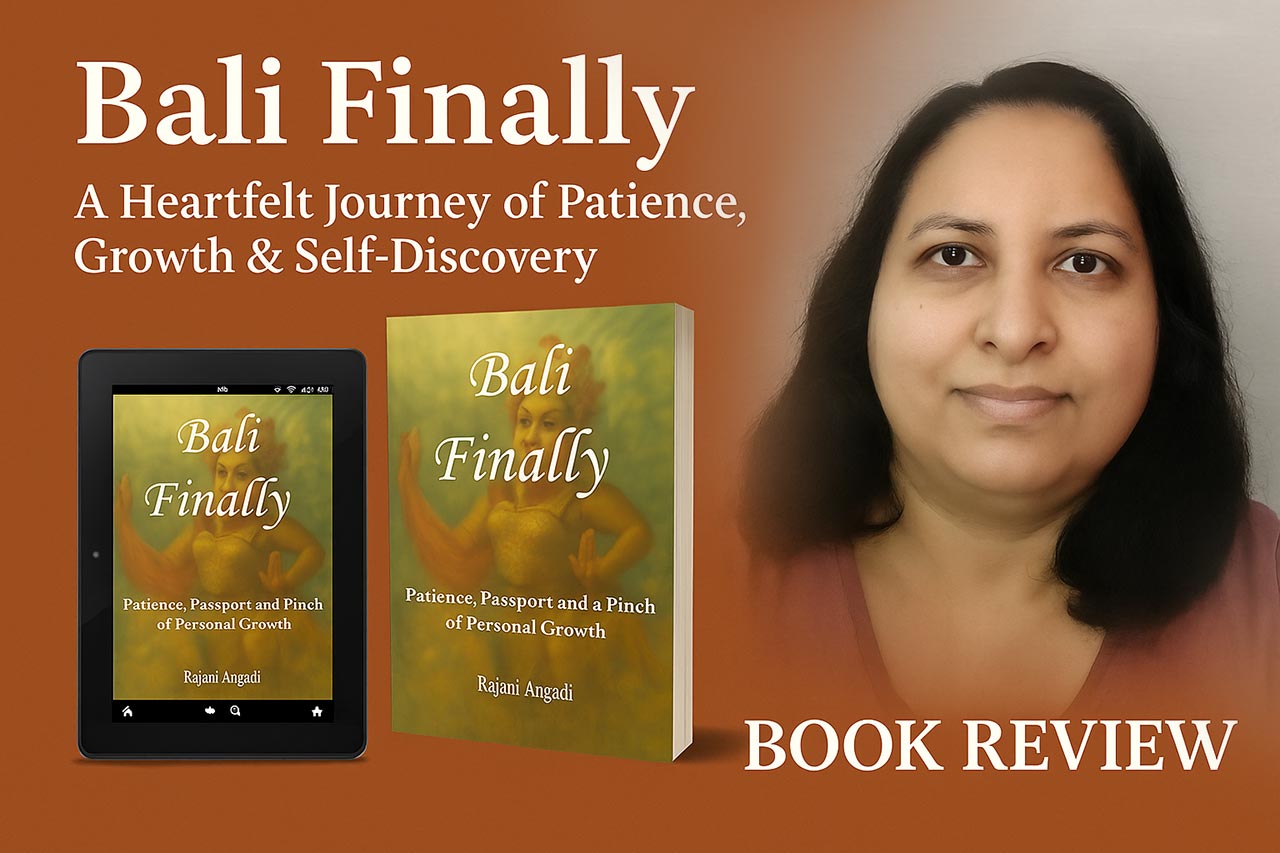
‘Some people take 13 years to write a book. I took 13 years to book a flight. Both are masterpieces in their own way,’ says Rajani Angadi. A true story of a former IT professional turned memoirist, Rajani Angadi, pens a heartfelt yet light-hearted tale of her dream to travel to Bali come true. ‘Bali Finally’ is the unfolding of a long-delayed trip to Bali by the author and her two daughters, and is now available on Amazon Kindle. 

However, a story of desire, yearning, wavering, planning and arrival; it is hard to bracket ‘Bali Finally’ into any one single genre. It is fun, but also inspiring. It is in part a travel guide to the beautiful island of Bali, but also a confidant that shares and acknowledges restless longings. A conversationally and visually vibrant read, this book also explores the deeper layers of doubt and hesitation before finding accomplishment and fulfilment. 

But why Bali? 

Rajani Angadi knew exactly when her penchant for Bali began. It was in 2012, when, amidst the hectic routines of her work and home life, she tuned into an audiobook and heard the soft voice of a narrator, painting a picture of Bali. It was then that she told herself that ‘someday’ she too would visit this scenic island. Years passed, life moved on, yet her desire to travel to Bali remained. Perhaps not like a forceful urge, but a silent, solemn request. 

‘Finally’, When?

Rajani left her job in 2023 to take a break, and it might have seemed like a good time to start thinking of Bali again. But there were other things to look into, like moving homes and venturing into freelancing. Being a travel enthusiast and mother of two energetic teenage daughters, it was finally a much-needed nudge from her cousin Aparna that made her take the leap of faith. Towards the end of 2024, Rajani found herself seriously planning the Bali trip. For her daughters, it was ‘mom’s crazy idea’, but their excitement and preparations were on point. By December 2024, the trip was officially planned for April 2025. From bookings to budgeting to packing (including packing hopes and personalities), the list was endless. But Rajani’s nonchalant way with words dives into not only the trio’s exhilaration and emotions, but also into the practicality and logistics of it all.  

And so in April of this year, Rajani finally set foot on the island. Was it the way she had imagined or seen photos and videos of Bali? Or was it better? Was it just the sand and sea, or was it the interlacing of culture, cuisine and soul searching? Was it fun, sentimental or a bit of both? Well, readers need to get hold of this ebook to know. You can order your copy here: https://amzn.to/4oxRVRG

Why Should You Read Bali Finally?

Bali Finally, is an easy read that highlights the adrenaline and joy of travel. It provides practical insights and examples for anyone looking to plan itineraries or trips to the nation. Besides, it showcases the beauty and culture of not only the place, but also a perspective that only tourists or travellers can gauge. Importantly, it touches upon the most intrinsic and personal emotions of a woman who has been postponing her cravings, because of both her inner and outer worlds. With lovely photos, tips on travel, discussions with her children on zeroing things to do and see, making bookings and the execution of a heavenly vacation, the book captures the little and long journeys that the author makes with herself, family and finally to Bali. 

About The Author

Rajani Angadi is a former IT professional, a mother and a writer. A first-time self-published Indie author, Bali Finally is her first book. For the book, Rajani collaborated with ChatGPT, an AI assistant, to refine and shape her narrative. 

As the author herself says, ‘This isn’t a guidebook. It’s a scrapbook of joy, chaos, culture, coconuts, and instants I want to cherish forever. If you’ve ever shelved a wish or postponed a dream, you’re in the right place. Let’s dive in?’ 

We say, ‘Yes, why not!’.

Chhath Puja 2025: Date, Rituals, Significance & Celebrations

0

Chhath Puja 2025

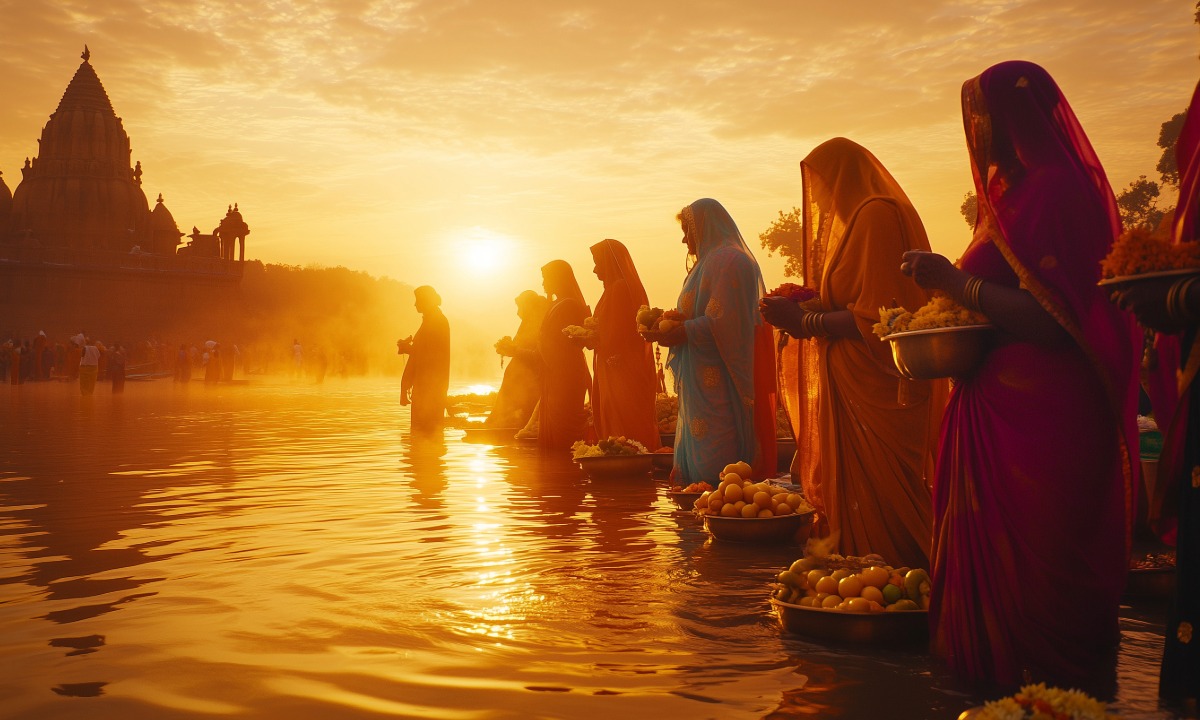
Festivals can sometimes seem like a huge community party. Chhath Puja is exactly that. It is among India’s oldest all-inclusive festivals, and the festival occurs outdoors, under the great sky. 

As the festival of Chhath Puja are drawing near, you will see an entirely new world getting ready to take a spiritual journey. So here’s everything you need to know about Chhath Puja 2025:

Dates & Timing for 2025

Chhath Puja 2025 is going to start on 25th October, and will conclude on 28th October. Here is a schedule with Muhurats:

  • Nahay Khay (Day 1) – Saturday, 25th October
  • Kharna (Day 2) – Sunday, October 26 
  • Sandhya Arghya (Day 3) – Monday, October 27 (Evening offerings – offering to the setting sun).
  • Usha Arghya (Day 4) – Tuesday, October 28 (Morning offerings – offering to the rising sun). 

Given the sun’s relative movement in every town, the main regions of Bihar and Jharkhand can prepare everyone close to the same time. They clean and process the river banks (ghats) weeks in advance, residents work together to make those massive congregations beautiful and easy, all focused on the wisps of seconds just before sunrise and sunset.

Mythology and Cultural Significance

Chhath Puja is built on ancient legends, connecting us directly to heroes we know. One major story links it to Karna, the son of the Sun God, who performed the rituals for strength. Another tradition is connected to Draupadi. She fasted for her family’s protection and well-being on this day.

The entire festival is celebrated  to show gratitude towards Sun (Surya), the source of all life and energy. The rituals aim at showing respect for nature’s life-giving forces. It’s a direct dialogue with the purest elements: the sun and the water.

For people in Bihar, Jharkhand, Eastern UP, and Nepal, Chhath is the ultimate cultural event. More than just a religious duty, it’s a huge, emotional gathering that focuses on good health, profound gratitude, and the unique ability of an entire community to unite in spiritual discipline.

Day-by-Day Rituals

Chhath Puja 2025

1. Nahay Khay (25 October – Saturday)

The festival begins with a holy bath in rivers or ponds, early in the morning. This is followed by the preparation of a satvik meal, including bottle gourd, rice, and chana dal. 

2. Kharna (26 October – Sunday)

Devotees observe a strict fast on this day. They don’t even consume water (nirjala vrat) from sunrise to moonrise. 

They consume kheer made with jaggery after the sunset of the prior day, along with bananas, rice, and roti. This food is consumed aa prashaad, offered to Chhathi Maiya as well. This marks the beginning of a 36-hour nirjala fast observed till sunrise on Usha Arghya.

3. Sandhya Arghya (27 October – Monday)

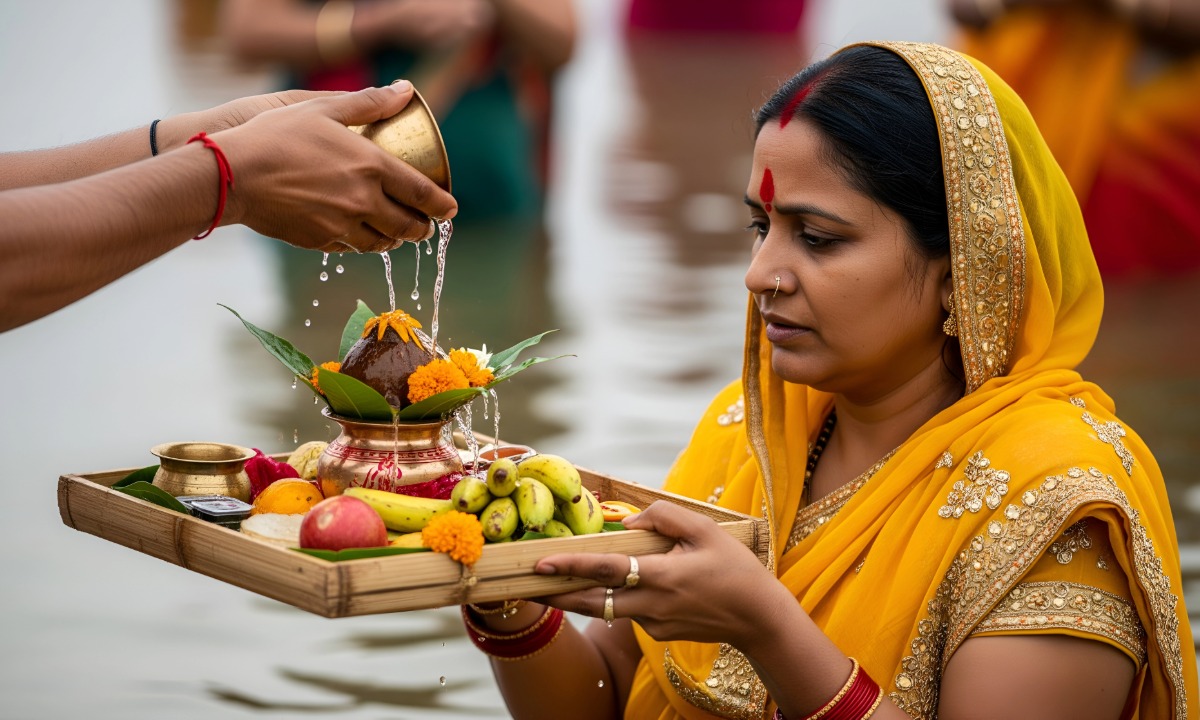
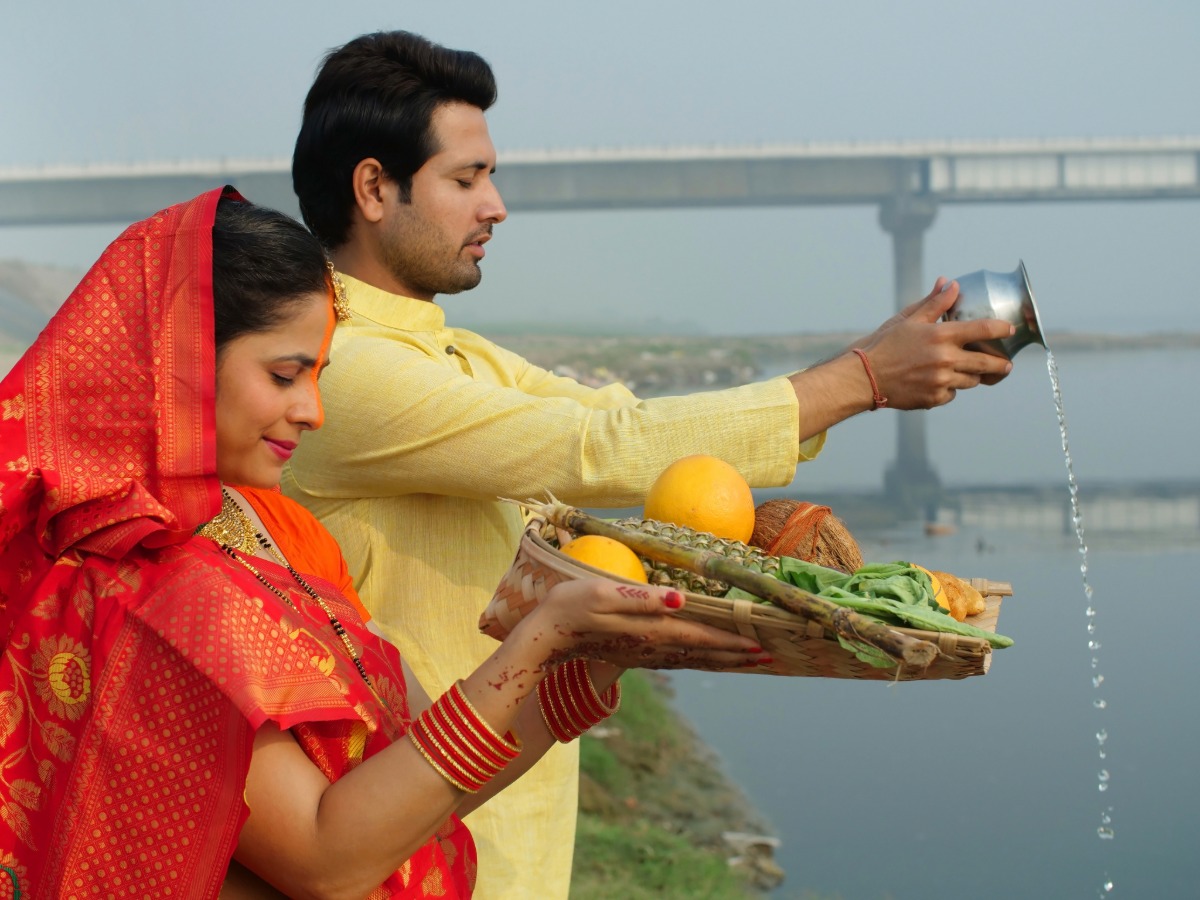
As the sun goes down, devotees perform arghya while standing in water up to their waists. They also carry a soop (bamboo basket) containing thekua, sugarcane, bananas, turmeric root, coconut, diyas, and fruit in season.

4. Usha Arghya (28 October – Tuesday)

On the last day, before sunrise, the devotees offer water and prasad to the rising sun. After the arghya, the fast is broken and prasad is distributed to family, neighbors, and visitors.

Prasad, Foods & Offerings

The ritualistic prasad offered on Chhath Puja consists of very simple and satvik meals. The food is prepared without using onion or garlic. Some of the food items included in the meals are :

  • Thekua
  • Rice flour Ladoo
  • Rasiya or Gud ki kheer
  • Kaddu Bhaat

Chhath Puja is known for being eco-friendly; there are no toxic colours, no idols, no crackers, just love and devotion. The festival emphasizes the significance of nature and conservation of nature. 

Observance & Participation

While the main Vrati, or the person who strictly follows the fast, is traditionally the woman of the household. The Vrati undertakes the rigorous fast. But the men and children of the household also contribute to preparing prasad, arranging soop, and in carrying the offerings to the ghat. The entire family plays a crucial role.

The participants are required to refrain from both non-vegetarian dishes, and also alcohol. Likewise, they may not eat food, or drink any water, from anything that a non-participant has touched. The fast is already one of the hardest fasts lasting almost 36 hours without water. Additionally, the Vrati usually wears a newly made customary garment, which is often an orange or yellow saree to represent holiness.

The highlighted point of Chhath is the amazing communal spirit in which family and neighbors will come together at the ghats (banks of a river, pond, or lake) and perform the principal Arghya rituals. They will sing folk songs (Chhath geet) as a group, which describes the history and glory of the Sun God.

The attention to lakes, rivers, and ponds is important, as these are the locations where the Sun God is worshipped directly. Thus, standing in the water at dawn and sunset signifies the human body being aligned directly with the cosmic energy of the Sun.

In addition to this, the idea of cleaning the ghats together prior to the festival symbolizes the need for environmental cleanliness and respect towards the elements of life. The entire act is to express gratitude to Nature itself..

Challenges & Modern Adaptations

Chhath Puja 2025

Issues of crowding, safety, and ghat maintenance

A large number of devotees congregate at popular ghats (riverbanks), sometimes even exceeding limits which leads to risk of severe crowding. This presents a serious safety risk, particularly since many devotees stand in the deep water at dawn and dusk. Furthermore, this increases the burden of ensuring that cleanliness on the riverbanks is embraced. This is another responsibility that is often undertaken by the community immediately before the festival raising another questions of long-term maintainability.

Environmental concerns and plastic

Despite being eco-friendly, the festival raises some environmental concerns. These include:

– Plastic Pollution: it is common for people to carry puja samigri in plastic bags. They dispose these plastic bags at the puja venue itself.

– Water Quality: while the aim is to worship the nature, the massive immersion of puja materials in the river likely contributes to the water pollution.

Emerging eco-friendly practices

To ensure you are being eco-friendly you can consider:

  • Utilizing organic materials like bamboo and clay instead of plastic. This is the zero-waste chhath initiative.
  • To reduce the crowding on main river banks and ghats, smaller man-made ponds are being set up for devotees.
  • Post-puja cleaning drives are being initiated by several NGOs and communities.

Tips for Devotees / Visitors (2025 Edition)

Category Must-Have Items Notes
For Offerings Thekua, sugarcane, bananas, coconuts, earthen diyas All offerings should be packed in the traditional bamboo basket (soop or daura).
For Devotees (Vratis) New/clean saree (often yellow or orange), shawls, warm layers The fast is long; carry warm blankets for after the Arghya, as the air is cold.
Personal Safety Flashlight or headlamp, simple mat or cloth to sit on Essential for the pre-dawn (Usha Arghya) ritual, as lighting at the ghats can be dim.

Chhath Puja Across India & the World

Famous ghats and temples

  • Deo Sun Temple (Aurangabad, Bihar)
  • Gandhi Ghat (Patna, Bihar)
  • NIT Ghat (Patna, Bihar)
  • Dehri-on-Sone (Rohtas, Bihar)
  • Dadar Chowpatty (Mumbai, Maharashtra)
  • Juhu Beach (Mumbai, Maharashtra)
  • Babughat (Kolkata, West Bengal)
  • Yamuna Banks / Artificial Ponds (Delhi-NCR)

Celebrations among urban and diaspora communities

Chhath Puja is no longer limited to Bihar and the eastern part of the country. As the residents from these states migrated to new places, they carried this culture with them. Now, Chhath Puja is celebrated across several urban centres and even at the global level.

However, the urban and global nature of Chhath Puja celebration has also seen some adaptations. As an example, in the cities of Delhi, Mumbai, and Kolkata, temporary sites for communal water activity are set up in public parks and community centers.

People in the global diaspora also observe Chhath in the United States, Canada, and Mauritius. Often communities will use either large public ponds, temple tanks, or, sometimes, inflatable pools to conduct the ritual of standing in the water for the Arghya, linking their cultural home to a transient community in a different place.

Conclusion 

Chhath is much more than a festival. The festival represents the deep lessons of discipline, dedication, and gratitude. The commitment, demonstrated by fasting without water, proves the remarkable power of faith and simplicity. May its message of selfless pureness continue to exist.

FAQs on Chhath Puja 2025

Question: When is Chhath Puja 2025?

Answer: Chhath Puja 2025 will be observed from 25th October to 28th October 2025, spanning four days of devotion and rituals.

Question: Why does Chhath Puja last four days?

Answer: The four days represent a journey of purification — each day building upon the last, ending with the 36-hour nirjala fast and final offerings to the Sun God.

Question: What is the significance of fasting without water?

Answer: The Nirjala Vrat (fast without water) is an act of intense self-purification and devotion, lasting nearly a day and a half to honor Surya Dev and Chhathi Maiya.

Question: Can non-Hindus participate in Chhath Puja?

Answer: Yes. Chhath Puja is inclusive and community-oriented, and many non-Hindu participants join in prayer, offerings, and celebration each year.

Question: How can Chhath Puja be celebrated in cities without a river?

Answer: In cities lacking natural riverbanks, communities create artificial ponds or water bodies where devotees perform rituals and offer Arghya to the rising and setting Sun.

Weaving Water: Feminine Countercultures in Paint and Print at IIC Delhi

0

Weaving-Water-Feminine-Countercultures-in-Paint-and-Print-at-IIC-Delhi-02

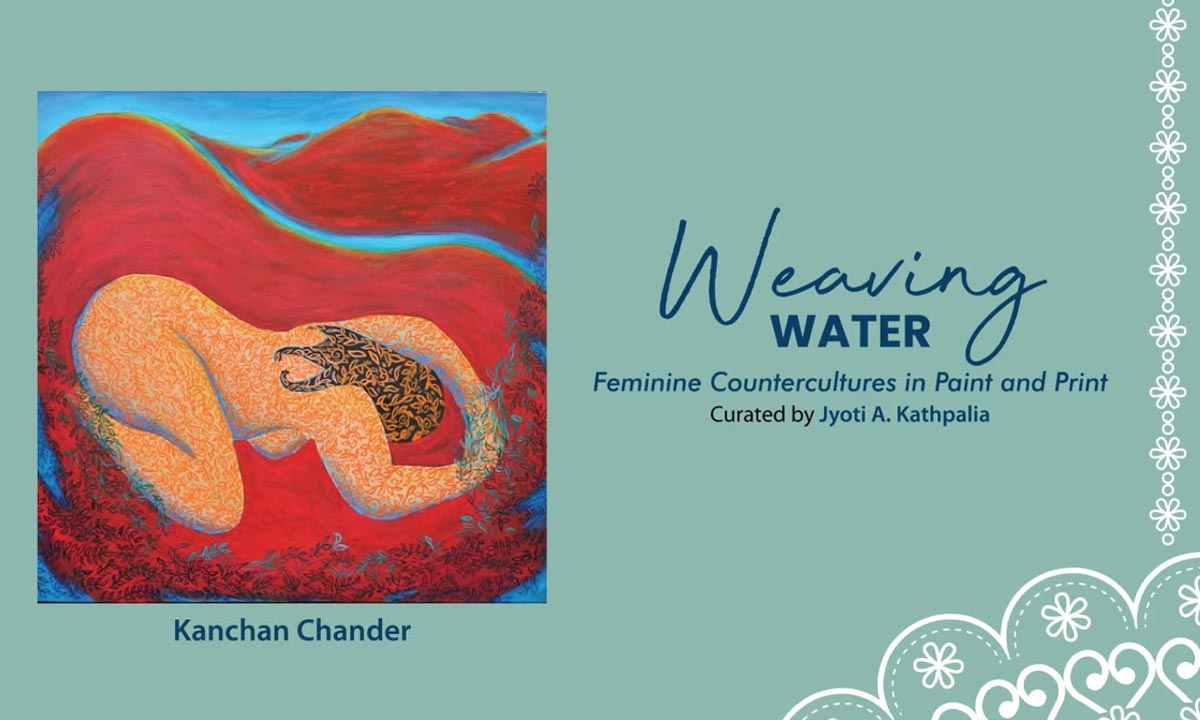
The Indian International Centre (IIC) in New Delhi is set to host an exhibition titled “Weaving Water: Feminine Countercultures in Paint and Print.” Scheduled to run from October 30th to November 10th, 2025, the exhibition breaks the confines of typical displays of paintings and offers a more multi-sensory experience aimed at deconstructing the challenges faced by women in society. Under the able curation of Jyoti A. Kathpalia, the exhibition brings together the works of 15 eminent women artists, whose works are a collective visual response to the painful words of Padma Shri Ajeet Cour’s autobiography, Weaving Water. The fusion of multiple creative forms, like painting, sculpture, and literature, marks a very bold attempt by these artists to create a more equitable cultural fabric denoting the feminine experience. The exhibition explores what curator Jyoti A Kathpalia describes as the “search for an alternate, more equal world and the re-visioning of the feminine.”

The Thematic Spine

The dual metaphor of Water and Weaving is used to create a lens to view the continuity, rupture, and care – the qualities that are inherently present in females. The works in paint and print explore the fluidity of identity, memory, and language, and the art of weaving, involving pattern, repetition, and repair. The artists have consciously picked the confessional and feminist traces from the autobiography of Ajeet Cour and adapted those into their artworks, making them not only interpretative but also archival in nature to some extent. The resulting pieces are transmitters of domestic histories reworked into public testimony, private loss converted into collective narrative.

Each artwork is an active vector of a strong counterculture. It is not merely illustrative, but resonates with the echoes of themes like gender inequality, the suffocating nature of the “oppressive middle-class family structure, and the collective silencing of women’s voices. The works by the fifteen female artists engage in a powerful, intense cross-disciplinary exchange, taking the raw text and transforming it into vibrant expressions that speak to a universal yet intensely personal struggle for self-definition and liberation. 

The Artists

Curator Jyoti A. Kathpalia has structured the exhibition around logical pairings of prints beside paintings, older masters placed in a way that complements the younger practitioners, to trace the shifts in technique and political temper across generations.

The fifteen eminent artists include Anupam Sud, Gogi Saroj Pal, and Jayasri Burman. Most importantly, the list includes Arpana Caur, Ajeet Cour’s daughter and an internationally renowned painter, whose art is intrinsically linked to her mother’s life. Additionally, a ten-minute performance piece by Manmeet Devgun titled Water Weaver, and the screening of the 30-minute Sahitya Akademi film on Ajeet Cour is also listed on the schedule.

The mediums employed are as diverse as the artists’ viewpoints, ranging from traditional fine arts like oil, acrylic, and charcoal painting to complex printmaking techniques (silkscreen and etching), mixed media installations, and sculptural works, making the whole experience utterly wholesome. 

Event Detail
Exhibition Title Weaving Water: Feminine Countercultures in Paint and Print
Duration October 30 – November 10, 2025
Venue Main Art Gallery, Kamla Devi Complex, India International Centre (IIC), New Delhi
Curator Jyoti A. Kathpalia
Source Text Weaving Water: An Autobiography by Padma Shri Ajeet Cour
Participating Artists 15 women artists, including Anupam Sud, Gogi Saroj Pal, Jayasri Burman, and Arpana Caur
Multimedia Elements Performance by Manmeet Devgun, Sahitya Akademi film on Ajeet Cour, Punjabi text renditions

Key highlights (bulleted)

  • The exhibition foregrounds 15 eminent Indian women artists working across painting and print media.
  • A film by Padma Shri Ajeet Cour anchors the show, linking literary and visual forms.
  • Curatorial strategy favors cross-generational dialogue and material practices (weaving, printmaking, layered paint). 
  • Institutional backing from IIC situates the show within a formal programme, expanding its public reach.
  • Coverage across trade press, regional news sites, and social media demonstrates active cultural interest and dissemination. 

A Crit:ical Perception: Why this matters?

Weaving Water aims to do something truly offbeat in the Indian artscape; it will stitch together literature and visual art into a single platform that acknowledges both the political niche of words and the sensible power of image. Through this exhibition, Ajeet Cour’s under-acknowledged stature is going to spread beyond the limits of certain linguistic communities. Now, the fact that it truly matters the most lies in the institutionalized attempt to amplify women’s histories without restricting them to the stereotypical ambit of “women’s shows”.

The exhibition’s true success cannot be reckoned by the number of press coverings it attracts, but in how many meaningful conversations it sparks, whether audiences leave with a renewed appetite for feminist stories, are the real measures. Overall, the main emphasis lies in the fact that true change is not found in legislative reform alone, but in the bold act of breaking the silence. This exhibition forces the viewer to move past the superficial celebration of “liberated women” and grapple with Ajeet Cour’s radical proposition: that external freedom is meaningless without internal, psychological liberation.

Sabhyata Foundation Celebrates India’s Cultural Soul with ‘Shaam-e-Ghazal’ at Safdarjung Tomb

0

Shaam-e-Ghazal’ at Safdarjung Tomb 1

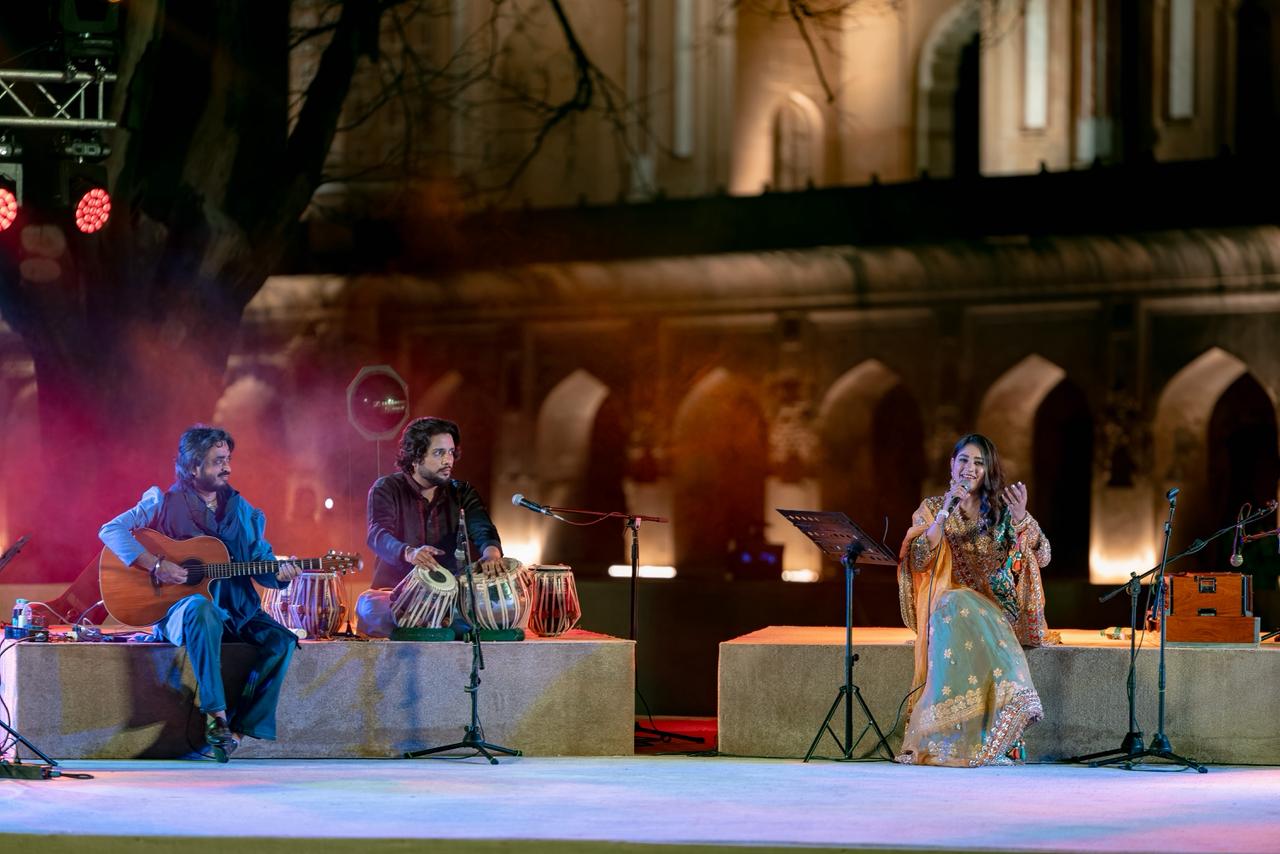
Evenings during autumn in Delhi have a rhythm that combines nostalgia with creative energy. On the 24th of October 2025, that creative energy was on display at the grand monument of Safdarjung Tomb, when the Sabhyata Foundation, in partnership with the Serendipity Arts, produced their first event under the ‘Adopt a Heritage 2.0’ program of the Government of India. This event, which was called Shaam-e-Ghazal, mixed melody, memory and magnificence to connect India’s heritage with its contemporary artistry. The program was supported by the Ministry of Culture and the Archaeological Survey of India (ASI) and was attended by dignitaries like Shri Gajendra Singh Shekhawat, Union Minister of Culture & Tourism and Shri Kapil Mishra, Minister of Art & Culture, Delhi. The event was also a celebration of the 10th anniversary of the Serendipity Arts Festival—a celebration of ten years of artistic experimentation, inclusivity and cultural change.

An Evening of Music and Memories

For the performance, tabla virtuoso Bickram Ghosh brought together two incredible singers: Pratibha Singh Baghel and Prithvi Gandharv, who sang with a robustness that was at once visceral and storytelling in the emotion of the music. They brought to life or recollected the legacy of ghazal greats: Ghulam Ali, Mehdi Hasan, Nusrat Fateh Ali Khan, Pankaj Udhas, and Jagjit Singh, who crafted a genuinely Indian aesthetic through song and performance. The practical indoor idea of a musical evening was transformed nearby, the Safdarjung Tomb, marvelously lit up by the moon, into a living amphitheater. Each ghazal resonated with the echoes of time or centuries as the listener’s experience bridged the linguistic sounds of poetry with the splendour of Mughal architecture. Each listener also experienced a moment where history and harmony became unfettered at last as one.

A Vision to Reimagine Heritage

Puneet Dalmia articulated Sabhyata Foundation’s purpose: celebrating India’s monuments as spaces for engagement and education. Drawing on ancient Atharvaveda wisdom, he noted that true nationalism means caring for cultural legacies and prosperity as shared responsibility. The event at Safdarjung followed past successes at Purana Qila, showing how heritage can be both accessible and experiential.

A Partnership Rooted in Purpose

The partnership between Sabhyata Foundation and Serendipity Arts was a celebration of two philosophies rooted in creativity and inclusion.Sunil Kant Munjal, Founder of Serendipity Arts, described the collaboration as a reflection of a shared vision:

“As we celebrate ten years of Serendipity Arts, we remember that culture connects people and places. Over the past decade, we’ve transformed 300,000 square feet of spaces in Goa into living canvases of art and supported hundreds of artists across South Asia.”He added, “Culture isn’t a luxury—it is essential. It builds empathy, teaches patience, and keeps our collective story alive.”At Safdarjung Tomb, this connection was visible—heritage and contemporary expression coexisted seamlessly.

Guardians of India’s Heritage

The Sabhyata Foundation is dedicated to the exploration of art and architecture by offering various immersive programs. As part of its mission it manages Purana Qila, Humayun’s Tomb, Safdarjung Tomb, and Mehrauli Archaeological Park in collaboration with Dalmia Bharat Ltd. The Foundation imagines and applies ways to access new audiences and to drive enthusiasm in heritage through digital storytelling, showcasing and festival programming. The Foundation is also working in Orchha, for example, to develop heritage-driven tourism informed by culture.

Organization Main Focus Notable Achievements Mentioned
Sabhyata Foundation Smarak Sarathi; promoting and preserving India’s art, culture, and heritage through world-class experiences. ‘Jai Hind’ Sound & Light Show (Red Fort); entrusted with upkeep of four Delhi sites; partner for Orchha heritage tourism.
Serendipity Arts Not-for-profit platform fostering empathy and curiosity; supporting emerging artists across South Asia. Curating Shaam-e-Ghazal; transforming 300,000 sq ft of spaces in Goa; preparing for 10th Festival edition (Dec 2025).

Culture as a Living Experience

Sabhyata Foundation takes an approach of bringing people closer to history through experience. As part of the Smarak Sarathi initiative it manages important heritage sites in Delhi—Purana Qila, Humayun’s Tomb, Safdarjung Tomb, and Mehrauli Archaeological Park. The Red Fort work offered by the Foundation and now the Jai Hind show is reimagining the way we view heritage, and how it can be felt.

In Madhya Pradesh, the Foundation’s work in partnerships with Developments that Matter to promote Orchha as a cultural tourism destination highlights how conservation provides opportunities to foster tourism and regional pride. Everywhere that the Foundation is engaged, heritage is understood not as simply a relic from the past, but as a space for storytelling, sharing emotions, and constructing community.

Serendipity Arts: A Decade in the Creative Space

In the last decade, Serendipity Arts has disrupted the creative landscape of South Asia. Its programs incorporating visual art, dance, theatre, design, culinary arts and literature have created new opportunities for artists and audiences to engage with each other and their work. 

The Serendipity Arts Festival in Goa reimagines urban spaces into settings for imagination and experimentation, and its tenth edition in December 2025, the organization’s largest festival yet, promises to bring together a variety of disciplines under one cultural umbrella.

The Broader Impact

  • Monuments become active cultural spaces.
  • Public participation and community engagement increase.
  • Emerging artists receive support and visibility.
  • Heritage-based tourism grows.
  • History strengthens emotional bonds with citizens.

The Significance of ‘Shaam-e-Ghazal’ 

The warmth from Shaam-e-Ghazal remains not simply as a memory, but as a calling. Sabhyata Foundation and Serendipity Arts are developing a cultural topology embracing how we act, feel, and support culture. These events provide a context to think about India’s monuments not as obstacles of history but as an open space of belonging.

Discover the warmth of shared culture, the energy of live performance, and the shared joy of being part of India’s continuing narrative. Because in these moments, heritage is not something we seek and find – it is something we are part of.

Navigating the Subconscious: Eleena Banik’s Dreamscapes at Apparao Galleries

0

Eleena-Banik’s-Dreamscapes-at-Apparao-Galleries-0A

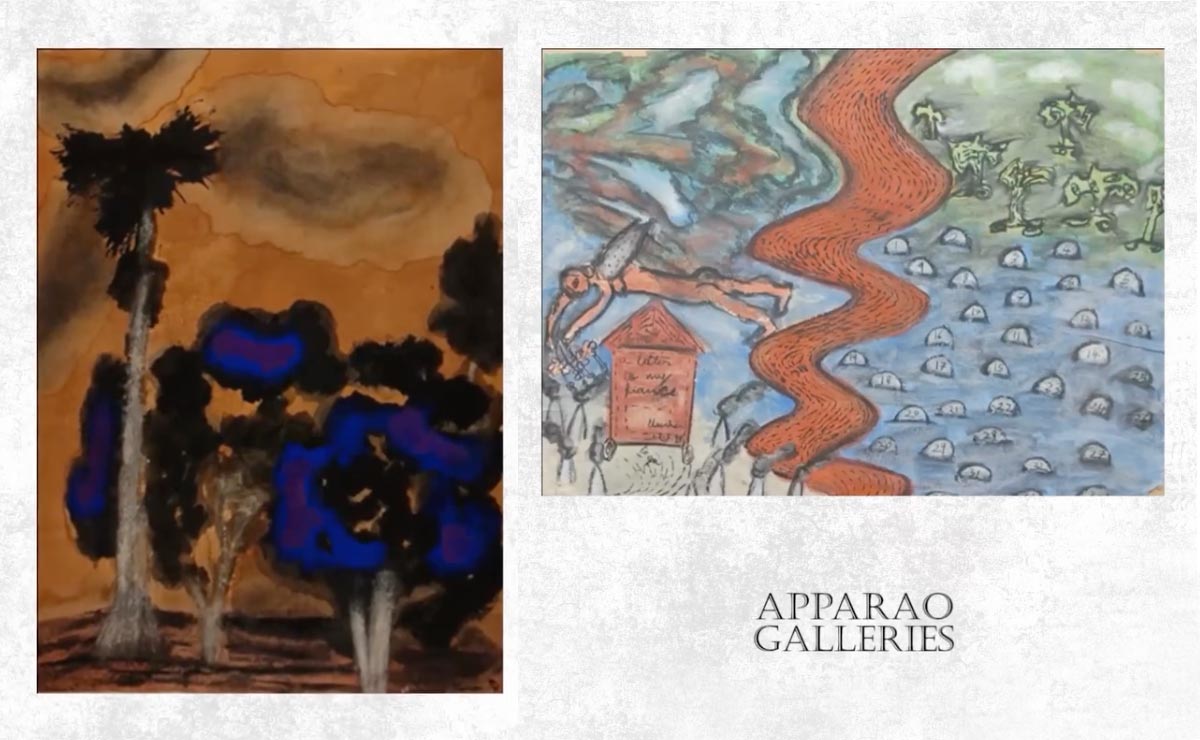
Apparao Galleries in Chennai has opened its first-floor space in Nungambakkam to a chronically rich exploration of the mindscape with the solo exhibition, “The Terrain Between Dreams in the Understory.” It features the recent works of the Kolkata-based artist, Eleena Banik, and is running from 14–31 October 2025, open Tuesday to Saturday, 3:00 pm–6:30 pm. The collection invites the public to channelize their conscience through a layered landscape where distinctions between nature, memory, perception, and the subconscious fluidly disappear. Eleena Banik is well known for her expressionistic style and strong engagement with socio-cultural themes, particularly those related to a more feminine self. 

A Dialogue with Subconsciousness

Her canvases on view are one long-running continuation of human figures entangled with mythic motifs. This is a kind of visual language that Eleena has developed over decades of exhibiting and collecting work into public and private collections. The artistic tendencies revealed by her paintings situate her artworks somewhere between figurative narratives and lyrical abstraction. Viewers ought to find nature as a recurring motif in her paintings, which deliberately slips into abstraction. 

The depictions of figures and fragments surface, etc., hint at personal narratives, mythic forms, and the complex inner life of the artist. They are not painted as defined characters, but are projections of echoes of different thoughts and feelings, making her work more emotionally intimate and connecting to the viewers. The way Eleena uses colour in her paintings points towards the definitiveness of the emotional architecture of her work. The pigments are often vibrant yet tempered, signifying the frequent and tumultuous shifts of the mind itself. Through her unique visual language, she possesses the capacity to turn a simple canvas into a mirror that reflects universal struggle and a quest for harmony amidst all sorts of “external dilemma” of the present world. 

The Artist

The exhibition’s careful curation serves as a testament to Eleena Banik’s maturity as an artist, exposing her fearless exploration of the niche of art. Hitherto, she has been shown both in curated group exhibitions as well as solo projects. Her work is represented in many online catalogues that map an evolving display of colour, pattern, and the body itself as a landscape. 

Event Detail
Exhibition Title The Terrain Between Dreams in the Understory
Artist Eleena Banik
Venue Apparao Galleries, No. 7, Wallace Gardens 3rd Street, Nungambakkam, Chennai
Dates 14 – 31 October 2025
Viewing Hours Tuesday – Saturday, 3:00 PM – 6:30 PM
Key Themes Abstraction, Subconscious, Memory, Nature, Mythic Resonance

Key highlights

  • A tightly curated solo presentation focused on Banik’s recent paintings and new explorations of subconscious terrains. 
  • Work characterized by layered surfaces, saturated palettes, and shifting figuration that dissolves into botanical and mythic motifs.
  • Included in city-wide October exhibition roundups, indicating local critical visibility. 
  • Accessible location in Nungambakkam with clear visiting hours and gallery contact information. 

What to Expect

Pay attention to Eleena’s way of representing negative spaces, as they are often charged; they transform into a character in their own right. Note repetitive gestures such as hands clasping foliage, repeated profile motifs, and small, trompe-l’oeil objects, which complicate the painting’s scale and make the points of perception dynamic.

Takeaway

Today’s world is cluttered with digital imagery and hyper-realistic images. Amidst all these, Eleena Banik’s paintings offer a catalytic counterweight; they offer an argument that is often unspoken. Her canvases are not for projecting answers, but to raise questions, compelling us to think and re-think about the ‘understory’ of our own minds. For a city like Chennai, this exhibition is a great opportunity to witness an artist at the peak of her abstract exploration. 

Her paintings remind us of the value of deepening a visual language over time. It challenges the viewer not just to look, but to feel, to dream, and to engage in the deeply personal process of piecing together the fragments of what lies just beyond the veil of consciousness.

The Inner Contour: Revisiting A. A. Raiba’s Independent Vision of Modern Indian Art

0

Art-Exhibition-in-Delhi-The-Inner-Contour

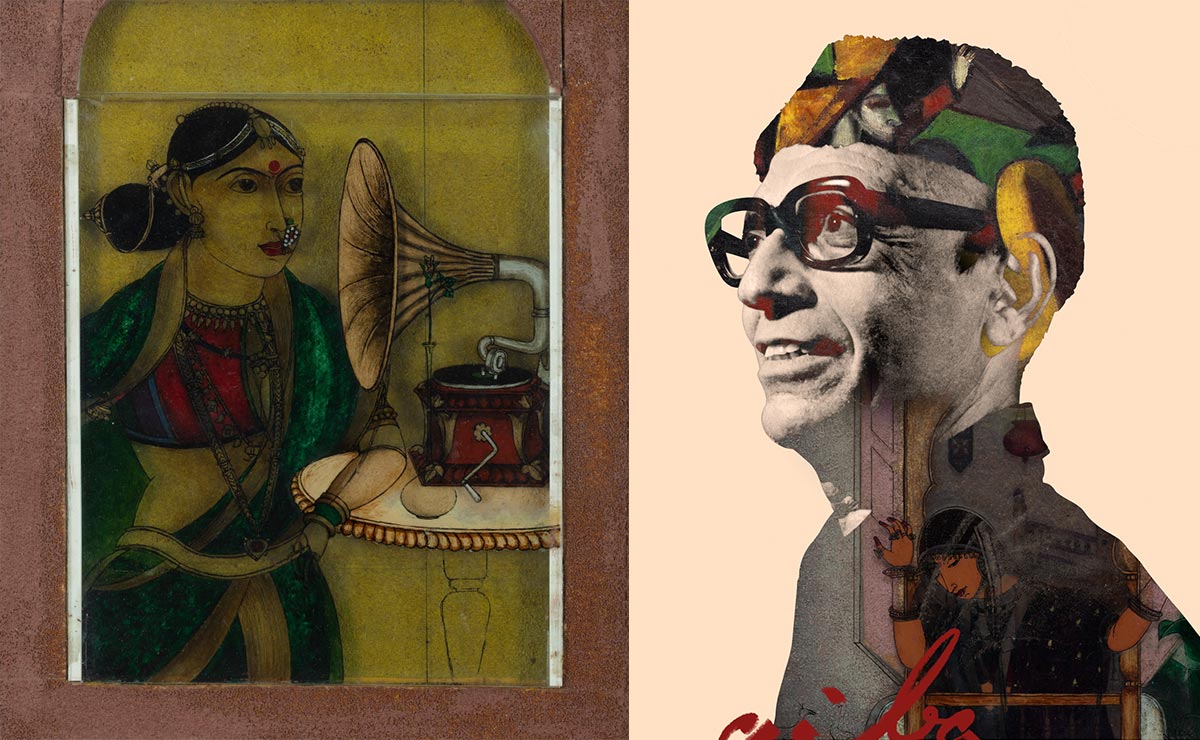
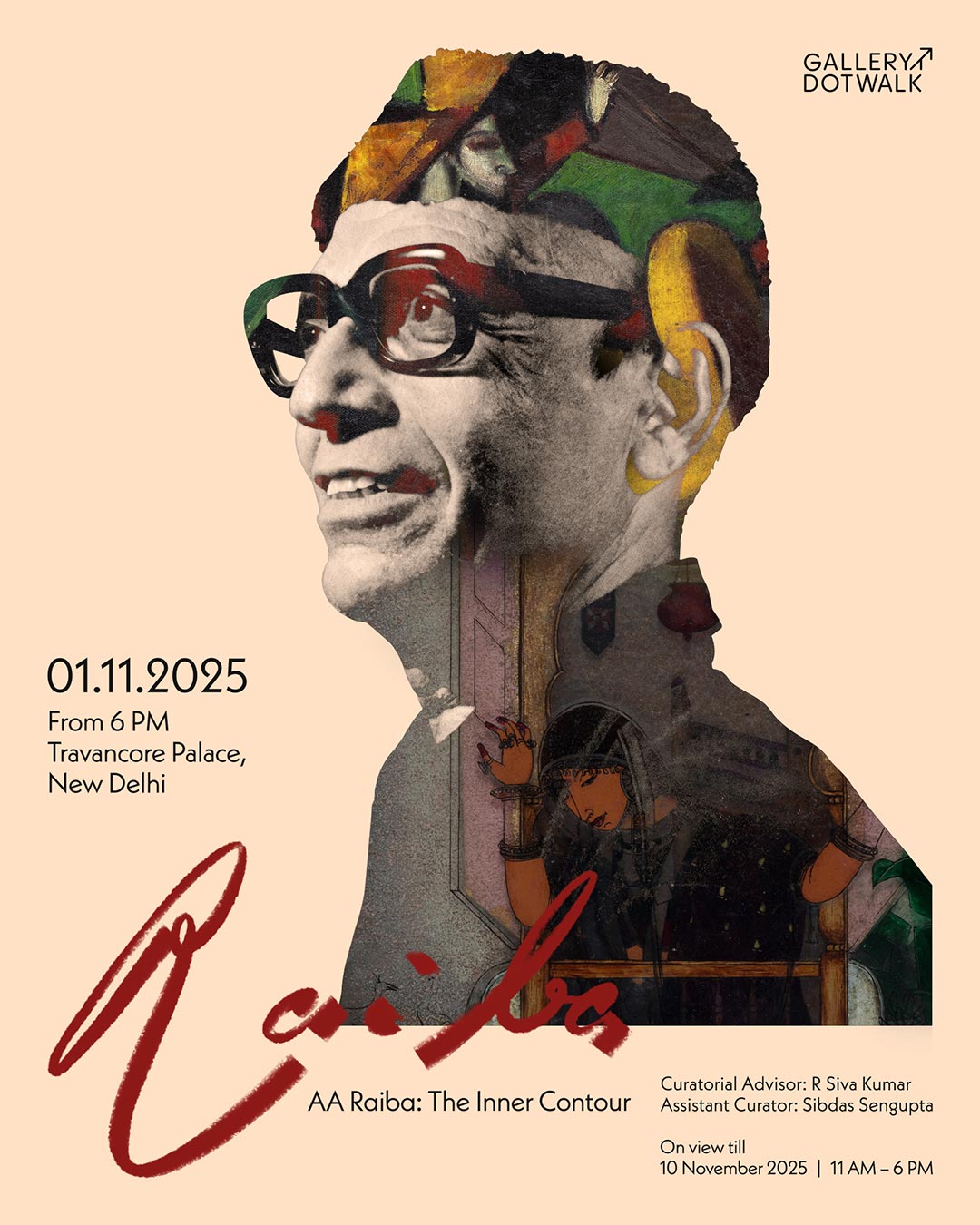
Delhi is all set to host a landmark exhibition of one of the most distinguished figures in early modern art, late Abdul Aziz Raiba (1922–2016). The exhibition, christened as The Inner Contour, offers a critical restrospection of Raiba’s marvellous artworks. Organized by Gallery Dotwalk, this exhibition will be set in place for public viewing from 2nd – 10th November 2025, with a private preview on November 1, at the historic Travancore Palace in New Delhi. 

The Artist: 

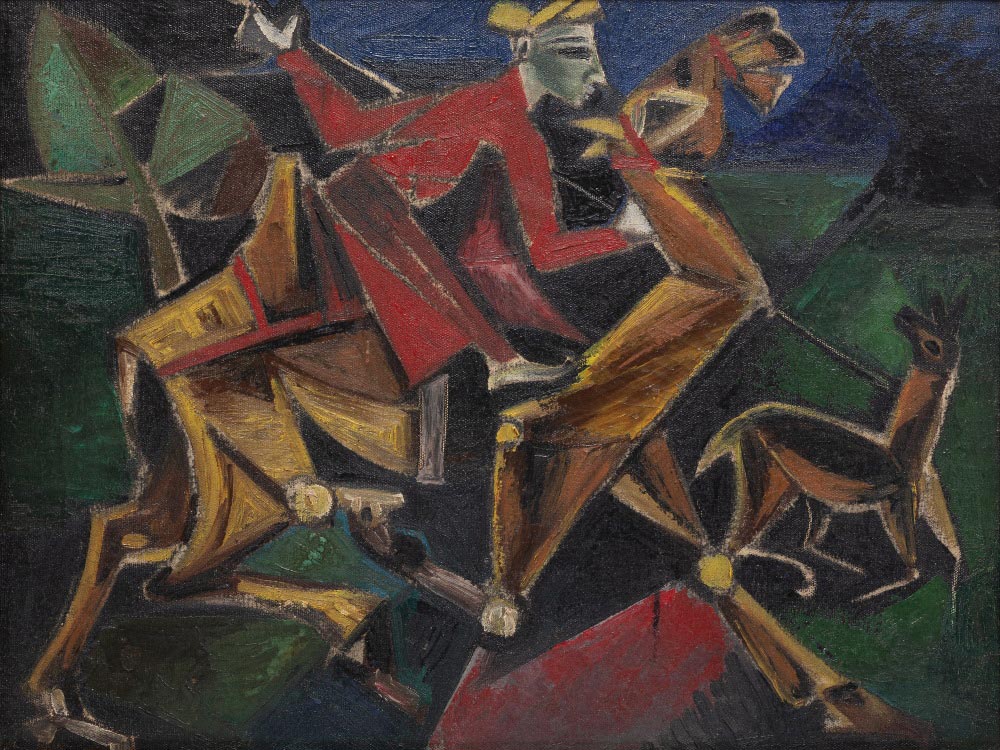
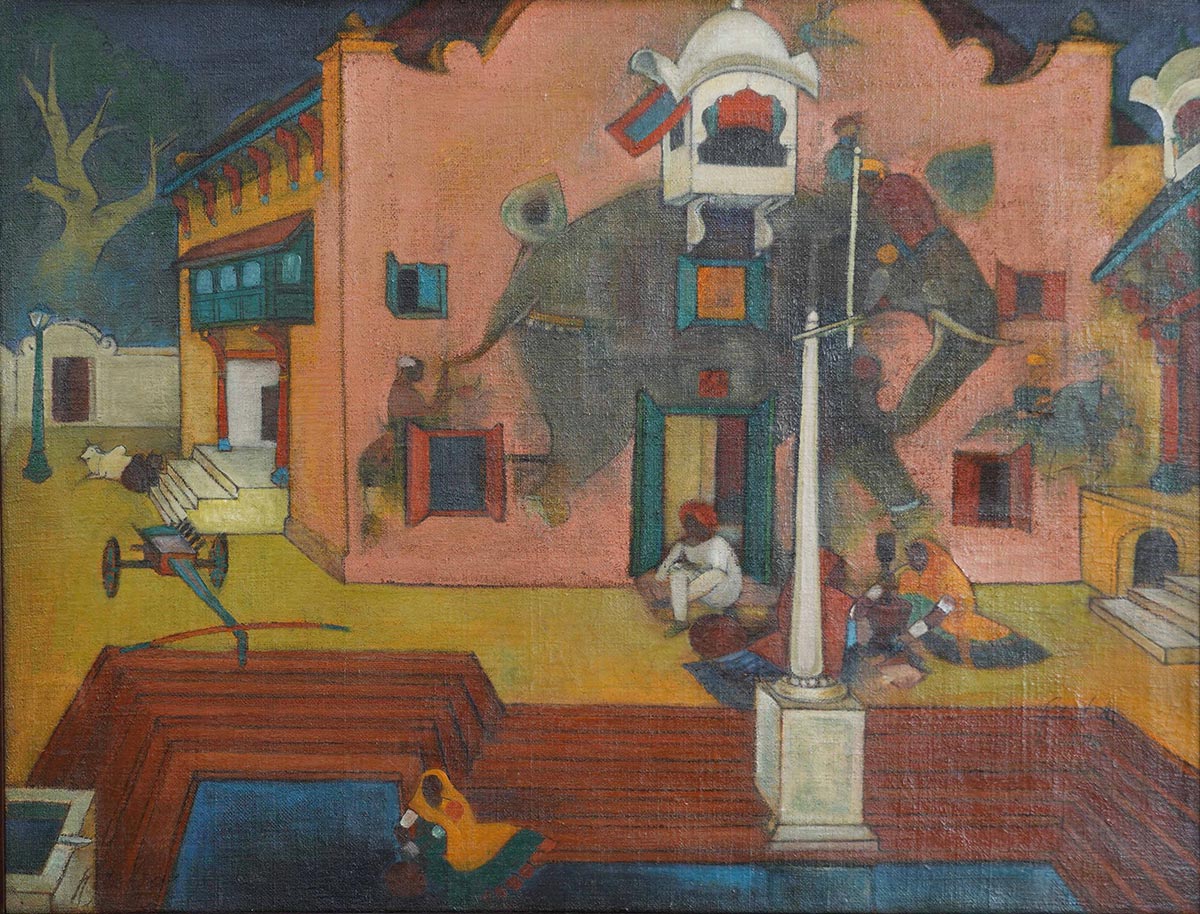
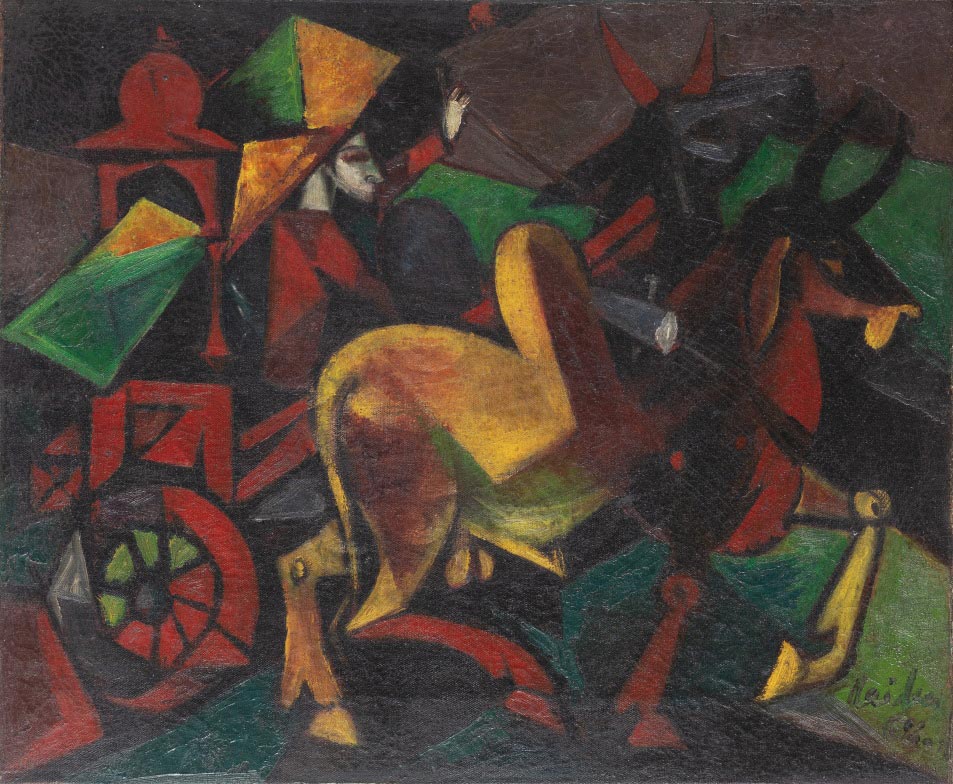
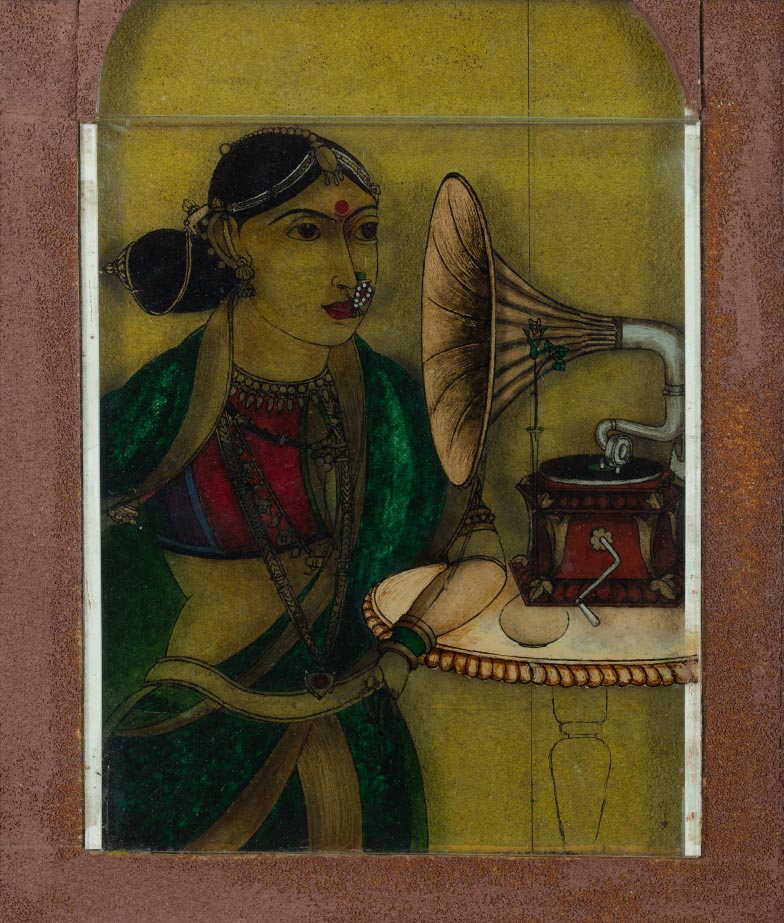
Born in Bombay in 1922, A.A.RAIBA was an alumnus of that era’s most booming modernist element. His career began at Bombay’s Sir J.J.School of Art, and he was also associated with the progressive Artists’ Group (PAG), but quickly disassociated himself to pursue his own unique style. He was largely unrecognized till the Clark House Initiative came forward with a survey in 2012 that generated a new wave of interest in his unique style and materials. As a young artist, he contributed to designing murals for Air India and the Ashok Hotel in Delhi. A hallmark of his design is the combination of indigenous miniature painting with contemporary influences.

ABDUL-AZIZ-RAIBA-Untitled_Oil-on-canvas_12.75-x-16.25-inches

He mastered Arabic calligraphy and Urdu poetry in his youth, which is deeply reflected in his artworks. He introduced the Arabic script into his paintings as “abstract letter forms”, which required a lot of control and precision, which then emerged as the “technical engine” for the exhibition’s theme. For decades, Raiba continued to paint on unconventional surfaces such as old sarees, hand-spun jute, and prints on glass. This tendency to draw on these surfaces was born out of his father’s tailor shop, and to some extent, of his own limited budget. 

Raiba had an inherent resistance to exhibiting his work. He laid a very strict line between his personal practice and the dominant art institutions, more like a biographical divide. This isolation, incurred by him and the autonomy he bestowed on himself, made him stand out and become a well-dignified figure of conceptual modernity.  Surprisingly, Raiba also acted as his own critic, which displayed his intellectual maturity.

Venue, Vision, & Curatorial Authority

ABDUL-AZIZ-RAIBA-Untitled_Oil-on-Jute_32-x-42-inches

The Neo-Classical structure of the Travancore Palace, noted for its beautiful butterfly plan, is a fitting venue to complement the chronologically arranged exhibits of A.A.Raiba. Meanwhile, a more structured and thoughtful curatorial angle is offered to the exhibition through the dedicated efforts of Professor Siva Kumar, an art historian known for his extensive research on early Indian modernism, with a specific focus on the Shantiniketan school of art. Also, Gallery Dotwalk, the organizer, has established a focus on promoting contemporary art and providing a platform for emerging artists, with the aim of being a catalyst for sustained, repeated viewing and deeper intellectual engagement with art.

According to press notes, The Inner Contour showcases Raiba’s early paintings alongside “a large number of drawings, experimental paintings, artist books, and archival photographs”. Visitors can expect to see sketchbooks pasted with couplets and bird-like calligraphy (as Raiba designed in his own exhibition invitations), as well as long-overlooked plein-air canvases from his famed Kashmir series. The show even includes films and research documentation, offering insight into his processes and “deeply introspective” approach.

ABDUL-AZIZ-RAIBA-Untitled_Oil-on-canvas_16.5-x-20-inches

As curator Siva Kumar observes, audiences once only recognized the School of Paris style as “true” modernism, sidelining artists like Raiba, who drew on Indian folklore and calligraphy. However, the contemporary understanding is more liberal and open. Through this exhibition, The Inner Contour, a conscious attempt is made to re-position Raiba within the framework of the history of modern Indian Art. 

Event Details
Exhibition A. A. Raiba: The Inner Contour
Dates November 2–10, 2025 (Private Preview on November 1)
Venue Travancore Palace (Kerala House), New Delhi
Organizer Gallery Dotwalk
Curator R. Siva Kumar
Featured Artist Abdul Aziz Raiba (1922–2016)
Materials & Media Oil on jute, painted saree fabric, paper sketches, calligraphic works
Exhibit Contents Early works, Kashmir series, sketchbooks, artist notebooks, and archival photos
Significance Repositions Raiba as a key figure of post-Independence Indian modernism

Key Highlights:

  • Gallery Dotwalk’s retrospective on A. A. Raiba takes place Nov 2–10, 2025, at Travancore Palace in Delhi.
  • Curated by R. Siva Kumar, the show centers on Raiba’s distinctive contour lines – neither mere outlines nor abstractions, but “potent philosophical and formal thresholds” in his paintings.
  • Raiba (JJ School of Art graduate, former Progressive Group member) blended Indian miniature painting and folk motifs with modernist ideas; critics note his work’s “technical precision and poetic sensibility”.
  • The exhibition includes a range of media – bold oil landscapes on jute and torn sarees, extensive pencil drawings and calligraphic sketches, even artist notebooks – revealing Raiba’s craft and imagination.
  • Organizers emphasize that this show “positions Raiba as a singular giant in Indian modernism,” celebrating his non-conformist vision and resourceful artistry.

Why The Inner Contour Demands a Revision of Indian Modernism

ABDUL-AZIZ-RAIBA-Untitled_Painted-on-Layered-Glass_12.75--x-11-inches

A. Raiba: The Inner Contour is not merely an exhibition; it is a necessary rehabilitation to the historical narrative of art in post-Independent India. The history of modern Indian art is often associated with those artists who were aligned with dominant movements. But Raiba stood on a different plane where his independence mattered to him the most.

Additionally, the relationship between Raiba’s material poverty (utilizing low-cost jute and tailoring scraps) and the sophistication of his bold lines coincides with his version of modernism. The exhibition, with its vital focus on process and archival depth, guided by the intellectual quotient of R. Siva Kumar, provides the critical foundation required to solidify Raiba’s position.

Takeaway

AA-Raiba-The-Inner-Contour-01

The Inner Contour compels the viewers and historians to account for those who deliberately chose intellectual and aesthetic autonomy over institutional conformity. This exhibition affirms the relevance of modernism rooted in inner reflection, ultimately establishing Abdul Aziz Raiba as a paradigm of independent genius whose relevance has intensified with time.

It is a testament to Raiba’s “unfinished” quest for a distinct style (as he famously lamented late in life) that still resonates. In celebrating his artistry now, the exhibition not only honors a trailblazer of the past but also encourages us to reconsider the “contours” of modernism today.