Sawantwadi’s Ganjifa Art Gets a New Canvas: India’s First Circular Postcards

0

Sawantwadi’s-Ganjifa-Art-Gets-a-New-Canvas--India’s-First-Circular-Postcards-01

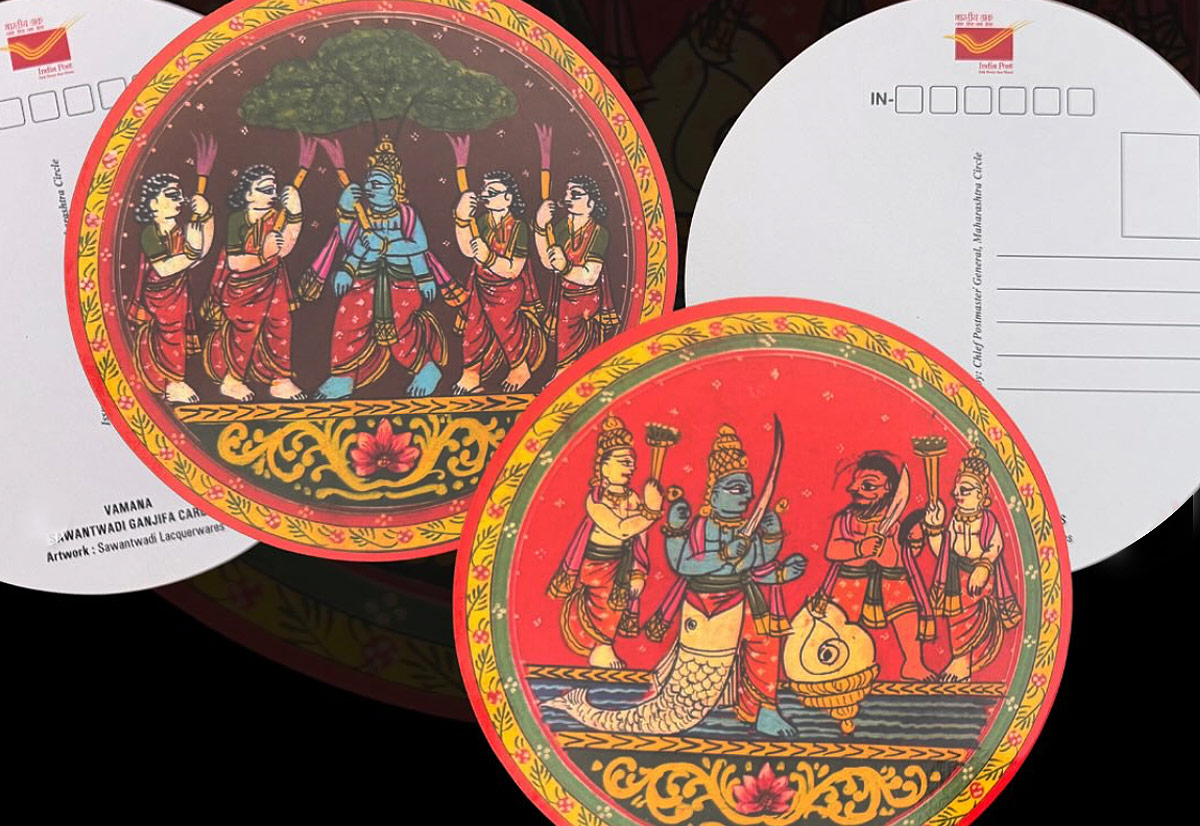
India has achieved a landmark philatelic innovation; the artisans of the Sawantwadi Palace and the India Post (Maharashtra Circle) joined hands and created the country’s first circular postcards. This unique release transcends traditional postal stationery by blending heritage craft with modern postal services. The innovation here is championing, revival, and safeguarding the endangered, 500-year-old art form known as Ganjifa by utilizing the elaborate postal nexus. At a ceremony during National Postal Week 2025 in Mumbai, Chief Postmaster General Amitabh Singh released a set of Sawantwadi Ganjifathemed postcards, each hand-painted with the Dashavatara (Ten Avatars of Vishnu) motif. Each piece of these postcards is painstakingly created by Sawantwadi’s master artisans and finished in lacquer. 

Also, the adoption of the circular format is not just an aesthetic choice; it’s a reflection of the evolution of the ganjifa form of art. The indigenous Indian Ganjifa playing cards, which originated from Persian rectangular decks, were traditionally round in shape. While contemporary postcards are rectangular in shape, the placement of these circular postcards does stand out and also reflects on the tangible heritage. Additionally, the item itself is a collectible artifact, aligning with both cultural and innovative practices of heritage conservation. This unparalleled collaboration also provides a wide space for private-public partnerships, in which extensive logistical support is offered by the state agency, i.e., India Post, creating a conduit for cultural dissemination. This is consciously strategized to transform the niche of local art into a wide, commercially available, and accessible product. This will equally ensure the continuity of earning a livelihood for the artisans who are carrying this endangered art form forward. 

Historical Background and Context
Ganjifa-Art

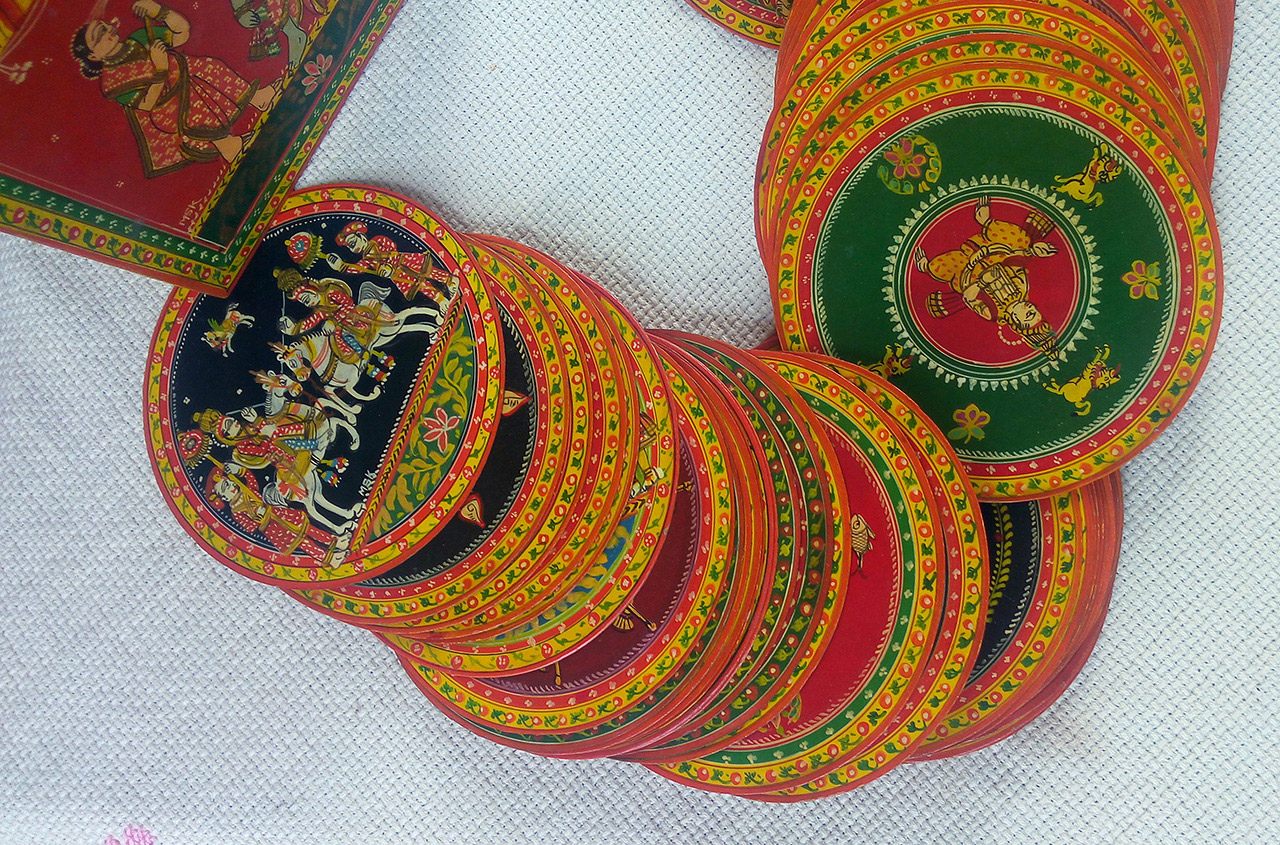
In layman’s terms, the Ganjifa is an ancient Indian card game and an art form that dates back to the 16th century. Its etymological root is in the Persian term Ganjifeh, and it became popular in the Indian subcontinent during the Mughal period. In the Mughal era, it attained the status of “luxury and intellect” in the courts of Emperor Akbar and Shah Jahan. The classic Mughal era deck featured 8 suits and 96 cards. Although initially recognized as a court game, the Ganjifa was gradually more Indianized. Then emerged the Dashavatara Ganjifa, which was created with the intent to make an explicit appeal to the Hindu communities, and this new deck comprised 10 suits dedicated to Hindu mythology.

The craft spread across regions, flourishing under royal patronage, such as Sawantwadi in Maharashtra, Odisha, and Mysore, each with its distinct styles. The Dashavatara set was primarily focused on Sawantwadi art, depicting the ten avatars of Lord Vishnu. In the Sawantwadi variation, these traditional decks often comprise 120 cards. The iconographical perspective of Indigenization transformed it from a foreign court pastime into a vivid art form, deliberating on visual storytelling while emphasizing spirituality and culture. By the late 19th century, Ganjifa was nearly extinct in India, surviving mainly in Sawantwadi, where generations of the royal Sawant Bhosale family kept it alive. Yuvrani Shraddha Lakham Sawant Bhonsle of Sawantwadi Palace notes that the art arrived in her state in the late 16th–early 17th century and was revived by her grandparents in the 1970s. In January 2024, Sawantwadi Ganjifa won a Geographical Indication (GI) tag, the first for this craft, denoting its watershed cultural worth.

The Mastery of Craftsmanship
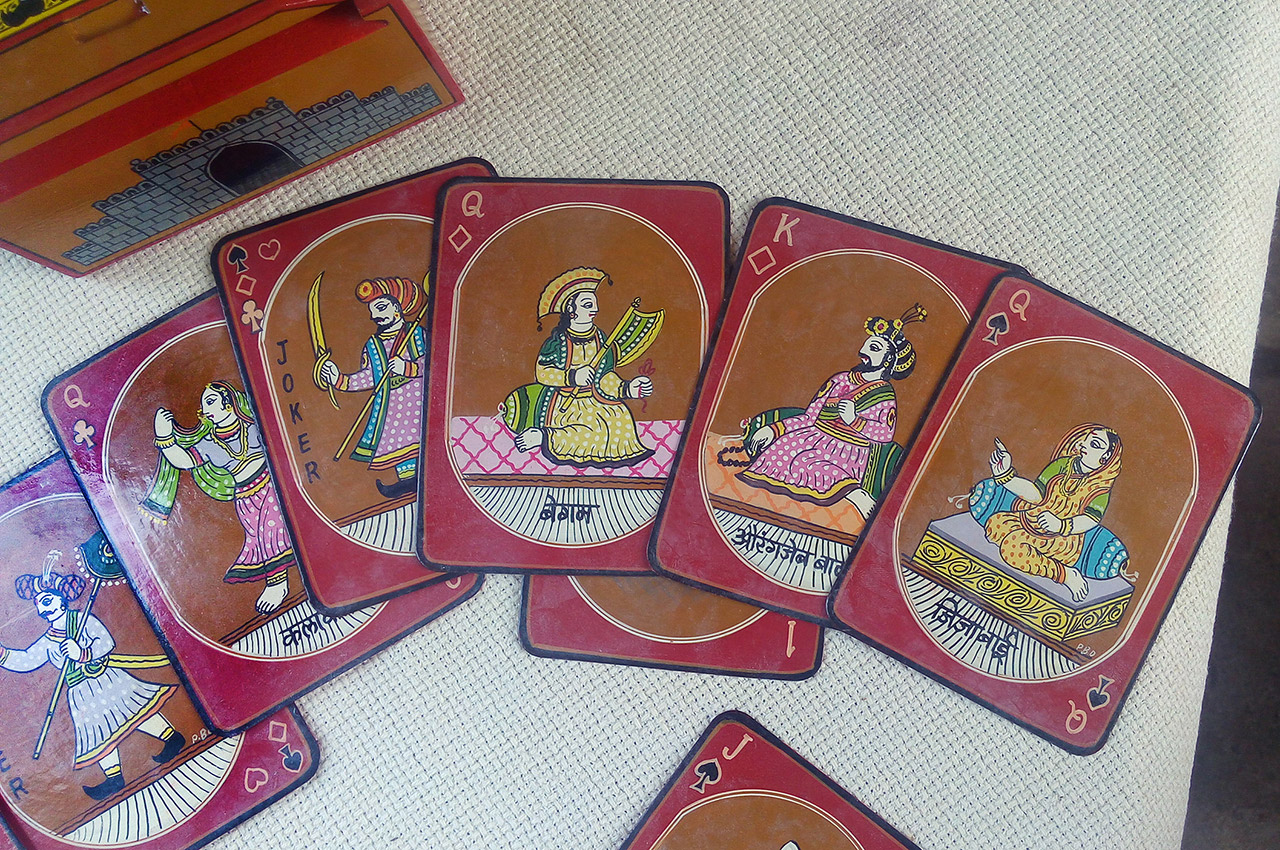
Shivaji-Maharaj-Ganjifa-set

The craftsmanship skills required to produce the Ganjifa art are elaborate and extremely time-intensive. The specialized artisans responsible for producing ganjifa art and lacquerware belong mainly to the Chitrakar or Chitari community. Historically, the material used to prepare the cards was a direct reflection of the status of the player. For instance, cards inlaid with precious stones, ivory work, and tortoise shells were reserved for the royalty or the Darbar Kalam, while cards made of cloth, palm leaves, or papier-mâché (Bazâr Kalam) were widely circulated among the commoners. Overall, the procedure for the production of these cards involved common steps like intricate hand-painting, the use of natural hues, and finishing it with a coat of lacquer (Indian shellac or natural resin). The last step is the most important one, as it makes the cards stiff and durable to withstand innumerable rounds of play. 

Today, Ganjifa is recognized as a rare and endangered folk art. With the newly made innovation, the India Post explicitly aims to “raise awareness and support the revival” of this heritage through philately. By reproducing Ganjifa imagery on postal cards, the initiative forms a bridge between modern collectors and a centuries-old tradition. 

The Royal Guardianship: Sawantwadi Palace and the Bhonsle Legacy

Founded in 1627, the Sawantwadi town functioned as the capital of the Bhonsle dynasty. It is due to the relentless patronage of the royal family that Sawantwadi remains the only place in India where the ancient art of Ganjifa is still practiced. The story of its revival from almost a state of extinction begins in the 1970s, when Lt. Col. Raja Bahadur Shivaram Sawant Bhonsle and his wife, Rani Satvashiladevi Bhonsle, acknowledged that the craft was at the verge of extinction.  The first step taken by the royal couple was learning the craft by themselves from the 80-year-old master artisan, Pundalik Chitari. After that, they founded the ‘Sawantwadi Lacquerwares’, marking a formal step towards the revival of Ganjifa. 

Today, the Sawantwadi royal palace stands tall as the bustling hub of  Ganjifa. The continuing commitment of the royals towards this art form is best reflected by the fact that the palace’s darbar hall is now converted into a working space for artisans producing Ganjifa art. The current generation of the royals, including Ranisaheb Shubhadadevi Bhonsle and Yuvrani Shraddha Lakham Sawant Bhonsle, continues this legacy, seeking “unique ways to promote this art”. This innovative entrepreneurial initiative by the royal family created a composite and sustainable commercial ecosystem that supports the survival of these artisans. 

Why was this Intervention Necessary?

Like numerous other traditional crafts, the Ganjifa too faced challenges that were responsible for paving a path for its near extinction. During the colonial times, the labour-intensive process of production could not potentially compete with the low-cost, mass-produced Western playing cards. This drawback resulted in a shrinking market for the art form, and the artisans subsisting on it grappled to maintain their households. This resulted in a diversion from continuing Ganjifa as a mainstream path of livelihood, and thus, it crashed completely.

The current collaboration of India Post aims to reverse the previous market failures by bringing the art form to a wider public and democratizing its ambit of utility by associating it with letters. Also, its logistical capabilities are subject to active expansions to support MSMEs, rural entrepreneurs, and artisans by aligning it with national-level schemes like the PM VISHWAKARMA YOJNA.

Through this intervention, a “circular economy of culture” is created, which incentivizes heritage as the capital to generate sustainable revenue. This revenue will be further reinvested for the upliftment and empowerment of the artisans engaged in the craft cluster. It also allows this art form to go global, given India Post’s global reach, thus actively promoting India’s cultural identity abroad. 

Aspect Detail and Significance
Innovation India’s first circular postcards combining philately with traditional art heritage.
Heritage Focus Preservation of Sawantwadi’s 500-year-old Ganjifa art, featuring Dashavatara themes.
Royal Patronage Sawantwadi Bhonsle family sustains the Ganjifa legacy through cultural entrepreneurship.
Artisan Community Empowers the Chitrakar/Chitari artisans — supporting livelihoods, especially women artisans.
Logistics Partner India Post (Maharashtra Circle) extends global distribution and cultural soft power outreach.

Key Highlights

  • A groundbreaking philatelic innovation, designed to replicate the traditional round shape of Ganjifa playing cards, often found in the Dashavatara style.   
  • The cards specifically feature the Dashavatara (Ten Incarnations of Lord Vishnu) theme, a uniquely Indian mythological adaptation of the Persian Ganjifeh game.   
  • The Sawantwadi Bhonsle Royal Family actively supports the art, maintaining the Sawantwadi Palace as the last functional hub for Ganjifa and lacquerware production, safeguarding the Chitrakar/Chitari artisan traditions.   
  • The collaboration provides guaranteed market access through the extensive India Post network, ensuring economic sustainability and revival for the endangered art and its practitioners.   
  • The art technique involves intricate hand-painting and finishing with traditional lacquer for durability and a distinctive sheen.   
  • Released in collaboration with India Post, Maharashtra Circle, often marked during significant events like National Postal Week, granting official state endorsement to the craft revival initiative.   

Takeaway: A Blueprint for Heritage Preservation

The successful revival of the Ganjifa art forms a critical blueprint for tangible heritage conservation in India. The most crucial point in this whole saga is the deployment of institutional trust. There are innumerable cases where the revival of certain art forms faces challenges like authenticity, consumer skepticism, cost-effectiveness, and other kinds of reservations. However, in the case of Ganjifa, the direct partnership with a key agency of the central government inherently bestows credibility and authenticity in it, immediately branding it with a verifiable badge that guarantees reliability. 

This initiative forms the conjunction of royal patronage with contemporary commercial strategy that, in turn, transforms the Bhonsle family from mere patrons to emerging cultural entrepreneurs. It also places the art form on a self-sustaining footing, where cultural capital is redirected to livelihood. 

The contemporary focus of India in the extensive promotion of its soft power is well reflected through this initiative, as it involves supporting the artisanal economy. From this model of heritage preservation, one can deduce that it is actually a variable growth opportunity linked to modern infrastructure. It demonstrates how innovation can go hand in hand with tradition, and the art form is not left alone to vanish into obscurity. A crucial point to note is that Sawantwadi’s Ganjifa workshop now employs around 20 artisans, of whom 13 are women. This also reflects a transition from a male-dominated art field to a more gender inclusive space. Through this collaboration, these women gained more consistent work, more visibility, and are earning their own livelihood with dignity by producing one lacquered card at a time.

Citations

  1. Press Information Bureau, Government of India — “India Post releases circular postcards showcasing Sawantwadi Ganjifa art during National Postal Week 2025” (Maharashtra Circle event coverage, Mumbai).
  2. The Hindu — “India Post releases India’s first circular postcards featuring Sawantwadi Ganjifa art” (October 2025).
  3. The Times of India — “Sawantwadi Ganjifa gets GI tag; first of its kind for this ancient card art” (January 2024).
  4. The Asian Age — “Of Revivals and Royals: How the Sawant Bhosale family brought Ganjifa back to life” (July 2019).
  5. The Print — “Ganjifa: The dying card art that came back to life in Sawantwadi’s royal palace” (Feature article, 2023).
  6. India Today — “Circular postcards to preserve Sawantwadi’s Ganjifa heritage” (Culture & Heritage section, 2025).
  7. The Better India — “How Sawantwadi Palace artisans are reviving a 500-year-old royal art form, one card at a time” (2024).
  8. PIB Maharashtra — “Circular Ganjifa postcards launched by India Post to promote folk heritage” (Official release, October 2025).
  9. Asian Age (Women Artisans Report) — “Of Revivals and Royals”, noting 13 of 20 artisans at Sawantwadi’s Ganjifa workshop are women, gaining sustainable livelihood through the art.
  10. Scroll.in — “The Game of Kings: How Ganjifa painting survives through Maharashtra’s Sawantwadi artisans” (2022).
‘Vishvarupa’ in Asian Art – Splendourous Images of Lord Vishnu’s Cosmic form

0

vishvarupa-in-asian-art

Unveiling Vishvarupa 

Did you know that ‘Vishvarupa’, also known as ‘Viratrupa’, is a powerful iconographical and theophanic form of the Hindu deity Lord Vishnu? While there are various depictions of Vishvarupa throughout Hindu texts, the most renowned appears in the Bhagavad Gita, where Lord Krishna reveals this awe-inspiring cosmic form to Arjuna on the battlefield of Kurukshetra, during the great war between the cousins Pandavas and Kauravas.

The word Vishvarupa (from ‘Vishwa’, meaning ‘universe’, and ‘rupa’, meaning ‘form’ translates to “universal form” or “cosmic form”. It represents a manifestation in which the deity encompasses all of existence—every face, every being, every form—symbolizing the totality of the universe contained within the divine.

Vishvarupa signifies the divine as ‘omnipresent’, ‘all-encompassing’, and the ‘source of all creation’. It is a reminder that the divine transcends human limitations and distinctions, embodying the infinite and the eternal.

 In art and scripture, Vishvarupa is depicted with ‘countless heads, arms, and legs’, displaying an overwhelming vision of divine glory. Every creature, god, and cosmic element is portrayed as a part of this vast form. This form was revealed by Krishna to Arjuna to dissolve his doubts and fears, revealing the ‘true, boundless nature of the divine’—not just as a charioteer or friend, but as the ultimate cosmic force.

 Let us now explore how artists across the ages have envisioned this magnificent form, the ‘Vishvarupa’, in sculpture, painting, and sacred art.

Vishvarupa in Early Asian Art

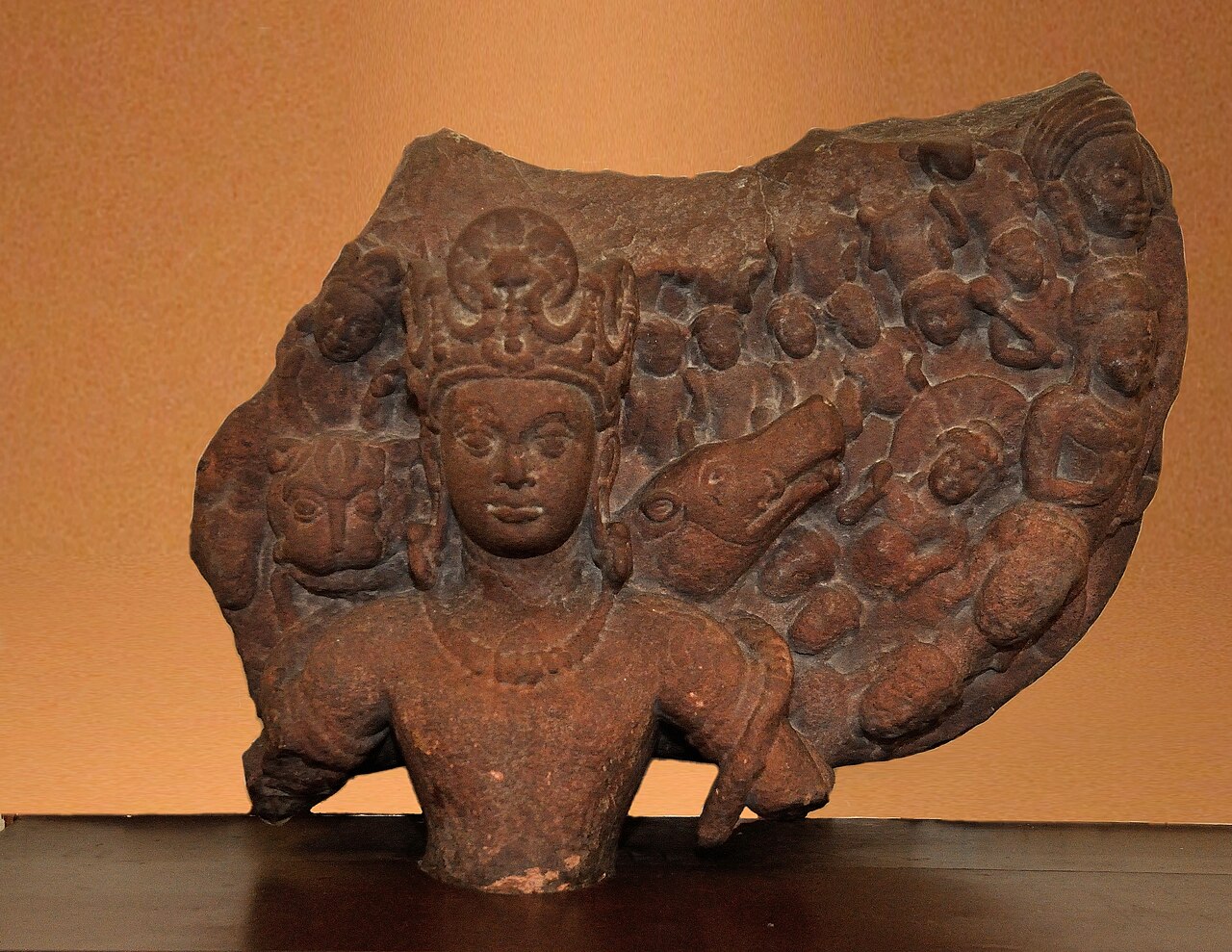
Depictions of Vishwarupa are seen as early as the 5th century. We can see the same in sculptures from Mathura and Kashmir as described below. A temple in Nepal also has a rare depiction of Vishvarupa.

Vishnu Vishvarupa, sculpture, Mathura, 5th century, Government Museum, Mathura.
Vishnu Vishvarupa, sculpture, Mathura, 5th century, Government Museum, Mathura. Wikimedia

A 5th-century CE depiction of Vishnu from Mathura portrays him as a three-headed cosmic creator. At the centre is Vishnu with a human head, flanked by the heads of two of his avatars, Narasimha, the lion-headed incarnation, and Varaha, the boar-headed form. Surrounding him is a radiant aureole teeming with a multitude of beings, symbolizing the diverse emanations born from his divine creative power.

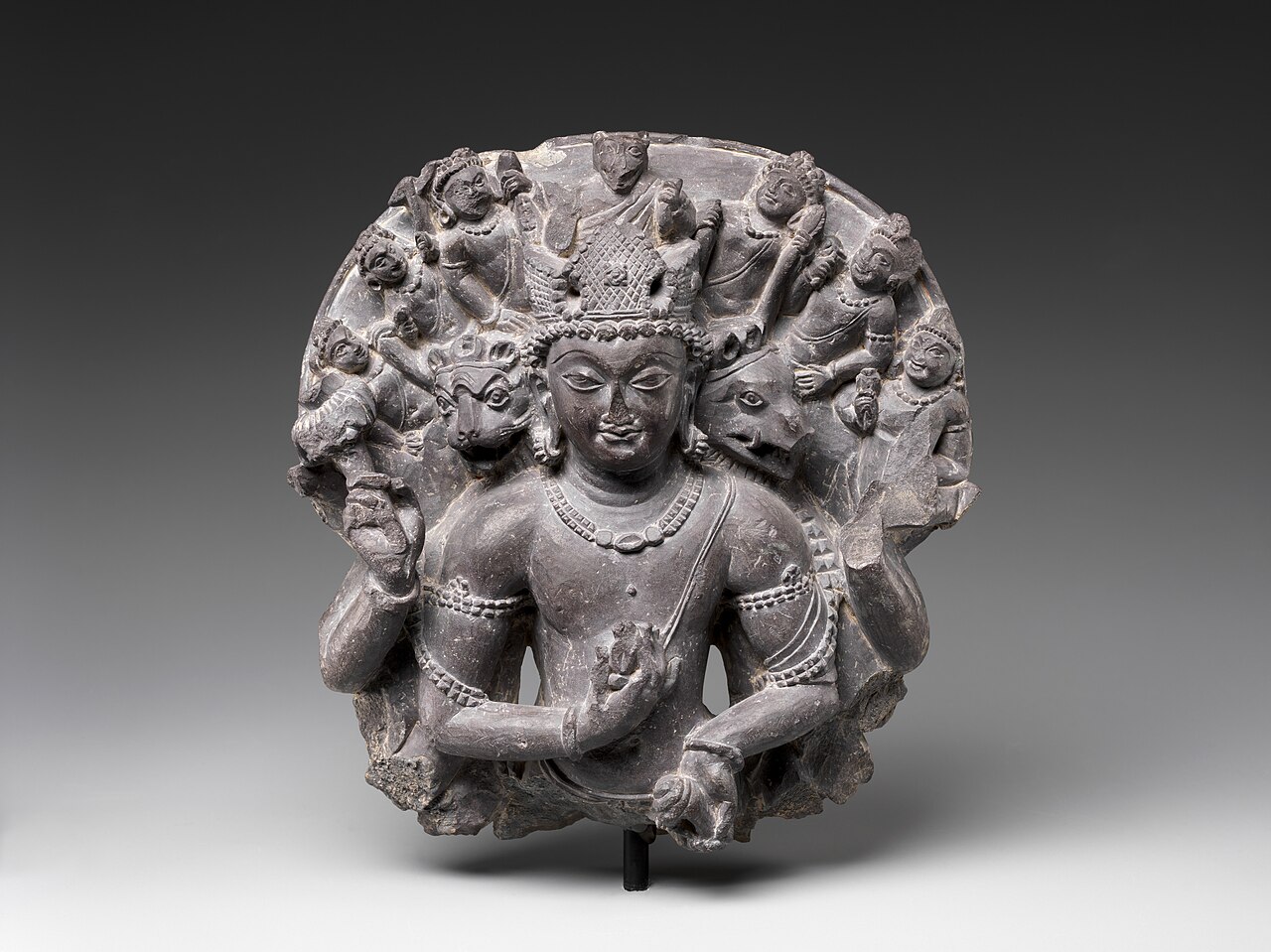
 In the sculpture fragment below of Vishvarupa from 6th century Kashmir, we can see the avatars of Lord Vishnu around his crown with Varaha and Narasimha around his neck.

Vishvarupa Vishnu, Kingdom of Kashmir, 6th century, The Met Museum, New York, U S A.
Vishvarupa Vishnu, Kingdom of Kashmir, 6th century, The Met Museum, New York, U S A. Wikimedia

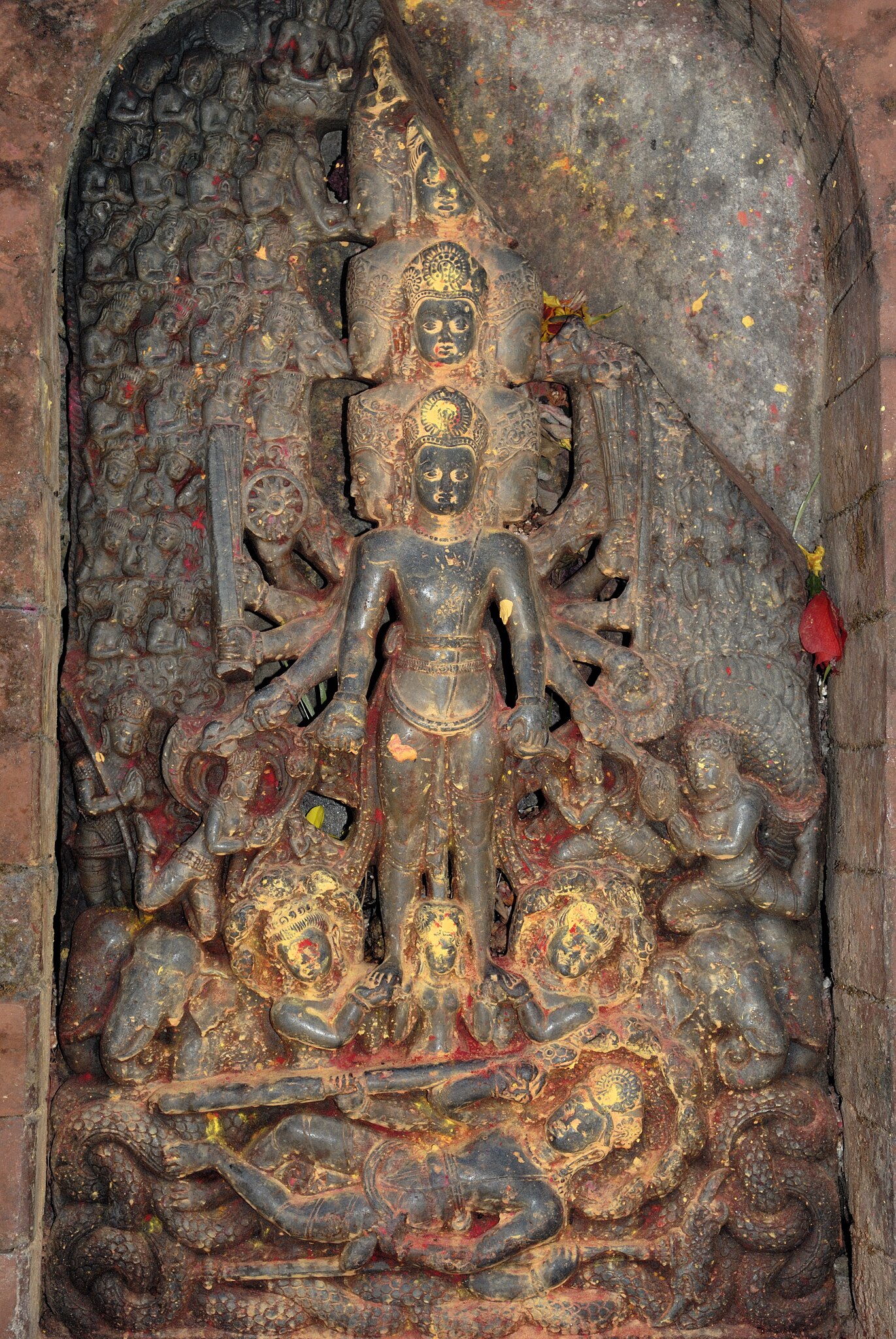
An early and significant depiction of Vishvarupa can be found in the Changu Narayan Temple in Nepal, dating back to the 5th–6th century CE. This stone relief, approximately 70 cm in height, presents a striking image of the deity in his cosmic form. The central figure is depicted with ten heads and ten arms, symbolizing his all-encompassing nature. Surrounding him are representations of the three realms of Hindu cosmology: swarga (heaven), prithvi (earth), patala (underworld). The composition also visually expresses a moral and cosmic dichotomy: Figures to the right of Vishvarupa are demonic, representing chaos and opposition, while those on the left are divine, signifying order and harmony. This contrast illustrates the god’s dual nature, encompassing both light and darkness, creation and destruction, within a single unified cosmic body.

Vishvarupa, Changu Narayan temple, 5th-6th century, Nepal
Vishvarupa, Changu Narayan temple, 5th/6th century, Nepal. Wikimedia

Texts of the Vishvarupa 

In the Bhagavad Gita 

 The most famous account of the Vishvarupa happens in the climactic war in the great Indian epic Mahabharata, where the Pandava prince Arjuna and his brothers fight against their cousins, the Kauravas, with Krishna as Arjuna’s charioteer. Faced with the moral dilemma of whether or not to fight against and kill his own family, Arjuna has a crisis of conscience. To appease him, Krishna discourses with Arjuna about life and death as well as dharma (duty) and yoga in the form of the ‘Bhagavad Gita’. In chapters 10 and 11, Krishna reveals himself as the Supreme Being and finally displays his ‘Vishvarupa’ to Arjuna. Arjuna experiences the vision of the Vishvarupa with divine vision endowed to him by Krishna. Vishvarupa’s appearance is described by Arjuna, as he witnesses has innumerable forms, eyes, faces, mouths and arms. All creatures of the universe are part of him. He is the infinite universe, without a beginning or an end. He contains peaceful as well as wrathful forms. Unable to bear the scale of the sight and gripped with fear, Arjuna requests Krishna to return to his four-armed Vishnu form, which he can bear to see. Fully encouraged by the teachings and darshan of Krishna in his full form, Arjuna continues the Mahabharata War.

In the Mahabharata

There are two more descriptions in the Mahabharata, where Krishna or Vishnu-Narayana offers the theophany similar to the Vishvarupa in the Bhagavad Gita. When negotiations between Pandavas and Kauravas break down with Krishna as the Pandava messenger, Krishna declares that he is more than human and displays his cosmic form to the Kaurava leader Duryodhana and his assembly. Vishvarupa-Krishna appears with many arms and holds many weapons and attributes traditionally associated with Vishnu like the conch, the Sudarshana chakra, the gada (mace), his bow, his sword Nandaka. The inside of his body is described. Various deities (including Vasus, Rudras, Adityas, Dikapalas), sages and tribes (especially those opposing the Kauravas, including the Pandavas) are seen in his body. This form is described as terrible and only people blessed with divine vision could withstand the sight.

The other theophany of Vishnu (Narayana) is revealed to the divine sage Narada. The theophany is called Vishvamurti. The god has a thousand eyes, a hundred heads, a thousand feet, a thousand bellies, a thousand arms and several mouths. He holds weapons as well as attributes of an ascetic like sacrificial fire, a staff, a kamandalu (holy-water pot).

Another theophany in the Mahabharata presents a ‘Vaishnava,’ form; related to Vishnu or Krishna. Unlike the ‘Vishvarupa’, it lacks the multitude of limbs, yet still conveys the deity’s vast and cosmic nature. His head stretches across the sky, his two feet cover the entire earth, his arms extend across all horizontal space, and his belly fills the vast, expanse of the universe.

 In the Harivamsa 

The ‘Harivamsa’, a supplement to the Mahabharata, also contains significant references to Lord Vishnu’s ‘Vishvarupa’, his universal, all-encompassing form, describing it as the embodiment of all the gods. In one instance, during a great Devasura war between the gods and demons, Vishnu assumes the ‘Vishvarupa’ to combat the asuras. In this terrifying and powerful form, he defeats several prominent demons, including Taraka and Maya, underscoring his supremacy and his role as the protector of cosmic order.

The ‘Vishvarupa’ is also invoked in another episode involving Vishnu’s ‘Vamana’ avatar, the dwarf Brahmin boy. In this narrative, Vamana approaches the asura king Bali during a grand sacrificial ritual and humbly asks for three steps of land as a donation. When Bali agrees, Vamana suddenly expands into his cosmic form, Vishvarupa, revealing his divine identity. The Sun and the Moon become his eyes, the Earth forms his feet, and the heavens his head, his body contains a multitude of divine beings and celestial entities: the Vasus, Maruts, Ashvins, Yakshas, Gandharvas, Apsaras, as well as the Vedic scriptures and sacrificial rituals themselves. With just two strides, Vishnu covers the Earth and the heavens. For the third, he places his foot on Bali’s head. Recognizing Vishnu’s divine nature, Bali submits and accepts Vishnu’s lordship. As a result, he is respectfully banished to the realm of ‘Patala’ (the underworld), where he continues to be honored as a righteous and devoted figure.

This episode emphasizes Vishnu’s ability to contain the universe within himself and to restore dharma (the basic principle of divine law in Hinduism, Buddhism and Jainism) through both humility and divine majesty.

In Miniature Paintings 

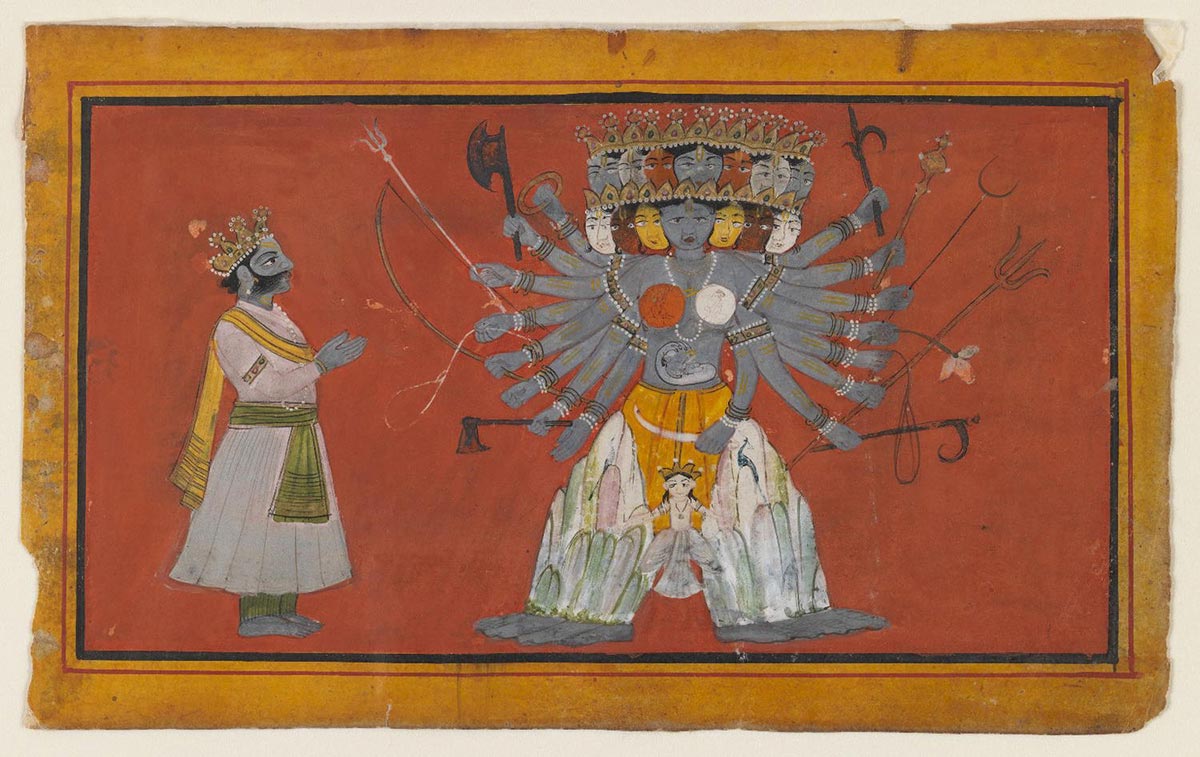
The form of ‘Vishvarupa’ caught the imagination of miniature painting artists as well. This form of painting which was born in the 7th/8th to 12th centuries under the Pala empire of Bengali and 12th to 16th centuries in Western India mostly made on palm-leaf, also flourished during the 17th to 19th centuries under the central and northern hilly  Rajput and Pahadi patrons. The paintings were small in scale but phenomenal in detail and started being made on paper There was a Mughal influence and a hybrid artform along with local sensibility which started making its mark. Made using organic sources for the pigments, miniature painting is an intrinsic and vital part of the art history of India. The Vishvarupa has been depicted in the Rajasthani and Pahari schools. The Pahadi painting shows Arjuna totally awed at the vision of ‘Vishvarupa’ of Lord Vishnu as Krishna. The cosmic form has been depicted with many heads and arms holding emblems.

Arjuna bows to Vishvarupa of Lord Vishnu, Pahadi painting. circa 1820, Brooklyn Museum. New York.  U S A.

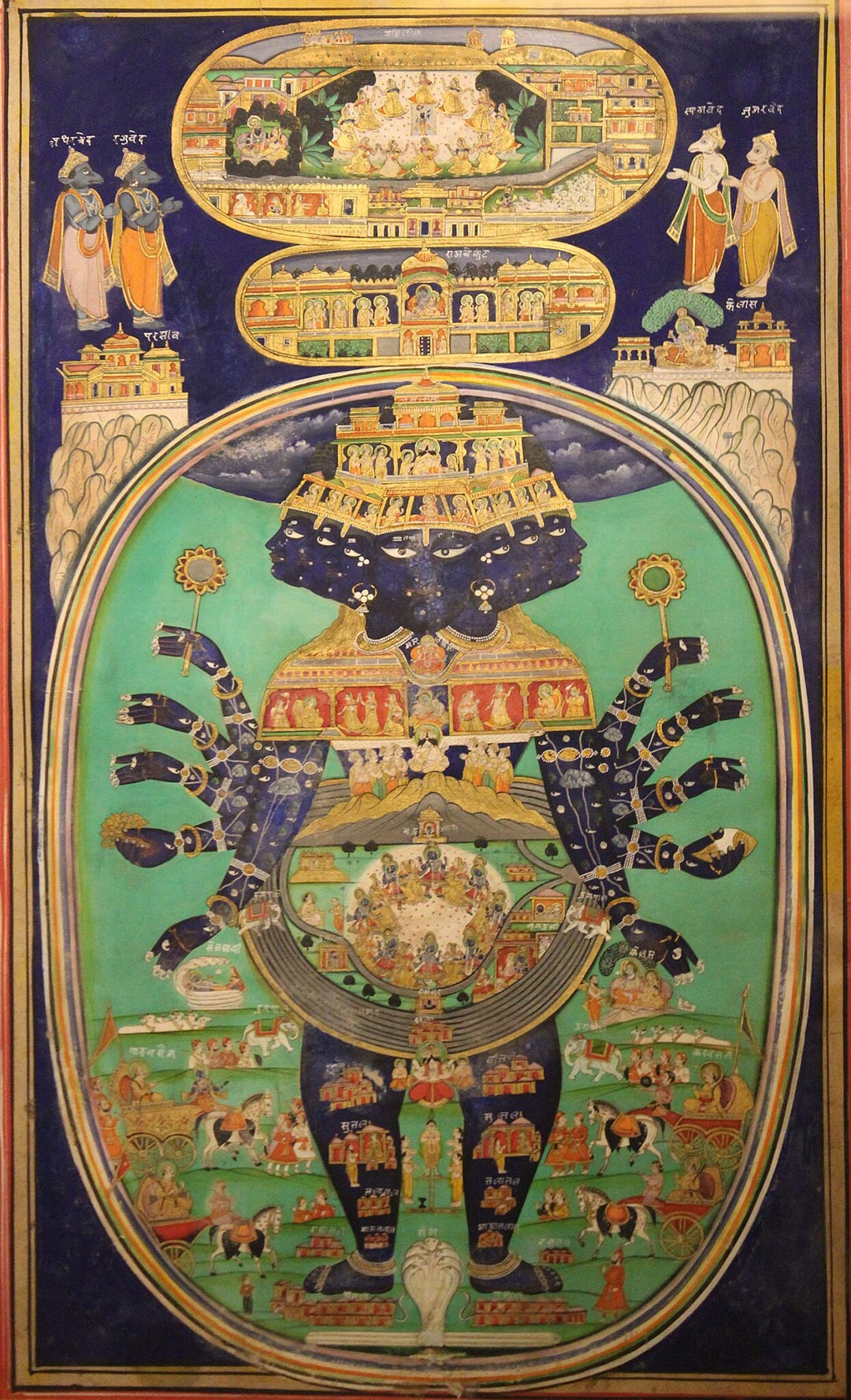
A painting from Rajasthan, probably a ‘pichwai’ (paintings on cloth placed behind the main deity), depicts all the three realms in the ‘Vishvarupa’. Heaven, earth and the underworld are depicted; Lord Vishnu is in his blue complexion with many heads and carrying emblems in his multiple hands. The heaven region shows many celestial beings.

Vishvarupa with the three realms, painting on cloth, Rajasthan, 18th century
Vishvarupa with the three realms, painting on cloth, Rajasthan, 18th century. Wikimedia

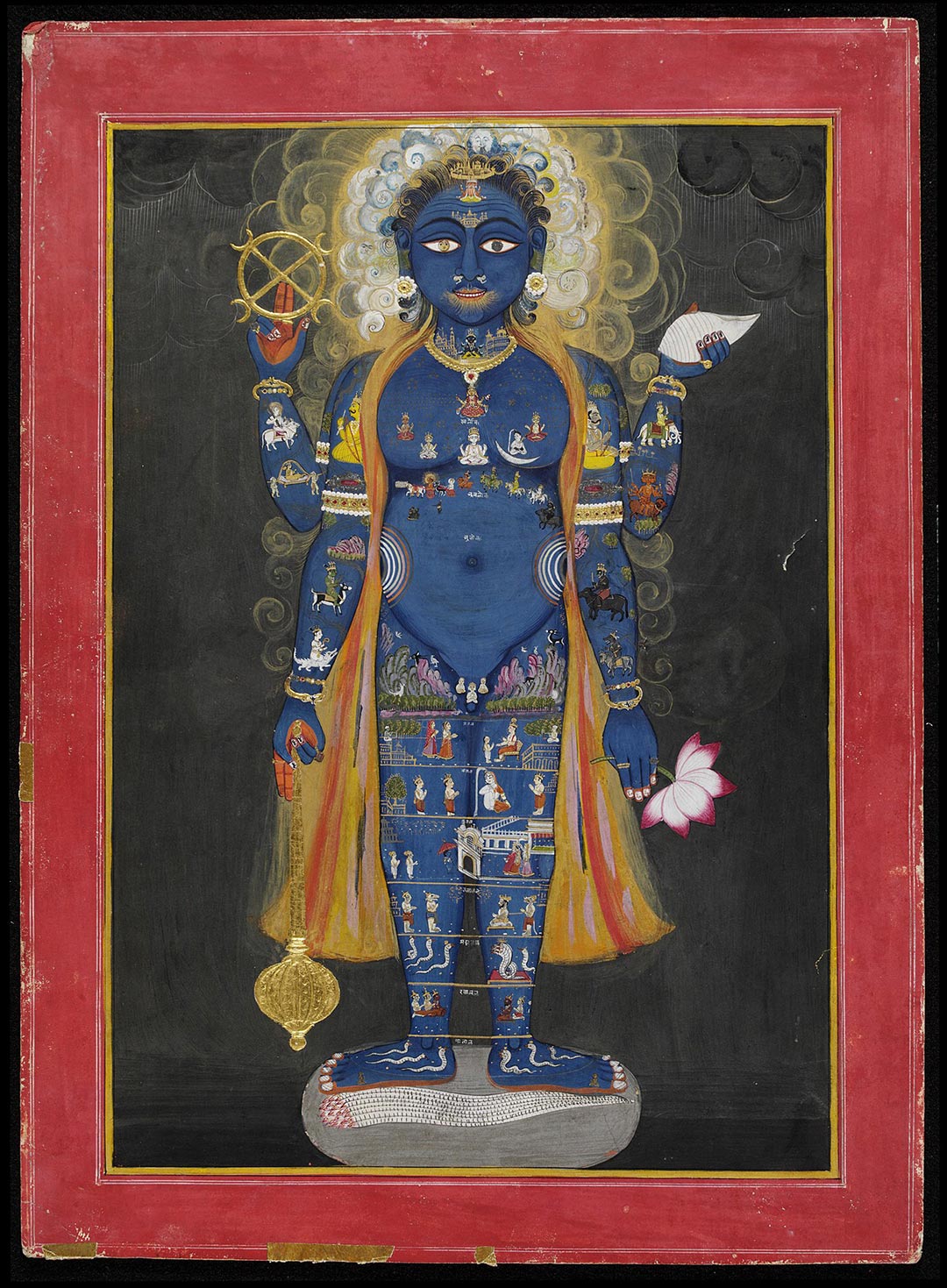
A painting from Jaipur dated to the early 19th century shows the ‘Vishvarupa’ with only one head but depicts the three realms with various beings all over Lord Vishnu’s blue persona.  There is a halo like aura around his head with many heads including those of celestial beings which represents the cosmic angle.   He holds emblems in his four hands, the chakra (disc), sankha (conch), padma (lotus) and gada (mace). The lower regions depicts reptilian animals sgnifying the underworld or patala. The upper most part is swargam, meaning heaven, the mid-portion represents  prithvi or erath where ordinary people live.

Vishvarupa with the three realms: heaven (head to belly), earth (groin), underworld (legs)
Vishvarupa with the three realms: heaven (head to belly), earth (groin), underworld (legs), circa 1800-50, Jaipur, Rajasthan, V & A Museum, London, U.K. Wikimedia

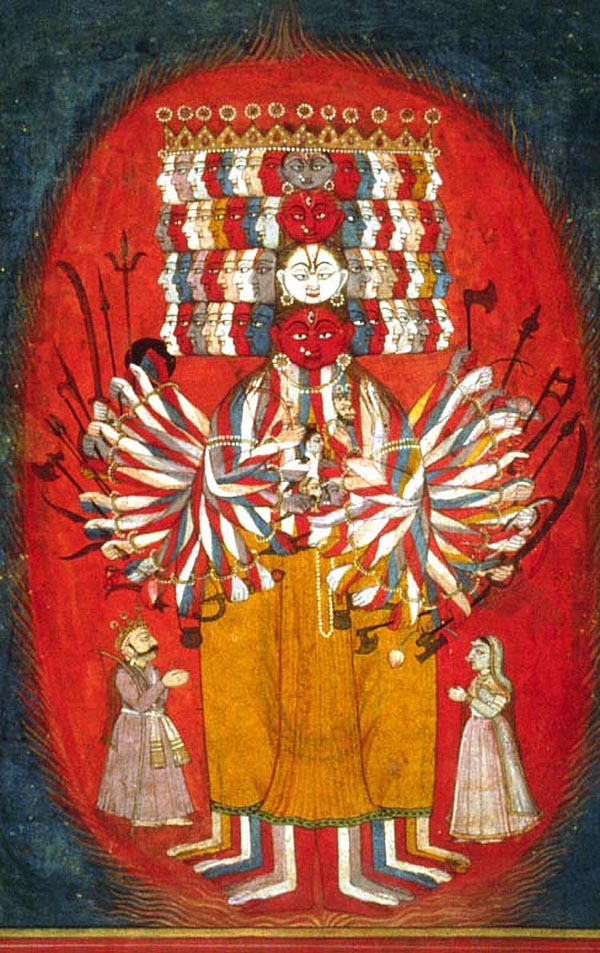
A Pahadi painting from Bilaspur dated to circa 1740 represents the awe-inspiring ‘Vishvarupa’ image with many heads  in layers over the main head. It includes many higher beings including gods. In his many hands the cosmic form holds emblems and weapons. He has been shown with multiple legs and two devotees on each side paying their obeisance.

Vishvarupa with many heads, arms and legs, circa 1740, Pahadi painting, Bilaspur
Vishvarupa with many heads, arms and legs, circa 1740, Pahadi painting, Bilaspur. Wikimedia

A translated verse from the Bhagavad Gita about the ‘Vishvarupa’ reads –

Now, behold, O Arjuna, in this My body, the entire universe centered in one, including the moving and the unmoving, and whatever else you desire to see”.

Arjuna said, “O God, I see all the gods in Your body, as well as hosts of various classes of beings, Brahma the Lord seated on the lotus, all the sages, and the celestial serpents.”

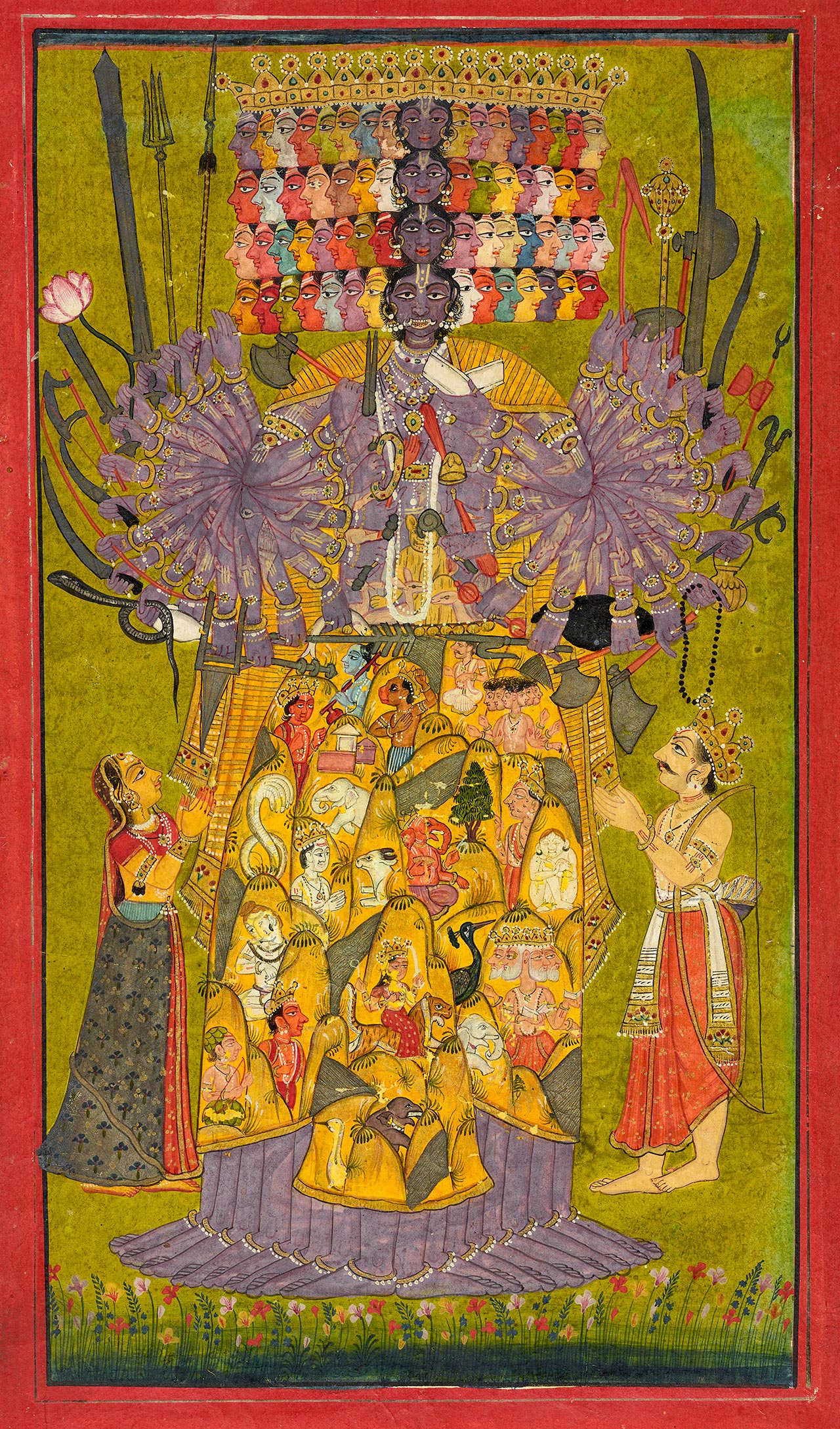
A Pahadi painting from Bilaspur dated to circa 1740 represents Vishvarupa image as one with many heads in several layers  with many higher beings including gods. In his many hands the cosmic form holds emblems and weapons. He has been shown with multiple legs and two devotees on each side paying their obeisance. The lower part of his boy shows beings of different types including animals.

Vishvarupa with many arms and heads,Pahadi painting, Bilaspur, circa 1740.
Vishvarupa with many arms and heads,Pahadi painting, Bilaspur, circa 1740. rawpixel.com

A unique miniature painting from 18th century, Rajasthan shows Arjuna bowing to Vishvarupa’s awesome form where he is shown with a large head and an extension behind with many beings. He has multiple hands and legs.

Arjuna bows to Vishvarupa. miniature painting, Rajasthan, 18th century.
Arjuna bows to Vishvarupa. miniature painting, Rajasthan, 18th century. Wikimedia

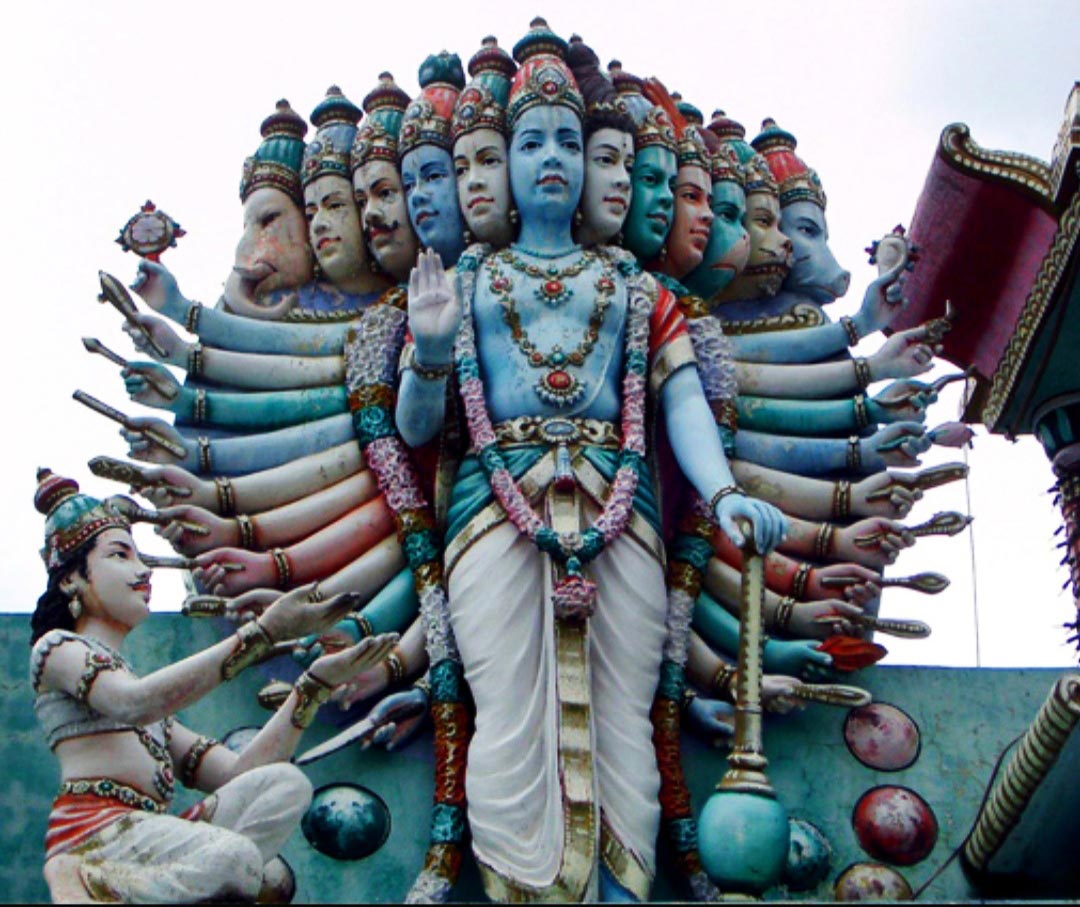
Statues of Vishvarupa 

Statue-of-Krishna-as-Vishnu-in-his-Vishvarupa,-at-a-temple,-Singapore
Statue of Krishna as Vishnu in his Vishvarupa, at a temple, Singapore. Wikimedia

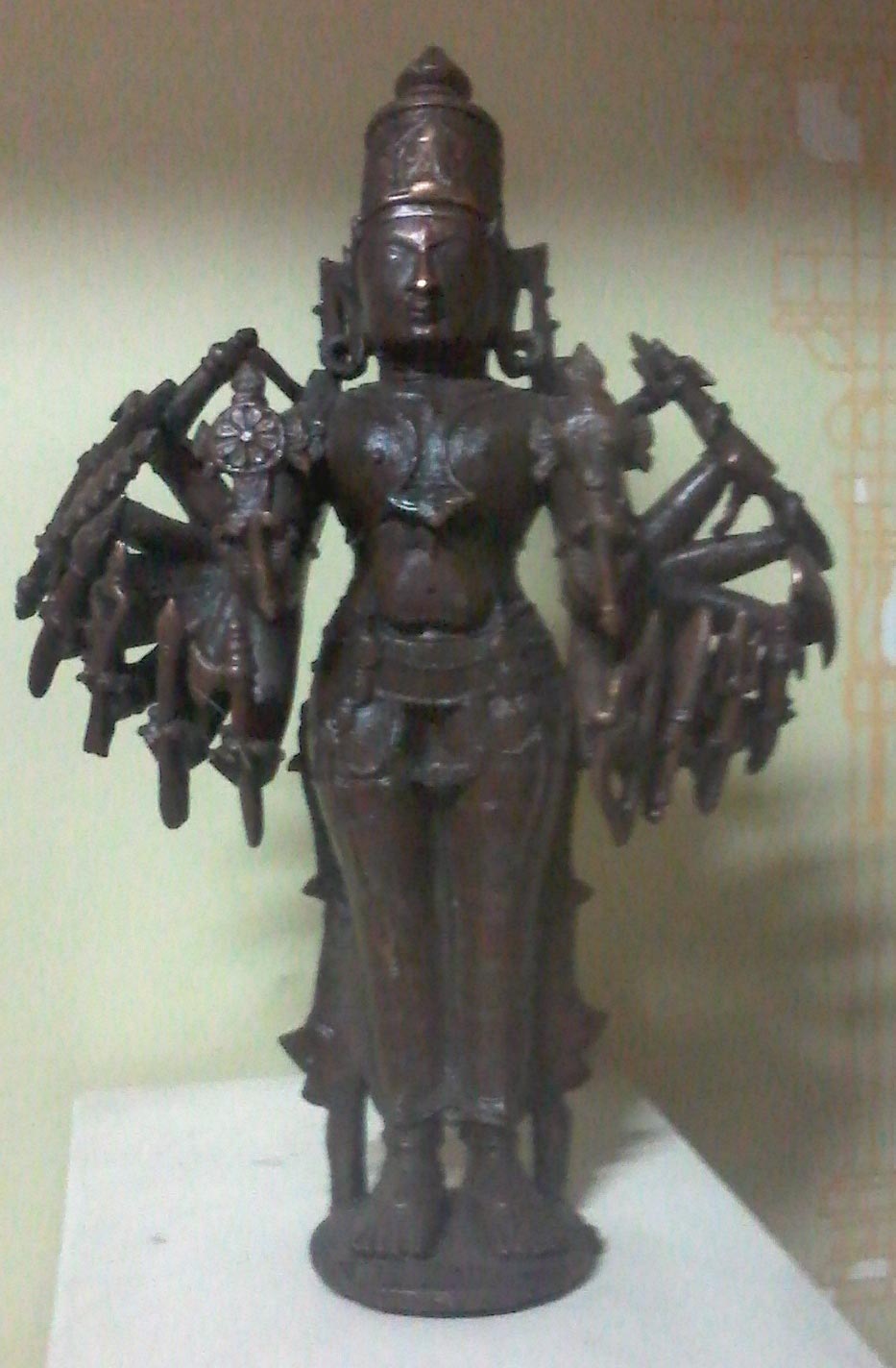
A bronze statuette of Vishnu as ‘Vishvarupa – sandarsana murthy’ shows him with multiple hands. He stands on a pedestal and is having emblems in his hands.

Vishnu-as-Vishvarupa-sandarsana-murthy,-bronze,-19th-century,-India
Vishnu as Vishvarupa sandarsana-murthy, bronze, 19th century, India. Wikimedia

In Modern Times 

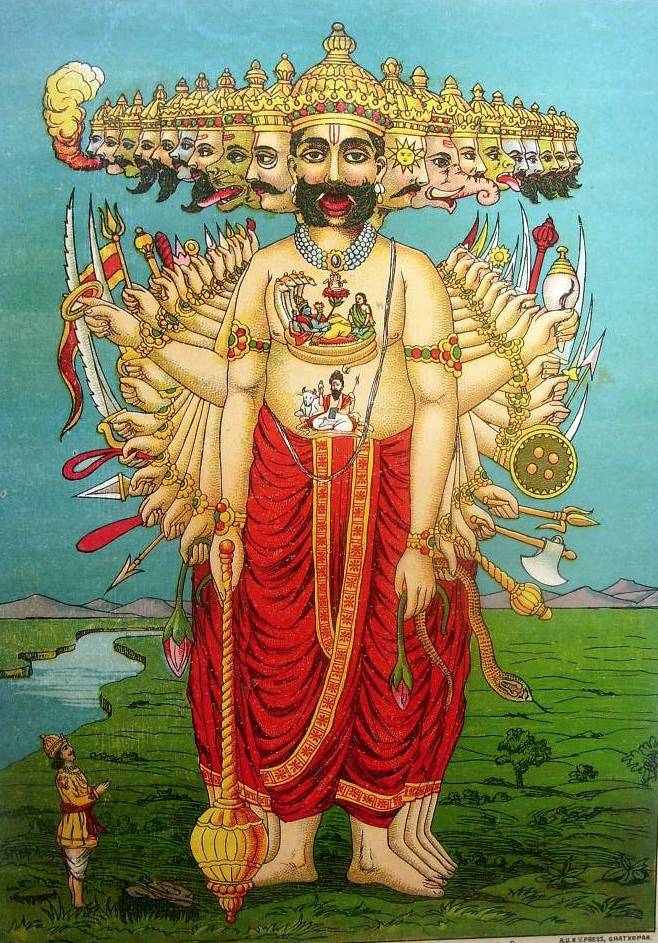
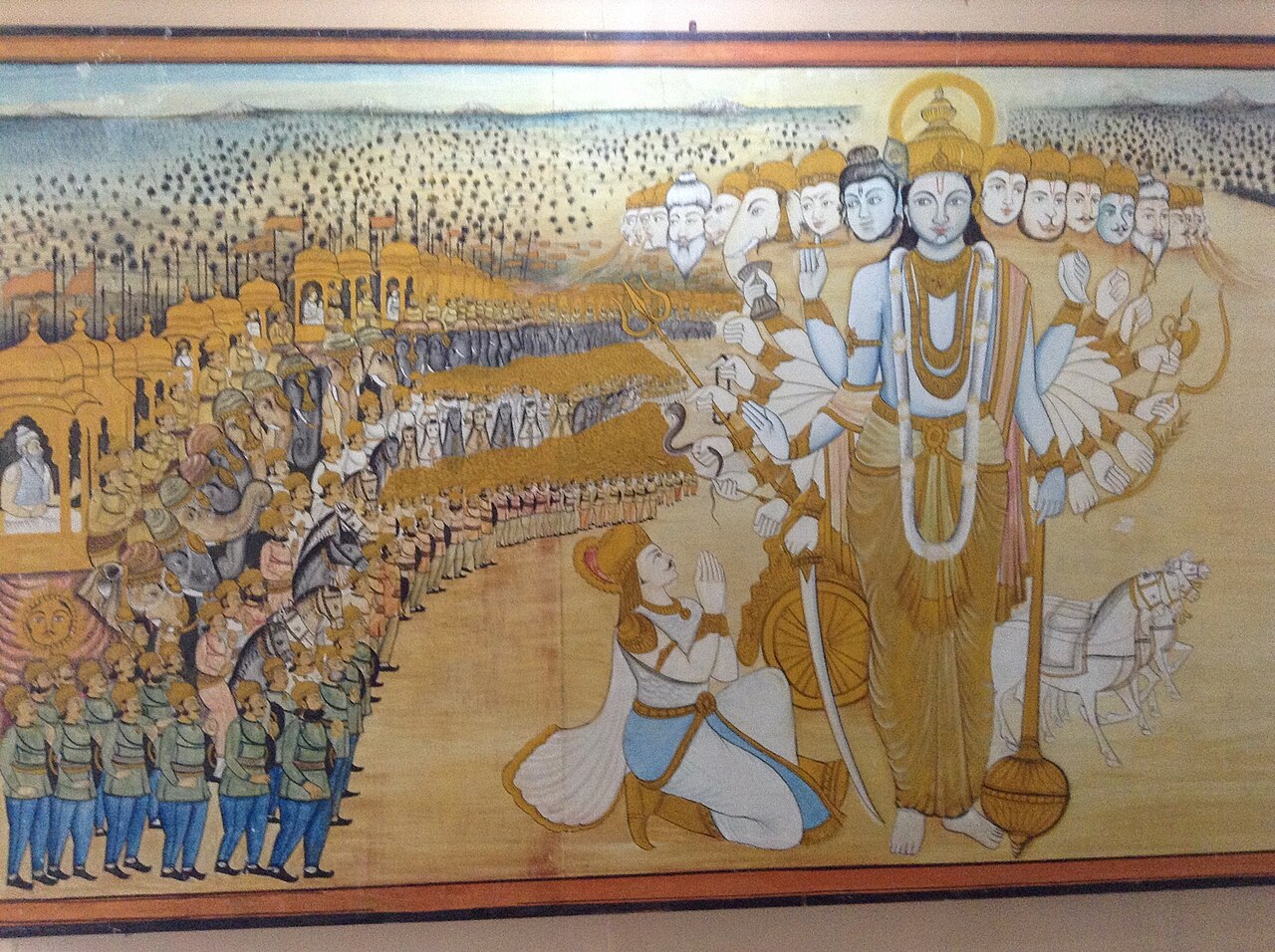
 The images of ‘Vishvarupa’ continues to influence artists in the modern times as well. In the early years of the 20th century lithographic prints were made of Vishvarupa. Also artists have recreated the scene of Arjuna bowing down before the Vishvarupa. In the lithographic print Vishvarupa is shown with many heads and arms holding emblems. Different gods,  sages and other beings are shown among his many heads.

The painting of Arjuna bowing to Vishwarupa is set in the battlefield. Arjuna is totally surrendering to Vishvarupa of Lord Krishna (an avatar of Lord Vishnu) who is expressed through his many heads of gods, sages and others reflecting his vastness and spiritual greatness.

Arjuna bows to Vishvarupa, print, Raja Ravi Varma Press, early 20th century, Kerala, India
Arjuna bows to Vishvarupa, print, Raja Ravi Varma Press, early 20th century, Kerala, India. Wikimedia
Bhaarata_yuddhamlo_visvarupam
Bhaarata yuddhamlo visvarupam, 20th century, Shri Krishna Museum, Thanesar, Haryana, India. Wikimedia

These representations of the cosmic form of Lord Vishnu not only help us in understanding the concept of the universal creator in Hinduism, a part of the Trinity of the Gods, but also gives us an opportunity to reflect on the iconography of ‘Vishvarupa’ and its many depictions in art. Other than the images depicted the ‘Vishvarupa’ has been done on Pichwai, as Madhubani paintings and carved in wood as well, highlighting its universal appeal in art.

References

  1. https://www.wisdomlib.org/definition/vishvarupa (accessed 20.10.2025)
  2. https://www.artisera.com/blogs/expressions/miniature-paintings-of-india-chronicling-history-through-the-ages

(accessed 20.10.2025)

  1. https://www.mynachiketa.com/moral-stories/bhagavad-gita/english/krishna-showed-his-vishwaroop (accessed 20.10.2025)
  2. https://bhagavadgita.io/chapter/11(accessed 20.10.2025)
  3. T. S. Maxwell (1988) Visvarupa, London: Oxford University Press.

Art Houz Presents ‘Echoes in Colour’: A Celebration of Abstract Rhythms in Chennai

0

ART-HOUZ-Echoes-in-Colour-01

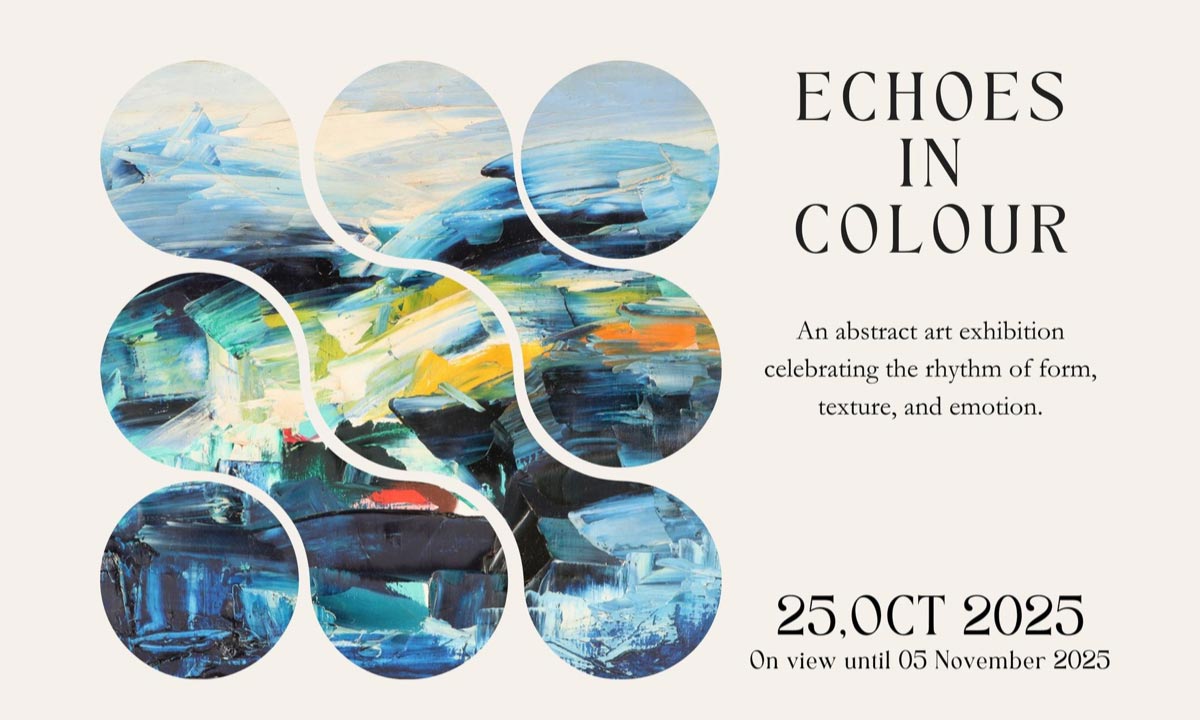
The cultural pulse of Chennai is about to be whetted as Art Houz, one of the city’s prime contemporary art galleries, prepares to host a significant group exhibition, “Echoes in Colour.” Organised by ART HOUZ, this abstract art showcase seeks to celebrate the vibrant conjunction of art forms and raw emotions. The exhibition will run from October 25 to November 05, 2025. The aim is to offer an experience that goes beyond the canvas, inviting the visitors to reflect on the depictions as a relatable portrayal of different phases of life. This event marks another pivotal moment in Chennai’s evolving contemporary art narrative, spotlighting the innovative practices of a new collective of artists.

What the Exhibition Sets Out To Do

“Celebrating the rhythm of form, texture, and emotion” is the central theme of the event. The theme is very consciously picked, as it prepares the stage to hold a dialogue with the essence of abstract expressionism. In contemporary times, art is gaining considerable momentum in Chennai, and “Echoes in Colour” offers a platform for artists to explore concepts like belonging, memory, nostalgia, experience, etc, which may be considered as untapped emotions. 

The title itself suggests an interplay of how colour, applied by the artist’s hand, doesn’t just sit on the canvas but echoes out to the viewer. For art enthusiasts and newcomers, this show is an opportunity to engage with works that challenge perception and put forth self-reflection. This exhibition invites all spectators to step closer into a “world where colours resonate beyond the canvas”.


View this post on Instagram


A post shared by Art Houz India (@arthouzindia)

The Venue

Art Houz was founded by Vincent Adaikalraj. It has concretized its reputation as a leading contemporary art gallery in South India, with a distinguished presence in two big cities- Chennai and Bengaluru. The gallery’s mission is to actively nurture an understanding and appreciation of art among the general public. Art Houz is renowned for focusing on budding artists with experimental practices. Their constant engagement with prestigious events like the India Art Fair highlights their role in putting South Indian artists in the mainstream national focus. 

The Nungambakkam-based gallery, on Sterling Road, Chennai, is a vibrant hub that offers a captivating environment for art mavens. By hosting a new age group show like “Echoes in Colour,” Art Houz continues to display its emphasis on showcasing diverse artistic expressions. The gallery serves as the space where abstract art can be fully appreciated. Their dedication ensures a high-calibre viewing experience, making it a must-visit destination.

Participating Artists

 The exhibition features the works of 18 talented artists operating under its banner. It lists a multi-generational group of artists participating from different parts of India. The list includes: Abhijit Kumar Pothan, S. Ambal, Biswajit Shah, Ezhilarasan E., Hanumantha Rao Devikapalli, A. Jotheeswari, Sairaj Ramachandra, K. Karishma, Walthen J., K.C. Meenakshi, Priya S.J., Raja Dushwarran, Senthilkumar J., Sugandha Priya, Stalin P.J., Souvik Junjar, S.N. Veendana, and I. Vinova

This large collective indicates a robust creative spirit thriving in the city. Viewers will likely see a vast spectrum of techniques, from layered impasto textures to fluid and minimal compositions. The exhibition, therefore, becomes a conversation where individual artistic aspirations coincide into a unified statement on the versatility and depth of abstract art.

Feature Detail
Exhibition Title Echoes in Colour
Organising Body Art Houz, Chennai
Art Style Focus Abstract Art — Celebrating Form, Texture, and Emotion
Venue Art Houz, No. 123, Sterling Road, Nungambakkam, Chennai 600034
Exhibition Dates 25 October 2025 – 5 November 2025
Viewing Timings 10:00 AM – 6:30 PM daily
Total Artists Featured 18 artists from across India
Target Audience Art collectors, enthusiasts, students, and the general public

Key highlights 

  • Echoes in Colour foregrounds abstract practice with attention to texture and chromatic play.
  • The group show brings together 18 artists from different backgrounds and practices.
  • Exhibition runs for roughly ten days (25 Oct–5 Nov) at Art Houz, a well-known private gallery in Nungambakkam.

Takeaway

A group exhibition like Echoes in Colour offers a cozy space for exploring modern art in the evolving context. It provides a snapshot of how artists work with abstraction by negotiating with colours, surfaces, mediums, and much more. This dedicated approach to celebrating texture and varied forms stands out from the modern-day narrative, which often sidelines the focus on figurative and narrative practices. It permits the viewers to see through the interaction of the art and the artist without looking for explicit stories. Thus, Art Houz is more of a fertile ground for conversations about how abstraction continues to evolve in India.

Jaipur Art Week 2026 Brings Global Voices and Local Heritage Together

3

Jaipur-Art-Week-2026

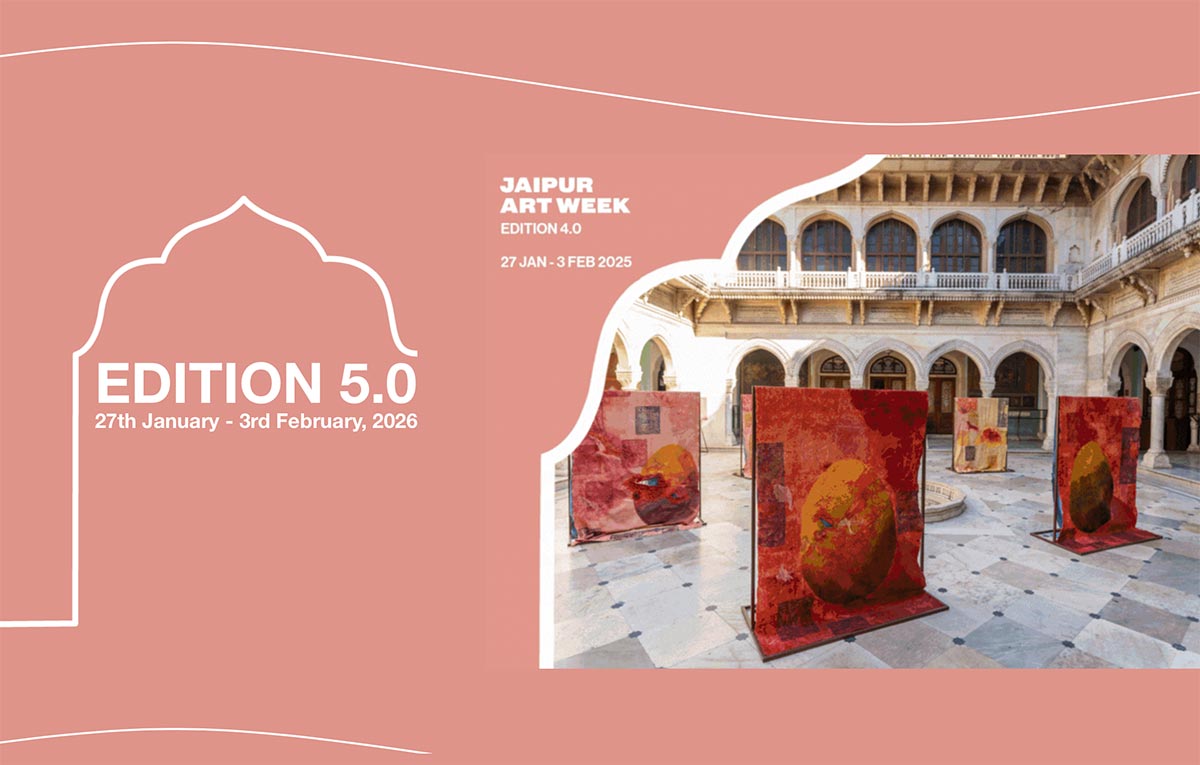
The Jaipur Art Week is set to return to Jaipur from 27 January to 3 February 2026, enveloping site-specific exhibitions, performances, and immersive public programmes across heritage venues in the old city. Thus, stepping into the pink city at that time won’t be a simple visit; it will be an act of viewing the place with a refreshed lens. Jaipur itself is a historic city, and this edition of the JAW commits to highlighting the regional practices as well as the translocal exchanges, making the venue a melting pot of Craft, contemporary artistic pursuits, and much more. 

The forthcoming edition explicitly focuses on an open call for participation. It is seeking bold, experimental proposals from across different regions to democratize access and representation. The brief curatorial objectives encourage artists to propose work that engages Jaipur’s layered histories and public life.

A Potent Platform


View this post on Instagram


A post shared by Jaipur Art Week (@jaipur.artweek)

The JAW is founded by the Public Arts Trust of India. Since its inception, it has been praised for its inclusionist policy towards young artists and for supplementing dialogues across South Asia and beyond. Critics have labelled this festival as  ‘LAUNCH PAD’ for many artists. From utilizing over 50 public and private spaces, from government museums and academic institutions to quirky coffee shops and bustling bazaars, JAW makes art accessible to everyone. Thus, for a plethora of visitors, the festival is less of a market sphere and is more about exploring art in the backdrop of a historical and public setup. 

The event brilliantly balances gallery shows with engaging public talks, guided walks, and many more. JAW 2026 aims to put a significant focus on sustainable artistic practice, willing to showcase how creativity and nature can harmlessly co-exist, and still be able to surprise the masses. There will be slots dedicated to masterclasses and panel discussions that will open up the repository of sparkling new notions. The prime experience of JAW does not simply belong to its historical setup, or layering of brilliant artworks, etc., it lies in the intense sense of nostalgia it creates. Jaw doesn’t merely exhibit art, it weaves countless stories with elements of history, present, and a subtle hope for the future. 

The Global Indian Perspective

The true power of JAW 2026 is in its role to bridge between the local and the global. By offering representations to artists from various pockets of India and also letting in foreign representatives, the event promotes the spirit of the Global Indians. It acts as a cultural dialogue where different perspectives on society, politics, and existence are presented. 

The Art Week yields a fusion of ideas in which the staple Indian idea encounters its global counterpart. It becomes a shared space of creative minds and fearless voices, shaping the public squares into units of intellectual simulation and dialogue. It invokes a spirit of exploration, inquisitiveness, and an urge to see more of it over and over again, which is utterly commendable. It’s not just an exhibition; it’s a breathing example of how cultural exchange enriches national identity, rather than diluting it.

Key Points Details
Dates 27 January – 3 February 2026
Participation Model Open call for emerging and mid-career artists from across India and beyond.
Venues Heritage havelis, museums, courtyards, academic and contemporary art spaces across Jaipur.
Prime Focus Site-specific installations, public engagement, sustainable practices, and regional dialogue.
Audience Open to the public, students, curators, collectors, and cultural tourists.

Prime highlights 

  • An expanded open call that democratises submission and encourages experimentation.
  • Site-specific commissions that repurpose Jaipur’s havelis and museums as gallery spaces.
  • A strong showing of regional voices alongside invited international artists, making for cross-cultural dialogues.
  • Public events — walks, performances, and talks are intended to engage non-traditional museum audiences. 
  • A festival tone that balances nostalgia for place with an appetite for contemporary risk-taking, resonant with caleidoscope.in’s editorial spirit.

Takeaway

Jaipur Art Week performs a distinguished and necessary juggling act, i.e., it weaves contemporary practice through the thread of heritage, making spaces for new conversations in rooms that already carry so much from the past. This approach shapes the festival with a distinct objective, which is equally jubilant and reflective at once. For all its pomp and promise, the true test of JAW 2026 is not in the number of footfalls or the value of art sold, but in the residual change it initiates in the city’s consciousness.  It must be more than a photo-op for the elite; it must serve as a genuine catalyst for local artisans and the youth of Rajasthan. Also, the open call model is important to note, as it shall ensure diversity and transparency in the representation of art from different regions. 

Apart from all the above-mentioned niches, JAW 2026 should also empower the street vendors, the local chai walas, and those resident families who find a stunning installation suddenly outside their homes. It’s easy to celebrate global stars, but what about the next great Miniature artist, waiting undiscovered in a narrow Jaipur lane? As a holistic initiative, the Art Week can actually turn the city into a den of trailblazers

Diwali Fashion Trends 2025: Top Festive Styles and Outfit Ideas for the Season

0

Diwali-Fashion-Trends-2025-A

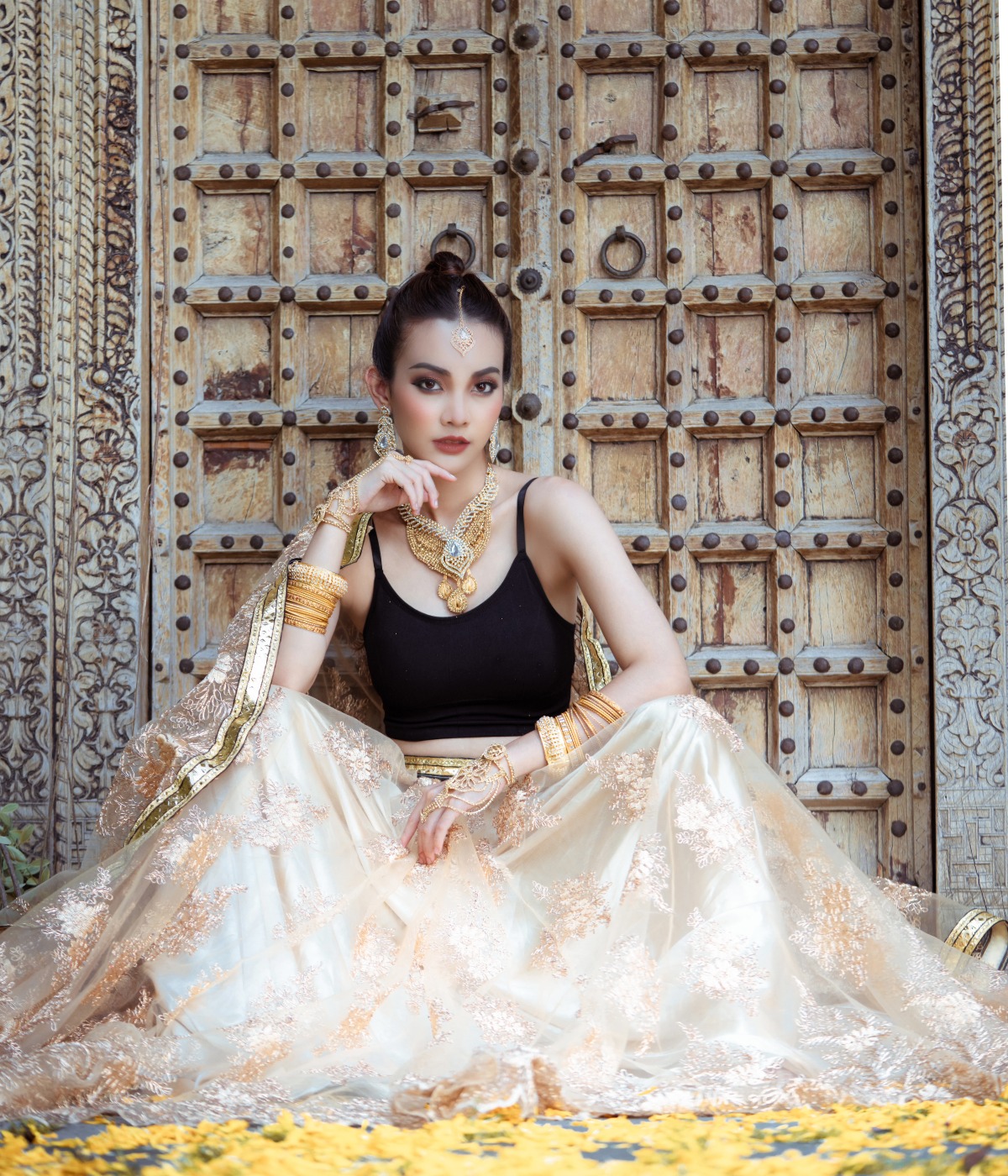
Wishing you a joyous Diwali! Diwali is a festival of lights, which also includes festivity and glamour. Whether you are out in the town for extravagant parties or sitting in an intimate setting with a small family gathering, anything you wear in the latest trends will be sure to dazzle. From shimmering liquid gold sarees to chic Indo-Western lehengas, we have curated the trendiest outfit ideas for each day of Diwali, where you can be the talk of the event and feel fantastic while celebrating.

Here are the top five fashion trends for Diwali 2025:

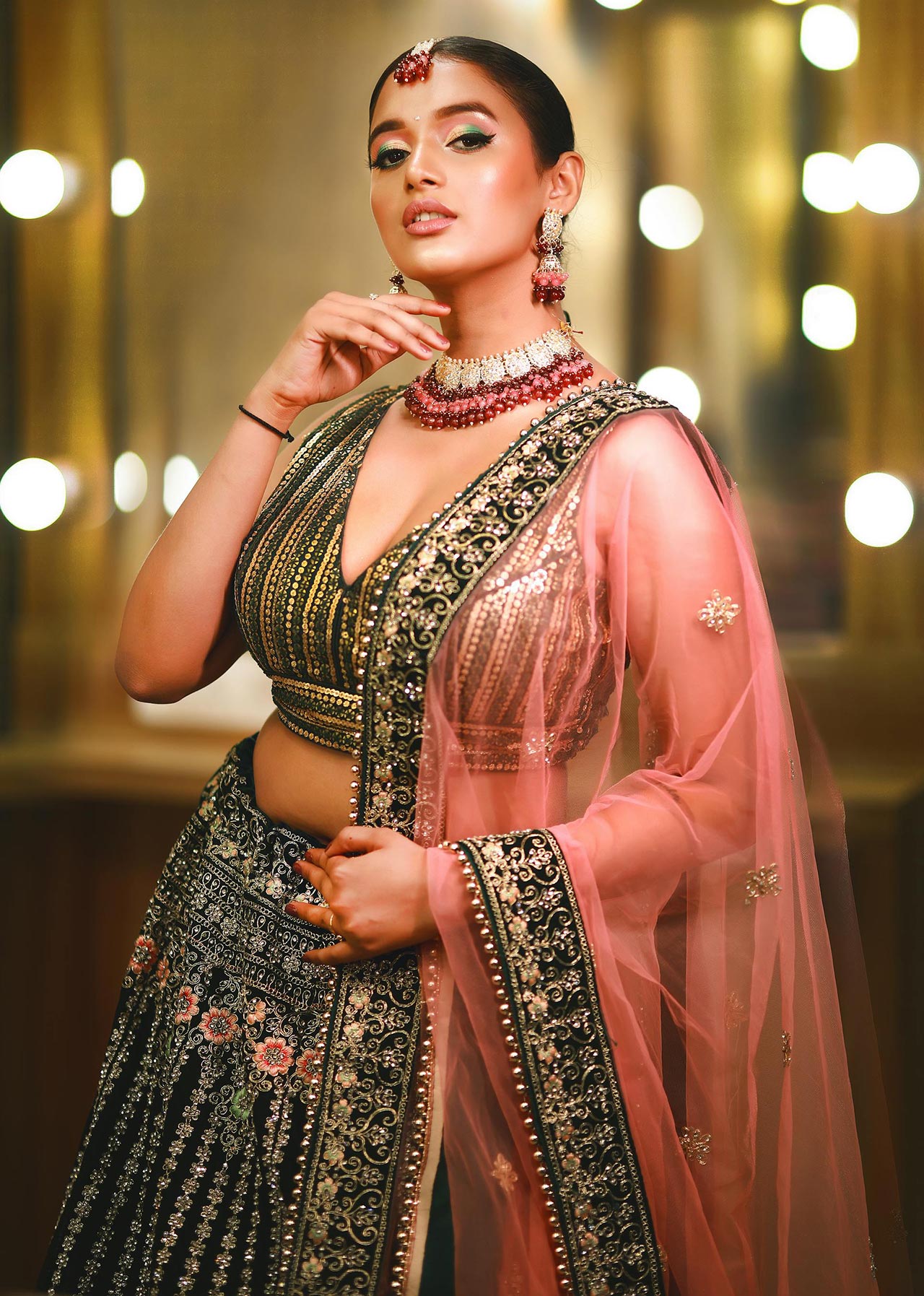
Indo-Western Lehengas Steal the Spotlight

Diwali Fashion Trends 2025-Indo-Western Fusion Lehengas

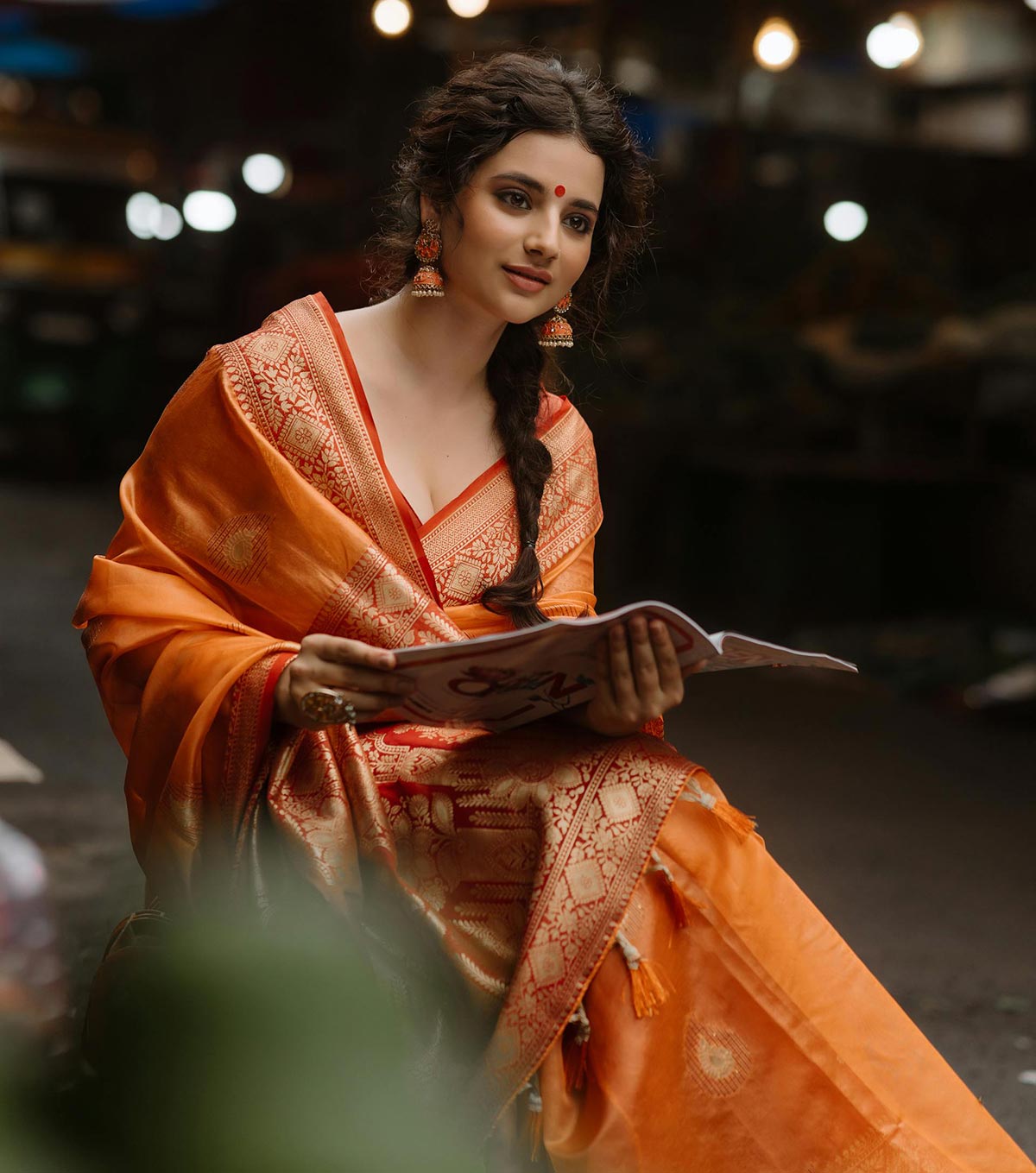
This year, classic lehengas are having a makeover, as the trend evolves, displaying Indo-Western silhouettes by combining traditional drapes of structured shapes, layers, asymmetrical hemlines, crop tops and sculptural blouses. No longer experimenting just with big oversized traditional ideas of zari, designers are playing with the delicate features of minimal metallics and pleats inspired by origami, merging an equal balance of modern art and traditional grace. 

Try it with a jacket, flowing cape, or oversized dupatta add-on to your lehenga, blending geometrically and flowing, adding to your lehenga in a way to creatively blend the normalcy of traditional into a made-for-the-red-carpet moment. Finally, add on statement earrings, and finish with smoky festive make-up to remain a focal point!

The Shimmering Trend of Liquid Gold Sarees

Diwali-Fashion-Trends-2025-The-Shimmering-Trend-of-Liquid-Gold-Sarees

Golden is back – but with a twist. The “liquid gold saree” style defines Diwali 2025. The fabrics seriously appear molten metal, glamorising each wearer under the lights. Neon is still a trend, and these sarees are finished in liquid satin or silk that all drape effortlessly and shape each silhouette.

 A corset blouse will give a runway aesthetic or a relaxed strappy bralette. A soft pearl choker and soft, curvy waves of hair will definitely add the classic, contemporary look together! And you’ll no doubt sparkle brighter than the diyas!

Layers, Nets, and the Art of Sheerness

Layers,-Nets,-and-the-Art-of-Sheerness

This time of year is truly about embracing the loveliness of nets and layering, airy capes for the summer time, beautifully embroidered net kurtas, and dupattas shimmering with crystals. It’s become an essential on the runway for fashion week for good reason, they give you the chance to look gorgeous while being comfy. Picture yourself in an embroidered lehenga, draping a light, open, airy cape over the outfit. Or pull a light net jacket over pastel palazzos; there is a beautiful balance of stylish comfort, and in these long, happy festival days, it is perfect.

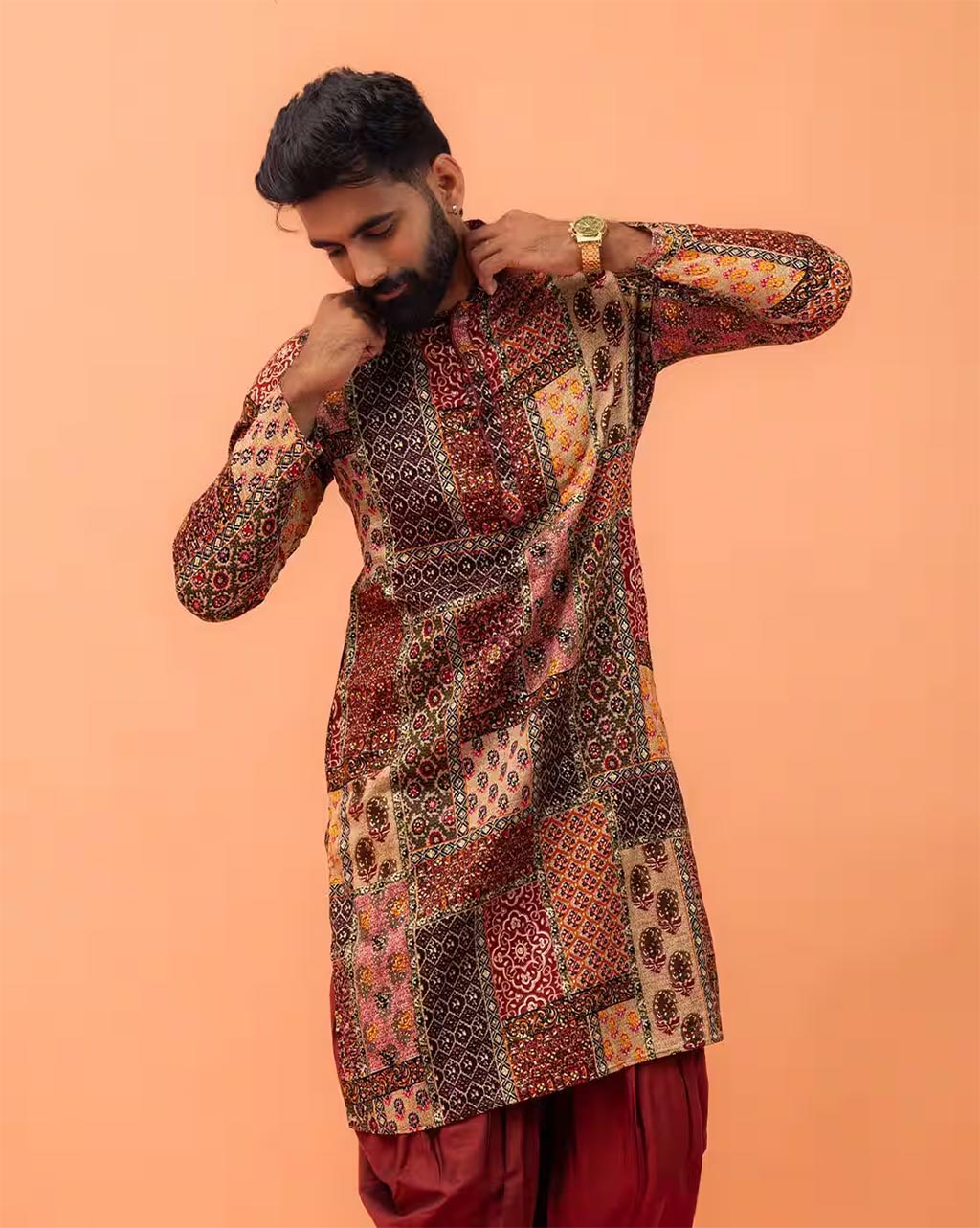
Printed Kurtas

Diwali-Fashion-Trends-2025-Printed-Kurtas
Image Courtesy – Ajio.com

This year, printed kurtas will be the wardrobe heroes for festive dressing and are quite loved for their ease and charm. To layer up, short chikankari-embroidered kurtas in soft pastels for women, teamed with patiala pants, makes dressing simple—just add a statement jhumka or some chunky bracelets for an awkwardly quirky, festive vibe. It’s a fashionable yet comfortable option you can wear to any festive celebration or occasion, which can easily freshen up any ensemble and keep you ready for all the celebrations. 

The hero for men this season will be wearable art, with kurtas featuring Ajrakh, hand-painted Mughal motifs or Indo-Japanese patterns leading the way. A bomber jacket or classic Nehru jacket added to your kurta blends tafuffani charm with contemporary cool for festive celebrations, parties with friends, and family gatherings, and will work in your wardrobe during and out of the festive season.

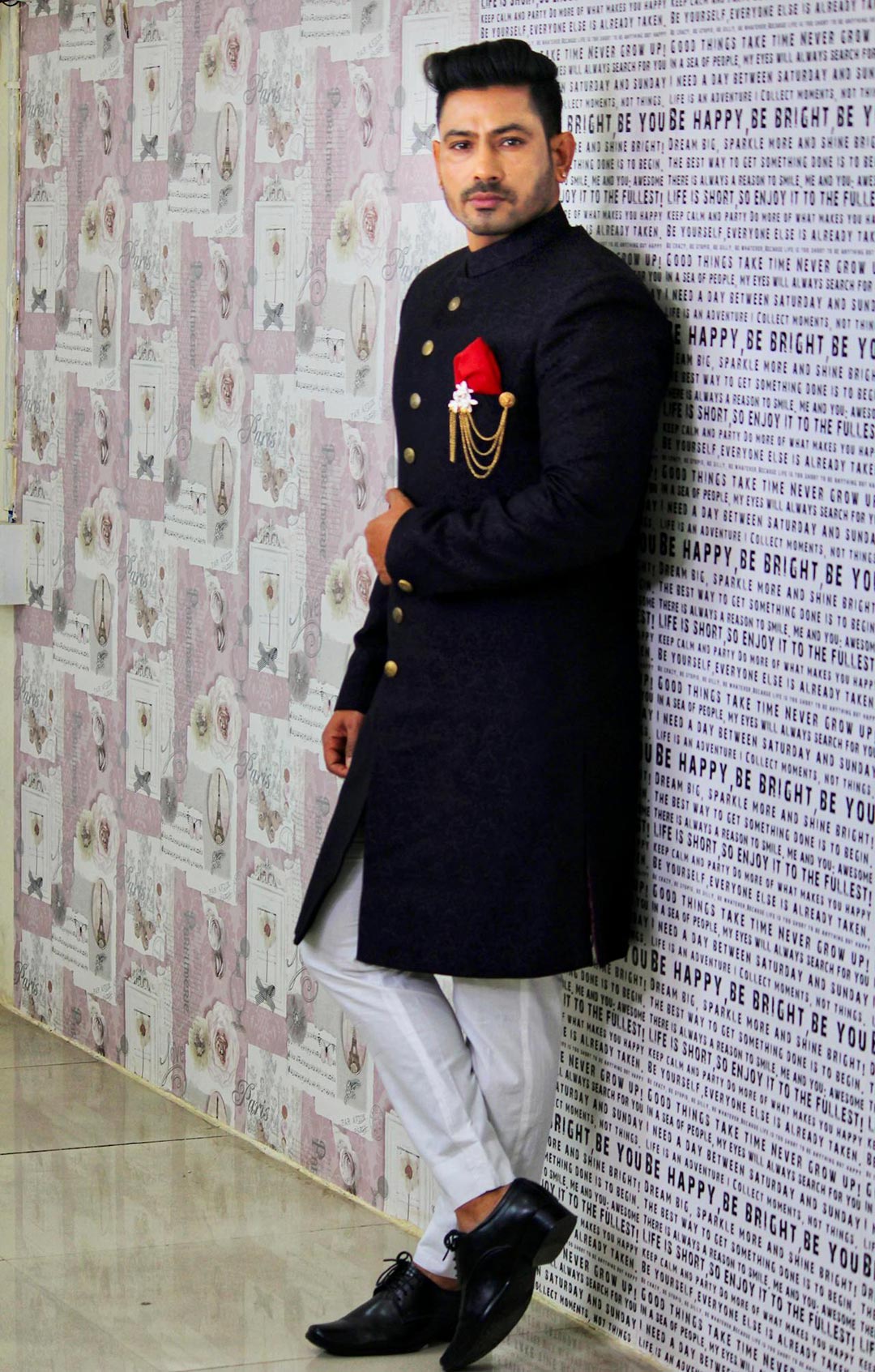
Fusion Sherwani

Diwali-Fashion-Trends-2025-Fusion-Sherwani

Fusion sherwanis, because of heightened demand, are the latest redefined take on festive grandeur within a minimalist collection from desired light fabric options (linen, silk blends, or even lighter organza). All the predicted patterns have personalised designs, emphasising geometric shapes or creating motions of cool, sleek embroidery, giving a more modern, refined look. Fusion sherwanis embody the new curricular fashion of 2025, one that melds tradition with innovation and refinement! Pair with cropped trousers or tailored chinos, and you create a modern look in a fashion setting!

Trend Table: What’s Trending for Diwali 2025

Trend Description Styling Tips
Indo-Western Lehengas Modern lehengas with asymmetrical cuts, metallic pleats, and origami-inspired drapes. Add a cape or jacket and statement earrings with smoky eyes.
Liquid Gold Sarees Molten metallic sarees in satin and silk with luminous finish. Pair with corset blouses, pearl chokers, and soft waves.
Layered Nets & Sheerness Sheer fabrics and crystal-embellished dupattas for an ethereal touch. Mix pastels and embroidery for a dreamy festive look.
Printed Kurtas Pastel chikankari for women; Ajrakh and Mughal motifs for men. Layer with Nehru jackets or statement jhumkas.
Fusion Sherwanis Light silk or organza sherwanis with minimalist geometric embroidery. Pair with cropped trousers or chinos for modern flair.

Quick Festive Styling Checklist

  • Keep earrings and bangles simple with crystal-studded jhumki or one elegant cuff, instead of stacking heavy bangles or jhumka. 
  • Embellished juttis or metallic heels are the perfect combination of comfort and glamour. 
  • Potli bags with mirror work or with metallic tassels add a luxurious, festive feel. 
  • When it comes to makeup, be natural – focus on a natural glow with glossy lips, dewy skin, and soft highlights, and allow your outfit to shine. 
  • Colours trending this season are gold metallic, rose blush, and ivory white. 
  • Satin, georgette, and organza fabrics add light texture and flowy shape while being soft and breathable. 
  • Bold earrings or chokers are the perfect balance of jewellery statement without being too much. 
  • Low buns, soft beach waves or ponytails wrapped in gajraadd a touch of elegance to a traditional appearance.
  • Warm bronze eyeshadow, glossy lips, and light highlighter – all complement a natural glow. 

So layered with all the celebrations of Diwali, comfort reigns supreme, while style stands in the shadows. You can wear light and breathable fabrics, you can go with simple but stunning accessories and enjoy every moment of the celebration.

So, what’s your style for Diwali 2025?

IGNCA and Imphal Art Gallery Host Six-Day Exhibition on North East Folk Culture

0

IGNCA-and-Imphal-Art-Gallery-Host-Six-Day-Exhibition-on-North-East-Folk-Culture-01

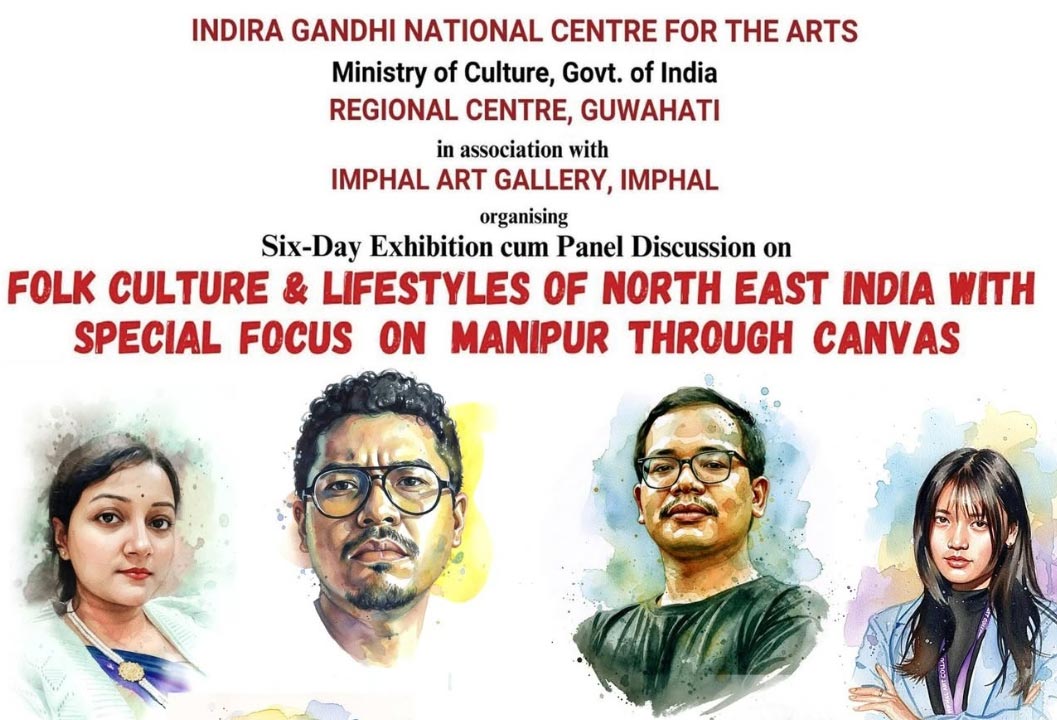
The Indira Gandhi National Centre for the Arts (IGNCA), Regional Centre, Guwahati, in collaboration with the Imphal Art Gallery, has inaugurated a six-day exhibition cum panel discussion titled Folk Culture and Lifestyles of North East India with Special Focus on Manipur Through Canvas”. Running from 21–26 October 2025, many eminent scholars, artists, and community activists are invited for a focused dialogue on the material, performative, and everyday cultural forms of Manipur. It is a way to rediscover the often underrepresented tangible heritage and culture of Northeast India. The physical setup of the exhibition at the Imphal Art Gallery in Kwakeithel offers a fitting emplacement to encompass the scholarship and visual artistry. It reaffirms art as the primary documentarian of societal lifeways. 

Opening and Programme Outline

The formal commencement and panel discussion were scheduled on 22 October (2–5 pm), chaired by cultural activist Mutua Bahadur and moderated by Dr. Sapam Ranabir Singh, Regional Director of IGNCA Guwahati. The exhibition itself is open daily from 10 am to 5 pm. The presentation as a whole is more of a visual ethnography. The curatorial vision serves a dual purpose; it celebrates artistic aesthetics while also preserving cultural heritage. The academic outline marking the event makes it a cultural commentary on diving deeper into the tangible aspect of Northeast’s heritage. It sets a dialectic stage between the traditional inertia and the transformative power of artistic observance. It plays a very crucial role in the continuation of the revival of the cultural past into contemporary times. 

Voices on the Panel

The discussion congregates practitioners and academics with deep roots in Manipuri cultural practice; Laishram Sharat (Manipur State Kala Awardee and ballet costume designer), Nongmaithem Nandaraj Singh (National Kala Academy Awardee and assistant professor), and Laishram Sushil (artist and PhD research scholar, Tripura University) are among the scheduled panelists. The composition of the panel reflects that their collective expertise is dedicated to highlighting those contours of lifestyles that have inexorably mutated under the pressure of globalization and modernization. 

What the Exhibition Aims To Do

The exhibition is fixated on displaying two distinct objectives; firstly, it documents and displays objects, motifs, and visual narratives from Manipur’s everyday life, and secondly, it engenders a critical discussion about how those cultural forms are preserved, transmitted, and interpreted in modern contexts. The exhibition’s focus on Manipuri folk culture is a reminder of the state’s artistic contribution to the creative ethos of the subcontinent. The canvases that are lined up as exhibits act as a visual medium through which the indigenous identities are explored. This is so significant because in the age of digital creations, it asserts a sense of cultural sovereignty. 

Community Engagement and Institutional Partnership

The very fact that local social workers, community leaders, and arts practitioners feature as guests underlines the institutional intent of IGNCA to include grassroots custodianship in action. The convergence of figures from public service, academia, and the arts signals a collective recognition of culture as an indispensable pillar of the community’s identity.

Prime Theme Description
Cultural Documentation & Archival Practice Showcases costume sketches, photographs, and field documentation to preserve collective memory and transmission.
Cultural Confluence and Discourse Brings together scholars, artisans, and activists for dialogue on heritage and regional identity.
Regional Identity Assertion Empowers Manipuri artists and academics to narrate their own stories, strengthening Northeast India’s cultural visibility.

Key highlights 

  • Exhibition opens on 21 October 2025 at Imphal Art Gallery, Kwakeithel, and runs through 26 October (10 am–5 pm daily).
  • Formal panel discussion and inauguration are scheduled for 22 October (2–5 pm), chaired by Mutua Bahadur and moderated by Dr. Sapam Ranabir Singh.
  • Panelists include Laishram Sharat, Nongmaithem Nandaraj Singh, and Laishram Sushil — practitioners and scholars who combine award-winning practice with academic inquiry.
  • The curatorial rubric canvas links canvas-based visual practice with living cultural forms rather than treating objects as isolated artefacts.
  • The programme intentionally includes local social workers and community custodians to strengthen grassroots engagement.

Academic Note: Why this Matters?


View this post on Instagram


A post shared by Waka Art (@wakaart257)

This exhibition essentially translates practice-based knowledge of costume making, rituals, oral histories, and whatnot into a structured frames and dialectical discussions. This transcription creates a space for the coming together of anthropologists, art historians, and cultural practitioners dealing with the tangible culture and heritage of the region. When people from distinct domains engage in cross-disciplinary discourse, the event becomes a co-productive space that engages the practice of valuing preservation and interpretation. 

Takeaway

The Northeast India is artistically as potent as the rest of the nation. However, its artistic creations are often not known by the larger mass. IGNCA’s initiative to place an exhibition in the state of Manipur is a tactical step to bring its underrated artistic representation to light. By bringing local custodians to the forefront and organizing a proper dialogue-based discourse, they’re aiming to dissipate the nuances of the culture of Northeast. Most importantly, in an era of digital homogenization, the initiative to dedicate an entire week to the materiality and substance of Manipuri folk life on canvas is not merely commendable; it is essential. We should hope this model of adjoining scholarly documentation with artistic interpretation is replicated across the nation, ensuring that India’s kaleidoscopic culture remains visible to its own people. 

To move beyond episodic visibility, organisers should consider follow-up measures — shared digital archives accessible to communities, participatory documentation workshops, and formal agreements that embed community decision-making in archival practice. If these steps are followed, this kind of programme can evolve from an insightful showcase into a durable infrastructure for community-led cultural preservation.

In an era increasingly dominated by digital culture and the forces of homogenization, the IGNCA’s It stands as a profound rebuke to the cultural amnesia often facilitated by rapid technological change. By centering art as a foundational element of anthropological inquiry, this event compels us to recognize that the preservation of regional identity is not an ancillary project but a national imperative. 

Diwali 2025: Date, Puja Timings, Rituals, and the Festival of Lights Explained

0

Diwali 2025 Date, Puja Timings

Have you seen diyas and lights all around you recently? Have you come across houses decorated with fairy lights from head to toe? Well, Diwali is just around the corner and the festive vibe has engulfed everything.

With Diwali comes a great deal of confusion regarding the dates, Muhurats, and festivities. But don’t worry, we’ve got you covered. If you’re looking to plan your celebrations, this is your ultimate guide for Diwali 2025,  from the dates, puja timings, rituals, and little traditions that make the festival so special and memorable.

Diwali 2025 Date, Muhurat, and Panchang Details

  • When is Diwali? This year, Diwali falls on Monday, October 20, 2025. The new moon (Amavasya) starts in the afternoon on the 20th and lasts till the next day, but most people will be celebrating the main festival on the 20th.
  • Best time for Lakshmi Puja: 7:08 PM to 8:18 PM – this is the perfect window to light diyas and pray for prosperity.
  • Pradosh Kaal: From 5:46 PM to 8:18 PM – a great time for puja and family gatherings.
  • Vrishabha Kaal: 7:08 PM to 9:03 PM – another auspicious slot for rituals.
Details Information
Diwali 2025 Date Monday, October 20, 2025
Amavasya (New Moon) Tithi Begins in the afternoon on October 20 and continues into the next day.
Best Time for Lakshmi Puja 7:08 PM to 8:18 PM – ideal for lighting diyas and prayers for prosperity.
Pradosh Kaal 5:46 PM to 8:18 PM – considered highly auspicious for evening rituals.
Vrishabha Kaal 7:08 PM to 9:03 PM – another favorable period for performing Lakshmi Puja.

Rituals and Traditions Followed During Diwali

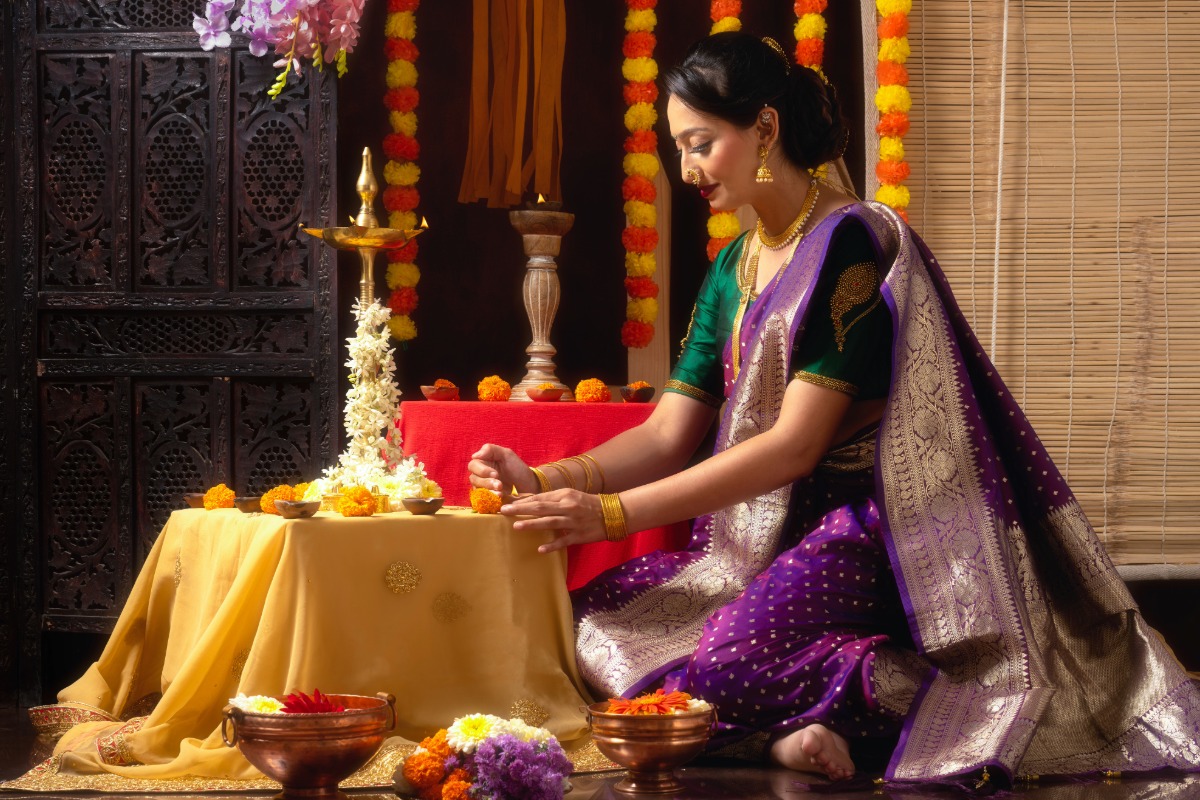
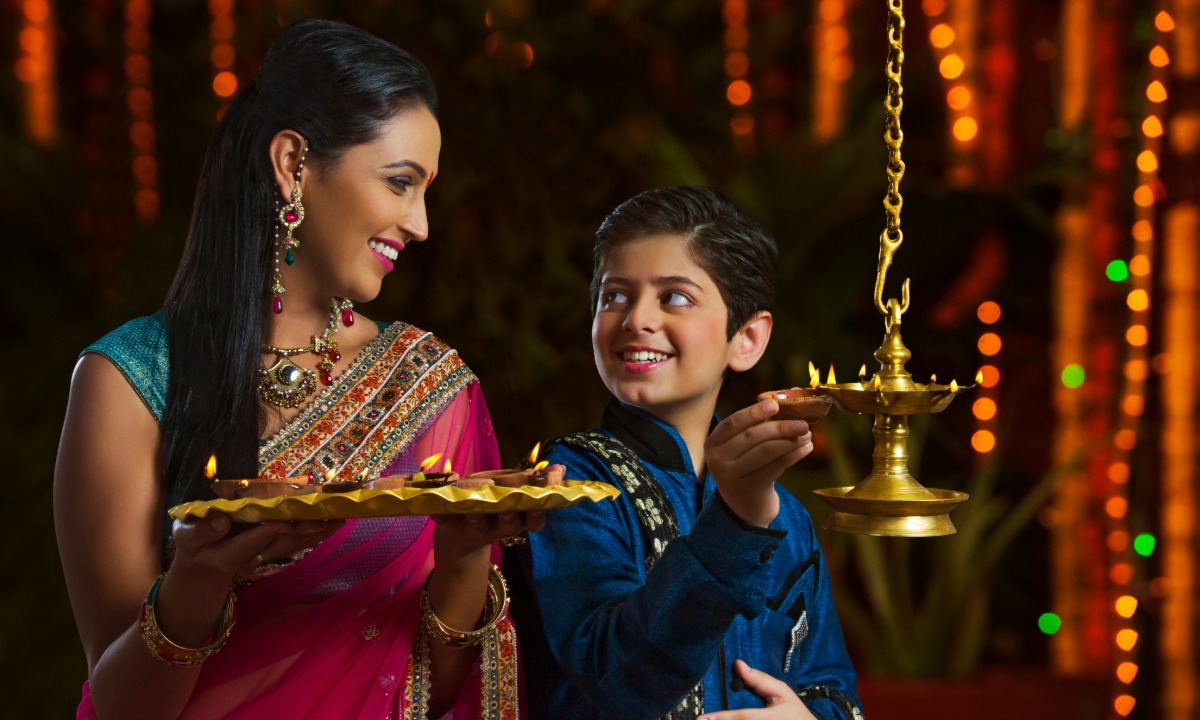
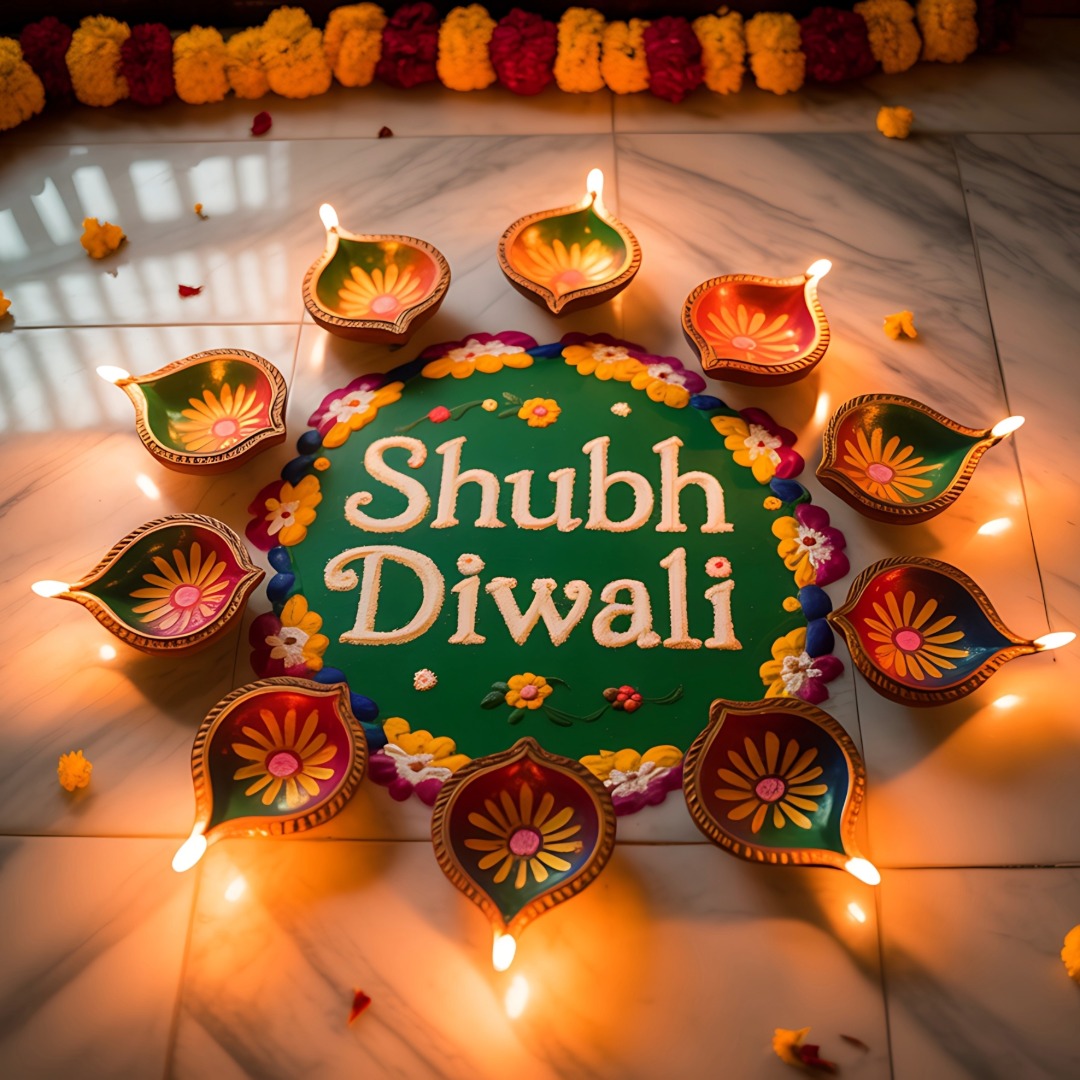
Diwali is full of little traditions that bring families together. Before the festival, homes are cleaned, decorated with rangoli, flowers, and diyas, and everything is made ready for prayers. On the main night, people perform Lakshmi Puja with offerings of sweets and fruits, while also praying to Lord Ganesha for good luck.

Sharing is a big part of the celebration,  friends and family exchange sweets and gifts. After prayers, homes light up with diyas, candles, and sparklers, creating a warm, festive glow. These small rituals are what make Diwali so special, reminding everyone to celebrate joy, togetherness, and positivity.

The Five Days of Diwali Festival Explained

Day & Date Festival
Day 1: Oct 18, 2025 Dhanteras
Day 2: Oct 20, 2025 (Morning) Choti Diwali / Naraka Chaturdashi
Day 3: Oct 20, 2025 (Evening) Lakshmi Puja / Main Diwali
Day 4: Oct 22, 2025 Govardhan Puja
Day 5: Oct 23, 2025 Bhai Dooj

Diwali isn’t just one day, it’s a five-day celebration, and each day brings its own special vibe:

Day 1: Dhanteras (October 18, 2025)

The festival begins by welcoming wealth and prosperity. People buy gold, silver, or new utensils and pray to Goddess Lakshmi and Lord Dhanvantari for good health and fortune.

Day 2: Choti Diwali / Naraka Chaturdashi (October 20, morning)

This day marks Lord Krishna’s victory over the demon Narakasura. Homes are decorated, people take ritual baths, and the festive mood begins to build.

Day 3: Lakshmi Puja / Main Diwali (October 20, evening)

The heart of the festival! Families light diyas and candles, perform Lakshmi Puja, and share sweets and laughter, filling homes with warmth and joy.

Day 4: Govardhan Puja (October 22)

Devotees honor Lord Krishna lifting Govardhan Hill. Special offerings and prayers bring everyone together in celebration. Special food is prepared to offer to Lord Krishna on this day. This is called the Ankut, made with 52 ingredients. It is served along with Kadhi, which is often revered as the favourite food of Lord Krishna.

Day 5: Bhai Dooj (October 23)

A day for brothers and sisters. Sisters pray for their brothers’ well-being, and brothers give gifts, celebrating the bond they share. The sisters pray for their brothers’ long life and health in the morning by remembering and chanting old stories of the gods and goddesses.

Each day of Diwali is about love, togetherness, and joy, making the festival truly memorable.

Regional Celebrations and Cultural Variations

Diwali is celebrated all over India, but each region adds its own unique touch:

North India: 

People celebrate Lord Rama’s return to Ayodhya, lighting homes and streets with rows of diyas. Sweet treats and family gatherings are a big part of the fun.

West India 

In states like Maharashtra and Gujarat, the focus is on Goddess Lakshmi, with elaborate pujas and community festivities. Markets shine with colorful decorations and local sweets.

East India 

Diwali often overlaps with Kali Puja, worshipping the fierce Goddess Kali. Homes are decorated, lamps are lit, and families enjoy special regional dishes.

South India

People celebrate Deepavali with Naraka Chaturdashi, marking Krishna’s victory over Narakasura. Traditional sweets, early morning oil baths, and temple visits are common.

Eco-Friendly Diwali: Celebrate with Care

This Diwali, you can enjoy the festivities while being kind to the environment. Small changes make a big difference:

  • Use clay diyas or LED lights instead of chemical ones. They look beautiful and are eco-friendly.
  • Choose organic colors for rangoli and decorations to avoid harmful chemicals.
  • Limit firecrackers or opt for sparkling alternatives to keep the air clean and reduce noise.
  • Support local artisans by buying handmade gifts and decorations, it helps communities and adds a personal touch.
  • Give sustainable gifts, like reusable items, plants, or handmade goodies, instead of plastic or disposable items.

The Eternal Glow of Diwali

Diwali is more than just lights, sweets, and decorations, it’s about hope, happiness, and coming together with the people you love. Every diya you light, every sweet you share, and every little prayer you offer spreads positivity, not just around you, but inside you too.

This festival reminds us that even in the darkest moments, goodness and light always find a way. It’s your chance to pause, reflect on the past year, forgive, and start fresh.

As your home glows with lamps and laughter fills the air, remember that the real magic of Diwali is in sharing joy, showing kindness, and feeling grateful. Celebrate safely, enjoy every moment, and let the light of Diwali brighten not just your home, but your heart as well.

FAQs on Diwali 2025

Diwali 2025 Date, Puja Timings Faqs

Question: When is Diwali in 2025?

Answer: Diwali 2025 will be celebrated on Monday, October 20. It falls on the Amavasya Tithi of Kartik month — the most awaited night for Lakshmi Puja and lighting diyas.

Question: What are the five days of Diwali?

Answer: The five days are Dhanteras, Choti Diwali, Diwali (Lakshmi Puja), Govardhan Puja, and Bhai Dooj — each celebrated with lights, joy, and family traditions.

Question: What time is Lakshmi Puja in 2025?

Answer: The Lakshmi Puja Muhurat is from 7:08 PM to 8:18 PM on October 20, 2025, during Pradosh Kaal — considered the most auspicious time for prayers and lighting diyas.

Question: How do different states celebrate Diwali?

Answer: From the glowing ghats of Varanasi to the illuminated Golden Temple in Amritsar and festive homes in South India, Diwali shines uniquely across India — united by light, love, and devotion.

Question: How can you celebrate an eco-friendly Diwali?

Answer: Use clay diyas, organic rangoli colors, and handmade gifts. Avoid noisy crackers and focus on celebrating with care for people, pets, and the planet — a greener, happier Diwali!

Kolkata Hosts Sohrab Hura’s The Forest: Memory, Media and Intimacy on View

0

Sohrab-Hura-The-Forest-01

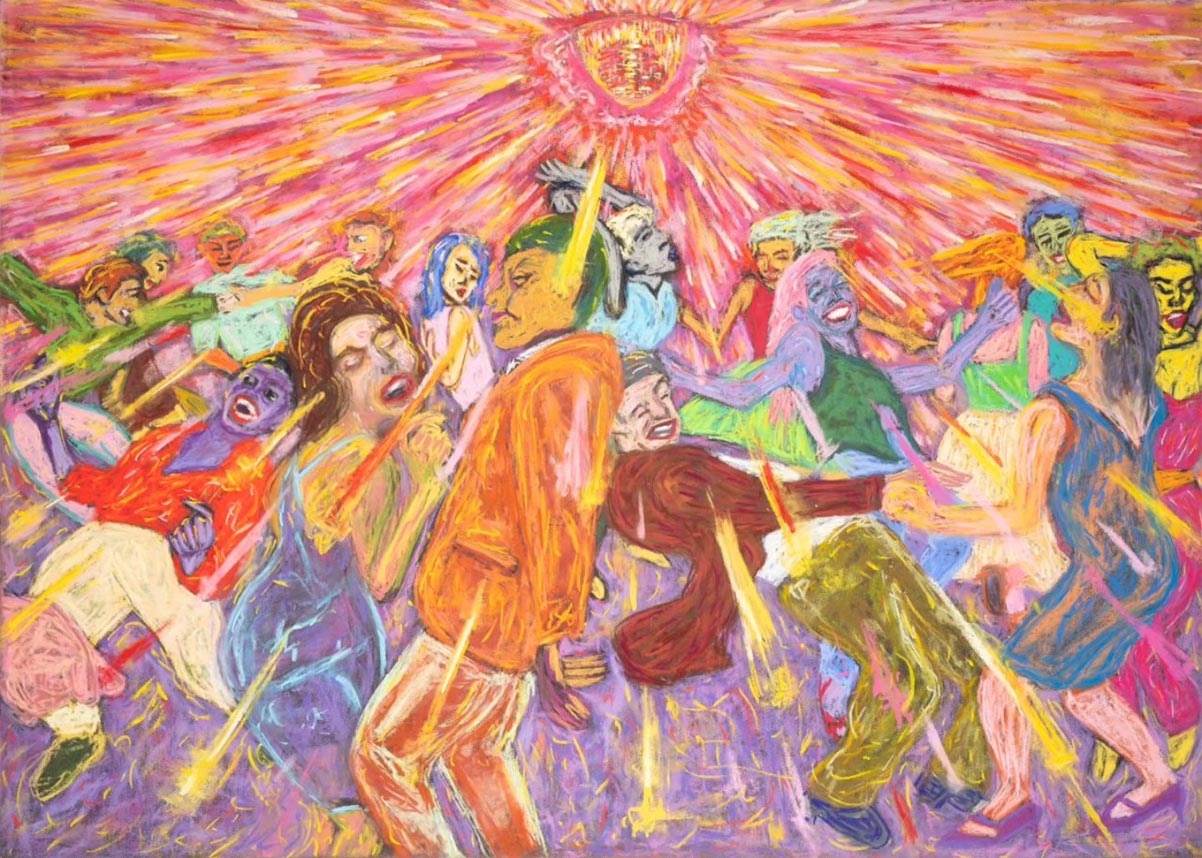
Sohrab Hura’s The Forest is his third solo at Experimenter Ballygunge Place, Kolkata. It is a corpus of fresh oil paintings, etchings on paper, and a video to chart the frame of mind and create an imagery. The title of the exhibition, The Forest, gestures to a range of terrains situated in the compact frames of the painter. It depicts a site of refuge and concealment, but also signifies a space where waiting becomes an act of possibility. The artworks are drawn from a continuing series of oil paintings and smaller artworks on paper that depict vibrance and diversity. 

The Works and Media: the Pellet & Epiphany

Visually, The Forest accentuates tangibility. Hura neutralizes the sped-up image economy of our social media feeds and television memories with pastels, gouache, and oils that demand a more gradual and slower attention to detail. Surfaces of the paintings retain traces of the hand rather than the monotony of an algorithm. Small-scale works on paper sit alongside more significant canvases and a moving-image piece, creating a rhythm that essentially seeks total physical navigation in the gallery space. This creates an enveloping factor that churns the creative quotient in the minds of the spectators, making them halt, think, and analyze.

Themes & Motifs

Across press material and social posts, Experimenter highlights the sources informing Hura’s imagery; it includes the most contemporary phenomena, i.e., sharing memes, the compactness of social media algorithms, along with personal history and political events. These elements are amalgamated into the canvas, not simply as didactic commentaries, but as sediments of contemporary consciousness. The media we ingest, the family traces we carry, and the political moments that puncture ordinary days, everything finds space in Hura’s paintings. These works manifest a voice in all these themes and locate them through recurring forms that might be trees, bodies, or rooms, allowing a slippage between interior and exterior, image and recollection. It not only signifies the black and white part of society, but equally reflects on the greys. 

Installation & Viewing Experience

Tracing the previous exhibitions of Hura in the same venue, one can deduce that the comfort of the artist probably lies within a dense photo-grid setup, which is more measured and offers adequate hanging schemes. This time, for The Forest, the interplay of small works on paper with the larger oil canvases, accompanied by the video, implies an exhibition exclusively designed for repeated viewing rather than a one-pass glance. 

Sohrab Hura’s Evolving Practice

As the painter moves between photography, painting, video, and publishing (through Ugly Dog Books), he has gained the label of a “shapeshifter”. His recent institutional attention includes a recent US survey and critical recognition in 2024–25, framing The Forest as a very productive moment in his career, where storytelling, memory, and intimacy are tied together and presented through papers and canvases. This exhibition, then, is both a continuation and a recalibration of an artist known for photographic narratives, now insisting that paint can slow the images we mistake for understanding.

Event Details
Art Exhibition Sohrab Hura’s The Forest
Dates & Venue 5 November 2025 – 3 January 2026, Experimenter — Ballygunge Place, Kolkata.
Media New oil paintings, works on paper (gouache/pastel), and video.
Principal Themes Media memories (TV, memes), social algorithms, family intimacies, political traces.
Viewing Strategy Intimate hanging with a pace that encourages slowness and repeated looking.
Artist Context Part of Hura’s ongoing, multi-format practice encompassing publishing, photography, and painting.

Key highlights 

  • The exhibition brings together fresh oil paintings alongside recent works on paper and a video, offering a multi-sensory field of images.
  • Hura foregrounds “waiting” and slowness: paint and paper are used to resist the habitual scanning encouraged by digital feeds. 
  • Recurring motifs — ambiguous trees, domestic scenes, partial figures — open onto several narrative possibilities rather than resolving into a single story. 
  • The show is positioned as Hura’s third solo at Experimenter in Kolkata and continues his engagement with intimate archival impulses.

Takeaway: Why The Forest matters now

The present world is saturated with instant images and prompt-based AI-generated works.
It kind of pushes us as humans to a point where we don’t wish to put effort in certain cases, creating a negative comfort zone around us that also functions as a rampart around our creative conscience. It is in this context that Sohrab Hura’s The Forest matters because it stages a small, insistently human countermeasure to automation. The paintings’ tryst with the viewers’ specs makes time slow down; it gives the spectators a space to not only analyze the painting, but also spend quality time with themselves. For the audience in Kolkata, this exhibition offers a rare loop-back from the screen to the hand, inviting them to treat images as a place to confide, not to scroll through. The world is so interconnected that losing a point of contact would mean literally missing out on everything under the sun. Social media has turned the world into a more reachable place; however, it is equally a necessary evil. Through these paintings, the artist wants us to be judicious in what we choose to consume and let others consume; he wants us to be more accountable towards ourselves by allowing our own selves the time to renew attention and have meaningful memories laid throughout the trail called life.

Kala Ghoda Arts Festival Opens Entries for Children’s Installation Competition 2026

0

Kala-Ghoda-Arts-Festival-Opens-Entries-for-Children’s-Installation-Competition-2026

Announcement & Call to Schools

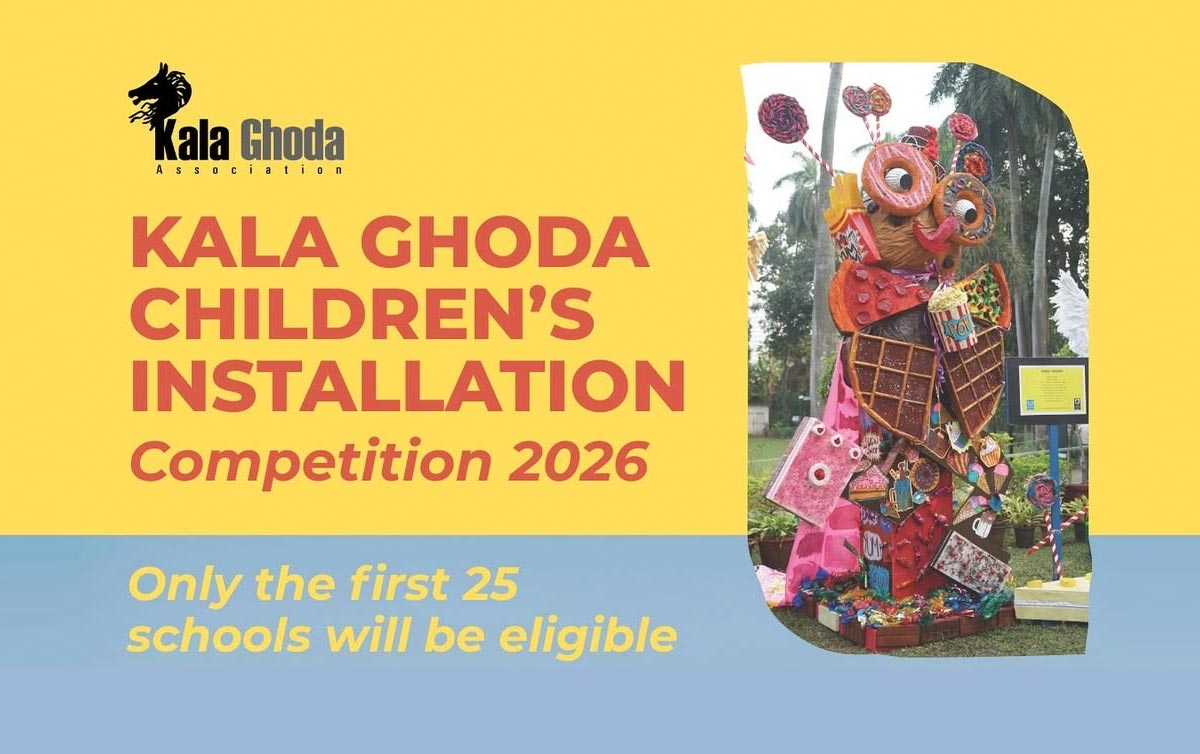
The Kala Ghoda Arts Festival (KGAF) has formally opened registrations for The Kala Ghoda Children’s Installation Competition 2026, issuing a compelling appeal across social media platforms. Their recent upload encourages schools to participate by celebrating creativity and imagination, inviting the first 25 institutions to help shape the festival through their students’ artistic expressions and transform innovative ideas into iconic installations. The message is a direct call to Mumbai’s education and arts community to sign up early and stake a place in the festival’s children’s purlieus.

Festival Dates & Where It Fits in KGAF

The children’s installations will be part of KGAF’s nine-day event, scheduled from 31 January to 8 February 2026. During this period, the Kala Ghoda vicinity transitions into an open-air cultural campus of visual art, theatre, music, and family programming. The installations are displayed alongside workshops, storytelling slots, and guided tours designed to engage visiting families and school groups in this vibrant environment.

How to Apply & What are the requirements?

KGAF’s call asks schools to submit a concise proposal with a concept note, age groups involved, materials list, timelines, and supervision plans. It is important to note that participation will be confirmed via a first-come, first-served policy, i.e., only the first 25 schools to register will be accepted for the installation programme in 2026. While KGAF provides curatorial supervision, site permissions, and on-ground coordination, the conceptualisation and arrangement responsibilities rest primarily with the schools, which are often supported by parents, alumni, and local artisans.

Public Reach & Past Precedents

Student installations at Kala Ghoda have historically been among the festival’s most photographed and shared elements. Past entries have ranged from tangible, playground-like sculptures that are highly conceptually driven pieces addressing topics like ecology, urban life, and civic matters. These projects exhibit a dual role; they provide a platform for the budding young children to showcase their creativity and shape their imaginative quotient, and they also teach students the responsibilities that are bestowed through public art by promoting safety, accessibility, and communication. 

Quick Details for Schools Key Information
Registration Policy Only the first 25 schools will be accepted for 2026 participation.
Festival Dates 31 January – 8 February 2026 (9-day Kala Ghoda Arts Festival).
Proposal Requirements Concept note, age group, materials list, timeline, supervision plan, and transport logistics.
Support Provided Curatorial guidance, site permissions, and on-ground coordination from KGAF.
Recommended Materials Sustainable, reusable, and child-safe materials for public interaction.
Installation Locations Across the Kala Ghoda precinct — museum lawns and public greens.
Collaborations Encouraged with parents, alumni, and local artisans for fabrication and support.
Registration Form 2026 (For Schools only) Link to the Form

Key Highlights

  • KGAF 2026 has opened registrations for the Children’s Installation Competition; only the first 25 schools will be shortlisted.
  • Installations will be on view across the Kala Ghoda precinct during the nine-day festival (31 Jan–8 Feb 2026).
  • The programme functions as a cross-disciplinary learning laboratory — design, fabrication, and public-safety practices are integral.
  • KGAF offers curatorial and logistical assistance; schools lead concept development and build.
  • Past children’s installations have generated strong public engagement and media visibility for participating schools.

What Schools & Educators Stand to Gain

For schools, the competition is a great public platform to boost and showcase their students’ work. It democratizes the confined teaching-learning process in classrooms and makes students enter the city’s everyday visual landscape. The process fosters collaboration across departments, invites community partnerships, and provides a visible reward for sustained effort. For students, seeing their concept realised at scale reinforces that art can be a civic practice, not only a classroom exercise.

Takeaway

The Kala Ghoda Children’s Installation Competition remains one of Mumbai’s most fruitful assimilation of inculcation and public art. It teaches pragmatic skills to children while staging young voices in the urban core. That said, the “first-25” rule, though understandable for logistical reasons, potentially risks leaving many deserving schools out of its creative framework. KGAF might consider piloting satellite shows, rotating slots, or might as well arrange a parallel digital exhibition to make its base broader and inclusive. Expanding participation would not dilute the festival’s standards; it would deepen its civic promise.

The Invention of Light: Caravaggio’s Magdalene in Ecstasy Arrives in Mumbai

0

The-Invention-of-Light--Caravaggio’s-Magdalene-in-Ecstasy-Arrives-in-Mumbai-01

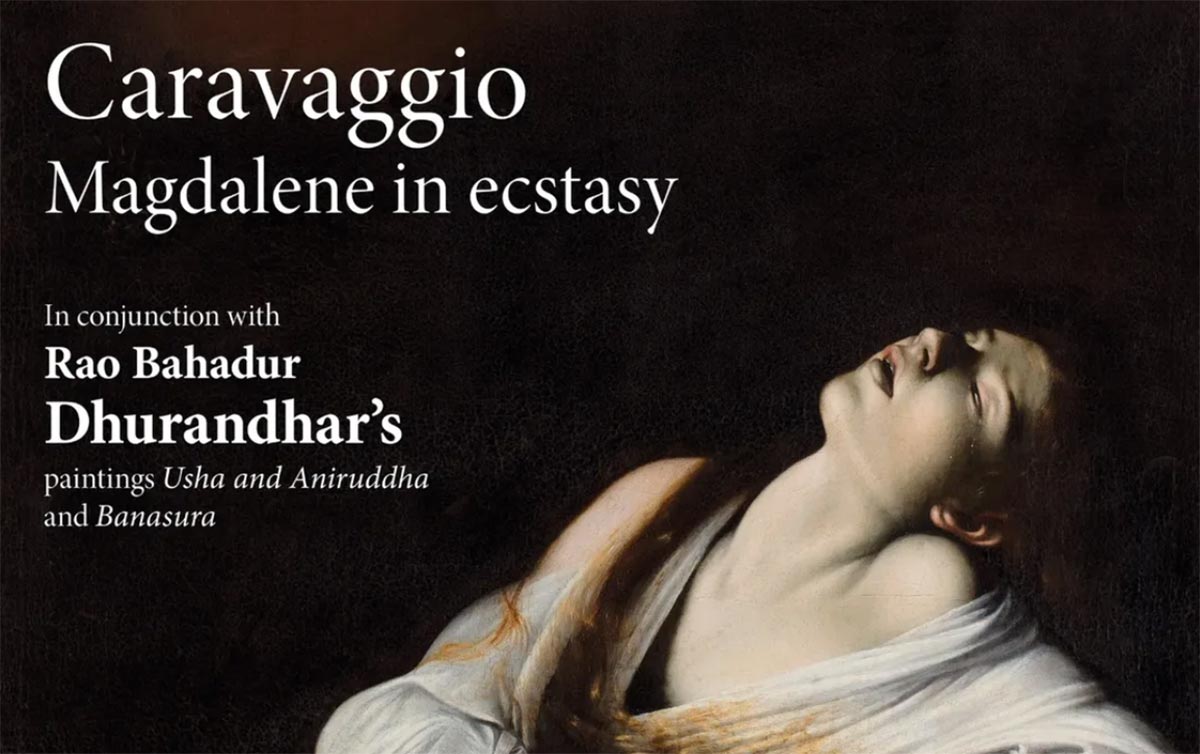
A compact but exhilarating canvas ascribed to Michelangelo Merisi da Caravaggio, Magdalene in Ecstasy, is on view at Mumbai’s Dr. Bhau Daji Lad Museum as part of an exhibition titled L’invenzione della luce (The Invention of Light). The exhibition, presented by the Museum in collaboration with the Consulate General of Italy and the Istituto Italiano di Cultura, Mumbai, runs from 16 October to 2 November 2025, offering Indian specs a rare and proximate encounter with a work by the Italian Baroque master. The exhibition successfully brings a celebrated masterwork, cross-cultural dialogue, and diplomatic theatre to Mumbai

Why does the painting still stop viewers in their tracks?

Painted around 1606 during a tempestuous phase in Caravaggio’s life, the Magdalene is a manifestation of a complex set of emotions, packed in the skeleton of this piece. It represents a figure caught between worldly melancholy and rhapsody. This painting is essentially brought to light through the then-innovative technique of ‘light and shadow’.  For contemporary viewers, well acquainted with high definition visuals and imagery, this painting, with a sense of restraint, muted tones, and harsh light, demands a different perspective to deploy. It seeks a purview that includes attention to texture, breath, and most importantly, the sense of psychological interiority. 

En-route to Public Spectacle

This particular version of the Magdalene has travelled a boisterous pathway into the public frame. It arose from private hands and was the subject of plenty of authentication debates in the 2010s; some experts have acknowledged it as Caravaggio, while others continued with their reservations, making its display in India as much an art-historical talking point as a public draw. The painting has already been displayed once at the Kiran Nadar Museum of Art in Delhi, and now its stop is in Mumbai, which is considered by many as both a cultural milestone and an aggravation for scholarly scrutiny.

 A dialogue across centuries

While on display, the organisers have resisted identifying this painting as the sole trophy frame. So instead of exclusively showcasing this as a priced foreign artwork, the curators, Andrea Anastasio and Tasneem Zakaria Mehta, consciously chose to place Magdalene in Ecstasy beside Indian devotional paintings, especially those by M. V. Dhurandhar. This step marks the resonance around illumination, devotion, and embodiment. The thoughtful juxtaposition reimagines light not just as an achievement by the European artists but as a syncretic idiom of transcendence and feeling. It pushes the viewers to spectate the affinities and disharmonies between the spiritual depictions of two distinct cultures. 


View this post on Instagram


A post shared by Dr. Bhau Daji Lad Museum (@bdlmuseum)

Diplomacy, museum policy, and Mumbai’s cultural moment

Beyond the gallery, the exhibition is conducting a reception of cultural diplomacy. Walter Ferrara, India’s Consul General of Italy in Mumbai, praised the initiative as a milestone for Italian-Indian museum ties, indicating an appetite for future institutional collaborations through loans, conservation exchange, and scholarly partnerships. These initiatives ought to go beyond being trivial shows. At the same time, the arrival of this painting is treated as a civic moment for Mumbai’s cultural life. 

Key Items Details
Artwork Magdalene in Ecstasy (attributed to Michelangelo Merisi da Caravaggio; c.1606)
Exhibition Title L’invenzione della luce (The Invention of Light)
Venue & Dates Dr. Bhau Daji Lad Museum, Mumbai — 16 October to 2 November 2025
Organisers Bhau Daji Lad Museum, Consulate General of Italy, and Istituto Italiano di Cultura di Mumbai
Curators Andrea Anastasio & Tasneem Zakaria Mehta
Previous Indian Exhibitions Previously displayed at Kiran Nadar Museum of Art, New Delhi

Highlights — what to watch for on your visit

  • The Magdalene’s concentrated chiaroscuro and compressed composition—Caravaggio’s visual drama in miniature.
  • Curatorial pairing with M. V. Dhurandhar: formal echoes of light, gesture, and devotional sentiment invite cross-cultural readings. 
  • Ongoing provenance and attribution conversation among specialists — the exhibit functions as both public display and scholarly prompt.
  • The diplomatic framing: the Consulate and Italian cultural bodies foreground conservation and institutional exchange as next steps.
  • Rich photographic coverage and strong visitor turnout were reported by the local press, suggesting a broad public appetite for such cross-border loans. 

Takeaway

It would have been an easy choice for the organisers to highlight the Caravaggio as the glittering import to evoke civic pride. Instead, the Mumbai presentation opts for a subtle, risky orchestration by situating the artwork among towering Indian pieces. It ought to stir queries among Indian spectators and compel them to read and re-read the painting in the company of the Indian artworks. The quality of this act of defiance, to be examined in isolation, transforms the theme into a cultural partnership between two nations. The success of this exhibition can’t be measured solely by footfall or Instagram frames; the main fact of its success lies in what follows the event. The projected ambitions of transparent provenance disclosure, reciprocal loans that carry Indian art to European institutions, and actual conservation and curatorial partnerships are the true markers of its success, given that it takes place as it is mentioned. If the Magdalene’s short stay here sparks that correlation, then this small, luminous painting will have punched far above its size as a true ambassador of cross-cultural curiosity.