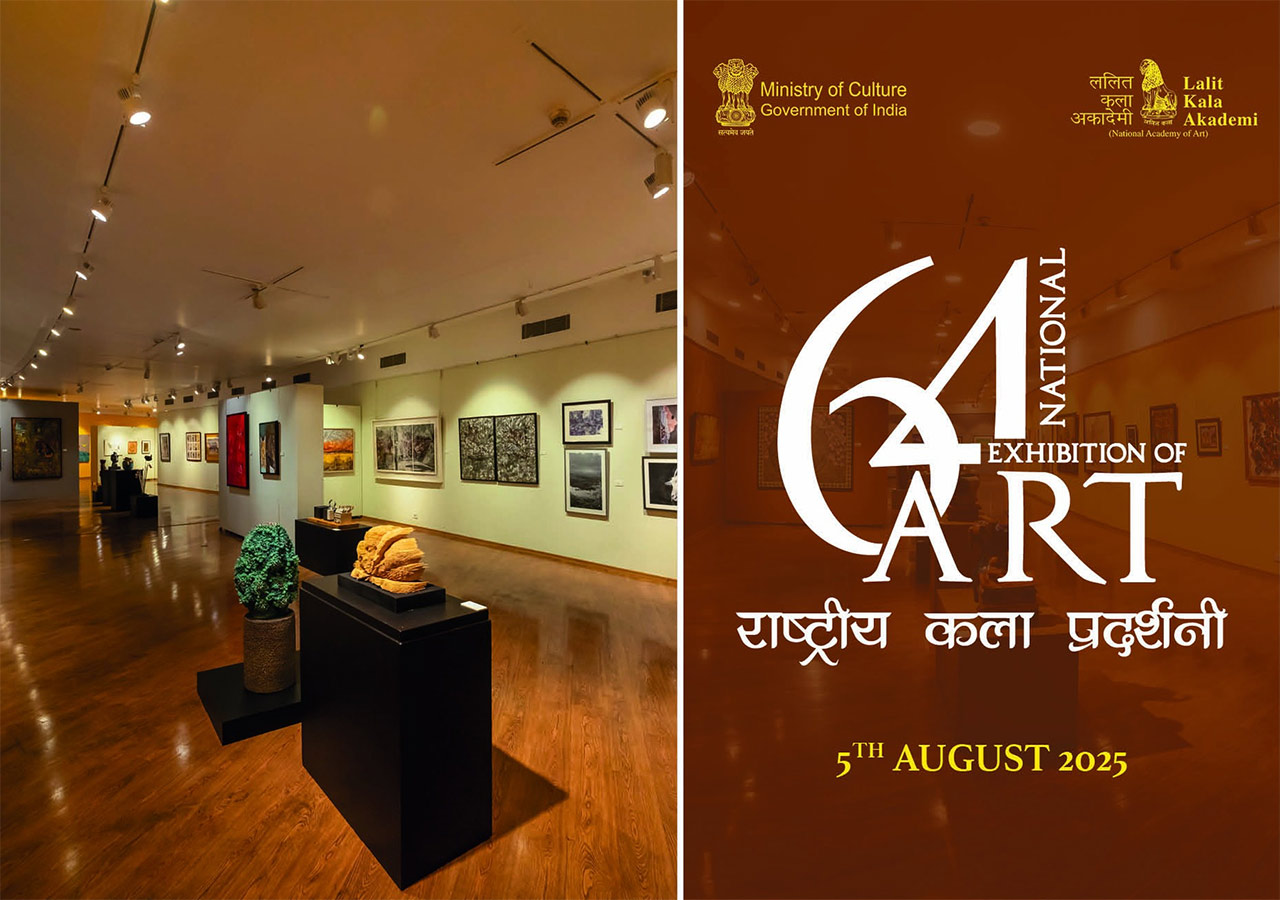
It is the time of artistic energy in the city of New Delhi as the 64 th National Exhibition of Art opened its doors at Rabindra Bhavan in the city hosted by Lalit Kala Akademi. This exhibition is held between August 6 and September 15, 2025, New Delhi. The centre of India gets its cultural hub where one can witness the most vibrant of visual arts and talents of the country in terms of painting, photography, sculpture, print-making and experimentation. More than just an art show, this annual celebration is a reflection upon the creative diversity in India and each wall, each corner and even each canvas speaks of a tale.
About the exhibition
This year, the figures were huge, almost 5,900 entries poured in from all over India, and out of this number, the illustrious group of jury selected 283 artworks. From the nostalgic landscapes to the sharp crisp contemporary themes, the show offers viewers the precious experience of how the Indian artistic style has evolved through the ages under a single roof.
The variety in the art mediums are equally spectacular. There are paintings that meld folk art with contemporary abstraction, photographs that capture fragments of life in rural backdrops, and in urban confusion, and sculpture that tests the limits of form and material. The exhibition is a visual communication of the past and present, tradition and innovation.
One notable artwork of this year’s show is that of Aashima Mehrotra, a senior officer in the Indian Railway whose work, Laapata Ladies, which features in the prestigious exhibition is one of the unique stories being told. Mehrotra is a painter by passion whose works are based on Indian philosophy and cultural representations. It is also evident that artistic creativity can be accomplished even with the hectic schedules of demanding work. It is a good piece of motivation in the visual artworld and is made available to everyone who has the heartfelt desire to dream and to create art.
Celebration of Art
Lalit Kala Akademi Awards are also to be given to 20 outstanding artists during the opening ceremony of the exhibition. The reward is Rs. 2,00,000 cash, a shawl, and award citation. These awards are not just recognition but they honour skill and devotion. The winners are selected by a 2-tier jury of senior artists, curators, and critics that use a transparent and considerate selection process. This award is one of the most respected awards within the visual art scene in India.
Lalit Kala Akademi, Ministry of Culture, Government of India
Entry Fee
Free and Open to All
Highlight
Features selected artworks from across India in various mediums—painting, sculpture, printmaking, and more.
It is a daily exhibition, which takes place between 11:00 AM and 7.00 PM and is free for everyone. If you enjoy art and you just got interested, this is your chance to savor the soul of the Indian artistry be it the paintings or other media works.
Why This Exhibition is Important
The 64th National Exhibition of Art is a strike down thoughts of digital distractions or in a world where digital technology reigns supreme, a heart warming reminder of the strength of visual paintings. It not only gives credit to popular names, but also unknown talents in the various creative corners of India.
The current one is particularly inclusive, innovative, and culturally rooted. It demonstrates to us that Indian art is never fixed. It has life, it possesses no fear and it is constantly renewing itself. Then, don’t skip this immersive experience of witnessing great art ans appriciating it.
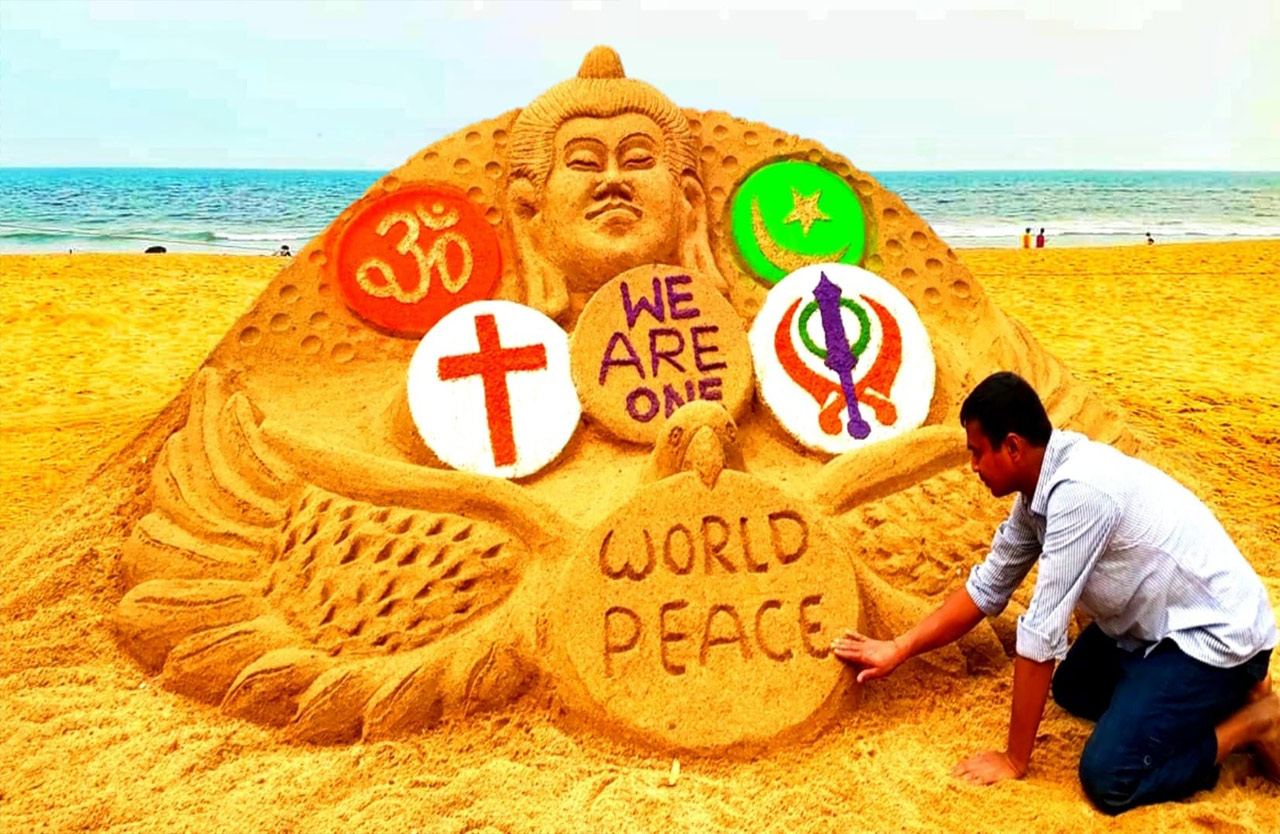
Madhurendra Kumar, a sand artist of Motihari, Bihar, has put his name in history that marks recognition of innovation and culture in a creative way. In London, he was recently honoured by the London Book of World Records as the first Indian sand artist to get this record. His success is not only personal but a proud moment for Bihar, India and the rest of the world.
Madhurendra Kumar; The Artist
The thing that makes Madhurendra Kumar so special is not only his skill as an artist but also the intent of his works. His art does not just please the eyes, it has social messages. His artistic career spans over several years, and as such, he has made over 5,000 works of art using sand and leaves. These creations explore themes such as peace, brotherhood, nature and the environment, nationalism, and global unity. Each grain of sand in his artwork reflects meticulous artistic intent and thoughtful expression. His art also invokes people to think about important things. By using natural and biodegradable mediums, Madhurendra makes his art sustainable as well and reinforces the necessity to go back to our roots, the roots of the art profession and the roots of ethics.
London’s Historic Moment
The winners receiving the awards in the British parliament do not need explaining. There, the International President of the London Book of World Records, Dr. Avinash, D. Saklani, and the representative of the European Union Dr. Ivan Gasina officially presented Madhurendra with a medal, certificate, and citation. They commended his work as creating an international mark but at the same time maintaining a traditional and local approach to his stories.
The organisers emphasised the significance of the fact that Madhurendra is not only bridging the gap between art and activism but also introducing Indian folk inspired nature art to global platforms. His combination of sand and leaf painting was termed as a special paradigm of diffusing social peace and cultural diversity.
International Recognition
The painting by Madhurendra passed through a poll of opinion surveys of a dozen countries across the world including USA, Canada, Germany, Russia, China, and Sri Lanka before this award. His performance is well rated making him the leading artist among the foreign artiste and bettering several big names of worldwide recognition. Such a powerful global support highlights how visual art can bridge the language and nationalism barriers when it reaches people.
In India, he was regarded with admiration for his achievement. Union Minister Ramdas Athawale congratulated him as it was a proud moment for India. Since then, various political players, cultural leaders and art lovers have expressed gratitude to Madhurendra for his work in the development of Indian art and social awareness.
Him being honoured at the British Parliament is not only a story of fame, but also an excellent example of resilience, purpose, and believing in the power of creativity. Madhurendra is the inspiration of many young artists in rural and semi-urban India who believe that their talent can take them all the way to global forums when it is nurtured in the right spirit.
Conclusion
This honour is a great milestone, but it is just the start of another long and meaningful future success that Madhurendra Kumar will undertake. As more people become aware of his work and start following him, he will be able to further use art to engage in a dialogue, to initiate change, and promote the ideals of peace and sustainability.
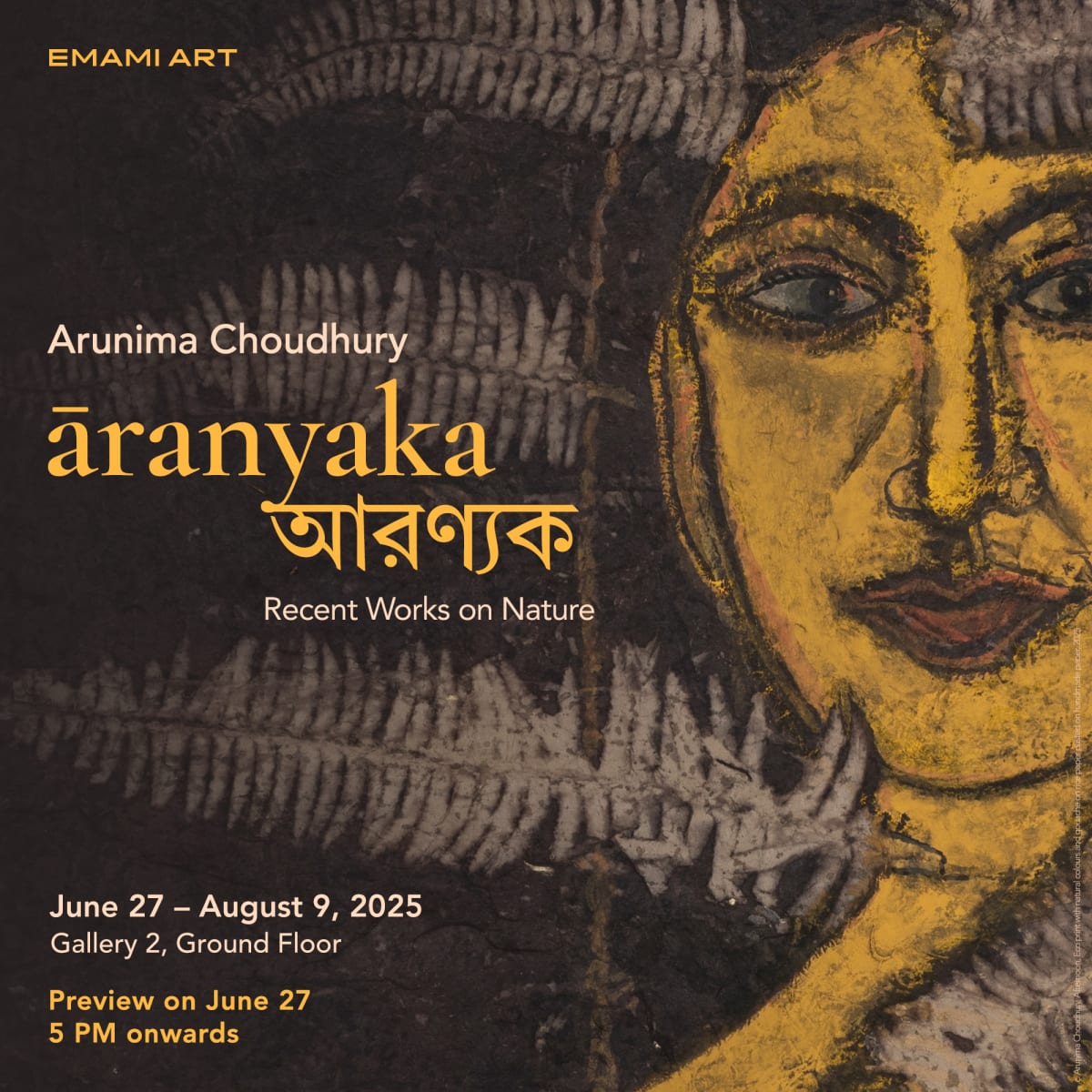
Kolkata, August 2025 – Emami Art presents āranyaka: Arunima Choudhury’s Recent Works on Nature, a deeply immersive solo exhibition by veteran artist Arunima Choudhury. Running from June 27 to August 9, 2025, the show offers a contemplative look at the artist’s connection to nature through handmade paper, eco-prints, and textile-based compositions.
Event Detail
Description
Exhibition Title
āranyaka: Arunima Choudhury’s Recent Works on Nature
Artist
Arunima Choudhury
Venue
Emami Art, Kolkata Centre for Creativity
Location
777, Anandapur EM Bypass, Kolkata
Dates
June 27 – August 9, 2025
Timings
11:00 AM – 7:00 PM (Closed on Sundays)
Admission
Free Entry
Public Programme
August 2, 2025 – Artist Talk with Arunima Choudhury, Samik Bandyopadhyay & Soumik Nandy Majumdar
The Meaning Behind ‘āranyaka’
The collection is also called ‘Āranyaka’, which means “of the forest” in Sanskrit, a title that resonates with Arunima’s her childhood spent in the tea estates and hills of North Bengal. Her pieces are created with earth-toned dies, made of leaf impressions and plant-dyed fabrics that are not just visual works but living memoirs of the natural world.
The Eco-Printing Process
Choudhury uses the eco-printing process to boil leaves, flowers and natural dyes before they are placed on rice paper and cotton for a direct transfer of organic forms. It seems as though eucalyptus, rose petals, ferns and bark leave behind soft, abstract impressions that she enhances with brushwork, charcoal, or hand-stitching. Each piece is a quiet composition of memory, time, and fragility.
Themes of Loss, Regeneration, and Quiet Resilience
The exhibition is not overtly political, but the environmental undertone is unmistakable. These themes are further explored in the new series including disappearing, surviving and existing within nature and their unique resistance to modernity. Some works reference ecological loss with faded imprints and earthy textures, while others offer symbols of regeneration, healing, or even metaphorical life.
Blending Art with Botanical Exploration
Choudhury started experimenting with DIY pigments from natural materials in 2006. She follows a practice of drawing that is inseparable from the work she does in her garden; her sketchbooks contain detailed notes on plants, mineral dyes and colour combinations. This scientific curiosity, fused with artistic intuition, gives her work a sense of authenticity and rootedness.
A Meditative Viewing Experience
The set design for the exhibition invites viewers to spend their time inside. Paper scrolls, botanical prints on translucent cloth, delicate layers of pigment create a rhythm of presence and absence. Instead of visual spectacle, the focus is on texture, material, and intimate discovery.
Artist Talk and Public Interaction
As part of the exhibition, Emami Art will host a public conversation on August 2, featuring Arunima Choudhury in discussion with noted art critic Samik Bandyopadhyay and art historian Soumik Nandy Majumdar. The session aims to unpack her artistic language, her material choices, and her lifelong relationship with nature.
A Life of Art and Reflection
Arunima Choudhury Born in 1960, Arunima had a five-decade journey. Trained at the Indian College of Arts & Draftsmanship and later at Chitrabani in graphic design; always worked across multiple disciplines such as painting, installation, collage and now textile-based work. Past exhibitions like The Dark Edge of Green (2022) and Nature As I See (2020) provided more rigid boundaries around these themes. Āranyaka instead emphasizes softness, slowness and organic language.
An Ecological Aesthetic for the Present
In an era of mounting environmental catastrophe, Choudhury’s work constitutes a quiet form of activism. Rather than dramatic gestures, her art offers tender reflection. Her methods — natural dyes, botanical printing, handmade materials — are not simply design decisions but an entire sustainability and earth-loving ethos.
Conclusion: A Forest of Memory
āranyaka is more than an exhibition; it is a gentle act of remembrance. Through stains, silhouettes, and silences, Arunima Choudhury constructs a forest of memory—one that invites us to notice, pause, and reconnect. Her art doesn’t demand attention; it rewards those who give it.
Friendship is a kind of relation that requires a lot of honesty, trust, and understanding between two people. It is difficult to imagine a life without friends in it. The very thought of your friends leaving you will make you scared. Such is the significance of this beautiful bond. Without friendship, the world is incomplete.
Every relation has its own significance, but friendship certainly stands out from the rest with its unique charm. As a part of our friendship week, we bring to you 10 reasons why friendship is the best bond ever.
1. A bond that can’t be replaced
Friendship is one special bond that you cannot replace with any other bond. The kind of connection you have with your friends will not be found in any other relationship. It is something unique that links two people who look out for each other.
2. It nurtures you as a person
There is a lot more to friendship than spending time together, or just having fun. It is a kind of bond that gives life to your soul. A friend is someone who doesn’t just support you in most of the things, but also brings positivity into your life.
3. A relation where there’s no place for ego.
More often than not, we fight with our friends for unnecessary reasons or misunderstand each other. But, what is friendship without reconciliation? Overlooking the mistakes and resolving issues without any ego are some of the usual things in friendship.
Source
4. In friendship, there is no place for pretending
Friendship is something where you need not pretend. You can simply be yourself, and no one will ever judge you for that. You can be with your friends all day in messy buns and baggy clothes, but they won’t question you because they might be the same as you. So pretending is never the rule.
5. It is a relation which can be many other things
Friendship is the only relation where we can act like siblings, best friends, well-wishers, parents and sometimes, lovers as well. After all, friends are the people who can put up with any role to make you happy.
6. Friends are the people who become your full-time support
Friendship is not just about doing some crazy stuff together, but also supporting friends during their hard times. There is a great saying- “You come to know who is your friend in the times of suffering only”. A friend who stays with you when everything is fine isn’t your true friend; a true friend is someone who supports you like a pillar even when the times are hard.
7. It is the bond of expression
Friendship is quite expressive. Friends are often experts in expressing emotions that do not require any spoken words. Friends know each other so well that they can easily make out what their friend’s next action could be.
Source
8. It helps you find your true worth
Friends are the first ones you’ll turn to after something bad like a breakup or a failed interview. They will be the ones to cheer you up and make you realize what you truly are, both physically and emotionally.
9. Friends are the ones whom we can rely on
Friends are those people in our lives, with whom we are at extreme ease. We are comfortable enough to share our darkest secrets, joys and sorrows with them. We know we can rely on these people, no matter what, BetterHelp online therapy support offers a safe space to share and navigate complex emotions, complementing the trust and care found in friendships.
10. It is a relation that only gets stronger as time flies
With time, friendship can only get stronger because you get to know your friends better with each passing day and appreciate the same with all your heart. You tend to love them without any reason and eventually realize that your world becomes much more beautiful with their presence in it.
The most valuable gift in a person’s life is a sincere friendship. The individual who in his life meets a real friend is thought to be very fortunate. Despite having other important things in life, a good friendship is very crucial to the life of a person. No one can live a completely fulfilled life if he does not have trustworthy connections. Everyone needs a good and loyal companion to share the good, bad and ugly.
Friendship is a dedicated sense of affection that allows us to share and care for each other. A friend is someone who without hesitation understands and appreciates others. True friends are never greedy, they try to better each other in their lives. There is no distinction between boundaries or ages, between caste, race, religion or sex. You know the truth about each other and support each other completely.
Final Thought
Friends can be good as well as terrible, good friends can change your life and bad friends pursue the wrong route, so one should be careful in choosing. Awful companions can be quite bad for us as they are sufficient to damage our life altogether. Often because of their own ego or self-esteem friendships break down. There should be a good understanding, satisfaction, sense of comfort and trust in true friendship.
Friendship Day Quotes
So, we hope you like these incredible friendship quotes, whether you want to commemorate your friendships or just recall why you love your friends so much.
“A good friend glances over your damaged fence and appreciates the beautiful flowers”
“True friends who can grow separately without growing apart is the most beautiful revelation”
“Each friend represents a world in us, a world that probably doesn’t come to life until they approach us”
“A true friend is somebody who sees anguish in your eyes when everyone else focuses on the smile”
“Anybody can sympathize with the sufferings of a friend, but it requires a very fine nature to sympathize with a friend’s success.” – Oscar Wilde
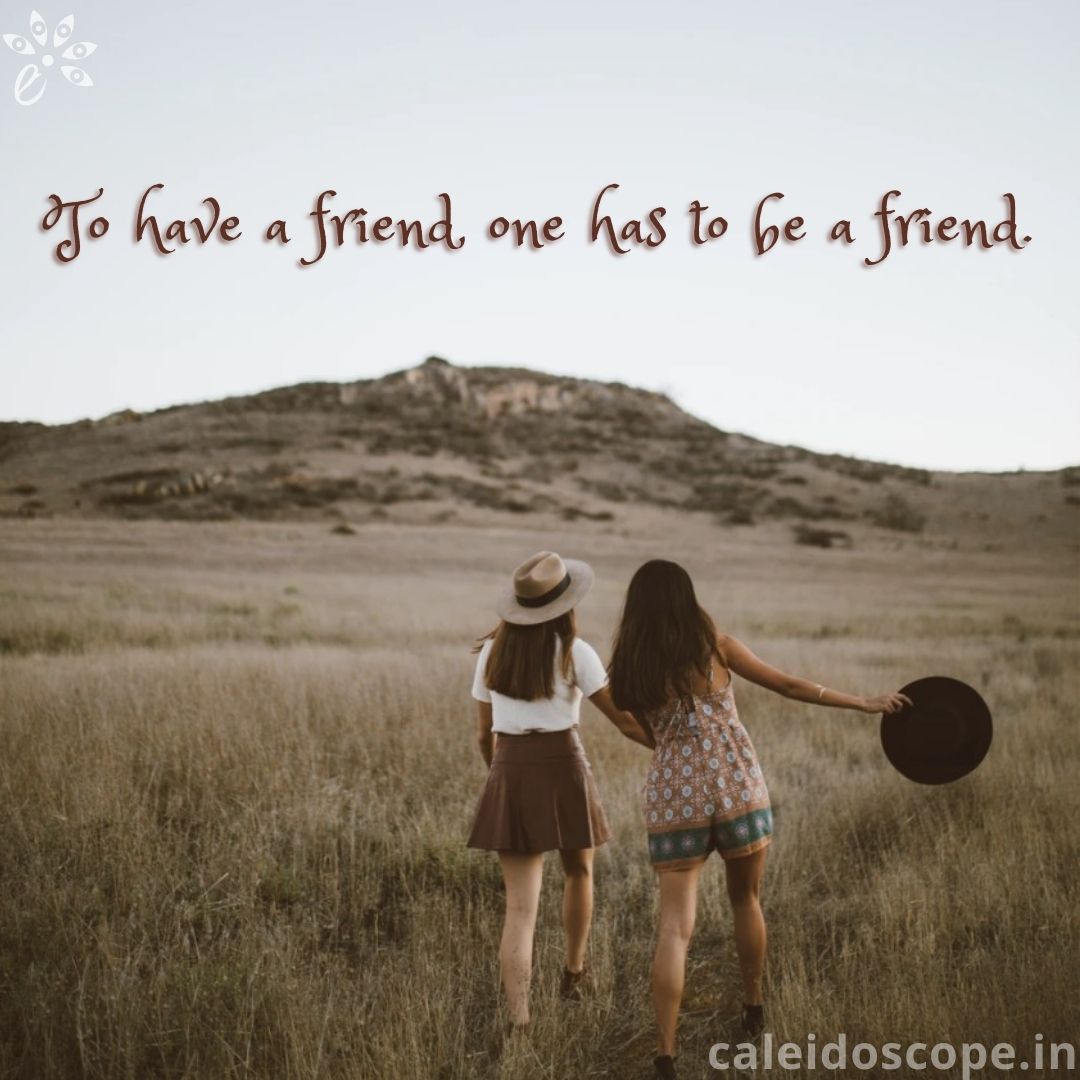
“To have a friend, one has to be a friend”
“True ties are not determined by the time or favours spent together. But through comfort, when you know that you have each other”
“Real friends are not those who remove your difficulties. They are the ones that will not disappear when you face hardships”
“Good friends are like diamonds — bright, beautiful, valuable, and always in style.” – Nicole Richie
“The one who believes in you, when you stop believing in yourself, is a loyal friend”
Good friends are crucial for your mental health and for your quality of life. They can increase your sense of belonging and purpose. It is inseparable to live and to love. Friendship is a chance to admire, learn about yourself, become mature and open up to a completely new life experience.
Friendship is a word that is so simple, but has much emotion, trust, and companionship. Friends make us feel good, and companionship is part of our lives whether it is the childhood friend who held our hand during embarrassing years at school, or the colleague a friend has become, to make long days of work easier. They are the select family who provide help, humor, and consolation with none of the judgment.
International Friendship Day is a very important occasion celebrated in most parts of the world that should be respected not only as an opportunity to send memes to friends or make outing plans but to actually appreciate the bonds that are important in life and to them. However, what is this day and how did it become so popular around the world? So, what is the core, history and significance of International Friendship Day of the modern world?
Why Do We Celebrate Friendship Day?
The idea of dedicating a day to celebrate friendship dates back to the early 20th century. Hallmark cards Joyce Hall became the first recorded person to propose a bottle cap moment in 1930. This vision led him to believe that a day will come when people will exchange greeting cards with their friends on their behalf.
However, it was not until 2011 that the United Nations officially recognized and established the International Day of Friendship. The program was set up to foster peace, harmony, and understanding among the different cultures by getting the people to create friendship bridges irrespective of race, religion, and nationality.
In most countries such as India however, it is more acceptable to celebrate friendship day on the first Sunday of augment, usually making appeal to the media, school culture and pop fads. It is less important which day you are willing to celebrate that day but the fact that it celebrates the spirit of true friendship.
Why Friendship Matters in the World Today?
In the busy digital era when followers on social media are treated as good friends, actual friendships have become more treasured, and needed, than ever. Here’s why:
Sensorial Well-being: A good friend gives us a platform to be ourselves. Spouses take care of us during bad moments, making us happy in a successful endeavour, reducing stress and anxiety.
Social Connection: Particularly in a solitude period, like the one with COVID-19, the significance of a successful social connection stood out. It is not merely pleasant to be connected to other human beings but it is biologically necessary.
Cultural Awareness: Minorities and foreignness in friendship foster acceptability, sympathy and international dissimilarity.
Lifelong Development: Friends make us grow-both in personality and as well as in professional life. They provide worldviews that we did not previously take into consideration and press us to become the best versions of ourselves.
How International Friendship Day Celebrated Around the World?
All countries and cultures have their own way of celebrating Friendship Day. The festivities will be different but the spirit of celebrating friendship will be the same.
India
In India, the day is bright in whatever way among teenagers as well as college students. Friends even make Friendship Bands amongst each other, exchange gifts and more frequently share stories on social media. Friendship Day is marked with special offers in cafes, restaurants, brand-names and is a day of celebration and strengthening of friendship.
United States
It is not extensively recognized as a national holiday, rather people organize barbecues, meet up with their friends, send cards and wish each other digitally.
Brazil
In Brazilian culture, there is a day dedicated to friends and it is unofficially referred to as Dia do Amigo (Friend day). This is celebrated on July 20 where friends eat out and exchange gifts.
Argentina
Amigo Day, also known as Día del Amigo, is one of the most significant celebrations in Argentina, dedicated to honoring friendships and social bonds. Restaurants are full and phone lines are clogged with greetings and social media is flooded with appreciation messages to friends.
Online Celebrations
With the digital era, virtual birthday parties are popular with some people using Zoom or virtual messages to friends as well as tagging friends in nostalgic photos. The Internet has made the world more international thus a globalized day due to the evolution of friendships between people living in different countries.
How To Make Friendship Day Special?
These are a few considerate ideas of how to carry out the International Friendship Day, be it your neighbors or your international friends:
1. Write a Letter by hand
A handwritten note on a personal note can be very moving. Describe to the full extent how you feel, appreciate your friend in particular memories and teach your friend about your unique bond.
2. Surprise Call/visit
A phone call with an old friend, particularly, someone you have not talked to in a while would make the day special to both of you.
3. Friendship Brunch or Virtual Gathering
Celebrate by having a mini party or a virtual one. Memory-sharing, games, and laughter can help a lot.
4. Memory Scrapbook
The first triangle activity, a Memory Scrapbook is a good activity to use at the start of this lesson to raise awareness of some of the challenges facing the poor today. In Memory Scrapbook, the students are given issues about the lives of the poor that they cut and paste into a scrapbook.
Make a digital or physical scrapbook, with photos and old texts and some small inside jokes. It is a classic gift to mark your friendship odyssey.
5. Volunteer Together
Spread kindness to people outside your circle on the day. You can volunteer with a friend or collect donations to a local NGO. Friendship at its greatest can be built when something good is done and memories created.
The Friendship & Mental Health
Numerous studies have shown that friendship plays a crucial role in supporting and maintaining mental well-being. They minimize the threat of depression, uplift self-esteem and in fact give way to some physical well being benefits such as reduced blood pressure and an extended life.
In contrast to family (which we do not make a choice), it is all voluntary when it comes to friendships. The voluntary part brings in a special layer thereof – we put emotions into it, we forgive, we evolve. Our true friends can tell when we are up to something, when we are in trouble, they do not need our assistance because they will stick by us and they will congratulate us even remotely.
Having a reliable friend may be all that makes a difference especially during the time of a personal crisis.
Conclusion
One of life’s treasures is friendship, taking it in the purest form possible. International Friendship Day does not merely boil down to putting on fun activities or sharing on social media but it is about celebrating loyalty, trust and love that friends bring into our lives.
Friendship is a reminder in a world that worlds highlight the little things that make us different and in a world where divisions occur everywhere that there is commonality in experience, values and respect. In the midst of celebrating this day, we have time to give some appreciation to the people who stood by us and maybe give a call to the people we lost touch with.
Therefore, this Friendship Day, say it with a call, say it with a card, or say it with a good heartfelt hug; just make your friend know that they matter. Real friends do not enter your life; they are there to stay in your life and enrich your life like no other person can. In simple terms, they only make days special and precious, and they make routine days live like memories. Since behind all great memories will always be a friend who has made them memorable.
FAQs About International Friendship Day
Question: Is Friendship Day July 30, or August?
Answer: World Friendship Day is celebrated on 30 July as World Friendship Day and in most countries such as India it is celebrated on the first Sunday of the month of August. Festivities can be regional.
Question: Why celebrate friendship day?
Answer: Friendship Day is a day to remember the concept of friendship i.e. it is the remembrance of the people who motivate, encourage and help us. It is also a means of fostering unity, peace and understanding cross-border.
Question: Is there a specific flower or symbol for friendship?
Answer: Yellow roses are widely regarded as a symbol of friendship, representing warmth, joy, and companionship. They represent joy, warmth, and affection. This is perfect for celebrating this special bond.
Question: What are some unique gift ideas for Friendship Day?
Answer: Some meaningful gift ideas include:
Customized friendship bracelets or keychains
Personalized photo frames or mugs
A handwritten letter or card
Books you think they’ll love
A plant that symbolizes growth and care
Friendship Day Quotes
“A good friend glances over your damaged fence and appreciates the beautiful flowers”
“True friends who can grow separately without growing apart is the most beautiful revelation”
“Each friend represents a world in us, a world that probably doesn’t come to life until they approach us”
“A true friend is somebody who sees anguish in your eyes when everyone else focuses on the smile”
“Anybody can sympathize with the sufferings of a friend, but it requires a very fine nature to sympathize with a friend’s success.” – Oscar Wilde
“To have a friend, one has to be a friend”
“True ties are not determined by the time or favours spent together. But through comfort, when you know that you have each other”
“Real friends are not those who remove your difficulties. They are the ones that will not disappear when you face hardships”
“Good friends are like diamonds — bright, beautiful, valuable, and always in style.” – Nicole Richie
“The one who believes in you, when you stop believing in yourself, is a loyal friend”
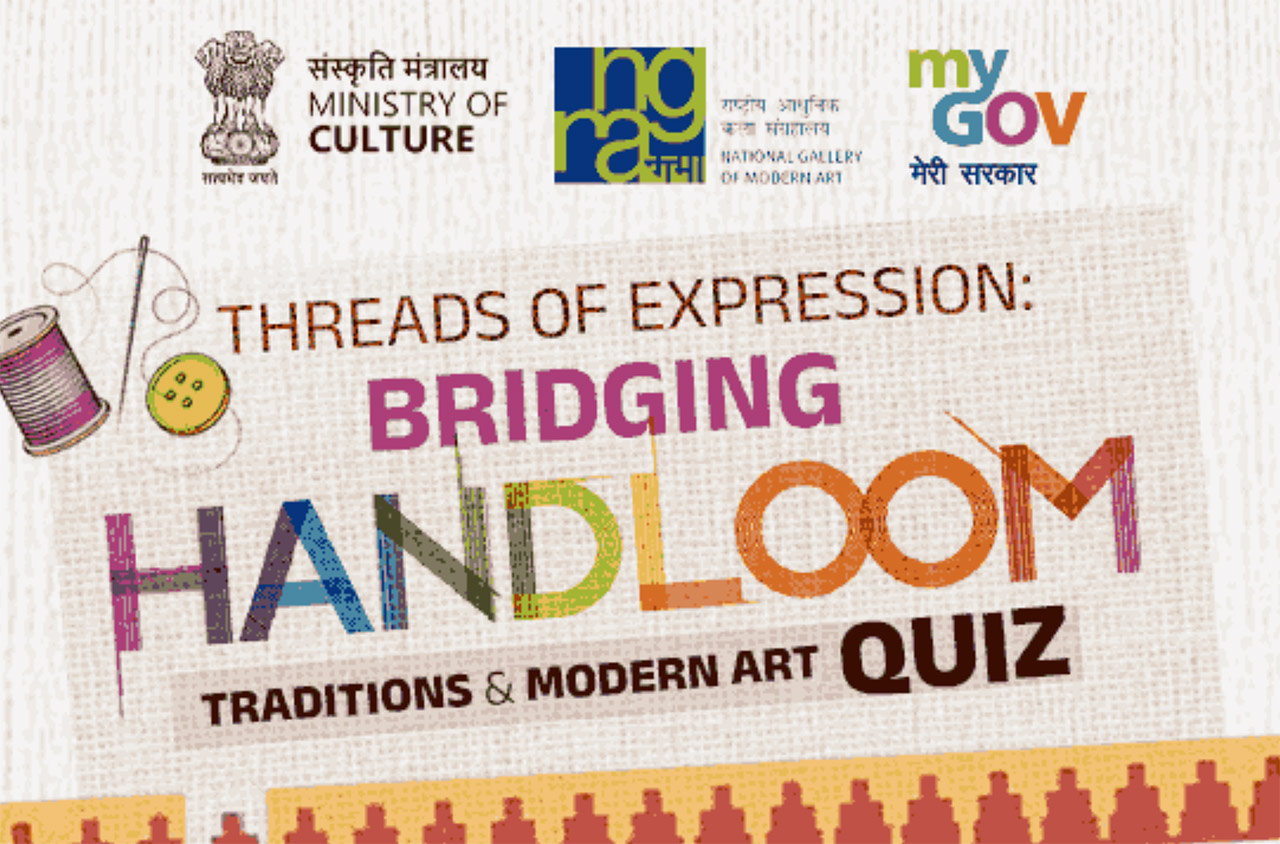
The rich Indian heritage handloom has come together to create one of the most recent quizzes, i.e., the Threads of Expression quiz, which is organized by MyGov along with the National Gallery of Modern Art (NGMA). This is an opportune project to get people to learn about how the tradition of textiles and the modern art come together, which is the idea behind the design.
The quiz is not very difficult but quite energizing: 10 questions, 300 sec, no negative marking. To be eligible, participants are supposed to finish their MyGov profile. The top five scorers will each receive a cash prize of ₹5,000. All who are taking part of NGMA will be awarded e-certificates and winners will be advertised on the site. This quiz starts from 1 August and can be taken up to 18 August.
About Quiz
Details
Quiz Title
Threads of Expression: Handloom & Art Quiz
Duration
August 1 – August 18
Format
10 Questions | 300 Seconds | No Negative Marking
Level
Easy to Moderate
Eligibility
Participants must complete their MyGov profile before attempting the quiz.
Prizes
Top 5 scorers will receive ₹5,000 each. All NGMA participants will get e-certificates. Winners will be featured on the official site.
Note: This is a quick and energizing quiz designed to test your knowledge of India’s handloom traditions and contemporary art.
However, other than what is presented through a quiz, what makes it so powerful is the theme. The theme investigates the way in which modern Indian art takes its textile-related methods such as weaving, dyeing, creating motifs, and makes them into painting, sculpture and fiber art. Quiz questions address dynamism of connections between traditions of weaving and experiments of contemporary artists.
Connect with History
There are records of cotton fiber cultivation and dyeing that can be traced to 4000AD. Special skills, over a period of time, region after region, generation to generation, were developed by the weavers. This has nothing to do with cloth alone; it speaks of identity, ritual and community.
In the meantime, the 20thCE modern Indian art developed in the process of seeking national identity after Independence. Artists took the western trends like Cubism or Minimalism and added Indian symbols and craft traditions. The fusion experiments led to the Neo-Tantric abstraction. This is a visual language in which geometry and spiritual symbolism were intertwined as in the weaving of threads.
The modern works of art with the use of textile and rope and threads and fabric became popular in the last couple of decades. The quiz throws light on these works so that participants can recognize the extent of handloom aesthetics in galleries and other places.
The Reason Quiz Matters
There are a couple of reasons such a quiz is important which are:
It helps in spreading awareness of the rich heritage of textile in India and how it is still relevant to this day.
It bridges two worlds of creativity, the artist at the loom and the artist in the studio.
By showcasing winners on the NGMA platform, it motivates a more meaningful interaction with traditional artisanship and modern-day art.
It is an interactive game that will include everyone with aspirations in art, design, or any students and others interested in knowing more about the creativity found in India.
It gives a reason to think over how motifs, textures, and weaving techniques change through media.
Learn about some of the key weaving traditions of India: Banarasi brocades, ikat weaving of Odisha and Gujarat, Bengal Jamdani and Tamil Nadu Kanchipuram silks.
Get examples of modern and contemporary artists who are appropriating from textiles or using thread and fabric (e.g. fiber artists, installation artists combining material and ideas).
Reawaken old associations between established motifs (paisley, geometric borders, flower) and their present-day reinterpretation in contemporary painting or sculpture.
When you are ready, log into MyGov and take the quiz, have fun!
In conclusion
Treads of Expression is a combination of two legendary art forms of Indian culture that is the handloom and the contemporary visual arts. With only 10 questions, the quiz will challenge the participants to look beyond and find the underlying stitches that unite craft, culture, and artistic inventiveness. It lets people learn about culture in a playful and yet significant manner through small to significant rewards and recognition. Whether you see yourself as a textile enthusiast this quiz is a wonderful opportunity to bridge worlds, one thread at a time.
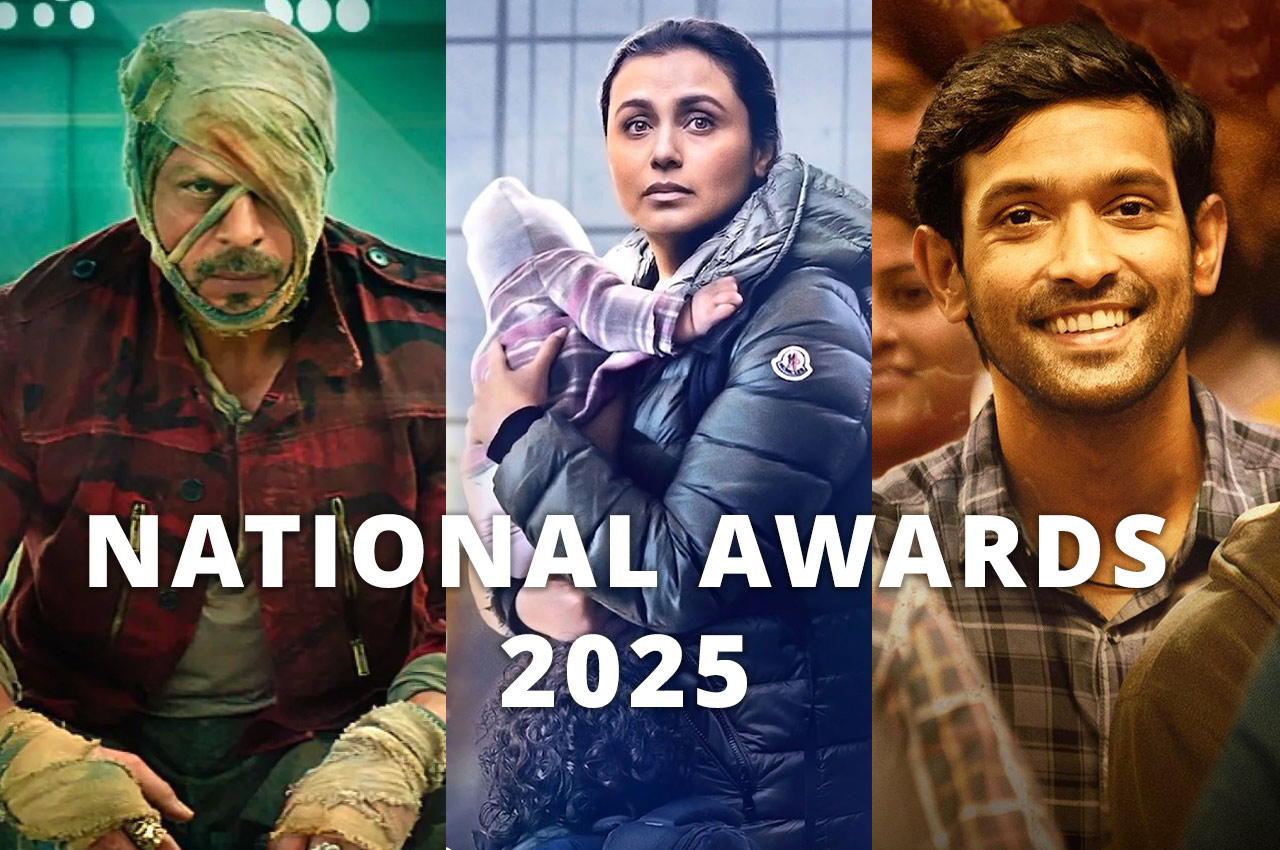
The 71st National Film Awards, which were held on August 1, 2025, was the celebration and appreciation of the best in Indian cinema accross the nation in the year 2023. The awards organized by the Ministry of Information and Broadcasting not only celebrated cinematic excellence but also highlighted the richness of regional and short films. This year, in particular, had been extra-special as it was a year full of iconic moments; first in history of the awards.
Best Actor Award Winners
A major highlight of the 71st National Film Awards was the Best Actor title being shared by Shah Rukh Khan and Vikrant Massey. This was a moment where the jury had selected a joint win of action and biopic acting. This award is also a milestone in Shah Rukh Khan’s career, as he was honored with his first-ever National Award for his action performance in Jawan. His supporters nationwide interpreted this as a culmination of the long overdue recognition.
On the contrary, Vikrant Massey was celebrated for his emotional performance in the movie 12th Fail, which taught the audience a lesson about strength, desire, and optimism. The shared award demonstrated the depth of creativity in Indian cinema-from big action heroes to realistically based characters.
Best Actress Award
When considering the best actress award, Rani Mukerji was honored for her powerful performance in the movie Mrs Chatterjee vs Norway. This movie is based on a true story; the film showcased her as a determined mother of twins forced to remain in a foreign land to fight a legal battle for the custody of her children. The film was her glorious comeback to the film industry.
Best Feature Film award
Directed by Vidhu Vinod Chopra, 12th Fail stood out at the 71st National Film Awards. Not just for its lead performance but also by bagging the Best Feature Film award, the movie had a solidifying impact both critically and culturally. Having a strong plot related to the real events and a socially uplifting message, it became the voice of thousands of people in the country. The success of the film demonstrated that it is a powerful film that has a great impact on the Indian viewers.
Regional Cinema Awards
The National Film Awards have always supported the strength of regional narration and this year could not be an exception.
List of Regional Films that Won National Awards in 2025
Movie in Language
Awarded for
Best Hindi Film
Kathal: A Jackfruit Mystery
Best Tamil Film
Parking, which also won Best Screenplay and helped M. S. Bhaskar earn Best Supporting Actor
Best Telugu Film
Bhagavanth Kesari
Best Malayalam Film
Ullozhukku
Best Kannada Film
Kandeelu: The Ray of Hope
Best Marathi Film
Shyamchi Aai
Best Gujarati Film
Vash
Best Bengali Film
Deep Fridge
Best Assamese Film
Rongatapu 1982
All these films are a reflection of linguistic and cultural diversity that is synonymous with Indian cinema. Whether it is a drama or a plot based on social issues, these regional jewels are further pushing the film industry.
Other Award Honours
Excellent achievements in technical categories were also awarded. Movies which won this award are Rocky Aur Rani Kii Prem Kahaani in terms of choreography and fun, whereas The Kerala Story received the Best Direction award. This made it clear that not only the performances, but also the teams behind the scenes working to bring stories to life (editors, sound designers, lyricists, and cinematographers) were to be rewarded.
Full List of National Award Winners 2025
Category
Title of the Film
Awardee
Medal & Cash Prize
Best Feature Film
12th Fail (Hindi)
VC Films LLP
Director: Vidhu Vinod Chopra
Swarna Kamal
Rs. 3,00,000/- (each)
Best Hindi Film
Kathal: A Jackfruit Mystery
Netflix Entertainment
Director: Yashowardhan Mishra
Rajat Kamal
Rs. 2,00,000/- (each)
Best Tamil Film
Parking
Soldiers Factory
Director: Ramkumar Balakrishnan
Rajat Kamal
Rs. 2,00,000/- (each)
Best Telugu Film
Bhagavanth Kesari
Shine Screens India LLP
Director: Anil Ravipudi
Rajat Kamal
Rs. 2,00,000/- (each)
Best Malayalam Film
Ullozhukku
Unilazer Ventures
Director: Christo Tomy
Rajat Kamal
Rs. 2,00,000/- (each)
Best Kannada Film
Kandeelu: The Ray of Hope
Swastik Entertainment
Director: K Yashoda Prakash
Rajat Kamal
Rs. 2,00,000/- (each)
Best Gujarati Film
Vash
Big Box Series
Director: Krishnadev Yagnik
Rajat Kamal
Rs. 2,00,000/- (each)
Best Bengali Film
Deep Fridge
Colors of Dream Entertainment
Director: Arjun Dutta
Rajat Kamal
Rs. 2,00,000/- (each)
Best Assamese Film
Rongatapu 1982
BRC Cine Production
Director: Adityam Saikia
Rajat Kamal
Rs. 2,00,000/- (each)
Best Actor
Jawan (Hindi)
12th Fail (Hindi)
Shah Rukh Khan
Vikrant Massey
Rajat Kamal
Rs. 2,00,000/- (Shared)
Best Actress
Mrs Chatterjee Vs Norway
Rani Mukerji
Rajat Kamal
Rs. 2,00,000/-
Best Supporting Actor
Pookkaalam (Malayalam)
Parking (Tamil)
Vijayaraghavan
Muthupettai Somu Bhaskar
Rajat Kamal
Rs. 2,00,000/- (Shared)
Best Supporting Actress
Ullozhukku (Malayalam)
Vash (Gujarati)
Urvashi
Janaki Bodiwala
Rajat Kamal
Rs. 2,00,000/- (Shared)
Best Direction
The Kerala Story
Sudipto Sen
Swarna Kamal
Rs. 3,00,000/-
Best Music Direction
Vaathi (Songs)
Animal (BGM)
G V Prakash Kumar
Harshavardhan Rameshwar
Rajat Kamal
Rs. 2,00,000/- (each)
Best Lyrics
Balagam (Ooru Palleturu)
Kasarla Shyam
Rajat Kamal
Rs. 2,00,000/-
Best Choreography
Rocky Aur Rani Kii Prem Kahaani
Vaibhavi Merchant
Rajat Kamal
Rs. 2,00,000/-
Best Action Direction
Hanu-Man
Nandu and Prudhvi
Rajat Kamal
Rs. 2,00,000/-
Best Cinematography
The Kerala Story
Prasantanu Mohapatra
Rajat Kamal
Rs. 2,00,000/-
Best Editing
Pookkaalam
Midhun Murali
Rajat Kamal
Rs. 2,00,000/-
Takeaway
The 71st National Film Awards is a festive event of Indian cinematic development. The awards chimed through the mega stars such as Shah Rukh Khan finally getting their moment and all the way down to the regional film makers were given the platform to know about how rich and constantly expanding the Indian storytelling and film industry is. With the prospect of another year of movies, this is a moment of pride of the Indian film industry and millions of their admirers.
The Natya Shastra is the earliest and pioneer documentation on drama and performance art. Bharata Muni wrote the Natya Shastra somewhere around 500 BCE and 500 CE. However, it remains the most authentic dissertation, the foundational bedrock on which all the Indian Classical dances, drams and music, are based. The entire encyclopaedic treatise has 36 chapters with around 6000 poetic verses that describe the performing arts. There are many parts and elements to the Natya Shastra, however, one of its most important components is the Rasa theory.
What is Natya Shastra?
Natya Shastra comes from two Sanskrit words, ‘Natya’ meaning an ‘act’ and ‘Shastra’ meaning a manual or rules. It is the oldest surviving document on performing arts and has survived the ravages of time to still continue to be relevant. It has manuscripts and as per historians has been edited too along the ages. It is estimated that the first 12000 verses were originally written and different chapters are dedicated to different aspects of the arts.
Rasa Theory in Natyashastra
Chapters 6 and 7 explain the Rasa theory, and chapters 8 to 13 are about the skill of acting, which also include dance movements, stage instruments, customs, etc. Chapters 14 to 20 talk about the plot and language of expression. Chapters 17 and 18 are attributed to poetry and the delivery of the speech and so on. The final chapters are dedicated to the different characters, teamwork, the workings of a troupe, etc.
Understanding the Rasa Theory
There is an amazing amount of information and knowledge that is held in the folds of the Natya Shastra. However, we are going to try and concentrate on one of its most unique and magnificent discourses – The Rasa Theory.
The Rasa Theory is explained in chapters 6 and 7 and is one of the most important parts of Natya Shastra. This is because it in essence explains the purpose of the art. It propagates the aesthetic significance of the visual or musical art that in turn touches the deepest human emotions.
What is the Rasa Theory?
Rasa comes from the Sanskrit word meaning ‘nectar or taste or flavor.’ However, artistically it essentially means the emotions and feelings that we go through when we experience any art form. And hence it means the taste or essence of the artwork that an audience derives out of watching it. According to Bharata Muni, composition or art of any kind cannot proceed without rasa. A vital task of the performer is to entice and inspire emotions in the viewer. Thus, rasa is the sentiment that arouses an audience and this feeling goes on to connect the performer and viewer with divinity. Realising divinity can be achieved by the performer through the performance of the art, and for the viewer by the observation of the art.
Bhava and rasa are both important aspects of performance and are interrelated to each other. Bhava is the state of the mind, a mental disposition or attitude of the mind. The bhavas of the performer are responsible for the rasa of the audience.
What is Sthayi Bhava?
The Sthayi Bhava is referred to as the permanent or dominant emotion. But when the Sthayibhava along with the other three bhavas – Vibhav, Anubhav, and Vyabhikaribhava unite together, the resultant effect is the attainment of Rasa.
What are Vibhavas?
Vibhavas are the motivation that includes the storyline, the actors, and the stage, that awake the sthayi bhava. Anubhavas are the manifestations of the actors’ feelings and the vyabhikaribhavas are the transient sentiments. The Sattivc bhava is the involuntary emotions or expressions that are accompanied while experiencing the performance.
What is the Relationship Between Rasa and Bhava?
Let us try and understand the interrelation between bhava and rasa through a few examples. If a beautiful girl comes up on stage the bhava that is emoted is vibhava. Her gestures, glances and moments lead to anubhavas. Now if the main mood of the performance is love, then joy and happiness are the transient emotions or vyabhikaribhavas. If the story is about separation then the vyabhikaribhavas is pain and anguish. The sattvic bhavas are involuntary expressions, such as blushes or perspiration. Because of all these bhavas, the sthyaibhava of the viewer changes into rasa.
How Many Types of RASA are there?
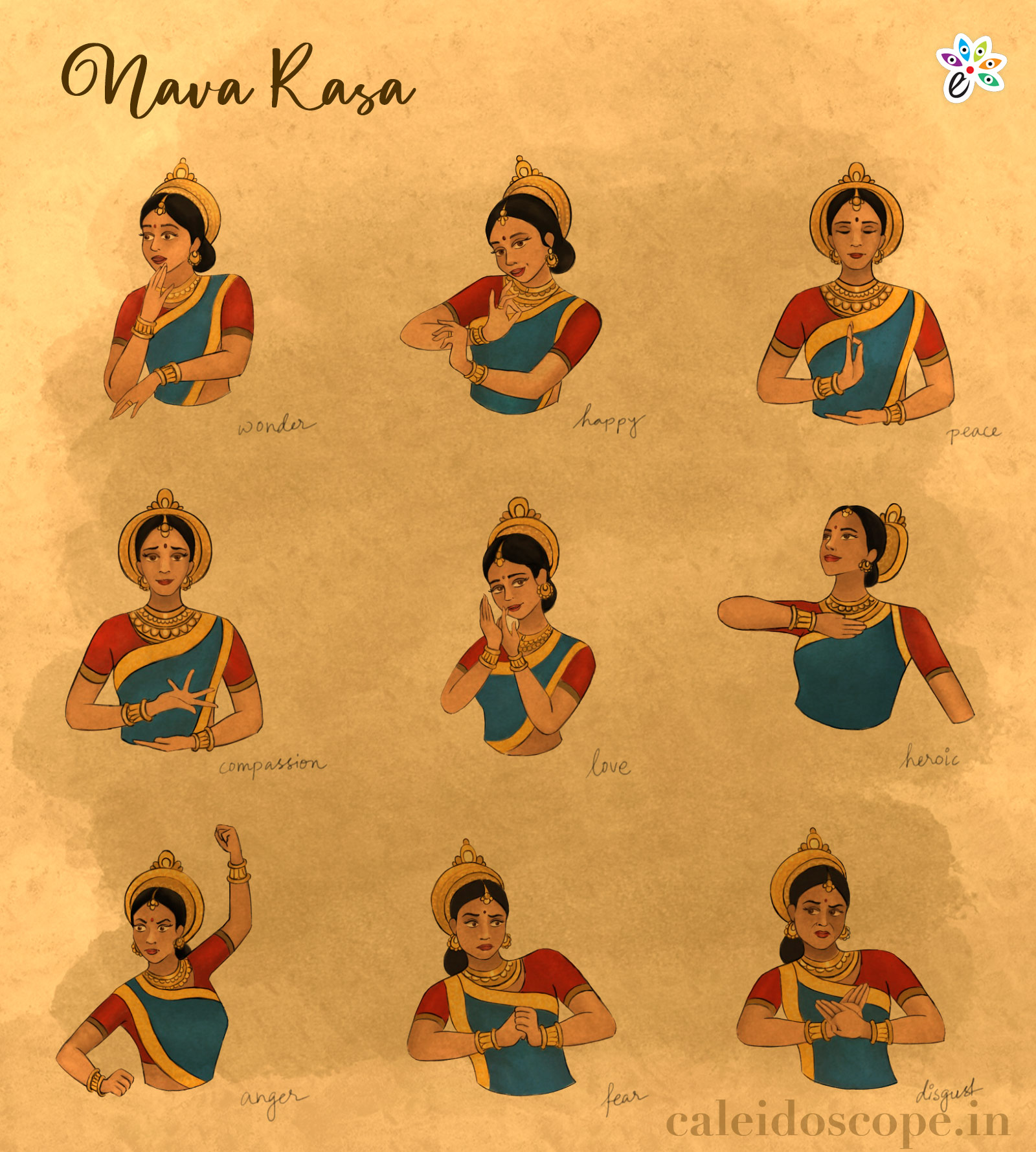
There are many types of Rasas. Most historians agree that Bharata Muni’s Natya Shastra had eight types of rasa. The ninth rasa was added by Abhinavgupta. Each rasa has a color and a deity attributed to it. Here is taking a look at the nine different types of rasa.
List of Rasa (Navarasa)
Rasa
Explanation
Shringara
The rasa of love, beauty, and attraction, often represented by romantic or sensuous emotions.
Hasya
The rasa of laughter and joy, bringing out humor and happiness in performances.
Karuna
The rasa of sorrow and compassion, evoking feelings of empathy and sadness.
Raudra
The rasa of anger and fury, conveying intense emotions of rage and violence.
Veera
The rasa of heroism and bravery, portraying courage and strength in adversity.
Bhayanaka
The rasa of fear, conveying dread and terror in response to dangerous situations.
Bhibhatsa
The rasa of disgust and loathing, evoking revulsion and horror.
Adbhuta
The rasa of wonder and amazement, often inspired by the unknown or mystical.
Shantha
The rasa of peace and tranquility, symbolizing calmness and serenity.
1. Shringara Rasa
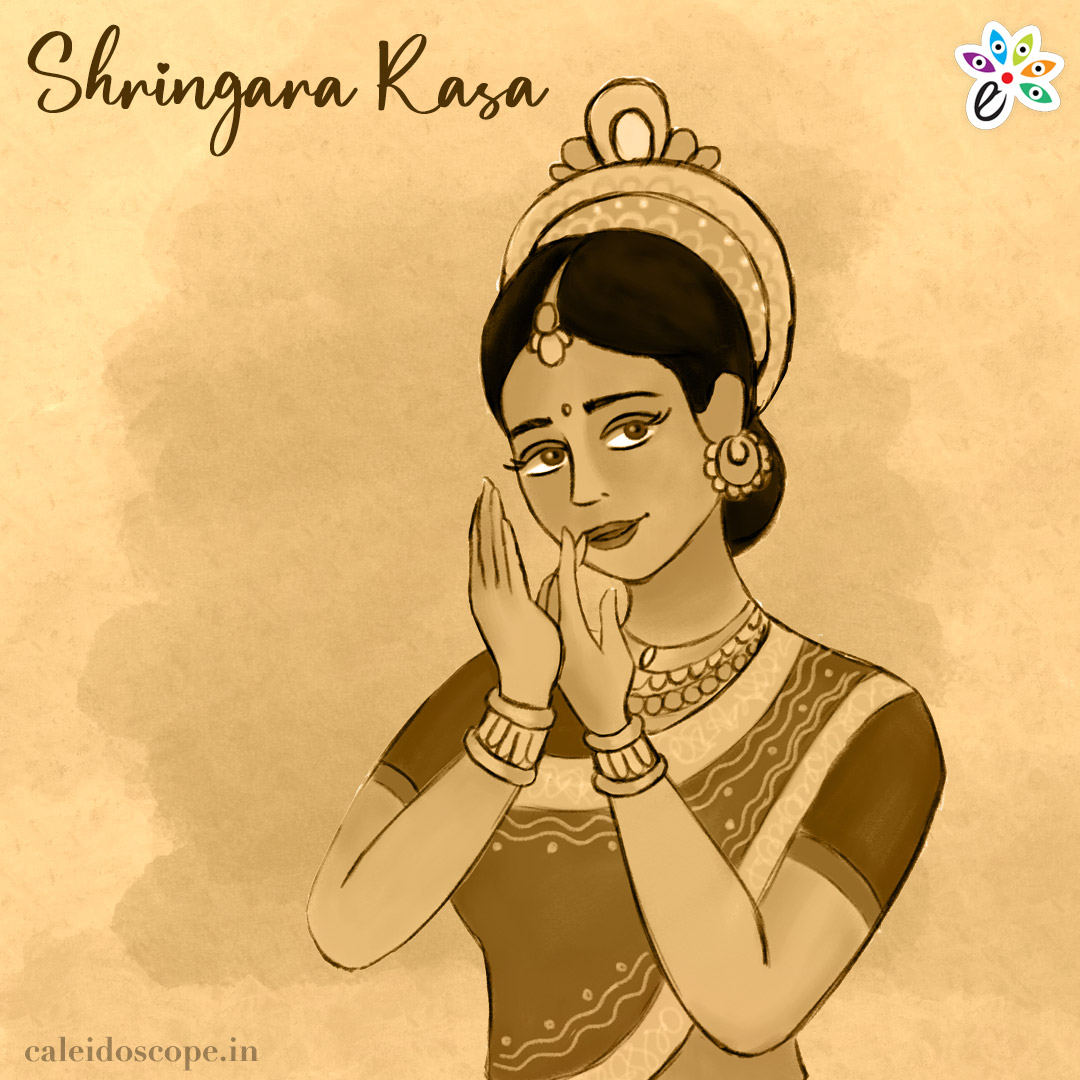
This rasa deals with romance, attractiveness, sexual desire and erotica. Here the sthayibhava is love. The sentiment of passion and love, the shringara rasa is affiliated with Lord Vishnu and has the color dark blue or green. The main idea is the portrayal of love between a man and a woman. However, the metaphor often transcends to the relationship between the individual and the divine. Most Classical dancers call the shringara rasa the ‘mother of all rasas.’Through this rasa, there is scope to express a plethora of emotions, including compassion, anger, jealousy and physical closeness.
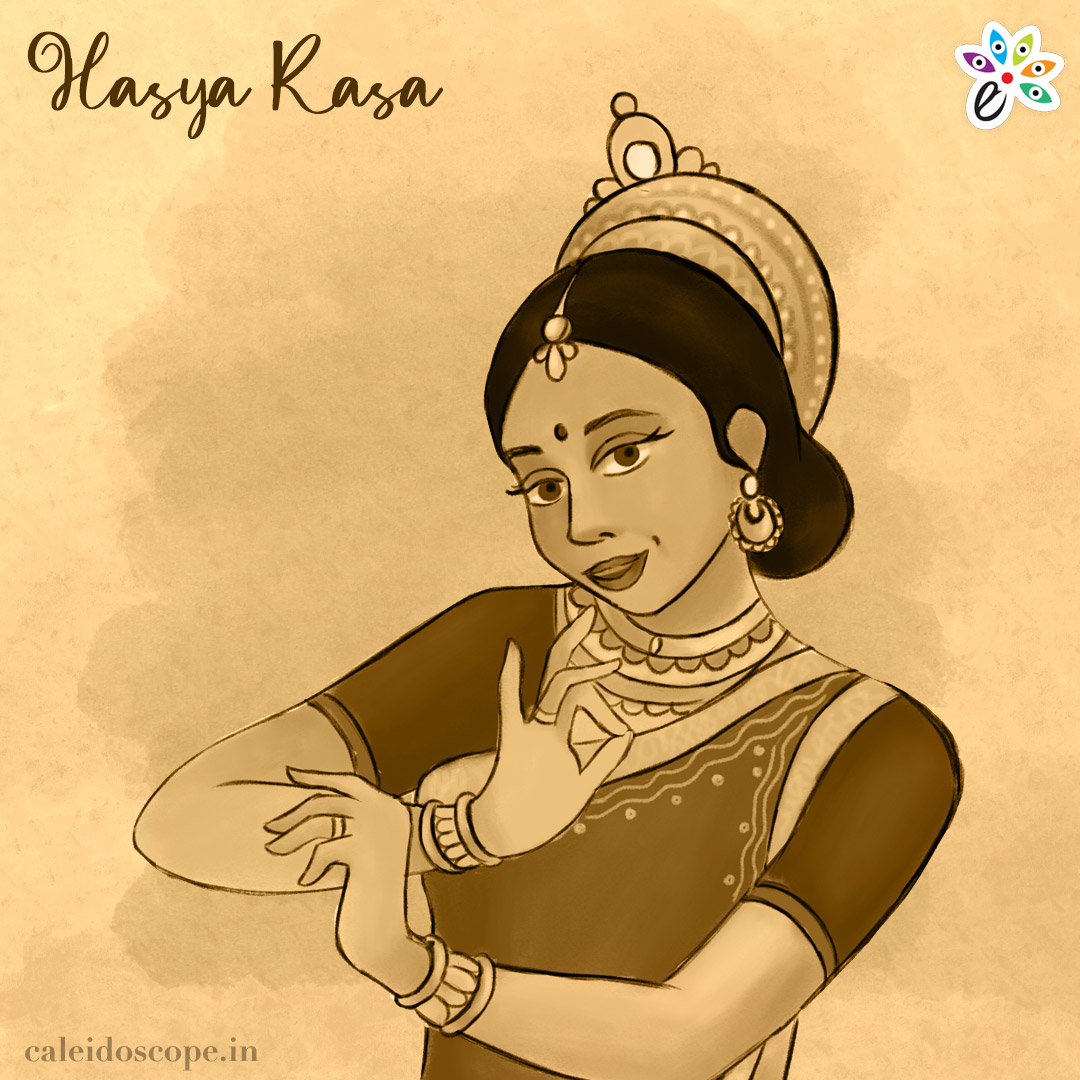
2. Hasya Rasa
Hasya rasa refers to the feeling of laughter, comedy and joy. The color of this rasa is white and the deity associated with it is Pramatha or Shiva. This rasa usually arises from the shringara rasa. It is performed through comic dressing, ornaments, etc.
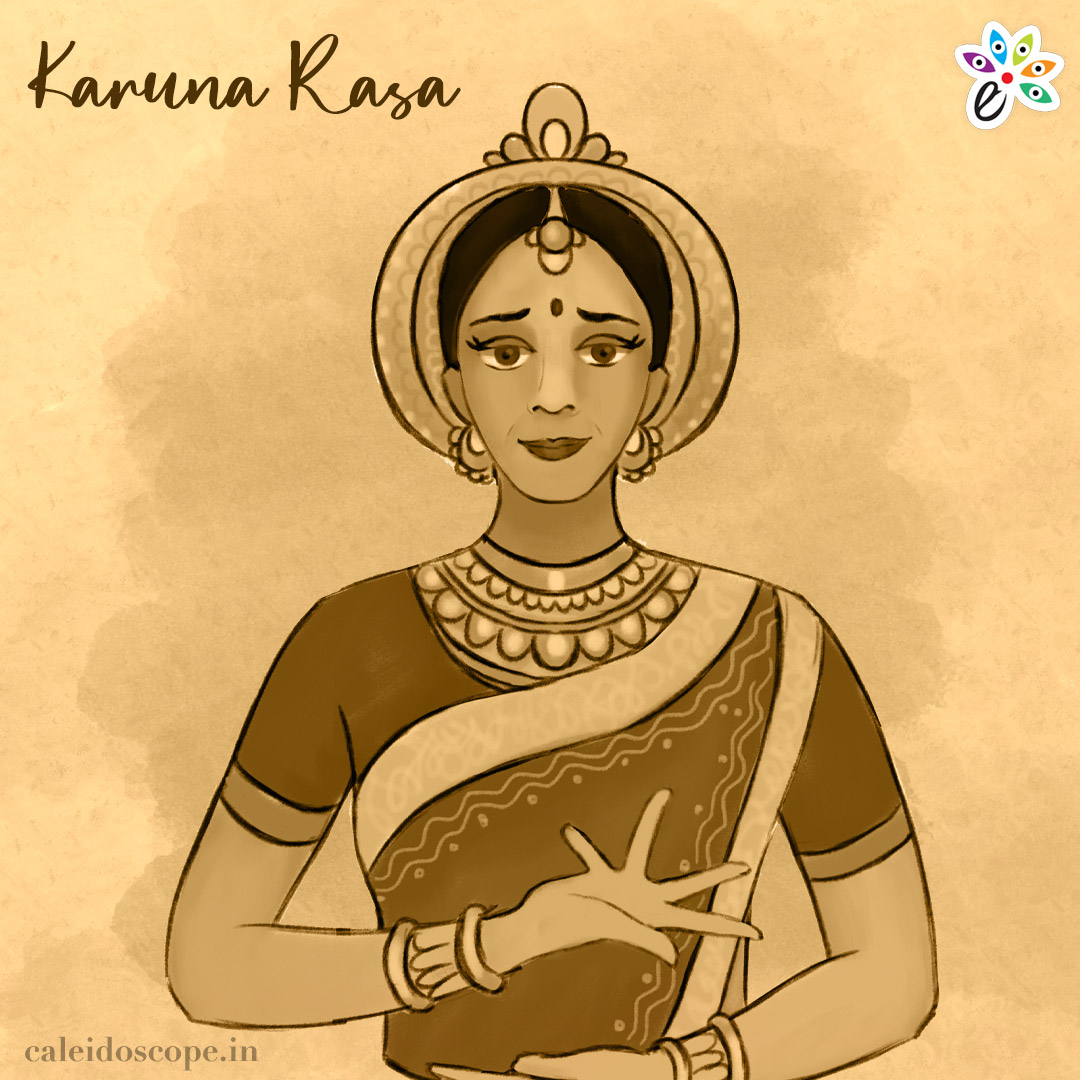
3. Karuna Rasa
This rasa signifies sympathy, grief, and mercy. Its color is Grey and the deity it associates with is Yama. A character experiences pain or grief due to the passing away of a loved one or because of an undesirable event. The performer portrays the emotion through a dejected face and actions which lead the audience to experience the karuna rasa.
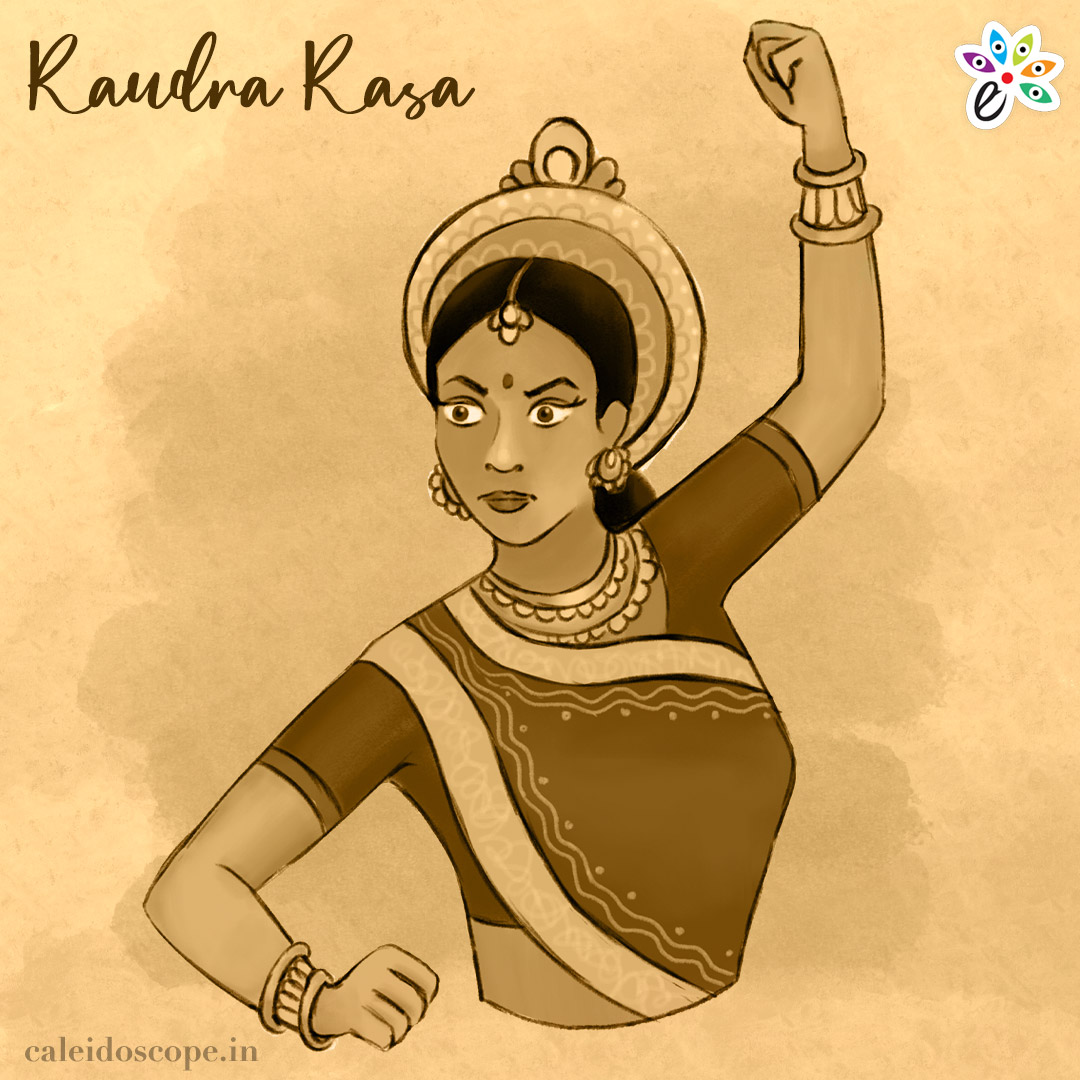
4. Raudra Rasa
Raudra or Rudra rasa manifests rage, anger and wrath. It is associated with the color red and the God Rudra. The performance could range from topics on rape, jealousy, threats, abuse and more. The redness in the eyes and face, biting of lips, and restlessness are all vyabhikaribhavas.
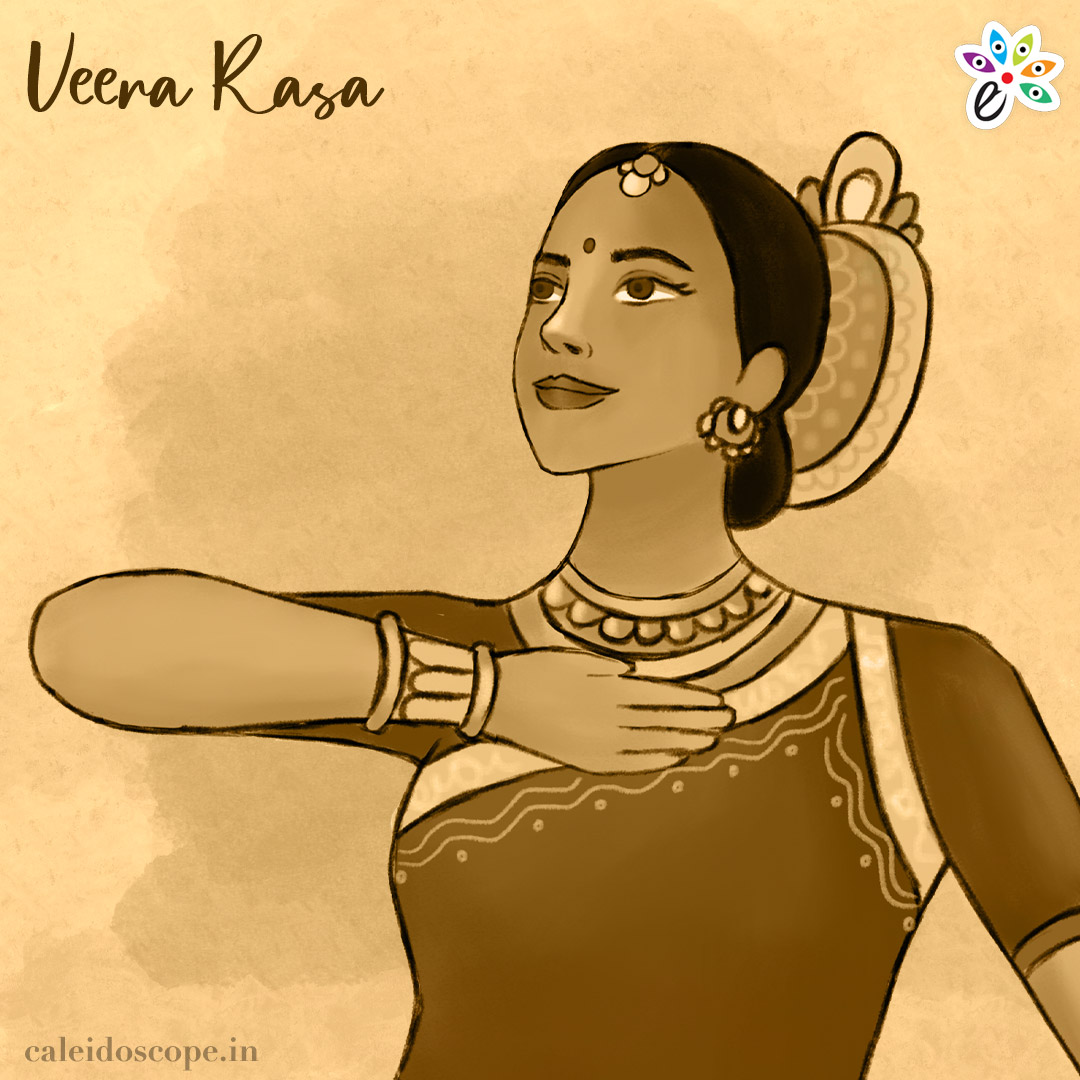
5. Veera Rasa
Veera rasa is the emotion of bravery and heroism. Yellow or saffron is its color and the rasa associates itself with Lord Indra. Veera rasa is all about determination, energy and self-confidence. It is expressed with the widening of eyes and expansion of nostrils. There are three types of veera rasa – the dana veera (for the person who is a veer after donating gifts), daya veera (for the person who is sympathetic to all creeds and classes) and yudha veera (for the person who is courageous and brave.)
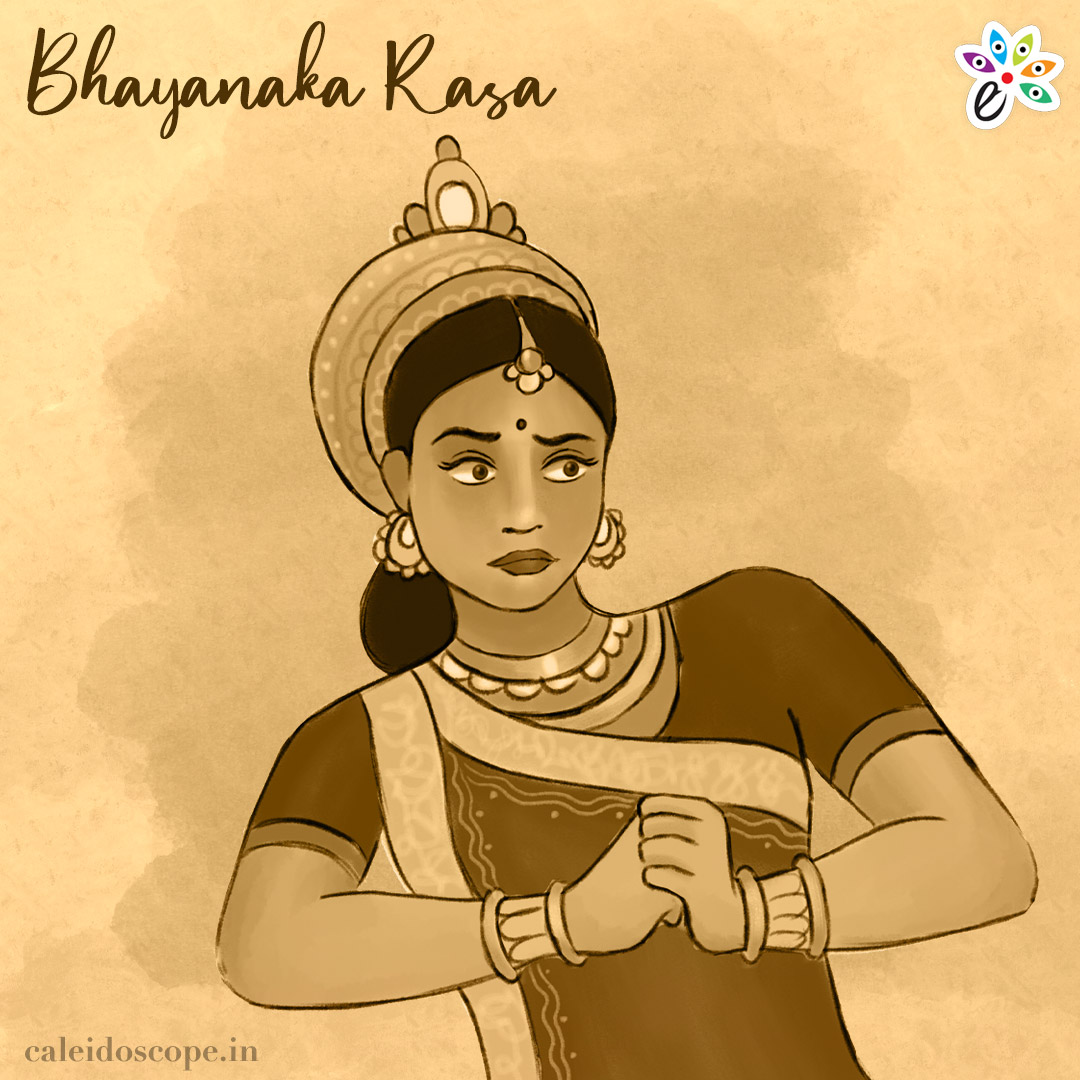
6. Bhayanaka Rasa
This rasa expresses fear. Its color is black and the deity it associates with is Kala, the God of Time. Bhayanaka rasa is the feeling of panic that can be brought about by danger or the anticipation of danger. To express this emotion performers raise their eyebrows, quiver their eyes, look from side to side, flare their nostrils, etc.
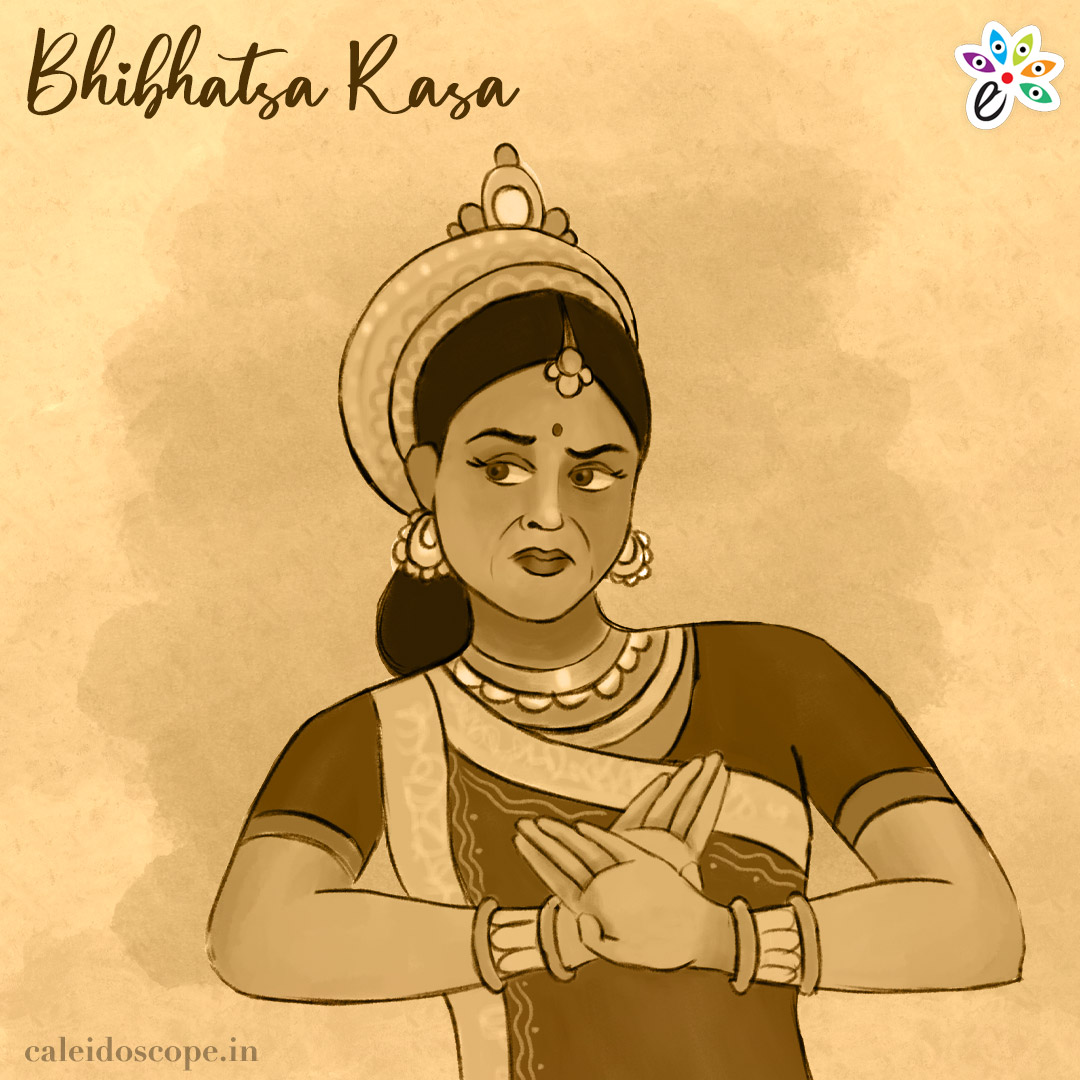
7. Bhibhatsa Rasa
Bhibhatsa rasa manifests the emotions of hatred and disgust. The color blue and the God Mahakala are associated with it. It is expressed on stage by squeezing limbs, rolling the eyes, spitting, or expressing disgust in other ways.
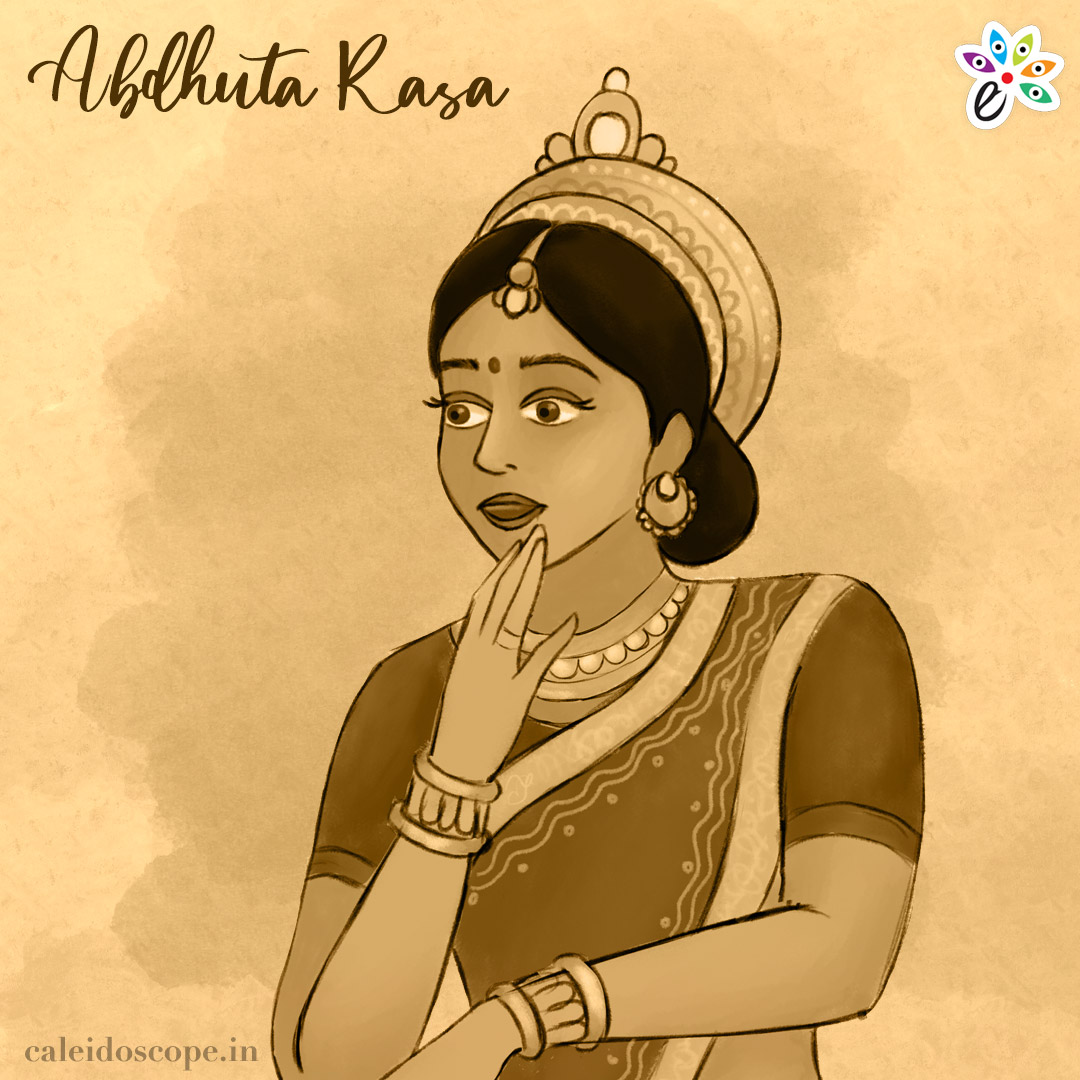
8. Abdhuta Rasa
This rasa means feeling wonder and marvel. It is associated with the color gold and the deity Gandharva. The rasa depicts the awe and wonderment that one feels when in contact with beauty or the divine. It is further categorized into Divya Abdhuta Rasa (expressed when seeing the divine) and Anand Abdhuta Rasa (expression of joy).
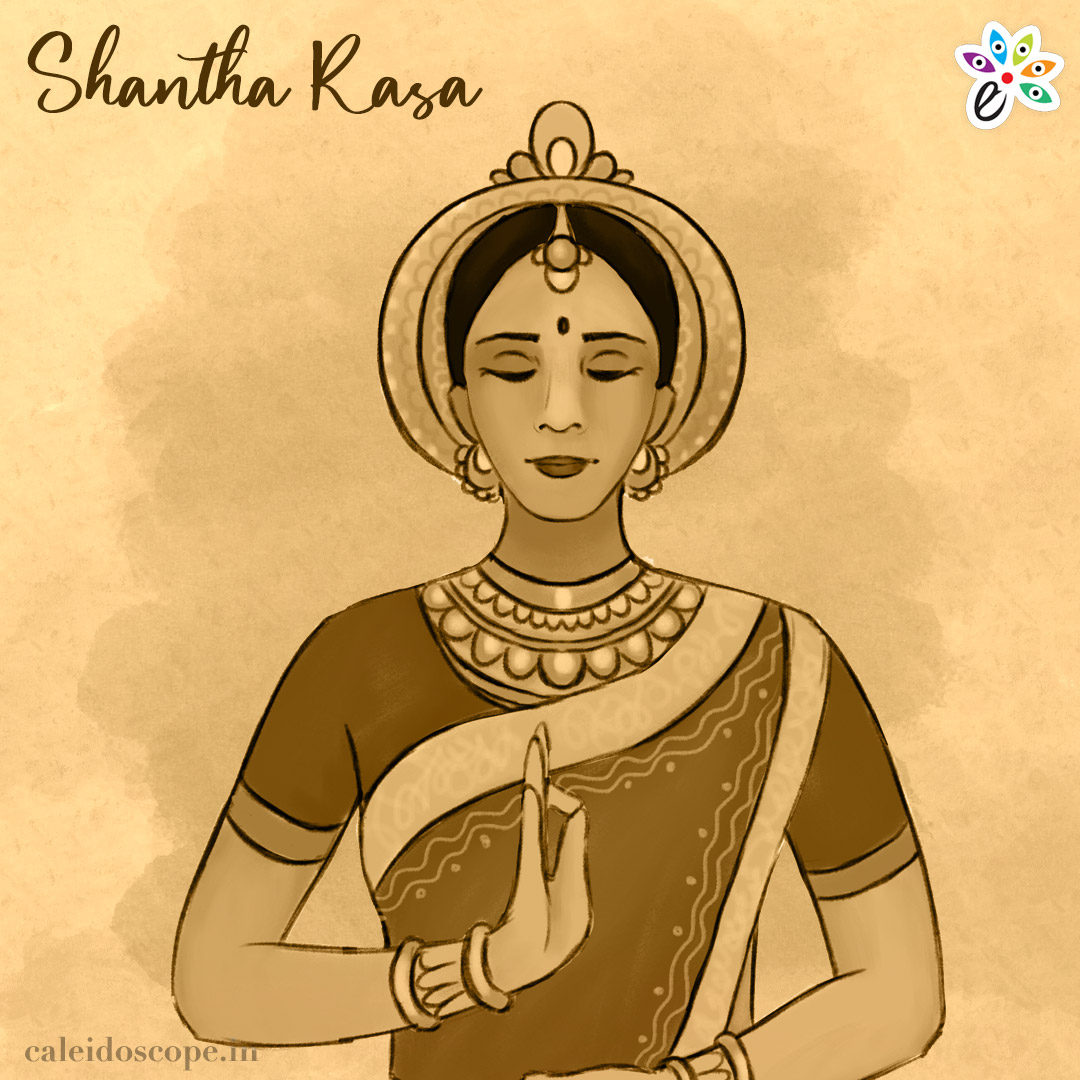
9. Shantha Rasa
The ninth and final rasa is the Shantha rasa, which most scholars agree was added by Abhinavgupta. This rasa manifests the feeling of serenity, peace and joy. The color Jasmine and Lord Narayana are associated with it. The Shantha or Santam rasa refers to the ultimate emotion of joy and bliss that is often attained on self-realization.
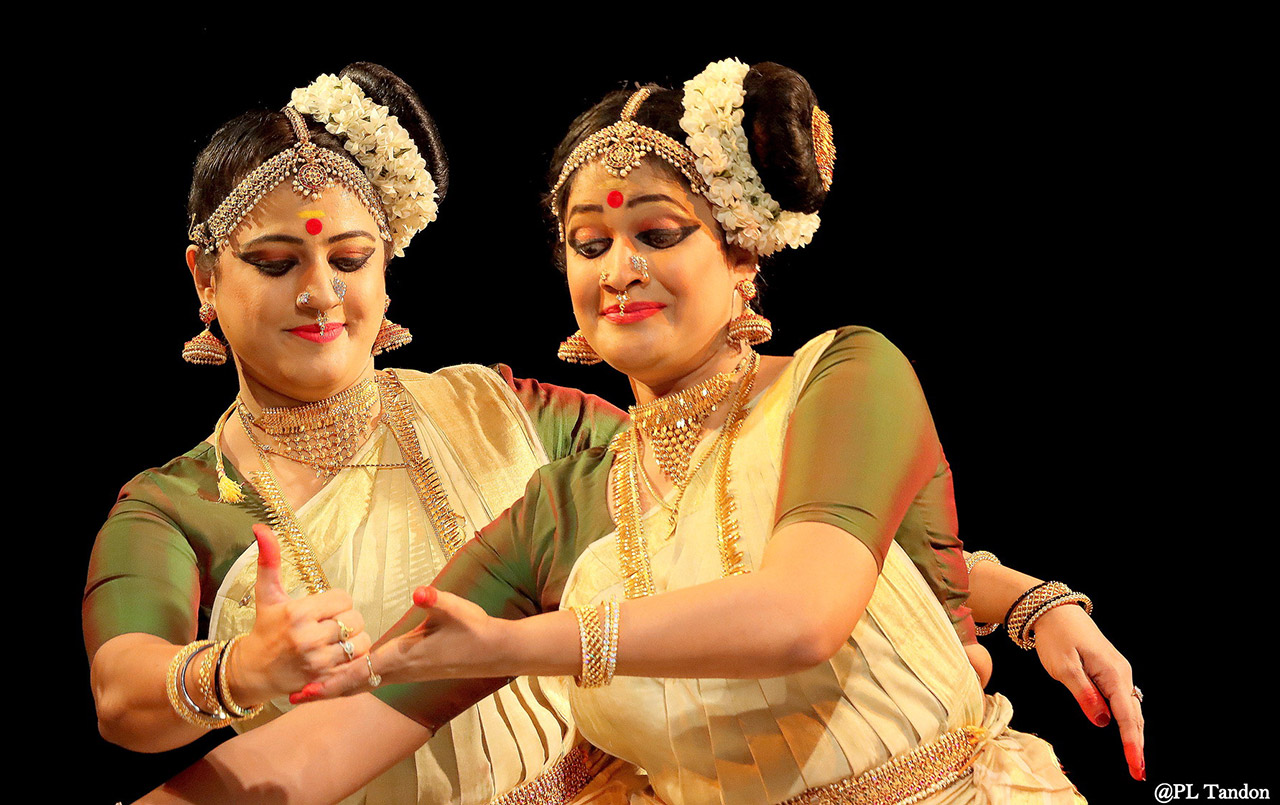
Rasas are the heart and soul of Indian classical performing arts, especially for dances such as Bharatanatyam, Kathak, and Odissi, and in classical music and drama. For instance, a dancer performing a love scene in Bharatanatyam will have to enact a Shringara Rasa, which evokes love in the viewer’s heart.
In Indian classical music, Rasas govern the mood of a composition. Specific ragas are tied with individual Rasas, and so music becomes an emotional experience for the listener. Thus, Yaman raga is often used to depict Shringara (love), while Bhairavi sets out to evoke Karuna (compassion).
Rasas in Modern Performances
Rasas originally originated in the ancient context of Indian performing arts, however, they are still used in present times. The use of Rasas allows the artists in Bollywood films and Indian theater, or even in performed dances, to emotionally connect with their viewers. Their ability to evoke Rasas ensures that the performances are not only engaging and emotive but also universally relatable.
The Rasas have also echoed outside India. Western playwrights and directors have adapted equivalent strategies of emotional evocation but the codified idea of Rasas is a special characteristic of an Indian art form.
In Conclusion
The Rasa theory is a fundamental cornerstone of the Natya Shastra. It is also the academic theorization, as well as the manifested execution. One can call it the soul of the performance because it is the rasa that connects the viewer with the performer. And the bond that strikes between the two, elevates the performance to the spiritual realm.
FAQs About Traditional Games of India
Question: What is the Bharatmuni’s Natyashastra?
Answer: Bharatmuni’s Natyashastra is an ancient text written between the 2nd century BCE and the 2nd century CE focuses on performing arts like dance, drama, and music. It gives simple guidelines on how to perform, use gestures, and express emotions in Indian classical arts.
Question: Who is the father of Natyashastra?
Answer: Sage Bharata Muni is regarded as the father of Natyashastra.
Question: How are Bhavas and Rasas differentiated?
Answer: Bhavas are the emotions enacted by the characters or performers whereas Rasas refers to the pertinent emotions evoked by the audience. Bhavas act as a tool by which Rasas are instigated.
Question: What are the 4 types of acting in Natyashastra?
Answer: The four types of acting in Natyashastra are Angika, Vachika, Aharya, and Sattvika. These represent physical gestures, vocal expressions, costume and makeup, and emotional expressions, respectively, in classical Indian performance.
Few Lines About Rasas in Natya Shastra
Rasas are the emotional essences experienced by the audience.
There are nine Rasas, which symbolize different emotions.
Bharata Muni formulated Rasas in the age-old text Natya Shastra.
Rasas dictate the mood of Indian classical music and dance.
Shringara or love is the most predominant Rasa in art.
Raudra is the Rasa that depicts anger and is mainly used in scenes during a war.
Art, culture and tradition are not just concepts which are celebrated in India but rather things which are commonplace in the nation. Whether it is the rhythmic beats of the classical dance in temples or the folk songs in villages, culture permeates everywhere. However as a result of modernization and changing lifestyles, a lot of this cultural element is in danger of being forgotten. This is where the National Mission on Cultural Mapping (NMCM) plays a transformative role. It is an initiative aimed at preserving, promoting, and uniting the vast cultural diversity of India.
What is the Cultural Mission?
Initiated by the Ministry of Culture, Government of India, the National Mission on Cultural Mapping is a mega project that is meant to create a database of artists, art forms, and assets of cultural profile in the country. The mission will cover all aspects of the Indian creative landscape. These are starting with the famous musical performers of the classical nature down to the local craftsmen and folk artists who have preserved the centuries old traditions.
The mission is not an easy task but an important one as it is to identify, record and maintain the cultural ecosystem at the local level and thus perpetuate it throughout the contemporary epoch.
S.No.
Total no. of Projects related to Development of existing Museums
Completed Projects
Ongoing Projects
1
25
10
15
The Reasons Behind Cultural Mapping?
Culture is just as vital as the museums and monuments, that of India. But such living traditions are poorly documented in most of the cases and they go unrecognized most of the time particularly in the rural or tribal settings. Most artists are also talented but they never get a place or a platform and some art forms like the traditional forms are on the verge of disappearing. Thus, cultural mapping helps in the following cases:
Cultural mapping helps in uncovering underlying challenges within an organization.
Preserve forms of art that are not being practiced much
Value artists and creatives working out there in the field
Government policies can be directed to the appropriate communities
Enhance local art forms on the local national and international platforms
The identification of these artists, their practices, and their place of residence provide reflection on a cultural inventory which is used in making effective plans and promotions.
Using Digital Approach?
The digital approach is one of the innovative features of NMCM. This is one of the measures to build a national portal, where the artists can register and demonstrate their talent. This not only gives them visibility but can also bind them to opportunities whether in the form of government grants, festivals or training.
The government hopes to achieve this through the mission by establishing a national cultural database which has the prospect of creating a National Cultural Workforce. This is a new concept where artists are regarded as a vital pillar of the nation’s economic and social development.
Building Talent Hunt and Cultural Centers
As a part of the mission, the government has even suggested creating Cultural Hubs within different districts where artists will have a chance to perform, educate and cooperate. These hubs are set to bridge the urban-rural urban-rural gap in access to culture resources.
Additionally, talent hunt programs at the block and district levels will be conducted to identify and nurture hidden talents across the country. This represents a democratization of cultural appreciation, encouraging younger generations to embrace traditional arts with a sense of pride.
The number of organizations supported including folk groups who have received financial support since COVID-19:
Year
Particulars
Financial Assistance for Promotion of Guru Shishya Parampara (Repertory Grant) (%)
Financial Assistance to Cultural Organizations with National Presence (including R.K. Mission) (%)
2020-21
Number of Beneficiaries
530
6
Amount (Rs. In Cr.)
34.8
9.03
2021-22
Number of Beneficiaries
573
6
Amount (Rs. In Cr.)
42.48
7.58
2022-23
Number of Beneficiaries
1213
15
Amount (Rs. In Cr.)
86.22
11.6
2023-24
Number of Beneficiaries
1505
24
Amount (Rs. In Cr.)
77.95
12.58
2024-25
Number of Beneficiaries
1418
28
Amount (Rs. In Cr.)
84.03
11.82
Conclusion
The Culture Mapping policy is far more than just a bureaucratic initiative. It is a vivid expression of India’s cultural essence, embodied powerfully through the National Mission on Cultural Mapping. The mission brings hope to thousands of unsung artists and disappearing traditions by recognizing their cultural diversity, valuing them, and popularizing the same. It sees a future in which there are no more undiscovered artists, and there is no more cultural treasure to be forgotten. Such a mission is not only overdue in a country as culturally rich as India, in fact, it is needed.
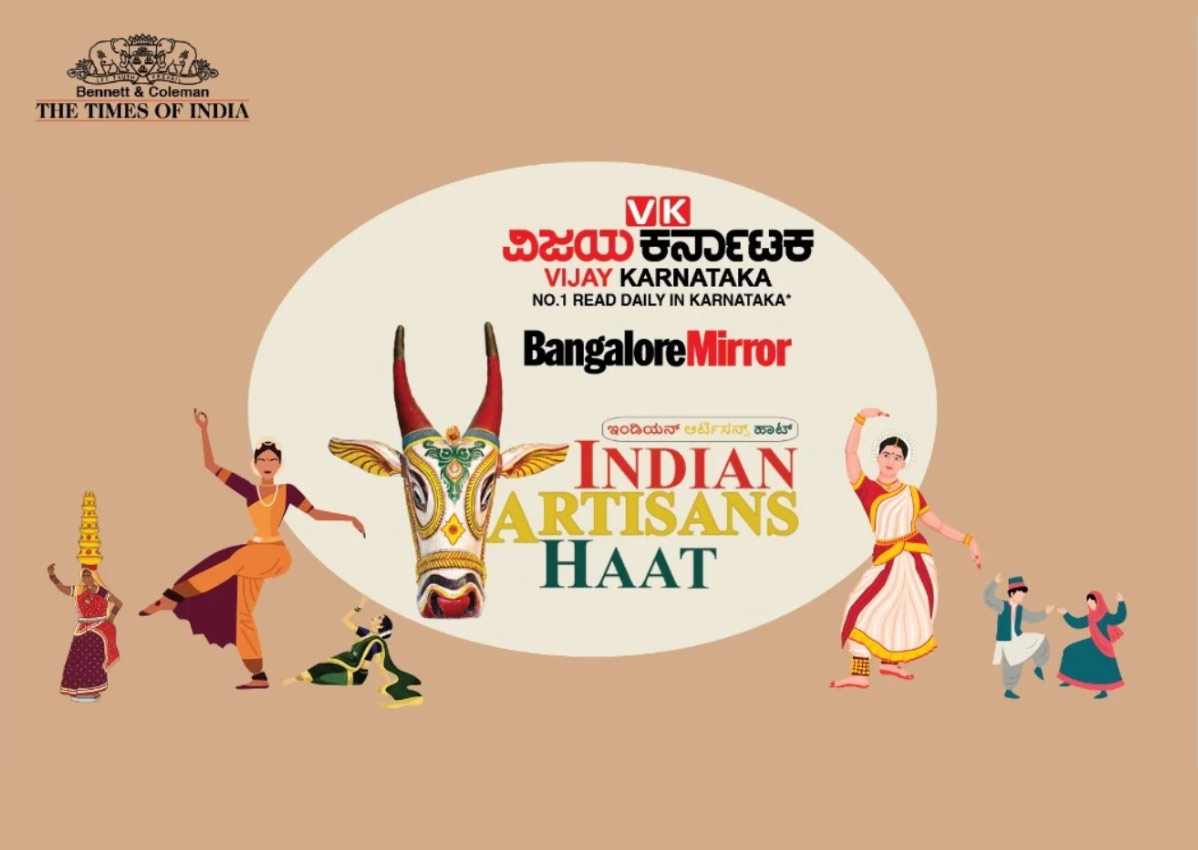
The Indian Artisans Haat 2025 is prepped up to shine in colours, culture and creativity with displays going from August 1 to 10 at the Rangoli Metro Art Centre in MG Road, Bengaluru. It is not a mere crafts fair but it is a 10-day cultural extravaganza where all the artists across India are visiting to showcase their talent.
It is a tribute to the Indian fine handicrafts and curated by Vijay Karnataka along with Bangalore Mirror. Event gives opportunity to artisans to show India’s rich cultural diversity. The inauguration of the Haat will be done on 1st August,2025 at 05.00 PM by Shri.NA Haris,Hon’ble MLA,Shantinagar along with popular Actress Ragini Dwivedi.
Event Overview
The event is set to be more inclusive and bigger than ever. With craftsmen from over 100 parts of the country participating, stalls are intricately planned to transport visitors through different regions in India. This Haat will have 80–100 stalls showcasing of a wide variety of products.
One can lay hands on all traditional crafts, from the opulent Pashmina shawls of Kashmir to the earthy terracotta wares made popular by Bengal or lighter Chikankari embroidery work that hails from Lucknow to pretty Kalamkari patterns typical of Andra Pradesh. It is a colourful vitrine of India’s classic crafts, curated all under one roof and an opulent repository for the country’s collective heritage. The local crafts of Karnataka, like the Channapatna wooden toys will also be a special feature alongside regional specialties.
Classical dances and folk performance are presented every day
Special Features
Local crafts, live demos & interactive workshops
Cultural Celebration
What sets the Indian Artisans’ Haat apart from other exhibitions is the experience it offers. Every day there will be live cultural performances aimed at spreading the essence of Indian folk traditions. Visitors will enjoy classical music, traditional dance forms, and puppet shows—all of which highlight the richness of the arts from various states.
The Haat has been strategically scheduled during the period of Varamahalakshmi festival, attracting joint shoppers and visitors. At Haat, you can shop for handmade jewellery, organic in-home decor items and handloom saris to local munchies and more. It’s also wonderful occasion to shop for genuine handlooms from the weavers themselves.”
Supporting Local Artisans
Every stall at the Haat has a story to share. Whether it’s a Banarasi weave from silken fabrics or Mojaris of Rajasthan, each item represents a treasure trove of centuries-old craftsmanship. The real worth of these items is not in just the beauty they exude, rather it’s also in inherited skills and techniques.
Do Visit!
Indian Artisans’ Haat 2025 is all about celebrating artists and creating awareness around India’s rich craft culture. It is a reminder that in our fast-paced world the soul of India still lies within its handcrafted gems.
So if you are in Bangalore, this August go and be a part of this colourful experiences full with colours, creativity & culture. Head to Rangoli Metro Art Centre between August 1-10 and behold some of the beauty that is Indian art & craft.