Infusing Traditional Indian Art Motifs into Contemporary Wallpaper Design

2

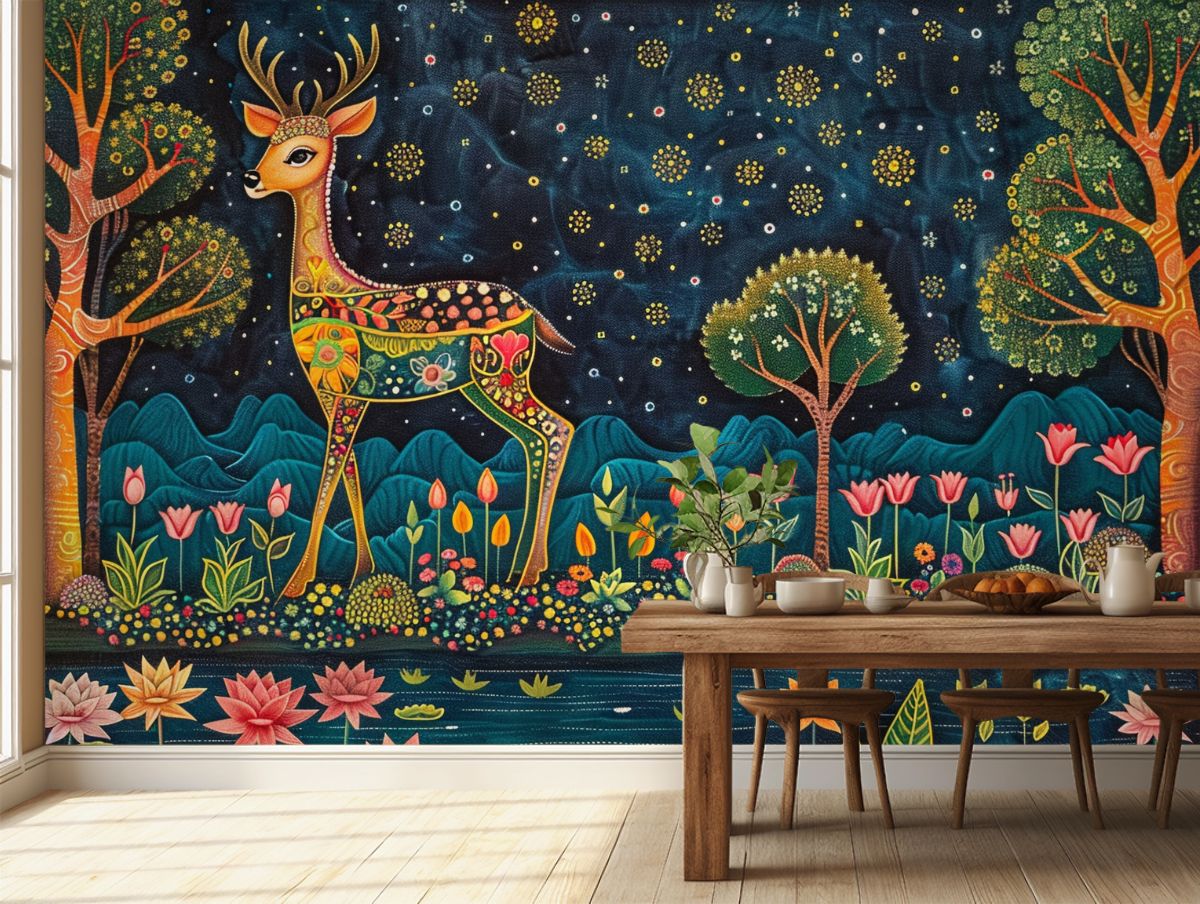
Mrugnaini-Madhubani-Bharni-Style-Painting-of-a-Deer-M

India’s artistic legacy is a vast and mesmerising tapestry, woven through centuries of intricate craft, deep-rooted symbolism, and cultural storytelling. From temple walls in Tamil Nadu to Pattachitra scrolls in Odisha, every motif in Indian art carries a world of meaning. Today, these age-old traditions are not just surviving—they’re evolving. One of the most compelling spaces where this evolution is visible is in the space of wallpaper design.

In recent years, modern Indian homes, hotels, and cafes have started embracing wallpapers that fuse traditional Indian aesthetics with contemporary sensibilities. Whether it’s a bold Kalamkari mural, a subtle Warli pattern, or a delicate Kolam-inspired print, designers and homeowners alike are rediscovering the beauty of Indian heritage through walls that speak in motifs and colours.

Let’s take a closer look at how traditional Indian art forms are making a stylish comeback in modern interiors.

1. Kalamkari: Telling Stories with Threads of Ink

Kalamkari, derived from the Persian words kalam (pen) and kari (craft), is a type of hand-painted or block-printed cotton textile. Originally used for temple hangings and storytelling scrolls, it features mythological themes, intricate floral borders, and earthy palettes.

In wallpaper design, Kalamkari motifs are finding new life. Imagine a living room wall adorned with a Krishna-Leela scene or a subtle lotus vine stretching across a corridor—rich in detail, yet stylised to suit minimalist decor. Designers today are digitising these patterns and recolouring them to match modern aesthetics while preserving their artisanal essence.

2. Madhubani: A Burst of colour and Symbolism

Originating from the Mithila region of Bihar, Madhubani art is known for its vibrant colours, double-line outlines, and motifs like fish, birds, sun, and fertility symbols.

Contemporary wallpapers draw inspiration from these motifs, often simplifying them into repeat patterns or mural-like compositions. A children’s room may feature a playful Madhubani animal parade, while a bohemian bedroom wall could carry a meditative Sun God motif. The versatility of this art form allows it to blend beautifully in both bold and neutral spaces.

3. Kolam: Sacred Geometry for the Soul

Every morning in South Indian homes, women draw Kolams—geometric line patterns made from rice flour—at their doorsteps. These designs are not just decorative but also symbolic of cosmic harmony and welcoming energy.

Wallpapers inspired by Kolam introduce that same sacred symmetry into interiors. When used behind mandirs, entryways, or even as accent walls, Kolam motifs lend a spiritual yet stylish vibe. Often rendered in monochrome or metallic inks, they serve as modern mandalas for mindful homes.

4. Warli: The Simplicity of Tribal Life

From the Sahyadri hills of Maharashtra, Warli art stands out with its stark white forms on earthen backgrounds. Depicting daily rural life—dancing, farming, weddings—Warli figures offer a raw, rhythmic beauty.

In modern wallpaper applications, these motifs are reimagined in contemporary palettes—charcoal on beige, gold on navy, or white on deep forest green. A Warli accent wall in a hallway or staircase can subtly narrate the pulse of village life while staying chic and urban.

5. Pichwai & Miniature Paintings: Regal Statements

The opulence of Pichwai art from Nathdwara and the delicate finesse of Miniature paintings from Rajasthan have long adorned palace walls. These styles are now being scaled and stylised into wallpapers for feature walls and luxury interiors.

Imagine a dining room where cows, lotuses, and shringar rasas create a story around you, or a lounge with miniature hunting scenes in sepia tones—these wallpapers not only look regal but connect modern spaces with centuries of Indian storytelling tradition.

6. Nature Motifs from Indian Textiles

Indian textiles—from block-printed Bagru to Ajrakh to Ikat—have long used stylised leaves, paisleys, peacocks, and florals. These nature motifs, often abstract and rhythmic, are now being upscaled for wallpaper.

A palm or banana leaf from a Kerala mural, a lotus from a Bagh print, or even a mango motif from Pochampally ikat can be transformed into bold wallpaper prints that feel both exotic and deeply rooted.

Where Art Meets Interior Innovation
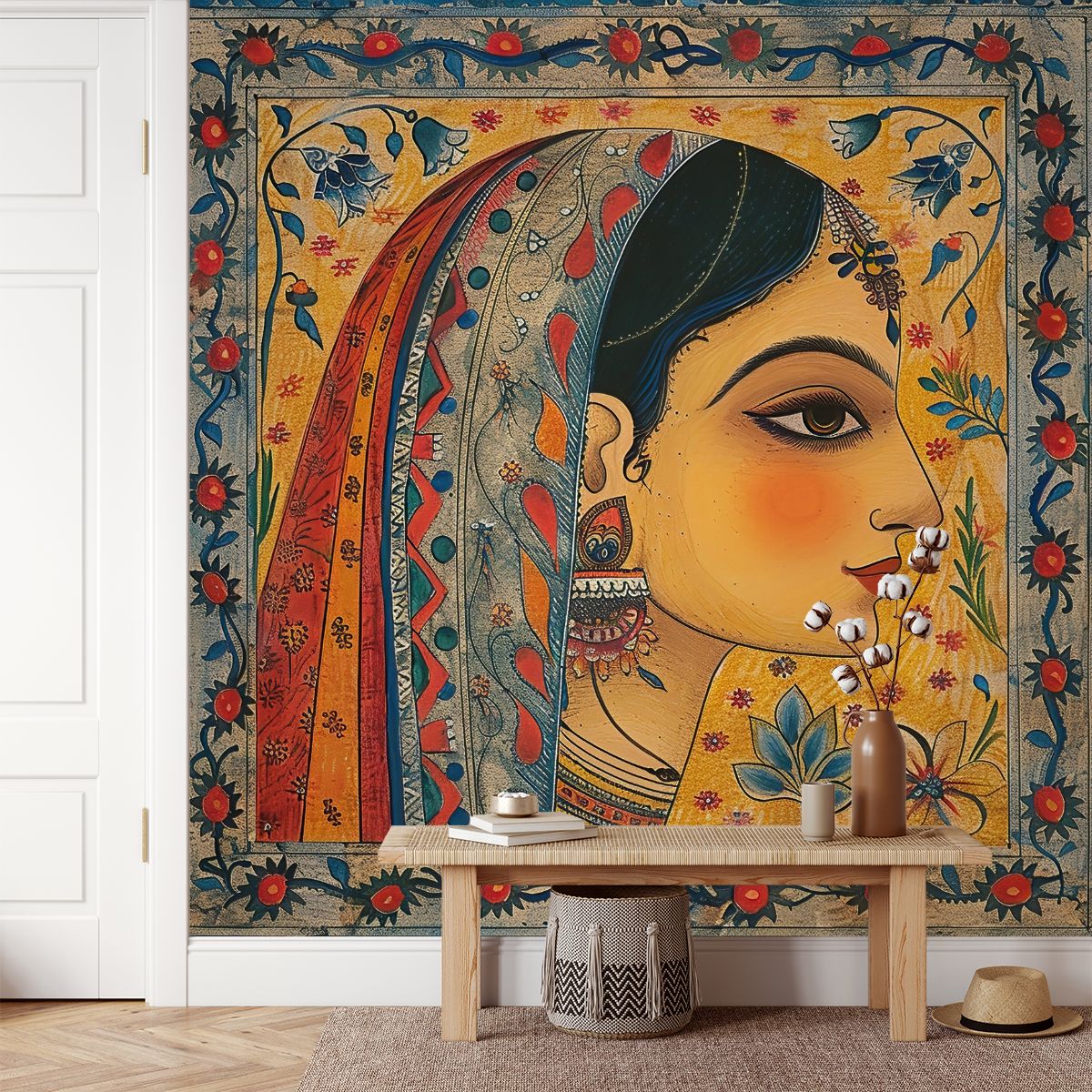
Maharani-Madhubani-Art-Painting-of-a-Woman-Mural-Wallpaper-M

What makes this cultural revival truly exciting is the blend of heritage and technology. Brands like Magicdecor are at the forefront of this movement, enabling customers to bring these motifs into their homes through high-quality, VOC-free, customised wallpapers. Whether it’s a bespoke Madhubani mural or a repeating Kolam pattern, homeowners can now choose designs that reflect both their artistic preferences and cultural pride.

Beyond Aesthetics: Cultural Continuity

By incorporating traditional Indian art into contemporary decor, we are doing more than beautifying our spaces—we are safeguarding cultural memory. Each motif tells a story, each pattern preserves a tradition. When a Warli mural adorns a city apartment or a Kalamkari peacock stretches across a studio wall, it quietly reasserts our connection to roots, craft, and history.

In a time when urban living often disconnects us from our heritage, these wallpapers act as living canvases—everyday reminders of where we come from and what we value.

The Wait is Over: Magicdecor
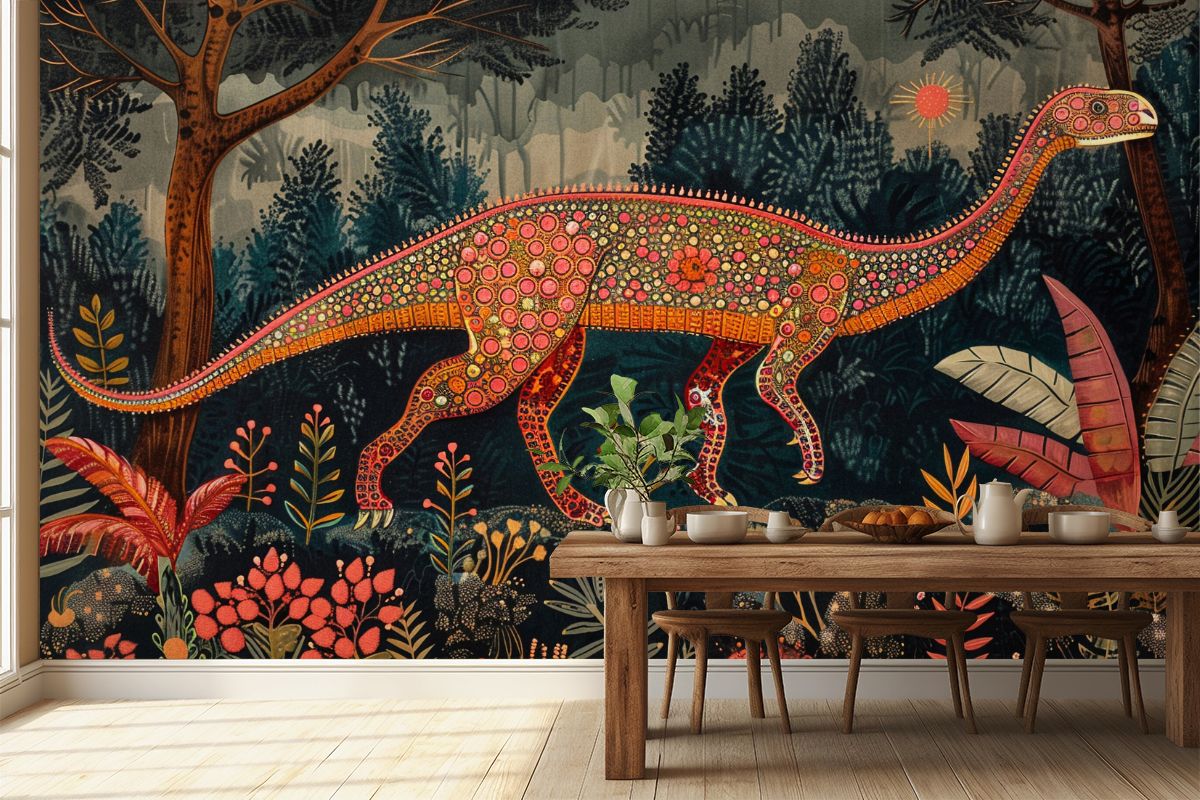
Majestic-Dinosaur-in-Traditional-Bharni-style-Madhubani-Painting-Wallpaper-M

From the rhythmic simplicity of Kolam to the vibrant storytelling of Madhubani and Kalamkari, traditional Indian art motifs are weaving their magic across modern interiors. As these ancient forms evolve into bold, scalable, and versatile wallpapers, they prove that heritage isn’t static—it’s a living, breathing part of contemporary design.

So the next time you think about giving your walls a makeover, look beyond trends. Look to tradition. Look at the stories etched in ink, drawn with flour, or carved in history. Because there’s nothing more timeless—or more Indian—than art that speaks from the soul.

India Receives Sacred Buddha Gems Pulled from Sotheby’s Auction

0
India-Receives-Sacred-Buddha-Gems-Pulled-from-Sotheby’s-Auction
Image Courtesy – Sothebys.com

In a significant move, two sacred Buddha gems have been pulled from Sotheby’s auction and returned to India after public outcry. These relics, once part of India’s rich cultural heritage, were taken during the colonial era. Their return is a major victory for India and cultural preservationists advocating for the repatriation of such artifacts.

The Importance of the Buddha Gems

The two gems are intricately carved and believed to have been embedded in Buddhist statues. They are traced back to the Kushana Empire in the 2nd century CE, and are associated with the ancient city of Gandhara (present day northwest Pakistan and Afghanistan). These gems hold significant historical and spiritual value in Buddhism, representing a key part of India’s cultural and religious history.

The Auction Controversy

In 2025, the gems were listed for auction by Sotheby’s in London. The auction raised concerns over the provenance of the relics, with Indian officials claiming they had been taken illicitly during British colonial rule. Cultural preservationists and religious leaders called for their immediate return.

Following public pressure, the Indian government officially requested the repatriation of the relics, which was supported by Buddhist communities and scholars. The Ministry of Culture in India emphasized that returning these sacred objects was crucial to restoring India’s cultural heritage.

Legal Action and Negotiations

India took legal action to stop the auction and engage in diplomatic talks with the UK and Sotheby’s. After intense discussions, the auction house agreed to pull the gems from the sale and return them to India. This legal victory was a significant step in India’s ongoing efforts to reclaim looted or stolen cultural artifacts.

Symbol of Cultural Reclamation

The Buddha gems are not only valuable for their artistry but also for their spiritual significance. Many Buddhists believe these relics are connected to the Buddha’s enlightenment. Their return is a significant moment in India’s cultural reclamation, marking the importance of protecting sacred artifacts.

This event also reflects a global trend toward repatriation, where countries demand the return of stolen cultural treasures. The Buddha gems’ return adds to the growing list of such successful efforts.

International Cooperation

The return of the Buddha gems highlights the importance of international cooperation in cultural heritage preservation. The successful repatriation involved legal actions and diplomatic negotiations between India and the UK. This cooperation sets a precedent for future repatriation efforts of other looted artifacts.

Conclusion

The return of the Buddha gems is a landmark achievement for India. These relics are now back where they belong, marking a crucial step in the global movement for cultural justice. Their repatriation highlights the importance of protecting and preserving sacred and historical artifacts, ensuring that they remain in their rightful context for future generations.

The gems will now be displayed in India, where they will continue to inspire spiritual seekers and art enthusiasts alike. The Buddha gems’ return is a powerful reminder of the need for cultural preservation and the justice of returning looted treasures to their rightful owners.

The Real Van Gogh: Immersive Experience 2025 (Date Extended)

0

The-Real-Van-Gogh-The-Immersive-Experience-Bangalore-2025

The buzz around The Silly Fellows’ “The Real Van Gogh Immersive Experience, curated by Nikhil Chinapa and Jay Punjabi has left Bengalureans curious. The exhibition has been extended to 15th August 2025 at Bhartiya Mall due to popular demand to provide even more guests the opportunity to “step into” Vincent van Gogh’s paintings in this innovative and immersive way.

Key Experiences Details
Immersive Visuals Animated projections of Van Gogh’s most famous works.
Themed Rooms Explore Van Gogh’s life through the Immersive, Education, and Infinity Rooms.
Custom Soundtrack The show will have a custom musical score that will enrich your scene experience.
Extended Duration In response to overwhelming interest, the exhibition has been extended through August 15, 2025.
Venue Bhartiya Mall, Bhartiya City, Thanisandra Main Rd, Kannuru, Bengaluru, Karnataka 560064, India
Tickets Tickets needed for 2 years & above, tickets available at https://www.district.in/ for the extended exhibition dates.

A New Way to Experience Art

The exhibition features 70 animated artworks by Van Gogh, which are projected onto surfaces with 22K lumen projectors guaranteeing impeccable detail and clarity. This ground-breaking projection technology will enable visitors to experience Van Gogh’s art in a new and immersive way. From “Starry Night” to “Sunflowers,” the show brings these classic works to animated life, showing how the curlicues and bright colors have turned Van Gogh into a household name.

Themed Spaces for a Deeper Connection

The immersive experience unfolds across four themed spaces, each designed to provide a different perspective of Van Gogh’s art and life. The Immersive Room, Education Room, and Infinity Room take visitors on a journey through Van Gogh’s turbulent yet passionate life.

  • The Immersive Room envelops viewers with animated projections, allowing them to enter Van Gogh’s world.
  • Education Room for an intimate view of his personal struggles and artistic development.
  • The Infinity Room amplifies Van Gogh’s famous pieces, offering a 360-degree view of his vibrant landscapes and portraits.

A custom music score enhances the atmosphere, helps evoke the mood and reflects the beauty of each painting. The music seeks to capture the spirit of Van Gogh’s work, whether it be the calm of his landscapes or the swirl of his emotional state.

Extended Due to Popular Demand

The exhibition’s extension until August 15, 2025, has been a direct result of the overwhelming response from visitors. The exhibition has proved attracted a range of audience, from art lovers to families and students. Bengaluru, known for its tech-savvy and young audience, provides the ideal stage for an innovative art experience like this.

The immersive setting of the exhibit stands as a refreshing departure from traditional gallery visits. Visitors aren’t passive viewers, they are drawn into Van Gogh’s colorful world. This interactive approach has proven to be a significant one, offering an exciting fusion of technology and art.

Why Bengaluru?

Bengaluru, with its thriving arts scene and forward-thinking population, has proven to be the perfect location for the art event. The city’s culture of innovation and its the quality of embracing global art trends make it a perfect backdrop for such a cutting-edge exhibition. The Real Van Gogh Immersive Experience is not just an art show; it’s a celebration of Bengaluru’s evolving cultural landscape.

What to Expect

Takeaways

For the art lovers and those interested in experiencing the work of one of the greatest artists of all time, this is your chance to have the masterpieces of Van Gogh in a whole new dimension. With dazzling 22K lumen projections, animated works, and a custom music score, this exhibition will be absolutely mind-blowing.

So whether you are an art lover or an artist this experiential event has something for everyone in and around. Don’t miss your chance to witness this extraordinary fusion of art and technology before it concludes on 15th August 2025 at Bhartiya Mall.

Experience the Soul of the Rains with Monsoon Ragas by Mohan Brothers

0

Monsoon-Ragas-by-Mohan-Brothers-1

The Mansoon Ragas

Something magical occurs when the first raindrops land on the ground, and the aroma of wet soil ushers in. It is not just a change of weather; it is a mood, feeling, or memory. You have a chance to feel that this monsoon now with Monsoon Ragas, a live concert by the most popular Mohan Brothers, Lakshay Mohan and Aayush Mohan, who play sitar and sarod, respectively.

Monsoon Ragas – Event Details

This concert is taking place on 21st August 2025 at Kamani Auditorium in New Delhi, and it is not all about music.

Event Details Description
Event Monsoon Ragas: The Mohan Brothers Live in Concert
Venue Kamani Auditorium, New Delhi
Date 21st August 2025
Time 7:00 PM Onwards
Entry Get the tickets

It involves relating to the beauty of rain in the quiet but with fantastic sounds of Indian classical music. Moreover, the Mohan Brothers have come back with the second edition of the show, which promises to be even more beautiful after a successful show last year.

The Divine Connection

Indian classical music has two of the most famous instruments: the sitar and the sarod. Here at this concert, you will listen to them both played in a duet or jugalbandi that is uncommon in India. More than being expert musicians, Lakshay and Aayush are gifted singers. They are brothers who are familiar with one another musically.

It seems like they are conversing through their instruments whenever they are playing. Their music shows the many moods of the monsoon, from the soft start of the rain to the heavy downpour, from joy to longing.

Ragas for the Rainy Season

In the concert, the special ragas that relate to the monsoons will be performed. These ragas, such as Megh, Miyan ki Malhar, and Desh, have been in play for hundreds of years to tell the beauty of the rain. The music will make you feel the gushing thunder sound, the quietness after that storm, and the chilly winds.

Also, joining the Mohan Brothers are two masters of rhythm. Pt. Ramkumar Mishra on tabla and Pt. Fatehsingh Gangani on pakhawaj, who will add powerful beats and depth to the performance.

Who are the Mohan brothers?

Lakshay Mohan, and Aayush Mohan are well-known due to their talent in Indian classical music all over the world. They were the first Indian instrumentalists to play in the Grammy Museum at Los Angeles. In addition, they have also performed in some of the iconic venues like the Royal Festival Hall in London, Berklee College of Music in Boston and the Sawai Gandharva Festival in India.

The great Pandit Ravi Shankar mentored and assisted them. Moreover, their albums such as The Majestic Court, Echoes from the Yellow Land and others have won the approval of both music fans and critics across the globe. Not only do they perform, but they also lecture music and talk at conferences like TEDx to make the younger generations take notice and realize the beauty of Indian classical music.

Takeaways  

So, what are you waiting for? Come and Enjoy the Music of the Rain

With clouds turning dark grey and the rain smell in the air, Monsoon Ragas will make your sightseeing adventure sound and feel. It is a concert that is aimed at all people who may love classical music or just want to hear something calm and pretty.

Let the music lift your mood and help you enjoy the magic of the season.

Come and enjoy the rains with music that touches your heart.

Goravara Kunitha: An Enthralling Tradition of Shiva Worship

0

Goravara-Kunitha

When we think of dance of India, we usually get images of many popular dances like Garba, Bihu, Bharatanatyam, or Kathak. But have you ever heard of Goravara Kunitha? Sounds different right! Yes! The dance is as vibrant and energetic as its name sounds. It is one of the major folk dance forms from the big list of Karnataka’s folk dances.

Goravara Kunitha is not just a folk dance; it represents a captivating blend of music, movement, and spirituality. This unique traditional dance form of Karnataka exhibits the cultural heritage of the Gorava Community and their pure devotion to Lord Shiva. In this article we try to explore the tradition of Goravara Kunitha through its history, notable features, and lasting significance.

Dance Details Description
Name of the Dance Goravara Kunitha
State Karnataka
Region/Community Gorava community in Mysore and north Karnataka.
History/Purana Devotional dance of the Gorava community, associated with Sri Mylara Linga a form of Lord Shiva.
Traditional Attire Simple attire with bear fur headgear, dhoti, and shawls. Men also wear kavade Sara and Rudrakshi mala.
Musical Instruments Damaru, Pillangovi, Gejje and Gante
How it is Performed Group of 10-11 men perform with rhythmic movements, singing, and foot tapping to create a trance like state.
Culture Significance Celebrates devotion to Lord Mylara Linga, emphasizing religious unity and community bonding.
Spiritual Significance Symbolizes the connection with divine energy, offering prayers and seeking blessings.
Where to Witness Mainly in rural areas of Karnataka, during annual fairs and temple festivals.

What is the History of Goravara Kunitha?

History-of-Goravara-Kunitha-01A

Goravara Kunita refers to the words as “Gorava” refers to the followers of this sect, while “Kunitha” means dance. 

Goravara Kunitha originated from the Kuruba community seen around Mysuru and north karnataka region, Goravas are the followers of god Sri Mylara Linga, a form of Lord Shiva. People from Kuruba community are given Deeksha to become a “Goravayya” who dedicates his life to Lord Mylaralingeshwara and performs Koravara Kunitha.

According to puraans, two brother demos, Mallasura and Manisura performed intense penance to get a boon from lord Brahma which gave them the power of invincibility. To save the world from their atrocities Lord Shiva took the avatar of Mylaralingeshwara and defeated them with the help of a large group (Seven Crore) of Goravas and Devi Parvati.

What are the Traditional Attire of Goravas?

Traditional-Attire-of-Goravara-Kunitha-1A

An initiation ceremony is performed to give deeksha to young men of the Kuruba community, the event involves a Guru (Head of Goravas) who will bless the boy and accept him as a Goravayya. After the Deeksha the young men will be given a woollen blanket, the symbol of Kuruba community. And accessories like below are presented.

  • Gante (jingle)
  • Jolige (bag)
  • Bandara (holy Turmaric powder)
  • Kaalu Gejje (Anklets)
  • Nagabetha (wooden stick) 
  • Dhone (bowl) 
  • Damaru (small drum)
  • Pillangovi (flute) 

Along with the above accessories he will be made to wear a red top , a head gear made up of black bear fur and a Kavade Sara before taking the oath to serve the deity and community. 

What are the Musical Instruments used in Goravara Kunitha?

Goravara-Kunitha-Musical-Instruments-1A

Goravara Kunitha is a group performance, the group usually consists of 10-11 men performing to the energetic sound produced by the traditional musical instruments like Damuru, pillangovi and gante. 

  • Rhythm & Beats: Goravas use Damaru a small hand held drum linked to Shiva produces a unique hypnotic sound that creates the right atmosphere for the dance performance. Dancers also wear Kaalu Gejje (anklets) to produce the sound that syncs with the Damuru sound.
  • Melody & Chants: The group members use Pillangovi (flute) that adds a melodic layer to the beats of Damuru. The troupe also sings the songs glorifying Mylara Linha, enriching the overall experience.
  • Folklore Theme: The music is deeply rooted in Indian Puranas which include rich tales involving regional deities like Mylara Linga, Mante Swamy and Male Mahadeshwara.

The music of Goravara Kunitha is so rich that every beat takes the dance to the next level and the synced steps of the dancers are so perfect that viewers get hooked to the performance evoking a sense of devotion and celebration.

How is Goravara Kunita Performed?

Goravara-Kunitha-Performance

Goravara kunitha is performed in lively rhythmic movements, the dance is often performed in a group, they produce energetic music and dance in a circular pattern. The performance is characterized by several notable features: 

The Dancers often enter a trance like state, reflecting the spiritual connection with their deities. Also the dancers mimic the moments of animals leaping and crouching, rapid spinning and dizzying speed is a signature style of Goravas that captures the audience’s sight. 

The group also tries to involve the audience by inviting them to participate and get the blessings. Though the dance moments look repetitive, they never fail to captivate spectators due to their intensity and spiritual passion.

During small private ceremonies devotees offer milk in small bowls along with bananas placed on a woollen blanket, the performers decorated in bandaras dance around the offering and eat it in the end laying flat on the ground without touching it with hand.

What is the Significance of Goravara Kunitha?

Goravara-Kunitha-dedicated-to-Sri-Mylara-Linga-01A

Goravara Kunitha has both cultural and spiritual connection to its people and region. 

  • Spiritual Significance: The dance carries a deep symbolic meaning that represents the connection between physical and spiritual realms, the dancers act as mediators of two worlds with their trance like performance echos the cosmic dance of Shiva Tandava that embodies the symbols of birth, death and inbetween. The dancers capability to transcend beyond the ordinary world displaying pure devotion that stir the emotions of the audience.
  • Cultural Significance: In Kuruba community Goravara Kunitha is not just a dance performance, it has great communal responsibilities. The dance is usually performed during grand festivals like Mahashivaratri and other small village fests, becoming a focal point for celebrations and reunions. It also acts as the medium of transferring oral tradition. The stories and teachings connected to Lord Shiva are passed through these performances.

What are the Challenges Faced by Goravara Kunitha?

Goravara Kunitha, like many classic art forms, is facing difficulties in the present world. Due to the paradigm shift in people’s lifestyle have led to a decline in the number of practitioners active in this dance. Young coevals often interpret it as obsolete, raising questions about its sustainability as a social practice.

However, different programs are working to revive and maintain the current trade arrangements. Towards the development of Goravara Kunitha, a number of traditional Karnataka companies set up workshops, festivals, and performances in towns to promote Goravara Kunitha. Moreover, to understand the current dance expression, it is necessary to allow people with no previous experience to set up shows and television activities.

How Goravara Kunitha Influences Modern Art?

Contemporary artists and performers are inspired by Goravara Kunitha’s vibrant energy and religious depth. Their active movement has influenced modern dance stage dancing, while the trance-like quality of the dance has discovered their way into experimental theatre and music. Moreover the motifs of Goravara Kunitha have found their way into various forms of creative expression.  

Where to Witness Goravara Kunitha?

Goravara-Kunitha-02
Image – P. L. Tandon/Flickr

To witness the real essence of Goravara Kunitha, the best way to see it is during the festival period in rural Karnataka. During their festival, they often play in the countryside around the Shiva temple in Mailaralingeshwara.

For those who are unable to travel, ethnic festivals in towns often include Goravara Kunitha as part of their program. Keep an eye on the Karnataka Department of Heritage or Home Creativity Council for special occasions.

FAQs About Goravara Kunitha?

Question: What is Goravara Kunitha?

Answer: Goravara Kunitha is a traditional Karnataka folk dance performed by the Gorava community as a devotional gift to Shiva.

Question: What are the unique features of this dance?

Answer: The dance is characterized by its trance like movement, energetic movement, symbolic costumes, and the use of common instruments such as the Damaru and Pillangovi

Question: When and where is Goravara Kunitha performed?

Answer: It is usually performed during temple festivals, especially during Mahashivaratri, as well as during town carnivals and communal events in Karnataka.

Question: Who performs Goravara Kunitha?

Answer: Goravara kunitha is performed by the men from the Kuruba community in Karnataka.

Suggested Video: Folk Dances of karnataka

International Tiger Day 2025: History, Significance & a Look Ahead

0

International Tiger Day 2025-0A

July 29 is celebrated every year as International Tiger Day, an international day of action dedicated to creating awareness about tiger conservation. Environmentalists, governments, conservation groups and other people gather on this day to ponder on the plight of tigers in the wild, their decreasing number, and the necessary action to take to save the iconic species.

Strong and glorious in their stripes, tigers are not only the symbols of power but also keystone species that ensure the well-being of ecosystems. However, nowadays, they are in danger of being extinct because of human activities. The commemoration of the International Tiger Day serves as a reminder of the need to preserve not only tigers but also forests and biodiversity as they symbolize.

History International Tiger Day

The first International Tiger Day was set up in 2010 during the Saint Petersburg Tiger Summit in Russia. This Summit united the heads of 13 Tiger range countries and international conservation agencies. By this period the world tiger population had reduced to dangerously low levels- there were less than 3,200 tigers estimated to be still in the wild.

The key result of this summit was the initiation of the TX2 goal- a global pledge to increase the number of wild tigers by two times in 2022. International Tiger Day, observed on July 29 each year, was established to honor the pledge and carry the initiative forward. It has since then been celebrated yearly globally through events, campaigns and educational programs.

The significance of Tigers in the Ecosystem

The-significance-of-Tigers-in-the-Ecosystem
Photo – Rohit Varma

Tigers are not only apex predators. Their existence is important to the well-being of the ecosystems that they live in. Here’s why:

  • Tigers are at the top of the food chain and control the population of their prey which include deer and wild boars. Such a control aids in the absence of overgrazing and vegetation and forests thrives providing a broader network of life.
  • Healthy forests and well-balanced ecosystems are represented by the healthy tiger populations. When tigers are thriving, then it implies that other species will also be living in a well balanced environment e.g. plants, insects, birds, and herbivores.
  • In most countries especially in Asia, tigers are regarded as being of cultural significance. They also play an important role in eco-tourism that earns revenues to the locals and the governments. By visiting tiger reserves and the other protected parks, the tourists contribute towards conservation directly and indirectly.

The Reason Why Tigers Are Endangered

Their status as an endangered species stems from multiple causes, they are:

  • Tigers are hunted to get their body parts which are sold in the black market to be used in traditional medicines, ornamental pieces and as a status symbol. Poaching is a great problem in spite of law and international agreements.
  • There is loss of forests where tigers stay in and the forests are being cleared to build farms, infrastructures, and human settlements. This not only decreases the habitat in which tigers can survive but also confines populations which makes it harder to breed and create genetic diversity.
  • With the growth of human population into the tiger territory, conflict is unavoidable. Tigers can attack livestock or people and this results in retaliatory killings and the loss of support on conservation programs.

International Environmental Restoration

International-Environmental-Restoration-for-Tigers

Despite the challenges, conservation initiatives worldwide have brought about positive changes. These are some of the outstanding attempts:

India Project Tiger

Project Tiger, one of the most popular conservation programs in the world was established in 1973. The first thing it did was to create some protected areas and reserves in India, secondly it introduced some more stringent laws, and thirdly it placed attention on scientific research and monitoring. In recent times, over 70 percent of the global wild tiger population has been found in India.

The TINA Goal

Nations such as Nepal, Bhutan, and Russia have advanced a lot under the TX2 initiative. Nepal has almost doubled the number of tigers in the country, 121 in 2009, and 355 in 2022, demonstrating what persistence and community engagement can accomplish.

Monitoring and Technology

New technology like camera traps, drones, and GPS collars are assisting researchers and forest departments to monitor the movements of tigers, poaching patterns and refining conservation planning.

Engagement of Local Communities

Conservation is dependent on local communities. Through eco-tourism, education and jobs, the conservation programs make people interested in the survival of the tiger. Local people who are the beneficiaries of conservation are likely to conserve wildlife as opposed to viewing it as a menace.

The Ways You Can Help to save tigers

The-Ways-You-Can-Help-to-save-tigers

It is not necessary to have any special skills and knowledge in wildlife or forest ranger to help in tiger conservation. These are the things that can be easily done by any person:

Join Conservation Groups

Donate to non-profits which are involved in the conservation of tigers like WWF, Panthera, and Wildlife Conservation Society. Donations, volunteering or even sharing a word about their work can be very helpful.

Avoid Products that are associated with wildlife exploitation

Avoid buying any products that are made out of tiger skin or teeth, bones or any other product that is derived out of the wild life. Harmful and illegal business can be sustained even by such seemingly innocent products.

Educate Others

Speak out and use your platforms to create awareness. Discuss about tiger conservation at school or workplaces or on social sites. Empathy and understanding are created through education.

Use Green Products

The decisions that you make on a day-by-day basis count. Buy products and companies that are green. By minimizing your carbon footprint and purchasing and using responsibly, you are making sure to save forests, which is indirectly beneficial to tigers.

Present World Situation of Tigers in the Wilds

Present-World-Situation-of-Tigers-in-the-Wilds

Today an estimated 4,000 tigers live in the wild as of 2025. The increase of tiger population in certain areas is promising and the battle is not over yet. There are still reports of poaching and habitat remains a significant threat.

A selection of major regions in which the wild tiger still exists are:

Country Estimated Wild Tiger Population (2022–23)
India About 3,167 – 3,682 wild tigers (largest global population).
Russia Approximately 500–600 Siberian (Amur) tigers in the Russian Far East.
Nepal Around 316–355 Bengal tigers, showing steady population rise.
Bhutan About 131 tigers in 2022, protected at high altitudes.
Indonesia Estimated 390–400 Sumatran tigers — one of the smallest yet most critical‐status subspecies.
Thailand Between 148–189 Indochinese tigers in protected forest reserves.
Malaysia About 150 Malayan tigers remain in the wild; critically endangered.

Theme of International Tiger Day 2025

Although the official theme this year is likely to include the theme of coexistence and climate resilience, the essence of this message once again is the same: Tigers need our help. The call to action does not only consist in the necessity to save tiger populations, but in the necessity to make sure that humans and tigers can coexist in the world, in peace. It is time that governments, NGOs, researchers and citizens develop a long term sustainable strategy on tiger conservation in a world that is increasingly becoming human dominated.

Conclusion

Tigers are among nature’s most extraordinary creatures, yet they are also among the most threatened. International Tiger Day acts as a reminder that, although we have seen some improvements, complacency is not an alternative.

It is our responsibility as human beings, as individuals, and as a society to make sure that coming generations will have an opportunity to see the beauty of a tiger encountered in real life, not through documentaries or literature. Their roar must remain in the forests, which is a sign of power and survival as well as fragile harmony of nature which we all belong to.

FAQs About International Tiger Day

International-Tiger-Day-FAQs

Question: What is the aim of International Tiger Day?

Answer: The purpose of celebrating International Tiger Day is to highlight the shrinking numbers of tigers in the wild, the dangers they encounter, and the worldwide need for their protection.

Question: What is the current number of wild tigers across the globe?

Answer: An estimated 4,000 tigers are believed to be living in the wild as of 2025. India holds the largest share of this population, followed by Russia, Nepal, and Bhutan.

Question: What makes tigers a keystone species?

Answer: Tigers are apex predators and they maintain the balance of the ecosystems by keeping the population of herbivores in check. This avoids overgrazing and promotes biodiversity.

Question: What are the successes of the TX2 goal?

Answer: The TX2 campaign was introduced globally to reach the ambitious target of doubling wild tiger numbers by 2022. Although not distributed universally, some countries showed great improvement, especially India and Nepal experiencing positive trends in the growth of the tiger population.

Question: How can people help the situation with tiger conservation?

Answer: The tiger conservation efforts can be enhanced by individuals donating to reputable wildlife organizations, avoiding all wildlife products, creating awareness, or other environmentally-friendly lifestyle choices that may minimize the pressure on forests and other ecosystems.

AstaGuru’s ‘Iconic Masters’ Auction Celebrates Modern Indian Art

0

AstaGuru-Iconic-Masters-Auction-01

AstaGuru Auction House is set to present its upcoming Iconic Masters’ Auction on July 29–30, 2025, offering a thoughtfully curated selection of rare and important works by India’s most celebrated modernists. This auction will spotlight legacy-defining pieces that have shaped the narrative of Indian art and continue to command reverence across global collections.

A Celebration of India’s Modernist Visionaries

The auction will feature artworks by pioneering masters such as Jamini Roy, Nandalal Bose, F.N. Souza, S.H. Raza, M.F. Husain, Manjit Bawa, Ram Kumar, Krishen Khanna, Anjolie Ela Menon, Akbar Padamsee, Jogen Chowdhury, K.G. Subramanyan, Bhupen Khakhar, and others—offering collectors a rare opportunity to acquire works that reflect the evolution of India’s avant-garde movement. Several of these works are making their auction debut, further enhancing the uniqueness of the collection.

AstaGuru’s Vision for Cultural Legacy

Sneha Gautam, Director – Client Relations at AstaGuru Auction House, shares,
“The ‘Iconic Masters’ auction is a celebration of legacy, vision, and rarity. Each work on offer carries a lineage of artistic excellence and a piece of India’s cultural history. We are proud to present a catalogue that not only showcases signature styles but also invites collectors to be custodians of works that shaped modern India’s artistic identity.”

Highlights from the Auction Catalogue

Manjit Bawa’s Iconic Cow Imagery

Manjit-Bawa’s-Iconic-Cow-Imagery

Featuring on the cover catalogue, lot no. 36 is a serene Manjit Bawa masterpiece featuring his iconic imagery of a cow. Bawa’s use of subdued, soft tonal gradations imparts an ethereal quality to the image, reinforcing the cow’s symbolic presence as a vessel of peace, divinity, and maternal calm. This lot is estimated to be acquired at ₹ 3,00,00,000 – 4,00,00,000.

Rare Works by Nandalal Bose

Rare Works by Nandalal Bose

The auction will present a stunning curation of several works by legendary Bengal School artist Nandalal Bose, including a set of works originally from the collection of E. Kumaril Swamy, a fellow artist and a close associate of Nandalal Bose.

Ganesh Pyne’s Dreamlike Detailing

Ganesh-Pyne’s-Dreamlike-Detailing

Lot no. 24 is a beautiful and well-published work by artist Ganesh Pyne. Executed with his characteristic use of watercolour on paper, the composition merges miniature-like detailing with a sombre, dreamlike palette, evoking a timeless atmosphere. The lot is estimated to sell for ₹ 20,00,000 – 30,00,000.

Krishen Khanna’s Bandwallas and Wildlife

Krishen-Khanna’s-Wildlife

Coming from the collection of artist Krishen Khanna, lot no. 32, estimated to sell at ₹ 50,00,000 – 70,00,000, is a signature-style mixed media on canvas work depicting a majestic tiger resting in the jungle. Lot no.44, a set of three works depicting his most famous figures of Bandwallas in three vibrant colours. This is expected to be acquired at ₹ 1,20,00,000 – 1,60,00,000.

A Rare Sculpture by K.K. Hebbar

A-Rare-Sculpture-by-K.K.-Hebbar

An extremely unique creation, lot no. 47 is the only known auctioned sculpture executed by artist K. K. Hebbar. Titled Surya – The Sun Chariot, it is estimated to sell at ₹ 1,20,00,000 – 1,80,00,000.

Thota Vaikuntam’s Works on Offer

Thota-Vaikuntam’s-Works-01


Three works in the auction, lot no. 42, 50, and 65 belong to the collection of the famous artist Thota Vaikuntam.

F.N. Souza’s Visceral Landscape

F.N.-Souza’s-Visceral-Landscape

Lot no. 56 is a stunning late landscape by F. N. Souza, exemplifying his visceral approach to environment and structure. With a dense web of jagged lines and rhythmic brushstrokes, the composition collapses foreground and background into a frenetic tangle of green, ochre, and blue. This work is expected to sell at ₹ 80,00,000 – 1,50,00,000.

M.F. Husain’s Pandharpur Reflections

M.F.-Husain’s-Pandharpur-Reflections

Another highlight of the auction is lot no. 64, a unique monochrome work by M.F. Husain. Estimated to be acquired at ₹ 80,00,000 – 1,20,00,000, it reflects his encounters while growing up in Pandharpur and embodies the raw energy of his figures, drawn from observations of the world around him.

Ram Kumar’s Abstract Poetics

Ram-Kumar’s-Abstract-Poetics

Lot no. 68, estimated at ₹ 80,00,000 – 1,20,00,000, is an abstract landscape by Ram Kumar, which perfectly captures the dark yet poetic essence of his works in the 1970s.

Jogen Chowdhury’s Scroll of Reflection

Jogen-Chowdhury’s-Scroll-of-Reflection

Lot no. 70 titled ;Dream; is a work by Jogen Chowdhury, in effect a scroll of sustained introspection by Jogen Chowdhury, created in his mid-eighties as both a continuation and quiet subversion of his Reminiscences of a Dream Series from the 1970s. This work The concluding lot of the auction catalogue, no. 89 is a monumental rendition of the Bandwalla figure by Krishen Khanna titled Shyam Pratap Bhompu Wala. Estimated to be acquired at INR 40,00,000 – 60,00,000, this sculptural masterpiece is a tribute to the spirited street musicians of India.

Takeaways

Each lot in the ‘Iconic Masters’ auction represents more than aesthetic brilliance—it holds stories of creative courage, personal conviction, and cultural memory. Through this collection, AstaGuru once again reinforces its commitment to preserving artistic legacies while offering collectors the chance to be a part of them.

How 3D Sculpting and AI Redefine Indian Monumental Art?

0

3D-Sculpting-and-AI-Redefine-Indian-Monumental-Art-Naresh-Kumar-Kumawat-1

Shiva) in Rajasthan, the 206-foot Statue of Social Justice in Andhra Pradesh, and artistic
contributions to India’s new Parliament building. From Mahatma Gandhi in New York to
Swami Vivekananda in Mexico, his art powerfully represents India’s cultural diplomacy and
civilizational ethos on the global stage.

From time immemorial, Indian monumental art has stood as a symbol of deep cultural, spiritual, and artistic heritage intact with the country’s profoundly rich history. From the intricate carvings on the Khajuraho temples to the great monoliths of deities and national heroes, the term traditionally prescribes a concept of brilliance and continuity. Elaborately carved out by human imaginations and skills, monumental sculpting has traditionally been an art form based on immaculate skills and years of experience. However, in the new millennium, a new paradigm is quietly taking shape in which silicon and software increasingly join hands with stone and steel.

The AI Revolution in Art

The AI Revolution in Art
AI Generated Monument

Witnessing a technological revolution, AI and 3D sculpting techniques are now transforming the very foundations upon which large-scale public and spiritual art used to rest in conception, design, and execution. Artists working in digital studios and academic labs, in India and all over the world, are using algorithmic intelligence fused with sculptural creativity to redefine what a monument can be.

With the rise of generative design tools, virtual modeling environments, and AI-powered fabrication processes, the art of sculpture is undergoing a radical transformation that promises to make it more inclusive, innovative, and interactive.

From Traditional Sculpture to Digital Realms

From Traditional Sculpture to Digital Realms
Artwork – Copyright Naresh Kumar Kumawat

Digital sculpting is similar to the concept of clay modelling, where an artist uses software-aided environment such as ZBrush, Blender, or Nomad to push, carve, or smooth virtual forms with great precision into great detail. Instead of chiselling marble, creators work on digital tools to sculpt complex shapes, using art, animation, and special effects.

Similarly, through AI and machine learning tools, a sculptor now gets assistance in suggesting forms, refining details, or generating entirely new 3D shapes in response to the prompts or inputs provided. This integration transforms AI from a passive assistant into an active creative partner.

Innovation in Indian Monumental Art

Innovation-in-Indian-Monumental-Art
369 ft Tall Statue by Naresh Kumar Kumawat

Generative AI art will push the limits of 3-D work into outlandish texturing, forms, and patterning. As backed by recent studies carried out in the International Journal of Engineering & Research (TIJER), on modern sculptures. 3D printing, VR, and AI-supported generative modelling at different levels are facilitating and adding value to the traditional ways. This is why thought leaders in this profession claim that AI does not kill creativity but rather promotes it; AI quickly generates ideas, variations, or compositional suggestions to allow artists more time for making conceptual and stylistic decisions.

AI & 3D Sculpting in India

Monumental art for temples, public statues, and cultural icons now leverages 3D sculpting and AI to reinterpret traditional motifs. Artists build digital models of deities or legendary figures carrying contemporary motifs or generative elements inspired by machine-driven creativity. They can prototype these digital sculptures to the desired scale, refine them through successive iterations, and allow them to be 3D-printed and materialised in stone or metal.

Innovation in Indian Monumental Art

AI can therefore propose detailed procedures; it can come up with new geometric shapes or provide fresh sketch proposals generated from thousands of heritage artefacts, thus opening artistic vistas so as to avoid stigma of stylistic stagnation. Moreover, such AI-aided sculpting assists in lowering the technical barriers, making it accessible for artists from various regions to explore 3D and monumental designs. With an abundance of suggestions from the software and generative models, one can sculpt forms quickly without having to master time-consuming activities, resulting in wider engagement in monumental art forms across India.

Does AI Bring Authentic Art?

ai-generated-Indian Monument

Some argue AI threatens originality, or infringes on IPR and copyright, but others propose AI is akin to past technological shifts like the camera that don’t diminish human agency. Many artists advocate framing AI as a collaborative tool or an assistant that offers ideas, not the creator of the essence. However, ultimate decisions that define the monument’s meaning, purpose, and future relevance still rest in human hands.

The Monumental Impact

The-Monumental-Impact

As monumental art underwent a metamorphosis, AI and 3D sculpting gradually remodelled the atmosphere of public spaces. Digital sculptural proposals for virtual or augmented-reality viewing and community feedback merge traditional design with more democratically solicited innovation. The transition was boosted further by digital-to-physical workflows where designs processed through AI are employed in 3D-print clay moulds, cast bronzes, or carve stones to streamline production, reduce costs, and speed timelines. At a deeper level, they stimulate cultural dialogue whereby the artists are allowed to feed either folk tales or concepts of certain deities in abstract generative forms, from which a new set of perspectives is introduced to monument design narratives.

Future Outlook

Future-Outlook-of-3D-Sculpting-and-AI-in-Indian-Monumental-Art
Naresh Kumar Kumawat with is Sculptures

Over the course of the next five to ten years, AI and 3D sculpting will redesign the monumental art landscape of India through the creation of hybrid studios bringing together traditional sculptors, digital artists, AI specialists, and conservationists. These teams will design monuments that are a hybrid of hand-carved heritage and AI-driven structural innovations. Restoration will, of course, use power-assisted methods of AI, assisting in 3D scanning and modelling for purposes of digitally reconstructing monuments that have been eroded and in guiding their physical restoration. The domain of public interface will further change, creating interactive statues that will enable the public to co-articulate artworks through the agency of AI sculpting tools. At the same time, art institutions will likely promote courses on AI-driven 3D sculpting in order that the new generation of artists will be fluent in both crafts and technology.

Conclusion

With India forging ahead in a rapidly digitising world, 3D sculpting and AI have come together to restore and further the scope of traditional monumental art. The system that had existed for a long time in which master sculptors had complete ownership of the art and worked solely with stone and metal has now become a shared platform for coders, designers, engineers, and even historians to collaborate upon.

These technological collaborations have increased scale and precision, while also opening up avenues for the newer generation, born and nurtured in the digital landscape. Whether the works are carved by hand or via a computer program, every sculpture remains an expression engraved with the spirit of its epoch. The young generation of sculptors is deeply imbued with the spirit of innovation, collaboration, and cultural reinvention.

Author: Naresh Kumar Kumawat – Indian Sculptor & Director of Matu Ram Art Centers

Naresh Kumar Kumawat is a globally celebrated sculptor and third-generation artist, known
for fusing ancient Indian traditions with contemporary expression. As Director of Matu Ram
Art Centres Pvt. Ltd., based in Gurugram, he has led the creation of over 600 monumental
sculptures across 40+ countries. His iconic works include the 369-foot Statue of Belief (Lord

CultureCon 2025 Returns: Mark the Dates to Sense India’s Creative Pulse

0

CultureCon-2025

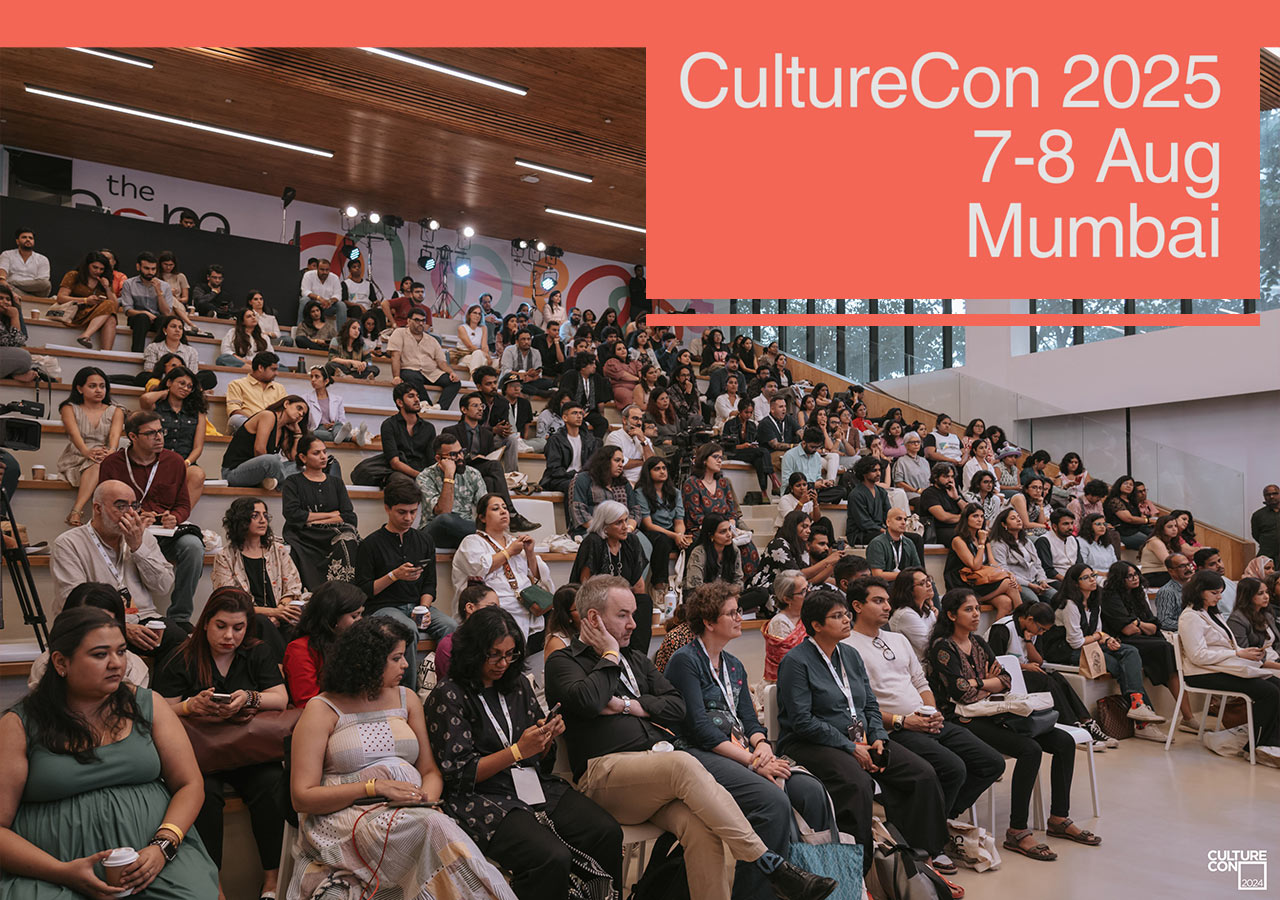
One can visit numerous places that can stimulate creativity and there is no doubt that one of the best ones is CultureCon in India. Powered by The Art X Company and Festivals From India, CultureCon 2025 is back, bigger than ever. It will be held at the Museum of Solutions, Mumbai, on August 7- 8, 2025. This is a two-day workshop that will plunge into practical tips, important shifts in the field, and creative development.

CultureCon 2025 Event Details

CultureCon 2025 Event Details
Dates August 7–8, 2025
Venue Museum of Solutions, Lower Parel, Mumbai, Maharashtra
Host City Mumbai, India
Organiser Art X Company in partnership with Festivals From India
Ticketing Book via SkillBox
Instagram @cultureconindia
Accessibility Free passes for persons with disabilities—email cultureconindia@gmail.com

Why is CultureCon Key for India’s Creative Scene?

If you are an artist, a culture maker, or a creative biz boss, CultureCon is a must-attend for you. This meet reveals the shaping forces of the creative scene, such as careers, tech, new ideas, and so on.

Also, CultureCon is known as a solid spot for cultural talks and growing your craft through:

  • Talks on policy for smart future moves.
  • Mentor labs for real-world issues.
  • Team-ups across fields, with creators, brands, and backers.

This time, the theme is “Creative Capital: The Next Frontier,” showing how to grow creativity into a significant economic force.

How Does CultureCon Deliver Real Results?

At the same level where Machine Learning assists money decisions by providing live data and in-depth verifications, CultureCon provides layered-level insights with:

Curated Talks and Labs

CultureCon 2025 lines up well-planned parts like:

Session Type Description
Panel Talks Engaging one-on-one discussions offering cultural insights and career advice from experienced voices.
Mentor Labs Personalized sessions with field experts for professional guidance and knowledge sharing.
Quick Talks & Big Classes Compact and high-energy sessions designed for fast learning and deeper understanding.

Key Topics

Some top talks to watch include:

Key Topic Focus
When Code Meets Culture Tech and art collaborations, led by Goethe-Institut Mumbai.
Gen Z as Culture Makers Discussion on how Gen Z influences creative industries and cultural values.
The Artist-Manager Game Exploring the evolving power dynamics between artists and their managers.
Selling Creative Work Worldwide Strategies for global outreach, featuring Honeypot Marketplace & Adelaide Fringe.
CSR & Culture Moving beyond monetary donations to deeper support for cultural initiatives.

Each talk aims to clear up, cut down doubts, and help individuals make wise choices.

Who Should Attend?

Well, this event can be attended by anyone. Here is a curated list of people who should definitely participate in:

  • Content People and Online Stars: Learn and team up with big names.
  • Start-Ups and Creative Biz Folks: Find out how to grow and see investment chances.
  • Students: Get into intern spots and career events.
  • Marketing and Tech Folks: Learn about mixing culture and new tech for future plans.

Top Voices: Don’t Miss These Leaders

The curated speakers list at CultureCon has some top cultural leaders who raise the game. Some names include:

Speakers Affiliation / Role
Roshan Abbas Founder, Kommune Arts (Keynote)
Shreyas Srinivasan Former CEO, Paytm Insider
Thukral & Tagra Contemporary Artists
Ruchira Das Arts Management Consultant
Ankur Tewari Singer, Song writer
Papa CJ Stand-up Comedian
Padmini Ray Murray Founder, Design Beku
Andy Beecroft Marketplace Manager, Adelaide Fringe
Asad Lalljee CEO, Avid Learning; SVP, Essar Group
Antara Ashra Future School of Performing Arts
Joyoti Roy CSMVS

These leaders will guide talks that help people make fundamental changes in their creative work.

CultureCon as a Creative Lab: What Makes It Stand Out?

Just as models update often to stay good, CultureCon grows each year with clearer goals and more open paths. Its parts include:

  • Deep Workshops for personal learning.
  • Evening Mixes for meeting peers.
  • Sign language help and free spots for disabled people make sure all voices are heard.

Art X Company founder, Rashmi Dhanwani says:

“CultureCon is a live lab where we look into India’s creative futures. With each version, we open new doors: work and private.”

A History of Touching Lives and Open Doors

Past CultureCons have had stars like Oscar-winner Guneet Monga, Arundhati Ghosh (India Foundation for the Arts), Sanjoy Roy (Teamwork Arts), and other prominent voices. Long-time pals include the British Council, Godrej India Culture Lab, and Access for All.

This year, CultureCon is all in on being open. Free spots are ready for disabled people, and Indian Sign Language help is available in talks, making the place truly welcoming for all.

Final Thoughts

CultureCon 2025 is more than a meet; it’s a think spot for India’s creative economy. If you want to grow your job, big up an innovative project, or just find your place in a quickly changing culture scene, this is your chance.

Join them in Mumbai on August 7-8, 2025, and be part of a living scene that not just dreams of the future, but one that builds it.

FAQs About CultureCon 2025

Question: Who should attend CultureCon 2025?

Answer: Creators, students, biz folks, teachers, marketers, and anyone into culture and creative ideas should definitely attend CultureCon 2025.

Question: What topics are on this year?

Answer: Tech in the arts, Gen Z as creative chiefs, cultural biz, global sales moves, and CSR in the arts are all in talks this year.

Question: How is CultureCon different from other creative meets?

Answer: It mixes mentorship, industry talks, open doors, and fundamental career tools in one significant experience.

Question: Where is CultureCon 2025 happening?

Answer: It is happening at the Museum of Solutions, Mumbai, on August 7–8, 2025.


Hariyali Teej 2025: Honoring Love, Greenery, and Spiritual Devotion

0
Hariyali-Teej-2025-01
Image – Freepik

The first raindrop falling on the dry ground and monsoon winds swaying the trees comes with a fresh touch of joy, renewal and celebration. Hariyali Teej is one such festival which is a true representation of the rainy season in India.

What is the Muhurat and Timings of Hariyali Teej 2025?

As per the Hindu calendar, Hariyali Teej falls on the third day of the Shukla Paksha in the month of Sawan. Tritiya Tithi is on July 26, 2025 till 7:52 PM and July 27, 2025 till 10:05 PM.

Hariyali Teej Details
Date & Time July 26, 2025 till 7:52 PM and July 27, 2025 till 10:05 PM.
Occasion Reunion of Lord Shiva and Goddess Parvati
Observed By Married and unmarried Hindu women
Key Rituals Fasting, worship, swinging, singing, wearing green attire, Sindhara gifts
Cultural Significance Celebrates love, devotion, nature, and women’s empowerment
Regional Variations Unique customs in Rajasthan, Haryana, and Punjab

Teej festival is not only a simple religious event, but also a colorful showcase of love, faith, and womanhood. With the swinging of neem trees and the swinging rhythm of folk songs, Hariyali Teej brings us back to the ancient roots of Indian relation to nature and traditions that are still alive and well in the hearts of many people.

It is time to stroll through the streets of history, traditions, feelings, and meaning of Hariyali Teej and find out why this festival is so popular among women all over India.

What is Hariyali Teej?

Hariyali Teej, commonly referred to as Teej, is a traditional Hindu festival predominantly observed in northern Indian states like Rajasthan, Uttar Pradesh, Bihar, and Madhya Pradesh. Hariyali has a meaning of greenery symbolizing the greenery of the monsoon season and Teej means the third of the bright half of the lunar month.

The festival falls on the Tritiya Tithi (third day) of the Shukla Paksha during the holy month of Shravan (Sawan), which holds special significance for devotees of Lord Shiva and Goddess Parvati. Married women, in particular, newlyweds, fast and pray on this day in order to have long life, prosperity, and health for their husbands. Unmarried girls also get involved with the hope of a good match in future.

However, it is also the festival of female beauty, folk music, green saris, henna-painted hands and communal unity.

What is the Significance of Hariyali Teej?

Hariyali Teej honors the sacred and everlasting union between Lord Shiva and Goddess Parvati, symbolizing true love and devotion.

It is believed in Hindu mythology that Goddess Parvati made extreme penance during her 108 births to show her love and devotion to Lord Shiva. Moved by her unwavering devotion, Lord Shiva finally accepted Goddess Parvati as his consort on the auspicious day of Hariyali Teej.

Therefore, Teej is a representation of dedication, conjugal happiness and communion. Women also fast and pray to Parvati in the hope that they will also be granted the same unbreakable union in their relationships.

Hariyali Teej and Monsoon Connection

Hariyali Teej is more than a spiritual occasion. As the monsoon arrives, parched lands turn lush, peacocks spread their feathers in dance, rivers swell with life, and the fragrance of rain-soaked earth fills the air. This seasonal change is greatly embedded in the festival of Teej.

Women sing folk songs, swing on ornamented swings attached to banyan or neem trees and they play with the cooling rain. The towns and villages are dressed up in festive attires, with colors all over, and of course, the green color, which represents fertility, prosperity and peace with nature.

Local fairs are conducted in most rural places where women are adorned, mehndi applied and traditional dances such as Ghoomar and Kachhi Ghodi are performed.

Fasting and Rituals during Hariyali Teej

Among the most remarkable things about Hariyali Teej is Nirjala Vrat (fast without water and food), which is followed with full devotion by the married women.

Day rituals:

  • Bangles, sindoor, bindi, mehndi, and green sarees are items of Suhag, which are worn with pride and joy.
  • women bathe and dress in traditional attire to begin the celebrations.
  • A picture or statue of Goddess Parvati is worshipped with fresh flowers and sweets (particularly ghewar) and fruits and a special Teej katha (story) is read.
  • Married women pray for a blissful and long-lasting married life, while unmarried girls seek blessings to find an ideal husband like Lord Shiva.

In cities, especially among working women, the rituals are now adapted to modern schedules. Some opt for partial fasts or symbolic prayers while still upholding the festive spirit.

How is Hariyali Teej Celebrated Across India?

Regardless of the fact that the essence is the same, various regions contribute their flavors to the celebration.

  • Rajasthan: In Jaipur and Udaipur, music, camels and elephants are used in taking out grand processions of Goddess Parvati. The city is full of fairs, puppet shows and traditional delicacies.
  • Uttar Pradesh and Bihar: Women also meet in groups, sing Kajri and Teej songs, put mehndi and give sweets. It is also the norm to present daughters and daughters-in laws with items of Shringaar.
  • Delhi & NCR: Having a cosmopolitan set up, women make kitty parties or office parties in the theme of Teej. There is a boom in the demand of henna designs and festive makeovers in beauty salons.

Hariyali Teej: Sweets and Special Dishes

How can there be a festival without food even when you are fasting?

The Teej thali includes some delicious snacks that are mouth-watering after the fast ends at night, such as:

  • Ghewar- a Rajasthani honey-comb-like sweet dipped in sugar syrup.
  • Kheer- Sweetened rice pudding.
  • Poori Aloo Sabzi- a celebratory combo that is popular in the north.
  • Other popular additions include Malpua, Seviyan and Ladoo.

During Sawan, most households prepare light and sattvic meals, typically avoiding the use of onion and garlic.

Hariyali Teej 2025: What is Special This Year?

Hariyali Teej will be celebrated this year on Monday, July 28 which is taken as very auspicious as Monday is the day of Lord Shiva. Fasting during this day is believed to add more blessings and peace in marriage.

The green celebrations are also becoming popular in 2025. Increasingly, more women groups and communities prefer to celebrate sustainably, with no plastic decorations, and eco-friendly idols and organic mehndi.

Womanhood celebration during Hariyali Teej

Other than religion and rituals, Teej has come to be a festival of womanhood. It is one of the few festivals that represent women as the main subject, being able to dress up, dance, laugh and celebrate their uniqueness. It is about the love of sisterhood, family and self-expression. It is a day when women go out not only to fast, but to be connected, not only with nature, not only with community, but with their inner strength.

Hariyali Teej reminds many people to stop, to take a break and think of love, strength, and the pleasures of minor customs that connect us to our origins.

Conclusion

When we are living in a world of rush and passing moments, festivals such as Hariyali Teej bring us to the ground. They make us think of life-long love, of sacrifices that women have made throughout generations, and the power of unity and belief.

Regardless of whether you are fasting, wearing green, hanging on a tree, or just reminiscing with your loved ones, Hariyali Teej 2025 gives you an opportunity to have fun and enjoy both your culture and your soul.

Therefore, this monsoon, sit back and enjoy the rain, wear your most colorful saree, sing with your friends and rejoice the divine and human love stories that make life so beautiful.

FAQs About Hariyali Teej

Question: What date is Hariyali Teej 2025?

Answer: Hariyali Teej will be observed on Tritiya Tithi starting from July 26, 2025 till 7:52 PM and July 27, 2025 till 10:05 PM.

Question: Does one have to fast on Hariyali Teej?

Answer: Although fasting is a cultural aspect of the festival, it is done at an individual level. Nirjala Vrat is practiced by many women, although some women can choose partial or symbolic fasting due to health and convenience.

Question: Do single girls have the right to celebrate Teej?

Answer: Yes, absolutely! Unmarried girls also enjoy Teej by adorning themselves, wearing mehndi and praying to get a good life partner.

Question: Which Traditional Colors and Outfits Are Worn During Teej?

Answer: Green is the primary color, symbolizing fertility and prosperity. Women often wear green sarees or lehengas, along with traditional jewelry and glass bangles.

Question: How is Hariyali Teej Different from Other Teej Festivals?

Answer: Hariyali Teej leads the way, gracefully followed by the vibrant Kajari Teej and the deeply devotional Hartalika Teej. Each has its own customs and stories but all are linked to Lord Shiva and Goddess Parvati’s devotion.